Debra Prinzing

Get the Email Newsletter!

Archive for the ‘General’ Category

Episode 277: A Year in Review – Slow Flowers’ Highlights for 2016

Wednesday, December 28th, 2016

2016-year-in-reviewWelcome to the final Slow Flowers Podcast of 2016

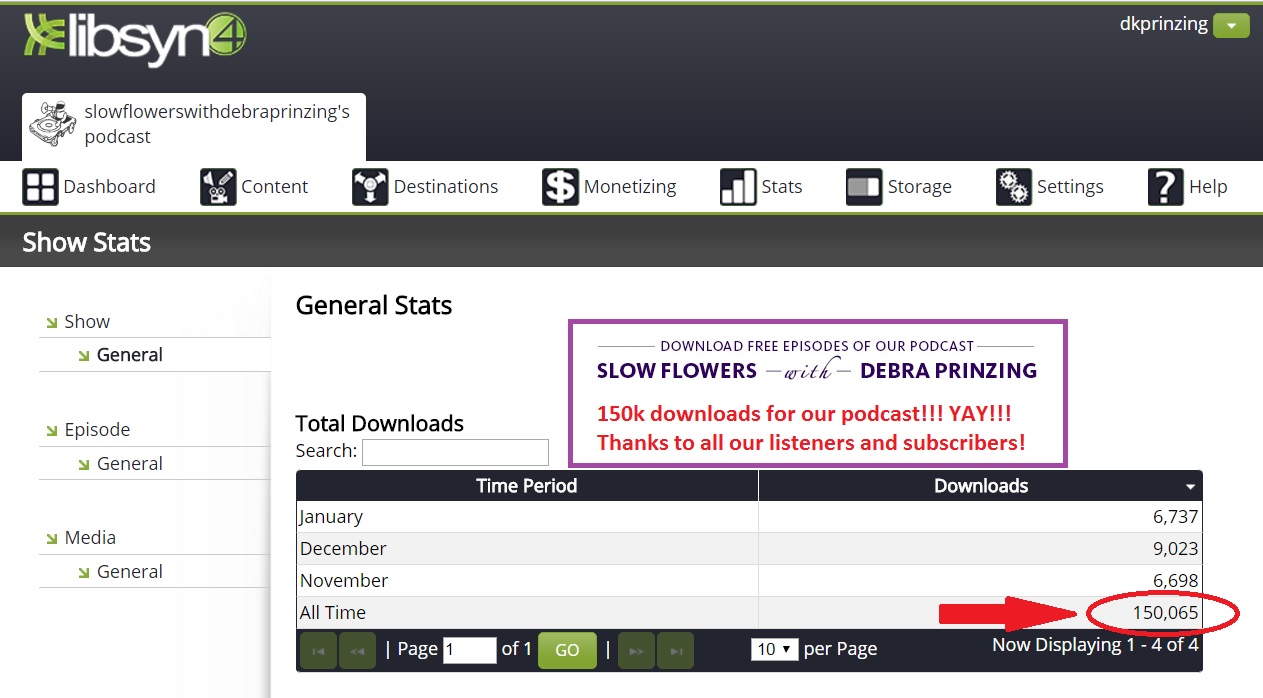
PodcastLogoLast year at this time, I mentioned that the Slow Flowers Podcast had been downloaded 76,000 times in two-and-one-half years.

Today, I can tell you that 2016’s listenership nearly doubled that total, meanings as many people tuned into this weekly episode in 12 months than in the previous 30 months combined.

That’s the best news I could ask for as we reflect on the successes and strides of 2016.

Every single week this year; in fact, every single week for 178 weeks, it has been my privilege to feature the voices of our Slow Flowers community with you.

You’ve heard from flower farmers and floral designers, pioneers and personalities,  who together are changing the floral landscape, disrupting the status quo, and bringing flower sourcing and growing practices, not to mention eco-conscious design methods, to the center of the conversation.

Take the Pledge!!!

Take the Pledge!!!

As I have done since the beginning of 2014, I would like to dedicate today’s episode to the Slow Flowers Highlights we’ve witnessed this year.

Next week, on January 4th, I will share my 2017 floral industry forecast with you.

As the Slow Flowers Movement gains more supporters and more passionate participants who believe in the importance of the American cut flower industry, the momentum is contagious. I know you feel it, too.


I’ll start with some ACCOLADES

This happened and it came as a total surprise!

This happened and it came as a total surprise!

2016 kicked off with a lovely surprise as the Seattle Wholesale Growers Market honored me with the Growers’ Choice Award for outstanding contributions to revitalizing the local floral community. The flower farmers and staff of this innovated farm-to-florist wholesale market are near and dear to my heart, and it’s so gratifying to receive their recognition. My efforts to promote and sustain domestic flowers is especially sweet because of those who gave me this award.

In September, the Garden Writers Association, my professional community, honored Slowflowers.com – the web site – with a Silver Medal in the digital media category. The organization also inducted me into the Hall of Fame, an honor given to one person each year — an unexpected and humbling acknowledgement for my work in gardening communications.

And then there’s VALENTINE’S DAY

Yay! Check it out!!!

Yay! Check it out!!!

The opportunity for engaging the media in a discussion about American grown flowers, local flowers and the origin and growing practices of flowers at Valentine’s Day is an obvious one — and we have been vocal about sharing the Slow Flowers story.

The 2016 press was major, with Martha Stewart Living’s mention of Slow Flowers and the slowflowers.com directory in its February 2016 issue –

Here’s the text:

“The benefits of choosing locally grown foods over those from all over the world extends to flowers as well. That’s why garden and features editor Melissa Ozawa likes Slowflowers.com, an online directory of more than 600 florists and flower farms across the United States. The site offers local blooms in season (for instance, winter tulips or anemones, if you’re in the Northwest). Have your heart set on classic roses? It also helps users find growers in California and Oregon that ship nationally.” 

There you have it! Short and VERY sweet!

Individually, none of us could have earned this type of media attention from a magazine with paid circulation of more than 2 million subscribers, monthly newsstand sales of 115,000 issues and total audience reach of more than 9 million. The demographics of the Martha Stewart reader are in close alignment with your own floral business.

You can feel especially proud of what we’ve accomplished knowing that the value of this earned media mention is $45,000, something that none of us could have ever afforded if we purchased advertising space in the magazine.

view from airplaneAs for travel, in 2016, well, I retained my MVP Gold status on Alaska Airlines, which means I spent more than 40,000 miles in the air in 2016.

Perhaps not an accomplishment when it comes to burning jet fuel, but to me, the amount of travel I was able to make on behalf of floral promotion, including connecting with many of you, was significant — and to compensate for that travel footprint, I tried to engage with as many flower farmers and florists at every destination!

I attended seven lovely and inspiring FIELD TO VASE DINNERS, serving as co-host and sponsor.

Slow Flowers partnered with the Certified American Grown campaign’s Field to Vase Dinner Tour, which took me to flower farms in California, Texas, Colorado, Pennsylvania and Washington State.

The Certified American Grown Program produces the Field to Vase Dinner Tour -- and is a sponsor of this Podcast. Shown from left: Bill Prescott of Sun Valley Flower Farm, NYT Bestselling author Amy Stewart of "Flower Confidential", Kasey and me.

The Certified American Grown Program produces the Field to Vase Dinner Tour — and is a sponsor of this Podcast. Shown from left: Bill Prescott of Sun Valley Flower Farm, NYT Bestselling author Amy Stewart of “Flower Confidential”, Kasey and me.

I teamed up with Kasey Cronquist, administrator of the Certified American Grown brand, to welcome more hundreds of dinner guests who enjoyed local food AND local flowers, who heard the Slow Flowers message and met and learned from Slow Flowers member farms and designers.

It has been a huge honor to be part of the Field to Vase Dinner tour for the past two years — and I am confident that the dinners helped to change attitudes, assumptions and understanding about the origin of flowers at the center of the table. And a footnote, the Field to Vase Dinner Tour dates for 2017 should be announced soon. 

00571_DP_SlowFlowers_Meetup (2)At many of my travel destinations, I was able to meet Slow Flowers members and even take part in Slow Flowers Meet-Ups.

I can’t tell you how meaningful it has been to put faces and voices to names I perhaps only before knew via social media.It was thrilling to visit cities and towns where I was welcomed into beautiful shops and studios, as well as onto prolific farms where domestic flowers flourished.

Many of those events only took place because so many of you stepped up to host me and I want to thank the following folks for making connections possible when I was in their towns:

With my friend Gloria Battista Collins of GBC Style, we posed happily with our finished arrangements.

With my friend Gloria Battista Collins of GBC Style, we posed happily with our finished arrangements.

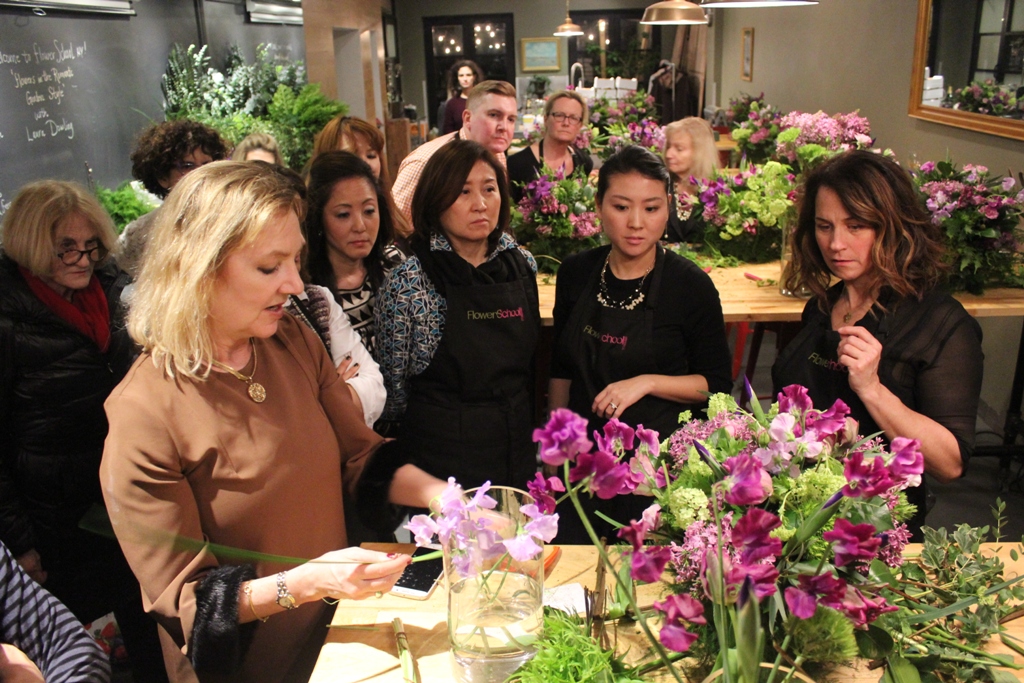
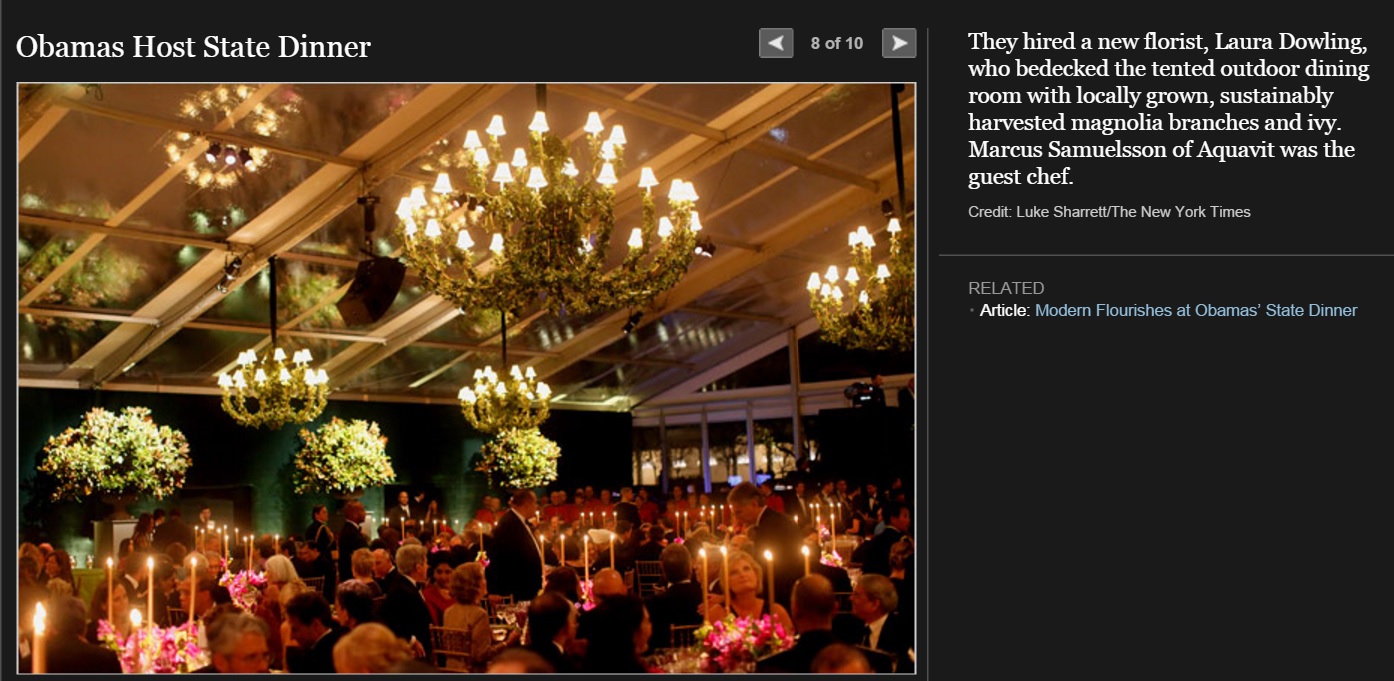
In early February, Gloria Collins, GBC Style, hosted me at her Manhattan apartment when I visited NYC.  We recorded a podcast episode and took Laura Dowling’s design workshop together at Flower School New York — what a fabulous experience.

Later that month, for the third consecutive year, I traveled to Washington, D.C., to meet up with a motivated group of American Flower Farmers for the annual “Fly In” sponsored by California Cut Flower Commission and Certified American Grown.

Tony Ortiz of Joseph and Sons in Santa Paula, Calif., past Slow Flowers Podcast guest, and I were happy to deliver American grown flowers to decorate the Congressional Cut Flower Caucus hearings. Farmer-florist Andrea Gagnon of LynnVale Studios designed the bouquet.

Tony Ortiz of Joseph and Sons in Santa Paula, Calif., past Slow Flowers Podcast guest, and I were happy to deliver American grown flowers to decorate the Congressional Cut Flower Caucus hearings. Farmer-florist Andrea Gagnon of LynnVale Studios designed the bouquet.

I participated in the day-long advisory board meeting for Certified American Grown, where I fill the Consumer Advocate seat. And I joined farmers on visits to meet staff in congressional and senate offices, as we shared the message of domestic and local flowers. A highlight for Diane Szukovathy of Jello Mold Farm, and me was meeting our own amazing Senator Patty Murray, and thanking her for support she and her staff have given Washington state’s local flower farmers.

During my time in D.C., I also hosted a Slow Flowers Meet-Up at Tabard Inn, a beautiful historic venue in the nation’s capitol. There was a crazy storm that caused some of our members in the Maryland, Virginia, and D.C., area to miss the event, but we had about two dozen together for cocktails and conversation — and I was inspired by our conversations and connections made.

READ MORE…

Episode 276: Slow Flowers’ Holiday Special with Ellen Zachos — from Broadway Stage to Backyard Foraging

Wednesday, December 21st, 2016

First of all, Happy Winter Solstice! You may be celebrating tonight with a Garden Walk, a concept proposed by Sue Nevler, a Seattle friend of mine who is active in the American Public Garden community.

The idea she has is that we light a candle and take a nighttime walk in a garden with others as a peaceful gathering of community — by extension, I’m suggesting we celebrate Solstice in cutting gardens and on flower farms. If today is the first you’ve heard of her suggestion, follow this link for more details about Solstice Garden Gatherings.

I’m delighted to share a very special Holiday episode — and I hope it feeds your spirit as much as has mine. Last year’s Holiday episode featured musician-songwriter-flower farmer Dennis Westphall of Jello Mold Farm in Mt. Vernon, Washington. In case you missed that spirited program in which Dennis played some of his original songs and sang for us, here’s the link to that episode.

Today's uber-talented guest foraging expert and amazing vocalist Ellen Zachos.

Today’s uber-talented guest foraging expert and amazing vocalist Ellen Zachos.

I worried for a while that Dennis and his music would be a hard act to follow, but then my friend Ellen Zachos agreed to join me, sharing her lovely vocals and the story of her love affair with plants. I’m so pleased she said YES when I asked.

I first learned about Ellen in the pages of Harvard Magazine, which my husband Bruce receives each month as an alumni.

It was probably a dozen years ago when Harvard profiled one of its alums, a New Hampshire native who had moved to New York City after graduation and joined the stage.

She also studied horticulture at the New York Botanical Garden.

Ellen Zachos as Audrey in Little Shop of Horrors at the Alhambra Dinner Theatre, Jacksonville, Florida

Ellen Zachos as Audrey in Little Shop of Horrors at the Alhambra Dinner Theatre, Jacksonville, Florida


Ellen is possibly the only cast member of Les Miserable who has also run a planting design business that served Manhattan’s elite owners of rooftop greenhouses. What a wonderful story and I couldn’t wait to meet her.

Since the garden writing world is as intimate and interconnected as the slow flowers world, it didn’t take long for Ellen and me to meet in person. I’m not sure when we actually connected, but I’m guessing it was more than a decade ago at a Garden Writers symposium.

Today you will hear more of her amazing story — and enjoy her music, my holiday gift to you.

Ellen Zachos, longtime Broadway cast member of Les Miserables.

Ellen Zachos, longtime Broadway cast member of Les Miserables.

Ellen’s journey from theatre to horticulture to her current platform — as the top backyard foraging expert — will wow you.

Here’s a little more about my friend. On her web site, Ellen writes: “I moved to NYC sometime in the last century to be an actor. I know, I know, it’s an age-old story, small town girl moves to NYC, lands a role on Broadway, decides she’d rather be a horticulturist, and starts her own garden design, installation, and maintenance business. You’ve heard it many times before.

“But seriously, after leaving the cast of Les Miz on Broadway, I went back to school at the New York Botanical Garden and earned certificates in both ornamental horticulture and ethnobotany. For many years I taught at the NYBG on a wide range of subjects and ran my roof top gardening business: Acme Plant Stuff.

“As I learned more about plants I noticed that many traditional ornamental plants had edible and medicinal histories. I wondered why we didn’t eat hostas any more, and people planted hopniss for its flowers rather than its delicious, potato-like tubers.


Ellen holds foraged wild garlic.

Ellen holds foraged wild garlic.

unnamed-3“Gradually, my emphasis shifted from plants that were merely ornamental to plants that fed both body and soul, the eyes and the stomach.

I started out foraging in the garden, because that’s where I could identify the plants and I knew they were safe from potentially dangerous insecticides and herbicides.

Soon I ventured out into the wilds of Central Park, the woods of Pennsylvania, the deserts of New Mexico, the islands of Scotland, and the gorges of Greece. In other words, I’m always looking for delicious, free food!”

As the Foraging Expert at About.com,
(foraging.about.com) Ellen shares seasonal recipes and tips on foraging every month. She also works with Remy Martin USA, teaching foraging mixology workshops across the US, and she is currently working on a book about foraged cocktails, due out in 2017.

I love this line from her blog at backyardforager.com:

I want to get you hooked on wild edibles so maybe next time you’ll be sitting in that car with me when I pull over to harvest burdock flower stems. Because so much of the joy of foraging is sharing it with someone who also appreciates the flavors and the adventure.

Green Up Time, Ellen Zachos sings Botanical Broadway

Green Up Time, Ellen Zachos sings Botanical Broadway

The author of six books previous books, including Backyard Foraging: 65 Familiar Plants You Didn’t Know You Could Eat, Orchid Growing for Wimps, and Growing Healthy Houseplants,  Ellen also writes a monthly column for the National Gardening Association and she is the Senior Advisor for New England for Garden Compass (the # 1 rated iTunes gardening app).

She loves to teach and is a frequent lecturer at botanic gardens, flower shows, and for garden clubs around the world. Ellen’s show business background taught her how to engage an audience, and she combines this natural skill with years of practical experience and plenty of book learning.

A long-time instructor at the New York Botanical Garden, Ellen recently moved to Santa Fe, NM, which means she splits time between the desert southwest and the lush northeast. It’s quite a contrast, botanically-speaking, and one that keeps her learning new plants as well as new ways to eat them.

Ellen's new book will be released in May 2017.

Ellen’s new book will be released in May 2017.

Today’s episode will feature a conversation between two professional colleagues who greatly admire one another — and you’ll hear the warmth of friendship in our voices.

Here is a peek at the cover of Ellen’s new book, at right.

Seattle fans can hear Ellen speak at the upcoming Northwest Flower & Garden Show in February, where she’ll be speaking twice:

Sat, Feb. 25 at 5:30 pm / Hood Room, Backyard Foraging: Gathering from the Garden

Sun, Feb. 26 at 10:00 am / Hood Room, The Blended Garden: Discover Plants that Do Double Duty

Follow Ellen on Facebook

Follow Ellen on Twitter

Find Ellen on Instagram

Ellen is a foraging-mixology expert for The Botanist, a luxury gin

Ellen is a foraging-mixology expert for The Botanist, a luxury gin

Here’s more about Ellen’s foraging-mixology work for The Botanist, from the company’s blog.

She shared this lovely winter cocktail recipe for you to try:

Ingredients: 2 ounces bourbon, 1/2 ounce crabapple syrup, seltzer

Combine the bourbon and syrup in a shaker full of ice and shake for 30 seconds. Strain into a coupe and add seltzer to taste. I add 1/2 ounce but some people like more.

To make the syrup: Put your crabapples (2 cups is a good, minimum amount to start with) in a saucepan and barely cover with water. Bring the contents to a boil, then reduce the heat and let simmer for five minutes, mashing occasionally with a potato masher to release the juices. Pour the fruit through a jelly bag and let it hang until all the juice has been extracted. Resist the temptation to squeeze the jelly bag or the liquid may turn cloudy. Measure the juice and return it to your saucepan. Add an equal amount of sugar and whisk to combine. You want the sugar to be fully dissolved; rub a little liquid between your fingers, it should feel smooth.

Ellen shared these lyrics from “Misalliance,” with her edits to Americanize the English:

Misalliance by Michael Flanders and Donald Swann*

The fragrant Honeysuckle spirals clockwise to the sun

and many other creepers do the same.

But some climb counter-clockwise,

the Bindweed does for one,

Convolvulus to give her proper name.

Rooted on either side of the door,

one of each species grew,

and raced up to the window ledge above.

Each corkscrewed to the lintel in the only way it knew,

where they stopped, touched tendrils, smiled,

and fell in love.

Said the right-handed Honeysuckle to the left-handed Bindweed,

“Oh let us get married if our parents don’t mind, we’d

be loving and inseparable, inextricably entwined, we’d

live happily ever after,”

said the Honeysuckle to the Bindweed.

To the Honeysuckle’s parents it came as a shock.

“The Bindweeds,” they cried, “Are inferior stock.

The uncultivated, of breeding bereft.

We twine to the right and they twine to the left.”

Said the counterclockwise Bindweed to the clockwise Honeysuckle,

“We’d better start saving,

our reserve mustn’t buckle.

Run away on a honeymoon and hope that our luck’ll

Take a turn for the better,”

Said the Bindweed to the Honeysuckle.

A bee who was passing remarked to them then,

“I’ve said it before and I’ll say it again.

Consider your offshoots if offshoots there be.

They’ll never receive any blessing from me.

Poor little sucker, how will it learn

When it is climbing, which way to turn.

Right, left, what a disgrace.

Or it may grow straight up and fall flat on its face.”

Said the right-hand thread Honeysuckle to the left-hand thread Bindweed,

“It seems that against us all fate has combined.

Oh my darling, oh my darling, oh my darling Columbine,

thou art lost and gone forever,

we shall never intertwine.”

Together they found them, the very next day.

They had pulled up their roots and just shriveled away,

deprived of that freedom for which we must fight:

to veer to the left or to veer to the right.

*Americanized by Ellen Zachos

Please enjoy our conversation and HAPPY HOLIDAYS!  If you’re looking for the perfect gift for the gardener or flower lover in your life, there’s definitely still time to order Green Up Time as a CD or downloadable Mp3 album.

sponsor-bar_sept_2016
The Slow Flowers Podcast has been downloaded more than 140,000 times by listeners like you. THANK YOU to each one of you for downloading, listening, commenting and sharing. It means so much.

If you value the content you receive each week, I invite you to show your thanks and support the Slow Flowers Podcast with a donation — the button can be found on our home page in the right column. Your contributions will help make it possible to transcribe future episodes of the Podcast.

Thank you to our lead sponsor for 2016: Certified American Grown Flowers. The Certified American-Grown program and label provide a guarantee for designers and consumers on the source of their flowers. Take pride in your flowers and buy with confidence, ask for Certified American Grown Flowers.  To learn more visit americangrownflowers.org.

More sponsor thanks goes to Syndicate Sales, an American manufacturer of vases and accessories for the professional florist. Look for the American Flag Icon to find Syndicate’s USA-made products and join the Syndicate Stars loyalty program at syndicatesales.com.
A big bouquet of thanks goes to Longfield Gardens, providing home gardeners with high quality flower bulbs and perennials. Their online store offers plants for every region and every season, from tulips and daffodils to dahlias, caladiums and amaryllis. Visit them at lfgardens.com.
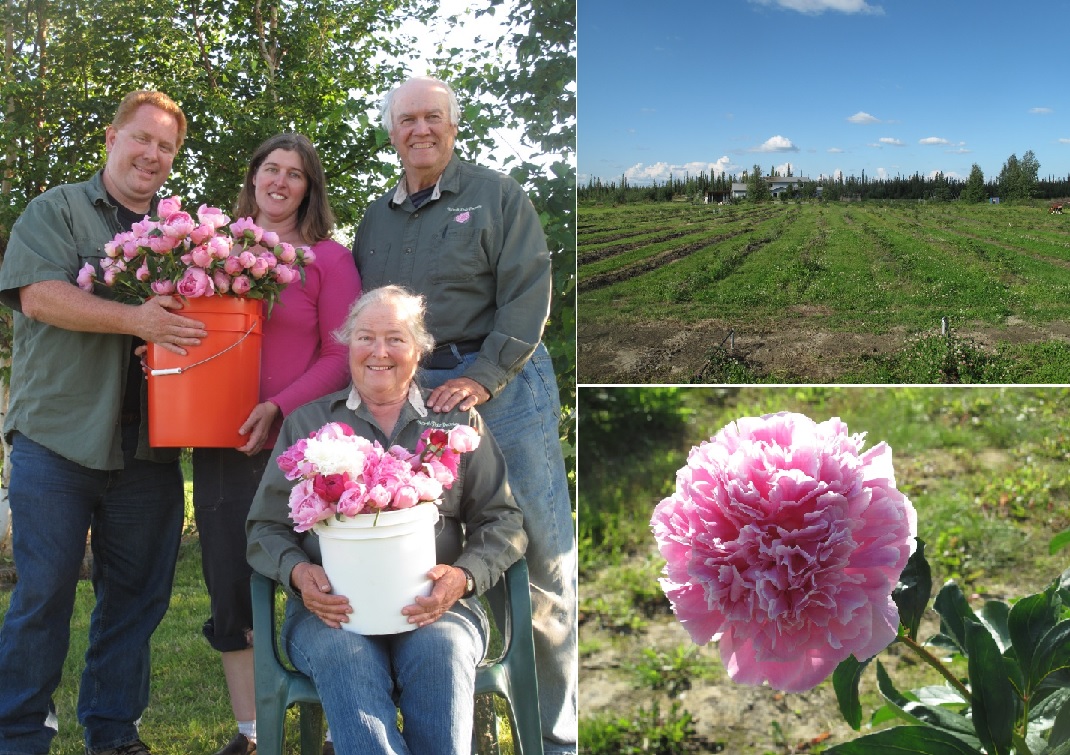
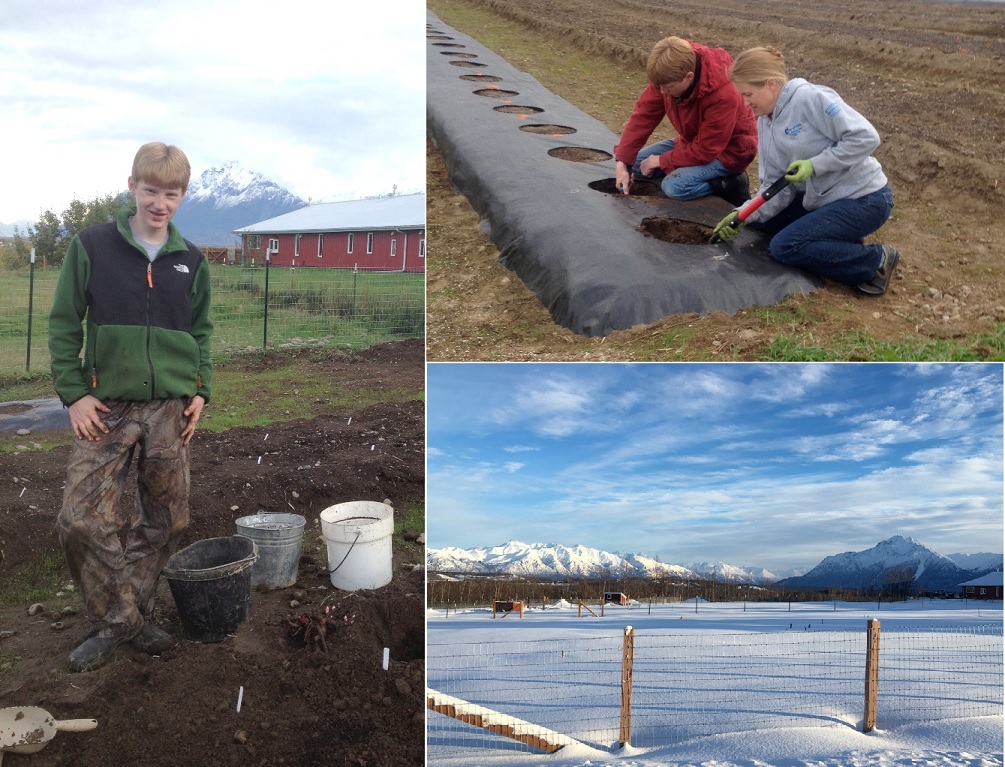
A fond thank you Arctic Alaska Peonies, a cooperative of 50 family farms in the heart of Alaska providing high quality, American Grown peony flowers during the months of July and August. Visit them today at arcticalaskapeonies.com

And finally, thank you Association of Specialty Cut Flower Growers. Formed in 1988, ASCFG was created to educate, unite, and support commercial cut flower growers. It mission is to help growers produce high-quality floral material, and to foster and promote the local availability of that product. Learn more at ascfg.org

I’m Debra Prinzing, host and producer of the Slow Flowers Podcast. Next week, you’re invited to join me in putting more American grown flowers on the table, one vase at a time. And If you like what you hear, please consider logging onto Itunes and posting a listener review.

The content and opinions expressed here are either mine alone or those of my guests alone, independent of any podcast sponsor or other person, company or organization.

The Slow Flowers Podcast is engineered and edited by Andrew and Hannah Brenlan. Learn more about their work at shellandtree.com.
Episode 275: Meet the Authors and Their Fab Floral Books: Louesa Roebuck’s Foraged Flora and Heather Saunders’ Flower House Detroit

Wednesday, December 14th, 2016

twoupWe’re coming in on the close of this year — and what a year for Slow Flowers it has been. The final few episodes of 2016 are coming together and I know they will inspire, inform, and instigate — focusing on the creative process as each of us tries to set aside time to recharge body, mind and spirit.

Louesa Roebuck, co-author of Foraged Flora

Louesa Roebuck, co-author of Foraged Flora

Heather Saunders, creator and photographer of the book Flower House Detroit

Heather Saunders, creator and photographer of the book Flower House Detroit

Please meet two floral instigators, book creators whose new projects will introduce you to what’s possible when art and the artistic process are respected, honored and allowed to work magic.

My first guest is Louesa Roebuck, co-creator of a new book called Foraged Flora.

My second guest is Heather Saunders, the genius photographer who just released her new book Flower House Detroit.

You are in for a big treat to hear from these two innovators, artists who document floral installations in the printed form, with results that I find incredibly moving.


Listen carefully because we’re giving away one copy of Foraged Flora and one copy of Flower House Detroit — and you may be a lucky winner.

MAY: roses | philadelphus | mint geranium

MAY: roses | philadelphus | mint geranium

First, Louesa. I met Louesa in 2013 when Sunset magazine asked me to write a short piece on her tiny, eponymous flower shop in SF. You’ll hear us recall lunching together in Marin County for that interview — and since then, we’ve occasionally stayed in touch and definitely followed each other’s separate but parallel floral journeys. I just looked up the small Sunset article I wrote about Louesa- and this will make her smile when she hears this – I titled the piece “Foraged and Gleaned”

NOVEMBER: roses | clematis gone to seed | magnolia | rose hips | hydrangea

NOVEMBER: roses | clematis gone to seed | magnolia | rose hips | hydrangea

Foraging and gleaning are the subtext to Louesa’s newest project, the book we’ll discuss. Utterly unconventional in the best way, Louesa has charted a course in her professional life that is motivated by her season and nature-first ethos and the results are gathered in a gorgeous new book called Foraged Flora, released in late October. We’ve been trying to coordinate our schedules to record an interview and here it is, just in time to add Foraged Flora to holiday gift lists – for giving and receiving. As I mentioned, listen carefully for details on how you can win a copy of the book!

READ MORE…

Join me for Winter Solstice, December 21st

Thursday, December 8th, 2016

solstice-garden-gathering-title-page-imageI believe all creatives want to make a difference in their community, and to that end, may I share an opportunity that my Seattle friend Sue Nevler has suggested?

She is proposing that gardeners, ecologists, naturalists, flower farmers and anyone engaged with the environment schedule, host or take part in a Winter Solstice Garden Gathering. Sue sent this note to her community last week:

Dear Garden Friends,

I am asking gardens to join together on Dec. 21st, the Winter Solstice, to invite people to bring a light and enjoy the company of others in a favorite beautiful lighted night garden.

Solstice is a very old tradition, and people are looking for community and connections at this time.  This is not a protest, but a coming together, a chance for unity, camaraderie, savoring the calm, serenity and beauty that our gardens provide.

As past director of the Dunn Gardens in Seattle, I began a Solstice Stroll there. It was a simple, quiet, beautiful winter night’s event. Friends gathered around a bonfire, hold a candle, savor garden shadows and dark sky.

This year, I’m gathering with many sister gardens in the Pacific Northwest and beyond. All have shown interest and enthusiasm. I was inspired to think about a much larger Winter Solstice Garden Gathering after reading a message that The American Public Gardens Association sent to members on November 14, 2016.

“At this moment, the world needs public gardens more than ever. Everyone needs to disconnect from the stress and loss; then find, themselves in our gardens. Whether they are naturally preserved and conserved or deliberately designed to evoke awe and emotion, gardens are where we can all intersect.”

As Sue encourages garden communities, and I’d like to encourage floral/flower farming communities, to incorporate gatherings as appropriate to your part of the country.

Sue suggests that we find inspiration from Eric Lui, who cowrote “Gardens of Democracy” in 2011:  He wrote, “To be a gardener is not to let nature take its course; it is to tend.” 

And clearly, those of us in the Slow Flowers Movement know that “to be a flower farmer is not to let nature take its course, but it is to tend.”

Tend to your corner of the world, in a garden or on a flower farm, and participate in this simple practice of unity, community, and humanity on Dec. 21st, the Winter Solstice. Together, may we illuminate and nurture our floral communities.

Episode 274: Russian River Flower School and new voices from the Slow Flowers Creative Workshop

Wednesday, December 7th, 2016
Flowers from Sonoma County inspired designs at the Slow Flowers Creative Workshop in October.

Flowers from Sonoma County inspired designs at the Slow Flowers Creative Workshop in October.

In October, I had the distinct pleasure of teaching with Dundee Butcher of Russian River Flower School + Events in Healdsburg, California.

Our Slow Flowers Creative Workshop provided a lovely chance to further share the Floral Storytelling and Floral Memoir curriculum I’ve developed. Our group gathered in one of the most inspiring places — Northern California’s wine country.

As creatives, I believe much of our inspiration comes from “place,” and for this workshop, there was no shortage of beautiful scenery, gorgeous botanicals and the most to-die-for studio space you’ve ever seen.

Dundee and her colleague Naomi Mcleod, along with their frequent volunteer Vicki McFadden, hosted our workshop for two days during which we exercised writing skills, stretched our perception of language, and stepped outside the comfort zones as florist-writers. It was such a wonderful experience that allowed me to talk about our Slow Flowers ethos with kindred spirits.

Our group celebrated the conclusion of a successful two days. We gathered for dinner and a garden tour at Dundee Butcher's wine country home (Dundee is first on the left in this shot)

Our group celebrated the conclusion of a successful two days. We gathered for dinner and a garden tour at Dundee Butcher’s wine country home. From left: Dundee, Naomi Mcleod, Julia, Susan, Kate, Debra and Emily.

This Podcast episode will introduce you to Dundee and her story, and to four of the students in our workshop: Susan Chambers from bloominCouture in San Francisco; Emily Carey from ETC Designs in Sebastopol; Julia Beckstoffer of Kiss my Chicks in St. Helena; and Kate Rowe from Aztec Dahlias in Petaluma. Follow this link to my earlier blog post about the workshop – and to see more photos of the designs that emerged that day.

Our writing exercises ranged from simple botanical descriptions (describe a rose without using the word rose, for example), to playing with new ways of naming color, to journaling about our earliest memory of nature, flowers or art. The ultimate goal? To identify our “why,” our “North Star,” our personal value system that underscores our brand.

On Day Two, Dundee led the students in a floral design exercise to think differently about how their botanical creations reflect a personal aesthetic. We had some amazing flowers to play with, both from local flower farms like Aztec Dahlias, Home Farm, and Chalk Hill Clematis, as well as cuttings from Dundee’s personal garden. Enjoy these photos of the exquisite and distinct designs.

Dundee demonstrated her inventive use of natural elements in design.

Dundee demonstrated her inventive use of natural elements in design.

Here’s more about Dundee and Russian River Flower School:

Dundee opened Russian River Flower School in 2013 after training and working with some of the top floral design houses in London for many years. As well as teaching, she was privileged to create arrangements for a variety of events and occasions, including private parties, intimate dinners, corporate functions, weddings and even a palace!

Dundee’s vision has been to teach a form of “unstructured formality” by fusing what she learned working in a more formal style of floristry in Europe with the excitement of the natural beauty and materials found in abundance in Northern California.

Russian River Flower School’s mission is to teach people to wander with their eyes open, see differently and enjoy the creative process. The flower school is located in the heart of the California wine country, in the town of Healdsburg.

Follow Russian River Flower School at these social places:

Russian River Flower School on Facebook

Russian River Flower School on Instagram

Writing about flowers . . . it's kind of like meditation.

Writing about flowers . . . it’s kind of like meditation.

Thank you to our students — you trusted me and you were open and accepting of expressing your creativity in a new way. That’s sweet and I can’t wait to see where it takes you and your creative businesses! It was pretty special to see our group come together as a cohort of peers — and to experience the value of setting aside a few days to invest in each of our personal growth. Thank you to Dundee, Naomi and Vicki for making our experience so unforgettable!

Here are the video interviews with each student, produced by Davis and Ludell Jones of Eazl.co

Kate Rowe:

Aztec Dahlias on Facebook

Aztec Dahlias on Instagram

Kate Rowe, from Aztec Dahlias. Love her simple study.

Kate Rowe, from Aztec Dahlias. Love her simple study.

Emily Carey:

ETC designs on Facebook

ETC designs on Instagram

Love the olive branches with fruit! Florals by Emily Carey of ETC designs

Love the olive branches with fruit! Florals by Emily Carey of ETC designs

Susan Chambers:

bloominCouture on Facebook

bloominCouture on Instagram

Designed by Susan Chambers

Julia Beckstoffer:

Kiss my Chicks on Instagram

Julia Beckstoffer, floral designer and Bantam Poultry farmer.

Julia Beckstoffer, floral designer and Bantam Poultry farmer.

What I found most inspiring was the willingness of our participants to suspend fear or apprehension and dive into unfamiliar exercises as they learned how to express themselves through words. I salute everyone involved for the way they encouraged and supported one another — that makes a huge difference during any creative process, right?!

What drew people to take this workshop and invest in themselves in a new way? Here’s a sampling of the reasons:

“I lost track of my connection to creativity. I could stand behind another designer and sell someone else’s work, but not my own. I want to use flowers to tell a story.”

“I became so separate from who I am, and I started thinking ‘what would I do if I could do anything I dreamed of?’”

00539_DP_CreativeWorkshop-02If you’re interested in participating in an upcoming Slow Flowers Creative Workshop, be sure to let me know. I’m planning one for the Seattle area in early March — details to come!

The Slow Flowers Podcast has been downloaded more than 136,000 times by listeners like you. THANK YOU to each one of you for downloading, listening, commenting and sharing. It means so much.

If you value the content you receive each week, I invite you to show your thanks and support the Slow Flowers Podcast with a donation — the button can be found on our home page in the right column. Your contributions will help make it possible to transcribe future episodes of the Podcast.

sponsor-bar_sept_2016
Thank you to our lead sponsor for 2016: Certified American Grown Flowers. The Certified American-Grown program and label provide a guarantee for designers and consumers on the source of their flowers. Take pride in your flowers and buy with confidence, ask for Certified American Grown Flowers.  To learn more visit americangrownflowers.org.

More sponsor thanks goes to Syndicate Sales, an American manufacturer of vases and accessories for the professional florist. Look for the American Flag Icon to find Syndicate’s USA-made products and join the Syndicate Stars loyalty program at syndicatesales.com.
A big bouquet of thanks goes to Longfield Gardens… providing home gardeners with high quality flower bulbs and perennials. Their online store offers plants for every region and every season, from tulips and daffodils to dahlias, caladiums and amaryllis. Visit them at lfgardens.com.
A fond thank you Arctic Alaska Peonies, a cooperative of 50 family farms in the heart of Alaska providing high quality, American Grown peony flowers during the months of July and August. Visit them today at arcticalaskapeonies.com
And finally, thank you Association of Specialty Cut Flower Growers. Formed in 1988, ASCFG was created to educate, unite, and support commercial cut flower growers. It mission is to help growers produce high-quality floral material, and to foster and promote the local availability of that product. Learn more at ascfg.org

(c) Mary Grace Long photography

(c) Mary Grace Long photography

I’m Debra Prinzing, host and producer of the Slow Flowers Podcast.

Next week, you’re invited to join me in putting more American grown flowers on the table, one vase at a time. And, if you like what you hear, please consider logging onto Itunes and posting a listener review.

The content and opinions expressed here are either mine alone or those of my guests alone, independent of any podcast sponsor or other person, company or organization.

The Slow Flowers Podcast is engineered and edited by Andrew and Hannah Brenlan. Learn more about their work at shellandtree.com.

Episode 273: A Tale of Two Floristas in Raleigh, North Carolina: meet Stephanie Hall of Sassafras Fork Farm and Maggie Smith of Pine State Flowers

Wednesday, November 30th, 2016
Maggie Smith of Pine State Flowers (left) and Stephanie Hall of Sassafras Fork Farm (right)

Maggie Smith of Pine State Flowers (left) and Stephanie Hall of Sassafras Fork Farm (right)

Before I introduce today’s two guests, I have to share a lovely note that I received this past week from Slow Flowers Canada member and loyal podcast listener, Jessica McEwen at Periwinkle Flowers in Toronto. She wrote:

Jessica McEwan of Periwinkle Flowers in Toronto

Jessica McEwan of Periwinkle Flowers in Toronto

I just had to send you a quick note – I have just finished reading the blog post about the newest podcast episode on Michael from Summer Dreams Farm.  I try to look at the post first, because I actually listen to the interviews while driving out to our local flower growers co-operative just outside Toronto twice weekly and like to have their images in my head to match the voices that I hear.

Thank you for sharing these wonderful people with us, and to address what you say towards the end of your blog post- never doubt that what you do is important! Sharing people’s stories, asking the questions and letting us peek behind the curtain of social media is a true gift from you to all of us in this crazy flower world.

You make me feel a part of a much larger network of people who care about the things that I do: That flowers be bought from growers who love what they do, at a fair price, and be valued at all steps along the way. And, that small business owners and creative entrepreneurs who, let’s face it, are definitely NOT in it for the money, (but) are in it because we can’t help but be consumed by the amazing world of flowers and the joy that they bring to the world, are also valued.

Thank you, thank you, thank you, Debra- you truly make my world a brighter and happier place, Jessica.

Thank you, Jessica. I needed to hear that this week, and I appreciate you agreeing to let me share your note here.

You may recall my recent episode featuring Jonathan and Megan Leiss of Spring Forth Farm in Hurdle Mills, North Carolina outside of Raleigh-Durham. I spent a few wonderful days in their community in September, which included a fun Slow Flowers Meet-Up on the Leiss farm and a hands-on Slow Flowers Creative Workshop at Maggie Smith’s Pine State Flowers in Durham. I met so many passionate and inspiring women and men on this trip, people who came together from four southern states, each of whom is changing the conversation around local flowers in their own markets.

twoupIt’s been an honor to share their stories with you. Now, I want to include two additional interviews I recorded on that trip. You’ll hear from a floral designer who grows flowers and a flower farmer who also designs, both of whom care deeply about disrupting the conventional floral industry model.

The first is Maggie Smith, who, as I mentioned earlier, served as host for the Slow Flowers Creative Workshop. Maggie owns Pine State Flowers, a charming retail flower shop in Durham. Our second guest is Stephanie Hall of Sassafras Fork Farm, one of the many farms that provides local botanicals to Pine State Flowers. I’ll first introduce Maggie; you’ll meet Stephanie in part two of this episode. A special thanks to Jonathan Leiss for  helping me facilitate both interviews.

Maggie Smith, at work inside Pine State Flowers, her old-new flower shop. (c) Samantha Leonetti photo

Maggie Smith, at work inside Pine State Flowers, her old-new flower shop. (c) Samantha Leonetti photo

Maggie's arrangement from our Slow Flowers Creative workshop this past September.

Maggie’s arrangement from our Slow Flowers Creative workshop this past September.

Maggie is an East Tennessee native who moved to Durham in 2009 to attend the Center for Documentary Studies. Being familiar with the local farming community, she knew plenty of flower farmers in the area but realized there were no florists sourcing 100% locally grown flowers.

The creation of Pine State Flowers came out of opportunity. She knew there was demand and interest for locally-grown flowers in her community at the same time that the historic Roll’s Florist building became available for lease.

Love the Carolina cotton in this wedding's personal flowers.

Love the Carolina cotton in this wedding’s personal flowers, by Pine State Flowers

So with only a good idea, a little savings, and no background in the floral industry, Maggie reopened Roll’s Florist as a flower shop and started a small flower farm on the adjacent land.

The main goals of Pine State Flowers are to support local flower farmers and nurture good land stewardship, connect consumers with locally grown flowers, and create a neighborhood space.

The 1930s building that was built to house Roll's Florist, is now home to Pine State Flowers

The 1930s building that was built to house Roll’s Florist, is now home to Pine State Flowers, complete with the original copper-framed bay window

This rotating display features local farms whose flowers are currently on offer.

This rotating display features local farms whose flowers are currently on offer.

Pine State Flowers only sources sustainably-produced flowers grown in America—no chemicals, no imports—and customers know their money stays in the local economy.

More than 95% of the flowers used at Pine State Flowers are grown in North Carolina. In fact, Maggie features 16 local flower farms on her web site. She doesn’t “hide” her sources; rather, she is 100% transparent about her sources – I applaud that practice.

Entering the historic Roll’s Florist shop, now called Pine State Flowers, is like stepping back in time.

As Maggie writes on the Pine State Flowers web site, the business is rooted in the history of one of the largest floral suppliers in the Southeast, and is now a small independent shop sourcing flowers locally.

sm_dsc00304This legacy symbolizes the American flower movement over the past 115 years. Having emigrated from Germany, Mr. Roll became a florist for the legendary Duke family, and later established his own business in 1899.

Inside the original flower shop, circa 1930s

Inside the original flower shop, circa 1930s

The original Roll’s Florist included 7 acres of botanical gardens, a flower nursery, and 5 glass greenhouses (the last one was torn down a few years ago). Maggie has saved and is preserving some elements and materials from the original flower shop, including light fixtures in the front room, the wooden walk-in cooler, the copper framed front window, rounded front door, and several receipt books dating back to 1920.

A Pine State Flowers wedding

A Pine State Flowers wedding

Pine State Flowers is North Carolina’s first exclusively local flower shop. Maggie believes that using local flowers strengthens the local economy, supports small farms using organic growing practices, and reduces waste. Pine State Flowers has received local recognition from Indy Best of the Triangle for 2015 and 2016.

A beautiful arrangement designed by Maggie Smith of Pine State Flowers

A beautiful arrangement designed by Maggie Smith of Pine State Flowers

Meet Maggie and follow her at these social places:

Pine State Flowers on Facebook

Pine State Flowers on Twitter

Pine State Flowers on Instagram

READ MORE…

Episode 271: The flowering of Philadelphia with designer Dan Fingerhut of Floradelphia

Wednesday, November 16th, 2016
Flutter Magazine's portrait of Dan Fingerhut, shared here with permission.

Flutter Magazine’s portrait of Dan Fingerhut, shared here with permission.

I’ve had Dan Fingerhut of Philadelphia on my radar for a few years and now that my youngest son is a college student in Philly, I added Dan to my wish list of people to connect with during a mom-visit. Lucky for me, that occurred in September.

Between shopping visits to Target and Ikea for apartment supplies, I snuck away from the campus scene to spend a morning with this inventive floral designer.

Dan Fingerhut is the creator of a busy little floral studio called Floradelphia. Every bouquet he creates dazzles the senses with scent and soul. As you will hear in our conversation, recorded at his postage stamp of a studio that he sublets from a hip art gallery just outside the Center City district, Dan got his start in flowers by wandering Philadelphia’s farmers markets. He was able to source gorgeous flowers but found it challenging to find foliage he liked, so he improvised with scented herbs and became hooked.

As a child, Dan could be found in bright sneakers and a paper crown, smelling the flowers, and imagining everyone living joyfully in a more flowered world.

Floradelphia, the name says it all. Flowers for Philadelphia!

Floradelphia, the name says it all. Flowers for Philadelphia!

Dan poses with a dahlia at the peak of season.

Dan poses with a dahlia at the peak of season.

One of the larger bouquets designed by Dan for local delivery. The vase is locally made by potter Brian Giniewski, whose work Dan promotes and sells.

One of the larger bouquets designed by Dan for local delivery. The vase is locally made by potter Brian Giniewski, whose work Dan promotes and sells.

Today that’s what he’s driven to create for all of his clients. Floradelphia is for everyone who loves fragrance and color; wants a fresh, organic and happy aesthetic; desires local and seasonal ingredients; and values thoughtful, personal service. The studio also teaches floral design and takes a limited number of weddings and events each year, booking up quickly.

A lovely, seasonal Floradelphia centerpiece

A lovely, seasonal Floradelphia centerpiece

According to Dan, Floradelphia is the first in Philadelphia to offer online delivery of local flowers. His flowers, herbs and vase arrangements provide an energizing, joyful, and fully sensory experience for the aesthetically oriented and eco-minded Philadelphia customer, including flower lovers, gardeners, nature enthusiasts, foodies, chefs, design lovers, aromatherapy and fragrance connoisseurs, and everyone who seeks wonderful flowers.

I snapped these photos in September when I spent a morning with Dan Fingerhut and followed him to one of the urban farms that supply his bouquets.

I snapped these photos in September when I spent a morning with Dan Fingerhut and followed him to one of the urban farms that supplies his bouquets.

Dan often gathers his arrangements in a locally-made vessel by potter Brian Giniewski. The artist’s Drip Pots are handmade in Philadelphia. The glossy glazes contrast with the grainy, matte finish of each vessel’s body. The glaze has been developed to melt in a particular way so that the drips can be ‘frozen’ at the perfect time during the firing process.

Floradelphia bouquet, by Dan Fingerhut

Floradelphia bouquet, by Dan Fingerhut

Flowers, herbs, and succulents are sourced locally, grown sustainably, and change with the seasons. Martha Stewart Living named Floradelphia one of the top floral designers to book for your wedding, BuzzFeed called its arrangement “basically works of art”, and Design Sponge recommended Floradelphia as a florist to follow on Instagram.

Ready for delivery!

Ready for delivery!

A whimsical arrangement featuring Brian Giniewski pottery and local ornamental cabbage.

A whimsical arrangement featuring Brian Giniewski pottery and local ornamental cabbage.

Thanks for joining today’s conversation! Be sure to view our show notes to meet Dan Fingerhut, see photos of his work, and follow along at his social places.

Floradelphia on Facebook

Floradelphia on Instgram

The Slow Flowers Podcast has been downloaded more than 130,500 times by listeners like you. THANK YOU to each one of you for downloading, listening, commenting and sharing. It means so much.

If you value the content you receive each week, I invite you to show your thanks and support the Slow Flowers Podcast with a donation — the button can be found on our home page in the right column. Your contributions will help make it possible to transcribe future episodes of the Podcast.

sponsor-bar_sept_2016Thank you to our lead sponsor for 2016: Certified American Grown Flowers. The Certified American-Grown program and label provide a guarantee for designers and consumers on the source of their flowers. Take pride in your flowers and buy with confidence, ask for Certified American Grown Flowers.  To learn more visit americangrownflowers.org.

More sponsor thanks goes to Syndicate Sales, an American manufacturer of vases and accessories for the professional florist. Look for the American Flag Icon to find Syndicate’s USA-made products and join the Syndicate Stars loyalty program at syndicatesales.com.
A big bouquet of thanks goes to Longfield Gardens… providing home gardeners with high quality flower bulbs and perennials. Their online store offers plants for every region and every season, from tulips and daffodils to dahlias, caladiums and amaryllis. Visit them at lfgardens.com.
A fond thank you Arctic Alaska Peonies, a cooperative of 50 family farms in the heart of Alaska providing high quality, American Grown peony flowers during the months of July and August. Visit them today at arcticalaskapeonies.com

And finally, thank you Association of Specialty Cut Flower Growers. Formed in 1988, ASCFG was created to educate, unite, and support commercial cut flower growers. It mission is to help growers produce high-quality floral material, and to foster and promote the local availability of that product. Learn more at ascfg.org

PodcastLogoI’m Debra Prinzing, host and producer of the Slow Flowers Podcast. Next week, you’re invited to join me in putting more American grown flowers on the table, one vase at a time. And If you like what you hear, please consider logging onto Itunes and posting a listener review.

The content and opinions expressed here are either mine alone or those of my guests alone, independent of any podcast sponsor or other person, company or organization.

The Slow Flowers Podcast is engineered and edited by Andrew and Hannah Brenlan. Learn more about their work at shellandtree.com.
Episode 270: Meet Mary Coombs and Dawn Clark of A Garden Party Florist, a New Jersey-based floral design, events and workshop studio

Tuesday, November 8th, 2016

2upI’ve been wanting to visit Mary Coombs and Dawn Clark of A Garden Party Florist ever since we first met at a Chapel Designers conference in 2014. The sisters are based in Elmer, New Jersey, which is in the southern, rural area of the “Garden State.”

a-garden-party-tami-melissa-photography-0204

Dawn Clark (left) and Mary Coombs (right) are a sister duo with so much love and passion behind their combined creative efforts.

I had an instant connection with Mary and Dawn when we met, because I sensed their passion for horticulture and floriculture, and appreciated their desire to weave local flowers into their business. As it turned out, what I sensed was incredibly accurate. These former 4-H’ers combine a cutting garden, floral design for weddings and events, and now design workshops and private gatherings at their new event space called A Milkhouse Party.

sm_danielle-jeff-farm-to-table-wedding-photography-love-story-studios-0048

Ready for the party! at A Milkhouse Party, the new event space.

On their web site, they write: we share gifts from our garden and treasures from our local growers. We spend an enormous amount of time and effort sourcing (and sometimes even growing!) these bits of beauty. The farm fresh deliveries are like Christmas morning!

sm_danielle-jeff-farm-to-table-wedding-photography-love-story-studios-0061For many reasons, we focus on designing with as much locally grown material as possible:

  1. FRESHNESS: hand-picked from our garden by our team of designers and fresh deliveries from our local flower farmers, it just doesn’t get any fresher!
  2. VARIETY: Of those rare varieties, what garden gems they are! Also, we can hand pick the exact stems and the perfect shade of pink.
  3. ECO-FRIENDLY: This is a green industry for sure! Producing little non-compostable trash, much of our work goes back to the earth, so we should take care of it. Many of our local growers grow organically. The little bugs are a bonus in my book! 
  4. ORIGIN MATTERS: The farm to table movement has expanded to include the field to vase movement! We proudly sell locally grown and domestic blooms. We will admit that we do not sell 100% domestic product, but as the demand increases for US grown flowers, the US farms are growing as well!

We hope that our studio is aiding the SLOW FLOWERS movement in some small way. See our listing on SLOW FLOWERS or find another local florist near you committed to sourcing local flowers. 

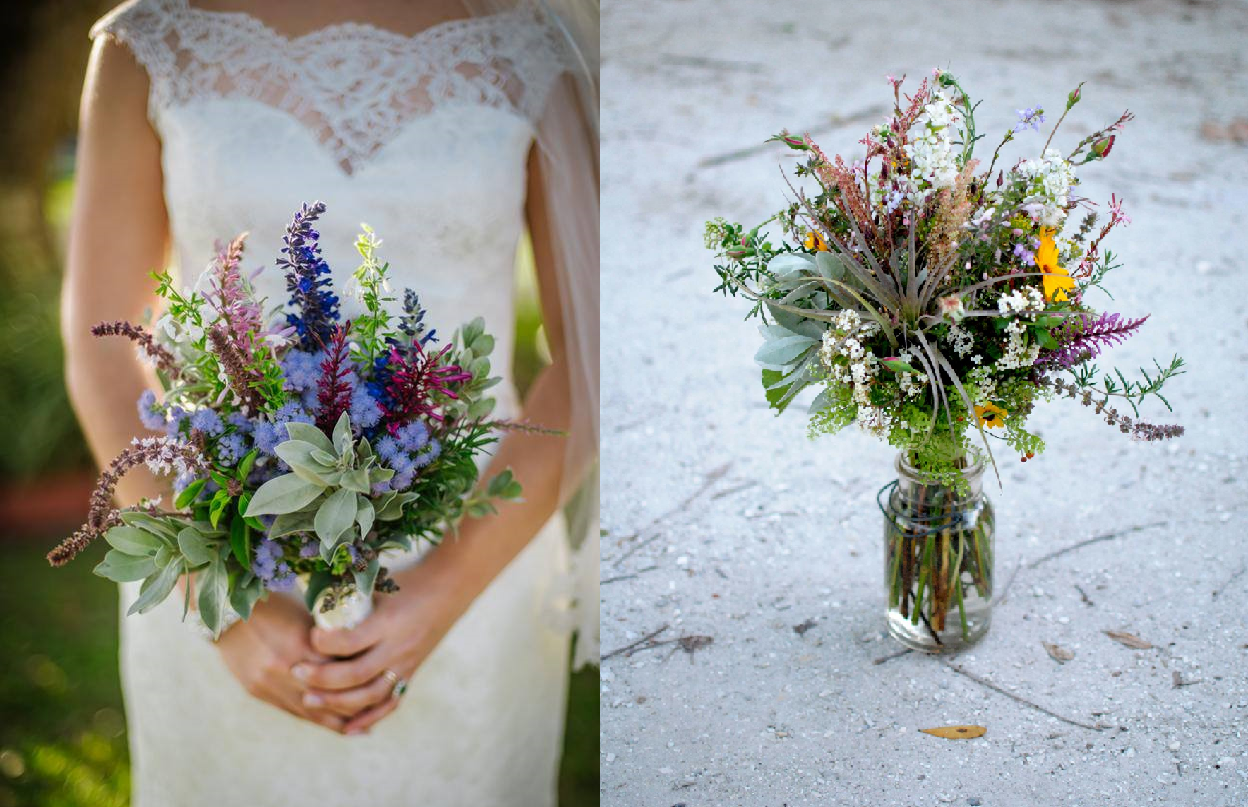
Lush and local, a bountiful wedding bouquet by A Garden Party's Mary & Dawn.

Lush and local, a bountiful wedding bouquet by A Garden Party’s Mary & Dawn.

Mary, little sister, is mom to sons Lee – 6 and Sam – 3; she is a proud farmer’s wife (insert shameless plug for Coombs Sod Farms here), a hunter of garden gems, a lover of wine & cheese (who isn’t?), a collector of friends, a mama’s girl (youngest sibling trait?), a creator of pretty things, and a believer that the simplest things bring the greatest pleasure. Mary admits to being the extrovert in the partnership

Dawn, slightly older sister, is a happy mama to two beautiful girls (Grace, 11 and Leah, 7), an obsessive organizer, an avid reader with a kindle binge every now and then, a supporter of trashy reality tv, a true beach lover (work or play!) a hermit on Mondays, a loving wife to her even more introverted husband (she says she’s the outgoing one in that relationship) and a true believer in doing what she loves: flowers!


I am so encouraged by their involvement in Slowflowers.com, especially when I receive emails like on Mary sent me last season. Her subject line: “It is Working.”

 “I was meeting with a client last night and I asked her how she found us. Much to my delight, she found us via Slowflowers.com! She is a perfect fit for my company and I am proud to be listed on this site. Thank you for working so hard on this!”

READ MORE…

Episode 269: Living on a U-Pick Flower Farm and channeling your inner flower farmer, with Cathy Lafrenz of Miss Effie’s Country Flowers in Donahue, Iowa

Wednesday, November 2nd, 2016
The cutting garden at Miss Effie's is filled with sun-loving annuals, old-fashioned favorites, and lots of surprises for U-Pick customers to take home. (c) Jean Zaputil Photography

The cutting garden at Miss Effie’s is filled with sun-loving annuals, old-fashioned favorites, and lots of surprises for U-Pick customers to take home. (c) Jean Zaputil Photography

Do you need to relax? Do you need a break from traffic jams and hectic schedules? Then you need to come to Miss Effie’s. Miss Effie’s is a U-Pick flower farm on the east coast of Iowa.

Called the "corn-zebo," this charming open-air structure is fashioned from a former corn-storage silo and decorated with a whimsical door and roof. Here's where tea is served, with views of farm fields beyond.

Called the “corn-zebo,” this charming open-air structure is fashioned from a former corn-storage silo and decorated with a whimsical door and roof. Here’s where tea is served, with views of farm fields beyond.

That’s the invitation from Cathy and Cliff “Honey” Lafrenz the real human flower farmers who preside over Miss Effie’s Country Flowers (and Garden Stuff), a picture-perfect, two-acre country farm. Visiting was on my to-do list this past September, when I traveled to the Quad Cities area, which is a metro hub that connects Iowa and Illinois across the Mississippi River.

Two views of "The Summer House" at Miss Effie's, a tiny country crafts store where flowers, fresh eggs, and fine handcrafted linens can be purchased.

Two views of “The Summer Kitchen” at Miss Effie’s, a tiny country crafts store where flowers, fresh eggs, and fine handcrafted linens can be purchased.

I was lured to the area for several reasons, including an invitation from a local garden club in Moline, Illinois, which invited me to present a lecture about the Slow Flowers Movement, followed by a hands-on design workshop for 25 members using only Iowa-grown flowers.

Jean Zaputil captured the character and detail in every view -- from quilting fabric (and kitty) to a small wood stove.

Jean Zaputil captured the character and detail in every view — from quilting fabric (and kitty) to a small wood stove.

When the garden club booked my lecture, I told them I wanted to source local flowers — and fortunately, Miss Effie’s isn’t too far outside of the urban core. The garden club members arranged their pickup of hundreds of Cathy’s beautiful blooms and took time to process and every beautiful stem in time for our workshop.

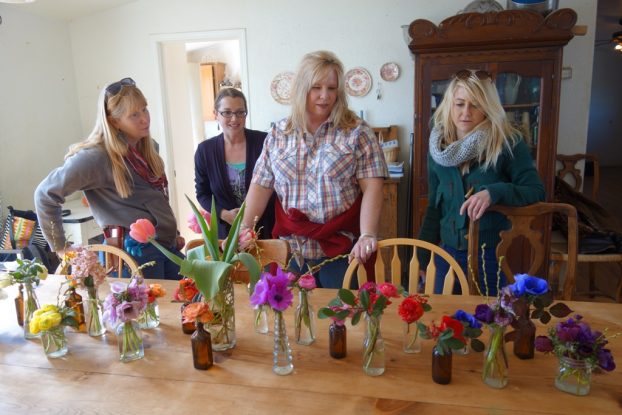
Cathy Lafrenz (aka Miss Effie) and I enjoyed refreshments and recorded this podcast episode inside the cool shade of her "corn-zebo"

Cathy Lafrenz (aka Miss Effie) and I enjoyed refreshments and recorded this podcast episode inside the cool shade of her “corn-zebo”

That left room in the schedule for me to visit Cathy for a private tour, for refreshments and to record this podcast. I couldn’t have done any of this without the help from my dear, longtime friend Jean Zaputil of Studio Z – Design & Photography in Davenport, Iowa. I’ve called Jean my “garden muse” for years and now that she has moved back to her childhood state after being in Seattle for more than two decades, I don’t get to see her very often. The occasion of coming to Quad Cities to lecture was really a chance to visit and play with Jean, tour Iowa, go antiquing, sit by the fire as her husband Mark played old Beatles songs on his guitar, and generally soak up the Iowa life.

Gotta love a motto like this one, spotted high on a barn in the cutting garden.

Gotta love a motto like this one, spotted high on a barn in the cutting garden.

As it happens, Jean and Cathy are also friends, and we made a fun morning of our visit. Jean documented Miss Effie’s charm, character and creativity with her camera, and I have her permission to publish those photos on the podcast show notes. All images are (c) Jean Zaputil.

Find all-American and all-local Iowa-grown flowers at Miss Effie's.

Find all-American and all-local Iowa-grown flowers at Miss Effie’s, plus the clothesline and flagpole flapping in the breeze.

Here’s more about Miss Effie’s from the farm’s welcome page:

READ MORE…

Slow Flowers Creative Workshop with Russian River Flower School

Thursday, October 27th, 2016
groupdsc00522

Our wonderful group, from left: Dundee, Naomi, Julia, Susan, Kate, Debra & Emily, photogaphed in Dundee’s private garden in Healdsburg, CA

Dundee with her sweet Lab, "Joyce Muriel," who wasn't thrilled with her floral collar.

Dundee with her sweet Lab, “Joyce Muriel,” who wasn’t thrilled with her floral collar.

00539_DP_CreativeWorkshop-02Earlier this month I had the distinct pleasure of teaching with Dundee Butcher of Russian River Flower School in Healdsburg, California.

This was a lovely chance to share the Floral Storytelling and Floral Memoir curriculum in one of the most inspiring places for followers of our Slow Flowers ethos.

I believe our inspiration comes from “place,” and there was no shortage of beautiful scenery, gorgeous botanicals and the most to-die-for studio space you’ve ever seen.

rrfsimg_2643Dundee and her colleague Naomi Mcleod, along with their volunteer Vicki McFadden, hosted our workshop for two days in which we exercised our writing skills, stretched our perception of language, and stepped outside the comfort zones as florist-writers.

One of the participants said this about the value of the experience:

“The topic interested me since I have been on a mission to find where I am going with my business and how to incorporate our family farm and tell our story.

“I plan to use this as I update and rebrand my business and where I am going with it.”


Writing about flowers . . . it's kind of like meditation.

Writing about flowers . . . it’s kind of like meditation.

This is the third Creative Workshop and what I am finding most inspiring is how willing our participants suspend fear or apprehension and dive into unfamiliar exercises to express themselves through words. I salute everyone involved for the way they encouraged and supported one another — that makes a huge difference during any creative process, right?!

I love Kate's concentration as she writes about a dahlia!

I love Kate’s concentration as she writes about a dahlia!

What drew people to take this workshop and invest in themselves in a new way? Here’s a sampling of the reasons:

“I lost track of my connection to creativity. I could stand behind another designer and sell someone else’s work, but not my own. I want to use flowers to tell a story.”

“I became so separate from who I am, and I started thinking ‘what would I do if I could do anything I dreamed of?'”

Our writing exercises ranged from simple botanical descriptions (describe a rose without using the word rose, for example), to playing with new ways of naming color, to journaling about our earliest memory of nature, flowers or art. The ultimate goal? To identify our “why,” our “North Star,” our personal value system that underscores our brand.

READ MORE…