Longtime Slow Flowers members and supporters Farmgirl Flowers just marked its 16th anniversary. In the past few years, the company relocated to Gig Harbor, Washington from the Bay Area, so we’re now practically neighbors. With this move to a woodland campus nestled in a clearing surrounded by conifers, deciduous trees, and native wild vegetation, the company is taking advantage of acreage where founder and CEO Christina Stembel and her team are planting thousands of peonies, garden roses, spring bulbs, woody ornamental shrubs, vines, and a small forest of eucalyptus. When she first moved in, Christina began using the charming modern farmhouse as the setting for photo shoots and videos. Now, after three years, she no longer lives there, because it’s the corporate “farm-quarters.” There is a beautiful new barn with offices and a photography/video studio, a greenhouse, and a cutting garden, not to mention endless plans to grow more flower crops and learn from the land. I recently visited to catch up with Christina and to film a little tour for you. Welcome to Gunnii Hill, named after her favorite eucalyptus variety. It’s exciting to see what has happened now that Farmgirl has returned to the farm.
P.S. Part Two of today’s show includes a bonus interview with Amelia Ihlo of Rooted Farmers, so check it out, too.
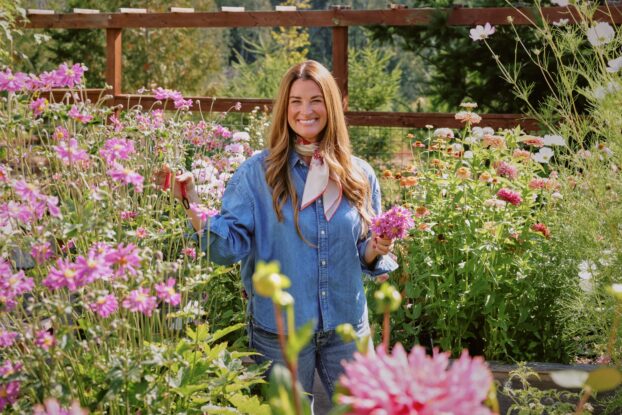
Christina Stembel, founder and CEO of Farmgirl Flowers, in her cutting garden
Earlier this summer, Christina Stembel posted a personal update on the Farmgirl Flowers blog,
The headline reads: “From Startup to Something More Real.”
If you’ve been around here for a while, you’ve probably felt a bit of a shift. It’s not something loud or flashy, but it’s been happening slowly and very intentionally behind the scenes. We moved to Washington. We bought some land in Gig Harbor. And we’re starting a small flower farm. I’m really excited to start sharing more of that with you. This isn’t just a side project or a “fun little thing on the side.” It’s part of a bigger shift in how I think about Farmgirl Flowers and what we’re actually building.
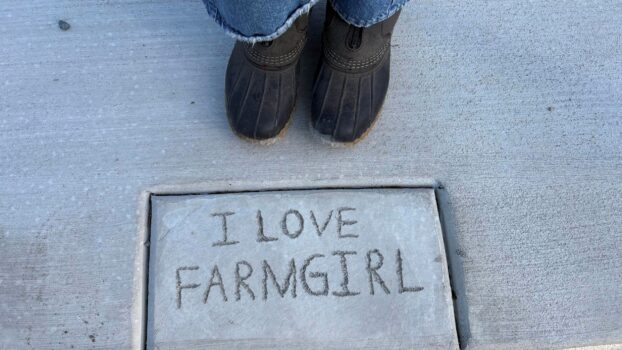
Sidewalk art at Farm-quarters, aka “Gunnii Hill Farm”
For a long time, Farmgirl sat in that “startup” category. Silicon Valley-adjacent, even though we were never really playing that game the same way. There’s a lot of pressure in that world to grow as fast as possible, to chase scale, to optimize for what looks impressive on paper (and in pitch decks that may or may not reflect reality). And somewhere along the way, I realized that’s not actually what I want to build. I want to build a real company.
One that lasts. One that actually makes money so its value isn’t an arbitrary “valuation.” One that does things the right way, even when that way is slower, harder, and not nearly as sexy. We’re not chasing growth at all costs—we’re building something that can actually stand on its own and still be here years from now.
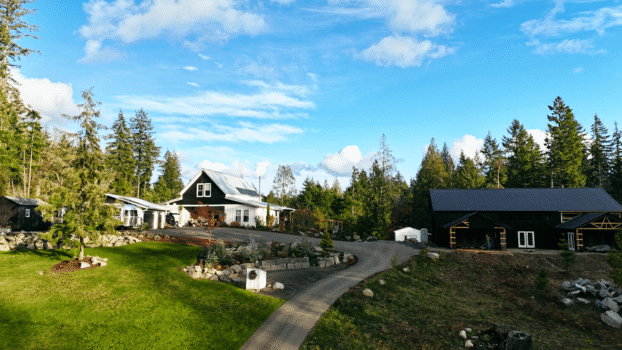
The PNW woodland is a backdrop to Gunnii Hill Farm
Recently, one of our competitors referred to us as a “family company,” and it really irritated me, probably more than it should have (because really, does it even matter?). Not because I have anything against family—I actually just got married and now have two step sons that I love a ton—but because of what they meant by it. It wasn’t about values or closeness. It was meant to imply that this was something inherited, something handed down, or not earned the hard way like somehow their very funded company has.
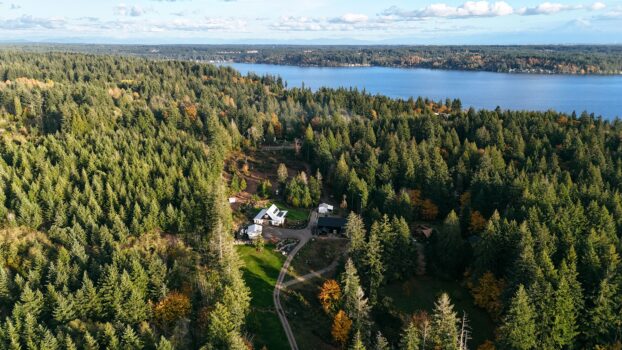
Aerial view of Gunnii Hill Farm
And that’s just not our story.
I started Farmgirl Flowers with $49,000. No roadmap, no safety net, no pedigree (or even college degree), no generational anything waiting in the wings. Just a lot of grit, a lot of mistakes, and a refusal to quit when it would have been SO much easier to quit. We’ve built a profitable flower company from that, and I’m really proud of it. It took longer. It was WAY harder. There were a lot of moments it could have gone the other way (and a few where it probably should have, if I’m being honest).
So when that gets minimized, yeah—it’s frustrating. But it also feels like one of those things that says a lot more about them than it does about us.
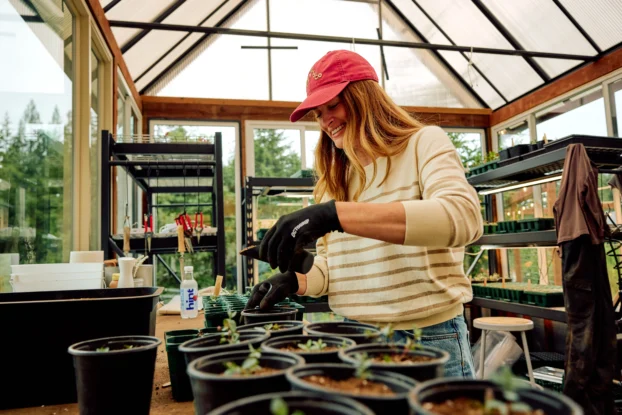
Christina Stembel at the seeding counter inside her greenhouse
The farm is part of this next chapter, but probably not in the way people assume. The goal isn’t to make money from it (and if you know anything about farming, you definitely understand that!). I’ve always wanted a physical manifestation of who we are—something real that you can walk through, touch, and get dirt under your nails from instead of just seeing it on a website.
There’s also a huge amount to learn from actually growing the flowers we sell. Even if it will only ever be a small percentage of our overall production, it creates a level of respect for the entire supply chain that you just can’t get any other way. It’s hard, unpredictable, always humbling in a “you thought you had control here?” kind of way, and it forces you to understand the work at a completely different level. I believe it makes me a better leader and makes Farmgirl a better company.
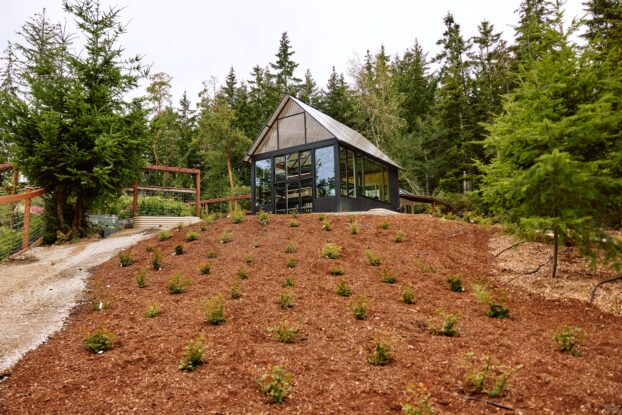
Greenhouse at Gunnii Hill Farm
Something else that’s shifted for me over the last few years is how I think about not raising venture capital. If you’ve been with us a while, you probably know that I used to have a pretty big chip on my shoulder about it. (Okay, not subtle. I talked about it a lot.) But now I see it as one of the biggest gifts we’ve been given.
If we had taken funding, our job would be simple: grow as fast as possible and return as much money as possible as quickly as possible. That becomes the whole focus, whether people say it out loud or not. And almost every founder I know who’s gone that route eventually says the same thing—usually a little quieter than they used to—that they hope they can build their next company bootstrapped.
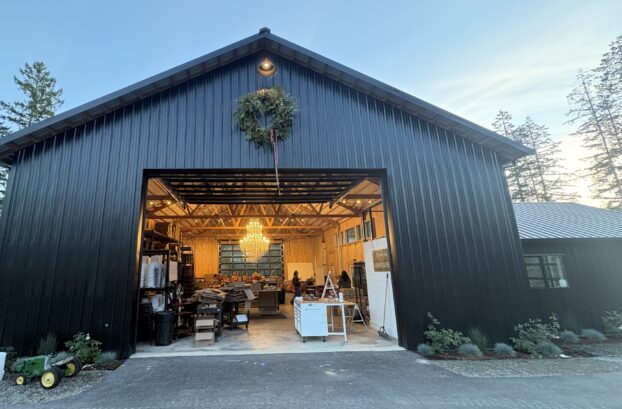
The new design barn at Farm-quarters, aka “Gunnii Hill Farm”
It took me a while to really hear that, but I get it now.
We wouldn’t have bought this farm if we were funded. We wouldn’t be growing flowers and so much eucalyptus here (Gunnii Hill, named after the variety we’re planting). We wouldn’t have planted almost 40,000 peonies in Oregon and be patiently waiting the three years it takes to get our first real harvest (which, as someone who likes things to happen quickly, has been a real exercise in personal growth).
We wouldn’t have the freedom to make decisions that are better for the long haul instead of the next earnings report presented at the next board meeting.
So this is where we are now. Still working really hard. Still figuring things out as we go. Still choosing the harder, longer path more often than not. But building something real, something rooted, and something that actually reflects who we are—not who we’re supposed to be.
Let’s jump right into the interview, which I filmed on a visit in October. You’ll see/hear a cameo appearance by my husband Bruce Brooks, who arrived partway through the tour to join the party. I decided to include his appearance because it’s part of the story – enjoy!
Thanks so much for joining us today! I encourage you to watch the replay video of my conversation with Christina. This podcast is committed to shining a light and amplifying the voices of our members, celebrating the many stories of this community, stories as diverse as each of you.
What follows is a bonus interview I recorded last week with Amelia Ihlo, founder of Rooted Farmers. Full disclosure, Rooted Farmers sponsors this podcast, and I’ve been wanting to share their update with our community. As you know, Rooted Farmers is a software platform that provides a suite of services to farms and hubs. They began serving flower farms like Amelia’s own farm in 2019 and recently expanded to support food growers, too. In our conversation, Amelia shares three new Rooted Farmers funding opportunities to encourage farms and hubs in their efforts to strengthen local agricultural systems. One of these grants and scholarships might just have your name on it, so have a listen. The application deadline is coming up on December 15th
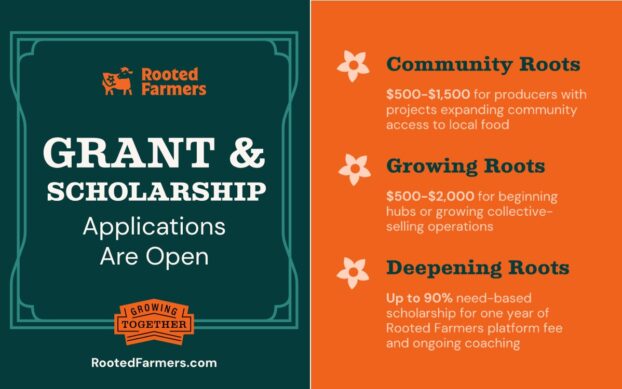
Looking for funding or support for your farming community or hub? 🌱 Rooted Farmers is launching three grant and scholarship programs:
• Community Roots: $500–$1,500 for producers with a project that expands community access to local food • Growing Roots: $500–$2,000 for hubs starting or growing collective selling operations • Deepening Roots: Up to 90% need-based scholarship for one year toward Rooted Farmers platform fee forgiveness for established hubs navigating financial or operational challenges
Community Roots and Growing Roots applications are due December 15, 2026. Deepening Roots applications are accepted on a rolling basis.
➡️ Learn more and see if your farm or hub is eligible:
This show is brought to you by slowflowers.com, the free, online directory to florists, shops, and studios who design with local, seasonal and sustainable flowers and to the farms that grow those blooms. It’s the conscious choice for buying and sending flowers.
And thank you to our lead sponsor, My Patio Tree: Expertly Grown Plants, Perfectly Designed to Elevate Your Garden. Their second-generation family tree farm has curated the best-performing, cutting-edge, multi-zone varieties to enhance your garden, patio or special event. Every tree purchased supports Plant With Purpose, a nonprofit organization that restores hope by reversing global poverty and environmental damage. Learn more at mypatiotree.com.
Thank you to Longfield Gardens, which provides home gardeners with high quality flower bulbs and perennials. Their online store offers plants for every region and every season, from tulips and daffodils to dahlias, caladiums and amaryllis. Check out the full catalog at Longfield Gardens at longfield-gardens.com.
And thank you to Johnny’s Selected Seeds, an employee-owned company that provides our industry the best flower, herb and vegetable seeds — supplied to farms large and small and even backyard cutting gardens like mine. Find the full catalog of flower seeds and bulbs at johnnyseeds.com.
Thanks so much for joining us today. The Slow Flowers Podcast is a member-supported endeavor, downloaded more than 1.6 million times by listeners like you. Thank you for listening, commenting and sharing – it means so much. As our movement gains more supporters and more passionate participants who believe in the importance of our domestic cut flower industry, the momentum is contagious. I know you feel it, too. If you’re new to our weekly Show and our long-running Podcast, check out all of our resources at SlowFlowersSociety.com.
Thank you for listening! Sending love, from my cutting garden to you! (c) Missy Palacol Photography
I’m Debra Prinzing, host and producer of the Slow Flowers Show & Podcast. The Slow Flowers Podcast is engineered and edited by Andrew Brenlan. The content and opinions expressed here are either mine alone or those of my guests alone, independent of any podcast sponsor or other person, company or organization. Next week, you’re invited to join me in putting more Slow Flowers on the table, one stem, one vase at a time. Thanks so much for joining us today and I’ll see you next week!
At last week’s Member Meet-up, the Slow Flowers community learned from Sarah Daken and Tom Precht as they shared an update onFloraponics, the sister business to their Maryland-based flower farm, Grateful Gardeners. Fueled by several years of R&D and hands-on farm trialing, their venture taps into technology and innovation to solve some of the principal challenges to year-round domestic floral production using aquaponics systems to grow beautiful cut flowers year-round. Tom and Sarah address how the U.S. floral market is collapsing under carbon costs and transit times — major barriers to delivering premium floral products affordably. They walk us through Floraponics and Grateful Gardeners’ goal of achieving climate independence, a closed-loop ecosystem, and EV floral delivery, among other priorities. If you saw images on their Instagram account last winter, the ones with Tom standing in the snow holding premium dahlias he’d just harvested from the greenhouse, you’ll want to learn more!
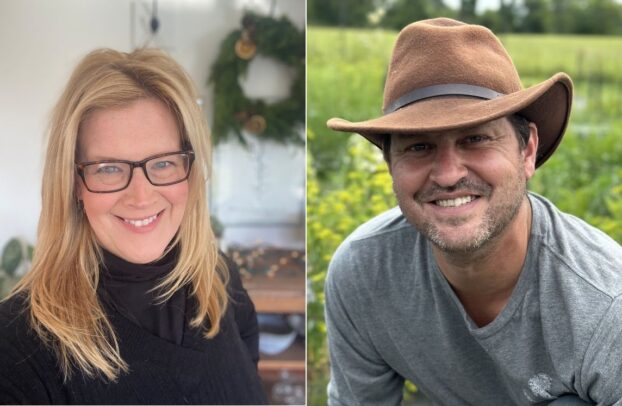
Sarah Daken and Tom Precht of Grateful Gardeners
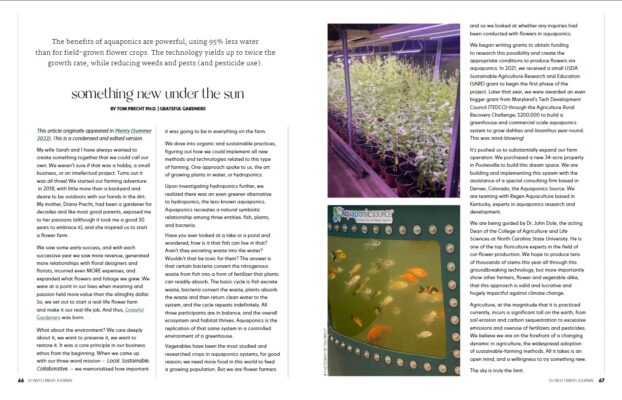
In our Slow Flowers Floral Insights & Industry Forecast for 2023, Tom Precht of Grateful Gardeners contributed a feature about aquaponics, which recreates a natural symbiotic relationship among three entities: fish, plants, and bacteria.
Slow Flowers Journal feature story by Tom Precht (pages 66-67)
Around the same time, Tom and Sarah Daken, his spouse and business partner, discussed Floraponics, their new venture, on the Slow Flowers Podcast (Episode 593, January 18, 2023). The fact that Slow Flowers members like Grateful Gardeners are on the forefront of a changing dynamic in agriculture, one that demonstrates new sustainable farming methods, is inspiring and instructional, leveraging technology to achieve higher levels of production.
The revolution that Floraponics envisions is aligned with the pursuit of sustainable and regenerative agriculture. As innovators, Tom and Sarah are trying to change the farming landscape for the better.
Today’s episode goes beyond what we discussed in the earlier podcast episode 593 from January 2023 as Tom and Sarah’ research and development have continued to demonstrate the benefits of aquaponics on a larger scale. They will discuss how Floraponics uses 95% less water versus field-grown production, as much as a two-times increase in crop growth rate, no weeding, less pests and pesticide use, year-round growing, not to mention growing at waist height.
Today’s presentation is an encore episode from our November Slow Flowers Member Meet-Up, recorded with the same visual presentation that Tom and Sarah give to potential investors. They have also given me permission to share the PDF of their deck here:
Thanks so much for joining us today! This podcast is committed to shining a light and amplifying the voices of our members, celebrating the many stories of this community, stories as diverse as each of you.
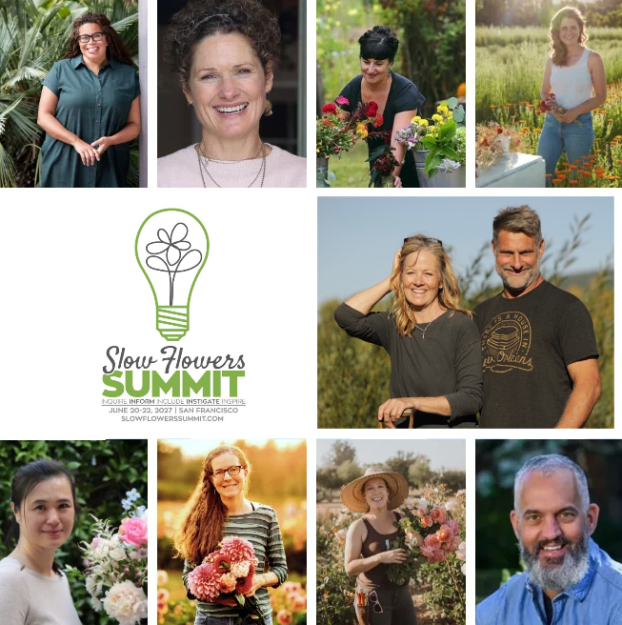
Top Row, from left: Leslie Bennett, Melissa Olson, Nichole Skalski, and Hannah Muller Middle Row: Alanna and Michael Karam Bottom Row, from left: Jacqueline Pham, Kristine Albrecht, Jennifer McClendon, and Jim Salyards
We’re deep into Q4, the time of year when our accountants are pestering us for records, receipts and our freelancer’s W-9s. It’s also the time of year when we take stock of our deductibles, such as professional development and educational investments. And that’s one reason why we opened up early bird ticket sales for the 2027 Slow Flowers Summit – with a discount – to give you a chance for a 2026 tax deduction when you plan ahead and grab your seat now.
Tickets to the Slow Flowers Summit include two-and-a-half days of floral programming, presentations from 10-plus experts in flower farming, floral design, and sustainable practices, as well as our Sunday welcome reception at Filoli Historic House and Garden in the SF Bay Area, our host venue. Breakfast and lunch on Monday and Tuesday and our closing reception on Tuesday afternoon are also included.
The members’ Early Bird ticket is $699 (it will increase to $799 on January 1st); the non-member Early Bird ticket is $799 (it will increase to $899 on January 1st). You will also want to check out our bonus event, held the day following the close of the Summit – the Oakland Local Flower Lovers’ Garden Tour, which includes a bus tour of four studios, gardens, and shops of our members – and lunch. You must be registered for the Summit in order to join this tour – there are only 35 tickets remaining for this exclusive experience.
This show is brought to you by slowflowers.com, the free, online directory to florists, shops, and studios who design with local, seasonal and sustainable flowers and to the farms that grow those blooms. It’s the conscious choice for buying and sending flowers.
And thank you to our lead sponsor, My Patio Tree: Expertly Grown Plants, Perfectly Designed to Elevate Your Garden. Their second-generation family tree farm has curated the best-performing, cutting-edge, multi-zone varieties to enhance your garden, patio or special event. Every tree purchased supports Plant With Purpose, a nonprofit organization that restores hope by reversing global poverty and environmental damage. Learn more at mypatiotree.com.
Thank you to Charles Little & Company for supplying our industry with some of the most beautiful and sustainably-grown design ingredients, available nationwide through their website at charleslittleandcompany.com. Based in Eugene, Oregon, the farmers at Charles Little & Company have been growing and drying flowers since 1986. New products and dried flower collections are added to their website at the first of each month. Check it out at charleslittleandcompany.com.
Thank you to the Seattle Growers Market, a farmer-owned cooperative committed to providing the very best the Pacific Northwest has to offer in cut flowers, foliage and plants. The Growers Market’s mission is to foster a vibrant marketplace that sustains local flower farms and provides top-quality products and service to the local floral industry. Visit them at seattlegrowersmarket.com.
Thanks so much for joining us today. The Slow Flowers Podcast is a member-supported endeavor, downloaded more than 1.6 million times by listeners like you. Thank you for listening, commenting and sharing – it means so much. As our movement gains more supporters and more passionate participants who believe in the importance of our domestic cut flower industry, the momentum is contagious. I know you feel it, too. If you’re new to our weekly Show and our long-running Podcast, check out all of our resources at SlowFlowersSociety.com.
Thank you for listening! Sending love, from my cutting garden to you! (c) Missy Palacol Photography
I’m Debra Prinzing, host and producer of the Slow Flowers Show & Podcast. The Slow Flowers Podcast is engineered and edited by Andrew Brenlan. The content and opinions expressed here are either mine alone or those of my guests alone, independent of any podcast sponsor or other person, company or organization. Next week, you’re invited to join me in putting more Slow Flowers on the table, one stem, one vase at a time. Thanks so much for joining us today and I’ll see you next week!
We just launched Early Bird ticket sales for the 2027 Slow Flowers Summit, which will take place next year — June 20-22. In addition to lectures, panels, and demonstrations, the Slow Flowers Summit is a showcase for locally-grown and American-grown flowers, sustainable design and education, and a celebration of the season character of flowers. Creatives who attend the 2027 Summit will bring their artistry to the event, inspired by the landscape and historic residence at our host venue, Filoli Historic House & Gardens in the SF Bay Area – and YOU are invited to join in this enriching experience! Today, my two guests and I discuss all the details of our Floral Takeover, as we preview this signature feature of the Summit. You’ll hear from Santa Cruz-based Teresa Sabankaya, who is taking the lead on creative direction and will handle planning and coordination with the Filoli staff. And you’ll hear from floral designer Kelly Shore. Through her company THE FLORAL SOURCE, Kelly is coordinating the major floral donations and contributions that will ensure we have beautiful, high-quality, fresh botanicals for the Floral Takeover. The Floral Source is a 100% American grown, farm-direct wholesale broker and we’re so happy to partner with Kelly to make the floral takeover a don’t-miss success!
Slow Flowers Summit Floral Takeover
The 2027 Slow Flowers Summit will be our 10th annual conference and I’m anticipating an unforgettable experience. Today’s conversation with Kelly Shoreand Teresa Sabankaya discusses all of the moving parts of such an ambitious undertaking, one involving more than 100 participants and thousands of stems of flowers – when we converge to together create floral installations and displays at the Filoli estate’s 56-room, 54,256-square-foot Georgian Revival Style mansion, originally constructed between 1915-1917.
Teresa has a deep familiarity with Filoli Historic House & Garden, having taught and designed there over the years. She was a featured speaker at our first Slow Flowers Summit in 2017 and she also presented when we gathered at Filoli in 2021. I asked Teresa to describe her approach to the Floral Takeover, and she said: “Not only is it exciting that this is the 10th anniversary of the Summit, but how cool is it that we’ll be together at Filoli, which is listed on The National Trust of Historic Places. It’s amazing that we get to fill the mansion with Slow Flowers! Also, I’m thrilled to learn more about Filoli’s English Renaissance-style gardens, which are described as “remarkably well-preserved as one of the few surviving and best examples of the style in the world.”
Like Teresa, Kelly Shore is an established floral designer whose studio, Petals by the Shore is based on the values of Slow Flowers, including using foam-free mechanics. She was a presenter at our 2018 Slow Flowers Summit in Washington, D.C. and she is the founder of The Floral Source, a farm-direct wholesale supplier to floral designers and farmer-florists in need of local and American grown botanicals.
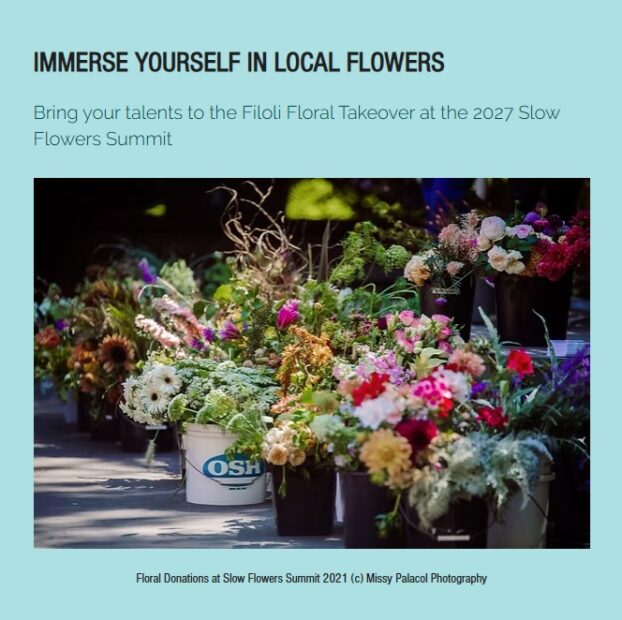
A note about the “Bring a Bucket” program. Everyone attending the Slow Flowers Summit is invited (and encouraged) to bring flowers to share! This invitation mostly applies if you live, garden, or farm close enough to drive to Filoli. Please consider bring your season’s best blooms and donating one or more buckets to be featured in the Floral Takeover. In exchange, floral donations will be featured in Slow Flowers Summit social media tags, your company logo will be featured in our Floral Roundup.
The first to donate in this manner include speakers Kristine Albrecht of Santa Cruz Dahlias, Hannah Muller of Full Belly Farm, and Alanna and Michael Karam of Willamette Willows. We’re thrilled that our speakers’ fields will enhance our floral takeover. You and your flowers can join in the fun!
Thanks so much for joining us today! This podcast is committed to shining a light and amplifying the voices of our members, celebrating the many stories of this community, stories as diverse as each of you. Be sure to get in touch with either Kelly or Teresa – especially to indicate your interest in the Floral Takeover.
Join Us: November 13th Slow Flowers Member Meet-Up
Sarah Daken and Tom Precht of Grateful Gardeners
In Slow Flowers news, coming up, this Friday, November 13th, we are hosting a Member Meet-Up and you’re invited to join this free online event, 9 am Pacific, Noon Eastern. The topic: SCALING YEAR-ROUND PREMIUM FLORICULTURE Production, With Sarah Daken and Tom Precht of Grateful Gardeners
Tom is an accomplished professional with a robust background in sustainable farming, scientific research, and sales. As VP and co-founder of Grateful Gardeners and Floraponics, he successfully managed a thriving cut flower farm with over $310,000 in annual revenue, cultivating more than 200 flower varieties. His expertise spans organic farming, aquaponics, controlled environment agriculture, and customer relationship management. Sarah is an accomplished legal professional and entrepreneur with extensive expertise in law and sustainable agriculture. As President and Co-Founder of Grateful Gardeners and Floraponics, she established a thriving organic and aquaponic cut flower farm, showcasing her proficiency in organic farming, sales, marketing, and inventory management.
Learn from Sarah and Tom as they share an update on Floraponics, Grateful Gardeners‘ sister business. Fueled by several years of R&D and hands-on farm trialing, their venture taps into technology and innovation to solve some of the principal challenges to year-round domestic floral production. Tom and Sarah will address how the U.S. floral market is collapsing under carbon costs and transit times — major barriers to delivering premium floral products affordably. They will walk us through Floraponics and Grateful Gardeners’ goal of achieving climate independence, a closed-loop ecosystem, and EV floral delivery.
The Meet-Up will be a 1-hour introduction to the future potential for a more sustainable domestic floral supply. Bring your questions! You must pre-register to join us — use the button below to pre-register.
This show is brought to you by slowflowers.com, the free, online directory to florists, shops, and studios who design with local, seasonal and sustainable flowers and to the farms that grow those blooms. It’s the conscious choice for buying and sending flowers.
And thank you to our lead sponsor, My Patio Tree: Expertly Grown Plants, Perfectly Designed to Elevate Your Garden. Their second-generation family tree farm has curated the best-performing, cutting-edge, multi-zone varieties to enhance your garden, patio or special event. Every tree purchased supports Plant With Purpose, a nonprofit organization that restores hope by reversing global poverty and environmental damage. Learn more at mypatiotree.com.
Our final sponsor thanks goes to Rooted Farmers. Rooted Farmers works exclusively with local growers to put the highest-quality specialty cut flowers in floral customers’ hands. When you partner with Rooted Farmers, you are investing in your community, and you can expect a commitment to excellence in return. Learn more at RootedFarmers.com
Our first sponsor thanks goes to Johnny’s Selected Seeds, an employee-owned company that provides our industry the best flower, herb and vegetable seeds — supplied to farms large and small and even backyard cutting gardens like mine. Find the full catalog of flower seeds and bulbs at johnnyseeds.com.
Thanks so much for joining us today. The Slow Flowers Podcast is a member-supported endeavor, downloaded more than 1.6 million times by listeners like you. Thank you for listening, commenting and sharing – it means so much. As our movement gains more supporters and more passionate participants who believe in the importance of our domestic cut flower industry, the momentum is contagious. I know you feel it, too. If you’re new to our weekly Show and our long-running Podcast, check out all of our resources at SlowFlowersSociety.com.
Thank you for listening! Sending love, from my cutting garden to you! (c) Missy Palacol Photography
I’m Debra Prinzing, host and producer of the Slow Flowers Show & Podcast. The Slow Flowers Podcast is engineered and edited by Andrew Brenlan. The content and opinions expressed here are either mine alone or those of my guests alone, independent of any podcast sponsor or other person, company or organization. Next week, you’re invited to join me in putting more Slow Flowers on the table, one stem, one vase at a time. Thanks so much for joining us today and I’ll see you next week!
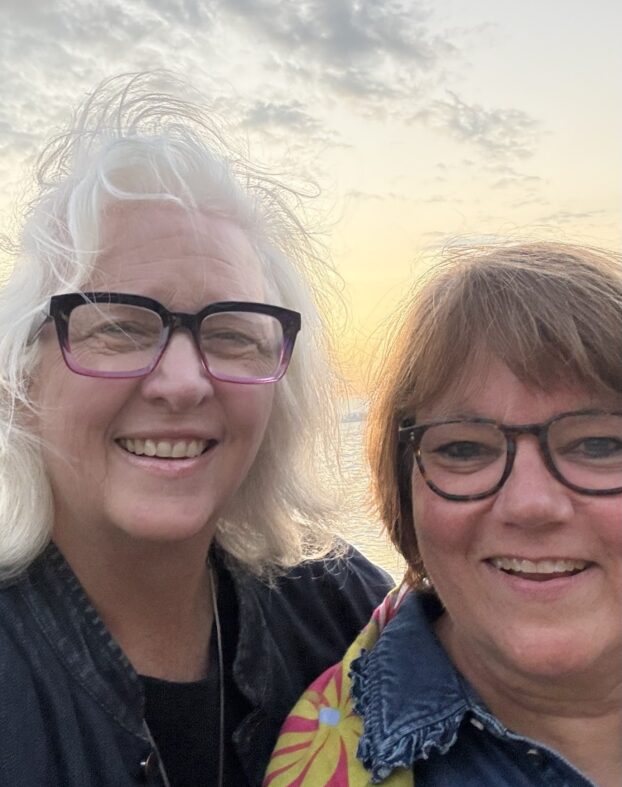
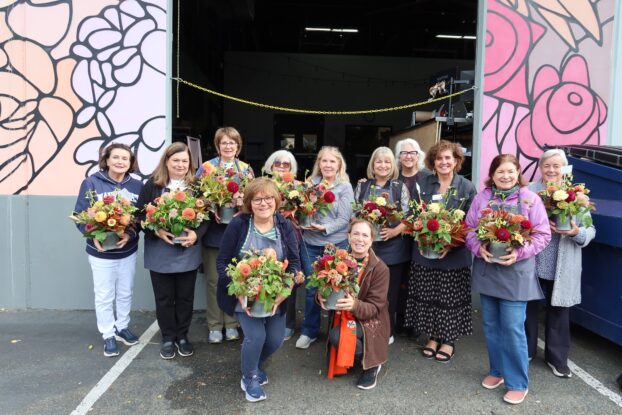
Last month, I partnered with Seattle Growers Market to host a group of flower and garden lovers who had joined Laura Iarocci’s Explore Flower Tours visit to the Pacific Northwest. An Atlanta-based floral designer who specializes in weddings and events, floral design education for church and cathedral flower guilds, and floral-enriched tours in Europe, the U.S., and beyond, Laura is also a Slow Flowers member who highlights local flowers and sustainability in her programming. Since 2011, Explore Flower Tours has been an extension of Laura’s Faith Flowers design school and studio, leading curated tours that include flower workshops with local, leading designers and instructors, flower farm visits, garden tours, flower shows, unique floral events, and more. During my day with the Explore Flower Tours group, we began with staff-led tour of the cooler and displays at Seattle Growers Market. After lunch, the group joined me in a floral design workshop using a bounty of seasonal flowers, foliages, and textures – and together we created a 100% compostable, foam-free centerpiece. The following day, I caught up with Laura to record today’s conversation about her unique business model that combines teaching, touring, and wedding design.
Debra Prinzing and Laura Iarocci
Before Laura Iarocci joined the volunteer flower guild at The Cathedral of St. Philip, the Episcopal cathedral in Atlanta, her relationship with flowers was as simply loved them. Up to that point, she had been a Wall Street banker. A relocation to Atlanta and a search for a creative outlet sparked what has become a fulfilling career and life in flowers.
At the time, when her children were little, Laura loved the quiet joy of arranging behind the scenes, creating florals that commemorated and provided hospitality and fellowship – and making services, funerals, and weddings more beautiful.
She tells the story in her 2018 book, “Faith Flowers,” a guide to arranging church flowers. “There were not so many flower arranging classes then as there are today. A very kind gentleman named Tyler Gresham, whose family had owned a flower shop in Atlanta, took me under his wing when I became the Flower Guild chair. He taught me how to buy flowers, prepare recipes and design in the classic English style. I worked as much as possible with the many other experienced arrangers on the Flower Guild.”
Over time, Laura has taken classes with some of the leading designers and instructors around the world, exposing herself to new ideas and techniques to apply to church design.
She formed Faith Flowers in 2010. Her studio now includes a flower school, flower tours around the world, and floral design for weddings, events, and funerals.
Explore Flower Tours workshop at Seattle Growers Market
We recently sat down to record the conversation you’ll hear now, the day after I taught a sustainable design workshop for her Pacific Northwest flower and garden tour produced by Laura’s sister business, Explore Flower Tours.
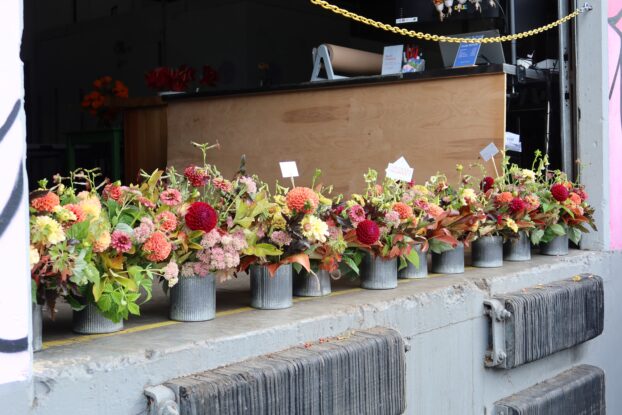
The finished arrangements from Explore Flower Tours workshop at Seattle Growers Market
I hope we spark some new ideas for your business, as you think about creating floral design experiences and excursions for your customers and communities. This podcast is committed to shining a light and amplifying the voices of our members, celebrating the many stories of this community, stories as diverse as each of you.
This show is brought to you by slowflowers.com, the free, online directory to florists, shops, and studios who design with local, seasonal and sustainable flowers and to the farms that grow those blooms. It’s the conscious choice for buying and sending flowers.
And thank you to our lead sponsor, My Patio Tree: Expertly Grown Plants, Perfectly Designed to Elevate Your Garden. Their second-generation family tree farm has curated the best-performing, cutting-edge, multi-zone varieties to enhance your garden, patio or special event. Every tree purchased supports Plant With Purpose, a nonprofit organization that restores hope by reversing global poverty and environmental damage. Learn more at mypatiotree.com.
Our next sponsor thanks goes to Longfield Gardens, which provides home gardeners with high-quality flower bulbs and perennials. Their online store offers plants for every region and every season, from tulips and daffodils to dahlias, caladiums and amaryllis. Check out the full catalog at Longfield Gardens at longfield-gardens.com.
Our final sponsor thanks goes to Rooted Farmers. Rooted Farmers works exclusively with local growers to put the highest-quality specialty cut flowers in floral customers’ hands. When you partner with Rooted Farmers, you are investing in your community, and you can expect a commitment to excellence in return. Learn more at RootedFarmers.com
The Slow Flowers Podcast is a member-supported endeavor, downloaded more than 1.6 million times by listeners like you. Thank you for listening, commenting and sharing – it means so much. As our movement gains more supporters and more passionate participants who believe in the importance of our domestic cut flower industry, the momentum is contagious. I know you feel it, too. If you’re new to our weekly Show and our long-running Podcast, check out all of our resources at SlowFlowersSociety.com.
Thank you for listening! Sending love, from my cutting garden to you! (c) Missy Palacol Photography
I’m Debra Prinzing, host and producer of the Slow Flowers Show & Podcast. The Slow Flowers Podcast is engineered and edited by Andrew Brenlan. The content and opinions expressed here are either mine alone or those of my guests alone, independent of any podcast sponsor or other person, company or organization. Next week, you’re invited to join me in putting more Slow Flowers on the table, one stem, one vase at a time. Thanks so much for joining us today and I’ll see you next week!
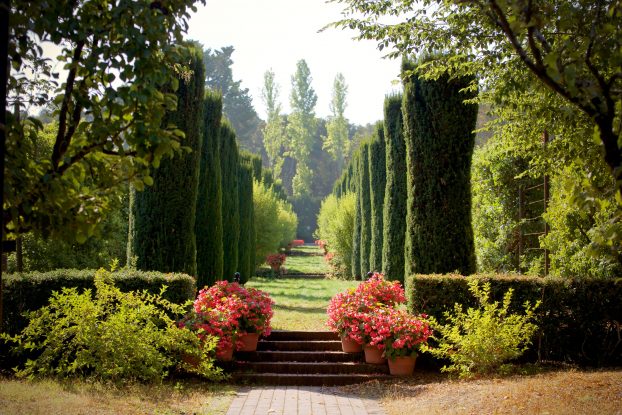
The 2027 Slow Flowers Summit will take place live and in-person on the grounds of Filoli Historic House and Garden, the famed cultural destination in the San Francisco Bay Area. Late last month, I traveled there for a site visit and planning session, meeting up with several of Filoli’s horticulture and floriculture team members, including Jackie Salas, today’s guest. The weather was glorious and Jackie led Niesha Blancas, our social media manager, and me on a walk through Filoli’s cutting garden while we filmed and recorded content. While introducing us to the vast perennial and annual beds and borders, Jackie clipped and gathered some of her favorite blooms, foliages, and texture elements for an arrangement she subsequently designed. This was a delightful education for a flower-lover like me, as Jackie shared about the character of California gardens, the history of cut flower growing and design at this renowned estate garden, and how she favors plants with two or three uses – both in the landscape and the vase. Filoli plays a leading role in horticulture and gardening education, with an emphasis on sustainability and design, and we know you and other Slow Flowers Summit attendees will be enriched by your time there next June. Today’s conversation is a beautiful preview – as we are gearing up to open Early Bird ticket sales on November 1st.
Jackie Salas, Horticulture Production Manager at Filoli Historic House & Garden
You may have heard that we’re celebrating our 10th Slow Flowers Summit next year. The dates are set for June 20th to 22nd, 2027 and you’re invited to join the Slow Flowers community as we highlight new ideas and leading voices in floral design, flower farming, and sustainability topics. The big news is that the Summit will take place in the San Francisco Bay Area at Filoli Historic House & Garden. This might sound familiar, and it is – because Filoli’s leadership has invited us to return after our successful 2021 conference there.
FILOLI: the recently-renovated “High Place” at Filoli in Woodside, Calif., destination for the Slow Flowers Summit 2020
I’m so excited that we’ll again experience a full immersion of the gardens, landscape, and natural areas at Filoli, as we learn from expert Slow Flowers instructors, including from Filoli’s horticulture and floriculture teams.
Today’s guest is Jackie Bergquist Salas, Horticulture Production Manager at Filoli. Here’s more about Jackie. She is a San Francisco Bay Area native who has always had a passion for petals. As a child growing up in the East Bay, she thought it normal to harvest backyard roses for Thanksgiving centerpieces, and large bouquets of fresh Calla Lilies from her yard long into May. She took this passion to UC Davis, where in 2005 she earned a B.S. in Environmental Horticulture with specializations in Landscape/Turf Management and Nursery Production/Floriculture. While at Davis she also worked in the university’s Floriculture Labs. Continuing her florific journey, Jackie she obtained a M.S. in Public Horticulture from the University of Delaware and the Longwood Garden’s Graduate Program in 2009. She picked up floral arranging skills at a private estate after college, and honed her growing skills at Children’s Fairyland in downtown Oakland, California. These experiences led her to her dream job at Filoli Gardens and Estate, where she manages the Horticultural Production spaces and staff.
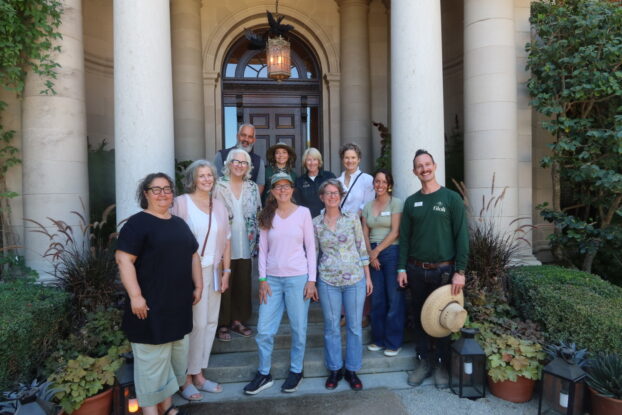
Slow Flowers Summit visits Filoli Historic House and Garden Above, from left: Sarah Reyes, Teresa Sabankaya, Debra Prinzing, Jim Salyards, Marlene Delgado, Aimee Sanders, Melissa Olson, Sonia Capitant, Brendan Dellerba; Front: Kristine Albrecht and Laura Sasso. Not pictured: Jacqueline Pham
As I mentioned, Niesha and I spent a few hours recently, touring the cutting gardens as Jackie introduced us to the late summer-early autumn plantings. After meeting the plants where they grow, we followed her into the floral arranging room in Filoli’s mansion, a special place where all the vase collections are stored, flowers are dried, and design supplies are stocked for staff to easily create close to 20 arrangements weekly for the public and administrative areas. I encourage you to watch the replay video of my conversation with Jackie as we toured the gorgeous Filoli Cutting Gardens and as she designed a seasonal arrangement. You’ll find it at slowflowerspodcast.com or on our YouTube channel for Episode 790. By the way, Filoli Horticulture is a member of the Slow Flowers Society and we’re so grateful for their involvement as both a host venue and fellow members.
One more series of thank you’s I want to share. During our few days in the Bay Area, Niesha and I were joined by several Slow Flowers members, including some of our Summit speakers and designers. We had a great time on a walk-through of the Filoli mansion, and later visited in the Café at Filoli for networking and good friendship. A special thank you to our Filoli counterparts, including Jim Salyards, Brendan Dellerba, Sonia Capitant, Aimee Sanders and Marlene(a) Delgado for all their input and guidance – you showed us a magnificent time and it’s a preview of what’s to come.
Thank you to speakers who joined us, including Kristine Albrecht (and her husband Brion Sprinsock) of Santa Cruz Dahlias, Jacqueline Pham of Pham Peony Gardens, and Melissa Olson of Penflora Designs. We also welcomed Teresa Sabankaya, who has agreed to serve as the Creative Director for the Floral Takeover at the Filoli mansion. Sarah Reyes and Laura Sasso of Wildflower and Fern in Oakland also joined us. What a treat to connect in person as we all began to imagine the many ways we can deliver a fantastic, inspiring, and idea-filled 2027 Slow Flowers Summit.
Thank you to our Sponsors
This show is brought to you by slowflowers.com, the free, online directory to florists, shops, and studios who design with local, seasonal and sustainable flowers and to the farms that grow those blooms. It’s the conscious choice for buying and sending flowers.
And thank you to our lead sponsor, My Patio Tree: Expertly Grown Plants, Perfectly Designed to Elevate Your Garden. Their second-generation family tree farm has curated the best-performing, cutting-edge, multi-zone varieties to enhance your garden, patio or special event. Every tree purchased supports Plant With Purpose, a nonprofit organization that restores hope by reversing global poverty and environmental damage. Learn more at mypatiotree.com.
Thank you to Charles Little & Company for supplying our industry with some of the most beautiful and sustainably-grown design ingredients, available nationwide through their website at charleslittleandcompany.com. Based in Eugene, Oregon, the farmers at Charles Little & Company have been growing and drying flowers since 1986. New products and dried flower collections are added to their website at the first of each month. Check it out at charleslittleandcompany.com.
Thank you to the Seattle Growers Market, a farmer-owned cooperative committed to providing the very best the Pacific Northwest has to offer in cut flowers, foliage and plants. The Growers Market’s mission is to foster a vibrant marketplace that sustains local flower farms and provides top-quality products and service to the local floral industry. Visit them at seattlegrowersmarket.com.
The Slow Flowers Podcast is a member-supported endeavor, downloaded more than 1.6 million times by listeners like you. Thank you for listening, commenting and sharing – it means so much. As our movement gains more supporters and more passionate participants who believe in the importance of our domestic cut flower industry, the momentum is contagious. I know you feel it, too. If you’re new to our weekly Show and our long-running Podcast, check out all of our resources at SlowFlowersSociety.com.
Thank you for listening! Sending love, from my cutting garden to you! (c) Missy Palacol Photography
I’m Debra Prinzing, host and producer of the Slow Flowers Show & Podcast. The Slow Flowers Podcast is engineered and edited by Andrew Brenlan. The content and opinions expressed here are either mine alone or those of my guests alone, independent of any podcast sponsor or other person, company or organization. Next week, you’re invited to join me in putting more Slow Flowers on the table, one stem, one vase at a time. Thanks so much for joining us today and I’ll see you next week!
Celebrating their 10th season of what the Windmeyer family calls “The Grand Experiment,” Lynn and Tim Windmeyer are breathing new life into land in and around St. Joseph, Missouri, where seven generations of Tim’s family have farmed, since approximately 1868. Named Homeplace Fields, the endeavor combines Lynn’s creative design talents and Tim’s agricultural skills. Both are Missouri natives. Lynn’s love for flower growing was instilled by her mother. Tim’s own childhood on land just one mile away brought him to study agriculture in college. The couple once lived abroad working for a humanitarian aid organization, teaching growing techniques to farmers in many countries. Today, Tim and Lynn, along with their four children, are putting down roots via a different type of agriculture: flower farming. I visited them early in their journey – back in 2018 – and their story made quite an impression on me. We recently reunited (virtually) for an update. It’s amazing to see how much this family project has come into its own and I’m happy to share their story with you!
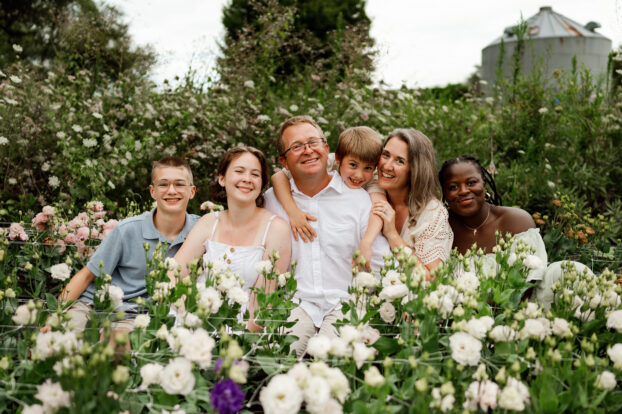
The Windmeyer family, from left: Bennett, Stella, Tim, Everett, Lynn, and Joy (c) Goldie Lynn
I vividly recall the day when Andrea Grist, a florist, long-time Slow Flowers member, and local flowers advocate, brought me to visit Homeplace Fields in St. Joseph, Missouri, when I was in the area for a gathering she hosted. It was such a lovely place and we spent time walking the plantings area and talking with them in the studio, a reclaimed dairy barn where earlier generations of Tim’s family once milked their cows. Their children were younger and Lynn was just beginning to develop her aesthetic as a farmer-florist. I loved learning about this young floral operation planted on generations-old land.
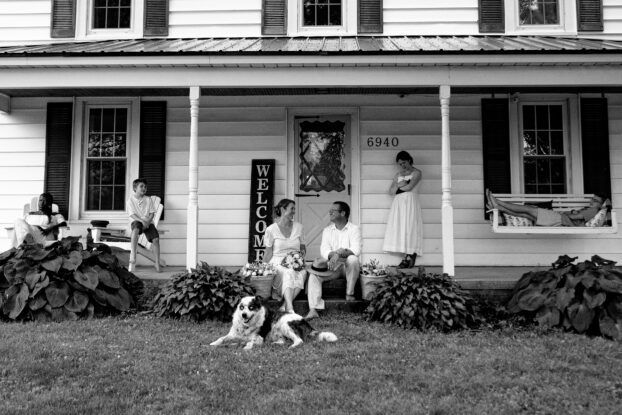
The Windmeyer family in front of their historic farmhouse, circa 1868 (c) Goldie Lynn
Today, Homeplace Fields is a specialty cut flower farm that primarily sells florals to retail customers through CSA subscriptions and via pickup spots at local businesses around St. Joseph, Missouri. The farm has a few wholesale customers, as well. As a designer, Lynn commits to a few weddings each season, and together Lynn and Tim host a popular Flower Farm Day each September. Produced with Nesting Goods, their local retail partner, the family-friendly event has become a community favorite each fall. The farm comes alive with creative artisans, live music, a corn pit, food trucks, and, of course, farm-fresh blooms.
Above: Video from a past Flower Farm Day, including the famous “corn pit” (which, to be honest, until I watched this, I had pictured EARS of corn rather than kernels of corn). It looks like great fun!
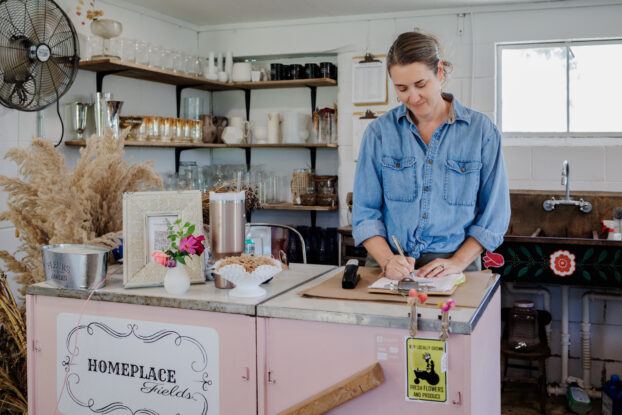
Lynn, in the Homeplace Fields studio (former dairy barn)
Thanks so much for joining us today! Find and follow Homeplace Fields at their social places: Instagram and Facebook
Thank you to our Sponsors
This show is brought to you by slowflowers.com, the free, online directory to florists, shops, and studios who design with local, seasonal and sustainable flowers and to the farms that grow those blooms. It’s the conscious choice for buying and sending flowers.
And thank you to our lead sponsor,My Patio Tree: Expertly Grown Plants, Perfectly Designed to Elevate Your Garden. Their second-generation family tree farm has curated the best-performing, cutting-edge, multi-zone varieties to enhance your garden, patio or special event. Every tree purchased supports Plant With Purpose, a nonprofit organization that restores hope by reversing global poverty and environmental damage. Learn more at mypatiotree.com.
Thank goes to Rooted Farmers. Rooted Farmers works exclusively with local growers to put the highest-quality specialty cut flowers in floral customers’ hands. When you partner with Rooted Farmers, you are investing in your community, and you can expect a commitment to excellence in return. Learn more at RootedFarmers.com.
Our first sponsor thanks goes to Johnny’s Selected Seeds, an employee-owned company that provides our industry the best flower, herb and vegetable seeds — supplied to farms large and small and even backyard cutting gardens like mine. Find the full catalog of flower seeds and bulbs at johnnyseeds.com.
The Slow Flowers Podcast is a member-supported endeavor, downloaded more than 1.6 million times by listeners like you. Thank you for listening, commenting and sharing – it means so much. As our movement gains more supporters and more passionate participants who believe in the importance of our domestic cut flower industry, the momentum is contagious. I know you feel it, too. If you’re new to our weekly Show and our long-running Podcast, check out all of our resources at SlowFlowersSociety.com.
Thank you for listening! Sending love, from my cutting garden to you! (c) Missy Palacol Photography
I’m Debra Prinzing, host and producer of the Slow Flowers Show & Podcast. The Slow Flowers Podcast is engineered and edited by Andrew Brenlan. The content and opinions expressed here are either mine alone or those of my guests alone, independent of any podcast sponsor or other person, company or organization. Next week, you’re invited to join me in putting more Slow Flowers on the table, one stem, one vase at a time. Thanks so much for joining us today and I’ll see you next week!
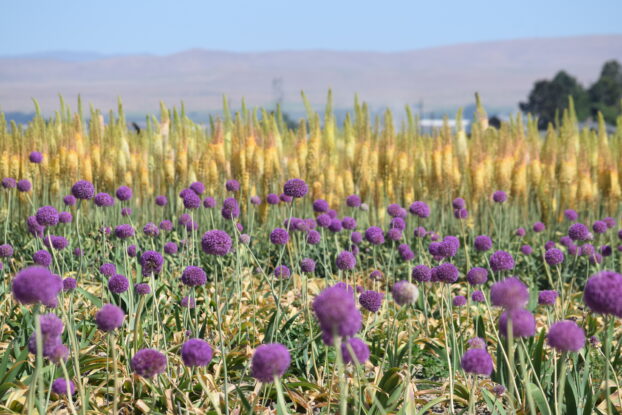
Today’s episode tells the story of Outlook Flower & Bulb Farm in Outlook, Washington, where Joel Martin and his father-in-law Harvey Hess are reviving a flower farm that originated when Joel’s ancestors moved from the Netherlands to the U.S. and settled in Eastern Washington in 1949. John Friend, Joel’s grandfather, took things over in 1965 and continued to operate it as Friend Bulb & Flower Farm. Known for a wide assortment of cut flowers and premium bulbs, John at one time grew more than 300 varieties of gladiolus and managed a very large footprint in the region, serving the floral marketplace in Portland and Seattle. Having helped his “Opa” during summers when he was in school, Joel fell in love with farming. In 2019, he returned home from college with a degree in agriculture economics at a time when Friend Bulb & Flower Farm had scaled back considerably. Fast-forward to January 2026, Joel formed Outlook Flower & Bulb Farm with his father-in-law Harvey Hess, a transportation and logistics expert. Together, along with a team of long-term employees, they are developing a broader market for the farm, not just in bulb and root sales to nurseries and flower farms, but in finding new markets for their premium crops, including Eremurus, Allium, Peonies, and other gorgeous blooms.
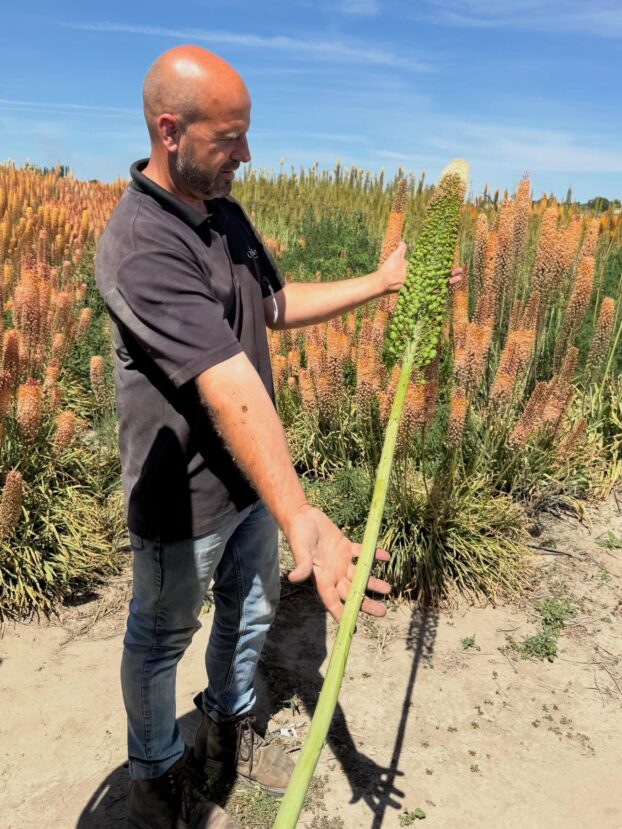
Harvey Hess of Outlook Flower & Bulb Co.
Last month, I drove from Seattle in Western Washington to the agriculture community of Outlook, located about 3 hours to the East in the Yakima Valley. This is a rich agricultural region, known for fruit trees, wheat, vineyards and commodity crops. There are a few flower farms in the area – in fact, this trip also took me to meet up with Sara Groeneweg of Bloomz Flower Farm, who we recently featured on this Podcast.
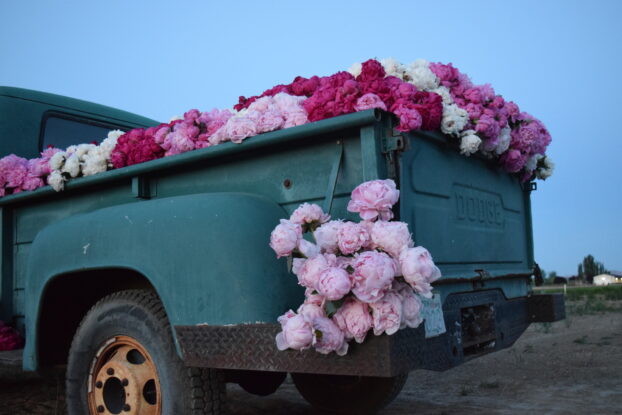
Peonies spill from the rim of a vintage pickup truck
A stop in nearby Outlook was the other destination on that road trip, where I met up with Harvey Hess. Harvey has teamed up with Joel Martin, his son-in-law, to revive and expand a generations-old flower farm with roots in post-world-war migration of his Dutch ancestors to the region.
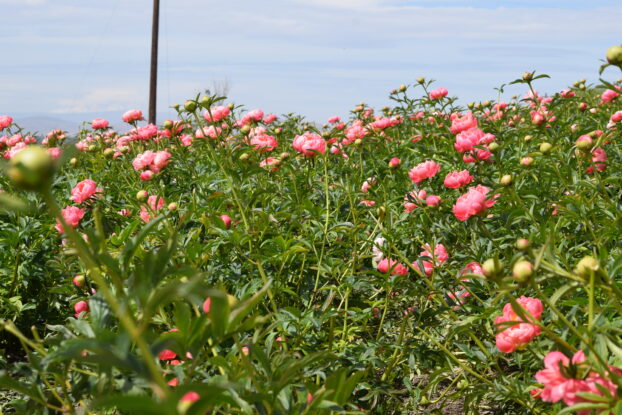
Spring peony fields
With Joel’s upbringing working side-by-side with John Friend, his grandfather, and learning bulb crop farming, this was a small but vibrant operation. As Harvey got to know what his new son-in-law was doing, and saw the potential of fields of blooms grown just for their roots and bulbs, a lightbulb went off. “How can we develop a market for the 6-foot-tall foxtail lilies and giant allium blooms?” he wondered.
Eremurus and allium production fields
What has evolved from this question is a new company called Outlook Flower & Bulb Farm, and once I saw photos of fields of those foxtail lilies and alliums, I knew why Harvey was compelled to find new markets for the plants. We originally met through Tammy Myers of Lora Bloom, and she urged Harvey to join Slow Flowers and connect with florists and wholesalers committed to supporting our movement. As Outlook Flower & Bulb states on its website: “We are passionate about US Grown product and look forward to working with the floral industry to promote local and US grown flowers.”
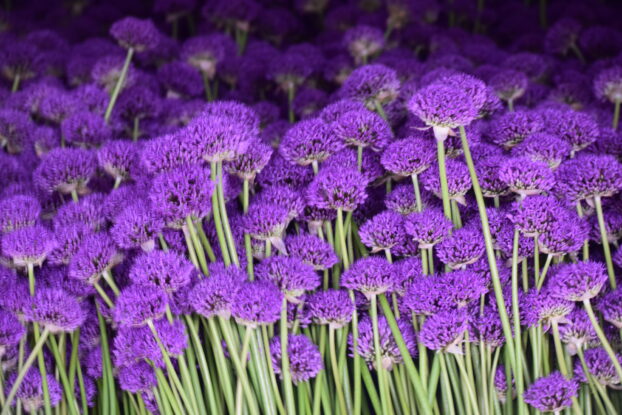
Allium Sensation
My tour of the fields and warehouse coincided with the end of the season, so I’m already planning a return trip in May when the peonies, alliums and gorgeous foxtail lilies are in bloom. For now, let’s jump right in and meet Harvey Hess, who I interviewed last month. Unfortunately, Joel was away during my visit, so we’ll have to connect with him on a future visit.
This show is brought to you by slowflowers.com, the free, online directory to florists, shops, and studios who design with local, seasonal and sustainable flowers and to the farms that grow those blooms. It’s the conscious choice for buying and sending flowers.
And thank you to our lead sponsor, My Patio Tree: Expertly Grown Plants, Perfectly Designed to Elevate Your Garden. Their second-generation family tree farm has curated the best-performing, cutting-edge, multi-zone varieties to enhance your garden, patio or special event. Every tree purchased supports Plant With Purpose, a nonprofit organization that restores hope by reversing global poverty and environmental damage. Learn more at mypatiotree.com.
Thank you to the Seattle Growers Market, a farmer-owned cooperative committed to providing the very best the Pacific Northwest has to offer in cut flowers, foliage and plants. The Growers Market’s mission is to foster a vibrant marketplace that sustains local flower farms and provides top-quality products and service to the local floral industry. Visit them at seattlegrowersmarket.com.
Our next sponsor thanks goes to Longfield Gardens, which provides home gardeners with high quality flower bulbs and perennials. Their online store offers plants for every region and every season, from tulips and daffodils to dahlias, caladiums and amaryllis. Check out the full catalog at Longfield Gardens at longfield-gardens.com.
The Slow Flowers Podcast is a member-supported endeavor, downloaded more than 1.6 million times by listeners like you. Thank you for listening, commenting and sharing – it means so much. As our movement gains more supporters and more passionate participants who believe in the importance of our domestic cut flower industry, the momentum is contagious. I know you feel it, too. If you’re new to our weekly Show and our long-running Podcast, check out all of our resources at SlowFlowersSociety.com.
Thank you for listening! Sending love, from my cutting garden to you! (c) Missy Palacol Photography
I’m Debra Prinzing, host and producer of the Slow Flowers Show & Podcast. The Slow Flowers Podcast is engineered and edited by Andrew Brenlan. The content and opinions expressed here are either mine alone or those of my guests alone, independent of any podcast sponsor or other person, company or organization. Next week, you’re invited to join me in putting more Slow Flowers on the table, one stem, one vase at a time. Thanks so much for joining us today and I’ll see you next week!
Flower farming is a magical and very personal experience for Chelsea Willis, owner of Sweet Delilah Farm. With a background in psychology and a passion for human relationships, she believes that flower work is heart work. Connecting to the land as both a grower and a designer allows Chelsea to make meaningful ties to her community. Her farm is located on Sauvie Island, an agricultural-rich destination located just minutes north of Portland, Oregon. Since planting her first flower seed in 2016, Chelsea has endeavored to make locally grown flowers accessible to everyone. She has developed Sweet Delilah Farm into a flower hub that combines her love for growing with respect for working on the land and its healing properties. The farm brings community members and healers together with the wonder of flowers through events, workshops, and you-pick experiences. Chelsea recently welcomed me to her property for a tour of the fields and high tunnels at the peak of the season, followed by our sit-down conversation as she celebrates the 10th anniversary of Sweet Delilah Farm.
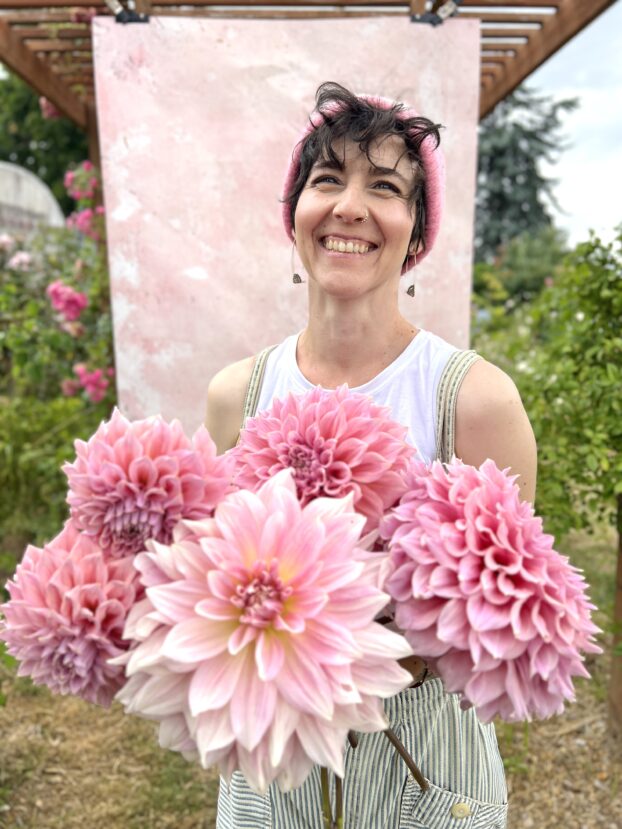
With her dahlias! Chelsea Willis of Sweet Delilah Farm
I’ve been trying to schedule a visit to Sweet Delilah Farm for a few years. There’s literally no excuse because the location is less than a 3-hour drive south of where I live in south Seattle. Thankfully, last month, I was able to sync up with Chelsea’s schedule and plan a visit. We have met in the past – I’ve interviewed her a few times for Slow Flowers content – and she attended the 2023 Slow Flowers Summit when it was here in the Seattle area. But spending time on a person’s farm, seeing how they have created a floral enterprise that reflects their aesthetic and values – nothing beats it.
Chelsea Willis
Coming from a background in somatic psychotherapy, trauma studies, and social work, Chelsea believes in their power as tools to healing. One moment of beauty in someone’s day can be can be crucial – and that’s where the flowers never cease to do their job, she says. In just one decade, Sweet Delilah Farm has put down roots, enriched the land, and fed both Chelsea’s spirit and those of her customers, including a select group of couples who choose the farm as their microwedding destination.
In the studio with Chelsea Willis
You’ll love our tour and I know you’ll be enchanted by Chelsea’s newest endeavor, breeding dahlias. She shared several very special selections for future introduction and you’ll be wowed.
Sweet Delilah Farm on Portland’s Sauvie Island
You’ll also find links to Sweet Deliah Farm’s social places: Instagram and Facebook
This show is brought to you by slowflowers.com, the free, online directory to florists, shops, and studios who design with local, seasonal and sustainable flowers and to the farms that grow those blooms. It’s the conscious choice for buying and sending flowers.
And thank you to our lead sponsor, My Patio Tree: Expertly Grown Plants, Perfectly Designed to Elevate Your Garden. Their second-generation family tree farm has curated the best-performing, cutting-edge, multi-zone varieties to enhance your garden, patio or special event. Every tree purchased supports Plant With Purpose, a nonprofit organization that restores hope by reversing global poverty and environmental damage. Learn more at mypatiotree.com.
Thank you to Longfield Gardens, which provides home gardeners with high quality flower bulbs and perennials. Their online store offers plants for every region and every season, from tulips and daffodils to dahlias, caladiums and amaryllis. Check out the full catalog at Longfield Gardens at longfield-gardens.com.
Our final sponsor thanks goes to Rooted Farmers. Rooted Farmers works exclusively with local growers to put the highest-quality specialty cut flowers in floral customers’ hands. When you partner with Rooted Farmers, you are investing in your community, and you can expect a commitment to excellence in return. Learn more at RootedFarmers.com
The Slow Flowers Podcast is a member-supported endeavor, downloaded more than 1.6 million times by listeners like you. Thank you for listening, commenting and sharing – it means so much. As our movement gains more supporters and more passionate participants who believe in the importance of our domestic cut flower industry, the momentum is contagious. I know you feel it, too. If you’re new to our weekly Show and our long-running Podcast, check out all of our resources at SlowFlowersSociety.com.
Thank you for listening! Sending love, from my cutting garden to you! (c) Missy Palacol Photography
I’m Debra Prinzing, host and producer of the Slow Flowers Show & Podcast. The Slow Flowers Podcast is engineered and edited by Andrew Brenlan. The content and opinions expressed here are either mine alone or those of my guests alone, independent of any podcast sponsor or other person, company or organization. Next week, you’re invited to join me in putting more Slow Flowers on the table, one stem, one vase at a time. Thanks so much for joining us today and I’ll see you next week!
Jennifer Jewell’s long-running public radio show “Cultivating Place“ asks: “Is cultivating place wellthe ability to feed your family better? Is it the ability to have a say in how our climate and our environment is cared for, starting right in our own backyards? Is it, in part, the tending to your household or community economy in a healthy and sane manner? Is it carrying the culture of your ancestors forward into the future or perhaps even rewriting the culture as you found it into the one you would like to tend and grow?” She continues, “Cultivating your place might even just be a matter of putting beautiful flowers on your bedside table every week you can, or having the gift of a public park or greenspace near enough that you can walk there, sit in the sun, or greet the trees and other neighbors there…” Jennifer is a Slow Flowers member who has joined us in advocating and supporting for domestic floral agriculture, local and seasonal flower growing and sourcing, and sustainable floral design practices that honor the land, the people connected to that land, and their communities. Today, she joins me to share news of the first, live, Cultivating Place symposium, taking place in South Bend, Indiana, later this month. It is called “The Power of Gardeners,” which is also the title of the new, 10-part Cultivating Place documentary series set to debut on PBS nationwide next spring. I’m delighted to catch up with Jennifer and you’re invited to listen in!
I’m thrilled to welcome Jennifer Jewell as a return guest to the Slow Flowers Podcast, as she updates us about all that’s happening in the Cultivating Place community.
Jennifer is the founder and host of Cultivating Place, a national award-winning weekly public radio program and podcast that debuted in 2016. The show evolved from Jennifer’s first public radio program, “In A North State Garden,” which aired on North State Public Radio in Northern California from 2008 to 2015. Her current one-hour, interview-based program, “Cultivating Place: Conversations on Natural History and the Human Impulse to Garden,” is co-produced by North State Public Radio and focuses on the culture of gardening around the world. Cultivating Place is syndicated on NPR affiliate radio stations across California and in Ohio and available as individual episodes to public radio stations on Public Radio Exchange (PRX).
The Power of Gardeners speaker lineup:
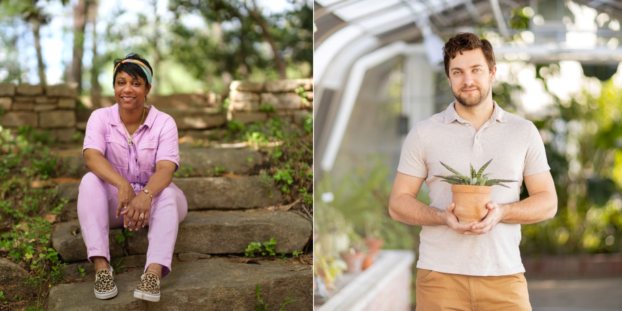
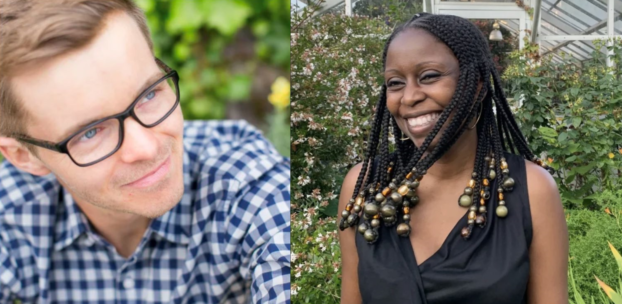
Top row: Abra Lee (left) and Ben Futa (right), co-hosts of Cultivating Place Bottom row: Chris Fehlhaber (left) and Wambui Ippolito (right)
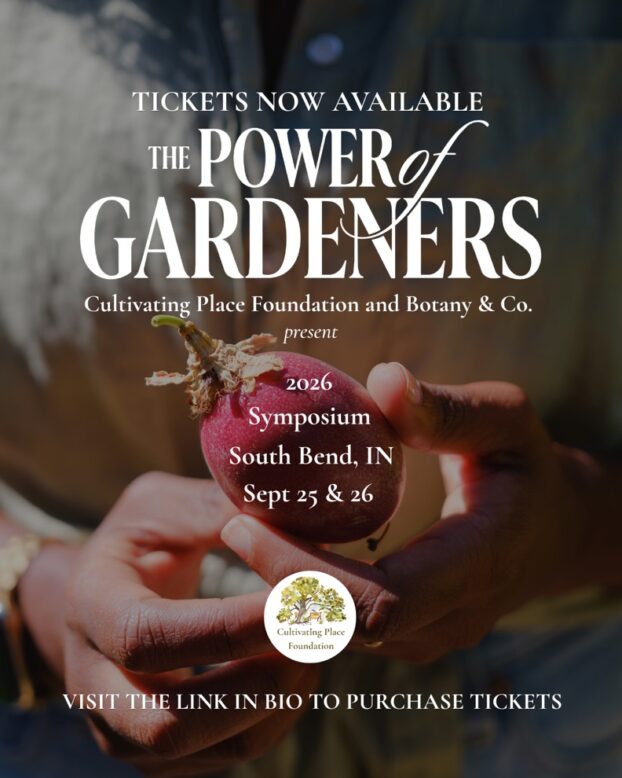
Over the years, a passionate community has formed around Cultivating Place, and later this month, hosts, listeners, and friends, will gather for their first in-person symposium, called “The Power of Gardeners” The Symposium includes a full day of lectures and panels on Friday, September 25. In addition to the show’s co-hosts Abra Lee and Ben Futa, Jennifer will be joined by Wambui Ippolito and Chris Fehlhaber to round out the speaker lineup. The gathering will also include a panel on the creation of The Power of Gardeners documentary series, with filmmaker and director Myriam Nicodemus.
The Power of Gardeners will continue on Saturday, September 26th, with a guided tour led by Ben Futa, as participants will visit his South Bend floriculture and horticulture enterprises, including the gardening boutique called Botany & Co. and the Lot Next Door Nursery. Later, guests will visit and hear more about the background and future of gardens and green spaces contributing to the reconnection of people, plants, pollinators, and purpose of place in South Bend. Ben is a new member of Slow Flowers, as he is now a cut flower farmer who grows on satellite land near Botany & Co. We’ll learn more from him in a future episode of the Slow Flowers Podcast, I promise.
Let’s jump right in and welcome Jennifer Jewell to the Slow Flowers Podcast. Together we will explore what she means by the phrase “cultivating place,” and how we all should embody the word “Gardener, with a capital G.” A program note: The first 3 minutes of today’s episode includes a trailer for “The Power of Gardeners;” it’s a sneak peek into the new PBS documentary series set to debut next April. This will be followed by my extended interview with Jennifer.
There is still time to register at the Early Bird rate of $140 to attend The Power of Gardeners – the discount continues through September 15th. Follow the link in our show notes for more details. As I mentioned to Jennifer, this is an incredibly affordable event, so if you’re in the region and you can make the trip to South Bend, I encourage you to do so.
In South Bend, you‘ll learn lessons from people tending plants in their places, despite many odds, and in doing so growing everything better: the ecology of interdependent gardens, the look and feel of the city, the economic and cultural integrity and vibrancy of their communities, and the future history of these people and this place.
This show is brought to you by slowflowers.com, the free, online directory to florists, shops, and studios who design with local, seasonal and sustainable flowers and to the farms that grow those blooms. It’s the conscious choice for buying and sending flowers.
And thank you to our lead sponsor, My Patio Tree: Expertly Grown Plants, Perfectly Designed to Elevate Your Garden. Their second-generation family tree farm has curated the best-performing, cutting-edge, multi-zone varieties to enhance your garden, patio or special event. Every tree purchased supports Plant With Purpose, a nonprofit organization that restores hope by reversing global poverty and environmental damage. Learn more at mypatiotree.com.
Thank you to Charles Little & Company for supplying our industry with some of the most beautiful and sustainably-grown design ingredients, available nationwide through their website at charleslittleandcompany.com. Based in Eugene, Oregon, the farmers at Charles Little & Company have been growing and drying flowers since 1986. New products and dried flower collections are added to their website at the first of each month. Check it out at charleslittleandcompany.com.
And thank you to the Seattle Growers Market, a farmer-owned cooperative committed to providing the very best the Pacific Northwest has to offer in cut flowers, foliage and plants. The Growers Market’s mission is to foster a vibrant marketplace that sustains local flower farms and provides top-quality products and service to the local floral industry. Visit them at seattlegrowersmarket.com.
The Slow Flowers Podcast is a member-supported endeavor, downloaded more than 1.6 million times by listeners like you. Thank you for listening, commenting and sharing – it means so much. As our movement gains more supporters and more passionate participants who believe in the importance of our domestic cut flower industry, the momentum is contagious. I know you feel it, too. If you’re new to our weekly Show and our long-running Podcast, check out all of our resources at SlowFlowersSociety.com.
Thank you for listening! Sending love, from my cutting garden to you! (c) Missy Palacol Photography
I’m Debra Prinzing, host and producer of the Slow Flowers Show & Podcast. The Slow Flowers Podcast is engineered and edited by Andrew Brenlan. The content and opinions expressed here are either mine alone or those of my guests alone, independent of any podcast sponsor or other person, company or organization. Next week, you’re invited to join me in putting more Slow Flowers on the table, one stem, one vase at a time. Thanks so much for joining us today and I’ll see you next week!
Bloomz Flower Farm is a 25-acre farm and design studio in Zillah, Washington, with gorgeous views of Mt. Adams, surrounded by beautiful farmland in all directions, including wheat and alfalfa production. Here, owner Sara Groeneweg has infused flower farming into all aspects of her life and business. After earning an agriculture education degree at Washington State University in 2000, Sara taught high school agriculture for eight years before starting her family. Now, in addition to raising two teenage sons, she teaches middle school science – one full-time job – while also growing more than 50 varieties of flowers at Bloomz Flower Farm for weddings, events, flower subscriptions, and market bouquets – her other full-time job. A natural teacher, Sara acknowledges that she is a crazy for flowers and loves sharing their beauty with others.
Sara Groeneweg of Bloomz Flower Farm
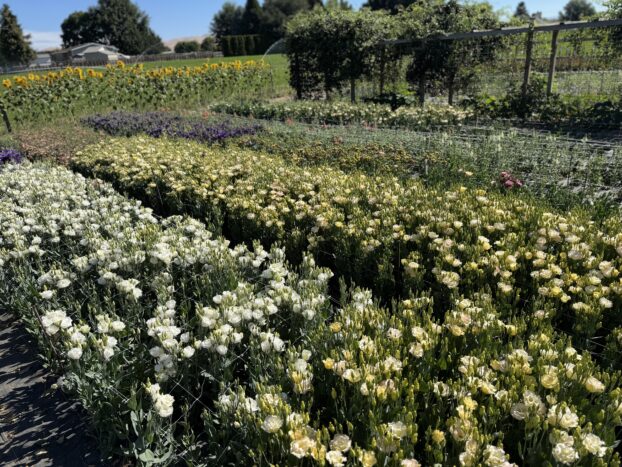
Lisianthus at Bloomz Flower Farm
Sara Groeneweg grew up in a family of gardeners and growers in western Washington. When she was young, showing livestock at the local fair, Sara noticed the 4H and Future Farmers of America kids with their teachers. They looked like they were having so much fun that she decided: “That’s what I want to do when I grow up!”
Hey, this is adorable, Sara!
The experience led her into agricultural education where she studied at Washington State University and me her future husband, Leroy, a horticulture major. They married and settled in the Yakima Valley in eastern Washington, close to where Leroy grew up. Now with two teenage sons, life is very full. And like most competent women, Sara is a doer. She currently teaches science full-time at the local middle school in Wapato, while also operating Bloomz Flower Farm. As a farmer-florist, Sara loves designing weddings and of course, she grows everything for her events. The crops at Bloomz are arranged in beds and borders that beautify the landscape, which also has integrated structures like arbors and trellises – and an attractive and productive wood-framed greenhouse. In recent years, more of a farm vibe has crept onto the family property, with rows of dahlias and annuals occupying one huge zone.
Sara during our Slow Flowers Summit tour of the Seattle Growers Market
I first met Sara when she attended the 2023 Slow Flowers Summit in Bellevue, Washington, arriving with buckets of her own stems to share for our floral design takeover there. When I scheduled a trip to the Yakima Valley a few weeks ago, I invited myself for a visit and tour. Plus, we recorded a wonderful conversation about Sara’s floral journey. I know you’ll enjoy seeing what she grows in her gorgeous garden, including the dahlias at their peak. Let’s jump right in and get started!
Wedding florals, grown and designed by Sara Groeneweg
This show is brought to you by slowflowers.com, the free, online directory to florists, shops, and studios who design with local, seasonal and sustainable flowers and to the farms that grow those blooms. It’s the conscious choice for buying and sending flowers.
Thank you to our lead sponsor, My Patio Tree: Expertly Grown Plants, Perfectly Designed to Elevate Your Garden. Their second-generation family tree farm has curated the best-performing, cutting-edge, multi-zone varieties to enhance your garden, patio or special event. Every tree purchased supports Plant With Purpose, a nonprofit organization that restores hope by reversing global poverty and environmental damage. Learn more at mypatiotree.com.
Thank you to the Seattle Growers Market, a farmer-owned cooperative committed to providing the very best the Pacific Northwest has to offer in cut flowers, foliage and plants. The Growers Market’s mission is to foster a vibrant marketplace that sustains local flower farms and provides top-quality products and service to the local floral industry. Visit them at seattlegrowersmarket.com.
And thank you to Longfield Gardens, which provides home gardeners with high-quality flower bulbs and perennials. Their online store offers plants for every region and every season, from tulips and daffodils to dahlias, caladiums and amaryllis. Check out the full catalog at Longfield Gardens at longfield-gardens.com.
Thank you for joining me today! The Slow Flowers Podcast is a member-supported endeavor, downloaded more than 1.6 million times by listeners like you. Thank you for listening, commenting and sharing – it means so much. As our movement gains more supporters and more passionate participants who believe in the importance of our domestic cut flower industry, the momentum is contagious. I know you feel it, too. If you’re new to our weekly Show and our long-running Podcast, check out all of our resources at SlowFlowersSociety.com.
Thank you for listening! Sending love, from my cutting garden to you! (c) Missy Palacol Photography
I’m Debra Prinzing, host and producer of the Slow Flowers Show & Podcast. The Slow Flowers Podcast is engineered and edited by Andrew Brenlan. The content and opinions expressed here are either mine alone or those of my guests alone, independent of any podcast sponsor or other person, company or organization. Next week, you’re invited to join me in putting more Slow Flowers on the table, one stem, one vase at a time. Thanks so much for joining us today and I’ll see you next week!