Debra Prinzing

Get the Email Newsletter!

Archive for the ‘Gardening’ Category

Re-Wilding with The Floracultural Society (Episode 179)

Wednesday, February 4th, 2015
Stephanie Huges and Anna Campbell of The FloraCultural Society in Oakland, CA.
Stephanie Hughes and Anna Campbell of The FloraCultural Society in Oakland, CA.

rewildToday I am delighted to introduce the women behind an innovative flower farm/floral design business in Oakland, California called The FloraCultural Society.

Anna Campbell, who owns the venture with her mother Linda Davis, has an extensive career in horticulture, agriculture, floral design, editorial and retail.

She freely admits during our conversation how no matter what she pursued professionally, flowers have continued to draw her like a bee to nectar. Many of you will understand this “flower fever,” which makes Anna’s story so compelling.

After previous forays into floral retail, Anna developed and launched the current format for The FloraCultural Society — part micro urban flower farm / part flower shop and studio space. She describes the business as “a cut flower farm and retail shop providing plant-based goods, classes and events.”
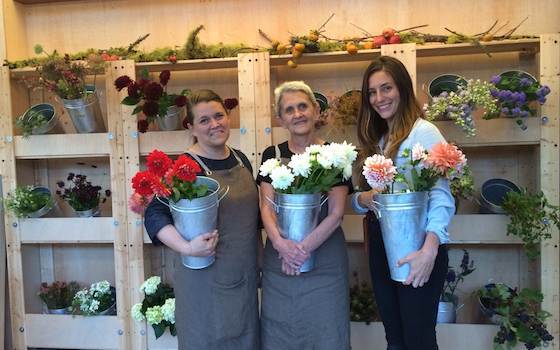
Anna, Linda and Stephanie in the new retail shop on College Ave. in Oakland's Rockridge Neighborhood.

Anna, Linda and Stephanie in the new retail shop on College Ave. in Oakland’s Rockridge Neighborhood.
flora+circle+logoAnna connected with Stephanie Hughes through the local flower farming community in the Bay Area and last year Stephanie joined The FloraCultural Society as Director of Flora and Farm Operations.

I’m so pleased that Stephanie’s voice is included in the interview because she’s the one who introduced Anna and me last October, when I was invited to visit the new FloraCultural Society shop in downtown Oakland’s Rockridge neighborhood on College Ave., a stone’s throw from Berkeley.

Stephanie and I originally met last May when we were both part of a bearded iris design workshop taught by Sarah Ryhanen and Nicolette Owen of The Little Flower School.

At the time, Stephanie was still shadowing and apprenticing with flower farmers and floral designers, hoping to find a new career in the Bay Area after escaping from a corporate retail job. And now, she’s working closely with Anna to bring locally-grown flowers to their community!
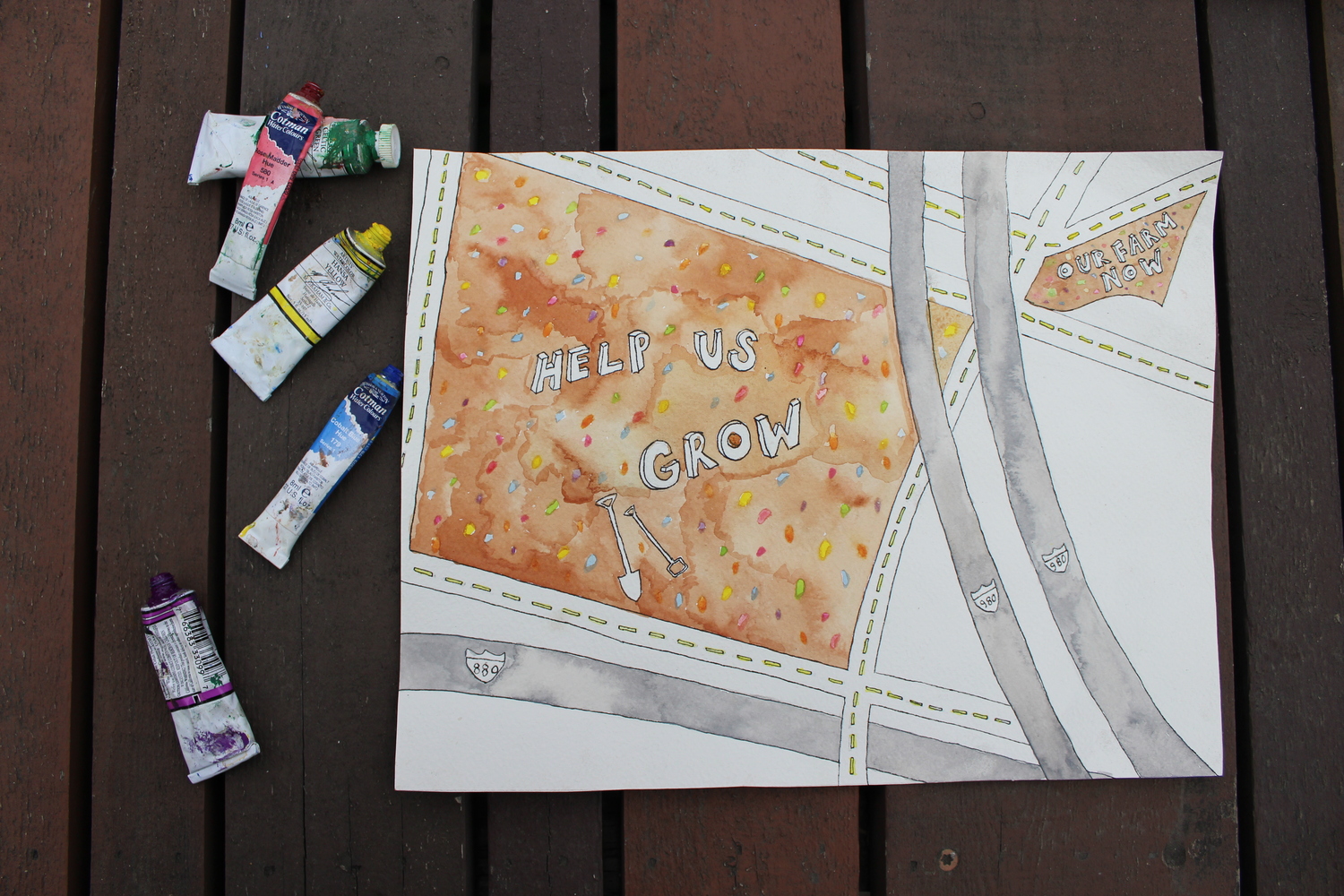
Here's the artwork for The FloraCultural Society's upcoming Kickstarter Campaign.

Here’s the artwork for The FloraCultural Society’s upcoming Kickstarter Campaign, a watercolor that depicts the parcel of land they plan to farm that’s super close to a freeway overpass.

I know you’ll enjoy the conversation, so click on the PLAY BUTTON above to listen or download this episode. And I do want to encourage you to check out the new Kickstarter Campaign that Anna and Stephanie and their team will launch on February 7th.

The campaign seeks to raise funds to so the new 2-acre flower farm is off to a good start. If you’re in the neighborhood, stop by between 11 and 3 for light refreshments, sneak previews of the campaign’s rewards and view a screening of the new “Help us Grow” video.
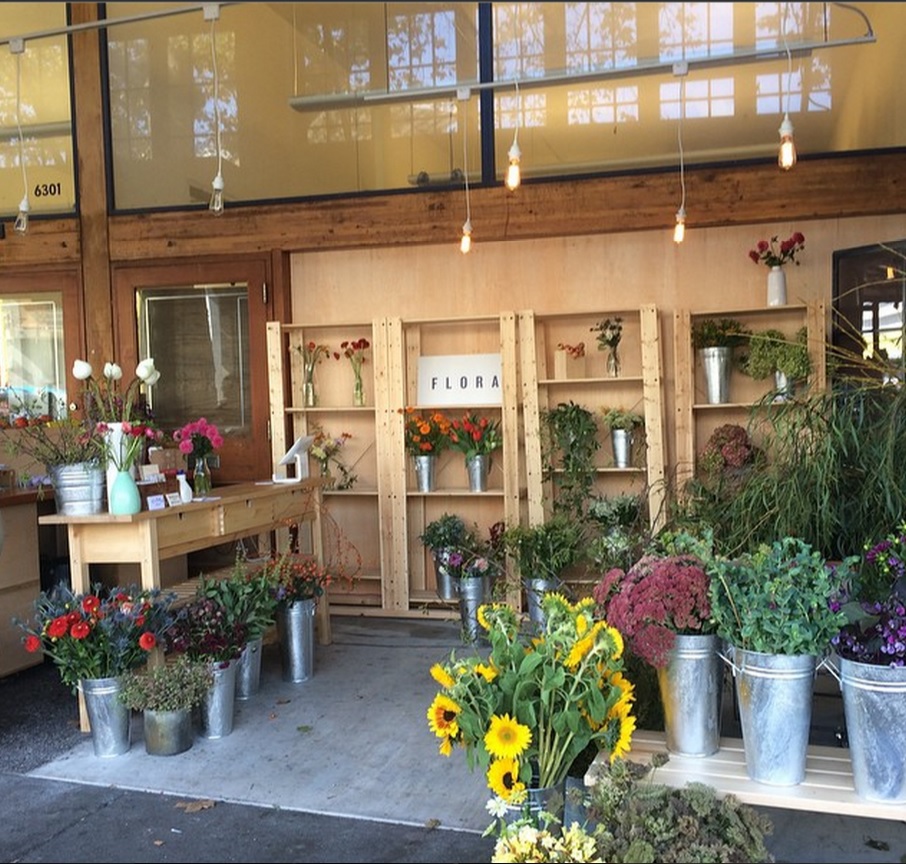
A peek inside the new flower shop in Oakland.

A peek inside the new flower shop in Oakland.

A bouquet called "Flowers to Dye For," which includes flowers and floral dye. After you purchase the $95 bouquet, you are invited to return to The FloraCultural Society to participate in a post-Valentine's Day workshop with Sasha Duerr, author of "The Handbook of Natural Plant Dyes.

A bouquet called “Flowers to Dye For,” which includes flowers and floral dye. After you purchase the $95 bouquet, you are invited to return to The FloraCultural Society to participate in a post-Valentine’s Day workshop with Sasha Duerr, author of “The Handbook of Natural Plant Dyes.
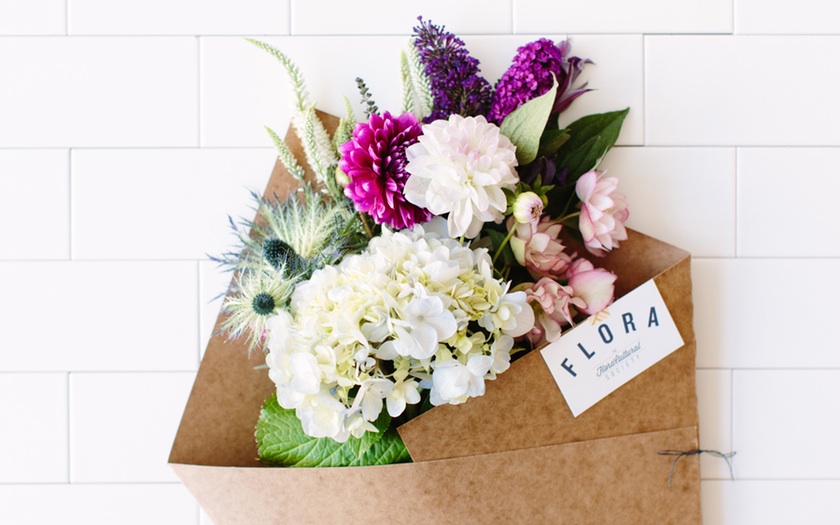
A medium sized bouquet of beautiful floral cuttings in the signature quiver.  Twenty percent of the proceeds of this bouquet purchase go towards seed, soil, and supplies for the petite urban farm.
A medium sized bouquet of beautiful floral cuttings in the signature quiver. Twenty percent of the proceeds of this bouquet purchase go towards seed, soil, and supplies for the petite urban farm.

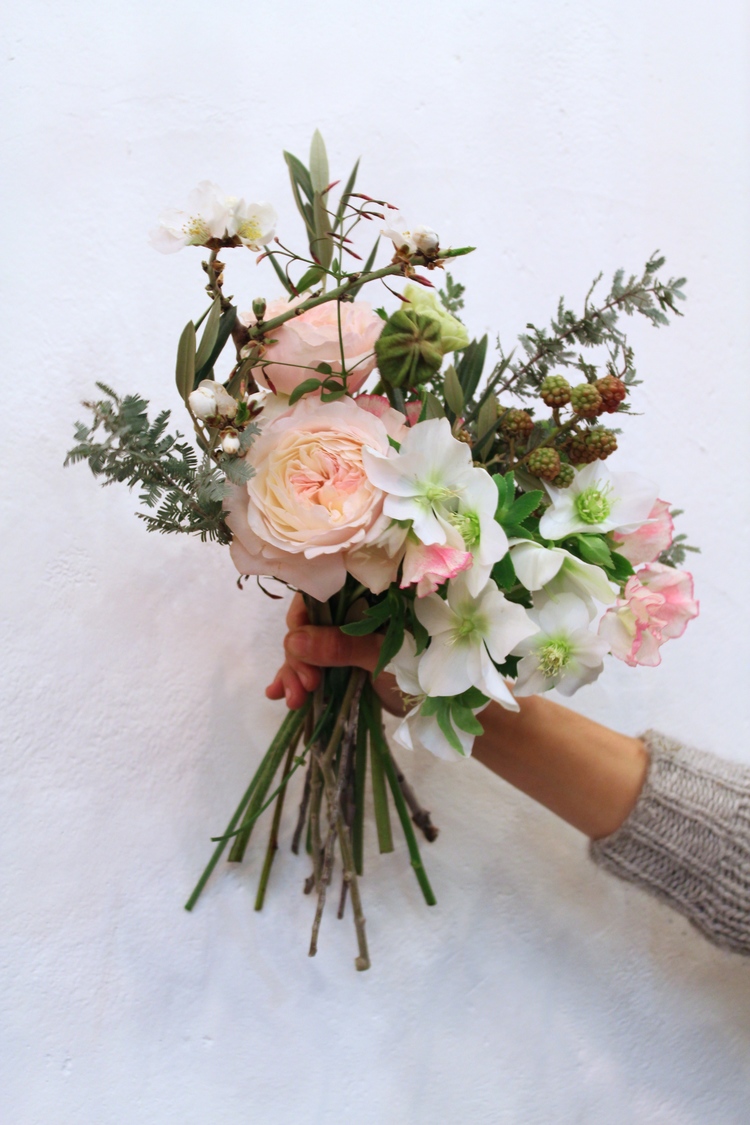
For a brief engagement this Valentine's Day - A medium sized bouquet of blush garden roses and beautiful, fragrant winter blooms in our signature quiver.

For a brief engagement this Valentine’s Day – A medium sized bouquet of blush garden roses and beautiful, fragrant winter blooms in our signature quiver.

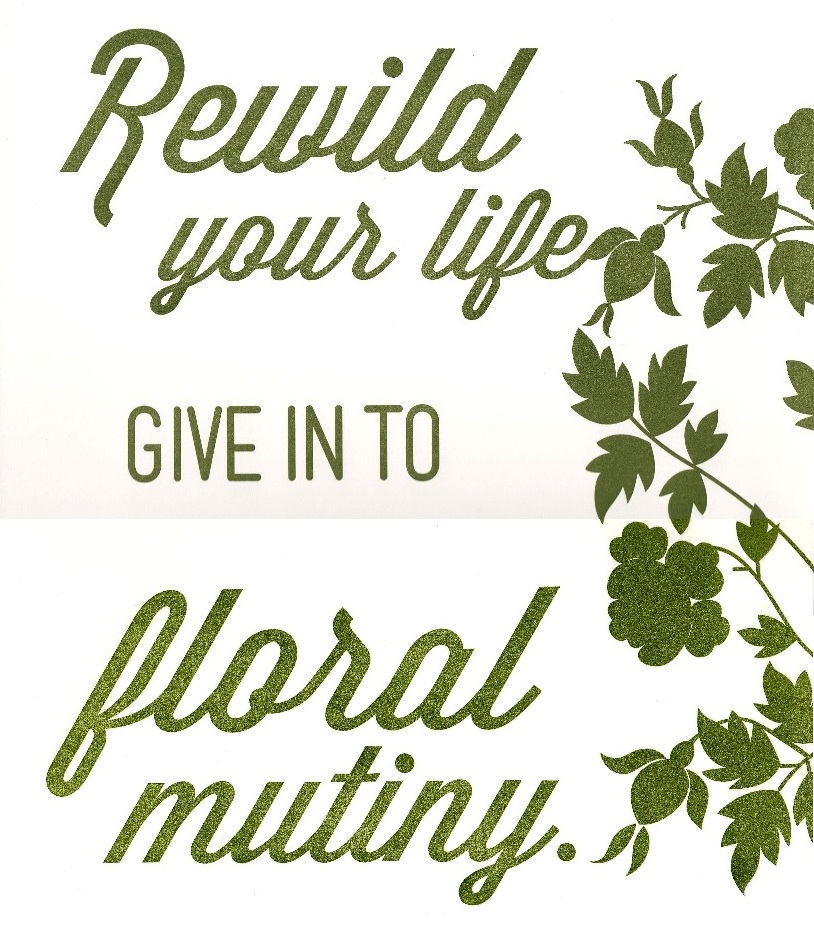
As I mentioned in the talk, Anna wowed me with a gift of a letterpress print that she commissioned for the opening of the new shop on College Avenue. It reads “Rewild Your Life . . . Give in to Floral Mutiny.”
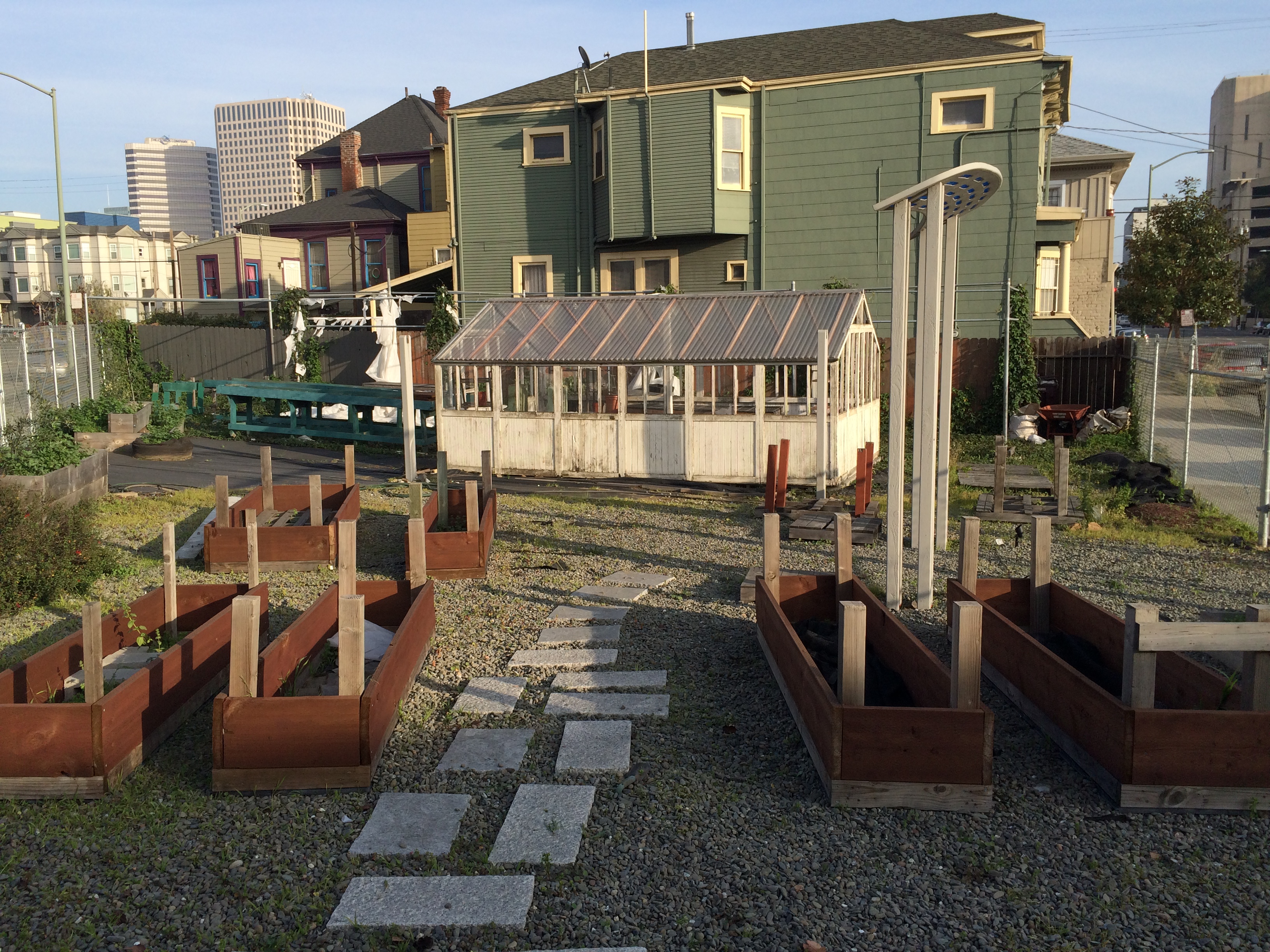
The mini flower farm, located in Oakland on less than 2,500 square feet. It's ready to be joined by a new 2-acre parcel nearby.

The mini flower farm, located in Oakland on less than 2,500 square feet. It’s ready to be joined by a new 2-acre parcel nearby.

Here’s a little more about the company, from The FloraCultural Society’s web site:

The FloraCultural Society was established in hopes of uniting a network of people interested in the beauty of sustainably grown flowers and plant-based goods.  In 2012, we dug into a 2,600 foot plot of land in Old Oakland and began to grow heirloom varieties in the midst of the city.  The contrast between the wild organic flowers and the industrialized structure of the city inspired  the FloraCultural Society’s tagline… ReWild Your Life.

We are now sourcing from local farms in the Bay Area and have plans of expanding our own farm to 2 acres, giving us the ability to provide you with distinct, heirloom varieties.

In joining our society, it is our hope that you may become connected with your wild side, simplifying the way you indulge.  We invite you to take a class with us, Join our CSF (our Community Supported Flowers), try out our plant based skin care lines, and rewild your home with a locally grown arrangement.

The idea of ReWilding is a lovely sentiment that we can all embrace!

ANNOUNCEMENTS:

If you want to get started in or further your knowledge of specialty cut flower farming, or if you’re a designer who wants to strengthen your connections with local flowers, I want to share details of two opportunities coming up. The Association of Specialty Cut Flower Growers is hosting two regional Growers’ Intensives in March.

On March 2nd and 3rd, in Athens, Georgia, attendees will meet and learn from experienced flower farmers including Rita Anders from Cuts of Color in Weimar, Texas whose topic is: “From Seed to Market: A Few of My Most Profitable Flowers.”

Arrive early and attend the informal meet-and-greet on Sunday evening March 1st, hosted by Tanis Clifton of Happy Trails Flower Farm in Dennis, Mississippi, and Mimo Davis of Urban Buds in St. Louis, Missouri.

You’ll also get a chance to visit Three Porch Farm, owned by Steve and Mandy O’Shea in Comer, Georgia, and participate in a bouquet-making session co-led by Mandy (known for her beautiful Moonflower design studio) and Jennie Love of Love ‘n’ Fresh Flowers in Philadelphia — both of whom have been featured in the New York Times. And not to miss, also at Three Porch, a demonstration of veggie oil-powered vehicles and other equipment.

On March 23rd and 24th, a west coast Growers’ Intensive will take place in San Jose, California – and I’ll be there to meet you! You’ll hear from expert presenters, including several past guests of this podcast, including Rita Jo Shoultz of Alaska Perfect Peony, Joan Thorndike of Le Mera Gardens in Ashland, Oregon and Diana Roy of Resendiz Brothers Protea Growers in Fallbrook, California, and others. I’ll be there with my recording equipment and I hope to capture some new voices to share on future Slow Flowers episodes.

There are a few upcoming deadlines to take note of, including the Georgia hotel room block and the San Jose bus tour of local flower farms, both of which expires this Friday, February 6th, so register soon.

Thanks for joining me today.  My personal goal is to put more American grown flowers on the table, one vase at a time.

Increasingly, there are passionate people like you who are joining the Slow Flowers movement, the Floral Mutiny as Anna Campbell calls it. You are downloading and listening to the Slow Flowers Podcast more than ever before!

We have exceeded 33,000 downloads to date and every time that figure climbs, I’m encouraged to know more people are learning about the farmers and florists who keeping American-grown flowers flourishing.

I don’t know exactly how to credit our growth, but get this: The Slow Flowers Podcast ended the month of January with more than 4,000 downloads, nearly 1500 individual downloads more than any month prior.

There’s something very good going. More people are entering the flower farming profession in the U.S.; more florists are seeking fresh, seasonal and sustainable sources of American grown flowers with which to create their beautiful designs; and more flower lovers are asking: “where are my flowers grown” and expect transparent labeling of those blooms. Origin does matter when it comes to your flowers.

So I thank you!!! If you like what you hear, please consider logging onto Itunes and posting a listener review.

The Slow Flowers Podcast is engineered and edited by Andrew Wheatley and Hannah Holtgeerts.
Week 4 // Slow Flowers Challenge

Saturday, January 31st, 2015
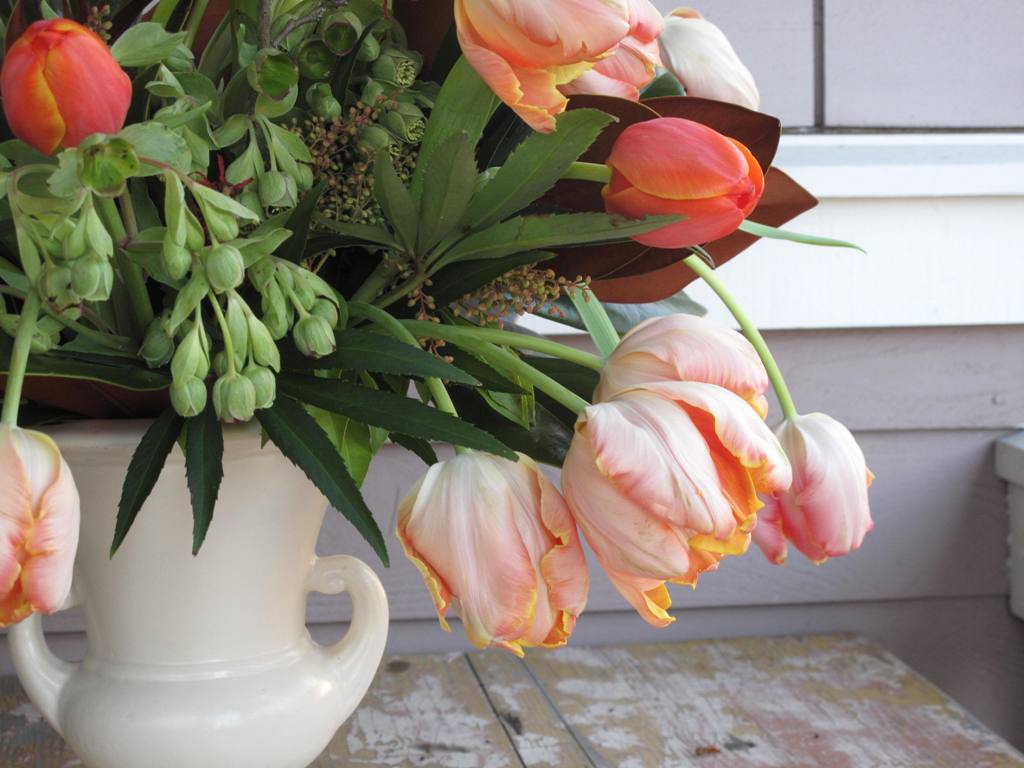
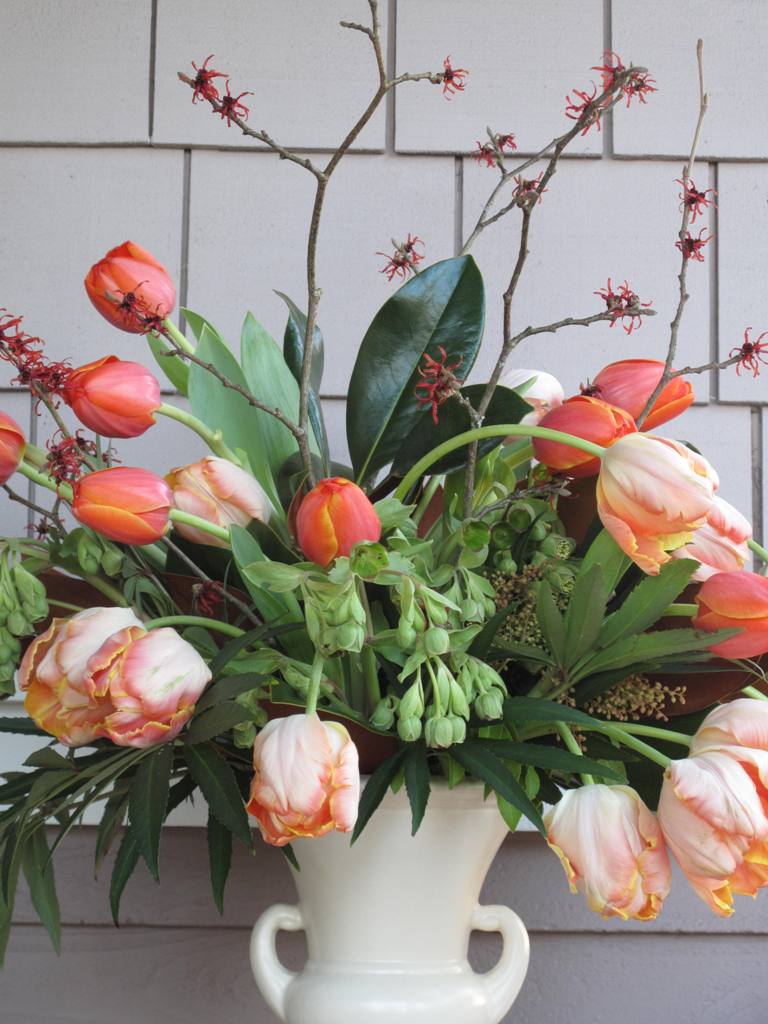
Created on Jan. 30th, Seattle, Washington. I clipped all the botanical elements from my garden and I purchased the beautiful tulips from Alm Hill Gardens (Pike Place Market vendor of WA-grown tulips)

Created on Jan. 30th, Seattle, Washington. I clipped all the botanical elements from my garden and used beautiful tulips from Alm Hill Gardens (Pike Place Market vendor of WA-grown tulips)

Welcome to Week 4 of the Slow Flowers Challenge as we wrap up the first month of 2015! 

The year is off to a great start, and I thank you for joining me in this celebration of locally-grown flowers, from our gardens, meadows and farms. Seattleites are of course wrapped up in Super Bowl preparations, but I’ve been anticipating the return of homegrown tulips from Alm Hill Gardens, an organic food and flower farm in Everson, Washington, just two miles from the Washington-British Columbia border.
Owned by Gretchen Hoyt and Ben Craft, Alm Hill is known for raising luscious cut tulips. At Seattle’s Pike Place Market, the sign in their stall reads, “Alm Hill Gardens: A Small Sustainable Family Farm Since 1974.”
I greeted flower-seller Max Clement, who I’m always happy to see, and selected 20 apricot-hued and melon-orange tulip for $20. He wrapped them up in white paper and sent me off to play with the floral gifts that my own backyard offered as companion elements to the first tulips of 2015.
Here’s what I arranged yesterday:
My vintage cream McCoy vase is filled with magnolia foliage, pieris, hellebore flowers and foliage, witch hazel and local tulips.

My vintage cream McCoy vase is filled with magnolia foliage, pieris, hellebore flowers and foliage, witch hazel and local tulips.

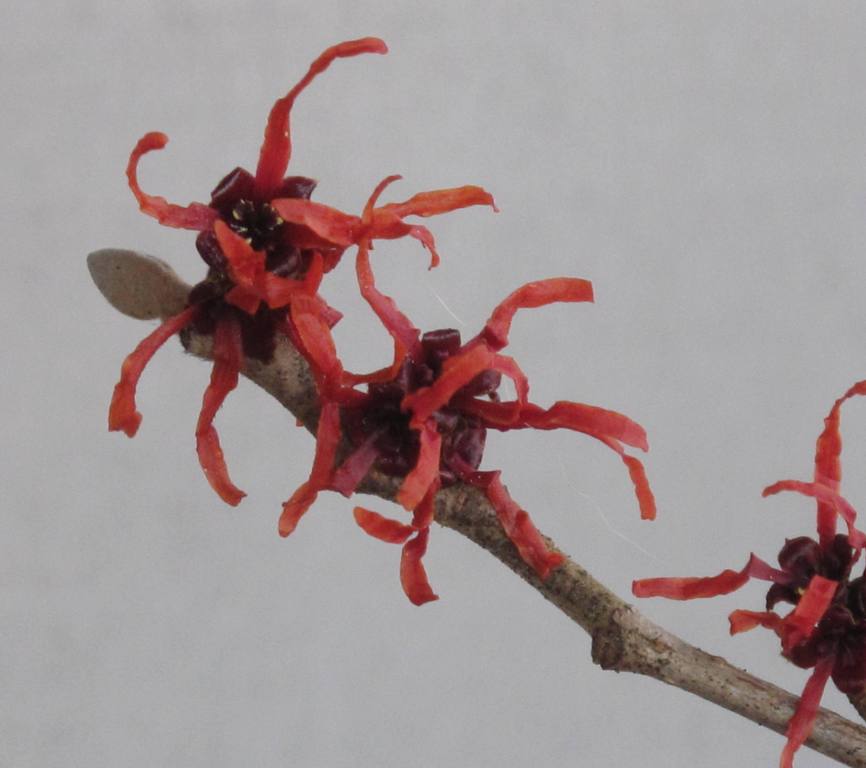
Witch hazel (Hamamelis x intermedia 'Jelena'). This otherworldly flower excites the winter garden - and one must cut judiciously to preserve the shrub's beauty in the landscape. I used 5 stems with copper-orange flowers for my arrangement.

Witch hazel (Hamamelis x intermedia ‘Jelena’). This otherworldly flower excites the winter garden – and one must cut judiciously to preserve the shrub’s beauty in the landscape. I used 5 stems with copper-orange flowers for my arrangement.

scroll

TIP: Magnolia grandiflora foliage

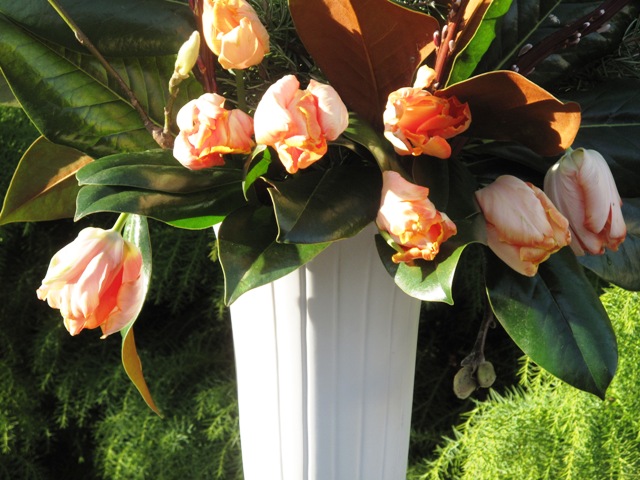
Magnolia foliage with spring tulips

Magnolia foliage with spring tulips

The arrangement I created above took its inspiration from a winter bouquet that I included in my book Slow Flowers: Four Seasons of Locally Grown Flowers.

 
With this design, I raved about the fact that my neighbors Kim and Jake have a stunning Magnolia grandiflora that I view from my sitting room.
They are always so generous to allow me to walk across our shared driveway and clip a few glossy evergreen stems for my arrangements. The leaves measure up to 9 inches and the underside of each is slightly fuzzy and rusty-brown, which looks especially enticing with orange and apricot companion flowers like early spring tulips.
Anyone who thinks the winter garden is limited need only to consider broadleaf evergreen shrubs and trees – they are long-lasting and reflect the light when we desperately need it!
scroll

GET INVOLVED AND SHARE YOUR SLOW FLOWERS ARRANGEMENTS!

A beautiful January bouquet submitted by Winnie Pitrone, a flower grower and arranger in Mendocino, Ca who uses only seasonal, local flora from her garden or nearby gardens.

A beautiful January bouquet submitted by Winnie Pitrone, a flower grower and arranger in Mendocino, Ca who uses only seasonal, local flora from her garden or nearby gardens.

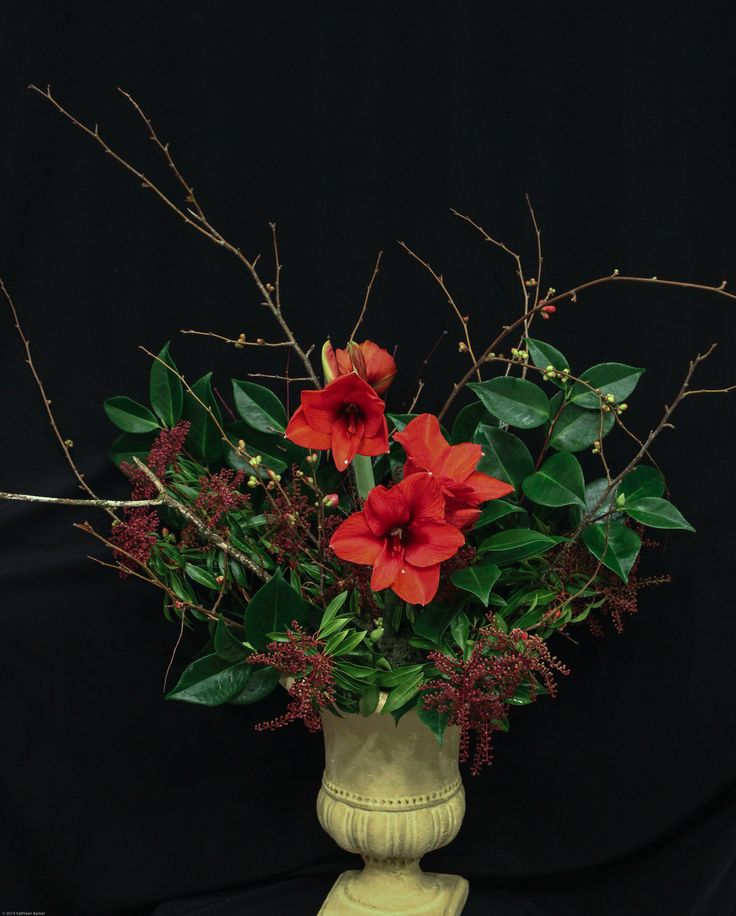
Amaryllis, camellia, quince, peiris in urn from Erika's Fresh Flowers, a locally owned flower farm and design studio in Warrenton, Or., with a garden style that's inspired by the wild, unique botanicals nearby.

Amaryllis, camellia, quince, peiris in urn from Erika’s Fresh Flowers, a locally owned flower farm and design studio in Warrenton, Or., with a garden style that’s inspired by the wild, unique botanicals nearby.

Here’s a link to our January 2015 Slow Flowers Pinterest Board. Please share your arrangements with me and I’ll add them – or, like many of you, create your own Slow Flowers Pinterest board and invite me to join. I’ll be starting our February 2015 board this coming week!

scroll

Flowers on Your Head with L.A.’s Mud Baron (Episode 178)

Wednesday, January 28th, 2015
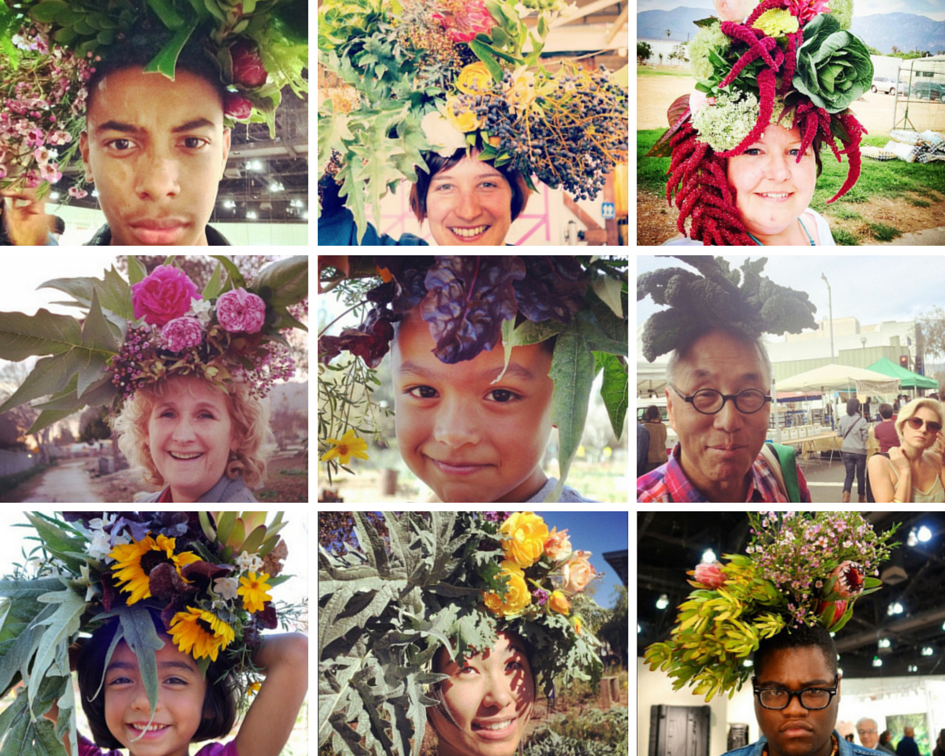
Some of the beautiful faces who've allowed Mud Baron to photograph them with flowers on their heads.

Some of the beautiful faces who’ve allowed Mud Baron to photograph them with flowers on their heads.

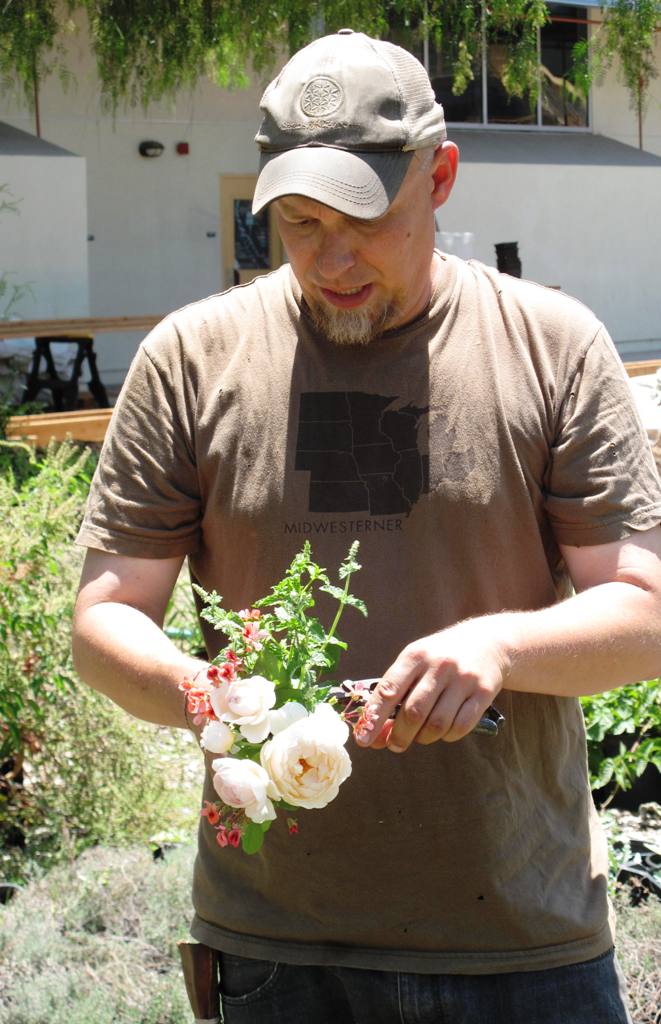
Mr. Baron, bouquet-maker

Mr. Baron, bouquet-maker

This past week took Slow Flowers to Southern California, where I combined business, pleasure, flowers and friends, in a whirlwind five days. I successfully cornered Mud Baron, one who rarely slows down himself, to record today’s interview. I’ve wanted to have Mud on the podcast for more than a year, ever since I visited Muir Ranch, the school garden he manages at John Muir High School in Pasadena.

You may not know him as Mud Baron. Yes, his nickname is Mud! But if you’re a follower of beautiful flower images on Instagram, you may know him by Co-Co-Zoe-Chee, or @cocoxochitl, his alias there, with 4,500 followers and thousands of posts. And many contain the hashtag #flowersonyourhead – one of Mud’s gleefully subversive campaigns to place photos on one’s head and snap a photograph, Frida Kahlo-like, for Instagram and other places.

As we discuss in the interview, I have succumbed to Mud’s flowers on your head shenanigans and also witnessed Mud at work, getting complete strangers to comply with his outrageous (and quite poignant ) requests. Check out his gallery of portraits by searching #flowersonyourhead.

Mud_1_IMG_9324

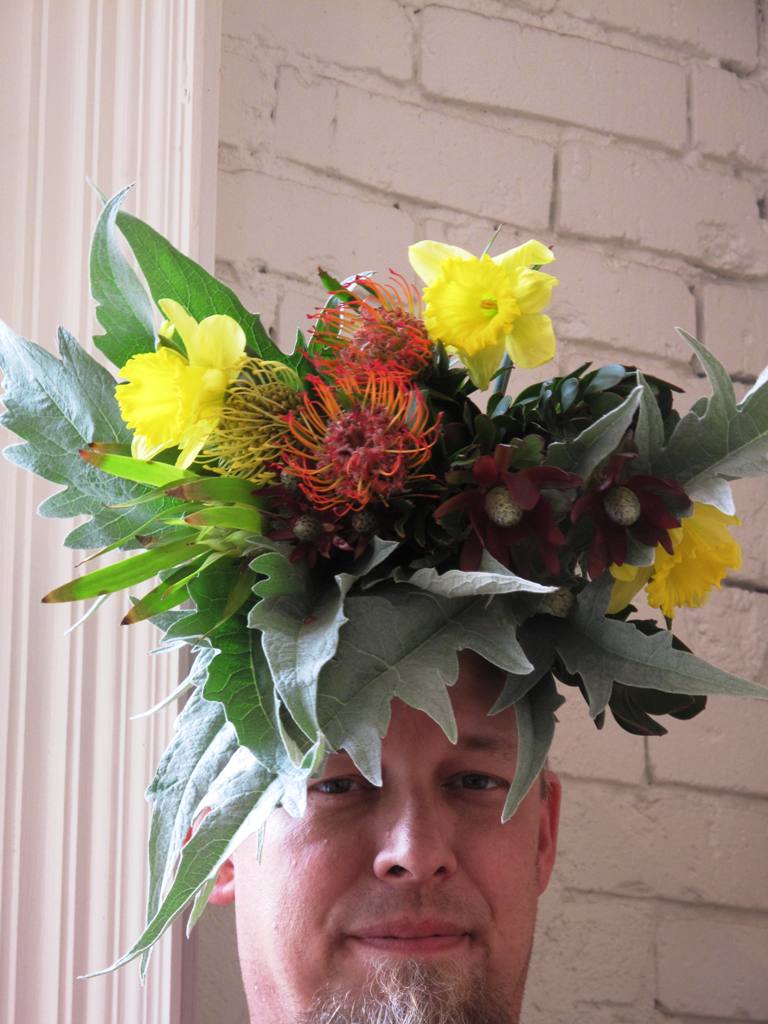
Mud, photographed by me in Seattle (March 2014) with flowers on his head.

Here’s a bit of what I wrote in August 2013, after a visit to Muir Ranch. I hope it round out this introduction of Mud.

In 2011, a dedicated team of volunteer teachers and students began converting 1.5 acres of Pasadena, California’s John Muir High School campus into a school-based farm.

Today, Muir Ranch grows a variety of flowers, vegetables and fruits that are included in weekly CSA boxes as well as school cafeteria lunches. Students can complete community service or internship graduation requirements by enrolling in classes at the Ranch. Muir Ranch also provides paid internships to students, which are funded by private donations, special events, farmer’s market sales, and subscriptions to the produce box program (CSA).  

Edibles and flowers grow together.

Edibles and flowers grow together at Muir Ranch.

Every week, Muir Ranch CSA subscribers get a box or bag of about 7-10 different types of fruit and vegetables grown without the use of pesticides or chemical fertilizers. Customers pick their shares up at central distribution sites throughout Pasadena. Muir Ranch CSA partners with several local farms for seasonal fruit and vegetables to supplement what they can produce, providing tax-deductible weekly boxes to over 100 subscribers. It is the CSA program that generates much of the income that keeps this place operating.

Mud Baron, a passionate school garden advocate who serves as the Executive Director of Muir Ranch, is one of the people at the hub of this endeavor. That sounds like a high-falutin’ title, but in all reality, he is true to his nickname. Mud gets down and dirty – and REAL – with his kids, teenagers whose horizons are much brighter after they’ve learned to grow and sell food and flowers to local customers.

How did this former design-build contractor end up teaching gardening and farming skills to urban youth? I’m still trying to figure out the exact path of Mud’s career, but suffice it to say he’s in his element growing food and flowers.

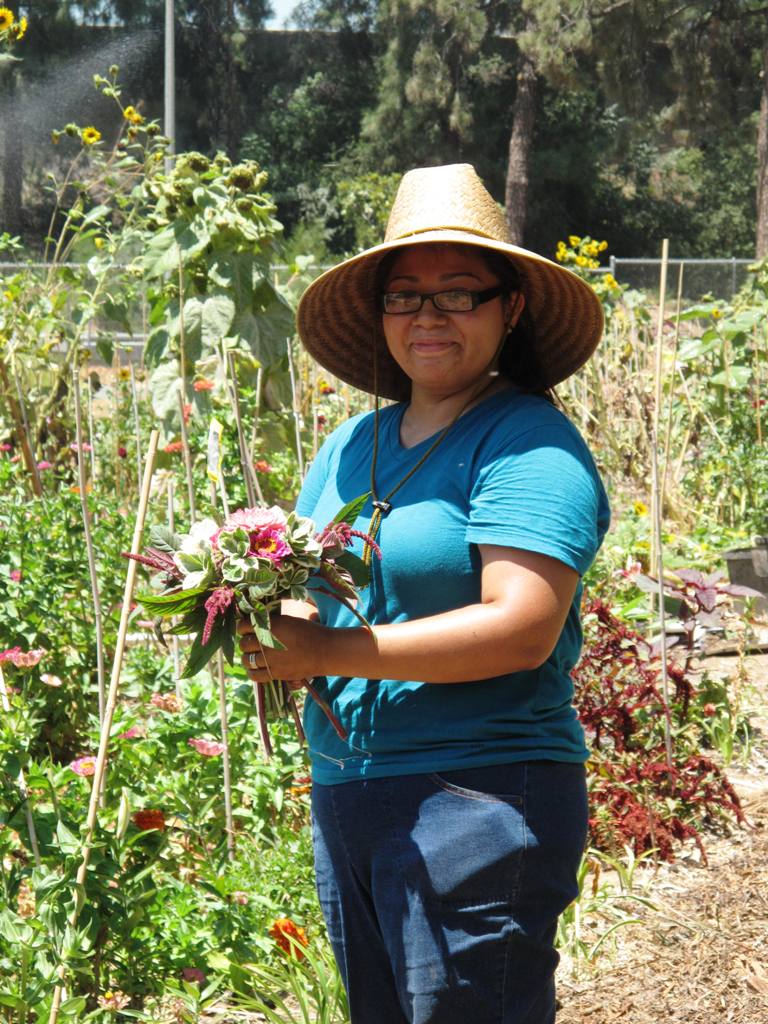
One of the talented student farmers designed a gorgeous bouquet for me on the spot

One of the talented student farmers designed a gorgeous bouquet for me on the spot

Many programs besides the CSA are supported under the umbrella of Muir Ranch, such as partnerships CSAs run by with other local schools and learning gardens. Muir Ranch also and hosts monthly “Plug Mobs” to help other groups in the community plant their own gardens.

In Mud’s mind, no Southern California-based teacher should go wanting for school garden supplies. “The Plug Mob program means that finding seeds and plants is no longer a factor for 2,000 schools,” he says. Muir Ranch operates like a plant nursery, helping source and distribute seeds, bulbs and flats of plant starts. Like modern-day Johnny Appleseeds, Mud and his supporters share what they have and spread around the love.

As more young people “connect the dots,” they become involved in how food is grown, distributed, and finally cooked into healthy meals. Besides being a center for education, Muir Ranch hosts a variety of ongoing and special events. The program is known for its floral arrangements, and I love that Mud has taught his interns and student workers how to harvest and assemble bouquets.

Word is getting out about Muir Ranch’s flowers. One of Mud’s interns just earned $400 selling wedding flowers to a market customer. According to Mud, that experience opened her eyes to possibilities for a bright future.

Here's a beautiful student-crafted bouquet, an impromptu gift that I cherished.

Here’s a beautiful student-crafted bouquet, an impromptu gift that I cherished.

Things are ever-changing at this school garden, with new crops of kids getting involved and older ones graduating and enrolling in college. And Mud continues his radical outreach on behalf of school gardening, food justice and the importance of flowers in our lives.

I promise you our conversation is all over the place, bouncing between sentimental and serious to hilariously irreverent, a lot like Mud himself.

Deb_-_flowers_on_head_1

My photographer friend Jean Zaputil, of Studio Z Photography and Design, took this portrait of me after Mud plunked a huge bunch of flowers on my head, March 2014.

I will devote the next two weeks to Valentine’s Day, turning the focus to American grown flowers for this top floral holiday.  If we can’t show our love with local flowers, what’s the point?

I’ll introduce you to some of the people who are doing exciting things to innovate at Valentine’s Day, getting their clients out of the gift-giving rut that involves thinking a generic bunch of a dozen red roses equates true affection and gestures of love. Please return to gain new ideas – and let me know what you’re doing this Valentine’s Day – I’d love to share your own efforts with our listeners.

Thanks to the Slow Flowers Tribe, this podcast has been downloaded more than 32,000 times. In fact, the month of January hit an all-time high as our most popular month to date, with more than 3,000 downloads of current and archived interviews – and I’m encouraged to know that more listeners are discovering this flower-powered podcast every day.

If you like what you hear, please consider logging onto Itunes and posting a listener review.

Until next week please join me in putting more American grown flowers on the table, one vase at a time.

The Slow Flowers podcast is engineered and edited by Andrew Wheatley and Hannah Holtgeerts.

Week 3 // Slow Flowers Challenge

Sunday, January 25th, 2015
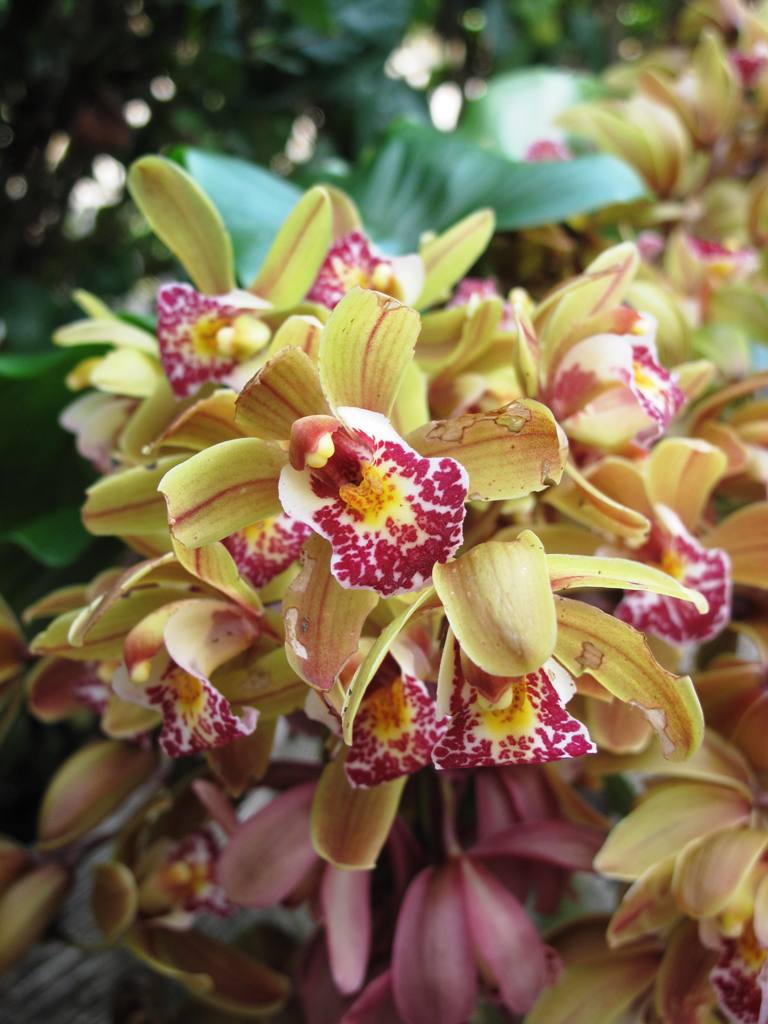
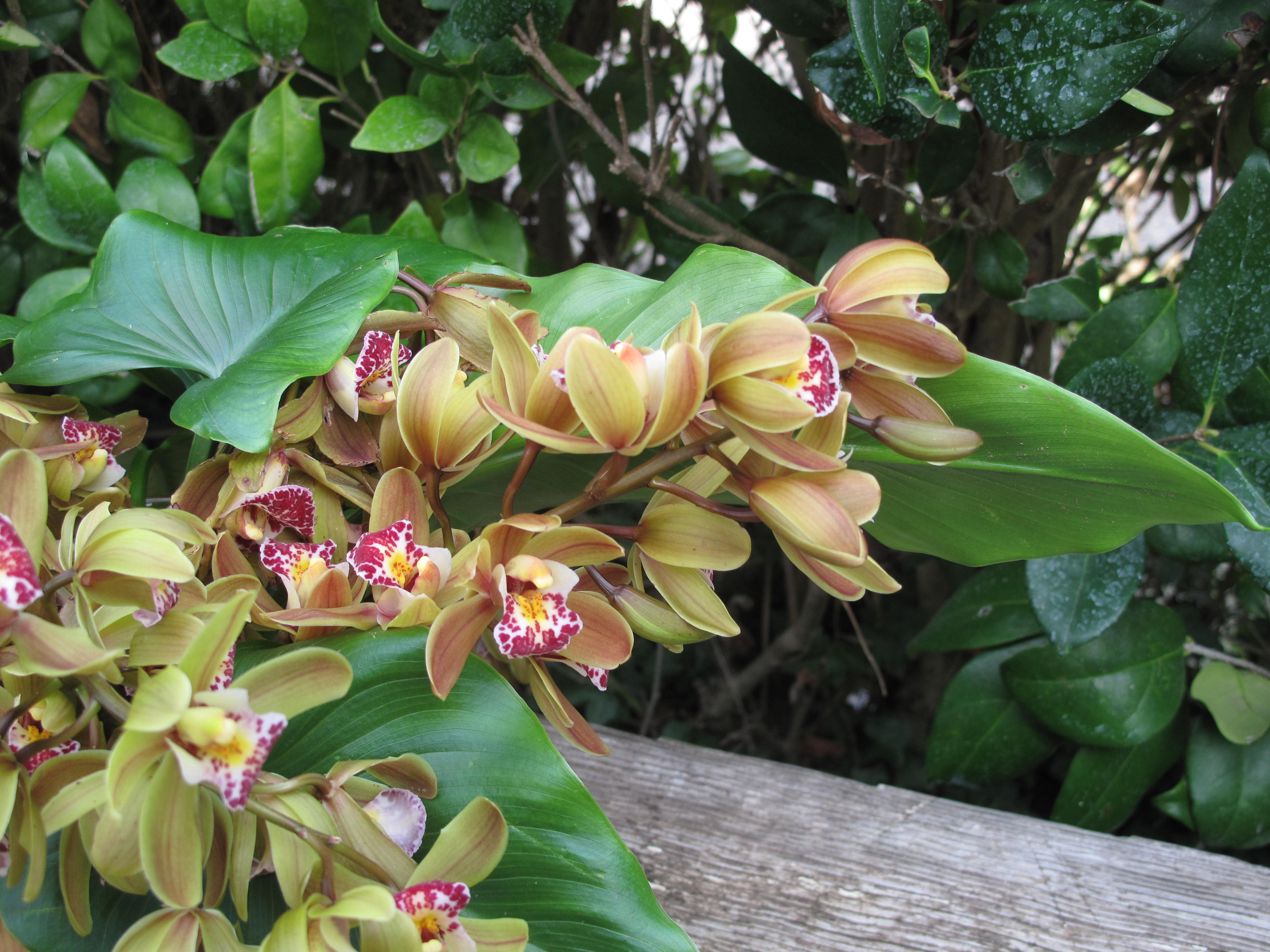
Miniature cymbidiums in all their glory, offset with calla lily foliage from Danielle Hahn's private landscape at Rose Story Farm in Carpinteria, CA.

Miniature cymbidiums in all their glory, offset with calla lily foliage from Danielle Hahn’s private landscape at Rose Story Farm in Carpinteria, CA.

On the road with the Slow Flowers Challenge, I’m in Southern California this week to do some story scouting, podcast interviews and to attend the winter board meeting of the Garden Writers Association in Pasadena.

So naturally, I wasn’t able to create my own seasonal and local bouquet!

For Week 3 of 2015, I want to showcase this exquisite arrangement designed by Danielle Hahn at Rose Story Farm. I visited her in Carpinteria, CA, this week (USDA Zone 10) and was delighted to see a vase of miniature cymbidium orchids and calla foliage on the kitchen island at the Hahn family farmhouse.
Rose Story is an American flower farm, specializing in organically-grown old garden roses, David Austin’s and heirloom varieties for the floral industry. That means their field-grown roses bloom mostly in May, June, July and August! Since it’s winter now, the farm’s rose production is limited.
Orchids are a wonderful winter-blooming option for every climate.

Orchids are a wonderful winter-blooming option for every climate.

A few years ago, Dani’s father brought her a wide array of winter flowers that would bloom in her garden when the roses were dormant. She wrote this on her Instagram post of these orchids: “It’s cymbidium time . . . these are a teensy variety and first to bloom. A gift from my late father who decided we needed something during our rose dormancy. One thousand plants and some are fragrant!”
There’s something quite powerful and lovely about associating our floral choices with memories and the people we love – and Dani, how beautiful that your own remembrances of your father are connected to these orchids.
Love this glossy calla lily foliage, another seasonal option from Dani's garden.

Love this glossy calla lily foliage, another seasonal option from Dani’s garden.

Okay, I know not everyone lives in Carpinteria (just a stone’s throw from Santa Barbara), so what’s going on in other parts of the country?
Here are a few designs from Slowflowers.com Members in colder corners of the U.S.
I share these to illustrate how much beauty each region has to offer – if only you look!
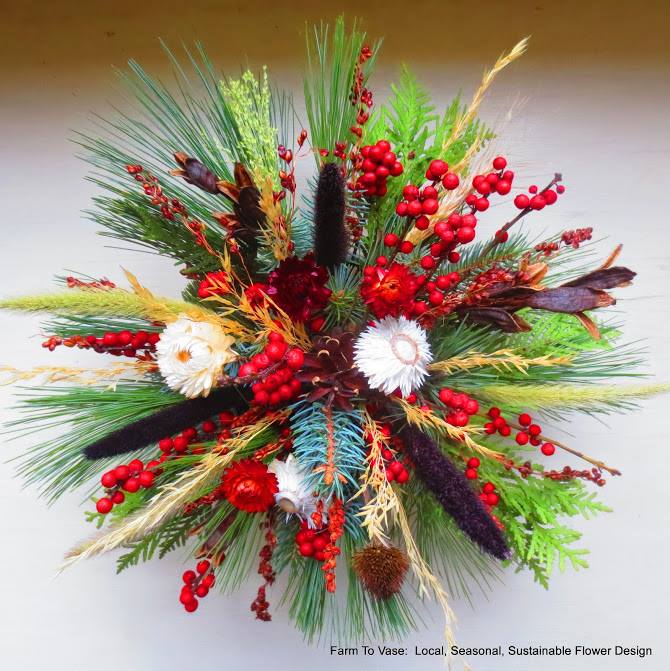
From Ann Sensenbrenner, owner of Farm to Vase in Madison, Wisconsin. This was her New Year's arrangement featuring conifers and evergreens, ilex berries, dried grasses, dried seed heads and dried flowers.

From Ann Sensenbrenner, owner of Farm to Vase in Madison, Wisconsin. This was her New Year’s arrangement featuring conifers and evergreens, ilex berries, dried grasses, dried seed heads and dried flowers.

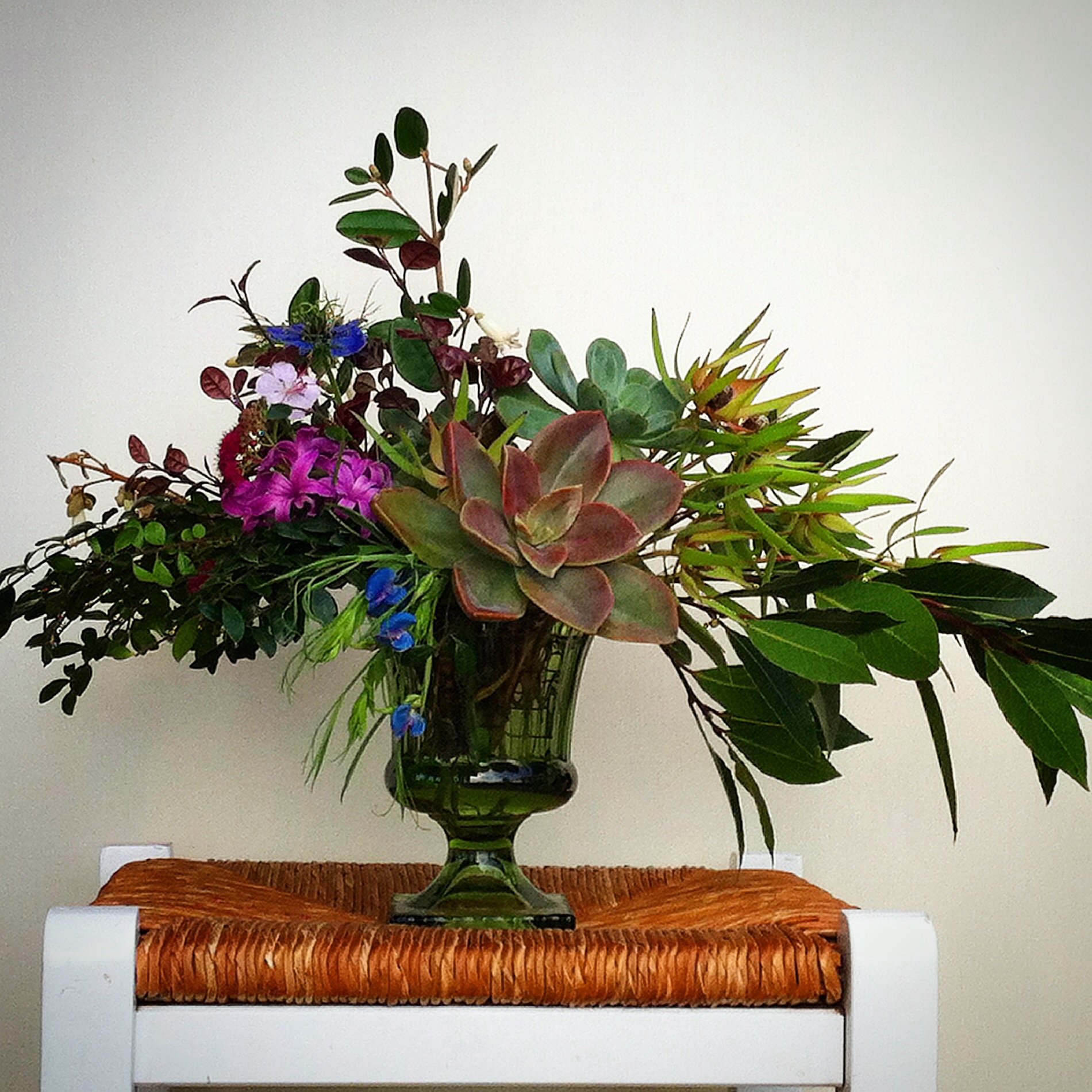
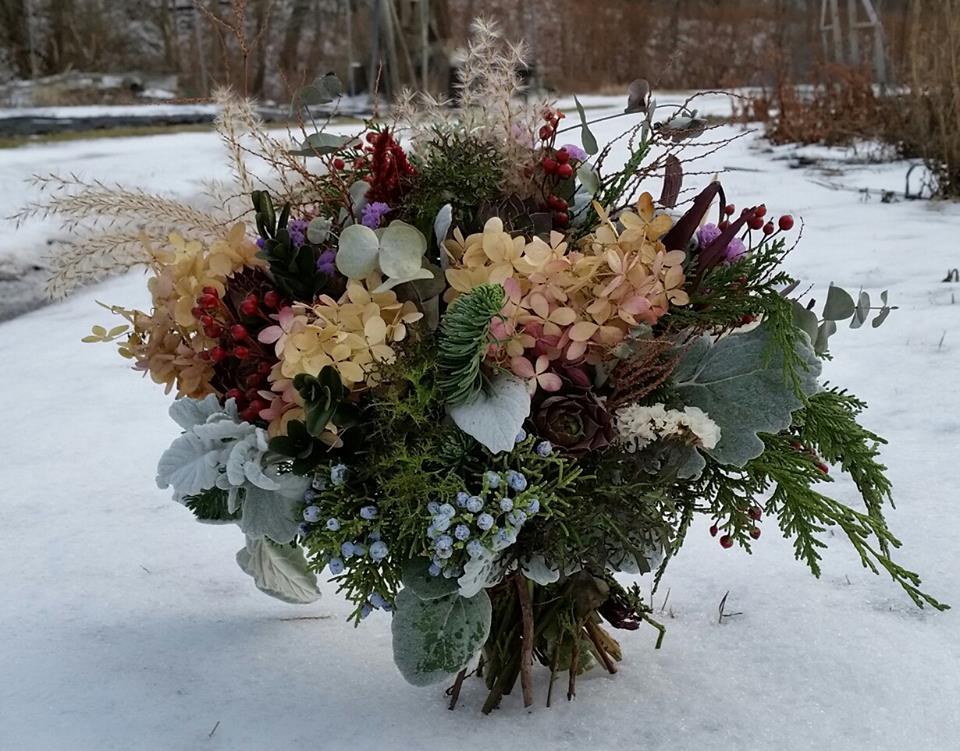
From Kate Dagnal of Goose Creek Gardens in Oakdale, Pennsylvania. Kate posted this arrangement on Jan. 16th as part of her "Friday Night Romance" series, a peek at the bouquets she creates each week. I love how this arrangement features late-season Dusty Miller, as well as gorgeous juniper berries, dried hydrangea flowers, dried grasses. I actually think I see a few succulents in this bouquet, too!

From Kate Dagnal of Goose Creek Gardens in Oakdale, Pennsylvania.
Kate posted this arrangement on Jan. 16th as part of her “Friday Night Romance” series, a peek at the bouquets she creates each week.
I love how this arrangement features late-season Dusty Miller, as well as gorgeous juniper berries, dried hydrangea flowers, dried grasses.
I actually think I see a few succulents in this bouquet, too!

TIP: From the Flower Farmer

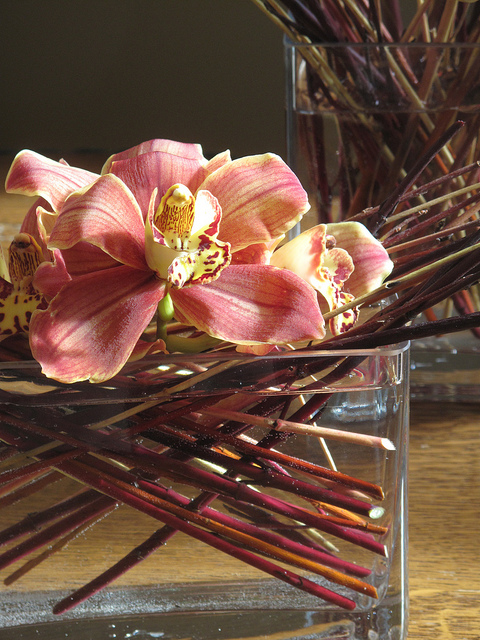
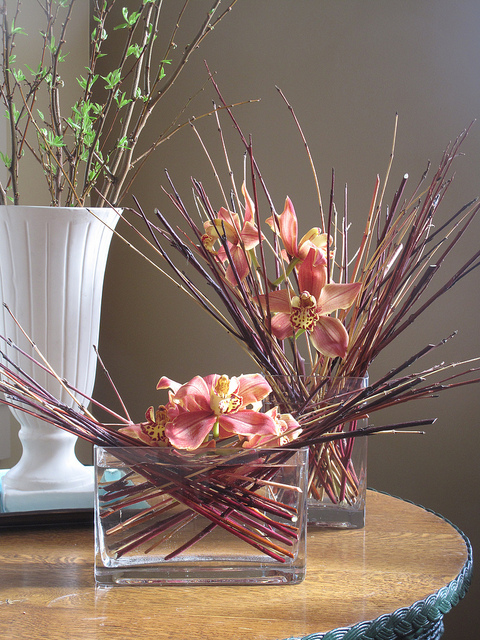
Red twig dogwood (Cornus sericea) with Cymbidium 'Sleeping Dream Castle'.

Red twig dogwood (Cornus sericea) with Cymbidium ‘Sleeping Dream Castle’.

Red twig dogwood (Cornus sericea) with Cymbidium 'Sleeping Dream Castle'.

Red twig dogwood (Cornus sericea) with Cymbidium ‘Sleeping Dream Castle’


Orchids make great cut flowers!

According to Sandra Peterkort Laubenthal, whose family grows roses, lilies and orchids in greenhouses outside of Portland, Oregon, cymbidiums can be displayed as a flower-studded stem or cut individually off the stem for floating or inserting in floral tubes.
 
It’s hard to know, however, how fresh the flower is. “What makes the most difference is if they are cut right after blooming,” Sandra says.
 
“Look at the lip to see if it has turned pink or is otherwise discolored. This is an indication that the flower has been pollinated by an insect – and that dramatically shortens the cymbidium’s lifespan.”
 
(c) Slow Flowers: Four Seasons of Locally Grown Flowers, by Debra Prinzing

Playing with Flowers and Digging Deep with Fran Sorin (Episode 175)

Wednesday, January 7th, 2015
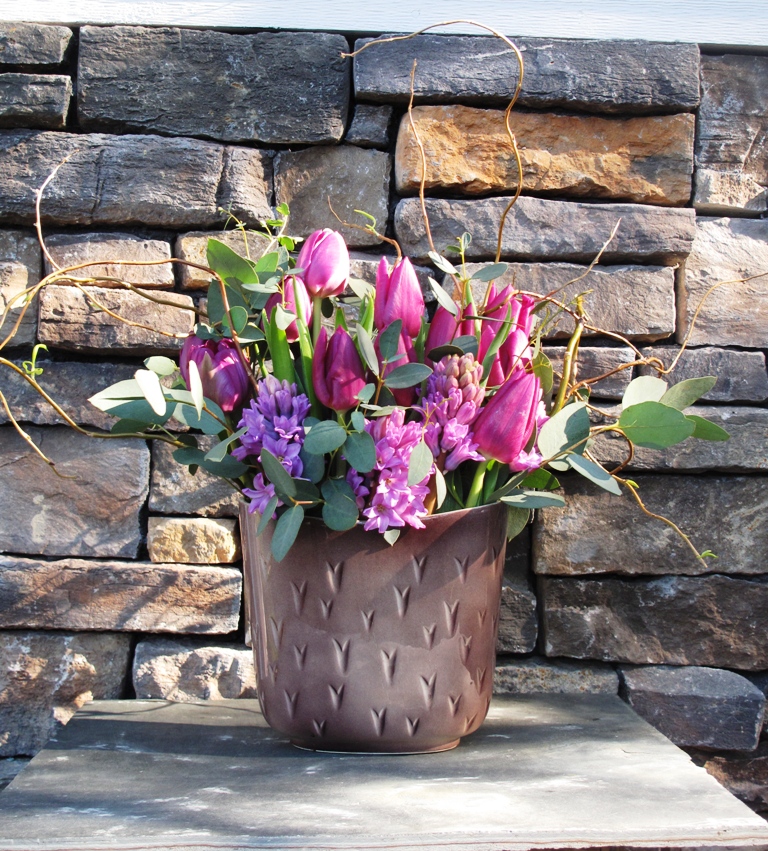
Awaiting early tulips and hyacinths . . . we're just weeks away!

Awaiting early tulips and hyacinths . . . we’re just weeks away!

3233915861_d6cc494485_o

Before we get started, I want to announce our new Slow Flowers Podcast Sponsor for 2015 – the California Cut Flower Commission.

The Commission is committed to making a difference as an advocate for American Grown Flowers.

I’ll be working closely with CCFC on a number of initiatives to promote domestic flowers in 2015, and I promise to keep you posted as details unfold.

SlowFlowersChallengeCover.jpg (2)


Today on the Slow Flowers Podcast we launch the Slow Flowers Challenge, share all about a new urban flower farm in Pittsburgh, and explore the meaning of flowers on a personal level with author and gardening personality Fran Sorin.

To kick off 2015, I invite you to join in the fun and creativity of the Slow Flowers Challenge. This project was inspired by Katherine Tracy, a talented plantswoman, designer and owner of Avant Gardens Nursery in Dartmouth, Massachusetts.

Katherine blogged about taking the “Slow Flowers Challenge” after hearing my presentation at Blithewold Mansion and Gardens in Rhode Island this past fall…and she started using the hashtag #slowflowerschallenge, which in turn prompted other people to create seasonal bouquets, photograph them and share their designs on Facebook, Instagram and personal blogs.

Katherine’s artistic arrangements reveal her love of the natural world, the seasons, the plants, the gifts of the garden and wilder places. I’ve so enjoyed seeing these bouquets pop up across the web – thoroughly serendipitous and seasonal – representing pure joy for a moment in time. SO I thought, “why don’t we make the Challenge available to everyone who loves local flowers?”

I encourage you to check out these very simple rules and download a free SlowFlowersResourceGuide2015 here. Sign up to receive weekly design updates and follow a link to the Slow Flowers Pinterest Gallery, where you are welcomed and encouraged to post your seasonal arrangements.  Let’s have fun, make beauty, and change the American floral industry with new (and more seasonal) habits.

Green_Sinner_IMG_1067

Briefly, before getting to our main guest, I also invited Jonathan Weber to share what’s going on with greenSinner, a Pittsburgh-based floral design, wedding and event studio and urban micro flower farm that he owns and runs with partner Jimmy Lohr.

Past guests of this podcast, the two have made good on their dream — to buy more land and establish a working flower farm. Jonathan and Jimmy recently purchased 4 acres of long-neglected land inside the Pittsburgh city limits. It’s called Midsummer Hill Farm.

I couldn’t be more excited to see them take this major step, but so much is needed to get seedlings and bulbs into the soil in time for flowers to bloom in 2015. Here’s a recent article featuring greenSinner, Midsummer Hill Farm and Jimmy and Jonathan’s crowd-funding campaign on Indiegogo, which runs through January 27th. I encourage you to check it out and perhaps invest in the growth of local flowers in Pittsburgh.

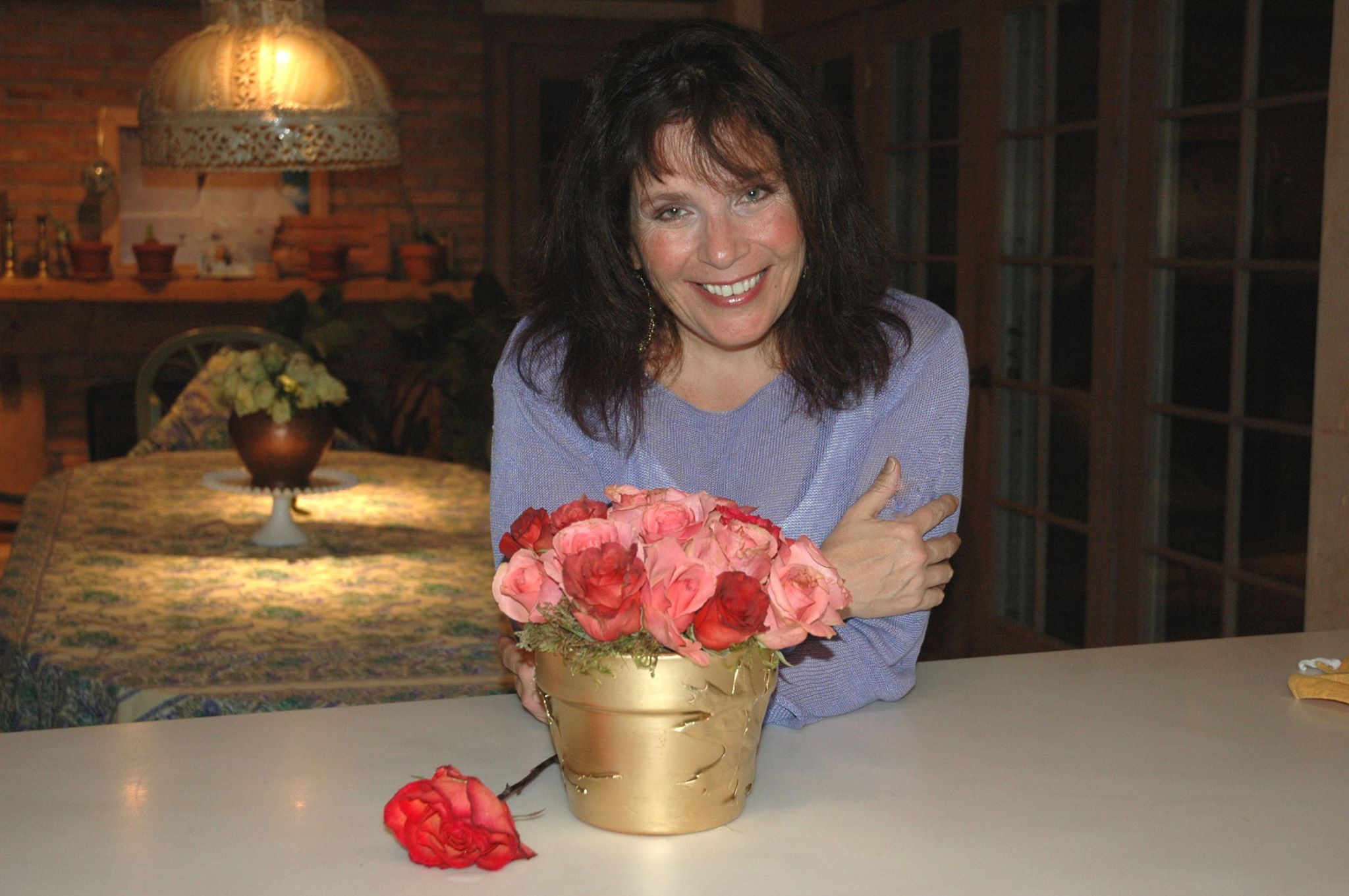
Fran Sorin, author of "Digging Deep."

Fran Sorin, author of “Digging Deep.”

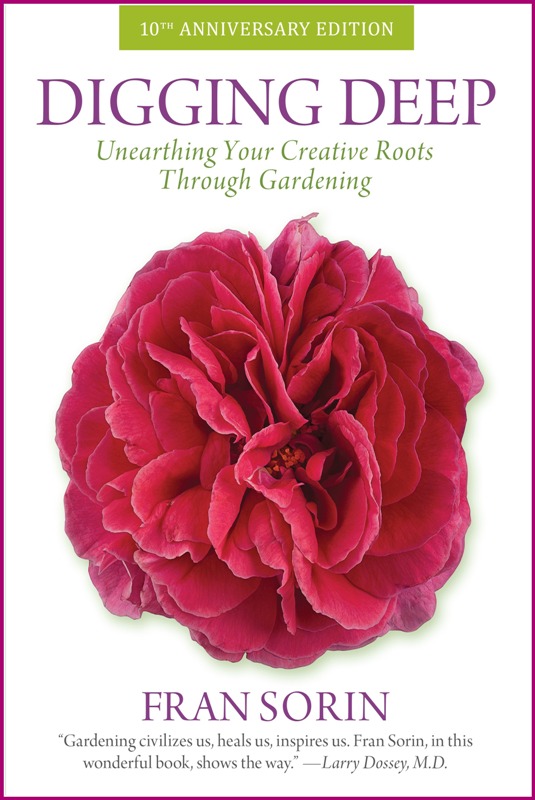
The just-released, 10th Anniversary Edition of "Digging Deep." Read on to find out how you  can enter to win!

The just-released, 10th Anniversary Edition of “Digging Deep.” Read on to find out how you can enter to win!

Today’s guest Fran Sorin is an author, gardening and creativity expert, and deep ecologist. Her book, Digging Deep: Unearthing Your Creative Roots Through Gardening, was groundbreaking when published in 2004. It was the first book to address gardening in the context of creativity, and as a tool for well-being and personal transformation. Here is a link to my blog post about “Digging Deep for Flower Lovers,” sharing favorite excerpts from Fran’s book.

Fran recently released an updated 10th Anniversary Edition of Digging Deep. The book is even more vital today, because our culture has become increasingly obsessed with technology and progressively more “nature deprived.”

From the moment Fran decided she wanted to share her passion for gardening with a large audience and approached the local Fox TV station in Philadelphia about the idea, she became a fixture on the TV circuit. She spent years as a gardening authority on Philadelphia’s Fox and NBC stations; she was the regular gardening contributor on NBC’s Weekend Today Show, and made several appearances on CNN, MSNBC, Lifetime, HGTV, DIY, and the Discovery Channel. She is one of the creators of the popular weekly dose of garden news at Gardening Gone Wild Blog.

Fran is celebrating her tenth year as a CBS Radio News correspondent. Her Digging Deep gardening features are heard several times a week on CBS Radio stations throughout the United States. She has also written dozens of articles about gardening and well-being for USA Weekend Magazine, Radius Magazine, and iVillage.

She has spent more than twenty-five years initiating and working on community projects that have served the diverse community of West Philadelphia, most recently initiating a community garden and learning center on the grounds of a church in an underprivileged neighborhood of West Philadelphia.

Even prior to becoming an ordained interfaith minister, Fran was ministering to folks whether she was taking on the role as a garden designer, a media trainer, a TV personality, or a radio host. Fran’s greatest strengths are in connecting to audiences and individuals and galvanizing them to take action. In these tumultuous and technologically obsessed times, when so many of us feel stuck, scared, and disconnected from ourselves and others, her optimistic, grounded values, and empowering message are needed more than ever.

Here is Fran’s video – she’s a woman on the street, sharing her inspiring “Give a Flower. Get a Smile” project:

Follow Fran here:

Facebook

Give a Flower Facebook Page

Twitter

If you want to participate in the drawing for a free copy of Digging Deep, post a comment about your earliest memory of gardening or experiencing nature. Your comment enters you into the drawing, which takes place at midnight Pacific Time, this Saturday, Jan. 10th. We’ll announce the winner next week.

My personal goal is to put more American grown flowers on the table, one vase at a time.  Listeners like you have downloaded the Slow Flowers Podcast more frequently than ever before.  We’re at nearly 30,000 downloads, which will be an exciting milestone to reach in the coming week. So I thank you!!! If you like what you hear, please consider logging onto Itunes and posting a listener review.

The Slow Flowers Podcast is engineered and edited by Andrew Wheatley and Hannah Holtgeerts. Learn more about their work at hhcreates.net.
Take the Slow Flowers Challenge in 2015

Monday, January 5th, 2015

ChallengeInvite_2015What better New Year’s Resolution than to resolve to live locally with your flowers and floral designs for the coming year?!

This week launches the Slow Flowers Challenge, and I invite you to join in the fun and creativity.

A possible collection of stems and fruit inspired by Slow Flowers, photographed by Katherine Tracy of Avant Gardens Nursery.

A possible collection of stems and fruit inspired by Slow Flowers, photographed by Katherine Tracy of Avant Gardens Nursery.

This inclusive project was inspired by Katherine Tracy, a talented plantswoman, designer and owner of Avant Gardens Nursery in Dartmouth, Massachusetts.
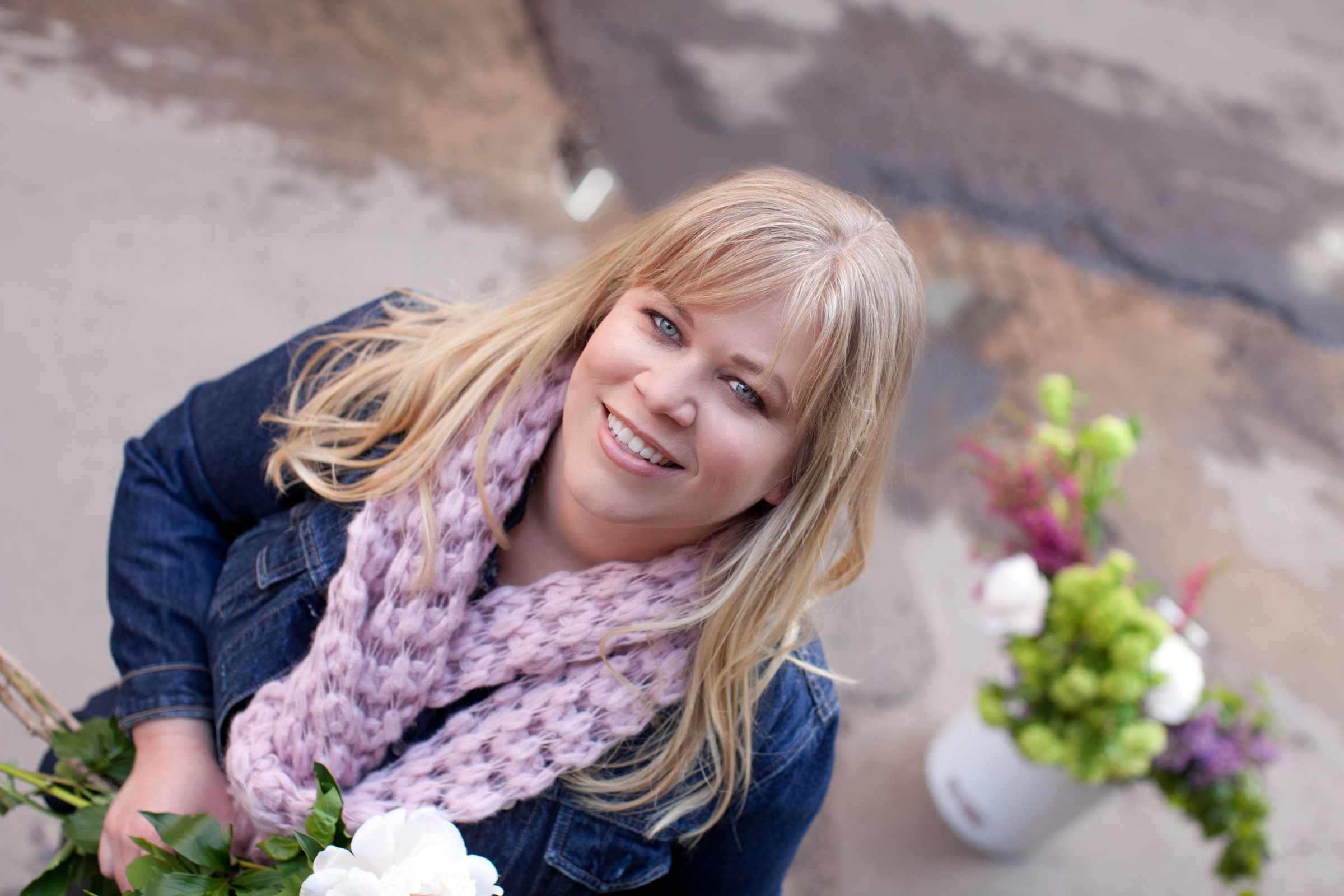
Katherine's Nov. 7th arrangement, created the week after we met at Blithewold in Rhode Island.

Katherine’s Nov. 7th arrangement, created the week after we met at Blithewold in Rhode Island.

Katherine wrote on her Garden Foreplay Blog about taking the “Slow Flowers Challenge” after hearing my presentation at Blithewold Mansion and Gardens in Rhode Island this past fall.

She started using the hashtag #slowflowerschallenge, which in turn prompted other people to create seasonal bouquets, photograph them and share their designs on Facebook, Instagram and personal blogs.
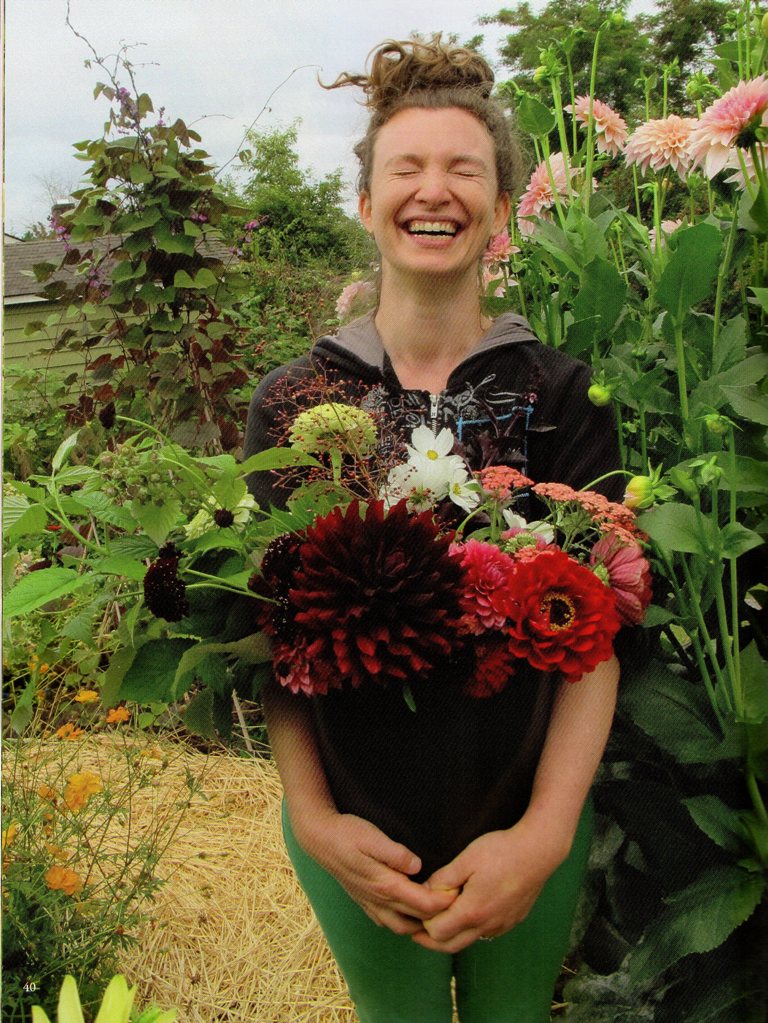
Katherine’s artistic arrangements reveal her love of the natural world, the seasons, the plants, the gifts of the garden and wilder places where she lives and gardens in New England.
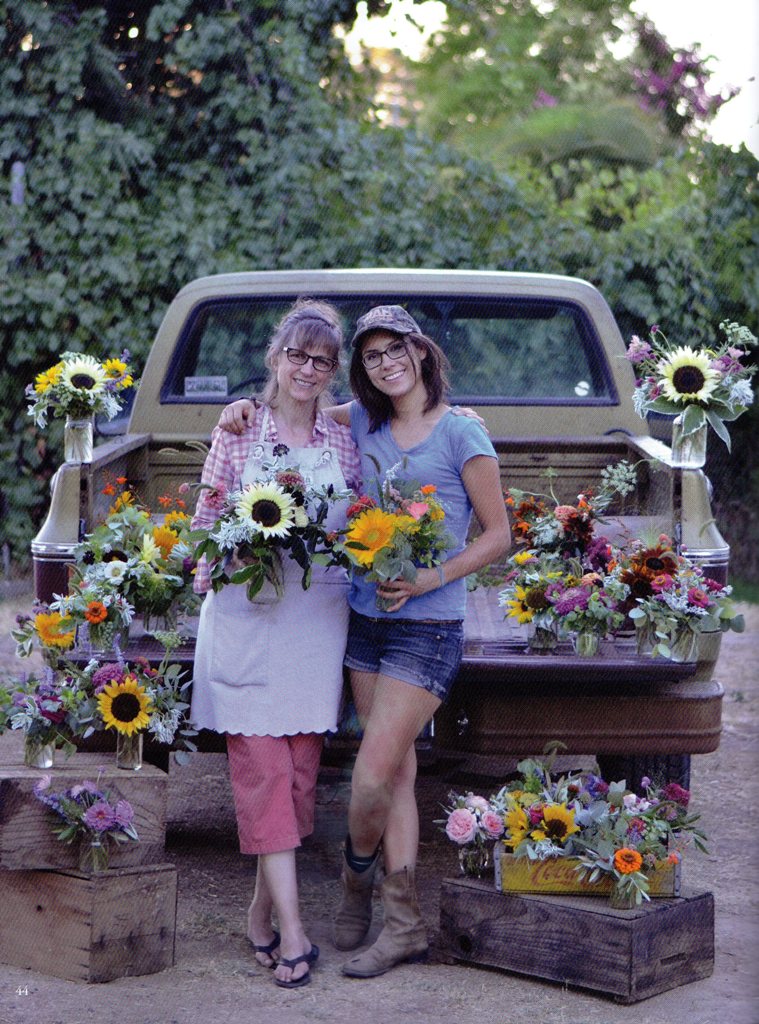
I’ve so enjoyed seeing these bouquets pop up across the web – thoroughly serendipitous and seasonal – representing pure joy for a moment in time. These personal expressions resonated with me – they brought me back to the year I spent making one bouquet per week from the flowers that grow around me.

“Why don’t we make the Challenge available to everyone who loves local flowers?”

It’s official and you’re invited to join The Slow Flowers Challenge 2015.

SlowFlowersChallengeCover.jpg (2)

The Rules: Live in the season. Source locally. Use earth-friendly materials and supplies. The more frequently you arrange flowers, the more familiar you’ll become with each of these aspects.

What: The Slow Flowers Challenge is an ongoing practice of creating seasonal arrangements and sharing your designs with the Slow Flowers Tribe.

Why:  The practice is timeless. The gesture is universal. Inspired by the exquisite beauty of a garden or by the sentiment of a special occasion, we gather flowers and foliage and place them in a vessel to display in our homes or give to another. Floral design is a three-dimensional art form that blends horticulture and nature with sculptural composition. At its best, bouquet making is a personal expression unique to the designer’s tastes and point of view.

When: This is the 2015 Challenge. It will run from January 2015 through December 31, 2015. You can join at any time during the year.

How Often: The Challenge format allows you to participate at whatever frequency works for your schedule. We like to suggest these options: 365 Days, 52 Weeks, 12 Months or 4 Seasons.

When I created the Slow Flowers book, I designed one bouquet per week for 52 weeks. But you might decide to create a monthly bouquet, or a seasonal arrangement – or, if you’re really dedicated – a daily design! The main thing is that you decide what works for you and get started.

Share! Post a photo of your arrangement to our Slow Flowers Challenge Pinterest Page. And if you share it elsewhere, please use #slowflowerschallenge or tag @myslowflowers link on Twitter so others can see what you’ve created.

Resources to Help & Inspire You:

  • Sign up here to Join and Receive a weekly email with season-perfect Slow Flowers Tips for your cutting garden and personal floral design studio. Each will include what to plant now, what to harvest now, how to find key resources like seeds, plants or cut ingredients, and essential tools/supplies for the Slow Flowers Challenge
  • Submit photographs of your arrangements to our Monthly Slow Flowers Challenge Pinterest Page.
  • Share your designs on Social Media. Please use #slowflowerschallenge or tag @myslowflowers link on Twitter so others can see what you’ve created.
  • Win prizes and the admiration of your fellow Slow Flowers Tribe members
  • Achieve Certified Slow Flowers Designer status.

Let’s have fun, make beauty, and change the American floral industry with new (and more seasonal) habits.

‘Tis the Season for SLOW FLOWERS

Thursday, December 25th, 2014

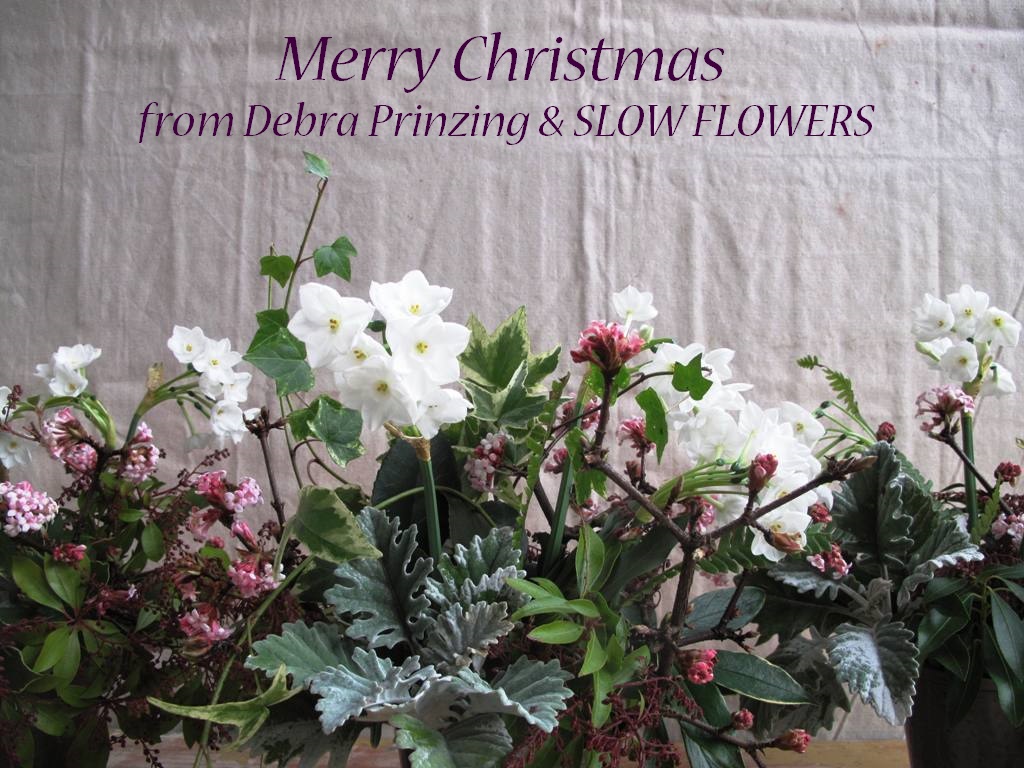
Merry Christmas and Happy Holidays from Seattle, Washington!

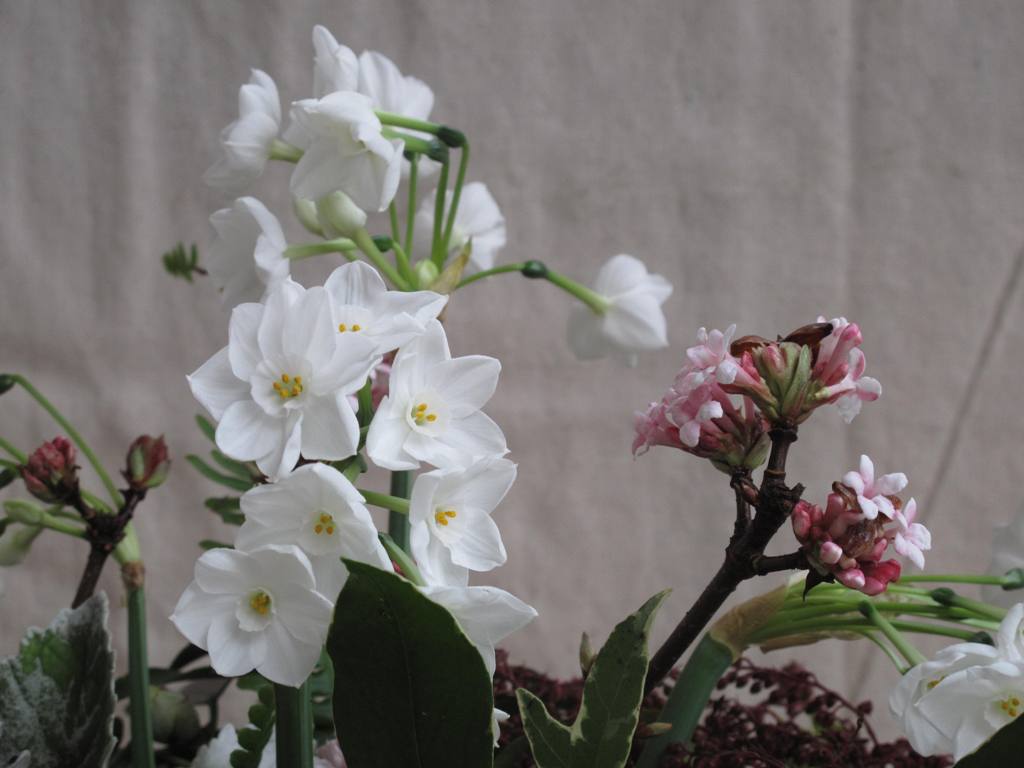
I was gifted a flat of paperwhites in bloom this week – one lonely bulb per pot – crying out for some equally lovely companions in a holiday arrangement. So yesterday, I clipped from here and there in the garden and created this trio of vases to adorn our Christmas dining table tonight.

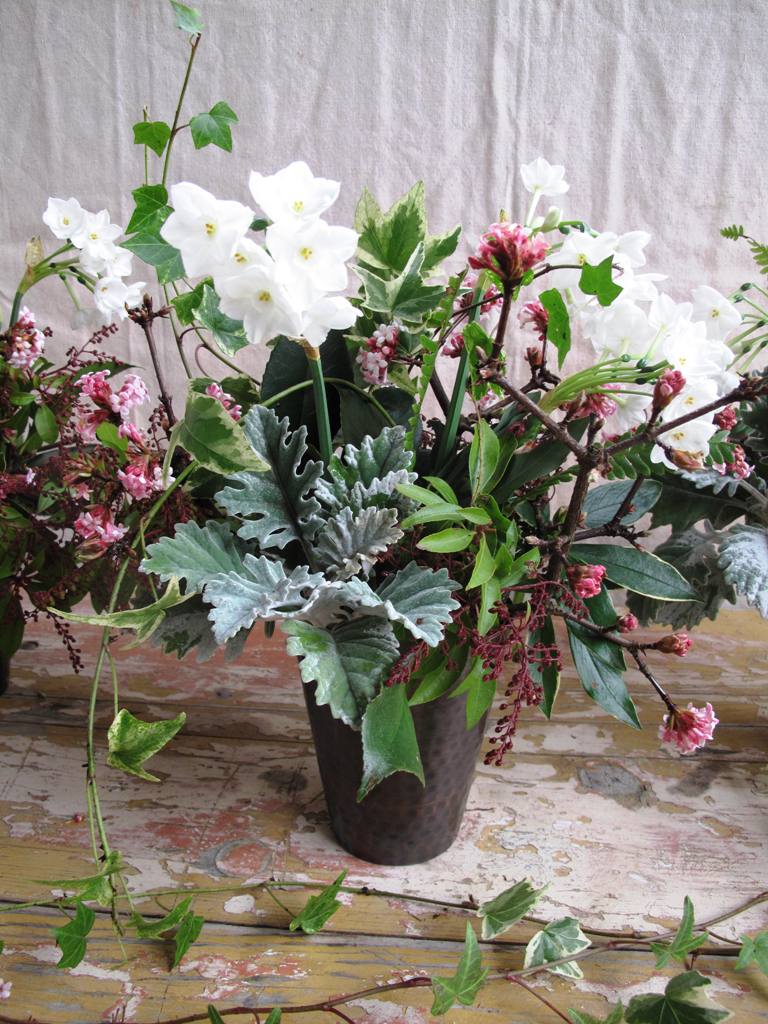
Three vases filled with festive and LOCAL vines, leaves, branches, blooms, buds and JOY!

Three vases filled with festive and LOCAL vines, leaves, branches, blooms, buds and JOY!

The paper whites started it all - and I sought pretty plants with winter interest to accompany them.

The paper whites started it all – and I sought pretty plants with winter interest to accompany them.

In addition to the paperwhites, here’s what the vases contain:

  • Pieris japonica (Lily-of-the-valley shrub)
  • Camellia in bud
  • Bay tree stems
  • Daphne odora in bud
  • Dusty Miller
  • Viburnum x bodnantense ‘Dawn’
  • Variegated Ivy
  • Evergreen fern fronds
  • Narcissus (Paperwhites)


As I prowled through my mostly dormant landscape, each one of these plants reminded me how much I have to value in the winter garden. If you plant for four seasons, with intentionality, those woody ornamental shrubs really deliver! I found myself thinking: “Make more room for Pieris!” as I only have three and they’re relatively young shrubs. But those chains of blooms, deep pink and delicate, are simply sublime dangling out of the vases.

Close up, the tangle of stems reflects a perfect moment in time - in my garden and in the season.

Close up, the tangle of stems reflects a perfect moment in time – in my garden and in the season.

The Daphne – only planted two years ago next to the backyard patio where I will smell its fragrance in winter – well, I gingerly snipped three stems, each with a bud – and each from a lower/back part of the shrub. I still want to enjoy Daphne outdoors, as well as indoors!

I gaze at the Viburnum ‘Dawn’ every day – it’s just outside my office window and such a welcome a note of color – intense pink! – in December and January. Even the Dusty Miller, marginally winter hardy here in Seattle, had hung on long enough to give me a silvery cluster of soft leaves for each vase.

I’m launching a new project next week, appropriately called “The Slow Flowers Challenge” – and so making this holiday trio of arrangements has been my warm-up exercise.

If you’re ready to join me, start collecting your vases, eyeing botanicals in your landscape or neighborhood, and dreaming about a year of flowers in your life.

Happy Day, dear friends.

merrychristmas2014

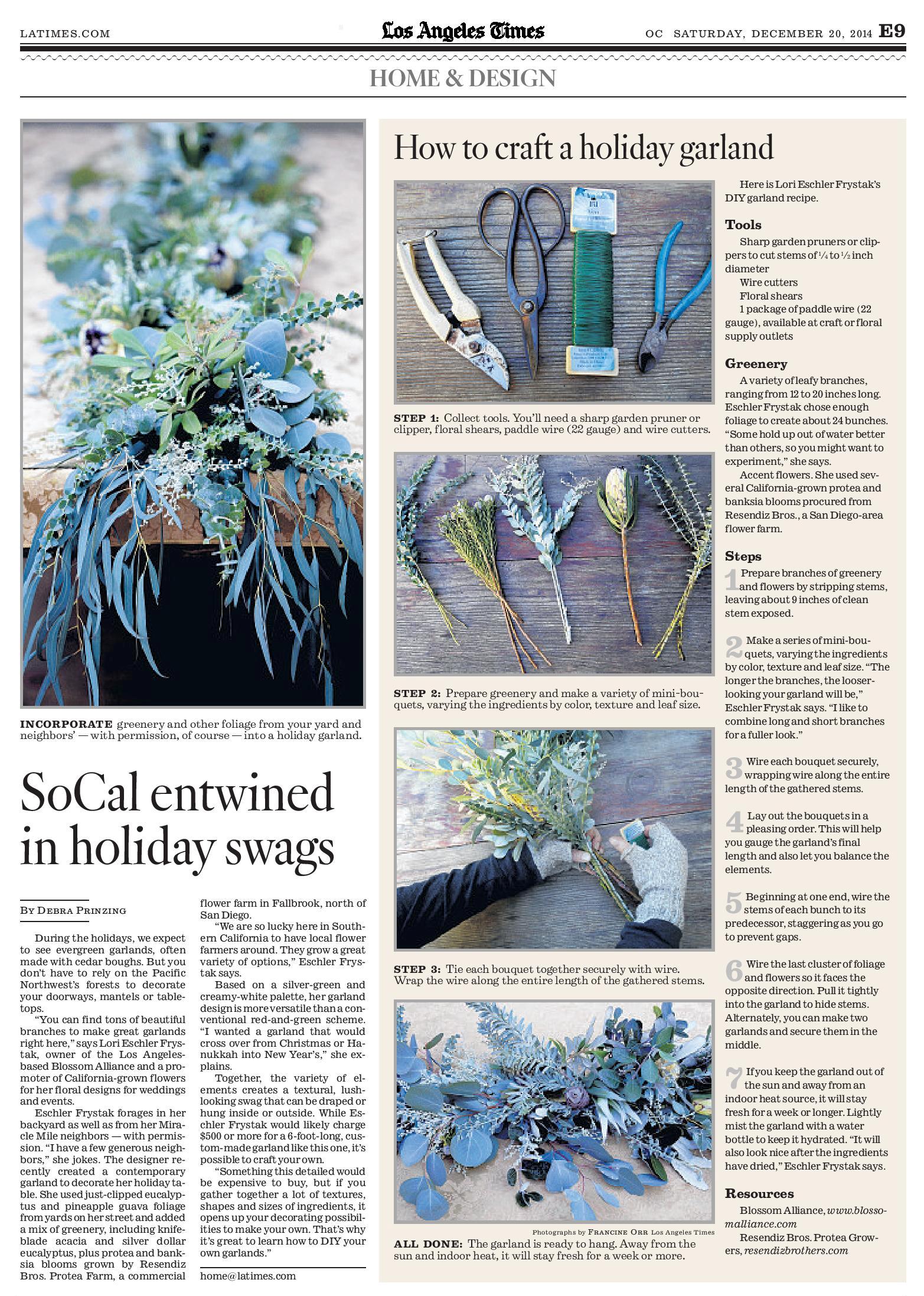
Today’s LA Times: SoCal entwined in holiday swags with Blossom Alliance’s Lori Eschler Frystak

Saturday, December 20th, 2014

LAT20141220.61-page-001

Flirty Fleurs: Meet the Farmer-Florist

Friday, December 12th, 2014
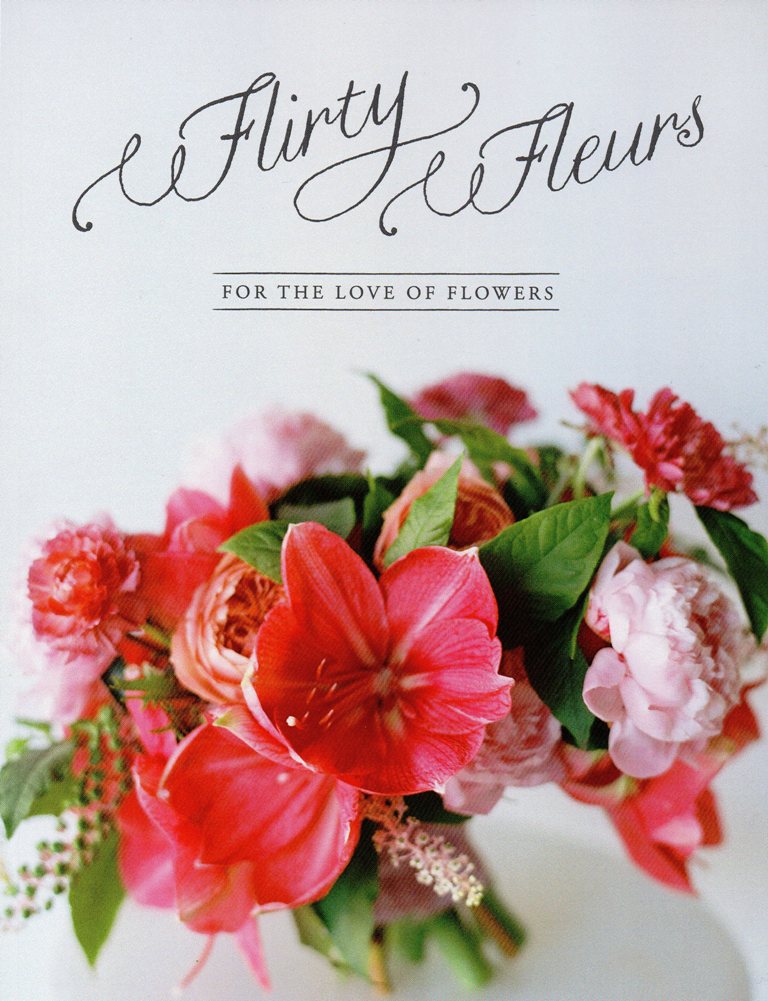
Feast your eyes on "Flirty Fleurs," a new magazine celebrating the love of flowers.

Feast your eyes on “Flirty Fleurs,” a new magazine celebrating the love of flowers.

Alicia Schwede

Alicia Schwede

My friend Alicia Schwede of the Flirty Fleurs blog recently set for herself a huge new creative challenge: To design and produce her own floral magazine. The result is simply beautiful and last night, I finally got my hands on the brand new issue of Flirty Fleurs: For the Love of Flowers, Edition One.

Alicia asked me to pen a story for her inaugural issue and she gave me the assignment of interviewing two of her favorite design studios: Botanique, owned by Kelly Sullivan of Seattle and Verbena: Flowers & Trimmings, owned by Karin Plarisan and Karly Sahr of Roseville, California.

Of course, since all three are involved in the Slow Flowers Movement and members of Slowflowers.com, it was an easy “yes” on my part.

I’m sharing a little preview of my involvement in the Flirty Fleurs magazine here. Click to order a digital or printed copy so you can read every word.

For $19.95, the printed copy is worth every penny. You’ll love the luscious look, the pearly-matte paper stock, the elegant graphic design and pages bursting with flowers. Alicia and her team pulled off something that many people dream of doing, but few can ever take from idea to reality.

The story I wrote: “Meet the Farmer-Florist,” begins this way:

Kelly Sullivan of Botanique, photographed in her Seattle cutting garden.

Kelly Sullivan of Botanique, photographed in her Seattle cutting garden.

Karen and Karly of Verbena, photographed at their Roseville, California flower farm.

Karin and Karly of Verbena, photographed at their Roseville, California flower farm.

Meet the farmer-florist

Marrying science and art, a new crop of floral designers are growing their own botanical ingredients

By Debra Prinzing

I first wrote about a “farmer-florist” in 2012, with the publication of The 50 Mile Bouquet (St. Lynn’s Press). In a chapter titled “The Accidental Flower Farmer,” which profiled San Francisco floral designer Baylor Chapman, owner of Lila B. Design, I documented Baylor’s decision to start growing many of her own flowers, vines, ornamental shrubs, succulents and herbs, in order to diversify the palette with which she designed.

Even two years ago, I didn’t know that the “farmer-florist” category was going to be the phenomenon it has since become. In that chapter, I wrote: “Increasingly, there are designers who, by necessity, harvest floral ingredients from their own gardens. As well, there are growers who assume the role of floral designer, satisfying a bridal customer’s request for unique, straight-from-the-farm bouquets. That these two world are happily intersecting is due to curiosity, innovation and experimentation on the part of designer and grower alike.”

Today, more than two years later, all you have to do is search the hashtag #farmerflorist and dozens of self-references appear on Instagram, Facebook and Pinterest. Designers and flower farmers alike are describing themselves as farmer florists, including two of the most recognizable names in the industry, Erin Benzakein of floret and Jennie Love of Love ‘N Fresh Flowers. No longer considered something outside the accepted scope of what a flower farmer is supposed to do (grow flowers) or what a floral designer is supposed to do (create beautiful bouquets using flowers that someone else cultivated and harvested), there is a lovely blurring of the lines between those formerly  conventional roles.

But to give credit where it is due, an entire generation of specialty cut flower farmers has been designing bridal bouquets and farmers’ market bunches for a long time. Lynn Byczynski first wrote about the business opportunities for flower farmers to design and sell their bouquets back in 1997 when her book The Flower Farmer was first published (the second, updated edition came out in 2008). But long before then, British designer-to-the-royals Constance Spry (the first celebrity florist) cut blooms, branches and foliage from her family’s land to sell in her London flower shop as early as the 1930s.

Thanks to a newfound passion for local and seasonal floral ingredients, more floral designers are putting on their gardening gloves and cultivating small and large patches of earth for cutting gardens, rose borders, raised beds and hedgerows – anywhere a few extra flowers can be planted and cared for. So we asked three Farmer-Florists to share their motivations for doing just that.

Here’s hoping that Alicia will continue her project to plan her 2nd edition of Flirty Fleurs. And here’s to farmer-florists everywhere, for bringing beauty to our lives!

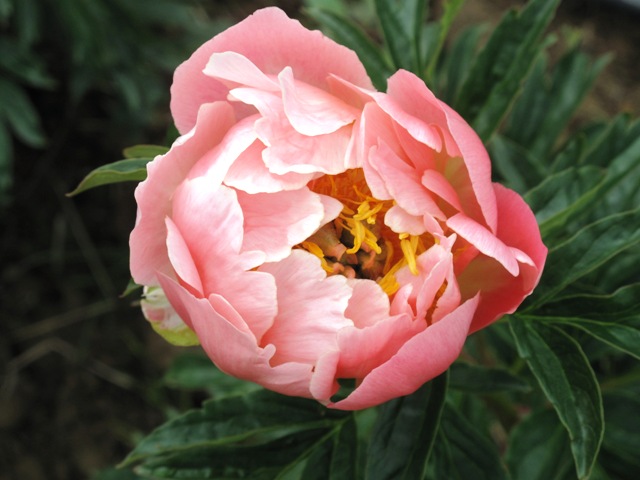
EchoLakePeonies_coral2

A Quiet Sunday Morning

Sunday, December 7th, 2014

A Seattle Sunday Morning: 43 degrees F. Foggy and damp. It’s supposed to get up to 53 degrees F this afternoon, so who am I to complain about a little morning fog?

I woke up grateful for many things, including the sense that my life has slowed down for this 30-day holiday period. I’ve purposely limited my social commitments so as to save my energy for the creative projects that are tugging at me. This afternoon, I might get the sewing machine out and see what I can fashion from my collection of pretty scraps and remnants.

One lovely suprise happened last night, just as I was about to turn off the back episode of “Madame Secretary” I was watching and crawl under the flannel sheets.

Fran Sorin, yes that Fran Sorin – of Digging Deep and Gardening Gone Wild fame, sent me a note to say she devoted her latest CBS Radio gardening segment to “Slow Flowers.”

I’m hoping to get the audio posted, but right now, let me just say THANK YOU so much to Fran! What a generous gift of support from one serious flower lover to another. She gave me the transcript, which I’ll share here:

CBSradioCBS RADIO SPOT

December 5, 2014-4- Slow Flowers

If you’re thinking about sending flowers to someone for the holidays, I’ve got a suggestion for you.

This is Fran Sorin for DIGGING DEEP.
A gardening colleague, Debra Prinzing, has singlehandedly created and committed her life to developing a nationwide online directory of florists, shops, and studios who design with American-grown flowers. It’s call Slow Flowers.
In the U.S., we spend close to $28 billion a year on floriculture. Around 80% of the cut flowers bought in the U.S. are imported.
The Slow Flower Movement is following the sustainable values of the Slow Food Movement—which is to buy local, lower the carbon footprint, enrich the local economy, and preserve local farmland.
To learn more and buy magnificent flowers from local American growers, click on slowflowers.com

This is Fran Sorin for CBS Radio News.

GLOBAL CHORUS

A lot like Fran’s unepected gift of a 1-minute endorsement heard on radios around the country, this next item also gets filed under the “out of the blue-gift from the universe” category.

In April 2013, I received an email from a stranger. Someone named Todd E. MacLean who just reached out with an invitation to get involved with a new book of essays entitled “Global Chorus.” Here’s what he wrote:

Global Chorus, edited by Todd E. MacLean

Global Chorus, edited by Todd E. MacLean

My name is Todd E. MacLean and I’m the Editor-in-Chief for an international fundraiser anthology that is currently being compiled called Global Chorus: A 365-Person Anthology of Worldwide Concern and Enduring Hope.

With collected words from Jane Goodall, Nelson Mandela, David Suzuki, Stephen Hawking, Bill McKibben, R.K. Pachauri – Chair of the Intergovernmental Panel on Climate Change, Ashish Ramgobin – great granddaughter of Mahatma Gandhi, Frances Moore Lappé, Paul Hawken, Trudie Styler, Gloria Flora, Wes Jackson, Wendell Berry, Kenny Ausubel, Joel Salatin, Alexandra Cousteau, Archbishop Desmond Tutu, The Dalai Lama, and many, many more, Global Chorus is growing into a powerful anthology for a world in crisis; and through this letter, I am now extending to you an invitation to write a brief response for inclusion in the Global Chorus anthology.

Global Chorus is a 365-day compendium, bringing together 365 contemporary voices and sharing in the experience and wisdom of many of humanity’s most concerned citizens. Contributors are asked to express their thoughts on the future of the planet, and the anthology will present a different contributor’s response for each day of the year. Proceeds from the sales of Global Chorus will go toward World Wildlife Fund, The Jane Goodall Institute, The David Suzuki Foundation and The International Committee of the Red Cross.

Contributors to Global Chorus have one page (suggested length of up to 250 words, to a maximum of 350 words) to answer the anthology’s question:

“Do you think that humanity can find a way past the current global environmental and social crises? Will we be able to create the conditions necessary for our own survival, as well as that of other species on the planet? What would these conditions look like? In summary, then, and in the plainest of terms, do we have hope, and can we do it?”

Something resonated with me about this project and I decided to say “YES.”

I used Todd’s invitation to bring flower farming and flowers into the dialogue about global environmental issues and the individual choices we make to respect the planet.

Todd helped me with a few edits and here is what ended up in the book, one of 365 essays (you can find mine on the page for October 19th). Learn more about Global Chorus and find a bookstore near you to purchase a copy. I’ll be giving these books as gifts this holiday season.

Debra Prinzing

It feels daunting to think one person can change

things in this world. That is when I turn from the

macro to the micro and focus on individual action.

A single gesture takes on meaning far greater than

me, my family, my block, my neighbourhood, my

city. When that gesture is frequently repeated, its

impact is exponential.

I have always turned to flowers, those growing

in my garden and in the fields of my flower farmer

friends.

The symbolic gesture of giving flowers has

been practised for generations. Flowers appear in

history, in literature, in every culture and in every

land. Gathering flowers as a show of affection or a

celebratory display is no small thing. It is a timeless,

universal practice.

Flowers connect humans with Nature and

heighten our awareness of the seasons. They root

us to our place on the planet. Our senses see, smell,

touch (and even hear and taste) botanical beauty.

This is a truth understood by all humans.

I do believe that flowers parallel food. We don’t

often eat petals and buds, but they feed us nonetheless.

The spiritual sustenance of flowers has caused

me to think more intentionally about how I consume

them. I have been inspired to start the Slow

Flowers movement, a conscious practice of sourcing

flowers grown close to me rather than ones shipped

to me from afar. When I choose local flowers, I am

preserving farmland, ensuring economic development

in rural areas and keeping farm jobs viable.

As an advocate for those who grow flowers

enjoyed by so many, I believe it’s important to remember

the human toil required to plant, cultivate

and harvest those blooms. I find hope in honouring

the flower farmer, hearing his or her story and

acknowledging the farmer’s role in bringing beauty

into our lives. By making a simple connection between

flower and farmer we humanize an entire

industry, one that has previously been so disconnected

from us. It is perhaps more indirectly rather

than directly world changing, and yet, it is the act

I know makes a difference far beyond the vase on

my dining table.

— Debra Prinzing, author, speaker, designer,

founder of Slowflowers.com

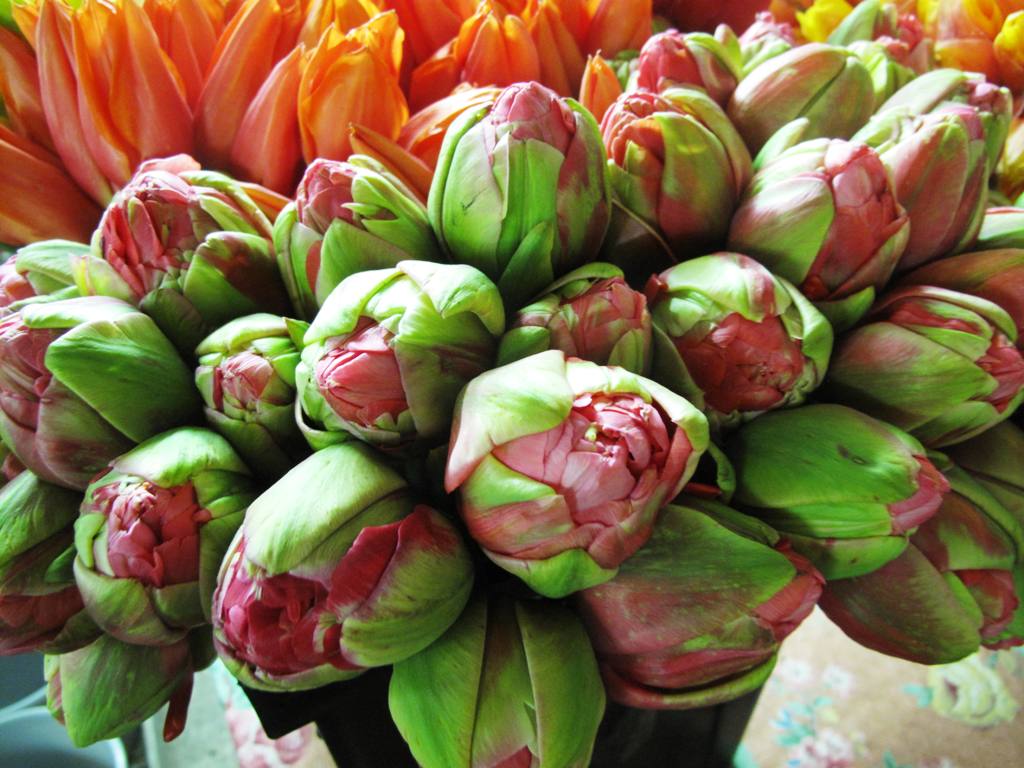
Gorgeous field-grown tulips, from Gonzalo Ojeda of Washington's Ojeda Farms.

Gorgeous field-grown tulips, from Gonzalo Ojeda of Washington’s Ojeda Farms.