Debra Prinzing

Get the Email Newsletter!

Slow Flowers on Toxic Free Talk Radio

Tuesday, October 7th, 2014

It was a blast today to meet another Debra – Debra Lynn Dadd – aka “The Queen of Green,” the leading voice in toxic-free living and host of “Toxic Free Talk Radio.”

I joined her today on the air for a lively hour discussing what’s “green” and “not green” about the floral industry. You can listen to the entire interview here.

FLA-Grown - yes, it's good to know the source of your flowers and greens!

FLA-Grown – yes, it’s good to know the source of your flowers and greens!

Debra is based in Clearwater, Florida, so I wanted to send her something locally-grown for her vase. A huge thanks to Erik Hagstrom, of Albin Hagstrom & Sons,, a Florida-based foliage farm located just north of Orlando, for getting in on the act.

A member of Slowflowers.com, he offered to send some of his farm’s gorgeous and lush greenery to Debra.

Something awesome happened, and it was completely unscripted: The box from Albin Hagstrom arrived during our on-air interview and Debra went a little bonkers (in a good way) raving about the goodies she received.

That was the perfect way to demonstrate what American grown is all about.

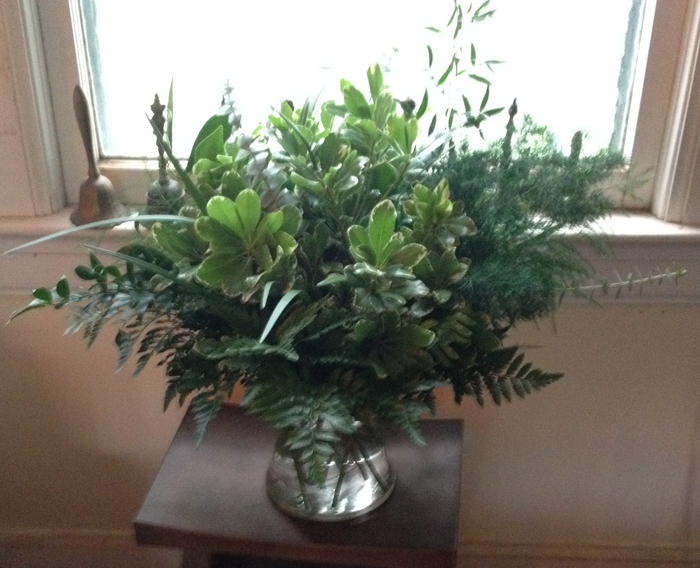
Here’s how Debra arranged the foliage after we wrapped up the interview:

A 100% Florida-Grown Bouquet

A 100% Florida-Grown Bouquet

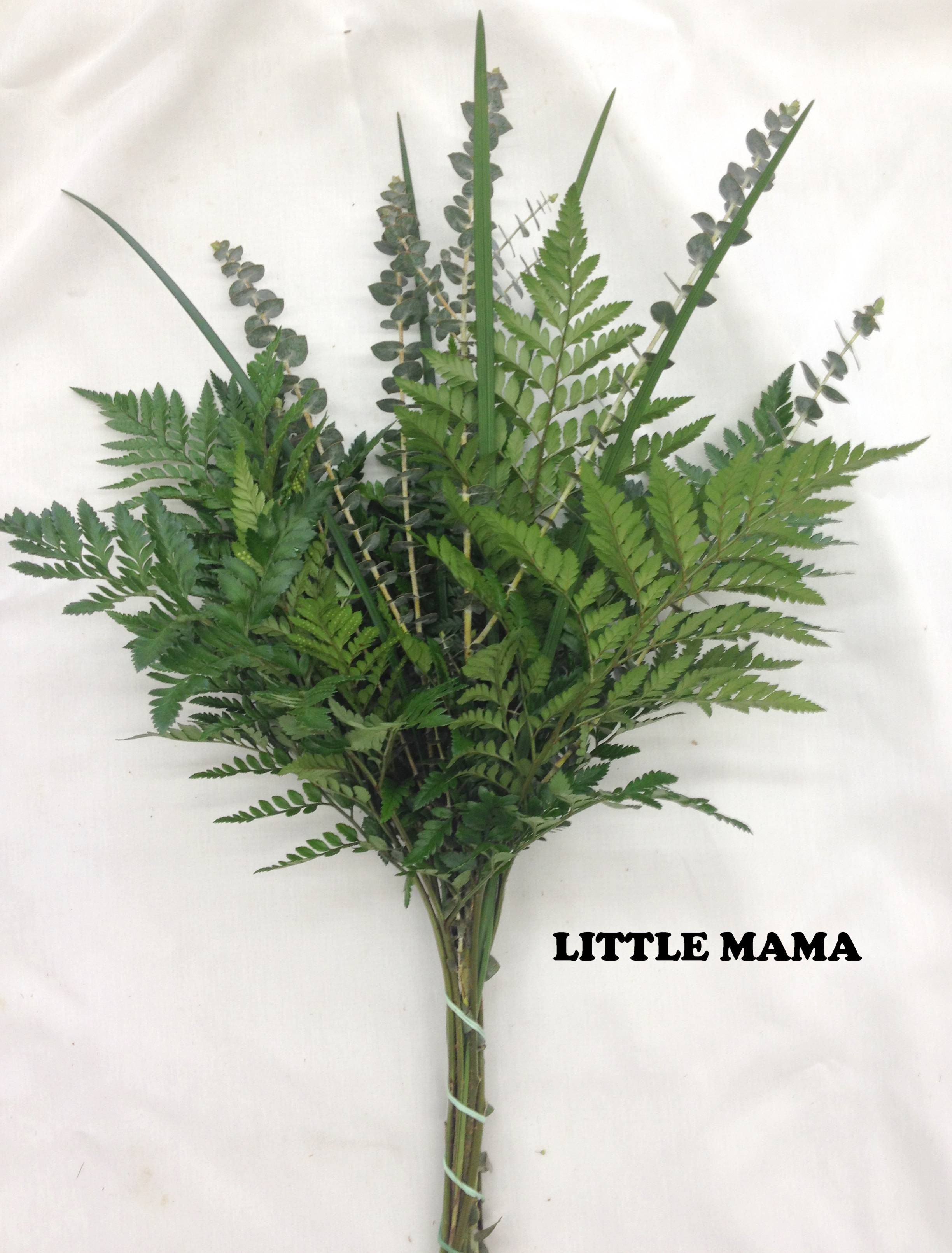
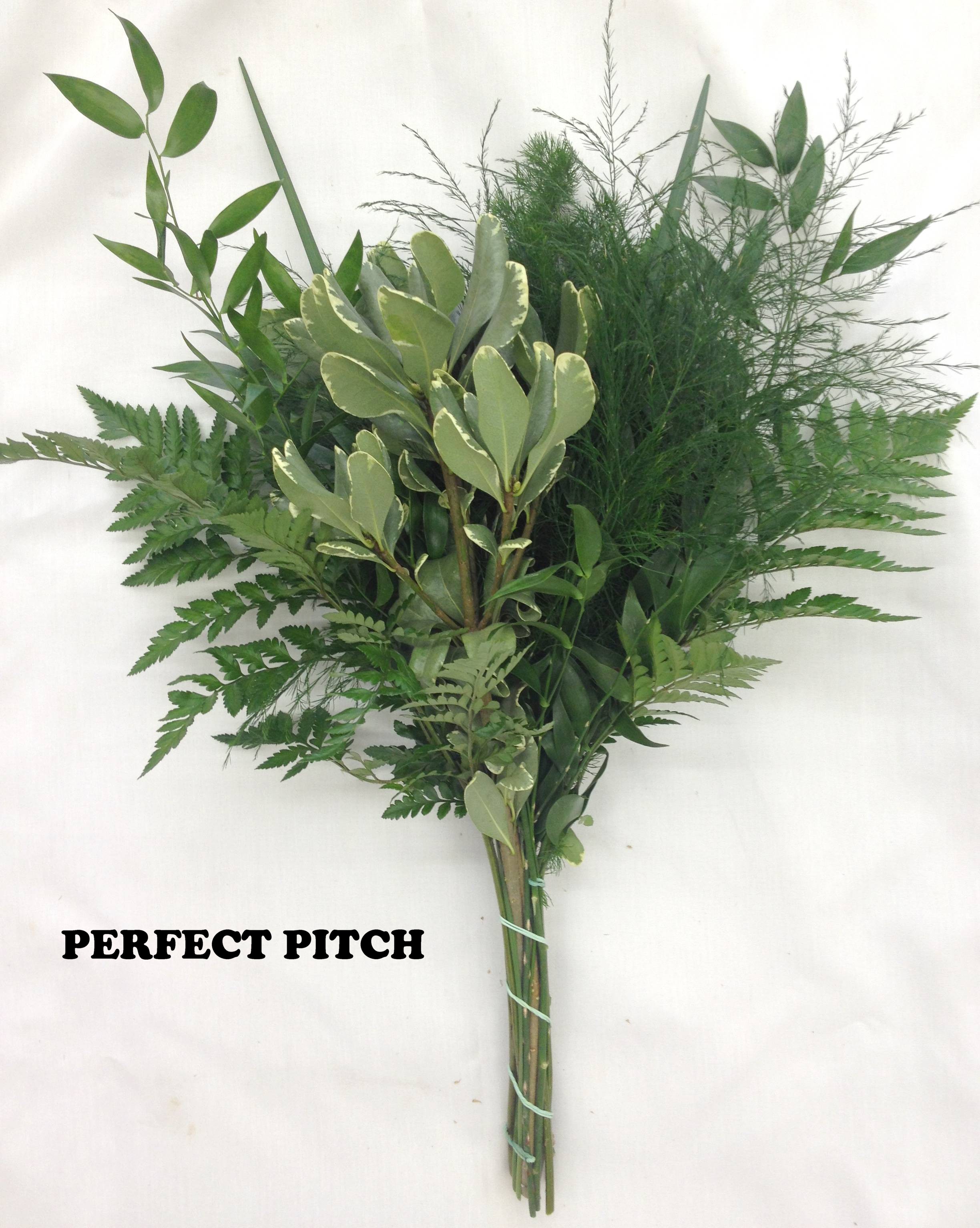
And here are the American-grown, Florida-grown botanicals she received – thanks Erik Hagstrom and everyone at Albin Hagstrom & Sons:

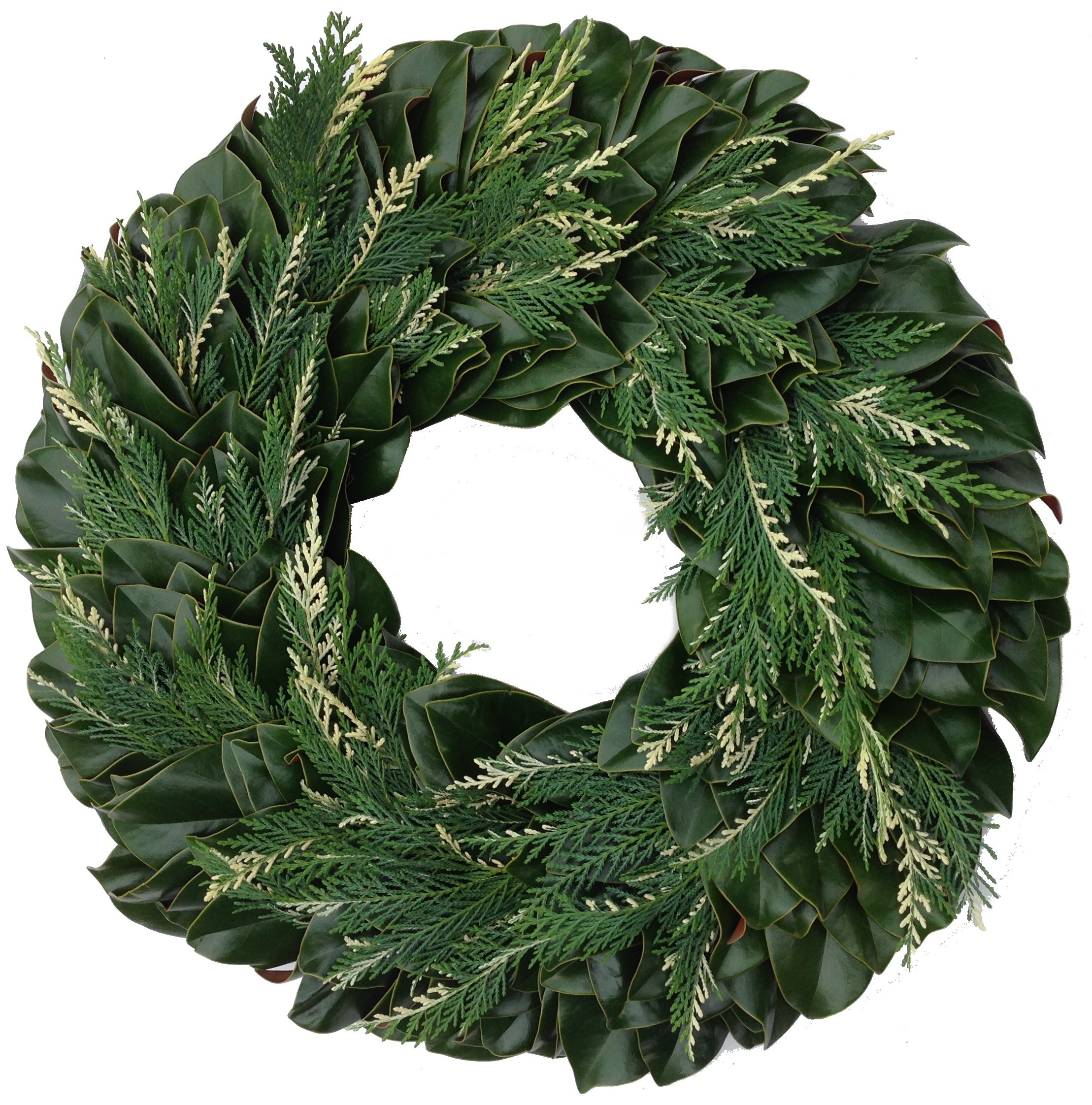
Magnolia and varietgated Leyland cypress wreath.

Magnolia and varietgated Leyland cypress wreath.

Greenery grown in Florida!

Greenery grown in Florida!

More greenery . . .

More greenery . . .

Even more . . .

Even more . . .

get-attachment

PS, Albin Hagstrom & Sons is also a charter member of the Certified American Grown labeling program – so proud to be associated with this All-American flower farm!


SLOW FLOWERS Podcast: Flowers as Food for the Soul — Transitioning from food-farming to flower-farming, with Goose Creek Gardens (Episode 161)

Wednesday, October 1st, 2014

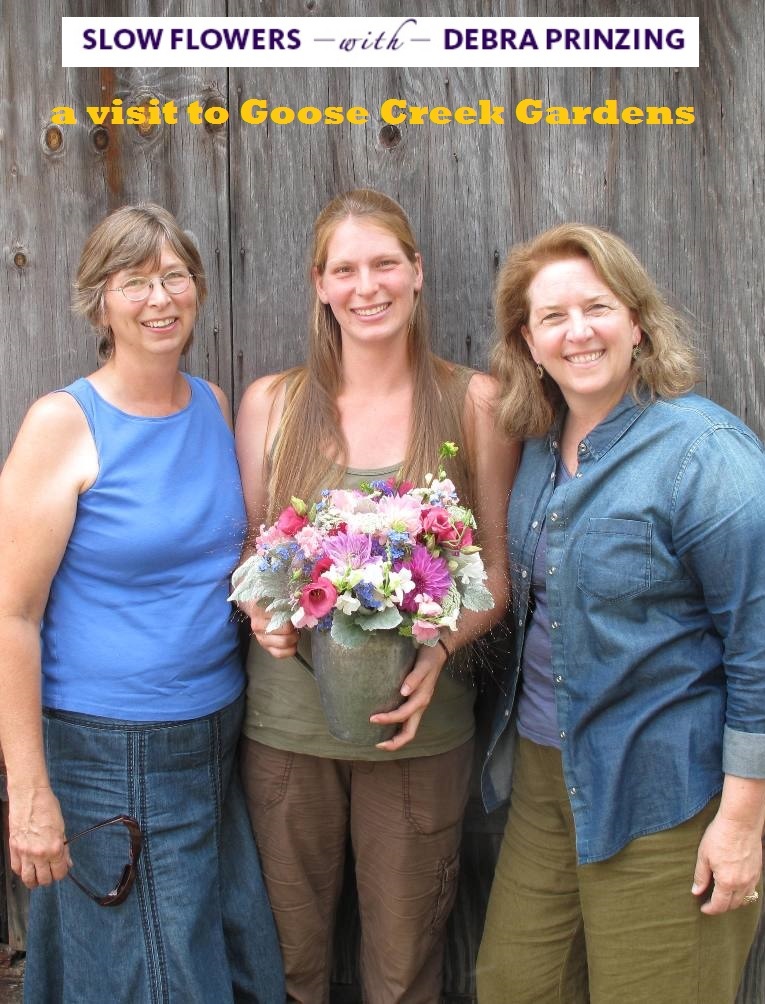
a visit to Goose CreekI’m so pleased to share this week’s interview with you, a conversation with mother and daughter duo — Margie Dagnal and Kate Dagnal of Goose Creek Gardens in Oakdale, Pennsylvania, a boutique specialty cut flower farm just outside Pittsburgh.

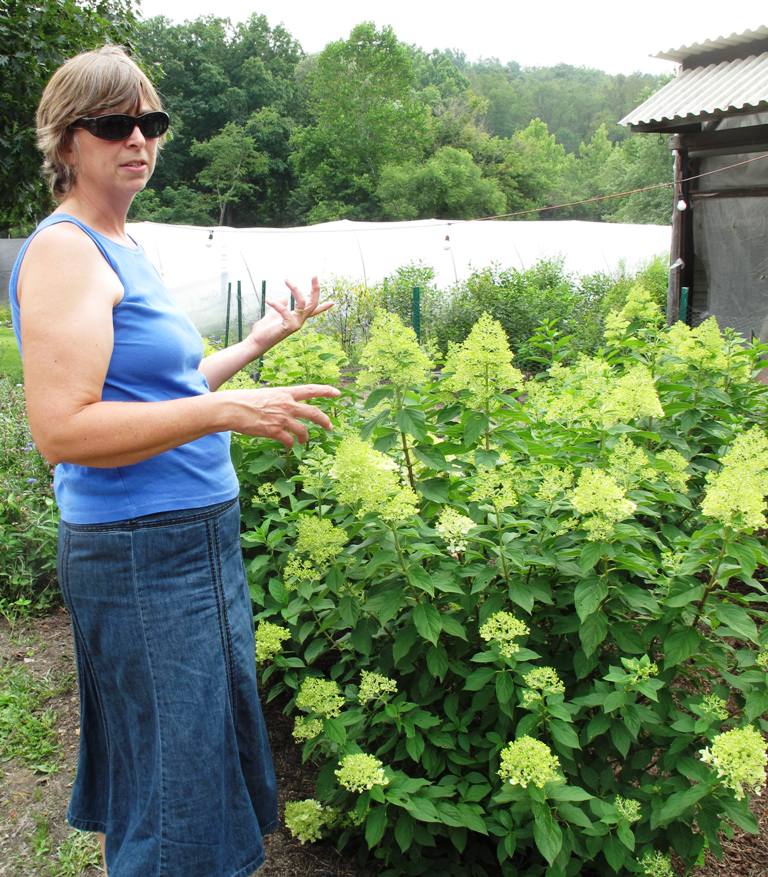
Margie led us on a tour through the farm, including a stop at the Limelight Hydrangeas.

Margie led us on a tour through the farm, including a stop at the Limelight Hydrangeas.

I first met Margie virtually, when she contributed to the Slow Flowers campaign on Indiegogo earlier this year.

And then, if that wasn’t enough, she gave me an incredible gift by contributing flowers that two other Slowflowers.com friends Jimmy Lohr and Jonathan Weber of Green Sinner incorporated into a lovely floral arrangement for my Pittsburgh-based publisher St. Lynn’s Press. PS, Jimmy, Jonathan and Margie refused to take a penny from me either. These people are all so generous!

When I visited Pittsburgh in August, I had arranged to spend a morning at Green Sinner, touring the very cool urban cutting garden and floral studio that Jonathan and Jimmy own (you can hear our podcast interview here).

Here's that lovely Green Sinner arrangement featuring Goose Creek Gardens flowers, an Indiegogo "perk" for St. Lynn's Press offices in Pittsburgh.

Here’s that lovely Green Sinner arrangement featuring Goose Creek Gardens flowers, an Indiegogo “perk” for St. Lynn’s Press offices in Pittsburgh.

Those two cooked up a delightful surprise and arranged for Kate and Margie to make their Goose Creek Gardens “delivery” during my visit. It was a Thursday morning and while I knew I was about to be part of a weekend conference, a little voice in my head was saying: “You can’t leave Pittsburgh without making a visit to Goose Creek Gardens.”

And lo and behold, Jonathan and Sam Rose, who tends to the Green Sinner cutting garden, offered to pick me up and drive me out to Goose Creek Gardens for a weekend visit. We toured the farm, wandered down to the bottom of the property, along the paths, into the high tunnels and more, all the while chatting constantly about this beautiful bloom and that one.

Katie and Margie are super passionate about growing flowers. Flowers were once a secondary crop to Goose Creek’s main endeavor – growing veggies and herbs. For years, while Margie and her husband Mark, a landscaper, produced salad greens and other delicacies for Penn’s Corner Farm Alliance, young Katie grew flowers.

The flower fields at Goose Creek Gardens.

The flower fields at Goose Creek Gardens.

The Geese of Goose Creek Gardens...livin' the good life!

The Geese of Goose Creek Gardens…livin’ the good life!

This year, things have changed, thanks to several issues: From pressure on farmers’ market food prices to seasonal flooding that affected some of Goose Creek’s fields, not to mention Kate’s lifelong obsession with growing cut flowers . . . all these incidents gave them several signs to move into flowers 100 percent of the time.

Katie is now a grownup – a young mom who works side-by-side with her parents running Goose Creek Gardens as a cut flower farm.

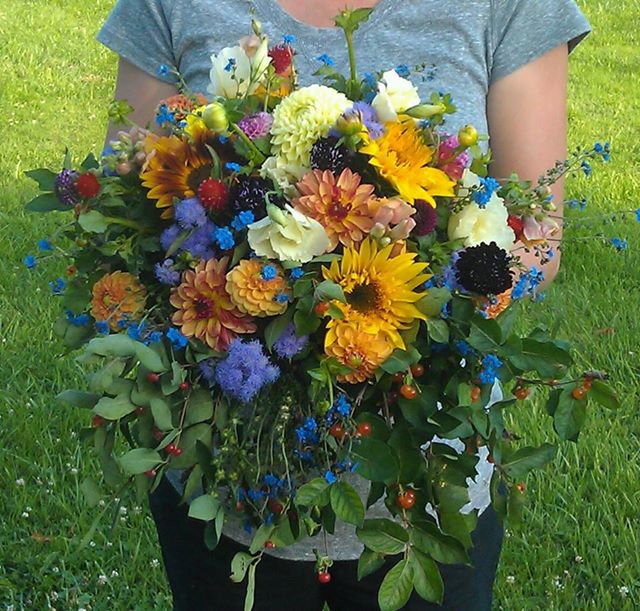
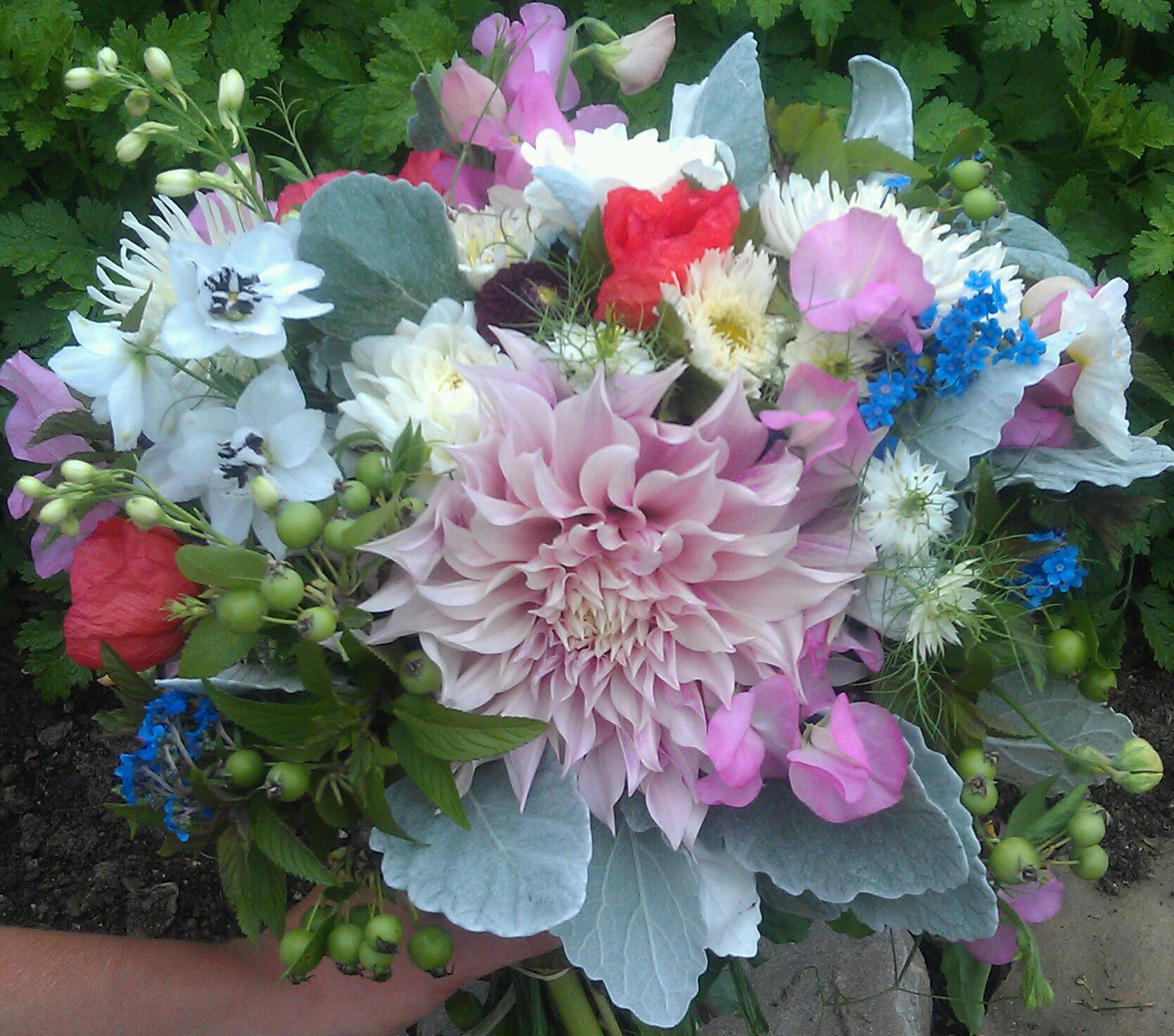
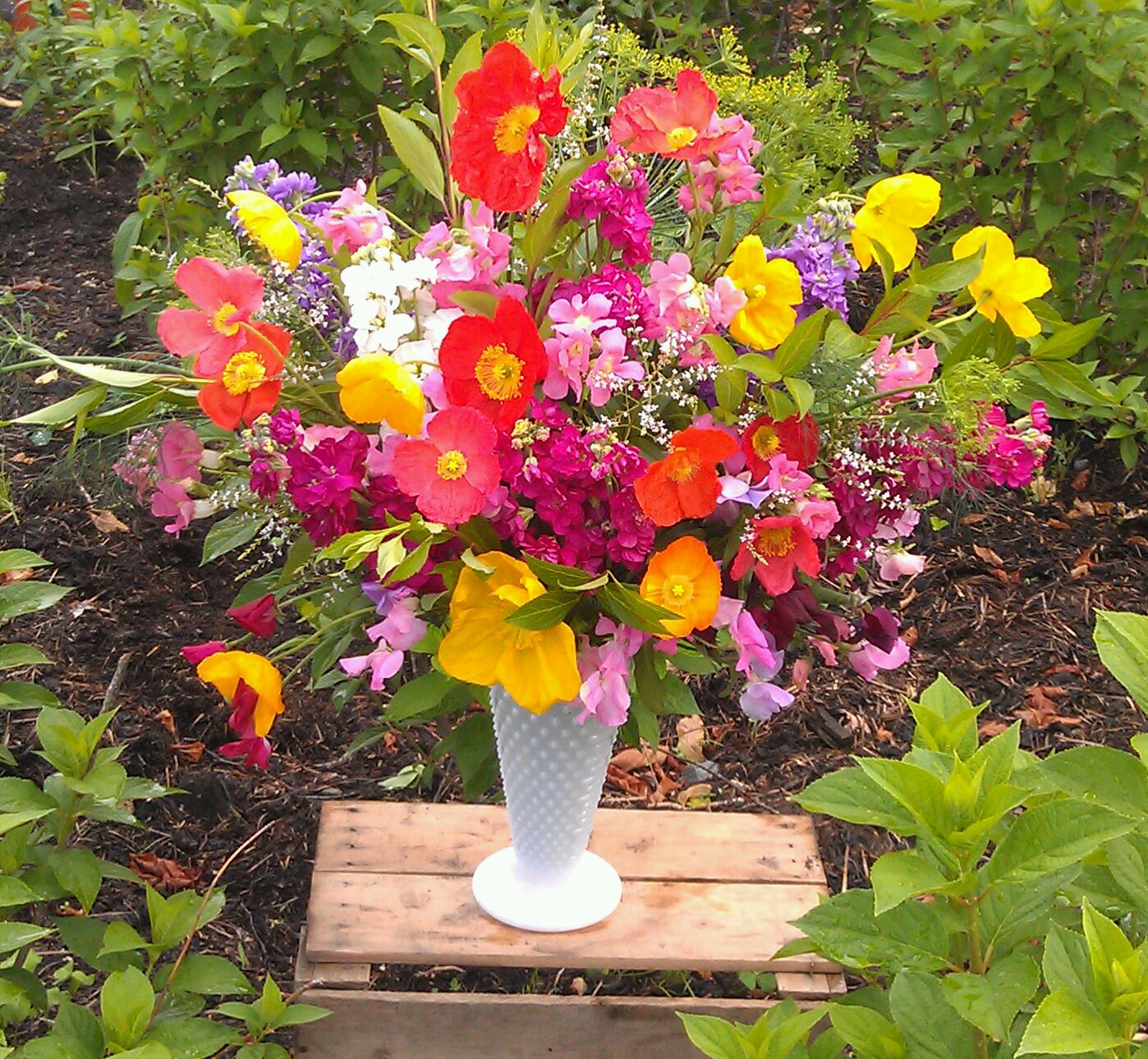
Katie and Margie shared photographs of some of their “Friday Night Romance” bouquets for you to enjoy. These are part of an ongoing series of bouquets that Katie creates at the end of each week, to share with her followers and other #farmerflorist friends on Facebook and Instagram. I think they are pretty darned romantic – and beautiful!


Friday Night Romance from September 26th

Friday Night Romance from September 26th

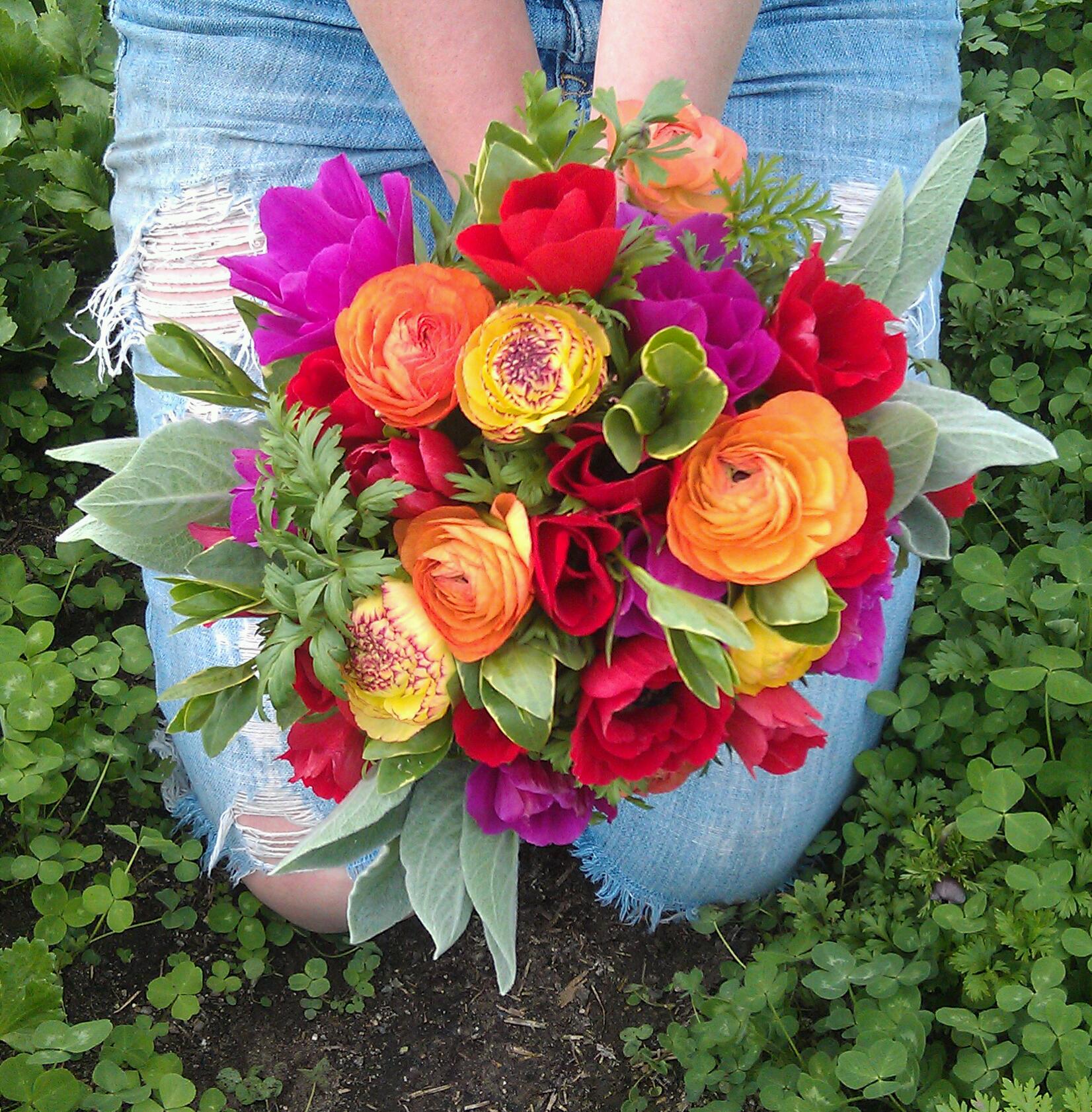
Friday Night Romance on denim.

Springtime Friday Night Romance on denim.

Friday Night Romance from July 25th

Friday Night Romance from July 25th

A lovely dahlia takes center stage.

A lovely dahlia takes center stage.

Intense hues add up to a gorgeous Friday Night Romance bouquet.

Intense hues add up to a gorgeous Friday Night Romance bouquet.

I hope you learn as much as I did by hearing this interview. And here’s how you can follow Goose Creek on other social platforms:

Goose Creek Gardens on Facebook

Goose Creek Gardens on Instagram

Up next week: a conversation with the inimitable Kelly Norris, who shares his passion – and genius – about a lesser-known category of his favorite flower: The miniature tall bearded iris. Kelly is the award-winning author of A Guide to Bearded Irises and I’m so excited to introduce him to you in a very lively conversation.

Listeners like you have downloaded the Slow Flowers Podcast more than 21,000 times. If you like what you hear, please consider logging onto Itunes and posting a listener review. My personal goal is to put more American grown flowers on the table, one vase at a time. I promise that when you tune in next week, you’ll hear another insightful and educational episode of the Slow Flowers Podcast.

The Slow Flowers Podcast is engineered and edited by Hannah Holtgeerts and Andrew Wheatley. Learn more about their work at hhcreates.net.

Fall Dahlia Season

Sunday, September 28th, 2014
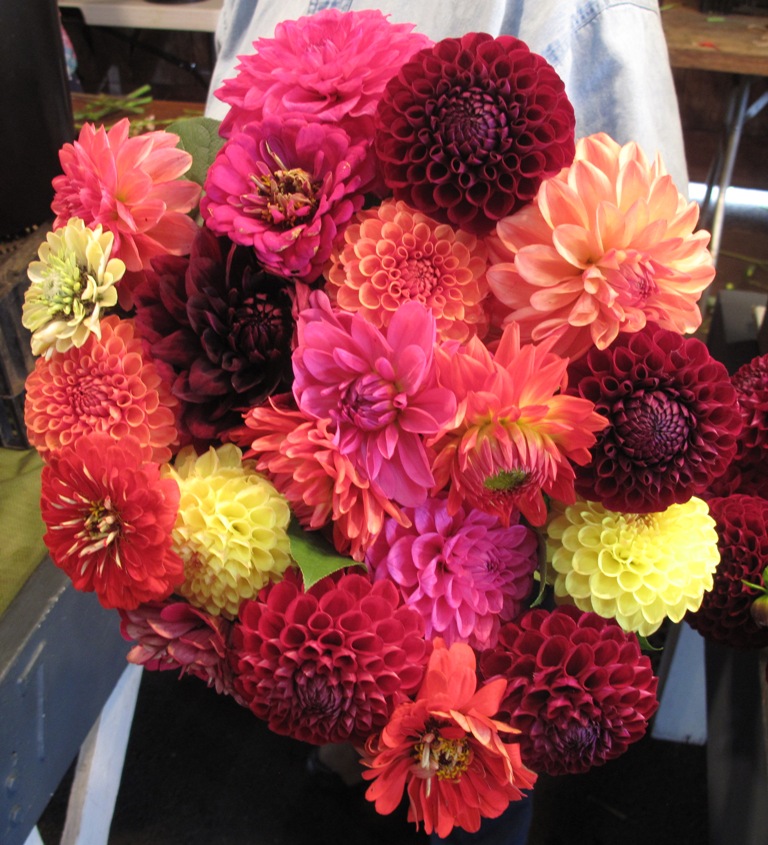
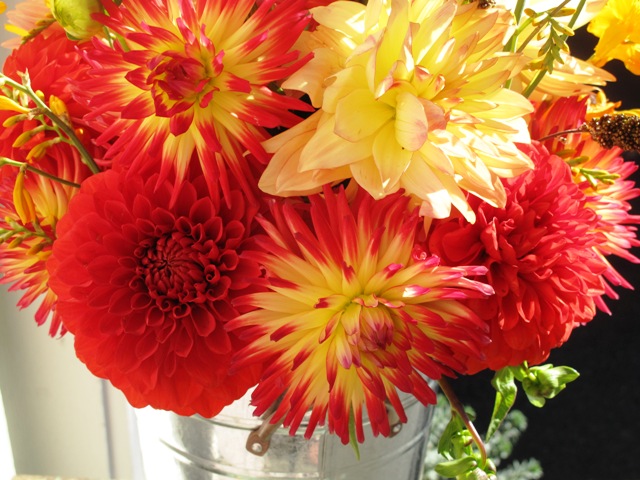
The vivid "hot" bouquet that I brought home with me today - $10 by JoAnn Mahaffey, who works for Dan's Dahlias booth.

The vivid “hot” bouquet that I brought home with me today – $10 by JoAnn Mahaffey, who works for Dan’s Dahlias booth.

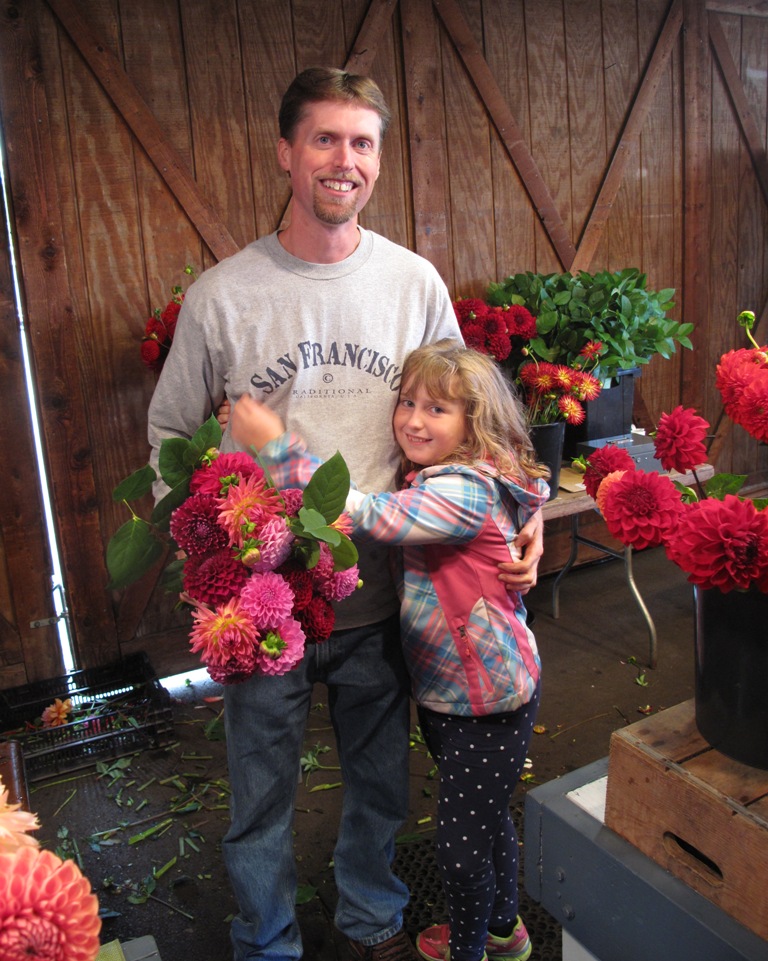
Dan Pearson of Dan's Dahlias, with his 8-yr-old daughter Alyssa.

Dan Pearson of Dan’s Dahlias, with his 8-yr-old daughter Alyssa.

This morning, bright and early, we drove to the Olympia Farmers’ Market to shop for dahlias.

Yes, there are dahlias available closer to me in Seattle, but I wanted to see what dahlia farmer Dan Pearson was up to at this market. You see, he is nearly 41 years old and he has been growing and selling dahlias at this market for 31 years.

YES, you read that correctly. Dan’s Dahlias is a long-established cut flower farms that so many others emulate. The Olympian newspaper recently called him the “Dahli Lama of cut flower growers” in this story.

In the winter and spring, Dan runs his very successful online Dahlia Tuber store (and PS, I find his web to be user-friendly with easy searches by petal color, flower size, and may other variables).

In the summer and fall, he sells cut dahlias to loyal customers at the Olympia Farmers’ Market and to the floral community through the Seattle Wholesale Growers Market.

I’ve known Dan personally for the past three years, but anyone who shops at the Northwest Flower & Garden Show or the San Francisco Flower & Garden Show has been drawn into the colorful and highly organized Dan’s Dahlia booth – where you see gorgeous photos of hundreds of dahlia varieties, each one aligned with pre-bagged tubers to take home and grow yourself.

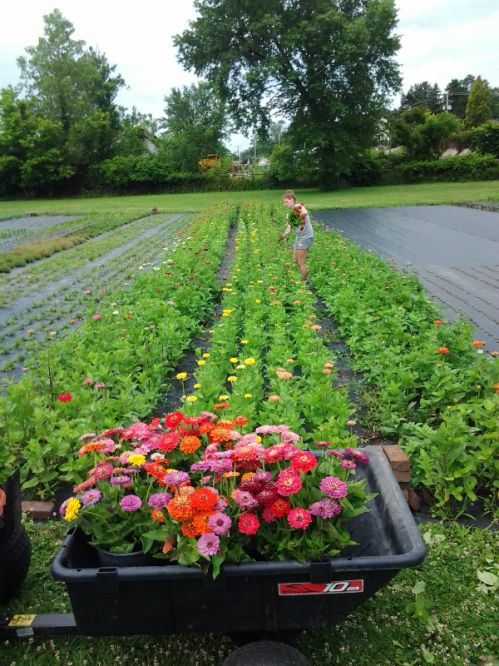
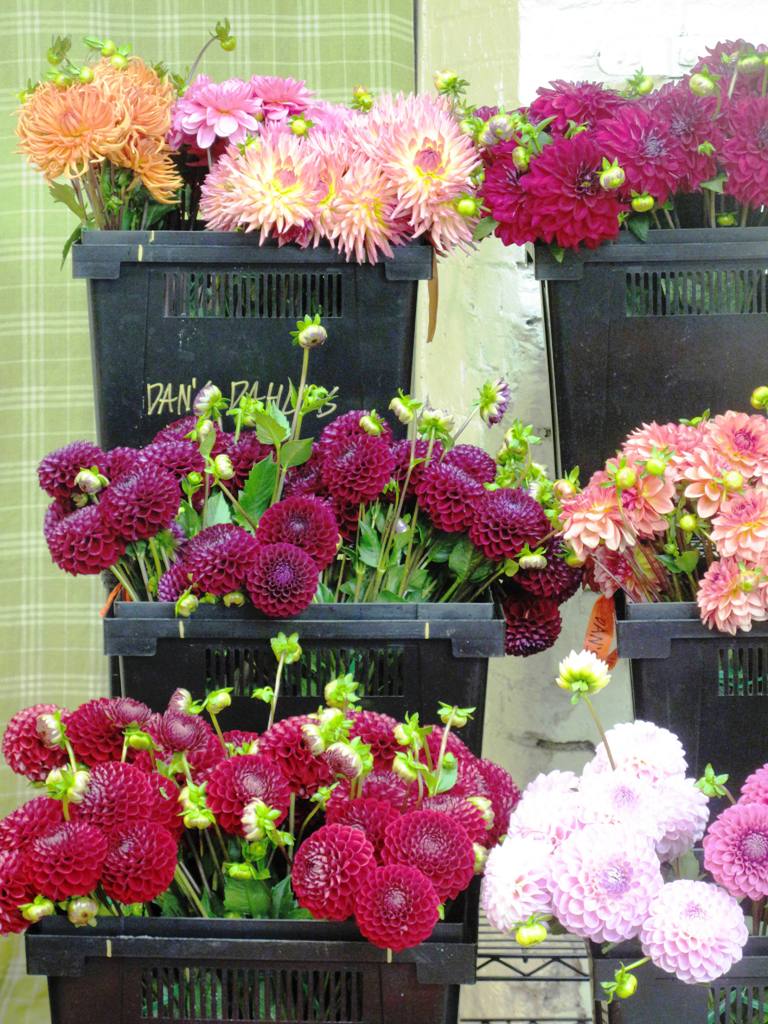
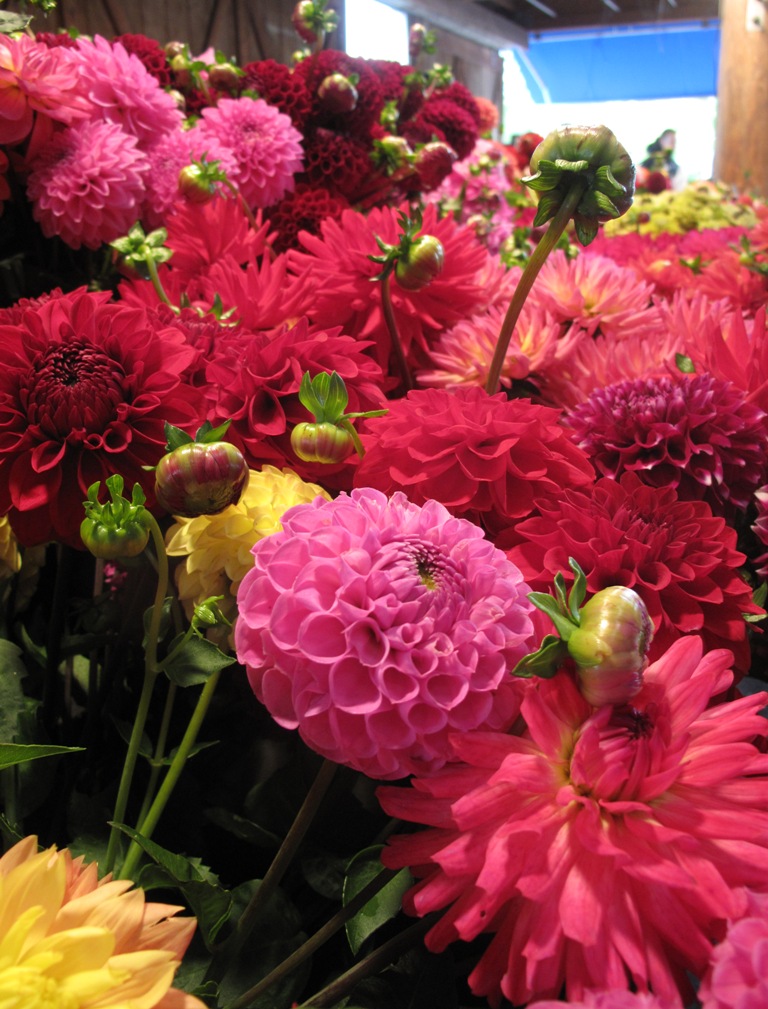
Add in a few zinnias and you have an incredibly eye-pleasing floral palette.

Add in a few zinnias and you have an incredibly eye-pleasing floral palette.

Just wanted to share these luscious photos as they represent just a small portion of the incredible variety of forms and colors available from Dan. And here’s a story I wrote about Dan for Pacific Horticulture magazine – from 2012:

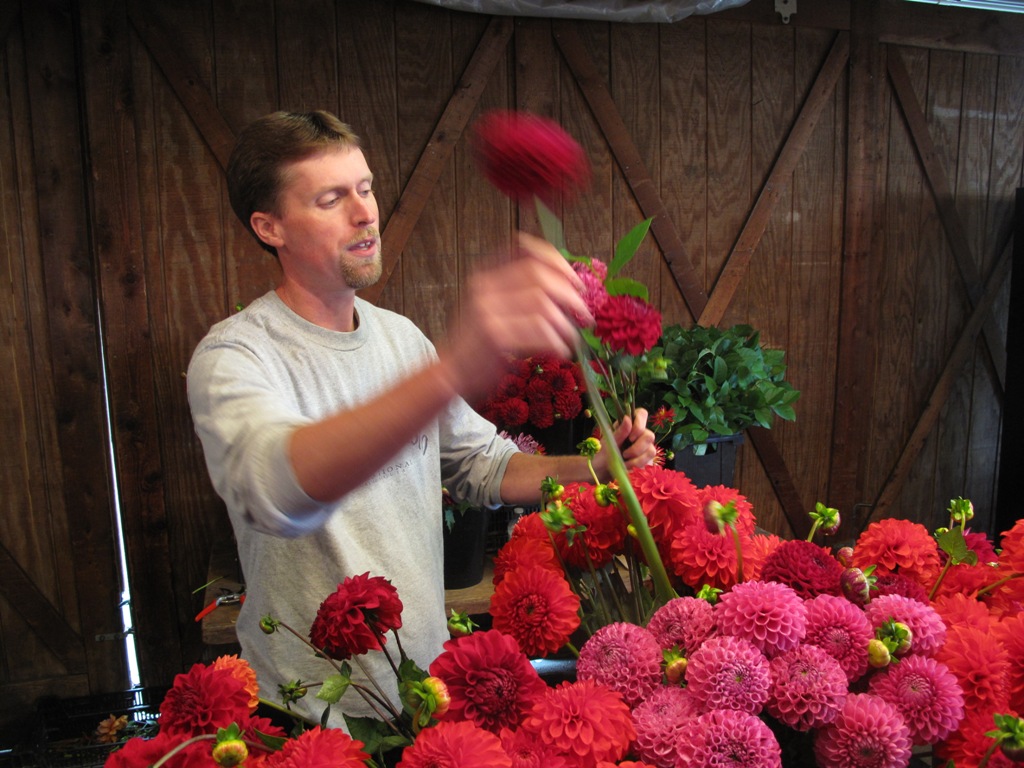
Dan Pearson, dahlia expert, flower farmer, tuber marketer. Plus, he designs a pretty sweet bouquet!

Dan Pearson, dahlia expert, flower farmer, tuber marketer. Plus, he designs a pretty sweet bouquet!

BLOOM TIME FOR A CUT FLOWER FARMER
Growing dahlias began as a childhood hobby and evolved into one man’s livelihood 

You might say Dan Pearson is a poster child for the young farmers’ movement. Except that he started earlier than most of his contemporaries, growing and selling one-dollar bunches of dazzling red, pink, orange, and purple dahlias to customers who drove past the family dairy farm in Oakville, Washington, when he was just ten.

Sales of the alluring flower eventually put Dan through college and set the course of his career. 

Why are we wooed by dahlias? Perhaps it’s their amazing diversity in color, form, petal shape and size, Dan speculates, a grin spreading across his face. “They vary in size from less than two inches to ten inches. People are drawn to those dinner-plate-sized flowers for the wow factor, but soon they realize that the smaller to medium-sized flowers are useful for bouquets.”

As a boy, Dan demonstrated his affection for the flowers that his father, Clarence Pearson, planted along the edge of the vegetable garden by memorizing the names of more than 30 varieties. In 1984, when he was 11, Dan’s folks helped him open a flower stall at the Olympia Farmers Market. “My mother, Colleen, hand-painted a sign that simply read Dan’s Dahlias,” he recalls.

JoAnn Mahaffey designs flowers in Dan's Dahlias stall at the Olympia Farmers' Market.

JoAnn Mahaffey designs flowers in Dan’s Dahlias stall at the Olympia Farmers’ Market.

Today, if he’s not harvesting flowers from more than 600 varieties of luscious dahlias, you can still find Dan at the Olympia Farmers Market, Thursday through Sunday. His bunches of dahlias mixed with summer annuals go for the bargain price of $9, satisfying an endless stream of regulars and market visitors. Dan likes this market’s philosophy, which mandates that all farm products must be locally grown within a five-county area. Operating year-round, it is the state’s second-largest after Seattle’s famed Pike Place Market.

Dan Pearson' Washington-grown dahlias on display at the Seattle Wholesale Growers' Market -- from farmer to florist.

Dan Pearson’ Washington-grown dahlias on display at the Seattle Wholesale Growers’ Market — from farmer to florist.

A lot has been written about young farmers and the growth of America’s small family farm. The U.S. Department of Agriculture recently began documenting this demographic, in recognition of the increasing ranks of young women and men who are leaving cities for a rural life on the land. Earlier this year, the USDA’s Farm Service Agency announced a nationwide drive to recruit up to 100,000 new farmers with resources including a “Start2Farm” web site, as well as farm loans and grant programs.

Dan is atypical, however, in that he’s not an urban escapee, but a fourth-generation farmer. He was raised by educators who also ran an 80-acre dairy farm in Washington’s Grays Harbor County, southwest of Olympia.

version1

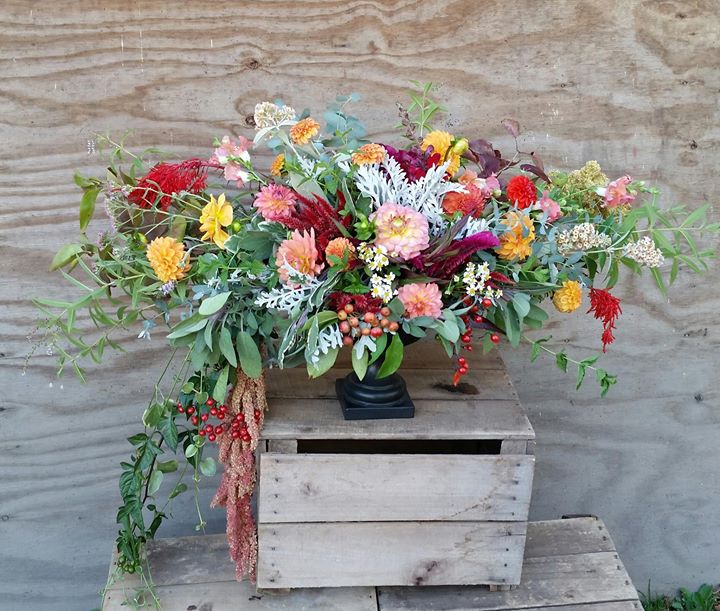
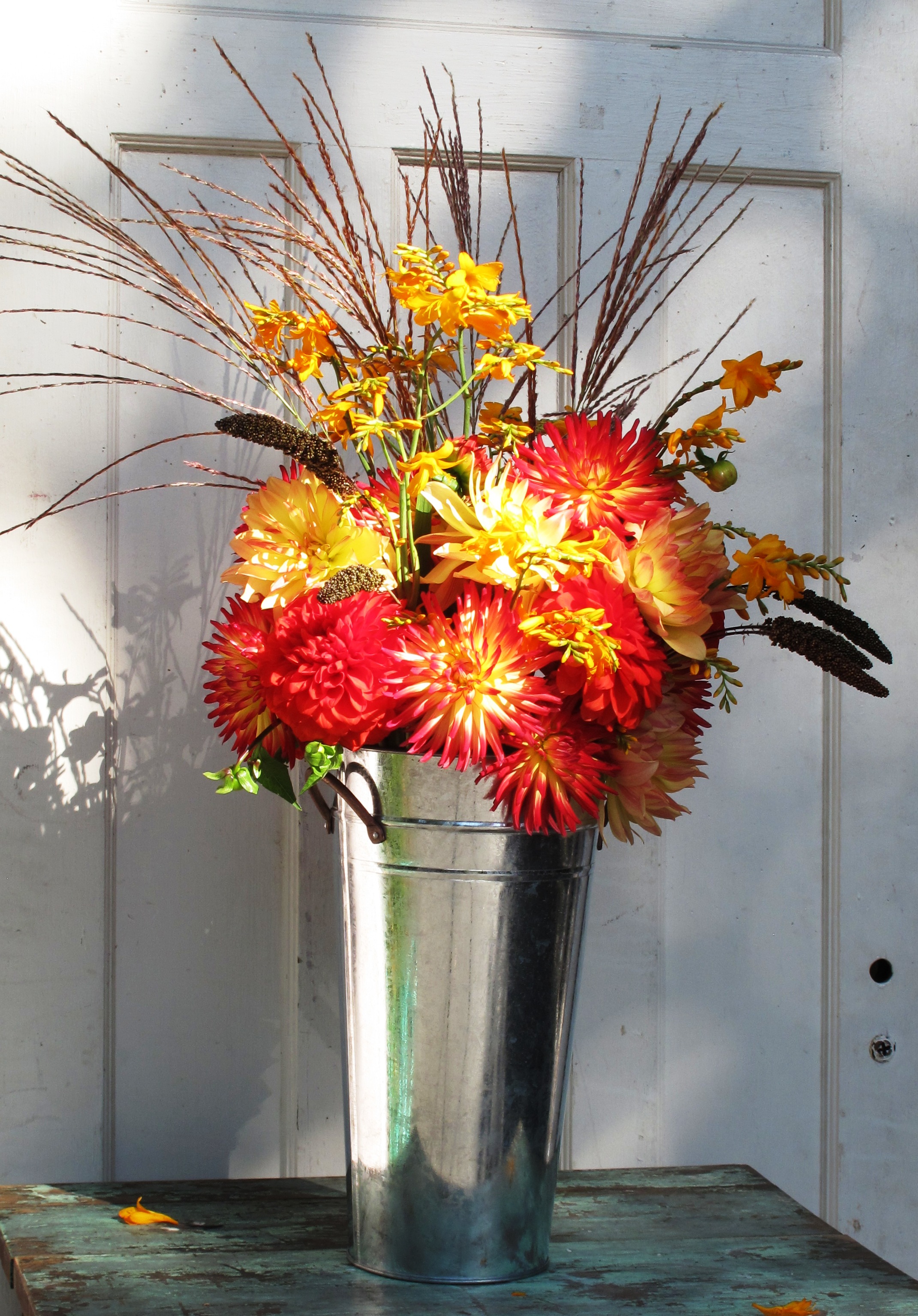
This lovely mix of gold, orange and red dahlias was a gift from Dan when I was working on “Slow Flowers,” the book. I added fountain grass, crocosmia and millet to the bouquet.

Todays Dahlias

The season for dahlias is almost over, but these vivid selections are a reminder of how much we LOVE this amazing flower.

“My great-grandfather and grandfather were both loggers and dairy farmers,” Dan says. “My father was a dairy farmer and a teacher. My children are the first in our family not raised on a dairy farm. I have fond memories of the experience of growing up on a dairy farm but eventually the transition to a different livelihood had to be made. I have no regrets about transitioning my family to raising dahlia flowers and bulbs. This area is where I chose to raise my family, and I hope if there are the economic means, my children can do the same.”

Encouraged to attend college, Dan earned a landscape architecture degree from Washington State University. Then he spent seven years on the staff of a large architecture-engineering firm in Olympia.

“But I like to grow things,” Dan explains, shoving his hands in his jean pockets and gazing out across four acres of land where in late July (thanks to a wet, cold spring), the first dahlia buds were only starting to open—a few weeks behind schedule. “Even when I was working as a landscape architect, I was growing dahlias on my evenings and weekends–getting my hands in the dirt.”

In 2002, Dan’s dahlia business was so demanding he quit his landscape architecture practice. The timing coincided with marrying his wife Mieke (“a woman from the city who’s moderated my workaholism,” he contends). It also took place as the Internet began to explode, allowing www.dansdahlias.com, Dan’s nascent web site, to reach a world of customers: gardeners, flower farmers, hobby growers, and members of the American Dahlia Society. Tubers represent 85 percent of his annual sales, while seasonal cut flower sales make up the balance.

With their two young children, Dan and Mieke live one mile from their growing fields. His farming practices are partly old-fashioned and partly modern. For example, Dan does nearly everything by hand with the help of a small, seasonal farm crew. He solves problems the way farmers have done for centuries, using a cash-free barter system when possible. Dan has expanded his dahlia plantings on two acres of his neighbor’s land in exchange for allowing the neighbor to harvest hay from his acreage that’s not suitable for dahlia crops.

When his flower production began to outpace farmers’ market capacity, Dan made a timely choice to join a collective of like-minded specialty cut flower growers in Oregon, Washington, and Alaska in 2011. More than a dozen growers formed the Seattle Wholesale Growers Market, a year-round, farmer-to-florist wholesale market in Seattle’s hip Georgetown neighborhood. There, in a turn-of-the-century brick warehouse near artist studios, bistros, and vintage furniture stores, the region’s healthiest, just-picked blooms bypass middlemen and are eagerly snatched up by florists, event and wedding planners, restaurants, supermarket floral buyers, and other design-savvy customers who value fresh, local, and sustainably grown flowers.

“The Seattle Wholesale Growers Market came along at the perfect time because it allows me an additional sales outlet,” Dan says. “I just acquired five more acres I’ll plant for Growers Market buyers.”

I can't get enough of this gorgeous flower!

I can’t get enough of this gorgeous flower!

Plant details: Dahlia (Dahlia species and cultivars)
History: The dahlia originated in highland areas of Mexico and Central America. According to experts, centuries after cuttings were brought by plant explorers to Spain, the parentage of tens of thousands of today’s hybrids can be traced to those original plants. The dahlia is a member of the daisy family (Asteraceae). Dahlia tubers, potato-like clumps with an “eye” at one end, are actually modified stems that store nutrients and water underground while producing show-stopping blooms on tall, leafy stems.
Best features: Picture-perfect, symmetrical flowers feature subtle to intense colors in a wide array of forms. Flowers are formed by many petal-like “ray florets” arranged around a center of “disk florets.”
Hardiness: Zones 9-11 “Dahlias can be grown in all fifty states,” Dan says. Dan’s Dahlias ships tubers throughout the United States, as well as to customers in several overseas markets.
Conditions: Full sun, humus-rich, well-drained soil
Bloom time: Late summer to early fall; Dahlias are cut-and-come-again flowers that respond well to frequent harvesting.

Slow Flowers “Therapy” from Nancy Cameron, Destiny Hill Farm

Sunday, September 14th, 2014

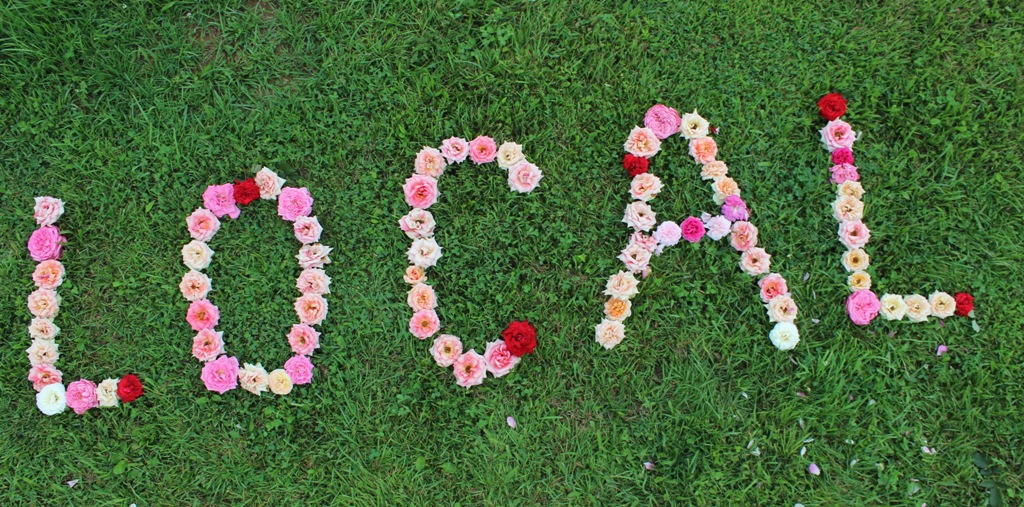
We all need girlfriends like Nancy Cameron. She recently sent me two flower messages – created while deadheading at Destiny Hill Farm.

There is nothing better than receiving a photo gift like this one:

S-L-O-W   F-L-O-W-E-R-S in pink and white dahlias

S-L-O-W    F-L-O-W-E-R-S in pink and white dahlias

And this one:

L-O-CA-L in an array of David Austin roses

L-O-C-A-L in an array of David Austin roses

Thanks so much, Nancy! These are beautiful – and local – and seasonal – and sustainable!!!


A Personal Cutting Garden That You Can Eat, Too!

Monday, May 26th, 2014
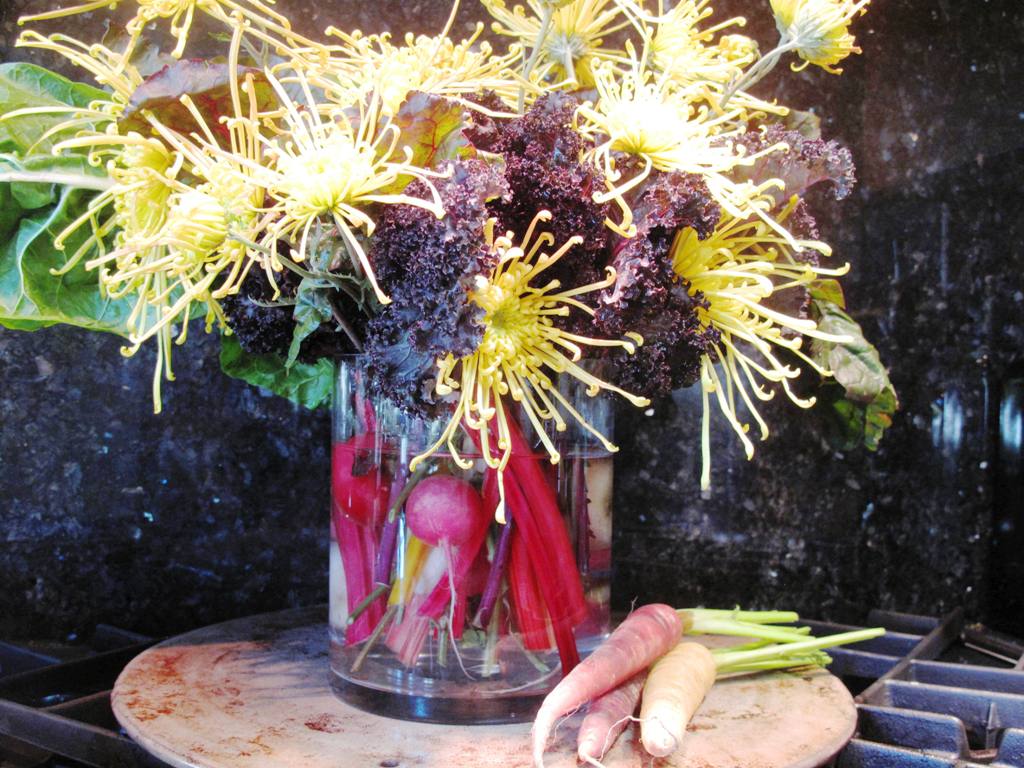
Root veggies, purple kale and spider mums.

Radishes, rainbow chard, purple kale and spider mums.

GroundbreakingFoodGardensThis just in: A New Kind  of Hors d’Oeuvre

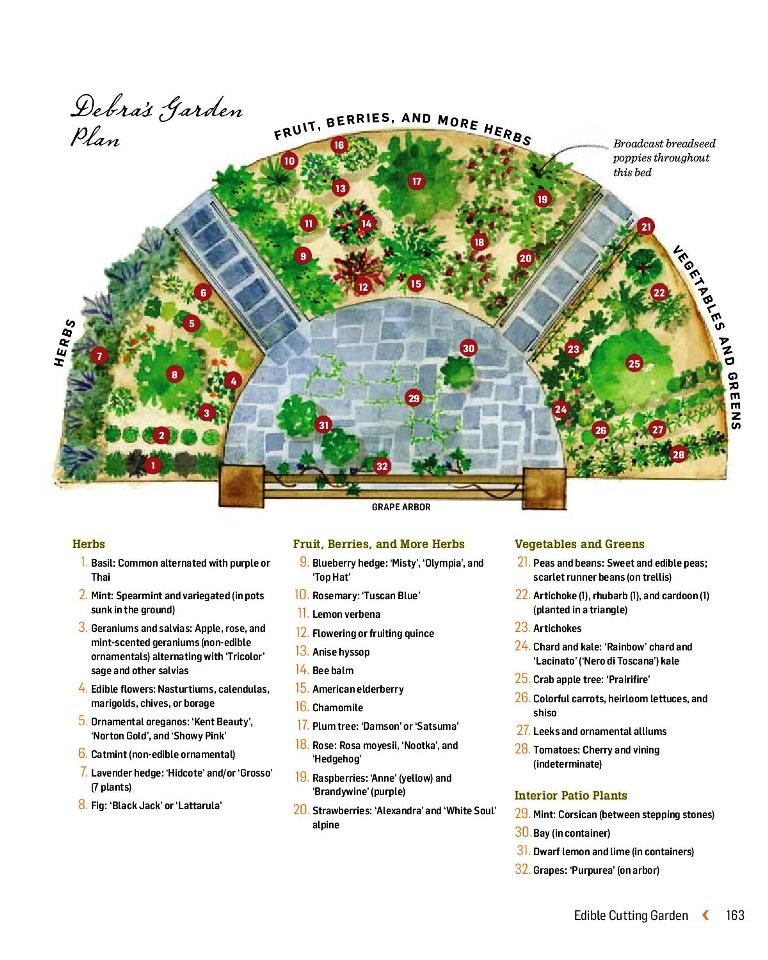
When entertaining, Debra recommends impressing your guests by gathering edible flowers and food from her garden plan to craft a simple, but unique amuse-bouche. The guests can snack on the centerpiece before the main meal is served – but only if your garden is organic!

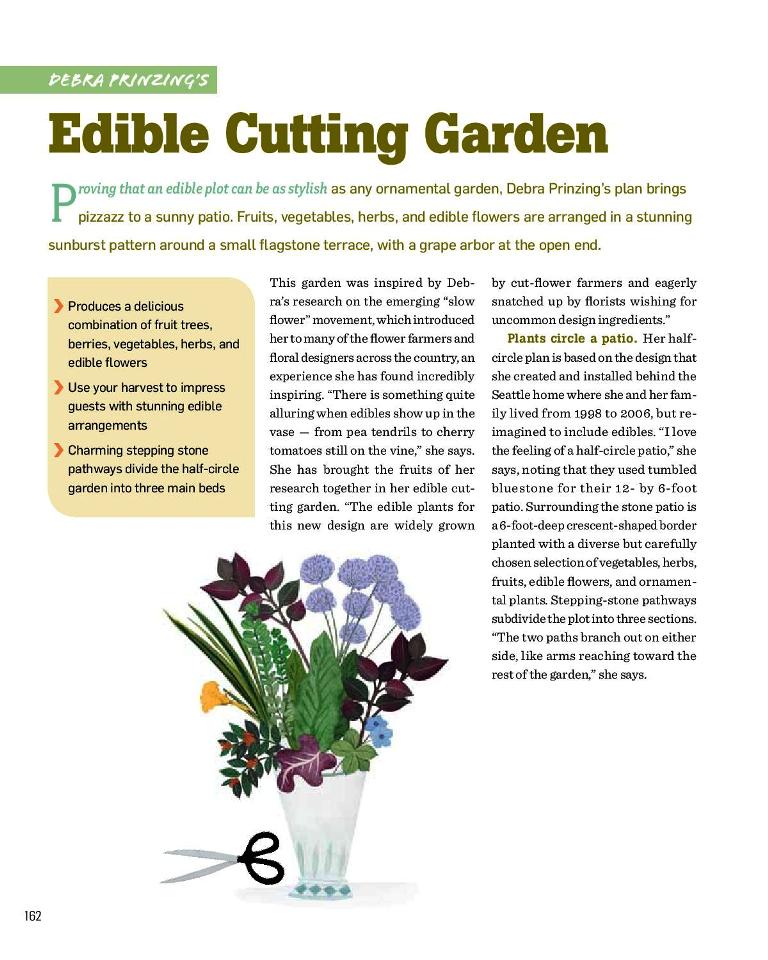
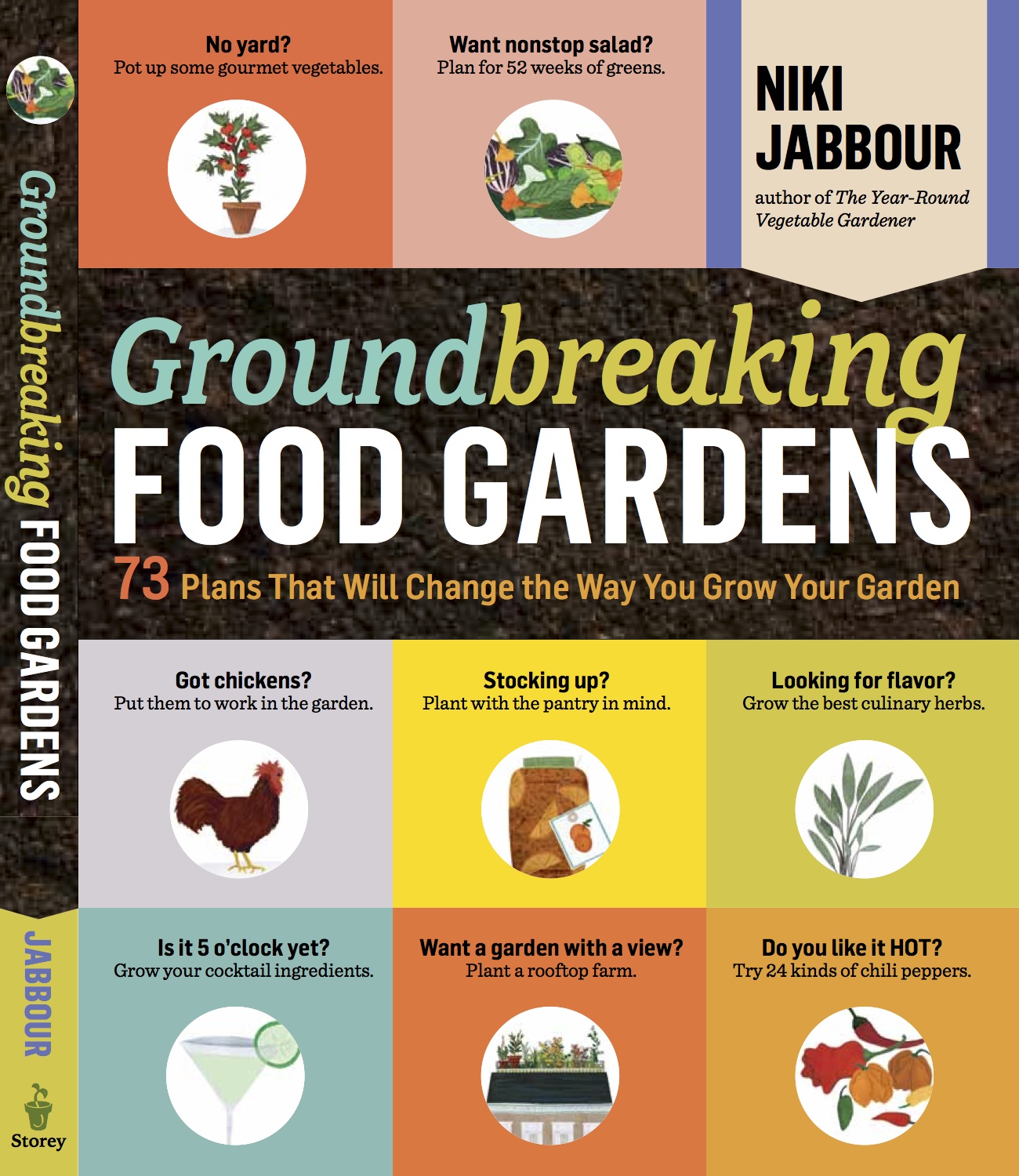
I owe an (edible) bouquet of thanks to fellow garden writer Niki Jabbour for including my “Edible Cutting Garden” plan in her new book Groundbreaking Food Gardens (Storey Publishing, 2014). Along with planting plans and designs contributed by 72 others, this is an inspiring reference book that will change the way home gardeners thank about growing food. 

Here’s a sneak peek of the pages featuring my project, and some ideas for how to incorporate edibles into your floral designs.

Prinzing_FINAL (1)-page-001

Debra Prinzing’s Edible Cutting Garden — a half-circle design based on an ornamental garden I created in Seattle, circa 1998-2006. 


Prinzing_FINAL (1)-page-002

Each section features different edible categories — from herbs to fruits/berries to veggies and more.

This garden shown above was based on a design I made and installed behind the Seattle home where we lived from 1998 to 2006. I love the feeling of a half-circle patio. This one is paved in tumbled bluestone and measures about 12 feet wide by 6 feet deep. Two paths branch out on either side, like arms reaching toward the rest of the garden. The paths divide the 6-foot-deep crescent border into three sections.

READ MORE…

A (American Grown) Flower-filled April, Part Two. OR: Adventures with Sharon Lovejoy

Sunday, May 11th, 2014

I’ve been home for a few weeks from my 11-day road trip that took me by plane to Southern California and back home again behind the wheel of a rental car. I have many fond memories (as well as the photographs that I collected), while stopping along U.S. Hwy. 101 on my way north to Seattle.

So here is a second travelogue, which I think many will enjoy.

I stopped at the home and garden of fellow writer and sweet friend Sharon Lovejoy and her partner in all, Jeff Prostivitch. They live in San Luis Obispo, a stunning area of coastal California, in a cozy bungalow surrounded by an oft-photographed and published garden.

There are several highlights from this short visit that I want to share.

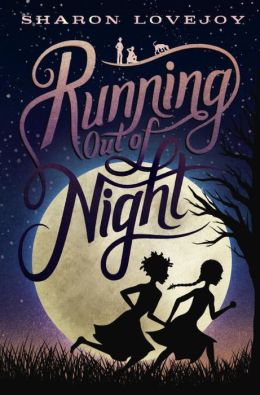
running-out-of-nightFirst of all, I got to hold in my hands the advanced readers’ copy of Sharon’s debut novel, Running Out of Night, which will be published in November.

On an earlier visit to Sharon and Jeff’s (I think it was in the fall of 2009), I tagged along with Sharon to a regular session with her writer’s group. This is the small gathering of writers in her area who have faithfully met with one another for years as they’ve read given both encouragement and critiques of each other’s writing projects. It was on that visit that I heard Sharon read aloud one of the chapters of her novel-in-progress. 

So you can only imagine how thrilling it was to sit for a while on the sofa in their living room and read the first few chapters in the REAL book! If you have a young person in your life (ages 7-12), I urge you to order this book or ask your librarian to order it. It is an adventure that involves two young girls who are equally enslaved, despite the difference in their skin color. I thoroughly love the characters, the plot – and the dialogue! Sharon is a masterful storyteller and I can’t wait to get this book into the hands of my niece (a 4th grade teacher) and her students.

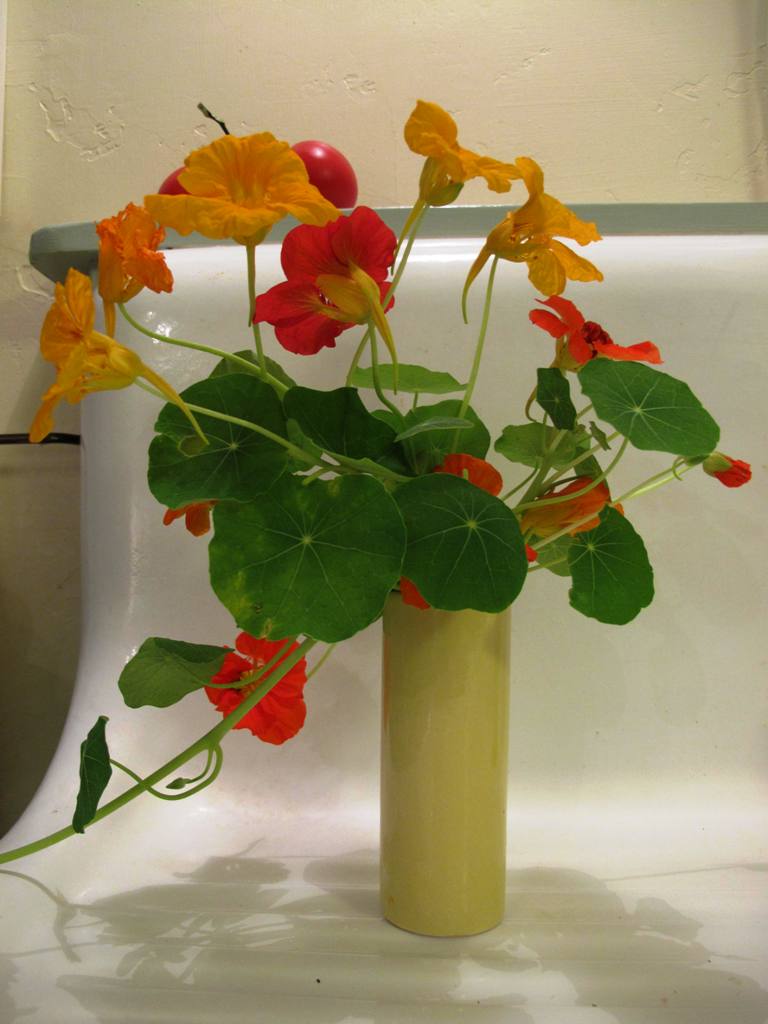
A bud vase displays charming nasturtium flowers and foliage, on the edge of the kitchen's vintage farm sink.

A bud vase displays charming nasturtium flowers and foliage, on the edge of the kitchen’s vintage farm sink.

I also experienced a treat that anyone who visits this abode is bound to see. This is the home of gardeners, naturalists and amateur botanists. Every single thing that grows in the Lovejoy-Prostovitch garden is a gift from the earth. And they cherish those gifts with fervor.

The simplest tendril, sprig or pod is elevated with love and affection by Sharon and Jeff. Their home is filled with tiny bouquets and posies. The whole idea of “bringing the garden indoors” takes on new meaning when jam jars, bottles and shot glasses are filled with minature floral arrangements. A delight for the eyes. Here is a peek at some of the ones I noticed (I’m sure there were more!):

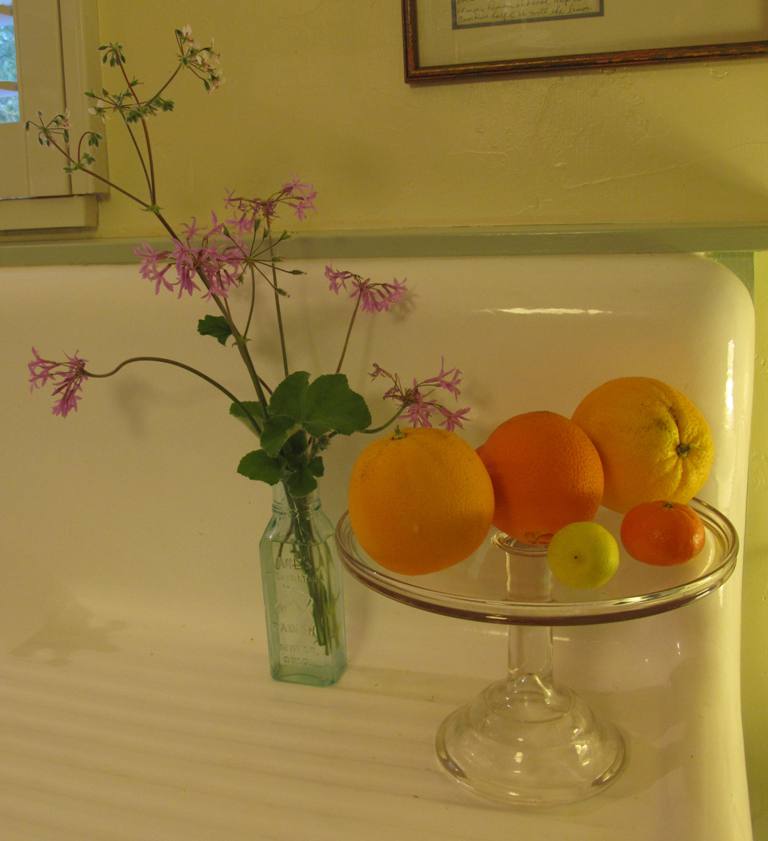
Geraniums (pelargoniums) in a bottle; citrus on a cake plate.

Geraniums (pelargoniums) in a bottle; citrus on a cake plate.


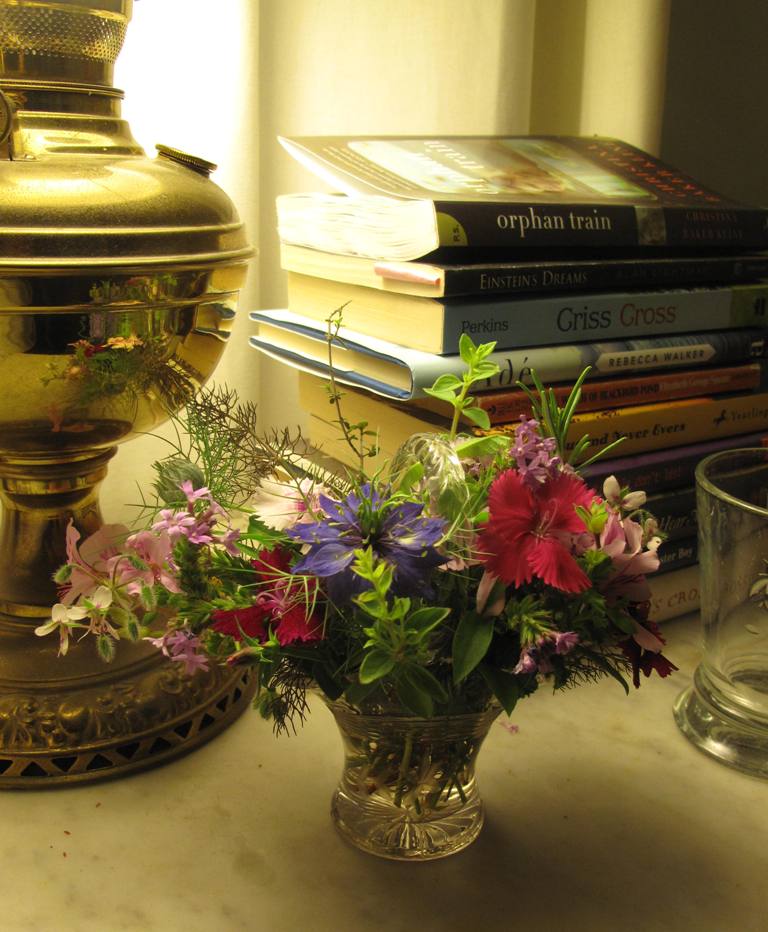
The posy by my bedside table. With the sweet William tucked inside, you can only imagine how it scented my dreams that night!

The posy by my bedside table. With the sweet William and sprigs of herbs tucked inside, you can only imagine how it scented my dreams that night!


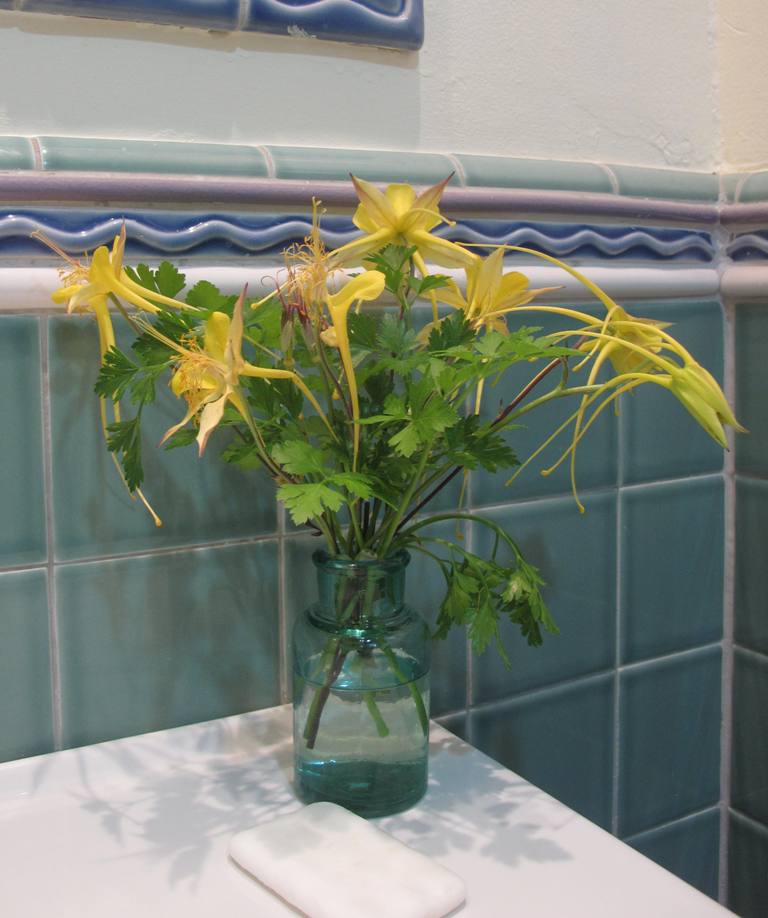
Cheery golden-yellow columbine in the bathroom.

Cheery golden-yellow columbine in the bathroom. Is that parsley as the greenery?


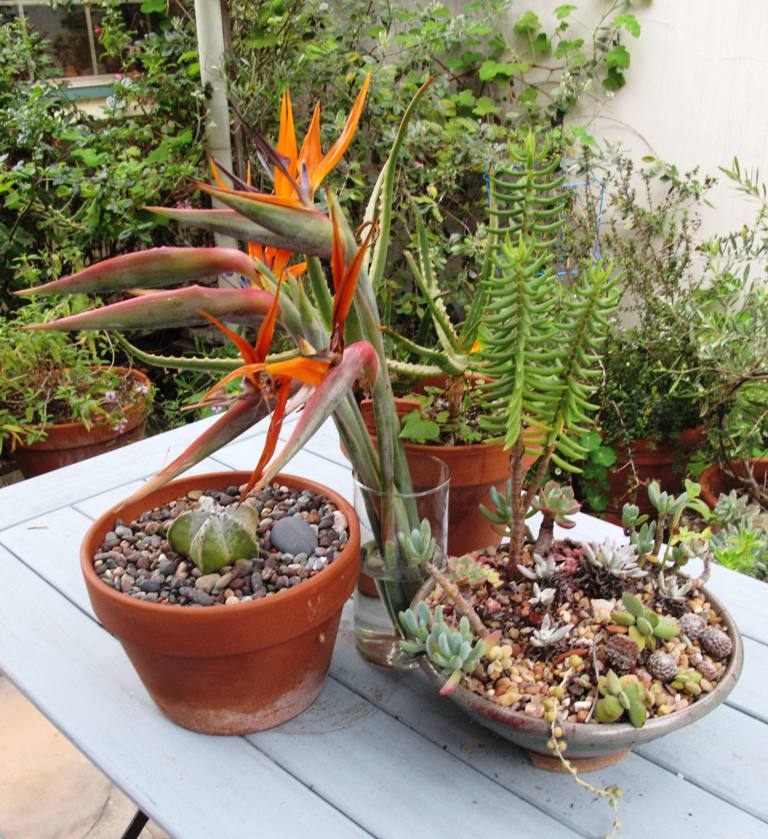
Vases of flowers even appear in the garden, like this display of bird-of-paradise, collected with the potted succulents.

Vases of flowers even appear in the garden, like this display of bird-of-paradise, collected with the potted succulents.


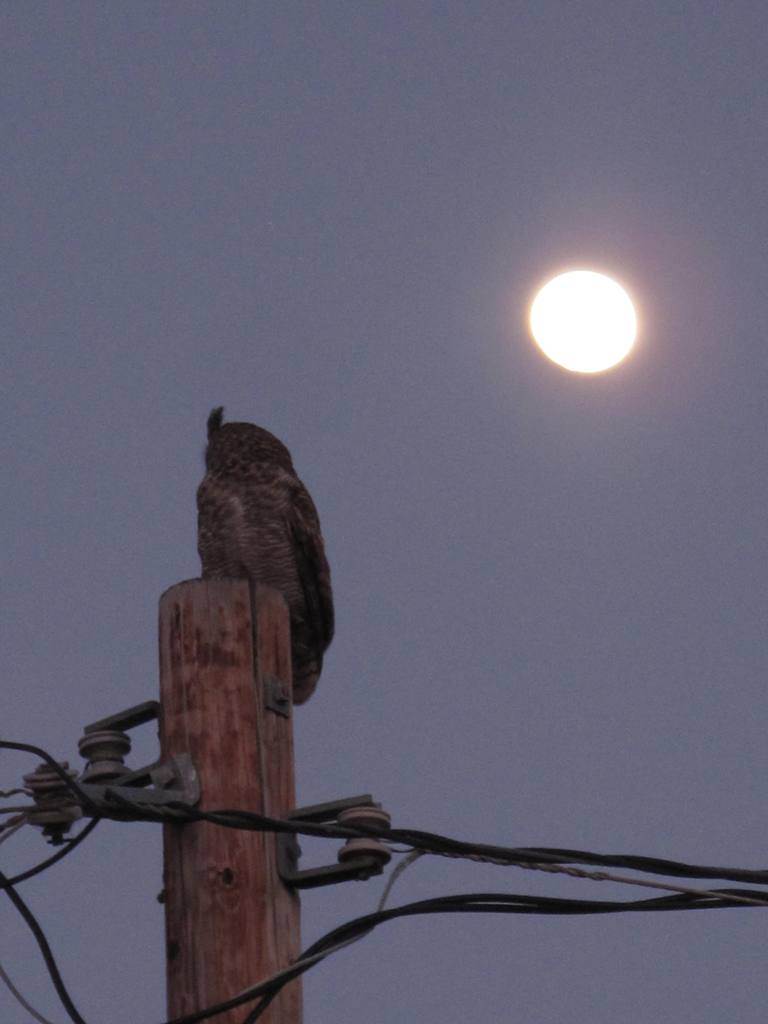
Mr. Owl, with the moon, spotted on that magical night at Old Edna.

Mr. Owl, with the moon, spotted on that magical night at Old Edna.

That evening, Sharon and Jeff brought me along as their guest to a party given by their friends Aline and Frank.

This lovely couple lives in New England but spends part of the winter months staying in the San Luis Obispo area to be closer to some of their grandchildren.

While they have rented many types of houses for their winter interludes, this year found them settled in at a place outside SLO called Old Edna

Sharon promised: “Oh, Deb, you’re going to love it!”

And she was right.

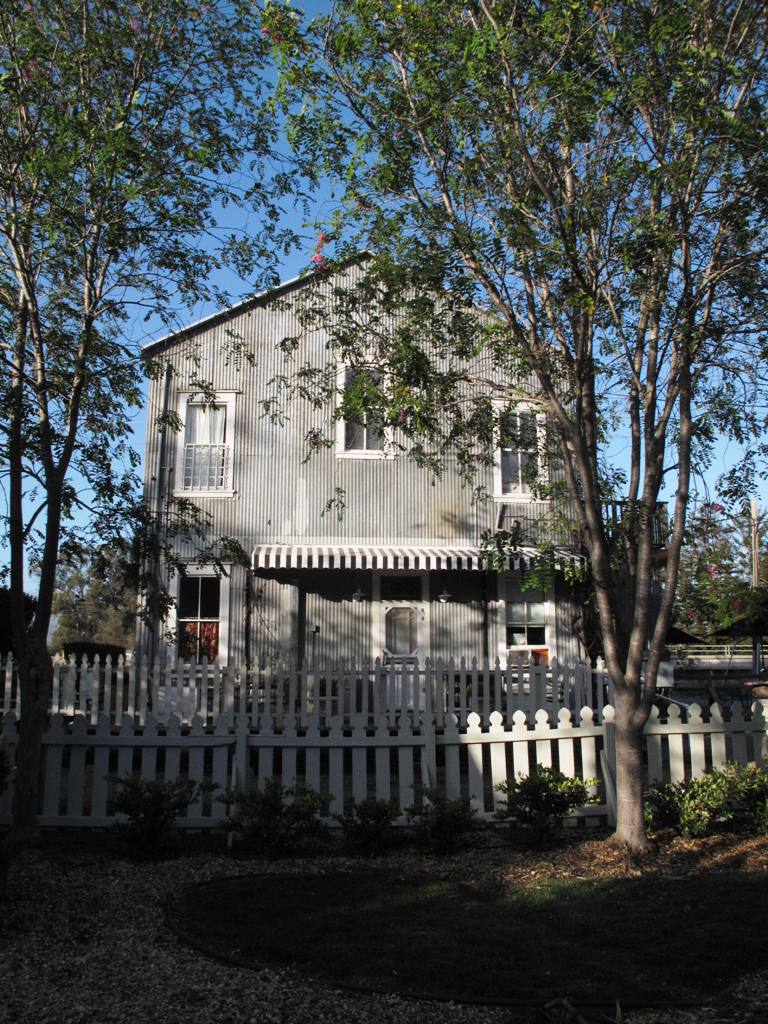
Seen from the back, through the trees, the two-story tin mercantile building, circa 1908.

Seen from the back, through the trees, the two-story tin mercantile building, circa 1908.

Old Edna has an amazing history, and I hope to do it justice with this brief summary (please follow all the links to read more). Today, Old Edna is the creation of a dreamy artist named Pattea Torrence.

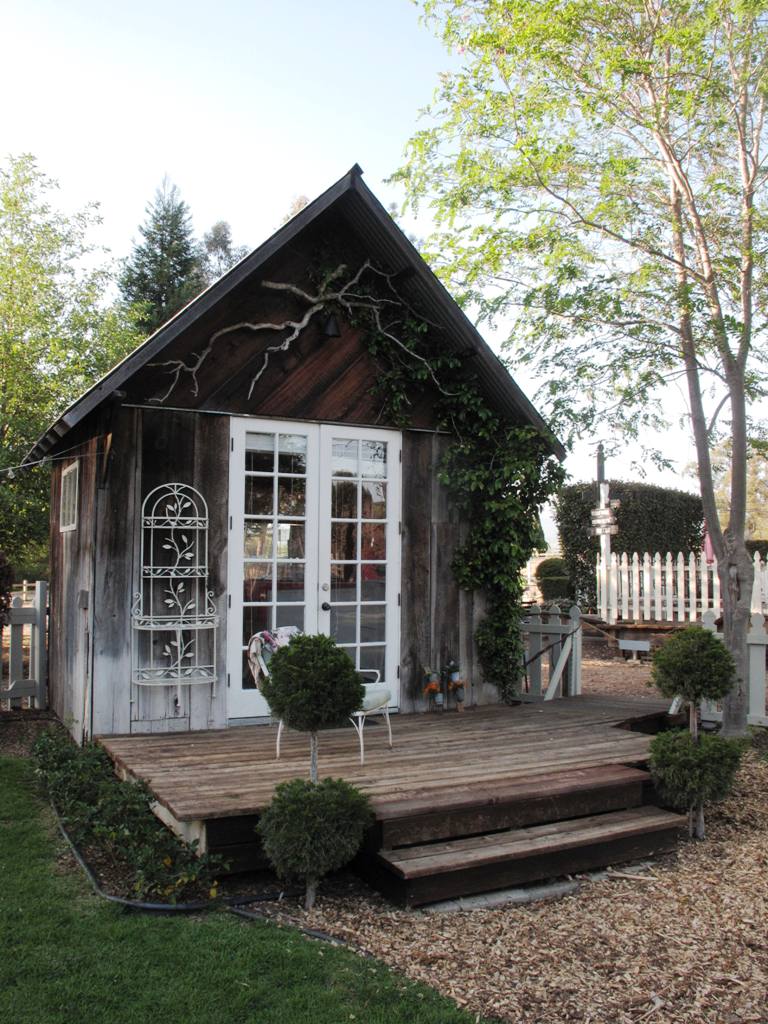
Pattea's office, in a charming garden shed on the Old Edna grounds.

Pattea’s office, in a charming garden shed on the Old Edna grounds.


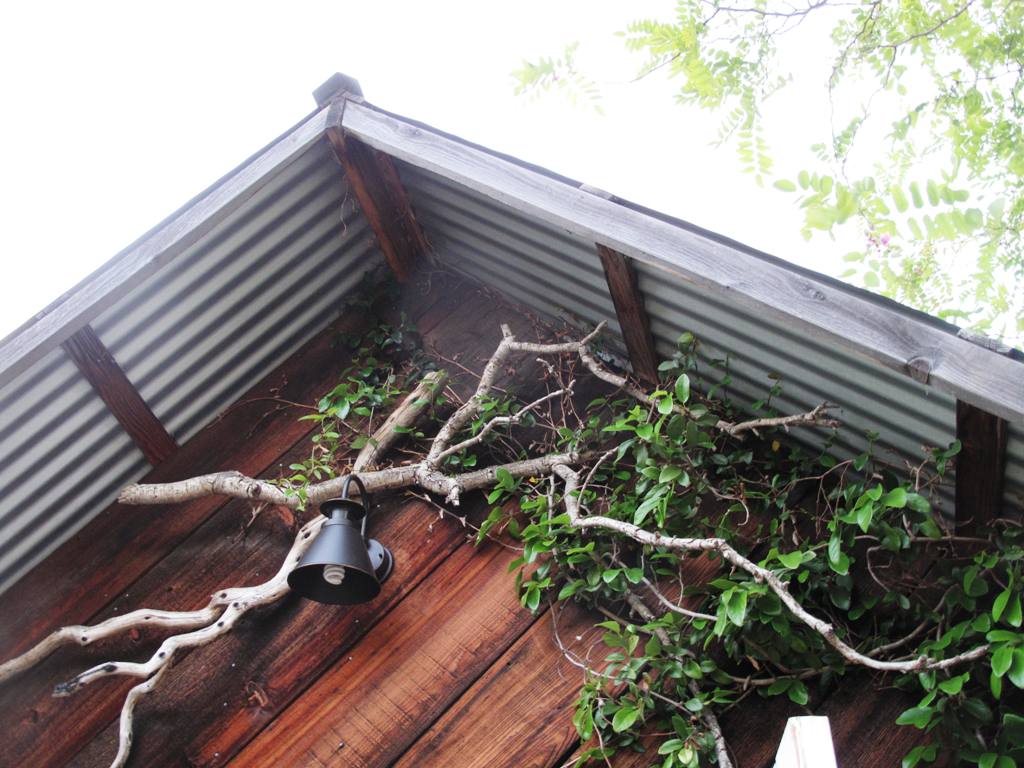
Love how an old branch becomes a "trellis" under the eaves.

Love how an old branch becomes a “trellis” under the eaves.


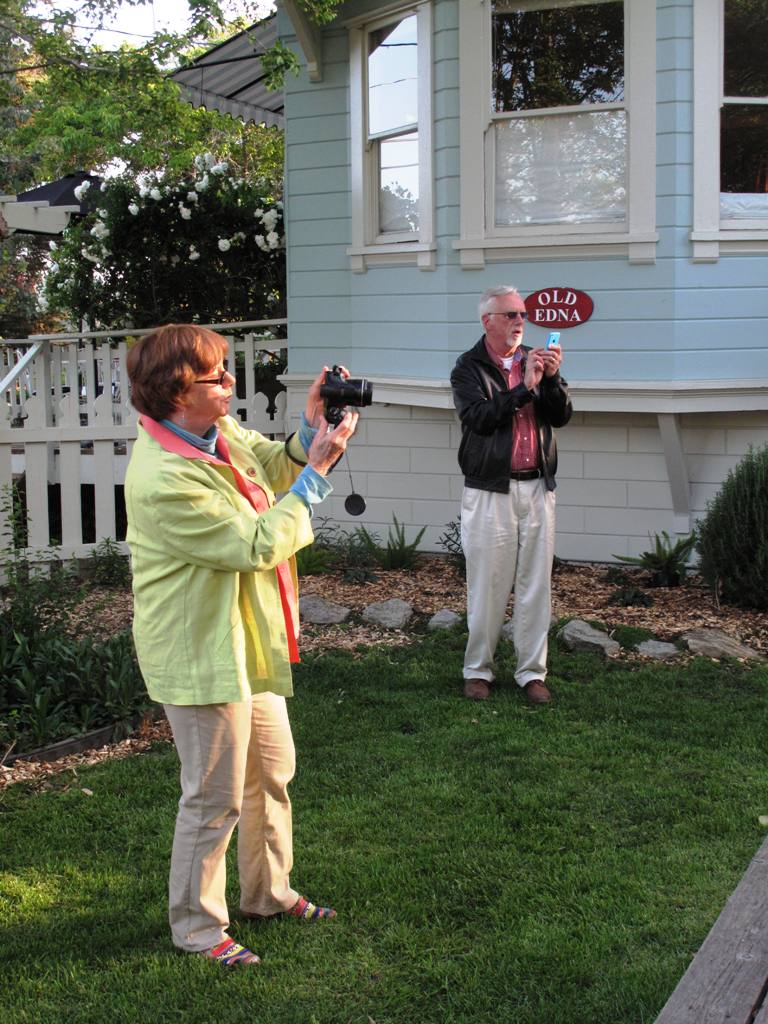
Sharon and Jeff, both taking photos, at Old Edna. They are standing in front of the original Old Edna cottage.

Sharon and Jeff, both taking photos, at Old Edna. They are standing in front of the original Old Edna cottage.

Pattea has saved this elderly hamlet that time almost forgot, turning it into a destination that includes guest cottage farm stays, wine tasting, special events and more.

In 2000, Pattea and her husband Jeff Kocan purchased the two-acre, 100-year-old townsite with its running creek in Edna Valley (a world-class, wine-producing region) and two-story tin building (once a general store, dance hall and post office, dating back to the turn of the century, 1900).

They have salvaged and restored many of the structures and created a magical place for guests who stay for short or extended periods. There are two guest cottage on site, a three-bedroom Suite Edna and a one-bedroom honeymoon cottage called DeSolina. 

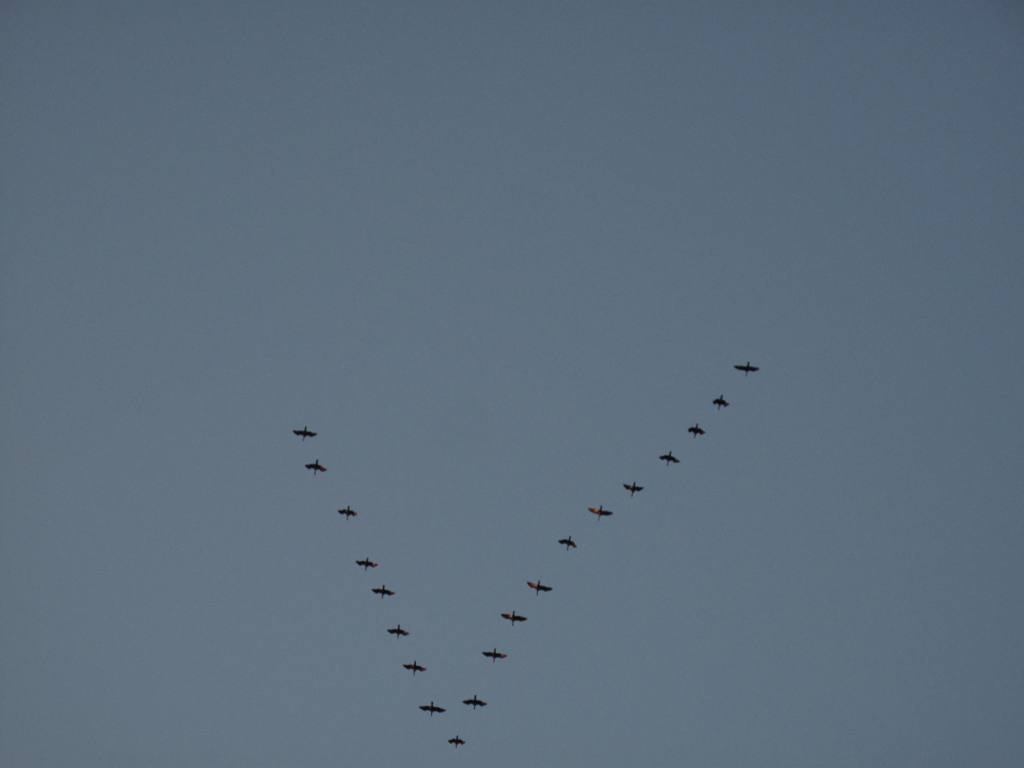
Another stunning sight: Birds in flight, in the sky overhead - a perfect V formation.

Another stunning sight: Birds in flight, in the sky overhead – a perfect V formation.

Pattea is affectionately known as “The Mayor” of Old Edna. She was a gracious host, although I have to also thank Aline and Frank for their amazing hospitality!

I hope to return and spend more time, but these photos will give you a glimpse of what I experienced. Up next: A visit to The Sun Valley Group, an unforgettable flower farm in Arcata, California.

SLOW FLOWERS Podcast: Flower Confidential with Amy Stewart (Episode 140)

Wednesday, May 7th, 2014
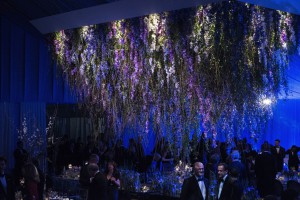
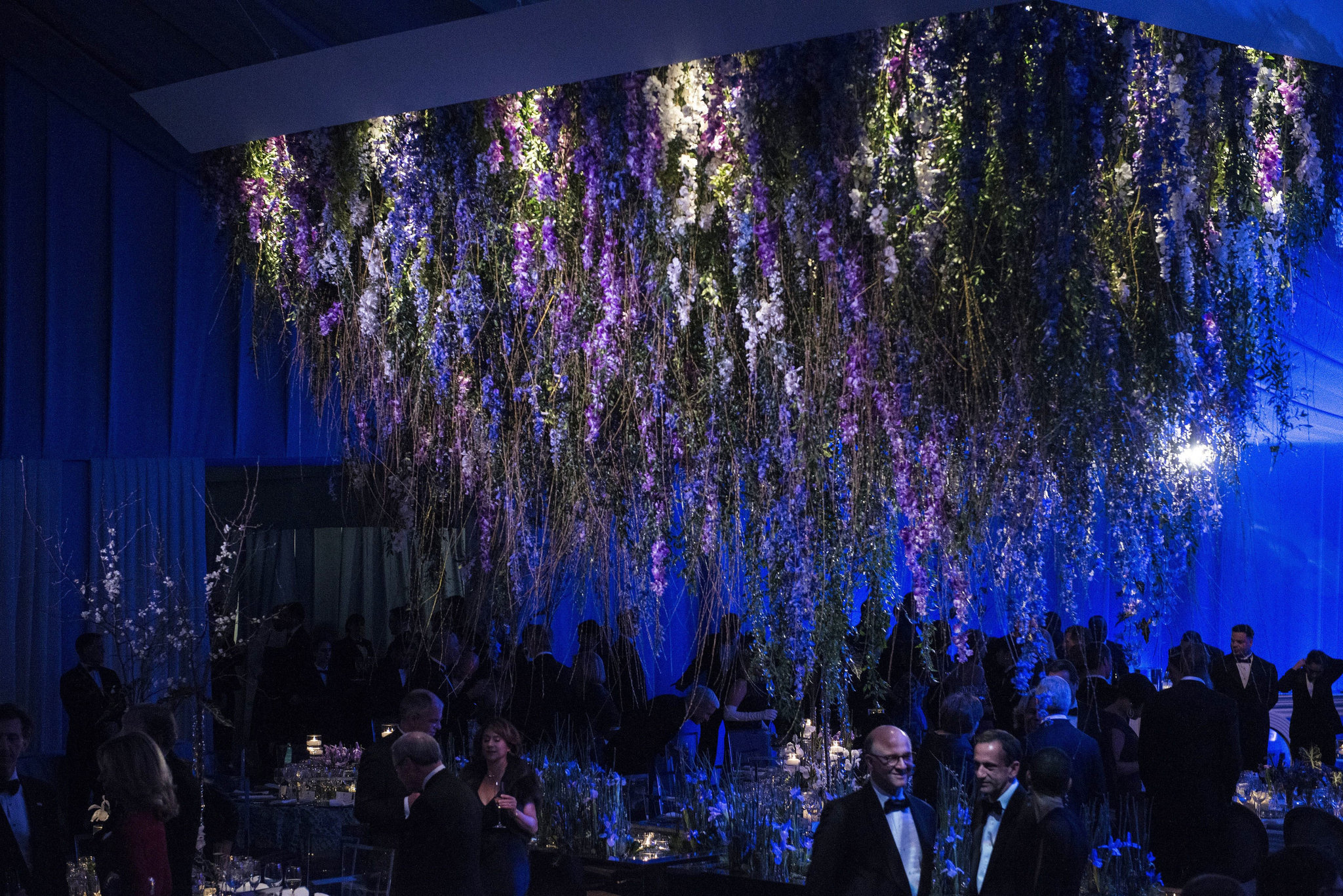
The floral ceiling chandelier -- using all American grown floral ingredients -- from the White House State Dinner (photo: Brendan Smialowski/Agence France-Presse)

The floral ceiling chandelier — using all American grown floral ingredients — from the White House State Dinner (photo: Brendan Smialowski/Agence France-Presse)

I have exciting news to share this week: The New York Times published a piece by former food columnist Marian Burros entitled: “My, What Lovely Flowers. Who Lobbied for Them? — after a push by growers, U.S. products adorned a White House Dinner.” 

More than two months ago, I wrote about this exciting event — a stop on the Slow flowers journey in which the White House acknowledged for the first time ever its use of American Grown flowers for a public function. That was the State Dinner for the French President on February 11th. You can read my February 21st blog post, and my analysis of that event here. 

I’m gratified to see that NYT’s follow this story and give it the gravitas it deserves. Shining a positive light on American flowers is important, but there is much more that needs to be done in order to change the broken floral industry. One thing YOU can do is to join me in simple floral activism.

You can do this by visiting a compelling new web site: VOTE FOR FLOWERS. There, you’ll be able to identify your member of Congress and send him or her a letter urging support and engagement in the new Congressional Cut Flower Caucus.

Like others in the pro-domestic flower movement, I do NOT want the White House’s use of American flowers to be a one-time gesture. Like the presidential commitment to serve local, American-sourced food AND wine at White House functions, it is only right that domestic flowers grace the tables of all White House events. Stay tuned for ongoing updates on this story. 
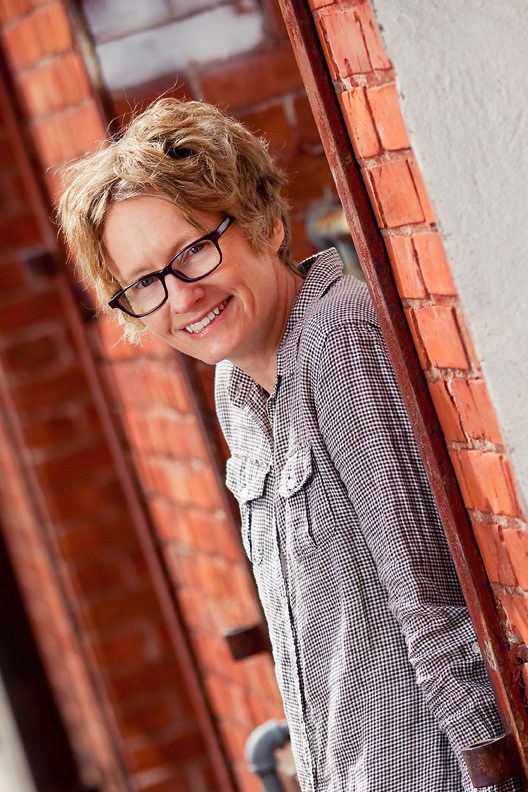
Writer and all-around curious observer of the natural world, Amy Stewart (c) Delightful Eye Photography

Writer and all-around curious observer of the natural world, Amy Stewart (c) Delightful Eye Photography

Now let’s turn our attention to today’s fabulous guest: Amy Stewart. 
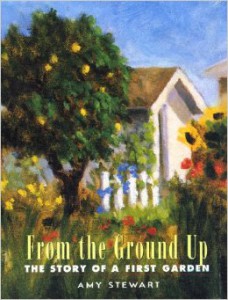
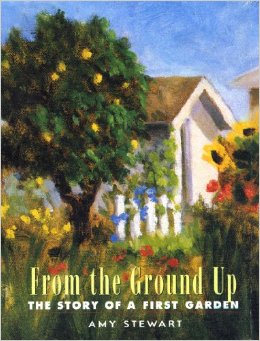
Amy's first book, "From the Ground Up," was published in 2001 by Algonquin Books.

Amy’s first book, “From the Ground Up,” was published in 2001 by Algonquin Books.

I first learned about Amy in 2001 when a local bookseller here in Seattle told me about From the Ground Up, a memoir by a young Texas native who wrote about her first grown up garden. The bookseller called it “heartwarming and said I had to read it. 

Amy was that author. She wrote From the Ground Up as a journal documenting her post-college Santa Cruz garden. When I reviewed in 2002, I wrote:

“There’s something very endearing and charming about Stewart’s self-effacing writing voice. She truly wants us to experience the same emotional highs and lows, the essential passion of gardening, that she lives through. It’s a wonderful late-night read . . . Pick it up as an alternative to moonlight gardening.” 

A few years later, I met Amy at the SF Flower & Garden Show. We were back-to-back speakers and met during that “changing of the guard” thing that happens when one speaker wraps up her book-signing and another takes that seat warmed by her predecessor. It was just a casual introduction, but there was a familiar recognition of a kindred spirit in the garden-writing world.

Since then, our friendship has been based on mutual admiration, similar professional interests and occasional collaboration. In fact, in 2011, Amy and I teamed up with three others to launch GREAT GARDEN SPEAKERS.COM, an online speakers bureau for our profession. 
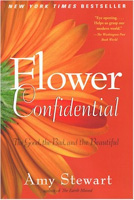
cover_flower_confidentialGGSlogo-badgeAnd so it goes. My world changed when Amy Stewart wrote Flower Confidential in 2007. At the time, I had already begun interviewing American flower farmers and florists, unaware that she was writing an expose about the Global Floriculture Industry. Things happen like that in our worlds – after all, how could you explain the proliferation of vegetable gardening books that flooded the marketplace over the past five years?

But back to Flower Confidential. It truly was a book ahead of its time. When Amy wrote about the huge machine that relies on cheap floral imports, she started a conversation that resonated with me and with so many others – it was a dialogue I wanted to join. I was inspired to continue seeking out and telling the stories of American flowers and the people who grow and design with them. 

When The 50 Mile Bouquet was published in 2012, I was honored that Amy agreed to write the forward, her generous show of support for the next chapter in the American Grown story. In that forward, Amy wrote: 

“A great deal has changed since Flower Confidential. The notion of supporting local farmers was just gaining traction. The idea of celebrating our seasonal abundance – even if that means giving up tomatoes in January – was not quite mainstream. Just as “slow food” was catching on, the flower world was beginning the shift that The 50 Mile Bouquet celebrates.”

Indeed, a great deal more has changed – for the good – since Amy wrote our forward in the fall of 2011. 
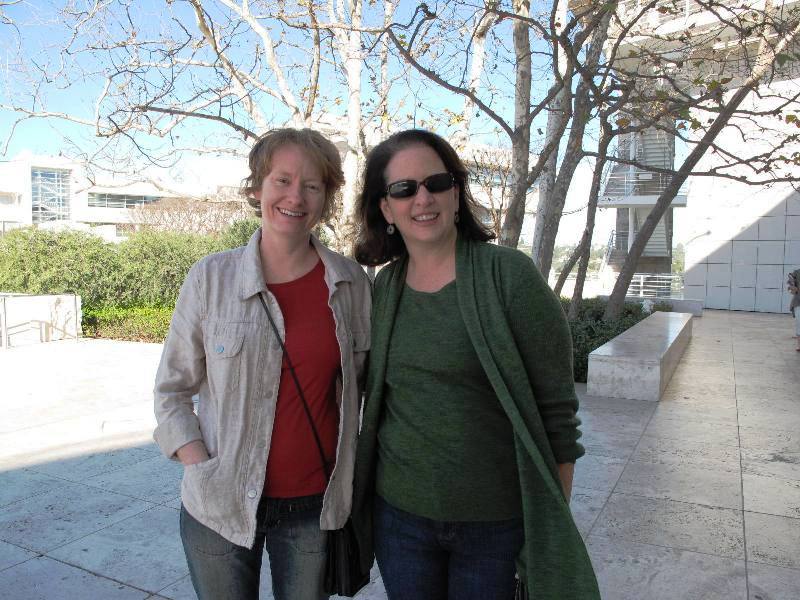
Amy Stewart and Debra Prinzing.

Amy Stewart and Debra Prinzing.

With Amy’s blessing, I’ve gone down the flower garden path to document the exciting cultural shift in the domestic floral industry. All you have to do is read about the White House’s choice of American grown flowers to understand that. 

During the same time, Amy’s career has skyrocketed. She is the award-winning author of six books on the perils and pleasures of the natural world, including four New York Times bestsellers, The Drunken Botanist, Wicked Bugs, Wicked Plants, and Flower Confidential.   

Amy lives in Eureka, California, with her husband Scott Brown. They own an antiquarian bookstore called Eureka Books and tend a flock of unruly hens in their backyard. 

Amy has appeared on NPR’s Morning Edition and Fresh Air, she’s been profiled in the New York Times and the San Francisco Chronicle, and she’s been featured on CBS Sunday Morning, Good Morning America, the PBS documentary “The Botany of Desire,” and–believe it or not– TLC’s Cake Boss. 

Four of Amy’s previous books have been New York Times bestsellers.  They have been translated into eight languages, and two of them–Wicked Plants and Wicked Bugs–have been adapted into national traveling exhibits that appear at botanical gardens and museums nationwide.

She is the recipient of a National Endowment for the Arts fellowship, the American Horticulture Society’s Book Award, and an International Association of Culinary Professionals Food Writing Award. In 2012, she was invited to be the first Tin House Writer-in-Residence, a partnership with Portland State University, where she taught in the MFA program.  

I recently stopped at Amy and Scott’s house in Humboldt County, northern California, while on a road trip from LA to Seattle. They don’t live too far off of Hwy 101 and it was an easy detour, my 2nd visit to their charming Victorian house surrounded by a slightly unruly garden and an opinionated clutch of hens.    

As is typical, our conversations involved book writing, book publishing, book promotion and more — all those things that authors obsess about. And before I left the following morning, Amy and I sat down in her cozy work space – her combination writing and art studio in the attic of this vintage residence, and talked about Flower Confidential. 

Amy Stewart’s next gift to the book-reading world is a historical crime novel about a real woman who was an early 20th century sheriff and detective. Girl Waits With Gun, is a novel based on a true story. It will be published by Houghton Mifflin Harcourt in 2015.  

Visit amystewart.com to follow Amy and all of her projects – including her busy lecture schedule and her other outlet -painting and drawing.
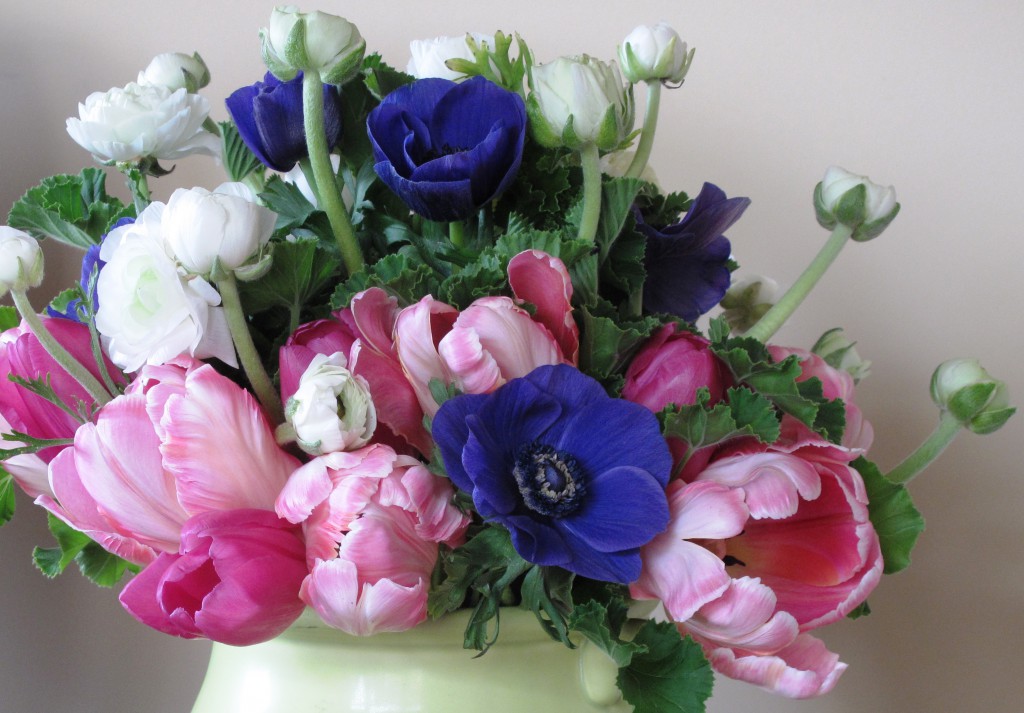
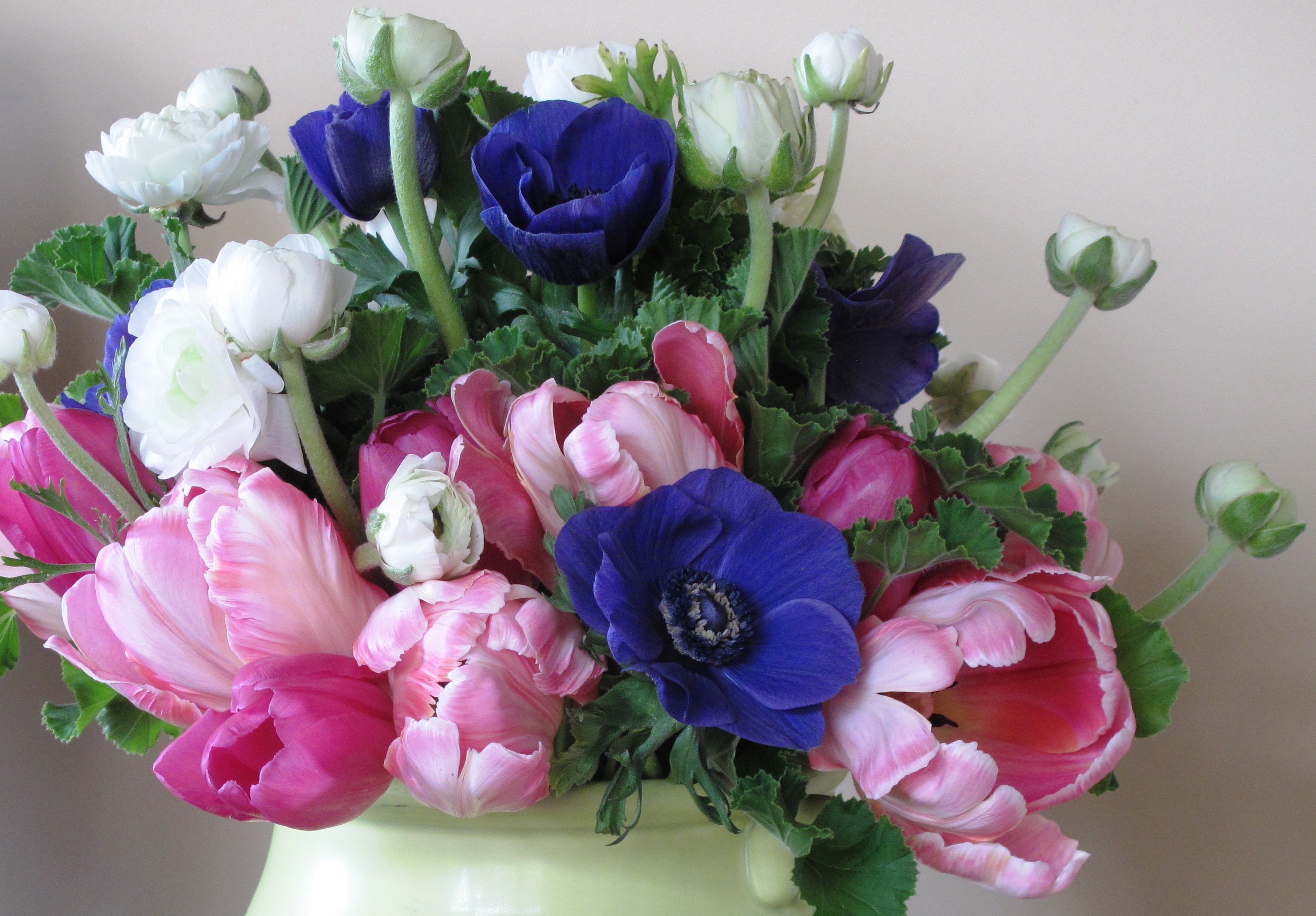
Here's a photograph of a floral arrangement I made last spring - and then wrote about.

Here’s a photograph of a floral arrangement I made last spring – and then wrote about. 
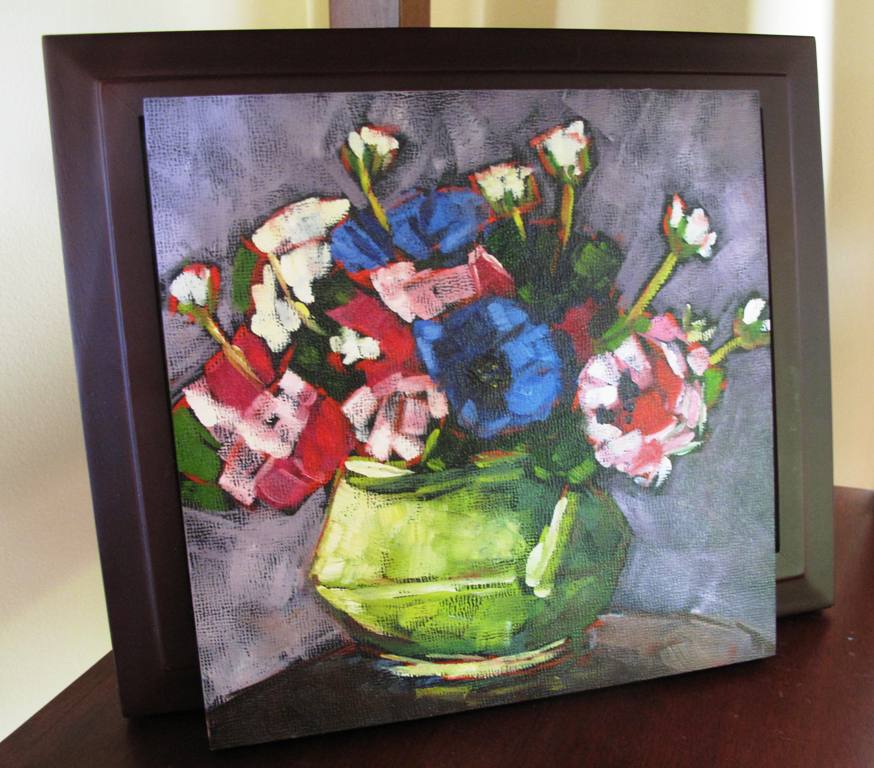
 

Amy's charming oil painting of that same arrangement ~ a surprise and cherished gift.

Amy’s charming oil painting of that same arrangement ~ a surprise and cherished gift.

And enjoy this Q&A with Amy about why she loves to paint.

Because of the support from you and others, listeners have downloaded episodes of the Slow Flowers Podcast more than 11,000  times! I thank you for taking the time to join to my conversations with flower farmers, florists and other notable floral experts.

If you like what you hear, please consider logging onto Itunes and posting a listener review.

Until next week please join me in putting more American grown flowers on the table, one vase at a time. 

 The Slow Flowers Podcast is engineered and edited by Hannah Holtgeerts and  Andrew Wheatley. You can learn more about their work at hhcreates.net.

What’s in bloom now: Spring seasonal floral design

Sunday, May 4th, 2014

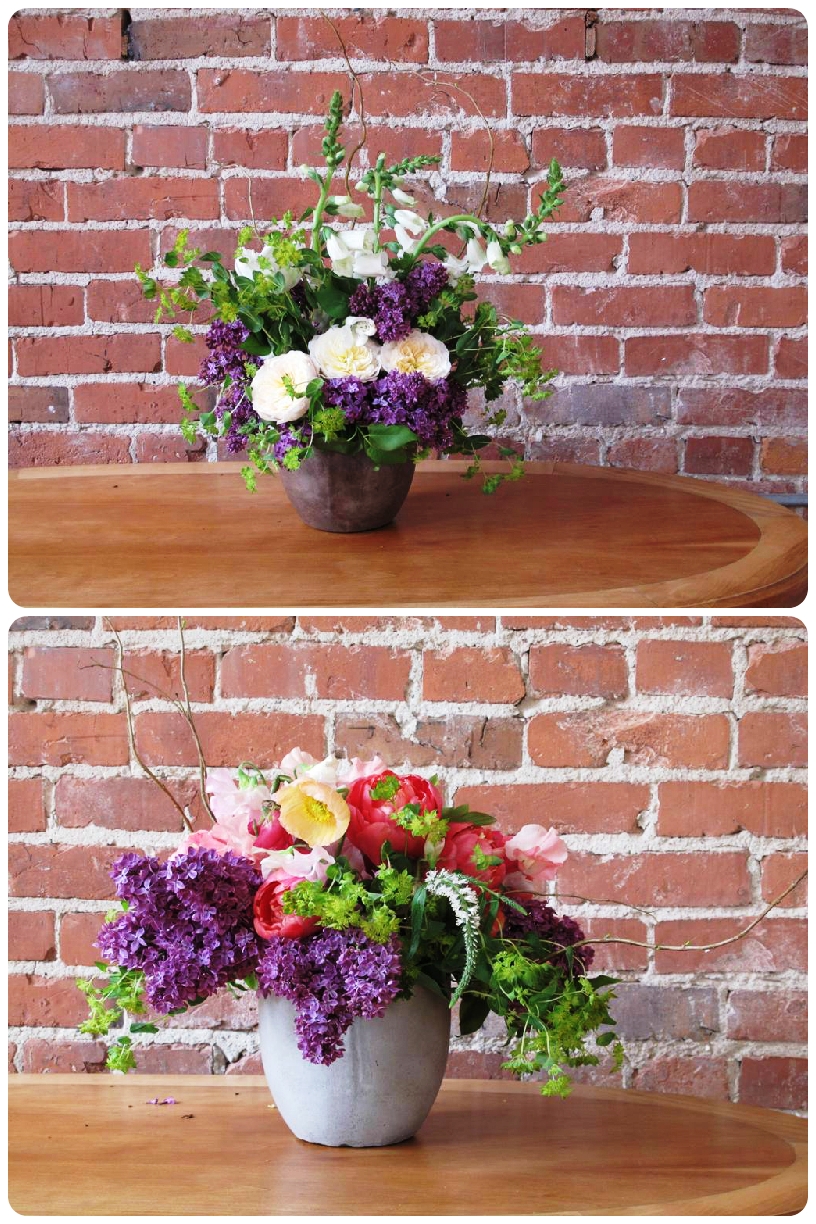
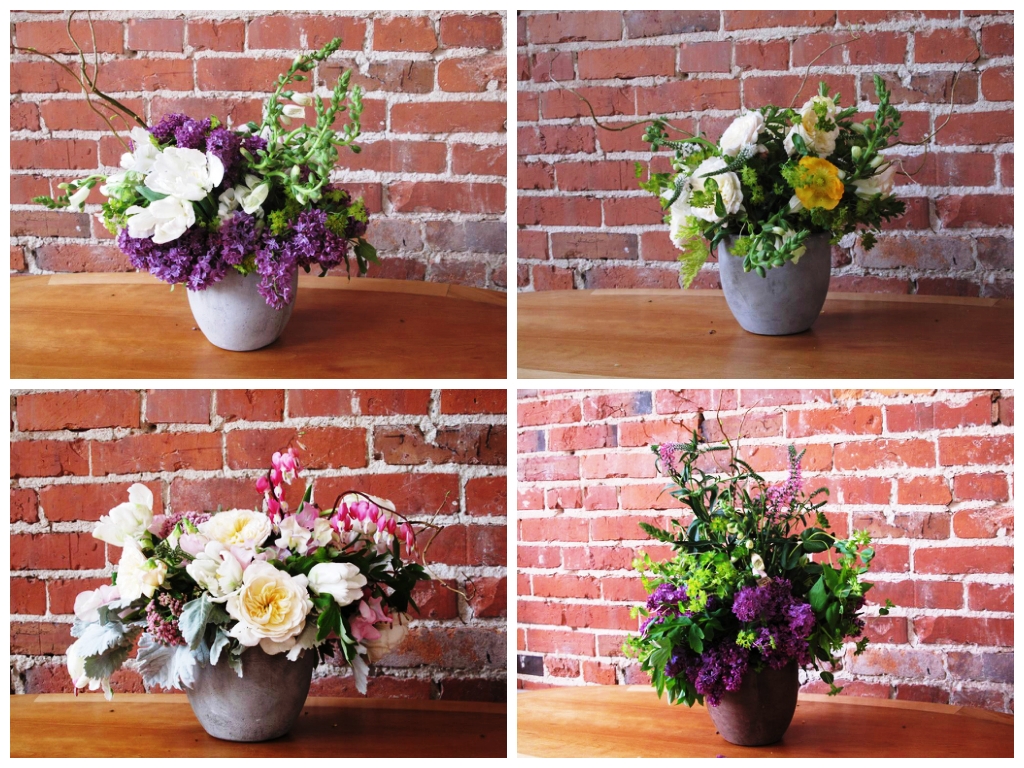
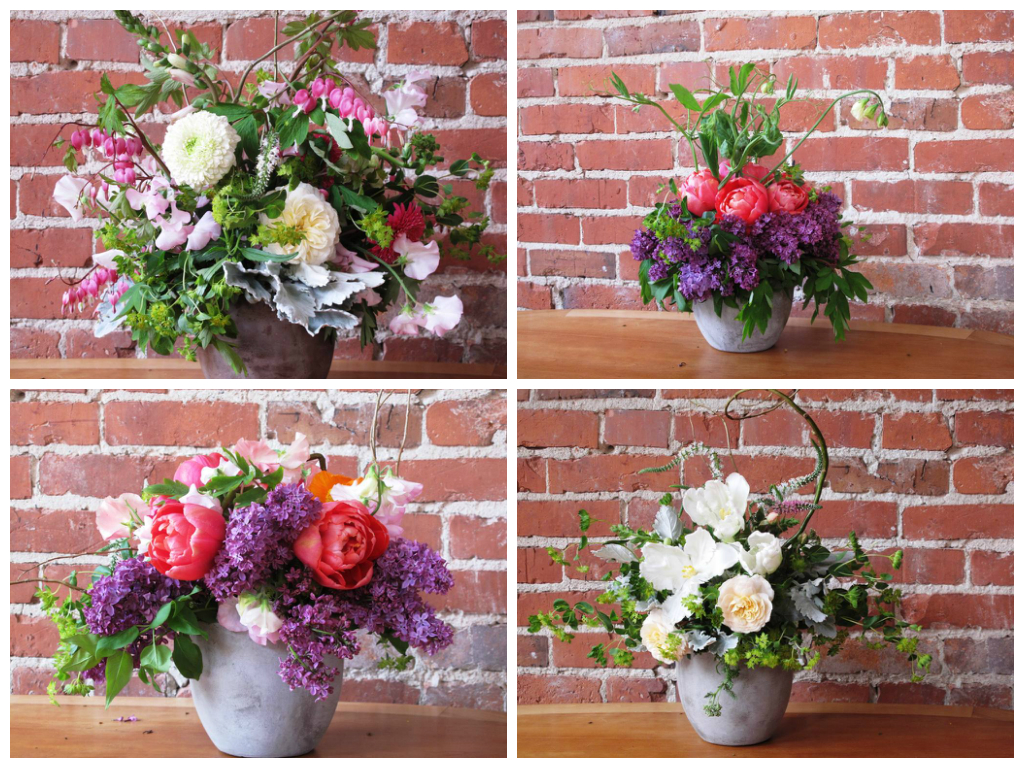
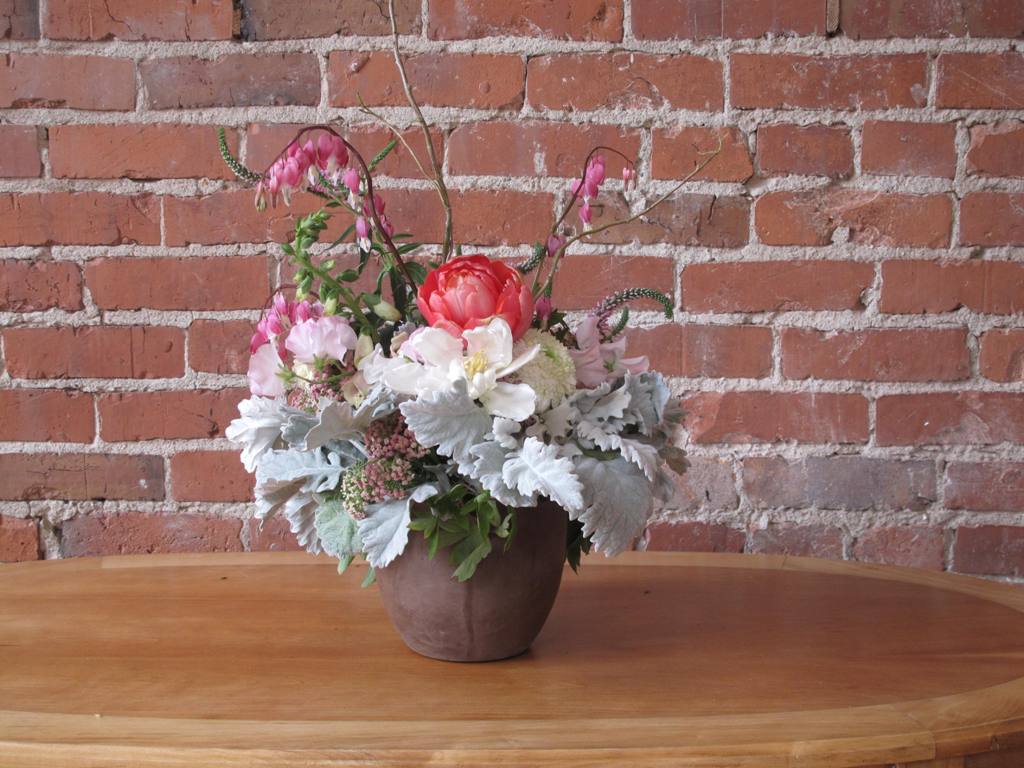
Yesterday, I hosted a hugely inspiring gathering of floral designers

We celebrated spring with a hands-on workshop to explore color, texture, form and scale

Below is the result of our creative expression 

2_bouquets

Floral Designs Above, from top: SUSAN WADE and TRACY STRAND (Mother & Daughter)

4_bouquets_May_3_set_2

Floral Designs Above, clockwise from top left: DEBRA PRINZING, SUSAN CARTER, SUSAN KESE and SHAWN CHAMBERLAIN

4_bouquets_May_3

Floral Designs Above, clockwise from top left: KEITA HORN, KRISTIANN SCHOENING, MAIJA WADE and KRISTIN MATTSEN

Zapote_Gregory_2_IMG_9904

Floral Design Above: ZAPOTE GREGORY

Floral Sources:

Seattle Wholesale Growers Market

Curly willow, Oregon Coastal Flowers

‘Peony’ Tulips, Ojeda Farms

Bleeding Heart, Ojeda Farms

Sweet Peas, Jello Mold Farm

Bupleurum, Foxglove, Gerrondo Gerberas, Yarrow and Veronica — California Grown

Florabundance (thanks for the donation of California-grown products!)

Garden Roses from Rose Story Farm

Dusty Miller

Lilacs

Parrot tulips

SLOW FLOWERS Podcast: Hear from a Floral Wholesaler who Promotes American Grown (Episode 139)

Wednesday, April 30th, 2014
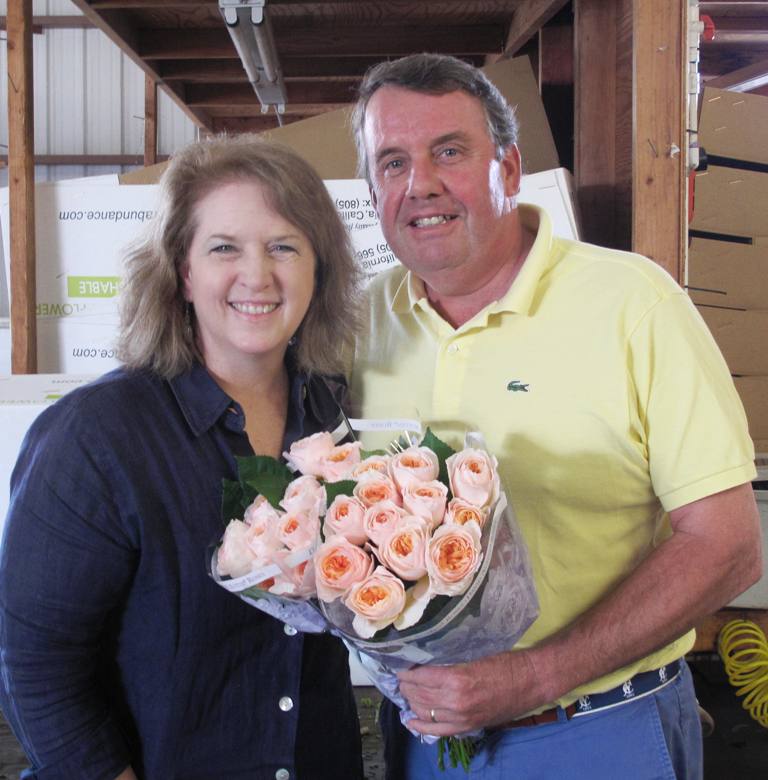
I recently visited Joost Bongaerts, floral wholesaler and owner of Florabundance.

I recently visited Joost Bongaerts, floral wholesaler and owner of Florabundance.

Over the past several weeks you’ve heard my conversations with floral designers who are leading the way when it comes to sourcing their flowers, leaves and branches from local farms. They place high value on seasonal blooms, because they know their bouquets and arrangements will be all the more beautiful and cherished by the customer – a customer who is also asking, Where do my flowers come from?


Yet many of these florists whose operations are not large enough to guarantee sizeable orders or meet minimum purchase requirements face a dead-end when they ask their local wholesaler to provide domestic or locally-grown product.
The wholesaler is basically a broker, an agent between the grower and the designer. The way the wholesale florist makes money is to buy low and sell high. I know this is an essential truth in any modern-day distribution system, but – to me – it can lead to a situation where the wholesaler holds all the power to set price, to determine what is brought to market, to manage the flow of goods from producer to end user. And in floral, over the years, that set up has led to a near-total obscurity of sourcing and certainly NOT truth in labeling.
It has been close to impossible for designers seeking flowers from the wholesaler in their town to ever know WHERE those flowers came from or WHO grew them, let alone what growing practices were used.

This model is only beginning to change. As we heard from Foxglove Brooklyn and The Local Bouquet, two studios featured in recent episodes, their big breakthroughs occurred when a light bulb went off in the mind of their wholesale florist. The energy and enthusiasm these designers express whenever they can source American grown flowers has stimulated a shift in thinking at the wholesaler. It might not even be the owner of that wholesale business who gets it, but perhaps an enterprising salesperson or account manager who says: “Ah ha! I get it – they want more local product and If I can source it – my sales will increase.”

So . . . in the coming months, in an effort to crack the code and inspire more wholesale florists to “see the way to the future,” I’ll be featuring conversations with the ones who are committed to transparency in their sourcing practices.

Florabundance

Today, we’re kicking it off with Joost Bongaerts, owner of Florabundance in Carpinteria, California.

Joost has been involved in the horticulture and floral industry his entire life – and through Florabundance he sells flowers to retail florists and designers all around the country.

Located as they are in the flower-basket of the U.S., Florabundance has the unique ability to source from small and large flower farms in California and in many other states on an almost a year-round basis.

I applaud Joost for labeling all of the CA-grown options on the Florabundance web site. In the future, we should see other wholesalers adopting this practice. And next, we’ll urge them all to identify other states, as well as use the soon-to-launch American Grown Flowers logo.

Here’s a little more about Joost and his background:

Born in 1959 in Den Hague, The Netherlands, Joost grew up in Holland. His father managed agricultural land holdings all over the country. Joost spent summers working on his family’s farm in northern Holland and became interested in agriculture and horticulture as a result. He attended The Land en Tuinbouw School in Dordrecht and continued his education in Gouda, graduating with a degree in plant science.

Joost also spent a semester at Michigan State University as part of an exchange program, which led to his desire to work and live in the United States. Joost began his professional career in 1981, marketing fresh cut flowers from Holland for The Dutch Flower Auctions & Exporters Organizations which was located in Livonia, MI.

From 1983 to 1991 Joost worked for several Dutch companies selling flower bulbs and perennial plants to specialty cut flower growers in the United States and Canada.

In 1991 Joost and his wife Alexandra opened BonFleur, a European-style retail flower shop in New Canaan, CT, which they sold to their manager in 2002. During this time Joost also imported flowers from Holland and started to do business with Florabundance, becoming a partner in 2002 and eventually full owner in 2008.

Joost’s background and experience in selling flower bulbs to growers, importing cut flowers and running a successful retail flower shop provides a unique perspective from which he has developed the Florabundance brand into one of the premier wholesalers in the United States.

Here’s a bonus feature: a UBloom episode about Florabundance, produced by J Schwanke for his California Grown Experience video series.

httpv://vimeo.com/15039946 

I predict that by sharing my conversations with “floral middlemen,” three things will happen in the coming months and year:

1. Other wholesalers will begin to hear the buzz – and they’ll be curious about the successes of their peers like Florabundance’s Joost Bongaerts.

2. More florists will point to these examples and nudge along their own wholesaler, asking them to source domestically, seasonally and locally – for good reason.

and . . .

3. The consumer will benefit – and have more confidence in the purchases he or she makes.

Please send me your suggestions for who you’d like to hear from on future episodes of the Slow Flowers Podcast.

And tune in next week to hear from a special guest. Author Amy Stewart, who wrote Flower Confidential in 2007, will join me for a conversation about that groundbreaking book. Don’t miss it!

Because of the support from you and others, listeners have downloaded episodes of the Slow Flowers Podcast nearly 11,000  times! I thank you for taking the time to join to my conversations with flower farmers, florists and other notable floral experts.

If you like what you hear, please consider logging onto Itunes and posting a listener review.

Until next week please join me in putting more American grown flowers on the table, one vase at a time. 

 The Slow Flowers Podcast is engineered and edited by Andrew Wheatley.

A (American Grown) Flower-filled April, Part One

Sunday, April 27th, 2014
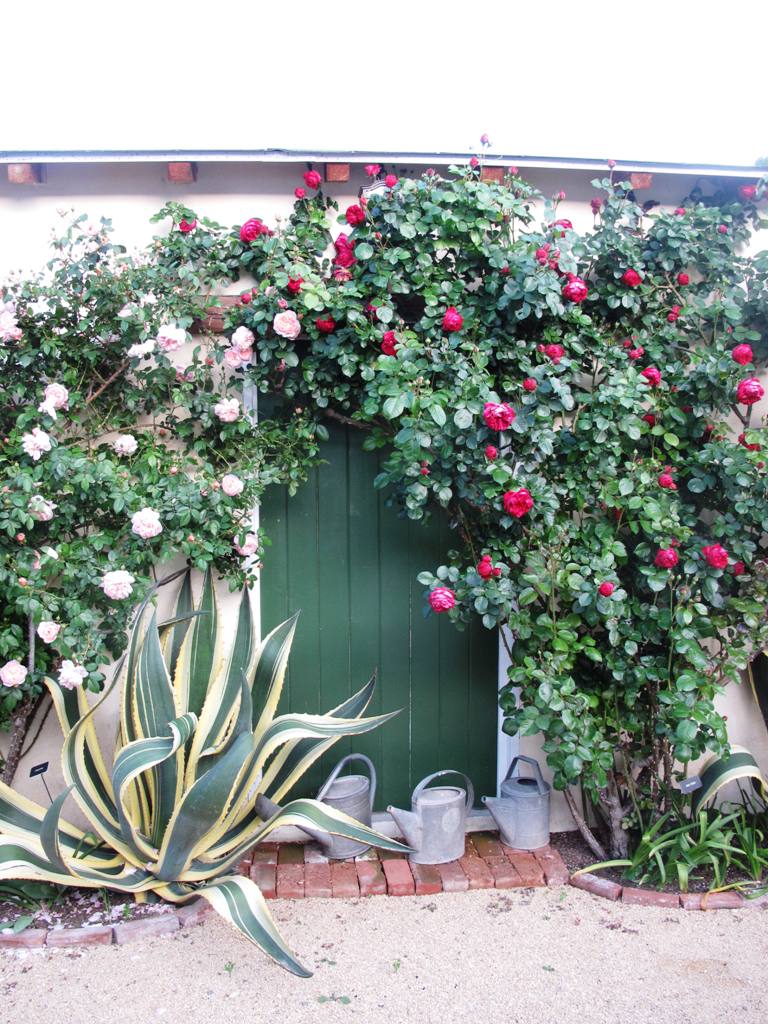
Agaves and climbing roses thrive in companionable harmony at Rose Story Farm.

Agaves and climbing roses thrive in companionable harmony at Rose Story Farm. 

My 11-day road trip took me by plane to Southern California and back home again behind the wheel of a rental car as I happily drove north on U.S. Hwy. 101 through a beautiful and ever-changing coastal landscape.

The trip began on April 6th when I landed at Burbank Airport, my favorite airport destination these days. I picked up the rental car and hit Ventura Freeway, passing by scenery so familiar to me from the four years we lived in this area. 

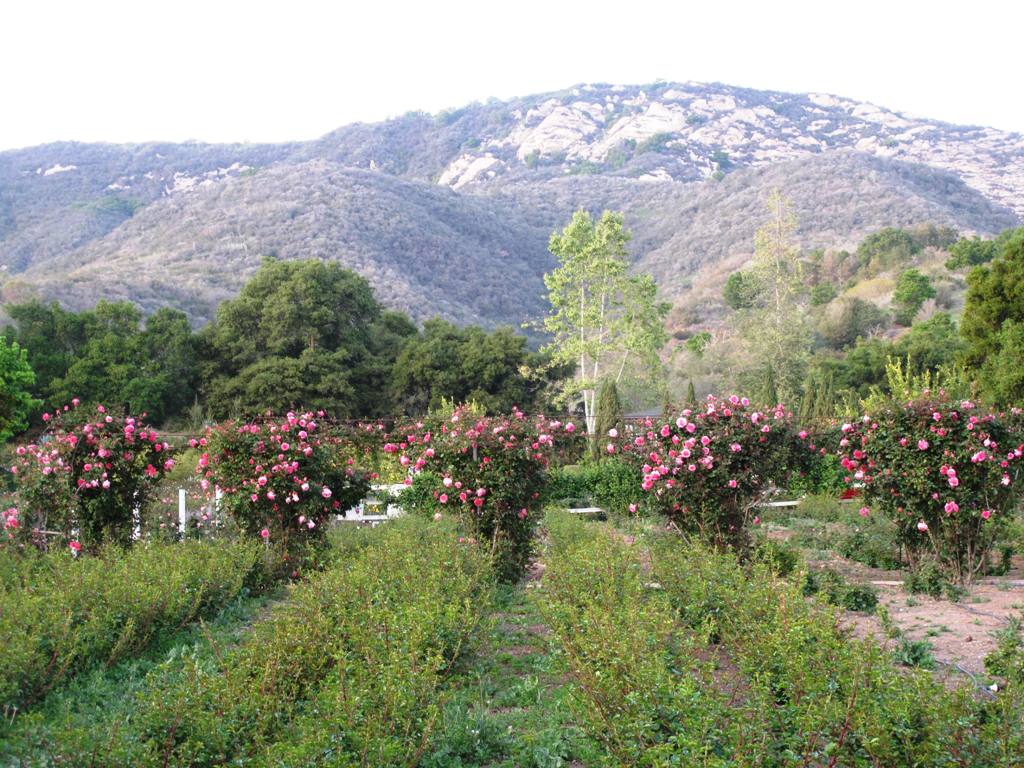
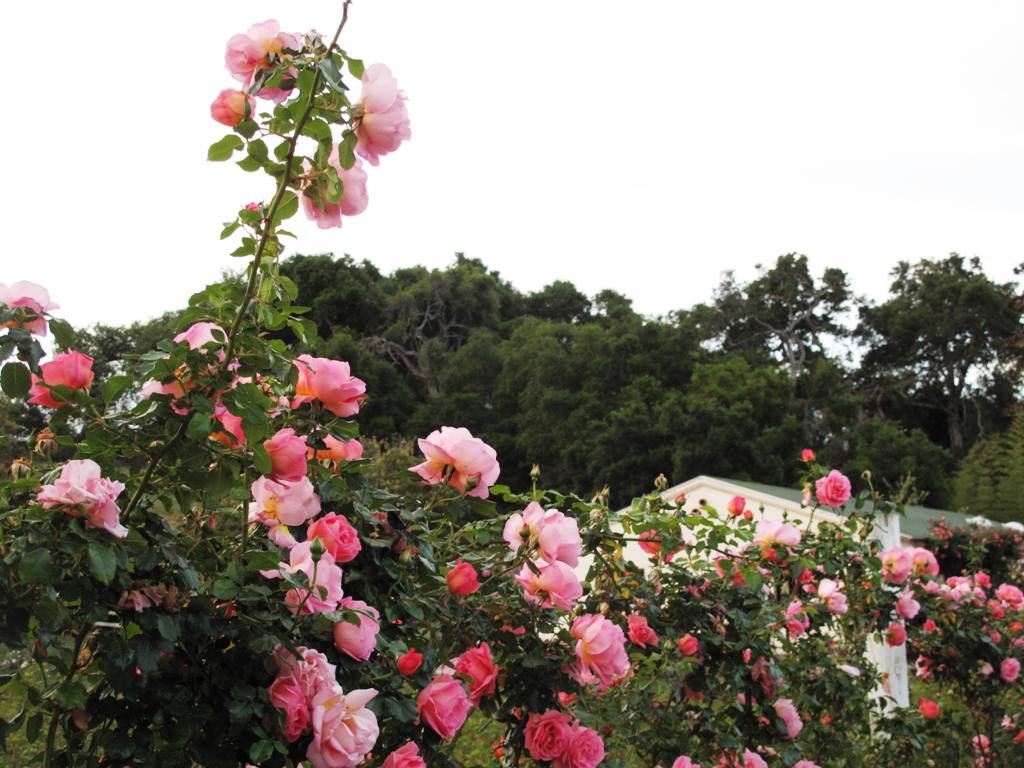
The arbor creates a rose allee that intersects growing fields - with the natural landscape creating a lovely backdrop

The arbor creates a rose allee that intersects growing fields – with the natural landscape creating a lovely backdrop

My destination was Carpinteria and Rose Story Farm. The setting sun ahead of me as I drove northwest, I turned off of the freeway at Casitas Pass Blvd. and headed away from the ocean, toward the foothills.

A humble sign, “Rose Story Farm,” greeted me at the end of a long, one-lane driveway (curses, speed bumps!) that runs along the edge of several acres of farmland. Current crop: sunflowers. Then, up ahead, towering palm trees, their presence here oddly normal, and an iron gate. I rang and heard Danielle Hahn’s voice through the speaker box: “Welcome! We’re just about to eat dinner – meet us in the barn.”

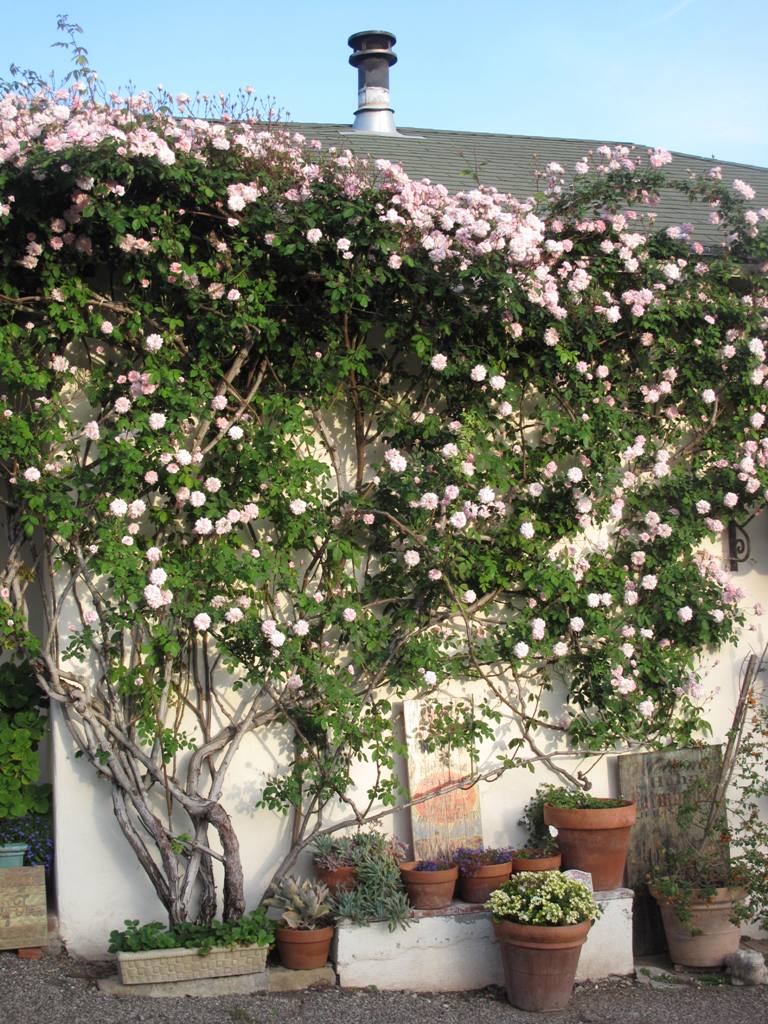
The facade of the old stables is clad in a vigorous climbing rose.

The facade of the old stables is clad in a vigorous climbing rose. 


The roses are in the foreground; the stable's rooftop in the background.

The roses are in the foreground; the stable’s rooftop in the background.

I’ve been to Rose Story Farm on three previous occasions (read previous blog posts here and here), and yet the charm and old-Santa-Barbara character still excites. Dani and her husband Bill Hahn have converted the former horse stables into the headquarters for their organic cut rose business. What once was the large tack room is now a grand family room, with a giant stone fireplace, soaring beams, cozy upholstered sofas and a big trestle table where three generations of the family were sharing dinner. I joined them for some of the most delicious Mexican take-out I’ve ever eaten.

I shared that meal with Dani and Bill, their son Will and his girlfriend Anne, and Dani’s lovely mother Patti D’All Armi. The stimulating conversation set the tone for a magical visit surrounded by friendship and fragrant roses. It was just the beginning of my three days in the Carpinteria-Santa Barbara area.  

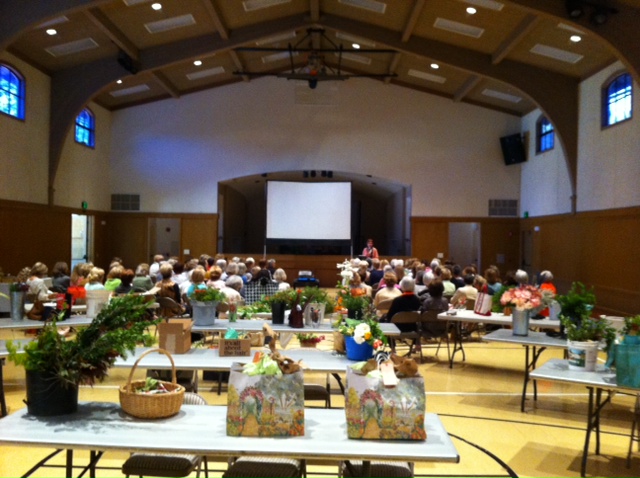
The gathering location for my Slow Flowers/American Grown lecture to the Garden Club of Santa Barbara

The gathering location for my Slow Flowers/American Grown lecture to the Garden Club of Santa Barbara

The impetus for my arrival was Dani’s invitation a year in advance to speak to the Garden Club of Santa Barbara at one of its monthly meetings. We dreamt up a two-part event, with my Monday morning lecture about the American Grown Flower Movement, followed by a lunch break, leading to a hands-on floral design workshop.

Typically, I like to cap hands-on design workshops at 25 students, maximum. Well, somehow this workshop climbed to 52!!! Yikes, without Dani, Patti and Anne’s help, not to mention a few other people on the Garden Club program committee, we could not have pulled it off.  

Anne Steig saved the day in so many ways - I'm so grateful she was there to help us with the workshop.

Anne Steig saved the day in so many ways – I’m so grateful she was there to help us with the workshop.

Here we were in the “flower basket” of America, the one place in our country where more cut flowers are produced than anywhere else. And while one might worry that I would be “preaching to the choir,” it simply wasn’t the case. The reaction to my lecture was sadly familiar. Comment after comment, as I signed books, visited with the Garden Club members, or helped a student assess her arrangement, went like this: “I had NO idea that so many flowers are imported. I am so glad to learn what I can do to change this practice.” 

Workshop participants were asked to bring their own containers and tools, as well as greenery from their gardens to share. We were able to underscore the message about the benefits and pleasures of local, seasonal flowers with a powerful visual aid: ROSES! Bless her heart, Dani harvested and donated 500 gorgeous roses from her fields. Talk about intoxicating! These old garden roses, David Austins, pre-1950s American hybrid tea roses and European varieties are simply stunning. The colors, forms, petal shapes and fragrances will instantly convert you into a believer in locally-grown flowers.

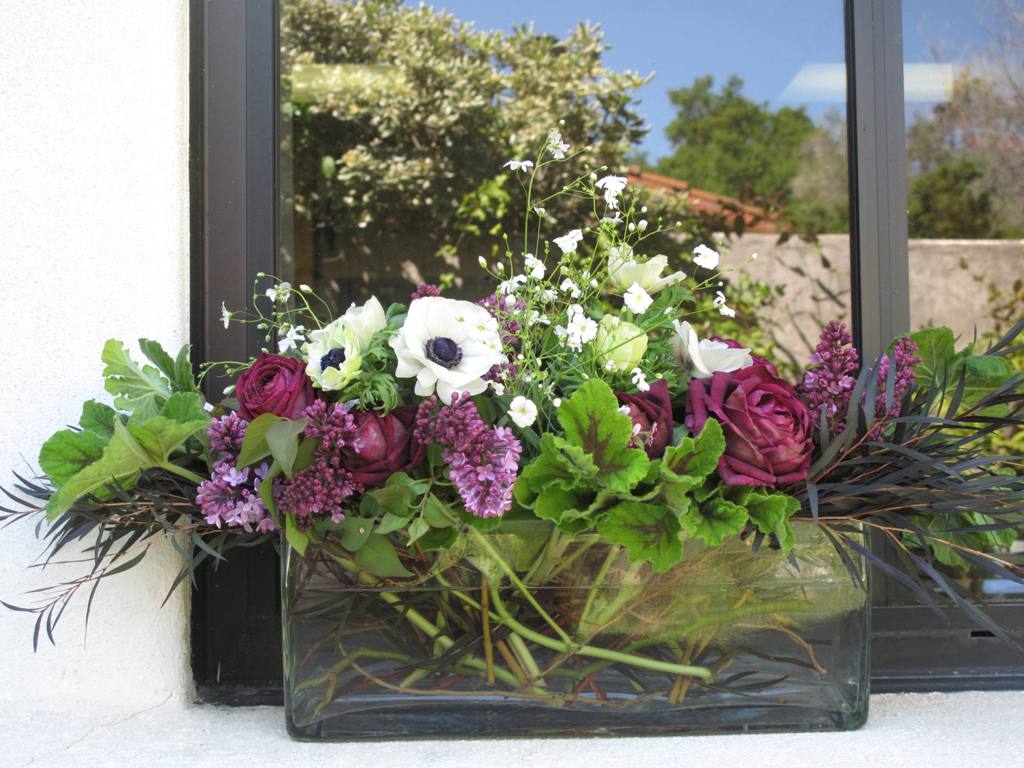
One of my demonstration arrangements features all California-grown roses, anemones, scented geranium foliage and more.

One of my demonstration arrangements features all California-grown roses, anemones, scented geranium foliage, lilacs, agonis and more.


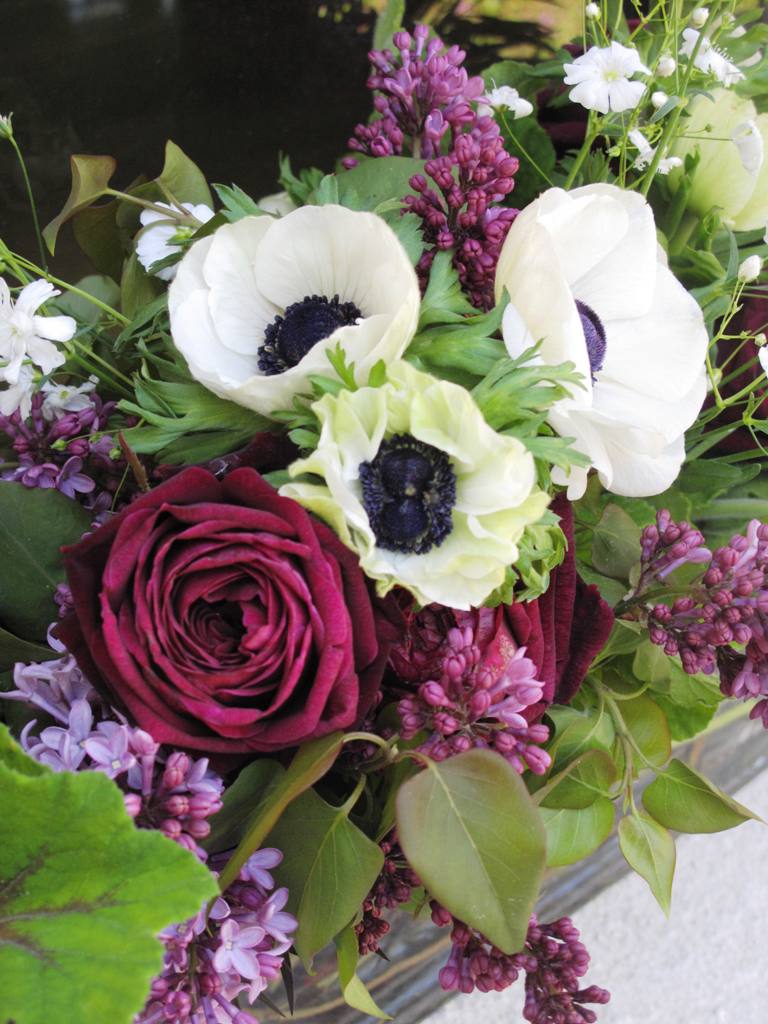
A yummy detail, featuring a dark purple rose that is so gorgeous it made me faint!

A yummy detail, featuring a dark purple rose that is so gorgeous it made me faint!

In addition to using roses and several other cool ingredients from Rose Story Farm (including velvety scented geranium foliage), we procured some donations from other local sources. I want to thank Florabundance, a floral wholesale business owned by Joost and Alex Bongaerts, for their generous donation to match our purchase of a variety of really beautiful, healthy and unique annuals, perennials and foliage – all California grown. And two other flower farms donated interesting varieties for our students to use. Thanks to Marcus Van Wingerden of Pyramid  Flowers Inc., of Oxnard, and Igor Van Wingerden of Ocean Breeze Farms in Carpinteria, for their support.

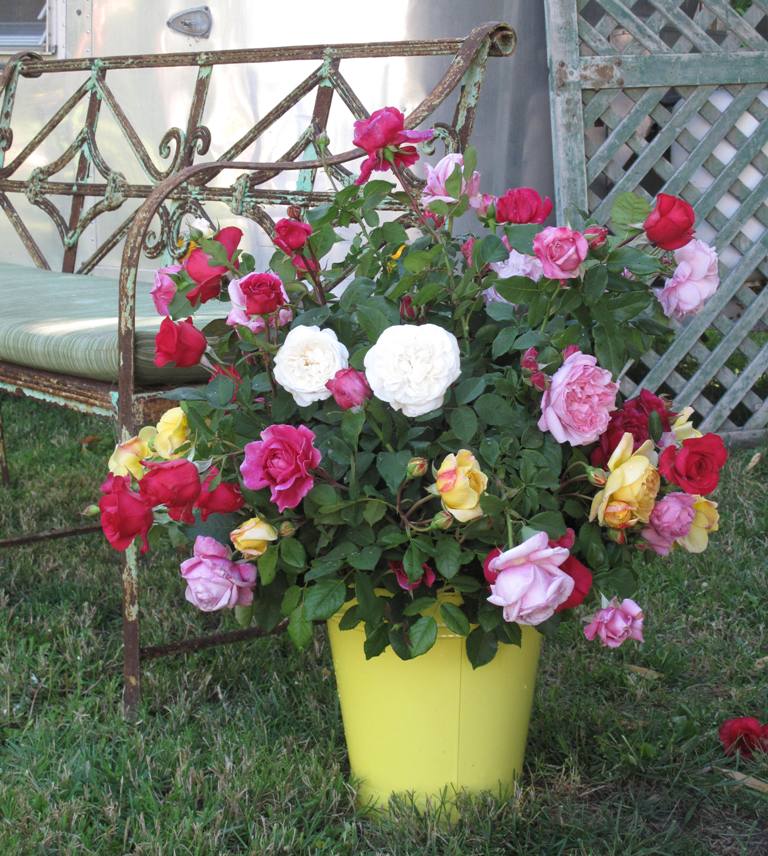
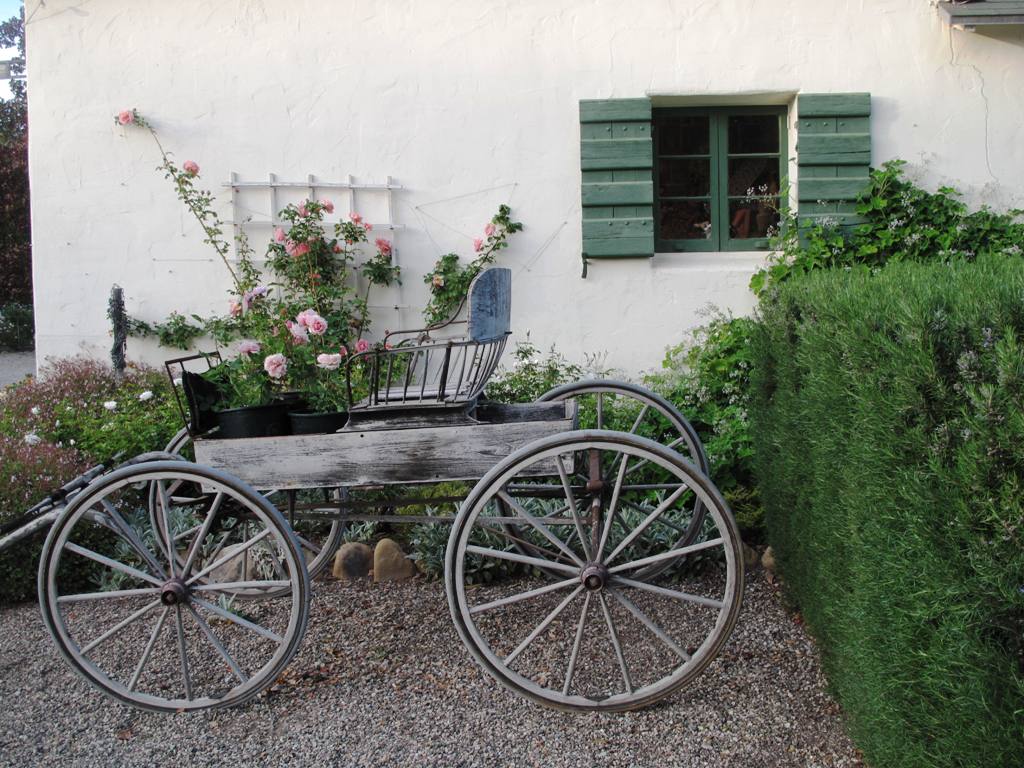
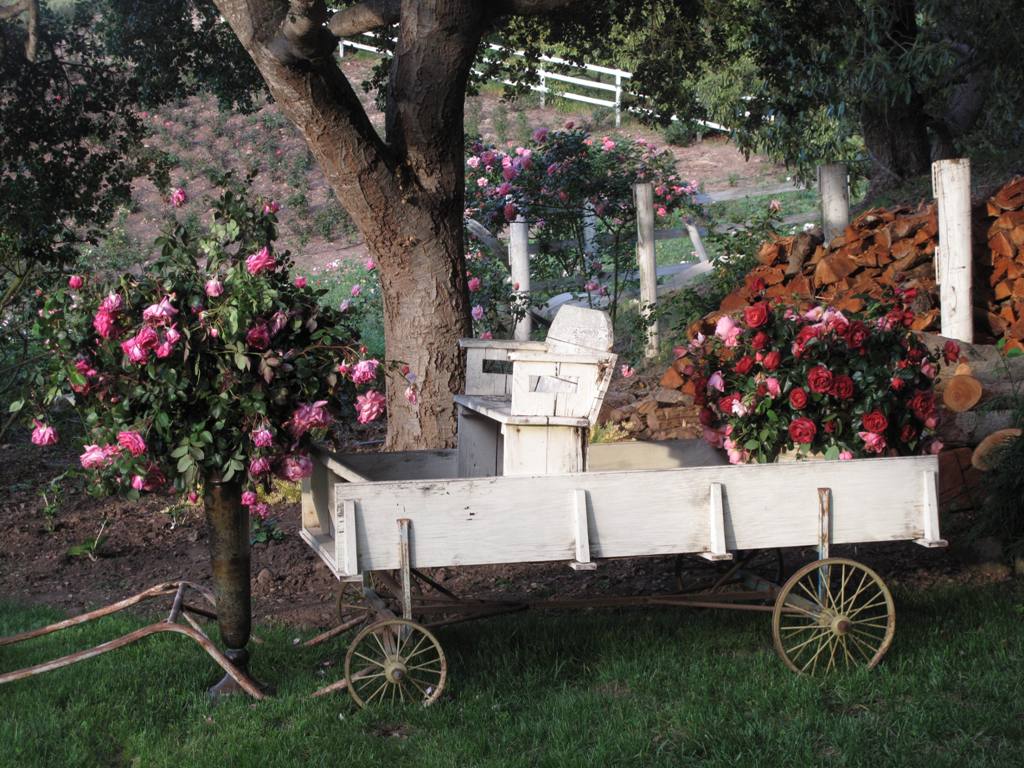
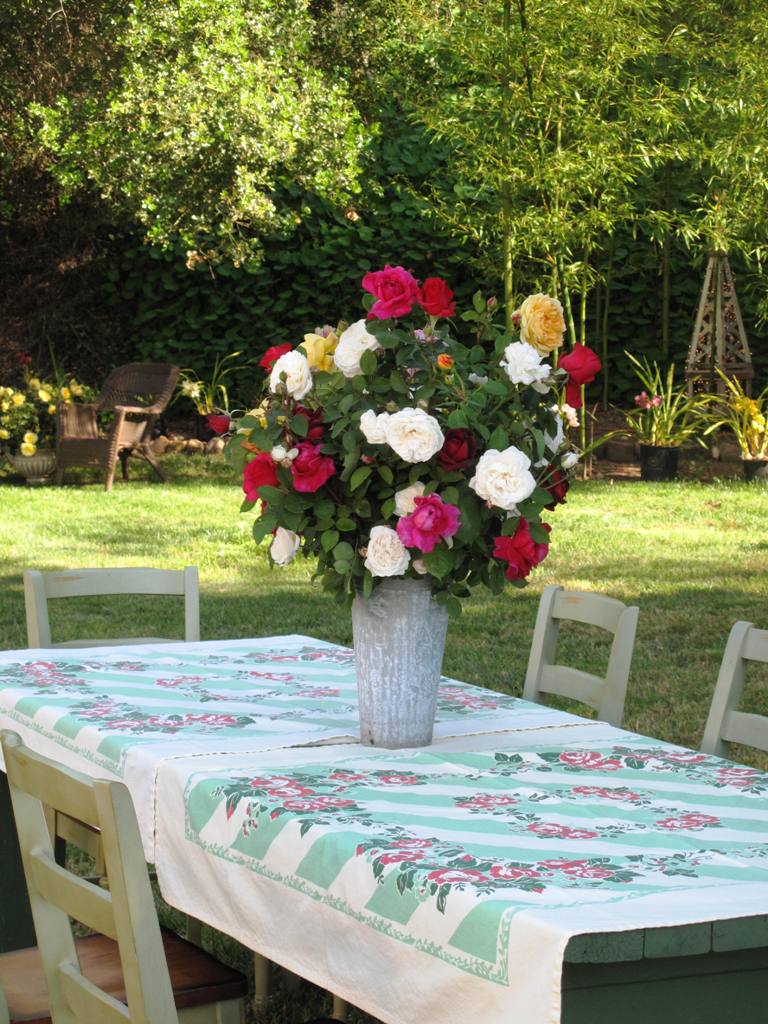
That evening, after the day-long workout hauling huge buckets of flowers and standing on our feet all day, Dani pulled off yet another classy event. She hosted a garden party for her fellow committee members to celebrate our successful day. It was a delight – and I know you’ll be mesmerized by the enormous arrangements that her staff created for the evening. I certainly was seduced by them, especially in that dewy, coastal air as the sun descended toward the Pacific, illuminating each petal in vivid relief.

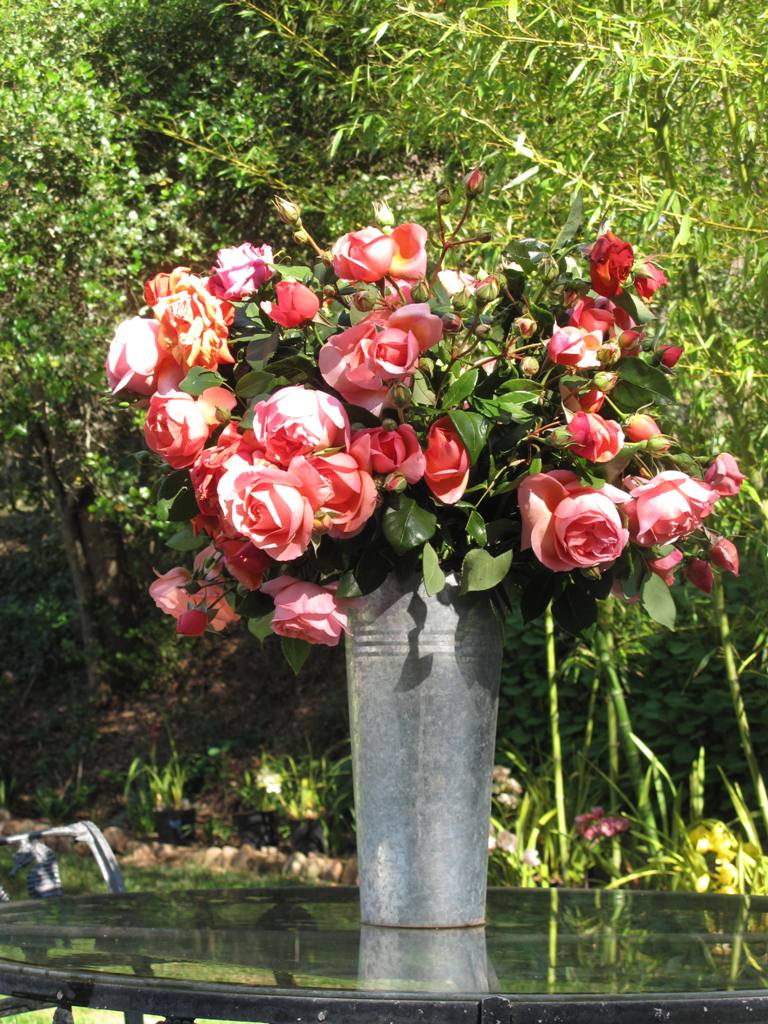
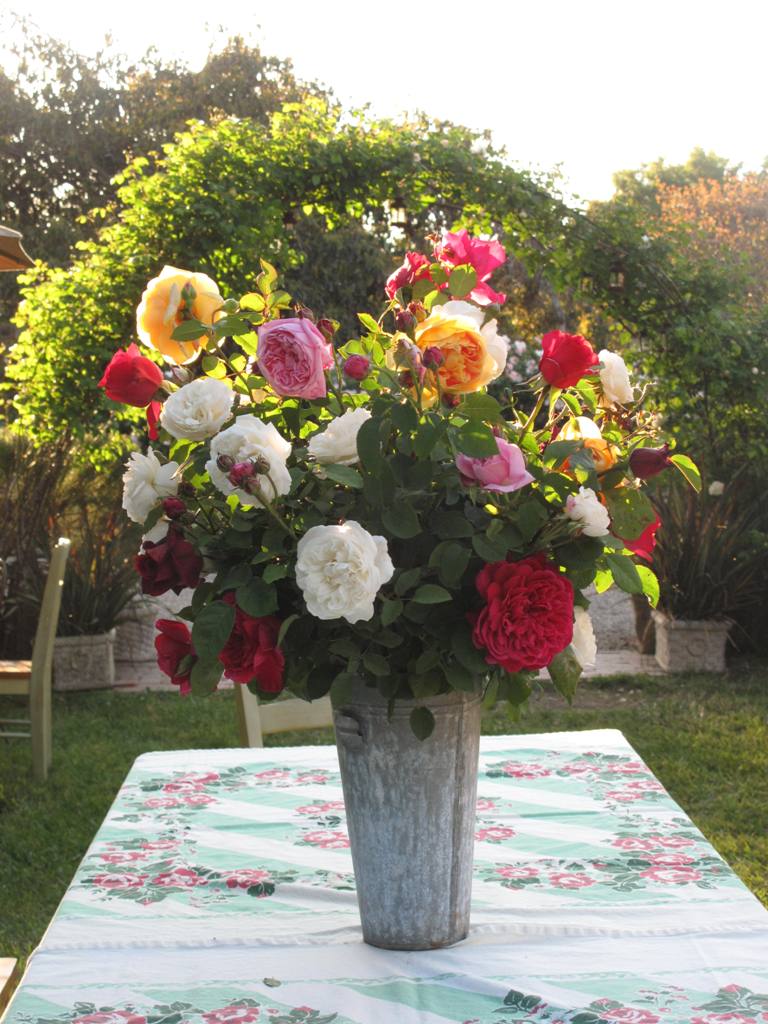
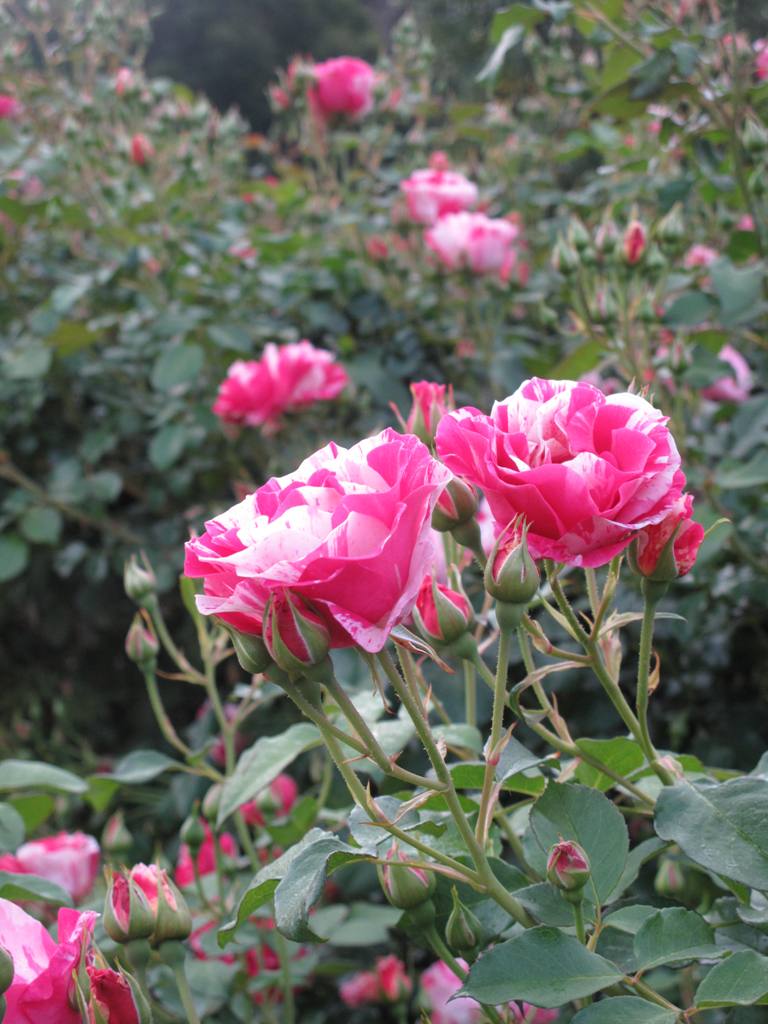
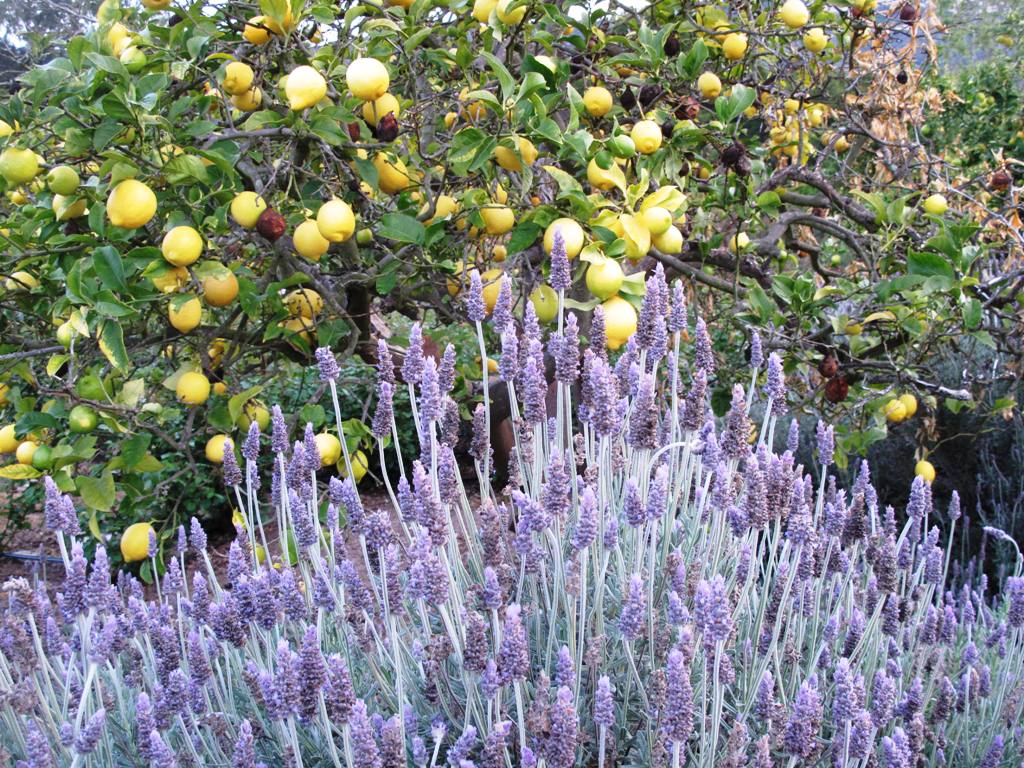
sm_yellow_bucket_IMG_9420 sm_wagons_IMG_9433 sm_wagon_roses_IMG_9434 sm_table_IMG_9416 sm_french_bucket_IMG_9421 sm_bouquet_IMG_9418 backlit_IMG_9424 bicolored_IMG_9501 lavender_citrus_IMG_9456 bench_roses_IMG_9540 Rose_Story_IMG_9414

After a late-night gab, Dani’s family long since retired for the night, we finally stopped talking and headed to bed ourselves. My destination: The Hydrangea Cottage. This was my home in the midst of the rose fields. How lucky can one woman be? 

Here's where I stayed for three days . . . a charming vintage cottage, courtesy of the Hahns and Rose Story Farm. Sublime!

Here’s where I stayed for three days . . . a charming vintage cottage, courtesy of the Hahns and Rose Story Farm. Sublime!

Lots more took place during the ensuing days, but I have so many wonderful photos to share from my time at Rose Story Farm that I need to postpone the narrative for subsequent chapters! To be continued . . .