Debra Prinzing

Get the Email Newsletter!

‘Tis the Season for SLOW FLOWERS

Thursday, December 25th, 2014

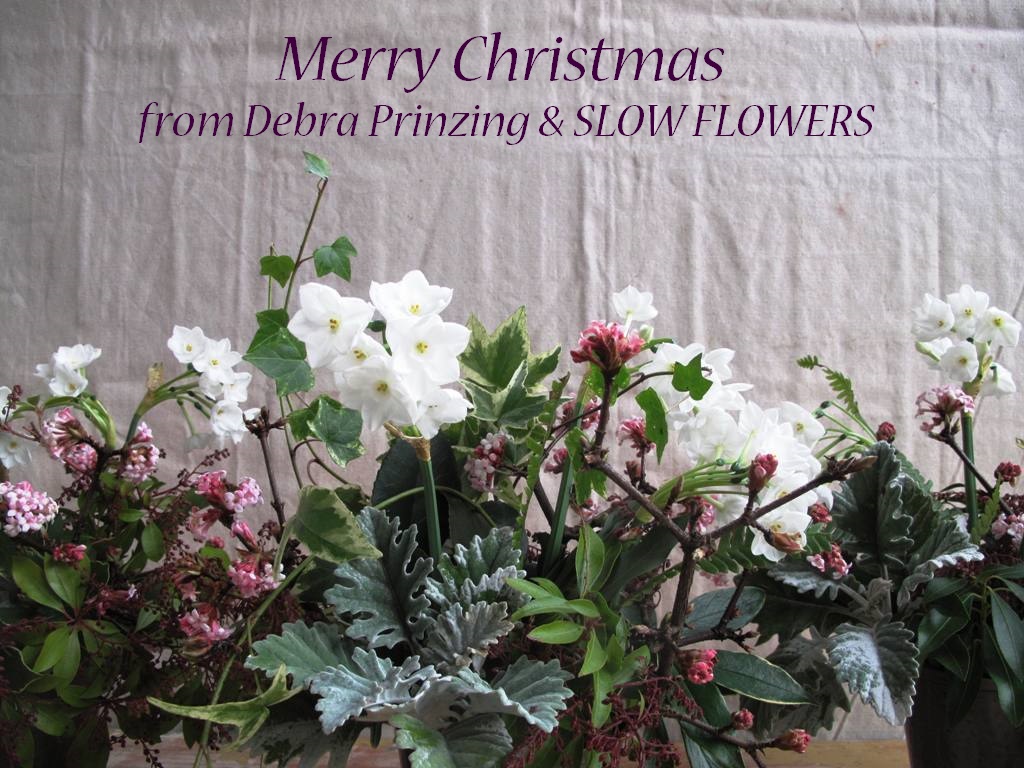
Merry Christmas and Happy Holidays from Seattle, Washington!

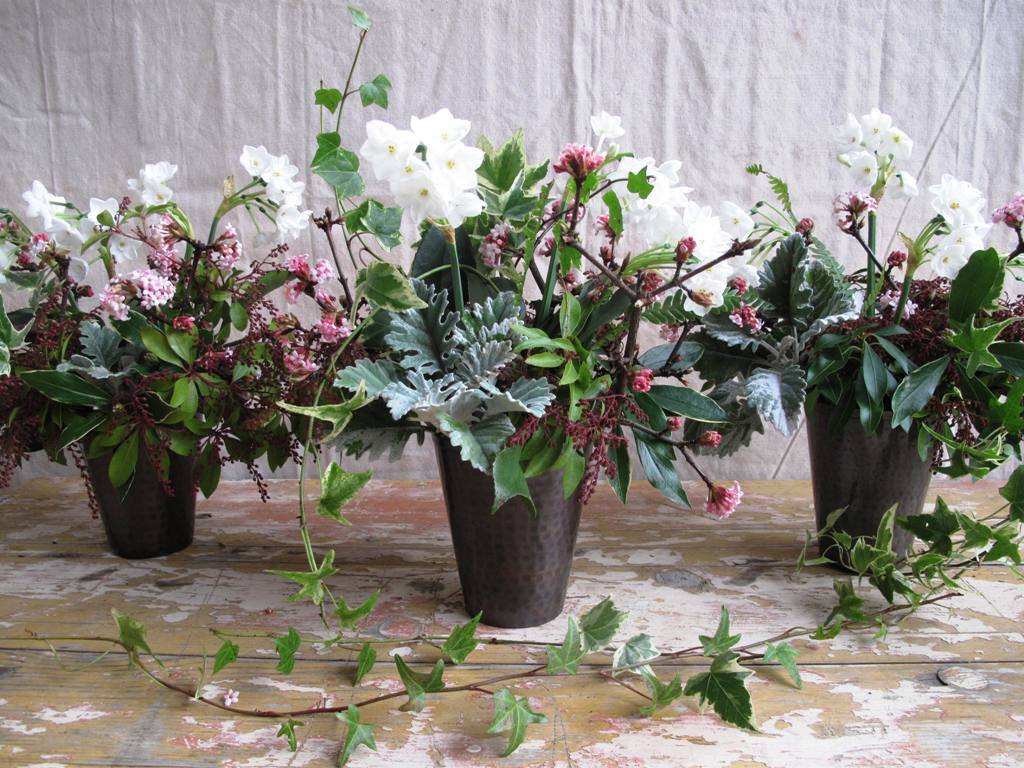
I was gifted a flat of paperwhites in bloom this week – one lonely bulb per pot – crying out for some equally lovely companions in a holiday arrangement. So yesterday, I clipped from here and there in the garden and created this trio of vases to adorn our Christmas dining table tonight.

Three vases filled with festive and LOCAL vines, leaves, branches, blooms, buds and JOY!

Three vases filled with festive and LOCAL vines, leaves, branches, blooms, buds and JOY!

The paper whites started it all - and I sought pretty plants with winter interest to accompany them.

The paper whites started it all – and I sought pretty plants with winter interest to accompany them.

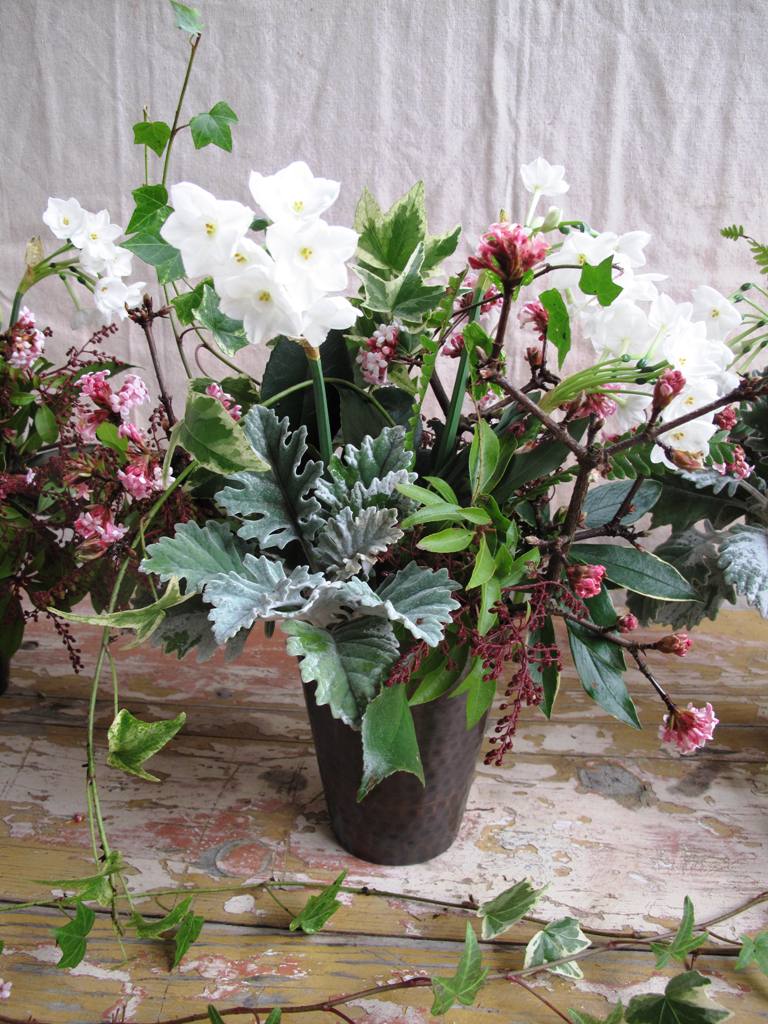
In addition to the paperwhites, here’s what the vases contain:

  • Pieris japonica (Lily-of-the-valley shrub)
  • Camellia in bud
  • Bay tree stems
  • Daphne odora in bud
  • Dusty Miller
  • Viburnum x bodnantense ‘Dawn’
  • Variegated Ivy
  • Evergreen fern fronds
  • Narcissus (Paperwhites)


As I prowled through my mostly dormant landscape, each one of these plants reminded me how much I have to value in the winter garden. If you plant for four seasons, with intentionality, those woody ornamental shrubs really deliver! I found myself thinking: “Make more room for Pieris!” as I only have three and they’re relatively young shrubs. But those chains of blooms, deep pink and delicate, are simply sublime dangling out of the vases.

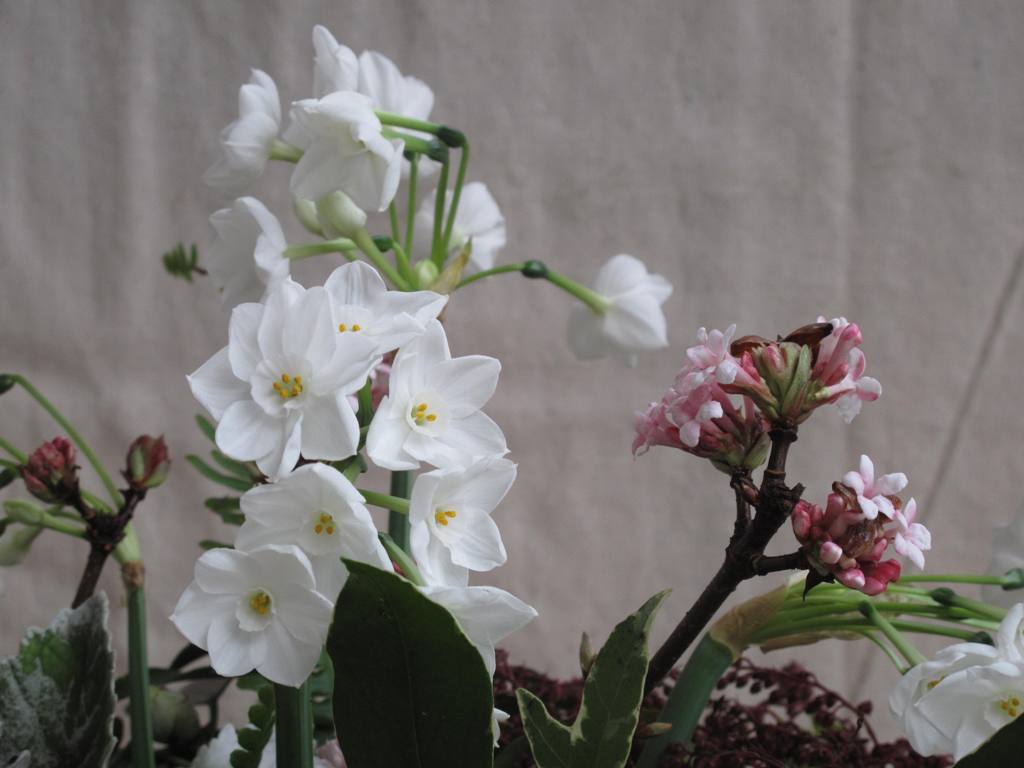
Close up, the tangle of stems reflects a perfect moment in time - in my garden and in the season.

Close up, the tangle of stems reflects a perfect moment in time – in my garden and in the season.

The Daphne – only planted two years ago next to the backyard patio where I will smell its fragrance in winter – well, I gingerly snipped three stems, each with a bud – and each from a lower/back part of the shrub. I still want to enjoy Daphne outdoors, as well as indoors!

I gaze at the Viburnum ‘Dawn’ every day – it’s just outside my office window and such a welcome a note of color – intense pink! – in December and January. Even the Dusty Miller, marginally winter hardy here in Seattle, had hung on long enough to give me a silvery cluster of soft leaves for each vase.

I’m launching a new project next week, appropriately called “The Slow Flowers Challenge” – and so making this holiday trio of arrangements has been my warm-up exercise.

If you’re ready to join me, start collecting your vases, eyeing botanicals in your landscape or neighborhood, and dreaming about a year of flowers in your life.

Happy Day, dear friends.

merrychristmas2014

Brooklyn Grows Flowers! Meet Molly Oliver Culver of Molly Oliver Flowers (Episode 172)

Wednesday, December 17th, 2014
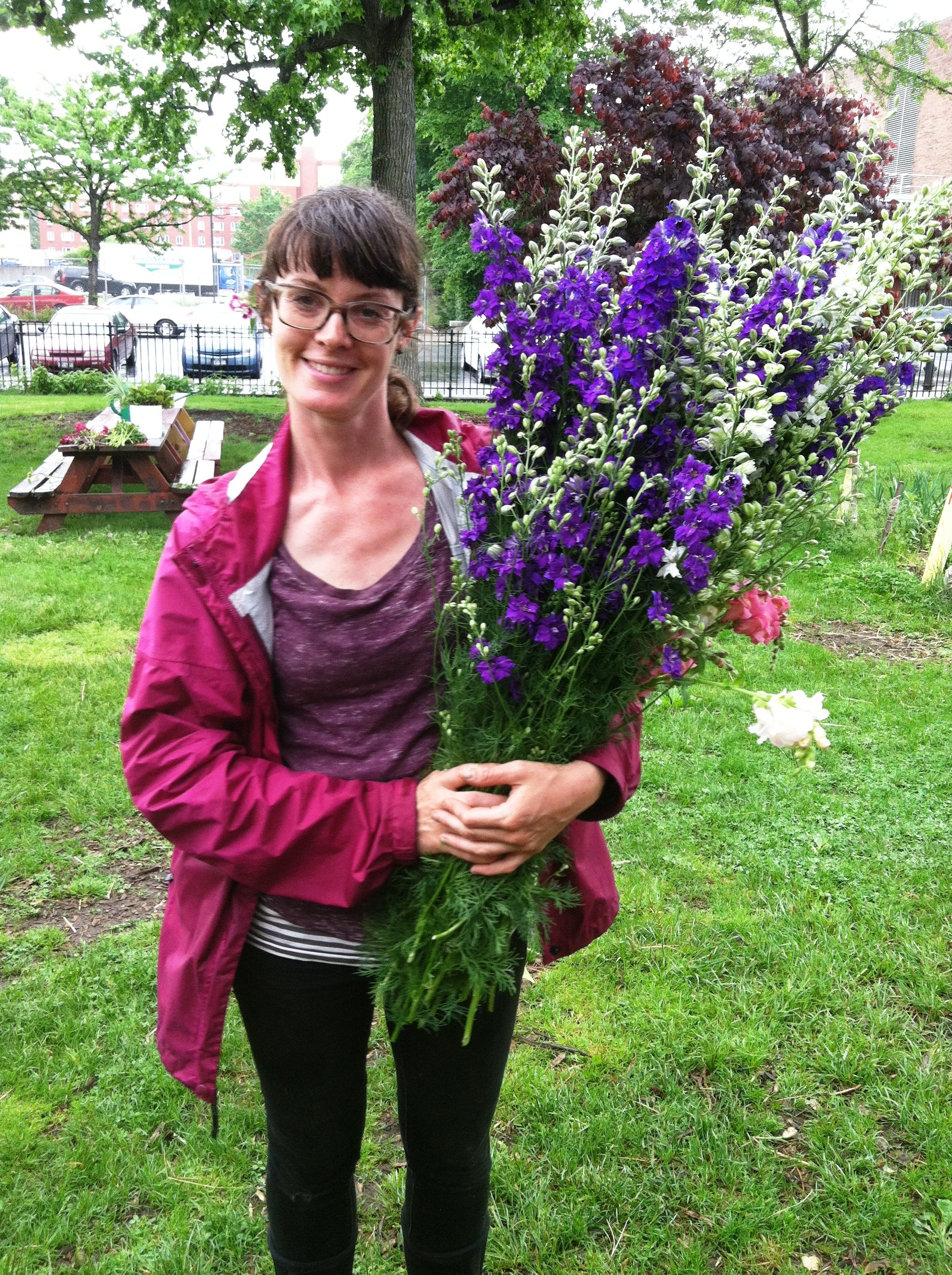
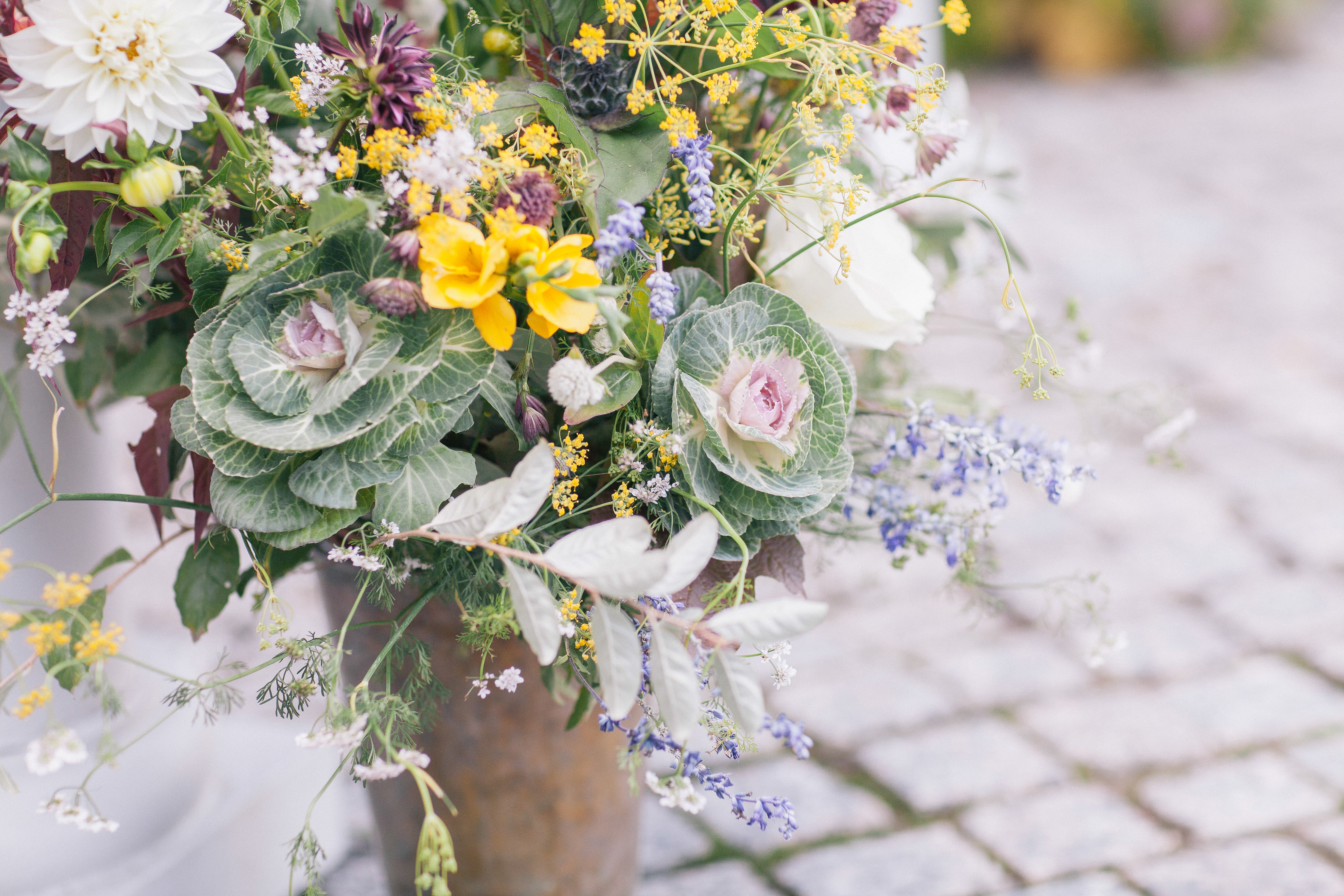
Meet Molly Culver, and a bouquet of beautiful larkspur she grew in Brooklyn.

Meet Molly Culver, and some of the beautiful  flowers she grew in Brooklyn.

One of the largest consumer marketplaces in the U.S., where floral design is a huge business, is sadly a little disconnected from where flowers grow. There is a cadre of flower farmers and floral designers who are working creatively to change that situation. And today’s podcast guest, Molly Culver, is at the forefront of this momentum.

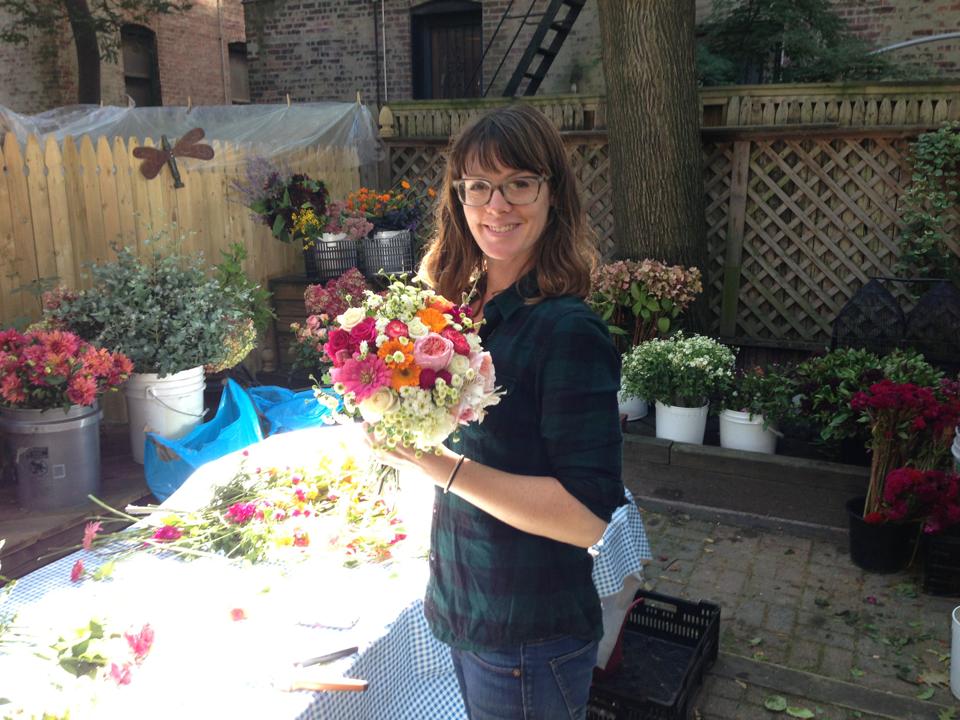
The designer at work.

The designer at work.

Molly Culver is the owner of Molly Oliver Flowers, which she runs with partner Deborah Greig. In their day jobs, both women are deeply involved in urban agriculture. When the weekends roll around, you can probably find them designing bouquets, boutonnieres, centerpieces and more – for couples who love their fresh-from-the garden style. Together they create beautiful botanicals for New York area weddings with a huge emphasis on local.

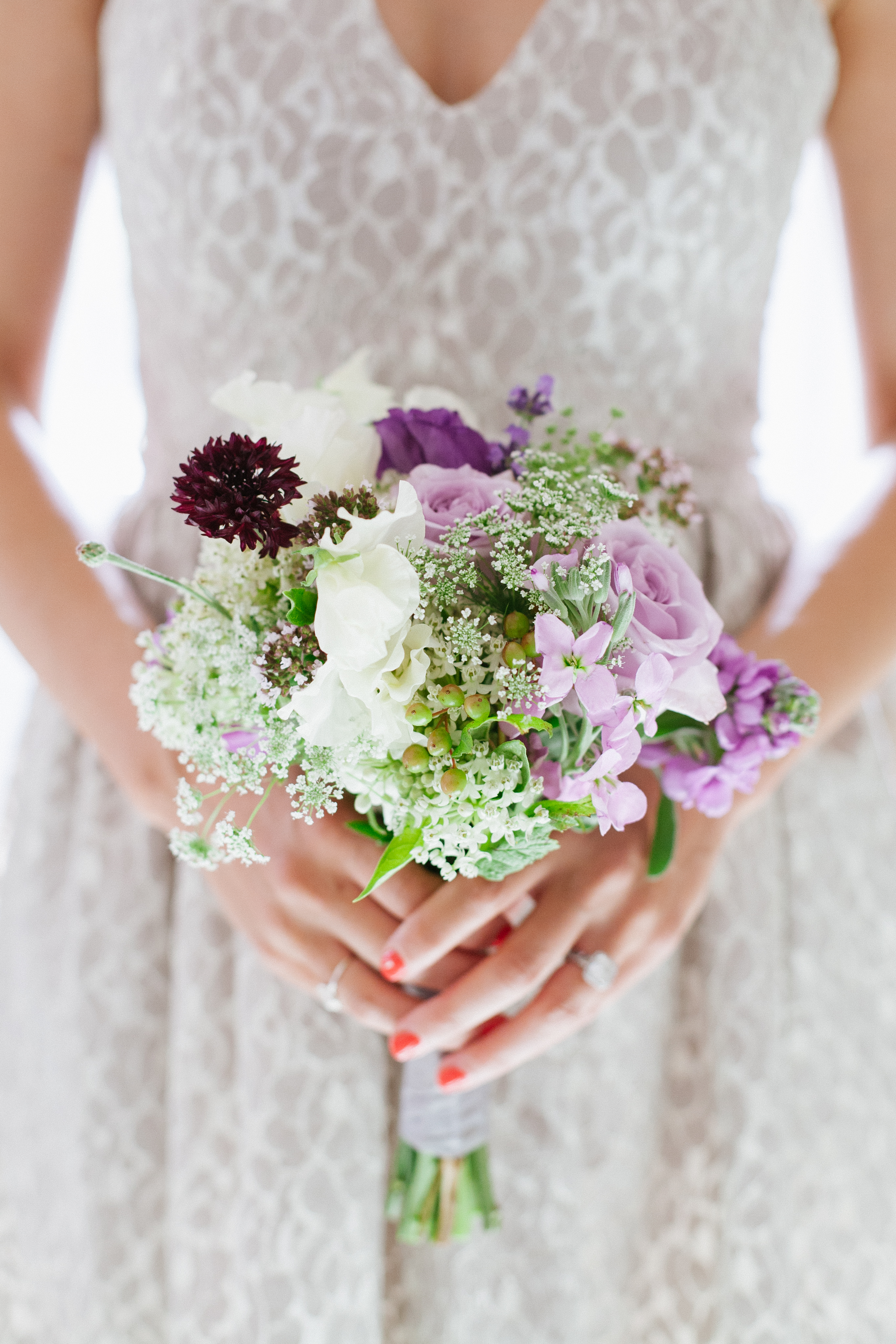
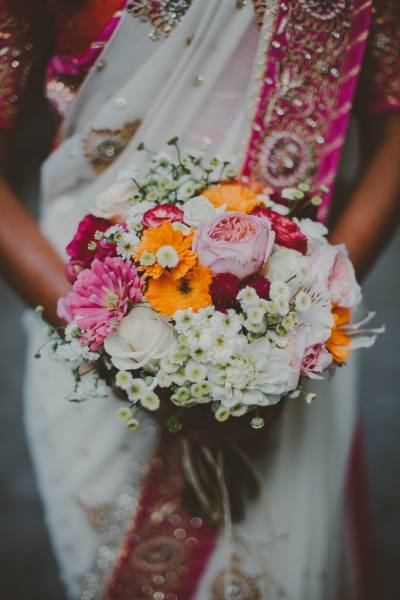
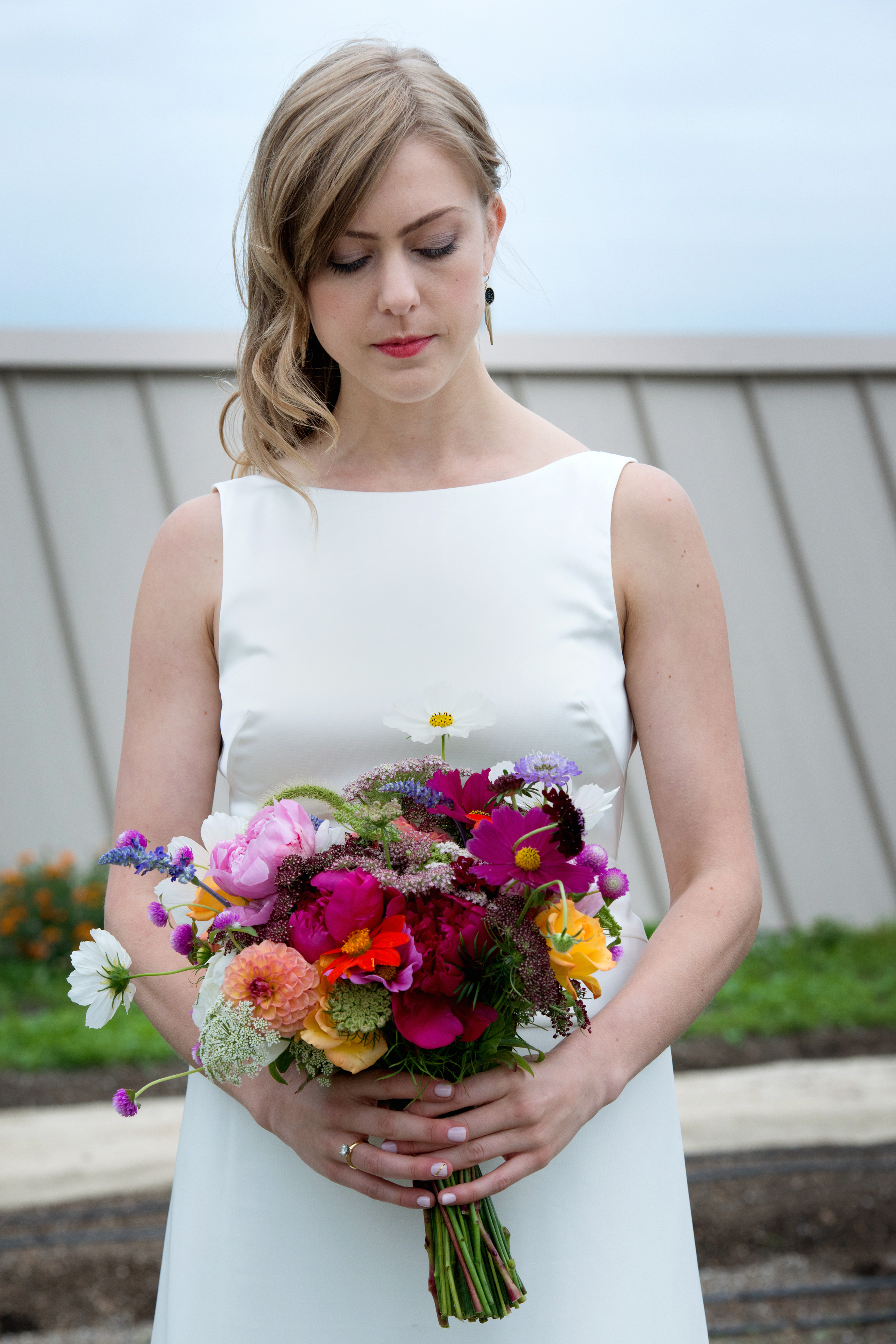
A late June bridesmaid bouquet, designed by Molly and Deborah

A late June bridesmaid bouquet, designed by Molly and Deborah (c) Levi Stolove photograph

I’m so sorry Deborah couldn’t join us for this interview, recorded in late October when I was in New York for just a few days. Molly graciously helped me coordinate a Slow Flowers gathering – an after-hours affair that drew floral designers, flower farmers and one intrepid lifestyle blogger to 61 Local in Brooklyn.

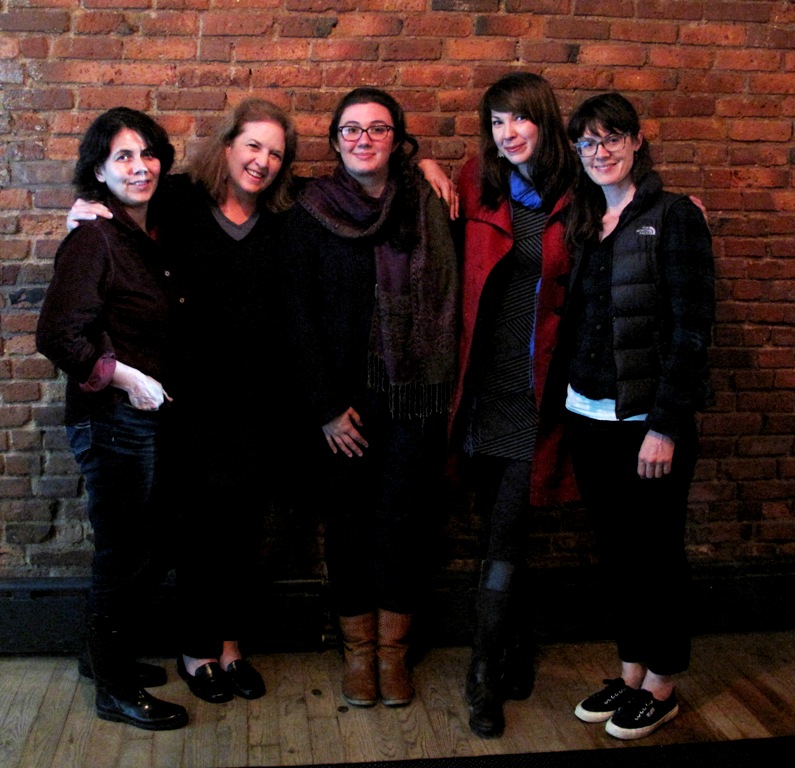
Here's a fun photo from our NYC-Brooklyn Slowflowers.com gathering. From left: Gloria Battista Collins of GBC Style, me, Jessica Stewart and Justine Lacy of Foxglove Floral Design Studio, and Molly Culver of Molly Oliver Flowers.

Here’s a fun photo from our NYC-Brooklyn Slowflowers.com gathering. From left: Gloria Battista Collins of GBC Style, me, Jessica Stewart and Justine Lacy of Foxglove Floral Design Studio, and Molly Culver of Molly Oliver Flowers.

Over delicious food and beverages, we talked about our individual projects and collective vision for using and promoting American grown flowers. Molly brought the most lovely late-autumn floral arrangements to decorate the tables, wowing everyone with what she harvested from the growing fields that late in the season – the 3rd week of October.

Before I share our interview, let me share a little more about Molly Culver:

a Molly Oliver Flowers centerpiece for an October wedding.

a Molly Oliver Flowers centerpiece for an October wedding. (c) Kelly Kollar photograph

Molly has been working as a local food and flower activist in New York City since 2005. Early in her career, she kicked off a brand new CSA chapter and farmers market in the poorest congressional district in the US, and hasn’t stopped working to make growing food and eating local accessible to all. Molly has managed both rural and urban farms since 2009, and currently manages the 1-acre Youth Farm in Crown Heights, Brooklyn where she oversees flower production and sales and runs educational programming and farm training for adults. She is Farm School NYC’s Farm Manager and Director of the Urban Farm Training Program.

September bouquet by Molly Oliver Flowers (c) Amber Gress photograph

September bouquet by Molly Oliver Flowers (c) Amber Gress photograph

Molly has taught the 5-week course “Growing Soils” for Farm School NYC since 2011, and has made a soil worshipper out of many an urbanite. Molly holds a degree in Ecological Horticulture from the Center for Agroecology and Sustainable Food Systems, UC-Santa Cruz and sits on the Board of Farm School NYC.

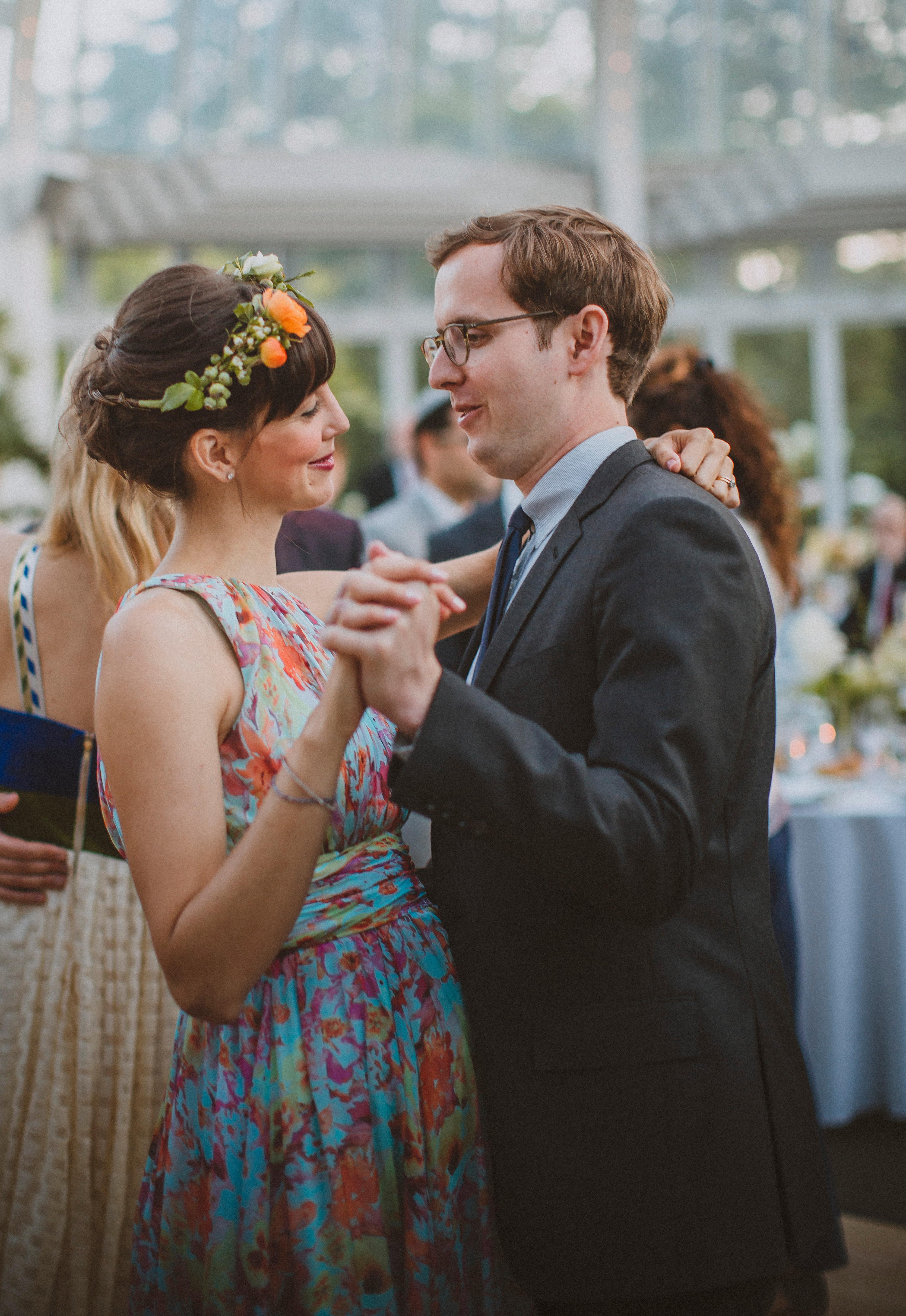
A flower crown by Molly Oliver Flowers.

A flower crown by Molly Oliver Flowers (c) Forged in the North

As I mentioned, Molly and Deborah Greig are partners in Molly Oliver Flowers, a sustainable floral design company launched in 2012. They are bringing new meaning to the term ‘green weddings.’

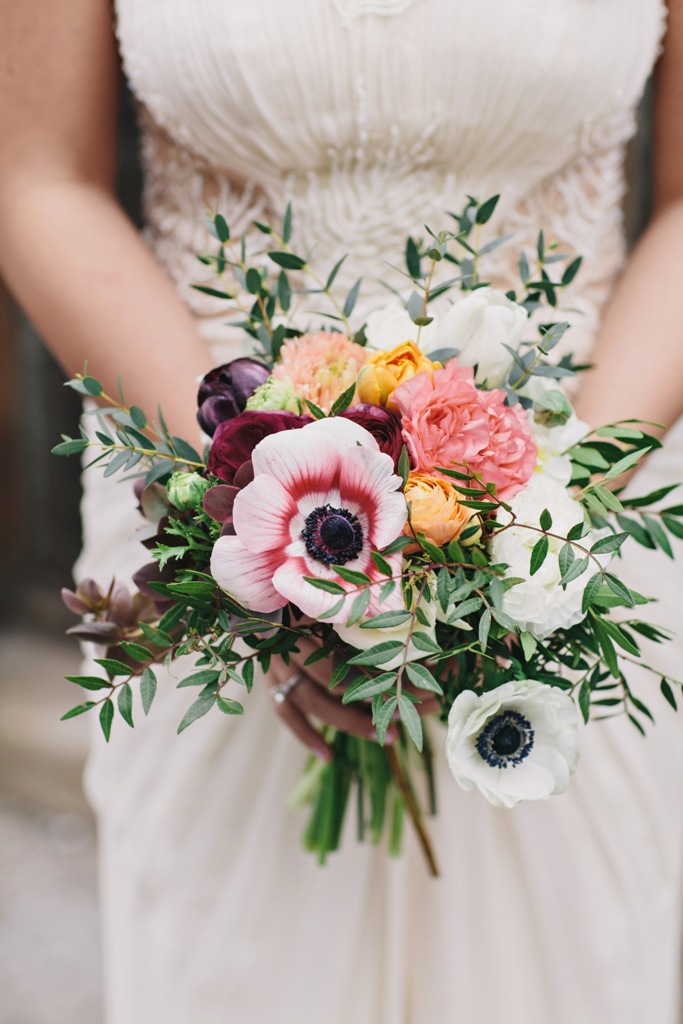
An April wedding bouquet by Molly Oliver Flowers (c) Clean Plate Pictures

An April wedding bouquet by Molly Oliver Flowers (c) Clean Plate Pictures

I hope that you’ll hear from Deborah in a future interview. She’s also the agriculture director for East New York Farms, a Brooklyn nonprofit that since 1998 has been working with youth, gardeners, farmers, and entrepreneurs to build a more just and sustainable community.

Yes, growing food is essential, especially when it feeds people who don’t otherwise have  access to fresh vegetables, fruits and herbs.

But then there’s flowers, which as Molly explains account for a significant portion of her work at Farm School NYC.

“Flowers are food for the soul; they feed me,” she says.

I couldn’t agree more!

Late August bouquet - photo credit (c) Elizabeth Andrews

Late August bouquet – photo credit (c) Elizabeth Andrews

My personal goal is to put more American grown flowers on the table, one vase at a time. I promise that when you tune in next week, you’ll hear another insightful and educational episode of the Slow Flowers Podcast. Listeners like you have downloaded the Slow Flowers Podcast more than 27,000 times. If you like what you hear, please consider logging onto Itunes and posting a listener review.

The Slow Flowers Podcast is engineered and edited by Andrew Wheatley and Hannah Holtgeerts. Learn more about their work at hhcreates.net.

A Quiet Sunday Morning

Sunday, December 7th, 2014

A Seattle Sunday Morning: 43 degrees F. Foggy and damp. It’s supposed to get up to 53 degrees F this afternoon, so who am I to complain about a little morning fog?

I woke up grateful for many things, including the sense that my life has slowed down for this 30-day holiday period. I’ve purposely limited my social commitments so as to save my energy for the creative projects that are tugging at me. This afternoon, I might get the sewing machine out and see what I can fashion from my collection of pretty scraps and remnants.

One lovely suprise happened last night, just as I was about to turn off the back episode of “Madame Secretary” I was watching and crawl under the flannel sheets.

Fran Sorin, yes that Fran Sorin – of Digging Deep and Gardening Gone Wild fame, sent me a note to say she devoted her latest CBS Radio gardening segment to “Slow Flowers.”

I’m hoping to get the audio posted, but right now, let me just say THANK YOU so much to Fran! What a generous gift of support from one serious flower lover to another. She gave me the transcript, which I’ll share here:

CBSradioCBS RADIO SPOT

December 5, 2014-4- Slow Flowers

If you’re thinking about sending flowers to someone for the holidays, I’ve got a suggestion for you.

This is Fran Sorin for DIGGING DEEP.
A gardening colleague, Debra Prinzing, has singlehandedly created and committed her life to developing a nationwide online directory of florists, shops, and studios who design with American-grown flowers. It’s call Slow Flowers.
In the U.S., we spend close to $28 billion a year on floriculture. Around 80% of the cut flowers bought in the U.S. are imported.
The Slow Flower Movement is following the sustainable values of the Slow Food Movement—which is to buy local, lower the carbon footprint, enrich the local economy, and preserve local farmland.
To learn more and buy magnificent flowers from local American growers, click on slowflowers.com

This is Fran Sorin for CBS Radio News.

GLOBAL CHORUS

A lot like Fran’s unepected gift of a 1-minute endorsement heard on radios around the country, this next item also gets filed under the “out of the blue-gift from the universe” category.

In April 2013, I received an email from a stranger. Someone named Todd E. MacLean who just reached out with an invitation to get involved with a new book of essays entitled “Global Chorus.” Here’s what he wrote:

Global Chorus, edited by Todd E. MacLean

Global Chorus, edited by Todd E. MacLean

My name is Todd E. MacLean and I’m the Editor-in-Chief for an international fundraiser anthology that is currently being compiled called Global Chorus: A 365-Person Anthology of Worldwide Concern and Enduring Hope.

With collected words from Jane Goodall, Nelson Mandela, David Suzuki, Stephen Hawking, Bill McKibben, R.K. Pachauri – Chair of the Intergovernmental Panel on Climate Change, Ashish Ramgobin – great granddaughter of Mahatma Gandhi, Frances Moore Lappé, Paul Hawken, Trudie Styler, Gloria Flora, Wes Jackson, Wendell Berry, Kenny Ausubel, Joel Salatin, Alexandra Cousteau, Archbishop Desmond Tutu, The Dalai Lama, and many, many more, Global Chorus is growing into a powerful anthology for a world in crisis; and through this letter, I am now extending to you an invitation to write a brief response for inclusion in the Global Chorus anthology.

Global Chorus is a 365-day compendium, bringing together 365 contemporary voices and sharing in the experience and wisdom of many of humanity’s most concerned citizens. Contributors are asked to express their thoughts on the future of the planet, and the anthology will present a different contributor’s response for each day of the year. Proceeds from the sales of Global Chorus will go toward World Wildlife Fund, The Jane Goodall Institute, The David Suzuki Foundation and The International Committee of the Red Cross.

Contributors to Global Chorus have one page (suggested length of up to 250 words, to a maximum of 350 words) to answer the anthology’s question:

“Do you think that humanity can find a way past the current global environmental and social crises? Will we be able to create the conditions necessary for our own survival, as well as that of other species on the planet? What would these conditions look like? In summary, then, and in the plainest of terms, do we have hope, and can we do it?”

Something resonated with me about this project and I decided to say “YES.”

I used Todd’s invitation to bring flower farming and flowers into the dialogue about global environmental issues and the individual choices we make to respect the planet.

Todd helped me with a few edits and here is what ended up in the book, one of 365 essays (you can find mine on the page for October 19th). Learn more about Global Chorus and find a bookstore near you to purchase a copy. I’ll be giving these books as gifts this holiday season.

Debra Prinzing

It feels daunting to think one person can change

things in this world. That is when I turn from the

macro to the micro and focus on individual action.

A single gesture takes on meaning far greater than

me, my family, my block, my neighbourhood, my

city. When that gesture is frequently repeated, its

impact is exponential.

I have always turned to flowers, those growing

in my garden and in the fields of my flower farmer

friends.

The symbolic gesture of giving flowers has

been practised for generations. Flowers appear in

history, in literature, in every culture and in every

land. Gathering flowers as a show of affection or a

celebratory display is no small thing. It is a timeless,

universal practice.

Flowers connect humans with Nature and

heighten our awareness of the seasons. They root

us to our place on the planet. Our senses see, smell,

touch (and even hear and taste) botanical beauty.

This is a truth understood by all humans.

I do believe that flowers parallel food. We don’t

often eat petals and buds, but they feed us nonetheless.

The spiritual sustenance of flowers has caused

me to think more intentionally about how I consume

them. I have been inspired to start the Slow

Flowers movement, a conscious practice of sourcing

flowers grown close to me rather than ones shipped

to me from afar. When I choose local flowers, I am

preserving farmland, ensuring economic development

in rural areas and keeping farm jobs viable.

As an advocate for those who grow flowers

enjoyed by so many, I believe it’s important to remember

the human toil required to plant, cultivate

and harvest those blooms. I find hope in honouring

the flower farmer, hearing his or her story and

acknowledging the farmer’s role in bringing beauty

into our lives. By making a simple connection between

flower and farmer we humanize an entire

industry, one that has previously been so disconnected

from us. It is perhaps more indirectly rather

than directly world changing, and yet, it is the act

I know makes a difference far beyond the vase on

my dining table.

— Debra Prinzing, author, speaker, designer,

founder of Slowflowers.com
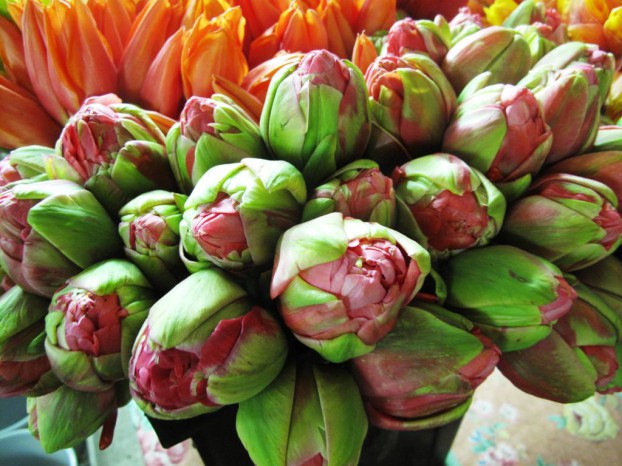
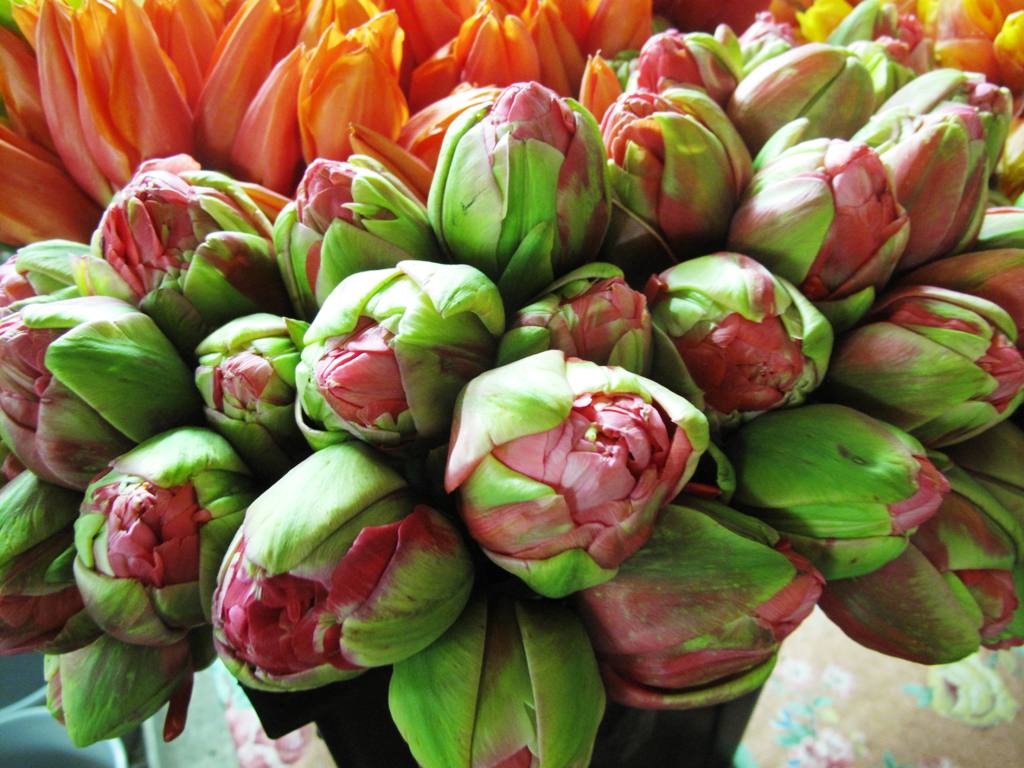
Gorgeous field-grown tulips, from Gonzalo Ojeda of Washington's Ojeda Farms.

Gorgeous field-grown tulips, from Gonzalo Ojeda of Washington’s Ojeda Farms.

 

ASCFG #2 Design Basics and Beyond with Jennie Love and Sullivan Owen (Episode 167)

Wednesday, November 12th, 2014
Gorgeous, local, seasonal and simply sublime: Sullivan Owen's lovely urn arrangement.

Gorgeous, local, seasonal and simply sublime: Sullivan Owen’s lovely urn arrangement.

I’ve lots to share with you, so before introducing today’s episode, let me jump right into the Flower News of the Week:

COVER.The_Wreath_Recipe_Book._HIGH_RESFirst off, the winner of our drawing for a free copy of Alethea Harampolis and Jill Rizzo’s beautiful new project, The Wreath Recipe Book, is Jen Beck, a professor, nonprofit consultant, and artist based in Austin, Texas.

Thanks to the people at Artisan Books for sending this info-packed prize her way- and thanks to everyone who took the time to comment about their favorite seasonal and local wreath ingredients.

Next, I am so pleased to announce that flower farmer Sid Anna Sherwood of Annie’s Flower Farm in Sequim, Washington, reached her funding goal for an interest-free loan via an innovative nonprofit program called Kiva. When I posted a bonus interview with her on October 29th, Sid Anna she still needed to raise close to three-quarters of her goal.

Thanks to listeners of the Slow Flowers Podcast and to the amazing way that news spreads on Facebook, that huge amount of money – more than $7,000 of crowd-lending, was raised in 9 days! Every penny will be paid back over the course of three years and Sid Anna’s customers will continue to benefit from her lovely local flowers, grown on a new piece of leased farmland on Washington’s Olympic Peninsula.

I also want to give my personal congrats to two previous guests of the Slow Flowers Podcast. First, to Erin Benzakein, owner of floret flowers, for being one of the winners of Martha Stewart’s American Made Awards, given to her in person by Martha this week in NYC. Bringing local and domestic flowers to the consciousness of Martha’s followers is super important. I hope this award inspires everyone to think about the origins of their flowers and the people who grow and design with them.

Next, a huge shout-out to Farmgirl Flowers and creator Christina Stembel for reaching their 4th anniversary this week. Stay strong and flourish, my friend!

S-L-O-W   F-L-O-W-E-R-S in pink and white dahlias

S-L-O-W F-L-O-W-E-R-S in pink and white dahlias

Earlier this week, I received a wonderful email from Slowflowers.com members Kay Studer and Susan Studer King of Buckeye Blooms in Elida, Ohio. We recently met in person at the ASCFG Conference and they thoughtfully followed up to tell me about a recent effort to reach out to potential bridal customers. After their consultation, Susan and Kay sent her a note like this one:

We hope you have had a great fall so far and that plans for your wedding are proceeding smoothly!

We just wanted to follow up with you to confirm if you would like to contract our flowers and design services for your wedding. We are planning our spring flower crop now and are actually able to custom-grow flowers exclusively for you! As both a flower farm and a floral design studio, Buckeye Blooms is able to provide the very freshest, sustainably-grown flowers possible for your special day. We offer numerous varieties of flowers not available to traditional florists, which means your bouquet will be unlike any other!

Whether you decide to go with Buckeye Blooms or not, we do hope you will consider requesting seasonal, locally-grown or at least domestically-grown flowers for your bouquets. Incredibly, over 80% of flowers used by traditional florists are imported–primarily from Ecuador and Colombia where environmental and human health regulations are lax (I–Susan– used to live in Ecuador and can tell you stories of what I saw….).

Seasonal, locally-grown flowers arrive to you fresher and more fragrant, plus you help to support local farmers and the local economy. You can learn more about the local flower movement at fieldtovase.com and slowflowers.com.

We have found that brides love telling their guests that their flowers were grown in Ohio and came a field not far away– and that they know the farmer that grew them. This can really add a special, personal touch to your wedding day.

Educating consumers about their choices in flowers is something we are passionate about, so whatever you decide we do hope you will consider locally-grown flowers!

This is worth a hip, hip, hooray – Buckeye Blooms, I love your efforts at outreach and education. I know that it will inspire other flower farmers to convey similar messages to their existing and potential clients. Many thanks for your leadership in the Slow Flowers Movement!

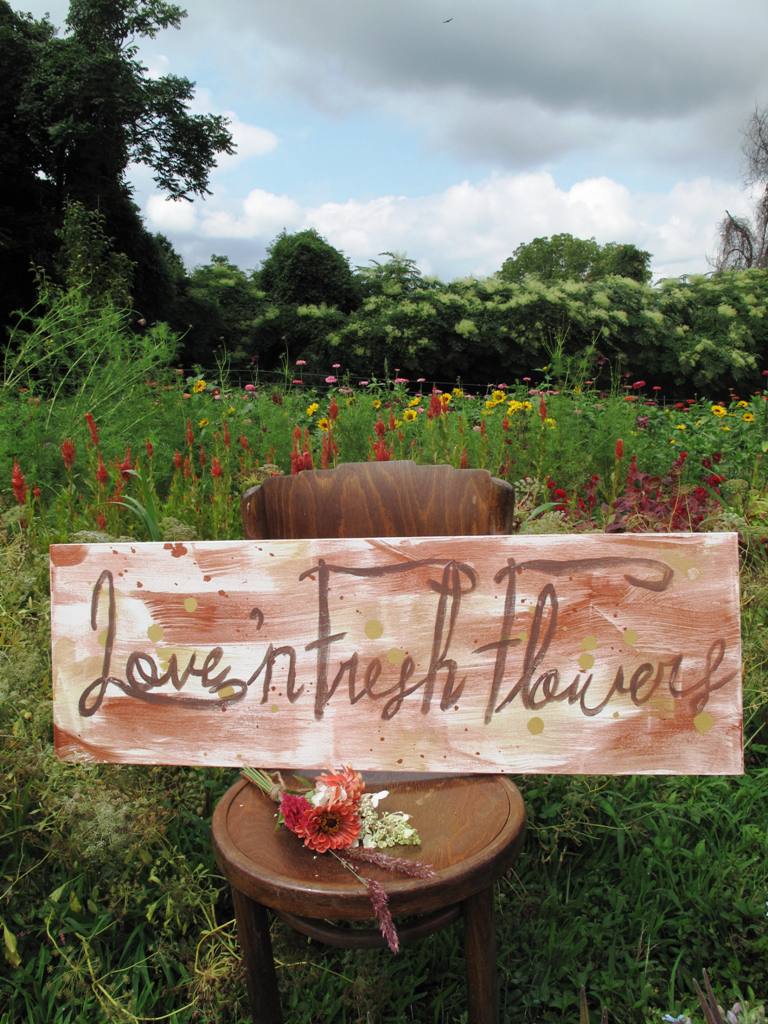
Jennie Love of Love 'N Fresh Flowers

Jennie Love of Love ‘N Fresh Flowers

Today’s guests are none other than Jennie Love of Love ‘n Fresh Flowers in Philadelphia, and her friend, fellow designer and frequent flower customer Sullivan Owen of Sullivan Owen Floral & Event Design, also of Philadelphia.

The two shared the stage at ASCFG last month in a packed ballroom where they designed with gorgeous local flowers and discussed their craft in a talk called “Design Basics.”

Even though this interview is audio-only, I believe what you’ll hear will stimulate you to think about floral design and seasonal and locally-grown flowers in a new way.

Sullivan and Jennie have a lot to share and even their casual asides are packed with juicy information that will help you in your own floral business, be it growing, designing – or both!

Here’s a little more about them both:

Huge audience! ASCFG's "Floral Basics" with Jennie and Sullivan drew a crowd.

Huge audience! ASCFG’s “Floral Basics” with Jennie and Sullivan drew a crowd.

Owner and creative director at Love ‘N Fresh Flowers, Jennie Love is a trained professional horticulturist and an experienced, life-long farmer.

Jennie has led numerous workshops over the past five years, including the sold-out Seasonal Bouquet Project LIVE series and classes for Longwood Gardens’ Floral Design Certificate program.

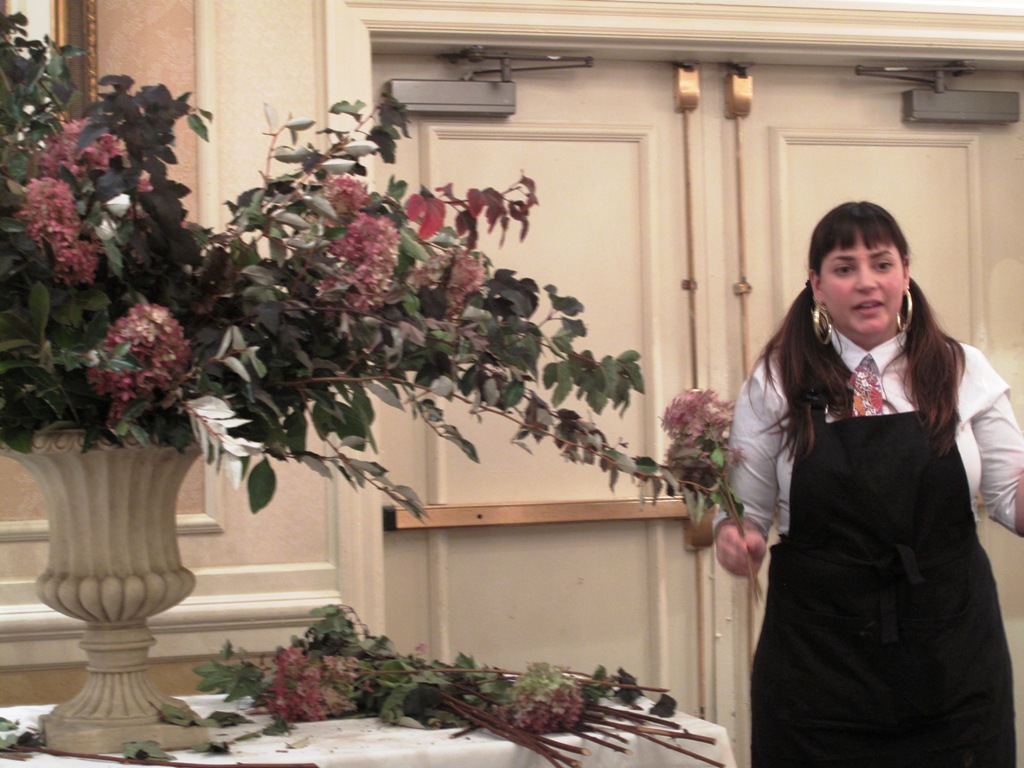
Sullivan Owen at the ASCFG floral basics workshop.

Sullivan Owen at the ASCFG floral basics workshop.

She has also presented to many garden clubs and other groups throughout the Mid-Atlantic area.

A charismatic and passionate flower farmer, Jennie found her natural niche as a ‘farmer florist’ for wedding and event design, becoming a recognized leader of the local flower movement.

She was recently featured in the New York Times for her farm-to-centerpiece efforts. Her distinctively lush and textural floral designs have been used in hundreds of weddings as well as for numerous photo shoots, magazines, style blogs and books. Jennie is a board member for ASCFG and write a regular column for The Cut Flower Quarterly.

Sullivan Owen is the owner and creative director of Sullivan Owen Floral & Event, her eponymous floral design studio, located in Philadelphia, Pennsylvania.

She is sought after for her lush and fashion-forward style, and is a trendsetter whose work is regularly featured in wedding publications, and most recently in Martha Stewart Weddings. Her business acumen and background in marketing and branding have made her just as passionate about running an excellent business as she is about creating gorgeous designs. She loves working with the best flowers available and loves to get to know the growers behind the amazing products they cultivate.

Jennie's hand-tied bouquet features All American flowers from her farm and others'.

Jennie’s hand-tied bouquet features All American flowers from her farm and others’.

If you haven’t started following Jennie or Sullivan on their various social platforms, you can follow them at these links:

Jennie on Pinterest

Jennie on Facebook

Jennie on Instagram

Sullivan on Facebook

Sullivan on Twitter

Sullivan on Instagram


Next week’s guest is event designer Emily Ellen Anderson of Lola Creative in Seattle. Then, you’ll hear another presentation recorded at the ASCFG Conference. . . so I promise lots of good stuff in the coming weeks.

On another note, a few weeks ago I dedicated an episode to a little girl named Shylah who faced many challenging health issues. Blessedly, your prayers, thoughts, meditations and good wishes have been felt. She’s out of the hospital and back at home. And while there are months and months of treatment ahead, everyone around Shylah feels optimistic about her recovery. Among others, this floral tribe has gathered around her and I thank you for sharing in my best wishes for this little one’s swift road to good health.

Listeners like you have downloaded the Slow Flowers Podcast more than 25,000 times. If you like what you hear, please consider logging onto Itunes and posting a listener review.

My personal goal is to put more American grown flowers on the table, one vase at a time. I promise that when you tune in next week, you’ll hear another insightful and educational episode of the Slow Flowers Podcast.

The Slow Flowers Podcast is engineered and edited by Andrew Wheatley and Hannah Holtgeerts. Learn more about their work at hhcreates.net.


A visit to Flower School New York and a lesson with Emily Thompson

Tuesday, November 4th, 2014

“So much of design is done in selection of materials. I want a flower arrangement to feel like you’ve dug through the wilderness to find a treasure.”

Last month at Flower School New York, the Emily Thompson workshop was abuzz with beauty and creativity.

Last month at Flower School New York, the Emily Thompson workshop was abuzz with beauty and creativity.

flower-school-ny-logoI spent a few days in NYC earlier this month and today I want to share one of the highlights of that visit.

Lots of amazing goodness came from my 55 plus-or-minus hours in New York, but one of the BEST experiences was my visit to meet the folks at Flower School New York.

As pretty as a flower shop, the Flower School New York is located on West 14th Street in NYC.

As pretty as a flower shop, the Flower School New York is located on West 14th Street in NYC.

Look what I found in the front window display!

Look what I found in the front window display!

If you have a trip to NYC planned at any time in the future, I recommend checking the class schedule at Flower School New York. I did just that about two months ago, as I began to plan a series of meetings with editors and Slowflowers.com members in the city. Turns out, on Oct. 23rd, the amazing Emily Thompson was scheduled to teach a workshop on sculptural floral design.

I signed up immediately. And lucky for me, I grabbed one of the 25 or so spaces in the 2-hour class.

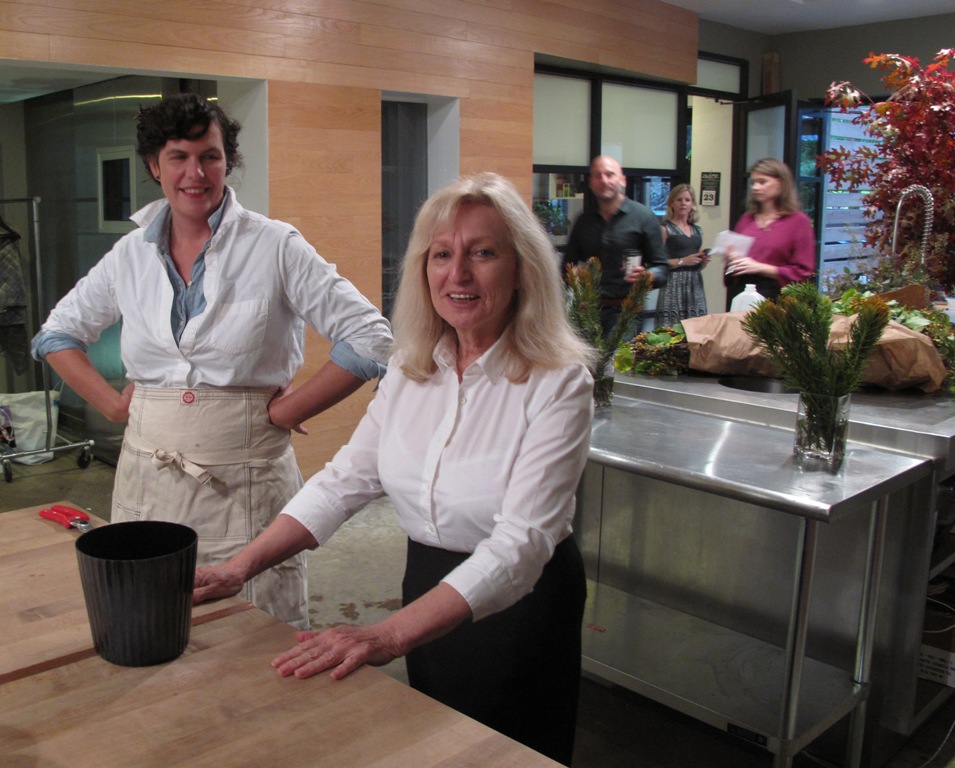
Emily Thompson (left), Flower School founder Eileen Johnson (right). In the background you'll notice the rest of the leadership team.

Emily Thompson (left), Flower School founder Eileen Johnson (right). In the background you’ll notice the rest of the leadership team — Calvert Crary, Beth Was Horta and Brittany Bosch.

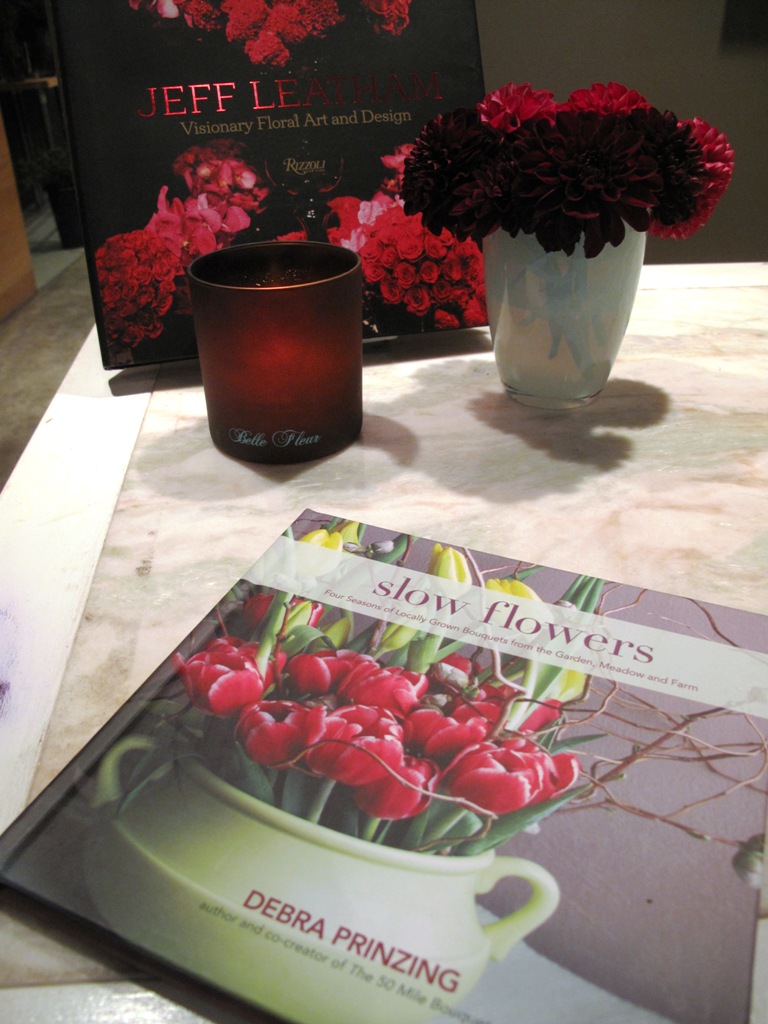
The staff at Flower School New York knew I was going to be there that night and they created a surprise window display featuring my book Slow Flowers.

They also had copies on display in the charming retail area just inside the storefront that faces West 14th Street. A huge bouquet of thanks to Founder Eileen Johnson, as well as Executive Director Calvert Crary, Operations Manager Brittany Bosch and Instructor Beth Was Horta for making me feel incredibly welcome.

And then, there was Emily.

What a great workshop - and great instruction from Emily Thompson!

What a great workshop – and great instruction from Emily Thompson!

You know how you are dying to meet someone you admire and THEN, miraculously, they kinda want to meet you, too? That delightful scenario happened to me years ago with a writer I idolize, Scott Calhoun.

The same thing took place when Emily and I were introduced. What? I couldn’t believe it! We were destined to meet sooner or later, but Flower School New York facilitated it.

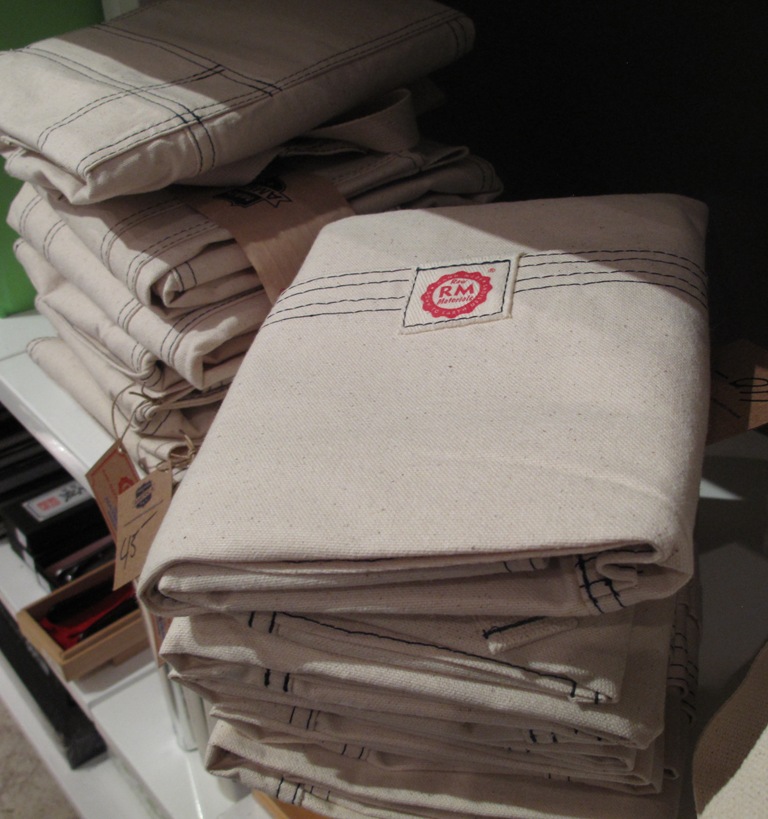
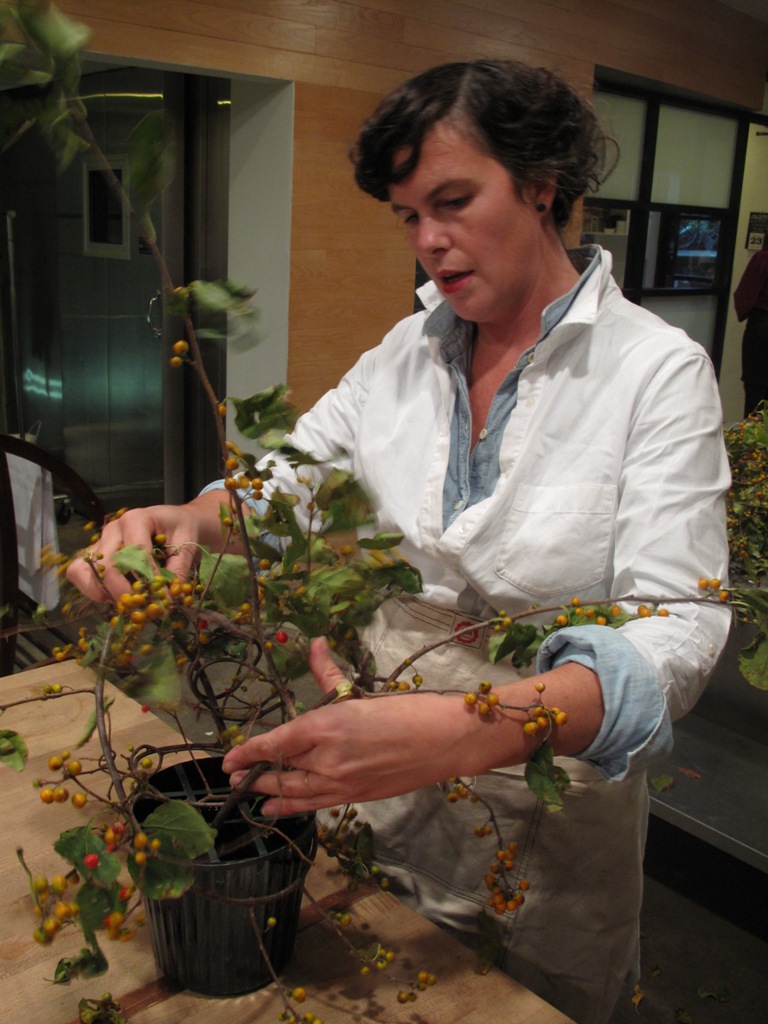
Emily at work, using bittersweet to create a matrix for her design (NO Foam!). Note, she's wearing one of Janna Lufkin's "Raw Materials" aprons, which I love!

Emily at work, using bittersweet to create a matrix for her design (NO Foam!). Note, she’s wearing one of Janna Lufkin’s “Raw Materials” aprons, which I love!

I loved studying with Emily. Every single word out that comes out of her mouth is inspiring. It made me feel as if I was taking a Master Class in a MFA program. Emilyisms:

“I want to make things that are impractical. That are surprising to me.”

“The proportions I design with are more akin to the natural garden or landscape. I’m looking for powerful contrast, for things that resist one another. That draw the eye in and push it away.”

I’ve got some great news: Emily invited me to visit her brand new shop on Beekman Street, so the following morning we squeezed in a shared cup of tea/coffee and a tour of the new digs. I asked permission to turn on the recorder (natch) and Emily agreed. So stay tuned for an Emily Thompson podcast episode later this year! And Flower School New York’s Eileen Johnson has promised to let me interview her in the coming year, too!

For now, just enjoy my photos from that magical evening.

sm_social_IMG_1645

Here’s how to stay in touch witn Flower School NY

sm_SlowFlowers_IMG_1635

A sweet Slow Flowers vignette.

Here's my arrangement, what fun!

Here’s my arrangement, what fun!

sm_RM_apron_IMG_1638

Made-in-USA work aprons from Janna Lufkin’s “Raw Materials” are ready for purchase at Flower School New York.

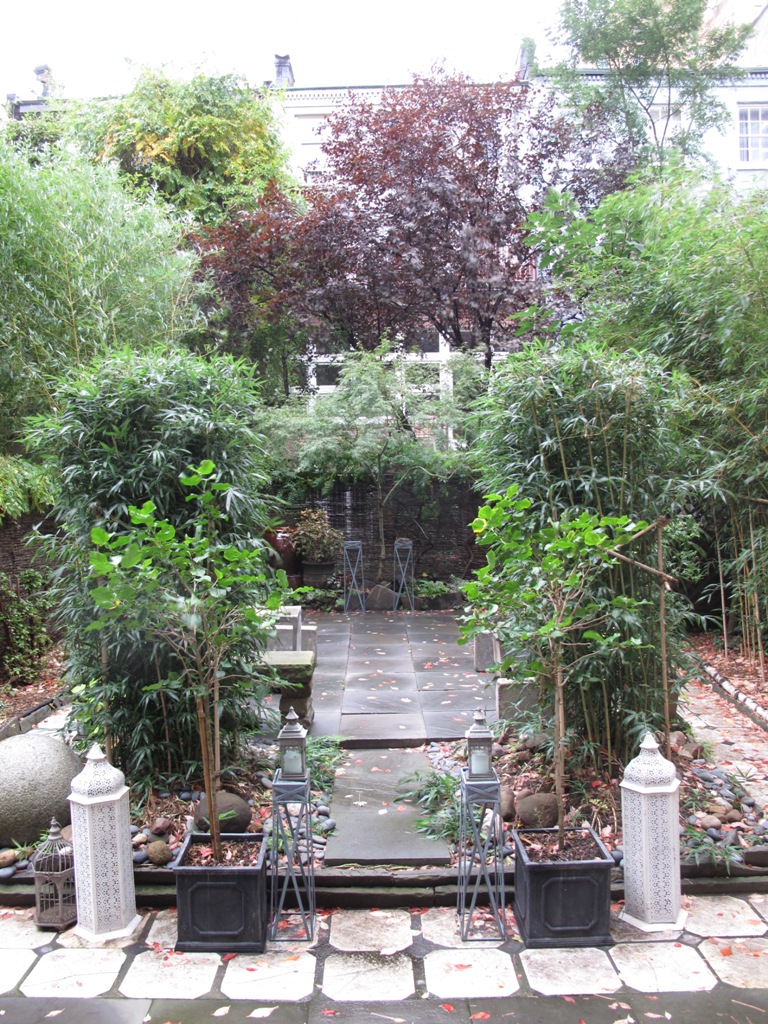
The secret garden at Flower School New York.

The secret garden at Flower School New York.

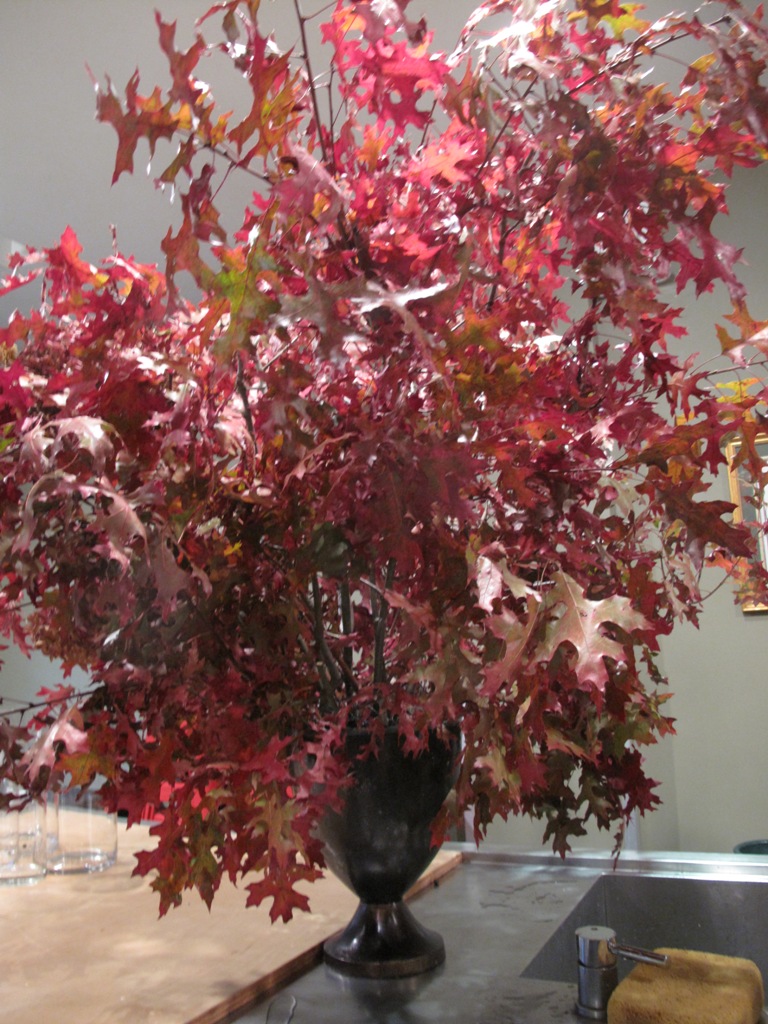
sm_Huge_urn_IMG_1650

A beautiful fall urn.

“I love to work with seasonal flowers, with things of our landscape. And then I’ll add bits of the exotic.”

SLOW FLOWERS Podcast: Flowers as Food for the Soul — Transitioning from food-farming to flower-farming, with Goose Creek Gardens (Episode 161)

Wednesday, October 1st, 2014

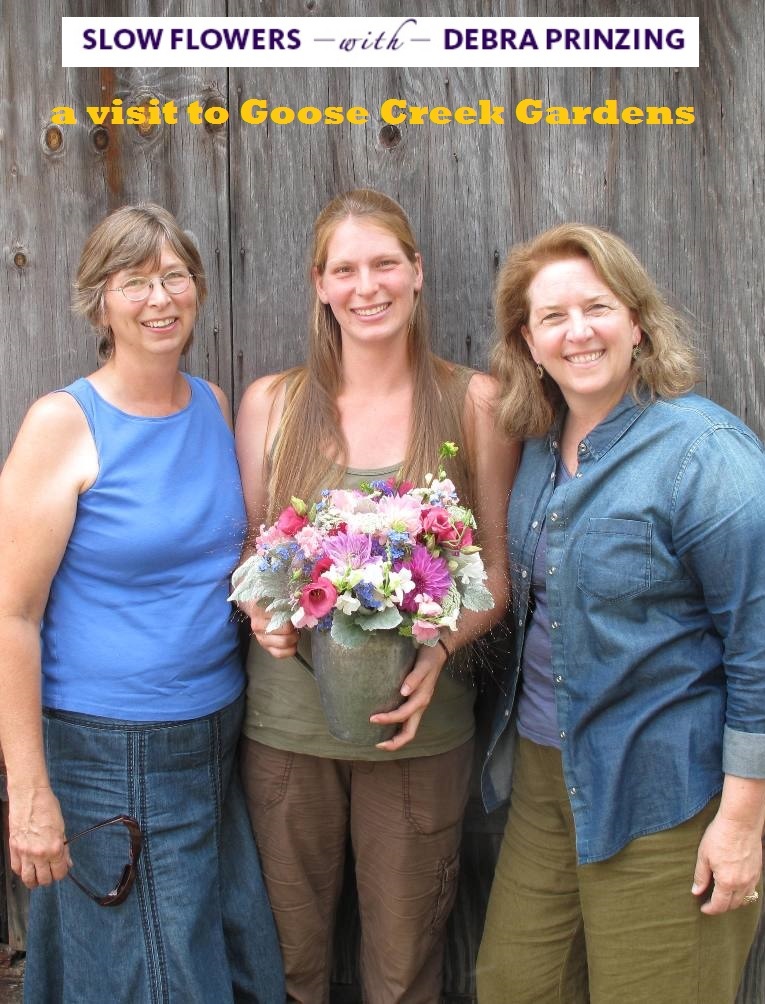
a visit to Goose CreekI’m so pleased to share this week’s interview with you, a conversation with mother and daughter duo — Margie Dagnal and Kate Dagnal of Goose Creek Gardens in Oakdale, Pennsylvania, a boutique specialty cut flower farm just outside Pittsburgh.

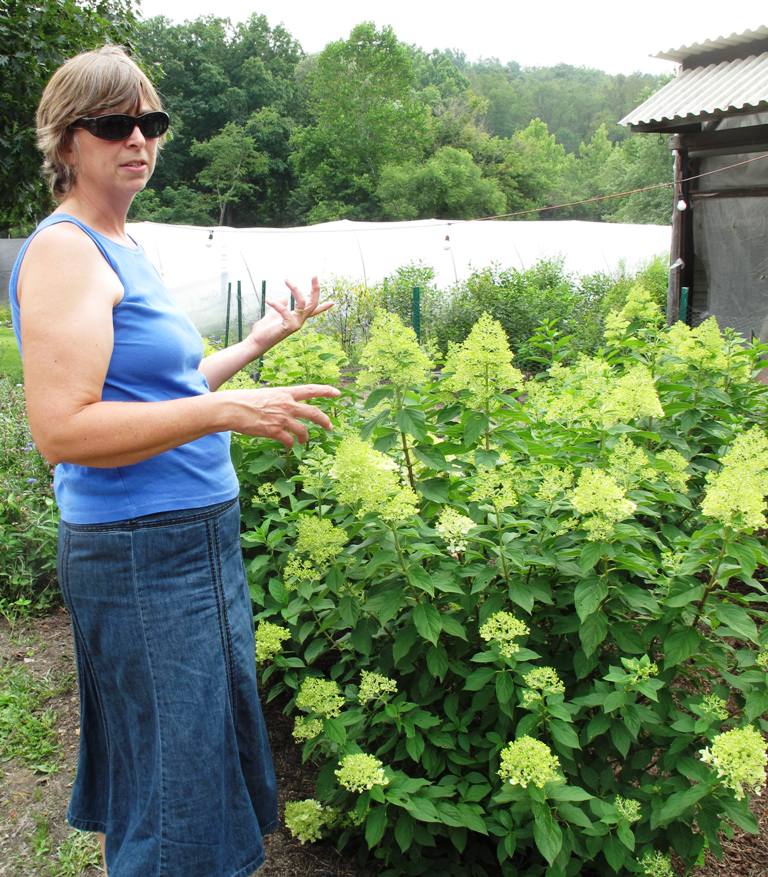
Margie led us on a tour through the farm, including a stop at the Limelight Hydrangeas.

Margie led us on a tour through the farm, including a stop at the Limelight Hydrangeas.

I first met Margie virtually, when she contributed to the Slow Flowers campaign on Indiegogo earlier this year.

And then, if that wasn’t enough, she gave me an incredible gift by contributing flowers that two other Slowflowers.com friends Jimmy Lohr and Jonathan Weber of Green Sinner incorporated into a lovely floral arrangement for my Pittsburgh-based publisher St. Lynn’s Press. PS, Jimmy, Jonathan and Margie refused to take a penny from me either. These people are all so generous!

When I visited Pittsburgh in August, I had arranged to spend a morning at Green Sinner, touring the very cool urban cutting garden and floral studio that Jonathan and Jimmy own (you can hear our podcast interview here).

Here's that lovely Green Sinner arrangement featuring Goose Creek Gardens flowers, an Indiegogo "perk" for St. Lynn's Press offices in Pittsburgh.

Here’s that lovely Green Sinner arrangement featuring Goose Creek Gardens flowers, an Indiegogo “perk” for St. Lynn’s Press offices in Pittsburgh.

Those two cooked up a delightful surprise and arranged for Kate and Margie to make their Goose Creek Gardens “delivery” during my visit. It was a Thursday morning and while I knew I was about to be part of a weekend conference, a little voice in my head was saying: “You can’t leave Pittsburgh without making a visit to Goose Creek Gardens.”

And lo and behold, Jonathan and Sam Rose, who tends to the Green Sinner cutting garden, offered to pick me up and drive me out to Goose Creek Gardens for a weekend visit. We toured the farm, wandered down to the bottom of the property, along the paths, into the high tunnels and more, all the while chatting constantly about this beautiful bloom and that one.

Katie and Margie are super passionate about growing flowers. Flowers were once a secondary crop to Goose Creek’s main endeavor – growing veggies and herbs. For years, while Margie and her husband Mark, a landscaper, produced salad greens and other delicacies for Penn’s Corner Farm Alliance, young Katie grew flowers.

The flower fields at Goose Creek Gardens.

The flower fields at Goose Creek Gardens.

The Geese of Goose Creek Gardens...livin' the good life!

The Geese of Goose Creek Gardens…livin’ the good life!

This year, things have changed, thanks to several issues: From pressure on farmers’ market food prices to seasonal flooding that affected some of Goose Creek’s fields, not to mention Kate’s lifelong obsession with growing cut flowers . . . all these incidents gave them several signs to move into flowers 100 percent of the time.

Katie is now a grownup – a young mom who works side-by-side with her parents running Goose Creek Gardens as a cut flower farm.

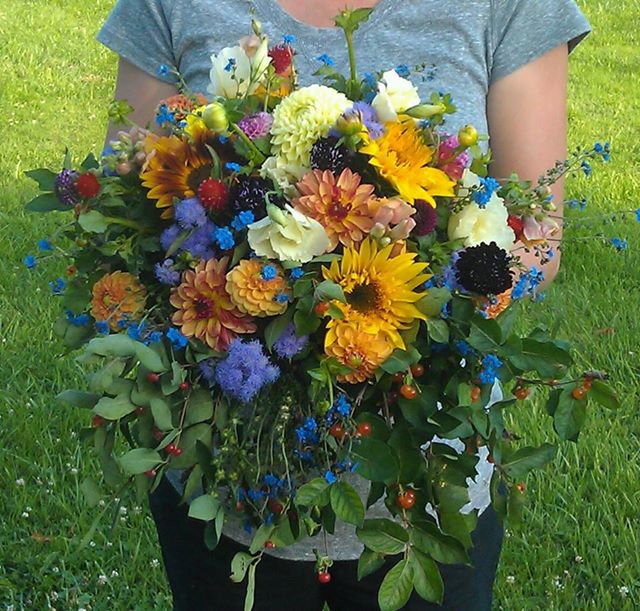
Katie and Margie shared photographs of some of their “Friday Night Romance” bouquets for you to enjoy. These are part of an ongoing series of bouquets that Katie creates at the end of each week, to share with her followers and other #farmerflorist friends on Facebook and Instagram. I think they are pretty darned romantic – and beautiful!


Friday Night Romance from September 26th

Friday Night Romance from September 26th

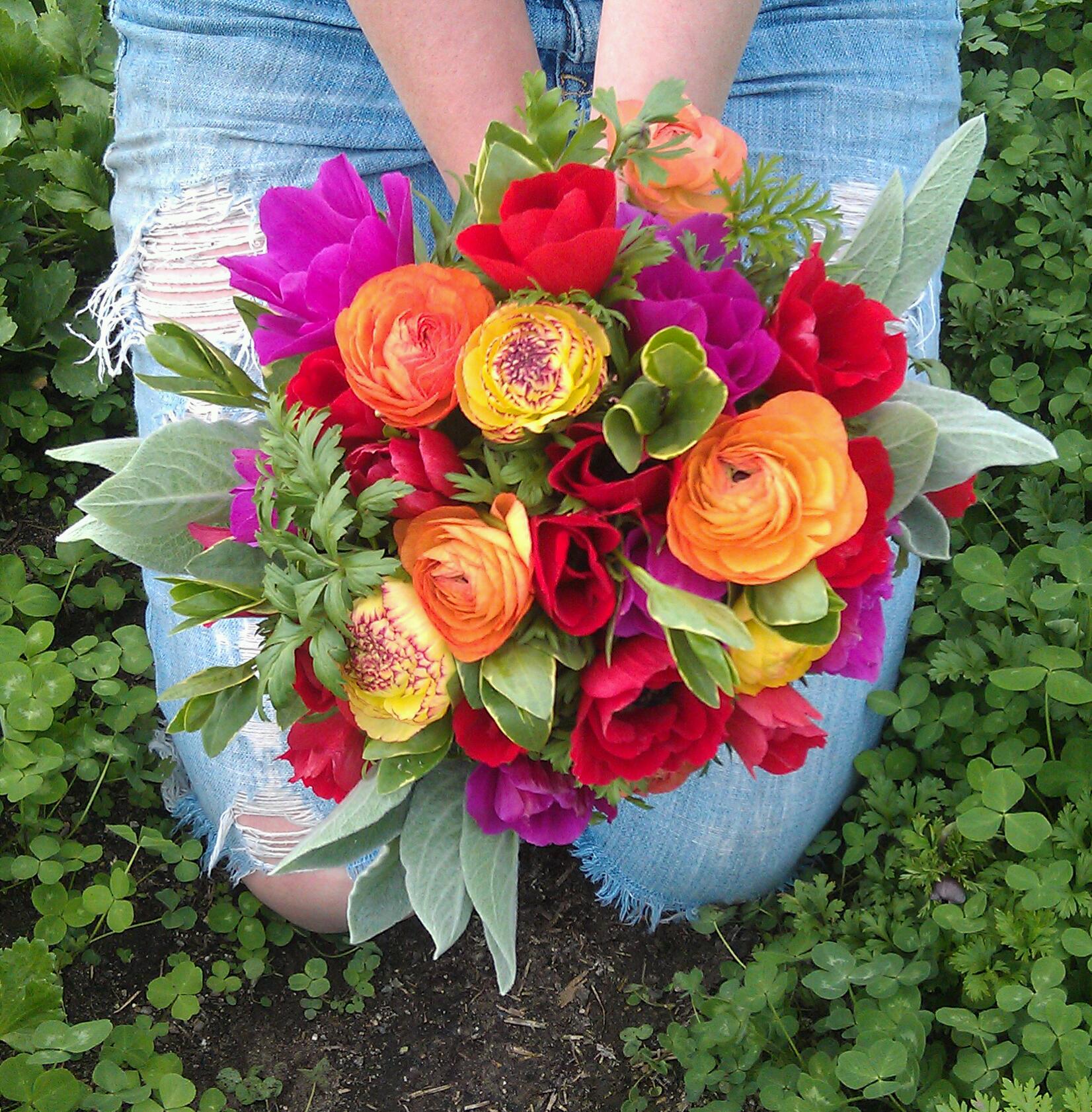
Friday Night Romance on denim.

Springtime Friday Night Romance on denim.

Friday Night Romance from July 25th

Friday Night Romance from July 25th

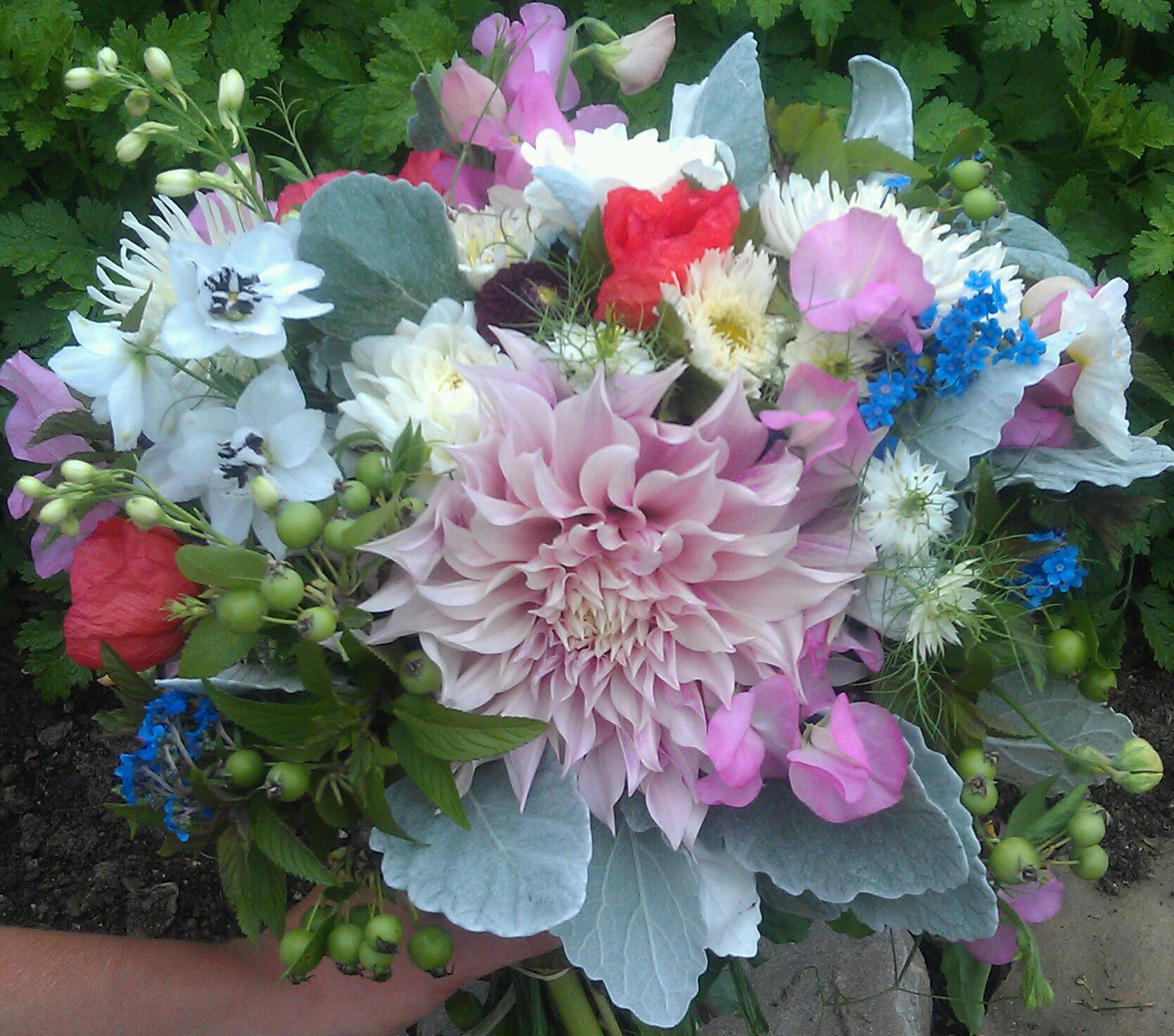
A lovely dahlia takes center stage.

A lovely dahlia takes center stage.

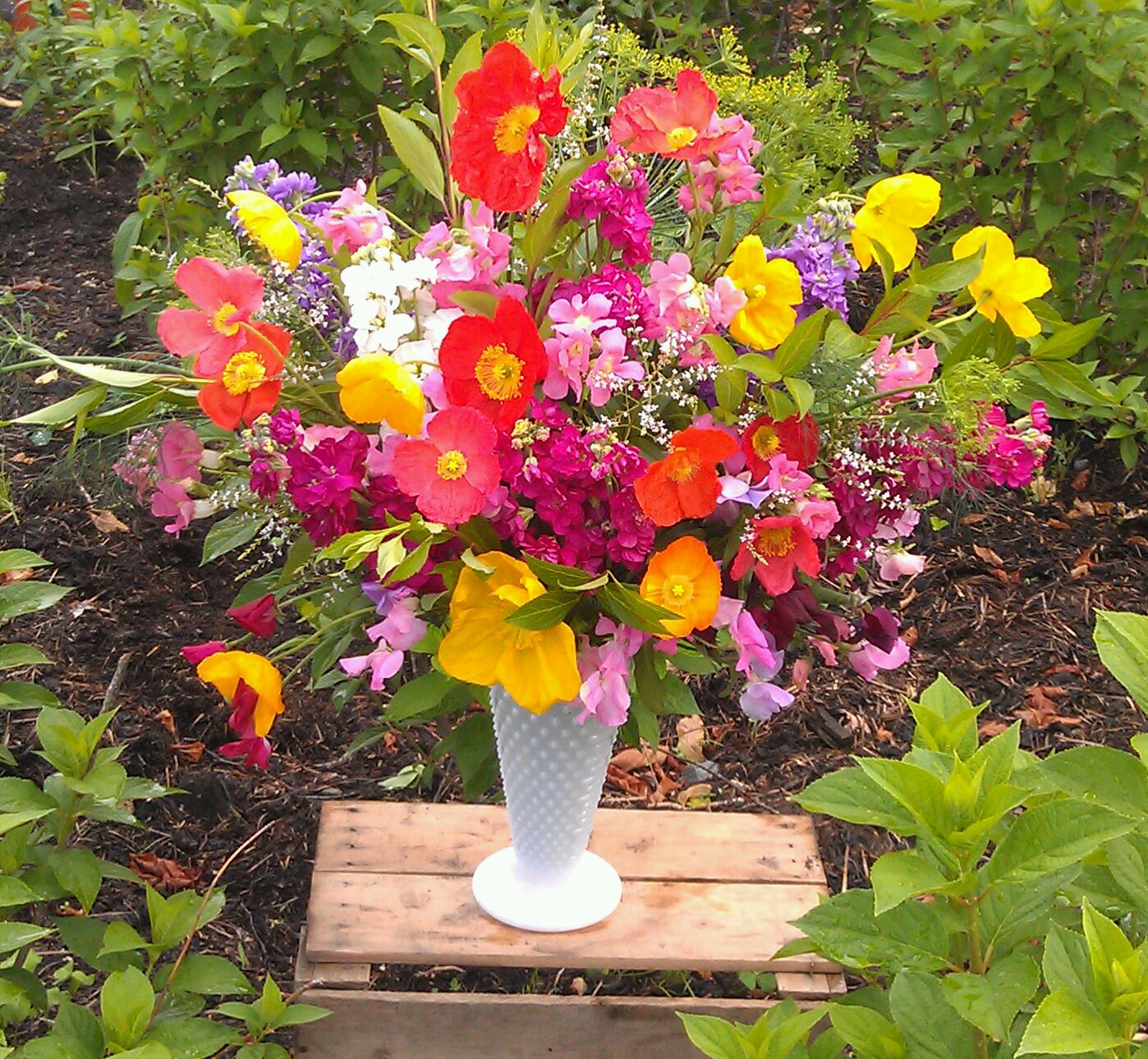
Intense hues add up to a gorgeous Friday Night Romance bouquet.

Intense hues add up to a gorgeous Friday Night Romance bouquet.

I hope you learn as much as I did by hearing this interview. And here’s how you can follow Goose Creek on other social platforms:

Goose Creek Gardens on Facebook

Goose Creek Gardens on Instagram

Up next week: a conversation with the inimitable Kelly Norris, who shares his passion – and genius – about a lesser-known category of his favorite flower: The miniature tall bearded iris. Kelly is the award-winning author of A Guide to Bearded Irises and I’m so excited to introduce him to you in a very lively conversation.

Listeners like you have downloaded the Slow Flowers Podcast more than 21,000 times. If you like what you hear, please consider logging onto Itunes and posting a listener review. My personal goal is to put more American grown flowers on the table, one vase at a time. I promise that when you tune in next week, you’ll hear another insightful and educational episode of the Slow Flowers Podcast.

The Slow Flowers Podcast is engineered and edited by Hannah Holtgeerts and Andrew Wheatley. Learn more about their work at hhcreates.net.

SLOW FLOWERS Podcast: Meet Mickey Blake, inventor of Floral Soil (TM), the new alternative to floral foam (Episode 160)

Wednesday, September 24th, 2014
Take the Pledge!!!

Take the Pledge!!!

One of my mentors reminded me recently that it’s inevitable others will disagree with my convictions and portray me as having an “all or nothing” point of view when it comes to helping consumers and florists embrace, design with and purchase American grown flowers — as a way to save the grassroots community of American flower farms.

I truly believe there is an American-grown flower solution for any design challenge – it boils down to desire, innovation and creativity.

I “get” that some in the floral community disagree with this position. A few weeks ago, Holly Chapple and I discussed the idea of hashtagging percentages to indicate the portion of American grown flowers used in a design.

That is a compromise to some, but at least it is a move in the right direction, the “least best” option, but better than not using American grown flowers at all, right?

Hopefully this interim step will nudge even more designers toward using local, seasonal and domestic flowers. And if you choose to promote yourself as having this philosophy, I believe it can be a huge advantage. If you have personally experienced success by taking this path, I want to hear about it because you and your story may be featured on a future episode of this podcast.

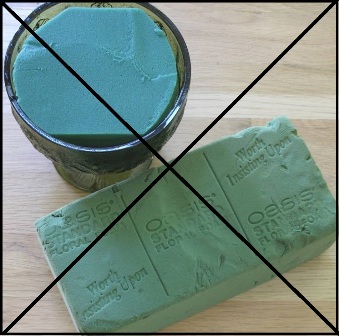
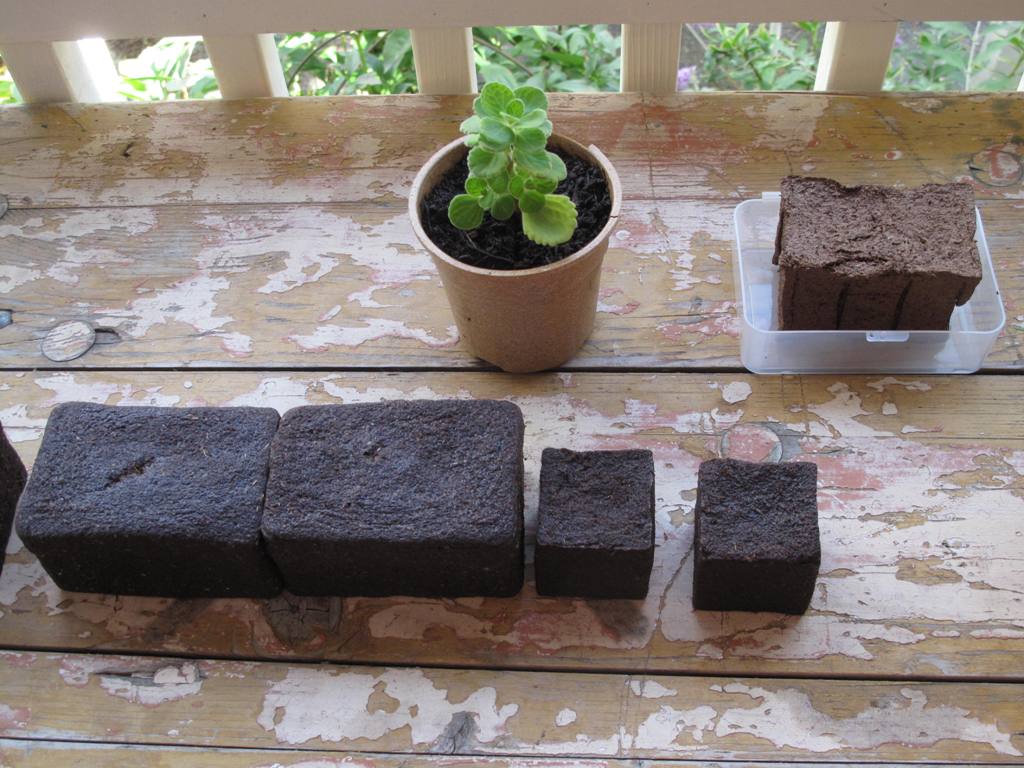
Foam_sampleAnother one of my no-compromise stances is about the use of floral foam, the ubiquitous floral design industry “tool” that is actually formaldehyde-based, toxic, does not break down in landfills and has led to a number of health problems for florists who regularly handle it.

This podcast has featured leaders like Pilar Zuniga, owner of Gorgeous and Green in Berkeley, an early advocate for non-foam design, and I’m constantly intrigued with designers who have a similar philosophy.

But there are so many who have not been able to wean themselves from using this harmful product – harmful to themselves, their customers and the earth.

Sooooo . . . we keep hearing that the conventional floral products industry is working on a solution. But hey people, it’s been 60 years since floral foam has been the so-called industry option for stabilizing stems in vases. Where is the innovation? Where is the corporate social responsibility to do the right thing? What about the lack of transparency about its unsafe attributes and failure to inform those who do use this product?

Enter today’s guests, eco-inventor Mickey Blake and flower shop owner Rebecca Wiswell.

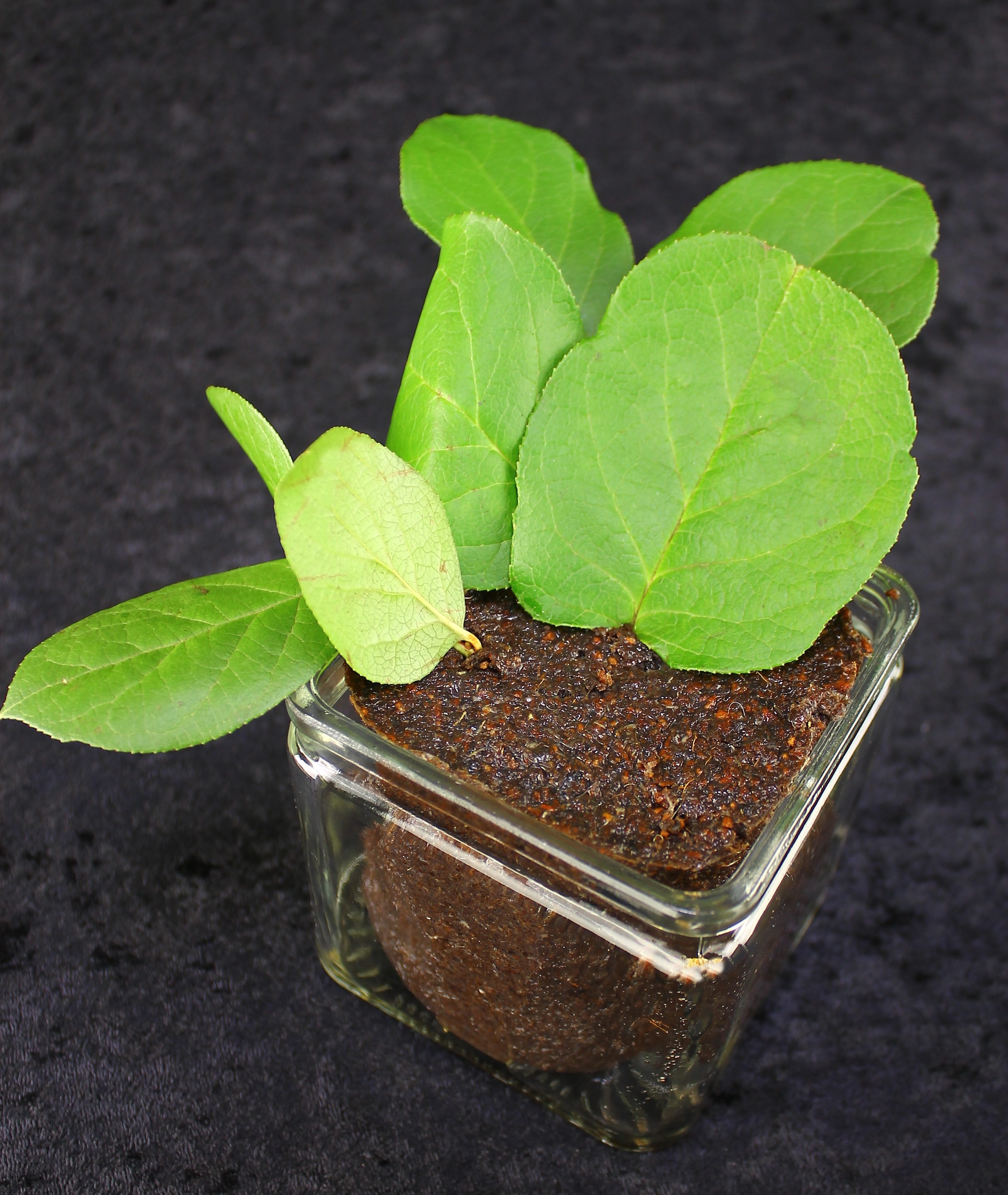
This pleasantly-spongy, soil-colored block of foam is 100% natural and compostable - and it functions exactly like the chemical-based products on the marketplace.....but it's safe and unharmful to  you, your clients, and to the environment.

This pleasantly-spongy, soil-colored block of foam is 100% natural and compostable – and it functions exactly like the chemical-based products on the marketplace…..but it’s safe and unharmful to you, your clients, and to the environment.

Mickey Blake, inventor of Floral Soil.

Mickey Blake, inventor of Floral Soil.

Mickey Blake is a sheer genius, a floral industry outsider who was presented with the challenge of finding a nontoxic, 100 percent plant-based foam for florists to arrange cut flowers and foliage.

In just one year’s time, Mickey has developed, trademarked and has a patent pending innovation called Floral Soil. She explains on her brand new web site:

“We had seven major goals when designing Floral Soil ™ – Support cut flowers, be non-toxic, plant derived, biodegradable, hold water, grow seeds and be safe enough to eat.”

Mickey worked with a select group of beta testers, including Rebecca Wisell, owner of Bellingham, Washington-based Rebecca’s Flower Shoppe. Rebecca’s Flower Shoppe is listed on the Slowflowers.com directory, but she and I don’t know one another personally. My friends Steve and Sarah Pabody of Triple Wren Farms sell their flowers to Rebecca’s – through them, I’ve heard about her support for locally-grown flowers.

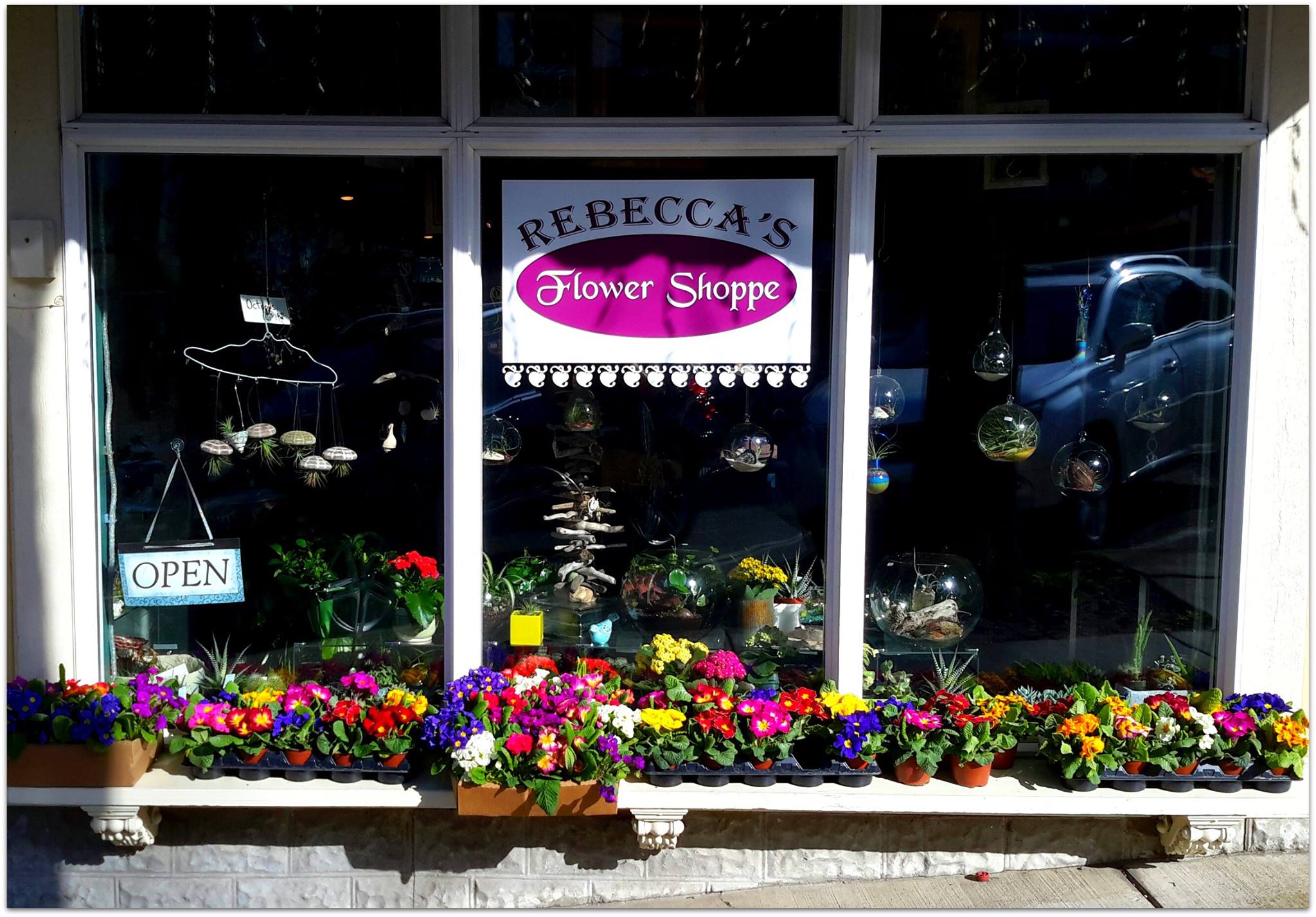
Rebecca's Flower Shoppe in Bellingham, Washington, is one of the first "beta" testers of Floral Soil.

Rebecca’s Flower Shoppe in Bellingham, Washington, is one of the first “beta” testers of Floral Soil.

I learned about Floral Soil a few weeks ago, when out of the blue Rebecca reached out to me on Facebook with this note:

“Good morning, Sarah and Steve Pabody are suppliers/friends of our here at Rebecca’s Flower Shoppe in Bellingham. We are a ‘green’ shoppe and were introduced to a new product about a year ago that I thought you might be interested in. It is called Floral Soil and is a replacement for the green foam. It is completely bio-friendly and compostable. We have been trialing it since last fall and think its qualities to retain water and its durability are impressive. I am not selling this product. I just want to get the word out to our floral community that there is a better product that we can all be using to protect us and our environment.”

The day Rebecca emailed me I was on location, working on a photo shoot. So I responded quickly and asked if I could call her later in the week. When I called, Rebecca surprised me by saying, “Oh, the inventor of Floral Soil is here in my shop – do you want to speak with her?”

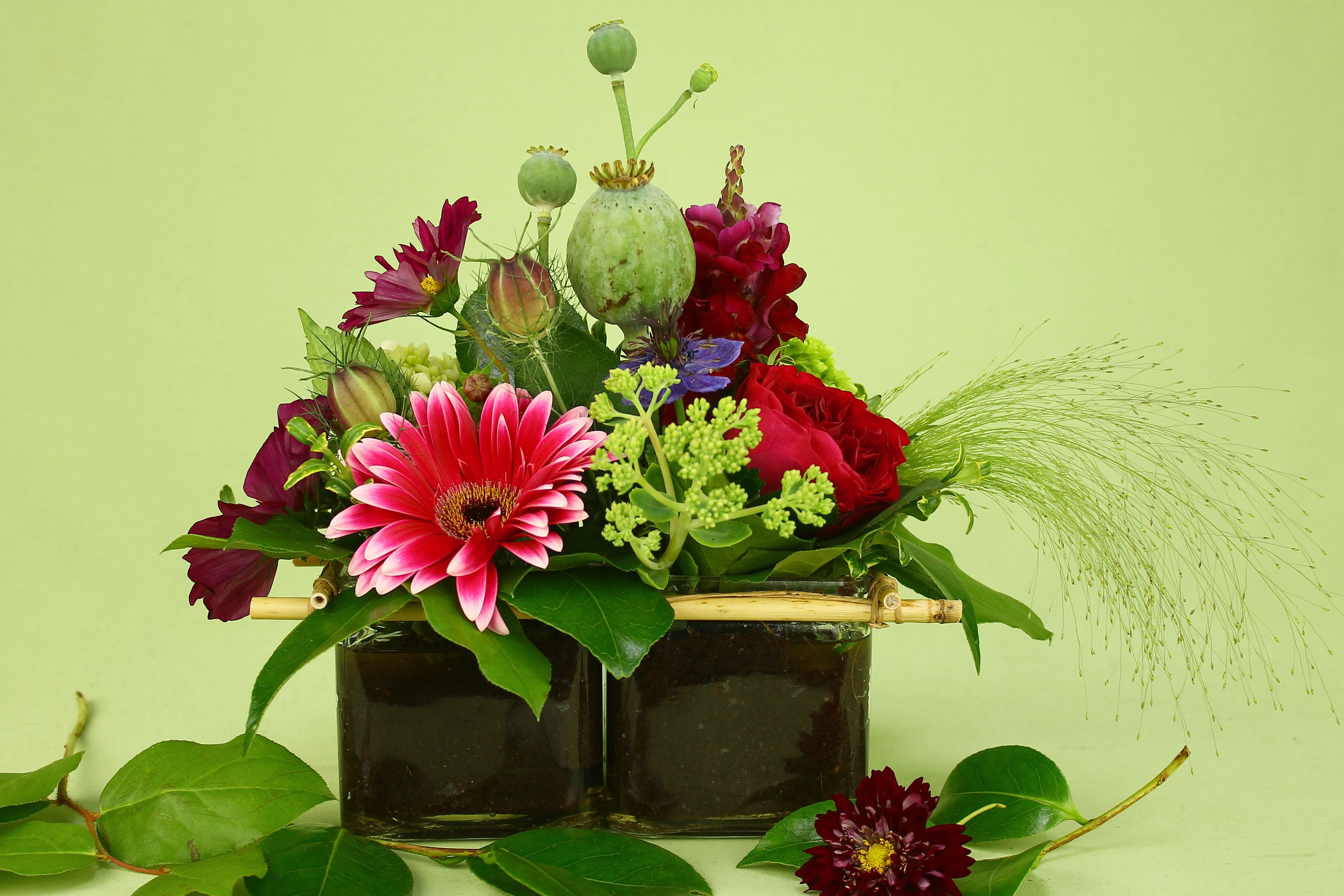
One of Rebecca Wiswell's samples showing how well flowers of all sizes can be stabilized in Floral Soil (she purposely used a clear glass vase to show the product)

One of Rebecca Wiswell’s samples showing how well flowers of all sizes can be stabilized in Floral Soil (she purposely used a clear glass vase to show the product)

Talk about serendipity! So, I met Mickey Blake by phone and since she is also based in Bellingham, about 90 minutes north of Seattle, it took us a few weeks to get together.

There is so much to wrap your mind around here, so I’m just going to let you listen to my conversation with Mickey, recorded last Friday, September 19th.

Mickey is CEO of Mt. Baker Bio, a life sciences company with this mission: “Using modern science to secure a sustainable future.”

Mt. Baker Bio is a certified woman-owned small business that is focused on creating environmentally sustainable solutions for biomedical laboratories. Through its Green Lab Program the company environmentally friendly alternatives for scientific laboratories, as well as a collapsible silicone lunch box. The innovative company is now turning its attention toward the floral and nursery industries with Floral Soil and other products currently in development.

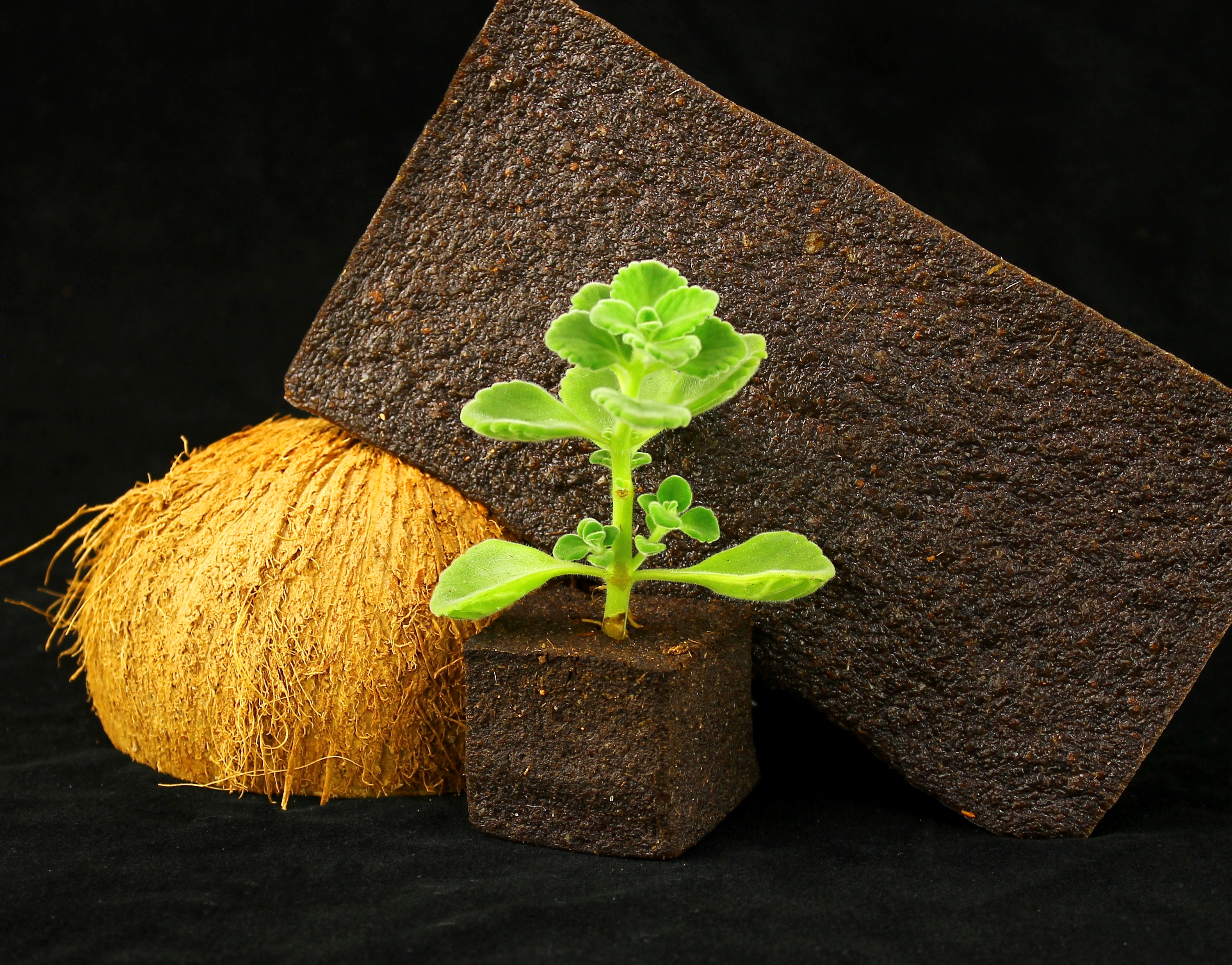
Look closely and you can see the cocoa fiber textures in the Floral Soil

Look closely and you can see the cocoa fiber textures in the Floral Soil

It’s pretty amazing to watch this dynamo’s eyes light up as she speaks so passionately about changing an ancient business model – from top-down product development where florists have been told they need something (we’re talking about the 1954 invention of floral foam here) to a holistic partnership between inventor and end user – a collaborative approach that has a triple bottom line motivation.

Having spent a few hours with Mickey, and getting my hands on the samples of Floral Soil that she shared with me, I have to say that this product is a major game-changer. It is going to alter forever the practice of using conventional, chemical-based floral foam. [Note, two days after I recorded our podcast interview, one of my floral designer friends was over and I showed her the product samples Mickey gave me. This is a woman whose very successful wedding & event studio has NEVER used conventional floral foam. She was so excited to use the bricks for an upcoming wedding alter design that I gave her three large pieces to use. Photos of that project to come!]

My second guest is Rebecca Wiswell, one of the florists who has been most intimately involved with a year of R&D for Floral Soil. With a 30 year background in the floral industry, Rebecca has the credibility Mickey needed to trial the product day in and day out. I reached out to Rebecca by phone after interviewing Mickey – and recorded our conversation to share with you here.

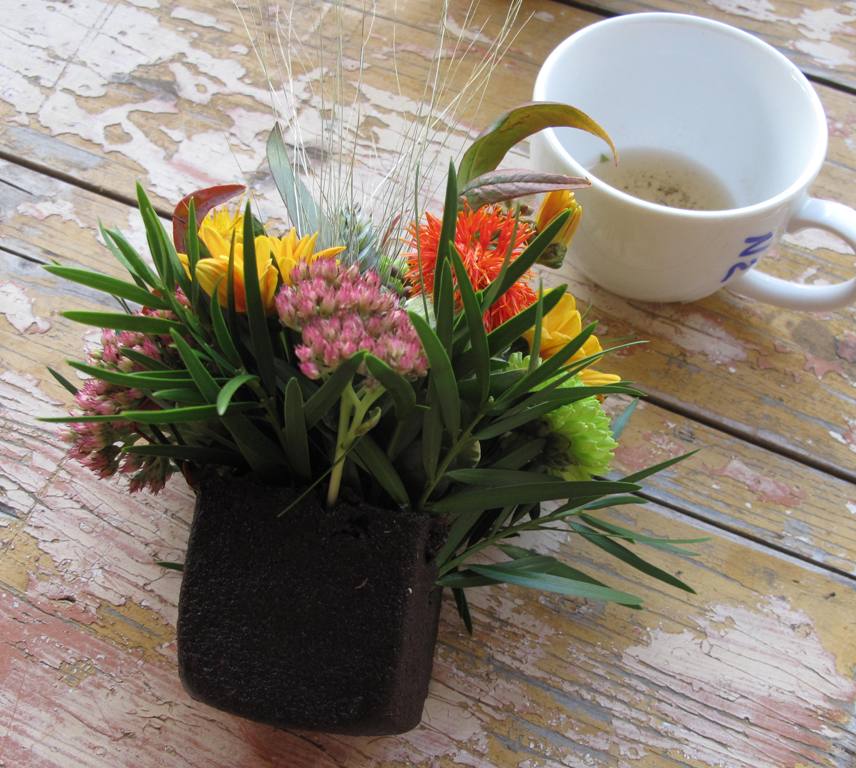
Here's how the cube of Floral Soil looks from its side, with stems inserted

Here’s how the cube of Floral Soil looks from its side, with stems inserted

Get ready to be wowed and to stop feeling guilty about using a product that you know is damaging to the environment. You may have been dependent on floral foam for some or all of your design work, but no more excuses. Mickey has offered to send a sample to anyone who listens to this podcast

More samples, showing how Floral Soil can be cut into various sizes.

More samples, showing how Floral Soil can be cut into various sizes.

And here are the various ways you can connect with Floral Soil’s via social media.

Floral Soil on Facebook

Mickey Blake on Twitter

I would love to know how you use the product and invite you to send me photos after you’ve played with it.

As she said, Mickey’s goal is to get into full-scale production by the holidays.  I want to close with one of her comments that resonated with me: It is up to each individual to make daily choices and personally responsibility to make our planet better. If you agree with this, I am convinced you will adjust your practices and stop using chemically-based floral foam, especially now that we have an earth-friendly alternative on the marketplace.

Thanks for joining me today to talk about all things American Grown — and American Made.

Listeners like you have downloaded the Slow Flowers Podcast more than 21,000 times. If you like what you hear, please consider logging onto Itunes and posting a listener review.

My personal goal is to put more American grown flowers on the table, one vase at a time. I promise that when you tune in next week, you’ll hear another insightful and educational episode of the Slow Flowers Podcast.

The Slow Flowers Podcast is engineered and edited by Hannah Holtgeerts and Andrew Wheatley. Learn more about their work at hhcreates.net.

Art as Inspiration for Floral Design

Saturday, September 20th, 2014
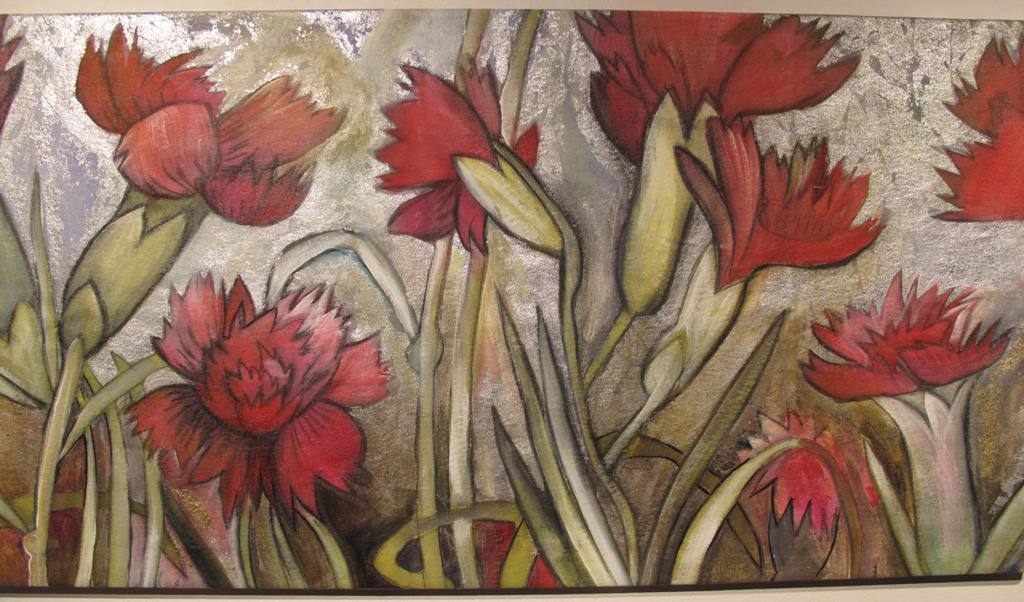
'Dianthus', by Jean Bradbury.

‘Dianthus’, by Jean Bradbury.

I think all artists and designers love to experiment with new media because it challenges us to think more creatively and with inventiveness.

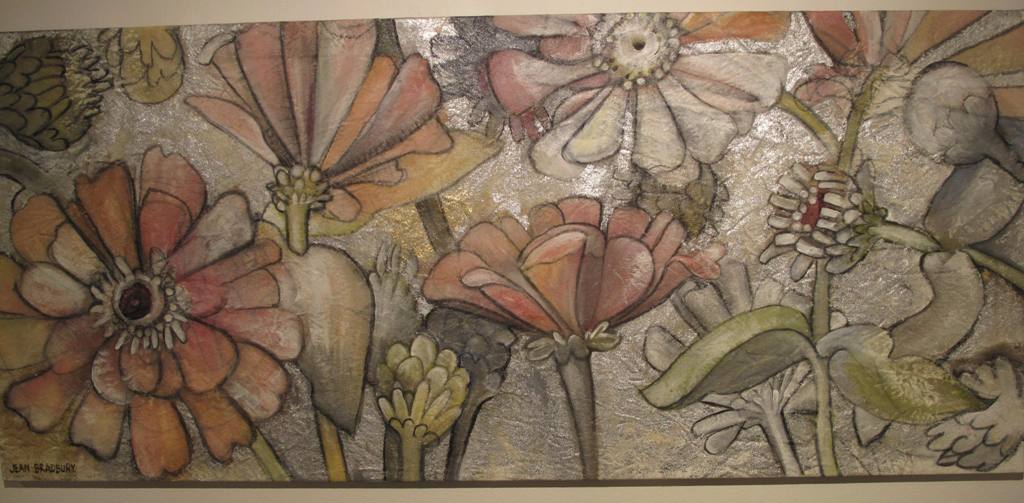
'Zinnias', by Jean Bradbury

‘Zinnias’, by Jean Bradbury

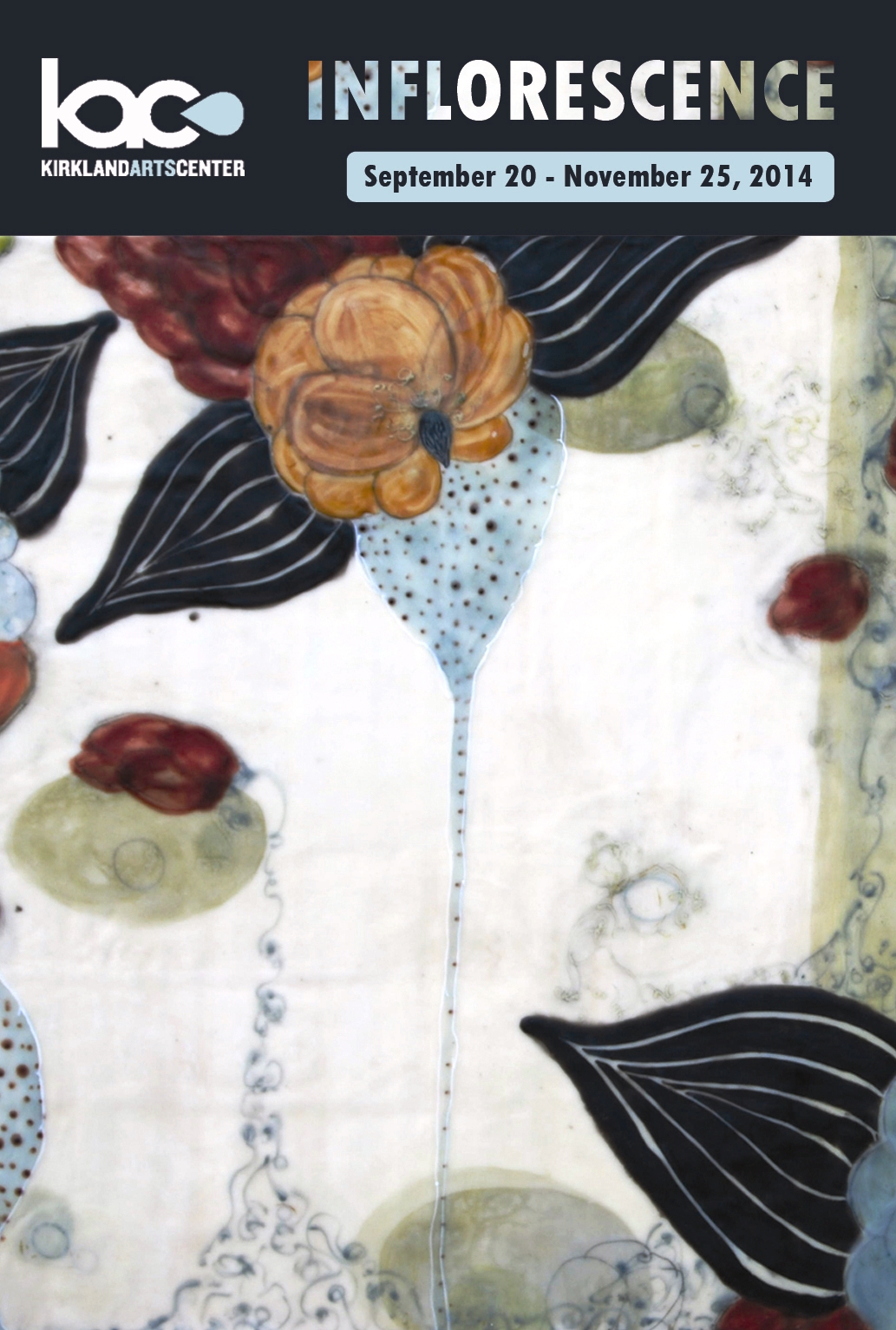
And that’s what makes me so excited about the upcoming class I’ll be teaching on Saturday, October 4th (1-3 p.m.). “From Art to Vase” is a hands-on floral workshop that takes inspiration from the Inflorescence exhibition at Kirkland Art Center, just across Lake Washington, east of Seattle.

Inflorescence_IMG_1362

Friday night's opening of INFLORESCENCE at Kirkland Arts Center.

Friday night’s opening of INFLORESCENCE at Kirkland Arts Center.

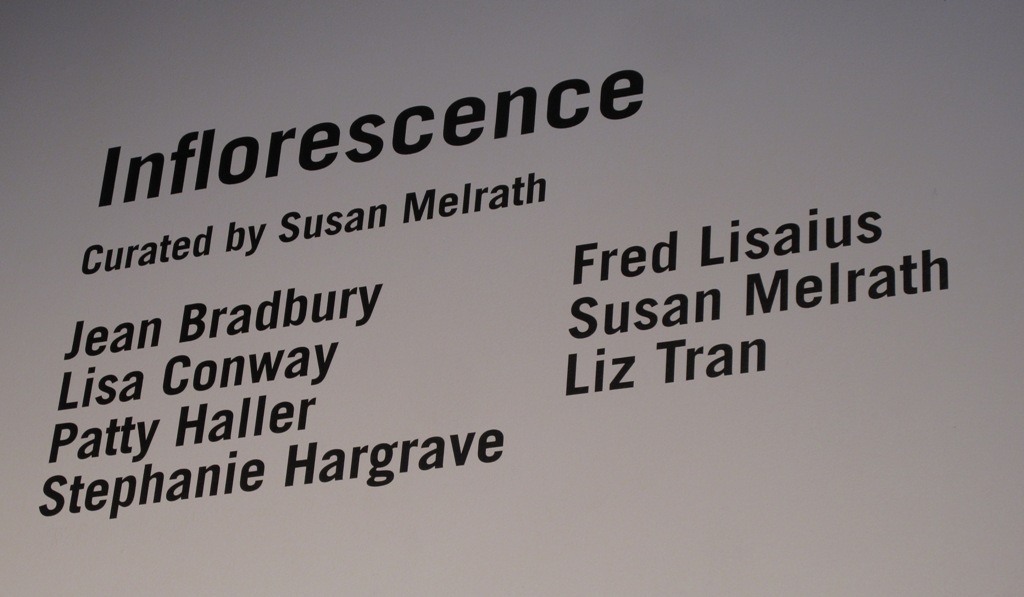
Inflorescence is a terrific new show that opened on September 19th at KAC, curated by Seattle artist Susan Melrath.You can see the show now through November 25th. Click here for gallery hours and address and please note that KAC is closed on Sundays and Mondays.

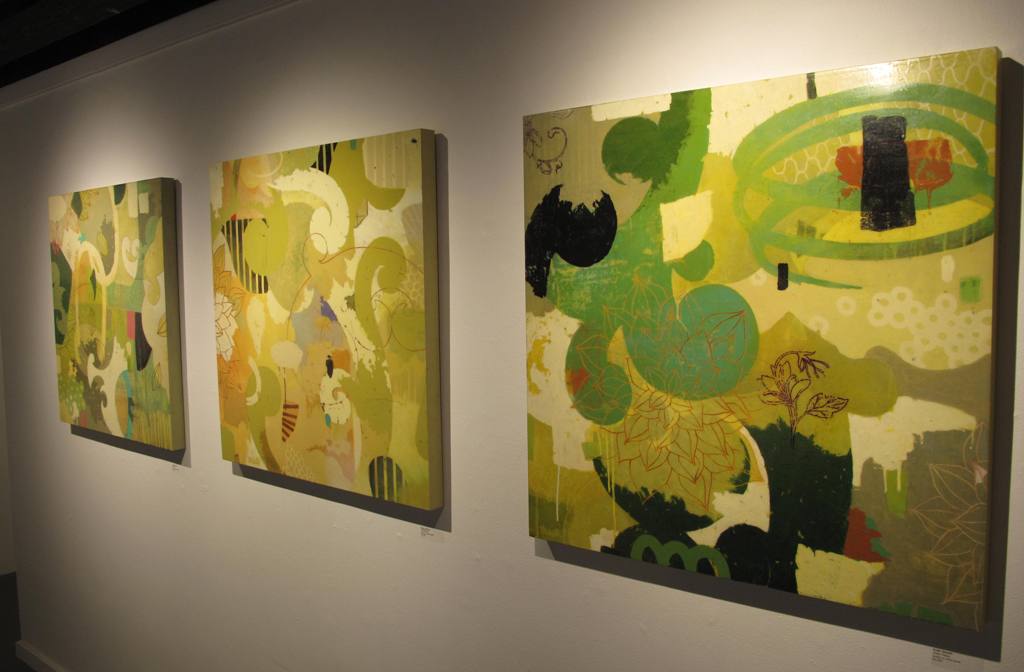
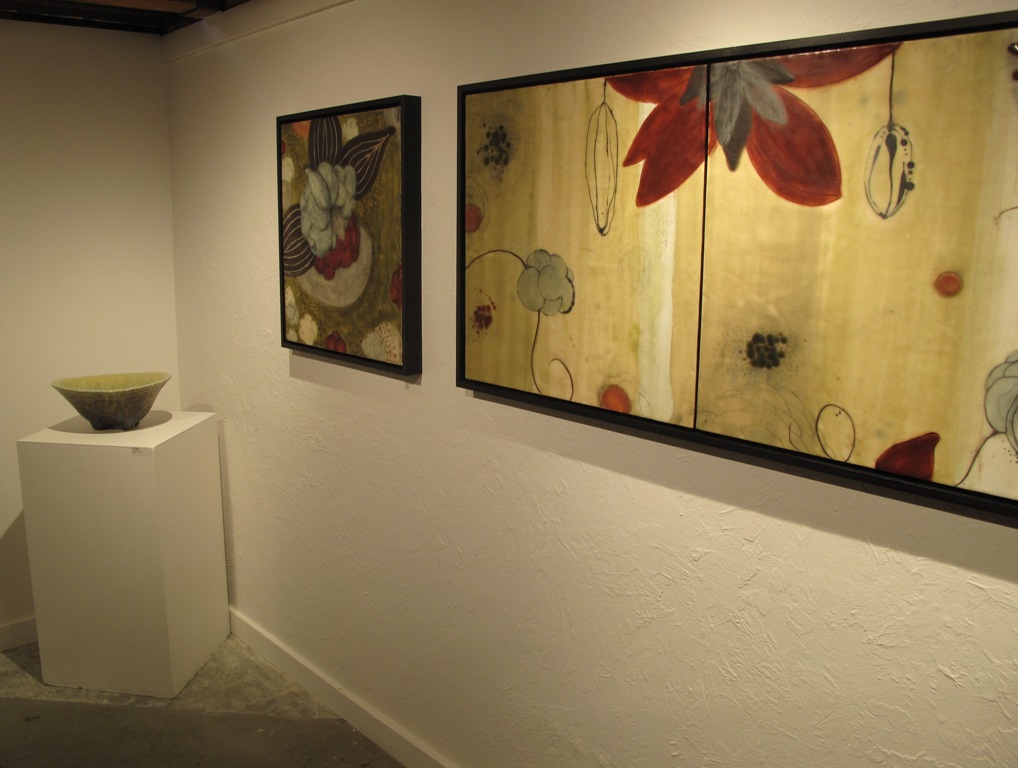
Three of Susan Melrath's pieces, arranged in a verdant triptych.

Three of Susan Melrath’s pieces, arranged in a verdant triptych.

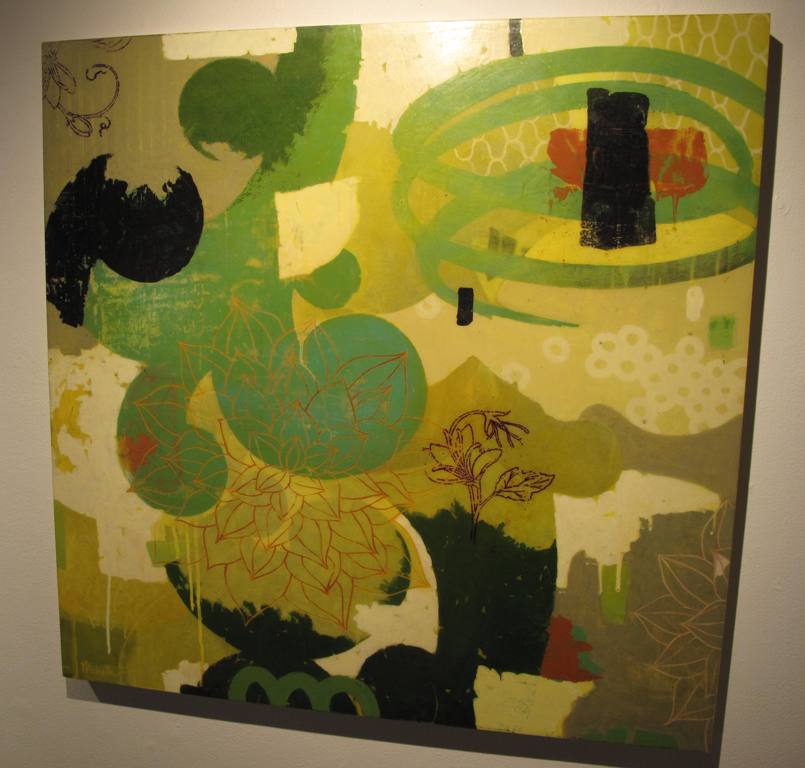
'Green Theory', by Susan Melrath.

‘Green Theory’, by Susan Melrath.

An incredibly gifted artist (and the daughter of a florist) who loves to play with color, texture and scale, Susan dreamed up this show and invited six other Northwest artists to exhibit their works in response to the show’s title. Inflorescence features the work of Jean Bradbury, Lisa Conway, Patty Haller, Stephanie Hargrave, Fred Lisaius and Liz Tran, in addition to Susan Melrath.

So what is “Inflorescence”?

Liz Tran's exuberant still-life's of flowers in their vase.

Liz Tran’s exuberant still-life’s of flowers in their vase.

Think back to your high school botany or college hort science class. Many of you know of the term as it describes a blooming part of a plant. For the purposes of the KAC show Susan uses this definition: “A group or cluster of flowers growing from a common stem in a characteristic arrangement.”

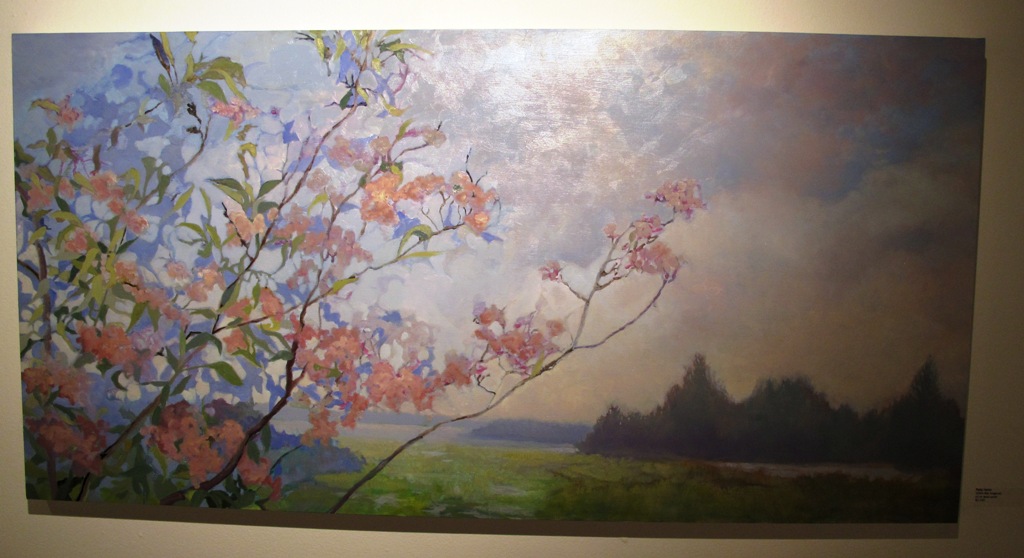
A lovely piece by landscape artist Patty Haller.

A lovely piece by landscape artist Patty Haller.

I love the idea that each work of art in this beautifully curated show is a part of the whole, just like the cluster of flowers that may emerge from a single stem.

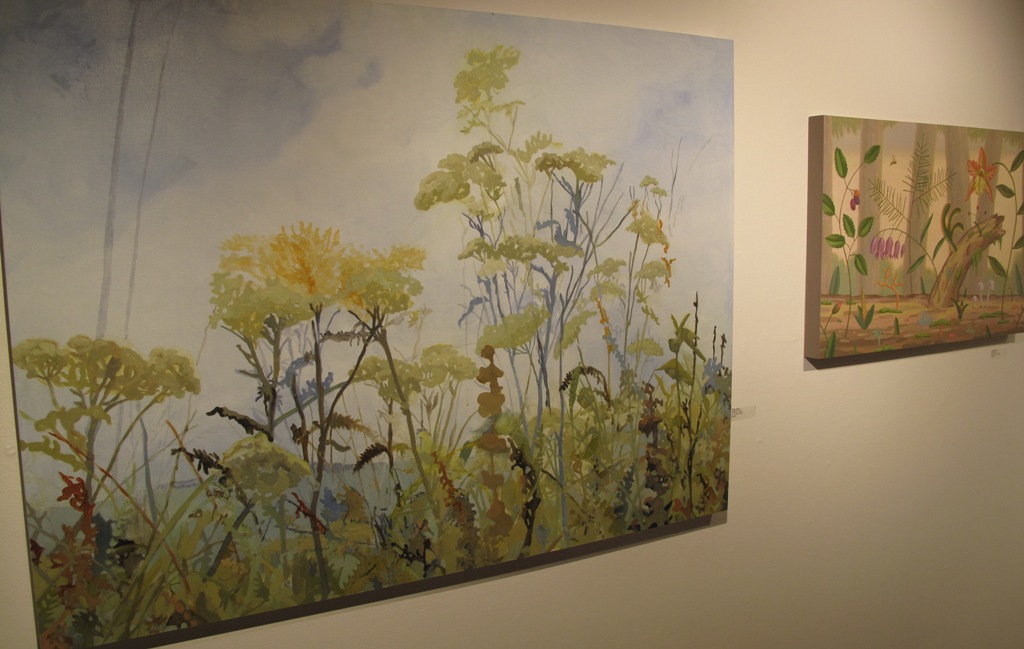
Patty Haller's painting  'Whidbey Yarrow' (left); Fred Lisaius painting 'Mossy Log' (right).

Patty Haller’s painting
‘Whidbey Yarrow’ (left); Fred Lisaius painting ‘Mossy Log’ (right).

Each artist is collectively of like mind while also incredibly individual. They use what is seen and experienced through nature as well as the botanical beauty of plants (real or imagined) to express themselves creatively.

When I say the show is beautifully curated, I’m referring to the harmonious way Susan has grouped and hung or placed pieces throughout KAC’s gallery. The works speak to one another with a pleasing rhythm — through various palettes, forms and canvas sizes. Please consider a day trip to Kirkland to observe and admire these works.

Lisa Conway ceramic piece (left) Stephanie Hargrave paintings (right).

Lisa Conway ceramic piece (left) Stephanie Hargrave encaustics (right).

So where do I come in? More than a year ago, Susan sent me a note asking if I would be willing to teach a floral arranging workshop in conjunction with the show she was pulling together.

Inflorescence Postcard Front 1When I said “sure,” she wrote back:  

I spoke with the Exhibitions Coordinator today and she loved the idea of an education component that wasn’t just another painting class. Floral arranging will bring a new crowd into the arts center. 

And here I have to take a little commercial break for the way social media can bring people together. I met Susan briefly in 2012 when my friend Lorene Edwards Forkner brought me with her to see a prior exhibit featuring Susan’s paintings (and I’m not even sure I know how the two of them originally connected).

We had a brief conversation with the artist, exchanged cards and then began to follow each other on Facebook. I loved seeing Susan’s work via her period newsletters and I suspect she was the recipient of my newsletters. Funny how that works. And I’m so thrilled to be a small part of this amazing show that she dreamed up in her fabulous imagination.

Now it is a reality. I hope you can see how perfect these pieces are for a starting point to create arrangements that express one’s response to the pigments, inks, glazes and washes of color.

More gorgeous forms by ceramic artist Lisa Conway.

More gorgeous forms by ceramic artist Lisa Conway.

There’s still room in the workshop. I’m going to provide all the flowers and instruction. All you have to do is bring a vase, clippers, and an open mind.

Each participant will select a specific work of art as a starting point for their creative arranging. You’ll find just the right piece to inform your floral palette, structure/scale and proportion/form. It’s Art for the Vase!

Cost: $50 Pre-registration required here.

Slow Flowers “Therapy” from Nancy Cameron, Destiny Hill Farm

Sunday, September 14th, 2014

We all need girlfriends like Nancy Cameron. She recently sent me two flower messages – created while deadheading at Destiny Hill Farm.

There is nothing better than receiving a photo gift like this one:

S-L-O-W   F-L-O-W-E-R-S in pink and white dahlias

S-L-O-W    F-L-O-W-E-R-S in pink and white dahlias

And this one:

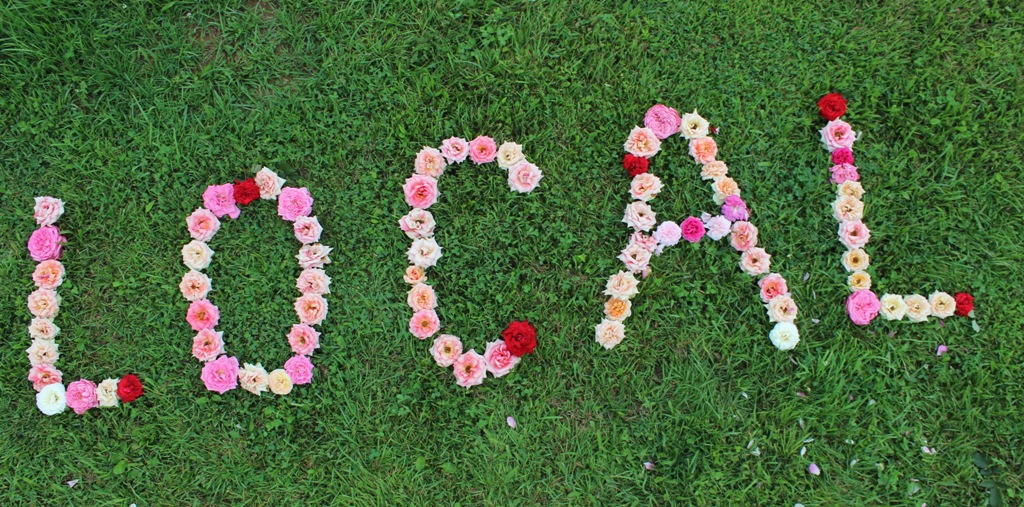
L-O-CA-L in an array of David Austin roses

L-O-C-A-L in an array of David Austin roses

Thanks so much, Nancy! These are beautiful – and local – and seasonal – and sustainable!!!


SLOW FLOWERS Podcast: American-grown meets Australian-grown (Jennie Love & Lindsey Myra) – plus a bonus interview with Holly Heider Chapple (Episode 158)

Wednesday, September 10th, 2014
Welcome to Love 'N Fresh Flowers

Welcome to Love ‘N Fresh Flowers

35_photo_343Last month I spent 24 glorious hours at Philadelphia-based Love ‘N Fresh Flower Farm, owned by Jennie Love.

I’ve known Jennie for a few years, in fact, she was a previous guest of this podcast.

But the occasion was my first-ever visit to her beautiful farm, to work with the very talented Rob Cardillo to photograph a feature story about Jennie, her urban flower farm and her design work in a 2015 issue of Country Gardens magazine.

Jennie Love (left) hosted a wonderful field-to-table dinner for so many wonderful friends. I'm next to Jennie, followed by Lindsey Myra and Ellen Frost of Local Color Flowers in Baltimore.

Jennie Love (left) hosted a wonderful field-to-table dinner for so many wonderful friends. I’m next to Jennie, followed by Lindsey Myra and Ellen Frost of Local Color Flowers in Baltimore.

Lindsey_logoWhen we were planning the shoot, Jennie mentioned that Lindsey Myra, a flower farmer from Australia, would be spending a month at Love ‘N Fresh on a “fellowship” — and she asked whether I’d like to record a conversation with them? Umm . . .  YES – that wasn’t a hard decision to make!

Before I introduce you to Jennie and Lindsey, though, here’s a bonus update about a recent conversation I had with Holly Heider Chapple.

Holly and I met early in 2014 and since then we have had an ongoing conversation about the American Grown flower movement and how the members of Chapel Designers, her group of wedding and event florists, can get more involved in the Slow Flowers project.

As it turns out, several Chapel Designers are members of Slowflowers.com, and we just added Holly Heider Chapple Flowers, Holly and her husband Evan’s design studio, to the site.

After discussing the All-American concepts with Holly, I began to understand that some designers feel I’ve made it a black-and-white issue. Either you use 100% percent seasonal or local flowers, or you use 100% imports. However, the reality for many is somewhere between.

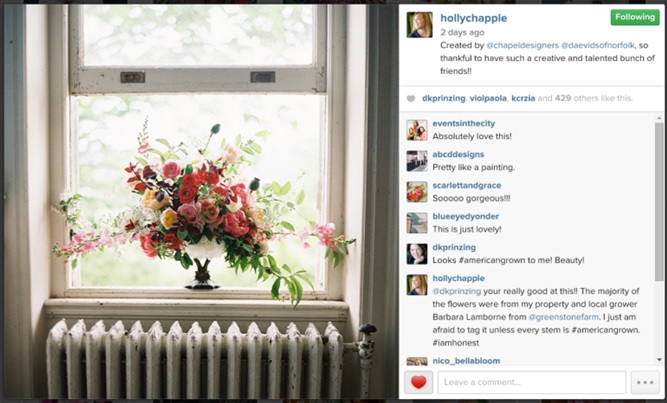
Holly's Instagram bouquet that started the conversation!

Holly’s Instagram bouquet that started the conversation!

The impetus behind today’s conversation began last week when Holly posted a beautiful arrangement on her instagram feed and I made a comment saying: Holly, those look American Grown. She responded that it was mostly all domestic flowers, but she didn’t want to make the #americangrown claim just in case one or two stems were not.

I love what Holly wrote in one of our text exchanges:

“If we add the percentage of how much is American grown, I think it will really get people – designers and brides – thinking and causing us all to learn. I like this (idea) because it pushes us to think about it and (to) really understand where things are coming from. It would also allow us to post designs that are barely American grown – and people will see how the looks vary, depending on how much local product there is. I also think it will be very interesting to have a documented board of images that show the differences of the designs between those that are heavily American grown flowers and those that are sourced from other countries.”

So if you follow this percentage concept, post photos of your designs and use this hashtag: #americangrown50% or #americangrown100%. Please remember to add #slowflowers and #fieldtovase and other relevant hashtags, too!

Over time, I bet this approach will engage even more floral designers in thinking about the origins of the stems they use. I love where Holly is going with this. The natural beauty and inherent character of domestic flowers will go far to demonstrate the value of staying close to home when you source. That’s exactly what Slowflowers.com is all about.

Holly on Instagram

Holly on Twitter

Holly on Facebook

NEXT, our MAIN FEATURE: A lovely story of how Jennie and Lindsey met through social media and how they cooked up an international flower farmer exchange.

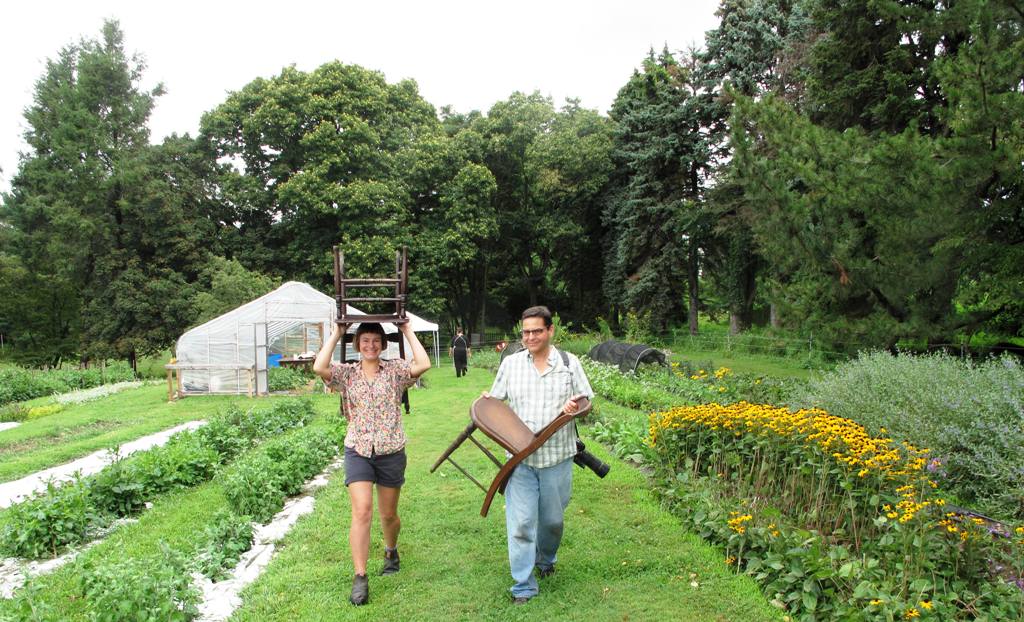
Lindsey (left) and Rob Cardillo (right), hauling chairs that we planned to use in a vignette of flowers.

Lindsey (left) and Rob Cardillo (right), hauling chairs that we planned to use in a vignette of flowers.

Since it was winter at Lindsey’s flower farm in Australia, the chance to spend the month of August on a U.S. flower farm was enticing. Similarly, in the future, perhaps even this coming winter, Jennie hopes to visit Lindsey during her peak season – when Philadelphia flower fields are under snow.

These nontraditional ways of doing business fascinate me to no end. I love the way creative flower farmers and florists are circumnavigating conventional methods of commerce and proving that one plus one equals way more than two.

Meet Lindsey Myra, a Slow Flowers #farmerflorist from Australia.

Meet Lindsey Myra, a Slow Flowers #farmerflorist from Australia. (photo courtesy LindseyMyra.com)

Let me tell you briefly about Lindsey Myra. She is an artist, a florist, a writer and a flower grower. She writes on her web site: ” I am stumbling upon wonder every day. Enchantment and fascination in the natural world infuses my work and stimulates my enthusiasm for botanical culture.”

In 2012, motivated by a desire to provide a positive alternative in the cut flower industry, Lindsey started The Little Flower Farm, her own small-scale, organic flower farm, planting flowers on a borrowed backyard in Melbourne’s northern suburbs.

A Lindsey Myra arrangement (LindseyMyra.com)

A Lindsey Myra arrangement (LindseyMyra.com)

The Little Flower Farm is the first of its kind in Victoria. According to Lindsey, the farm is motivated by three key ambitions: to offer a more environmentally sustainable product, to encourage others to embrace the living world within their own lives and lastly, a personal desire to create beauty and lots of it! The Little Flower Farm produces organic, true to type, heirloom blooms. Founded on the principles of permaculture and rooted in a true passion for flora,  she provides a positive and sustainable approach to cut flowers.
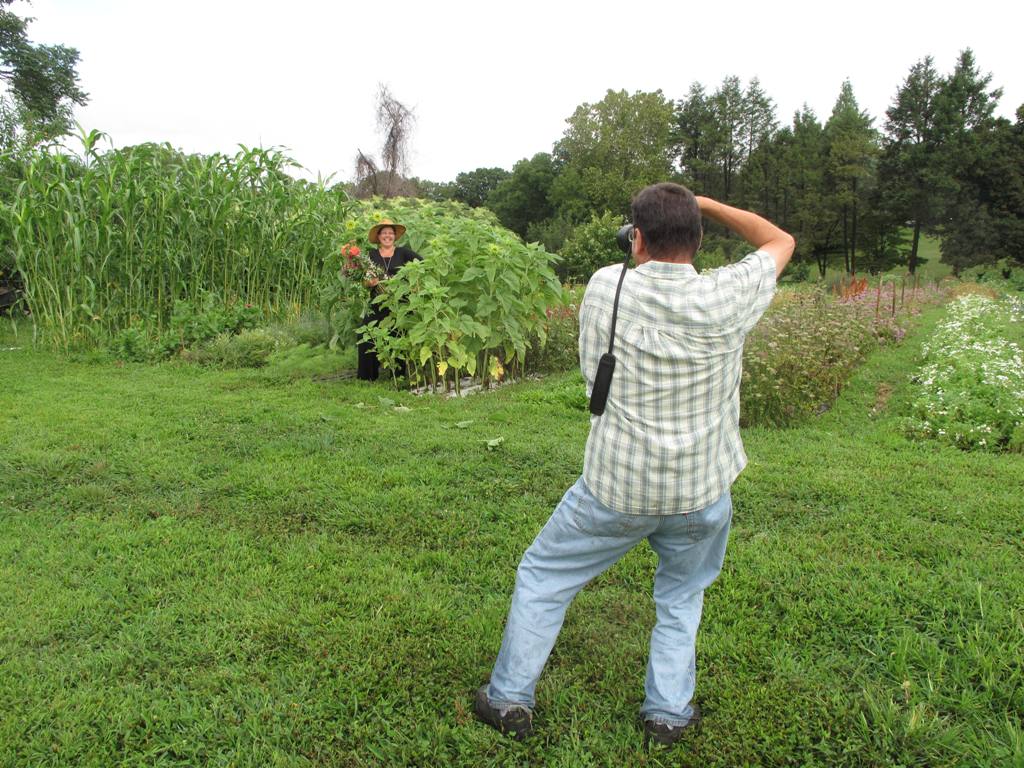
Lindsey at The Little Flower Farm (LindseyMyra.com)

Lindsey at The Little Flower Farm (LindseyMyra.com)

2014 has seen The Little Flower Farm move to a larger, rural plot in the Macedon Ranges, an hour north of the city. Last season Lindsey’s flowers were consistently retailed by Cecilia Fox and North St Botanical, floral studios in Melbourne. This year she plans to also offer a Community Share Agriculture (CSA) subscription to deliver  seasonal, farm fresh, organic flowers direct to floral customers. All flowers are grown out in the open air and as such are truly seasonal, September to June.

Jennie Love of Love 'N Fresh Flowers

Jennie Love of Love ‘N Fresh Flowers

Jennie Love had her first flower patch at age four in her mother’s huge kitchen garden on a 5th generation family farm in central Pennsylvania — growing straw flowers and nasturtiums. She writes: “My soul has ever since been connected to the shifting of the seasons and the nurturing of unfurling petals and leaves.”

Ironically, Jennie says she needed to run away to the big city to realize just how much farming meant to her. She couldn’t resist the pull of the land.

On Location at Love 'N Fresh Flowers - here, my colleague Rob Cardillo as he captures Jennie's portrait in the flower fields.

On Location at Love ‘N Fresh Flowers – here, my colleague Rob Cardillo as he captures Jennie’s portrait in the flower fields.

By the time Jennie could no longer deny her need to nurture nature, she had already put down serious roots in Philadelphia. And so, Love ‘n Fresh Flowers was born as one of the first and few urban flower farms located within a big city’s limits. Urban flower farming has proven to be just about the best thing she could have ever dreamed up. Jennie finds it even more gratifying to be the stewardess of two acres of dwindling urban green space than it would be to own a vast expanse in a more rural locale. It means the world to her to be able to create and sustain a healthy ecosystem within this concrete jungle.

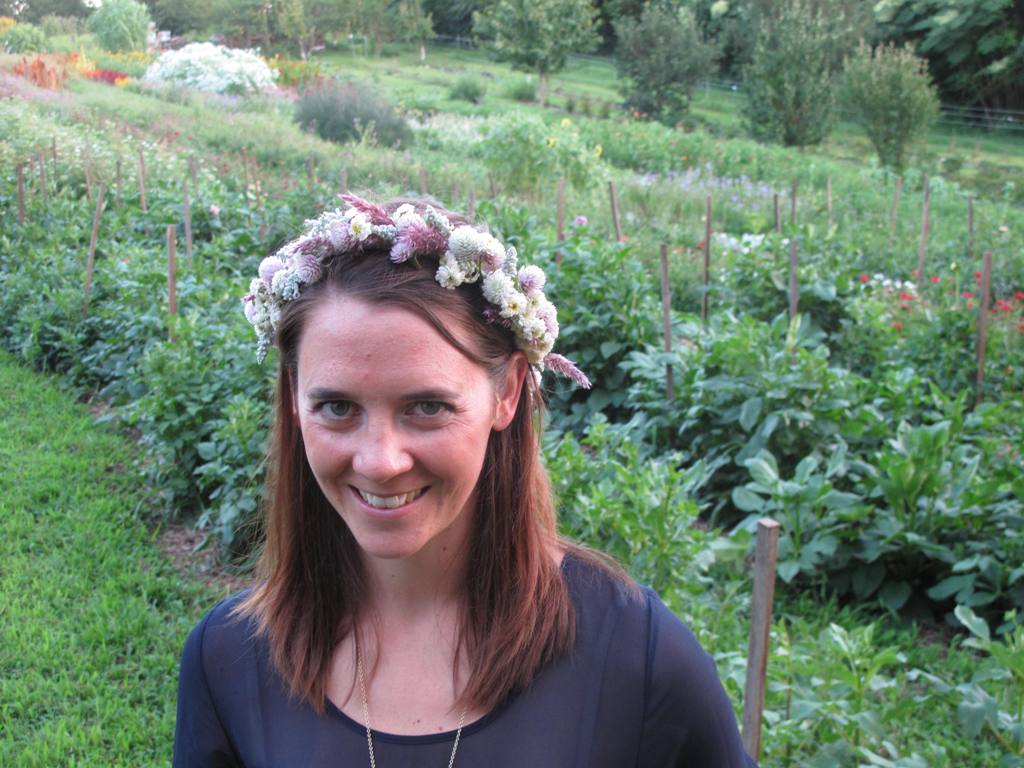
A beautiful Love 'N Fresh team member models her equally beautiful flower crown, fashioned by Jennie Love during our podcast interview.

A beautiful Love ‘N Fresh team member models her equally beautiful flower crown, fashioned by Jennie Love during our podcast interview.

The flowers that Jennie grows inspire every single element of her little flower business. She says: “It’s an amazing gift to be able to walk the fields, cut what is at the peak of perfection, and take it into the design studio to create a piece of living art. Somehow that never gets old for me, even after thousands of bouquets. While flower farming and event design is exhausting, all-consuming work, I never ever tire of the flowers and their charms.”

Jennie is a leader in the American Grown floral community, much sought out for her flower farming knowledge and her exquisitely natural design aesthetic.

At the end of our conversation, I asked Jennie to discuss the upcoming ASCFG national conference, which takes place October 19-22, 2014 in Wilmington, Delaware.

Jennie is a co-chair of the conference, with the theme “Growing Growers.” Slow Flowers is a media sponsor of this conference and I’m very much looking forward to joining Jennie and so many other flower farmers and farmer-florists around the country at that event.

Jennie/Love ‘N Fresh on Instagram

Jennie/Love ‘N Fresh on Facebook

Jennie/Love ‘N Fresh on Pinterest

Lindsey/The Little Flower Farm on Instagram

Lindsey/The Little Flower Farm on Facebook

Finally, I’m thrilled to announce that the Slow Flowers Podcast has reached yet another milestone. This week we hit our 20,000th downloaded episode.

That’s cause for celebration and I thank listeners like you for your support. If you like what you hear, please consider logging onto Itunes and posting a listener review.

My personal goal is to put more American grown flowers on the table, one vase at a time. I promise that when you tune in next week, you’ll hear another insightful and educational episode of the Slow Flowers Podcast.

And speaking of this podcast, here’s a huge thanks to my engineering and editing team, Hannah Holtgeerts and Andrew Wheatley. Learn more about their work at hhcreates.net