Debra Prinzing

Get the Email Newsletter!

SLOW FLOWERS: Week 30

Sunday, July 28th, 2013

FLIGHTS OF FANCY

Stacie Bouquet

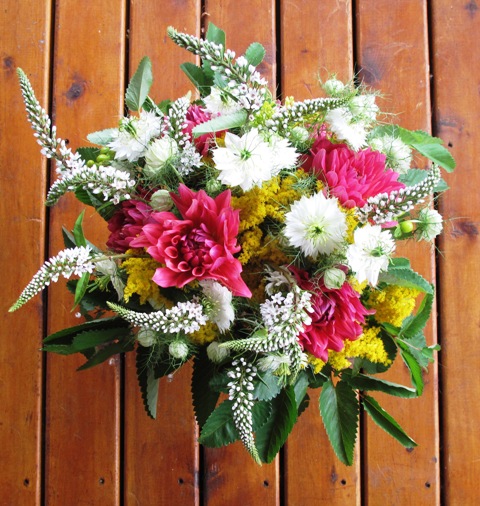
A summer bouquet for my friend Stacie Crooks’s annual garden girlfriend soiree.


Stacie Bouquet 2

This charming arrangement is even more interesting when viewed from the top as the gooseneck stems appear to be flying in all directions!

Ingredients:

7 stems Dahlia ‘Coral Gypsy’, grown by Jello Mold Farm

15 stems white love-in-a-mist (Nigella damascena), grown by J. Foss Garden Flowers

5 stems chartreuse Hypericum perforatum (a florist’s variety selected for its colorful fruit), grown by Jello Mold Farm

7 stems goldenrod (Solidago sp.), grown by J. Foss Garden Flowers

11 stems white gooseneck loosestrife (Lysimachia clethroides), grown by Jello Mold Farm

20 stems burnet foliage (Sanguisorba obtusa), grown by Charles Little & Co.

Vase:

6-inch tall x 4-inch diameter glass vase 

Eco-technique

Transporting bouquets: Save your arrangement and your car with a smart stabilizing trick I learned from flower farmers who make frequent bouquet deliveries. Use a box that is at least half the height of your vase; seal the

top and bottom so you have an empty “cube.” Using a utility knife, cut a large X on one side of the box. The cuts should be approximately the same size as the vase diameter. Push the bottom of the vase into the X-opening. The

triangular cardboard flaps created by the cuts should bend inward to hold the vase securely while you drive.

SLOW FLOWERS Podcast: Hear new findings on consumer attitudes about LOCAL and meet an organic flower farmer (Episode 100)

Tuesday, July 23rd, 2013

PodcastLogoWelcome to the Show Notes for SLOW FLOWERS with Debra Prinzing, my new podcast about American flowers, the farmers who grow them and the designers who create beauty with them. Make a conscious choice and join the conversation – and the creative community. When we know where our flowers come from and who grew them, we place a much higher value on those blooms.

PART ONE of this podcast features Kierstin De West, CEO and founder of Ci (Conscientious innovation), a market research, information and consulting firm known for its early embrace of the sustainable marketplace. Read more about the mission of Ci and its origins here. 

Kierstin De West, CEO and Founder, Ci - Conscientious innovation

Kierstin De West, CEO and Founder, Ci – Conscientious innovation

I first met Kierstin in 2010 in an accidental encounter that can only be called serendipitous. Yes, we were seated at adjacent tables in Anthony’s Restaurant at the Seattle-Tacoma International Airport. We struck up a conversation and the beginnings of a friendship in about one hour . . . before we both had to race to our respective flights. Later, I invited Kierstin to talk about her research into consumer attitudes regarding sustainability as the keynote speaker for the Garden Writers Association annual symposium in 2011. 

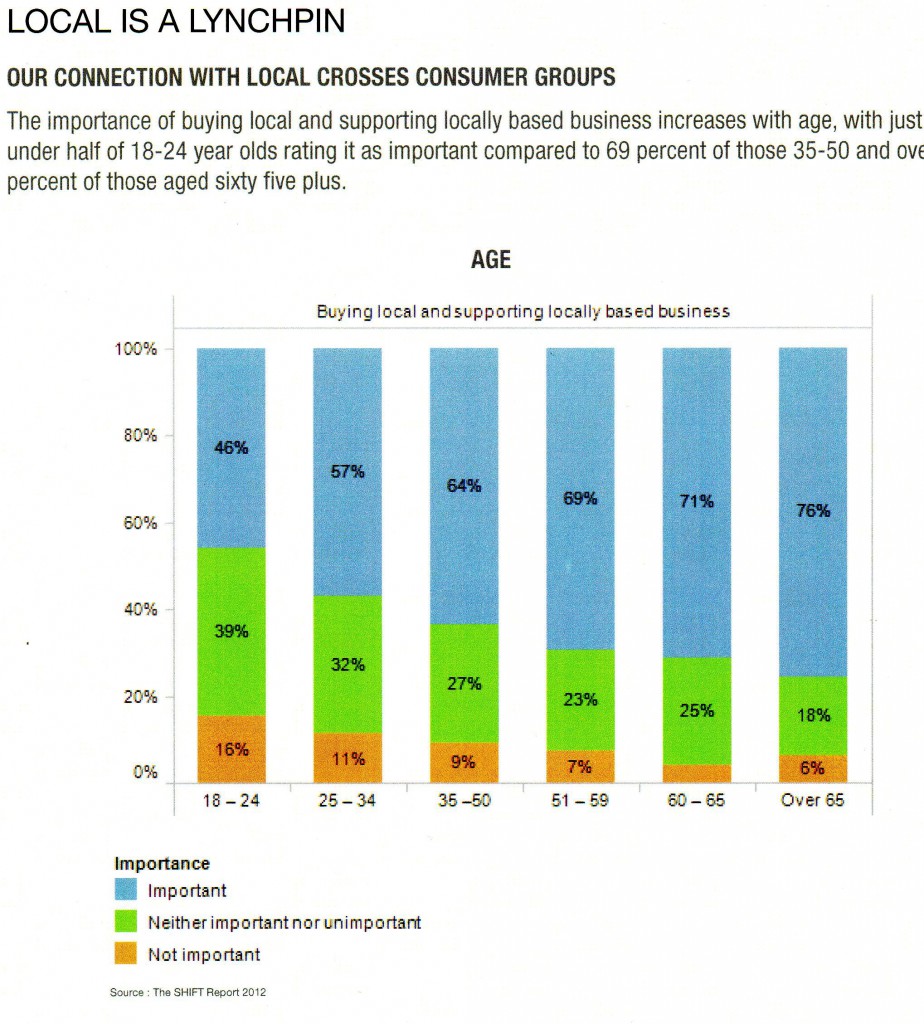
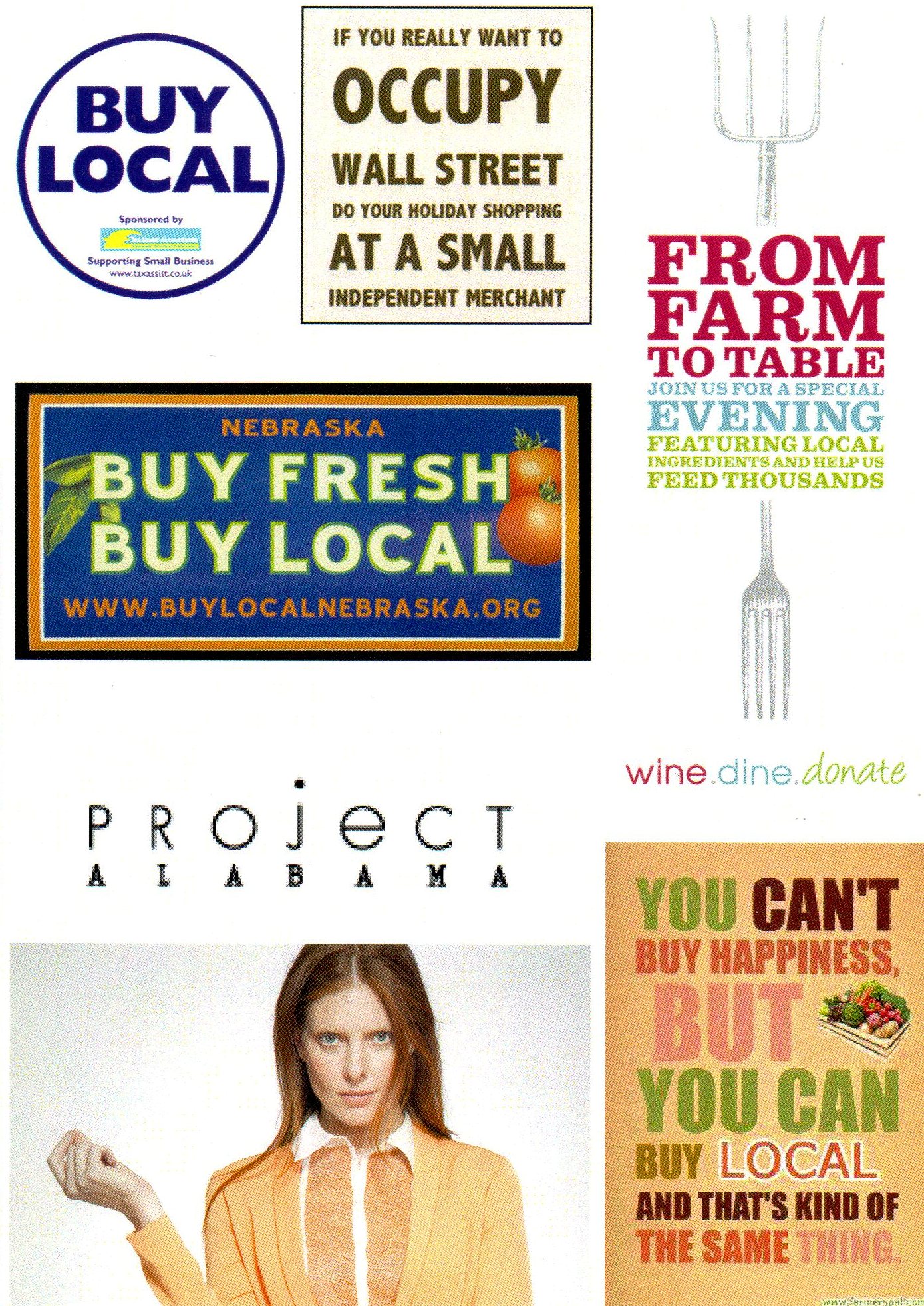
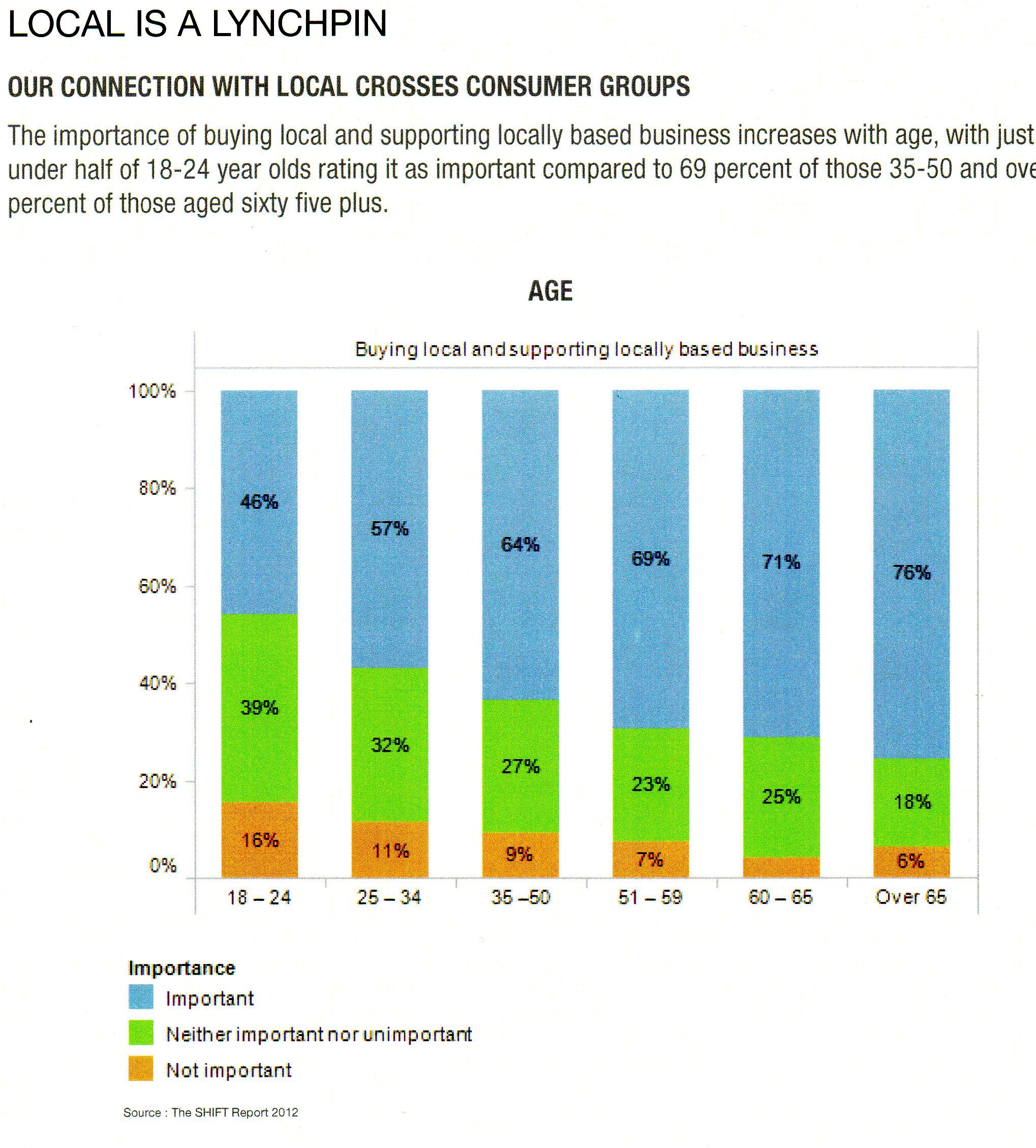
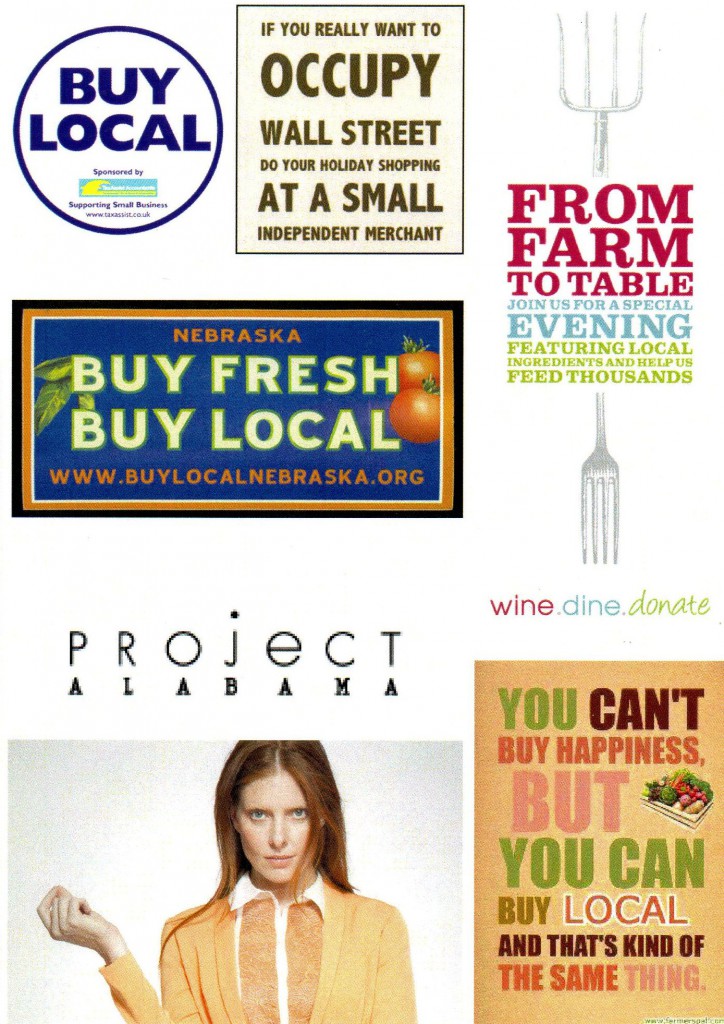
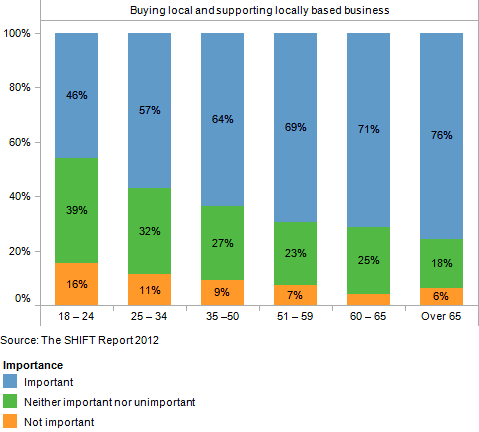
As a subscriber to Ci’s newsletters and reports, I was fascinated to read the newest installment of the firm’s ongoing research called The Shift Report. Ci shared highlights of the omnibus study of 5,000 consumers in North America and what jumped out at me was the idea of LOCAL values surpassing other topics that you might consider ranking higher on consumers’ sustainability checklist….such as Organic or Global Warming.

Listen as Kierstin and I discuss this fascinating research and hear how her insights can influence your decisions as a consumer, floral designer, seller of flowers or grower of flowers. Here are some of the highlighted slides from her report:

CIShift1 CIShift2 CIShift3

” Sixty-five percent of

North Americans feel that

buying local and supporting

locally based business

is an important sustainability issue,

surpassing the importance

of both global warming

and buying organic .”
 

get-attachment (1)

LEARN MORE. If you’d like to receive a free copy of the CONSUMERS AND LOCAL featured insights from Ci’s 2012 Shift Report, follow this link and fill out the request form. 
Organic flower farmer Joan Thorndike, of Le Mera Gardens.

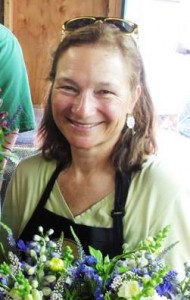
Organic flower farmer Joan Thorndike, of Le Mera Gardens.

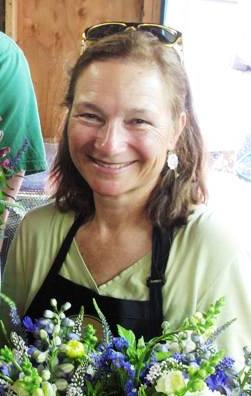
PART TWO of this podcast features a conversation with veteran organic flower farmer Joan Thorndike, owner of Le Mera Gardens in Talent, Oregon, which is near Ashland. We talked about what LOCAL means to Joan’s floral customers while taking a walk from Joan and Dan’s home to the vibrant farmer’s market in downtown Ashland. I stayed with the Thorndike family last month while I was there to produce a story for Country Gardens magazine.

Turns out, the FARM-to-FORK dinner we were photographing for a future story featured a super-long dining table in the midst of a biodynamic winery. . . and guess what showed up on the tables?! Beautiful, seasonal flowers grown by Joan, of course! You can read more about that event here and keep an eye out for the full story with Laurie Black’s photography in a 2014 issue of the magazine.

Many of you were introduced to Joan in the “Grower’s Wisdom” section of The 50 Mile BouquetWe introduced readers to Joan and three other seasoned flower farmers. In that short section, Joan’s articulate, insightful perspective resonated with me. She is a grower-ecologist. Joan operates on a world view that is highly inclusive and optimistic. My favorite quote from our original interview goes this way:

“When I sell my flowers, I believe I am appealing to my customer’s deeply visceral desire to observe the cadence of Nature.” 

I hope you’ll enjoy our conversation as we touched on some important considerations facing American flower farmers. 

Footed glass, circa 1978

Sunday, July 14th, 2013
Side view of vases

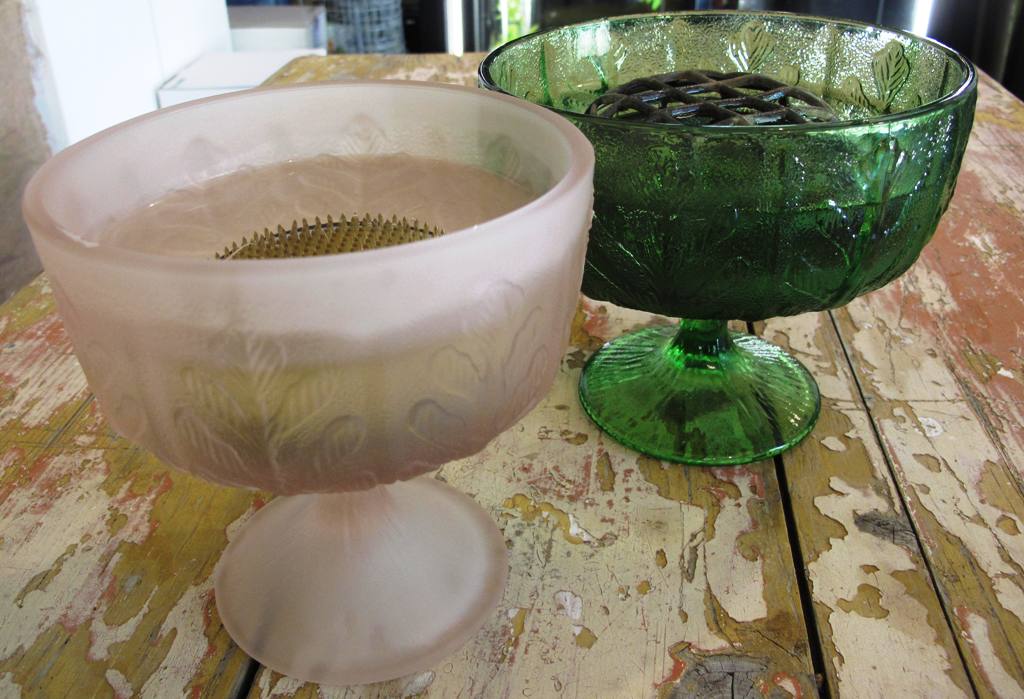
It’s easy to find these not-quite-vintage and not quite-retro, but definitely collectible footed glass vases. I snagged the frosted pink one on eBay for $4.99 and found the green embossed one at my local Goodwill store for even less!

These vases have been identified as FTD florist vases, dated to 1978. The pattern is called “oak leaf” and I’ve found the two colors shown above as well as an amber-gold and milk-glass white, all with the raised embossed leaf pattern.

2 Vases

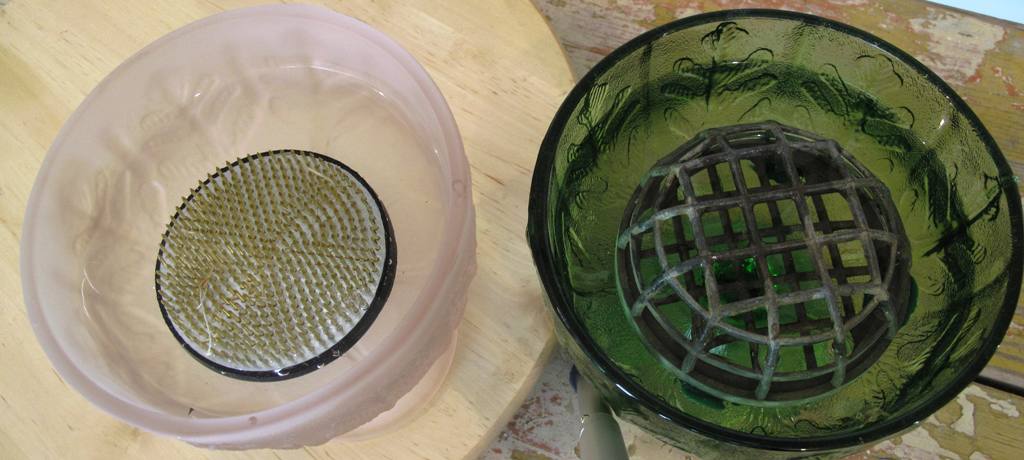
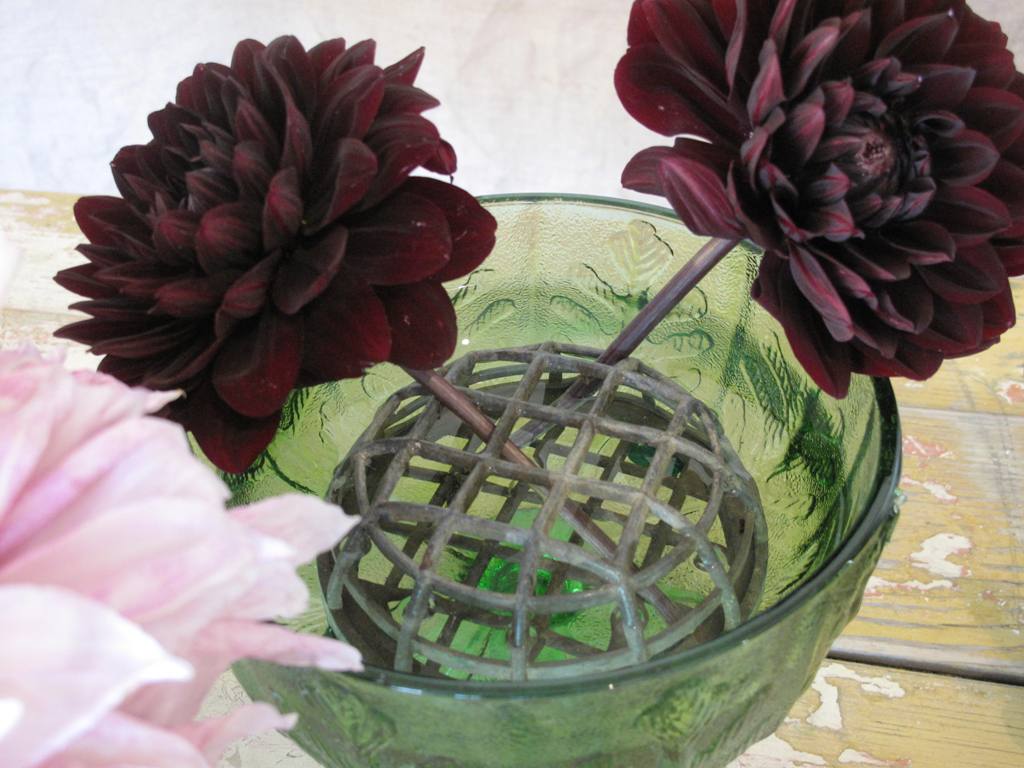
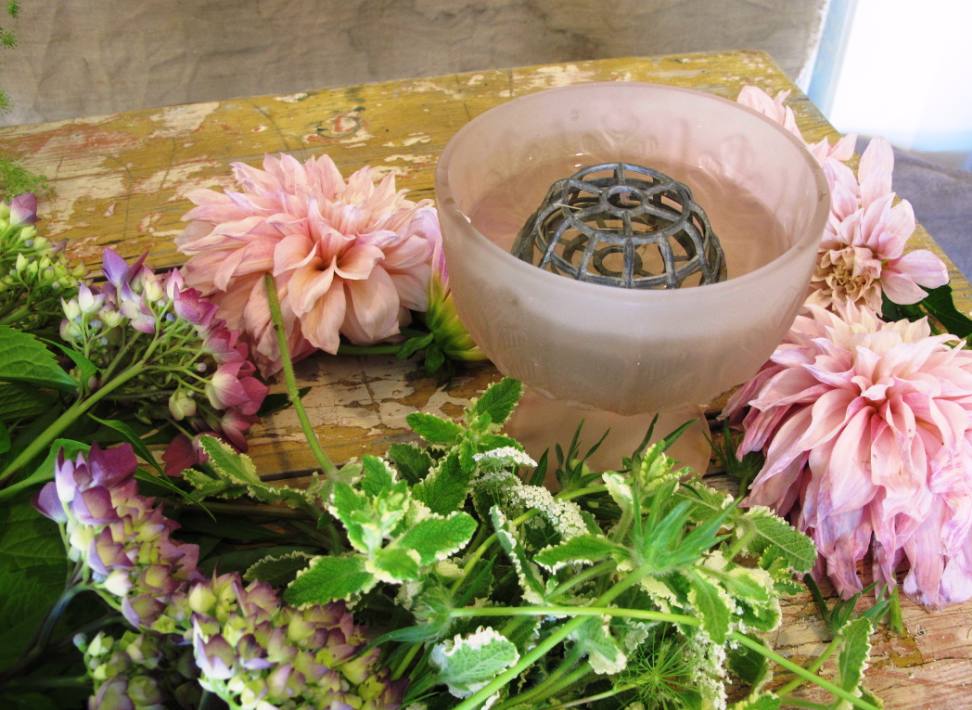
Getting ready by choosing flower frogs to fit inside the two vases.

The first time I used this charming green footed bowl in a demonstration, someone guessed it was Depression glass. There is that pressed-glass quality to these containers, but they’re newer. I like to think FTD was producing them in the U.S.A. and shipping them to mom-and-pop flower shops around the country at a time when those florists were still using predominantly American-grown flowers. The vases are so much more interesting and well made than most of the (probably) made-in-China stuff you see coming out of floral wire services these days. Keep your eyes out at the thrift store or surf on eBay, where I’ve found at least six or seven listings for idential and similar vessels.
I’ve written before about how much I love footed anything for floral arranging. Here is a recent post where I wax eloquently about footed vessels. Today, it was time to play with some flowers and see what I could create. By the way, here are the dimensions on these bowls: overall height, 5-1/2 inches; diameter, 5-1/4 inches; depth of bowl, 2-1/2 inches.

The shallow bowl does require some kind of device to stabilize stems. Back in the day, those 1978 florists were probably blithely cutting up chunks of foam to stick inside. But today we all know how unsafe it is to handle or use florist’s foam for its toxic attributes (formaldehyde being the active ingredient). So out came the metal frogs, as you can see in my bouquets below. Alternately, I could have shaped a section of chicken wire to fit inside, securing it with floral tape. Both methods are quite easy and eco!

Here is my first of two arrangements, using the green vase: 

Green Vase and Frog

Step One: Insert maroon dahlias into metal frog. Notice how I’ve cut the stems short so that the flower head snugs close to the rim of the vase. 


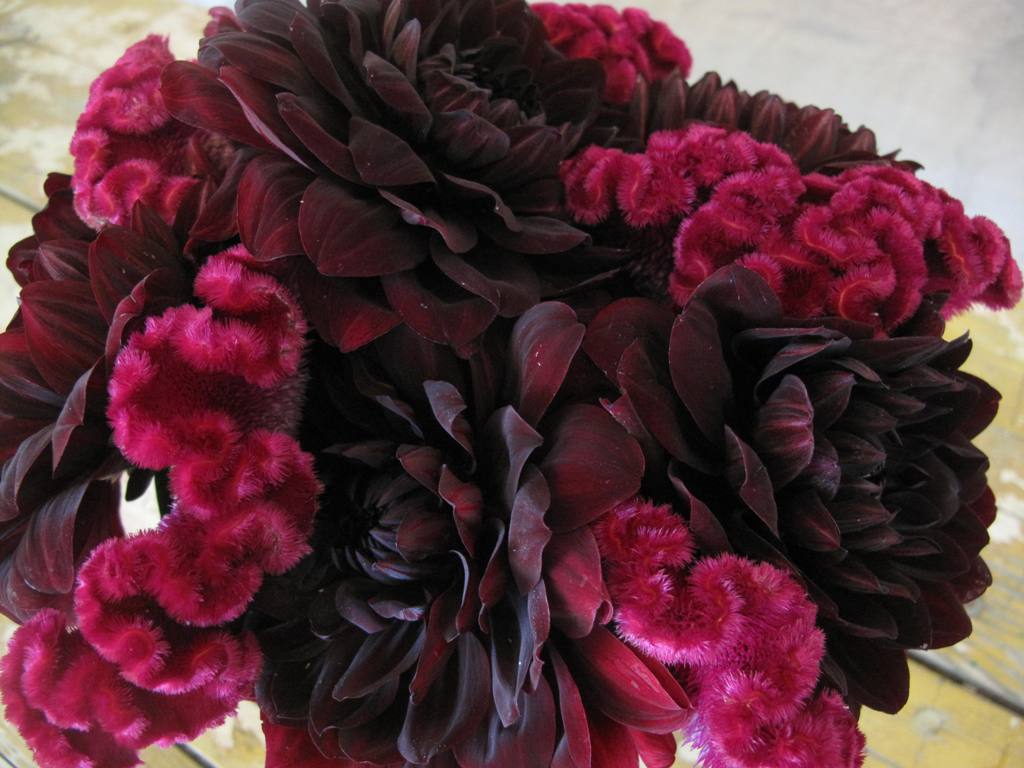
Magenta and Fuchsia

Step Two: After seven dahlias are arranged evenly throughout the opening, I added five lush fuchsia cockscomb celosias inbetween the darker flowers. 

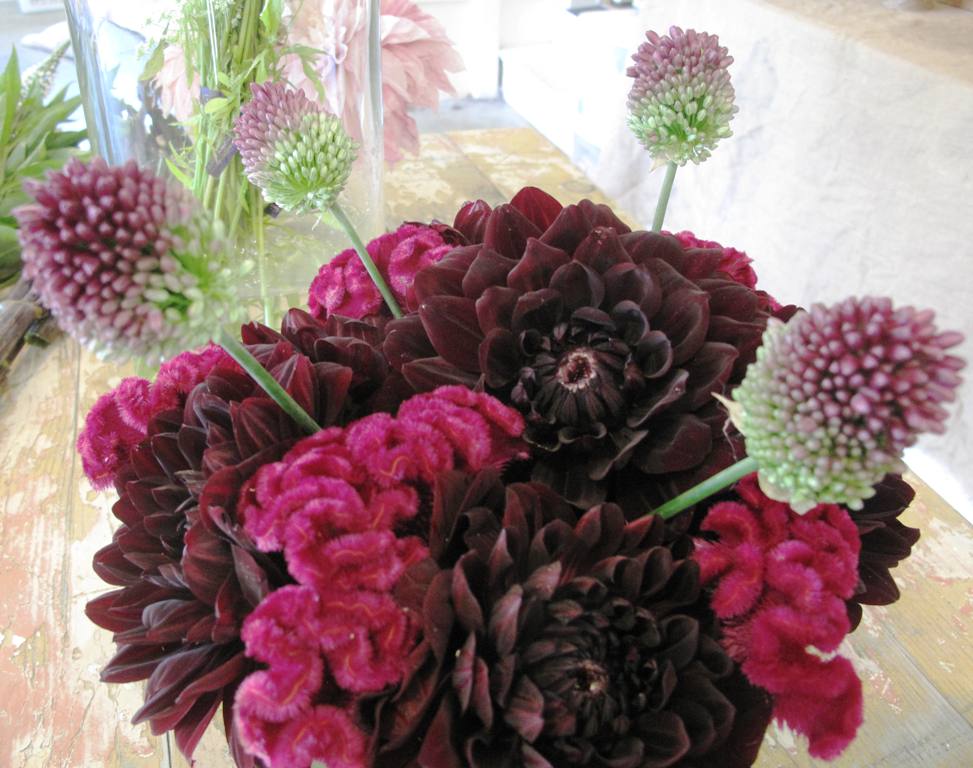
Adding Alliums

Step Three: Insert four drumstick alliums for graphic punctuation. 


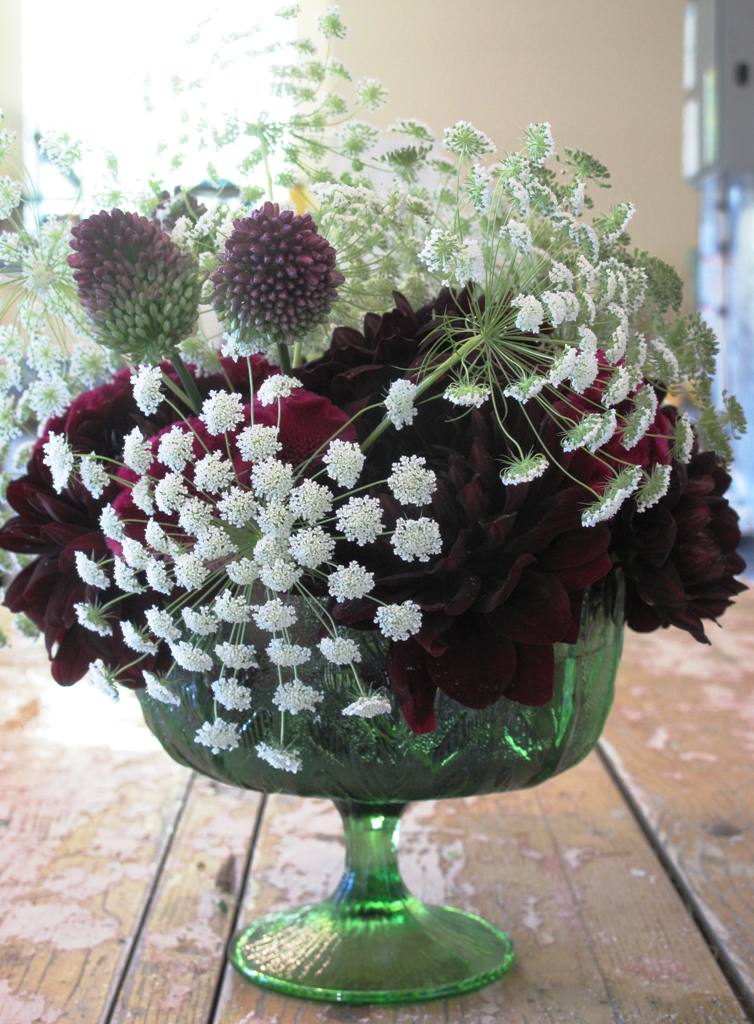
Adding Queen Anne's Lace

Step Four: Add Queen Anne’s Lace stems so they hover above the darker base of flowers. 

Green Final

Step Five: Finish off the bouquet with a few stems of gooseneck loosestrife (Lysimachia clethroides), a quirky accent that repeats the white from the QA Lace and brings a new texture into the design.
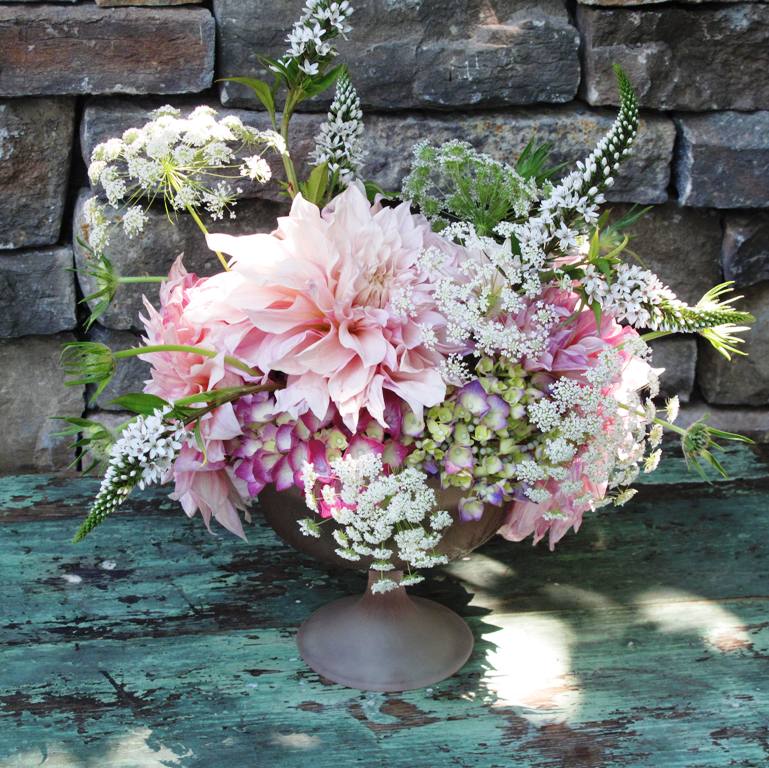
Here how I filled the pale pink frosted vase: 

Pink Vase Starting Off

Getting started. If you compare this photo with the one at the top of this post you’ll see that I switched the frog. The original pin frog I planned on using wasn’t allowing me to insert stems at an angle or sideways, so I replaced it with a metal cage-style frog. 


Pink Final

This bouquet came together in much the same way as the first one, so I didn’t photograph all the steps in detail. Notice that I started with a cluster of unopened hydrangea heads, which created a “base” that supports the three ‘Cafe au Lait’ dahlias, making them more prominent. Other ingredients include Queen Anne’s Lace, Scabiosa buds, and the gooseneck loosetrife. Even though similar ingredients are repeated from the first bouquet, this color palette gives it a totally different look and feel. 


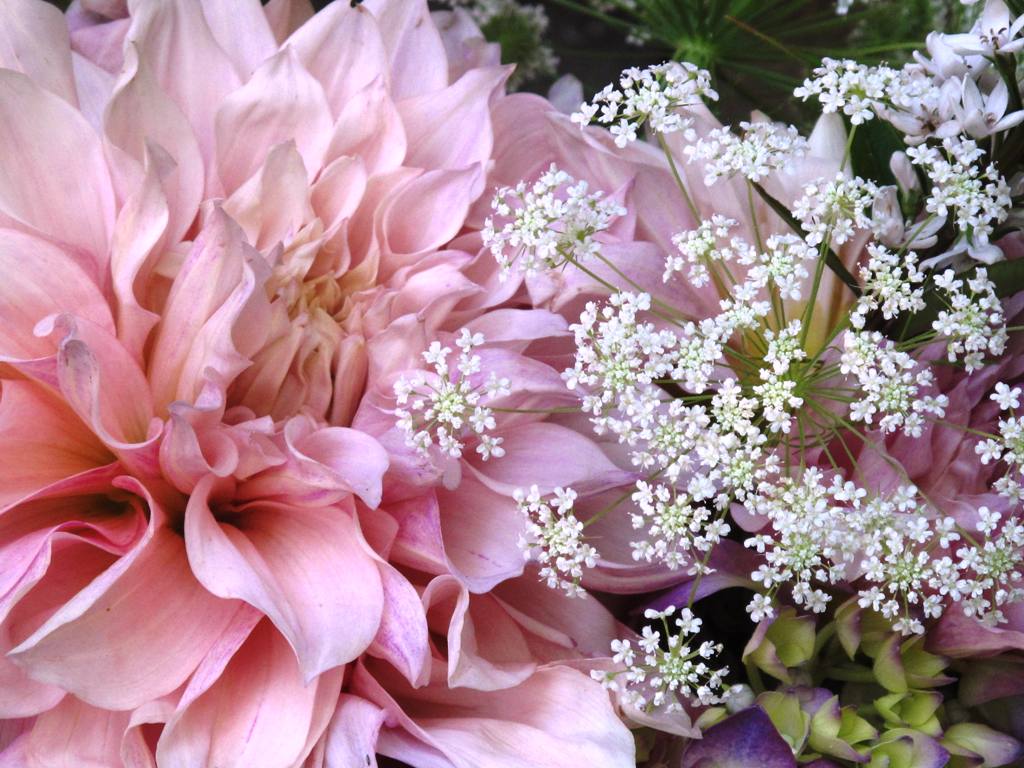
Pink Detail

A final grace note, showcasing the delicate beauty of the dahlia and Queen Anne’s Lace.


SLOW FLOWERS: Week 28

Sunday, July 14th, 2013

Heavenly Hydrangeas

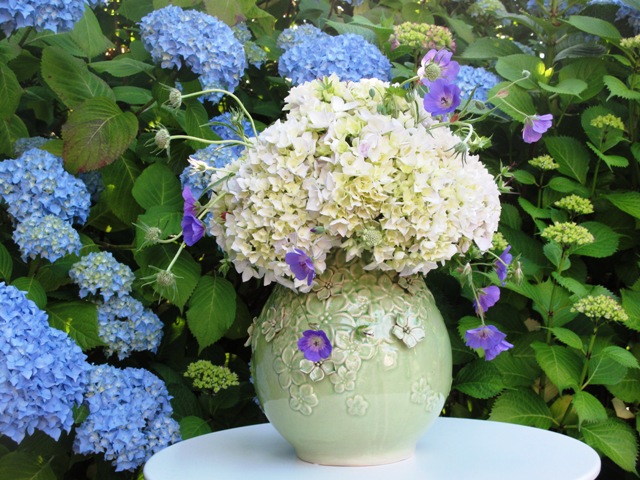
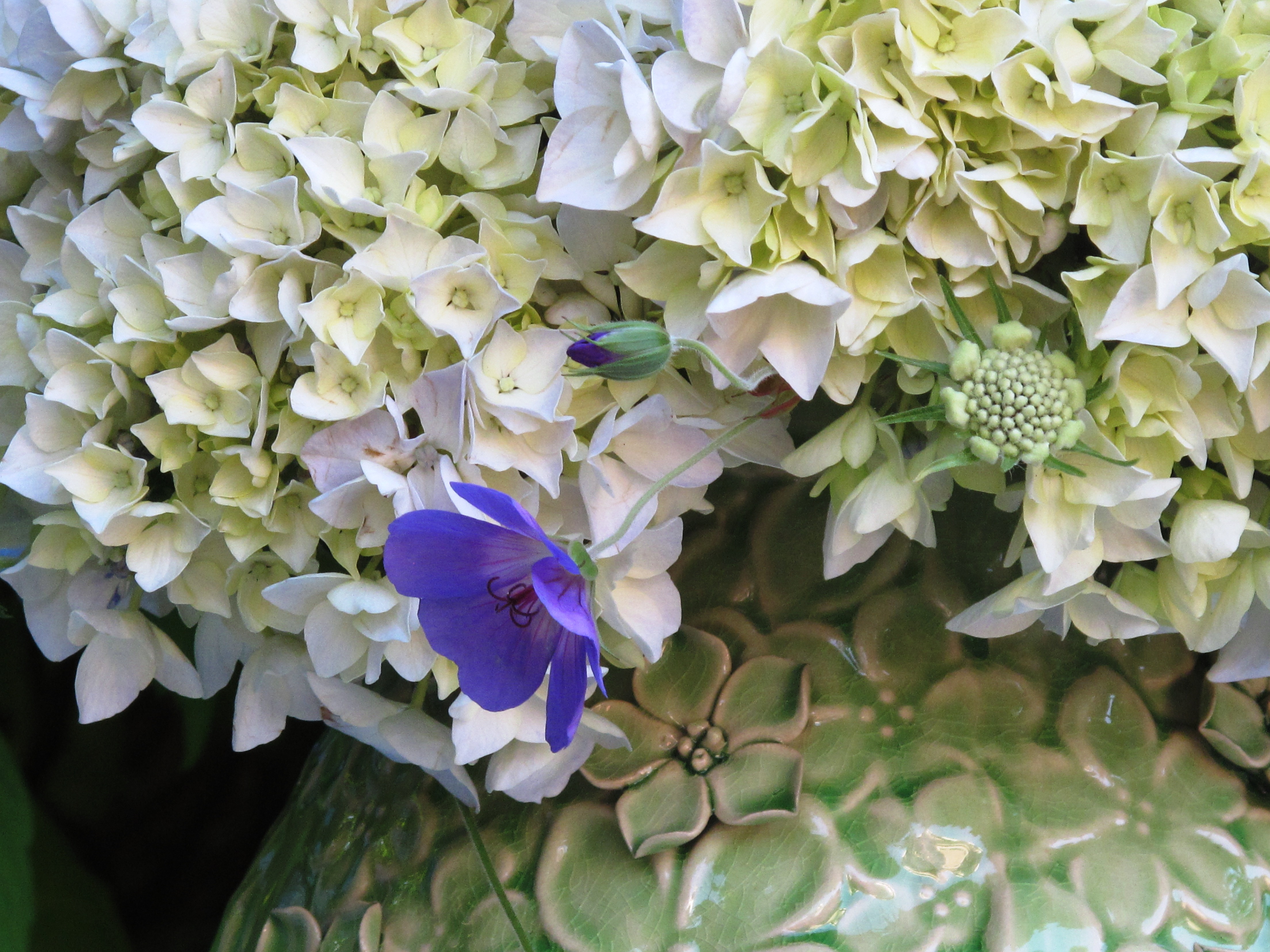
White hydrangeas

A simple bouquet of hydrangeas – one of my favorites in this book

simple detail

The details are quite sweet!

Ingredients:

10 stems mop-head hydrangeas (Hydrangea macrophylla), grown by Oregon Coastal Flowers
8 stems Geranium ‘Rozanne’, harvested from my garden
6 stems pincushion flower (Scabiosa sp.) in bud, grown by Choice Bulb Farms
Vase:
11-inch tall x 10-inch diameter ceramic glazed vase (the opening is 5 inches)
 
From the Farmer
Give your hydrangeas a refreshing drink: Summer-harvested hydrangeas are considered to be shorter-lived than ones cut in autumn, giving them a reputation for not lasting long in a vase. You can revive wilting hydrangea
flowers, though. Five days after I made this bouquet, I took the entire arrangement apart, re-cut each hydrangea stem and submerged them in a cool, soaking bath in the kitchen sink for about 15 minutes. With the excess water shaken off, they were refreshed and re-hydrated, guaranteed to last a few more days in the vase.
 
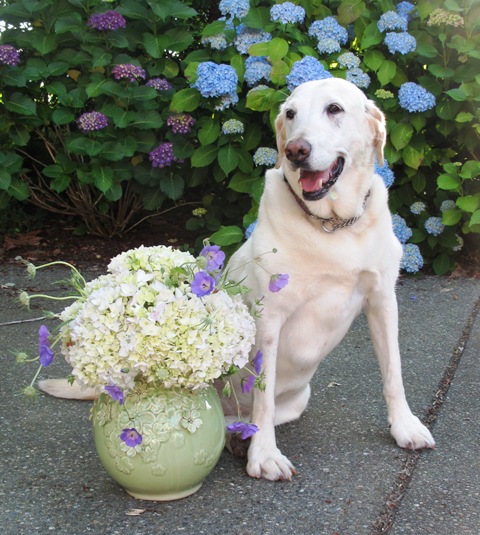
Still Life with Zanny and Hydrangeas

A favorite out-take from Slow Flowers: Our dog Zanny decided to pose with the flowers.


New summer articles by Debra

Saturday, July 13th, 2013

It was fun to visit the newsstand yesterday and pick up three new magazines with my articles.

When you see them in one place, it might feel like I’ve been super productive. But there is a back-story about each, and I have to be honest with you. Sometimes it takes YEARS for a story to see the light of day.

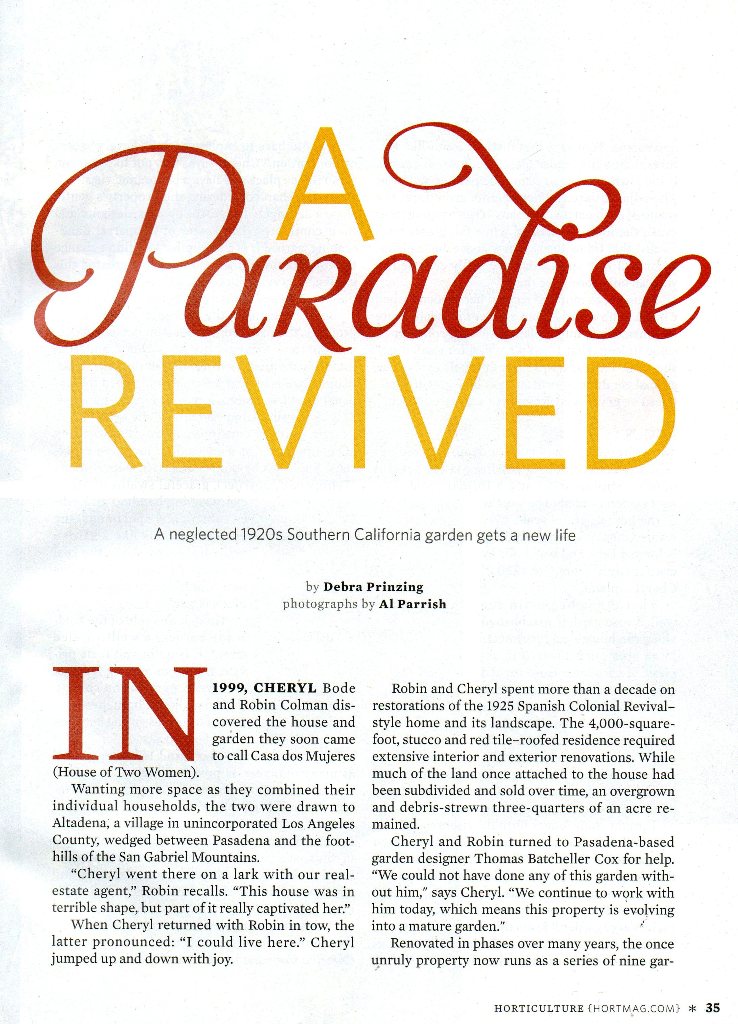
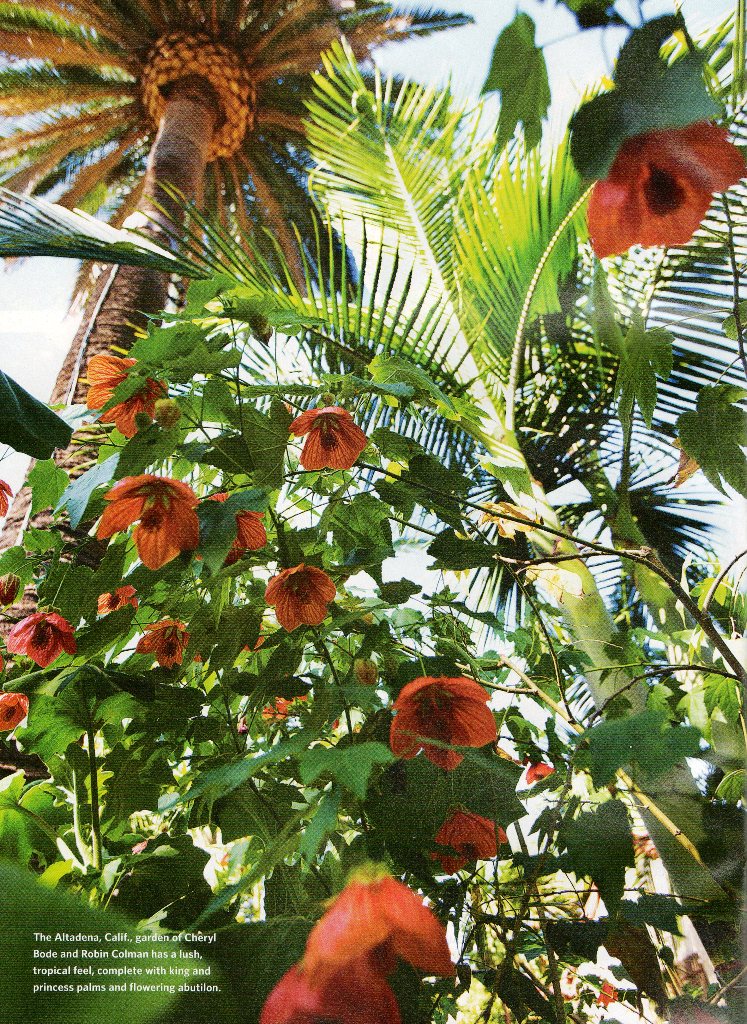
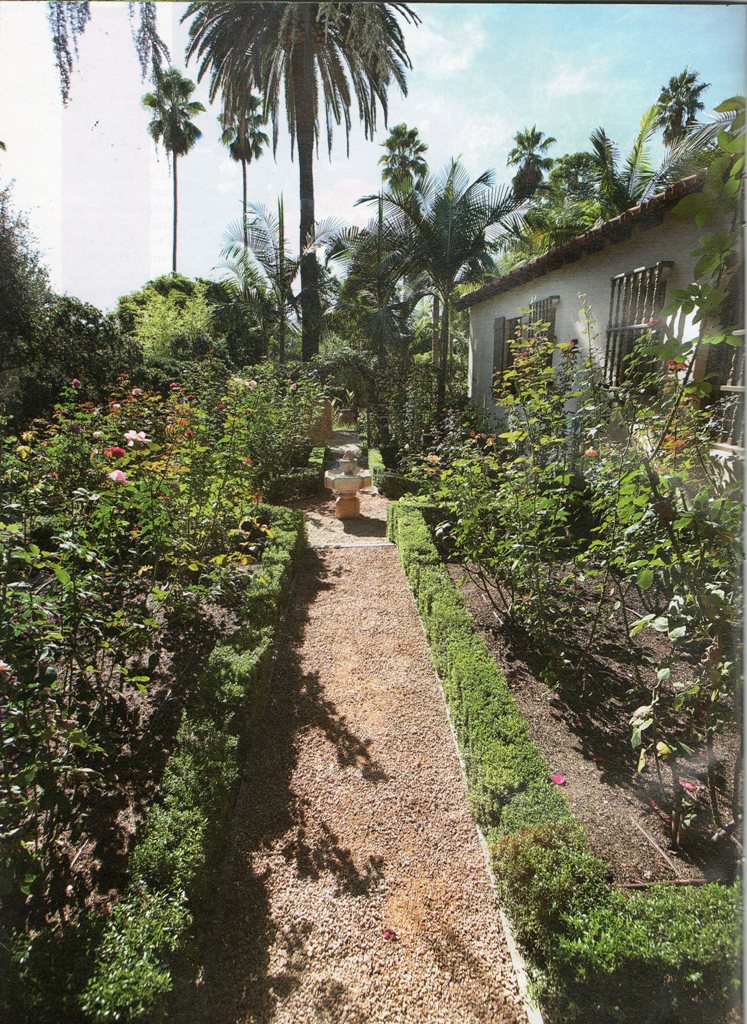
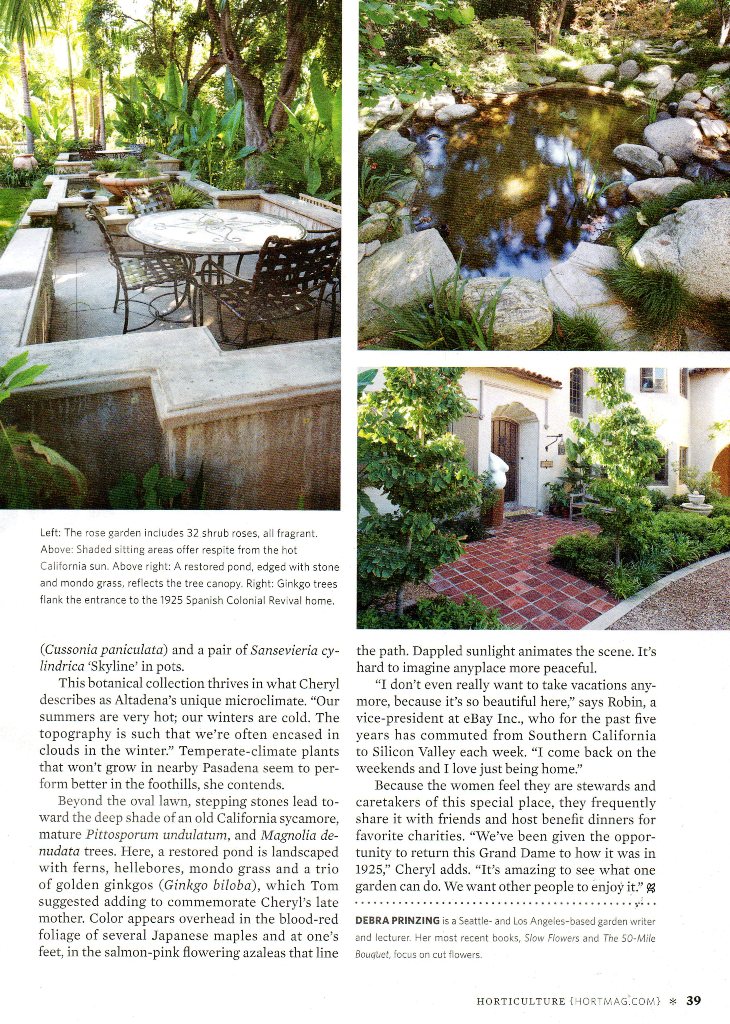
Case in point: The Southern California garden owned by Cheryl Bode and Robin Colman, featured in the July-August issue of Horticulture, was photographed in 2009. Since then, it has often seemed to Cheryl, Robin and me that the story would never appear in print. When I finally saw the issue, just out on newsstands, I understood why. The photos are incredibly disappointing. I have so many wonderful photos of their garden and the magical feeling one experiences when visiting there was simply not expressed in the Horticulture magazine. Click over to my articles page to read the story and see my photos rather than the ones printed below. Theirs is an inspiring story of two homeowners who yearned to bring an old house back to life, along with its garden. To physically walk through it is truly special.

Cheryl_Robinp6Cheryl_Robinp2Cheryl_Robinp1Cheryl_Robinp3Cheryl_Robinp4Cheryl_Robinp5


READ MORE…

A field-to-vase celebration

Wednesday, July 10th, 2013
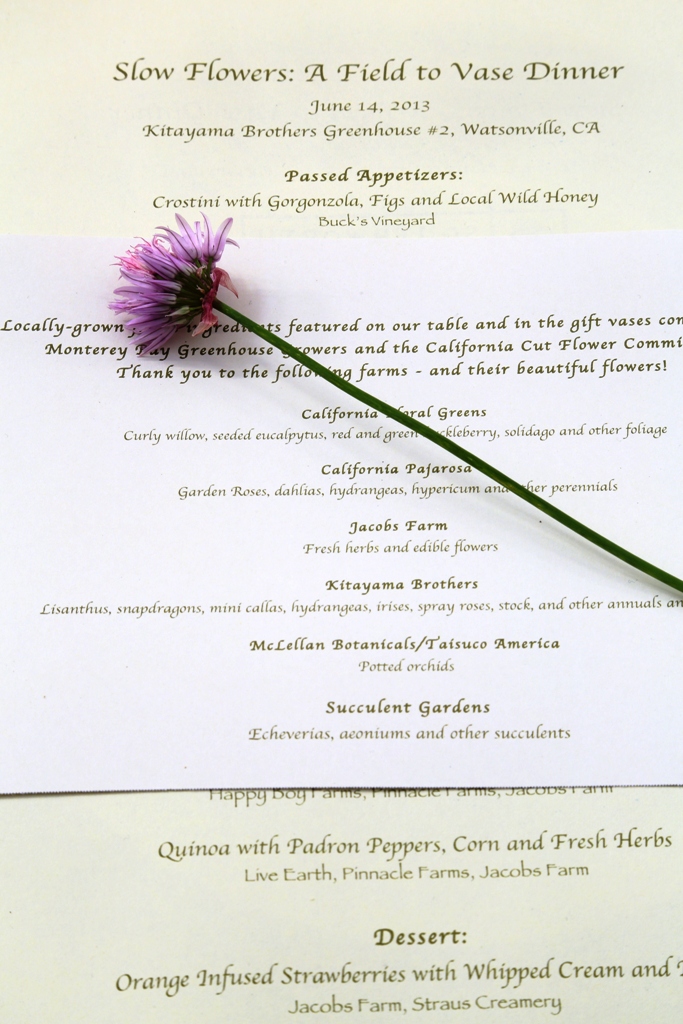
Menu

Welcome to the Slow Flowers Dinner

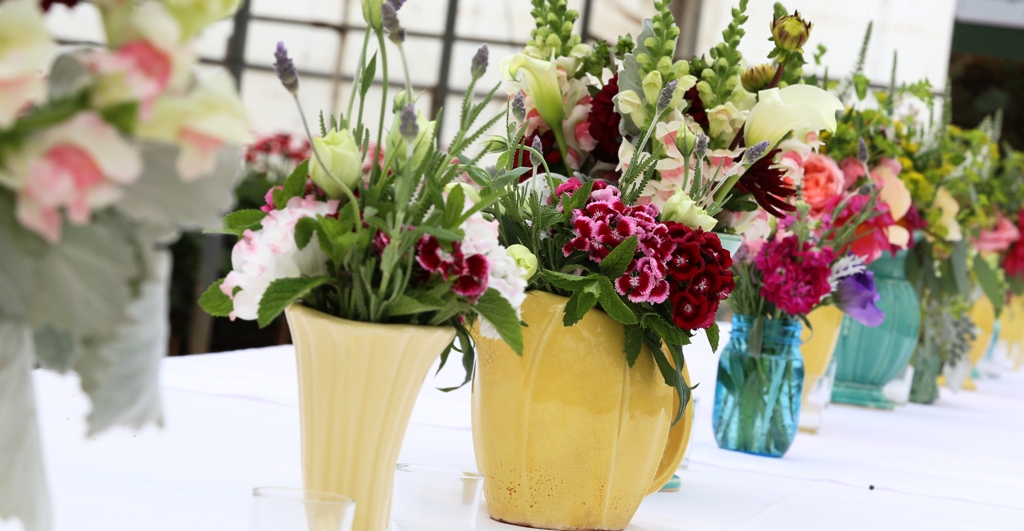
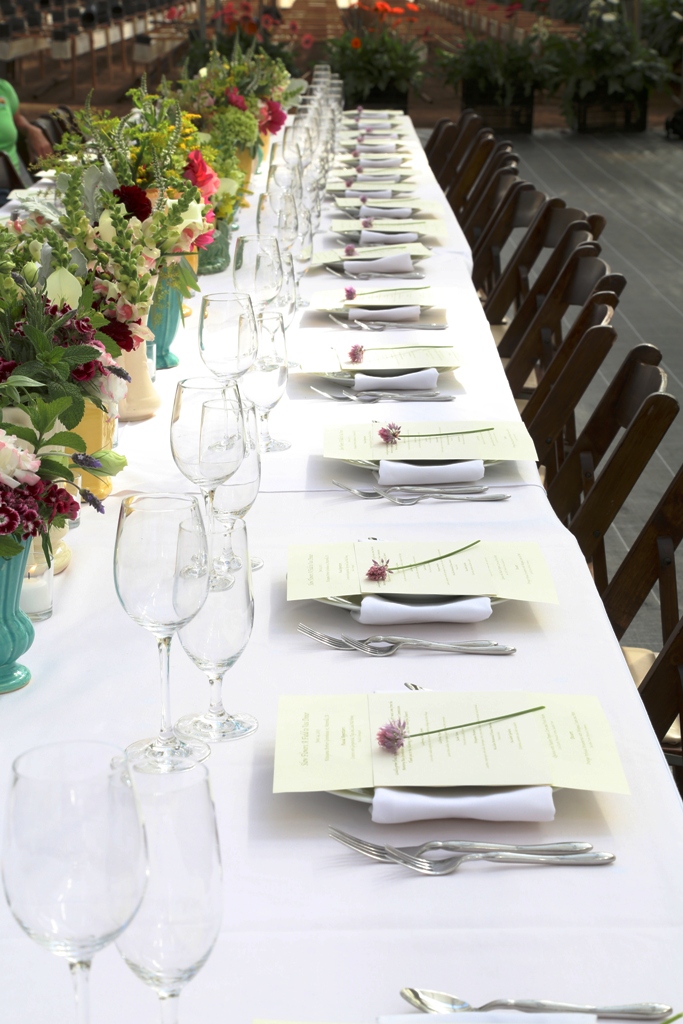
Imagine a table set for 40 . . . inside a flower-filled greenhouse. Vintage vases overflowing with just-picked blooms adorn the table and a locally-grown menu is is served.

Imagine a table set for 40 . . . inside a flower-filled greenhouse. Vintage vases overflowing with just-picked blooms adorn the table and a locally-grown menu is served.

Last month I joined with the California Cut Flower Commission to host a “Slow Flowers” dinner as part of the 2013 Monterey Bay Greenhouse Growers Open House & Tour.

table setting

The table was set for local food and local flowers.

We called it “Farm-to-Table; Field-to-Vase” and held the dinner in the gerbera-filled greenhouse at Kitayama Bros. Farms in Watsonville, California. The event was a gathering of like-minded persons. Each of us — farmer, florist, media, community advocate — cares deeply about the role of American  flowers in the greater agricultural environment. And everyone in attendance contributed an important voice around the table, a table with locally-grown food and locally-harvested flowers.

READ MORE…

New Floral Video & Photography Set

Tuesday, July 9th, 2013

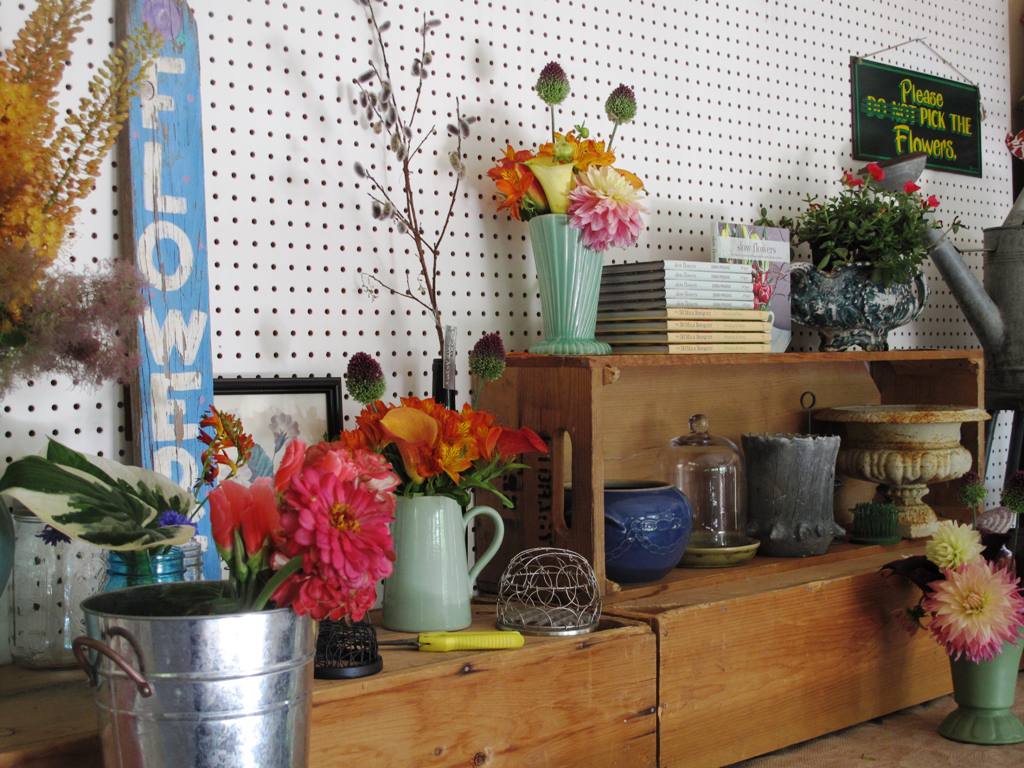
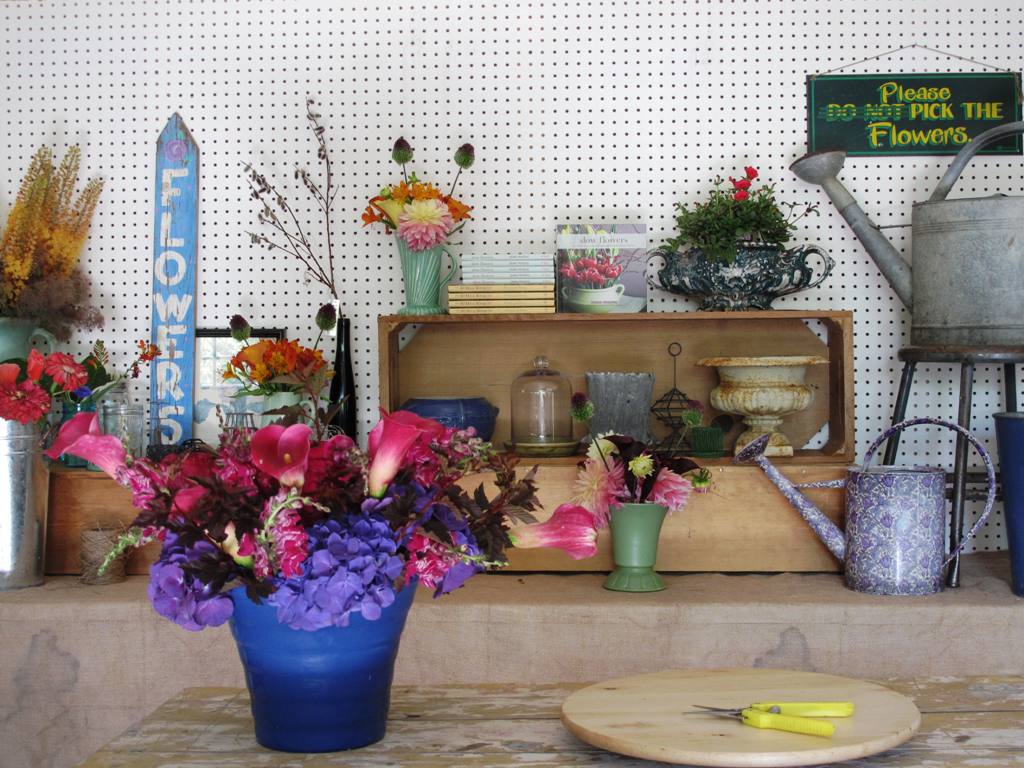
I’m very excited to show off the backdrop that I recently created for DIY floral video projects.

If you look closely, you’ll see some of my favorite things gathered on the garage workbench. Vintage ceramic vases and metal urns, French flower buckets, frogs of all types, Mason jars, botanical artwork, salvaged goodies and more.

Flower Set

A floral designer’s work bench – and perfect video set.

Here’s another view – with the weathered picnic table in front – the ideal surface for bouquet-making.

Flower Set 2

Another view, featuring the weathered picnic table in the foreground.

How on earth am I pulling this off? Making a video, I mean!

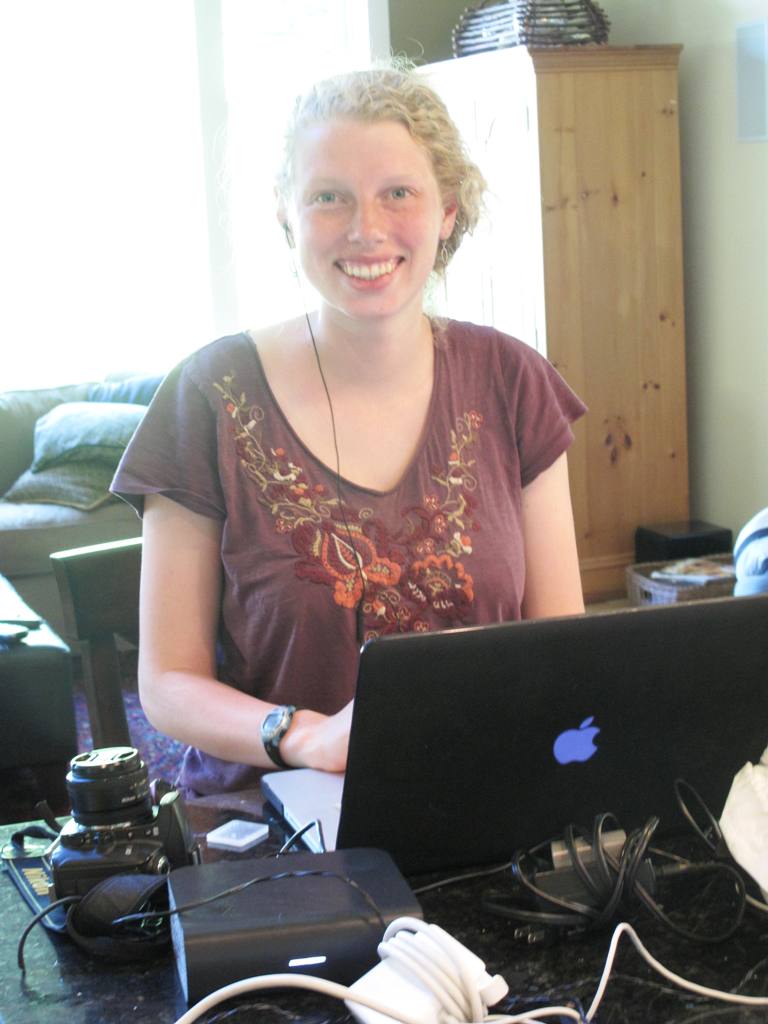
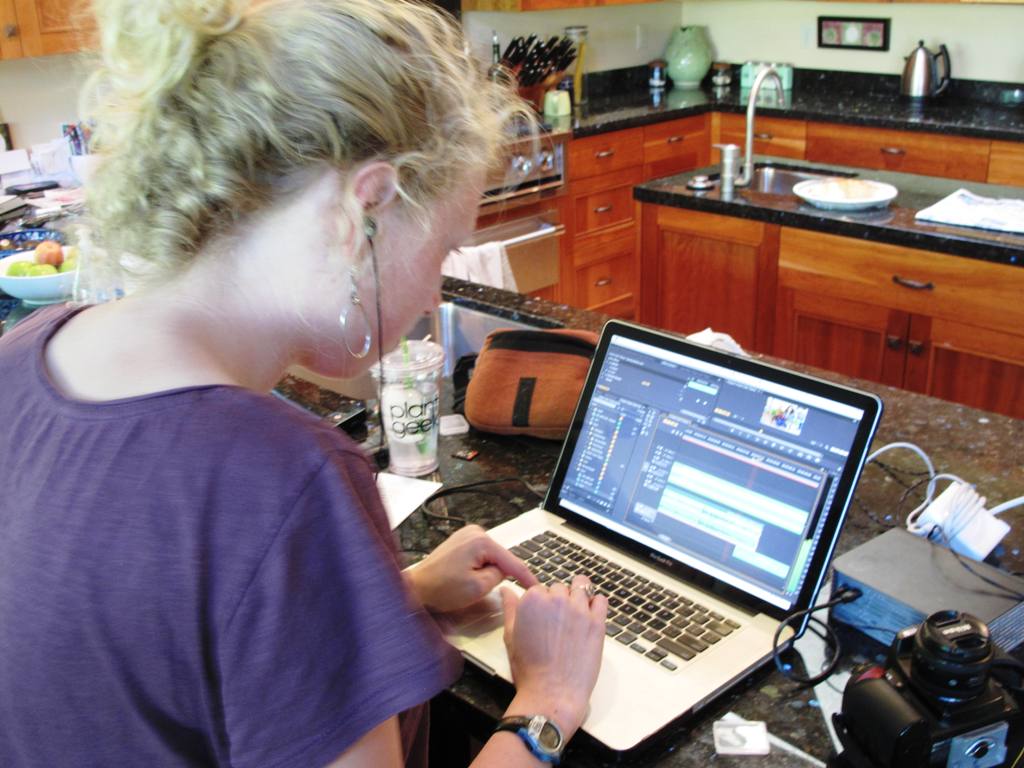
I am fortunate to have a young filmmaker here for the day. Her name is Hannah Holtgeerts and she is a college friend of my son Ben’s. Hannah jumped into this project with total enthusiasm. A talented photographer, videographer and documentary filmmaker, she really makes things look effortless. Aaah, YOUTH, CHARM AND TALENT~ Too bad that Hannah is heading back to Chicago where a post-college job awaits her this fall. But for now, I’m thanking my lucky stars. The video will be pulled together soon and I promise to share it here~

Hannah Holtgeerts

Hannah Holtgeerts – at work editing the video we shot this morning.

Hannah

Looking over Hannah’s shoulder. What a pro!


SLOW FLOWERS: Week 27

Sunday, July 7th, 2013

AMERICAN ROSES

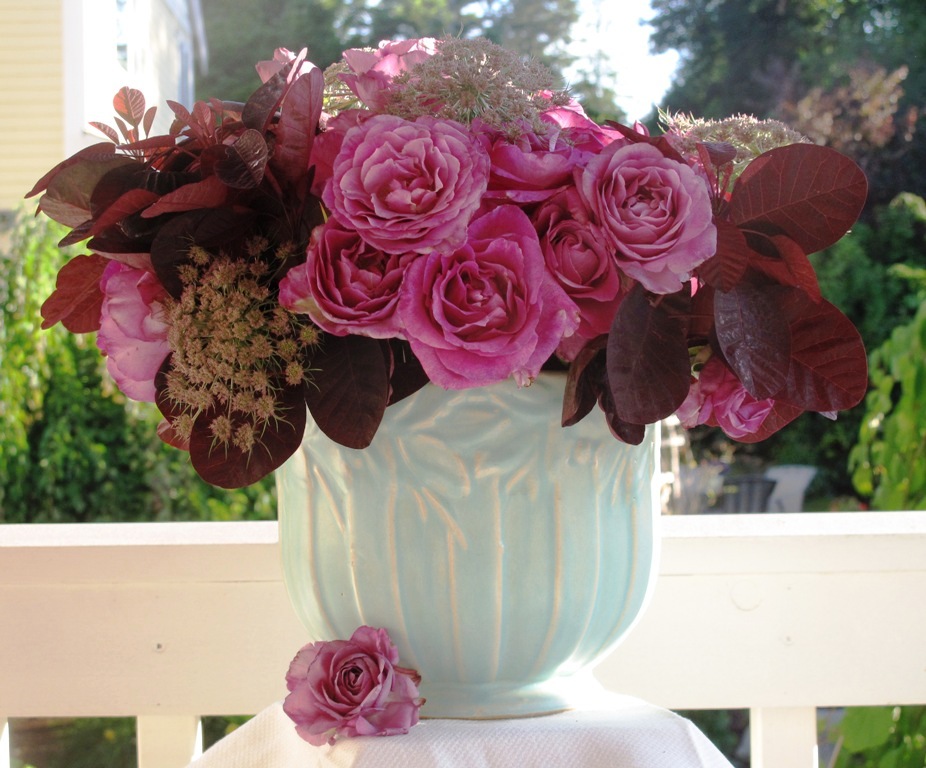
American roses

There are three sultry-smoky elements to this simple bouquet: roses, smoke bush foliage and a type of Queen Anne’s lace.

detail

When all three colors, forms and textures are seen together – up close – it’s simply beautiful!

Ingredients:

20 stems Rosa ‘Wild Blue Yonder’ roses, grown by Westmont Park Roses
7 stems smoke tree (Cotinus coggygria ‘Royal Purple’), grown by Jello Mold Farm
10 stems Queen Anne’s lace (Daucus carota var. sativus ‘Black Knight’), grown by J. Foss Garden Flowers

Vase:
7-inch tall x 7½-inch diameter McCoy jardiniere, 1940s era, with a raised design of vertical bands and flowers

From the Farmer
When to cut for the vase: Commercial rose growers like Westmont Park Roses have special procedures for harvesting their flowers and processing them with a hydrating solution before making florist deliveries. The home gardener who grows old English roses and David Austin garden roses isn’t faced with these storage and delivery demands. Get the most out of your garden roses by cutting them when temperatures are coolest on the day you plan to arrange them. I like to pick a mix of roses at different stages to create more interest: in bud; slightly open; two-thirds open and fully open. This technique reminds grower John Martin of a single, beautiful grandiflora cluster, “with five or six roses, each at a different blooming cycle.”


SLOW FLOWERS: Week 26

Sunday, June 30th, 2013

A STROLL IN THE GARDEN

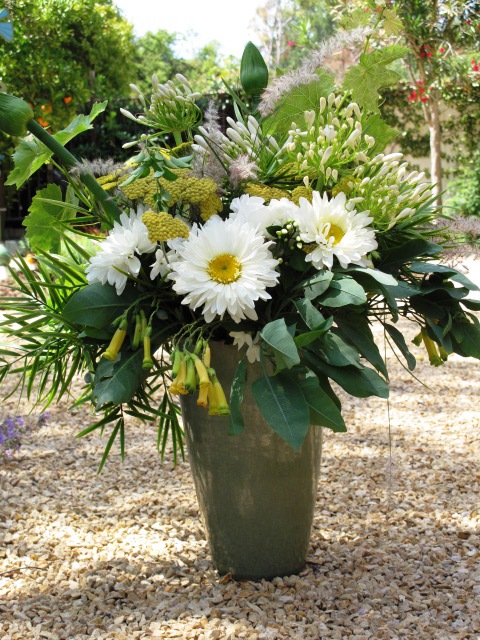
This bouquet will forever transport me to my former garden in Ventura County, California, which we left in July, 2010. I created this bouquet from all garden ingredients the month before moving away.

This bouquet will forever transport me to my former garden in Ventura County, California, which we left in July, 2010. I created this bouquet from all garden ingredients the month before moving away.

Ingredients:
All were harvested from my former garden in Ventura County, California
5 branches fern pine (Podocarpus gracilior)
7 stems and pods of lily-of-the-Nile (Agapanthus ‘Snowy Owl’)
1 spray ‘Iceberg’ rose (Rosa ‘Iceberg’), a popular floribunda rose
3 vines evergreen jasmine (Jasminum polyanthum)
3 stems Shasta daisy (Leucanthemum x superbum)
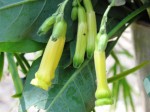
5 stems blue tree tobacco (Nicotiana glauca ‘Salta Blues’), a flowering tobacco with blue-green leaves and long, tubular yellow flowers. This is a cool plant for the perennial border and an equally fetching choice for my bouquet.
7 stems yarrow (Achillea ‘Moonshine’)
9 stems-seed heads fountain grass (Pennisetum orientale)
3 grapevines (Vitis vinifera)
Vase:
10-inch tall x 7-inch diameter celadon ceramic vase
Seasonal Choices
See the possibilities everywhere: I’m convinced that even the tiniest of gardens can yield interesting and unique flowers, branches, leaves, vines and stems for a seasonal bouquet. You don’t have to be a flower farmer to grow
and harvest appealing ingredients. And you don’t have to be a pro to assemble an eye-pleasing arrangement. Just use your powers of observation to appreciate and experiment with the seasonal beauty around you.


SLOW FLOWERS: Week 25

Sunday, June 23rd, 2013

SUMMER GLOW

Amber Apricot Peach

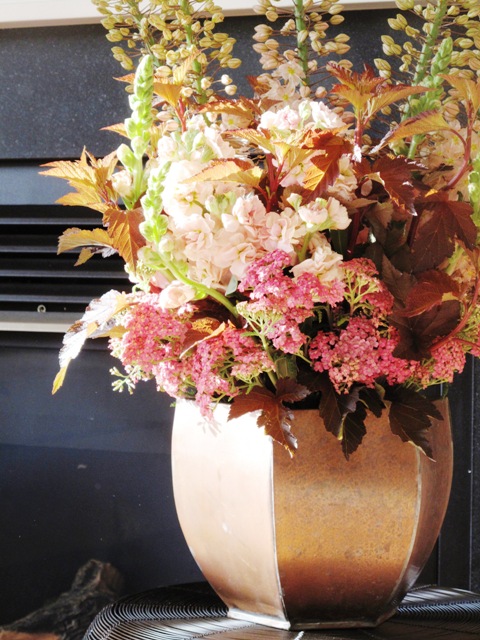
This coppery design began with the russet foliage called ‘Coppertina’, a variety of ninebark.

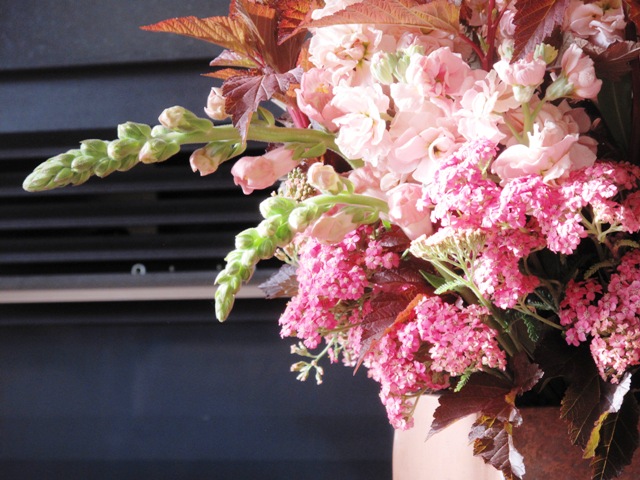
Textural details in a sultry summer color palette

Textural details in a sultry summer color palette

Ingredients:

20 stems ninebark (Physocarpus opulifolius ‘Coppertina’), grown by Jello Mold Farm
11 stems pink yarrow (Achillea millefolium), grown by Jello Mold Farm
7 stems pale peach stock (Matthiola incana), grown by Everyday Flowers
5 stems apricot snapdragon (Antirrhinum maius ‘Tangerine Trumpet’), grown by Everyday Flowers
5 stems foxtail lily (Eremurus x issabellinus), grown by Choice Bulb Farms
Vase:
7-inch tall x 7½-inch diameter copper planter with a 5½-inch opening
Design 101
Tonal color palettes: Sometimes called “monochromatic,” a tonal theme incorporates different shades of colors in the same group. Here I used a combination of pale, medium-toned and dark floral elements in the pink-peach-copper color family. What makes the composition interesting (rather than plain) are the many uncommon shapes and textures. Try this technique with varying shades of gold, green, silver or burgundy – your bouquet will look
modern and sophisticated.