Five Fabulous Flower-Filled Days at the San Francisco Flower & Garden Show
March 30th, 2014
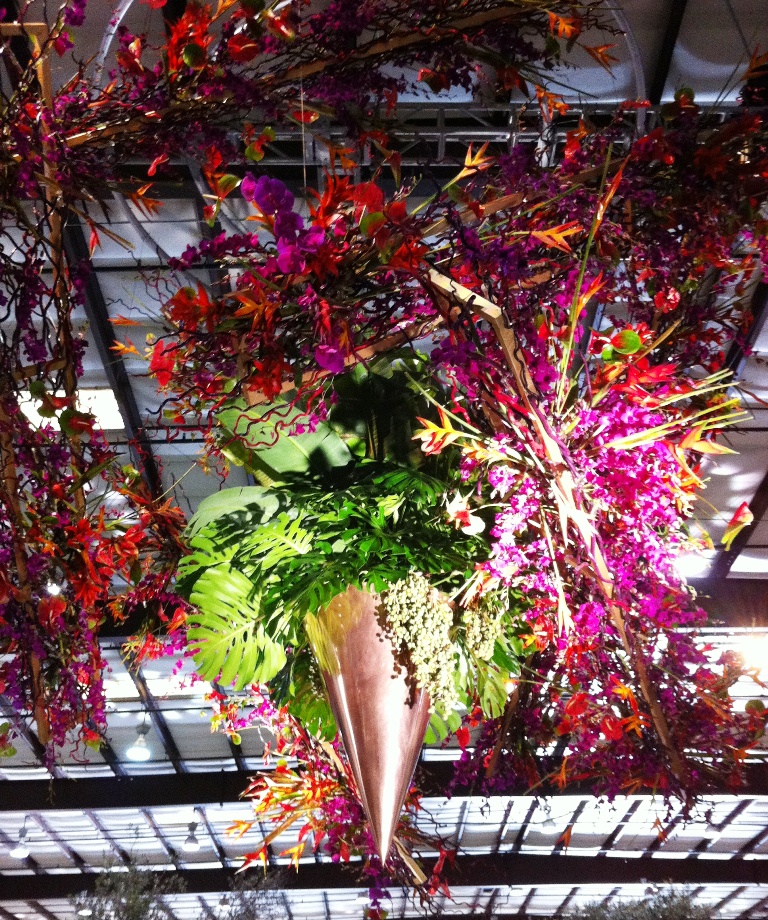
Natasha Lisitsa used more than 2,000 stems to create this dynamic signature piece that greeted showgoers above the grand allee.
READ MORE…



March 30th, 2014
Natasha Lisitsa used more than 2,000 stems to create this dynamic signature piece that greeted showgoers above the grand allee.
READ MORE…
March 27th, 2014
2 Workshops + 1 Saturday = Flower Filled Day
When: May 3, 2014
Where: The 95 Yesler Collective Studio, 3rd floor (Seattle)
Who: Debra Prinzing & Alicia Schwede
Workshop #1 – 10:00-12:00
Seasonal Flowers with Debra Prinzing
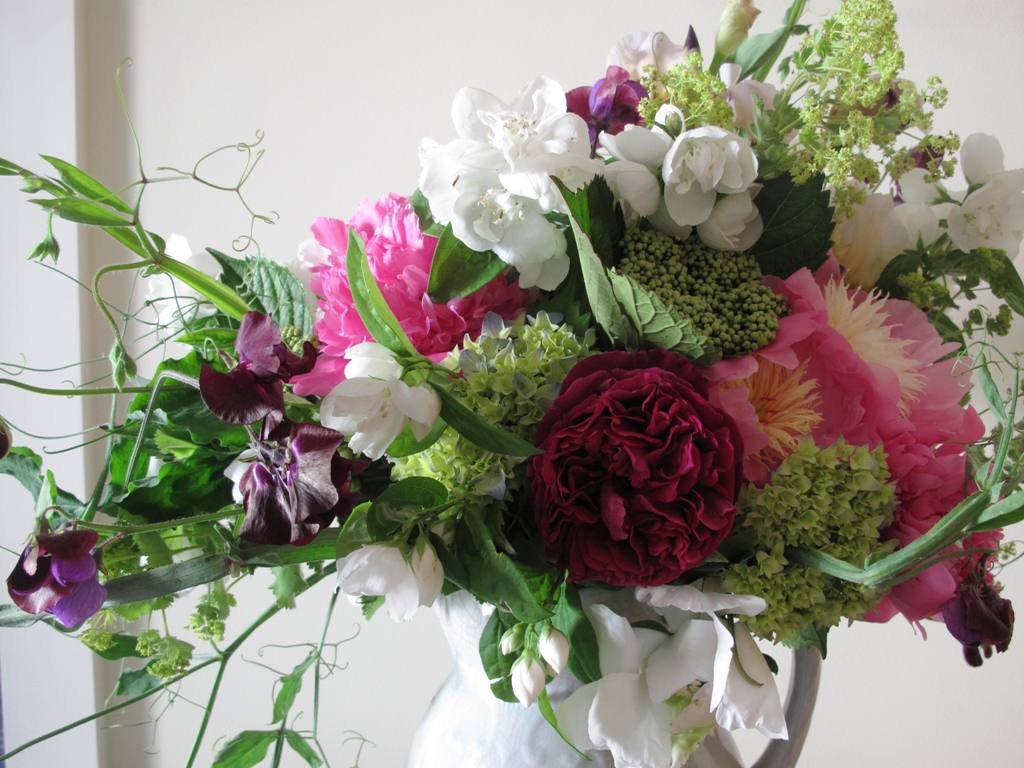
Every single element in this vintage white pitcher is from my Seattle garden. Happy Spring!
What: A seasonal, hands-on floral design workshop for gardeners, DIY designers and flower lovers alike.
When: 10-12
Who: Debra Prinzing, Slow Flowers advocate and author of The 50 Mile Bouquet and Slow Flowers. Debra is an award-winning writer, editor and speaker. She has spoken and/or led hands-on floral design workshops at major botanical gardens and for leading garden clubs including the Dallas Arboretum, Denver Botanic Garden, Chicago Botanic Garden, Los Angeles Arboretum, Pasadena Garden Club, Seattle Garden Club, the Garden Club of Santa Barbara, and more. She was the 2014 Floral Curator for the San Francisco Flower & Garden Show. Learn more about Debra at www.debraprinzing.com.
Seasonal Flowers introduces students to of-the-moment flowers for growing and arranging as each reflects her/his personal style and creative muse. Taught in a 2-hour session, the workshop is formatted as follows:
You’ll take home a custom floral arrangement or bouquet for your home, along with a resource handout.
A la carte Price: $95 per student; or take advantage of the bring-a-friend price of $175 for two
Supply fee per student/per class: $15 (includes vase, tools and floral design supplies)
Lunch Break – 12-1pm, lunch on your own.
Workshop #2 – 1:00-4:00
The Bridal Bouquet & Pricing Workshop with Alicia Schwede
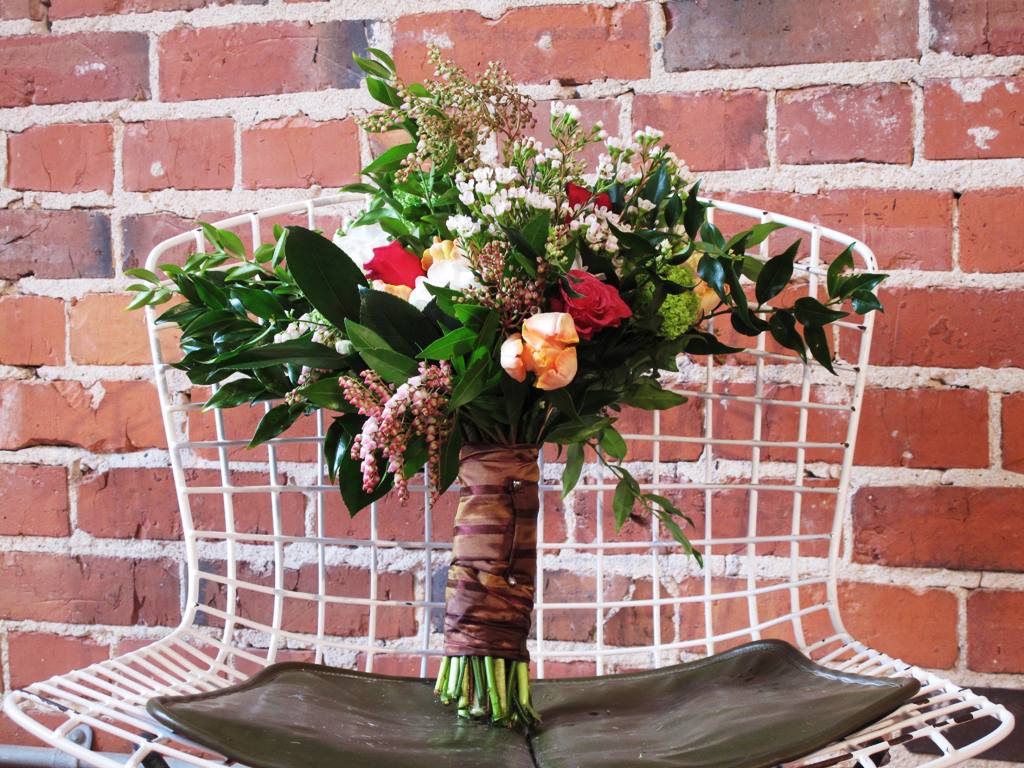
Demystify the design and pricing of a Wedding Bouquet with Alicia Schwede.
What: A hands-on floral design workshop with a discussion and learning session about pricing designs.
When: 1:00-4:00pm
Who: Alicia Schwede, owner of Bella Fiori & editor of the Flirty Fleurs Floral Designer Blog. Alicia is the author of Bella Bouquets Book, which will be available for purchase at the workshop.
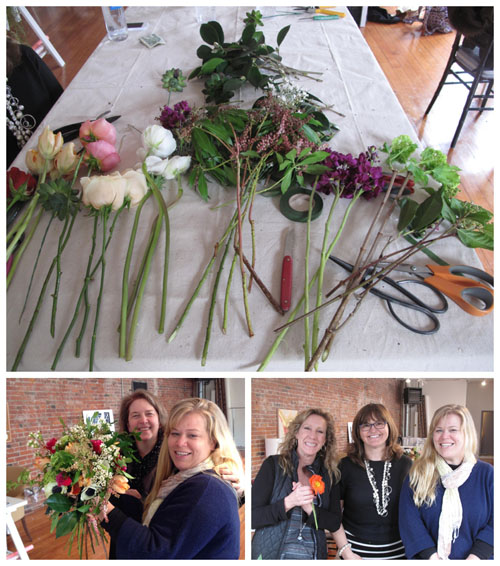
The Bridal Bouquet & Pricing Workshop is a hands-on workshop where you will learn how to design luscious hand-tied bouquets. After we design a beautiful bridal bouquet we will have a discussion and learning session about pricing our designs. All instruction and fresh flowers are included, please bring your own tools.
Investment: $195.00
……………………………………………………………………………………..
Please note: You may choose to take one or both of the workshops. Either way, the workshops must be paid for separately.
Register for Alicia’s Workshop
Questions? Send Alicia an Email
Or send Debra an Email
……………………………………………………………………………………..
March 26th, 2014
Podcast: Play in new window | Download
Subscribe: Apple Podcasts | Podcast Index | RSS | More
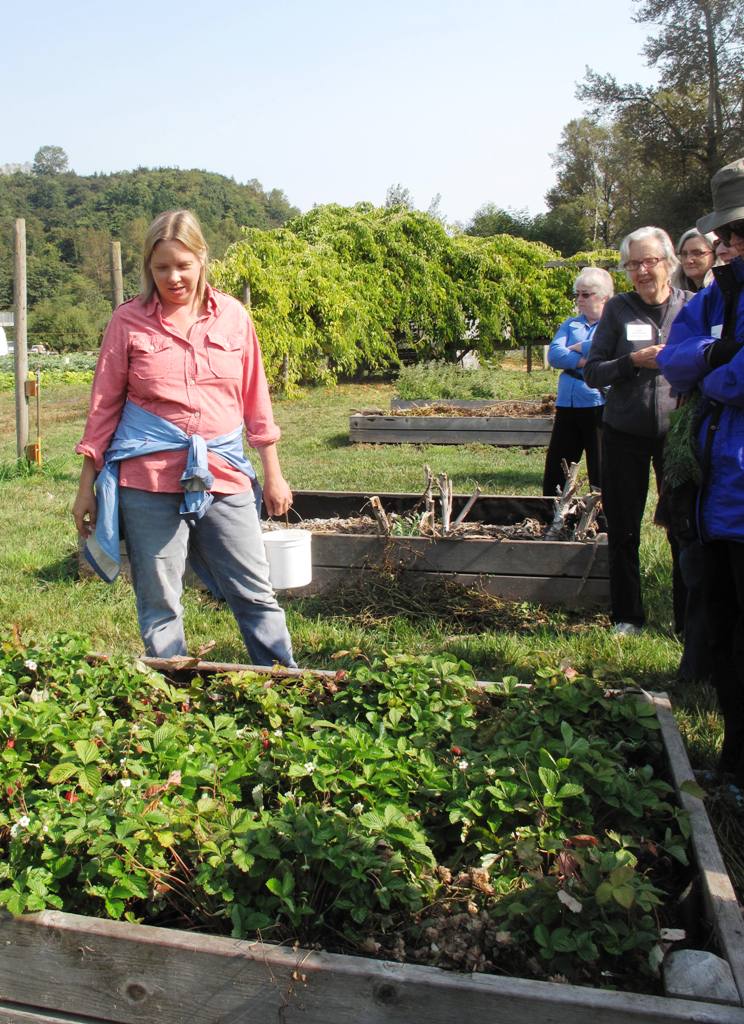
Katherine Anderson, leading a tour at her flower farm.
It is my pleasure today to introduce you to Katherine Anderson, a flower farmer who’s also an innovative floral designer.
Katherine is the creator and owner of Marigold and Mint, a flower shop and studio in Seattle’s trendy Capitol Hill district that takes its influences from Europe, Asia and America’s maker/handcrafter movement.
Marigold and Mint (the shop) is filled with flowers that Katherine grows on land her family has owned for three generations, ever since the 1950’s.
Although she didn’t start flower farming as a career until she was in her thirties, Katherine has been connected to soil, plants and cultivation ever since she gardened with her father as a child.
In 2008, she stepped off the corporate track as a Harvard-trained landscape architect to raise her children and return to the land as a flower farmer.
 Katherine began by planting rows of annual flowers and herbs. She started with the idea of selling locally grown flowers to florists and chefs.
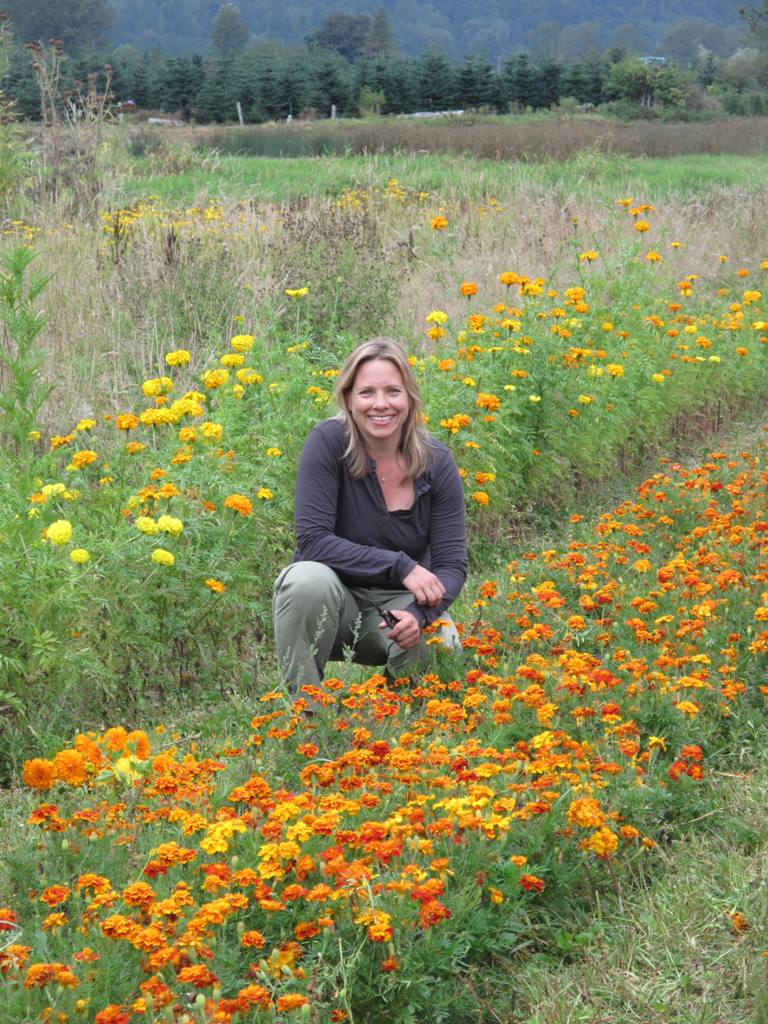
Katherine, surrounded by marigolds – at her growing fields, a part of Oxbow Farm, east of Seattle.
Much of the land her family owns is leased to Oxbow Organic Farm & Education Center, which among other programs, operates a food CSA that supplies households and restaurants. There was plenty of acreage for Katherine’s annuals, herbs, perennials, garden roses and ornamental shrubs.
Four years ago, she opened a small shop. Marigold and Mint is located next to a popular farm-to-table Seattle restaurant, which she regularly supplies with herbs and culinary ingredients (a few summers ago, when I visited the farm, Katherine was harvesting nasturtium seeds for the chef to pickle and use in dishes, like capers).
She has a special affinity for marigolds – she grows 15 or so varieties each season, including ‘Frances’ Choice’, ‘French Brocade’, ‘African’, the Signet series, ‘Durango Outback’, ‘Queen Sophia’, ‘Vanilla’ and ‘Tangerine Gem’ – and many more.
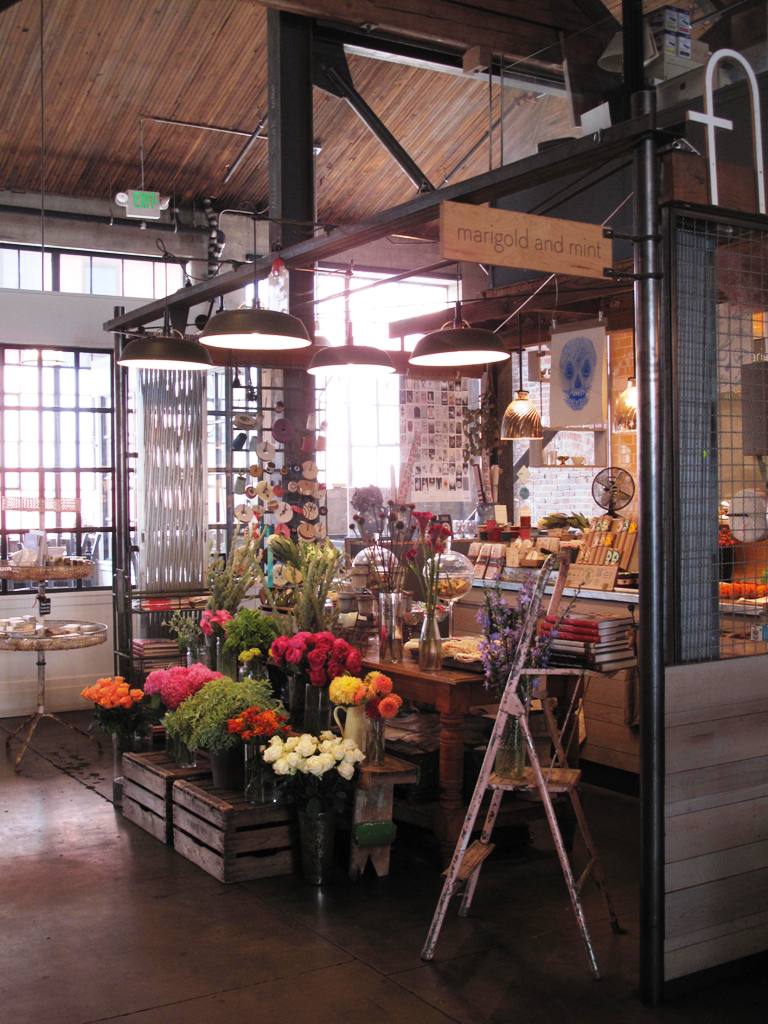
A glimpse inside Marigold & Mint.
Earlier this year, Katherine and restaurateur Matthew Dillon, the same chef she’s been supplying for years, joined together to open a new venture called The London Plane. Located in historic Seattle’s Pioneer Square neighborhood, The London Plane is a shop, cafe, bakery, wine bar, and events space.
Occupying two corners of Pioneer Square’s Occidental Mall, The London Plane’s larger space is home to a cafe, bakery, flower counter, grocery and larder shop.
Customers can be seen frequently stopping by for something to eat or drink, or shop our grocery and larder selection to prepare a meal at home.
The smaller space, called, The Little London Plane, is a wine shop, wine bar and event space. There, you can grab a glass of wine and graze on a simple selection of bar foods, or shop for wines to takeaway.
If you’re in the Seattle area, sign up for one of the new floral design series, beginning in early April at The London Plane.
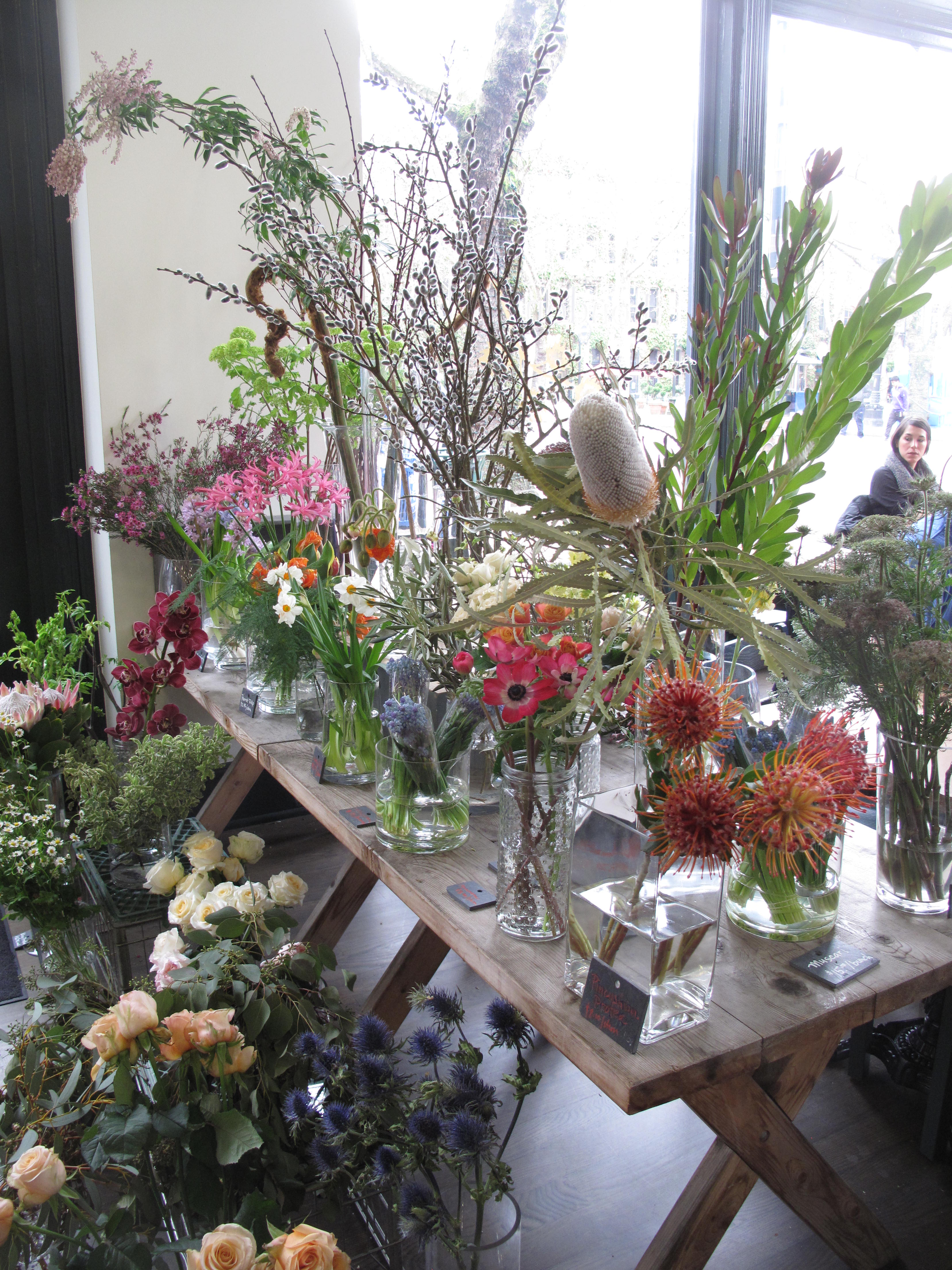
The floral department at The London Plane – in Seattle’s Pioneer Square.
Follow this link to learn more about Katherine’s upcoming floral design workshops at The London Plane. Workshop fees range from $150-$200 and topics include:
Hand-tied bouquets, Wednesday, April 2nd, 2014; 6:00 p.m.-8:00 p.m.
Spring Arrangements, Wednesday, April 16th, 2014; 6:00 p.m.-8:00 p.m.
Mother’s Day Flower Arranging, Saturday, May 3rd, 2014; 3:00 p.m.-6:00 p.m.
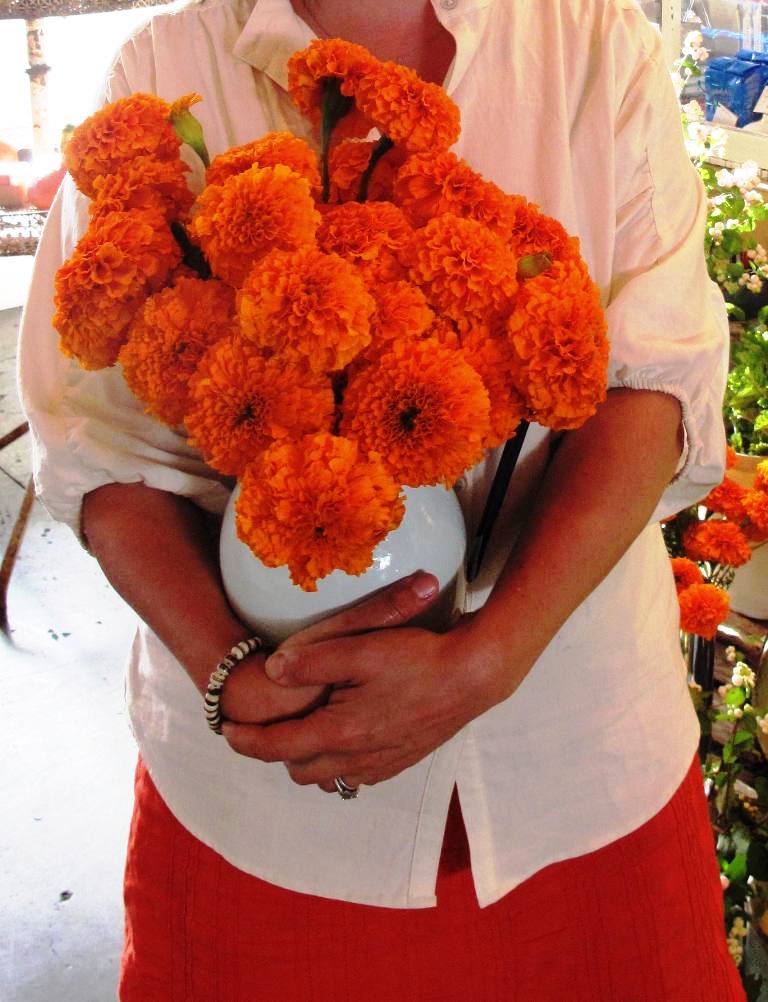
Katherine’s arms are filled with vivid orange marigolds, just harvested at the height of the season.
It all began with Marigolds: Katherine’s love for the timeless appeal of this vintage annual.
“We love to be surprised by the stunning complexity of a flower or a branch, and to that end we are always trying out new types of flowers and other plants with ornamental value,” Katherine writes on her web site.
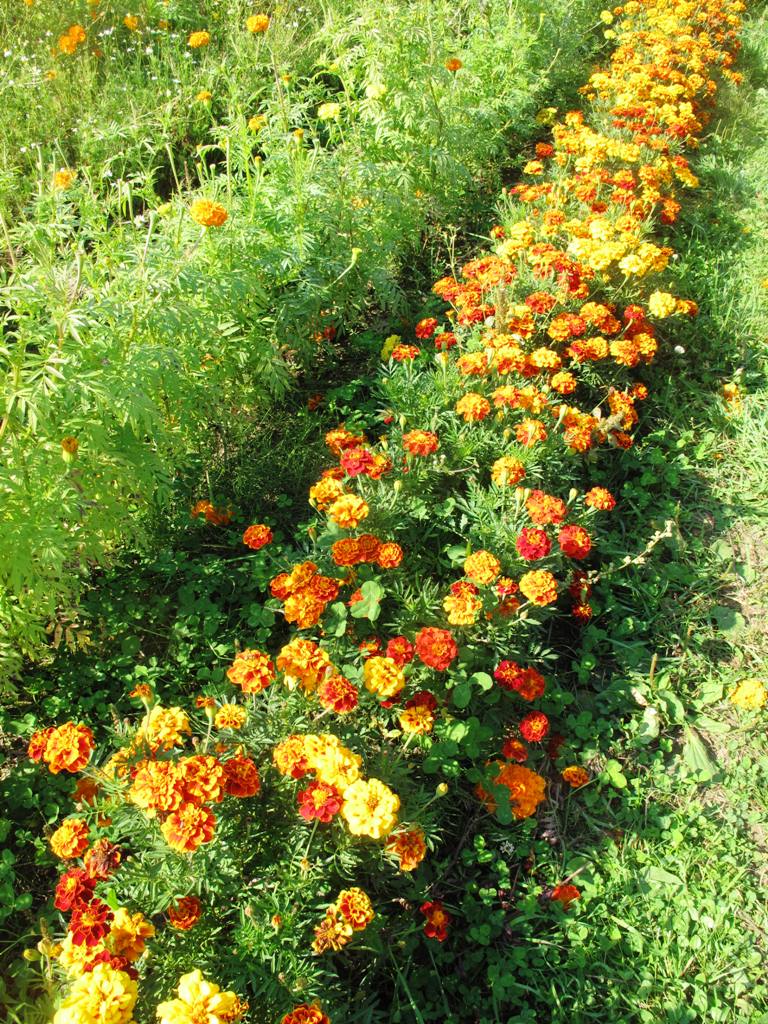
Rows and rows of marigolds.
And here’s Katherine’s explanation of why she stocks only locally grown and whenever possible, organic, ingredients:
Flowers are living things and they are a commodity shipped around the world. Considering the fuel cost and chemicals used to keep lovely, fragile flowers protected and alive en route from, say, Tanzania to Tennessee, we prefer to grown and buy local. At Marigold and Mint, we strive through our organic and sustainable agricultural practices to do no harm to the environment and all the people and animals that live in it, and to balance any harm (such as some reliance on fossil fuels) with a healthy serving of good: by growing and selling natural fragrant flowers and herbs within the Northwest. We work hard to build soil fertility, create habitat, and protect genetic diversity by growing countless varieties of flowers and herbs.
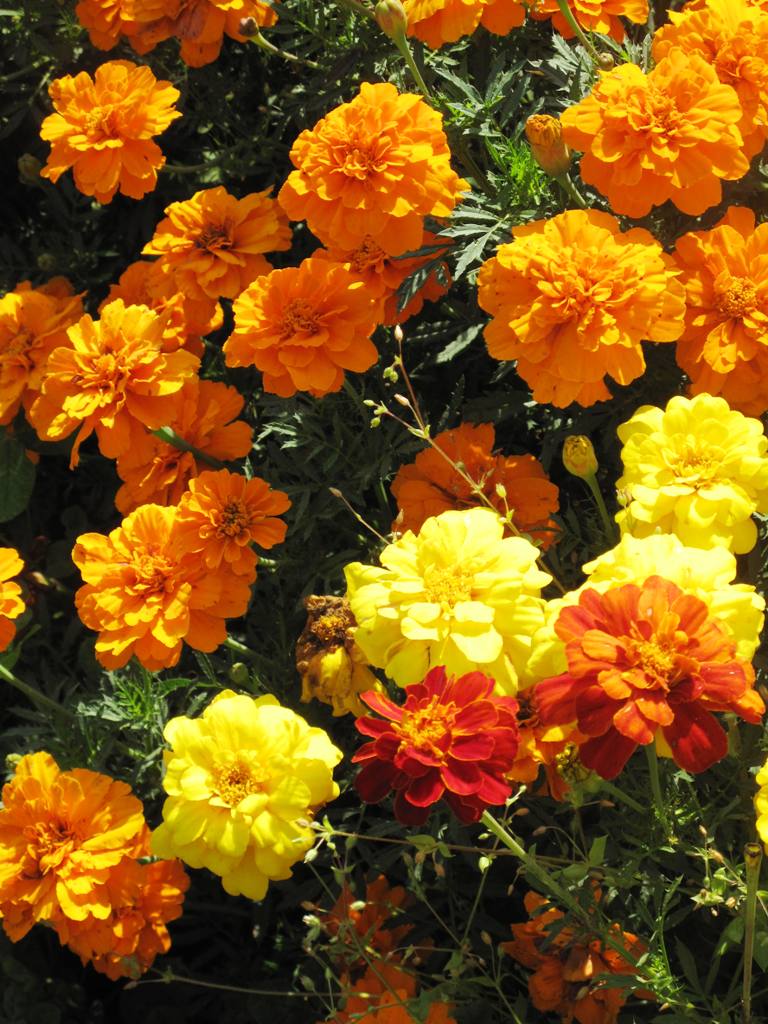
more marigolds . . .
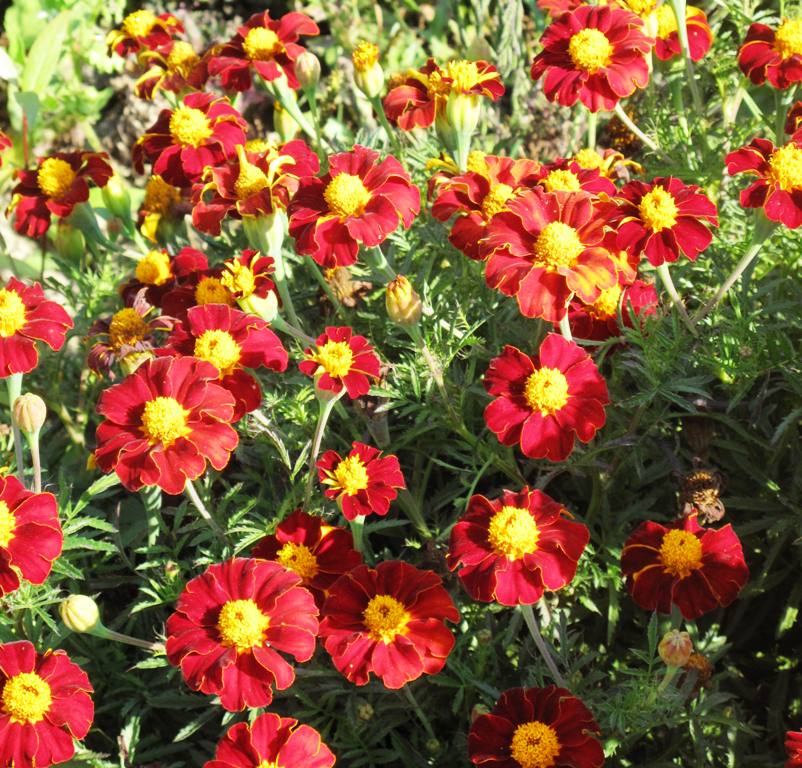
another fascinating variety . . .
Now I know you’ll never look at a marigold as a flower that’s too humble or common for your floral arrangements.
Thank you, Katherine Anderson, for your inspiration today!
Because of the support from you and others, listeners have downloaded episodes of the Slow Flowers Podcast more than 8,500 times! I thank you for taking the time to join to my conversations with flower farmers, florists and other notable floral experts.
If you like what you hear, please consider logging onto Itunes and posting a listener review.
Until next week please join me in putting more American grown flowers on the table, one vase at a time.
The Slow Flowers Podcast is engineered and edited by Hannah Holtgeerts. Learn more about her work at hhcreates.net.
March 19th, 2014
Podcast: Play in new window | Download
Subscribe: Apple Podcasts | Podcast Index | RSS | More
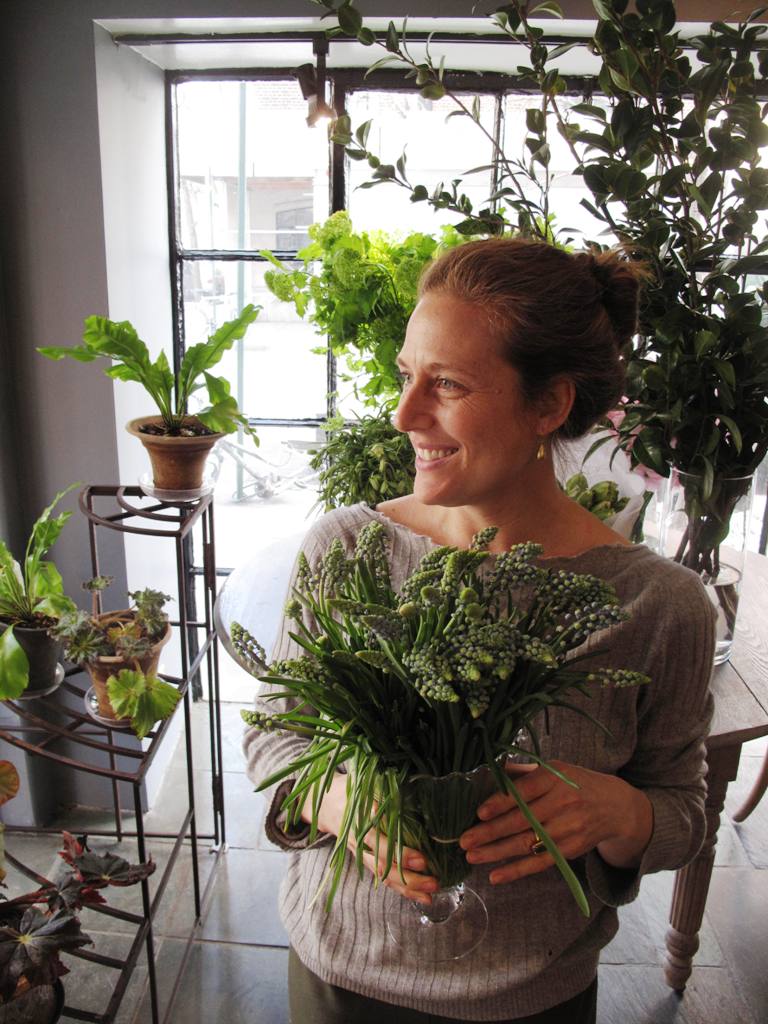
Meet Ariella Chezar of Ariella Chezar Design. I captured this lovely portrait of the floral genius on a recent March morning. She’s standing insider Ariella Chezar New York, her new flower shop, holding a vase of her absolutely favorite grape hyacinths (Muscari).
 Today’s guest is a floral rock star – someone whose work has appeared in every hot style magazine around – from Martha Stewart Weddings and Modern Bride to O Magazine and Town & Country and countless others.
Please meet New York & the Berkshires-based Ariella Chezar. For 20 years, this gifted daughter of nature has expressed her love of flowers, both cultivated & wild as both a floral designer and an inspiring and generous teacher.
Known for her lush, whimsical, garden style, Ariella has influenced the floral industry coast-to-coast. In her early days, she worked magic in Berkeley, responding to the untamed, native beauty of the Bay Area and Northern California, Chronicle Books tapped her to create “Flowers for the Table,” a lovely, evocative book that helped propel Ariella into the world of editorial floral design.
Later when she returned to the Berkshires in Massachusetts, Ariella settled into her childhood homestead where in the past decade she has produced weddings, events and editorial projects from her studio there.
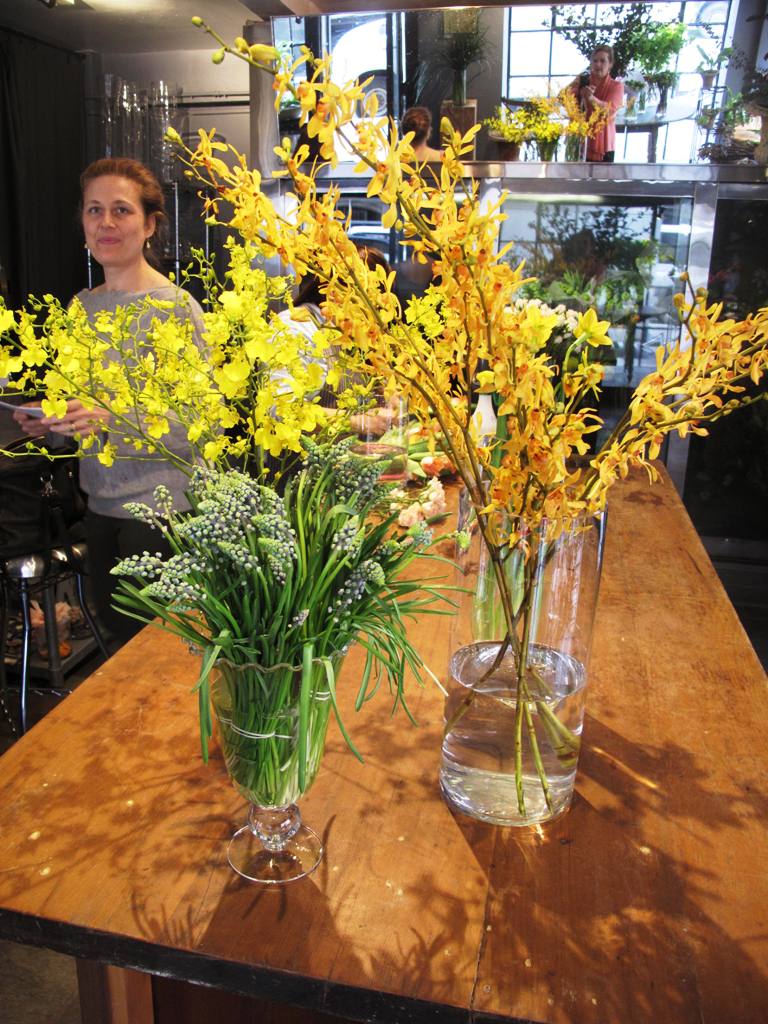
Inside her new shop, I catch a glimpse of Ariella behind the orchids.
Last summer, Ariella made many people happy when she opened her first retail project – Ariella Chezar New York, a floral outpost in Tudor City, one of Manhattan’s most charming secret neighborhoods, located just a stone’s throw from the United Nations.
Why is Ariella’s work so celebrated? In our podcast interview, recorded on March 11th, Ariella identifies the place (California) and the moment in time (the late 1990s and early 2000s) when she developed, almost unconsciously, her carefree, uncomplicated design aesthetic.
She was mesmerized by the abundance of carefree, unconstrained vegetation around her – and in response, her design style was and has continued to be unique and iconic.
One bride put it this way: I believed that Ariella knows what heaven looks like, and she brought it down to Earth just for our special occasion.”
For more about Ariella, I turned to her web site for biographical information. Here it is:
Ariella began creating at a young age. She grew up in the Berkshires of Massachusetts where the outdoors played an integral part of her daily life. Her mother, an artist and avid gardener, inspired seasonal art projects that combined nature and creativity.
Today, her designs evoke nature with their seasonal relevance. Her lush blend of flowers and branches, fruits and vegetables as well as gorgeous silk textiles and ribbons combine for a final product which is both sensual and evocative.
Ariella began her career in the Berkshires working with Pamela Hardcastle and Barbara Bockbrader. These brilliant floral and garden designers inspired Ariella to combine her love of art and the dramatic with her passion for the natural world. “Pamela and Barbara showed me that art and life can be intertwined.” Ariella spent a season selling wreaths to New York flower shops and to shoppers along the streets of SOHO and Greenwich Village. Then she worked with Robert Isabell before moving to the West Coast in 1998.
In 2002, Chronicle Books published Flowers for the Table, a guide to choosing seasonal flowers and a lesson in designing with the bud’s natural form. The book revolves around several seasonal occasions, from a summer wedding in the country to hot colored poppies on a cold winter’s night. Beautiful photographs bring Ariella’s ideas to life. Her personal style and enthusiasm makes Flowers for the Table an inspiration for us all.
As of December, 2003, Ariella moved back to the East Coast.

It was a delight to visit with this inspirational and truly generous talent! My podcast interview with Ariella will update you on all her wonderful projects.
I suspect you are as in love with Ariella Chezar – and her giving spirit – as I am. She has mentored and encouraged so many in our industry, not treating other designers as potential competition, but instead, viewing each as a kindred spirit, a fellow promoter of beauty and sustainability in floral design.
You can follow links on my website to Ariella’s work on Facebook, Instagram and Pinterest – and sign up for her newsletters that will keep you posted on her workshops and her forthcoming new book.
Because of the support from you and others, listeners have downloaded episodes of the Slow Flowers Podcast more than 8,000 times! I thank you for taking the time to join to my conversations with flower farmers, florists and other notable floral experts.
If you like what you hear, please consider logging onto Itunes and posting a listener review.
Until next week please join me in putting more American grown flowers on the table, one vase at a time.
The Slow Flowers Podcast is engineered and edited by Hannah Holtgeerts. Learn more about her work at hhcreates.net.
March 12th, 2014
Podcast: Play in new window | Download
Subscribe: Apple Podcasts | Podcast Index | RSS | More
Debra goes to Washington to promote American Grown Flowers!

A view of the Capitol dome. Never ceases to enthrall!
Two weeks ago, I joined 17 of America’s flower farmers in the fifth annual delegation to bring the story of our farmers and flowers to our elected officials in Washington, D.C. Last year, the delegation of California flower farmers who started this event reached out to their fellow farmers in other states to join them. That gesture was repeated this year – and it was my honor to be part of the delegation of flower farmers from California, Alaska, Washington, Oregon, Maryland and Virginia.
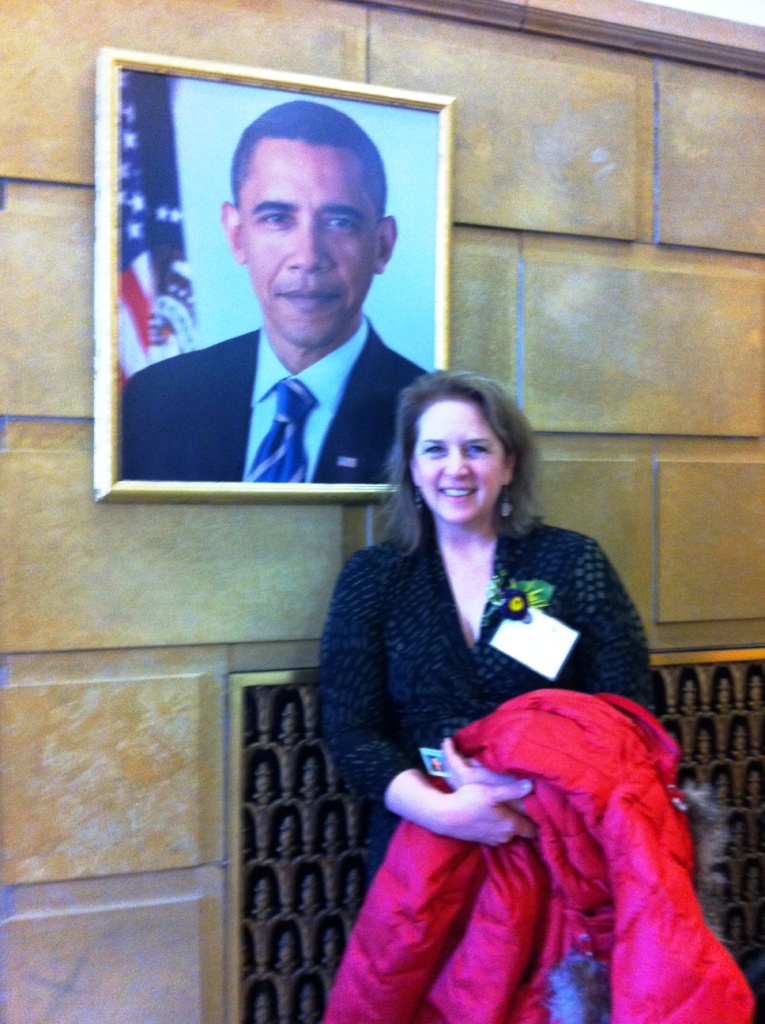
Such an honor to meet former Deputy Secretary of Agriculture, Kathleen Merrigan. She is a leader in supporting and advocating for organic agriculture and an important voice for U.S. flower farmers.
We took D.C. by storm, propelled by the monumental news that the White House featured American grown flowers at the Feb. 11th State Dinner with the President of France. That show of support from the Administration, which elevated American flowers to their rightful place alongside American food and American wine in an important public ceremony for our nation, was super encouraging.
One highlight was meeting and hearing from former USDA Deputy Secretary Kathleen Merrigan, who has been a huge champion for American grown flowers and flower farmers. She is moving on to do some other exciting things in the world of sustainable agriculture, but I hope to feature a Podcast interview with her in the future, so you can hear her story.
The good news just continued on February 27th, when California Congresswoman Lois Capps and California Congressman Duncan Hunter joined together to announce the formation of the bipartisan Congressional Cut Flower Caucus.
Along with Lane DeVries, a commissioner and immediate past chair of the CCFC, and a flower farmer based in Arcata, Calif., and Diane Szukovathy, president of the SWGMC and co-owner of Jello Mold Farm in Mt Vernon, Wash., I was asked to speak at the Press Conference. Our panel was moderated by Kasey Cronquist, CEO/Ambassador of the CCFC and the instigator of the DC Fly-ins that allow American flower farmers to tell their stories to their elected representatives.
I was given permission to record the press conference, which you will hear in this Podcast. Below, I have transcribed some of the key “sound bites” from this event so you can get a flavor for what was said:
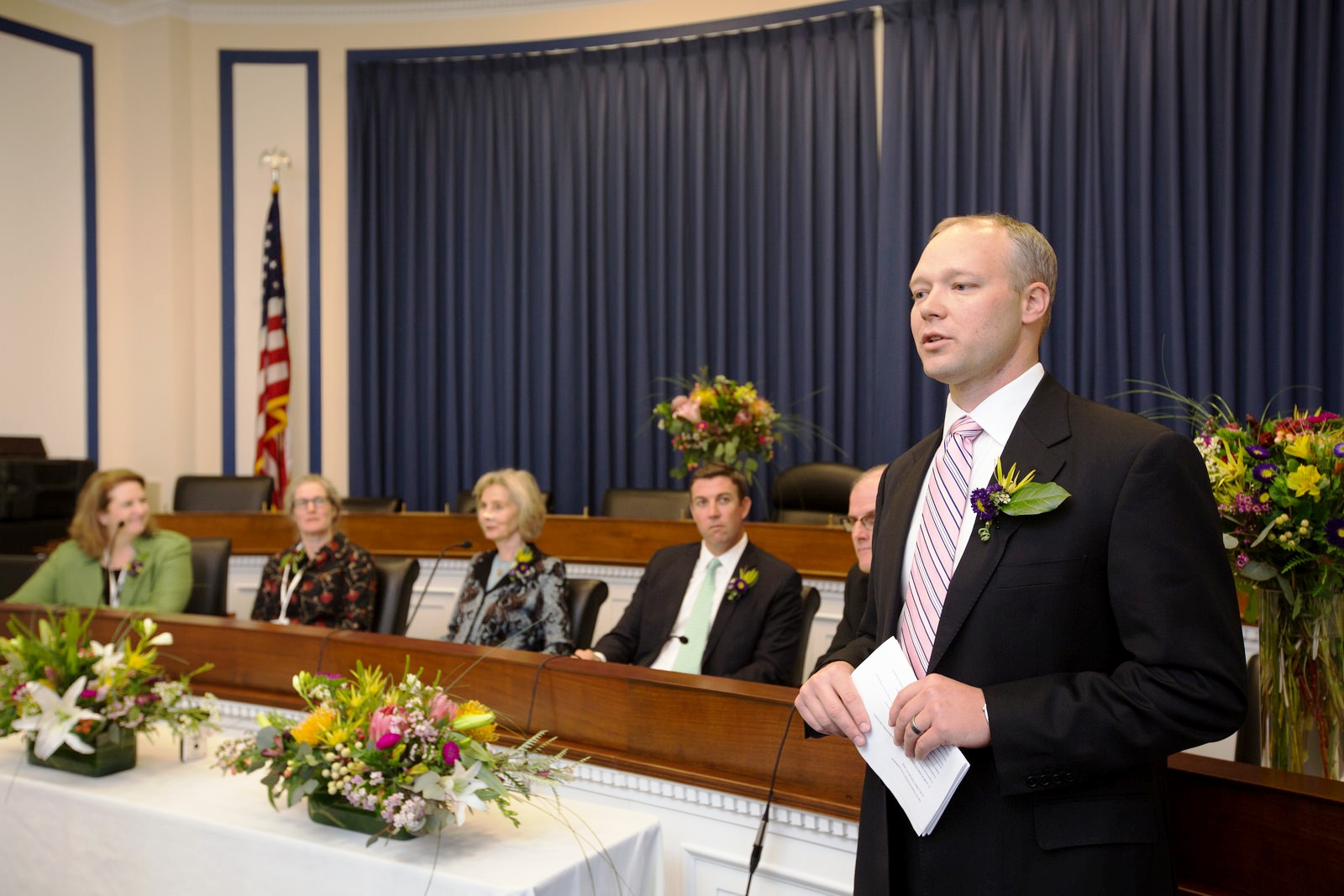
From left, Debra Prinzing, Diane Szukovathy, Congresswoman Lois Capps, Congressman Duncan Hunter, Kasey Cronquist (with Lane DeVries slightly visible behind him).
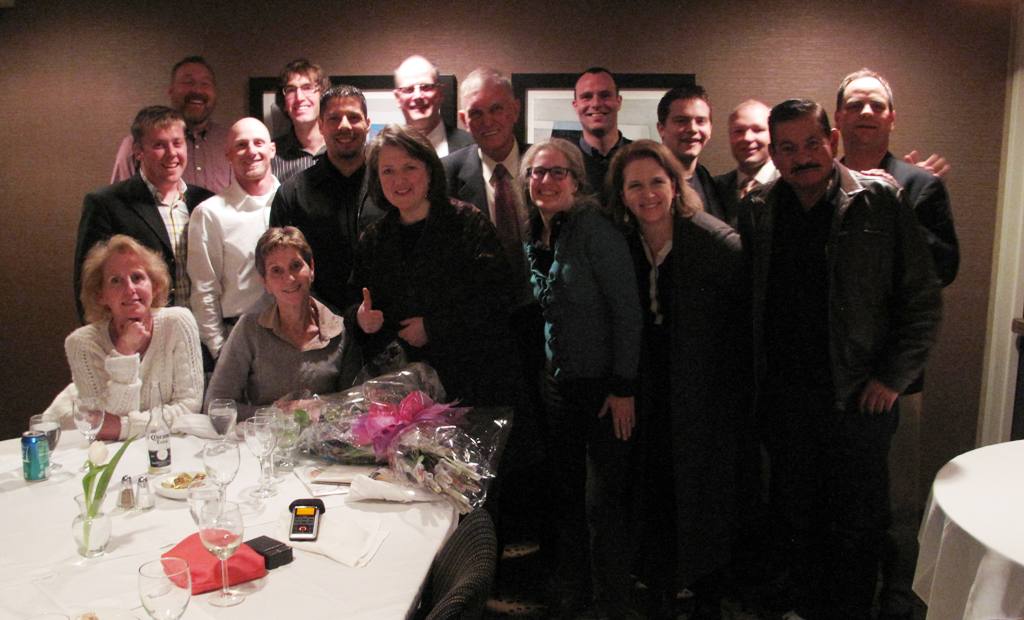
The 2014 Flower Farmer Delegation to Washington, D.C.
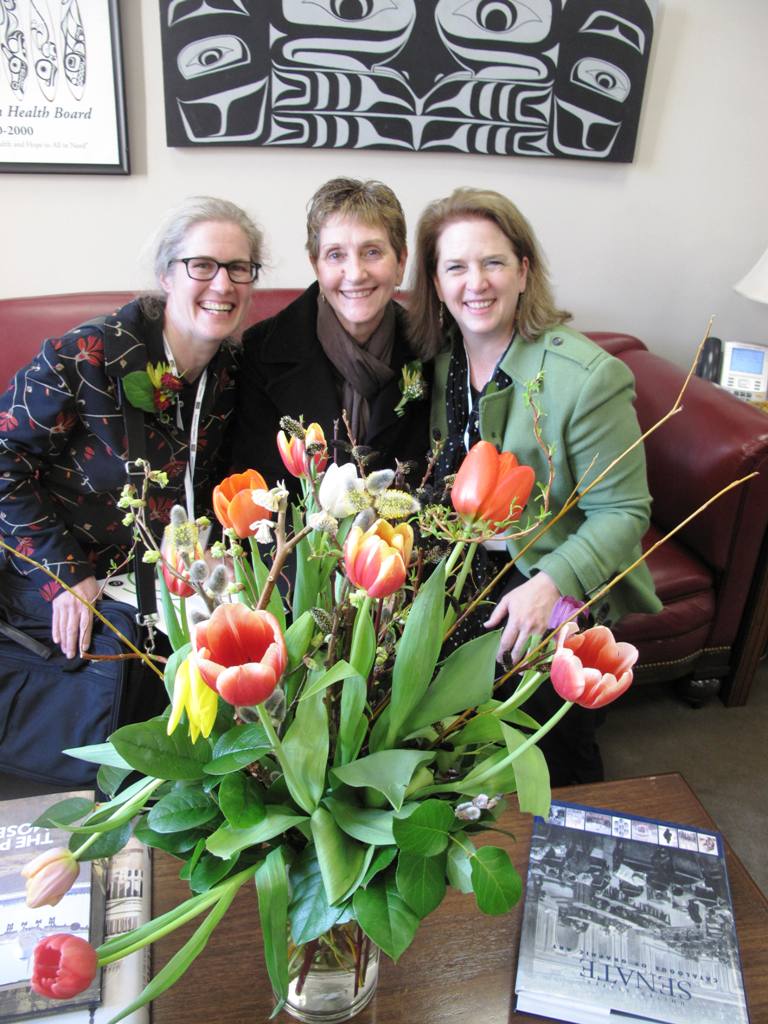
With the “Washington State” Delegation, from left: Diane Szukovathy, Vivian Larson & Deb Prinzing. The Washington-grown flowers were delivered to the Congressional representatives who we met with.
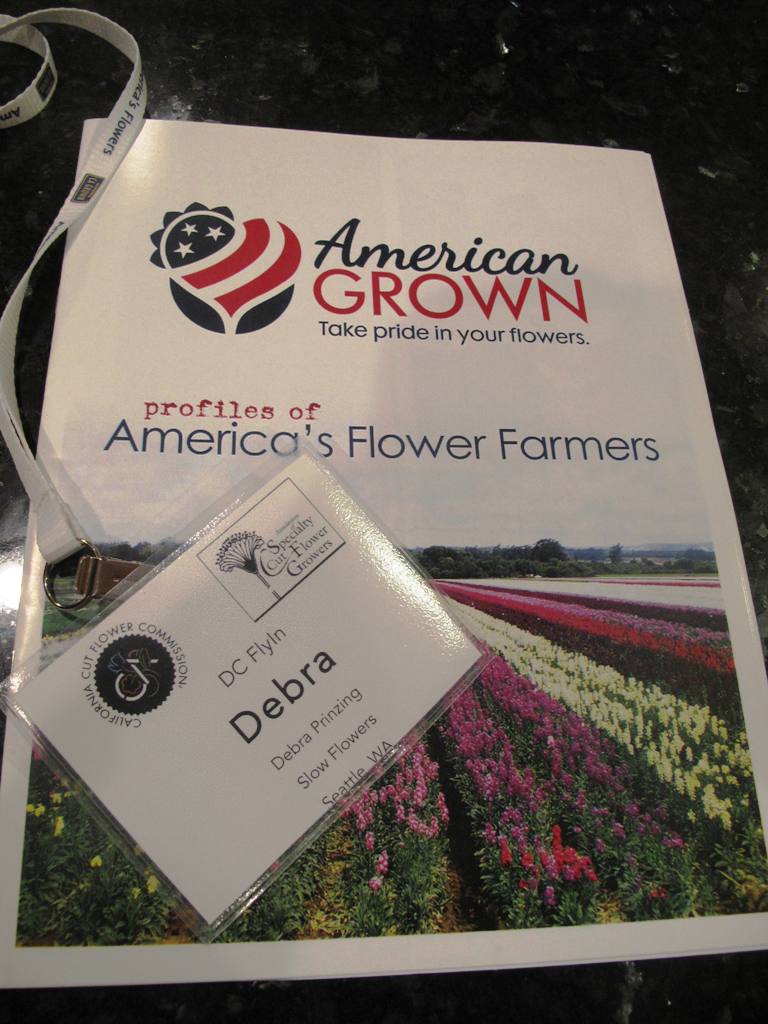
Here’s our leave-behind brochure with beautiful profiles of America’s flower farmers.
I am still floating on air because if this transformative occasion – one that underscores for me the power of story, the strength in shared voices and the significance of taking a stand for what I believe in. Visiting Washington, D.C., celebrating American flowers and the farmers who grow them, and lending my voice to the conversation — it all adds up to a life-changing experience.
I predict that someday soon, when every room of the White House is filled with American Grown Flowers and every single event staged by the Administration in power is decorated and signified by flowers grown here at home, we’ll look back on Feb. 27, 2014 as the single “tipping point” – the event that shifted our nation’s attitude and understanding about the flowers in our lives. Soon these actions — to choose seasonal and domestic flowers – will be a natural practice.
If you are interested in being part of this movement – and especially if you are interested in reaching out to your own Congressional representative to urge her or him to join the Congressional Cut Flower Caucus, please contact me at debra@debraprinzing.com or on twitter @myslowflowers. I will get you the simple details you need to extend the invitation to your Representative.
It has been my pleasure to share with you today’s podcast conversations.
Because of the support from you and others, listeners have downloaded episodes of the Slow Flowers Podcast nearly 8,000 times! I thank you for taking the time to join to my conversations with flower farmers, florists and other notable floral experts.
If you like what you hear, please consider logging onto Itunes and posting a listener review.
Until next week please join me in putting more American grown flowers on the table, one vase at a time.
The Slow Flowers Podcast is engineered and edited by Hannah Holtgeerts. Learn more about her work at hhcreates.net.
March 5th, 2014
Podcast: Play in new window | Download
Subscribe: Apple Podcasts | Podcast Index | RSS | More
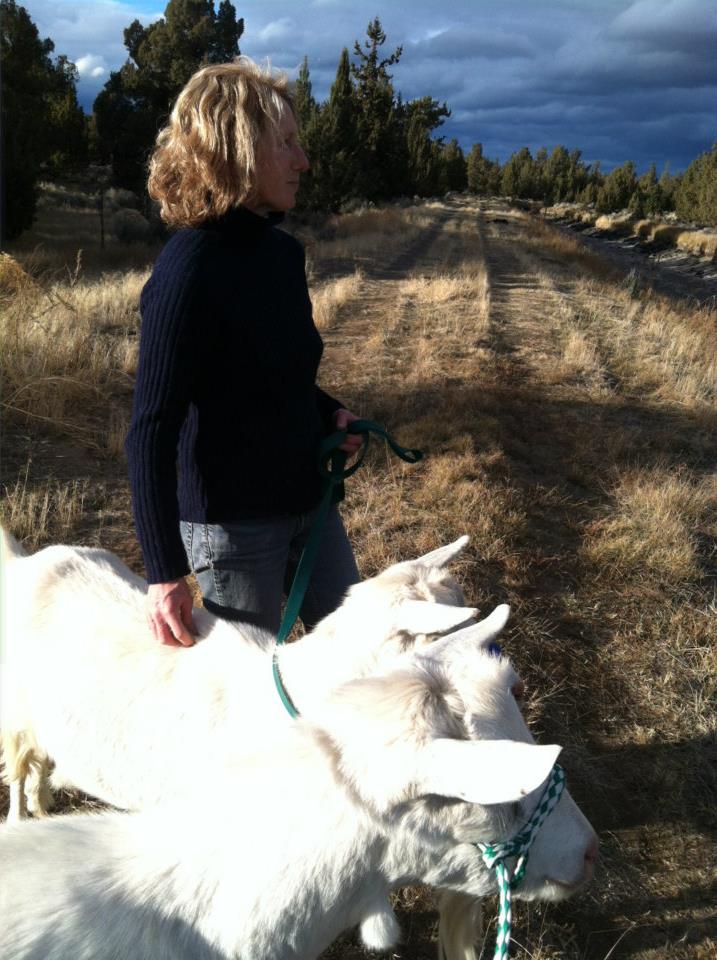
Gigi Meyer, on a November walk through her farm, with a few of her goats, Justyn, Daphne, and Ziggy-Zag.
A few weeks ago, my friend Sarah Meyer invited me to have breakfast in our Seattle neighborhood with her visiting cousin Gigi Meyer.
Sarah had told me about Gigi in the past, her closest childhood cousin who owns Windflower Farm, situated on land near Bend, Oregon, is in the central part of the state.
In April 2012, Sarah sent me an email after she had helped me create the flowers for the kick-off event of a Washington ballot initiative we were supporting. She wrote:
“Earlier today, I sent your NYT article to my cousin Gigi (farmer in Bend I mentioned) and she wrote back to say she had just received your book having ordered it from Amazon!
“I was slightly disappointed to hear that as I had planned to buy it as a birthday present but missed my chance. She is selling cut flowers to Whole Foods and I think is increasing her flower production.”
 My breakfast conversation with them introduced me to Gigi’s story – and I knew I wanted to share it with listeners of the Slow Flowers Podcast. Being a farmer is a choice for Gigi. She was drawn to this practice after a career in writing and fine arts. It is a love of place, of animals, of cultivating food and flowers that connects her with earliest childhood memories of riding horses on property her parents owned in Eastern Oregon.
That profound link is evident in Gigi’s thoughtful narrative of being a farmer and more. According to Gigi, Windflower Farm is dedicated to growing gourmet-quality vegetables, herbs, fruit and flowers. She uses only sustainable practices, no chemical herbicides, pesticides or fertilizers. The farm is nestled amidst ranches and the Badlands, in pastoral Alfalfa, just 15 minutes east of Bend.
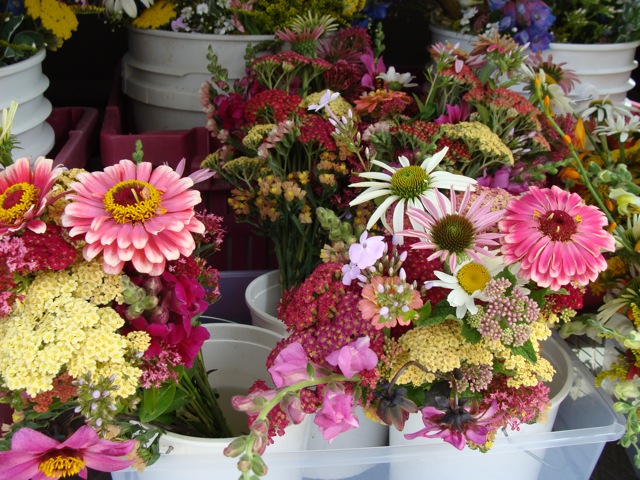
Ready for market – fresh from the fields at Windflower farm.
In our interview, you will hear Gigi talk about selling her herbs, vegetables, greens and flowers to the chef at Brasada Ranch. Named “Oregon’s Best Destination Resort,” Brasada is a highlight for many who travel to the Bend area. Travel writer and podcaster Peter Greenberg featured Brasada and many tourism features of Central Oregon in a 2011 podcast — including a 5-minute segment with Gigi. Here is the link – and you will hear Gigi at the 1:34 mark. Greenberg describes Windflower Farm as a “boutique farm,” which is pretty cool.
In addition to her mixed bouquets, which can be found at Bend’s Whole Foods outlet, Gigi grows and sells the following diverse and hugely impressive floral selection to area restaurants, businesses, florists and wedding customers:
Peonies Asiatic Lilies, Astrantia, Ornamental Broom, Crocosmia, Dahlia, Delphinium, Foxglove, Gladiolus, Iris, Lilac, Sunflowers, Acidanthera, Allium, Amaranth, Amsonia, Aster , Astilbe, Berberis, Campanula, Cattail, Daylily, Echinacea, Echinops, Eupatorium, Forsythia, Kniphofia, Larkspur, Domestic Mullein, Phlox, Pink French Pussy Willow, Scabiosa, Sedum w flower, Solidago, Ornamental Millet Achillea (Yarrow), Ageratum, Agrostemma, Anemone, Asclepias, Babies Breath, Calendula, Celosia, Centranthus, Chrysanthemum, Columbine, Amethyst Coral Berry, Coreopsis, Craspedia, Daffodil, Dianthus, Erigeron, Euphorbia, Filipendula, Geum, Gomphrena, Helichrysum, Lady’s Mantle, Marigold, Nigella, Rudbeckia, Sedum foliage, Shasta Daisies, Snapdragon, Statice, Sweet Pea, Zinnia, Oxe-eye Daisies, Dill, Dusty Miller, Lavender, Chamomile, Ruby Silk Grass, Frosted Explosion Grass, Lamb’s Ear and Rye Grass with seed heads.
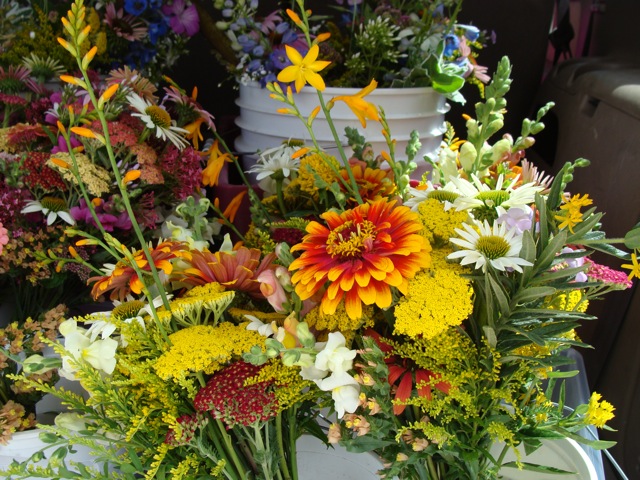
Windflower Farm Flowers – feast your eyes!
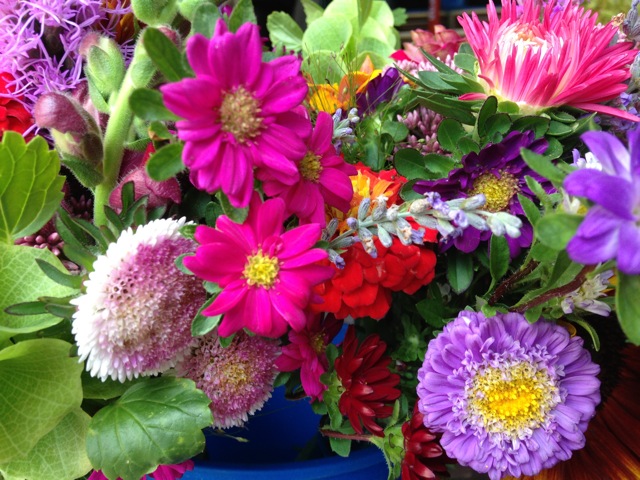
Gigi’s vivid summer floral palette.
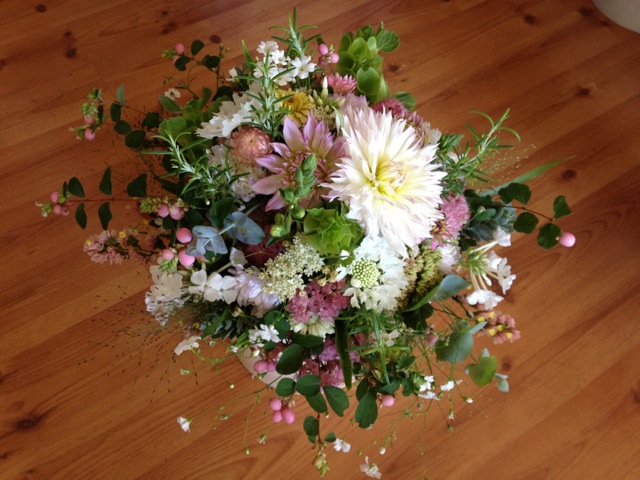
And here are bridal flowers in a softer scheme.
Right after we met and recorded this interview in Seattle, I learned that Gigi was recognized for her stewardship as a certified Animal Welfare Approved producer. Here is the announcement:
“The laying hens, dairy goats, and pigs at Windflower Farm are now certified as Animal Welfare Approved. This certification and food label lets consumers know that these animals were raised in accordance with the highest animal welfare standards in the U.S., using sustainable agriculture methods on an independent family farm.
Like other AWA farmers across the country, Gigi Meyer recognizes the growing consumer interest in how animals are being raised. Raising animals outdoors on pasture or range has known benefits for animals, consumers and the environment. Meyer applied for AWA certification to help distinguish Windflower Farm products from other products in the market. “As I got into livestock, I felt that what separated my operation from others was my relationship with my animals. In my studies I have learned a lot about what my animals need and I can confidently say that they are happy and that I do my best to understand and provide for their needs,” says Meyer.
Windflower Farm spans 20 acres about 15 miles east of Bend, Ore. Meyer started with a few goats to manage pastures, which turned into a small-scale dairy. Meyer added a small herd of hogs to remove invasive grasses, followed by a flock of laying hens. “I just kept adding elements,” says Meyer. “I realized I wanted to grow a microcosm of nature and manage in a way that it would be a self-affirming circle.”
In the future, Meyer hopes to make the farm an educational space. “I want the farm to be a classroom that can set an example for people who visit of the potential for sustainable farming and local food in our community,” she says.
Pastured eggs from Windflower Farm’s AWA-certified laying hens are available direct from the farm and through a CSA program. Pastured pork and goat’s milk are available through a herdshare program. Contact Meyer for more information at gigimeyer@me.com or 541-318-1417.”
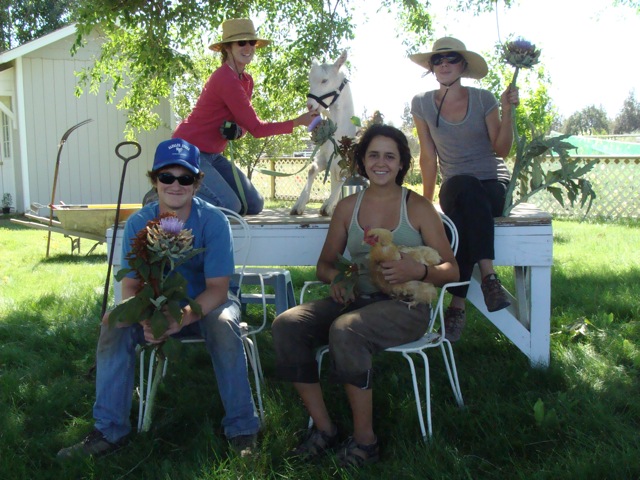
Gigi (upper left) with her summer 2012 crew and to her right is Cora, her “main hand.” In front, Gigi’s nephew Jake and Maria, the 2012 intern.
It has been my pleasure to share with you today’s podcast conversations.
Because of the support from you and others, listeners have downloaded episodes of the Slow Flowers Podcast more than 7,500 times! I thank you for taking the time to join to my conversations with flower farmers, florists and other notable floral experts.
If you like what you hear, please consider logging onto Itunes and posting a listener review.
Until next week please join me in putting more American grown flowers on the table, one vase at a time.
The Slow Flowers Podcast is engineered and edited by Hannah Holtgeerts. Learn more about her work at hhcreates.net.
© Debra Prinzing, all written and photographic content. Website design/development by Willo Bellwood/Metric Media