The Slow Flowers Podcast is the award-winning show known as the “Voice of the Slow Flowers Movement.” Launched in 2013 as the original flower podcast, we’ve devoted more than 10 years to covering the business of flower farming, floral design, and the Slow Flowers sustainability ethos. Listen to a new episode each Wednesday, available for free download here at slowflowerspodcast.com or on iTunes, Spotify, and other podcast platforms.
February 26th, 2014
Podcast: Play in new window | Download
Subscribe: Apple Podcasts | Podcast Index | | More
Welcome back to the Slow Flowers Podcast with Debra Prinzing.
To start off this week’s episode, I have a personal announcement to make. Last week, on February 19th, I concluded a 45-day funding campaign to generate financial contributions for my new Slowflowers.com project.
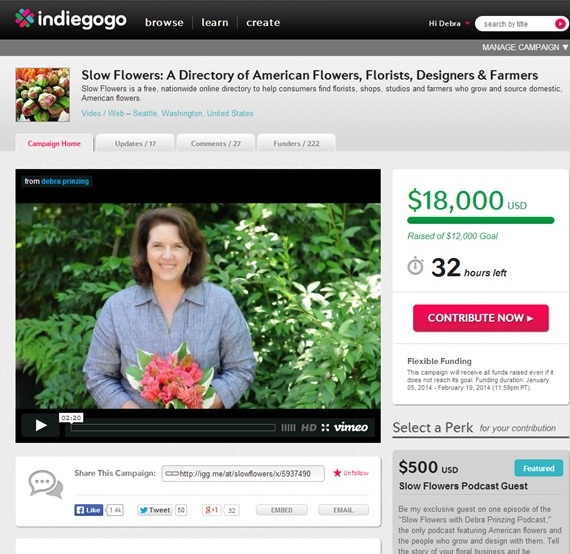
With just 32 hours left of the campaign, we’d already reached $18,000!
For listeners unfamiliar with it, Slowflowers.com will be a free online directory to florists, studios, designers and farmers who supply American-grown flowers to the consumer. Thanks to the fantastic crowd-sourcing site Indiegogo, which was the perfect environment to share my passion, more than 220 Slowflowers.com “believers” contributed $18,450 to fund the launch. I owe a special thanks to the California Cut Flower Commission (Premiere Sponsor), the San Franciso Flower Mart (Presenting Sponsor) and Mellano & Co. (Presenting Sponsor), for their major support!
In the next several weeks, we’ll be finishing up the necessary database and web development, populating the site with details about member florists, designers and farms, and planning the pre-Mother’s Day marketing & promotions launch. Stay tuned for more details!
An interviewer recently asked me: “What do you hope to accomplish with this site?”
My answer? “That every time someone wants to give or send or purchase flowers, they stop and ask: Can I buy American Grown? And the Slowflowers.com site will help them navigate that search.”
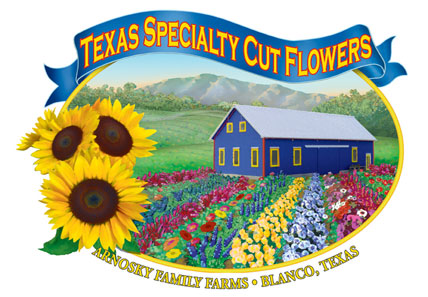
The Arnoskys have always labeled their flowers to promote their Texas origins.
Now, let’s talk about Texas. I have three guests today and you’ll love their larger-than-life personalities.
First, please meet Frank and Pamela Arnosky of Texas Specialty Cut Flowers.
Frank is the new board president of the Association of Specialty Cut Flower Growers, but these two are longtime leaders in the organization. Both Pamela and Frank have served in ASCFG board positions in the past.
I first learned about them in Lynn Byczynski’s wonderul reference book The Flower Farmer, originally published in 1997 and reissued with new bonus content in 2008. Lynn profiled the Arnosky family’s beginnings as growers of bedding plants and poinsettias in Blanco, Texas, before they added cut flowers in the early 1990s.
The flowers were intended for a farmers’ market that never materialized, so Pam and Frank filled their truck with blooms; drove it to Austin and started knocking on the doors of flower retailers. “People were falling all over when they saw the stuff,” Frank said in the interview with Lynn. “That took us by surprise; we really hadn’t known what to expect.”
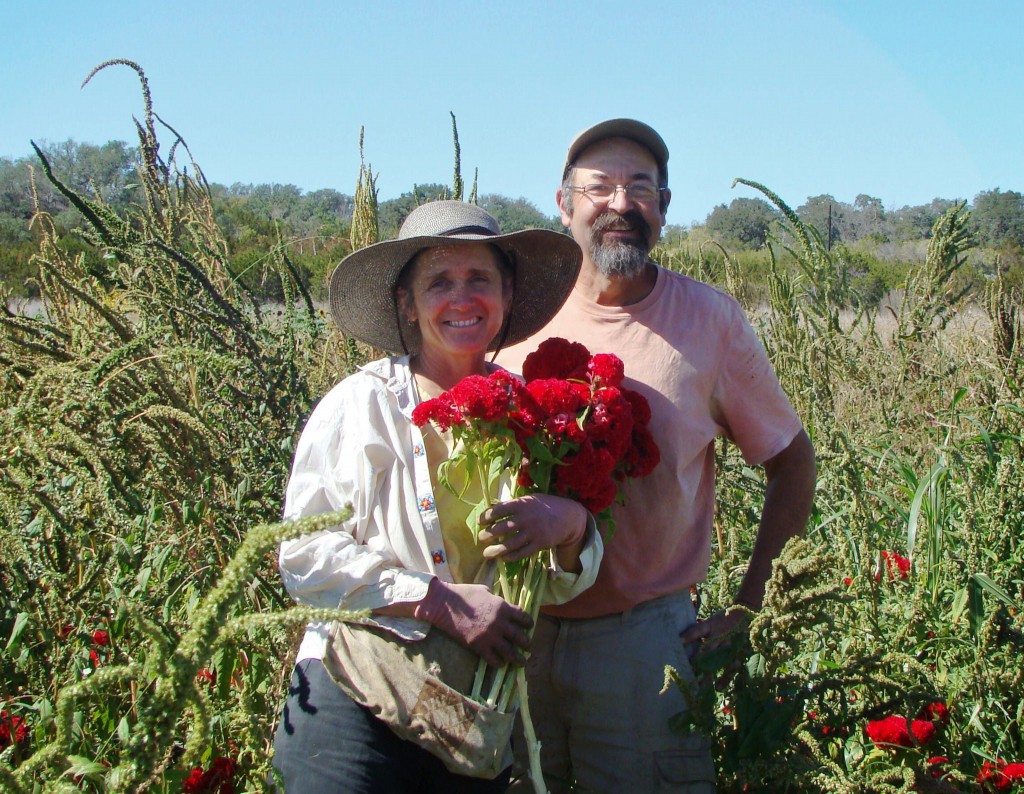
Pamela and Frank Arnosky of Texas Specialty Cut Flowers.
Here we are, nearly 25 years later, and the Arnoskys are still viewed by many in the specialty cut flower world as the model family farm. You will enjoy hearing from them both in our conversation today, which touches on how to manage so many acres with little or no additional labor – and how to plan for the future by diversifying.
Here is a link to their book, Local Color: Growing Specialty Cut Flowers. It’s a compilation of 10 years of their columns for Growing for Market, a periodical published by Lynn Byczynski.
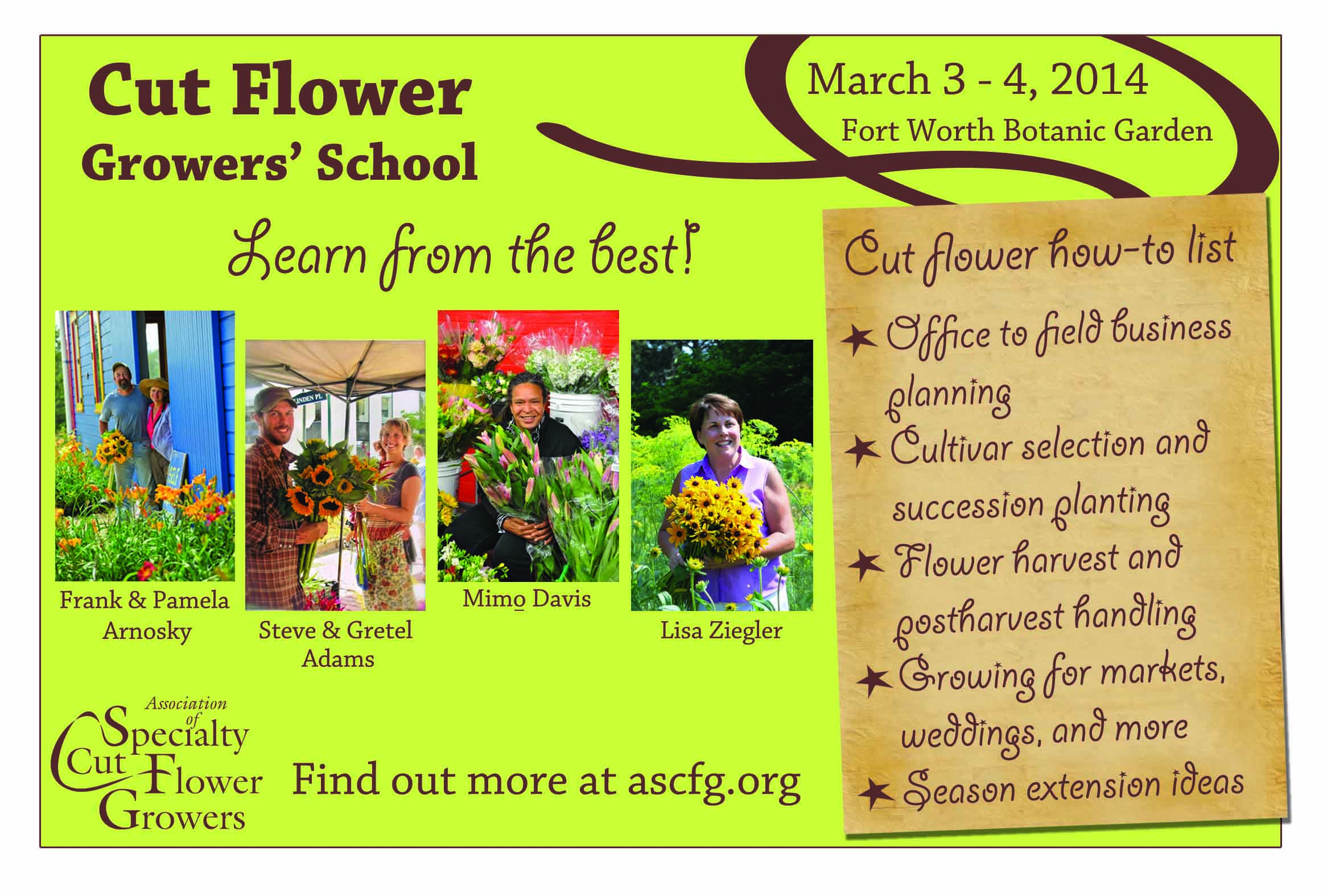
Pam and Frank will be featured speakers at the upcoming Cut Flower Growers’ School, hosted by the Association of Specialty Cut Flower Growers in Ft. Worth, Texas, on March 3-4, 2014.
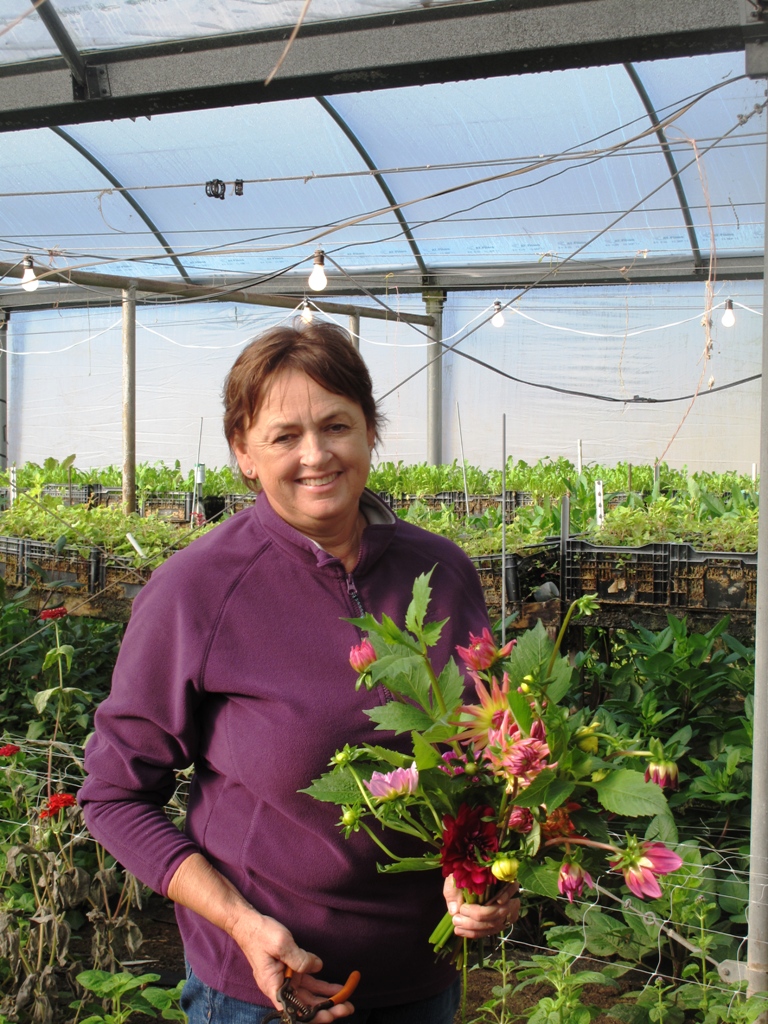
Rita Anders of Cuts of Color, in Weimar, Texas.
Rita Anders of Cuts of Color in Weimar, Texas, is another fabulous Texas flower farmer who will be presenting at the upcoming Growers’ School.
In January 2013, I visited Rita and spent a wonderful day at her farm – which is located halfway between Austin and Houston. Later, I wrote a story about that visit, which you can read here on Cuts of Color’s web site.
When I was in Austin, Rita joined me in the studio of Central Texas Gardener, a wonderful, long-running show on KLRU, the Austin PBS station.
Producer Linda Lehmusvirta and host Tom Spencer couldn’t have been more welcoming – and our TV segment on locally grown flowers appeared last summer, after the filming crew visited and shot footage at Cuts of Color’s fields and greenhouses.
Rita is the regional VP for ASCFG and is planning next week’s Growers’ School along with cohorts Cynthia Alexander of The Quarry Flower Farm (Frisco, Texas) and Paula Rice of BeeHaven Farm (Bonners Ferry, Idaho).
After I chatted with Frank and Pam Arnosky, I tracked down Rita for more details about the Growers’ School, just in case I could entice any listeners to attend at the last minute. From our conversation, it sounds like walk-ins and last minute registrants are welcome. So consider participating!
In addition to the Arnoskys and Rita Anders, you can hear past Slow Flowers Podcast interviews with several other speakers, including Cynthia Alexander and Gretel and Steve Adams. Anyone who has yet to appear on this show is slated for a future episode — I promise!
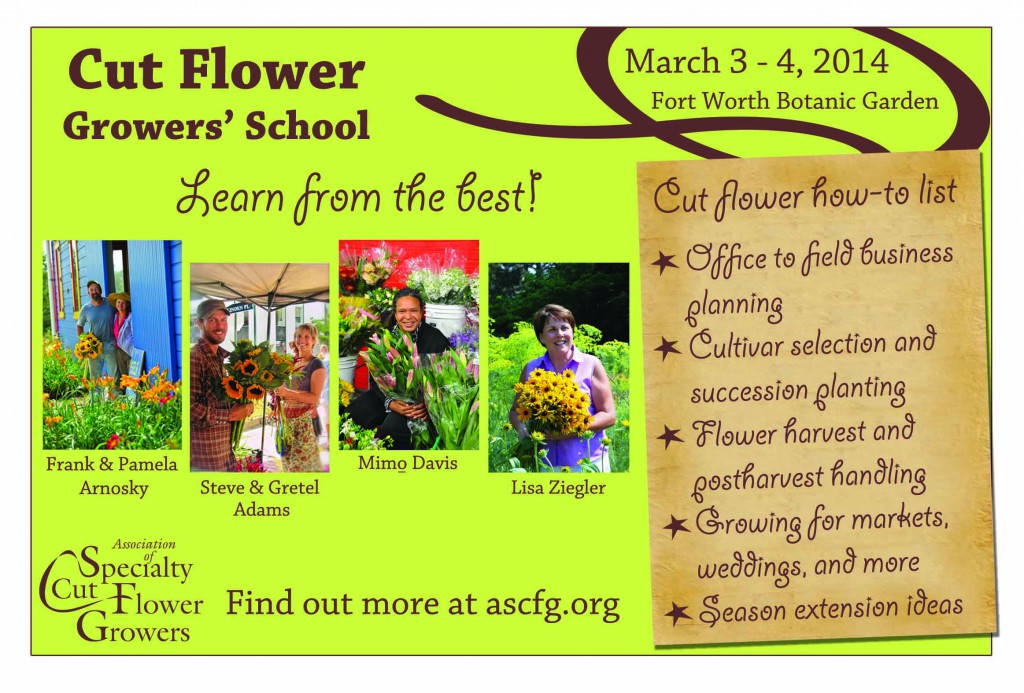 The Growers’ School promises to be a fantastic educational experience where flower farmers both new and established will hear from some very gifted folks. Here is the schedule and topics:
Monday, March 3
Marketing Session One
1:00 p.m.
Selling to Florists
Cynthia Alexander, Quarry Flower Farm, Celina, Texas
Cynthia will explain her process of preparing flowers for her florist route, and how to best develop relationships with, and sell to florists.
Floral demonstration: flowers bunched for florist delivery.
1:30 p.m.
Selling at Farmers’ Markets
Rita Anders, Cuts of Color, Weimar, Texas
Stand out at your farmers’ market! Increase sales with tips from a longtime grower.
Floral demonstration: farmers’ market wrapped bouquet.
2:00 p.m.
Selling to Supermarkets
Pamela Arnosky, Texas Specialty Cut Flowers, Blanco, Texas
Learn how to streamline your bouquet-making process while increasing productivity.
Floral demonstration: sleeved bouquets for supermarket sales.
2:30 p.m.
Workshop One
Create your own wrapped or sleeved bouquet for farmers’ market or grocery outlet.
Experienced grower/designers will provide personal assistance.
Marketing Session Two
3:00 p.m.
Increase Your Bottom Line with Top Wedding Sales
Rita Anders, Cuts of Color, Weimar, Texas
Rita will share her methods of contacting and engaging brides.
Floral demonstration: hand-tied wedding bouquet.
3:30 p.m.
Tapping into Wedding Sales
Gretel Adams, Sunny Meadows Flower Farm, Columbus, Ohio
Sunny Meadows’ wedding business has grown exponentially in the last few years.
How does this fit into the rest of their farm business?
Floral demonstration: hand-tied wedding bouquet.
4:00 p.m.
Workshop Two
Reassemble your original bouquet into a hand-tied bridal bouquet.
Experienced grower/designers will provide personal assistance.
4:30 p.m.
Closing
6:30 p.m.
Join the speakers and other attendees for dinner at Joe T. Garcia’s Mexican Restaurant, a Fort Worth tradition since 1935.
Not included in registration.
Tuesday, March 4
8:00 a.m.
Office to Field Business Planning and Record Keeping
Paula Rice, Beehaven Flower Farm, Bonners Ferry, Idaho
Plan for an organized and smooth growing year with useful record-keeping strategies. Learn to set up an efficient flower grower’s office using QuickBooks to create charts of accounts. Use Paula’s groundworks to plan seeding and field planting schedules, while keeping track of basic cost accounting.
9:00 a.m.
What to Grow and Why
Steve and Gretel Adams, Sunny Meadows Flower Farm, Columbus, Ohio
How do you choose which perennials to grow? Which annual varieties are the best producers? Steve and Gretel grow a wide variety of both, as well as woodies and bulbs, and will explain their selection process.
10:15 a.m.
Break
10:30 a.m.
Seeds or Plugs? Both?
Frank Arnosky, Texas Specialty Cut Flowers, Blanco
Frank will cover all factors of growing cut flowers, including variety selection, seed types, germination for plugs, and environmental controls. He’ll discuss tricks of the trade, as well as what to grow yourself and what to buy in as plugs.
11:30 a.m.
Lunch (included with registration)
12:30 a.m.
Making the Most of Every Square Foot on a Small Farm
Lisa Ziegler, Gardener’s Workshop Farm, Newport News, Virginia
Make the most of the high-demand season by providing your buyers a steady stream of flowers. Even better, learn how to get it all done by 5:00 by using the best practices and equipment.
1:30 p.m.
Harvest and Postharvest
Pamela Arnosky
Pamela will cover all the steps of handling cut flowers, beginning in the field and going through to the final customer. Topics will include harvest practices, preservatives and hydrators, coolers and storage, packing, shipping and extending vase life for the customer. She’ll show you the tools, sleeves, and equipment she uses, and provide sources for materials.
2:30 p.m.
Creating and Finding Markets for Your Flowers
Steve and Gretel Adams, Sunny Meadows Flower Farm, Columbus, Ohio
Are you crazy to offer wedding flowers? What’s the best way to approach local florists? Are flower subscriptions profitable? Learn from these dynamic growers what to do – and what not to do.
3:00 p.m.
Breaking into Business: Getting Florists and Supermarkets on Board
Lisa Ziegler, Gardener’s Workshop Farm, Newport News, Virginia
You may not be too small! Lisa gave up her farmers’ markets to turn her attention to florists and supermarkets. Learn how to build your business to get those dreamy orders and keep happy customers.
3:30 p.m.
Break
3:45 p.m.
Season Extension
Mimo Davis, Urban Buds, St. Louis, Missouri
Don’t limit your production to a “typical” growing season! Hoophouses, tunnels, and succession planting can stretch your cut flower offerings on both ends of the season.
4:30 p.m.
Closing
It has been my pleasure to share with you today’s podcast conversations.
Because of the support from you and others, listeners have downloaded episodes of the Slow Flowers Podcast more than 7,000 times! I thank you for taking the time to join to my conversations with flower farmers, florists and other notable floral experts.
If you like what you hear, please consider logging onto Itunes and posting a listener review.
Until next week please join me in putting more American grown flowers on the table, one vase at a time.
The Slow Flowers Podcast is engineered and edited by Hannah Holtgeerts. Learn more about her work at hhcreates.net.
Posted in American Grown, Blog Posts, Book reviews, Creativity, floral design, Gardening, General, Plants, Podcast Episodes, SLOW FLOWERS Podcast, Slowflowers.com the Directory of American Flowers, Writing | 1 Comment »
February 22nd, 2014
Last summer I created a fun video with my awesome AV expert Hannah Holtgeerts of HHCreates. When I found out she had planned a visit to Seattle and would be staying with us for a few days, I asked if I could commission her to film and edit a floral how-to video. Lucky for me, Hannah said “yes.”
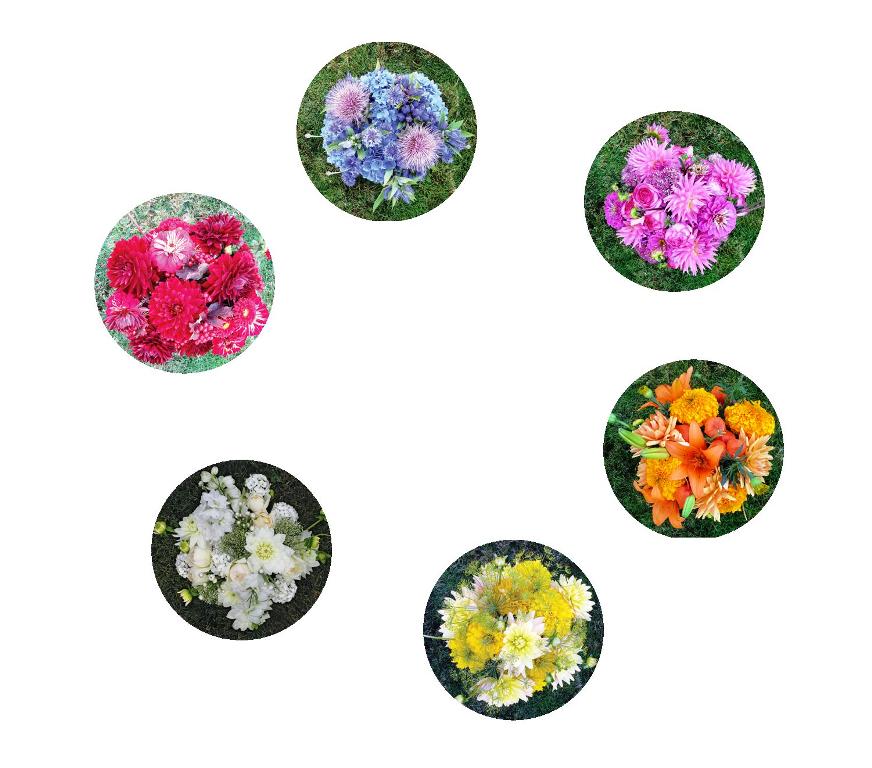
We came up with the idea of a Floral Color Wheel and created this fun piece below. The inspiration for this video originated with Nicole Cordier Walquist of Cordier Botanical Art, an award-winning floral designer and artist whose color-themed bouquets appear in Slow Flowers. You can see her primary- and secondary-inspired bouquets in the video’s cute animated color wheel.
So we created the video last summer and then I asked Lola Honeybone of Media Workshop Nashville (the world’s best publicist) to help me promote the video.
 Lola and her colleague Marla spread the word and many media outlets picked it up and posted it on their web sites.
One of the publications that noticed was Sunset magazine, where garden editor Kathleen Brenzel and associate garden editor Johanna Silver were inspired to pursue the floral color wheel as a potential article.
By November, Johanna emailed to say: “Flower wheel got bumped into its OWN story (rather than just a blurb) for March. I might need to interview you for some more tidbits!”
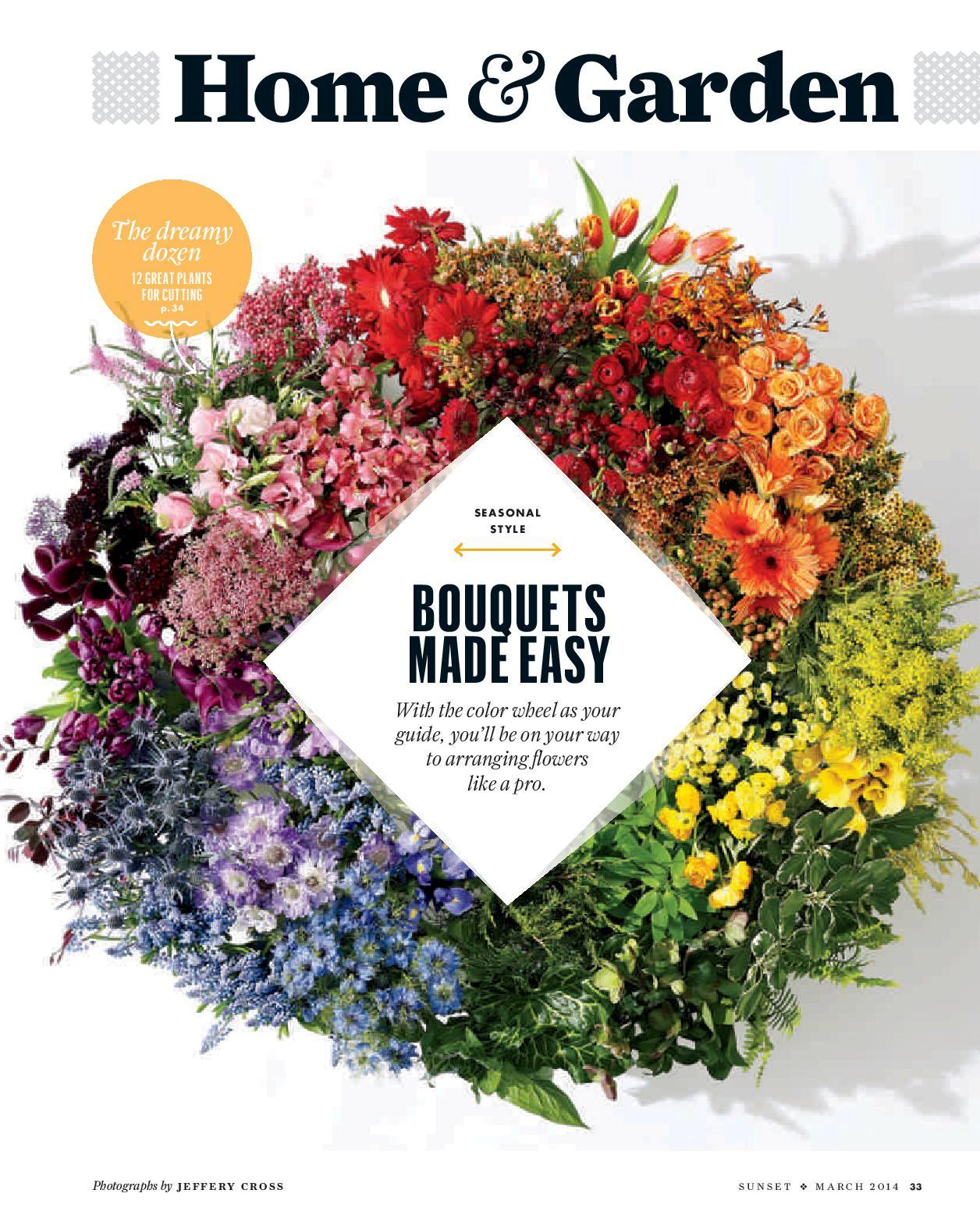
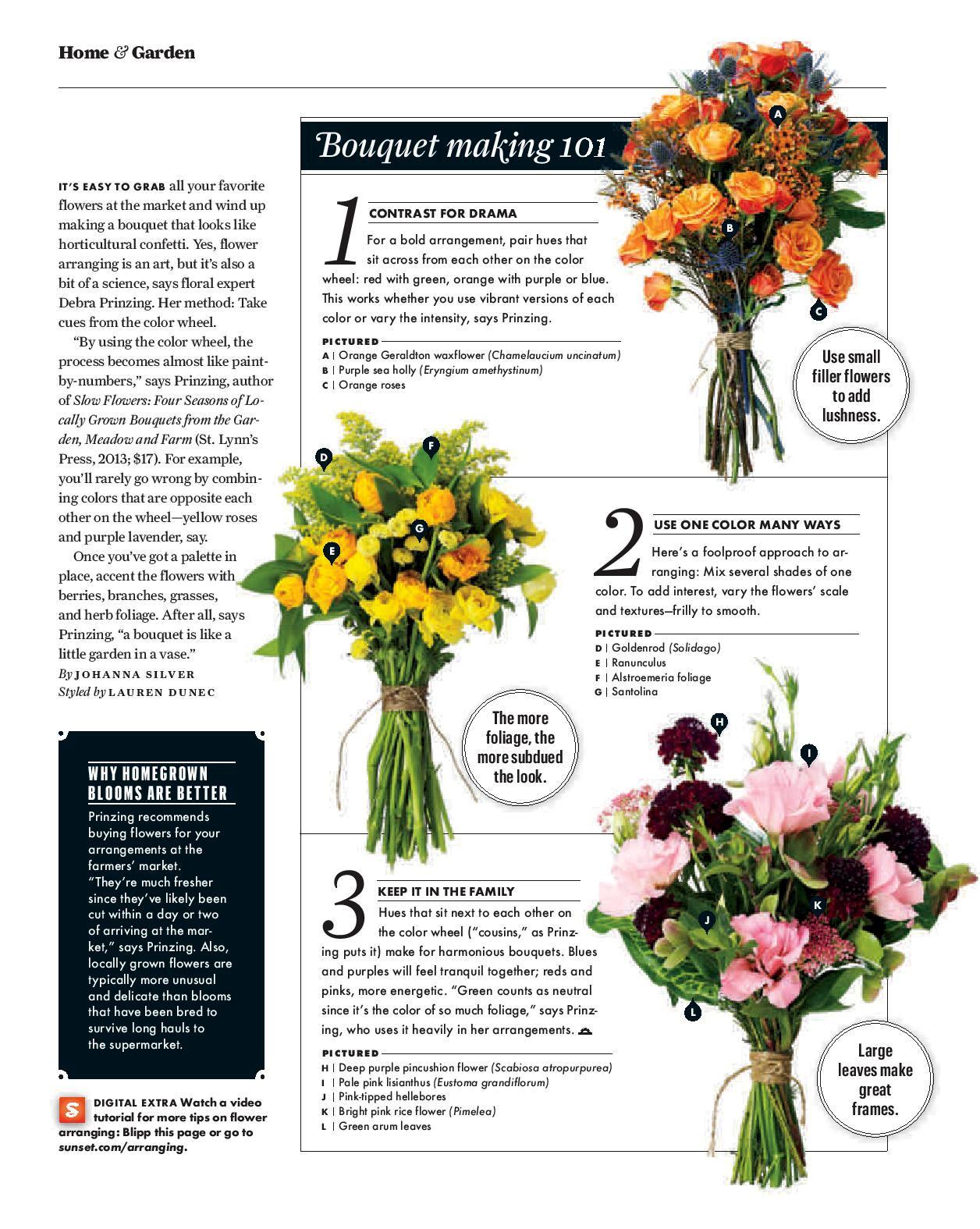
I’m so grateful that they gave me the credit for the idea and featured me as the “floral pro” in the new article – out today in Sunset’s March 2014 issue. Sunset’s garden design assistant Lauren Dunec did a great job styling the floral elements for the story you see below.
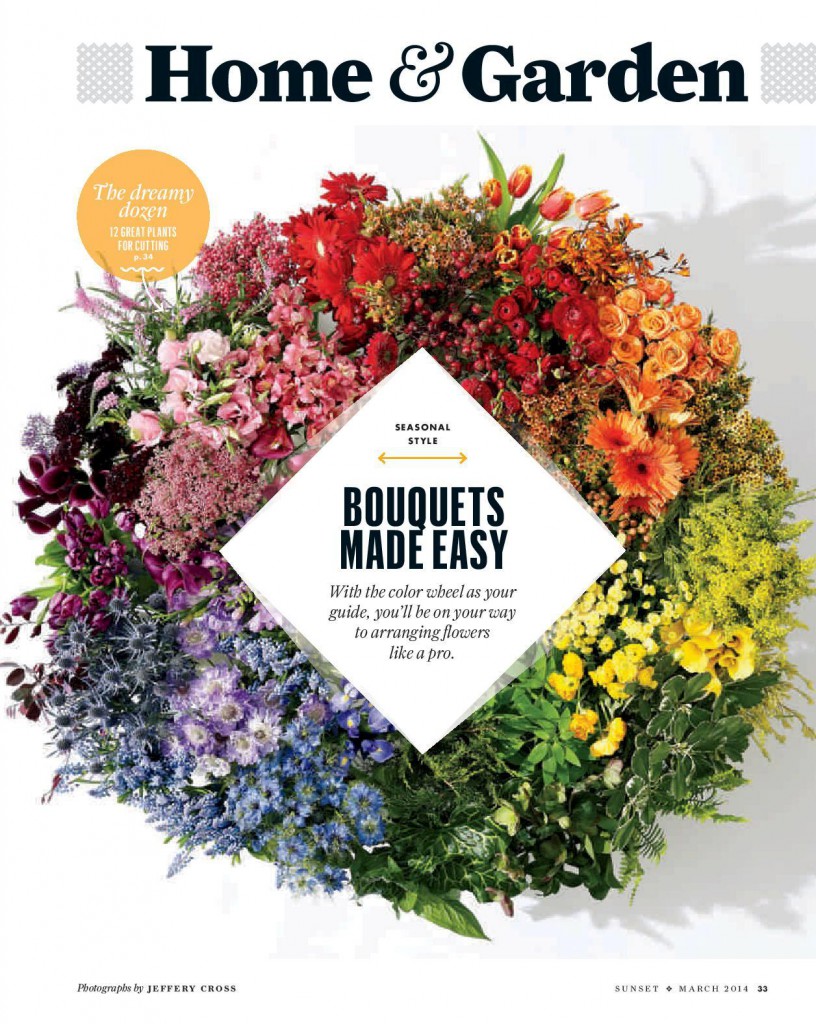
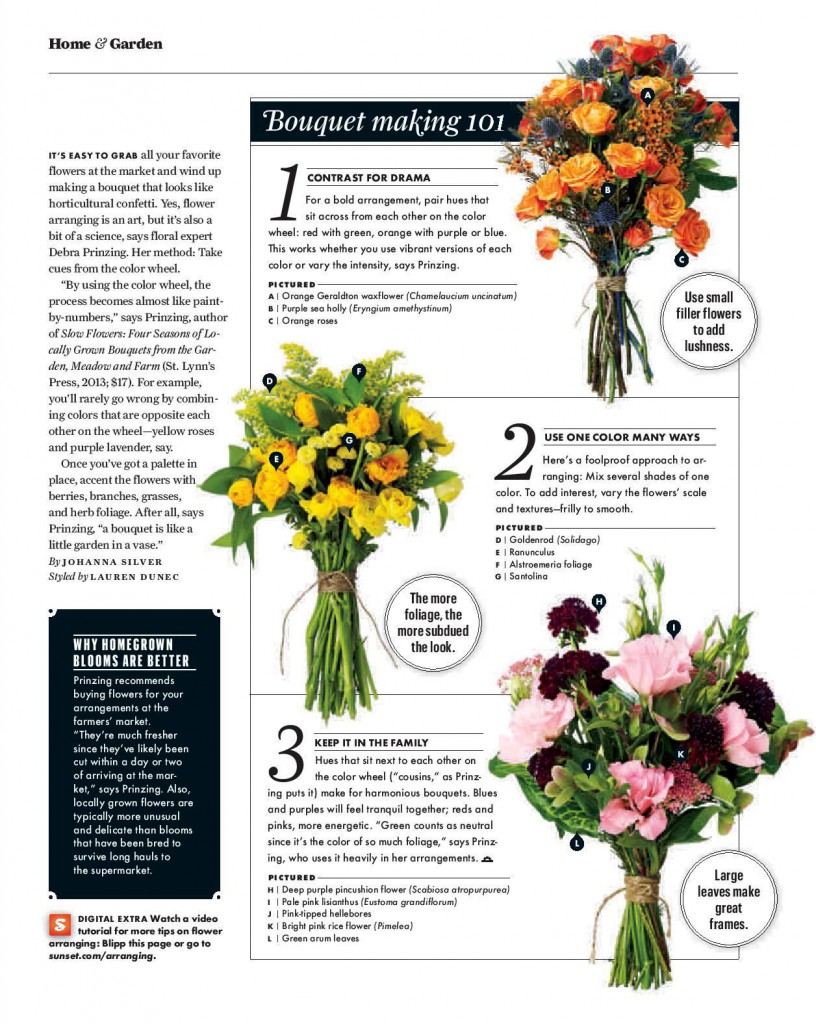
ALL ABOUT THE (FLORAL) COLOR WHEEL (adapted from Slow Flowers)
R-O-Y-G-B-I-V. Almost everyone remembers learning about rainbows and prisms in elementary school, right? Red-Orange-Yellow-Green-Blue-Indigo-Violet: the seven bands of the rainbow; the result of rain + sun in the sky.
These hues are represented by both the artist’s color wheel and the diversity of nature’s flora. There is an endless variety of flowers and foliage available to the gardener and the floral designer alike. But sometimes, when you’re at the flower stand or even walking through the garden, those beautiful choices can be overwhelming.
The Floral Color Wheel helps simplify and organize your design process, guiding you to create harmonious, eye-pleasing arrangements, centerpieces and bouquets, using a fun, paint-by-number approach (or shall we say “paint-by-petal”)?
Let’s call it the Floral Color Wheel
I use all parts of a plant to guide my color choices: Flowers and buds, of course. But also the stems, leaves, pods and berries. And then there’s the selection of vase color, another important variable.
When I teach floral students, I tell them that the color wheel is often the most essential tool in a designer’s toolbox. Knowing the basics: Primary and Secondary colors, and how they relate to each other, is a good starting point. Tertiary colors are the connectors that bring together otherwise disharmonious colors. See the glossary of terms at the end of this post for specifics about each term.
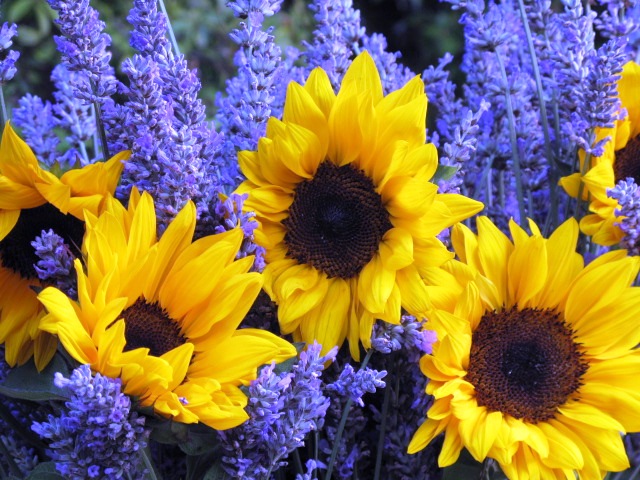
Yellow & Purple – a perfect complement.
Thank You For the Complement (above)
There are so many ways to create visual poetry with flowers. You want to express dramatic or intense emotions? Go for high contrast with complementary colors. Red and Green are across each other on the color wheel, and that’s why they’re called complementary. In the floral world, that might be reinterpreted as maroon with lime – imagine how gorgeous that combo could look! Orange and blue might morph into peach and teal (a very popular wedding palette these days). Yellow and purple can be a zinger in the vase. One of my all-time favorite summer bouquets pairs fresh-cut French lavender with field-grown sunflowers – a purple and yellow bouquet that is the perfect example of complementary design.
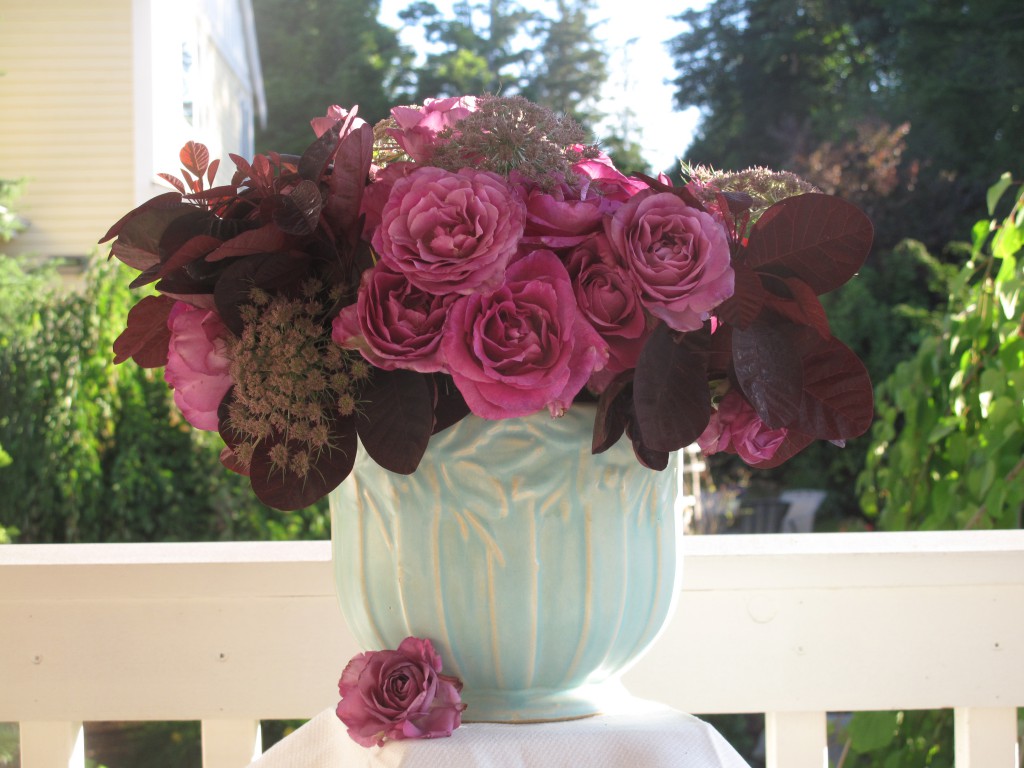
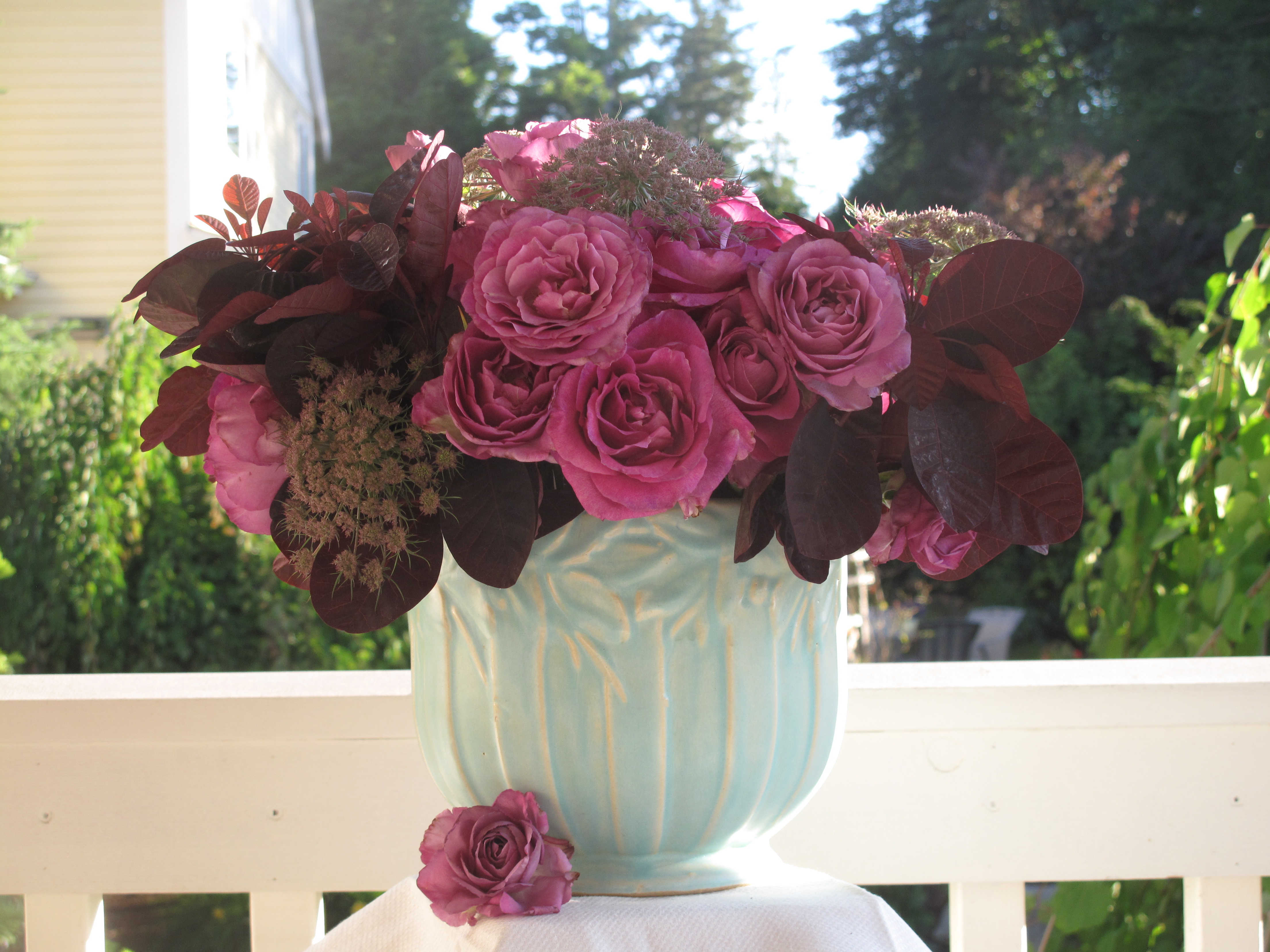
Analogous color palette of pinks, mauves and purples!
Let’s Be Friends: Analogous (above)
Neighboring colors on the wheel share many common pigments, which gives the floral designer clues as to how well they might look together in a vase. In landscape design, you often hear the term “cool” garden or “warm” garden – and essentially these terms describe the two sides of a color wheel. Cool colors with blue undertones include blues, greens, purples and pinks. Warm colors have red undertones ranging from yellow and orange to red and those yummy coral/peach hues. The mood created by analogous floral palettes can be anything from soothing and serene to high-voltage excitement.
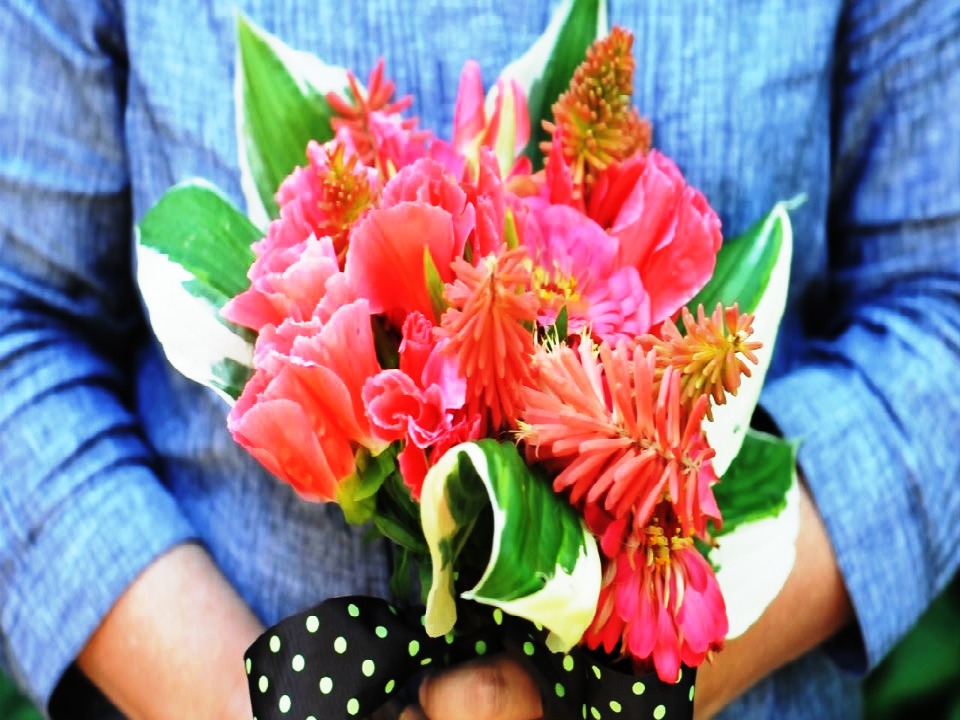
Three types of coral flowers – a Monochromatic bouquet.
Monochromatic is anything but boring
Out of flowers? Short on funds? That’s when a monochromatic bouquet of all foliage comes to the rescue. Gardeners and florists use the term “greenery” all the time – it’s nature’s neutral shade. But thanks to so many amazing textures, shapes and sizes of foliage, you can pull together a monochromatic foliage bouquet with ease — your clippers and a walk through the backyard make it easy. The result? A totally unexpected, thoroughly contemporary look. You can try this technique with any color foliage or flowers – or a combination of both. I created a small but sweet arrangement using a dark-burgundy aeonium (a succulent) and dark purple potato vine. Two completely different plants; same color. Eye-catching design.
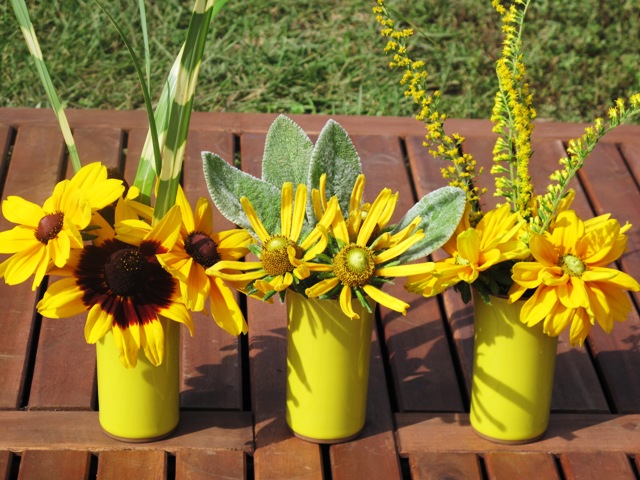
Another way to express a singular color.
I recently designed a fun, monochromatic project involving three yellow tumblers, each of which holds different varieties of black-eyed Susan flowers (Rudbeckia sp.) and textural foliage. This type of design allows you to clip bits of this and that from the garden and end up with a cohesive design – thanks to the unifying color theme.
A Botanical Rainbow
Nature’s stems, buds, petals and leaves make up the floral color wheel. It’s easy to incorporate these elements in your centerpieces and bouquets using complementary, analogous and monochromatic pairings. Be inspired by this timeless approach to color. But don’t feel restricted by color “rules.”They are only guidelines, worth breaking. Harold Piercy, principal of the Constance Spry Flower School in England, wrote in 1983: “…in flower arrangement, I have always found it advisable to discard any preconceptions about colours.” He added: “Keep an open mind and do not be ruled by the colour wheel. You may hit upon unexpected satisfactory results during your experiments.”
Glossary of color terms
Primary: These pure colors include Red, Yellow and Blue
Secondary: Combinations of two primary colors, including Orange (Red + Yellow), Green (Blue + Yellow) and Purple (Red + Blue)
Tertiary: A combination of one primary color and one secondary color
Complementary/Contrasting: Color “pairs” that reside opposite each other on the color wheel
Analogous: Adjacent colors on the color wheel, related to a dominant primary hue
Monochromatic: A single hue, or variations of one color, including tints, shades and tones
Posted in American Grown, Blog Posts, Creativity, floral design, General, Plants, Writing | 1 Comment »
February 21st, 2014
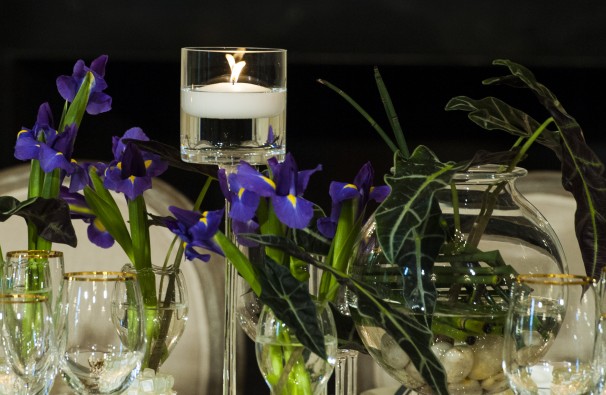
(c) Washington Post image of California irises and Florida alocasia foliage.
The White House has had a long-standing tradition of featuring and celebrating American grown food and wine during its state dinners. Menus and wine pairings are carefully selected months in advance to ensure that only the freshest and finest American grown ingredients are used during these important special events.
And now, acknowledged for the first time ever, the centerpiece flowers are 100% American grown.
This is a HUGE cause for celebration in all 50 states where flower farmers are working hard to make a decent living from their land; working hard to grow unique, high quality flowers for American consumers; working hard to keep their employees on the payroll; and working hard to stimulate the economy in their own communities. As one of my supporters of the Slowflowers.com campaign on Indiegogo wrote about supporting American Grown Flowers: “The whole concept makes so much sense –what is there not to get???”
According to a recent blog post by USDA Deputy Secretary Krysta Harden, the Obama White House made a deliberate effort to not only feature the diversity and bounty of American grown agriculture, but also its beauty. Deputy Secretary Harden’s post highlighted the extra effort by the Obama Administration to feature American Grown flowers and greens that were proximately displayed during last week’s state dinner with France’s President Francois Hollande.
“The dinner celebrated the ‘best of American cuisine’ and featured dry aged rib eye beef from Colorado, trout from Maine, cheese from Vermont, chocolate from Hawaii, and potatoes from New York, Idaho, and California. The wines served at the dinner included excellent selections featuring California, Washington State, and Virginia offerings,” shared USDA Deputy Secretary Harden on the Department’s blog. “However, beyond the menu itself an equally impressive feature was the visible presence of American cut flowers.”
Extending the White House’s rich tradition of featuring American Grown food and wine to include flowers is a timely sign of support for U.S. flower farmers. Flowers from California, Mississippi, New Jersey, Virginia, and Florida were all included.
“We very much appreciate President Obama and his Administration’s decision to showcase American grown flowers at this recent state dinner,” said California Cut Flower Commission’s CEO/Ambassador Kasey Cronquist. “Having the White House ensure that the flowers at the center of the table are as fresh, sustainable and local as the food during a state dinner shows great support to our family flower farms in California and across the country. The decision by this Administration to source and feature locally grown blooms is a significant affirmation of the growing momentum among consumers for more American grown flowers.”
What’s next? Let’s get this practice codified and see even MORE American Grown Flowers on the table at White House dinners! I can only assume last week’s BIG AMERICAN FLORAL EVENT is the beginning of a White House commitment to give as much attention to the origins of its flowers as it does the origins of the food and wine it serves to guests.
Mrs. Obama, you have single-handedly stimulated the American fashion industry by supporting our country’s creative designers. Please bring that same passion to the flower world. There are so many parallels between wearing beautiful, American-designed and American-made clothing AND filling vases with beautiful, American-grown flowers on the White House’s tables. Flowers are just as important and taking the leadership to feature them will touch just as many lives of Americans!
WHAT CAN YOU DO TO SUPPORT THIS ENDEAVOR? Please log onto the USDA Blog Post and add your comment of support for getting more American grown flowers on the White House tables!
Posted in American Grown, Blog Posts, Creativity, Entertainment, floral design, General, Plants | 10 Comments »
February 18th, 2014
Podcast: Play in new window | Download
Subscribe: Apple Podcasts | Podcast Index | | More
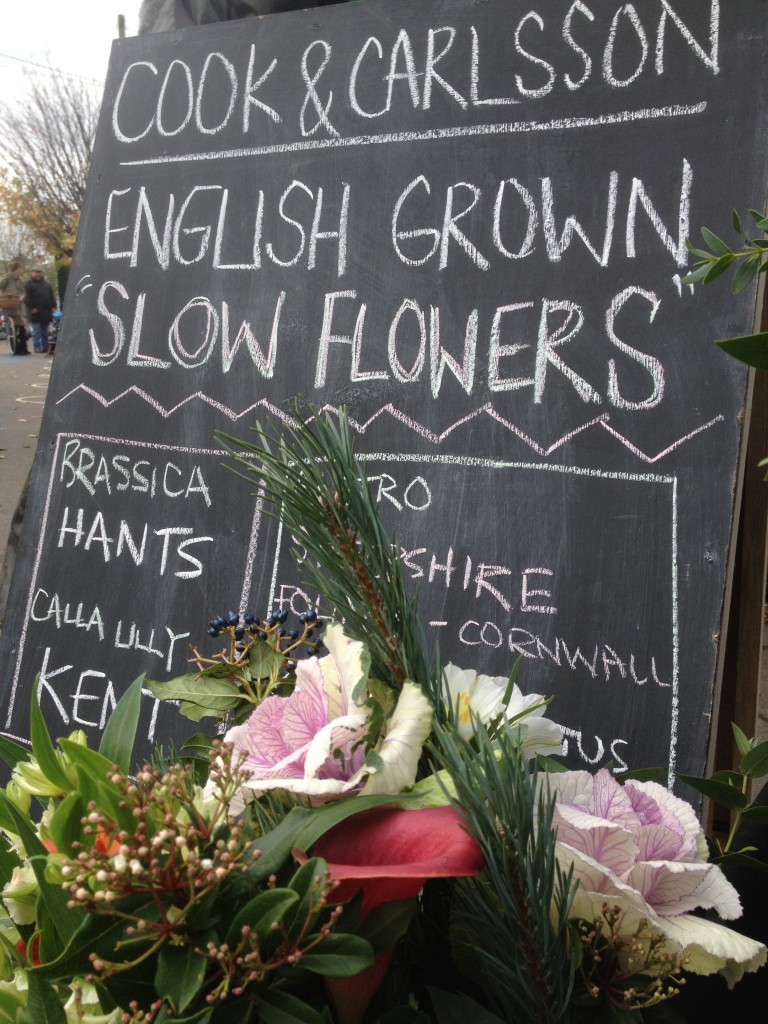
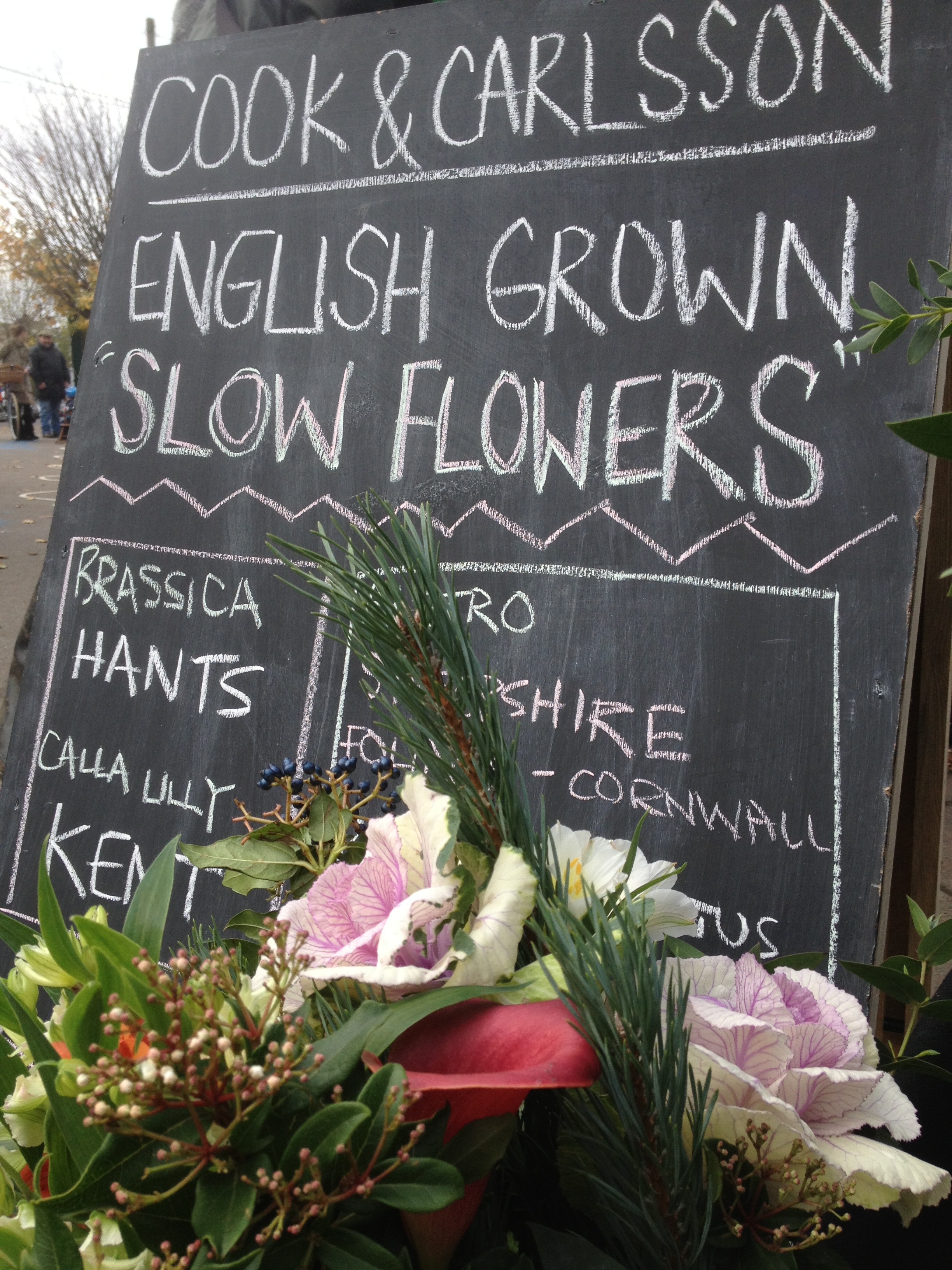
How do you like that? English Grown SLOW FLOWERS, by Cook & Carlsson
Today’s podcast is actually NOT about American flowers, but about our gifted and inspiring kindred spirits across the Atlantic. They are a few of the many flower farmers and designers who are part of their own local flower movement in Britain.
During the past several months, I often noticed the hashtag #britishflowers pop upon Twitter. It was fun to read comments and re-tweets and click through to view beautiful photos of British designers, farmers, gardens and flowers.
 One of the Twitter names that I started interacting with was Cook & Carlsson, and I soon learned that Lizzie Cook and Moa Carlsson are the two women behind that venture.
With the alluring tagline: “English Grown Flowers,” Cook & Carlsson is a London-based design studio combining the talents of Lizzie Cook, a photographer and artist, and Moa Carlsson, an architect who has worked most recently worked in landscape architecture.
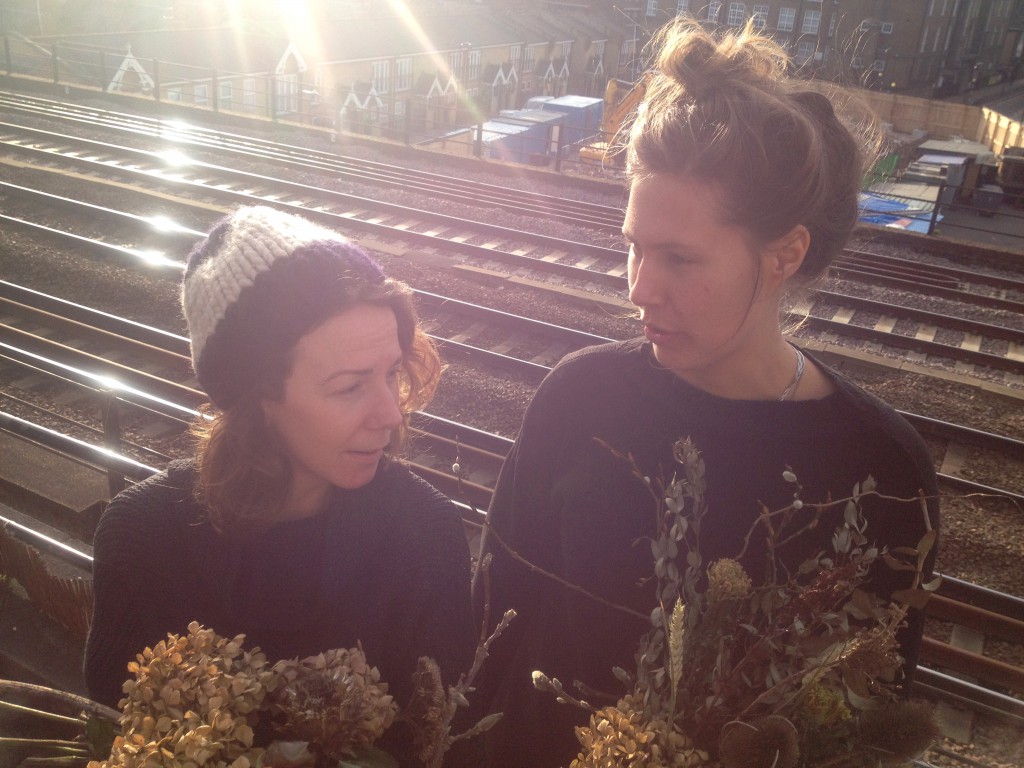
Lizzie Cook (left) and Moa Carlsson (right), partners in the design studio Cook & Carlsson
They describe Cook & Carlsson as an “independent flower monger,” and you’ll hear in our conversation the charming explanation for their use of that term. Lizzie, who has the British accent, and Moa, whose accent reveals her Swedish heritage, have joined their mutual love of nature with a desire to create beauty using flowers they grow or forage, as well as flowers they source from other UK flower farmers.
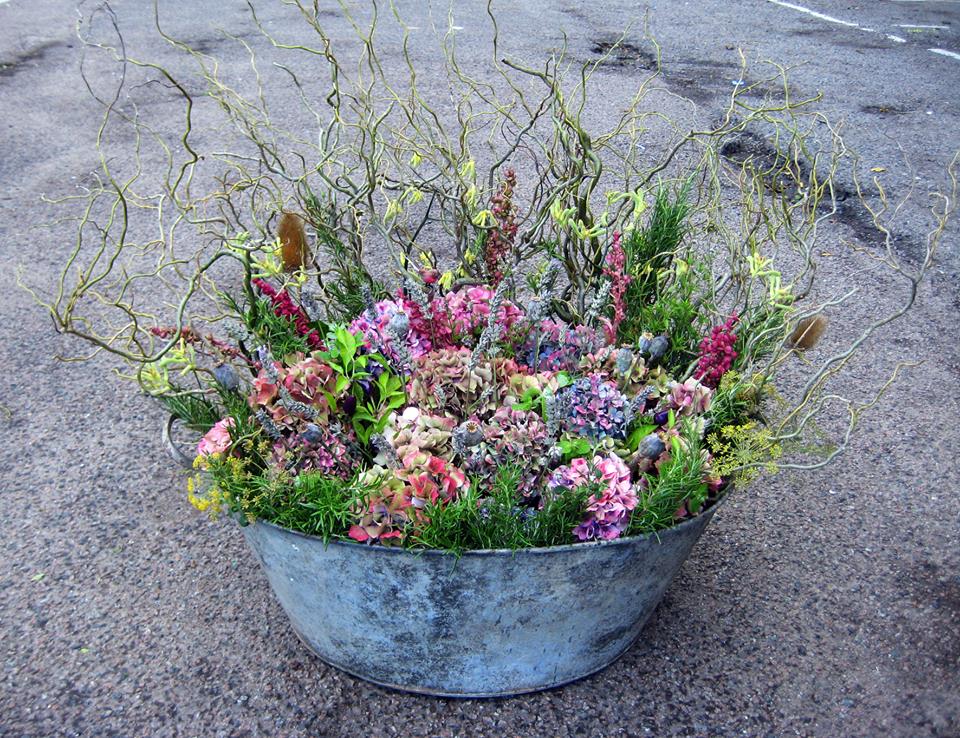
For an art commission, Cook & Carlsson supplied a large arrangement made entirely of scented herbs, wildflowers and flower – all local, seasonal and sustainable, of course!
Here’s more about Moa Carlsson, in her own words:
I grew up in the most northern part of Sweden, amongst aconitum, arctic bramble and Norwegian spruce, and in a family with a long tradition of growing food and flowers. My sister and both my mother and my grandparents kept large grounds living in tune with the seasons, which in their part of Sweden is rather harsh. (for example, you can’t grow apples there).
I studied and worked as an architect in Sweden, Austria, England and America. Right now I live in London, but I am a PhD student at MIT in Boston, where I am studying computational technologies to design and simulate the changing of landscapes.
In my free time I dig in my friends gardens and in the urban plots where we do guerilla gardening; I do hiking and mountaineering; I am a painter and I have a hunting license (mostly forest/mountain birds and hare).
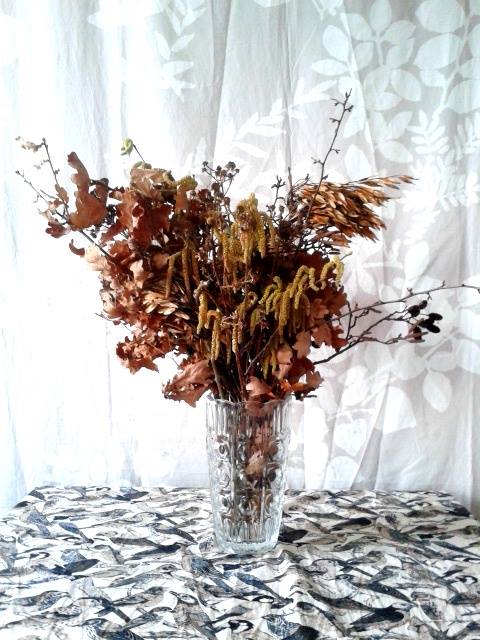
A seasonally-inspired autumn bouquet – nature’s gifts in a vase.
Here’s more about Lizzie Cook, in her own words:
I grew up in the Caribbean amongst the audacious vibrancy of hibiscus, frangipanis and flowers from the Flamboyant tree, all of which fired my senses as a child. The fragrance and colours of the frangipani flower at the right time of day is pretty intoxicating! When I went to Falmouth College of Arts in Cornwall to study photography, I fell in love with all of the tropical gardens, which reminded me of the flora and fauna of warmer climes. I had a very free childhood, outside, rarely wearing shoes and in nature, noticing the changing seasons, being free to take it all in. I love being near the water and I currently live on a narrowboat on a river in East London, still trying to hold onto that freedom and proximity to nature, especially in the City of London. I like seeking out the quieter natural areas, but enjoy the diversity and pace of London. It is a privileged thing to cycle home from the hectic city back to a peaceful boat on a river surrounded by nature reserves, and I feel very lucky!
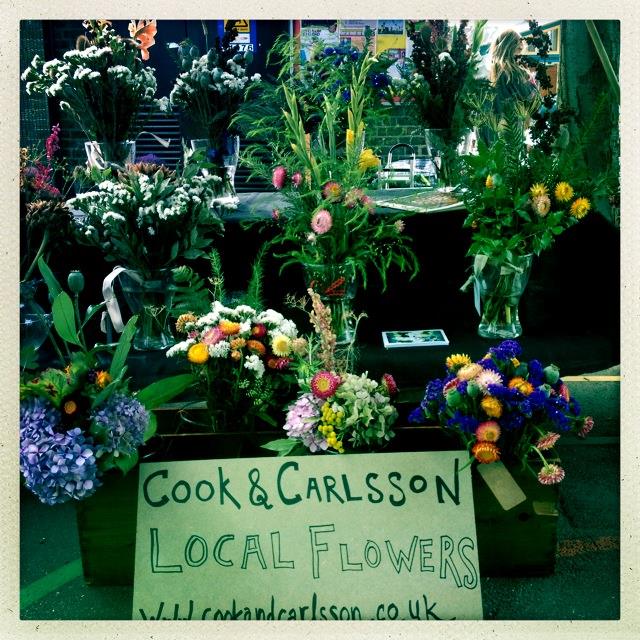
Cook & Carlsson’s stall at the Chatsworth Road Market in East London.
Cook & Carlsson on their philosophy:
We live really close to one another, just on the outskirts of London, which means there are lots of small natural refuges where you can feel like you are still connected with the wider countryside. It was in these places where our imaginations were fired and it’s really where we had the idea of using flowers and foliages that we saw around us, but which had been forgotten about or blocked out by the increasing urbanization. We began looking and learning about the species that were around us and rediscovering their simple beauty; we began mixing them with other things, falling in love with the results. Doing so and by growing our own flowers, we try to bring back varieties that London shoppers rarely get a chance to buy.
For us, it’s about the lifestyle that comes along with the business. We are very lucky to visit lots of local gardens, growing sites, nurseries, meeting local growers and hanging out with people who are on the same page as far as our ethos is concerned. Then we collect all of our material and put it together, which we relish as it appeals to our strong creative sides, the combination of which seems to be magic! Many laughs and good biscuits make good arrangements, we have found.
Flowers from the Farm, the UK’s nationwide network of cut flower growers
Through our exchanges, I learned that Cook & Carlsson is the first London-based member of the “Flowers from the Farm” organization, which was founded by Gillian Hodgson. Lizzie and Moa were sweet enough to connect Gill and me.
Part two of this interview is with a true kindred spirit. Gill is the Mother of the British Flowers movement. She grows flowers at her own farm, Fieldhouse Flowers in Yorkshore. Here is how Gill describes her flower endeavor:
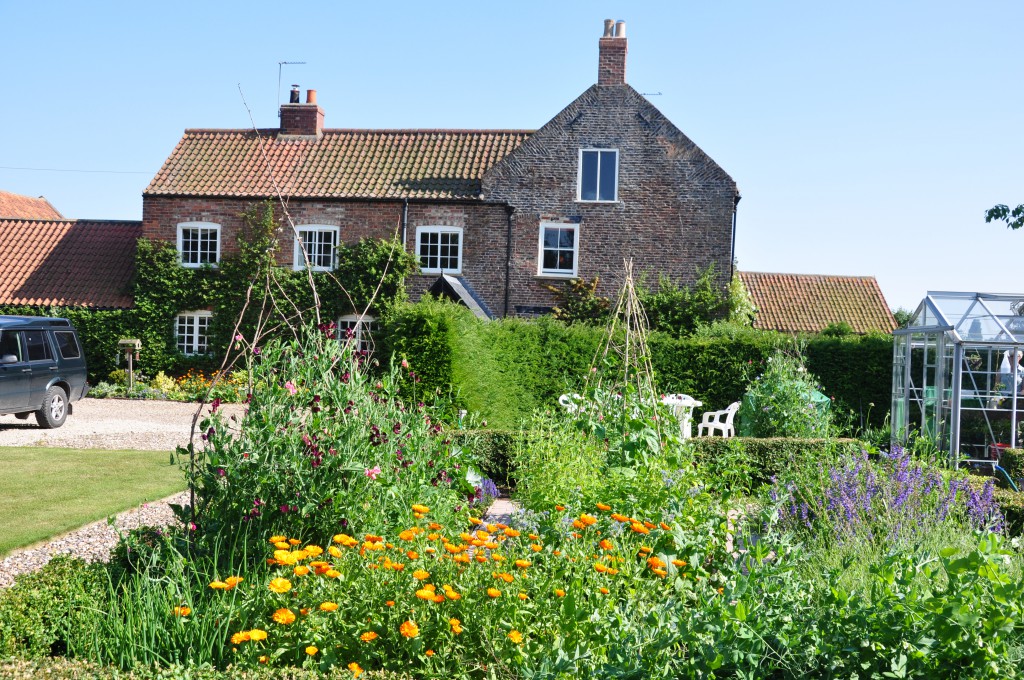
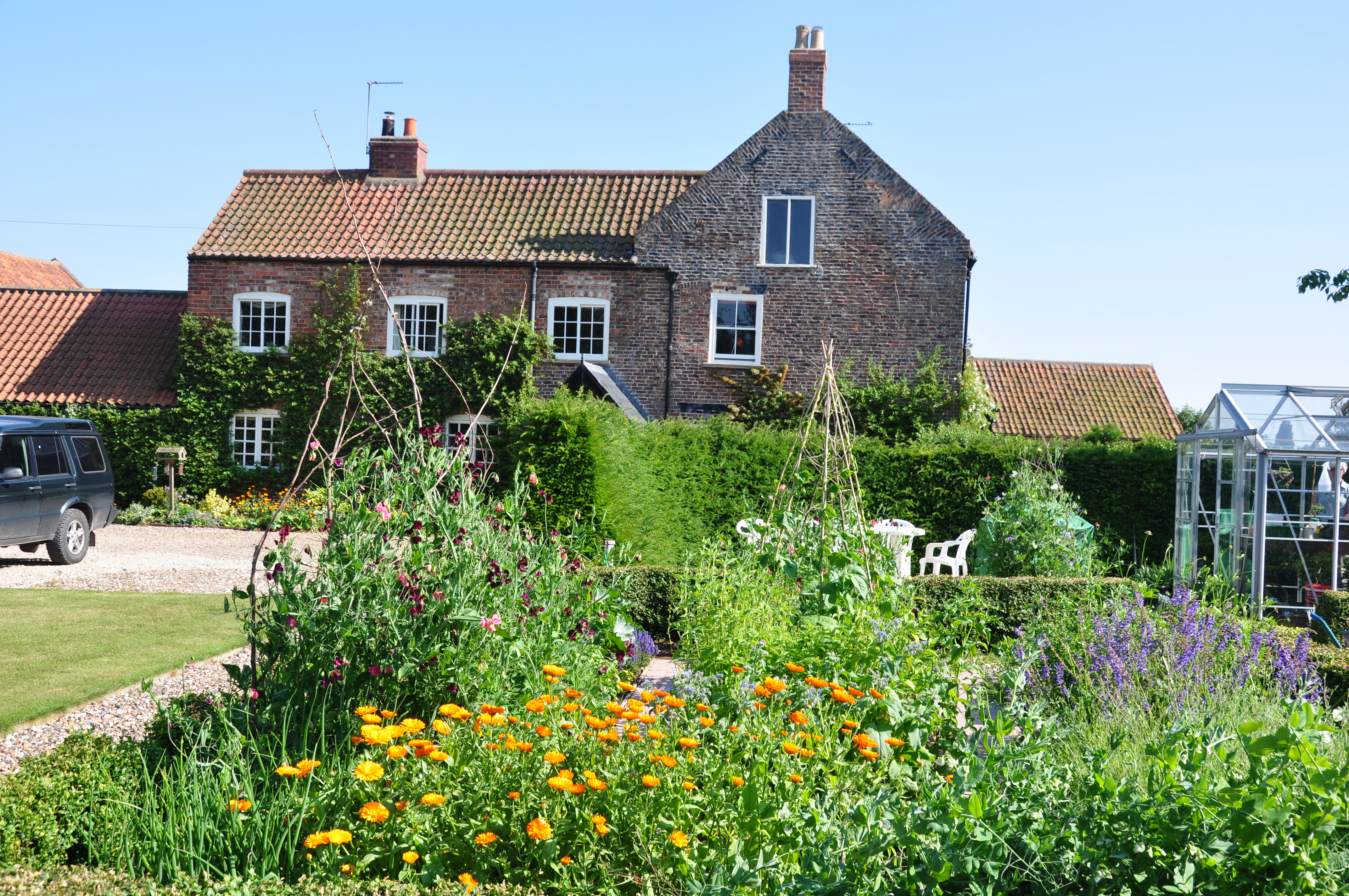
Field House Farm in Yorkshire, where Gillian Hodgson grows her beautiful British flowers.
“Fieldhouse lies in the Vale of York at the foot of the Yorkshire Wolds and we have 200 acres of light sandy land. We farm wheat, barley and carrots and I have my flowers on just one acre. My father, grandfather and great-grandfather were here before us – and my great-great-grandfather farmed at the next-door farm. John, my husband, and I have been here 25 years now. The house was built around 1780; it’s draughty and takes a lot of upkeep – but it’s a great family house and we love it.”
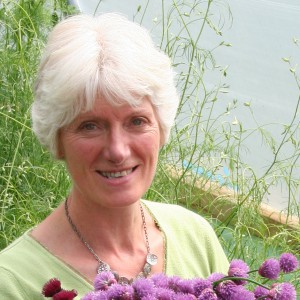
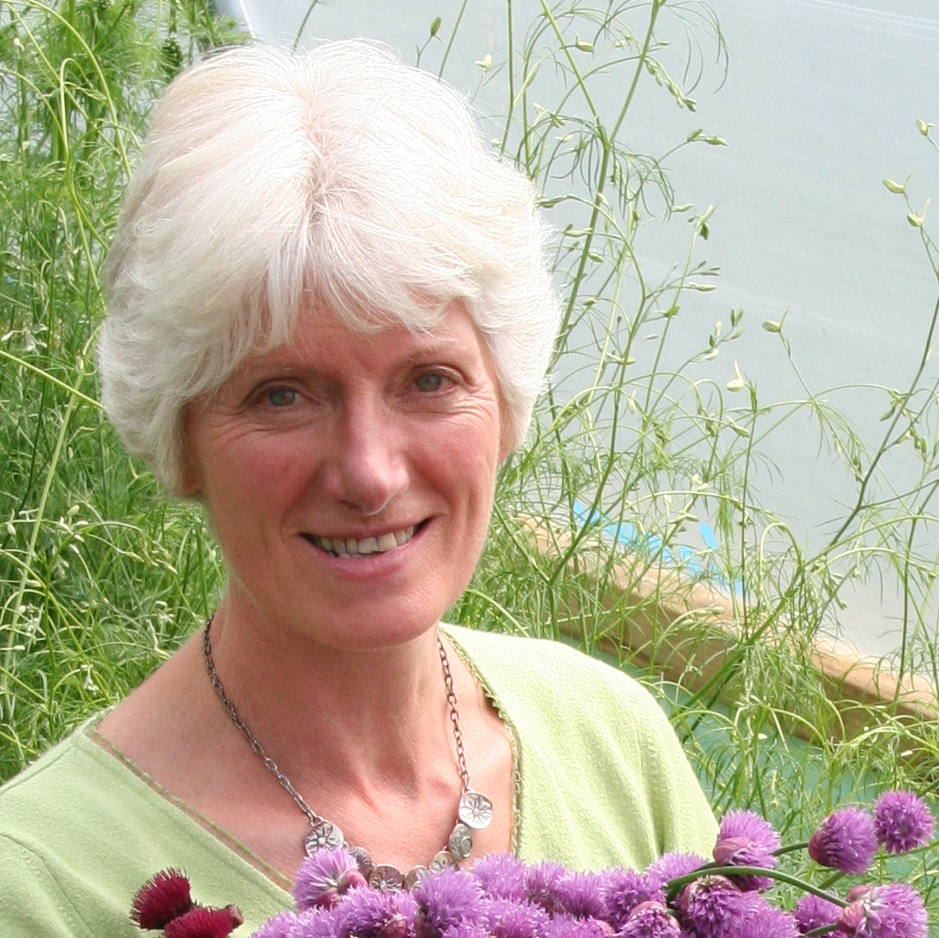
Gillian Hodgson of Fieldhouse Flowers and Flowers from the Farm, the #britishflowers organization.
As you will hear in our interview, Gill has been putting much of her energy into promoting British flowers through Flowers from the Farm. She and others came together in 2011 to launch this network of cut flower growers. Read more about the group’s origins here.
“Our aim is to create a brand for British flowers as a World class product,” reads the organization’s web site. And the tag-line: “Putting British flowers back into every vase in the country,” sounds comfortably familiar with the way I conclude each of my podcasts.
I invite you to join all three of them on a Twitter chat any Monday. The #Britishflowers chat takes place at Noon Pacific/3 p.m. Eastern every Monday (and that means 8 p.m. GMT/Greenwich Mean Time). Please look for these inspiring leaders of the #britishgrown flower movement on Twitter and more.
To follow up on Gill’s story about the “fake” British Valentine’s bouquet and how the UK flower farmers used social media, especially Twitter, to highlight the inaccuracies, follow this link to Flowers from the Farm’s media report.
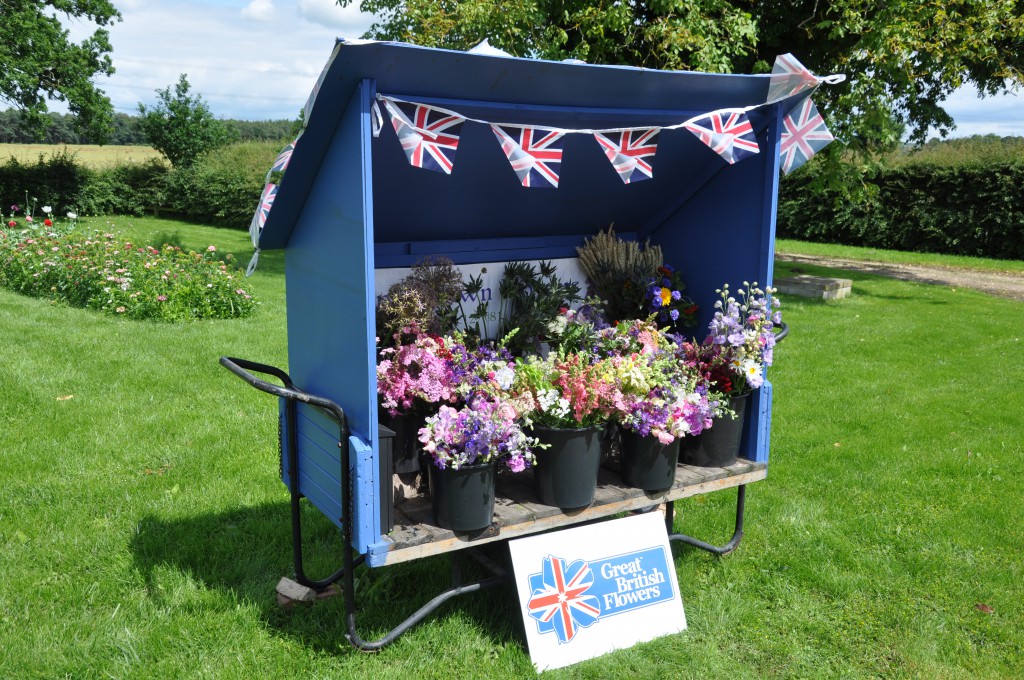
Farm gate sales of British flowers.
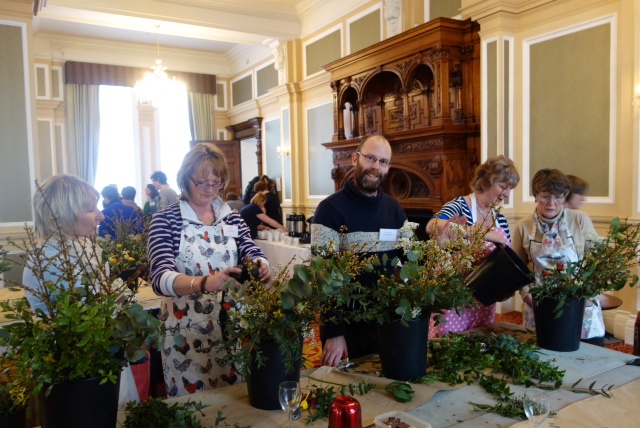
A hands-on Flowers From the Farm workshop for new and established UK flower farmers, which took place in Harrogate.
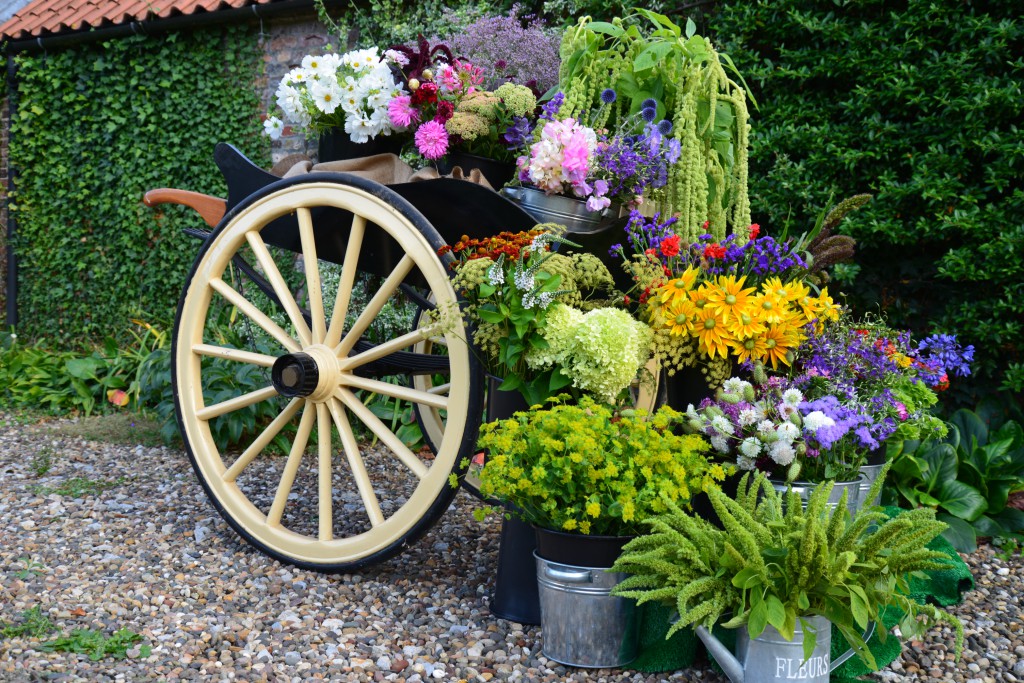
At the height of summer, Gill Hodgson’s flower farm explodes with a beautiful array of blooms.
So many connections to make as together we promote our domestic cut flower farming industry and the floral designers who care about the origins of their design work.
Special thanks to Lizzie and Moa for permission to use the photographs they provided; and to Gill for permission to photos of her farm and the Flowers from the Farm participants.
My friend Kasey Cronquist started the hash-tag #originmatters. In the UK, Gill Hodgson calls the same idea #knownprovenance. Similar in their intent, both phrases highlight what is going on in both the U.S. and the U.K. Consumers want to know the sources of their flowers. And flower farmers are fully engaged in providing that information!
It has been my pleasure to share with you today’s podcast conversations. Apologies for the uneven audio quality in some places, which was subject to the idiosyncracies of doing interviews via Skype. In the second interview, my voice was quite garbled, while Gillian Hodgson’s came through very clear. So we had to re-record many of my questions and patch together the interview. I’m sure you’ll really enjoy these interviews, despite the minor tech problems.
Because of the support from you and others, listeners have downloaded episodes of the Slow Flowers Podcast more than 6,500 times! I thank you for taking the time to join to my conversations with flower farmers, florists and other notable floral experts.
If you like what you hear, please consider logging onto Itunes and posting a listener review.
Until next week please join me in putting more American grown flowers on the table, one vase at a time.
The Slow Flowers Podcast is engineered and edited by Hannah Holtgeerts. Learn more about her work at hhcreates.net.
Posted in Creativity, floral design, Gardening, General, Plants, Podcast Episodes, SLOW FLOWERS Podcast, Writing | 4 Comments »
February 14th, 2014
California Cut Flower Commission named Premiere Sponsor of Debra Prinzing’s SLOWFLOWERS.COM, a new online American flower directory
SEATTLE, WA (February 14, 2014) – This Valentine’s Day, California’s flower farmers are showing their love by making the largest contribution to date to the Slowflowers.com campaign on Indiegogo. The California Cut Flower Commission (CCFC), representing all of California’s flower farmers, became Slowflowers.com’s Premiere Sponsor with their $1,500 contribution. Designed to connect flower lovers to local floral retailers that support and sell locally-grown flowers, the campaign has surpassed its goal to raise $12,000 and now has more than 200 “funders” contributing in excess of $17,000 to the cause.
“I’m very encouraged to have such support from the flower farmers of California,” shared Debra Prinzing, the Seattle-based author of Slow Flowers (St. Lynn’s Press, 2013) and leading advocate of American flower farming. “With imports representing over 80 percent of flowers sold in this country, the mission of Slowflowers.com is to help people who care about the source of their flowers easily find and identify ways to buy American-grown flowers.”
Scheduled to launch this spring, Slowflowers.com will feature easy-to-use search tools to find floral vendors in several categories, including florists, studio designers, wedding/event designers, supermarket floral departments, CSA subscriptions and farmer-direct. Members of Slowflowers.com pledge to supply their communities with local, regional and American-grown flowers.
“Debra is making a difference and creating a conversation that we support,” explained CCFC CEO/Ambassador Kasey Cronquist. “Currently, there is no other resource like Slowflowers.com that makes it easy for flower lovers to be assured of the origins of their flowers and bouquets.”
Prinzing created Slowflowers.com to fill an unmet need that she had as a consumer and lover of flowers. “Slowflowers.com is a simple solution to a problem I have continued to face over the past several years,” she said. “While writing and speaking to groups about my passion for American flower farmers and their flowers, I am continually asked how the average person is supposed to know where to buy American Grown flowers and how they can be assured that what they are getting is locally grown. I created Slowflowers.com to be my answer, a free, public and user-friendly resource that can help others, too.”
Prinzing’s grassroots Indiegogo crowd-funding campaign continues, with five days remaining for additional support for her efforts. Visit the Indiegogo Slowflowers.com campaign to watch a video and for more information about the project.
###
About the California Cut Flower Commission
The California Cut Flower Commission (CCFC) was created by the state legislature in 1990 with the mission to promote California cut flowers and foliage. The CCFC is overseen by the California Department of Food and Agriculture and is funded by grower assessments. The Commission represents the state’s 250 growers who collectively produce more than 75 percent of the cut flowers grown in the U.S., generating $278 million in sales (2011). For more information about California cut flowers, visit www.ccfc.org or on Facebook/CaliforniaGrownFlowers.
About Debra Prinzing
Founder Debra Prinzing is a Seattle-based outdoor-living expert who writes and lectures on gardens and home design. She is the leading advocate for a sustainable and local approach to floral design and is credited with creating the term “Slow Flowers.”
In 2014 Debra launched www.slowflowers.com, a free online guide to florists, shops and studios who design with American-grown flowers. She is the author of seven books including Slow Flowers and The 50 Mile Bouquet (both by St. Lynn’s Press) and is the producer/host of the weekly “Slow Flowers Podcast with Debra Prinzing,” found on Itunes and www.debraprinzing.com
Posted in American Grown, Blog Posts, Creativity, floral design, General, Slowflowers.com the Directory of American Flowers | No Comments »
February 12th, 2014
Podcast: Play in new window | Download
Subscribe: Apple Podcasts | Podcast Index | | More
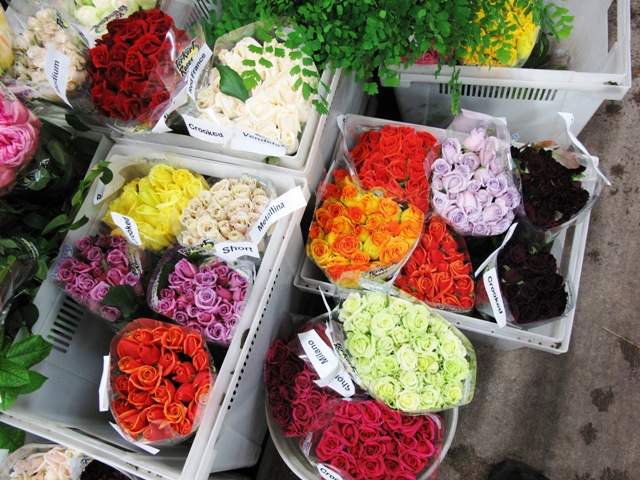
A rainbow of rose colors grown in Oregon by Peterkort Roses. Love this palette!
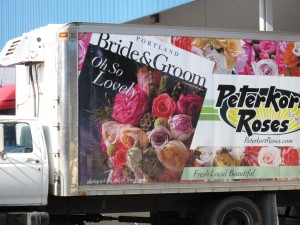
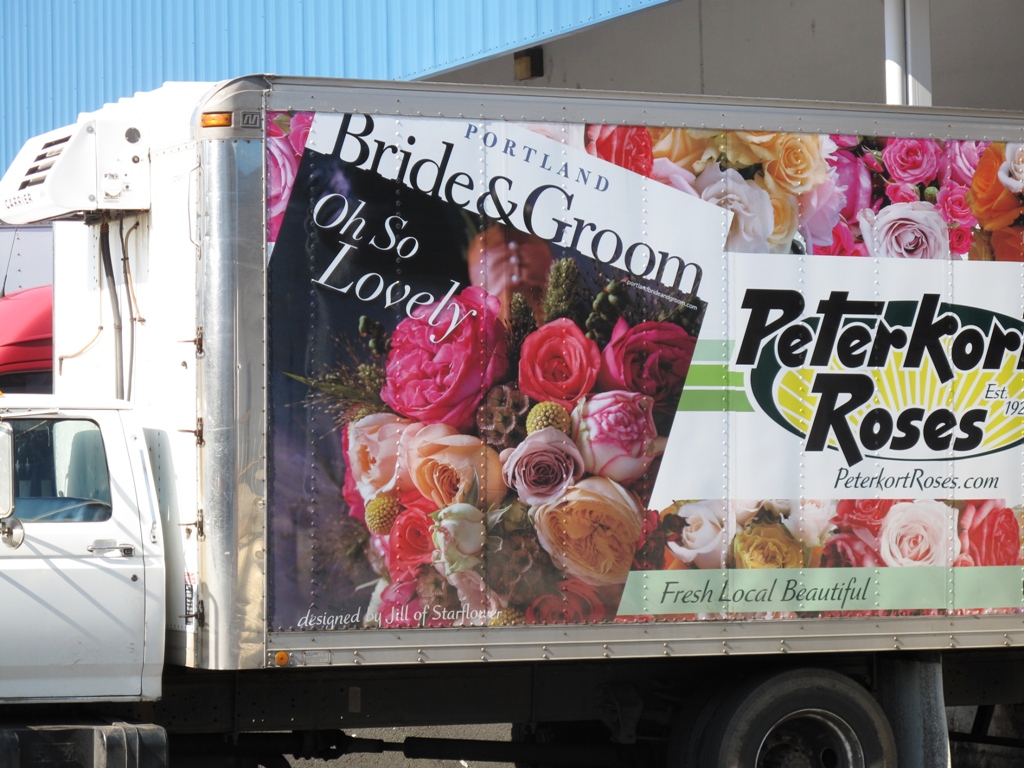
Love this graphic messaging on the side of Peterkort’s delivery truck.
Hello again and thank you for listening to the newest episode of the Slow Flowers Podcast with Debra Prinzing.
This is part 2 of my back-to-back episodes on American grown roses, in honor of Valentine’s Day, taking place later this week. In our previous episode, I introduced you to Danielle Hahn of Rose Story Farm, based in Carpinteria, California.
Today, I hope you’ll enjoy my conversation with Sandra Peterkort Laubenthal of Peterkort Roses.
Most U.S.-grown roses hail from California, which accounts for 75 percent of the nation’s overall floral production. Yet in Oregon, Peterkort Roses has raised hybrid teas for the floral trade since the 1930s. The Peterkorts, a third-generation Oregon family, currently produces 2 million roses annually, using many sustainable growing practices.
“We have this certain niche, and we really want to support the local floral industry,” says Sandra, granddaughter of Joseph and Bertha Peterkort, who came to Oregon from Germany and started flower farming in 1923, raising sweet peas, gerberas and pansies.
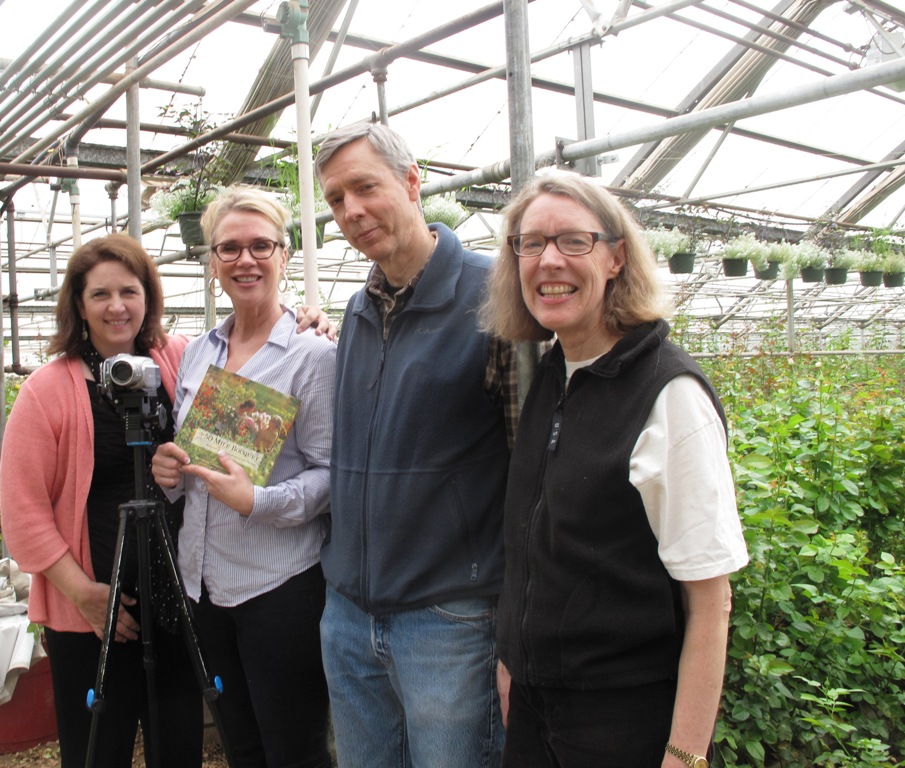
This photo is from a visit I made to Peterkort Roses in May 2012 when Portland TV personality Anne Jaeger produced a segment about sustainable and local flowers for The Oregonian. Sandra Laubenthal and her brother Norman Peterkort pose at right: I’m on the left and Anne is second from left.
Historically, the state had been home to several commercial cut rose growers, but during the past two decades those operations either shifted to other crops or folded altogether. “We are an anachronism, but it seems like the ‘City of Roses’ should have its own local rose grower,” Sandra points out.
Here’s the video segment produced by Anne Jaeger for The Oregonian/Oregon Live: “Sustainable bouquets — buying local extends to flowers, too!”
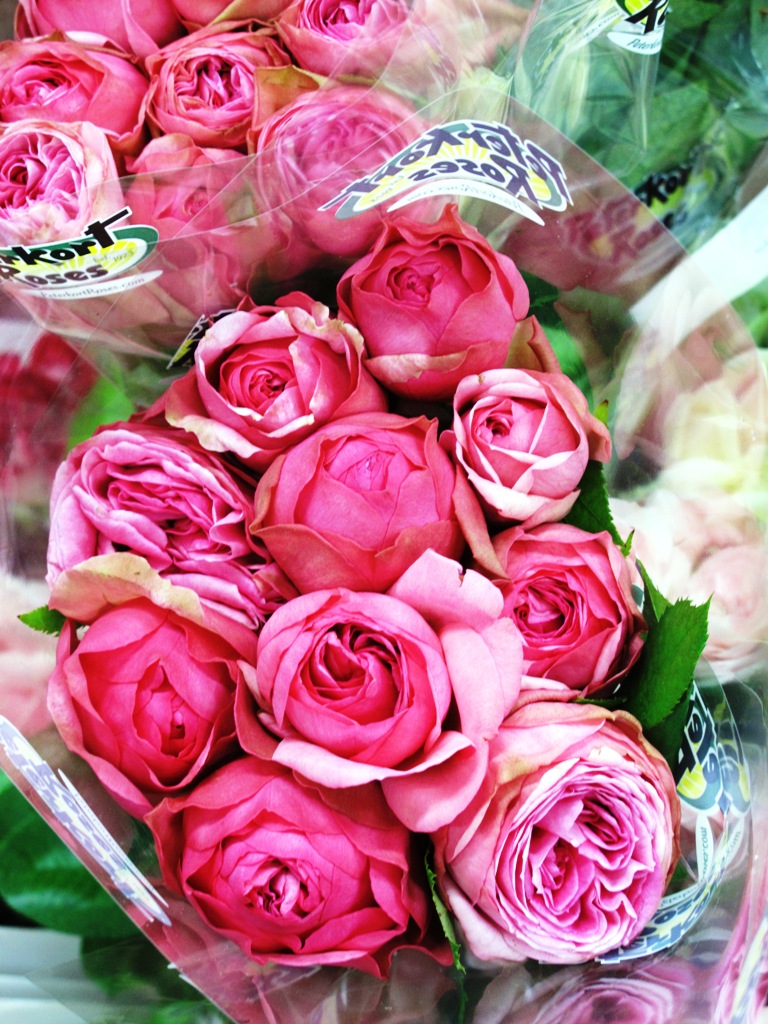
Stunning pink rose blooms – perfect for your sweetheart.
Peterkort’s elegant blooms look vastly different from those softball-sized imported ones that are offered by supermarkets, wire services and conventional flower shops every February 14th.
Instead, Peterkort’s 60-plus rose varieties are closer to what you might find gracing a mixed perennial border in the garden. Specialties include the hybrid tea rose, with upright, spiraled petals; a German-bred hybrid tea that features multi-petal characteristics of an old garden rose; and dainty spray roses with many small blooms on a single stem. Today, Peterkort’s 16 hoop houses produce thousands of rose stems, as well as gorgeous Oriental and Asiatic lilies, maiden fern, orchids and new crops like ranunculus and anemone.
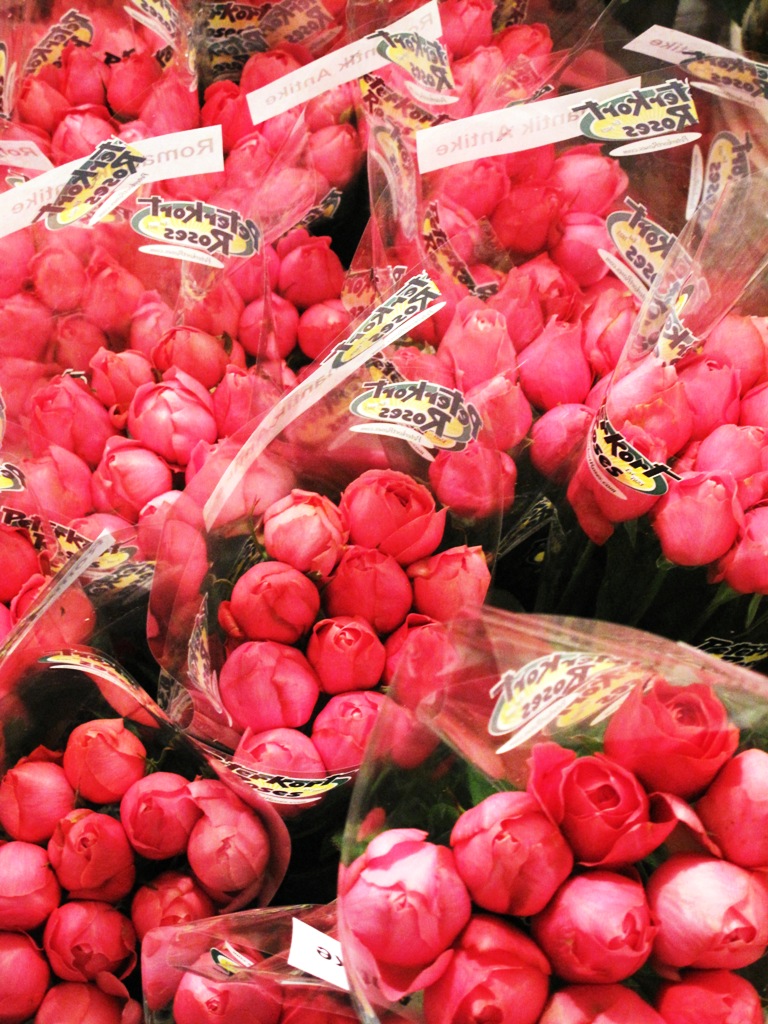
More Peterkort pretties!
Designers count on Peterkort as an important local source for bridal bouquets, boutonnieres, flower girl wreaths and tabletop arrangements. The versatile color palette begins with pure white roses and ends with ones covered in dark, velvety black-red petals. Unlike unscented imported roses, these have a light, pleasing fragrance. Because Peterkort harvests its flowers one day and sells them the next, their roses are super fresh and, as a result, are long-lasting in the vase.

Fresh roses on the grading table at Peterkort’s greenhouses.
“I’ve been ordering roses from Peterkort for years,” says designer Melissa Feveyear, owner of Seattle-based Terra Bella Floral Design, who specializes in local and organic flowers. With varieties like ‘Piano Freiland’, a red, peony-shaped rose, and spray roses that last several weeks in an arrangement, Peterkort’s blooms make up in quality what they don’t have in size, she says.
“Because the stems are thinner than (those of) imported roses, they’re very easy to use in hand-tied bouquets. You can group a bunch together for really stunning impact without making the stem feel too bulky for a bride to hold.”
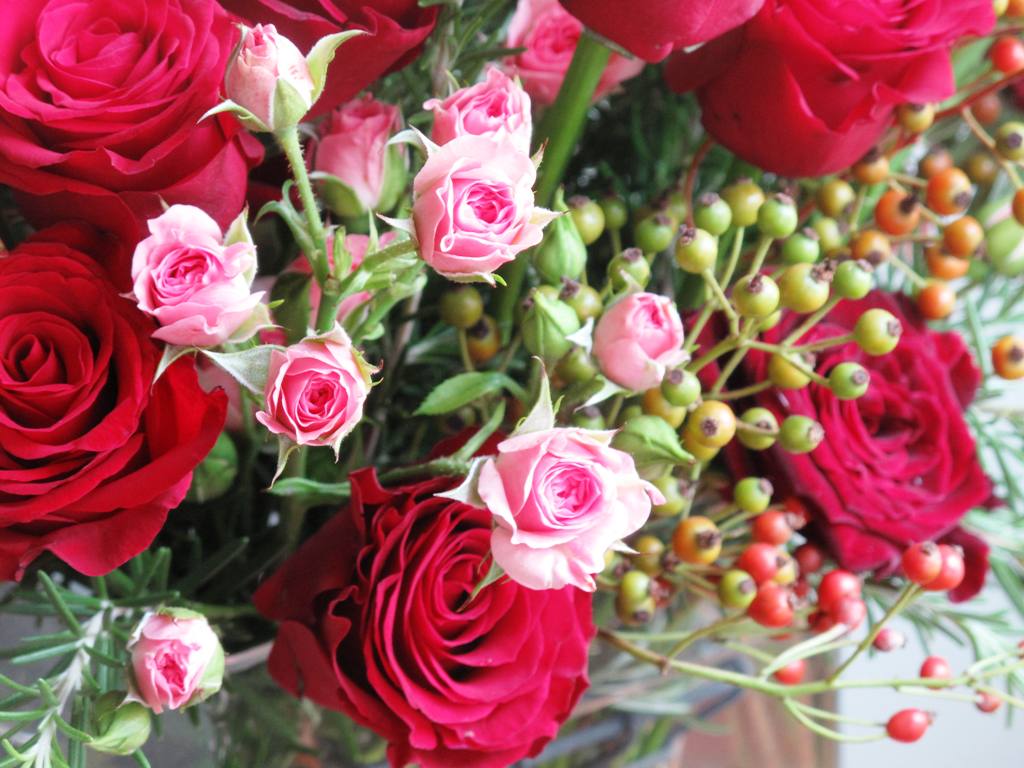
A detail from a Valentine’s Day bouquet featuring Peterkort Roses.
Indeed Peterkort is the last Oregon rose grower, but in fact, customers around the country have begun to discover these boutique blooms. A message on the company’s web site helps to explain their popularity: “What can we say about a bunch of people who are still dedicated to growing cut flower roses in the U.S.? . . . We continue because we are obsessed.”
Peterkort’s sustainable practices produce greener blooms:
- During the winter months, Peterkort increases the amount of artificial greenhouse light, thereby producing more roses in less space for the same amount of energy. Energy curtains provide additional insulation as outside temperatures drop. The panels are made of Mylar and are suspended from cables across the greenhouse ceiling, containing heat within when closed.
- Peterkort uses an Integrated Pest Management (IPM) system of biological controls to curb aphids, spider mites and other predator pests.
- Peterkort selects disease-resistant rose varieties and suppresses the spread of fungal diseases by maintaining ideal temperature, humidity and air circulation levels inside the greenhouses and keeping the ground clear of dead leaves and debris.
- All packaging is recycled and roses are wrapped for market in newspaper purchased from a local charity.
Here are some of my arrangements from Slow Flowers, featuring roses and lilies grown by Peterkort Roses:
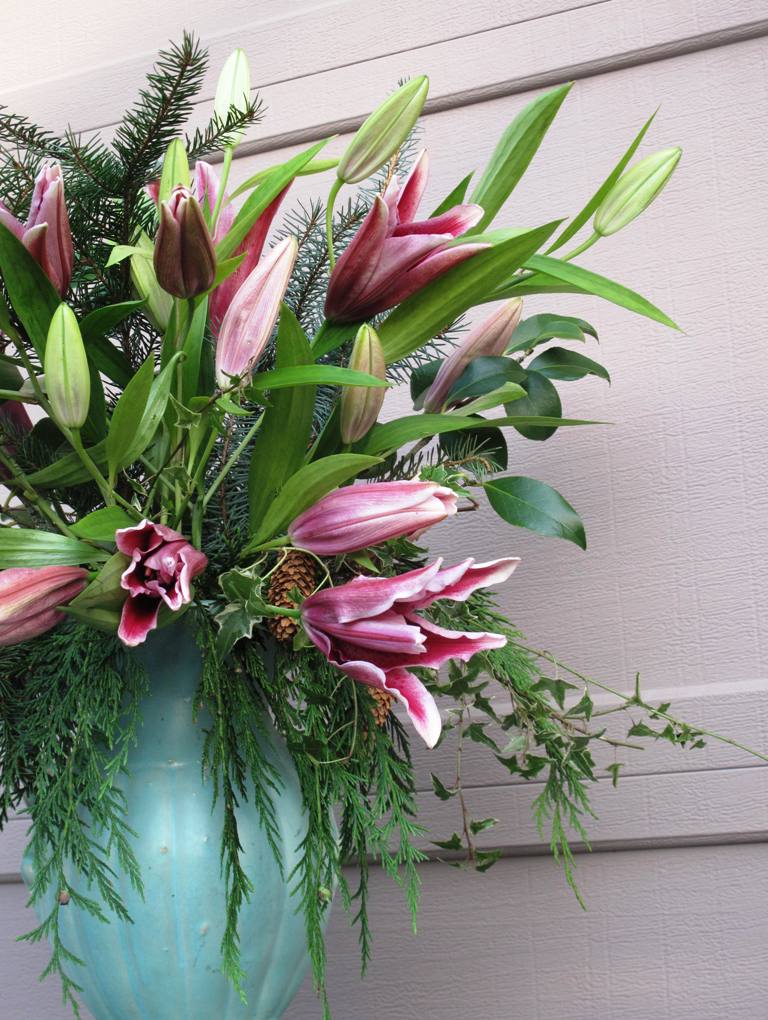
Peterkort lilies with winter greenery. The variety is Lilium ‘Rio Negro’, a hybrid Oriental lily.
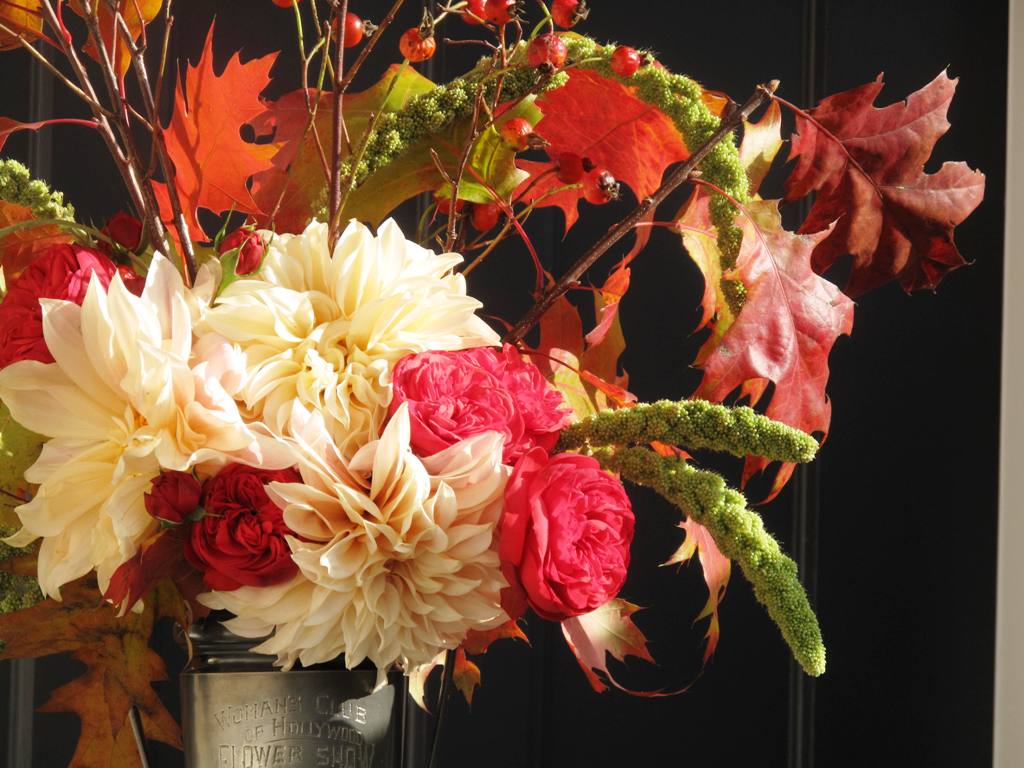
Peterkort’s lovely red garden rose ‘Piano Freidland’, makes this autumn arrangement sparkle!
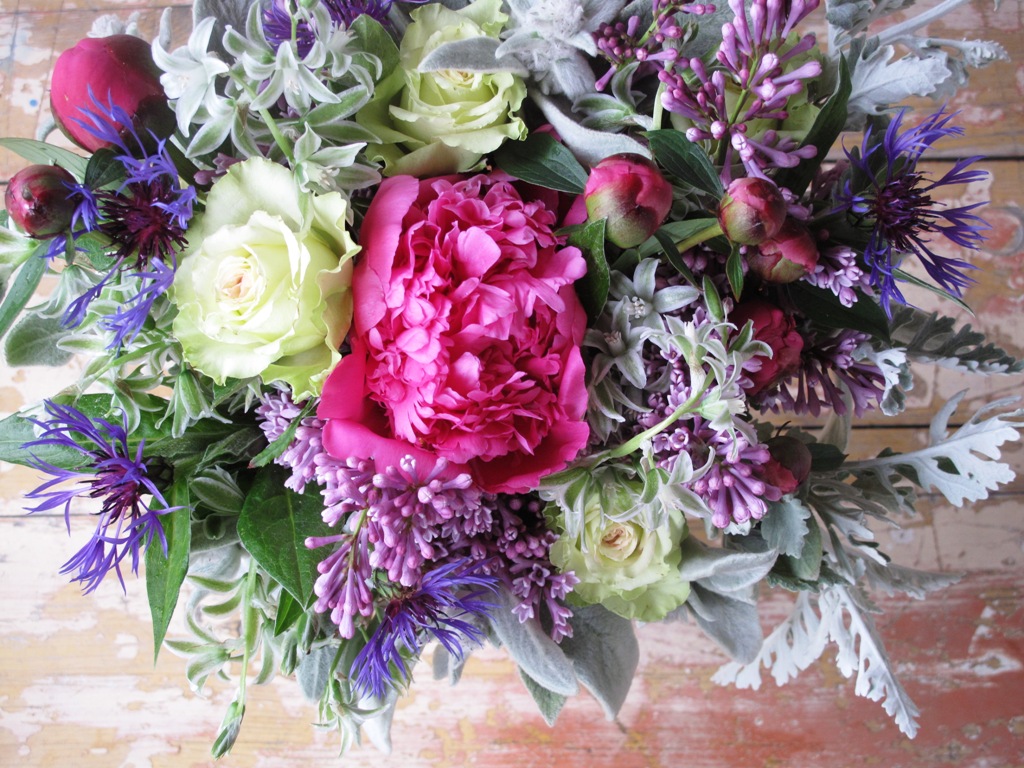
“Supergreen’ is a hybrid tea rose grown by Peterkort – a sublime pale green rose.
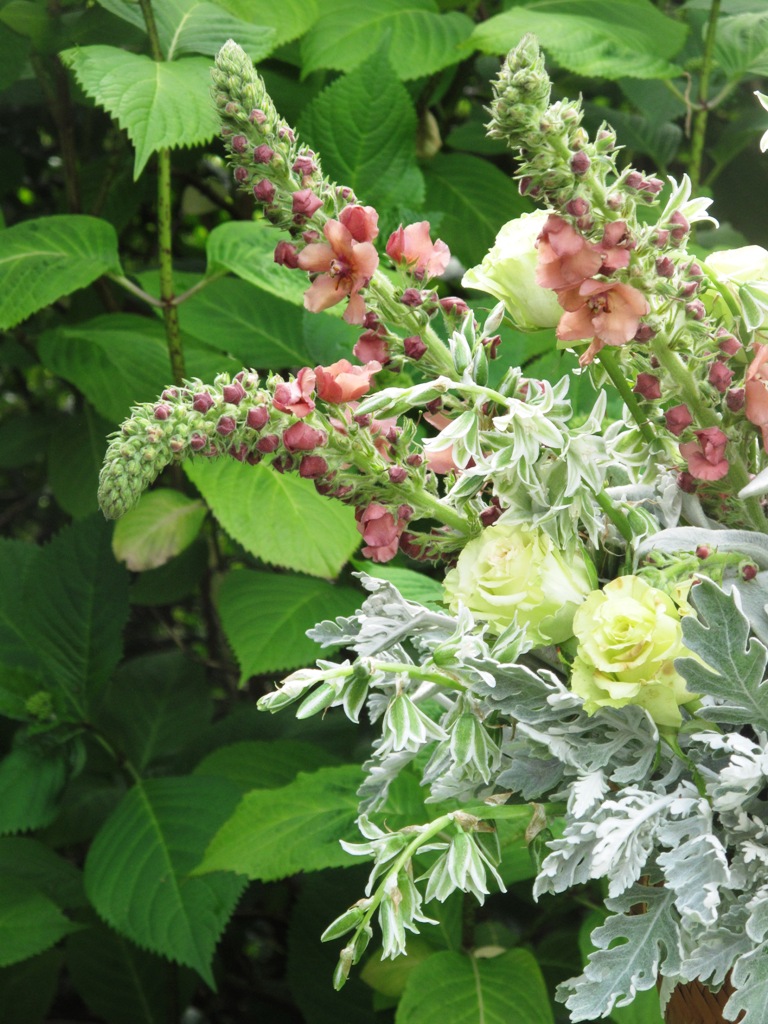
A springtime bouquet featuring ‘Supergreen’ with a pastel combination.
For many sweethearts, Valentine’s Day is filled with expectations and anticipation. Yet for followers of the Slow Flowers movement, the romantic holiday is not complete unless the flowers we give and receive come from local farmers who use sustainable practices. Peterkort is one such source. Please ask your local florist to order these domestic roses rather than the steroidal giants that must be shipped from afar, a continent or two from here.
In fact, here is my list of American rose farms. If your local florist says, “I can’t find American-grown roses,” then give him/her my recommendations and ask them to do their homework. You have to care enough to do the right thing.
It has been my pleasure to share with you today’s podcast conversation with Sandra Laubenthal. All photos are (c) Debra Prinzing.
Because of the support from you and others, listeners have downloaded episodes of the Slow Flowers Podcast more than 6,500 times! I thank you for taking the time to join to my conversations with flower farmers, florists and other notable floral experts.
If you like what you hear, please consider logging onto Itunes and posting a listener review.
Until next week please join me in putting more American grown flowers on the table, one vase at a time.
The Slow Flowers Podcast is engineered and edited by Hannah Holtgeerts. Learn more about her work at hhcreates.net.
Posted in American Grown, Blog Posts, Creativity, floral design, General, SLOW FLOWERS Podcast, Slow Flowers: 52 Weeks, Slowflowers.com the Directory of American Flowers | 1 Comment »
© Debra Prinzing, all written and photographic content. Website design/development by Willo Bellwood/Metric Media



 The Growers’ School promises to be a fantastic educational experience where flower farmers both new and established will hear from some very gifted folks. Here is the schedule and topics: