Debra Prinzing

Get the Email Newsletter!

Archive for the ‘Podcast Episodes’ Category

Flowers on Your Head with L.A.’s Mud Baron (Episode 178)

Wednesday, January 28th, 2015
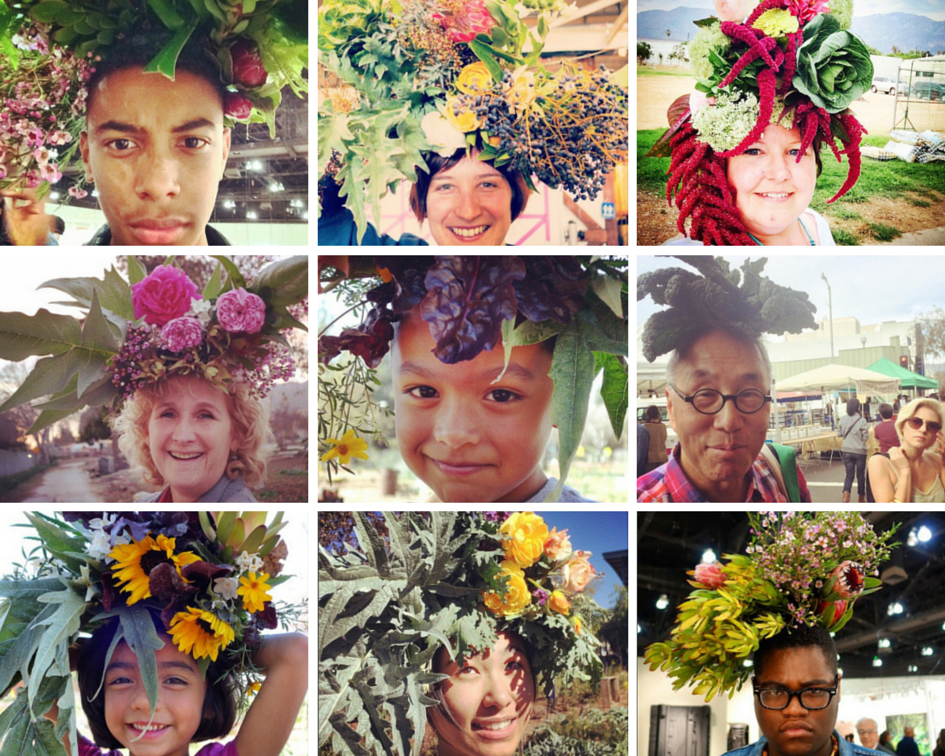
Some of the beautiful faces who've allowed Mud Baron to photograph them with flowers on their heads.

Some of the beautiful faces who’ve allowed Mud Baron to photograph them with flowers on their heads.

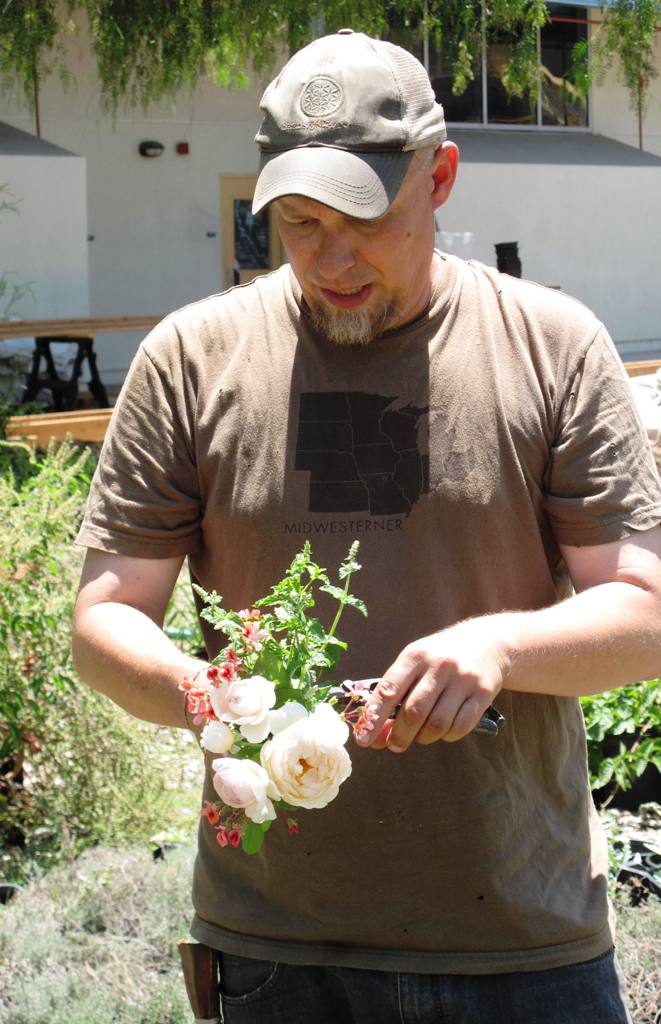
Mr. Baron, bouquet-maker

Mr. Baron, bouquet-maker

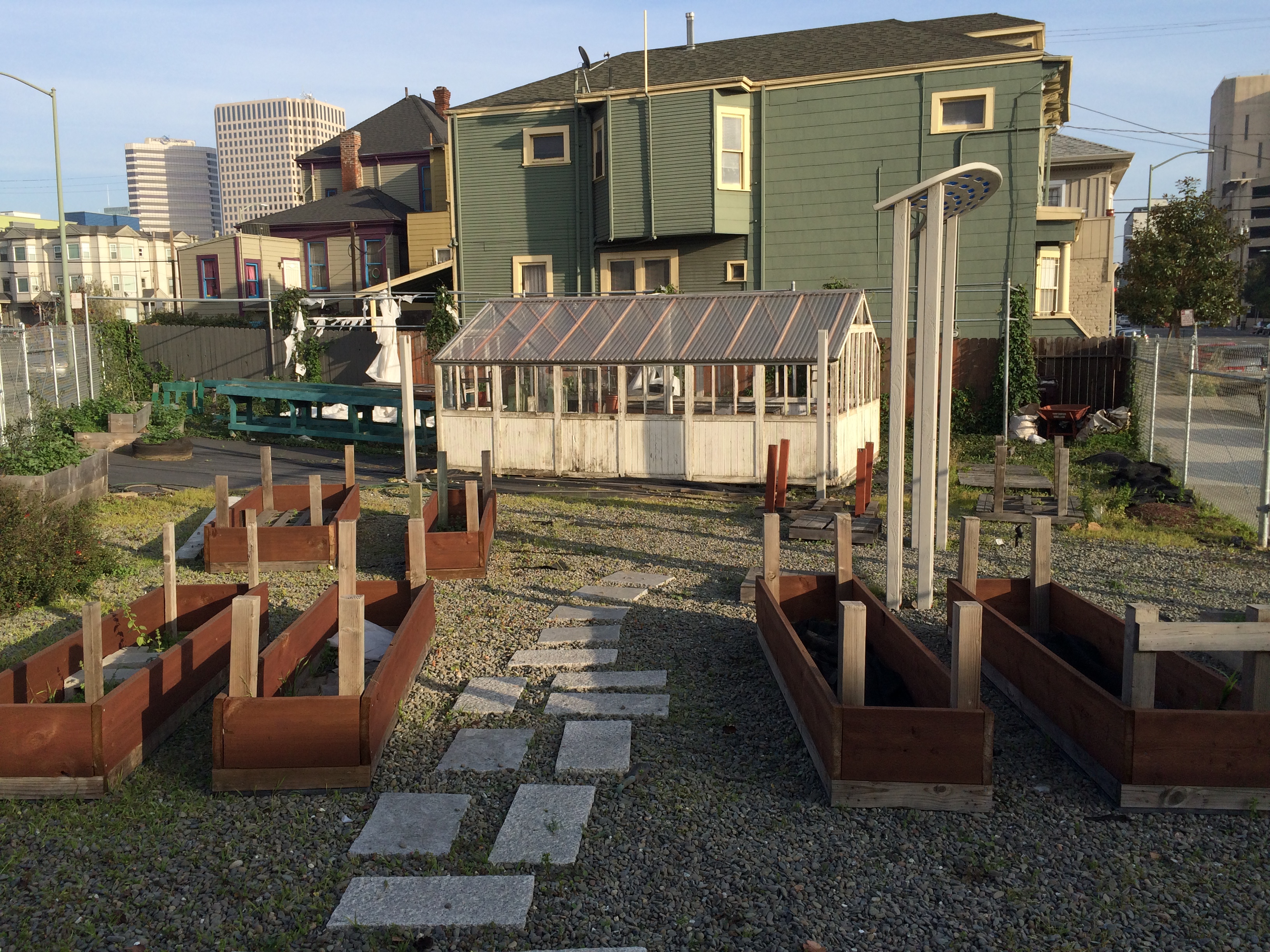
This past week took Slow Flowers to Southern California, where I combined business, pleasure, flowers and friends, in a whirlwind five days. I successfully cornered Mud Baron, one who rarely slows down himself, to record today’s interview. I’ve wanted to have Mud on the podcast for more than a year, ever since I visited Muir Ranch, the school garden he manages at John Muir High School in Pasadena.

You may not know him as Mud Baron. Yes, his nickname is Mud! But if you’re a follower of beautiful flower images on Instagram, you may know him by Co-Co-Zoe-Chee, or @cocoxochitl, his alias there, with 4,500 followers and thousands of posts. And many contain the hashtag #flowersonyourhead – one of Mud’s gleefully subversive campaigns to place photos on one’s head and snap a photograph, Frida Kahlo-like, for Instagram and other places.

As we discuss in the interview, I have succumbed to Mud’s flowers on your head shenanigans and also witnessed Mud at work, getting complete strangers to comply with his outrageous (and quite poignant ) requests. Check out his gallery of portraits by searching #flowersonyourhead.

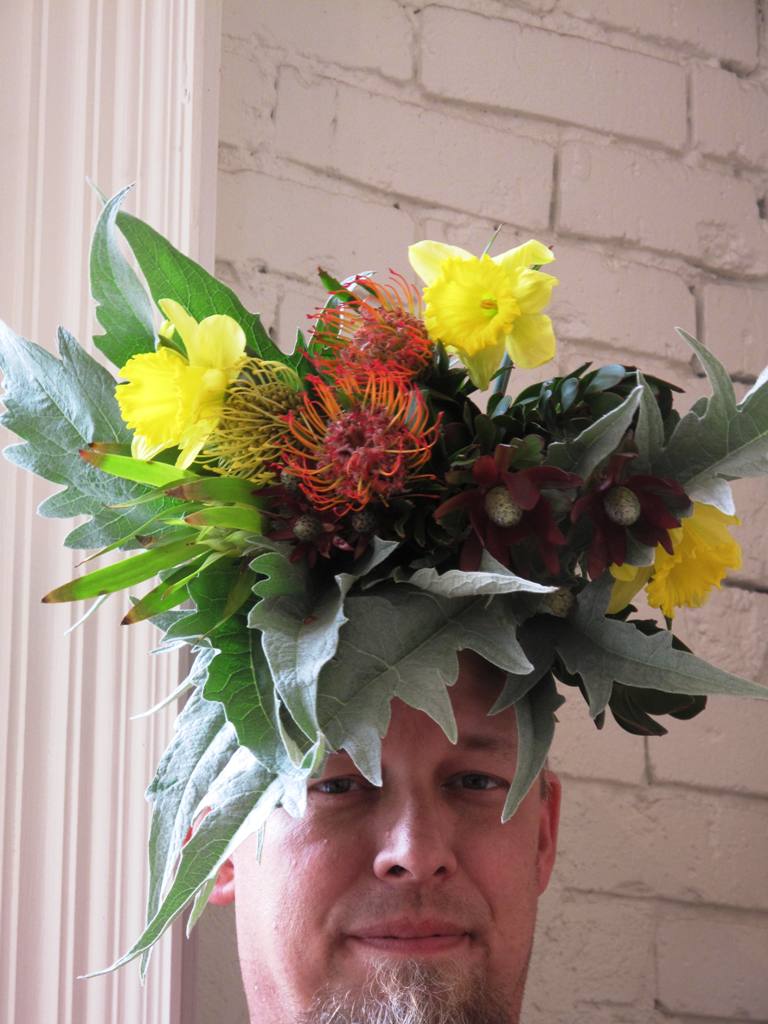
Mud_1_IMG_9324

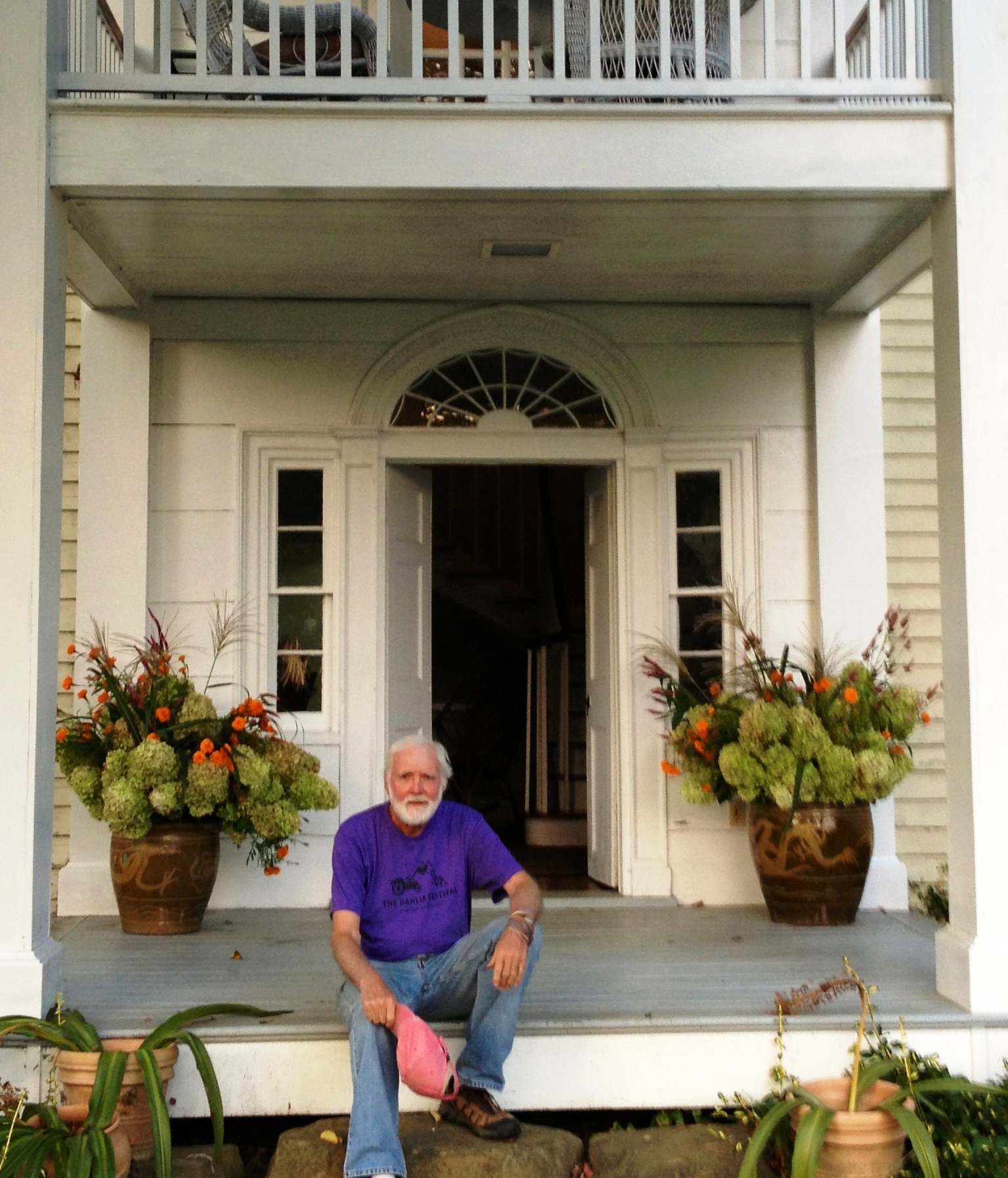
Mud, photographed by me in Seattle (March 2014) with flowers on his head.

Here’s a bit of what I wrote in August 2013, after a visit to Muir Ranch. I hope it round out this introduction of Mud.

In 2011, a dedicated team of volunteer teachers and students began converting 1.5 acres of Pasadena, California’s John Muir High School campus into a school-based farm.

Today, Muir Ranch grows a variety of flowers, vegetables and fruits that are included in weekly CSA boxes as well as school cafeteria lunches. Students can complete community service or internship graduation requirements by enrolling in classes at the Ranch. Muir Ranch also provides paid internships to students, which are funded by private donations, special events, farmer’s market sales, and subscriptions to the produce box program (CSA).  

Edibles and flowers grow together.

Edibles and flowers grow together at Muir Ranch.

Every week, Muir Ranch CSA subscribers get a box or bag of about 7-10 different types of fruit and vegetables grown without the use of pesticides or chemical fertilizers. Customers pick their shares up at central distribution sites throughout Pasadena. Muir Ranch CSA partners with several local farms for seasonal fruit and vegetables to supplement what they can produce, providing tax-deductible weekly boxes to over 100 subscribers. It is the CSA program that generates much of the income that keeps this place operating.

Mud Baron, a passionate school garden advocate who serves as the Executive Director of Muir Ranch, is one of the people at the hub of this endeavor. That sounds like a high-falutin’ title, but in all reality, he is true to his nickname. Mud gets down and dirty – and REAL – with his kids, teenagers whose horizons are much brighter after they’ve learned to grow and sell food and flowers to local customers.

How did this former design-build contractor end up teaching gardening and farming skills to urban youth? I’m still trying to figure out the exact path of Mud’s career, but suffice it to say he’s in his element growing food and flowers.

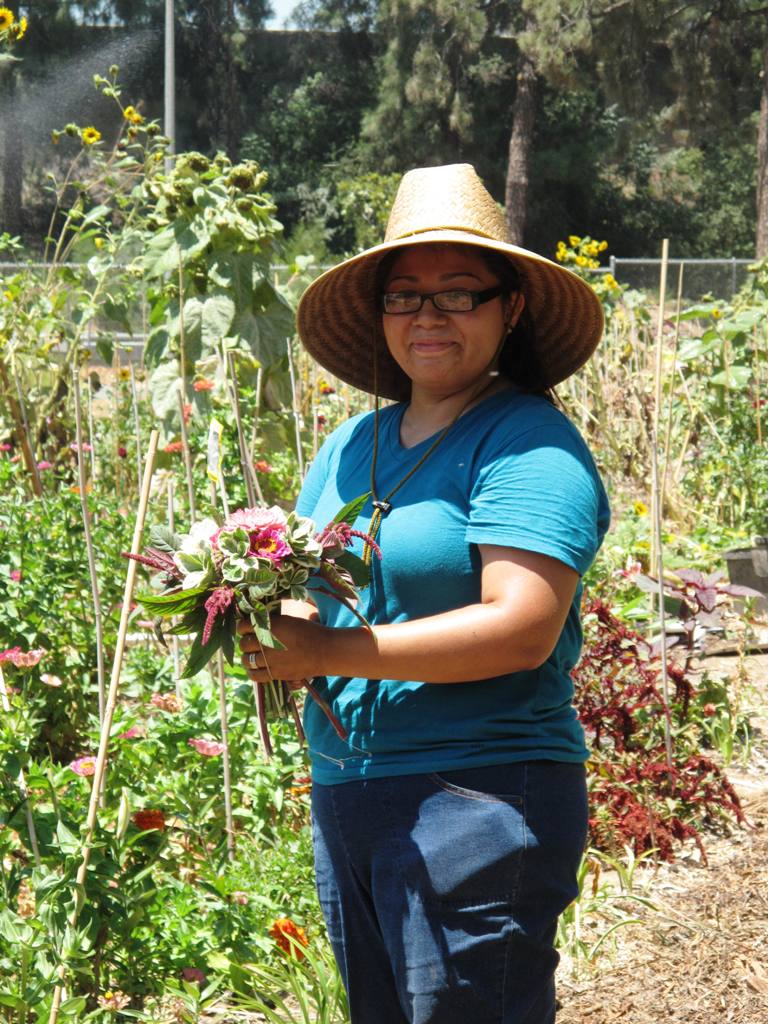
One of the talented student farmers designed a gorgeous bouquet for me on the spot

One of the talented student farmers designed a gorgeous bouquet for me on the spot

Many programs besides the CSA are supported under the umbrella of Muir Ranch, such as partnerships CSAs run by with other local schools and learning gardens. Muir Ranch also and hosts monthly “Plug Mobs” to help other groups in the community plant their own gardens.

In Mud’s mind, no Southern California-based teacher should go wanting for school garden supplies. “The Plug Mob program means that finding seeds and plants is no longer a factor for 2,000 schools,” he says. Muir Ranch operates like a plant nursery, helping source and distribute seeds, bulbs and flats of plant starts. Like modern-day Johnny Appleseeds, Mud and his supporters share what they have and spread around the love.

As more young people “connect the dots,” they become involved in how food is grown, distributed, and finally cooked into healthy meals. Besides being a center for education, Muir Ranch hosts a variety of ongoing and special events. The program is known for its floral arrangements, and I love that Mud has taught his interns and student workers how to harvest and assemble bouquets.

Word is getting out about Muir Ranch’s flowers. One of Mud’s interns just earned $400 selling wedding flowers to a market customer. According to Mud, that experience opened her eyes to possibilities for a bright future.

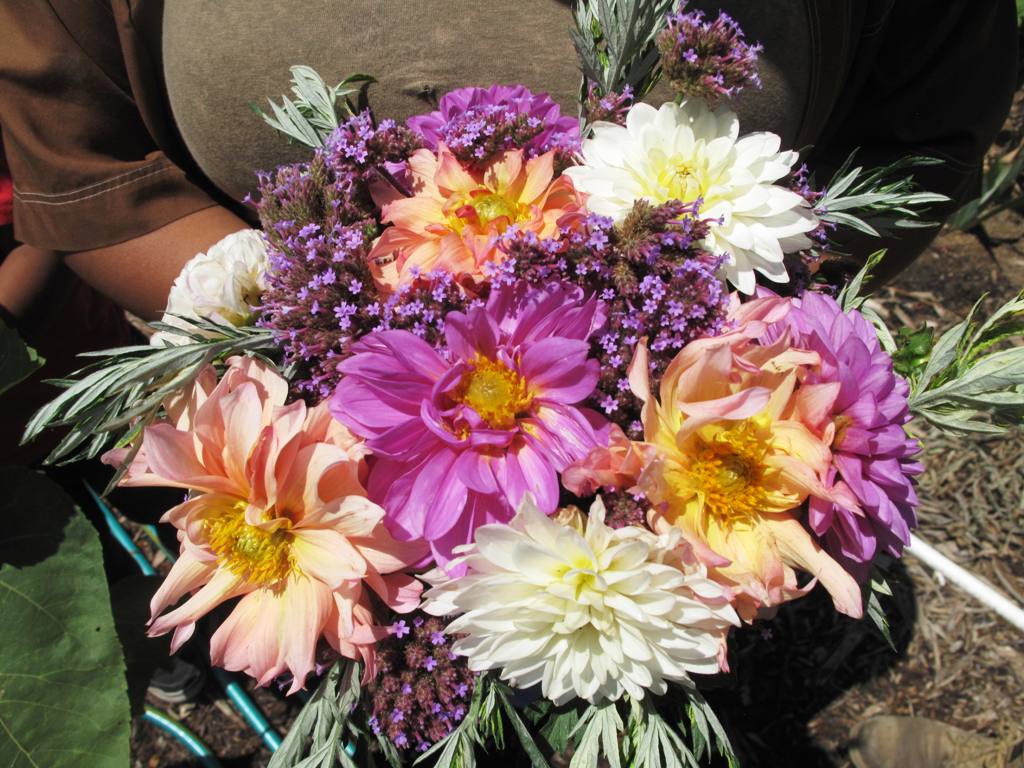
Here's a beautiful student-crafted bouquet, an impromptu gift that I cherished.

Here’s a beautiful student-crafted bouquet, an impromptu gift that I cherished.

Things are ever-changing at this school garden, with new crops of kids getting involved and older ones graduating and enrolling in college. And Mud continues his radical outreach on behalf of school gardening, food justice and the importance of flowers in our lives.

I promise you our conversation is all over the place, bouncing between sentimental and serious to hilariously irreverent, a lot like Mud himself.

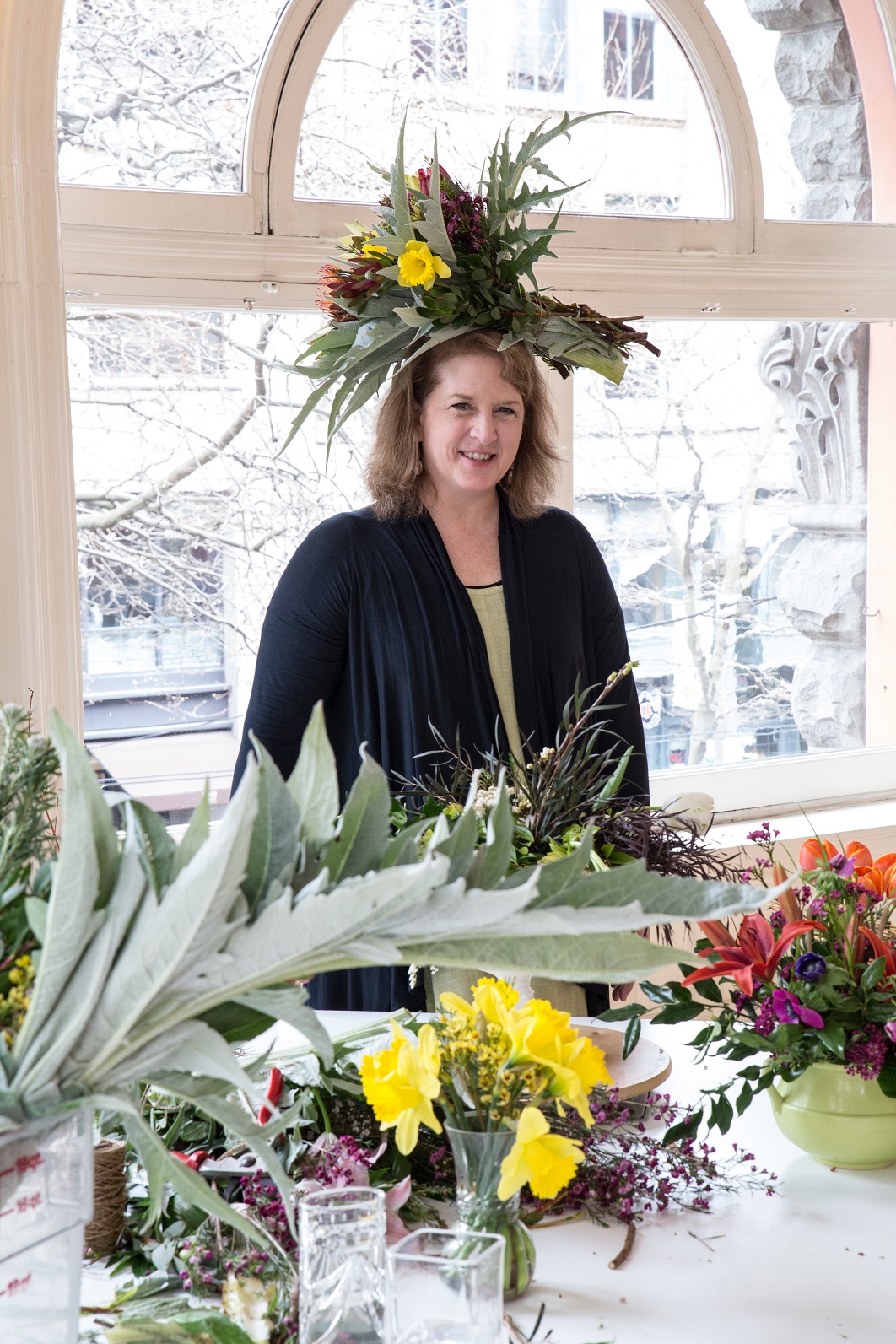
Deb_-_flowers_on_head_1

My photographer friend Jean Zaputil, of Studio Z Photography and Design, took this portrait of me after Mud plunked a huge bunch of flowers on my head, March 2014.

I will devote the next two weeks to Valentine’s Day, turning the focus to American grown flowers for this top floral holiday.  If we can’t show our love with local flowers, what’s the point?

I’ll introduce you to some of the people who are doing exciting things to innovate at Valentine’s Day, getting their clients out of the gift-giving rut that involves thinking a generic bunch of a dozen red roses equates true affection and gestures of love. Please return to gain new ideas – and let me know what you’re doing this Valentine’s Day – I’d love to share your own efforts with our listeners.

Thanks to the Slow Flowers Tribe, this podcast has been downloaded more than 32,000 times. In fact, the month of January hit an all-time high as our most popular month to date, with more than 3,000 downloads of current and archived interviews – and I’m encouraged to know that more listeners are discovering this flower-powered podcast every day.

If you like what you hear, please consider logging onto Itunes and posting a listener review.

Until next week please join me in putting more American grown flowers on the table, one vase at a time.

The Slow Flowers podcast is engineered and edited by Andrew Wheatley and Hannah Holtgeerts.

Chet and Kristy Anderson of Colorado’s Fresh Herb Co. (Episode 177)

Tuesday, January 20th, 2015
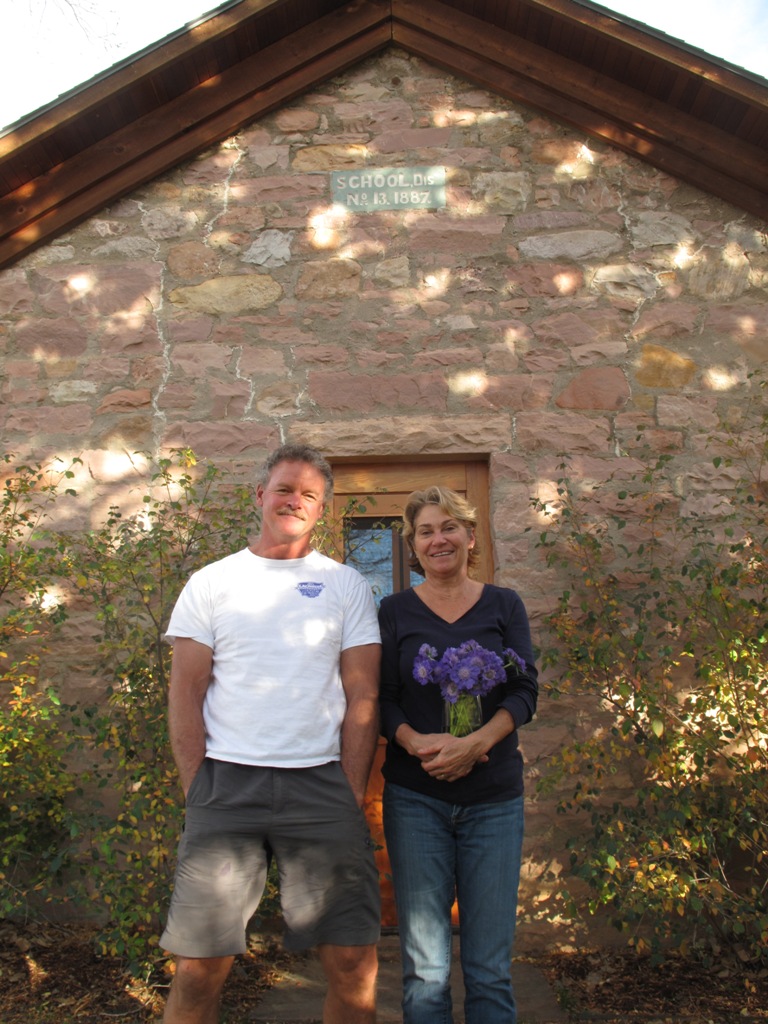
Chet and Kristy Anderson of The Fresh Herb Co. with their late-harvest scabiosas in front of the old stone schoolhouse that's now the kitchen wing of their farmhouse.

Chet and Kristy Anderson of The Fresh Herb Co. with their late-harvest scabiosas in front of the old stone schoolhouse, circa 1887, that’s now the kitchen wing of their farmhouse.

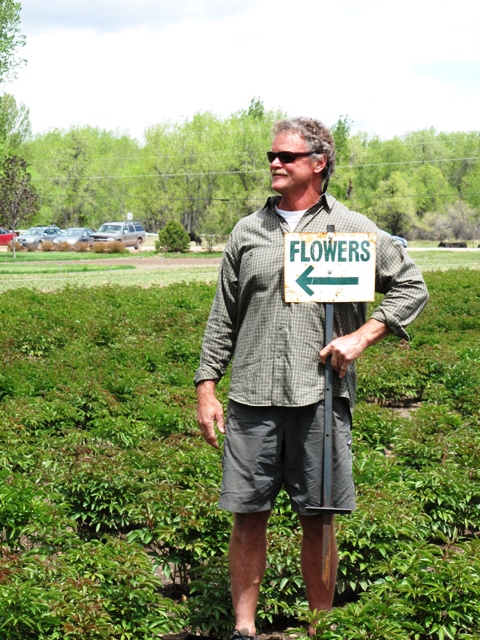
Chet, as captured by my camera in 2011.

Chet, as captured by my camera in 2011.

It is my pleasure to introduce you this week to Chet and Kristy Anderson, veteran flower farmers and owners of The Fresh Herb Co., based in Boulder, Colorado.

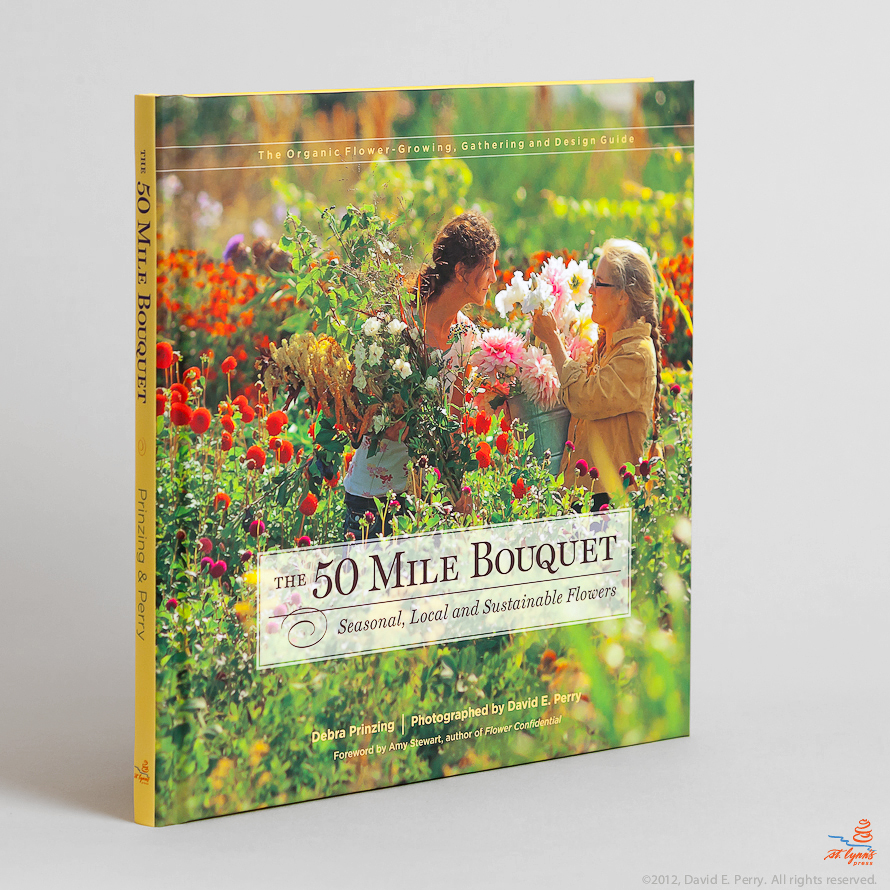
If you’re a member of the Association of Specialty Cut Flower Growers or if you’ve read the “Rocky Mountain Flowers” chapter in The 50 Mile Bouquet, you’re already familiar with the Anderson name — and their beautiful flowers.

The Fresh Herb Company is a specialty grower of culinary and ornamental greenhouse crops and fresh field-cut flowers, proudly serving the Rocky Mountain West local market for over 30 years.

Chet and Kristy grow fresh greenhouse and field-cut flowers May through October. They market field fresh bouquets, peonies, phlox, sunflowers, zinnias, delphinium, larkspur, and many more varieties to customers throughout the Rocky Mountain Region — including grocery chains, weddings and special events., as well as at the Boulder County Farmers Market,

The Fresh Herb Co. Farm, in a pre-flood photo Kristy recently shared.

The Fresh Herb Co. Farm, in a pre-flood photo Kristy recently shared.

Warm, intelligent, creative and engaging, this couple has been so generous over the years in sharing their home and time with me. I visited their farm in May 2011, after being part of a lecture series at the Denver Botanic Garden.

We reconnected in November 2012, when Kristy and Chet came to the ASCFG national conference that was held in Tacoma. And when it turned out that I was going to fly through Denver on my way to a conference for professional speakers this past November, well . . . I basically invited myself to Longmont, about 20 minutes from Boulder, where the Andersons live on the most picturesque flower farm.

Chet emailed me back almost immediately, saying “yes.” Hi Debra…..we would love to see you. Let’s count on seeing you here at the farm at 12:ish.  We’ll have a bite here and get you on the road in time to make it to the Springs by 4:00. Sound ok? Thanks, C.

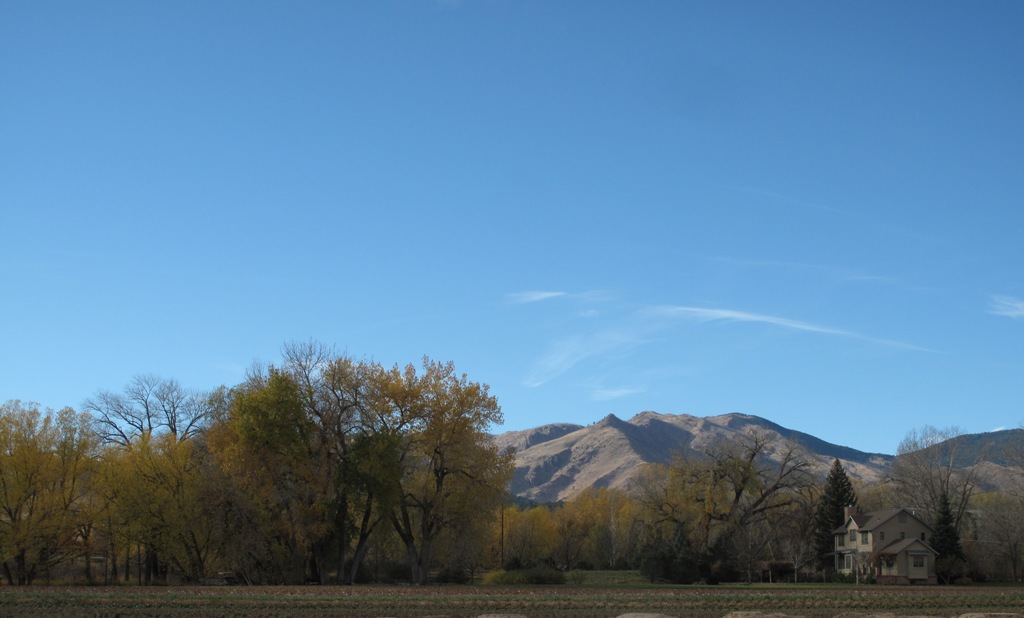
The big, blue, Colorado sky, as captured on my visit last November. Wow! I know why this place is so special to the Anderson family.

The big, blue, Colorado sky, as captured on my visit last November. Wow! I know why this place is so special to the Anderson family. Note farmhouse on lower right corner of this sweeping photograph.

I was eager to see Kristy and Chet and to get an update on how things had progressed in the previous 12 months.

You see, in mid-September of 2013, we got word that an autumn storm in their area caused devastating floods from Lefthand Creek, wiping out a huge portion of The Fresh Herb Co.’s farm. Right after the disaster, Chet wrote this in an email:

” . . . pretty bad here. House is fine; greenhouse is mostly OK. Barn and coolers are still taking on water but are mostly OK. Pump house is gone. The pond is FULLY silted in (very amazing!). All roads to and from our facilities are gone and there is only one way out of here to town. Flower fields very rough….not sure what will survive, though the peonies fared the best (ya gotta love peonies, eh?). Biggest bummer may be that I have 3,000 bunches of sunflowers and nearly 500 beautiful bouquets in the cooler with no place to go! Dang! . . . “

And then he concluded with a few words that tell you volumes about Chet’s rather upbeat outlook on life:

“As we all know, things could always be worse. Very thankful that family and friends, and house are all safe. Now simply the cleanup.”

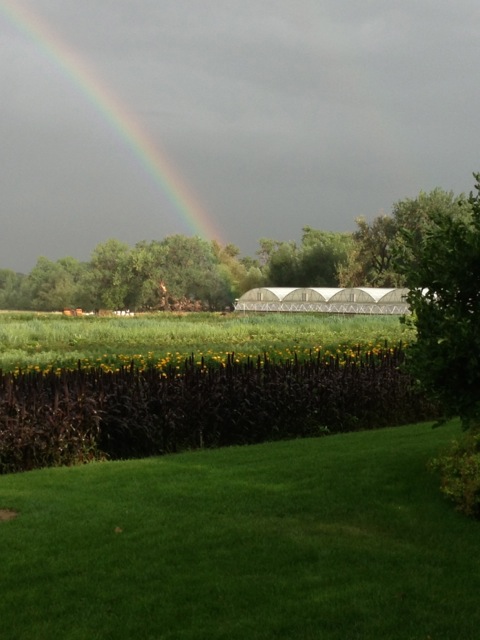
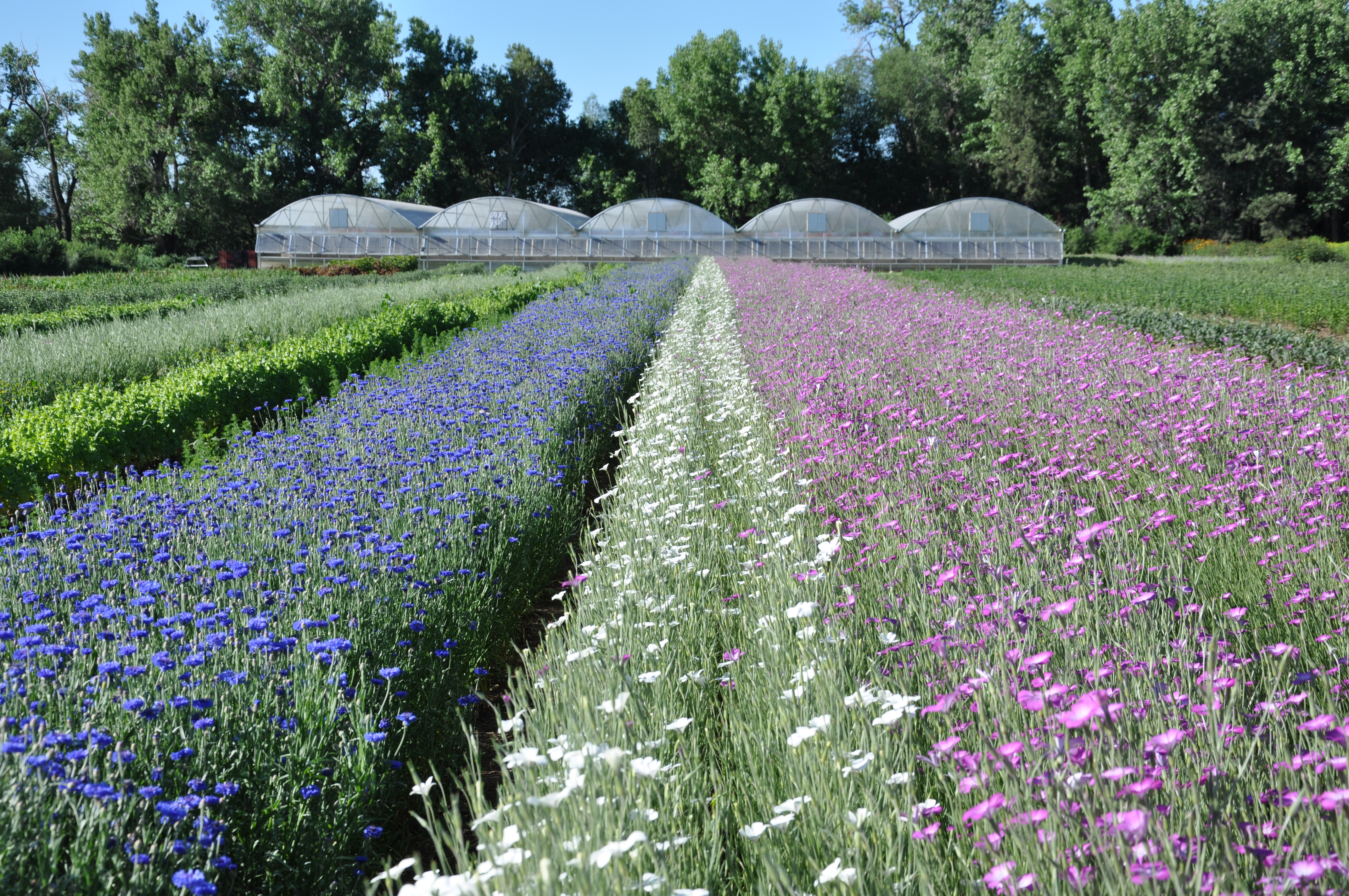
Growing fields from a prior season.

Growing fields from a prior season, with the greenhouse in the distance.

I always say that American flower farmers are tenacious and resilient. Listen to our conversation as evidence.

After a delightful lunch featuring butternut squash soup (so beautiful that I had to photograph it!), we walked the farm, saw the enlarged and repaired greenhouse, now 17,000 square feet in size, admired all the new peonies and perennials that were in the ground, ready to hunker down through winter in anticipation of spring.

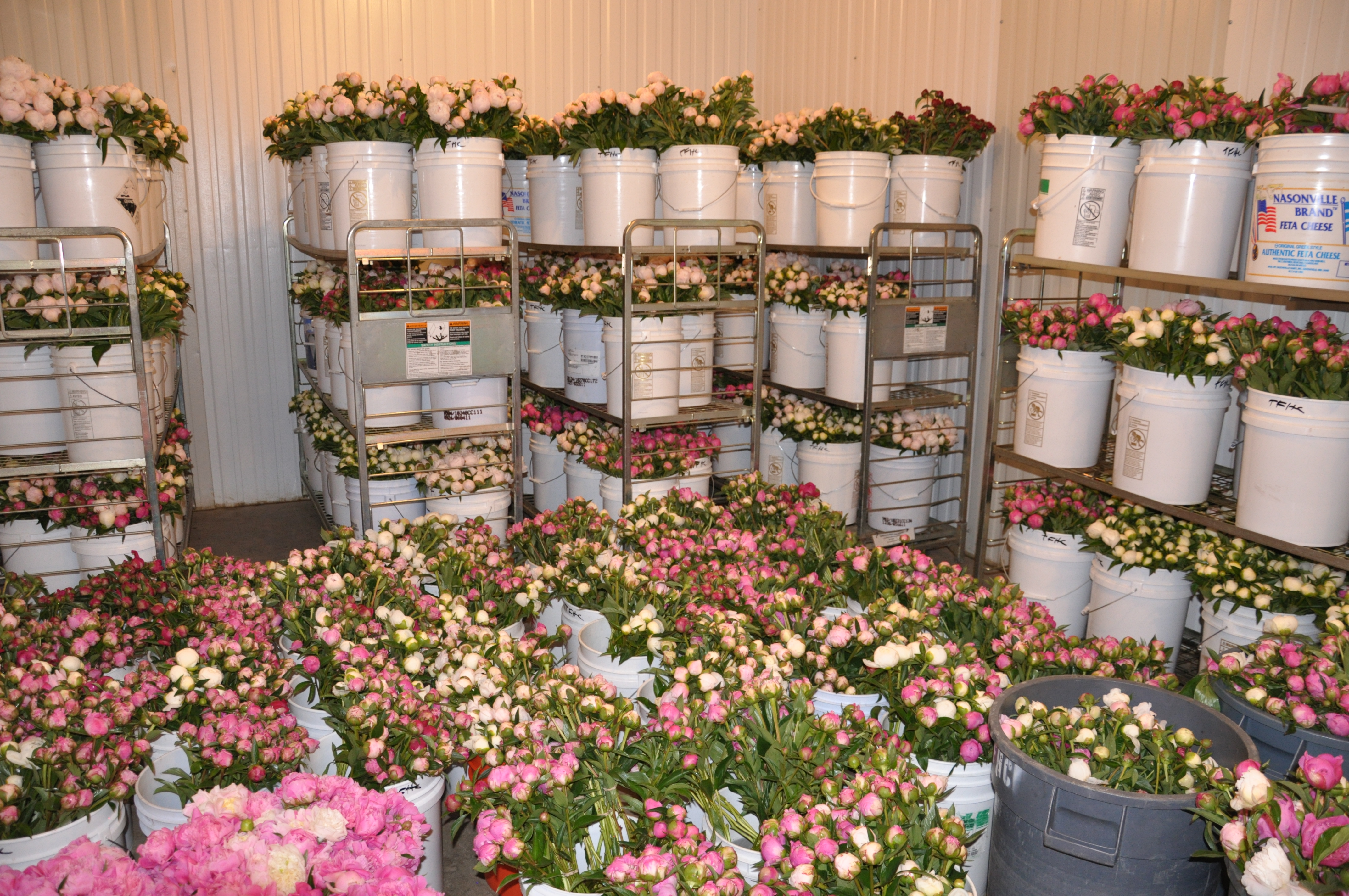
Colorado peonies in the coolers at The Fresh Herb Co. (photo courtesy Chet and Kristy Anderson)

Colorado peonies in the cooler at The Fresh Herb Co. (photo courtesy Chet and Kristy Anderson)

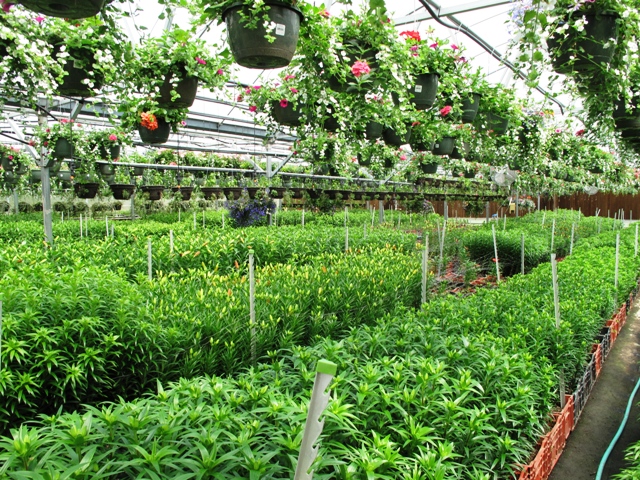
Here's a photo I snapped in May 2011 inside the greenhouses - hanging baskets overhead and crates of lilies beneath them.

Here’s a photo I snapped in May 2011 inside the greenhouses – hanging baskets overhead and crates of lilies beneath them.

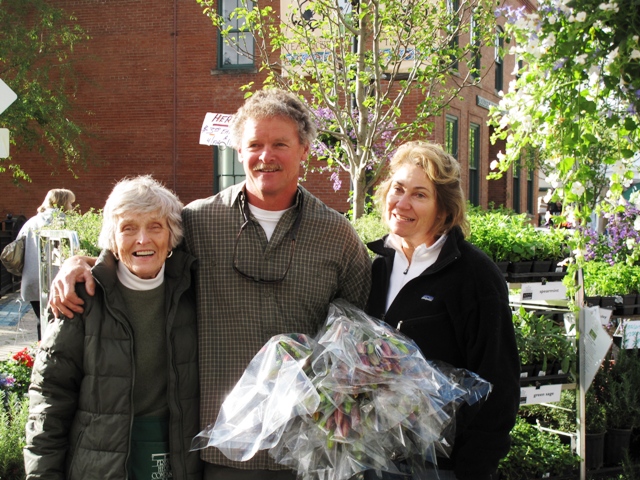
Chet (center), flanked by his lovely women -- mother Belle and wife/partner Kristy. Photogaphed by me at the Boulder Co. Farmers' Market, May 2011.

Chet (center), holding an armload of lilies and flanked by the lovely women in his life — mother Belle and wife/partner Kristy. Photogaphed by me at the Boulder Co. Farmers’ Market, May 2011.

Then Kristy, Chet and I sat outdoors on their stone patio. Yes, it was early November in Colorado, and yes, it snowed just a few days later at the conference where I was, at least, in Colorado Springs. But I felt the sunshine on my shoulders and was truly warmed by our conversation. Thanks for listening in . . .

50MileBouquet_bookI’d love you to read the entire story about Chet and Kristy, as included in The 50 Mile Bouquet.

Download the PDF of their chapter here: Rocky_Mountain_Flowers_The_50_Mile_Bouquet

And if you are lucky enough to make it to Boulder, Colorado, make sure to schedule a day at their famous Farmer’s Market and stop by to say hello to these intrepid and passionate folks!

Listeners like you are downloading and listening to the Slow Flowers Podcast more than ever before! We have exceeded 30,000 downloads and every time that figure climbs, I’m encouraged that more people are learning about the farmers and florists who are keeping American-grown flowers thriving.  So I thank you!!! If you like what you hear, please consider logging onto Itunes and posting a listener review.

The Slow Flowers Podcast is engineered and edited by Andrew Wheatley and Hannah Holtgeerts.

Floriography’s Emily Calhoun grows and designs with local flowers in New Mexico (Episode 176)

Wednesday, January 14th, 2015
Emily Calhoun of Floriography, lover of the Southwest and grower of flowers.

Emily Calhoun of Floriography, lover of the Southwest and grower of flowers.

Last week’s featured guest was Fran Sorin, gardening and creativity expert, and author of the just-released 10th Anniversary edition of Digging Deep: Unearthing Your Creative Roots Through Gardening.

The just-released, 10th Anniversary Edition of "Digging Deep." Read on to find out how you  can enter to win!

“Digging Deep,” by Fran Sorin

Fran graciously contributed a copy of her book for me to give away to our listeners. The lucky recipient from our drawing is Wendy Gorton. In her comment on my web site, Wendy shared her earliest memory of flowers or nature – and I know that when Fran hears this, it will bring a huge smile to her face. Wendy wrote:

I’m adopted and lucky enough to have had an adoptive mother who loved working in the garden. She would take me out with her at a very early age, where we would plant vegetables and flowers and make mud puddles. This time with my mother was such a gift and taught me how to reconnect to what is important in life. A beautiful story in relation to this…my mother told me that one time, after one of our sessions in the garden where we both came in just covered in mud, the social worker stopped by, as was the case with adoptions. My mother was mortified and tried to explain why we were covered filthy. The social worker just smiled and said, “no worries; it looks like this little one is having a healthy childhood.” 

Thanks to everyone who took the time to comment and I hope you come back to win something in one of our future drawings!

The gorgeous floral designs of Emily Calhoun, Floriography NM. This is the project that reminds me of Frida Kahlo!

The gorgeous floral designs of Emily Calhoun, Floriography NM. This is the project that reminds me of Frida Kahlo!

Bringing local flowers to the weddings and celebrations of New Mexico.

Bringing local flowers to the weddings and celebrations of New Mexico.

I’m super excited to introduce you to today’s guest, Emily Calhoun. A farmer-florist who owns Floriography, Emily has established her growing fields and design studios in two locations — Albuquerque and Las Cruces, New Mexico.

Albuquerque is in the center of the state and Las Cruces is in that little niche near El Paso, Texas where New Mexico, Texas and Mexico come together. We’re talking 235 miles apart!

Floriography blossomed in 2012 when Emily saw the need, even a thirst, for responsibly grown flowers and a fresh, new design aesthetic that was modern, yet steeped in tradition (just like her!).

She proudly produces and utilizes stunning heirloom flower varieties alongside all-time favorites like sunflowers and tulips.

Check out the arrows that indicate Albuquerque in the north/central part of the state - and Las Cruces in south/central.

Check out the arrows that indicate Albuquerque in the north/central part of the state – and Las Cruces in south/central.

Floriography’s business model is unique in that Emily collaborates with other growers, landscapers, and home owners to harvest many local and native plants, cacti, and foliage, bringing a special touch from New Mexico’s beautiful landscape through her floral designs to table, event, or special occasion.

Sourcing botanicals locally eliminates many of the extra costs associated with the floral industry, thus making it affordable to enjoy the benefits of fresh flowers.

Floriography is the expression of Emily’s pleasure and skill in providing beautiful, unique, natural, and innovative floral design while honoring her agricultural heritage through sustainable best growing practices.

The name Floriography (while it is indeed a mouthful!) reinforces Emily’s belief that flowers carry profound meaning for the thoughtful giver and the lucky recipient.

Backlighting lends a Southwest glow to this Floriography bouquet.

Backlighting lends a Southwest glow to this Floriography bouquet.

Floriography, defined as the language and the art of communicating through flowers, gained popularity in the days of Victorian England. This interest in the language of flowers had roots in Ottoman Turkey, when during the first half of the 18th century the court in Constantinople became obsessed with tulips .

Floriography is founded on this powerful and romantic notion that flowers are such wonderful communicators.

“Our mission is to help our clients express their fondest thoughts, hopes, and feelings through our flowers and design,” she says. “I believe in flowers…”

Emily continues, and this is excerpted from the Floriography web site:

Such a sense of place here. The flowers are as vivid as the architecture, the sun and the sky.

Such a sense of place here. The flowers are as vivid as the architecture, the sun and the sky.

“I am constantly in awe of the natural beauty that surrounds us in the Rio Grande valley.

I love walking through the farm land and down the drainage ditches collecting pods, grasses, and other unique vegetation. 

After living around the country, working in Latin America and Europe as a travel guide and cook, and traveling through several Asian countries, I always knew I’d return to my agricultural roots in southern New Mexico and West Texas to join my family’s farming business.

“Upon returning to New Mexico after one of my adventures, I threw a big dinner party and was  shocked to discover that while we live in a beautiful and productive valley, the closest source for buying “farm fresh” cut flowers was more than 500 miles away.

As an avid dinner party and entertaining enthusiast, I was sad and discouraged that the flowers for my events had to be sourced from such a distance (even South America), and may not have been grown in a way respectful to the environment or the workers.

So, I decided it was time that our beautiful valley should add specialty cut flowers to its agricultural repertoire. Thus began Floriography.”

Full of character and style ~ a Floriography bouquet.

Full of character and style ~ a  New Mexico-grown Floriography bouquet.

“We believe in honoring our environment and agricultural heritage in a way that delights the senses.” is one that resonates with me – and I know it will with you.”

On a sunny, but chilly morning last November, I got to play in the garden with Emily Calhoun of Floriography.

On a sunny, but chilly morning last November, I got to play in the garden with Emily Calhoun of Floriography.

I recorded this podcast in mid November when I was able to visit Emily while traveling through Albuquerque for a day. We had a lovely interlude on her homestead that included playing with all sorts of gorgeous ingredients gleaned from the farm in Las Cruces as well as from the growing fields on her land outside Albuquerque. Here are the November bouquets we designed. I think they’re simply sublime:

Quintessentially local - A gorgeous arrangement, foraged and harvested from only New Mexico-grown ingredients. Design: Emily Calhoun

Quintessentially local – A gorgeous arrangement, foraged and harvested from only New Mexico-grown ingredients. Design: Emily Calhoun

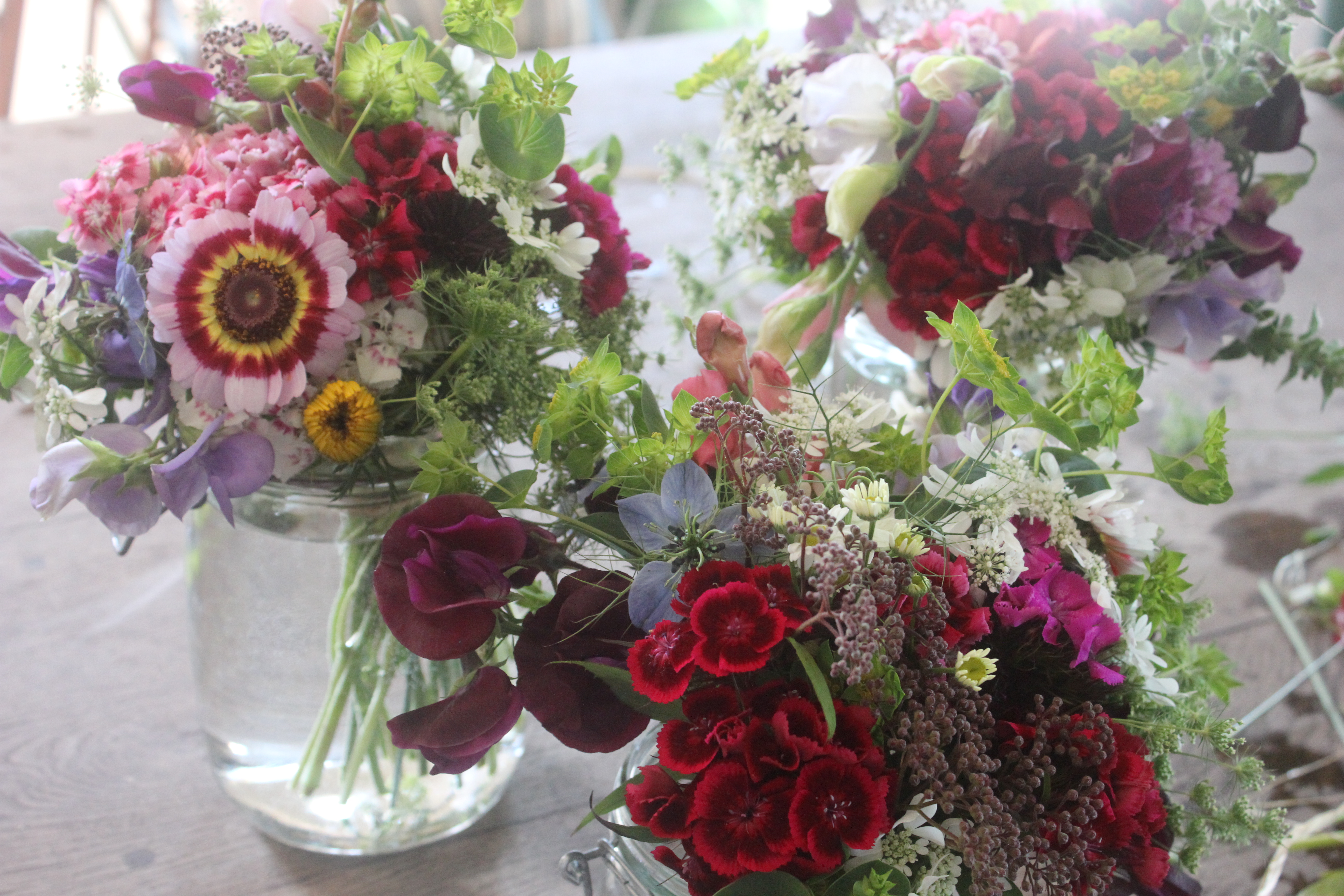
Here's my interpretation of the Floriography style.

Here’s my interpretation of the Floriography style.

scroll

I want to conclude today’s podcast by sharing the very sad news that the Slow Flowers community lost a lovely and wise flower farmer on December 25th. Peg Moran, owner of Friends in the Country, a flower farm in Pawtucket, Connecticut, was Stonington Farmer’s Market’s flower vendor for 17 years, since the market began in 1997.

Peg Moran, Connecticut flower farmer and author of "An Acre Plus: Invitation to A Growing Life"

Peg Moran, Connecticut flower farmer and author of “An Acre Plus: Invitation to A Growing Life”

Here is what the Stonington Farmer’s Market shared on their Facebook Page:

During the growing season, she supplied the Market with a wide range of flowers, from common favorites to unique wonders that she grew on an acre of land she cultivated in Pawtucket. It was always a banner day at the Market when Peg returned for the season wearing her signature straw hat, the back of her car filled with buckets of beautiful flowers.

Her book, An Acre Plus, An Invitation to a Growing Life, describes her journey to becoming an experienced flower grower and building her business, Friends in the Country. She used sustainable farming techniques to raise cut flowers for weddings, parties and local farmers markets. She brought on teen garden apprentices from Stonington High School to learn agricultural techniques and help in her business. She grew annuals in long raised beds and fifty varieties of perennials in terraced beds that curve around her farmhouse on Mary Hall Road. Recently, responding to growing demand, she modified her business model and began growing bulbs for the holiday and early spring seasons, working with other local growers to extend and broaden her seasonal offerings.

Peg was a fervent entrepreneur, and she shared that passion with others, developing entrepreneurship courses and teaching at the University of California as well as far-flung schools in Estonia and Russia. She developed curriculum and taught peer-based programs for microloan lending agencies in Boston, Massachusetts, Willimantic and New London, Connecticut.

She was devoted to sustainable, local and small-scale agriculture. She spearheaded CLUC*K (Chicken Lovers Urge Change), the organization that promoted back-yard chicken farming and successfully worked to change planning and zoning regulations to permit such farming in Stonington.

Peg—author, entrepreneur, farmer and agricultural advocate—lived a busy, engaged life. She was a mother, grandmother and mentor to many. She worked hard, crusaded for causes in which she believed, and supported herself through her lively intellect and avid interests. She will be remembered as “the flower woman” to her customers and “quite a woman” to her friends.

I only met Peg recently – this past November at a Slow Flowers farmer/florist gathering at Robin Hollow Farm in Rhode Island.  It was such a lovely evening and I’m so grateful Peg drove nearly an hour to join us.  I came home to Seattle immediately and ordered An Acre Plus, Peg’s memoir that she self-published in 2009.

After reading every word I sent Peg a note only a few weeks ago telling her how much I adored her book. I didn’t hear back from her and she died six days later. But hope she read my note and that it made her smile.

My condolences to Peg’s family and her vibrant farming community. If you want to be moved by her beautiful language and honest insights about making a living as a flower farmer, I urge you to get a copy of An Acre Plus. I had hoped to have Peg on this podcast as a guest in 2015. Now, sadly, you’ll have to listen to her voice through the pages of her book.

30kThanks for joining me today.  My personal goal is to put more American grown flowers on the table, one vase at a time.  Listeners like you are downloading and listening to the Slow Flowers Podcast more than ever before! We reached 30,000 downloads this week. So I thank you!!! If you like what you hear, please consider logging onto Itunes and posting a listener review.

The Slow Flowers Podcast is engineered and edited by Andrew Wheatley and Hannah Holtgeerts.

This podcast is brought to you by Slowflowers.com, the free, nationwide, online directory to florists, shops, and studios who design with American-grown flowers and to the farms that grow those blooms.  It’s the conscious choice for buying and sending flowers.

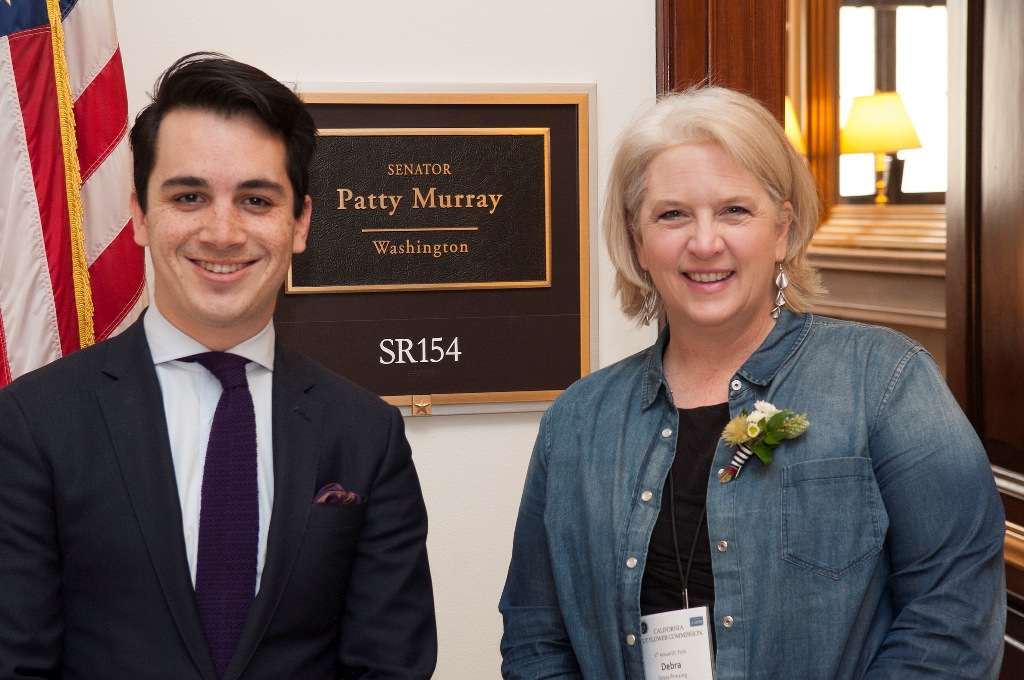
And thanks to our new sponsor, the California Cut Flower Commission, committed to making a difference as an advocate for American Grown Flowers. Learn more at ccfc.org.

Music credits (Creative Commons License)
Marcus Eads – Johnson Slough
Marcus Eads – Canoe Launch

Playing with Flowers and Digging Deep with Fran Sorin (Episode 175)

Wednesday, January 7th, 2015
Awaiting early tulips and hyacinths . . . we're just weeks away!

Awaiting early tulips and hyacinths . . . we’re just weeks away!

3233915861_d6cc494485_o

Before we get started, I want to announce our new Slow Flowers Podcast Sponsor for 2015 – the California Cut Flower Commission.

The Commission is committed to making a difference as an advocate for American Grown Flowers.

I’ll be working closely with CCFC on a number of initiatives to promote domestic flowers in 2015, and I promise to keep you posted as details unfold.

SlowFlowersChallengeCover.jpg (2)


Today on the Slow Flowers Podcast we launch the Slow Flowers Challenge, share all about a new urban flower farm in Pittsburgh, and explore the meaning of flowers on a personal level with author and gardening personality Fran Sorin.

To kick off 2015, I invite you to join in the fun and creativity of the Slow Flowers Challenge. This project was inspired by Katherine Tracy, a talented plantswoman, designer and owner of Avant Gardens Nursery in Dartmouth, Massachusetts.

Katherine blogged about taking the “Slow Flowers Challenge” after hearing my presentation at Blithewold Mansion and Gardens in Rhode Island this past fall…and she started using the hashtag #slowflowerschallenge, which in turn prompted other people to create seasonal bouquets, photograph them and share their designs on Facebook, Instagram and personal blogs.

Katherine’s artistic arrangements reveal her love of the natural world, the seasons, the plants, the gifts of the garden and wilder places. I’ve so enjoyed seeing these bouquets pop up across the web – thoroughly serendipitous and seasonal – representing pure joy for a moment in time. SO I thought, “why don’t we make the Challenge available to everyone who loves local flowers?”

I encourage you to check out these very simple rules and download a free SlowFlowersResourceGuide2015 here. Sign up to receive weekly design updates and follow a link to the Slow Flowers Pinterest Gallery, where you are welcomed and encouraged to post your seasonal arrangements.  Let’s have fun, make beauty, and change the American floral industry with new (and more seasonal) habits.

Green_Sinner_IMG_1067

Briefly, before getting to our main guest, I also invited Jonathan Weber to share what’s going on with greenSinner, a Pittsburgh-based floral design, wedding and event studio and urban micro flower farm that he owns and runs with partner Jimmy Lohr.

Past guests of this podcast, the two have made good on their dream — to buy more land and establish a working flower farm. Jonathan and Jimmy recently purchased 4 acres of long-neglected land inside the Pittsburgh city limits. It’s called Midsummer Hill Farm.

I couldn’t be more excited to see them take this major step, but so much is needed to get seedlings and bulbs into the soil in time for flowers to bloom in 2015. Here’s a recent article featuring greenSinner, Midsummer Hill Farm and Jimmy and Jonathan’s crowd-funding campaign on Indiegogo, which runs through January 27th. I encourage you to check it out and perhaps invest in the growth of local flowers in Pittsburgh.

Fran Sorin, author of "Digging Deep."

Fran Sorin, author of “Digging Deep.”

The just-released, 10th Anniversary Edition of "Digging Deep." Read on to find out how you  can enter to win!

The just-released, 10th Anniversary Edition of “Digging Deep.” Read on to find out how you can enter to win!

Today’s guest Fran Sorin is an author, gardening and creativity expert, and deep ecologist. Her book, Digging Deep: Unearthing Your Creative Roots Through Gardening, was groundbreaking when published in 2004. It was the first book to address gardening in the context of creativity, and as a tool for well-being and personal transformation. Here is a link to my blog post about “Digging Deep for Flower Lovers,” sharing favorite excerpts from Fran’s book.

Fran recently released an updated 10th Anniversary Edition of Digging Deep. The book is even more vital today, because our culture has become increasingly obsessed with technology and progressively more “nature deprived.”

From the moment Fran decided she wanted to share her passion for gardening with a large audience and approached the local Fox TV station in Philadelphia about the idea, she became a fixture on the TV circuit. She spent years as a gardening authority on Philadelphia’s Fox and NBC stations; she was the regular gardening contributor on NBC’s Weekend Today Show, and made several appearances on CNN, MSNBC, Lifetime, HGTV, DIY, and the Discovery Channel. She is one of the creators of the popular weekly dose of garden news at Gardening Gone Wild Blog.

Fran is celebrating her tenth year as a CBS Radio News correspondent. Her Digging Deep gardening features are heard several times a week on CBS Radio stations throughout the United States. She has also written dozens of articles about gardening and well-being for USA Weekend Magazine, Radius Magazine, and iVillage.

She has spent more than twenty-five years initiating and working on community projects that have served the diverse community of West Philadelphia, most recently initiating a community garden and learning center on the grounds of a church in an underprivileged neighborhood of West Philadelphia.

Even prior to becoming an ordained interfaith minister, Fran was ministering to folks whether she was taking on the role as a garden designer, a media trainer, a TV personality, or a radio host. Fran’s greatest strengths are in connecting to audiences and individuals and galvanizing them to take action. In these tumultuous and technologically obsessed times, when so many of us feel stuck, scared, and disconnected from ourselves and others, her optimistic, grounded values, and empowering message are needed more than ever.

Here is Fran’s video – she’s a woman on the street, sharing her inspiring “Give a Flower. Get a Smile” project:

Follow Fran here:

Facebook

Give a Flower Facebook Page

Twitter

If you want to participate in the drawing for a free copy of Digging Deep, post a comment about your earliest memory of gardening or experiencing nature. Your comment enters you into the drawing, which takes place at midnight Pacific Time, this Saturday, Jan. 10th. We’ll announce the winner next week.

My personal goal is to put more American grown flowers on the table, one vase at a time.  Listeners like you have downloaded the Slow Flowers Podcast more frequently than ever before.  We’re at nearly 30,000 downloads, which will be an exciting milestone to reach in the coming week. So I thank you!!! If you like what you hear, please consider logging onto Itunes and posting a listener review.

The Slow Flowers Podcast is engineered and edited by Andrew Wheatley and Hannah Holtgeerts. Learn more about their work at hhcreates.net.

2015 Floral Insights and Industry Forecast (Episode 174)

Wednesday, December 31st, 2014
What a joy it has been to live a bloom-filled year of flowers. These images are from a floral design photo shoot for a Seattle design blog this past May.

What a joy it has been to live a bloom-filled year of flowers. These images are from a photo shoot for a Seattle design blog this past May.

Welcome to the final Slow Flowers Podcast of 2014.

Every single week this year; in fact, every single week for the past 18 months, I’ve had the immense privilege of hosting a dynamic and inspiring dialogue with a leading voice in the American floral industry.

The segment I recorded one year ago, for the January 1st episode, asked: Will 2014 be the year we save our flowers?

In reflecting on that and other questions I posed, I have to say that over the past 12 months we’ve witnessed some amazing and encouraging strides in the Slow Flowers Movement.

Here are a few highlights:

I was one of five persons who participated in the press conference on Capitol Hill to announce the formation of the Congressional Cut Flower Caucus. From left: Debra Prinzing, Diane Szukovathy, Rep. Lois Capps, Rep. Duncan Hunter; Lane DeVries is partially seen behind CCFC's Kasey Cronquist (standing).

I was one of five persons who participated in the press conference on Capitol Hill to announce the formation of the Congressional Cut Flower Caucus. From left: Debra Prinzing, Diane Szukovathy, Rep. Lois Capps, Rep. Duncan Hunter; Lane DeVries is partially seen behind CCFC’s Kasey Cronquist (standing).

  1. The formation of the Congressional Cut Flower Caucus.

    Co-chaired by a bipartisan leadership team of Representatives Lois Capps and Duncan Hunter, this new endeavor is both strategic and symbolic as it engages policymakers in a tangible program to promote cut flower farming in their own districts and states. I was privileged to speak alongside Capps and Hunter, as well as with two American flower farmers Lane DeVries and Diane Szukovathy, at the February 2014 press conference announcing the Congressional Cut Flower Caucus on Capitol Hill. That remarkable experience is a milestone for all of us, one we’ll reflect on as this movement gains further momentum in the hearts of American consumers around the country – as they make conscious choices at the cash register, at the farmers’ market, at the florist and from online e-commerce sellers who identify domestic and local flower sources.

    (c) Washington Post image of California irises and Florida tropical foliage.

    (c) Washington Post image of California irises and Florida tropical foliage.

  1. Also in February, the White House used American flowers and foliage to decorate a State Dinner hosting French president Francois Hollande.

    Beautiful domestic flowers from across the country – grown in California, Florida and other states, adorned the event and even prompted a feature article in the New York Times. As I wrote at the time: I predict this is beginning of a White House commitment to give as much attention to the origins of its flowers as it does the origins of the food and wine it serves to guests. There’s much more ground to gain when it comes to White House flower procurement. Yet, I believe that State Dinner was just the beginning of many more occurrences where American flowers at the White House represents so much more than simple decoration choices. It will represent American jobs, the American farm, the Environment, Economic Development and a Sustainable Floral Industry here at Home.SlowFlowers_Badge_640x480

  1. In May, after nearly a year of planning and development, I launched Slowflowers.com.

    Slowflowers.com is the directory I’d been dreaming of creating for several years. We launched with fewer than 250 listings and now, by year-end, there are 435 businesses — flower farms, floral shops, studios and designers who grow and create American grown floral beauty, coast to coast.
    We’ve had more than 52,000 page views and more than 11.5 thousand unique visits to the site. In 2015, with your help, I hope to expand this online directory to include one thousand members – companies that grow, design with and sell American flowers. I can’t take any credit for the success of Slowflowers.com without thanking the 229 contributors who helped me raise $18,450 on the crowd-funding site Indiegogo. All of those funds have been used to build, develop and promote this site. I’m humbled and awed at the groundswell of support from individuals and small businesses alike. Slowflowers.com has so much potential as THE single resource to connect consumers with American grown flowers. And I look forward to making Slowflowers.com even better in the coming year.
  2. PrintCertified American Grown Flowers

    Motivated to promote domestic flowers and foliage in a new and strategic way, the American Grown Flowers & Foliage Task Force developed and launched a single domestic floral brand in 2014.
    The ad-hoc group included flower farms large and small, established and emerging. A cross-section of support came from many groups, including the Seattle Wholesale Growers Market, where my own energies are directed.
    The seed funds created an initial promotion budget, a brand name, “Certified American Grown Flowers,” a tagline, “take pride in your flowers,” and a contemporary logo that evokes Americana and agriculture, as well as fashion and style.
    Third-party certification ensures origin – that Flowers and foliage are grown in the U.S. by American farmers; as well as assembly — that all ingredients in mixed bouquets are 100% grown and assembled in the U.S. Thirty-three farms are already certified and in the coming year, this brand’s visibility will expand and increase as more flower farms seek certification to signify the domestic origin of their flowers.

    In 2015, we’ll see this branding appear on the sleeves of mixed bouquets and consumer bunches, as well as on point-of-purchase signage at supermarkets around the U.S. The brand answers the inevitable questions: Where were these flowers grown? And it gives supermarket shoppers transparent and truthful labeling about their purchases.

    Best of West

  1. Best in the West

    Slowflowers.com has received great attention in the media, thanks to the compelling story of American grown flowers. Dozens of articles, interviews and broadcasts have shared the web site as a free consumer resource – and one special highlight for me was being named a “Best in the West” resource by Sunset magazine for “best way to buy flowers.”Web

Debra Prinzing’s 2015 Floral Insights and Industry Forecast

10 must-watch ideas that are taking hold in the American floral world.

As we track the momentum and direction of American Grown Flowers, I know some of you have already experienced these developments. In fact, my conversations with guests of this podcast have influenced this list.

I look forward to your reaction and thoughts, as well as input on items I’ve overlooked or missed! I invite you to share yours in the comment below:

Earth- and florist-friendly, the advent of Floral Soil is revolutionizing the conventional floral industry.

Earth- and florist-friendly, the advent of Floral Soil is revolutionizing the conventional floral industry.

  1. Eco/Non-toxic floral design

For several years, eco-conscious designers have openly rejected floral foam while adopting other techniques and mechanics for arranging flower stems (chicken wire, vintage frogs, twig matrixes, and tape grids are some of those methods).

Nothing had emerged to fulfill the role of formaldehyde-based flower foam. That’s until now. Mickey Blake, a “green chemistry” entrepreneur, has developed a plant-based, 100% compostable alternative to toxic foam called Floral Soil. She has applied for numerous patents for the product and is scaling up for production and national distribution in first quarter 2015.

Floral Soil replaces a chemical-based product that has been on the market since 1954. With so many concerns about our personal health, and the health of our planet, Floral Soil has created a huge buzz among florists and floral retailers. If you want to learn more, follow this link to my September episode featuring a conversation with Mickey Blake, the first media interview she granted.

Giving the floral industry more green choices will continue to move from the fringes to the mainstream. There are other notable introductions you may wish to check out, including Eco-Fresh Bouquet, a new hydration sponge wrap designed by former florist Debbie DeMarse. The product is geared to the retail-online-grocery marketplace and utilizes a plant-based composition as a way to keep stems fresh during transport or shipping.

Wrapped around the cut stems of a bunch or bouquet of flowers and moistened in water, the product hydrates stems for up to 12 days. I’ll be trialing this product in the coming weeks. Visit Eco-Fresh’s website, where there are reviews from florists who have used the product and information on request a product sample to trial yourself.

Elizabeth Bryant and Kailla Platt

Elizabeth Bryant and Kailla Platt

  1. Couture/Custom Growing

Small-scale flower farmers are offering their floral clients (florists and wedding parties) the opportunity to pre-order seasonal crops that will be harvested and used for their wedding. The service is called “Custom Growing.”

This couture, artisanal approach to floral design involves and engages couples who want to specify the exact flower, fragrance and color palette for their nuptials. It also elevates the flower to a starring role in the ceremony, one that’s as significant as other design choices (clothing, venue or menu). I was introduced to this idea by Elizabeth Bryant of Rose Hill Flower Farm and Kailla Platt, owner of Kailla Platt Flowers, both of Portland, as we discussed their custom grow-design wedding program in a Podcast interview this past August. If you missed it earlier, here’s a link to that interview here.

American Grown Floral Visionary, Ellen Frost.

American Grown Floral Visionary, Ellen Frost.

  1. Micro-lending/Flower Futures

Demand for specific flower varieties often outpaces supply, especially when it comes to highly-desired colors and cultivars. Forward-looking floral designers are investing in “floral futures” that is, crops they know their clients want, by pre-buying bulbs, seeds and seedling stock from the source: the farms who supply them. Farmers may not have the financial resources or ability to take the risk to invest in planting acres of flowers ‘on spec’, but they are often eager to expand capacity.

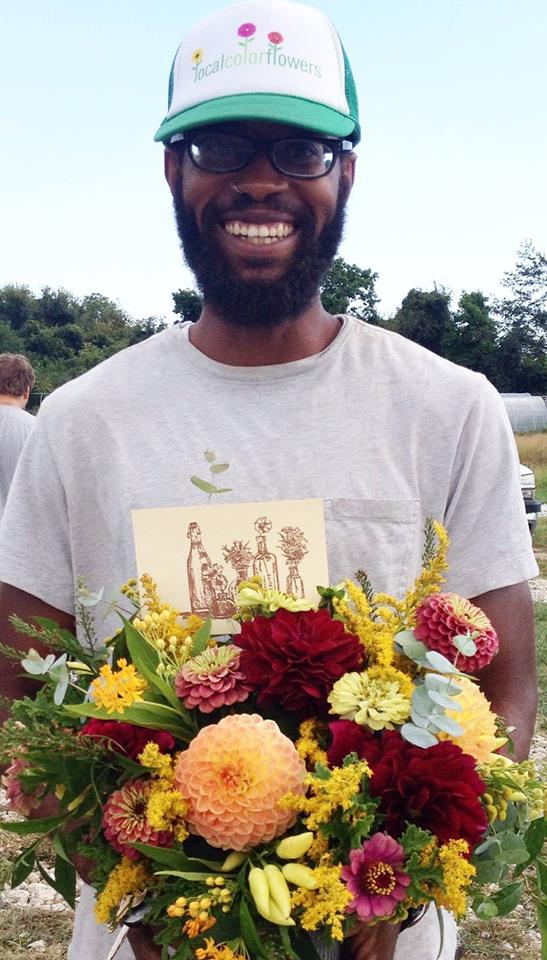
Enter the florist who wants to pre-order (and offer important guarantees), which offers an unique partnership that is paying off for everyone. Ellen Frost of Local Color Flowers in Baltimore is a leader in micro-lending, and I anticipate that other florists will join her efforts to ensure a more beautiful, local, fresh and abundant supply of the flowers they desire. If you missed the conversation, here’s a link to my October interview with Ellen.

Floral CSAs at Boston's Floral Couture in Louisville.

Floral CSAs at Boston’s Floral Couture in Louisville.

  1. Floral CSAs

I know that CSAs in the food world are well established, but when it comes to floral CSAs, I have been overwhelmed by the volume of Slow Flowers members who are now offering such programs — and I expect this marketing method to grow in 2015.

Just like Community Supported Agriculture or CSAs for food, Floral CSAs are based on seasonal and locally-harvested farm-fresh flowers. When you become a member of a flower CSA, you are buying a “share” of the flowers that a local farm produces each season. By paying for that share before the growing season gets underway, we support small flower farms as they plan, invest and plant. With your help, they are able to purchase new seed varieties, restock supplies, and make repairs to equipment and infrastructure. Community and customers are connected to their local flower farms — and reap the bounty of that botanical harvest, by the week, month or season. Instead of flavorful food, these CSAs deliver fragrant, intricate and beautiful flowers – a reflection of place and time on a local farm. The programs ensure a regular stream of local flowers for the home and give customers the satisfaction of supporting local agriculture and family farms.

Wildflower-inspired bridesmaid bouquets, grown and designed by Robin Hollow Farm.

Wildflower-inspired bridesmaid bouquets, grown and designed by Robin Hollow Farm.

  1. Cultivated Wildflowers

Wildflowers are a carefree, ephemeral expression of America’s connection to the land – from meadow and stream bank to forest and trail. But thanks to increased understanding of saving wild places and preserving public lands, there’s a newfound awareness that picking wildflowers is not smart (and in many places it’s illegal).
There are many sources for collected wildflower seeds; this allows flower farmers to safely and legally grow enduring favorites like black-eyed Susan and lupines. The look is quintessentially American. The just-gathered style carries over to floral crowns, garlands, bouquets and centerpieces.
This past fall, Slowflowers.com collaborated with Brooke Showell, a writer for Four Seasons Magazine, in a story called “Wedding Wildflowers,” highlighting the choice of Naturalistic flowers that appear freshly picked from a garden, meadow or farm.
The good news is that most domestic field-grown flowers fit this free-spirited, uncontrived aesthetic – and I know we’ll continue to see talented designers express the look in their arrangements.

A brighter floral palette is super romantic and feminine. Design: Buckeye Blooms

A brighter floral palette is super romantic and feminine. Design: Buckeye Blooms

  1. Bright pastels, Saturated Jewel Tones

For the past few years, pale palettes have populated wedding bouquets and driven demand for subtly-colored flowers like blush-toned ‘Café au Lait’ dahlias. Next seasons, color palettes promise to be richer and more vivid, reflecting a deeper saturation of petal color. Watermelon pink, orchid purple, cerise red – these sun-drenched hues are wooing brides who want a more vibrant flowers to hold and wear. There’s a gradual departure from an all-neutral bridal bouquet. Blush hasn’t left completely, but she’s sharing the stage with brighter hues.

Beautiful, wistful clematis. Flowers and design by Kaye Heafey, Chalk Hill Clematis

Beautiful, wistful clematis. Flowers and design by Kaye Heafey, Chalk Hill Clematis

  1. Vines, vines, vines

Demand for trailing tendrils outpaces the available stock that farmers are able to produce, signaling a market opportunity for innovative growers and designers.  All types of vines are considered “premium” floral ingredients, producing a far better-than-average return on investment for farms that grow vines and florists who integrate vines into their designs.

The unstructured silhouette and whimsical shoots and tendrils portrayed by  vines lend distinctive character to floral arrangements, headpieces and bouquets. Florists who have trouble sourcing clematis, jasmine, passion vine and other varieties are turning to horticulture (or friends’ gardens) to find the vines they want.

I recently asked Slow Flowers members to weigh in on some of these stylistic shifts in bridal preferences. With so much influence from wedding blogs and magazines, from instagram and pinterest, it’s no wonder that brides are curate their own look and feel from many sources.

Susan Studer King of Buckeye Blooms in Elida, Ohio, shared her perspective, which actually addresses the three points I just made, this way:

“We are consistently finding that brides covet the lush, loose look of natural garden flowers with interesting textural elements and slightly cascading finishing accents such as tendrils of clematis or sweet pea vine. We are also seeing a steady shift in interest away from blush tones and more toward more vivid, vibrant shades and jewel tones.”

Suppliers like Jamali Garden are introducing a wide array of hammered metal, brass, bronze and copper vessels.

Suppliers like Jamali Garden are introducing a wide array of hammered metal, brass, bronze and copper vessels.

  1. Good-bye, Mason Jar

Like many, I’m pleased with Ball’s recent reissue of its aqua blue and bottle green canning jars for the contemporary marketplace, but this American classic glass jar seems to have hit its saturation point.

Designers are seeking out the next easy and affordable vase for wedding reception centerpieces on a dime.

The solution, it seems, is at the thrift store, where inexpensive brass vessels are readily available. Mellower than tarnished silver, brass is versatile and suits both old-world and contemporary designs. A close relative to brass is old copper, which develops its own alluring patina with time.

Now, floral suppliers have releasing full lines of tarnished and hammered metal vessels, so it’s possible to avoid that trip to the thrift shop, yet those new introductions are all imported.
So the big search is on for American-made glass vases in contemporary rather than dated shapes. I know of a number of designers pushing for an American made option – and we’ve yet to find stylish choices. Will that come in 2015?

Love the shades, shapes and textures of green foliage in one of my favorite containers.

Love the shades, shapes and textures of green foliage in one of my favorite containers.

  1. Superstar Foliage

You might call this style “50 Shades of Green” and thanks to flower farmers who are planting interesting new foliage, we’ve all decided that a bouquet with generic greenery is yawner. An uncommon palette of distinctive foliage ups the character of a floral arrangement, bouquet or centerpiece. The options are exploding, moving far beyond salal, ferns and bear’s grass. Look for options like raspberry foliage, baptisia, scented geranium and other herbs, smoke bush, ninebark, pittosporum, box, myrtle, magnolia, camellia, and other uncommon types of greenery to upgrade the ordinary bouquet. Hand in hand with awesome foliage is where we source it – from the landscape, orchard or forest is so much more beautiful than the prosaic selection the industry has typically offered florists. It takes ingenuity, perhaps, to develop sources of unconventional leaves, but increasingly, that ingenuity means success for the designer who wants to differentiate him or herself from the everyday marketplace.

Man bouquet, designed by Riz Reyes of RHR Horticulture.

Man bouquet, designed by Riz Reyes of RHR Horticulture.

Guys in Baltimore, modeling their floral facial hair for Local Color Flowers' Baltimore Beards Project

Guys in Baltimore, modeling their floral facial hair for Local Color Flowers’ Baltimore Beards Project

10. Man-bouquets and floral beards

Real Men Love Flowers. Other than donning a boutonniere on their suit lapel, the masculine floral consumer has been ignored for too long. Cutting-edge guys want flowers, too – and innovative designers are responding. Riz Reyes, a Seattle-based horticulturist and floral designer, has created the “man bouquet,” a cluster of woodland blooms attached to a hand-carried grapevine wreath. Certainly, it’s for the more adventuresome groom, but as Riz asks, “why not?”

Irene Donnelly, a staff designer at Local Color Flowers in Baltimore has taken the idea of “personal wedding flowers” to a new level by weaving, pinning or gluing the green stems of tiny botanicals into the facial hair of hipster male customers. Designed floral beards are made from sedums, succulents, poppies, ranunculus, tiny pods. A few guys have even worn floral eyebrows and mustaches.

So Happy to Share My Year in Flowers With YOU!

So Happy to Share My Year in Flowers With YOU!

So that’s my take on the pulse of America’s floral industry.

I hate to use the term “trend,” when what we’re really talking about is a cultural shift.

The question for you is this: are you part of the shift? Are you helping to propel the Slow Flowers Movement forward through your own actions, through the way you communicate to your customers and the marketplace?

The goal of the Slow Flowers Podcast is to put more American flowers on every table, one vase at a time. Listeners like you have downloaded the Slow Flowers Podcast more than 28,000 times. If you like what you hear, please consider logging onto Itunes and posting a listener review.

I wish each and every one of you a happy new year, one that’s filled with prosperity and peace as we join together to change the broken U.S. floral industry. I believe that we’ve already changed things for the better – and that momentum will continue in 2015.

The Slow Flowers Podcast is engineered and edited by Andrew Wheatley and Hannah Holtgeerts. Learn more about their work at hhcreates.net.

Music credits:
Tryad – Our Lives Change
Tryad – Lovely
Tryad – Star Guide
http://tryad.bandcamp.com/album/instrumentals
http://creativecommons.org/licenses/by-sa/3.0/
Marcus Eads – Johnson Slough
Marcus Eads – Praire’s Edge
http://marcus-eads.bandcamp.com/album/sherburne-county-instrumentals
http://creativecommons.org/licenses/by/3.0/

A lovely conversation with NYC floral artist Emily Thompson (Episode 173)

Wednesday, December 24th, 2014
Emily Thompson (c) Photo by Maria Robledo

Emily Thompson (c) Photo by Maria Robledo

Emily Thompson is an iconoclast, an anything-but-predictable designer and artist – and owner of the NYC studio and shop that bears her name, Emily Thompson Flowers.

Three years ago at this time, the flower world was celebrating the fact that Emily and her team helped Michelle Obama achieve her dream of bringing the outdoors inside the White House at Christmas.

This year, Emily is settled into her charming new emporium in lower Manhattan, a huge space compared to her former flower-closet in Brooklyn’s DUMBO neighborhood.

I arrived to meet her early one October morning, a totally spontaneous visit prompted by the designer’s invitation when I took her class the evening before at Flower School New York.

As I wrote on my blog at the time, it was so gratifying to be introduced to Emily at her workshop and realize she’d been wanting to meet me, too.

An Emily Thompson botanical creation, displayed in a one-of-a-kind vase by artist Mark Gagnon (c) Sophia Moreno-Bunge

An Emily Thompson botanical creation, displayed in a one-of-a-kind urn by artist Mark Gagnon (c) Sophia Moreno-Bunge

That two-hour workshop was thoroughly inspiring. Every single word that Emily uttered was like listening to a Master instructor in a MFA program. I jotted down these lovely Emilyisms:

“I want to make things that are impractical. That are surprising to me.”

“The proportions I design with are more akin to the natural garden or landscape. I’m looking for powerful contrast, for things that resist one another. That draw the eye in and push it away.”

“I love to work with seasonal flowers, with things of our landscape. And then I’ll add bits of the exotic.”

“So much of design is done in selection of materials. I want a flower arrangement to feel like you’ve dug through the wilderness to find a treasure.”

Emily, designing with wild  and cultivated materials (c) Sophia Moreno-Bunge

Emily, designing with wild and cultivated materials (c) Sophia Moreno-Bunge

I love how the annual vines are climbing up the facade of this historic storefront (c) Debra Prinzing photo

I love how the annual vines are climbing up the facade of this historic storefront (c) Debra Prinzing photo

As I mentioned, Emily invited me to visit her brand new shop on Beekman Street, so the following morning we squeezed in a shared cup of tea/coffee and a tour of the new digs. I asked permission to turn on the recorder (natch) and Emily agreed.

Here’s a bit more about Emily:

Raised in Vermont, in a place she calls “the Northeast Kingdom – a place of uncompromising beauty,” Emily was deeply influenced by that sense of place, of the natural wildness of her childhood.

She was educated at the Pennsylvania Academy for the Arts, the University of Pennsylvania and UCLA, where she earned her Masters of Fine Arts in sculpture.

A floral arrangement in a beautiful Frances Palmer ceramic vase (c) Sophia Moreno-Bunge

A seasonal spring arrangement in a beautiful Frances Palmer ceramic vase (c) Sophia Moreno-Bunge

Emily is fascinated with the decorative arts and their history as she continues to collaborate with the rough hand of nature. Her flowers and banquet decor balance the uncultivated organic world with the delicacy of classical ornamental design. These pieces burst with unconventional materials like wild smilax, peaches and real butterflies, and always maintain sculptural grace. And most importantly, they are built in harmony with the space where they are displayed – as if they grew there.

One of Emily Thompson's nature-inspired assemblages (c) Sophia Moreno-Bunge

One of Emily Thompson’s nature-inspired assemblages, paired with a Frances Palmer vessel (c) Sophia Moreno-Bunge

Emily likes to cite William Gilpin, 18th century theorist of the picturesque, who directed builders of follies and artificial ruins, “to do so as if these ruins were not designed but naturally chosen.” What’s more, writes Gilpin, “they must be in magnificent style.” Emily’s work, like her ideal faux ruin, evokes nature in magnificent style.

Simply sublime (c) Sophia Moreno-Bunge

Simply sublime (c) Sophia Moreno-Bunge

Emily Thompson Flowers provides custom designs for special events and for all occasions. Using the freshest seasonal flowers, fruit, and foliage as well as unconventional and wild materials, each project or arrangement is individually conceived to suit the architecture and palette of its setting or to transform a room entirely.

At Emily Thompson Flowers in the Historic Seaport district of Manhattan, you can find flower arrangements and bouquets, artist-designed decorative objects, and all kinds of wildly beautiful things. The new shop is on a sunny corner in a building erected in 1865 by George B. Post (architect of the Stock Exchange), which is adorned with cast iron starfish and terra cotta sea monsters.

Old World-meets-Emily Thompson (c) Sophia Moreno-Bunge

Old World-meets-Emily Thompson (c) Sophia Moreno-Bunge

If you’re lucky enough to live in the New York area, you can order arrangements for delivery, but if you’re not a resident, visit Emily Thompson’s web shop to peruse the art, objects, tools and gifts that can be ordered online.

Emily Thompson designs powerful and poetic florals. She loves the peculiar, the quirky and the wondrous. To me, she gives us permission to redefine beauty in our own personal way, to ignore dictates that the vast floral industrial complex tries to force on us. On her blog, when Emily wrote in early 2014 about moving from a tiny Brooklyn studio to a full-fledged Manhattan flower shop, she wrote “We promise to do everything in our power to bring alchemy to all who need it on this island.”

(c) Sophia Moreno-Bunge

More of Emily’s botanical alchemy (c) Sophia Moreno-Bunge

There is one more episode left for 2014 – and that’s my very special episode that will air on December 31st. I plan on sharing my insights for the New Floral Year, so plan to join me!

My personal goal is to put more American grown flowers on the table, one vase at a time.  Listeners like you have downloaded the Slow Flowers Podcast more than 28,000 times. If you like what you hear, please consider logging onto Itunes and posting a listener review.

The Slow Flowers Podcast is engineered and edited by Andrew Wheatley and Hannah Holtgeerts. Learn more about their work at hhcreates.net.


Brooklyn Grows Flowers! Meet Molly Oliver Culver of Molly Oliver Flowers (Episode 172)

Wednesday, December 17th, 2014
Meet Molly Culver, and a bouquet of beautiful larkspur she grew in Brooklyn.

Meet Molly Culver, and some of the beautiful  flowers she grew in Brooklyn.

One of the largest consumer marketplaces in the U.S., where floral design is a huge business, is sadly a little disconnected from where flowers grow. There is a cadre of flower farmers and floral designers who are working creatively to change that situation. And today’s podcast guest, Molly Culver, is at the forefront of this momentum.

The designer at work.

The designer at work.

Molly Culver is the owner of Molly Oliver Flowers, which she runs with partner Deborah Greig. In their day jobs, both women are deeply involved in urban agriculture. When the weekends roll around, you can probably find them designing bouquets, boutonnieres, centerpieces and more – for couples who love their fresh-from-the garden style. Together they create beautiful botanicals for New York area weddings with a huge emphasis on local.

A late June bridesmaid bouquet, designed by Molly and Deborah

A late June bridesmaid bouquet, designed by Molly and Deborah (c) Levi Stolove photograph

I’m so sorry Deborah couldn’t join us for this interview, recorded in late October when I was in New York for just a few days. Molly graciously helped me coordinate a Slow Flowers gathering – an after-hours affair that drew floral designers, flower farmers and one intrepid lifestyle blogger to 61 Local in Brooklyn.

Here's a fun photo from our NYC-Brooklyn Slowflowers.com gathering. From left: Gloria Battista Collins of GBC Style, me, Jessica Stewart and Justine Lacy of Foxglove Floral Design Studio, and Molly Culver of Molly Oliver Flowers.

Here’s a fun photo from our NYC-Brooklyn Slowflowers.com gathering. From left: Gloria Battista Collins of GBC Style, me, Jessica Stewart and Justine Lacy of Foxglove Floral Design Studio, and Molly Culver of Molly Oliver Flowers.

Over delicious food and beverages, we talked about our individual projects and collective vision for using and promoting American grown flowers. Molly brought the most lovely late-autumn floral arrangements to decorate the tables, wowing everyone with what she harvested from the growing fields that late in the season – the 3rd week of October.

Before I share our interview, let me share a little more about Molly Culver:

a Molly Oliver Flowers centerpiece for an October wedding.

a Molly Oliver Flowers centerpiece for an October wedding. (c) Kelly Kollar photograph

Molly has been working as a local food and flower activist in New York City since 2005. Early in her career, she kicked off a brand new CSA chapter and farmers market in the poorest congressional district in the US, and hasn’t stopped working to make growing food and eating local accessible to all. Molly has managed both rural and urban farms since 2009, and currently manages the 1-acre Youth Farm in Crown Heights, Brooklyn where she oversees flower production and sales and runs educational programming and farm training for adults. She is Farm School NYC’s Farm Manager and Director of the Urban Farm Training Program.

September bouquet by Molly Oliver Flowers (c) Amber Gress photograph

September bouquet by Molly Oliver Flowers (c) Amber Gress photograph

Molly has taught the 5-week course “Growing Soils” for Farm School NYC since 2011, and has made a soil worshipper out of many an urbanite. Molly holds a degree in Ecological Horticulture from the Center for Agroecology and Sustainable Food Systems, UC-Santa Cruz and sits on the Board of Farm School NYC.

A flower crown by Molly Oliver Flowers.

A flower crown by Molly Oliver Flowers (c) Forged in the North

As I mentioned, Molly and Deborah Greig are partners in Molly Oliver Flowers, a sustainable floral design company launched in 2012. They are bringing new meaning to the term ‘green weddings.’

An April wedding bouquet by Molly Oliver Flowers (c) Clean Plate Pictures

An April wedding bouquet by Molly Oliver Flowers (c) Clean Plate Pictures

I hope that you’ll hear from Deborah in a future interview. She’s also the agriculture director for East New York Farms, a Brooklyn nonprofit that since 1998 has been working with youth, gardeners, farmers, and entrepreneurs to build a more just and sustainable community.

Yes, growing food is essential, especially when it feeds people who don’t otherwise have  access to fresh vegetables, fruits and herbs.

But then there’s flowers, which as Molly explains account for a significant portion of her work at Farm School NYC.

“Flowers are food for the soul; they feed me,” she says.

I couldn’t agree more!

Late August bouquet - photo credit (c) Elizabeth Andrews

Late August bouquet – photo credit (c) Elizabeth Andrews

My personal goal is to put more American grown flowers on the table, one vase at a time. I promise that when you tune in next week, you’ll hear another insightful and educational episode of the Slow Flowers Podcast. Listeners like you have downloaded the Slow Flowers Podcast more than 27,000 times. If you like what you hear, please consider logging onto Itunes and posting a listener review.

The Slow Flowers Podcast is engineered and edited by Andrew Wheatley and Hannah Holtgeerts. Learn more about their work at hhcreates.net.

ASCFG #4: Wild World of Weddings (Episode 171)

Tuesday, December 9th, 2014
JeansBouquet_6969

Wedding bouquets: the ultimate design challenge

Today’s episode was recorded on October 20th at the Association of Specialty Cut Flower Growers conference held in Wilmington, Delaware – and it is our fourth featured segment from that event.

“Wild World of Weddings” is a panel showcasing four voices that may be quite familiar to listeners of this podcast.

You’ll hear Jennie Love, of Love ‘n Fresh Flowers, based in Philadelphia; Sarah Ryhanen of Brooklyn-based Saipua; Ellen Frost of Local Color Flowers in Baltimore and Sullivan Owen, owner of Sullivan Owen Floral & Event Design, also based in Philadelphia.

This free-ranging panel was left unstructured so that audience members could ask ANYTHING they wanted to know about growing, designing and selling local flowers to the bridal and wedding marketplace.

The panel wasn’t moderated per se, but you will first hear Jennie Love, who co-chaired the entire conference with Becky Devlin.

Remember, like all of our episodes from ASCFG, this one exceeds one hour in length. So I’ll keep my intro short and get right to the juicy material.

There’s amazing intel to learn from these four women — and you’ll hear a range of topics — from marketing your design business to navigating consultations to pricing and contracts.

Flower farmers and floral designers – and farmer-florists – will learn volumes from this panel.

Let’s get started with Jennie Love. After Jennie’s first remarks, I’ll interject to introduce each new voice who joins the conversation. You’ll begin to get used to the unique voices and points of view of each panel member as the segment continues.

Thanks for joining me and if you’re interested in learning more about any of these four talented designers, check out debraprinzing.com to find links to their social sites.

For the rest of December, my Slow Flowers Podcast episodes are very special and I’m thrilled to share two new voices with you.

On Dec. 17th, you’ll meet Molly Oliver Culver of Molly Oliver Flowers, a farmer-florist who’s growing her botanical ingredients right in the heart of Brooklyn!

And then on Dec. 24th, I’m very pleased to welcome Emily Thompson, owner of Emily Thompson Flowers, another New York star, a floral designer whose wild, rustic style is at the same time thoroughly elegant and timeless.

I recorded both interviews in person while spending a few days in NYC after attending the Cut Flower Growers Association conference and I’ve been eagerly waiting to broadcast them.

To wrap up the year, on December 31st, we’ll be looking to the future. I’ll host an episode that includes my 2015 forecast for the floral industry. Yes, I have a crystal ball and I’m going to gaze into it and share my insights with you.

peony_party_insert_print-page-002

If you’re hoping for something special to show up in your stocking or under the tree this year, be sure to send the gifters in your life to Peonyparty.com to buy you a space at the design table next July when Slow Flowers and the Field to Vase blog produce Peony Party.

You’ll join Christina Stembel and me over four fabulous peony-filled days focusing on the cultivation and design of Alaska Peonies.

Find all the details at Peonyparty.com. There are only 20 spaces so grab your spot soon!

My personal goal is to put more American grown flowers on the table, one vase at a time. I promise that when you tune in next week, you’ll hear another insightful and educational episode of the Slow Flowers Podcast.

Listeners like you have downloaded the Slow Flowers Podcast more than 27,000 times. If you like what you hear, please consider logging onto Itunes and posting a listener review.

The Slow Flowers Podcast is engineered and edited by Andrew Wheatley and Hannah Holtgeerts. Learn more about their work at hhcreates.net.


Lavender News from the Northwest Regional Lavender Conference (Episode 170)

Wednesday, December 3rd, 2014

Lavender-web-small-150x150Today’s episode was recorded in late October at the Northwest Regional Lavender Conference outside Portland, Oregon.

Susan and Jack Harrington of Labyrinth Hill Lavender, the conference producers, invited me as the luncheon speaker to talk about – what else – the American grown cut flower industry!

My talk was titled “From ‘Buy Local’ to ‘American Grown’ – How you can Join the Slow Flowers Movement.” I thoroughly enjoyed spending time with more than 200 lavender growers from around the country; in fact, the sold-out conference attracted participants from at least 22 states and several Canadian provinces, according to Susan’s tally.

One might ask: What does Lavender have to do with the Cut Flower Industry?

A gorgeous scene from Sarah Richards's Lavender Wind Farm on Whidbey Island in Washington State.

A gorgeous scene from Sarah Richards’s Lavender Wind Farm on Whidbey Island in Washington State.

Well, that’s what I was there to explore, along with my two guests today. By the end of today’s episode — All about Lavender – I believe you’ll conclude, as I have, that there is huge potential for integrating American Grown Lavender into the American Grown Cut Flower Community.

The flower- and lavender-growing communities are closely aligned in so many ways: In both worlds, you’ll meet family-owned farms, people who desire to make a living from their land, people who use sustainable practices, people who want to preserve farmland, people who create livelihoods for others in their community and people who believe in creativity and hard work.

NE_field_notecard

Mike Neustrom of Prarie Lavender Farm in Kansas.

Mike Neustrom of Prarie Lavender Farm in Kansas.

Mike Neustrom owns Prairie Lavender in Bennington, Kansas, and is a founding board member of the U.S. Lavender Growers Association.

Mike has been growing lavender since 2002.

His 4,000+ plants reside on two acres at the cusp of the tallgrass and shortgrass prairies of North-central Kansas.

Not only will Mike  share his experience with the challenges of growing lavender under harsh conditions, he will enlighten us with tales of manufacturing and marketing 90 lavender products on his farm.

Sarah Richards of Lavender Wind Farm.

Sarah Richards of Lavender Wind Farm.

Sarah Richards owns Lavender Wind Farm in Coupeville, Washington on Whidbey Island, a little closer to me. She is a founding and current board member of the U.S. Lavender Growers Association board. At Lavender Wind Farm, Sarah grows 14,000 plants on six acres. After 12 years of growing lavender and welcoming visitors to her farm, she started planning for an expansion beyond her farm’s borders. In 2012, she opened a manufacturing and retail facility in a charming 1916 bungalow, attracting both locals and tourists.

“I knew that one of my crops was tourists,”

— Sarah Richards, Lavender Wind Farm

Lavender Wind Farm's glorious fields.

Lavender Wind Farm’s glorious fields.

I know you’ll enjoy our conversation and perhaps it will inspire you to explore lavender as a new crop – or to think about ways to use your farm as an “agro-tourism destination” or for new product development.

My personal goal is to put more American grown flowers on the table, one vase at a time. I promise that when you tune in next week, you’ll hear another insightful and educational episode of the Slow Flowers Podcast.

Listeners like you have downloaded the Slow Flowers Podcast more than 26,000 times. If you like what you hear, please consider logging onto Itunes and posting a listener review.

The Slow Flowers Podcast is engineered and edited by Andrew Wheatley and Hannah Holtgeerts. Learn more about their work at hhcreates.net.

ASCFG #3: Pamela Arnosky on Selling Your Flowers to Groceries (Episode 169)

Wednesday, November 26th, 2014
Veteran flower farmer and industry leader Pamela Arnosky, of Texas Specialty Cut Flowers.

Veteran flower farmer and industry leader Pamela Arnosky, of Texas Specialty Cut Flowers.

Today’s episode was recorded on October 20th at the Association of Specialty Cut Flower Growers and features veteran flower farmer Pamela Arnosky of Texas Specialty Cut Flowers in Blanco, Texas, west of Austin.

Pamela’s presentation — about selling to supermarkets — was paired with Lisa Mason Ziegler’s session on selling to florists, which you heard several weeks ago. Head’s up – like all the ASCFG sessions and panels, this is a one-hour presentation, so don’t feel badly if you have to take it in over several days.

Before we get started, here’s some great news I have been waiting weeks to share.

peony_party_insert_print-page-002

Flower child and co-producer of the Peony Party, Christina Stembel of Farmgirl Flowers. Photo (c) Victor Obeck

Flower child and co-producer of the Peony Party, Christina Stembel of Farmgirl Flowers. Photo (c) Victor Obeck

Earlier this year, my friend Christina Stembel of SF-based Farmgirl Flowers, joined me on a fabulous 4-day trip to Homer, Alaska, where I spoke and taught for the Homer Gardeners’ Weekend. You can listen to our podcast episode recorded in Homer, here.

It was my second visit to Homer during Alaska’s glorious peony season and I was thrilled to both watch Christina’s discovery of these gorgeous, incomparable American-grown flowers and to introduce her to my peony farmer friends in that community.

Like they say, “all good things happen for a reason!” Not only was Christina instantly floored by the beauty of the Kenai Peninsula, she went crazy about fields and fields of Alaskan peonies available in July (the Peony season is CA is only the month of May.)

What could be more amazing that to stand in a field of peonies with the amazing Alaska glaciers in the distance?

What could be more amazing that to stand in a field of peonies with the amazing Alaska glaciers in the distance?

To this, I just smiled, knowing only more good things would come from her discovery in Alaska.

Pretty soon, literally within minutes of visiting the farm, our creative juices started flowing. We asked ourselves: “What if we bring other peony lovers here, all the way to Alaska — to discover and participate in the magic of what we just experienced?” 

Since the sun doesn’t really set until close to midnight, we brewed and brainstormed some unforgettable late-night conversations. Together with our delightful host, Beth Van Sandt, co-owner of Scenic Place Peonies, we started envisioning a “Peony Party,” a private, custom event, limited to an intimate group of flower lovers, florists, farmers and friends to come experience the magic of Alaska grown peonies.

The Peony Party was finally made real when the members and farmers of the Alaska Peony Marketing Group extended their enthusiasm and support in August of 2014.

Today, we’re launching the new web site and invite you to check it out at PeonyParty.com.

Our fabulous event is scheduled for July 10 to 13th, 2015 and there are only 20 spaces open to students.

Unlike most of the floral design and farmer-florist intensives you’ve seen in the past year or so, we’ve packed ours with serious value-added bonuses.

Most workshops like this do not include lodging or meals. Guess what? Ours includes 3 nights’ of lodging all but one or two meals. The early-bird price is $2995, a $500 discount if you sign up before end of January.

BlackAnd here’s my wonderful little secret. If you sign up for an Alaska Airlines Visa Card ASAP, you will receive 25,000 bonus miles in your first year – that’s exactly what you need to fly round-trip from many US cities on the west coast or to cover at least a one-way ticket from many US cities on the east coast.


The unforgettable Blue Barn of Texas Specialty Cut Flowers.

The unforgettable Blue Barn of Texas Specialty Cut Flowers.

And now, on to Pamela Arnosky. With her husband Frank, Pamela farms 20 acres of cut flowers in Central Texas. The Arnoskys grow more than 70 varieties of flowers – year ’round – and sell through many grocery store accounts, as well as to florists and at their own on-farm market.

They are popular speakers at regional and national ASCFG events, thanks in large part to their expertise and humorous presentation style. They say they’ve weathered just about anything from hurricanes and tornadoes to Mothers of Brides. Previous guests of this podcast, you can hear their last interview in Episode 130.

Ready for delivery - Texas  Specialty Cut Flowers.

Ready for delivery – Texas Specialty Cut Flowers.

This is a priceless and highly practical presentation – and if you’ve ever contemplated getting into the grocery store bouquet business, there is one person you need to learn from – and that’s Pamela Arnosky. Sit at her feet and listen, learn and be inspired.

My personal goal is to put more American grown flowers on the table, one vase at a time. I promise that when you tune in next week, you’ll hear another insightful and educational episode of the Slow Flowers Podcast. Listeners like you have downloaded the Slow Flowers Podcast more than 25,000 times. If you like what you hear, please consider logging onto Itunes and posting a listener review.

The Slow Flowers Podcast is engineered and edited by Andrew Wheatley and Hannah Holtgeerts. Learn more about their work at hhcreates.net.