Debra Prinzing

Get the Email Newsletter!

Archive for the ‘General’ Category

Got Rocks? Here’s a savvy design solution for all those nuggets you’re digging up

Tuesday, August 29th, 2017

Love this tall console-style table made from hog fencing, rocks and a stone top — Design by Greg Graves and Gary Waller of Old Goat Farm.

If your garden is like ours, well, rocks are in abundance.

Our six-month-old garden occupies the 20-foot-by-60-foot backyard of a suburban home completed just months ago, right before we moved in on February 11th.

By the time we started working on the garden, no surprise! We realized what everyone who moves into a new-construction house learns. Landscaping crews simply move a lot of dirt and rocks around (usually destroying topsoil in the process). Then, they push any excess mixture of native soil, debris, the random screw or nail, and rocks up against the perimeter of one’s “new” yard and toss some bark dust on top. Not exactly “prepared soil,” right?

Rocks of all shapes and sizes have been piling up. We’ve had to muscle them out of newly dug planting holes for shrubs, perennials and trees. Said rocks range in size from a pingpong or tennis ball to something the size of a large dinosaur egg.

Case in point:

Yes, this is from the ground in our backyard. It was definitely a “two-person” rock, as they say.

Clearly, the rocks are winning. And it’s not like you can toss them into the compost bin and let the city deal with the mess.

Right now, along the side of our house next to the foundation, a long row of rocks is on display. There are mostly 6- to 12-inch diameter nuggets; some are surprisingly smooth; others more shard-like. I wasn’t sure what to do with them until I returned to Old Goat Farm this past weekend. And I was reminded that it’s possible to turn unwanted rocks into very-much-wanted garden furniture and art.

Old Goat Farm is owned my my friends Greg Graves and Gary Waller. Old Goat Farm is out in the country, as one might expect, in the town of Graham, about 45 minutes south of where we live in Des Moines. It is a combination display garden, specialty nursery and animal sanctuary, all of which surround a charming Victorian farmhouse where Gary serves his famous holiday teas (there’s usually a waiting list, so check it out ASAP if you’re interested). I have written about Old Goat Farm’s holiday teas a few times, and you can read those posts here from 2010 and 2012.

Both men say they themselves are “old goats,” but the only reason you would believe that is their combined gardening and horticulture wisdom. Together, Greg and Gary know more than many of us will ever learn in one lifetime, not to mention two. Old Goat Farm is always open to the public the second weekend of the month, April through October. You can learn more about other special sales and events by checking out the Facebook page here.

Bruce and I spent a lovely evening last weekend at Old Goat Farm, where the guys hosted their first ever farm-to-table dinner in the garden. The food was out of this world – all vegetarian, of course – and presented in such a visually appealing manner by local chef Meghan Brannon of Conceptual Catering.

Between courses, we were encouraged to stroll the display gardens, and they are magnificent. I hadn’t been to Old Goat during the summer months for several years, and so I’d missed how much these borders, paths, islands and vignettes have matured over the dozen-plus years that Gary and Greg have tended to this land.

With rocks (and what to do with them) on my mind, what jumped out at me during this visit was how masterfully the guys handle their rock containment. Let’s review a few of these special pieces:

Twin gabion towers that serve as pedestals for beautiful urns to mark the entry into Linda’s Garden, a special destination honoring our late friend Linda Plato.

A small garden bench (right) and a square side table (left). Both utilize stone slabs for the “top.”

Another view of the fantastic gabion fern table. This is a stunner!

A detail of the planted surface of the table.

Another beautiful view.

You’ll want to read Greg’s blog post  from a few years’ back, in which he discusses his wire-cage designs and his personal relationship with the rocks in his garden. I found it inspiring!

Simply defying gravity, Greg and Gary make stone-filled metal orbs, too.

What a lovely way to punctuate a turn in the pathway.


Episode 311: The Bloom Project’s Heidi Berkman and the healing influence of flowers

Wednesday, August 23rd, 2017

Through flower donations from farms and wholesalers, and through tens of thousands of volunteer hours, The Bloom Project brings flowers into the lives of people in hospice and end-of-life care.

The phrase “flowers feed the soul” is one you often hear, on greeting cards, on hand-painted signs, in all sorts of sentiments.

And in the opinion of today’s guest, flowers not only feed the soul and spirit, they play an important nurturing role in health care. My guest today, Heidi Berkman, is the founder and president of The Bloom Project. Based in Portland, Oregon, The Bloom Project has been giving the gift of fresh floral bouquets to hospice and palliative care patients since 2007. 

I’m posing with Heidi Berkman (left), who runs The Bloom Project, driven by the mission to harness the healing power of flowers. We gathered earlier this week for a  “Seattle Whirlwind” auction package to which Slow Flowers donated a workshop at the Seattle Wholesale Growers Market.

Heidi reached out to me to introduce herself several years ago, and then, through our mutual friend Christina Stembel of Farmgirl Flowers, I really got to spend time with Heidi, both talking about the floral business, but also doing fun things like when all three of us traveled to Detroit last October at Lisa Waud’s invitation to speak at Detroit Flower Week.

Volunteers make hundreds of bouquets each week for delivery to hospice caregivers. (c) Byron Roe Photography

The first time Heidi and I actually met in person was April of 2016, when I was in Portland to speak at the Portland Garden Club’s annual flower show. Heidi put together a tour and reception for me to learn more about The Bloom Project, and to meet key board members and volunteers, as well as to see the beautiful workshop and studio headquartered at Teufel Holly Farm, just west of Portland. Donated by Larry Teufel, flower farmer and nurseryman, the space is akin to what you’d see at any large production facility, with tall work tables, great light, and plenty of cooler space for the flowers. Pretty impressive to see where The Bloom Project’s volunteers receive and processes donated stems of flowers and foliage, as well as where the gift bouquets are created, packaged and prepared for delivery to the ultimate recipient.

Heidi and I have been talking about when would be an ideal time to feature The Bloom Project on the Slow Flowers Podcast and with our mutual travel schedules, we waited until now. This week, I’ll be hosting a fun event as a Slow Flowers donation to The Bloom Project. At the annual Bouquets of the Heart auction that benefits the organization, I joined Larry Teufel in donating a “Seattle Whirlwind” day-of-flowers package for five guests.

Larry Teufel (left, with me) flew the auction package winners and their guests to Seattle (from Portland), on his beautifully-restored classic aircraft.

This week, Larry, who pilots his own plane, flew the winning bidder and a few of her friends to Seattle . . . I hosted them on a tour of the Seattle Wholesale Growers Market, which gave me a chance to talk about the mission of Slow Flowers and the importance of supporting local, seasonal and sustainable flowers, and the people who grow and design with them.

Debbi, Susan, Debra (me), Leianne and Susan — showing off our bouquets in Seattle as part of the auction package benefitting The Bloom Project.

We had a short design session and everyone left holding a bouquet with a story. I think that story — the story of showing compassion through flowers — is what The Bloom Project is all about — and Heidi is a powerful communicator for her cause and mission.

Before we get started, let me tell you a little more about The Bloom Project.

The project started in Heidi’s Central Oregon garage, beginning with a few flowers and a few volunteers who wanted to create something special — bringing beauty and joy to those in end-of-life care. Many, including Heidi, had experienced the loss of a loved one in hospice care, and recognized that they could make use of resources (flowers) that would otherwise be tossed out.

Photos (c) Byron Roe Photography

Over the last decade, The Bloom Project has continued to grow and support hospice and palliative care agencies across the state of Oregon, with the Portland Metro area as its base. Volunteer teams have flourished, supporting the organization’s goal of serving additional patients and families.

Donated workspaces, supplies and equipment, provide a wonderful place for volunteers to come together to create hundreds of beautiful bouquets each week. The Bloom Project relies on a committed group of floral and community partners who support its efforts and mission.

Heidi has twenty-five years of meeting and event planning experience with a strong background in retail marketing and extensive nonprofit experience. Her deep appreciation for the work of hospice comes from the personal experience of watching a loved one being cared for.

She has always enjoyed working with flowers and says she is grateful to be able to create bouquets with donated flowers that can provide encouragement to others instead of being discarded. Heidi’s passion for The Bloom Project has motivated her to share the story and spread the word about the power of flowers.

The Bloom Project’s Bouqets of the Heart event takes place on October 27, 2018, in Portland.

Her vision for the organization is to continue to network people and resources in communities where hospice and palliative care organizations are serving patients and their families during end-of-life care. This simple act of kindness can be given by gathering a team of committed volunteers, sourcing flowers and supplies, establishing a workspace and obtaining the support of the surrounding community to provide in-kind products and services along with financial contributions to support the growth and impact of the organization.

Details on The Bloom Project’s Bouquets of the Heart event, October 27th, in Portland. Maybe I’ll see you there!

Thanks again for joining me today. My take-way from this conversation with Heidi is that we shouldn’t ever discount the impact that flowers have in the lives of our community, team members, customers, and clients. These are more than luxury goods, more than perishable indulgences. A flower contains the expression of life and beauty — and can touch the heart and the senses where words may not be adequate.

The Slow Flowers Podcast has been downloaded more than 225,000 times by listeners like you. Thank you to each one of you for downloading, listening, commenting and sharing. It means so much.

If you value the content you receive each week, I invite you to show your thanks and support the Slow Flowers Podcast with a donation — the button can be found on our home page in the right column. Your contributions will help make it possible to transcribe future episodes of the Podcast.

Thank you to family of sponsors:

Certified American Grown Flowers. The Certified American-Grown program and label provide a guarantee for designers and consumers on the source of their flowers. Take pride in your flowers and buy with confidence, ask for Certified American Grown Flowers.  To learn more visit americangrownflowers.org.

Arctic Alaska Peonies, a cooperative of 50 family farms in the heart of Alaska providing high quality, American Grown peony flowers during the months of July and August. Visit them today at arcticalaskapeonies.com

Seattle Wholesale Growers Market, a farmer-owned cooperative committed to providing the very best the Pacific Northwest has to offer in cut flowers, foliage and plants. The Growers Market’s mission is to foster a vibrant marketplace that sustains local flower farms and provides top-quality products and service to the local floral industry. Find them at seattlewholesalegrowersmarket.com

Longfield Gardens provides home gardeners with high quality flower bulbs and perennials. Their online store offers plants for every region and every season, from tulips and daffodils to dahlias, caladiums and amaryllis. Visit them at lfgardens.com.

Syndicate Sales, an American manufacturer of vases and accessories for the professional florist. Look for the American Flag Icon to find Syndicate’s USA-made products and join the Syndicate Stars loyalty program at syndicatesales.com.

Johnny’s Selected Seeds, an employee-owned company that provides our industry the best flower, herb and vegetable seeds — supplied to farms large and small and even backyard cutting gardens like mine. Check them out at johnnysseeds.com.

Association of Specialty Cut Flower Growers. Formed in 1988, ASCFG was created to educate, unite, and support commercial cut flower growers. It mission is to help growers produce high-quality floral material, and to foster and promote the local availability of that product. Learn more at ascfg.org
I’m Debra Prinzing, host and producer of the Slow Flowers Podcast. Next week, you’re invited to join me in putting more American grown flowers on the table, one vase at a time. And If you like what you hear, please consider logging onto Itunes and posting a listener review.

The content and opinions expressed here are either mine alone or those of my guests alone, independent of any podcast sponsor or other person, company or organization.

The Slow Flowers Podcast is engineered and edited by Andrew Brenlan. Learn more about his work at KineticTreeFitness.com.

Music Credits:

LaBranche
by Blue Dot Sessions
 
Wholesome 5
by Dave Depper
Additional music from:

audionautix.com

Episode 307: Slow Flowers Podcast Celebrates our 4th Anniversary with Travis Rigby of Florists’ Review

Wednesday, July 26th, 2017

I’m celebrating the 4th anniversary of the Slow Flowers Podcast with a special guest and big announcement!

On July 23, 2014, I said this at the top of the Slow Flowers Podcast:

During the past year, I produced and hosted weekly episodes of this podcast — with news and insights of the American Grown flower movement.

The people who have been guests on this series have generously and passionately  shared their time and knowledge.

Our inspiring and straight-forward dialogue has prompted thousands of listeners to return, week after week, downloading the audio files to their various devices, to listen in the design studio, in the flower fields and wherever else they spend their days.

The Slow Flowers Podcast is now a must-hear medium connecting  listeners across our country with creative and influential voices and exciting points of view.

Thank you for joining me and please get ready for the next 52 weeks of great conversations.

We’re in full bloom, so to speak, and there’s an abundance of great information I’m eager to bring you!

That’s how I pronounced the news of this Podcast’s one-year anniversary, with 15,000 downloads and, as I said, 52 episodes to show for it.

Here we are, today, celebrating the 4th anniversary of the Slow Flowers Podcast, and by numbers alone, we’ve made some amazing strides. We have enjoyed 215,000 listener downloads, and have produced 208 episodes.

Behind the numbers are authentic relationships that have been formed, a community of like-minded kindred spirits who are truly trying to improve our floral landscape.

We are making empowered decisions about how flowers are grown, brought to market and incorporated into our designs, decisions that affect our branding and businesses in a positive way.

Your participation in and support of all Slow Flowers projects is at an all-time high. With more than 715 members of Slowflowers.com, with ever-increasing support and collaboration with many of our sponsors, with the explosion of involvement in American Flowers Week — at more than 5 million impressions on social media during this year’s campaign, with the media attention not just about our program but about flower farmers across the country creating wholesale supply hubs and elevating the discussion about local flowers, and with this year’s amazing Slow Flowers Summit just occurring . . . well, we have so much to celebrate.

Let’s pop the cork and congratulate one another. Like a true community, your success equals my success; when the light is shined on one member, it benefits all members; when together we value interdependence over competition . . . that’s what inspires me and I hope it inspires you.

Four years ago, I started this tiny podcast wondering how I would ever “fill” the lineup with enough guests and stories to tell, imagining that eventually, I would be scrambling to find people to interview week after week. Well, that has proven NOT to be the case and it is pretty beautiful to acknowledge this accomplishment. My instinct for news tells me that the pool of voices to bring to you — as we inquire, inform, include, inspire and instigate new thinking — will not disappear. That’s a promise.

Travis Rigby, president and publisher of Florists’ Review

There’s one more big accomplishment to share and it is happening thanks to today’s special guest.

Please meet Travis Rigby, president and publisher of Wildflower Media, the parent company of Florists’ Review, Super Floral and an extensive bookstore and publishing operation.

Travis also is president of two companies both based in Portland — PosterGarden.com, a portable display company founded in 1995, and FlowerBox (formerly Blumebox), an innovative flower vase company specializing in recyclable vases.

Travis purchased Florists’ Review Enterprises and its suite of businesses in early 2016, with the sale closing on April 1 last year, so he has less than 18 months as a magazine publisher under his belt.

He acquired the Topeka, Kansas-based business from Frances Dudley, the previous owner of 29 years, but I was amazed to learn that Florists’ Review is a venerable, 120-year-old trade magazine.

Florists’ Review has been serving the floral industry for nearly 120 years. Established by Gilbert Leonard Grant in 1897 as The Weekly Florists’ Review, it was the first floral magazine to use photography rather than sketches, giving florists a true picture of what was happening in their industry.

Even during his short period of ownership, Travis has made some exciting changes, including redesigning Florists’ Review, with a larger-size format, higher quality paper and fresh graphics. With David Coake as editor and Kathleen Dillinger as new art director, together the cover and inside content of Florists’ Review are catching people’s attention.

“Four Seasons of Floral Design” featured designs from Kelly Shore of Petals by the Shore in Olney, Maryland, and flowers from Plant Masters flower farm.

I began contributing articles to the magazine this past January, auspicious timing for me because it coincided with the magazine’s beautiful new format. As you’ll hear in our conversation, Travis and I met through a mutual friend, the uber networker Heidi Berkman of The Bloom Project in Portland (who incidentally you’ll hear on this podcast in the not-so-distant future).

Being the magazine junkie that I am, I was immediately fascinated to meet Travis and talk about the future of print media. The magazine world has undergone a huge shakeup in the past decade, as has all print, especially newspapers, but Travis and I found ourselves agreeing that there is a sweet spot for micro-niche publications that really drill down on a focused topic or serve a distinct audience — and that Florists’ Review had the potential to become the publication of choice for the mainstream floral industry. Of course, I’m not really in the mainstream, preaching local and seasonal flowers, but Travis saw something of relevance in the Slow Flowers platform, and he continued to say “yes” when I brought story ideas to the table.

Here’s a sneak peek of our opening pages of the Slow Flowers Journal — launching inside the August issue of Florists’ Review.


Now, thanks to a new partnership, more than 13k subscribers of Florists Review will read regular coverage about the Slow Flowers Movement and the people who grow and design with local, seasonal and domestic flowers. Beginning in August, next week, I am joining Florists’ Review as a Contributing Editor and, you will find our dedicated editorial section called Slow Flowers Journal inside the pages of Florists’ Review magazine, the highest-circulation floral industry trade magazine on the market.

In the coming issues, we’ll feature:

  • Design-driven feature articles, beautifully photographed, of course
  • Farmer-florist profiles
  • Products and resources sourced locally
  • “How I do it” (Q&As with florists on their sourcing practices)
  • Hero Worship — inspirational voices of “slow” pioneers

Isn’t that cool? Now even more readers will learn about the #slowflowersmovement and how they can adapt and adopt a more sustainable lifestyle in the floral industry.

Want to see what it’s all about?
Subscribe to Florists’ Review and read our bonus Slow Flowers Journal content at the special rate of $21 for 12 issues — 62 percent off the cover price! Take advantage of the special subscription offer from Florists’ Review. Click on this link or call 1-800-367-4708.  I promise you that you’ll find inside each Slow Flowers Journal, our mini-magazine, the stories, news and resources important to you.

Thanks again for joining me and for helping me celebrate all the good Slow Flowers news of this Podcast’s significant fourth anniversary. If you want to get more involved, please reach out — I’d love to hear from you!

Join the Slow Flowers Community on Facebook, and share your story of this ever-changing ethos to source domestic, American grown flowers and support flower farmers, as well as adopt a more mindful, sustainable lifestyle for you and your business.

As I mentioned, the Slow Flowers Podcast has been downloaded nearly 215,000 times by listeners like you. Thank you to each one of you for downloading, listening, commenting and sharing. It means so much.

If you value the content you receive each week, I invite you to show your thanks and support the Slow Flowers Podcast with a donation — the button can be found on our home page in the right column. Your contributions will help make it possible to transcribe future episodes of the Podcast.

Thank you to family of sponsors:

Arctic Alaska Peonies, a cooperative of 50 family farms in the heart of Alaska providing high quality, American Grown peony flowers during the months of July and August. Visit them today at arcticalaskapeonies.com

Seattle Wholesale Growers Market, a farmer-owned cooperative committed to providing the very best the Pacific Northwest has to offer in cut flowers, foliage and plants. The Growers Market’s mission is to foster a vibrant marketplace that sustains local flower farms and provides top-quality products and services to the local floral industry. Find them at seattlewholesalegrowersmarket.com

Longfield Gardens provides home gardeners with high quality flower bulbs and perennials. Their online store offers plants for every region and every season, from tulips and daffodils to dahlias, caladiums and amaryllis. Visit them at lfgardens.com.

Syndicate Sales, an American manufacturer of vases and accessories for the professional florist. Look for the American Flag Icon to find Syndicate’s USA-made products and join the Syndicate Stars loyalty program at syndicatesales.com.

Johnny’s Selected Seeds, an employee-owned company that provides our industry the best flower, herb and vegetable seeds — supplied to farms large and small and even backyard cutting gardens like mine. Check them out at johnnysseeds.com.

Association of Specialty Cut Flower Growers. Formed in 1988, ASCFG was created to educate, unite, and support commercial cut flower growers. Its mission is to help growers produce high-quality floral material, and to foster and promote the local availability of that product. Learn more at ascfg.org.

I’m Debra Prinzing, host and producer of the Slow Flowers Podcast. Next week, you’re invited to join me in putting more American grown flowers on the table, one vase at a time. And If you like what you hear, please consider logging onto Itunes and posting a listener review.

The content and opinions expressed here are either mine alone or those of my guests alone, independent of any podcast sponsor or other person, company or organization.

The Slow Flowers Podcast is engineered and edited by Andrew Brenlan. Learn more about his work at KineticTreeFitness.com.
Music Credits:
Additional music from:

audionautix.com

Episode 306: All about Clematis with Linda Beutler, curator of the Rogerson Clematis Collection and author of The Plant Lover’s Guide to Clematis

Wednesday, July 19th, 2017

Linda Beutler, clematis expert, floral designer and author. (c) Loma Smith photograph

Linda is the author of The Plant Lover’s Guide to Clematis.

Last week, we heard from Rebecca Reed, U.S. Sales Executive for David Austin Garden Roses.

I learned so much from Rebecca about these beloved and increasingly popular roses for both the landscape and floral arranging and if you haven’t listened yet, head on over to Episode 305. It’s the perfect lead-in for today’s equally fabulous topic: Clematis.

Because so many of my friends are involved in the Pacific Northwest horticulture community and because I once was deeply embedded in it, serving as the Northwest Horticultural Society’s “Garden Notes” newsletter editor for several years, I have been vaguely aware of the existence of a rare clematis collection taking root outside Portland, Oregon. But I’d never visited the garden where it was housed.

Then last year, I met Phyllis McCanna while speaking to the Portland Garden Club, and she asked me to visit — more than once. Phyllis was gently persuasive with her warm invitations and about a month ago when I found myself driving to Portland for a series of scouting appointments, I arranged to meet Phyllis and see the clematis I’d been hearing about. As it turns out, Phyllis is the board president of the Friends of the Rogerson Clematis Collection, which is located at the historic Luscher Farm, part of Lake Oswego’s Park and Recreation system, outside Portland.

The modern clematis collection at the Rogerson Clematis Collection. I love the way it’s organized like a vineyard!

The display gardens are arranged around the historic Lescher Farmhouse and feature clematis paired with ornamental landscape plants.

Clematis with conifers and ornamental shrubs.

The Friends group was formed in 2005 to ensure that Brewster Rogerson’s amazing collection of clematis would be maintained and nurtured over time. Since then, the collection has grown from a group of beautiful plants in pots to an assemblage of beautiful plants in a delightful garden, now North America’s foremost collection of the genus Clematis.

Clematis, with lavender!

Linda led me on a tour of the modern clematis display.

Its mission is to preserve and foster the Rogerson Clematis Collection in a permanent home, observing its longtime objectives of assembling and maintaining as comprehensive a collection of the genus Clematis as possible, for the advancement of botanical and horticultural research and education and pleasure of all who visit.

I was delighted to reconnect with Phyllis and with my guest today Linda Beutler. Linda is a fifth generation Oregonian and lifelong gardener, who left floral design in 2007 when she signed on as the curator of the Rogerson Clematis Garden.

She is the author of several books, including Garden to Vase, Growing and Using your own Cut Flowers, which Timber Press published in 2007, now out of print but available used on Amazon and at Powell’s Books online. She also wrote Gardening with Clematis in 2004 and The Plant Lover’s Guide to Clematis, which Timber Books published last year.

Clematis with cotinus.

Clematis with barberry.

Clematis with witch hazel.

Linda’s love of gardening began with harvesting strawberries with her grandfather at the age of three, and being given her own plot for radishes and string beans at age five. Her home garden in the Sellwood neighborhood of Portland, Oregon reflects her garden passions, including old garden roses, herbaceous perennials and shrubs for cutting, and her 200 favorite clematis. Linda has been an adjunct instructor of horticulture at Clackamas Community College in Oregon City, OR since 1996. She is the current President of the International Clematis Society and has also been known to dabble in Jane Austen fan-fiction!

Please enjoy this conversation — and stay tuned for a bonus tip from Linda at the end of the interview. Does she or doesn’t she use rubbing alcohol to extend the vase life of her cut clematis?

Enjoy my gallery of photos from my recent visit to the Rogerson Clematis Garden. Find more clematis at these social places:

Rogerson Clematis Garden on Facebook

Download the Clematis for Beginners list from International Clematis Society

The Slow Flowers Podcast has been downloaded more than 212,000 times by listeners like you.

If you value the content you receive each week, I invite you to show your thanks and support the Slow Flowers Podcast with a donation — the button can be found on our home page in the right column. Your contributions will help make it possible to transcribe future episodes of the Podcast.

Thank you to family of sponsors

Arctic Alaska Peonies, a cooperative of 50 family farms in the heart of Alaska providing high quality, American Grown peony flowers during the months of July and August. Visit them today at arcticalaskapeonies.com

Seattle Wholesale Growers Market, a farmer-owned cooperative committed to providing the very best the Pacific Northwest has to offer in cut flowers, foliage and plants. The Growers Market’s mission is to foster a vibrant marketplace that sustains local flower farms and provides top-quality products and service to the local floral industry. Find them at seattlewholesalegrowersmarket.com

Longfield Gardens provides home gardeners with high quality flower bulbs and perennials. Their online store offers plants for every region and every season, from tulips and daffodils to dahlias, caladiums and amaryllis. Visit them at lfgardens.com.

Syndicate Sales, an American manufacturer of vases and accessories for the professional florist. Look for the American Flag Icon to find Syndicate’s USA-made products and join the Syndicate Stars loyalty program at syndicatesales.com.

Johnny’s Selected Seeds, an employee-owned company that provides our industry the best flower, herb and vegetable seeds — supplied to farms large and small and even backyard cutting gardens like mine. Check them out at johnnysseeds.com.

Association of Specialty Cut Flower Growers. Formed in 1988, ASCFG was created to educate, unite, and support commercial cut flower growers. It mission is to help growers produce high-quality floral material, and to foster and promote the local availability of that product. Learn more at ascfg.org.

I’m Debra Prinzing, host and producer of the Slow Flowers Podcast. Next week, you’re invited to join me in putting more American grown flowers on the table, one vase at a time. And If you like what you hear, please consider logging onto Itunes and posting a listener review.

The content and opinions expressed here are either mine alone or those of my guests alone, independent of any podcast sponsor or other person, company or organization.

The Slow Flowers Podcast is engineered and edited by Andrew Brenlan. Learn more about his work at KineticTreeFitness.com.
Music Credits:

LaBranche
by Blue Dot Sessions
 
Clap Along
by Dave Depper
Additional music from:

audionautix.com

Episode 303 The Succulent Bouquet with Marialuisa Kaprielian of Urban Succulents

Wednesday, June 28th, 2017

Welcome to DAY ONE of American Flowers Week, which continues through next Tuesday, July 4th, Independence Day!

The Slow Flowers Community is boldly sharing this message: Beautiful, fresh and seasonal flowers are worth celebrating! They are grown here, by real people on real U.S. flower farms!

This is our third year celebrating American grown flowers in all 50 states – coast to coast from north to south.

I’m thrilled with the incredible enthusiasm and participation from flower farmers, floral designers, retailers, grocery chains and avid gardeners who are joining in to help raise awareness about the origin of our flowers.

Your use of hashtag #americanflowersweek along with #slowflowers and your personal branding terms is an awesome way to engage with consumers and peers across the U.S.!

I’ve loved seeing the early posts as designers and florists have shared sneak-peeks of their projects on Facebook, Twitter & Instagram – flowers, signage, displays, events and special red-white-and-blue bouquets to celebrate American Flowers Week.

We’ll keep on re-tweeting and re-posting to spread the awareness and attention on social platforms – with the overall goal of getting more folks asking for and buying American grown flowers.

Get out your crayons: Our American Flowers Week Map of State Flowers!

Follow these links to the free resources available to you – as well as details about cool American Flowers Week projects our members are producing around the country (including a few that took place last week in the days leading up to American Flowers Week).

Check out Americanflowersweek.com to download graphics, logos, photography and social media badges that you can use in your own branding or social feeds.

And don’t forget to download our awesome USA Map of state flowers, including individual state coloring sheets. Add your logo and print copies to share and hand out to your community and customers.

I have one more important event to remind you about – the Slow Flowers Summit, which is happening this coming Sunday, July 2nd in Seattle at the Surf Incubator event space.

You’ve heard from some of our awesome speakers, and this Podcast has shared previews what’s on the agenda for an inspiring day of design innovation, personal inspiration and a bit of radical thinking to send you off with new ideas.

It’s not too late to sign up – we’re expecting and planning for a few last-minute registrants. If your schedule allows, I encourage you to join us!

Marialuisa Kaprielian of Urban Succulents puts her own brilliant twist on floral design with sedums, echeverias, kalanchoes and more!

Succulents + fresh flowers in a bouquet designed by MariaLuisa Kaprielian.

I’m so happy to bring you some succulent joy today, with a conversation I recorded in late May when I traveled to San Diego to teach.

I have loved seeing the designs, creativity and color sense in the succulent florals of Marialuisa Kaprielian. Marialuisa is the owner of Urban Succulents, based in San Diego. She’s a Slowflowers.com member whose company is uniquely suited for a thriving mail order floral business.

If you recall my podcast episode with Robin Stockwell, author of the new book SUCCULENTS, he mentioned commissioning Marialuisa to design the succulent floral arrangements that appear in his book. You can listen to that episode and see images of her designs in the show notes here.

Because San Diego has ideal weather for growing and producing succulent plants, it’s the perfect headquarters for Urban Succulents.

Marialuisa’s mission is to create living arrangements using only the finest locally sourced succulent plants.

All her succulent arrangements, wreaths, gift boxes, bouquets and other items are made to order so they are fresh when the recipient receives them.  Urban Succulents’ living arrangements and bouquets can be replanted, bringing more enjoyment — a gift that keeps giving, or growing in this case.

Succulent bridal bouquets aren’t always only green!

Thoroughly feminine!

Urban Succulents creates living florals for corporate events and galas, weddings and other festive occasions. For holidays and other gifting, the studio offers wreaths and succulent plant assortments.

Individual succulents, wired and ready to be used for floral design.

I know you’ll find our conversation inspiring – and I hope it gives you some new ideas for using succulents in your design work. Or, contact Urban Succulents to special order wired succulents to add to your designs (as shown, left).

I had serious succulent envy spending time with Marialuisa in her home, studio and vast garden filled with plants we never see up in the chilly corner of the Pacific Northwest.

You can find and follow MariaLuisa at these social places:

Urban Succulents on Facebook

Urban Succulents on Instagram

Urban Succulents on Pinterest


The Slow Flowers Podcast has been downloaded more than 204,000 times by listeners like you.

THANK YOU to each one of you for downloading, listening, commenting and sharing. It means so much. If you value the content you receive each week, I invite you to show your thanks and support the Slow Flowers Podcast with a donation — the button can be found on our home page in the right column. Your contributions will help make it possible to transcribe future episodes of the Podcast.

Thank you to our family of sponsors:

Arctic Alaska Peonies, a cooperative of 50 family farms in the heart of Alaska providing high quality, American Grown peony flowers during the months of July and August. Visit them today at arcticalaskapeonies.com

Seattle Wholesale Growers Market, a farmer-owned cooperative committed to providing the very best the Pacific Northwest has to offer in cut flowers, foliage and plants. The Growers Market’s mission is to foster a vibrant marketplace that sustains local flower farms and provides top-quality products and service to the local floral industry. Find them at seattlewholesalegrowersmarket.com

Longfield Gardens provides home gardeners with high quality flower bulbs and perennials. Their online store offers plants for every region and every season, from tulips and daffodils to dahlias, caladiums and amaryllis. Visit them at lfgardens.com.

Syndicate Sales, an American manufacturer of vases and accessories for the professional florist. Look for the American Flag Icon to find Syndicate’s USA-made products and join the Syndicate Stars loyalty program at syndicatesales.com.

Johnny’s Selected Seeds, an employee-owned company that provides our industry the best flower, herb and vegetable seeds — supplied to farms large and small and even backyard cutting gardens like mine. Check them out at johnnysseeds.com.

Association of Specialty Cut Flower Growers. Formed in 1988, ASCFG was created to educate, unite, and support commercial cut flower growers. It mission is to help growers produce high-quality floral material, and to foster and promote the local availability of that product. Learn more at ascfg.org

I’m Debra Prinzing, host and producer of the Slow Flowers Podcast. Next week, you’re invited to join me in putting more American grown flowers on the table, one vase at a time. And If you like what you hear, please consider logging onto Itunes and posting a listener review.

The content and opinions expressed here are either mine alone or those of my guests alone, independent of any podcast sponsor or other person, company or organization.

The Slow Flowers Podcast is engineered and edited by Andrew Brenlan. Learn more about his work at KineticTreeFitness.com.
Next week, you’re invited to join me in putting more American grown flowers on the table, one vase at a time. And If you like what you hear, please consider logging onto Itunes and posting a listener review.

The content and opinions expressed here are either mine alone or those of my guests alone, independent of any podcast sponsor or other person, company or organization.

The Slow Flowers Podcast is engineered and edited by Andrew and Hannah Brenlan. Learn more about their work at shellandtree.com.

British Flowers Week 2017 — Day One with florist Mary Jane Vaughan

Monday, June 19th, 2017

Five floral designers whose work will be higlighted during British Flowers Week: Mary Jane Vaughan, Jennifer Pinder, Urban Flower Company, Petal & Stalk and Carly Rogers.

I’m thoroughly inspired by my friends at New Covent Garden Flower Market in London, the brains behind British Flowers Week, now in its fifth year!

In fact, I recently wrote this homage to Helen Evans and her colleagues for the American Flowers Week feature in the current June 2017 issue of Florists’ Review magazine.

Here’s a portion of my report:

In 2015, while in London for the Chelsea Flower Show, I met with Helen Evans, one of the geniuses behind New Covent Garden Market’s successful British Flowers Week (BFW) campaign (June 19-25, 2017). 

The U.K.’s most important wholesale floral hub launched BFW in 2013 as a low-budget social media-driven “annual celebration of seasonal locally grown flowers and foliage that united the U.K. cut-flower industry, and sparked public and media interest in where our flowers come from.”

It has become a popular and successful campaign to promote British flowers and floral designers. By the time we had finished sipping from our steaming mugs of tea in the Market’s employee breakroom, I thought, “I should start an American Flowers Week.”

In late May of 2015, I returned to the U.S. inspired by the BFW model and equipped with Helen’s suggestions and resources, and introduced American Flowers Week (AFW) one month later.

Today marks the Day One of British Flowers Week and I’m so in love with the work of Mary Jane Vaughan, the first featured designer, and with her floral choices, including British-grown stock, sweet peas and other beautiful botanicals.

Mary Jane Vaughan shopping for locally-grown British Flowers at New Covent Market.

British floral designer Mary Jane Vaughan

Please enjoy and follow along, as we’ll be sharing all five days to inspire you — AND to get you excited about your own plans for American Flowers Week, coming up with the June 28th-July 4th unveiling of more flowery goodness!

Floral Designer: Mary Jane Vaughan

Known for the simplicity and understated elegance of her designs, Mary Jane Vaughan has gone from running a shop in Fulham, London to becoming an award-winning luxury weddings, events and contracts florist some thirty years later.

Read more about Mary Jane’s approach to designing with locally-grown British flowers.

There are three entries to Mary Jane Vaughan’s designs for British Flowers Week:

A curved floral chandelier by Mary Jane Vaughan features 500 stems of British-grown stock, moss and camellia foliage.

Close up of Mary Jane Vaughan’s curved floral chandelier for British Flowers Week

The Showstopper (above): A curved canopy of white stocks and laurel leaves.

Close-up of Mary Jane Vaughan’s sculptural necklace for British Flowers Week 2017

Hadid’s designs were often inspired by the movement of water. So Mary Jane chose to make a fluid-shaped asymmetrical necklace. An intricate wired design, it features lilac sweet peas, blue cornflowers, white stocks, pale pink antirrhinums, alchemilla mollis, ferns and a single peony.

Technical (above): The inspiration for Mary Jane’s three exquisite British Flowers Week creations was found in the work of her favourite British architect, Dame Zaha Hadid OBE. Hadid’s bold, undulating designs combine geometry with femininity and nature, which is what Mary Jane also strives to do in her work.

Mary Jane says: “I’m a huge fan of Hadid. She designed the London Olympics Aquatic Centre. I managed to get tickets to see it and I was so excited to be under her roof. So, to be able to create something inspired by her work means a lot to me, because I think she was an amazing, incredible talent. All her shapes are so fluid, organic and asymmetrical. They’re very bold and very brave. There’s so much that I love about them.”

Hadid‘s designs were often inspired by the movement of water, and so we chose – for our technical design – to make a fluid-shaped, assymetrical necklace of lilac sweet peas, blue cornflowers, white stocks, pale pink atirrhinums, alchemilla mollie, ferns & a single peony.

Inspired by Hadid’s Visio crystal vase, Mary Jane designed two slender curved vases. Shiny laurel leaves have been attached to the papier-mâché designs, which are complemented with a profusion of delicate, pastel purple sweet peas.

CLose-up of Mary Jane Vaughan’s design with sweet peas.

Signature (above): Inspired by Hadid’s Viso Vase. Slender & curved, our vases were made with laurel leaves and filled with the beautiful British favourite – the sweetpea. An intricate wired design, it features lilac sweet peas, blue cornflowers, white stocks, pale pink antirrhinums, alchemilla mollis, ferns and a single peony.

Read more about British Flowers Week

Get involved in American Flowers Week, coming up June 28-July 4. Lots of details and resources available here!

Episode 299: Celebrating our 200th Show with Floral Artist Max Gill of Max Gill Design

Wednesday, May 31st, 2017

Today, we’re commemorating the 200th episode of the  Slow Flowers Podcast. It’s an amazing milestone worth celebrating!

For 200 consecutive weeks, ever since our first episode on July 23, 2013, we’ve brought you original programming about local, seasonal and sustainable flowers and the people who grow and design with them.

That means you’ve received nearly four years of meaningful and informative content — delivered through your ear-buds — my engaging conversations with flower farmers, floral designers, cut floral and plant experts, authors, entrepreneurs and innovators in the Slow Flowers Community.

And I thank YOU for joining me!

Max Gill, captured by Alicia Schwede’s camera, while teaching at the design Master Class held recently at the Seattle Wholesale Growers Market

I’ve scheduled a very special guest to share with you for this 200th episode: Berkeley, California-based designer Max Gill.

I first met Max during the summer of 2011 while working on The 50 Mile Bouquet. Photographer David Perry and I were in SF shooting a chapter of the book with Susie Nadler and Flora Grubb at Flora Grubb Gardens . . . and Flora asked if I knew Max. I told her no, and she immediately made a connection, introducing us by phone. It was one of those serendipitous threads I am so often given and frequently follow . . . not sure where it will lead but eager to discover that answer.

This is a dark photo, but I love it! I snapped it in July 2011 while on location with Max Gill at Chez Panisse, enjoying a pot of just-brewed tea while observing his design process.

Max invited David and me to meet him a few days later and what resulted was nothing short of beautiful. We were able to tour and ultimately photograph Max in his Berkeley studio and personal cutting garden . . . and then he invited us to follow him to Alice Waters’ famed bistro Chez Panisse Cafe & Restaurant, just blocks from Max’s home, to capture him on camera while he created the first of that week’s major floral displays for the restaurant’s interior.

After we wrapped up, David Perry (far right) and I posed for a photo with Max and his friend Wynonah (center)

It was an unforgettable experience for all of us. Later, Alice shared this quote for the story:

Max is an amazing forager – he brings a sense of aliveness and seasonality, reinforcing the principles of the restaurant.”

And his friend, design mentor and occasional collaborator Ariella Chezar told me this:

Max, with his heart of gold, is a genius at creating small, magical worlds that you cannot help but be drawn into. With tenderness and skill, he assembles his elements, resulting in the most perfect balance of haphazard wildness and clear purpose. His arrangements always look just right.”

Max spent a few days in Seattle, touring local flower farms and meeting the folks behind SWGM, including Dennis Westphall of Jello Mold Farm (right) (c) Alicia Schwede

Lush and Seasonal: One of Max’s compote arrangements from his workshop at SWGMC. (c) Alicia Schwede. Check out the palette and diversity of just-picked botanicals!

Max recently visited Seattle to teach a very popular Master Class, followed by an unforgettable design lecture at Seattle Wholesale Growers Market – and while he was in town, I recorded this short conversation with him.

Here’s a bit more about Max, from his web site’s “about” page:

After receiving his degree in Environmental Science from UC Berkeley, Max was compelled by more creative pursuits, eventually finding floral design the perfect medium as it seemed to him to draw from all of his greatest passions: gardening, sculpture, painting and art and theater history. 

Originally from upstate New York, Max has called the Bay Area home for almost 35 years.  Perhaps best known for his work at Chez Panisse where he has done the flowers for over a decade, Max started Max Gill Design in 2005 and now offers full floral services for weddings, special events and private clients including Alice Waters, Michael Pollan, and Lauren McIntosh.  

Informed by natural process, Max’s work is distinguished by his reliance on specialty blooms and botanical rarities gleaned from local growers, his own formidable cut flower garden in North Berkeley, and a long list of Bay Area nurseries.  

He writes this:

My work is always botanically inspired. What I find most compelling in nature is when plants are struggling to find their place in the environment. As they fight to overcome the challenges of space and light, often surprising us with their juxtaposition, they create beauty through adaptation.

Download our PDF of the chapter, “Flowers for Chez Panisse,’ from The 50 Mile Bouquet.

Two of Max’s floral creations, from the pages of In Full Flower (c) Gemma and Andrew Ingalls

Here’s a peek at two of Max’s alluring botanical designs that appear in the just-released new book, “In Full Flower,” by photographers Gemma and Andrew Ingalls for Rizzoli Books. It’s stunning work that will leave you wanting more.

And you can find more by following along with Max on his Instagram feed.

Thanks so much for joining us today.

Back when the 100th episode of the Slow Flowers Podcast aired in June 2015, I noted that listeners had downloaded episodes 53,000 times since the start of the show.

Having reached the second-hundred-episode mark, even more fans are engaging with the show, with a total of 193,000 downloads to date — meaning today we have nearly triple the number of Slow Flowers Podcast listeners than for the first 100 episodes.

THANK YOU to each one of you for downloading, listening, commenting and sharing. It means so much. If you value the content you receive each week, I invite you to show your thanks and support the Slow Flowers Podcast with a donation — the button can be found on our home page in the right column. Your contributions will help make it possible to transcribe future episodes of the Podcast.

It’s time to sign up for the Slow Flowers Summit and you can find the registration link here.

The information you will gain in a single day at the Summit is an incredible value for just $175 — and members of Slow Flowers receive a great thank-you rate of $135.

Your registration includes all lectures and coffee/light breakfast, lunch and a cocktail reception with speakers — plus a flower lovers’ swag bag and chance to network with the doers and thinkers in our botanical universe.

I can’t wait for you to join us in Seattle on July 2 in the heart of American Flowers Week!

Thank you to family of sponsors:

Arctic Alaska Peonies, a cooperative of 50 family farms in the heart of Alaska providing high quality, American Grown peony flowers during the months of July and August. Visit them today at arcticalaskapeonies.com

Seattle Wholesale Growers Market, a farmer-owned cooperative committed to providing the very best the Pacific Northwest has to offer in cut flowers, foliage and plants. The Growers Market’s mission is to foster a vibrant marketplace that sustains local flower farms and provides top-quality products and service to the local floral industry. Find them at seattlewholesalegrowersmarket.com

Longfield Gardens provides home gardeners with high quality flower bulbs and perennials. Their online store offers plants for every region and every season, from tulips and daffodils to dahlias, caladiums and amaryllis. Visit them at lfgardens.com.

Syndicate Sales, an American manufacturer of vases and accessories for the professional florist. Look for the American Flag Icon to find Syndicate’s USA-made products and join the Syndicate Stars loyalty program at syndicatesales.com.

Johnny’s Selected Seeds, an employee-owned company that provides our industry the best flower, herb and vegetable seeds — supplied to farms large and small and even backyard cutting gardens like mine. Check them out at johnnysseeds.com.

Association of Specialty Cut Flower Growers. Formed in 1988, ASCFG was created to educate, unite, and support commercial cut flower growers. It mission is to help growers produce high-quality floral material, and to foster and promote the local availability of that product. Learn more at ascfg.org.

I’m Debra Prinzing, host and producer of the Slow Flowers Podcast. Next week, you’re invited to join me in putting more American grown flowers on the table, one vase at a time. And If you like what you hear, please consider logging onto Itunes and posting a listener review.

The content and opinions expressed here are either mine alone or those of my guests alone, independent of any podcast sponsor or other person, company or organization.

The Slow Flowers Podcast is engineered and edited by Andrew Brenlan. Learn more about his work at KineticTreeFitness.com.
Episode 298: Slow Flowers Summit Preview #1 — meet James Baggett of BH&G and Emily Ellen Anderson of Lola Creative

Wednesday, May 24th, 2017

The countdown for American Flowers Week and the Slow Flowers Summit has begun — we’re only five weeks away from the June 28th kickoff of American Flowers Week 2017 and just shy of six weeks from the Slow Flowers Summit, which will take place on Sunday, July 2nd in Seattle.

You’re invited to participate in both — and you can find all the details and links here in this post.

I’ll be previewing as many of our Slow Flowers Summit speakers as possible over the coming weeks. First of all, please meet James Baggett, science and horticulture writer, garden editor at Better Homes & Gardens and a true pioneer in garden media.

I captured this photo of James Baggett in his “happy place” — in a garden. It was the White House Kitchen Garden, which made the moment all the more special! Our colleague, photographer Bob Stefko, can be seen working in the background.

On the road with JAB

James Baggett, showing off the many titles he creates with coworker Nick Crow, his art director. It simply mind-boggling to grasp their huge productivity – and it’s an honor to be one of their writer-producers.

I’ve written and produced stories for this incredibly generous and talented man for years and I count him as a friend. In fact, as I mention often, if given a choice, I’d rather be his friend for life than ever write a single story for him in the future.

James is definitely demonstrating his friendship and support for my passion by agreeing to be our master of ceremonies during the Slow Flowers Summit.

He’s flying to Seattle from his home town, Des Moines, Iowa, where BH&G and its parent company Meredith Corp. are based. As luck would have it, my travels took me to Des Moines last month when Meredith sponsored my lecture at the Wonder of Words festival on Earth Day. While there, I grabbed a short interview with James to share with you.

James A. Baggett has been a garden editor and writer for more than 20 years. In addition to his new role as BH&G’s garden editor, he shaped content at Country Gardens® magazine as its editor in chief for nine years after serving previously as editor of PerennialsTM and as the founding editor of Nature’s GardenTM magazines, both Better Homes and Gardens Special Interest Publications.

Early in his writing career, James wrote Martha Stewart’s “Arranging Flowers” book, which was released in 1999.

James also is the former executive editor of Country Living Gardener and Rebecca’s Garden magazines. He is the author of Flower Arranging, a Best of Martha Stewart Living Book (Oxmoor House) and the former garden editor of American Homestyle & Gardening.

James formerly gardened in New York City — where he tended a 10-x-20-foot garden behind an 1850 brownstone — and he now gardens in Des Moines, where all the available land surrounding his Arts & Crafts bungalow has been given over to flowerbeds, specimen trees and shrubs, and containers.

James has a Bachelor of Journalism degree, from the University of Missouri-Columbia’s famed School of Journalism. In 2015, the American Horticultural Society honored James with the B. Y. Morrison Communication Award, which recognizes effective and inspirational communication – through print, radio, television, and/or online media — advancing public interest and participation in horticulture.

“Garden writing is science writing with Jazz Hands” — James Baggett

Click here to download the James Baggett Profile, “Charming, Disarming and Engaging,” written by Maryann Newcomer for to the GWA Association of Garden Communicators newsletter. His curiosity and passion about everything in the natural world comes through in all aspects of his work and his life, and I’m thrilled that he’ll be joining us as the emcee for the Summit.

Emily Ellen Anderson of Seattle’s Lola Creative.

Next up, past guest of this podcast, Emily Ellen Anderson of Seattle-based Lola Creative. If you missed my interview with Emily (episode 168) you’ll want to go back and hear her entire journey of arriving at a floral career drawing from a background in landscape architecture.

It’s inspiring and it’s one of the reasons I asked Emily to speak at the Slow Flowers Summit on the topic of “Reinvention: Professionally, Artistically + Sustainably.” She will share her story and talk about how creatives are morphing with the changing cultural scene, changing aesthetic tastes and changing values.

And a huge bonus of having Emily involved in the Summit will be her “live” demonstration of building a foam-free floral wall.

It was during our recent walk-through of the Surf Incubator Event Space where our Summit will be held, that I recorded our short audio conversation. Our mutual friend Liz Browning of Laughing Girl Flowers was with us and we were all so excited to see the environment that will house the Summit gathering. We also discussed logistics of building a mini version of the massive floral wall that Emily and her team created for the 2016 Seattle Art Fair.

Her business, Lola Creative, is comprised of a team of art-minded, world-wandering, endlessly curious event and visual art professionals and ready to get obsessed with their clients’ projects. They specialize in design and production of bold events with a focus on brand enhancement and generating a meaningful connection between guests and a host organization, styled photoshoots and creative direction for online content and marketing campaigns, exceptional weddings for excellent couples. Lola Creative includes craftspeople, architects, project managers, marketers, writers, painters, organizational master-minds, and bold thinkers. Lola operates out of a light- filled studio in Edmonds, Washington, serving the entire state and Northwest region.

Lola promotes sustainable flower growing, low waste events, and low-impact practices of all kinds, including composting plant waste, reusing materials, and sourcing locally and responsibly. Lola Creative has ceased the use of floral foam for its toxicity and non-biodegradability. A portion of profits benefit scientific research, creatures, and kids’ education in entrepreneurship, art, and technology.

Check out Curious Lola, Emily’s blog where she shares tips, stories and videos about building, running and designing an event design and floral business.

Find/follow Emily at these social places:

Lola Creative on Facebook

Lola Creative on Instagram

Lola Creative on Pinterest

Thanks for joining us today. The Slow Flowers Podcast has been downloaded more than 191,000 times by listeners like you. THANK YOU to each one of you for downloading, listening, commenting and sharing. It means so much.

It’s time to sign up for the Summit and you can find the registration link and more details right here.

The information you will gain in a single day at the Summit is an incredible value for just $175 — and members of Slow Flowers receive a great thank-you rate  of $135/ Your registration includes all lectures and coffee/light breakfast, lunch and a cocktail reception with speakers — plus a flower lovers’ swag bag and chance to network with the doers and thinkers in our botanical universe.

I can’t wait for you to join us in Seattle on July 2 in the heart of American Flowers Week!

If you value the content you receive each week, I invite you to show your thanks and support the Slow Flowers Podcast with a donation — the button can be found on our home page in the right column. Your contributions will help make it possible to transcribe future episodes of the Podcast.

Thank you to family of sponsors:

Arctic Alaska Peonies, a cooperative of 50 family farms in the heart of Alaska providing high quality, American Grown peony flowers during the months of July and August. Visit them today at arcticalaskapeonies.com

Seattle Wholesale Growers Market, a farmer-owned cooperative committed to providing the very best the Pacific Northwest has to offer in cut flowers, foliage and plants. The Growers Market’s mission is to foster a vibrant marketplace that sustains local flower farms and provides top-quality products and service to the local floral industry. Find them at seattlewholesalegrowersmarket.com

Longfield Gardens provides home gardeners with high quality flower bulbs and perennials. Their online store offers plants for every region and every season, from tulips and daffodils to dahlias, caladiums and amaryllis. Visit them at lfgardens.com.

Syndicate Sales, an American manufacturer of vases and accessories for the professional florist. Look for the American Flag Icon to find Syndicate’s USA-made products and join the Syndicate Stars loyalty program at syndicatesales.com.
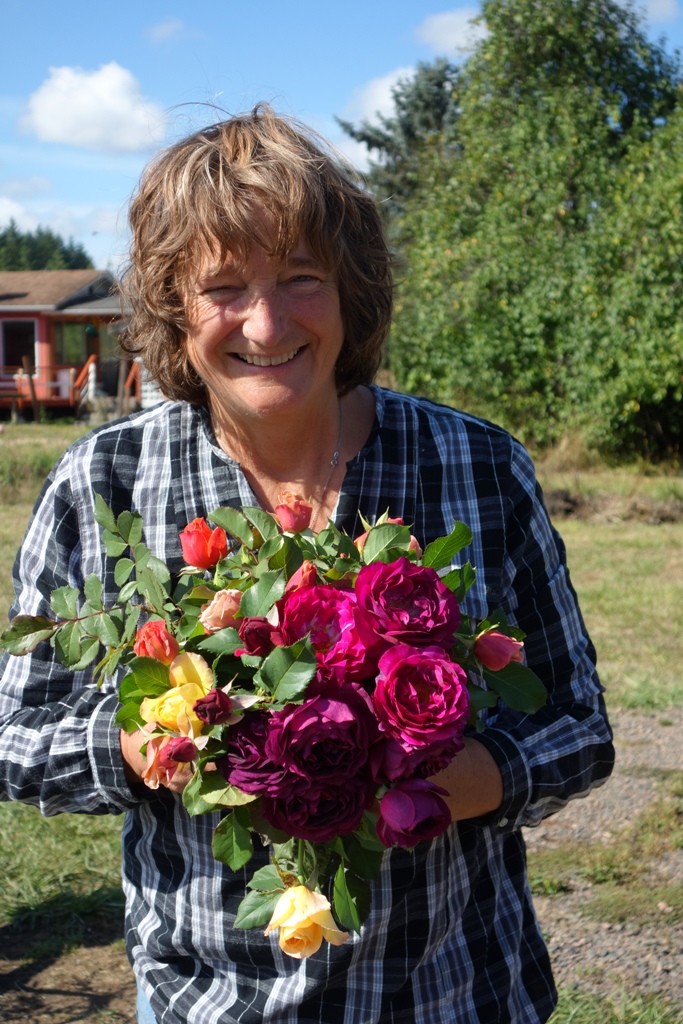
Johnny’s Selected Seeds, an employee-owned company that provides our industry the best flower, herb and vegetable seeds — supplied to farms large and small and even backyard cutting gardens like mine. Check them out at johnnysseeds.com.
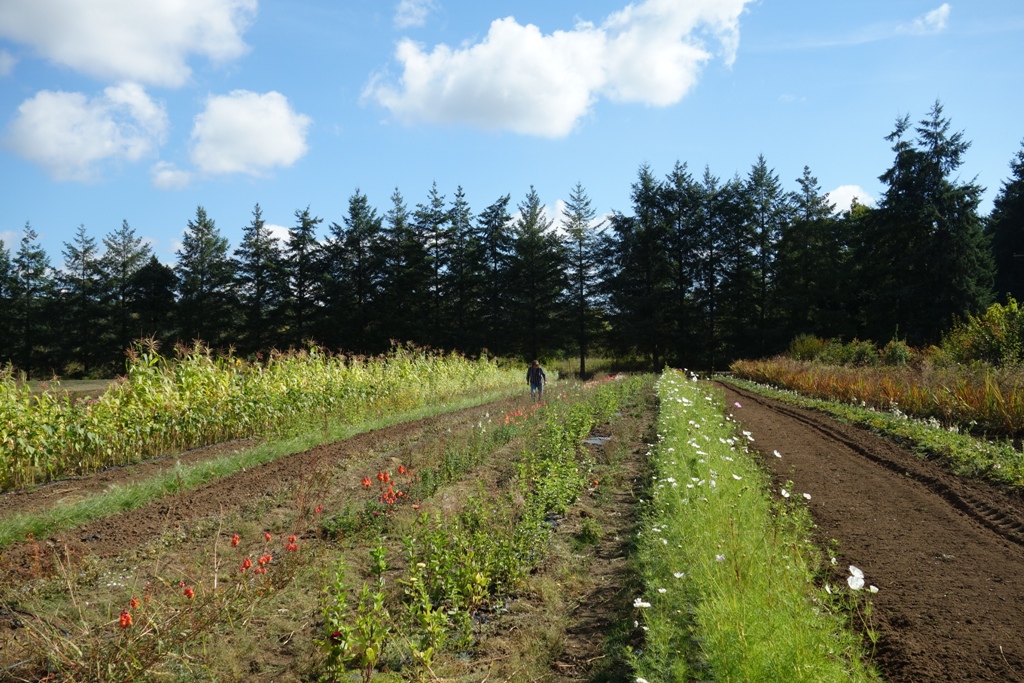
Association of Specialty Cut Flower Growers. Formed in 1988, ASCFG was created to educate, unite, and support commercial cut flower growers. It mission is to help growers produce high-quality floral material, and to foster and promote the local availability of that product. Learn more at ascfg.org.

I’m Debra Prinzing, host and producer of the Slow Flowers Podcast. Next week, you’re invited to join me in putting more American grown flowers on the table, one vase at a time. And If you like what you hear, please consider logging onto Itunes and posting a listener review.

The content and opinions expressed here are either mine alone or those of my guests alone, independent of any podcast sponsor or other person, company or organization.

The Slow Flowers Podcast is engineered and edited by Andrew Brenlan. Learn more about his work at KineticTreeFitness.com.

Music credits:
The Zeppelin; Dirtbike Lovers
by Blue Dot Sessions
http://www.sessions.blue
https://creativecommons.org/licenses/by-nc/4.0/
Additional music from:

audionautix.com

Episode 297: The Flower Power Network: Florists Coming Together to Learn and Lend Support

Wednesday, May 17th, 2017

Above, I’m seated on the sofa with fellow Flower Power speaker, Aimee Newlander of the Slow Weddings Network. Flower Power’s members often meet in one another’s homes, gardens and studios. These photos were taken by Sarah Gonia, an Olympia-based photographer (c) Sarah Gonia.

Sarah captured this hellebore (from Maura’s garden) in a centerpiece that welcomed us to Maura’s home. (c) Sarah Gonia

Another lovely moment from Maura’s floral arrangement (c) Sarah Gonia

We’ve been talking about networking, collaboration and community quite a bit lately and this week’s topic continues that thread with Seattle’s Flower Power.

This intentional cohort of floral designers and farmer-florists formed in early 2016 with a core group of new friends, many of whom met while taking a large-scale installation workshop with Lisa Waud of Pot & Box when she came to town.

Flower Powers’ monthly gatherings rotate among different member’s homes or studios and focus on business topics and face-to-face social networking . . . today, only 18 months after forming, the list of Flower Power members has grown organically to more than 35 participants.

Maura Whalen of Seattle’s Casablanca Floral shared this portait from her collection. She’s seen in front of her beautiful design studio.

Tammy Myers of First & Bloom, based on Seattle’s Eastside, at work in her home-based design studio (c) Missy Palacol Photography

Many Flower Power members are also involved in Slow Flowers and so somehow I was added to the mailing list . . . every time their monthly meeting notice lands in my in-box, I open it curious to discover the topic and host. I have felt very included but never had a chance to attend until May 1st. Maura Whalen invited me to speak about Slow Flowers when she hosted the group in her beautiful home and garden in Seattle.

Before our evening’s program began, I sat down with Maura and another early Flower Power member Tammy Myers to talk about the reasons why they started the group and how it has served their evolving floral careers.

Maura Whalen of Flower Power

Maura Whalen owns Casablanca Floral and Tammy Myers owns First & Bloom. Let me introduce a little more about them:
Maura’s Casablanca Floral began in 2014 when she hauled a wreath-making machine into her children’s tree fort and filed for a license to pursue her lifelong dream of a floral business.
 In truth, a passion for flowers and the natural world has been with Maura her entire life, beginning with time spent with her Italian grandmother Flora who had a glorious garden in which Maura loved to play.  At home as a child, her mother made her a deal:  if she weeded the garden, she could create an arrangement for the family table.   Later, Maura worked in a floral shop to pay her way through grad school. Casablanca Floral is the culmination of one woman’s lifelong love for expressing creativity through flowers.

The word Casablanca denotes Maura’s favorite flower and her favorite classic film and to her, Casablanca has always signified ultimate elegance.

Casablanca Floral has bloomed into a thriving business serving the Seattle metropolitan area. Operating out of a beautiful backyard studio rather than a storefront allows Maura to keep her work personal, close to home, and close to the heart.  It’s no surprise that being a mother to two fabulous teenagers entwines and overlaps with Maura’s life as a florist.

Tammy Myers of First & Bloom

And here’s more about Tammy Myers. She writes this on First & Bloom’s web site:

If you had asked me 10+ years ago about owning a florist business, I might have laughed!  Who knew I would be here today.  Like most young twenty-something’s, I was headed to the big city and wasn’t ever going back to the country!  Growing up in a small town outside the Tri-Cities in Eastern Washington, I was drawn to the city like most-  the fast pace, the glitz, the glam, and the opportunity.  And it’s all true.  Those years were fun and still are when I get a chance to sneak away.  But there’s nothing better than the sheer glimmer in my son’s eyes when he discovers something new out in the country.  As parents, we’ve all been there.  We start to live again- better, through our children.  

What I’ve learned over the years is to love what you do.  Surround yourself with passion, integrity, perseverance, and ignore anyone who says otherwise.   

​What I’ve learned in the past couple years is that I’m not really selling flowers.  I’m selling feelings.  The emotion of one person passed to the other as a feeling through the tangible package of flowers.  That’s why it’s so important I get it right.  Getting it right means everything to me and most importantly it means everything to my customers.  It means I played a tiny little part in someone feeling comfort about the life jolting news they received from the doctor or the feeling of celebration for the ass-kicking mountain they conquered called cancer.  It also means I get to see a glimpse into some of the most important days a couple experiences like walking down the aisle or welcoming another amazing person into this world.  And the best part is, someone chose me to help convey those priceless thoughts and feelings.  What a gift that touches me right to the core!

Flower Power member Katie Clary Githens of Clary Sage Studio (c) Sarah Gonia

Guest book (c) Sarah Gonia

Slow honey, shared by some guests (c) Sarah Gonia

Maura Whalen’s “of the moment” bouquet featuring elements clipped from her garden and foraged in her Seattle neighborhood. (c) Sarah Gonia

As we mentioned during the episode, I have two past episodes to share with you that relate to today’s guests:
I hosted Tammy as my guest on Episode 201 as she discussed her all-American/all-local sourcing philosophy; and I featured Tammy, Maura and several other designers who are now involved in Flower Power on Episode 230 during the workshop with Lisa Waud when the seed of an idea seemed to be forming for this group.

Flower Power doesn’t officially have a web site or Facebook group but you can get to know Maura and Tammy at their social places:

Casablanca Floral on Facebook

Casablanca Floral on Instagram

Casablanca Floral on Pinterest

First & Bloom on Facebook

First & Bloom on Instagram

First & Bloom on Pinterest

As special thank you to Sarah Gonia of Olympia-based Sarah Gonia Photography. She attended Flower Power as a guest and generously shared these photos with permission.

Thanks for joining us today. The Slow Flowers Podcast has been downloaded more than 189,000 times by listeners like you. THANK YOU to each one of you for downloading, listening, commenting and sharing. It means so much.

If you value the content you receive each week, I invite you to show your thanks and support the Slow Flowers Podcast with a donation — the button can be found on our home page in the right column. Your contributions will help make it possible to transcribe future episodes of the Podcast.

Thank you to family of sponsors:

Arctic Alaska Peonies, a cooperative of 50 family farms in the heart of Alaska providing high quality, American Grown peony flowers during the months of July and August. Visit them today at arcticalaskapeonies.com

Seattle Wholesale Growers Market, a farmer-owned cooperative committed to providing the very best the Pacific Northwest has to offer in cut flowers, foliage and plants. The Growers Market’s mission is to foster a vibrant marketplace that sustains local flower farms and provides top-quality products and service to the local floral industry. Find them at seattlewholesalegrowersmarket.com

Longfield Gardens provides home gardeners with high quality flower bulbs and perennials. Their online store offers plants for every region and every season, from tulips and daffodils to dahlias, caladiums and amaryllis. Visit them at lfgardens.com.

Syndicate Sales, an American manufacturer of vases and accessories for the professional florist. Look for the American Flag Icon to find Syndicate’s USA-made products and join the Syndicate Stars loyalty program at syndicatesales.com.

Johnny’s Selected Seeds, an employee-owned company that provides our industry the best flower, herb and vegetable seeds — supplied to farms large and small and even backyard cutting gardens like mine. Check them out at johnnysseeds.com.

Association of Specialty Cut Flower Growers. Formed in 1988, ASCFG was created to educate, unite, and support commercial cut flower growers. It mission is to help growers produce high-quality floral material, and to foster and promote the local availability of that product. Learn more at ascfg.org.

Next week, you’re invited to join me in putting more American grown flowers on the table, one vase at a time. And If you like what you hear, please consider logging onto Itunes and posting a listener review.

The content and opinions expressed here are either mine alone or those of my guests alone, independent of any podcast sponsor or other person, company or organization.

The Slow Flowers Podcast is engineered and edited by Andrew Brenlan. Learn more about his work at KineticTreeFitness.com.

Music credits:

Around Plastic Card Tables
by Blue Dot Sessions
http://www.sessions.blue
https://creativecommons.org/licenses/by-nc/4.0/
Additional music from:

audionautix.com

Episode 293: A Walking Tour of Alm Hill Gardens, where my favorite local tulips grow

Wednesday, April 19th, 2017

Happy Spring!

I’m holding my breath, but I am hopeful that spring is truly here, aren’t you?

Before we get started, I want to share some very important news — especially for all the U.S. flower farmers listening. Every five years the USDA – that’s the US Department of Agriculture – conducts a Census, a complete count of farms and ranches, and the people who operate them, all across the country.

This year, 2017, is an Ag Census year. A lot has happened in flower farming since 2012 and I strongly believe that the Census metrics will reveal that.

For instance, we know from the 2007 and 2012 Census reports that U.S. farms representing flowers grew 16% as a crop category. To be specific, that’s a boost from 5,085 farms to 5,903 farms.

I am excited to see what the new 2017 Census reveals, but here’s where you come in. The folks at USDA work very hard to get the Census questionnaire to everyone in farming, but as you know, it’s easy for smaller or super busy farms to fall through the cracks. We cannot afford to have that happen, folks. The data reported will influence policy and funding for U.S. Agriculture and I believe that flower farms need to have a much larger piece of that pie, whether it’s through specialty crop block grants, value added producer grants or other programs that help support our industry.

Producers who are new to farming or who did not receive a Census of Agriculture in 2012 still have time to sign up to receive the 2017 form by visiting www.agcensus.usda.gov and clicking on the ‘Make Sure You Are Counted’ button through June. USDA defines a farm as any place from which at least $1,000 of agricultural products were produced and sold, or normally would have been sold, during the census year — and that means unless you’re a hobby grower like me, you should be counted!

As I mentioned, the sign-up period ends June 30, 2017 — and all you have to do is follow the link and just sign up. By the end of the year, you will receive your questionnaire, which you can leisurely complete in the middle of winter! The new Census will be published in 2019 and of course, I will be here to share the highlights, hopefully with a guest from USDA  to interpret it for us. THANKS so much for checking this out.

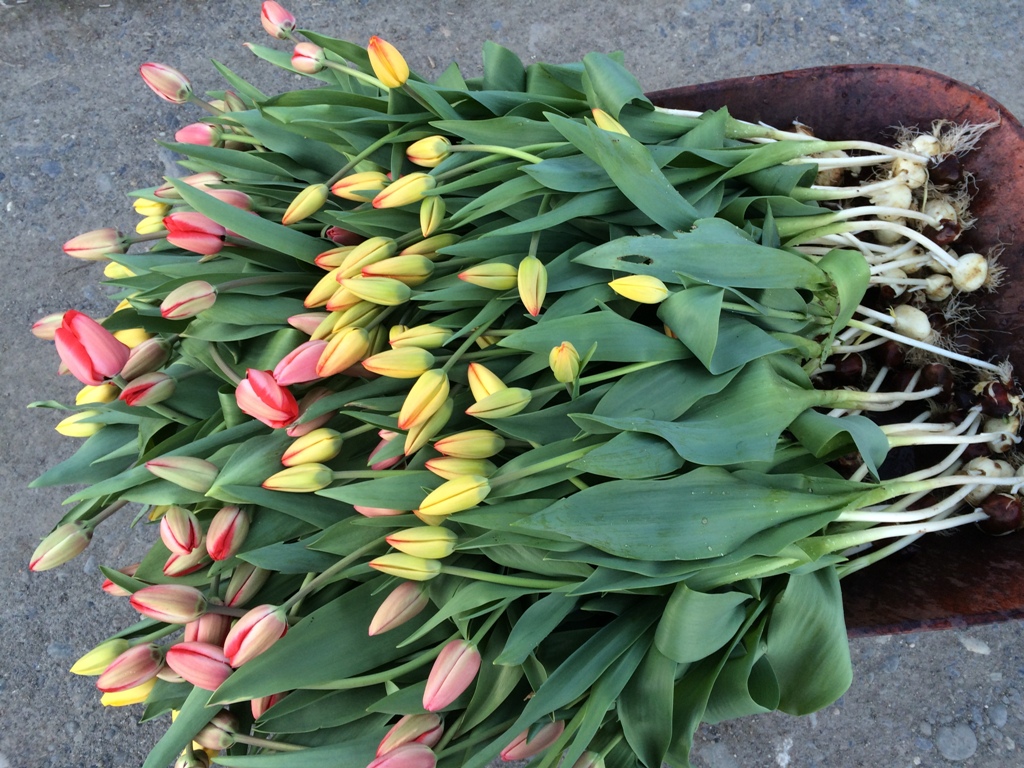
Stunning tulips. This variety is called ‘Alladin’, a lily-flowered tulip grown by Alm Hill Gardens in Everson, WA

Crates filled with tulips on bulbs

This week, I’m sharing some audio that I recorded on a visit to Alm Hill Gardens. As I say in the title of this episode, Alm Hill is my favorite source for local tulips. I first met flower farmers Gretchen Hoyt and Ben Craft while working on The 50 Mile Bouquet and there is an interview with Gretchen in that book’s section called “Grower Wisdom,” with photographs by my collaborator David Perry.

If you have bought tulips at Seattle’s famed Pike Place Market, it’s probable that you purchased the vibrant, fresh and lovely sustainably-grown tulips from Alm Hill Gardens’ stalls. They are my go-to stop for when I need armloads of tulips for a workshop or demonstration. It just makes me so happy to support a local flower farm that brings its harvest direct to consumers. Established in 1974, Alm Hill Gardens is a small family farm specializing in quality. You can also find their flowers in Seattle at the University District Farmers Market, West Seattle Farmers Market and Ballard Farmers Market — all in Seattle.

‘Temple’, a lovely slender tulip.

Here’s a little of what I wrote in The 50 Mile Bouquet:

If you follow Gretchen Hoyt and her husband Ben Craft around for a season, you’ll gain a profound admiration for how their values, sustainable farming practices and sheer hard work produce something so ephemeral and delicate as a lilac, tulip, lily, anemone or peony.

The couple overcame many obstacles to reach this moment: When they planted their first field of raspberries in rural Everson, Washington, just 2 miles from the Washington-British Columbia border, Gretchen was a single parent of two young children who had escaped from the city. Ben was a veteran of the war in Vietnam who wanted to unplug from society.

“Ben’s parents were dairy farmers. I never grew anything until I was 26 years old,” Gretchen says. “We had Ben’s dad’s tractor, no running water and no power, so we started with very little at the beginning.” Their efforts grew into one of the first year-round, direct-selling farms in Western Washington. Today, the 47-acre property contains six 30-by-100 foot greenhouses, countless high tunnels (hoop houses that can raise temperatures by 10 degrees), and fields of edible crops and, of course, flowers.

Even the spent heads are stunning!

Alm Hill Gardens is known for its luscious cut tulips, which account for 80 percent of their floral production. At Seattle’s Pike Place Market the sign reads: “Alm Hill Gardens: A Small Sustainable Family Farm Since 1974” and the stall overflows with irresistible blooms in a vibrant spectrum of hues to the delight of locals and tourist alike.

The longer-than-usual production season — from mid-Thanksgiving to May — is possible, thanks to many growing techniques perfected by the farm. These include planting already-chilled bulbs so they bloom by Christmas. It means sheltering thousands of hybrid tulips in greenhouses that elevate air and soil temperatures and protect stems from Pacific Northwest rainfall. The volume of flowers required to satisfy a bulb-crazed market is mind-boggling, requiring an intensive planting system. Bulbs are planted in 12-inch-high crates and stacked for weeks like building blocks in a large walk-in cooler before being moved to the greenhouses for early spring harvesting. “We have tulip crates stacked floor to ceiling,” Gretchen laughs.

Alm Hill sends an employee with carloads of tulips to Seattle’s Pike Place Market every week and also sells at several neighborhood farmers’ markets including the Bellingham Saturday market, which is closer to home.  Depending on the season, these brilliant gems on plump green stems can sell from $20 to $30 for a bunch of 30. You can find the classic ovoid-shaped tulip, like the orange-and-purple streaked ‘Princess Irene’, or more unusual varieties, such as the parrot and French tulips.

Gretchen told me: “I knew I wanted to be a farmer when I finally grew a garden,. This is what I was supposed to do.”

Gretchen Hoyt of Alm Hill Gardens (left) a veteran flower farmer. Lorene Edwards Forkner, editor of Pacific Horticulture magazine, right.

Joshua Craft led us through the high tunnels.

You will hear several voices on this episode, Gretchen Hoyt, her son-in-law and farming partner Joshua Craft, an experienced vegetable, grain and livestock farmer who is now deeply involved in Alm Hill Gardens, and of course, me. The fourth voice is my dear friend Lorene Edwards Forkner, editor of Pacific Horticulture, a fabulous quarterly journal that covers people and plants on the West Coast. Our day trip to Everson was so special.

Super healthy, fragrant hyacinths grown in crates.

Here’s how to find Alm Hill at their social places:

Follow Alm Hill on Instagram

Find Alm Hill on Facebook

Lorene designed this on the spot to showcase irises, hyacinths and tulips, just-picked from Alm Hill Gardens.

The Slow Flowers Podcast has been downloaded more than 180,000 times by listeners like you. THANK YOU to each one of you for downloading, listening, commenting and sharing. It means so much.

If you value the content you receive each week, I invite you to show your thanks and support the Slow Flowers Podcast with a donation — the button can be found on our home page in the right column. Your contributions will help make it possible to transcribe future episodes of the Podcast.

Thank you to family of sponsors!

Thank you to our lead sponsor for 2017: Certified American Grown Flowers. The Certified American-Grown program and label provide a guarantee for designers and consumers on the source of their flowers. Take pride in your flowers and buy with confidence, ask for Certified American Grown Flowers.  To learn more visit americangrownflowers.org.

Arctic Alaska Peonies, a cooperative of 50 family farms in the heart of Alaska providing high quality, American Grown peony flowers during the months of July and August. Visit them today at arcticalaskapeonies.com

Seattle Wholesale Growers Market, a farmer-owned cooperative committed to providing the very best the Pacific Northwest has to offer in cut flowers, foliage and plants. The Growers Market’s mission is to foster a vibrant marketplace that sustains local flower farms and provides top-quality products and service to the local floral industry. Find them at seattlewholesalegrowersmarket.com

Longfield Gardens provides home gardeners with high quality flower bulbs and perennials. Their online store offers plants for every region and every season, from tulips and daffodils to dahlias, caladiums and amaryllis. Visit them at lfgardens.com.

Association of Specialty Cut Flower Growers. Formed in 1988, ASCFG was created to educate, unite, and support commercial cut flower growers. It mission is to help growers produce high-quality floral material, and to foster and promote the local availability of that product. Learn more at ascfg.org.

I’m so excited to announce that Syndicate Sales has returned as a 2017 Slow Flowers sponsor! Syndicate Sales is an American manufacturer of vases and accessories for the professional florist. Look for the American Flag Icon to find Syndicate’s USA-made products and join the Syndicate Stars loyalty program at syndicatesales.com.

And drumroll, please, let’s welcome Johnny’s Selected Seeds as our newest sponsor. I can’t tell you how jazzed I am to partner with this employee-owned company that brings the best flower, herb and vegetable seeds — and supplies to farms large and small. Check them out at johnnysseeds.com.

I’m Debra Prinzing, host and producer of the Slow Flowers Podcast. Next week, you’re invited to join me in putting more American grown flowers on the table, one vase at a time. And If you like what you hear, please consider logging onto Itunes and posting a listener review.

The content and opinions expressed here are either mine alone or those of my guests alone, independent of any podcast sponsor or other person, company or organization.

The Slow Flowers Podcast is engineered and edited by Andrew Brenlan. Learn more about his work at KineticTreeFitness.com.

Music credits:
Bending the Reed; Fudge 
by Gillicuddy
Licensed under Attribution-NonCommercial 3.0 International License.
Additional music from:

audionautix.com