Debra Prinzing

Get the Email Newsletter!

Archive for the ‘General’ Category

Episode 331: Jamie Rohda of Nebraska’s Harvest Home Flowers and the Midwest Farmer Florist Collaborative

Wednesday, January 10th, 2018

The lovely fields at Harvest Home Flowers in Waverly, Nebraska — this is where today’s guest, Jamie Rohda, grows beautiful cut flowers for the Omaha and Lincoln markets.

With the New Year upon us, I’m sensing that we’re all taking a huge, collective breath of fresh air as we turn toward the upcoming floral season and devote our energies to creating the best year ever in our floral businesses. In many regions across the country, flower farmers and florists are gathering to listen and learn, dream and collaborate, network and connect. I’m excited to learn how your events are coming together and if you have something on the calendar, please get in touch at debra@slowflowers.com so we can share the details with listeners of the Slow Flowers Podcast.

Norm and Jamie Rohda of Harvest Home Farm.

In just 10 days, folks in the central portion of the U.S. will gather at the third annual networking event hosted by the Midwest Farmer-Florist Collaborative. The day is filled with some inspiring and knowledgeable speakers, which ensures a great turnout in Omaha, Nebraska. I wish I could be there in person!

The instigator of this gathering is today’s guest, Jamie Rohda of Harvest Home Flowers, based in Waverly, Nebraska. Jamie and her husband Norman have farmed since 1994 and today their family-owned flower farm produces a wide variety of naturally grown, specialty cut flowers for local florists, designers and DIY brides. Harvest Home is located between the major cities of Lincoln and Omaha.

Nebraska-Grown Flowers from Harvest Home

Jamie is also the new North and Central regional director for the Association of Specialty Cut Flower Growers, so she’s a great resource for members in a large geographic area with so much potential for floral agriculture.

The upcoming one-day workshop is open to anyone interested in learning more about flower farming and floral design. Jamie and I discuss the program schedule and I’ve also shared all the details below:

Nebraska-based Floral designer Natalie Elsberry of I Bloom Flowers will present at the conference. Here is one of her bouquets featuring local cuts from Harvest Home Flowers.

DESCRIPTION

9:00-Arrive, check in and catch up with your flower friends!

9:30-Welcome by Sheila Fitzgerald

9:45-Two Models for Designing and Selling Bouquets at Your Local Farmers Market- Adam and Jennifer O’Neal from PepperHarrow Farm and Jamie Rohda with Harvest Home Flowers
With over 20 years experience selling fresh cuts at a local market, Adam, Jennifer and Jamie will walk us through their two different methods for designing and selling bouquets.

The bounty of fresh and local Nebraska blooms that Harvest Home Flowers sells to local florists.

10:15-The Ins and Outs of Selling to Florists and Designers- Jamie Rohda of Harvest Home Flowers
Whether you currently are or you’re just considering selling to local florists, Jamie will help calm your fears and give you the courage and some tools to dive in and do it!

11:15-Alternative Revenue Streams For a Cut Flower Farm-PepperHarrow Farm
Be prepared to get some ideas for making your farm more profitable.

12:00-Lunch will be provided and during this time we are honored to have Judy Laushman, of the Association of Specialty Cut Flower Growers, joining us to fill us in on what’s happening with the ASCFG and the local flower movement.

1:15-1:45-Social Media Tips and Sourcing Local Flowers by Mercedes Iverner of Honeysuckle Hollow

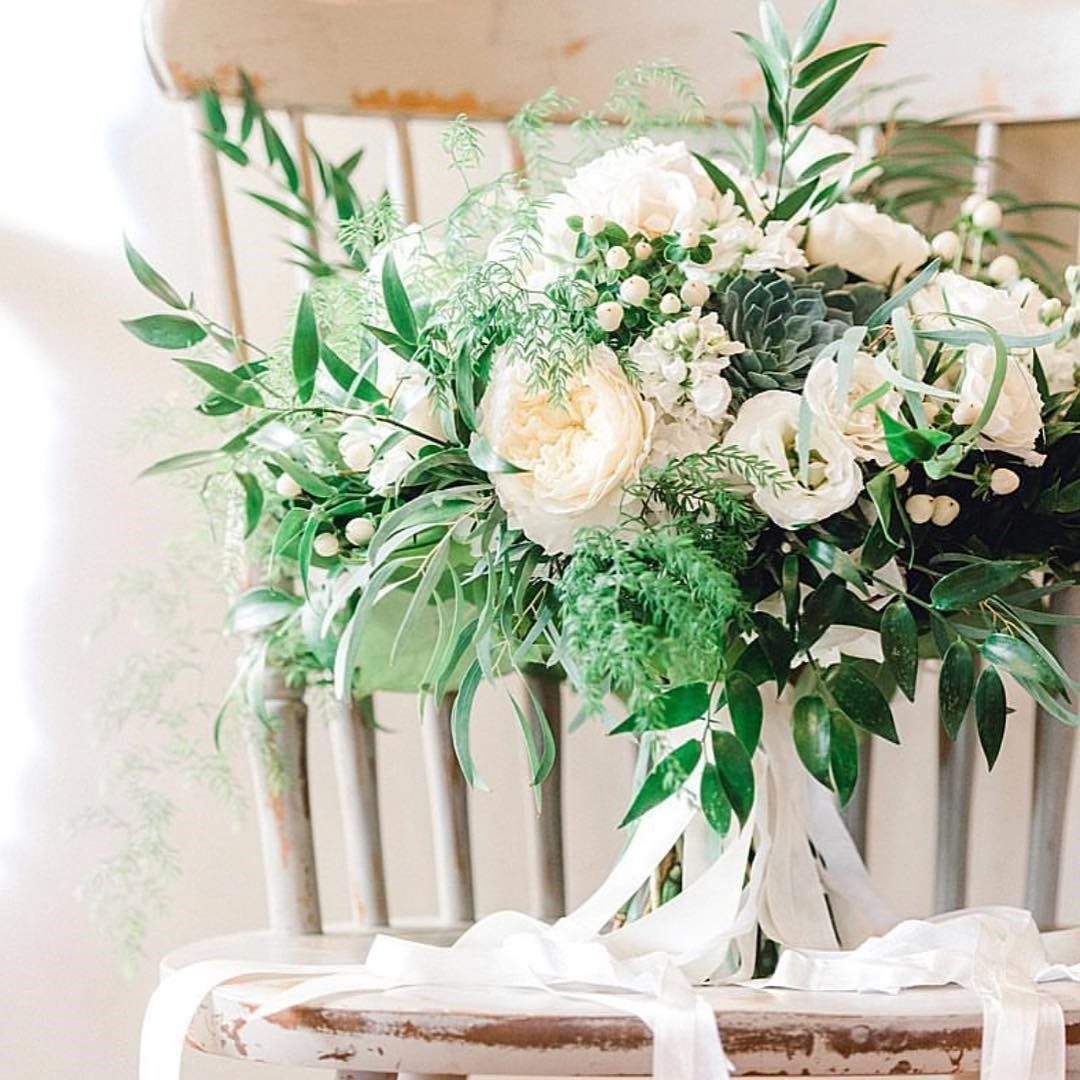
Another lovely bridal bouquet designed by I Bloom Flowers with botanical ingredients from Harvest Home Farm

1:45-2:30-Farm to Arm- Natalie Elsberry of I Bloom Flowers
Natalie will be doing a bouquet demo for us and talking about how local flowers have helped her grow her business.

2:30-3:00-Floral Trends and Forecasts for 2018 by PepperHarrow Farm
Hear about and be prepared for the latest trends in the floral industry.

A lovely, on-trend palette, grown by Jamie Rohda of Harvest Home Flowers

3:00-4:00-Drawing for door prizes, must be present to win! Time to network with that farmer or florist you’ve been hoping to meet.

4-4:30– We’re saving a bit of time at the end of the day if there are any growers interested and would like to join in a round table discussion. Bring your specific burning questions and we’ll see how many we can get answered!

RESERVE CONFERENCE TICKET HERE (Full-day ticket $45 / Half-day afternoon ticket $25)

Find Harvest Home Flowers on Facebook

Follow Harvest Home Flowers on Instagram

Vivid annuals from Harvest Home Flowers — snapdragons, zinnias and more!

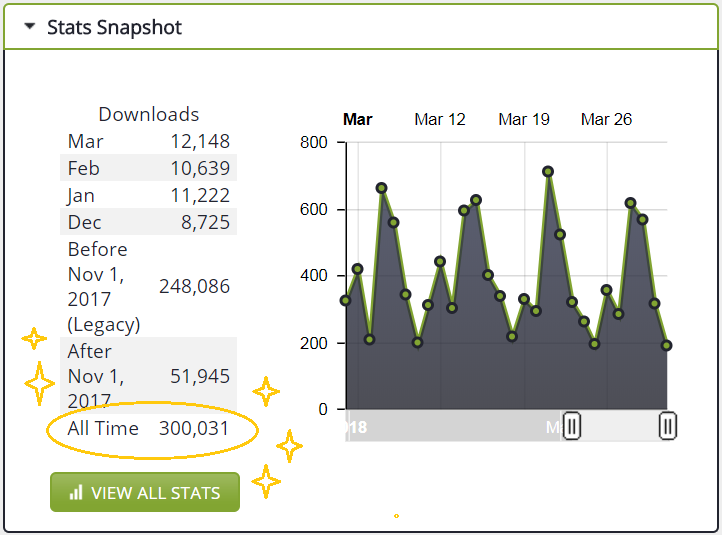
Thanks for joining me today! The Slow Flowers Podcast has been downloaded more than 269,000 by listeners like you. Thank you for downloading, listening, commenting and sharing — it means so much.
As the Slow Flowers Movement gains more supporters and more passionate participants who believe in the importance of the American cut flower industry, the momentum is contagious. I know you feel it, too. I value your support and invite you to show your thanks and with a donation to support my ongoing advocacy, education and outreach activities. You can find the donate button in the right column of our home page.

I also want to announce the winners of our year-end giveaway. Tina Sawtelle of Pinewoods Yankee Farm in Lee, New Hampshire, and Art Flower & Gift Shoppe in Rockville Center, New York, will each receive a 2018 Flowers on Your Head Calendar featuring Mud Baron’s engaging portraits. Congratulations!

And thank you to our lead sponsor for 2018, Florists’ Review magazine. I’m delighted to serve as Contributing Editor for the new monthly Slow Flowers Journal section, which you can find in the pages of Florists’ Review. It’s the leading trade magazine in the floral industry and the only independent periodical for the retail, wholesale and supplier market. Take advantage of the special subscription offer for members of the Slow Flowers Community here.

Thank you to our family of sponsors who have supported Slow Flowers and all of our programs including this podcast, American Flowers Week, the Slowflowers.com online directory to American grown flowers, as well as our new channels, Slow Flowers Journal and the 2018 Slow Flowers Summit.

They include:

Certified American Grown Flowers. The Certified American-Grown program and label provide a guarantee for designers and consumers on the source of their flowers. Take pride in your flowers and buy with confidence, ask for Certified American Grown Flowers.  To learn more visit americangrownflowers.org.

Arctic Alaska Peonies, a cooperative of 50 family farms in the heart of Alaska providing high quality, American Grown peony flowers during the months of July and August. Visit them today at arcticalaskapeonies.com

Seattle Wholesale Growers Market, a farmer-owned cooperative committed to providing the very best the Pacific Northwest has to offer in cut flowers, foliage and plants. The Growers Market’s mission is to foster a vibrant marketplace that sustains local flower farms and provides top-quality products and service to the local floral industry. Find them at seattlewholesalegrowersmarket.com

Longfield Gardens provides home gardeners with high quality flower bulbs and perennials. Their online store offers plants for every region and every season, from tulips and daffodils to dahlias, caladiums and amaryllis. Visit them at longfield-gardens.com.
Syndicate Sales, an American manufacturer of vases and accessories for the professional florist. Look for the American Flag Icon to find Syndicate’s USA-made products and join the Syndicate Stars loyalty program at syndicatesales.com.

Johnny’s Selected Seeds, an employee-owned company that provides our industry the best flower, herb and vegetable seeds — supplied to farms large and small and even backyard cutting gardens like mine. Check them out at johnnysseeds.com.
Association of Specialty Cut Flower Growers. Formed in 1988, ASCFG was created to educate, unite, and support commercial cut flower growers. It mission is to help growers produce high-quality floral material, and to foster and promote the local availability of that product. Learn more at ascfg.org

I’m Debra Prinzing, host and producer of the Slow Flowers Podcast. Next week, you’re invited to join me in putting more American grown flowers on the table, one vase at a time. And If you like what you hear, please consider logging onto Itunes and posting a listener review.

The content and opinions expressed here are either mine alone or those of my guests alone, independent of any podcast sponsor or other person, company or organization.

The Slow Flowers Podcast is engineered and edited by Andrew Brenlan. Learn more about his work at  shellandtree.com.

Music Credits:
Hash Out; Horizon Liner
by Blue Dot Sessions

Episode 330: Slow Flowers’ 2018 Floral Insights & Industry Forecast

Wednesday, January 3rd, 2018

BOTANICAL DIVERSITY WITHOUT BOUNDARIES

The fourth annual Slow Flowers’ Floral Insights & Industry Forecast for 2018

I’m excited to announce that Florists’ Review has come onboard as Slow Flowers‘ lead sponsor for 2018, signifying a strategic partnership that acknowledges the many ways the Slow Flowers approach is moving into many facets of floristry — at all points along the farm to consumer pipeline. Florists’ Review is the only independent monthly magazine for the retail, wholesale and supplier market, reaching the largest number of floral professionals in the industry. I’m honored to be a Contributing Editor producing the monthly Slow Flowers Journal section, filled with unique content reflecting the cultural shift taking place in flower sourcing and design.
Since 2014, I have drawn from input from members of the Slow Flowers Community, past guests of the Slow Flowers Podcast and other progressive leaders in the floral industry — including farmers, florists and design creatives — to “predict” the future. While by no means a statistical survey, the Slow Flowers Floral Insights & Industry Forecast serves as a botanical crystal ball to identify emerging themes affecting the domestic floral industry. I’m excited to share these key insights for the first time in print form, here in the pages of Florists’ Review’s “Slow Flowers Journal” section.

Think of these topics as your inspiration checklist for 2018 — Your Next, New and Now Report. Some of you are already engaged in these up-and-coming developments, so consider yourself on-topic!

The overarching theme for 2018 is “Flowers without Borders,” which to me reflects the disappearance of silo-like barriers that previously separated growers of flowers from sellers of flowers from designers of flowers. Thanks to technology and social media, the ability of conventional “gatekeepers” to control the flow of information and product has greatly diminished. Transparency is power, making it easier than ever before to identify sources of fresh and uncommonly beautiful flowers and foliage. So here’s to a new floral landscape where accessibility is the driving force.

#1 Flower Farmers Diversify into Seeds, Bulbs and Plants

Beyond selling their crops to wholesale, retailer and independent florists, entrepreneurial flower farmers are finding new ways to turn expertise into cash flow. This phenomenon has moved far beyond seed-swapping and informal exchanges of plant cuttings.

One story of diversification comes from Bailey Hale of Ardelia Farm + Co. in Irasburg, Vermont. A trained horticulturist and two-time Philadelphia Flower Show gold medal floral designer (through his former studio MODA Botanica), Bailey now raises specialty cut flowers for farmers’ markets and florists and provides full-service wedding and event design. He turned his own hunger to find sources for uncommon “couture” flowers into a spin-off venture called Farmer Bailey, a custom plug brokerage.

When he’s not tending to his own farm, which is famous for producing sweet peas long into Vermont’s cool summer months, Bailey has become a cut flower hunter. He evaluates new varieties, contracts with a large wholesale nursery to custom grow “plugs” of must-have cultivars and markets his ever-expanding online catalog of irresistible choices to flower farmers and farmer-florists like himself. Bailey saw an un-served opportunity in the marketplace and used his connections and ingenuity to fill the demand. The result is a thriving new venture and the chance to influence the types of blooms — from Asters to Verbenas — entering the floral marketplace.

#2 Flower Farmers Launch Direct-Ship Wholesale Programs
Shipping to designers in markets that don’t otherwise have access to their unusual flowers, Gretel and Steve Adams of Sunny Meadows Flower Farm in Columbus, Ohio, “have opened door to get our product to florists without having to physically deliver it,” Gretel explains. Recently, their farm joined a shipping cooperative to take advantage of discounted overnight rates, an essential part of keeping their pricing competitive.

After a season of testing packaging methods and learning to navigate the FedEx system, Sunny Meadows expects to unveil The Columbus Flower Company’s national wholesale flower shipping program this spring, beginning with its huge ranunculus harvest. “We’d like to be able to send flowers to designers in New York, or Los Angeles, or places that don’t have access to a good flower market,” she says.

Gretel, also a wedding and event designer, feels she can add value for florists who order from the farm. “My favorite clients are florists who give me an inspiration board and a budget and I’ll pull a mix of ingredients that I myself would use.”

In Weyers Cave, Virginia, Jessica Hall and her family run two businesses, Harmony Harvest Farm (specialty cut flowers) and Floral Genius (pin frogs and other flower frogs). Jessica also reports of plans to ship flowers in 2018, borrowing lessons learned from shipping flower frogs across the U.S. to Floral Genius’s  wholesale accounts.

Harmony Harvest spent 2017 trialing packaging, stem hydration and shipping methods to determine best practices for a farm-to-florist wholesale program. “I believe there is a collective army (of smaller flower farms) that can take care of the U.S. need; they might be able to grow those flowers and see that it’s possible to ship. I’m going to figure it out and hopefully that will change the industry,” she says.

#3 Retail Garden Centers Add Floral Design Services

Last year’s Floral Insights report highlighted “Return of Brick and Mortar,” documenting a possible reversal of the decades-long decline in floral retail, as I witnessed studio florists with a distinct local and community focus open a new generation of retail flower shops. The next wave in this shift continues in retail nurseries and garden centers, which are opening or reviving in-house floral shops with a distinctly local emphasis.

Slow Flowers Journal featured The Flower Shop at O’Donal’s Nursery outside Portland, Maine — which recently introduced full-service floral design as a sister business to a 60-acre tree and shrub nursery. Manager Rayne Grace Hoke credits having a distinct aesthetic inspired by O’Donal’s extensive plant collection for much of the shop’s success.

On the opposite coast, Windmill Gardens, an independent garden center in Sumner, Washington, also debuted a new flower department. According to owner Ben DeGoede, Windmill brought floral design in-house for the first time since 2001, taking over space once occupied by a tenant and rebranding as Windmill Floral Studio. The beautiful, full-service shop has a commitment to providing only locally-grown and American-grown flowers. “The Slow Flowers movement and the buy local movement has inspired us to take floral back again,” he explains.

General manager Wendy Pedersen explains that the flower shop “wants customers to support local farmers.” There are obvious synergies for couples who book Windmill Gardens’ outdoor wedding venue and hire Windmill Floral Studio to design their flowers.

#4 Flower Farmers Shift into Retail

While it may seem “counter-trend,” a number of flower farms are opening retail spaces in prime locations where their flowers are marketed alongside related hard goods and artisan products. It’s a move welcomed by consumers who want to buy farm-direct in urban and suburban markets. I’ve identified Chicago, Boston and Albuquerque, among other cities where flower farmers have opened retail shops to sell their blooms.

In Boston, Field & Vase, a new venture of Stow Greenhouses, has opened two retail spaces at The Shops at Prudential Center, a major downtown retail hub. Barbara Rietscha and Dave Buchholz incubated their first retail venture two years ago at Boston Public Market, a year-round, indoor farmers’ market with 40 vendors and a New England-grown mandate. Success in that venue attracted the attention of developers at the tony Prudential Tower, and this past September, Field & Vase opened two locations there — a permanent kiosk in the heart of the mall’s central court and a full-service shop-studio that is large enough to accommodate custom design work, event production, client consultations and ongoing workshops.

Barbara says adding multiple retail channels to sell their farm’s value-added flowers was an intentional decision. By selling the flowers they grow direct to consumers through retail, Field & Vase enjoys larger margins and gets out of the wholesale environment dominated by price competition with imports. Additionally, at the Prudential locations, the business promotes other flower farms that aren’t set up to do retail themselves. “We source within the U.S. because we believe in local,” Barbara says. “We want to be a venue for flower farmers who don’t have retail outlets themselves.”

#5 Aromatherapy and Wellness Remedies

Botanically-inspired fragrances, body care remedies and other herbal and scented goods have a natural affinity for floral consumers, and I’ve noted some brilliant ways that florists are taking advantage of this. From developing their own candle and soap collections to offering aromatherapy-themed events, florists are tapping into ways to cross-promote flowers and aromatics.

Stacey Carlton, AIFD, of The Flora Culturist in Chicago has made the fragrance connection for her customers with an “Aromatherapy Bar” service. It’s a smart way to extend into a new revenue stream incorporated into parties and special events. Guests are invited to create a personal, custom fragrance blend — or to follow Stacey’s cleverly personalized scent recipes. From intimate gatherings like bridal showers to large interactive events, the Aromatherapy Bar gives guests a social experience and a new way to engage with fragrance.

Farmer-florist Hedda Brorstrom of Full Bloom Flower Farm in Groton, California, is a certified herbalist who studied at the California School of Herbal Studies. She extends her farm’s season by creating and selling “small batch, field to face” herbal and aromatherapy products.
Full Bloom Flower Farm’s skin care line includes rich hydrating creams made from roses, calendula and lavender grown on her farm. A rosemary hydrosol is an organic spray that can be used either on the face after sun exposure or used in cocktails after a long day of gardening. Hedda’s personal favorite product is the Injury Salve which she uses after a day of farming to soothe sore muscles. She sells her products online, alongside other farm-logo items like tank tops, sweatshirts and hats.

#6 Cause-Related Flowers

Flower farmers and florists alike are investing their talents in helping nonprofits and others in their communities. Floral philanthropy or “flowers with heart” efforts are inspiring, and I love seeing flowers used as a currency to change lives and advance important causes. A number of feel-good projects caught my attention in 2017 and I am certain they will continue in 2018.

The Bloom Project, profiled recently in Florists’ Review, is a 10-year-old volunteer-run program that upcycles donated flowers into bouquets for hospice and palliative care patients in Portland, Oregon.

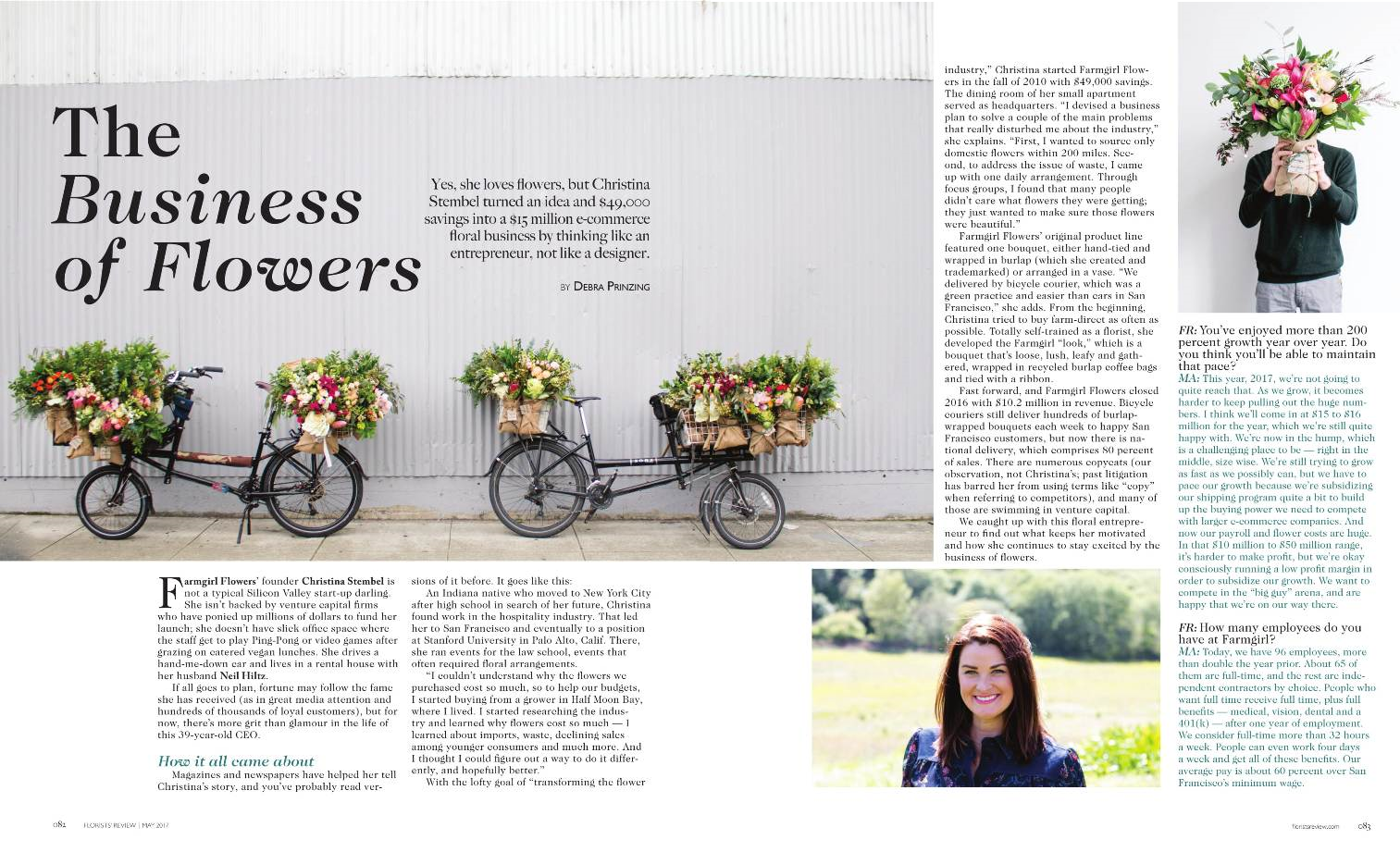
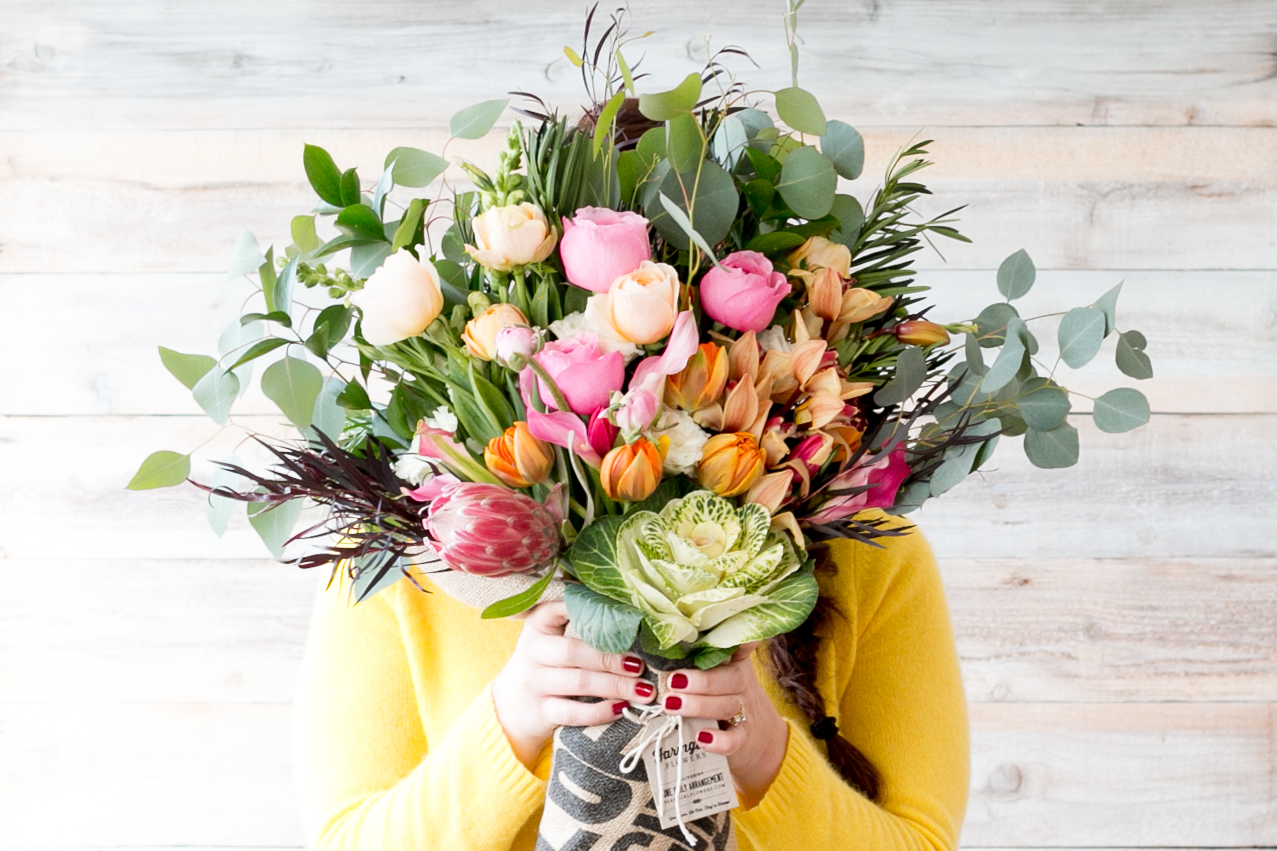
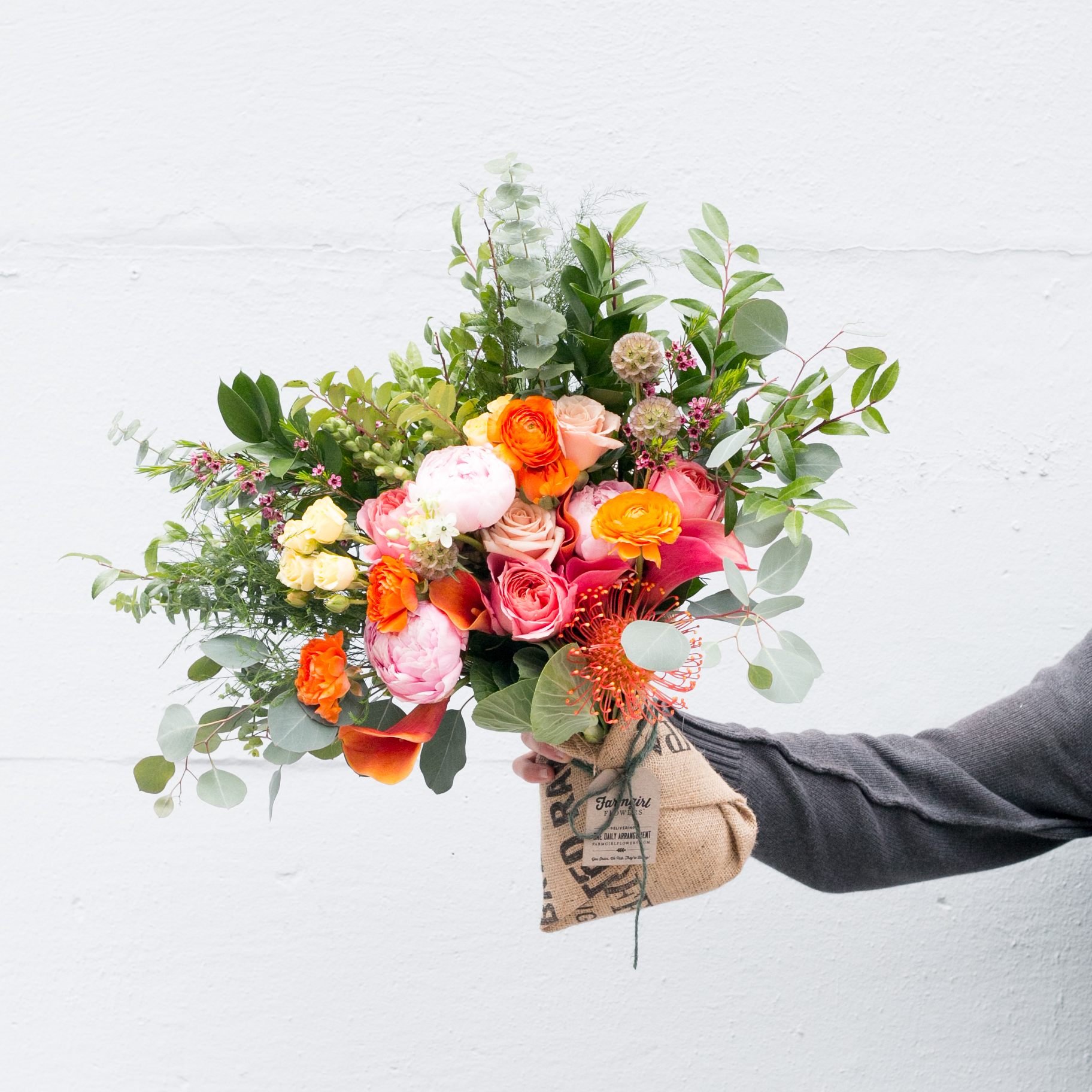
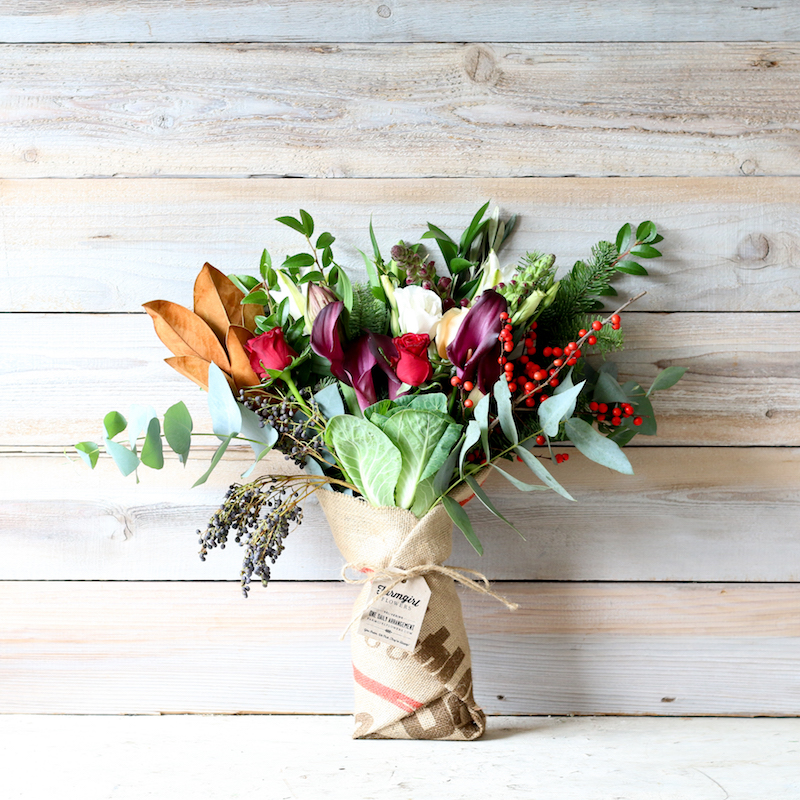
On a national level, Christina Stembel’s Farmgirl Flowers selects and supports a monthly nonprofit partner by donating a portion of sales for a signature bouquet in its product mix.

“We started our ‘With Heart’ campaign because we wanted a way to give back to multiple organizations that are near and dear to our hearts throughout the year,” Christina explains. “It’s also a way we can support many organizations that our team members are passionate about.” Since it launched in April 2017, Farmgirl’s ‘With Heart’ program has contributed more than $70,000 to nine different charities.

I’m also impressed with charities using flower farming and floral design as a platform for change. It’s inspiring to watch nonprofit farms that help teens and adults train for the workplace or those that provide sustainable jobs for individuals with different abilities. Some notable efforts include Muir Ranch in Pasadena, WOW Farm in Oakland, Blawesome Farms in the Raleigh-Durham area, Blooming on the Inside in Portland, and other socially responsible enterprises.

The bottom line is that flowers can meet people where they are and be used as a positive tool to instigate change, stimulate progress and enhance lives.

READ MORE…

Episode 324: Meet 2017 Mayesh Design Star Christy Hulsey of Colonial House of Flowers and Mayesh Wholesale CEO Patrick Dahlson

Wednesday, November 22nd, 2017

Christy Hulsey, Mayesh Wholesale’s 2017 Design Star, taught recently in Portland (c) Nicole Clarey Photography

Last month I traveled to Portland for a wonderful day hosted by Mayesh Wholesale, one of a series of design workshops featuring their 2017 Design Star, Christy Hulsey.

Christy is the owner and creative director of Colonial House of Flowers in Statesboro, Georgia, outside Savannah, and she was selected by Mayesh to be this year’s design muse. In the past, as I understand it, the creative inspiration and instruction of each year’s Mayesh Design Star program has mostly been video-based. This year was incredibly ambitious, with Christy signing on for a coast-to-coast tour of workshops and events.

I was so happy to spend time with Christy Hulsey of Colonial House of Flowers (center) and Mayesh Wholesale CEO Patrick Dahlson (far right) (c) Nicole Clarey Photography

As you’ll hear in our conversation, recorded after the all-day, hands-on workshop that she and her team presented, Christy and I met in 2014 at the Chapel Designers New York Conference, where Holly Chapple graciously asked me to speak about Slow Flowers. Later, Christy’s Colonial House of Flowers joined Slowflowers.com, inspired at some level, to honor Christy’s grandmother’s love of gardening and designing with seasonal flowers.

Team Colonial House of Flowers. Christy is in the front, wearing the linen apron; her sister Amanda Currier is immediately to the left of the ladder.

In fact, she mentions her grandmother’s influence often. When Christy joined the Design Star program, Mayesh posted a lovely Q&A with her for their blog. You’ll want to follow the link I share in the show notes to find that, but here are a few favorite excerpts:

In 2012, I assumed ownership of a little nearly 50-year-old landmark flower boutique that was in my family, called the Colonial House of Flowers. I believe the spirit of my grandmother’s creativity and ability to resourcefully create something sophisticated flutters through everything I do. In 2014, Amanda Currier, my sister, joined the Colonial House of Flowers team. Seasonally relevant flowers, branches, and fruit, are the true medium of my art. I’m ever thankful for my grandmother who always sent me into the garden, who brought me a found plant as a gift, and taught me to dig bulbs, grow cuttings, and stop at random roadside stands on family travels.  am really excited about the gaining momentum of American Grown Flowers. Slow flowers speak to me. I am excited the movement is finally coming to the Southeastern United States.

Christy Hulsey, with a detail of the all-American-grown floral flag (c) Certified American Grown photograph

Last December, I interviewed Christy for an Americanflowersweek.com story about the 8-by-12-foot three -dimensional American flag that she and a team created using only domestic flowers. The project was commissioned by Certified American Grown and it was on display at the Wholesale Florist & Floral Supplier Association conference in Miami.

Christy shared her story and taught compot design and hand-tied bouquet design at the Mayesh Design Star Workshop (c) Nicole Clarey Photography

Christy has had a whirlwind year and you’ll love hearing more about the Mayesh Design Star experience, which is coming to a close next month. She has taught workshops all around the country, sharing her design philosophy with professional peers, aspiring designers and floral enthusiasts eager for inspiration. In conjunction, she has also taught a number of succulent design workshops at Pottery Barn stores located in Mayesh cities. And she’s filmed numerous design videos. You can see a few of those here:

As an added bonus, Mayesh CEO Patrick Dahlson sat down with me to record a conversation, which you’ll hear after the Christy interview. This was a rare chance for me to hear more about the Mayesh story and to ask Pat to weigh in on the Slow Flowers movement to promote a greater level of local and seasonal flowers in the conventional wholesale floral channels. I wasn’t disappointed and I’m so glad you can sit in on our give-and-take.

Patrick Dahlson introduced the Mayesh Wholesale story to the workshop audience (c) Nicole Clarey Photography

Here’s a bit more about Pat Dahlson:

As one of nine children, all who are shareholders in Mayesh Wholesale Florist, Patrick has been the CEO of the company since 1985.  A natural born leader, Patrick has been a member of Vistage – an international CEO leadership organization – for 21 years. He is past president of Child Share, which helps place foster children in homes; Past President WF&FSA; Board member Southern California Flower Growers Association; and Past President Oakmont Country Club. Passionate about flowers, leadership and mentoring, Pat is also an avid golfer who enjoys yoga and Pilates workouts along with traveling with his three daughters, Alison, Kirstin and Desiree.

I also want to give you a head’s up about a couple things on the calendar where you can meet Christy Hulsey and Pat Dahlson:

On December 4-6th, Christy will host a Master Class At Musgrove Plantation on St. Simon Island, Georgia, with Susan McLeary of Passionflower.

Susan has been a guest of the Slow Flowers Podcast twice in the past and she is a good friend to the Slow Flowers community.

This two-day design intensive looks fantastic and I encourage you to check out the details, which include intimate design instruction with Christy and Sue, a focus on  foam-free, wire-free cascade bouquets PLUS living jewelry such as wrist corsages, shoulder corsages and Sue’s famous “floral tattoo.

You’ll also be part of a styled photo shoot by Lindsey Nowak and a portfolio of your photos by Corbin Gurkin. Click here for more information and to register!

On March 7-9th, 2018, floral business coach Kelly Perry hosts the first Team Flower Conference in Orlando, which features, among other speakers, Pat Dahlson and Christy Hulsey.

The conference is designed to help you take your floral business to the next level, and includes a presentation by Kelly pricing, ordering and cultivating creativity.

Christy will share the story of how she transitioned a small-town flower shop in rural Georgia to a nationwide brand, and Pat will cover the latest sourcing news and tips for working with your salesperson on substitutions, and he’ll share his passion for teamwork success in the floral industry. Click here for more information and to register!

Wow, wish I could be part of both of those amazing events!


The Slow Flowers Podcast has been downloaded more than 255,000 times by listeners like you. Thank you to each one of you for downloading, listening, commenting and sharing. It means so much.

If you value the content you receive each week, I invite you to show your thanks and support the Slow Flowers Podcast with a donation — the button can be found on our home page in the right column. Your contributions will help make it possible to transcribe future episodes of the Podcast.

Thank you to family of sponsors:

Arctic Alaska Peonies, a cooperative of 50 family farms in the heart of Alaska providing high quality, American Grown peony flowers during the months of July and August. Visit them today at arcticalaskapeonies.com

Seattle Wholesale Growers Market, a farmer-owned cooperative committed to providing the very best the Pacific Northwest has to offer in cut flowers, foliage and plants. The Growers Market’s mission is to foster a vibrant marketplace that sustains local flower farms and provides top-quality products and service to the local floral industry. Find them at seattlewholesalegrowersmarket.com

Longfield Gardens provides home gardeners with high quality flower bulbs and perennials. Their online store offers plants for every region and every season, from tulips and daffodils to dahlias, caladiums and amaryllis. Visit them at longfield-gardens.com.

Syndicate Sales, an American manufacturer of vases and accessories for the professional florist. Look for the American Flag Icon to find Syndicate’s USA-made products and join the Syndicate Stars loyalty program at syndicatesales.com.

Johnny’s Selected Seeds, an employee-owned company that provides our industry the best flower, herb and vegetable seeds — supplied to farms large and small and even backyard cutting gardens like mine. Check them out at johnnysseeds.com.

Association of Specialty Cut Flower Growers. Formed in 1988, ASCFG was created to educate, unite, and support commercial cut flower growers. It mission is to help growers produce high-quality floral material, and to foster and promote the local availability of that product. Learn more at ascfg.org.

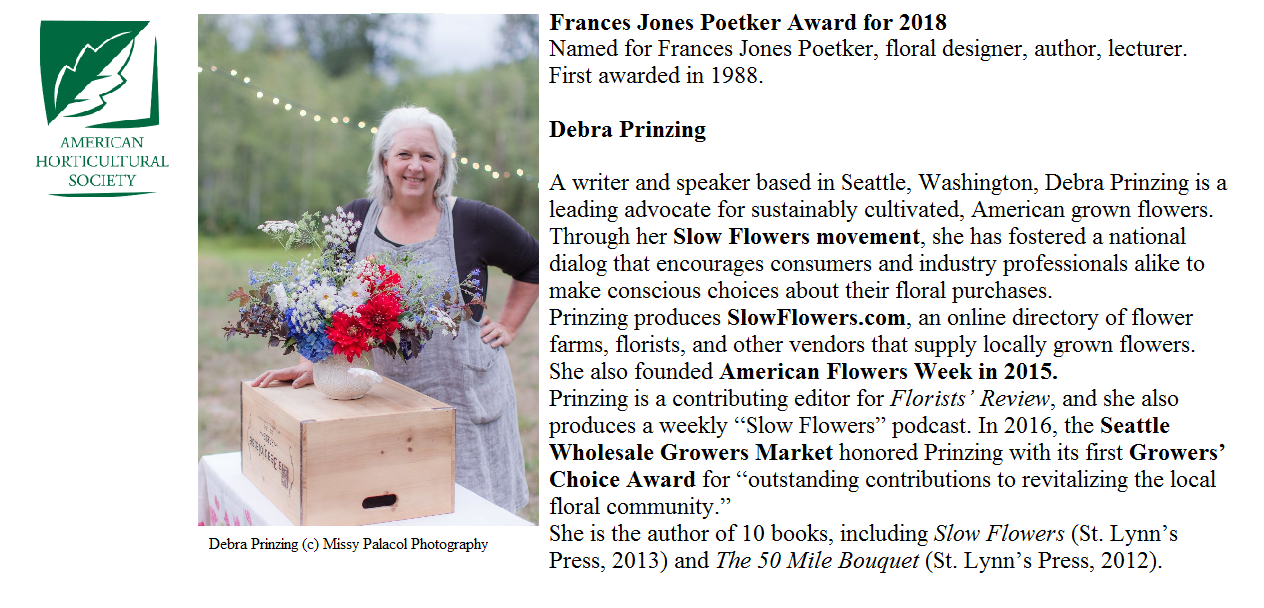
(c) Missy Palacol Photography

I’m Debra Prinzing, host and producer of the Slow Flowers Podcast. Next week, you’re invited to join me in putting more American grown flowers on the table, one vase at a time. And If you like what you hear, please consider logging onto Itunes and posting a listener review.

The content and opinions expressed here are either mine alone or those of my guests alone, independent of any podcast sponsor or other person, company or organization.

The Slow Flowers Podcast is engineered and edited by Andrew Brenlan. Learn more about his work at KineticTreeFitness.com.

Music Credits:

Bending the Reed
by Gillicuddy

https://creativecommons.org/licenses/by-nc/3.0/

Perfect (Instrumental Version); Once Tomorrow (Instrumental Version)

Additional music from:

audionautix.com

Episode 322: Garden Media Group’s annual Garden Trends Report with Suzi McCoy and Katie Dubow

Wednesday, November 8th, 2017

Suzi McCoy (left) and Katie Dubow (right) of the Garden Media Group, which releases the Garden Trends Report on an annual basis.

As many of you know, my journalistic background includes working as a home and garden writer for the past two decades.

During that journey, I invested many years — the past 15 in fact — in the Garden Writers Association, including two years serving as its president. Many of my closest professional and personal friendships come from time spent serving on committees, as regional and national director and then, as an officer and member of GWA’s leadership.

And even though writing about flower farming and floral design has occupied my professional energy during the past nearly 10 years, I still consider myself a Garden Writer. After all, flowers are certainly an extension of the garden, right?

Today I am delighted to introduce two longtime professional friends who I originally met through GWA. They are Suzi McCoy and Katie Dubow of Garden Media Group.

Based outside Philadelphia, Garden Media Group was one of the very first marketing and communications firms to position itself in the “green” category. For many years, Garden Media Group has released an annual Garden Trends Report, which has become a must-have reference for writers, practitioners and companies in the gardening industry.

A snapshot of the 2018 Trends recently released by Garden Media Group

I love reading this report and to be honest, it has served as a template for my much younger Slow Flowers Floral Insights and Industry Forecast, which I started compiling annually four years ago.

Suzie and Katie agreed to talk with me about the Garden Trends Report for 2018 and share their graphics. Click the link to download your own PDF copy of the report.

Here are a few slides of the “trends” we discuss on today’s episode:

Find Garden Media Group on Facebook

Follow Garden Media Group on Twitter

See Garden Media Group on Pinterest

Watch Garden Media Group on Instagram

READ MORE…

Episode 320: Washington flower farmer Janet Foss of J. Foss Garden Flowers reflects on her 30-year-plus career

Wednesday, October 25th, 2017

Janet Foss, veteran specialty cut flower farmer and lifelong plantswoman.

I visited Janet in September on harvest day. Here she is with an armload of beautiful garden roses!

I’m so happy today to feature my recent interview with Janet Foss of J. Foss Garden Flowers, based in Onalaska, Washington, a community located halfway between Seattle and Portland.

Janet Foss has spent more than 30 years in flower farming, but her passion began when she was 10 years old. “I remember asking for my own flower bed,” Janet recalls. “My grandmother was a cut flower grower and florist – it’s a big thing in our family.”

As an adult, Janet and her husband Jim first raised unusual garden flowers on a 20-acre farm in Everett; since 2003, they have farmed on 40 acres in Onalaska, alongside the Newaukum River, with 5-plus acres specifically dedicated to field-grown, green house and high tunnel production.

Her natural ability to grow things has paid off, as Janet is known in flower farming circles as an expert in heirloom chrysanthemums.

For several years, Janet popularized vintage varieties of specialty mums through a mail-order venture.

After selling that business to another grower, Janet now focuses exclusively on raising uncommon cut flowers.

“Something different” is her guiding principle when it comes to choosing which crops to grow. “We specialize in high-quality flowers that are different and unusual from the standard garden flowers normally available.”

The beautiful setting for J. Foss Garden Flowers, in southwest Washington State.

That includes 3,000 dahlias and rare pussy willows and more than 200 varieties of flowers and floral ingredients, including astrantia, calla lilies, campanula, cosmos, delphinium, garden roses, gentiana, grasses, hypericum, lady’s mantle, ninebark, ornamental wheat, pussy willow, saponaria, scabiosa, sunflowers, sweet peas and zinnias.

Janet with her famous dahlias!

Janet regularly sells at her stall inside the Oregon Flower Growers Association, which is located at the Portland Flower Market. In Seattle, you can find her seasonal offerings at Northwest Wholesale Flowers. She was a founding member of the Seattle Wholesale Growers Market in 2011.

Calla lilies have been in Janet’s family for more than 50 years, originating from her grandmother’s cutting garden.

Here’s more background from the “about” page of J. Foss Garden Flowers:

We started our farm in 1981, a few days after we were married. Jim was a school teacher at the time and had the summer free; I needed to go back to work. The day I went back to work, he went to town and got the business license and signed us up for the farmers market. I had been gardening all my life. Jim was a city boy, and gardening seemed like a big expense which he felt would never be recovered. I told him we could make money selling at farmers markets, he took me seriously. The first item on his agenda was to put this garden to work making money. He has never been a procrastinator, without him I would still be thinking about getting a business license. Our first farm, close to the Everett, WA city limits, was only about an acre. We sold at the farmers market, did custom picking for local customers, and had a florist who bought most of what we grew.   

We were really enjoying growing flowers, so next we bought 20 acres in the Snohomish Valley. It was all sub-irrigated, was awesome soil, and grew beautiful cut flowers. We specialized in plants that loved damp peaty soil, like the Giant White Calla.   We soon became know for the Callas, although we also grew dahlias, pussywillows, cosmos, Queen Anne’s Lace, and many other unusual cut flowers.

The circumstances of life often change, and the need for us to change occured after Jim suffered a stoke in 1998.  It became clear that life would be simpler in order to be closer to family, so we moved south back to my roots in Lewis County Washington.  We found a beautiful field near Onalaska, WA, on the Newaukum River.  We purchased this land in 2001 and started shaping it into our current farm. Giant White Calla are still our specialty, but we are also growing roses, garden flowers, and clematis.  We grow over 200 varieties of flowers, and have flowers available most of the year.

J. Foss Garden Flowers’ original booth at Seattle Wholesale Growers Market (2011-2013)

I know you’ll enjoy our conversation and listen for the tale of how Janet and I actually went to college at the same time — as Home Economics majors. I guess all roads lead to flowers, though, because horticulture has been both of our passions long after we gave up the sewing machine and that patternmaking training from college days.

Here’s how you can find Janet Foss at her social places:

J. Foss Garden Flowers on Facebook

J. Foss Garden Flowers on Instagram

I also  want to share an opportunity that might strike a chord with you, as it has with me. So many of us have watched in horror as the wildfires of Northern California, specifically in Sonoma County, have destroyed homes, businesses and agricultural land.

We have a number of Slow Flowers members who have experienced devastating loss and destruction and our hearts go out to them. There are opportunities to support these friends. I’ve seen offers of labor, studio and cooler space, housing and design support crossing the social media channels and I’m inspired to do what I can, as well.

I just learned through Mud Baron, floral activist and educator at Muir Ranch in Pasadena, California, that there is a ‘Just and Resilient Futures Fund’ in the works, as part of the Community Alliance with Family Farmers, a nonprofit agency.

A diverse coalition of community-based organizations has established the campaign; resources from this fund will be provided to victims of fires, especially those suffering losses not covered by insurance or traditional relief services, and to support initiatives that build more just, healthy, and resilient communities and that better prepare us for future catastrophe.

As Mud posted on his Facebook feed, “because so many farmers lost so much in the  🔥 🔥 🔥#sonomafire, this mad farmer with pruners and an iPhone is raising funds to help the rebuilding efforts at Oak Hill Farm, Flatbed Farm and Let’s Go! Farm via @thefarmersguild”

Follow this link to make a contribution online. When you donate, @bakercreekseeds will match gifts up to $1k.

Thanks for getting the word out, Mud!

Sonoma Flower Mart’s recent Instagram Post

I also want to give a heartfelt shout-out to Nichole Skalski and Kathrin Green of the Sonoma Flower Mart, what has essentially become the heart and hub of the Slow Flowers community of farmers and florists in the North Bay region. Let’s support North Bay flower farmers by buying their flowers!

Our community is strong and resilient — and we are driven by the essential vision of supporting the vibrant domestic floral marketplace. Thanks for being part of this movement.

The Slow Flowers Podcast has been downloaded more than 247,000 times by listeners like you. Thank you to each one of you for downloading, listening, commenting and sharing. It means so much.

If you value the content you receive each week, I invite you to show your thanks and support the Slow Flowers Podcast with a donation — the button can be found on our home page in the right column. Your contributions will help make it possible to transcribe future episodes of the Podcast.

Thank you to family of sponsors

Certified American Grown Flowers. The Certified American-Grown program and label provide a guarantee for designers and consumers on the source of their flowers. Take pride in your flowers and buy with confidence, ask for Certified American Grown Flowers.  To learn more visit americangrownflowers.org.

Arctic Alaska Peonies, a cooperative of 50 family farms in the heart of Alaska providing high quality, American Grown peony flowers during the months of July and August. Visit them today at arcticalaskapeonies.com

Seattle Wholesale Growers Market, a farmer-owned cooperative committed to providing the very best the Pacific Northwest has to offer in cut flowers, foliage and plants. The Growers Market’s mission is to foster a vibrant marketplace that sustains local flower farms and provides top-quality products and service to the local floral industry. Find them at seattlewholesalegrowersmarket.com

Longfield Gardens provides home gardeners with high quality flower bulbs and perennials. Their online store offers plants for every region and every season, from tulips and daffodils to dahlias, caladiums and amaryllis. Visit them at lfgardens.com.

Syndicate Sales, an American manufacturer of vases and accessories for the professional florist. Look for the American Flag Icon to find Syndicate’s USA-made products and join the Syndicate Stars loyalty program at syndicatesales.com.

Johnny’s Selected Seeds, an employee-owned company that provides our industry the best flower, herb and vegetable seeds — supplied to farms large and small and even backyard cutting gardens like mine. Check them out at johnnysseeds.com.

Association of Specialty Cut Flower Growers. Formed in 1988, ASCFG was created to educate, unite, and support commercial cut flower growers. It mission is to help growers produce high-quality floral material, and to foster and promote the local availability of that product. Learn more at ascfg.org

(c) Missy Palacol Photography

I’m Debra Prinzing, host and producer of the Slow Flowers Podcast. Next week, you’re invited to join me in putting more American grown flowers on the table, one vase at a time. And If you like what you hear, please consider logging onto Itunes and posting a listener review.

The content and opinions expressed here are either mine alone or those of my guests alone, independent of any podcast sponsor or other person, company or organization.

The Slow Flowers Podcast is engineered and edited by Andrew Brenlan. Learn more about his work at KineticTreeFitness.com.

Music credits:

Bending the Reed
by Gillicuddy
Licensed under Attribution-NonCommercial 3.0 International License.

Episode 319: Connecticut artist-florist Michael Russo of Trout Lily Farm

Wednesday, October 18th, 2017

Several current and prospective Slow Flowers members in Connecticut joined me at Trout Lily Farm in early October — what a wonderful Meet-Up at an inspiring place!

Slow Flowers comes to Trout Lily Farm (floral arrangement by Michael Russo)

A charming roadside sign hangs from Trout Lily Farm’s vintage boathouse-turned-farmstand.

Whenever I travel, even for pleasure, I’m likely to add three things to my itinerary:

First, I visit Slow Flowers’ members to see their places of business — flower farms, floral studios and retail florists locations.

Next, I team up with one or more of those generous folks to schedule a Slow Flowers meet-up.

And third, I turn on the digital recorder to interview at least one of these folks for a Slow Flowers Podcast episode.

Yes, I do travel quite a bit, the “non-slowness” of which is a bit ironic, as my friends and family have pointed out.

But I’m so passionate about getting out “on-location,” so to speak, to capture your stories.

Sharing the stories of American flowers and the people who grow and design with them is at the heart of the Slow Flowers mission.

Last month, you benefitted from my interviews in Montana. This month, it’s Connecticut and Virginia. Next month, it will be Massachusetts and Arizona. And then, maybe I’ll stay home for the holidays!

Michael Russo and Raymond Lennox, owners of Trout Lily Farm, led a walking tour for our autumn Slow Flowers Meet-Up

Michael leads us through the gourd tunnel, where heirloom and decorative varieties are trained along a metal structure.

What a beautiful spot!

So enough of that. Let me introduce you to Michael Russo, a farmer-florist and gifted artist who co-owns Trout Lily Farm in Guilford, Connecticut. He and his husband, Raymond Lennox, who works in the health care industry when he’s not co-farming, purchased Trout Lily about 13 years ago. The farm is located on picturesque Lake Quonnipaug in North Guilford, where Michael and Raymond grow and sell organic edibles and seasonal cut flowers for the table, weddings and events.

Sunset behind the hill, which created a beautiful back-lit moment.

I’ve been wanting to visit Trout Lily Farm ever since I first met Michael in the fall of 2014 at a floral design workshop I taught in Rhode Island at the wonderful estate home and garden called Blithewold Mansion.

Ellen Hoverkamp, lifelong artist-friend of Michael’s, facilitated our transportation and I’m so happy to have reconnected with her!

My friend Ellen Hoverkamp of My Neighbor’s Garden, an botanical artist and photographer who is a previous guest of this podcast, came from her home in New Haven, Connecticut and brought Michael along. I was so enchanted with their long friendship dating back to high school and college, as artists and former public school art teachers, both of whom both took early retirements to pursue new creative ventures.

READ MORE…

Episode 318: Bailey Hale, Ardelia Farm + Co. and Farmer Bailey’s Plugs

Wednesday, October 11th, 2017

Bailey Hale (left) and Thomas McCurdy (right) of Ardelia Farm & Co.

There’s been an ongoing theme for our podcasts this year — that of reinvention, re-branding and diversification for everyone in the Slow Flowers Community. As creatives, it makes sense. We are multidimensional and we strive to balance entrepreneurship with artistry in equal measure.

Today’s guest, Bailey Hale, is one such individual. Bailey and his husband Thomas McCurdy established Ardelia Farm & Co. in 2011.

Inside the sweet pea greenhouse

Today it is a cut flower farm, floral design studio and bakery in Vermont’s picturesque Northeast Kingdom. Thomas bakes using local, organic, farm-fresh ingredients to produce everything from chocolate chip cookies to wedding cakes. Bailey raises specialty cut flowers, supplying farmers’ markets and florists, as well as providing full service wedding and event design.

Sweet peas galore — the top crop at Ardelia Farm & Co.

I met Bailey in 2014 at the Association of Specialty Cut Flower Growers annual meeting in Wilmington, where we struck up a brief acquaintance. I learned a lot more about his floral life story a few months ago when we both attended the regional ASCFG meeting that took place in Ontario, Canada’s Niagara region.

It’s amazing what a shared drink in the hotel bar with kindred spirits can lead to — before the evening was over, I made a point of inviting Bailey to come on this show as a guest.

This is how the “plugs” look when they arrive at a client’s farm — the individual plant starts are grown in flats, ready to be plucked out and re-potted into larger containers or directly planted into the ground.

We both agreed to schedule the interview and this episode for early October to coincide with the launch of a new season for Ardelia Farm & Co.’s spin off venture, Farmer Bailey Plugs.

As things happen in our community, we often catch glimpses of each others’ activities while scrolling across the screen of a computer or phone. I noticed what Farmer Bailey seemed to be about — and guessed that Bailey was batching or bundling a number of small orders into ones large enough to meet minimums set by plug or seed companies. What began as a “let’s help out friends in the flower farming world” gesture has rapidly taken off — and for 2018 it looks like the business whose tagline is: Custom Plug Brokerage for Professional Cut Flower Farmers will gobble up a good part of Bailey’s time.

In our interview, recorded via Skype recently with me in Seattle and Bailey in Irasburg, Vermont, I learned that the seasonal cycles of sourcing and marketing plugs and seeds is somewhat complementary to cut flower farming and floral design. Bailey saw an opportunity to fill a need — and he refined it into a sustainable business venture. I can’t wait for you to learn more.

Here’s more biographical information about Bailey and Thomas and how their chicken video went viral and made them famous a few years back. This is excerpted from their “about” section of the Ardelia Farm & Co. web site:

I’ve been working with flowers for a long long time. My grandmother taught me how to grow flowers when I was 5 years old, and this turned into a life long passion.  After receiving my B.S. in horticulture from the University of Kentucky, I worked at Longwood Gardens before starting an award-winning floral design studio (MODA botanica) in the heart of Philadelphia. Along with my business partner, we exhibited at the internationally renowned Philadelphia Flower Show where we took best in show a couple of times, and got to travel the world looking at cut flowers and meeting the folks who grow them.

When my husband Thomas and I left Philadelphia to start farming in 2011, I had no idea that flowers would be a major part of our operation. But after dabbling a bit, and joining ASCFG, I felt like I had found my tribe. I already knew flowers, and I knew how to grow things, I just needed a little more information on how to successfully grow and market cut flowers. I credit ASCFG with connecting those missing pieces, and introducing me to some amazing folks, including many of you.

As Ardelia Farm & Co. was taking shape, I searched endlessly for new varieties and tried to navigate the plug grower/broker relationship. I couldn’t understand why we need brokers in the first place, or why growers don’t just produce what is popular and trending right now. I now see that there needs to be someone communicating between the plug producer and the professional cut flower farmer.

In fall/winter 2015 I put together a group order for 6 Lisianthus varieties, and got an overwhelming response. These new and odd varieties were in high demand with florists and growers alike, but didn’t show up on the radar of plug growers or traditional bedding plant brokers. And that’s where the idea for Farmer Bailey started. I see the trends coming to the US from Asia and Europe, I know what we can grow well here in the US, and I’m determined to get those items in the hands of the folks who need them while they are are still relevant. Floral trends do change rapidly (despite the recent 5 year “Blush & Bashful” stagnation) and being able to respond quickly is key for the American flower farmer. 

So I became a broker, and luckily Gro ‘n Sell is supporting me in this. They have so graciously agreed to help us all by producing things that may have otherwise taken a decade to come into commercial production. These new items combined with their standard offerings will help us meet the varied demands of our clients nationwide.

While I have plenty of ideas and keep my eye on the international trends, I am no oracle, and I don’t know everything you want to see produced as a plug. Please tell me what you want. If there is a critical mass of interested folks, I can start the process of sourcing seed and asking the kind folks at Gro ‘n Sell if they will assist us. Feel free to use the Contact Us form, or join the ‘Farmer Bailey Plugs for Flower Farmers‘ group on Facebook and join in the conversation.

Here’s how to follow and find Farmer Bailey & Ardelia Farm:

Ardelia Farm on Facebook

Ardelia Farm on Instagram

Farmer Bailey on Facebook

Farmer Bailey Plugs on Instagram

Thanks so much for joining us today! The Slow Flowers Podcast has been downloaded more than 242,000 times by listeners like you. Thank you to each one of you for downloading, listening, commenting and sharing. It means so much.

If you value the content you receive each week, I invite you to show your thanks and support the Slow Flowers Podcast with a donation — the button can be found on our home page in the right column. Your contributions will help make it possible to transcribe future episodes of the Podcast.

Thank you to family of sponsors:

Certified American Grown Flowers. The Certified American-Grown program and label provide a guarantee for designers and consumers on the source of their flowers. Take pride in your flowers and buy with confidence, ask for Certified American Grown Flowers.  To learn more visit americangrownflowers.org.

Arctic Alaska Peonies, a cooperative of 50 family farms in the heart of Alaska providing high quality, American Grown peony flowers during the months of July and August. Visit them today at arcticalaskapeonies.com

Seattle Wholesale Growers Market, a farmer-owned cooperative committed to providing the very best the Pacific Northwest has to offer in cut flowers, foliage and plants. The Growers Market’s mission is to foster a vibrant marketplace that sustains local flower farms and provides top-quality products and service to the local floral industry. Find them at seattlewholesalegrowersmarket.com

Longfield Gardens provides home gardeners with high quality flower bulbs and perennials. Their online store offers plants for every region and every season, from tulips and daffodils to dahlias, caladiums and amaryllis. Visit them at lfgardens.com.

Syndicate Sales, an American manufacturer of vases and accessories for the professional florist. Look for the American Flag Icon to find Syndicate’s USA-made products and join the Syndicate Stars loyalty program at syndicatesales.com.

Johnny’s Selected Seeds, an employee-owned company that provides our industry the best flower, herb and vegetable seeds — supplied to farms large and small and even backyard cutting gardens like mine. Check them out at johnnysseeds.com.

Association of Specialty Cut Flower Growers. Formed in 1988, ASCFG was created to educate, unite, and support commercial cut flower growers. It mission is to help growers produce high-quality floral material, and to foster and promote the local availability of that product. Learn more at ascfg.org

I’m Debra Prinzing, host and producer of the Slow Flowers Podcast. Next week, you’re invited to join me in putting more American grown flowers on the table, one vase at a time. And If you like what you hear, please consider logging onto Itunes and posting a listener review.

The content and opinions expressed here are either mine alone or those of my guests alone, independent of any podcast sponsor or other person, company or organization.

The Slow Flowers Podcast is engineered and edited by Andrew Brenlan. Learn more about his work at KineticTreeFitness.com.

Music Credits:

These Times
by Blue Dot Sessions
Additional music from:

audionautix.com

Slow Flowers, Montana Style

Tuesday, September 19th, 2017

Our lovely gathering of Slow Flowers aficionados, pictured at Hart’s Garden & Nursery in Missoula.

Earlier this month, I flew to Missoula, a Western Montana, college town where there is quite a bit happening on the local flower farming scene. t was on my way to speak at the Rocky Mountain Gardening Live conference held on September 11-12 at Chico Hot Springs in Pray, Montana, just 30 minutes outside the eastern entrance of Yellowstone National Park.

Kathy Sherba, Carly Jenkins and Kristen Tack — all cohorts in Missoula’s Westside Flower Market

Jamie Rogers and Carly Jenkins of Killing Frost Farm, with me (right)

A giant sunflower puts a smile on my face, snapped during my tour of Mighty Fine Farm.

The reason for this Seattle-to-Missoula leg of my trip was to meet up with Carly Jenkins and Jamie Rogers of Killing Frost Farm, Kathy and Adam Sherba of Mighty Fine Farm and George and Marcia Hart of Hart’s Garden & Nursery — all in the Missoula flower farming and Slow Flowers community.

Carly and I met in person earlier this year when she attended Tobey Nelson’s Whidbey Island Flower Workshop, which featured Susan McLeary of Passionflower Events and Kaleb Willis of Kaleb Norman James Design. Carly, or CJ, as she’s often called, gave me the big news about the second-season launch of Westside Flower Market, a wholesale farmer-to-florist venture that she and Kathy incubated beginning last summer in Missoula garage owned by Carly and Jamie. You can hear our Slow Flowers Podcast interview from that visit here.

Great recent coverage on local & slow flowers in The Missoula Independent.

This year, six additional flower farmers have joined the momentum and they are doing some really awesome things. Read more about the Slow Flowers Missoula story in this excellent piece that just ran in The Missoula Independent.

George and Marcia graciously hosted a barbecue, farm tour and meet-up at their property.

And while I didn’t count totals, I bet we had about 30 folks in attendance,  including some who drove up to 4 hours from places like Kalispell to join us!

From left: Special guest Rep. Willis Curdy, George Hart & Marcia Hart, flower farmers and hosts.

I was delighted to introduce the Slow Flowers Movement to all those who attended, including Montana Rep. Willis Curdy, member of the agriculture committee for the state legislature, who just wanted to learn more about flower farming in his district — very cool!

A quartet of fabulous flower farmers: Jeriann Sabin and Ralph Thurston of Bindweed Farm, Carly Jenkins of Killing Frost Farm and Kathy Sherba of Mighty Fine Farm. Photographed at Mighty Fine Farm in Missoula.

We also had some very special guests in attendance — Jeriann Sabin and Ralph Thurston of Bindweed Farm in Blackfoot, Idaho! Jeriann and Ralph are past guests of the Slow Flowers Podcast, which we recorded last year upon the publication of their fabulous book, Deadhead: The Bindweed Way to Grow Flowers.

A last-minute flower farmers’ vaycay (thanks to an invitation from Carly), their 350-mile road trip . . .  and we were blessed with Jeriann and Ralph’s generous souls, playful personalities and amazing wisdom. People soaked up every word they had to say. Southeastern Idaho’s growing conditions are similar enough to those of Western Montana’s that our crowed wanted to hear every word — and wanted to buy signed copies of Deadhead!

Ralph and Jeriann shared their story and their flower farming wisdom at our Meet Up. Photographed at the beautiful grounds of Hart’s Garden & Nursery, Missoula

High tunnels filled with late summer dahlias at Hart’s Garden & Nursery.

An unnamed dahlia at Hart’s Garden & Nursery. The brilliance offset the smoky skies caused by Western Montana’s forest fires.

That night, Carly, Kathy, Ralph, Jeriann  and I stayed up late, talking and visiting under the Montana moon. It has been a rough few months there, with the rampant wildfires, so we all were delighted that the breezes cleared the skies for one beautiful evening. A very special thank you to Adam Sherba’s parents for lending us use of their fabulous Missoula home. Jeriann, Ralph and I stayed there in great Montana luxury. In the morning, I watched deer and wild turkeys roaming through the hillside below the home.

Chico Hot Springs, a favorite of everyone in Montana.

I drove from Missoula to Pray (about 250 miles east) on Sunday, September 10th, arriving before dinnertime to check into Chico Hot Springs. CHS is a very special place — historic for its dude ranch vibe, its restorative 104-degree soaking pools fed by the springs and its adjacency to Yellowstone. The original lodge, where I stayed, dates to 1900, but the first recorded reference to the Hot Springs goes back to 1865. This is a place for kicking back and relaxing, which I did lots of. But now that there is a Conference Center to host corporate events, people come for multiple reasons.

All local flowers from Bozeman floral designer Remy Greco-Brault, owner of Labellum. Remy taught a pin-on floral workshop after my lecture.

Rocky Mountain Gardening LIVE, with dahlias grown by #kangaroohousegardens in Hamilton, Montana

I was there as guest of Dan and Andra Spurr, editor and publisher of Rocky Mountain Gardening magazine.

This wonderful quarterly magazine is for gardeners throughout the Rocky Mountains, encompassing stories and subscribers from the Canadian-US border down to Colorado and includes Montana, Wyoming, Idaho, and Utah.

I was delighted to speak about Slow Flowers and share the story of what’s happening in Montana and beyond to an audience of more than 80 attendees.

Several flower farmers and florists were there, which made me feel welcome and allowed me to brag about their achievements — including Cindy Hanson of The Herb And Garden in Helena, a Slow Flowers member who I recently featured in Florists’ Review/Slow Flowers Journal.

After my time at Chico Hot Springs, I left knowing that even more folks are supportive of our movement, our cause, and our purpose. I met florists who promised to join and list their businesses on Slowflowers.com and I made lifelong friends with Dan and Andra, who couldn’t have been more generous in their hospitality.

A final bonus — spending two days with my siblings, Scott Prinzing and his wife Kristen Rickels Prinzing. They live in Billings and have both contributed to Rocky Mountain Gardening in the past, with articles (Kris) and photography (Scott). As a very special treat, they agreed to record the upcoming holiday special music episode of the Slow Flowers Podcast — listen for that Episode 328 on December 20th. I have no musical talent, but it’s nice to have siblings who do!

Episode 313: Rachel Lord of Alaska Stems pursues a different floral path

Wednesday, September 6th, 2017

Rachel Lord of Alaska Stems, photographed at her Homer farm with her two daughters, Sadie and Linnea.

Welcome to the first week of September! Summer isn’t quite over but we’re all well aware of Fall’s pending arrival. As someone who manages to turn every trip into a working vacation, I’m excited to bring you my last interview recorded when I spent several days at the magnificent Scenic Place Peonies in Homer, Alaska, in late July.

Rachel, left, during a wedding design install, and a peek at her Homer Farmers’ Market stall (right)

Today’s guest, Rachel Lord of Alaska Stems, is one of the many volunteers who came alongside peony farmer (and my lovely host) Beth Van Sandt of Scenic Place Peonies and floral designer Kelly Shore of Petals by the Shore.

I first met Rachel in 2014 when I spent several beautiful days in Homer, principally as the keynote speaker for Homer Gardeners’ Weekend. Rachel donated flowers to be used in the design workshop I taught for the Homer Garden Club and she also invited me over for a tour of her flower farm.

Alaska Stems’ land overlooks the beautiful Kachemak Bay and all the Glaciers that create Homer’s exquisite views.

It turns out that Rachel is unlike most other flower growers in Homer. She has decided that while she loves growing peonies for her design work, there is an opportunity in the market to grow a diverse mix of everything else that a full-service floral designer needs — annuals, perennials, woody shrubs for foliages, herbs, bulbs and much, much, more.

Rachel shared her talents with Beth and Kelly and others involved in decorating Scenic Place Peonies for the Field to Vase Dinner held on July 29th. If you need any encouragement that you can grown beautiful, organic cut flowers and serve a marketplace that perhaps isn’t as large as you’d like it to be, then listen up. You’ll gain insights and inspiration from Rachel’s story.

Alaska Stems specalizes in early-spring tulips, which feed the floral hunger of the Homer marketplace – and beyond!

Left: Ben and Rachel, from my 2014 visit; Right: Zinnia production in the high tunnel from that summer.

Here’s a little more about Alaska Stems, excerpted from the web site.

Alaska Stems is a locally-owned flower farm and design studio located in Homer, Alaska. Rachel and her husband Ben Gibson grow over 40 varieties of cut flowers for sale at local markets and for use in Rachel’s natural and elegant designs for weddings and events. Their flowers can be seen at businesses around town, at the Homer Farmers’ Market, at weddings and special events, and always on our table – and we hope on yours as well!

An Alaska Stems bouquet, with peonies and lots of other gorgeous, truly local, elements. (c) Joshua Veldstra Photography

Rachel and Ben started selling flowers, vegetables, and herbs in 2011, after adding a large high tunnel to their garden. Their love of flowers was solidified that year when delivering the farm’s first bouquets. As they write: “There is no denying that fresh, local flowers light up not only a room, but the people in that room. This is soul food, and it is brilliant to witness and foster in our community! Since then, we have focused exclusively on growing flowers and floral design work.”

Alaska Stems is truly a small farm with less than a half-acre in production, three high tunnels and approximately 6,000 square feet of outside raised beds. The gardens support the Lord-Gibson family, as well as their flowers, and it’s not unusual to find veggies in Rachel’s floral arrangements! The couple believes strongly in local food and flowers, sustainable growing practices that nurture plants and soil for the long term, and connecting with the community to promote and encourage these things.

When Rachel isn’t working at Stems, she can be found filling in at Cook Inletkeeper – a regional non-profit organization that works to protect the Cook Inlet and the life it sustains, valuing clean water and healthy salmon for everyone. Rachel also sits on the Board of Directors for the Homer Farmers Market.

Ben and his family own and operate Small Potatoes – a local sawmill that produces rough cut lumber and beautiful tongue and groove boards. He sawmills, carpenters, advises, and generally is a (fairly reluctant) man-about-town.

Eldest daughter Sadie arrived in August 2013, and her sister Linnea came on the scene in November 2015. Farming with two little ones is an exercise in patience, joy, love and commitment.

One more look at the farm, the high tunnels — and that VIEW!!!

From the archives: My 2014 visit to Alaska Stems where Rachel Lord and Ben Gibson grow flowers, veggies, children and community.

Please enjoy this conversation and here’s how to find Alaska Stems at the farm’s social places:

Find Alaska Stems on Facebook

Follow Alaska Stems on Instagram

The Slow Flowers Podcast has been downloaded more than 230,000 times by listeners like you. The month of August was our second highest ever in the history of the Slow Flowers Podcast for listener downloads with 11,470, just 48 downloads shy of March 2017, our highest month to date. Thank you to each one of you for downloading, listening, commenting and sharing. It means so much.

If you value the content you receive each week, I invite you to show your thanks and support the Slow Flowers Podcast with a donation — the button can be found on our home page in the right column. Your contributions will help make it possible to transcribe future episodes of the Podcast.

Thank you to family of sponsors

And thank you to our lead sponsor for 2017: Certified American Grown Flowers. The Certified American-Grown program and label provide a guarantee for designers and consumers on the source of their flowers. Take pride in your flowers and buy with confidence, ask for Certified American Grown Flowers.  To learn more visit americangrownflowers.org.

Arctic Alaska Peonies, a cooperative of 50 family farms in the heart of Alaska providing high quality, American Grown peony flowers during the months of July and August. Visit them today at arcticalaskapeonies.com

Seattle Wholesale Growers Market, a farmer-owned cooperative committed to providing the very best the Pacific Northwest has to offer in cut flowers, foliage and plants. The Growers Market’s mission is to foster a vibrant marketplace that sustains local flower farms and provides top-quality products and service to the local floral industry. Find them at seattlewholesalegrowersmarket.com

Longfield Gardens provides home gardeners with high quality flower bulbs and perennials. Their online store offers plants for every region and every season, from tulips and daffodils to dahlias, caladiums and amaryllis. Visit them at lfgardens.com.

Syndicate Sales, an American manufacturer of vases and accessories for the professional florist. Look for the American Flag Icon to find Syndicate’s USA-made products and join the Syndicate Stars loyalty program at syndicatesales.com.

Johnny’s Selected Seeds, an employee-owned company that provides our industry the best flower, herb and vegetable seeds — supplied to farms large and small and even backyard cutting gardens like mine. Check them out at johnnysseeds.com.

Association of Specialty Cut Flower Growers. Formed in 1988, ASCFG was created to educate, unite, and support commercial cut flower growers. It mission is to help growers produce high-quality floral material, and to foster and promote the local availability of that product. Learn more at ascfg.org

(c) Missy Palacol Photography

I’m Debra Prinzing, host and producer of the Slow Flowers Podcast. Next week, you’re invited to join me in putting more American grown flowers on the table, one vase at a time. And If you like what you hear, please consider logging onto Itunes and posting a listener review.

The content and opinions expressed here are either mine alone or those of my guests alone, independent of any podcast sponsor or other person, company or organization.

The Slow Flowers Podcast is engineered and edited by Andrew Brenlan. Learn more about his work at KineticTreeFitness.com.

Music Credits:

Wingspan; 
Inessential
by Blue Dot Sessions
Additional music from:

audionautix.com

Episode 312: Growing a Start-Up Floral Business with Melanie Harrington of Ontario’s Dahlia May Flower Farm

Wednesday, August 30th, 2017

Today’s guest: Melanie Harrington of Dahlia May Flower Farm, based in Trenton, Ontario, Canada. This portrait of Melanie and all photography featured (c) Ashley Slessor Photography

At the very beginning of this month, after spending several days in Buffalo at the Garden Writers Association annual symposium, I picked up a rental car and drove to Ontario, crossing the vast Niagara River on the beautiful Peace Bridge.

My destination was the Niagara region where the Association of Specialty Cut Flower Growers’ regional meeting was taking place on a number of flower farms in the area.

It was well worth the extra travel and time, because the wonderful community of flower farmers and farmer-florists there put together a fantastic series of farm tours, presentations and floral demos, giving us an in-depth understanding of the vibrant local floral scene there.

Of course, I had my digital recorder along with me on the trip. A few weeks ago, you heard my bonus interview with Gillian Hodgson of Flowers from the Farm, our UK kindred spirit, who shared her update on the British Grown flowers scene.

There were others to interview, including today’s fabulous guest. I briefly met Melanie Harrington of Dahlia May Flower Farm in person last November at the ASCFG annual meeting in Grand Rapids, Michigan, but had never really spent the time with her that I wanted. She agreed to break away from the schedule so we could sit down in a field, under a tree, in order to share her story.

Here’s a little more about Melanie and her farm. Founded in 2014, Dahlia May Flower Farm is a small family operation specializing in growing romantic and fragrant, often heirloom, varieties of flowers. Nestled in the beautiful rolling Murray Hills of southeastern Ontario, Dahlia May supplies fresh seasonal cut flowers and distinctive bouquets to farmers’ markets in the greater Quinte area, and also offers both rustic and elegant floral design services, inspired by nature and changing with the seasons.

A native of the Quinte area and a lover of nature, Melanie brings to her work a background in art and horticulture as well as a passion for growing beautiful flowers. Melanie completed studies in horticulture and floral design at Loyalist College, and has taken a course in flower farming and design with Erin Benzakein of Floret.

Melanie wrote a personal essay on her web site, as well. You’ll want to read the entire piece here. But to give you a small glimpse of this amazing young woman, I’ll share this small excerpt, in her words:

Years ago my parents farmed the very land I now cultivate. Their first wish was to grow their own food; before long they were supplying our local farmers’ market with fresh produce. Between rows of tomatoes and beans were the inevitable patches of cut flowers, my fathers favourites and my personal joy. Already as a young child, I helped my father plant the seeds. There were bold sunflowers which would tower over me. Vibrant zinnias to surround me with colour. Cheerful asters…. Together we nurtured them and watched them grow. Later we worked side by side to pick them. I remember standing on a milk crate arranging this colourful harvest in tins cans lined up on the tailgate of our truck. I was hooked. . . 

When my father passed away in 2012, my husband and I returned to the family farm. With my perennial awareness of how short life can be, I left my job as a floral designer to rediscover what flowers truly meant to me. I didn’t know where this path would lead me; I was, however, certain that the best way to honour my father’s memory was to find my true passion and live it.

 This journey, full of bumps and hurdles and unexpected turns, culminated in the founding of Dahlia May Flower Farm. I am back where it all began, farming lush and romantic cut flowers on our beautiful homestead, working out of our 1885 farmhouse. Many of these blooms are sold at the same Quinte West farmers’ market where my parents sold their garden bounty all those years ago. Others may be found at farm markets and speciality stores throughout the area. 

We strive to grow high quality, long-lasting, and distinctive blooms. Our flowers connect people, create memories, and bring joy. As one of my customers shared with me: “Flowers make my heart happy, it’s as simple as that.” At Dahlia May Flower Farm we are committed to cultivating happy hearts, and making the world more beautiful.

Melanie and her new Farm Stand where customers can shop for locally grown flowers several days each week during the high season

Please enjoy this highly personal conversation with Melanie and be sure to check out the photos she’s shared – of her flowers and farm and her charming farm stand. And, if you haven’t yet discovered Dahlia May Flower Farm on social media, here’s how to follow along:

Dahlia May Flower Farm on Instagram

Dahlia May Flower Farm on Facebook

Dahlia May Flower Farm on Pinterest

Thanks again for joining me today. My take-way from this conversation with Melanie is to have a clear vision of what you do best, while also being open and experimental when new doors open. Hard work and long hours are a given, yet Melanie still takes time to revel in the awe-inspiring presence of nature that surrounds her natural world day in and day out. And she is willing to be vulnerable as a way to keep it all real and honest, despite the allure of social media and its promise of fame and fortune for those who chase those things.

I learned volumes from Melanie during her presentation at the ASCFG meeting earlier this month. In her presentation: “Make Your Social Media Accounts Bloom!” she offered a simple tip about the “grid” of the 9 most recent images that appear in your feed. ALWAYS post a self-portrait or an image of you on your farm, or in your studio, or engaging with flowers in that 9-square-grid. It’s a reminder to followers that there is a human flower lover behind the stats and metrics. Love this tip!

On her instagram bio for Dahlia May Flower Farm, she includes this: Flower farmer. Florist. Forager. Lover of dirty hands. Finder of magic in nature. Practicing graditude.

Those are terms that many of us embrace. So I know you share my appreciation for Melanie’s story. Thanks for listening.

The Slow Flowers Podcast has been downloaded more than 227,500 times by listeners like you. Thank you to each one of you for downloading, listening, commenting and sharing. It means so much.

If you value the content you receive each week, I invite you to show your thanks and support the Slow Flowers Podcast with a donation — the button can be found on our home page in the right column. Your contributions will help make it possible to transcribe future episodes of the Podcast.

Thank you to family of sponsors:

Our lead sponsor for 2017: Certified American Grown Flowers. The Certified American-Grown program and label provide a guarantee for designers and consumers on the source of their flowers. Take pride in your flowers and buy with confidence, ask for Certified American Grown Flowers.  To learn more visit americangrownflowers.org.

Arctic Alaska Peonies, a cooperative of 50 family farms in the heart of Alaska providing high quality, American Grown peony flowers during the months of July and August. Visit them today at arcticalaskapeonies.com

Seattle Wholesale Growers Market, a farmer-owned cooperative committed to providing the very best the Pacific Northwest has to offer in cut flowers, foliage and plants. The Growers Market’s mission is to foster a vibrant marketplace that sustains local flower farms and provides top-quality products and service to the local floral industry. Find them at seattlewholesalegrowersmarket.com

Longfield Gardens provides home gardeners with high quality flower bulbs and perennials. Their online store offers plants for every region and every season, from tulips and daffodils to dahlias, caladiums and amaryllis. Visit them at lfgardens.com.
Syndicate Sales, an American manufacturer of vases and accessories for the professional florist. Look for the American Flag Icon to find Syndicate’s USA-made products and join the Syndicate Stars loyalty program at syndicatesales.com.

Johnny’s Selected Seeds, an employee-owned company that provides our industry the best flower, herb and vegetable seeds — supplied to farms large and small and even backyard cutting gardens like mine. Check them out at johnnysseeds.com.
Association of Specialty Cut Flower Growers. Formed in 1988, ASCFG was created to educate, unite, and support commercial cut flower growers. It mission is to help growers produce high-quality floral material, and to foster and promote the local availability of that product. Learn more at ascfg.org

(c) Missy Palacol Photography

I’m Debra Prinzing, host and producer of the Slow Flowers Podcast. Next week, you’re invited to join me in putting more American grown flowers on the table, one vase at a time.

And If you like what you hear, please consider logging onto Itunes and posting a listener review.

The content and opinions expressed here are either mine alone or those of my guests alone, independent of any podcast sponsor or other person, company or organization.

The Slow Flowers Podcast is engineered and edited by Andrew Brenlan. Learn more about his work at KineticTreeFitness.com.

Music Credits:

Simple Melody; Turning on the Lights
by Blue Dot Sessions
Additional music from:

audionautix.com