The Slow Flowers Podcast is the award-winning show known as the “Voice of the Slow Flowers Movement.” Launched in 2013 as the original flower podcast, we’ve devoted more than 10 years to covering the business of flower farming, floral design, and the Slow Flowers sustainability ethos. Listen to a new episode each Wednesday, available for free download here at slowflowerspodcast.com or on iTunes, Spotify, and other podcast platforms.
January 29th, 2017
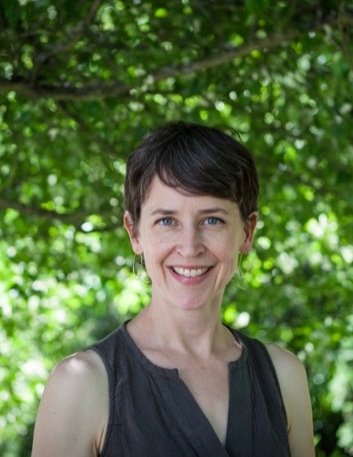
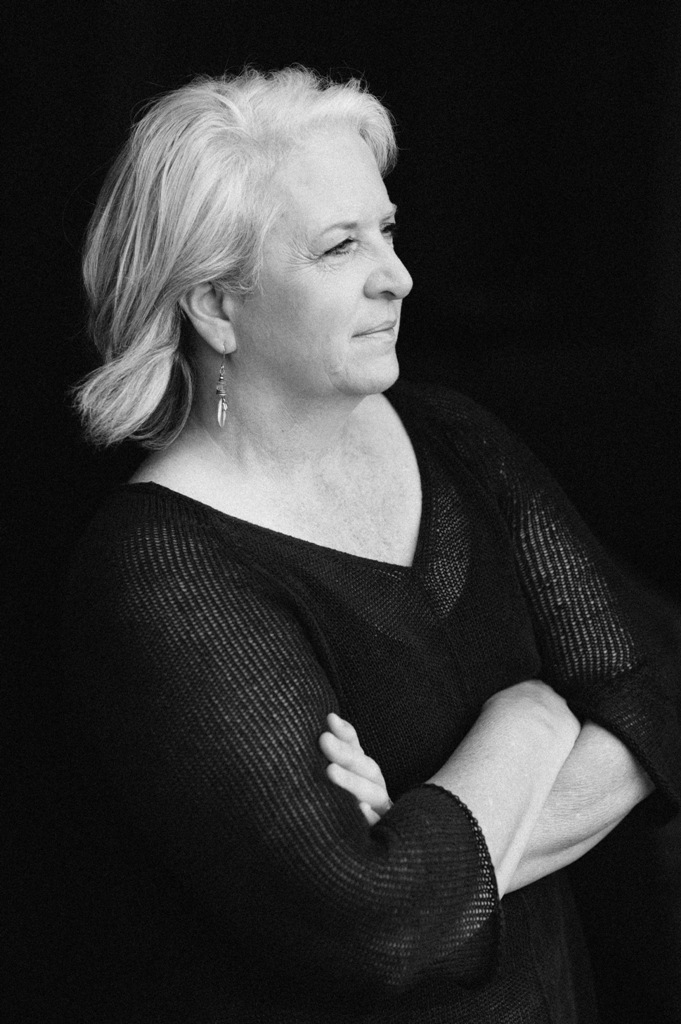
Anne Bradfield, Floressence
I want to invite you to join Anne Bradfield of Floressence and me for a special two-day Slow Flowers Creative Workshop on Monday, March 5 and Tuesday, March 6 at Floressence Studio in Seattle.
This workshop draws from my florist-focused curriculum, which combines “floral memoir,” storytelling for web and digital media (including on camera). In 2016, I partnered with experienced design educators to lead the workshop in Santa Cruz, Sonoma County and Raleigh, North Carolina.
Many of our Seattle Slow Flowers members have asked when I’ll lead the workshop here. Now’s the time to sign up, folks!
The format’s success allows non-writers to unlock your voices as we use new techniques and exercises to communicate our values, mission, brand and aesthetic. The workshop is designed to give floral creatives more tools for everything from blogging and newsletter-writing to handling media interviews.
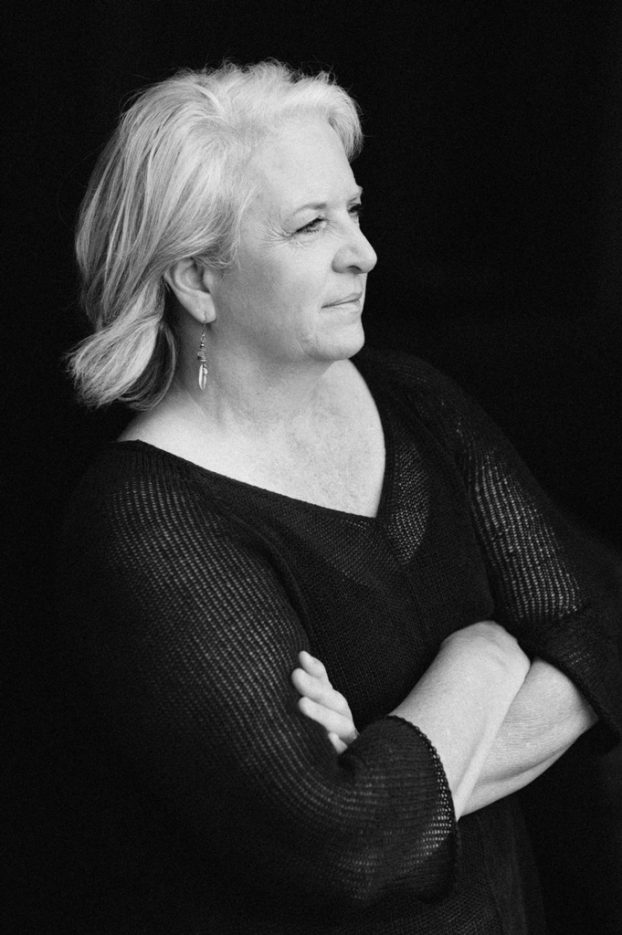
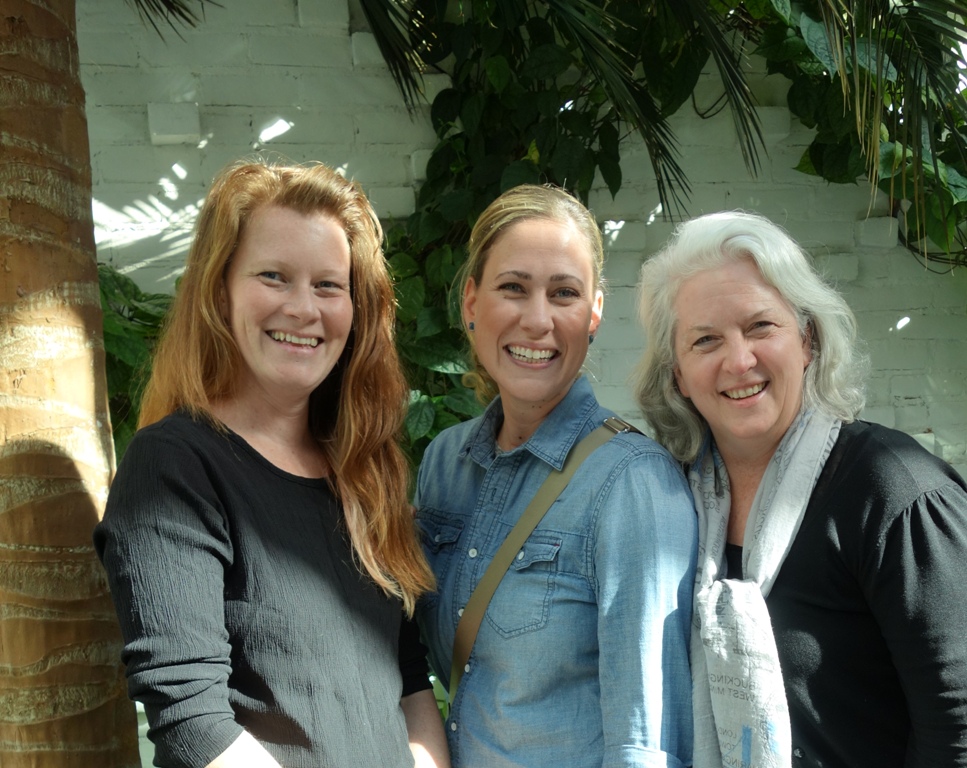
Debra Prinzing, Slow Flowers
One of the very special elements of our workshop is the addition of video and audio interviews. We’ve asked Jason Miller, who has a background in film and documentary production, to partner with us.
You will leave our workshop having filmed a 1- to 2- minute autobiographical interview that depicts your floral design aesthetic/style, as well as you telling your story as a creative individual.
I’m so excited for you to have a short clip that you can use on your web site, on social media, and to share with potential clients. It will be a marketing tool designed just for you, with you as the star!
All the details are listed below, as well as the schedule.
On Day One, we’ll get down and dirty with our powers of observation, description, memoir- and narrative-writing with me.
On Day Two, Anne will lead our floral design exercise, sharing her story and creative philosophy to help everyone embark on designing an arrangement that expresses individual style.
During both days, Jason will be on hand and behind-the-scenes, capturing lovely footage that will ultimately be edited into his final video for your use.
The two-day workshop including everything outlined here is $1,150. Members of the Greater Seattle Floral Association and Slowflowers.com are invited to enjoy a Member Discount of $995. This is an incredible value — as you know, it’s hard to find a videographer who can work within that budget for an original, professionally-produced clip with music and graphics. We are also happy to arrange a three-part payment plan for budgeting purposes.
For more details, you can contact me at 206-769-8211 or debraprinzing@gmail.com
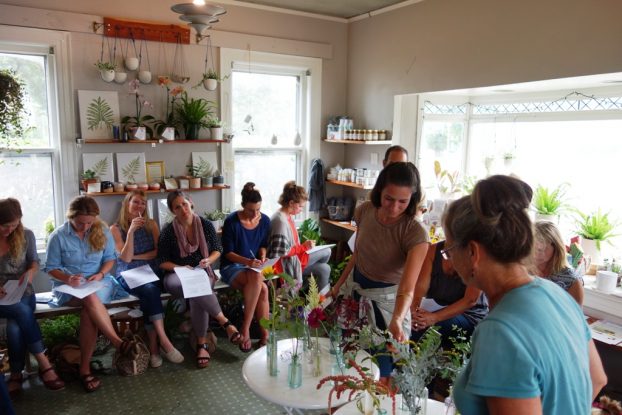
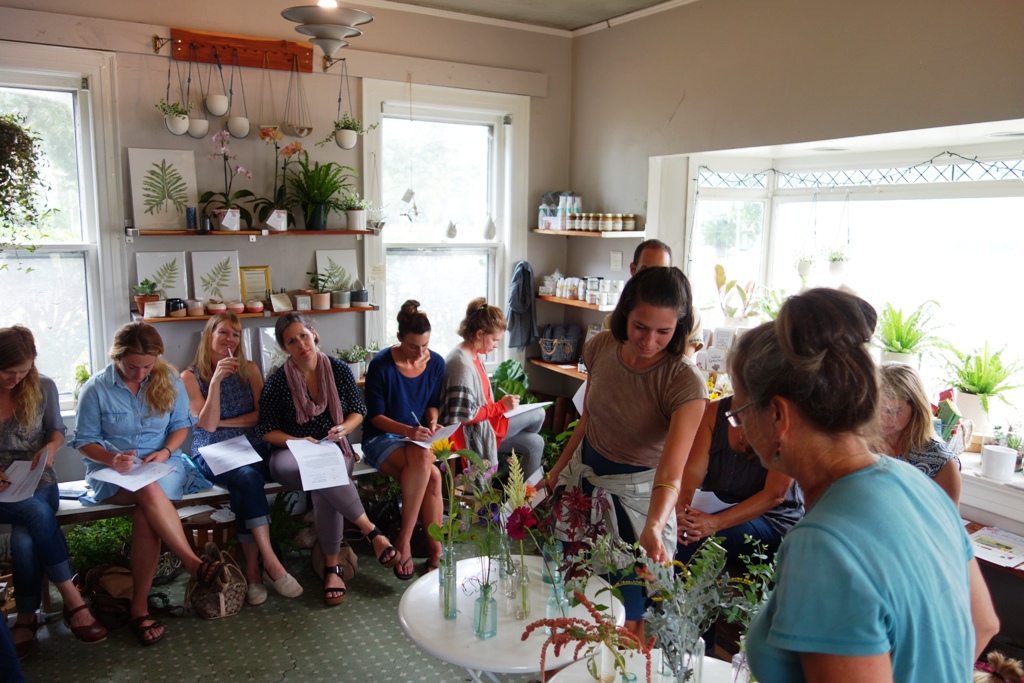
Stretching our floral vocabulary with a writing exercise!
What is the Creative Workshop?
This valuable experience is designed to help you clarify, document and communicate your personal artistic messaging as a floral/creative professional. In a safe, supportive and intimate setting, our small group will spend 48 hours focusing on YOU! We’ll go deep into Slow Flowers “brand building” as each participant finds his or her own voice as a floral storyteller. Here is what we will cover:
- Evoke and express your personal story as a creative individual
- Play with words to describe the natural world’s color, texture and form
- Tell your Flower Memoir as Metaphor for your Brand
- Flex your Sensory Muscles
- Enhance your brand with key distinctives in words and images that define you
- Storytelling on camera for unique online content
- Storytelling in a media pitch — learn how to be a resource for targeted media
- Storytelling on the Slow Flowers Podcast
Read more about past workshops here and here.
More details and your registration here.
Posted in Creativity, floral design, Slowflowers.com the Directory of American Flowers, Storytelling, Writing | No Comments »
January 25th, 2017
Podcast: Play in new window | Download
Subscribe: Apple Podcasts | Podcast Index | | More
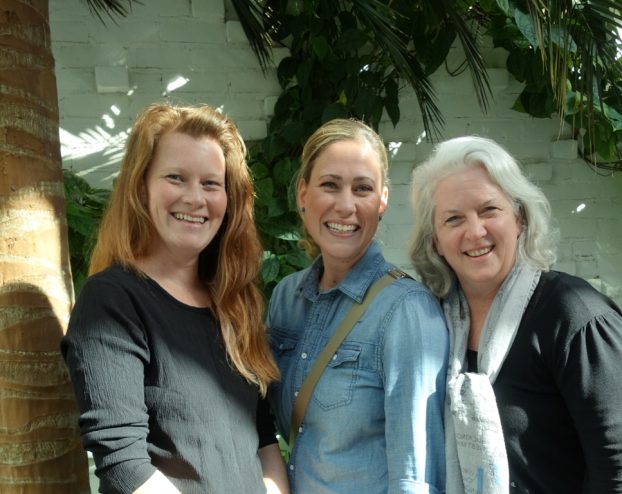
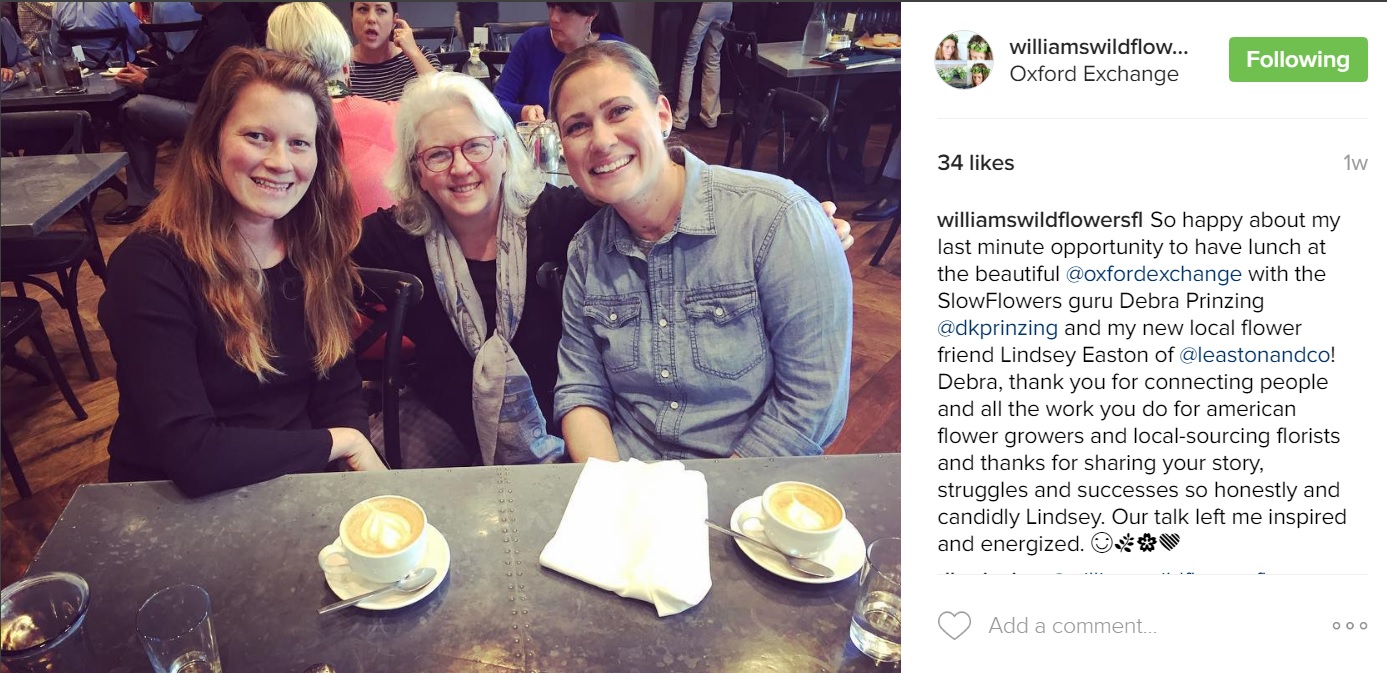
Annie Schiller of From left: William’s Wildflowers, Lindsey Easton of L. Easton + Co., and Debra Prinzing of Slow Flowers
 Today’s podcast features two voices from a new chapter in Florida’s cut flower industry, Lindsey Easton of L. Easton + Co. based just north of Tampa Bay and Annie Schiller of William’s Wildflowers in Sarasota.
The three of us met and recorded this podcast episode on January 12th at the Oxford Exchange in Tampa, which was centrally located — about one hour in different directions for Lindsey and Annie.
Florida is a huge state with numerous gardening zones and microclimates, but there is a common thread that resonates with anyone in Florida agriculture — which includes the reality of humidity, tropical rains and high temperatures.
And unlike most of the rest of the country where flower farmers are just thinking about planting seeds and roots, Florida cut flower farmers are in their busier season because their peak blooms thrive in the cooler winter and early springtime.
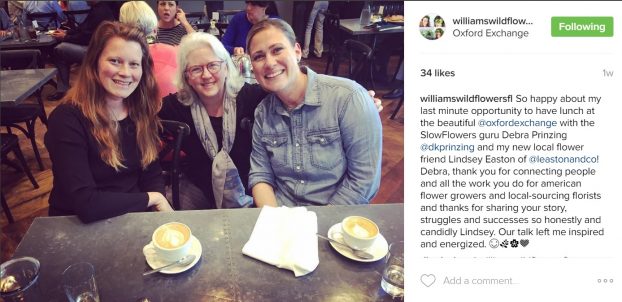
Screen grab from Annie’s feed ~ makes me happy!
My trip to Florida was at the invitation of the wonderful folks at the Boca Grande Garden Club, a vibrant, intellectually curious, engaged group of people who love the region, who care about conservation and sustaining Florida’s fragile environment. They invited me to share the Slow Flowers story with them, which I did the day prior to meeting Lindsey and Annie.
I loved my visit and I loved seeing the wilder beauty of the Florida Gulf Coastline. I toured a few cool botanical gardens while driving up and down that coastline, and I even brought home two gorgeous species bromeliads (in a carry-on tote) to satisfy my newfound passion for tropicals, along with some amazing seashells collected with permission from Boca Grande.
In a state known for agriculture, including everything from ferns and foliage galore to citruses and tropicals, it is sad to realize that the cut flower industry is proportionally very small compared to so many other states.
Yet, a dynamic collective of farms that specialize in cut greenery and ferns put Florida in the top 5 states for floriculture. There is even one amazing cut clematis farm called Roseville Farms, but small-scale flower farming a la Slow Flowers is rare.
It is rare, but returning, thanks to people like Lindsey and Annie, farmer-florists who are innovative and experimental. There’s no playbook — they are making it up as they go along through experimentation, trialing, plugging into other communities like Master Gardeners (for Lindsey) and the Native Plant community (for Annie).
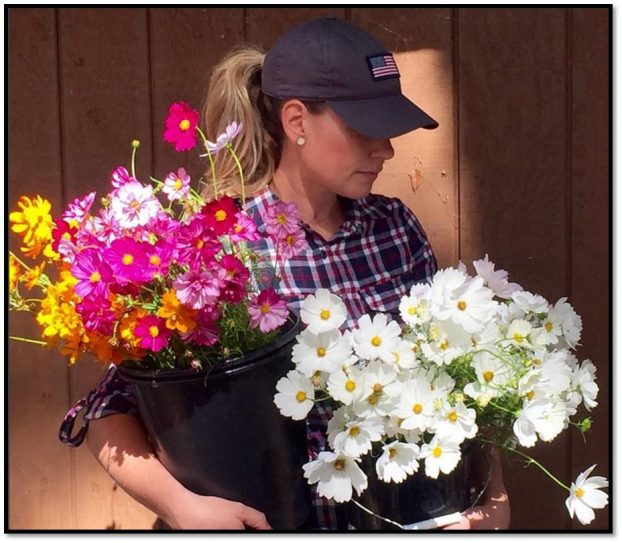
Farmer-florist Lindsey Easton
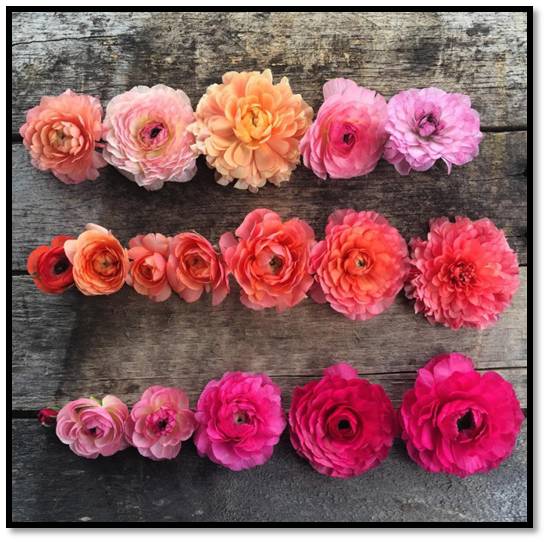
Pretties from Lindsey’s Instagram feed
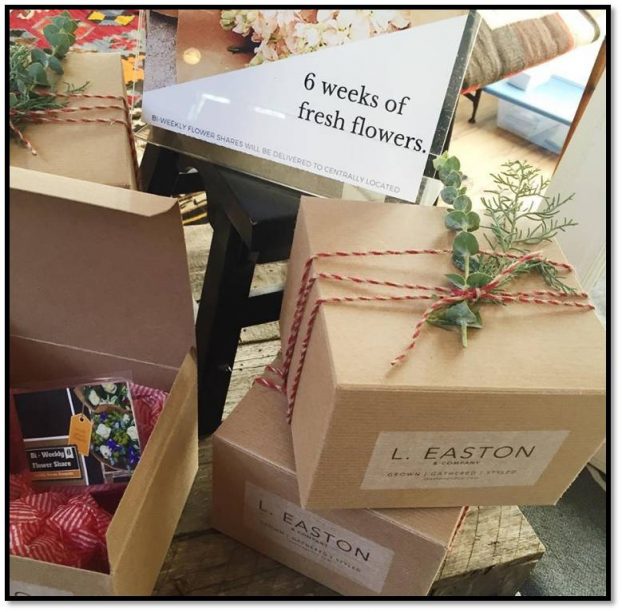
Stylish packaging and marketing reveals Lindsey’s background in art and interior design
Before we turn to the interview, here’s a bit more about Lindsey Easton:
As she writes on her web site, Lindsey’s childhood was spent amongst the farm fields of the Midwest. That instilled in her a love of wide open spaces which allowed freedom to create and dream. Originally a fine arts major turned interior design major, her passion is in the creative process. Having spent the last decade working in the design field with excellent mentors and peers, Lindsey reconnected with her agricultural roots after having two children and seeking ways to get closer to where she started.
That’s when L. Easton & Company was born. Her farm and studio are a celebration of the seasons, of cultivating beautiful blooms and creating a wonderful childhood for my children. She and her husband consider themselves lucky to raise their family on a beautiful piece of land and she is excited to share it with her clients and community. L. Easton & Co.’s brand is “grown, gathered, styled.”
Follow Lindsey at these social places:
Lindsey/L. Easton + Co. on Facebook
Lindsey/L. Easton + Co. on Instagram
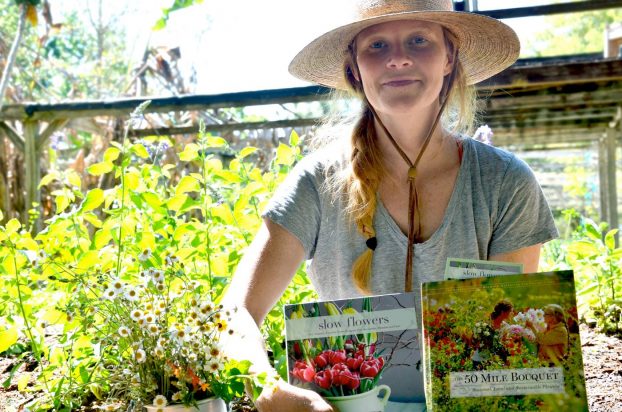
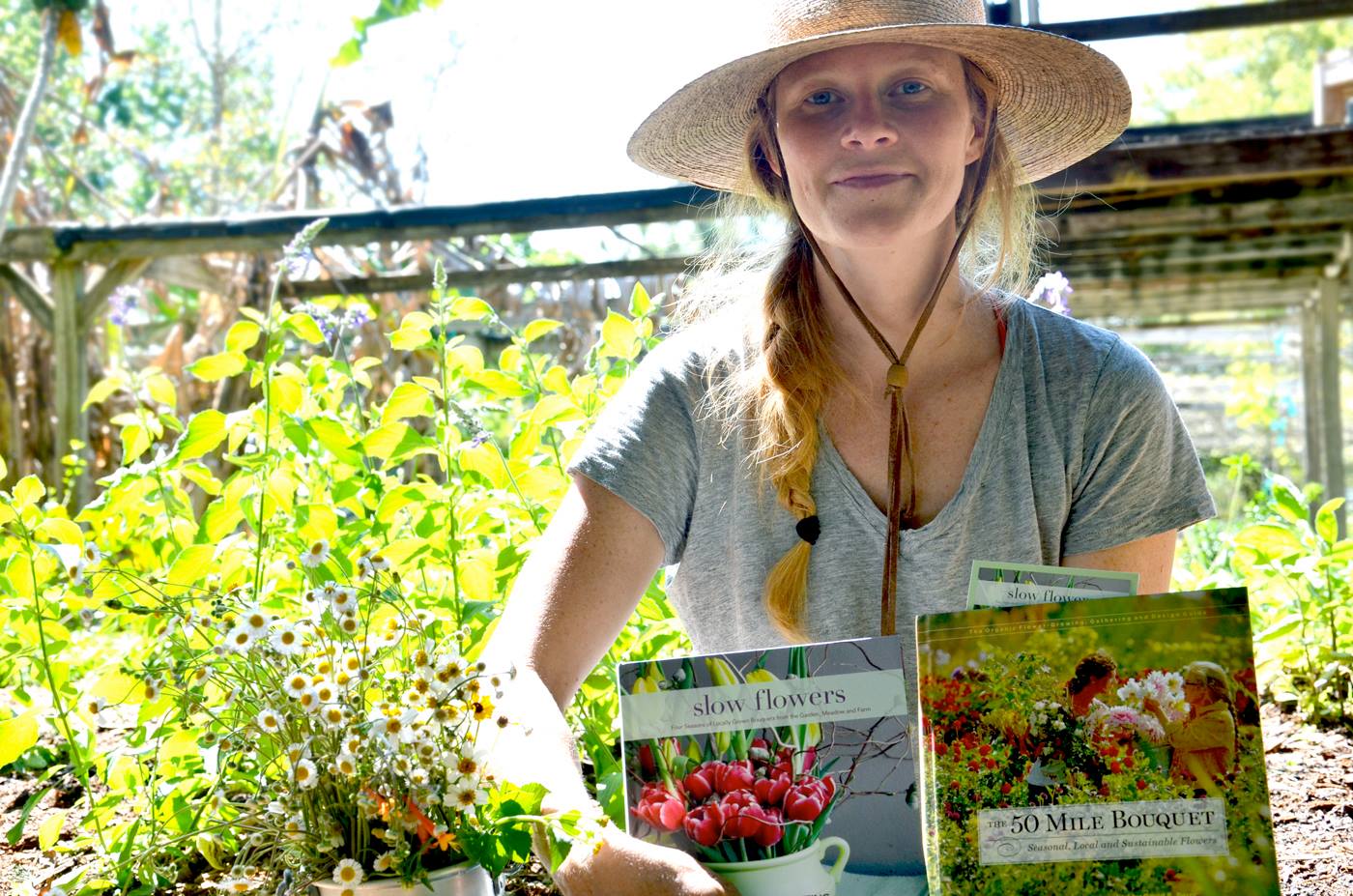
Love this sweet pic of Annie Schiller, with a couple of my books xoxo
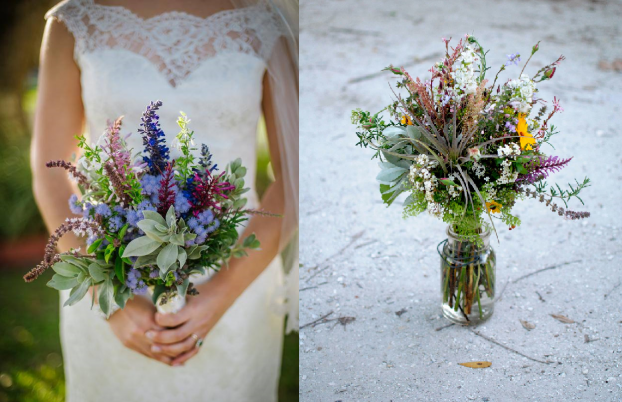
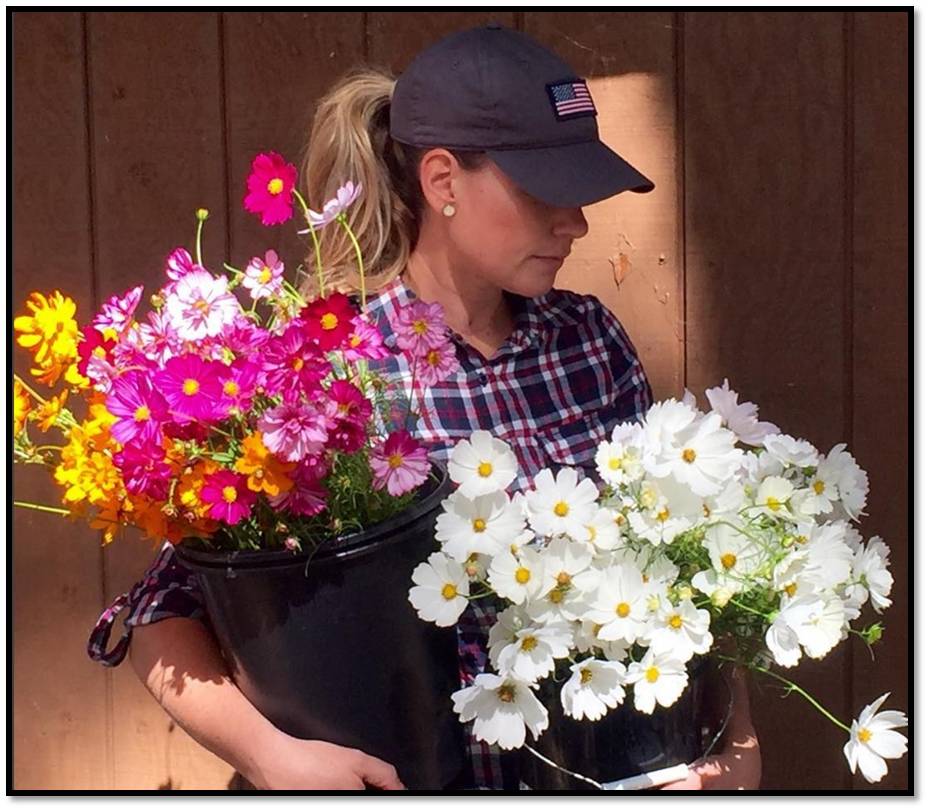
The “wild” design work of Annie Schiller (Florida, left) and Rachel Andre (New York, right)
Annie Schiller is a returning guest so you may recognize her from last April when I featured a conversation about Williams Wildflowers, and the twin, sister-run design studios, one in Florida (which Annie leads) and one in upstate New York (which Rachel Andre leads). That conversation centered on their philosophy of integrating wildflowers and native plants into beautiful floral design, drawing from their respective regions.
Annie has worked at Florida Native Plants Nursery in Sarasota, Florida, for five years, a destination co-owned and operated by her mother Laurel Schiller, a wildlife biologist with an extensive background in higher education and in the native plant world.
Annie was born in the Bronx and raised in both Chicago and in Florida. She designs butterfly gardens, grows and maintains native and Florida-friendly plants, designs and maintains social and print media (including Williams Wildflowers’ web site) and that of Florida Native Plants. She is interested in wildlife and edible gardening, permaculture, homesteading, vermicompost, sustainable practices, eco art, and floral design. Annie has a background in visual art, art history and graphic design from Florida State University and from her years spent living and working in New York City. Annie currently arranges and designs wildflower bouquets for the Florida branch of William’s Wildflowers.
Follow Annie at these social places:
William’s Wildflowers on Facebook
William’s Wildflowers on Instagram
Listen to Annie on Micro-Macro-Enviro Radio
This podcast shares an update on Annie’s work, and introduces the two young women to you and to each other. I loved being the connector to bring them together and it left me feeling a warm place in my heart for these intrepid flower farmers in Florida. I hope to return soon!
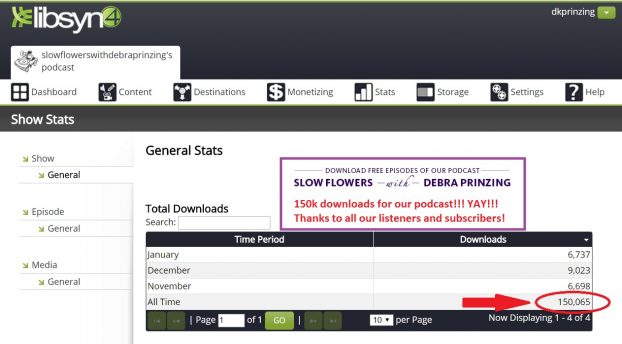
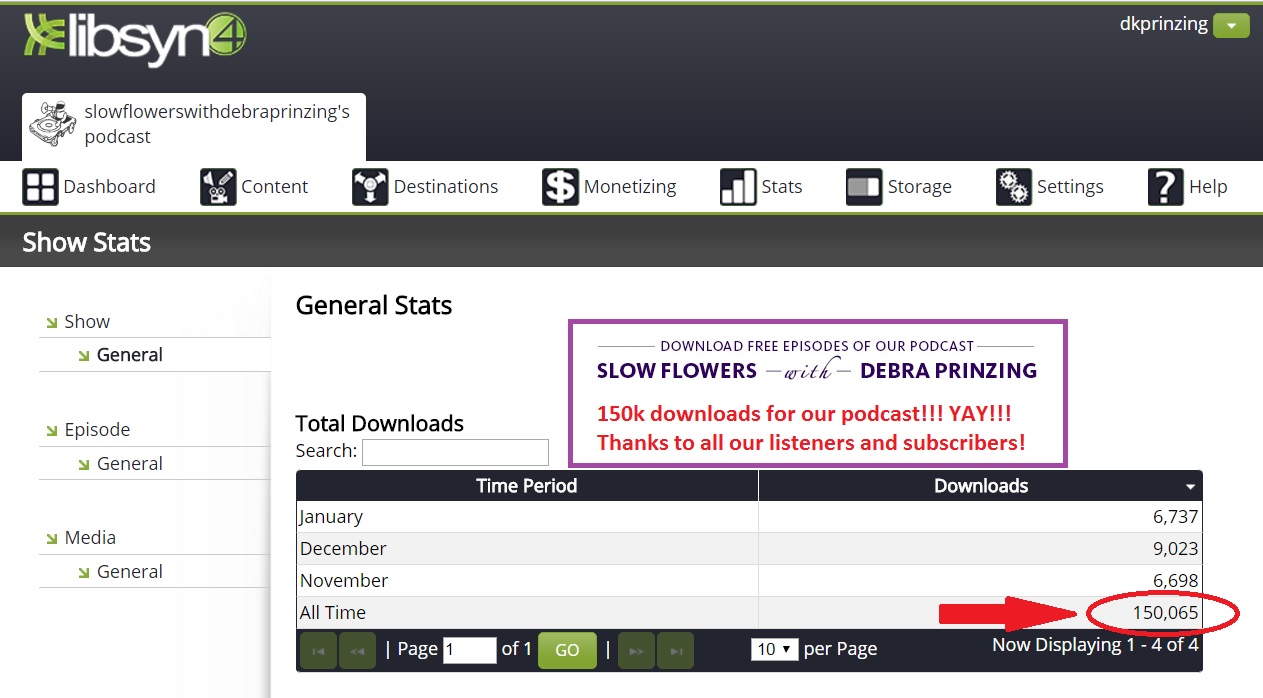
Hurrah!!! We’ve hit the 150,000 mark for listener downloads this week! THANKS everyone!
The Slow Flowers Podcast has been downloaded more than 150,000 times by listeners like you. How about that, folks?!
THANK YOU to each one of you for downloading, listening, commenting and sharing. It means so much.
If you value the content you receive each week, I invite you to show your thanks and support the Slow Flowers Podcast with a donation — the button can be found on our home page in the right column. Your contributions will help make it possible to transcribe future episodes of the Podcast.
Thank you to our lead sponsor for 2017: Certified American Grown Flowers. The Certified American-Grown program and label provide a guarantee for designers and consumers on the source of their flowers. Take pride in your flowers and buy with confidence, ask for Certified American Grown Flowers. To learn more visit americangrownflowers.org. And PS, Certified American Grown is the producer of the Field to Vase Dinner Tour, now in its 3rd year. Last week saw the announcement of the 7 venue for 2017, and you can find a link to that calendar of events at Debraprinzing.com. I’m very excited that three of the seven venues are Slow Flowers members, so check it out and plan to attend!
We’re also grateful for support from Arctic Alaska Peonies, a cooperative of 50 family farms in the heart of Alaska providing high quality, American Grown peony flowers during the months of July and August. Visit them today at arcticalaskapeonies.com
And welcome to our newest sponsor, the Seattle Wholesale Growers Market, a farmer-owned cooperative committed to providing the very best the Pacific Northwest has to offer in cut flowers, foliage and plants. The Growers Market’s mission is to foster a vibrant marketplace that sustains local flower farms and provides top-quality products and service to the local floral industry. Find them at seattlewholesalegrowersmarket.com.
More sponsor thanks goes to Syndicate Sales, an American manufacturer of vases and accessories for the professional florist. Look for the American Flag Icon to find Syndicate’s USA-made products and join the Syndicate Stars loyalty program at syndicatesales.com.
A big bouquet of thanks goes to Longfield Gardens… providing home gardeners with high quality flower bulbs and perennials. Their online store offers plants for every region and every season, from tulips and daffodils to dahlias, caladiums and amaryllis. Visit them at lfgardens.com.
And finally, thank you Association of Specialty Cut Flower Growers. Formed in 1988, ASCFG was created to educate, unite, and support commercial cut flower growers. It mission is to help growers produce high-quality floral material, and to foster and promote the local availability of that product. Learn more at ascfg.org.
I’m Debra Prinzing, host and producer of the Slow Flowers Podcast. Next week, you’re invited to join me in putting more American grown flowers on the table, one vase at a time. And If you like what you hear, please consider logging onto Itunes and posting a listener review.
The content and opinions expressed here are either mine alone or those of my guests alone, independent of any podcast sponsor or other person, company or organization.
The Slow Flowers Podcast is engineered and edited by Andrew Brenlan. Learn more about his work at shellandtree.com.
Music credits:
Parapassargada
by Zoe
https://zoe3.bandcamp.com/album/zoe
Licensed under Creative Commons Attribution-NonCommercial-NoDerivs 3.0
Brass Buttons; Cradle Rock
by Blue Dot Sessions
Posted in American Grown, Blog Posts, Creativity, floral design, Flower Farming, General, Plants, Podcast Episodes, SLOW FLOWERS Podcast, Slowflowers.com the Directory of American Flowers | 1 Comment »
January 18th, 2017
Podcast: Play in new window | Download
Subscribe: Apple Podcasts | Podcast Index | | More
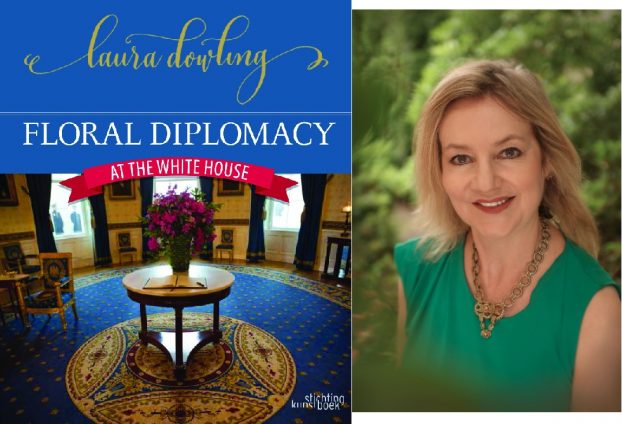
Today’s lovely guest, Laura Dowling, former Chief Floral Designer under President Barack Obama and First Lady Michelle Obama, from 2009-2015
I’m so pleased this week to feature my conversation with Laura Dowling, who served as the White House florist for six years during the Obama Administration. The timing for her appearance here is no coincidence. I’m determined to celebrate beauty, art, culture and human kindness today. It’s a tough week for me and for many of you, I’m sure. By focusing on flowers and on Laura’s unique perspective, not to mention the role she played designing florals for our outgoing POTUS and FLOTUS, their homes and offices, and America’s people, I might just get through the events of this week.
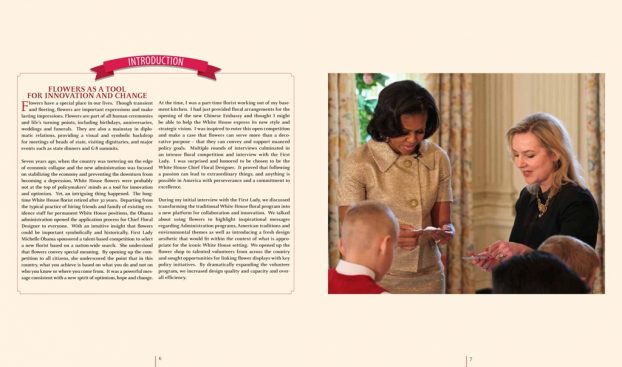
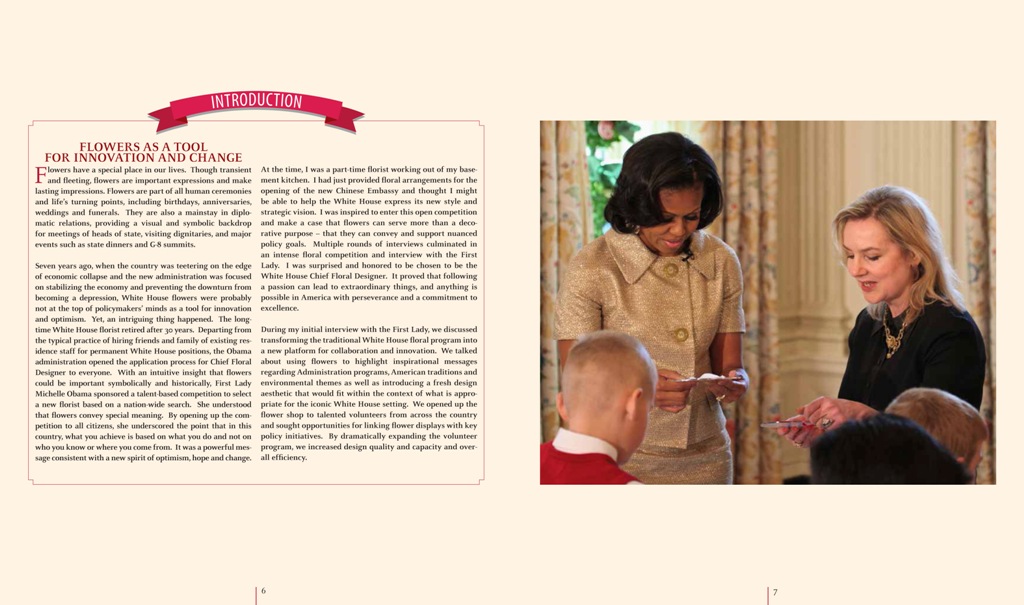
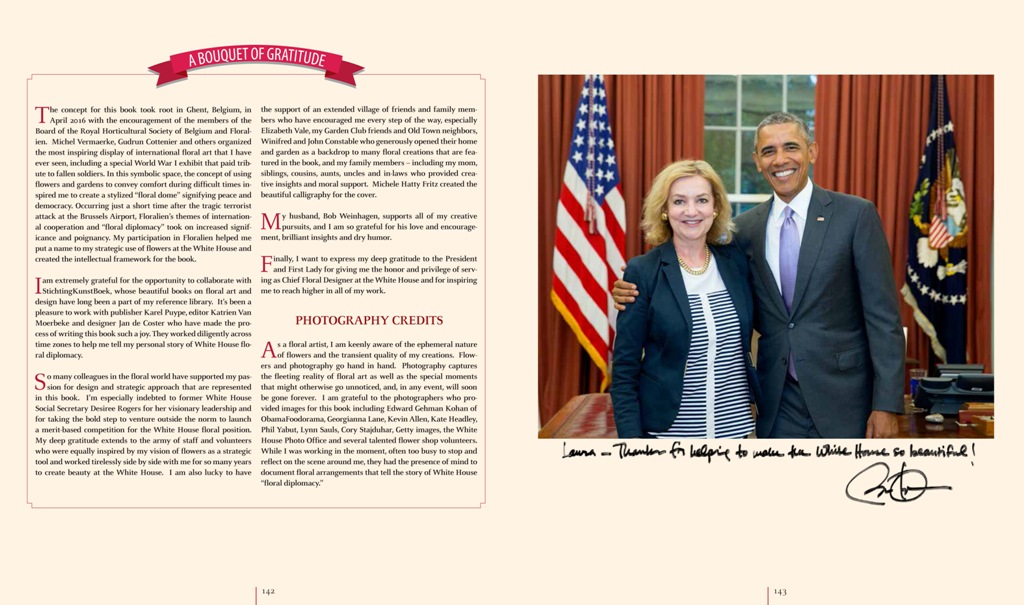
“Flowers as a tool for innovation and change,” a spread depicting Laura Dowling with First Lady Michelle Obama
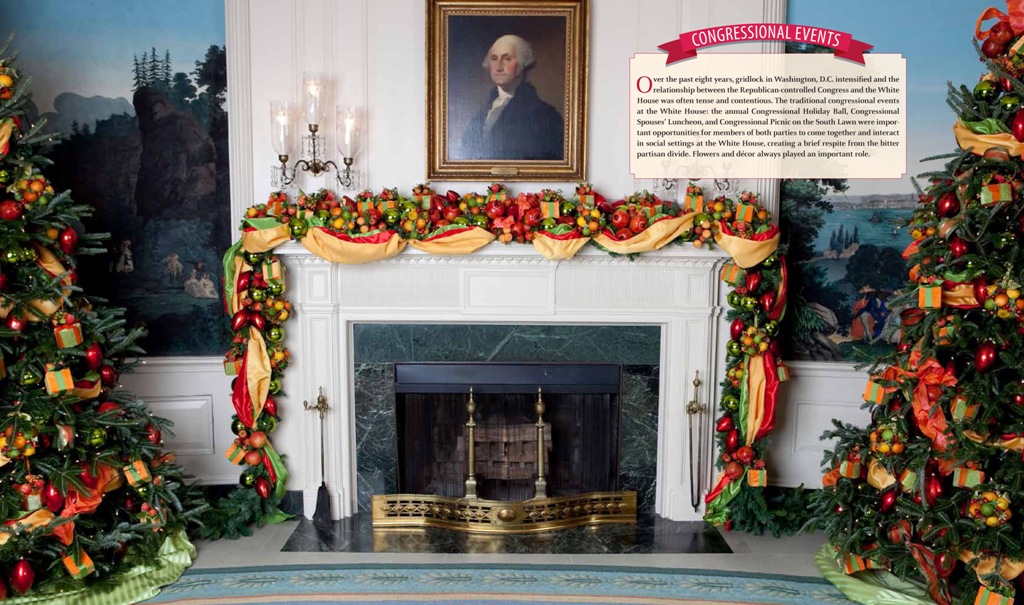
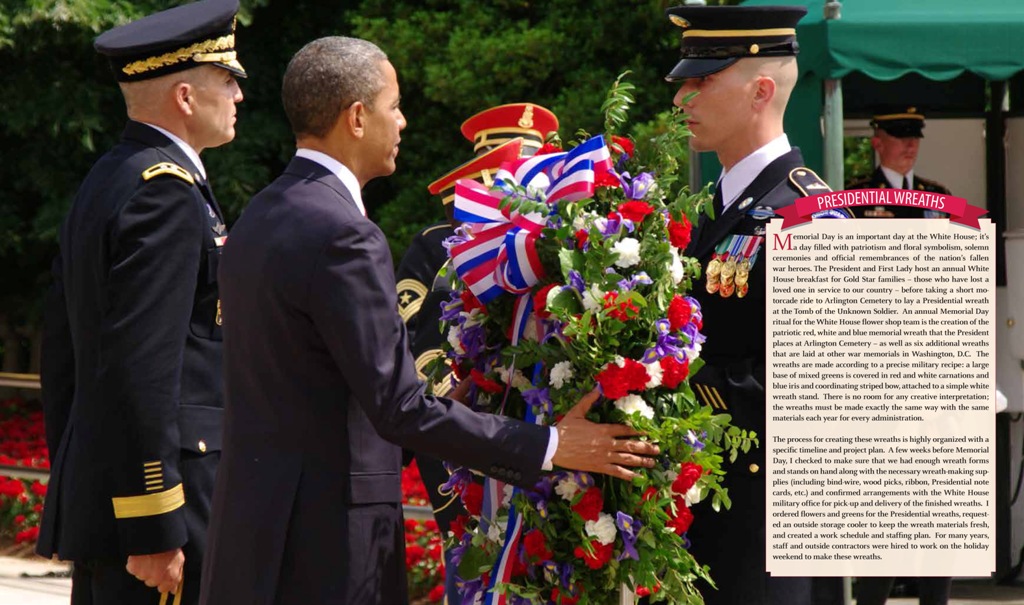
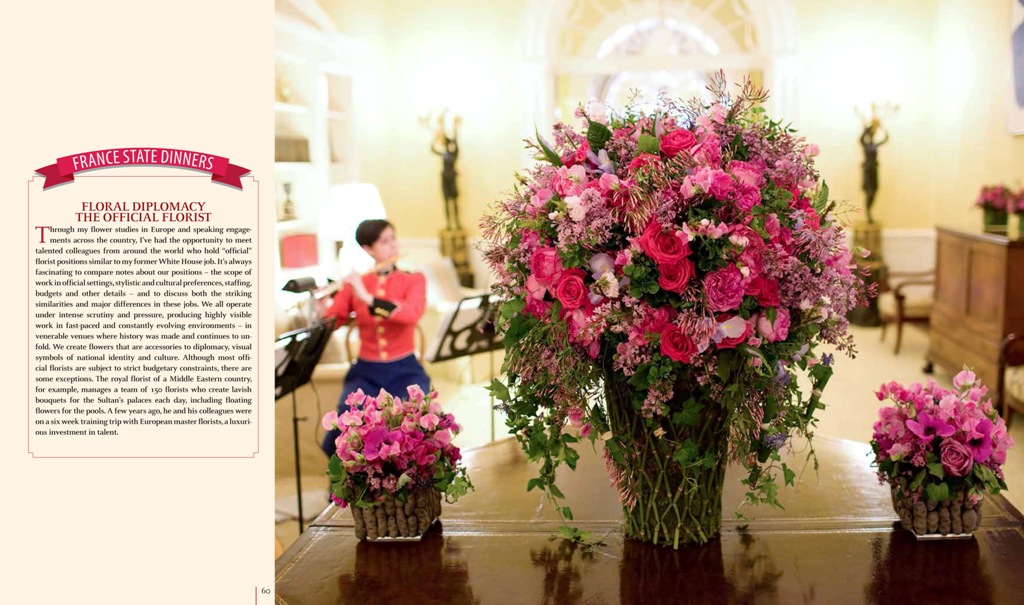
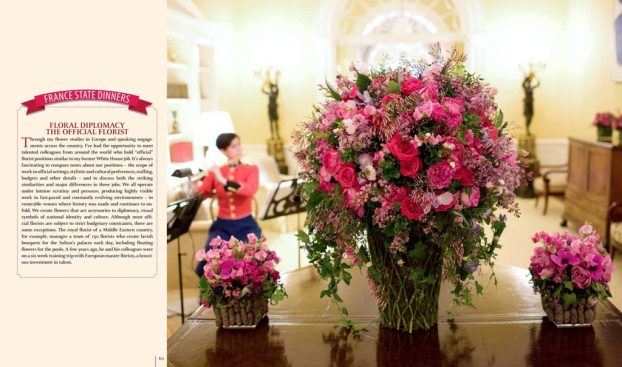
Laura’s brand new book, Floral Diplomacy at the White House, is published by Stichting Kunstboek, a major European imprint, the 144-page hardcover book has more than 100 photographs, many of which are from the official White House photography taken to document the activities of the Obama Administration — and illustrate how and where Laura’s flowers played a role in our nation’s history. Floral Diplomacy is available for pre-order on Amazon and will be in retail bookstores by early February. Order your copy here.
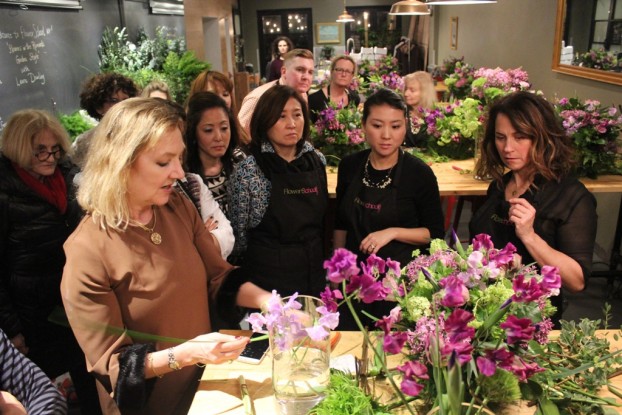
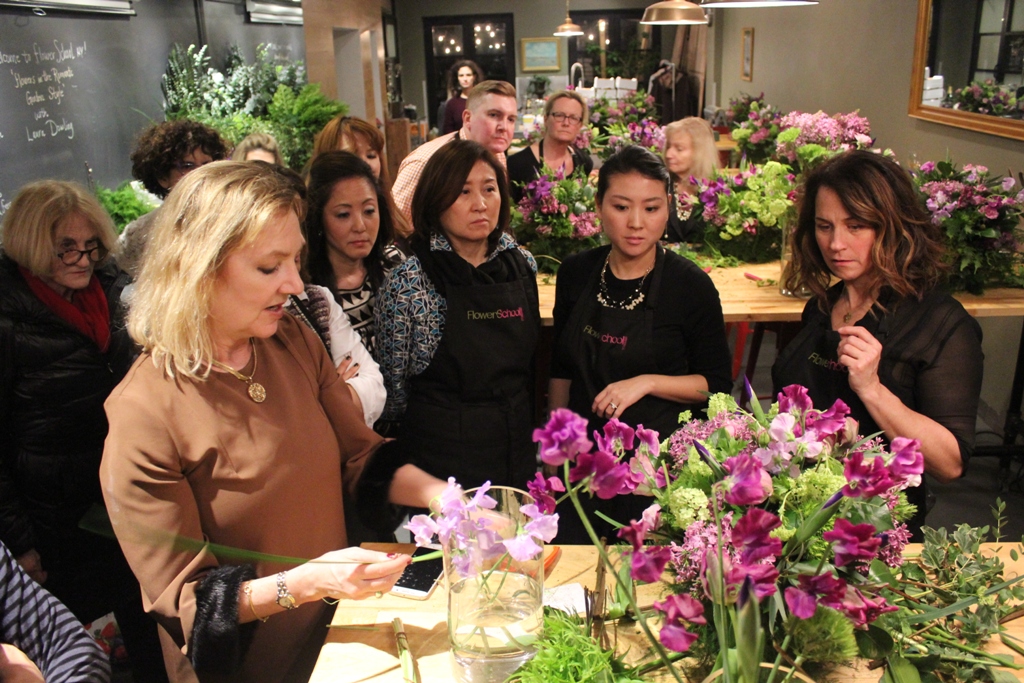
Students at FlowerSchool New York were enthralled by the chance to work directly with Laura Dowling at an early February 2016 workshop.
To introduce Laura, I’d like to share an excerpt from a post I wrote about one year ago. The occasion was inspired by my taking a fabulous 2-hour workshop at FlowerSchool New York in early February 2016, which hosted one of Laura’s first major industry appearances since she left her White House position in March 2015.
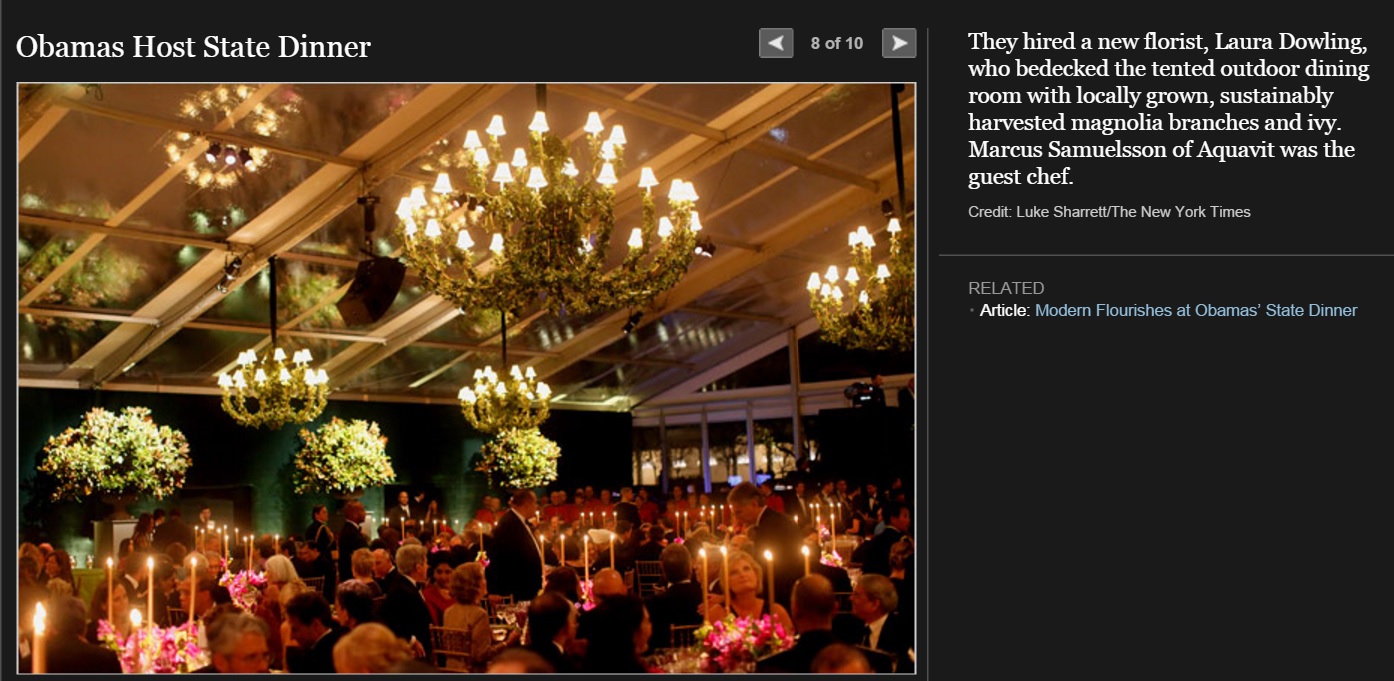
I had been eager to meet Laura Dowling ever since I first read about her appointment as White House Florist in 2009. I remember being so enthralled with the New York Times story about Laura’s choices for decorating her first State Dinner (it was the Obama’s first State Dinner, too), for India’s Prime Minister in November of that year.
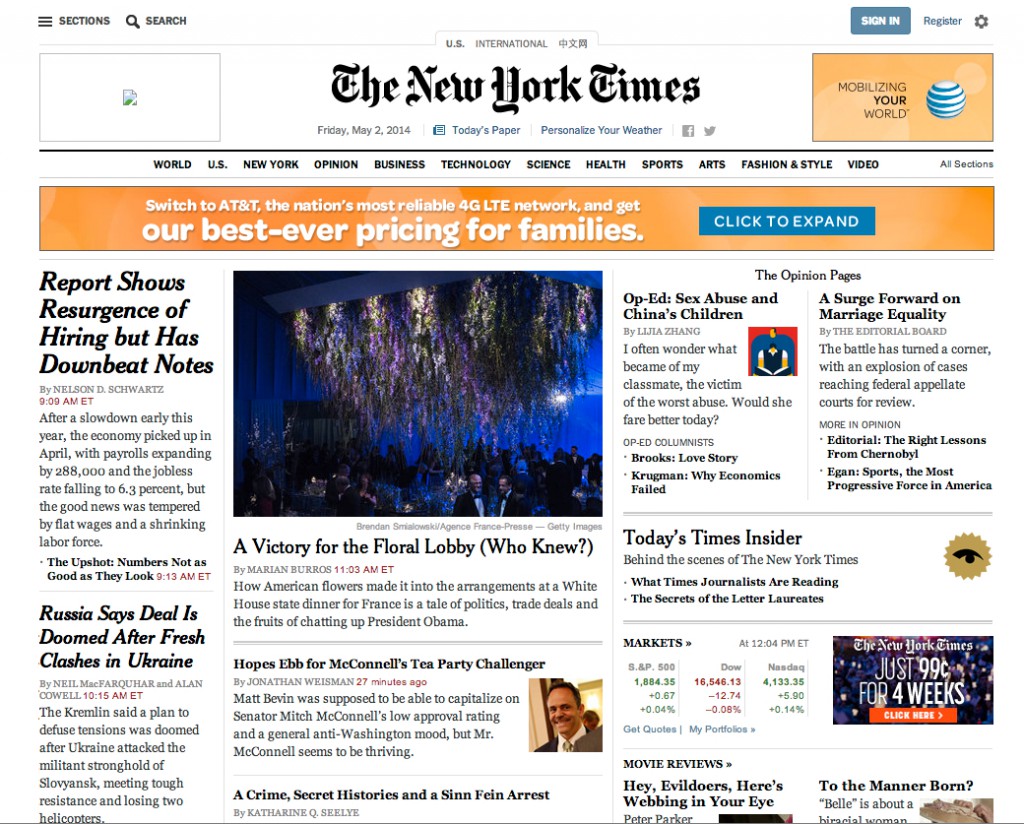
American Grown Flowers at the White House – as reported on by the New York Times.
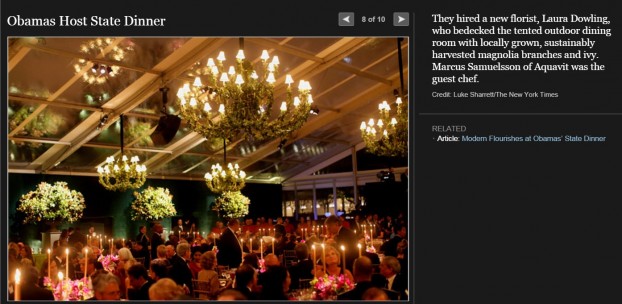 Here’s an excerpt of that report:
New York Times (November 25, 2009): “Old Standards with Modern Flourishes as Obamas Host First State Dinner,” by Rachel L. Swarns
” . . . at their first state dinner on Tuesday night, President Obama and his wife, Michelle, made sure to infuse the glittering gala with distinctive touches.
“They hired a new florist, Laura Dowling, who bedecked the tented outdoor dining room with locally grown, sustainably harvested magnolias and ivy.”
Of course, I seized on the language: “locally grown, sustainably harvested,” and ever since I watched closely for signs of Ms. Dowling’s preferences toward the flowers grown near her in Virginia, Maryland, New Jersey, Pennsylvania, and those that may be further away but still from domestic U.S. Farms.
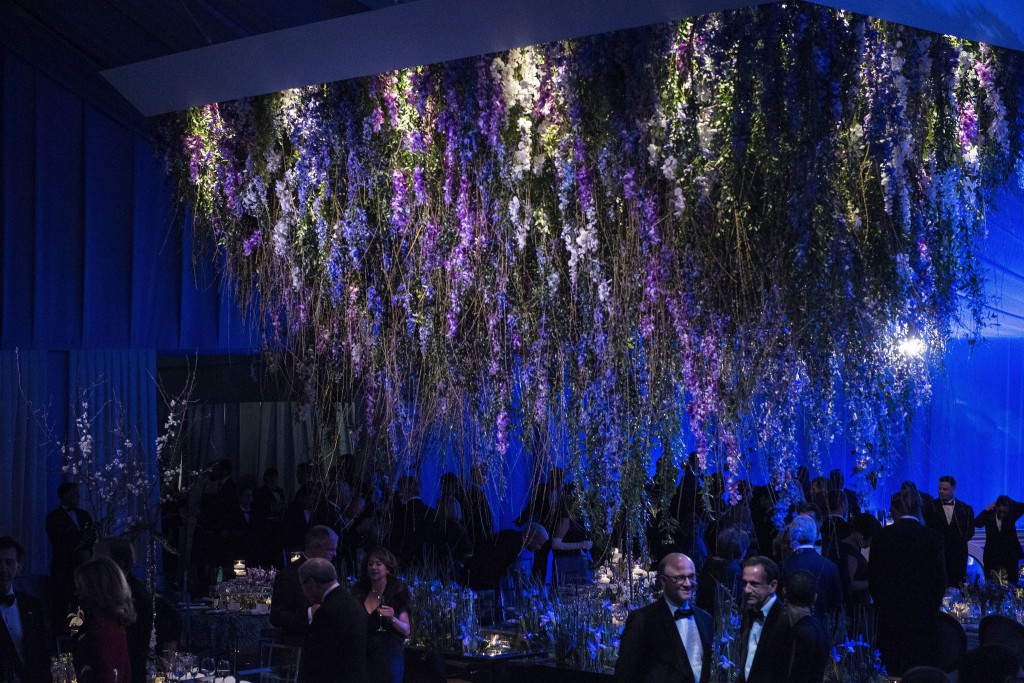
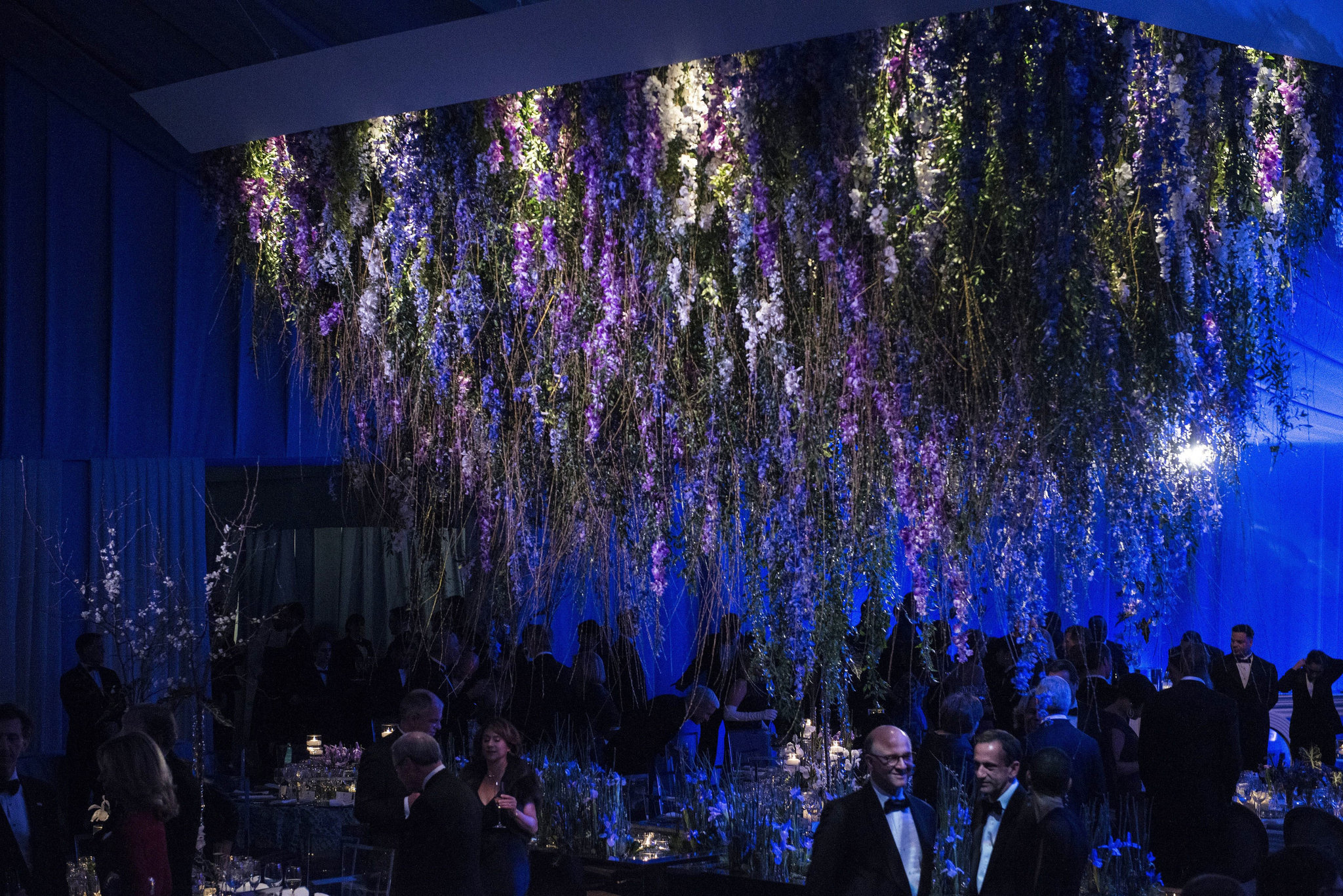
The floral ceiling chandelier — using all American grown floral ingredients — from the White House State Dinner (photo: Brendan Smialowski/Agence France-Presse)
The Slow Flowers Movement enjoyed a subsequent “win” for the cause in February 2014, when the State Dinner for French President Francois Holland yielded the White House’s most public acknowledgement to date about using all-American blooms. There was so much enthusiasm for that public support of American grown flowers that when USDA Deputy Secretary Krysta Harden blogged about the news, it generated more than 150 comments.
After a heady, six-year run as the current administration’s Chief Florist, Laura Dowling returned to civilian life in early 2015 — and she is connecting with the floral design community and American flower farmers more than ever.
In her position as Chief Florist, Laura Dowling planned and implemented decorations for major events at the White House, including the White House Christmas, state dinners, the presidential family quarters, the public tour route displays, and Camp David.
Now, Laura is focusing her creativity on sharing the “Floral Diplomacy” message on both the global and local stage. Her Alexandria, Virginia, studio is a hub of design commissions, several upcoming book projects, and floral styling for photo shoots and more. Her world seems to no longer be dominated by carefully-worded statements and all sorts of other persons’ political agendas, so we’re having a chance to get to know this lovely, gifted and generous floral artist, educator and yes, floral diplomat.
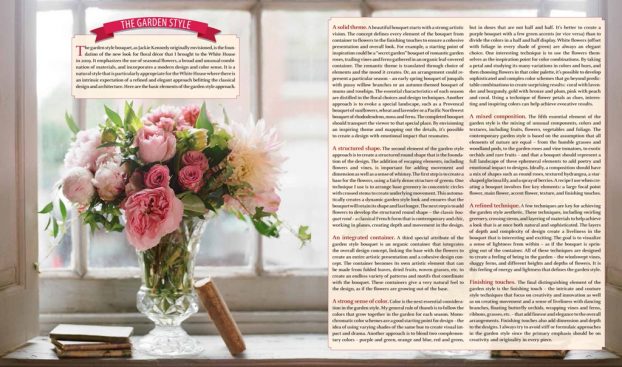
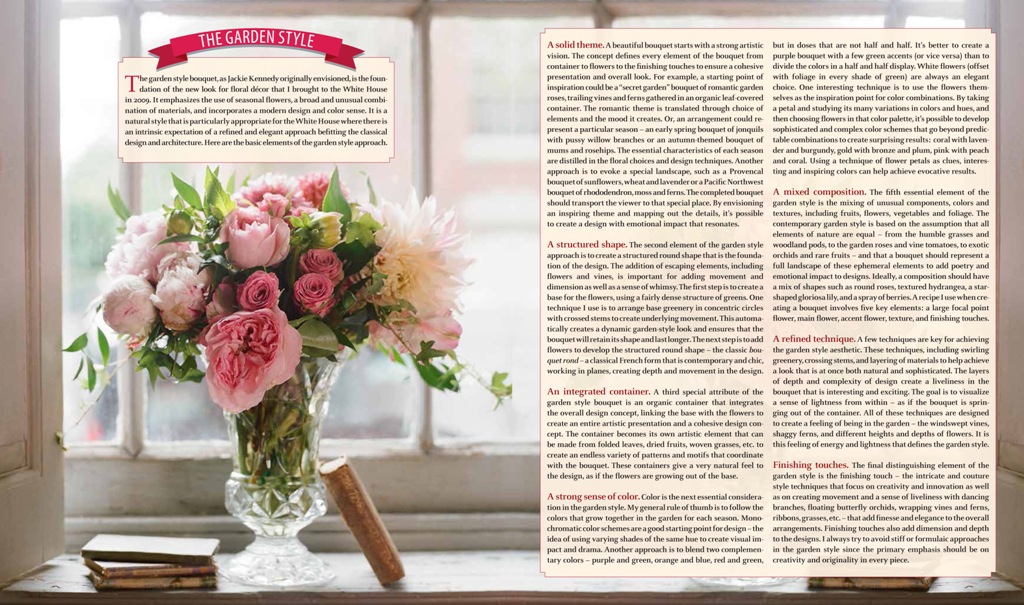
“The Garden Style,” a spread from Floral Diplomacy
Laura is a Washington State native who grew up in the rural area outside Chehalis, which is halfway between Seattle and Portland in Western Washington. She writes about her connection to this place in, Floral Diplomacy, noting her childhood dominated by the shadow of Mt. St. Helens and Mt. Rainier and the rolling farm country of the Pacific Northwest, saying, “I have no doubt that growing up in such close proximity to the landscape, surrounded by the epic splendor of the Pacific Northwest, gave me a lifelong appreciation of nature, a sensitivity to composition and colors, flowers and the aspiration to create beauty.”
It is that connection to the PNW that brought us together as friends, since Laura and her husband Bob Weinhagen often return to the Pacific Northwest from Washington, D.C., to visit family, including Laura’s mother who still lives in the area where she was raised.
We agreed to meet right before Christmas in the lobby of a downtown Seattle hotel, to speak about Laura’s amazing career and the new book, Floral Diplomacy.
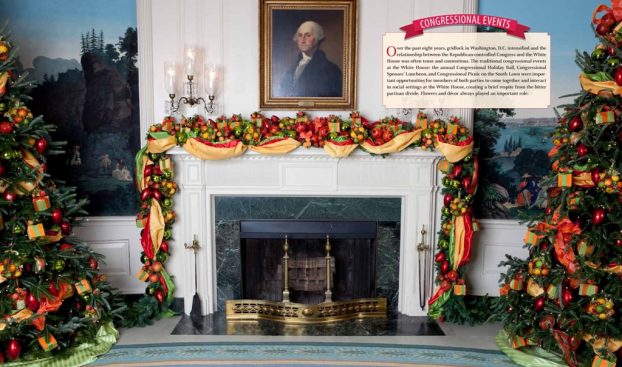
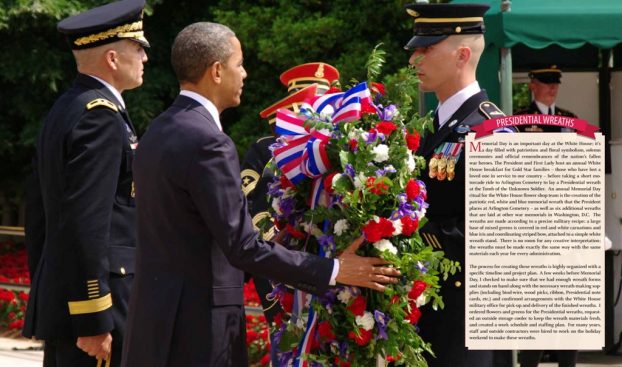
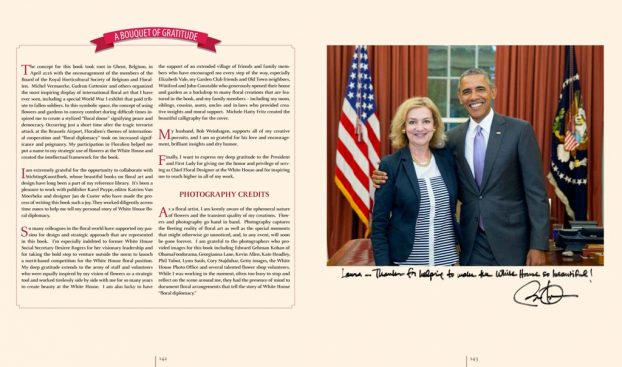 It is an exquisite document of how flowers and floral design played a role in the Obama Administration. In her acknowledgements, Laura writes: “I want to express my deep gratitude to the President and First Lady for giving me the honor and privilege of serving as Chief Floral Designer at the White House and for inspiring me to reach higher in all my work.”
Please enjoy our conversation and learn more about the creative individual who flowered the “People’s House” for six beautiful years.
Find Laura Dowling on Facebook
Follow Laura Dowling on Instagram
Thanks so much for joining me today. I hope you are as inspired as I am about the powerful role flowers can play. Laura broke new ground with the idea that flowers could be more than just decorative placements; she views floral designs as an important strategic tool that can communicate specific diplomatic, symbolic and policy messages.
Returning to the private sector, Laura’s expanded platform now includes event design and consulting, writing and speaking about floral design, and presenting workshops and demonstrations throughout the world. Her goal is to share her unique vision for creating flowers designs in the garden style and to inspire others with her personal story.
Pursuing our passion is what the Slow Flowers Podcast is all about.
It is my hope that when you hear from pioneering voices, thought leaders and creative innovators, not to mention environmental activists and advocates for the Slow Flowers Movement that I feature week in and week out, you, too will be inspired to reach higher in all of your work.
You are not alone. You are part of this community, and as one of our most active members recently reminded me, the way forward is “community over competition” — how true that is. I invite you to share your thoughts in the comment section below.
The Slow Flowers Podcast has been downloaded more than 148,000 times by listeners like you. THANK YOU to each one of you for downloading, listening, commenting and sharing. It means so much. If you value the content you receive each week, I invite you to show your thanks and support the Slow Flowers Podcast with a donation — the button can be found on our home page in the right column. Your contributions will help make it possible to transcribe future episodes of the Podcast.
 Thank you to our lead sponsor for 2017: Certified American Grown Flowers. The Certified American-Grown program and label provide a guarantee for designers and consumers on the source of their flowers. Take pride in your flowers and buy with confidence, ask for Certified American Grown Flowers. To learn more visit americangrownflowers.org.
We’re also grateful for support from Arctic Alaska Peonies, a cooperative of 50 family farms in the heart of Alaska providing high quality, American Grown peony flowers during the months of July and August. Visit them today at arcticalaskapeonies.com
More sponsor thanks goes to Syndicate Sales, an American manufacturer of vases and accessories for the professional florist. Look for the American Flag Icon to find Syndicate’s USA-made products and join the Syndicate Stars loyalty program at syndicatesales.com.
A big bouquet of thanks goes to Longfield Gardens… providing home gardeners with high quality flower bulbs and perennials. Their online store offers plants for every region and every season, from tulips and daffodils to dahlias, caladiums and amaryllis. Visit them at lfgardens.com.
And finally, thank you Association of Specialty Cut Flower Growers. Formed in 1988, ASCFG was created to educate, unite, and support commercial cut flower growers. It mission is to help growers produce high-quality floral material, and to foster and promote the local availability of that product. Learn more at ascfg.org
I’m Debra Prinzing, host and producer of the Slow Flowers Podcast. Next week, you’re invited to join me in putting more American grown flowers on the table, one vase at a time. And If you like what you hear, please consider logging onto Itunes and posting a listener review.
The content and opinions expressed here are either mine alone or those of my guests alone, independent of any podcast sponsor or other person, company or organization.
The Slow Flowers Podcast is engineered and edited by Andrew Brenlan. Learn more about his work at shellandtree.com.
Music credits:
Jupiter the Blue; Traveling Made-Up Continents; Instrumental #2 Revisited
by Gillicuddy
Licensed under Attribution-NonCommercial 3.0 International License.
Vinyl Couch
by Blue Dot Sessions
Posted in American Grown, Blog Posts, Book reviews, Creativity, floral design, General, Podcast Episodes, SLOW FLOWERS Podcast, Writing | No Comments »
January 11th, 2017
Podcast: Play in new window | Download
Subscribe: Apple Podcasts | Podcast Index | | More
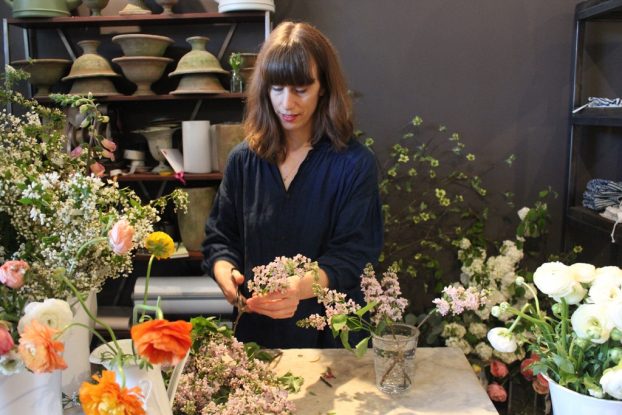
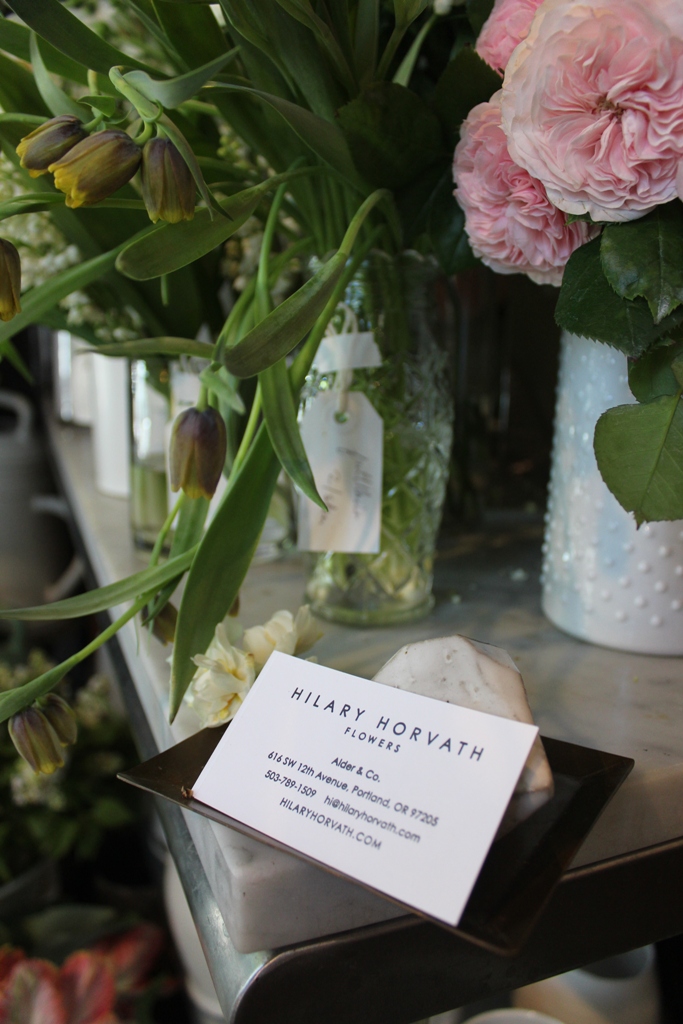
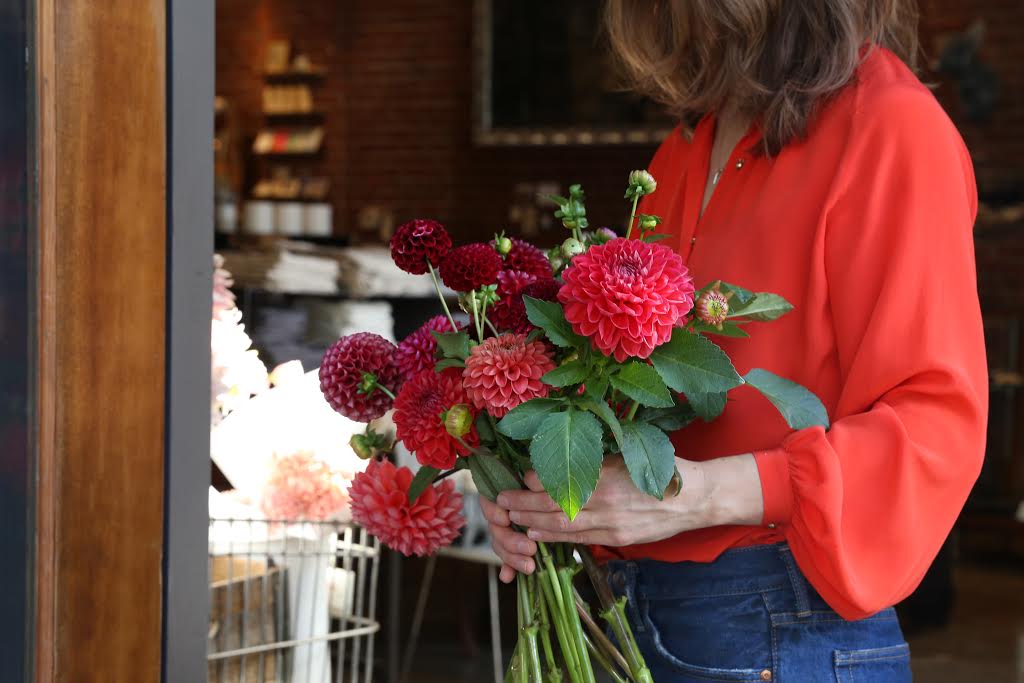
Hilary Horvath designs an impromptu bouquet for a customer at her eponymously-named shop inside Portland’s Alder + Co.
 We’ve had some amazing extended episodes in the past month and now it’s time to return to our familiar format of single conversations with singular individuals.
This week’s guest is Hilary Horvath of Portland’s Hilary Horvath Flowers.
Airing today’s conversation with Hilary is a timely follow-up to last week’s episode when we released our 2017 Floral Insights and Industry Forecast.
If you missed that episode, take a moment to download and hear the many things happening as the Slow Flowers Movement disrupts and shifts the way flowers are grown, marketed and used by designers. You can find a link to a PDF of the Report here.
In that report, I cited a renaissance taking place among with brick-and-mortar flower shops in markets across the country where main street mom-and-pop florists are closing their doors. Hilary Horvath Flowers embodies the new flower shop model — and I’m delighted to share her story with you today.
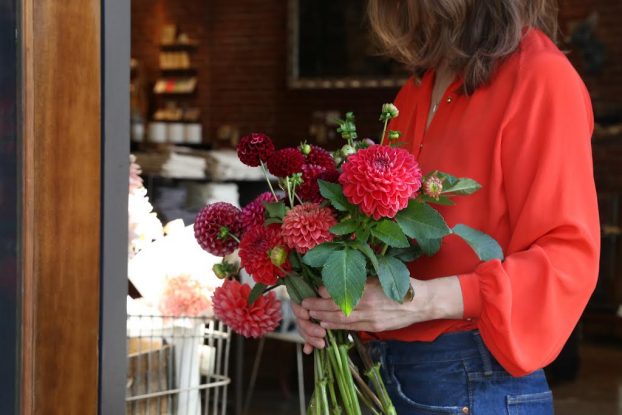
I’m not sure how we first met, but recently, I was looking through photos from a Little Flower School of Brooklyn workshop that came to Schreiner’s Iris Farm in Oregon a few years ago and there was Hilary in my gallery of images. I had forgotten that we met taking that lovely design workshop together.
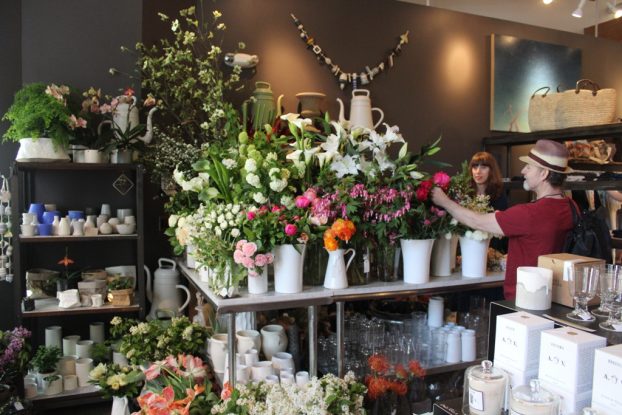
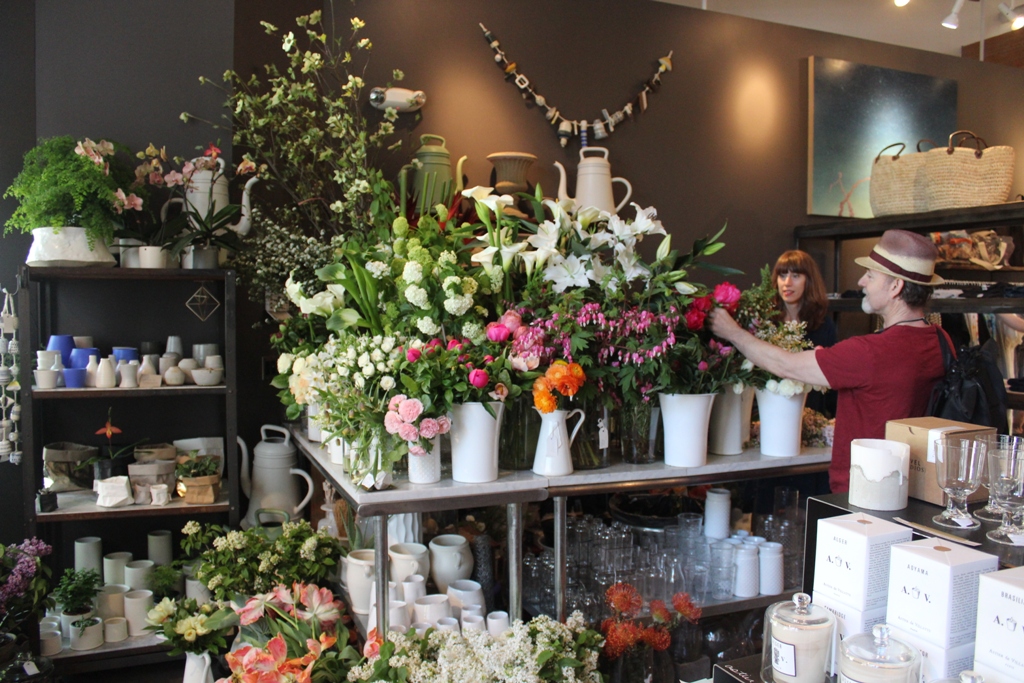
Hilary Horvath Flowers inside Alder + Co.
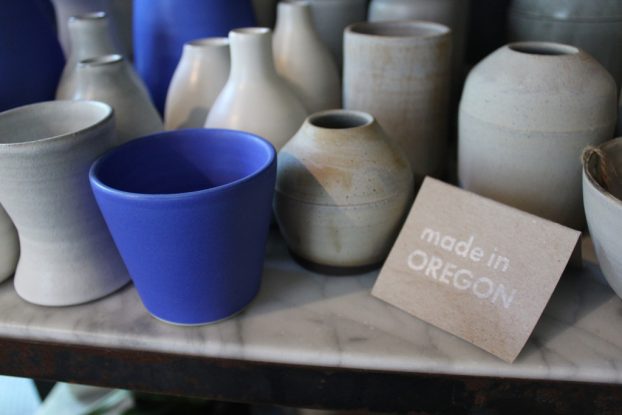
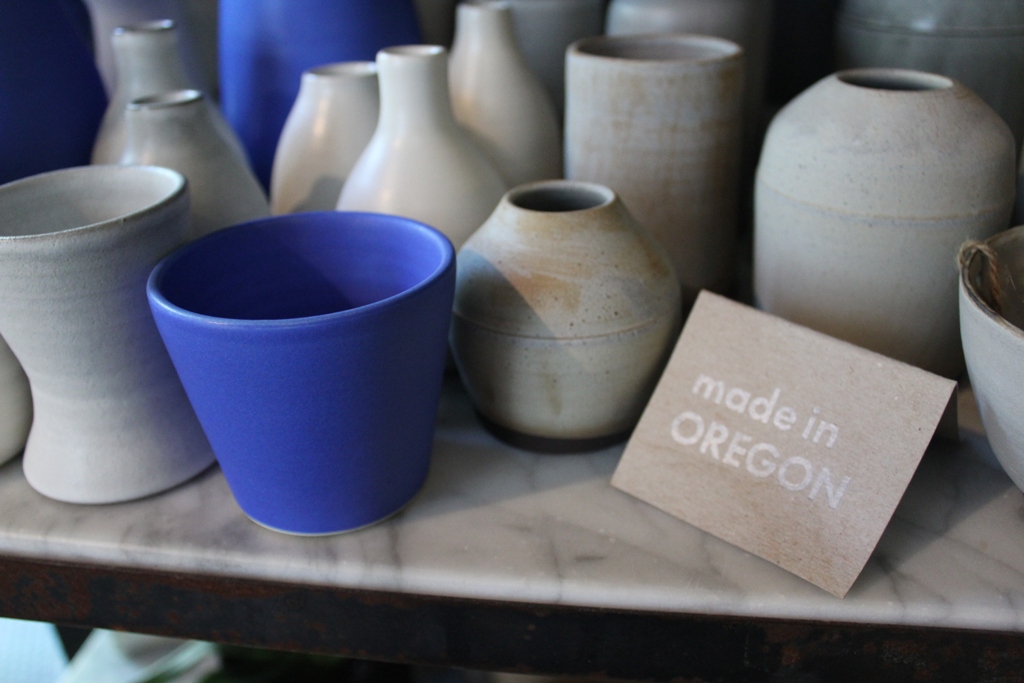
Since then, I’ve visited her beautiful flower shop, which resides just inside the entry of Alder + Co., a perfectly curated emporium for clothing, accessory, home, jewelry, paper and textiles — and Hilary’s flowers.
Located on 10th & Alder, on the hip and happening edge of downtown Portland, Hilary Horvath’s flowers spill out onto the sidewalk and seemingly lure in people moved by the beautiful scene.
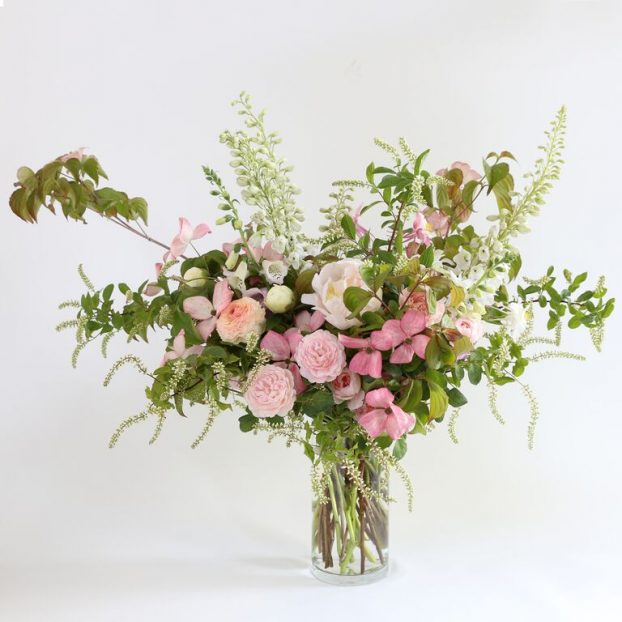
Hilary is dedicated to sourcing the most beautiful flowers to feature in her shop. One of her favorite and distinguished customers has said “not even in Paris are the flowers this beautiful”, and she can believe it as she herself is constantly amazed and inspired by the offerings of the many flower growers with whom she is fortunate to know in the Pacific Northwest.
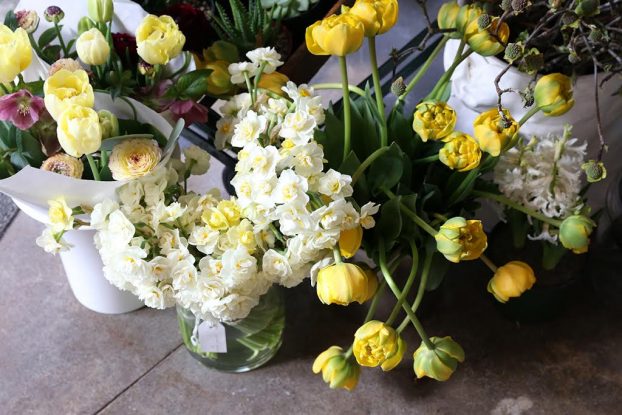
Hilary started working with Welch Wholesale Florist in Indianapolis, Indiana in 1994. She continued to expand her skills in floral arrangement and styling in retail shops in Indiana and Chicago. Hilary has found inspiration in the landscape of the Pacific Northwest and bounty of local growers for nearly a decade. Her flowers range from wild, natural arrangements to romantic, elegant bouquets.
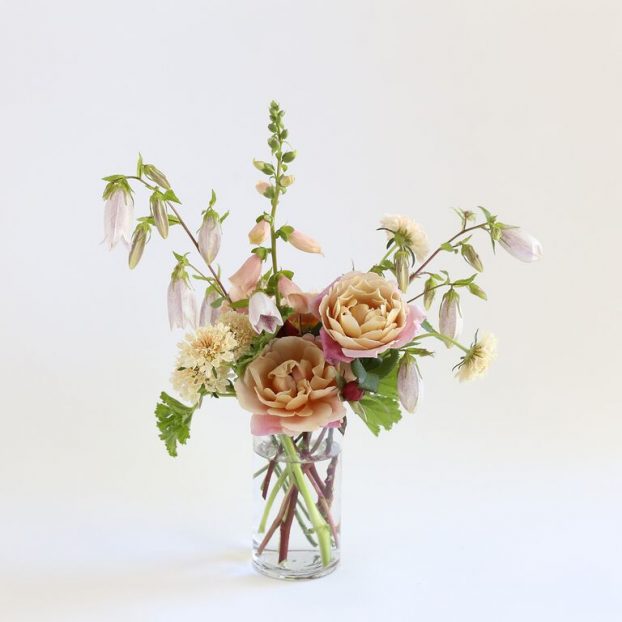 Hilary arranges flowers for weddings, events, photo shoots and individual and business clients throughout the Portland area. She is also happy to travel to accommodate those living outside of Portland who would like her beautiful and unique arrangements.
You’ll hear in our conversation, recorded a few months ago while we shared a cup of tea at a cafe across from Alder + Co., our discussion of Welch Wholesale Florist in Indianapolis.
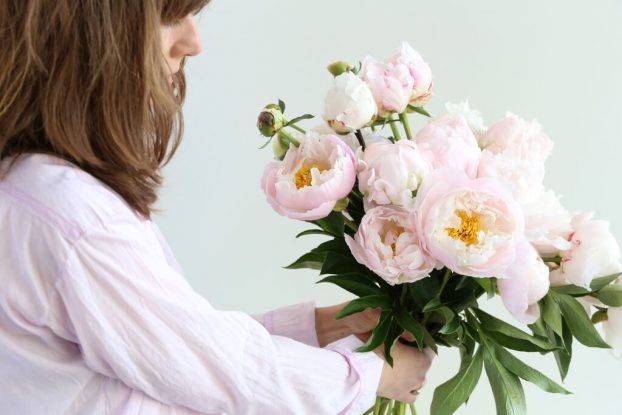 In another small-world chapter of the life I live in flowers, I met the sisters who run Welch Wholesale in 2015 when I was a guest of the Indianapolis Art Museum. I was there to speak at the Museum’s flower festival and to also teach a design workshop.
It was April – a little early for local flowers in Indiana – but the Museum worked with Welch Wholesale to source as many as they could find for our workshop. I remember how much fun it was to discover how resourceful and caring sisters Nora (Welch) Steinmetz and Annie (Welch) Horvath — they ordered local tulips, ranunculus and anemones — straight from flower farmers nearby!
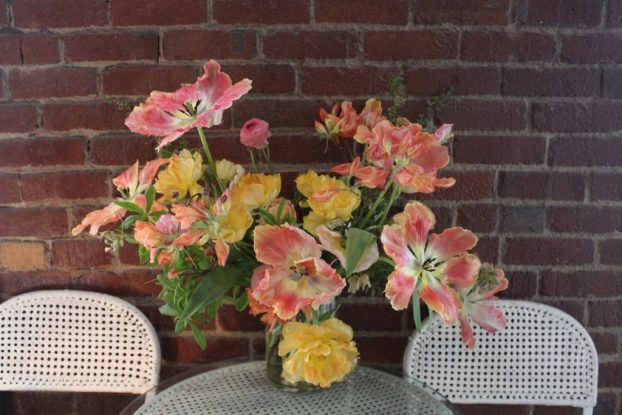
Come to find out, this is where Hilary’s roots in floriculture and horticulture began. I love knowing that this 55-year-old family business is part of her foundation in bringing flowers to her Portland customers.
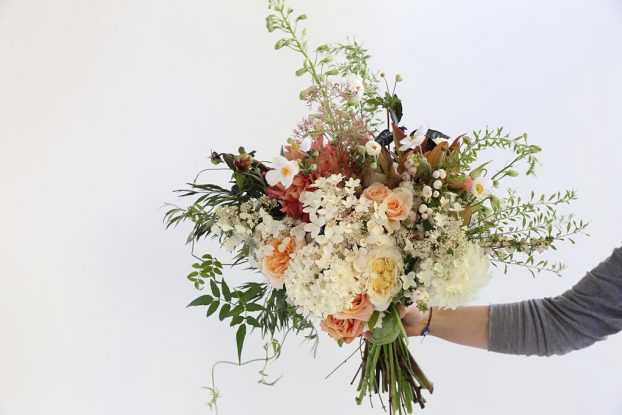
Please enjoy our conversation and these images of Hilary’s beautiful design work. Be inspired by the way seasonal beauty makes its way into her hand-tied bouquets and elegant arrangements.
 Follow Hilary Horvath at these social places:
Hilary on Facebook
Hilary on Instagram
Thanks so much for joining me today.
The Slow Flowers Podcast has been downloaded more than 145,000 times by listeners like you.
THANK YOU to each one of you for downloading, listening, commenting and sharing. It means so much.
If you value the content you receive each week, I invite you to show your thanks and support the Slow Flowers Podcast with a donation — the button can be found on our home page in the right column. Your contributions will help make it possible to transcribe future episodes of the Podcast.
Thank you to our lead sponsor for 2017: Certified American Grown Flowers. The Certified American-Grown program and label provide a guarantee for designers and consumers on the source of their flowers. Take pride in your flowers and buy with confidence, ask for Certified American Grown Flowers. To learn more visit americangrownflowers.org.
We’re also grateful for support from Arctic Alaska Peonies, a cooperative of 50 family farms in the heart of Alaska providing high quality, American Grown peony flowers during the months of July and August. Visit them today at arcticalaskapeonies.com
More sponsor thanks goes to Syndicate Sales, an American manufacturer of vases and accessories for the professional florist. Look for the American Flag Icon to find Syndicate’s USA-made products and join the Syndicate Stars loyalty program at syndicatesales.com.
A big bouquet of thanks goes to Longfield Gardens… providing home gardeners with high quality flower bulbs and perennials. Their online store offers plants for every region and every season, from tulips and daffodils to dahlias, caladiums and amaryllis. Visit them at lfgardens.com.
And finally, thank you Association of Specialty Cut Flower Growers. Formed in 1988, ASCFG was created to educate, unite, and support commercial cut flower growers. It mission is to help growers produce high-quality floral material, and to foster and promote the local availability of that product. Learn more at ascfg.org
I’m Debra Prinzing, host and producer of the Slow Flowers Podcast. Next week, you’re invited to join me in putting more American grown flowers on the table, one vase at a time. And If you like what you hear, please consider logging onto Itunes and posting a listener review.
The content and opinions expressed here are either mine alone or those of my guests alone, independent of any podcast sponsor or other person, company or organization.
The Slow Flowers Podcast is engineered and edited by Andrew Brenlan. Learn more about his work at shellandtree.com.
Music notes:
Vittoro; Lahaina; Manele
by Blue Dot Sessions
Posted in American Grown, Blog Posts, Creativity, floral design, General, Plants, Podcast Episodes, SLOW FLOWERS Podcast, Slowflowers.com the Directory of American Flowers | No Comments »
January 4th, 2017
Podcast: Play in new window | Download
Subscribe: Apple Podcasts | Podcast Index | | More
Happy New Year and Welcome to the third annual Slow Flowers’ Floral Insights and Industry Forecast.
Unlike most TREND reports, this compilation tracks changing shifts, emerging ideas and new concepts that are taking hold in the American floral world. Think of it as your Next, New and Now Report. These topics are gleaned from my conversations and interviews that took place with many of you during 2016– Slow Flowers members, including farmers, florists and creatives. I know some of you have already experienced these emerging developments and your influence has inspired this list.
If you would like a copy of this report, please click here: 2017-floral-insights [PDF download]
I look forward to your reaction, thoughts, and input on the Slow Flowers’ Floral Insights and Industry Forecast, including the ideas and themes I may have overlooked! I invite you to share yours in the comment section below.
Let’s get started:
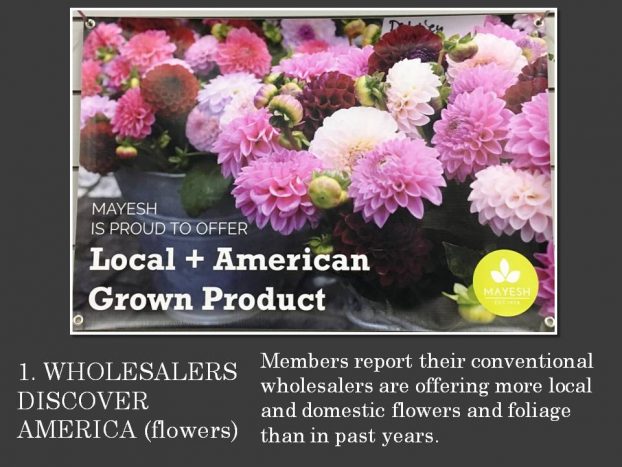
#1 WHOLESALERS ARE DISCOVERING AMERICA. In the midst of global floriculture, with trade in cut flowers estimated at more than $100 billion per year, $13 billion of which takes place in the U.S., we’ve been seduced by the notion that the world is our oyster (or flower field).
Mellano & Co. is a Certified American Grown flower farm.
In many markets around the country, the wholesale florist is the only commercial cut flowers and foliage source for floral designers, flower shops and studios to purchase product.Yet after branding themselves as the only way to access a world of floral options, some wholesale florists are returning to their roots, at least in part. They are proactively sourcing from American flower farms large and small to stock their coolers and shelves. And beyond this step, many are also using signage and labeling to inform buyers of the origin of that product.
I believe the explosion of farmer-florists and the growth of small-scale floral agriculture in markets across North America has occurred in part because of frustration with the lack of or limited local sourcing by conventional wholesalers. Let me say that again: Farmer-Florists and small-scale floral agriculture have stepped into the gaping void created when wholesalers turned their backs on local flower farmers. And now they’re waking up to the missed opportunity.
The success of the Seattle Wholesale Growers Market, well-documented by me and on this podcast over the past several years, as well as the continued growth of the farmer-owned Oregon Flower Growers Association market in Portland underscore that demand for local flowers is already in place.
Now we are witnessing a shift among some conventional wholesalers to align their brand with American Grown and Locally-grown flowers. Mayesh Wholesale Florist is the most active in this arena, with active support for Slowflowers.com, American Flowers Week, Lisa Waud’s Flower House Detroit, and other sponsorships.
When Mayesh opened its renovated Portland, Oregon, branch in early November, the company asked me to make a design presentation. The team there was very supportive of my request for all locally-grown product — hat’s off to Mayesh and I certainly expect that their success at the cash register will motivate other conventional wholesale florists to get onboard.
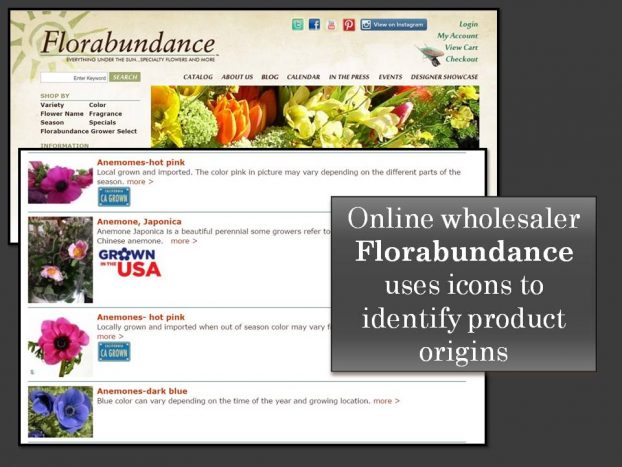
I’ve previously singled out Santa Barbara-based Florabundance, led by Joost Bongaerts, for making the effort to label all California-grown floral and foliage offerings on his online wholesale site. It is an effective tool — one I hope others will emulate. It is certainly a step that demonstrates excellent customer service and an awareness that Florabundance shoppers want to know the origin of the flowers they purchase.
This past fall, I surveyed Slowflowers.com members for their take on a number of topics and trends. When I asked, “If you shop with Conventional Florists, are you finding more American grown and locally-grown product than in the past?” 70 percent of respondents said yes.
Here are a few of the specific comments to elaborate:
- I request American grown from my Rep, and I think there are more boutique, seasonal items that are coming from smaller farmers
- I have been asking my conventional wholesalers to bring in more American grown product and I think it is helping. The “American Grown” branding really helps us to know that is happening.
- It’s definitely taking place and some people at the conventional wholesalers are proud to share that their products are American grown.
This last comment reflects that the industry still has far to go. One member noted:
- It’s a toss up. They say they want to add more but I’m not sure if they are working really hard at. And they don’t do a very good job at advertising what is local and what is not. My Rep knows that I want American grown but still have to ask every time
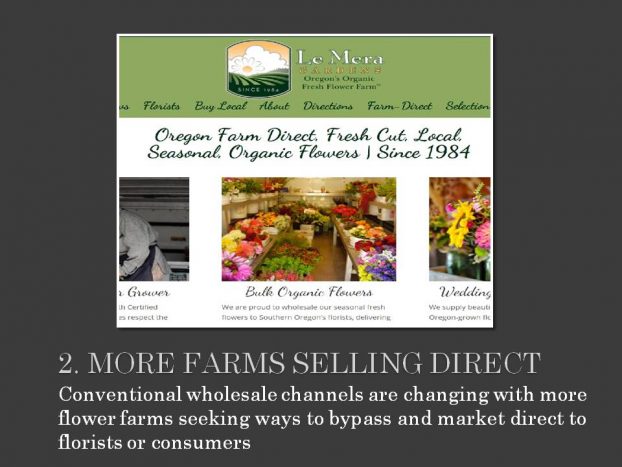
#2 MORE FARMS SELLING DIRECT. This insight is closely connected with item number one.
In general, the conventional wholesale model is changing, as traditional channels of floral distribution are disrupted. I predict that more flower farms will seek and establish new ways to bypass the conventional wholesale pipeline and market direct to florists and consumers. This is a hot topic and certainly one that’s hard to find anyone willing to go on record to discuss.
Our Slow Flowers survey revealed numerous sales channels among flower farmers. Granted, the majority of Slow Flowers farm-members are small-scale producers, but I believe they are the ones modeling how diversification and direct-to-florist commerce can succeed. When asked about their distribution channels, our respondents cited the following top three outlets:
- Seventy percent are growing flowers for their own weddings and event clients;
- This is followed closely by farms selling direct to other florists and wedding designers, at around 67 percent
- With 53 percent of flower farms reporting they sell to local flower shops
After this top tier, the percentages drop down to one third of respondents who sell flowers via farmers’ markets and CSA subscribers (basically consumer-direct) and about one-quarter who sell to local wholesalers and grocery/supermarket buyers.There is another farm-direct model, and here’s where I think the disruption is most revealing. A number of large farms are experimenting with direct-to-florist and direct-to-consumer models.
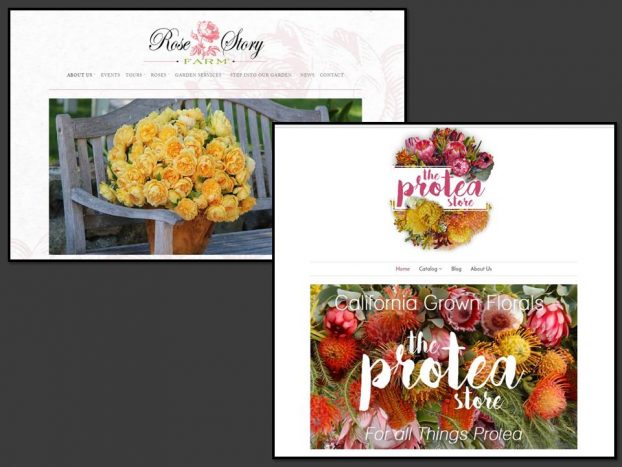
There is another farm-direct model and here’s where I think the disruption is most revealing. A number of large farms are experimenting with direct-to-florist and direct-to-consumer models. A few successful single-crop models have been in place, such as Danielle Hahn’s Rose Story Farm, which in the past few years has shifted almost completely away from selling through wholesalers to florist-direct fulfillment, and many of the Alaska peony growers who sell direct to florists and consumers.
Now, diversified, large-scale growers are beginning to spin off consumer-focused web shops, such as Sun Valley’s Stargazer Barn or Resendiz Brothers’ Protea Store. In the scheme of things, these new ventures are moving only a small fraction of their parent farms’ floral inventory.
But I predict that as large farms bend to demand for farm-direct sourcing of flowers (by consumers and florists alike), the path from field to bouquet will speed up and perhaps take fewer detours through brokers and wholesalers. That means fresher, more seasonal and better value for all floral customers.
READ MORE…
Posted in American Grown, Blog Posts, Creativity, Entertainment, floral design, Flower Farming, General, Podcast Episodes, SLOW FLOWERS Podcast, Slowflowers.com the Directory of American Flowers, Writing | 12 Comments »
December 28th, 2016
Podcast: Play in new window | Download
Subscribe: Apple Podcasts | Podcast Index | | More
 Welcome to the final Slow Flowers Podcast of 2016
 Last year at this time, I mentioned that the Slow Flowers Podcast had been downloaded 76,000 times in two-and-one-half years.
Today, I can tell you that 2016’s listenership nearly doubled that total, meanings as many people tuned into this weekly episode in 12 months than in the previous 30 months combined.
That’s the best news I could ask for as we reflect on the successes and strides of 2016.
Every single week this year; in fact, every single week for 178 weeks, it has been my privilege to feature the voices of our Slow Flowers community with you.
You’ve heard from flower farmers and floral designers, pioneers and personalities, who together are changing the floral landscape, disrupting the status quo, and bringing flower sourcing and growing practices, not to mention eco-conscious design methods, to the center of the conversation.
Take the Pledge!!!
As I have done since the beginning of 2014, I would like to dedicate today’s episode to the Slow Flowers Highlights we’ve witnessed this year.
Next week, on January 4th, I will share my 2017 floral industry forecast with you.
As the Slow Flowers Movement gains more supporters and more passionate participants who believe in the importance of the American cut flower industry, the momentum is contagious. I know you feel it, too.
I’ll start with some ACCOLADES
This happened and it came as a total surprise!
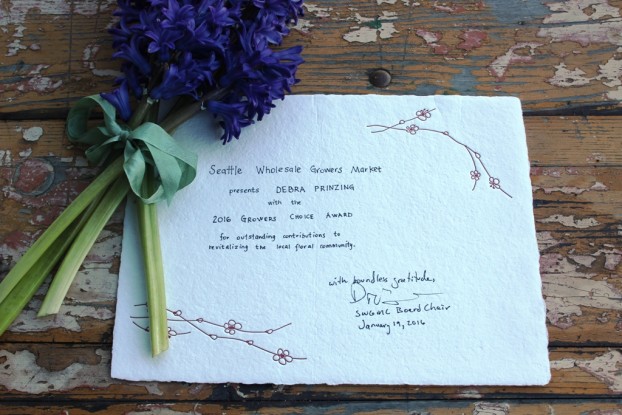
2016 kicked off with a lovely surprise as the Seattle Wholesale Growers Market honored me with the Growers’ Choice Award for outstanding contributions to revitalizing the local floral community. The flower farmers and staff of this innovated farm-to-florist wholesale market are near and dear to my heart, and it’s so gratifying to receive their recognition. My efforts to promote and sustain domestic flowers is especially sweet because of those who gave me this award.
In September, the Garden Writers Association, my professional community, honored Slowflowers.com – the web site – with a Silver Medal in the digital media category. The organization also inducted me into the Hall of Fame, an honor given to one person each year — an unexpected and humbling acknowledgement for my work in gardening communications.
And then there’s VALENTINE’S DAY
Yay! Check it out!!!
The opportunity for engaging the media in a discussion about American grown flowers, local flowers and the origin and growing practices of flowers at Valentine’s Day is an obvious one — and we have been vocal about sharing the Slow Flowers story.
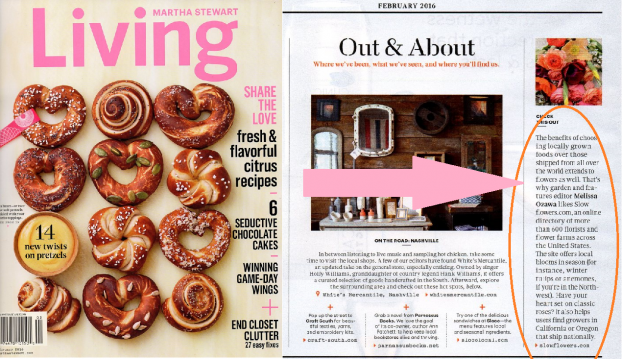
The 2016 press was major, with Martha Stewart Living’s mention of Slow Flowers and the slowflowers.com directory in its February 2016 issue –
Here’s the text:
“The benefits of choosing locally grown foods over those from all over the world extends to flowers as well. That’s why garden and features editor Melissa Ozawa likes Slowflowers.com, an online directory of more than 600 florists and flower farms across the United States. The site offers local blooms in season (for instance, winter tulips or anemones, if you’re in the Northwest). Have your heart set on classic roses? It also helps users find growers in California and Oregon that ship nationally.”
There you have it! Short and VERY sweet!
Individually, none of us could have earned this type of media attention from a magazine with paid circulation of more than 2 million subscribers, monthly newsstand sales of 115,000 issues and total audience reach of more than 9 million. The demographics of the Martha Stewart reader are in close alignment with your own floral business.
You can feel especially proud of what we’ve accomplished knowing that the value of this earned media mention is $45,000, something that none of us could have ever afforded if we purchased advertising space in the magazine.
 As for travel, in 2016, well, I retained my MVP Gold status on Alaska Airlines, which means I spent more than 40,000 miles in the air in 2016.
Perhaps not an accomplishment when it comes to burning jet fuel, but to me, the amount of travel I was able to make on behalf of floral promotion, including connecting with many of you, was significant — and to compensate for that travel footprint, I tried to engage with as many flower farmers and florists at every destination!
I attended seven lovely and inspiring FIELD TO VASE DINNERS, serving as co-host and sponsor.
Slow Flowers partnered with the Certified American Grown campaign’s Field to Vase Dinner Tour, which took me to flower farms in California, Texas, Colorado, Pennsylvania and Washington State.
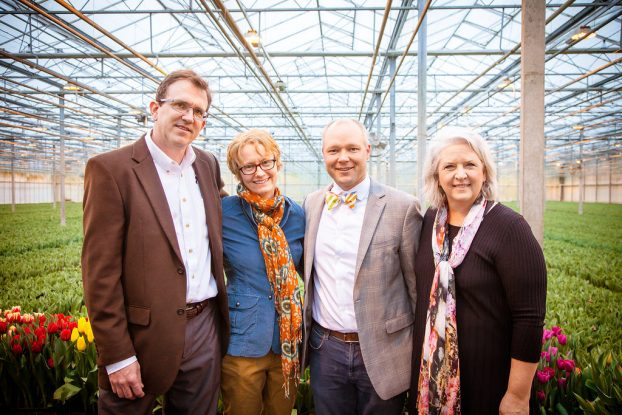
The Certified American Grown Program produces the Field to Vase Dinner Tour — and is a sponsor of this Podcast. Shown from left: Bill Prescott of Sun Valley Flower Farm, NYT Bestselling author Amy Stewart of “Flower Confidential”, Kasey and me.
I teamed up with Kasey Cronquist, administrator of the Certified American Grown brand, to welcome more hundreds of dinner guests who enjoyed local food AND local flowers, who heard the Slow Flowers message and met and learned from Slow Flowers member farms and designers.
It has been a huge honor to be part of the Field to Vase Dinner tour for the past two years — and I am confident that the dinners helped to change attitudes, assumptions and understanding about the origin of flowers at the center of the table. And a footnote, the Field to Vase Dinner Tour dates for 2017 should be announced soon.
 At many of my travel destinations, I was able to meet Slow Flowers members and even take part in Slow Flowers Meet-Ups.
I can’t tell you how meaningful it has been to put faces and voices to names I perhaps only before knew via social media.It was thrilling to visit cities and towns where I was welcomed into beautiful shops and studios, as well as onto prolific farms where domestic flowers flourished.
Many of those events only took place because so many of you stepped up to host me and I want to thank the following folks for making connections possible when I was in their towns:
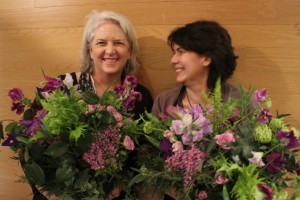
With my friend Gloria Battista Collins of GBC Style, we posed happily with our finished arrangements.
In early February, Gloria Collins, GBC Style, hosted me at her Manhattan apartment when I visited NYC. We recorded a podcast episode and took Laura Dowling’s design workshop together at Flower School New York — what a fabulous experience.
Later that month, for the third consecutive year, I traveled to Washington, D.C., to meet up with a motivated group of American Flower Farmers for the annual “Fly In” sponsored by California Cut Flower Commission and Certified American Grown.
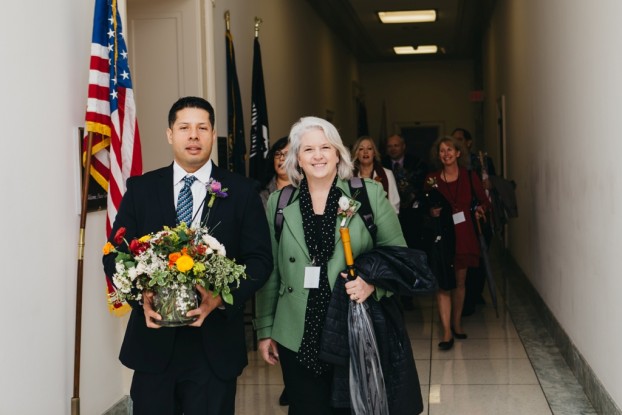
Tony Ortiz of Joseph and Sons in Santa Paula, Calif., past Slow Flowers Podcast guest, and I were happy to deliver American grown flowers to decorate the Congressional Cut Flower Caucus hearings. Farmer-florist Andrea Gagnon of LynnVale Studios designed the bouquet.
I participated in the day-long advisory board meeting for Certified American Grown, where I fill the Consumer Advocate seat. And I joined farmers on visits to meet staff in congressional and senate offices, as we shared the message of domestic and local flowers. A highlight for Diane Szukovathy of Jello Mold Farm, and me was meeting our own amazing Senator Patty Murray, and thanking her for support she and her staff have given Washington state’s local flower farmers.
During my time in D.C., I also hosted a Slow Flowers Meet-Up at Tabard Inn, a beautiful historic venue in the nation’s capitol. There was a crazy storm that caused some of our members in the Maryland, Virginia, and D.C., area to miss the event, but we had about two dozen together for cocktails and conversation — and I was inspired by our conversations and connections made.
READ MORE…
Posted in American Flowers Week, American Grown, Blog Posts, Creativity, floral design, Flower Farming, General, Podcast Episodes, SLOW FLOWERS Podcast, Slowflowers.com the Directory of American Flowers | 2 Comments »
© Debra Prinzing, all written and photographic content. Website design/development by Willo Bellwood/Metric Media