The Slow Flowers Podcast is the award-winning show known as the “Voice of the Slow Flowers Movement.” Launched in 2013 as the original flower podcast, we’ve devoted more than 10 years to covering the business of flower farming, floral design, and the Slow Flowers sustainability ethos. Listen to a new episode each Wednesday, available for free download here at slowflowerspodcast.com or on iTunes, Spotify, and other podcast platforms.
February 11th, 2014
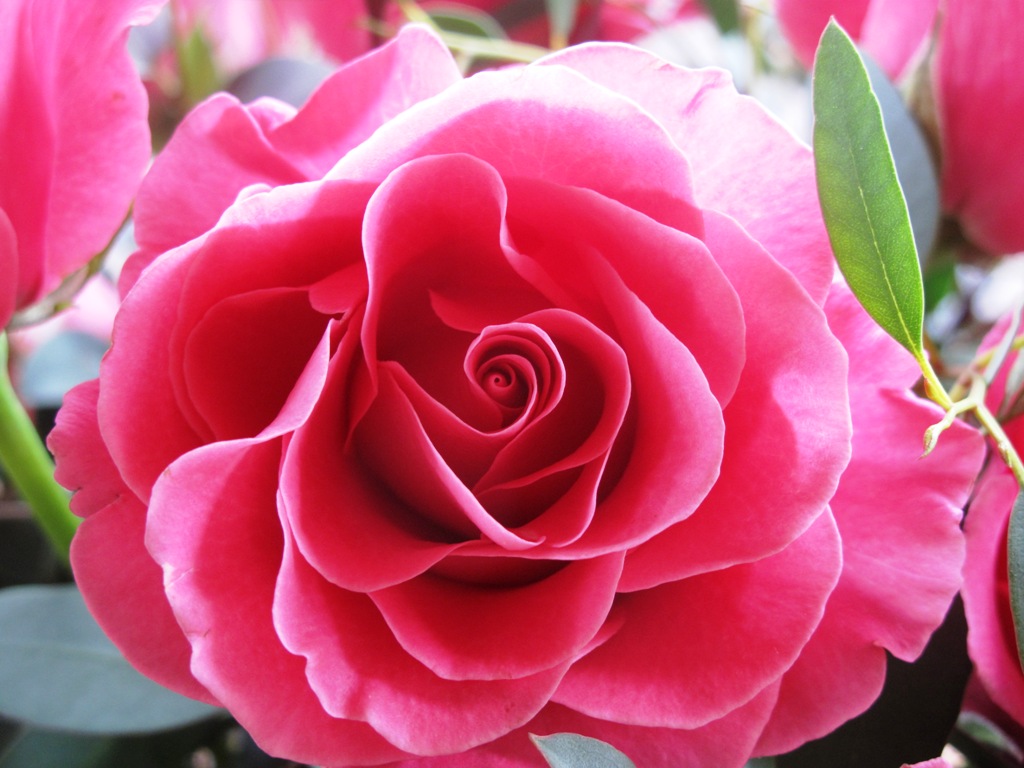
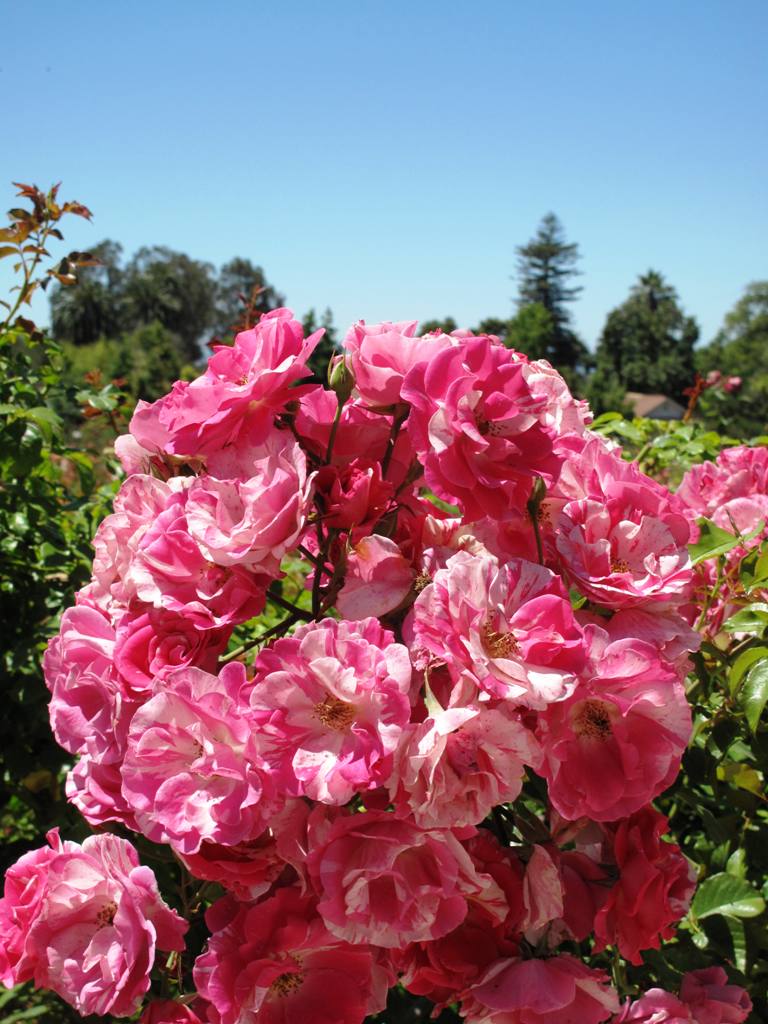
A beautiful American rose, grown in Oregon by the Peterkort family.
In the grand scheme of things, Whole Foods is supposed to be one of the “good guys,” right? From the point of view of the American flower farming community, I know that many of my farmer-friends sell beautiful, seasonal and local blooms from their fields to Whole Foods stores in their specific regions. This “local sourcing” is done on a region-by-region basis with kudos going to passionate store and floral department managers who develop strong ties to their local farmers.
But at the corporate level, and especially during Valentine’s Day, something else is going on altogether. And I’m not alone in being bothered by it.
Labeled “Whole Trade,” which is the proprietary corporate branding that Whole Foods puts on imported roses, these blooms are as far from local as you can find. They’re shockingly similar in appearance to the bunches of roses being marketed by all the wire services, 1-800 marketers and big boxes.
So the local, sustainable and seasonal banner that the Whole Foods brand is waving above its front doors has some serious flaws when it comes to the flowers they are selling.
Somehow, Whole Foods has decided to market its practice of importing South American roses as a kind of missionary endeavor. Personally, I find it so disingenuous. Last year, the company posted a pro-rose Valentine’s Day story on its blog, featuring a video of children at an afterschool program for the workers at a Colombian rose plantation. The post generated 100 responses, many from frustrated customers and American flower farmers who wondered why Whole Foods had skipped doing business with rose farms here and devoted 100% of their Valentine’s Day marketing budget to feature and promote imports from Colombia and Ecuador?
In response to the customer outcry, Whole Foods’ “Global Floral Buyer” Amanda Rainey made a statement and offered this explanation: “Americans bought more than $189 million stems last year! – domestic rose production is very limited and they’re frequently shipped from overseas.”
So does that makes it right Amanda?
Is it the $189 million you’re interested in or are you justifying importing your roses because everyone else is doing it? Is that right, Whole Foods?
I was one of those 100 people who left a comment last year, urging Whole Foods to reconsider their strategy with the flowers they are buying. I truly expected more from this market leader this year. I can tell you if a company like Whole Foods made a commitment to nurturing relationships with American rose farms, things would change. Sure, Whole Foods might have to take a little less profit, but if Whole Trade is designed to give 1% back from every purchase, apparently they have some margin to work with.
More importantly, so many good, healthy and sustainable benefits would come from that endeavor. In my opinion, there is no good reason more than 97% of the roses sold on Valentine’s Day should be flown in from Colombia and Ecuador. I also don’t believe a company like Whole Foods should be party to it.
So, I ask that if you’re a Whole Foods customer, please join me in letting Whole Foods know that we want a “Whole American” campaign that supports and cultivates relationships with our American flower farmers. With the millions they’ve spent developing the Whole Trade program, I don’t expect it to go away. But if Whole Foods can give 1% back to Colombia, they can also give 1% here at home. If they can give more money to Ecuadorian producers, they can certainly give more money to our American flower farmers. If they can work to ensure better wages and working conditions on Colombian plantations, then they can support flower farming communities’ schools and non-profits here at home. If Whole Food really cares about the environment, then they can limit their need to source flowers that have to be flown into the United States.
So, Please make a comment here on Whole Foods’ current blog post about their Whole Trade roses. Let’s encourage them to do the right thing here and support “Whole American” flowers!
I see quite a profound parallel between the Whole Trade campaign and a brand new Whole American campaign for flowers. I don’t believe that America’s flower farmers expect imports to go away. But they do want a level playing field. They do want a chance to sell more of their irises, sunflowers, lilies and roses to the largest “green” branded supermarket in the U.S.
So to help them get started, here is a list I’ve compiled of the top domestic U.S. rose farms that I’m aware of. It’s simply not fair to say the American flower supply is limited. The supply is only limited by our vision to see the opportunity. Whole Foods should launch a campaign that guarantees that they will source from American rose farms by next Valentine’s Day. That promise will give the flower farmers the ability to increase their production and invest in expanding their volume of beautiful, homegrown American roses.
“Whole American” is a beautiful concept that should be a reality. Wouldn’t be amazing if consumer demand could help Whole Foods do the right thing? Wouldn’t it be amazing to see Whole American roses offered when Valentine’s Day 2015 rolls around?
CALIFORNIA
California Pajarosa – www.pajarosa.com
Dramm & Echter – www.drammechter.com
Eufloria Flowers – www.eufloriaflowers.com
Green Valley Floral – www.greenvalleyfloral.com
Koch California – Koch California
Myriad Flowers – www.myriadflowers.com
Neve Brothers – www.nevebros.net
Rose Story Farm – www.rosestoryfarm.com
MINNESOTA
Len Busch Roses – www.lenbuschroses.com
OREGON
Peterkort Roses – www.peterkortroses.com
Posted in American Grown, Blog Posts, Creativity, floral design, General, Slowflowers.com the Directory of American Flowers | 14 Comments »
February 5th, 2014
Podcast: Play in new window | Download
Subscribe: Apple Podcasts | Podcast Index | | More
Hello again and thank you for listening to the newest episode of the Slow Flowers Podcast with Debra Prinzing.
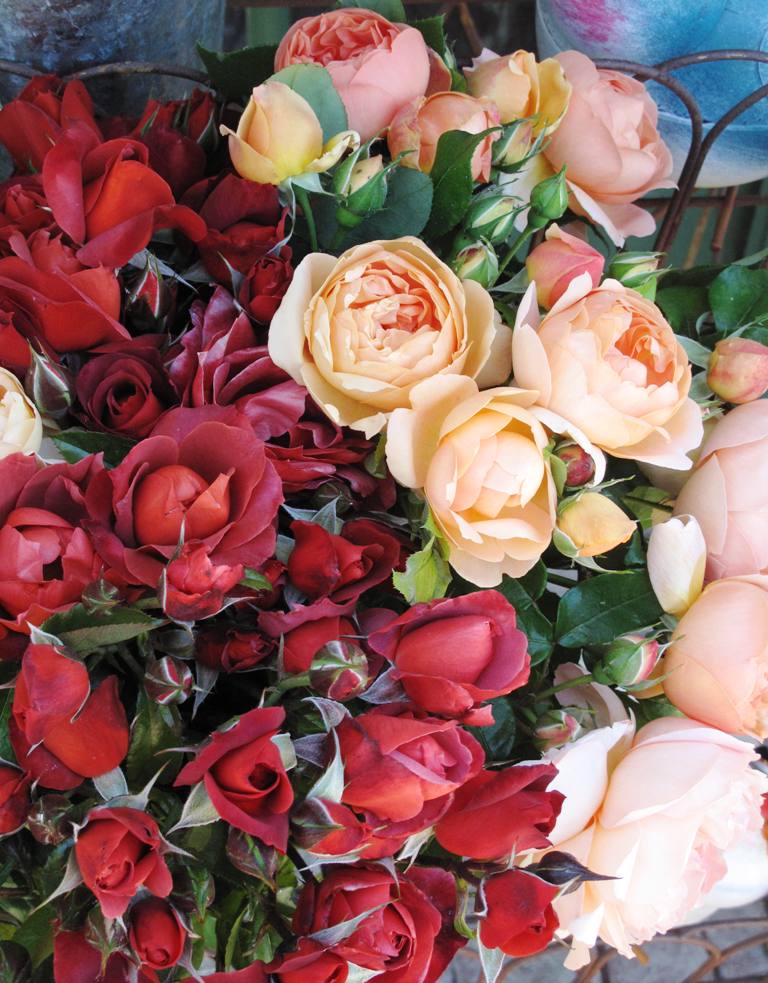
Breathtakingly beautiful roses from Rose Story Farm. American Grown and more fragrant and lovely than anything imported.
It’s February and that means Valentine’s Day is just around the corner. So I am devoting the next two weeks to talking about American-grown roses. Most people do not realize that of the 233 million rose stems sold during the Valentine’s season, only 3 to 6 percent are domestic. There is something truly wrong with this picture. American roses are being grown in Oregon and California! Next week I will introduce you to Peterkort Roses, located outside Portland . . . a fabulous source for domestic Valentine’s Day roses.
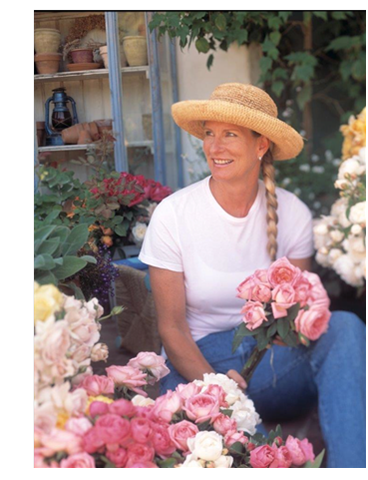
Great Rosarian of the World, and American cut rose grower, Danielle Hahn.
Today, though, we are celebrating Danielle Hahn, owner of Rose Story Farm in Carpinteria, California. Located just south of Santa Barbara, where truly magical growing conditions for all types of flowers seem to exist, Rose Story Farm is a family endeavor specializing in old English, heirloom and garden roses for the specialty cut flower trade.
These roses are field-grown and you’ll notice that many of the varieties listed on the farm’s web site are types of roses found in the home garden. Because of this, they do not bloom all that prolifically in February. That’s okay with Dani and her crew. Their core business serves wedding parties that take place between May and October.
Situated on a former avocado and lemon farm, this visually enticing venue offers many useful lessons in the viability of old-fashioned farming practices in today’s modern agri-business world (the kind of practices that were natural to our great-grandparents, for example.). Yes, this is an organic flower farm where hundreds of varieties of old garden and English roses thrive. It’s also a beautiful agritourism destination that attracts rose lovers from around the world as it educates and inspires everyone who visits to grow and enjoy roses in their own environment.
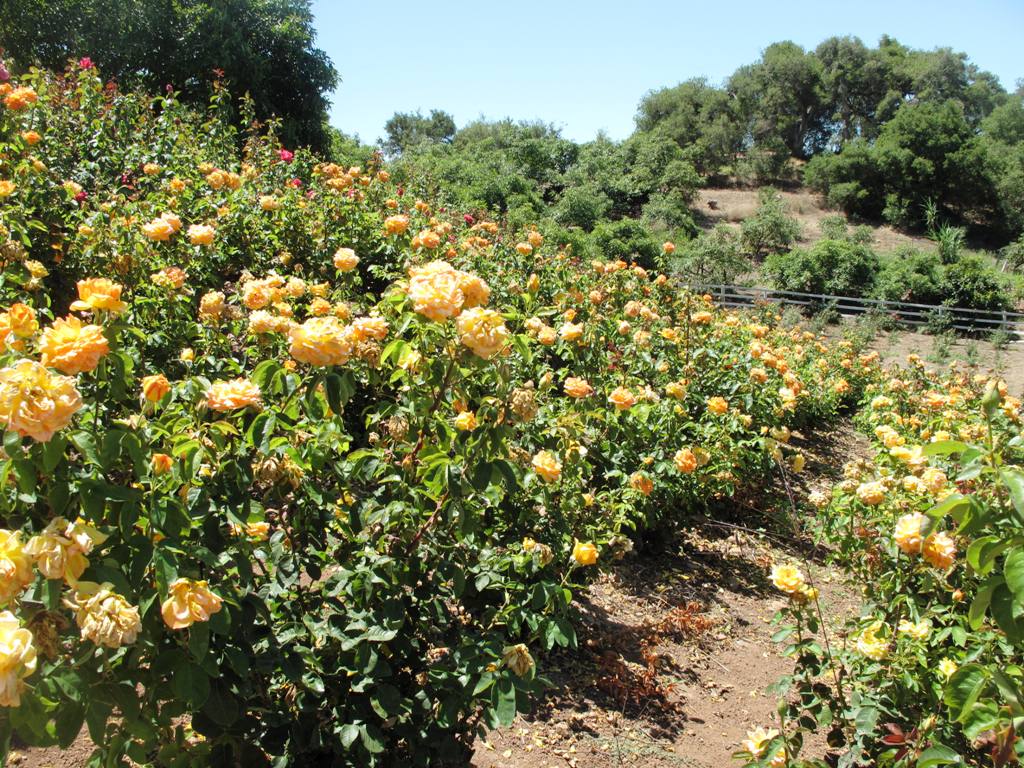
The setting in this little valley near the Pacific Ocean is quite benign – and so perfect for roses.
There are no fussy hybrid teas here, although there are varieties bred with ancient parentage for cherished traits like their long-lasting perfume. You will find row upon beautiful row of floribundas and climbers, chosen for bloom color, petal arrangement, and most of all — FRAGRANCE (scents like anise, clove, spice, honey, baby powder, a juicy peach, citrus…fill one’s nostrils).
The rose shrubs are planted on gently sloping hills, arranged like a technicolor vineyard. Organic mulch from a nearby mushroom farm cushions and nourishes the soil over their roots.
Tens of thousands of luscious roses are lovingly cared for by a small crew of farmers who know exactly when to harvest them. Can you imagine an east coast bride who simply MUST have a romantic, voluptuous rose bouquet of say ‘Fair Bianca’? It’s possible for her floral designer to order armloads of this vintage rose from Rose Story Farm.
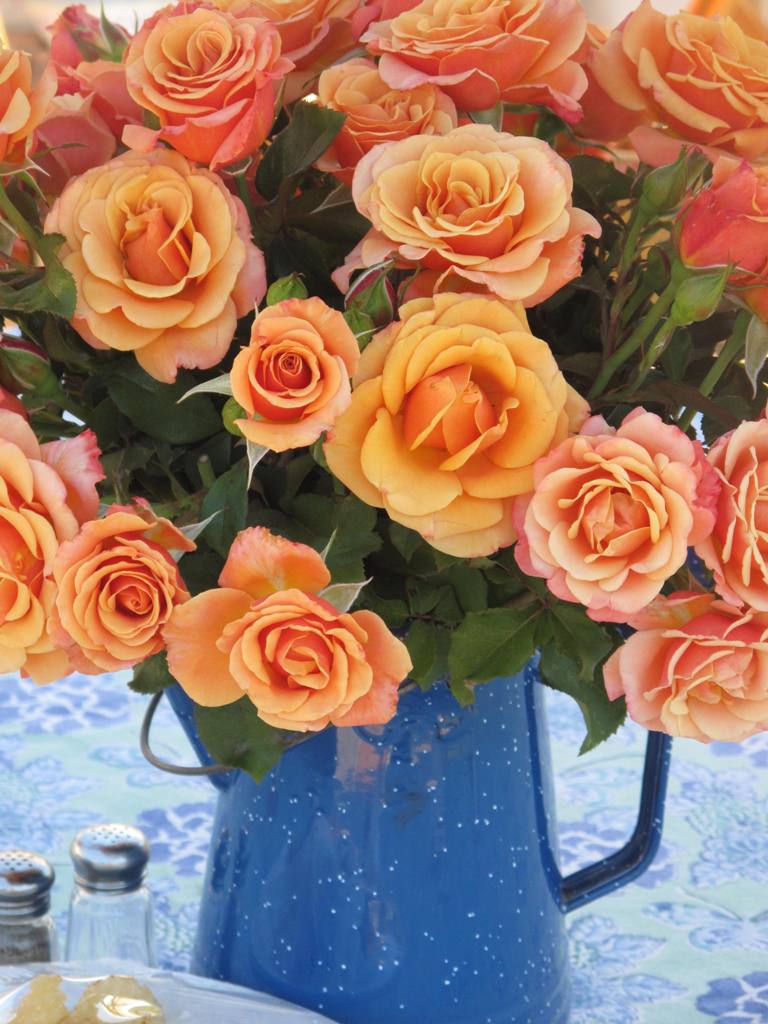
Stunning. Nothing more to say. Drink it in and imagine the awesome fragrance! Rosa ‘Singin’ in the Rain’
Say her wedding is on a Saturday. On Thursday, the roses are picked, hydrated and conditioned, de-thorned and carefully gathered into bundles of 10 stems. The cut ends are packed in wet moss to keep the roses hydrated; the flower heads are gently nestled in tissue paper; each bunch is packed in an ice-filled box and shipped overnight (Fed-Ex; next morning delivery) to wedding and event florists coast to coast. Around the country, on Friday mornings, the boxes of these Carpinteria-grown roses show up at floral studios and flower shops, serving as an enduring gift of romance, nostalgia and sensory delight.
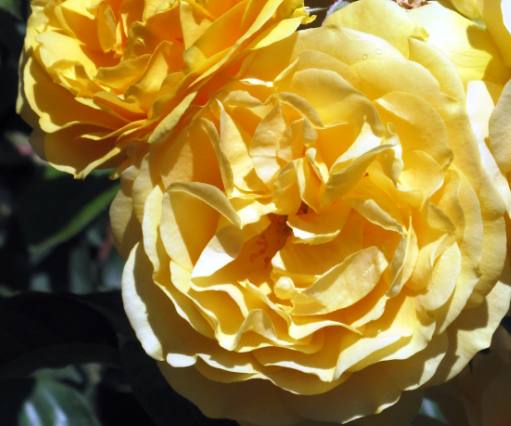
This is the famed ‘Julia Child’ rose, which Dani’s family friend Julia Child selected from plant trials at Rose Story Farm.
Last weekend, on February 1st, Dani was honored with the coveted “Great Rosarians of the World” award in a ceremony at the Huntington Botanical Garden in San Marino, near Pasadena.
This award recognizes major figures in the world of roses and honors their work in creating and promoting the flower. In the past 11 years, the Great Rosarians program has become a famous event in the world of rose growing, breeding, education and beyond. Dani is in excellent company, with past recipients including David Austin himself, Stephen Scanniello, Wilhelm Kordes III, Roger Phillips and Martyn Rix, and many others. The GROW award will also bring Dani to New York City in June, where she will be hosted by the Manhattan Rose Society for a series of events and lectures.
Click here to learn more about the American Garden Rose Selections, the organization of trial gardens and experts who evaluate new plant introductions for their superior qualities.
httpv://www.youtube.com/watch?v=0npPBezQOBg
Here is Dani’s full bio as it appeared in the Great Rosarians of the World’s press material:
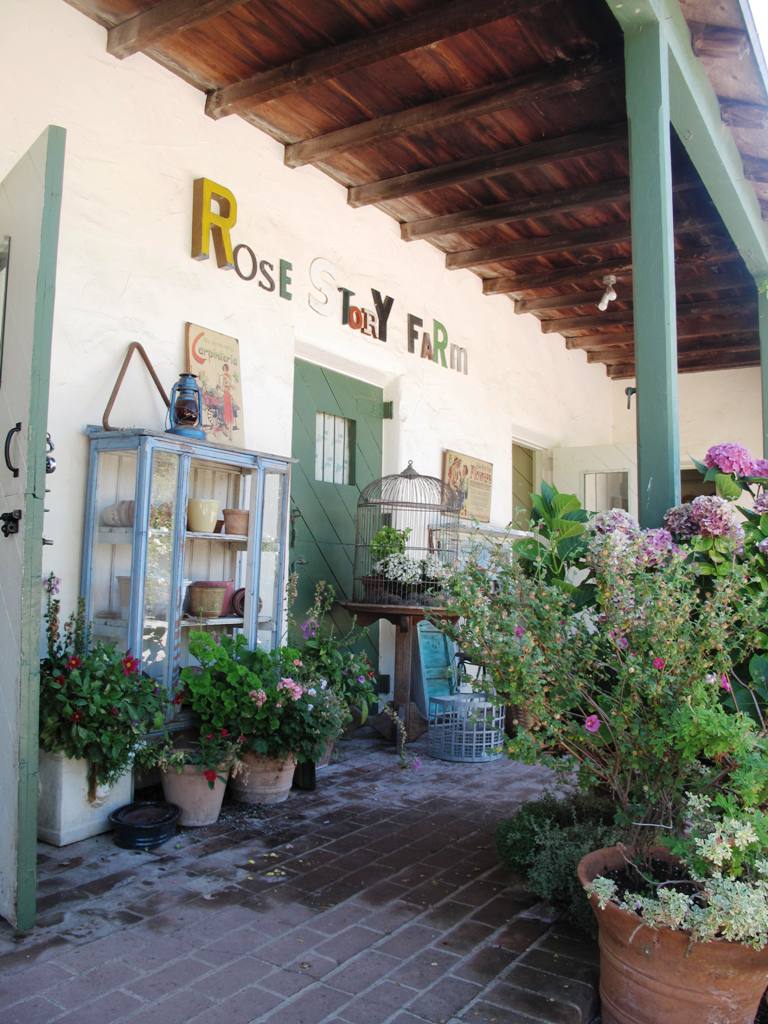
The old horse stables at Rose Story Farm are now the headquarters for this thriving specialty cut flower business.
Danielle Hahn is the owner of Rose Story Farms in Carpinteria, California, a boutique rose farm for cut roses. Because of her skills and dedication to the rose, she has been able to develop a business model that combines growing roses and education.
Danielle has maintained a hands-on approach to satisfy her market and has given this segment of the rose industry a successful working model, which encompasses the small boutique rose nursery and small organic farmer, for others to follow. Her farm is a prime model for the future of small family farms to specialize into niche areas and succeed. She has expanded her business to include the valuable component of educational tours which help inform and inspire her audience with the knowledge to grow healthy roses successfully.
Growing from a lifelong love of flowers and gardening, Rose Story Farm has become the focal point of a wonderful mixture of business and life. From the first day the mission was to produce beautiful, fragrant, romantic garden roses in exquisite shapes and colors. Now more than 120 varieties are scattered over the 15-acre farm.
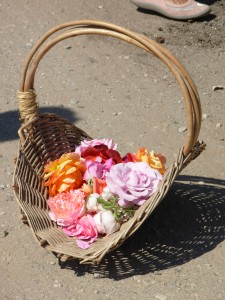
A gathering of blooms during one of the personalized rose farm tours.
Tours are led by Danielle twice weekly, and a variety of seminars focused on garden design, rose cultivation and flower arranging are given throughout the year. A major theme of the educational effort is to demystify the process of growing and caring for roses. “Roses are magical and forgiving–they repay any effort on their behalf ten-fold,” says Dani. “We named the farm ‘Rose Story Farm’ because the roses are central to some of our most enchanting and memorable experiences. We encourage clients, visitors, and friends to exchange their rose stories with us, and in this way to share what we find romantic, passionate, joyful and sustaining.”
Born in Santa Barbara, California, Dani attended local schools until she entered Stanford University. She graduated three years later with honors with a BA in psychology and a minor in Italian. Having played on the Stanford Tennis Team for three years, and being a ranked national junior tennis player, her first job out of college was managing an exclusive tennis club in Manhattan. Returning to Santa Barbara in 1978, she opened a series of retail stores over the next 10 years in Southern California. At the same time she was the founder and managing partner of an innovative gift business that designed, manufactured, packaged and ultimately delivered gifts for entertainment corporations. With the birth of Geoffrey, her second son, in 1993, she backed away from the majority of her business responsibilities to focus on her family.
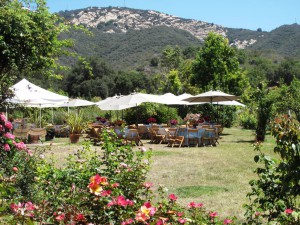
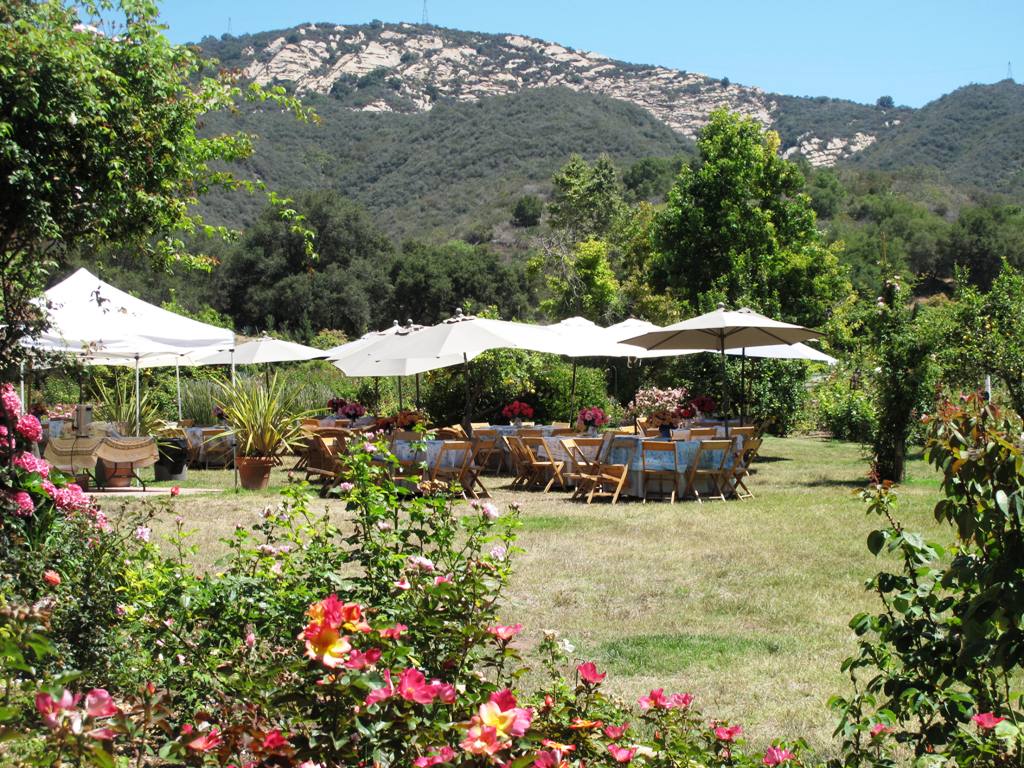
Here’s a glimpse of the larger setting at Rose Story Farm. I took this photo last July when attending an industry luncheon in the garden.
Her extensive experiences proved invaluable in 1998 when Danielle and her husband, Bill decided to expand the family avocado farm into a boutique rose business with the addition of 1,000 bushes, all of them garden roses.
The farm now has over 25,000 bushes and since that time Danielle has overseen the steady growth and development to the point where thousands of roses are cut each day and shipped throughout the United States.
Currently she manages all employees and makes the day-to-day decisions for the business, markets the products, selects the roses for production, designs rose gardens for clients worldwide, designs and maintains the farm’s gardens used for weddings and special events, oversees the rose boutique and leads the way on product development–a rose based perfume and body care line are currently in the works.
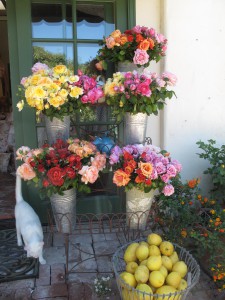
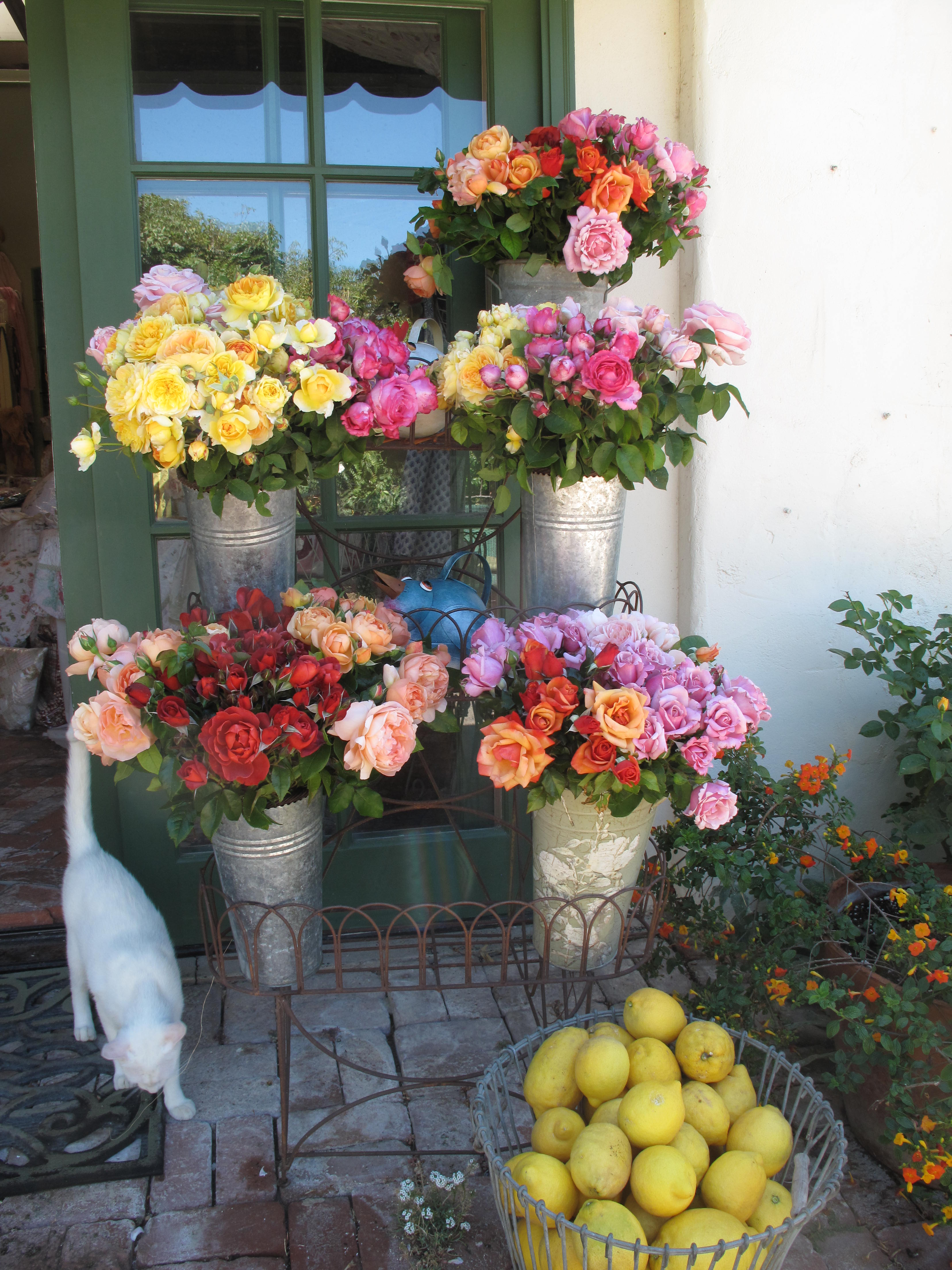
The display in front of the rose boutique. . . what can I say? It’s so enticing!
Dani is an active member of the Santa Barbara Rose Society, the American Rose Society, and the Garden Club of America in Santa Barbara. She is the founder and sustaining patron of the Carpinteria Community Service Toy Fund, a non-profit organization that raises money each year for the families of disadvantaged field workers in the Carpinteria Valley.
The excitement and beauty of this enterprise and of Danielle herself has been featured in Santa Barbara Magazine, Wine Country Living, Sunset, Victoria Magazine, Oprah Magazine, Martha Stewart Living, Veranda, and the Wall Street Journal.
She has had articles published in the 2012 American Rose Society Annual on both flower arranging and garden design. Television coverage of Rose Story Farm has been presented on “California Heartland,” a PBS special, and on NBC’s Today show. Most recently, Martha Stewart Living media filmed a segment on the farm for their online American Made series (see above). In addition to her weekly tours at the farm, Danielle is a frequent featured speaker at events that are focused on the beauty of the garden, and the special role of roses in our daily lives.
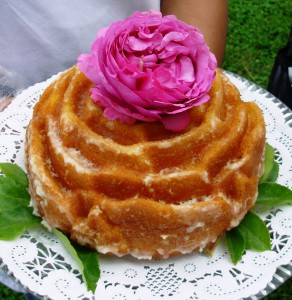
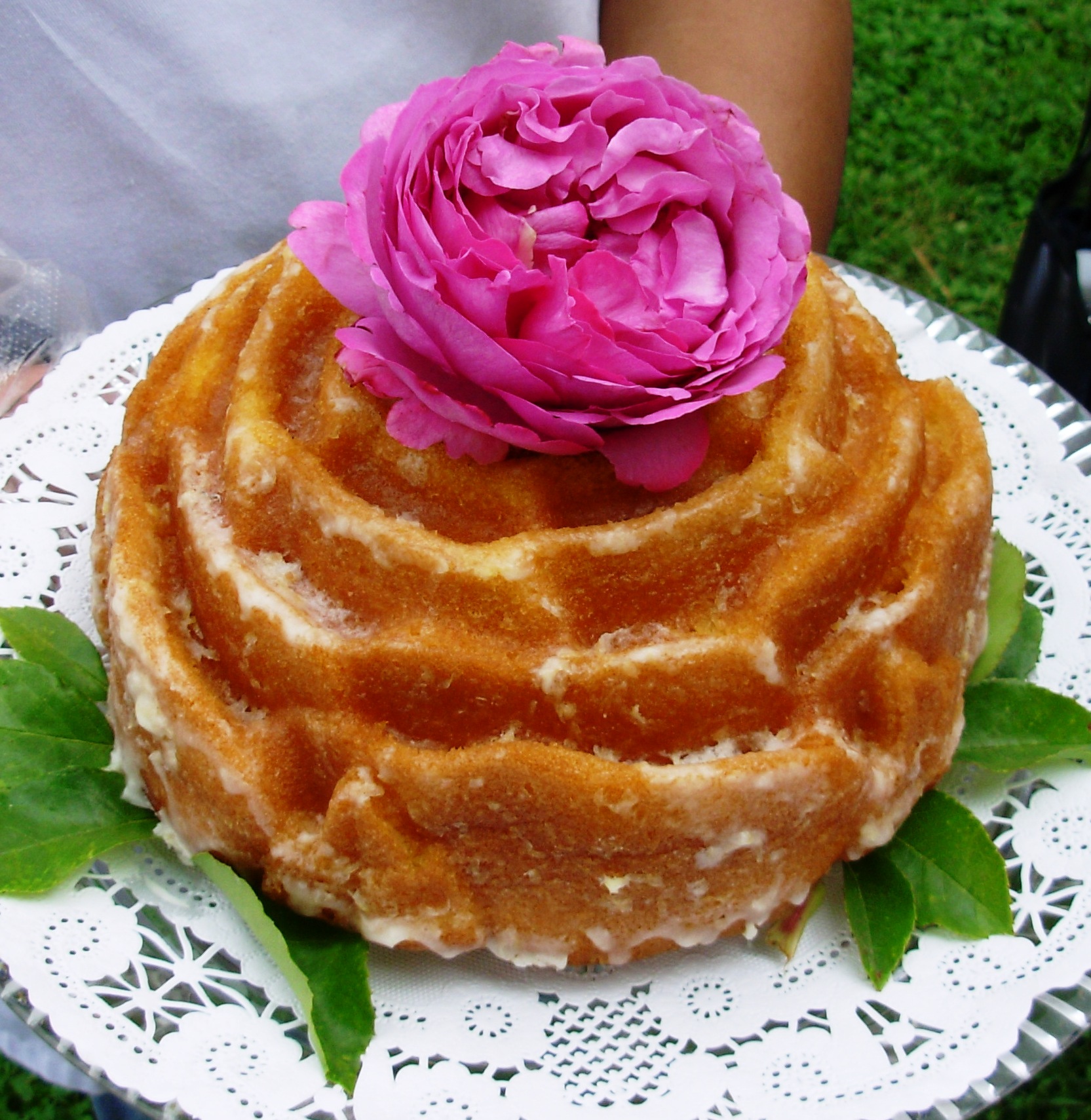
The lemon rose cake. It is quite delicious!
Rose lovers are invited to visit to Rose Story Farm on a Wednesday or Saturday and spend $38-$45 for a small group tour, which is followed by a delicious garden luncheon.
A gift shop filled with rose-themed and garden-inspired ware from Europe and beyond (including a few antiques) is worth a visit.
To satisfy my current made-in-the-USA obsession, I picked up a cast-aluminum, rose-bloom-shaped bundt pan so I could bake the Rose Story Farm lemon cake.
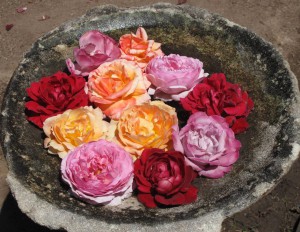
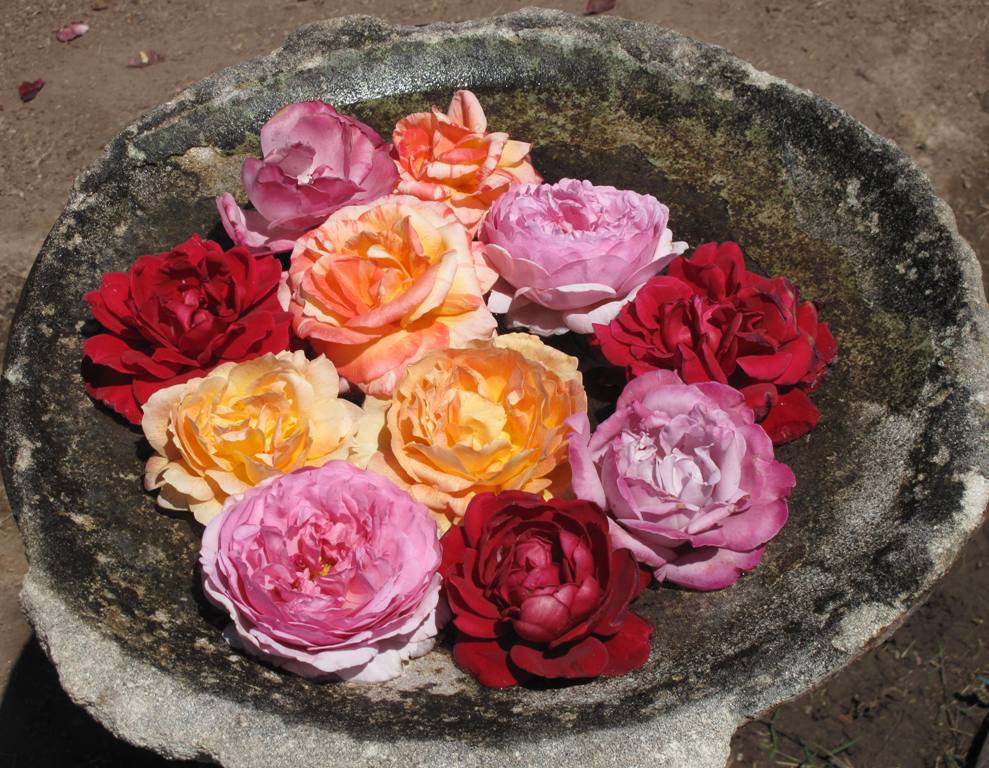
A small vignette of just-picked roses, spotted on my tour of the flower fields.
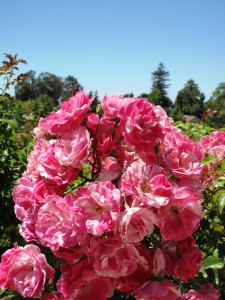
This rose caught my eye, dazzling against the blue Carpinteria sky.
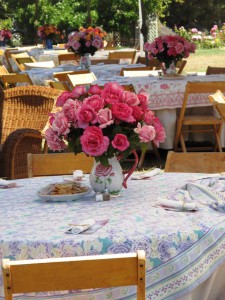
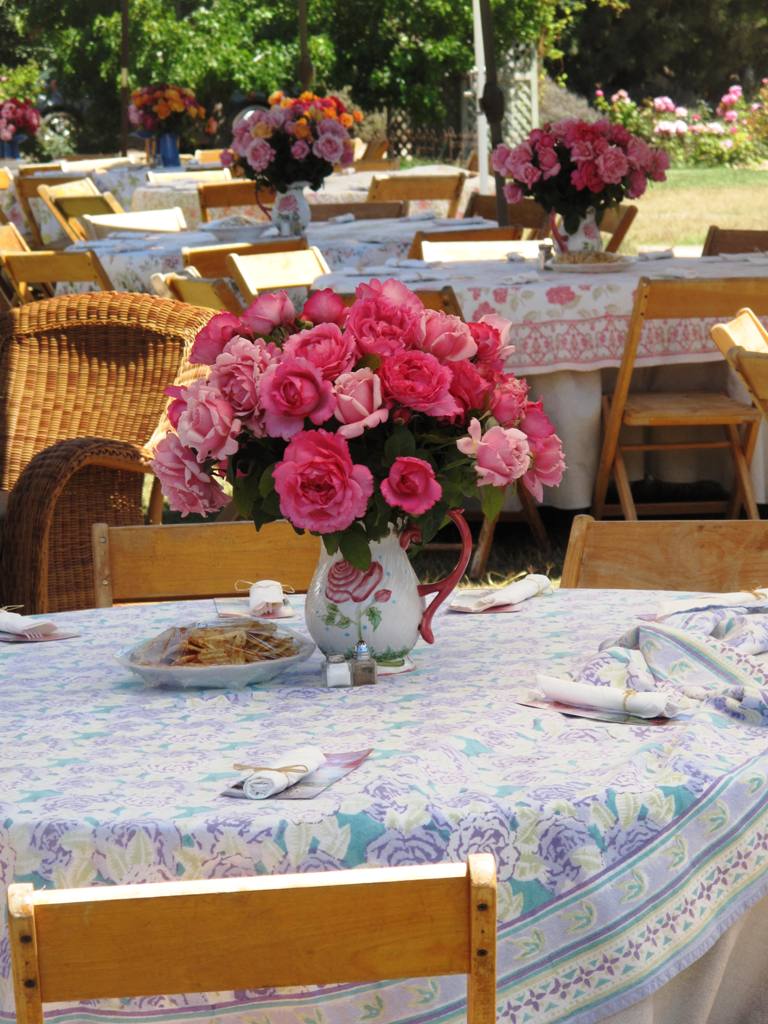
Another beautiful floral arrangement at our summer luncheon.
It has been my pleasure to share my podcast conversation with Dani Hahn with you. All photos are (c) Debra Prinzing, except for the portrait of Dani Hahn, courtesy of Rose Story Farm.
Because of the support from you and others, listeners have downloaded episodes of the Slow Flowers Podcast more than 6,000 times! I thank you for taking the time to join to my conversations with flower farmers, florists and other notable floral experts.
If you like what you hear, please consider logging onto Itunes and posting a listener review.
Until next week please join me in putting more American grown flowers on the table, one vase at a time.
The Slow Flowers Podcast is engineered and edited by Hannah Holtgeerts. Learn more about her work at hhcreates.net.
Posted in American Grown, Blog Posts, Creativity, floral design, Gardening, General, Landscape Design, Plants, Podcast Episodes, SLOW FLOWERS Podcast, Writing | 4 Comments »
January 29th, 2014
Podcast: Play in new window | Download
Subscribe: Apple Podcasts | Podcast Index | | More
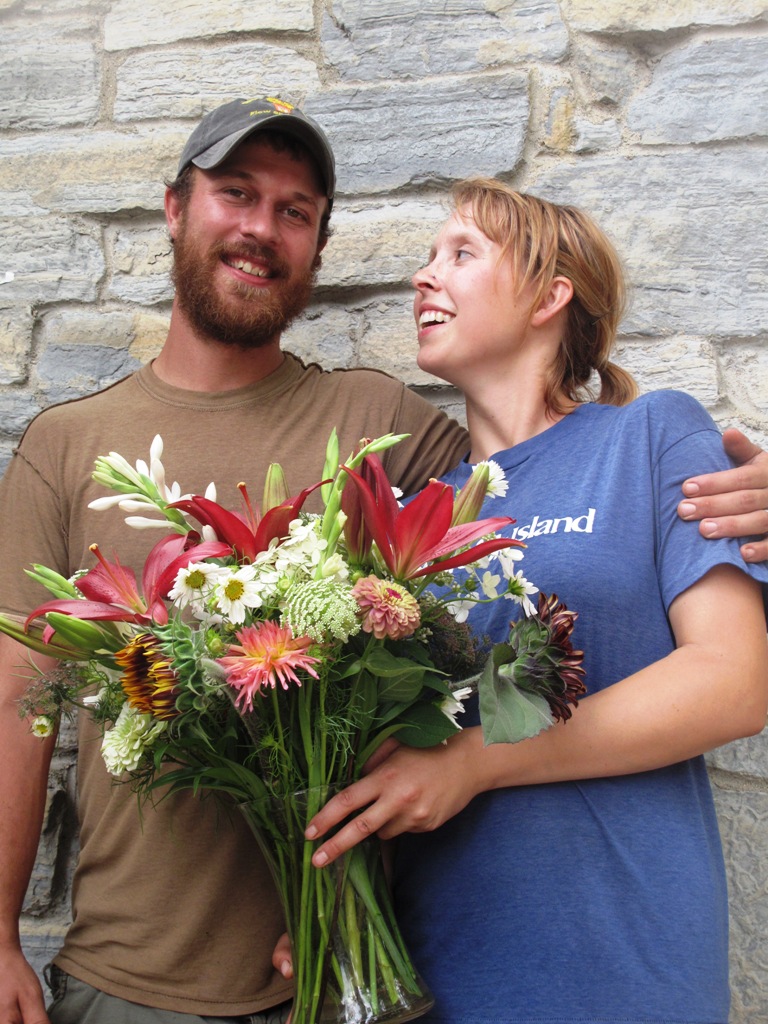
I took this photo of Steve and Gretel Adams in August 2012. They’re amazing – and I’m so happy to share their conversation with you today! (c) Debra Prinzing
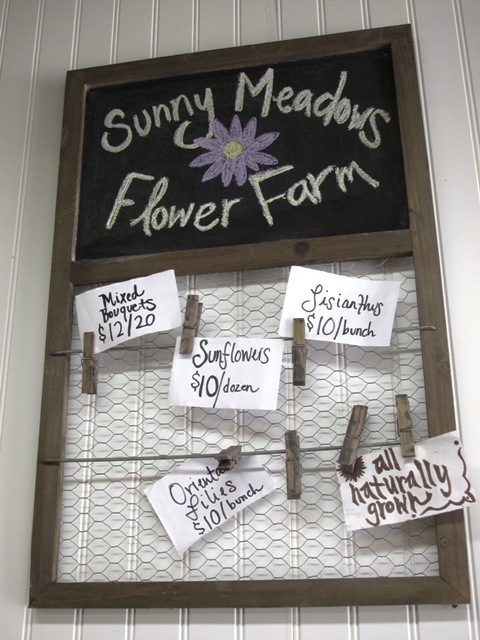
In the workshop . . . (c) Debra Prinzing
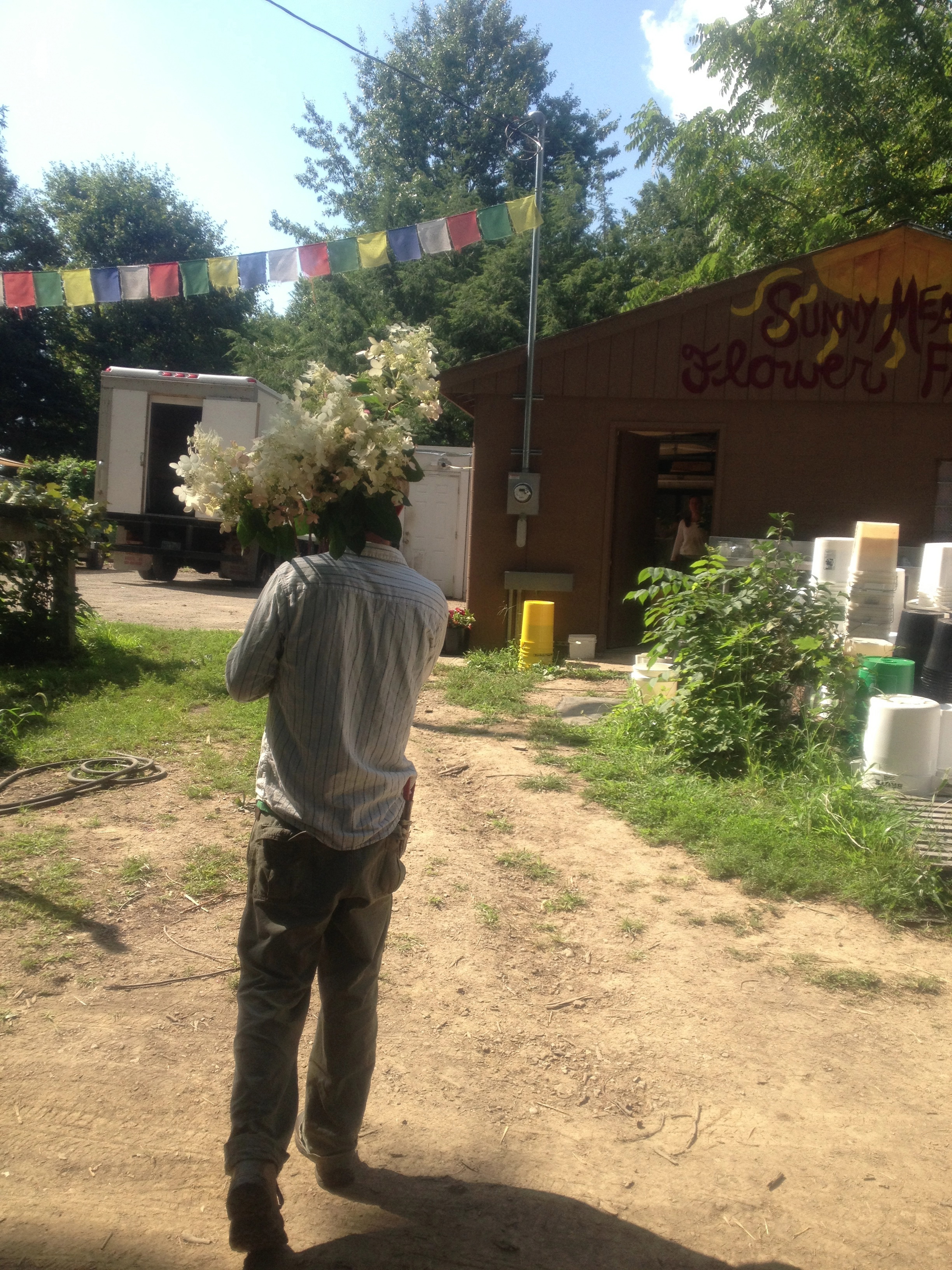
Gretel and Steve Adams of Sunny Meadows Flower Farm in Columbus, Ohio, are young flower farmers whose creativity and determination to earn a living from their land is truly inspiring.
This young couple didn’t grow up in the agricultural world; so naturally, they consider themselves serendipitous farmers. A food-farming apprenticeship sparked Steve’s passion for farming. And Gretel was blessed to inherit a 10-acre lot outside Columbus that her father bought in the 1980s.
My friend Rich Pomerantz, a fellow member of the Garden Writers Association, has taken some beautiful photographs of Gretel and Steve for his series about Young Farmers. Enjoy his post here.
As children, they both loved to be outside playing in the dirt and connecting with nature. As young adults, Steve and Gretel’s farming skills continue to flourish with their involvement in the U.S. cut flower industry. They are trying to live life as sustainably as possible using organic practices, composting to make soil amendments, and heating their house with wood, growing their own food and making natural soaps, among other things.
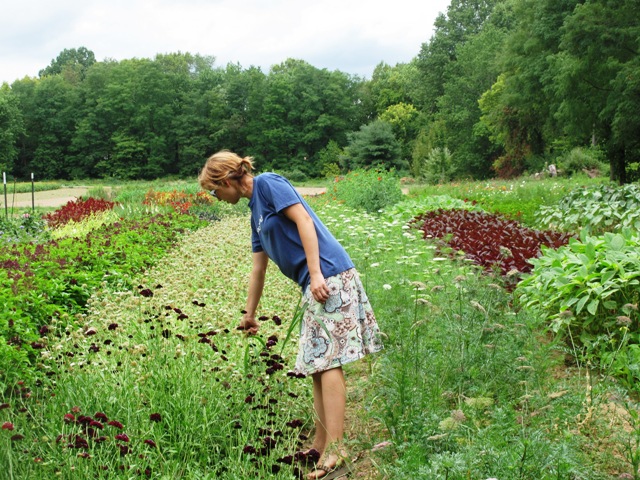
Gretel, touring me through the growing fields. (c) Debra Prinzing
Sunny Meadow Flower Farm is filled with fields of beautiful flowers and four greenhouse structures help Steve and Gretel extend the growing season in Ohio.
This farm-based business is established on a 10-acre parcel just inside the Columbus city limits.
They recently told me about the way their acreage is used:
“This coming season, our field space will include about 4 acres in production — plus 1 acre for our perennial and greenhouse space, making for a total of 5 acres. The remainder of the tillable land will be rotated with cover crop to maintain soil health.”
Sunny Meadows’ flowers are sold at three seasonal farmers’ markets in Columbus and through Whole Foods stores in the region. Gretel is also a talented floral designer and the farm has added wedding floral design services, which is one of the most successful sources of income for the farm.
Please enjoy our conversation – I know you will be impressed with Gretel and Steve, and you’ll find their passion contagious.
In the podcast, we discussed the upcoming Cut Flower Growers’ School, a program of the Association of Specialty Cut Flower Growers that is scheduled for March 3-4, 2014 in Ft. Worth, Texas.
Steve and Gretel will be teaching a workshop called: “What to Grow and Why,” addressing how to choose which perennials to grow & which annual varieties are the best producers?
And thanks to Sunny Meadows Flower Farm for providing these wonderful images that you can enjoy here:
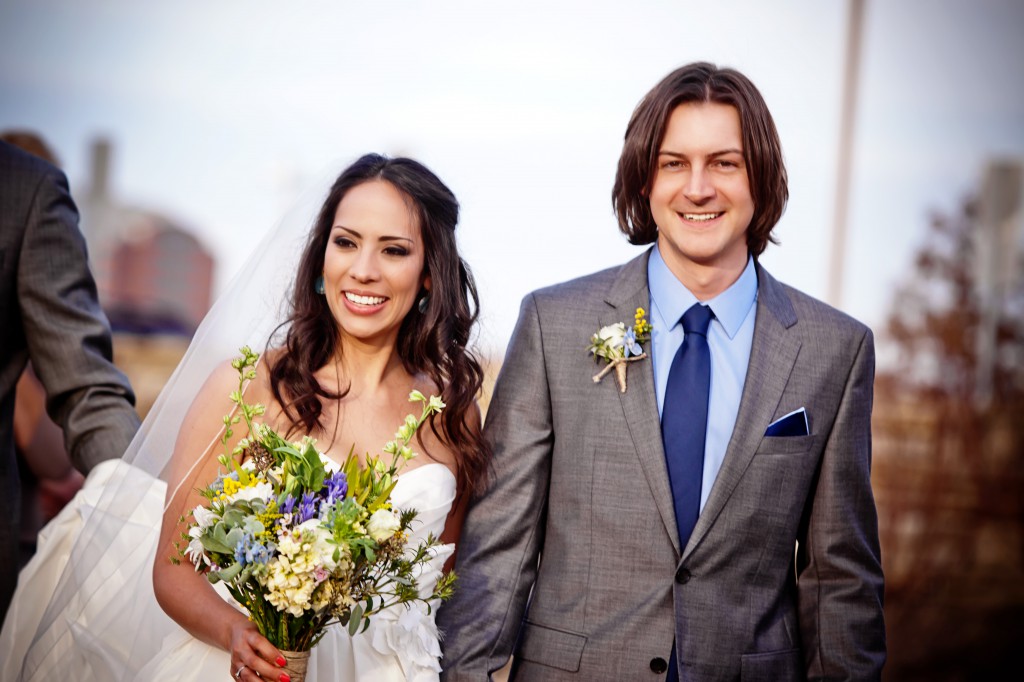
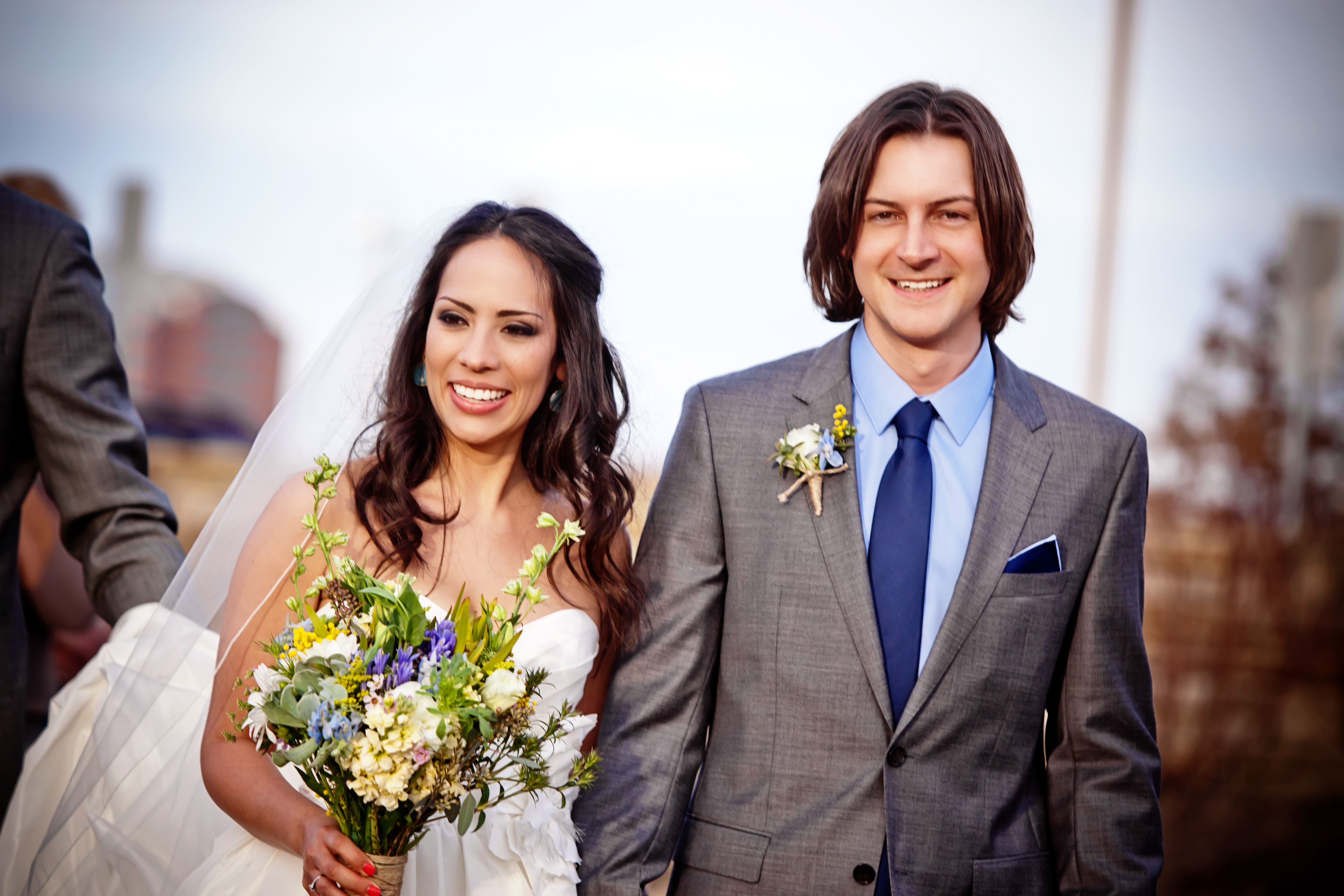
A Sunny Meadows Flower Farm wedding, with bride Pilar and groom Matt – and their beautiful seasonal & local Ohio-grown flowers
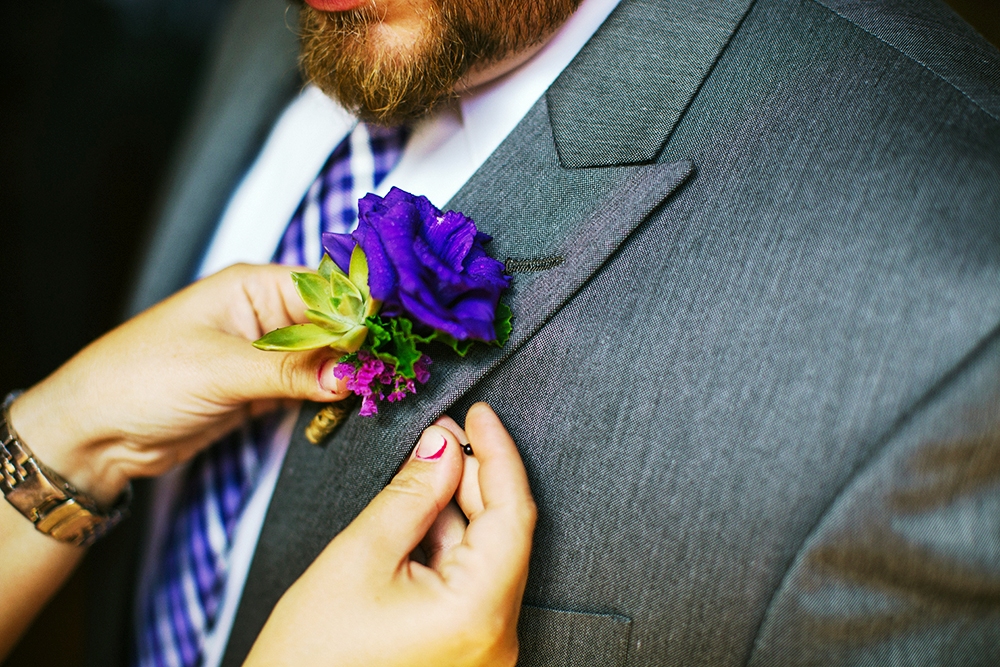
A gorgeous boutonniere using Sunny Meadows’ awesome lisianthus — for another local wedding – with bride Genevieve & groom Todd.
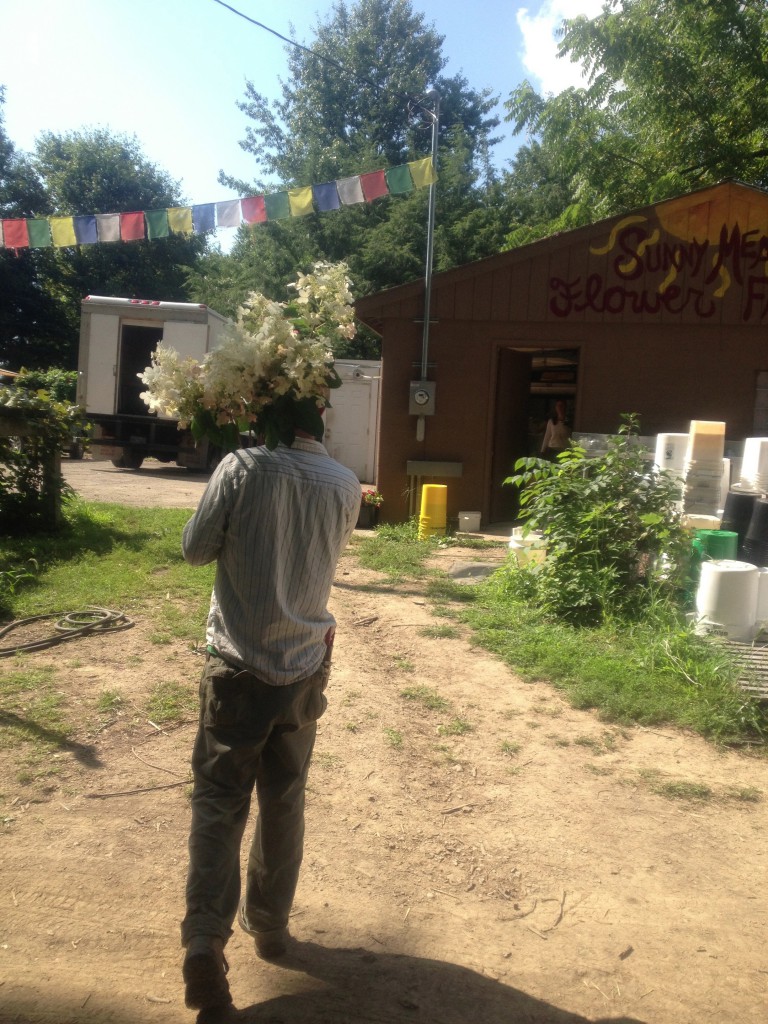
On the farm . . .
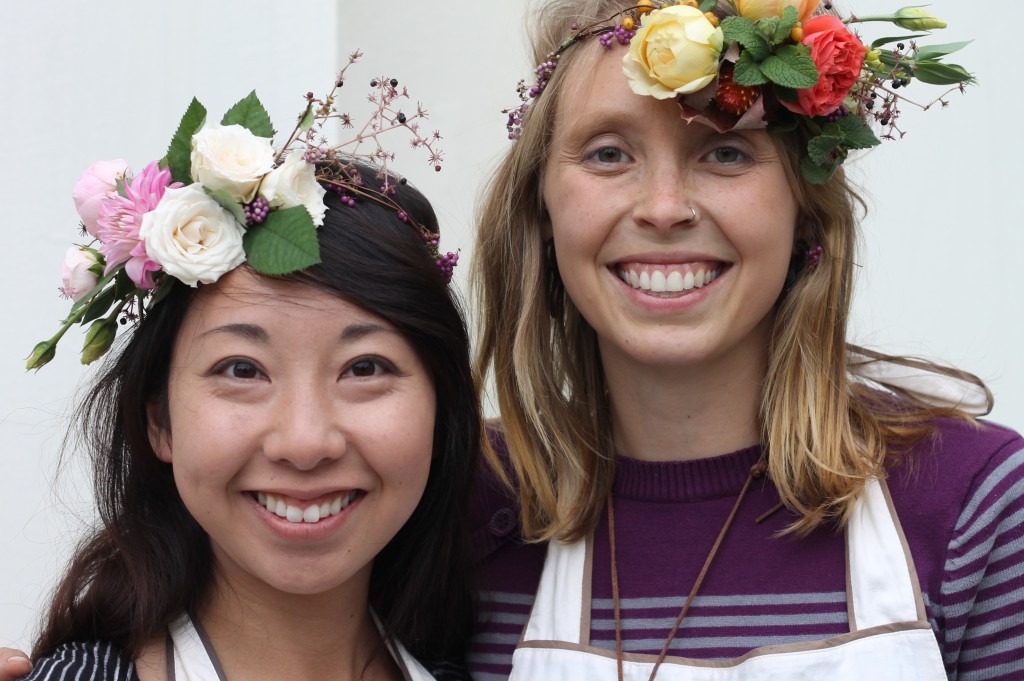
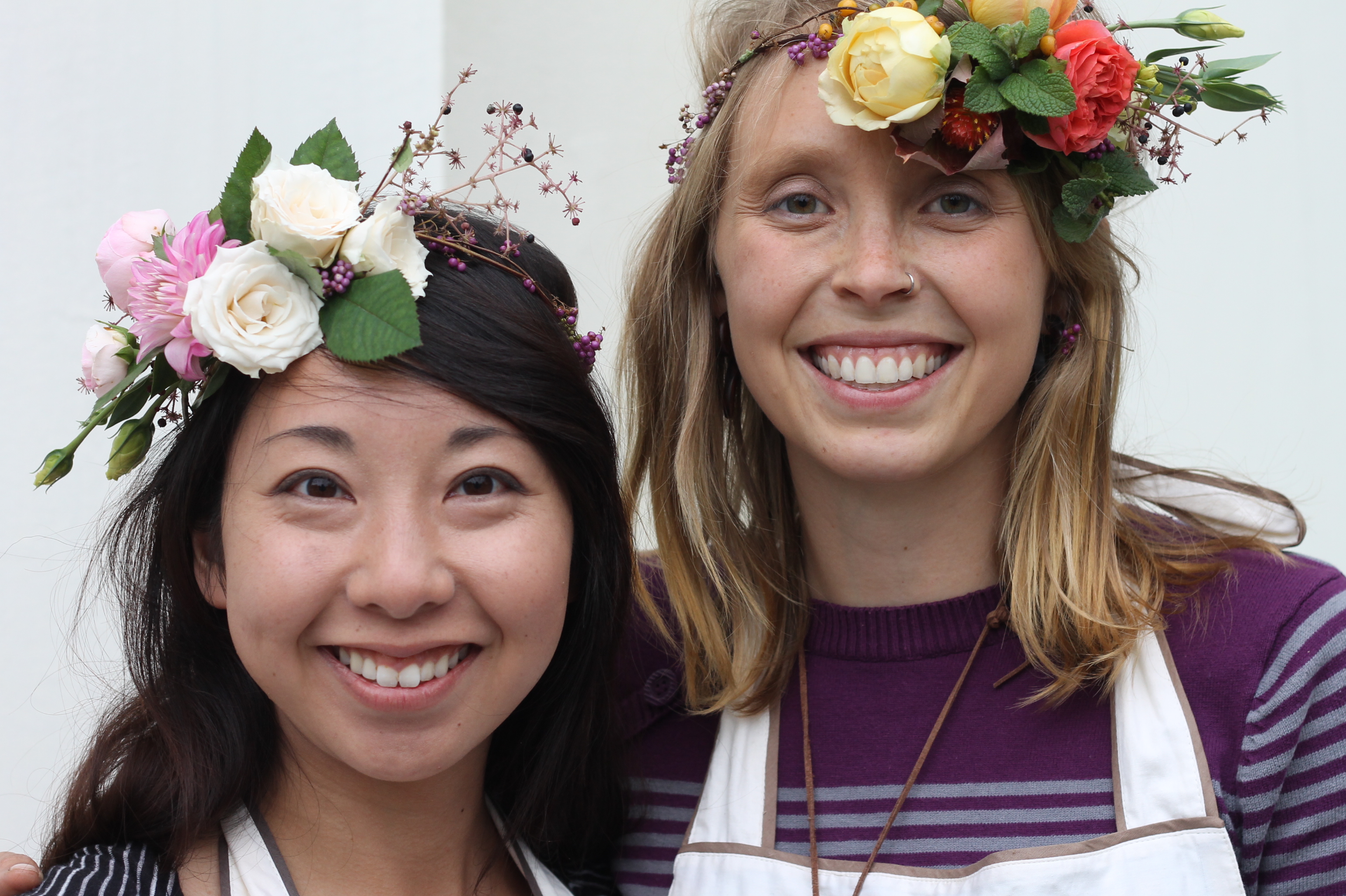
Gretel (right) and friend – showing off their floral crowns.
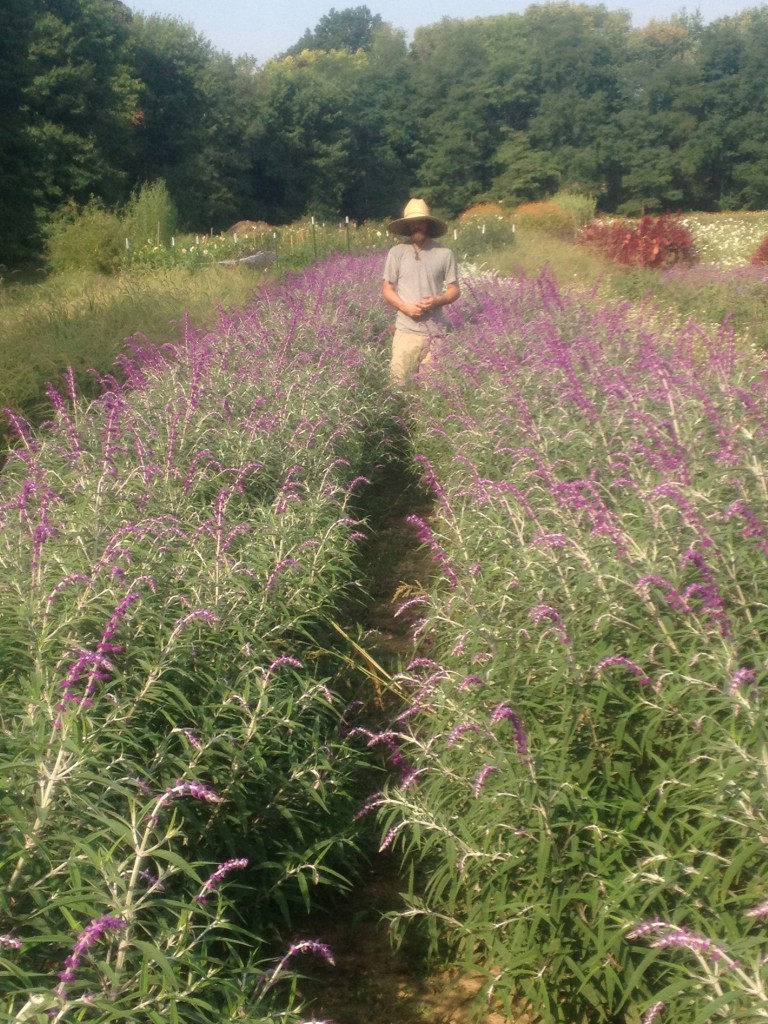
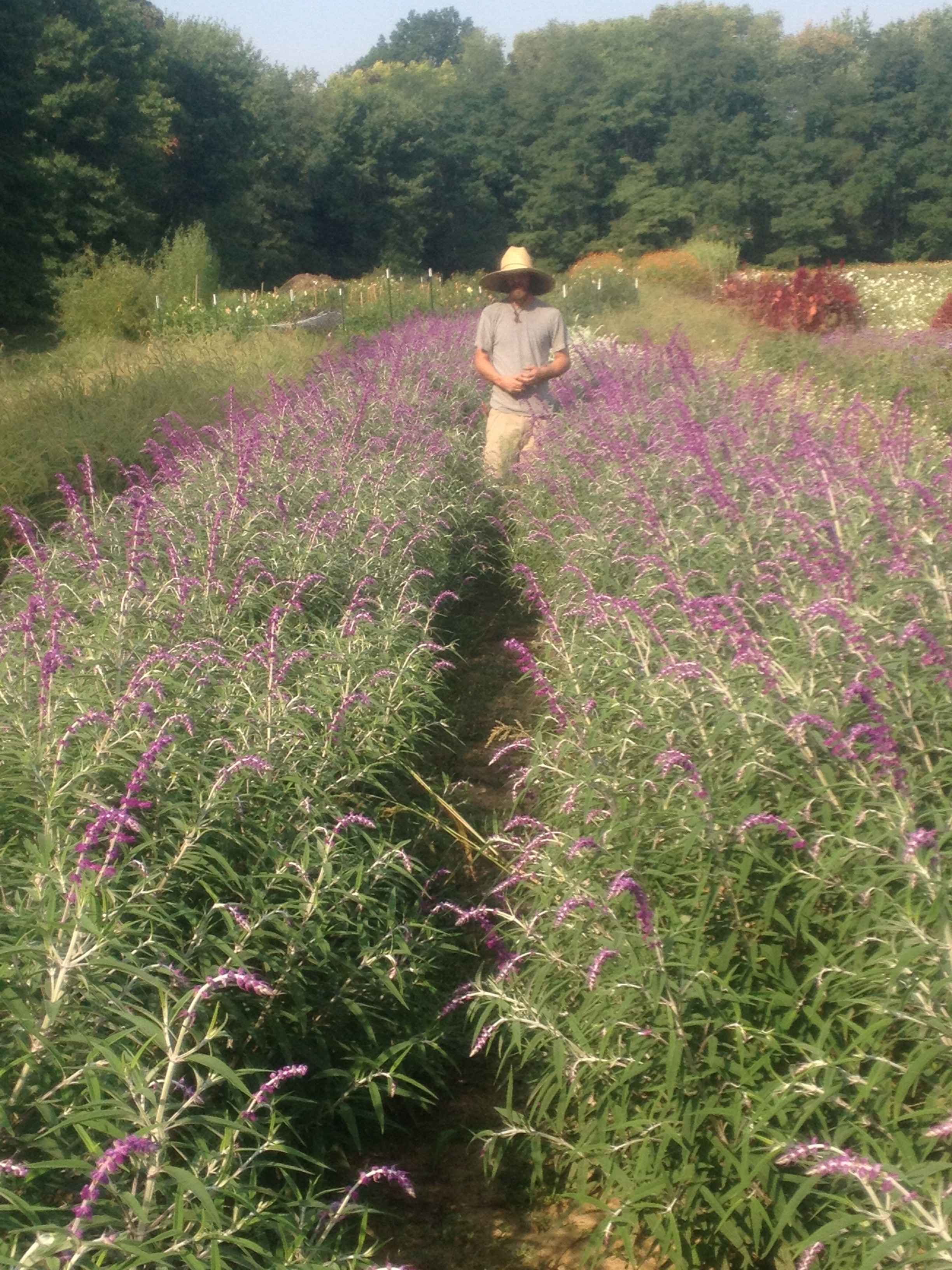
A sense of the beauty of this farm – as seen in one section planted with salvia.
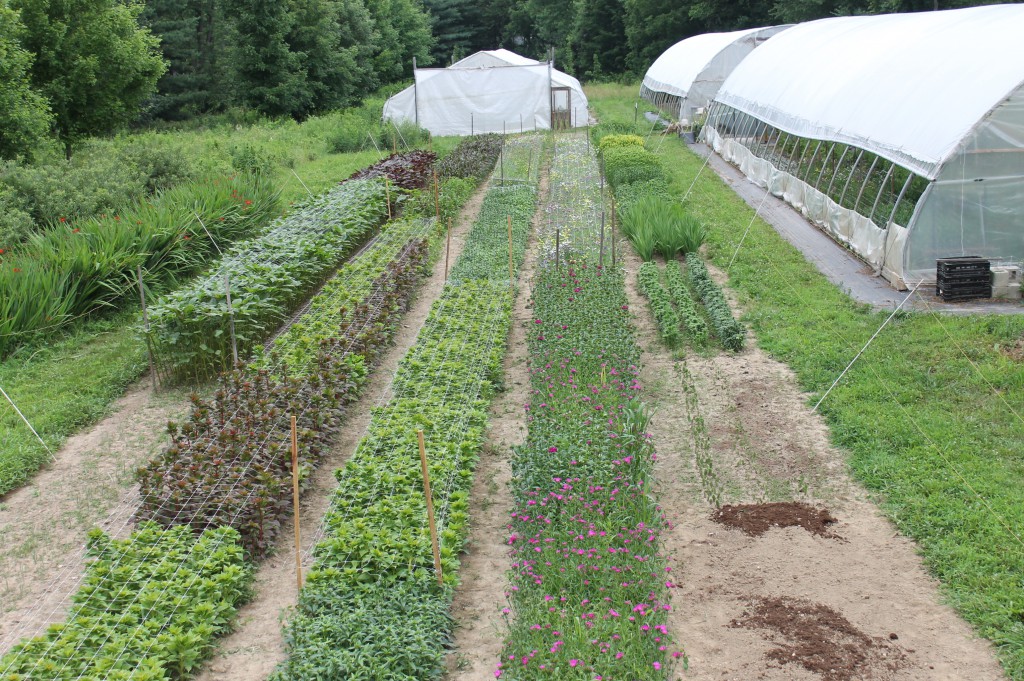
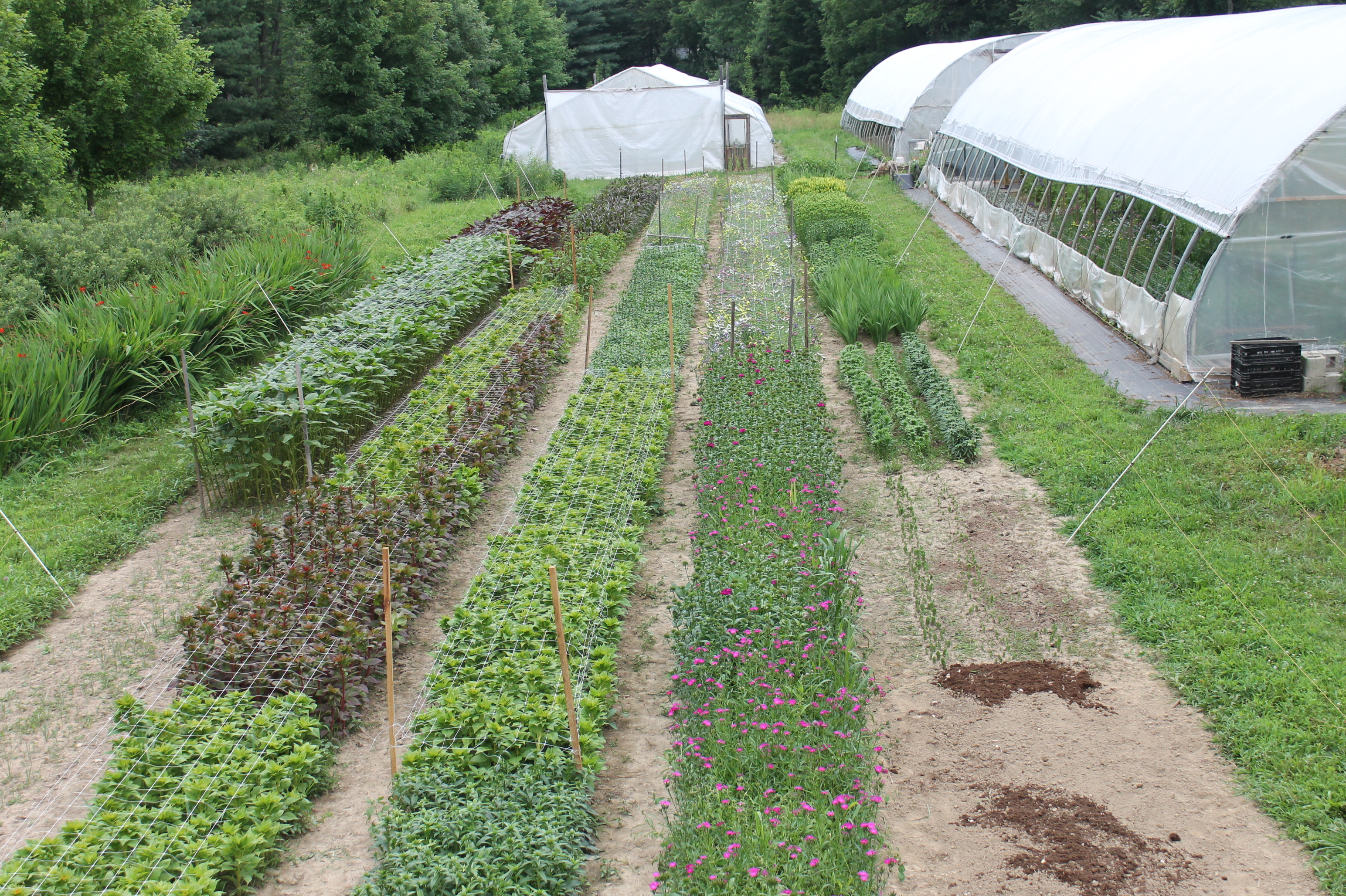
What an organized place – rows of field-grown flowers and well-appointed greenhouses.
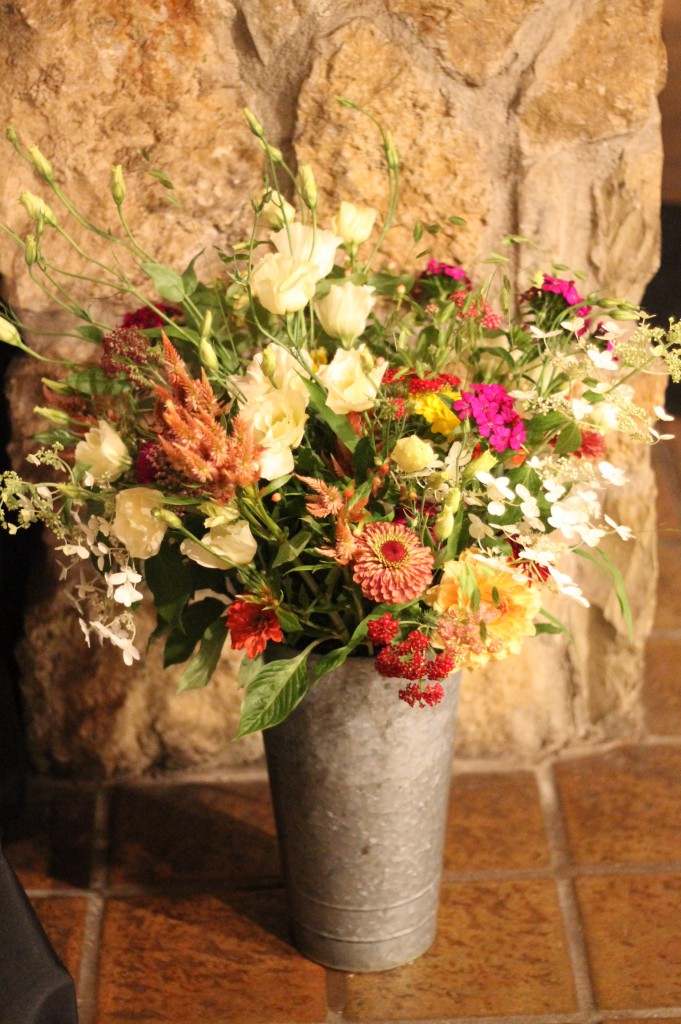
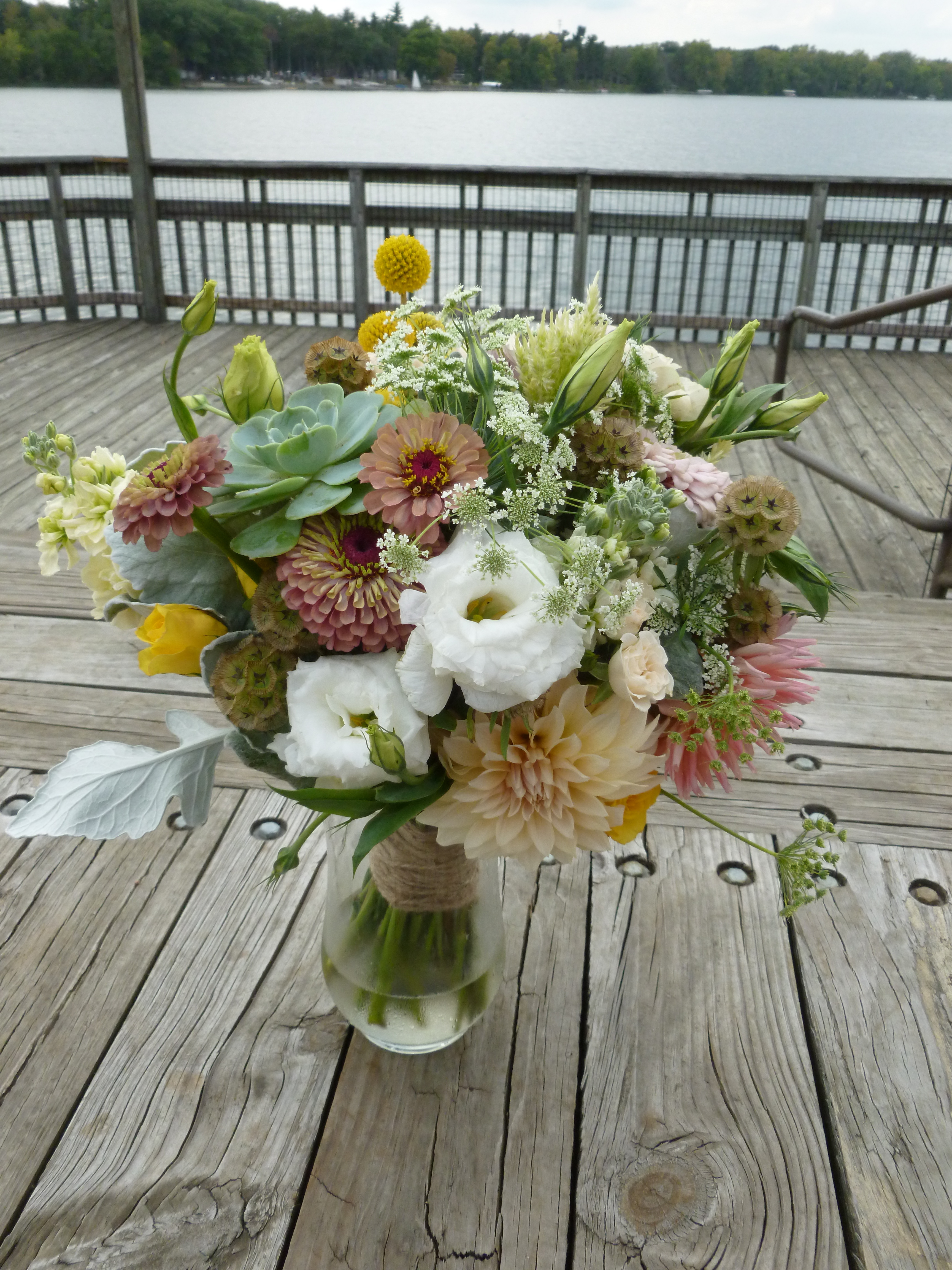
A Sunny Meadows Flower Farm bouquet
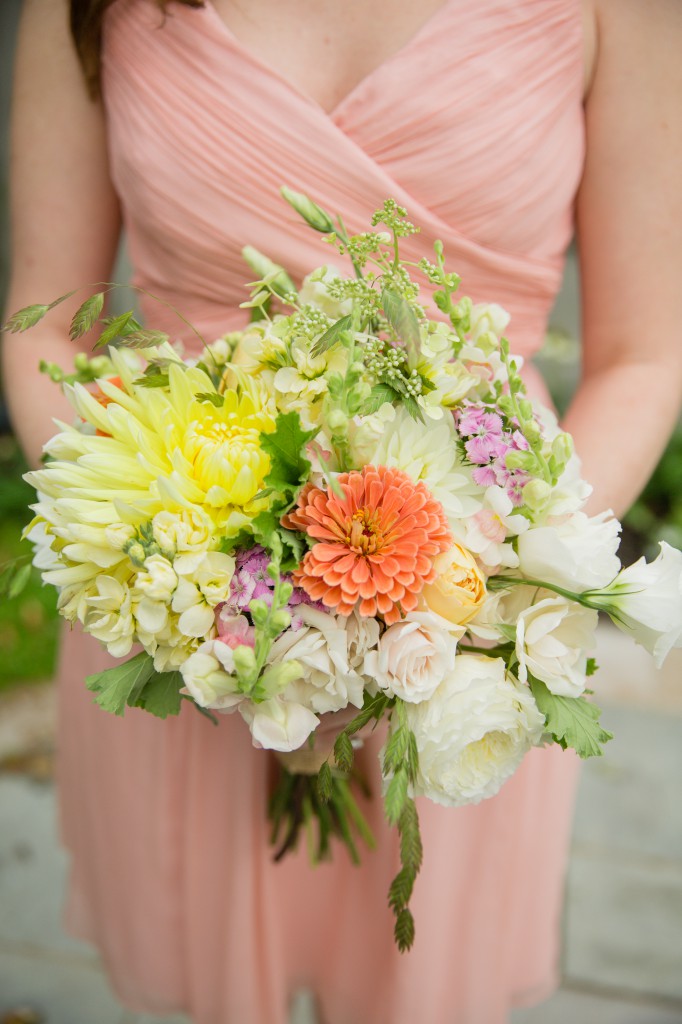
Be still, my heart~ A beautiful bouquet by Gretel, using flowers she and Steve grew.
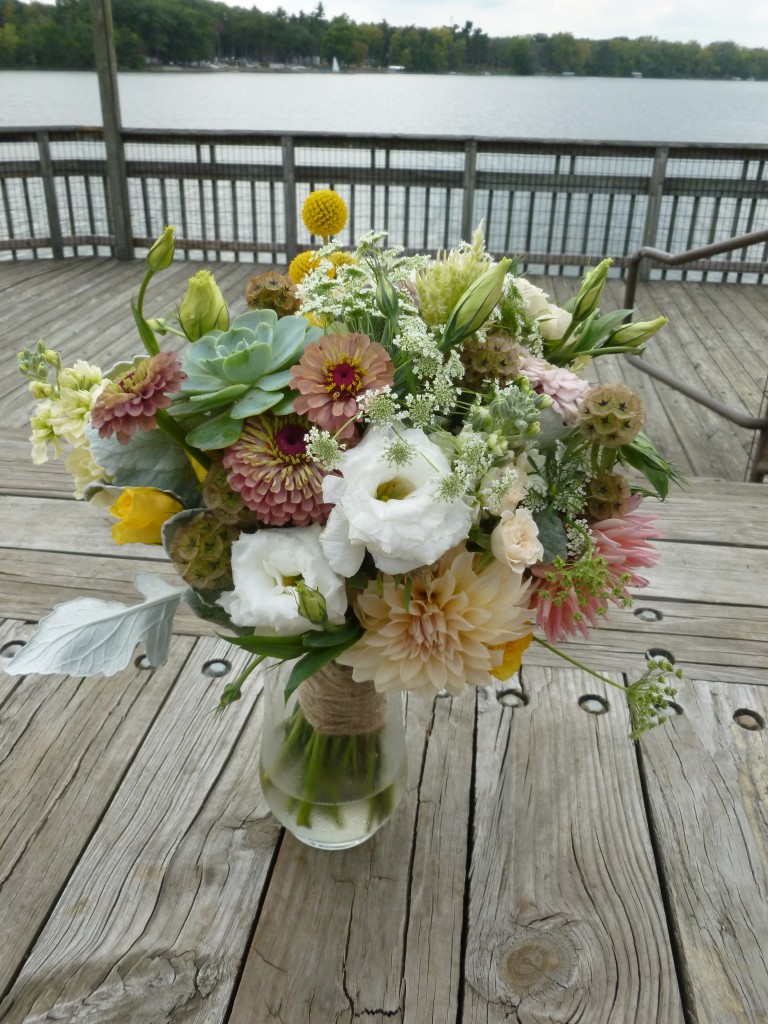
Grown & designed by Gretel Adams, Sunny Meadows Flower Farm.
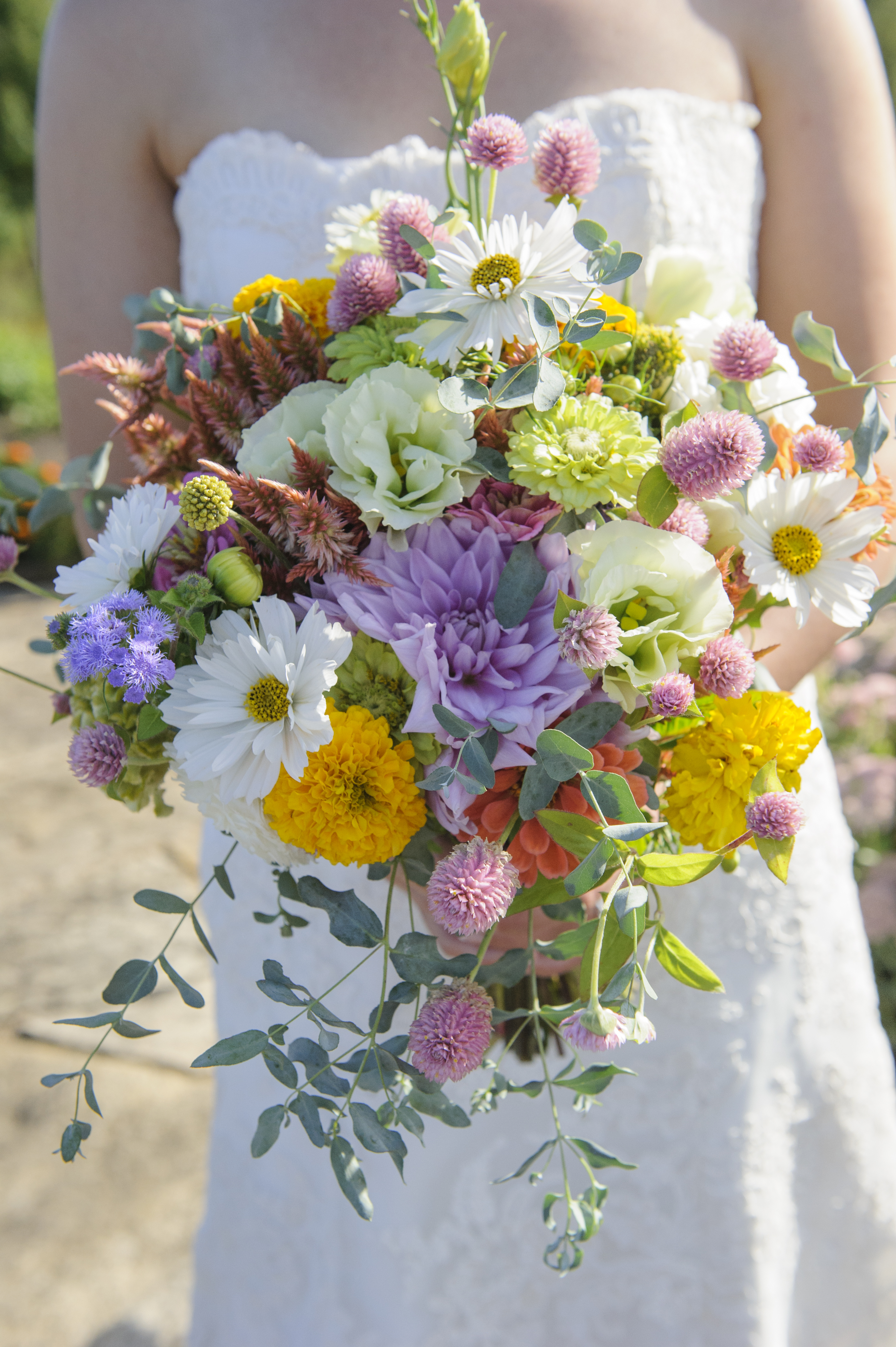
Another lovely bridal bouquet from Sunny Meadows Flower Farm.
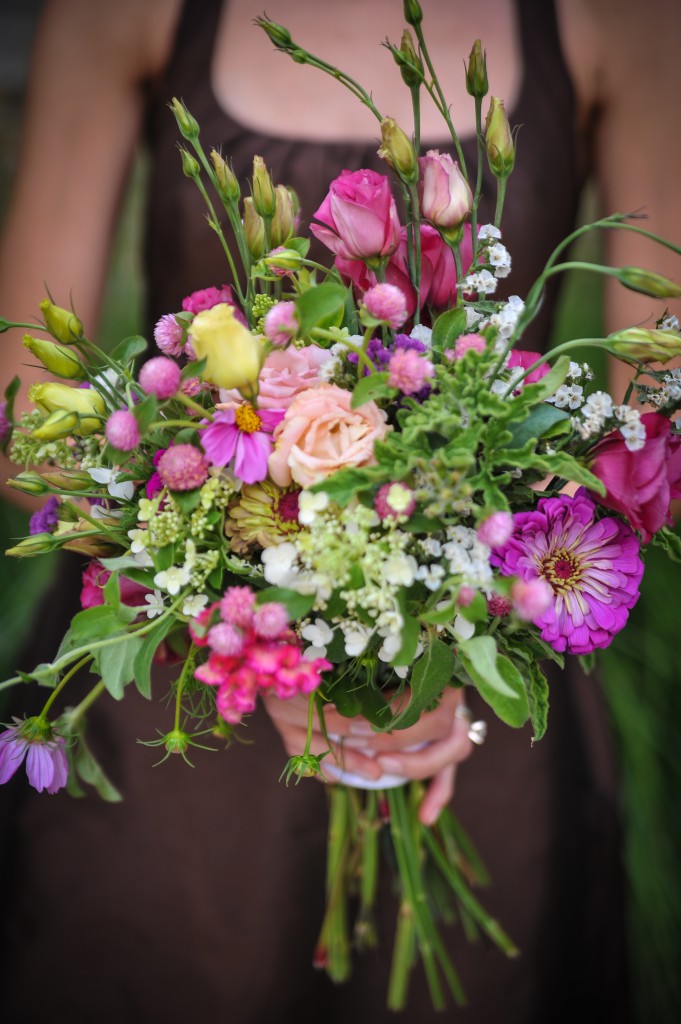
A sublime color palette for a gorgeous bouquet last July.
I’m so pleased to have been able to introduce you to Gretel and Steve. On their web site, they write:
“Our mission is to educate the public about the quality and vase life of local flowers. Although you can get flowers for dirt cheap flown in from the Equator, the workers there do not have the same rights and protections and there are fewer restrictions on chemical use. So who knows what you are really buying? As a farm specializing in all naturally-grown fresh cut flowers, we are trying to show people just how important supporting your local flower farm really is.”
Follow SUNNY MEADOWS FLOWER FARM on Facebook here
To add your name to the Sunny Meadows Flower Farm, email Gretel & Steve at: SunnyMeadowsFlowerFarm@gmail.com
Because of your support as a listener, listeners have downloaded this podcast nearly 6,000 times! I thank you for taking the time to join to my conversations with flower farmers, florists and other notable floral experts.
If you like what you hear, please consider logging onto Itunes and posting a listener review.
Until next week please join me in putting more American grown flowers on the table, one vase at a time.
The Slow Flowers Podcast is engineered and edited by Hannah Holtgeerts. Learn more about her work at hhcreates.net.
Posted in American Grown, Blog Posts, Creativity, floral design, General, Plants, SLOW FLOWERS Podcast | 3 Comments »
January 27th, 2014
Podcast: Play in new window | Download
Subscribe: Apple Podcasts | Podcast Index | | More
 Something really exciting happened last week – my friends at the San Francisco Flower Mart, the premiere flower market in the U.S., came onboard as presenting sponsors of the Slowflowers.com directory. This is my other passionate project, and it dovetails nicely with the Slowflowers Podcast.
In the works right now, Slowflowers.com is a free online directory to help you find florists, studio designers, wedding and event planners, supermarket flower departments and flower farmers who are committed to American grown flowers.
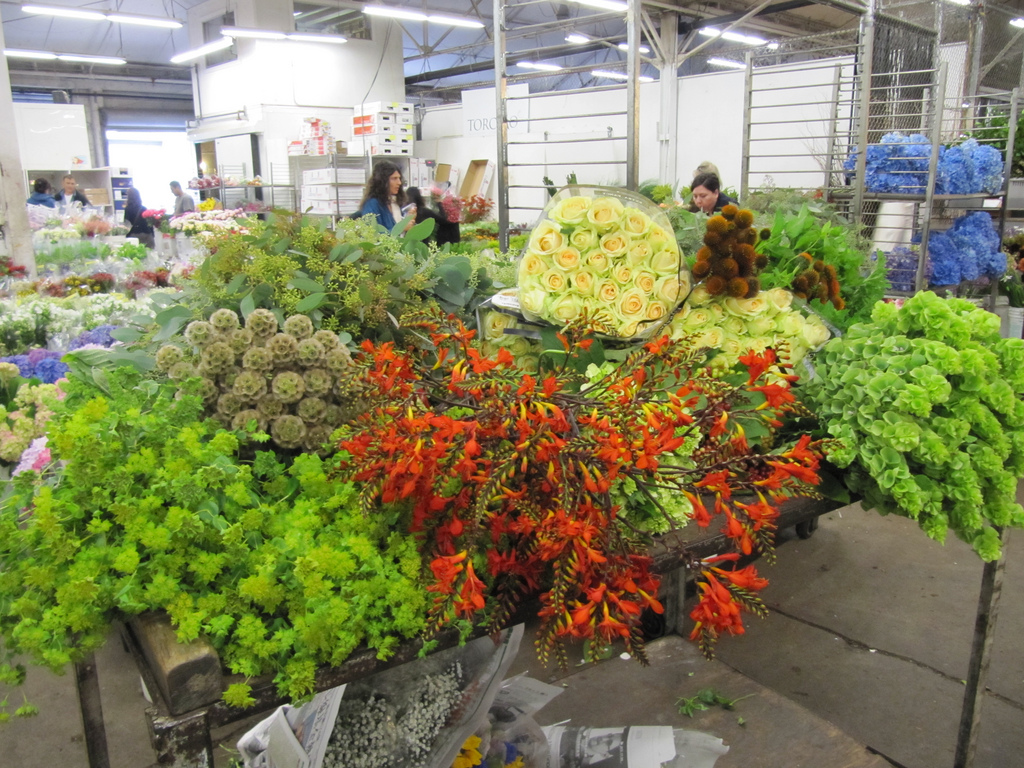
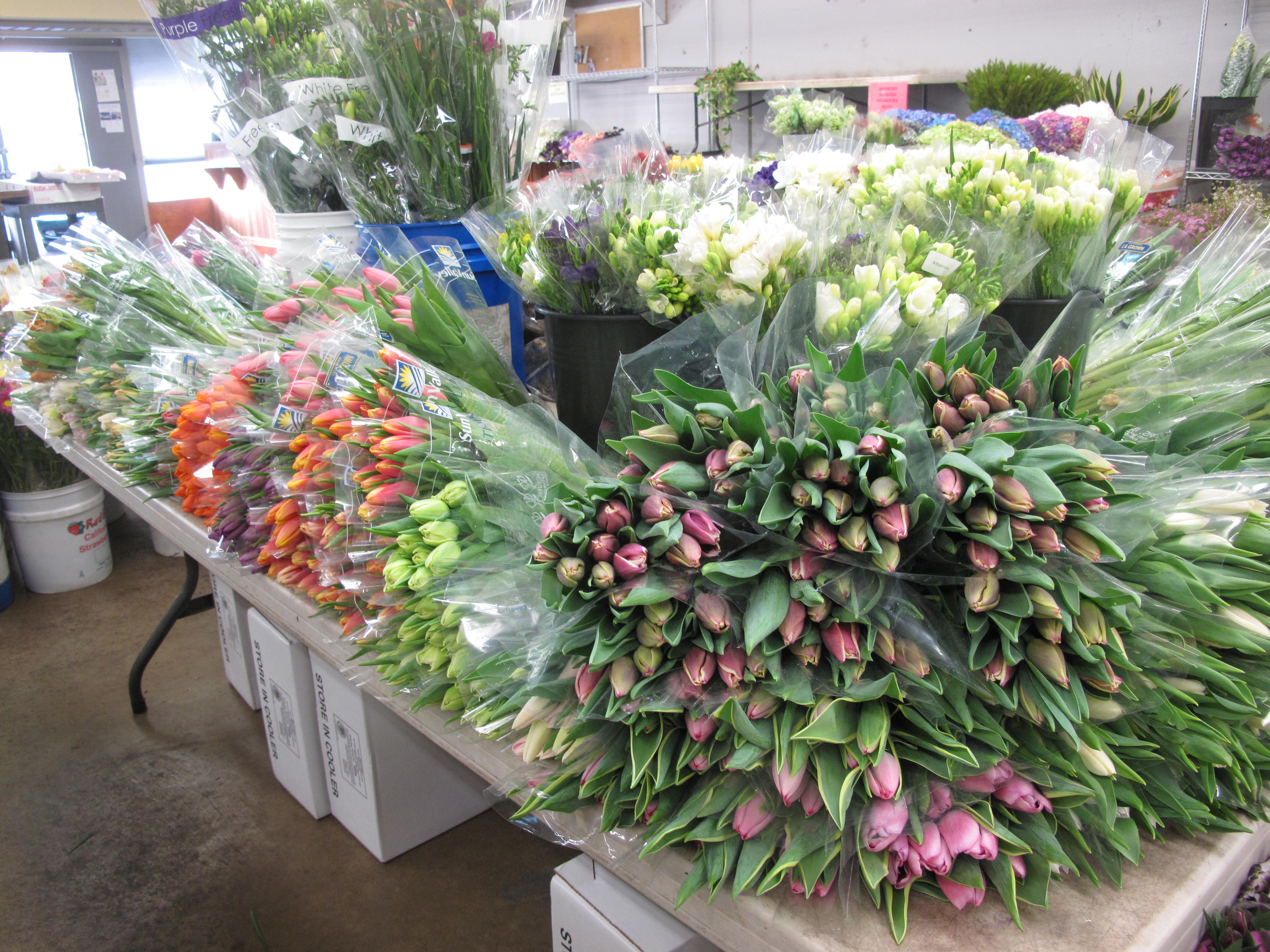
Inside the San Francisco Flower Mart: Connecting Bay Area florists and flower lovers with fresh, seasonal and local blooms.
I’m currently raising funds to complete this project via Indiegogo. To date, supporters of American Grown flowers have contributed $11,045 to the campaign, with SF Flower Mart’s $1,000 contribution giving us a huge boost earlier in the week.
I happened to be working in SF this past Monday, so I stopped by the management office and grabbed General Manager Bob Otsuka and Jeanne Bose, the SFFM’s marketing/promotions director and social media strategist, for a quick conversation, recorded as a Bonus to the Slow Flowers Podcast. Listen to what Bob and Jeanne say about the Market’s decision to bring their support to the Slowflowers.com launch.
It’s fascinating to learn about the history of this amazing center for locally grown flowers – and inspiring to know that we’re on the same path to promote more American Grown Flowers to the floral industry and consumers alike.
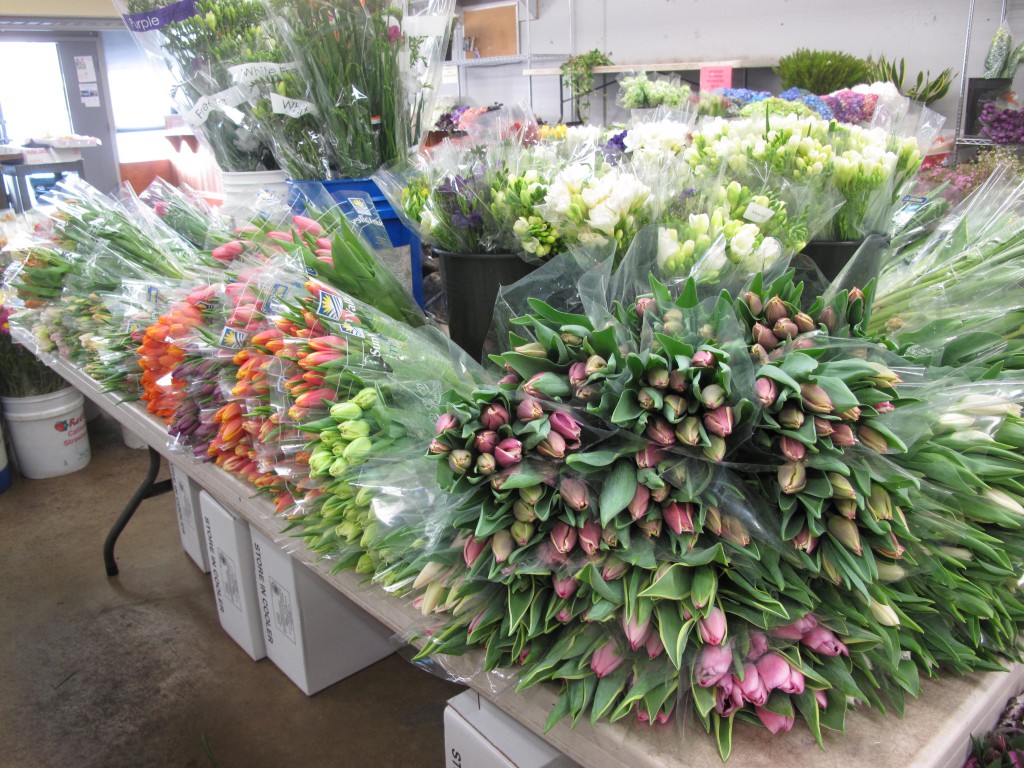
Seasonal blooms, six days a week.
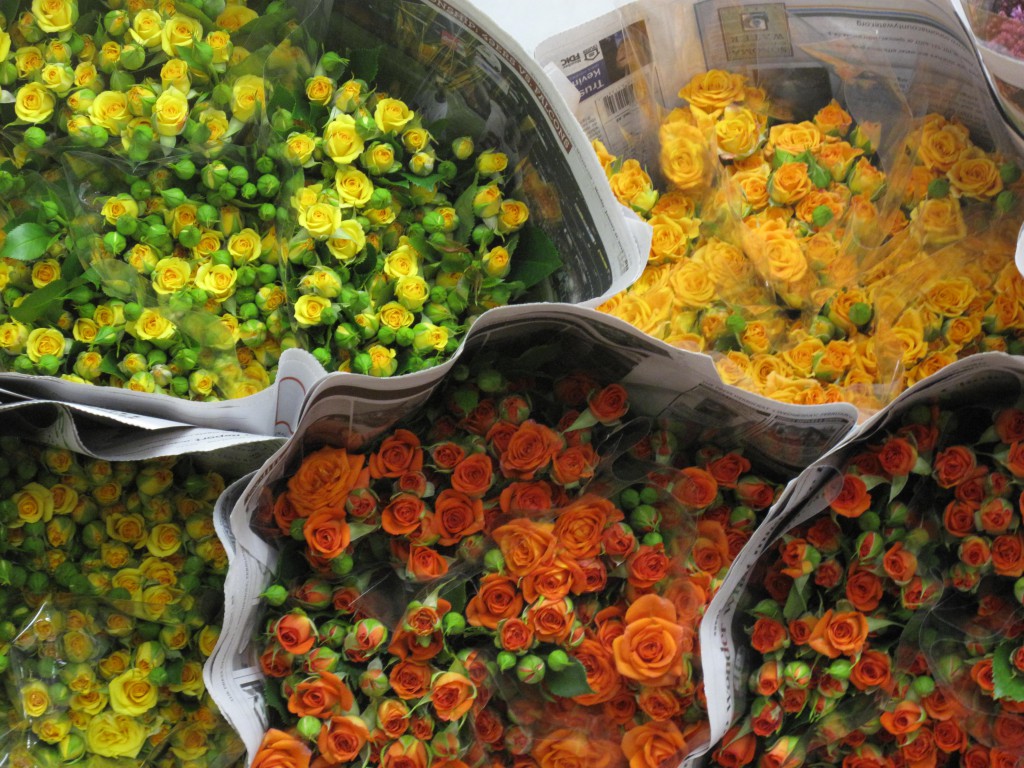
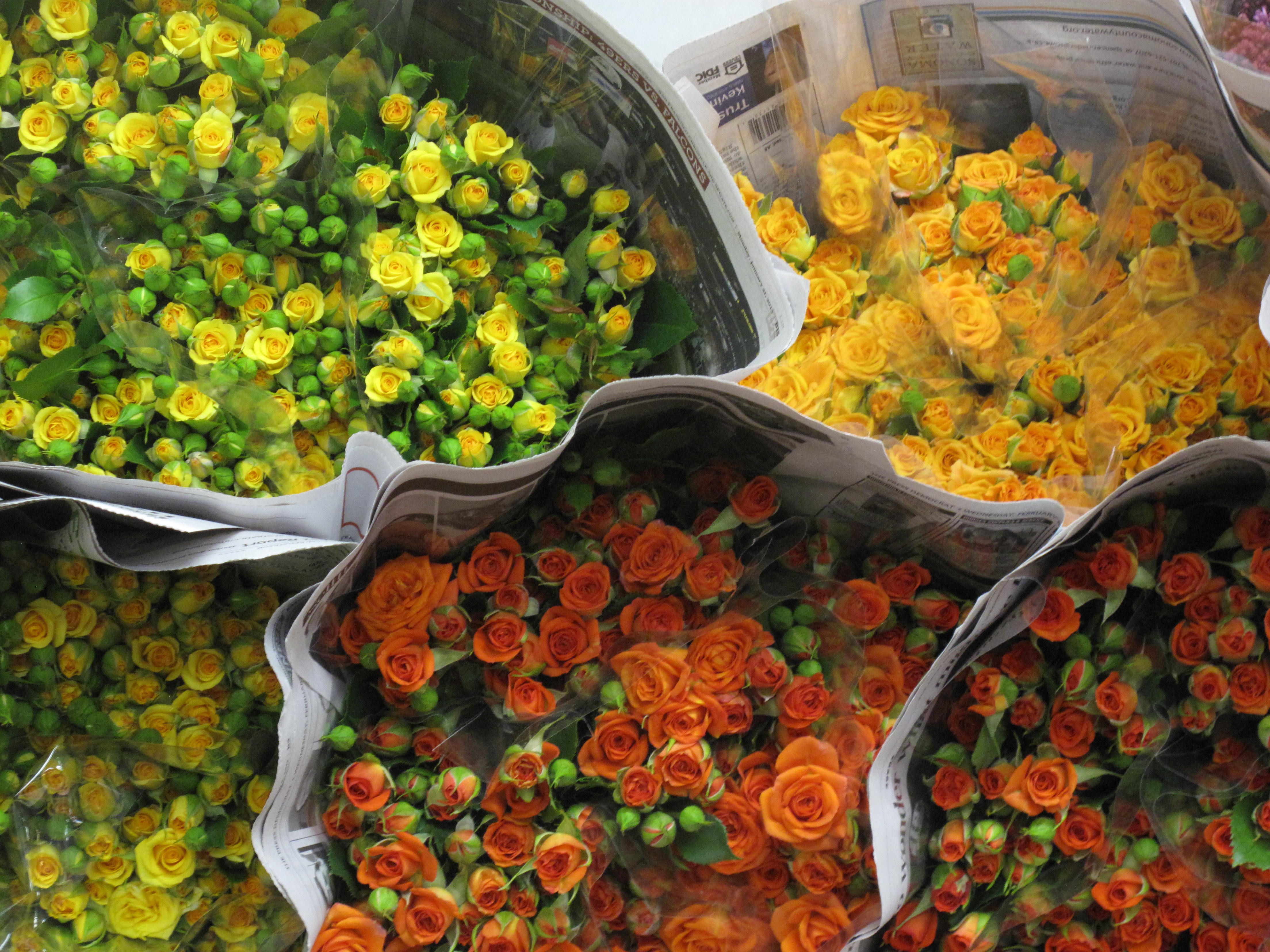
There’s a huge selection of local California-grown roses . . . in awesome colors~
Here is a little slice of history, as told on the Market’s web site:
With beginnings paralleling the growth and development of the San Francisco Bay Area, the origins of the San Francisco Flower Mart go back to the late 1800’s when land was plentiful. Local flower growers could bring their product to Lotta’s fountain in downtown San Francisco three days a week, selling their product to local flower shops. [Note: Lotta’s fountain is located at the intersection of Market, Geary and Kearny streets in downtown San Francisco.]
A need for a centrally located market bringing together the three ethnically diverse groups of flower growers was fulfilled with the opening of a market located at 5th and Howard Streets in 1924. As flower growers expanded production areas outside of the Bay Area and as product from other parts of United States came in, the need for a larger more modern permanent facility led to the design and construction of our current market at Sixth and Brannan Streets in the South of Market area of San Francisco.
The grand opening of the San Francisco Flower Terminal in September 1956 marked the establishment of an industry icon. Today, officially known as the San Francisco Flower Mart, we now have over 60 vendors, purveyors of cut flowers, potted plants, blooming plants and floral supplies. We have evolved from being a “growers” market to being a marketplace for floral wholesalers. Product, which at one time was only from the immediate Bay Area, now comes from the far reaches of the world.
As you will hear in this podcast interview, more than a century after it was established, the San Francisco Flower Mart continues to reflects the character of locally-grown flowers and the farmers who grow those blooms.
In addition to family flower farms selling direct to the floral industry and consumers, you will also find wholesalers who stock flowers from growers in other parts of California, as well as Oregon and Washington. And while people in “the flower biz” are served here as wholesale customers six days a week, some days as early as 2:00 a.m., the DIY flower lover/designer is also welcome to shop – after 10 a.m.
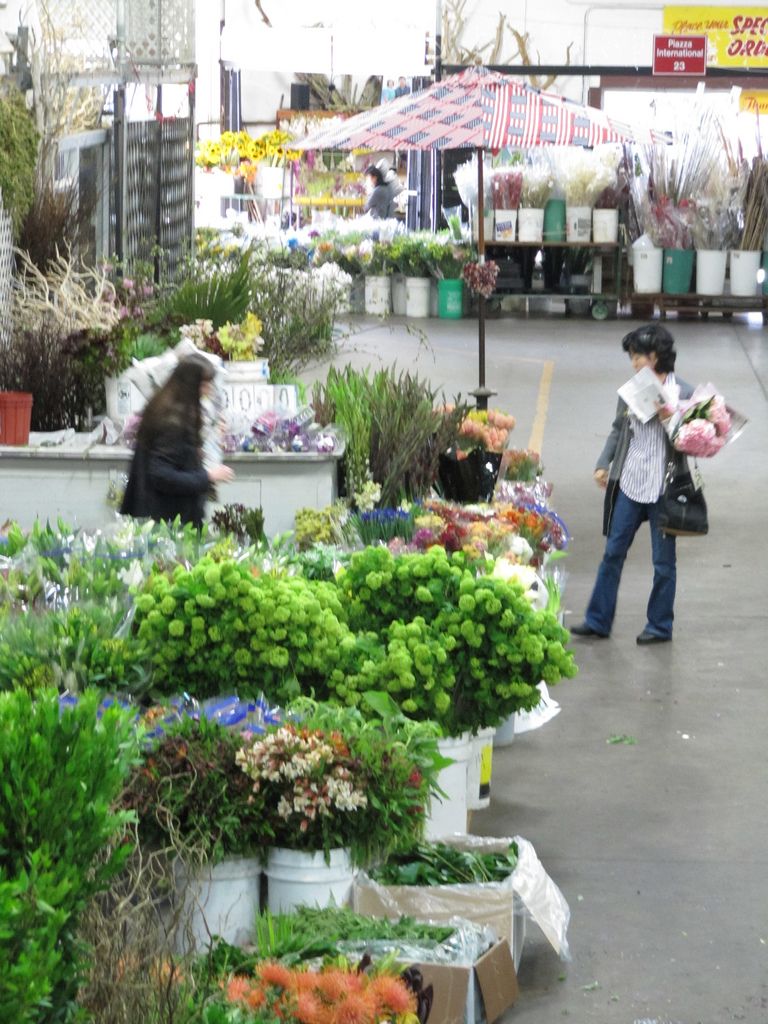
A bustling center for flowers – with more than 60 vendors.
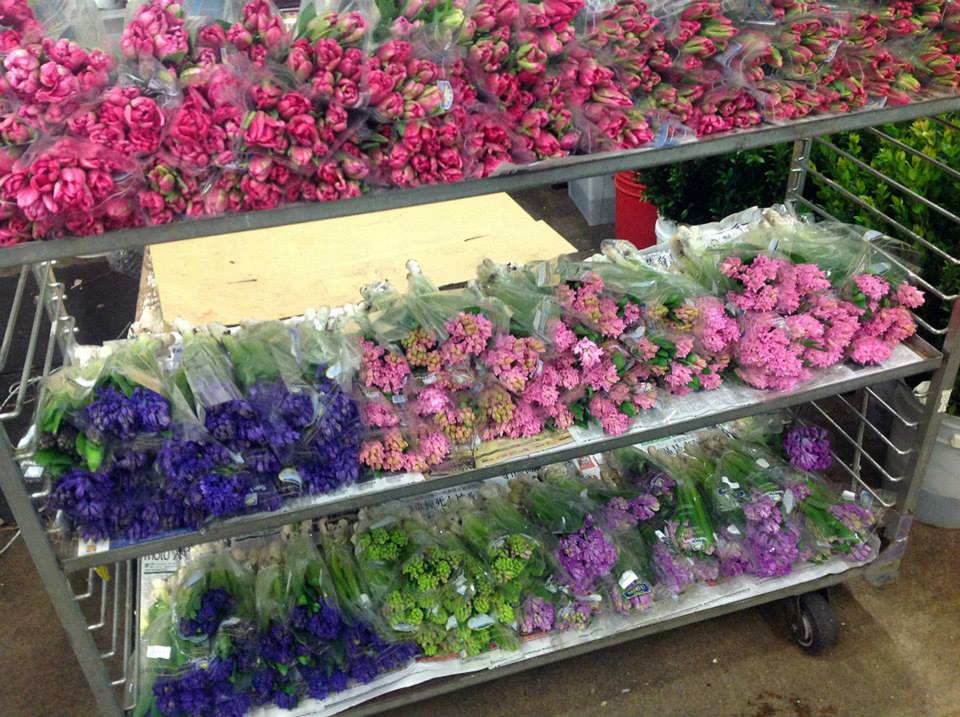
Racks of California-grown hyacinths recently offered by Torchio Nursery, a vendor at the San Francisco Flower Mart.
This is truly a flower mecca and you must add it to your flower bucket list if you haven’t been to visit. I’m thrilled to feature the San Francisco Flower Mart and doubly thrilled that this important center for local flowers will be a Presenting Sponsor on the Slowflowers.com site for the year to come, connecting More American Flowers with Customers, One Vase at a Time.
All photographs used here, courtesy (c) Jeanne Boes, SF Flower Mart
Posted in American Grown, Blog Posts, Creativity, floral design, General, Podcast Episodes, SLOW FLOWERS Podcast, Slowflowers.com the Directory of American Flowers | 4 Comments »
January 23rd, 2014
I’m watching and excitedly dancing in my seat from Austin, Texas as you and the other pioneers of sustainable floriculture change the face of the industry! Brava!!
Can’t wait for the directory project to come to fruition- my tiny donation did’t break the goal mark, but every little bit counts. Thanks from EcoChic Floral.
– Natasha Madison, EcoChic Floral, Austin, TX
Above is just one of the many supportive messages I’ve received in the past three weeks since launching the Indiegogo campaign to help me complete the launch of the Slowflowers.com site.
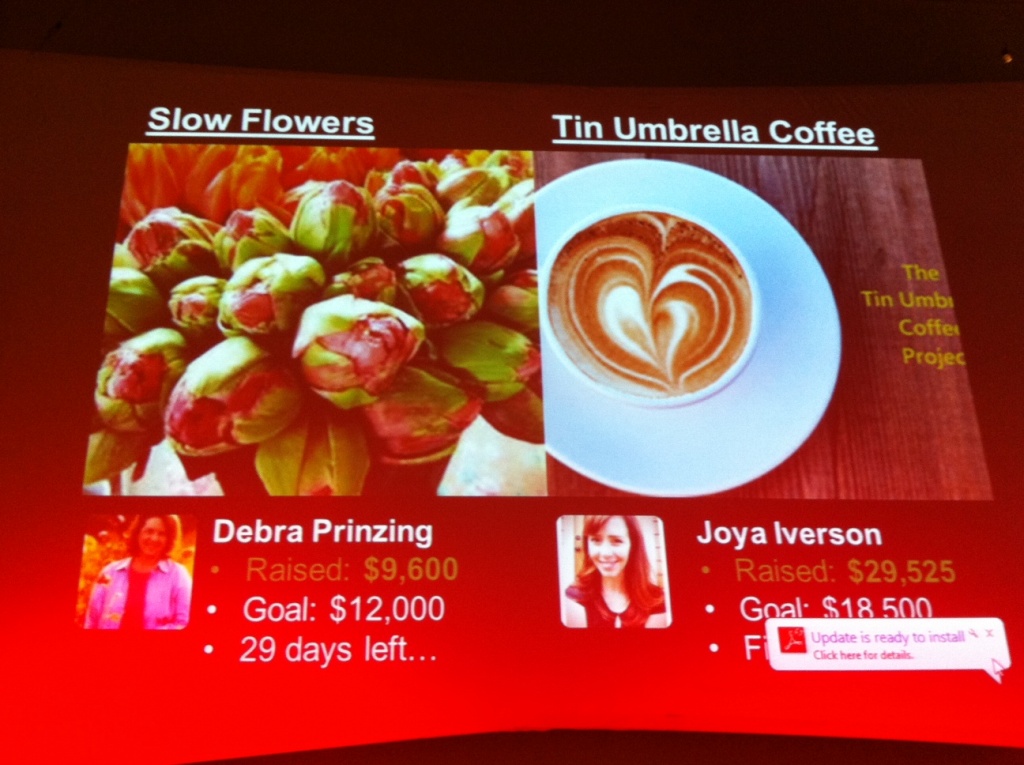
So fun to see this project on the big screen at last night’s Indiegogo Seattle Event!
It has been so gratifying to run my crowdfunding campaign on Indiegogo, the amazing resource that has such an inspiring tagline: “Fund what Matters to You.” Truly, if you are planning on taking this path to help raise funds for your own passion and dreams, this is the company to work with. They’re amazing!
SO many people – friends, family, fellow advocates in the Renaissance of the American Grown Flower Farm – and more, have contributed funds large and small.
Even more people loyally promote this project on their own social networks, like my Facebook friend Annie Haven of Authentic Haven Brand Natural Brew who constantly gives me a thumb’s up or an encouraging comment or re-post. It means so much.
Or my number-one supporter Kasey Cronquist, CEO of the California Cut Flower Commission, who has been picking up the telephone to call and encourage someone else to get involved.
Or, like my friend Susan Appleget Hurst, some are sending an email to an entire networks of people, encouraging them to view flowers as part of agriculture. Thanks so much to you all!
Here are some stats:
Funding goal: $12,000 (by February 19th)
Funds contributed to date: $10,050 – that’s 84% of the goal!
Number of people who’ve contributed: 145
Number of states represented: 29
Number of countries represented: 3 (U.S., Russia and the Netherlands)
There is one opinion that occasionally bubbles up in our industry that the idea of supporting local and seasonal flowers is “something that happens on both coasts” and that it is nonexistant in the central part of our country.
Let’s debunk that misperception right now. The Slowflowers.com supporters in Texas, Iowa, Montana, Idaho, Illinois, Indiana, Ohio, Pennsylvania, Missouri, Michigan, Tennessee and New Mexico believe in the importance of American Grown flowers. They’ve joined supporters from East Coast and West Coast states — Rhode Island, Massachusetts, Florida, Washington, D.C., Alaska, Washington, Oregon, California, New York, New Jersey, North Carolina, Maryland, Virginia, Maine and Massachusetts! That’s seriously impressive and such a wonderful representation of flower farming, floral design and demand for local flowers.
Thanks to the San Francisco Flower Mart for coming onboard this week with a $1,000 PRESENTING SPONSOR contribution!
Thanks to the Los Angeles Times (reporter Lisa Boone) for blogging about this project last week – that was a great show of media attention.
Thanks to Rochelle Greayer of the Studio G Blog for this wonderful post. I love that she describes Slowflowers.com as “an online farmers’ market for flowers.”
Thanks to Indiegogo’s Bret Harris and Amanda Hat for inviting me to be part of their Seattle Event last night. It was pretty fun to be with other fans of Indiegogo, including Joya Iverson who successfully raised $29,525 for her new venture Tin Umbrella Coffee Roasters – a whopping 160% of her original goal of $18,500.
Here are some more fun photos from last night’s event:
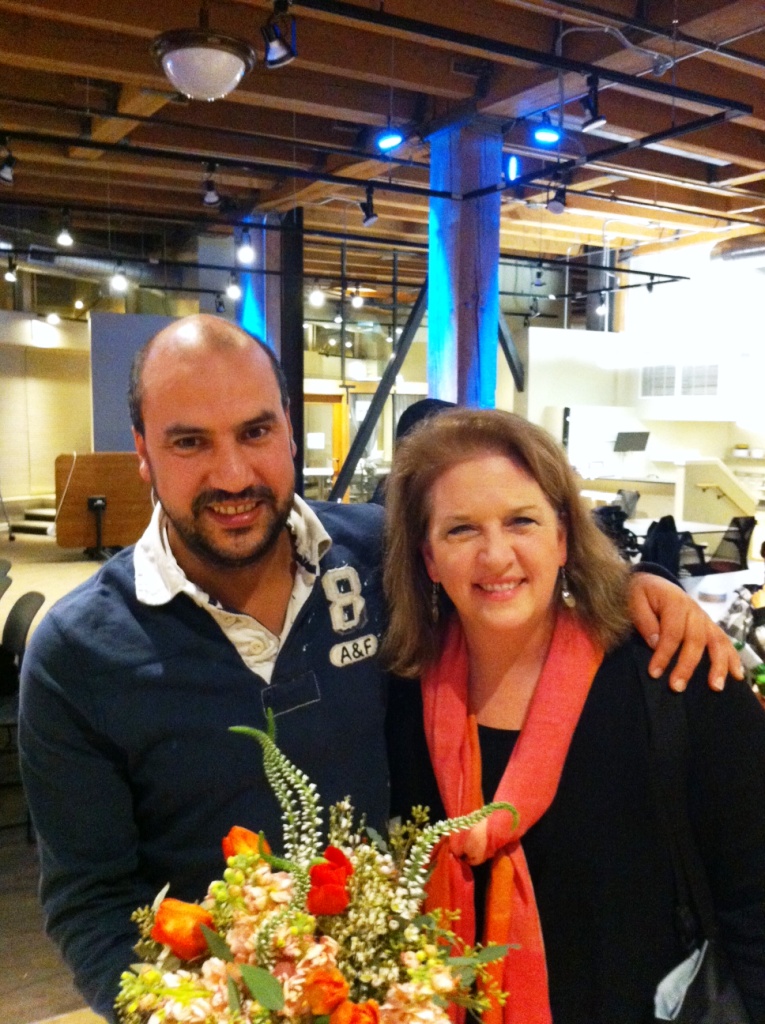
I brought a bouquet of local flowers – from farms in Washington, Oregon & California – to illustrate my passion for American Grown. . . it was a perfect “show-and-tell” and this guy won the bouuqet as a giveaway (his birthday is this weekend). Real men love local flowers!
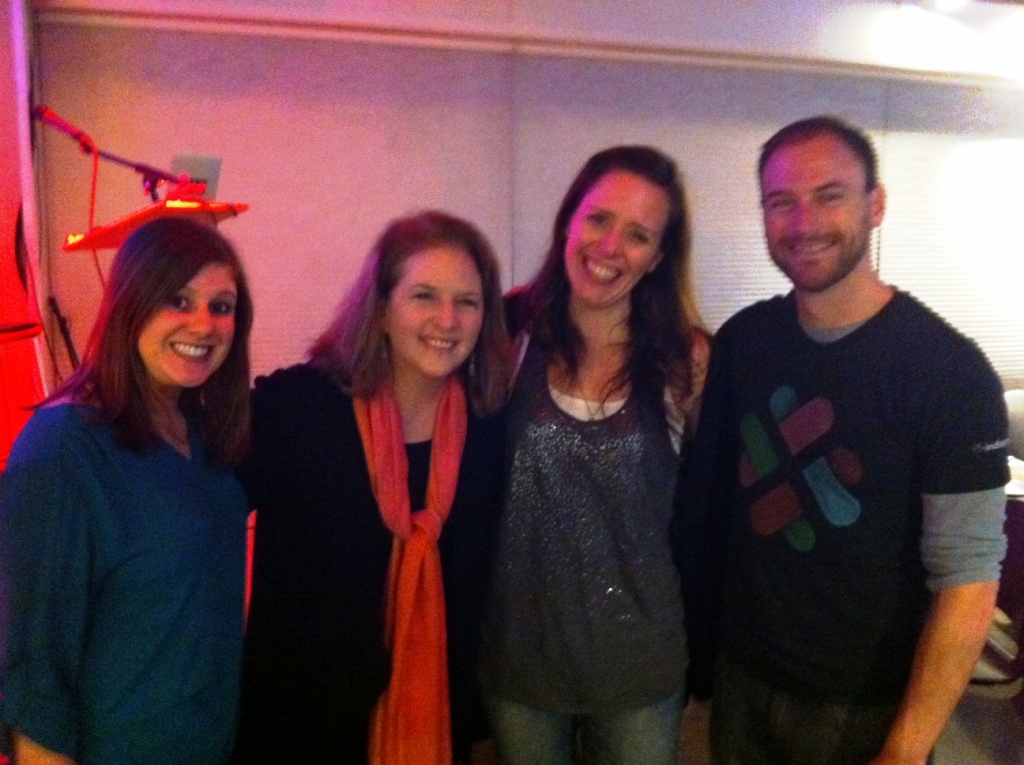
From left: Amanda Hat from Indiegogo, me, Joya Iverson of Tin Umbrella Coffee, and Bret Harris from Indiegogo.

Thanks Indiegogo!
That’s it for now~ I’ve got lots more to do before this campaign ends . . . AND before we launch Slowflowers.com. Hoping to have a *beta* (soft launch) to share in the coming weeks. That’s the plan and my design and programming team is working tirelessly to finish. Stay tuned!
Posted in American Grown, Blog Posts, Creativity, floral design, General, Slowflowers.com the Directory of American Flowers | 3 Comments »
January 22nd, 2014
Podcast: Play in new window | Download
Subscribe: Apple Podcasts | Podcast Index | | More
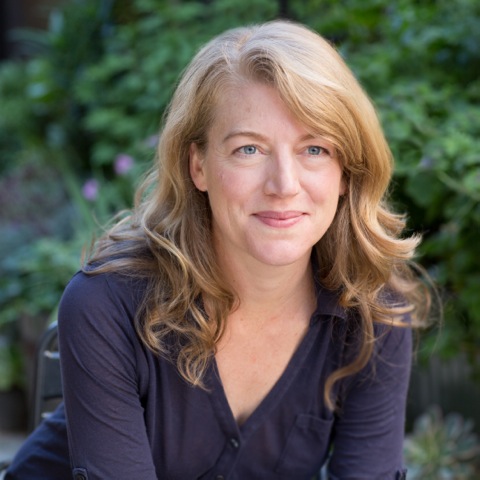
(c) Paige Green
I’m so pleased to introduce listeners to Baylor Chapman, creator and owner of Lila B. Design, a San Francisco-based floral and plant studio. Baylor’s story is well documented in The 50 Mile Bouquet and in many newspaper, magazine and blog articles.
I first met Baylor in the fall of 2010, on a trip to SF where I was scheduled to give a lecture for the Garden Conservancy.
Serendipitously, Susan Morrison, a friend who I’d known through the Garden Writers Association, learned I was coming to her backyard and called to say, “You need to meet my friend Baylor when you’re in town. She’s into locally-grown flowers just like you are.”
That led to a wonderful visit to tour Baylor’s former “loading dock” studio in San Francisco’s Mission District. Susan and Rebecca Sweet, another fellow garden designer and blogger, met me at Baylor’s. The three of us had lots of fun drooling over Baylor’s floral creations and learning more about her design philosophy based on seasonal and locally-grown floral elements. Here’s a blog post about that adventure.
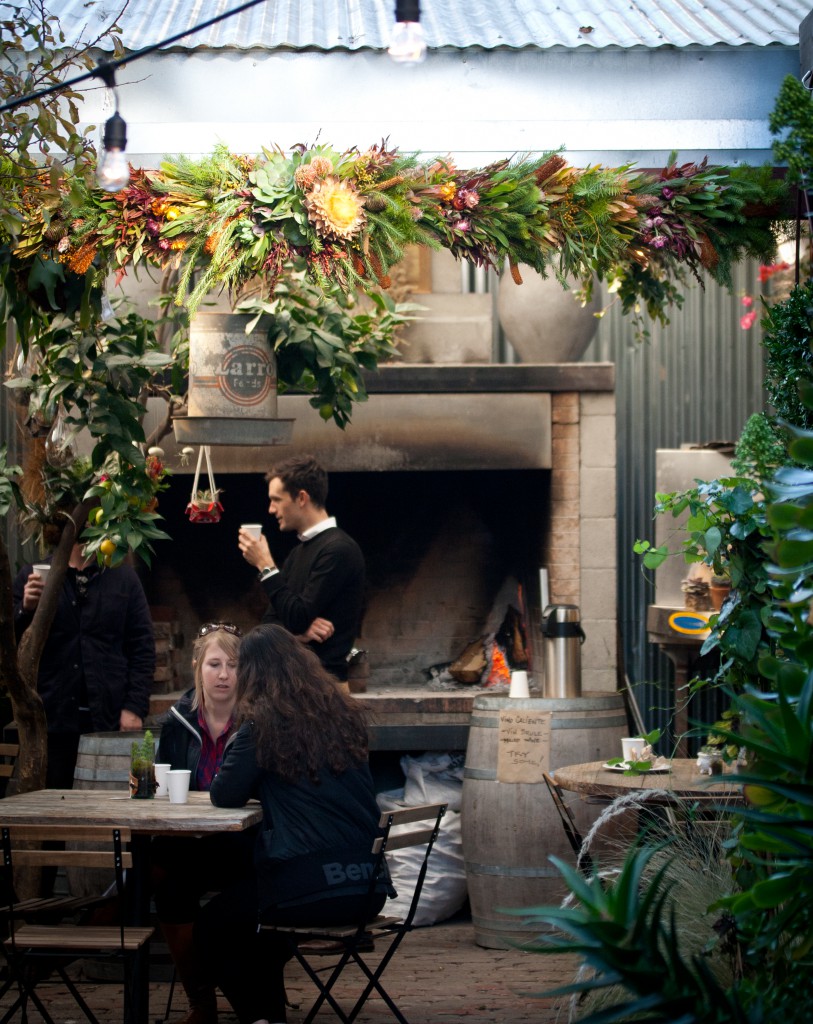
How cool is this? Coffee, brunch or lunch at Stable Cafe, amidst the lovely living garden created by Lila B. Design. (c) Sophie de Lignerolles photo
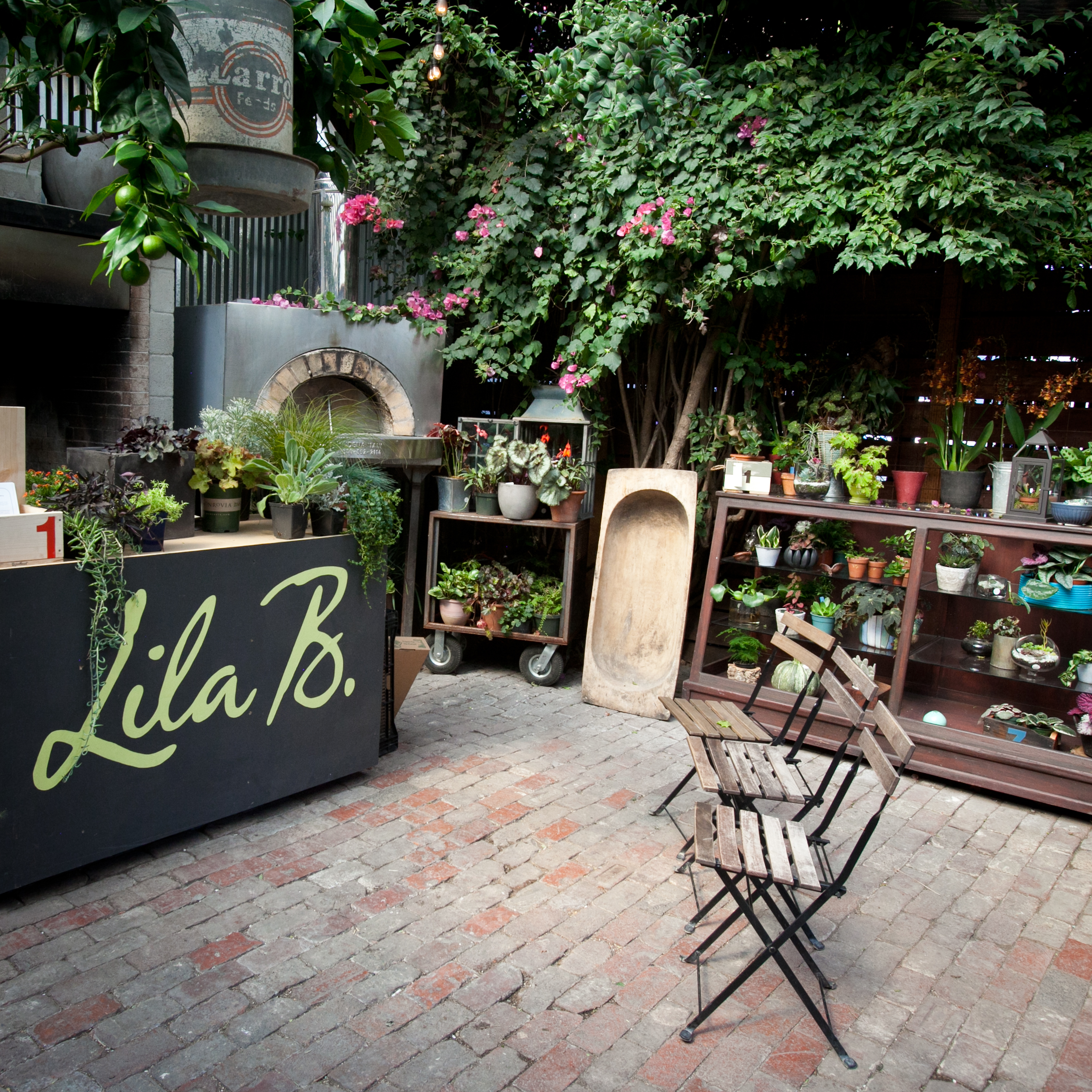
Today you can find Baylor and her team working in the welcoming open-air courtyard that’s part of Stable Cafe, the community-minded restaurant owned by her friend Thomas Lackey.
Thomas and Baylor have both been operating businesses on Folsom Street, and when Baylor lost her loading-dock studio this past June, it was Thomas who said: “Move over to our courtyard.”
He “gets” the idea of creating connections with neighbors, artists, fellow small-business owners and others who want to keep jobs and culture alive and well in San Francisco’s vibrant neighborhoods.
Plus, Stable Cafe’s kitchen makes delicious, healthy, seasonal & organic food! Now if you’re in SF, you can visit Lila B. Design, shop for flowers, plants and beautiful garden products, while also eating scrumptious food at the Stable Cafe! What’s not to love?
Baylor graciously shared these photos of her recent work for you to enjoy. Please notice the specific photo credit with each.
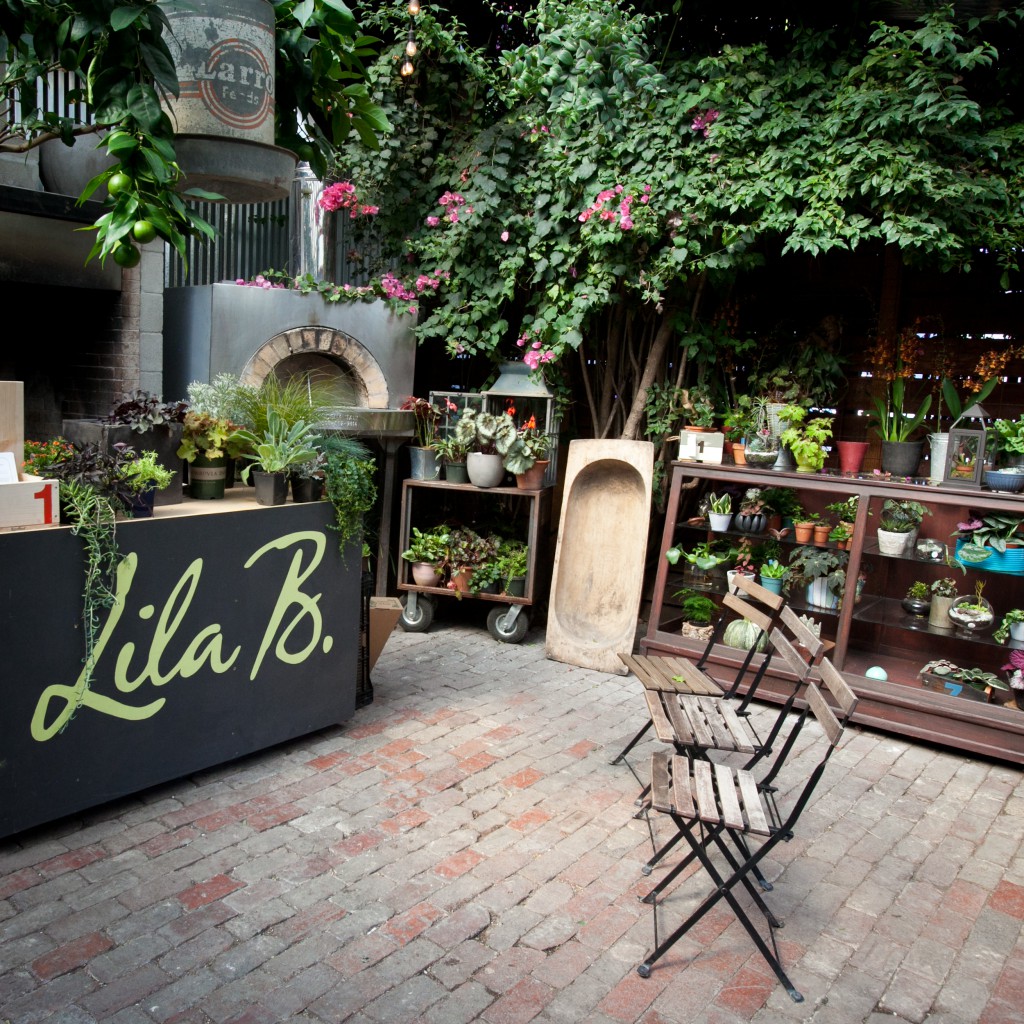
The new Lila B. Design studio at Stable Cafe, a plant-centric place for garden and flower lovers alike. (c) Sophie de Lignerolles photo
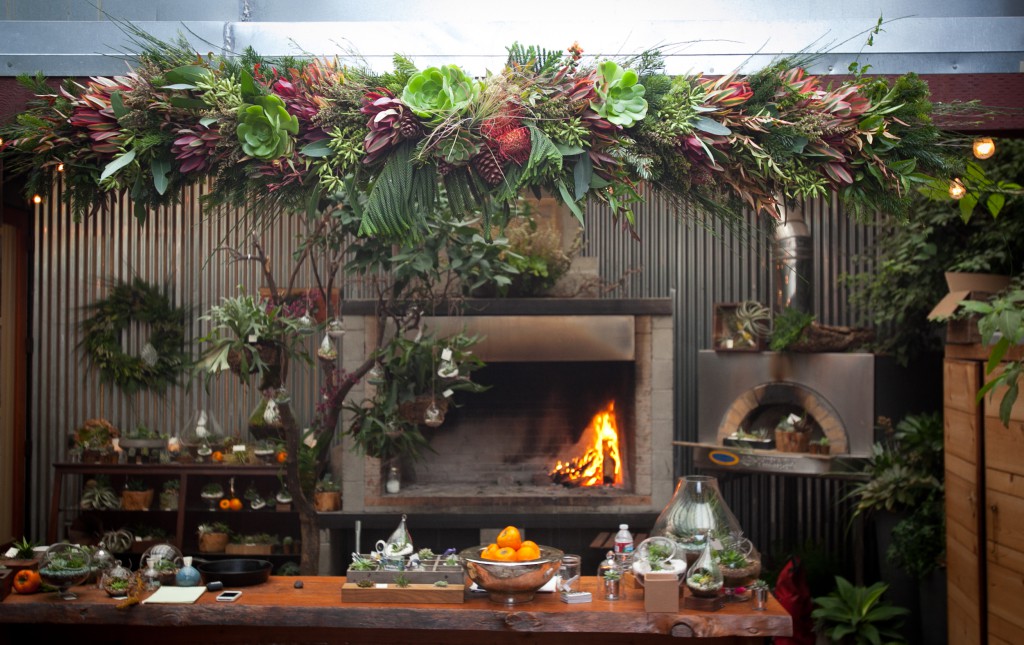
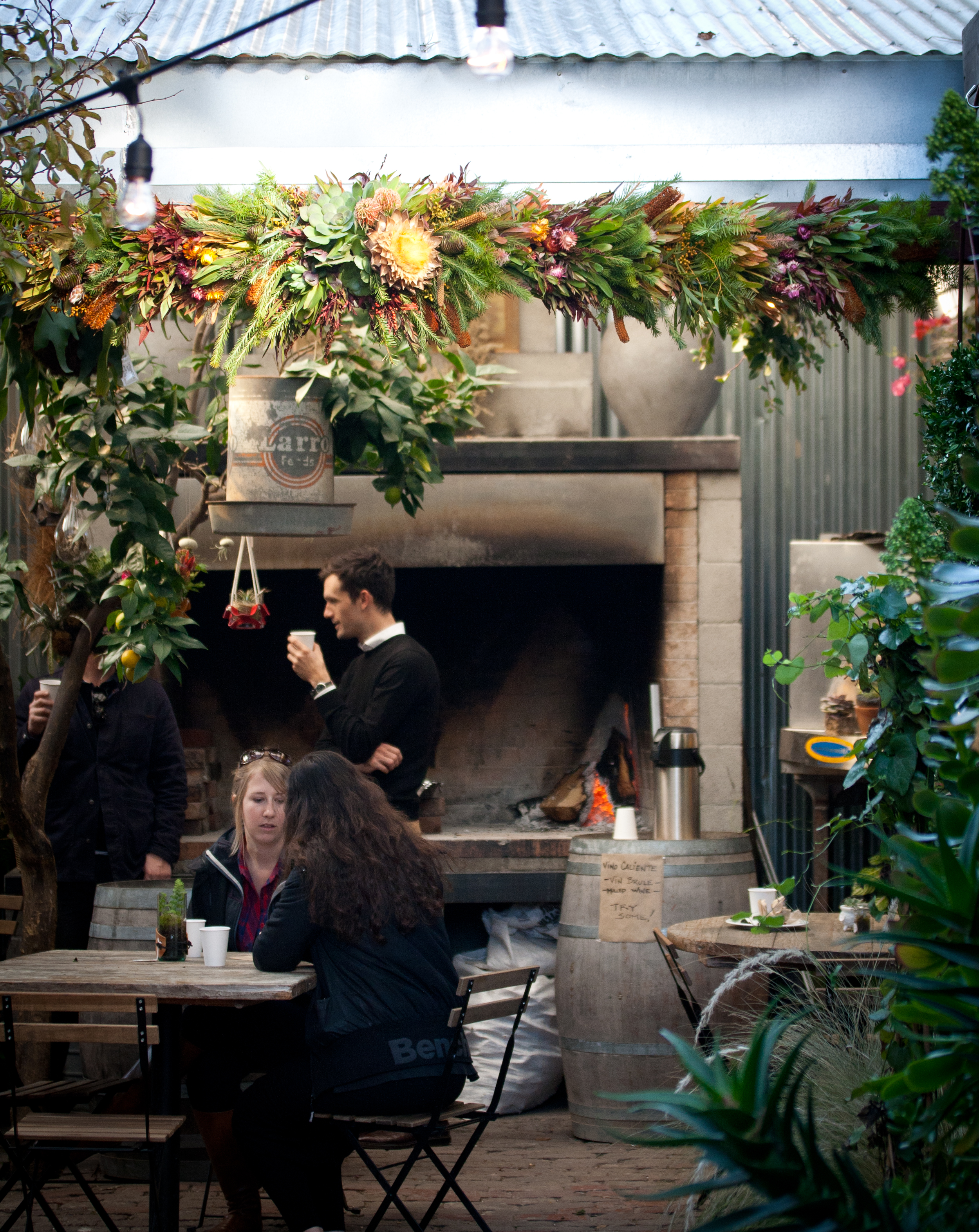
One of the event, classroom and workshop spaces at Stable Cafe, featuring a wood-burning pizza oven, a massive trestle table, and Lila B.’s garland of local flowers. (c) Sophie de Lignerolles photo
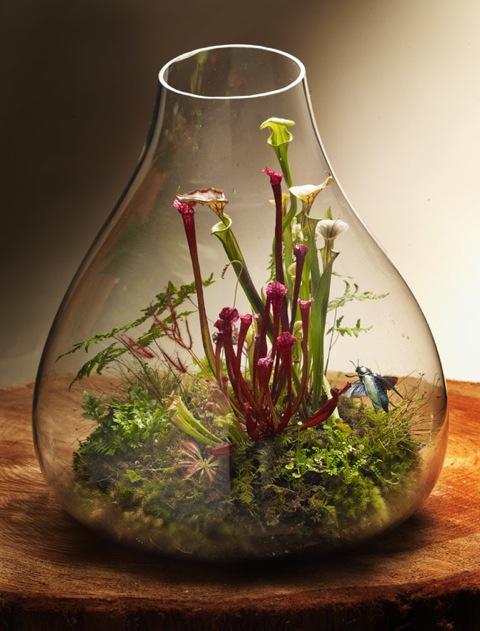
Pitcher plants (Sarracenia sp.) in a glass vessel. (c) Holly Stewart photo
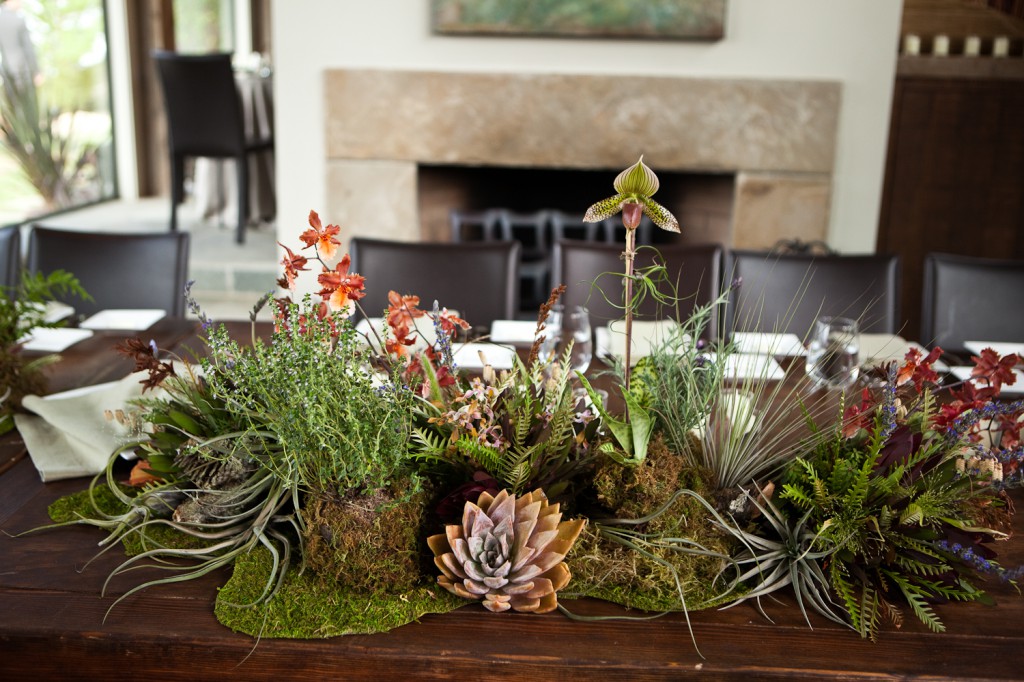
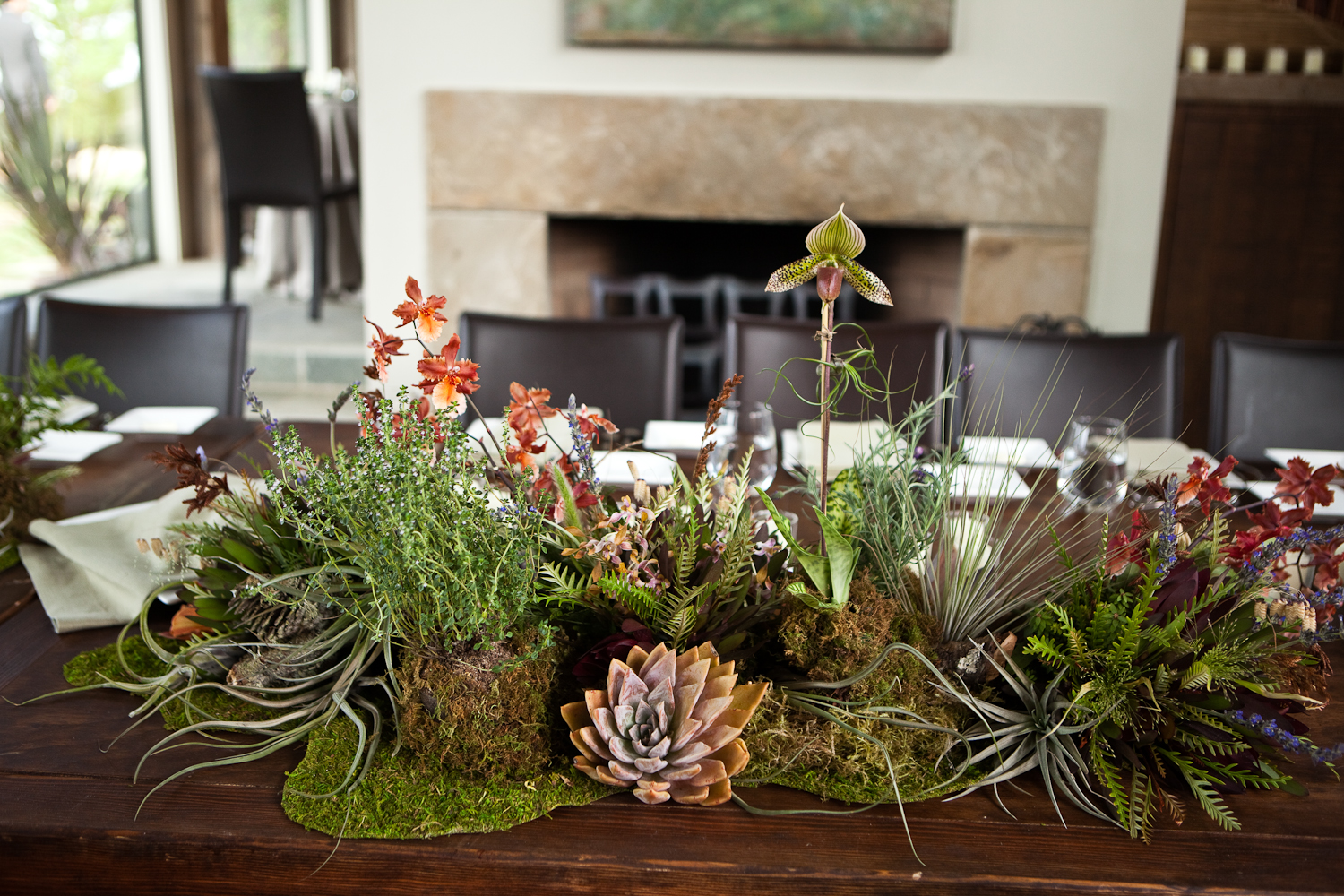
A Lila B. Design tablescape, featuring living plants. (c) Milou + Olin photo

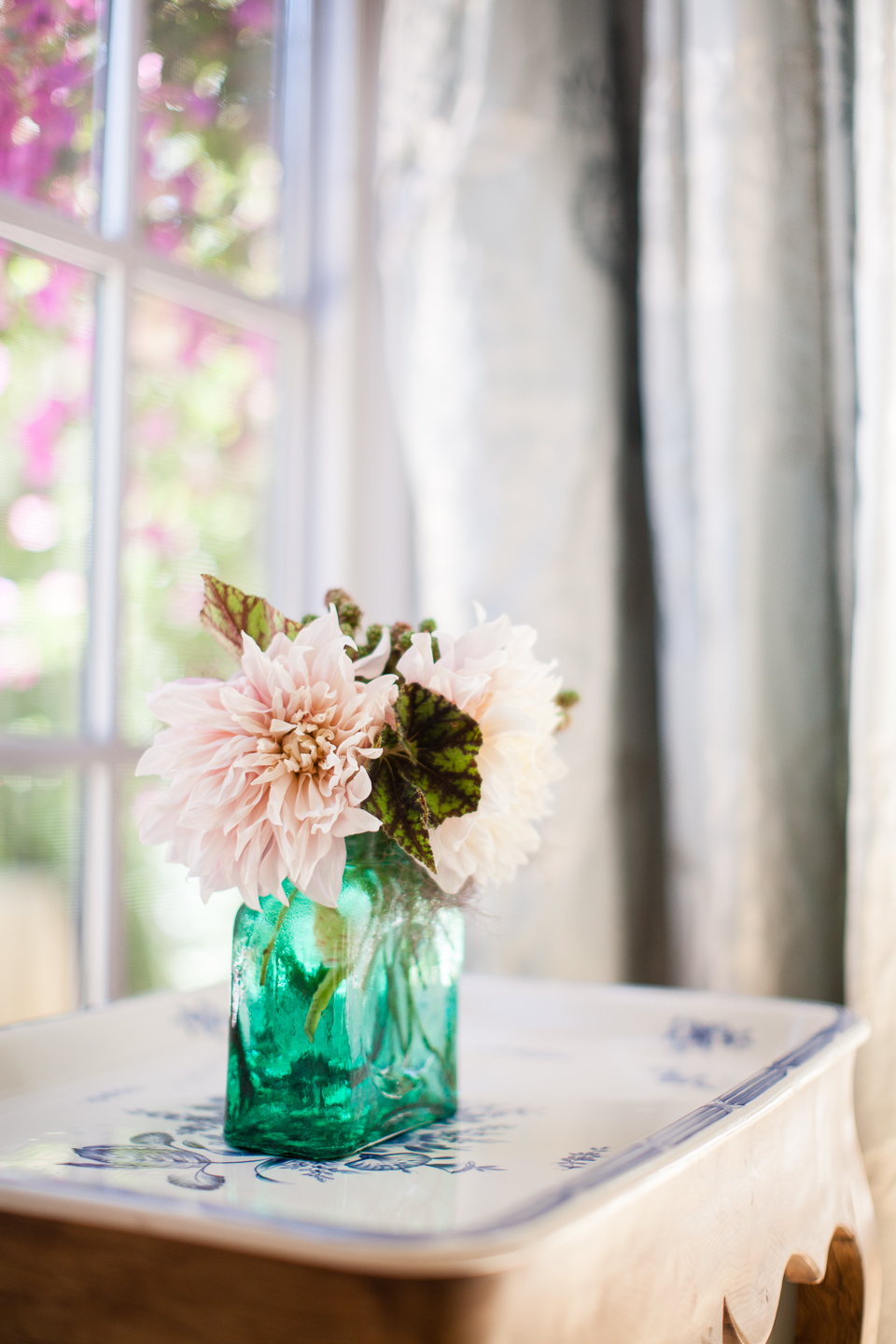
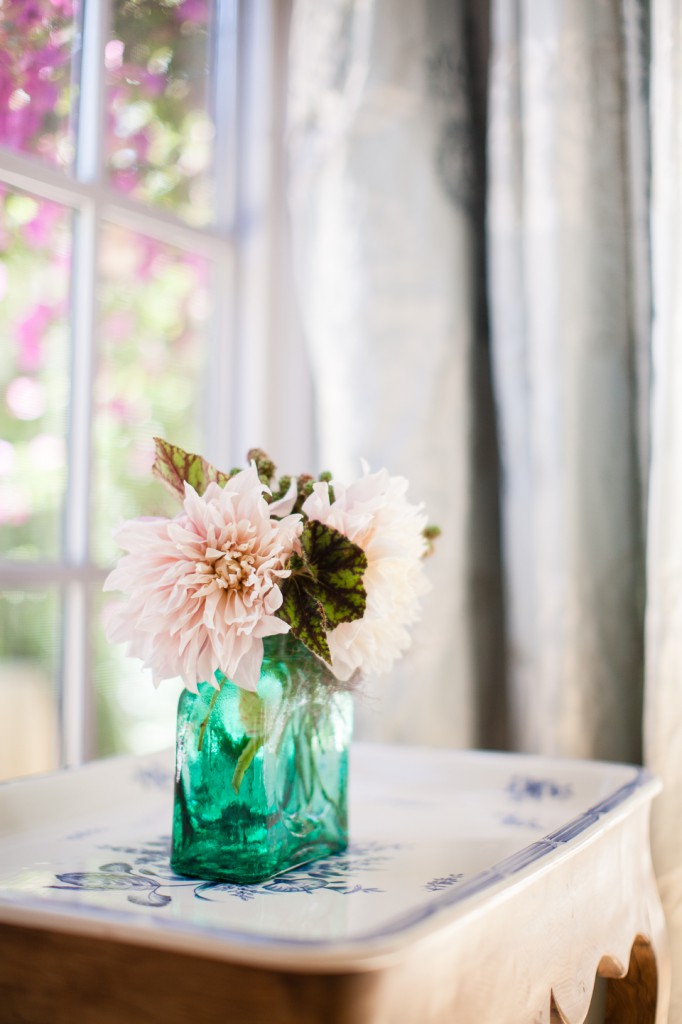
One of Baylor’s lovely arrangements that combines locally-grown flowers, including Cafe au Lait dahlias, from Lila B.’s garden. (c) Page Bertelson photo
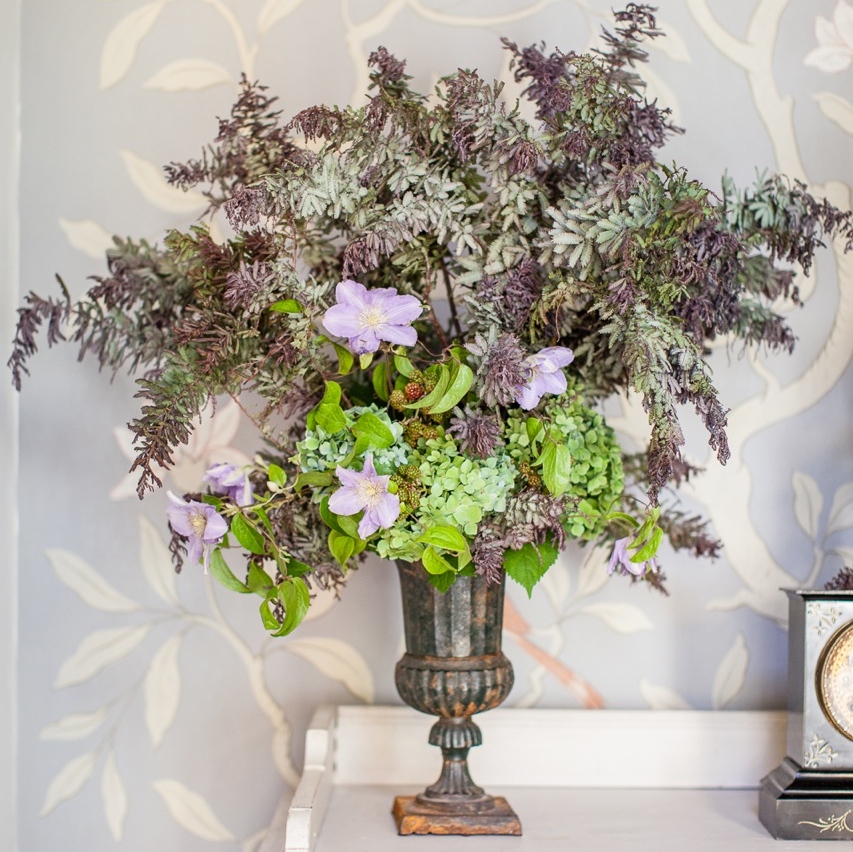
Another arrangement with begonia foliage, clipped from a living plant. (c) Page Bertelson photo
Stunning! (c) Page Bertelson photo
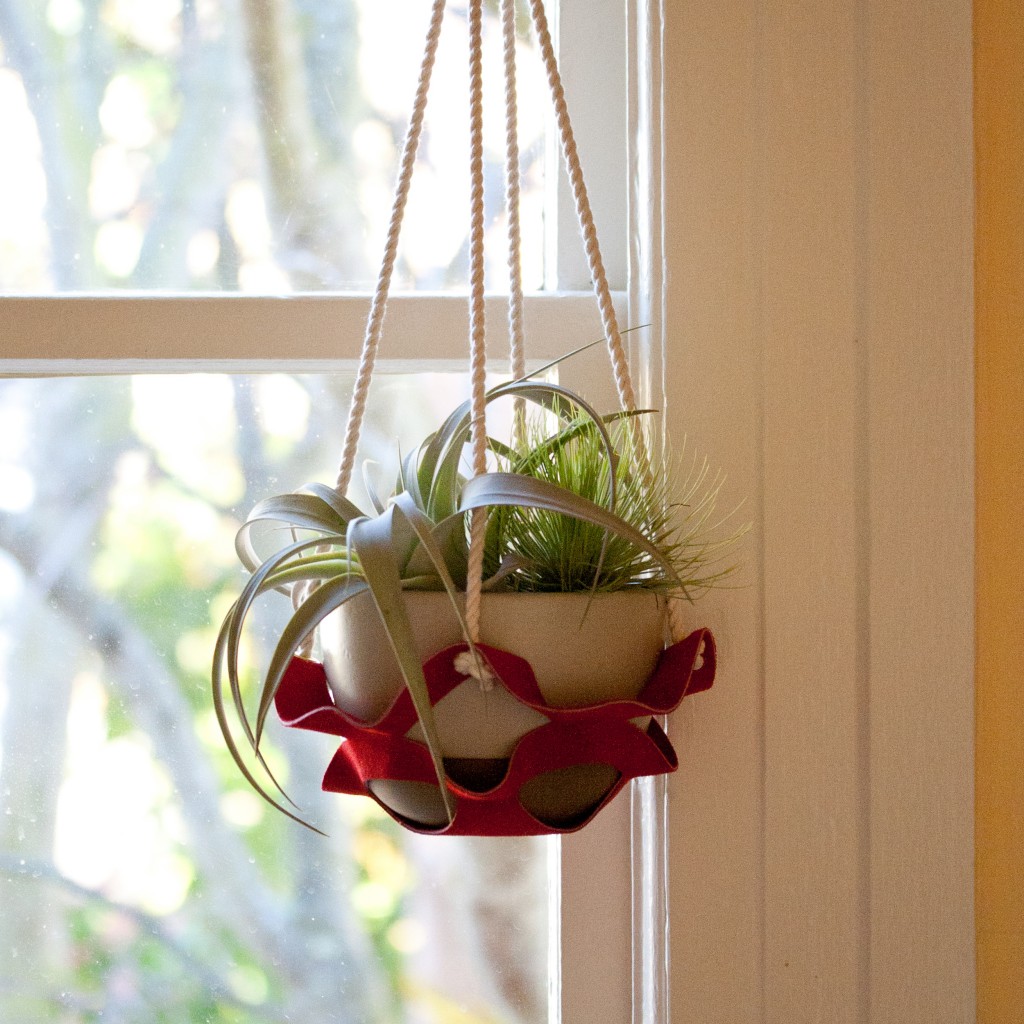
Lila B. Design’s new plant hanger – a SF-designed and fabricated product. (c) Sophie de Lignerolles photo
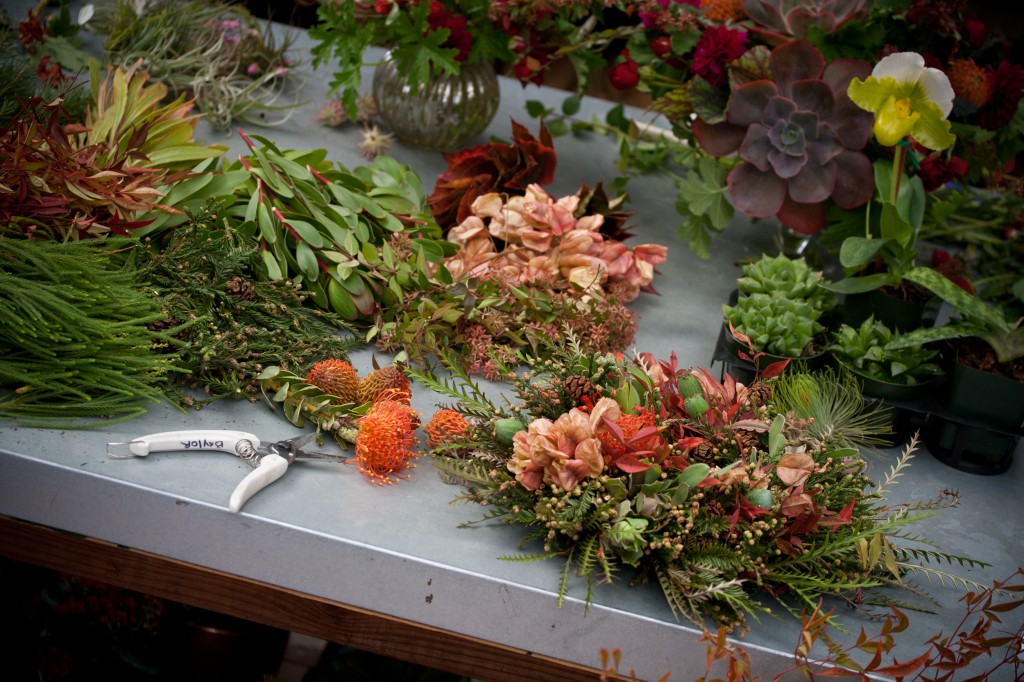
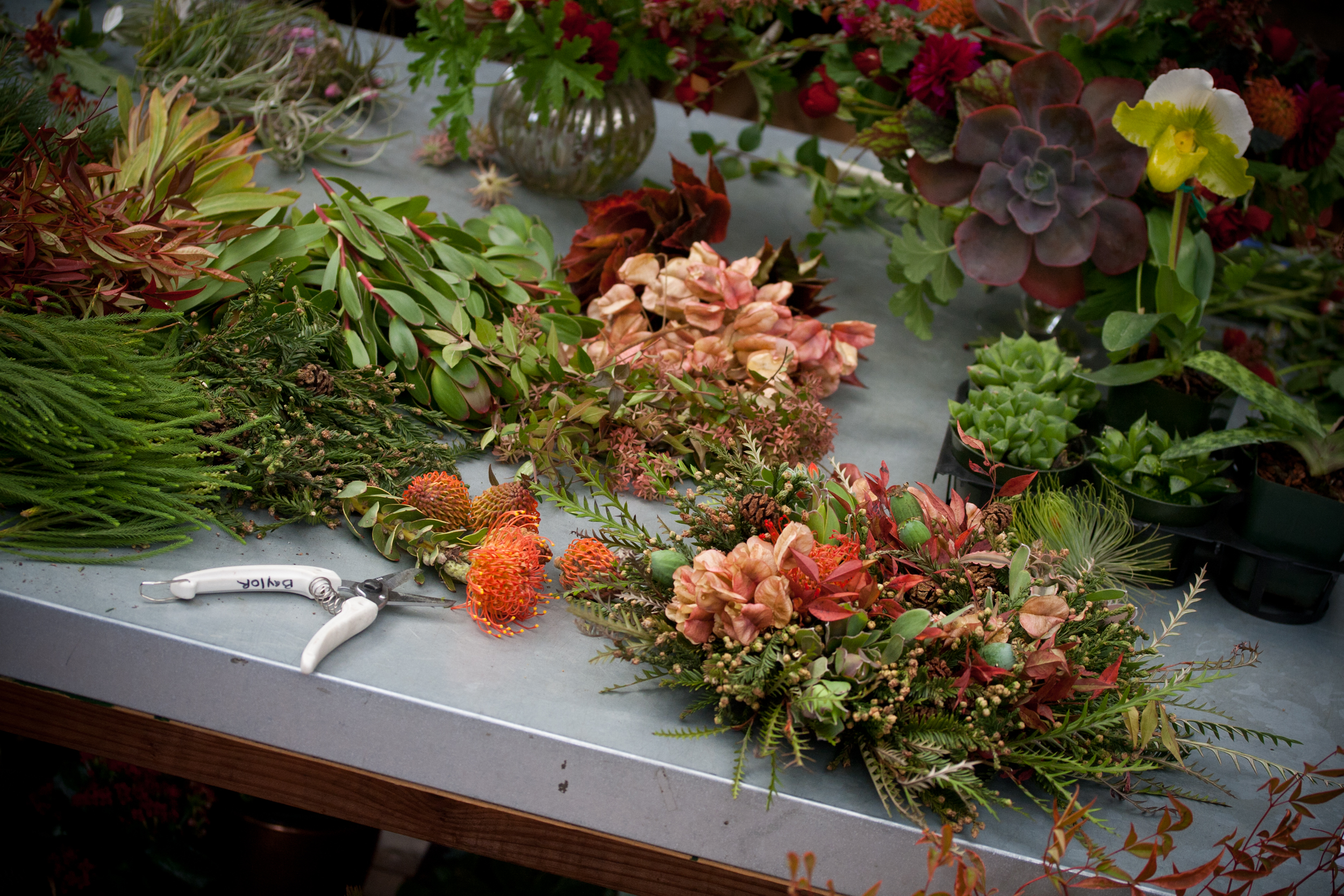
Details, details. . . a garland in the making. (c) Sophie de Lignerolles photo
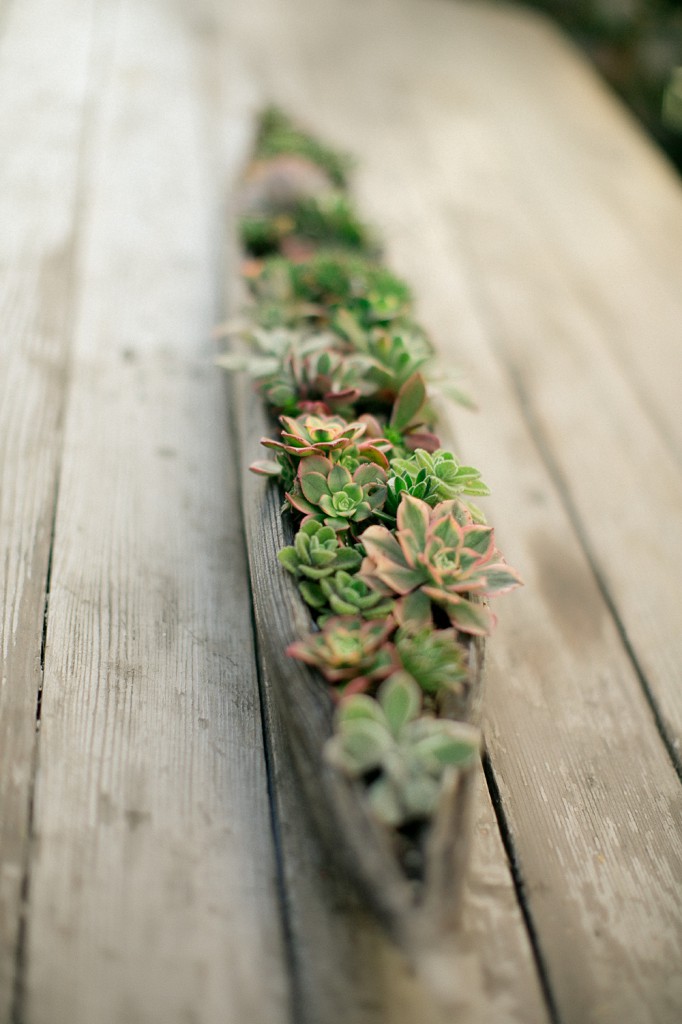
A stunning centerpiece featuring living plants in a date palm frond, created by Lila B. Design. (c) Milou + Olin photo
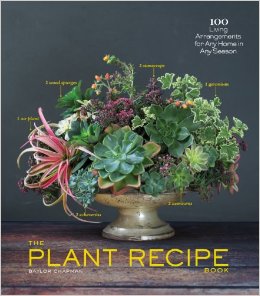
The Plant Recipe Book, out in April 2014.
Baylor has so many good things going on in her career, but the newest is The Plant Recipe Book: 100 Living Arrangements for Any Home in Any Season (Artisan Books, 2014), which will be published on April 8, 2014. This idea-filled book was photographed by Paige Green.
It contains detailed planting instructions for centerpieces and arrangements that give living plants a “starring role” in all sorts of creative vessels. A follow up to last year’s title by Jill Rizzo and Alethea Harampolis, “The Flower Recpie Book,” this new inspiring book offers more than 100 projects will blow your mind and prompt you to bring more living plants into your own design work.
If you live in or will be visiting the Bay Area, you can get a sneak peek and first dibs on a signed copy of this lovely tome. Come and hear Baylor speak at the San Francisco Flower & Garden Show, where she will demonstrate some of the book’s fun projects using living plants as floral design elements. Details here.
As I mentioned above, as soon as we met, I knew that Baylor needed to be featured in The 50 Mile Bouquet. Please enjoy the entire story:
The Accidental Flower Farmer
A patch of urban asphalt surrounded by chain link fencing and loops of barbed wire may seem unwelcoming. That is, until you peer inside to discover a designer’s bountiful cutting garden in San Francisco’s Dog Patch District.
Increasingly, there are designers who, by necessity, harvest floral ingredients from their own gardens. As well, there are growers who assume the role of floral designer, satisfying a bridal customer’s request for unique, straight-from-the-farm bouquets. That these two worlds are happily intersecting is due to curiosity, innovation and experimentation on the part of designer and grower alike.
San Francisco-based Baylor Chapman, owner of Lila B. Design, is both designer and flower farmer. She is
also a Certified San Francisco Green Business owner who bases her studio philosophy on local and sustainable design practices.
Baylor’s fashionable, 500-square-foot workshop occupies a loading dock in San Francisco’s Mission District, where she and her
assistants turn out dazzling, flower-filled vases, bowls and urns. Local and seasonal blooms are used here with abandon. How did
all of this come to be?
Early on, Baylor saw that many of her botanical design ideas couldn’t be realized because it wasn’t always easy to source ingredients locally. For her, the obvious answer was: “Why not grow those blooms myself?”
Urban Farm Scene
She first tried raising flowers on the roof of the warehouse where her street-level studio is housed. The plants took root in soil-filled milk crates lined with screening. “We had to walk up 75 steps to tend to the flowers,” Baylor recalls. Stair-climbing wasn’t the worst of it, though. All the soil and water had to be hand-carried to the roof just to keep the flowers alive.
It didn’t take long for Baylor and her staff to yearn for a ground-level gardening space. “We found an old parking lot about 1½ miles away in a neighborhood called ‘Dog Patch’ and arranged to rent part of it.” Today, the blacktop setting has a thriving crop of city-grown flowers. Perennials, annuals and vines grow in more than 100 recycled 15-gallon nursery pots, the type typically used to grow landscaping trees.
The Lila B. Lot Garden flourishes on this industrial street behind a barbed wiretopped fence. The garden’s presence beautifies the neighborhood and has attracted the interest of nearby auto body shop workers who peer admiringly through the chain link when out on their lunch breaks. “Now you see hummingbirds and bees flying around,” says the designer, her friendly face breaking into a warm smile. “The car repair guys come out and enjoy it here for lunch. It’s sort of a sanctuary.”
Her pop-up urban flower farm has helped Baylor gain credibility with clients. Now she can say: “We grew these flowers for you.” It allows her to incorporate all sorts of uncommon blooms, berries, foliage and tendrils into her designs and even custom-grow to a bride’s specifications.
Among the crops here at Lila B., you’ll find salvia, rudbeckia, gaillardia, oat grass, asters, scented geraniums, roses, lamb’s ear, sweet peas, veronica, nigella, passionflower,sea holly, cosmos, scabiosa, sunflowers, cerinthe and zinnias – as well as plants grown for their fruit and foliage. It is a mind-boggling selection of design ingredients you’d be hard pressed to find in most conventional flower shops. Sophie de Lignerolles, an artist who works for Lila B. as a designer, maintains meticulous spread sheets of the flowers they grow, including varieties grown from seeds and unusual offerings from Annie’s Annuals, a specialty and mail-order nursery in the East Bay area, a favorite with the women. “Sophie is propagating from seed now, which I think is pretty fabulous,” Baylor says. That means an even greater variety of floral bounty for Lila B.’s customers.
A Greener Approach
Baylor is well equipped to grow her own unique floral choices, thanks to her landscape design studies. After earning a garden design certificate from University of California at Berkeley Extension, she spent time on the crew of a Bay Area estate garden whose owners valued organic practices and requested that flowers from the grounds would be used for interior bouquets. Baylor soon found herself creating these arrangements. Her interest in floral design lured her into more creative gigs, including freelancing for other studios and shops.
In 2007, Baylor opened Lila B., named after her grandmother. At first, she worked out of the loft where she lives. After one year of literally living with her flowers, she moved her studio across the street to another warehouse. Formerly a commercial laundry, it now houses 60 art studios in an environment that fosters creativity and experimentation. Baylor’s tiny workshop was once a warehouse loading dock, so it faces the street and has a huge, roll-up door that brings light and fresh air inside. While not a retail store, the street-front presence wows pedestrians with glimpses of huge arrangements inside – and high above the roll-up door at the front: a trio of frames planted with a living tapestry of succulents.
Thanks to Northern California’s temperate environment, Baylor enjoys an excellent, almost year-round source of flowers from her suppliers. Besides her own Lila B. homegrown flowers, she takes advantage of San Francisco’s wholesale flower market where many California growers bring their crops to sell. A few “weird and wonderful” suppliers are favorites, including two sisters who run a company called Florist at Large. They stock foraged goodies such as fruit, branches and wild ingredients coveted by designers who want a natural look. “I want people to be curious,” says Baylor. “I want my bouquets to be beautiful to the eye, but they should also prompt the question: ‘What is that? Where does it grow? Can you eat it?’”
We visited Baylor at the peak of summer when she and Anna Hoffmann, a designer who occasionally freelances for her, were creating flowers for a peach-and-ivory-themed wedding – using a combination of tawny ‘Cafe au Lait’ dahlias, blush-pink garden roses, the silvery foliage of Dusty Miller and lamb’s ears, fluffy ornamental grasses, flowering sprigs from a mock orange tree and honeysuckle vines.
As Baylor assembled the groomsmen’s boutonnieres with scented geranium foliage and seed heads from the pincushion flowers growing in her Lot Garden, she paused to admire her creation: “Even though flowers are ephemeral, I treat floral design like I do garden design. I think of each arrangement as a mini garden, with its own texture, scale and color palette. They’re little masterpieces.”
Baylor’s bouquets embody both her artistic sensibility and her profound admiration for the plant world’s infinite variety of color, form and texture. “I hope that people are drawn to me because of what I’m doing and what I’m interested in doing,” she says, “because I feel very blessed.”
Posted in American Grown, Blog Posts, Book reviews, Creativity, floral design, Gardening, General, Plants, Podcast Episodes, SLOW FLOWERS Podcast, Writing | 1 Comment »
© Debra Prinzing, all written and photographic content. Website design/development by Willo Bellwood/Metric Media