The Slow Flowers Podcast is the award-winning show known as the “Voice of the Slow Flowers Movement.” Launched in 2013 as the original flower podcast, we’ve devoted more than 10 years to covering the business of flower farming, floral design, and the Slow Flowers sustainability ethos. Listen to a new episode each Wednesday, available for free download here at slowflowerspodcast.com or on iTunes, Spotify, and other podcast platforms.
April 1st, 2015
Podcast: Play in new window | Download
Subscribe: Apple Podcasts | Podcast Index | | More
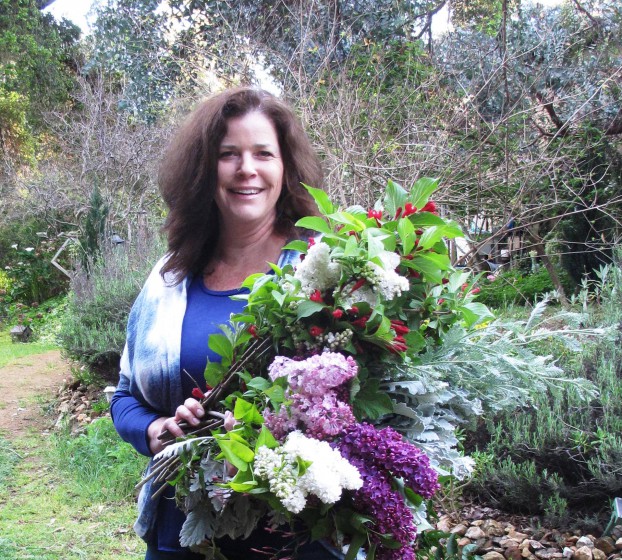
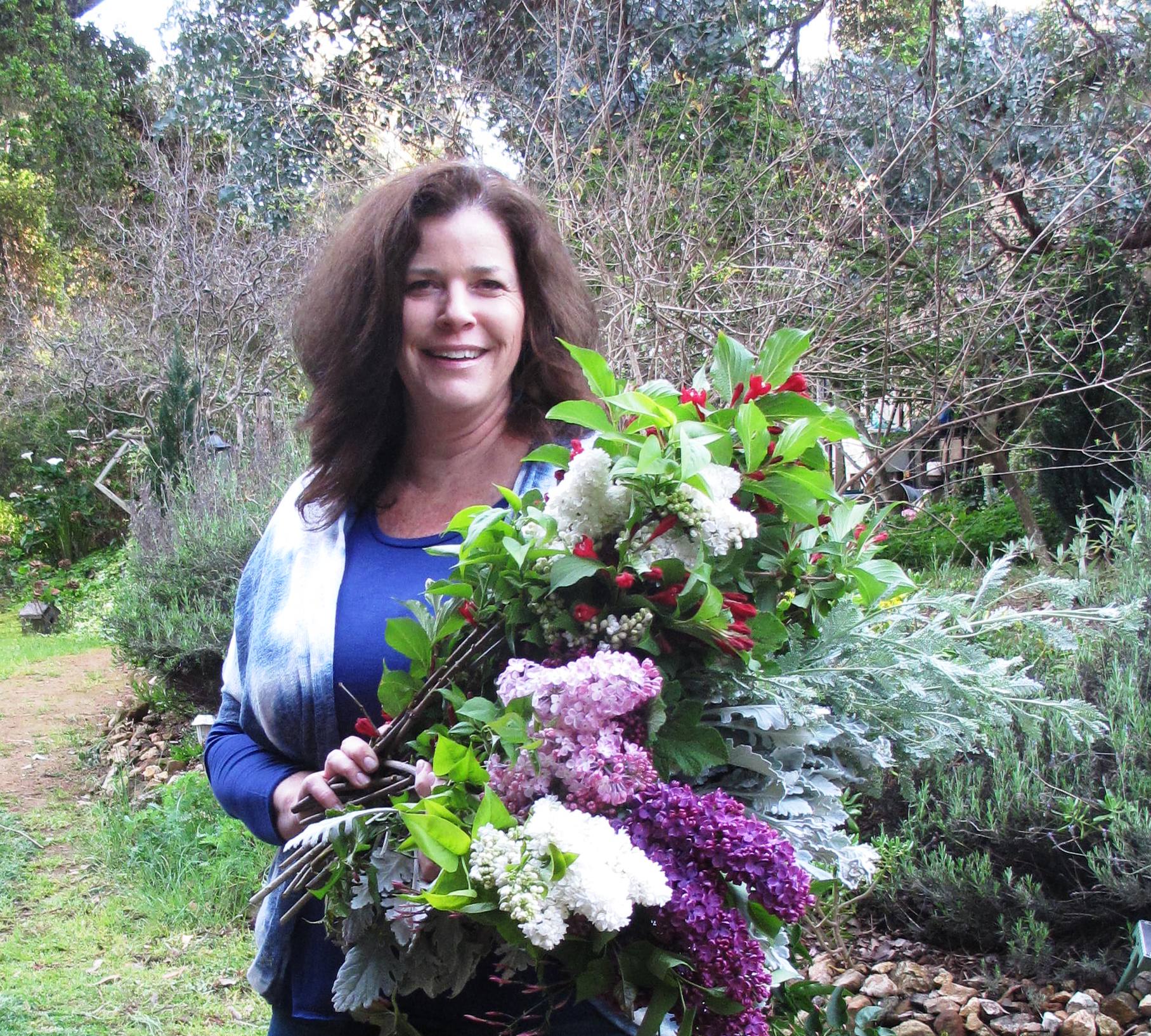
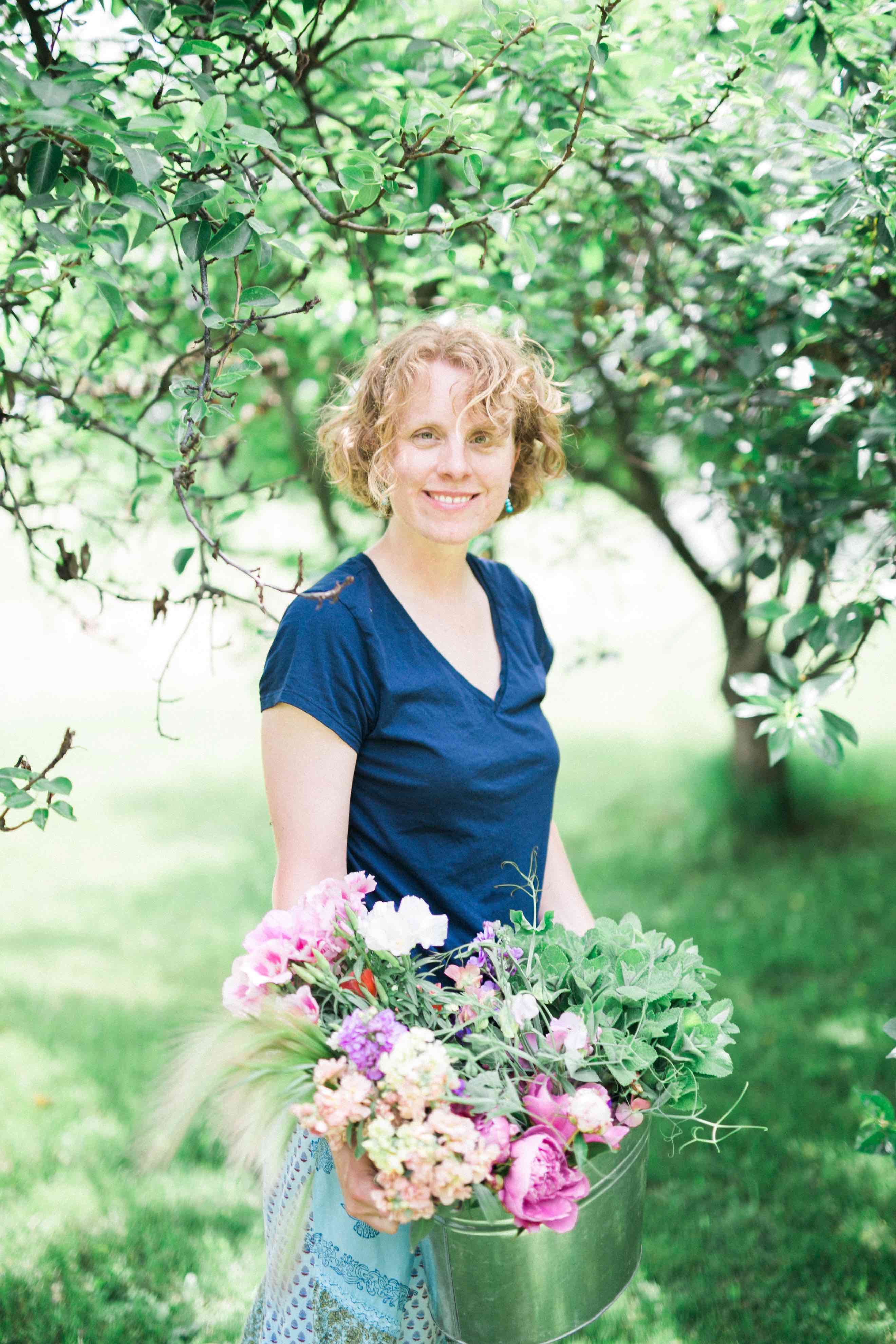
Inspiring floral designer Teresa Sabankaya of Bonny Doon Garden Co., captured while gathering flowers in her garden
In 2007, Amy Stewart’s Flower Confidential introduced readers to a Santa Cruz-area floral designer named Teresa Sabankya. She wrote:
Teresa Sabankaya has the kind of flower shop that you would dream about opening, if you are the kind of person who dreams of opening a flower shop. It’s in a little green metal kiosk outside Bookshop Santa Cruz in coastal California. The flowers – all interesting, unusual, old-fashioned, ephemeral, perfumy, not-your-typical-florist kind of flowers – dance and wave from buckets crowded around the stall. Her inventory is highly seasonal: in summer you’ll find larkspur and poppies, and in winter it’s all heathers and holly and berries. If you’ve been so busy that you haven’t noticed that spring has arrived, you’ll stop short at the sight of the pink cherry blossom branches bursting out of her shop in early March, and it’ll make you resolve to slow down and enjoy the season. Even if you don’t buy a flower – and Teresa would be happy to sell you a single flower – just the sight of her little stall will lift some of the weight off your shoulders. Anyone who doubts whether flowers can change a person’s emotional state has never watched the people walking by Teresa’s shop.”
Amy continued: ” . . . The Bonny Doon Garden Company fit with my idea of how floral commerce must work – you’d grow some flowers in your garden, you’d buy some from a farmer down the road, and you’d put them in buckets and sell them to your neighbors.”
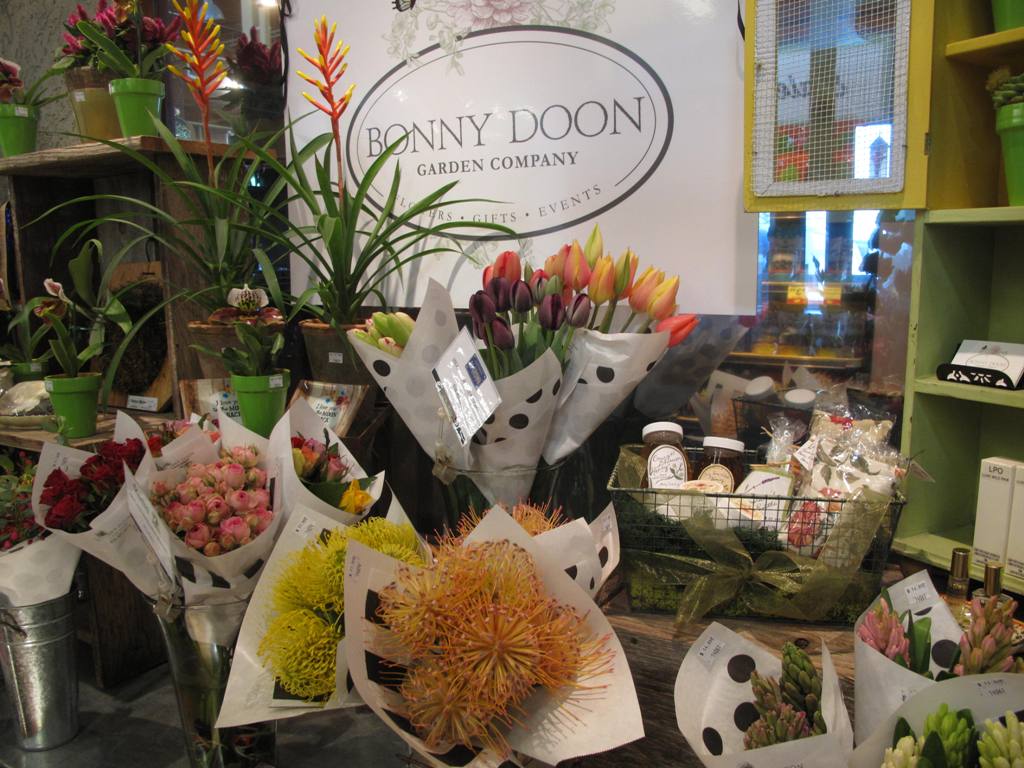
Bonny Doon’s retail space inside New Leaf Market in Santa Cruz, CA.
Well, anyone who read all of Flower Confidential knows that it’s about the international, multibillion dollar floriculture industry – a far cry from the charm of selling flowers from one’s garden in Santa Cruz.
I was always in awe of Teresa – she was a rock star profiled by Amy Stewart, for goodness sake’s. Until last week, Teresa and I had never met in person, but we felt connected through our friendship with Amy and because we both want to advance a new normal in the floral industry: where mindful practices of local, seasonal and sustainable flowers trump designing with imported ones.
Last year, when I launched the Slowflowers.com web site, Teresa created a listing for Tessa’s Garden, her studio business, and we started an occasional email correspondence.
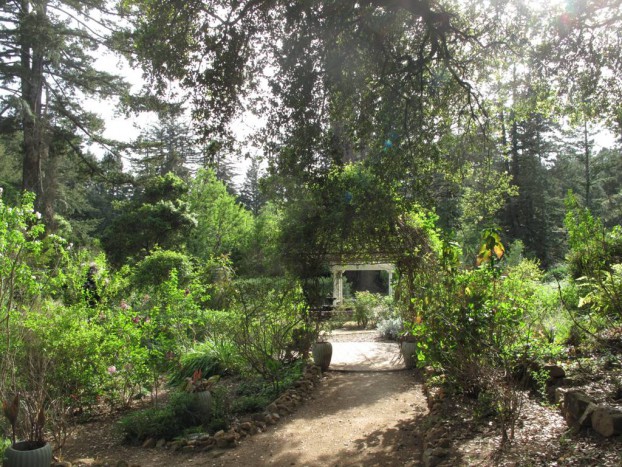
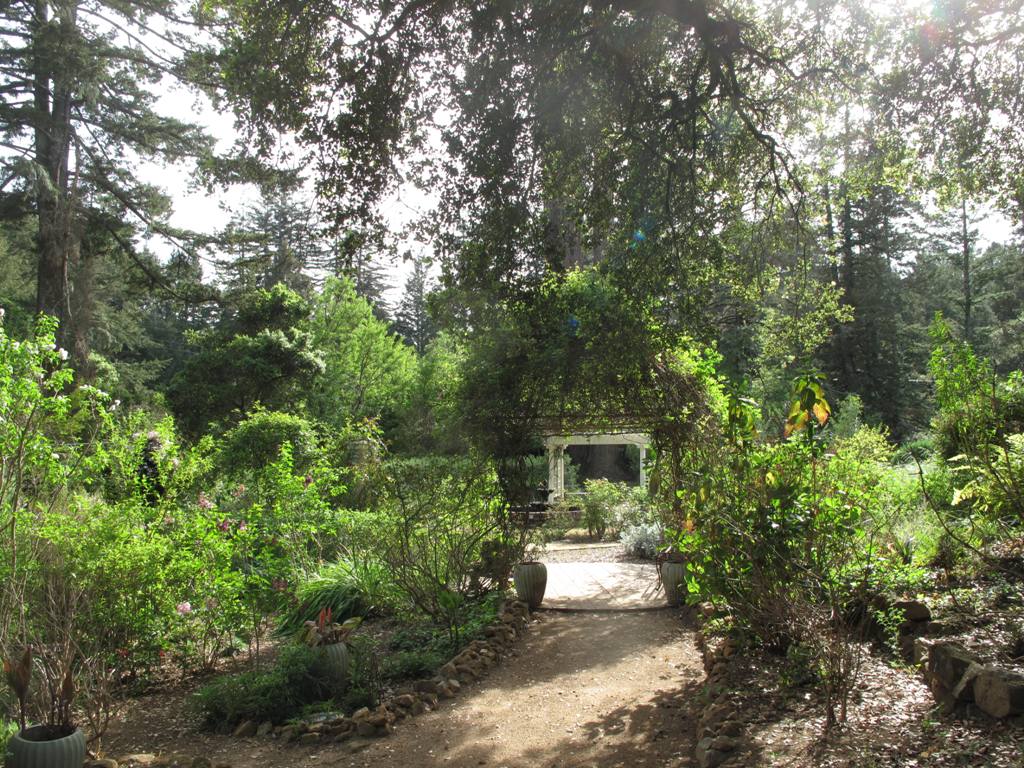
Oh my gosh: the dream garden! Here’s where many of the flowers, branches, herbs and vines that Teresa uses originate . . . in her private garden.
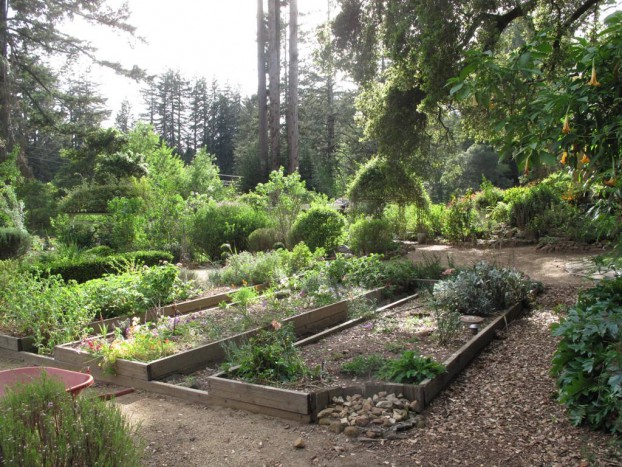
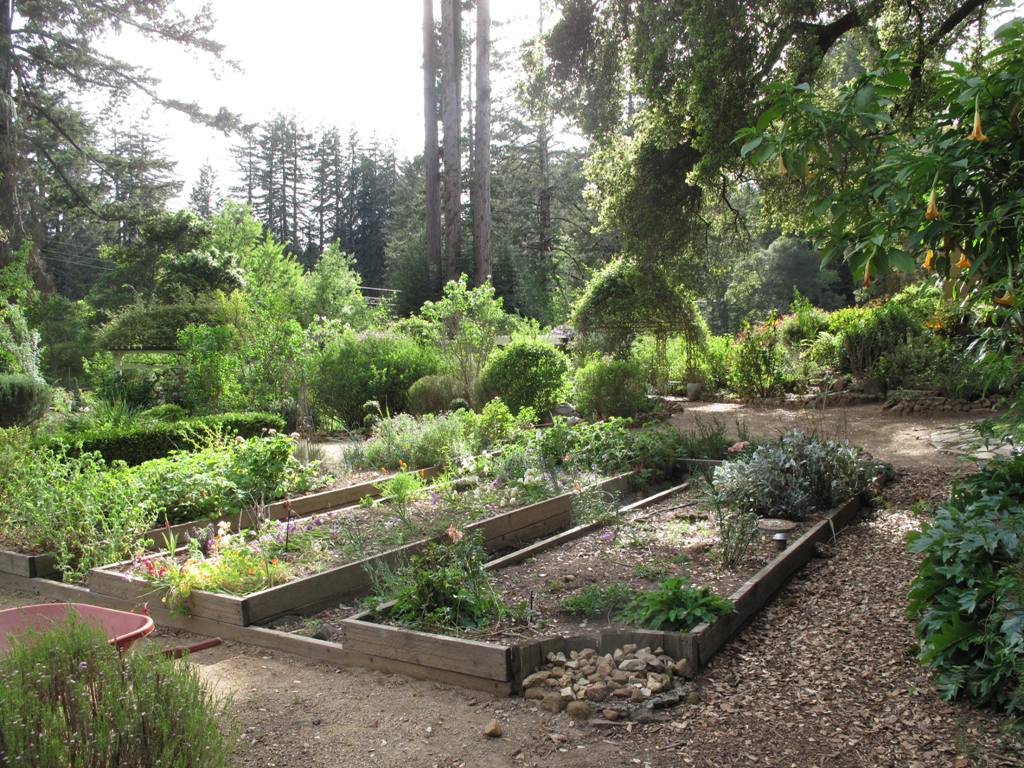
Another view, including the veggie and herb garden in the foreground.
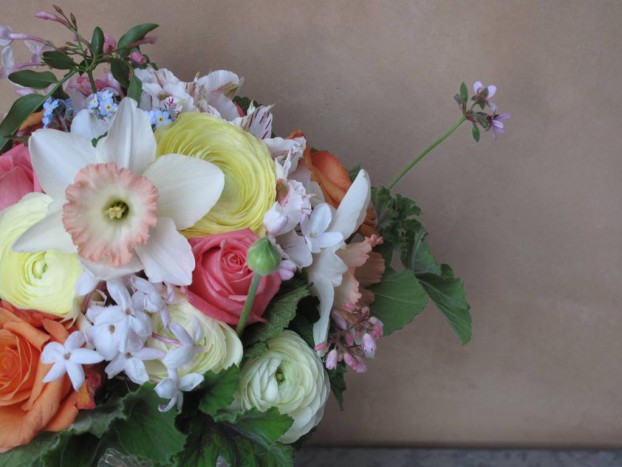
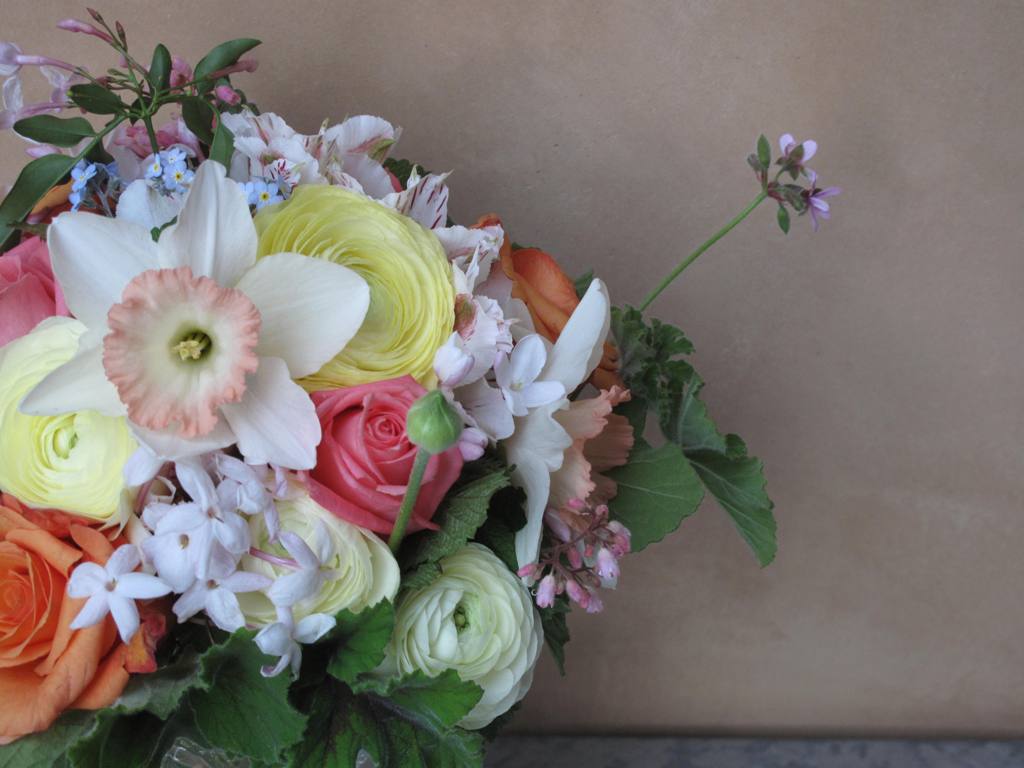
Intricate details emerge as part of the hand-tied Posie that Teresa created for me.
Teresa had taken a break from the fast pace of running a retail flower shop and sold The Bonny Doon Garden Co. in 2012.
She then pivoted toward wedding and event design work, including hosting private ceremonies under the giant redwoods at her bountiful landscape in the hamlet of Bonny Doon, a few miles up the Coastal Highway from Santa Cruz.
Earlier this year, Teresa extended an invitation for me to stay a few days in the bridal cottage on her family’s property.
We planned ahead to schedule that visit – and this podcast interview – after my gig speaking at the San Francisco Flower & Garden Show on March 22nd.
READ MORE…
Posted in American Grown, Blog Posts, Creativity, floral design, Flower Farming, Gardening, General, Plants, Podcast Episodes, SLOW FLOWERS Podcast, Slowflowers.com the Directory of American Flowers | 5 Comments »
March 29th, 2015
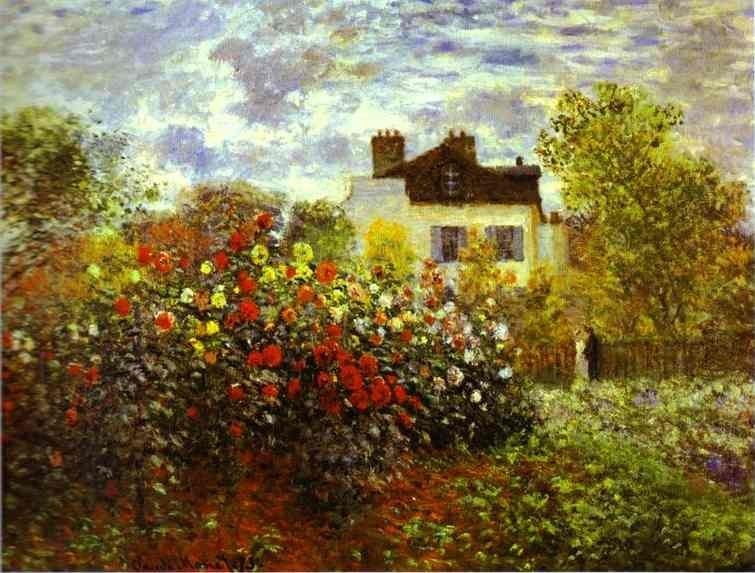
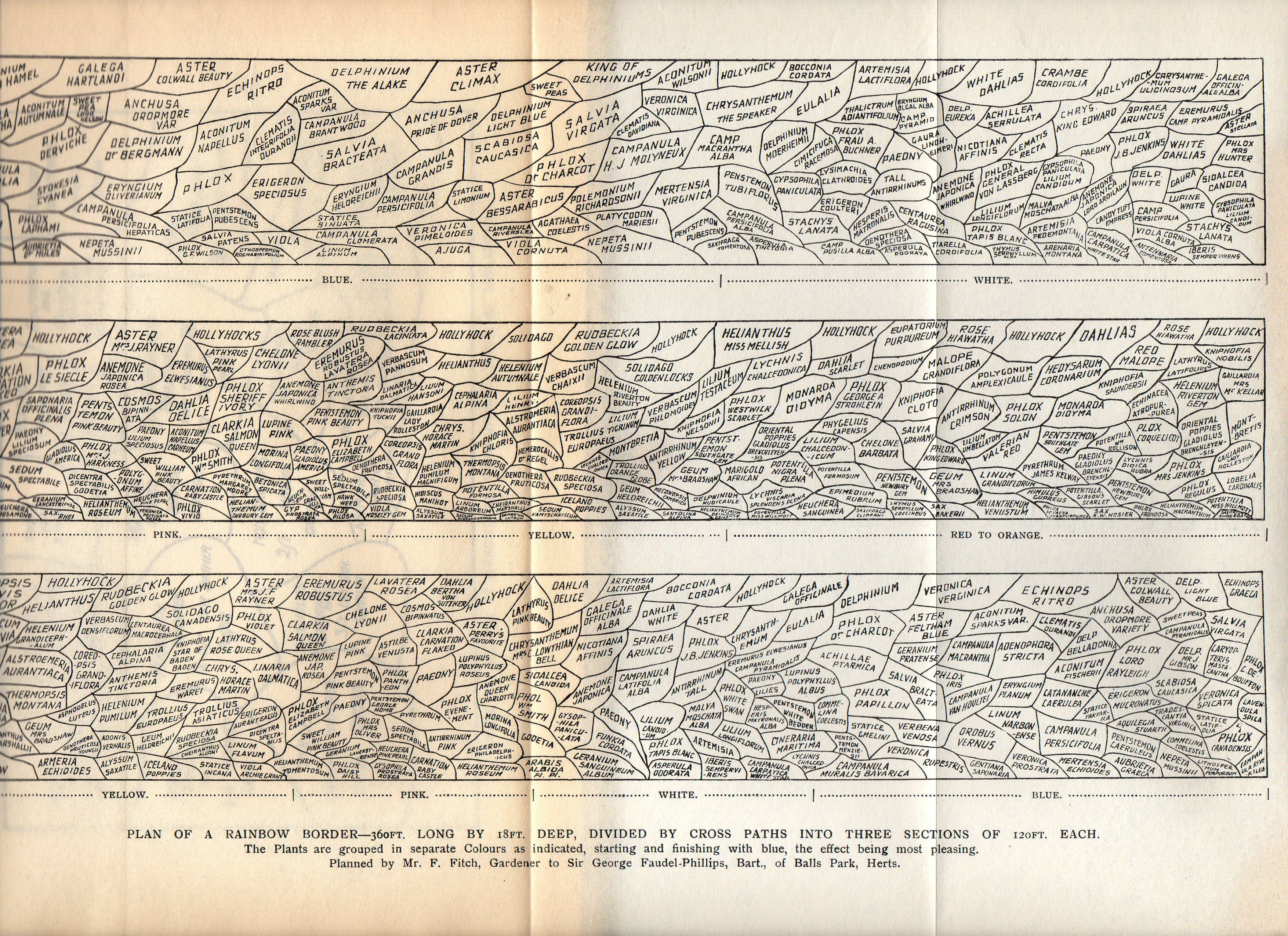
This was a week of flowers, beginning on March 22nd with my “Four Seasons Cutting Garden” lecture at the San Francisco Flower & Garden Show. Here are some one of my favorite images shared in my illustrated presentation.
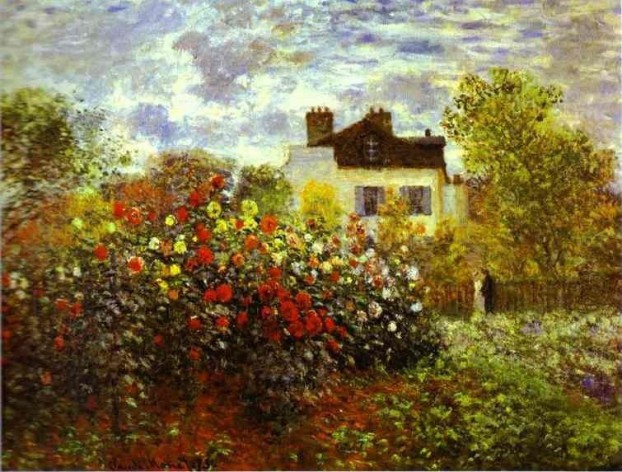
I call this my “dream cutting garden,” painted by Claude Monet in 1873. The Garden at Argenteuil (Dahlias)
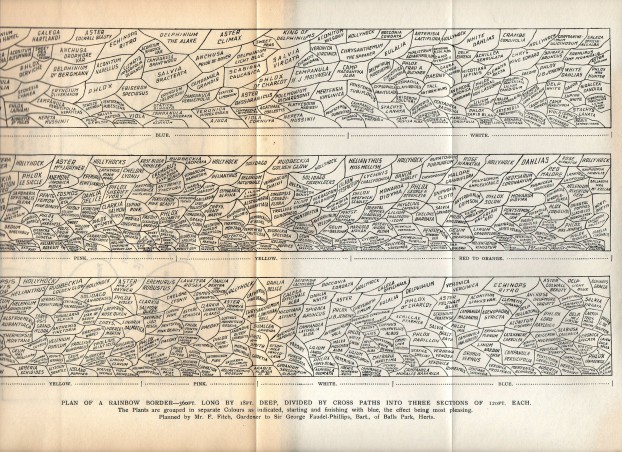
Overwhelming or Inspiring? A design scheme from a vintage garden book, Hardy Perennials and Herbaceous Borders, 1912. “Plan of a Rainbow Border”
I also spent time interviewing several flower farmers and floral designers, which you can hear on the Slow Flowers Podcast in coming weeks. Subscribe here for free downloads from iTunes.
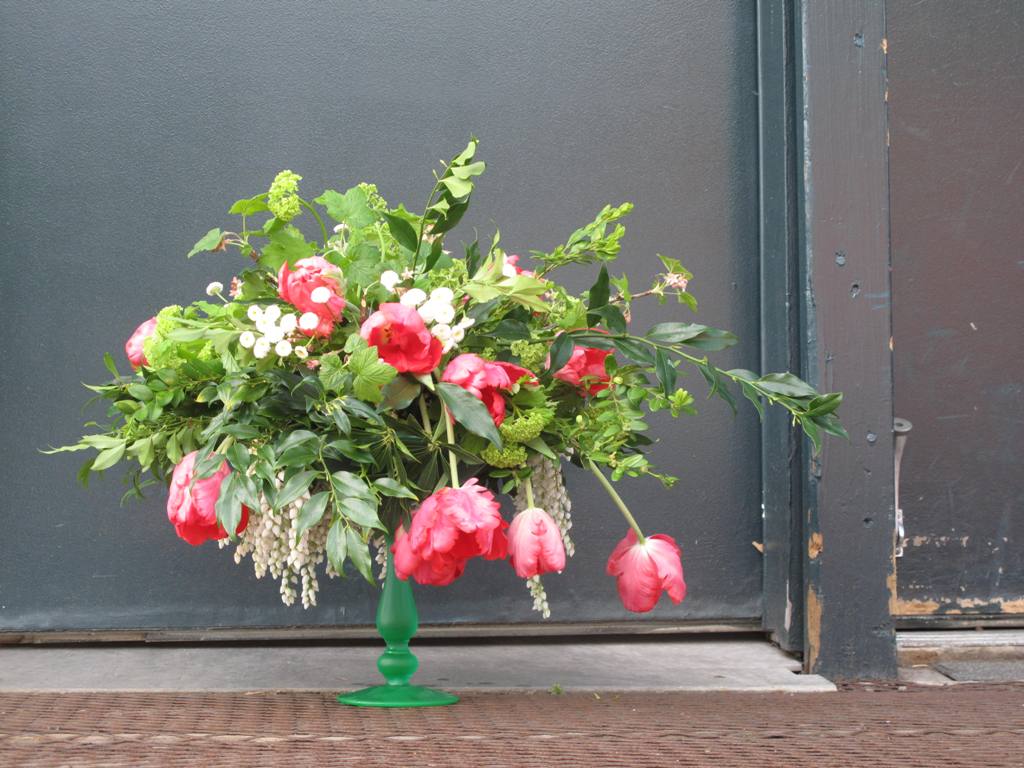
This week I have two arrangements to share with you. The first was created as a demonstration ofFloral Soil, the 100% plant-based, USA-made, compostable alternative to florist’s foam. The occasion was a workshop taught by Alicia Schwede of Flirty Fleurs, focusing on “Elevated Centerpieces.”
Floral Soil’s creator Mickey Blake and I participated in the workshop to gather photos and content for her web site. I brought along my favorite glass compote, a pedestal fruit dish that was my great-grandmother’s.
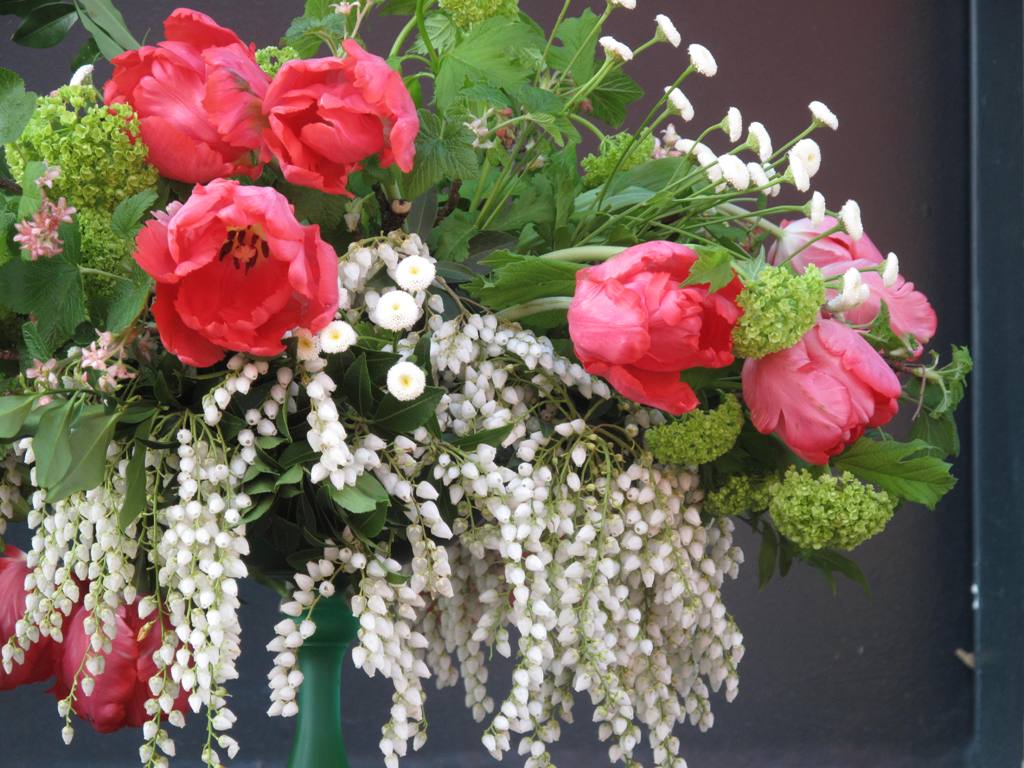
Thanks to very excellent instruction from Alicia, here’s what I created. There are three pieces that created the mechanics to hold the flowers and foliage: (1) a 3-by-4-by-5-inch piece of Floral Soil; (2) a sheet of chicken wire wrapped from rim to rim of the vase; and (3) 1/4-inch waterproof cloth tape to hold it in place.
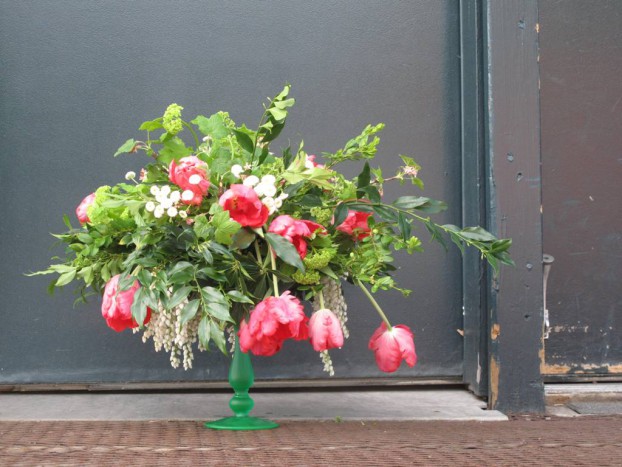
Such an elegant piece with a slender pedestal that resembles a candlestick holder. It measures 9-1/2 inches tall and the bowl is 10-inches in diameter. It is only 2-1/2 inches deep – just the challenge for NOT using foam!
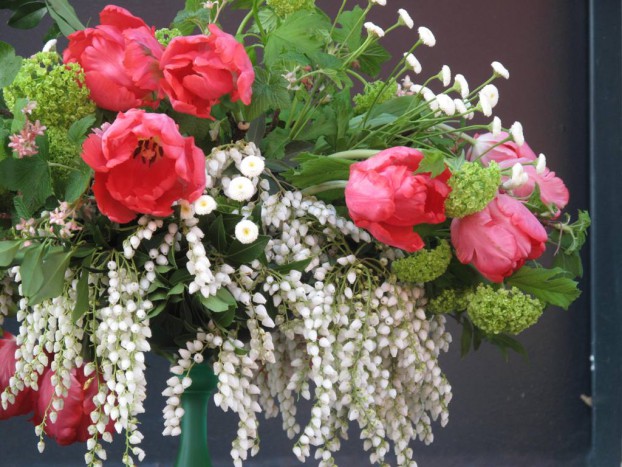
A combination of my own garden cuttings plus West Coast flowers and foliage
Ingredients:
From my garden: White-blooming Pieris japonica, glossy green Sarcococca ruscifolia (also called sweet box); common boxwood; and flowering currant, a native shrub (Ribes sanguineum).
Provided by Alicia: Pink tulips and stems of lime green viburnum (most likely from British Columbia) and button-like white feverfew (Chrysanthemum parthenium), sourced from California.
A Slow Flowers Birthday Bouquet
Vivid details of melon orange and dark plum hues.
Last year, prior to the launch of Slowflowers.com, I ran a successful campaign on Indiegogo and raised nearly $18,500 from more than 200 supporters.
Each contributor had the option of selecting a thank-you gift for their donation. One of the items was a Bouquet of American Flowers.
It has been fun to make those supporters happy as they redeem this “perk.”
For the Seattle folks, I’ve been making the bouquets and yesterday was a chance to give my friend Sue Nevler the flowers coming to her. She wanted to surprise her husband Steve Gattis with an arrangement of flowers for his birthday. Here’s what I created and where the blooms originated:
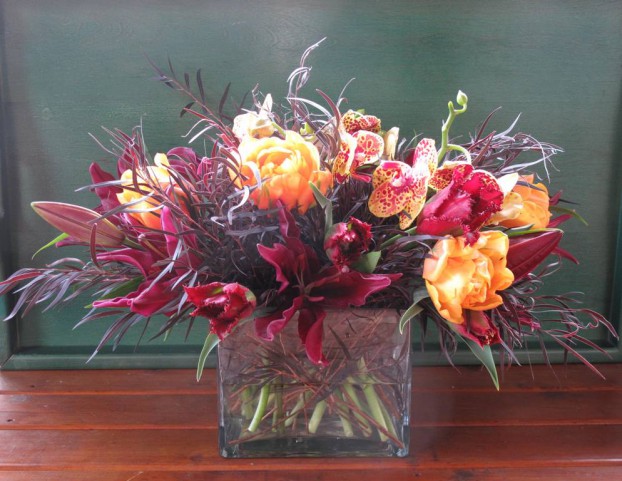
Happy Birthday, Steve!
Agonis foliage, grown by Mellano & Co., Carlsbad, CA
‘Mambo’ Oriental lilies, grown by Oregon Flowers, Aurora, OR
Dark purple parrot tulips, Sonshine Farms, Whidbey Island, WA
Orange double tulips, Ojeda Farms, Ethel, WA
Phalaenonpsis orchids, Orchidaceae, Walla Walla, WA

Posted in American Grown, Blog Posts, Creativity, floral design, Flower Farming, Gardening, General, Plants, Slow Flowers Challenge | No Comments »
March 24th, 2015
Podcast: Play in new window | Download
Subscribe: Apple Podcasts | Podcast Index | | More

Georgie Newbery of Common Farm Flowers in the UK.
In the past year, in addition to this podcast’s primary focus on American flowers, farmers and designers, I’ve interviewed a handful of slow-flowers-minded farmers and designers based in the U.K. and Australia.
There are obvious parallels between these folks and our own renaissance and return to domestic flowers. Sadly, as we’ve experienced in our own native land, the floral industry in many industrialized nations has been outsourced and hurt by competition from countries with low labor costs and less stringent environmental practices.
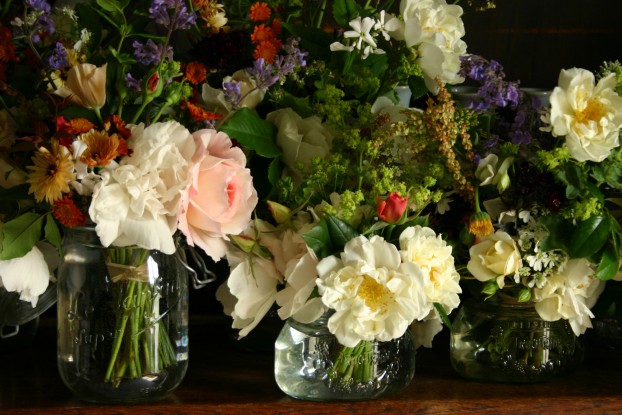
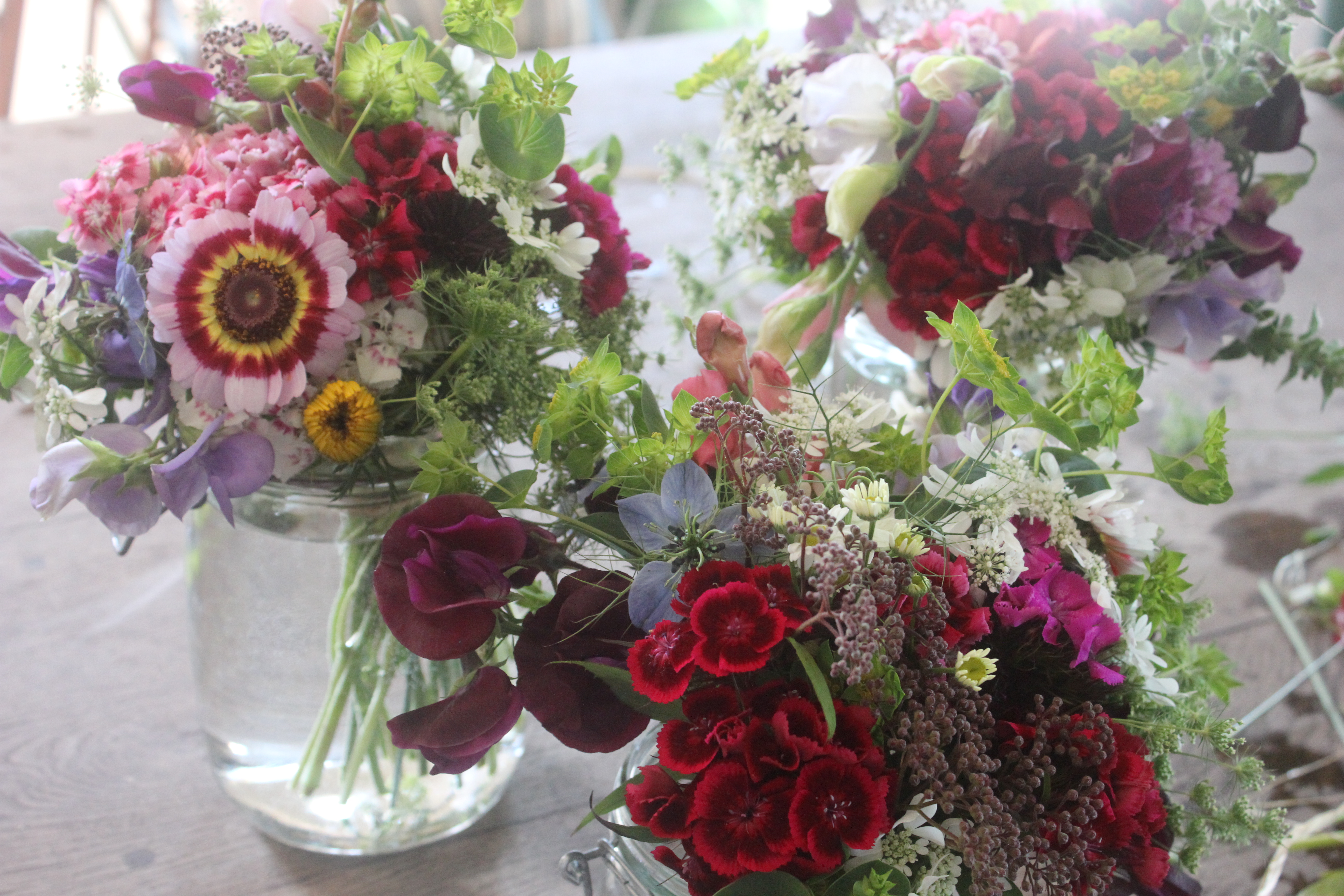
Common Farm Flowers’ “jam jar posies.”
I’m inspired by the creativity and kindred spirit of all flower farmers who want to rekindle the interest in homegrown flowers and the mindful florists who want to differentiate themselves in the marketplace by sourcing local, seasonal and domestic flowers. Today’s guest is a perfect voice to invite into this conversation.
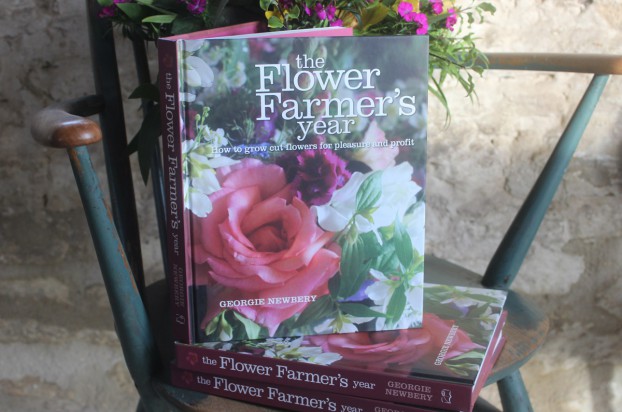
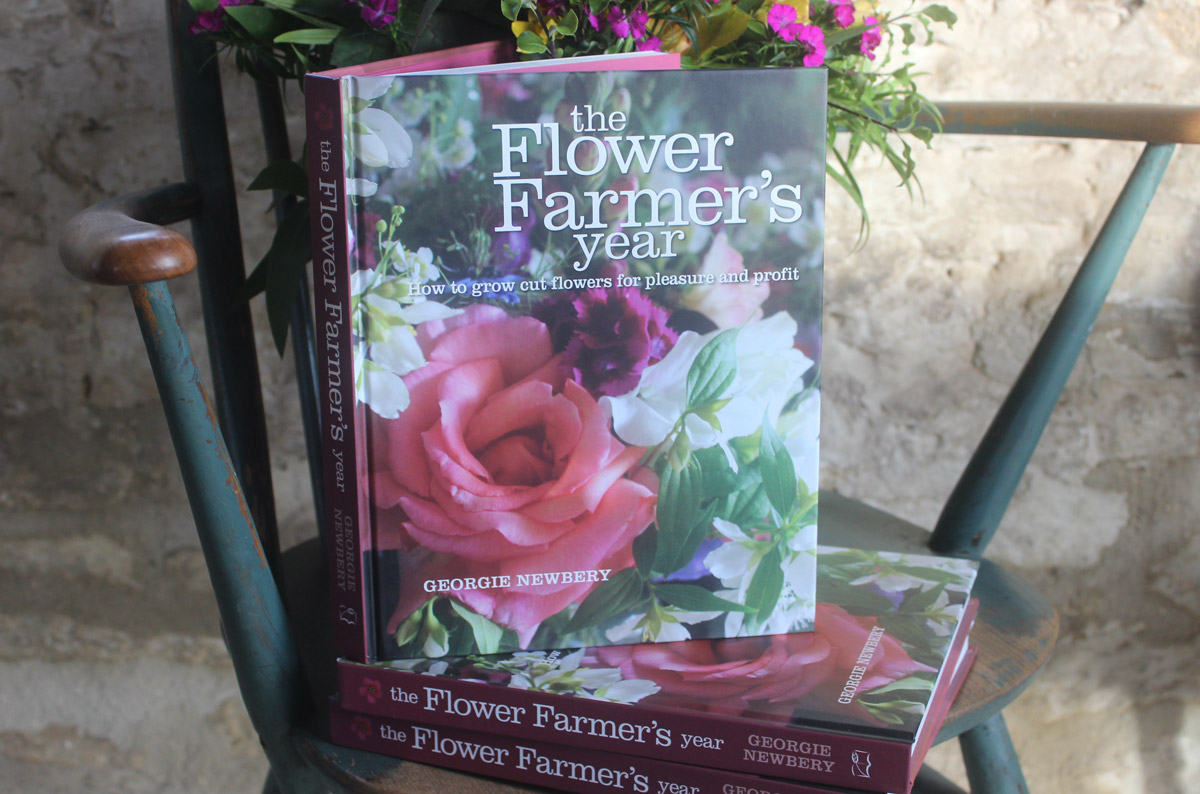
Georgie’s new book, “The Flower Farmer’s Year,” was recently released in the U.S.
Please meet Georgie Newbery, a British farmer-florist who owns Common Farm Flowers with her husband Fabrizio Boccha.
This husband-and-wife team grow British cut flowers on a beautiful plot between Bruton and Wincanton in Somerset, a few hours west of London.
The occasion for our interview is the February 15th U.S. publication of Georgie’s brand new book, “The Flower Farmer’s Year, how to grow cut flowers for pleasure and profit,” published by Green Books UK and available online at Powell’s Books and Amazon, among other places.
Common Farm Flowers is an artisan florist company, which means Georgie and Fabrizio grow nearly everything used in their floristry, expressing floral design as “a craft in which artistic flair is combined with imaginative use of the material at hand to make arrangements which are full of life and air, which dance.”
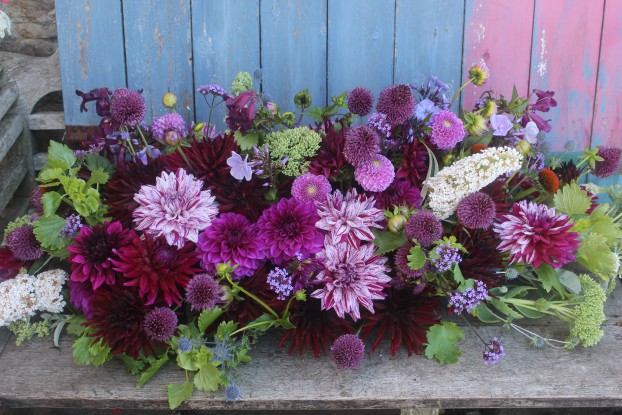
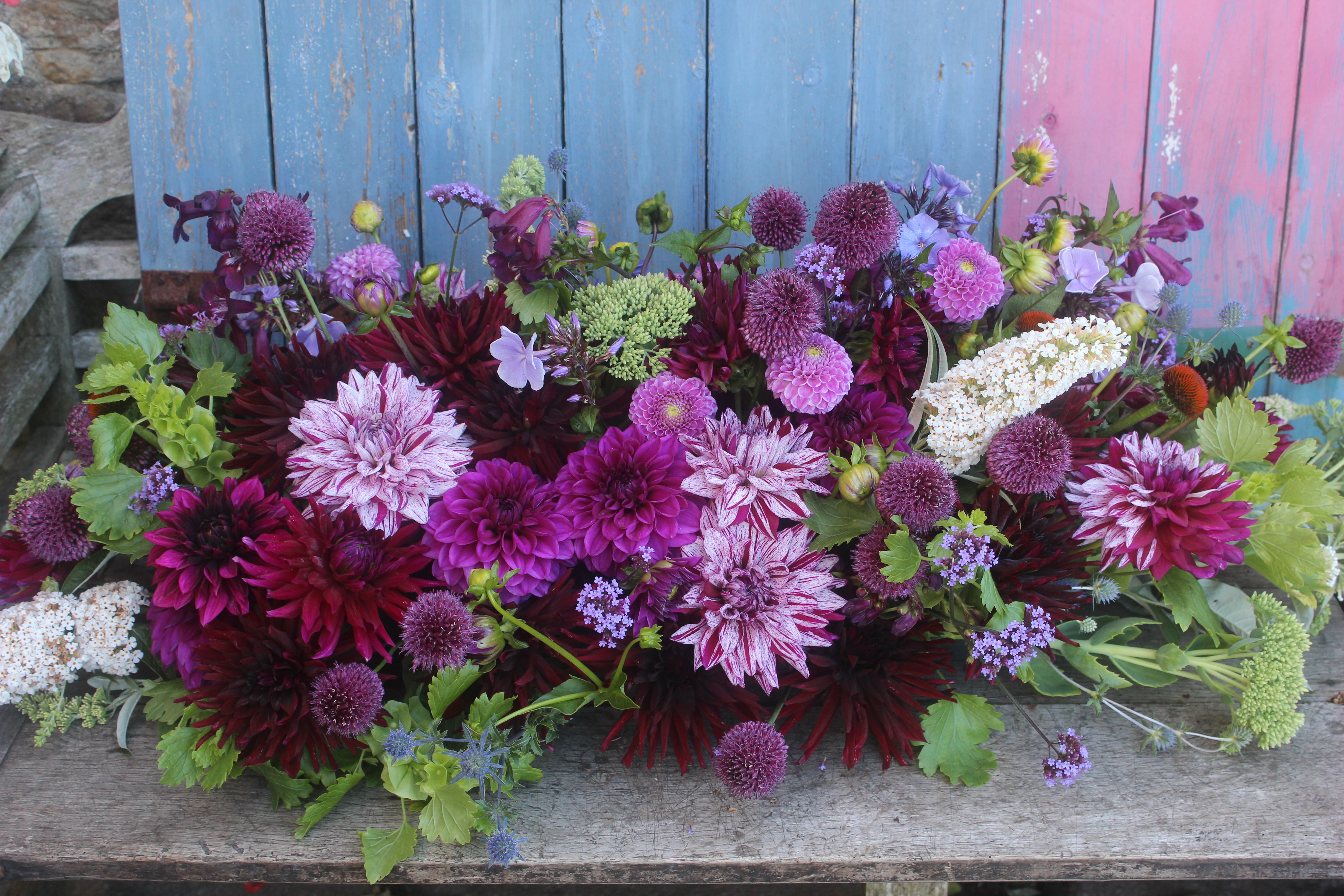
Georgie’s color sensibility is modern and romantic.
Launched in 2010, Common Farm Flowers has taken off in the past five years, despite its rural locale. As Georgie writes on the Common Flowers Farm web site: “There’s clearly a market for British grown/eco cut flowers and we’re delighted by the reception we’ve had for the flowers we grow here and the floristry we do.”
Common Farm Flowers sends British flower bouquets by post twelve months a year; it supplies and arranges lush wedding flowers throughout Somerset, the South West, in London and beyond and runs workshops on subjects ranging from Flower Farming for Beginners to Do Your Own Wedding Flowers.
The farm has taken its flowers to RHS Chelsea, RHS Chelsea in Bloom, and has been featured in British Country Living, The English Garden, The Telegraph and more. Georgie frequently gives talks to horticulture societies and gardening clubs on growing cut flowers for the home, planting a cut flower border, and seminars on dahlias and sweet pea cultivation.
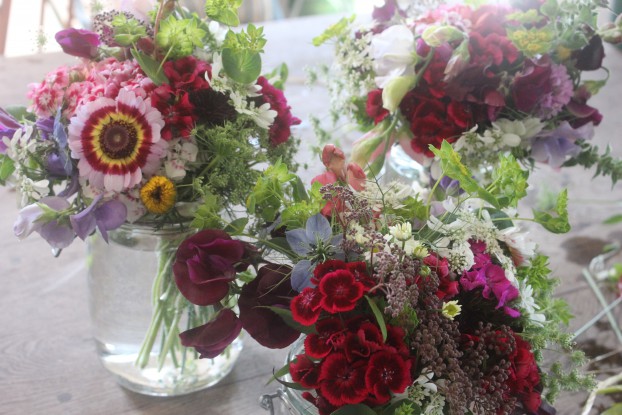
Another lovely series of posies by Common Farm flowers.
The Flower Farmer’s Year covers how to grow your own cut flowers to fill your house with the gorgeous colors and heavenly scents of your favorite blooms, knowing that they haven’t travelled thousands of miles. Georgie combines boundless passion with down-to-earth guidance and practical advice, drawing on her own experiences as an artisan flower farmer and florist as she takes readers through:
- how to start a cut-flower patch
- what to grow: including annuals, biennials, perennials, bulbs & corms, shrubs, roses, dahlias, sweet peas, herbs & wildflowers
- cutting, conditioning and presenting cut flowers
- starting a cut flower business
- where to sell
- marketing and social media
- an annual planner
Whether you want to grow for your own pleasure or start your own business, The Flower Farmer’s Year is the perfect guide to add to your library.
Here’s how to find Georgie at her social places:
Facebook
Instagram
Pinterest
I’ve been in San Francisco this past week, to speak at the SF Flower & Garden Show, attend the Association of Specialty Cut Flower Growers meeting in San Jose and to scout gardens and flower farms in the Santa Cruz region for future stories. In the coming weeks you’ll hear from some of the people I’ve met on this trip — and I know you’ll find their stories a source of inspiration for your own endeavors.
Thanks to listeners, this podcast has been downloaded more than 40,000 times. If you like what you hear, please consider logging onto Itunes and posting a listener review.
The content and opinions expressed here are either mine alone or those of my guests alone, independent of any podcast sponsor or other person, company or organization.
The Slow Flowers Podcast is engineered and edited by Andrew Wheatley and Hannah Holtgeerts. Learn more about their work at shellandtree.com
Posted in Blog Posts, Book reviews, Creativity, Entertainment, floral design, Flower Farming, General, Podcast Episodes, SLOW FLOWERS Podcast, Writing | 1 Comment »
March 21st, 2015
Welcome to Week 11 of the Slow Flowers Challenge!
Welcome Spring!!
Let’s give ourselves a huge congratulations!
Participants in the Slow Flowers Challenge have made it through the first 11 weeks of 2015 – that’s practically an entire season of winter, right?
And yesterday, March 20th, welcomed spring and all its promises of ephemeral blooms, vivid new green foliage and bud growth, fragrances, forms, textures and hues that we haven’t seen since last spring. It’s enough to make one deliriously happy.
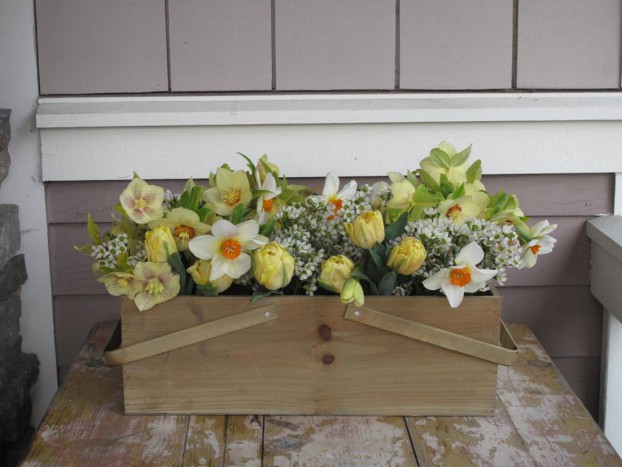
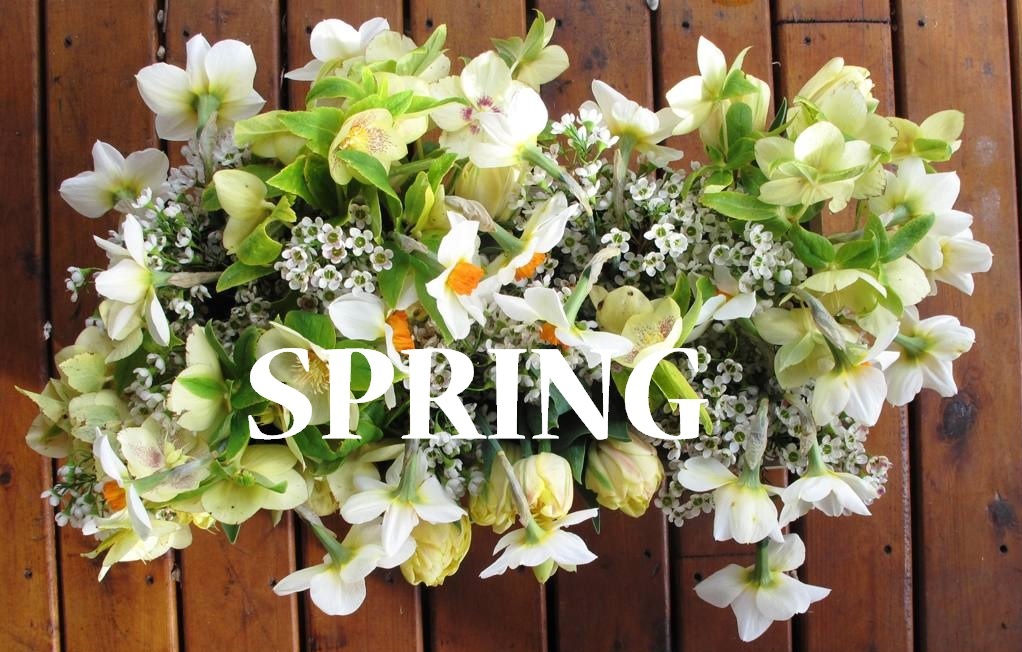
Fresh Pick: a box filled with luscious spring flowers. This design uses 8 Mason jars inside a wooden crate.
BALL JARS AND A WOODEN BOX (2-ways)
This week’s Slow Flowers Challenge was given to me by my friend Nancy Finnerty, who threw a baby shower luncheon for our mutual friends Willo Bellwood and Bob Meador to celebrate the arrival of their sweet baby, Nola.
Willo designed the beautiful Slow Flowers logo you see at the top of this page, as well as many of the graphics, as well as the look and feel of my web sites, going back to 2005 (!) And Bob makes it all happen on a navigational and technological front – he is the genius who makes the Slowflowers.com website actually work smoothly. Nancy asked me to bring some yellow tulips for the centerpiece. And, well, I took that request a little further as you see here.
This week, none of the cuttings are from my garden, but they are from the farms of the Seattle Wholesale Growers Market. Hey – I had to be there for a board meeting, so it was impossible to resist bringing home yellow double tulips grown by Gonzalo Ojeda of Ojeda Farms , along with some other pastel lovelies that you see here.
I know I designed with hellebores last week, so apologies for the repeat of flower choice. But the yellow variety of hellebores are quite rare, grown, of course, by Diane Szukovathy and Dennis Westphall of Jello Mold Farm . The sweet narcissus with dark orange centers were grown by Jan Roozen of Choice Bulb Farms , located just a few miles away from Diane and Dennis. And one bunch of wispy white wax flower – from Resendiz Brothers in Fallbrook, CA, adds just the right texture to the arrangement.
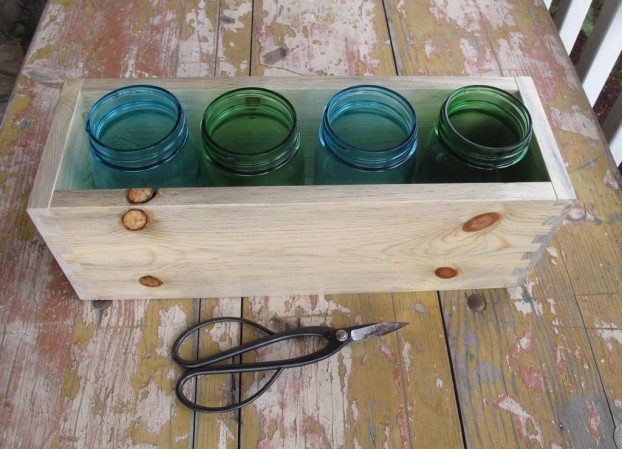
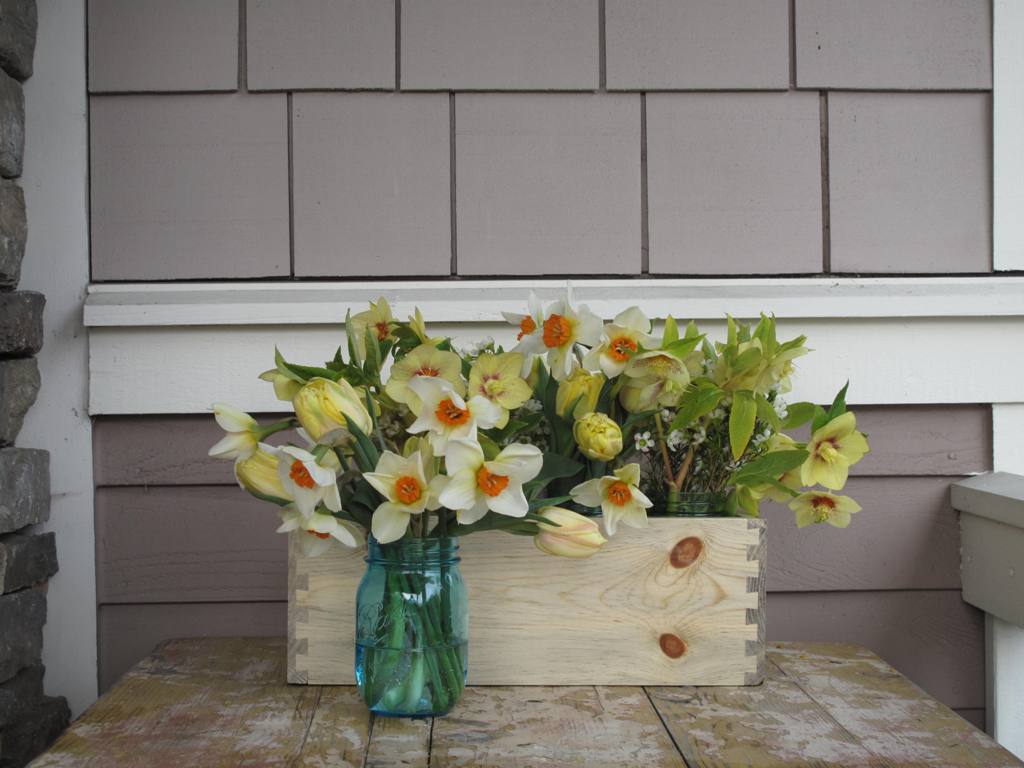
Here’s how the jars nest inside the Blue Pine box. Notice the detailed dovetail joinery at the corners.
FLORAL DESIGN MADE EASY
I started with a very special Blue Pine box that was hand-crafted in Colorado from reclaimed wood. This piece was designed by Chet and Kristy Anderson’s son (“young Chet”) of The Fresh Herb Co., in Longmont, CO. The Andersons gave it to me as a sample when I visited their farm last November.
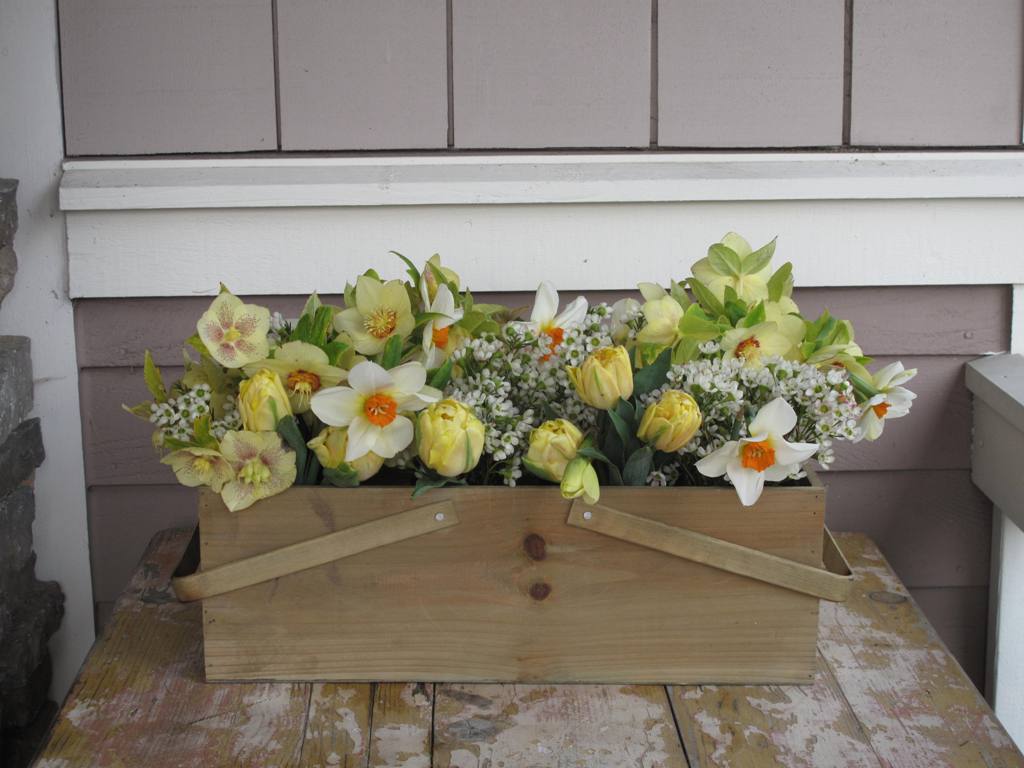
The box is exquisitely hand-crafted from distressed pine (also called “beetle kill,” which tells you why the tree was distressed), but that when milled reveals a distinctive “blue” grain pattern. The longer box was designed to hold four Mason jars, – how cool is that?
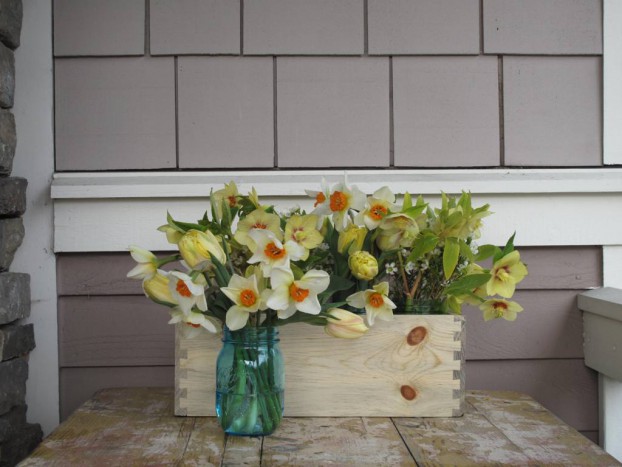
Start with four jars. Fill them with yellow-and-white blooms. Pop the arrangements into the box. Voila!
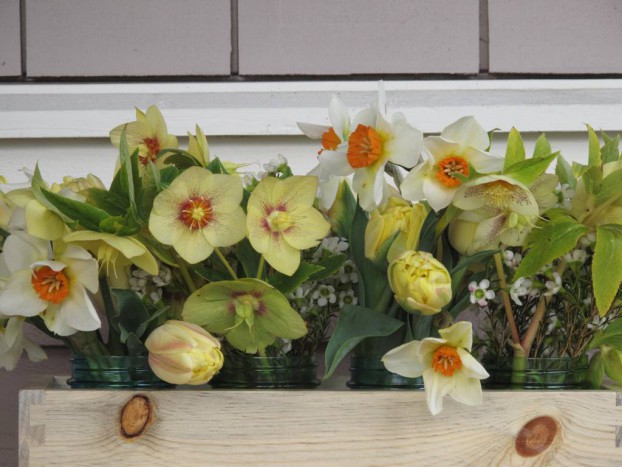
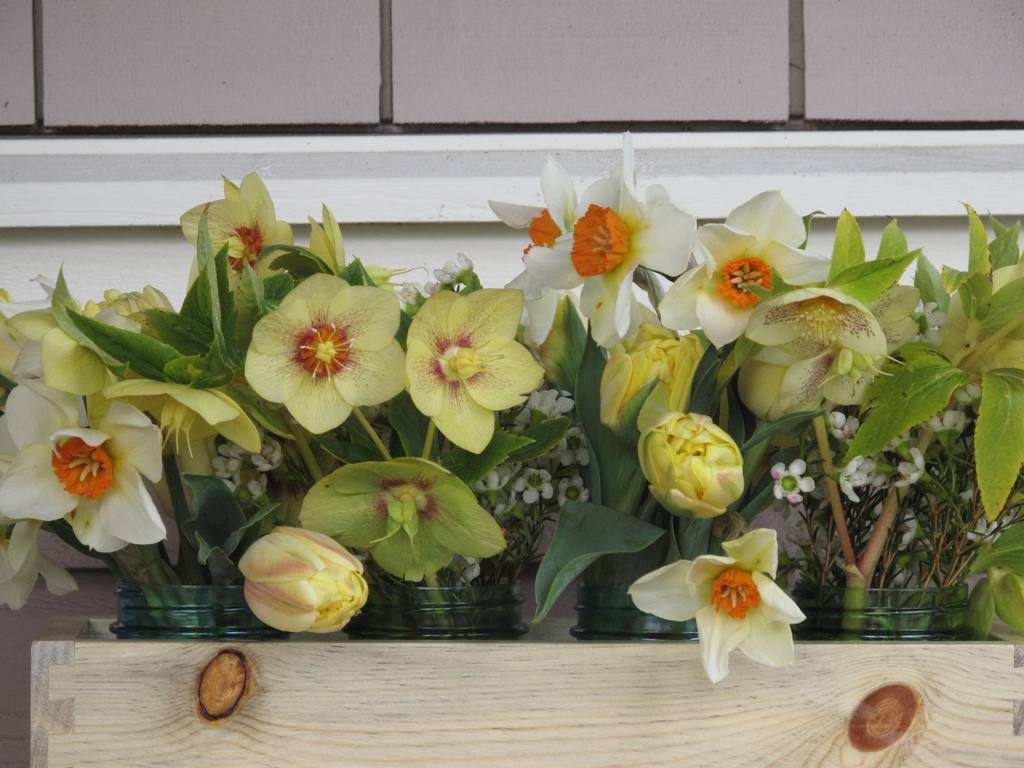
Detail showing the season’s exquisite beauty.
ONE MORE
I had a lot of extras, so after I made this first arrangement, I thought: Don’t I have another wood box in the garage? And miraculously, I put my hands on it. This was a much wider box that originally came with a mail-order amaryllis-planting kit. It was large enough to hold 8 Mason jars (two rows of four jars). You can see that design at the top of this letter.
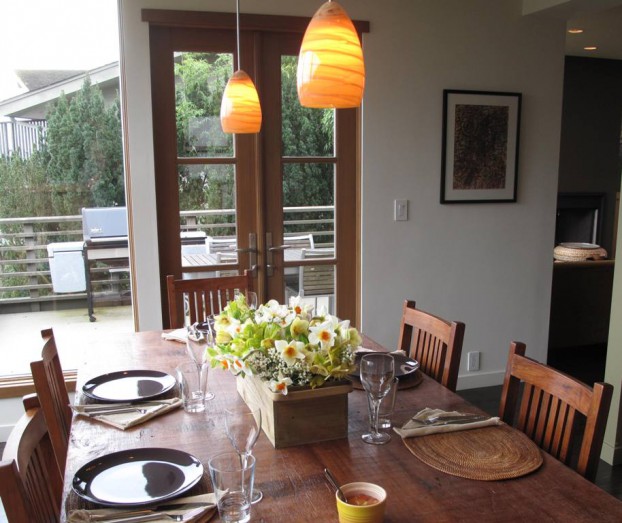
Here is the “flower box,” gracing the luncheon table.
I ended up taking this one to the baby shower – nothing like a larger arrangement for more impact. It is simply stunning to have all of these bloom shapes and forms at eye level when you’re enjoying a delicious meal and wonderful conversation. And it’s easy to give each guest one of the “mini” bouquets as a party favor to take home.
Posted in American Grown, Blog Posts, Creativity, Entertainment, floral design, Flower Farming, General, Plants, Slow Flowers Challenge | No Comments »
March 18th, 2015
Podcast: Play in new window | Download
Subscribe: Apple Podcasts | Podcast Index | | More
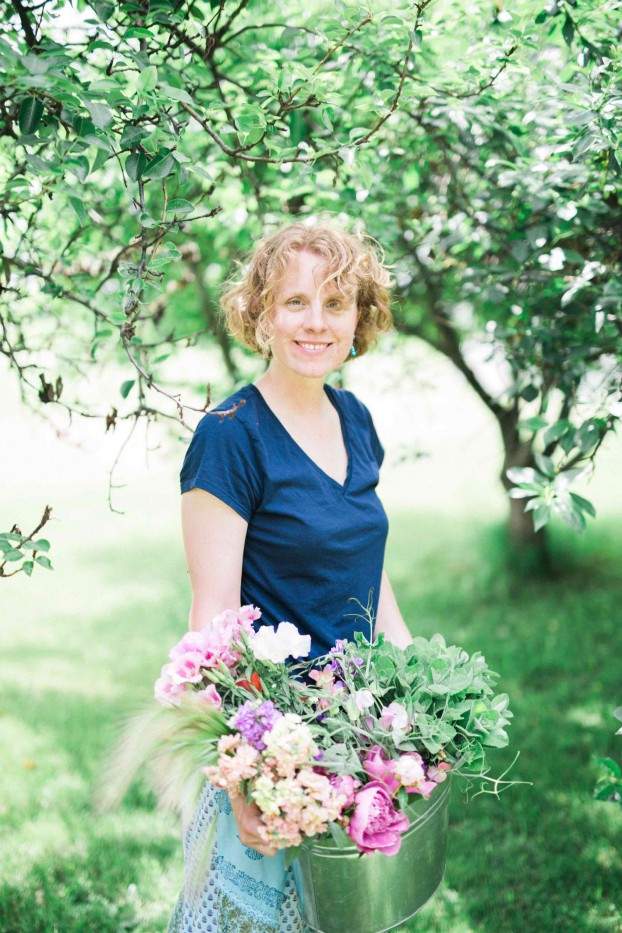
Emily Watson, Milwaukee, Wisconsin-based flower farmer, floral designer, entrepreneur — today’s podcast guest.
Emily on the farm, with her beautiful Wisconsin-grown peonies
I first met today’s guest “virtually,” when I reached out to her asking permission to use a portion of a online discussion she had started with other flower farmers.
Emily Watson is based in Milwaukee, Wisconsin, and since 2008 she has owned Stems Cut Flowers, a specialty cut flower business based on her grandparents’ farm about 45 minutes west of Milwaukee. She is a founding member of Slowflowers.com, having supported our launch by contributing to the initial Indiegogo campaign.
Emily and I finally met in person last October at the ASCFG national meeting in Wilmington, Delaware, and that was when we spoke further about the possible “course-correction” she was considering as she juggled flower farming and a successful floral design aspect to her business. Recently we connected over Skype for a conversation that I believe you’ll find quite honest and forthcoming.
And ironically, it harkens to that bulletin board comment Emily made in 2011, the one I included in The 50 Mile Bouquet. She posed this question:
“I’ve been growing for less than five years, on a small plot, and I’m wondering if this is a good idea. I’m not looking to get rich overnight, or even at all. But I need to pay the bills, maybe support a family and retire some day (before I’m 90). I do not have a
problem working a few 80-hour weeks but I do not want that to be the norm. Am I crazy for thinking this? The bottom line is I need to know if this is possible before I sink any more money into it?”
The responses Emily received were encouraging and honest; no one tried to sugarcoat the truth about the backbreaking reality of running a small farm. They also revealed that people do not grow and market flowers because it’s lucrative, but at least in part for a love of the land and a passion for the independent lifestyle it brings.
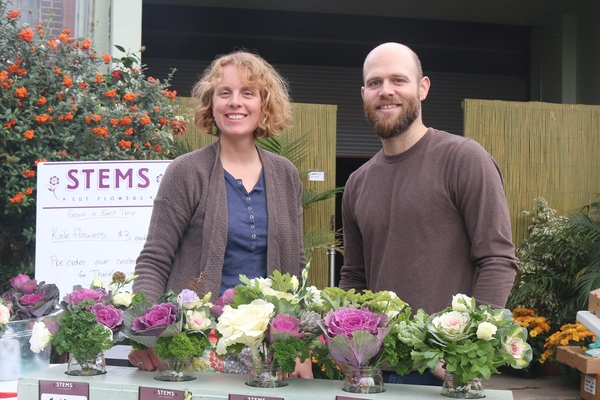
Emily with her husband Nich Love
Here’s more about Emily:
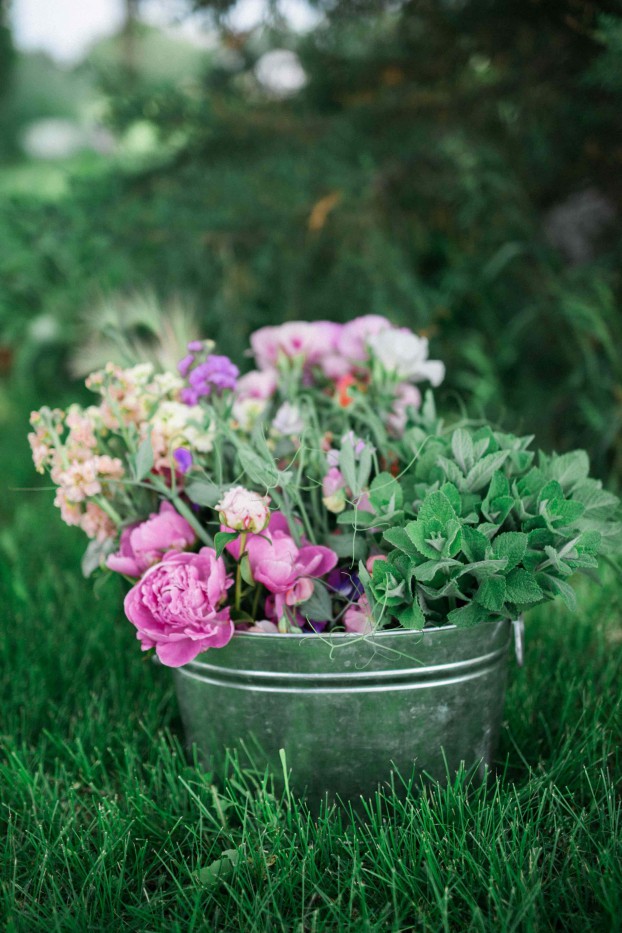
Emily’s tagline for Wood Violet, her new design studio, is “floral design inspired by nature.” How fitting!
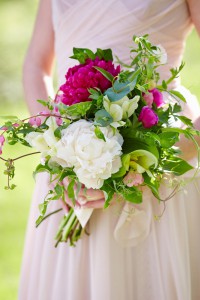
A May wedding bouquet grown and designed by Emily Watson.
She grew up in a small agricultural town not terribly far from Milwaukee with three brothers and lots of cousins nearby, playing outside all the time.
After high school, Emily attended the University of Wisconsin in Madison where that love for the natural world led her to earn a bachelor’s degree in Biological Aspects of Conservation.
She worked as a landscaper, which led to work in a flower shop, which somehow led to managing a Chinese restaurant. As she puts it: “I learned a lot about business at that Chinese restaurant and made a lot of friends, but the call of the outdoors was too strong.
By 2008, Emily had started Stems Cut Flowers at her grandparents farm in East Troy, the town in which she grew up. As a small farming business, Stems flourished into a floral design business.
Emily considers herself lucky enough to live in the city and spend a few days every week at the farm, the best of both worlds.
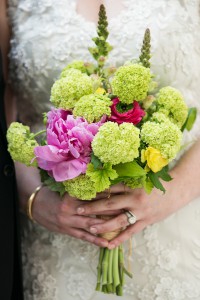
Spring flowers in a romantic nature-inspired bouquet.
Her intention has always been to run a thriving flower farm that sells its crops to florists and to the public at farmer’s markets, picking up occasional wedding design work. The reality, however, is that the idea of “occasional” wedding design has turned into a nearly every weekend occurrence. It soon became evident to Emily that she was running two separate businesses. Last year she decided to create a separate identity for the design portion of her business.
The timing is perfect for today’s interview because Emily is in the midst of launching a floral design studio in Milwaukee. She’s named it Wood Violet, an eco-friendly studio that focuses on locally grown flowers as much as possible, offering wedding flowers and daily deliveries.
As we discussed in the interview, Emily hopes to offer gardening classes and floral design workshops at Wood Violet, inspiring people with the beauty of each season. I admire the way she’s playing to her strengths as both a flower farmer and a floral designer, and I admire that her new hybrid business model includes supporting other local flower farmers in her community while still keeping her fingers in the soil.
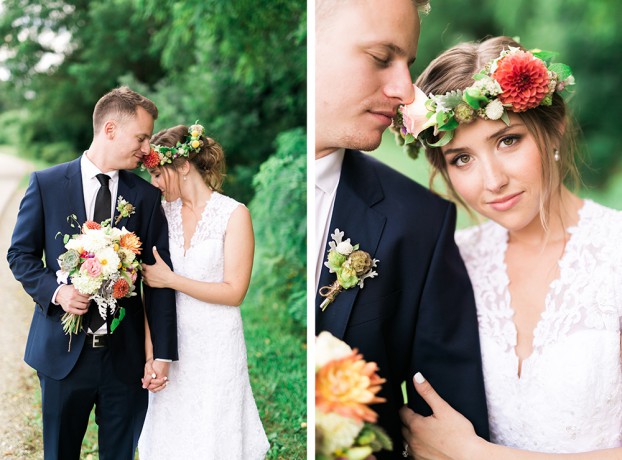
Emily Watson-designed wedding flowers.
You know, I think Emily has answered the question she posed back in 2011 better than anyone else could have done – and I wish her great success.
Here’s how to find Emily on all her platforms:
Wood Violet on Facebook
Wood Violet on Instagram
Wood Violet on Pinterest
Before we close, I want to give you the news of the week.
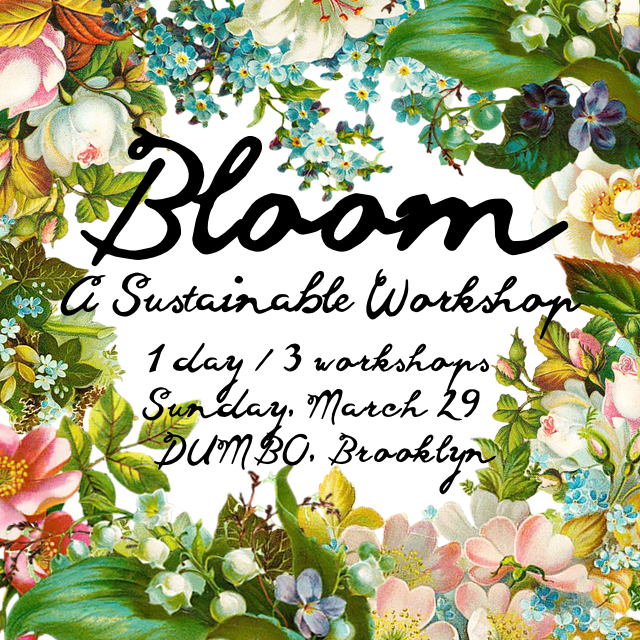
 Slowflowers.com has partnered with the Ethical Writers Coalition to present Bloom: A Sustainable Workshop, that will take place on Sunday, March 29th at the Mode Marteau Studio in Brooklyn.
Participants can sign up for one or more intimate classes for a hands-on and creative experience in sustainability, and of course, locally-grown flowers.
Learn to make your own fresh flower crown, create a perfect bouquet, or plant a DIY a reclaimed vase at three different workshops.
Three members of Slowflowers.com will join together for the 3rd workshop: Local Flowers 101 with Taproot & Molly Oliver Flowers
Rachel Gordon of Taproot Flowers and Molly Culver and Deborah Greig of Molly Oliver Flowers will teach flower arranging tips & tricks, discuss the importance and sourcing of sustainable flowers, and how to best care for your arrangement. All materials included with the $65 workshop fee.
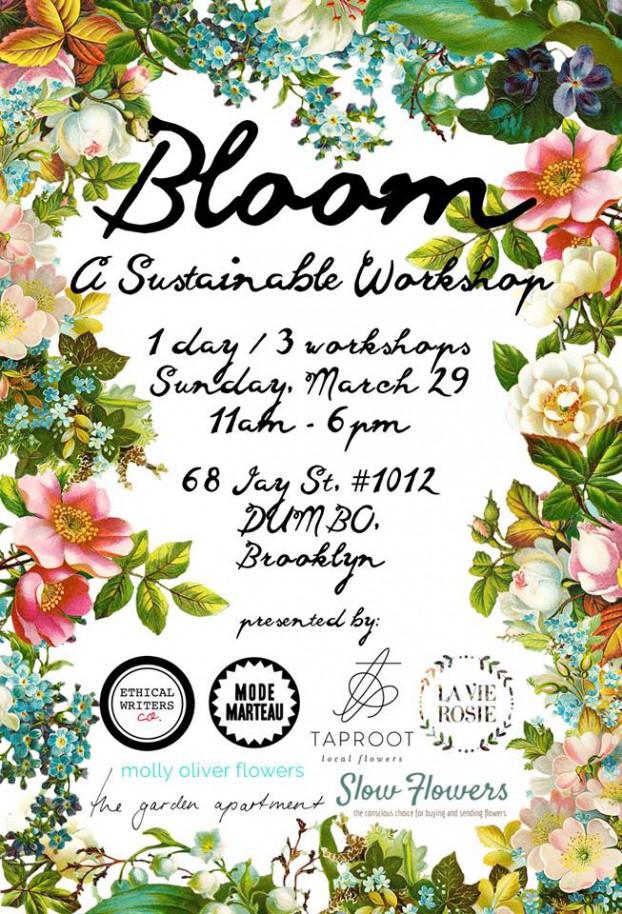
I want to thank the Ethical Writers Coalition for producing this awesome event and for inviting Slowflowers.com to participate. The Ethical Writers Coalition is a very cool group of journalists, writers, and bloggers who seek to support and further ethical and sustainable living online and in print. Through my publicists, I met co-founder Alden Wicker of the EcoCult Blog when I was in New York last October – and she attended a SlowFlowers.com gathering where this event idea germinated.
After we connected, Alder wrote an insightful post about Slow Flowers, which you can read here. Elizabeth Stilwell, who blogs at TheNotePasser.com, has taken the lead on creating Bloom and I have thoroughly enjoyed working with her on this project – sadly, I can’t attend. But I’m so pleased that Slowflowers.com will be well represented, getting the word out about American flowers and the people who grow and design with them.
I love how the roots of sustainable living intertwine so perfectly with the American Grown Flower movement. It’s exciting to see the idea of local, seasonal and sustainable flowers move from the alternative/fringe world closer to the mainstream.
 Last week Grist.org fellow Ana Sofia Knauf published an interview with me and titled it “There’s a Local Flower Movement Blooming,” and I’d love for you to read it. Check out the link to her piece here.
Thanks for joining me this week and please return again, as I continue to share insightful and educational episodes recorded exclusively for the Slow Flowers Podcast.
The content and opinions expressed here are either mine alone or those of my guests alone, independent of any podcast sponsor or other person, company or organization.
Thanks to listeners, this podcast has been downloaded more than 39,000 times. If you like what you hear, please consider logging onto Itunes and posting a listener review.
Until next week please join me in putting more American grown flowers on the table, one vase at a time.
The Slow Flowers Podcast is engineered and edited by Andrew Wheatley and Hannah Holtgeerts. Learn more about their work at shellandtree.com.
Posted in American Grown, Blog Posts, Creativity, floral design, Flower Farming, Gardening, General, Plants, Playfulness, Podcast Episodes, SLOW FLOWERS Podcast, Slowflowers.com the Directory of American Flowers | 3 Comments »
March 13th, 2015
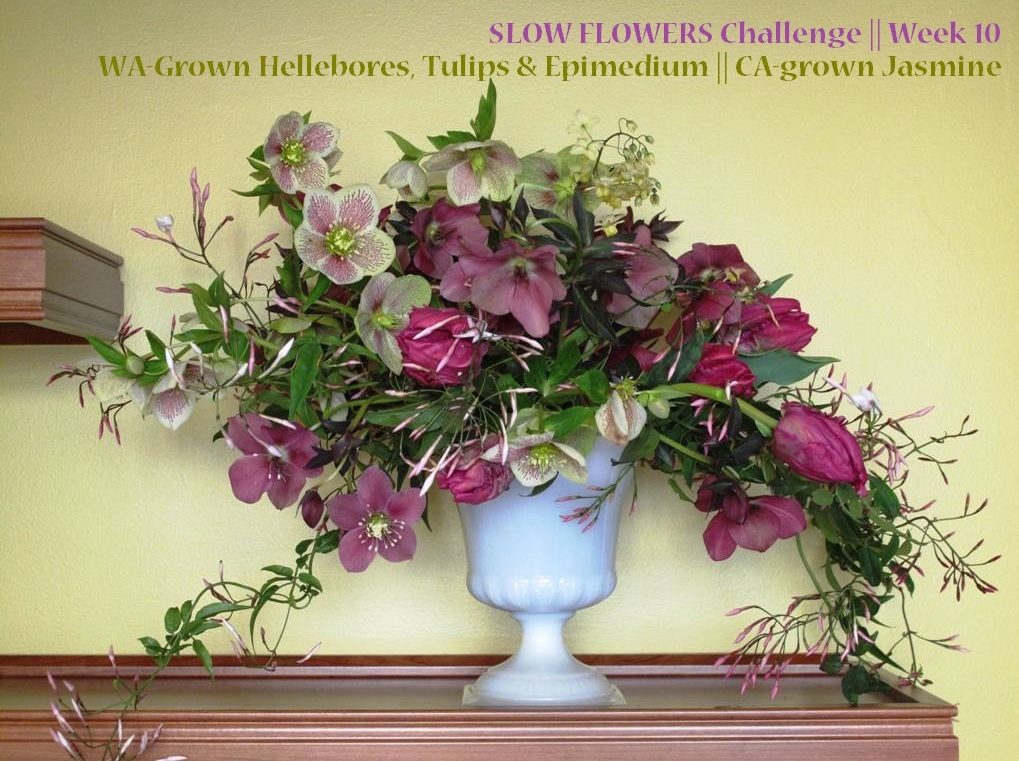
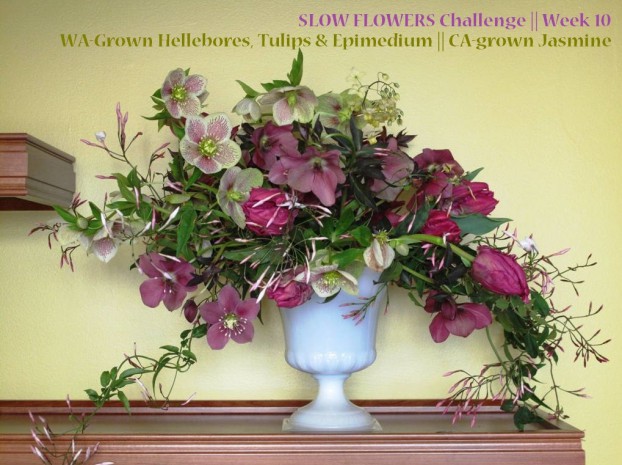 Oh joy! The hellebores are blooming quite early this year.
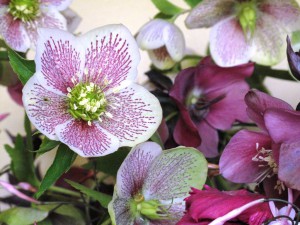
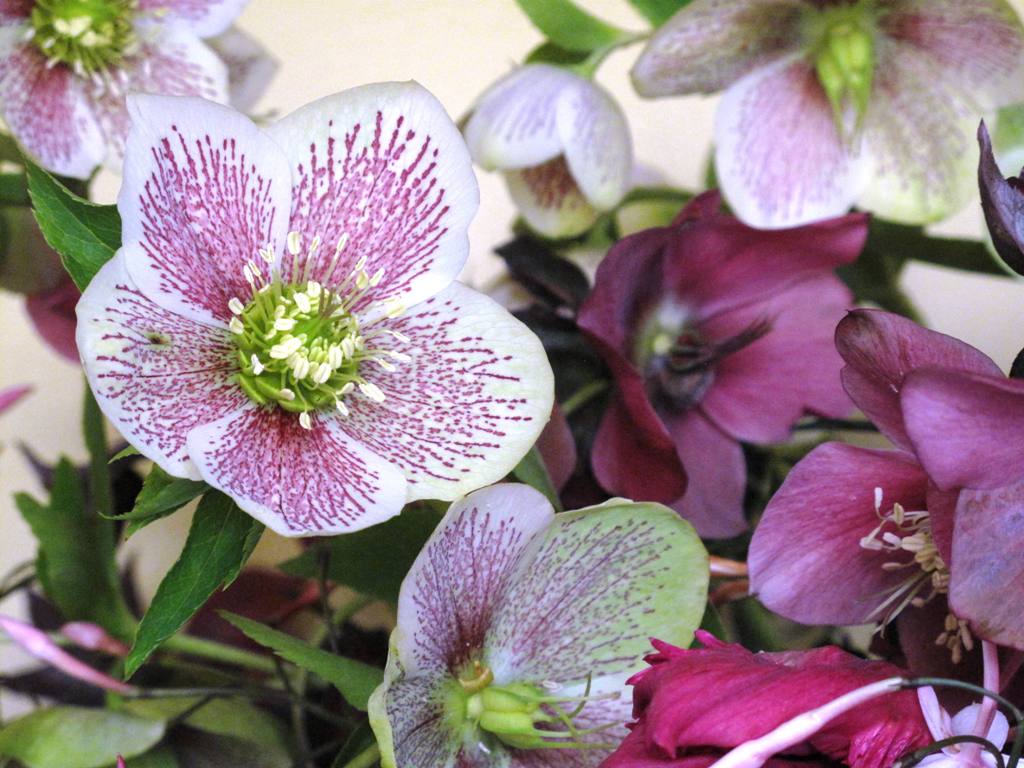
Up close, the detail is so lovely and intricate
For better or worse, Seattle’s uber-mild winter means that many of our early flowers are emerging weeks ahead of schedule.
I’m worried that our gardens and fields will need a lot more water this summer, but we can only say that Mother Nature decided to give us warmer temperatures and extra sunshine this year – more than previous winters in recent memory.
Diane Szukovathy and Dennis Westphall of Jello Mold Farm grew the hellebores you see here – and let me tell you, their luscious blooms were flying out of the Seattle Wholesale Growers Market when they arrived.
I snagged the *last* bunch of the plum hellebores and grabbed only 4 stems of the beautiful pale speckled ones.
Gorgeous specialty tulips also caught my eye – so much more substantial and visually arresting than the hothouse ones coming out of Canada. These were lovingly grown by Gonzalo Ojeda of Ojeda Farms, a member of the SWGMC who farms in Ethel, Washington. One bunch of 10 stems, while short, provided plenty of tulips to add dazzle to two vases.
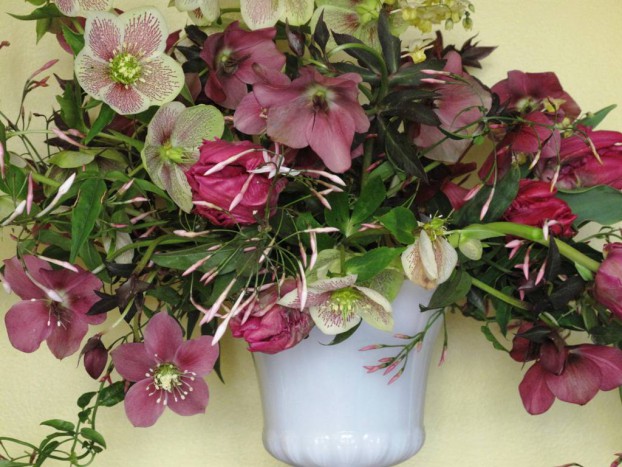
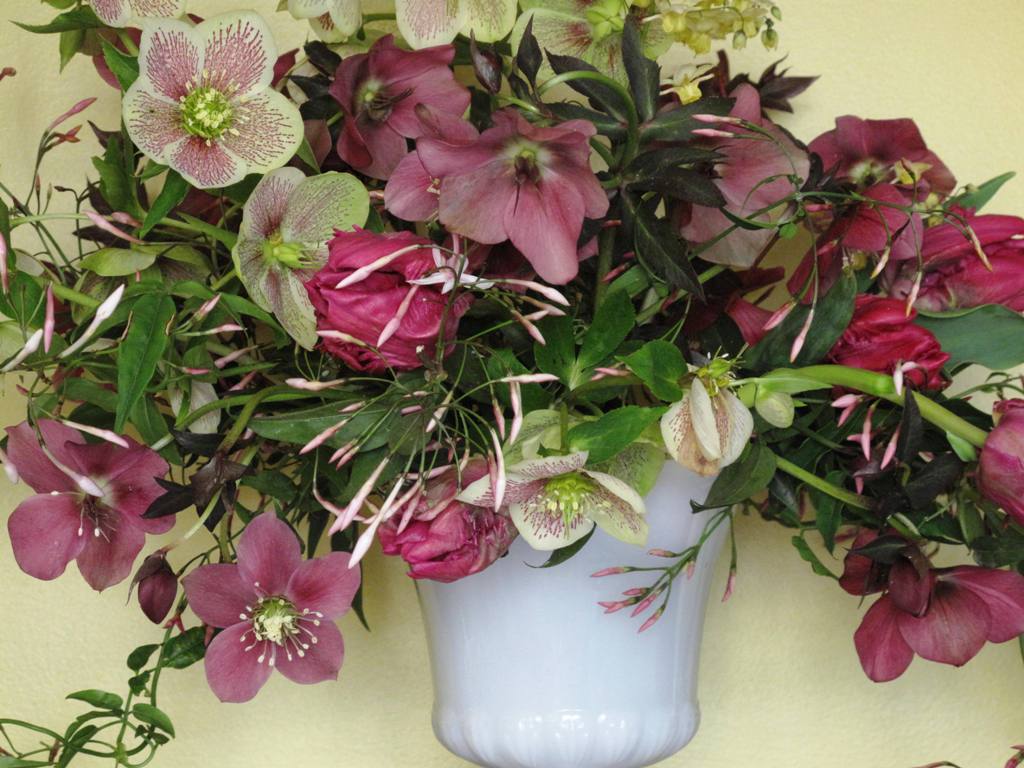
Plum and berry hues with pale green & butter yellow in a vintage white vase.
Jasmine isn’t winter-hardy here in Seattle, but boy do I remember it clambering over the stucco retaining wall in our former garden in California’s Ventura County. On the first Thanksgiving we lived there – after moving from Seattle in 2006 – my friend Nancy, visiting from Seattle, created our entire Thanksgiving tablescape from the bounty of our new backyard – including that lacy jasmine.
Molly Sadowsky, the SWGM’s manager and principal buyer, has a secret California source for evergreen Jasmine – and the designers here in Seattle absolutely love it! Me, too! I love that the jasmine foliage is also a gorgeous aspect of this arrangement, a bonus to the fragrant flowers and buds.
Oh, and there is one element from my Seattle garden: the delicate pale yellow flowers from Epimedium, a beautiful groundcover. I only had a few stems to add, but their petals echo the Hellebores’ centers, adding a delicate texture.
Hellebores for the People
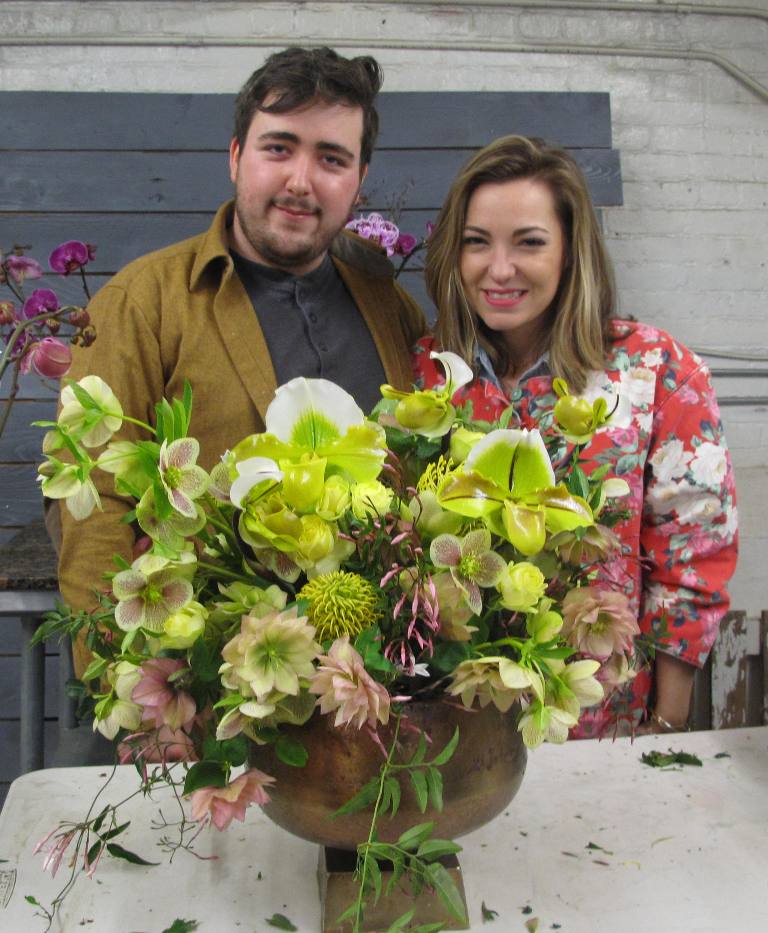
Designed by Mick & Olivia Payment,
owners of Flowers for the People
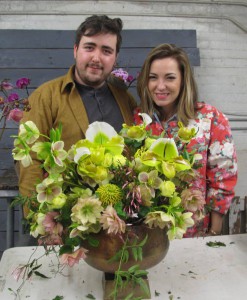
Hellebores with orchids, roses, pincushion protea, jasmine and more – designed by Olivia and Mick Payment
Earlier this week, the SWGM hosted its first Orchid Spectacular to showcase a wide array of Local and American-grown potted and cut orchids. The Market staff invited Mick and Olivia, a brother-and-sister design team, to demonstrate how they design with orchids in arrangements and interior planters.
You’ll be wowed by one of their designs pictured here. I wanted to share it because of the diversity of flowers they incorporated, including Lady Slipper orchids from
Orchidaceae of Walla Walla, Washington, and hellebores from Jello Mold Farm (the “leftovers” ended up in my design above).
The yellow-green-pink palette is such a breath of fresh air! Mick and Olivia also used CA-grown roses and pincushion proteas to masterfully express their inspiration to use domestic flowers.
Posted in American Grown, Creativity, floral design, Flower Farming, Gardening, General, interior design, Landscape Design, Plants, Slow Flowers Challenge, Slowflowers.com the Directory of American Flowers | No Comments »
© Debra Prinzing, all written and photographic content. Website design/development by Willo Bellwood/Metric Media