April 15th, 2015
Podcast: Play in new window | Download
Subscribe: Apple Podcasts | Podcast Index | | More
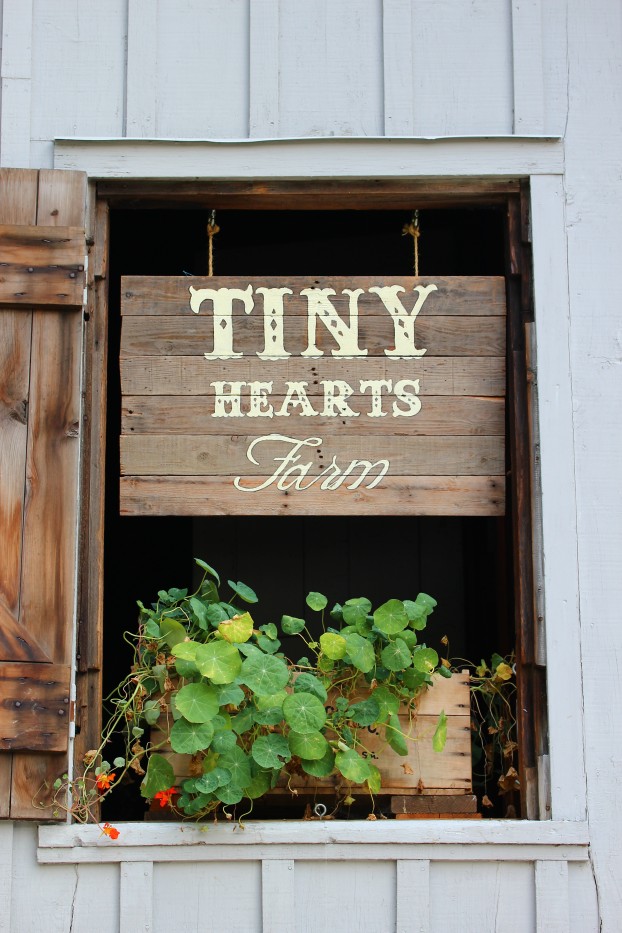
Tiny Hearts Farm of Copake, NY – a Hudson Valley cut flower farm destined for big things!
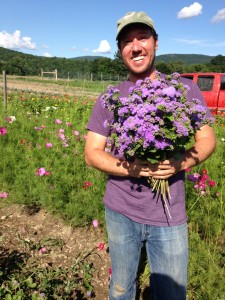
Luke Franco, one half of Tiny Hearts Farm.
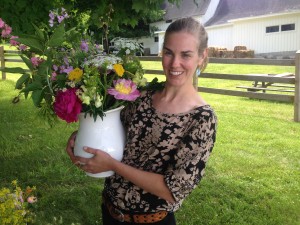
Jenn Elliott, one half of Tiny Hearts Fars.
I’ve often talked about the exciting changes we’re experiencing with the Slow Flowers Movement as a “cultural shift,” not a Trend.
I credit sustainability expert and founder of Ci: conscientious innovation, Kierstin DeWest, the very first guest of this podcast in July 2013, for teaching me this concept. Trends are often momentary; cultural shifts are significant, meaningful and long-lasting changes in the marketplace.
There is a cultural shift taking place that is redefining the relationships consumers, florists and flower farmers have with one another. This is happening at all levels of the flower pipeline, from U.S. Flower Farms large and small seeking Certified American Grown status to brand and label their flowers – in order to satisfy the demands, especially at the mass market – for transparency in flower origin, to the grassroots efforts, region by region, to connect the people who grow flowers with the people who design and sell them.
READ MORE…
Posted in American Grown, Blog Posts, Creativity, floral design, Flower Farming, General, Podcast Episodes, SLOW FLOWERS Podcast | 4 Comments »
April 12th, 2015
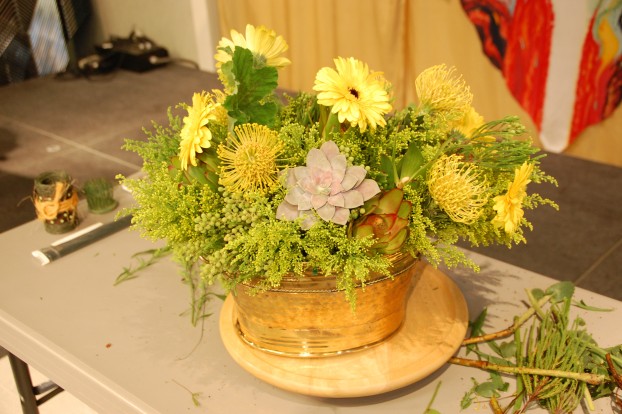
A golden and green floral palette – with a beautiful echeveria as a focal element. (c) Perry Stampfel
Welcome to Week 14 of the Slow Flowers Challenge!
Greetings from Southern California, where I have been teaching this week! It’s a great excuse to show off some of the flowers grown in Encinitas, California – by Dramm & Echter, an established farm that grows beautiful blooms.
At the invitation of Lynn Stampfel of Laguna Beach Garden Club, I traveled to Southern California earlier this week. This established and active group of gardeners graciously welcomed me to lecture about American Grown Flowers and the Slow Flowers Movement. We had 125 in attendance and it was a whirlwind. Why? Well, for some crazy reason, I had agreed to give a 30-minute slide lecture, followed by a 30-minute eco-design demonstration.
Above is the arrangement I created for the demo. I used a vintage brass planter – low and wide – in order to show how to use chicken wire as the internal mechanics of the container.
The floral elements were all grown locally – well, the next county over – at Dramm & Echter, an American grown flower farm with 40 acres of field-grown crops and 950,000 square feet of greenhouses. Dramm & Echter’s primary floral crops are gerberas, lilies, spray roses and protea varieties. Then there’s so much awesome foliage and textural varieties, including solidago, leucadendron, ruscus, eucalyptus and more.
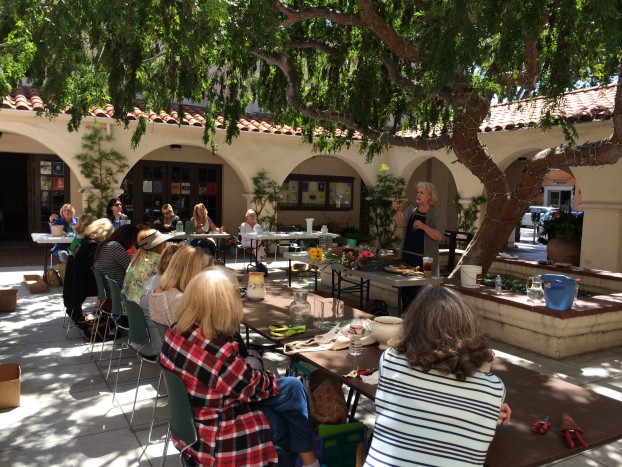
Demonstrating with the flowers from Dramm & Echter. (c) Perry Stampfel
Working with the Dramm and Echter sales team, I ordered $800 of their flowers and foliage varieties for Laguna Beach Garden Club’s afternoon event: A hands-on design workshop.
Twenty-five participants gathered in the courtyard of the local church that hosted our workshop under the lovely canopy of a melaleuca tree, we spent two hours arranging with those blooms. Everyone was encouraged to try using chicken wire or fluffy foliage or curly willow as the stabilizing matrix — all great alternatives to conventional chemical-base flower foam. I’m pleased to have been able to demonstrate the brand new Floral Soil plant-based product in one of my designs, shown below.
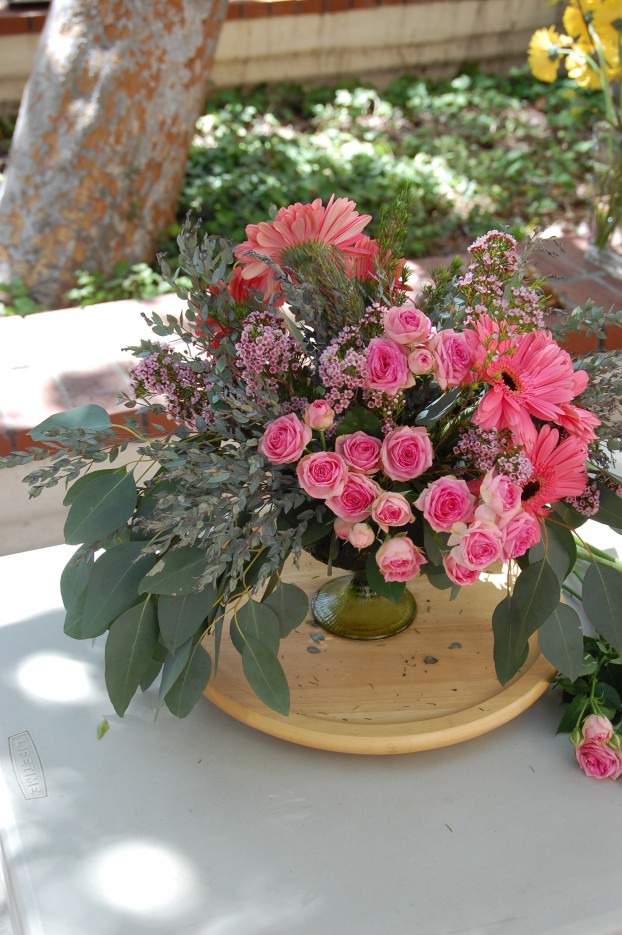
This vintage footed glass bowl contains Dramm & Echter florals, including gerberas, spray roses, wax flower, and two types of eucalyptus branches. (c) Perry Stampfel
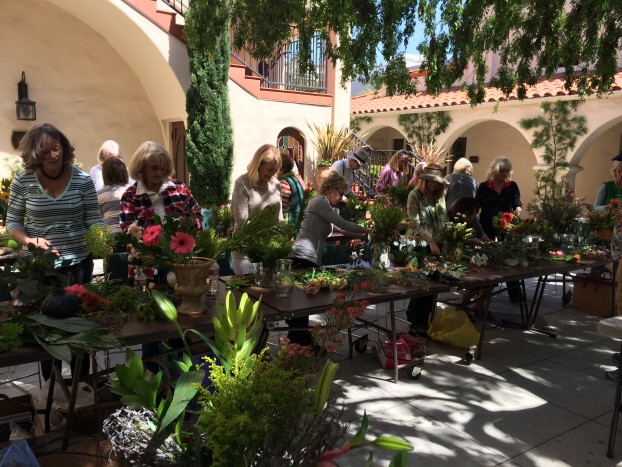
Twenty-five Slow Flowers designers, all members of the Laguna Beach Garden Club, at work on their personal projects. (c) Perry Stampfel
Posted in American Grown, Blog Posts, Creativity, floral design, Flower Farming, Gardening, General, Plants, Slow Flowers Challenge | No Comments »
April 8th, 2015
Podcast: Play in new window | Download
Subscribe: Apple Podcasts | Podcast Index | | More
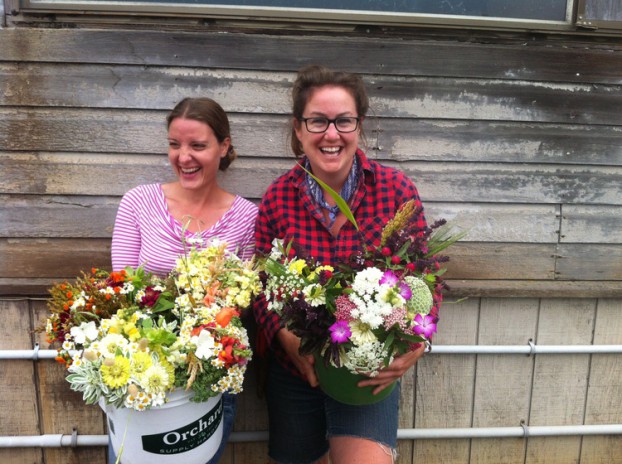
Betany Coffland (left) and Lennie Larkin (right). This photograph captures the friends holding flowers they grew for Chica Bloom Farm (Betany) and Petaluma Bounty (Lennie).

 Attention emerging flower farmers and #farmerflorists!
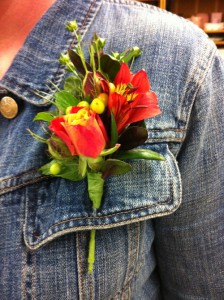
A B-Side boutonniere.
I know you’ll appreciate this week’s guests because they are both in the early phases of launching their floral businesses.
Either you’ve already been there so parts of their stories will sound familiar or you’re in the thick of building a floral enterprise – farming and/or design – and will draw inspiration from their candor about the challenges, opportunities and decisions about the direction to take.
With planting and harvesting season and months of weddings upon us, I can assure you that our episode is timely. Like all of my guests on the Slow Flowers Podcast, there is much to learn from what they have to share.
Please welcome Betany Coffland of Chloris Floral and Lennie Larkin of B-Side Farm. Together, they embody a unique collaboration for people who are growing and designing American flowers. Be wowed by the collective beauty of their work.

Betany, performing “Carmen,” photo by Pat Kirk
This episode was recorded in the San Jose hotel lobby after the conclusion of ASCFG’s “Growers’ Intensive” last month.
Betany Coffland has always possessed an artistic soul. Her first career lies in singing opera where she trained at the Juilliard School of Music.
Often gifted with an armload of bouquets on opening night, Betany frequently imagined herself in a Jane Austen novel.
The quintessential professional, Betany has given us permission to include snippets of her operatic performances, including the French art song, “A Chloris.” Check out her professional opera site here.
After moving to Sonoma County and reading the book, The Dirty Life, she was inspired to volunteer at a local flower farm to see if she would enjoy getting dirt under her nails and having the outdoors as an office.
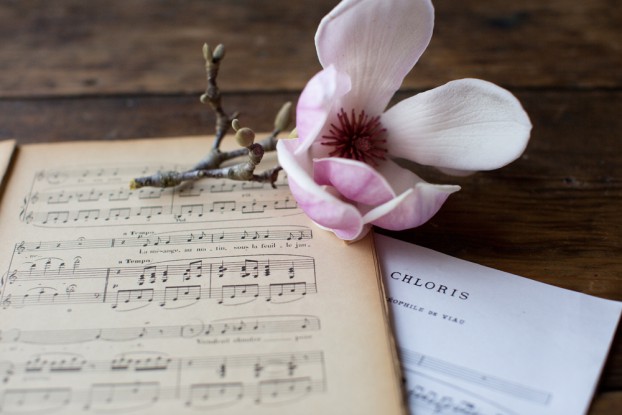
A Chloris inspiration, photo by Paige Green
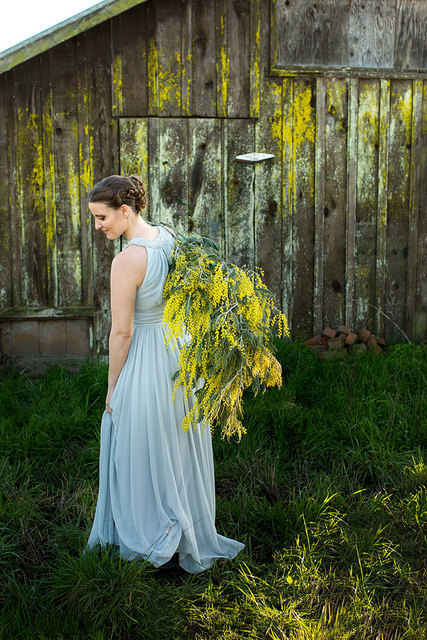
Betany Coffland, portrayed in an scene inspired by Chloris, the Greek goddess of flowers, photo by Paige Green
Betany swiftly and deeply fell entranced with how stunning and heartbreakingly gorgeous locally grown flowers are.
For 18 months, she co-owned Chica Bloom Farm, acting as the lead designer and wedding coordinator.
She especially loved getting to know her community through delivering weekly flower CSA bouquets.
In the winter of 2014, Betany launched Chloris Floral. The namesake Chloris perfectly combines her two artistic endeavors, classical singing and floral design.
Not only is Chloris the Greek goddess of flowers, she is also the heroine of Betany’s favorite French art song, “A Chloris,” by Reynaldo Hahn.
This song has special meaning because it was performed by a dear friend at Betany’s wedding to her husband Joseph. Now part of Betany’s repertoire, she continues to perform A Chloris.
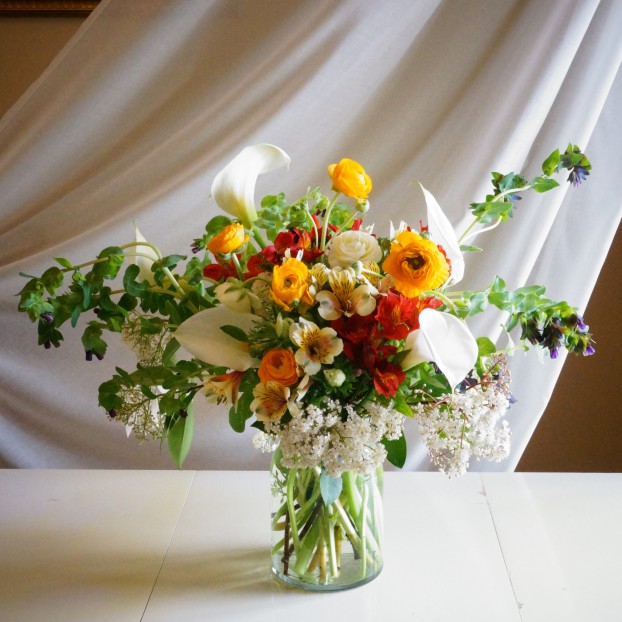
A Chloris Floral spring bouquet inspired by Vivaldi’s Spring Concerto from The Four Seasons
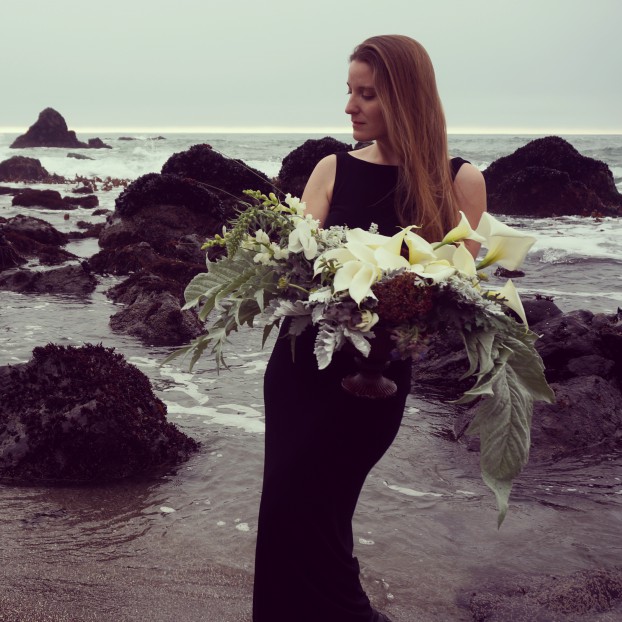
Betany and her floral arrangement, Inspired by Debussy’s symphonic work- La Mer
Chloris Floral is a flower design studio in Sonoma County committed to using 100% local and seasonal blooms grown using organic practices. By supporting and building upon the strength of the local farming community, Chloris ensures the availability of fresh, locally grown blooms necessary to create achingly beautiful old world designs.
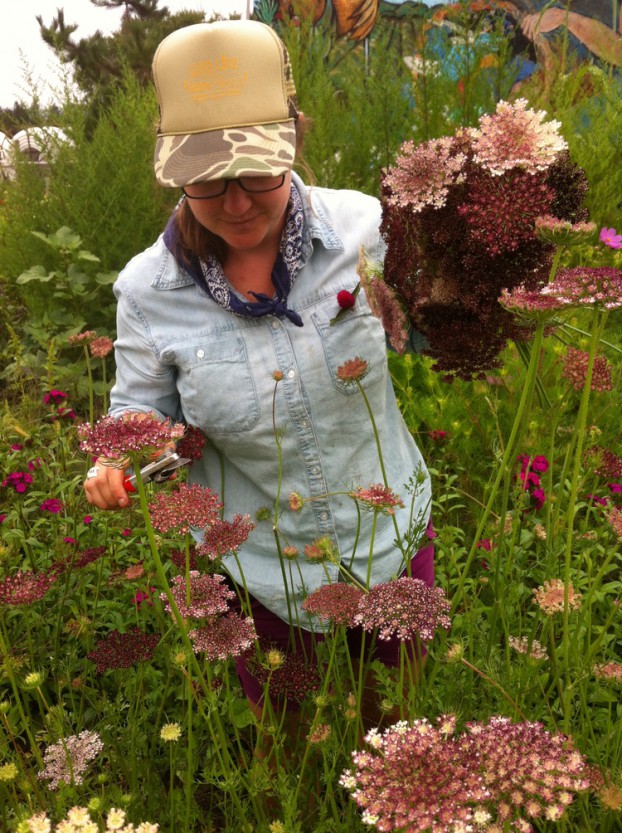
A little bit country: flower farmer, Lennie Larkin
A lush B-Side bouquet, by Lennie Larkin.
In her “day job,” Lennie Larkin is the community farm manager at Petaluma Bounty, a nonprofit community farm that works to create a healthy and sustainable food system for everyone in Petaluma, California.
At Petaluma Bounty, Lennie grows lots of vegetables and a seriously beautiful patch of flowers that are sold locally, including at farmers’ markets.
She will share her story, so I don’t want to give too much away, but let me quickly introduce Lennie’s new flower farming business, B-Side Farm.
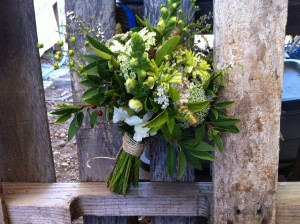
B-Side Beauty, by Lennie Larkin
She describes B-Side as a small, bustling flower farm that grew out of her obsession with fragrant blossoms.
It sits on a fertile piece of land in the rolling hills of Petaluma, in the southern pocket of Sonoma County, California. From show-stopping dahlias to rare foliages and simple herbs, B-Side specializes in favorite old-fashioned flowers, picked daily and bursting with dreamy scents.
Lennie’s flowers and arrangement supply a family of local-minded florists and specialty stores in Petaluma, San Francisco, and Oakland, and she welcomes orders of loose flowers and specialty arrangements for pickup straight from the farm. Read Lennie’s extended bio from her new web site.
 Lennie and Betany are founding members of the North Bay Flower Collective, a group of flower farmers and floral designers in the North SF Bay Area.
I love the motivation that led to the formation of the North Bay Flower Collective: To lean on each other for support and pull our resources together to build a flower growers’ alliance helping each farmer and florist to grow and thrive.
Here are the links to Betany’s social sites for Chloris, to Lennie’s social sites for B-Side and to the North Bay Flower Collective.
You’ll want to follow these talented individuals and watch how their coming design season unfolds:
Find Betany here:
Chloris Floral on Facebook
Chloris Floral on Instagram
Chloris Floral Web Site
Find Lennie here:
B-Side Farm on Facebook
B-Side Farm on Instagram
B-Side Farm Web Site
Thank you so much for joining me this week and please return again, as I continue to share insightful and educational episodes recorded exclusively for the Slow Flowers Podcast.
Listeners like you have downloaded the podcast more than 42,000 times. Until next week please join me in putting more American grown flowers on the table, one vase at a time. And If you like what you hear, please consider logging onto Itunes and posting a listener review.
The content and opinions expressed here are either mine alone or those of my guests alone, independent of any podcast sponsor or other person, company or organization.
The Slow Flowers Podcast is engineered and edited by Andrew Wheatley and Hannah Holtgeerts. Learn more about their work at shellandtree.com.
Posted in American Grown, Blog Posts, Creativity, Entertainment, floral design, Flower Farming, General, Plants, Podcast Episodes, SLOW FLOWERS Podcast, Slowflowers.com the Directory of American Flowers | 3 Comments »
April 5th, 2015
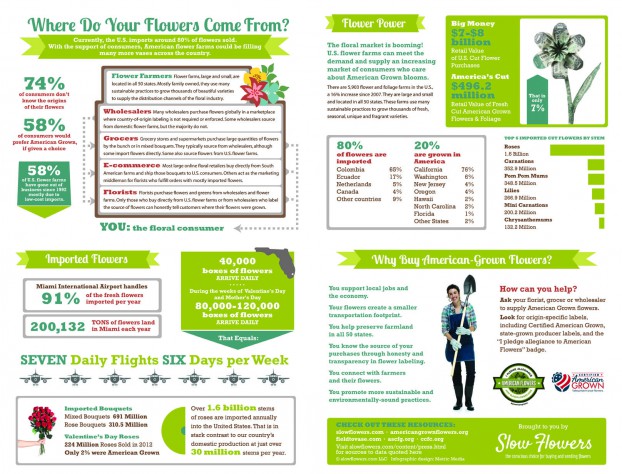
Please feel free to use this graphic to promote the Slow Flowers Movement to your own community of flower farmers, florists and customers.
Out of the blue recently, an editor for the American Alliance of Museums’ annual TrendsWatch publication contacted me for permission to reprint the Slow Flowers‘ “Where do your flowers come from?” infographic in the organization’s 2015 annual report.
I really had no idea how this illustrious association of cultural institutions planned on using the infographic, but of course, I said YES.

TrendsWatch2015 features a report on “Slow Culture.”
The publication just landed in my in-box and I have to say, it’s pretty impressive.
Each year, the TrendsWatch report highlights top trends that the Center for the Future of Museums staff and advisors believe are highly significant to museums and their communities.
The story of “Slow Flowers” appears in an article titled “Slooow: better a tortoise than a hare,” which highlights slower cultural experiences in all consumer categories.
In addition to the Slow Culture section, the TrendsWatch report cited Ethical Consumerism (which has a lot of connections to Slow Flowers, as well), Personalization, Rising Sea Levels, Wearable Technology and Open Data as subjects of importance to the Museum community.
Here’s a PDF of the article: Trendswatch 2015. You can download a PDF of the entire TrendsWatch report here after completing a short registration form.
Posted in American Grown, Blog Posts, Creativity, Flower Farming, General, Slowflowers.com the Directory of American Flowers, Writing | No Comments »
April 3rd, 2015
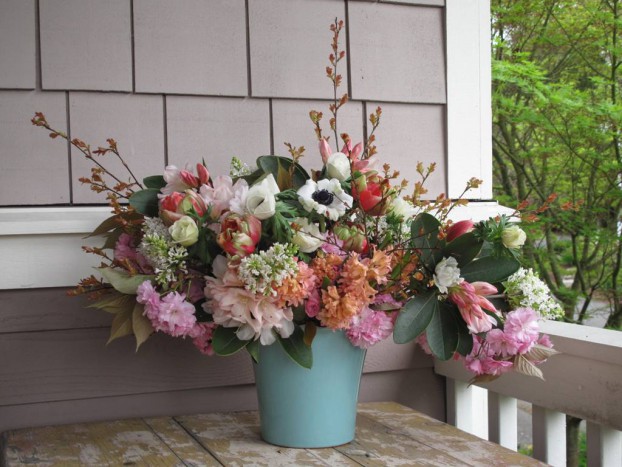
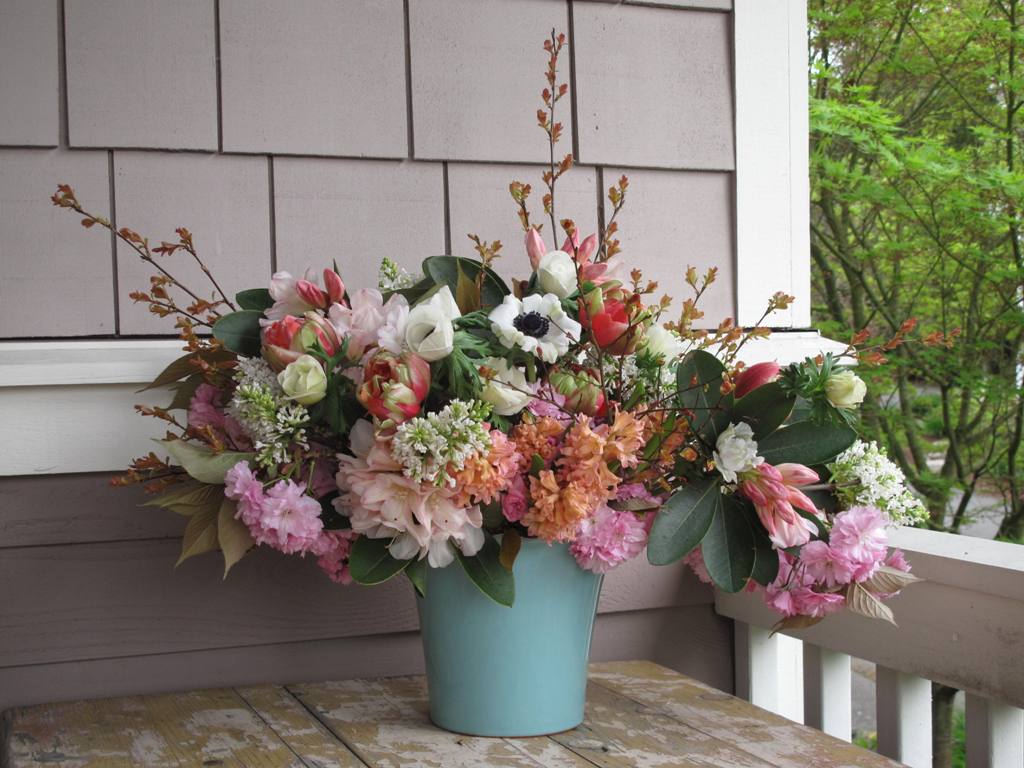
Here is the full view, photographed today on my back porch. So wonderful that the Japanese maple in the background is leafing out, too.
Welcome to Week 13 of the Slow Flowers Challenge!
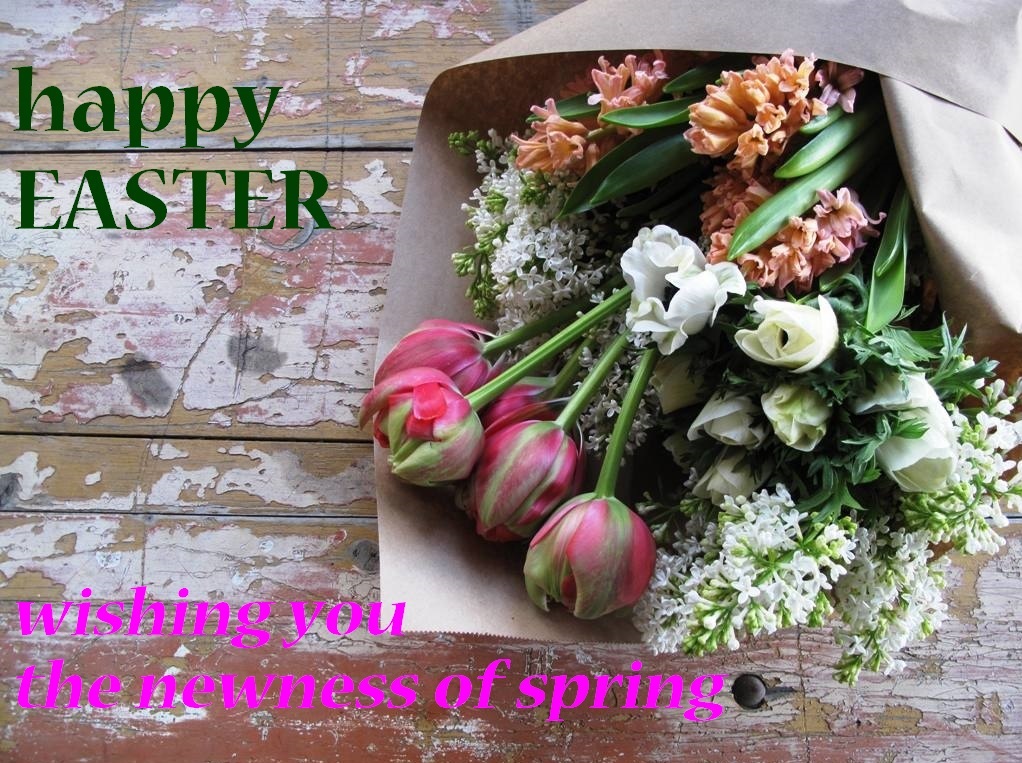
To be perfectly honest, it started with those yummy apricot-hued hyacinth and the very first fragrant lilacs of the season – both from Northwest fields.
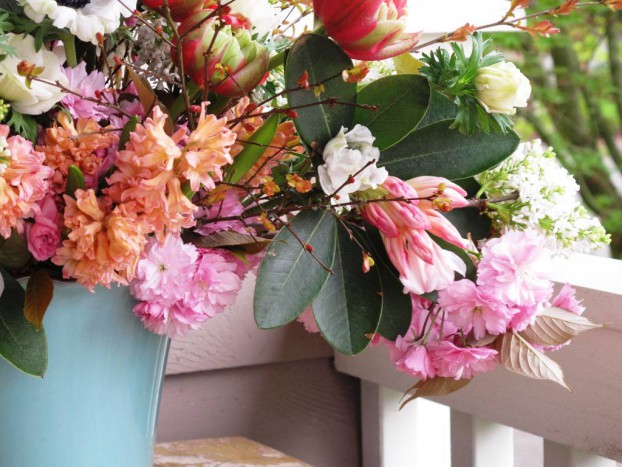
I love the soft, billowy generosity of spring’s early blooms – weed that right now after a winter of stiff conifers.
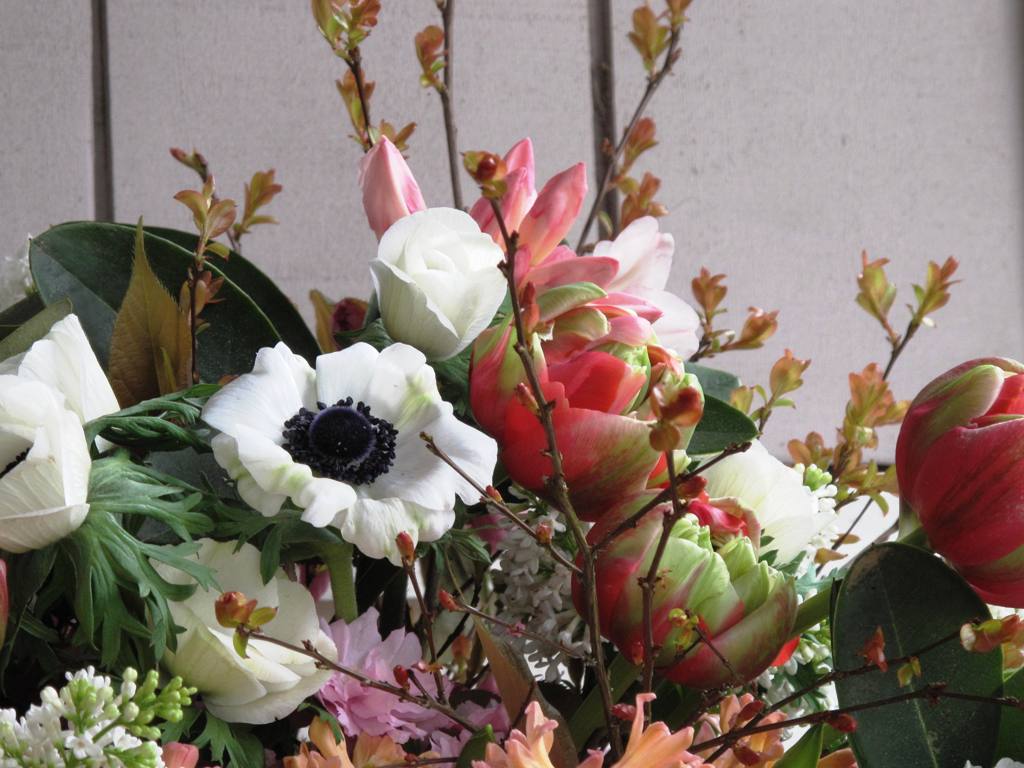
And then I couldn’t take my eyes off of the most luscious of tulips, a two-toned pink and green variety called ‘Renown Unique’, grown by my friends Pam and Kelly Uhlig of Sonshine Farms on Whidbey Island, Washington. (You can find incredible fancy tulips and bulbs grown by them and other local farms at the Seattle Wholesale Growers Market right now).
In addition, I came home with a bunch of the dark-centered white anemones, also grown by Pam and Kelly. All are quite lovely but I wanted to add some goodies from my own garden to enhance this week’s arrangement.
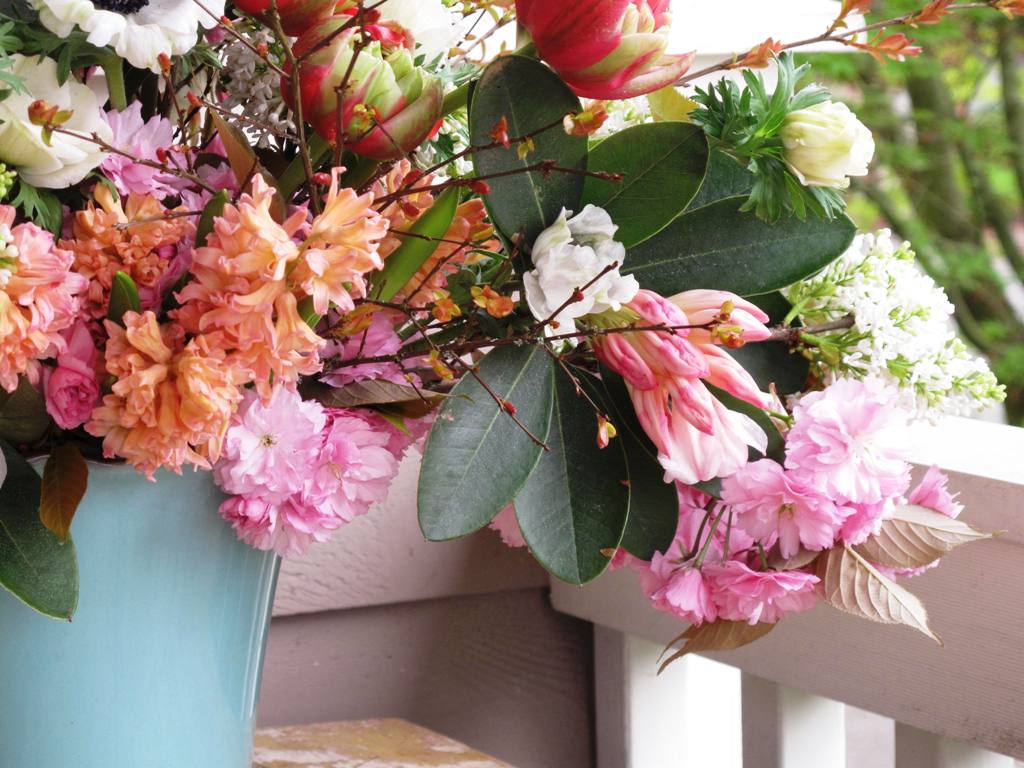
You can see that the cotton-candy-pink flowering cherry branches and the pale blush-apricot rhododendron clusters — and the just leafing out apricot foliage of an old azalea add their seasonal sparkle to the farmers’ flowers. Combining gifts from the garden with gifts from flower fields is a good thing!
My dear friend and San Diego garden TV personality Nan Sterman gave me this lovely pot for a birthday several years ago. I’m using it for my Easter bouquet, but I’m sending her best wishes for a blessed Passover celebration that I’m sure she’s having with her family tonight.Our worlds continue to overlap and connect, especially when we love the garden, plants and nature.
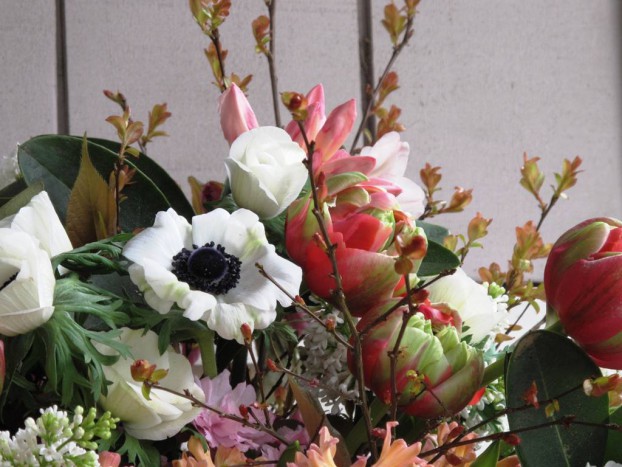
A close-up shows those tulips, anemones and the delicate azalea foliage.
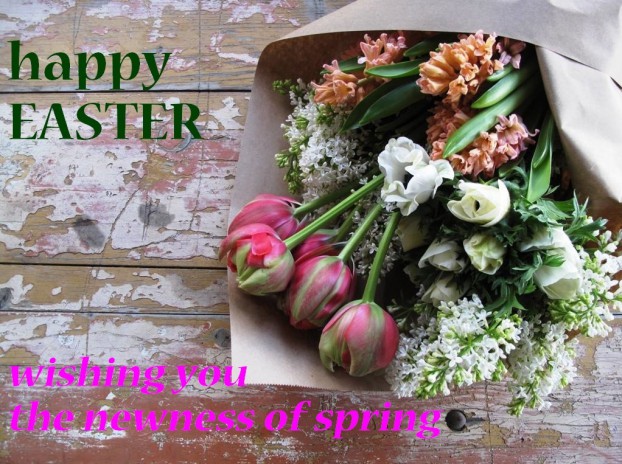
Here is the entire recipe:
From my garden: Flowering cherry branches, rhododendron clusters (cut when most of the flowers are in bud, to encourage a longer vase life) and branches of just-emerging azalea foliage.
From the flower farm:
- Apricot-peach hyacinths, grown by Oregon Flowers in Aurora, OR
- White lilacs, grown by Tosh in Snohomish, WA
- Renown Unique pink-and-green tulips, grown by Sonshine Farm on Whidbey Island, WA
- White anemones with a black center, grown by Sonshine Farm on Whidbey Island, WA
Posted in American Grown, Blog Posts, Creativity, floral design, Flower Farming, Gardening, General, Plants, Slow Flowers Challenge | No Comments »