Debra Prinzing

Get the Email Newsletter!

Archive for the ‘SLOW FLOWERS Podcast’ Category

SLOW FLOWERS Podcast: A Visit with Gigi Meyer of Windflower Farm in Bend, Oregon (Episode 131)

Wednesday, March 5th, 2014
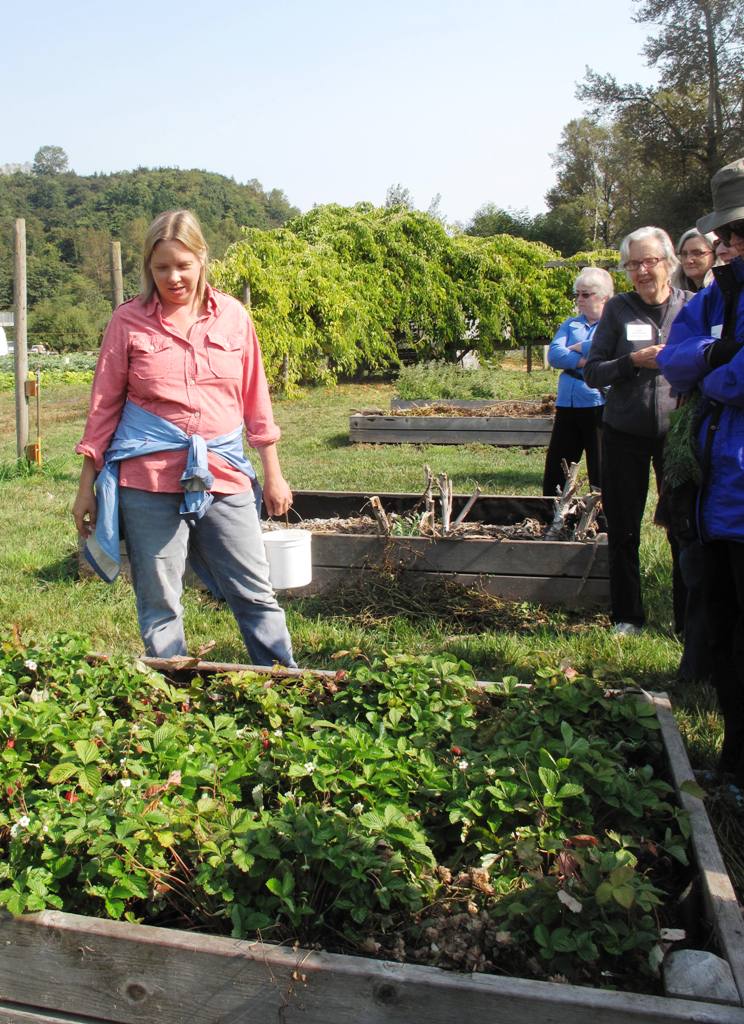
Gigi Meyer, on a November walk through her farm, with a few of her goats, Justyn, Daphne, and Ziggy-Zag.

Gigi Meyer, on a November walk through her farm, with a few of her goats, Justyn, Daphne, and Ziggy-Zag.

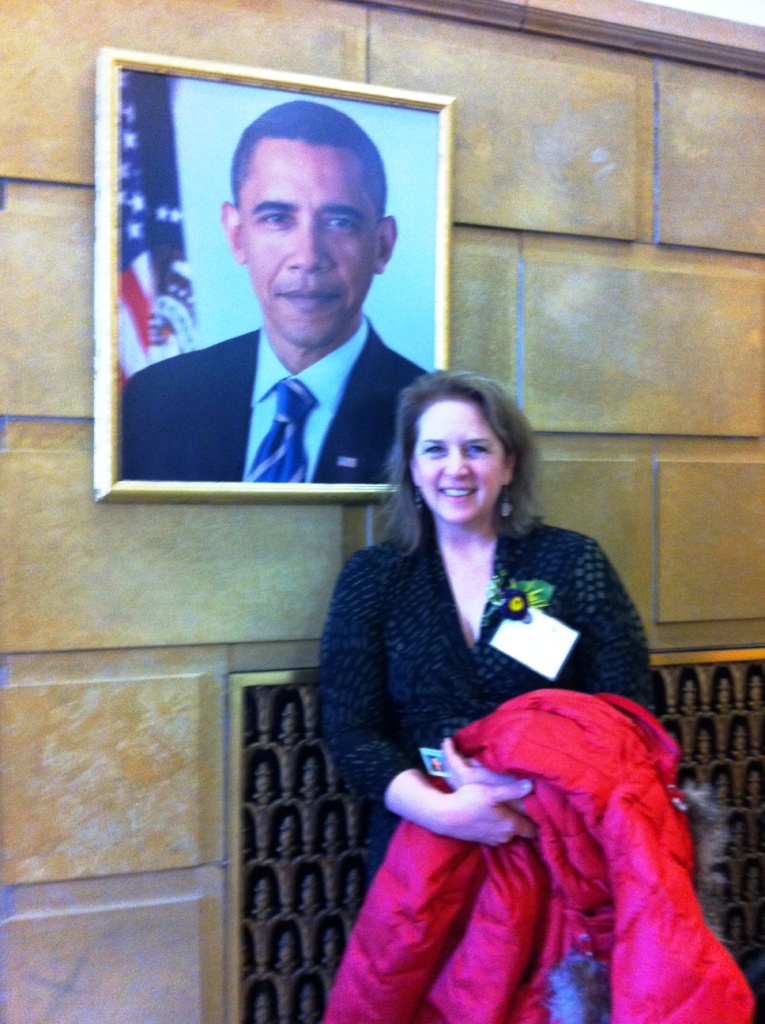
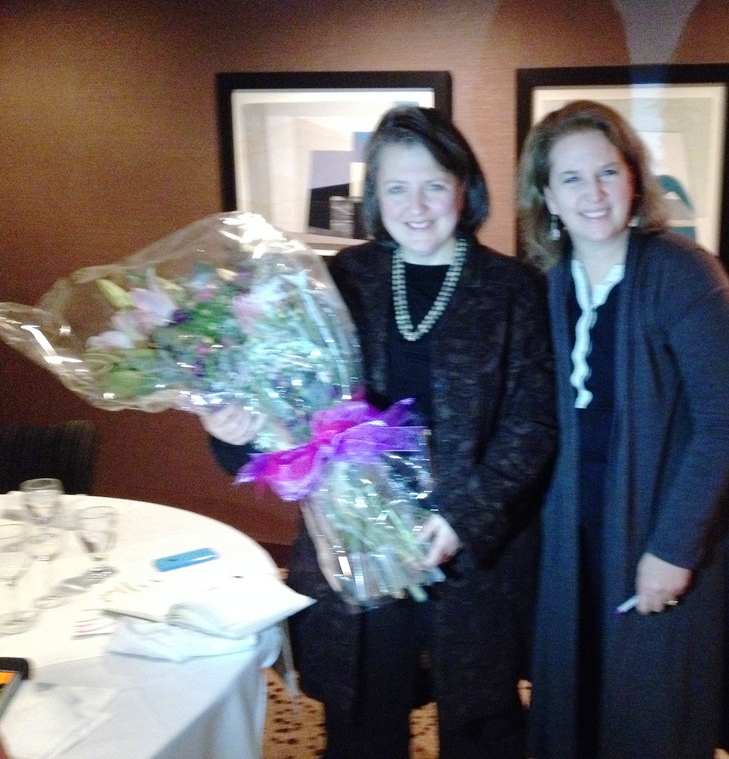
A few weeks ago, my friend Sarah Meyer invited me to have breakfast in our Seattle neighborhood with her visiting cousin Gigi Meyer.

Sarah had told me about Gigi in the past, her closest childhood cousin who owns Windflower Farm, situated on land near Bend, Oregon, is in the central part of the state. 

In April 2012, Sarah sent me an email after she had helped me create the flowers for the kick-off event of a Washington ballot initiative we were supporting. She wrote: 

“Earlier today,  I sent your NYT article to my cousin Gigi (farmer in Bend I mentioned) and she wrote back to say she had just received your book having ordered it from Amazon! 

“I was slightly disappointed to hear that as I had planned to buy it as a birthday present but missed my chance. She is selling cut flowers to Whole Foods and I think is increasing her flower production.”


image_25231My breakfast conversation with them introduced me to Gigi’s story – and I knew I wanted to share it with listeners of the Slow Flowers Podcast. Being a farmer is a choice for Gigi. She was drawn to this practice after a career in writing and fine arts. It is a love of place, of animals, of cultivating food and flowers that connects her with earliest childhood memories of riding horses on property her parents owned in Eastern Oregon.

That profound link is evident in Gigi’s thoughtful narrative of being a farmer and more. According to Gigi, Windflower Farm is dedicated to growing gourmet-quality vegetables, herbs, fruit and flowers. She uses only sustainable practices, no chemical herbicides, pesticides or fertilizers. The farm is nestled amidst ranches and the Badlands, in pastoral Alfalfa, just 15 minutes east of Bend. 

Ready for market - fresh from the fields at Windflower farm.

Ready for market – fresh from the fields at Windflower farm.

In our interview, you will hear Gigi talk about selling her herbs, vegetables, greens and flowers to the chef at Brasada Ranch. Named “Oregon’s Best Destination Resort,” Brasada is a highlight for many who travel to the Bend area. Travel writer and podcaster Peter Greenberg featured Brasada and many tourism features of Central Oregon in a 2011 podcast — including a 5-minute segment with Gigi. Here is the link – and you will hear Gigi at the 1:34 mark. Greenberg describes Windflower Farm as a “boutique farm,” which is pretty cool.  

In addition to her mixed bouquets, which can be found at Bend’s Whole Foods outlet, Gigi grows and sells the following diverse and hugely impressive floral selection to area restaurants, businesses, florists and wedding customers:

Peonies Asiatic Lilies, Astrantia, Ornamental Broom, Crocosmia, Dahlia, Delphinium, Foxglove, Gladiolus, Iris, Lilac, Sunflowers, Acidanthera, Allium, Amaranth, Amsonia, Aster , Astilbe, Berberis, Campanula, Cattail, Daylily, Echinacea, Echinops, Eupatorium, Forsythia, Kniphofia, Larkspur, Domestic Mullein, Phlox, Pink French Pussy Willow, Scabiosa, Sedum w flower, Solidago, Ornamental Millet Achillea (Yarrow), Ageratum, Agrostemma, Anemone, Asclepias, Babies Breath, Calendula, Celosia, Centranthus, Chrysanthemum, Columbine, Amethyst Coral Berry, Coreopsis, Craspedia, Daffodil, Dianthus, Erigeron, Euphorbia, Filipendula, Geum, Gomphrena, Helichrysum, Lady’s Mantle, Marigold, Nigella, Rudbeckia, Sedum foliage, Shasta Daisies, Snapdragon, Statice, Sweet Pea, Zinnia, Oxe-eye Daisies, Dill, Dusty Miller, Lavender, Chamomile, Ruby Silk Grass, Frosted Explosion Grass, Lamb’s Ear and Rye Grass with seed heads. 

Windflower Farm Flowers - feast your eyes!

Windflower Farm Flowers – feast your eyes!


Gigi's vivid summer floral palette.

Gigi’s vivid summer floral palette.


And here are bridal flowers in a softer scheme.

And here are bridal flowers in a softer scheme.

 Right after we met and recorded this interview in Seattle, I learned that Gigi was recognized for her stewardship as a certified Animal Welfare Approved producer. Here is the announcement: 

“The laying hens, dairy goats, and pigs at Windflower Farm are now certified as Animal Welfare Approved. This certification and food label lets consumers know that these animals were raised in accordance with the highest animal welfare standards in the U.S., using sustainable agriculture methods on an independent family farm. 

Like other AWA farmers across the country, Gigi Meyer recognizes the growing consumer interest in how animals are being raised. Raising animals outdoors on pasture or range has known benefits for animals, consumers and the environment. Meyer applied for AWA certification to help distinguish Windflower Farm products from other products in the market. “As I got into livestock, I felt that what separated my operation from others was my relationship with my animals. In my studies I have learned a lot about what my animals need and I can confidently say that they are happy and that I do my best to understand and provide for their needs,” says Meyer.

Windflower Farm spans 20 acres about 15 miles east of Bend, Ore. Meyer started with a few goats to manage pastures, which turned into a small-scale dairy. Meyer added a small herd of hogs to remove invasive grasses, followed by a flock of laying hens. “I just kept adding elements,” says Meyer. “I realized I wanted to grow a microcosm of nature and manage in a way that it would be a self-affirming circle.”

In the future, Meyer hopes to make the farm an educational space. “I want the farm to be a classroom that can set an example for people who visit of the potential for sustainable farming and local food in our community,” she says.

Pastured eggs from Windflower Farm’s AWA-certified laying hens are available direct from the farm and through a CSA program. Pastured pork and goat’s milk are available through a herdshare program. Contact Meyer for more information at gigimeyer@me.com or 541-318-1417.”


Gigi with her summer 2012 crew:  clockwise Cora (who is my main hand and still with me) and Maria, 2012 intern, and Jake, my nephew.

Gigi  (upper left) with her summer 2012 crew and to her right is Cora, her “main hand.” In front, Gigi’s nephew Jake and Maria, the 2012 intern.

It has been my pleasure to share with you today’s podcast conversations.

Because of the support from you and others, listeners have downloaded episodes of the Slow Flowers Podcast more than 7,500 times! I thank you for taking the time to join to my conversations with flower farmers, florists and other notable floral experts.

If you like what you hear, please consider logging onto Itunes and posting a listener review.

Until next week please join me in putting more American grown flowers on the table, one vase at a time. 

 The Slow Flowers Podcast is engineered and edited by Hannah Holtgeerts. Learn more about her work at hhcreates.net.  
SLOW FLOWERS Podcast: News from Texas’s Flower Farmers (Episode 130)

Wednesday, February 26th, 2014

Welcome back to the Slow Flowers Podcast with Debra Prinzing.

To start off this week’s episode, I have a personal announcement to make. Last week, on February 19th, I concluded a 45-day funding campaign to generate financial contributions for my new Slowflowers.com project.

With just 32 hours left of the campaign, we'd already reached $18,000!

With just 32 hours left of the campaign, we’d already reached $18,000!

For listeners unfamiliar with it, Slowflowers.com will be a free online directory to florists, studios, designers and farmers who supply American-grown flowers to the consumer. Thanks to the fantastic crowd-sourcing site Indiegogo, which was the perfect environment to share my passion, more than 220 Slowflowers.com “believers” contributed $18,450 to fund the launch. I owe a special thanks to the California Cut Flower Commission (Premiere Sponsor), the San Franciso Flower Mart (Presenting Sponsor) and Mellano & Co. (Presenting Sponsor), for their major support! 

In the next several weeks, we’ll be finishing up the necessary database and web development, populating the site with details about member florists, designers and farms, and planning the pre-Mother’s Day marketing & promotions launch. Stay tuned for more details!

An interviewer recently asked me: “What do you hope to accomplish with this site?”

My answer? “That every time someone wants to give or send or purchase flowers, they stop and ask: Can I buy American Grown? And the Slowflowers.com site will help them navigate that search.” 

The Arnoskys have always labeled their flowers to promote their Texas origins.

The Arnoskys have always labeled their flowers to promote their Texas origins.

Now, let’s talk about Texas. I have three guests today and you’ll love their larger-than-life personalities.

First, please meet Frank and Pamela Arnosky of Texas Specialty Cut Flowers.

Frank is the new board president of the Association of Specialty Cut Flower Growers, but these two are longtime leaders in the organization. Both Pamela and Frank have served in ASCFG board positions in the past.

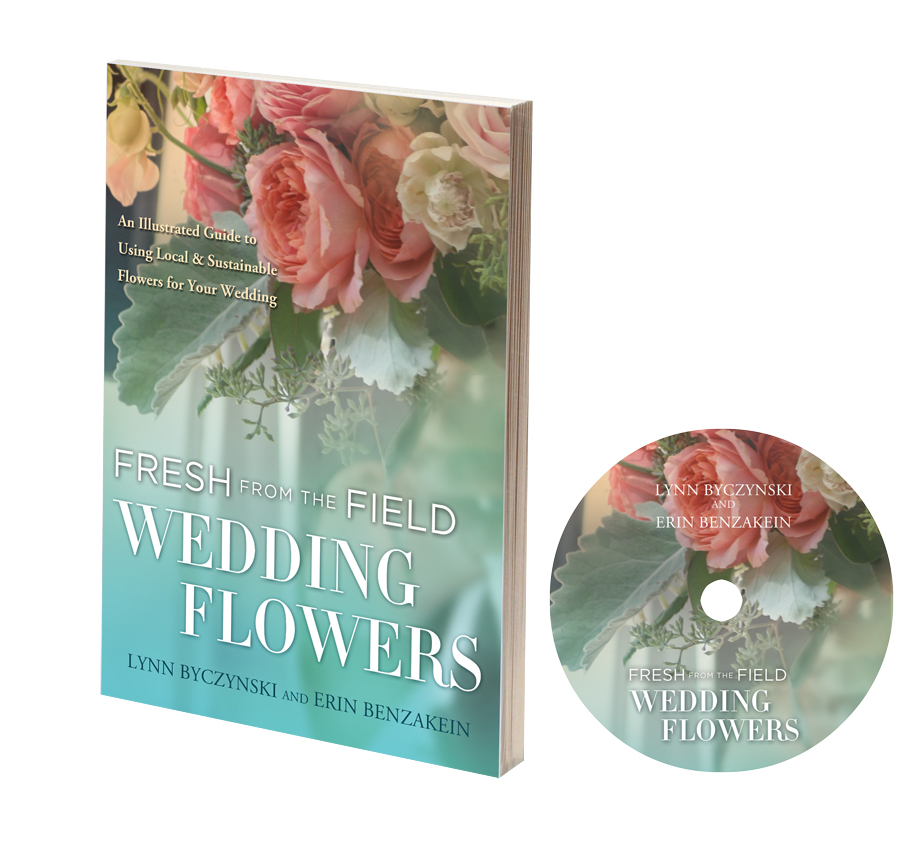
I first learned about them in Lynn Byczynski’s wonderul reference book The Flower Farmer, originally published in 1997 and reissued with new bonus content in 2008.  Lynn profiled the Arnosky family’s beginnings as growers of bedding plants and poinsettias in Blanco, Texas, before they added cut flowers in the early 1990s.

The flowers were intended for a farmers’ market that never materialized, so Pam and Frank filled their truck with blooms; drove it to Austin and started knocking on the doors of flower retailers. “People were falling all over when they saw the stuff,” Frank said in the interview with Lynn. “That took us by surprise; we really hadn’t known what to expect.”

Pamela and Frank Arnosky of Texas Specialty Cut Flowers.

Pamela and Frank Arnosky of Texas Specialty Cut Flowers.

Here we are, nearly 25 years later, and the Arnoskys are still viewed by many in the specialty cut flower world as the model family farm. You will enjoy hearing from them both in our conversation today, which touches on how to manage so many acres with little or no additional labor – and how to plan for the future by diversifying. 

Here is a link to their book, Local Color: Growing Specialty Cut Flowers. It’s a compilation of 10 years of their columns for Growing for Market, a periodical published by Lynn Byczynski. 

Pam and Frank will be featured speakers at the upcoming Cut Flower Growers’ School, hosted by the Association of Specialty Cut Flower Growers in Ft. Worth, Texas, on March 3-4, 2014.

Rita Anders of Cuts of Color, in Weimar, Texas.

Rita Anders of Cuts of Color, in Weimar, Texas.

Rita Anders of Cuts of Color in Weimar, Texas, is another fabulous Texas flower farmer who will be presenting at the upcoming Growers’ School.

In January 2013, I visited Rita and spent a wonderful day at her farm – which is located halfway between Austin and Houston. Later, I wrote a story about that visit, which you can read here on Cuts of Color’s web site.

When I was in Austin, Rita joined me in the studio of Central Texas Gardener, a wonderful, long-running show on KLRU, the Austin PBS station.

Producer Linda Lehmusvirta and host Tom Spencer couldn’t have been more welcoming – and our TV segment on locally grown flowers appeared last summer, after the filming crew visited and shot footage at Cuts of Color’s fields and greenhouses.

Rita is the regional VP for ASCFG and is planning next week’s Growers’ School along with cohorts Cynthia Alexander of The Quarry Flower Farm (Frisco, Texas) and Paula Rice of BeeHaven Farm (Bonners Ferry, Idaho).

After I chatted with Frank and Pam Arnosky, I tracked down Rita for more details about the Growers’ School, just in case I could entice any listeners to attend at the last minute. From our conversation, it sounds like walk-ins and last minute registrants are welcome. So consider participating!

In addition to the Arnoskys and Rita Anders, you can hear past Slow Flowers Podcast interviews with several other speakers, including Cynthia Alexander and Gretel and Steve Adams. Anyone who has yet to appear on this show is slated for a future episode — I promise!

texasimageThe Growers’ School promises to be a fantastic educational experience where flower farmers both new and established will hear from some very gifted folks. Here is the schedule and topics:

Monday, March 3

Marketing Session One

1:00 p.m. 
Selling to Florists
Cynthia Alexander, Quarry Flower Farm, Celina, Texas
Cynthia will explain her process of preparing flowers for her florist route, and how to best develop relationships with, and sell to florists.
Floral demonstration: flowers bunched for florist delivery.

1:30 p.m. 
Selling at Farmers’ Markets
Rita Anders, Cuts of Color, Weimar, Texas
Stand out at your farmers’ market! Increase sales with tips from a longtime grower.
Floral demonstration: farmers’ market wrapped bouquet.

2:00 p.m. 
Selling to Supermarkets
Pamela Arnosky, Texas Specialty Cut Flowers, Blanco, Texas
Learn how to streamline your bouquet-making process while increasing productivity.
Floral demonstration: sleeved bouquets for supermarket sales.

2:30 p.m.
Workshop One
Create your own wrapped or sleeved bouquet for farmers’ market or grocery outlet.   
Experienced grower/designers will provide personal assistance.

Marketing Session Two

3:00 p.m.
Increase Your Bottom Line with Top Wedding Sales
Rita Anders, Cuts of Color, Weimar, Texas
Rita will share her methods of contacting and engaging brides.
Floral demonstration: hand-tied wedding bouquet.

3:30 p.m. 
Tapping into Wedding Sales
Gretel Adams, Sunny Meadows Flower Farm, Columbus, Ohio
Sunny Meadows’ wedding business has grown exponentially in the last few years. 
How does this fit into the rest of their farm business?
Floral demonstration: hand-tied wedding bouquet.

4:00 p.m. 
Workshop Two
Reassemble your original bouquet into a hand-tied bridal bouquet. 
Experienced grower/designers will provide personal assistance.

4:30 p.m. 
Closing
      
6:30 p.m. 
Join the speakers and other attendees for dinner at Joe T. Garcia’s Mexican Restaurant, a Fort Worth tradition since 1935. 
Not included in registration.

Tuesday, March 4 

8:00 a.m. 

Office to Field Business Planning and Record Keeping    
Paula Rice, Beehaven Flower Farm, Bonners Ferry, Idaho
Plan for an organized and smooth growing year with useful record-keeping strategies. Learn to set up an efficient flower grower’s office using QuickBooks to create charts of accounts. Use Paula’s groundworks to plan seeding and field planting schedules, while keeping track of basic cost accounting.

9:00 a.m. 
What to Grow and Why       
Steve and Gretel Adams, Sunny Meadows Flower Farm, Columbus, Ohio
How do you choose which perennials to grow? Which annual varieties are the best producers? Steve and Gretel grow a wide variety of both, as well as woodies and bulbs, and will explain their selection process.

10:15 a.m. 
Break

10:30 a.m.
Seeds or Plugs? Both?       
Frank Arnosky, Texas Specialty Cut Flowers, Blanco
Frank will cover all factors of growing cut flowers, including variety selection, seed types, germination  for plugs, and environmental controls. He’ll discuss tricks of the trade, as well as what to grow yourself and what to buy in as plugs.

11:30 a.m. 
Lunch (included with registration)

12:30 a.m. 
Making the Most of Every Square Foot on a Small Farm  
Lisa Ziegler, Gardener’s Workshop Farm, Newport News, Virginia
Make the most of the high-demand season by providing your buyers a steady stream of flowers. Even better, learn how to get it all done by 5:00 by using the best practices and equipment.

1:30 p.m. 
Harvest and Postharvest     
Pamela Arnosky
Pamela will cover all the steps of handling cut flowers, beginning in the field and going through to the final customer. Topics will include harvest practices, preservatives and hydrators, coolers and storage, packing, shipping and extending vase life for the customer. She’ll show you the tools, sleeves, and equipment she uses, and provide sources for materials.

2:30 p.m. 
Creating and Finding Markets for Your Flowers
Steve and Gretel Adams, Sunny Meadows Flower Farm, Columbus, Ohio 
Are you crazy to offer wedding flowers? What’s the best way to approach local florists? Are flower subscriptions profitable? Learn from these dynamic growers what to do – and what not to do.

3:00 p.m. 
Breaking into Business: Getting Florists and Supermarkets on Board  
Lisa Ziegler, Gardener’s Workshop Farm, Newport News, Virginia
You may not be too small! Lisa gave up her farmers’ markets to turn her attention to florists and supermarkets. Learn how to build your business to get those dreamy orders and keep happy customers.

3:30 p.m. 
Break
 
3:45 p.m. 
Season Extension       
Mimo Davis, Urban Buds, St. Louis, Missouri   
Don’t limit your production to a “typical” growing season! Hoophouses, tunnels, and succession planting can stretch your cut flower offerings on both ends of the season.

4:30 p.m. 
Closing

It has been my pleasure to share with you today’s podcast conversations. 

Because of the support from you and others, listeners have downloaded episodes of the Slow Flowers Podcast more than 7,000 times! I thank you for taking the time to join to my conversations with flower farmers, florists and other notable floral experts.

If you like what you hear, please consider logging onto Itunes and posting a listener review.

Until next week please join me in putting more American grown flowers on the table, one vase at a time. 

The Slow Flowers Podcast is engineered and edited by Hannah Holtgeerts. Learn more about her work at hhcreates.net.  
 

SLOW FLOWERS Podcast: Reclaiming our Floral Heritage . . . Lessons from #Britishflowers (Episode 129)

Tuesday, February 18th, 2014
How do you like that? English Grown SLOW FLOWERS, by Cook & Carlsson

How do you like that? English Grown SLOW FLOWERS, by Cook & Carlsson

Today’s podcast is actually NOT about American flowers, but about our gifted and inspiring kindred spirits across the Atlantic. They are a few of the many flower farmers and designers who are part of their own local flower movement in Britain.

During the past several months, I often noticed the hashtag #britishflowers pop upon Twitter. It was fun to read comments and re-tweets and click through to view beautiful photos of British designers, farmers, gardens and flowers.

cook & carlsson logoOne of the Twitter names that I started interacting with was Cook & Carlsson, and I soon learned that Lizzie Cook and Moa Carlsson are the two women behind that venture.

With the alluring tagline: “English Grown Flowers,” Cook & Carlsson is a London-based design studio combining the talents of Lizzie Cook, a photographer and artist, and Moa Carlsson, an architect who has worked most recently worked in landscape architecture.

Lizzie Cook (left) and Moa Carlsson (right), partners in the design studio Cook & Carlsson

They describe Cook & Carlsson as an “independent flower monger,” and you’ll hear in our conversation the charming explanation for their use of that term. Lizzie, who has the British accent, and Moa, whose accent reveals her Swedish heritage, have joined their mutual love of nature with a desire to create beauty using flowers they grow or forage, as well as flowers they source from other UK flower farmers. 

For an art commission, Cook & Carlsson supplied a large arrangement made entirely of scented herbs, wildflowers and flower – all local, seasonal and sustainable, of course!

For an art commission, Cook & Carlsson supplied a large arrangement made entirely of scented herbs, wildflowers and flower – all local, seasonal and sustainable, of course!

Here’s more about Moa Carlsson, in her own words:

I grew up in the most northern part of Sweden, amongst aconitum, arctic bramble and Norwegian spruce, and in a family with a long tradition of growing food and flowers. My sister and both my mother and my grandparents kept large grounds living in tune with the seasons, which in their part of Sweden is rather harsh. (for example, you can’t grow apples there).

I studied and worked as an architect in Sweden, Austria, England and America. Right now I live in London, but I am a PhD student at MIT in Boston, where I am studying computational technologies to design and simulate the changing of landscapes.

In my free time I dig in my friends gardens and in the urban plots where we do guerilla gardening; I do hiking and mountaineering; I am a painter and I have a hunting license (mostly forest/mountain birds and hare).  

A seasonally-inspired autumn bouquet - natures gifts in a vase.

A seasonally-inspired autumn bouquet – nature’s gifts in a vase.

Here’s more about Lizzie Cook, in her own words:

I grew up in the Caribbean amongst the audacious vibrancy of hibiscus, frangipanis and flowers from the Flamboyant tree, all of which fired my senses as a child.  The fragrance and colours of the frangipani flower at the right time of day is pretty intoxicating!  When I went to Falmouth College of Arts in Cornwall to study photography, I fell in love with all of the tropical gardens, which reminded me of the flora and fauna of warmer climes.  I had a very free childhood, outside, rarely wearing shoes and in nature, noticing the changing seasons, being free to take it all in.  I love being near the water and I currently live on a narrowboat on a river in East London, still trying to hold onto that freedom and proximity to nature, especially in the City of London.  I like seeking out the quieter natural areas, but enjoy the diversity and pace of London.  It is a privileged thing to cycle home from the hectic city back to a peaceful boat on a river surrounded by nature reserves, and I feel very lucky! 

Cook & Carlsson's stall at the Chatsworth Road Market in East London.

Cook & Carlsson’s stall at the Chatsworth Road Market in East London.

Cook & Carlsson on their philosophy: 

We live really close to one another, just on the outskirts of London, which means there are lots of small natural refuges where you can feel like you are still connected with the wider countryside.  It was in these places where our imaginations were fired and it’s really where we had the idea of using flowers and foliages that we saw around us, but which had been forgotten about or blocked out by the increasing urbanization.  We began looking and learning about the species that were around us and rediscovering their simple beauty; we began mixing them with other things, falling in love with the results. Doing so and by growing our own flowers, we try to bring back varieties that London shoppers rarely get a chance to buy.

For us, it’s about the lifestyle that comes along with the business. We are very lucky to visit lots of local gardens, growing sites, nurseries, meeting local growers and hanging out with people who are on the same page as far as our ethos is concerned. Then we collect all of our material and put it together, which we relish as it appeals to our strong creative sides, the combination of which seems to be magic! Many laughs and good biscuits make good arrangements, we have found. 


Flowers from the Farm, the UK's nationwide network of cut flower growers

Flowers from the Farm, the UK’s nationwide network of cut flower growers

Through our exchanges, I learned that Cook & Carlsson is the first London-based member of the “Flowers from the Farm” organization, which was founded by Gillian Hodgson. Lizzie and Moa were sweet enough to connect Gill and me.

Part two of this interview is with a true kindred spirit. Gill is the Mother of the British Flowers movement. She grows flowers at her own farm, Fieldhouse Flowers in Yorkshore. Here is how Gill describes her flower endeavor: 

Field House Farm in Yorkshire, where Gillian Hodgson grows her beautiful British flowers.

Field House Farm in Yorkshire, where Gillian Hodgson grows her beautiful British flowers.

“Fieldhouse lies in the Vale of York at the foot of the Yorkshire Wolds and we have 200 acres of light sandy land.  We farm wheat, barley and carrots and I have my flowers on just one acre. My father, grandfather and great-grandfather were here before us – and my great-great-grandfather farmed at the next-door farm.  John, my husband, and I have been here 25 years now.  The house was built around 1780; it’s draughty and takes a lot of upkeep – but it’s a great family house and we love it.” 

Gillian Hodgson of Fieldhouse Flowers and Flowers from the Farm, the #britishflowers organization.

Gillian Hodgson of Fieldhouse Flowers and Flowers from the Farm, the #britishflowers organization.

As you will hear in our interview, Gill has been putting much of her energy into promoting British flowers through Flowers from the Farm. She and others came together in 2011 to launch this network of cut flower growers. Read more about the group’s origins here. 

“Our aim is to create a brand for British flowers as a World class product,” reads the organization’s web site. And the tag-line: “Putting British flowers back into every vase in the country,” sounds comfortably familiar with the way I conclude each of my podcasts.

I invite you to join all three of them on a Twitter chat any Monday. The #Britishflowers chat takes place at Noon Pacific/3 p.m. Eastern every Monday (and that means 8 p.m. GMT/Greenwich Mean Time). Please look for these inspiring leaders of the #britishgrown flower movement on Twitter and more. 

To follow up on Gill’s story about the “fake” British Valentine’s bouquet and how the UK flower farmers used social media, especially Twitter, to highlight the inaccuracies, follow this link to Flowers from the Farm’s media report. 

Farm gate sales of British flowers.

Farm gate sales of British flowers. 


A hands-on Flowers From the Farm workshop for new and established UK flower farmers, which took place in Harrogate.

A hands-on Flowers From the Farm workshop for new and established UK flower farmers, which took place in Harrogate. 


At the height of summer, Gill Hodgson's flower farm explodes with a beautiful array of blooms.

At the height of summer, Gill Hodgson’s flower farm explodes with a beautiful array of blooms. 

So many connections to make as together we promote our domestic cut flower farming industry and the floral designers who care about the origins of their design work.

Special thanks to Lizzie and Moa for permission to use the photographs they provided; and to Gill for permission to photos of her farm and the Flowers from the Farm participants.

My friend Kasey Cronquist started the hash-tag #originmatters. In the UK, Gill Hodgson calls the same idea #knownprovenance. Similar in their intent, both phrases highlight what is going on in both the U.S. and the U.K. Consumers want to know the sources of their flowers. And flower farmers are fully engaged in providing that information!

It has been my pleasure to share with you today’s podcast conversations. Apologies for the uneven audio quality in some places, which was subject to the idiosyncracies of doing interviews via Skype. In the second interview, my voice was quite garbled, while Gillian Hodgson’s came through very clear. So we had to re-record many of my questions and patch together the interview. I’m sure you’ll really enjoy these interviews, despite the minor tech problems. 

Because of the support from you and others, listeners have downloaded episodes of the Slow Flowers Podcast more than 6,500 times! I thank you for taking the time to join to my conversations with flower farmers, florists and other notable floral experts.

If you like what you hear, please consider logging onto Itunes and posting a listener review.

Until next week please join me in putting more American grown flowers on the table, one vase at a time. 

The Slow Flowers Podcast is engineered and edited by Hannah Holtgeerts. Learn more about her work at hhcreates.net.  


SLOW FLOWERS Podcast: Make my Valentine’s Flowers American-Grown, Please! Thanks, Peterkort – an Oregon Rose Farm (Episode 128)

Wednesday, February 12th, 2014
A rainbow of rose colors grown in Oregon by Peterkort Roses. Love this palette!

A rainbow of rose colors grown in Oregon by Peterkort Roses. Love this palette!   


Love this graphic messaging on the side of Peterkort's delivery truck.

Love this graphic messaging on the side of Peterkort’s delivery truck.

Hello again and thank you for listening to the newest episode of the Slow Flowers Podcast with Debra Prinzing

This is part 2 of my back-to-back episodes on American grown roses, in honor of Valentine’s Day, taking place later this week. In our previous episode, I introduced you to Danielle Hahn of Rose Story Farm, based in Carpinteria, California.

Today, I hope you’ll enjoy my conversation with Sandra Peterkort Laubenthal of Peterkort Roses.

Most U.S.-grown roses hail from California, which accounts for 75 percent of the nation’s overall floral production. Yet in Oregon, Peterkort Roses has raised hybrid teas for the floral trade since the 1930s. The Peterkorts, a third-generation Oregon family, currently produces 2 million roses annually, using many sustainable growing practices.

“We have this certain niche, and we really want to support the local floral industry,” says Sandra, granddaughter of Joseph and Bertha Peterkort, who came to Oregon from Germany and started flower farming in 1923, raising sweet peas, gerberas and pansies.

This photo is from a visit I made to Peterkort Roses in May 2012 when Portland TV personality Anne Jaeger produced a segment about sustainable and local flowers for The Oregonian. Sandra Laubenthal and her brother Norman Peterkort  pose at right: I'm on the left and Anne is second from left.

This photo is from a visit I made to Peterkort Roses in May 2012 when Portland TV personality Anne Jaeger produced a segment about sustainable and local flowers for The Oregonian. Sandra Laubenthal and her brother Norman Peterkort pose at right: I’m on the left and Anne is second from left.

Historically, the state had been home to several commercial cut rose growers, but during the past two decades those operations either shifted to other crops or folded altogether. “We are an anachronism, but it seems like the ‘City of Roses’ should have its own local rose grower,” Sandra points out. 

Here’s the video segment produced by Anne Jaeger for The Oregonian/Oregon Live: “Sustainable bouquets — buying local extends to flowers, too!”

Stunning pink rose blooms - perfect for your sweetheart.

Stunning pink rose blooms – perfect for your sweetheart.

Peterkort’s elegant blooms look vastly different from those softball-sized imported ones that are offered by supermarkets, wire services and conventional flower shops every February 14th.

Instead, Peterkort’s 60-plus rose varieties are closer to what you might find gracing a mixed perennial border in the garden. Specialties include the hybrid tea rose, with upright, spiraled petals; a German-bred hybrid tea that features multi-petal characteristics of an old garden rose; and dainty spray roses with many small blooms on a single stem. Today, Peterkort’s 16 hoop houses produce thousands of rose stems, as well as gorgeous Oriental and Asiatic lilies, maiden fern, orchids and new crops like ranunculus and anemone.

More Peterkort pretties!

More Peterkort pretties!

Designers count on Peterkort as an important local source for bridal bouquets, boutonnieres, flower girl wreaths and tabletop arrangements. The versatile color palette begins with pure white roses and ends with ones covered in dark, velvety black-red petals. Unlike unscented imported roses, these have a light, pleasing fragrance. Because Peterkort harvests its flowers one day and sells them the next, their roses are super fresh and, as a result, are long-lasting in the vase.

Fresh roses on the grading table at Peterkort's greenhouses.

Fresh roses on the grading table at Peterkort’s greenhouses.

“I’ve been ordering roses from Peterkort for years,” says designer Melissa Feveyear, owner of Seattle-based Terra Bella Floral Design, who specializes in local and organic flowers. With varieties like ‘Piano Freiland’, a red, peony-shaped rose, and spray roses that last several weeks in an arrangement, Peterkort’s blooms make up in quality what they don’t have in size, she says.

“Because the stems are thinner than (those of) imported roses, they’re very easy to use in hand-tied bouquets. You can group a bunch together for really stunning impact without making the stem feel too bulky for a bride to hold.”

A detail from a Valentine's Day bouquet featuring Peterkort Roses.

A detail from a Valentine’s Day bouquet featuring Peterkort Roses.

Indeed Peterkort is the last Oregon rose grower, but in fact, customers around the country have begun to discover these boutique blooms. A message on the company’s web site helps to explain their popularity: “What can we say about a bunch of people who are still dedicated to growing cut flower roses in the U.S.? . . . We continue because we are obsessed.” 

Peterkort’s sustainable practices produce greener blooms:

  • During the winter months, Peterkort increases the amount of artificial greenhouse light, thereby producing more roses in less space for the same amount of energy. Energy curtains provide additional insulation as outside temperatures drop. The panels are made of Mylar and are suspended from cables across the greenhouse ceiling, containing heat within when closed.
  • Peterkort uses an Integrated Pest Management (IPM) system of biological controls to curb aphids, spider mites and other predator pests.
  • Peterkort selects disease-resistant rose varieties and suppresses the spread of fungal diseases by maintaining ideal temperature, humidity and air circulation levels inside the greenhouses and keeping the ground clear of dead leaves and debris.
  • All packaging is recycled and roses are wrapped for market in newspaper purchased from a local charity. 

Here are some of my arrangements from Slow Flowers, featuring roses and lilies grown by Peterkort Roses: 

Peterkort lilies with winter greenery. The variety is Lilium 'Rio Negro', a hybrid Oriental lily.

Peterkort lilies with winter greenery. The variety is Lilium ‘Rio Negro’, a hybrid Oriental lily.


Peterkort's lovely red garden rose 'Piano Freidland', makes this autumn arrangement sparkle!

Peterkort’s lovely red garden rose ‘Piano Freidland’, makes this autumn arrangement sparkle!


"Supergreen' is a hybrid tea rose grown by Peterkort - a sublime pale green rose.

“Supergreen’ is a hybrid tea rose grown by Peterkort – a sublime pale green rose.


A springtime bouquet featuring 'Supergreen' with a  pastel combination.

A springtime bouquet featuring ‘Supergreen’ with a pastel combination. 

For many sweethearts, Valentine’s Day is filled with expectations and anticipation. Yet for followers of the Slow Flowers movement, the romantic holiday is not complete unless the flowers we give and receive come from local farmers who use sustainable practices. Peterkort is one such source. Please ask your local florist to order these domestic roses rather than the steroidal giants that must be shipped from afar, a continent or two from here.

In fact, here is my list of American rose farms. If your local florist says, “I can’t find American-grown roses,” then give him/her my recommendations and ask them to do their homework. You have to care enough to do the right thing.

It has been my pleasure to share with you today’s podcast conversation with Sandra Laubenthal. All photos are (c) Debra Prinzing.

Because of the support from you and others, listeners have downloaded episodes of the Slow Flowers Podcast more than 6,500 times! I thank you for taking the time to join to my conversations with flower farmers, florists and other notable floral experts.

If you like what you hear, please consider logging onto Itunes and posting a listener review.

Until next week please join me in putting more American grown flowers on the table, one vase at a time. 

 The Slow Flowers Podcast is engineered and edited by Hannah Holtgeerts. Learn more about her work at hhcreates.net.  
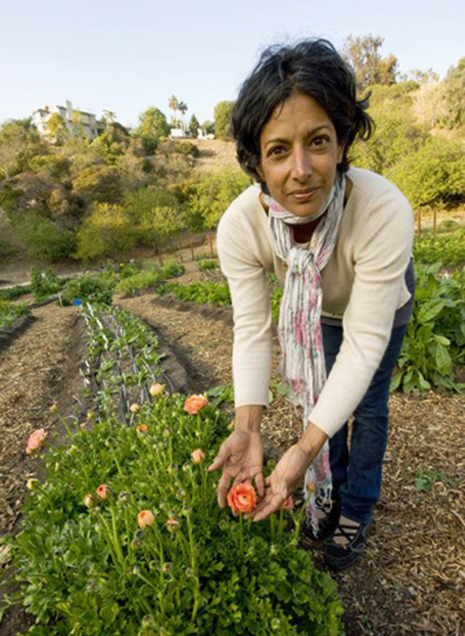
SLOW FLOWERS Podcast: Rose Story Farm’s Danielle Hahn, a World-Class Rosarian and Cut Flower Farmer (Episode 127)

Wednesday, February 5th, 2014

Hello again and thank you for listening to the newest episode of the Slow Flowers Podcast with Debra Prinzing

Breathtakingly beautiful roses from Rose Story Farm. American Grown and more beautiful than anything imported.

Breathtakingly beautiful roses from Rose Story Farm. American Grown and more fragrant and lovely than anything imported.

It’s February and that means Valentine’s Day is just around the corner. So I am devoting the next two weeks to talking about American-grown roses. Most people do not realize that of the 233 million rose stems sold during the Valentine’s season, only 3 to 6 percent are domestic. There is something truly wrong with this picture. American roses are being grown in Oregon and California! Next week I will introduce you to Peterkort Roses, located outside Portland . . . a fabulous source for domestic Valentine’s Day roses.

Great Rosarian of the World, and American cut rose grower, Danielle Hahn.

Great Rosarian of the World, and American cut rose grower, Danielle Hahn.

Today, though, we are celebrating Danielle Hahn, owner of Rose Story Farm in Carpinteria, California. Located just south of Santa Barbara, where truly magical growing conditions for all types of flowers seem to exist, Rose Story Farm is a family endeavor specializing in old English, heirloom and garden roses for the specialty cut flower trade.

These roses are field-grown and you’ll notice that many of the varieties listed on the farm’s web site are types of roses found in the home garden. Because of this, they do not bloom all that prolifically in February. That’s okay with Dani and her crew. Their core business serves wedding parties that take place between May and October. 

Situated on a former avocado and lemon farm, this visually enticing venue offers many useful lessons in the viability of old-fashioned farming practices in today’s modern agri-business world (the kind of practices that were natural to our great-grandparents, for example.). Yes, this is an organic flower farm where hundreds of varieties of old garden and English roses thrive. It’s also a beautiful agritourism destination that attracts rose lovers from around the world as it educates and inspires everyone who visits to grow and enjoy roses in their own environment.

The setting in this little valley near the Pacific Ocean is quite benign - and so perfect for roses.

The setting in this little valley near the Pacific Ocean is quite benign – and so perfect for roses.

There are no fussy hybrid teas here, although there are varieties bred with ancient parentage for cherished traits like their long-lasting perfume. You will find row upon beautiful row of floribundas and climbers, chosen for bloom color, petal arrangement, and most of all — FRAGRANCE (scents like anise, clove, spice, honey, baby powder, a juicy peach, citrus…fill one’s nostrils).

The rose shrubs are planted on gently sloping hills, arranged like a technicolor vineyard. Organic mulch from a nearby mushroom farm cushions and nourishes the soil over their roots.

Tens of thousands of luscious roses are lovingly cared for by a small crew of farmers who know exactly when to harvest them. Can you imagine an east coast bride who simply MUST have a romantic, voluptuous rose bouquet of say ‘Fair Bianca’? It’s possible for her floral designer to order armloads of this vintage rose from Rose Story Farm.

Stunning. Nothing more to say. Drink it in and imagine the awesome fragrance!

Stunning. Nothing more to say. Drink it in and imagine the awesome fragrance!  Rosa ‘Singin’ in the Rain’

Say her wedding is on a Saturday. On Thursday, the roses are picked, hydrated and conditioned, de-thorned and carefully gathered into bundles of 10 stems. The cut ends are packed in wet moss to keep the roses hydrated; the flower heads are gently nestled in tissue paper; each bunch is packed in an ice-filled box and shipped overnight (Fed-Ex; next morning delivery) to wedding and event florists coast to coast. Around the country, on Friday mornings, the boxes of these Carpinteria-grown roses show up at floral studios and flower shops, serving as an enduring gift of romance, nostalgia and sensory delight.

This is the famed 'Julia Child' rose, which Dani's family friend Julia Child selected from plant trials at Rose Story Farm.

This is the famed ‘Julia Child’ rose, which Dani’s family friend Julia Child selected from plant trials at Rose Story Farm.

Last weekend, on February 1st, Dani was honored with the coveted “Great Rosarians of the World” award in a ceremony at the Huntington Botanical Garden in San Marino, near Pasadena.

This award recognizes major figures in the world of roses and honors their work in creating and promoting the flower. In the past 11 years, the Great Rosarians program has become a famous event in the world of rose growing, breeding, education and beyond. Dani is in excellent company, with past recipients including David Austin himself, Stephen Scanniello, Wilhelm Kordes III, Roger Phillips and Martyn Rix, and many others. The GROW award will also bring Dani to New York City in June, where she will be hosted by the Manhattan Rose Society for a series of events and lectures. 

Click here to learn more about the American Garden Rose Selections, the organization of trial gardens and experts who evaluate new plant introductions for their superior qualities. 

httpv://www.youtube.com/watch?v=0npPBezQOBg

Here is Dani’s full bio as it appeared in the Great Rosarians of the World’s press material:

The old horse stables at Rose Story Farm are now the headquarters for this thriving specialty cut flower business.

The old horse stables at Rose Story Farm are now the headquarters for this thriving specialty cut flower business.

Danielle Hahn is the owner of Rose Story Farms in Carpinteria, California, a boutique rose farm for cut roses. Because of her skills and dedication to the rose, she has been able to develop a business model that combines growing roses and education. 

Danielle has maintained a hands-on approach to satisfy her market and has given this segment of the rose industry a successful working model, which encompasses the small boutique rose nursery and small organic farmer, for others to follow.  Her farm is a prime model for the future of small family farms to specialize into niche areas and succeed.  She has expanded her business to include the valuable component of educational tours which help inform and inspire her audience with the knowledge to grow healthy roses successfully. 

Growing from a lifelong love of flowers and gardening, Rose Story Farm has become the focal point of a wonderful mixture of business and life.  From the first day the mission was to produce beautiful, fragrant, romantic garden roses in exquisite shapes and colors. Now more than 120 varieties are scattered over the 15-acre farm. 

A gathering of blooms during one of the personalized rose farm tours.

A gathering of blooms during one of the personalized rose farm tours.

Tours are led by Danielle twice weekly, and a variety of seminars focused on garden design, rose cultivation and flower arranging are given throughout the year.  A major theme of the educational effort is to demystify the process of growing and caring for roses.  “Roses are magical and forgiving–they repay any effort on their behalf ten-fold,” says Dani. “We named the farm ‘Rose Story Farm’ because the roses are central to some of our most enchanting and memorable experiences. We encourage clients, visitors, and friends to exchange their rose stories with us, and in this way to share what we find romantic, passionate, joyful and sustaining.”  

Born in Santa Barbara, California, Dani attended local schools until she entered Stanford University.  She graduated three years later with honors with a BA in psychology and a minor in Italian.  Having played on the Stanford Tennis Team for three years, and being a ranked national junior tennis player, her first job out of college was managing an exclusive tennis club in Manhattan.  Returning to Santa Barbara in 1978, she opened a series of retail stores over the next 10 years in Southern California.  At the same time she was the founder and managing partner of an innovative gift business that designed, manufactured, packaged and ultimately delivered gifts for entertainment corporations.  With the birth of Geoffrey, her second son, in 1993, she backed away from the majority of her business responsibilities to focus on her family.       

Here's a glimpse of the larger setting at Rose Story Farm. I took this photo last July when attending an industry luncheon in the garden.

Here’s a glimpse of the larger setting at Rose Story Farm. I took this photo last July when attending an industry luncheon in the garden.

Her extensive experiences proved invaluable in 1998 when Danielle and her husband, Bill decided to expand the family avocado farm into a boutique rose business with the addition of 1,000 bushes, all of them garden roses. 

The farm now has over 25,000 bushes and since that time Danielle has overseen the steady growth and development to the point where thousands of roses are cut each day and shipped throughout the United States. 

Currently she manages all employees and makes the day-to-day decisions for the business, markets the products, selects the roses for production, designs rose gardens for clients worldwide, designs and maintains the farm’s gardens used for weddings and special events, oversees the rose boutique and leads the way on product development–a rose based perfume and body care line are currently in the works. 

The display in front of the rose boutique. . . what can I say? It's so enticing!

The display in front of the rose boutique. . . what can I say? It’s so enticing!

Dani is an active member of the Santa Barbara Rose Society, the American Rose Society, and the Garden Club of America in Santa Barbara. She is the founder and sustaining patron of the Carpinteria Community Service Toy Fund, a non-profit organization that raises money each year for the families of disadvantaged field workers in the Carpinteria Valley. 

The excitement and beauty of this enterprise and of Danielle herself has been featured in Santa Barbara Magazine, Wine Country Living, Sunset, Victoria Magazine, Oprah Magazine, Martha Stewart Living, Veranda, and the Wall Street Journal

She has had articles published in the 2012 American Rose Society Annual on both flower arranging and garden design.  Television coverage of Rose Story Farm has been presented on “California Heartland,” a PBS special, and on NBC’s Today show.  Most recently,  Martha Stewart Living media filmed a segment on the farm for their online American Made series (see above).  In addition to her weekly tours at the farm, Danielle is a frequent featured speaker at events that are focused on the beauty of the garden, and the special role of roses in our daily lives. 

The lemon rose cake. It is quite delicious!

The lemon rose cake. It is quite delicious!

Rose lovers are invited to visit to Rose Story Farm on a Wednesday or Saturday and spend $38-$45 for a small group tour, which is followed by a delicious garden luncheon.

A gift shop filled with rose-themed and garden-inspired ware from Europe and beyond (including a few antiques) is worth a visit.

To satisfy my current made-in-the-USA obsession, I picked up a cast-aluminum, rose-bloom-shaped bundt pan so I could bake the Rose Story Farm lemon cake. 

Rose_Story_Farm_8_IMG_7763

A small vignette of just-picked roses, spotted on my tour of the flower fields.


Rose_Story_Farm_7_IMG_7754

This rose caught my eye, dazzling against the blue Carpinteria sky.


Rose_Story_2_IMG_7712

Another beautiful floral arrangement at our summer luncheon.

It has been my pleasure to share my podcast conversation with Dani Hahn with you. All photos are (c) Debra Prinzing, except for the portrait of Dani Hahn, courtesy of Rose Story Farm.

Because of the support from you and others, listeners have downloaded episodes of the Slow Flowers Podcast more than 6,000 times! I thank you for taking the time to join to my conversations with flower farmers, florists and other notable floral experts.

If you like what you hear, please consider logging onto Itunes and posting a listener review.

Until next week please join me in putting more American grown flowers on the table, one vase at a time. 

 The Slow Flowers Podcast is engineered and edited by Hannah Holtgeerts. Learn more about her work at hhcreates.net.  
SLOW FLOWERS Podcast: Millennials who Grow Flowers — Meet Gretel & Steve Adams of Sunny Meadows Flower Farm (Episode 126)

Wednesday, January 29th, 2014
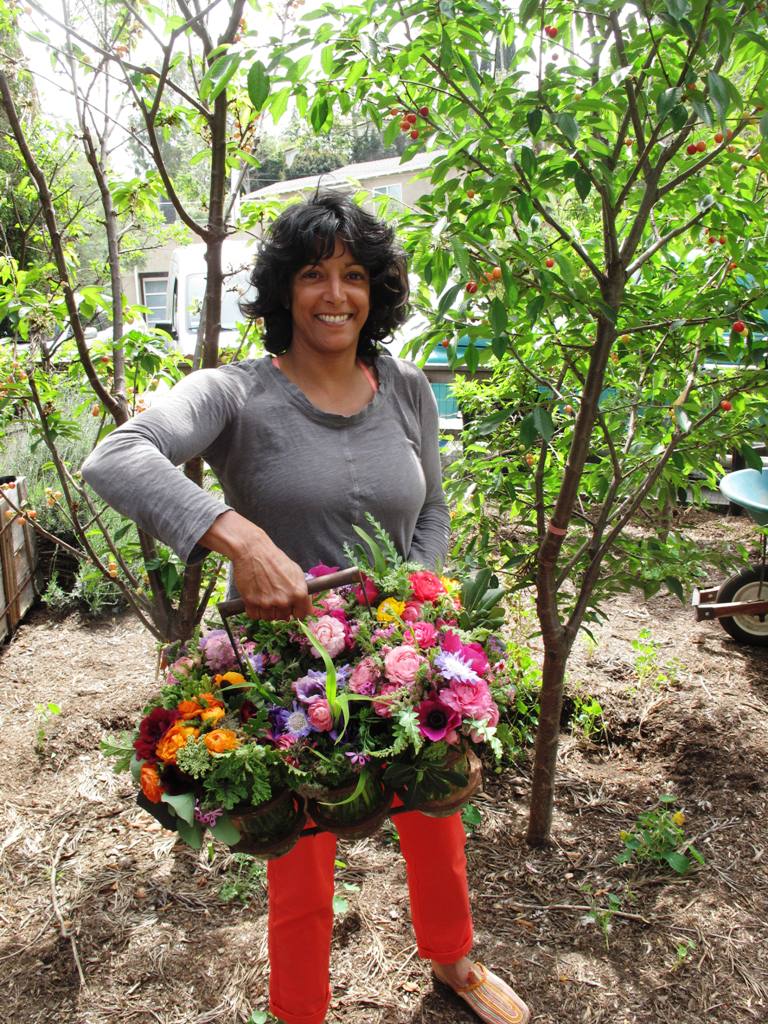
I took this photo of Steve and Gretel Adams in August 2012. They're amazing - and I'm so happy to share their conversation with you today!

I took this photo of Steve and Gretel Adams in August 2012. They’re amazing – and I’m so happy to share their conversation with you today! (c) Debra Prinzing 


In the workshop . . .

In the workshop . . . (c) Debra Prinzing

Gretel and Steve Adams of Sunny Meadows Flower Farm in Columbus, Ohio, are young flower farmers whose creativity and determination to earn a living from their land is truly inspiring.

This young couple didn’t grow up in the agricultural world; so naturally, they consider themselves serendipitous farmers. A food-farming apprenticeship sparked Steve’s passion for farming. And Gretel was blessed to inherit a 10-acre lot outside Columbus that her father bought in the 1980s.

My friend Rich Pomerantz, a fellow member of the Garden Writers Association, has taken some beautiful photographs of Gretel and Steve for his series about Young Farmers. Enjoy his post here.

As children, they both loved to be outside playing in the dirt and connecting with nature. As young adults, Steve and Gretel’s farming skills continue to flourish with their involvement in the U.S. cut flower industry. They are trying to live life as sustainably as possible using organic practices, composting to make soil amendments, and heating their house with wood, growing their own food and making natural soaps, among other things. 

Gretel, touring me through the growing fields.

Gretel, touring me through the growing fields. (c) Debra Prinzing

Sunny Meadow Flower Farm is filled with fields of beautiful flowers and four greenhouse structures help Steve and Gretel extend the growing season in Ohio.  

This farm-based business is established on a 10-acre parcel just inside the Columbus city limits. 

They recently told me about the way their acreage is used:  

“This coming season, our field space will include about 4 acres in production — plus 1 acre for our perennial and greenhouse space, making for a total of 5 acres.  The remainder of the tillable land will be rotated with cover crop to maintain soil health.”

Sunny Meadows’ flowers are sold at three seasonal farmers’ markets in Columbus and through Whole Foods stores in the region. Gretel is also a talented floral designer and the farm has added wedding floral design services, which is one of the most successful sources of income for the farm. 

Please enjoy our conversation – I know you will be impressed with Gretel and Steve, and you’ll find their passion contagious.

In the podcast, we discussed the upcoming Cut Flower Growers’ School, a program of the Association of Specialty Cut Flower Growers that is scheduled for March 3-4, 2014 in Ft. Worth, Texas.

Steve and Gretel will be teaching a workshop called: “What to Grow and Why,” addressing how to choose which perennials to grow & which annual varieties are the best producers? 

And thanks to Sunny Meadows Flower Farm for providing these wonderful images that you can enjoy here:

A Sunny Meadows Flower Farm wedding, with bride Pilar and groom Matt - and their beautiful seasonal & local Ohio-grown flowers

A Sunny Meadows Flower Farm wedding, with bride Pilar and groom Matt – and their beautiful seasonal & local Ohio-grown flowers


A gorgeous boutonniere for another local wedding - with bride Genevieve & groom Todd.

A gorgeous boutonniere using Sunny Meadows’ awesome lisianthus — for another local wedding – with bride Genevieve & groom Todd. 


On the farm . . .

On the farm . . . 


Gretel (right) and friend  - showing off their floral crowns.

Gretel (right) and friend – showing off their floral crowns. 


A sense of the beauty of this farm - as seen in one section planted with Mexican sage.

A sense of the beauty of this farm – as seen in one section planted with salvia. 


What an organized place - rows of field-grown flowers and well-appointed greenhouses.

What an organized place – rows of field-grown flowers and well-appointed greenhouses.


A Sunny Meadows Flower Farm bouquet

A Sunny Meadows Flower Farm bouquet


Be still, my heart~ A beautiful bouquet by Gretel, using flowers she and Steve grow.

Be still, my heart~ A beautiful bouquet by Gretel, using flowers she and Steve grew.


Grown & designed by Gretel Adams, Sunny Meadows Flower Farm

Grown & designed by Gretel Adams, Sunny Meadows Flower Farm.


Another lovely bridal bouquet from Sunny Meadows Flower Farm.


A sublime color palette for a gorgeous bouquet.

A sublime color palette for a gorgeous bouquet last July.

I’m so pleased to have been able to introduce you to Gretel and Steve. On their web site, they write:

“Our mission is to educate the public about the quality and vase life of local flowers. Although you can get flowers for dirt cheap flown in from the Equator, the workers there do not have the same rights and protections and there are fewer restrictions on chemical use. So who knows what you are really buying? As a farm specializing in all naturally-grown fresh cut flowers, we are trying to show people just how important supporting your local flower farm really is.”

Follow SUNNY MEADOWS FLOWER FARM on Facebook here

To add your name to the Sunny Meadows Flower Farm, email Gretel & Steve at: SunnyMeadowsFlowerFarm@gmail.com

Because of your support as a listener, listeners have downloaded this podcast nearly 6,000 times! I thank you for taking the time to join to my conversations with flower farmers, florists and other notable floral experts.

If you like what you hear, please consider logging onto Itunes and posting a listener review.

Until next week please join me in putting more American grown flowers on the table, one vase at a time. 

 The Slow Flowers Podcast is engineered and edited by Hannah Holtgeerts. Learn more about her work at hhcreates.net. 
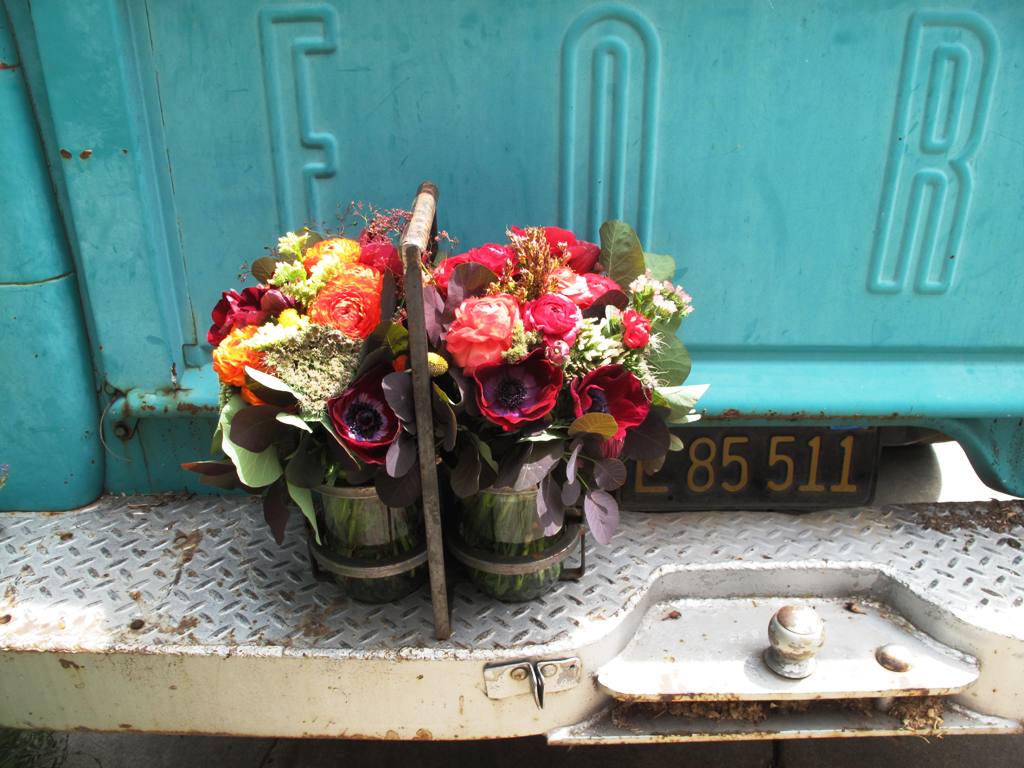
  

SLOW FLOWERS Podcast: San Francisco Flower Mart – a legacy of locally-grown flowers (Bonus Episode)

Monday, January 27th, 2014


Small_SFFlowerMart-Logo-GreenSomething really exciting happened last week – my friends at the San Francisco Flower Mart, the premiere flower market in the U.S., came onboard as presenting sponsors of the Slowflowers.com directory. This is my other passionate project, and it dovetails nicely with the Slowflowers Podcast.

In the works right now, Slowflowers.com is a free online directory to help you find florists, studio designers, wedding and event planners, supermarket flower departments and flower farmers who are committed to American grown flowers.

Inside the San Francisco Flower Mart: Connecting Bay  Area florists and flower lovers with fresh, seasonal and local blooms.

Inside the San Francisco Flower Mart: Connecting Bay Area florists and flower lovers with fresh, seasonal and local blooms.

I’m currently raising funds to complete this project via Indiegogo.  To date, supporters of American Grown flowers have contributed $11,045 to the campaign, with SF Flower Mart’s $1,000 contribution giving us a huge boost earlier in the week.

I happened to be working in SF this past Monday, so I stopped by the management office and grabbed General Manager Bob Otsuka and Jeanne Bose, the SFFM’s marketing/promotions director and social media strategist, for a quick conversation, recorded as a Bonus to the Slow Flowers Podcast. Listen to what Bob and Jeanne say about the Market’s decision to bring their support to the Slowflowers.com launch.

It’s fascinating to learn about the history of this amazing center for locally grown flowers – and inspiring to know that we’re on the same path to promote more American Grown Flowers to the floral industry and consumers alike. 

Seasonal blooms, six days a week.

Seasonal blooms, six days a week. 


There's a huge selection of local California-grown roses . . . in awesome colors~

There’s a huge selection of local California-grown roses . . . in awesome colors~

Here is a little slice of history, as told on the Market’s web site:

With beginnings paralleling the growth and development of the San Francisco Bay Area, the origins of the San Francisco Flower Mart go back to the late 1800’s when land was plentiful. Local flower growers could bring their product to Lotta’s fountain in downtown San Francisco three days a week, selling their product to local flower shops. [Note: Lotta’s fountain is located at the intersection of Market, Geary and Kearny streets in downtown San Francisco.

A need for a centrally located market bringing together the three ethnically diverse groups of flower growers was fulfilled with the opening of a market located at 5th and Howard Streets in 1924. As flower growers expanded production areas outside of the Bay Area and as product from other parts of United States came in, the need for a larger more modern permanent facility led to the design and construction of our current market at Sixth and Brannan Streets in the South of Market area of San Francisco.

The grand opening of the San Francisco Flower Terminal in September 1956 marked the establishment of an industry icon. Today, officially known as the San Francisco Flower Mart, we now have over 60 vendors, purveyors of cut flowers, potted plants, blooming plants and floral supplies. We have evolved from being a “growers” market to being a marketplace for floral wholesalers. Product, which at one time was only from the immediate Bay Area, now comes from the far reaches of the world.

As you will hear in this podcast interview, more than a century after it was established, the San Francisco Flower Mart continues to reflects the character of locally-grown flowers and the farmers who grow those blooms.

In addition to family flower farms selling direct to the floral industry and consumers, you will also find wholesalers who stock flowers from growers in other parts of California, as well as Oregon and Washington. And while people in “the flower biz” are served here as wholesale customers six days a week, some days as early as 2:00 a.m., the DIY flower lover/designer is also welcome to shop – after 10 a.m. 

A bustling center for flowers - with more than 60 vendors.

A bustling center for flowers – with more than 60 vendors.  


Racks of California-grown hyacinths recently offered by Torchio Nursery, a vendor at the San Francisco Flower Mart.

Racks of California-grown hyacinths recently offered by Torchio Nursery, a vendor at the San Francisco Flower Mart.

This is truly a flower mecca and you must add it to your flower bucket list if you haven’t been to visit. I’m thrilled to feature the San Francisco Flower Mart and doubly thrilled that this important center for local flowers will be a Presenting Sponsor on the Slowflowers.com site for the year to come, connecting More American Flowers with Customers, One Vase at a Time.

 All photographs used here, courtesy (c) Jeanne Boes, SF Flower Mart

SLOW FLOWERS Podcast: Floral design with living plants & Baylor Chapman of Lila B. Design (Episode 125)

Wednesday, January 22nd, 2014


(c) Paige Green

(c) Paige Green

I’m so pleased to introduce listeners to Baylor Chapman, creator and owner of Lila B. Design, a San Francisco-based floral and plant studio. Baylor’s story is well documented in The 50 Mile Bouquet and in many newspaper, magazine and blog articles.

I first met Baylor in the fall of 2010, on a trip to SF where I was scheduled to give a lecture for the Garden Conservancy.

Serendipitously, Susan Morrison, a friend who I’d known through the Garden Writers Association, learned I was coming to her backyard and called to say, “You need to meet my friend Baylor when you’re in town. She’s into locally-grown flowers just like you are.”

That led to a wonderful visit to tour Baylor’s former “loading dock” studio in San Francisco’s Mission District. Susan and Rebecca Sweet, another fellow garden designer and blogger, met me at Baylor’s. The three of us had lots of fun drooling over Baylor’s floral creations and learning more about her design philosophy based on seasonal and locally-grown floral elements. Here’s a blog post about that adventure. 

How cool is this? Coffee, brunch or lunch at Stable Cafe, amidst the lovely living garden created by Lila B. Design.

How cool is this? Coffee, brunch or lunch at Stable Cafe, amidst the lovely living garden created by Lila B. Design. (c) Sophie de Lignerolles photo

Today you can find Baylor and her team working in the welcoming open-air courtyard that’s part of Stable Cafe, the community-minded restaurant owned by her friend Thomas Lackey.

Thomas and Baylor have both been operating businesses on Folsom Street, and when Baylor lost her loading-dock studio this past June, it was Thomas who said: “Move over to our courtyard.”

He “gets” the idea of creating connections with neighbors, artists, fellow small-business owners and others who want to keep jobs and culture alive and well in San Francisco’s vibrant neighborhoods.

Plus, Stable Cafe’s kitchen makes delicious, healthy, seasonal & organic food! Now if you’re in SF, you can visit Lila B. Design, shop for flowers, plants and beautiful garden products, while also eating scrumptious food at the Stable Cafe! What’s not to love?

Baylor graciously shared these photos of her recent work for you to enjoy. Please notice the specific photo credit with each.

The new Lila B. Design studio at Stable Cafe, a plant-centric place for garden and flower lovers alike.

The new Lila B. Design studio at Stable Cafe, a plant-centric place for garden and flower lovers alike. (c) Sophie de Lignerolles photo 


One of the event, classroom and workshop spaces at Stable Cafe, featuring a wood-burning pizza oven, a massive trestle table, and Lila B.'s garland of local flowers.

One of the event, classroom and workshop spaces at Stable Cafe, featuring a wood-burning pizza oven, a massive trestle table, and Lila B.’s garland of local flowers. (c) Sophie de Lignerolles photo


Pitcher plants (Sarracenia sp.) in a glass vessel.

Pitcher plants (Sarracenia sp.) in a glass vessel.  (c) Holly Stewart photo 


A Lila B. Design tablescape, featuring living plants.

A Lila B. Design tablescape, featuring living plants. (c) Milou + Olin photo 


One of Baylor's lovely arrangements that combines locally-grown flowers with the foliage from houseplants.

One of Baylor’s lovely arrangements that combines locally-grown flowers, including Cafe au Lait dahlias, from Lila B.’s garden. (c) Page Bertelson photo 


Another arrangement with begonia foliage, clipped from a living plant.

Another arrangement with begonia foliage, clipped from a living plant. (c) Page Bertelson photo 


Stunning!

Stunning! (c) Page Bertelson photo 


Lila B. Design's new plant hanger - a SF-designed and fabricated product.

Lila B. Design’s new plant hanger – a SF-designed and fabricated product. (c) Sophie de Lignerolles photo 


Details, details. . . boutonnieres in the making.

Details, details. . . a garland in the making. (c) Sophie de Lignerolles photo 


A stunning centerpiece featuring living plants, created by Lila B. Design

A stunning centerpiece featuring living plants in a date palm frond, created by Lila B. Design. (c) Milou + Olin photo 


The Plant Recipe Book, out in April 2014.

The Plant Recipe Book, out in April 2014.

 Baylor has so many good things going on in her career, but the newest is The Plant Recipe Book: 100 Living Arrangements for Any Home in Any Season (Artisan Books, 2014), which will be published on April 8, 2014. This idea-filled book was photographed by Paige Green

It contains detailed planting instructions for centerpieces and arrangements that give living plants a “starring role” in all sorts of creative vessels. A follow up to last year’s title by Jill Rizzo and Alethea Harampolis, “The Flower Recpie Book,” this new inspiring book offers more than 100 projects will blow your mind and prompt you to bring more living plants into your own design work. 

If you live in or will be visiting the Bay Area, you can get a sneak peek and first dibs on a signed copy of this lovely tome. Come and hear Baylor speak at the San Francisco Flower & Garden Show, where she will demonstrate some of the book’s fun projects using living plants as floral design elements. Details here.

As I mentioned above, as soon as we met, I knew that Baylor needed to be featured in The 50 Mile Bouquet. Please enjoy the entire story:

The Accidental Flower Farmer
A patch of urban asphalt surrounded by chain link fencing and loops of barbed wire may seem unwelcoming. That is, until you peer inside to discover a designer’s bountiful cutting garden in San Francisco’s Dog Patch District.
 
Increasingly, there are designers who, by necessity, harvest floral ingredients from their own gardens. As well, there are growers who assume the role of floral designer, satisfying a bridal customer’s request for unique, straight-from-the-farm bouquets. That these two worlds are happily intersecting is due to curiosity, innovation and experimentation on the part of designer and grower alike. 
 
San Francisco-based Baylor Chapman, owner of Lila B. Design, is both designer and flower farmer. She is 
also a Certified San Francisco Green Business owner who bases her studio philosophy on local and sustainable design practices. 
Baylor’s fashionable, 500-square-foot workshop occupies a loading dock in San Francisco’s Mission District, where she and her 
assistants turn out dazzling, flower-filled vases, bowls and urns. Local and seasonal blooms are used here with abandon. How did 
all of this come to be?


Early on, Baylor saw that many of her botanical design ideas couldn’t be realized because it wasn’t always easy to source ingredients locally. For her, the obvious answer was: “Why not grow those blooms myself?”
 
Urban Farm Scene
She first tried raising flowers on the roof of the warehouse where her street-level studio is housed. The plants took root in soil-filled milk crates lined with screening. “We had to walk up 75 steps to tend to the flowers,” Baylor recalls. Stair-climbing wasn’t the worst of it, though. All the soil and water had to be hand-carried to the roof just to keep the flowers alive.
 
It didn’t take long for Baylor and her staff to yearn for a ground-level gardening space. “We found an old parking lot about 1½ miles away in a neighborhood called ‘Dog Patch’ and arranged to rent part of it.” Today, the blacktop setting has a thriving crop of city-grown flowers. Perennials, annuals and vines grow in more than 100 recycled 15-gallon nursery pots, the type typically used to grow landscaping trees.
 
The Lila B. Lot Garden flourishes on this industrial street behind a barbed wiretopped fence. The garden’s presence beautifies the neighborhood and has attracted the interest of nearby auto body shop workers who peer admiringly through the chain link when out on their lunch breaks. “Now you see hummingbirds and bees flying around,” says the designer, her friendly face breaking into a warm smile. “The car repair guys come out and enjoy it here for lunch. It’s sort of a sanctuary.”
 
Her pop-up urban flower farm has helped Baylor gain credibility with clients. Now she can say: “We grew these flowers for you.” It allows her to incorporate all sorts of uncommon blooms, berries, foliage and tendrils into her designs and even custom-grow to a bride’s specifications.
 
Among the crops here at Lila B., you’ll find salvia, rudbeckia, gaillardia, oat grass, asters, scented geraniums, roses, lamb’s ear, sweet peas, veronica, nigella, passionflower,sea holly, cosmos, scabiosa, sunflowers, cerinthe and zinnias – as well as plants grown for their fruit and foliage. It is a mind-boggling selection of design ingredients you’d be hard pressed to find in most conventional flower shops. Sophie de Lignerolles, an artist who works for Lila B. as a designer, maintains meticulous spread sheets of the flowers they grow, including varieties grown from seeds and unusual offerings from Annie’s Annuals, a specialty and mail-order nursery in the East Bay area, a favorite with the women. “Sophie is propagating from seed now, which I think is pretty fabulous,” Baylor says. That means an even greater variety of floral bounty for Lila B.’s customers.
 
A Greener Approach
Baylor is well equipped to grow her own unique floral choices, thanks to her landscape design studies. After earning a garden design certificate from University of California at Berkeley Extension, she spent time on the crew of a Bay Area estate garden whose owners valued organic practices and requested that flowers from the grounds would be used for interior bouquets. Baylor soon found herself creating these arrangements. Her interest in floral design lured her into more creative gigs, including freelancing for other studios and shops. 
 
In 2007, Baylor opened Lila B., named after her grandmother. At first, she worked out of the loft where she lives. After one year of literally living with her flowers, she moved her studio across the street to another warehouse. Formerly a commercial laundry, it now houses 60 art studios in an environment that fosters creativity and experimentation. Baylor’s tiny workshop was once a warehouse loading dock, so it faces the street and has a huge, roll-up door that brings light and fresh air inside. While not a retail store, the street-front presence wows pedestrians with glimpses of huge arrangements inside – and high above the roll-up door at the front: a trio of frames planted with a living tapestry of succulents.
 
Thanks to Northern California’s temperate environment, Baylor enjoys an excellent, almost year-round source of flowers from her suppliers. Besides her own Lila B. homegrown flowers, she takes advantage of San Francisco’s wholesale flower market where many California growers bring their crops to sell. A few “weird and wonderful” suppliers are favorites, including two sisters who run a company called Florist at Large. They stock foraged goodies such as fruit, branches and wild ingredients coveted by designers who want a natural look. “I want people to be curious,” says Baylor. “I want my bouquets to be beautiful to the eye, but they should also prompt the question: ‘What is that? Where does it grow? Can you eat it?’”
 
We visited Baylor at the peak of summer when she and Anna Hoffmann, a designer who occasionally freelances for her, were creating flowers for a peach-and-ivory-themed wedding – using a combination of tawny ‘Cafe au Lait’ dahlias, blush-pink garden roses, the silvery foliage of Dusty Miller and lamb’s ears, fluffy ornamental grasses, flowering sprigs from a mock orange tree and honeysuckle vines. 
 
As Baylor assembled the groomsmen’s boutonnieres with scented geranium foliage and seed heads from the pincushion flowers growing in her Lot Garden, she paused to admire her creation: “Even though flowers are ephemeral, I treat floral design like I do garden design. I think of each arrangement as a mini garden, with its own texture, scale and color palette. They’re little masterpieces.”
 
Baylor’s bouquets embody both her artistic sensibility and her profound admiration for the plant world’s infinite variety of color, form and texture. “I hope that people are drawn to me because of what I’m doing and what I’m interested in doing,” she says, “because I feel very blessed.”


SLOW FLOWERS Podcast: Finding your Niche in the Marketplace, Patrick Zweifel of Oregon Coastal Flowers (Episode 124)

Wednesday, January 15th, 2014
The Zweifel Family enjoys the nearby Oregon Coast, From left, daughter Nina, and Monika and Patrick Zweifel.

The Zweifel Family enjoys the nearby Oregon Coast, From left, daughter Nina, and Monika and Patrick Zweifel.

In the fall, there's a pretty fun Pumpkin Patch and Corn Maze at Oregon Coastal. Here, Patrick poses with his daughter Nina.

In the fall, there’s a pretty fun Pumpkin Patch and Corn Maze at Oregon Coastal. Here, Patrick poses with his daughter Nina.

Patrick Zweifel’s Oregon Coastal Flowers – his 64-acre, Tillamook, Oregon-based farm – has been well received by florists who shop at the Portland Flower Market, the Los Angeles Flower Market District and the Seattle Wholesale Growers Market where you can find permanent stalls filled with his gorgeous hydrangeas, calla lilies and Oregon forest products.

Feast your eyes on the Hydrangea Fields at Oregon Coastal Flowers. Field-grown, true-blue hydrangeas! You can't get it any better!

Feast your eyes on the Hydrangea Fields at Oregon Coastal Flowers. Field-grown, true-blue hydrangeas! You can’t get it any better!

Here's that awesome new hydrangea Patrick talked about in our interview.

Here’s that awesome new Hydrangea macrophylla ‘Pistachio’ that Patrick talked about in our interview. 

I met Patrick in 2010 at the regional Association of Specialty Cut Flower Growers conference in Eugene, Oregon. That was the very first occasion when he and other farmers dreamed of launching a cooperative Farmer-to-Florist venture in Seattle. One year later, that little market began: the Seattle Wholesale Growers Market. Full disclosure: I now serve with Patrick as an industry liason on the Co-op board. That experience has allowed me to get to know this creative farmer better – and watch him at work. It’s impressive!
 
Patrick is competitive by nature, bringing the intense energy that he once devoted to a college track and field career to his professional life. In the early days of the SWGMC, he told me, “I knew there would be demand if we committed to the [warehouse] lease and took the risk. When you sell face-to-face, when you have a quality product, you have something that’s so much better than what you see on paper or online.” By opening their own market and direct-selling to florists, “we’re cutting out the middleman,” he explains.
Here's an arial view of Oregon Coastal Flowers where you can spot the full-size competitive race track amidst the fields.

Here’s an arial view of Oregon Coastal Flowers where you can spot the full-size competitive race track amidst the fields. 

Check out the Crocosmia borders!

Check out the Crocosmia borders! 

His story is revealing because he so generously explains how he has weathered the highs and lows of his business. If you have any romantic notion that being a flower farmer is a dreamy way to commune with nature, I know Patrick’s story will be both inspiring and sobering. It is not an idyllic existence. It is incredibly hard, endless work. It is a choice, but it is not an easy choice.

Patrick’s message is that if you can find your niche and be the very best in that niche, you *might* succeed. Being the best means producing excellent, high-quality botanical and floral elements. It also means the type of customer service you provide and the relationships you build with customers.

But no matter how beautiful or fresh the bloom, domestic farmers face competition on price, especially from importers who buy from low-wage countries, Patrick says. “I was the first person in the U.S. to sell colored calla lilies in a big way. I couldn’t have bought my farm without them. Then the South Americans started selling callas for 30-cents-per-stem against my $1-per-stem product. And they had added incentives, like buy one box, get a second one for free.  I just can’t compete with South America on callas, even if my quality is great.” Patrick describes how cheap imports nearly ruined his core business – colored calla lilies. By 2008, he was faced with devastating losses of 85% of his total revenue and Patrick was driven to save his company.

He didn’t give up. He didn’t see that he had a choice. With a mortgage on his farm and family and employees to support, Patrick searched for a way to diversify Oregon Coastal Flowers.

The wedding pavilion at Hydrangea Ranch, a gorgeous event space at Oregon Coastal Flowers.

The wedding pavilion at Hydrangea Ranch, a gorgeous event space at Oregon Coastal Flowers.

The romantic Alder arbors created at Oregon Coastal Farms from alder poles harvested on local forest land.

The romantic Alder arbors created at Oregon Coastal Farms from alder poles harvested on local forest land.

Hear the optimistic story of how he’s survived and moved beyond that episode to become even more solid in knowing his niche. This is a story of never giving up – and being smart and resourceful enough to find a solution that satisfies your customers, to provide products that meet a need in the floral marketplace, and to find new marketplaces for those products. 

Mossy branches - a signature product offering.

Mossy branches – a signature product offering.


Here are those little log "cake plates" that Patrick has popularized among the floral, wedding & event world.

Here are those little log “cake plates” that Patrick has popularized among the floral, wedding & event world.


Oh, wow, those Alder logs!

Oh, wow, those Alder logs!

All kinds of goodies from the Oregon forest: mosses, ferns, gnarly surprises!

All kinds of goodies from the Oregon forest: mosses, ferns, gnarly surprises!

Patrick credits his ability to quickly change direction for saving his business. He noticed a few years ago that floral designers were snatching up his offerings of Northwest forest products, such as lichen-clad branches, soft green mosses, cone-laden conifer boughs and other woodland items, infusing their bouquets with a naturalistic feel. In the past three years, Oregon Coastal Flowers has increased the variety of specialty forest items, while at the same time shrinking its acreage devoted to calla lily production. With forest service permits that allow him to legally harvest everything from birch saplings to decaying tree trunks, Patrick has seen his sales double from 2010 to 2011.

There will always be people who choose “cheap” first. Yet conscious consumers are voting with their values and their dollars – and focusing on other important product attributes like Seasonal, Local, Sustainable, and, in Patrick’s case, unusual and hard-to-grow or ship from South America. As the American Grown message increases, and as more consumers see value in the origins of the flowers they choose in the marketplace, that playing field will leveled out. 
 
All of these beautiful photos appear here, courtesy of Patrick Zweifel and Oregon Coastal Flowers. Sign up for Oregon Coastal Flowers’ newsletter here.

 Other ways to connect with Oregon Coastal Flowers:

Product Photos

Sign up for our Newsletter

Facebook:  ZCallasFarm

Twitter:  ZCallas

Thank you for joining me in this episode of the SLOW FLOWERS Podcast with Debra Prinzing.

Because of your support as a listener, listeners have downloaded this podcast more than 5,000 times! I thank you for taking the time to join to my conversations with flower farmers, florists and other notable floral experts.

If you like what you hear, please consider logging onto Itunes and posting a listener review.

Until next week please join me in putting more American grown flowers on the table, one vase at a time. 

 The Slow Flowers Podcast is engineered and edited by Hannah Holtgeerts. Learn more about her work at hhcreates.net. 
 

SLOW FLOWERS Podcast: Meet Holly Heider Chapple, a floral designer with deep roots in the garden and more! (Episode 123)

Thursday, January 9th, 2014
Holly Heider Chappel, in one of her favorite places on earth: Her own backyard flower garden. "The Answer is in the Garden," she says.

Holly Heider Chapple, in one of her favorite places on earth: Her own backyard flower garden. “The Answer is in the Garden,” she says.

We’re getting the New Year off to a fabulous start with today’s guest, floral designer, social media maven, educator and mentor to studio and wedding florists around the globe, Holly Heider Chapple.  Based in Leesburg, Virginia, she is active in the wedding and event industry serving customers in the Washington, D.C., Virginia and Maryland areas. 

Like many people who know and follow this talented and engaging woman, I met Holly “virtually” through Facebook or some other social media channel. As soon as she “friended” me, I wrote to Holly and said: let’s have a phone date. We realized our mutual connection is Alicia Schwede of Flirty Fleurs and Bella Fiore, a past guest on this podcast and a new transplant to the Pacific Northwest.  

Well that phone date with Holly morphed into today’s podcast – a whirlwind conversation that follows Holly’s life from a childhood helping her parents grow, tend to and sell plants to an amazing family of her own. 

Holly shared several of her designs featuring mostly ingredients from her own garden. Here is one yummy creation.

Holly shared several of her designs featuring mostly ingredients from her own garden. Here is one yummy creation.


And a garden-inspired wedding dinner, bride and groom included!

And a garden-inspired wedding dinner, bride and groom included!

We all need a jolt of optimism for the seasons ahead. Whether you’re a floral designer seeking inspiration or an American flower farmer who wonders if the floral industry really cares about all the attention you give to the botanicals you produce . . . I think you’ll find it here. 

Holly has a totally fresh take on the world of flowers and I think that’s why she is so successful with some of her new ventures, including the Chapel Designers conference and forum, now in its 4th year. Plus, by her own admission, she is a sharer. She is one of those people who isn’t afraid that sharing her expertise and knowledge with YOU will somehow diminish HER. I subscribe to this approach to my own life and work, which made it so easy to converse, long-distance, with Holly.

Garden flowers in an urn; all the elements grown in Heidi's garden.

Garden flowers in an urn; all the elements grown in Heidi’s garden.


Another luscious bridal bouquet. Everything but the roses come from Holly's Garden.

Another luscious bridal bouquet. Everything but the roses come from Holly’s Garden.

Here is her bio:

A dedicated mother, wife and entrepreneur, Holly is the creative visionary behind Holly Heider Chapple Flowers. A longtime resident of Loudoun County Virginia, Holly is a highly recognized and sought after floral designer who’s work has been published in a number of prestigious publications and can regularly be found in top industry blogs. With 21 years of successful business experience behind her, Holly now serves as a teacher, speaker and mentor for other professionals in the wedding industry. Having raised 7 children, and recognizing her most important life role as a mother, Holly appreciates also being known as “Flower Mamma” among her network of industry professionals. Additionally, based on her incredible and unique sense of style, the term “Hollyish” emerged in 2011 as a way of describing designs that possess the elegance, beauty and creativity of those that leave Holly’s studio.

Armed with a strong desire to help other floral designers and event professionals be successful, Holly established the Chapel Designers (a division of Holly Heider Chapple Flowers) in 2011, as an international network of florists and event designers who gather together every year in New York City to collaborate, learn, and create.

What started as a desire to network with other like minded business owners, has blossomed into an incredible group of professionals comprised of longtime designers, up and coming designers, and people just starting their design journey. The Chapel Designers is growing every day and is proud to have members from all over the world.

Remaining dedicated to quality of design and service has allowed Holly Heider Chapple Flowers to be recognized over and over again for exceptional products and client experiences while maintaining an unrelenting desire to drive industry trends. Holly describes her business in her own words: “I have had the privilege of training with great designers across the country and in Europe. One of my most favorite and unique experiences recently was volunteering with the installation of the White House Christmas decorations. All of these experiences combined with running a business from my home, where I can spend quality time with my husband and children has made me into the business owner I am today. I take each of my roles as a mother, mentor and designer seriously and continue to grow every day. My studio has been blessed to have our work published in Martha Stewart, Southern Living Weddings, Weddings Unveiled, Brides, The Knot, Washingtonian, Southern Weddings, Virginia Living, In Touch Weekly Magazine, Elegant Bride, Engaged Magazine, and many local publications, and I can’t wait to see what the next few years will bring. I know there are still big things to come.”

My conversation with Holly was super inspiring and I will thoroughly enjoy2014 as I watch all that she achieves. Please be sure to add her to your “follow” list if you haven’t done so yet.

A lovely tabletop of home-grown florals.

A lovely tabletop of home-grown florals.

And a seasonal zinnia bouquet that's inspired by a vivid color palette.

And a seasonal zinnia bouquet that’s inspired by a vivid color palette.

Here are Holly’s platforms to follow:

Her Blog: The Full Bouquet

Twitter: @chappleflowers @chapeldesigners

Facebook: HollyHeiderChappleFlowers

Instagram: Holly Chapple

And thank you  for joining me in this episode of the SLOW FLOWERS Podcast with Debra Prinzing.

Because of your support as a listener, we have had nearly 5000 downloads in six months’ time – and I thank you for taking the time to join to my conversations with flower farmers, florists and other notable floral experts.

If you like what you hear, please consider logging onto Itunes and posting a listener review.

Until next week please join me in putting more American grown flowers on the table, one vase at a time. 

As we heard from Holly,

The Answer’s in the Garden.

I couldn’t agree more.

The Slow Flowers Podcast is engineered and edited by Hannah Holtgeerts. Learn more about her work at hhcreates.net. All photographs shared here,courtesy of Holly Heider Chapple.