Debra Prinzing

Get the Email Newsletter!

Archive for the ‘SLOW FLOWERS Podcast’ Category

SLOW FLOWERS Podcast: Kelly Norris on the must-have bearded iris for flower farmers and floral designers (Episode 162)

Wednesday, October 8th, 2014
'Jack's Pick' - a miniature tall bearded iris with gorgeous tawny petals.

‘Jack’s Pick’ – a miniature tall bearded iris with gorgeous tawny petals.

It’s not unusual to find a clump of purple-flowering bearded irises in the beds and borders surrounding many older American homes. For decades they’ve been forgotten or dismissed as a “grandmother’s garden flower,” but bearded irises are enjoying a renaissance of sorts.

Kelly Norris, plantsman, writer, horticultural visionary and iris expert.

Kelly Norris, plantsman, writer, horticultural visionary and iris expert.

It’s thanks in part to the activities of today’s guest, Kelly Norris, a 20-something horticultural rock star whose obsession with bearded irises dates back to his 12-yr-old curiosity.

The breeding and hybridizing efforts of Kelly and others has greatly broadened the palette of these unique flowers which bear a set of upright petals (called the ‘standard’) offset by an equal number of downward cascading petals (described as the ‘fall’).

According to Kelly, late summer to early fall is the best time to plant bearded iris rhizomes- so that means you have a few more weeks to add some of these beauties to your cutting garden. And if you’ve never before considered growing or designing with bearded iris, I promise that my interview with Kelly will inspire you to do so!

Kelly D. Norris is the award-winning author and plantsman from Iowa and the first horticulture manager at the Greater Des Moines Botanical Garden, a newly revitalized 14-acre public garden in Des Moines, Iowa.

Want to know more about bearded irises? Check out Kelly's award-winning book.

Want to know more about bearded irises? Check out Kelly’s award-winning book.

He’s popularly known for his book A Guide to Bearded Irises: Cultivating the Rainbow for Beginners and Enthusiasts from Timber Press, which won the 2013 American Horticultural Society Book Award. He’s at work on his next project tentatively titled Dig This: Stylish Gardening with Kickass Plants.

As a speaker, Kelly has garnered acclaim for his high-energy, zealous presentations on the national stage, leading many to call him one of the rising stars of American horticulture.

Kelly’s unique 10 years of experience in the industry began at age 15 when he talked his parents into buying a nursery (Rainbow Iris Farm), and in that time he’s become one of the few gurus on marketing horticulture to emerging demographics.

At the Botanical Garden, Kelly directs and manages a team of horticultural professionals in all aspects of design, curation, programming, and garden maintenance and has a principal leadership role in the $12 million renovation and expansion currently underway.  He is also the editorial director for the organization’s award-winning member magazine Bloom, leads several programming initiatives aimed at fulfilling the Garden’s mission of “exploring, explaining and celebrating the world of plants,” and is the artistic director of the newly minted Spring Garden Festival which had its debut in May 2014.

Kelly Norris

Kelly Norris

Kelly is the youngest person to receive the Iowa State Horticultural Society’s Presidential Citation, Award of Merit and Honor Award in the organization’s 150 year history, awards that exemplify service and contributions to horticulture in Iowa.

In 2011, he was also honored by the Perennial Plant Association with the Young Professional Award, recognizing early contributions to the advancement of herbaceous perennials in American horticulture.

In 2013, he won the Iowa Author Award for Special Interest Writing, the youngest Iowan to be recognized in the history of the awards program.

I caught up with Kelly at the Garden Writers Association symposium in Pittsburgh several weeks ago.

'Red Rock Princess' - another favorite Miniature Tall Bearded Iris.

‘Red Rock Princess’ – another favorite Miniature Tall Bearded Iris.

'Hot News" - love this color bloom!

‘Hot News” – love this color bloom!

Our topic: miniature tall bearded irises. That sounds like an oxymoron, but in the interview we’ll learn why Kelly believes this iris classification is ideal for cut flower farms to grow and floral designers to request.

According to the American Iris Society, the MTB classification, as this type is called, is also known as ‘table iris’ or ‘bouquet iris,’ terms that give you a clue about their suitability for floral design. With bloom stalks measuring 16 inches to 27.5 inches, the flower is far daintier and has a more slender bloom than the more prevalent tall bearded iris flower.

Love this one: 'Apricot Drops'

Love this one: ‘Apricot Drops’

'Rayos Adentro', a sultry MTB iris.

‘Rayos Adentro’, a sultry MTB iris.

Garden writer Ken Druse wrote this of Kelly in an article for Organic Gardening Magazine:

“People tend to say yes to Norris due to his confidence, positive attitude, and infectious enthusiasm . . . he is a modern-day Andy Hardy, rallying friends and admirers to get excited about his latest enterprise . . . .”

'Cedar Waxwing'

‘Cedar Waxwing’

I couldn’t agree more. I hope you’ve been inspired to check out the beautiful options of Miniature tall bearded irises, including some gorgeous ones you can find at Rainbow Iris Farm, the Norris family’s mail order company.

Listeners like you have downloaded the Slow Flowers Podcast more than 22,000 times. If you like what you hear, please consider logging onto Itunes and posting a listener review.

My personal goal is to put more American grown flowers on the table, one vase at a time. I promise that when you tune in next week, you’ll hear another insightful and educational episode of the Slow Flowers Podcast.

The Slow Flowers Podcast is engineered and edited by Andrew Wheatley and Hannah Holtgeerts. Learn more about their work at hhcreates.net.

SLOW FLOWERS Podcast: Flowers as Food for the Soul — Transitioning from food-farming to flower-farming, with Goose Creek Gardens (Episode 161)

Wednesday, October 1st, 2014

a visit to Goose CreekI’m so pleased to share this week’s interview with you, a conversation with mother and daughter duo — Margie Dagnal and Kate Dagnal of Goose Creek Gardens in Oakdale, Pennsylvania, a boutique specialty cut flower farm just outside Pittsburgh.

Margie led us on a tour through the farm, including a stop at the Limelight Hydrangeas.

Margie led us on a tour through the farm, including a stop at the Limelight Hydrangeas.

I first met Margie virtually, when she contributed to the Slow Flowers campaign on Indiegogo earlier this year.

And then, if that wasn’t enough, she gave me an incredible gift by contributing flowers that two other Slowflowers.com friends Jimmy Lohr and Jonathan Weber of Green Sinner incorporated into a lovely floral arrangement for my Pittsburgh-based publisher St. Lynn’s Press. PS, Jimmy, Jonathan and Margie refused to take a penny from me either. These people are all so generous!

When I visited Pittsburgh in August, I had arranged to spend a morning at Green Sinner, touring the very cool urban cutting garden and floral studio that Jonathan and Jimmy own (you can hear our podcast interview here).

Here's that lovely Green Sinner arrangement featuring Goose Creek Gardens flowers, an Indiegogo "perk" for St. Lynn's Press offices in Pittsburgh.

Here’s that lovely Green Sinner arrangement featuring Goose Creek Gardens flowers, an Indiegogo “perk” for St. Lynn’s Press offices in Pittsburgh.

Those two cooked up a delightful surprise and arranged for Kate and Margie to make their Goose Creek Gardens “delivery” during my visit. It was a Thursday morning and while I knew I was about to be part of a weekend conference, a little voice in my head was saying: “You can’t leave Pittsburgh without making a visit to Goose Creek Gardens.”

And lo and behold, Jonathan and Sam Rose, who tends to the Green Sinner cutting garden, offered to pick me up and drive me out to Goose Creek Gardens for a weekend visit. We toured the farm, wandered down to the bottom of the property, along the paths, into the high tunnels and more, all the while chatting constantly about this beautiful bloom and that one.

Katie and Margie are super passionate about growing flowers. Flowers were once a secondary crop to Goose Creek’s main endeavor – growing veggies and herbs. For years, while Margie and her husband Mark, a landscaper, produced salad greens and other delicacies for Penn’s Corner Farm Alliance, young Katie grew flowers.

The flower fields at Goose Creek Gardens.

The flower fields at Goose Creek Gardens.

The Geese of Goose Creek Gardens...livin' the good life!

The Geese of Goose Creek Gardens…livin’ the good life!

This year, things have changed, thanks to several issues: From pressure on farmers’ market food prices to seasonal flooding that affected some of Goose Creek’s fields, not to mention Kate’s lifelong obsession with growing cut flowers . . . all these incidents gave them several signs to move into flowers 100 percent of the time.

Katie is now a grownup – a young mom who works side-by-side with her parents running Goose Creek Gardens as a cut flower farm.

Katie and Margie shared photographs of some of their “Friday Night Romance” bouquets for you to enjoy. These are part of an ongoing series of bouquets that Katie creates at the end of each week, to share with her followers and other #farmerflorist friends on Facebook and Instagram. I think they are pretty darned romantic – and beautiful!


Friday Night Romance from September 26th

Friday Night Romance from September 26th

Friday Night Romance on denim.

Springtime Friday Night Romance on denim.

Friday Night Romance from July 25th

Friday Night Romance from July 25th

A lovely dahlia takes center stage.

A lovely dahlia takes center stage.

Intense hues add up to a gorgeous Friday Night Romance bouquet.

Intense hues add up to a gorgeous Friday Night Romance bouquet.

I hope you learn as much as I did by hearing this interview. And here’s how you can follow Goose Creek on other social platforms:

Goose Creek Gardens on Facebook

Goose Creek Gardens on Instagram

Up next week: a conversation with the inimitable Kelly Norris, who shares his passion – and genius – about a lesser-known category of his favorite flower: The miniature tall bearded iris. Kelly is the award-winning author of A Guide to Bearded Irises and I’m so excited to introduce him to you in a very lively conversation.

Listeners like you have downloaded the Slow Flowers Podcast more than 21,000 times. If you like what you hear, please consider logging onto Itunes and posting a listener review. My personal goal is to put more American grown flowers on the table, one vase at a time. I promise that when you tune in next week, you’ll hear another insightful and educational episode of the Slow Flowers Podcast.

The Slow Flowers Podcast is engineered and edited by Hannah Holtgeerts and Andrew Wheatley. Learn more about their work at hhcreates.net.

SLOW FLOWERS Podcast: Meet Mickey Blake, inventor of Floral Soil (TM), the new alternative to floral foam (Episode 160)

Wednesday, September 24th, 2014
Take the Pledge!!!

Take the Pledge!!!

One of my mentors reminded me recently that it’s inevitable others will disagree with my convictions and portray me as having an “all or nothing” point of view when it comes to helping consumers and florists embrace, design with and purchase American grown flowers — as a way to save the grassroots community of American flower farms.

I truly believe there is an American-grown flower solution for any design challenge – it boils down to desire, innovation and creativity.

I “get” that some in the floral community disagree with this position. A few weeks ago, Holly Chapple and I discussed the idea of hashtagging percentages to indicate the portion of American grown flowers used in a design.

That is a compromise to some, but at least it is a move in the right direction, the “least best” option, but better than not using American grown flowers at all, right?

Hopefully this interim step will nudge even more designers toward using local, seasonal and domestic flowers. And if you choose to promote yourself as having this philosophy, I believe it can be a huge advantage. If you have personally experienced success by taking this path, I want to hear about it because you and your story may be featured on a future episode of this podcast.

Foam_sampleAnother one of my no-compromise stances is about the use of floral foam, the ubiquitous floral design industry “tool” that is actually formaldehyde-based, toxic, does not break down in landfills and has led to a number of health problems for florists who regularly handle it.

This podcast has featured leaders like Pilar Zuniga, owner of Gorgeous and Green in Berkeley, an early advocate for non-foam design, and I’m constantly intrigued with designers who have a similar philosophy.

But there are so many who have not been able to wean themselves from using this harmful product – harmful to themselves, their customers and the earth.

Sooooo . . . we keep hearing that the conventional floral products industry is working on a solution. But hey people, it’s been 60 years since floral foam has been the so-called industry option for stabilizing stems in vases. Where is the innovation? Where is the corporate social responsibility to do the right thing? What about the lack of transparency about its unsafe attributes and failure to inform those who do use this product?

Enter today’s guests, eco-inventor Mickey Blake and flower shop owner Rebecca Wiswell.

This pleasantly-spongy, soil-colored block of foam is 100% natural and compostable - and it functions exactly like the chemical-based products on the marketplace.....but it's safe and unharmful to  you, your clients, and to the environment.

This pleasantly-spongy, soil-colored block of foam is 100% natural and compostable – and it functions exactly like the chemical-based products on the marketplace…..but it’s safe and unharmful to you, your clients, and to the environment.

Mickey Blake, inventor of Floral Soil.

Mickey Blake, inventor of Floral Soil.

Mickey Blake is a sheer genius, a floral industry outsider who was presented with the challenge of finding a nontoxic, 100 percent plant-based foam for florists to arrange cut flowers and foliage.

In just one year’s time, Mickey has developed, trademarked and has a patent pending innovation called Floral Soil. She explains on her brand new web site:

“We had seven major goals when designing Floral Soil ™ – Support cut flowers, be non-toxic, plant derived, biodegradable, hold water, grow seeds and be safe enough to eat.”

Mickey worked with a select group of beta testers, including Rebecca Wisell, owner of Bellingham, Washington-based Rebecca’s Flower Shoppe. Rebecca’s Flower Shoppe is listed on the Slowflowers.com directory, but she and I don’t know one another personally. My friends Steve and Sarah Pabody of Triple Wren Farms sell their flowers to Rebecca’s – through them, I’ve heard about her support for locally-grown flowers.

Rebecca's Flower Shoppe in Bellingham, Washington, is one of the first "beta" testers of Floral Soil.

Rebecca’s Flower Shoppe in Bellingham, Washington, is one of the first “beta” testers of Floral Soil.

I learned about Floral Soil a few weeks ago, when out of the blue Rebecca reached out to me on Facebook with this note:

“Good morning, Sarah and Steve Pabody are suppliers/friends of our here at Rebecca’s Flower Shoppe in Bellingham. We are a ‘green’ shoppe and were introduced to a new product about a year ago that I thought you might be interested in. It is called Floral Soil and is a replacement for the green foam. It is completely bio-friendly and compostable. We have been trialing it since last fall and think its qualities to retain water and its durability are impressive. I am not selling this product. I just want to get the word out to our floral community that there is a better product that we can all be using to protect us and our environment.”

The day Rebecca emailed me I was on location, working on a photo shoot. So I responded quickly and asked if I could call her later in the week. When I called, Rebecca surprised me by saying, “Oh, the inventor of Floral Soil is here in my shop – do you want to speak with her?”

One of Rebecca Wiswell's samples showing how well flowers of all sizes can be stabilized in Floral Soil (she purposely used a clear glass vase to show the product)

One of Rebecca Wiswell’s samples showing how well flowers of all sizes can be stabilized in Floral Soil (she purposely used a clear glass vase to show the product)

Talk about serendipity! So, I met Mickey Blake by phone and since she is also based in Bellingham, about 90 minutes north of Seattle, it took us a few weeks to get together.

There is so much to wrap your mind around here, so I’m just going to let you listen to my conversation with Mickey, recorded last Friday, September 19th.

Mickey is CEO of Mt. Baker Bio, a life sciences company with this mission: “Using modern science to secure a sustainable future.”

Mt. Baker Bio is a certified woman-owned small business that is focused on creating environmentally sustainable solutions for biomedical laboratories. Through its Green Lab Program the company environmentally friendly alternatives for scientific laboratories, as well as a collapsible silicone lunch box. The innovative company is now turning its attention toward the floral and nursery industries with Floral Soil and other products currently in development.

Look closely and you can see the cocoa fiber textures in the Floral Soil

Look closely and you can see the cocoa fiber textures in the Floral Soil

It’s pretty amazing to watch this dynamo’s eyes light up as she speaks so passionately about changing an ancient business model – from top-down product development where florists have been told they need something (we’re talking about the 1954 invention of floral foam here) to a holistic partnership between inventor and end user – a collaborative approach that has a triple bottom line motivation.

Having spent a few hours with Mickey, and getting my hands on the samples of Floral Soil that she shared with me, I have to say that this product is a major game-changer. It is going to alter forever the practice of using conventional, chemical-based floral foam. [Note, two days after I recorded our podcast interview, one of my floral designer friends was over and I showed her the product samples Mickey gave me. This is a woman whose very successful wedding & event studio has NEVER used conventional floral foam. She was so excited to use the bricks for an upcoming wedding alter design that I gave her three large pieces to use. Photos of that project to come!]

My second guest is Rebecca Wiswell, one of the florists who has been most intimately involved with a year of R&D for Floral Soil. With a 30 year background in the floral industry, Rebecca has the credibility Mickey needed to trial the product day in and day out. I reached out to Rebecca by phone after interviewing Mickey – and recorded our conversation to share with you here.

Here's how the cube of Floral Soil looks from its side, with stems inserted

Here’s how the cube of Floral Soil looks from its side, with stems inserted

Get ready to be wowed and to stop feeling guilty about using a product that you know is damaging to the environment. You may have been dependent on floral foam for some or all of your design work, but no more excuses. Mickey has offered to send a sample to anyone who listens to this podcast

More samples, showing how Floral Soil can be cut into various sizes.

More samples, showing how Floral Soil can be cut into various sizes.

And here are the various ways you can connect with Floral Soil’s via social media.

Floral Soil on Facebook

Mickey Blake on Twitter

I would love to know how you use the product and invite you to send me photos after you’ve played with it.

As she said, Mickey’s goal is to get into full-scale production by the holidays.  I want to close with one of her comments that resonated with me: It is up to each individual to make daily choices and personally responsibility to make our planet better. If you agree with this, I am convinced you will adjust your practices and stop using chemically-based floral foam, especially now that we have an earth-friendly alternative on the marketplace.

Thanks for joining me today to talk about all things American Grown — and American Made.

Listeners like you have downloaded the Slow Flowers Podcast more than 21,000 times. If you like what you hear, please consider logging onto Itunes and posting a listener review.

My personal goal is to put more American grown flowers on the table, one vase at a time. I promise that when you tune in next week, you’ll hear another insightful and educational episode of the Slow Flowers Podcast.

The Slow Flowers Podcast is engineered and edited by Hannah Holtgeerts and Andrew Wheatley. Learn more about their work at hhcreates.net.

SLOW FLOWERS Podcast: Growing Hardy Annuals with “Cool Flowers” author & flower farmer Lisa Mason Ziegler (Episode 159)

Wednesday, September 17th, 2014
Lisa Mason Ziegler's new book "Cool Flowers," introduces the concept of planting hardier annuals in the fall - for super-early spring harvest!

Lisa Mason Ziegler’s new book “Cool Flowers,” introduces the concept of planting hardier annuals in the fall – for super-early spring harvest!

I’m so pleased to share today’s conversation with you, recorded in August at the Garden Writers Association symposium in Pittsburgh.

Lisa is a American cut flower farmer, a writer, speaker and garden entrepreneur.

Lisa is a American cut flower farmer, a writer, speaker and garden entrepreneur.

My guest is Lisa Mason Ziegler, owner of The Gardener’s Workshop.

Lisa’s organic flower farm is located in the midst of Newport News, in southeastern Virginia, on a little less than 3 acres. What began as a small cut flower farm in 1998 has grown into a vibrant operation:  The Gardener’s Workshop produces over 10,000 stems a week in season (mid-April to mid-November) and sells to upscale florists, to nearby Colonial Williamsburg, to area supermarkets and direct-to-consumers with a Garden Share program.

Lisa spends her time out of harvest season teaching others about organic gardening and growing cut flowers through lecturing and writing. Her lectures have reached from Texas to New York City—far beyond any dream she ever imagined.  In 2005, Lisa added a shop to her business, offering the tools, supplies and seeds that she uses in her own garden and cut flower farm.

This little book is packed with great tips for the gardener who wishes to have a productive patch for cutting flowers.

This little book is packed with great tips for the gardener who wishes to have a productive patch for cutting flowers.

I first learned of Lisa when I stumbled upon her self-published book, “The Easy Cut-Flower Garden,” a handy 92-page guide to growing a season of fresh-cut flowers from a 3-by-10-foot garden that Lisa wrote and produced in 2011.

I ordered the book and often refer to it, especially when I’m fantasizing about tearing up some of my lawn and add more cutting garden real estate to our yard.

Not too long ago, Lisa’s name popped up again, when my publisher Paul Kelly, owner of St. Lynn’s Press, told me that she was writing a new book for their list.

That’s one reason we were able to connect in Pittsburgh, our publisher’s home base. Lisa’s new book, Cool Flowers,  is all about how to grow and enjoy hardy annuals. In it, she shares her 16-years of growing experiences and the sheer joy of this group of flowers that are often left out of gardens.

Cool Flowers is all about how and when to plant hardy annuals so that spring in the garden will be nothing short of sensational.

A field-to-market bouquet from The Gardener's Workshop.

A field-to-market bouquet from The Gardener’s Workshop.

Once their needs are met, this diverse yet easy group of flowers will change spring in the home garden forever.  The most important thing is to allow them to get established during cool weather. Plant them in the right spot at the right time, nestle their roots deep into rich organic soil, and stand back.  When happy, these hardy annuals need little intervention, other than having someone gaze on their beauty, or perhaps to cut a few for the kitchen table. Some of Lisa’s favorites include snapdragons, Bells of Ireland, sweet peas and sweet William.

Every flower gardener needs this book! Lisa Ziegler’s Cool Flowers brings to flower gardening a brand new point of view that introduced me to all sorts of possibilities for my floral palette – as a gardener and floral designer. Her valuable tips for success with hardy annuals will extend your garden’s blooming season, no matter where you live. If you want to make the most of all seasons in your garden, Cool Flowers is a must-have.

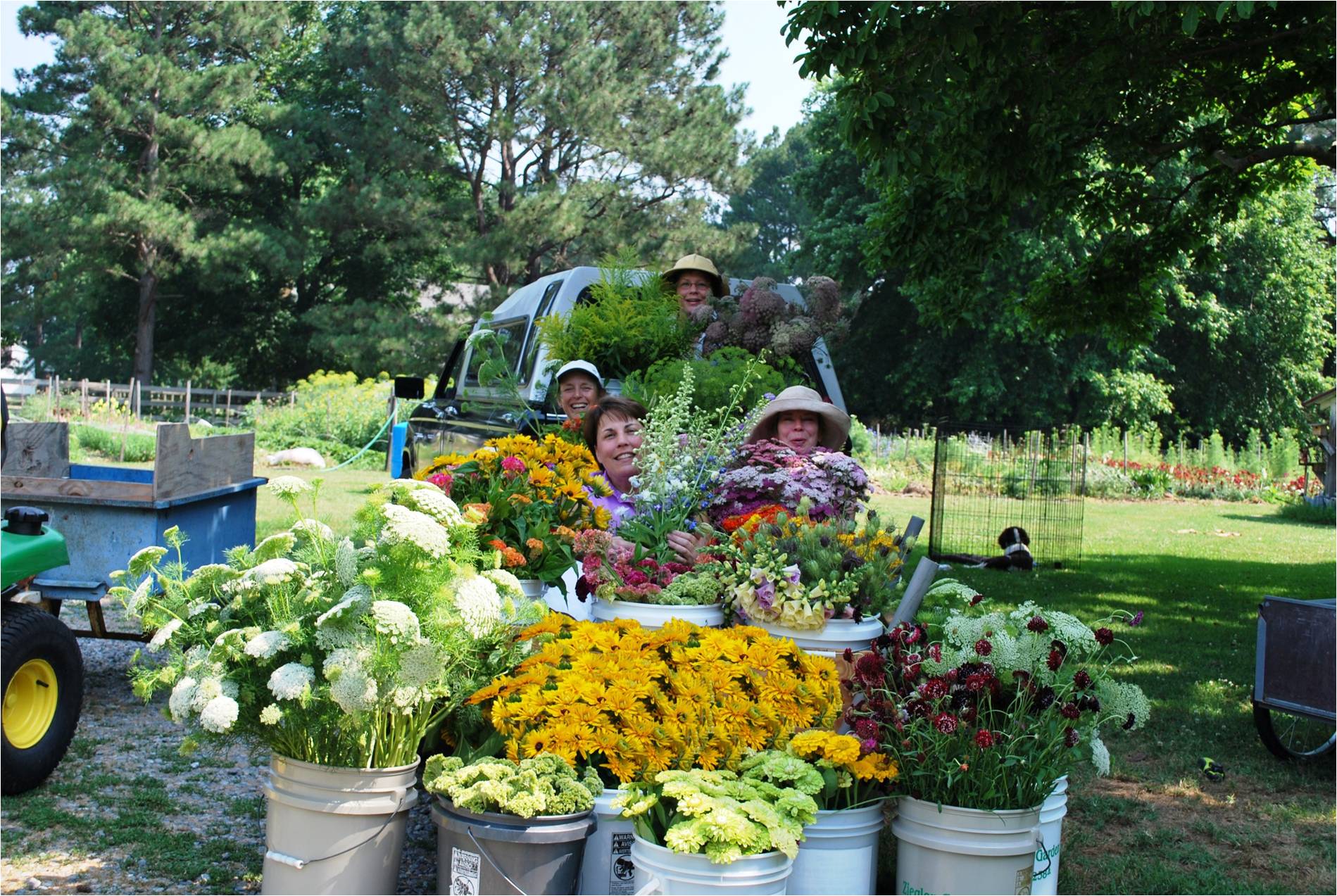
Serious production!! Lisa says her farm produces 10,000 flower stems a week!

Serious production!! Lisa and her crew harvest 10,000 flower stems a week!

Thanks to support from listeners like you, this podcast has been downloaded more than 20,000 times. If you like what you hear, please consider logging onto Itunes and posting a listener review.

My personal goal is to put more American grown flowers on the table, one vase at a time. I promise that when you tune in next week, you’ll hear another insightful and educational episode of the Slow Flowers Podcast.

The Slow Flowers Podcast is engineered and edited by Hannah Holtgeerts and Andrew Wheatley. Learn more about their work at hhcreates.net

SLOW FLOWERS Podcast: American-grown meets Australian-grown (Jennie Love & Lindsey Myra) – plus a bonus interview with Holly Heider Chapple (Episode 158)

Wednesday, September 10th, 2014
Welcome to Love 'N Fresh Flowers

Welcome to Love ‘N Fresh Flowers

35_photo_343Last month I spent 24 glorious hours at Philadelphia-based Love ‘N Fresh Flower Farm, owned by Jennie Love.

I’ve known Jennie for a few years, in fact, she was a previous guest of this podcast.

But the occasion was my first-ever visit to her beautiful farm, to work with the very talented Rob Cardillo to photograph a feature story about Jennie, her urban flower farm and her design work in a 2015 issue of Country Gardens magazine.

Jennie Love (left) hosted a wonderful field-to-table dinner for so many wonderful friends. I'm next to Jennie, followed by Lindsey Myra and Ellen Frost of Local Color Flowers in Baltimore.

Jennie Love (left) hosted a wonderful field-to-table dinner for so many wonderful friends. I’m next to Jennie, followed by Lindsey Myra and Ellen Frost of Local Color Flowers in Baltimore.

Lindsey_logoWhen we were planning the shoot, Jennie mentioned that Lindsey Myra, a flower farmer from Australia, would be spending a month at Love ‘N Fresh on a “fellowship” — and she asked whether I’d like to record a conversation with them? Umm . . .  YES – that wasn’t a hard decision to make!

Before I introduce you to Jennie and Lindsey, though, here’s a bonus update about a recent conversation I had with Holly Heider Chapple.

Holly and I met early in 2014 and since then we have had an ongoing conversation about the American Grown flower movement and how the members of Chapel Designers, her group of wedding and event florists, can get more involved in the Slow Flowers project.

As it turns out, several Chapel Designers are members of Slowflowers.com, and we just added Holly Heider Chapple Flowers, Holly and her husband Evan’s design studio, to the site.

After discussing the All-American concepts with Holly, I began to understand that some designers feel I’ve made it a black-and-white issue. Either you use 100% percent seasonal or local flowers, or you use 100% imports. However, the reality for many is somewhere between.

Holly's Instagram bouquet that started the conversation!

Holly’s Instagram bouquet that started the conversation!

The impetus behind today’s conversation began last week when Holly posted a beautiful arrangement on her instagram feed and I made a comment saying: Holly, those look American Grown. She responded that it was mostly all domestic flowers, but she didn’t want to make the #americangrown claim just in case one or two stems were not.

I love what Holly wrote in one of our text exchanges:

“If we add the percentage of how much is American grown, I think it will really get people – designers and brides – thinking and causing us all to learn. I like this (idea) because it pushes us to think about it and (to) really understand where things are coming from. It would also allow us to post designs that are barely American grown – and people will see how the looks vary, depending on how much local product there is. I also think it will be very interesting to have a documented board of images that show the differences of the designs between those that are heavily American grown flowers and those that are sourced from other countries.”

So if you follow this percentage concept, post photos of your designs and use this hashtag: #americangrown50% or #americangrown100%. Please remember to add #slowflowers and #fieldtovase and other relevant hashtags, too!

Over time, I bet this approach will engage even more floral designers in thinking about the origins of the stems they use. I love where Holly is going with this. The natural beauty and inherent character of domestic flowers will go far to demonstrate the value of staying close to home when you source. That’s exactly what Slowflowers.com is all about.

Holly on Instagram

Holly on Twitter

Holly on Facebook

NEXT, our MAIN FEATURE: A lovely story of how Jennie and Lindsey met through social media and how they cooked up an international flower farmer exchange.

Lindsey (left) and Rob Cardillo (right), hauling chairs that we planned to use in a vignette of flowers.

Lindsey (left) and Rob Cardillo (right), hauling chairs that we planned to use in a vignette of flowers.

Since it was winter at Lindsey’s flower farm in Australia, the chance to spend the month of August on a U.S. flower farm was enticing. Similarly, in the future, perhaps even this coming winter, Jennie hopes to visit Lindsey during her peak season – when Philadelphia flower fields are under snow.

These nontraditional ways of doing business fascinate me to no end. I love the way creative flower farmers and florists are circumnavigating conventional methods of commerce and proving that one plus one equals way more than two.

Meet Lindsey Myra, a Slow Flowers #farmerflorist from Australia.

Meet Lindsey Myra, a Slow Flowers #farmerflorist from Australia. (photo courtesy LindseyMyra.com)

Let me tell you briefly about Lindsey Myra. She is an artist, a florist, a writer and a flower grower. She writes on her web site: ” I am stumbling upon wonder every day. Enchantment and fascination in the natural world infuses my work and stimulates my enthusiasm for botanical culture.”

In 2012, motivated by a desire to provide a positive alternative in the cut flower industry, Lindsey started The Little Flower Farm, her own small-scale, organic flower farm, planting flowers on a borrowed backyard in Melbourne’s northern suburbs.

A Lindsey Myra arrangement (LindseyMyra.com)

A Lindsey Myra arrangement (LindseyMyra.com)

The Little Flower Farm is the first of its kind in Victoria. According to Lindsey, the farm is motivated by three key ambitions: to offer a more environmentally sustainable product, to encourage others to embrace the living world within their own lives and lastly, a personal desire to create beauty and lots of it! The Little Flower Farm produces organic, true to type, heirloom blooms. Founded on the principles of permaculture and rooted in a true passion for flora,  she provides a positive and sustainable approach to cut flowers.

Lindsey at The Little Flower Farm (LindseyMyra.com)

Lindsey at The Little Flower Farm (LindseyMyra.com)

2014 has seen The Little Flower Farm move to a larger, rural plot in the Macedon Ranges, an hour north of the city. Last season Lindsey’s flowers were consistently retailed by Cecilia Fox and North St Botanical, floral studios in Melbourne. This year she plans to also offer a Community Share Agriculture (CSA) subscription to deliver  seasonal, farm fresh, organic flowers direct to floral customers. All flowers are grown out in the open air and as such are truly seasonal, September to June.

Jennie Love of Love 'N Fresh Flowers

Jennie Love of Love ‘N Fresh Flowers

Jennie Love had her first flower patch at age four in her mother’s huge kitchen garden on a 5th generation family farm in central Pennsylvania — growing straw flowers and nasturtiums. She writes: “My soul has ever since been connected to the shifting of the seasons and the nurturing of unfurling petals and leaves.”

Ironically, Jennie says she needed to run away to the big city to realize just how much farming meant to her. She couldn’t resist the pull of the land.

On Location at Love 'N Fresh Flowers - here, my colleague Rob Cardillo as he captures Jennie's portrait in the flower fields.

On Location at Love ‘N Fresh Flowers – here, my colleague Rob Cardillo as he captures Jennie’s portrait in the flower fields.

By the time Jennie could no longer deny her need to nurture nature, she had already put down serious roots in Philadelphia. And so, Love ‘n Fresh Flowers was born as one of the first and few urban flower farms located within a big city’s limits. Urban flower farming has proven to be just about the best thing she could have ever dreamed up. Jennie finds it even more gratifying to be the stewardess of two acres of dwindling urban green space than it would be to own a vast expanse in a more rural locale. It means the world to her to be able to create and sustain a healthy ecosystem within this concrete jungle.

A beautiful Love 'N Fresh team member models her equally beautiful flower crown, fashioned by Jennie Love during our podcast interview.

A beautiful Love ‘N Fresh team member models her equally beautiful flower crown, fashioned by Jennie Love during our podcast interview.

The flowers that Jennie grows inspire every single element of her little flower business. She says: “It’s an amazing gift to be able to walk the fields, cut what is at the peak of perfection, and take it into the design studio to create a piece of living art. Somehow that never gets old for me, even after thousands of bouquets. While flower farming and event design is exhausting, all-consuming work, I never ever tire of the flowers and their charms.”

Jennie is a leader in the American Grown floral community, much sought out for her flower farming knowledge and her exquisitely natural design aesthetic.

At the end of our conversation, I asked Jennie to discuss the upcoming ASCFG national conference, which takes place October 19-22, 2014 in Wilmington, Delaware.

Jennie is a co-chair of the conference, with the theme “Growing Growers.” Slow Flowers is a media sponsor of this conference and I’m very much looking forward to joining Jennie and so many other flower farmers and farmer-florists around the country at that event.

Jennie/Love ‘N Fresh on Instagram

Jennie/Love ‘N Fresh on Facebook

Jennie/Love ‘N Fresh on Pinterest

Lindsey/The Little Flower Farm on Instagram

Lindsey/The Little Flower Farm on Facebook

Finally, I’m thrilled to announce that the Slow Flowers Podcast has reached yet another milestone. This week we hit our 20,000th downloaded episode.

That’s cause for celebration and I thank listeners like you for your support. If you like what you hear, please consider logging onto Itunes and posting a listener review.

My personal goal is to put more American grown flowers on the table, one vase at a time. I promise that when you tune in next week, you’ll hear another insightful and educational episode of the Slow Flowers Podcast.

And speaking of this podcast, here’s a huge thanks to my engineering and editing team, Hannah Holtgeerts and Andrew Wheatley. Learn more about their work at hhcreates.net

SLOW FLOWERS Podcast: A Lavender Farm Wedding with Local Flowers grown by Nancy & Jim Cameron of Destiny Hill Farm (Episode 157)

Tuesday, September 2nd, 2014
A couple poses between the gently curving rows of lavender at Destiny Hill Farm.

A couple poses between the gently curving rows of lavender at Destiny Hill Farm.

In musical theatre the term “triple-threat” is used to describe super-talented individuals who can act, sing – and dance. I’ve been thinking a lot about how triple threat applies to other professions, such as in the floral world, where Destiny Hill Farm is a true triple threat.

Nancy and Jim Cameron of Destiny Hill Farm.

Nancy and Jim Cameron of Destiny Hill Farm.

Today’s podcast episode introduces you to Nancy and Jim Cameron – and the story of how they created Destiny Hill as an agro-tourism destination for growing cut flowers, designing florals and producing weddings & special events.

In the distance, you will see the stables and barn - home to some amazing wedding gatherings.

In the distance, you are the stables and barn – home to some amazing wedding gatherings.

Based in Western Pennsylvania, this 137-acre farmstead and the people who run it do three things very well:

1-flowers are grown here, including 5,000 lavender plants and hundreds of varieties of annuals, perennials, grasses and woody ornamental shrubs.

2-there’s a full-service floral design studio that incorporates those botanical elements into bouquets, boutonnieres, centerpieces, altar pieces and more; and

3- Destiny Hill is a wedding and event destination that hosts and produces between 20 and 25 functions each year, led by event coordinator Mimi York.

I met Nancy earlier this year when Destiny Hill contributed to the Slowflowers.com campaign on Indiegogo, and then this past February when she attended a wedding bouquet workshop I co-hosted with Alicia Schwede of Flirty Fleurs. When I made the connection that Destiny Hill was located about 30 minutes outside of Pittsburgh, we started planning my visit when I was scheduled to attend a Garden Writers conference there last month.

Nancy and I pose with our just-picked and arranged bouquets - all local flowers from her cutting fields.

Nancy and I pose with our just-picked and arranged bouquets – all local flowers from her cutting fields.

Jim and Nancy graciously picked me up in downtown Pittsburgh and drove me out to the farm. It was a rainy summer day – familiar weather to a Seattleite like me. By the time we arrived at the majestic landscape that’s home to the Camerons’  personal residence and business enterprise, we all agreed that the rain wouldn’t stop our fun.

Inside the barn - a beautiful setup for a wedding feast.

Inside the barn – a beautiful setup for a wedding feast.

READ MORE…

SLOW FLOWERS Podcast: Grocery Floral with New Seasons Markets’ Katie McConahay and Seattle Wholesale Growers Market’s Molly Sadowsky (Episode 156)

Wednesday, August 27th, 2014
New Seasons Market in Portland Oregon - a rainbow of local flowers in the beautiful floral department.

New Seasons Market in Portland Oregon – a rainbow of local flowers in the beautiful floral department.

A New Seasons floral department creation.

A New Seasons floral department creation.

Did you know that more than 50 percent of all floral transactions in the U.S. take place at the supermarket cash register?

While that statistic may not bode well for the corner flower shop, it does represent opportunity for flower farmers who find a way to work with this ever-changing dynamic.

There are so many reasons for the shift from the corner flower shop to the grocery store, but according to my guests in today’s podcast one of its primary causes is time and convenience.

In other words, consumers are so pressed for time in all facets of their lives that the grocery store has become the one-stop place to purchase not just food, but so many other things.

Think about it: The grocery store, when done well, is now our coffee shop, our bank, our drug store, our greeting card store, our liquor/wine store, our bakery, our deli, and oh, yes, our flower shop.

Please enjoy today’s conversation about the fast-paced world of grocery floral – as I seek to understand where the opportunities are from two perspectives: the floral buyer (the supermarket) and the floral seller (the flower farmer).

"Slow Flowers" supermarket pioneer: Katie McConahay of New Seasons Markets.

“Slow Flowers” supermarket pioneer: Katie McConahay of New Seasons Markets.

Katie McConahay is the floral merchandiser for New Seasons Markets, a Portland-based chain of 13 neighborhood grocery stores. With the motto, “the friendliest store in town,” New Seasons nurtures its local suppliers.

On its web site you will find this message: “As a locally owned business, we take pride in supporting local farms, ranches and other small businesses through our Home Grown program.

“The Home Grown symbol points out products from produce and meat to hand lotions and scented candles that come from local companies. So, you can support the local and regional economy with your dollars. And we can further our strong commitment to sustainable agriculture.”

Unfortunately, there is a lot of lip-service paid to LOCAL and I’ve witnessed first-hand the amount of green-washing that can take place at grocery stores that tell their shoppers one thing and then do something completely opposite that . . . such as trying to pass off imported flowers as local or simply not caring enough to properly label the sources.

More flowers at New Seasons Market.
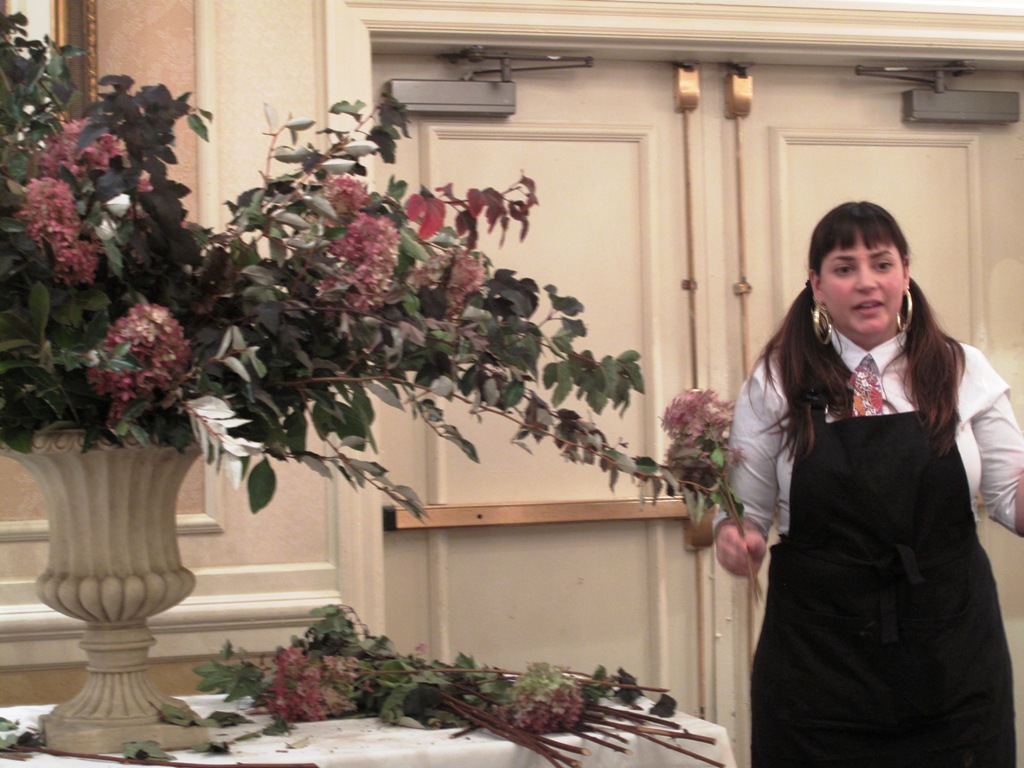
More flowers at New Seasons Market.
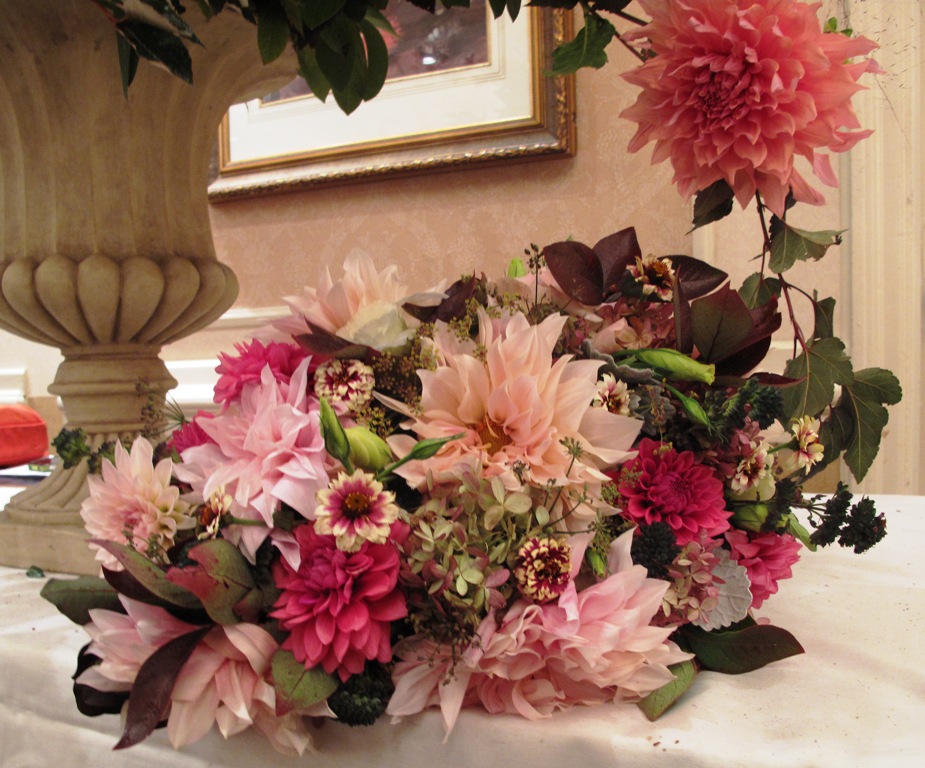
After getting to know Katie over the past year, I have to say how impressed I am with her philosophy of transparency about the origins of the flowers she and her employer sell. “Not many people think of buying local when it comes to flowers. Making beautiful selections available from local growers is how we’re making a difference, one stem at a time.”
A CA-Grown floral display at one ohe Portland area New Seasons.

A CA-Grown floral display at one Portland area New Seasons.

Katie began her career in floral at the age of 15 when she took a position as a floral clerk at a local grocery store in Milwaukee, Wisconsin.

Early on she decided that she wanted to make unique and beautiful flowers available to everyone, even daily grocery shoppers.  She went on to become the youngest ever floral manager for Wisconsin’s largest grocery chain by the age of 18, taking her department to number one in sales in a region with over 60 stores.

Katie has been involved in all facets of the floral industry, from large scale grocers to small, elegant design studios in Portland.

She found her “happy medium” in the New Seasons Market floral program where she began as a floral manager in 2010, eventually assuming the head merchandising position in 2012.  Since that time she has nurtured the floral program to unprecedented growth levels adding dozens of local and California vendors in 2014.

Katie remains committed to cultivating relationships with local growers and promoting a sustainable, local floral program that supports small growers while continuing to supply the 13 New Seasons Markets with the very best that the floral industry has to offer.

Molly Sadowsky of Seattle Wholesale Growers Market.

Molly Sadowsky of Seattle Wholesale Growers Market.

When I visited Portland last month I scheduled an interview with Katie and I asked her predecessor at New Seasons, Molly Sadowsky, to join us.

Molly (left) and Katie (right), joined other American-grown advocates to discuss the future of domestic flower farming and floral  selling at the CCFC gathering last fall in Portland.

Molly (left) and Katie (right), joined other American-grown advocates to discuss the future of domestic flower farming and floral selling at the CCFC gathering last fall in Portland.

Goodies at the Seattle Wholesale Growers Market.

Goodies at the Seattle Wholesale Growers Market.

Molly, the program manager at the Seattle Wholesale Growers Market, was the link who first introduced me to Katie. That’s when we all attended the California Cut Flower Commission’s field-to-vase dinner held in Portland last October where I was invited to speak.

At the Seattle Wholesale Growers Market, a cooperative of Northwest flower growers in Seattle’s Georgetown neighborhood, Molly oversees the selling of flowers to grocery customers and maintaining a year-round floral inventory.

Oregon-grown roses from farmer to florist.

Oregon-grown roses from farmer to florist.

Washington-grown dahlias, from farmer to florist.

Washington-grown dahlias, from farmer to florist.

Molly is such a valuable asset at the Seattle Wholesale Growers Market. One reason is her background, having previously built and ran the floral program at New Seasons Market in Portland where she initiated a seasonal buying program that relied on product from 80 growers, including more than 50 in Oregon.

Molly embraced the buy-local philosophy as a restaurant owner in the early 2000s, when she forged relationships with local farmers to supply her vegetarian breakfast-and-lunch café. Molly lives in Portland with her husband, Dan, and their six-year-old Belgian Malinois, Leyna.

Thanks to listeners like you, this flower-powered podcast has been downloaded more than 18,000 times. If you like what you hear, please consider logging onto Itunes and posting a listener review.

Please join me in putting more American grown flowers on the table, one vase at a time. I promise that when you tune in next week, you’ll hear another insightful and educational episode of the Slow Flowers Podcast.

This podcast was engineered and edited by Hannah Holtgeerts and Andrew Wheatley. Learn more about their work at hhcreates.net


SLOW FLOWERS Podcast: Pittsburgh’s Local & Seasonal Floral Designers – Jimmy Lohr & Jonathan Weber of greenSinner (Episode 155)

Tuesday, August 19th, 2014

Last week, this podcast came to you from Homer, Alaska.

This week, my travels brought me to Pittsburgh, Pennsylvania.

Let’s just say I’m coping with a little jet lag, but summer is my busy season for lectures and photo shoots, so I’ve learned to enjoy my MVP Gold status on Alaska Airlines.

Green_Sinner_IMG_1067But the other thing I have thoroughly enjoyed has been the chance to connect with great flower farmers and floral designers – coast to coast – who are part of the Slow Flowers movement. In the coming weeks you’ll hear from several of these awesome folks who I first “met” virtually, through social media and — more importantly — because they have joined Slowflowers.com.

Pittsburgh's Floral "Who's Who" -- from left, Margie Dagnal and Kate Dagnal of Goose Creek Gardens, Jimmy Lohr and Jonathan Weber, owners of greenSinner.

Pittsburgh’s Floral “Who’s Who” — from left, Margie Dagnal and Kate Dagnal of Goose Creek Gardens, Jimmy Lohr and Jonathan Weber, owners of greenSinner.

Today you will meet two of them: Jimmy Lohr and Jonathan Weber, owners of greenSinner, an urban role model that promotes American-grown flowers in the heart of Pittsburgh’s Lawrenceville neighborhood (by the way, Lawrenceville is now called “new Brooklyn” for hipster, indie, design-focused vibe).

Peek through the chain link fence - from the urban parking lot into greenSinner's cutting garden.

Peek through the chain link fence – from the urban parking lot into greenSinner’s cutting garden.

Jonathan and Jimmy state their beliefs up-front-and-center on the home page of their web site:

“greenSinner brings you local, sustainable cut flowers and plants. We love fresh flowers (don’t you?), but we don’t love that they come from Ecuador drenched in chemicals (yuck). We’re trying to make the world — our world and yours — a little greener and a little more beautiful. We grow flowers right here in western PA and source as many materials and plants as we can in a 500-mile radius. Not only is it better for the environment, but you also get fresher flowers and more local and unusual varieties. Beyond flowers, we focus on vintage or re-purposed containers and event decor and sustainable practices.”

The guys at greenSinner first caught my attention when they contributed to the Slowflowers.com campaign on Indiegogo earlier this year. Not knowing anything about their business, I looked them up and sent them a note of thanks.

A littleclassical detail in the "front garden" at greenSinner's studio.

A littleclassical detail in the “front garden” at greenSinner’s studio.

Only a few weeks after the campaign ended, I found myself in early March attending Holly Heider Chapple’s NYC Chapel Designers’ conference, where I was included in the speaker lineup. Of course, I was there to encourage her members to consider joining the American Grown flower movement, to refocus their wedding and event work to include seasonal and local flowers and to introduce these designers to the notion of working closely with flower farmers.

Tidy and enchanting, the cutting garden is wedged between greenSinner's studio and the adjacent city parking lot.

Tidy and enchanting, the cutting garden is wedged between greenSinner’s studio and the adjacent city parking lot.

And there was Jimmy, a charming teddy bear of a guy, front and center, making me feel welcome. He wasn’t the only one who “got it,” but he was definitely the most enthusiastic. I learned that he and his partner Jonathan believe in designing weddings and events with locally grown flowers and plants and that they owned a postage-stamp-sized cutting garden behind their shop. We made plans for me to visit in August when I knew I’d be in Pittsburgh for the Garden Writers Association’s annual symposium.

Pedestrians love to peer through the front fence to see what's growing within.

Pedestrians love to peer through the front fence to see what’s growing within.

In the ensuing months, not only did we stay in touch, but when I worked with Kasey Cronquist on the launch announcement of the Certified American Grown brand on July 1st, we invited Jimmy to speak on behalf of floral designers.

Jimmy picked me up at my hotel in downtown Pittsburgh early one morning and we drove a short distance to greenSinner’s studio. After a walking tour to see their backyard growing operation, their greenhouse and the small cutting garden they planted behind a neighboring studio where their stained-glass artist friend works, we sat down for a short podcast interview.

A peek at the cutting garden behind the greenSinner studio.

A peek at the cutting garden behind the greenSinner studio.

Before we get started, let me introduce you to the two men you’ll hear next. This is straight from greenSinner’s web site:

Jimmy Lohr, Chief Eccentric Officer:

Jimmy, in a limerick:
There once was a boy from the sticks
Who grew up and left all the hicks.
He studied the arts
And big event parts
Then moved home to share all his tricks.

Jonathan Weber, Farmer-General
Jonathan, in a haiku:
Jonathan Weber
internet marketing dude
now he’s a farmer

These guys definitely express their values in everything they do as designers and business owners – and it was such a pleasure to spend time on their turf in Pittsburgh.

Thanks for joining this lively conversation. I’m grateful for listeners like you who have downloaded this flower-powered podcast more than 18,000 times. If you like what you hear, please consider logging onto Itunes and posting a listener review.

Please join me in putting more American grown flowers on the table, one vase at a time. I promise that when you tune in next week, you’ll hear another insightful and educational episode of the Slow Flowers Podcast.

The Slow Flowers Podcast is engineered and edited by Hannah Holtgeerts and Andrew Wheatley. Learn more about their work at hhcreates.net

SLOW FLOWERS Podcast: Debra & Christina’s Alaska Peony Adventure (Episode 154)

Wednesday, August 13th, 2014
A few lovelies, spotted on the windowsill at Chilly Root Peony Farm.

A few lovelies, spotted on the windowsill at Chilly Root Peony Farm.

I know I’ve raved about Alaska-grown peonies for a few years and YES, they are one of my floral obsessions. No apologies here. When it comes to peonies, The 50 Mile Bouquet is now The 1,500 Mile Bouquet.

But the exciting news is that these flowers are proving to be a very important value-added crop for farmers in Alaska; their lovely peonies satisfy demand at a time when no one else on the planet can supply the popular flower – and these blooms have stimulated economic development in a state that greatly needs it.

Since touring Alaska’s three primary growing regions for cut peonies in 2012, I’ve been a passionate booster for this fabulous American-grown crop – sharing the story of uncommonly beautiful summer peonies available in July, August and even September. My magazine articles, blog posts, lectures and even a previous podcast episode have highlighted peonies for the cut flower trade – and I believe consumers are just as smitten by these peonies as I am.

My lovely hosts from the Homer Gardeners' Weekend, Roni Overway (left) and Brenda Adams (right)

My lovely hosts from the Homer Gardeners’ Weekend, Roni Overway (left) and Brenda Adams (right)

So it is with a huge amount of joy that I bring you today a special episode about peonies in Alaska. Thanks to the Homer Garden Club and co-chairs Brenda Adams and Roni Overway, I returned to speak at the popular “Homer Gardeners’ weekend,” an event-packed two days featuring lectures, tours and a fun reception at Homer’s only winery.

Kachemak Bay and Grewinkg Glacier. Sigh. SO beautiful. Awe-inspiring, actually!

Kachemak Bay and Grewinkg Glacier. Sigh. SO beautiful. Awe-inspiring, actually!

I spoke about floral design with seasonal ingredients and led an afternoon hands-on workshop using only Alaska-grown flowers. Against all this activity was the beautiful backdrop of Homer and its water, glaciers and expansive skies. The landscape is unforgettable and I loved being able to look across Kachemak Bay to Grewinkg Glacier – a sight that one never tires of.

Beth (left) and Christina on bouquet-making day at Scenic Place Peonies.

Beth (left) and Christina on bouquet-making day at Scenic Place Peonies.

In this episode you will hear from Beth Van Sandt, owner of Scenic Place Peonies in Homer – And – Christina Stembel, owner of San Francisco-based Farmgirl Flowers.

Beth’s peonies blew us away. It was so wonderful to share my excitement with Christina, who joined me on this fun floral vay-cay. Christina is a foremost advocate for domestic cut flowers. Through her company Farmgirl Flowers, this woman has been a tireless advocate for local and seasonal flowers, as she sources and promotes flowers from California flower farms and sustainable design.

Christina Stembel & me on our boating excursion with Beth Van Sandt (who did all the hard work)

Christina Stembel & me on our boating excursion with Beth Van Sandt (who did all the hard work)

When I told Christina back in March that I was heading to Homer in early August, she said: “I’d love to come” – and I took her seriously. While I enjoyed the companionship, I also loved the intellectual and creative stimulation of being with a kindred spirit – a fellow American Grown flower advocate and a designer who walks the talk with what she uses in her daily designs for customers who shop at farmgirlflowers.com.

A Farmgirl Flowers bouquet, Alaska-style.

A Farmgirl Flowers bouquet, Alaska-style.

Christina and I sat down one morning to record our musings about what we were both personally experiencing on this trip. We owe a huge thanks to Beth and her husband Kurt Weichhand. Their Scenic Place B&B was our home for four nights and we were cozy, comfy and happy. It was a magical trip for me in so many ways and I’m grateful to Christina, Beth and the other Homer peony farmers for giving me such a memorable experience.

On Scenic Place Peonies’ web site, Beth writes: “We are long time Alaskans who work, play and enjoy living on the Kenai Peninsula. Located on the scenic East Hill side of Homer, overlooking beautiful Kachemak Bay, Beth grows 14 different cultivars of peonies for the cut flower market. At elevation 1,150 feet, Scenic Place Peonies is one of the latest producers of fresh cut peony stems grown in America – with flowers harvested from mid July, August and September.”

The farm holds a Certified Naturally Grown designation. “Because we value our family, community and the wild creatures that we share our farm with, we choose to grow naturally without the use of harsh chemicals and with the utmost care and love. When you see, touch and smell our flowers you will only experience the true beauty and fragrance of the peony,” Beth writes.

Scenic Place Peonies thrives on a perfect combination of climate, rich black soil, cool temps and crazy sunshine of up to 20 hours a day. These assets produce magnificent flowers with long, robust stems and exceptional blooms.

Thank you for joining me today to hear some of the exciting voices in American flower farming and floral design.

Please join me next week for another insightful and educational episode of the Slow Flowers Podcast. Thanks to listeners like you, this podcast has been downloaded more than 18,000 times. If you like what you hear, please consider logging onto Itunes and posting a listener review.

Until next week please join me in putting more American grown flowers on the table, one vase at a time.
The Slow Flowers Podcast is engineered and edited by Hannah Holtgeerts and Andrew Wheatley. Learn more about their work at hhcreates.net

SLOW FLOWERS Podcast: Farmer-Florist News – from Gretel Adams, Elizabeth Bryant and Kailla Platt (Episode 153)

Wednesday, August 6th, 2014

This iconic photo is showing up everywhere and I am so lucky it's mine! So symbolic of American Grown. Design and truck: Tara Kolla, Silver Lake Farms (Los Angeles) (c) Debra Prinzing

This iconic photo is showing up everywhere and I am so lucky it’s mine! So symbolic of American Grown. Design and truck: Tara Kolla, Silver Lake Farms (Los Angeles) (c) Debra Prinzing 

It’s summertime and the Slow Flowers Podcast is on the road. And it’s no surprise to learn there’s at least one awesome American flower farmer everywhere I seem to go.

There are passionate floral designers to be discovered right alongside and that means more beautiful Slow Flowers experiences for the nation’s consumers, coast to coast.

This week I’m sharing a fabulous conversation with a farmer-florist team from Portland, Oregon – Elizabeth Bryant, owner of Rose Hill Flower Farm, and Kailla Platt, owner of Kailla Platt Flowers.

But first, a bonus conversation that I recorded on July 16th at Sunny Meadows Flower Farm in Columbus, Ohio.

Owned by Steve and Gretel Adams, previous guests on this podcast, Sunny Meadows is leading the way in changing how flowers get to market in several Ohio cities. The reason for my return to Sunny Meadows was to work with James Baggett, editor-in-chief of Country Gardens magazine, and Kritsada, an uber-talented photographer, to produce a feature story about Gretel and Steve – and their farm, flowers and floral design.


Some might call this "flower farm porn," but who cares? Gretel and Steve were really good sports about posing in the flower fields (isn't that vintage tractor a great "prop"?)

Some might call this “flower farm porn,” but who cares? Gretel and Steve were really good sports about posing in the flower fields (isn’t that vintage tractor a great “prop”?) 

You can keep an eye out for that nothing-but-gorgeous story in the summer of 2015 – and of course, I’ll remind you here when the magazine hits the newsstands.

I recorded a short interview with Gretel and two of her summer design interns, Katie Vontz and Danica Jones. They all agreed to chat briefly about what is becoming a popular way for would-be flower farmers and new floral designers to gain training: via internships, apprenticeships or seasonal work-study-style programs. I think you’ll be intrigued and inspired to hear how Gretel filled her need via social media, too.

This is the "ad" that Sunny Meadows used on Instagram to recruit its summer design interns.

This is the “ad” that Sunny Meadows used on Instagram to recruit its summer design interns. 


From left: Me, design intern Katie Vontz, Gretel Adams (Sunny Meadows Flower Farm co-owner), design intern Danica Jones and Sunny Meadows floral designer   Kumiko Matsuura.

From left: Me, design intern Katie Vontz, Gretel Adams (Sunny Meadows Flower Farm co-owner), design intern Danica Jones and Sunny Meadows floral designer Kumiko Matsuura.

Next up: A dynamic conversation with collaborators Elizabeth Bryant and Kailla Platt. 

Elizabeth Bryant (left) and Kailla Platt (right), photographed in their Portland studio.

Elizabeth Bryant (left) and Kailla Platt (right), photographed in their Portland studio. 

Kailla was trained in fine art and landscape architecture and logged a decade designing gardens. But she traces her primary training in floral design to time spent in the lush green of Oregon’s Willamette Valley, where she fell under the floral spell cast by her grandmother Jane K. Platt. 

Kailla's work, a seasonal and local floral bouquet.

Kailla’s work, a seasonal and local floral bouquet.

As Kailla puts it: “she filled my young heart with a love of gardens, plants and flowers.  She would generously send me out into her amazing garden with a basket and clippers, telling me I could pick anywhere.  Then, as we selected frogs and filled vases, she would tell me the names and the stories of all these beautiful flowers.  Her garden was a fairy land to me as a child and it continues to inspire me and influence my work today.”

Kailla Platt Flowers, a delightful composition.

Kailla Platt Flowers, a delightful seasonal composition.

Kailla Platt Flowers is a young floral studio inspired by Kailla’s lifelong relationship with flowers. On her website, Kailla writes: “I care about where my flowers come from. I want to know the farmer who grew them.  When possible, I want to gather and forage botanical material myself.  The flowers we give to others, wear in our hair and lift to our faces and smell, should be free of pesticides and harmful chemicals.  Farm to table, garden to vase, me to you.” 

Seasonal design by Kailla Platt Flowers.

Seasonal design by Kailla Platt Flowers. 

Kailla works collaboratively on wedding and event design with another amazing force, Elizabeth Bryant, a flower farmer, floral designer, and founder of Rose Hill Flower Farm, a small, sustainable urban flower farm and design studio in Portland. 

Elizabeth and Kailla at Prettyman's General, a neighborhood mercantile where they  sell their local bouquets.

Elizabeth and Kailla at Prettyman’s General, a neighborhood mercantile where they sell their local bouquets.

Elizabeth and her wife Jill grow flowers on three acres of family land in West Linn, Oregon, about 15 miles southeast of Portland. 

She says: “Our farming and land-care practices are organic and ecologically grounded, with the utmost care given to creating a healthy soil ecology and rich pollinator habitat.  We grow a range of both common and unique specialty cut flowers for use in weddings and events, through our CSA, and direct to florists.”  Rose Hill also provides lush, locally grown arrangements weekly for restaurants, businesses and individuals, or for any special occasion.  

Mixed bouquets by Rose Hill Flower Farm.

Mixed bouquets by Rose Hill Flower Farm.

What you’ll enjoy about this interview is hearing how two creatives – Elizabeth Bryant and Kailla Platt – have distinct points of view and floral businesses that are different from one another, but that they also are collaborative in a way that benefits both of their work – and their clients.

Spring ephemerals, grown by Rose Hill's Elizabeth Bryant.

Spring ephemerals, grown by Rose Hill’s Elizabeth Bryant.


Rose Hill's Elizabeth Bryant's flowers and floral design.

Rose Hill’s Elizabeth Bryant’s flowers and floral design.

Kailla and Elizabeth share studio space with Portland photographer Katie Prentiss. In a charming little cottage in Southeast Portland, the three us a combined design and meeting/event space for floral projects.  Together they enjoy great artistic synergy and often partner on projects, including weddings and large events requiring florals.

A floral collaboration.

A floral collaboration.

Thank you for joining me today to hear some of the exciting voices in American flower farming and floral design. Even after a year of producing and hosting the Slow Flowers Podcast, I can guarantee that the list of future guests is very long and I don’t imagine running out of names we need to hear from – inspiring people who are changing the way Americans gather and enjoy flowers in all aspects of life.

Floral design by Kailla Platt.

Floral design by Kailla Platt.

Next week Slow Flowers comes to you from Homer, Alaska, where I’ve happily returned after my 2012 peony-hunting excursion. After that, the road tripping continues, and you can anticipate Slow Flowers interviews with flower farmers and floral designers in Pittsburgh and Philadelphia. 

Thanks to listeners like you, this podcast has been downloaded more than 17,000 times. In fact, the month of July was our all-time most popular month of interviews with 2500 downloads – and I’m jazzed to know that more listeners are discovering this flower-powered podcast every day.

If you like what you hear, please consider logging onto Itunes and posting a listener review.

Until next week please join me in putting more American grown flowers on the table, one vase at a time. 

The Slow Flowers Podcast is engineered and edited by Hannah Holtgeerts and Andrew Wheatley. Learn more about their work at hhcreates.net