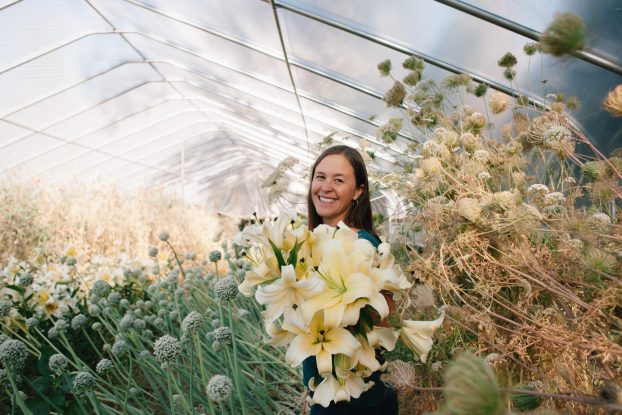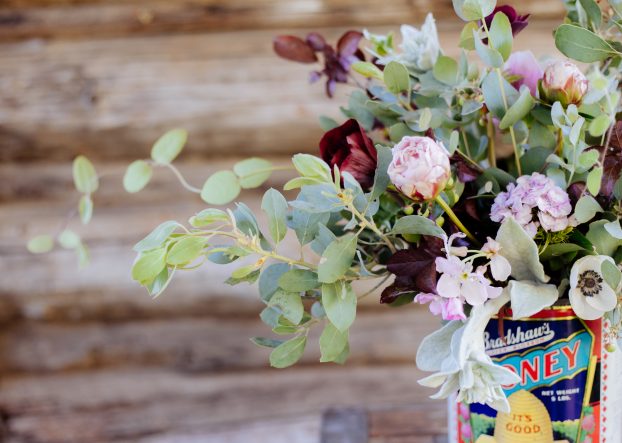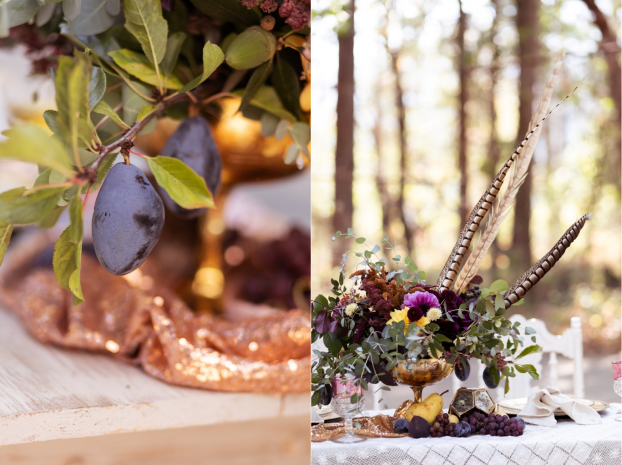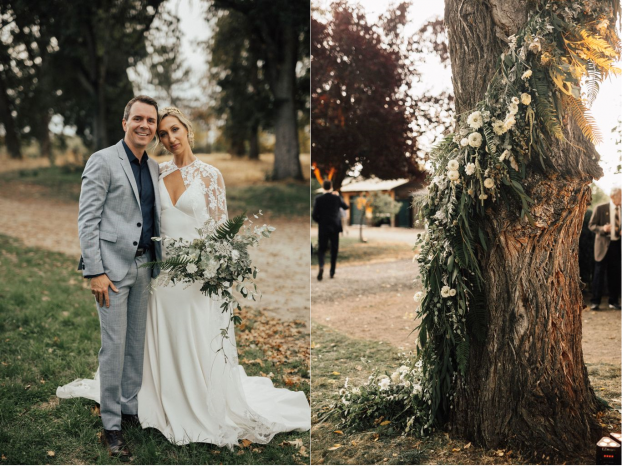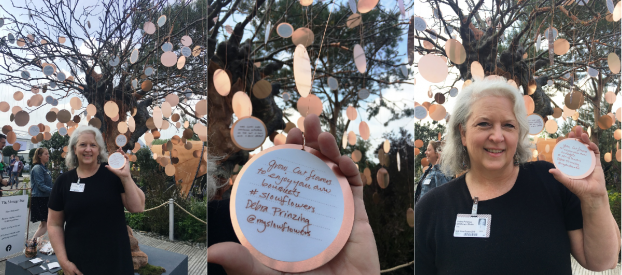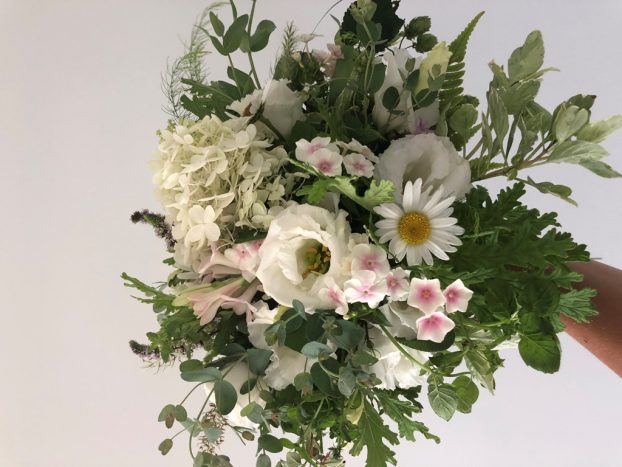
Last week took me to Southern California and I covered a lot of ground while there, from participating early in the week at The Gathering Rose workshop produced and hosted by Danielle Hahn of Rose Story Farm and Felicia Alvarez of Menagerie Farm + Flower, both past guests of this podcast, to visiting Mayesh Wholesale Flowers (a sponsor of the Slow Flowers Podcast) and connecting with today’s guest at the Los Angeles Flower District.
Whit recently wrote this on her Instagram feed @whit_hazen: “I’m building a business that provides a wonderful service to wonderful clients and is in service to my community, and hoping that it encourages you to do the same.”
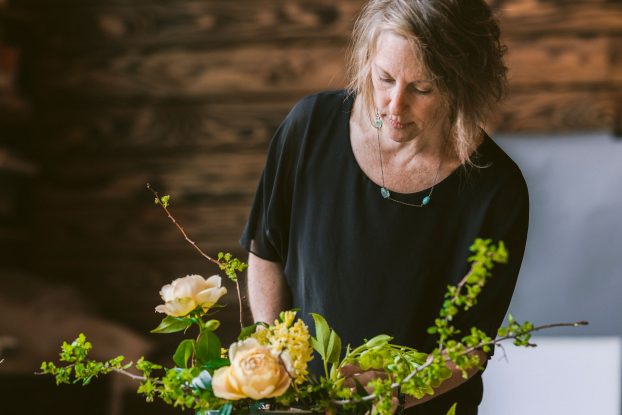
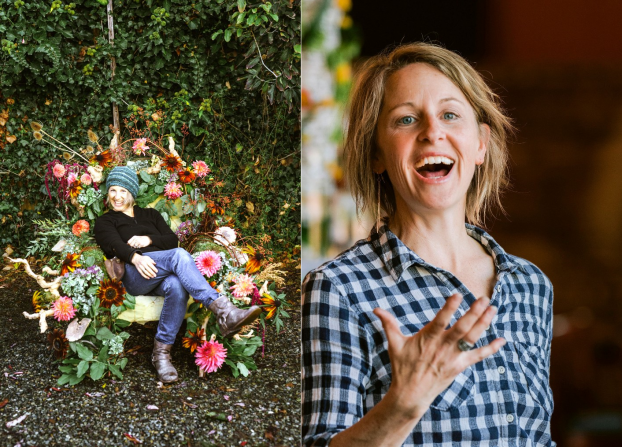
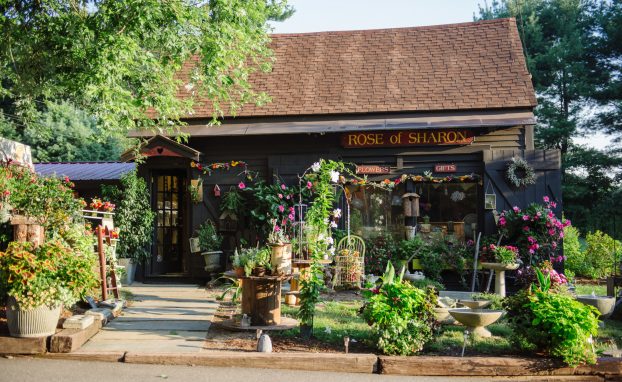
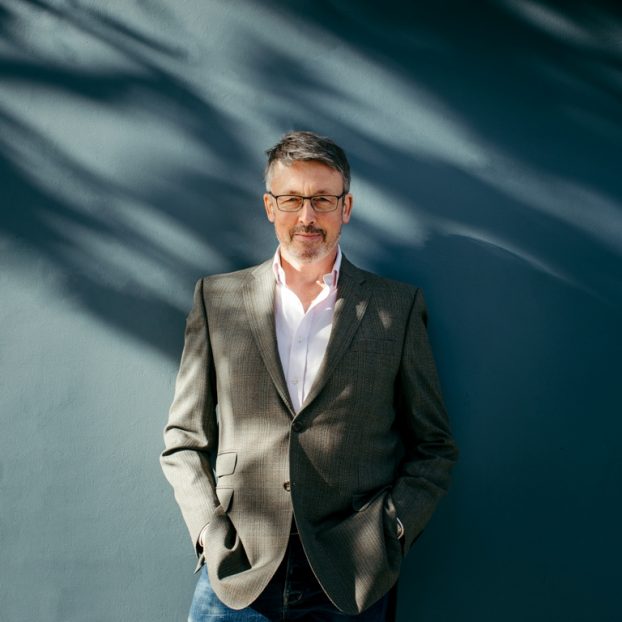
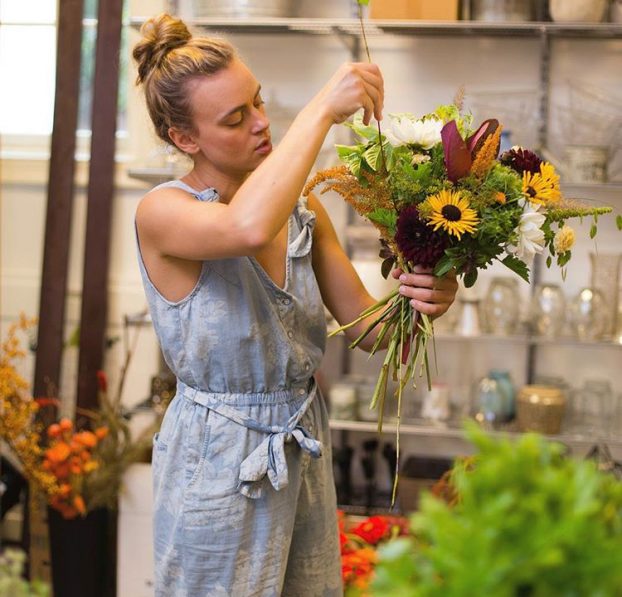
I was so thrilled to spend time with Whit McClure of LA-based Whit Hazen, a studio designer who is a featured speaker of the Slow Flowers Summit coming up in July. While we are “friends” via social media and have chatted on a telephone interview for a story I wrote for Florists’ Review’s Slow Flowers Journal last December, nothing can compare with face-to-face conversation. Whit and I enjoyed a lovely breakfast and then we recorded the interview you’ll hear next.
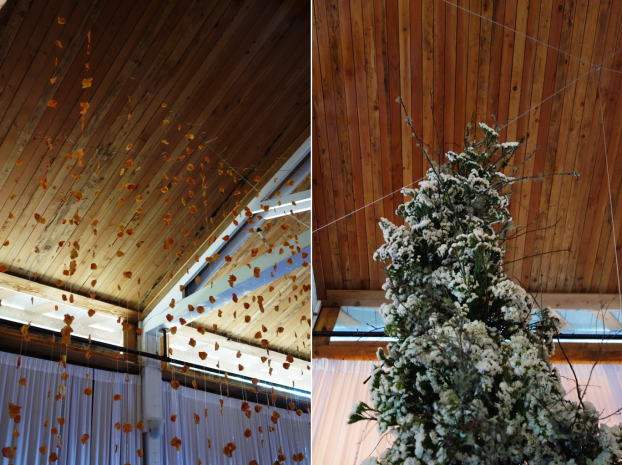
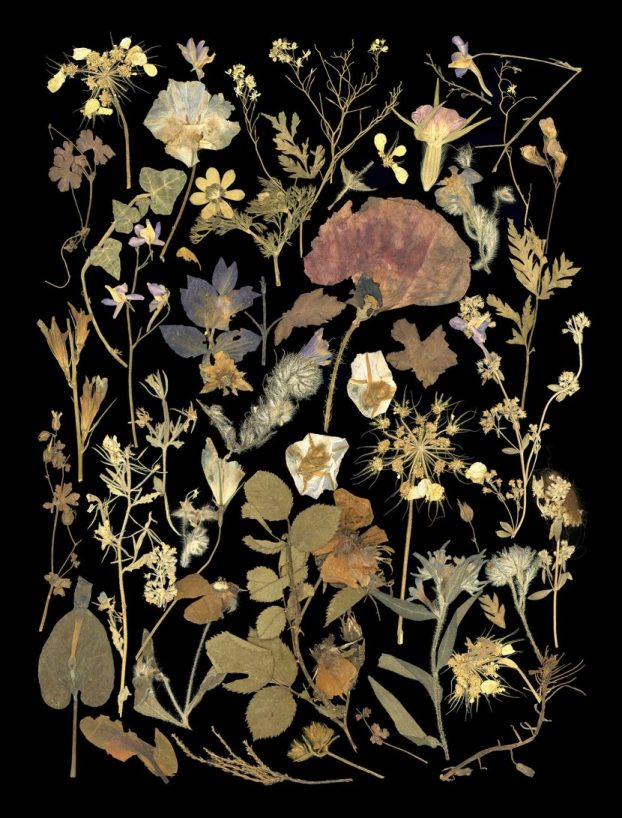
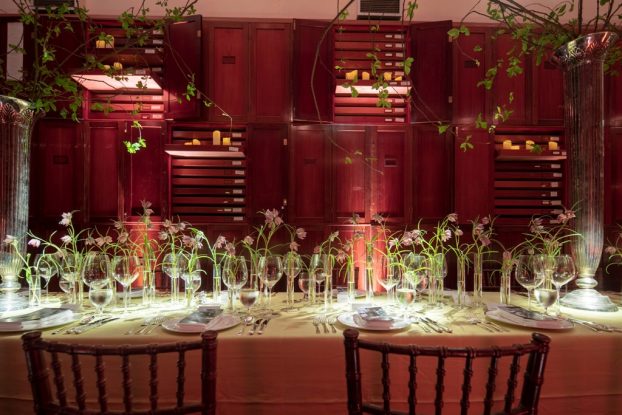
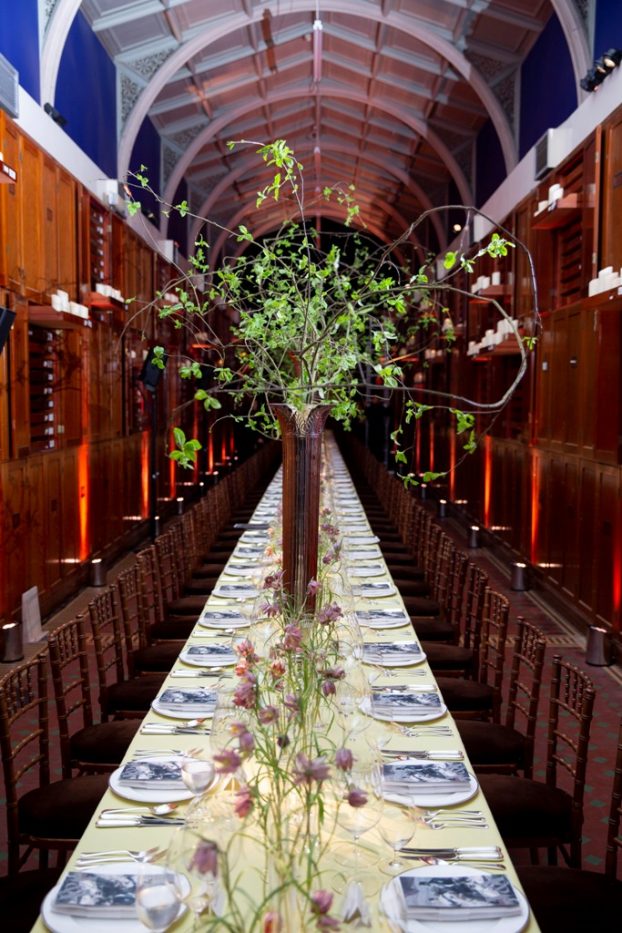
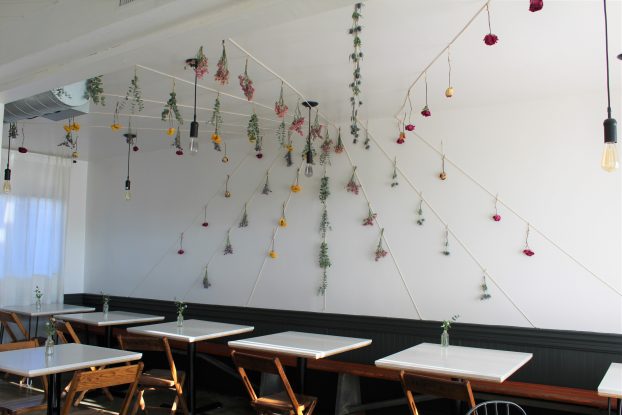
A botanical installation for one of Whit’s restaurant clients
Here’s more about
Whit:
Studio floral designer Whit McClure moved to Los Angeles three years ago and she has been designing with flowers ever since. Her introduction to flower farming and floral design is rooted in connections made through food justice and the local culinary community in Washington, D.C.
Whit spent years after college working on farms, in community gardens, and in the nonprofit world, teaching folks of all ages and walks of life how to grow their own food. Eventually she found floral design as the perfect blend of working with plants, crafting beauty, and collaborating with others, while also pursuing her committment to social justice. Ever-inspired by nature’s abundant beauty and driven to respect and protect its resources, Whit Hazen is motivated to bring more beauty in the world for others.
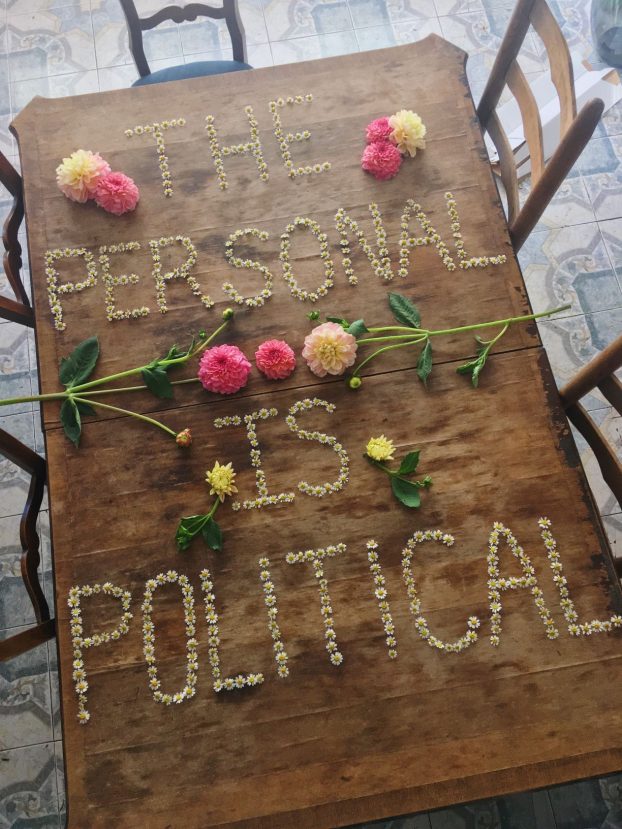
“Personal is Political”
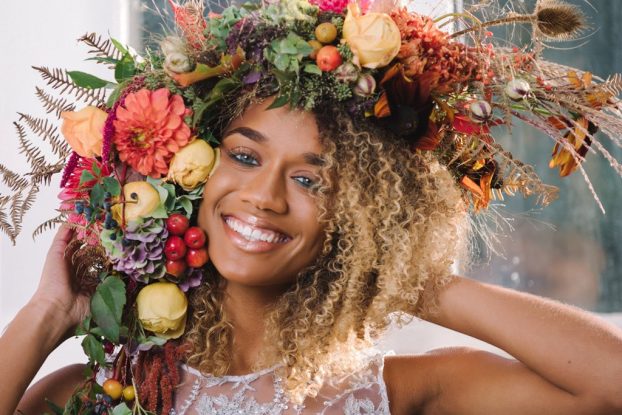
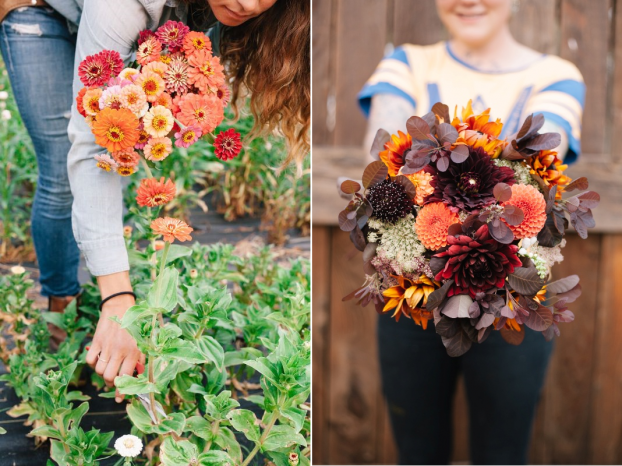
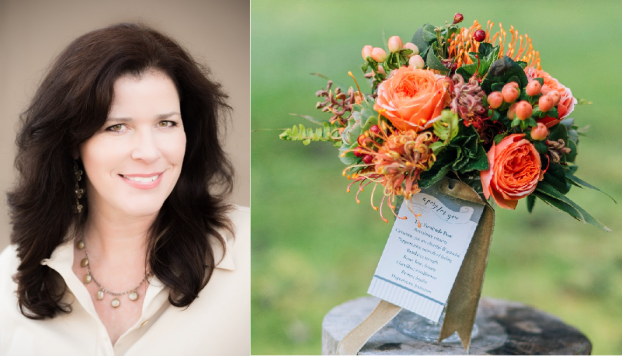
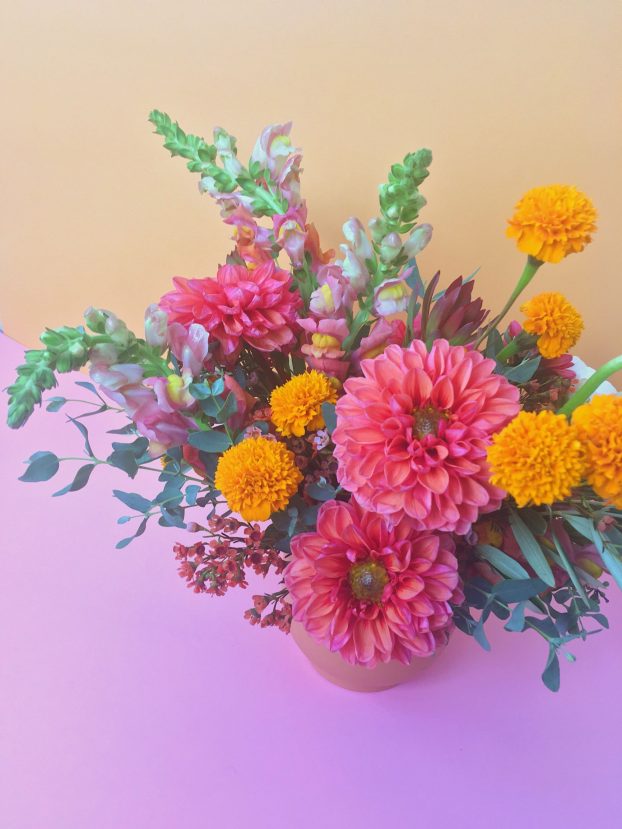
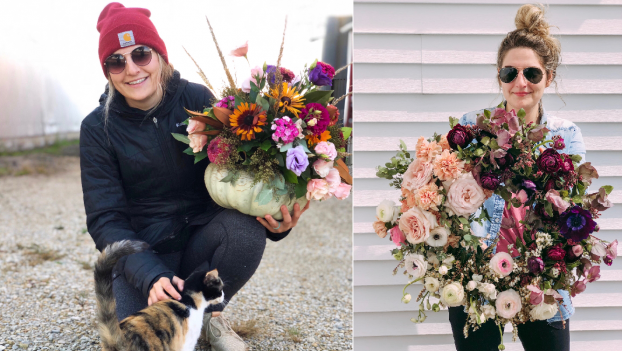
One of the images from my “Petals & Politics” series.Orange and pink floral palette — one of Whit’s favorite combinations
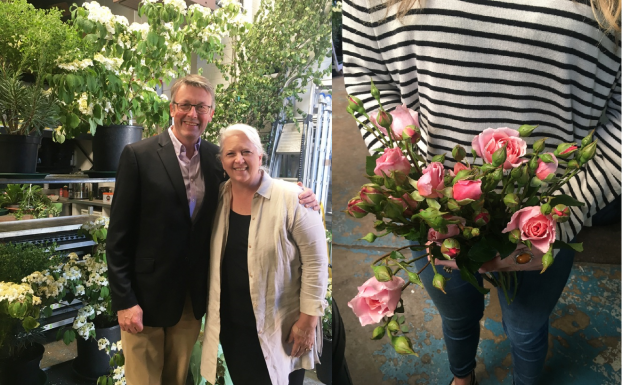
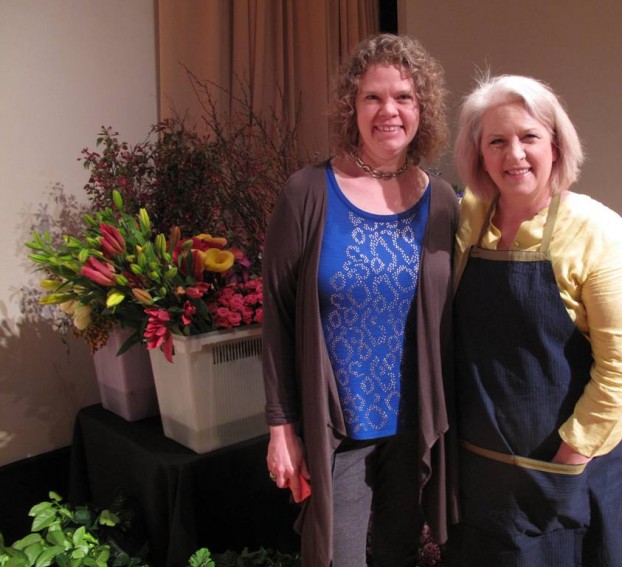
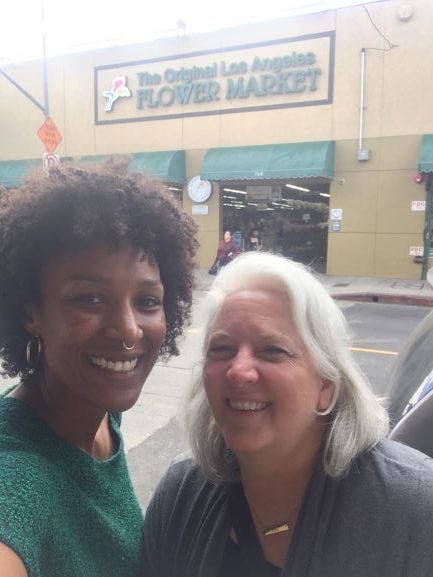
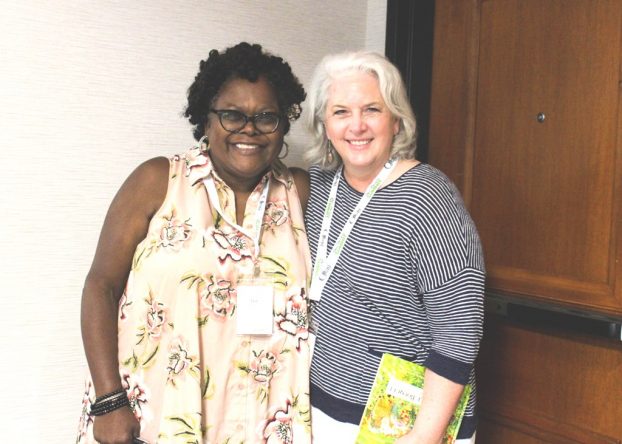
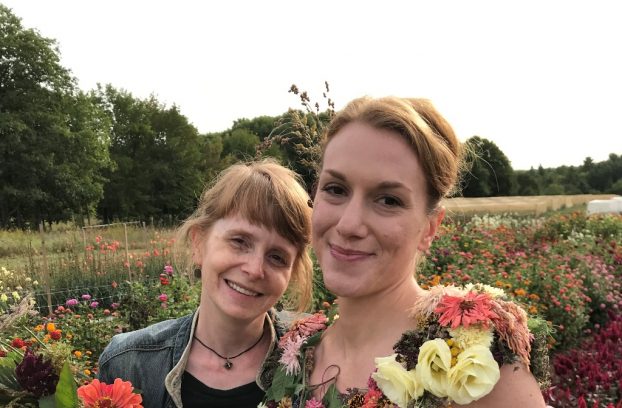
Had to share this cute selfie of Whit and me at the Los Angeles Flower Market last week.
Thank you so much for joining me on this Slow Flowers journey as I seek new and inspiring voices, people with passion, heart, commitment and expertise to share with you. I hope today’s episode gave you at least one inspiring insight or tip to apply to your floral enterprise. What you gain will be multiplied as you pay it forward and help someone else.
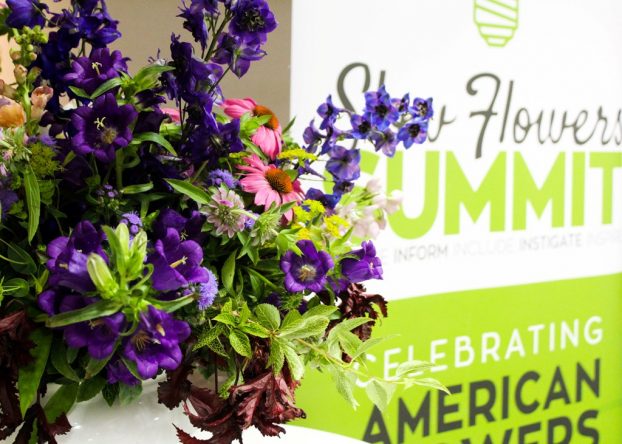
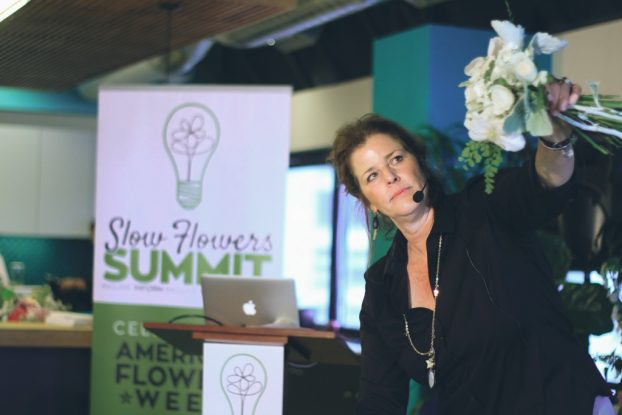
As we mentioned, Whit McClure is the Capstone Speaker at the 3rd annual Slow Flowers Summit, which takes place on July 1st & 2nd in St. Paul, Minnesota. You’ll hear from Whit about her approach to floral activism as she encourages audience members to use their artistic platform for social change. I can’t wait for you to join us there.
It’s always wonderful to connect with floral influencers at the Slow Flowers Summit, including my friend and gardening blogger Teri Speight of Cottage in the Court.
It’s time to grab your seat at The Slow Flowers Summit. More than half of the registration slots have been grabbed, so don’t miss out on this opportunity to join with Slow Flowers thinkers and doers in person.
One of our past year’s speakers dubbed the Summit a “floral mind
meld,” and I love that concept. Come and be a part of the incredible and
uplifting experience! You can make your way to slowflowerssummit.com to learn
all about the many opportunities to join us — from flower farm tours and
dinner on a flower farm to business and branding presentations to interactive
and inspiring design sessions . . . all designed to serve you! Subscribe to Summit news and updates at
slowflowerssummit.com.
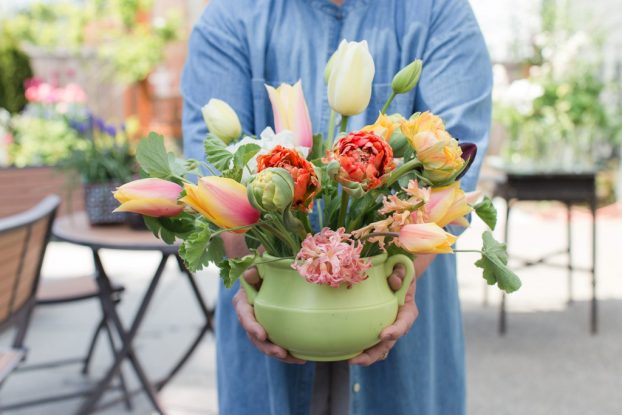
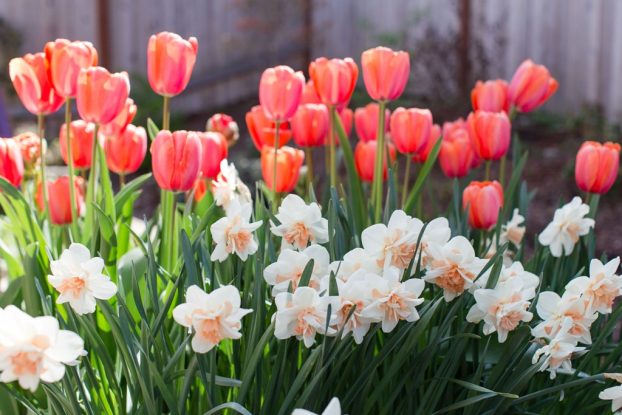
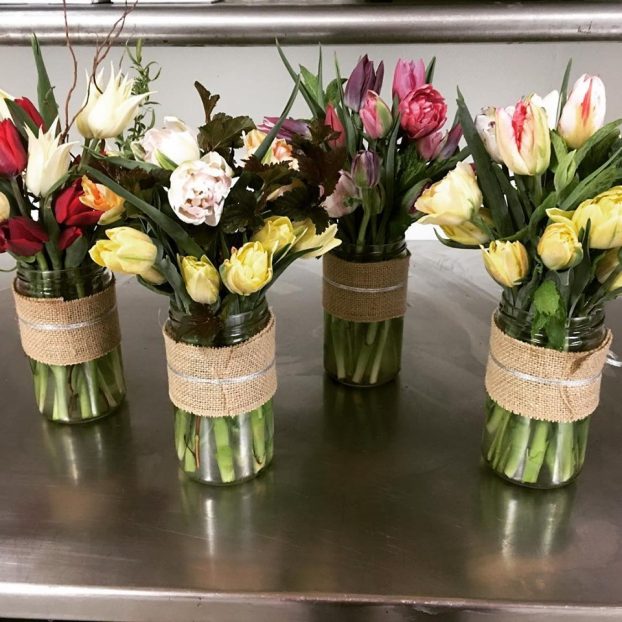
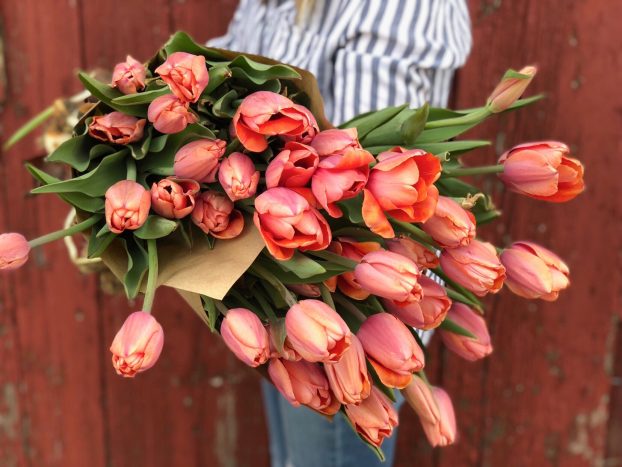
How about those tulips?! Illinois-grown, of course!
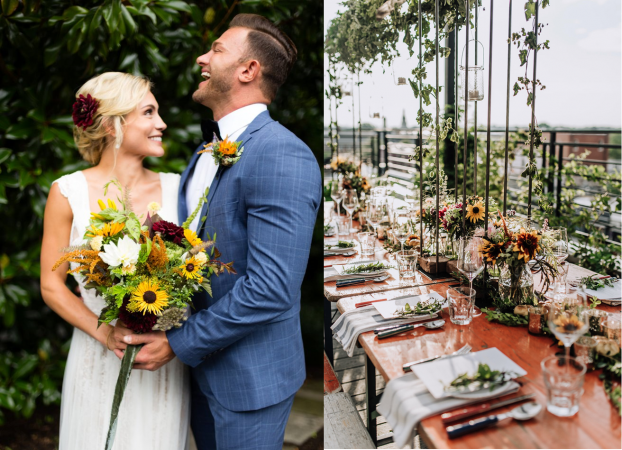
As a farmer-florist, Kat’s wedding designs start with flowers cut fresh from her farmland where she grows organic, high end, cut flowers, on just a few acres in Northern Illinois. The farm is the heart of her business and she loves to show it off, often with a glass of wine and a walk through the field.
Truly, we have a vital
and vibrant community of flower farmers and floral designers who together
define the Slow Flowers Movement. As our cause gains more supporters and more
passionate participants who believe in the importance of the American cut
flower industry, the momentum is contagious.
I know you feel it, too. I value your support
and invite you to show your thanks and with a donation to support my ongoing
advocacy, education and outreach activities. You can find the donate button in the column to the right.
Florists’ Review magazine. I’m delighted to serve as Contributing Editor for Slow Flowers Journal, found in the pages of Florists’ Review. It’s the leading trade magazine in the floral industry and the only independent periodical for the retail, wholesale and supplier market. Take advantage of the special subscription offer for members of the Slow Flowers Community.
NW Green Panels. Based in Madras, Oregon, NW Green Panels designs and constructs a wide array of wood-framed greenhouses offering versatility, style and durability. Their greenhouses are 100% Oregon-made using twin-wall polycarbonate manufactured in Wisconsin, making NW Green Panel structures a great value for your backyard. The 8×8 foot Modern Slant greenhouse has become the essential hub of my cutting garden — check out photos of my greenhouse or visit nwgreenpanels.com to see more.
Seattle Wholesale Growers Market, a farmer-owned cooperative committed to providing the very best the Pacific Northwest has to offer in cut flowers, foliage and plants. The Growers Market’s mission is to foster a vibrant marketplace that sustains local flower farms and provides top-quality products and service to the local floral industry. Visit them at seattlewholesalegrowersmarket.com
Syndicate Sales, an American manufacturer of vases and accessories for the professional florist. Look for the American Flag Icon to find Syndicate’s USA-made products and join the Syndicate Stars loyalty program at syndicatesales.com.
The Slow Flowers
Podcast has been downloaded more than 438,000 times by
listeners like you. We wrapped up the month of March with more than 17,000
downloads — an all-time record listenership. So excited to see our community
continue to grow. Thank you for listening, commenting and sharing – it means so
much. Thank you all!
The content and
opinions expressed here are either mine alone or those of my guests alone,
independent of any podcast sponsor or other person, company or organization.
The Slow Flowers Podcast is engineered and edited by Andrew Brenlan. Learn more about his work at soundbodymovement.com.
Walla Walla flower farmer and alpaca farmer Elaine Vandiver
Last weekend I spent 2 days in Walla Walla, Washington, located in the Southeast corner of the state, where I joined the Washington-Grown Flowers promotion team at the Washington State Farmers’ Market Association conference.
Opening slide for our presentation at the Washington State Farmers Market Assoc. Conference
The Flower Promotion effort was funded by a USDA Specialty Crop Block Grant and is being jointly administered by the Washington State Dept. of Agriculture’s Regional Markets Program and the Washington State Farm Bureau. They invited me to co-present on my Slow Flowers Insights, as well as about local flower promotion strategies for Farmers’ Market managers — what a great opportunity to bring local and seasonal flowers to the forefront of the farmers’ market world!
Farmers’ Market managers gathered to learn how to make pin-in flowers and flower crowns, an activity which we encouraged them to bring to their own venues.
Thanks to Laura Ridenour and Laura Raymond of WSDA and to Suzanne Carson of the Farm Bureau for including me in this program, and to Emily Asmus of Welcome Table Farm, my co-presenter, who was super inspiring as a local flower farmer with great advice about seasonality and best practices for market managers who may not be as familiar with floral crops as they are with food crops.
Mike and Elaine Vandiver at Gholson Gardens
While in Walla Walla, I also had time to visit Gholson Gardens, owned by Slow Flowers member Elaine Vandiver and her husband Mike Vandiver.
Elaine and Mike are members of the Homegrown by Heroes organization, which supports veterans in agriculture careers.
Gholson Gardens is a small,
10-acre farm located in southeastern Washington state, in the quintessential
rural community of Walla Walla. Mike and Elaine are both U.S. Army
veterans turned first generation farmers.
Gholson Gardens and Old Homestead Alpacas share the Walla Walla farmland and historic barn buildings.
As they share on their web site, “with no previous agricultural experience, we purchased the farm in May 2014 as a way to start anew after learning a traditional family wasn’t in the cards for us. We didn’t have any immediate plans for the farm, which was mostly in pasture. We simply hoped to enjoy the beautiful red barn, sweeping views of the Blue Mountains from the farmhouse porch, and maybe get some critters to complete the country scene.”
Elaine’s mobile farm stand — fashioned from one half of a vintage Studebaker pickup.Another farm stand often used by Elaine — a VB van that carries and displays a lot of flowers!
The story unfolds in my
interview recorded in the farmhouse’s dining room kitchen where Elaine and I
sat comfortably while Mike kept their two Greyhound rescue dogs entertained
outside.
Dye flowers and alpaca wool in the studio
This is a very personal,
inspiring story for anyone who views growing cut flowers as a new way of life,
perhaps as a catalyst for all sorts of change.
Farmhouse and flowers at Gholson Gardens.
For Elaine and Mike, growing flowers
is the latest chapter of their agricultural lifestyle, one that began with a
llama and too many adorable alpacas for me to accurately count, continued to a
flower and herb garden to grow plants that produce natural dyes for the wool,
skeins and garments made with the alpaca fiber, and expanded just over a year
ago to become a full-fledge cut flower farm.
Farm-Grown Knitwear
Elaine’s narrative on Gholson Garden’s web site continues: “Knowing that the fiber takes 2 years to bring to market [1 year for the alpacas to grow it and the better part of another year spent professionally milling, knitting and then hand dyeing], we quickly realized that growing cut flowers could be a great way to diversify the farm. And that’s what we did! We sowed our first seeds in late February 2018 and began field production in early May, selling them at the local farmer’s market from June through September. We sell primarily at the Walla Walla Downtown Farmers Market and to a few local florists, but are also offering a ‘bouquet CSA’ starting in Spring 2019. You can find Gholson Gardens at the downtown Walla Walla farmers market in 2019 from May through October!”
Elaine and Mike Vandiver of Gholson Gardens and Old Homestead Alpacas
I’m so pleased to bring you this interview for many reasons, including how encouraging it is.
My time in Walla Walla allowed me to connect with so many fabulous people in the farmers’ market community, people who are excited to bring the story of locally grown flowers to their customers across the state. I will share more in the coming months about the exciting Washington-Grown Flowers project, as I believe it can be a great template for anyone to bring to the department of agriculture and farm bureau agencies in their state. As I said, more to come, soon!
Jeriann Sabin and Ralph Thurston of Bindweed Farm
Our #fiftystatesofslowflowers series continues today with a stop in Idaho and Deadhead Cut Flowers’Jeriann Sabin and Ralph Thurston. The couple are past guest of this podcast and you can hear our 2016 interview here, recorded on the occasion of the publication of Deadhead: The Bindweed Way to Grow Flowers.
A lot has taken place since then, including the sale of Bindweed Flower Farm to their nephew. Last year, Ralph authored All Pollen, No Petal: Behind the Flower Farming Dream, and we talk a little about its message in today’s conversation.
Coming up on May 2nd & 3rd, “INSIDE FLOWER FARMING—the real deal,” the Deadhead Cutflowers/Bindweed Farm Flower Growing School, returning in the Spring of 2019 with a two-day session for beginning and intermediate growers. A major focus will be to make flower farming transparent by showing the actual tax returns of the farm, as well as costs and income so you can better see where you stand and what is possible.
Killing Frost’s Jamie Rodgers will join Ralph and Jeriann for the session to provide his and Carly Jenkins’ success with organic pest and disease control. If you’ve been dreaming of starting your own cut-flower farm or are ready to make the jump from hobby/master gardener to cut-flower farmer, we are here to help you. Class size will be limited to ten individuals in order to give close attention to each farmer.
How was this for a bonus segment! Amazing — what a great chance to speak with Elaine Vandiver at the beginning of her flower farming journey, and to hear from Jeriann Sabin and Ralph Thurston, who are looking at some of their journey in the rear view mirror while sharing their knowledge and experience, stories and art with the rest of us.
Bindweed Farm in Blackfoot, Idaho ~ God’s CountryClematis recta purpurea — the plant Ralph and Jeriann raved about in today’s podcast.
Thank you so much for
joining me on this Slow Flowers journey as I seek new and inspiring voices,
people with passion, heart, commitment and expertise to share with you. I hope
today’s episode gave you at least one inspiring insight or tip to apply to your
floral enterprise. What you gain will be multiplied as you pay it forward and help someone else.
Truly, we have a vital
and vibrant community of flower farmers and floral designers who together
define the Slow Flowers Movement. As our cause gains more supporters and more
passionate participants who believe in the importance of the American cut
flower industry, the momentum is contagious.
I know you feel it, too. I value your support
and invite you to show your thanks and with a donation to support my ongoing
advocacy, education and outreach activities. You can find the donate button in the column to the right.
The Slow Flowers Summit is coming up soon — on July 1 & 2nd in St. Paul, Minnesota. More than half of the registration slots have been grabbed, so don’t miss out on this opportunity to join with Slow Flowers thinkers and doers in person.
We brought the Slow Flowers Summit 2018 to Washington, D.C. and we’re coming to the Twin Cities in 2019!
One of our past year’s speakers dubbed the Summit a “floral mind
meld,” and I love that concept. Come and be a part of the incredible and
uplifting experience! You can make your way to slowflowerssummit.com to learn
all about the many opportunities to join us — from flower farm tours and
dinner on a flower farm to business and branding presentations to interactive
and inspiring design sessions . . . all designed to serve you! Subscribe to Summit news and updates at
slowflowerssummit.com.
(c) Mary Grace Long photography
The Slow Flowers
Podcast has been downloaded more than 433,000 times by
listeners like you. Thank you for listening, commenting and sharing – it means
so much. Thank you all!
THANK YOU TO OUR SPONSORS!
Florists’ Review magazine. I’m delighted to serve as Contributing Editor for Slow Flowers Journal, found in the pages of Florists’ Review. It’s the leading trade magazine in the floral industry and the only independent periodical for the retail, wholesale and supplier market. Take advantage of the special subscription offer for members of the Slow Flowers Community
Association of Specialty Cut Flower Growers. Formed in 1988, ASCFG was created to educate, unite, and support commercial cut flower growers. It mission is to help growers produce high-quality floral material, and to foster and promote the local availability of that product. Learn more at ascfg.org.
Johnny’s Selected Seeds, an employee-owned company that provides our industry the best flower, herb and vegetable seeds — supplied to farms large and small and even backyard cutting gardens like mine. Check them out at johnnysseeds.com.
Longfield Gardens provides home gardeners with high quality flower bulbs and perennials. Their online store offers plants for every region and every season, from tulips and daffodils to dahlias, caladiums and amaryllis. Visit them at longfield-gardens.com.
The content and
opinions expressed here are either mine alone or those of my guests alone,
independent of any podcast sponsor or other person, company or organization.
The Slow Flowers Podcast is engineered and edited by Andrew Brenlan. Learn more about his work at soundbodymovement.com.
Tom Jennings and Debra Prinzing (left); Debra and Susan McLeary (right) (c) Amy Bennett Photography
A few weeks ago, I traveled to the charming town of Burlington, Vermont, located on Lake Champlain, with beautiful views of the Adirondack Mountains in the distance.
Green Mountain Florists Supply hosted me, along with Susan McLeary of Passionflower, to teach for its spring education series. Owners Tom and Kim Jennings and their amazing staff made sure we had not only a wonderful time but a perfect environment for lecturing and teaching. The images shared here are generously provided by Green Mountain Florist Supply and Vermont-based photographer Amy Bennett. Learn more about Amy’s work here.
But let me back up and first tell you how I got there.
I believe in serendipity and connections, and this story is a perfect example of that. My trip to Burlington began in 2017 when Holly Chapple invited me to teach creative writing for florists at her 2nd Flowerstock festival.
There I met Vermont-based florist Jayson Munn, one of those quietly talented guys who gets things done, and anticipates everyone’s needs before they know them. Jayson’s presence definitely supported Holly and all the thousands of tiny moving parts of the Flowerstock machine, and yet he had time to chat and we got to know one another.
Last October, when I returned to teach at Flowerstock again, Jayson and I reconnected in person and he mentioned wanting to invite me to Vermont for the workshop series he coordinates for Green Mountain.
So it happened and the visit was a delightful experience! When I arrived at Green Mountain Florists Supply, I was warmly welcomed by Tom Jennings and the team of professionals. They set up a beautiful teaching space, where I gave a morning presentation — basically the story of Slow Flowers.
Tom and his team unroll the pre-order floral timeline for weddings, with artist Peter Baldor standing at left.
Once the other instructors, staff and students had devoured a delicious catered lunch seated among the showroom displays, Tom kicked off our afternoon with a presentation on flower sourcing behind-the-scenes. He and his team unveiled an illustrated timeline of special events and wedding flower ordering, using a 15-foot-long scroll of paper with drawings by Peter Baldor, the company’s Road Supply Sales Manager. As it turns out, Peter is also a humorist and cartoonist known as “Baldy” and I’ve added a link to his “In the Hothouse” web site in our show notes — check out his quirky, plant-focused world view through hand-drawn scenes.
Jayson Munn, Bailey Hale and Debra Prinzing
Bailey Hale of nearby Ardelia Farm & Co., followed with a presentation including his story and insights about flower farming in Vermont.
I love how Amy Bennett captured my demonstration with local and domestic flowers. It was a joy to design with these botanicals in a cool vessel from Green Mountain Florist Supply.
As a bonus, I was invited to design with a vase-full of perfectly formed white ranunculus stems that Bailey harvested from his winter greenhouse, demonstrating a large arrangement of all-American grown floral elements.
A wonderful environment for teaching creative writing and sharing the Slow Flowers story!Getting started with our writing prompts!
That interlude led to our 3-1/2 hour afternoon devoted to creative writing for florists, flower farmers and farmer-florists. What a fabulous group of willing participants. I loved meeting such wonderful women, each of whom brought her unique point of view to writing about flowers, color palettes, personal stories and design. I hope to share some of their pieces in a future post, so keep an eye out for that. Suffice it to say, we had a rewarding day together.
Susan McLeary — such an artist and inspiration!
The following day, Susan McLeary taught her distinct bouquet design techniques and floral wearables — and I was able to watch a good portion of the morning session before heading for the airport.
A peek inside the beautiful and very tidy, well-organized Green Mountain Florists Supply showroom.
The visit to Vermont was not complete without me asking Tom Jennings to sit down and record an interview for this podcast. Established wholesale florists are in a unique position these days. They are juggling customer demands to bring the world of flowers to their doorstep, while also responding to increasing requests for seasonal, locally grown options. I value Tom’s perspective and I know you’ll learn from this conversation.
Um, wow! Amazing inventory and aesthetic at GMFSI in South Burlington, VT.
Here’s a little more about Green Mountain Florists Supply:
Serving floral professionals in Vermont, New York, New Hampshire and beyond, Green Mountain is Vermont’s premier provider of wholesale cut flowers and floral supplies.
The company opened its doors in 1982 in Middlesex, Vermont, under the astute leadership of Tom’s parents, Charles and Sue Jennings, who saw the need for a first-rate flower supplier in the region. After graduating from Middlebury College, Tom joined the budding new business in 1983 and assumed ownership in 1997. Since then, Tom has continued his parents’ commitment to superior service and long-term relationships — values that still guide us today.
As a floral industry expert, Tom and his outstanding team of floral professionals create a unique wholesale experience like no other. With locations in Middlesex and South Burlington, and scheduled delivery routes that extend throughout the three-state region, Green Mountain brings the freshest products right to customers’ doors. At the South Burlington showroom, where I taught, wholesale shoppers can choose from the latest floral supplies and home décor. Artfully arranged each season, the environment serves as an ideal setting for educational opportunities and hands-on workshops. Green Mountain’s Mobile Showroom brings hardgoods, tools and floral supplies to those customers who can’t make it to either wholesale branch for their floral needs.
Find and follow Green Mountain Florist Supply:
Weely Cooler Tours give long-distant florists a first-person view of product availability
Andrew Mefferd, author of The Organic No-Till Farming Revolution book
Thanks so much for joining me today. Last week, we announced a giveaway of Andrew Mefferd’s new book The Organic No-Till Farming Revolution — and we’ve drawn one winner from all who posted comments in the show notes by Saturday, March 23rd. I loved reading listeners’ comments about the best tips learned from my interview with Andrew.
Our winner is: Melissa Garcia Perry of Howland Whistle Flower Farm who commented, “So timely! Listened to this podcast while tackling our new acres. Bumping up from super-small urban flower growing to acreage is full of challenges and has me questioning my methodologies. I want this new land to be No-Till but there are so many other growers around me telling me this is a fantasy. Andrew’s best tip for me was witnessing for himself how the absolute pro growers at Bare Mountain Farm simply covered sunflowers beds, stalks and all, with tarps and let their ground peeps do the work. Yes! I can do that.”
Congratulations, Melissa: We’ll get your address over to New Society Publishers so they can send you a copy. And thanks to all who commented and entered!
Don’t forget that Andrew has generously created a coupon code “slow” to give you 20% off your purchases or subscriptions – through the end of April – at his site, Growing for Market. Follow our link in today’s show notes to take advantage.
I was hoping to continue our #fiftystatesofslowflowers series today, with Hawaii, but was unable to entice anyone to join me.
I’ve had our most active Hawaii members on the podcast in the past, so follow a link to my interview with Alison Higgins of Grace Flowers Hawaii in Hanokaa on the Big Island — she has a lot of great stories about local flowers and the floral business of destination weddings you’ll want to hear if you missed the original air date. We need more active members — growers and floral designers — in Hawaii, so spread the word!
Next week, I promise
you, we will hear from another State Voice — we have four I states coming up
— Idaho, Illinois, Indiana
& Iowa, so
that will bring us through the month of April.
Outake! I’m not sure what Jayson Munn and I were laughing about as Amy Bennett captured the hilarity, but it captures our wonderful time together in Vermont.
I also have an reminder for ASCFG members or prospective members. The organization’s popular Mentor Program continues for the 2020-2021 seasons and if you’ve been thinking about apply to serve as a flower farming mentor or to be considered as a mentee, take note of the March 31st deadline.
Thank you so much for joining me on this Slow Flowers journey as I seek new and inspiring voices, people with passion, heart, commitment and expertise to share with you. I hope today’s episode gave you at least one inspiring insight or tip to apply to your floral enterprise. What you gain will be multiplied as you pay it forward and help someone else.
Truly, we have a vital and vibrant community of flower farmers and floral designers who together define the Slow Flowers Movement. As our cause gains more supporters and more passionate participants who believe in the importance of the American cut flower industry, the momentum is contagious.
I know you feel it, too. I value your support and invite you to show your thanks and with a donation to support my ongoing advocacy, education and outreach activities. You can find the donate button in the column to the right.
I love hearing from listeners and here’s an encouraging note that I received from Michelle Haynes of Rusty Dog Ranch, who contributed a donation in support of the Podcast. She wrote:
“Debra ~Thank you for your wonderful podcasts! I am at the very beginning stages of setting up a cut flower farm and native plants habitat here in rural north Texas. I’ve created beds and planted seeds inbetween my day job, and I have no idea what I’m doing but I’m trying not to overthink it. Your interviews and stories keep me company and encourage me during this solitary work. Every time I hear the name of a flower, one that’s contained in one of my seed packets, I think, “Well, THEY did it, so why can’t I?!”
The Slow Flowers Summit is coming up soon — on July 1 & 2nd in St. Paul, Minnesota. More than half of the registration slots have been grabbed, so don’t miss out on this opportunity to join with Slow Flowers thinkers and doers in person.
One of our past year’s speakers dubbed the Summit a “floral mind
meld,” and I love that concept. Come and be a part of the incredible and
uplifting experience! You can make your way to slowflowerssummit.com to learn
all about the many opportunities to join us — from flower farm tours and
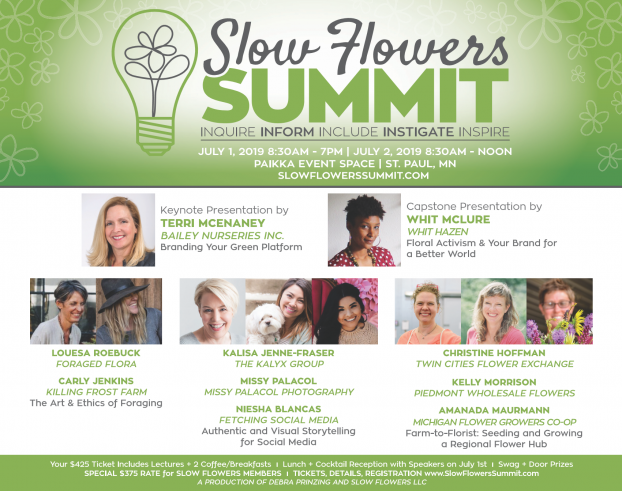
dinner on a flower farm to business and branding presentations to interactive
and inspiring design sessions . . . all designed to serve you! Subscribe to Summit news and updates at
slowflowerssummit.com.
Florists’ Review magazine. I’m delighted to serve as Contributing Editor for Slow Flowers Journal, found in the pages of Florists’ Review. It’s the leading trade magazine in the floral industry and the only independent periodical for the retail, wholesale and supplier market. Take advantage of the special subscription offer for members of the Slow Flowers Community.
NW Green Panels. Based in Madras, Oregon, NW Green Panels designs and constructs a wide array of wood-framed greenhouses offering versatility, style and durability. Their greenhouses are 100% Oregon-made using twin-wall polycarbonate manufactured in Wisconsin, making NW Green Panel structures a great value for your backyard. The 8×8 foot Modern Slant greenhouse has become the essential hub of my cutting garden — check out photos of my greenhouse in today’s show notes or visit nwgreenpanels.com to see more.
Seattle Wholesale Growers Market, a farmer-owned cooperative committed to providing the very best the Pacific Northwest has to offer in cut flowers, foliage and plants. The Growers Market’s mission is to foster a vibrant marketplace that sustains local flower farms and provides top-quality products and service to the local floral industry. Visit them at seattlewholesalegrowersmarket.com.
Syndicate Sales, an American manufacturer of vases and accessories for the professional florist. Look for the American Flag Icon to find Syndicate’s USA-made products and join the Syndicate Stars loyalty program at syndicatesales.com.
The Slow Flowers
Podcast has been downloaded more than 428,000 times by listeners
like you. Thank you for listening, commenting and sharing – it means so much.
Thank you all!
The content and
opinions expressed here are either mine alone or those of my guests alone,
independent of any podcast sponsor or other person, company or organization.
The Slow
Flowers Podcast is engineered and edited by Andrew Brenlan. Learn more
about his work at soundbodymovement.com.
Andrew Mefferd, author of The Organic No-Till Farming Revolution book
As an avid flower
gardener, I love learning from the pro’s — flower farmers whose methods and
practices often influence my own backyard steps to growing cut flowers. Some of
the techniques used on commercial flower farms are not in my toolbox, which
only makes me hungrier to learn from those growing flowers day in and day out.
No-Till Farming is one such technique. I’ve heard flower farmers discuss the No-Till approach and I also *thought* I knew what the term meant.
However, thanks
to today’s guest and his new book, I now have more understanding and much deeper
insights about the term and why it’s one worth considering for your
flower-growing enterprise.
Tony and Denise Gaetz of Bare Mtn. Farm in Oregon welcomed Andrew and shared many techniques and practices for his book.
Andrew is the editor of Growing for Market magazine. He has spent 15 years working on farms in six states, including a year working on a no-till research farm. He worked for seven years in the research department at Johnny’s Selected Seeds.
Andrew travels around the world consulting with researchers and farmers on the best practices in greenhouse growing and sustainable agriculture. He is the author of The Greenhouse and Hoophouse Growers’ Handbook and he has a passion for cooking and promoting local farming. Andrew lives and farms in Cornville, Maine.
I first met Andrew after he acquired Growing For Market from founder Lynne Byczynski. Later, I contributed a few articles about Slow Flowers topics for Growing For Market and had the pleasure of witnessing Andrew’s passion for farming education and advocacy.
Jonathan and Megan Leiss of Spring Forth Farm are featured in the new book, The Organic No-Till Farming Revolution.
I wanted Andrew to come onto the Slow Flowers Podcast to talk about his new book, especially after Jonathan Leiss of Spring Forth Farm posted on Instagram that he and Megan and their No-Till Flower Farming methods are included in the new book. I’m so pleased that Andrew interviewed and profiled a number of Slow Flowers members about their farming practices for this essential guide.
Hedda Brorstrom of Full Bloom Farm is featured in The Organic No-Till Farming Revolution.
I appreciate that he considers floral agriculture as an equally viable pursuit for anyone who wants to farm. It’s not all about veggies and produce in this man’s view. In fact, Growing for Market, inspired by founder Lynne Byczynski, has always made space in its pages for flower farming.
Before I turn to my extended conversation with Andrew, I want to let you know that New Society Publishers has donated a copy of The Organic No-Till Farming Revolution book for us to give away.
Thanks so much for joining me today. If you want to be entered into our random drawing to win a copy of Andrew’s new book, make a comment about the best tip that Andrew shared in our conversation.
We’ll draw one name from all those who comment before midnight Pacific Time this Saturday, March 23rd.
To purchase the book, use the coupon code slow before the end of April. Andrew has set up the 20-percent-off discount code for anything you purchase, subscribe or renew in the Growing for Market Bookstore.
Holly Duncan of Floretry, who shares Georgia floral news today! For this arrangement, Holly incorporated local and American-grown flowers, plus foraged branches and textural elements.
Our theme for 2019 – Fifty States of Slow Flowers – continues today, with Holly Duncan of Georgia-based Floretry.
As owner and lead designer of Floretry, Holly carefully curates luxury florals for weddings and private event clients and is located in Roswell, just north of urban Atlanta, Georgia. With more than 20 years of experience, Holly pairs lush blooms with seasonal textures and colors to create sensory floral designs.
A keen listener and client partner, she goes the extra mile to elevate her clients’ vision and reflect their personalities, creating a floral experience beyond their expectations. Wherever possible, Holly advocates use of seasonal and local, American-grown flowers in her designs. You may even catch a glimpse of her foraging roadside for elements that add a special and one-of-a-kind touch to her clients’ events.
A Floretry design featuring all-Georgia-grown blooms grown by 3 Porch Farm (and honeysuckle vine from Holly’s backyard).
Thanks so much for joining me on this journey, seeking new and inspiring voices, people with passion, heart, commitment and expertise to share with you. I hope today’s episode gave you at least one inspiring insight or tip to apply to your floral enterprise. What you gain will be multiplied as you pay it forward and help someone else.
Truly, we have a vital and vibrant community of flower farmers and floral designers who together define the Slow Flowers Movement. As our cause gains more supporters and more passionate participants who believe in the importance of the American cut flower industry, the momentum is contagious.
Designed by Nancy Cameron of Destiny Hill Flower Farm.
I know you feel it, too. I value your support
and invite you to show your thanks and with a donation to support my ongoing
advocacy, education and outreach activities. You can find the donate button in the column to the right.
THANK YOU TO OUR SPONSORS, including today’s spotlight supporters:
Florists’ Review magazine. I’m delighted to serve as Contributing Editor for Slow Flowers Journal, found in the pages of Florists’ Review. It’s the leading trade magazine in the floral industry and the only independent periodical for the retail, wholesale and supplier market. Take advantage of the special subscription offer for members of the Slow Flowers Community.
Johnny’s Selected Seeds, an employee-owned company that provides our industry the best flower, herb and vegetable seeds — supplied to farms large and small and even backyard cutting gardens like mine. Check them out at johnnysseeds.com
Longfield Gardens, which provides home gardeners with high quality flower bulbs and perennials. Their online store offers plants for every region and every season, from tulips and daffodils to dahlias, caladiums and amaryllis. Spring bulb season is almost here – my tulips are poking out of the ground already! Visit Longfield Gardens at longfield-gardens.com.
Mayesh Wholesale Florist. Family-owned since 1978, Mayesh is the premier wedding and event supplier in the U.S. and we’re thrilled to partner with Mayesh to promote local and domestic flowers, which they source from farms large and small around the U.S. Learn more at mayesh.com.
The Slow Flowers Summit is coming up soon — on July 1st & 2nd in St. Paul, Minnesota. More than half of the registration slots have been grabbed, so don’t miss out on this opportunity to join with Slow Flowers thinkers and doers in person.
One of our past year’s speakers dubbed the Summit a “floral mind
meld,” and I love that concept. Come and be a part of the incredible and
uplifting experience! You can make your way to slowflowerssummit.com to learn
all about the many opportunities to join us — from flower farm tours and
dinner on a flower farm to business and branding presentations to interactive
and inspiring design sessions . . . all designed to serve you! Subscribe to Summit news and updates at
slowflowerssummit.com.
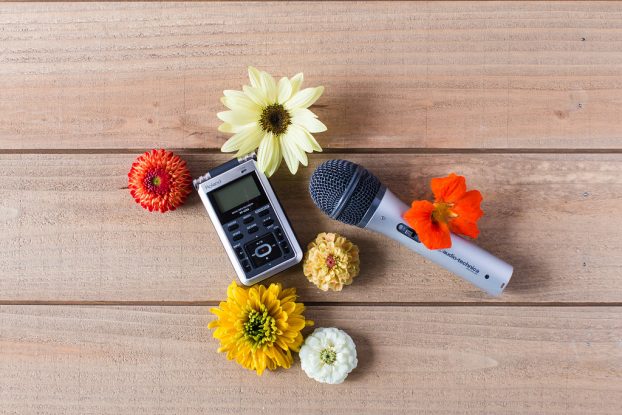
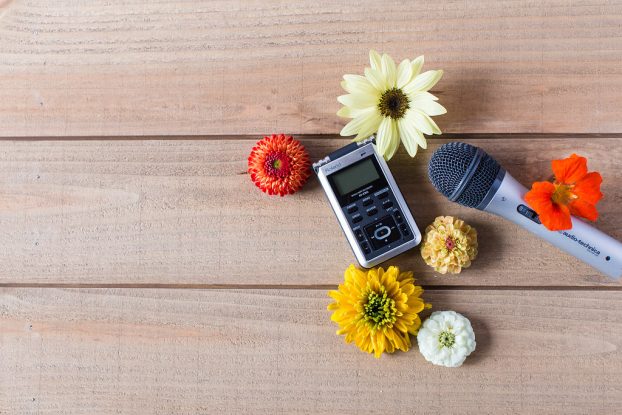
My tools of the trade — digital recorder & microphone (c) Missy Palacol Photography
The Slow Flowers
Podcast has been downloaded more than 425,000 times by listeners
like you. Thank you for listening, commenting and sharing – it means so much.
Thank you all!
The content and
opinions expressed here are either mine alone or those of my guests alone,
independent of any podcast sponsor or other person, company or organization.
The Slow Flowers Podcast is engineered and edited by Andrew Brenlan. Learn more about his work at soundbodymovement.com.
Every other year, ASCFG has a large annual symposium, such as the Raleigh conference last year. Then, during the alternating years, such as what’s happening during 2019, ASCFG produces several topic-focused sessions in regions around North America. Later this month, on Saturday, March 23rd, the second such event of the year heads to St. Louis.
You’ll hear a preview of some of the presenters and their topics covered at this one-day event, which includes a panel presentation from Mimo and Miranda and owners of two other Missouri flower farms — all about the results of their research and trials on Winter production. There will also be a tour of the local floral wholesaler, Baisch & Skinner, and a farm tour at Urban Buds.
Fresh, local, sustainable and beautiful ranunculus, grown in the heart of St. Louis at Urban Buds.
Spring will have barely arrived outdoors, but inside the greenhouses and high tunnels at Urban Buds, beautiful seasonal flowers will be on full display. I’m excited for the attendees — the city farm is a sight to behold and proof that a flower farm can be just as successful on small plots as well as on larger acreage.
2016: Photographer Tiffany Marie Buckley caught this image of me as I sampled (sniffed) the first crop of beautiful stock at Urban Buds
I love how the Urban Farming
conference is described by ASCFG on its web site: “Not all cut flowers are grown on a traditional farm.
Increasingly, more and more farmers are finding land within city limits, and
producing a remarkable variety of cut flowers on a commercial level. Learn from
two of the most successful, Mimo Davis and Miranda Duschack, how they carved a
one-acre cut flower farm out of the middle of a St. Louis neighborhood, and
continue to expand their crop selection each year with innovation and
environmental sustainability.”
Kate Read of Grey Tabby Gardens in Lake Mary, Florida
Our theme for 2019 – Fifty States of Slow Flowers – continues today, with Kate Read of Grey Tabby Gardens in Lake Mary, Florida.
Grey Tabby Gardens is located in the central part of the state; she describes her floral enterprise as “a boutique cut flower garden and design studio.”
Grey Tabby Gardens, where Kate Read lives and grows her beautiful, English-inspired cut flowers.
Kate grew up in England and brings a love of English gardens with her wherever she lives, including Florida, which she has called home for 18 years.
She writes this on her web site: “When I first moved to Florida there seemed to be very little interest in growing the type of flowers I was familiar with. My research led me to the “Slow Flower” movement and the desire amongst many flower lovers to source locally grown cut flowers, rather than imported flowers. I began to plan and plant a sizeable cutting garden where I could grow many of the lovely seasonal flowers that reminded me so much of those idyllic English gardens. The result is an ever evolving collation of unique and difficult to source garden fresh flowers styled into lush bouquets and arrangements and available to buy!”
The flowers that are grown at Grey Tabby Gardens are nurtured
from seed to bloom and are tended using responsible practices. They have been
naturally grown without the use of toxic chemicals or synthetic fertilizers and
have been happily visited by bees, butterflies and hummingbirds.
A lovely floral arrangement from Kate Read
Thanks so much for joining me today. I’m just back from the Philadelphia Flower Show where my mind was fully blown, not only by the warm welcome shown to me on the Designer’s Studio stage, where I presented the Slow Flowers story through flowers, but also by the once-in-a-lifetime opportunity to see and cover the FTD World Cup floral competition.
Twenty Three countries sent a designer to compete on the world stage and over the course of three days, tens of thousands of flower show attendees witnessed the highest level of talent in real time. I’ll be writing about the competition for Florists’ Review and Canadian Florist, so you can read more about it in the near future. Suffice it to say, there is some kind of new dynamic, new energy being infused in the profession of floral design, especially here in the U.S., where florists of all stages of experience and style are inspired to elevate their craft and art to new levels.
Congratulations to all the remarkable FTD World Cup competitors — you are the cream of the crop — and special congratulations to Australian floral designer Bart Hassam for winning this international floral competition. I’ll have a link to beautiful images and videos from the World Cup in today’s show notes — you must take a look and drink it in.
Thanks so much for joining me on this journey, seeking new
and inspiring voices, people with passion, heart, commitment and expertise to
share with you. I hope today’s episode gave you at least one inspiring insight
or tip to apply to your floral enterprise. What you gain will be multiplied as
you pay it forward and help someone
else.
Truly, we have a vital and vibrant community of flower farmers and floral
designers who together define the Slow Flowers Movement. As our cause gains more supporters
and more passionate participants who believe in the importance of the American
cut flower industry, the momentum is contagious.
I know you feel it, too. I value your support
and invite you to show your thanks and with a donation to support my ongoing
advocacy, education and outreach activities. You can find the donate button in the column to the right.
The Slow Flowers Summit is coming up soon — on July 1 & 2nd in St. Paul, Minnesota. More than half of the registration slots have been grabbed, so don’t miss out on this opportunity to join with Slow Flowers thinkers and doers in person.
One of our past year’s speakers dubbed the Summit a “floral mind
meld,” and I love that concept. Come and be a part of the incredible and
uplifting experience! You can make your way to slowflowerssummit.com to learn
all about the many opportunities to join us — from flower farm tours and
dinner on a flower farm to business and branding presentations to interactive
and inspiring design sessions . . . all designed to serve you! Subscribe to Summit news and updates at
slowflowerssummit.com.
Thank you to our Sponsors who we’ve spotlighted today:
And thank you to our lead sponsor, Florists’ Review magazine. I’m delighted to serve as Contributing Editor for Slow Flowers Journal, found in the pages of Florists’ Review. It’s the leading trade magazine in the floral industry and the only independent periodical for the retail, wholesale and supplier market. Take advantage of the special subscription offer for members of the Slow Flowers Community.
Association of Specialty Cut Flower Growers. Formed in 1988, ASCFG was created to educate, unite, and support commercial cut flower growers. It mission is to help growers produce high-quality floral material, and to foster and promote the local availability of that product. Learn more at ascfg.org.
Seattle Wholesale Growers Market, a farmer-owned cooperative committed to providing the very best the Pacific Northwest has to offer in cut flowers, foliage and plants. The Growers Market’s mission is to foster a vibrant marketplace that sustains local flower farms and provides top-quality products and service to the local floral industry. Visit them at seattlewholesalegrowersmarket.com
Syndicate Sales, an American manufacturer of vases and accessories for the professional florist. Look for the American Flag Icon to find Syndicate’s USA-made products and join the Syndicate Stars loyalty program at syndicatesales.com.
The Slow Flowers
Podcast has been downloaded more than 422,000 times by
listeners like you. Thank you for listening, commenting and sharing – it means
so much. Thank you all!
The content and
opinions expressed here are either mine alone or those of my guests alone,
independent of any podcast sponsor or other person, company or organization.
The Slow
Flowers Podcast is engineered and edited by Andrew Brenlan. Learn more
about his work at soundbodymovement.com.
Lisa Mason Ziegler of The Gardener’s Workshop has returned and you may recall she was a past guest of this podcast in 2014. I remember first meeting her in person during the summer of that year, at the Garden Writers annual conference in Indianapolis, soon after her book Cool Flowerswas published.
Evidence of Lisa’s prolific writing!
Lisa and I shared the same publisher, St. Lynn’s Press, which also produced The 50 Mile Bouquet and Slow Flowers, so I had been asked to provide a blurb for her new book. When we finally met, I knew I wanted to invite Lisa to join me on the podcast — and I simply can’t believe that was nearly five years ago. I will share links to that Episode — Number 159 — in today’s show notes so you can go back and have a listen to our conversation.
A lot has happened in the time that’s followed, including the explosion of the Slow Flowers community, heightened interest in flower farming in general, both in the US and in other countries that have seen outsourcing of their floral production, and I believe, an aesthetic shift in floral design, based on a more garden-influenced approach that relies on uncommon, couture blooms that large production growers aren’t able to raise efficiently, opening the door for micro and medium farms to capture that market.
Lisa has been at the forefront of efforts to disseminate accurate flower farming education, setting the bar for best practices along with many of her fellow members in the Association of Specialty Cut Flower Growers. With the launch of her Flower Farming Online Course last fall, she’s been able to reach an even larger audience of students, spreading knowledge and encouragement through a new medium designed to fit lifestyles and budgets that don’t always allow for in-person training.
She also last year released a new book with a new publisher, Vegetables Love Flowers, published by Cool Springs Press. I invited Lisa to meet me for breakfast, good conversation and a quiet moment to record this interview. I know you’ll enjoy it.
Flowers in her arms!
Here’s a bit more about today’s guest, excerpted from The Gardener’s Workshop web site:
What began as a small cut-flower farm producing for local
markets has grown into so much more. Lisa has become a leader in the cut-flower
growing industry, author, accomplished speaker and the owner of The Gardener’s
Workshop.
It all began in 1998 because Lisa wanted to work in her
garden as her career. At first, she sold her cut flowers to local florists and
Colonial Williamsburg. The business soon grew to include florist throughout the
Hampton Roads region, supermarkets, farmers markets, a members-only on-farm
market, and a bouquet drop-off subscription service.
A market bouquet from The Gardener’s Workshop
During this time Lisa began giving programs to garden clubs,
master gardeners, commercial growers, and other groups. What became apparent is
that people were eager for her simplified organic gardening methods and her
greatest gift is sharing them.
The next natural step came when Lisa self-published The Easy Cut-Flower
Garden in 2011. a 100-page guide on how-to grow and harvest a
small home cutting garden. Her program travels began to spread from Texas to
Oregon to New York City and she went on to become published with Cool Flowersin 2014 (St. Lynn’s
Press) andVegetables Love Flowers (Cool Springs Press 2018.)
Lisa’s farm, known as The Gardener’s Workshop is still a small
market flower farm, and an online garden shop. The online store sells the same
seeds, tools, supplies, and seed starting equipment that Lisa uses as well as
signed copies of her books. Lisa’s simple, instructive, and delightful
gardening messages are reaching far beyond any expectation she ever had.
Lisa now offers four online courses that range in length and subject. Her signature course, Flower Farming School Online, will return this fall. It is a 6-week self-paced course designed to guide you to becoming a successful cut-flower farmer–even if you live in the midst of a city or have no previous farming experience! Course cost $495. Follow the link for more details and sign up to be notified with the course is released again.
As Lisa says: “If you have dreamed of becoming a flower farmer, but think it’s impossible, or if you are already growing but feeling overwhelmed or discouraged, I designed this course for you. I know exactly how you feel, because I’ve been there.“
Thanks so much for joining me today. After spending most of last week inside the Washington State Convention Center where an entirely beautiful & fragrant, but somewhat faux spring was in bloom throughout the garden displays, I am soooooo ready for real spring to arrive.
I simply can’t wait and I know you’re experiencing that urge, too. It was my privilege to produce the floral stage at the Northwest Flower & Garden Festival, bringing in five Slow Flowers member designers to each teach for one day during the new featured series called “Blooms & Bubbles.” I bet you can guess where the “bubbles” came from — each day 30 participants enjoyed a hands-on floral design workshop while sipping a special floral cocktail or glass of champagne.
A Slow Flowers speaker lineup!
The series was a huge success, selling out a few weeks before the festival opening. I’m grateful to all of our presenters: Jeni Nelson of The London Plane; Baylor Chapman of Lila B. Design; Meridith Isaacson of Verde Seattle; Hannah Morgan of Fortunate Orchard; and Jean Louise Paquin Allen of Juniper Flowers.
Immediately after the Seattle Flower Festival, I headed off to the Philadelphia Flower Show — where I met seveal Pennsylvania flower farmers and floral designers whose creativity inspired me!
The Slow Flowers Summit is four months away on July 1 & 2nd in St. Paul, Minnesota. Make your way to slowflowerssummit.com to learn all about the many opportunities to join us — from flower farm tours and dinner on a flower farm to business and branding presentations to interactive and inspiring design sessions . . . all designed to serve you! Subscribe to Summit news and updates at slowflowerssummit.com.
Thanks so much for joining me on this journey, seeking new and inspiring voices, people with passion, heart, commitment and expertise to share with you. I hope today’s episode gave you at least one inspiring insight or tip to apply to your floral enterprise. What you gain will be multiplied as you pay it forward and help someone else.
Truly, we have a vital and vibrant community of flower farmers and floral designers who together define the Slow Flowers Movement. As our cause gains more supporters and more passionate participants who believe in the importance of the American cut flower industry, the momentum is contagious.
I know you feel it, too. I value your support and invite you to show your thanks and with a donation to support my ongoing advocacy, education and outreach activities. You can find the donate button in the column to the right.
THANK YOU TO OUR SPONSORS:
Florists’ Review magazine. I’m delighted to serve as Contributing Editor for Slow Flowers Journal, found in the pages of Florists’ Review. It’s the leading trade magazine in the floral industry and the only independent periodical for the retail, wholesale and supplier market. Take advantage of the special subscription offer for members of the Slow Flowers Community.
Longfield Gardens provides home gardeners with high quality flower bulbs and perennials. Their online store offers plants for every region and every season, from tulips and daffodils to dahlias, caladiums and amaryllis. Visit them at longfield-gardens.com.
Mayesh Wholesale Florist. Family-owned since 1978, Mayesh is the premier wedding and event supplier in the U.S. and we’re thrilled to partner with Mayesh to promote local and domestic flowers, which they source from farms large and small around the U.S. Learn more at mayesh.com.
NW Green Panels. Based in Madras, Oregon, NW Green Panels designs and constructs a wide array of wood-framed greenhouses offering versatility, style and durability. Their greenhouses are 100% Oregon-made using twin-wall polycarbonate manufactured in Wisconsin, making NW Green Panel structures a great value for your backyard. The 8×8 foot Modern Slant greenhouse has become the essential hub of my cutting garden — check out photos of my greenhouse in today’s show notes or visit nwgreenpanels.com to see more.
(c) Mary Grace Long photography
The Slow Flowers Podcast has been downloaded more than 417,000 times by listeners like you. Thank you for listening, commenting and sharing – it means so much. Thank you all!
Our theme for 2019 – Fifty States of Slow Flowers – is taking a break today. So far . . . we’ve made it from Alabama to Connecticut, with some delightful and insightful conversations with Slow Flowers members in those states.
I had scheduled this week’s focus on Delaware. But guess what? It is one of only two states where there are no Slow Flowers members. I’ve been seeking for someone in the Delaware floral scene — farmer or florist — to talk with and record a short spotlight, including searching the #delawaregrownflowers hashtag on social media.
I’ve even messaged and emailed a few folks to invite their participation. But, crickets. Sadly. I know they’re out there, so if you can help — reach out and connect me with Delaware’s local flower peeps! (PS, While Delaware is the 2nd smallest state in the U.S., it follows Rhode Island. I’m so thankful that we have a vibrant Slow Flowers community in the smallest state!)
The content and
opinions expressed here are either mine alone or those of my guests alone,
independent of any podcast sponsor or other person, company or organization.
The Slow Flowers Podcast is engineered and edited by Andrew Brenlan. Learn more about his work at soundbodymovement.com.
A spectrum of dahlias from Butternut Gardens in ConnecticutThe Little White Flower Cottage at Butternut Gardens
Our theme for 2019 —Fifty States of Slow Flowers — continues today with Connecticut. And because I was so wrapped up in the conversation I recorded with my guest, Evelyn Lee of Butternut Gardens, this is an extended State-Focus episode. A lot of exciting flower news is coming out of Connecticut and I’m glad we took the time to discuss it to share with you.
Evelyn joined Slow Flowers several years ago and I’ve enjoyed meeting her on a few occasions, including last year’s Slow Flowers Summit in Washington, D.C. I also interviewed her for a farmer-florist article a few years ago. Ironically, that article appeared in Southern Farm & Garden magazine, and while Connecticut isn’t exactly “the south,” the editors loved her story. Here’s a link for you to read the article.
Evelyn Lee of Butternut Gardens in Southport, Connecticut
Here’s more about Evelyn Lee and her flowers:
Little White Flower Cottage sales building and floral sales tent
A number of years ago, with kids in college and beyond, Evelyn set her sights on the unlikely endeavor of creating a flower farm in the middle of the suburbs. Call her crazy, but she believed, then and now, that people truly appreciate fresh flowers, and that people, our environment and our economy all benefit from locally grown blooms.
Labeling used by Connecticut’s agriculture producers
Butternut Gardens is a fabulous little flower farm, design studio and garden workshop tucked away in Southport, CT. It is the only cut flower farm in Connecticut’s Fairfield County, offering the freshest of blossoms harvested daily at the peak of perfection. No shipping. No storage. Just rich, vibrant, delicious-smelling flowers every time.
A beautiful peony mix from Butternut Gardens
Evelyn
shares this on her web site:
When
you choose Butternut Gardens flowers, you also choose flowers grown in an earth
friendly manner on a Bee Friendly Farm by Evelyn Lee, a NOFA Accredited Organic
Land Care Professional. Not only is our goal to bring the true beauty,
fragrance
and astounding
variety of freshly-cut flowers to your special events and into your
daily lives, but also to share knowledge and best practices for
sustainable suburban gardening, landscaping and land use.
Butternut Gardens’ springtime bouquets
Butternut
Gardens flowers do not receive synthetic fertilizers, and great care is taken
to not only “do no harm” but to also protect and enhance soil, water
and living organisms. At Butternut Gardens, we leave plenty of flowers and
pollinator-friendly habitat for neighborhood honey bees and an abundance of
native pollinators, which call our land “home.” We strive to lead by
example in our suburban neighborhood and hope to teach others about eco
friendly gardening practices that can be applied to their land and gardens as
well. A little education can go a long way!
During the growing season (March to November) Butternut Gardens crafts an ever-changing parade of seasonal flowers, fruits, seeds, branches and other interesting natural botanical elements from the several hundred of varieties locally grown into seasonal bouquets and arrangements.
A vivid summer floral palette from Butternut Gardens Another cottage portrait (left) and more varieties of blooms (right)
Thanks so much for joining my conversation with Evelyn Lee of Connecticut’s Butternut Gardens. I’m continually inspired by the momentum and energy that is taking place in key regions across the continent. What’s happening with flower farmers and floral designers in Connecticut is also playing out elsewhere, spearheaded by creatives as passionate as Evelyn is. To be sure, we’ll continue hearing their stories here, on the Slow Flowers Podcast.
Thanks so much for joining me on this journey, seeking new
and inspiring voices, people with passion, heart, commitment and expertise to
share with you. I hope today’s episode gave you at least one inspiring insight
or tip to apply to your floral enterprise. What you gain will be multiplied as
you pay it forward and help someone
else.
Truly, we have a vital and vibrant community of flower farmers and floral
designers who together define the Slow
Flowers Movement. As our cause gains more supporters and more
passionate participants who believe in the importance of the American cut
flower industry, the momentum is contagious.
I know you feel it, too. I value your support and invite you to show your thanks and with a donation to support my ongoing advocacy, education and outreach activities. You can find the donate button in the column to the right.
THANK YOU TO OUR SPONSORS!!
Florists’ Review magazine. I’m delighted to serve as Contributing Editor for Slow Flowers Journal, found in the pages of Florists’ Review. It’s the leading trade magazine in the floral industry and the only independent periodical for the retail, wholesale and supplier market. Take advantage of the special subscription offer for members of the Slow Flowers Community.
The Association of Specialty Cut Flower Growers. Formed in 1988, ASCFG was created to educate, unite, and support commercial cut flower growers. It mission is to help growers produce high-quality floral material, and to foster and promote the local availability of that product. Learn more at ascfg.org. Coming right up, on March 23rd, is the Urban Farming Conference in St. Louis. More details can be found here.
Syndicate Sales, an American manufacturer of vases and accessories for the professional florist. Look for the American Flag Icon to find Syndicate’s USA-made products and join the Syndicate Stars loyalty program at syndicatesales.com.
Johnny’s Selected Seeds, an employee-owned company that provides our industry the best flower, herb and vegetable seeds — supplied to farms large and small and even backyard cutting gardens like mine. Check them out at johnnysseeds.com.
The Slow Flowers Summit is five months away on July 1 & 2nd in St. Paul, Minnesota. Make your way to slowflowerssummit.com to learn all about the many opportunities to join us — from flower farm tours and dinner on a flower farm to business and branding presentations to interactive and inspiring design sessions . . . all designed to serve you! Subscribe to Summit news and updates at slowflowerssummit.com.
The Slow Flowers
Podcast has been downloaded more than 414,000 times by
listeners like you. Thank you for listening, commenting and sharing – it means
so much. Thank you all!
The content and
opinions expressed here are either mine alone or those of my guests alone,
independent of any podcast sponsor or other person, company or organization.
The Slow Flowers Podcast is engineered and edited by Andrew Brenlan. Learn more about his work at soundbodymovement.com.
Whenever possible, I enjoy sharing those connections with the Slow Flowers Community. Because many of you come from these closely-related disciplines, I know you’ll enjoy today’s interview with my friend Sue Goetz. Sue is the owner of The Creative Gardener, based in Tacoma, Wash. She is a certified professional horticulturist, an author, speaker and award-winning designer.
I consider Sue a “sister” because we share the same book publisher, St. Lynn’s Press. While I’ve been writing and documenting the Slow Flowers movement, Sue has been writing, designing and photographing inspiring books about herbs.
Her first book, The Herb Lover’s Spa Book, is filled with ideas and recipes about growing fragrant herbs in your garden and how to use them to create a luxury spa experience. Her newest book, A Taste for Herbs, moves from the aromatherapy into the culinary realm. I asked Sue to join me on the Slow Flowers Podcast to talk all about her favorite subject. I’m sure you’re growing herbs and I know this conversation will spark new ideas for what, how and why to add more herbs to your garden, farm, containers or greenhouse.
Recipe courtesy of Sue Goetz, A Taste for Herbs
Here’s more about Sue Goetz:
Writing and speaking are Sue’s favorite ways to share her love
of gardening. Her motto “…inspiring gardeners to create” defines all of
her talks with hands-on workshops, how to’s and other projects that inspire
creativity in and out of the garden. In 2012, she was named educator of the
year by the Washington State Nursery and Landscape Association. Sue is a
member of GardenComm, formerly the Garden Writers Association, and her work has
appeared in numerous newspapers and magazines.
Search for Sue’s fun garden wisdom series on Instagram #stickybookquote
Sue Goetz is a garden designer, writer and speaker. Through her garden design business, the Creative Gardener, she works with clients, personalizing garden spaces from the seasonal tasks to the design of large projects. Sue’s garden design work has earned gold medals at the Northwest Flower & Garden Festival, including the Sunset Magazine Western Living award, the Fine Gardening best design award and The AHS environmental award. Her home garden was featured in Northwest Home and Garden magazine, as well as Country Gardens Magazine.
Sue is a member of APLD (Association of Professional Landscape
Designers) and the Northwest Horticultural Society. Sue lives and gardens in
Washington state. She has three daughters, who no matter how far they roam,
they still call home for some of mom’s fragrant, herbal concoctions.
Recipe courtesy of Sue Goetz, A Taste for Herbs
You can find all of Sue’s herb-related content and details about her two books, her lectures, and lots of recipes at herbloversgarden.com.
Colorado’s Robin Taber of Blue Door FarmOur fabulous group of flower friends gathered at the Rocky Mountain Field to Vase Dinner. From left: Andrea K. Grist, me, Alicia Schwede, Robyn Rissman, Meg McGuire, and Robin Taber
Our theme for 2019 – #FiftyStatesofSlowFlowers – continues today, with Robin Taber of Blue Door Farm in Grand Junction, Colorado.
We both traveled to the Denver area in 2016 to stay at Meg’s wonderful farm and participate in a Slow Flowers Potluck as well as attend the Field to Vase Dinner at The Fresh Herb Co. It impressed me that Robin traveled 250 miles all the way across the state to be part of this gathering. It’s not unusual for flower people to do that sort of thing and we had a wonderful time together with Meg and also Andrea K. Grist, who joined us from Kansas City. See the cute photo of our time together above, along with Alicia Schwede and Robyn Rissman.
Bodacious Blooms: Robin taught floral design at a 2-day Blue Door Farm workshop last year in a collaboration with professional artist Dianna Fritzler.
Robin is deaf and communicates by lip-reading. In our conversation you’ll hear her speak with a mild accent. Her husband Mark Taber assisted us during the Skype interview.
Download the full transcript of our conversation here.
Thanks so much for joining me on this journey, seeking new and inspiring voices, people with passion, heart, commitment and expertise to share with you. I hope today’s episode gave you at least one inspiring insight or tip to apply to your floral enterprise. What you gain will be multiplied as you pay it forward and help someone else.
This was a week of highlights, including lots of great press attention for Slow Flowers during the lead up to Valentine’s Day. I’ll share all of those links in our March newsletter, so if you’re not a subscriber, you may wish to sign up atdebraprinzing.com.
Truly, we have a vital and vibrant community of flower
farmers and floral designers who together define the Slow Flowers Movement. As our cause gains more supporters and
more passionate participants who believe in the importance of the American cut
flower industry, the momentum is contagious.
And thank you to our lead sponsor, Florists’ Review magazine. I’m delighted to serve as Contributing Editor for Slow Flowers Journal, found in the pages of Florists’ Review. It’s the leading trade magazine in the floral industry and the only independent periodical for the retail, wholesale and supplier market. Take advantage of the special subscription offer for members of the Slow Flowers Community.
Our first Sponsor Spotlight
and thanks goes to Mayesh
Wholesale Florist.
Family-owned since 1978, Mayesh is the premier wedding and event supplier in
the U.S. and we’re thrilled to partner with Mayesh to promote local and
domestic flowers, which they source from farms large and small around the U.S.
Learn more at mayesh.com.
Our Second Sponsor Spotlight today includes a thanks to NW Green Panels. Based in Madras, Oregon, NW Green Panels designs and constructs a wide array of wood-framed greenhouses offering versatility, style and durability. Their greenhouses are 100% Oregon-made using twin-wall polycarbonate manufactured in Wisconsin, making NW Green Panel structures a great value for your backyard. The 8×8 foot Modern Slant greenhouse has become the essential hub of my cutting garden — check out photos of my greenhouse or visit nwgreenpanels.com to see more.
Our final sponsor thank you this week goes to the Seattle Wholesale Growers Market, a farmer-owned cooperative committed to providing the very best the Pacific Northwest has to offer in cut flowers, foliage and plants. The Growers Market’s mission is to foster a vibrant marketplace that sustains local flower farms and provides top-quality products and service to the local floral industry.
I know you feel it, too. I value
your support and invite you to show your thanks and with a donation to support
my ongoing advocacy, education and outreach activities. You can find the donate button in the column to the right.
The Slow Flowers Summit is five months away on July 1 & 2nd in St. Paul, Minnesota. We just wrapped up a very successful Galentine’s Day-Valentine’s Day promotion for the Slow Flowers Summit, generating new registrants to bump us well over the 50% sold-out mark for the 3rd annual Summit
I owe a big bouquet of thanks to event manager Karen Thornton and social media manager Niesha Blancas for all their extra effort to make that happen!
Make your way to slowflowerssummit.com to learn all about the many opportunities to join us — from flower farm tours and dinner on a flower farm to business and branding presentations to interactive and inspiring design sessions . . . all designed to serve you! Subscribe to Summit news and updates at slowflowerssummit.com.
The Slow Flowers Podcast has been
downloaded more than 411,000 times by listeners like you. Thank you for
listening, commenting and sharing – it means so much. Thank you all!
The content and
opinions expressed here are either mine alone or those of my guests alone,
independent of any podcast sponsor or other person, company or organization.
The Slow Flowers Podcast is engineered and edited by Andrew Brenlan. Learn more about his work at soundbodymovement.com.
I’m delighted to share today’s conversation with Stacy Brenner of Broadturn Farm in Scarborough, Maine.
Back in May 2012, after the publication of The 50 Mile Bouquet, I received an email from my dear childhood friend, Shari Shambaugh.
We went to high school youth group together in Portland, Oregon, but she had since moved with her family to Portland Maine. As part of her newsy email, Shari wrote:
Our CSA farm starts up soon, so we’ll be having our source of wonderful produce back from Broadturn Farm. We tried a meat share with another farm this winter, both stepping back from the amount of meat we eat and choosing better/local sources. I am also thinking of getting the flower share this year, a weekly bouquet of flowers from our food CSA.
You would love the blog site of our farmers (lovely people – we had dinner with them a few months ago at the home of mutual friends). Their daughter is a gifted photographer and Stacy (the mom) is a gifted arranger/grower. I knew they grew local blooms, but didn’t know there was a Slow Flower movement. Makes so much sense. I may go out and paint a few times this summer. I would be nice to get out into the open, and their farm has wonderful vistas.
John Bliss, Stacy Brenner and familyBroadturn Farm flowers, grown and designed
Just months later, I met Stacy Brenner and John Bliss of Broadturn Farm when they traveled to Tacoma for the ASCFG Conference — and we connected the dots that my friend Shari was one of their CSA customers. Love the small-world personal connections that happen when you talk about local and seasonal flowers!
I don’t know why it has taken me so long to invite Stacy (and John, who was otherwise detained when we recorded today’s episode, reportedly working in their greenhouses) to be a guest on the Slow Flowers Podcast. So pleased we were able to record today’s episode via Skype this past week.
Broadturn Farm’s vivid branding embellishes the delivery van
There has been a lot of excitement coming out of Maine in the Slow Flowers world lately, including two back-to-back successful years with the Flowering in the North conferences, not to mention Slow Flowers’ relationship with our sponsor Johnny’s Selected Seeds, and our support of Rayne Grace Hoke’sSlow Flowers-inspired design workshops.
Broadturn Farm, Scarborough, Maine
So, the
focus on Maine is growing. Let me tell you more about Broadturn Farm and its
owners, Stacy Brenner and John Bliss:
John Bliss and Stacy Brenner share the work of running the farm and raising two daughters, Emma (22) and Flora (12). They both grew up in the suburbs of large cities, with no direct relationship to agriculture, but they started farming together in 2002.
In their bio on Broadturn Farm’s web site, John & Stacy describe themselves as middle aged, at times cynical, hardworking and always delighted to have a good laugh with friends and co-workers. Good food is a high priority, as is travel and plenty of time to binge on TV in the winter during a snow-storm. Access to real food, a strong need for connection to sustenance, and the potential to connect the verdant world with social justice is what urged this couple to put their hands to the earth.
Summer Camp at Broadturn Farm
While the desire to raise food was easy to intellectualize, flower farming is a hobby gone wild. Stacy and John both have a love for making and growing, thus flower farming and flower design work is like an extension of the challenges of food production melded with the art of design. Every bucket of blooms still makes them giddy. The first bunch of tulips, the perfect peony and the dahlia with just the right shade brings such joy. And, much like the first meal their family enjoyed with all farm-produced food, the first big wedding they produced with all farm grown and foraged goods made their hearts sing. John and Stacy are truly honored to put food on people’s tables and flowers in their arms.
They value Broadturn Farm as a gift, a real blessing, and they are open to sharing that with their community. There are trails to explore and fields to examine and there is always something going on with the livestock, from cud chewing to a mama hen trailed by her 6 chicks. And, if all that proves unexciting, the barn cats are sure to bring smile. If you come by, and you see John or Stacy puttering around, please say hello. They’re almost always busy in the season but never too busy to share a moment with a visitor. There are no regularly scheduled tours but don’t let that keep you from stopping by.
Dahlias at Broadturn Farm
I’m so pleased to share this conversation with you. Stacy
has a lot of exciting news to share as well as insights that may inspire you to
take a step back and reconsider your farm or studio’s mission and practices.
Beautiful Bird’s Eye view of Broadturn Farm
So much going on and you’ll want to follow and connect with Broadturn Farm. Find and follow the farm here:
Queen City Flower Farm’s flowers, grown by today’s guest, Nan Matteson
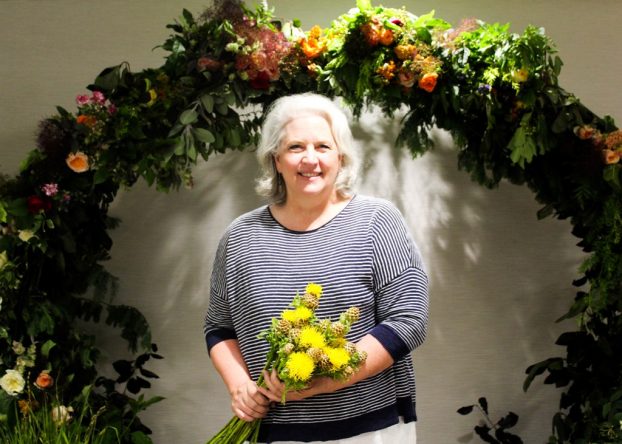
Nan Matteson of Queen City Flower Farm, based in Cincinnati, Ohio
I’m delighted to share today’s conversation with Nan Matteson of Queen City Flower Farm in Cincinnati, Ohio.
I met Nan virtually in 2015 when she emailed me to introduce herself. It was a lovely note from a woman who would become a kindred spirit and friend. Nan wrote this:
“Once vase at a time.” That was the line that hooked me. I could make one vase.
I’m a podcast junkie and a gardener. Slow Flowers hit my radar either via Ken Druse or Riz Reyes early in the game. I listened all summer. I wanted to hang out with these people. I showed up at the ASCFG meeting in Delaware to explore more. Met you ever so briefly.
Came home wondering, how can I be a part of this movement? I could read between the lines. People already owned the land. There was a husband/family in the background. But let’s be honest. I’m single, in my late 50’s, and wasn’t about to leave my good job w/ benefits.
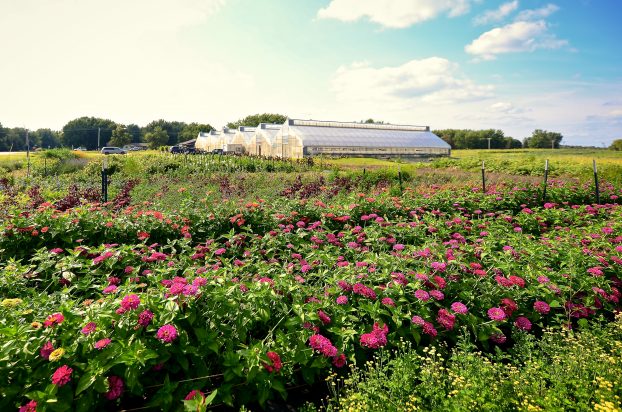
More beautiful bouquets and field-grown zinnias from Queen City Flower Farm.
However, one afternoon in late November I had coffee w/ a local CSA farmer who had no interest in flowers. She said, “Nan, come grow for us on our land.” An offer I couldn’t refuse.
I spent the winter reading, ordering seeds and tubers. Listening to more podcasts. By spring I knew I still knew nothing about growing cut flowers, but took the advice offered in multiple podcasts, “Just start.”
So I have spent this summer providing mixed bouquets for Finn Meadows CSA. A barnacle business as Elizabeth Artis would say. A mini-micro biz I say. I average 7 bouquets a week. Not much, but seven more vases of fresh, local, seasonal flowers sitting on someone’s table each week.
And I continue to listen to your podcast.
Lucky for me I’m heading to NYC this week-end. And although not planned it turned out that I had scheduled myself the same week as the Field to Vase dinner in Brooklyn. Oh my gosh! So what’s another day in NYC if I can catch that event? I hope to see you there.
Final thought: trend is not a bad word – embrace it. You’ve created a wonderful trend! (Who am I to tell you what to say?!)
Love your podcast. Its growth proves its worth. Sincerely, Nan Matteson
Event bouquets (left) and a gift bouquet (right), grown by Nan Matteson of Queen City Flower Farm.
Isn’t that just the kind of email to savor again and again?!
Nan (right) with her sister, at Flower House Detroit in 2015. The women are wearing botanical brooches, which Nan made.
As it turns out, I met Nan that summer of 2015 in Brooklyn, and subsequently, at Lisa Waud’sFlower House Detroit, just a few months later.
We’ve met up at other flower events and when Nan came to Seattle last month for a short visit, I told her we needed to record an episode for the Podcast!
Lucky for me, she said YES! I know you will enjoy our conversation and laughter.
And you’ll be inspired as I am, by Nan’s joie de vivre and her determination to keep on growing flowers, even if just for a single vase of beauty.
Find and follow Nan Matteson at these social places — she’s one you’ll want to follow and connect with.
Thanks so much for joining me on this journey, seeking new and inspiring voices, people with passion, heart, commitment and expertise to share with you.
I hope today’s episode gave you at least one inspiring insight or tip to apply to your floral enterprise. What you gain will be multiplied as you pay it forward and help someone else.
We have a vital and vibrant community of flower farmers and floral designers who together define the Slow Flowers Movement. As our cause gains more supporters and more passionate participants who believe in the importance of the American cut flower industry, the momentum is contagious.
I know you feel it, too. I value your support and invite you to show your thanks and with a donation to support my ongoing advocacy, education and outreach activities. You can find the donate button in the column to the right.
The Slow Flowers Summit is six months away so please save three dates on your calendar as you plan your travel to St. Paul, Minnesota.
On Monday, July 1st, we will all gather at Paikka Event Space for day one of the Summit.
On Tuesday, July 2nd we will tour the Twin Cities Flower Exchange as it’s swimming in locally grown flowers.
I can’t wait to see you there! Ticket sales continue with a special Slow Flowers member discount at $375.
You’ll learn all about the many opportunities to join us — from flower farm tours and dinner on a flower farm to business and branding presentations to interactive and inspiring design sessions . . . all designed to serve you! Sign up to receive updates at slowflowerssummit.com.
Thank you to our Sponsors, including those highlighted today!
Florists’ Review magazine: I’m delighted to serve as Contributing Editor for Slow Flowers Journal, found in the pages of Florists’ Review. It’s the leading trade magazine in the floral industry and the only independent periodical for the retail, wholesale and supplier market. Take advantage of the special subscription offer for members of the Slow Flowers Community.
Madras, Oregon-based NW Green Panels, designer and builder of a wide array of wood-framed greenhouses. Their greenhouses are 100% Oregon-made using twin-wall polycarbonate manufactured in Wisconsin, making NW Green Panel structures a great value for your backyard. The 8×8 foot Modern Slant greenhouse has become the essential hub of my cutting garden — check out photos of my greenhouse here!
Seattle Wholesale Growers Market, a farmer-owned cooperative committed to providing the very best the Pacific Northwest has to offer in cut flowers, foliage and plants. The Growers Market’s mission is to foster a vibrant marketplace that sustains local flower farms and provides top-quality products and service to the local floral industry. Visit them here.
Syndicate Sales, an American manufacturer of vases and accessories for the professional florist. Look for the American Flag Icon to find Syndicate’s USA-made products and join the Syndicate Stars loyalty program at syndicatesales.com.
The Slow Flowers Podcast has been downloaded more than 405,000 times by listeners like you. Thank you for listening, commenting and sharing – it means so much. Thank you all!
The content and opinions expressed here are either mine alone or those of my guests alone, independent of any podcast sponsor or other person, company or organization.
The Slow Flowers Podcast is engineered and edited by Andrew Brenlan. Learn more about his work at soundbodymovement.com.