Debra Prinzing

Get the Email Newsletter!

Archive for the ‘American Flowers Week’ Category

Episode 352: Foraged Art with Publishing Maven Leslie Jonath of Connected Dots Media

Wednesday, June 6th, 2018

Today’s guest is Leslie Jonath, creative director of San Francisco-based Connected Dots Media.

Leslie has over 20 years’ experience in book publishing, creative services, and media business development. And for any of you who dream of producing a book of your own, you’ll want to listen closely to her process and advice!

From 1991 to 2009, Leslie was an integral part of the editorial and development team at Chronicle Books, a Bay Area-based independent publishing house known for its lively, eye-catching and trend-setting books, gifts, stationery, and other consumer products about food, art, pop culture, gardening, design, lifestyles, and more.
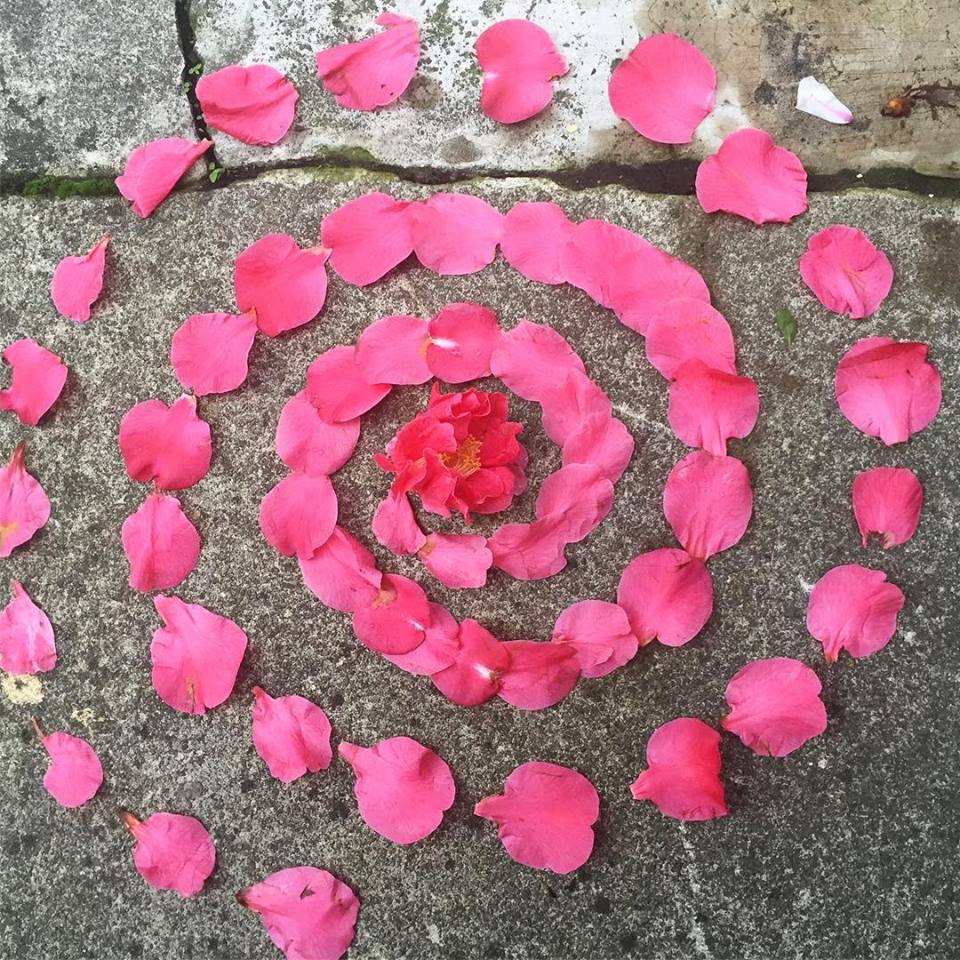
A petal spiral from Foraged Art’s feed.

As a Senior Editor in the food, lifestyle, and custom publishing categories, Leslie developed acquisition strategies, launched the successful garden and craft categories; acquired, produced, edited, and project-managed over 250 books across a variety of categories, including food, pop culture, crafts, lifestyle, art, architecture, memoir, and children’s projects.

She also created a cause-related publishing model for non-profit organizations, creating books to benefit Meals on Wheels of San Francisco; P.A.W.S., Bay Area schools and Next Course (which provided job and life skills training for incarcerated women).

As a Director of Creative Development, Leslie was a founding member and co-director of Chronicle’s Custom Publishing division, creating innovative products for cultural institutions, name-brand companies and retailers. Clients included BabyGap, Starbucks, Anthropologie, and the San Francisco Ballet.

Another spontaneous art foraged art project.

The success of her work in this division led to a position as Director for Creative Services for the company’s Business Development team. As head of Creative Services, she  and her teams conceptualized, produced and developed innovative “beyond the book” services for custom clients, including videos and other digital products.

While at Chronicle, Leslie teamed up with Ariella Chezar to create Ariella’s first book in 2002, Flowers for the Table, a guide to choosing seasonal flowers and a lesson in designing with the bud’s natural form. The book revolves around several seasonal occasions, from a summer wedding in the country to hot colored poppies on a cold winter’s night.
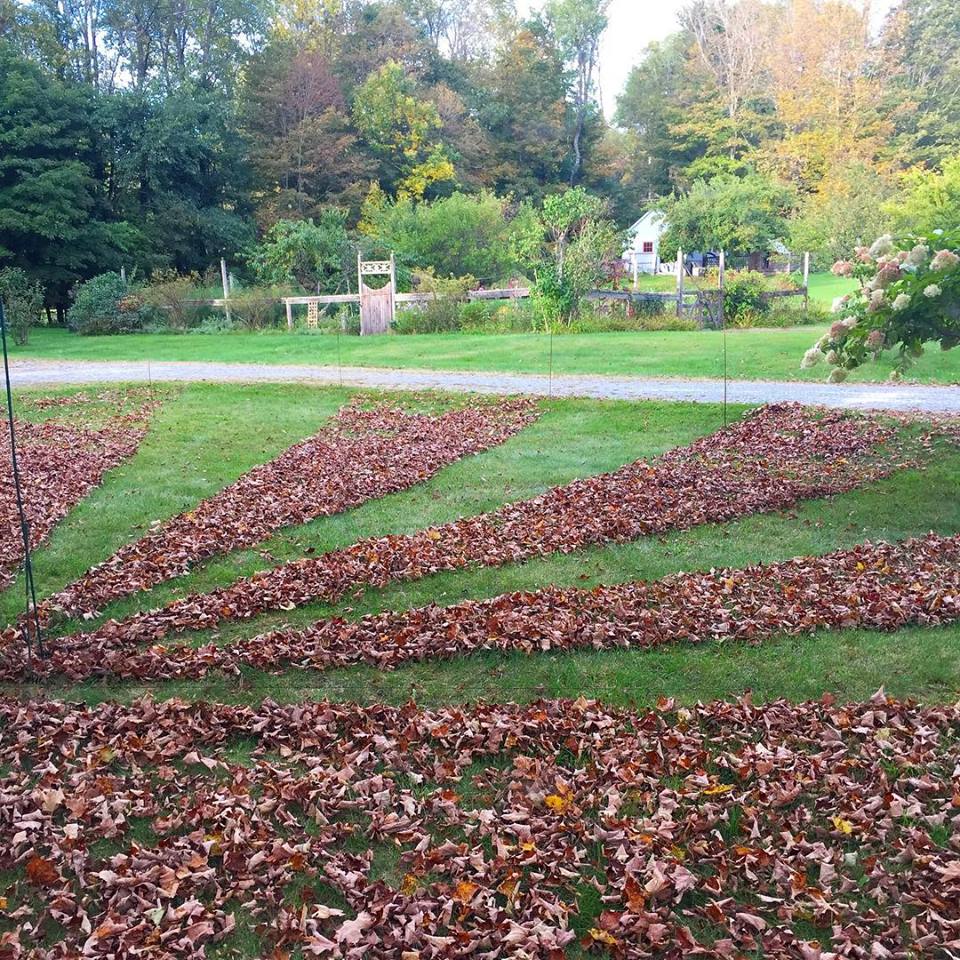
Raked-Leaf Rays, a project from Foraged Art

After leaving Chronicle Books in 2009, Jonath founded Connected Dots Media, working with clients in book packaging, video production, and concept and content development and production. And she reunited with Ariella in 2016 to create and publish Ariella’s beautiful new book, The Flower Workshop for Ten Speed Press. In addition to having produced books on floral design, Leslie is the author of Love Found, Everyone Loves Paris, and Give Yourself a Gold Star.

Leslie has also guided Erin Benzakein and Julie Chai on the award-winning Floret Farm’s Cut Flower Garden book. You’ve heard Ariella and Erin in the past on this Podcast.
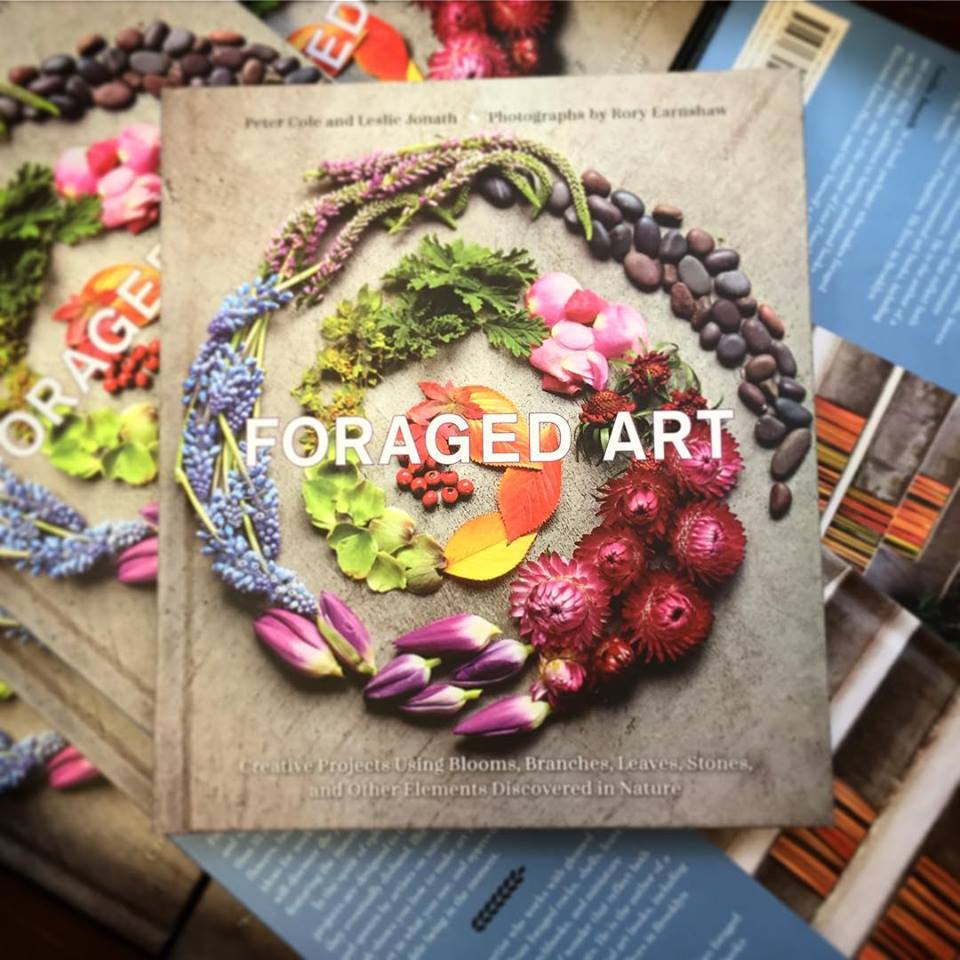
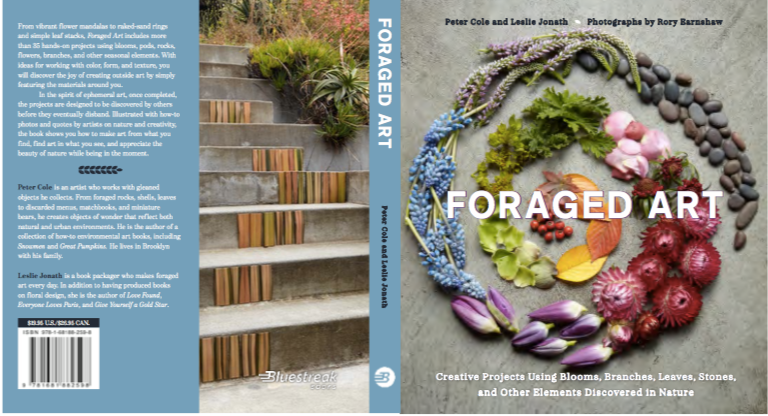
Foraged Art, a book for play, creativity and changing your relationship with nature.

So now, we’re going to hear from the woman behind those projects and so many others. I’ve invited Leslie today to talk about two personal book projects that have HER name on the cover as author.
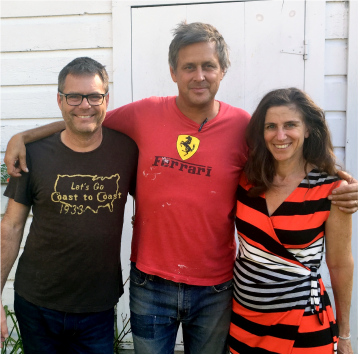
Rory, Peter and Leslie, creators of the Foraged Art Book

The first, just out, is called Foraged Art, Creative Projects Using Blooms, Branches, Leaves, Stones, and other Elements Discovered in Nature (published by Bluestreak Books).

Leslie’s co-author is artist Peter Cole, an artist who works with gleaned objects he collects. From foraged rocks, shells, leaves to discarded menus, matchbooks, and miniature bears, he creates objects of wonder that reflect both natural and urban environments. He is the author of a collection of how-to environmental art books, including Snowmen and Great Pumpkins. He lives in Brooklyn with his family.

Foraged Art was photographed by Rory Earnshaw is a Bay Area-based photographer who shoots corporate annual reports, table-top, fine art, corporate/music industry portraits, product, packaging, lifestyle, editorial, music CD’s, as well as fine art landscapes.

In the spirit of land artists like Andy Goldsworthy, the book is as much about discovery as it is about creation. Leaves shaped like lips might inspire a face; an array of rocks might be become an eclectic mosaic; winter’s first snow might be carved into glowing luminaria.

Whether you love to look for heart-shaped flowers or want to make a peacock made with flower petals, readers will find great inspiration and joy in Foraged Art.
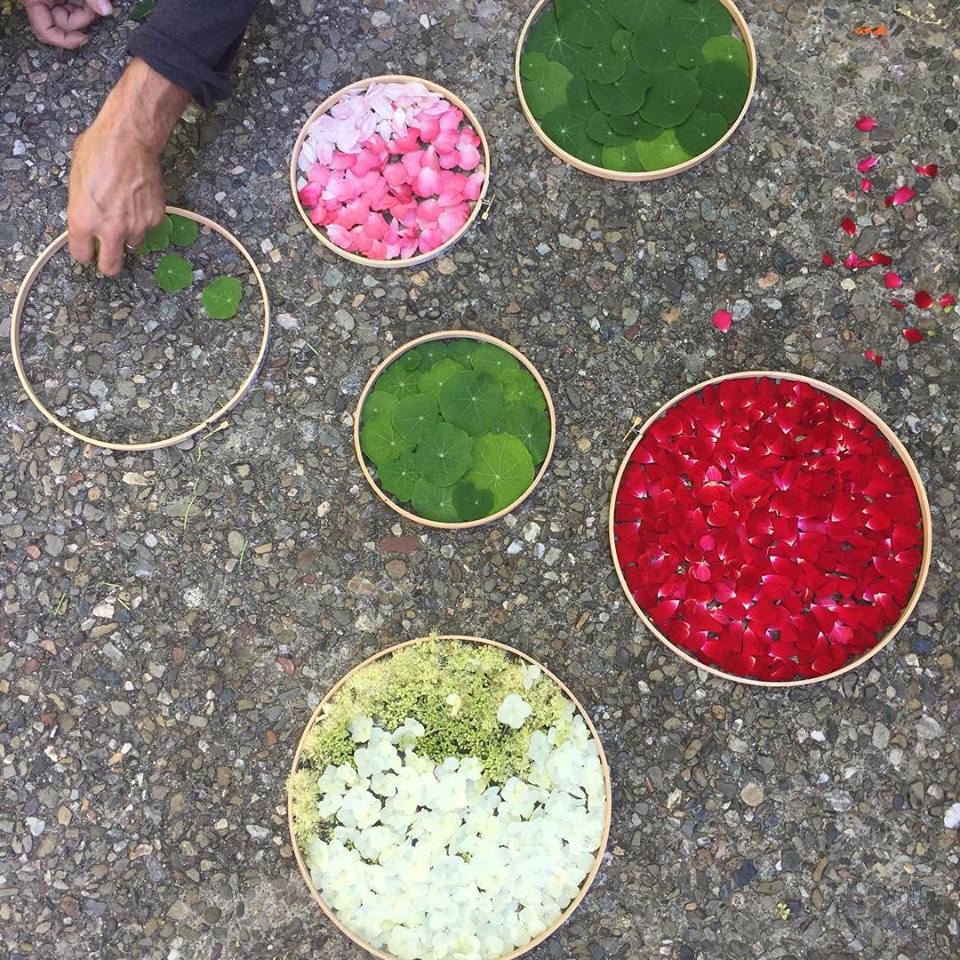
Petal Puddles, a project from Foraged Art

Art, meditation, and nature meet in this adult-focused activity book, with projects that take inspiration from the natural environment, using blooms, pods, branches, stones, and other natural elements. Divided into chapters by natural elements — flowers, leaves, rocks and pods, and more, the book encourages readers to forage and play outside using nature’s seasonal art box. Foraged Art is about making art from what you find and finding art in what you see.
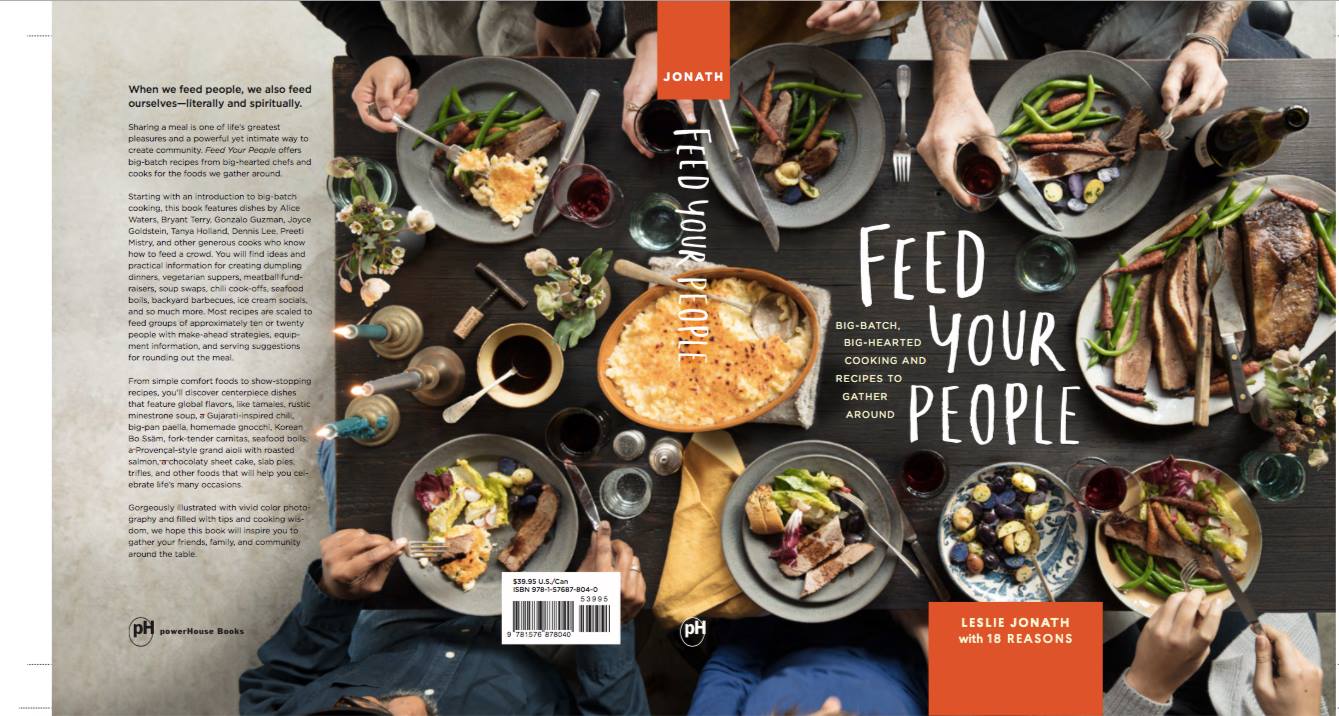
Leslie and I also discuss Feed Your People, an ambitious book that she has been working on for several years — from conception to completion.

Feed Your People is a modern community cookbook. Leslie envisioned the need for Feed Your People after she realized that despite the popularity of dinner clubs, pop-up dinners, and holiday entertaining, there were surprisingly few cookbooks or resources that offer practical instruction on cooking for crowds.

To that she approached the community of big-hearted cooks and chefs—experts who cook for their communities — whose generosity inspires. Stories of their gatherings are accompanied by recipes with detailed  information on equipment, make ahead strategies and tips cooking for groups from eight or to forty (and even fifty!)

As Leslie explains, on a deeper level, the book is about building and feeding community, and, fittingly, she teamed up with 18 Reasons–a beloved San Francisco-based organization that provides classes to low-income residents and hosts monthly community dinners.

She wants this book to inspire cooks everywhere to bring their communities together for a meal—no matter what the occasion. From a simple soup dinner to a pasta pot, whether using paper plates and fingers or cloth napkins, there are recipes around which to create a well-considered, delicious, and memorable event. She sees Feed Your People as a celebration of community, a guide that will encourage people everywhere to feed each other both literally and spiritually.

Here’s where and how to follow Leslie at her social places:

Feed Your People on Facebook

Feed Your People on Twitter

Foraged Art on Facebook

Foraged Art on Instagram

As Leslie encourages us, creating foraged art reminds us that life is beautiful in all of its stages – and that, if we look, we can see the grace in every moment.

I certainly feel that grace this week as many of you have reached out to thank me for this Podcast and how it has helped you. We have 57 five-star reviews on ITunes, which is so awesome. One fan just posted this review on iTunes, writing:

“Over the past few months, I’ve really enjoyed listening to your podcast. Insights and glimpses of what goes on with the Slow Flowers Movement is fascinating. As a 30-year veteran of the floral industry here in North America, it’s surprising that I haven’t been more aware of local growers. Thank you for encouraging the local farms to grow flowers that we can utilize so we can help spread the news of buying American grown flowers.”

I’m encouraged by the amazing participation in our many opportunities to network, connect and educate — and this is a bountiful month for doing so. With American Flowers Week coming up on June 28-July 4, with the Slow Flowers Summit — our LIVE celebration of American Flowers Week taking place on Friday, June 29th in Washington, D.C., and with the many marketing and branding tools available for your use for free, please take advantage of this opportunity and join the community.

If you’re not on our mailing list, you can find a link to the June Slow Flowers Newsletter in today’s show notes — catch up on Slow Flowers members and their fantastic activities, too.

Please make you reservation for the Slow Flowers Summit. Our second annual Slow Flowers Summit takes place in the heart of American Flowers Week – and we have an inspiring lineup of speakers, gorgeous flowers, fun and interactive design activities and of course, a chance to stretch your imagination in a thought-provoking and stimulating environment.

I am grateful to all our entire community of flower farmers and floral designers who together define the Slow Flowers Movement. As our cause gains more supporters and more passionate participants who believe in the importance of the American cut flower industry, the momentum is contagious. I know you feel it, too. I value your support and invite you to show your thanks and with a donation to support my ongoing advocacy, education and outreach activities. You can find the donate button at debraprinzing.com in the right column.

The Slow Flowers Podcast has been downloaded more than 324,000 times by listeners like you. Thank you from the bottom of my heart for listening, commenting, liking and sharing! It means so much.

Thank you to our sponsors who have supported Slow Flowers and all of our programs.

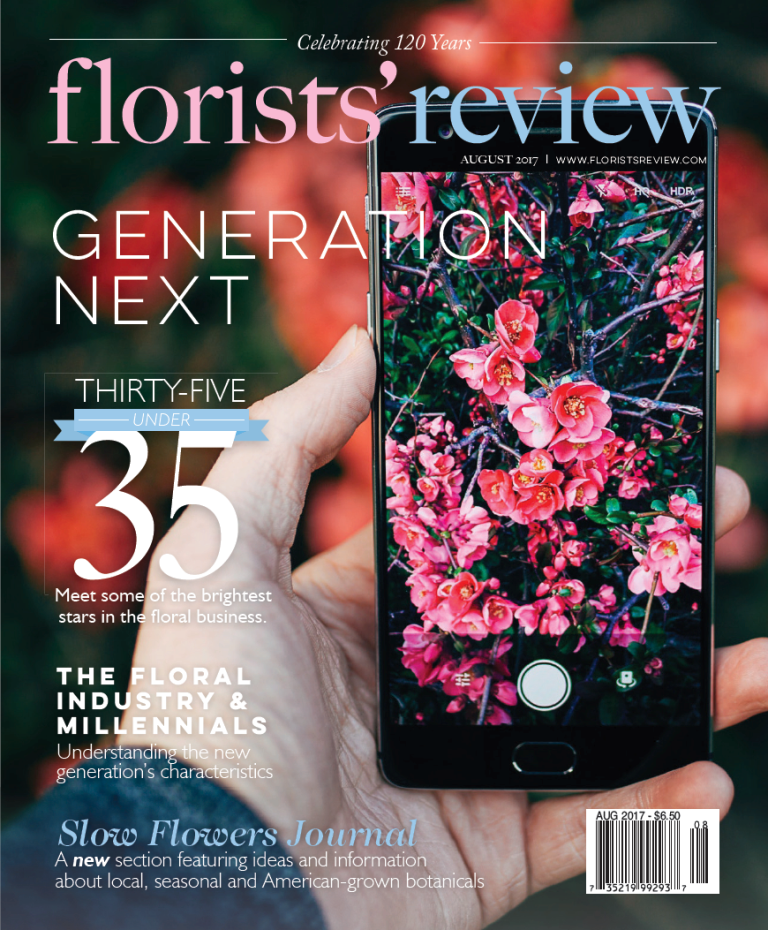
Florists’ Review magazine. I’m delighted to serve as Contributing Editor for Slow Flowers Journal, found in the pages of Florists’ Review. It’s the leading trade magazine in the floral industry and the only independent periodical for the retail, wholesale and supplier market. Take advantage of the special offer for a free trial issue.

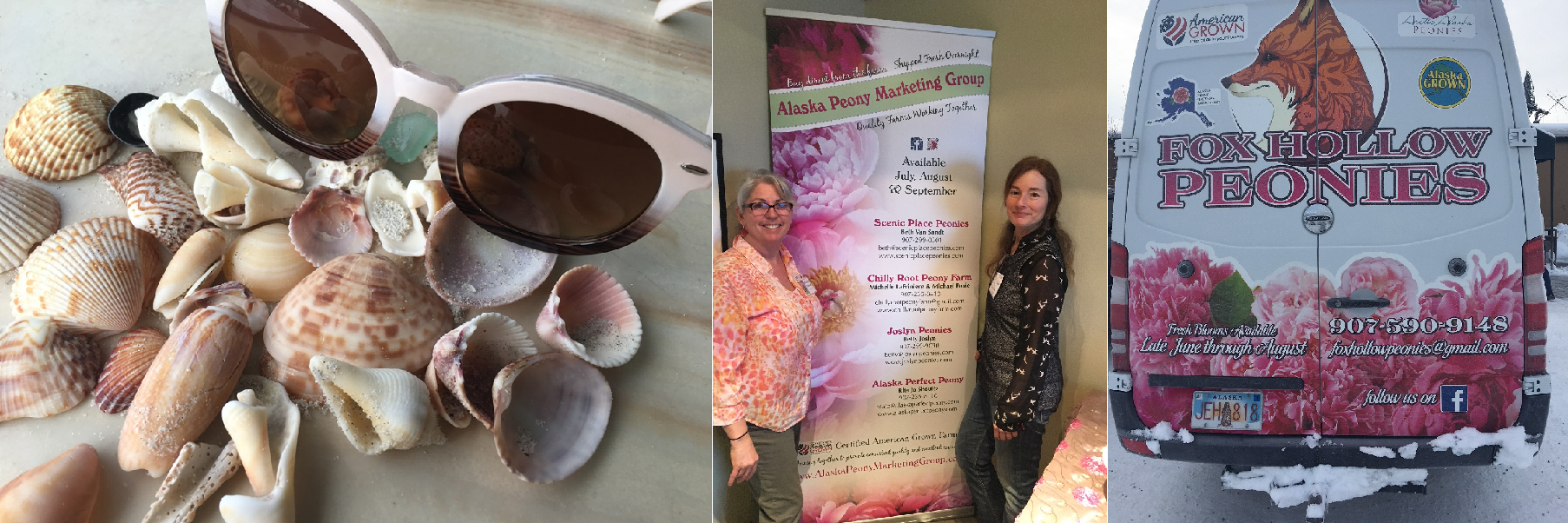
Arctic Alaska Peonies, a cooperative of passionate family farms in the heart of Alaska providing bigger, better peony flowers during the months of July and August. Visit them today at arcticalaskapeonies.com.

Seattle Wholesale Growers Market, a farmer-owned cooperative committed to providing the very best the Pacific Northwest has to offer in cut flowers, foliage and plants. The Growers Market’s mission is to foster a vibrant marketplace that sustains local flower farms and provides top-quality products and service to the local floral industry. Find them at seattlewholesalegrowersmarket.com

Longfield Gardens provides home gardeners with high quality flower bulbs and perennials. Their online store offers plants for every region and every season, from tulips and daffodils to dahlias, caladiums and amaryllis. Visit them at longfield-gardens.com.

Syndicate Sales, an American manufacturer of vases and accessories for the professional florist. Look for the American Flag Icon to find Syndicate’s USA-made products and join the Syndicate Stars loyalty program at syndicatesales.com.

Johnny’s Selected Seeds, an employee-owned company that provides our industry the best flower, herb and vegetable seeds — supplied to farms large and small and even backyard cutting gardens like mine. Check them out at johnnysseeds.com.

Association of Specialty Cut Flower Growers. Formed in 1988, ASCFG was created to educate, unite, and support commercial cut flower growers. It mission is to help growers produce high-quality floral material, and to foster and promote the local availability of that product. Learn more at ascfg.org

Mayesh Wholesale Florist. Family-owned since 1978, Mayesh is the premier wedding and event supplier in the U.S. and we’re thrilled to partner with Mayesh to promote local and domestic flowers, which they source from farms large and small around the U.S. Learn more at mayesh.com.

Certified American Grown Flowers. The Certified American-Grown program and label provide a guarantee for designers and consumers on the source of their flowers. Take pride in your flowers and buy with confidence, ask for Certified American Grown Flowers.  To learn more visit americangrownflowers.org.

I’m Debra Prinzing, host and producer of the Slow Flowers Podcast. Next week, you’re invited to join me in putting more American grown flowers on the table, one vase at a time. And If you like what you hear, please consider logging onto Itunes and posting a listener review.

The content and opinions expressed here are either mine alone or those of my guests alone, independent of any podcast sponsor or other person, company or organization.

The Slow Flowers Podcast is engineered and edited by Andrew Brenlan. Learn more about his work at soundbodymovement.com.
Music Credits:
The Wooden Platform; Pat Dog; Long and Low Cloud (quiet acoustic)
by Blue Dot Sessions
Music from:

audionautix.com

Episode 351: Full Bloom Flower Farm & Floral Design’s Hedda Brorstrom and our kickoff for American Flowers Week 2018

Wednesday, May 30th, 2018

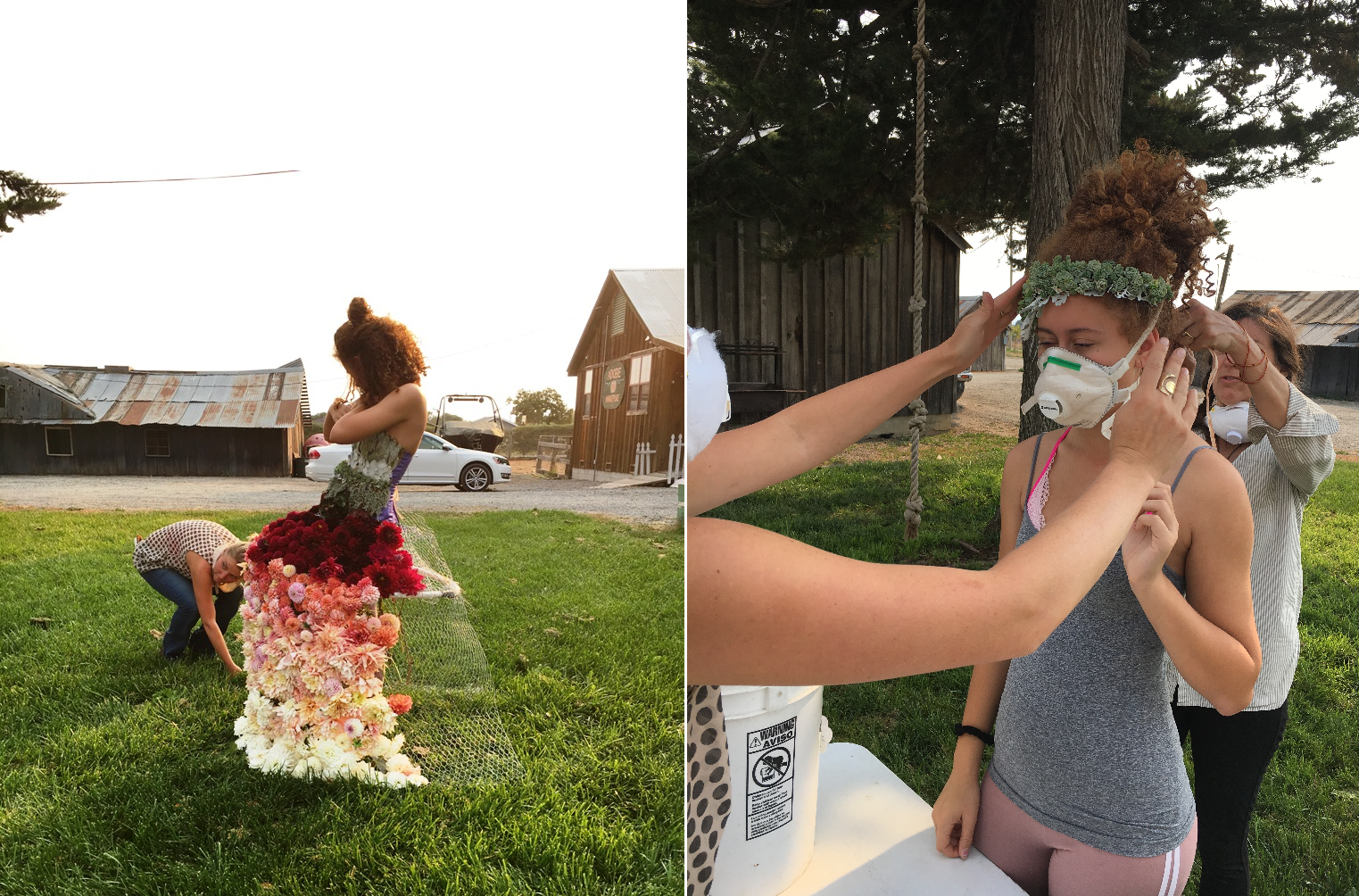
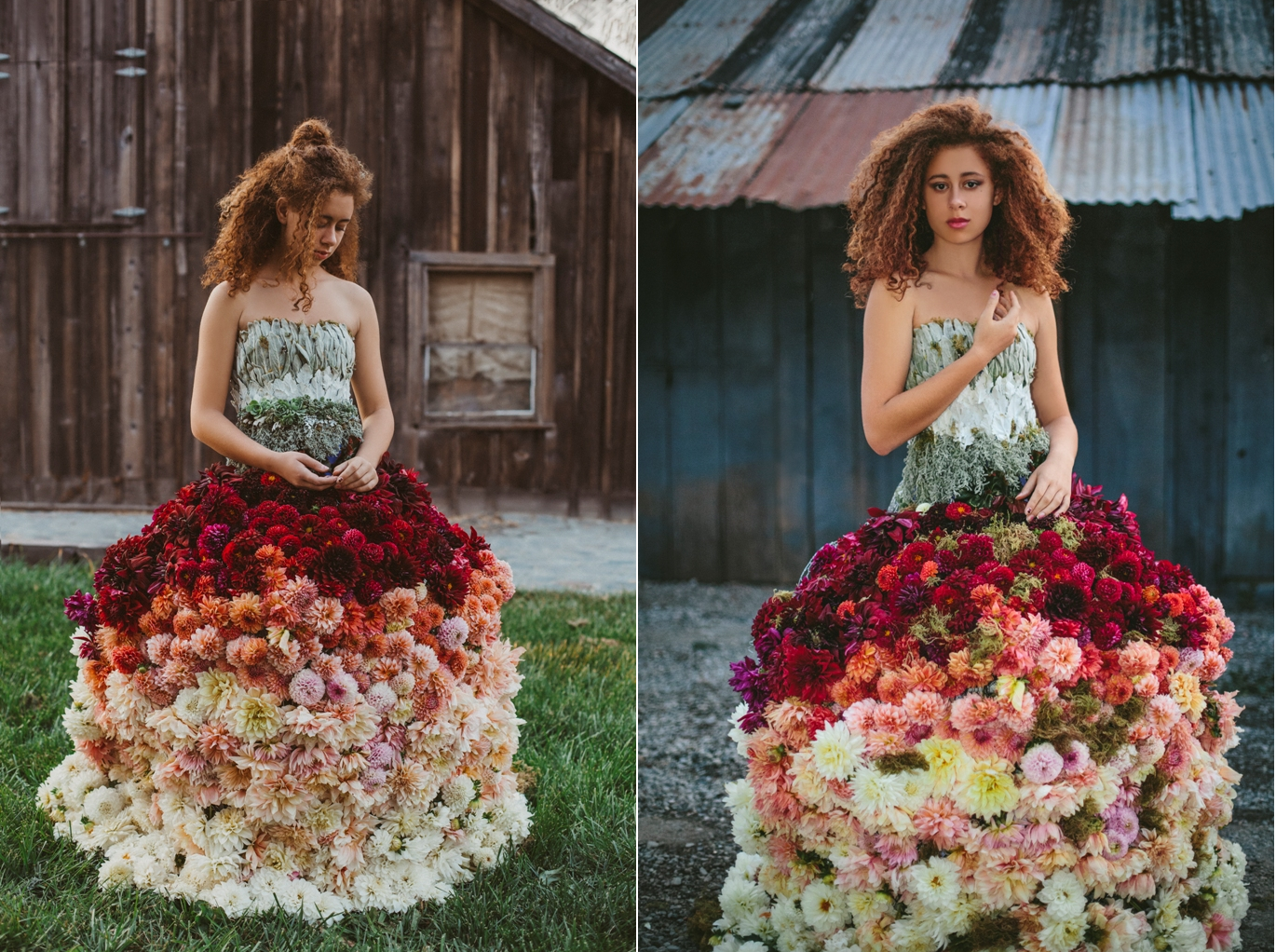
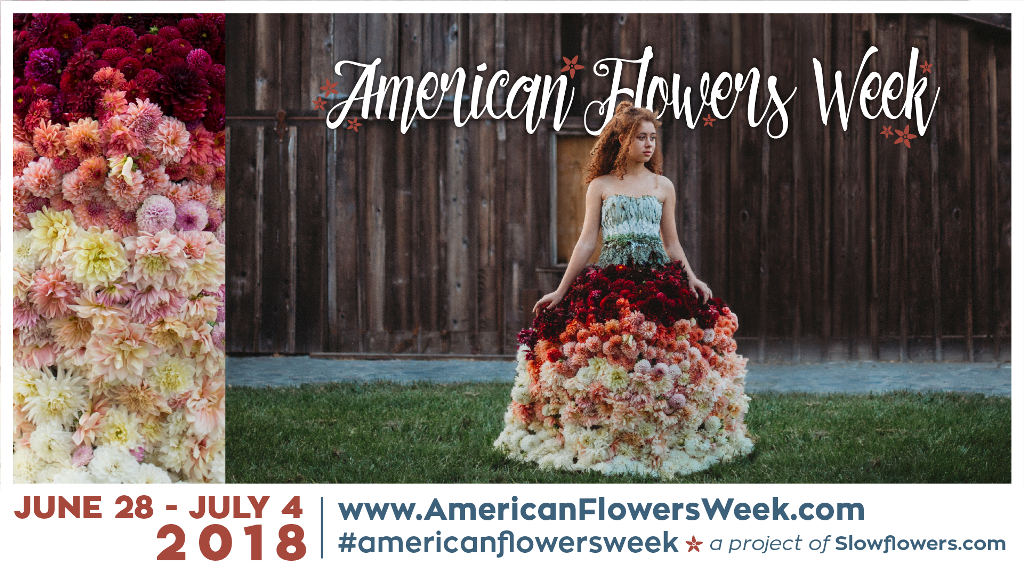
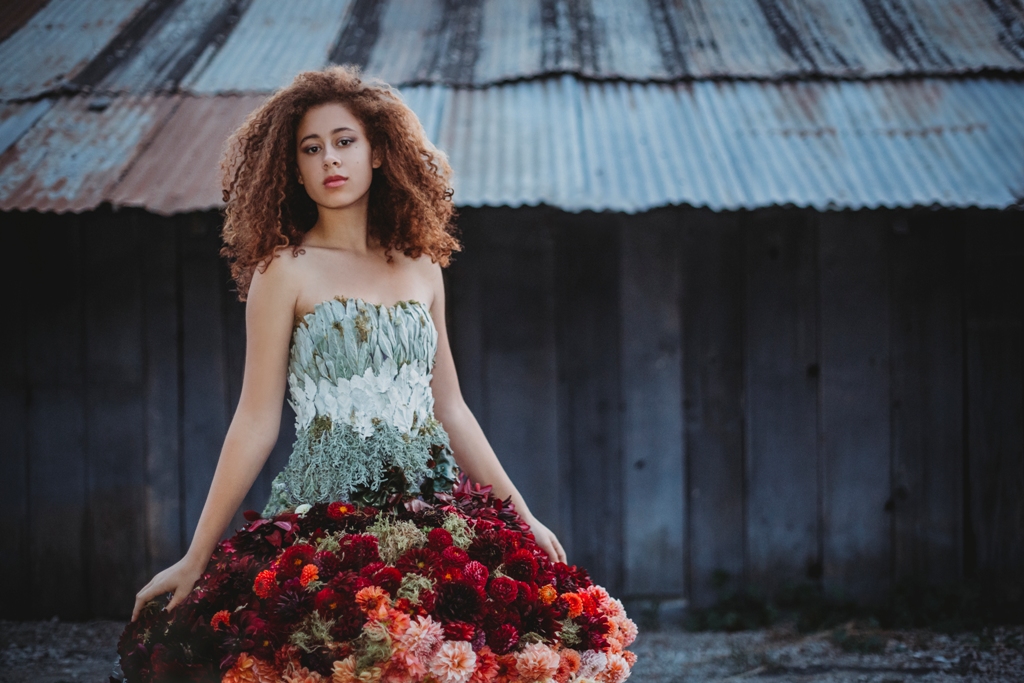
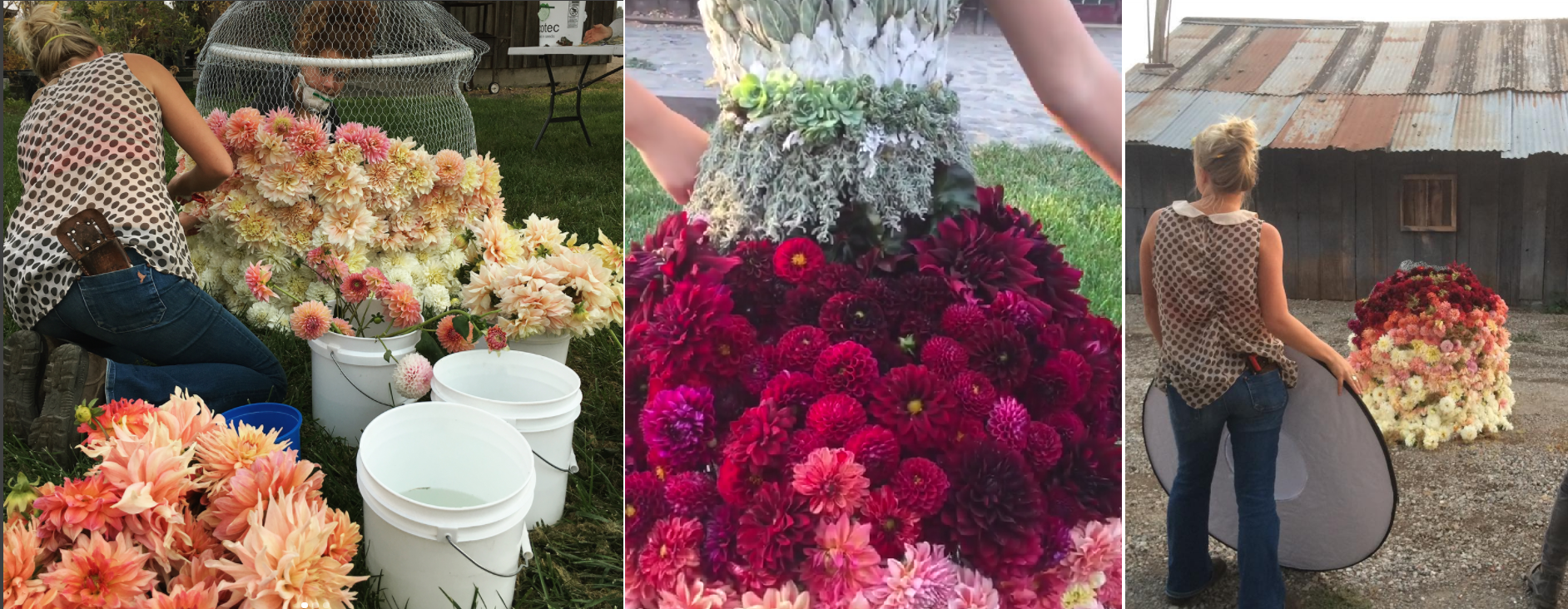
Hedda’s beautiful dahlia dress for American Flowers Week 2018, featuring foliages and herbs from her own Full Bloom Farm and 350 dahlias from Aztec Dahlias, where the dress was photographed last October.

Hedda Brorstrom of Full Bloom Flower Farm.

I’ve invited Hedda Brorstrom of Full Bloom Flower Farm & Floral Design to return to the Slow Flowers Podcast as today’s guest for a number of reasons.

You may recall that she was part of my series on the North Bay Flower Collective community a few years ago when I interviewed Hedda along with Seth Chapin of Evermore Flowers and Daniele Strawn of JoLee Blooms, Episode 242.

That interview was primarily focused on the origins of the North Bay Flower Collective, of which Hedda is one of the founders.

Recently, Hedda joined the American Flowers Week campaign as a featured designer for this year’s floral fashion collection.

I want you to hear her story, learn more about how she became a farmer-florist in California’s Sonoma County, and her creative process designing a wearable fashion.

Model Sophia Lane wears Hedda’s dahlia dress to perfection, showcasing the flowers grown by Kate Rowe and Omar Duran of Aztec Dahlias (c) Becca Henry Photography.

As American Flowers Week kicks off soon, I want you to hear Hedda’s story as a flower farmer, environmental educator, floral designer and ecology activites, as we share the “big reveal” of the incredible Dahlia Dress that she designed last fall in collaboration with flower farmers Kate Rowe and Omar Duran of Aztec Dahlias.

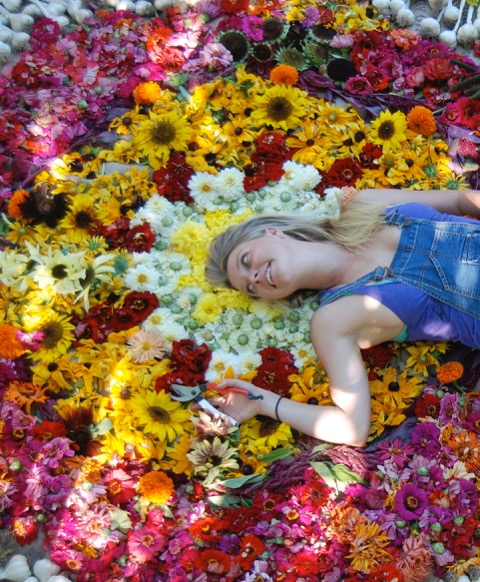
These behind-the-scenes photos from last year reveal what the team endured to create such beauty!

As a way to raise awareness of flower farming and sustainable floral design, I started the floral fashion series with one amazing look in 2016 for American Flowers Week — a red-white-and-blue floral ‘fro from Susan McLeary of Passionflower.

That was followed by five wearable floral looks for the 2017 campaign and again, for 2018, five original floral wearable looks. You’ll hear from all the designers in the coming weeks, beginning today with Hedda.

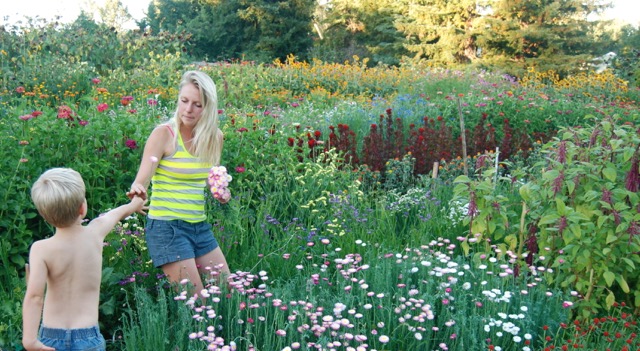
Here’s Hedda, flower harvesting with one of her young nephews

Hedda shares this personal statement on her web site:

Farming started for me growing up on Wiggle Worm Bait Farm in Graton, Ca. My parents tended rich worm beds with the motto, “We like them fat and lively!” and I got to be a wild worm loving farm kid. One of my farm chores growing up was to create floral arrangements around the house. Little bud vases of daphne and violets sat above the kitchen sink in February, big vases of bearded iris and mock orange graced the bathroom in late Spring and bedside posies of rattle snake grass and yarrow made nights feel special through the summer. I bent willows into crowns, weeded my mom’s gardens, and munched on fresh green miners lettuce and asian pears from the neighbor’s farm. The puff ball viburnum and cabbage roses that I use in my floral crowns are from the same plants I used to have petal fights with as we waited for the school bus. It wasn’t until I was studying agroecology at UC Berkeley, however, that I realized Sonoma County is an agricultural gem and I was blessed to grow up a bit wild and plant loving.

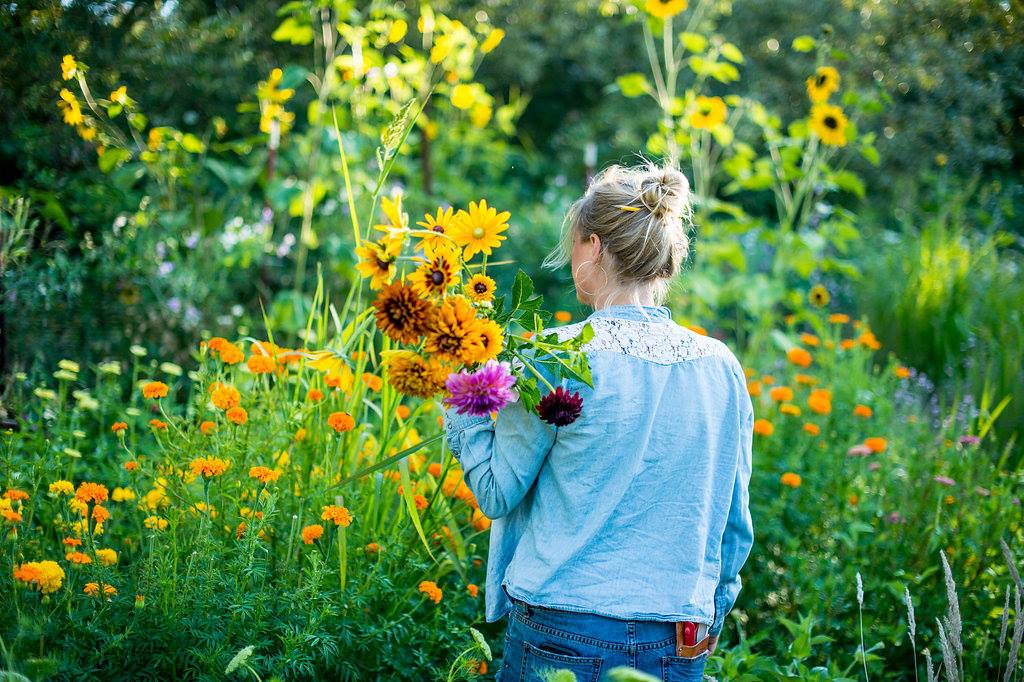
Hedda during harvest at her farm in Sonoma County

After college I spent six years teaching gardening and ecology in the San Francisco school district and working as an environmental educator at the Academy of Sciences and Save the Bay. Wanting to dive deeper into growing I attended the UC Santa Cruz Ecological Horticulture program where my interest in flowers turned from a childhood memory into a full blown, full bloom obsession. I learned about variety selection, post harvest handing, and farm management. A love of art coupled with farming moved me into floral design making me a true farmer florist. The shape, texture and movement of each bloom allows me to paint with flowers like I never could on a canvas. The dirt and grit of cultivation and beauty of putting it all together is two jobs. Sometimes these jobs feel like being a chef who grows their own food, but who better to make a dish than the one who loved it from seed? In 2012 I could no longer contain my flower passion so I moved home to my wormy roots, to my childhood plants, and I started Full Bloom Flower Farm. After a year in production I enrolled in the wonderful California School of Herbal Studies where I gained my certificate in herbalism. In the plant world, learning is never-ending and I am happy to infuse plant magic into all the arrangements. Full Bloom is a mighty one acre flower farm providing endless beauty, medicine and life to the community. I am proud to be a farmer and a florist; it is my greatest joy to bring plant art to ceremonies and I hope to share my joy with others.

I couldn’t resist creating this fantastic gallery of all the ways Hedda shows off her flowers.

Hedda’s endless curiosity is inspiring and I loved having this time to catch up with her. She describes her aesthetic as “flower-full,” perhaps the inspiration for her business name, Full Bloom. I know you’ll enjoy her story, too.

Two more gorgeous views of Sophia Lane wearing the dahlia dress to celebrate American Flowers Week 2018 (c) Becca Henry Photograpy.

Thank you so much for joining me today. I know seeing the dahlia dress that Hedda designed and made for American Flowers week will inspire you and get your creative juices flowing. Who knows? Maybe you’ll dream up a wearable look of your own — and I hope you share it with me when you do! Use the hashtag #americanflowersweek when you post.

To help you further, I’ve recently written “9 Ways to Participate in American Flowers Week” — a guide to the many ways you can jump onboard this campaign — from simple and low-cost to ambitious and expansive. I hope you’re inspired by what others have done in the past few years.

In addition to gearing up to celebrate American Flowers Week, it’s also time to grab your ticket to the Slow Flowers Summit. The second annual Slow Flowers Summit is again set to take place in the heart of American Flowers Week – and we are getting close to finalizing all the details.

Please grab your ticket now to join us — you’ll be helping me tremendously by committing now so that my event manager Karen Thornton and I can make sure everything’s ready for a successful event. You can find all the details at Slowflowerssummit.com.

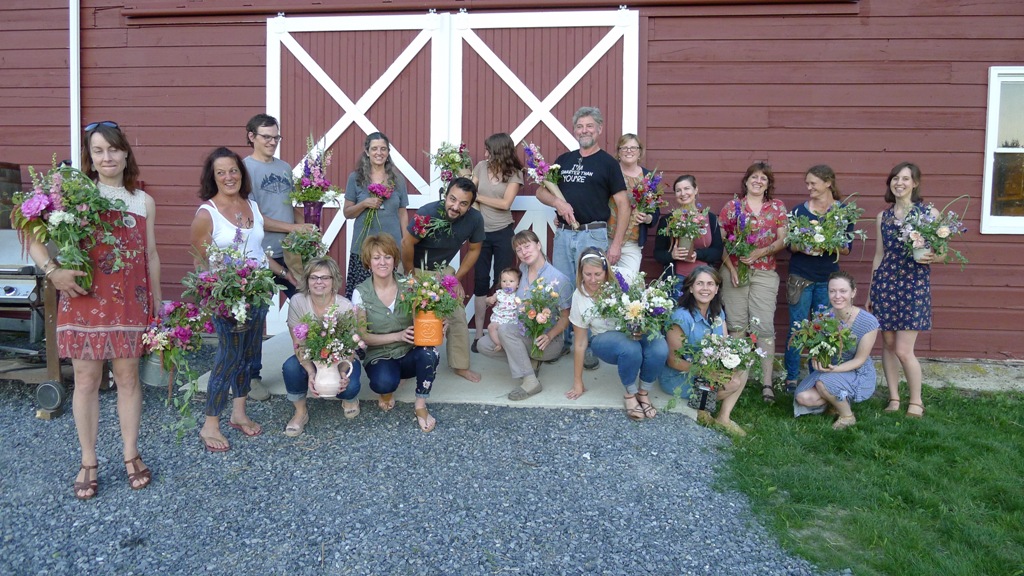
When farmers and florists coming together, everyone benefits! This is a gathering of the Hudson Valley Flower Growers Network during American Flowers Week 2017.

Take the Pledge!!!

I am grateful to all our entire community of flower farmers and floral designers who together define the Slow Flowers Movement. As our cause gains more supporters and more passionate participants who believe in the importance of the American cut flower industry, the momentum is contagious. I know you feel it, too. I value your support and invite you to show your thanks and with a donation to support my ongoing advocacy, education and outreach activities. You can find the donate button at debraprinzing.com in the right column.

The Slow Flowers Podcast has been downloaded more than 320,000 times by listeners like you. Thank you from the bottom of my heart for listening, commenting, liking and sharing! It means so much.

Thank you to our sponsors who have supported Slow Flowers and all of our programs.

Florists’ Review magazine. I’m delighted to serve as Contributing Editor for Slow Flowers Journal, found in the pages of Florists’ Review. It’s the leading trade magazine in the floral industry and the only independent periodical for the retail, wholesale and supplier market. Take advantage of the special offer for a free trial issue

Arctic Alaska Peonies, a cooperative of passionate family farms in the heart of Alaska providing bigger, better peony flowers during the months of July and August. Visit them today at arcticalaskapeonies.com

Seattle Wholesale Growers Market, a farmer-owned cooperative committed to providing the very best the Pacific Northwest has to offer in cut flowers, foliage and plants. The Growers Market’s mission is to foster a vibrant marketplace that sustains local flower farms and provides top-quality products and service to the local floral industry. Find them at seattlewholesalegrowersmarket.com

Longfield Gardens provides home gardeners with high quality flower bulbs and perennials. Their online store offers plants for every region and every season, from tulips and daffodils to dahlias, caladiums and amaryllis. Visit them at longfield-gardens.com.

Syndicate Sales, an American manufacturer of vases and accessories for the professional florist. Look for the American Flag Icon to find Syndicate’s USA-made products and join the Syndicate Stars loyalty program at syndicatesales.com.

Johnny’s Selected Seeds, an employee-owned company that provides our industry the best flower, herb and vegetable seeds — supplied to farms large and small and even backyard cutting gardens like mine. Check them out at johnnysseeds.com.

Association of Specialty Cut Flower Growers. Formed in 1988, ASCFG was created to educate, unite, and support commercial cut flower growers. It mission is to help growers produce high-quality floral material, and to foster and promote the local availability of that product. Learn more at ascfg.org

Mayesh Wholesale Florist. Family-owned since 1978, Mayesh is the premier wedding and event supplier in the U.S. and we’re thrilled to partner with Mayesh to promote local and domestic flowers, which they source from farms large and small around the U.S. Learn more at mayesh.com.

Certified American Grown Flowers. The Certified American-Grown program and label provide a guarantee for designers and consumers on the source of their flowers. Take pride in your flowers and buy with confidence, ask for Certified American Grown Flowers.  To learn more visit americangrownflowers.org.

I’m Debra Prinzing, host and producer of the Slow Flowers Podcast. Next week, you’re invited to join me in putting more American grown flowers on the table, one vase at a time. And If you like what you hear, please consider logging onto Itunes and posting a listener review.

The content and opinions expressed here are either mine alone or those of my guests alone, independent of any podcast sponsor or other person, company or organization.

The Slow Flowers Podcast is engineered and edited by Andrew Brenlan. Learn more about his work at soundbodymovement.com.
Music Credits:
Turning On the Lights; Pat Dog; Sage the Hunter (Rhythmic)
by Blue Dot Sessions

Episode 349: Finding a Market for Your Flowers with Bethany Little of Charles Little & Co.

Wednesday, May 16th, 2018

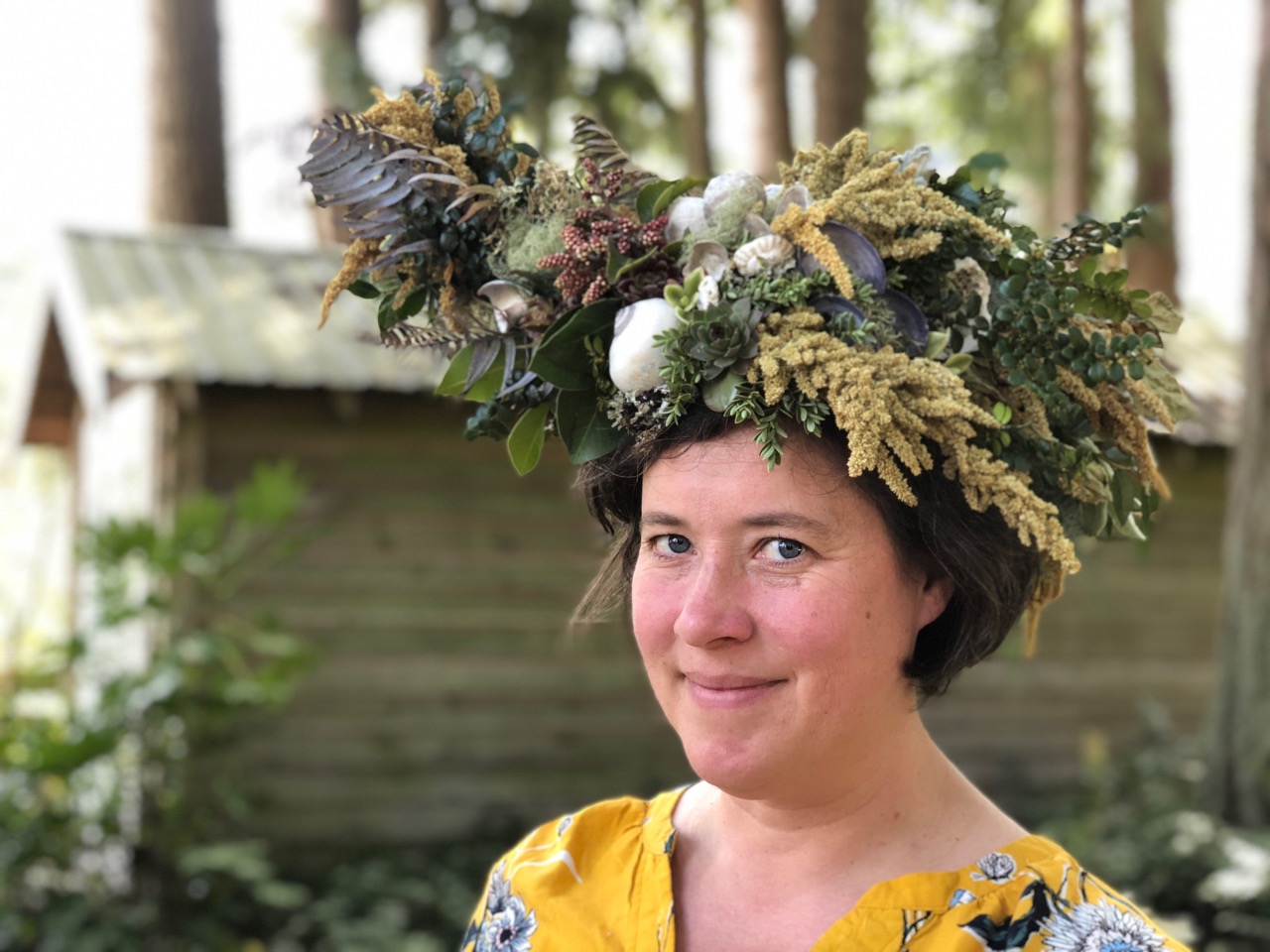
Bethany Little, photographed at the recent Whidbey Flower Workshop, wearing the fanciful headpiece she designed during Susan McLeary’s wearables session.

Before I turn to today’s awesome guest, Bethany Little of Charles Little & Co., I want to share two big news items.

First, this week marks the 250th consecutive episode of the Slow Flowers Podcast, a major milestone in Podcastland where the average podcast only lasts 7 episodes.

In total, since airing my first episode on July 23, 2013, which for some reason I decided to assign as number 100 (thus the odd synch-up of today’s episode 349), I have hosted and have produced an original Slow Flowers Podcast episode every week for 250 weeks.

That is pretty awesome, folks.

And I thank you so much for loyally joining the conversation. In fact, this podcast has been downloaded more than 317,000 times by listeners like you! It is an honor and a humbling experience know you’re listening in each week – our listeners are an essential part of the conversation!

Here’s to the next 250 episodes! We know there are many more voices to hear and stories to tell and I want to bring them to you right here at the Slow Flowers Podcast with Debra Prinzing.

The NEW Slowflowers.com — about to relaunch as a celebration of the site’s 4th anniversary!

Our second piece of Big News involves the online directory – slowflowers.com. Four years ago this week, on May 12, 2014, I announced the debut of Slowflowers.com.

I said this at the time: “Slowflowers.com is a sister project to this podcast — a free, online directory of American-grown flowers and the designers, shops, studios and farms who source those blooms.”

Designed by Nancy Cameron of Destiny Hill Flower Farm.

I continued:

“The mission of Slowflowers.com is simply this:

To promote American-grown flowers, to make it easy for flower consumers to connect with florists, shops, studios and farms who provide American-grown flowers, and to encourage truthful and transparent country-of-origin labeling in the floral industry. 

My goal with this project is that when someone wishes to purchase or send flowers, they stop and ask themselves: Can those flowers be American grown? Slowflowers.com provides that answer.”

The directory began with 250 domestic floral resources listed. Today, that list has grown to 725 members — and my goal with your help, continues to be growing that list to one thousand!

Perfectly timed to coincide with the 4th birthday of Slowflowers.com, this week I am unveiling a brand new Slowflowers.com 2.0 – a visually updated and more user-friendly web site for those who visit the consumer-facing side; and a more functional machine for members who interact with the admin and database side to manage your content.

I have invested considerable time and finances to create Slowflowers.com 2.0, with a fresh, new aesthetic and easy-to-navigate user experience. Look for it soon!!

Take the Pledge!!!

And finally, if you have always considered yourself a “supporter of Slow Flowers,” but have never joined, now is the time to put your values into an actionable gesture and do so. We welcome you to our growing and vibrant community of kindred spirits – flower farmers, floral designers, farmer florists, wholesalers, retailers and consumers of flowers.

I’ll have much more news to share with you as we continue to improve all the facets of Slowflowers.com.

I definitely want to thank Bob Meador of Metric Media for his ongoing involvement in the creation, maintenance and caretaking of this digital project.

As I find myself so often saying . . . I’m a journalist, not a business person. My path to creating the Slow Flowers community and content channels has been passion-driven more than entrepreneurial. With continual improvement in the platform, we’re creating a dynamic brand with which floral consumers and the floral industry wants to engage – and I’m stretching my business know-how in doing so.

Bethany with just-harvested lavender

It’s fitting to share today’s conversation with my guest Bethany Little because she and her husband Charles Little are veteran flower farmers and huge supporters of the Slow Flowers cause.

This episode was recorded last month when Bethany and I spent a few days together at the Whidbey Flower Workshop hosted by Tobey Nelson.

I was there to teach creative writing during the workshop’s opening session after which Tobey graciously invited me to stay with the group of instructors and students for two consecutive days.

Bethany was there as both a student and sponsor, bringing hundreds of beautiful flowering branches from hers and other Oregon flower farms to be employed by Joseph Massie and his students for a few breathtaking, large-scale installations.

You may recall that Bethany’s husband, the one and only Charles Little, appeared on this show a few years back.

Charming and inviting — the farm stand sign at Charles Little & Co.

I was in Eugene, Oregon, visiting friends and lined up a stop at the Charles Little HQ on Seavey Loop Rd. Bethany was out of town that weekend, so I zeroed in on Charles’s story –a wonderful narrative of a sustainable agriculture pioneer whose 30 years of flower farming set the stage for so much of which is happening today in our slow flowers world. Follow this link to that episode from August 2015, called “Grower Wisdom,” for part one of this story.

Bethany Little leading a tour of Charles Little & Co.

Now, you’ll hear part two of the story – Bethany’s insights on flower farming and on creating a viable marketplace for those flowers.

Scenes from Charles Little & Co., including Remy, one of the two canine members of the family, an Australian cattle dog.

Here’s more about Charles and Bethany’s philosophy, from their web site:

We have lived and worked on 35 acres of the very best river-bottom soil along the Coast Fork of the Willamette River in Oregon for nearly a quarter-century. The crops we raise include flowers and foliage of all kinds; ornamental herbs, grasses and grains, and unique sticks, pods and berries. We send in-season floral materials year-round to wholesalers throughout the United States. Our product is excellent and our service is responsive, friendly and direct. We have been growing specialty cut flowers for more than a quarter-century, and we approach our work with passion and keen observation. We are always trying something new to add to our extensive crops, bringing inspiration to our fields and to our customers.  

Harvest time at Charles Little & Co.

Here’s how to find and follow Charles Little & Co.:

Charles Little & Co. on Facebook

Charles Little & Co. on Instagram

Thank you so much for joining me today as we heard Bethany Little’s story!

I am in awe of all you – intrepid and gifted flower farmers and floral designers who together define the Slow Flowers Movement. As our cause gains more supporters and more passionate participants who believe in the importance of the American cut flower industry, the momentum is contagious. I know you feel it, too.

I value your support and invite you to show your thanks and with a donation to support my ongoing advocacy, education and outreach activities. You can find the donate button in the right column.

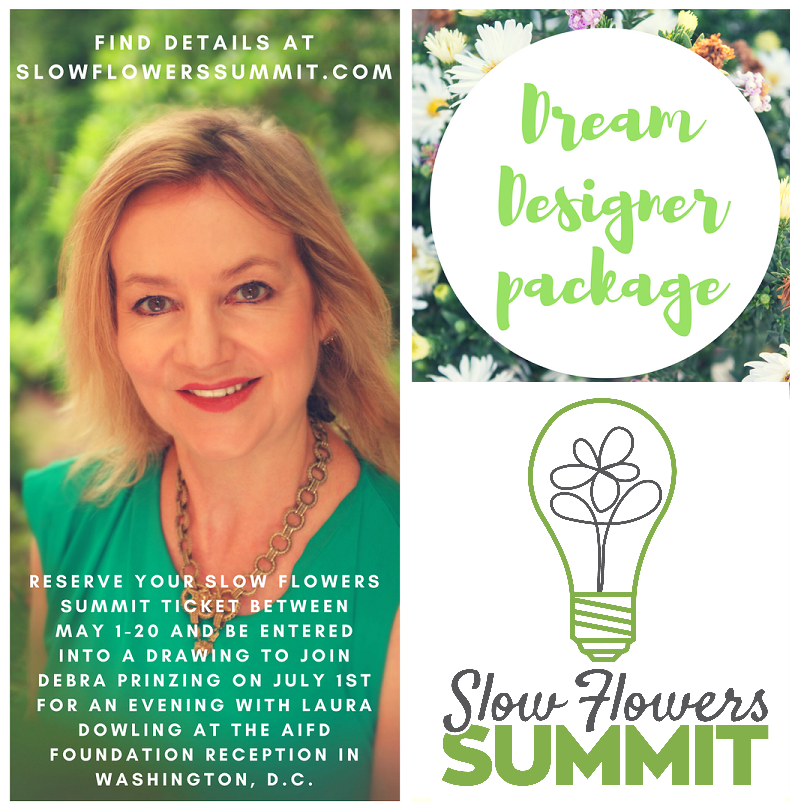
I want to remind you about the Dream Designer Package — a ticket promotion that runs through Sunday, May 20th. All May registrants for the Slow Flowers Summit will be entered into a drawing for one spot to join me on Sunday evening, July 1st at an exclusive gathering with Laura Dowling, author and former White House Florist.

This private event benefits the AIFD Foundation and I’m going to bring one of you with me to attend and enjoy a dazzling and unforgettable evening. So if you’ve been thinking about attending the Slow Flowers Summit, this promotion might just be your incentive! The Summit promises to be a fantastic day of networking, inspiration and personal growth. I can’t wait to see you there!

As I mentioned at the top of this show, the Slow Flowers Podcast has been downloaded 317,000 times and we’ve just hit our 250th episode of this program.

Five years ago, my book “Slow Flowers” was published.

Four years ago, I started the ambitious endeavor to publish and maintain an online directory called Slowflowers.com, which is a free resource to help connect consumers with American grown flowers and the people who grow and design with them.

Three years ago, American Flowers Week debuted, and the fourth annual week-long event American Flowers Week 2018 is almost here. Mark the dates June 28-July 4th on your calendar.

Last year, in 2017, Slow Flowers Journal launched as an online magazine, and soon became a permanent feature in the pages of Florists’ Review each month.

I also launched the Slow Flowers Summit, a one-day mind-meld and gathering for floral progressives. Our second annual Summit is set for June 29th – just around the corner.

What an incredible and rewarding ride it has been — especially to connect with kindred spirits in this journey we’re all taking! The journey to rescue, restore and revive domestic floral agriculture and a floral community focused on transparency and conscious sourcing practices.

Thank you to our sponsors who have supported Slow Flowers and all of our programs.

Our lead sponsor for 2018 is Florists’ Review magazine. I’m delighted to serve as Contributing Editor for Slow Flowers Journal, found in the pages of Florists’ Review. It’s the leading trade magazine in the floral industry and the only independent periodical for the retail, wholesale and supplier market. Take advantage of the special subscription offer for members of the Slow Flowers Community

Arctic Alaska Peonies, a cooperative of passionate family farms in the heart of Alaska providing bigger, better peony flowers during the months of July and August. Visit them today at arcticalaskapeonies.com

Seattle Wholesale Growers Market, a farmer-owned cooperative committed to providing the very best the Pacific Northwest has to offer in cut flowers, foliage and plants. The Growers Market’s mission is to foster a vibrant marketplace that sustains local flower farms and provides top-quality products and service to the local floral industry. Find them at seattlewholesalegrowersmarket.com

Longfield Gardens provides home gardeners with high quality flower bulbs and perennials. Their online store offers plants for every region and every season, from tulips and daffodils to dahlias, caladiums and amaryllis. Visit them at longfield-gardens.com.

Syndicate Sales, an American manufacturer of vases and accessories for the professional florist. Look for the American Flag Icon to find Syndicate’s USA-made products and join the Syndicate Stars loyalty program at syndicatesales.com.

Johnny’s Selected Seeds, an employee-owned company that provides our industry the best flower, herb and vegetable seeds — supplied to farms large and small and even backyard cutting gardens like mine. Check them out at johnnysseeds.com.

Association of Specialty Cut Flower Growers. Formed in 1988, ASCFG was created to educate, unite, and support commercial cut flower growers. It mission is to help growers produce high-quality floral material, and to foster and promote the local availability of that product. Learn more at ascfg.org.

Mayesh Wholesale Florist. Family-owned since 1978, Mayesh is the premier wedding and event supplier in the U.S. and we’re thrilled to partner with Mayesh to promote local and domestic flowers, which they source from farms large and small around the U.S. Learn more at mayesh.com.

(c) Missy Palacol Photography

I’m Debra Prinzing, host and producer of the Slow Flowers Podcast. Next week, you’re invited to join me in putting more American grown flowers on the table, one vase at a time. And If you like what you hear, please consider logging onto Itunes and posting a listener review.

The content and opinions expressed here are either mine alone or those of my guests alone, independent of any podcast sponsor or other person, company or organization.

The Slow Flowers Podcast is engineered and edited by Andrew Brenlan. Learn more about his work at soundbodymovement.com.
Music Credits:
Chapel Donder
by Blue Dot Sessions
Music from:

audionautix.com

Debra Prinzing, Slow Flowers Pioneer, Wins AHS’s Great American Gardener Award

Tuesday, May 15th, 2018

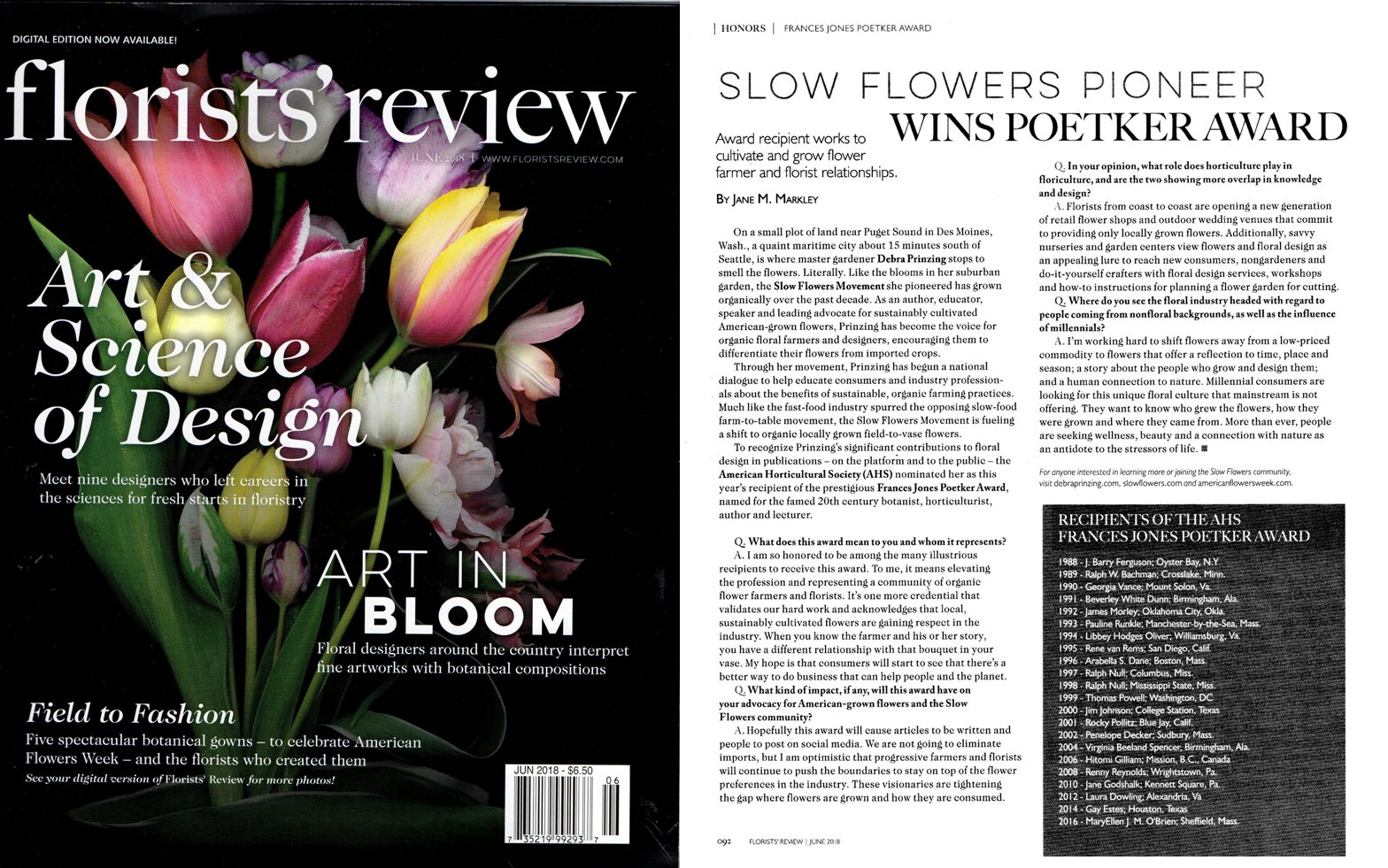
I’m so touched that my friends at Florists’ Review magazine included an article in the upcoming June 2018 issue about the American Horticultural Society recognizing me with its Frances Jones Poetker Award in honor of achievement in the field of floral design.

The award highlights my work advocating for and promoting domestic flowers and recognizes significant contributions to floral design in publications, on the platform, and to the public.

You can read the entire article, “Slow Flowers Pioneer,” written by Jane M. Markley, here.

Episode 347: Flowers and Beer with April Lemly of Kamama Flowers and the Flower Bar

Wednesday, May 2nd, 2018

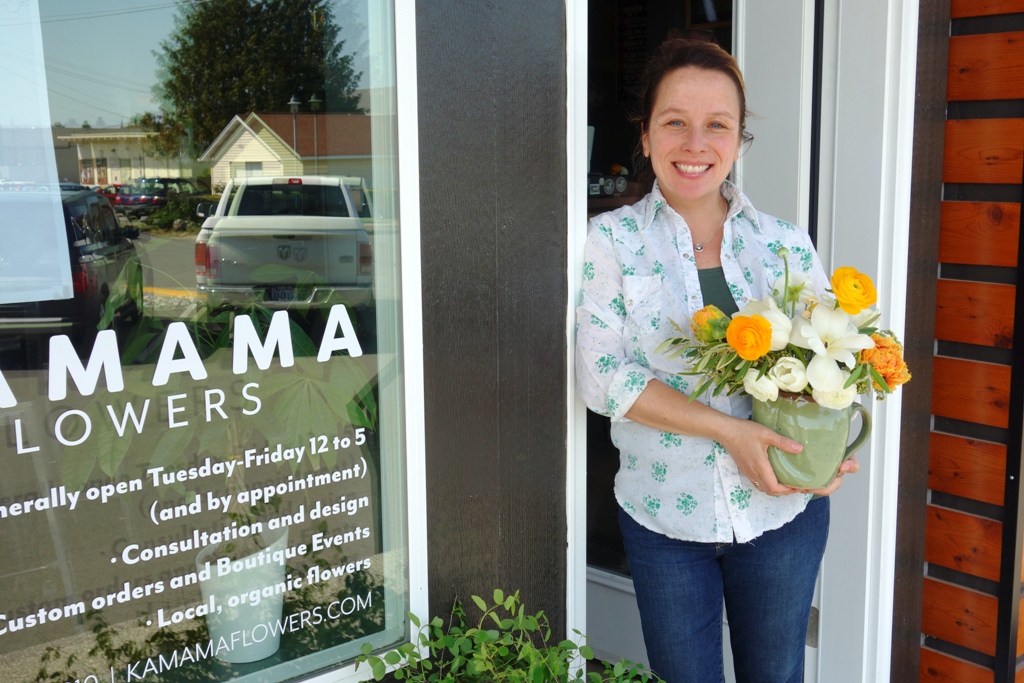
Today’s guest is April Lemly of Kamama Flowers, pictured in the doorway of her new “Flower Bar,” co-located with Peninsula Taproom in Sequim, Washington.

Last week I announced the winner of the Slow Flowers Summit’s ticket sales promotion called the Slow Flowers Luxury Package. Yesterday, on May 1st, I announced the next ticket sales promotion — and I’d love to share it with you here.


Now through Sunday, May 20th, all new registrants for the Slow Flowers Summit will be entered into a drawing for one Dream Designer Package — to join me on Sunday evening, July 1st at an exclusive gathering with Laura Dowling, author and former White House Florist. This private event benefits the AIFD Foundation and I’m going to bring one of you with me to attend and enjoy a dazzling and unforgettable evening.

So if you’ve been thinking about attending the Slow Flowers Summit, this promotion might just be your incentive — check out details and find registration information here. It promises to be a fantastic day of networking, inspiration and personal growth. I can’t wait to see you there!

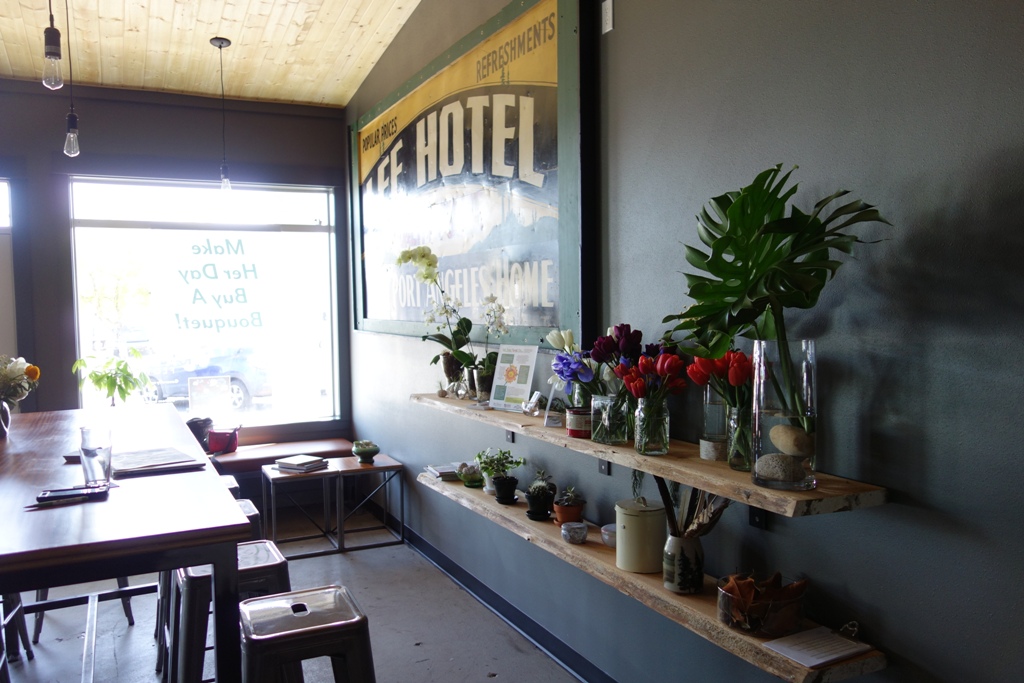
The Flower Bar space at the Peninsula Taproom in Sequim.

Flowers and Beer (left), including the signature growler with the Peninsula Taproom logo; April and Sean in the doorway (right).

I’m so pleased to share today’s conversation with April Lemly of Kamama Flowers. Through Slow Flowers, we’ve reconnected and renewed a 20-year friendship that began at Seattle Infant Development Center where April was a pre-K teacher and my son Benjamin was one of her 5-year-old students. It is so fascinating to see the journey she has taken from teaching to graphic design and small business consulting to a love of flower growing and floral design. So this is a special episode in so many ways.

When April and I first reconnected in 2014, she and her partner Sean O’Neill were living in Portland, both engaged in other professions. Last summer, they up and moved to Agnew, Washington on the Olympic Peninsula, about halfway between Port Angeles and Sequim. They bought land, allowing April for the first time to expand from an urban backyard flower grower to small-scale agriculture. They also opened Peninsula Taproom, which is a fantastic place for connoisseurs of regional beer, wine, cider and food — a true gathering place for locals and tourists, with a fun vibe.

Taproom patrons love the floral-filled surroundings. (photo courtesy Kamama Flowers)

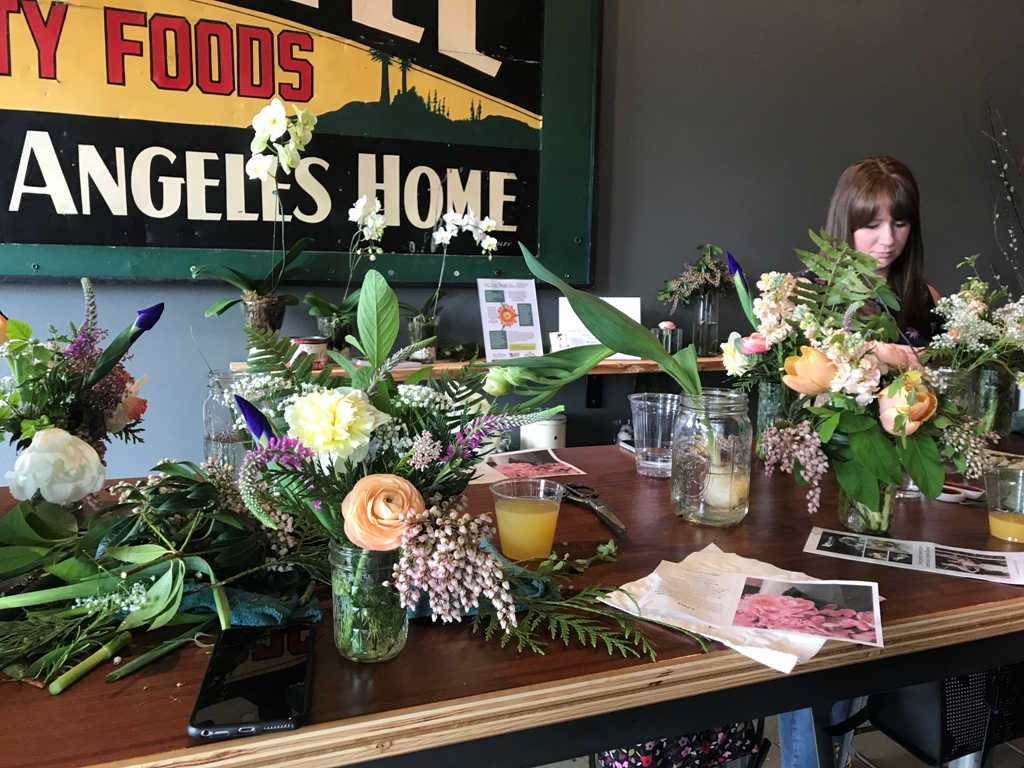
As you’ll hear in our conversation, April has found a way to weave flowers into the culture at Peninsula Taproom. In fact, she has just opened a connected flower studio-classroom-retail space, shared with the taproom. So by day, it’s all about flowers. By night, it’s still all about flowers, but the Taproom patrons are invited to sit at the large work table, including being able to reserve it for groups. And no surprise, many of them pick up a bouquet or bunch of blooms to take home along with a growler of ale.

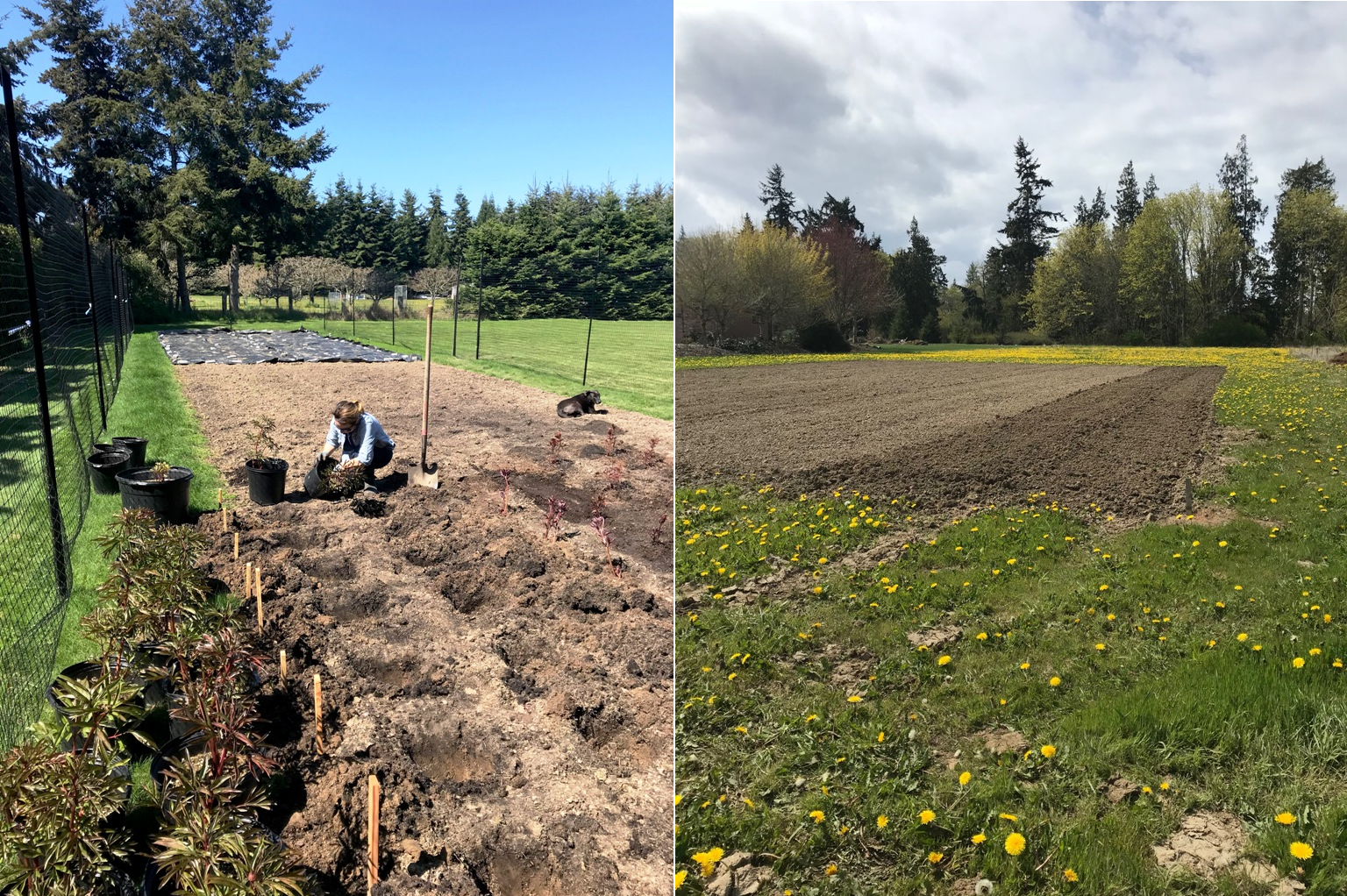
April (left) planting peonies at her new property in Agnew, Wash.; the “bonus” farm land at nearby Gray Wolf View Farm, where the owner has invited April to expand her operations (right).

April shares this on her “about” page:

Flowers at a recent design workshop, held at the Flower Bar.

We are a small organic flower farm and full service studio located in Agnew, Washington on the beautiful Northern Olympic Peninsula.

I started Kamama Flowers in 2014 from a few urban gardens in Portland, Oregon where we ran a flower CSA, delivering arrangements to local homes and businesses.

In 2017 we moved the farm to Agnew so we could spread out, grow more flowers and be in the peaceful, sunny country-side. In 2018 we are expanding to a surprise retail space!​

Moving from Portland and starting their life in Sequim, has been a lot of hard work with new ground, a new community and a new climate. One of the first things April and Sean did was cover 1,000 square feet in black plastic in order to kill the meadow mix and prep the site for growing organic flowers.

She describes it as “a lovely, flat, south-facing acre with minimal rocks.” She feels lucky that the former dairy farm land is in such good shape. Summer passed and last fall they tilled the soil to about 6 inches. Soil test results revealed that the sandy clay loam needed to be amended with lime, which has already been incorporated before planting dozens of peonies.

April Lemly of Kamama Flowers.

Since moving mid-summer 2017, April enjoyed a lovely wedding season with 4 boutique weddings in gorgeous outdoor settings where Kamama’s organic flowers graced beautiful brides.

She writes this about the name Kamama Flowers: Kamama is the Cherokee word for butterfly. The name is an homage to the strong women in my life; my Grandma, Sara, and my mom, Karen, the women who showed me the peace in the garden.

Thank you so much for joining me today and hearing April’s story of a new chapter that incorporates flower farming, floral design and retail flowers — it’s a vertical floral business model that is proving to be more relevant than ever before.

Find and follow Kamama Flowers at these social places:

Kamama Flowers on Facebook

Kamama Flowers on Instagram

Kamama Flowers on Pinterest

And I’m so happy to tell you that the Slow Flowers Podcast has been downloaded more than 312,000 times by listeners like you. Thank you for downloading, listening, commenting and sharing — it means so much.

As the Slow Flowers Movement gains more supporters and more passionate participants who believe in the importance of the American cut flower industry, the momentum is contagious.

I know you feel it, too. I value your support and invite you to show your thanks and with a donation to support my ongoing advocacy, education and outreach activities. You can find the donate button in the right column.


Thank you to our sponsors who have supported Slow Flowers and all of our programs including this podcast, American Flowers Week, the Slowflowers.com online directory to American grown flowers, as well as our new channels, Slow Flowers Journal and the 2018

Our lead Sponsor, Florists’ Review  magazine. I’m delighted to serve as Contributing Editor for Slow Flowers Journal, found in the pages of Florists’ Review. It’s the leading trade magazine in the floral industry and the only independent periodical for the retail, wholesale and supplier market. Take advantage of the special subscription offer for members of the Slow Flowers Community.

Arctic Alaska Peonies, a cooperative of passionate family farms in the heart of Alaska providing bigger, better peony flowers during the months of July and August. Visit them today at arcticalaskapeonies.com.

Seattle Wholesale Growers Market, a farmer-owned cooperative committed to providing the very best the Pacific Northwest has to offer in cut flowers, foliage and plants. The Growers Market’s mission is to foster a vibrant marketplace that sustains local flower farms and provides top-quality products and service to the local floral industry. Find them at seattlewholesalegrowersmarket.com

Longfield Gardens provides home gardeners with high quality flower bulbs and perennials. Their online store offers plants for every region and every season, from tulips and daffodils to dahlias, caladiums and amaryllis. Visit them at longfield-gardens.com.

Syndicate Sales, an American manufacturer of vases and accessories for the professional florist. Look for the American Flag Icon to find Syndicate’s USA-made products and join the Syndicate Stars loyalty program at syndicatesales.com.

Johnny’s Selected Seeds, an employee-owned company that provides our industry the best flower, herb and vegetable seeds — supplied to farms large and small and even backyard cutting gardens like mine. Check them out at johnnysseeds.com.

Association of Specialty Cut Flower Growers. Formed in 1988, ASCFG was created to educate, unite, and support commercial cut flower growers. It mission is to help growers produce high-quality floral material, and to foster and promote the local availability of that product. Learn more at ascfg.org.

Mayesh Wholesale Florist. Family-owned since 1978, Mayesh is the premier wedding and event supplier in the U.S. and we’re thrilled to partner with Mayesh to promote local and domestic flowers, which they source from farms large and small around the U.S. Learn more at mayesh.com.

I’m Debra Prinzing, host and producer of the Slow Flowers Podcast. Next week, you’re invited to join me in putting more American grown flowers on the table, one vase at a time. And If you like what you hear, please consider logging onto Itunes and posting a listener review.

The content and opinions expressed here are either mine alone or those of my guests alone, independent of any podcast sponsor or other person, company or organization.

The Slow Flowers Podcast is engineered and edited by Andrew Brenlan. Learn more about his work at soundbodymovement.com.
Music Credits:

Wingspan; Lanky; The Big Ten
by Blue Dot Sessions
Music from:

audionautix.com

Episode 329: A Year in Review – Slow Flowers’ Highlights for 2017

Wednesday, December 27th, 2017

(c) Mary Grace Long photography

Welcome to the final Slow Flowers Podcast Episode of 2017.

The Slow Flowers Community and listenership of this program have grown to be larger than ever, with more than 265,000 total downloads since launching in July 2013. That’s amazing news and I’m thrilled to share it with you.

Every single week this year; in fact, every single week for the past 230 weeks, it has been my privilege to feature the voices of our Slow Flowers community with you. Unlike any other internet radio show in existence, the Slow Flowers Podcast is tailored to you and your interests, making its “must-listen” programming a habit among flower farmers and floral designers alike.

In producing and hosting the Slow Flowers Podcast, I seek out pioneers and personalities, style-makers and influencers — as well as unsung or little known heroes — who together are changing the floral landscape, disrupting the status quo, and bringing flower sourcing and growing practices, not to mention eco-conscious design methods, to the center of the conversation.

And thanks for joining in. Whether you’ve just discovered this podcast or are a longtime fan, I encourage you to take advantage of the immense body of knowledge that can be found in the archives here. We’ve updated the “play” and “download” buttons at the show notes that accompany each episode, making it simpler than ever to listen.

Today we have a year-end listener giveaway, so listen to the end of this episode for details! We have two copies of floral activist and artist Mud Baron’s 2018 “Flowers on Your Head” calendar that he produced as a fundraiser for LA-based nonprofit 4 Women Ovary Where.

As I have done since the beginning of 2014, I would like to devote today to the Slow Flowers Highlights of this past year. Next week, on January 3th, I will present the much anticipated 2018 Slow Flowers’ Floral Insights and Industry Forecast with you.

Covering the Slow Flowers Community has put me in a lot of airplane seats this year. I’ve been able to meet with, interview and gather together with florists and flower farmers in thirteen states and one Canadian Province. That’s amazing and I thank friends and colleagues who hosted Slow Flowers workshops, potluck dinners, cocktail parties, events and meet-ups Alaska, Arizona, California, Connecticut, Iowa, Florida, Massachusetts, Montana, New York, Oregon, Pennsylvania, Virginia, Washington, and Ontario, Canada, for amazing and inspiring experiences. And so far, 2018 promises to bring me more travel as I’ve already confirmed Slow Flowers appearances in Texas, Washington, D.C., Colorado, North Carolina, Iowa, Illinois, and of course, the Pacific Northwest, so get in touch if you’re interested in booking something in your community.

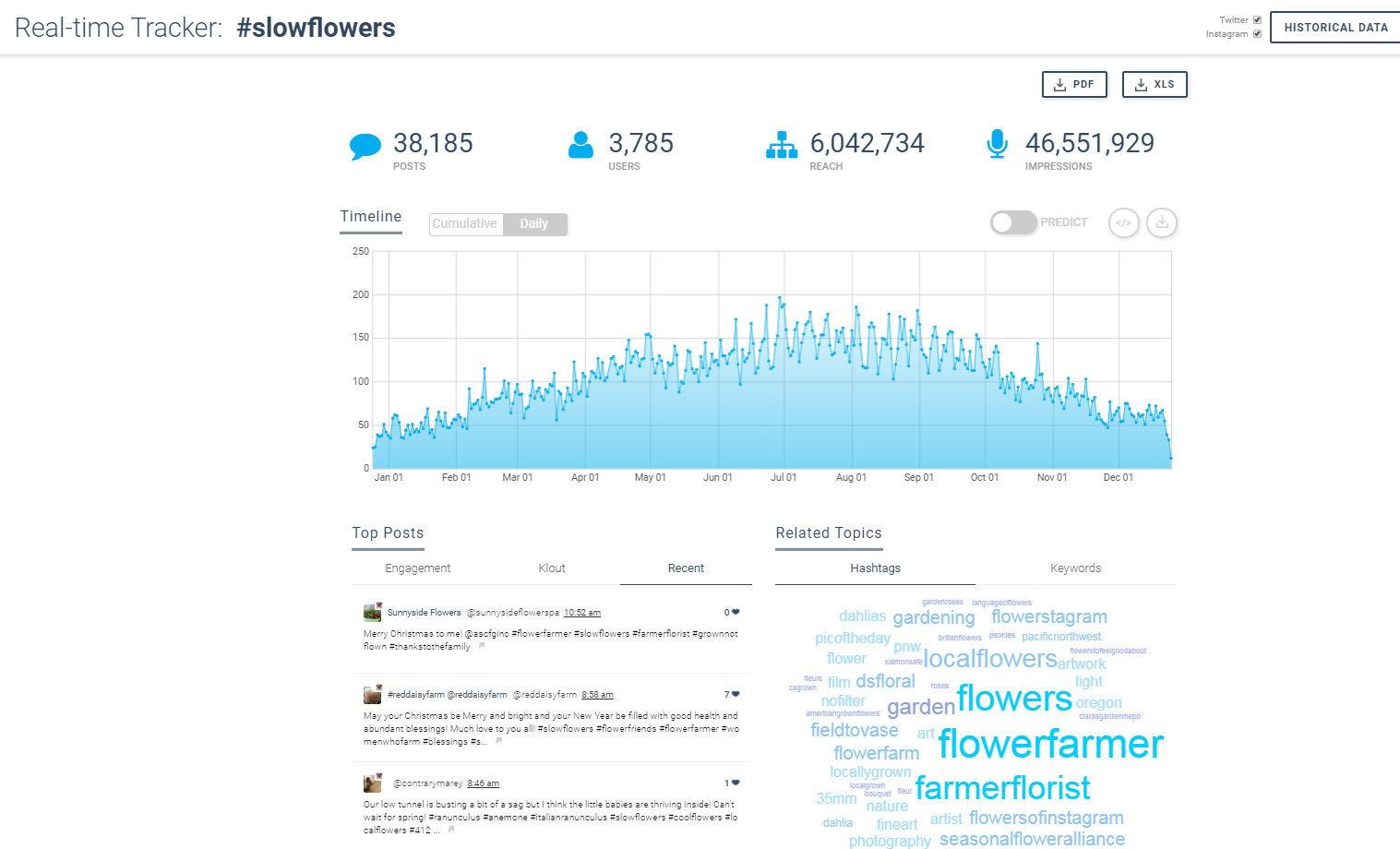
According to our social media tracking tools, in the past 365 days, the hashtag #slowflowers has hit 46.5 million impressions on Instagram and Twitter alone.

This #slowflowers hashtag is the floral industry’s most widely used brand intended to convey seasonal, local and sustainable floriculture — and I am humbled by the impact and reach of a term that originated with a tiny, 144-page book measuring 7-1/2 inches square — as it has exploded far beyond my imagination in the five years since.

Thank you for being a part of this movement and If you haven’t, I hope you’ll make the next step by investing in the continued relevance and success of this brand and join Slow Flowers as a member.  Follow this link to learn more about the benefits and values of joining the Slow Flowers Movement.

So, let’s get started with my month-by-month recap of 2017!

JANUARY: FROM FLORIDA TO ALASKA!

January brought Slow Flowers to Tampa, Florida, and the Gulf Coast, including a lecture for the garden club of Boca Grande, one of the most beautiful beach spots on the planet. I loved connecting with Slow Flowers members while in the state and took great pleasure in touring a few botanical gardens to admire the diversity of the region’s flora. Later in the month, travel brought me to the other corner of the U.S. — to Fairbanks, Alaska, where I spent a few days attending and speaking at the Alaska Peony Growers Association winter conference. Two geographic and climactic extremes and two equally vital regions for local flowers and passionate growers.

Florists’ Review: Four Seasons of Local Flowers

Something else took place in January, an event that foreshadowed a major new collaboration for me — Florists’ Review published my article about a year-long creative project by Kelly Shore of Petals by the Shore. Called “Four Seasons of Floral Design,” the 11-page spread documented Kelly’s creative partnership with Maryland flower farmers Leon and Carol Carrier of PlantMasters. It was exciting to write the piece for a major floral industry trade magazine — one read regularly by mainstream and conventional audiences. For Kelly and her collaborators, as well as for the Slow Flowers community, the story illuminated often unheard voices of domestic agriculture and sustainable design in floristry. You can read more about that story here.

I found it pretty remarkable to see seasonal and local flowers designed so artistically, portrayed against the backdrop of a flower farm. I want to acknowledge and thank Travis Rigby, Florists’ Review‘s owner and publisher, for adding my storyteller’s voice and point of view to the magazine’s pages.

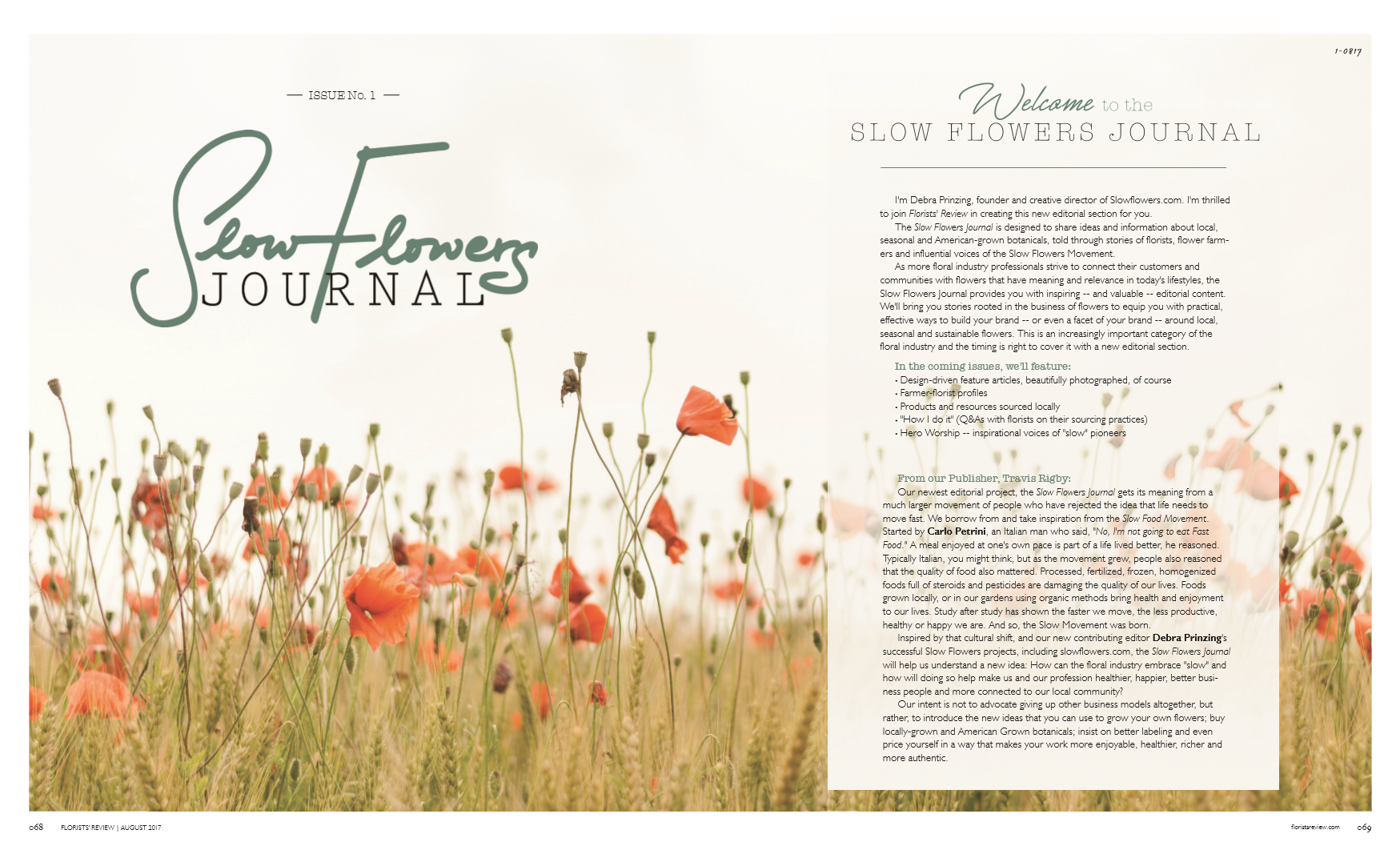
Here’s a sneak peek of our opening pages of the Slow Flowers Journal — launching inside the August issue of Florists’ Review.

That first article led to my stories appearing in subsequent months’ issues, each of which continued the Slow Flowers narrative. And then . . . Travis invited me to join Florists’ Review on a permanent basis as a contributing editor. After much dialogue and consideration, the new collaboration launched in August with a dedicated editorial section called the “Slow Flowers Journal.”

Since the first issue, I’m delighted to say that we’ve featured dozens of floral designers, farmer-florists, retail flower shops, makers and artists inside the magazine, under the Slow Flowers Journal banner, and with the mission and message presented as inspiring small business success stories.

A footnote: I argued passionately to continue the Slow Flowers Journal name for this section. That’s because in January 2017, slowflowersjournal.com launched as an online magazine, designed to highlight and share this community’s members and their stories. Expanding to print has taken Slow Flowers Journal from a few thousand online readers to tens of thousands of print readers each month. That’s a big achievement for our brand!

Moving into 2018, these stories will continue — I’d love your input and ideas, so be sure to follow links at the show notes for more ways to engage and become involved. If you haven’t started reading the Slow Flowers Journal, I encourage you to contact Florists’ Review for a free sample copy or take advantage of the generous discounted subscription rate offered to my listeners. You can subscribe to Florists’ Review and read our bonus Slow Flowers Journal content at the special rate of $21 for 12 issues — 62 percent off the cover price! Click here or call 1-800-367-4708.

Slowly, but surely, the new SLOW FLOWERS CUTTING GARDEN is taking shape! Amazing how sunflowers and dahlias can enliving a few raised beds and make everything look abundant.

February was a busy month, personally, as my family and I finally ended our 18-month urban condo experiment and moved into a new home with a completely blank backyard – home to the new Slow Flowers Cutting Garden.

Over the remainder of 2017, I began building the cutting garden as a place to trial cut flowers and other botanicals, stage and produce DIY photo shoots, and create stories for gardening audiences and more. The support of sponsors who have shared everything from seeds (thanks Johnny’s Seeds) to bulbs (thanks Longfield Gardens) to my greater Garden Writers community, which supplied perennial and woody plants to trial, has been awesome. I promise that the garden’s evolution in the coming year will supply you with even more inspiration.

Wild-textured roses by Erin Shackelford, Camas Designs. A definite nod to the wildness of nature, from the heart. © Robert Shackelford Photography

Also in February, we produced the Valentine’s Day LOOK BOOK, sharing it across PR Web, a news distribution service. The gallery of sustainable floral design ideas from Slow Flowers member farms and florists was picked up by online news sites, and posted to the web, at slowflowersjournal.com and in a public Flickr gallery. Stories like these help to put you in the news and if you’re a Slow Flowers member, you’ve received (and I hope read and taken advantage of) ongoing “calls” for submissions that allow you to participate in similar opportunities to be published. Currently, for example, we’re collecting your submissions for an upcoming American-grown wedding floral story ~ so if you’re not a part of these opportunities and you’d like to be ~ get in touch!

And I can’t end my February highlights without mentioning how gratifying it was to be an invited speaker at the third annual Pacific Northwest Cut Flower Growers meetup that month, held in Corvallis, Oregon. I shared the 2017 Floral Insights & Industry Forecast as part of my SLOW FLOWERS, AMERICAN STYLE presentation. I was thrilled to discuss what’s happening at all levels of the American-grown floral pipeline — from field to checkout counter, and to give the gathering of growers and farmer-florists insights into the opportunities they could can leverage for their businesses.

SLOW FLOWERS IN ARIZONA (left) and SLOW FLOWERS CREATIVE WORKSHOP (right)

READ MORE…

Northwest Flower & Garden Festival and SLOW FLOWERS Partner to Produce “Floral Wars” — featuring top professional florists competing head-to-head to create floral designs

Monday, December 11th, 2017

Media Contact:   Barry Bartlett, The Bartlett Group, 206.335.4694 or barry@bartlettgrouppr.com

FOR IMMEDIATE RELEASE

SEATTLE—”Floral Wars,” a new “friendly” competition between the Northwest’s most talented professional florists, joins the big line-up of feature attractions at the 2018 Northwest Flower & Garden FestivalFebruary 7-11 at the Washington State Convention Center in Seattle. The event is co-produced with Slow Flowers’ founder and creative director Debra Prinzing.

Presented by American Grown Flowers, “Floral Wars” will be held each day from 3-4 p.m. on the North Hall Stage. It pits two top floral artists against each other as they create three arrangements—a bridal bouquet, a centerpiece and a “surprise” floral creation—all in an hour or less. It’s a test of the contestants’ grace under pressure as they showcase American-grown flowers, USA-made floral accessories and eco-design techniques.

“Garden enthusiasts yearn for more flowers in their lives and ‘Floral Wars’ delivers on a promise—to inspire and educate our audiences with great ideas for floral design. It’s a fun way for showgoers to learn how to choose, combine and arrange flowers from your own backyard,” said event host, Debra Prinzing, author of Slow Flowers and The 50 Mile Bouquet. 

ABOUT THE COMPETITION
During the hour-long event, floral pros will be given several surprise buckets of stems, and with clippers, vases and ribbons in hand, they’ll demonstrate their unique aesthetic styles and share tips and techniques with audience members. Heightening the drama, watch how they react to our “secret” ingredients and unexpected challenges. 

Adding to the fast-paced fun, Corona Tools and Johnny’s Selected Seeds will provide door prizes and giveaways for the audience during the hour-long event. Showgoers are encouraged to arrive early to take advantage of café seating and enjoy a meal, snack, and a beverage while learning from the floral artists. 

ABOUT THE NORTHWEST FLOWER & GARDEN FESTIVAL
Celebrating 30 years of inspiring all experience levels, The Northwest Flower & Garden Festival showcases 18 magnificent, idea-generating display gardens, demonstrations and displays focusing on small space and container gardening, more than 100 free “how-to” seminars by top experts, shopping for a cornucopia of quality products, artwork and regional food items in the bustling Marketplace, and much more. 

DATES & TICKETS
Festival dates and hours are Wednesday through Saturday (Feb. 7-10), 9 a.m. to 8 p.m.; and Sunday (Feb. 11), 9 a.m. to 6 p.m. Early Bird adult tickets now on sale online and over 60 retail locations (until February 6) – $19; regular adult (at the door) – $24; youth (13 to 17 years) – $7; and children 12 and under are FREE.  For more information, or to purchase tickets online, visit www.gardenshow.com.
“Floral Wars” contestants include:

Wednesday, Feb. 7:
Melissa Feveyear, Terra Bella Flowers (Seattle) and Jessica Gring, Odd Flowers Floral Design and the Seattle Wholesale Growers Market (Seattle)

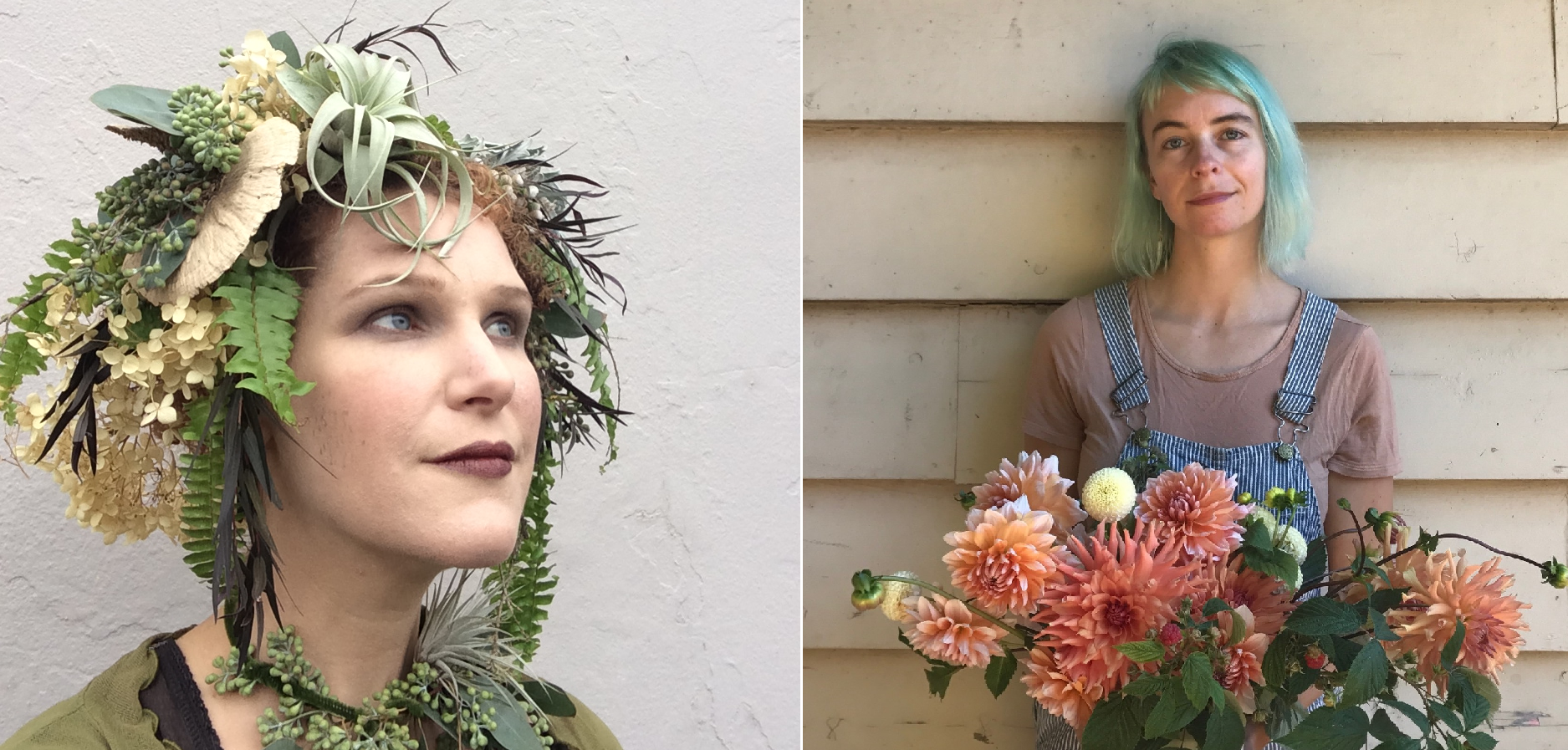
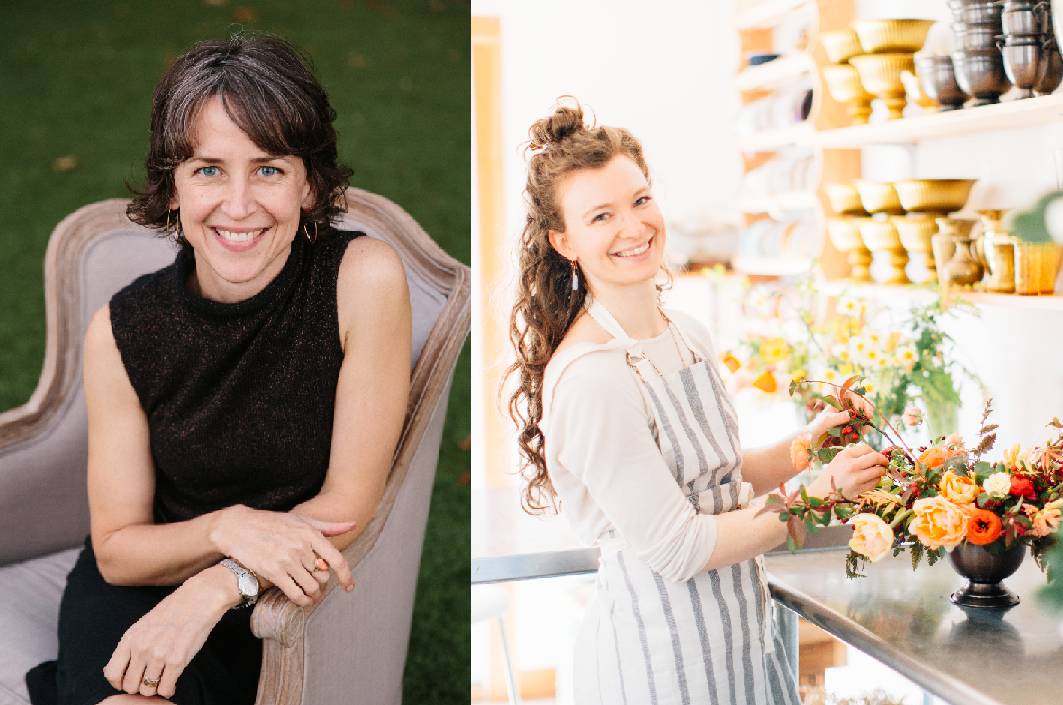
Melissa Feveyear of Terra Bella Flowers (left) and Jessica Gring of Odd Flowers Floral Design/Seattle Wholesale Growers Market (right)

Thursday, Feb. 8:
Gina Thresher, AIFD, From the Ground Up Floral (Kent) and Jon Robert Throne, AIFD, Countryside Floral & Garden (Issaquah)

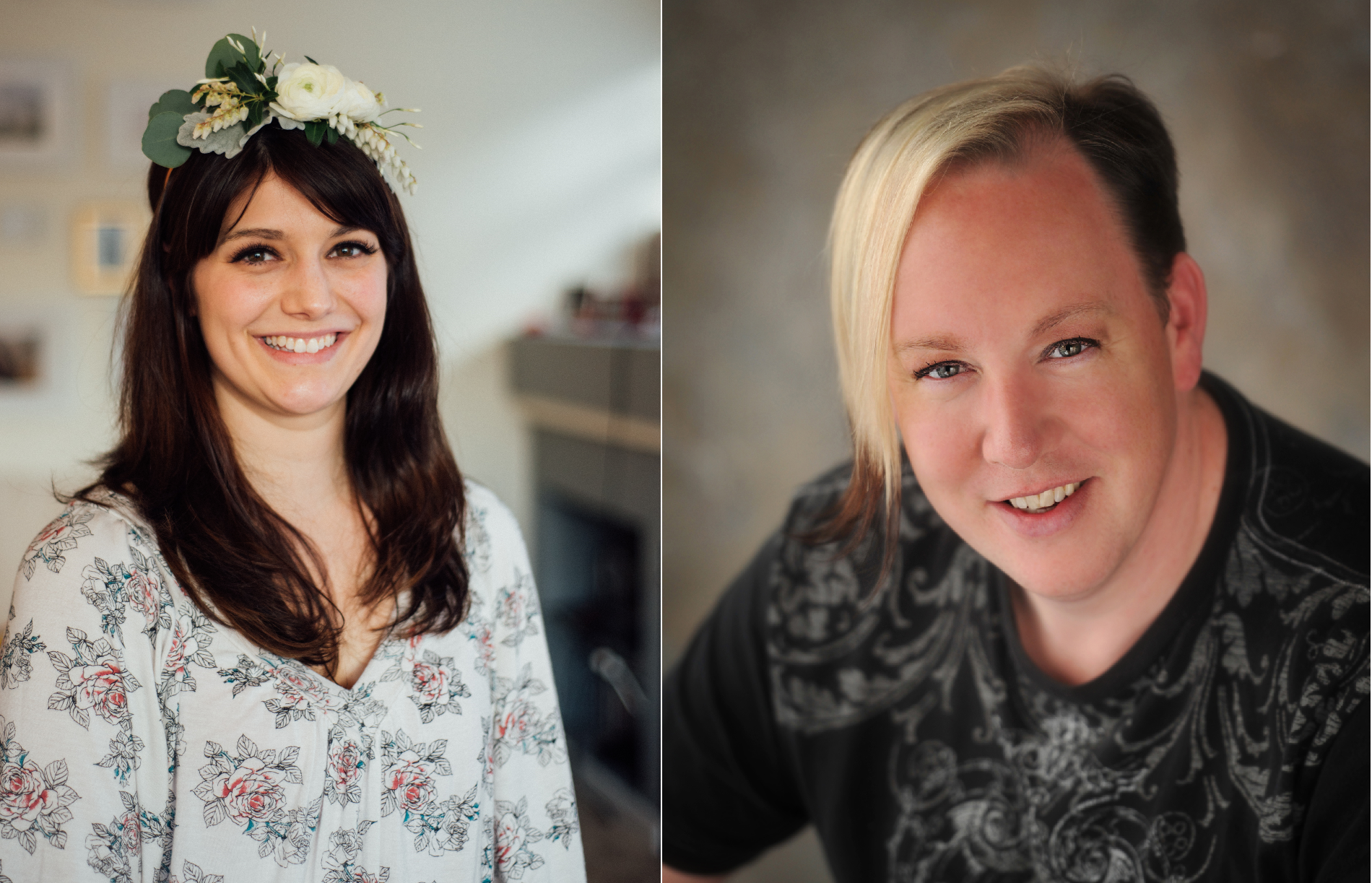
Gina Thresher, AIFD, From the Ground Up Floral (left) and Jon Robert Throne, AIFD, Countryside Floral & Garden (right)

Friday, Feb. 9:
Rizaniño “Riz” Reyes, RHR Horticulture (Seattle) and Mick Payment, Flowers for the People (Bellevue)

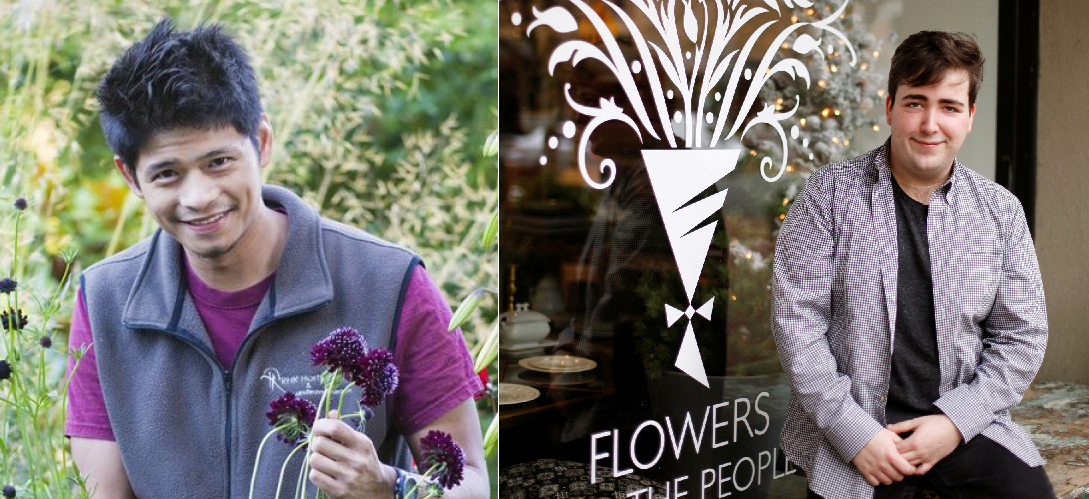
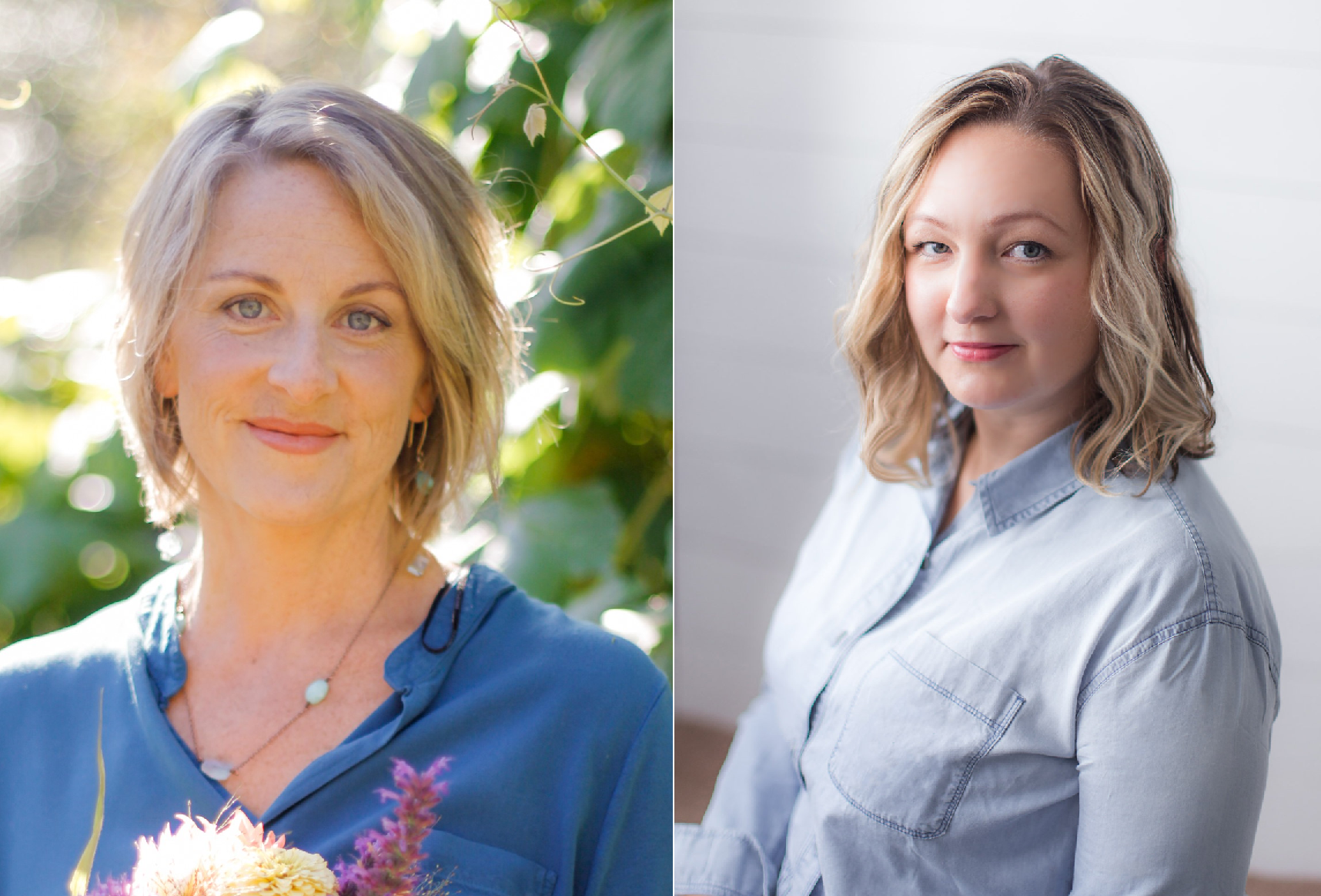
Rizaniño “Riz” Reyes of RHR Horticulture (left) and Mick Payment of Flowers for the People (right)

Saturday, Feb. 10:
Anne Bradfield, Floressence (Seattle) and Kelly Sullivan, Botanique (Seattle)

Anne Bradfield of Floressence (left) and Kelly Sullivan of Botanique (right)

Sunday, Feb. 11:
Tobey Nelson, Tobey Nelson Events & Design (Langley) and Tammy Myers, First & Bloom (Issaquah)

Tobey Nelson of Tobey Nelson Events & Floral (left) and Tammy Myers of First & Bloom (right)

Floral Wars is made possible by:

FLOWERS/FOLIAGE: Certified American Grown Flowers is the exclusive provider of flowers and foliage used in the competition. Certified American Grown program ensures consumers of the domestic origins of their flowers and foliage and stands for the high quality, farm fresh blooms.

VASES/MECHANICS: Syndicate Sales, an American manufacturer of vases and accessories for the professional florist.

RIBBONS: Offray Ribbons is the last U.S. manufacturer of woven satin ribbon for the floral and craft marketplace.

APRONS: Raw Material Design, a Seattle-based maker of aprons and other textile products.

About Debra Prinzing:

Debra Prinzing is a Seattle-based writer, speaker and leading advocate for American Grown Flowers. Through her many Slow Flowers-branded projects, she has convened a national conversation that stimulates consumers and professionals alike to make conscious choices about their floral purchases.

Debra is the producer of SlowFlowers.com, the online directory to American-grown farms, florists, shops and studios who supply domestic and local flowers.

Each Wednesday, approximately 2,500 listeners tune into Debra’s “Slow Flowers Podcast,” available for free downloads at her web site, debraprinzing.com, or on iTunes and via other podcast services.

She is the creator of American Flowers Week, launched during the July 4th week in 2015 with more than 5.0 million social media impressions in 2017.

Debra is a Florists’ Review Contributing Editor which produces the “Slow Flowers Journal” section. She is a 2016 inductee to the Garden Writers Association Hall of Fame and the author of 10 books, including Slow Flowers and The 50 Mile Bouquet.

Episode 324: Meet 2017 Mayesh Design Star Christy Hulsey of Colonial House of Flowers and Mayesh Wholesale CEO Patrick Dahlson

Wednesday, November 22nd, 2017

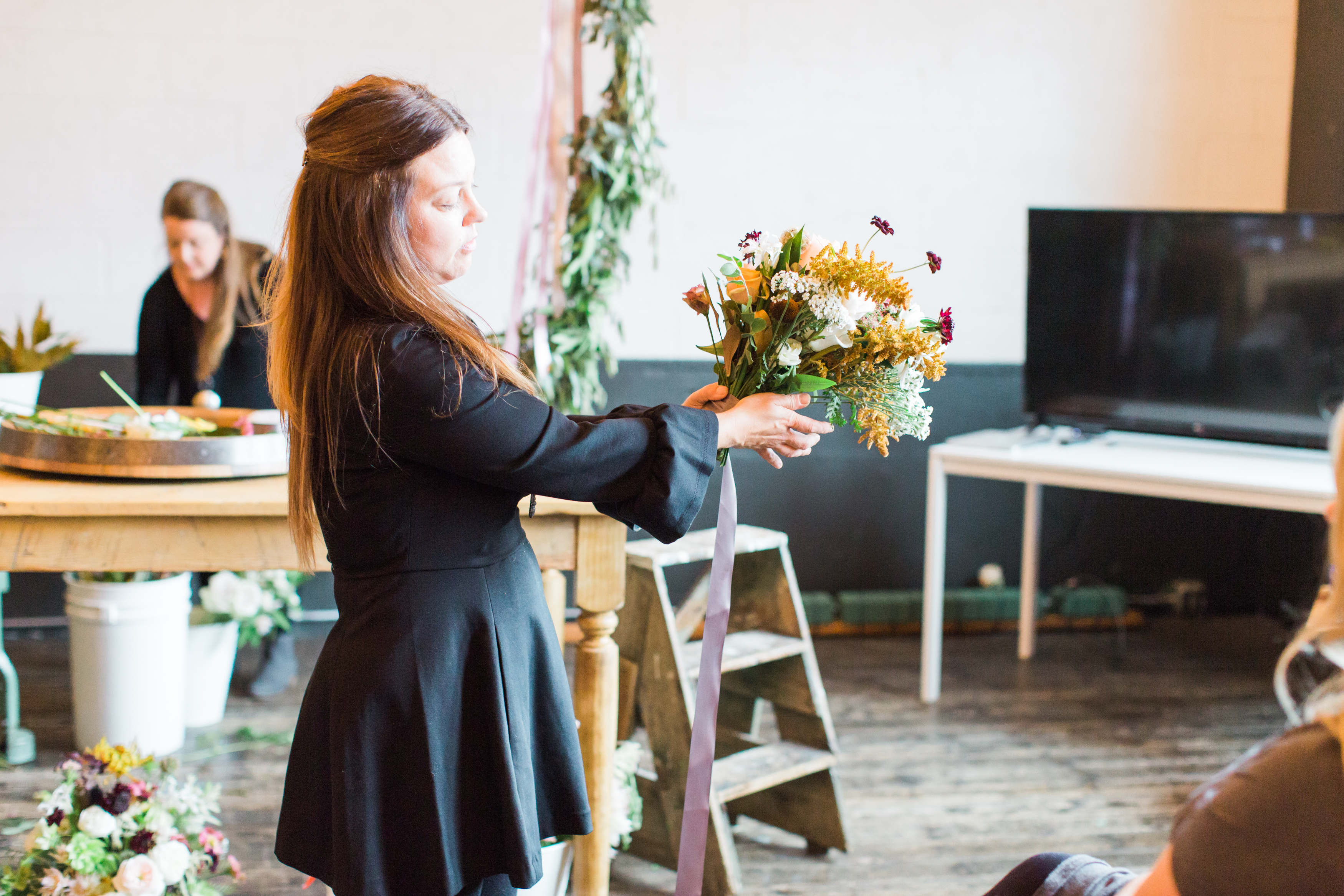
Christy Hulsey, Mayesh Wholesale’s 2017 Design Star, taught recently in Portland (c) Nicole Clarey Photography

Last month I traveled to Portland for a wonderful day hosted by Mayesh Wholesale, one of a series of design workshops featuring their 2017 Design Star, Christy Hulsey.

Christy is the owner and creative director of Colonial House of Flowers in Statesboro, Georgia, outside Savannah, and she was selected by Mayesh to be this year’s design muse. In the past, as I understand it, the creative inspiration and instruction of each year’s Mayesh Design Star program has mostly been video-based. This year was incredibly ambitious, with Christy signing on for a coast-to-coast tour of workshops and events.

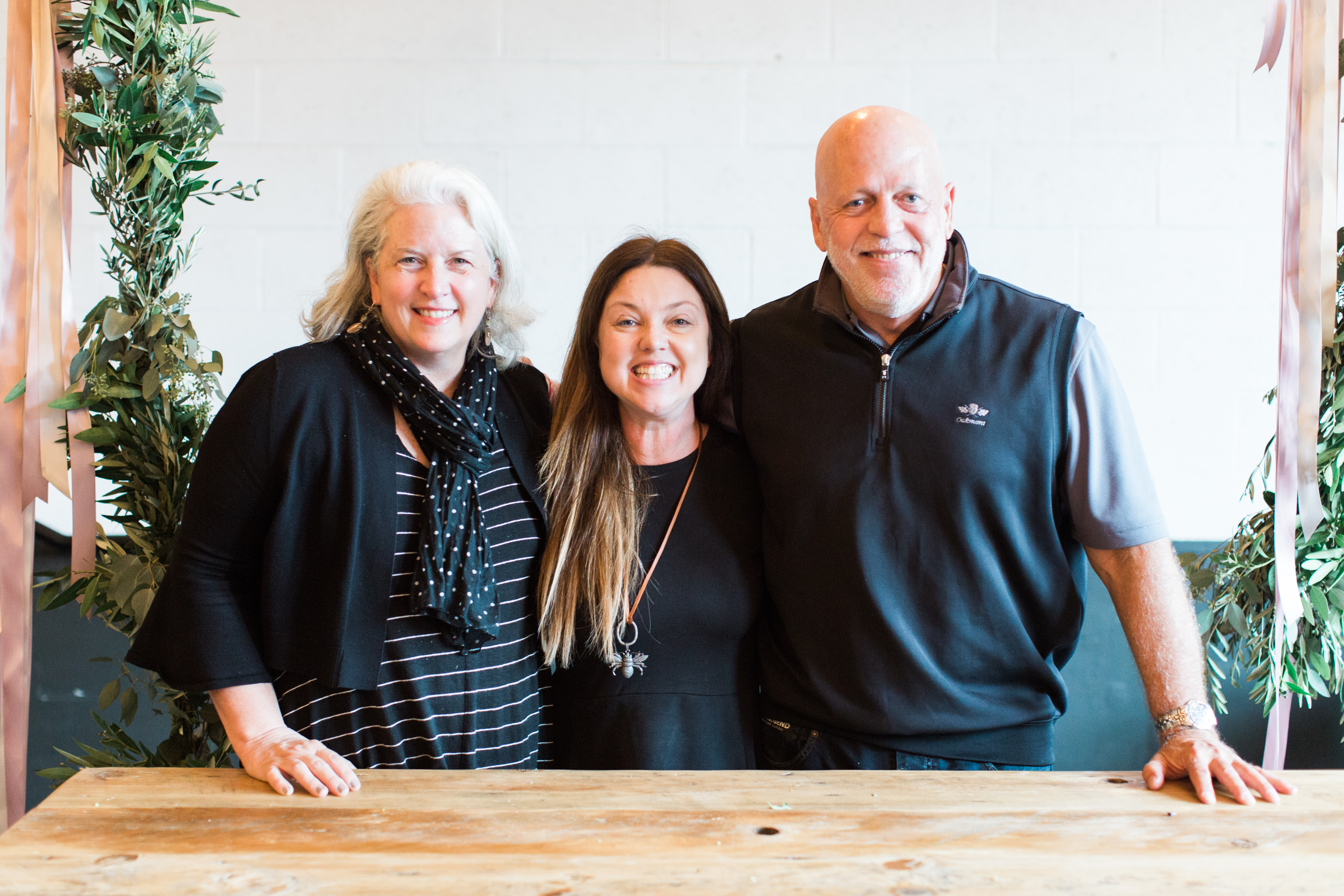
I was so happy to spend time with Christy Hulsey of Colonial House of Flowers (center) and Mayesh Wholesale CEO Patrick Dahlson (far right) (c) Nicole Clarey Photography

As you’ll hear in our conversation, recorded after the all-day, hands-on workshop that she and her team presented, Christy and I met in 2014 at the Chapel Designers New York Conference, where Holly Chapple graciously asked me to speak about Slow Flowers. Later, Christy’s Colonial House of Flowers joined Slowflowers.com, inspired at some level, to honor Christy’s grandmother’s love of gardening and designing with seasonal flowers.

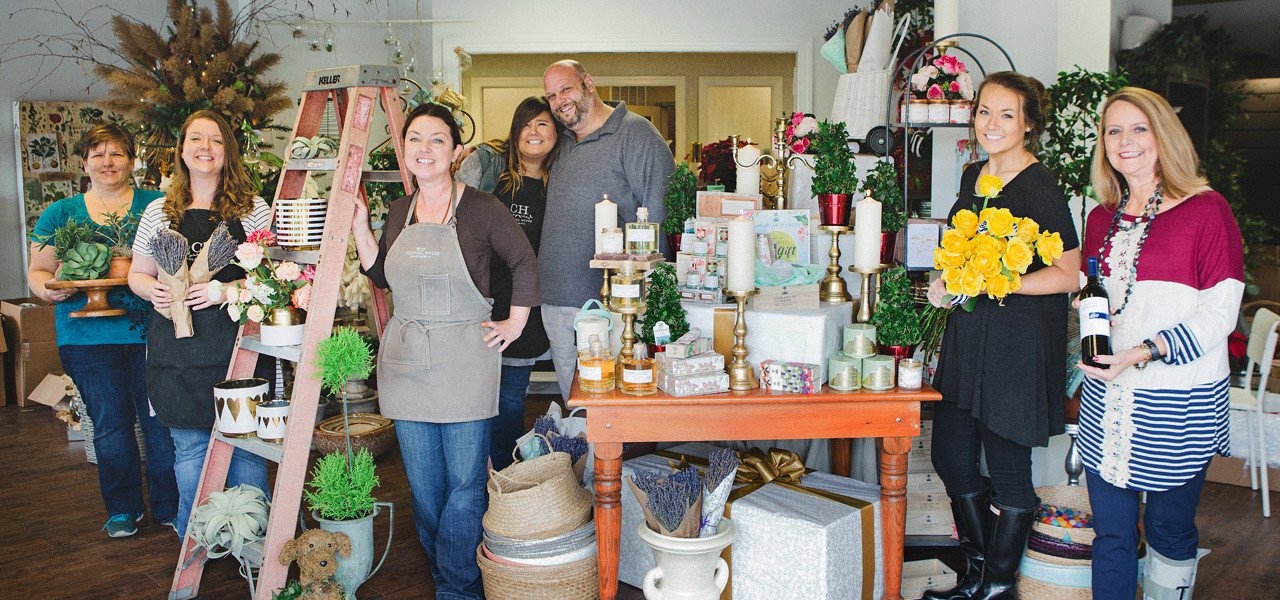
Team Colonial House of Flowers. Christy is in the front, wearing the linen apron; her sister Amanda Currier is immediately to the left of the ladder.

In fact, she mentions her grandmother’s influence often. When Christy joined the Design Star program, Mayesh posted a lovely Q&A with her for their blog. You’ll want to follow the link I share in the show notes to find that, but here are a few favorite excerpts:

In 2012, I assumed ownership of a little nearly 50-year-old landmark flower boutique that was in my family, called the Colonial House of Flowers. I believe the spirit of my grandmother’s creativity and ability to resourcefully create something sophisticated flutters through everything I do. In 2014, Amanda Currier, my sister, joined the Colonial House of Flowers team. Seasonally relevant flowers, branches, and fruit, are the true medium of my art. I’m ever thankful for my grandmother who always sent me into the garden, who brought me a found plant as a gift, and taught me to dig bulbs, grow cuttings, and stop at random roadside stands on family travels.  am really excited about the gaining momentum of American Grown Flowers. Slow flowers speak to me. I am excited the movement is finally coming to the Southeastern United States.

Christy Hulsey, with a detail of the all-American-grown floral flag (c) Certified American Grown photograph

Last December, I interviewed Christy for an Americanflowersweek.com story about the 8-by-12-foot three -dimensional American flag that she and a team created using only domestic flowers. The project was commissioned by Certified American Grown and it was on display at the Wholesale Florist & Floral Supplier Association conference in Miami.

Christy shared her story and taught compot design and hand-tied bouquet design at the Mayesh Design Star Workshop (c) Nicole Clarey Photography

Christy has had a whirlwind year and you’ll love hearing more about the Mayesh Design Star experience, which is coming to a close next month. She has taught workshops all around the country, sharing her design philosophy with professional peers, aspiring designers and floral enthusiasts eager for inspiration. In conjunction, she has also taught a number of succulent design workshops at Pottery Barn stores located in Mayesh cities. And she’s filmed numerous design videos. You can see a few of those here:

As an added bonus, Mayesh CEO Patrick Dahlson sat down with me to record a conversation, which you’ll hear after the Christy interview. This was a rare chance for me to hear more about the Mayesh story and to ask Pat to weigh in on the Slow Flowers movement to promote a greater level of local and seasonal flowers in the conventional wholesale floral channels. I wasn’t disappointed and I’m so glad you can sit in on our give-and-take.

Patrick Dahlson introduced the Mayesh Wholesale story to the workshop audience (c) Nicole Clarey Photography

Here’s a bit more about Pat Dahlson:

As one of nine children, all who are shareholders in Mayesh Wholesale Florist, Patrick has been the CEO of the company since 1985.  A natural born leader, Patrick has been a member of Vistage – an international CEO leadership organization – for 21 years. He is past president of Child Share, which helps place foster children in homes; Past President WF&FSA; Board member Southern California Flower Growers Association; and Past President Oakmont Country Club. Passionate about flowers, leadership and mentoring, Pat is also an avid golfer who enjoys yoga and Pilates workouts along with traveling with his three daughters, Alison, Kirstin and Desiree.

I also want to give you a head’s up about a couple things on the calendar where you can meet Christy Hulsey and Pat Dahlson:

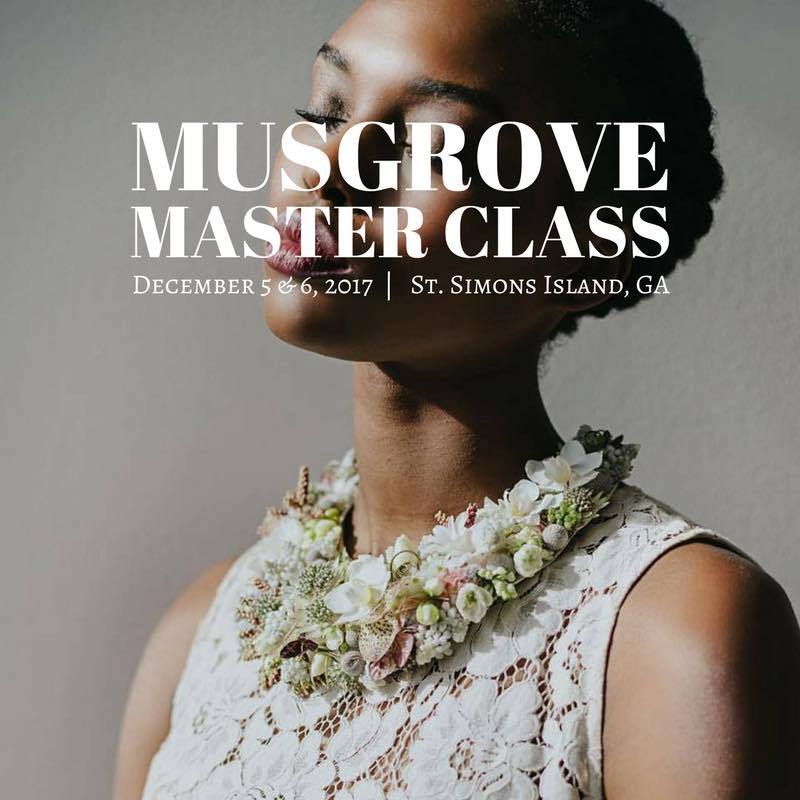
On December 4-6th, Christy will host a Master Class At Musgrove Plantation on St. Simon Island, Georgia, with Susan McLeary of Passionflower.

Susan has been a guest of the Slow Flowers Podcast twice in the past and she is a good friend to the Slow Flowers community.

This two-day design intensive looks fantastic and I encourage you to check out the details, which include intimate design instruction with Christy and Sue, a focus on  foam-free, wire-free cascade bouquets PLUS living jewelry such as wrist corsages, shoulder corsages and Sue’s famous “floral tattoo.

You’ll also be part of a styled photo shoot by Lindsey Nowak and a portfolio of your photos by Corbin Gurkin. Click here for more information and to register!

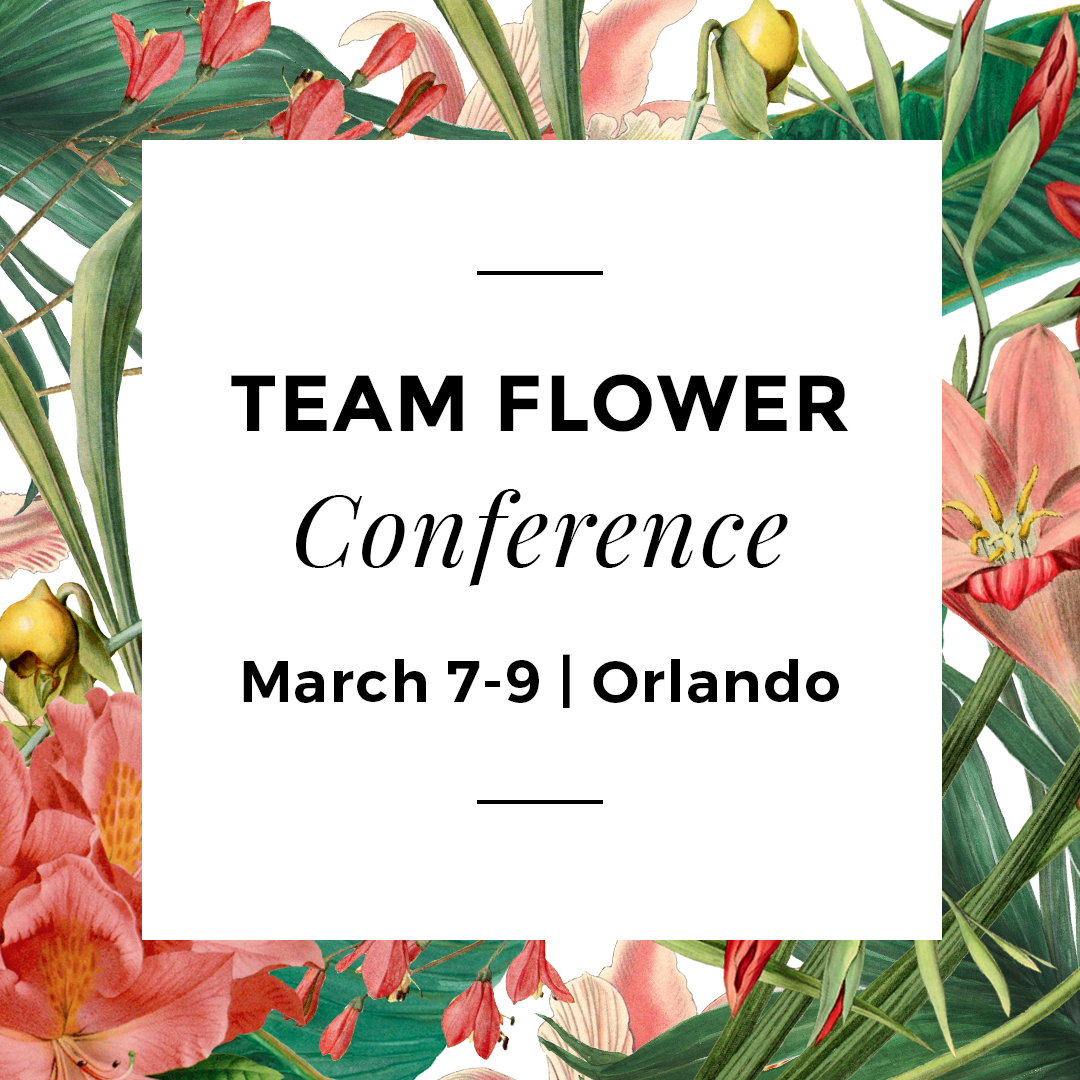
On March 7-9th, 2018, floral business coach Kelly Perry hosts the first Team Flower Conference in Orlando, which features, among other speakers, Pat Dahlson and Christy Hulsey.

The conference is designed to help you take your floral business to the next level, and includes a presentation by Kelly pricing, ordering and cultivating creativity.

Christy will share the story of how she transitioned a small-town flower shop in rural Georgia to a nationwide brand, and Pat will cover the latest sourcing news and tips for working with your salesperson on substitutions, and he’ll share his passion for teamwork success in the floral industry. Click here for more information and to register!

Wow, wish I could be part of both of those amazing events!


The Slow Flowers Podcast has been downloaded more than 255,000 times by listeners like you. Thank you to each one of you for downloading, listening, commenting and sharing. It means so much.

If you value the content you receive each week, I invite you to show your thanks and support the Slow Flowers Podcast with a donation — the button can be found on our home page in the right column. Your contributions will help make it possible to transcribe future episodes of the Podcast.

Thank you to family of sponsors:

Arctic Alaska Peonies, a cooperative of 50 family farms in the heart of Alaska providing high quality, American Grown peony flowers during the months of July and August. Visit them today at arcticalaskapeonies.com

Seattle Wholesale Growers Market, a farmer-owned cooperative committed to providing the very best the Pacific Northwest has to offer in cut flowers, foliage and plants. The Growers Market’s mission is to foster a vibrant marketplace that sustains local flower farms and provides top-quality products and service to the local floral industry. Find them at seattlewholesalegrowersmarket.com

Longfield Gardens provides home gardeners with high quality flower bulbs and perennials. Their online store offers plants for every region and every season, from tulips and daffodils to dahlias, caladiums and amaryllis. Visit them at longfield-gardens.com.
Syndicate Sales, an American manufacturer of vases and accessories for the professional florist. Look for the American Flag Icon to find Syndicate’s USA-made products and join the Syndicate Stars loyalty program at syndicatesales.com.
Johnny’s Selected Seeds, an employee-owned company that provides our industry the best flower, herb and vegetable seeds — supplied to farms large and small and even backyard cutting gardens like mine. Check them out at johnnysseeds.com.
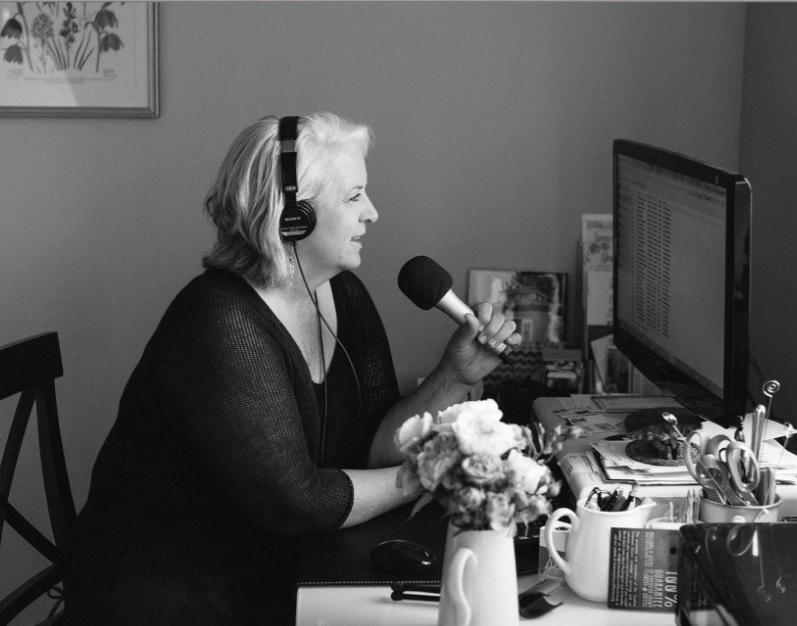
Association of Specialty Cut Flower Growers. Formed in 1988, ASCFG was created to educate, unite, and support commercial cut flower growers. It mission is to help growers produce high-quality floral material, and to foster and promote the local availability of that product. Learn more at ascfg.org.

(c) Missy Palacol Photography

I’m Debra Prinzing, host and producer of the Slow Flowers Podcast. Next week, you’re invited to join me in putting more American grown flowers on the table, one vase at a time. And If you like what you hear, please consider logging onto Itunes and posting a listener review.

The content and opinions expressed here are either mine alone or those of my guests alone, independent of any podcast sponsor or other person, company or organization.

The Slow Flowers Podcast is engineered and edited by Andrew Brenlan. Learn more about his work at KineticTreeFitness.com.

Music Credits:

Bending the Reed
by Gillicuddy

https://creativecommons.org/licenses/by-nc/3.0/

Perfect (Instrumental Version); Once Tomorrow (Instrumental Version)

Additional music from:

audionautix.com

Episode 310: Gill Hodgson and Flowers From the Farm — an update on the British-Grown Floral Community

Wednesday, August 16th, 2017

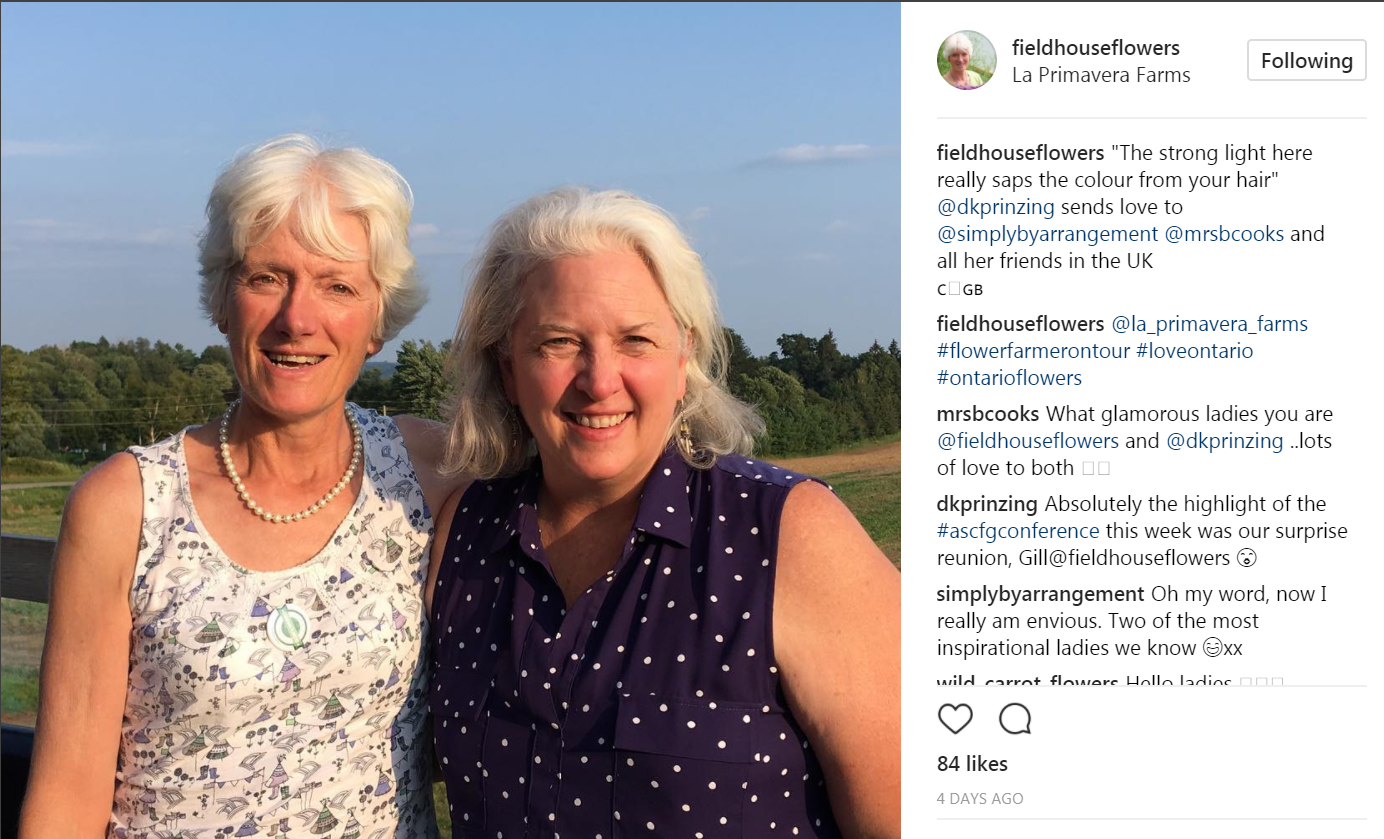
I’m smiling along with today’s guest, Gill Hodgson (L) of Fieldhouse Flowers and Flowers from the Farm, a UK-based association of flower farmers and florists who promote British-grown botanicals.

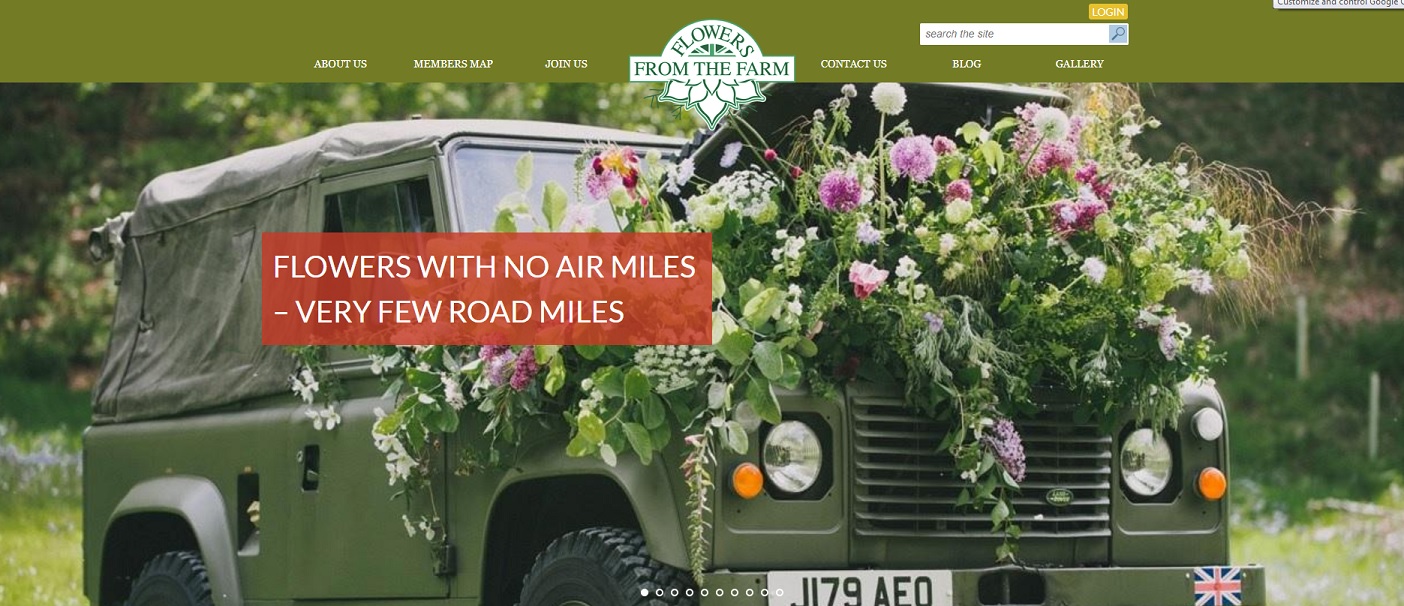
Flowers from the Farm, the UK’s nationwide network of cut flower growers

In 2014, when this podcast was in its first year of existence, I met Gillian Hodgson “virtually,” as is the case for so many of us who value the positive attributes of social media.

On February 18, 2014, appearing on what was only the 30th episode of the Slow Flowers Podcast, I introduced you to Gillian and called her the Mother of the British Flowers movement.

A Yorkshore-based flower farmer and owner of  Fieldhouse Flowers, Gill founded Flowers from the Farm in in 2011.

The not-for-profit network run and administered solely by volunteers has grown to more than 500 members.

Most members are sole traders running small or micro businesses: farmers, smallholders and gardeners, who are using their knowledge of horticulture and floristry to grow and present a different range of flowers from those available in the supermarkets and the wholesale markets.

From Cornwall up to Scotland, and every region in between, these artisan flower farmers are growing old favourites: Sweet Peas, Bells of Ireland, Dahlias and Aquilegia, as well as trying out lots of new varieties.

Flowers from The Farm’s members grow for wholesale, sell to retail and event florists, as well as to the public at farmers’ markets and craft fairs. Some have farm gate sales or have teamed up with local shops to sell their bunches and bouquets.  There are also have online retail florists, and utterly brilliant wedding and event florists among the membership. Sound familiar? It’s a lot like Slowflowers.com, of course.

Love the beautiful new website for Flowers from the Farm (and PS, this image shown was one that Sarah Statham of Simply by Arrangement and several other Yorkshire members created for the 2015 British Flowers Week campaign)

Flowers from the Farm’s map of flower farmers and florists in the UK!

On the beautiful, new, 2.0 version of Flowers From the Farm’s website, relaunched recently, we learn this: Although the majority of British flowers are sold during the summer months, flowers can be grown in Britain all year round.  Scented Narcissi start to come out of Cornwall and the Scillies in October; tulips from Lincolnshire are in the shops for Christmas. Many members are skilled at forming gorgeous winter foliage, scented shrubs and the winter flowers into amazing displays during the shortest days.

Flowers from the Farm brings together all these growers and florists and provides local meetings and events, encouraging members to come together to build displays at all the big flower shows, holding workshops to improve members’ skills and – equally importantly – provide the place where you’ll make friends with like-minded people who will become your new work colleagues. Again, sounds a lot like our Slow Flowers community, right?

It was lovely to meet Gill Hodgson face-to-face after our long-distance friendship! She is as committed to putting British flowers on the map as I am about doing the same with American grown flowers.

Just over a year after Gill and I recorded our long-distance Podcast interview via Skype, I met her in person! Along with many other Flowers from the Farm colleagues, farmers and florists in the Yorkshire region, we gathered at a very special high tea hedl at RHS Harlow Carr, a beautiful botanical garden.

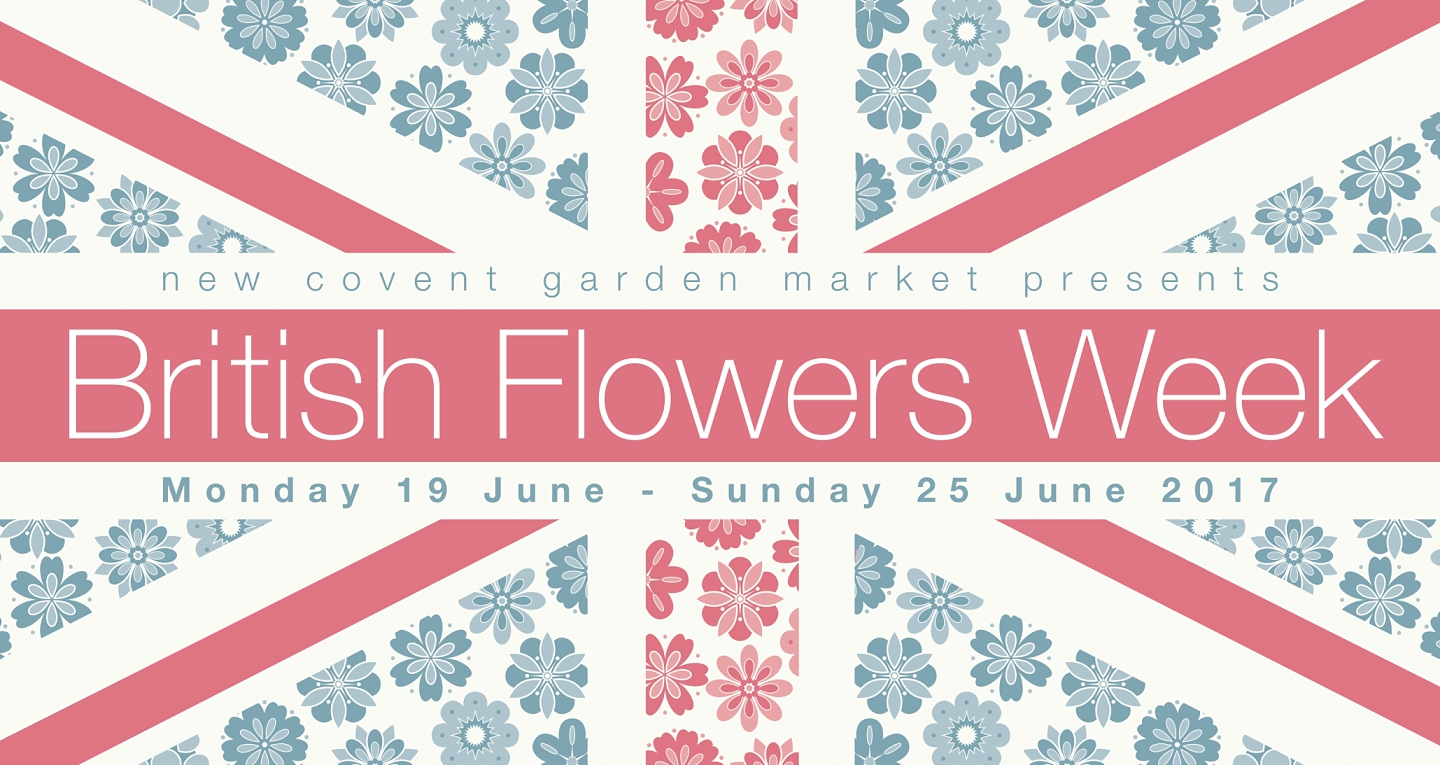
On that same trip, I met and interviewed Helen Evans of London’s New Covent Garden Flower Market who encouraged me to emulate British Flowers Week and launch American Flowers Week. I also met Sarah Statham of Simply by Arrangement, who hosted me in Hebden Bridge, a village in Yorkshire, and showed me (and my mother, Anita) the most magnificent, unforgettable time.

Here are links to those conversations, captured for past episodes of the Slow Flowers Podcast:

Learn About British Flowers Week with Helen Evans of London’s New Covent Garden Flower Market (Episode 197)

A Perfect Recipe: Floral Design Workshops and Delicious Local Food, with Sarah Statham of UK’s Simply by Arrangement (Episode 198)

Why am I going on and on about these wonderful British friends and their homegrown flowers?

Well, today, I have a lovely update for you — a new conversation with Gill Hodgson. To my complete surprise, and delight, I reunited with Gill in person last week at the Association of Specialty Cut Flower Growers’ regional meeting in Ontario, Canada.

I attended the fabulous and well-attended 2-day conference, hosted by many ASCFG Canadian members, after spending a few days at the Garden Writers Association symposium in Buffalo, NY. Once I realized that I could add a few days to my travels and spend time with ASCFG members, many of whom are involved in the Slow Flowers Community, I jumped at the chance.

And there, walking alongside me during a tour at Green Park Nurseries was my friend, Gill! On a whim, she decided to fly over to Canada to attend the conference and have a fun vacation with her husband.

Of course, with my digital recorder in my backpack, Gill had little choice but to sit down with me for a 30-minute interview. I asked her to update the Slow Flowers Community on news about the British-grown flower community and you’ll love hearing about what’s happening in a very dynamic hub for local, British-grown flowers ~seasonal, local and sustainable, much like the Slow Flowers narrative.

Here’s how you can follow Flowers from the Farm:

Flowers from the Farm on Facebook

Flowers from the Farm on Instagram

Flowers from the Farm on Twitter

The Slow Flowers Podcast has been downloaded more than 222,000 times by listeners like you. Thank you to each one of you for downloading, listening, commenting and sharing. It means so much.

If you value the content you receive each week, I invite you to show your thanks and support the Slow Flowers Podcast with a donation — the button can be found on our home page in the right column. Your contributions will help make it possible to transcribe future episodes of the Podcast.

Thank you to family of sponsors

Certified American Grown Flowers. The Certified American-Grown program and label provide a guarantee for designers and consumers on the source of their flowers. Take pride in your flowers and buy with confidence, ask for Certified American Grown Flowers.  To learn more visit americangrownflowers.org.

Arctic Alaska Peonies, a cooperative of 50 family farms in the heart of Alaska providing high quality, American Grown peony flowers during the months of July and August. Visit them today at arcticalaskapeonies.com

Seattle Wholesale Growers Market, a farmer-owned cooperative committed to providing the very best the Pacific Northwest has to offer in cut flowers, foliage and plants. The Growers Market’s mission is to foster a vibrant marketplace that sustains local flower farms and provides top-quality products and service to the local floral industry. Find them at seattlewholesalegrowersmarket.com

Longfield Gardens provides home gardeners with high quality flower bulbs and perennials. Their online store offers plants for every region and every season, from tulips and daffodils to dahlias, caladiums and amaryllis. Visit them at lfgardens.com.
Syndicate Sales, an American manufacturer of vases and accessories for the professional florist. Look for the American Flag Icon to find Syndicate’s USA-made products and join the Syndicate Stars loyalty program at syndicatesales.com.

Johnny’s Selected Seeds, an employee-owned company that provides our industry the best flower, herb and vegetable seeds — supplied to farms large and small and even backyard cutting gardens like mine. Check them out at johnnysseeds.com.

Association of Specialty Cut Flower Growers. Formed in 1988, ASCFG was created to educate, unite, and support commercial cut flower growers. It mission is to help growers produce high-quality floral material, and to foster and promote the local availability of that product. Learn more at ascfg.org.

I’m Debra Prinzing, host and producer of the Slow Flowers Podcast. Next week, you’re invited to join me in putting more American grown flowers on the table, one vase at a time. And If you like what you hear, please consider logging onto Itunes and posting a listener review.

The content and opinions expressed here are either mine alone or those of my guests alone, independent of any podcast sponsor or other person, company or organization.

The Slow Flowers Podcast is engineered and edited by Andrew Brenlan. Learn more about his work at KineticTreeFitness.com.

Our music today:

Bonaparte Crossing the Rhine
by Shake That Little Foot
http://freemusicarchive.org/music/Shake_That_Little_Foot/Shake_That_Little_Foot/
https://creativecommons.org/licenses/by-nc-sa/3.0/

Episode 308: Kelly Shore’s Unforgettable Year and what happens when one floral designer embraces a local, American-grown sourcing philosophy

Wednesday, August 2nd, 2017

Kelly Shore, framed by Alaska peonies grown by Scenic Place Peonies in Homer, Alaska

Fun times in the 49th State and the Land of Peonies, with my Slow Flowers sister, Kelly Shore

Earlier this week, I returned home from five glorious days spent in Homer, Alaska, which has become one of my favorite places in the world. It was my fourth trip to Alaska in five years and my third to Homer, where peony farmers and Slow Flowers members Beth Van Sandt and Kurt Weichhand of Scenic Place Peonies offered me the most generous hospitality and friendship.

Alaskan Grown, our hosts: Beth Van Sandt and Kurt Weichhand of Scenic Place Peonies.

If you haven’t met this flower farm, here are two podcast episodes from our archives worth listening to:
Episode 282: News from the Alaska Peony Growers Association, including a conversation with Beth Van Sandt
Episode 154: Debra and Christina’s Alaska Peony Adventure, including Christina Stembel and Beth Van Sandt

Peonies and Glaciers = Homer, Alaska Beauty that inspires today’s guest, Kelly Shore

I was surrounded by flowers — not just peonies, which of course, steal the show, but all sorts of naturally and cultivated beauty in their high tunnels and the gardens around their home, as well as along the fields’ edges.

That beauty also lured today’s guest to Scenic Place Peonies and I couldn’t pass up a chance to record this interview with Kelly Shore, owner of Petals by the Shore, based in Olney, Maryland.

A sneak peek at the setting where last weekend’s peony-filled F2V dinner took place

The abundant fields at Scenic Place Peonies

As the featured floral designer for last weekend’s Field to Vase Dinner, produced by the Certified American Grown program, to which Scenic Place Peonies belongs, Kelly Shore brought passion, sensitivity, respect and love to everything she touched. The tablescapes incorporated both peonies and other foraged and cultivated botanicals — all from Scenic Place Peonies. And beyond that, Kelly shared Beth’s vision that the table designs reflect a sense of place, of Homer itself, of the fishing culture there, and of the rugged beauty of the state of Alaska.

Kelly Shore, on site in Washington, D.C., this past May, as part of the lead team of designers who created the First Lady’s Luncheon florals.

Here’s a little more about Kelly. Much of this introduction is excerpted from the January 2017 article I wrote for Florists’ Review magazine, which accompanied an extensive gallery of photography, called “Four Seasons of Floral Design.”

Kelly Shore began shopping at the local farmers’ market in her community several years ago. She was enchanted by the unique, fresh, just-picked flowers on offer and struck up friendships with the vendors, becoming a regular customer at the Olney Farmers & Artists Market, located in Olney, Maryland.

Having begun her career at the University of Illinois Urbana-Champaign campus flower shop in 2000, Kelly later worked in retail and freelanced as a wedding and event floral designer, while her boyfriend (now husband, Joe Shore) was deployed in Iraq.

Kelly and Joe moved to the Washington, DC area in 2010, where she expected to put her Education M.A. to work as a teacher. But classroom positions were hard to find, so she returned to floristry, not realizing it would become her lifelong profession.

Through friendships with other florists, she networked, studied and expanded her wedding and event floral design business, Petals by the Shore.

Petals by the Shore serves wedding clients in Maryland, Washington, D.C., Virginia and Pennsylvania, a densely-populated area where, Kelly says, “everybody seems to come back to when they get married.”

Kelly and I met briefly in 2014 when I spoke at the Chapel Designers’ New York Conference, but our friendship and mutual admiration has been cemented in 2017, thanks to the many ways our work has overlapped.

Kelly, Christy and Margaret formed the lead design team for the 2017 First Lady’s Luncheon. (c) Susie and Becky Photography

Some of the First Lady’s Luncheon florals created by Kelly and the team.

A few months after we collaborated on the Florists’ Review article, I was asked to recommend a floral designer to take the lead on the First Lady’s Luncheon, a time-honored, nonpartisan event that is presented by the Congressional Club. 2017 was to be the second time that Certified American Grown flowers were donated and designed for this luncheon and I immediately thought of Kelly as a candidate for the role. She joined the project and collaborated with Margaret Lloyd of Margaret Joan Florals, and Christy Hulsey of Colonial House of Flowers, two other Slow Flowers members who’ve designed for past Certified American Grown events.

This is one of my fav pics of Kelly, snapped while she wasn’t looking — and while she was Instagramming a peony that caught her fancy at neighboring peony farm, Chilly Root

I have to say, I think Kelly felt like it couldn’t get any better than being part of the featured design team at the First Lady’s Luncheon . . . and then she was invited to take on the peony-themed decor for the Field to Vase Dinner in Homer last weekend.

What a year she’s had and I think you’ll be inspired by her story, her commitment to working with flower farmers whenever she can, and her vision for changing how wedding and event flowers are sourced and used.

Thanks again for joining me today and sharing in Kelly’s enthusiasm about American grown flowers — from Maryland to Alaska and everywhere between.

Here’s how to find and connect with Kelly Shore:

Petals by the Shore on Facebook

Petals by the Shore on Instagram

Petals by the Shore on Twitter

Petals by the Shore on Pinterest

Here’s how to find and connect with Scenic Place Peonies

Scenic Place on Facebook

Scenic Place on Instagram

I invite you to share your story, too — I’d love to hear it! You can find more stories about floral designers and farmer-florists in the inaugural issue of the Slow Flowers Journal — print edition — out now in the August issue of Florists’ Review.

Look for the August issue at Floral Supply Syndicate and your local wholesale florist, or take advantage of the special subscription offer that Florists’ Review has shared — 12 issues for $21 (which is 62% off the cover price) and I promise you that you’ll find inside each Slow Flowers Journal, our mini-magazine, the stories, news and resources important to you.

The Slow Flowers Podcast has been downloaded more than 217,000 times by listeners like you. Thank you to each one of you for downloading, listening, commenting and sharing. It means so much.

If you value the content you receive each week, I invite you to show your thanks and support the Slow Flowers Podcast with a donation — the button can be found on our home page in the right column. Your contributions will help make it possible to transcribe future episodes of the Podcast.

Thank you to family of sponsors for 2017:

Certified American Grown Flowers. The Certified American-Grown program and label provide a guarantee for designers and consumers on the source of their flowers. Take pride in your flowers and buy with confidence, ask for Certified American Grown Flowers.  To learn more visit americangrownflowers.org.

Arctic Alaska Peonies, a cooperative of 50 family farms in the heart of Alaska providing high quality, American Grown peony flowers during the months of July and August. Visit them today at arcticalaskapeonies.com

Seattle Wholesale Growers Market, a farmer-owned cooperative committed to providing the very best the Pacific Northwest has to offer in cut flowers, foliage and plants. The Growers Market’s mission is to foster a vibrant marketplace that sustains local flower farms and provides top-quality products and service to the local floral industry. Find them at seattlewholesalegrowersmarket.com

Longfield Gardens provides home gardeners with high quality flower bulbs and perennials. Their online store offers plants for every region and every season, from tulips and daffodils to dahlias, caladiums and amaryllis. Visit them at lfgardens.com.

Syndicate Sales, an American manufacturer of vases and accessories for the professional florist. Look for the American Flag Icon to find Syndicate’s USA-made products and join the Syndicate Stars loyalty program at syndicatesales.com.

Johnny’s Selected Seeds, an employee-owned company that provides our industry the best flower, herb and vegetable seeds — supplied to farms large and small and even backyard cutting gardens like mine. Check them out at johnnysseeds.com.

Association of Specialty Cut Flower Growers. Formed in 1988, ASCFG was created to educate, unite, and support commercial cut flower growers. It mission is to help growers produce high-quality floral material, and to foster and promote the local availability of that product. Learn more at ascfg.org

I’m Debra Prinzing, host and producer of the Slow Flowers Podcast. Next week, you’re invited to join me in putting more American grown flowers on the table, one vase at a time. And If you like what you hear, please consider logging onto Itunes and posting a listener review.

The content and opinions expressed here are either mine alone or those of my guests alone, independent of any podcast sponsor or other person, company or organization.

The Slow Flowers Podcast is engineered and edited by Andrew Brenlan. Learn more about his work at KineticTreeFitness.com.