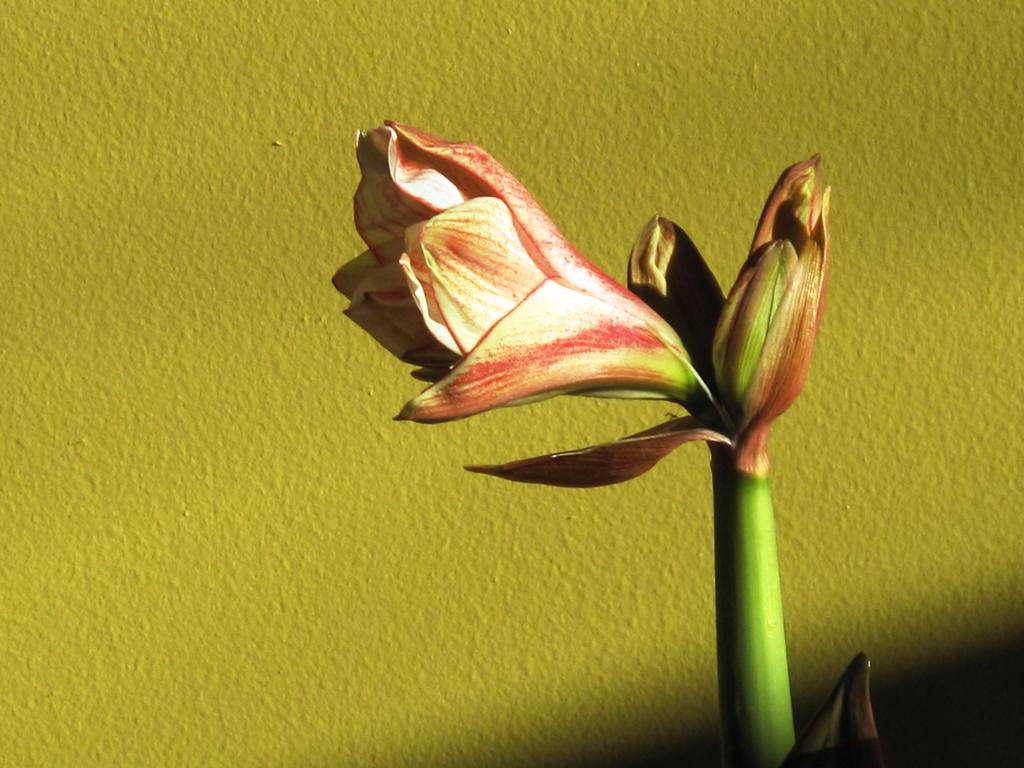
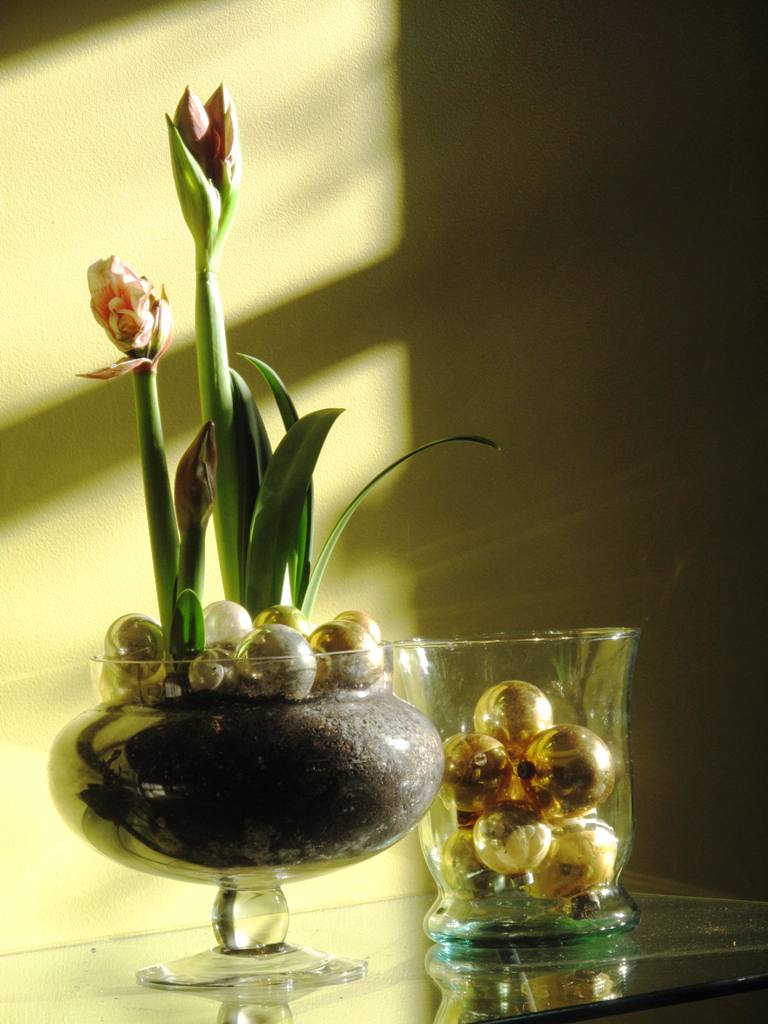
‘Joker’, a red-streaked amaryllis – perfect for a long-lasting holiday display
Ingredients:
2 amaryllis bulbs (Hippeastrum ‘Joker’), available via mail order, online and garden centers beginning in autumn. Store in a dry, cool space until planting. Can be planted and “forced” four to six weeks prior to desired bloom.
Vase:
8-inch tall x 8-inch diameter glass trifle dish used as a bulb planter
Design 101
Better than a flower pot: I realize it’s a little unconventional to fill a clear glass trifle dish with soil. But the elegant footed serving piece seems fitting for the graceful amaryllis plants it holds. Glass and ceramic serving pieces can quickly change the ordinary flowering bulb into a stylish floral display. I snagged this piece for $14 at a holiday flea market – and as a bonus, it was actually filled with the slightly faded Christmas balls!
Meet Lynn Fosbender, owner of Pollen Inc., a Chicago floral design studio with a green ethos.
Lynn Fosbender is a Chicago-based owner of Pollen Inc., a sustainable floral design studio for weddings and events. This talented young woman is a leader in the sustainable floral and green wedding industry. And to me, she’s a true Slow Flowers hero!
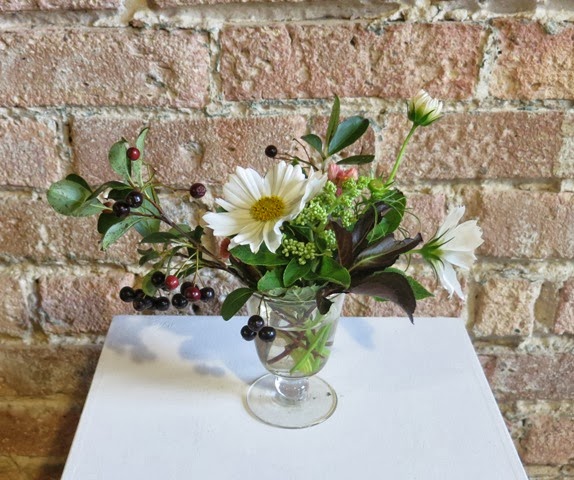
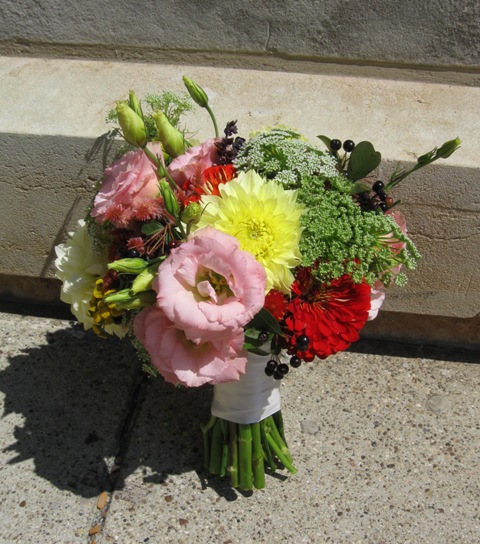
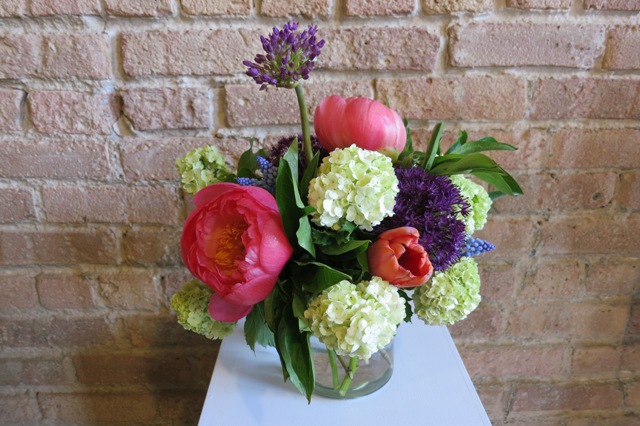
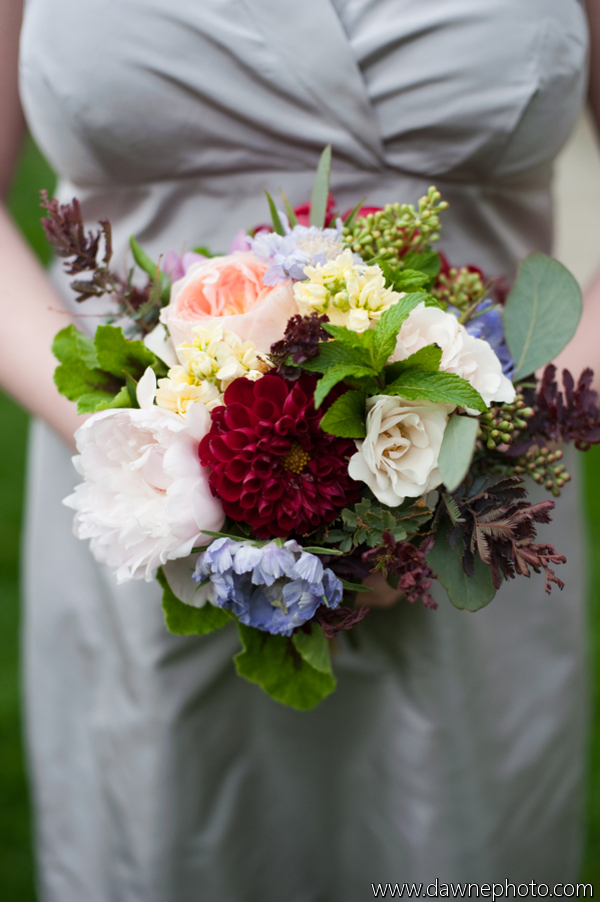
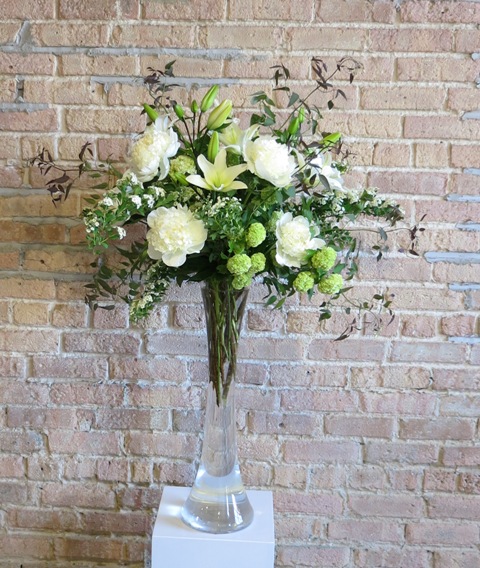
Here’s a selection of her floral artistry, through the seasons of the year:
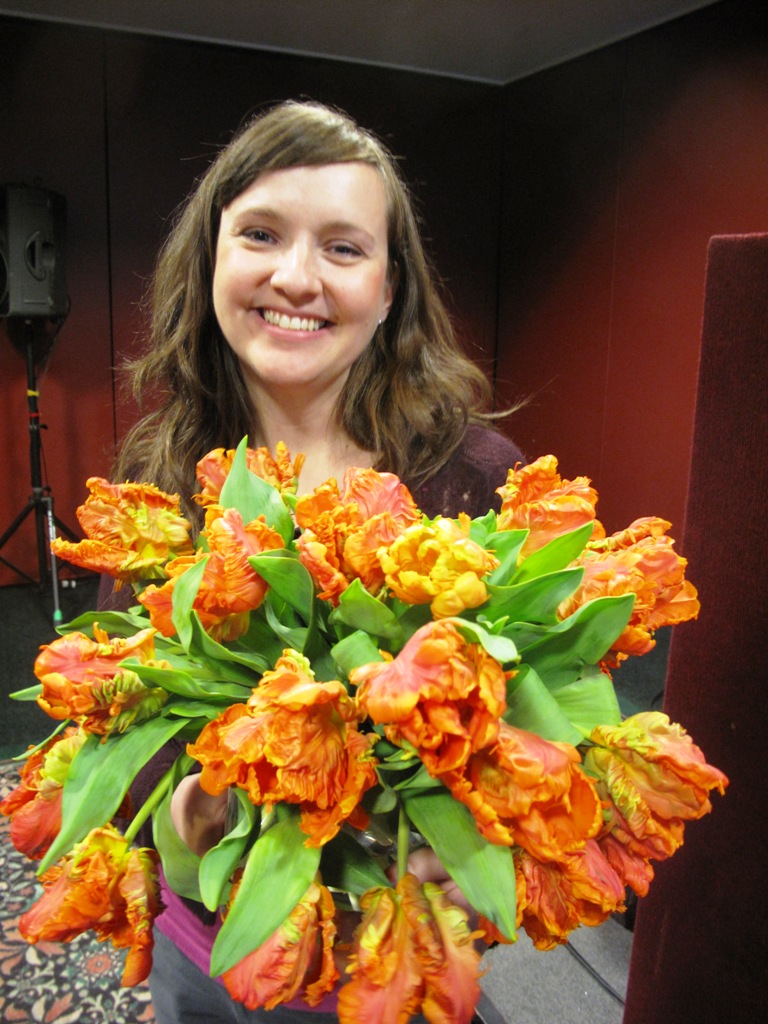
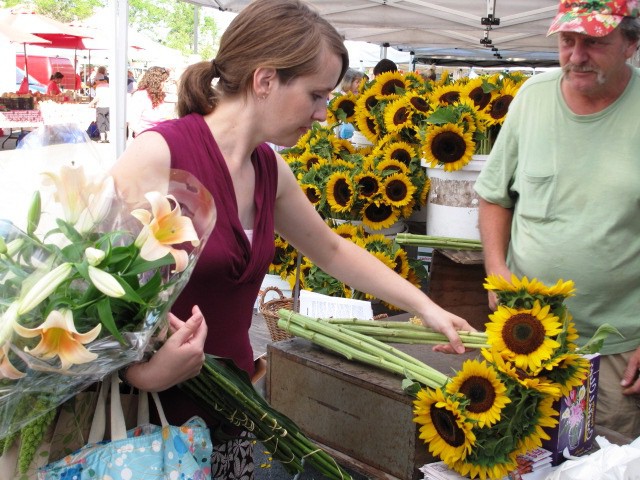
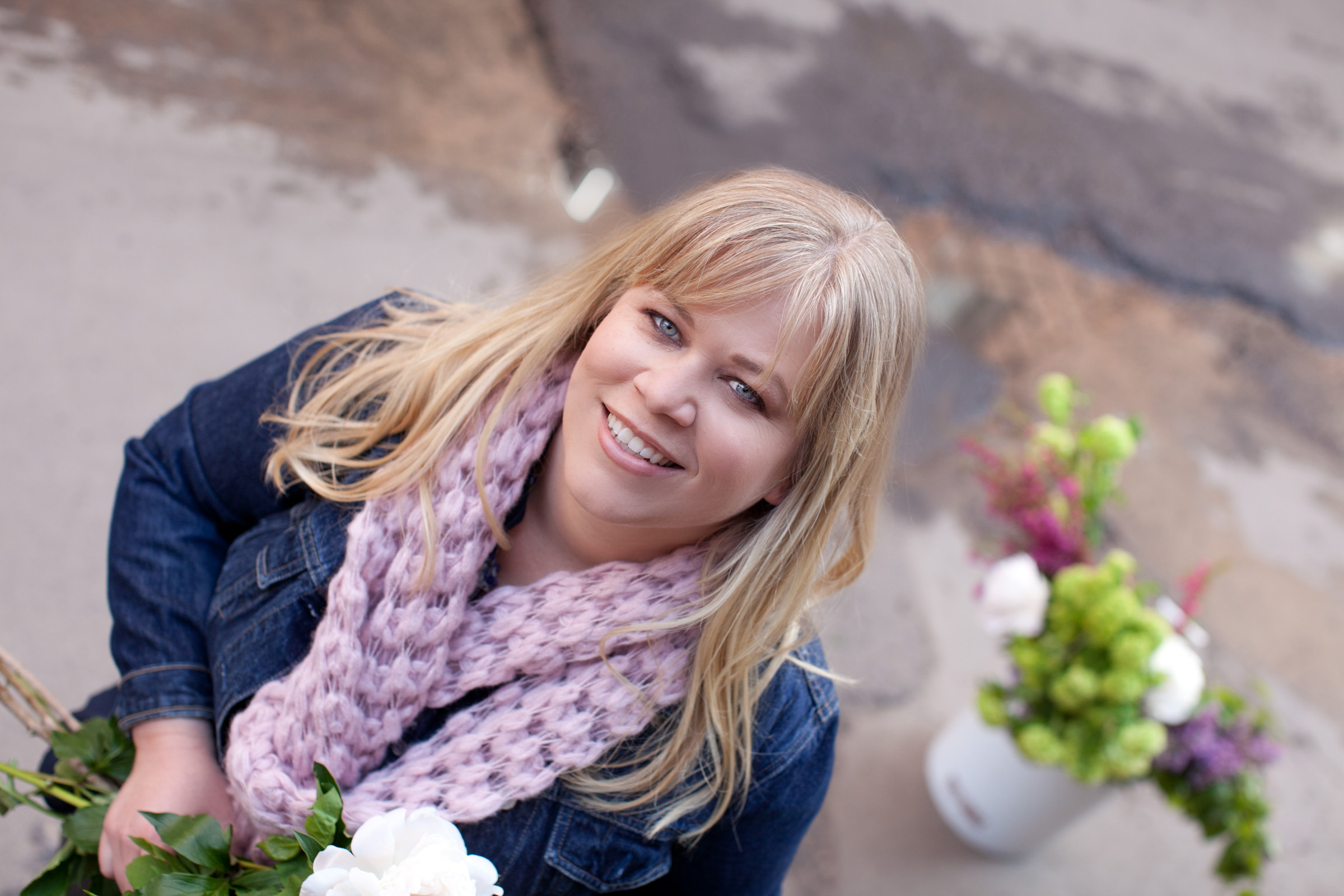
Lynn knows her local sources, having cultivated relationships with flower farmers in Illinois, Wisconsin and MIchigan – all of whom serve the greater Chicago marketplace. I photographed Lynn while shopping for a wedding client at her local farmers’ market.
We met in 2010 when I was on a college visit with my oldest son. While he was getting oriented, I invited myself to tag along with Lynn as she shopped for flowers at a local farmer’s market. Afterwards, we returned to the Pollen studio, which at the time was located in an old brick warehouse next to Chicago’s famous “El” trains.
Lynn’s design philosophy is influenced by both horticulture and ecology. With a B.A. in Horticulture and graduate studies in Restoration Ecology, you might wonder why Lynn ended up working with flowers.
Her career choice can be credited to a love for great design combined with extensive experience creating bouquets and arrangements for conventional florists (including a 4-year gig managing one of Chicago’s top retail flower shops).
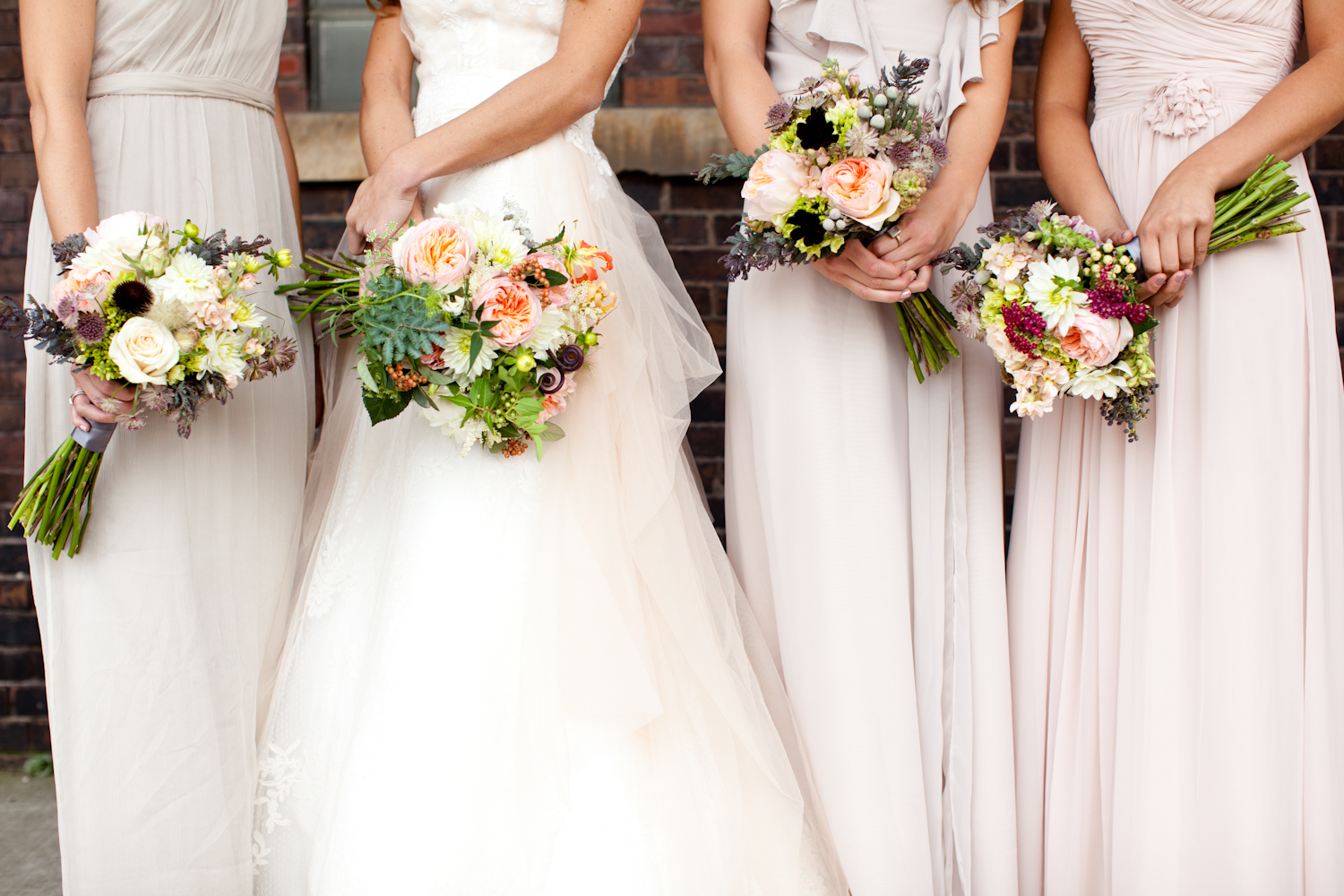
Seasonal and Sustainable Bouquets by Pollen
Yet even while working in the world of cutting edge-floral design, Lynn knew she wanted to use sustainable practices, something she hadn’t much observed in the industry.
“I was looking at all the stuff we were throwing away that should have been composted,” for example, she says. “For several years I thought I would like to own a full-service flower shop that was eco-friendly. I knew if anyone should do it, it should be me.”
Lynn’s vision was adopted by a group of MBA students at Loyola University who developed a business plan inspired by her ideas. Thus, Pollen Inc., was born in 2009.
A beautiful centerpiece.
After our early-morning farmer’s market stop, I followed Lynn back to the studio. With her arms filled with pale peach lilies, a bunch of verdant millet seedheads and dozens of brilliant sunflowers grown by a local Illinois flower farmer, Lynn led me upstairs to her light-filled loft-like space.
She processed the flowers while we discussed her green philosophy, the challenges of keeping brides (and grooms) happy with their flower choices, and the future for sustainable flower design.
It’s no surprise to learn that local farmers who sell to Chicago area floral designers are limited by a growing season that ranges from May through October.
A luscious color palette from Pollen.
In the colder months Lynn thinks beyond the obvious path and seeks to find sustainable options – even out of season. She orders Veriflora-certified California-grown flowers and also occasionally relies on a Chicago-area wholesale supplier for non-domestic Veriflora flowers as a second option.
“Otherwise, I would be using twigs and moss – that’s what’s local in the winter,” Lynn says with a grin. But then, she pauses and mentions a favorite local source for orchids – a popular wedding flower that’s greenhouse grown.
“I try to offer people more eco-friendly alternatives; things they might not otherwise notice,” she explains.
Lynn avoids using oasis, glues, dyes or sprays, almost always using water-filled vases for arrangements. By offering an affordable vase-rental service for weddings and events, Lynn makes it easy for clients to make the eco-friendly choice.
She also promotes and markets her studio in the green wedding world, collaborating with other vendors such as caterers, photographers and invitation printers.
Here’s a short interview with Lynn. She discusses her motivation for using sustainable flowers, as well as The Chicago Green Wedding Alliance, a collaboration she launched with like-minded businesses and artists:
It is so refreshing to meet and connect with designers like Lynn and so many of my previous Slow Flowers guests. There is a renaissance going on in the floral industry and these are the people to watch – the progressively minded designers who realize that consumer attitudes and desires have shifted – and that delivering American-grown flowers and using sustainable practices is a priority to those consumers. That’s smart business not just smart values.
Thank you for joining me in this episode of the SLOW FLOWERS Podcast with Debra Prinzing.
Because of your support as a listener, we have had more than 4,000 downloads since July – and I thank you for taking the time to join to my conversations with flower farmers, florists and other notable floral experts.
One must maintain a little bit of summer, even in the middle of winter. –Henry David Thoreau
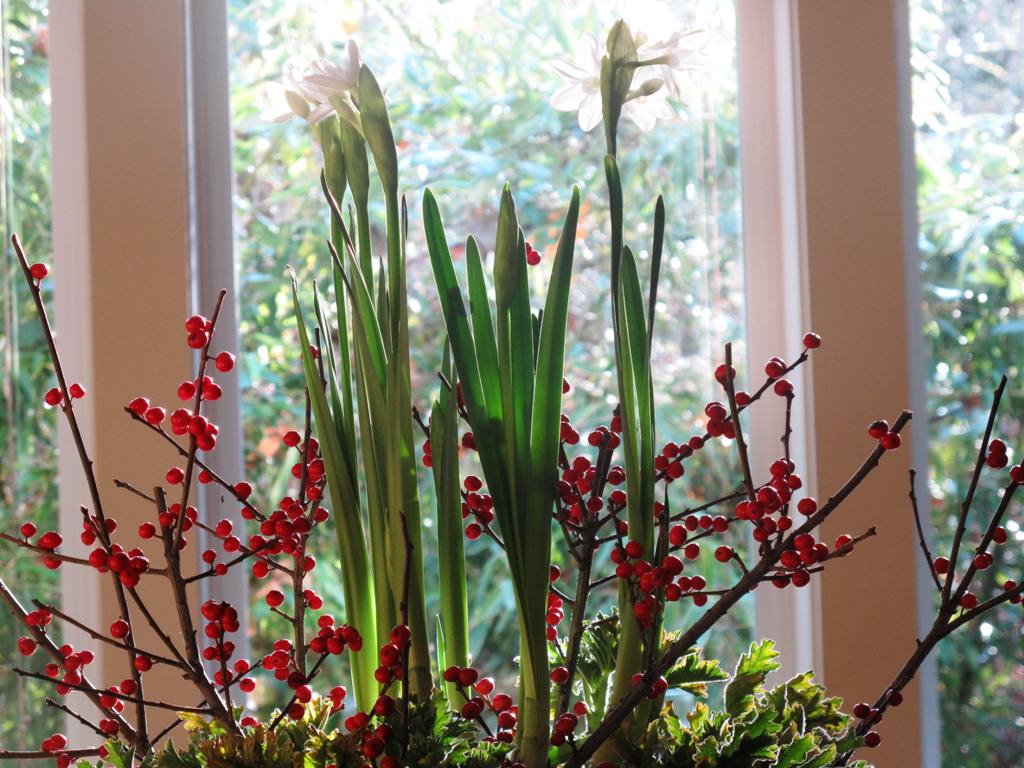
Welcome to the Holiday Season, when flowers are less likely to originate – at least in my garden. This festive combination is a great option.
Ingredients:
5 paper white bulbs (Narcissus papyraceus), available at many garden centers beginning in autumn. I like to plant pots of these bulbs indoors around Thanksgiving so that their blooms (and scent) fill the house by the December holidays.
20 stems scented geranium foliage (Pelargonium citrosum), grown by Charles Little & Co.
10 stems winter berry (Ilex verticillata), grown by Charles Little & Co.
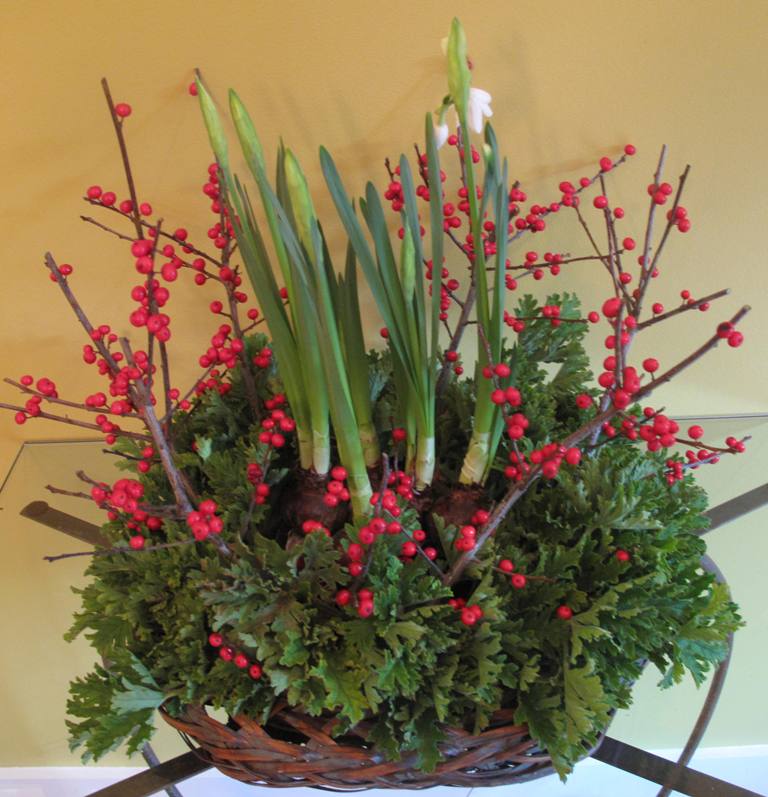
This is how all three ingredients appear together in a low tray.
Vase:
2½-inch deep x 6 inch diameter ceramic dish used as a bulb planter (this one has no drainage, so I watered sparingly)
2½-inch deep x 13-inch long x 9½-inch wide oval tray (wicker with a metal lining)
Eco-technique
Divided arrangements: When the ingredients in your bouquet have different requirements, you can devise a two-sectioned vessel. Here, the bulbs needed a small amount of soil, but the cut foliage and branches needed only fresh water.
The solution was to place a dish with the planted bulbs in the center of the wicker tray. Then, I arranged the ingredients needing water around its edges, making sure to keep the water level lower than the rim of the center dish.
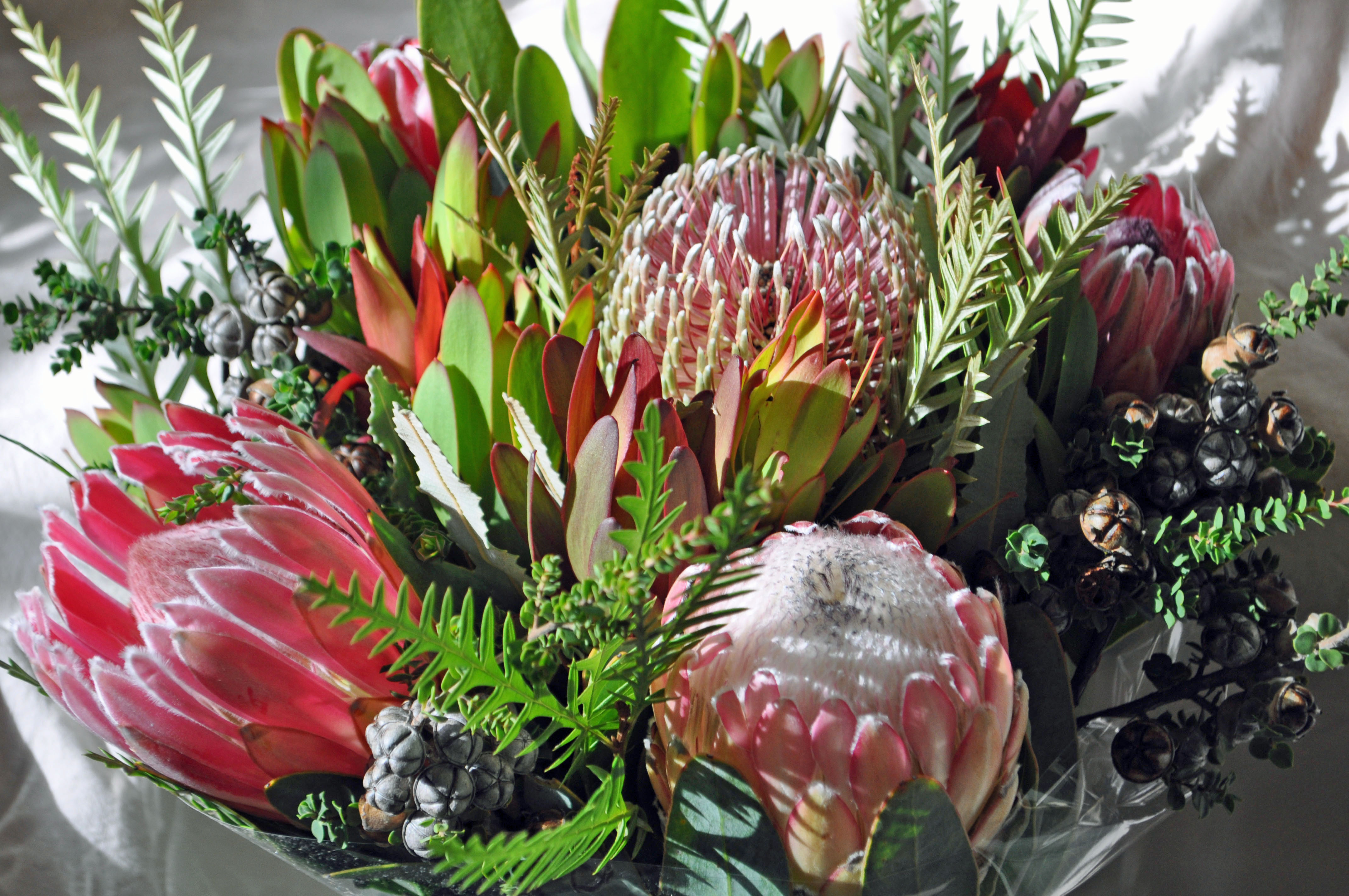
Protea is a dazzling native South African flower that has adapted to California’s benign growing climate – thus, perfect for the American-grown cut flower industry.
Today’s guests are two of the most influential US growers of Protea.
Mel Resendiz, an expert grower of Protea and other South African and Australian ornamental plants.
Owner of Resendiz Brothers Protea Growers, based in Fallbrook, California (in northern San Diego County), Mel Resendiz has been growing protea for 35 years. He’s joined by colleague Diana Roy, an equally passionate protea fan who handles marketing and promotion for Resendiz Proteas.
You’ll hear us refer to this lovely flower a few ways. It’s spelled P-R-O-T-E-A, but pronounced:
Whichever way you pronounce it, Protea is a luscious native South African flower, said to have been named after the Greek God Proteus, who was able to change into many different forms.
The Proteaceae family of plants is comprised of more than 1,400 species. Ranging from 2 to 12 inches in size, Proteas typically blooms in fall, winter and spring, although the folks at Resendiz are able to harvest and ship the flower year-round to customers in the U.S., Canada & Japan, due to their growing practices and attention to detail.
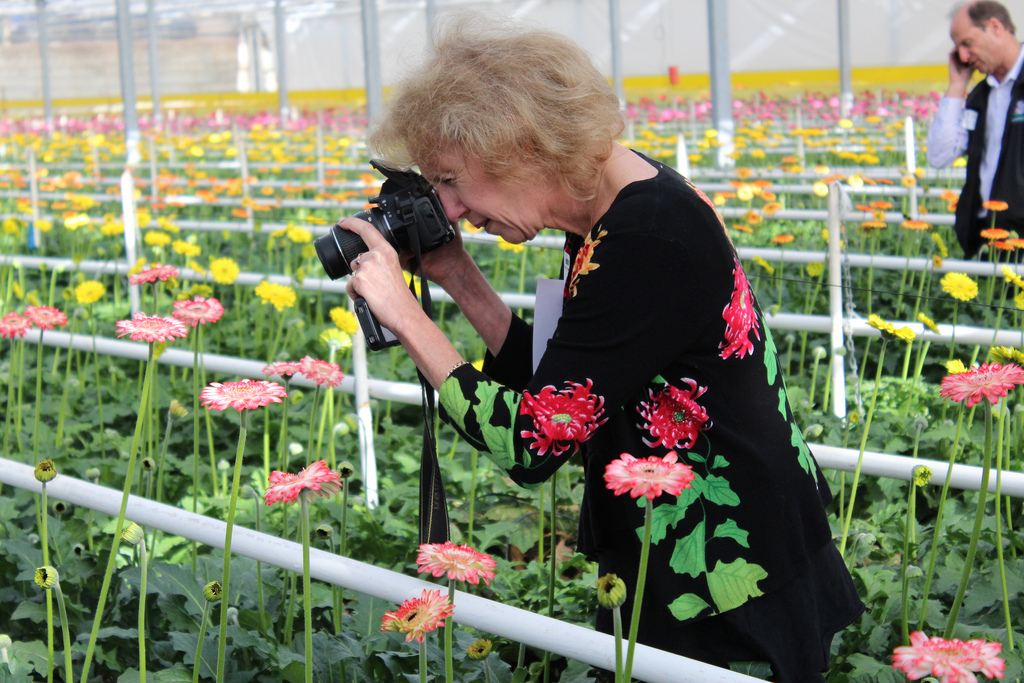
Diana Roy, a board member of the California Cut Flower Commission and active protea promoter. She was captured here at an industry event in a gerbera greenhouse.
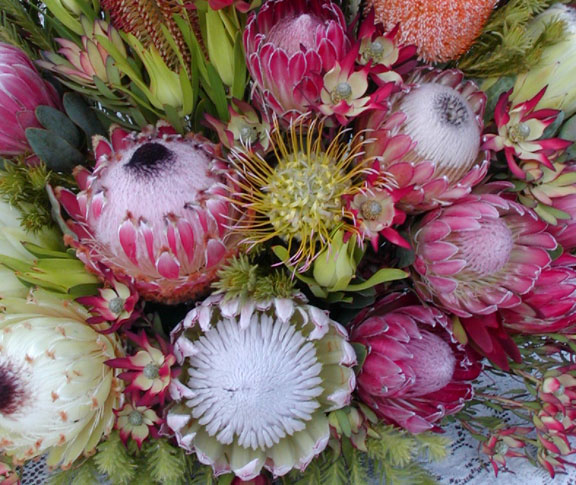
A Resendiz bouquet in which Protea is paired with Pincushion flower (Leucospermum).
Why are these South African plants now considered a valuable California flower crop? It’s because coastal California is one of five Mediterranean regions of the globe, similar to South Africa, Australia/New Zealand, Chile and Greece. Full sun, well-drained soil, good air circulation, mild winters and acid soil ensure that proteas thrive as if they were in their native environment.
Established in 1999 and today one of California’s largest supplier of South African and Australian floral products and plants, Resendiz produces more than 200 varieties of these unique native plants. Known for their exceptional value and long vase life, the protea and other blooms like Pincushions, Banksia, Kangaroo Paws andLeucadendron, create dramatic impact when incorporated in arrangements and bouquets. Many varieties are hybrids – grown only by Resendiz Brothers.
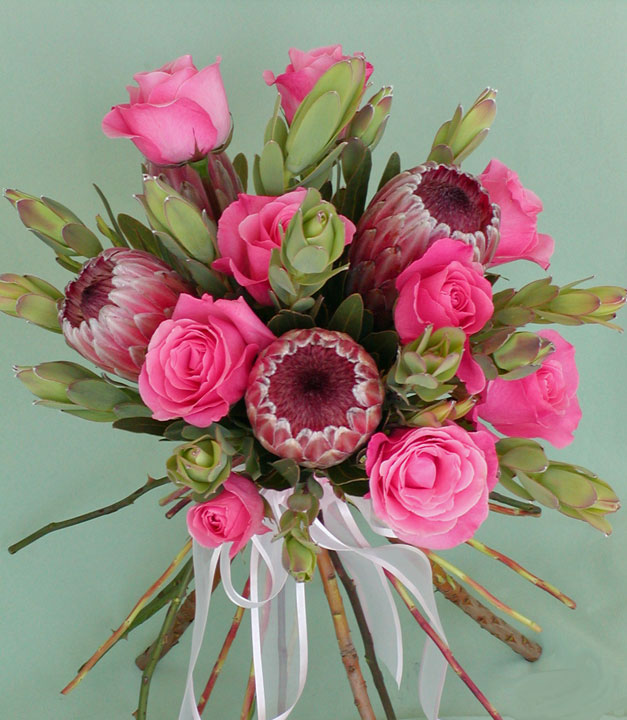
A wedding bouquet pairing protea with roses!~
Rich in color, texture and form, the protea is both dramatic and exotic. The spectrum ranges from warm to cool colored blooms — Rich reds, deep pinks, and fresh greens. Together, these blooms make stunning arrangements – and they are long-lasting – a huge bonus for the florist and DIY designer alike.
If you want an American-grown flower that will dazzle in the bouquet or the vase, look no further than the Protea.
Thank you for joining me in this episode of the SLOW FLOWERS Podcast with Debra Prinzing. Because of your support as a listener, there have been nearly 4,000 downloads since July – and I thank you for taking the time to join to my conversations with flower farmers, florists and other notable floral experts.
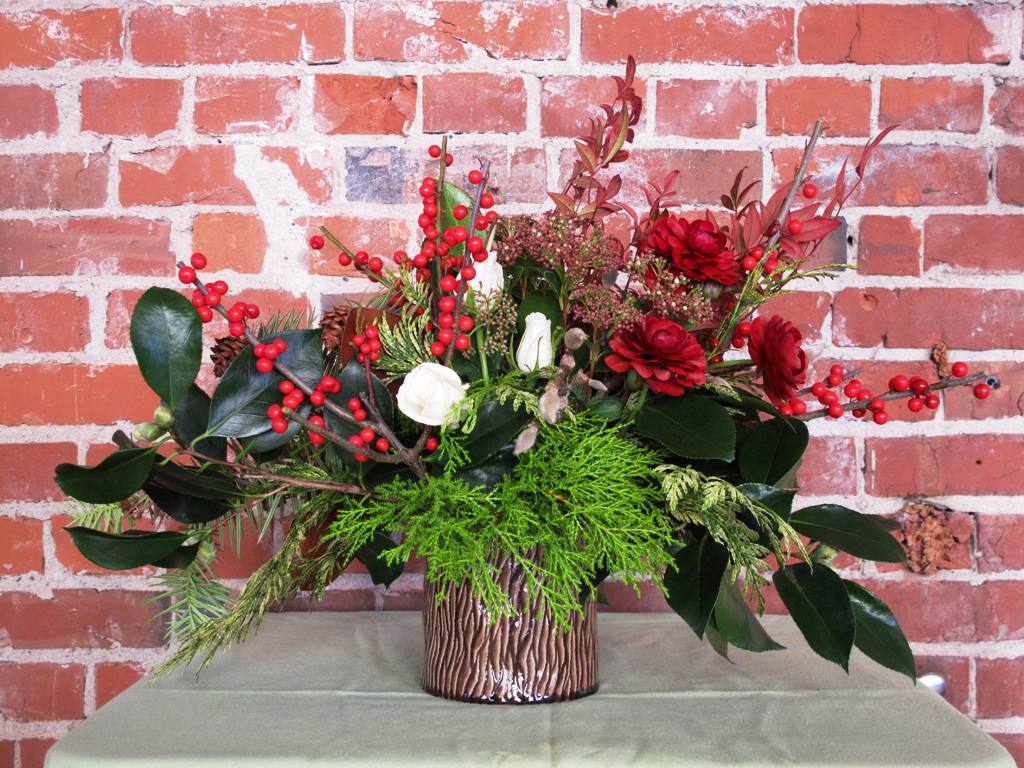
Here’s my creation, featuring a medley of white, red and various shades of green.
It was a merry ol’ time at the first Holiday Arrangement & Centerpiece Bar, which I hosted along with Whitney R. White and Erica Knowles (of Botany 101 Floral), a talented pair of floral designer friends here in Seattle. We teamed up to create two fun, hands-on design workshops for the busy holiday hostess.
The classes took places this past Friday evening and Saturday morning, with 18 students who joined us for festive refreshments, old friendships and new connections, as well as an introduction to eco-friendly techniques and a dose of the Slow Flowersphilosophy. Everyone went home with a gorgeous floral arrangement that will grace their homes now through the holidays.
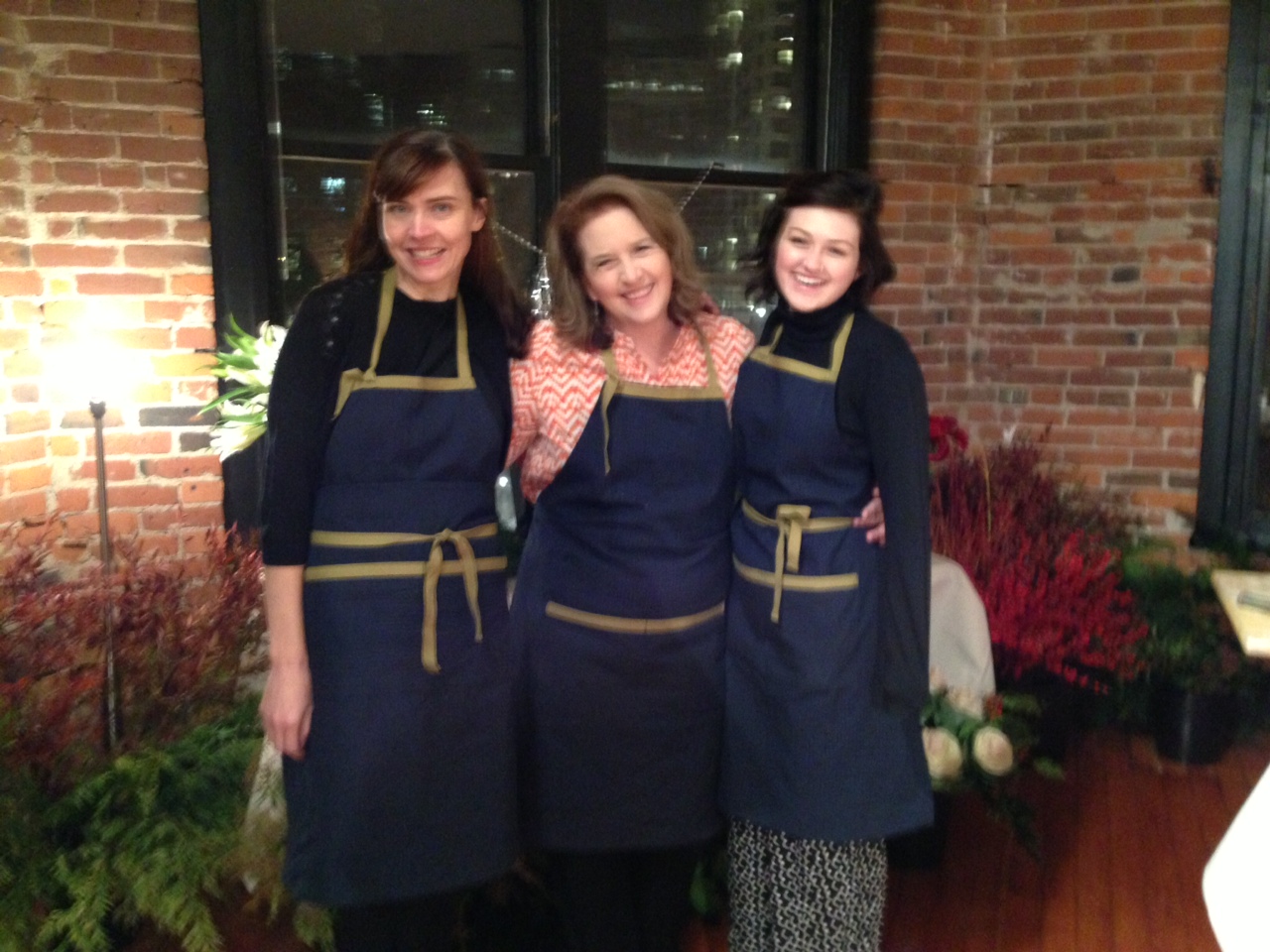
Erica Knowles, Debra Prinzing & Whitney White.
The basic premise of our two workshops:
1. Get inspired by the abundance of natural beauty around us here in the Pacific Northwest and elsewhere on the West Coast – all American Grown, of course!
2. Gain new skills in floral design, those you can employ throughout the coming seasons, as well.
3. Unleash your inner florist using an almost limitless supply of branches, boughs, berries and buds.
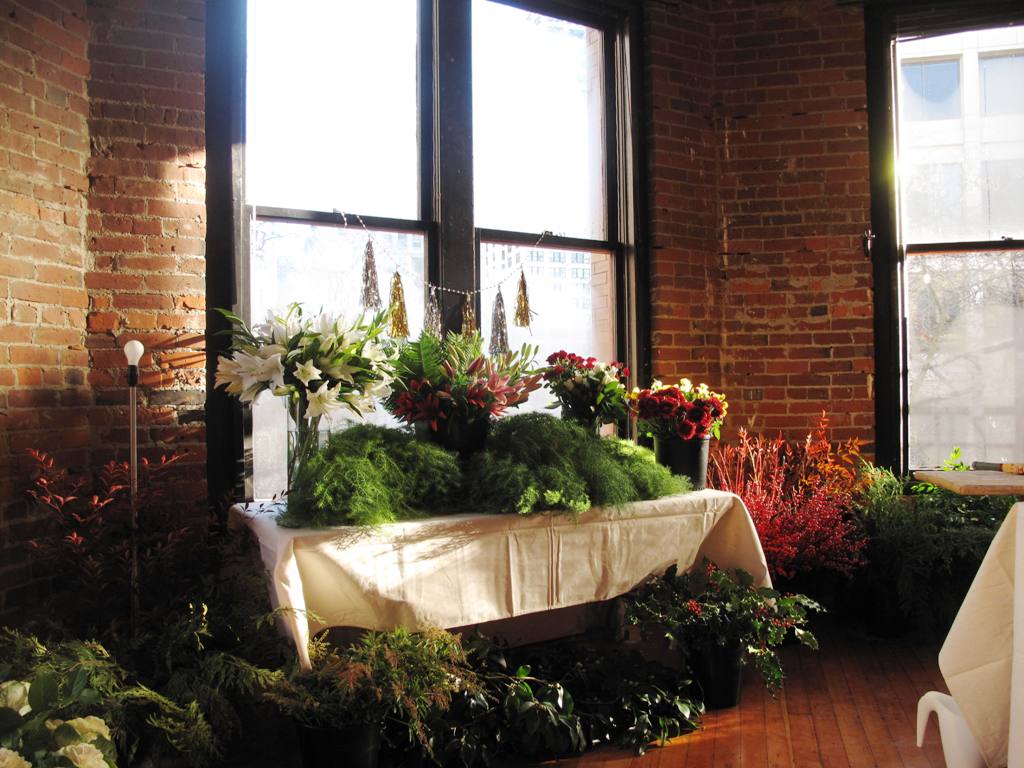
The tables were laden with floral and foliage choices, including branches, berries, boughs and stems.
Once we set up the “Bar,” Erica, Whitney and I stepped back in total amazement. We wanted our students to be blown away by the incredible variety of garden foraged ingredients — all in season. We also wanted to add some juicy blooming treats from local Northwest and California farms and nurseries. And thanks to our friends at The Sun Valley Group in Northern California, we had the perfect bit of sparkle – Ilex verticillata branches with red berries — so much to share with everyone in the class!
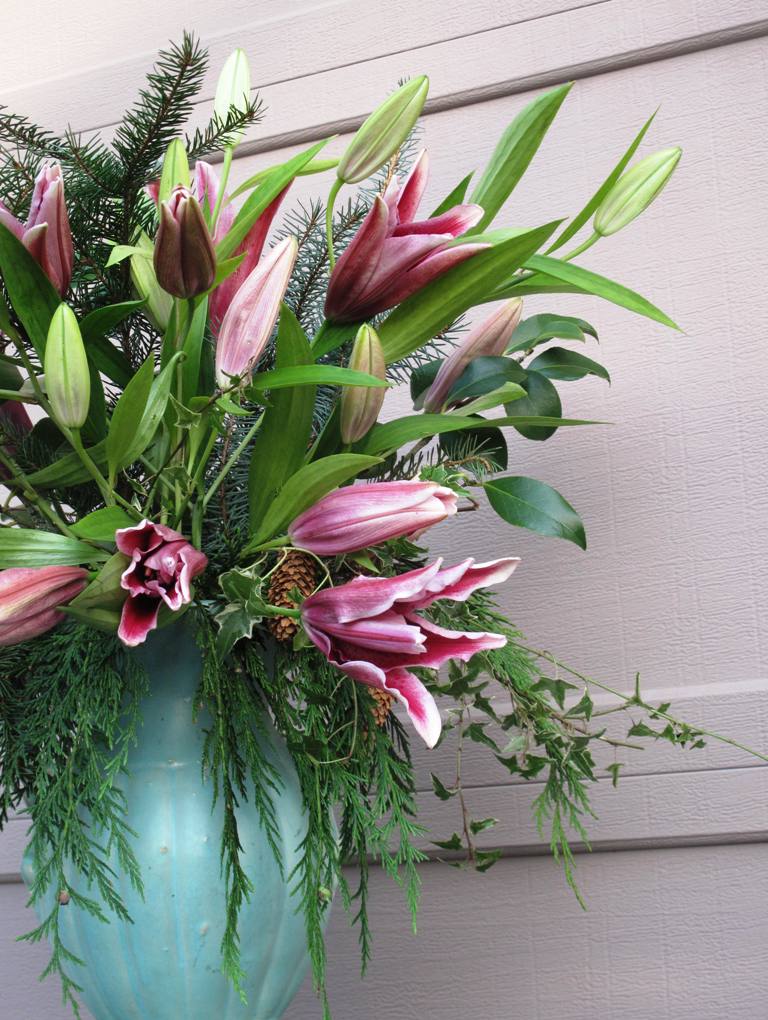
Deep raspberry-pink lilies (Oregon grown) paired with evergreens from my yard.
Ingredients:
5 stems dark pink ‘Rio Negro’ hybrid Oriental lilies, greenhouse grown by Peterkort Roses
5 stems Norway spruce (Picea abies), gleaned from my driveway
7 short branches Western red cedar (Thuja plicata), clipped from my garden
3 stems Camellia (Camellia japonica), clipped from my garden
5 lengths variegated ivy (Hedera helix), trimmed from a neighbor’s fence
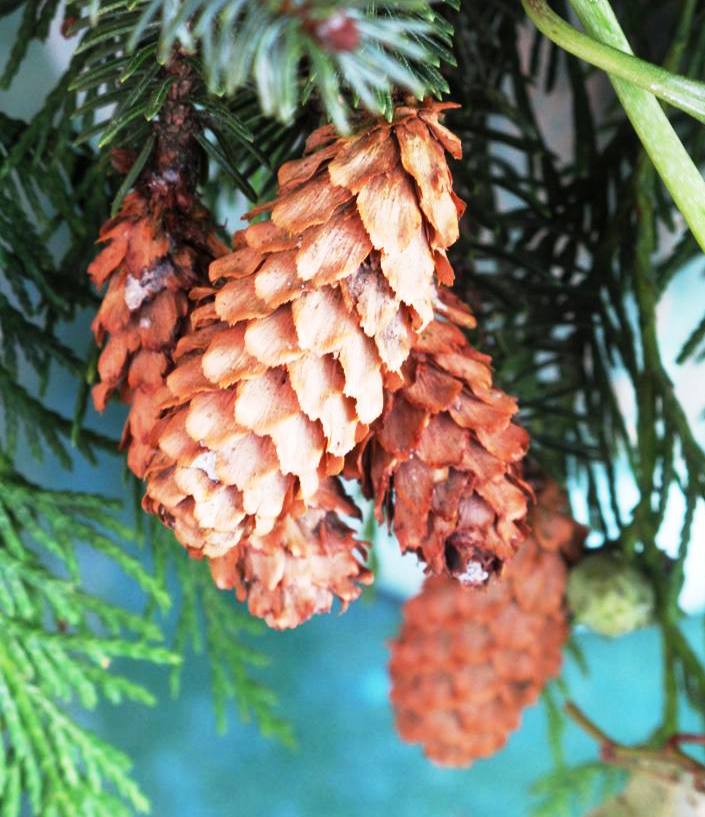
Lovely cones contrast organically with the teal vase and blue-green needles.
Vase:
12-inch tall x 9-inch diameter with 6-inch opening vintage McCoy urn
Design 101 Lilies for longevity: When you design with Oriental lilies, more than a week of enjoyment will ensue. One or two blooms at a time open and share their loveliness almost in succession, ensuring that something is always in flower. Don’t forget to clip the pollen-laden stamen and pistils from the center of each bloom as it opens. Otherwise, as those pieces fall, they can stain table linens.
Floral designer, educator, author-blogger and visionary, Alicia Schwede
If you’re at all active in the online universe, and if you’re a florist or simply passionate about good design, you probably already know about today’s talented guest, Alicia Schwede, creator of the popular FLIRTY FLEURS blog. Alicia has more than a decade of floral design to her credit, beginning with her first wedding clients in the Bay Area, and later, her Denver-based studio Bella Fiori.
In the past year, Alicia migrated from Colorado back to Northern California’s wine country, where she created the florals for many happy bridal parties this past wedding season. And now, due to life’s unexpected turns, she is here in the Pacific Northwest.
The life of a studio designer is a lot like the life of a writer. You are pretty mobile, and you can take your talents with you when you relocate. That’s exactly what happened this fall, when Alicia followed her husband Chad for a work-related move. We met in person when she surprised me by showing up in a workshop I taught last month.
Since then, we’ve had several great discussions about floral design and the state of the business. I’m excited to share our most recent conversation with you in today’s podcast. Learn more about Alicia, about her career as a floral designer, and what inspired her to launch FlirtyFleurs.com, an online community for floral designers to gain ideas and inspiration from each other.
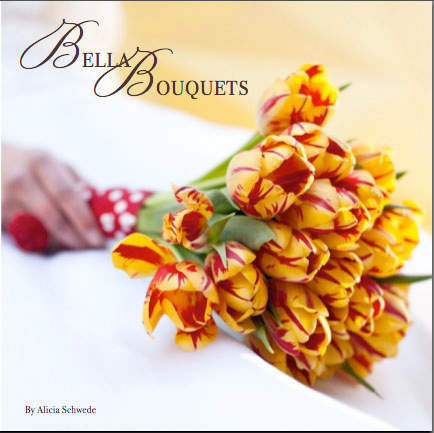
In this podcast, we also discuss her beautiful book, Bella Bouquets, which is a compendium of more than 100 wedding bouquets, arranged by color theme, which is quite the perfect way to organize flowers.
I was struck by this passage from the foreword to Bella Bouquets:
” . . . I still stop dead in my tracks when I spy a perfect peony, a gorgeous garden rose or the sweetest sweet pea at the market,” Alicia writes. “I find great pleasure in sharing my love and affection toward flowers. This book, and the blog Flirtyfleurs.com are just a few ways for me to share and connect with others while exploring the flower path ahead.”
To me, that flower path is right here, under our noses. It’s not on another continent, especially when locally-grown and seasonal botanicals are available to designers and flower lovers. A big believer in locally-grown blooms — and it’s no wonder, since she has many ties to California floral sources — Alicia shared four of her favorite American-grown arrangements for you to see here. “How funny is that?” she wrote in her email message accompanying these images. “Four bouquets representing three different states!”
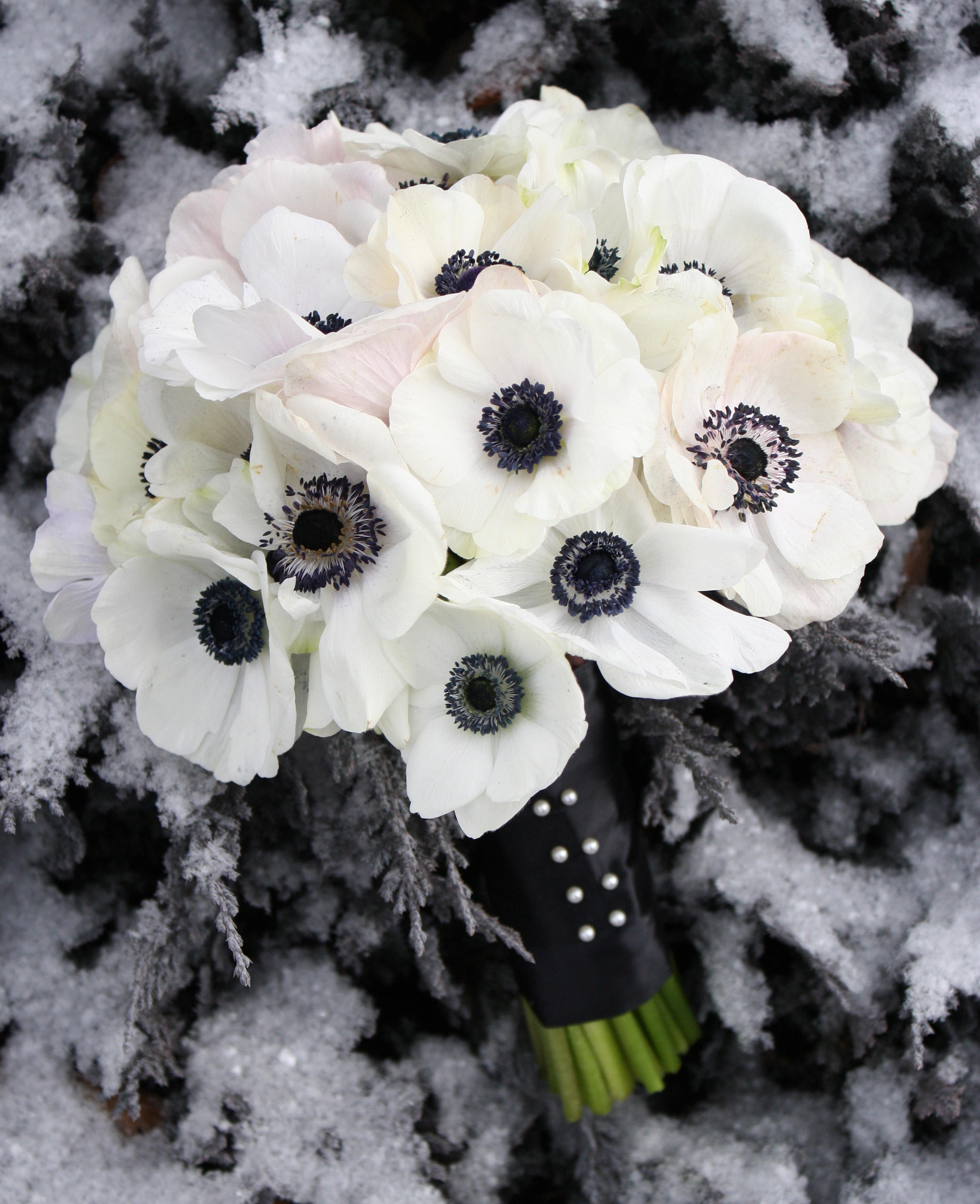
Anemones are grown by Stevens & Son in Arvada, CO (designed in CO)
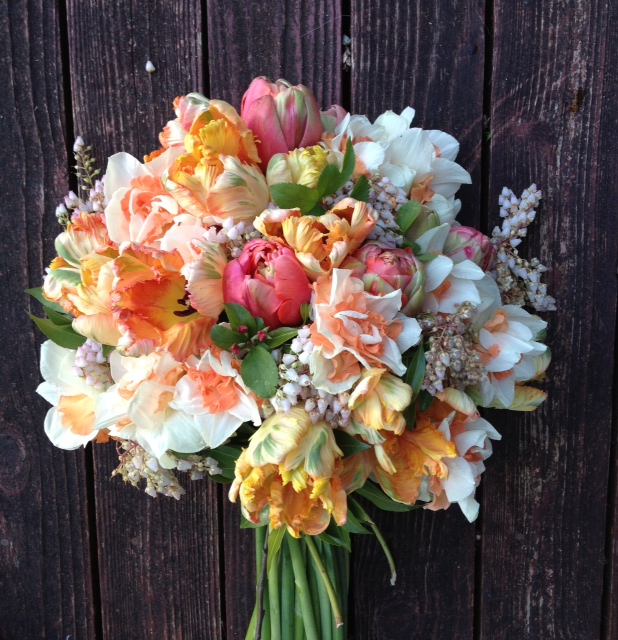
Tulips bouquet – all tulips and daffodils from Pike Place Market; Washington grown (designed in WA)
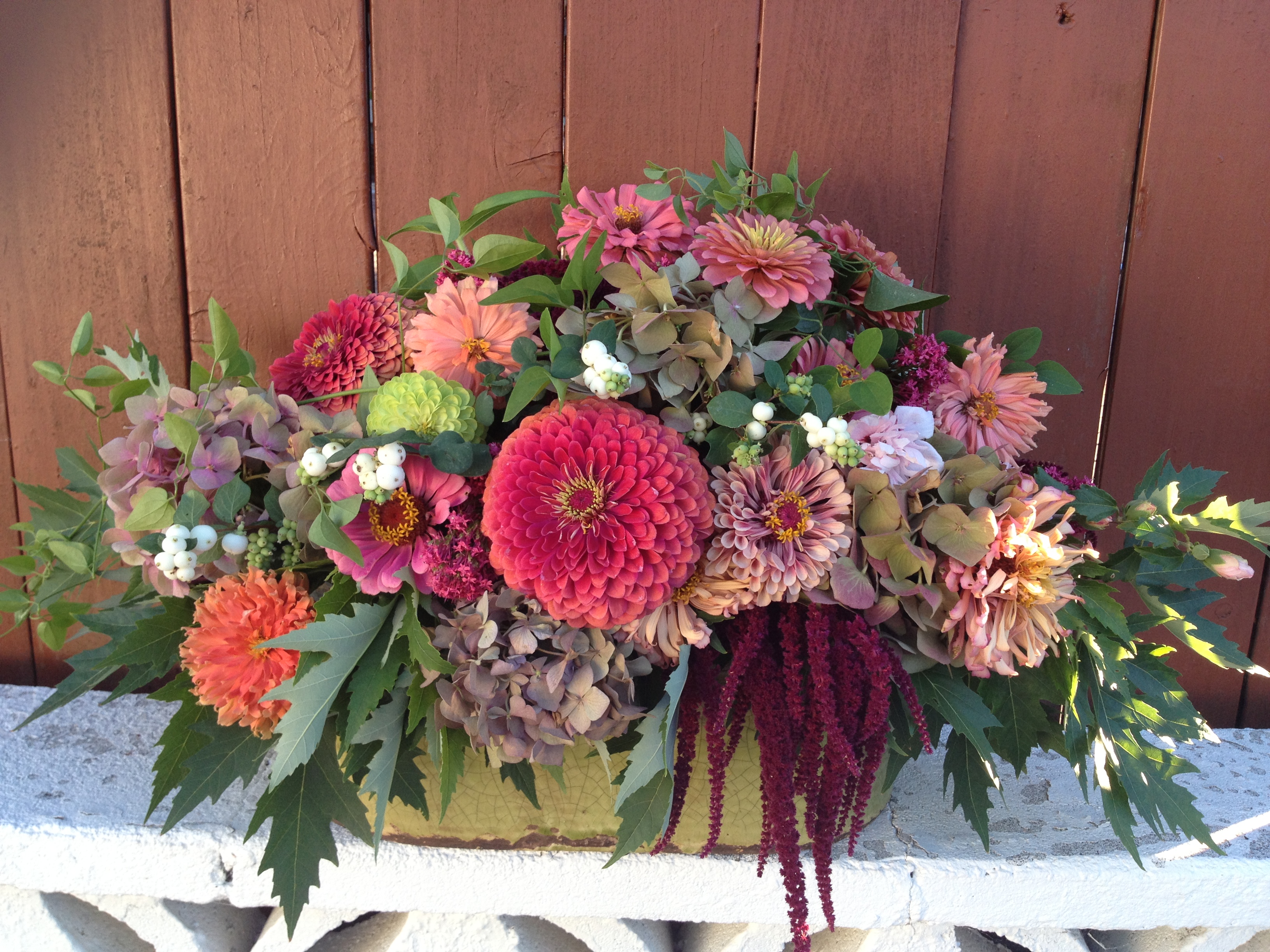
Bella Fiori Garden – from Alicia’s garden, all of it!
Bella Fiori Dahlias – mostly from Alicia’s garden, Dahlias are CA grown (designed while in CA)
If you're interested in learning more about Alicia and Flirtyfleurs, be sure to subscribe to her free
newsletter. You'll also find details and registration information on Alicia's "Bridal Bouquet Workshop,"
which I'm hosting at my event space in Seattle's Pioneer Square on Feb. 1, 2014.
Thank you for joining me in this episode of the SLOW FLOWERS Podcast with Debra Prinzing. Because of your support as a listener, there have been more than 3,500 downloads since July – and I thank you for taking the time to join to my conversations with flower farmers, florists and other notable floral experts.
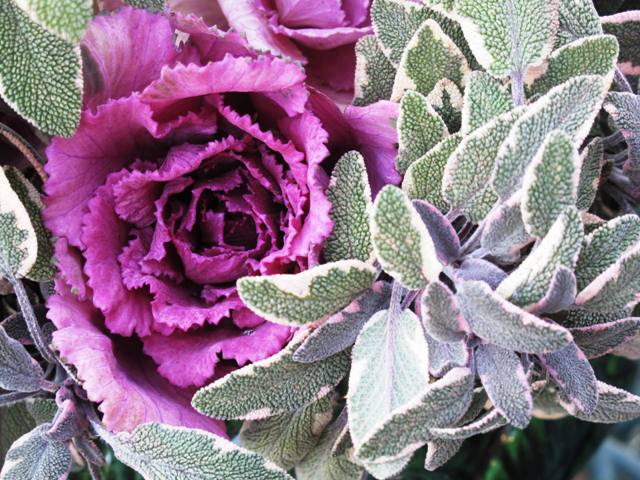
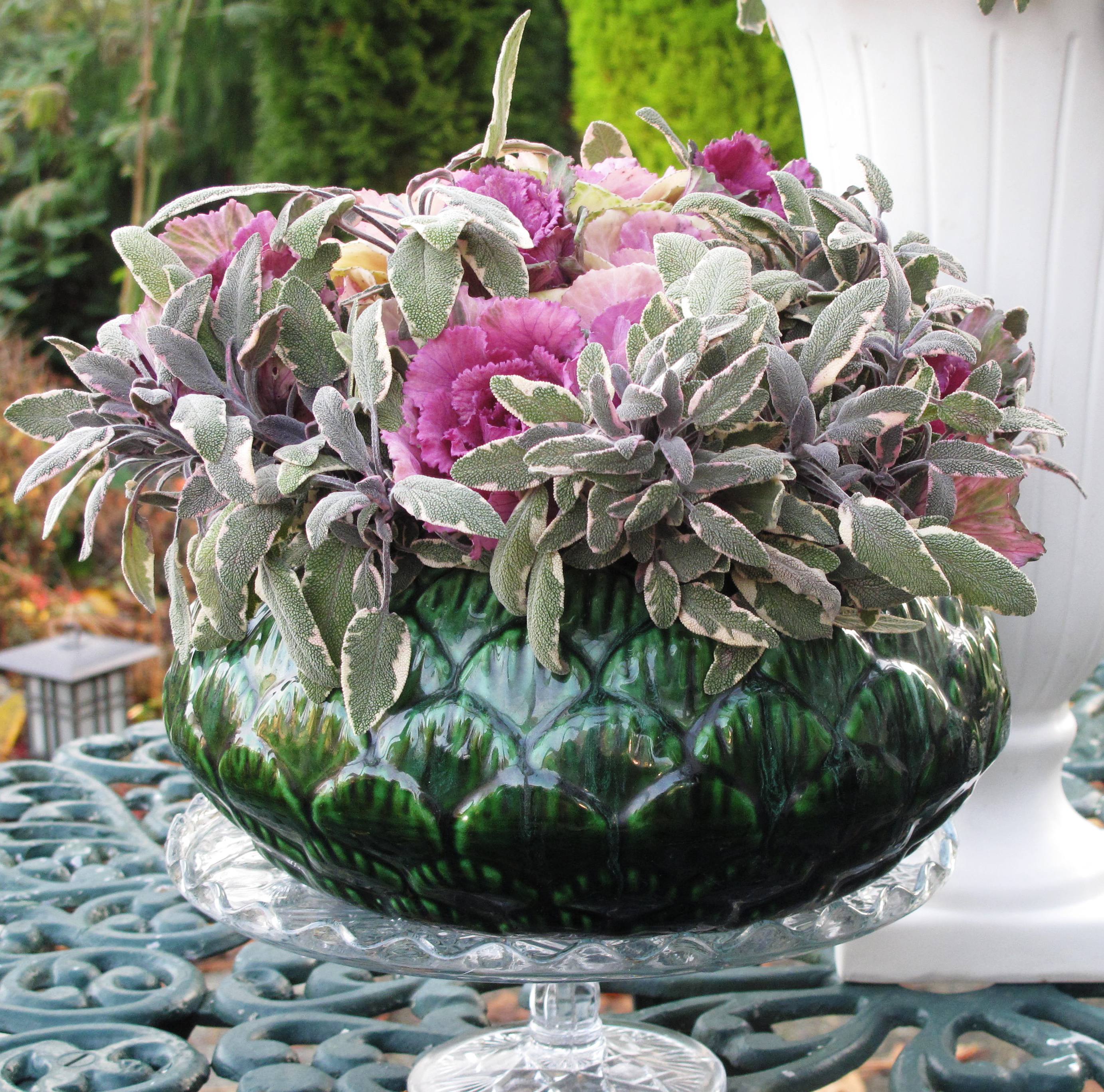
7 stems pink flowering kale (Brassica oleracea), trimmed to resemble a bloom, grown by Charles Little & Co.
20 stems tricolored sage (Salvia officinalis ‘Tricolor’), grown by Charles Little & Co.
Vase:
5-inch tall x 10-inch diameter with 6-inch opening vintage ceramic planter
Grow This Herbs for foliage: Herbs of all kinds – herbaceous or woody – make excellent greenery in floral arrangements. When you think about it, this comes as no surprise.
Culinary herbs last for days when we clip them from the kitchen garden and bring inside, plunking a few stems into a jar of water until we’re ready to start cooking. My “aha” herb moment occurred while on a photo shoot at a U-Pick farm. The photographer was waiting and I quickly needed to find dark foliage as contrast for a vase of zinnias. Fortunately for me, the farm’s herb patch was filled with dark purple basil plants and they looked (and smelled) wonderful in that bouquet.
Close your eyes. Take a deep breath. Think about seeing a vivid purple-tinged field of lavender. Now imagine yourself walking through it, brushing your fingertips on the scented flowers dancing tall on their wand-like stems. Don’t you wish you could be transported to that place right now?
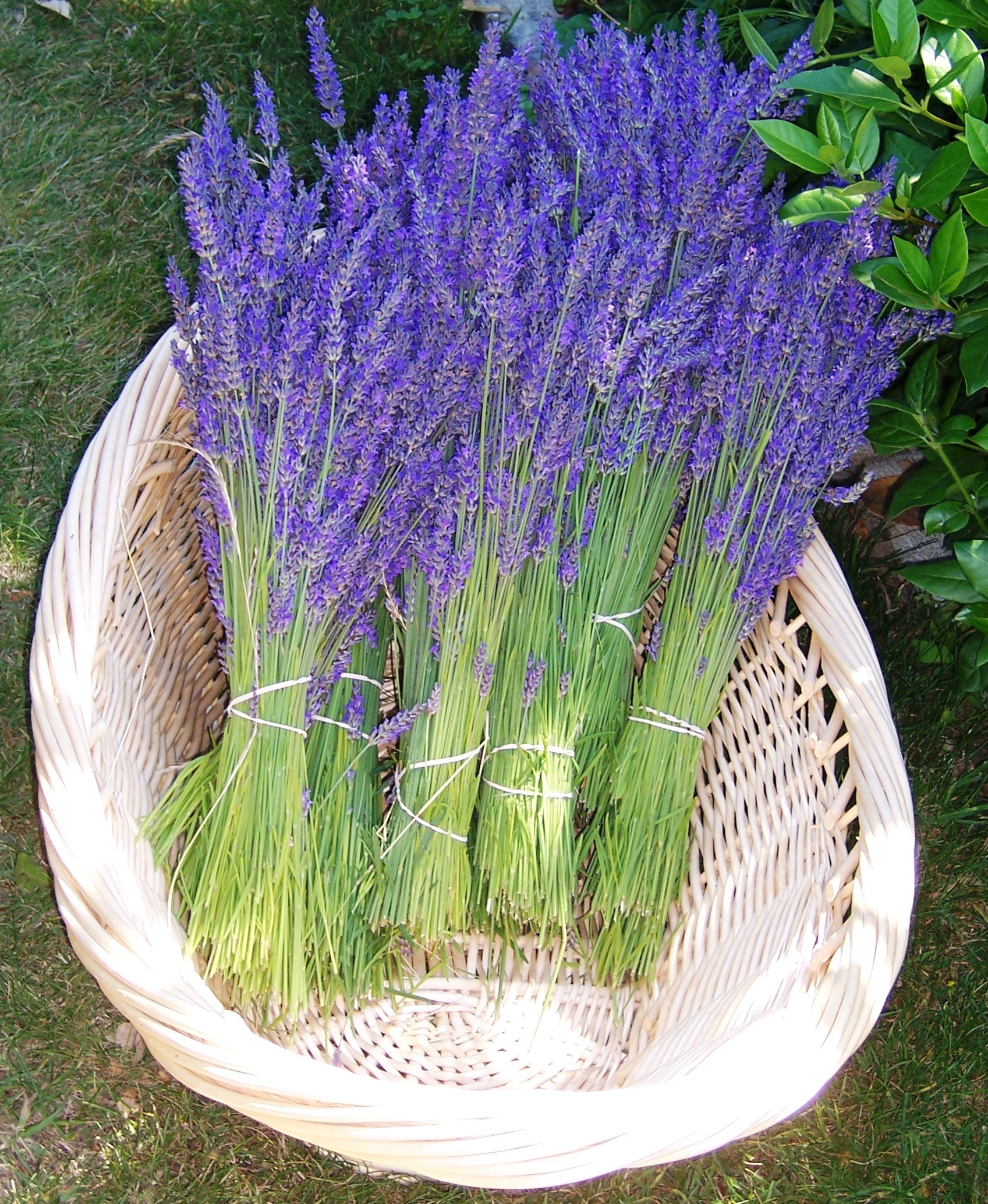
Fresh cut bunches of lavender from Labyrinth Hill Lavender (photo courtesy Susan Harrington)
There is something so evocative about Lavandula, the plant that is the basis for all of Susan Harrington’s growing, writing and teaching activities. The owner with her husband Jack Harrington of Labyrinth Hill Lavender, Susan is today’s guest on the Slow Flowers Podcast.
Susan connects people with lavender, whether at the farmers’ market, in workshops and through her web-based educational programs.
We met up recently after I attended one of Susan’s inspiring (and intoxicatingly fragrant) workshops at a local garden center. Susan and I discussed her decade-long adventure growing lavender on her “backyard farm” and how that led to a vibrant cottage industry selling fresh-cut lavender and dried lavender buds, first at the farmers’ market and later via mail order. Susan has expanded Labyrinth Hill Lavender into online training for others who want to get into the lavender-growing business and now, a regional conference for lavender farming.
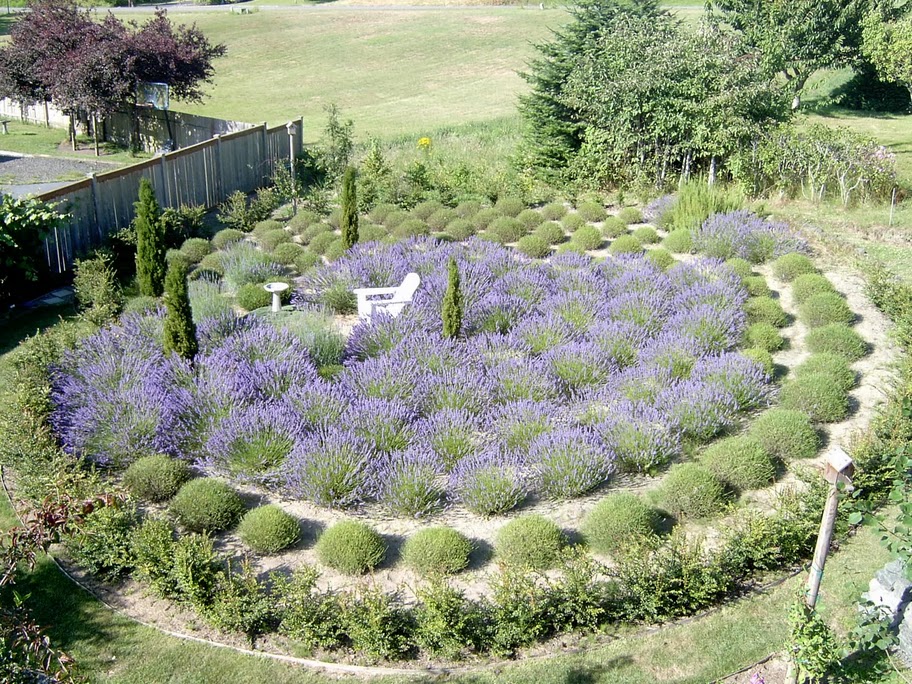
Here is her famous lavender labyrinth, planted with 150 Lavandula x intermedia ‘Fred Boutin’ plants. The labyrinth measures 40-feet in diameter and produces about 700 fresh-cut bundles of lavender per season.
The lavender labyrinth at peak of season. Photo, courtesy Susan Harrington
Susan mentioned her YouTube video in which she demonstrates her Lavender Bud De-Nuding Process. It’s a little tongue-in-cheek, but clearly a huge success as a method for anyone harvesting lavender buds for aromatherapy or crafting:
More details discussed in our conversation:
Information about Susan’s online lavender growing course, and her FREE mini-course on growing lavender
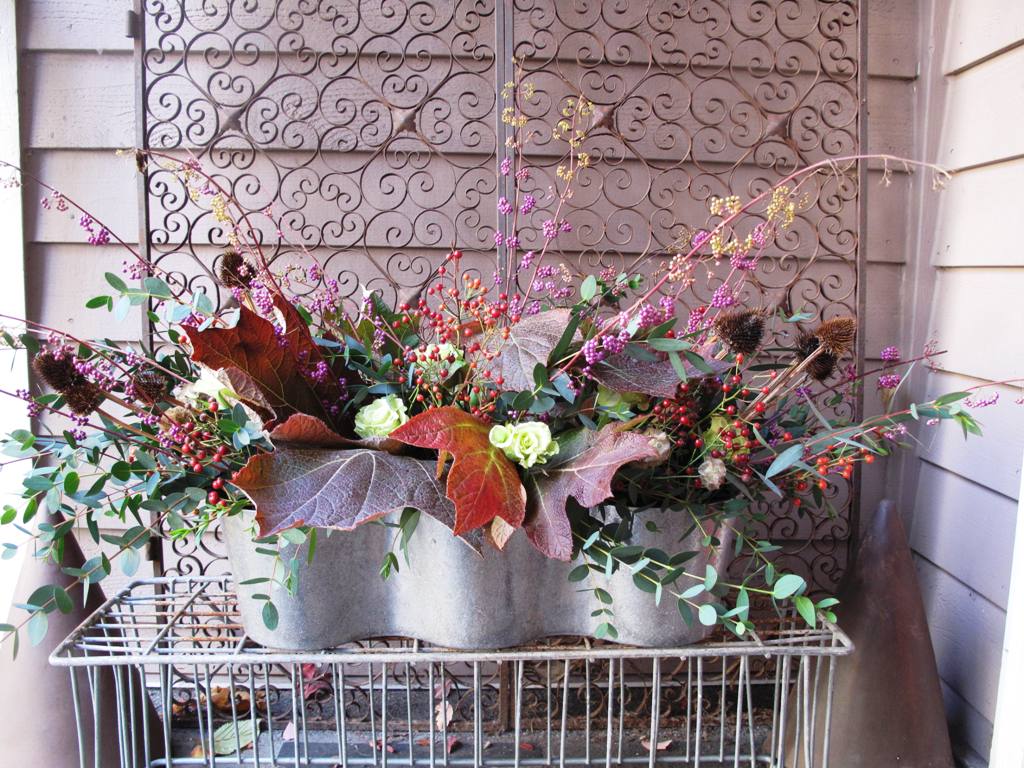
All the textures and ingredients of the season, with a little polish from the Oregon-grown roses.
Vase:
5-inch tall x 17-inch long aluminum planter with three 6-inch wide planting sections
Grow This
Garden for foliage: Perennials and shrubs produce some of the most interesting “greenery” for DIY floral designers. Clipping leafy branches from your own backyard is obviously more economical than buying foliage. But it also means the difference between a prosaic bouquet and one with loads of personality. Unique silver, burgundy, gold and blue-green leaves of all sizes and textures lend garden-inspired style to your designs.



 Ingredients: