Debra Prinzing

Get the Email Newsletter!

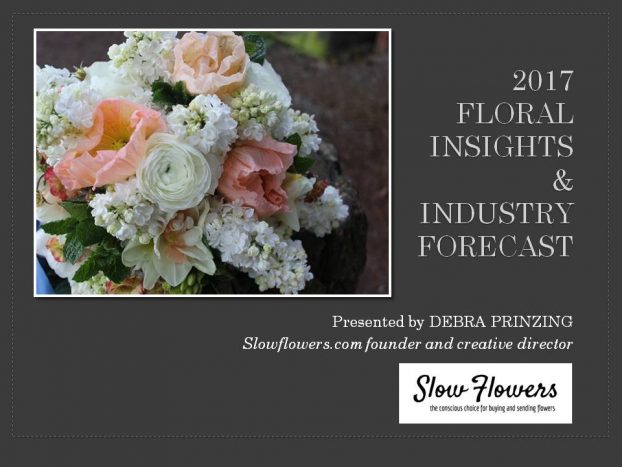
Episode 278: Slow Flowers’ 2017 Floral Insights & Industry Forecast

Wednesday, January 4th, 2017

slide1
Happy New Year and Welcome to the third annual Slow Flowers’ Floral Insights and Industry Forecast.

Unlike most TREND reports, this compilation tracks changing shifts, emerging ideas and new concepts that are taking hold in the American floral world.  Think of it as your Next, New and Now Report. These topics are gleaned from my conversations and interviews that took place with many of you during 2016– Slow Flowers members, including farmers, florists and creatives.  I know some of you have already experienced these emerging developments and your influence has inspired this list.

If you would like a copy of this report, please click here: 2017-floral-insights [PDF download]

I look forward to your reaction, thoughts, and input on the Slow Flowers’ Floral Insights and Industry Forecast, including the ideas and themes I may have overlooked! I invite you to share yours in the comment section below.

Let’s get started:
slide2
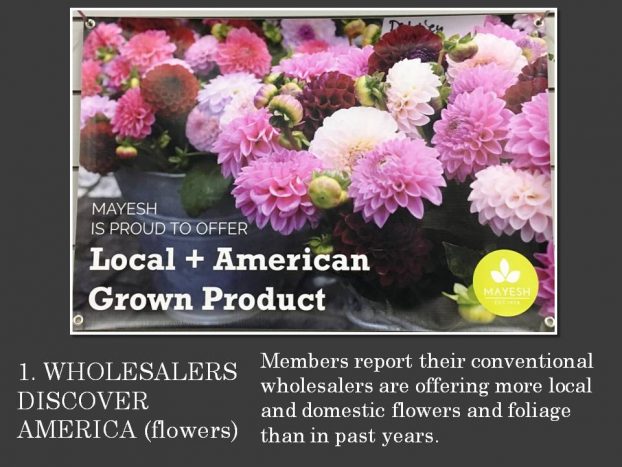
#1 WHOLESALERS ARE DISCOVERING AMERICA
. In the midst of global floriculture, with trade in cut flowers estimated at more than $100 billion per year, $13 billion of which takes place in the U.S., we’ve been seduced by the notion that the world is our oyster (or flower field).
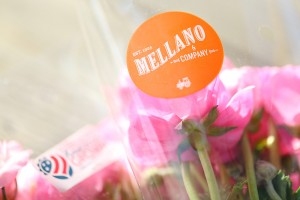
Mellano & Co. is a Certified American Grown flower farm.

Mellano & Co. is a Certified American Grown flower farm.

In many markets around the country, the wholesale florist is the only commercial cut flowers and foliage source for floral designers, flower shops and studios to purchase product.Yet after branding themselves as the only way to access a world of floral options, some wholesale florists are returning to their roots, at least in part. They are proactively sourcing from American flower farms large and small to stock their coolers and shelves. And beyond this step, many are also using signage and labeling to inform buyers of the origin of that product.

I believe the explosion of farmer-florists and the growth of small-scale floral agriculture in markets across North America has occurred in part because of frustration with the lack of or limited local sourcing by conventional wholesalers. Let me say that again: Farmer-Florists and small-scale floral agriculture have stepped into the gaping void created when wholesalers turned their backs on local flower farmers. And now they’re waking up to the missed opportunity.

The success of the Seattle Wholesale Growers Market, well-documented by me and on this podcast over the past several years, as well as the continued growth of the farmer-owned Oregon Flower Growers Association market in Portland underscore that demand for local flowers is already in place.

Now we are witnessing a shift among some conventional wholesalers to align their brand with American Grown and Locally-grown flowers. Mayesh Wholesale Florist is the most active in this arena, with active support for Slowflowers.com, American Flowers Week, Lisa Waud’s Flower House Detroit, and other sponsorships.

When Mayesh opened its renovated Portland, Oregon, branch in early November, the company asked me to make a design presentation. The team there was very supportive of my request for all locally-grown product — hat’s off to Mayesh and I certainly expect that their success at the cash register will motivate other conventional wholesale florists to get onboard.
slide5
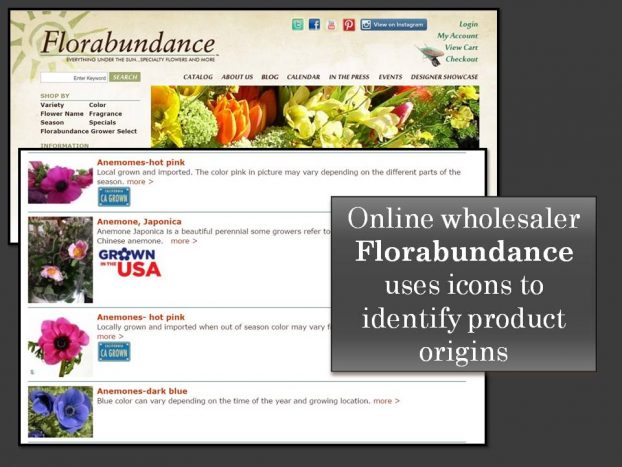
I’ve previously singled out Santa Barbara-based Florabundance, led by Joost Bongaerts, for making the effort to label all California-grown floral and foliage offerings on his online wholesale site. It is an effective tool — one I hope others will emulate. It is certainly a step that demonstrates excellent customer service and an awareness that Florabundance shoppers want to know the origin of the flowers they purchase.

This past fall, I surveyed Slowflowers.com members for their take on a number of topics and trends. When I asked, “If you shop with Conventional Florists, are you finding more American grown and locally-grown product than in the past?” 70 percent of respondents said yes.

Here are a few of the specific comments to elaborate:

  • I request American grown from my Rep, and I think there are more boutique, seasonal items that are coming from smaller farmers
  • I have been asking my conventional wholesalers to bring in more American grown product and I think it is helping. The “American Grown” branding really helps us to know that is happening.
  • It’s definitely taking place and some people at the conventional wholesalers are proud to share that their products are American grown.

This last comment reflects that the industry still has far to go. One member noted:

  • It’s a toss up. They say they want to add more but I’m not sure if they are working really hard at. And they don’t do a very good job at advertising what is local and what is not. My Rep knows that I want American grown but still have to ask every time
slide6
#2 MORE FARMS SELLING DIRECT
. This insight is closely connected with item number one.

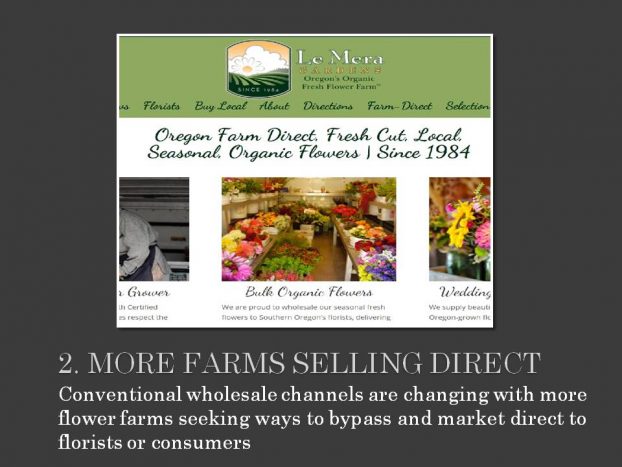
In general, the conventional wholesale model is changing, as traditional channels of floral distribution are disrupted. I predict that more flower farms will seek and establish new ways to bypass the conventional wholesale pipeline and market direct to florists and consumers. This is a hot topic and certainly one that’s hard to find anyone willing to go on record to discuss.
Our Slow Flowers survey revealed numerous sales channels among flower farmers. Granted, the majority of Slow Flowers farm-members are small-scale producers, but I believe they are the ones modeling how diversification and direct-to-florist commerce can succeed. When asked about their distribution channels, our respondents cited the following top three outlets:

  • Seventy percent are growing flowers for their own weddings and event clients;
  • This is followed closely by farms selling direct to other florists and wedding designers, at around 67 percent
  • With 53 percent of flower farms reporting they sell to local flower shops
    After this top tier, the percentages drop down to one third of respondents who sell flowers via farmers’ markets and CSA subscribers (basically consumer-direct) and about one-quarter who sell to local wholesalers and grocery/supermarket buyers.There is another farm-direct model, and here’s where I think the disruption is most revealing. A number of large farms are experimenting with direct-to-florist and direct-to-consumer models.
slide9
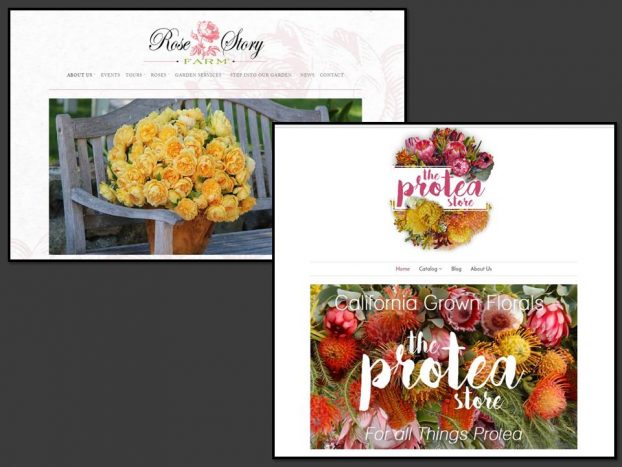
There is another farm-direct model and here’s where I think the disruption is most revealing. A number of large farms are experimenting with direct-to-florist and direct-to-consumer models. A few successful single-crop models have been in place, such as Danielle Hahn’s Rose Story Farm, which in the past few years has shifted almost completely away from selling through wholesalers to florist-direct fulfillment, and many of the Alaska peony growers who sell direct to florists and consumers.

Now, diversified, large-scale growers are beginning to spin off consumer-focused web shops, such as Sun Valley’s Stargazer Barn or Resendiz Brothers’ Protea Store. In the scheme of things, these new ventures are moving only a small fraction of their parent farms’ floral inventory.

But I predict that as large farms bend to demand for farm-direct sourcing of flowers (by consumers and florists alike), the path from field to bouquet will speed up and perhaps take fewer detours through brokers and wholesalers. That means fresher, more seasonal and better value for all floral customers.

READ MORE…
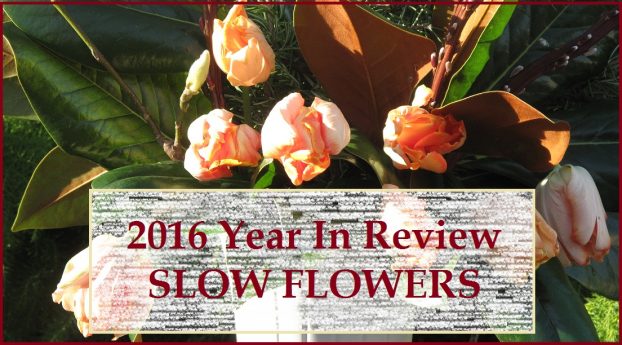
Episode 277: A Year in Review – Slow Flowers’ Highlights for 2016

Wednesday, December 28th, 2016

2016-year-in-reviewWelcome to the final Slow Flowers Podcast of 2016

PodcastLogoLast year at this time, I mentioned that the Slow Flowers Podcast had been downloaded 76,000 times in two-and-one-half years.

Today, I can tell you that 2016’s listenership nearly doubled that total, meanings as many people tuned into this weekly episode in 12 months than in the previous 30 months combined.

That’s the best news I could ask for as we reflect on the successes and strides of 2016.

Every single week this year; in fact, every single week for 178 weeks, it has been my privilege to feature the voices of our Slow Flowers community with you.

You’ve heard from flower farmers and floral designers, pioneers and personalities,  who together are changing the floral landscape, disrupting the status quo, and bringing flower sourcing and growing practices, not to mention eco-conscious design methods, to the center of the conversation.

Take the Pledge!!!

Take the Pledge!!!

As I have done since the beginning of 2014, I would like to dedicate today’s episode to the Slow Flowers Highlights we’ve witnessed this year.

Next week, on January 4th, I will share my 2017 floral industry forecast with you.

As the Slow Flowers Movement gains more supporters and more passionate participants who believe in the importance of the American cut flower industry, the momentum is contagious. I know you feel it, too.


I’ll start with some ACCOLADES

This happened and it came as a total surprise!

This happened and it came as a total surprise!

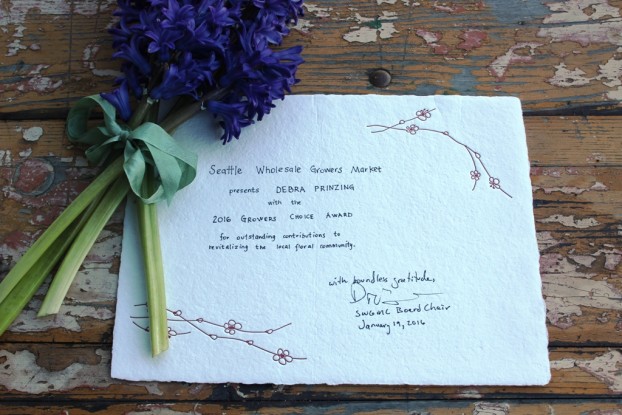
2016 kicked off with a lovely surprise as the Seattle Wholesale Growers Market honored me with the Growers’ Choice Award for outstanding contributions to revitalizing the local floral community. The flower farmers and staff of this innovated farm-to-florist wholesale market are near and dear to my heart, and it’s so gratifying to receive their recognition. My efforts to promote and sustain domestic flowers is especially sweet because of those who gave me this award.

In September, the Garden Writers Association, my professional community, honored Slowflowers.com – the web site – with a Silver Medal in the digital media category. The organization also inducted me into the Hall of Fame, an honor given to one person each year — an unexpected and humbling acknowledgement for my work in gardening communications.

And then there’s VALENTINE’S DAY

Yay! Check it out!!!

Yay! Check it out!!!

The opportunity for engaging the media in a discussion about American grown flowers, local flowers and the origin and growing practices of flowers at Valentine’s Day is an obvious one — and we have been vocal about sharing the Slow Flowers story.

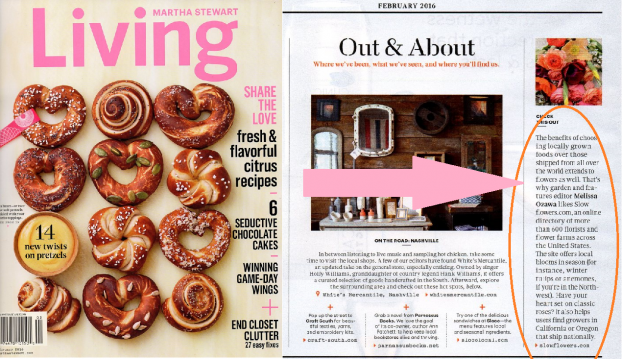
The 2016 press was major, with Martha Stewart Living’s mention of Slow Flowers and the slowflowers.com directory in its February 2016 issue –

Here’s the text:

“The benefits of choosing locally grown foods over those from all over the world extends to flowers as well. That’s why garden and features editor Melissa Ozawa likes Slowflowers.com, an online directory of more than 600 florists and flower farms across the United States. The site offers local blooms in season (for instance, winter tulips or anemones, if you’re in the Northwest). Have your heart set on classic roses? It also helps users find growers in California and Oregon that ship nationally.” 

There you have it! Short and VERY sweet!

Individually, none of us could have earned this type of media attention from a magazine with paid circulation of more than 2 million subscribers, monthly newsstand sales of 115,000 issues and total audience reach of more than 9 million. The demographics of the Martha Stewart reader are in close alignment with your own floral business.

You can feel especially proud of what we’ve accomplished knowing that the value of this earned media mention is $45,000, something that none of us could have ever afforded if we purchased advertising space in the magazine.

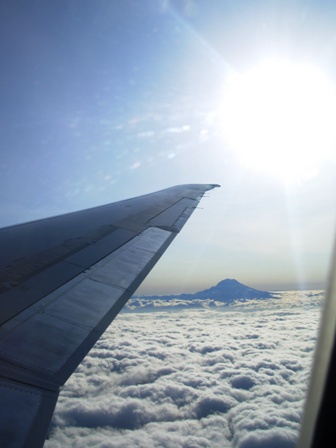
view from airplaneAs for travel, in 2016, well, I retained my MVP Gold status on Alaska Airlines, which means I spent more than 40,000 miles in the air in 2016.

Perhaps not an accomplishment when it comes to burning jet fuel, but to me, the amount of travel I was able to make on behalf of floral promotion, including connecting with many of you, was significant — and to compensate for that travel footprint, I tried to engage with as many flower farmers and florists at every destination!

I attended seven lovely and inspiring FIELD TO VASE DINNERS, serving as co-host and sponsor.

Slow Flowers partnered with the Certified American Grown campaign’s Field to Vase Dinner Tour, which took me to flower farms in California, Texas, Colorado, Pennsylvania and Washington State.

The Certified American Grown Program produces the Field to Vase Dinner Tour -- and is a sponsor of this Podcast. Shown from left: Bill Prescott of Sun Valley Flower Farm, NYT Bestselling author Amy Stewart of "Flower Confidential", Kasey and me.

The Certified American Grown Program produces the Field to Vase Dinner Tour — and is a sponsor of this Podcast. Shown from left: Bill Prescott of Sun Valley Flower Farm, NYT Bestselling author Amy Stewart of “Flower Confidential”, Kasey and me.

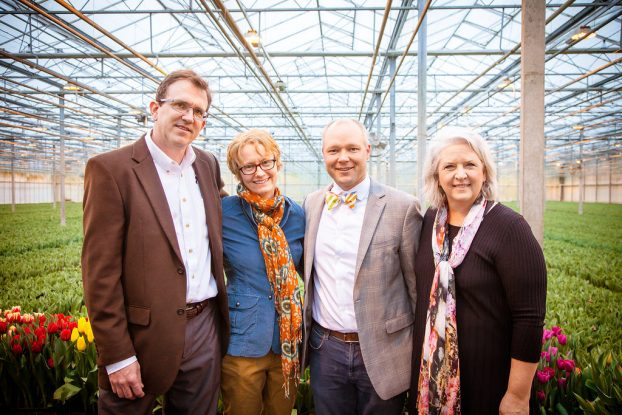
I teamed up with Kasey Cronquist, administrator of the Certified American Grown brand, to welcome more hundreds of dinner guests who enjoyed local food AND local flowers, who heard the Slow Flowers message and met and learned from Slow Flowers member farms and designers.

It has been a huge honor to be part of the Field to Vase Dinner tour for the past two years — and I am confident that the dinners helped to change attitudes, assumptions and understanding about the origin of flowers at the center of the table. And a footnote, the Field to Vase Dinner Tour dates for 2017 should be announced soon. 

00571_DP_SlowFlowers_Meetup (2)At many of my travel destinations, I was able to meet Slow Flowers members and even take part in Slow Flowers Meet-Ups.

I can’t tell you how meaningful it has been to put faces and voices to names I perhaps only before knew via social media.It was thrilling to visit cities and towns where I was welcomed into beautiful shops and studios, as well as onto prolific farms where domestic flowers flourished.

Many of those events only took place because so many of you stepped up to host me and I want to thank the following folks for making connections possible when I was in their towns:

With my friend Gloria Battista Collins of GBC Style, we posed happily with our finished arrangements.

With my friend Gloria Battista Collins of GBC Style, we posed happily with our finished arrangements.

In early February, Gloria Collins, GBC Style, hosted me at her Manhattan apartment when I visited NYC.  We recorded a podcast episode and took Laura Dowling’s design workshop together at Flower School New York — what a fabulous experience.

Later that month, for the third consecutive year, I traveled to Washington, D.C., to meet up with a motivated group of American Flower Farmers for the annual “Fly In” sponsored by California Cut Flower Commission and Certified American Grown.

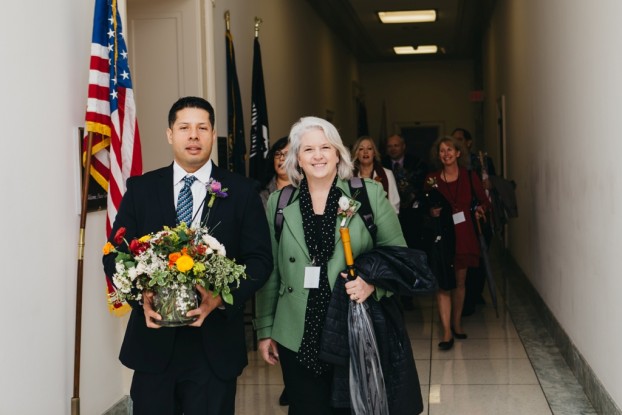
Tony Ortiz of Joseph and Sons in Santa Paula, Calif., past Slow Flowers Podcast guest, and I were happy to deliver American grown flowers to decorate the Congressional Cut Flower Caucus hearings. Farmer-florist Andrea Gagnon of LynnVale Studios designed the bouquet.

Tony Ortiz of Joseph and Sons in Santa Paula, Calif., past Slow Flowers Podcast guest, and I were happy to deliver American grown flowers to decorate the Congressional Cut Flower Caucus hearings. Farmer-florist Andrea Gagnon of LynnVale Studios designed the bouquet.

I participated in the day-long advisory board meeting for Certified American Grown, where I fill the Consumer Advocate seat. And I joined farmers on visits to meet staff in congressional and senate offices, as we shared the message of domestic and local flowers. A highlight for Diane Szukovathy of Jello Mold Farm, and me was meeting our own amazing Senator Patty Murray, and thanking her for support she and her staff have given Washington state’s local flower farmers.

During my time in D.C., I also hosted a Slow Flowers Meet-Up at Tabard Inn, a beautiful historic venue in the nation’s capitol. There was a crazy storm that caused some of our members in the Maryland, Virginia, and D.C., area to miss the event, but we had about two dozen together for cocktails and conversation — and I was inspired by our conversations and connections made.

READ MORE…

Episode 265: Flowers in the Heartland with Adam and Jenn O’Neal of PepperHarrow Farm in Winterset, Iowa

Wednesday, October 5th, 2016
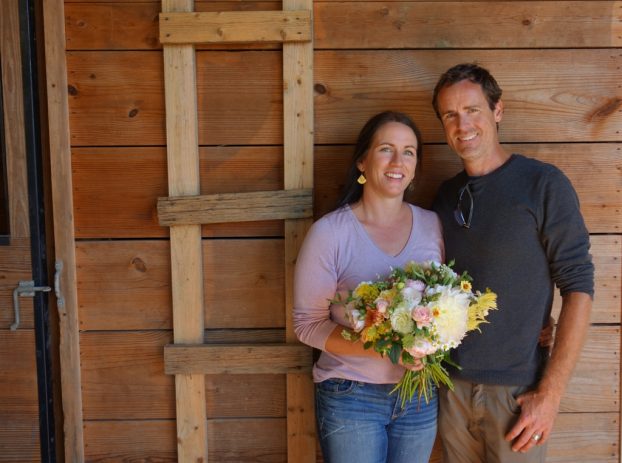
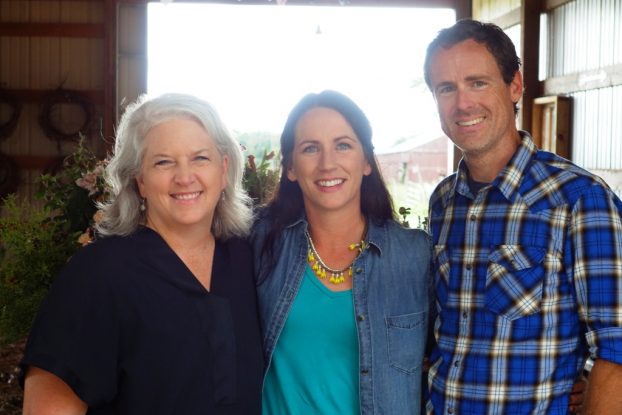
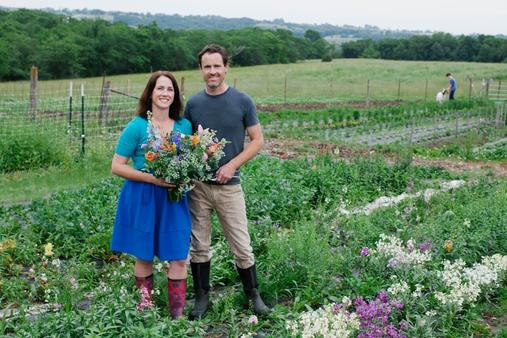
Jennifer and Adam O'Neal of PepperHarrow Farm, photographed during my September 2016 visit.

Jennifer and Adam O’Neal of PepperHarrow Farm, photographed during my September 2016 visit.

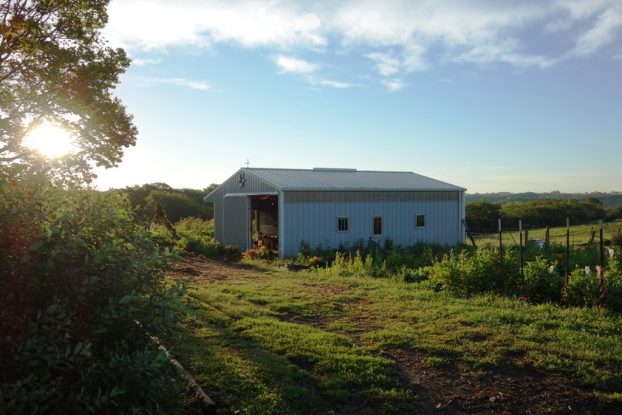
Early morning at PepperHarrow, as the sunrise glows behind the barn-studio.

Early morning at PepperHarrow, as the sunrise glows behind the barn-studio.

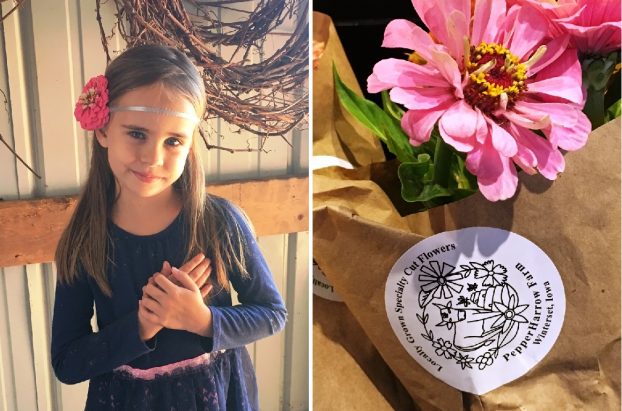
10846393_742697935817032_6622126312058960580_nI recently spent two days with farmer-florists Adam and Jennifer O’Neal at PepperHarrow Farm in Winterset, Iowa, where I combined a photo shoot for an upcoming issue of Country Gardens magazine with the chance to interview them for this podcast — how lucky for me, right?!

If you have any curiosity about where PepperHarrow Farm is located, think about that romantic novel and the 1995 movie, “The Bridges of Madison County,” starring Meryl Streep and Clint Eastwood. Maybe I’m dating myself, but it was a classic. The story and film are set in Winterset, Iowa.

It is a beautiful place to live and farm . . . and PepperHarrow Farm is everything you’d want in a homestead, with a charming farmhouse, a working farm with several useful outbuildings, access to “town” and the greater Des Moines urban core, which means it’s easy for PepperHarrow to supply a critical mass of flower customers within a 50 mile radius and to hold wedding consultations and teach workshops at their bucolic destination.

What a lovely experience I had getting to know these two farmer-florists (Nick Crow photogaph)

What a lovely experience I had getting to know these two farmer-florists (Nick Crow photogaph)

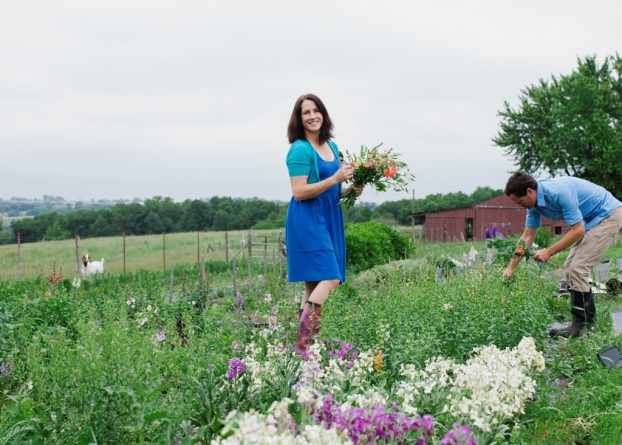
Jennifer and Adam O’Neal are local, hard-working green thumbs who cultivate fresh flowers and veggies on their 20-acre farm nestled among those covered bridges of Iowa’s Madison County.

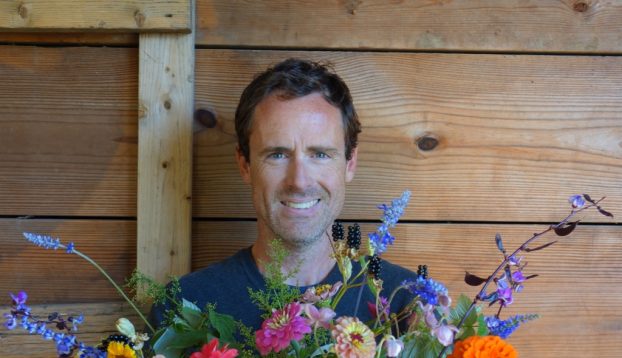
A happy designer, holding an lush, abundant arrangement that he created for an upcoming issue of Country Gardens magazine

A happy designer, holding an lush, abundant arrangement that he created for an upcoming issue of Country Gardens magazine

Adam is originally from south Louisiana and spent his childhood days playing in his backyard, the swamps of a nature reserve. That early exposure to the outdoors grew into a love for being outside. One day he read an article about permaculture and the rest is history.

Jennifer O'Neal, a true flower gal! (Karla Conrad photograph)

Jennifer O’Neal, a true flower gal! (Karla Conrad photograph)

Iowa native Jennifer is a long time gardener who also inherited her Grandmother’s love of flowers. She grew up spending long summer days on her grandparent’s farm and in their garden. Her grandmother also spent every summer instilling floral design in Jennifer, doing flower arrangements with her for the local county fair. Jennifer now gets to bring her grandma to her farm to see the flower legacy continue and often delivers floral arrangements for her grandma to enjoy.

Flowers for the Market

Flowers for the Market

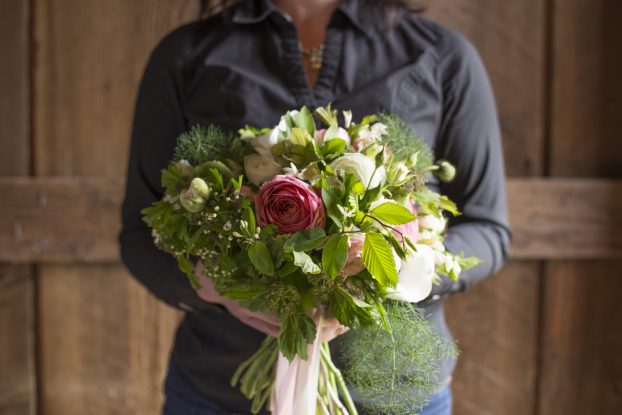
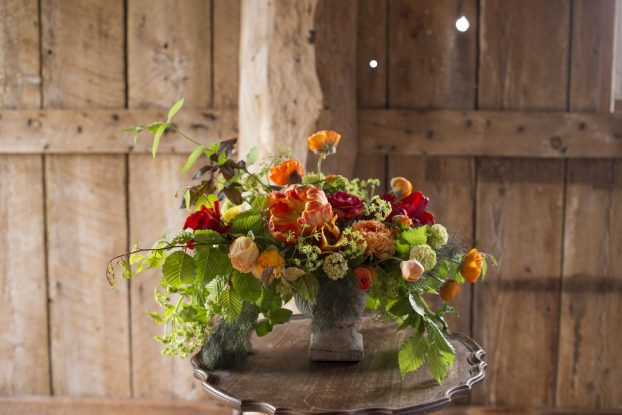
A PepperHarrow Farm design.

A PepperHarrow Farm design.

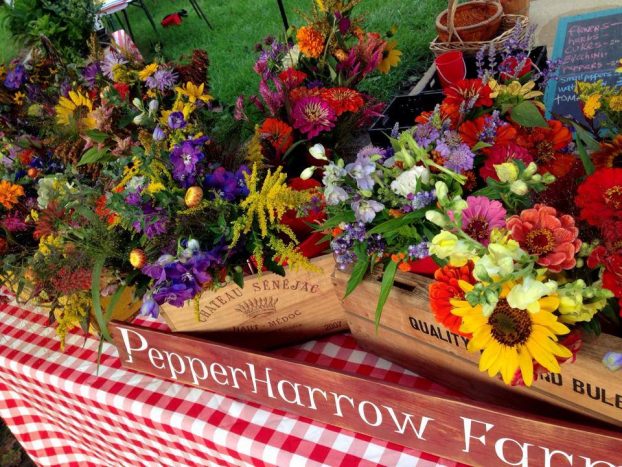
PepperHarrow's signature style -- lots of variety, beauty, and botanicals!

PepperHarrow’s signature style — lots of variety, beauty, and botanicals!

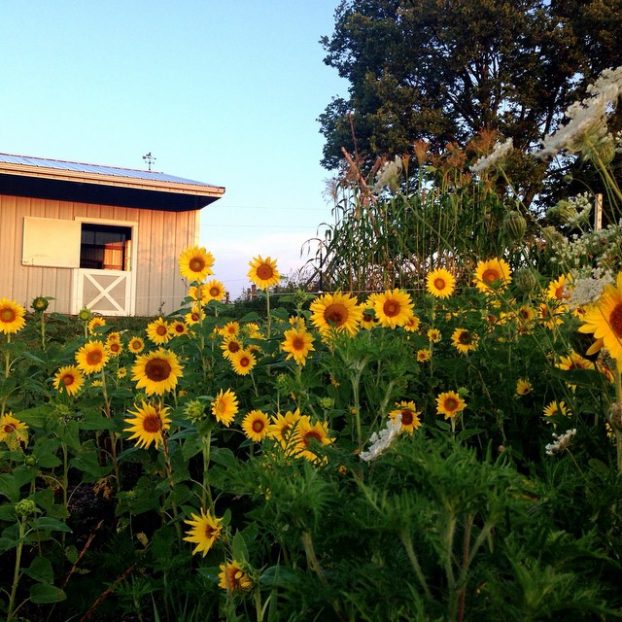
Sun-kissed sunflowers outside the barn-studio.

Sun-kissed sunflowers outside the barn-studio.

Quinlan O'Neal, whose "welcome" you hear on today's podcast episode; a grocery bouquet spotted in Des Moines.

Quinlan O’Neal, whose “welcome” you hear on today’s podcast episode; a grocery bouquet spotted in Des Moines.

The O’Neals are committed to sustainable farming practices that preserve and enhance the land. Their efforts to minimize the environmental impact and plan for self-sufficiency make their small farm a diverse and educational experience.

Jennifer and Adam

Jennifer and Adam

Follow these links to find Jennifer and Adam at these social places:

PepperHarrow Farm on Facebook

Jennifer on Instagram

Adam on Instagram

3up

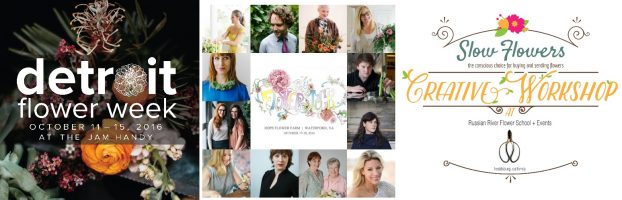
There’s a lot to flower your soul and spirit, not to mention your creativity, in several forthcoming design opportunities, so perhaps I’ll see you at one of these events!!

Detroit Flower Week, October 11-15: Along with numerous members of the Slow Flowers Community, I’ll be joining Lisa Waud of The Flower House and pot & box at the inspiring floral convergence of design, art, farming and storytelling. Read more about Detroit Flower Week here.
Follow this link to grab your tickets!

The Slow Flowers Creative Workshop, October 17-18 at Russian River Flower School in Sonoma County California. Spaces are still available for this excellent program. Debra Prinzing will teach “floral storytelling” and partner with Dundee Butcher to use local flowers in our expanded design process that includes each student creating a video short for her or his own use. Details and registration link here. Click here to listen to a Q&A with Debra and Dundee as they discuss the workshop.

Flowerstock, hosted by Holly Chapple, a Slow Flowers member based in Virginia. She’s a designer, educator, founder of Chapel Designers, past guest of this podcast and also a flower farmer with her husband Evan on a new project called Hope Flower Farm.

Flowerstock includes two days of demonstrations and talks by renowned floral designers, a marketplace of vendors, flower playtime, live music, food trucks, barn dancing, campfires and glamping! Slow Flowers is pleased to sponsor this special gathering of our flower friends. We’re also thrilled that Holly and participants of Flower Stock will design and produce one of our Floral Style Fashion images for American Flowers Week 2017!  Find Flowerstock Details and registration link here.

smallersonoma

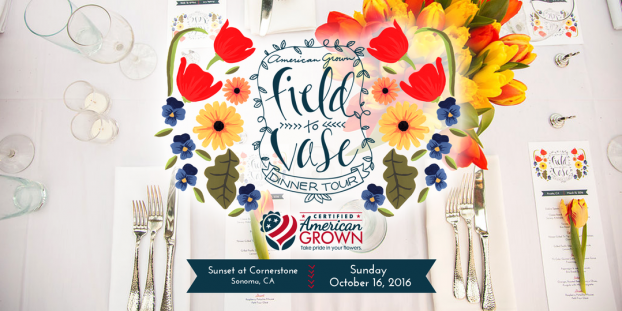
On October 16th, Slowflowers.com will sponsor and co-host the amazing Field to Vase Dinner coming up at Sunset Magazine’s beautiful new trial and demonstration gardens in wine country. I hope to see you there! The event florals will be designed by Slow Flowers member Alethea Harampolis of Studio Choo and Homestead Design Collective. Reserve your dinner ticket here!

sponsor-bar_sept_2016
The Slow Flowers Podcast has been downloaded more than 121,000 times by listeners like you. THANK YOU to each one of you for downloading, listening, commenting and sharing. It means so much.

Thank you to our lead sponsor for 2016: Certified American Grown Flowers. The Certified American-Grown program and label provide a guarantee for designers and consumers on the source of their flowers. Take pride in your flowers and buy with confidence, ask for Certified American Grown Flowers. To learn more visit americangrownflowers.org.

More sponsor thanks goes to Syndicate Sales, an American manufacturer of vases and accessories for the professional florist. Look for the American Flag Icon to find Syndicate’s USA-made products and join the Syndicate Stars loyalty program at syndicatesales.com.

A big bouquet of thanks goes to Longfield Gardens… providing home gardeners with high quality flower bulbs and perennials. Their online store offers plants for every region and every season, from tulips and daffodils to dahlias, caladiums and amaryllis. Visit them at lfgardens.com.

A fond thank you Arctic Alaska Peonies, a cooperative of 50 family farms in the heart of Alaska providing high quality, American Grown peony flowers during the months of July and August. Visit them today at arcticalaskapeonies.com.

And finally, thanks to the Association of Specialty Cut Flower Growers. Formed in 1988, ASCFG was created to educate, unite, and support commercial cut flower growers. It mission is to help growers produce high-quality floral material, and to foster and promote the local availability of that product. Learn more at ascfg.org.

Next week, you’re invited to join me in putting more American grown flowers on the table, one vase at a time. And If you like what you hear, please consider logging onto Itunes and posting a listener review.
The content and opinions expressed here are either mine alone or those of my guests alone, independent of any podcast sponsor or other person, company or organization.

The Slow Flowers Podcast is engineered and edited by Andrew and Hannah Brenlan. Learn more about their work at shellandtree.com.

2015 Slow Flowers Highlights (Episode 226)

Wednesday, December 30th, 2015
Heather_Saunders_Slow_Flowers

Slow Flowers at The Flower House (c) Heather Saunders

Welcome to the final Slow Flowers Podcast episode of 2015.

(c) Linda Blue Photography

(c) Linda Blue Photography

Every single week this year; in fact, every single week for 2-1/2 years, I’ve had the immense privilege of hosting dynamic and inspiring dialogues with a leading voice in the American floral industry.

You’ve heard from flower farmers and floral designers who are changing the marketplace and how we view and consume the flowers in our lives.

As 2015 comes to a close, I would like to dedicate today’s episode to the Slow Flowers Highlights we’ve witnessed this year.

Next week, on January 6th, I will share my Floral Insights and Forecast for 2016 with you.

The past twelve months have built on the successes and shifts that began in previous years. Each time we turn the pages of the calendar to a New Year, we can applaud the strides made in the Slow Flowers movement.

I can date my own awareness to the American grown floral landscape to 2006 — that’s nearly a decade ago — when I met a very young mom named Erin Benzakein while I was scouting gardens in Mount Vernon, Washington.  She was growing sweet peas and had big ambitions.

Something about our conversation resonated with me. I was an established features writer with a huge home and garden portfolio. I’d written countless floral design stories for regional and national publications and yet it had never occurred to me that there was a great imbalance in the way flowers are grown and sourced in this country.

cover_flower_confidentialAt the same time, my writer-pal Amy Stewart was working on a book about the global floral industry’s dark side, which was published the following year called Flower Confidential. She delved deep into the stories behind the status quo, and opened mine and countless others’ eyes to the extraordinary reasons nearly 80 percent of cut flowers sold in the U.S. were being imported.

Curious to learn more, I subscribed to Growing for Market, Lynn Byczynski’s newsletter for market farmers. I joined the Association of Specialty Cut Flower Growers and attended my first regional meeting in 2010, held at Charles Little & Co. in Eugene, Oregon, and later that year I went to the national meeting in Tulsa, Oklahoma.

I began connecting with flower farmers wherever I could, both in California where I was living at the time, and in Oregon and Washington. I met people virtually, as well, thanks to the ASCFG list-serves where I learned much about the issues facing small farms and American growers.

READ MORE…

Destination Weddings in North Michigan, with BLOOM Floral Design (Episode 200)

Wednesday, July 1st, 2015
Bloom_Floral_Design

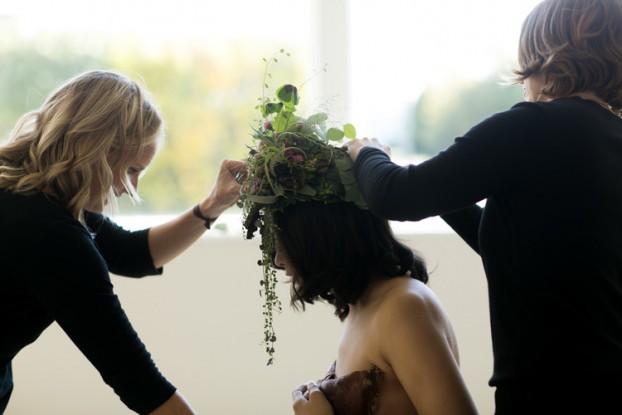
Jennifer Haf (left) and Larissa Flynn (right) of BLOOM Floral Design, collaborating on a floral headpiece at a recent Francoise Weeks workshop in Michigan

web_2015AmericanFlowersWeekLogoWe are in the middle of celebrating the inaugural American Flowers Week, June 29th through July 4th. We created American Flowers Week as a grass roots education, promotion and advocacy campaign to highlight our nation’s farms, florists, flowers and foliage — and to raise awareness among consumers, the media and policymakers about supporting domestic flowers!

If you haven’t joined in, there is plenty of time to get involved.

The easiest thing you can do is to make a red-white-and-blue bouquet using all American-grown, local and seasonal blooms. Please post that photo on your social sites and tag #americanflowersweek. I believe this effort will grow from a small idea into a significant annual event – and by adding your voice (and creativity) to American Flowers Week, you’re helping sing the praises of our homegrown blooms.

bloomlogoI’m so pleased today to introduce you to Jennifer Haf and Larissa Flynn of BLOOM Floral Design based on the beautiful North Michigan shore, in the communities of Petoskey/Charlevoix.

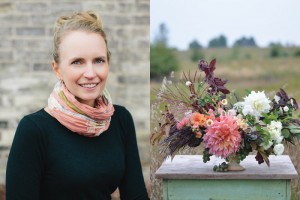
Jennifer founded BLOOM floral design in 2008 in response to her love for sharing cut garden flowers from her Northern Michigan backyard.

Having since studied under some of the most celebrated designers and with her team executed hundreds of regional and destination events, Jennifer radiates her love for all things natural into the designs BLOOM creates.

With a talented design team, BLOOM offers exclusive services to Northern Michigan and destination wedding clients — in fact, for 65 ceremonies this year alone.

Jennifer Haf, founder of BLOOM Floral Design.

Jennifer Haf, founder of BLOOM Floral Design.

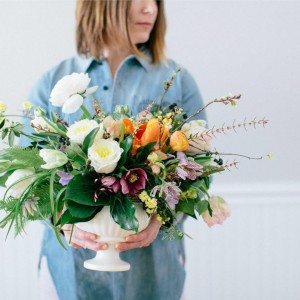
Along with Jennifer, you’ll also meet Larissa Flynn, the creative director for BLOOM.

Trained as a graphic designer and fine artist, with extensive gallery and arts management experience, Larissa joined the floral business several years ago after meeting Jennifer and realizing they were creative kindred spirits.

I love the philosophy of BLOOM, as described on the studio’s web site:

We believe that flowers are most beautiful in their natural state.  When combined with other blooms in a customized palette, color and texture create a distinctive design that exudes the feeling you wish to create.  BLOOM sources flowers from only the finest growers, sourcing as much as we can locally and domestically.  Hand selected from tried and true varieties of the highest standards, our blooms will be sure to please.

Behind the scenes our creative team works meticulously at our production design studio where all of the magic happens the week leading up to your event.  Hand processing all of our flowers and prepping and designing each arrangement per event, our designs will charm and delight you and your guests.

Larissa Flynn, BLOOM's creative director.

Larissa Flynn, BLOOM’s creative director.

As you will hear in our conversation, I recorded the interview with Jennifer and Larissa rather spontaneously – at a gathering hosted by Lisa Waud of pot and box and Detroit’s The Flower House, a prior guest of this podcast.

I had flown to Detroit for a 24-hour visit to attend the preview for this amazing art installation, which will be held over the weekend of October 16-18.

Jennifer and Larissa will create the florals for one of the rooms at The Flower House and I can’t wait to see what kind of botanical magic they conjure up.

Please follow links to all of BLOOM’s social sites, shared below. These are talented Slow Flowers floristas you will want to follow:

BLOOM on Facebook

BLOOM on Twitter

BLOOM on Pinterest

BLOOM on Instagram

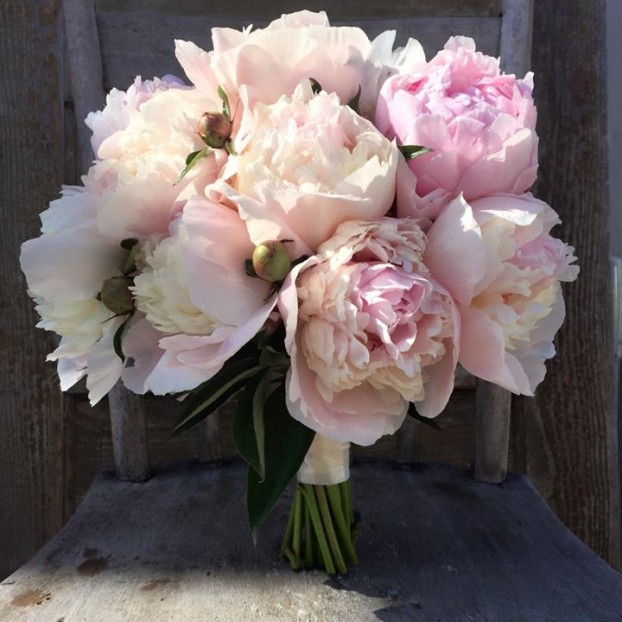
Here’s a gallery of the beautiful design work from BLOOM Floral Design, used with their permission. These gorgeous images give me a keen sense of place and an appreciation for the character of their region’s landscape, climate and flora. A large percentage of their floral elements are local, Michigan-grown flowers. You’ll want to visit Northern Michigan at the peak of the season to see these lovelies yourself!

Bloom4

Bloom5

Bloom9

Bloom7

Bloom10

Bloom11

Bloom14

Bloom15

Bloom17

Bloom13

Listeners like you have downloaded this podcast more than 54,000 times. THANK YOU to each and every one of you for downloading, listening, commenting and sharing. It means so much.

Please join the American Flowers Week excitement and check out these resources to help your efforts. With your involvement, I believe this public awareness campaign will gain momentum and become an established annual event in the floral industry.

Until next week, you’re invited to join me in putting more American grown flowers on the table, one vase at a time. And If you like what you hear, please consider logging onto Itunes and posting a listener review.

The content and opinions expressed here are either mine alone or those of my guests alone, independent of any podcast sponsor or other person, company or organization.

The Slow Flowers Podcast is engineered and edited by Andrew Wheatley and Hannah Holtgeerts. Learn more about their work at shellandtree.com.

Week 25 // Slow Flowers Challenge

Monday, June 29th, 2015
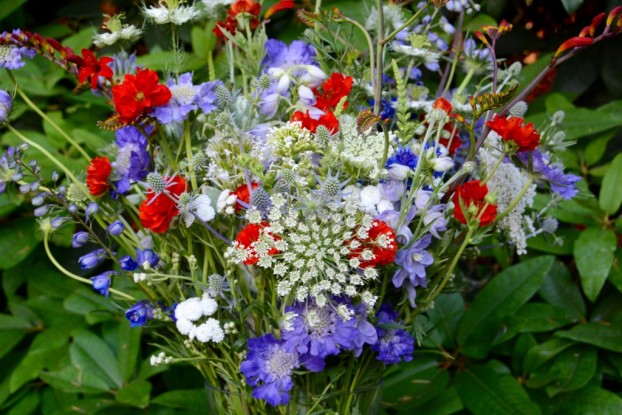
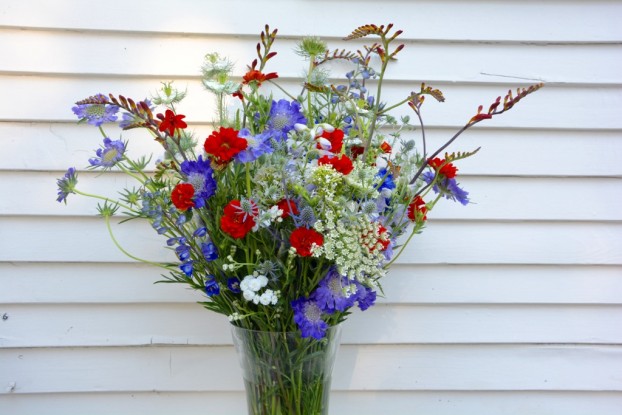
A red-white-and-blue, All-American bouquet!

A red-white-and-blue, All-American bouquet! (c) Tim Gleason

Floral Fireworks for July 4th (c) Tim Gleason

Floral Fireworks for July 4th (c) Tim Gleason

Happy Independence Day!

We have so many opportunities to celebrate local, seasonal and beautiful flowers and there’s no better one than welcoming Week 25 of the  Slow Flowers Challenge which coincides with the July 4th holiday.

Join me in clipping and arranging red-white-and-blue botanicals to honor the holiday.

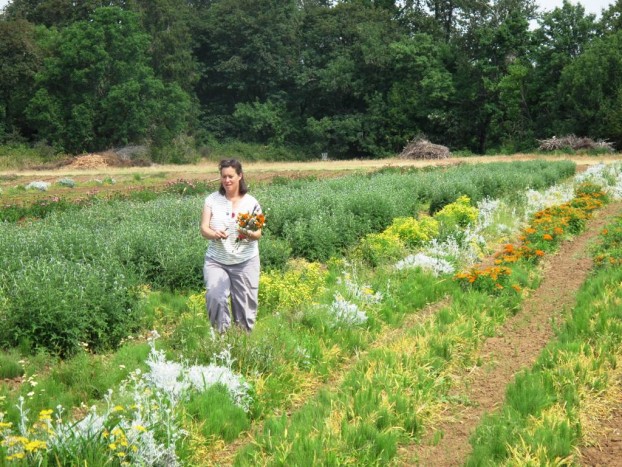
I am so excited that all of the flowers in this week’s stellar arrangement came from one of my favorite flower farms,Charles Little & Co. of Eugene, Oregon. I visited this past week and received permission from Bethany Little to harvest to my heart’s content. Thank you, Bethany!

Tomorrow begins the inaugural American Flowers Weekcampaign, a tribute to the farmers who grow flowers in all 50 states, and to the artisans who interpret those flowers in bouquets, arrangements and other botanical beauty.

You are invited to take part in American Flowers Week by posting the flowers you grow and arrange on all social platforms with the hash-tag #americanflowersweek.

web_2015AmericanFlowersWeekLogo

Learn more and download this lovely logo by clicking here.

Here are a few more details about this week’s bouquet:

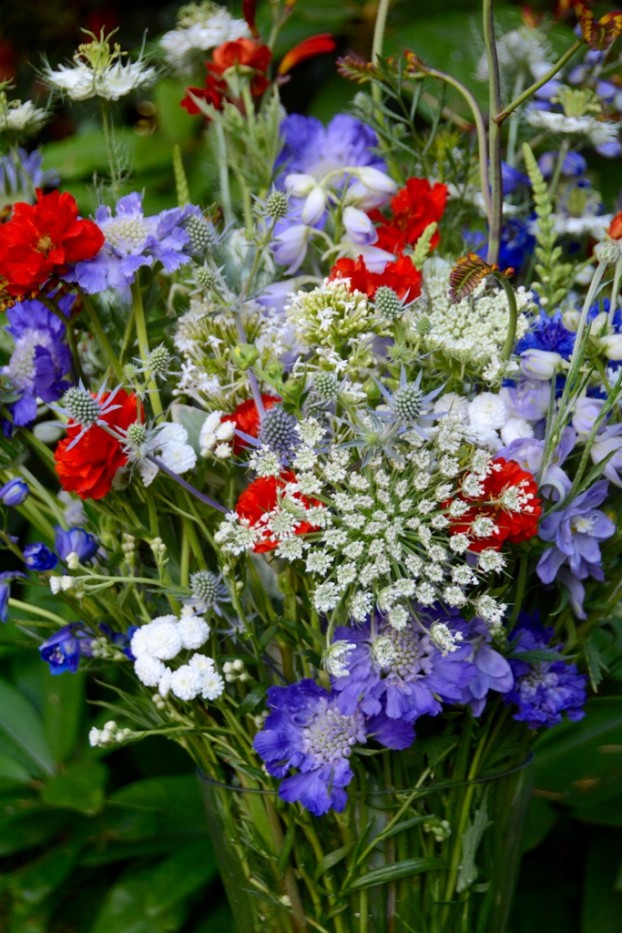
A profusion of red, white and blue annuals and perennials for July 4th (c) Tim Gleason

A profusion of red, white and blue annuals and perennials for July 4th (c) Tim Gleason

web_June_27_2015_DSC_4366White flowers:

  • Variegated green-white sedum as foliage (which you can barely see!)
  • Centranthus
  • Queen Anne’s lace
  • Nigella
  • Double-white Yarrow (Achillea ptarmica ‘Angel’s Breath’)
  • Obedient Plant (Psysostegia virginiana)

Blue flowers:

  • Delphinium – pale and dark blue
  • Scabiosa
  • Cornflower/Bachelor’s Button (Centaurea cyanus)
  • Sea Holly (Eryngium sp.)

Red flowers:

  • Crocosmia
  • Geum


Please enjoy this  Snapshot of an All-American flower farm:

Charles Little & Co., Eugene, Oregon:

Flower farmer Bethany Little, of Charles Little & Co.

Flower farmer Bethany Little, of Charles Little & Co.

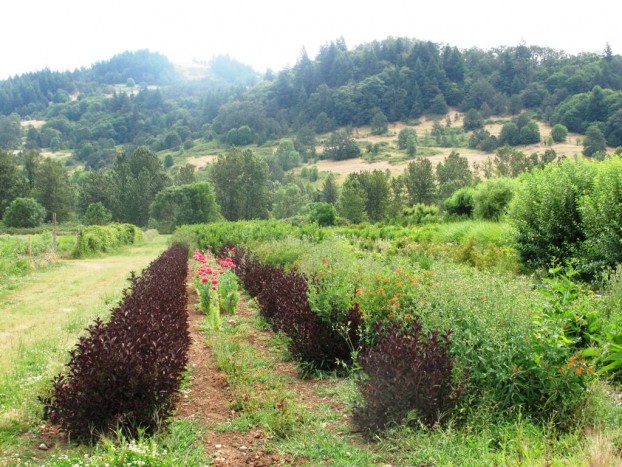
At the foot of Mount Pisgah in Oregon's Willamette Valley. Flower farming is hard work, but this daily view makes it worth it!

At the foot of Mount Pisgah in Oregon’s Willamette Valley. Flower farming is hard work, but this daily view makes it worth it!

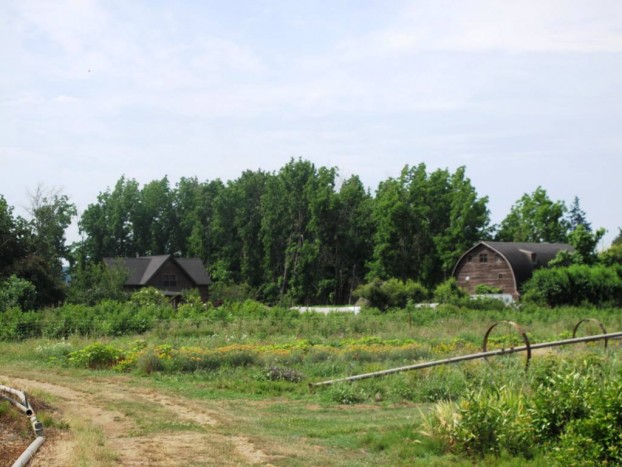
Farmhouse (left) and Flower Barn (right) at Charles Little & Co.

Farmhouse (left) and Flower Barn (right) at Charles Little & Co.

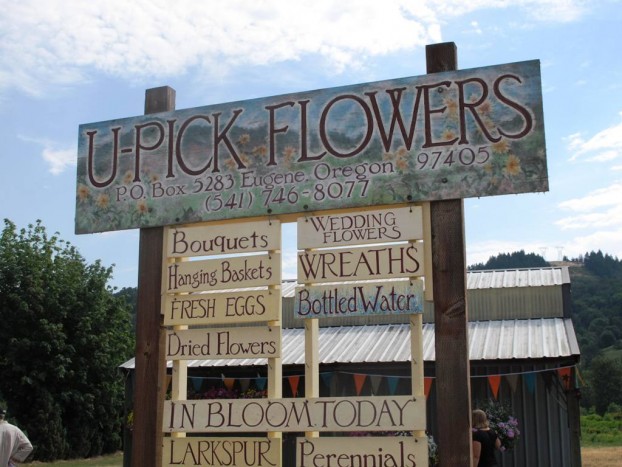
Farmstand Sign offers American-grown Lovelies and more!

Farmstand Sign offers American-grown Lovelies and more!

Presenting American Flowers Week & Introducing Minnesota’s Len Busch Roses (Episode 199)

Wednesday, June 24th, 2015

PodcastLogoToday, we’re celebrating the 100th episode of the Slow Flowers Podcast, a weekly program that’s all about American Flowers and the people who grow and design with them.

Reaching ONE HUNDRED EPISODES represents a significant milestone, as we have brought you hours and hours of programming on the vital topics ranging from saving our domestic flower farms to supporting a floral industry that relies on a safe, seasonal and local supply of flowers and foliage.

To me, it’s all about making a conscious choice and I invite you to join the conversation and the creative community. This podcast is brought to you by Slowflowers.com, the free, nationwide online directory to florists, shops, and studios who design with American-grown flowers and to the farms that grow those blooms.  It’s the conscious choice for buying and sending flowers.

To commemorate the 100th episode of the Slow Flowers Podcast, we’re launching a very cool and I believe significant week-long education and outreach campaign that will kick off next Monday, June 29th and run through Saturday, July 4th.

web_2015AmericanFlowersWeekLogo

Inspired by British Flowers Week, which has been the subject of two recent podcast episodes, the Slow Flowers Podcast and the Slowflowers.com online directory present: AMERICAN FLOWERS WEEK.

We’re kicking off American Flowers Week with a fabulous logo identifying the campaign, designed by Iowa-based illustrator and artist Jean Zaputil of Studio Z Design & Photography.

You are welcome to visit our new American Flowers Week web site where you can download and use the logo and other resources for your own promotional efforts efforts. Click here to find our Press Kit and links to a Flickr gallery featuring local flowers and floral arrangements representing all 50 states.

READ MORE…
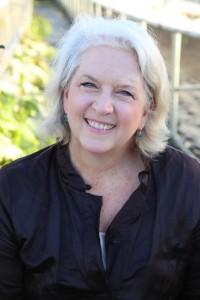
Learn About British Flowers Week with Helen Evans of London’s New Covent Garden Flower Market (Episode 197)

Wednesday, June 10th, 2015
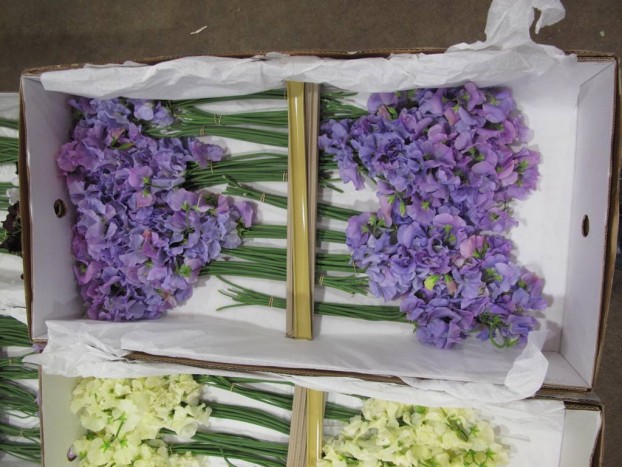
British-grown sweet peas,  available to London's florists in May.

British-grown sweet peas, available to London’s florists in May.

This week we have lots of great news to share and I hope you find the episode stimulating as you think of ways to promote your own floral endeavors.

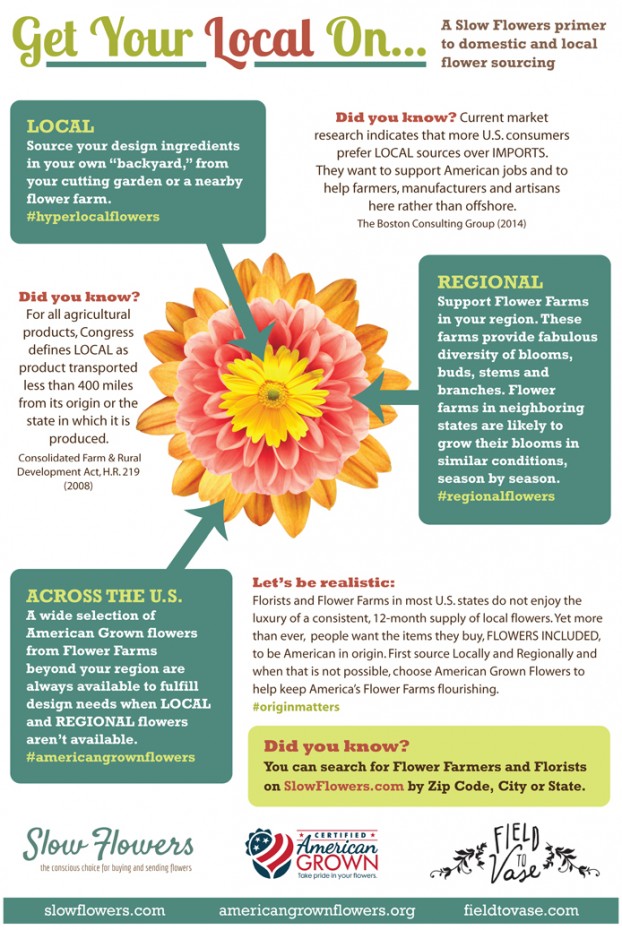
First up, this week I’m unveiling the second infographic in the Slow Flowers series. This piece is called “Get Your Local On,” and it endeavors to capture our philosophy of domestic flower sourcing in a single snapshot. I don’t believe in the black-and-white of things; life is just more chaotic than that, especially when you’re dealing with Mother Nature, climate, environmental forces and living plants.

Print

However, this visual guide explores the continuum from local and regional sourcing to national/domestic sourcing. As I’ve said many times (and I can’t take credit for this but I do like to repeat it), I recommend taking a pebble-in-the-pond approach to floral sourcing. Start close and work your way from there when needed. But please support America’s flower farms!

“Get Your Local On” couldn’t have become such a visually effective piece without the design magic of Willo Bellwood and I want to acknowledge her talents here! If you have a use for this graphic in your own business, please feel free to download the digital file to produce your own copies.

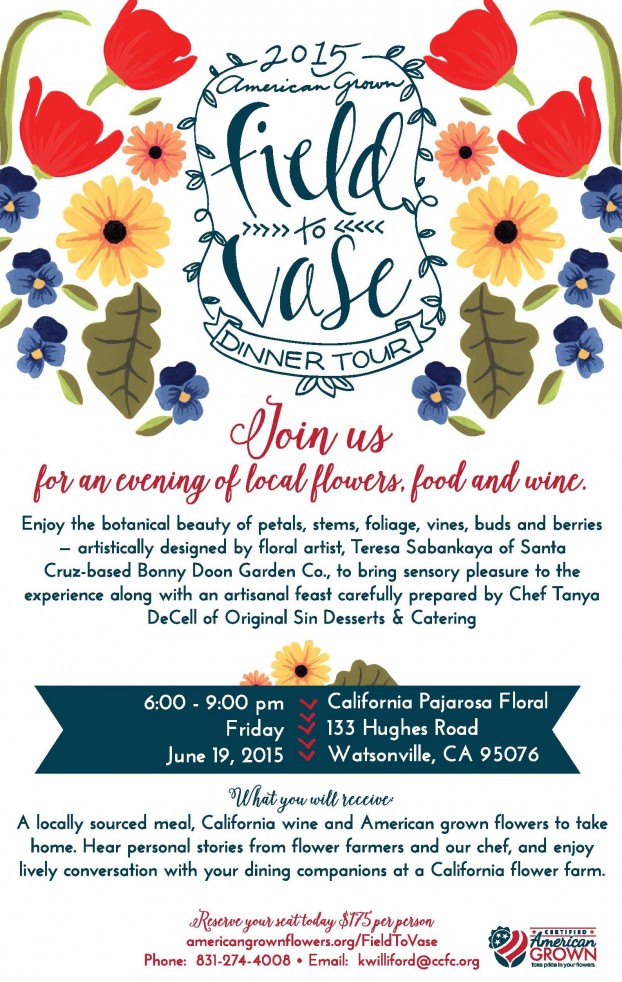
MB_F2V_inviteJune is here and I wanted to share my personal invitation for you to join the third Field to Vase Dinner, which Slow Flowers is co-hosting at flower farms across the country.

This month’s event will take place on Friday, June 19th at Pajarosa Flower Farm in Watsonville, California. Rose farmer Paul Furman is our host and Teresa Sabankaya of Bonny Doon Garden Co., a past guest of this podcast, is the celebrity floral designer who will use all local flowers to install an insanely beautiful tablescape for the meal.

Tickets for this amazing, floral-centric experience are $175 but I want to offer the listeners of this podcast a special promotional code to save $35 off of the ticket price. Click here to reserve your tickets and use SLOWFLOWERS during checkout for the discount.

And don’t worry if you can’t make it to Monterey Bay in June. There are dinners scheduled on flower farms coming up now through October, so check the full schedule for dates that will celebrate local flowers in Colorado, New York, Washington, D.C./Virginia, Washington State, Oregon, California and Michigan.

Layout 1

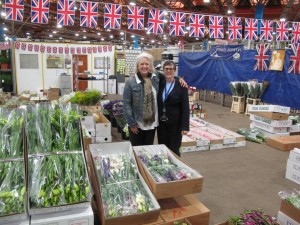
Here I am with Helen Evans of London's New Covent Garden Flower Market.

Here I am with Helen Evans of London’s New Covent Garden Flower Market.

Okay, now to our guest today. Please meet Helen Evans, director of business development and support at London’s New Covent Garden Market.

When I was in London last month, Helen graciously toured me through New Covent Garden, the premiere center for wholesale cut flowers and plants in London’s Vauxhall district.

New Covent Garden Market is the largest fruit, vegetable and flower market in the UK, claiming on its web site: “We are passionate about food and passionate about flowers and pride ourselves on being the focus for food and flowers in London.”

With over 200 businesses, employing over 2,500 people, the Market supplies 40% of fresh fruit and vegetables eaten outside of the home in London and is used by 75% of London florists.

Helen is one of the key persons behind the very exciting program called British Flowers Week, which will enter its third campaign beginning next Monday, June 15th. Listen along as we discuss the state of domestic flowers in the UK – and you’ll find many parallels to what’s happening in the U.S.

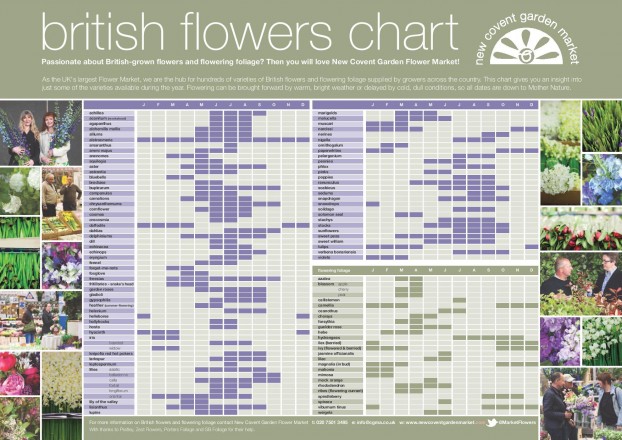
Seasonal Flower Chart of British Flowers -- a very useful marketing tool!

Seasonal Flower Chart of British Flowers — a very useful marketing tool!

On our early-morning visit, while walking through the floors of the enormous warehouse, I learned from Helen that only 10 to 15 percent of flowers sold here are British Grown. Yet the demand and the quantities to supply them are increasing as the wave of homegrown sentiment sweeps through the country, much as we’re seeing with American grown products.

Slow Flowers Members Jimmy Lohr (left) and Jonathan Weber (right) joined me on the tour of New  Covent Garden Flower Market.

Slow Flowers Members Jimmy Lohr (left) and Jonathan Weber (right) joined me on the tour of New Covent Garden Flower Market.

It was completely fortuitous that two Slowflowers.com members joined us that morning. Jimmy Lohr and Jonathan Weber of GreenSinner in Pittsburgh were on their own Chelsea-London excursion. Helen graciously included them in the visit. When we sat down for tea and I turned on the recorder, it led to a completely impromptu interview. You’ll hear Jimmy and Jonathan’s voices jumping in to comment – and that added to the fun of the conversation.

I love how Helen describes the ambitious vision for New Covent Garden Market, to become a destination where people can buy, make, sell, learn and share. That mission is one I do not see happening with any intentionality at many U.S. Wholesale Markets, although I have to say it is very much in line with the mission of the farmer-owned Seattle Wholesale Growers Market.

Yet, with just a few changes of focus, there would be no reason why any wholesaler in our country couldn’t pull this off! I know we’re in the midst of a huge cultural shift in how flowers are sourced and marketed – and those who read the tea leaves and shift more quickly will be the ones who get to redefine the industry practices that others will emulate.

BFW_jpgAs you could tell, by the end of my conversation with Helen, I was thoroughly inspired to launch American Flowers Week – so stay tuned for news on that big dream. (and a note to the men from GreenSinner – as my witnesses, you two are in on that dream, too!)

Here’s a bit more about Helen Evans:

Helen has been at New Covent Garden Market for nearly 20 years.  It’s that sort of place.  Her work is to spread the word about the market, its flowers, its customers, its growers.  The market is not just about moving boxes.  Its about sharing information.  What’s new, what’s in season.  How would it work better.  So, brochures, website, social media – above all, talking.  Helen does a lot of that.  The product is great but for Helen its the people that matter.  Bringing them together.  Sharing.

Here’s a bit more about British Flowers week:

British Flowers Week is the brainchild of the team at New Covent Garden Flower Market, the UK’s largest Flower Market and the hub for British grown flowers and foliage for centuries.

Originally designed in 2013 as a social media campaign for the floristry trade, #BritishFlowersWeek was quickly picked up by florists, growers, wholesalers and media the length and breadth of Britain.

Last year, the hashtag #BritishFlowersWeek achieved a staggering Twitter reach of 1.4 million with British flowers content posted online, on social media, in print and on the radio.

This year’s campaign will involve the British Flowers Week Photoshoot online and on social media, The Garden Museum event, displays at RHS Harlow Carr as well as flower farm tours, flower workshops, flower demos, school flower crown days across the country. For more information visit www.britishflowersweek.com

Starting next week, one new image will be revealed to the media each day, which I’ll  share on the SlowFlowers FB Page as well as here on my web site. You can follow along by searching for the #britishflowersweek hashtag, too.

And please join me next week on June 17th for the second podcast episode devoted to British Flowers, in which you’ll meet Sarah Statham of Simply by Arrangement, a floral designer and floral educator who is active in the #britishflowersweek activities taking place next week in the UK’s Yorkshire region.

She’ll have even more photographs and stories to share about the distinctly local and regional efforts of the flower farmers and florists in Yorkshire – as a way to take the conversation out into the United Kingdom to differentiate from what has been otherwise a mostly London-centric campaign.

Thanks again for joining me today for another wonderful conversation. Yes, I am devoted to celebrating American flowers and the designers and farmers who are changing this entire industry for the better. But I’m also thrilled to introduce you to ways we can borrow ideas and inspiration from places like the U.K., where many parallels occur between our two marketplaces.

Listeners like you have downloaded this podcast more than 52,000 times. THANK YOU to each and every one of you for downloading, listening, commenting and sharing. It means so much.

Until next week please join me in putting more American grown flowers on the table, one vase at a time. And If you like what you hear, please consider logging onto Itunes and posting a listener review.

The content and opinions expressed here are either mine alone or those of my guests alone, independent of any podcast sponsor or other person, company or organization.

The Slow Flowers Podcast is engineered and edited by Andrew Wheatley and Hannah Holtgeerts. Learn more about their work at shellandtree.com.