The Slow Flowers Podcast is the award-winning show known as the “Voice of the Slow Flowers Movement.” Launched in 2013 as the original flower podcast, we’ve devoted more than 10 years to covering the business of flower farming, floral design, and the Slow Flowers sustainability ethos. Listen to a new episode each Wednesday, available for free download here at slowflowerspodcast.com or on iTunes, Spotify, and other podcast platforms.
Last month, passports in hand, I traveled by car and ferryboat to the Island of Vancouver in British Columbia. The trip was to celebrate my mother’s 88th birthday, enjoy high tea at the famed Empress Hotel, tour the spring borders and displays at the famed Butchart Gardens, and enjoy this beautiful destination for a few days.
Of course, I had to invite myself to meet some of our Slow Flowers members in Victoria while there. As I mentioned, we took a ferry ride — 90 minutes to cross from Twassen to Schwartz Bay, and the views were incredible. On the first morning, we set out to visit Fleuris Studio and Blooms, and to meet Julie Remy in person. Julie greeted us, settled my mom and her book on a cozy chair for a while, and we embarked on a lovely tour of the small island farm where Julie and her partner live and work.
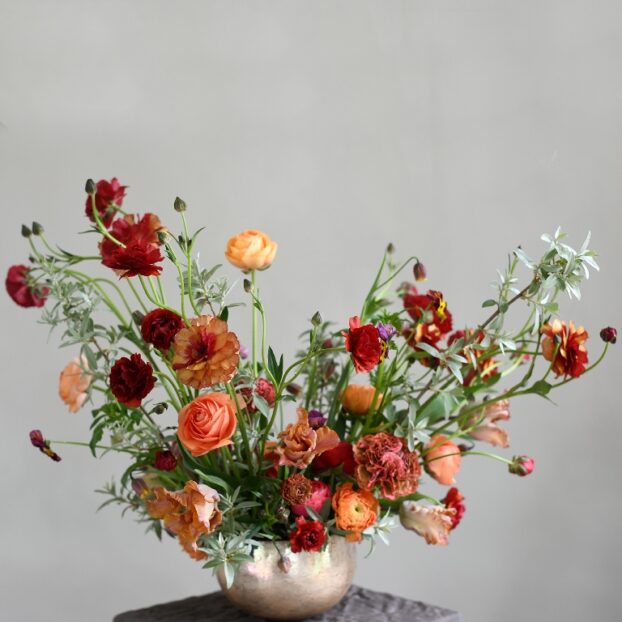
Early May arrangement by Julie Remy of Fleuris Studio & Blooms
Fleuris Studio’s tagline is: Elegant & Eco-Friendly FLOWERS.
It was fascinating to learn about the journey that led Julie to this special place and to a life focused on growing and sourcing sustainable flowers for her luxurious florals, wedding designs, unique floral subscriptions, and private flower arranging workshops.
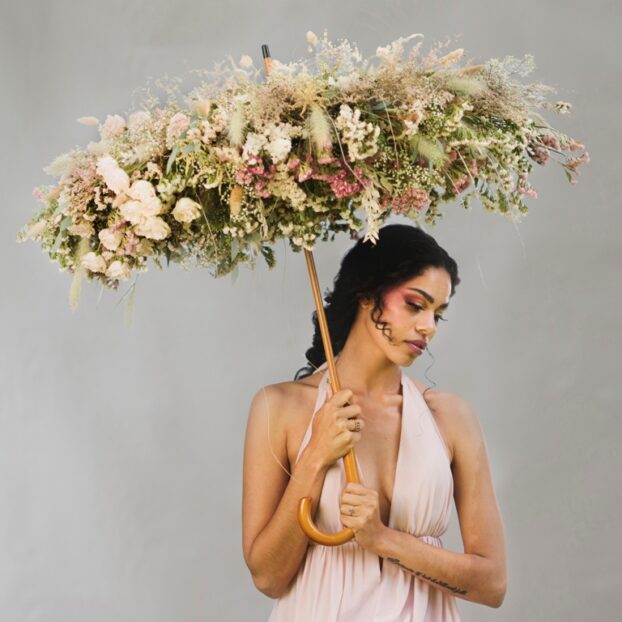
Floral Umbrella by Julie Remy
As she explains on her website: “I want to connect others to nature through the beauty of flowers. My business perfectly draws on my greatest passions: gardening, photography, interior design, antiques and a love of all colours, textures and lines.“
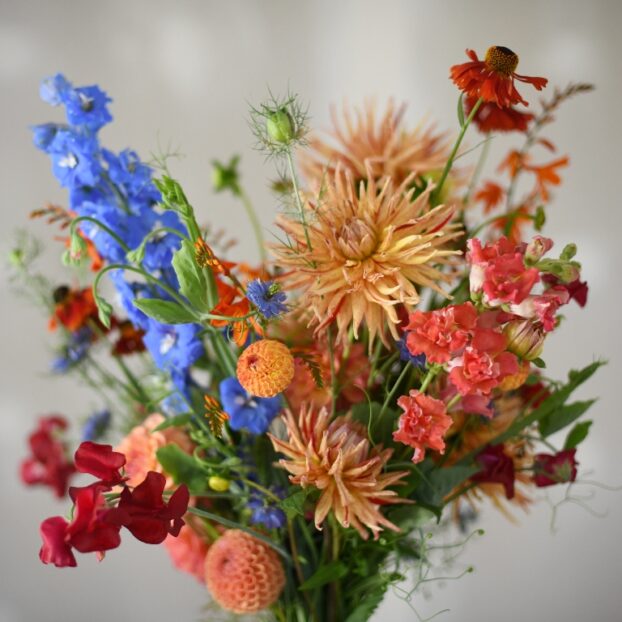
Seasonal Summer Bouquet by Julie Remy
I loved learning how Julie has travelled the world as a humanitarian photographer, after which she settled on Vancouver Island and built a small floral design studio surrounded by the flowers that she grows and work with.
We’ll start with an interview, recorded in Julie’s studio. If you’re interested in watching our 20-minute virtual tour of the gardens and flower production areas at Fleuris, check out the video above at the 35:45 time mark.
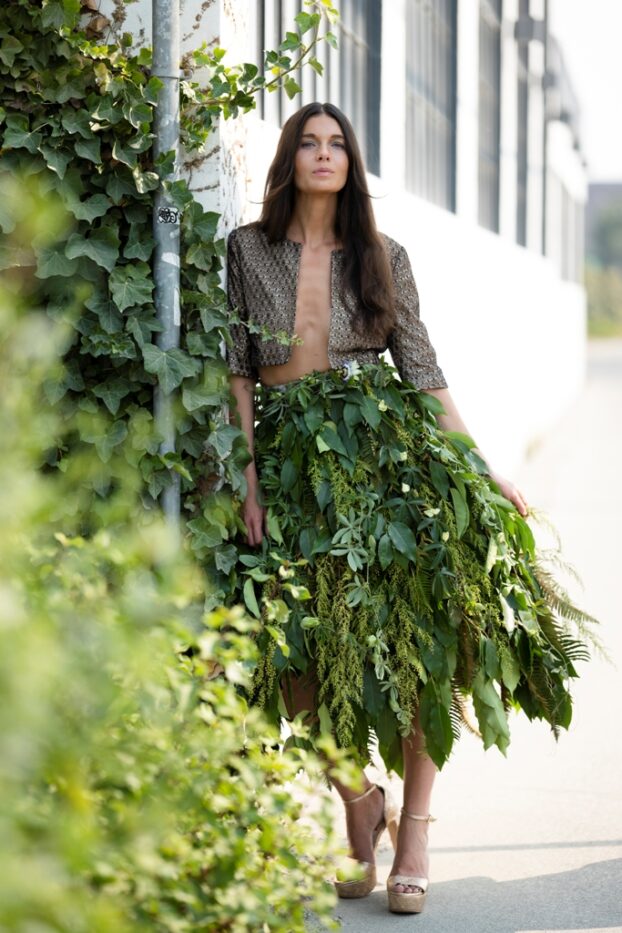
Botanical couture by Julie Remy
Julie’s story is a lovely example of how one woman chooses to leave a positive impact on her environment by thinking creatively and sustainably about the ways in which she grows, sources, and arranges flowers. This includes regenerative growing methods, focusing on seasonality, using recyclable packaging, and never using non-biodegradable floral foam in her designs. As she briefly mentioned, Julie sells her flowers through the Island Flower Growers, Slow Flowers members and a producer-owned co-operative of cut-flower growers on Vancouver Island and the Gulf Islands of British Columbia, Canada. In a few weeks, you’ll learn more about this vibrant and vital regional flower hub when I host a conversation with Lorna Jackson, one of the founders and board president. I can’t wait to share that episode with you.
In news of the week, I recently recorded two interviews and I want to share them with you.
First, check out the May issue of Shawn Michael Foley’sFleurvana magazine, which includes a really fun conversation we recently recorded for video viewing. You can find the free link to read this monthly interactive floral design magazine, including my video clip with Shawn, in our show notes — good through the end of May.
Shawn has shared some Slow Flowers promotional codes for anyone interested in a membership in his Fleurvana+ educational hub and a significant discount to one of the upcoming Fleurvana retreats.
Next, I was delighted to be a return guest of Jennifer Jewell’s award-winning public radio show, Cultivating Place, which aired on May 11th. What a fun experience to catch up Jennifer and her listeners on the Slow Flowers Society, the upcoming Slow Flowers Summit, and Bloom Imprint’s latest release, Furrow & Flour. Click above to listen to Episode.
Speaking of the Slow Flowers Summit, last Friday’s May Member Meet-Up featured two of our keynote speakers who will take the stage — Amy Balsters and Lennie Larkin. These two floral luminaries shared a preview of what they will teach and demonstrate at the Slow Flowers Summit and you can watch the replay video above.
Thank you to our Sponsors
This show is brought to you by Slowflowers.com, the free, online directory to more than 850 florists, shops, and studios who design with local, seasonal and sustainable flowers and to the farms that grow those blooms. It’s the conscious choice for buying and sending flowers.
Thank you to our lead sponsor, Farmgirl Flowers. Farmgirl Flowers delivers iconic burlap-wrapped bouquets and lush, abundant arrangements to customers across the U.S., supporting U.S. flower farms by purchasing more than $10 million dollars of U.S.-grown fresh and seasonal flowers and foliage annually. Discover more at farmgirlflowers.com.
Thank you to Red Twig Farms. Based in Johnstown, Ohio, Red Twig Farms is a family-owned farm specializing in peonies, daffodils, tulips and branches, a popular peony-bouquet-by-mail program and their Spread the Hope Campaign where customers purchase 10 tulip stems for essential workers and others in their community. Learn more at redtwigfarms.com.
Thank you to the Seattle Wholesale Growers Market, a farmer-owned cooperative committed to providing the very best the Pacific Northwest has to offer in cut flowers, foliage and plants. The Growers Market’s mission is to foster a vibrant marketplace that sustains local flower farms and provides top-quality products and service to the local floral industry. Visit them at seattlewholesalegrowersmarket.com.
Thank you to Longfield Gardens, which provides home gardeners with high quality flower bulbs and perennials. Their online store offers plants for every region and every season, from tulips and daffodils to dahlias, caladiums and amaryllis. Check out the full catalog at Longfield Gardens at longfield-gardens.com.
Thanks so much for joining me today! The Slow Flowers Podcast is a member-supported endeavor, downloaded more than one million times by listeners like you. Thank you for listening, commenting and sharing – it means so much. As our movement gains more supporters and more passionate participants who believe in the importance of our domestic cut flower industry, the momentum is contagious. I know you feel it, too. If you’re new to our weekly Show and our long-running Podcast, check out all of our resources at SlowFlowersSociety.com
Thank you for listening! Sending love, from my cutting garden to you! (c) Missy Palacol Photography
I’m Debra Prinzing, host and producer of the Slow Flowers Show & Podcast. The Slow Flowers Podcast is engineered and edited by Andrew Brenlan. The content and opinions expressed here are either mine alone or those of my guests alone, independent of any podcast sponsor or other person, company or organization. Next week, you’re invited to join me in putting more Slow Flowers on the table, one stem, one vase at a time. Thanks so much for joining us today and I’ll see you next week!
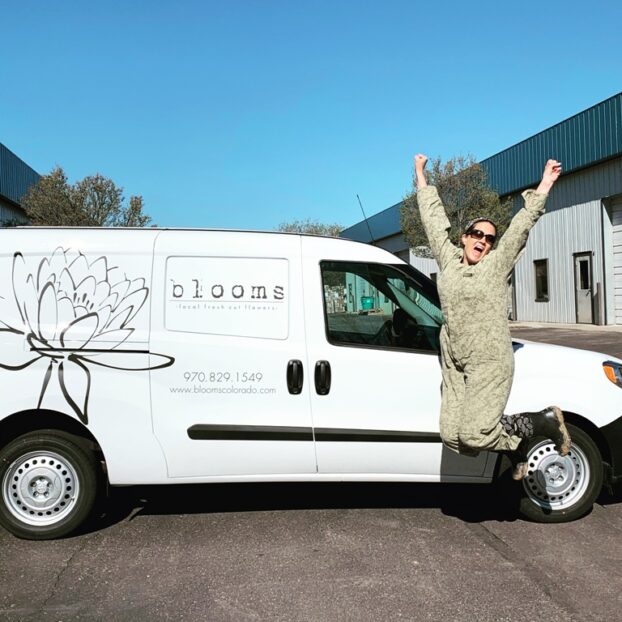
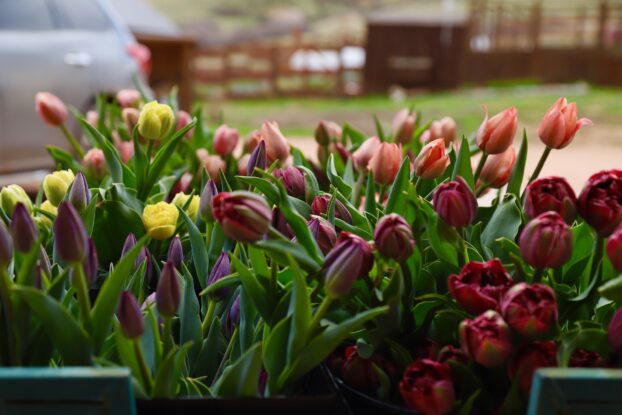
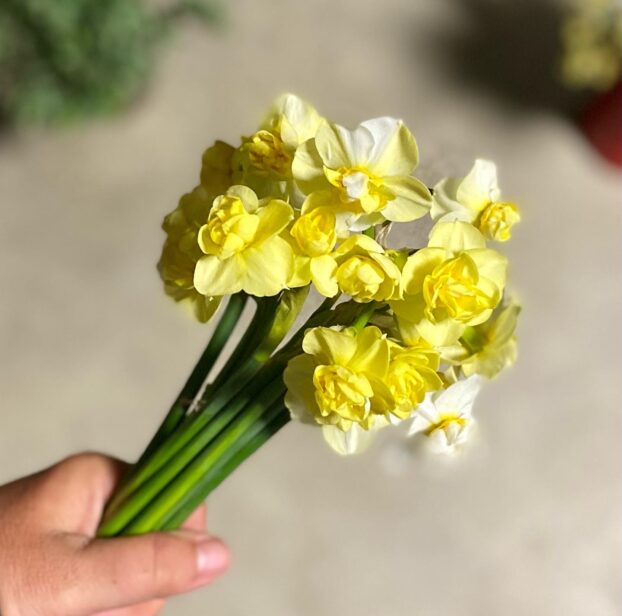
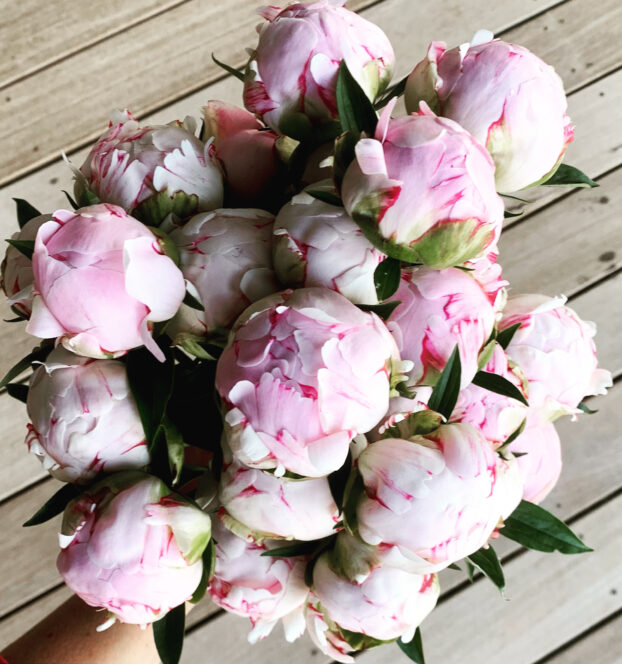
Today, we take a trip to rural Northern Colorado, where sisters-in-law Gretchen Langston and Gaylene Moldt operate Blooms Colorado on 40 acres north of Ft. Collins.
Blooms Colorado delivery van
It’s fascinating to learn how they have grown this floral enterprise, established in 2017, to serve Ft. Collins, which is their closest metro market; and florists both south and north — in Denver 2 hours to the south and those in the southern Wyoming cities of Cheyenne and Laramie.
Raised on a small farm in rural Missouri by her teacher-parents, like many country kids, Gretchen swore never to do the same thing. She had her big-city urban experience, and still has her big-time career as Global VP of Risk Management, Environment, Health & Safety for a company that operates most of the large National Park concessions in the U.S., serving parks like Yellowstone, Grand Canyon, Glacier, and Zion.
How does she do it all? Well, one of her not-so-secret weapons is her sister-in-law Gaylene, who Gretchen convinced to move to Colorado to run the flower enterprise. Gaylene is the day-to-day manager of Bloom Colorado, which also the market manager for Northern Colorado Flower Community (NOCO).
As for variety, Blooms specializes in perennials, woodies, peonies and dahlias with about 5 acres in production. Supplying designers who produce destination weddings florals is clearly their niche. Gretchen and I recorded a conversation in the virtual studio recently, and let’s jump right in and meet her. At the end of the interview you will see two very short drone videos that Gretchen shared — they will give you a good idea of the prolific flower farm against the background of stunning, high desert landscapes.
This show is brought to you by Slowflowers.com, the free, online directory to more than 850 florists, shops, and studios who design with local, seasonal and sustainable flowers and to the farms that grow those blooms. It’s the conscious choice for buying and sending flowers.
Thank you to our lead sponsor, Farmgirl Flowers. Farmgirl Flowers delivers iconic burlap-wrapped bouquets and lush, abundant arrangements to customers across the U.S., supporting U.S. flower farms by purchasing more than $10 million dollars of U.S.-grown fresh and seasonal flowers and foliage annually. Discover more at farmgirlflowers.com.
Thank you to Details Flowers Software, a platform specifically designed to help florists and designers do more and earn more. With an elegant and easy-to-use system–Details is here to improve profitability, productivity, and organization for floral businesses of all shapes and sizes. Grow your bottom line through professional proposals and confident pricing with Details’ all-in-one platform. All friends of the Slow Flowers Podcast will receive a 7-day free trial of Details Flowers Software. Learn more at detailsflowers.com.
Thank you to CalFlowers, the leading floral trade association in California, providing valuable transportation and other benefits to flower growers and the entire floral supply chain in California and 48 other states. The Association is a leader in bringing fresh cut flowers to the U.S. market and in promoting the benefits of flowers to new generations of American consumers. Learn more at cafgs.org.
Thank you to Store It Cold, creators of the revolutionary CoolBot, a popular solution for flower farmers, studio florists and farmer-florists. Save $1000s when you build your own walk-in cooler with the CoolBot and an air conditioner. Don’t have time to build your own? They also have turnkey units available. Learn more at storeitcold.com.
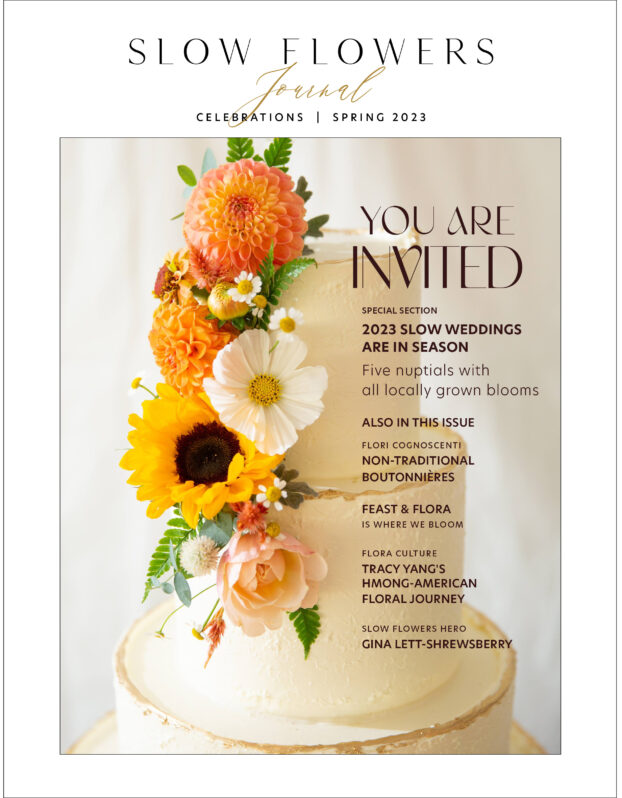
Cover art Slow Flowers Journal Spring 2023 | For an October ceremony in Virginia, Little Acre Flowers provided the cake flowers: Sunflowers, dahlias, and companion blooms that echo floral decor and personal flowers. Cake design by Jason Reaves, executive pastry chef, Salamander Resort. (c) Genevieve Leiper Photography
First up, in partnership with BLOOM Imprint, we have just released the Spring 2023 issue of our ezine Slow Flowers Journal. This issue is free to Slow Flowers members, so if you’re an active member, look for the link to our Celebrations issue in your in-box. Click the link to preview and purchase this issue — it’s packed with inspiring content, and a focus on Slow Weddings, nontraditional boutonnieres, and more people, flowers, and stories about our Slow Flowers Movement.
You’re invited to attend the May Slow Flowers Virtual Member Meet-up
We have a special treat for you this month! Two of our keynote speakers for the upcoming Slow Flowers Summit will join us to share a sneak peek of their upcoming presentations and answer your questions about floral design and flower farming!
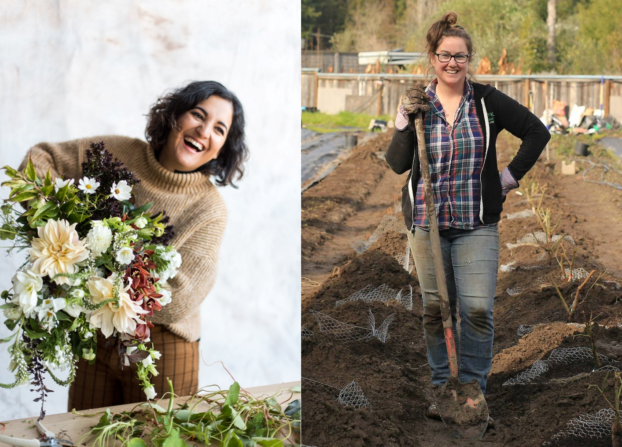
Our focus is the upcoming Slow Flowers Summit and we’ve invited two of our keynote speakers to join us. Meet Lennie Larkin (above right) and Amy Balsters (above left) who will join us to share a sneak peek of their upcoming presentations and answer your questions about floral design and flower farming! Lennie Larkin of B-Side Farm, will be presenting on “THE FLOWER DOLLAR: Knowing the true cost of your flowers + designs.” Amy Balsters,The Floral Coach, will present a design demonstration on “BUILDING A BETTER BOUQUET.”
Preregistration is required (click link below). See you this Friday, May 19th, at 9 am Pacific/Noon Eastern — on Zoom.
Thanks so much for joining me today! The Slow Flowers Podcast is a member-supported endeavor, downloaded more than one million times by listeners like you. Thank you for listening, commenting and sharing – it means so much. As our movement gains more supporters and more passionate participants who believe in the importance of our domestic cut flower industry, the momentum is contagious. I know you feel it, too. If you’re new to our weekly Show and our long-running Podcast, check out all of our resources at SlowFlowersSociety.com
Thank you for listening! Sending love, from my cutting garden to you! (c) Missy Palacol Photography
I’m Debra Prinzing, host and producer of the Slow Flowers Show & Podcast. The Slow Flowers Podcast is engineered and edited by Andrew Brenlan. The content and opinions expressed here are either mine alone or those of my guests alone, independent of any podcast sponsor or other person, company or organization. Next week, you’re invited to join me in putting more Slow Flowers on the table, one stem, one vase at a time. Thanks so much for joining us today and I’ll see you next week!
Music credits:
Drone Pine; Funk and Flash; Turning on the Lights; Gaena by Blue Dot Sessions http://www.sessions.blue
Last month you met Jessie Witscher of Understory Farm as we discussed how she and her partner Gregory Witscher grow masses of cut flowers to sell through wholesale channels.
Debra Prinzing (left) and Abby Matson (right) at Green Mountain Floral Supply (c) Jenna Brisson
I met Jessie when we both participated in the Spring Educational and Workshop Series presented by Green Mountain Floral Supply in Burlington, Vermont. I called that March event a Slow Flowers love fest because it brought me together with Tom and Kim Jennings, owners of Green Mountain; Jayson Munn, seminar coordinator; Holly Chapple, who taught floral design and business workshops for three days — and two local Slow Flowers members,Jessie and today’s guest, Abby Matson of Diddle & Zen.
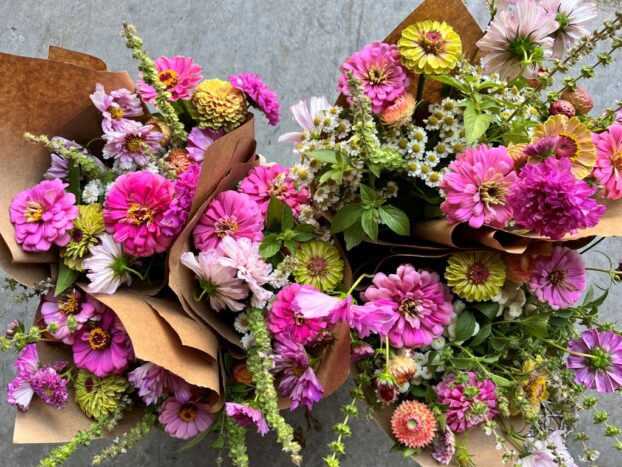
Diddle & Zen flowers
So today, I’m going to share the conversation I recorded while I was in Burlington, with Abby Matson of Diddle & Zen. I’m so happy to introduce you to her and share her story. Abby and her husband/partner Derek Matson own a beautiful flower farm in Panton, Vermont, not too far from Burlington.
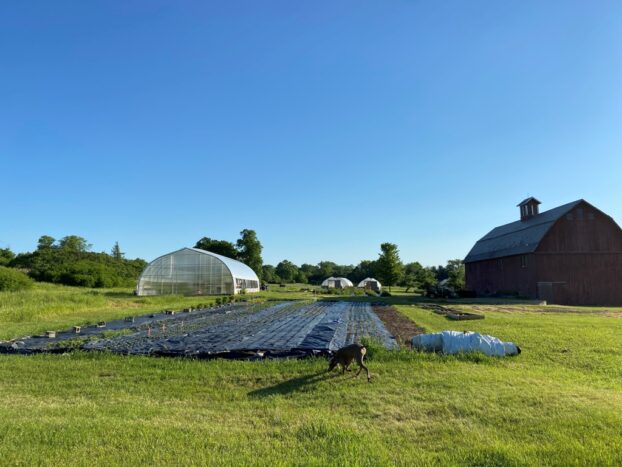
Diddle & Zen flower farm, Panton, Vermont
Writing on their website, Abby says: “We have a passion for the beauty of Vermont and its community. We are committed to sustainable practices and supporting small, and local businesses. We create naturally inspired floral designs that are influenced by traditional elegance. Our floral design services are available for events other than weddings too.“
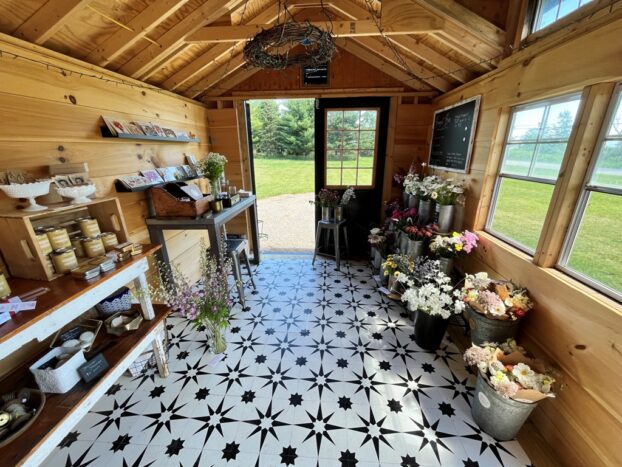
Inside the Diddle & Zen farm store
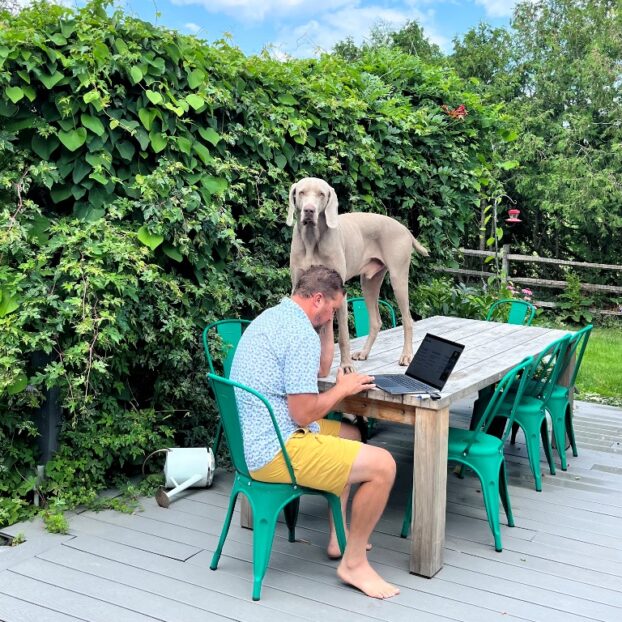
Derek and one of the couple’s beloved Weimaraners
To be honest, Abby’s story is one of serendipity and spontaneity. She and Derek made a radical change in their lives, buying a picturesque farm in Vermont and moving there from Colorado just prior to the arrival of the COVID 19 pandemic. You’ll love hearing how they have shaped a flower-filled life for themselves and their beloved Weimaraners, Gunnie and Ghost.
Popular farm tours at Diddle & Zen (c) Elisabeth Waller Photography
When Abby and I recorded this conversation, she knew she had a lot of things planned around Mother’s Day flowers and promised to circle back with the details. Here’s how Diddle & Zen is sharing flowers with their community:
They are partnering with Matryoshka’s Bakery to offer a flower/cookie bundle at both the Diddle & Zen farm store and at Matryoshka’s, which known for beautiful macarons with incredible flavor combos.
Diddle & Zen will also collaborate with Stephanie Grace Ceramics to offer flower arrangements in her beautiful porcelain vases; and,
They have invited Stephanie Brigan Photography to the farm to offer mini photo sessions next Saturday May 13th, which is already sold out.
Abby notes: Of course, we’ll have the farm store stocked with lots of grab and go bouquets!
This show is brought to you by Slowflowers.com, the free, online directory to more than 850 florists, shops, and studios who design with local, seasonal and sustainable flowers and to the farms that grow those blooms. It’s the conscious choice for buying and sending flowers.
Thank you to our lead sponsor, Farmgirl Flowers. Farmgirl Flowers delivers iconic burlap-wrapped bouquets and lush, abundant arrangements to customers across the U.S., supporting U.S. flower farms by purchasing more than $10 million dollars of U.S.-grown fresh and seasonal flowers and foliage annually. Discover more at farmgirlflowers.com.
Thanks to Johnny’s Selected Seeds, an employee-owned company that provides our industry the best flower, herb and vegetable seeds — supplied to farms large and small and even backyard cutting gardens like mine. Find the full catalog of flower seeds and bulbs at johnnysseeds.com.
Thanks to Mayesh Wholesale Florist. Family-owned since 1978, Mayesh is the premier wedding and event supplier in the U.S. and we’re thrilled to partner with Mayesh to promote local and domestic flowers, which they source from farms large and small around the U.S. Learn more at mayesh.com.
Thanks toThe Gardener’s Workshop, which offers a full curriculum of online education for flower farmers and farmer-florists. Online education is more important than ever, and you’ll want to check out the course offerings at thegardenersworkshop.com.
Thank you for listening! Sending love, from my cutting garden to you! (c) Missy Palacol Photography
Thanks so much for joining me today! The Slow Flowers Podcast is a member-supported endeavor, downloaded more than one million times by listeners like you. Thank you for listening, commenting and sharing – it means so much. As our movement gains more supporters and more passionate participants who believe in the importance of our domestic cut flower industry, the momentum is contagious. I know you feel it, too. If you’re new to our weekly Show and our long-running Podcast, check out all of our resources at SlowFlowersSociety.com
I’m Debra Prinzing, host and producer of the Slow Flowers Show & Podcast. The Slow Flowers Podcast is engineered and edited by Andrew Brenlan. The content and opinions expressed here are either mine alone or those of my guests alone, independent of any podcast sponsor or other person, company or organization. Next week, you’re invited to join me in putting more Slow Flowers on the table, one stem, one vase at a time. Thanks so much for joining us today and I’ll see you next week!
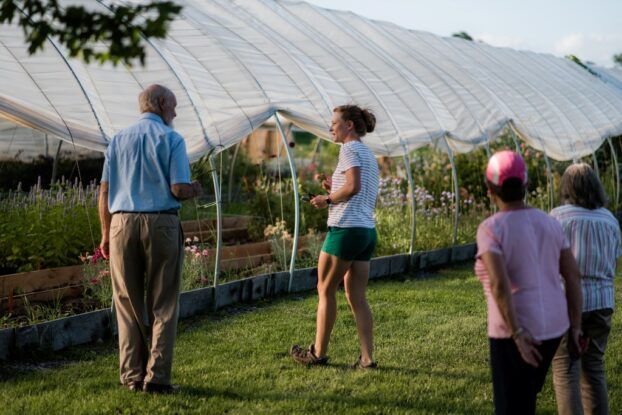
Amelia Ihlo of Rooted Farmers (left); Leah Ducey (and family) of Spring Wind Farm and Garden State Flower Cooperative (right)
The spring flower season is warming and today I have invited two guests to share about crop pricing strategies and selling through wholesale flower hubs.
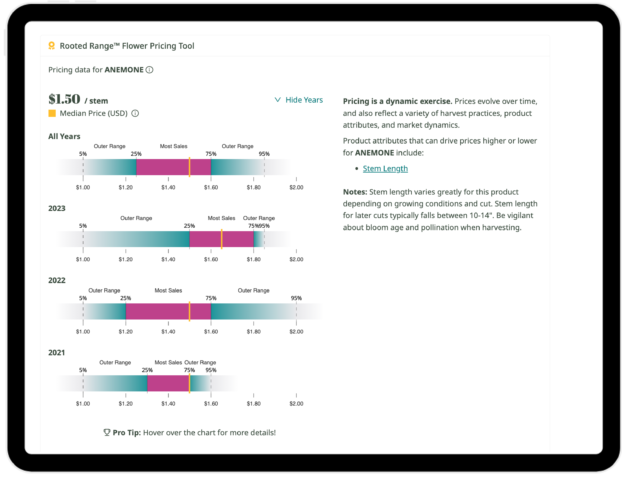
We’ll learn more about Leah’s path to flowers, what she grows and how she has developed a marketplace with other growers at the Garden State Flower Cooperative. And Amelia will share about some of the new tools and programs that Rooted Farmers has developed to help growers with pricing seasonal cut flowers.
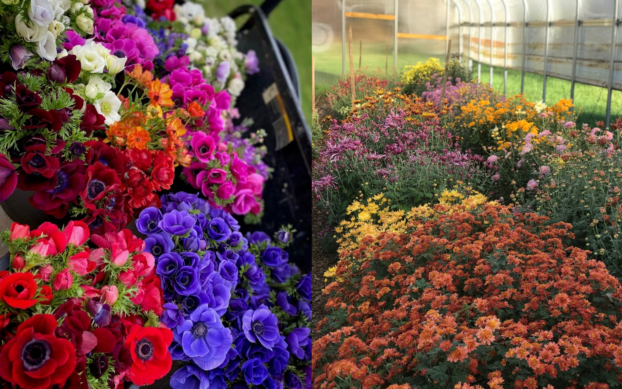
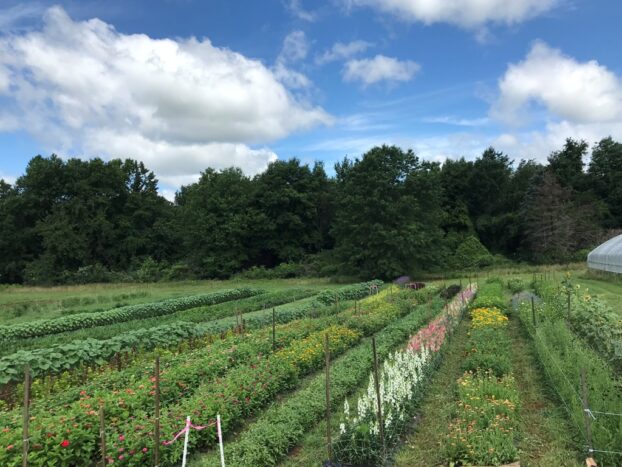
Spring and Fall Crops at Spring Wind Farm
Past Episode featuring Amelia Ihlo and Rooted Farmers:
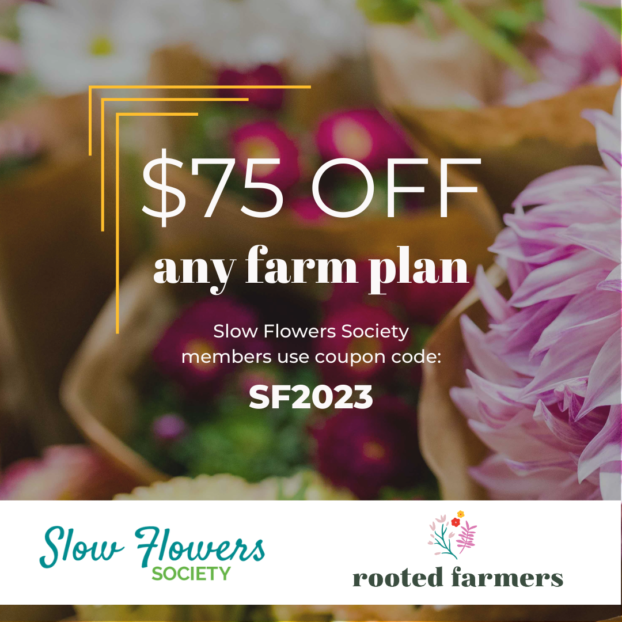
$75 off Rooted Farmers promotion for Slow Flowers Members
About Leah Ducey & Spring Wind Farm:
Spring Wind Farm is a family farm run by Brian and Leah Ducey with their children Cole and Niamh. We both come from a long line of farmers several generations back and are eager to reintroduce the farming tradition to our children.
The beauty at Spring Wind Farm
Leah has always loved being outside and after working on a flower farm in high school had a passion for growing flowers. She studied Horticulture at Cook College, Rutgers and worked on a Lily Breeding Project, in addition to her research she started a 1/4 acre cut flower field at the Student Organic Farm. Leah and Brian moved to Ireland for a while and when they came home Leah took a job teaching high school biology and sustainability. After 10 years of teaching they found a farm where they could both pursue their agricultural interests with their young children. 2018 was Leah’s first season back in the flower growing field and out of the traditional classroom. Leah loves to grow unusual varieties and loves the design aspect as well. The best part is working with kids in the field, Cole and Niamh are amazing helpers!
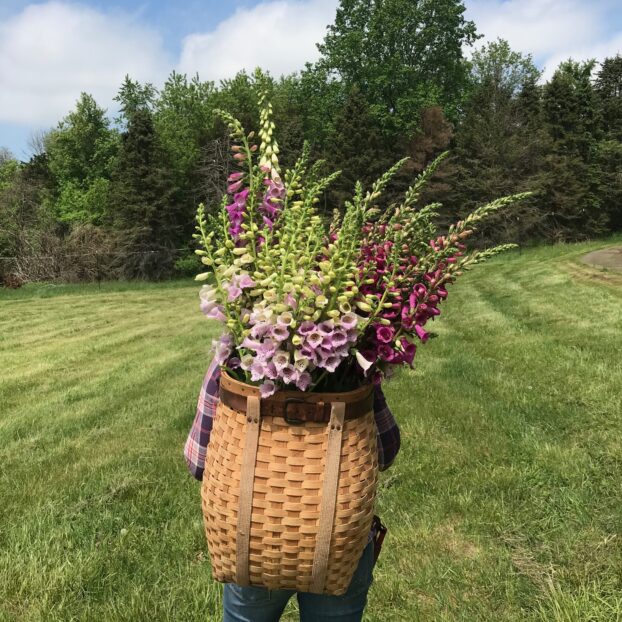
Leah’s glorious foxgloves at Spring Wind Farm
Brian also studied Horticulture at Cook College, Rutgers and spent several years working in the turf grass industry. Brian transitioned to a role running a local high school Agricultural program and he is responsible to making all of Leah’s wild ideas fly! Brian is the farm’s irrigation specialist, builder, tamer of wild spaces and he can make a mean bouquet. We look forward to future agricultural endeavors on the 20 acres we call home.
In this week’s news, check out our May Slow Flowers Society Newsletter – which just dropped on Monday. You’ll find links to new stories, events, resources, and special promotions for our Slow Flowers Community. We’re gearing up for the Slow Flowers Summit in just seven weeks, we’re getting ready to celebrate American Flowers Week *June 28-July 4* AND we just announced a special lecture and workshop taking place this coming September with Royal florist (and past guest of this podcast) Shane Connolly!
This show is brought to you by Slowflowers.com, the free, online directory to more than 850 florists, shops, and studios who design with local, seasonal and sustainable flowers and to the farms that grow those blooms. It’s the conscious choice for buying and sending flowers.
Thank you to our lead sponsor, Farmgirl Flowers. Farmgirl Flowers delivers iconic burlap-wrapped bouquets and lush, abundant arrangements to customers across the U.S., supporting U.S. flower farms by purchasing more than $10 million dollars of U.S.-grown fresh and seasonal flowers and foliage annually. Discover more at farmgirlflowers.com.
Thank you to the Seattle Wholesale Growers Market, a farmer-owned cooperative committed to providing the very best the Pacific Northwest has to offer in cut flowers, foliage and plants. The Growers Market’s mission is to foster a vibrant marketplace that sustains local flower farms and provides top-quality products and service to the local floral industry. Visit them at seattlewholesalegrowersmarket.com.
Thank you to Longfield Gardens, which provides home gardeners with high quality flower bulbs and perennials. Their online store offers plants for every region and every season, from tulips and daffodils to dahlias, caladiums and amaryllis. Check out the full catalog at Longfield Gardens at longfield-gardens.com.
Thank you to Rooted Farmers. Rooted Farmers works exclusively with local growers to put the highest-quality specialty cut flowers in floral customers’ hands. When you partner with Rooted Farmers, you are investing in your community, and you can expect a commitment to excellence in return. Learn more at RootedFarmers.com.
Thanks so much for joining me today! The Slow Flowers Podcast is a member-supported endeavor, downloaded more than one million times by listeners like you. Thank you for listening, commenting and sharing – it means so much. As our movement gains more supporters and more passionate participants who believe in the importance of our domestic cut flower industry, the momentum is contagious. I know you feel it, too. If you’re new to our weekly Show and our long-running Podcast, check out all of our resources at SlowFlowersSociety.com
Thank you for listening! Sending love, from my cutting garden to you! (c) Missy Palacol Photography
I’m Debra Prinzing, host and producer of the Slow Flowers Show & Podcast. The Slow Flowers Podcast is engineered and edited by Andrew Brenlan. The content and opinions expressed here are either mine alone or those of my guests alone, independent of any podcast sponsor or other person, company or organization. Next week, you’re invited to join me in putting more Slow Flowers on the table, one stem, one vase at a time. Thanks so much for joining us today and I’ll see you next week!
Music credits:
Drone Pine; Highride; Turning on the Lights; Gaena by Blue Dot Sessions http://www.sessions.blue
It’s great to be back with you today — and to share another inspiring and uplifting conversation about the healing power of plants and the ability of flowers to nurture us, body and soul.
Kate Watters (left) and a Wild Heart Farm CSA share, including a poem tucked inside the bouquet
My guest today is botanist-turned-farmer-florist Kate Watters of Arizona’s Wild Heart Farm. I first met Kate several years ago through the community of florists and flower farmers in Arizona, where I often visited my parents who were living outside of Phoenix.
Kate and I connected through her frequent collaborator, Terri Schuett, owner of Happy Vine Flowers, a Prescott Valley area florist who is also part of the Slow Flowers Movement. The women produced a beautiful styled shoot that we published in Florists Review in December 2019, and I’ve secretly always wanted them to team up for a desert-inspired botanical couture piece for American Flowers Week!
A family affair at Wild Heart Farm, with Kate, her sister Kelly, and her partner Mike Knapp (c) Amy S. Martin
Kate has an extensive background in botany, ecological restoration and agriculture, coming to floristry while establishing flower and herb gardens at Orchard Canyon on Oak Creek, a 10-acre destination resort in Sedona.
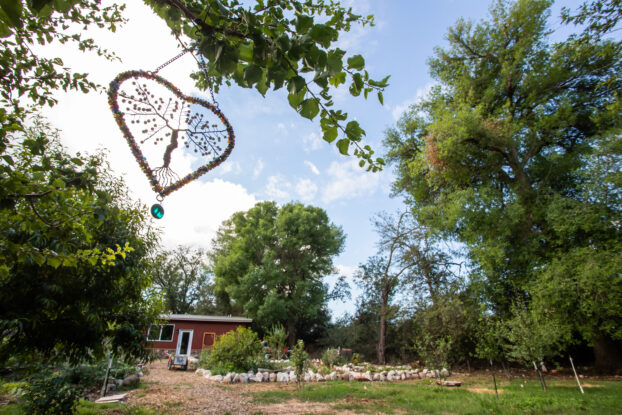
Wild Heart Farm (c) Amy S. Martin
She transitioned to flower farming full time when she and her partner Mike Knapp found a unique property in Rimrock. They knew it could become the heart and home for both of their personal and professional endeavors. As Kate says, after 20 years in the field and wilds of botany and conservation, she wanted nothing more than to grow fields of flowers.
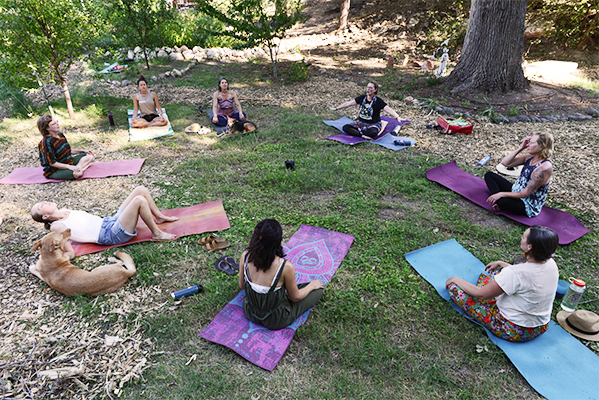
“Flower Healing,” with yoga on the farm at a Wild Heart Farm retreat
Now, at Wild Heart Farm, Kate calls her approach to plant-based products and programs ‘Flower Healing.’ “Plants have so many qualities that bolster emotional and mental wellness,” she explains. I invited Kate to share more in today’s conversation. The second part of this episode features a 12-minute video tour of Wild Heart Farm, which Kate filmed to give us a closer look at this special destination in the high desert.
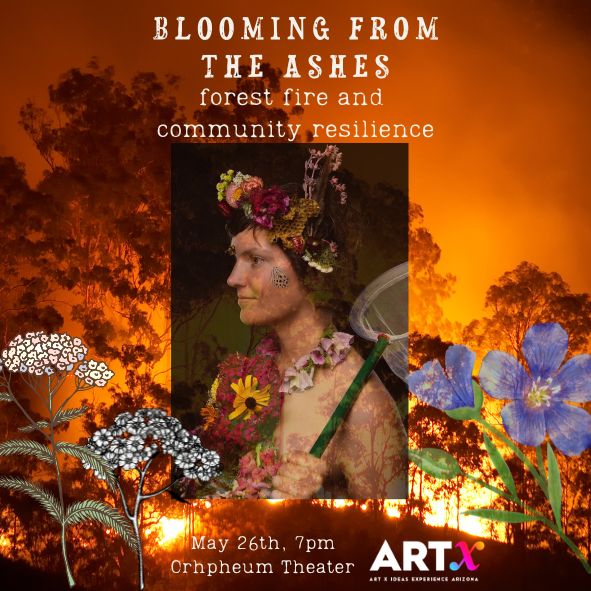
Learn more about BLOOMING FROM THE ASHES: FOREST FIRE AND COMMUNITY RESILIENCE, Wild Heart Farm at ArtX on May 26th, 2023
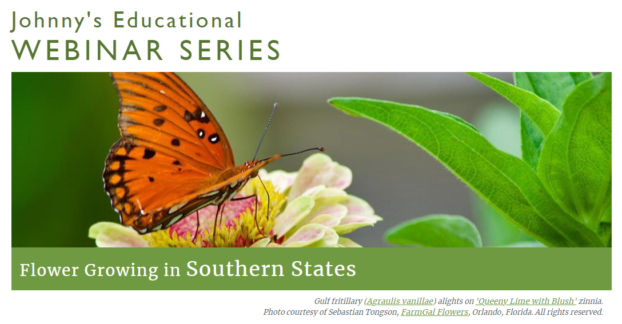
And a reminder that tomorrow is our free webinar for Southern States flower growers. You’re invited to Join Slow Flowers +Johnny’s Selected Seeds at attend, tomorrow, April 27th (2 pm Pacific/5 pm Eastern). I’ll be co-hosting the session with Johnny’s Seeds’ Flower Product Manager Hillary Alger for a discussion on what it means to grow flowers in the challenging climatic conditions of the southern United States.
Our guest panel of experienced Slow Flowers members are cut-flower growers from Florida, North Carolina, and Texas. We’ll hear their farming stories firsthand and discuss regional growing challenges, lessons learned, and their favorite varieties. You’ll meet and learn from them:
This show is brought to you by Slowflowers.com, the free, online directory to more than 850 florists, shops, and studios who design with local, seasonal and sustainable flowers and to the farms that grow those blooms. It’s the conscious choice for buying and sending flowers.
Thank you to our lead sponsor, Farmgirl Flowers. Farmgirl Flowers delivers iconic burlap-wrapped bouquets and lush, abundant arrangements to customers across the U.S., supporting U.S. flower farms by purchasing more than $10 million dollars of U.S.-grown fresh and seasonal flowers and foliage annually. Discover more at farmgirlflowers.com.
Thank you to sponsor CalFlowers, the leading floral trade association in California, providing valuable transportation and other benefits to flower growers and the entire floral supply chain in California and 48 other states. The Association is a leader in bringing fresh cut flowers to the U.S. market and in promoting the benefits of flowers to new generations of American consumers. Learn more at cafgs.org.
Thank you to Store It Cold, creators of the revolutionary CoolBot, a popular solution for flower farmers, studio florists and farmer-florists. If you watch the video tour that Kate filmed for us, you’ll see a good example of her CoolBot. Save $1000s when you build your own walk-in cooler with the CoolBot and an air conditioner. Don’t have time to build your own? They also have turnkey units available. Learn more at storeitcold.com.
Thank you to Red Twig Farms. Based in Johnstown, Ohio, Red Twig Farms is a family-owned farm specializing in peonies, daffodils, tulips and branches, a popular peony-bouquet-by-mail program and their Spread the Hope Campaign where customers purchase 10 tulip stems for essential workers and others in their community. Learn more at redtwigfarms.com.
Thanks so much for joining me today! The Slow Flowers Podcast is a member-supported endeavor, downloaded more than one million times by listeners like you. Thank you for listening, commenting and sharing – it means so much. As our movement gains more supporters and more passionate participants who believe in the importance of our domestic cut flower industry, the momentum is contagious. I know you feel it, too. If you’re new to our weekly Show and our long-running Podcast, check out all of our resources at SlowFlowersSociety.com
Thank you for listening! Sending love, from my cutting garden to you! (c) Missy Palacol Photography
I’m Debra Prinzing, host and producer of the Slow Flowers Show & Podcast. The Slow Flowers Podcast is engineered and edited by Andrew Brenlan. The content and opinions expressed here are either mine alone or those of my guests alone, independent of any podcast sponsor or other person, company or organization. Next week, you’re invited to join me in putting more Slow Flowers on the table, one stem, one vase at a time. Thanks so much for joining us today and I’ll see you next week!
Last month I participated in the Spring Educational and Workshop Series presented by Green Mountain Floral Supply in Burlington, Vermont. It was a Slow Flowers love fest, bringing me together with Tom and Kim Jennings, owners of Green Mountain; Jayson Munn, seminar coordinator; Holly Chapple, who taught floral design and business workshops for three days; and today’s guest, local Vermont flower farmer Jessie Witscher, co-owner with her partner Gregory Witscher of Understory Farm — all Slow Flowers members.
Jessie Witscher, photographed by Jenna Brisson at Green Mountain Floral Supply
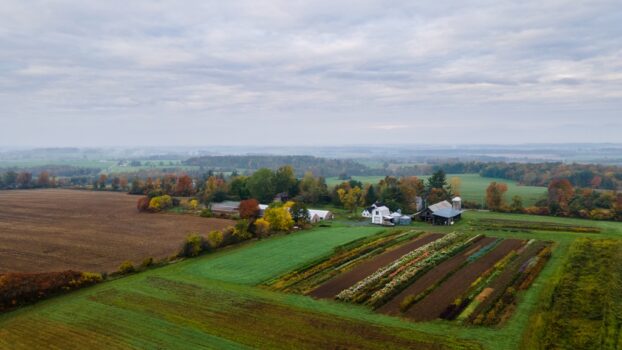
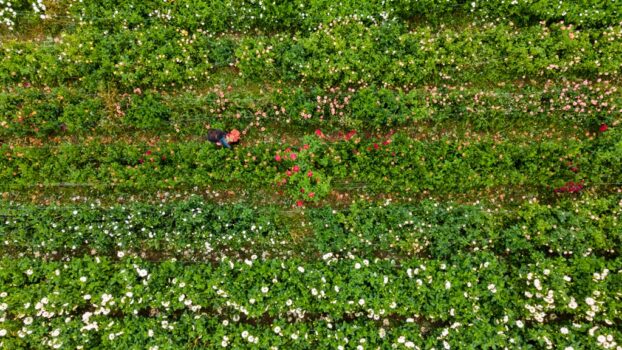
A bird’s eye view of the beautiful Understory Farm
Jessie was invited to share about her flower farm, and to discuss growing premium specialty cut flowers to supply Green Mountain. We also heard a presentation by farmer-florist Abby Matson of Diddle & Zen, also located in the Burlington area. I took advantage of a free day to invite both Jessie and Abby to record conversations to share with you. We’ll hear from Abby in a few weeks, but today, you’re in for a treat to learn from Jessie.
A stunning drone image of the flower fields at Understory Farm
We’ll learn how Jessie and Gregory do the math to calculate profitability for their mostly wholesale-focused operation. Nearly 80 percent of their flowers include wholesale channels to Green Mountain Floral Supply and to two grocery coops in their region. If you’ve always wondered how to make it work, learning from Jessie’s insights is a great place to start.
In other news, if you’re a Southeastern flower grower, you’re invited to Join Slow Flowers +Johnny’s Selected Seeds at attend afree webinar on April 27th (2 pm Pacific/5 pm Eastern). I’ll be co-hosting the session with Johnny’s Seeds’ Flower Product Manager Hillary Alger for a discussion on what it means to grow flowers in the challenging climatic conditions of the southern United States.
Our guest panel of experienced Slow Flowers members are cut-flower growers from Florida, North Carolina, and Texas. We’ll hear their farming stories firsthand and discuss regional growing challenges, lessons learned, and their favorite varieties. You’ll meet and learn from them:
This show is brought to you by Slowflowers.com, the free, online directory to more than 850 florists, shops, and studios who design with local, seasonal and sustainable flowers and to the farms that grow those blooms. It’s the conscious choice for buying and sending flowers.
Thank you to our lead sponsor, Farmgirl Flowers. Farmgirl Flowers delivers iconic burlap-wrapped bouquets and lush, abundant arrangements to customers across the U.S., supporting U.S. flower farms by purchasing more than $10 million dollars of U.S.-grown fresh and seasonal flowers and foliage annually. Discover more at farmgirlflowers.com.
Thank you to Mayesh Wholesale Florist. Family-owned since 1978, Mayesh is the premier wedding and event supplier in the U.S. and we’re thrilled to partner with Mayesh to promote local and domestic flowers, which they source from farms large and small around the U.S. Learn more at mayesh.com.
Thank you to The Gardener’s Workshop, which offers a full curriculum of online education for flower farmers and farmer-florists. Online education is more important this year than ever, and you’ll want to check out the course offerings at thegardenersworkshop.com.
Thank you to Details Flowers Software, a platform specifically designed to help florists and designers do more and earn more. With an elegant and easy-to-use system–Details is here to improve profitability, productivity, and organization for floral businesses of all shapes and sizes. Grow your bottom line through professional proposals and confident pricing with Details’ all-in-one platform. All friends of the Slow Flowers Podcast will receive a 7-day free trial of Details Flowers Software. Learn more at detailsflowers.com.
Thanks so much for joining me today! The Slow Flowers Podcast is a member-supported endeavor, downloaded more than one million times by listeners like you. Thank you for listening, commenting and sharing – it means so much. As our movement gains more supporters and more passionate participants who believe in the importance of our domestic cut flower industry, the momentum is contagious. I know you feel it, too. If you’re new to our weekly Show and our long-running Podcast, check out all of our resources at SlowFlowersSociety.com
Thank you for listening! Sending love, from my cutting garden to you! (c) Missy Palacol Photography
I’m Debra Prinzing, host and producer of the Slow Flowers Show & Podcast. The Slow Flowers Podcast is engineered and edited by Andrew Brenlan. The content and opinions expressed here are either mine alone or those of my guests alone, independent of any podcast sponsor or other person, company or organization. Next week, you’re invited to join me in putting more Slow Flowers on the table, one stem, one vase at a time. Thanks so much for joining us today and I’ll see you next week!
Music credits:
Drone Pine; Enter the Room; Turning on the Lights; Gaena by Blue Dot Sessions http://www.sessions.blue