The Slow Flowers Podcast is the award-winning show known as the “Voice of the Slow Flowers Movement.” Launched in 2013 as the original flower podcast, we’ve devoted more than 10 years to covering the business of flower farming, floral design, and the Slow Flowers sustainability ethos. Listen to a new episode each Wednesday, available for free download here at slowflowerspodcast.com or on iTunes, Spotify, and other podcast platforms.
May 26th, 2014
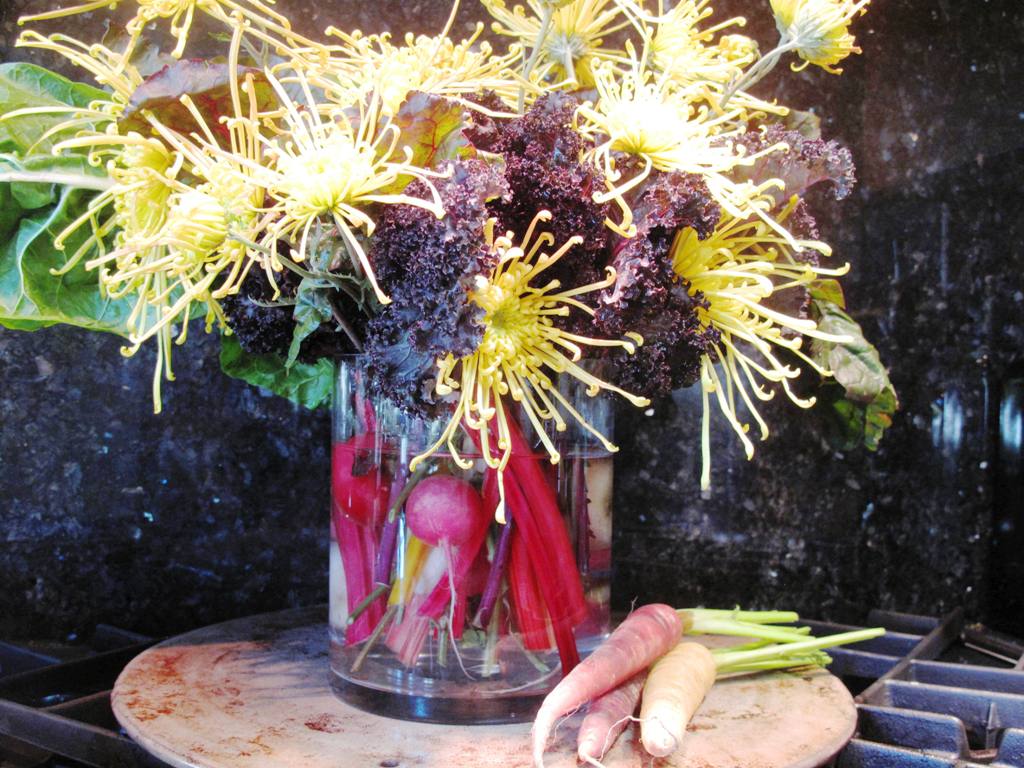
Radishes, rainbow chard, purple kale and spider mums.
 This just in: A New Kind of Hors d’Oeuvre
When entertaining, Debra recommends impressing your guests by gathering edible flowers and food from her garden plan to craft a simple, but unique amuse-bouche. The guests can snack on the centerpiece before the main meal is served – but only if your garden is organic!
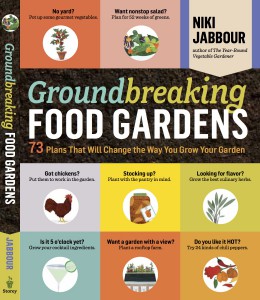
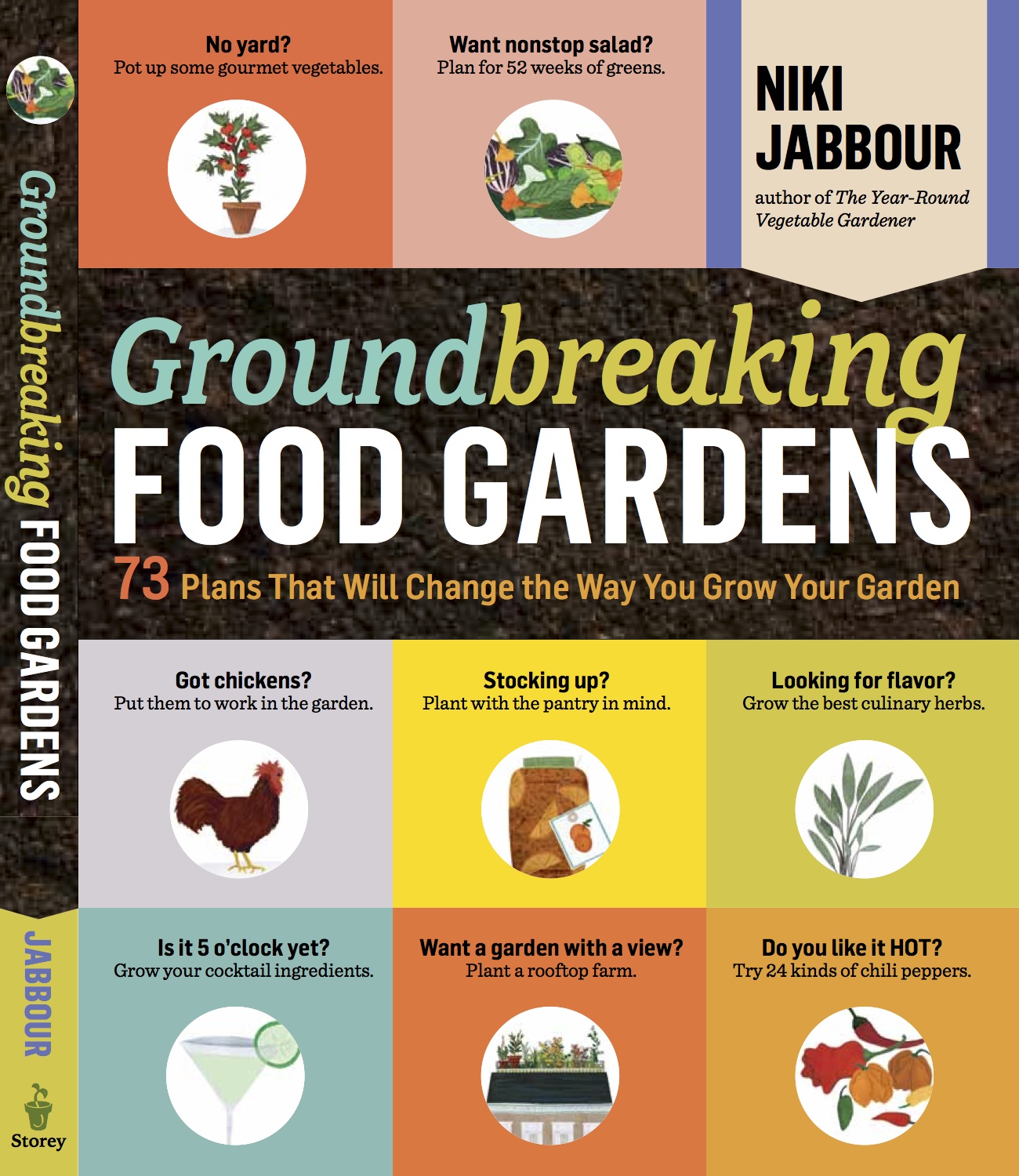
I owe an (edible) bouquet of thanks to fellow garden writer Niki Jabbour for including my “Edible Cutting Garden” plan in her new book Groundbreaking Food Gardens (Storey Publishing, 2014). Along with planting plans and designs contributed by 72 others, this is an inspiring reference book that will change the way home gardeners thank about growing food.
Here’s a sneak peek of the pages featuring my project, and some ideas for how to incorporate edibles into your floral designs.
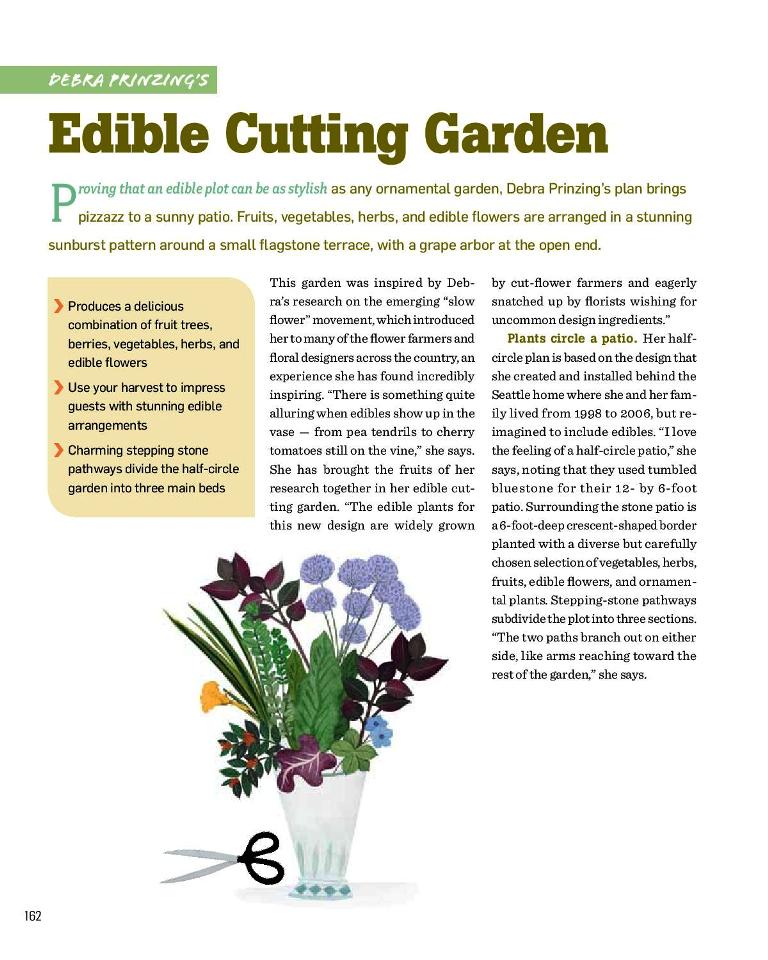
Debra Prinzing’s Edible Cutting Garden — a half-circle design based on an ornamental garden I created in Seattle, circa 1998-2006.
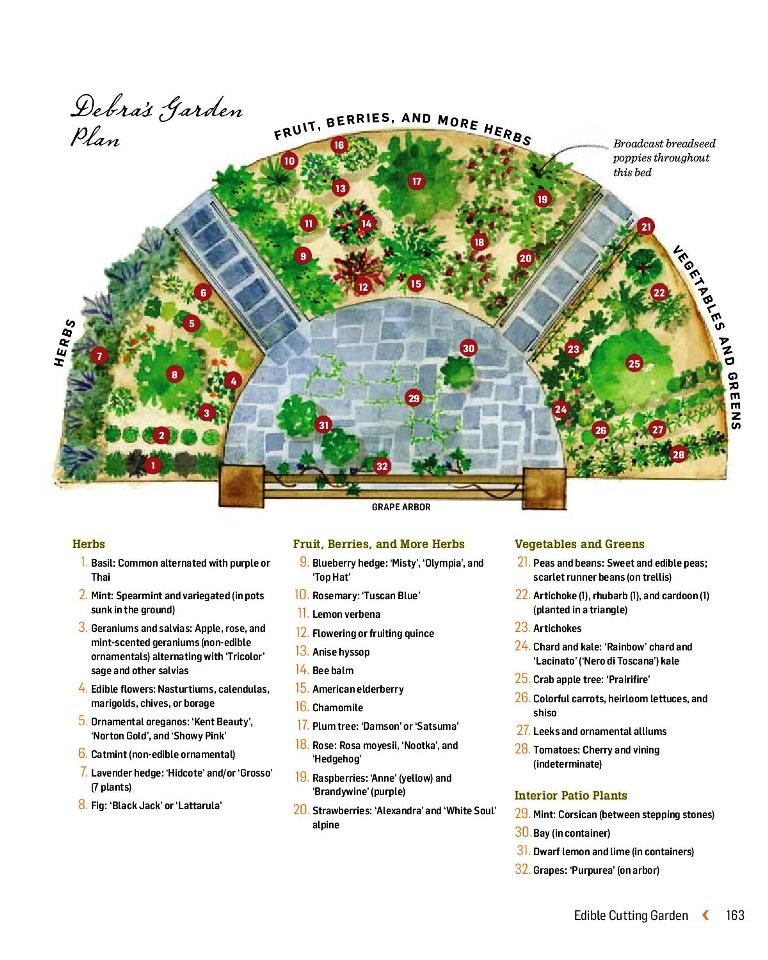
Each section features different edible categories — from herbs to fruits/berries to veggies and more.
This garden shown above was based on a design I made and installed behind the Seattle home where we lived from 1998 to 2006. I love the feeling of a half-circle patio. This one is paved in tumbled bluestone and measures about 12 feet wide by 6 feet deep. Two paths branch out on either side, like arms reaching toward the rest of the garden. The paths divide the 6-foot-deep crescent border into three sections.
READ MORE…
Posted in American Grown, Blog Posts, Book reviews, Creativity, floral design, Gardening, General, Writing | 2 Comments »
May 24th, 2014
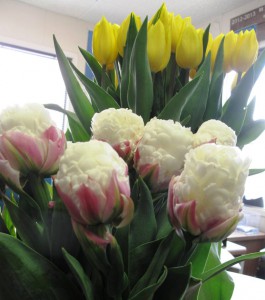
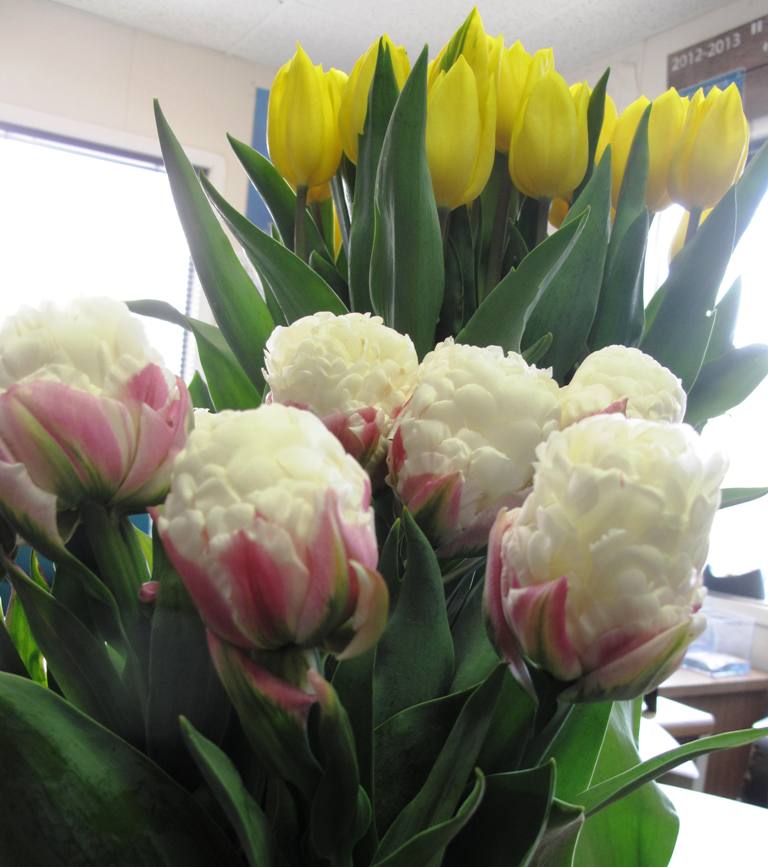
The hot, new “ice cream” tulip – spotted in a vase on Sun Valley CEO Lane DeVries’s desk!
I’ve been home for an entire month from an 11-day road trip that took me by plane to Southern California and back home again behind the wheel of a rental car.
I have many fond memories (as well as the photographs that I collected), while stopping along U.S. Hwy. 101 on my way north to Seattle. My first post featured Rose Story Farm and the Carpinteria flower scene; my 2nd post was about visiting author-friend Sharon Lovejoy and her husband Jeff Prostovitch in San Luis Obispo. [I’m going to save the photos and stories of my stop in Healdsburg-wine country for another day.]
So here is my third travelogue installation — all about The Sun Valley Group of Arcata, California.
Visiting Sun Valley and touring its vast flower-growing universe has been on my bucket list for quite a while. I’ve enjoyed collaborating with CEO Lane DeVries and his staff over the past few years to promote American-grown flowers and flower farms. In fact, Lane was a podcast guest last year – you can listen to that interview here. But I had never been able to see Sun Valley up close and personal!
Still on the road last month, I routed myself through Eureka, Calif., where I first visited another writer-friend, Amy Stewart of Flower Confidential and The Drunken Botanist fame (listen to our Podcast interview here).
The following morning I continued north to the next town on the map, Arcata – home to Sun Valley’s headquarters and one of the company’s farm locations.
Sun Valley is a leading grower of cut bulb and field flowers in the United States. According to its web site, Sun Valley chose this area as an ideal environment for growing bulb flowers, due to its mild winters, cool summers, generous humidity and coastally moderated sunlight. The fields surrounding the greenhouses also provide excellent growing conditions for spring, summer and fall iris, and summer flowers including crocosmia, hypericum, monkshood and montbretia.
Bill Prescott, the farm’s social media/communications guru, met and escorted me on a whirlwind tour. It’s a good thing that I brought my rubber-soled Merrills, cuz the ground gets muddy and wet at a flower farm – in the shade houses and in the greenhouses. These farms practice water conservation, of course, but the puddles and wet spots still exist.
We started by walking through the tulip operations. By the way, click here to see the farm’s mind-boggling array of tulip varieties – you’ll not believe it!
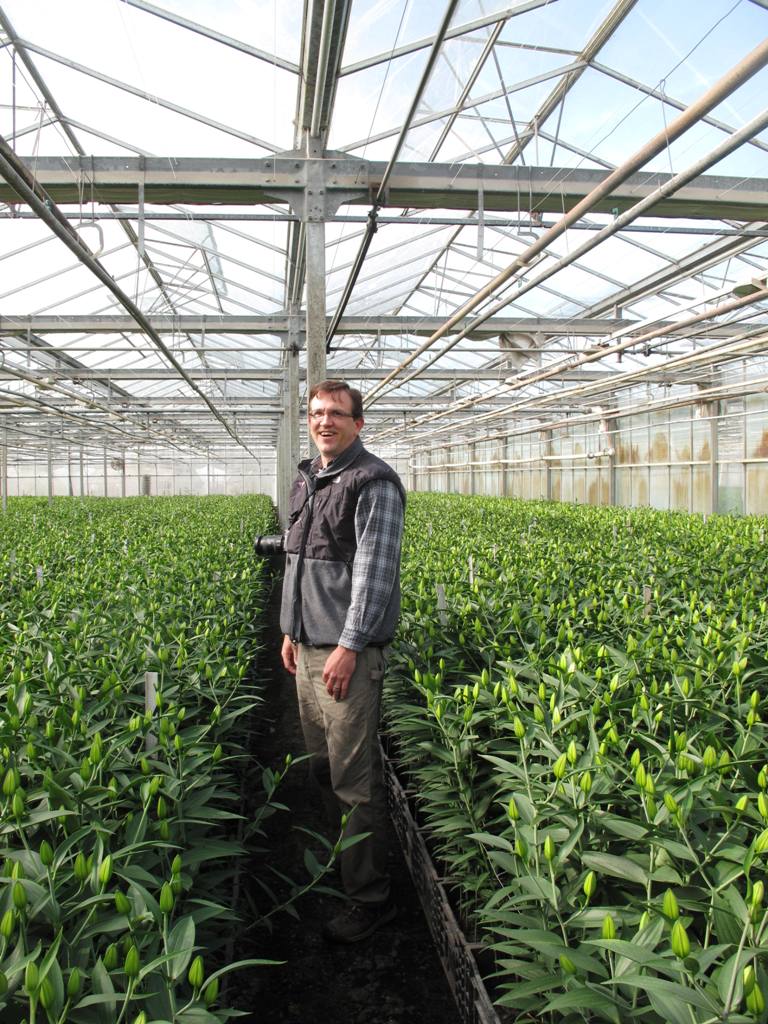
Bill Prescott, my host and tour guide at Sun Valley Flower Farm in Arcata, Calif.
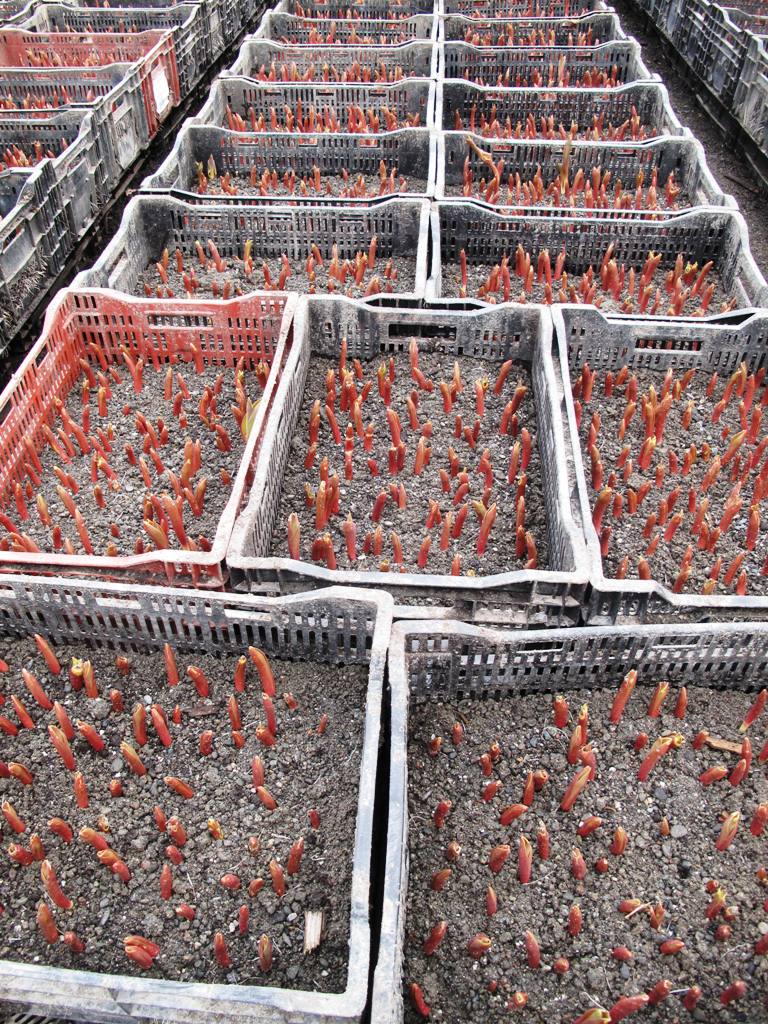
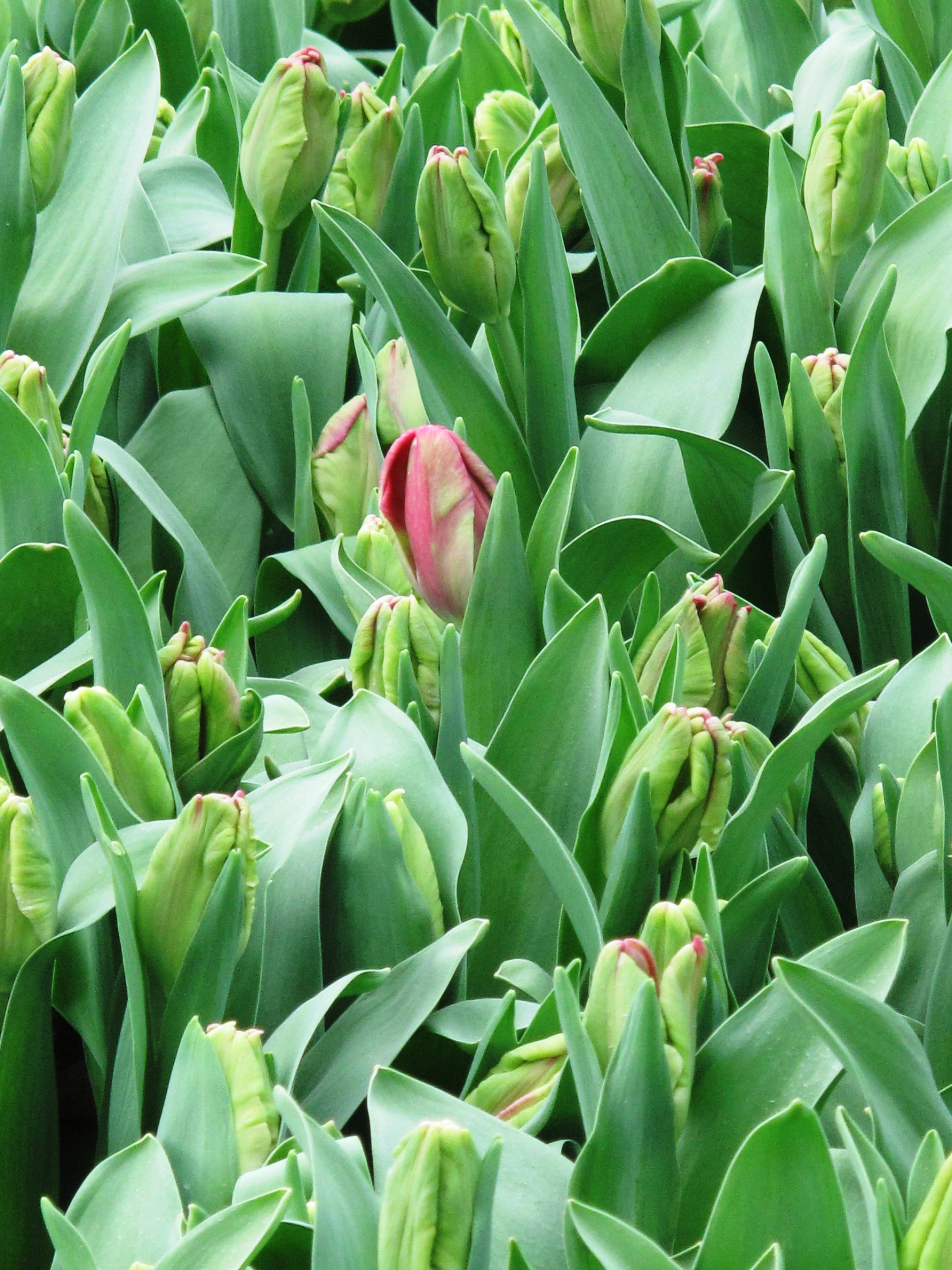
This is how the tulip-growing cycle begins. Bulbs planted in growing medium, shoulder to shoulder. Their tips emerge from the soil and then the crates are transferred to the greenhouse rows.
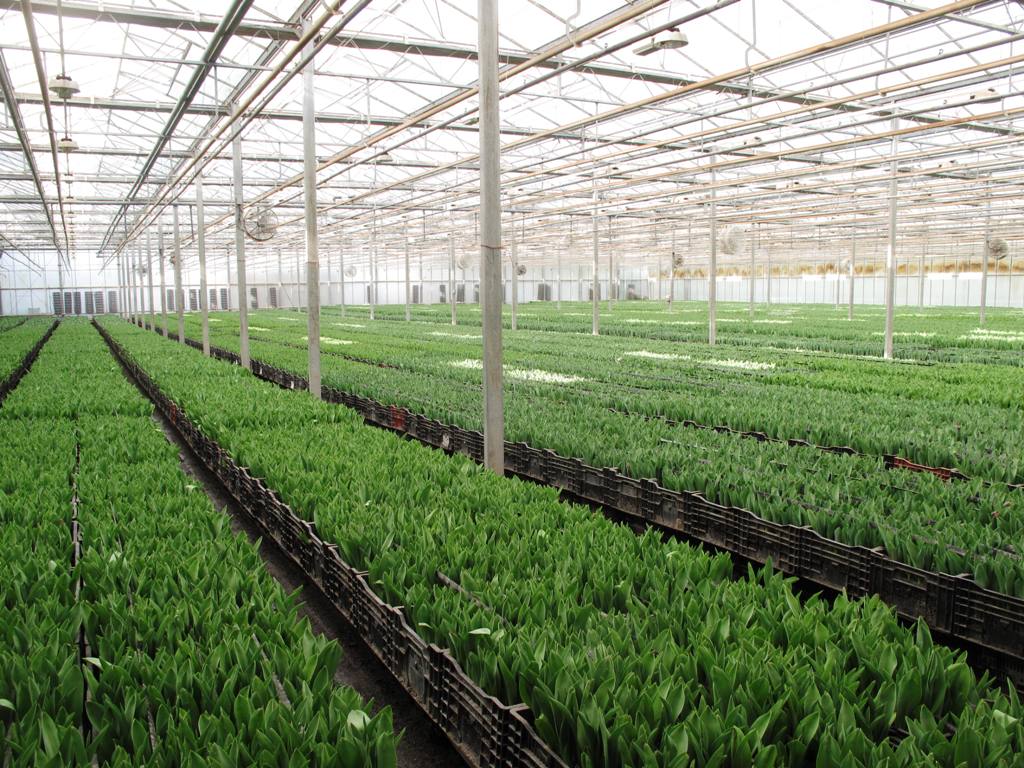
Just one of countless state-of-the-art greenhouses that produce beautiful tulips throughout the year.
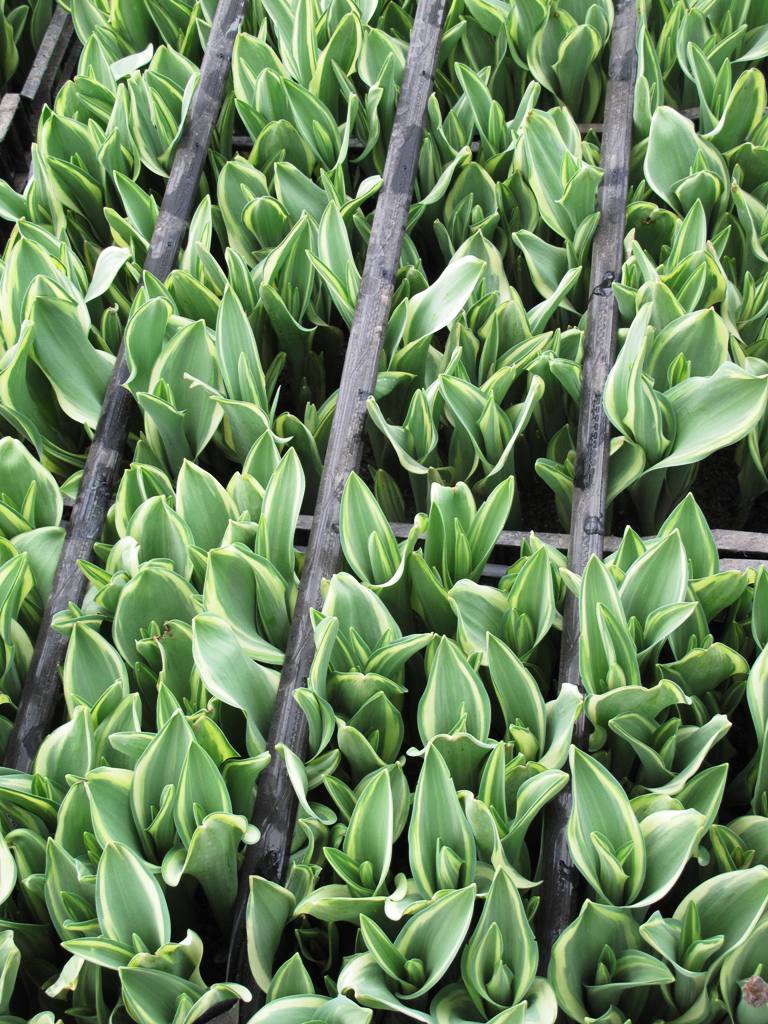
I couldn’t take my eyes off of the beautiful variegated foliage on this tulip variety. It’s not always about the bloom, especially when you have leaves like this!
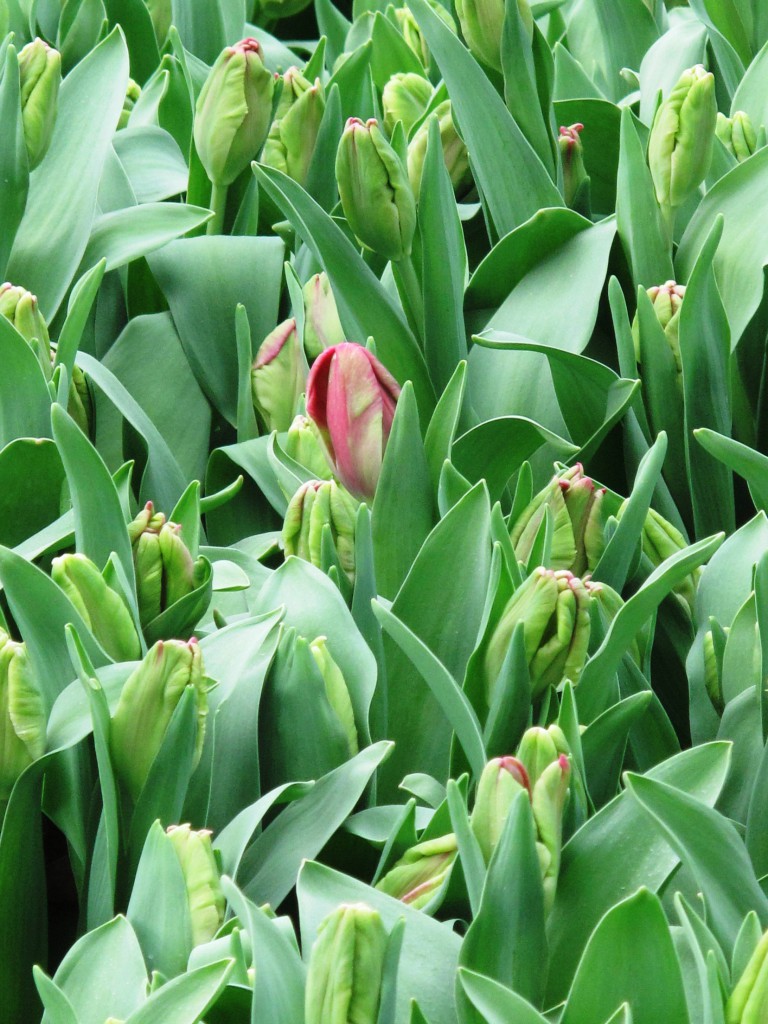
Hello, tulip!
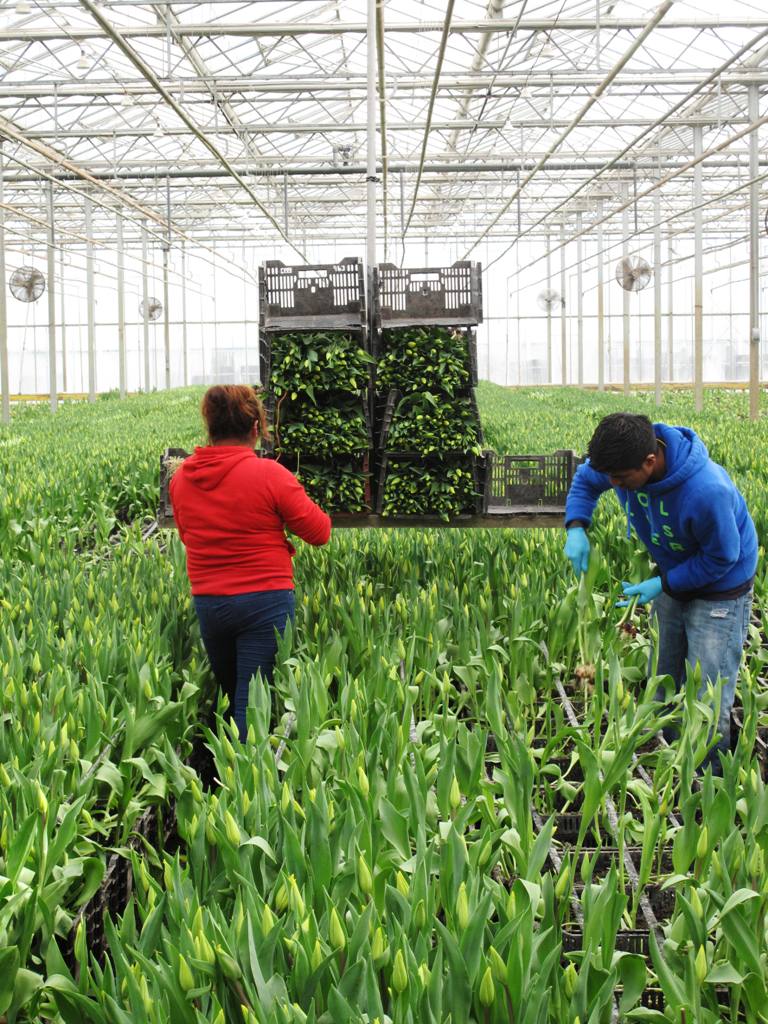
The tulip harvest – this was the week before Easter, so imagine: nonstop harvesting!
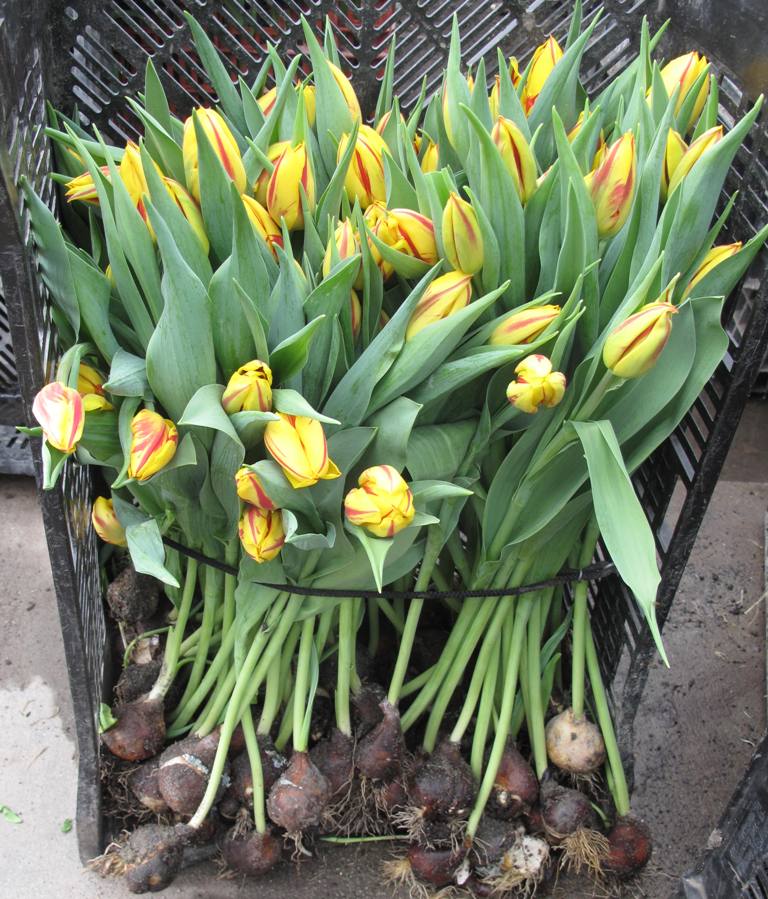
. . . and this is how the flowers come out of the ground – bulbs and all – to ensure the longest stems.
Some other popular crops include irises and lilies:
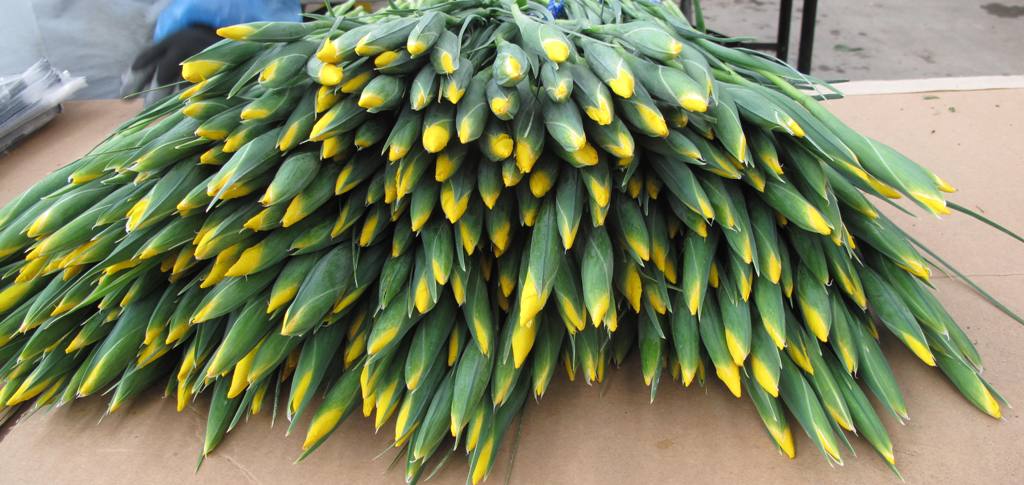
Gotta love these lemony-hued irises!
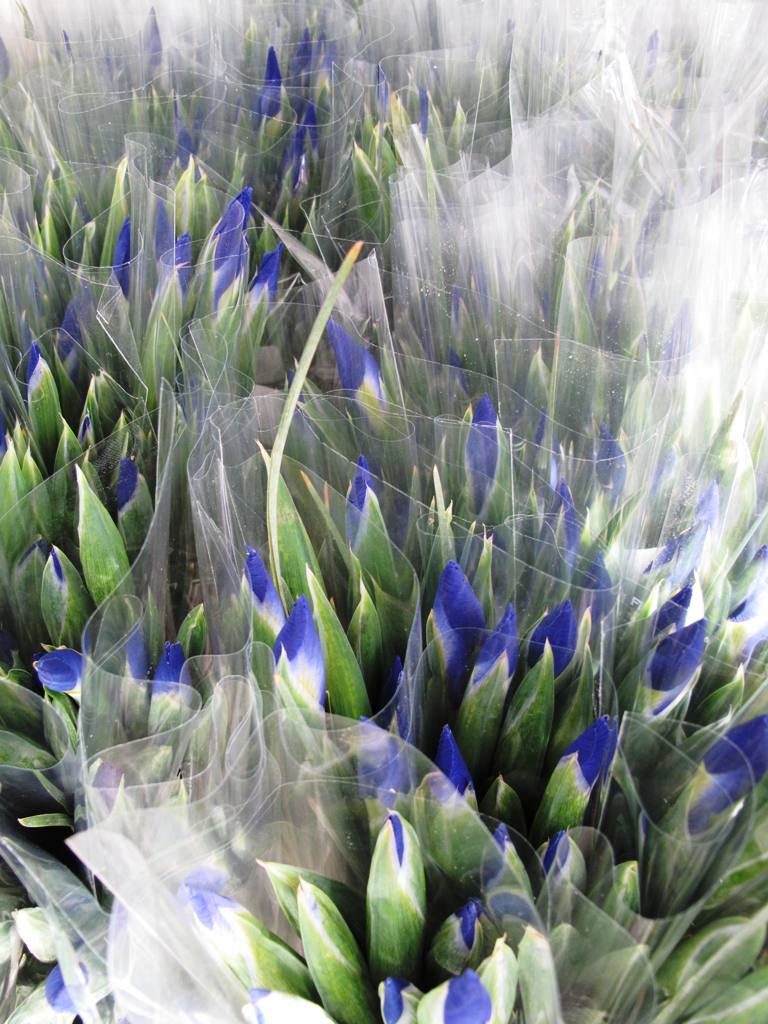
And the classic purple ones, too!
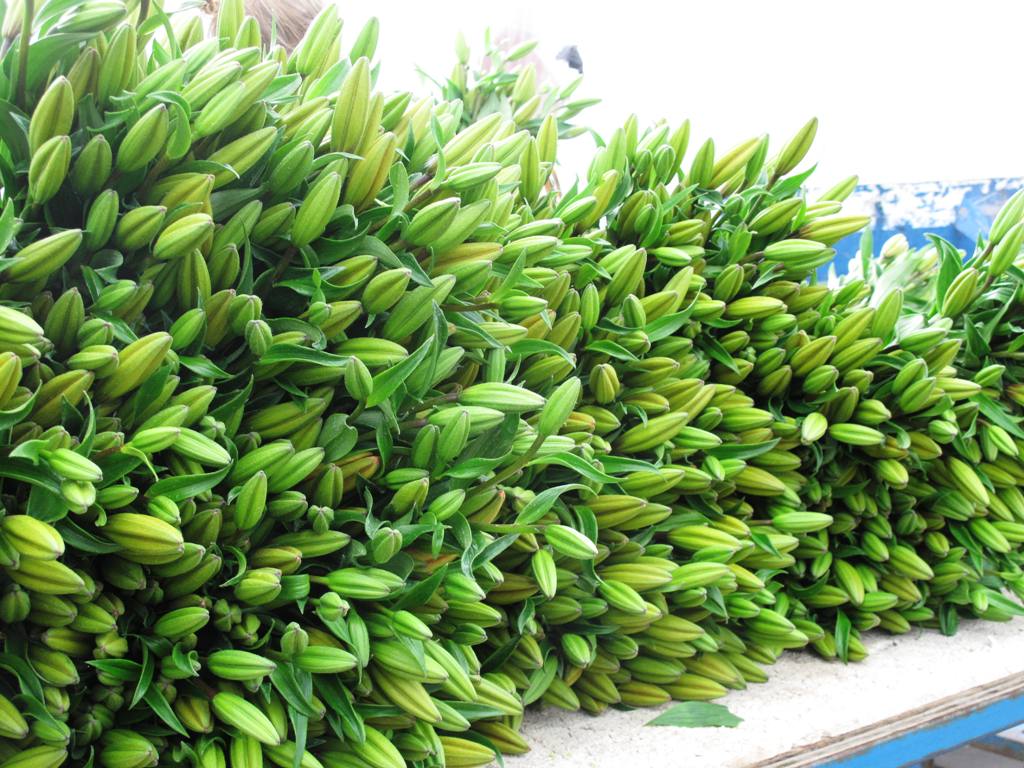
Lilies, just picked and ready for shipment to flower shops, supermarkets and designers.
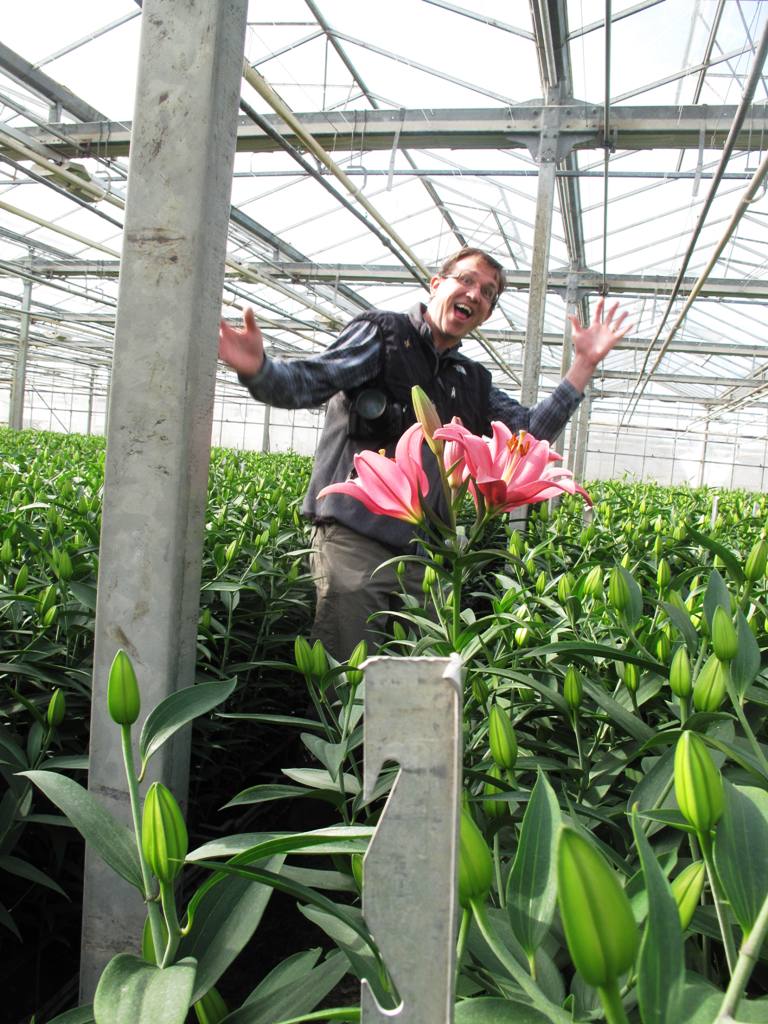
Having fun with the lilies – Bill is a bit of a ham!
Bill sent me home with a huge bucket filled with irises and tulips – gorgeous, fresh, just-picked and more than I could ever use in a single Easter arrangement. They survived the 10-hour drive to Seattle that day and still looked awesome when I gave an arrangement of those blooms to my mother on Easter. We both enjoyed those American-grown flowers for nearly two weeks – especially the lilies, with so many plump buds that kept opening up, a few new blooms every day.
And speaking of lilies . . . did you know that “Lily,” the voice of Sun Valley’s blog, is none other than Mr. Bill Prescott? On the blog, he channels his inner florist supremely well! Check out “Flower Talk: Grow with Lily” here – and subscribe to receive notices of the frequent installments.
Posted in American Grown, Blog Posts, Creativity, floral design, General, Plants, Podcast Episodes, Writing | No Comments »
May 21st, 2014
Podcast: Play in new window | Download
Subscribe: Apple Podcasts | Podcast Index | | More
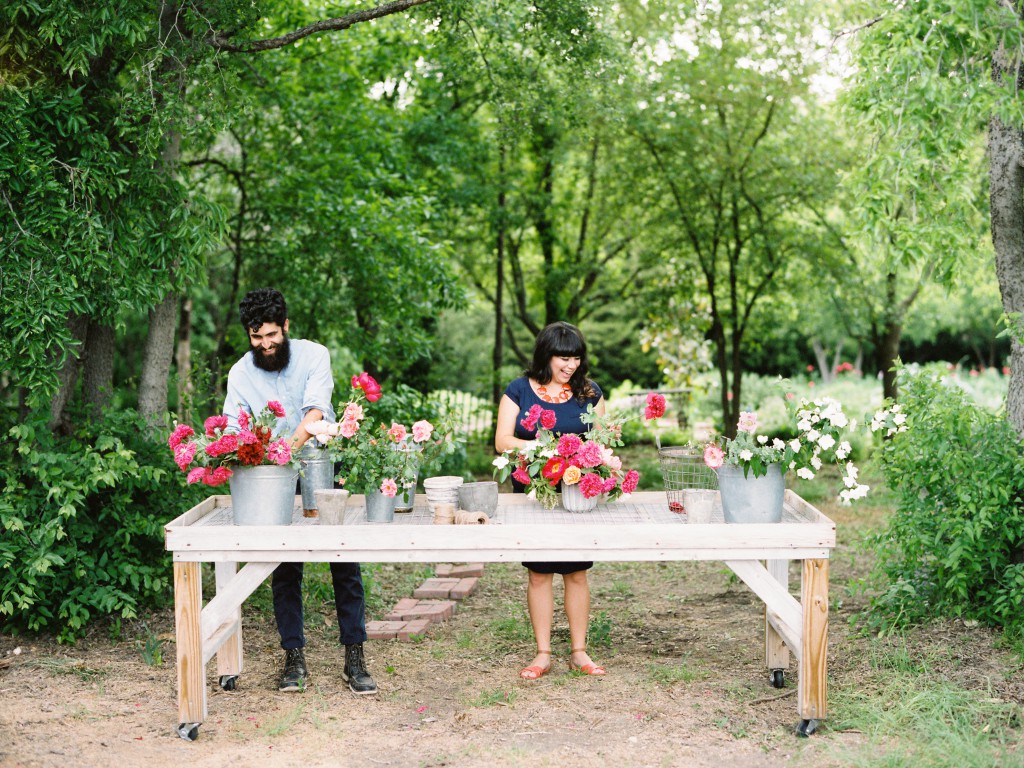
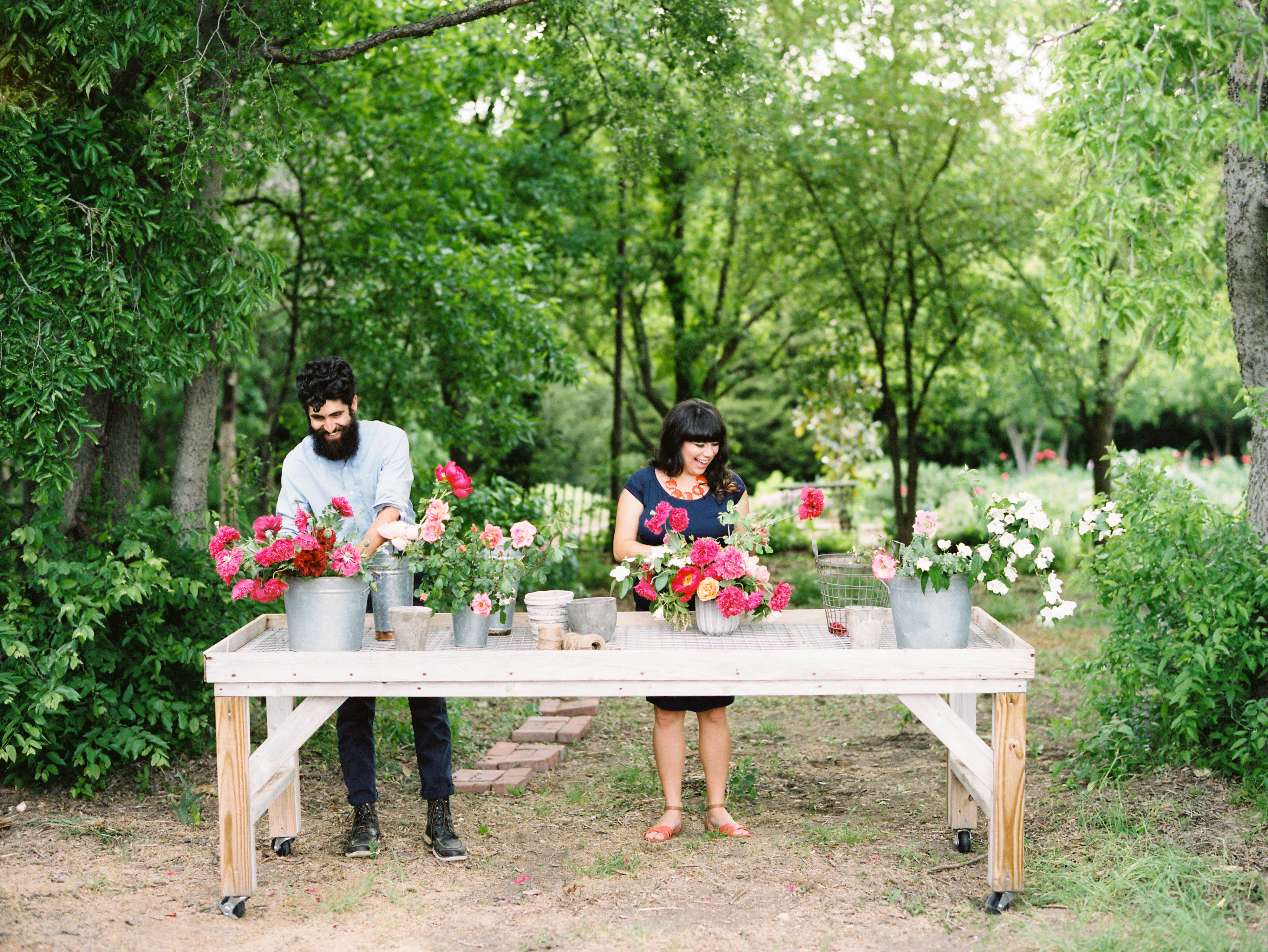
Adam and Alicia, flower arranging at Cynthia Alexander’s Quarry Flower Farm in Frisco, Texas (c) Ryan Ray
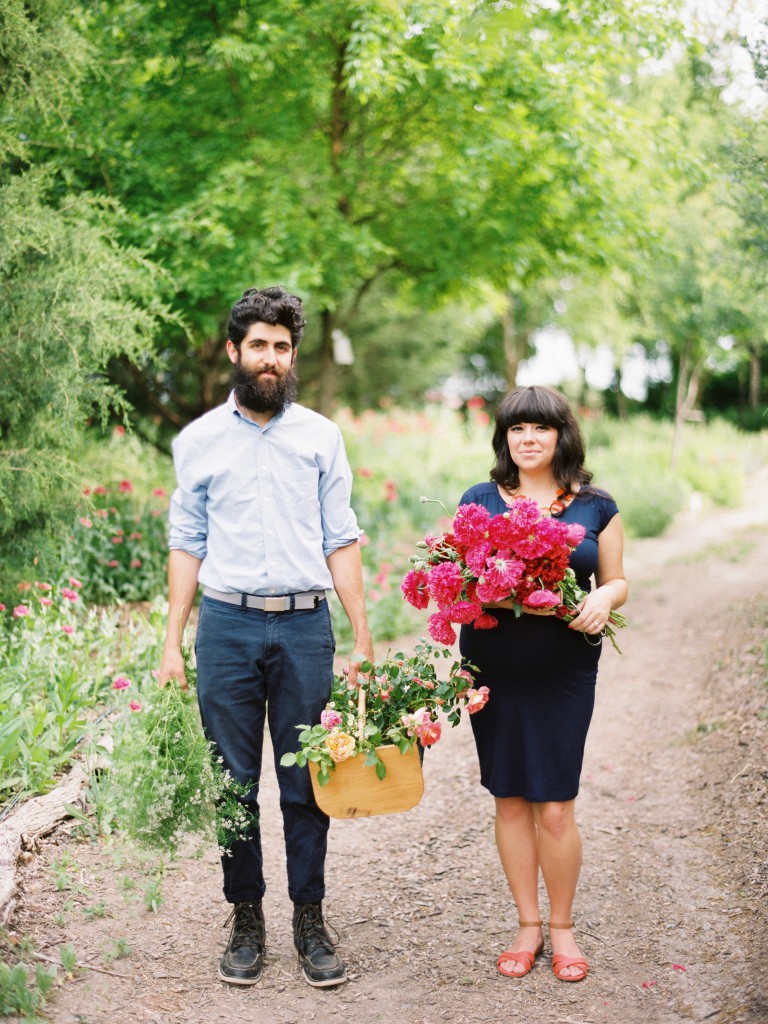
Another great moment on the flowe farm, captured by their frequent collaborator, photographer Ryan Ray.
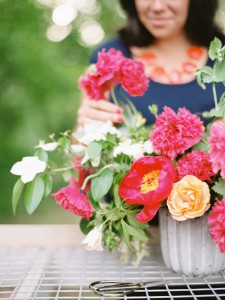
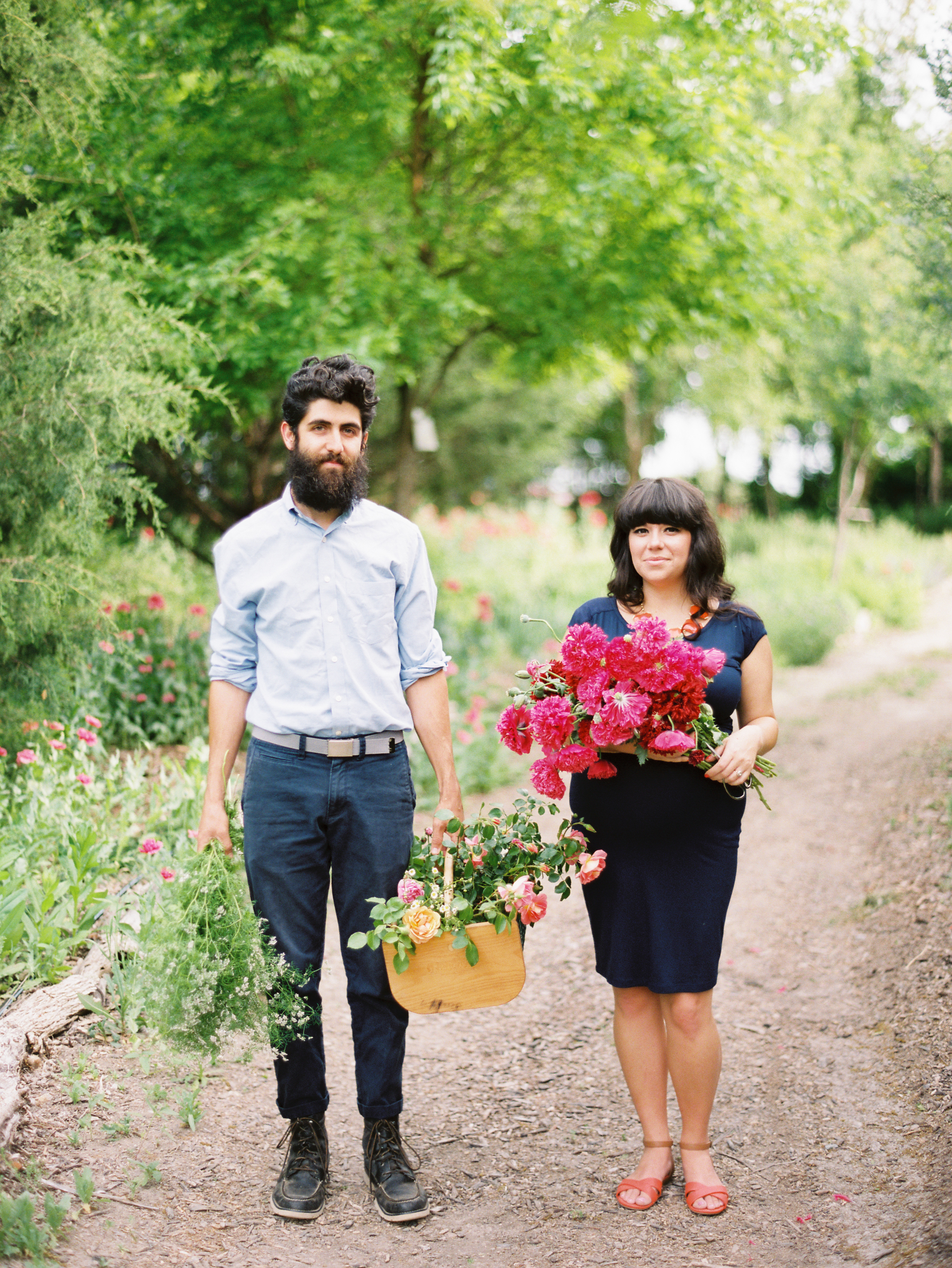
Alicia, up close, with some of her favorite just-picked, fresh-from-the-field flowers. (c) Ryan Ray
Today’s guest is Alicia Rico, co-owner with her husband Adam Rico of the Dallas-based floral and events studio Bows and Arrows.
This playful business name sums up their his-and-her style: Alicia is the feminine “bow” and Adam is the masculine “arrow.”
Their work has been showcased twice in Martha Stewart Weddings, and on every popular design and floral blog, as well as in countless other magazines.
Over the past few years, I’ve heard a lot about Alicia and Adam – and their fabulous floral aesthetic at Bows and Arrows. That’s because my friend Whitney White spent some time working with them as a studio manager when she lived in Dallas.
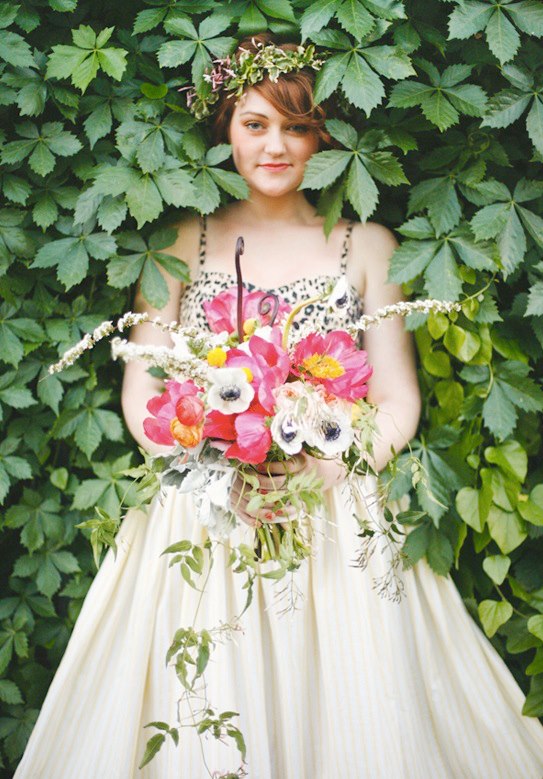
Whitney White in a 2012 Bows and Arrows photo shoot. Love this imagery! photo: (c) Apryl Ann
So last month, when Whitney and her beau Ryan Page were wed in Seattle, where they now live, Alicia and Adam came to join the celebration.
They were here as guests, and as part of the “friends of the bride” creative team who conjured up seasonal spring magic for Whitney & Ryan’s outdoor wedding — including at the wedding site, a local park, and at the reception venue – an intimate Italian restaurant that is a favorite of Whitney & Ryan’s.
Erica Knowles of Botany 101 Floral here in Seattle served as lead wedding designer and Texas flower farmer Cynthia Alexander of Quarry Flower Farm, a previous guest on this podcast, lent her creativity, as well.
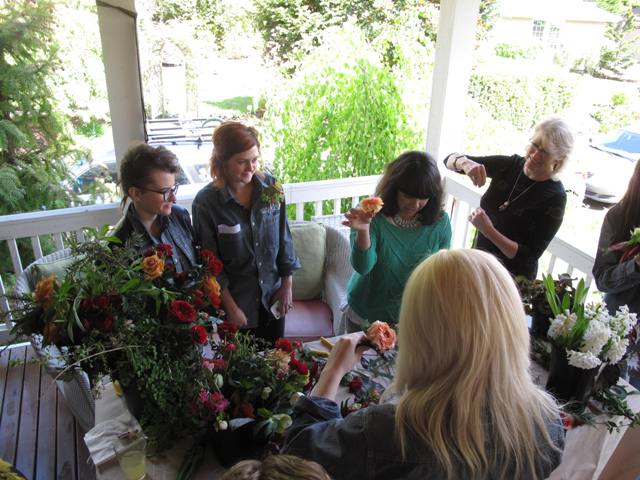
Just hours before the ceremony, Alicia Rico taught seven bridesmaids how to make floral crows to adorn their locks. (c) Debra Prinzing
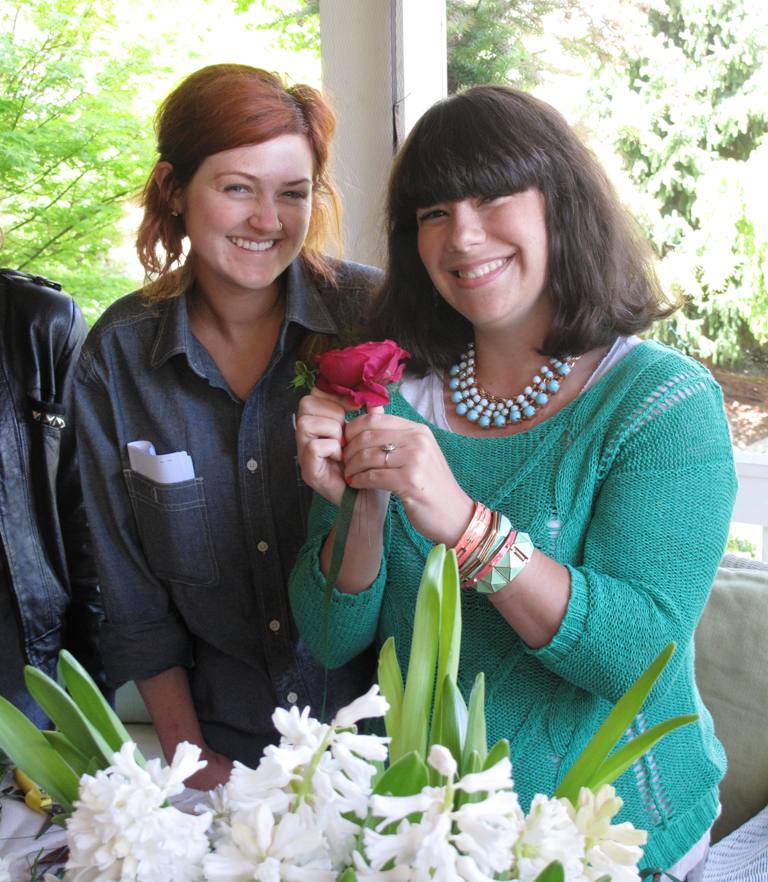
Alicia (right) with her former studio manager and bride-of-the-moment, Whitney White (left) (c) Debra Prinzing
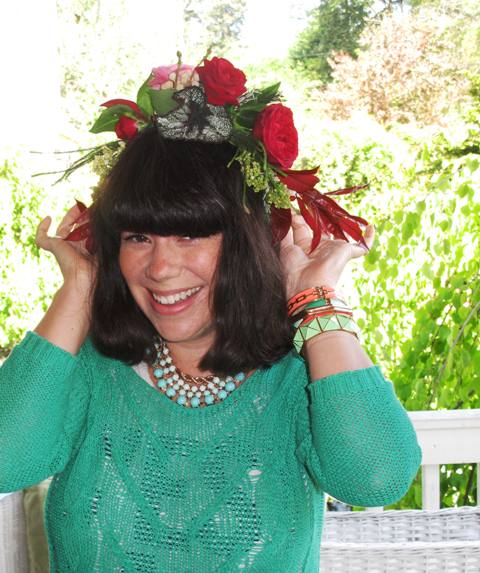
Alicia, modeling a floral crown. (c) Debra Prinzing
Much of this flower-making took place before, during and after the bridal brunch that Cynthia and I hosted at my house the morning of the wedding. After hearing about her from Whitney, I was thrilled to meet Alicia and learn more about her design philosophy, the business she and Adam have built, their work as conceptual floral artists and more.
And after a spirited, hands-on, mini-floral crown workshop for 7 bridesmaids (only one of whom had any floral design experience), which took place on our back porch, I grabbed Alicia and convinced her to sit down with me for a short podcast interview. I wanted to get to know her – and I wanted YOU to get to know her, too.
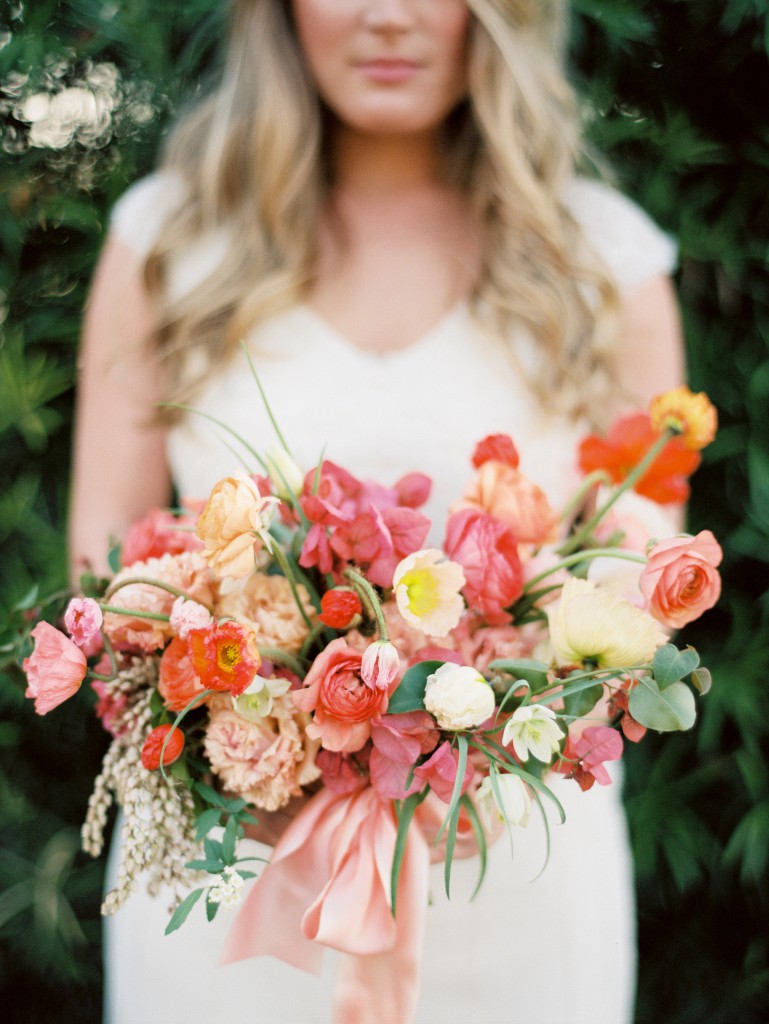
More artistry from Bows and Arrows (c) Ryan Ray.
On their website, they describe having a philosophy as follows:
Just as each flower is unique from the next, we carry the belief that each bride is unique from the next. Founded in 2009, Bows and Arrows is dedicated to the creation and communication of beauty via the art of floral and event design. We approach each event with the desire to preserve the integrity and natural presence of flowers and environments. Inspired by art, nature and culture, we build our aesthetic and design around what personally resonates with each bride to create an event that is purposeful, hand-crafted and lovely.
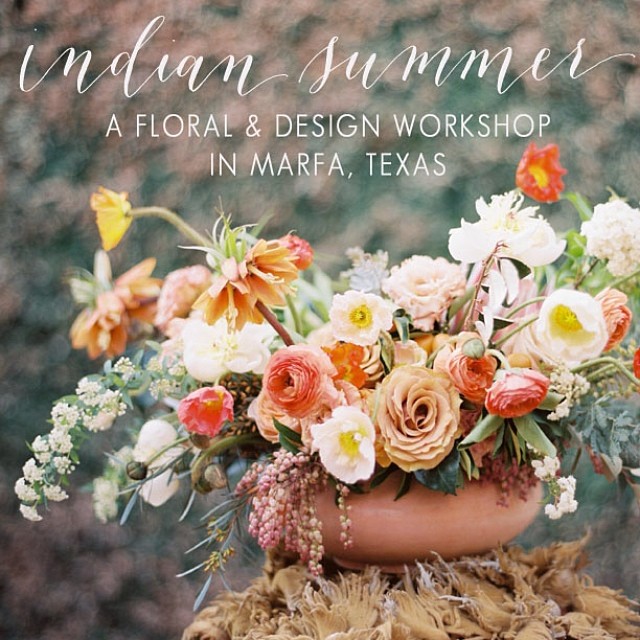
Please enjoy our conversation and be sure to visit my web site, debraprinzing.com to see photos of Alicia and Adam, of their floral work, and to get details about their forthcoming design workshop in Marfa, Texas, the hip and hot destination.
Thank you for joining me this week. Because of the support from you and others, listeners have downloaded episodes of the Slow Flowers Podcast more than 11,600 times! I thank you for taking the time to join to my conversations with flower farmers, florists and other notable floral experts.
Posted in Blog Posts, Creativity, floral design, General, Podcast Episodes, SLOW FLOWERS Podcast | 2 Comments »
May 11th, 2014
I’ve been home for a few weeks from my 11-day road trip that took me by plane to Southern California and back home again behind the wheel of a rental car. I have many fond memories (as well as the photographs that I collected), while stopping along U.S. Hwy. 101 on my way north to Seattle.
So here is a second travelogue, which I think many will enjoy.
I stopped at the home and garden of fellow writer and sweet friend Sharon Lovejoy and her partner in all, Jeff Prostivitch. They live in San Luis Obispo, a stunning area of coastal California, in a cozy bungalow surrounded by an oft-photographed and published garden.
There are several highlights from this short visit that I want to share.
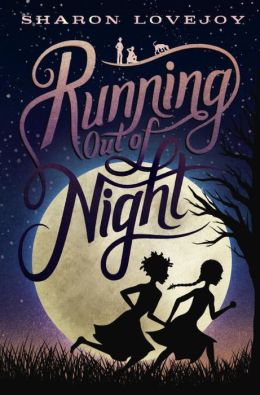 First of all, I got to hold in my hands the advanced readers’ copy of Sharon’s debut novel, Running Out of Night, which will be published in November.
On an earlier visit to Sharon and Jeff’s (I think it was in the fall of 2009), I tagged along with Sharon to a regular session with her writer’s group. This is the small gathering of writers in her area who have faithfully met with one another for years as they’ve read given both encouragement and critiques of each other’s writing projects. It was on that visit that I heard Sharon read aloud one of the chapters of her novel-in-progress.
So you can only imagine how thrilling it was to sit for a while on the sofa in their living room and read the first few chapters in the REAL book! If you have a young person in your life (ages 7-12), I urge you to order this book or ask your librarian to order it. It is an adventure that involves two young girls who are equally enslaved, despite the difference in their skin color. I thoroughly love the characters, the plot – and the dialogue! Sharon is a masterful storyteller and I can’t wait to get this book into the hands of my niece (a 4th grade teacher) and her students.
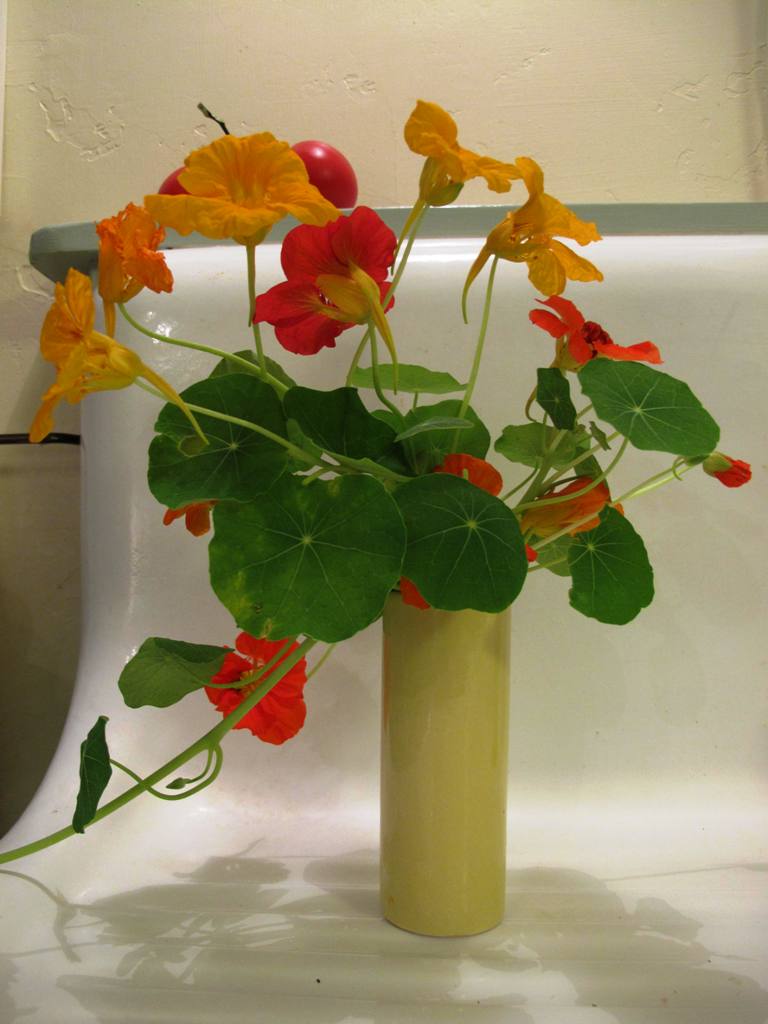
A bud vase displays charming nasturtium flowers and foliage, on the edge of the kitchen’s vintage farm sink.
I also experienced a treat that anyone who visits this abode is bound to see. This is the home of gardeners, naturalists and amateur botanists. Every single thing that grows in the Lovejoy-Prostovitch garden is a gift from the earth. And they cherish those gifts with fervor.
The simplest tendril, sprig or pod is elevated with love and affection by Sharon and Jeff. Their home is filled with tiny bouquets and posies. The whole idea of “bringing the garden indoors” takes on new meaning when jam jars, bottles and shot glasses are filled with minature floral arrangements. A delight for the eyes. Here is a peek at some of the ones I noticed (I’m sure there were more!):
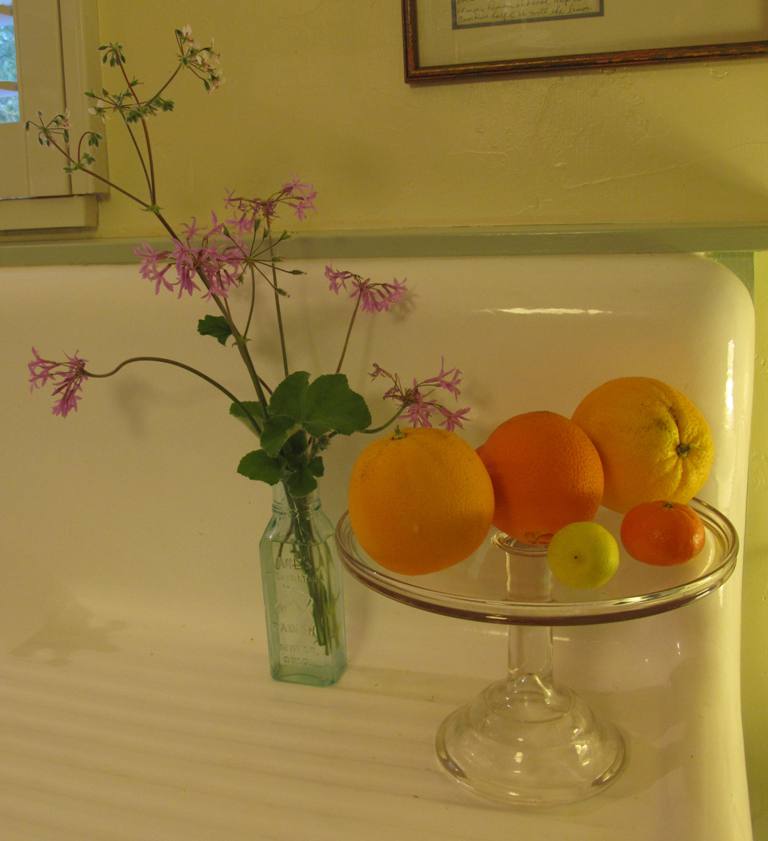
Geraniums (pelargoniums) in a bottle; citrus on a cake plate.
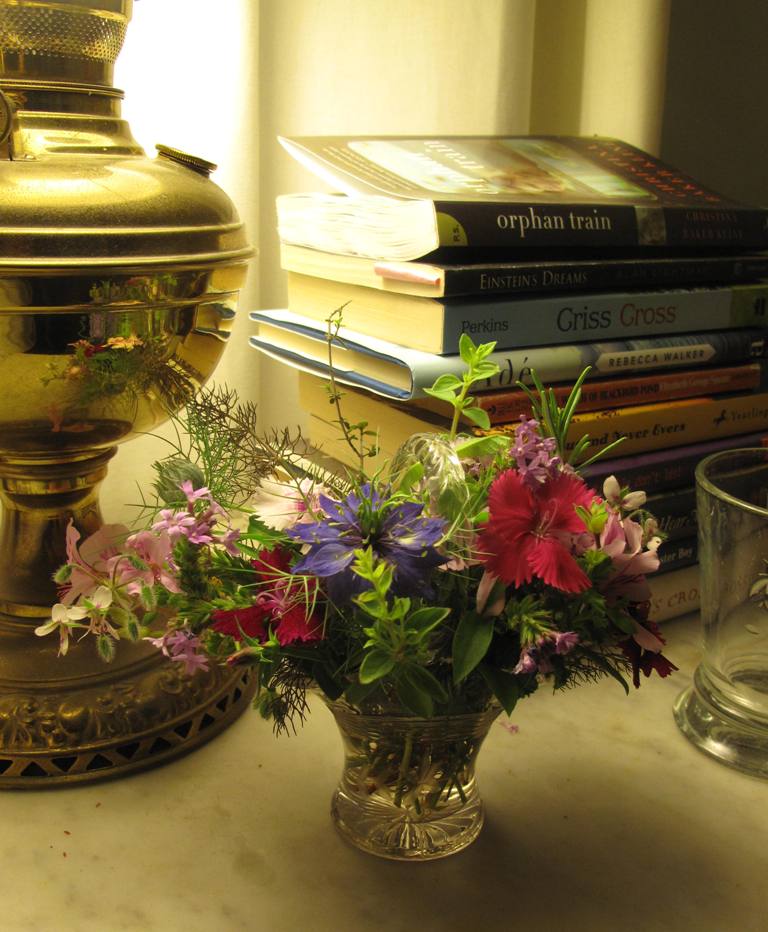
The posy by my bedside table. With the sweet William and sprigs of herbs tucked inside, you can only imagine how it scented my dreams that night!
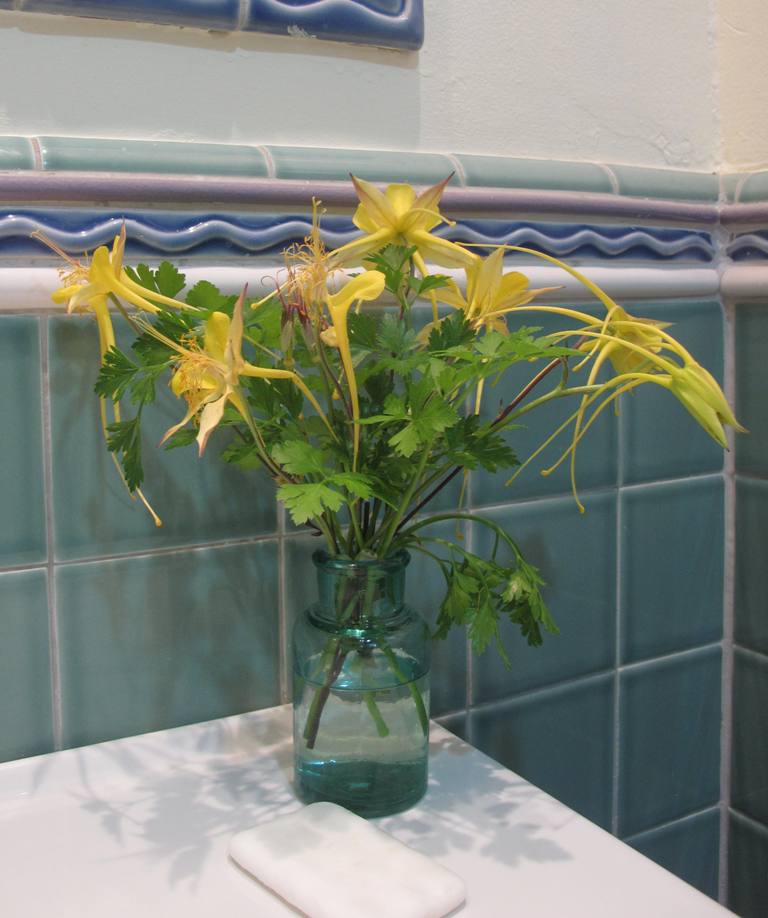
Cheery golden-yellow columbine in the bathroom. Is that parsley as the greenery?
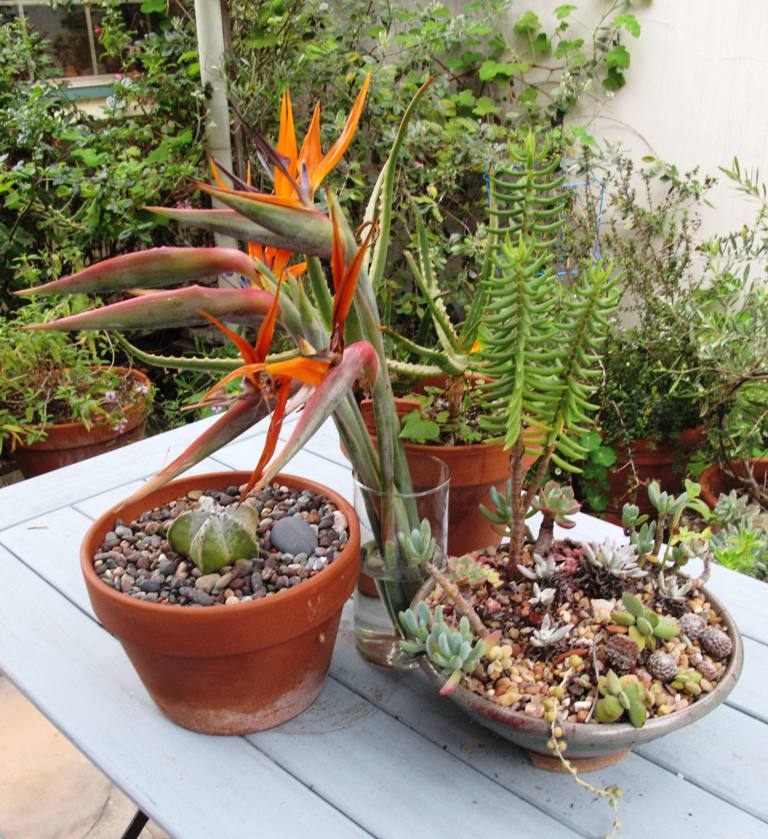
Vases of flowers even appear in the garden, like this display of bird-of-paradise, collected with the potted succulents.
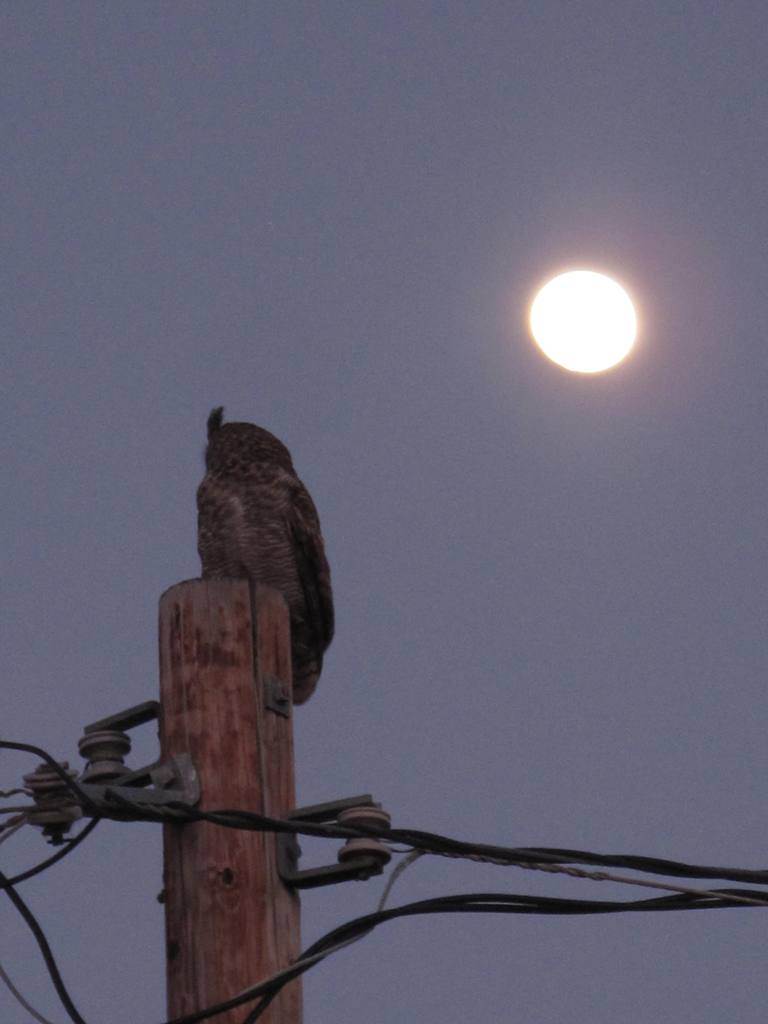
Mr. Owl, with the moon, spotted on that magical night at Old Edna.
That evening, Sharon and Jeff brought me along as their guest to a party given by their friends Aline and Frank.
This lovely couple lives in New England but spends part of the winter months staying in the San Luis Obispo area to be closer to some of their grandchildren.
While they have rented many types of houses for their winter interludes, this year found them settled in at a place outside SLO called Old Edna.
Sharon promised: “Oh, Deb, you’re going to love it!”
And she was right.
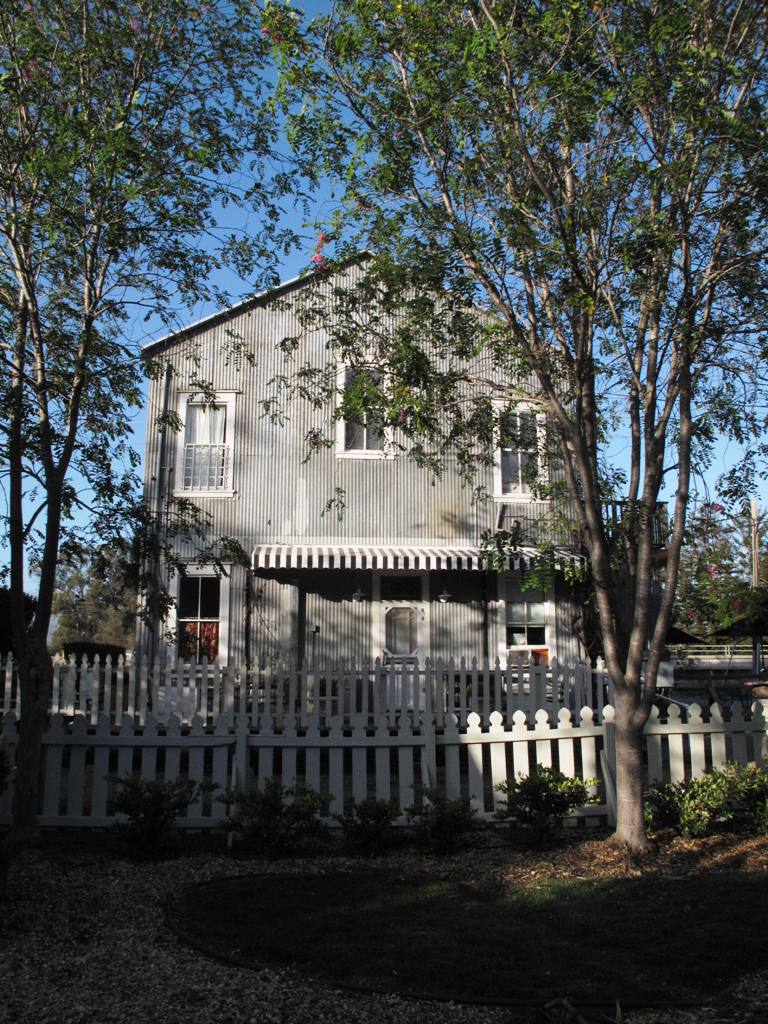
Seen from the back, through the trees, the two-story tin mercantile building, circa 1908.
Old Edna has an amazing history, and I hope to do it justice with this brief summary (please follow all the links to read more). Today, Old Edna is the creation of a dreamy artist named Pattea Torrence.
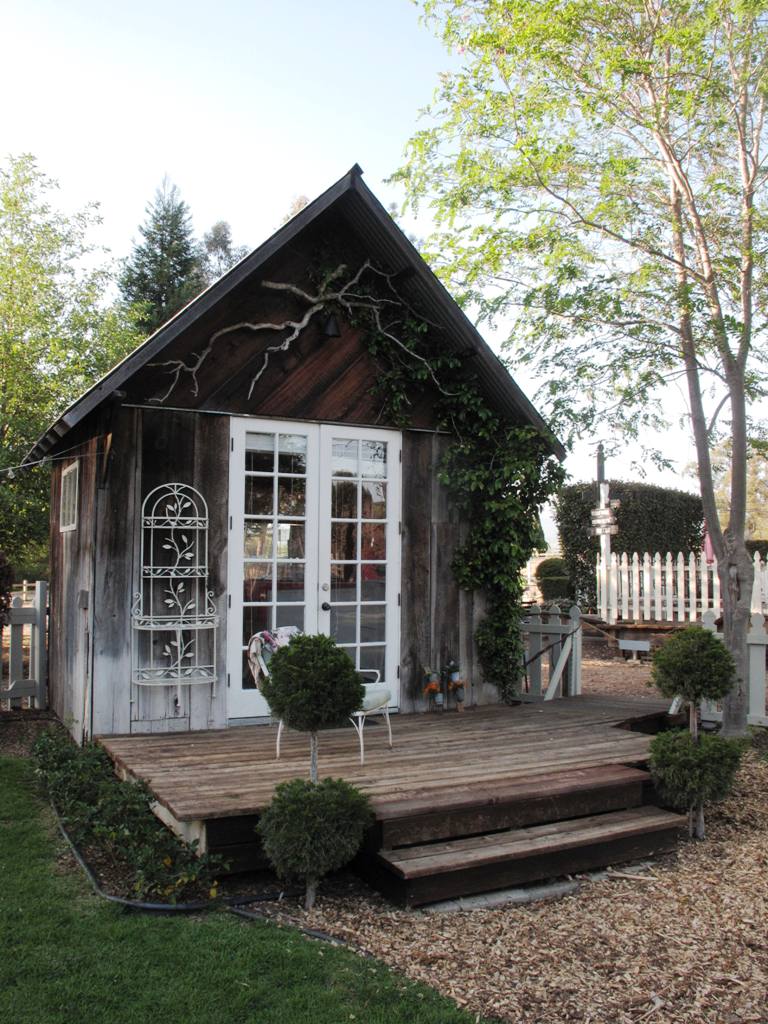
Pattea’s office, in a charming garden shed on the Old Edna grounds.
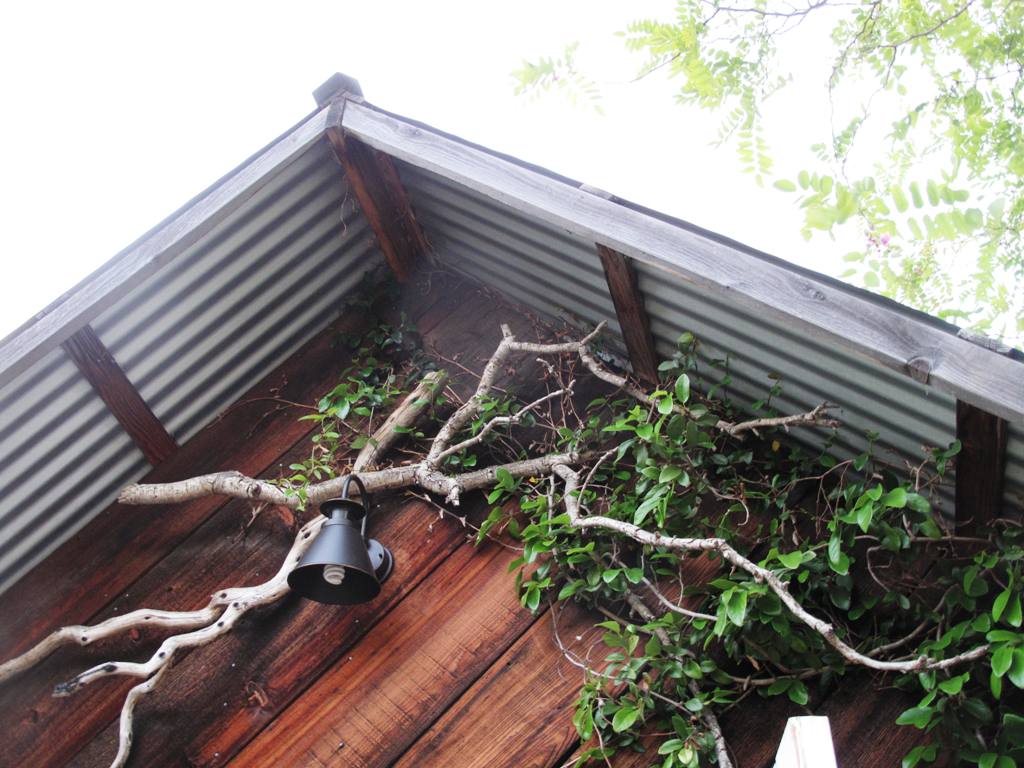
Love how an old branch becomes a “trellis” under the eaves.
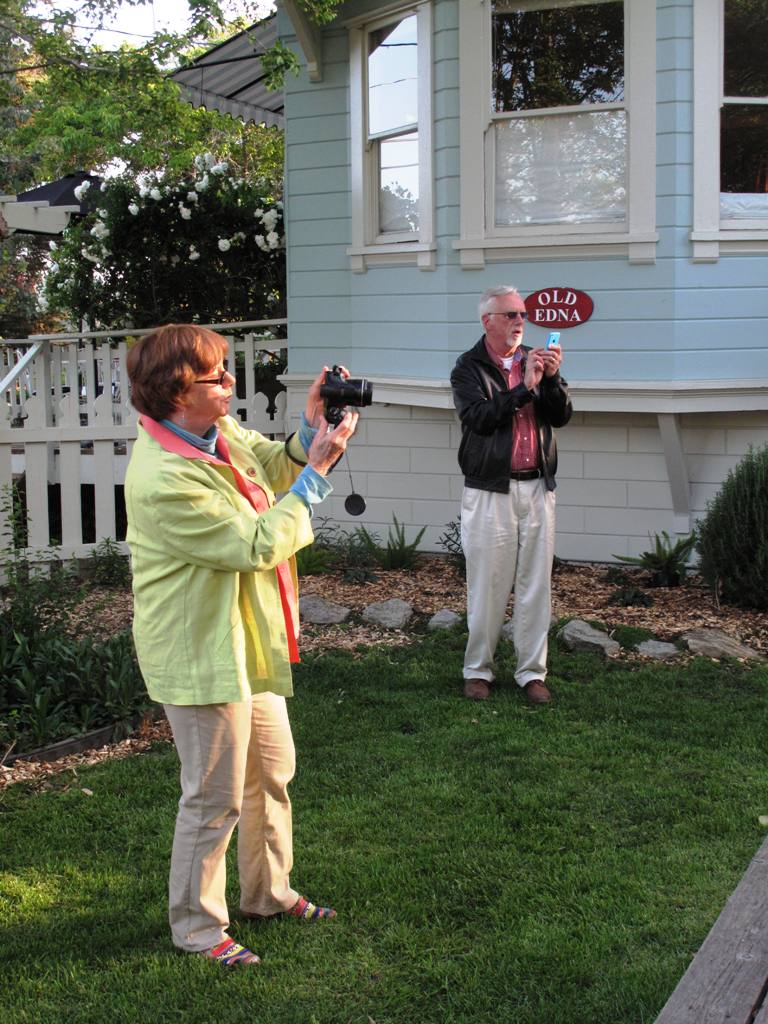
Sharon and Jeff, both taking photos, at Old Edna. They are standing in front of the original Old Edna cottage.
Pattea has saved this elderly hamlet that time almost forgot, turning it into a destination that includes guest cottage farm stays, wine tasting, special events and more.
In 2000, Pattea and her husband Jeff Kocan purchased the two-acre, 100-year-old townsite with its running creek in Edna Valley (a world-class, wine-producing region) and two-story tin building (once a general store, dance hall and post office, dating back to the turn of the century, 1900).
They have salvaged and restored many of the structures and created a magical place for guests who stay for short or extended periods. There are two guest cottage on site, a three-bedroom Suite Edna and a one-bedroom honeymoon cottage called DeSolina.
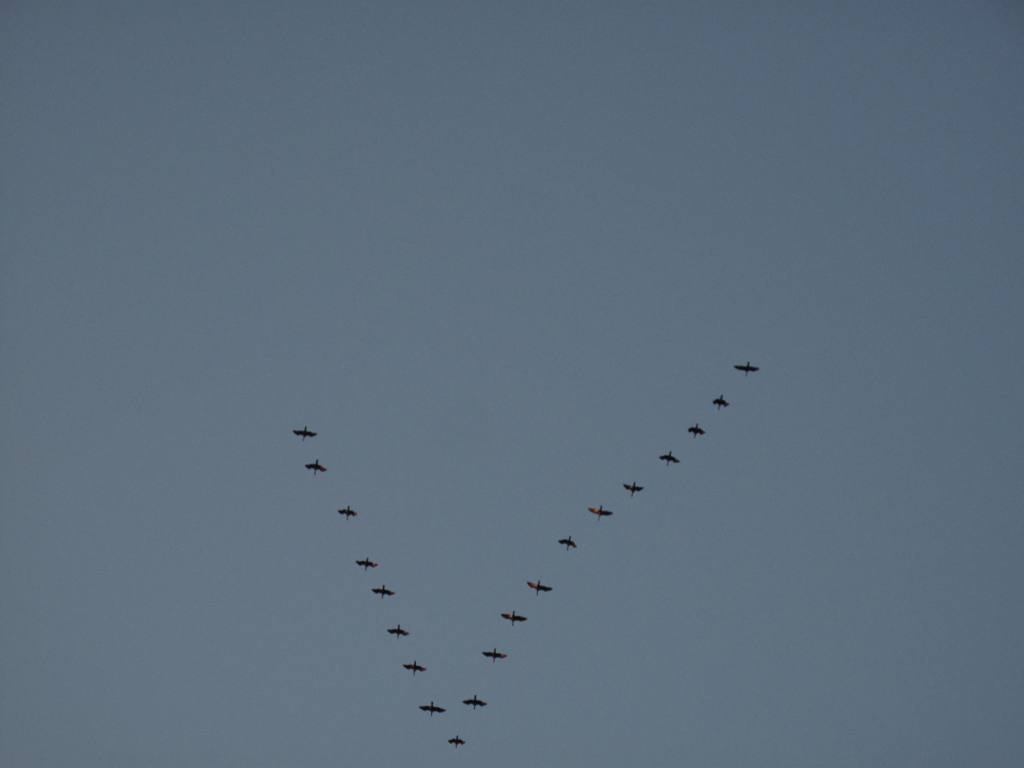
Another stunning sight: Birds in flight, in the sky overhead – a perfect V formation.
Pattea is affectionately known as “The Mayor” of Old Edna. She was a gracious host, although I have to also thank Aline and Frank for their amazing hospitality!
I hope to return and spend more time, but these photos will give you a glimpse of what I experienced. Up next: A visit to The Sun Valley Group, an unforgettable flower farm in Arcata, California.
Posted in American Grown, Architecture, Blog Posts, Book reviews, Creativity, Entertainment, floral design, General, Playfulness, Sheds & Havens, Spiritual Practices, Writing | 2 Comments »
May 7th, 2014
Podcast: Play in new window | Download
Subscribe: Apple Podcasts | Podcast Index | | More
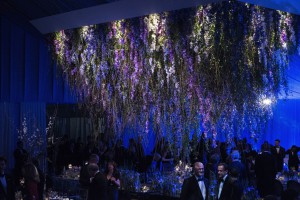
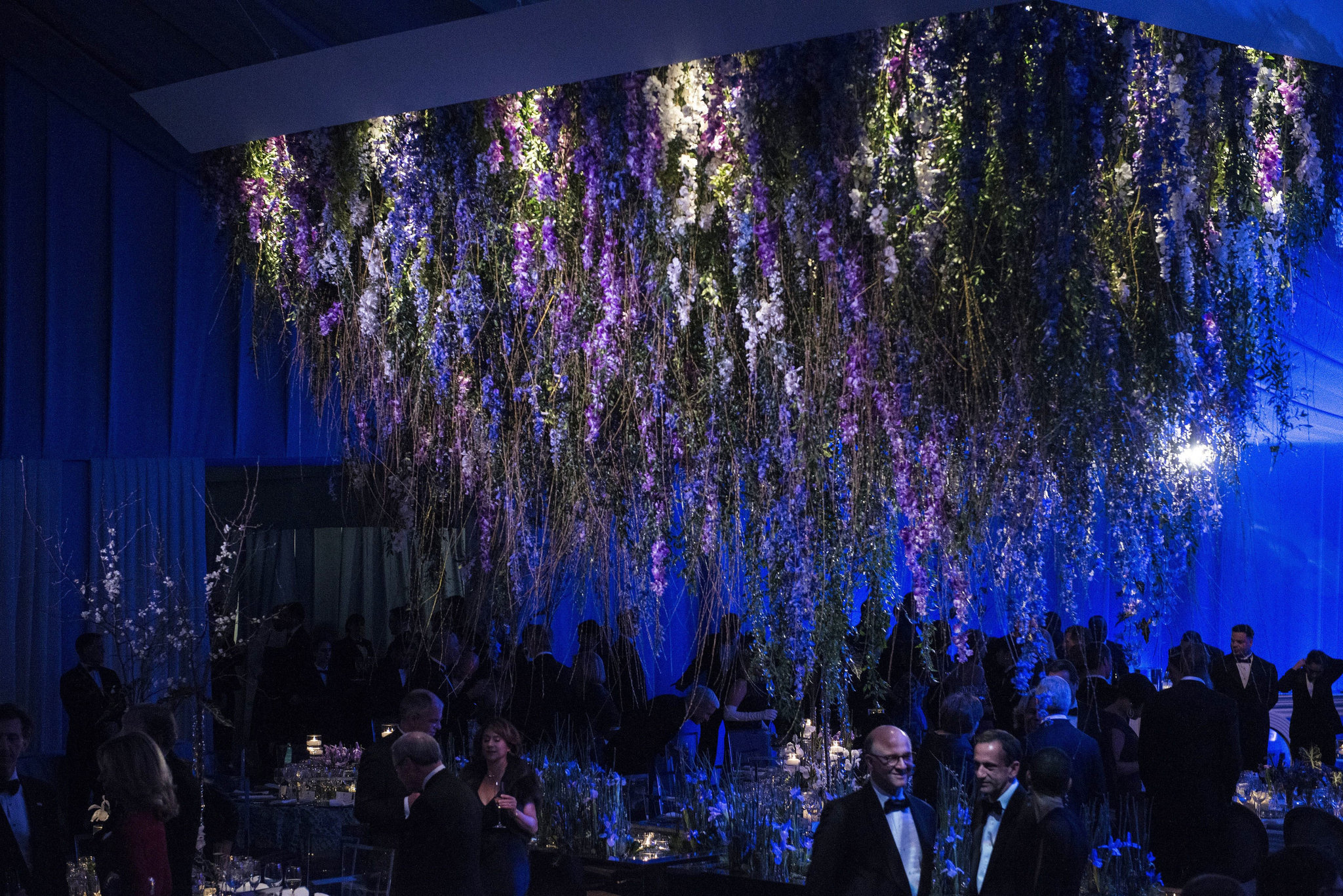
The floral ceiling chandelier — using all American grown floral ingredients — from the White House State Dinner (photo: Brendan Smialowski/Agence France-Presse)
I have exciting news to share this week: The New York Times published a piece by former food columnist Marian Burros entitled: “My, What Lovely Flowers. Who Lobbied for Them? — after a push by growers, U.S. products adorned a White House Dinner.”
More than two months ago, I wrote about this exciting event — a stop on the Slow flowers journey in which the White House acknowledged for the first time ever its use of American Grown flowers for a public function. That was the State Dinner for the French President on February 11th. You can read my February 21st blog post, and my analysis of that event here.
I’m gratified to see that NYT’s follow this story and give it the gravitas it deserves. Shining a positive light on American flowers is important, but there is much more that needs to be done in order to change the broken floral industry. One thing YOU can do is to join me in simple floral activism.
You can do this by visiting a compelling new web site: VOTE FOR FLOWERS. There, you’ll be able to identify your member of Congress and send him or her a letter urging support and engagement in the new Congressional Cut Flower Caucus.
Like others in the pro-domestic flower movement, I do NOT want the White House’s use of American flowers to be a one-time gesture. Like the presidential commitment to serve local, American-sourced food AND wine at White House functions, it is only right that domestic flowers grace the tables of all White House events. Stay tuned for ongoing updates on this story.
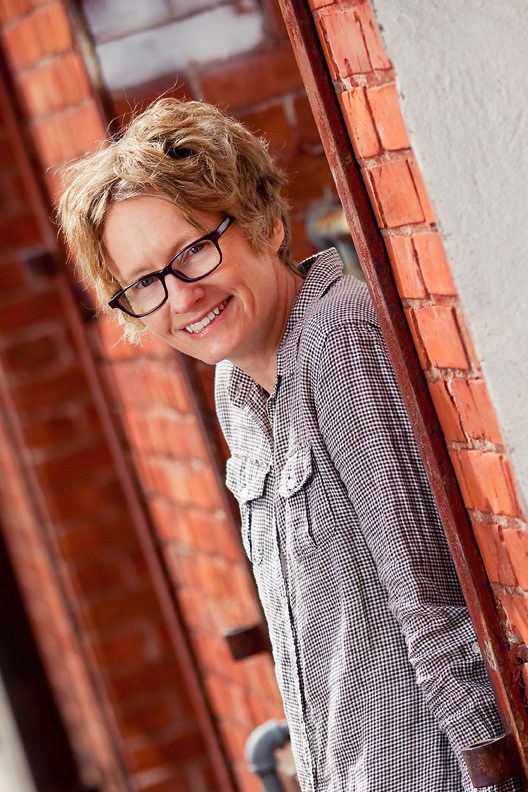
Writer and all-around curious observer of the natural world, Amy Stewart (c) Delightful Eye Photography
Now let’s turn our attention to today’s fabulous guest: Amy Stewart.
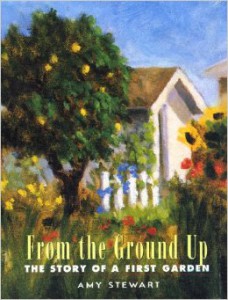
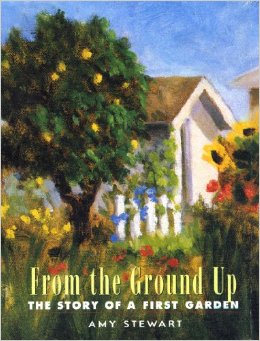
Amy’s first book, “From the Ground Up,” was published in 2001 by Algonquin Books.
I first learned about Amy in 2001 when a local bookseller here in Seattle told me about From the Ground Up, a memoir by a young Texas native who wrote about her first grown up garden. The bookseller called it “heartwarming and said I had to read it.
Amy was that author. She wrote From the Ground Up as a journal documenting her post-college Santa Cruz garden. When I reviewed in 2002, I wrote:
“There’s something very endearing and charming about Stewart’s self-effacing writing voice. She truly wants us to experience the same emotional highs and lows, the essential passion of gardening, that she lives through. It’s a wonderful late-night read . . . Pick it up as an alternative to moonlight gardening.”
A few years later, I met Amy at the SF Flower & Garden Show. We were back-to-back speakers and met during that “changing of the guard” thing that happens when one speaker wraps up her book-signing and another takes that seat warmed by her predecessor. It was just a casual introduction, but there was a familiar recognition of a kindred spirit in the garden-writing world.
Since then, our friendship has been based on mutual admiration, similar professional interests and occasional collaboration. In fact, in 2011, Amy and I teamed up with three others to launch GREAT GARDEN SPEAKERS.COM, an online speakers bureau for our profession.
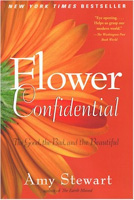
 And so it goes. My world changed when Amy Stewart wrote Flower Confidential in 2007. At the time, I had already begun interviewing American flower farmers and florists, unaware that she was writing an expose about the Global Floriculture Industry. Things happen like that in our worlds – after all, how could you explain the proliferation of vegetable gardening books that flooded the marketplace over the past five years?
But back to Flower Confidential. It truly was a book ahead of its time. When Amy wrote about the huge machine that relies on cheap floral imports, she started a conversation that resonated with me and with so many others – it was a dialogue I wanted to join. I was inspired to continue seeking out and telling the stories of American flowers and the people who grow and design with them.
When The 50 Mile Bouquet was published in 2012, I was honored that Amy agreed to write the forward, her generous show of support for the next chapter in the American Grown story. In that forward, Amy wrote:
“A great deal has changed since Flower Confidential. The notion of supporting local farmers was just gaining traction. The idea of celebrating our seasonal abundance – even if that means giving up tomatoes in January – was not quite mainstream. Just as “slow food” was catching on, the flower world was beginning the shift that The 50 Mile Bouquet celebrates.”
Indeed, a great deal more has changed – for the good – since Amy wrote our forward in the fall of 2011.
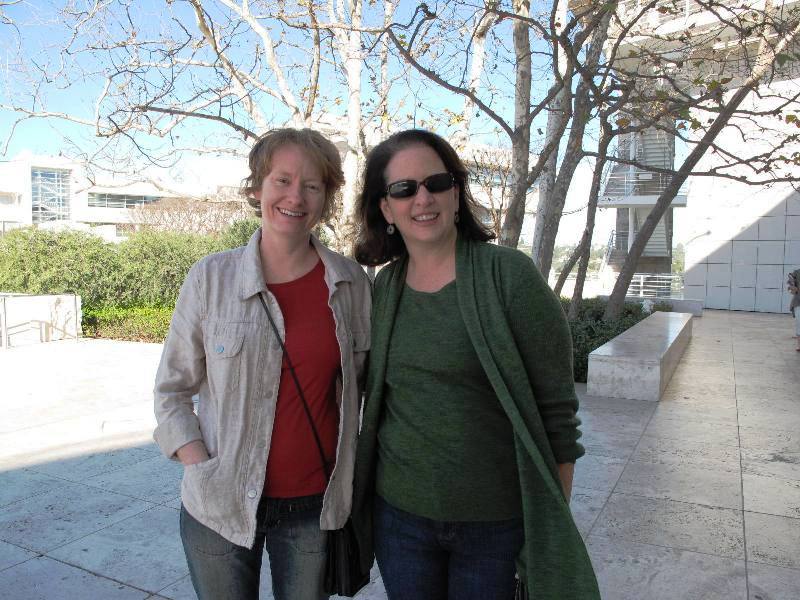
Amy Stewart and Debra Prinzing.
With Amy’s blessing, I’ve gone down the flower garden path to document the exciting cultural shift in the domestic floral industry. All you have to do is read about the White House’s choice of American grown flowers to understand that.
During the same time, Amy’s career has skyrocketed. She is the award-winning author of six books on the perils and pleasures of the natural world, including four New York Times bestsellers, The Drunken Botanist, Wicked Bugs, Wicked Plants, and Flower Confidential.
Amy lives in Eureka, California, with her husband Scott Brown. They own an antiquarian bookstore called Eureka Books and tend a flock of unruly hens in their backyard.
Amy has appeared on NPR’s Morning Edition and Fresh Air, she’s been profiled in the New York Times and the San Francisco Chronicle, and she’s been featured on CBS Sunday Morning, Good Morning America, the PBS documentary “The Botany of Desire,” and–believe it or not– TLC’s Cake Boss.
Four of Amy’s previous books have been New York Times bestsellers. They have been translated into eight languages, and two of them–Wicked Plants and Wicked Bugs–have been adapted into national traveling exhibits that appear at botanical gardens and museums nationwide.
She is the recipient of a National Endowment for the Arts fellowship, the American Horticulture Society’s Book Award, and an International Association of Culinary Professionals Food Writing Award. In 2012, she was invited to be the first Tin House Writer-in-Residence, a partnership with Portland State University, where she taught in the MFA program.
I recently stopped at Amy and Scott’s house in Humboldt County, northern California, while on a road trip from LA to Seattle. They don’t live too far off of Hwy 101 and it was an easy detour, my 2nd visit to their charming Victorian house surrounded by a slightly unruly garden and an opinionated clutch of hens.
As is typical, our conversations involved book writing, book publishing, book promotion and more — all those things that authors obsess about. And before I left the following morning, Amy and I sat down in her cozy work space – her combination writing and art studio in the attic of this vintage residence, and talked about Flower Confidential.
Amy Stewart’s next gift to the book-reading world is a historical crime novel about a real woman who was an early 20th century sheriff and detective. Girl Waits With Gun, is a novel based on a true story. It will be published by Houghton Mifflin Harcourt in 2015.
Visit amystewart.com to follow Amy and all of her projects – including her busy lecture schedule and her other outlet -painting and drawing.
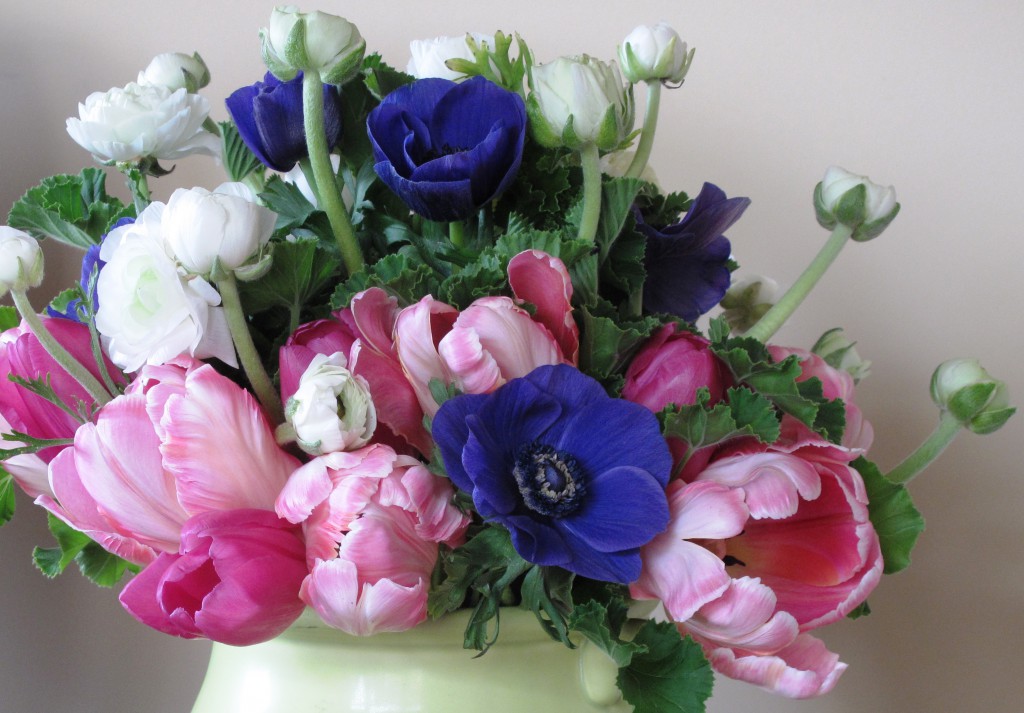
Here’s a photograph of a floral arrangement I made last spring – and then wrote about.
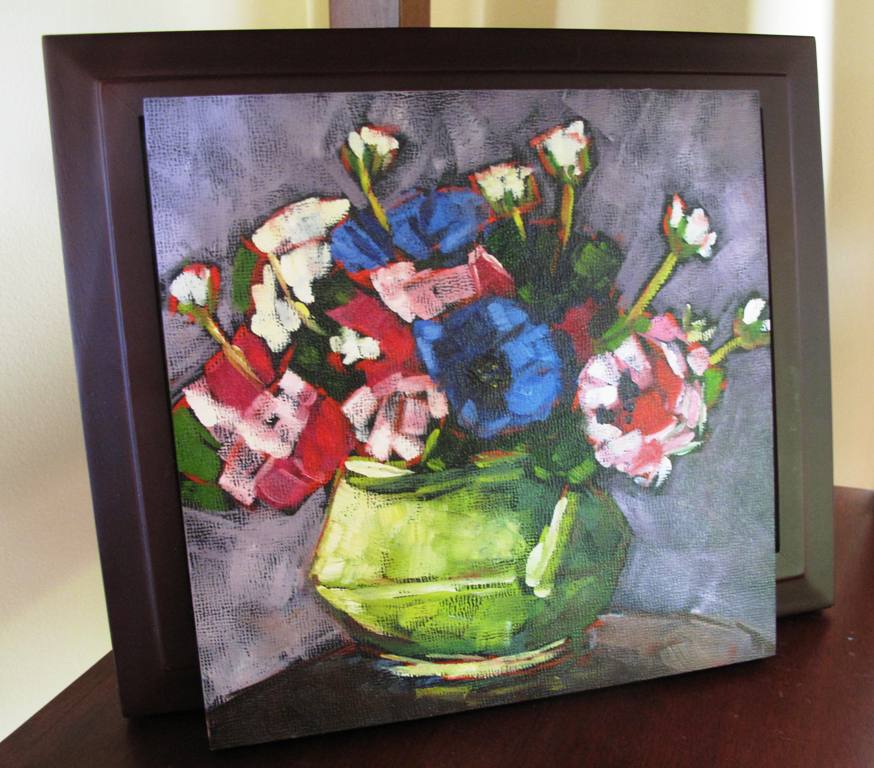
Amy’s charming oil painting of that same arrangement ~ a surprise and cherished gift.
And enjoy this Q&A with Amy about why she loves to paint.
Because of the support from you and others, listeners have downloaded episodes of the Slow Flowers Podcast more than 11,000 times! I thank you for taking the time to join to my conversations with flower farmers, florists and other notable floral experts.
If you like what you hear, please consider logging onto Itunes and posting a listener review.
Until next week please join me in putting more American grown flowers on the table, one vase at a time.
The Slow Flowers Podcast is engineered and edited by Hannah Holtgeerts and Andrew Wheatley. You can learn more about their work at hhcreates.net.
Posted in American Grown, Blog Posts, Book reviews, Creativity, floral design, General, Podcast Episodes, SLOW FLOWERS Podcast, Writing | 1 Comment »
May 4th, 2014
Yesterday, I hosted a hugely inspiring gathering of floral designers
We celebrated spring with a hands-on workshop to explore color, texture, form and scale
Below is the result of our creative expression
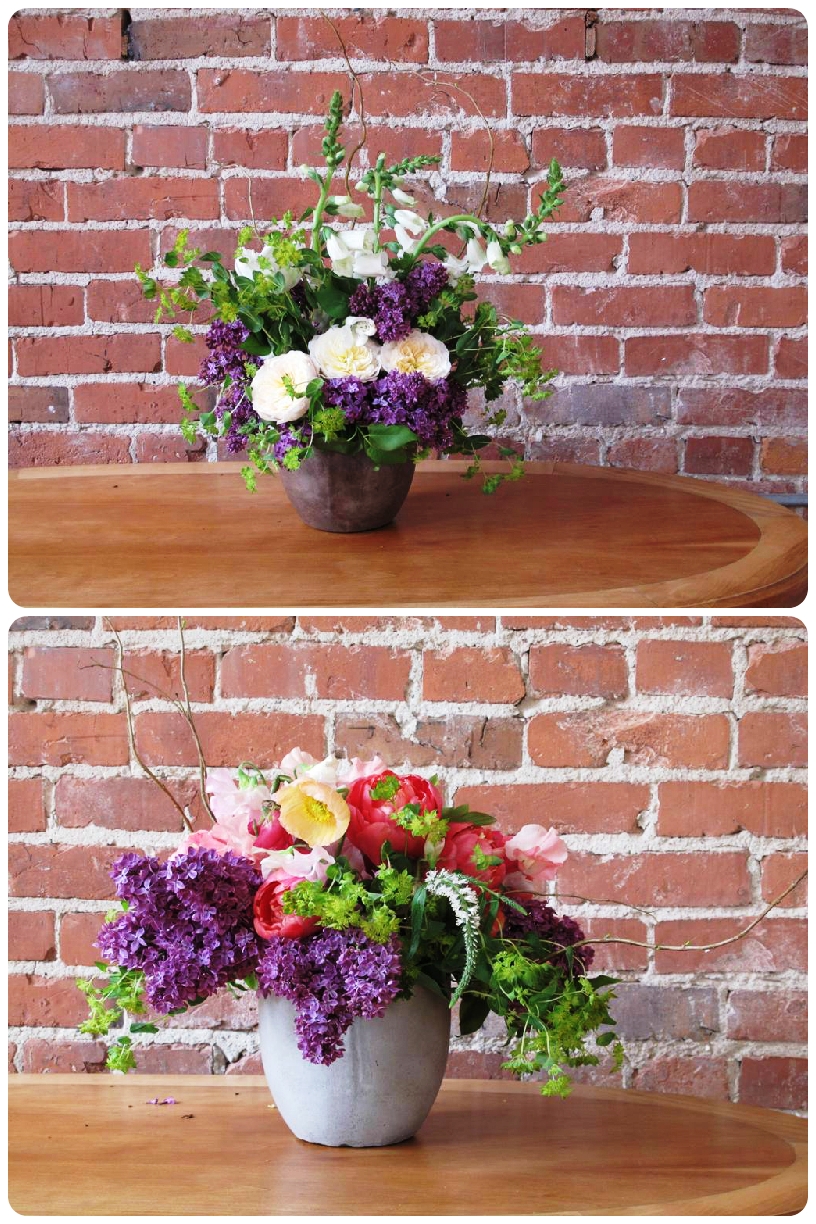
Floral Designs Above, from top: SUSAN WADE and TRACY STRAND (Mother & Daughter)
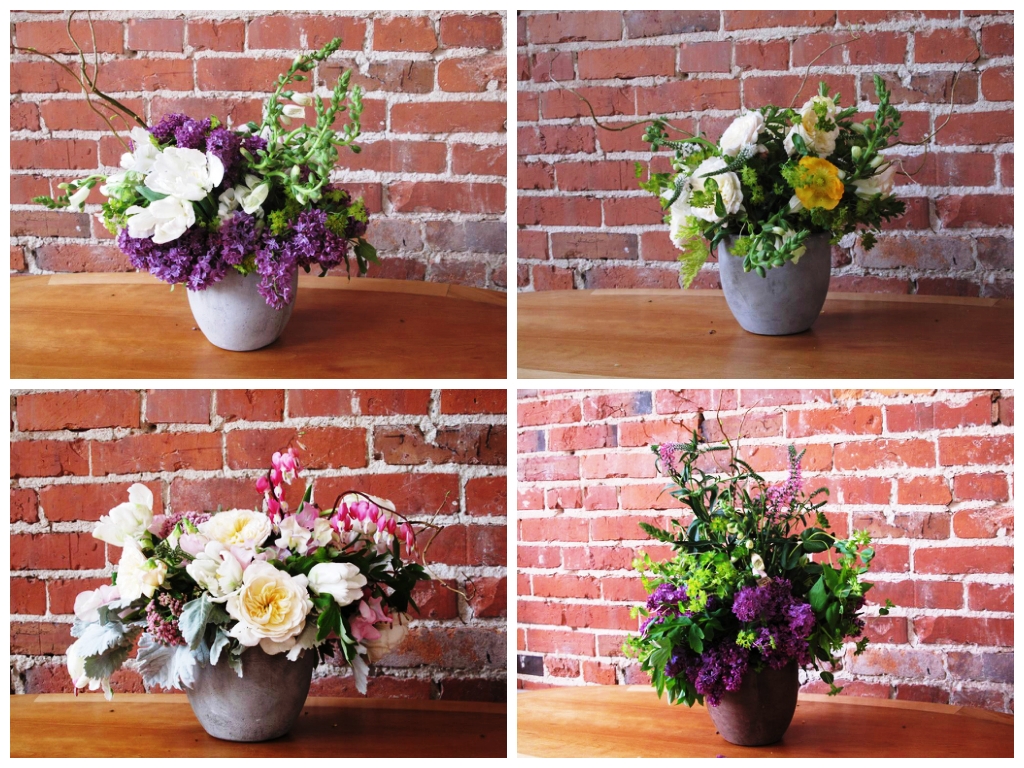
Floral Designs Above, clockwise from top left: DEBRA PRINZING, SUSAN CARTER, SUSAN KESE and SHAWN CHAMBERLAIN
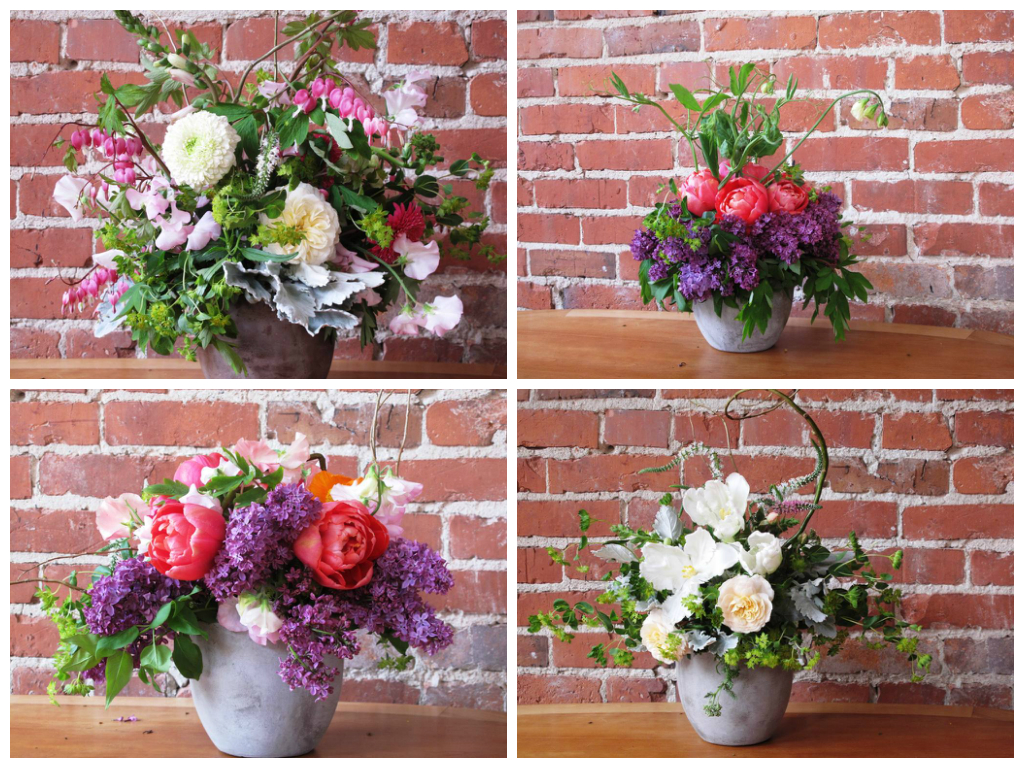
Floral Designs Above, clockwise from top left: KEITA HORN, KRISTIANN SCHOENING, MAIJA WADE and KRISTIN MATTSEN
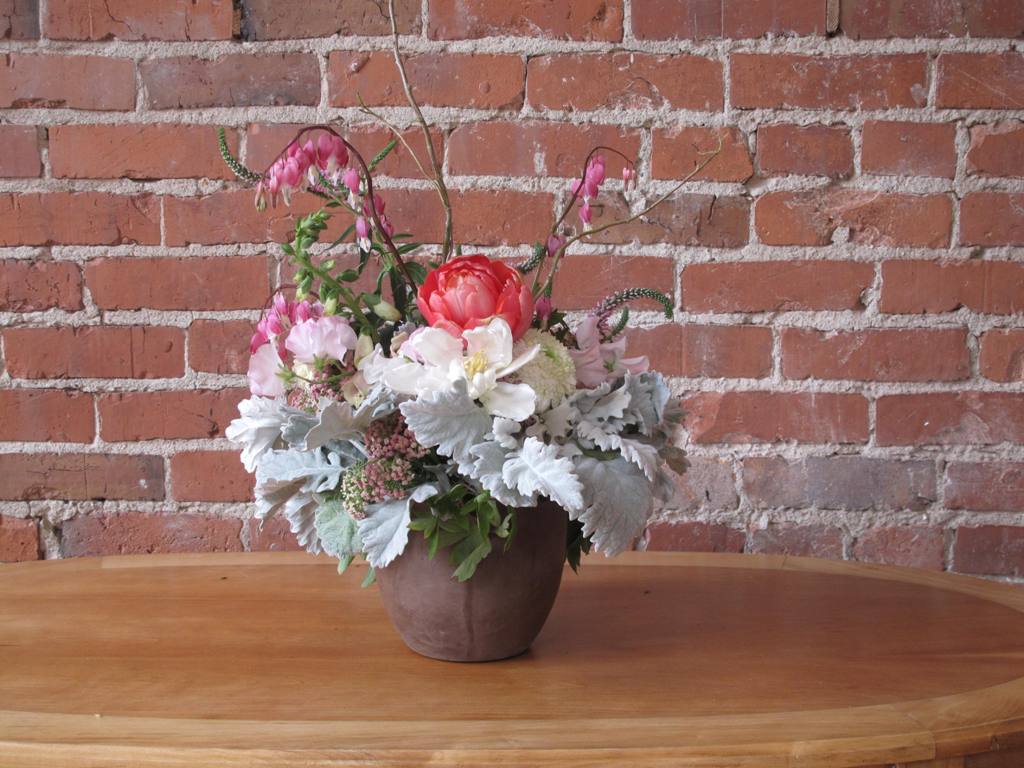
Floral Design Above: ZAPOTE GREGORY
Floral Sources:
Seattle Wholesale Growers Market
Curly willow, Oregon Coastal Flowers
‘Peony’ Tulips, Ojeda Farms
Bleeding Heart, Ojeda Farms
Sweet Peas, Jello Mold Farm
Bupleurum, Foxglove, Gerrondo Gerberas, Yarrow and Veronica — California Grown
Florabundance (thanks for the donation of California-grown products!)
Garden Roses from Rose Story Farm
Dusty Miller
Lilacs
Parrot tulips
Posted in American Grown, Creativity, floral design, General, Plants, Slow Flowers: 52 Weeks | 2 Comments »
© Debra Prinzing, all written and photographic content. Website design/development by Willo Bellwood/Metric Media



 This just in: A New Kind of Hors d’Oeuvre