The Slow Flowers Podcast is the award-winning show known as the “Voice of the Slow Flowers Movement.” Launched in 2013 as the original flower podcast, we’ve devoted more than 10 years to covering the business of flower farming, floral design, and the Slow Flowers sustainability ethos. Listen to a new episode each Wednesday, available for free download here at slowflowerspodcast.com or on iTunes, Spotify, and other podcast platforms.
The Commission is committed to making a difference as an advocate for American Grown Flowers.
I’ll be working closely with CCFC on a number of initiatives to promote domestic flowers in 2015, and I promise to keep you posted as details unfold.
Today on the Slow Flowers Podcast we launch the Slow Flowers Challenge, share all about a new urban flower farm in Pittsburgh, and explore the meaning of flowers on a personal level with author and gardening personality Fran Sorin.
To kick off 2015, I invite you to join in the fun and creativity of the Slow Flowers Challenge. This project was inspired by Katherine Tracy, a talented plantswoman, designer and owner of Avant Gardens Nursery in Dartmouth, Massachusetts.
Katherine blogged about taking the “Slow Flowers Challenge” after hearing my presentation at Blithewold Mansion and Gardens in Rhode Island this past fall…and she started using the hashtag #slowflowerschallenge, which in turn prompted other people to create seasonal bouquets, photograph them and share their designs on Facebook, Instagram and personal blogs.
Katherine’s artistic arrangements reveal her love of the natural world, the seasons, the plants, the gifts of the garden and wilder places. I’ve so enjoyed seeing these bouquets pop up across the web – thoroughly serendipitous and seasonal – representing pure joy for a moment in time. SO I thought, “why don’t we make the Challenge available to everyone who loves local flowers?”
I encourage you to check out these very simple rules and download a free SlowFlowersResourceGuide2015 here. Sign up to receive weekly design updates and follow a link to the Slow Flowers Pinterest Gallery, where you are welcomed and encouraged to post your seasonal arrangements. Let’s have fun, make beauty, and change the American floral industry with new (and more seasonal) habits.
Briefly, before getting to our main guest, I also invited Jonathan Weber to share what’s going on with greenSinner, a Pittsburgh-based floral design, wedding and event studio and urban micro flower farm that he owns and runs with partner Jimmy Lohr.
Past guests of this podcast, the two have made good on their dream — to buy more land and establish a working flower farm. Jonathan and Jimmy recently purchased 4 acres of long-neglected land inside the Pittsburgh city limits. It’s called Midsummer Hill Farm.
I couldn’t be more excited to see them take this major step, but so much is needed to get seedlings and bulbs into the soil in time for flowers to bloom in 2015. Here’s a recent article featuring greenSinner, Midsummer Hill Farm and Jimmy and Jonathan’s crowd-funding campaign on Indiegogo, which runs through January 27th. I encourage you to check it out and perhaps invest in the growth of local flowers in Pittsburgh.
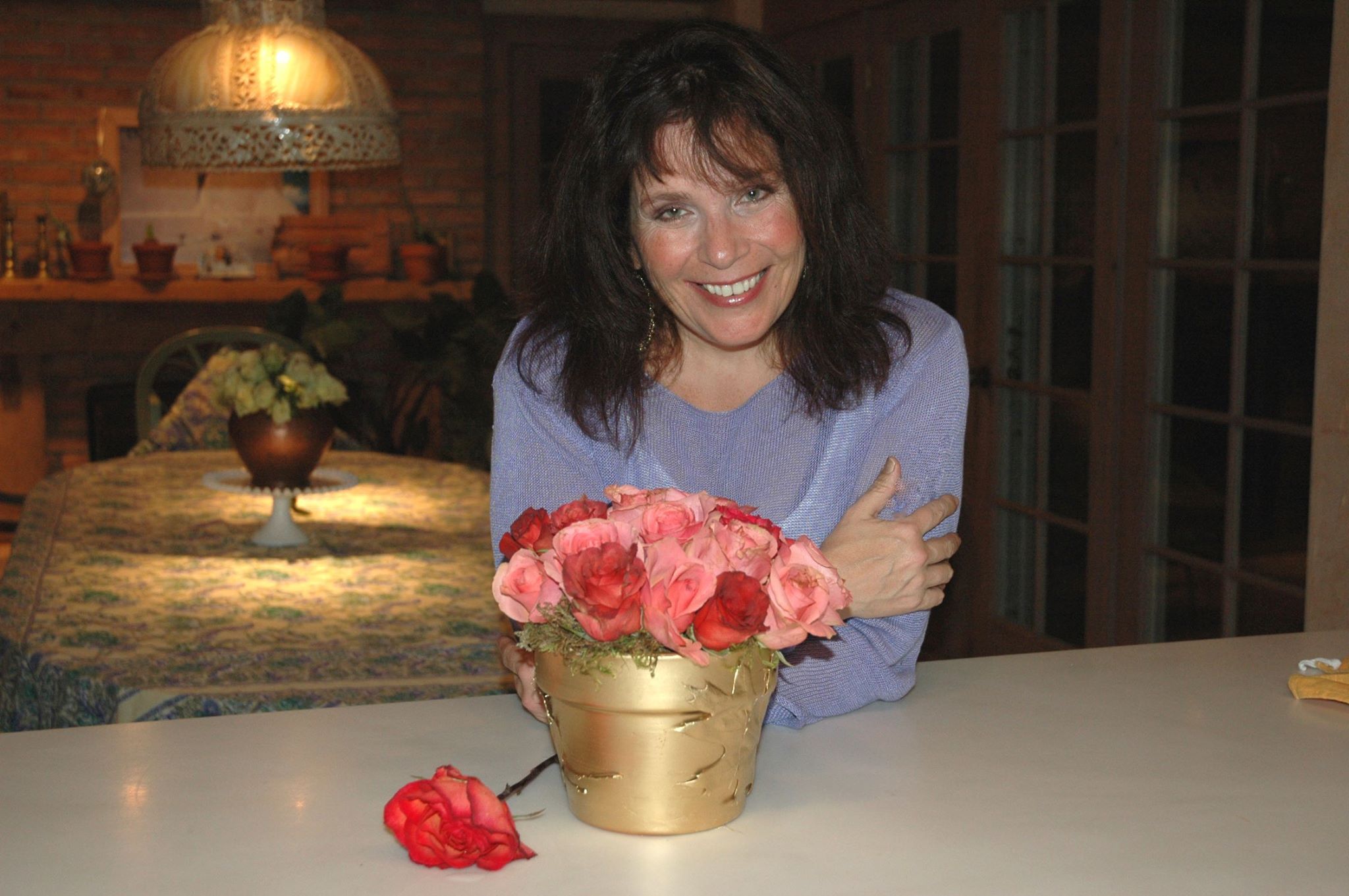
Fran Sorin, author of “Digging Deep.”
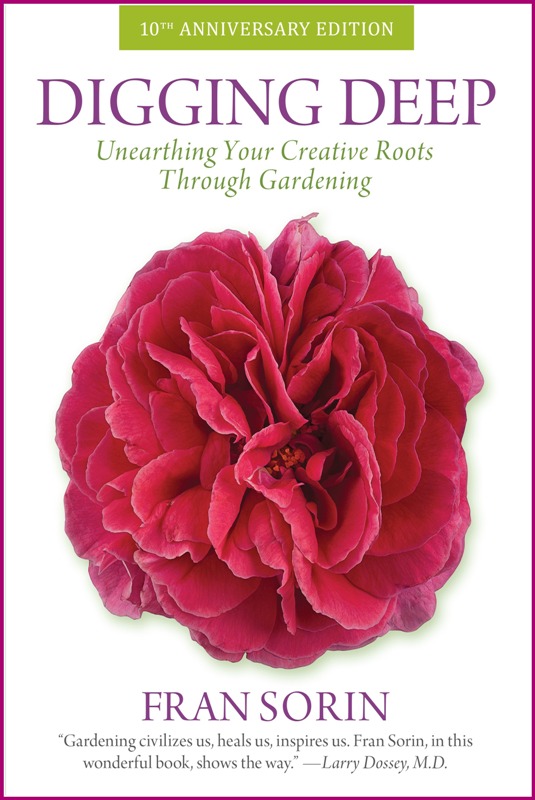
The just-released, 10th Anniversary Edition of “Digging Deep.” Read on to find out how you can enter to win!
Today’s guest Fran Sorin is an author, gardening and creativity expert, and deep ecologist. Her book, Digging Deep: Unearthing Your Creative Roots Through Gardening, was groundbreaking when published in 2004. It was the first book to address gardening in the context of creativity, and as a tool for well-being and personal transformation. Here is a link to my blog post about “Digging Deep for Flower Lovers,” sharing favorite excerpts from Fran’s book.
Fran recently released an updated 10th Anniversary Edition of Digging Deep. The book is even more vital today, because our culture has become increasingly obsessed with technology and progressively more “nature deprived.”
From the moment Fran decided she wanted to share her passion for gardening with a large audience and approached the local Fox TV station in Philadelphia about the idea, she became a fixture on the TV circuit. She spent years as a gardening authority on Philadelphia’s Fox and NBC stations; she was the regular gardening contributor on NBC’s WeekendToday Show, and made several appearances on CNN, MSNBC, Lifetime, HGTV, DIY, and the Discovery Channel. She is one of the creators of the popular weekly dose of garden news at Gardening Gone Wild Blog.
Fran is celebrating her tenth year as a CBS Radio News correspondent. Her Digging Deep gardening features are heard several times a week on CBS Radio stations throughout the United States. She has also written dozens of articles about gardening and well-being for USA Weekend Magazine, Radius Magazine, and iVillage.
She has spent more than twenty-five years initiating and working on community projects that have served the diverse community of West Philadelphia, most recently initiating a community garden and learning center on the grounds of a church in an underprivileged neighborhood of West Philadelphia.
Even prior to becoming an ordained interfaith minister, Fran was ministering to folks whether she was taking on the role as a garden designer, a media trainer, a TV personality, or a radio host. Fran’s greatest strengths are in connecting to audiences and individuals and galvanizing them to take action. In these tumultuous and technologically obsessed times, when so many of us feel stuck, scared, and disconnected from ourselves and others, her optimistic, grounded values, and empowering message are needed more than ever.
Here is Fran’s video – she’s a woman on the street, sharing her inspiring “Give a Flower. Get a Smile” project:
If you want to participate in the drawing for a free copy of Digging Deep, post a comment about your earliest memory of gardening or experiencing nature. Your comment enters you into the drawing, which takes place at midnight Pacific Time, this Saturday, Jan. 10th. We’ll announce the winner next week.
My personal goal is to put more American grown flowers on the table, one vase at a time. Listeners like you have downloaded the Slow Flowers Podcast more frequently than ever before. We’re at nearly 30,000 downloads, which will be an exciting milestone to reach in the coming week. So I thank you!!! If you like what you hear, please consider logging onto Itunes and posting a listener review.
The Slow Flowers Podcast is engineered and edited by Andrew Wheatley and Hannah Holtgeerts. Learn more about their work at hhcreates.net.
What better New Year’s Resolution than to resolve to live locally with your flowers and floral designs for the coming year?!
This week launches the Slow Flowers Challenge, and I invite you to join in the fun and creativity.
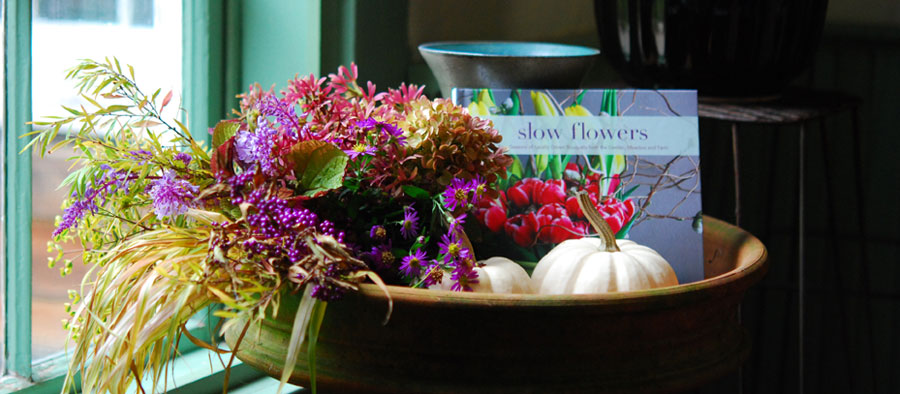
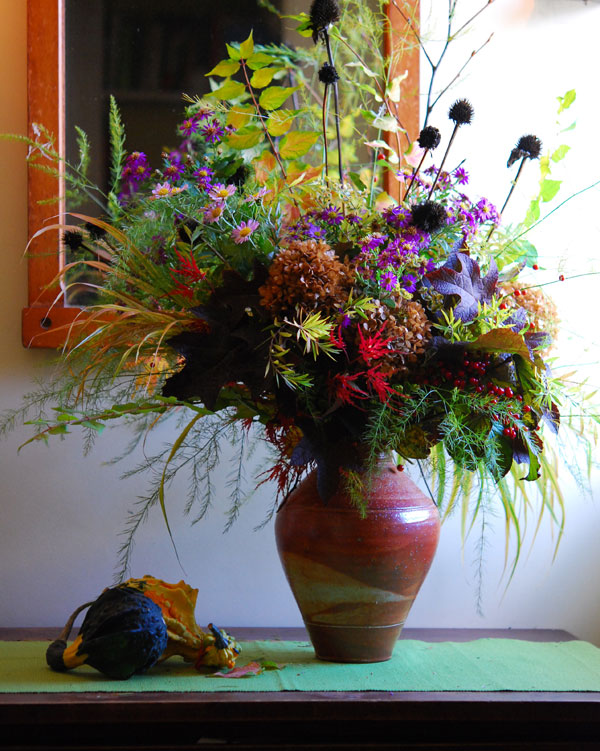
A possible collection of stems and fruit inspired by Slow Flowers, photographed by Katherine Tracy of Avant Gardens Nursery.
This inclusive project was inspired by Katherine Tracy, a talented plantswoman, designer and owner of Avant Gardens Nurseryin Dartmouth, Massachusetts.
Katherine’s Nov. 7th arrangement, created the week after we met at Blithewold in Rhode Island.
She started using the hashtag #slowflowerschallenge, which in turn prompted other people to create seasonal bouquets, photograph them and share their designs on Facebook, Instagram and personal blogs.
Katherine’s artistic arrangements reveal her love of the natural world, the seasons, the plants, the gifts of the garden and wilder places where she lives and gardens in New England.
I’ve so enjoyed seeing these bouquets pop up across the web – thoroughly serendipitous and seasonal – representing pure joy for a moment in time. These personal expressions resonated with me – they brought me back to the year I spent making one bouquet per week from the flowers that grow around me.
“Why don’t we make the Challenge available to everyone who loves local flowers?”
It’s official and you’re invited to join The Slow Flowers Challenge 2015.
The Rules:Live in the season. Source locally. Use earth-friendly materials and supplies. The more frequently you arrange flowers, the more familiar you’ll become with each of these aspects.
What: The Slow Flowers Challenge is an ongoing practice of creating seasonal arrangements and sharing your designs with the Slow Flowers Tribe.
Why: The practice is timeless. The gesture is universal. Inspired by the exquisite beauty of a garden or by the sentiment of a special occasion, we gather flowers and foliage and place them in a vessel to display in our homes or give to another. Floral design is a three-dimensional art form that blends horticulture and nature with sculptural composition. At its best, bouquet making is a personal expression unique to the designer’s tastes and point of view.
When: This is the 2015 Challenge. It will run from January 2015 through December 31, 2015. You can join at any time during the year.
How Often: The Challenge format allows you to participate at whatever frequency works for your schedule. We like to suggest these options: 365 Days, 52 Weeks, 12 Months or 4 Seasons.
When I created the Slow Flowers book, I designed one bouquet per week for 52 weeks. But you might decide to create a monthly bouquet, or a seasonal arrangement – or, if you’re really dedicated – a daily design! The main thing is that you decide what works for you and get started.
Share! Post a photo of your arrangement to our Slow Flowers Challenge Pinterest Page. And if you share it elsewhere, please use #slowflowerschallenge or tag @myslowflowers link on Twitter so others can see what you’ve created.
Resources to Help & Inspire You:
Sign up here to Join and Receive a weekly email with season-perfect Slow Flowers Tips for your cutting garden and personal floral design studio. Each will include what to plant now, what to harvest now, how to find key resources like seeds, plants or cut ingredients, and essential tools/supplies for the Slow Flowers Challenge
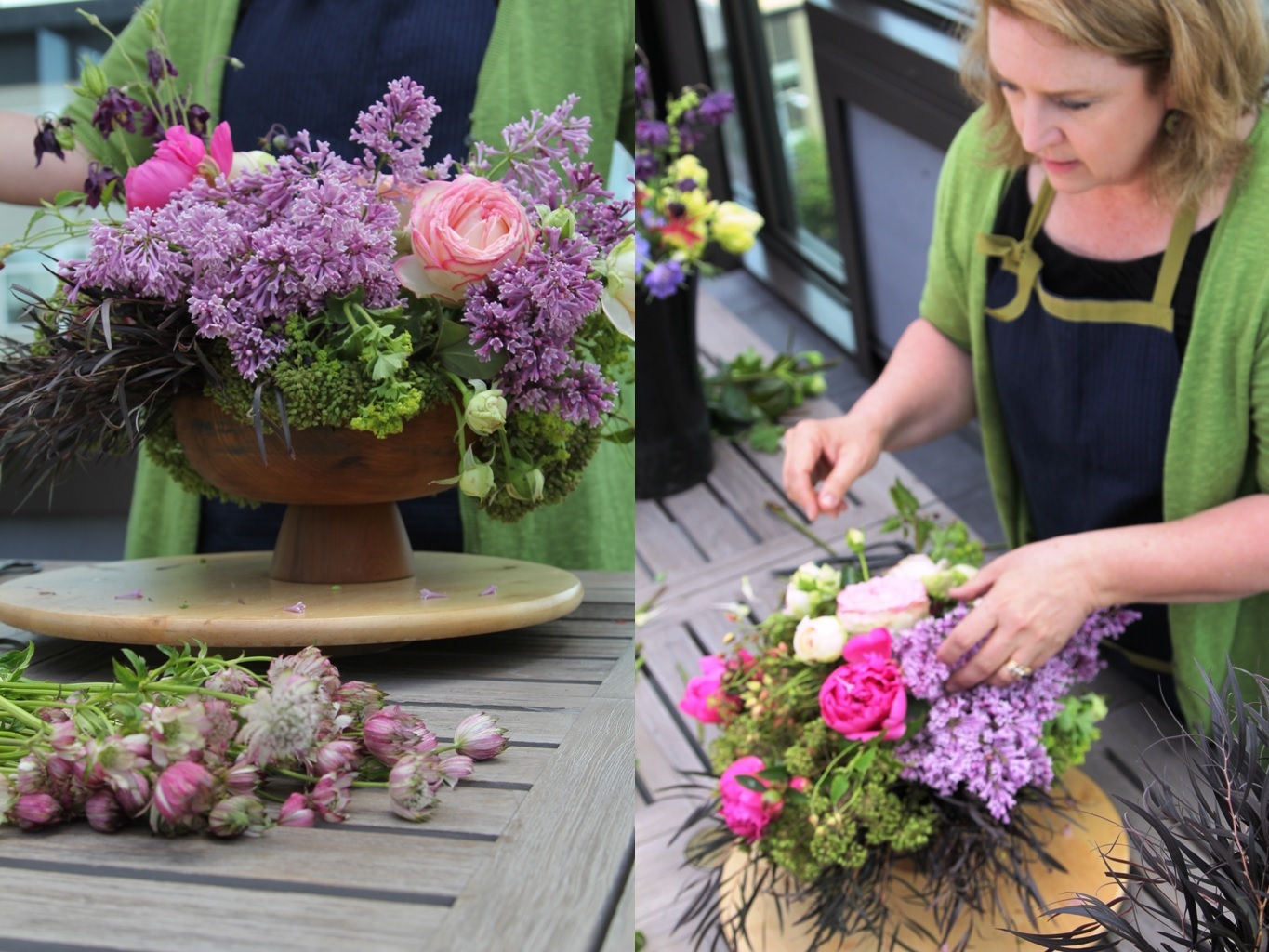
What a joy it has been to live a bloom-filled year of flowers. These images are from a photo shoot for a Seattle design blog this past May.
Welcome to the final Slow Flowers Podcast of 2014.
Every single week this year; in fact, every single week for the past 18 months, I’ve had the immense privilege of hosting a dynamic and inspiring dialogue with a leading voice in the American floral industry.
In reflecting on that and other questions I posed, I have to say that over the past 12 months we’ve witnessed some amazing and encouraging strides in the Slow Flowers Movement.
Here are a few highlights:
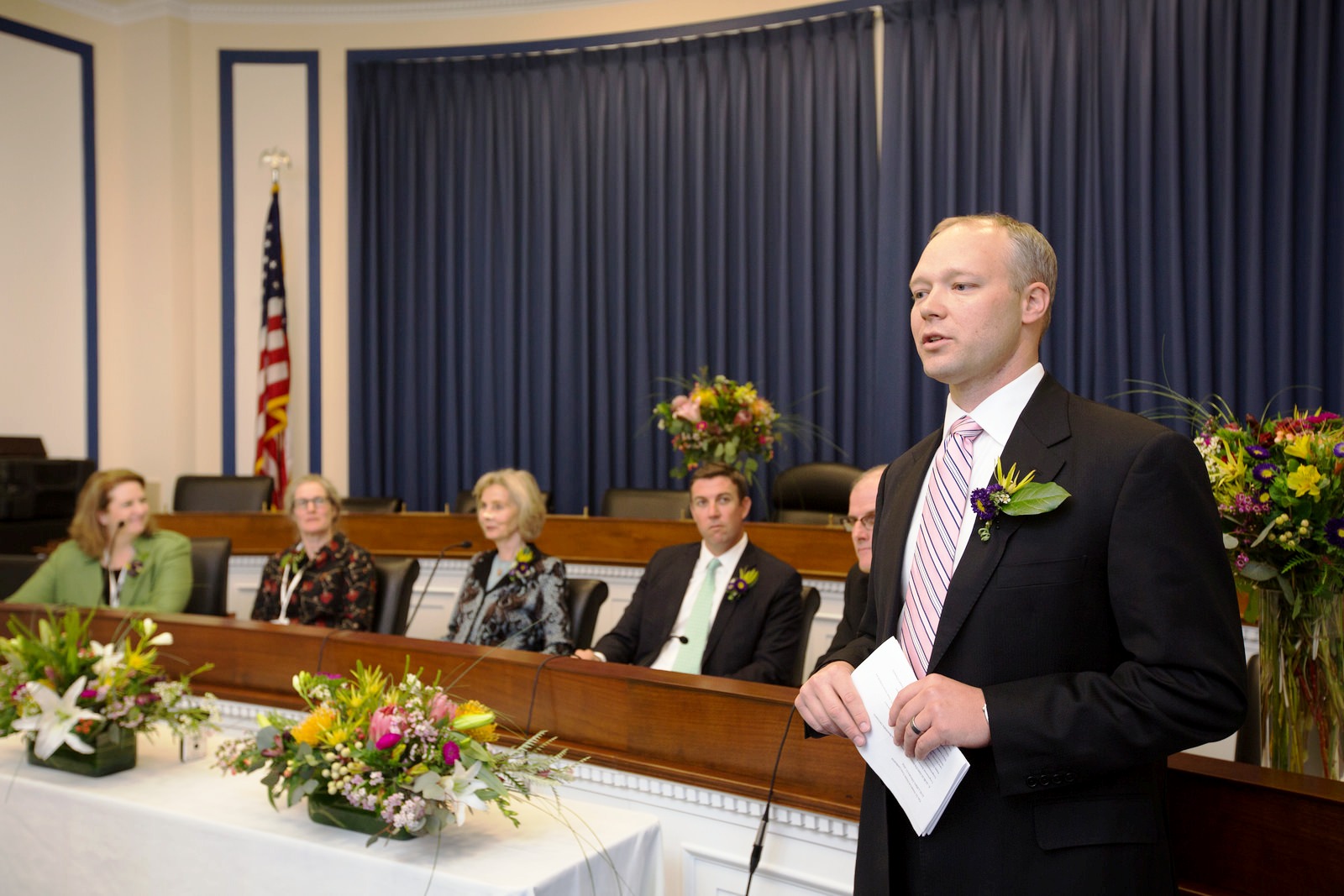
I was one of five persons who participated in the press conference on Capitol Hill to announce the formation of the Congressional Cut Flower Caucus. From left: Debra Prinzing, Diane Szukovathy, Rep. Lois Capps, Rep. Duncan Hunter; Lane DeVries is partially seen behind CCFC’s Kasey Cronquist (standing).
The formation of the Congressional Cut Flower Caucus.
Co-chaired by a bipartisan leadership team of Representatives Lois Capps and Duncan Hunter, this new endeavor is both strategic and symbolic as it engages policymakers in a tangible program to promote cut flower farming in their own districts and states. I was privileged to speak alongside Capps and Hunter, as well as with two American flower farmers Lane DeVries and Diane Szukovathy, at the February 2014 press conference announcing the Congressional Cut Flower Caucus on Capitol Hill. That remarkable experience is a milestone for all of us, one we’ll reflect on as this movement gains further momentum in the hearts of American consumers around the country – as they make conscious choices at the cash register, at the farmers’ market, at the florist and from online e-commerce sellers who identify domestic and local flower sources.
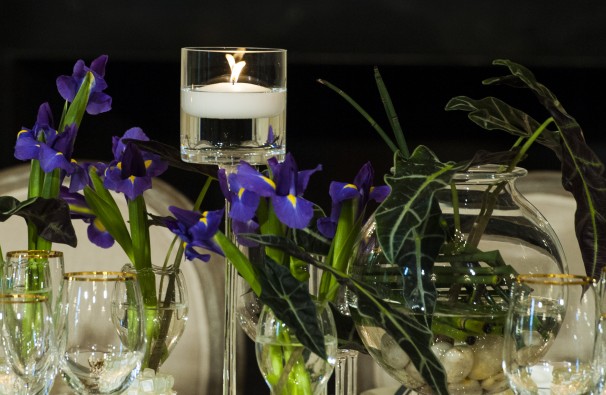
(c) Washington Post image of California irises and Florida tropical foliage.
Also in February, the White House used American flowers and foliage to decorate a State Dinner hosting French president Francois Hollande.
Beautiful domestic flowers from across the country – grown in California, Florida and other states, adorned the event and even prompted a feature article in the New York Times. As I wrote at the time: I predict this is beginning of a White House commitment to give as much attention to the origins of its flowers as it does the origins of the food and wine it serves to guests. There’s much more ground to gain when it comes to White House flower procurement. Yet, I believe that State Dinner was just the beginning of many more occurrences where American flowers at the White House represents so much more than simple decoration choices. It will represent American jobs, the American farm, the Environment, Economic Development and a Sustainable Floral Industry here at Home.
In May, after nearly a year of planning and development, I launched Slowflowers.com.
Slowflowers.com is the directory I’d been dreaming of creating for several years. We launched with fewer than 250 listings and now, by year-end, there are 435 businesses — flower farms, floral shops, studios and designers who grow and create American grown floral beauty, coast to coast.
We’ve had more than 52,000 page views and more than 11.5 thousand unique visits to the site. In 2015, with your help, I hope to expand this online directory to include one thousand members – companies that grow, design with and sell American flowers. I can’t take any credit for the success of Slowflowers.com without thanking the 229 contributors who helped me raise $18,450 on the crowd-funding site Indiegogo. All of those funds have been used to build, develop and promote this site. I’m humbled and awed at the groundswell of support from individuals and small businesses alike. Slowflowers.com has so much potential as THE single resource to connect consumers with American grown flowers. And I look forward to making Slowflowers.com even better in the coming year.
Certified American Grown Flowers
Motivated to promote domestic flowers and foliage in a new and strategic way, the American Grown Flowers & Foliage Task Force developed and launched a single domestic floral brand in 2014. The ad-hoc group included flower farms large and small, established and emerging. A cross-section of support came from many groups, including the Seattle Wholesale Growers Market, where my own energies are directed.
The seed funds created an initial promotion budget, a brand name, “Certified American Grown Flowers,” a tagline, “take pride in your flowers,” and a contemporary logo that evokes Americana and agriculture, as well as fashion and style.
Third-party certification ensures origin – that Flowers and foliage are grown in the U.S. by American farmers; as well as assembly — that all ingredients in mixed bouquets are 100% grown and assembled in the U.S. Thirty-three farms are already certified and in the coming year, this brand’s visibility will expand and increase as more flower farms seek certification to signify the domestic origin of their flowers.
In 2015, we’ll see this branding appear on the sleeves of mixed bouquets and consumer bunches, as well as on point-of-purchase signage at supermarkets around the U.S. The brand answers the inevitable questions: Where were these flowers grown? And it gives supermarket shoppers transparent and truthful labeling about their purchases.
Best in the West
Slowflowers.com has received great attention in the media, thanks to the compelling story of American grown flowers. Dozens of articles, interviews and broadcasts have shared the web site as a free consumer resource – and one special highlight for me was being named a “Best in the West” resource by Sunset magazine for “best way to buy flowers.”
Debra Prinzing’s 2015 Floral Insights and Industry Forecast
10 must-watch ideas that are taking hold in the American floral world.
As we track the momentum and direction of American Grown Flowers, I know some of you have already experienced these developments. In fact, my conversations with guests of this podcast have influenced this list.
I look forward to your reaction and thoughts, as well as input on items I’ve overlooked or missed! I invite you to share yours in the comment below:
Earth- and florist-friendly, the advent of Floral Soil is revolutionizing the conventional floral industry.
Eco/Non-toxic floral design
For several years, eco-conscious designers have openly rejected floral foam while adopting other techniques and mechanics for arranging flower stems (chicken wire, vintage frogs, twig matrixes, and tape grids are some of those methods).
Nothing had emerged to fulfill the role of formaldehyde-based flower foam. That’s until now. Mickey Blake, a “green chemistry” entrepreneur, has developed a plant-based, 100% compostable alternative to toxic foam called Floral Soil. She has applied for numerous patents for the product and is scaling up for production and national distribution in first quarter 2015.
Floral Soil replaces a chemical-based product that has been on the market since 1954. With so many concerns about our personal health, and the health of our planet, Floral Soil has created a huge buzz among florists and floral retailers. If you want to learn more, follow this link to my September episode featuring a conversation with Mickey Blake, the first media interview she granted.
Giving the floral industry more green choices will continue to move from the fringes to the mainstream. There are other notable introductions you may wish to check out, including Eco-Fresh Bouquet, a new hydration sponge wrap designed by former florist Debbie DeMarse. The product is geared to the retail-online-grocery marketplace and utilizes a plant-based composition as a way to keep stems fresh during transport or shipping.
Wrapped around the cut stems of a bunch or bouquet of flowers and moistened in water, the product hydrates stems for up to 12 days. I’ll be trialing this product in the coming weeks. Visit Eco-Fresh’s website, where there are reviews from florists who have used the product and information on request a product sample to trial yourself.
Elizabeth Bryant and Kailla Platt
Couture/Custom Growing
Small-scale flower farmers are offering their floral clients (florists and wedding parties) the opportunity to pre-order seasonal crops that will be harvested and used for their wedding. The service is called “Custom Growing.”
This couture, artisanal approach to floral design involves and engages couples who want to specify the exact flower, fragrance and color palette for their nuptials. It also elevates the flower to a starring role in the ceremony, one that’s as significant as other design choices (clothing, venue or menu). I was introduced to this idea by Elizabeth Bryant of Rose Hill Flower Farmand Kailla Platt, owner of Kailla Platt Flowers, both of Portland, as we discussed their custom grow-design wedding program in a Podcast interview this past August. If you missed it earlier, here’s a link to that interview here.
American Grown Floral Visionary, Ellen Frost.
Micro-lending/Flower Futures
Demand for specific flower varieties often outpaces supply, especially when it comes to highly-desired colors and cultivars. Forward-looking floral designers are investing in “floral futures” that is, crops they know their clients want, by pre-buying bulbs, seeds and seedling stock from the source: the farms who supply them. Farmers may not have the financial resources or ability to take the risk to invest in planting acres of flowers ‘on spec’, but they are often eager to expand capacity.
Enter the florist who wants to pre-order (and offer important guarantees), which offers an unique partnership that is paying off for everyone. Ellen Frost of Local Color Flowers in Baltimore is a leader in micro-lending, and I anticipate that other florists will join her efforts to ensure a more beautiful, local, fresh and abundant supply of the flowers they desire. If you missed the conversation, here’s a link to my October interview with Ellen.
Floral CSAs at Boston’s Floral Couture in Louisville.
Floral CSAs
I know that CSAs in the food world are well established, but when it comes to floral CSAs, I have been overwhelmed by the volume of Slow Flowers members who are now offering such programs — and I expect this marketing method to grow in 2015.
Just like Community Supported Agriculture or CSAs for food, Floral CSAs are based on seasonal and locally-harvested farm-fresh flowers. When you become a member of a flower CSA, you are buying a “share” of the flowers that a local farm produces each season. By paying for that share before the growing season gets underway, we support small flower farms as they plan, invest and plant. With your help, they are able to purchase new seed varieties, restock supplies, and make repairs to equipment and infrastructure. Community and customers are connected to their local flower farms — and reap the bounty of that botanical harvest, by the week, month or season. Instead of flavorful food, these CSAs deliver fragrant, intricate and beautiful flowers – a reflection of place and time on a local farm. The programs ensure a regular stream of local flowers for the home and give customers the satisfaction of supporting local agriculture and family farms.
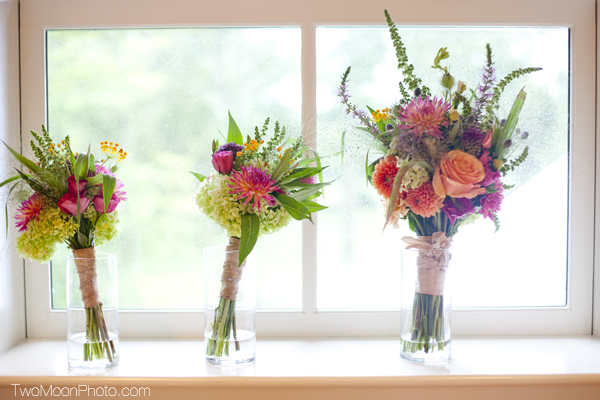
Wildflower-inspired bridesmaid bouquets, grown and designed by Robin Hollow Farm.
Cultivated Wildflowers
Wildflowers are a carefree, ephemeral expression of America’s connection to the land – from meadow and stream bank to forest and trail. But thanks to increased understanding of saving wild places and preserving public lands, there’s a newfound awareness that picking wildflowers is not smart (and in many places it’s illegal).
There are many sources for collected wildflower seeds; this allows flower farmers to safely and legally grow enduring favorites like black-eyed Susan and lupines. The look is quintessentially American. The just-gathered style carries over to floral crowns, garlands, bouquets and centerpieces.
This past fall, Slowflowers.com collaborated with Brooke Showell, a writer for Four Seasons Magazine, in a story called “Wedding Wildflowers,” highlighting the choice of Naturalistic flowers that appear freshly picked from a garden, meadow or farm.
The good news is that most domestic field-grown flowers fit this free-spirited, uncontrived aesthetic – and I know we’ll continue to see talented designers express the look in their arrangements.
A brighter floral palette is super romantic and feminine. Design: Buckeye Blooms
Bright pastels, Saturated Jewel Tones
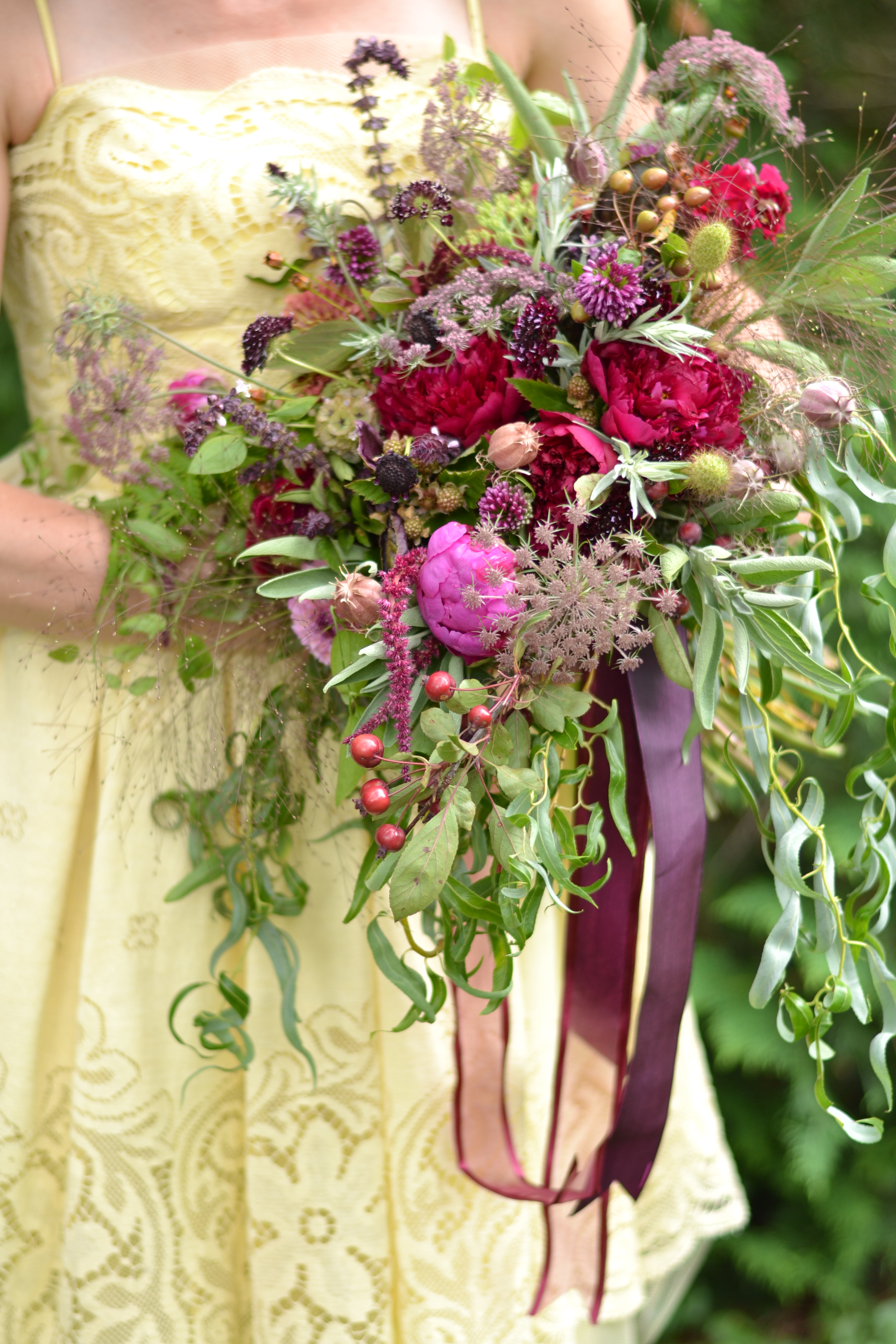
For the past few years, pale palettes have populated wedding bouquets and driven demand for subtly-colored flowers like blush-toned ‘Café au Lait’ dahlias. Next seasons, color palettes promise to be richer and more vivid, reflecting a deeper saturation of petal color. Watermelon pink, orchid purple, cerise red – these sun-drenched hues are wooing brides who want a more vibrant flowers to hold and wear. There’s a gradual departure from an all-neutral bridal bouquet. Blush hasn’t left completely, but she’s sharing the stage with brighter hues.
Beautiful, wistful clematis. Flowers and design by Kaye Heafey, Chalk Hill Clematis
Vines, vines, vines
Demand for trailing tendrils outpaces the available stock that farmers are able to produce, signaling a market opportunity for innovative growers and designers. All types of vines are considered “premium” floral ingredients, producing a far better-than-average return on investment for farms that grow vines and florists who integrate vines into their designs.
The unstructured silhouette and whimsical shoots and tendrils portrayed by vines lend distinctive character to floral arrangements, headpieces and bouquets. Florists who have trouble sourcing clematis, jasmine, passion vine and other varieties are turning to horticulture (or friends’ gardens) to find the vines they want.
I recently asked Slow Flowers members to weigh in on some of these stylistic shifts in bridal preferences. With so much influence from wedding blogs and magazines, from instagram and pinterest, it’s no wonder that brides are curate their own look and feel from many sources.
Susan Studer King of Buckeye Blooms in Elida, Ohio, shared her perspective, which actually addresses the three points I just made, this way:
“We are consistently finding that brides covet the lush, loose look of natural garden flowers with interesting textural elements and slightly cascading finishing accents such as tendrils of clematis or sweet pea vine. We are also seeing a steady shift in interest away from blush tones and more toward more vivid, vibrant shades and jewel tones.”
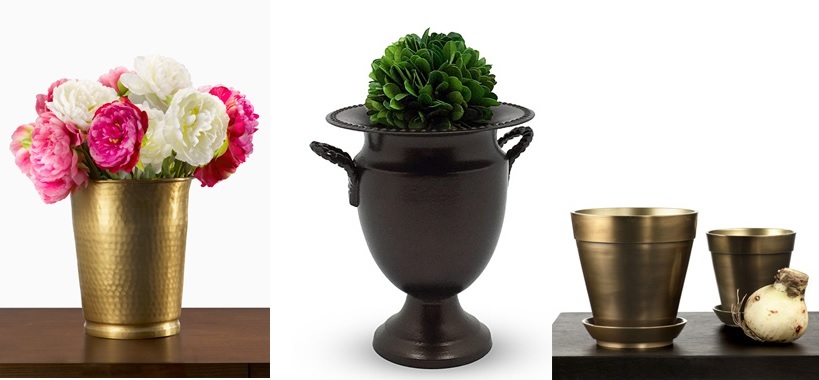
Suppliers like Jamali Garden are introducing a wide array of hammered metal, brass, bronze and copper vessels.
Good-bye, Mason Jar
Like many, I’m pleased with Ball’s recent reissue of its aqua blue and bottle green canning jars for the contemporary marketplace, but this American classic glass jar seems to have hit its saturation point.
Designers are seeking out the next easy and affordable vase for wedding reception centerpieces on a dime.
The solution, it seems, is at the thrift store, where inexpensive brass vessels are readily available. Mellower than tarnished silver, brass is versatile and suits both old-world and contemporary designs. A close relative to brass is old copper, which develops its own alluring patina with time.
Now, floral suppliers have releasing full lines of tarnished and hammered metal vessels, so it’s possible to avoid that trip to the thrift shop, yet those new introductions are all imported.
So the big search is on for American-made glass vases in contemporary rather than dated shapes. I know of a number of designers pushing for an American made option – and we’ve yet to find stylish choices. Will that come in 2015?
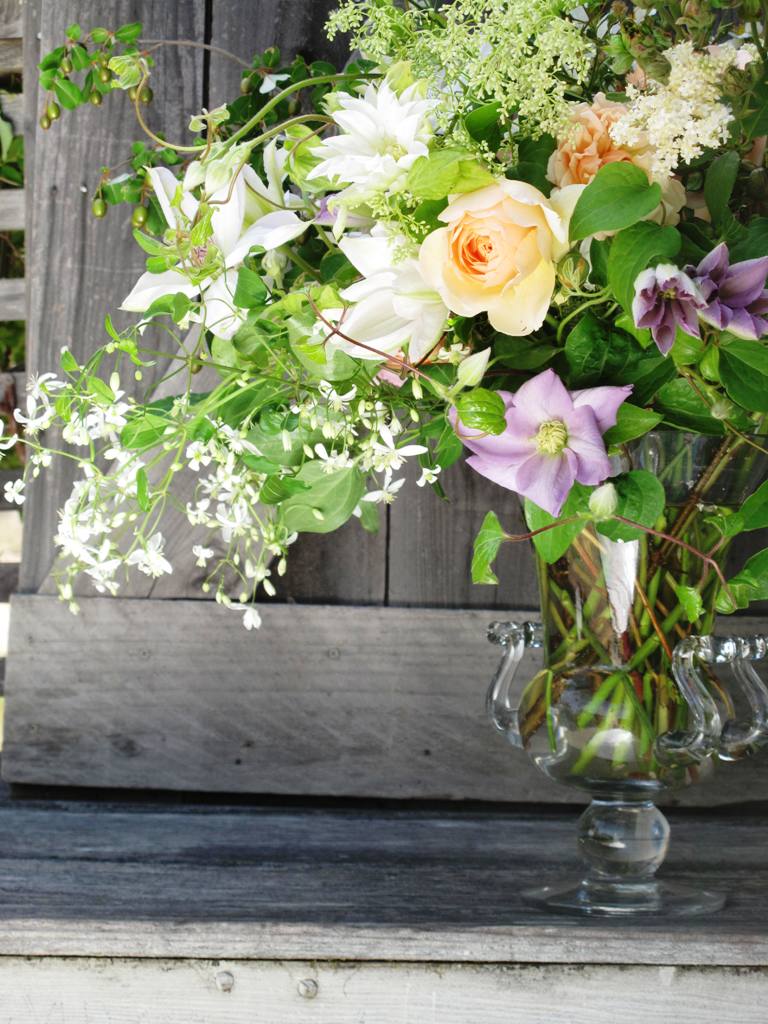
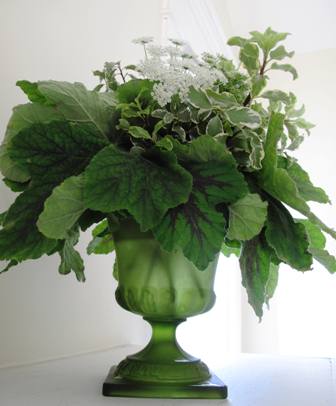
Love the shades, shapes and textures of green foliage in one of my favorite containers.
Superstar Foliage
You might call this style “50 Shades of Green” and thanks to flower farmers who are planting interesting new foliage, we’ve all decided that a bouquet with generic greenery is yawner. An uncommon palette of distinctive foliage ups the character of a floral arrangement, bouquet or centerpiece. The options are exploding, moving far beyond salal, ferns and bear’s grass. Look for options like raspberry foliage, baptisia, scented geranium and other herbs, smoke bush, ninebark, pittosporum, box, myrtle, magnolia, camellia, and other uncommon types of greenery to upgrade the ordinary bouquet. Hand in hand with awesome foliage is where we source it – from the landscape, orchard or forest is so much more beautiful than the prosaic selection the industry has typically offered florists. It takes ingenuity, perhaps, to develop sources of unconventional leaves, but increasingly, that ingenuity means success for the designer who wants to differentiate him or herself from the everyday marketplace.
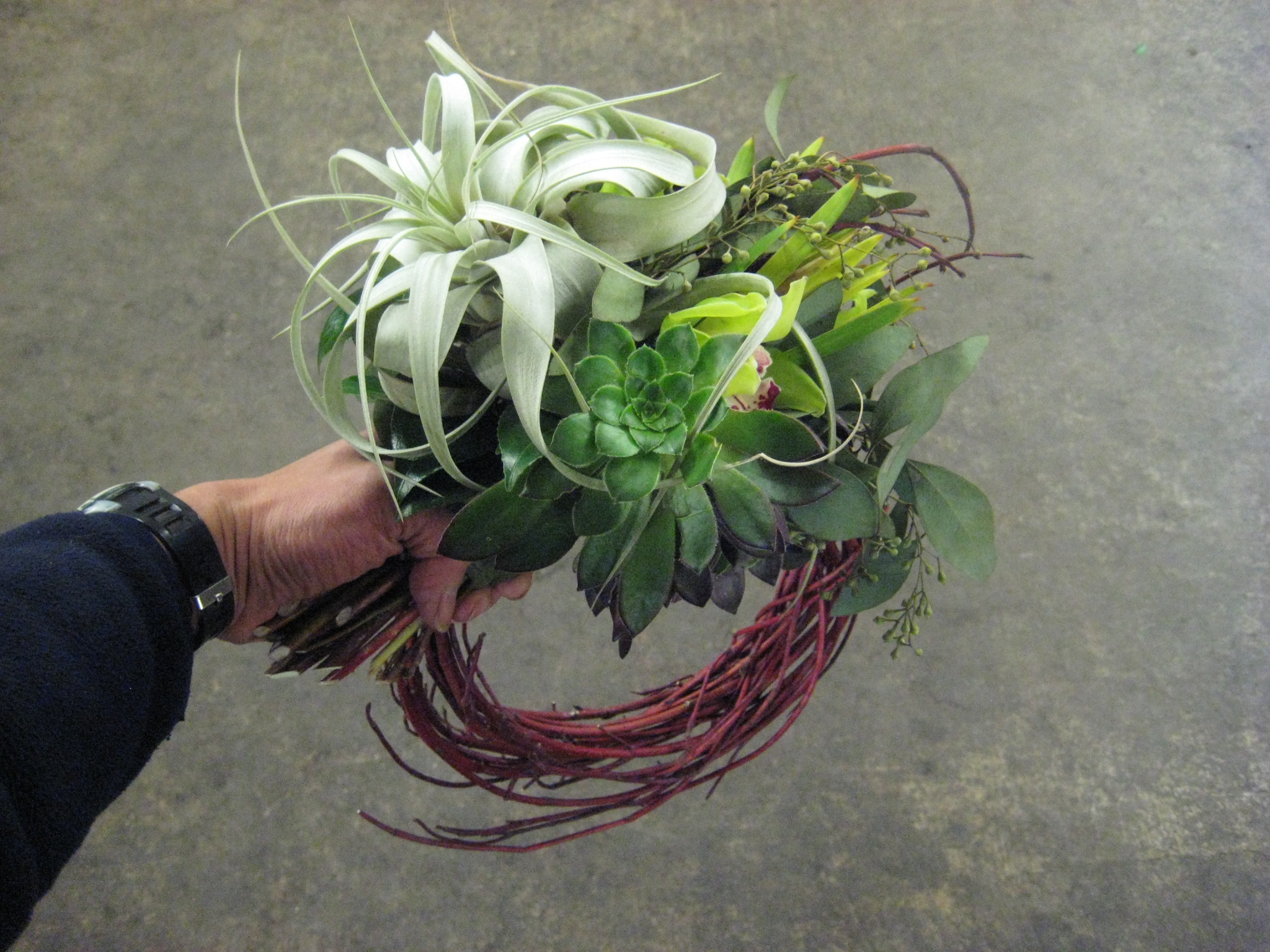
Man bouquet, designed by Riz Reyes of RHR Horticulture.
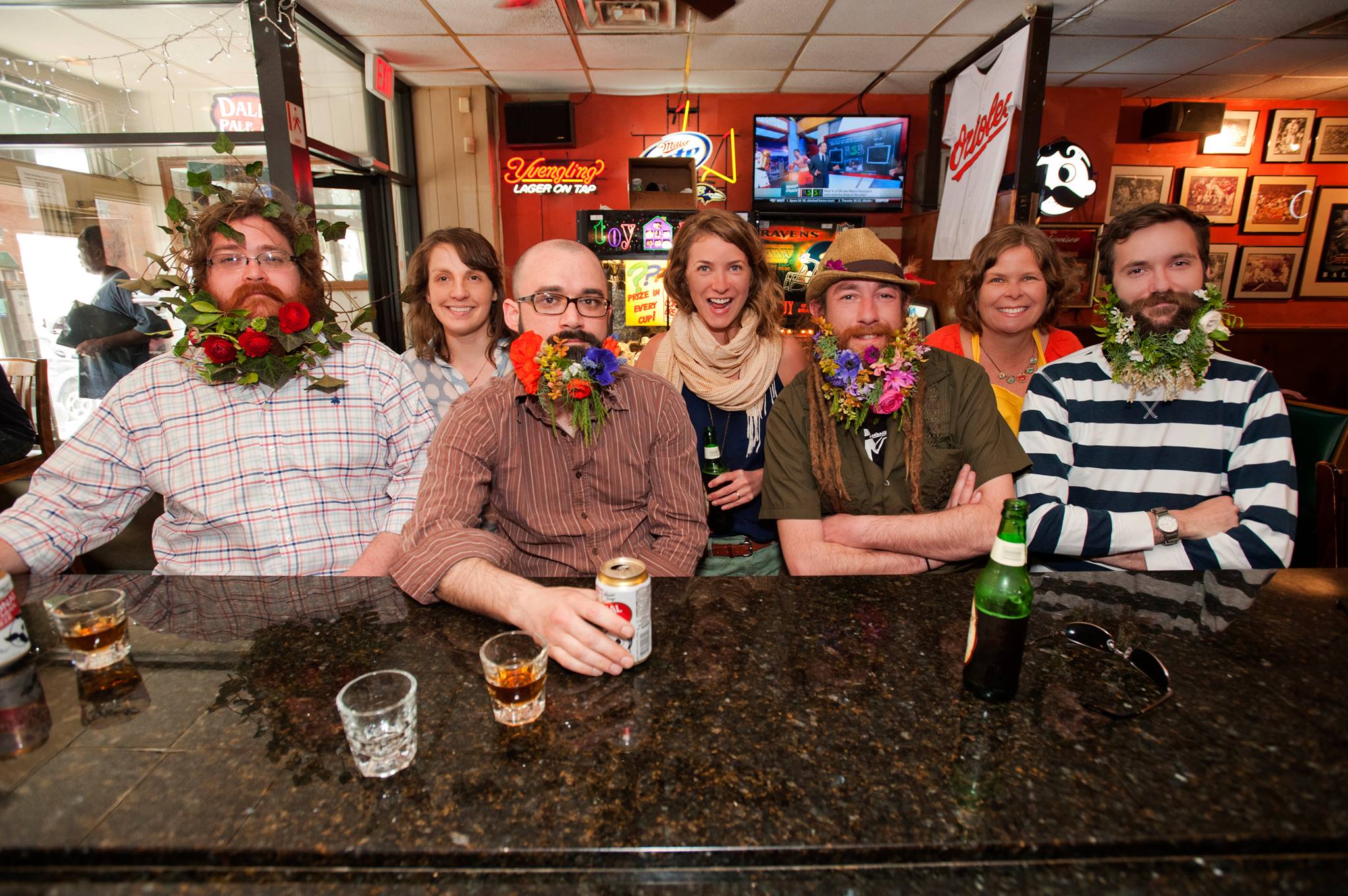
Guys in Baltimore, modeling their floral facial hair for Local Color Flowers’ Baltimore Beards Project
10. Man-bouquets and floral beards
Real Men Love Flowers. Other than donning a boutonniere on their suit lapel, the masculine floral consumer has been ignored for too long. Cutting-edge guys want flowers, too – and innovative designers are responding. Riz Reyes, a Seattle-based horticulturist and floral designer, has created the “man bouquet,” a cluster of woodland blooms attached to a hand-carried grapevine wreath. Certainly, it’s for the more adventuresome groom, but as Riz asks, “why not?”
Irene Donnelly, a staff designer at Local Color Flowers in Baltimore has taken the idea of “personal wedding flowers” to a new level by weaving, pinning or gluing the green stems of tiny botanicals into the facial hair of hipster male customers. Designed floral beards are made from sedums, succulents, poppies, ranunculus, tiny pods. A few guys have even worn floral eyebrows and mustaches.
So Happy to Share My Year in Flowers With YOU!
So that’s my take on the pulse of America’s floral industry.
I hate to use the term “trend,” when what we’re really talking about is a cultural shift.
The question for you is this: are you part of the shift? Are you helping to propel the Slow Flowers Movement forward through your own actions, through the way you communicate to your customers and the marketplace?
The goal of the Slow Flowers Podcast is to put more American flowers on every table, one vase at a time. Listeners like you have downloaded the Slow Flowers Podcast more than 28,000 times. If you like what you hear, please consider logging onto Itunes and posting a listener review.
I wish each and every one of you a happy new year, one that’s filled with prosperity and peace as we join together to change the broken U.S. floral industry. I believe that we’ve already changed things for the better – and that momentum will continue in 2015.
The Slow Flowers Podcast is engineered and edited by Andrew Wheatley and Hannah Holtgeerts. Learn more about their work at hhcreates.net.
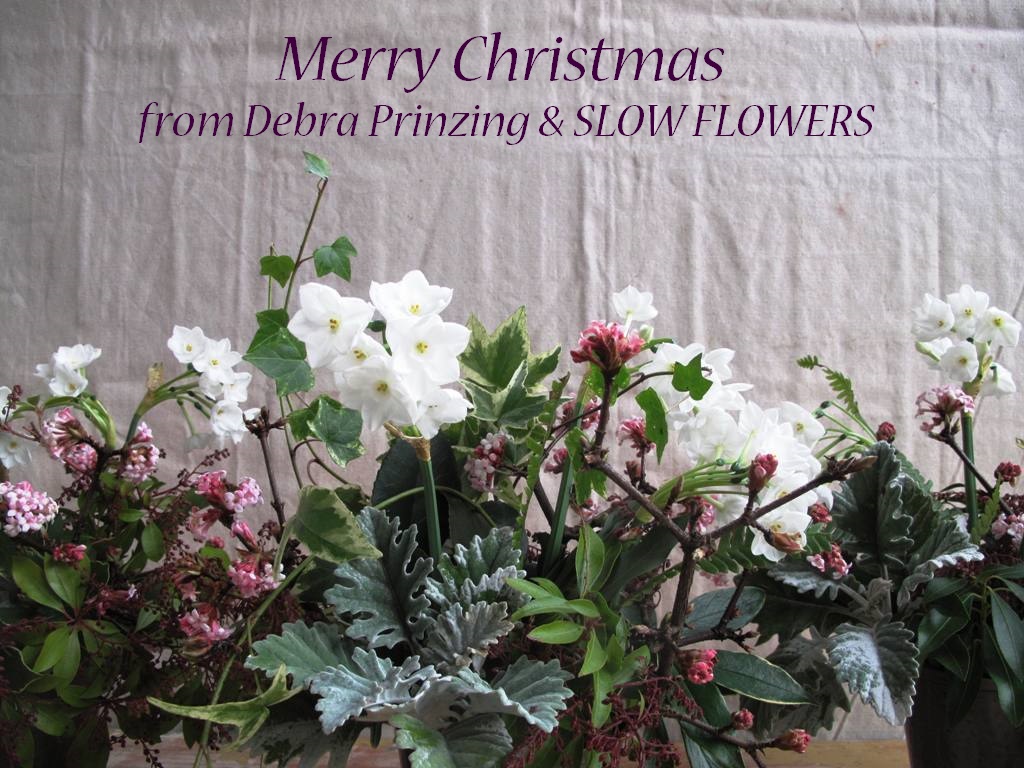
Merry Christmas and Happy Holidays from Seattle, Washington!
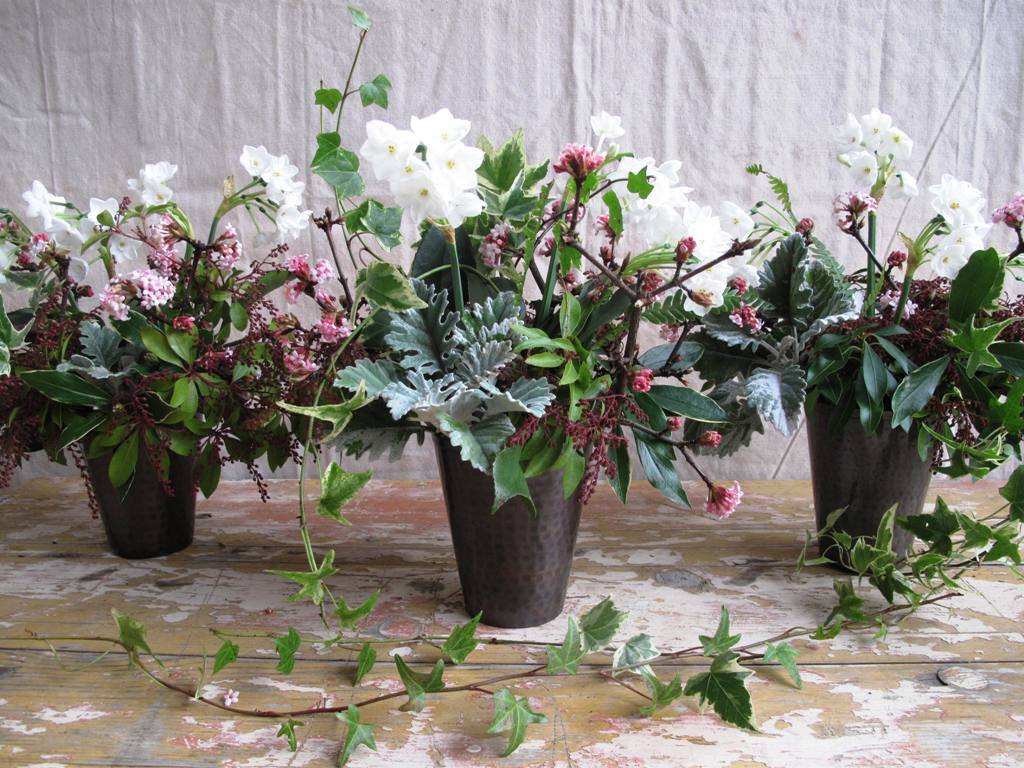
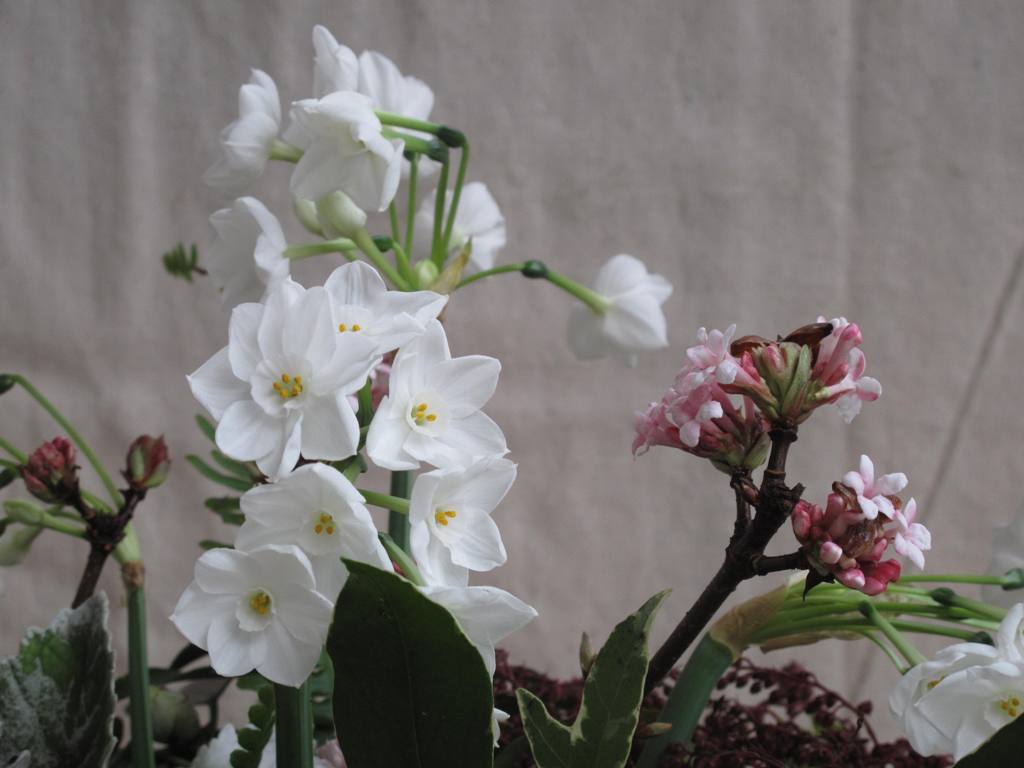
I was gifted a flat of paperwhites in bloom this week – one lonely bulb per pot – crying out for some equally lovely companions in a holiday arrangement. So yesterday, I clipped from here and there in the garden and created this trio of vases to adorn our Christmas dining table tonight.
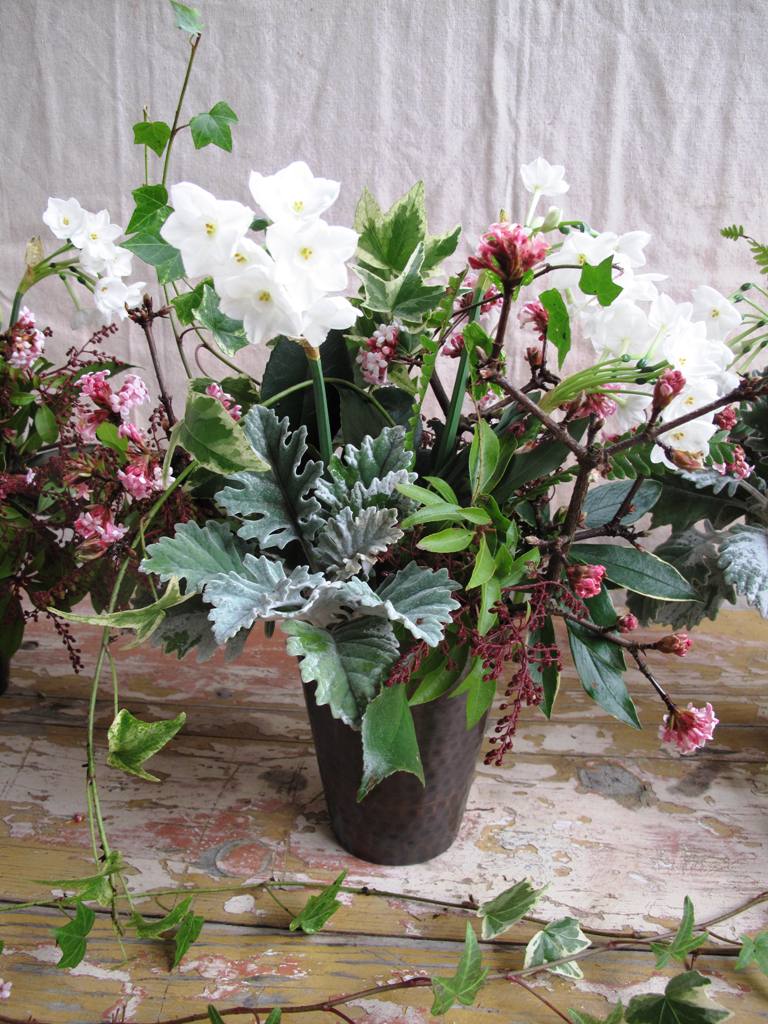
Three vases filled with festive and LOCAL vines, leaves, branches, blooms, buds and JOY!
The paper whites started it all – and I sought pretty plants with winter interest to accompany them.
In addition to the paperwhites, here’s what the vases contain:
Pieris japonica (Lily-of-the-valley shrub)
Camellia in bud
Bay tree stems
Daphne odora in bud
Dusty Miller
Viburnum x bodnantense ‘Dawn’
Variegated Ivy
Evergreen fern fronds
Narcissus (Paperwhites)
As I prowled through my mostly dormant landscape, each one of these plants reminded me how much I have to value in the winter garden. If you plant for four seasons, with intentionality, those woody ornamental shrubs really deliver! I found myself thinking: “Make more room for Pieris!” as I only have three and they’re relatively young shrubs. But those chains of blooms, deep pink and delicate, are simply sublime dangling out of the vases.
Close up, the tangle of stems reflects a perfect moment in time – in my garden and in the season.
The Daphne – only planted two years ago next to the backyard patio where I will smell its fragrance in winter – well, I gingerly snipped three stems, each with a bud – and each from a lower/back part of the shrub. I still want to enjoy Daphne outdoors, as well as indoors!
I gaze at the Viburnum ‘Dawn’ every day – it’s just outside my office window and such a welcome a note of color – intense pink! – in December and January. Even the Dusty Miller, marginally winter hardy here in Seattle, had hung on long enough to give me a silvery cluster of soft leaves for each vase.
I’m launching a new project next week, appropriately called “The Slow Flowers Challenge” – and so making this holiday trio of arrangements has been my warm-up exercise.
If you’re ready to join me, start collecting your vases, eyeing botanicals in your landscape or neighborhood, and dreaming about a year of flowers in your life.
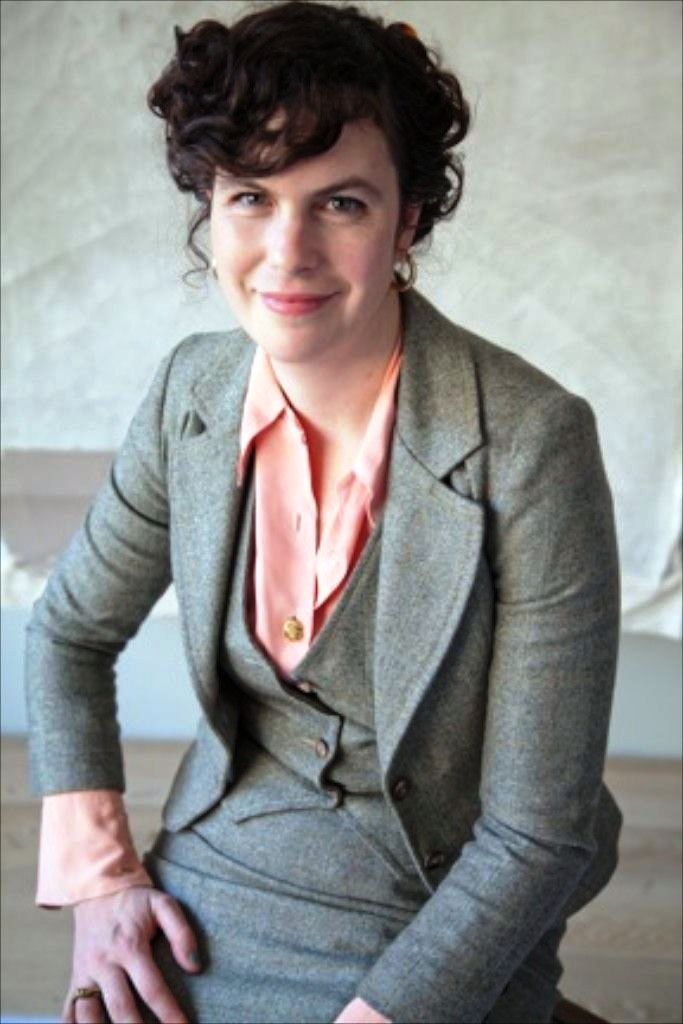
Emily Thompson is an iconoclast, an anything-but-predictable designer and artist – and owner of the NYC studio and shop that bears her name, Emily Thompson Flowers.
Three years ago at this time, the flower world was celebrating the fact that Emily and her team helped Michelle Obama achieve her dream of bringing the outdoors inside the White House at Christmas.
This year, Emily is settled into her charming new emporium in lower Manhattan, a huge space compared to her former flower-closet in Brooklyn’s DUMBO neighborhood.
I arrived to meet her early one October morning, a totally spontaneous visit prompted by the designer’s invitation when I took her class the evening before at Flower School New York.
As I wrote on my blog at the time, it was so gratifying to be introduced to Emily at her workshop and realize she’d been wanting to meet me, too.
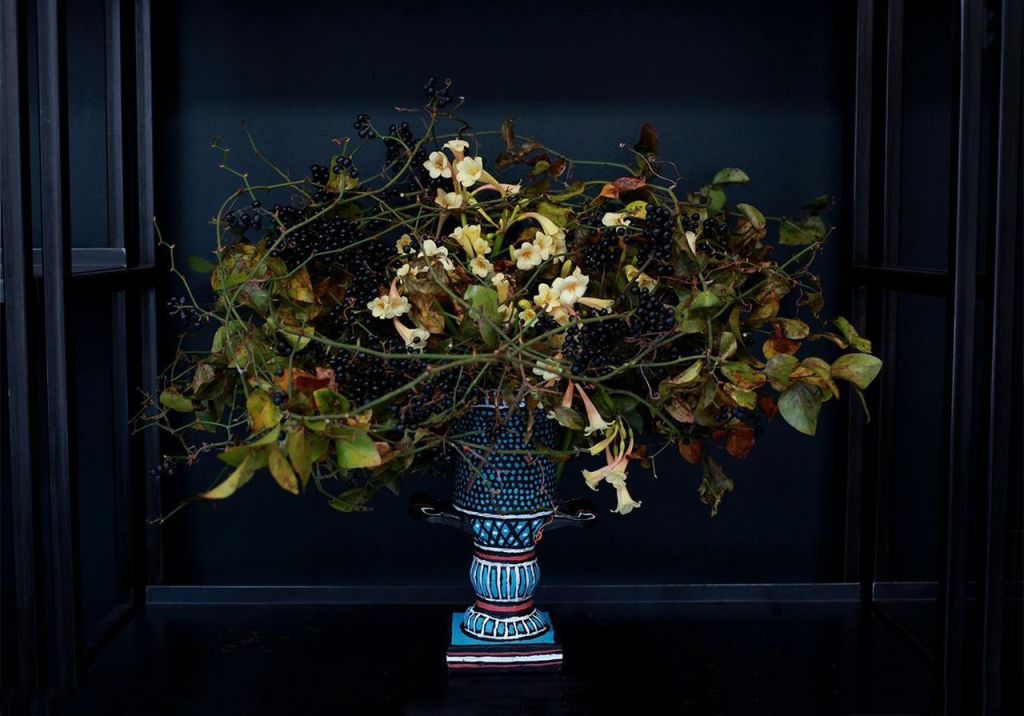
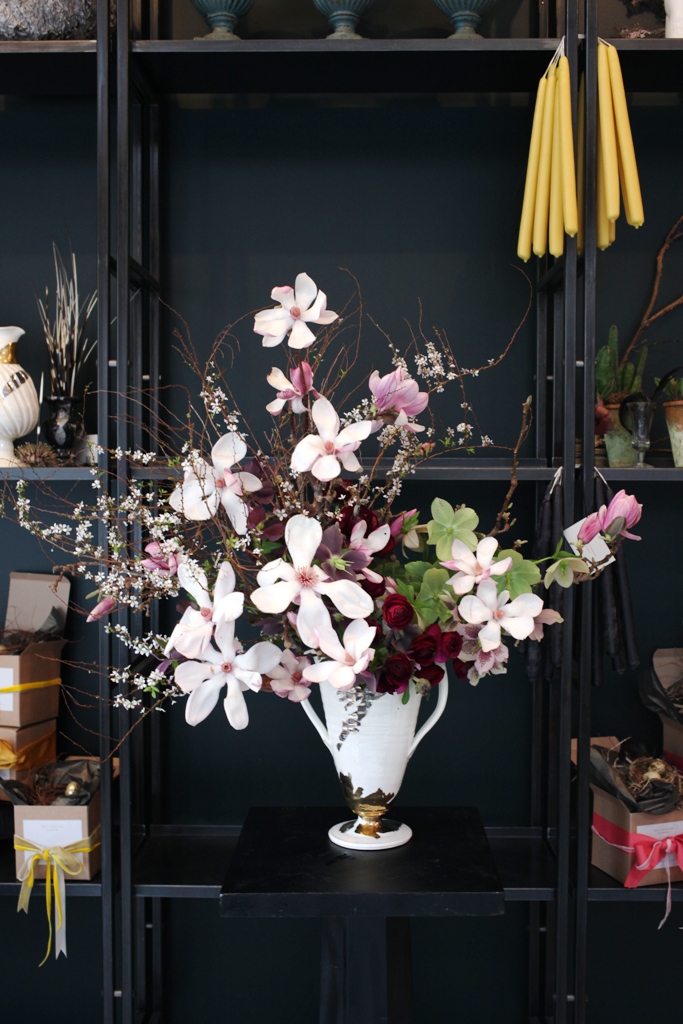
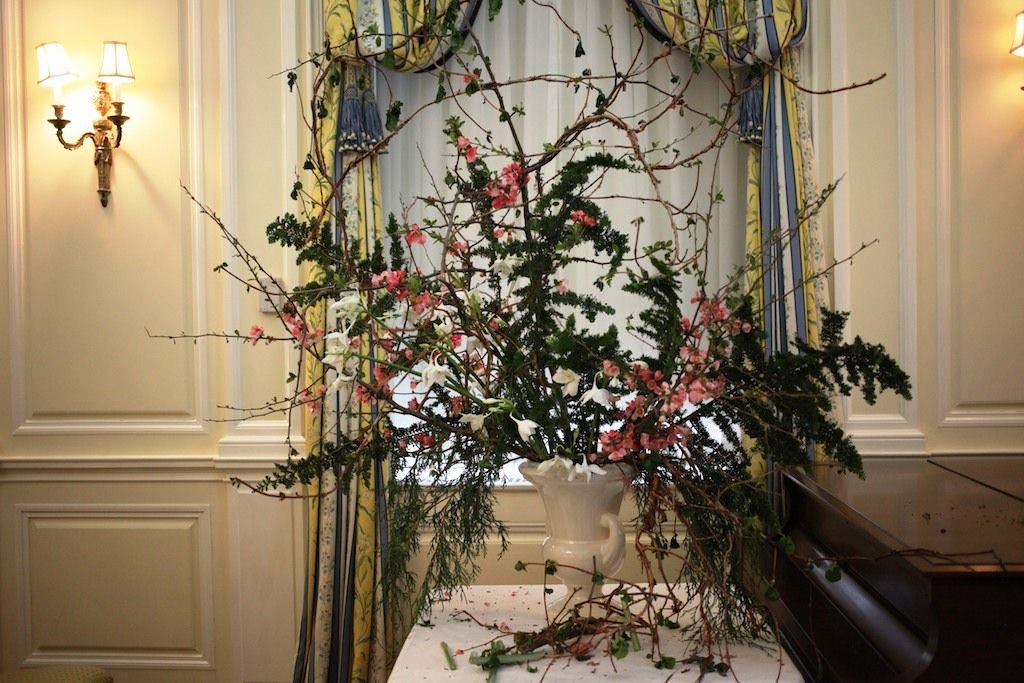
An Emily Thompson botanical creation, displayed in a one-of-a-kind urn by artist Mark Gagnon (c) Sophia Moreno-Bunge
That two-hour workshop was thoroughly inspiring. Every single word that Emily uttered was like listening to a Master instructor in a MFA program. I jotted down these lovely Emilyisms:
“I want to make things that are impractical. That are surprising to me.”
“The proportions I design with are more akin to the natural garden or landscape. I’m looking for powerful contrast, for things that resist one another. That draw the eye in and push it away.”
“I love to work with seasonal flowers, with things of our landscape. And then I’ll add bits of the exotic.”
“So much of design is done in selection of materials. I want a flower arrangement to feel like you’ve dug through the wilderness to find a treasure.”
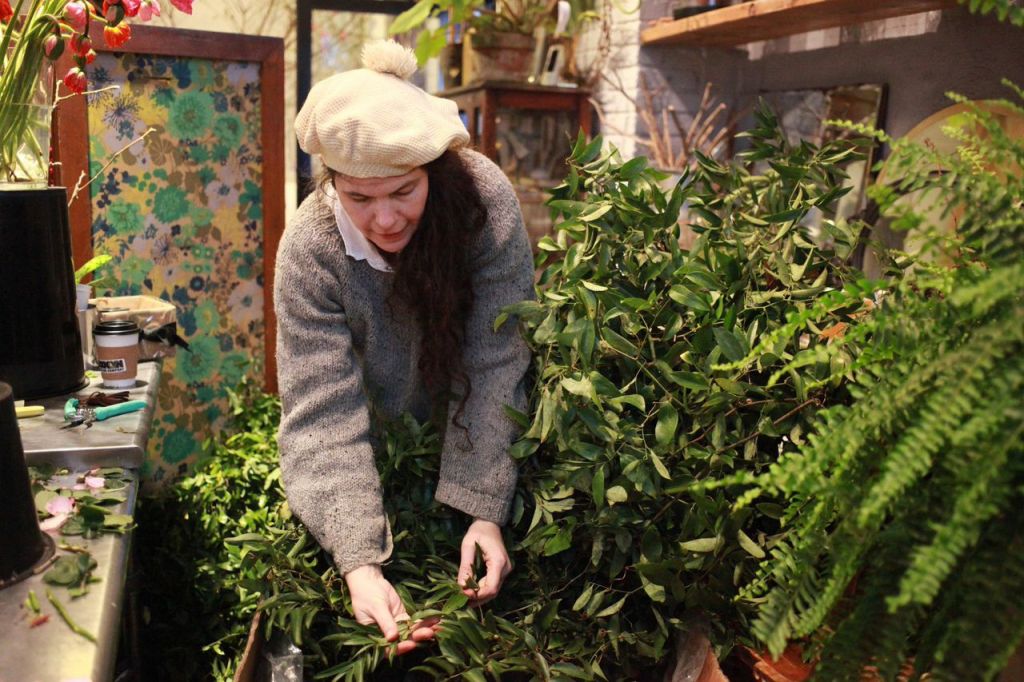
Emily, designing with wild and cultivated materials (c) Sophia Moreno-Bunge
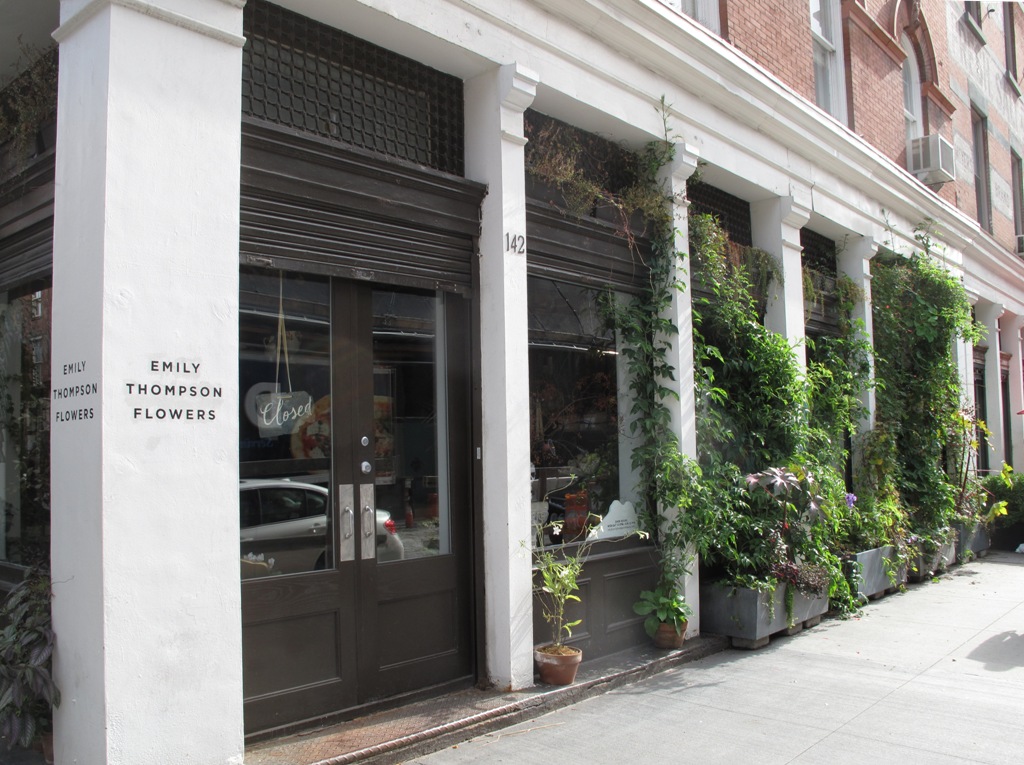
I love how the annual vines are climbing up the facade of this historic storefront (c) Debra Prinzing photo
As I mentioned, Emily invited me to visit her brand new shop on Beekman Street, so the following morning we squeezed in a shared cup of tea/coffee and a tour of the new digs. I asked permission to turn on the recorder (natch) and Emily agreed.
Here’s a bit more about Emily:
Raised in Vermont, in a place she calls “the Northeast Kingdom – a place of uncompromising beauty,” Emily was deeply influenced by that sense of place, of the natural wildness of her childhood.
She was educated at the Pennsylvania Academy for the Arts, the University of Pennsylvania and UCLA, where she earned her Masters of Fine Arts in sculpture.
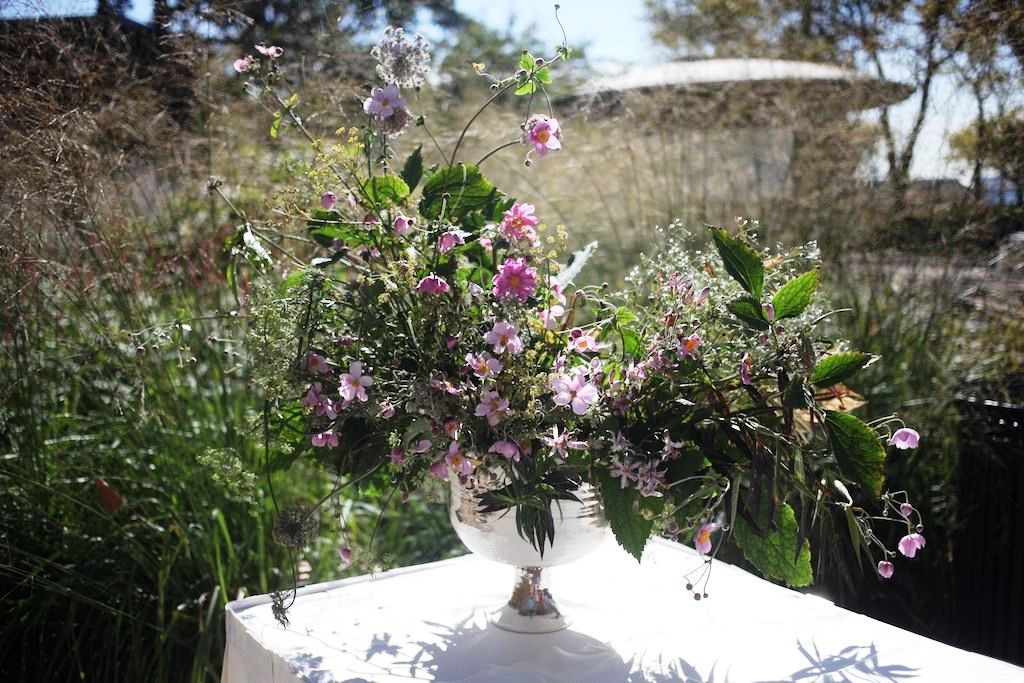
A seasonal spring arrangement in a beautiful Frances Palmer ceramic vase (c) Sophia Moreno-Bunge
Emily is fascinated with the decorative arts and their history as she continues to collaborate with the rough hand of nature. Her flowers and banquet decor balance the uncultivated organic world with the delicacy of classical ornamental design. These pieces burst with unconventional materials like wild smilax, peaches and real butterflies, and always maintain sculptural grace. And most importantly, they are built in harmony with the space where they are displayed – as if they grew there.
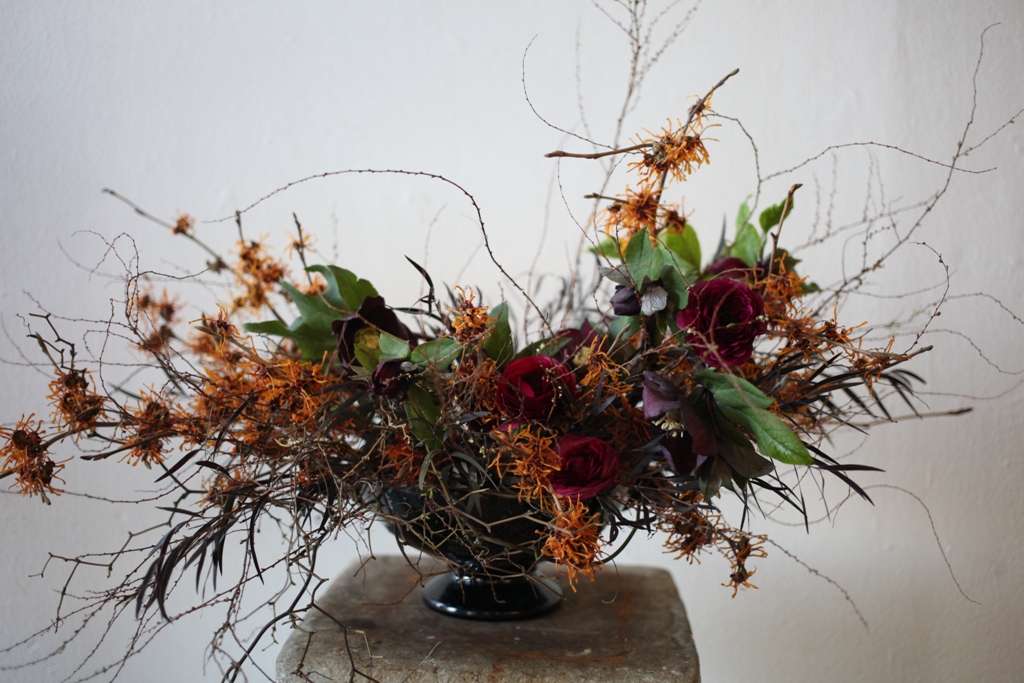
One of Emily Thompson’s nature-inspired assemblages, paired with a Frances Palmer vessel (c) Sophia Moreno-Bunge
Emily likes to cite William Gilpin, 18th century theorist of the picturesque, who directed builders of follies and artificial ruins, “to do so as if these ruins were not designed but naturally chosen.” What’s more, writes Gilpin, “they must be in magnificent style.” Emily’s work, like her ideal faux ruin, evokes nature in magnificent style.
Simply sublime (c) Sophia Moreno-Bunge
Emily Thompson Flowers provides custom designs for special events and for all occasions. Using the freshest seasonal flowers, fruit, and foliage as well as unconventional and wild materials, each project or arrangement is individually conceived to suit the architecture and palette of its setting or to transform a room entirely.
At Emily Thompson Flowers in the Historic Seaport district of Manhattan, you can find flower arrangements and bouquets, artist-designed decorative objects, and all kinds of wildly beautiful things. The new shop is on a sunny corner in a building erected in 1865 by George B. Post (architect of the Stock Exchange), which is adorned with cast iron starfish and terra cotta sea monsters.
Old World-meets-Emily Thompson (c) Sophia Moreno-Bunge
If you’re lucky enough to live in the New York area, you can order arrangements for delivery, but if you’re not a resident, visit Emily Thompson’s web shop to peruse the art, objects, tools and gifts that can be ordered online.
Emily Thompson designs powerful and poetic florals. She loves the peculiar, the quirky and the wondrous. To me, she gives us permission to redefine beauty in our own personal way, to ignore dictates that the vast floral industrial complex tries to force on us. On her blog, when Emily wrote in early 2014 about moving from a tiny Brooklyn studio to a full-fledged Manhattan flower shop, she wrote “We promise to do everything in our power to bring alchemy to all who need it on this island.”
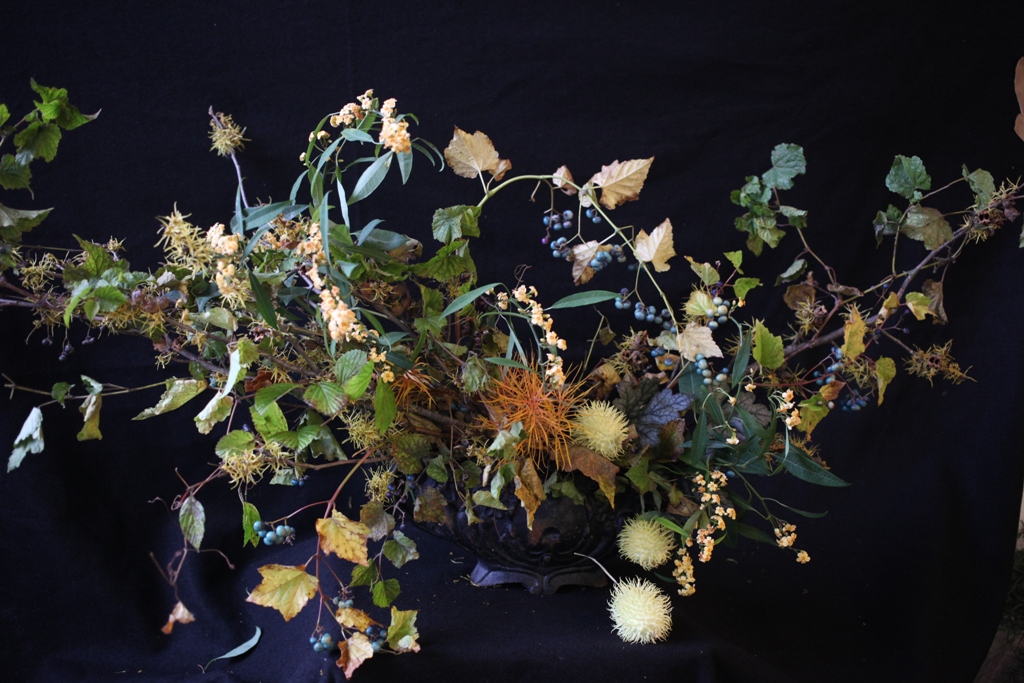
More of Emily’s botanical alchemy (c) Sophia Moreno-Bunge
There is one more episode left for 2014 – and that’s my very special episode that will air on December 31st. I plan on sharing my insights for the New Floral Year, so plan to join me!
My personal goal is to put more American grown flowers on the table, one vase at a time. Listeners like you have downloaded the Slow Flowers Podcast more than 28,000 times. If you like what you hear, please consider logging onto Itunes and posting a listener review.
The Slow Flowers Podcast is engineered and edited by Andrew Wheatley and Hannah Holtgeerts. Learn more about their work at hhcreates.net.