Debra Prinzing

Get the Email Newsletter!

Archive for the ‘Writing’ Category

Sunset hails SLOW FLOWERS and the special people who grow them

Saturday, June 16th, 2012


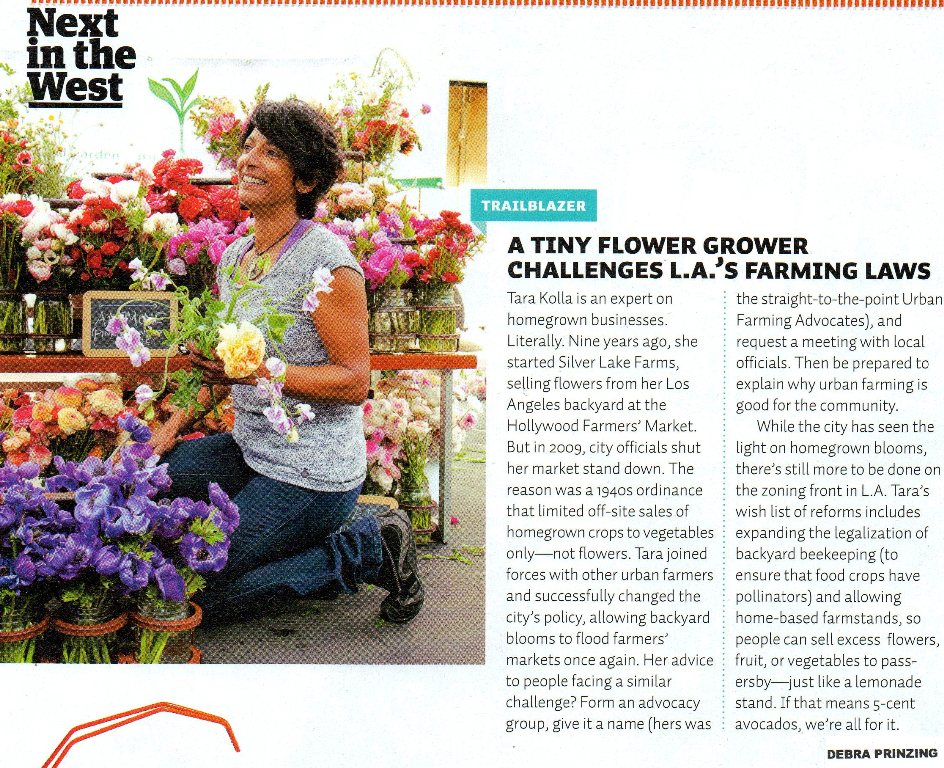
Here's how Sunset featured the interview, in its "Next in the West" section where Tara Kolla is hailed as a trailblazer for urban farmers. The photo of Tara was taken by Shelly Strazis/Sunset.

The editors at Sunset asked me to update the story about Tara Kolla, Los Angeles-based flower farmer, urban farming advocate and owner of Silver Lake Farms. In The 50 Mile Bouquet, she is profiled on pages 47-49 in a story called “Flower Patch Politics.”

It was great to have an opportunity to reconnect with Tara and learn about what she’s been up to since we visited her last November. It was no surprise to discover that Tara is up to her ears in beautiful blooms, selling them at farmer’s markets and fulfilling custom orders for regular clients who love her organic approach.

As these things go with magazines, my interview with Tara was completely rewritten into a narrative format. You can see the published piece it above, or on page 18 of the June 2012 issue, on newsstands now.

But there is a lot to learn from this talented woman. And so here, since space is not an issue, is our original Q&A:

ONE TO WATCH

Flower Patch Politics

In 2009, when Los Angeles officials shut down Tara Kolla’s backyard flower farm, citing a 1940s truck gardening ordinance that limited off-site sales of homegrown crops to vegetables, not blooms, she joined forces with fellow urban farmers to fight back. Passionate about sweet peas and the many other flowers she grows, Tara and her supporters successfully changed the city’s policy – and now the spunky owner of Silver Lake Farms has returned to the Hollywood Farmers’ Market where you can find her every Sunday selling bountiful, organic and seasonal bouquets. Her advice for other urban flower farmers:

What has been the response of your customers to your policy fight?

Some customers think I’m new because I’ve just returned to the market. Those aware of my struggle are delighted for me. It makes them feel good that L.A.’s politicians used common sense to change an antiquated law. Flower fans are now begging me to come to Santa Monica Farmers’ Market on Wednesdays – I hope that happens soon.

How might other would-be flower growers address their own community’s rules, if they face similar restrictions?

My issue was not about growing flowers, but about being prevented from selling them off-site! If someone’s facing similar opposition, I suggest creating a support group – we called ours Urban Farming Advocates. Request a meeting with local officials and be prepared with evidence as to why urban farming is advantageous for the community and why cities should support and encourage urban farmers.

Do you think the updated truck gardening ordinance means more floral variety at local L.A. farmers’ markets?

Eventually, but it is all dependent on land, time and money. I never thought I’d get rich doing this and I continue to run other facets of my gardening business to support myself, including a CSA and designing organic vegetable gardens.

On the zoning front, what still needs to be done in L.A. to support local farmers?                                           

We need backyard beekeeping to be legalized — for ensuring that food crops have pollinators and for producing organic honey. We also need home-based farm stands, meaning you could sit outside your house at a table and chair and sell your garden’s extra oranges or avocados to passersby. Kids and their lemonade stands are legal, but a farm stand with flowers, fruits or vegetables is not.

Could you argue that L.A. hasn’t kept up with other cities in the west when it comes to nurturing urban farming?

No, I think L.A. does care, but it needs to get some codes sorted out. For example, I also grow micro greens. I can sell them to chefs who shop at the farmers’ market, but I can’t go direct to restaurants because then the health department has to get involved. This is new ground and we still have some archaic laws that don’t make sense for today. 

What flower variety do you think is going to be the next big thing at farmers’ markets?

In terms of a cut flower, I think it’s cotton. I first saw cotton in the flower markets in Paris. It’s not just white; you can find cotton in sea mist green or light tan – and they look great in mixed bouquets.

–Debra Prinzing


Behind-the-Scenes of a Country Gardens photo shoot

Monday, June 11th, 2012

Creating a magazine story involves a lot of moving parts.

Last year, I worked with a huge team of talented people to produce a feature story for Country Gardens magazine called “Art by Hand,” which appears in the current Summer 2012 issue. Editor James Baggett had the original vision for this story — and he asked me to produce and write a group of short profiles that together tell the story of craftspeople and artists whose work is inspired by the garden, wildlife and nature.

Our starting point was Dirt Couture, the online garden emporium started in 2010 by Cindy McNatt. Many of you know Cindy for her daily updates called Dirt du Jour, which is a fun, g0-to site for all the latest gossip about plants, books, people and trends in the gardening world.

Cindy suggested several of the artists whose work is featured on Dirt Couture, and since photographer Laurie Black and I are now both located in the Pacific Northwest, we decided to focus on three folks in Oregon and Washington. We photographed their portraits and work last July.

Last September we headed to Southern California for a visit to Cindy’s gorgeous garden and the world headquarters of Dirt Couture (aka, her kitchen table!). Pulling together all these separate pieces and making them into an 8-page feature for Country Gardens was way more work than just visiting a beautiful garden and spending 24 hours photographing it. But I love teaming up with Laurie and her husband Mark King, and things always seem to have a good flow when we’re on location together.

So you can read the story here — or, better yet, pick up a copy at the newsstand. Laurie’s photos are amazing (and PS, she also photographed the cover of the same Summer issue to illustrate my feature about The Herbfarm Restaurant’s Basil Banquet. That’s another fun story!).

Here are my favorite out-takes from “location.”

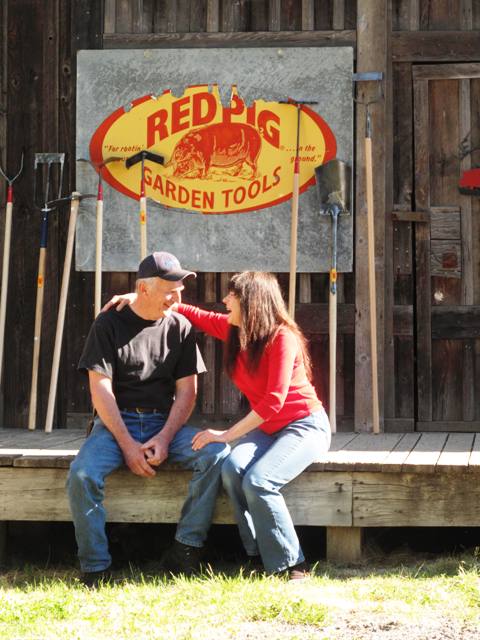
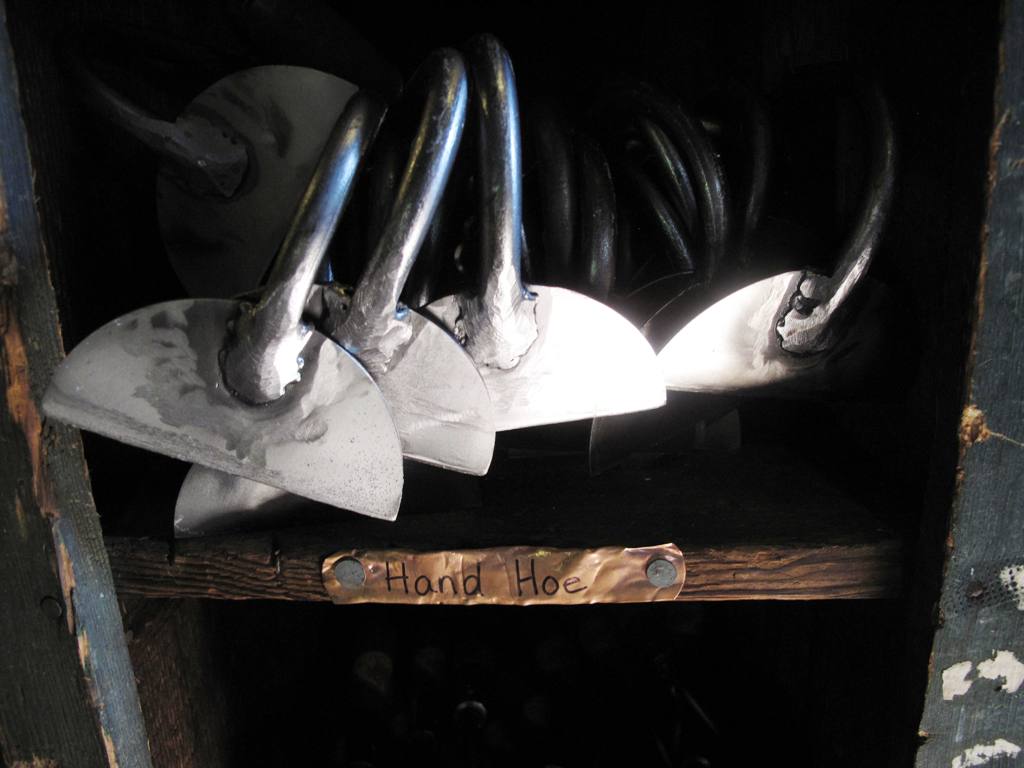
Bob Denman of Red Pig Garden Tools in Boring, Oregon, is one of the country’s last blacksmiths making hand-forged gardening tools and implements. You can learn more about his work here:

Bob and Rita Denman, of Red Pig Garden Tools

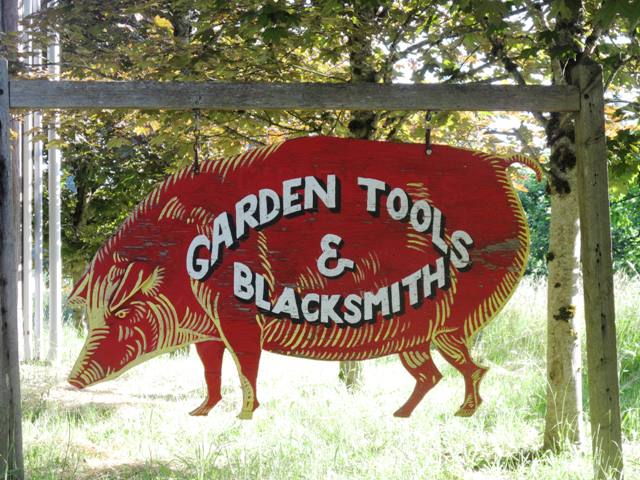
Love this old-timey sign!

You can see the actual forge-marks on these hand hoes. Rustic beauty!

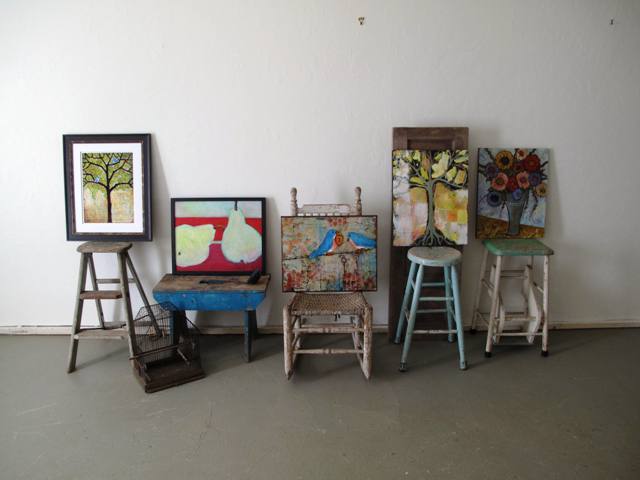
Artist Blenda Tyvoll uses mixed media to cover her canvases with soulful trees, inspired by the Oregon farm where she and her family grow Christmas trees! Check out more of her work here.

I love this little gallery I styled with Blenda's canvases and her collection of paint-chipped stools.

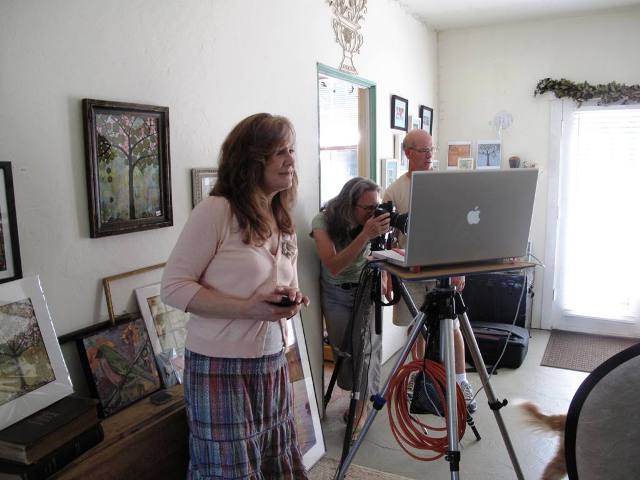
from left, Blenda studies her collection of tree-inspired paintings as Laurie Black and Mark King capture the shot.

Potter and artist Marybeth Sommers of the Seattle area has adapted the traditional Raku method to create bird houses and bird feeders. They are charming! We photographed Marybeth and her work at the Dunn Garden in Seattle. Thanks to the folks there for making that happen! Marybeth’s studio is called Ring of Fire Pottery.

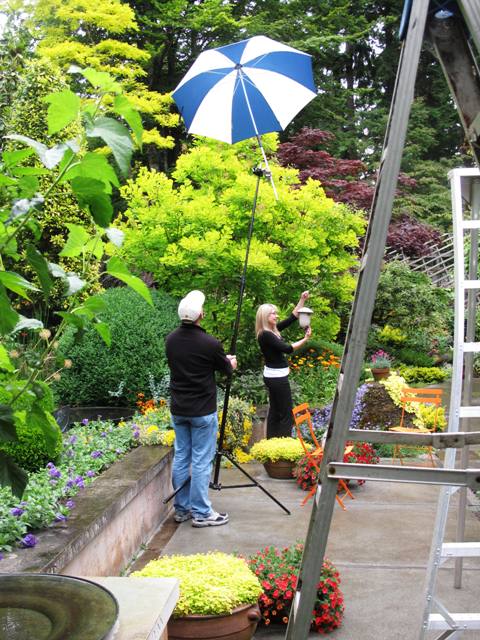
Here's what happens when the showers arrive in the middle of a photo shoot! That's Mark King, holding a rigged up photographer's stand with an umbrella clipped onto it. Just to keep our subject Marybeth dry while Laurie take her portrait.

A sweet vignette of Marybeth's bird feeders in the colorful Dunn Gardens.

Finally, we spent a day with Cindy McNatt, creator of Dirt Couture. Visit the site here and learn more about all of these artists, plus nearly 100 more artisans and crafters. You won’t be disappointed!

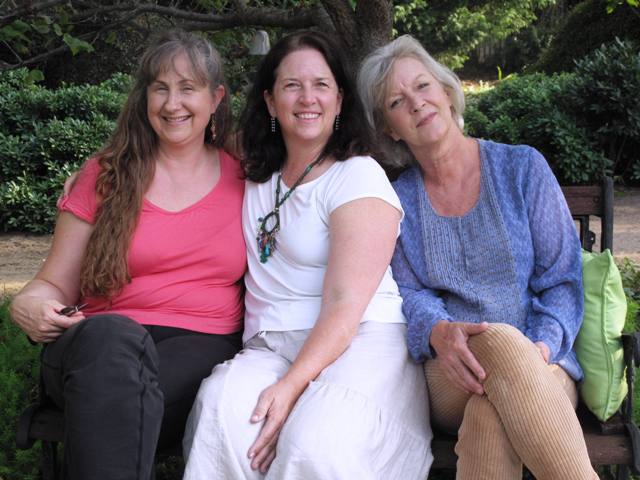
Garden Writer friend Julie Bawden Davis (left) visited Cindy McNatt (right) and me (center) during our photo session. It was fun to reunite with my SoCal girlfriends!

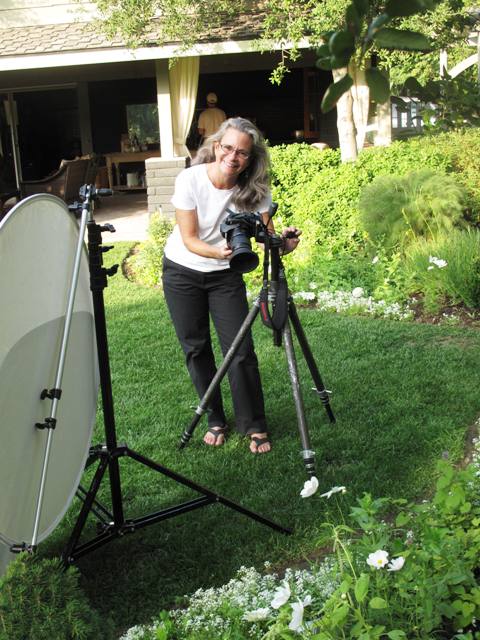
Laurie King, a dream of a photographer to work with!

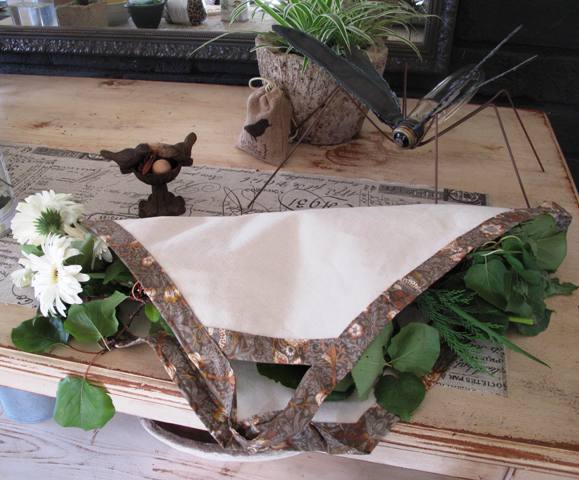
Dirt Couture's canvas harvest trug - perfect for gathering flowers and herbs.

The end! Now we’re busy planning all the stories to be created this summer for 2013 issues~

On the road, but trying to stay local

Saturday, May 26th, 2012

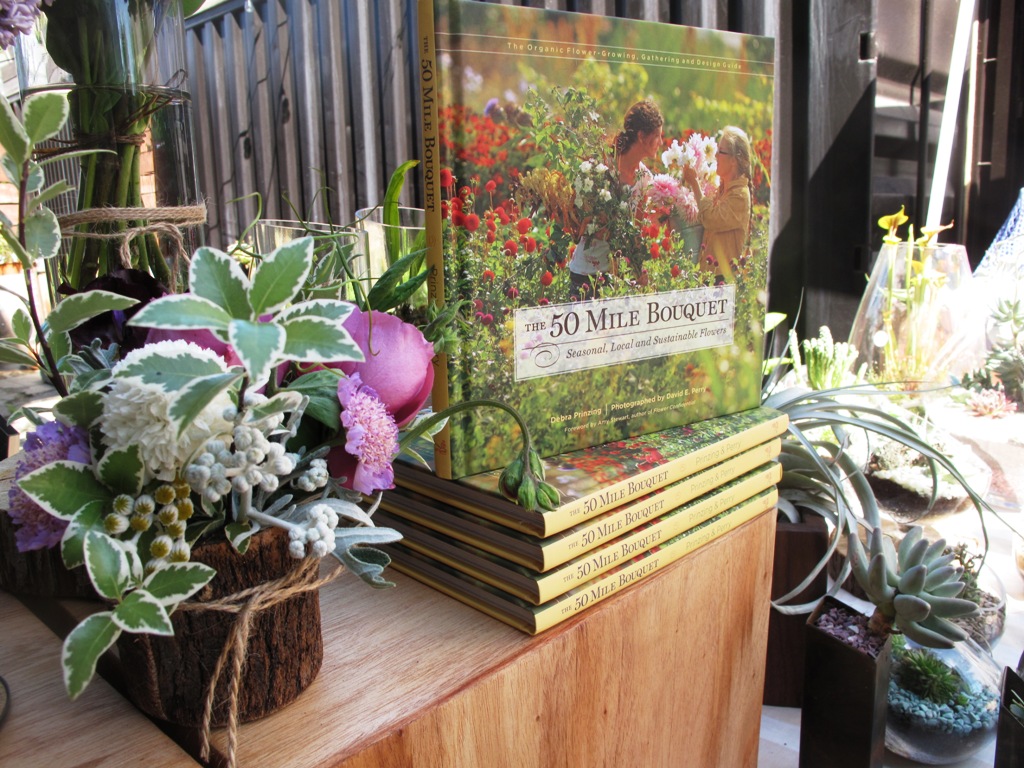
The 50 Mile Bouquet shares the stage with Lila B.'s charming mini-floral arrangements.

Promoting the Slow Flower movement means one may have to travel. I realize that’s a huge contradiction, but that’s life – a series of choices, right? I rationalize my airplane journeys by trying to cram as many events into one destination as possible. Not exactly logical, but it makes me feel more efficient and keeps me away from home for a shorter period of time.

Earlier this month, I headed to San Francisco for Mother’s Day weekend. It started when Flora Grubb and Susie Nadler, two of the superstars of The 50 Mile Bouquet, invited me to be part of the Mother’s Day events at Flora Grubb Gardens. It was the perfect excuse to combine a visit to meet my own mom (and dad) in San Francisco. And then Baylor Chapman of Lila B. Flowers, another superstar of our book, invited me to be part of her activities as part of the SF Made Week. We filled those 48 hours to the brim with flowers, friends and family. A special thanks to Sophia Markoulakis, food and garden writer, for featuring The 50 Mile Bouquet and the Mother’s Day book-signings in her article for the San Francisco Chronicle, ‘Slow-flower’ movement’s power sprouts with new book.

Here are some of the photos from the trip:

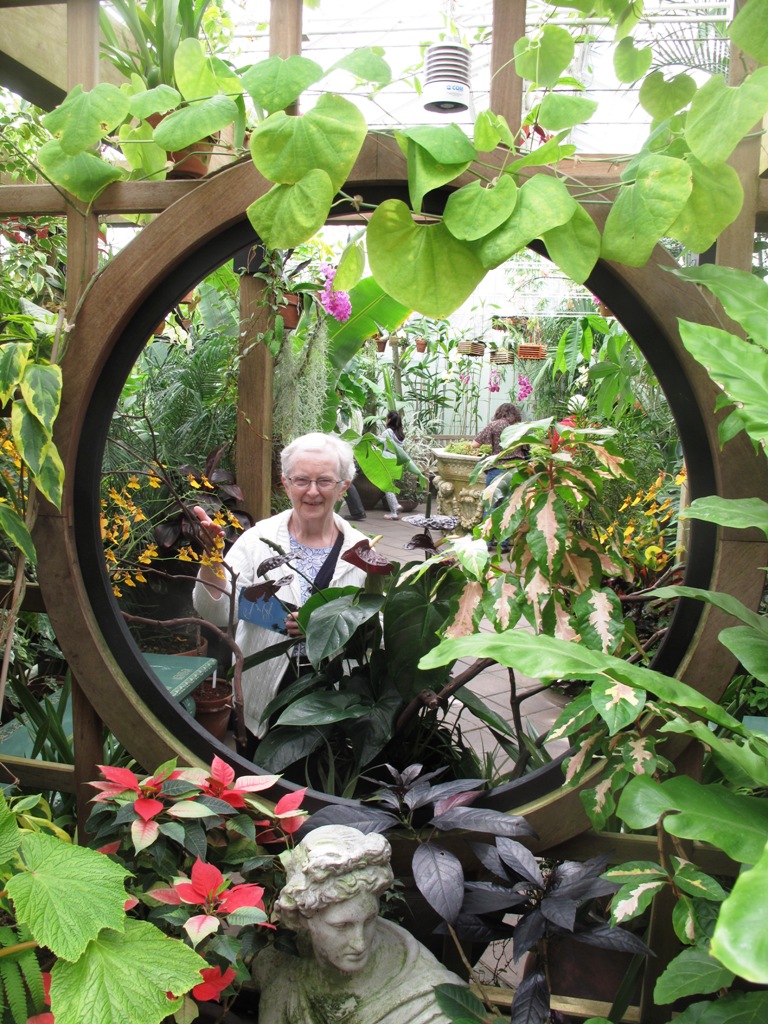
Hi Mom! Having fun with my own mom, Anita Prinzing, at the SF Conservatory of Flowers.


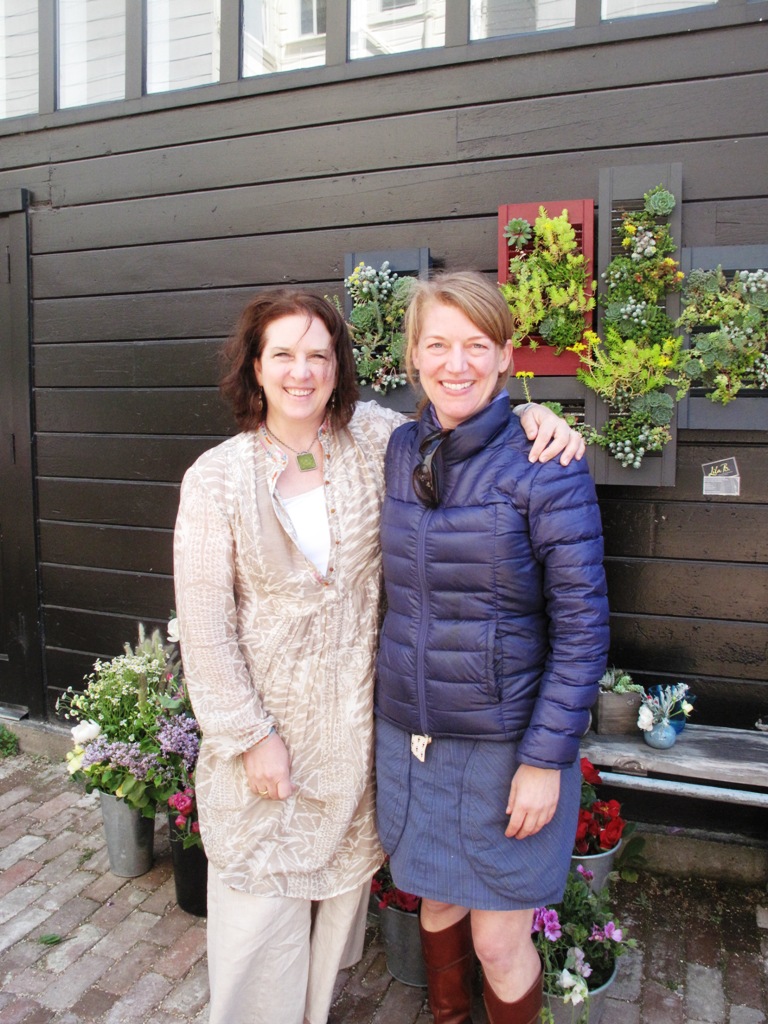
Spending time with floral artist Baylor Chapman is always a treat. We're at the Lila B. Flowers pop-up shop at the Stable Cafe on Folsom Street.


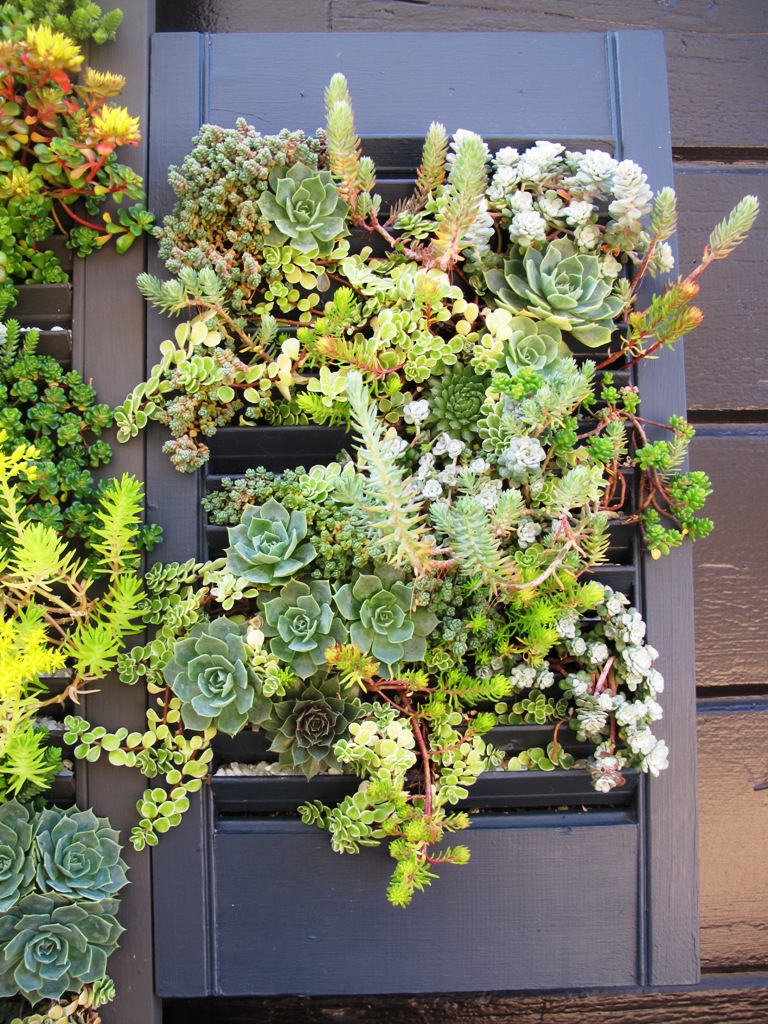
Sigh. Baylor's famous succulent-planted shutters. So beautiful!

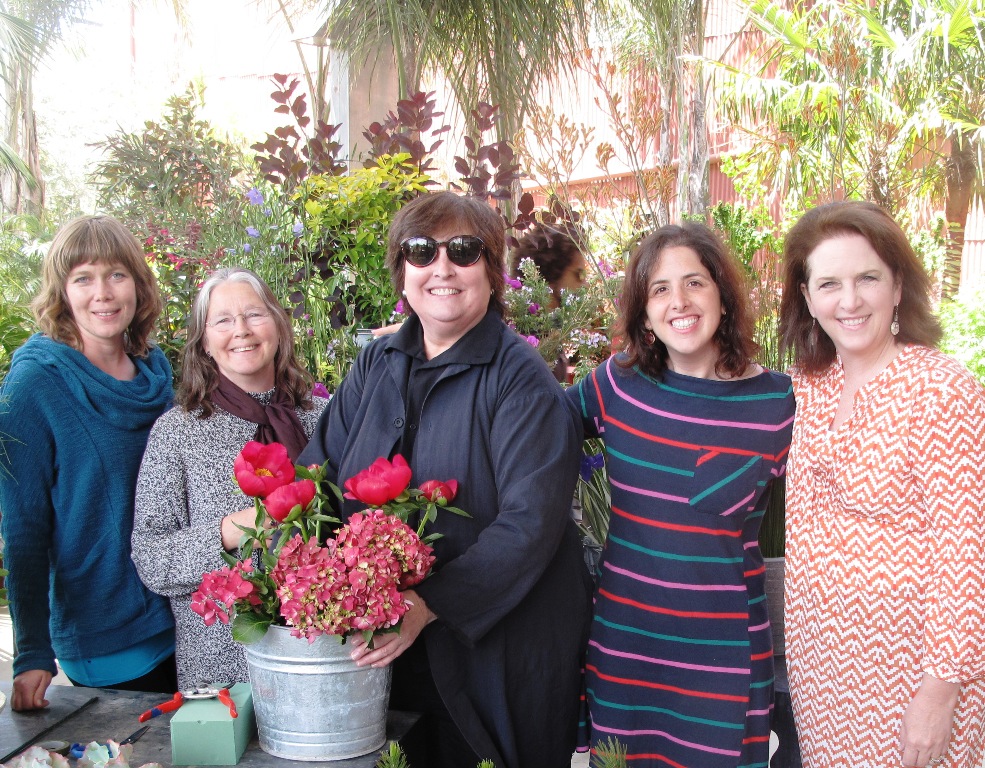
At Flora Grubb's on Mother's Day, including (from left) Flora and her mom, Susie's mom, Susie, and me.


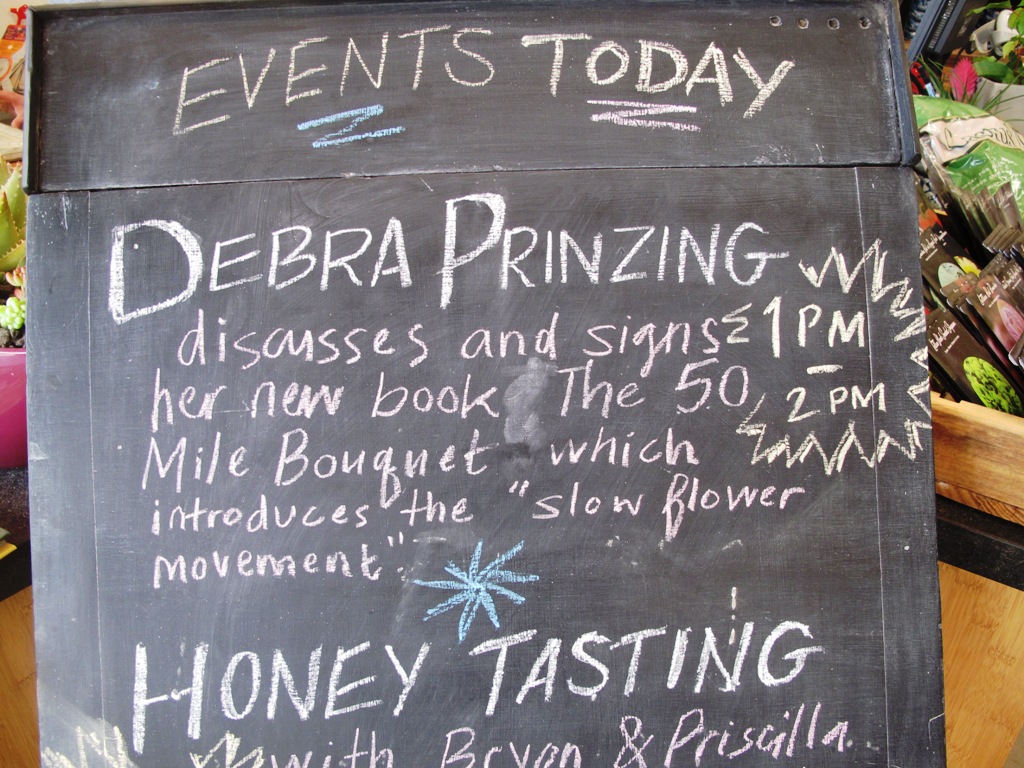
A chalkboard notice welcomes me.

Susie create a scrumptious local bouquet using ingredients from her own backyard, from local flower growers and - of course - from succulents at Flora Grubb Gardens.

Seasonal eye candy

Tuesday, April 17th, 2012

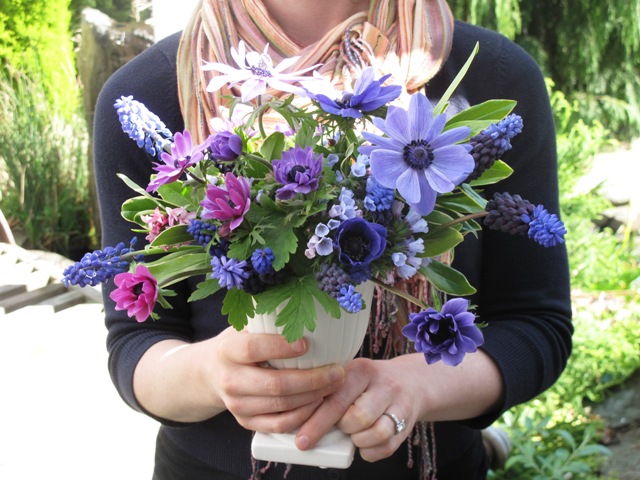
Eco-conscious flower farmer and floral designer Kelly Sullivan of Seattle’s Botanique Flowers arrived with this gorgeous bouquet at a lunch I hosted last week. I had to share it!

Kelly Sullivan's evocative spring bouquet

Here’s what she included in the diminutive urn:

From her own garden: purple-blue grape hyacinths (Muscari); pale pink and purple flowers from a groundcover called Pulmonaria; geranium foliage; and variegated foliage/scented pale-pink flowers from a shrub called Daphne odora.

From the garden center: It was too early to harvest these from her own backyard, so Kelly bought potted anemone plants and clipped several of their romantic black-centered flowers in indigo and dark pink to add to the bouquet.

Everything is stablized with a small piece of chicken wire inside the vase, which allowed the designer to get the full, cascading effect she wanted. I was smitten!

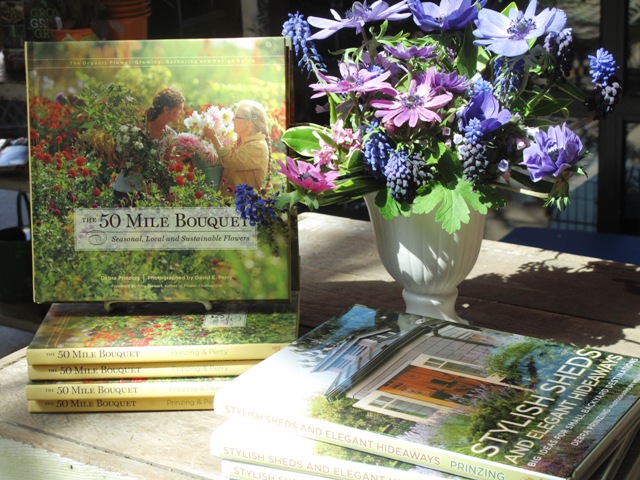
So, when we had a talk and book-signing at Ravenna Gardens on Sunday, I brought along her vase to add to the book display. It’s simply sublime!

Kelly's bouquet looks pretty dazzling with our book display.

THANK YOU, Kelly!!!


Into the Garden with Charles

Friday, April 13th, 2012

Read about the 10-year journey of a garden memoir – from the seed of an idea to its release by a top New York publisher

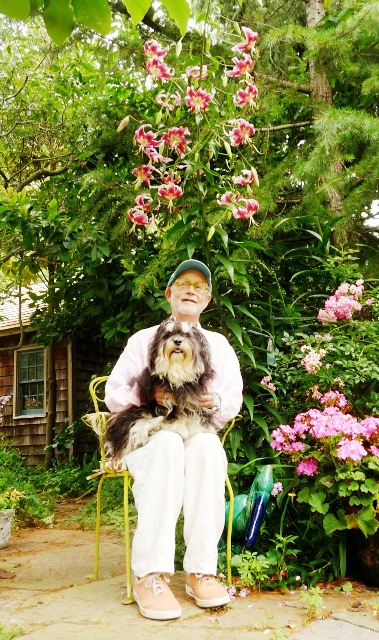
Skip in his garden in Orient, New York. Rover is seated on his lap.

Many garden writers whose work I greatly admire have privately shared their disappointment that our genre isn’t seriously viewed as a literary subject when compared to, say, sports or food. Every twelve months we witness the publication of an anthology titled something like “The Best American Sports Writing, 2011” or “The Best Food Writing, 2010.” There are books of “bests” for Science and Travel writing. Yes, even Nature and Environment writing has been compiled by publishers, but those topics aren’t the same as the subject of the garden. Sadly, garden writing rarely receives credit for its importance as an art form.

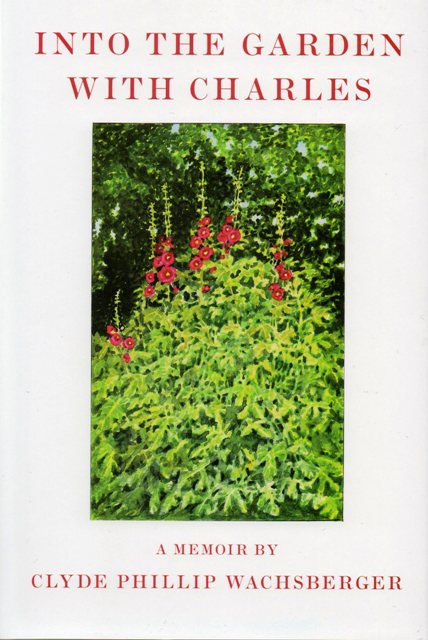
And yet, there is wonderful work in our circles. And one of the very best pieces of literary garden writing I’ve ever read was just published this week and released by the venerable imprint Farrar, Straus and Giroux. It’s a memoir called “Into the Garden with Charles,” by the late Clyde Phillip “Skip” Wachsberger, an award-winning artist twice honored by Garden Writers Association.

Skip’s book is beautiful both for its language and for the 14 full-color watercolor illustrations interspersed through its 224 pages. FSG’s press material describes this work as a “sweet and inspiring story about art, love, and gardening set against the backdrop of New York City and the author’s noteworthy garden outside a three-hundred-year-old house in the tiny village of Orient, Long Island.”

For those of us who knew and admired Skip, his book can be viewed as one man’s life work. It’s a highly personal and yet universal story of love, friendship, and the way the garden can nurture a lonely soul.

When I spoke by telephone with Jonathan Galassi, FSG’s president and publisher, and asked what prompted him to acquire Skip’s memoir, he said: “I thought it was a very genuine and beautiful piece of work; very touching and real and unlike anything else I’d read.”

As I listened to those words, tears welled up in my eyes. I thought: How pleased Skip would have been to hear them. We lost Skip last November, when cancer took his life. That his writings, paintings and garden survive is to be cherished by those who loved him and by anyone who reads this memoir.

For fellow garden writers, Skip’s creative story is an inspiring one, much of it documented in the pages of his memoir. His manuscript took a decade to be cultivated – from an original garden book idea to its release by one of the publishing world’s very best imprints.

Skip and I had many conversations over the years about how he reshaped his writing — from descriptions of plants and place into an intimate narrative of his own life. To better describe the story of this special book, I turned to the people closely involved with “Into the Garden With Charles.” In addition to interviewing Mr. Galassi, I spoke by phone with Charles Dean, Skip’s surviving husband, and Karen Braziller, his friend, neighbor and longtime writing coach/editor. They graciously shared details of Skip’s writing journey with me.

GARDENING, WRITING AND PAINTING

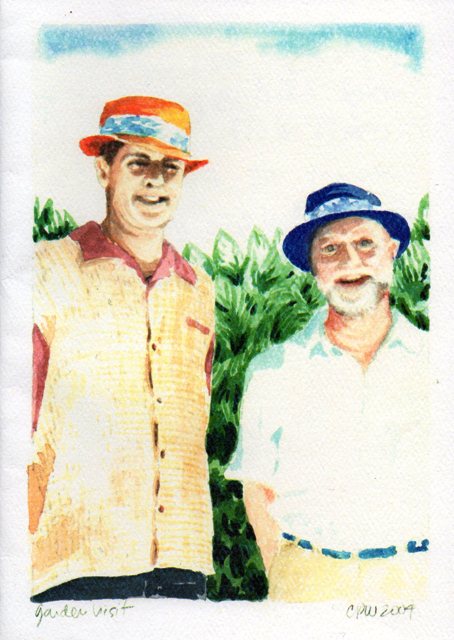
Charles and Skip in their pork pie hats. Skip printed note cards from the original watercolor.


In theatre, someone who sings, dances and acts is called a “triple threat,” so I guess you could say that as a creative individual, especially in garden writing circles, Skip had his own remarkable set of triple talents — gardening, writing and painting.

His gifts converge in and enliven the pages of “Into the Garden with Charles.” From the opening lines when he wonders if all that makes him happy is just a dream – his beloved but antiquated home and garden, his always-cheerful dog Rover, and his charming, Southern-born partner Charles – Skip draws the reader into his magical world in which the impossible is always possible, if you only believe.

“Into the Garden with Charles” tells of a wonderful life filled with a love for opera, art, plants and friends. That Skip yearned for a companion with whom to share all of it is a familiar narrative. And just when it seems like he’ll never find the love of his life, living as he does in a remote Long Island village populated with couples and having just passed his half-century birthday, Skip meets Charles.

“Every garden tells a story. Ours tells a love story,” he wrote. And you will fall in love with both Skip and Charles, as well as Rover, their loyal Havanese, and all of their plant-obsessed garden adventures. Gardeners will especially relate to the ends to which these two men go to develop an otherworldly backyard where every tree, vine or flower has its own back-story!

For those who love to read lush (but not flowery) language, you will find the narrative delightful. And like a child’s storybook from days gone by, this one is adorned with beautiful watercolor illustrations, painted by the author. Allow yourself to be drawn into Skip’s dream world. You will be touched by his wisdom, kind spirit and optimism — all of it a gift from him to the reader!

READ MORE…

Making it to the New York Times: The author’s “holy grail”

Thursday, March 29th, 2012
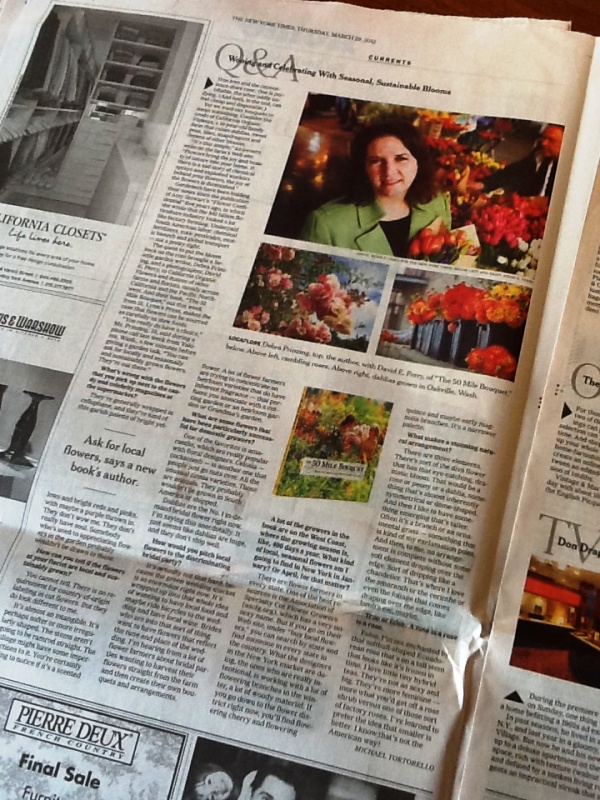
A friend emailed me the photo he took of today’s paper and wrote: “Look who I ran into”

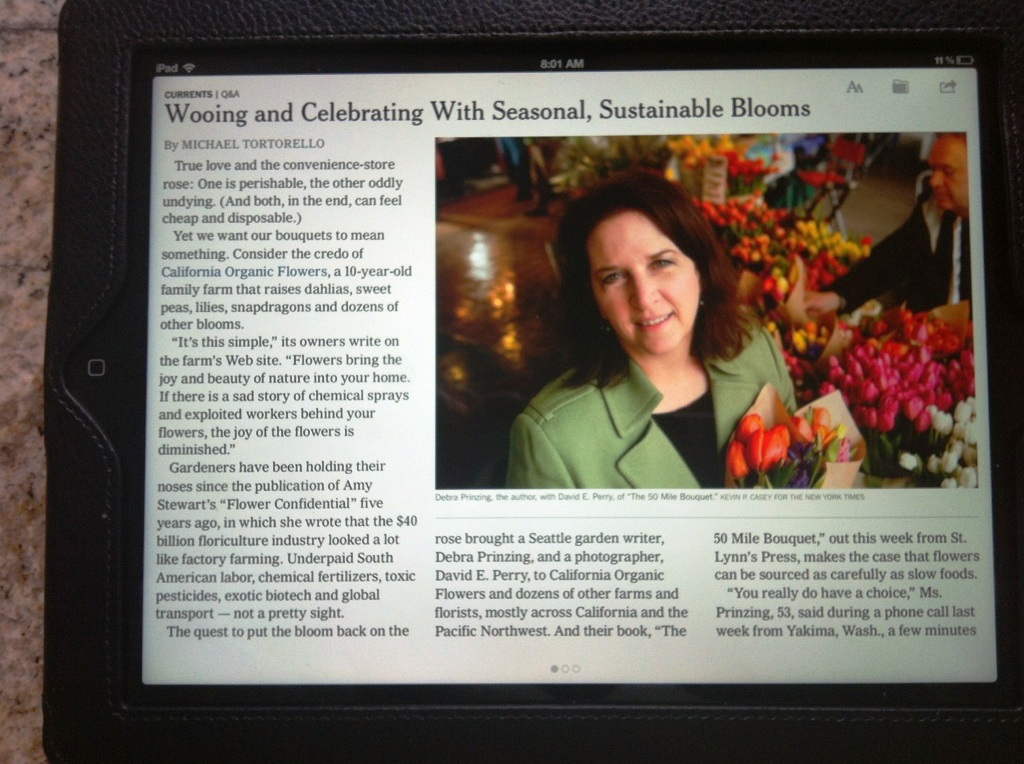
Today’s New York Times featured a piece about The 50 Mile Bouquet, complete with our book’s cover, two luscious flower photographs by David Perry, and a portrait of me. Everyone in the St. Lynn’s Press family is ecstatic, to say the least. This sort of thing doesn’t come around often, if ever, in the life of an author. Here is the full text of the Q&A.

Michael Tortorello, a gifted writer whose work regularly appears in the NYT Home section, set up a phone interview with me last week. Due to time zone differences, his travel and my own travel schedule, it turned out that between the two of us, we could only find one hour that worked for a phoner! I was literally seated in Stephanie Clevenger’s SUV, which was parked in front of The Red Barn – the gathering place for Yakima Master Gardeners. The minute Michael and I finished up the Q&A, which he recorded, I dashed into the barn and gave a Container Design presentation to about 75 MGs . Whew.

Another friend sent me a photo of her Ipad edition of the NYT.

There was a similar crunch when it came to getting a photograph, which took place earlier this week with just a few hour’s notice. Lola Honeybone of MediaWorks Nashville, a friend whose book PR skills are unparalleled, and whose help I enlisted for our book’s publicity efforts, emailed to ask: Where would be a good spot for a portrait?

I immediately thought of the brilliantly beautiful Pike Place Market stall operated by Alm Hill Gardens (Gretchen Hoyt and Ben Craft, owners). This is the single best place in Seattle for organic tulips, daffodils, hyacinths, lilies, and other amazing crops that come later in the year – like lilacs and peonies. Their farm is located in Everson, Wash., close to the Canadian border, and Alm Hill is a gold-standard flower fixture at the Market. My go-to source! Plus, since we have a 2-page spread on Gretchen and Alm Hill in The 50 Mile Bouquet, it seemed fitting to take the photo there.

I met freelance photographer Kevin Casey at the stall on Monday afternoon. My flower-seller pal Max Clement was working, as he does most Mondays, and he indulged us by stashing Kevin’s gear and my stuff while we did the photography. It was certainly less painful that I thought it would be, thanks to Kevin’s easygoing style and also the way he let me know what “worked” and what didn’t. Do I smile? Do I look serious? Ugh!

Here I am with a “taste of tulips,” posing with Kevin Casey, a NYT freelance photographer.

In the end, I’m pleased with the photo used in the story – especially because Max and the tulips appear in the frame!

But I had a chance to turn the tables on Kevin, too. I asked him to pose with me for a photo that Max shot with my Iphone. We look goofy, but who cares? It was way fun and an unforgettable experience. Turns out, Kevin is an old newspaper staffer like me, so we compared notes about editors and writers with whom we’ve both worked in the past. It really is a small world.

Last evening, I received an email from Mary Robson telling me that she’d seen the story on the NYT’s web site. It’s also fitting that I first heard from Mary, a dear friend to so many gardeners and readers from her days as a popular columnist with The Seattle Times, and as King Co.’s Extension Agent who trained hundreds of Master Gardeners over the years. Mary and I co-authored The Washington-Oregon Gardener’s Guide in 2004 (and Lola was our publicist then – see what a small world it is?). What a treat to hear it first from her – the best co-author a girl could ever have.

This morning, the “real” print edition arrived in our driveway. Bruce went out to get it first and used the edge of the Home section to tickle my face and wake me up at about 6:30 a.m. Later in the day, friends texted and emailed their own photos taken of the story in the print edition and Ipad version.

I know that the 24-hour high is about to wind down, but then again, maybe not. There is something called an after-life for stories. I know because when my own articles are posted online I’m always surprised to see that they have an extended shelf life, sometimes for years.

For now, I’m just grateful and happy to have been part of the experience. Something great is coming from the combined creative efforts of two people who adore and admire flower farmers and floral designers. So as my friend, the late Linda Plato, would have said: “It’s all good.”

Perfect Party

Wednesday, March 28th, 2012

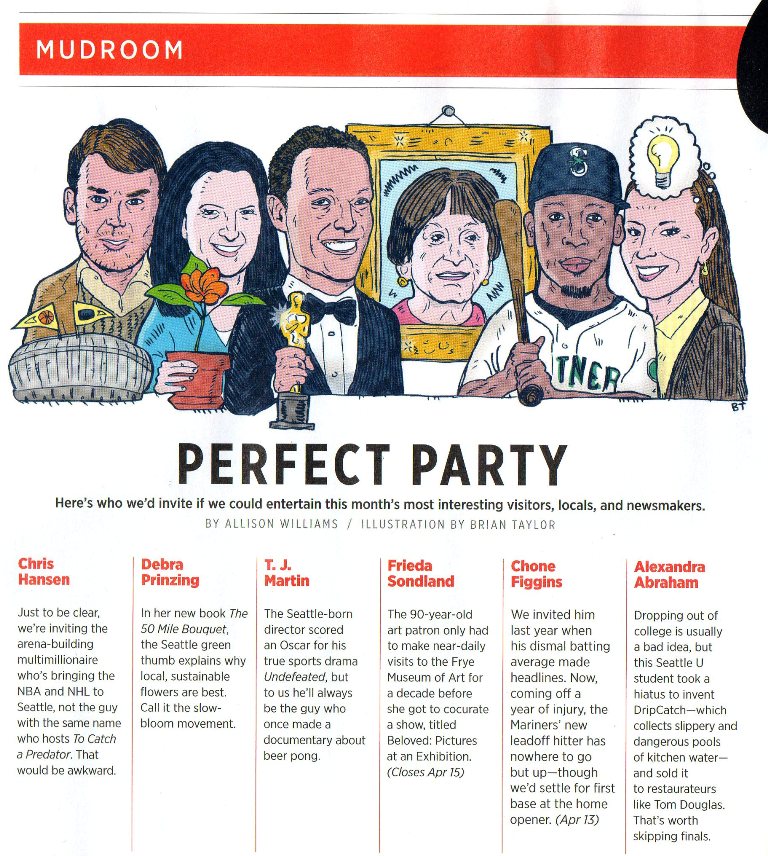
My friend Bill called me yesterday to tell me that Seattle Met magazine included me in their “Perfect Party” feature for April.

“WHAT????” I asked. Clearly, this happened without my knowledge – but it’s quite exciting. And amusing! I’ve never before been illustrated! I wonder who put them up to this?

Here’s the story:

Meet the NEW Sunset Western Garden Book

Wednesday, March 7th, 2012

SUNSET GIVEAWAY

I’ve drawn names of all those who answered my question below and here are the five “winners” of a FREE copy of The New Sunset Western Garden Book, courtesy of Sunset. The question: What is your favorite ornamental landscaping plant (shrub, grass, perennial, etc.) to harvest for a cut bouquet? yielded these winners/answers:

Jen Y: peonies

Paula: bunnytails grass blossoms or pilotus joey

Carol: Peonies, nandina branches and berry clusters

Nicole: hellebores

Kim: dahlias

CONGRATULATIONS! You will soon be hearing from Dana Smith of Sunset Publishing, who needs your mailing address.

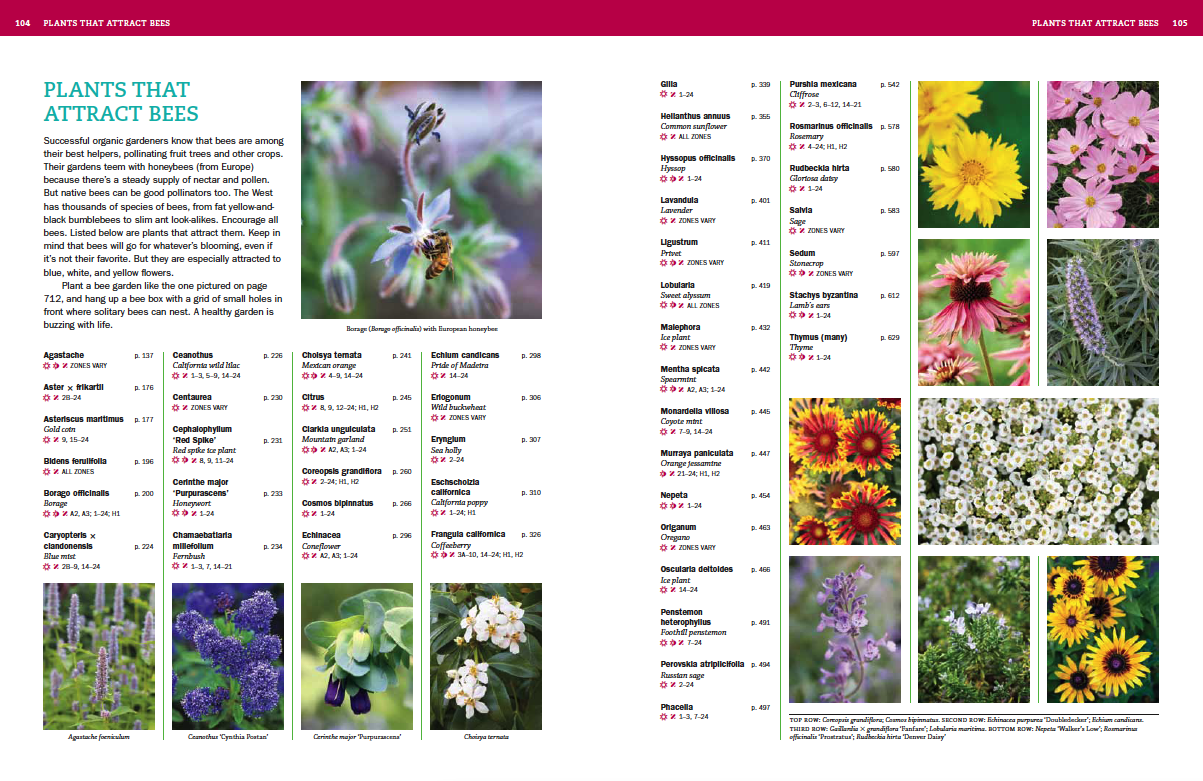
I recently had a chance to interview Kathleen Brenzel, garden editor for Sunset magazine – and editor of Sunset’s new, 2012 edition of The New Sunset Western Garden Book,  (Sunset Books, $34.95 for flexible binding, $44.95 for hardcover), a “bible” for western gardeners.

Whether you’re new to gardening or have logged many planting seasons with your hands in soil, it’s the single best go-to reference for garden-makers in our region. As chunky as the Yellow Pages, this essential guide to the West’s ornamental and edible landscape has been around for 80 years. I’ve owned every version since the early 1990s, including the most recent 2007 edition, which is dog-eared from much use.

When I got my hands on the just-released ninth edition last month, I thought: How different can this really be? I asked Kathy to walk us through the book’s 768 pages:

How did you go about updating this edition? Before we did anything else, we assembled a panel with landscape architects, horticulture educators from UC Berkeley and Cal Poly San Luis Obispo, nursery people and new graduates who had used our last edition as a textbook. The recent grads told us that in order to make “The New Sunset Western Garden Book” relevant, it had to have a digital component. They said: “We go everywhere with our smartphones, so we want to be able to take a photo of a plant we see on the hiking trail and look it up instantly.”

How did you go digital? Now you can take the best of Sunset with you to the garden center, nursery and your yard. You can get the free mobile edition of this book’s Plant Finder on your smartphone. (Search for Sunset Plant Finder.) With it, you can access more than 2,000 plants — and search by plant name, ZIP Code, climate zone, sun and water requirements, and type. There’s a companion online Plant Finder that lets you browse by color, height, spread and special needs.

How else is the book interactive? The last section of “The New Sunset Western Garden Book” is a practical guide. We’ve added a camera icon on the bottom of the pages, pointing you to corresponding videos on our website. It’s nice to read directions on planting a tomato in a pot and then watch a video of one of our editors showing you exactly how to do that.

What are the other major updates? This is the first edition to feature plant photos exclusively, rather than illustrations. There are more than 2,000 plant photos. We also updated the entire plant encyclopedia. That was the biggest job in the whole book. Every plant was reappraised, and we added many new varieties now available in nurseries. We went to growers all over the west and compared our existing plant database with what they are now offering; we asked what they thought we should include and why.

How many new plants did you add? The new book has 9,000 plants, up from 8,000 in the last edition. We also had to check the botany of every plant because botanists are constantly reclassifying plants.

What can new gardeners gain from the book? The section “Gardening Start to Finish” is more instinctive for the beginner. We walk them through the whole growing process from A to Z. We also have practical sections on gardening for wildlife and native plants, growing herbs and water-wise plants.

What can more experienced gardeners gain from the new book? The plant encyclopedia is filled with tip boxes of additional information – like how to propagate a sweet potato vine or when to cut ornamental grasses for the vase.

You have more edibles, don’t you? We asked ourselves: “What do people want most from ‘The New Sunset Western Garden Book’ right now? You’d have to be totally checked out not to notice a huge wave of edible gardening, so we wanted to amp up our coverage. I’m really happy with the “what edibles to plant when” charts for warm-season and cool-season veggies.

What’s your favorite take-away from the book? There’s an underlying theme that acknowledges how we garden now – with an interest in natural gardening and sustainability. Our gardens are smaller, but they’re stylish and sustainable.

Note: A version of this Q&A appeared in the LA Times HOME blog on February 17th.


Mostly native plant list for a modern California garden

Tuesday, November 1st, 2011

A stand of cape rush adds a semitransparent layer of privacy between sidewalk and front garden.

Joel Lichtenwalter and Ryan Gates of Grow Outdoor Design, based in Los Angeles, have introduced me to some really creative gardens they have designed. And what strikes me when seeing these mostly small, urban landscapes, is how well plants are used as architectural elements within the spaces they reside.

Designers Joel and his client Scott can be seen in the distance, conferring on some of the planting designs.

You won’t see fluffy cottage gardens with English-inspired perennial choices in Ryan and Joel’s gardens. Yet even when they design for bungalow-scaled residences, some of the same intimate, cottage garden experience occurs for the humans who occupy them. That emotional sense of being surrounded by plants, layers of textures — and even color in a tonal, modern sense –happens in their gardens.

I wrote about one such place recently and you can follow the links to the Los Angeles Times story here, including an extensive web gallery.

For those who ask: What plants are appropriate for a lush, low-water landscape? I think you’ll appreciate Ryan and Joel’s plant list for their clients’ lawn-free front yard now filled with native and Mediterranean grasses, shrubs, ground covers and trees, many of which display multi-season beauty:

A shopping list of California native plants and their Mediterranean companions
Natives:
Ceanothus griseus horizontalis
Yankee Point
Cercis occidentalis
Arctostaphylos ‘Howard McMinn’

Arctostaphylos ‘Emerald Carpet’
Leymus condensatus ‘Canyon Prince’

Muhlenbergia rigens
Platanus racemosa
Carpenteria californica
Eschscholzia californica
Juncus patens

Sisyrinchium montanum (Blue Eyed Grass)

Non-Natives:
Arbutus ‘Marina’
Agave bracteosa
Leucadendron ‘Safari Sunset’

Agave vilmroniana
Olea europaea
Chondropetalum tectorum

Materials:
Composite decking (raised deck and boardwalk)
Square pre-cast concrete pavers
Poured-in-place concrete bench
‘Del Rio’ gravel
Decomposed granite (DG)
Shredded tree mulch

Backyard Bouquets

Wednesday, October 26th, 2011

As some of you may know, I’ve been working on a book about local and seasonal floral design for several years, since 2007 to be precise. My collaborator, photographer David Perry, and I have been using the working title, A Fresh Bouquet.

But that’s all changing now, with a new title from our new publisher, St. Lynn’s Press. The words evoke just the right idea we want to communicate: The 50 Mile Bouquet: Discovering the World of Local, Seasonal, Sustainable Flowers.

Nice, huh? Our publication date is April 2012 and I’ll be writing lots more news about it soon.

Since all I’m doing these days is interviewing flower farmers, eco-couture floral designers and gardeners who grow their own cut flowers, my head is swimming with beautiful blooms.

And somehow in all this flurry of work, I’ve failed to post the out-takes from my floral design story that ran a few months ago in Better Homes & Gardens. So today, I’m taking a moment to get to it.

Backyard Bouquets - in BH&G's July 2011 issue

How great that 7.3 million readers of the July 2011 issue were introduced to the timeless notion of gathering flowers from the garden, a local farmer or a market stand – IN SEASON – and creating a simple, yet sumptuous arrangement that’s of the moment!

I have my editors Eric, Doug and Gayle to thank, because they believed in the idea and created the perfect opportunity for me to fly to Iowa and design a series of bouquets literally out in the field at Howell’s Family Farm.

I shared some of my on-the-scenes location photos last year, but here, finally, are my photos and recipes of the actual arrangements.

Project One

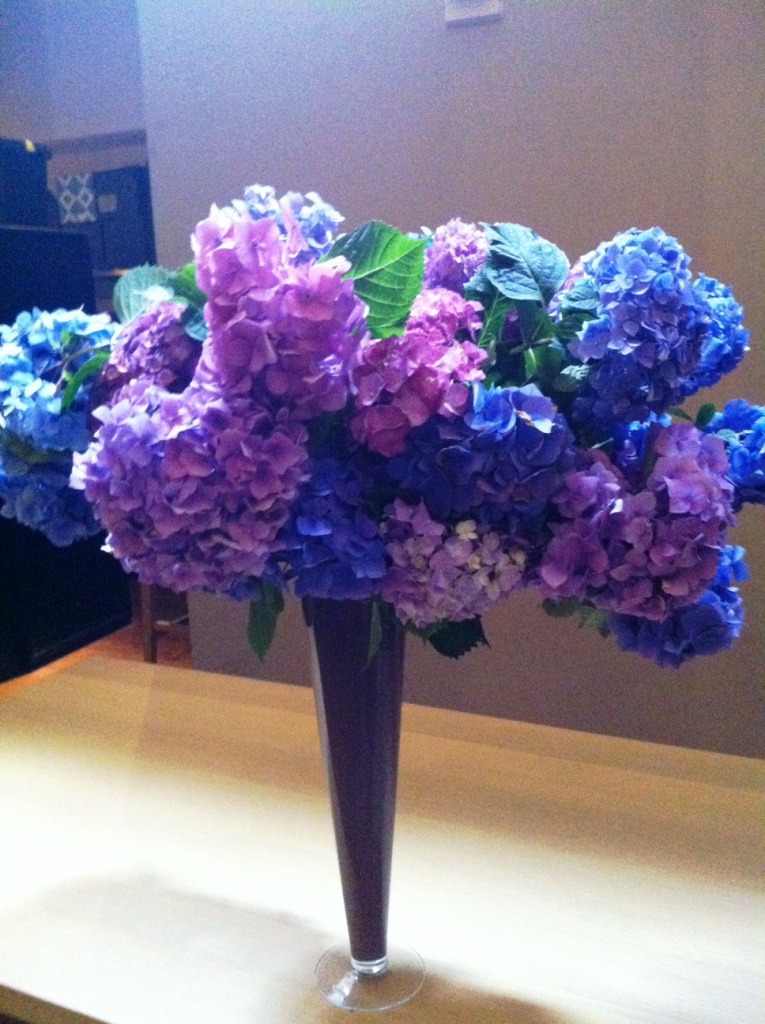
Project One features a rectangular galvanized container, measuring about 5-by-8 inches and about 5 inches tall. This small vessel was perfect for a compact bouquet with two simple ingredients. First, I filled the opening with four or five luscious heads of ‘Limelight’ hydrangea, the stems cut fairly short, say 3 inches long. To fill the spaces between the hydrangea heads and to add contrasting color and texture, I made miniature bunches of ‘Strawberry Fields’ gomphrena by wiring five slender stems with wire so that each bunch could be inserted as if it were a single flower. This is the perfect arrangement to enjoy while it’s fresh and then let it slowly air dry as an everlasting bouquet.

Project Two

Project Two features a tall, square, modern green glass vase with a neck opening that’s smaller than the base. So of course, to make it look abundant and full, I had to create volume and height. The starting flowers here are sultry-looking zinnias from a new seed mix called ‘Queen Red Lime’ – I love the terra cotta, mauve, and reddish blooms with a lime-green center. Once I had those in place, I thought: We need dark foliage. And lucky for me, the folks at Howell’s, like many cut flower growers, have discovered how well basil performs as a cut ingredient – especially purple basil! Think about it: when you harvest basil from your garden and bring it indoors to keep in a jar on your windowsill, have you ever noticed how long those cut stems last? Of course basil is a great cut floral ingredient! The third element here is one of those happy coincidences – common foxtail grass, which some consider a ditch weed, that perfectly echoes the green vase, and catches the late summer sunlight just beautifully. Three simple ingredients in perfect harmony.

Project Three

Project Three is one of my very favorites, because of the mix of colors and textures. Contained in a vintage pitcher, I absolutely love the playful combo of velvety cockscomb (the crested form of Celosia ) with all the lime green contrasting forms. Here’s how I made this bouquet. First, I filled the pitcher with soft greenery, a white mugwort (Artemisia lactiflora) that fills the opening and becomes the supporting structure for all the subsequent stems. Second, I stripped foliage off of 10 maroon and coral-hued cockscomb flowers; then I cut the stems pretty short and inserted each into the fluffy base, making sure that you can’t see the stems showing at all. Third, I added some ‘Green Envy’ zinnias, which echo the pitcher’s green quite nicely. For a sense of movement, as a final touch, I inserted taller stems of quaking grass (Brizia maxima), so they seem to hover above the bouquet. Casual and the epitome of summer!

Two other projects fell on the cutting room floor, so to speak, so you get to see them here! Actually Project Four showed up in the iPad edition, along with a video interview filled with my eco-savvy design tips. You actually have to download the July edition to see the entire interview (filmed by David Perry) on an iPad.

Here’s a rough-cut edit of the video:

httpv://www.youtube.com/watch?v=ZLKacMtjJUY

Project Four

Anyone can replicate Project Four, a fun trio of mini-arrangements, which are displayed in a row or grouped together on the table as a centerpiece. We used three yellow tumblers that art director Scott Johnson brought from his kitchen cupboard. The simple idea was to showcase several varieties of black-eyed Susan flowers (Rudbeckia sp.) with a mix-and-match of foliage choices. The daisy-like Rudbeckia varieties include, from left: ‘Indian Summer’ and ‘Denver Daisy’ with zebra grass (Miscanthus sinensis ‘Zebrinus’); ‘Irish Spring’ with lamb’s ears; and ‘Prairie Sun’ with goldenrod (Solidago). This type of design works well when you only have one or two of anything in bloom at a given time – voila!

Project Five

For Project Five, the last arrangement, I had to rise to the challenge of creating flowers that wouldn’t fall out of the wide, saucer-like bowl. Similar to cutting the hydrangea stems short in the first design, I cut lots of Sedum ‘Autumn Joy’ in their unopened stage. A this point, they still look pretty green because the buds are tight. When you cut the stems short, say at 2-3 inches, you can really cram a lot inside an opening. To me, they almost look like heads of broccoli! But the tightly-packed sedums create a foundation through which other stems can be inserted. And in this case, I inserted old-fashioned love-lies-bleeding (Amaranthus caudatus) and Queen Anne’s lace. The tassels cascade over the edge of the shallow bowl, and while it’s kind of quirky, I really love the effect of textures and colors.

Together, these five designs demonstrate the diversity of the cut flower world – and ways to arrange blooms without using florist foam to stabilize the stems. Have fun playing around with these ideas using your own vases and garden flowers.