Debra Prinzing

Get the Email Newsletter!

Archive for the ‘Playfulness’ Category

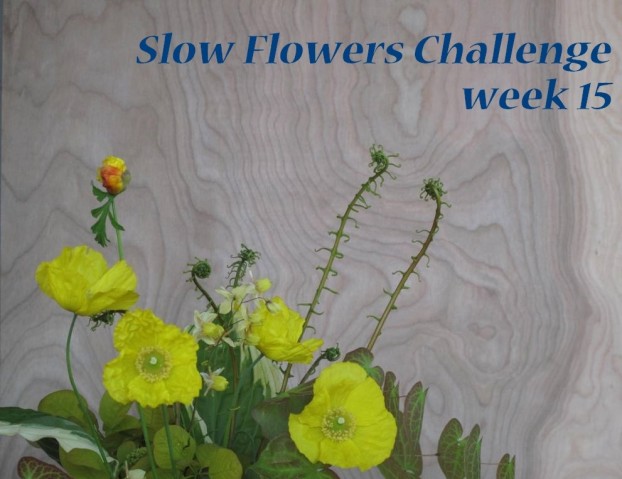
Week 15 // Spring Awakening

Sunday, April 19th, 2015
The pods and buds are waking up. They're shouting, "we're here!"

The pods and buds are waking up. They’re shouting, “we’re here!”

It’s been a crazy week here in Slow Flowers Land, but after 8 days of travel, I’m so delighted to be home in Seattle for a week. Seattle has been good to us, with mid-60s to 70-degree weather.
 
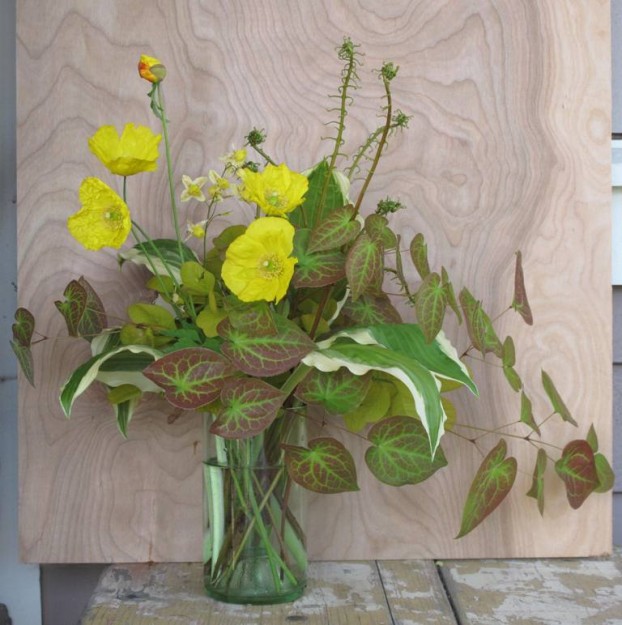
Today was no exception. I clipped a bit of this and that – all from my awakening garden. It truly is a Spring Awakening here!
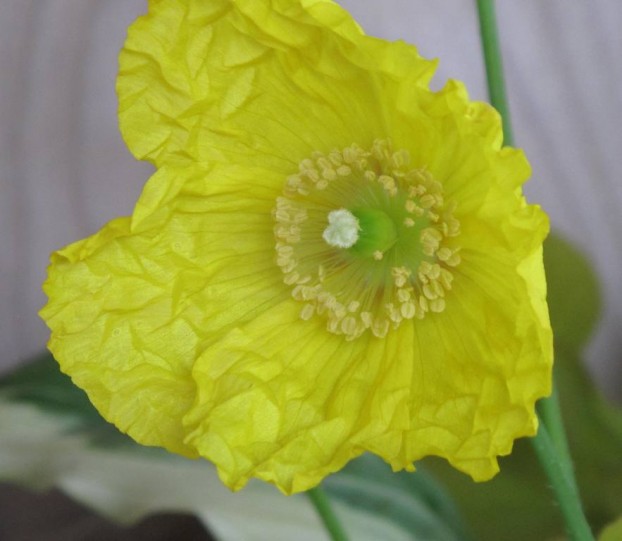
Just unfurled: a vivid yellow poppy

Just unfurled: a vivid yellow poppy

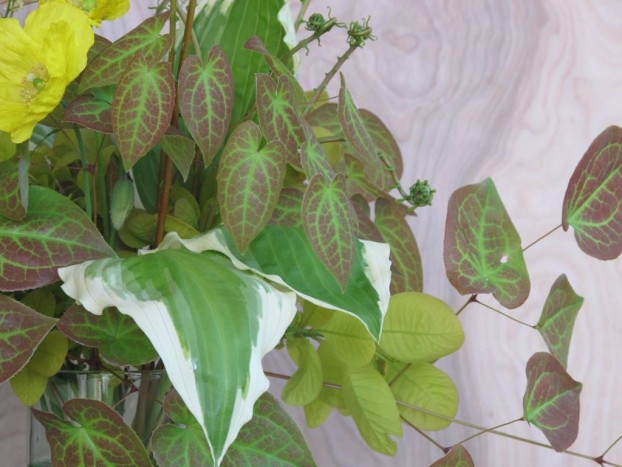
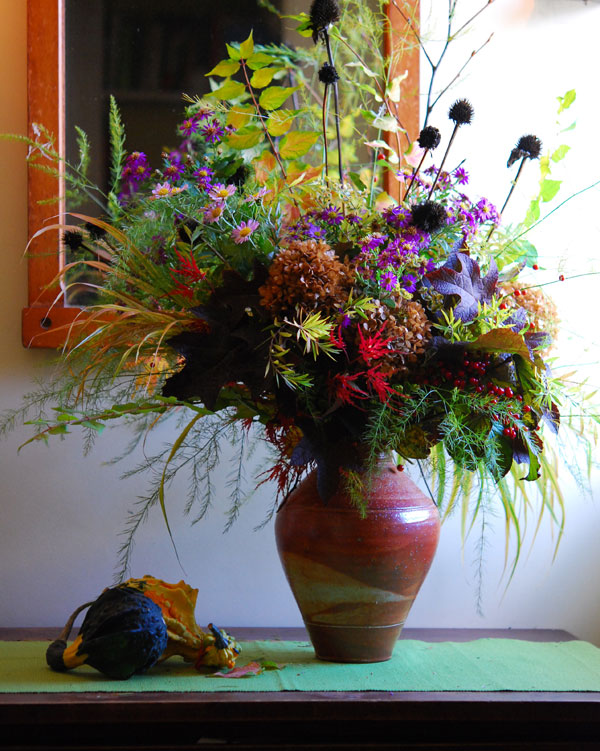
The delicate leaves and flowers that are pushing up through the April soil are each special in their own way. Here’s what I included in my spontaneous spring arrangement:

Variegated hosta leaves
Acid yellow smoke bush (Cotinus coggygria ‘Golden Spirit’)
The young tips of deer fern (Blechnum spicant)
Green-and-rust-variegated Epimedium leaves and a few flowering stems
Yellow poppies, flowers & buds

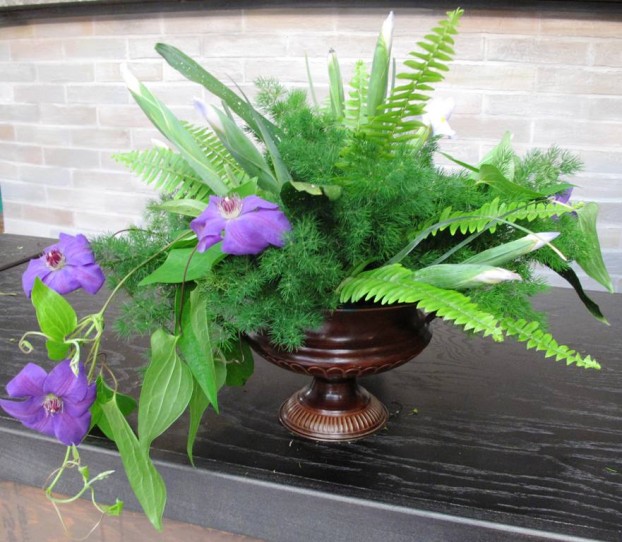
The final arrangement - all from April 18th in the garden

The final arrangement – all from April 18th in the garden

Love how all the season's new foliage works together.

Love how all the season’s new foliage works together.

A word about the vase. Christina Stembel of Farmgirl Flowers turned me onto“Wine Punts,” 100% recycled, made in USA, these beautiful vessels are wine bottles that have been repurposed into drinking glasses. Or, small vases. Available in sets of 4 in many colors. Love the size and the pale green hue.

#FarmerFlorist at a Crossroads – Redefining A Business with Emily Watson of Stems Cut Flowers (Episode 185)

Wednesday, March 18th, 2015
Emily Watson, Milwaukee, Wisconsin-based flower farmer, floral designer, entrepreneur -- today's podcast guest.

Emily Watson, Milwaukee, Wisconsin-based flower farmer, floral designer, entrepreneur — today’s podcast guest.

50

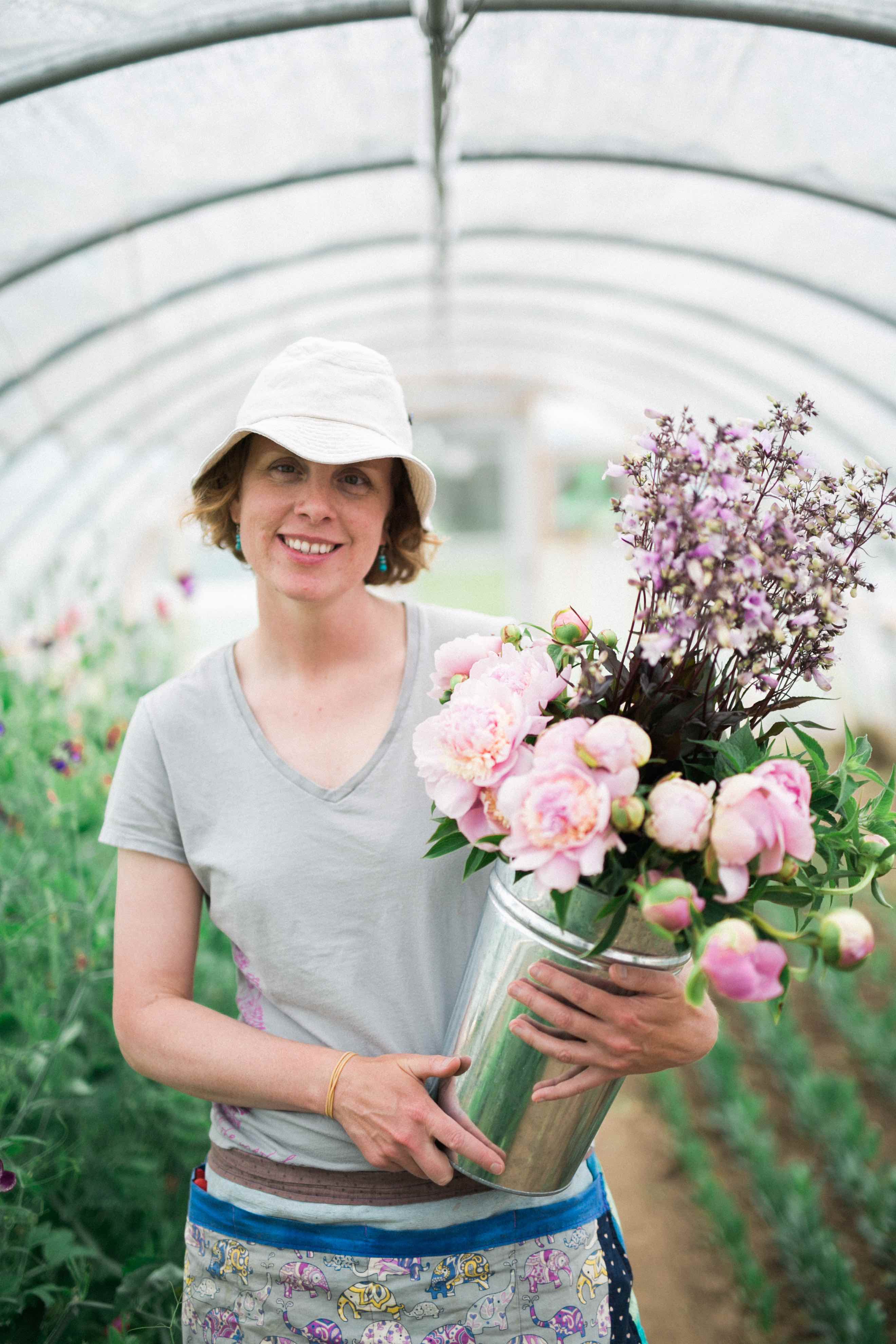
Emily on the farm, with her beautiful Wisconsin-grown peonies

I first met today’s guest “virtually,” when I reached out to her asking permission to use a portion of a online discussion she had started with other flower farmers.

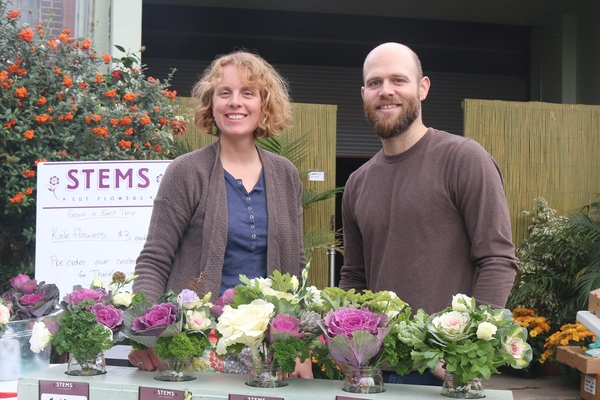
Emily Watson is based in Milwaukee, Wisconsin, and since 2008 she has owned Stems Cut Flowers, a specialty cut flower business based on her grandparents’ farm about 45 minutes west of Milwaukee. She is a founding member of Slowflowers.com, having supported our launch by contributing to the initial Indiegogo campaign.

Emily and I finally met in person last October at the ASCFG national meeting in Wilmington, Delaware, and that was when we spoke further about the possible “course-correction” she was considering as she juggled flower farming and a successful floral design aspect to her business. Recently we connected over Skype for a conversation that I believe you’ll find quite honest and forthcoming.

And ironically, it harkens to that bulletin board comment Emily made in 2011, the one I included in The 50 Mile Bouquet. She posed this question:

“I’ve been growing for less than five years, on a small plot, and I’m wondering if this is a good idea. I’m not looking to get rich overnight, or even at all. But I need to pay the bills, maybe support a family and retire some day (before I’m 90). I do not have a
problem working a few 80-hour weeks but I do not want that to be the norm. Am I crazy for thinking this? The bottom line is I need to know if this is possible before I sink any more money into it?”

The responses Emily received were encouraging and honest; no one tried to sugarcoat the truth about the backbreaking reality of running a small farm. They also revealed that people do not grow and market flowers because it’s lucrative, but at least in part for a love of the land and a passion for the independent lifestyle it brings.

Emily with her husband

Emily with her husband Nich Love

Here’s more about Emily:

Emily's tagline for Wood Violet, her new design studio, is "floral design inspired by nature." How fitting!

Emily’s tagline for Wood Violet, her new design studio, is “floral design inspired by nature.” How fitting!

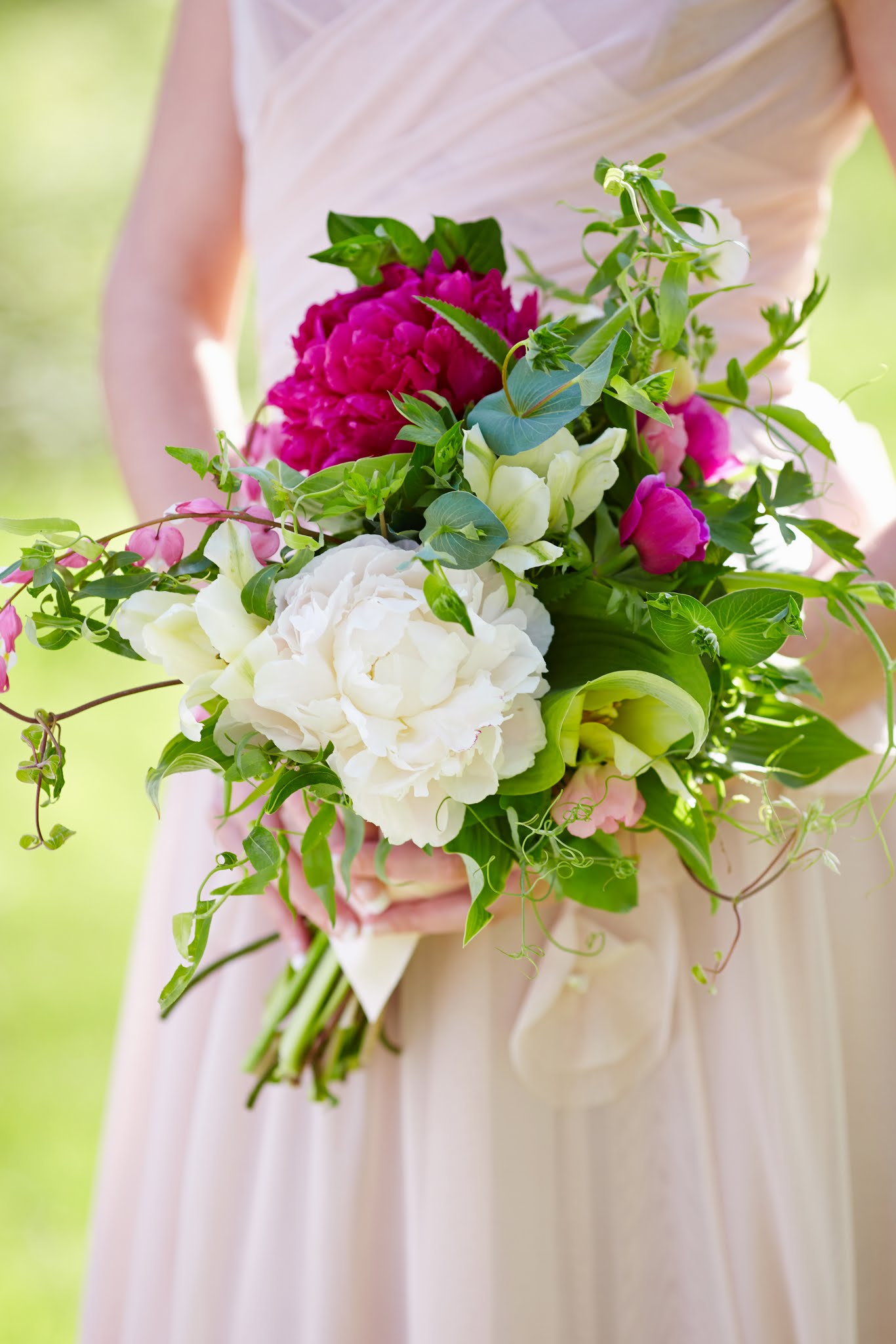
A May wedding bouquet grown and designed by Emily Watson.

A May wedding bouquet grown and designed by Emily Watson.

She grew up in a small agricultural town not terribly far from Milwaukee with three brothers and lots of cousins nearby, playing outside all the time.

After high school, Emily attended the University of Wisconsin in Madison where that love for the natural world led her to earn a bachelor’s degree in Biological Aspects of Conservation.

She worked as a landscaper, which led to work in a flower shop, which somehow led to managing a Chinese restaurant. As she puts it: “I learned a lot about business at that Chinese restaurant and made a lot of friends, but the call of the outdoors was too strong.

By 2008, Emily had started Stems Cut Flowers at her grandparents farm in East Troy, the town in which she grew up. As a small farming business, Stems flourished into a floral design business.

Emily considers herself lucky enough to live in the city and spend a few days every week at the farm, the best of both worlds.

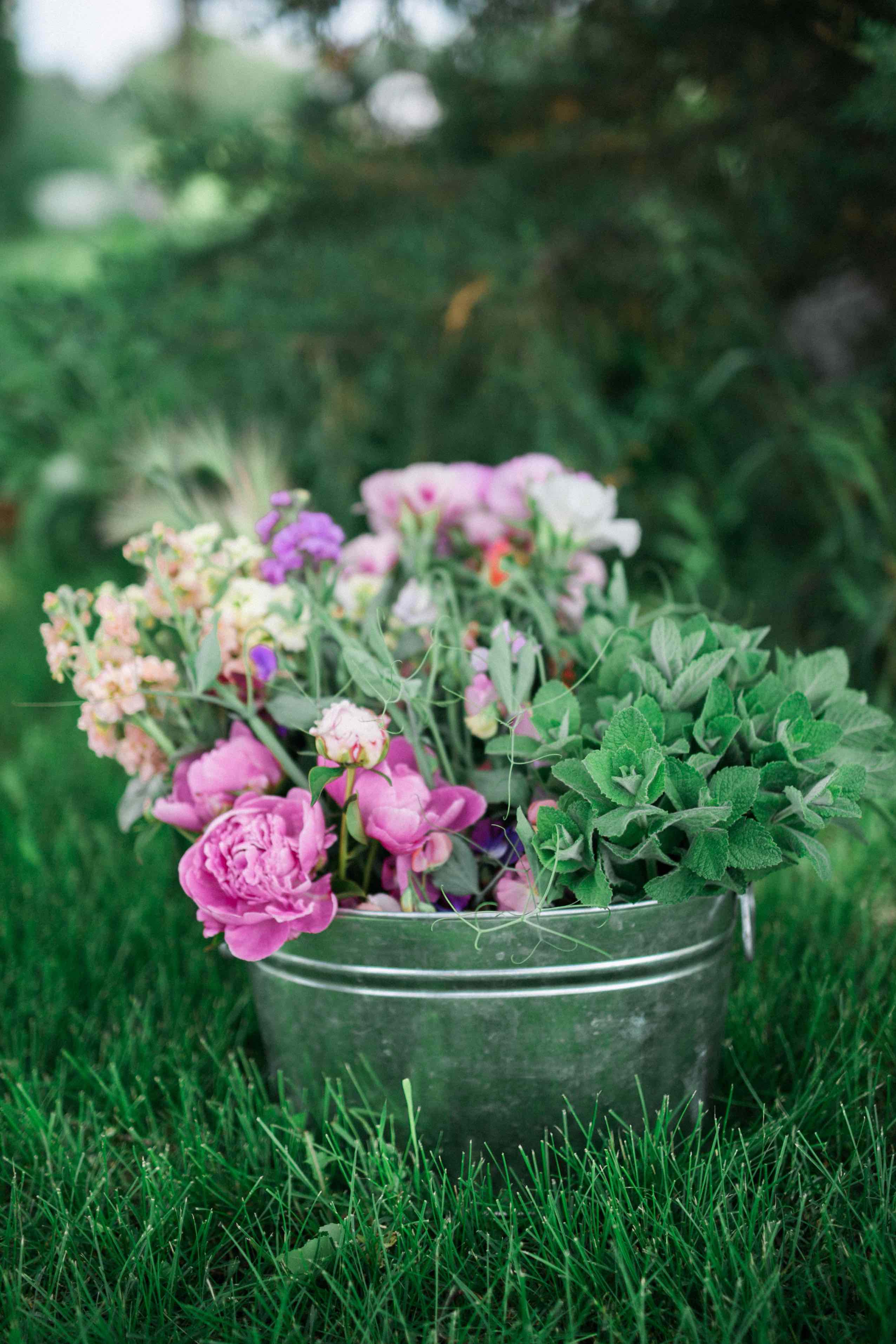
Spring flowers in a romantic nature-inspired bouquet.

Spring flowers in a romantic nature-inspired bouquet.

Her intention has always been to run a thriving flower farm that sells its crops to florists and to the public at farmer’s markets, picking up occasional wedding design work. The reality, however, is that the idea of “occasional” wedding design has turned into a nearly every weekend occurrence. It soon became evident to Emily that she was running two separate businesses. Last year she decided to create a separate identity for the design portion of her business.

The timing is perfect for today’s interview because Emily is in the midst of launching a floral design studio in Milwaukee. She’s named it Wood Violet, an eco-friendly studio that focuses on locally grown flowers as much as possible, offering wedding flowers and daily deliveries.

As we discussed in the interview, Emily hopes to offer gardening classes and floral design workshops at Wood Violet, inspiring people with the beauty of each season. I admire the way she’s playing to her strengths as both a flower farmer and a floral designer, and I admire that her new hybrid business model includes supporting other local flower farmers in her community while still keeping her fingers in the soil.

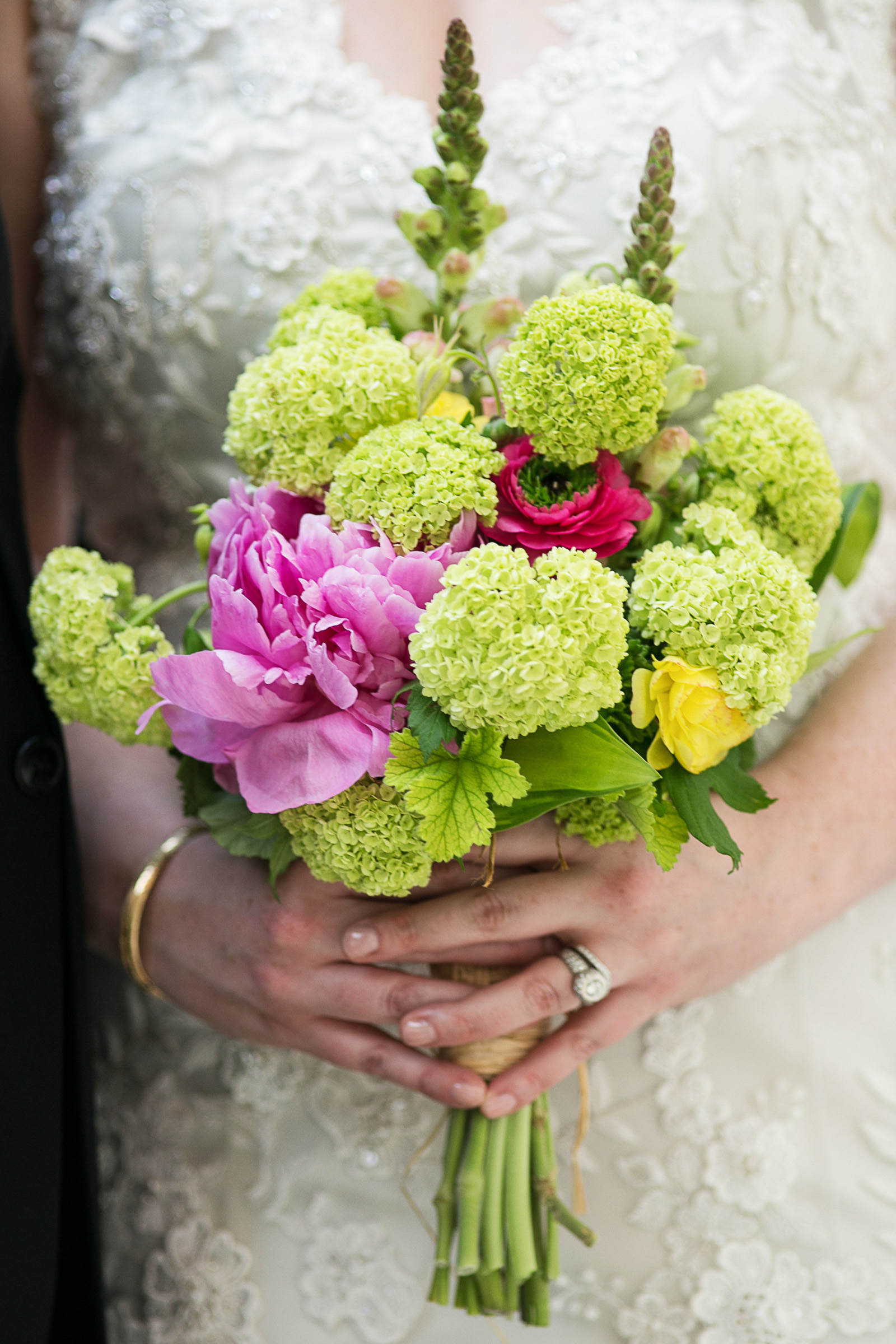
Emily Watson-designed wedding flowers.

Emily Watson-designed wedding flowers.

You know, I think Emily has answered the question she posed back in 2011 better than anyone else could have done – and I wish her great success.

Here’s how to find Emily on all her platforms:

Wood Violet on Facebook

Wood Violet on Instagram

Wood Violet on Pinterest

Before we close, I want to give you the news of the week.

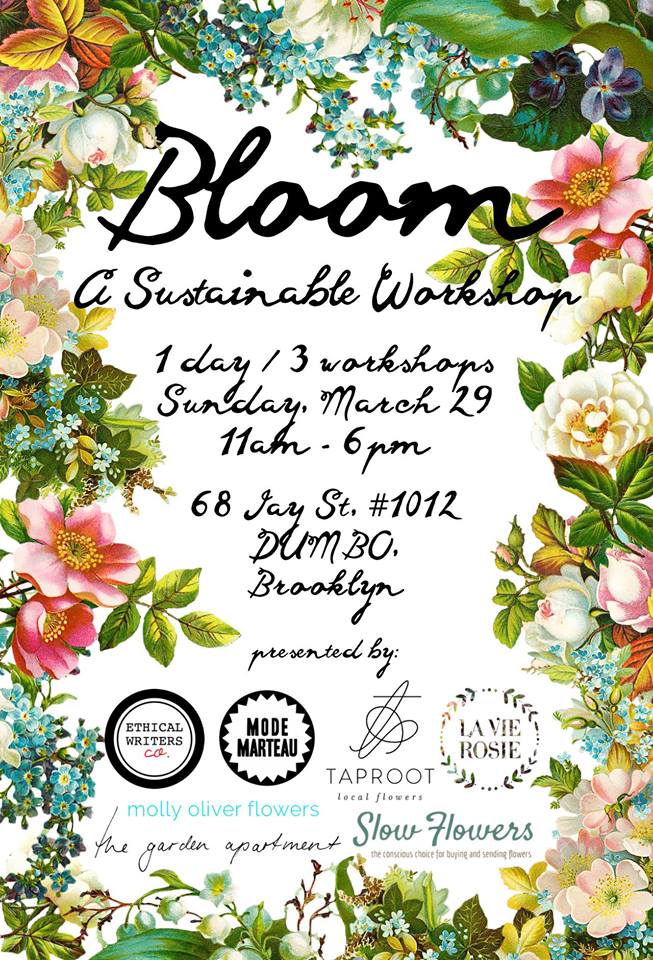
Bloom InstagramSlowflowers.com has partnered with the Ethical Writers Coalition to present Bloom: A Sustainable Workshop, that will take place on Sunday, March 29th at the Mode Marteau Studio in Brooklyn.

Participants can sign up for one or more intimate classes for a hands-on and creative experience in sustainability, and of course, locally-grown flowers.

Learn to make your own fresh flower crown, create a perfect bouquet, or plant a DIY a reclaimed vase at three different workshops.

Three members of Slowflowers.com will join together for the 3rd workshop: Local Flowers 101 with Taproot & Molly Oliver Flowers

Rachel Gordon of Taproot Flowers and Molly Culver and Deborah Greig of Molly Oliver Flowers will teach flower arranging tips & tricks, discuss the importance and sourcing of sustainable flowers, and how to best care for your arrangement. All materials included with the $65 workshop fee.

603730_1735877586638566_7397650793020746231_n

I want to thank the Ethical Writers Coalition for producing this awesome event and for inviting Slowflowers.com to participate. The Ethical Writers Coalition is a very cool group of journalists, writers, and bloggers who seek to support and further ethical and sustainable living online and in print. Through my publicists, I met co-founder Alden Wicker of the EcoCult Blog when I was in New York last October – and she attended a SlowFlowers.com gathering where this event idea germinated.

After we connected, Alder wrote an insightful post about Slow Flowers, which you can read here. Elizabeth Stilwell, who blogs at TheNotePasser.com, has taken the lead on creating Bloom and I have thoroughly enjoyed working with her on this project – sadly, I can’t attend. But I’m so pleased that Slowflowers.com will be well represented, getting the word out about American flowers and the people who grow and design with them.

I love how the roots of sustainable living intertwine so perfectly with the American Grown Flower movement. It’s exciting to see the idea of local, seasonal and sustainable flowers move from the alternative/fringe world closer to the mainstream.

donate-grist-logoLast week Grist.org fellow Ana Sofia Knauf published an interview with me and titled it “There’s a Local Flower Movement Blooming,” and I’d love for you to read it. Check out the link to her piece here.

Thanks for joining me this week and please return again, as I continue to share insightful and educational episodes recorded exclusively for the Slow Flowers Podcast.

The content and opinions expressed here are either mine alone or those of my guests alone, independent of any podcast sponsor or other person, company or organization.

Thanks to listeners, this podcast has been downloaded more than 39,000 times. If you like what you hear, please consider logging onto Itunes and posting a listener review.

Until next week please join me in putting more American grown flowers on the table, one vase at a time.

The Slow Flowers Podcast is engineered and edited by Andrew Wheatley and Hannah Holtgeerts. Learn more about their work at shellandtree.com.

The Flowering of Detroit, with Lisa Waud of Pot & Box (Episode 181)

Wednesday, February 18th, 2015

After the crazy week of Valentine’s Day, I’m shifting my thoughts to springtime, aren’t you? That’s a little easier for me to say here in Seattle, where the thermometers climbed above 60 degrees last week and flowers are popping up everywhere. But someone reminded me today that spring is only 30 days away. Hold on, everyone!
3babc748-d1e7-406b-a891-00ab62a436c11b43d032-4611-42bd-b9e9-a10ae276a89b


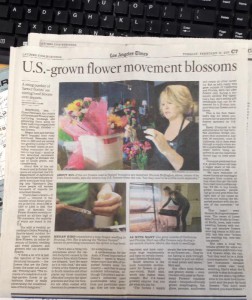
The Slow Flowers Movement and Slowflowers.com attracted major media attention last week – on wire services, television, radio, print and blogs. I am so grateful for the attention that is turning to American flowers, the passionate farmers who grow our favorite varieties and the talented designers who create magic with each local and seasonal stem they choose. Here is a sampling of some of the headlines we saw last week:
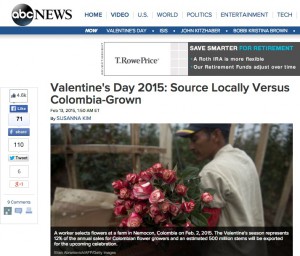
75f22c5e-82af-42fb-a9ac-caaa5955e9400a648ac7-07d4-48c0-83a5-1e59c3a6e972


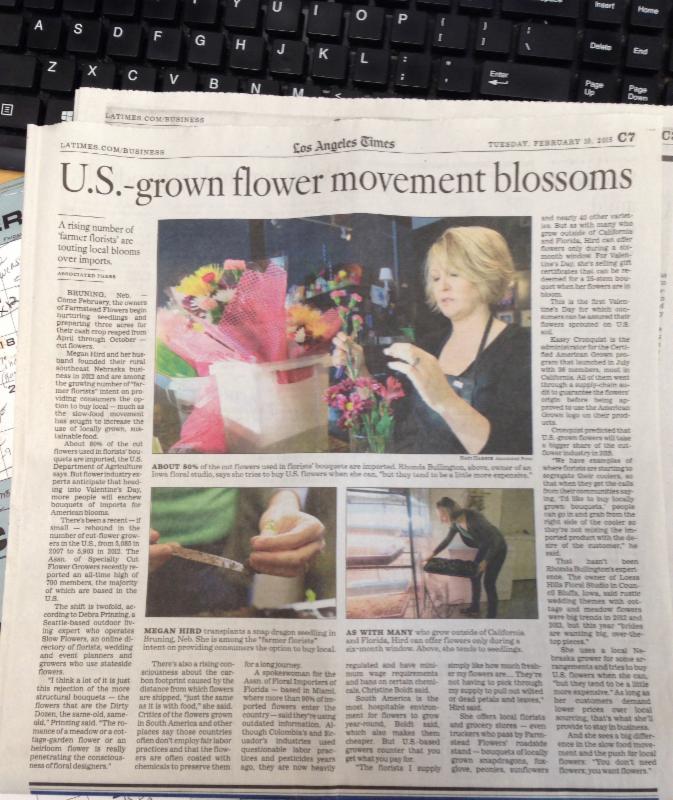
“Slow Flowers Movement Pushes Local, U.S.-Grown Cut Flowers” (that story was written by Associated Press agriculture reporter Margery Beck and it literally went viral — appearing in media outlets large and small – from the Los Angeles Times and Chicago Tribune to ABCNews.com). Slowflowers.com member Megan Hird of Farmstead Flowers in Bruning, Nebraska was also featured in this piece.
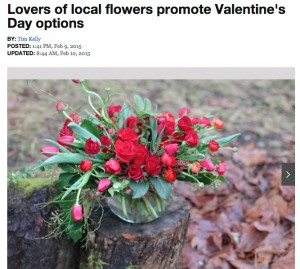
7558fd31-720b-47bf-a676-95b386e6c44ab5d671d9-fe9d-4ea7-bdcc-d49fa03a3b25


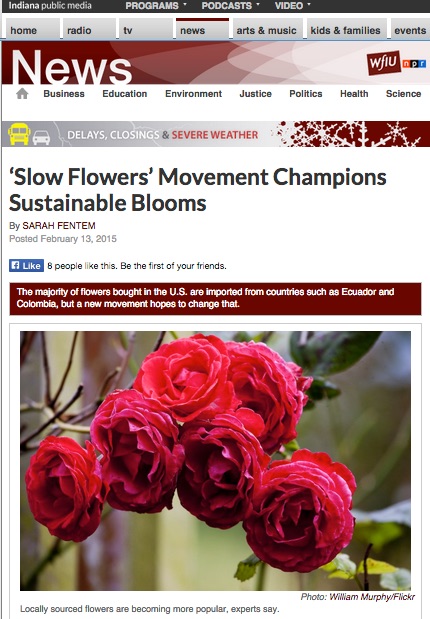
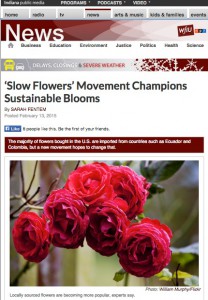
“Slow Flowers’ Movement Champions Sustainable Blooms,” by Indiana Public Radio’s Sarah Fentem. Slowflowers.com member Harvest Moon Flower Farm of Spencer, Indiana was also featured in this piece.

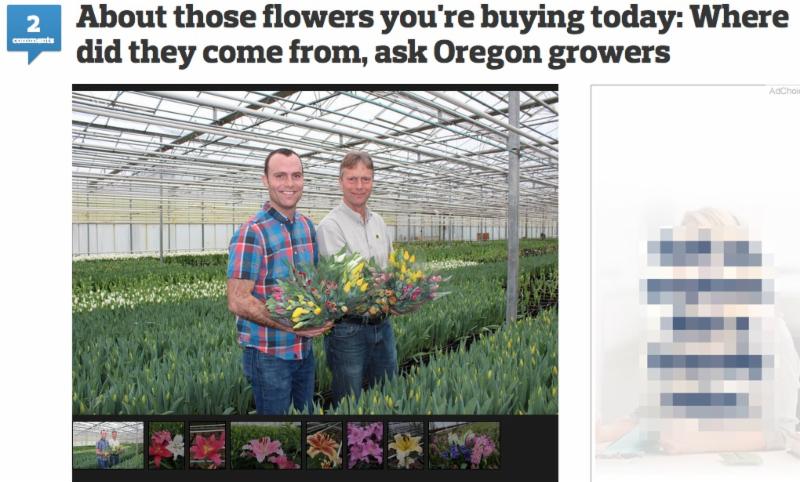
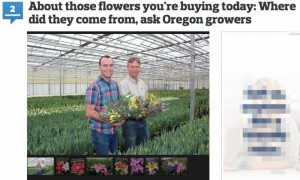
“About those flowers you’re buying today; Where did they come from? ask Oregon Growers” from Janet Eastman of The Oregonian. Slowflowers.com member Oregon Flowers was also featured in this story.

“Just in Time for Valentine’s Day: Introducing Farm-to-Table’s Pretty, Flowery Cousin,” by Sarah McColl on the sustainability blog TakePark.com which also featured Molly Culver of Molly Oliver Flowers in Brooklyn, a Slowflowers.com member.

Denver Post reporter Elizabeth Hernandez wrote: “Colorado farmers, florists seek renaissance for local flower scene,” featuring Slowflowers.com member Chet Anderson of The Fresh Herb Co.

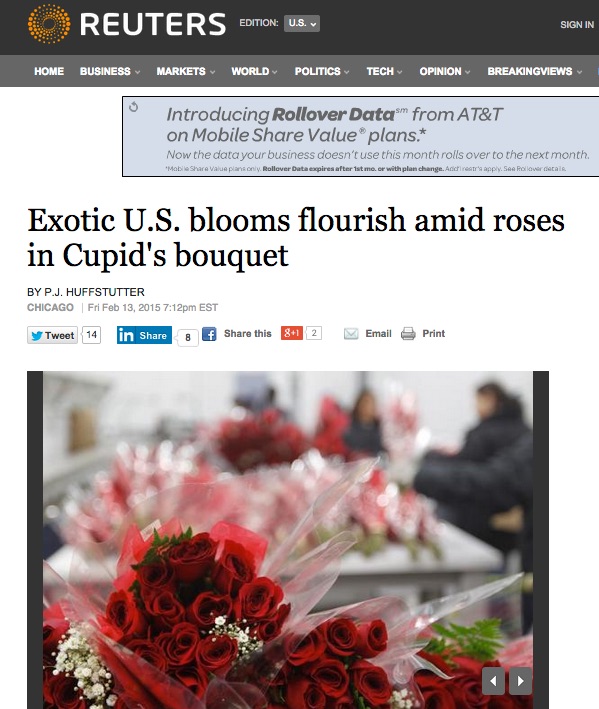
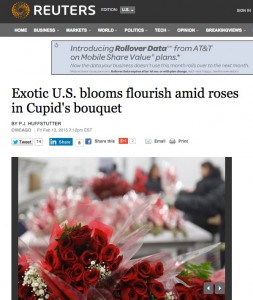
And Reuters writer P.J. Huffstutter’s piece “Exotic US Blooms Flourish amid roses in Cupid’s bouquet,” featuring the “slow flower” movement, as well as the CCFC and ASCFG.

We can’t even tally the tens of thousands of impressions that came from this great media coverage – but suffice it to say that, according to Kasey Cronquist, CEO/Ambassador of the CCFC, “In my tenure at the Commission, I can confidently say that this past week of media attention and interest was greater than all of the my other years of doing interviews and monitoring Valentine’s Day coverage.”

He went on to say: “I can also quickly point to the three things that made the difference this year.

  • Debra Prinzing’s SlowFlowers.com
  • Launch of Certified American Grown
  • Increasing Awareness of Caring Consumers, Designers and Buyers”
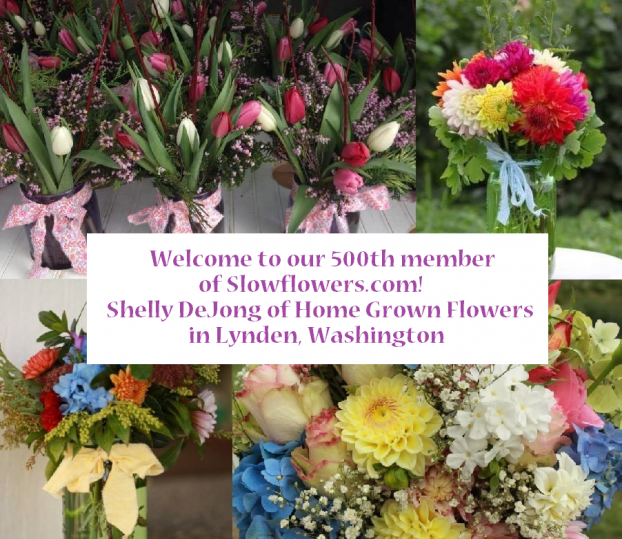
Slowflowers.com is growing with our 500th member!

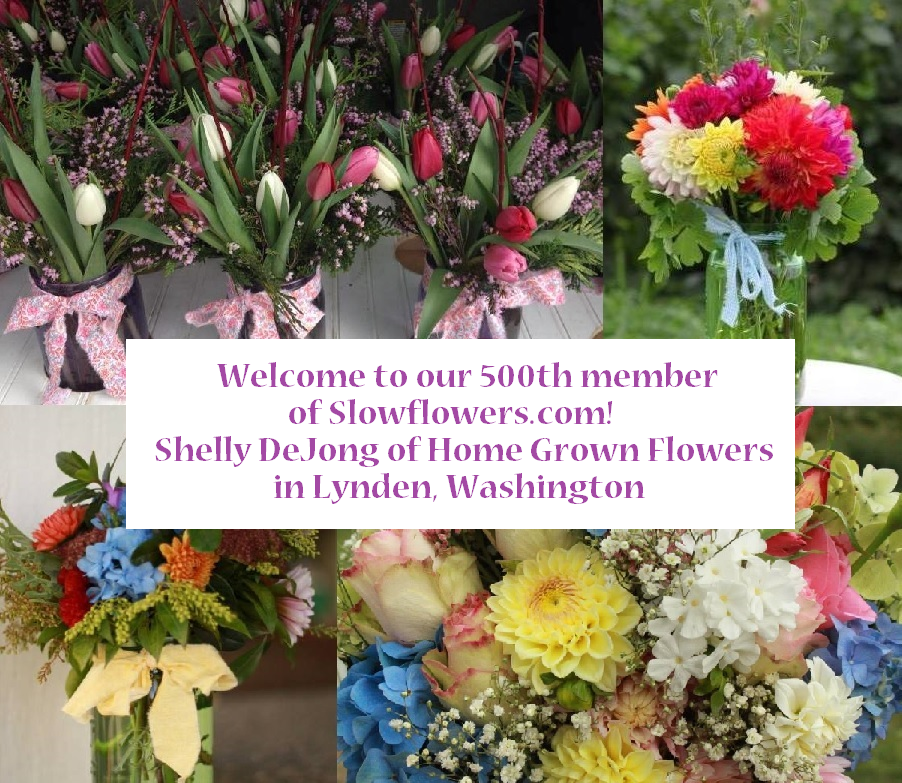
Slowflowers.com is growing with our 500th member!

On top of all of that excitement, I want to celebrate a major milestone! This week marks the addition of the 500th member to the Slowflowers.com web site. Please welcome Shelly DeJong of Home Grown Flowers in Lynden, Washington. Shelly’s tagline is “Flowers as fresh and local as possible,” and she specializes in ball-jar bouquets delivered to customers in her community, throughout the year and for special occasions. Welcome to Slowflowers.com, Shelly!

We can already feel that 2015 might be THE year when the story of American grown flowers hits an important inflection point. As we witness a critical shift in consumer mindset at the cash register, I believe we’ll also see a change — in a good way — in the behavior of wholesalers and retailers who make those important flower sourcing decisions.
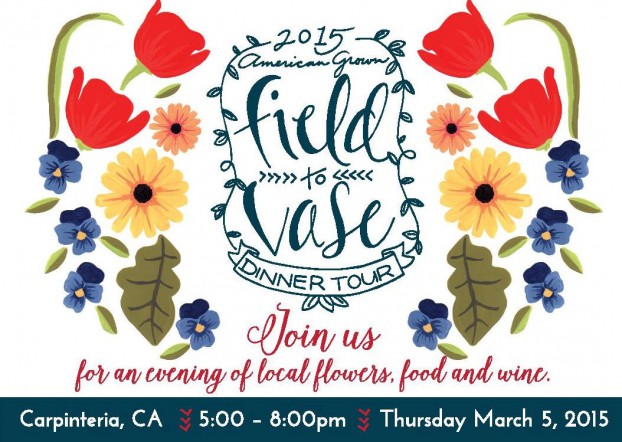
00401_AY_AGF_F2V_Pstr&PC_v3-page-002

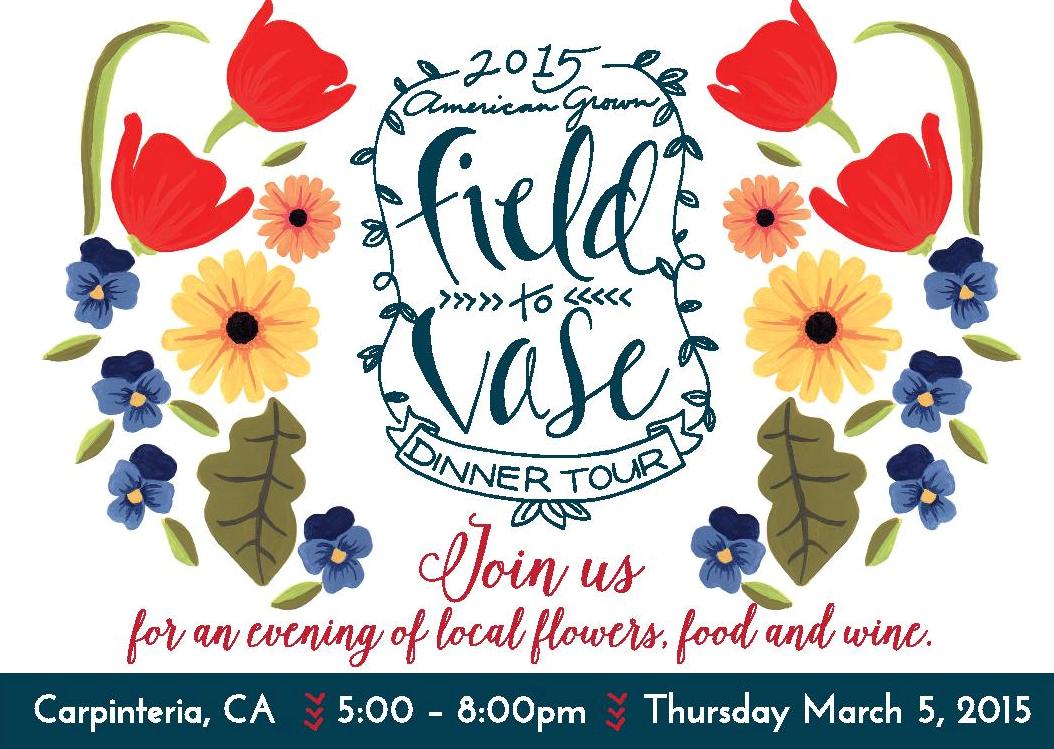
One of the things I’m most excited about this year is a series of flower farm dinners that celebrate American grown flowers, as well as the farms and florists who bring them to life. To hear more about this cool project, called the Field to Vase Dinner Tour, I’ve asked special events manager Kathleen Williford to share details.

As I mentioned, you are invited to take part as a guest at one or more of the flower farm venues. The promo code for a $25 discount is DREAM, so be sure to use it when you order your seat at the flower-laden table.
theflowerhouse_graphic

The Flower House logo, designed by Lily Stotz

Speaking of being flower-laden, our featured guest today has flowers on her brain in a big way. I am so pleased to introduce you to Lisa Waud of Pot and Box, a flower shop and floral and event studio with two Michigan locations – in Detroit and Ann Arbor. Lisa is a member of Slowflowers.com, but I think we originally met when Jill Rizzo of SF’s Studio Choo suggested to Lisa to reach out and tell me about her ambitious project called The Flower House.

Here’s the scoop:

Beginning over the first weekend of MAY, Lisa will host a preview event for an innovative art installation in Detroit.
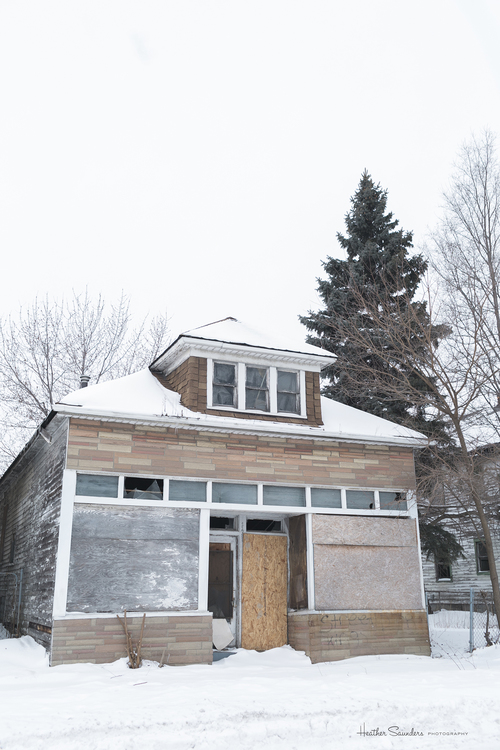
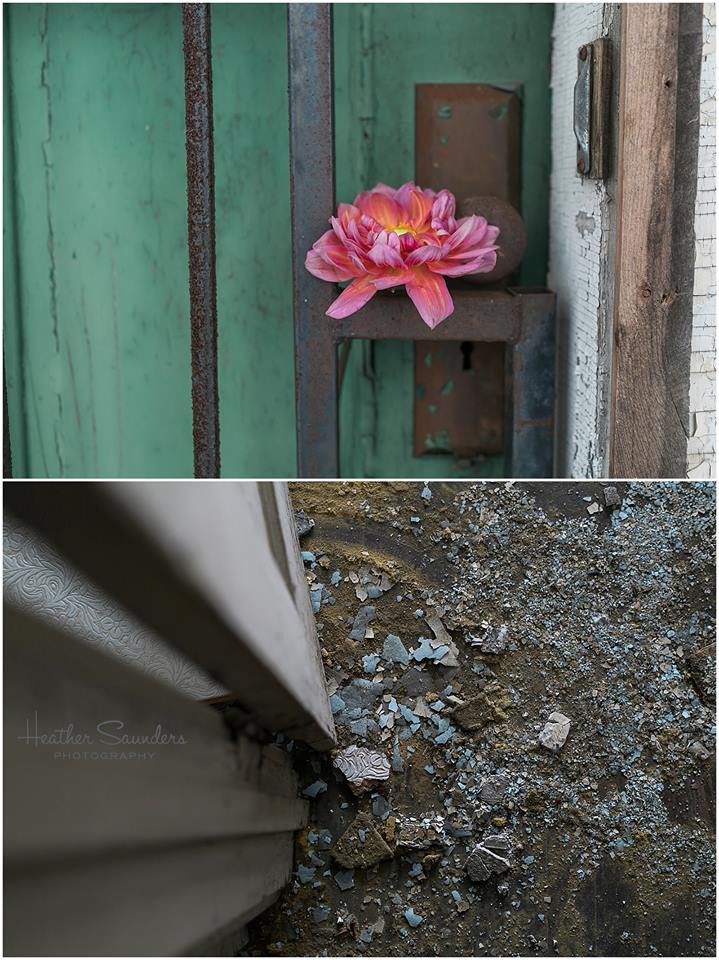
Imagine this abandoned storefront - filled with Lisa's floral dreams. (c) Heather Saunders Photography

Imagine this abandoned storefront – filled with Lisa’s floral dreams. (c) Heather Saunders Photography

There, potential sponsors, partners, friends and volunteers will get a whiff of the “big project” on a smaller scale. In a tiny storefront, they will install a breathtaking floral display, just next door to a once-abandoned urban property where Lisa and fellow designers ultimately hope to transform an aging, 11-room duplex into The Flower House.

“We’ll generally work our future audience into a flower frenzy,” Lisa says of the kickoff event.

When October 16th-18th rolls around, cutting-edge florists from Michigan and across the country will fill the walls and ceilings of an abandoned Detroit house with American-grown fresh flowers and living plants for a weekend installation.

The project will be featured in local, national, and worldwide media for innovation in floral design and repurposing forgotten structures in the city of Detroit.  

Visitors will be welcomed to an opening reception and a weekend of exploration, and a few reserved times will be offered to couples to hold their wedding ceremonies in The Flower House.  
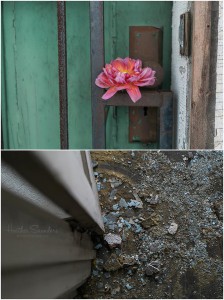
Re-flowering an abandoned home in Detroit - a glimpse of Lisa Waud's grand idea (c) Heather Saunders Photography.

Re-flowering an abandoned home in Detroit – a glimpse of Lisa Waud’s grand idea (c) Heather Saunders Photography.

When the installation weekend has passed, the structures on The Flower House property will be responsibly deconstructed and their materials repurposed. The land will be converted into a flower farm and design education center on a formerly neglected property. 

For more details on The Flower House, follow these links:

The Flower House on Facebook

The Flower House Inspiration on Pinterest

The Flower House on Twitter

The Flower House on Instagram

I feel like I’m saying this week after week, but today’s conversations, with Kathleen and Lisa, are so truly encouraging.

This IS the Year of the American Grown Flower. Please join efforts like the Field to Vase Dinner Tour and Detroit’s The Flower House to get in on the excitement. Both projects are community focused, with the potential for engaging huge numbers of people.

By exposing lovers of local food and floral design to the immense creativity that comes from sourcing our flowers locally, in season and from American farms, we are deepening the conversation, connecting people with their flowers in a visceral way. All the senses are stimulated, as well as our imaginations.

Thank you for downloading and listening to the Slow Flowers Podcast! Each week I share with you our “download” count and we have hit 35,000 downloads to date. I’m encouraged to know more people are learning about the farmers and florists who keeping American-grown flowers flourishing.

So I thank you!!! If you like what you hear, please consider logging onto Itunes and posting a listener review.

The Slow Flowers Podcast is engineered and edited by Andrew Wheatley and Hannah Holtgeerts. Learn more about their work at shellandtree.com

Flowers on Your Head with L.A.’s Mud Baron (Episode 178)

Wednesday, January 28th, 2015
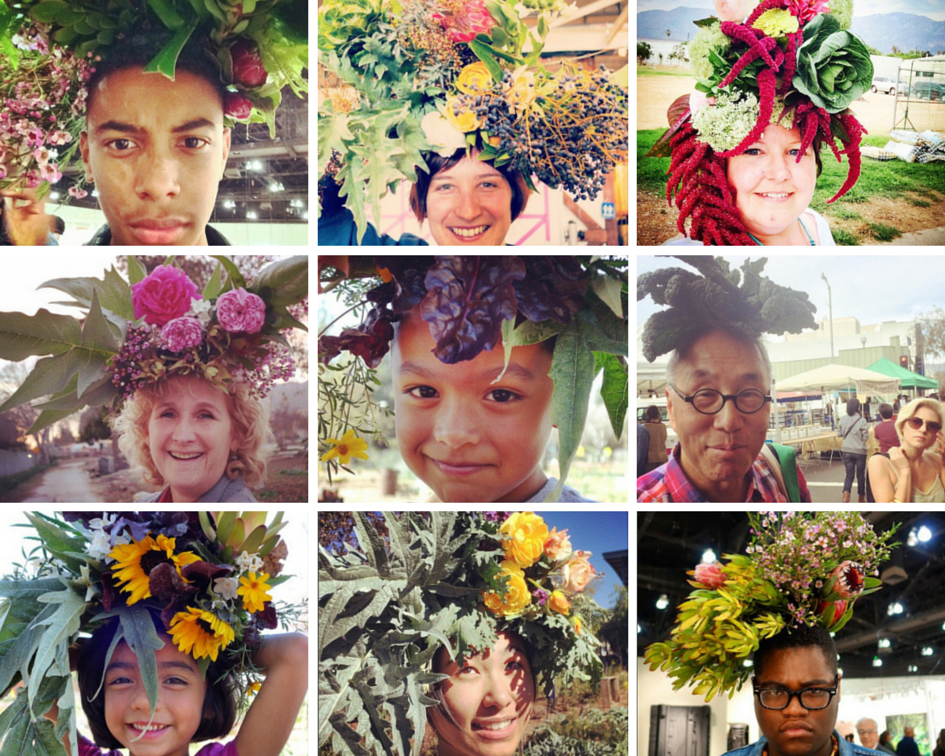
Some of the beautiful faces who've allowed Mud Baron to photograph them with flowers on their heads.

Some of the beautiful faces who’ve allowed Mud Baron to photograph them with flowers on their heads.

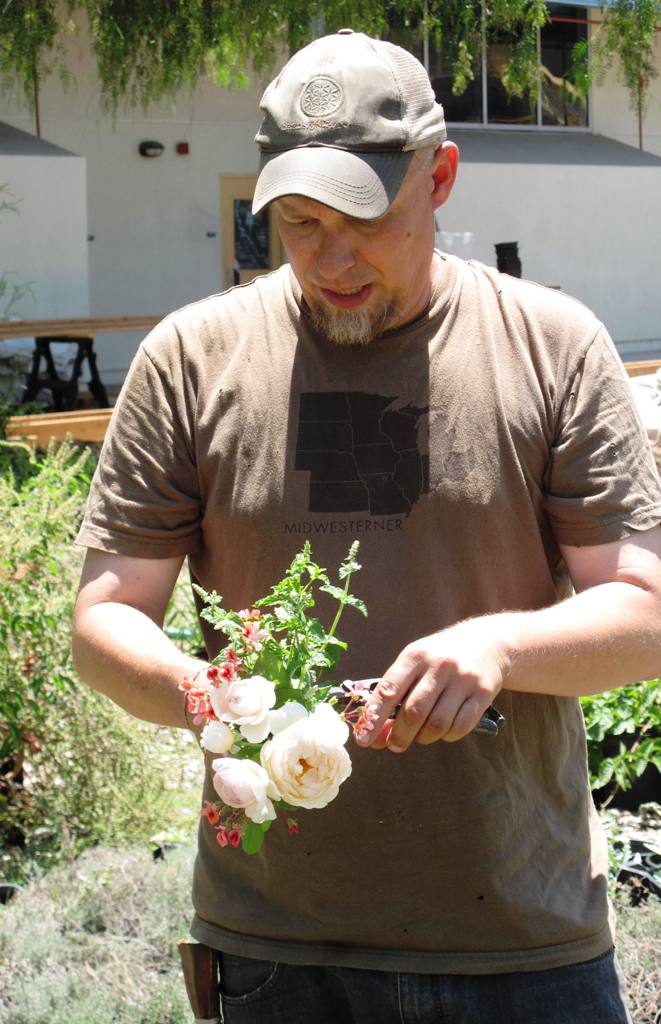
Mr. Baron, bouquet-maker

Mr. Baron, bouquet-maker

This past week took Slow Flowers to Southern California, where I combined business, pleasure, flowers and friends, in a whirlwind five days. I successfully cornered Mud Baron, one who rarely slows down himself, to record today’s interview. I’ve wanted to have Mud on the podcast for more than a year, ever since I visited Muir Ranch, the school garden he manages at John Muir High School in Pasadena.

You may not know him as Mud Baron. Yes, his nickname is Mud! But if you’re a follower of beautiful flower images on Instagram, you may know him by Co-Co-Zoe-Chee, or @cocoxochitl, his alias there, with 4,500 followers and thousands of posts. And many contain the hashtag #flowersonyourhead – one of Mud’s gleefully subversive campaigns to place photos on one’s head and snap a photograph, Frida Kahlo-like, for Instagram and other places.

As we discuss in the interview, I have succumbed to Mud’s flowers on your head shenanigans and also witnessed Mud at work, getting complete strangers to comply with his outrageous (and quite poignant ) requests. Check out his gallery of portraits by searching #flowersonyourhead.

Mud_1_IMG_9324

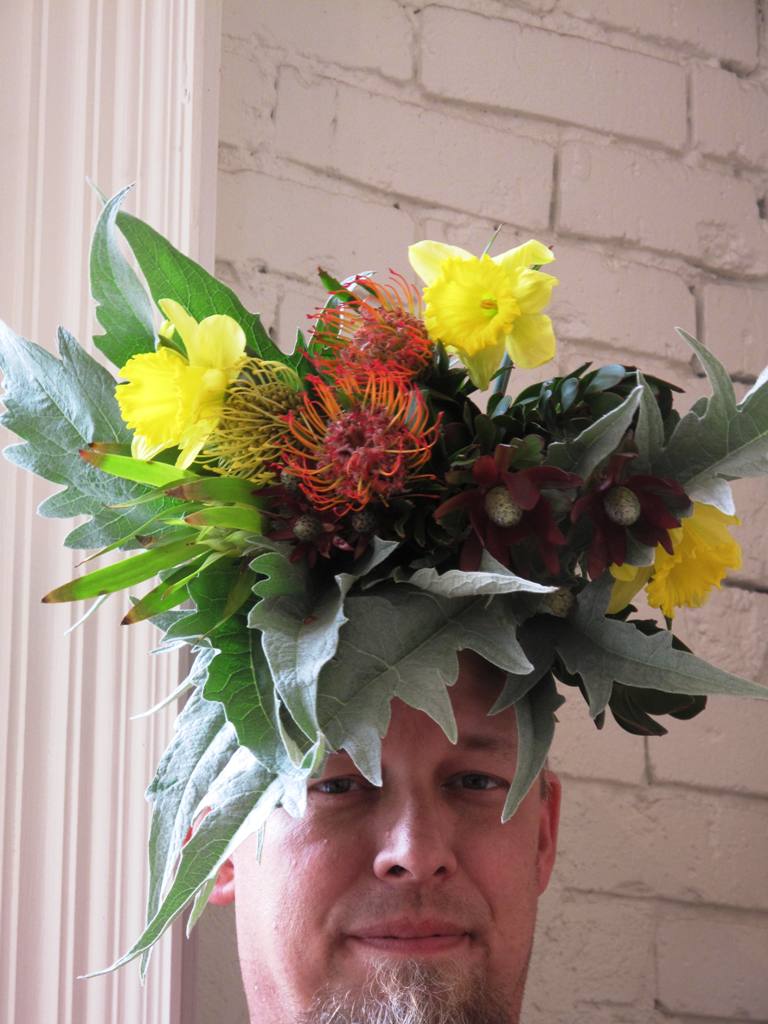
Mud, photographed by me in Seattle (March 2014) with flowers on his head.

Here’s a bit of what I wrote in August 2013, after a visit to Muir Ranch. I hope it round out this introduction of Mud.

In 2011, a dedicated team of volunteer teachers and students began converting 1.5 acres of Pasadena, California’s John Muir High School campus into a school-based farm.

Today, Muir Ranch grows a variety of flowers, vegetables and fruits that are included in weekly CSA boxes as well as school cafeteria lunches. Students can complete community service or internship graduation requirements by enrolling in classes at the Ranch. Muir Ranch also provides paid internships to students, which are funded by private donations, special events, farmer’s market sales, and subscriptions to the produce box program (CSA).  

Edibles and flowers grow together.

Edibles and flowers grow together at Muir Ranch.

Every week, Muir Ranch CSA subscribers get a box or bag of about 7-10 different types of fruit and vegetables grown without the use of pesticides or chemical fertilizers. Customers pick their shares up at central distribution sites throughout Pasadena. Muir Ranch CSA partners with several local farms for seasonal fruit and vegetables to supplement what they can produce, providing tax-deductible weekly boxes to over 100 subscribers. It is the CSA program that generates much of the income that keeps this place operating.

Mud Baron, a passionate school garden advocate who serves as the Executive Director of Muir Ranch, is one of the people at the hub of this endeavor. That sounds like a high-falutin’ title, but in all reality, he is true to his nickname. Mud gets down and dirty – and REAL – with his kids, teenagers whose horizons are much brighter after they’ve learned to grow and sell food and flowers to local customers.

How did this former design-build contractor end up teaching gardening and farming skills to urban youth? I’m still trying to figure out the exact path of Mud’s career, but suffice it to say he’s in his element growing food and flowers.

One of the talented student farmers designed a gorgeous bouquet for me on the spot

One of the talented student farmers designed a gorgeous bouquet for me on the spot

Many programs besides the CSA are supported under the umbrella of Muir Ranch, such as partnerships CSAs run by with other local schools and learning gardens. Muir Ranch also and hosts monthly “Plug Mobs” to help other groups in the community plant their own gardens.

In Mud’s mind, no Southern California-based teacher should go wanting for school garden supplies. “The Plug Mob program means that finding seeds and plants is no longer a factor for 2,000 schools,” he says. Muir Ranch operates like a plant nursery, helping source and distribute seeds, bulbs and flats of plant starts. Like modern-day Johnny Appleseeds, Mud and his supporters share what they have and spread around the love.

As more young people “connect the dots,” they become involved in how food is grown, distributed, and finally cooked into healthy meals. Besides being a center for education, Muir Ranch hosts a variety of ongoing and special events. The program is known for its floral arrangements, and I love that Mud has taught his interns and student workers how to harvest and assemble bouquets.

Word is getting out about Muir Ranch’s flowers. One of Mud’s interns just earned $400 selling wedding flowers to a market customer. According to Mud, that experience opened her eyes to possibilities for a bright future.

Here's a beautiful student-crafted bouquet, an impromptu gift that I cherished.

Here’s a beautiful student-crafted bouquet, an impromptu gift that I cherished.

Things are ever-changing at this school garden, with new crops of kids getting involved and older ones graduating and enrolling in college. And Mud continues his radical outreach on behalf of school gardening, food justice and the importance of flowers in our lives.

I promise you our conversation is all over the place, bouncing between sentimental and serious to hilariously irreverent, a lot like Mud himself.

Deb_-_flowers_on_head_1

My photographer friend Jean Zaputil, of Studio Z Photography and Design, took this portrait of me after Mud plunked a huge bunch of flowers on my head, March 2014.

I will devote the next two weeks to Valentine’s Day, turning the focus to American grown flowers for this top floral holiday.  If we can’t show our love with local flowers, what’s the point?

I’ll introduce you to some of the people who are doing exciting things to innovate at Valentine’s Day, getting their clients out of the gift-giving rut that involves thinking a generic bunch of a dozen red roses equates true affection and gestures of love. Please return to gain new ideas – and let me know what you’re doing this Valentine’s Day – I’d love to share your own efforts with our listeners.

Thanks to the Slow Flowers Tribe, this podcast has been downloaded more than 32,000 times. In fact, the month of January hit an all-time high as our most popular month to date, with more than 3,000 downloads of current and archived interviews – and I’m encouraged to know that more listeners are discovering this flower-powered podcast every day.

If you like what you hear, please consider logging onto Itunes and posting a listener review.

Until next week please join me in putting more American grown flowers on the table, one vase at a time.

The Slow Flowers podcast is engineered and edited by Andrew Wheatley and Hannah Holtgeerts.

Week 3 // Slow Flowers Challenge

Sunday, January 25th, 2015
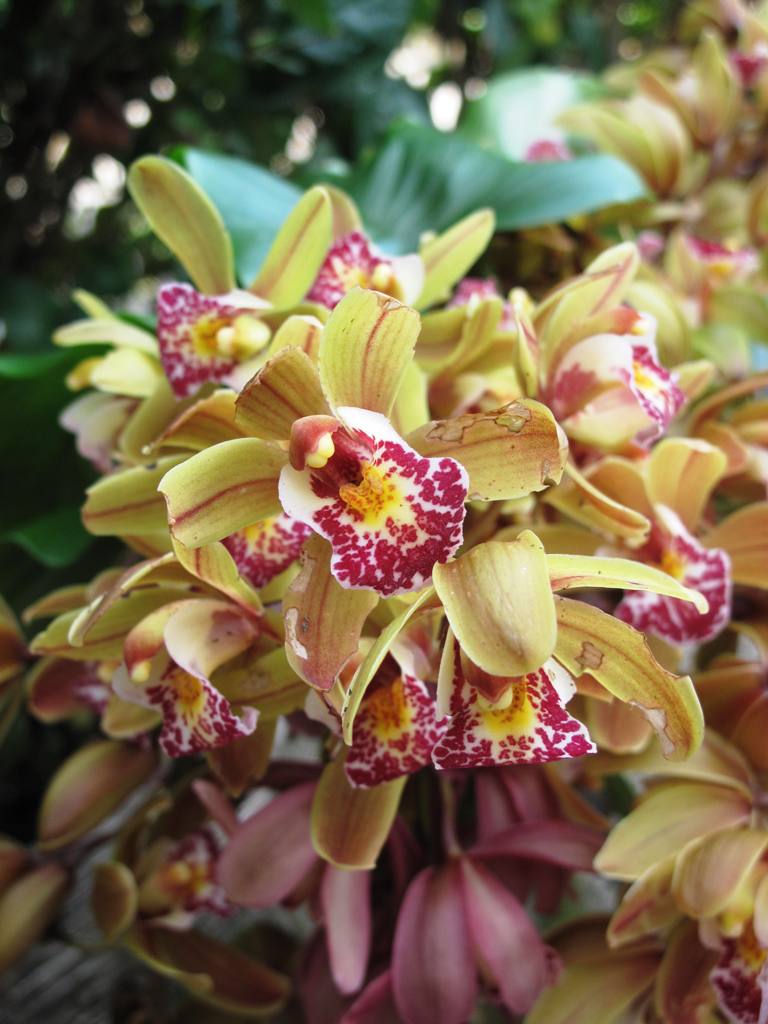
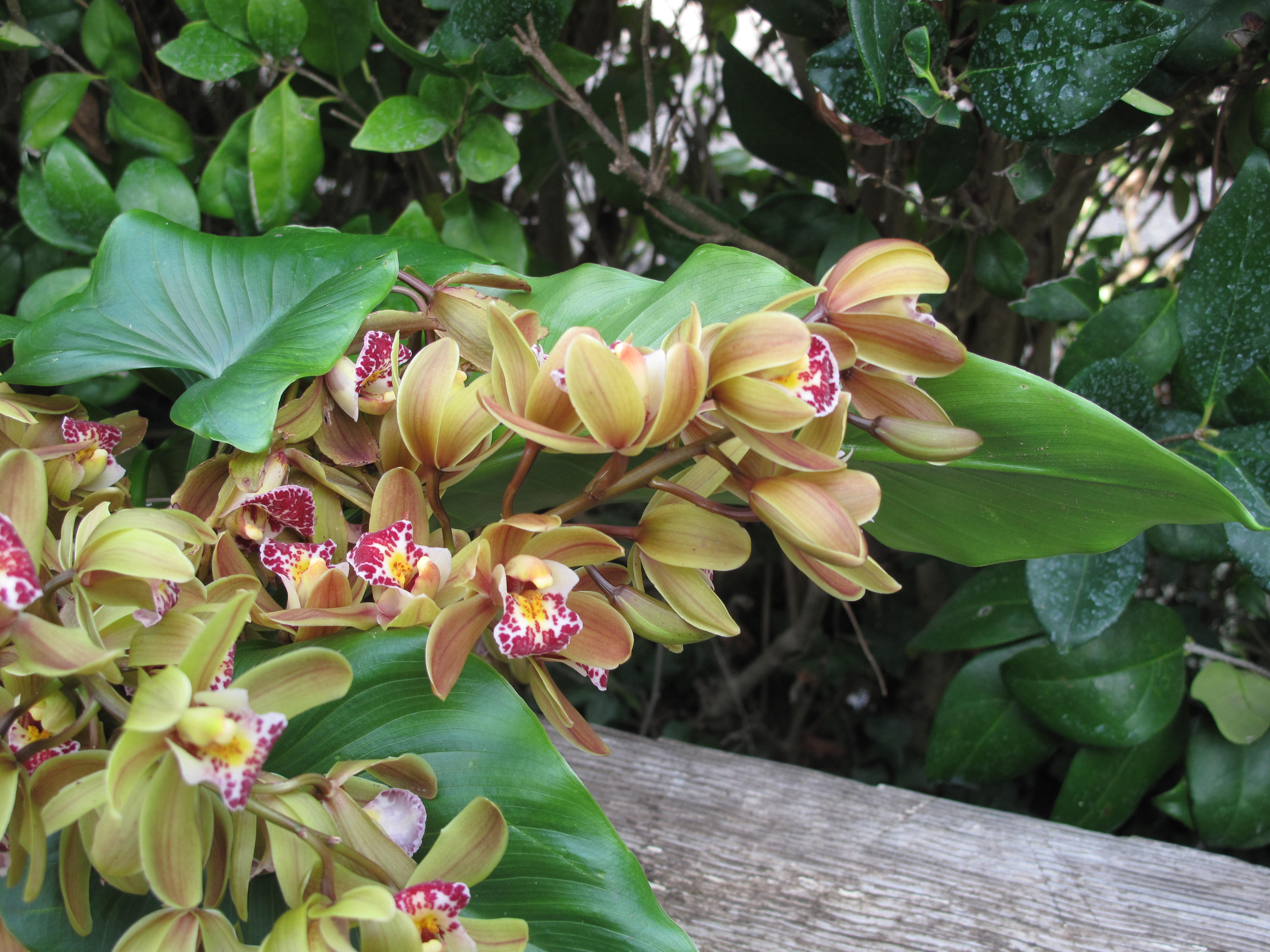
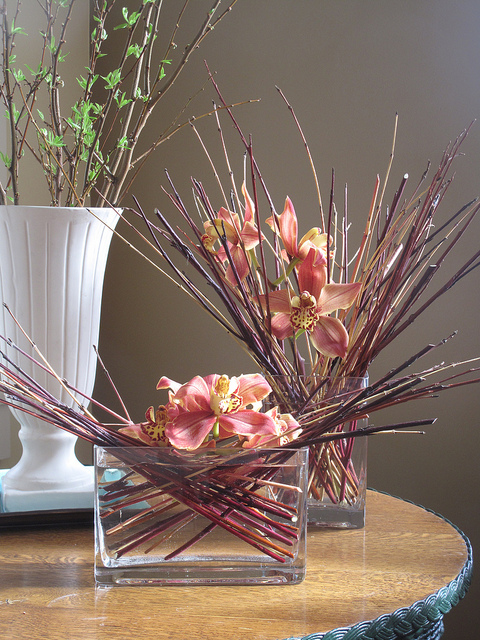
Miniature cymbidiums in all their glory, offset with calla lily foliage from Danielle Hahn's private landscape at Rose Story Farm in Carpinteria, CA.

Miniature cymbidiums in all their glory, offset with calla lily foliage from Danielle Hahn’s private landscape at Rose Story Farm in Carpinteria, CA.

On the road with the Slow Flowers Challenge, I’m in Southern California this week to do some story scouting, podcast interviews and to attend the winter board meeting of the Garden Writers Association in Pasadena.

So naturally, I wasn’t able to create my own seasonal and local bouquet!

For Week 3 of 2015, I want to showcase this exquisite arrangement designed by Danielle Hahn at Rose Story Farm. I visited her in Carpinteria, CA, this week (USDA Zone 10) and was delighted to see a vase of miniature cymbidium orchids and calla foliage on the kitchen island at the Hahn family farmhouse.
Rose Story is an American flower farm, specializing in organically-grown old garden roses, David Austin’s and heirloom varieties for the floral industry. That means their field-grown roses bloom mostly in May, June, July and August! Since it’s winter now, the farm’s rose production is limited.
Orchids are a wonderful winter-blooming option for every climate.

Orchids are a wonderful winter-blooming option for every climate.

A few years ago, Dani’s father brought her a wide array of winter flowers that would bloom in her garden when the roses were dormant. She wrote this on her Instagram post of these orchids: “It’s cymbidium time . . . these are a teensy variety and first to bloom. A gift from my late father who decided we needed something during our rose dormancy. One thousand plants and some are fragrant!”
There’s something quite powerful and lovely about associating our floral choices with memories and the people we love – and Dani, how beautiful that your own remembrances of your father are connected to these orchids.
Love this glossy calla lily foliage, another seasonal option from Dani's garden.

Love this glossy calla lily foliage, another seasonal option from Dani’s garden.

Okay, I know not everyone lives in Carpinteria (just a stone’s throw from Santa Barbara), so what’s going on in other parts of the country?
Here are a few designs from Slowflowers.com Members in colder corners of the U.S.
I share these to illustrate how much beauty each region has to offer – if only you look!
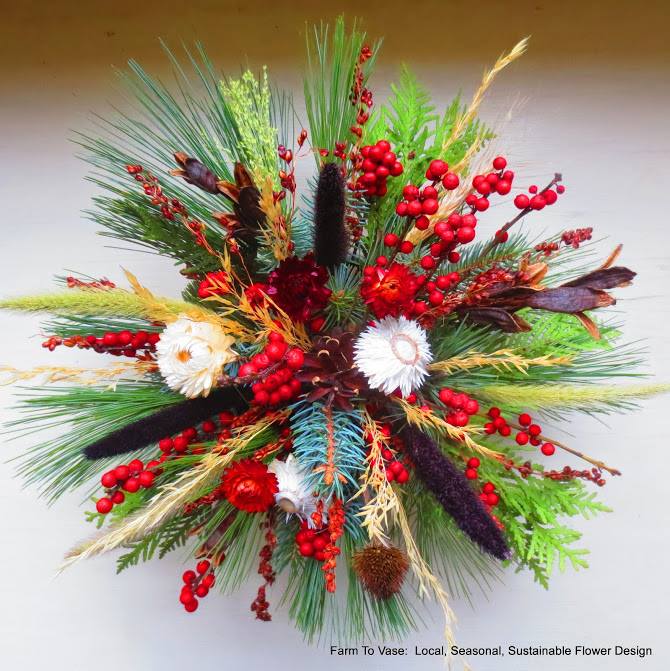
From Ann Sensenbrenner, owner of Farm to Vase in Madison, Wisconsin. This was her New Year's arrangement featuring conifers and evergreens, ilex berries, dried grasses, dried seed heads and dried flowers.
From Ann Sensenbrenner, owner of Farm to Vase in Madison, Wisconsin. This was her New Year’s arrangement featuring conifers and evergreens, ilex berries, dried grasses, dried seed heads and dried flowers.

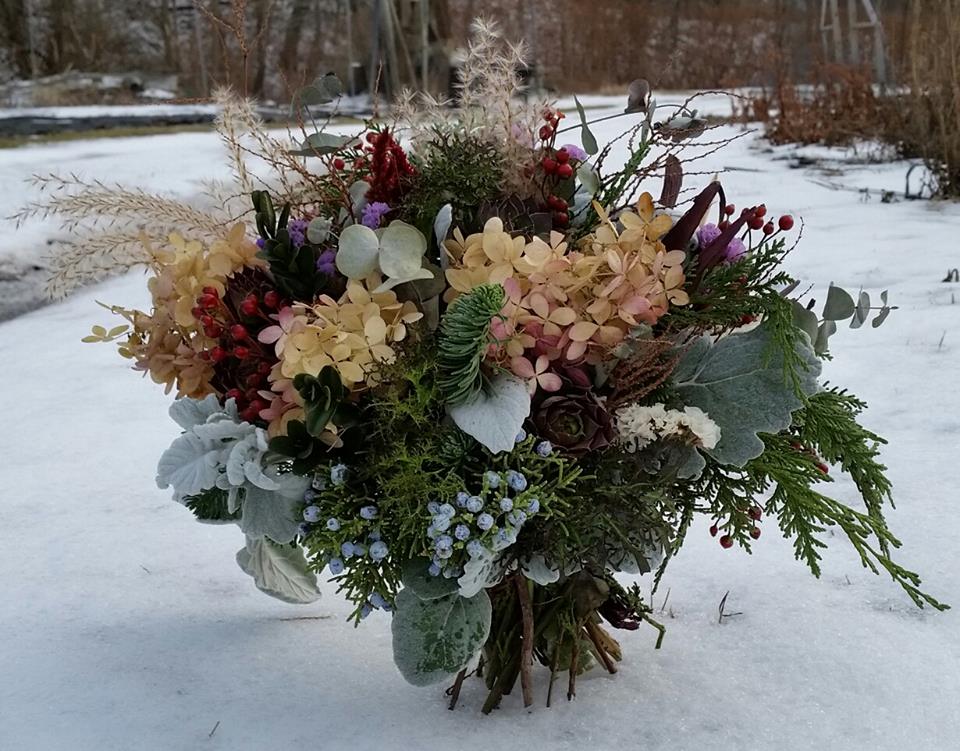
From Kate Dagnal of Goose Creek Gardens in Oakdale, Pennsylvania. Kate posted this arrangement on Jan. 16th as part of her "Friday Night Romance" series, a peek at the bouquets she creates each week. I love how this arrangement features late-season Dusty Miller, as well as gorgeous juniper berries, dried hydrangea flowers, dried grasses. I actually think I see a few succulents in this bouquet, too!

From Kate Dagnal of Goose Creek Gardens in Oakdale, Pennsylvania.
Kate posted this arrangement on Jan. 16th as part of her “Friday Night Romance” series, a peek at the bouquets she creates each week.
I love how this arrangement features late-season Dusty Miller, as well as gorgeous juniper berries, dried hydrangea flowers, dried grasses.
I actually think I see a few succulents in this bouquet, too!

TIP: From the Flower Farmer

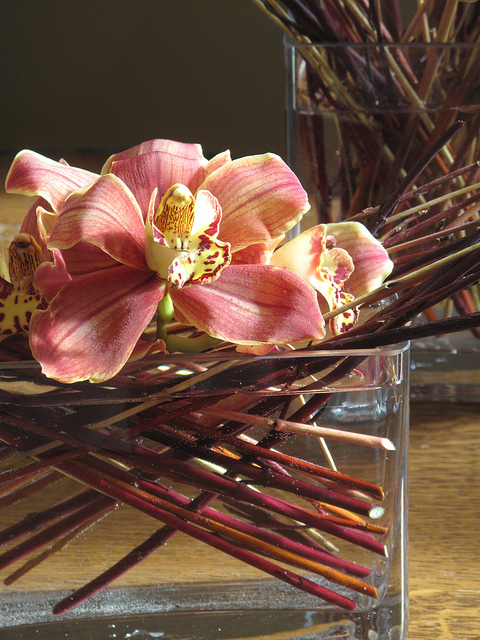
Red twig dogwood (Cornus sericea) with Cymbidium 'Sleeping Dream Castle'.

Red twig dogwood (Cornus sericea) with Cymbidium ‘Sleeping Dream Castle’.

Red twig dogwood (Cornus sericea) with Cymbidium 'Sleeping Dream Castle'.

Red twig dogwood (Cornus sericea) with Cymbidium ‘Sleeping Dream Castle’


Orchids make great cut flowers!

According to Sandra Peterkort Laubenthal, whose family grows roses, lilies and orchids in greenhouses outside of Portland, Oregon, cymbidiums can be displayed as a flower-studded stem or cut individually off the stem for floating or inserting in floral tubes.
 
It’s hard to know, however, how fresh the flower is. “What makes the most difference is if they are cut right after blooming,” Sandra says.
 
“Look at the lip to see if it has turned pink or is otherwise discolored. This is an indication that the flower has been pollinated by an insect – and that dramatically shortens the cymbidium’s lifespan.”
 
(c) Slow Flowers: Four Seasons of Locally Grown Flowers, by Debra Prinzing

Playing with Flowers and Digging Deep with Fran Sorin (Episode 175)

Wednesday, January 7th, 2015
Awaiting early tulips and hyacinths . . . we're just weeks away!

Awaiting early tulips and hyacinths . . . we’re just weeks away!

3233915861_d6cc494485_o

Before we get started, I want to announce our new Slow Flowers Podcast Sponsor for 2015 – the California Cut Flower Commission.

The Commission is committed to making a difference as an advocate for American Grown Flowers.

I’ll be working closely with CCFC on a number of initiatives to promote domestic flowers in 2015, and I promise to keep you posted as details unfold.

SlowFlowersChallengeCover.jpg (2)


Today on the Slow Flowers Podcast we launch the Slow Flowers Challenge, share all about a new urban flower farm in Pittsburgh, and explore the meaning of flowers on a personal level with author and gardening personality Fran Sorin.

To kick off 2015, I invite you to join in the fun and creativity of the Slow Flowers Challenge. This project was inspired by Katherine Tracy, a talented plantswoman, designer and owner of Avant Gardens Nursery in Dartmouth, Massachusetts.

Katherine blogged about taking the “Slow Flowers Challenge” after hearing my presentation at Blithewold Mansion and Gardens in Rhode Island this past fall…and she started using the hashtag #slowflowerschallenge, which in turn prompted other people to create seasonal bouquets, photograph them and share their designs on Facebook, Instagram and personal blogs.

Katherine’s artistic arrangements reveal her love of the natural world, the seasons, the plants, the gifts of the garden and wilder places. I’ve so enjoyed seeing these bouquets pop up across the web – thoroughly serendipitous and seasonal – representing pure joy for a moment in time. SO I thought, “why don’t we make the Challenge available to everyone who loves local flowers?”

I encourage you to check out these very simple rules and download a free SlowFlowersResourceGuide2015 here. Sign up to receive weekly design updates and follow a link to the Slow Flowers Pinterest Gallery, where you are welcomed and encouraged to post your seasonal arrangements.  Let’s have fun, make beauty, and change the American floral industry with new (and more seasonal) habits.

Green_Sinner_IMG_1067

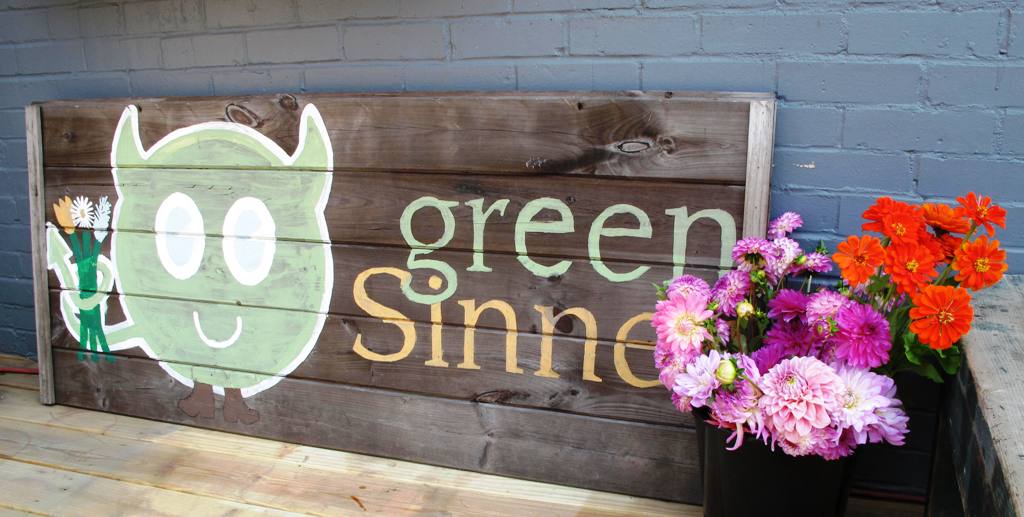
Briefly, before getting to our main guest, I also invited Jonathan Weber to share what’s going on with greenSinner, a Pittsburgh-based floral design, wedding and event studio and urban micro flower farm that he owns and runs with partner Jimmy Lohr.

Past guests of this podcast, the two have made good on their dream — to buy more land and establish a working flower farm. Jonathan and Jimmy recently purchased 4 acres of long-neglected land inside the Pittsburgh city limits. It’s called Midsummer Hill Farm.

I couldn’t be more excited to see them take this major step, but so much is needed to get seedlings and bulbs into the soil in time for flowers to bloom in 2015. Here’s a recent article featuring greenSinner, Midsummer Hill Farm and Jimmy and Jonathan’s crowd-funding campaign on Indiegogo, which runs through January 27th. I encourage you to check it out and perhaps invest in the growth of local flowers in Pittsburgh.

Fran Sorin, author of "Digging Deep."

Fran Sorin, author of “Digging Deep.”

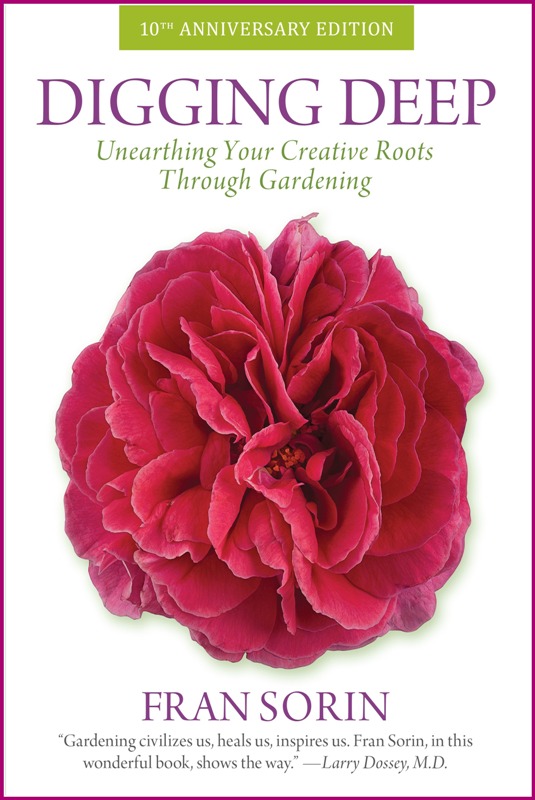
The just-released, 10th Anniversary Edition of "Digging Deep." Read on to find out how you  can enter to win!

The just-released, 10th Anniversary Edition of “Digging Deep.” Read on to find out how you can enter to win!

Today’s guest Fran Sorin is an author, gardening and creativity expert, and deep ecologist. Her book, Digging Deep: Unearthing Your Creative Roots Through Gardening, was groundbreaking when published in 2004. It was the first book to address gardening in the context of creativity, and as a tool for well-being and personal transformation. Here is a link to my blog post about “Digging Deep for Flower Lovers,” sharing favorite excerpts from Fran’s book.

Fran recently released an updated 10th Anniversary Edition of Digging Deep. The book is even more vital today, because our culture has become increasingly obsessed with technology and progressively more “nature deprived.”

From the moment Fran decided she wanted to share her passion for gardening with a large audience and approached the local Fox TV station in Philadelphia about the idea, she became a fixture on the TV circuit. She spent years as a gardening authority on Philadelphia’s Fox and NBC stations; she was the regular gardening contributor on NBC’s Weekend Today Show, and made several appearances on CNN, MSNBC, Lifetime, HGTV, DIY, and the Discovery Channel. She is one of the creators of the popular weekly dose of garden news at Gardening Gone Wild Blog.

Fran is celebrating her tenth year as a CBS Radio News correspondent. Her Digging Deep gardening features are heard several times a week on CBS Radio stations throughout the United States. She has also written dozens of articles about gardening and well-being for USA Weekend Magazine, Radius Magazine, and iVillage.

She has spent more than twenty-five years initiating and working on community projects that have served the diverse community of West Philadelphia, most recently initiating a community garden and learning center on the grounds of a church in an underprivileged neighborhood of West Philadelphia.

Even prior to becoming an ordained interfaith minister, Fran was ministering to folks whether she was taking on the role as a garden designer, a media trainer, a TV personality, or a radio host. Fran’s greatest strengths are in connecting to audiences and individuals and galvanizing them to take action. In these tumultuous and technologically obsessed times, when so many of us feel stuck, scared, and disconnected from ourselves and others, her optimistic, grounded values, and empowering message are needed more than ever.

Here is Fran’s video – she’s a woman on the street, sharing her inspiring “Give a Flower. Get a Smile” project:

Follow Fran here:

Facebook

Give a Flower Facebook Page

Twitter

If you want to participate in the drawing for a free copy of Digging Deep, post a comment about your earliest memory of gardening or experiencing nature. Your comment enters you into the drawing, which takes place at midnight Pacific Time, this Saturday, Jan. 10th. We’ll announce the winner next week.

My personal goal is to put more American grown flowers on the table, one vase at a time.  Listeners like you have downloaded the Slow Flowers Podcast more frequently than ever before.  We’re at nearly 30,000 downloads, which will be an exciting milestone to reach in the coming week. So I thank you!!! If you like what you hear, please consider logging onto Itunes and posting a listener review.

The Slow Flowers Podcast is engineered and edited by Andrew Wheatley and Hannah Holtgeerts. Learn more about their work at hhcreates.net.

Take the Slow Flowers Challenge in 2015

Monday, January 5th, 2015

ChallengeInvite_2015What better New Year’s Resolution than to resolve to live locally with your flowers and floral designs for the coming year?!

This week launches the Slow Flowers Challenge, and I invite you to join in the fun and creativity.

A possible collection of stems and fruit inspired by Slow Flowers, photographed by Katherine Tracy of Avant Gardens Nursery.

A possible collection of stems and fruit inspired by Slow Flowers, photographed by Katherine Tracy of Avant Gardens Nursery.

This inclusive project was inspired by Katherine Tracy, a talented plantswoman, designer and owner of Avant Gardens Nursery in Dartmouth, Massachusetts.

Katherine's Nov. 7th arrangement, created the week after we met at Blithewold in Rhode Island.

Katherine’s Nov. 7th arrangement, created the week after we met at Blithewold in Rhode Island.

Katherine wrote on her Garden Foreplay Blog about taking the “Slow Flowers Challenge” after hearing my presentation at Blithewold Mansion and Gardens in Rhode Island this past fall.

She started using the hashtag #slowflowerschallenge, which in turn prompted other people to create seasonal bouquets, photograph them and share their designs on Facebook, Instagram and personal blogs.

Katherine’s artistic arrangements reveal her love of the natural world, the seasons, the plants, the gifts of the garden and wilder places where she lives and gardens in New England.

I’ve so enjoyed seeing these bouquets pop up across the web – thoroughly serendipitous and seasonal – representing pure joy for a moment in time. These personal expressions resonated with me – they brought me back to the year I spent making one bouquet per week from the flowers that grow around me.

“Why don’t we make the Challenge available to everyone who loves local flowers?”

It’s official and you’re invited to join The Slow Flowers Challenge 2015.

SlowFlowersChallengeCover.jpg (2)

The Rules: Live in the season. Source locally. Use earth-friendly materials and supplies. The more frequently you arrange flowers, the more familiar you’ll become with each of these aspects.

What: The Slow Flowers Challenge is an ongoing practice of creating seasonal arrangements and sharing your designs with the Slow Flowers Tribe.

Why:  The practice is timeless. The gesture is universal. Inspired by the exquisite beauty of a garden or by the sentiment of a special occasion, we gather flowers and foliage and place them in a vessel to display in our homes or give to another. Floral design is a three-dimensional art form that blends horticulture and nature with sculptural composition. At its best, bouquet making is a personal expression unique to the designer’s tastes and point of view.

When: This is the 2015 Challenge. It will run from January 2015 through December 31, 2015. You can join at any time during the year.

How Often: The Challenge format allows you to participate at whatever frequency works for your schedule. We like to suggest these options: 365 Days, 52 Weeks, 12 Months or 4 Seasons.

When I created the Slow Flowers book, I designed one bouquet per week for 52 weeks. But you might decide to create a monthly bouquet, or a seasonal arrangement – or, if you’re really dedicated – a daily design! The main thing is that you decide what works for you and get started.

Share! Post a photo of your arrangement to our Slow Flowers Challenge Pinterest Page. And if you share it elsewhere, please use #slowflowerschallenge or tag @myslowflowers link on Twitter so others can see what you’ve created.

Resources to Help & Inspire You:

  • Sign up here to Join and Receive a weekly email with season-perfect Slow Flowers Tips for your cutting garden and personal floral design studio. Each will include what to plant now, what to harvest now, how to find key resources like seeds, plants or cut ingredients, and essential tools/supplies for the Slow Flowers Challenge
  • Submit photographs of your arrangements to our Monthly Slow Flowers Challenge Pinterest Page.
  • Share your designs on Social Media. Please use #slowflowerschallenge or tag @myslowflowers link on Twitter so others can see what you’ve created.
  • Win prizes and the admiration of your fellow Slow Flowers Tribe members
  • Achieve Certified Slow Flowers Designer status.

Let’s have fun, make beauty, and change the American floral industry with new (and more seasonal) habits.

‘Tis the Season for SLOW FLOWERS

Thursday, December 25th, 2014

Merry Christmas and Happy Holidays from Seattle, Washington!

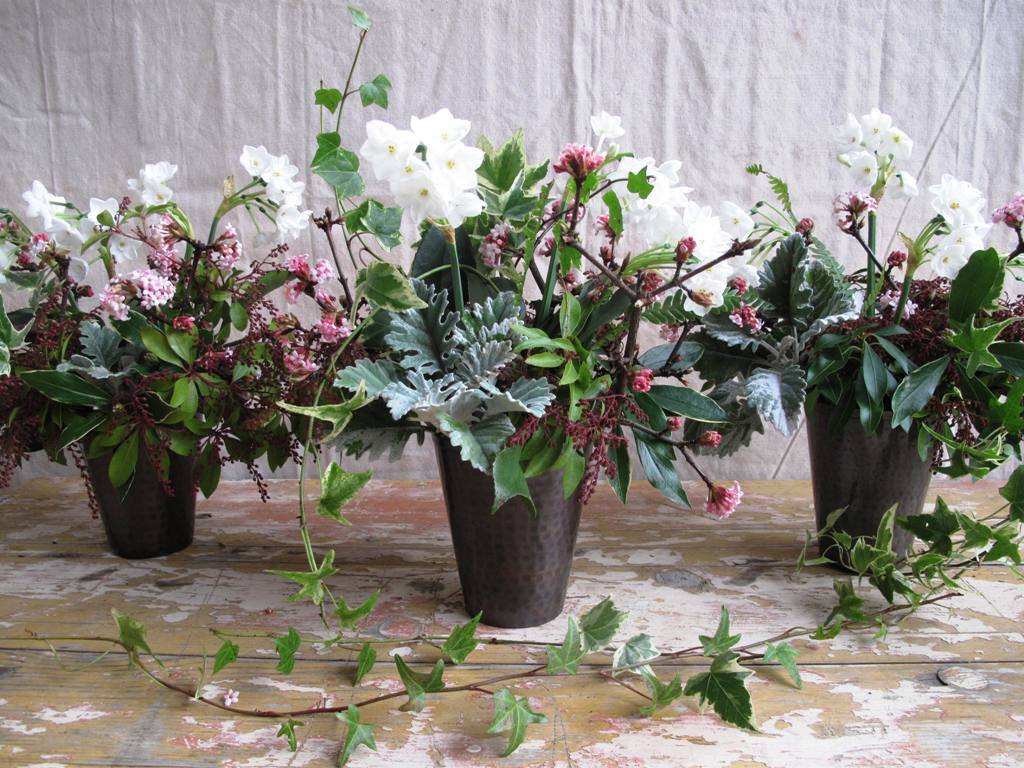
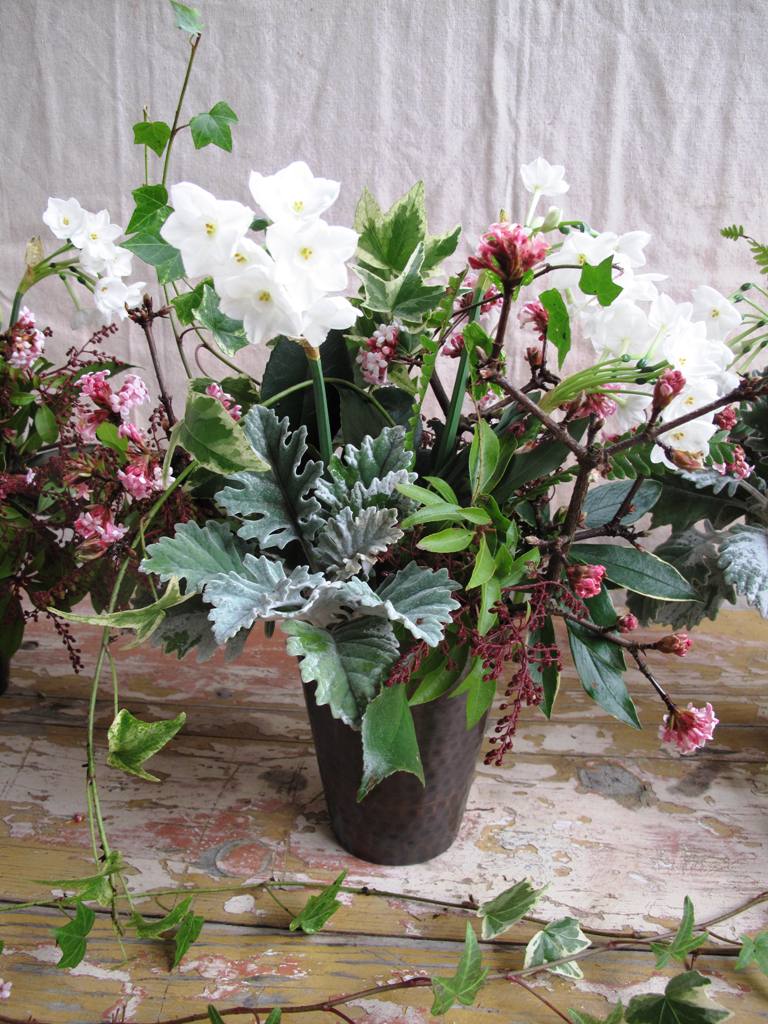
I was gifted a flat of paperwhites in bloom this week – one lonely bulb per pot – crying out for some equally lovely companions in a holiday arrangement. So yesterday, I clipped from here and there in the garden and created this trio of vases to adorn our Christmas dining table tonight.

Three vases filled with festive and LOCAL vines, leaves, branches, blooms, buds and JOY!

Three vases filled with festive and LOCAL vines, leaves, branches, blooms, buds and JOY!

The paper whites started it all - and I sought pretty plants with winter interest to accompany them.

The paper whites started it all – and I sought pretty plants with winter interest to accompany them.

In addition to the paperwhites, here’s what the vases contain:

  • Pieris japonica (Lily-of-the-valley shrub)
  • Camellia in bud
  • Bay tree stems
  • Daphne odora in bud
  • Dusty Miller
  • Viburnum x bodnantense ‘Dawn’
  • Variegated Ivy
  • Evergreen fern fronds
  • Narcissus (Paperwhites)


As I prowled through my mostly dormant landscape, each one of these plants reminded me how much I have to value in the winter garden. If you plant for four seasons, with intentionality, those woody ornamental shrubs really deliver! I found myself thinking: “Make more room for Pieris!” as I only have three and they’re relatively young shrubs. But those chains of blooms, deep pink and delicate, are simply sublime dangling out of the vases.

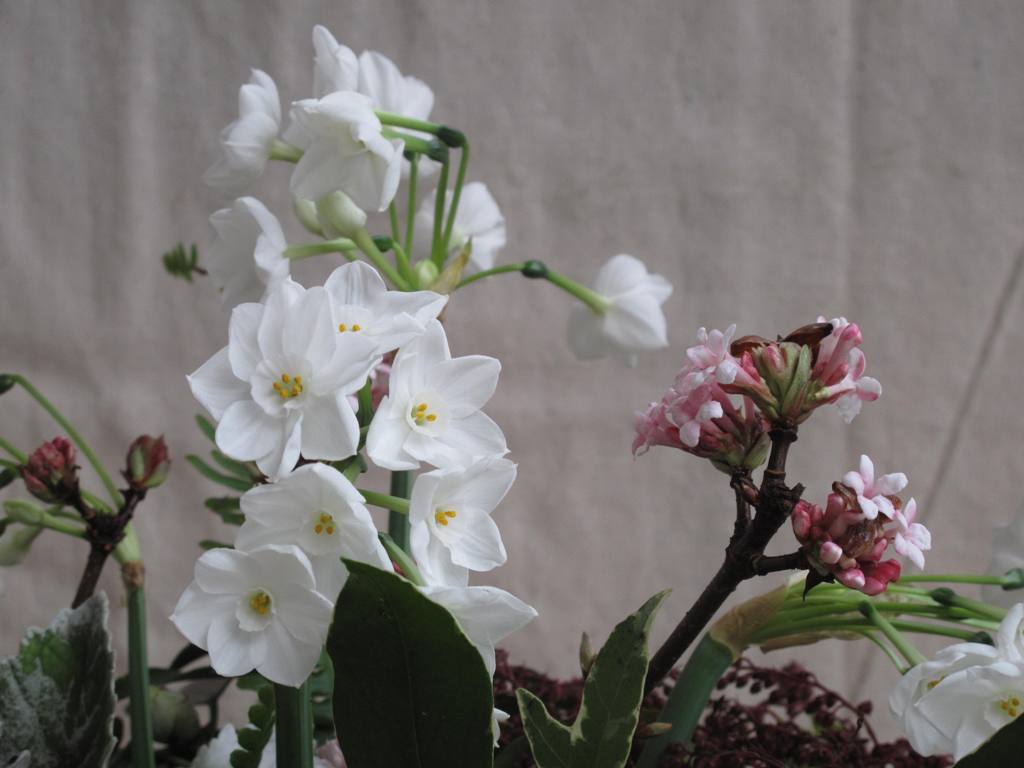
Close up, the tangle of stems reflects a perfect moment in time - in my garden and in the season.

Close up, the tangle of stems reflects a perfect moment in time – in my garden and in the season.

The Daphne – only planted two years ago next to the backyard patio where I will smell its fragrance in winter – well, I gingerly snipped three stems, each with a bud – and each from a lower/back part of the shrub. I still want to enjoy Daphne outdoors, as well as indoors!

I gaze at the Viburnum ‘Dawn’ every day – it’s just outside my office window and such a welcome a note of color – intense pink! – in December and January. Even the Dusty Miller, marginally winter hardy here in Seattle, had hung on long enough to give me a silvery cluster of soft leaves for each vase.

I’m launching a new project next week, appropriately called “The Slow Flowers Challenge” – and so making this holiday trio of arrangements has been my warm-up exercise.

If you’re ready to join me, start collecting your vases, eyeing botanicals in your landscape or neighborhood, and dreaming about a year of flowers in your life.

Happy Day, dear friends.

merrychristmas2014

A lovely conversation with NYC floral artist Emily Thompson (Episode 173)

Wednesday, December 24th, 2014
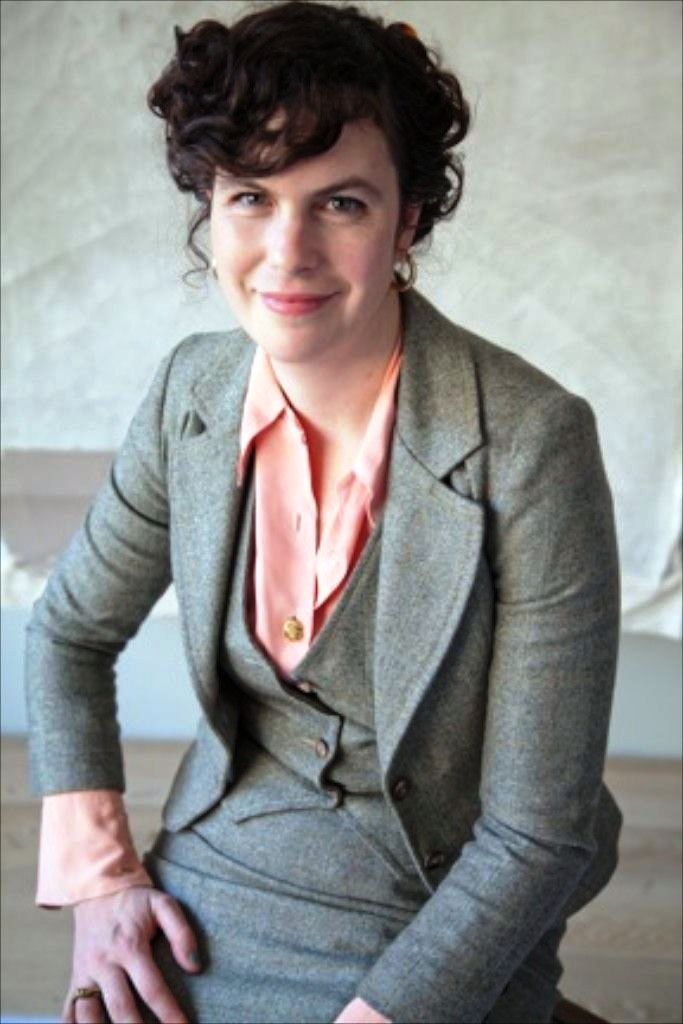
Emily Thompson (c) Photo by Maria Robledo

Emily Thompson (c) Photo by Maria Robledo

Emily Thompson is an iconoclast, an anything-but-predictable designer and artist – and owner of the NYC studio and shop that bears her name, Emily Thompson Flowers.

Three years ago at this time, the flower world was celebrating the fact that Emily and her team helped Michelle Obama achieve her dream of bringing the outdoors inside the White House at Christmas.

This year, Emily is settled into her charming new emporium in lower Manhattan, a huge space compared to her former flower-closet in Brooklyn’s DUMBO neighborhood.

I arrived to meet her early one October morning, a totally spontaneous visit prompted by the designer’s invitation when I took her class the evening before at Flower School New York.

As I wrote on my blog at the time, it was so gratifying to be introduced to Emily at her workshop and realize she’d been wanting to meet me, too.

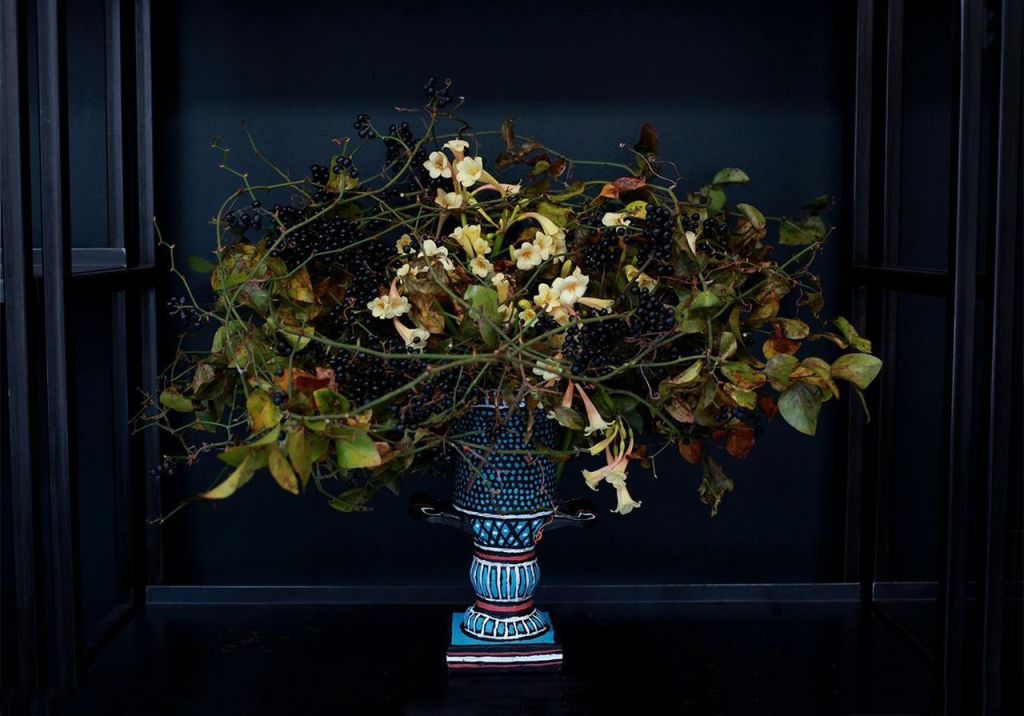
An Emily Thompson botanical creation, displayed in a one-of-a-kind vase by artist Mark Gagnon (c) Sophia Moreno-Bunge

An Emily Thompson botanical creation, displayed in a one-of-a-kind urn by artist Mark Gagnon (c) Sophia Moreno-Bunge

That two-hour workshop was thoroughly inspiring. Every single word that Emily uttered was like listening to a Master instructor in a MFA program. I jotted down these lovely Emilyisms:

“I want to make things that are impractical. That are surprising to me.”

“The proportions I design with are more akin to the natural garden or landscape. I’m looking for powerful contrast, for things that resist one another. That draw the eye in and push it away.”

“I love to work with seasonal flowers, with things of our landscape. And then I’ll add bits of the exotic.”

“So much of design is done in selection of materials. I want a flower arrangement to feel like you’ve dug through the wilderness to find a treasure.”

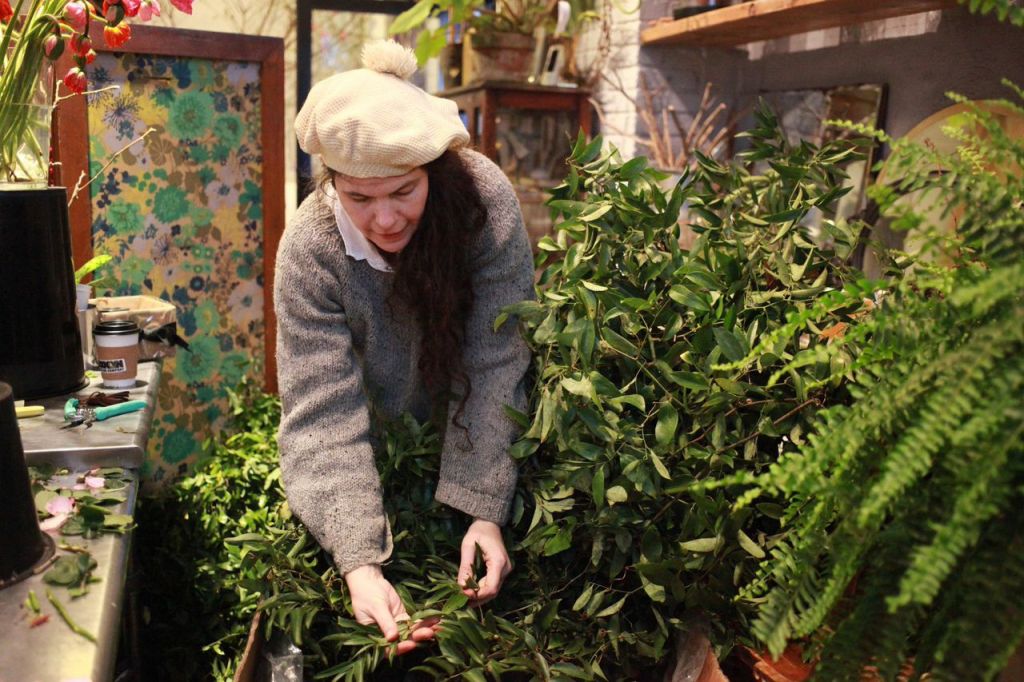
Emily, designing with wild  and cultivated materials (c) Sophia Moreno-Bunge

Emily, designing with wild and cultivated materials (c) Sophia Moreno-Bunge

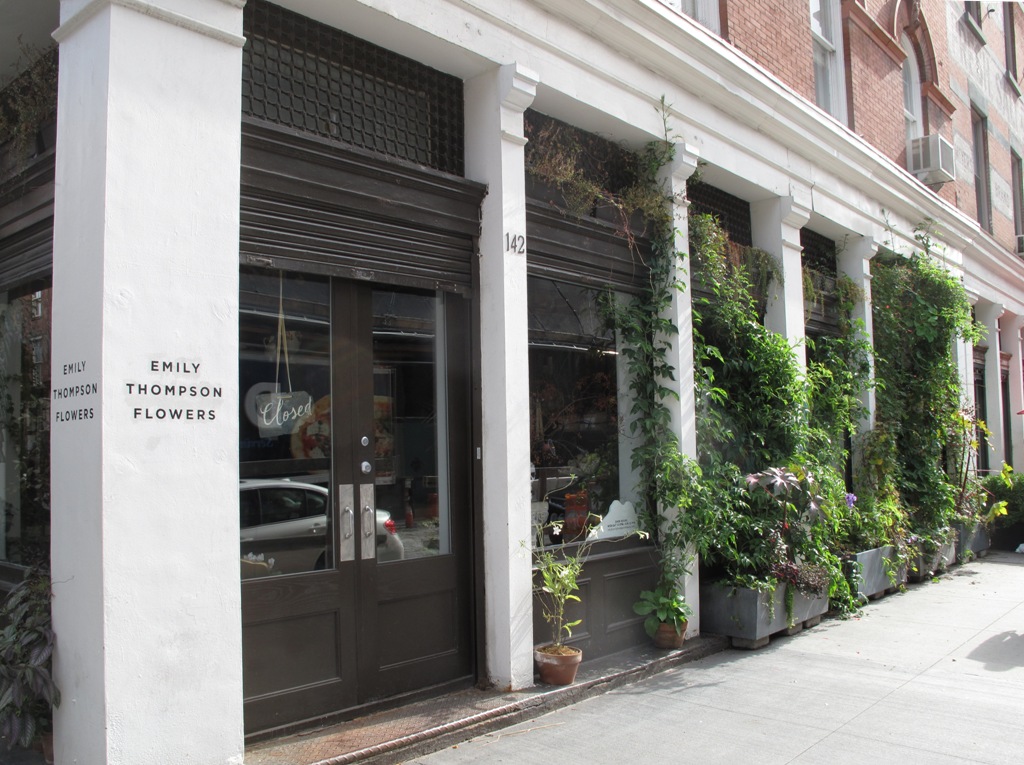
I love how the annual vines are climbing up the facade of this historic storefront (c) Debra Prinzing photo

I love how the annual vines are climbing up the facade of this historic storefront (c) Debra Prinzing photo

As I mentioned, Emily invited me to visit her brand new shop on Beekman Street, so the following morning we squeezed in a shared cup of tea/coffee and a tour of the new digs. I asked permission to turn on the recorder (natch) and Emily agreed.

Here’s a bit more about Emily:

Raised in Vermont, in a place she calls “the Northeast Kingdom – a place of uncompromising beauty,” Emily was deeply influenced by that sense of place, of the natural wildness of her childhood.

She was educated at the Pennsylvania Academy for the Arts, the University of Pennsylvania and UCLA, where she earned her Masters of Fine Arts in sculpture.

A floral arrangement in a beautiful Frances Palmer ceramic vase (c) Sophia Moreno-Bunge

A seasonal spring arrangement in a beautiful Frances Palmer ceramic vase (c) Sophia Moreno-Bunge

Emily is fascinated with the decorative arts and their history as she continues to collaborate with the rough hand of nature. Her flowers and banquet decor balance the uncultivated organic world with the delicacy of classical ornamental design. These pieces burst with unconventional materials like wild smilax, peaches and real butterflies, and always maintain sculptural grace. And most importantly, they are built in harmony with the space where they are displayed – as if they grew there.

One of Emily Thompson's nature-inspired assemblages (c) Sophia Moreno-Bunge

One of Emily Thompson’s nature-inspired assemblages, paired with a Frances Palmer vessel (c) Sophia Moreno-Bunge

Emily likes to cite William Gilpin, 18th century theorist of the picturesque, who directed builders of follies and artificial ruins, “to do so as if these ruins were not designed but naturally chosen.” What’s more, writes Gilpin, “they must be in magnificent style.” Emily’s work, like her ideal faux ruin, evokes nature in magnificent style.

Simply sublime (c) Sophia Moreno-Bunge

Simply sublime (c) Sophia Moreno-Bunge

Emily Thompson Flowers provides custom designs for special events and for all occasions. Using the freshest seasonal flowers, fruit, and foliage as well as unconventional and wild materials, each project or arrangement is individually conceived to suit the architecture and palette of its setting or to transform a room entirely.

At Emily Thompson Flowers in the Historic Seaport district of Manhattan, you can find flower arrangements and bouquets, artist-designed decorative objects, and all kinds of wildly beautiful things. The new shop is on a sunny corner in a building erected in 1865 by George B. Post (architect of the Stock Exchange), which is adorned with cast iron starfish and terra cotta sea monsters.

Old World-meets-Emily Thompson (c) Sophia Moreno-Bunge

Old World-meets-Emily Thompson (c) Sophia Moreno-Bunge

If you’re lucky enough to live in the New York area, you can order arrangements for delivery, but if you’re not a resident, visit Emily Thompson’s web shop to peruse the art, objects, tools and gifts that can be ordered online.

Emily Thompson designs powerful and poetic florals. She loves the peculiar, the quirky and the wondrous. To me, she gives us permission to redefine beauty in our own personal way, to ignore dictates that the vast floral industrial complex tries to force on us. On her blog, when Emily wrote in early 2014 about moving from a tiny Brooklyn studio to a full-fledged Manhattan flower shop, she wrote “We promise to do everything in our power to bring alchemy to all who need it on this island.”

(c) Sophia Moreno-Bunge

More of Emily’s botanical alchemy (c) Sophia Moreno-Bunge

There is one more episode left for 2014 – and that’s my very special episode that will air on December 31st. I plan on sharing my insights for the New Floral Year, so plan to join me!

My personal goal is to put more American grown flowers on the table, one vase at a time.  Listeners like you have downloaded the Slow Flowers Podcast more than 28,000 times. If you like what you hear, please consider logging onto Itunes and posting a listener review.

The Slow Flowers Podcast is engineered and edited by Andrew Wheatley and Hannah Holtgeerts. Learn more about their work at hhcreates.net.


Today’s LA Times: SoCal entwined in holiday swags with Blossom Alliance’s Lori Eschler Frystak

Saturday, December 20th, 2014

LAT20141220.61-page-001