Three Days. Six Workshops. Hundreds of American Grown Flowers, including some very special Florida-grown varieties.
Having Fun on the Festival Stage at Disney Epcot.
Last week, the Slow Flowers Challenge took place in Orlando, at the International Flower & Garden Show at Epcot. This was the third time I’ve been invited to present at Epcot since 2010 – and I was thrilled to return. If you love horti-tainment (and that’s what I call the combination of talented horticulture staff let loose on plants, Disney-style), you’ve got to visit this 10-week spring celebration of flowers and gardening, usually staged between March and May.
There are no fewer than 21 planted topiary characters throughout the park, from my personal favorites, Farmers Mickey & Minnie, to the hottest new offering: Anna and Elsa from the animated film “Frozen.”
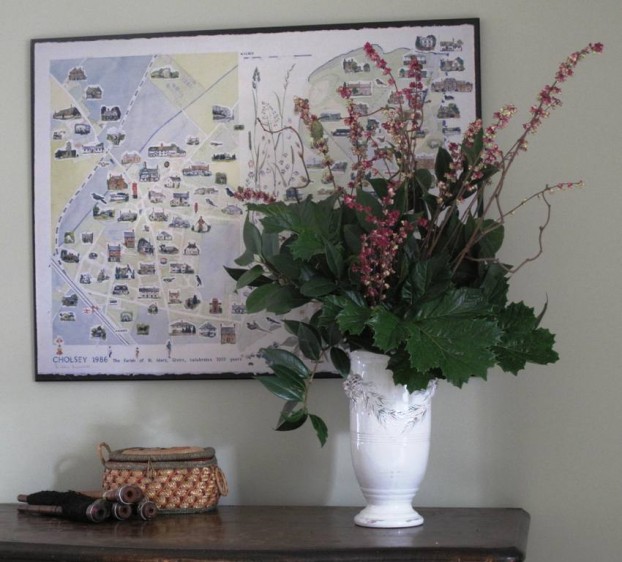
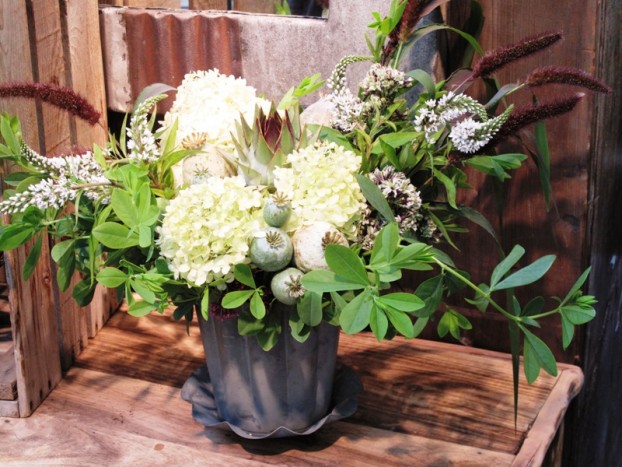
Each morning for three days running I shared the story of “American Beauty: the Slow Flowers Movement,” featuring the successful renaissance of flower farming and creative floral design that’s inspired by local and domestic American-grown flowers. Each afternoon, audiences were able to see that same story brought to life with flowers and foliage. Here are some of those arrangements:
Love this all-California-grown palette featuring grevillea, Gerrondo gerberas, bupleurum, pink wax flowers,’Green Ball’ dianthus and an echeveria.
An all Florida arrangement featuring three types of foliage and ferns combined with trailing clematis.
A whimsical arrangement with a Disney-fun palette of yellow lilies, hot pink Matsumoto asters and ‘Green Ball’ dianthus – California grown – arranged into a base of variegated Florida-grown pittosporum foliage.
A truly favorite nearly all-Florida bouquet with ferns, foliage and clematis, topped off with an echeveria. White waxflower is from California.
The big takeaway? People want to know more! They understand the importance of keeping things local – from saving farmland to the environment to jobs! I consider it a privilege to tell that story while playing with the flowers grown by people I respect and admire!
I wanted to share the press release that Slow Flowers co-issued today with the Certified American Grown program to acknowledge and celebrate the significance of join U.S. Senate and House resolutions encouraging the giving of American Flowers for Mother’s Day and urging the White House to “strive to showcase flowers and greens grown in the United States to show support for the flower breeders, farmers, processors, and distributors of the United States.”
The opening lines of the Senate Resolution urging support of American Grown Flowers.
“As Sunday’s holiday approaches, we remember that Mother’s Day is the most important day of the year for America’s flower farmers, with two-thirds of Americans purchasing flowers to honor their moms,” said Kasey Cronquist, administrator of the Certified American Grown program.“We are very pleased that on May 5, 2015, Sen. Dianne Feinstein (D-CA), with the help of Sen. Lisa Murkowski (R-AK) and Sen. Barbara Boxer (D-CA), sponsored and unanimously passed in the Senate a resolution to honor America Grown flowers and the people who cultivate them on the occasion of Mother’s Day.”We are very appreciative to Sen. Feinstein for drafting the resolution and for her long-term leadership on flower farming and overall agricultural issues. Her S. Res. 166 notes that ‘purchasing flowers grown in the United States supports the farmers, small businesses, jobs and economy of the United States….(and) flowers grown in the U.S. enhance the ability of Americans to honor their mothers on Mother’s Day,’” said Cronquist.
“Today, as the Senators noted, millions of stems of domestically grown flowers are now Certified American Grown and the Slow Flowers movement continues to expand across all 50 states,” said Prinzing, author of Slow Flowers. The support in both the House and Senate is welcome news for flower farmers across the country.
“Last Friday, the four leaders of the House Cut Flower Caucus introduced an identical bill, H. Res. 245, in the House of Representatives. We very much appreciate that Rep. Lois Capps (D-CA), Rep. Jaime Herrera Beutler (R-WA), Rep. Duncan Hunter (R-CA) and Rep. Chellie Pingree (D-ME) have started this cut flower caucus to educate their colleagues in Congress about the economic and cultural impact of cut flower farming. We look forward to building co-sponsors on their resolution, which is a wonderful first step for the organization.
“We appreciate our champions in the Senate and the U.S. House for their support for America’s flower-farming families. It’s a milestone moment in our efforts to encourage consumers to seek out locally and sustainably grown flowers,” Prinzing said.
Commenting on the resolution, Sen. Feinstein said: “We know that Americans want to support local businesses and increasing consumers’ awareness about the flower industry will encourage them to look for that ‘Certified American Grown’ label.”
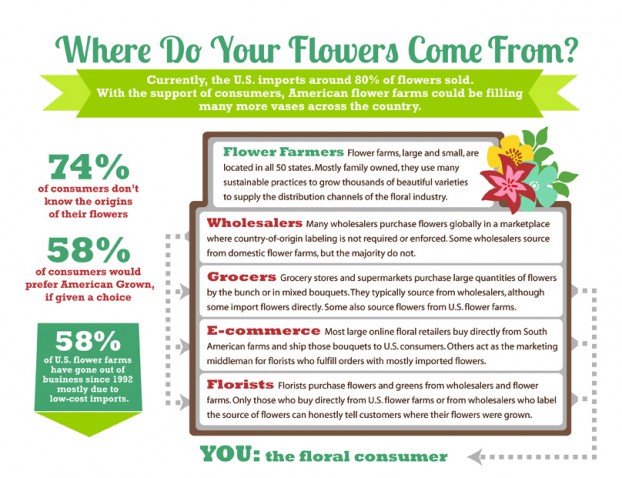
Americans will spend more than $2 billion on flowers this Mother’s Day, and nearly $25 billion per year on floral products. Research shows that 58 percent of consumers would prefer to buy domestically grown flowers, an option made more clear-cut by the American Grown movement.
# # #
About Certified American Grown
The American Grown Flowers brand symbolizes a unified and diverse coalition of U.S. flower farms representing small and large entities across the country. The Certified American Grown Flowers initiative has partnered with Certified Inc., an independent, third-party agency that verifies the source of products made and grown in the USA. Participating flower farms are certified by this agency through a supply chain audit that qualifies them to add the Certified American Grown logo to their floral packaging, websites and other marketing materials. To learn more, visit AmericanGrownFlowers.org.
About Slowflowers.com
The web site is a free, nationwide online directory to American flowers and the people who grow and design with them. Created by American flower advocate Debra Prinzing in 2014, the resource has grown to more than 550 members in 50 states. The site connects consumers with the farms, shops, studios and designers who provide American grown (local and domestic) flowers, ensuring transparency about the origin of each stem.
Tony Ortiz (left), with his parents Mercedes and Joseph Sr.
Today’s guest is an up-and-coming leader in cut flower farming in California and the U.S.-American grown cut flower world.
Tony shows off some of the fresh, just-picked lisianthus from Joseph & Sons’ fields.
I met Tony Ortiz last year when he and his father Joseph Ortiz, Senior, were part of a delegation of U.S. flower farmers who traveled to Washington, D.C., for meetings with their Representatives. Their family farm, Joseph & Sons, is based in Santa Paula, California (Ventura County), where the vast majority of their flowers are field-grown.
I always have a soft spot in my heart for field-grown flowers, so I was excited to schedule a visit to tour the Joseph & Sons’ operation when I was in Southern California last month. In Santa Paula, they grow 58 acres of flowers, as well another 1 million square feet of greenhouse-varieties.
To get to Joseph and Sons you drive north from Los Angeles on the Ventura Freeway (Hwy 101) and turn east once you hit the city of Ventura. I felt quite a bit of nostalgia heading up to Santa Paula, traveling that same route I drove for four years when our family lived in Thousand Oaks from 2006-to-2010. So may familiar stops that brought a flood of memories along with the sunshine that required me to wear sunglasses (not something that happens much in the winter up here in Seattle).
Beautiful blue delphiniums in the high tunnel.
At Hwy 126 I turned east, away from the Pacific Ocean, and after a few miles, I exited and made my way through agricultural fields growing nursery plants and food crops.
Look at this gorgeous, healthy amaranthus!
I arrived at Joseph & Sons on Telegraph Road where Tony met me and led me on a tour of the flower processing and packing facility, then outdoors, through the rows of high tunnel covers that protect tidy rows of Joseph & Sons’ flowers:
Amaranthus
Bells of Ireland
Bupleurum
Delphinium
Larkspur
Lisianthus
Stock
Snapdragons
Statice
Bupleurum
Iris
Matsumoto Asters
Pepperberry
Queen Anne’s Lace
Ranunculus
Seeded Eucalyptus
Sunflowers
Main Blue
Hot pink snapdragons.
By the way, as you’ll hear in my interview with Tony, Joseph & Sons also grows flowers in two other California regions: Lompoc, in Central California, where Joseph & Sons has 280 acres of field grown flowers, and Imperial Valley, in San Diego County, where the company grows 75 acres of seasonal flowers. Joseph & Sons is a Certified American Grown flower farm selling flowers across the U.S.
A birds-eye view of the packing operation.
The family-owned and operated business has more than 50 years of growing and shipping experience. Founded by Joseph Senior, a man who allegedly was born with a green thumb that others have tried in vain to duplicate, these flower growers are dedicated to making sure the best growing practices are followed.
The content and opinions expressed here are either mine alone or those of my guests alone, independent of any podcast sponsor or other person, company or organization.
The Slow Flowers Podcast is engineered and edited by Andrew Wheatley and Hannah Holtgeerts. Learn more about their work at shellandtree.com.
We’re celebrating Indiana-grown flowers this week! A huge thanks to my host Mark Zelonis, the Ruth Lilly Deputy Director of Environmental & Historic Preservation at the Indianapolis Museum of Art. He and his horticultural teammade my visit a huge successlast weekend!
Admittedly, it was a challenge to source locally-grown flowers at the end of April in Indiana’s Zone 5, but with the help of some really supportive flower friends, we pulled it off! THANK YOU to the team at Welch Wholesale Florists (sisters Annie and Nora), who ordered our local tulips, ranunculus and anemones — straight from flower farmers nearby!
The designers in my afternoon workshop were so happy to create their arrangements using 100% local flowers and foliage. Enjoy their work here and admire the amazing diversity of styles and interpretation of the material.
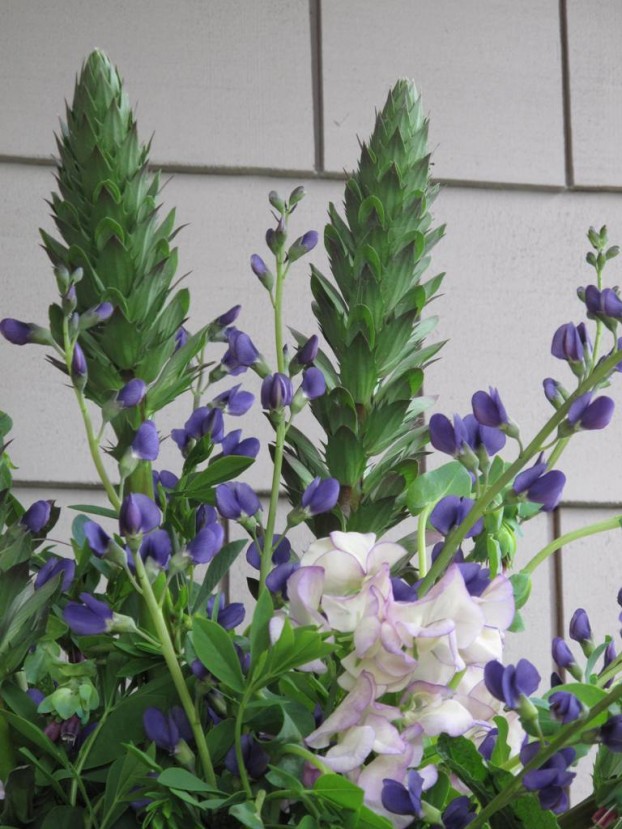
THANK YOU to the horticulture staff (Chad and Irvin) for giving me a golf cart and letting me drive around the “back lot” of the grounds to clip here and there. We gleaned baptisia foliage, oak leaf hydrangea foliage, young peony foliage, flowering dogwood, flowering redbud, hellebores galore, narcissus and euphorbia!
The horticulture staff’s awesome golf cart, filled with my early-morning cuttings!
I’m so inspired by the variety and creativity that one room of women and men expressed using the same “ingredients.”
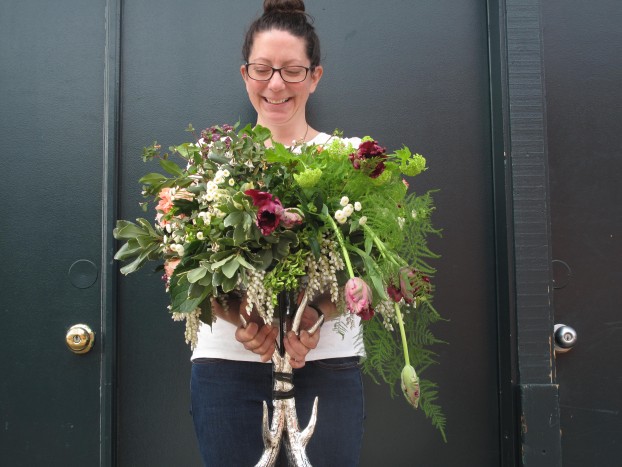
The Slow Flowers Challenge comes to Indiana with my own creation.
Indiana-grown florals and foliage for my bouquet include:
Kay Studer (left) and Susan Studer King (right) of Buckeye Blooms (c) Jason Bowers Photography
I’m so pleased today to share a long-distance conversation I recorded a few weeks ago with Kay Studer and Susan Studer King, mom-and-daughter farmer-florists based in the Northwest Ohio community of Elida, where they grow and design.
The two are doing exciting things in their community, region and state and I know you’ll learn much from their experience, which they so generously share in the interview.
But first up: A bit of news. You may recall my interview a few months ago with Lisa Waud of Detroit’s pot and box, a studio, wedding and event florist who has taken it upon herself to dream up a project called “The Flower House” – a 100-percent American grown floral installation in an abandoned house in the Motor City.
Lisa has big plans and since our podcast, her first interview ever, she has garnered a lot of attention from the floral design and flower farming community, as well as the media. The Flower House will take place October 16-18, but this weekend, Lisa and her fellow floral artists will unveil their plans at a preview event to be held in a neighboring vacant house. As Lisa promises: “It will whet the whistles of interested florists, curious visitors and potential sponsors.”
I’ll be there to help the designers celebrate the launch of this incredible project. Please check out the links at The Flower House to find out how you can attend – especially if you’re in the Detroit area this coming weekend.
And if you want to get involved, please help FLOWER HOUSE BLOSSOM AND GROW. The team has just kicked off a funding campaign on my favorite crowd-funding platform Indiegogo so you’ve gotta know they’re smart cookies! Follow links to the campaign and donate at whatever level you feel you can. I’m intrigued by the fun perks, ranging from $5 to $5,000.
A few that listeners of this podcast might love:
an American-made tote bag straight from Michigan crafters for $40
a special fragrance inspired by The Flower House for $75
a picture frame made from wood salvaged from The Flower House and made by Lisa Waud’s Dad for $100
a private dinner in Detroit hosted by Lisa and her team for $5,000
Some amazing talents are participating in this fabulous project and I am excited to watch it bloom, flourish, blossom and beautify Detroit, to use as many metaphors as I can think of!
The road that leads to Buckeye Blooms in Northwest Ohio (c) Jason Bowers Photography
A Buckeye Blooms bouquet (c) Emily Wren
Okay, today’s guests will be equally inspiring. Kay and Susan are gardeners, farmers and family. They love flowers, of course.
As Buckeye Blooms, the mother-daughter team grows flowers without the use of any toxic chemicals and they express their earth-friendly values season after season by growing high-quality, super-fresh flowers.
“Just as a home-grown tomato tastes better than a store-bought one, we believe the freshest and most beautiful flowers come from the garden rather than the refrigerated section of a big-box store. By purchasing locally-grown flowers, you get fresher, longer-lasting blooms, while supporting Ohio farm families.”
The land on which Kay and Susan operate Buckeye Blooms has been in the Studer family for several generations.
Located in northern Allen County, Dolau Farm features a meadow set aside for permanent conservation, dense woods, mature windbreaks, and an established perennial garden in addition to the large flower field.
More beauty from Buckeye Blooms
The historic 1880’s farmhouse is set back off of the road down a picturesque lane shaded by towering maple trees. Surrounding the house are many species of trees, woody ornamentals, grasses and greenery in addition to dozens of old-fashioned and unusual flower varieties. The Buckeye Blooms flower shop and design studio occupies what used to be the milking parlor of the “big barn.” The shop is also used for farm flower parties and other special events.
Environmental conservation is important to the Studer and King families and it is at the core of their farm operations. Hundreds of hardwood trees have been planted to prevent soil erosion, provide wildlife habitat and combat climate change. Recycling and energy conservation measures are implemented for every step of the flower production process.
“We don’t use toxic chemicals. Period. Plus, we put our money where our mouth is: we donate a portion of our profits to charitable organizations that work on behalf of food security, community gardens and solutions to climate change.”
A floral still-life.
Here’s a bit more about Susan and Kay:
Inside the studio at Buckeye Blooms (c) Jason Bowers Photography
Susan Studer King’s background is in the environmental nonprofit field.
For more than eight years, Susan worked for Ohio Environmental Council where she led statewide efforts to reform Ohio’s factory farm, wetland and agricultural drainage laws and also served as the Council’s Development Director.
Prior to partnering with her mother to create Buckeye Blooms, Susan and her husband served as Peace Corps Volunteers in Ecuador where they saw firsthand the many negative environmental and social impacts of the commercial rose industry in Ecuador.
One of my favorite designs of Susan and Kay’s – love the trailing ribbon.
Upon returning to the U.S., Susan & Jeremy moved back to the farm to start Buckeye Blooms and to live a low-carbon lifestyle.
Susan now splits her time between “the farm” and Granville where she does freelance writing; she serves on the Licking County Local Food Council and tries to steer her toddler out of trouble.
Kay Studer brings a lifetime of gardening experience to Buckeye Blooms.
Kay served as the Horticulture Program Coordinator at Ohio State University Extension Service in Allen County where she managed the Master Gardener program for more than 15 years.
Kay received national recognition and numerous awards for her leadership and programs at the Children’s Garden in downtown Lima.
An expert in diagnosing garden pest problems and an accomplished freelance landscape designer, Kay also has a great eye for floral design.
Kay’s first big floral design job: her daughter Susan’s wedding in 2000. Buckeye Blooms is headquartered on the family farm she has lived on since childhood.
The recent gathering of Ohio’s Flower Farmers shows the energy, intelligence, enthusiasm and diversity of this American-grown community. Kay and Susan are pictured in the front row; far right.
Thank you so much for joining me this week and please return again, as I continue to share insightful and educational episodes recorded exclusively for the Slow Flowers Podcast.
The content and opinions expressed here are either mine alone or those of my guests alone, independent of any podcast sponsor or other person, company or organization.
The Slow Flowers Podcast is engineered and edited by Andrew Wheatley and Hannah Holtgeerts. Learn more about their work at shellandtree.com.
For Earth Day a local real estate mangement firm asked me to give a talk and demonstration during a lunchtime event held on the rooftop garden of a hot LEED-Certified building in Seattle’s Southlake Union neighborhood.What a great chance to speak with office-bound hipsters from architecture, design and advertising agencies about LOCAL flowers and ECO design!
And what a perfect time to do this – when the vivid hues of springtime are exploding from my favorite Northwest flower farms!
Local ornamental shrubs, perennials and flowering bulbs, with a few succulents tossed into the mix.
Here’s what I included in my design demonstration:
Euphorbia foliage, grown by Jello Mold Farm
Lilac blooms, grown by Jello Mold Farm
Poppies, grown by Jello Mold Farm
Anemones (pale purple), grown by Sonshine Flower Farm
Anemones (maroon-red), grown by Everyday Flowers
Fancy orange tulips, grown by Sonshine Flower farm
Bleeding hearts, grown by Ojeda Flower Farm
Potted succulents
Detail showing the variegated aeonium and green rosette-style succulent.
Nice overhead detail that captures all of nature’s glorious forms and colors.
Back view: showing off those maroon anemones!
A burst of Earth Day sunshine in this lovely Washington-grown poppy!
This week’s episode coincides with Earth Day, fittingly symbolic for the Slow Flowers Movement and flower farmers, floral designers and product innovators who are working to change our industry and push for progress to alter the status quo.
So I’d like to share a few news items as well as two follow-up interviews featuring guests of past Slow Flowers Podcast episodes.
Listen closely to find out how you can win prize packages from each of our guests – you’ll want to get in on the good stuff!
First off, if you enjoyed last week’s interview with Jenny Elliott and Luke Franco of Tiny Hearts Farm in New York’s Hudson Valley and Rachel Gordon of Taproot Flowersof Brooklyn, please check out more photos that I’ve added to the show notes. They’re onto something really special and I encourage you to listen if you missed that episode – and enjoy the beautiful flowers the three of them grow and arrange in their worlds.
Second, I want to share details about this week’s Fashion Revolution Day, which takes place on April 24th.
If you believe in Slow Flowers, you should also embrace and support Slow Fashion, which has so many parallels in terms of labor practices, environmental concern and trade policy.
Slow Fashion asks questions about the origins of the clothing we wear that are virtually identical to the questions Slow Flowers asks about the bouquets we bring into our homes.
According to Fashion Revolution’s data, one in six people work in the global fashion supply chain. It is the most labor-dependent industry on the planet, yet the people who make our clothing are hidden from us, often at their own expense, a symptom of the broken links across the fashion industry.
Wow, doesn’t that sound identical to the floriculture industry? On April 24th, coordinated teams around the world will challenge global fashion brands to demonstrate commitment to transparency across the length of the value chain, from farmers to factory workers, brands to buyers and consumers.
Zady.com, an innovative online fashion brand based in New York City, is serving as U.S. chair of Fashion Revolution Day. Slow Flowers has been invited to help promote the cause. Check out this Slow Fashion/Fashion Revolution event taking place in Brooklyn. Slow Flowers hopes to have ongoing involvement with Slow Fashion in the future.
I am inspired by what the fashion industry has done in just two years to mobilize conscious consumers to care about the origins of their clothing — and in the future, I hope the floral industry will be just as vocal. I don’t wish for a fatal disaster to occur at an unregulated flower farm in a distant land to make us all wake up and start asking about the origins of our flowers.
What you can do on April 24th is to use your own social channels to get active. Take a photo of yourself wearing an item of clothing inside out. Tag the brand, share the photo on Facebook, Twitter and Instagram with the hashtags: #whomademyclothes and #fashrev.
Not to take away from this important endeavor, but perhaps you’ll be inspired to ALSO take a photo of yourself holding flowers that came from a US mega-retailer, big box store or supermarket and tag that retailer on your social sites with the hashtags: #whogrewmyflowers and #slowflowers. Just a thought.
The pods and buds are waking up. They’re shouting, “we’re here!”
It’s been a crazy week here in Slow Flowers Land, but after 8 days of travel, I’m so delighted to be home in Seattle for a week. Seattle has been good to us, with mid-60s to 70-degree weather.
Today was no exception. I clipped a bit of this and that – all from my awakening garden. It truly is a Spring Awakening here!
Just unfurled: a vivid yellow poppy
The delicate leaves and flowers that are pushing up through the April soil are each special in their own way. Here’s what I included in my spontaneous spring arrangement:
Variegated hosta leaves
Acid yellow smoke bush (Cotinus coggygria ‘Golden Spirit’)
The young tips of deer fern (Blechnum spicant)
Green-and-rust-variegated Epimedium leaves and a few flowering stems
Yellow poppies, flowers & buds
The final arrangement – all from April 18th in the garden
Love how all the season’s new foliage works together.
A word about the vase. Christina Stembel of Farmgirl Flowers turned me onto“Wine Punts,” 100% recycled, made in USA, these beautiful vessels are wine bottles that have been repurposed into drinking glasses. Or, small vases. Available in sets of 4 in many colors. Love the size and the pale green hue.
There is a cultural shift taking place that is redefining the relationships consumers, florists and flower farmers have with one another. This is happening at all levels of the flower pipeline, from U.S. Flower Farms large and small seeking Certified American Grown status to brand and label their flowers – in order to satisfy the demands, especially at the mass market – for transparency in flower origin, to the grassroots efforts, region by region, to connect the people who grow flowers with the people who design and sell them.
A golden and green floral palette – with a beautiful echeveria as a focal element. (c) Perry Stampfel
Welcome to Week 14 of the Slow Flowers Challenge!
Greetings from Southern California, where I have been teaching this week! It’s a great excuse to show off some of the flowers grown in Encinitas, California – by Dramm & Echter, an established farm that grows beautiful blooms.
At the invitation of Lynn Stampfel of Laguna Beach Garden Club, I traveled to Southern California earlier this week. This established and active group of gardeners graciously welcomed me to lecture about American Grown Flowers and the Slow Flowers Movement. We had 125 in attendance and it was a whirlwind. Why? Well, for some crazy reason, I had agreed to give a 30-minute slide lecture, followed by a 30-minute eco-design demonstration.
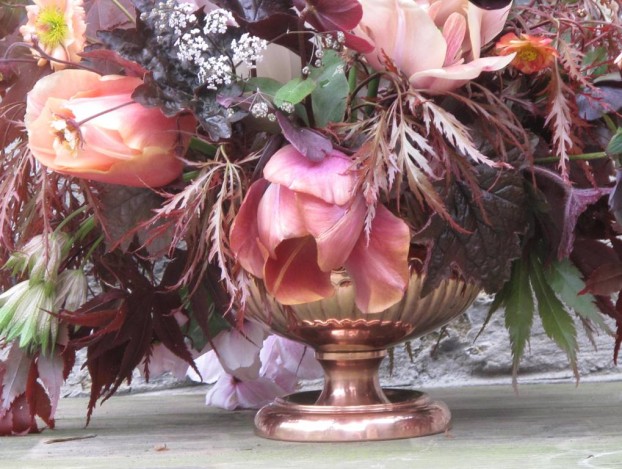
Above is the arrangement I created for the demo. I used a vintage brass planter – low and wide – in order to show how to use chicken wire as the internal mechanics of the container.
The floral elements were all grown locally – well, the next county over – at Dramm & Echter, an American grown flower farm with 40 acres of field-grown crops and 950,000 square feet of greenhouses. Dramm & Echter’s primary floral crops are gerberas, lilies, spray roses and protea varieties. Then there’s so much awesome foliage and textural varieties, including solidago, leucadendron, ruscus, eucalyptus and more.
Demonstrating with the flowers from Dramm & Echter. (c) Perry Stampfel
Working with the Dramm and Echter sales team, I ordered $800 of their flowers and foliage varieties for Laguna Beach Garden Club’s afternoon event: A hands-on design workshop.
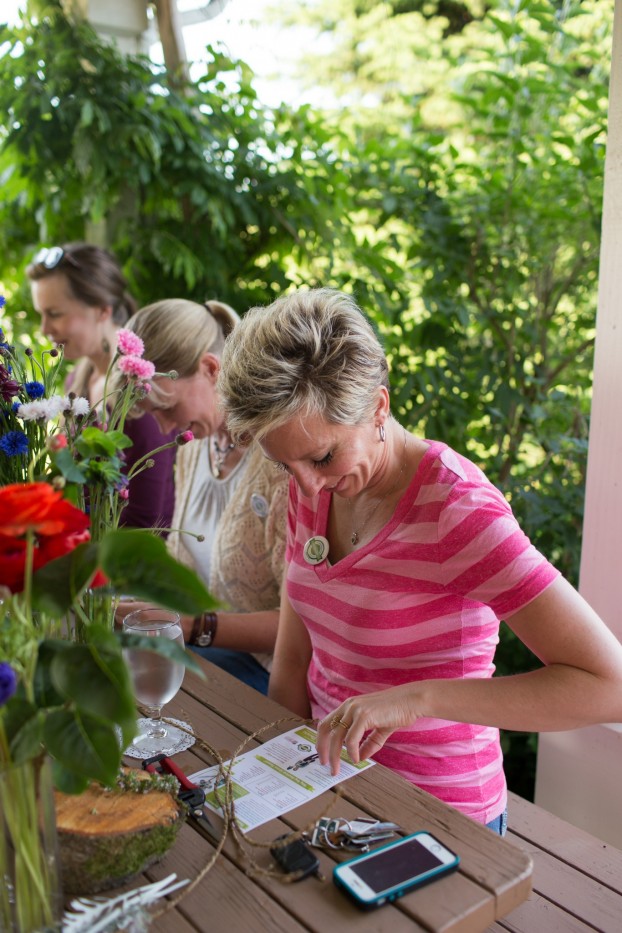
Twenty-five participants gathered in the courtyard of the local church that hosted our workshop under the lovely canopy of a melaleuca tree, we spent two hours arranging with those blooms. Everyone was encouraged to try using chicken wire or fluffy foliage or curly willow as the stabilizing matrix — all great alternatives to conventional chemical-base flower foam. I’m pleased to have been able to demonstrate the brand new Floral Soil plant-based product in one of my designs, shown below.
This vintage footed glass bowl contains Dramm & Echter florals, including gerberas, spray roses, wax flower, and two types of eucalyptus branches. (c) Perry Stampfel
Twenty-five Slow Flowers designers, all members of the Laguna Beach Garden Club, at work on their personal projects. (c) Perry Stampfel