|

|
Podcast: Play in new window | Download
Subscribe: Apple Podcasts | Podcast Index | RSS | More

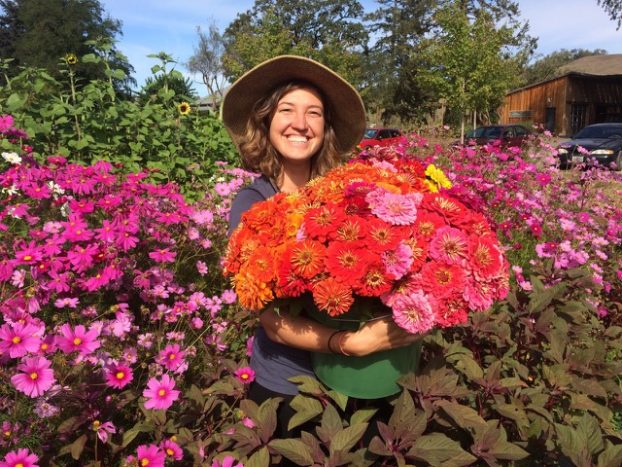
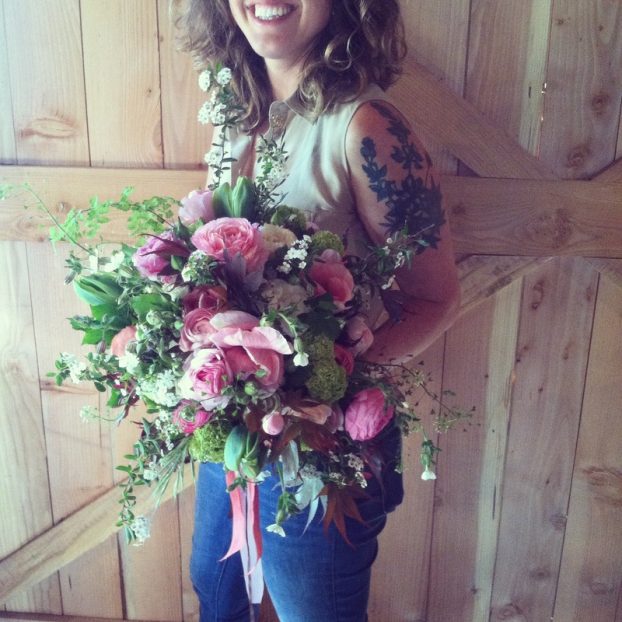
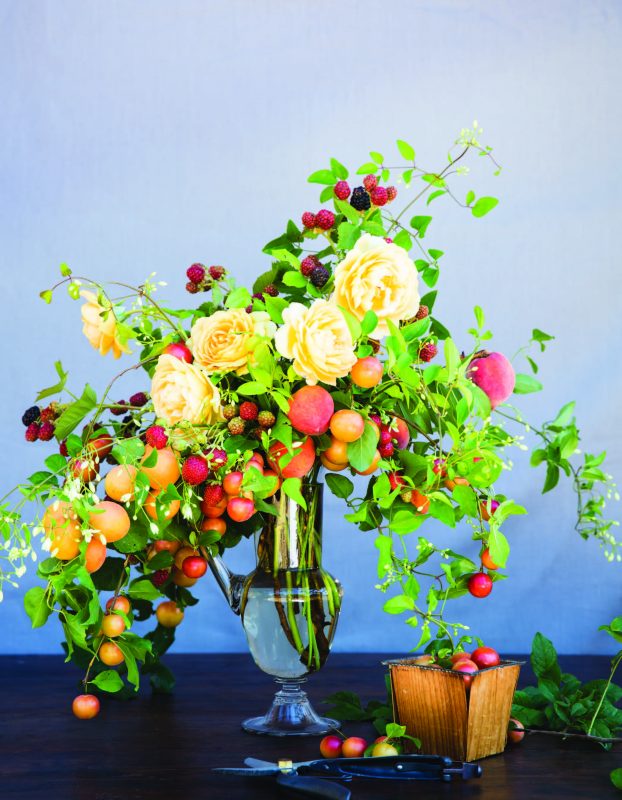
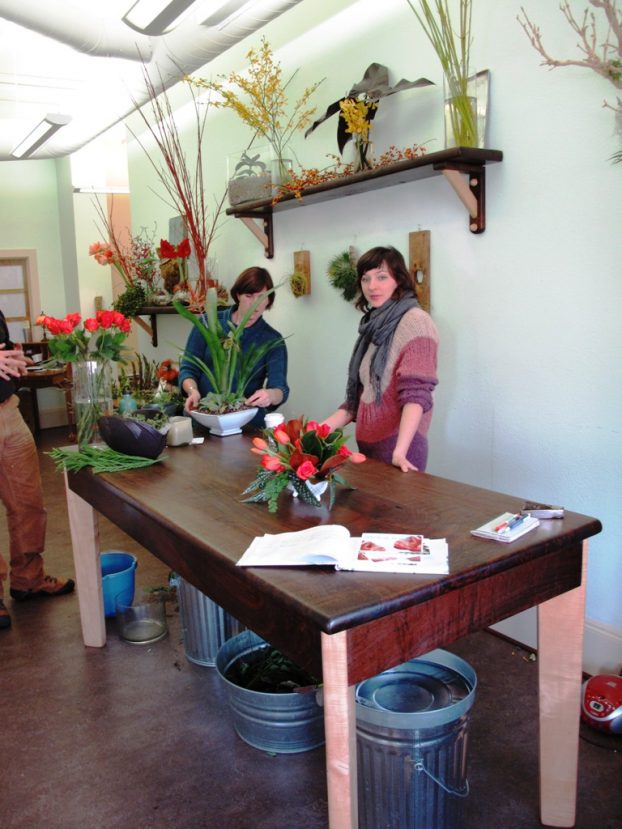
Jordan Uth of Heidrun Meadery, Horticulturist & Flower Farmer, shows off the fresh spring bouquet made in collaboration with Heather Frye of Venn Floral.
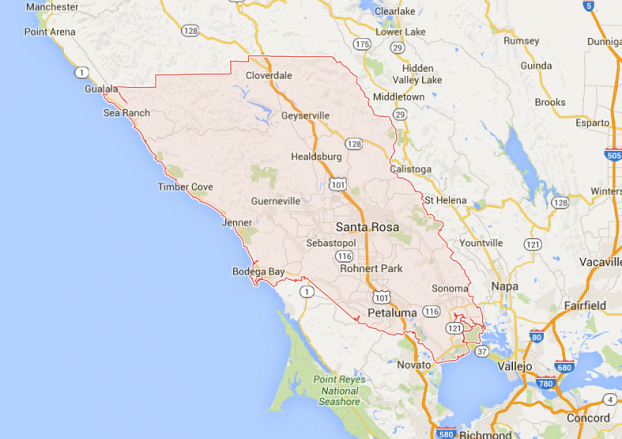
I’m really excited to share today’s episode with you, recorded during my two-day trip in March into a special kind of floral wonderland to meet the farmers, florists and growers of Sonoma County, north of San Francisco.
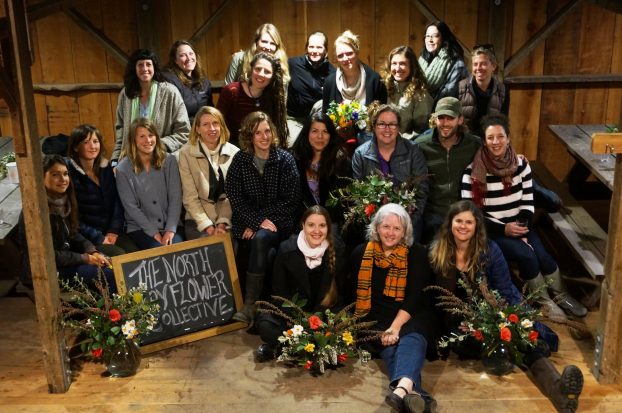
It’s our third episode featuring members of the North Bay Flower Collective who invited me to spend time touring flower farms, visiting design studios and learning more about the stories of their community.
Community is the operative word here, because there is such an intense, intentional and caring sense of purpose that the Collective embodies.
We recorded this segment at quite an amazing place in Pt. Reyes Station, California, where Daniele Strawn (my escort for the visit – and you’ll hear her voice occasionally), and I arrived on the morning of March 15th.
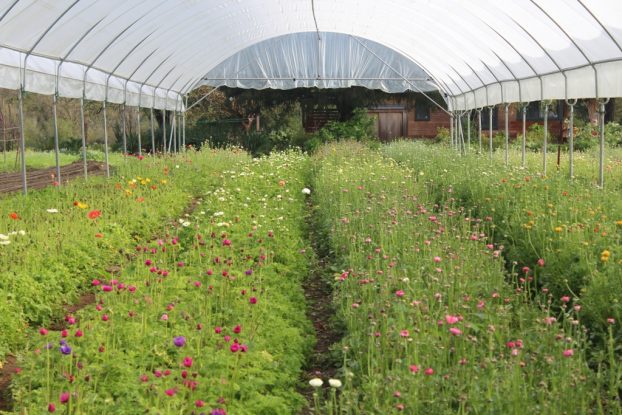
The place is called Heidrun Meadery, a beautiful destination that produces an old-world Champagne-style honey wine. There is a tasting bar, a garden patio, a greenhouse, bee garden and honey, as well as the magnificent fermented honey wine.

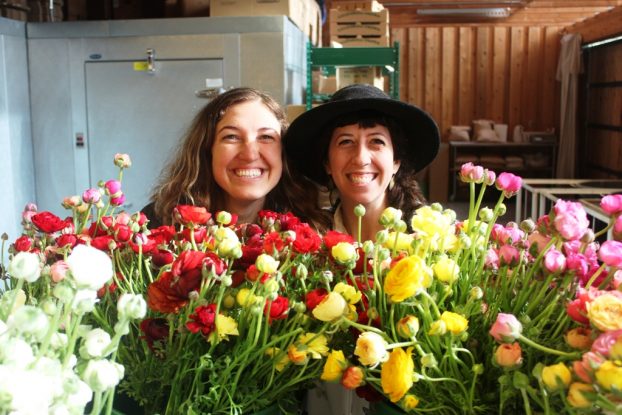
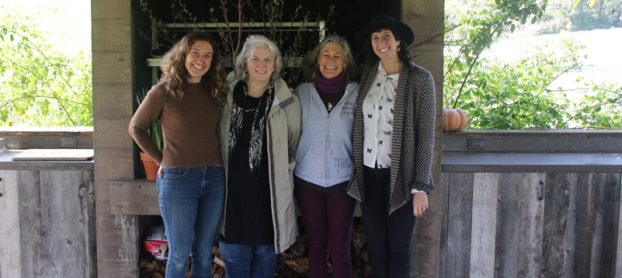
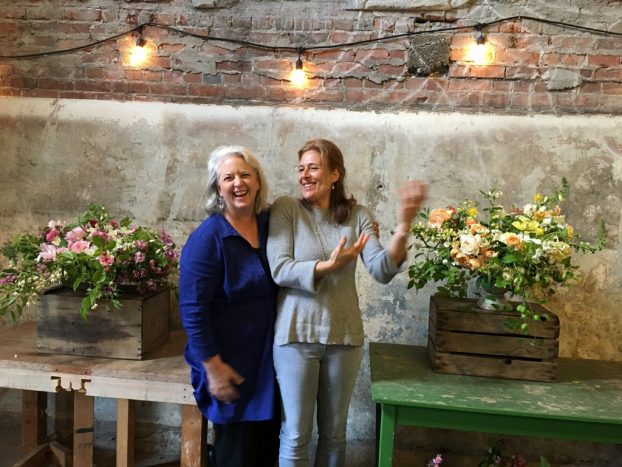
Heather Frye (left) of Venn Floral and Jordan Uth (right) of Heidrun Meadery, two members of the North Bay Flower Collective’s core group.
Welcoming us were today’s two guests, Jordan Uth, Heidrun’s flower farmer and floral designer, and Heather Frye, co-owner of Venn Floral, an event floral and styling service based in Sebastapol.
READ MORE…
All local Northwest-grown flowers for Mother’s Day from some of my favorite flower farmers, including Ojeda Farms, Triple Wren Farm, Jello Mold Farm, Seattle Wholesale Growers Market.
Make it Local for Your Mother’s Day Bouquets
Debra Prinzing’s Slowflowers.com is a free, nationwide, online directory of American flowers and the farms, shops, studios and designers that supply those blooms. We’ve just added a special link for Canadian-grown flowers, farms, and studios, too. Show your love with local flowers on Mother’s Day, with more than 700 floral members in 48 states to choose from.
Here is a gallery of the diverse American-grown offerings you’ll find at Slowflowers.com.
Tammy Chinn
Decolores Flores (Watsonville, California)
From seed to bouquet:
Alstroemeria, peonies, cerinthe, oenothera, plum branches and roses in an up-cycled cobalt vase. $35 plus delivery in Watsonville/Monterey Bay/Santa Cruz County.
Phone: 831-239-5954
email: pordecoloresflores@gmail.com
Kathleen Barber
Erika’s Fresh Flowers (Warrenton, Oregon)
Treat Mom to a bouquet-a-month during the farm’s prime growing season (May-September). Give her a bouquet that is locally grown, freshly picked and artistically arranged. Erika’s Fresh Flowers offers the five-month flower subscription for Mother’s Day 2016 for $125.
Order by May 8, 2016, at erikasfreshflowers.com/purchase/.
Erika’s delivers to homes and businesses in Astoria, Warrenton/Hammond, Gearhart and Seaside, Oregon.
Phone: 503-791-0538
email: Kathleen@erikasfreshflowers.com
Grace Hensley
eTilth Urban Designs (Seattle, Washington)
Grab-and-Go Contain Gardens for Mother’s Day, Both for shady porches, $100 each for pickup in Seattle:
Phone: 206-388-6955
email: grace@etilth.com
Tami Meyer
First and Bloom (Issaquah, Washington)
Can’t take my eyes off you! This one-of-a-kind arrangement will capture all eyes with its vivacious spring colors and 100% American grown blooms, $140 local delivery or pick up for Seattle’s Eastside.
Phone: 425-455-4614
email: info@firstandbloom.com
Pilar Zuniga
Gorgeous and Green (Berkeley, California)
A hand tied bouquet: Fresh, local grown and organic flowers wrapped in paper and delivered by bike to Berkeley, Oakland and Emeryville or available for pickup from the Oakland studio, $50, $85, $120 or $195.
Phone: 510-665-7974
email: shop@gorgeousandgreen.com
Kailla Platt
Kailla Platt Flowers (Portland, Oregon)
Garden-inspired floral design for Mother’s Day using 100% locally grown flowers like Peonies, Iris, Ranunculus, Snapdragons, Columbine and Roses, with lush greens and botanical textures, tucked into a vase for easy presentation. For pick-up or local delivery in Portland, Oregon. $50 and up plus $10 delivery fee.
Phone: 503-709-6680
email: k@kaillaplattflowers.com
Adele Hinkley
Mary Clark Flowers (Chilliwack, British Columbia, Canada)
This delicate display in a vintage Canadian-made mason jar is the perfect Mother’s Day gift. Sweet and simple flowers fill this vase, expressing your sentiment, $50-$70. Delivery for each of these items is included for Agassiz, Chilliwack, Rosedale and Sardis, B.C. Visitors are for studio pick-up.
Phone: 604-796-0666 or 866-792-0666
email: sales@maryclarkflowers.com
Kristin Burrello
Muddy Feet Flower Farm (Ashford, Connecticut)
Fresh, local, farm-grown spring flowers artfully arranged in muddy feet flower farm’s signature style and displayed in a vintage tea cup and saucer, $50. Order online at muddyfeetflowerfarm.com. Pick-up locations available on Saturday, May 7:
Delivery available to Westport, CT Friday, May 6
Phone: 773-355-0177
email: muddyfeetflowers@gmail.com
Janet Walsh
Rose Mountain Floral (Kalispell, Montana)
“Sparrow’s Nest,” a Mother’s Day garden with local lilacs, and a variety of spring tulips, ranunculus, roses, spray roses, lisianthus and local huck with a symbolic nest tucked among the flowers. The moss-touched stone planter is ideal for plantings after Mother’s day, $79. Local delivery or pick-up available. This arrangement was designed for The Sparrow’s Nest, which provides housing for homeless high school students, with 12% of proceeds donated to the cause.
Phone: 406-752-7673
email: rosemountainfloral@gmail.com
LauraLee Symes
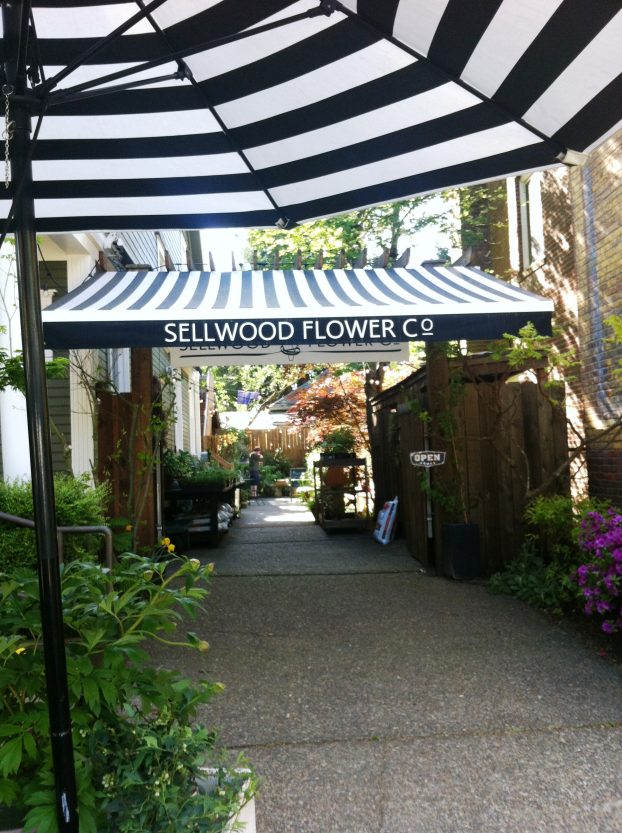
Sellwood Flower Co. (Portland, Oregon)
A birch box complete with French striped ribbon, filled with premium Oregon- and Washington-grown flowers, $65 plus $10 delivery in the Portland Metro area or for pick-up at Sellwood Flower Co.
Phone: 503-719-5390
email: info@sellwoodflowerco.com
Stargazer Barn (national shipping from Arcata, California)
Send your mother 10 stems of American Grown “Rose Lilies” (variety is ‘Natalia’) paired with 10 stem of Horsetail (Equisetum), $69.99+ $14 (FedEx Overnight Shipping nationwide) (+$10 to include vase)
web: https://www.stargazerbarn.com/
Melissa Hessney Masters
Tanglebloom (Brookline, Vermont)
Bouquets of sustainably-grown spring blooms including specialty tulips, flowering branches, and heirloom narcissus (photos of current harvest) for $20. Ready for giving, bunches are wrapped and tied with ribbon for pick-up at the Brookline, Vermont, farm. Also available at local markets including Vermont Country Market in Brattleboro, Vermont.
Or, Mom can enjoy beautiful local flowers all season long with a gift subscription to Tanglebloom’s Flower CSA (community supported agriculture). We’ll mail (or email) her a lovely gift card designed by an independent artist in time for the holiday. CSA subscriptions start at $95.
more info: tanglebloom.com/flower-csa
Phone: 802-365-0252
email: tanglebloomvt@gmail.com
Melissa Feveyear
Terra Bella Flowers (Seattle, Washington)
Terra Bella Flowers & Mercantile offers unique florals featuring premium, locally-sourced blooms and botanicals. Each vase and wrapped design is inspired from our surrounding woodlands, seasides and flower fields with prices starting at $45. Offering daily delivery throughout the greater Seattle area, we invite you to visit our store or to place orders online 24/7 at www.TerraBellaFlowers.com.
Phone: 206-783-0205
email: info@terrabellaflowers.com
Cindy Hanson
The Herb and Garden (Helena, Montana)
The Herb and Garden Bouquet in a ceramic vase, $25, with refills for $120. Local deliveries available.
Phone: 406-439-6478
email: theherbandgarden@gmail.com
Mary Kate Kinnane
The Local Bouquet (Compton, Rhode Island)
Consider a Mother’s Day gift for the mother who loves flowers and has a green thumb. The Farmer-Florist Design Series feature one-day intensives co-taught by Mary Kate Kinnane and a local flower farmer. Workshops highlight farming and design topics while allowing hands on growing and design techniques, a farm tour, a stylized mini shoot, and a beautiful farm-to-table dinner. Meet and learn from flower farmers and designer who support local and American grown flowers year round. Choose between one of three classes, each with a specific farm and design topic: $425 per workshop, with a 15% discount when you sign up for all three.
Phone: 401-598-6812
email: marykate@thelocalbouquet.com
Mindy Francis
Two Little Buds (Hamilton, Ohio)
Gorgeous, locally grown ranunculus and anemones in a keepsake compote bowl, from $55 to $85 and up. Delivery available to Cincinnati and surrounding areas (check website for delivery range), $12-15. Pick-up available: Two Little Buds, 3431 Princeton Road, Ste 103, Hamilton, Ohio 45011 (513-737-8527); or Lane and Kate, 29 East High Street, Oxford, Ohio 45056 (513-523-1004)
email: twolittlebuds@fuse.net
web: www.twolittlebuds.com
Podcast: Play in new window | Download
Subscribe: Apple Podcasts | Podcast Index | RSS | More
This week we welcome a new Sponsor to the Slow Flowers Podcast — Arctic Alaska Peonies, a cooperative of 50 family farms in the heart of Alaska providing high quality, American Grown peony flowers during the months of July and August. Visit them today at arcticalaskapeonies.com.
Click here to learn more about Alaska peonies and listen to Episode 102.
Follow Arctic Alaska Peonies on Facebook
Find Arctic Alaska Peonies on Instagram
Catch Arctic Alaska Peonies’ tweets on Twitter
Next up, today’s engaging guest is Mike Anthony Mellano.
I met “Mike A,” as he’s often called, in 2012, when the California Cut Flower Commission invited me to speak to their board meeting about The 50 Mile Bouquet and my passion for connecting consumers with the source of their flowers.

Mike A. Mellano, 3rd-generation flower farmer for Mellano & Co., speaking at the recent Field to Vase Dinner Tour at The Flower Fields in Carlsbad, California

Grandfather Giovanni Mellano and his family in the early days after establishing Mellano & Co. in Los Angeles, 1925.

Early days at the Los Angeles Flower Market. The Mellano family has been involved for more than 90 years.
We’ve since crossed paths at many industry gatherings and I’m so impressed with Mike’s commitment to flower farming. His approach is to blend old-world Italian family traditions with modern and commercial innovation to grow and provide millions of American Grown flowers to today’s floral marketplace. Click here to read the History of the Mellano Family of Flower Farmers.
This interview took place on the morning of April 13th, prior to the Field to Vase Dinner held at The Flower Fields in Carlsbad, California. For the 2nd year, Mike was the “farmer-host” for that must-attend event. Unlike last year, I planned ahead for the podcast and was able to corner him for an interview at Mellano & Co. earlier in the day.
Here is a bit more about Mike Anthony:
Michael Anthony Mellano, Ph.D. is Chairman of the Board and Vice President of Production for Mellano & Company, a third generation cut flower production and distribution operation in San Luis Rey, California. He joined the family business in 1988 after graduating from UC Riverside.
He is a Past President for the San Diego County Farm Bureau and past chairman for the California Cut Flower Commission (CCFC). He is currently a commissioner for the CCFC and chair of their Grower Research and Economic Development Committee. He has been a long standing member of the USDA Floriculture Research Initiative Task Force, chairman and a Director of the Kee Kitayama Research Foundation and has served the last 8 years as the University of California representative to the national “Council for Agricultural Research, Extension & Teaching”. Most recently Mike has accepted a board position with the American Floral Endowment.
Michael in the past also served as chairman for the California Ornamental Research Federation (CORF), was on the UC Davis Environmental Horticulture Department Advisory Committee and the grower representative to the USDA-Pacific Area Wide Program for Methyl Bromide Alternatives.
Michael received his B.S. in Plant Science and Ph.D. in Plant Pathology from the University of California Riverside under Dr. Donald Cooksey where he focused on the molecular genetics of bacterial pathogens and copper resistance. The San Diego County Farm Bureau named him Farmer of the Year in 2015.
Michael is married to Valerie Mellano, Ph.D. the current chair of the Plant Science Department at Cal Poly Pomona. Together they have four wonderful and exceptional kids and one grandchild.
I know you’ll learn a great deal from our conversation and appreciate the passion and commitment Mike devotes to his family’s business.
Find Mellano & Co. on Facebook
Follow Mellano & Co. on Instagram
The Slow Flowers Podcast has been downloaded more than 95,000 times by listeners like you. THANK YOU to each one of you for downloading, listening, commenting and sharing. It means so much.
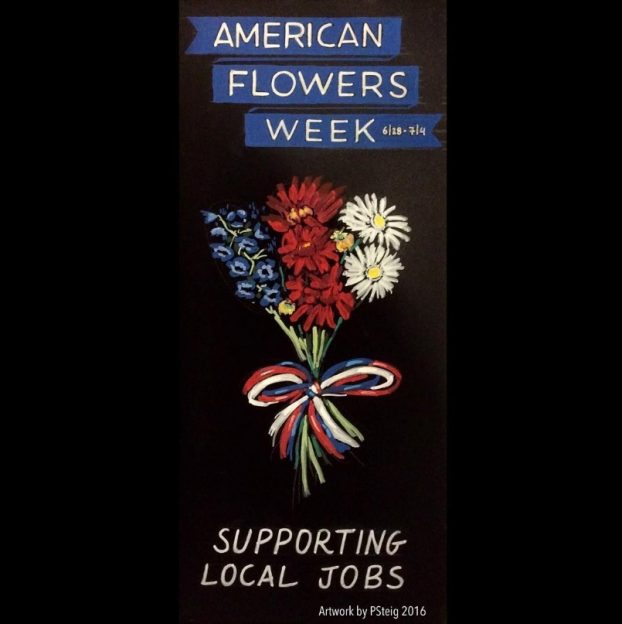
Just two days ago, On May 1st, we announced the 2016 American Flowers Week campaign. If you thought it was fun to be involved in this social-media-campaign last year, get ready for a bigger, better celebration this year — June 28 through July 4th.
Last year was our first time to devote an entire week promoting American Grown flowers, farmers and floral designers. This year, we’ll have a huge flower bucket filled with fun — all for the cause that is near and dear to our hearts.
Four industry sponsors have signed on with their financial support, including Certified American Grown Flowers, Syndicate Sales, Longfield Gardens and Mayesh Wholesale.
As I said in the press announcement, “Consumers are more conscious than ever about the origins of the goods they purchase, especially when it comes to food — and flowers. It’s important to raise awareness for and celebrate American grown flowers, as well as flower farmers who grow a diverse selection of botanicals for the cut flower trade. At the same time, we salute floral designers whose ethos and intent inspires them to source domestically.”
Earlier this week, I shared details about the 2016 American Flowers Week campaign with more than 700 Slowflowers.com members, unveiling new graphics and a “50 States of American Flowers” contest. The contest encourages farmers and florists to post photographs of their red-white-and-blue bouquets along with the hash-tag americangrownflowers on social media platforms. Entrants will be included in a drawing for a number of prizes.
You’ll find more information and resources at americanflowersweek.com. Downloadable fact sheets, infographics and the 2016 American Flowers Week logo and social media badges are available for growers and florists to use for their own marketing and promotion efforts.
Submissions to the “50 States of American Grown Flowers” contest will highlight local flowers from across the country. Slowflowers.com member farms and florists are invited to submit their designs to a gallery that we will share with the media during American Flowers Week. Our goal is to showcase the botanical and seasonal beauty from flower farms and designers in all 50 states.
Participate in the “50 States of American Grown Flowers” Contest here.
Next week, you’re invited to join me in putting more American grown flowers on the table, one vase at a time. And If you like what you hear, please consider logging onto Itunes and posting a listener review.
The content and opinions expressed here are either mine alone or those of my guests alone, independent of any podcast sponsor or other person, company or organization.
The Slow Flowers Podcast is engineered and edited by Andrew and Hannah Brenlan. Learn more about their work at shellandtree.com.

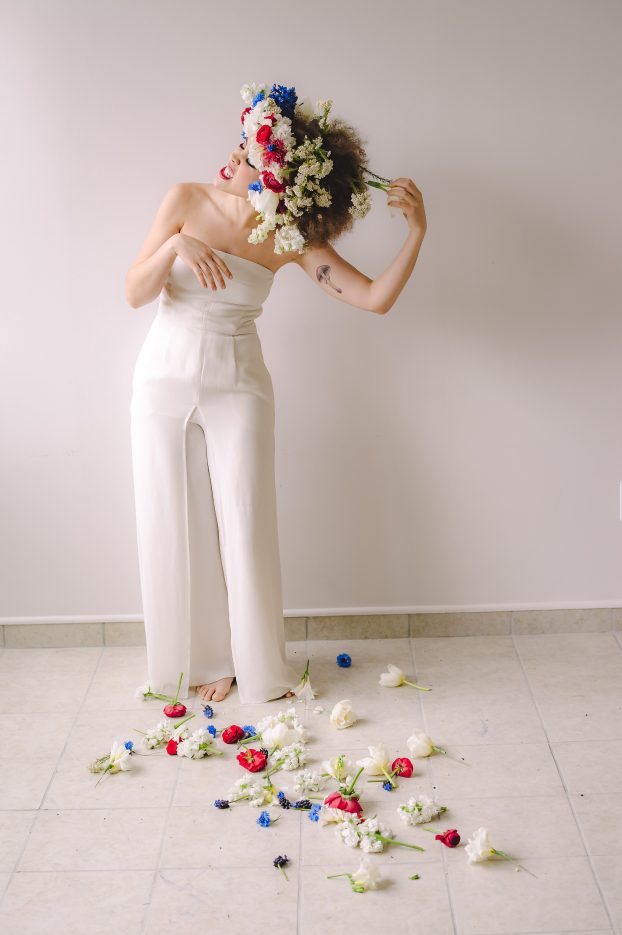
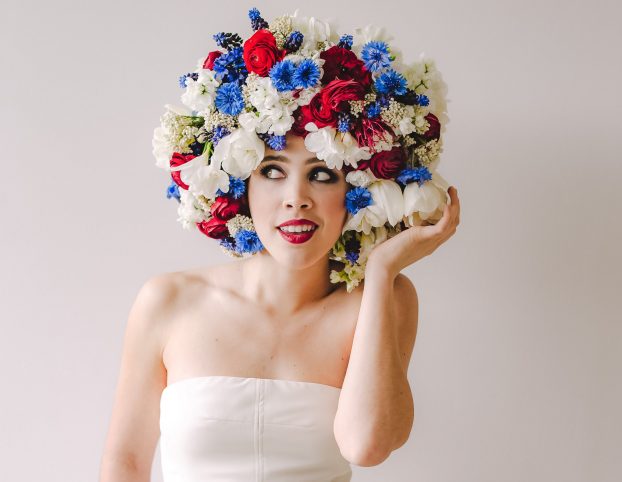
Slowflowers.com member Susan McLeary of Passonflower Events designed our 2016 Flower ‘Fro, worn by the beautiful Monique Montri; makeup by Hannah Butler; photography by Amanda Dumouchelle
I know it’s May Day and perhaps that’s early to be thinking about Independence Day, but I want you to plan ahead for the second annual American Flowers Week celebration, which will take place June 28-July 4, 2016.
Today we announced the launch of American Flowers Week 2016. You can read the entire press release here. I wanted to get you the news early to encourage The Slow Flowers Community of farmers, designers, florists and wholesalers to have advance details for own marketing and social media activities.
Here are some of the ways you can get involved:
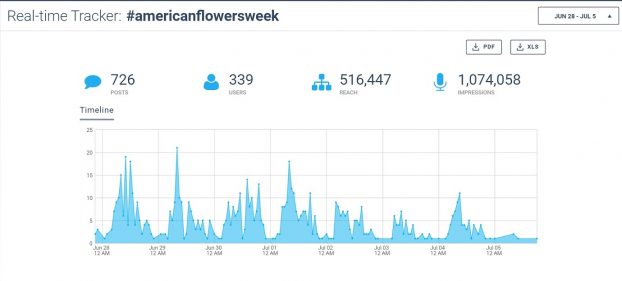
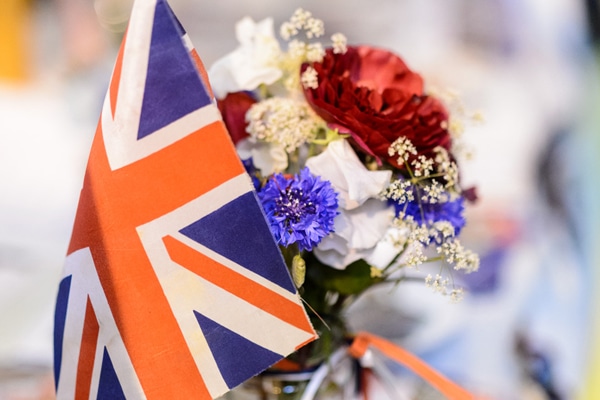
Download the “I’m Joining American Flowers Week” badge and add it to your web site, blog, or social sites. Please use #americanflowersweek when you post. We’ve hired Keyhole.co to track our social media impressions on Instagram and Twitter, so let’s make sure every single mention is counted!Last year, in just 30 days, #americanflowersweek generated more than 400,000 impressions on Instagram and Twitter (Facebook is hard to track, so we didn’t count those — meaning, the number was likely even higher).
Let’s boost those numbers for 2016. In doing so, we’re changing the conversation about American Grown Flowers and the farmers and florists behind those blooms.
Podcast: Play in new window | Download
Subscribe: Apple Podcasts | Podcast Index | RSS | More

Seasonal branches from Flower Hill Farm paired with seasonal blooms from Urban Buds for my stage arrangement at St. Louis Art Museum.
In March I visited Urban Buds, a flower farm in the heart of St. Louis owned by Mimo Davis and Miranda Duschack.
And I know the conversation we recorded for this Podcast (click to hear Episode 238) inspired many of you interested in flower farming in the heart of a city as an alternative to using only rural land.
On that same visit to St. Louis, I also met others in The Slow Flowers Community, including several who attended my lecture and design presentation at the St. Louis Art Museum’s Art in Bloom. Two of those Missourians are guests of today’s podcast.
First up, you’ll hear my conversation with Vicki Lander of Flower Hill Farm.
Vickie and her husband Jack Oglander grow flowers on 35-acres of rolling hills, fields, and woods located in Beaufort, Missouri, one hour west of St. Louis.
In their fifth year of production, it’s their mission to continuously improve the art and science of flower farming.
Flower Hill Farm sells flowers to florists, designers, DIY brides restaurants and distributors, and at a local farmer’s markets in the greater St. Louis area.
The farm offers wedding and special event customers the freshest, locally-grown flowers possible and is a popular destination for “pick your own” custom parties designed for couples, families and friends preparing for their wedding ceremony.
Flower Hill Farm is guided by Sustainable practices, using organic farming methods. The farm has not pursued USDA Certified Organic labeling.
Vicki and Jack participate in a farmer-to-farmer certification program called Certified Naturally Grown, which is based on similar standards. Instead of using synthetically-derived fertilizers, pesticides, and herbicides, the couple strives to build good soil by amending with organic materials and minerals.
They tackle weeds and insect pests in a way that honors their commitment to long-term care of their farm, their watershed, their environment and the earth. To Vickie and Jack, farming practices matter, even if you don’t eat the flowers.
Flower Hill Farm delights in providing to those who value and seek out locally grown choices. As they explain on their web site: “What gives us pleasure is offering the freshest flower-buying experience. We love it when someone looks at our flowers, a smile emerges, and the thought, the question arises: Who can I give these flowers to…..?”
Vicki describes herself this way: Somebody loves flowers. Somebody loves sourcing just the right seeds that, if not collect and saved from her own farm, come from organic (if possible) and caring growers. Somebody loves planning, planting and caring for each seedling, watering, transplanting and tending to it. Somebody loves “vase life trials.” Somebody especially loves hands in dirt (soil, that is) and casting her shadow on her growing field. That someone would be Vicki Lander.
On the other hand, Farmer Jack (Jack Oglander), says he thinks farming is challenging. Farmers wear lots of hats, and must know how to handle many tools, responsibilities and physical tasks. Building and machine maintenance, irrigation, pruning, grounds keeping and fencing are current and ongoing projects– not to mention tilling, weeding, trimming and taking out the compost… Many farmers make invaluable use of a lifetime of experience when they wake up to a new morning… Some don’t have that lifelong advantage. At Flower Hill Farm, many of these tasks are up to Jack…. He’s still new to farming. He thinks his title should be: Assistant Branch Manager.
Vicki and Jack reached out to me before I came to St. Louis and offered to supply what they could for my design demo and lecture, despite the early time of year. They cut the most beautiful quince and forced it for me, as well as tender curly willow branches just starting to leaf out. We didn’t think we would have time to record a conversation, but when Vicki delivered the branches to me, we grabbed a short interview in her car. You’ll enjoy hearing her story and how she and Jack are developing a beautiful chapter of their lives at Flower Hill Farm.
Follow Flower Hill Farm on Facebook

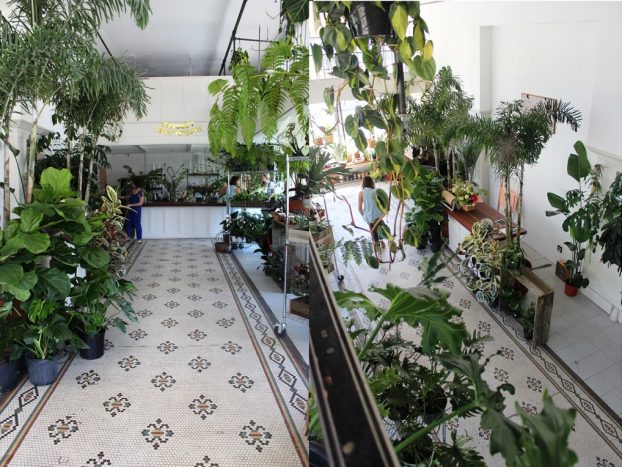
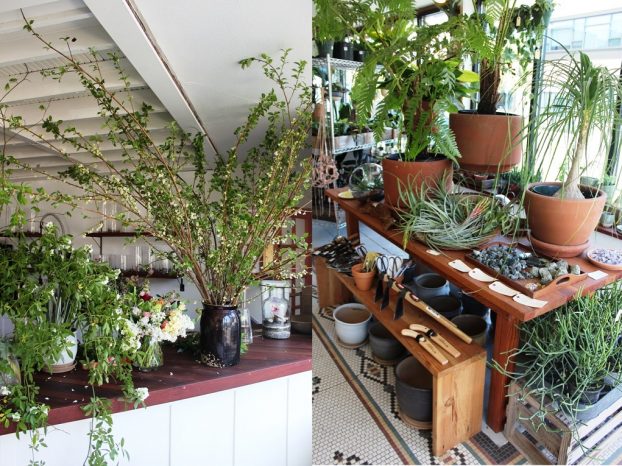
Flowers (left) and Plants (right) at Jessica Douglass’s cool flower & plant shop in downtown St. Louis, called “Flowers and Weeds.”
On the same trip, I also met and spent time with St. Louis florist Jessica Douglass.
Jessica and I were introduced virtually by our mutual friend Sally Vander Wyst, a Slow Flowers member in Milwaukie, Wisconsin, whose voice and story you’ve heard previously on this Podcast (we met and recorded that interview during The Flower House opening last October).
When Sally heard that I was heading to St. Louis, she told Jessica and I that we must meet — and I’m so happy that we did.
Jessica is the owner of a perfectly-named business: Flowers and Weeds, a retail floral studio and plant emporium on Cherokee Street in St. Louis. There is a greenhouse and a cutting garden, as well as a design studio where Jessica and her team create a popular selection of terrariums as well as romantic, free-form floral designs that allow flowers to have their own movement, inspired by the garden and nature.

Jessica Douglass and I posed near her beautiful floral entry for the St. Louis Art Museum’s Art in Bloom exhibition.
With an on-site cutting garden of beautiful, seasonal flowers and herbs, Flowers and Weeds freely expresses year-round creativity.
Jessica believes it’s important to use what is currently beautiful and blooming, embracing seasons to include anything from spring’s ranunculus and freesia, to winter’s juniper and kale.
Her goal is to be as sustainable as possible as a designer and she states: If we can’t grow it, then we are committed to finding locally sourced flowers that are sustainably grown.
I didn’t have my wits about me when I met Jessica for dinner just after I arrived on my flight from Seattle to St. Louis.
We recorded this interview via Skype a few weeks later to combine with Vicki’s and my conversation. As it turns out, Jessica is a customer of Flower Hill Farm and she often features their flowers in her designs. So this is a perfect pairing to share with you today.
Follow Flowers and Weeds on Facebook
Follow Flowers and Weeds on Instagram
Thanks for joining today’s podcast. I learned so much and gained new insights into the business of flower farming and floral design through these conversations — and I know that you’ll want to check out Flower Hill Farm and Flowers and Weeds via their online sites . . . and if you should ever make it to St. Louis, be sure to visit them and see their flowers.
The Slow Flowers Podcast has been downloaded more than 94,000 times by listeners like you. THANK YOU to each one of you for downloading, listening, commenting and sharing. It means so much.
Until next week, you’re invited to join me in putting more American grown flowers on the table, one vase at a time. And If you like what you hear, please consider logging onto Itunes and posting a listener review.
The content and opinions expressed here are either mine alone or those of my guests alone, independent of any podcast sponsor or other person, company or organization.
The Slow Flowers Podcast is engineered and edited by Andrew and Hannah Brenlan. Learn more about their work at shellandtree.com.
Podcast: Play in new window | Download
Subscribe: Apple Podcasts | Podcast Index | RSS | More
This is the second episode featuring members of the North Bay Flower Collective who invited me to spend two days in Sonoma County last month to tour flower farms, visit design studios and learn more about the stories of their community.
We recorded this segment at Full Bloom Farm, located just outside Sebastopol.
There, flower farmer Hedda Brorstrom welcomed me to her family’s idyllic property where old fruit trees and a flock of hens populate the grounds, along with a greenhouse and huge fenced growing area for Hedda’s organic flowers.
Inside the farmhouse, we gathered around the kitchen table for a delicious home-made meal to break bread with Daniele Strawn and Seth Chapin, other members of the North Bay Flower Collective. After lunch, we walked outdoors to record this episode while seated in the heart of the garden with sunshine on our shoulders and the breezes of an almost-spring day blowing by.

Today’s guests, from left: Hedda Brorstrom of Full Bloom Farm; Daniele Strawn of Chica Bloom Farm; and Seth Chapin of Evermore Flowers
Our topic: The Evolution and Events of North Bay Flower Collective, including its origins, the individual paths that led each of these three to the collaborative group, and highlights of the past year’s accomplishments, especially in public education, outreach and promotion.
We didn’t plan it this way, but it seemed fitting to begin this episode with a bonus interview I recorded with Daniele, who is a partner in Chica Bloom Farm.
Daniele was one of the people who offered to chauffeur me around, so we spent quite a bit of time chatting about the business model that she and past and present business partners created for Chica Bloom.
I asked Daniele to let me record a little background about her flower farm, so you’ll hear that conversation first before I reintroduce her along with Hedda and Seth who share their stories as well.
Here is more about each one of these talented individuals. All three farmer-florists are Slow Flowers members with their individual businesses as well as through the North Bay Flower Collective.
Daniele Allion Strawn is a youth advocate, farm advocate and an ol’ fashioned country girl at heart. She paired up with partner Ariana Reguzzoni and Chica Bloom in February of 2013.
Among the many perks of working on a farm and designing flowers, she appreciates getting her hands dirty (weeding = therapy), observing the complexity of flower growth from seed to seed and creating unique arrangements – ripe with diverse textures and bold colors.
In her free moments, she enjoys riding and spending time with her horse-friend, Penguina. Daniele and her husband, Jeremy, live in the quaint hamlet of Bloomfield, CA (just down the road towards the coast) along with their princess-diva kitty, Ammi majus(ty). They were lucky to get married on the farm with their flowers grown and designed by Chica Bloom Farm.
Chica Bloom Farm is a small sustainable flower farm in Petaluma that grows over 60 varieties of cut flowers for unique bouquets, special events and a Flower CSA program.
The farm specializes in a “farm-chic” design style based on seasonal varieties that grow well in coastal Sonoma County.
Ariana and Daniele say this on the Chica Bloom web site:
“We believe that growing these beautiful plants should help soil, water, air and other creatures instead of hurt them. For this reason, we don’t use chemicals or pesticides that are harmful to the environment or ourselves in our farming practices.”
Next up, Hedda Brorstrom of Full Bloom Flowers. Hedda lives for flowers. An interest in agoecology took hold from a young age, which she credits to having grown up in agricultural rich Sonoma County. Hedda completed her undergraduate degree at UC Berkeley in Conservation and Resource Studies specializing in urban food landscapes and garden education. She worked in San Francisco for six years as a garden teacher and coordinator in the school system and at the Academy of Sciences. She holds a certificate in Ecological Horticulture from at the Center for Agroecology and Sustainable Food Systems at UC Santa Cruz where her love for flowers grew out of control. Hedda also earned a certificate in herbalism from the California School of Herbal Studies and she makes a line of herbal products.
Hedda says this on her web site: “A strong believer in plant medicine, I love the power, elegance and joy a bouquet gives people. The craft and skill of both being the grower and the florist is an opportunity to give extra care and attention from planting the seed to designing the centerpiece. Thank you so much for supporting organic, local flowers. The slow flower movement is the most beautiful revolution and I am proud to call it my passion.”
Full Bloom Flower Farm is proud to design lush, gorgeous arrangements using flowers grown in abundant, chemical-free flower fields. Sitting on what was once a worm farm, Hedda farms on about an acre with nearly 200 flower varieties. Memorable designs are created with unique floral varieties, colors, textures and shapes to honor the season and bring plants to ceremony.
Full Bloom Flowers web site
Full Bloom Flowers on Facebook
Full Bloom Flowers on Instagram
And finally, please meet Seth Chapin of Evermore Flowers. Seth moved to California in 2009, wide-eyed and eager to dive into the thriving organic farm scene.
His Golden State beginnings overlooking the Monterey Bay at the fabled UC-Santa Cruz Center for Agroecology and Sustainable Food Systems flooded his mind with inspiration and scientifically-based growing knowledge – and perhaps most importantly a love for cut flowers!
He has carried this love for the color, shape, and texture of flowers with him over the past five years, alongside a deeply seeded yearning to connect with the land.
With an ideal growing climate and the agricultural pulse of Napa as a foundation, Seth took note of the scarcity of local flowers in a valley where they play such a strong role in homes, restaurants, wineries, and events.
The genesis of Evermore Flowers* is rooted firmly in the belief that flowers should be grown locally with sustainable, soil-centric growing practices. Many conventional flower farms have traditionally been focused on production – flowers as a commodity. Much is harvested, but not enough is given back to the earth. As Seth explains: “We should remind ourselves that every seed we plant represents an intimate relationship with the land. A balance between input and output leaves us with invigorated soil that will sustain flower production for years to come.”
And by the way, the origins of the name “Evermore” can be traced to the beautiful folk ballad “The Battle of Evermore” by Led Zeppelin. A line within the song reminds us that “The ground is rich from tender care. Repay, do not forget.”
Evermore Flowers web site: http://www.evermoreflowers.com/
Evermore Flowers on Instagram: https://www.instagram.com/sethkchapin/
Evermore Flowers on Facebook: https://www.facebook.com/seth.chapin.9
I know you’ll enjoy these conversations as we learn more about the North Bay Flower Collective. Here is more about the group, including their values and code of ethics:
GUIDING VALUES
As a collective, we aim:
CODE OF ETHICS
Members of the collective agree:
The Slow Flowers Podcast has been downloaded more than 92,000 times by listeners like you. THANK YOU to each one of you for downloading, listening, commenting and sharing. It means so much.
Until next week, you’re invited to join me in putting more American grown flowers on the table, one vase at a time. And If you like what you hear, please consider logging onto Itunes and posting a listener review.
The content and opinions expressed here are either mine alone or those of my guests alone, independent of any podcast sponsor or other person, company or organization.
At the end of each weeks episode, you hear me say this: The Slow Flowers Podcast is engineered and edited by Andrew Wheatley and Hannah Holtgeerts. Learn more about their work at shellandtree.com.
Today I want to give my best wishes to Hannah and Andrew in honor of their upcoming marriage, which takes place this Saturday on April 23rd. I’m so excited that they’ve allowed me to create the florals for their ceremony and I wish these two talented friends much joy, love, happiness and a beautiful lifetime together.

This summertime bouquet features gorgeous ‘Globemaster’ alliums and their companions.

The smaller, darker drumstick allium echoes form and hue of its larger cousin.
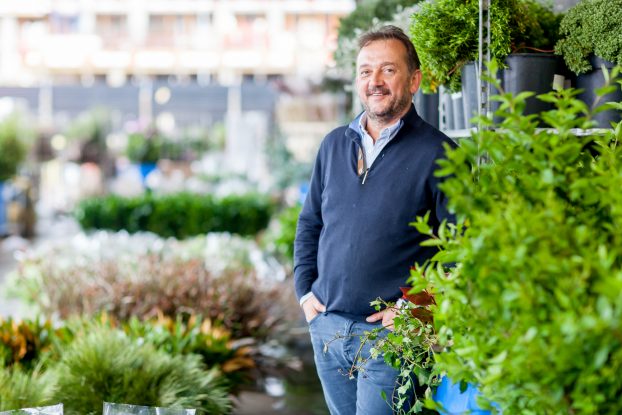
Jan Roozen of Choice Bulb Farms is a good friend and brilliant (not to mention charming) flower farmer.
I’ve known Jan through the Seattle Wholesale Growers Market where he is a member who grows a beautiful variety of flowers.
The selection from Jan and Ritva Roozen’s farm in Skagit Valley north of Seattle features specialty spring and summer bulbs.
Their alliums are some of the best I’ve seen — when I can, I come home with an armload of dramatic blooms and arrange with them.
Jan literally grows 15 varieties of Alliums — can you believe that? Here is the list — click on each cultivar name to see its unique form, color and stature.
Home floral designers can find Jan at the Choice Bulb stall every Saturday at the University District Farmers’ Market and every Sunday at the Ballard Farmers’ Market, both in Seattle.
Fresh-from-the-field, these flowers inspired me to make a summer bouquet a few years ago. I hope you enjoy this textural design in shades of apricot, cream, lemon, lavender and bluish purple and get ready to grow your own alliums (and companions like eremurus and dahlias) in the cutting garden.
READ MORE…
Podcast: Play in new window | Download
Subscribe: Apple Podcasts | Podcast Index | RSS | More
I first met Annie Schiller of William’s Wildflowers when she introduced herself via email in 2013. The subject line: Slow Flowers in South Florida.
The note continued:
I’m reaching out to you to say hello and to say thanks for your work. Our award-winning native plant nursery in south Florida, Florida Native Plants has just expanded to offer wildflower bouquets featuring Florida native and Florida-friendly wildflowers that we grow ourselves. We are growing them sustainably, without irrigation, pesticides or chemical fertilizers. We want to provide the bouquets already arranged for clients. I’m just writing to see if you can list us on your upcoming search website for locating locally-sourced flowers or anywhere else you might have a list of resources?
This is our website: www.williamswildflowers.com.
We are really excited about this new venture, and could use any advise you might have for start-up slow flower businesses.
Our conversation continued and Annie connected me with an extension agent for the Sarasota, Florida, area who was working on a Florida Small Farms Conference. He planned to feature Slow Flowers at the conference and noted that “we love the concept of Slow Flowers as it’s the perfect complement to our conference’s emphasis on local foods, producers, advocates and systems.”
Annie and her sister Rachel Andre were early supporters of the Slow Flowers Indiegogo campaign, which ultimately meant their Williams Wildflowers design studios appeared on Slowflowers.com when it launched in 2014.
I’ve been wanting to feature Rachel and Annie on a podcast and we finally found time to schedule an interview when they were together rather than thousands of miles apart. We recorded this episode when I was in St. Louis a few weeks ago and Rachel had traveled to Sarasota, from upstate New York to help Annie with a wedding. We had some audio difficulties due to recording over Skype, but hopefully you’ll forget about them as you’re drawn into the conversation, the laughter and the fabulous story these two young designers will share.
As a design studio, Williams Wildflowers specializes in sustainably and locally-grown, eco-friendly floral arrangements featuring native plants and wildflowers for weddings and special events of all types and sizes. Williams Wildflowers grows, forages and sources local material to create custom and artistically designed floral arrangements directly inspired by the seasons and the local environment. Annie and Rachel’s designs are truly farm to table, with a fresh, one-of-a-kind floral palette.
The types of cultivated wildflowers and native plants that Rachel and Annie use in their designs are unique to their regions, but there is some overlap, which really surprised me. As they point out, many varieties are native to the eastern part of North America, covering a huge geographic range. Think of black-eyed Susans, white mountain aster, goldenrod, coneflower, bergamot, Queen Anne’s lace, phlox, wild marjoram, yarrow, joe pye weed, sunflowers, bee balm, fleabane, and so many more. See this lovely gallery of flowers from the Williams Wildflowers website:
One half of Williams Wildflowers is operated by Rachel Andre, who is based in the Rensselaerville, NY. Her upstate New York studio is located about 150 miles from NYC. She is a graduate of Hunter College in New York City with a background in art history and sculptural design. Rachel has worked as a horticultural intern at Florida Native Plants Nursery and was a volunteer for SF’s Golden Gate Park Botanical Garden. She has a passion for all wildlife with a particular interest in floral design, edible gardening and promoting native flora for sustainable environments. Rachel is currently designing for, managing and establishing the upstate NY location for William’s Wildflowers.
The other half of Williams Wildflowers is operated by her sister, Annie Schiller. Annie has worked at Florida Native Plants Nursery in Sarasota, Florida, for four years, but she was born in the Bronx and raised in both Chicago and in Florida. She designs butterfly gardens, grows and maintains native and Florida-friendly plants, designs and maintains social and print media (including Williams Wildflowers’ web site) and that of Florida Native Plants. She is interested in wildlife and edible gardening, permaculture, homesteading, vermicompost, sustainable practices, eco art, and floral design. Annie has a background in visual art, art history and graphic design from Florida State University and from her years spent living and working in New York City. Annie currently designs ‘growing bowls’ and arranges and designs wildflower bouquets for the Florida branch of William’s Wildflowers.
Their Mom Laurel Schiller is a wildlife biologist with an extensive background in higher education and in the Native Plant world. She runs Florida Native Wildlife Nursery.
The William of Williams Wildflowers was Dr. William E. Keller, Annie and Rachel’s grandfather. Thirty years ago he turned the pasture next to their upstate NY home into a wildflower meadow.
All who walked by stopped to admire it. Grandchildren chased each other down the paths. Weddings took place there. The meadow of wildflowers remains a living legacy to “Grandpa Bill,” a passionate gardener.
I know you’ll be inspired to incorporate regional wildflowers and native plants from your state into your design language.
Follow Williams Wildflowers Florida on Facebook
Follow Williams Wildflowers New York on Facebook
Find Williams Wildflowers on Pinterest
Follow Williams Wildflowers New York on Instagram
Follow Williams Wildflowers Florida on Instagram
Thanks for joining today’s podcast.
The Slow Flowers Podcast has been downloaded more than 90,000 times by listeners like you. THANK YOU to each one of you for downloading, listening, commenting and sharing. It means so much.
Until next week, you’re invited to join me in putting more American grown flowers on the table, one vase at a time. And If you like what you hear, please consider logging onto Itunes and posting a listener review.
Podcast: Play in new window | Download
Subscribe: Apple Podcasts | Podcast Index | RSS | More
On March 12th the first of several Field to Vase Dinners for 2016 took place inside a state-of-the-art greenhouse in Arcata, California – Humboldt County, located way, way up north in the Redwoods.

What a stunning installation, transforming a working greenhouse into a glorious dinner party setting at Sun Valley Flower Farm (c) Amy Kumler

Faye’s concept for the installation was Tulips + Bulbs overhead as the chandelier and color blocked tulips in vases down the center of the table (c) by Amy Kumler
The venue: Sun Valley Flower Farm, a leading grower of cut bulb and field flowers in the United States. According to its web site, Sun Valley chose this area as an ideal environment for growing bulb flowers, due to its mild winters, cool summers, generous humidity and coastally moderated sunlight. The fields surrounding the greenhouses also provide excellent growing conditions for spring, summer and fall iris, and summer flowers including crocosmia, hypericum, and monkshood.
On March 12th, the celebration was all about American-grown tulips and other-spring flowering bulbs — hundreds of thousands of them in all their colorful glory.
READ MORE…
© Debra Prinzing, all written and photographic content. Website design/development by Willo Bellwood/Metric Media