Debra Prinzing

Get the Email Newsletter!

Archive for the ‘General’ Category

Episode 384: Blending Cut Flower Production with a Nursery Business at Minnesota’s Green Earth Growers, Plus our new State Spotlight: Alabama

Wednesday, January 16th, 2019

Jolea Gress and Jenny Hotz of Green Earth Growers

Please meet this week’s podcast guests, Jolea Gress and Jenny Hotz of Green Earth Growers. In today’s conversation, you’ll learn about their thriving business, their flowers, their wholesale and retail operations — plus, you’ll learn how you can join all three of us at the special Slow Flowers Dinner on the Farm, taking place June 30th prior to the third annual Slow Flowers Summit in St. Paul Minnesota.
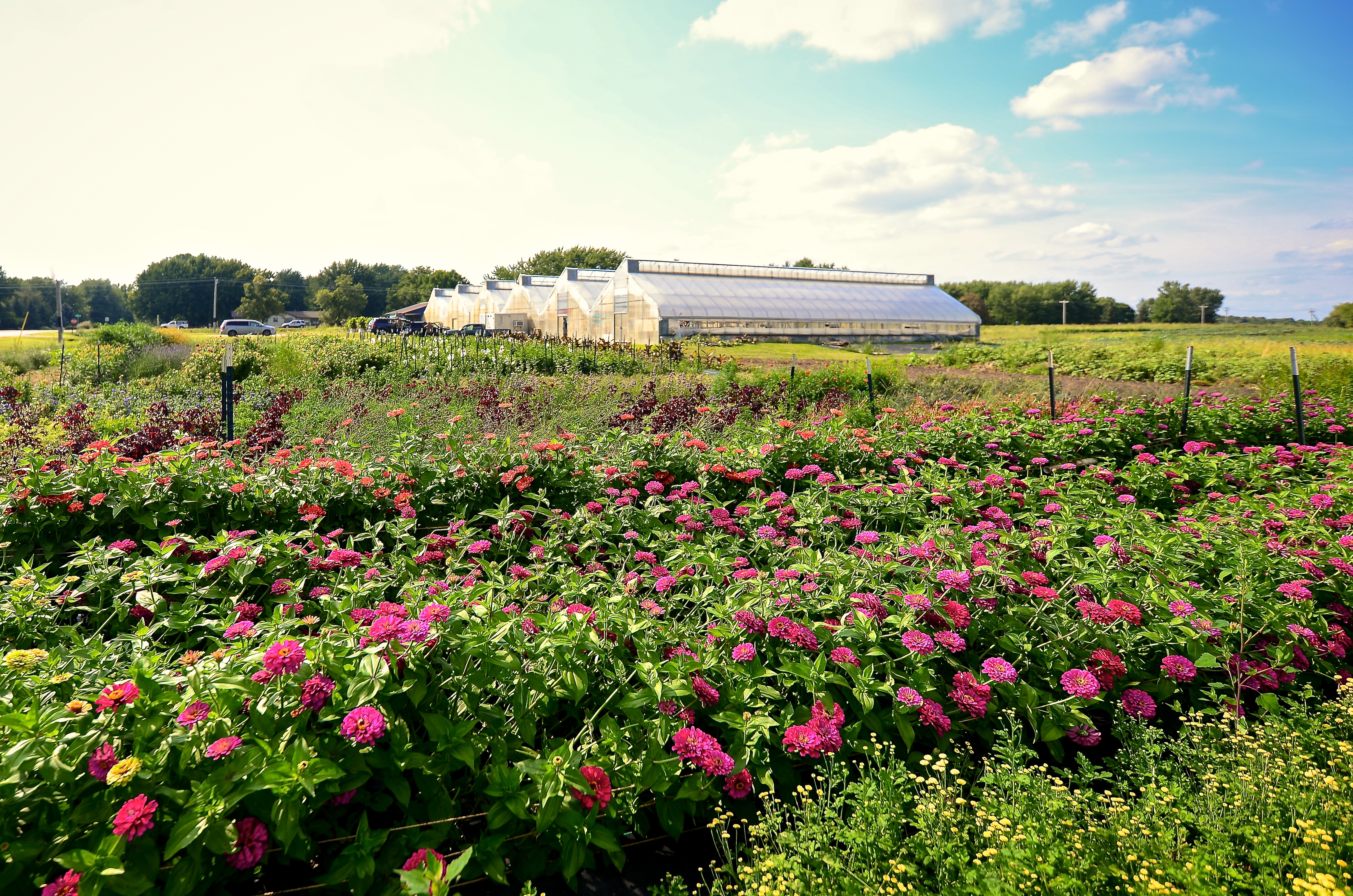
The beautiful farm that is home to Green Earth Growers in Prior Lake, Minnesota

Our delicious and beautiful Flower Farm-to-Table meal will take place at Green Earth Growers, in Prior Lake, Minnesota. This established, women-owned plant nursery, vegetable and cut flower farm will wow you and I’m so pleased that Jolea and Jenny are sharing their story here today. Green Earth Growers is one of the Minnesota flower farms selling to the floral marketplace through the Twin Cities Flower Exchange wholesale hub. TCFE is our co-host of the 2019 Slow Flowers Summit.
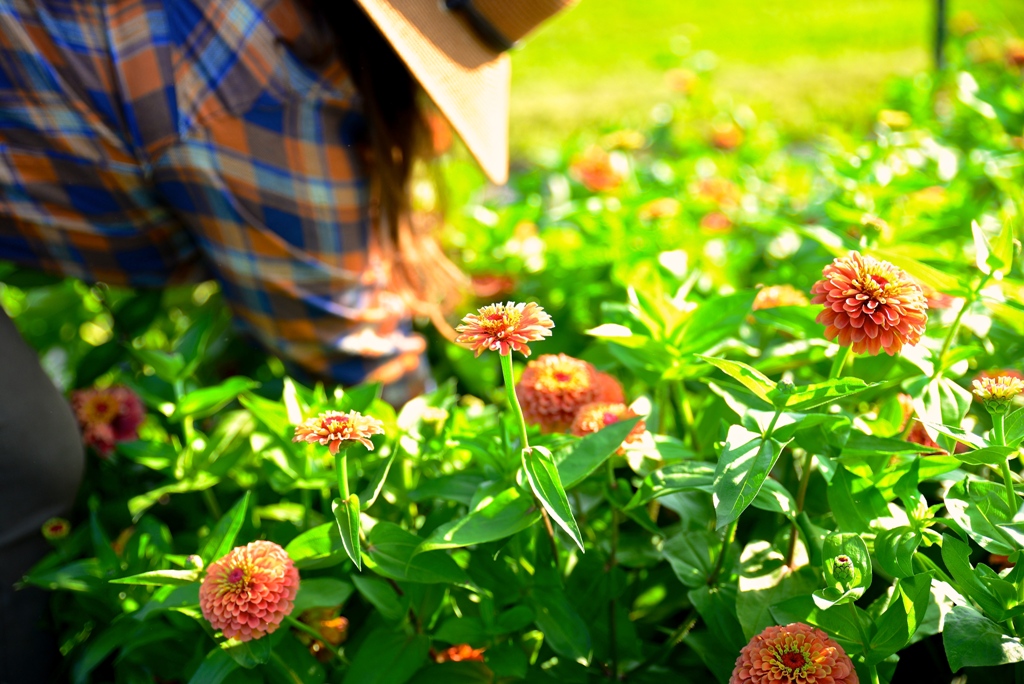
The flower harvest at Green Earth Growers.

Here’s a bit about their story:

Green Earth Growers was established in 2004, located just south of the Twin Cities. Jenny and Jolea began by growing quality plants, produce & cut flowers for local farmers, fundraisers, garden centers, landscapers, farmers markets and restaurants. Slowly, throughout the years, they have expanded their greenhouse growing space and farmland.
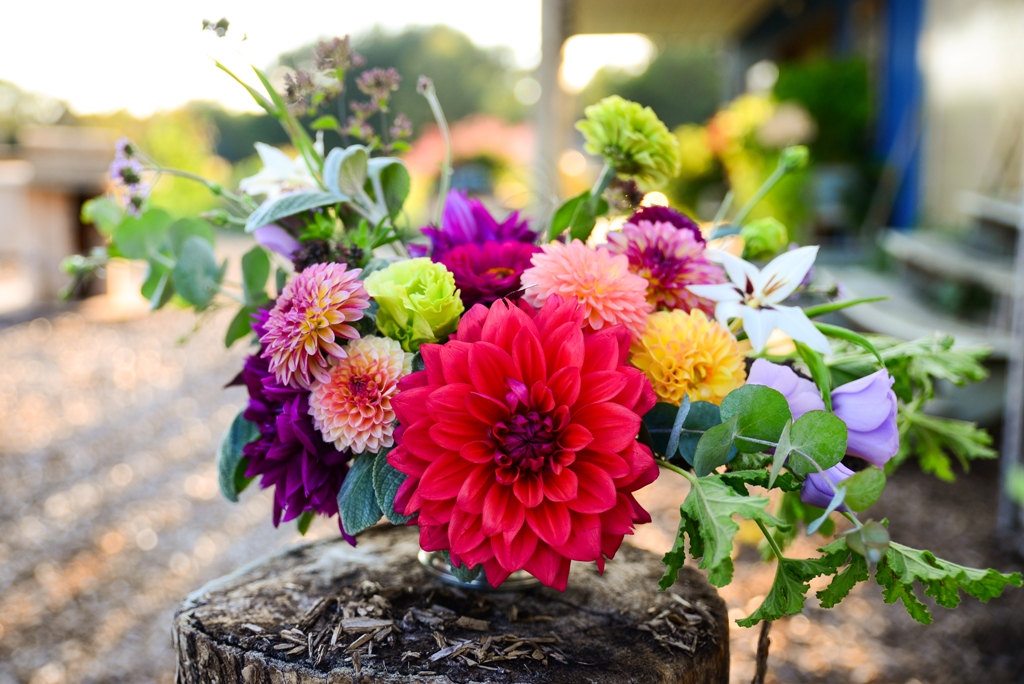
A vivid and freshly picked CSA bouquet from Green Earth Growers.

The women continue to be committed to growing and producing quality products with an emphasis on sustainability. All their production (plants, produce and cut flowers) are grown in accordance with the National Organic Standards. Green Earth Growers is a Certified Naturally Grown business.
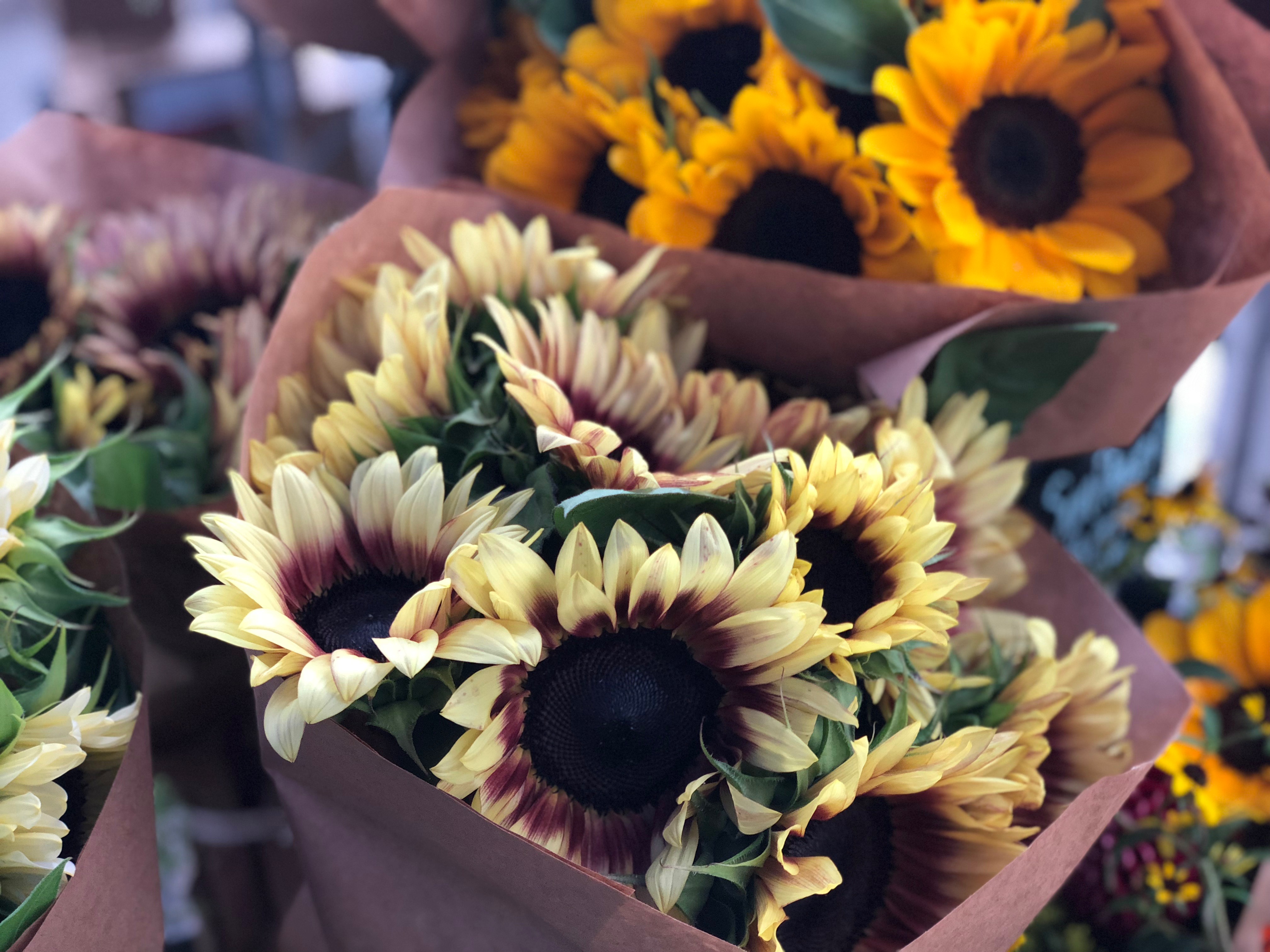
Beautiful field-grown sunflowers from Green Earth Growers.

In 2008, Jenny and Jolea introduced Green Earth Growers CSA, growing the program from supplying an initial 20 families with fresh weekly produce, to more than 70 CSA members today. They added a flower shares option in 2014, and say they love the personal connection with those CSA customers.​

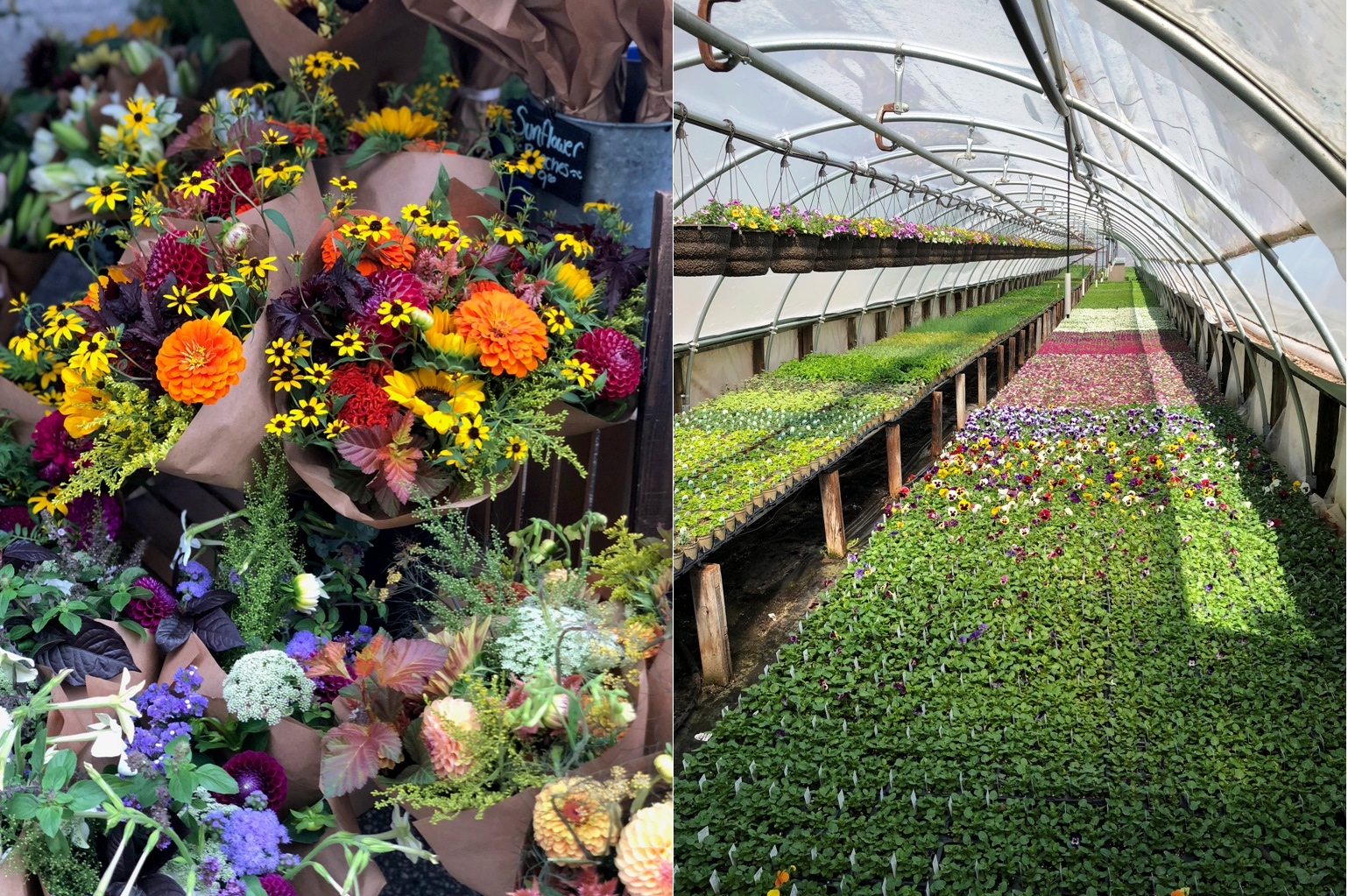
CSA Bouquets (left) and bedding plants and hanging baskets inside the Green Earth Growers’ greenhouse.

The retail center, Green Earth Gardens, opened in 2013, operating seasonally, late April to July. The center offers sustainable grown plants that are Minnesota hardy and an alternative to the plants you find at big box stores. Always experimenting with new plant varieties and growing methods, you can tell that Jenny and Jolea are passionate about flowers plants. Their passion is contagious and I can’t wait to visit them in June!

Find and follow Green Earth Growers at these social places:

Green Earth Growers on Facebook

Green Earth Growers on Instagram
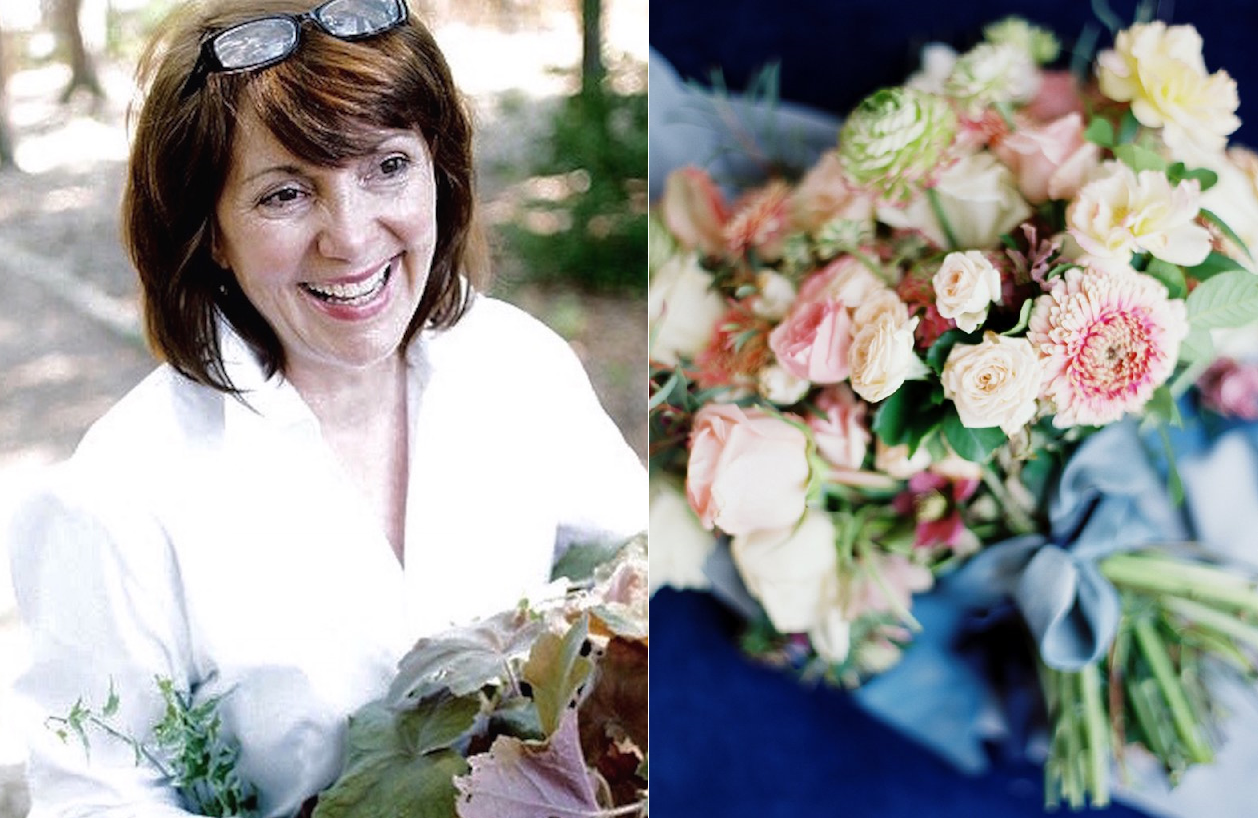
Lisa Thorne of Thorne & Thistle with one of her bridal bouquets
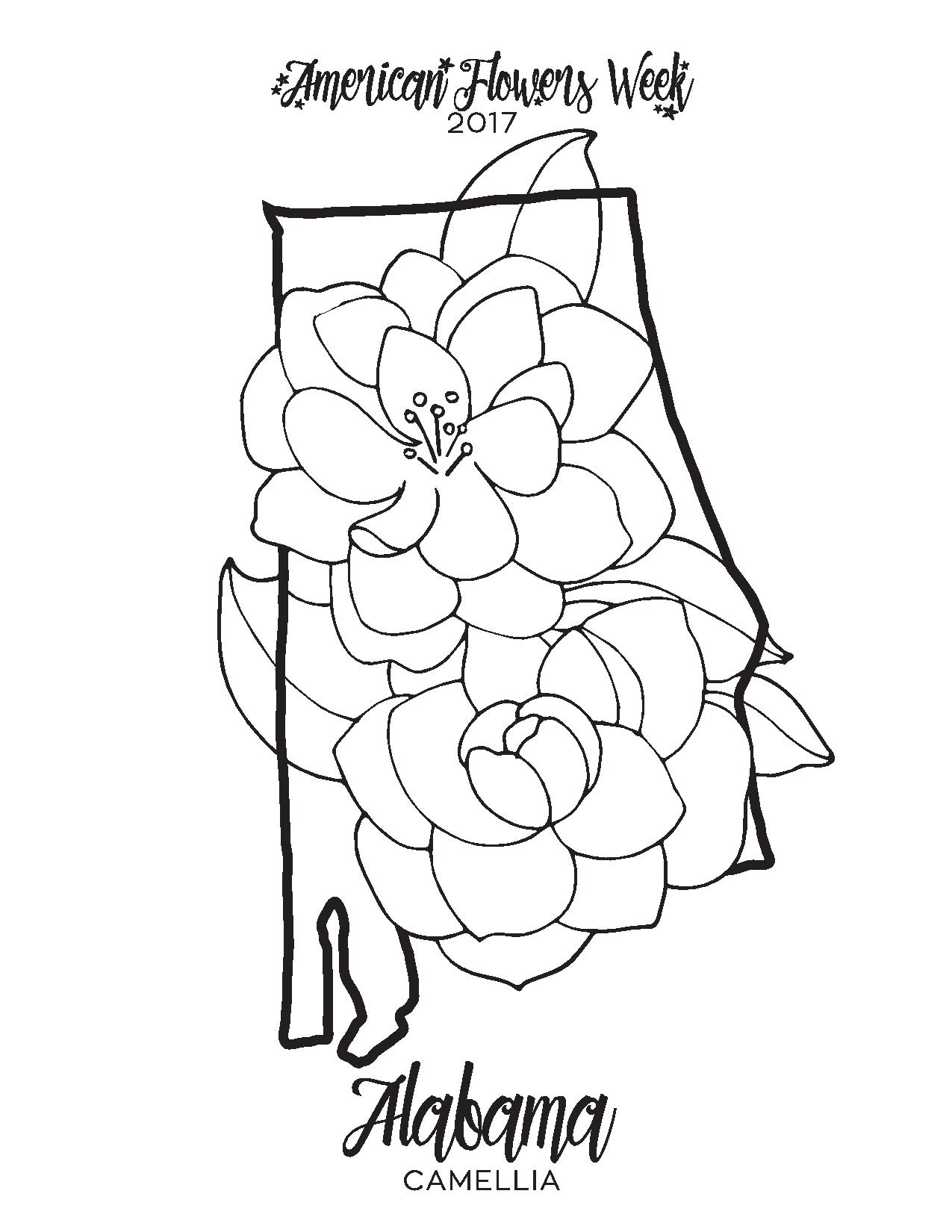
I love our Alabama state flower coloring page with a Camellia, designed by Jenny Diaz for American Flowers Week!

I want to share about our special theme of 2019 – Fifty States of Slow Flowers – which begins today, and continues through the end of 2019, for fifty consecutive weeks, I will devote a bonus mini-interview at the end of each episode to speak with a member about what’s happening in his or her state.

Averaging 10 minutes or so, we’ll give you a snapshot of floristry, flower sourcing and the unique character of the Slow Flowers scene — from Alabama to Wyoming and everywhere between. We’ll also make some important stops along the way to speak with members in the Canadian Provinces — yay!

Today’s state spotlight begins with Alabama’s Lisa Thorne of Thorne & Thistle.

Thorne and Thistle is a destination wedding and floral design studio with a passion for travel and creating meaningful, memorable moments for our couples across the southeastern states and beyond.

You can read more about Lisa in a feature I wrote for the November 2017 issue of Florists’ Review, called “A Southern Sense of Style.” Click here to read.

Find and follow Lisa Thorne at these social places:

Thorne & Thistle on Facebook
Thorne & Thistle on Instagram

Thorne & Thistle on Pinterest

Thorne & Thistle on Twitter

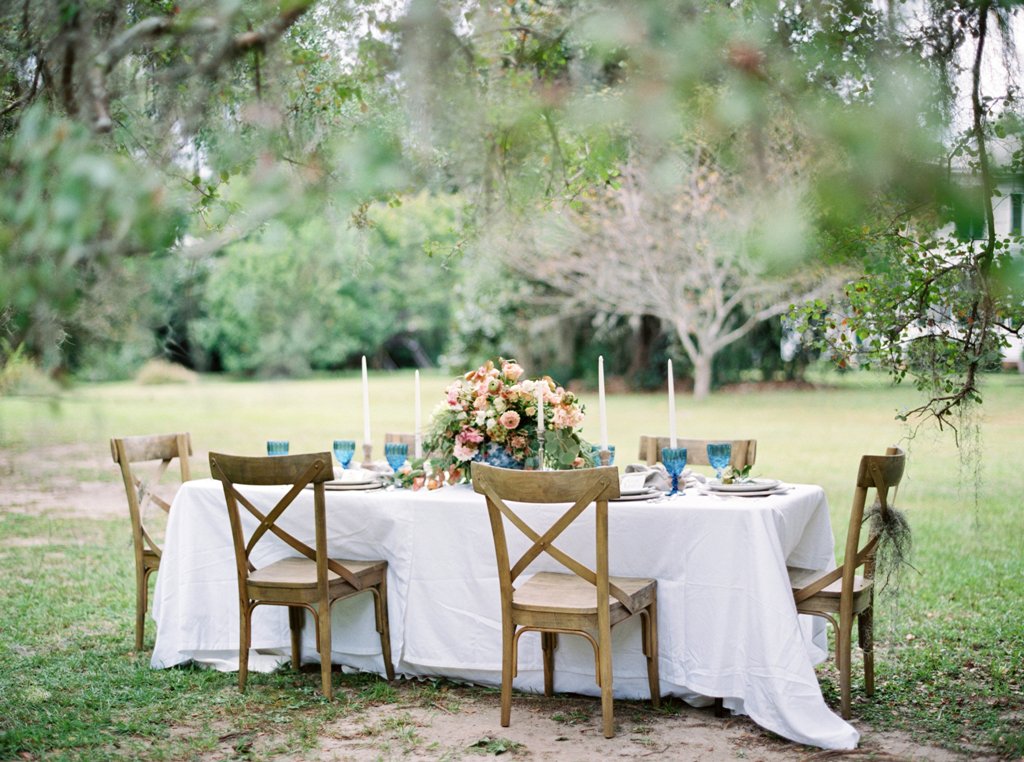
A beautiful Alabama tablescape, designed by Lisa Thorne of Thorne & Thistle.

Thanks so much for joining me on this journey, seeking new and inspiring voices, people with passion, heart, commitment and expertise to share with you. I hope today’s episode gave you at least one inspiring insight or tip to apply to your floral enterprise. What you gain will be multiplied as you pay it forward  and help someone else.


We have a vital and vibrant community of flower farmers and floral designers who together define the Slow Flowers Movement. As our cause gains more supporters and more passionate participants who believe in the importance of the American cut flower industry, the momentum is contagious.

I know you feel it, too. I value your support and invite you to show your thanks and with a donation to support my ongoing advocacy, education and outreach activities. You can find the donate button in the column to the right.
The Slow Flowers Summit is six months away so please save three dates on your calendar as you plan your travel to St. Paul Minnesota: First, our bonus flower farm tours and Slow Flowers Dinner on the Farm, taking place on Sunday, June 30th; then, Monday, July 1st, where we will all gather at Paikka Event Space for day one of the Summit, followed by Tuesday, July 2nd where we will tour the Twin Cities Flower Exchange as it’s swimming in locally grown flowers.

I can’t wait to see you there! Ticket sales continue with a special Slow Flowers member discount at $375, so please make your way to slowflowerssummit.com to learn all about the many opportunities to join us — from flower farm tours and dinner on a flower farm to business and branding presentations to interactive and inspiring design sessions . . . all designed to serve you! Sign up to receive updates at slowflowerssummit.com.
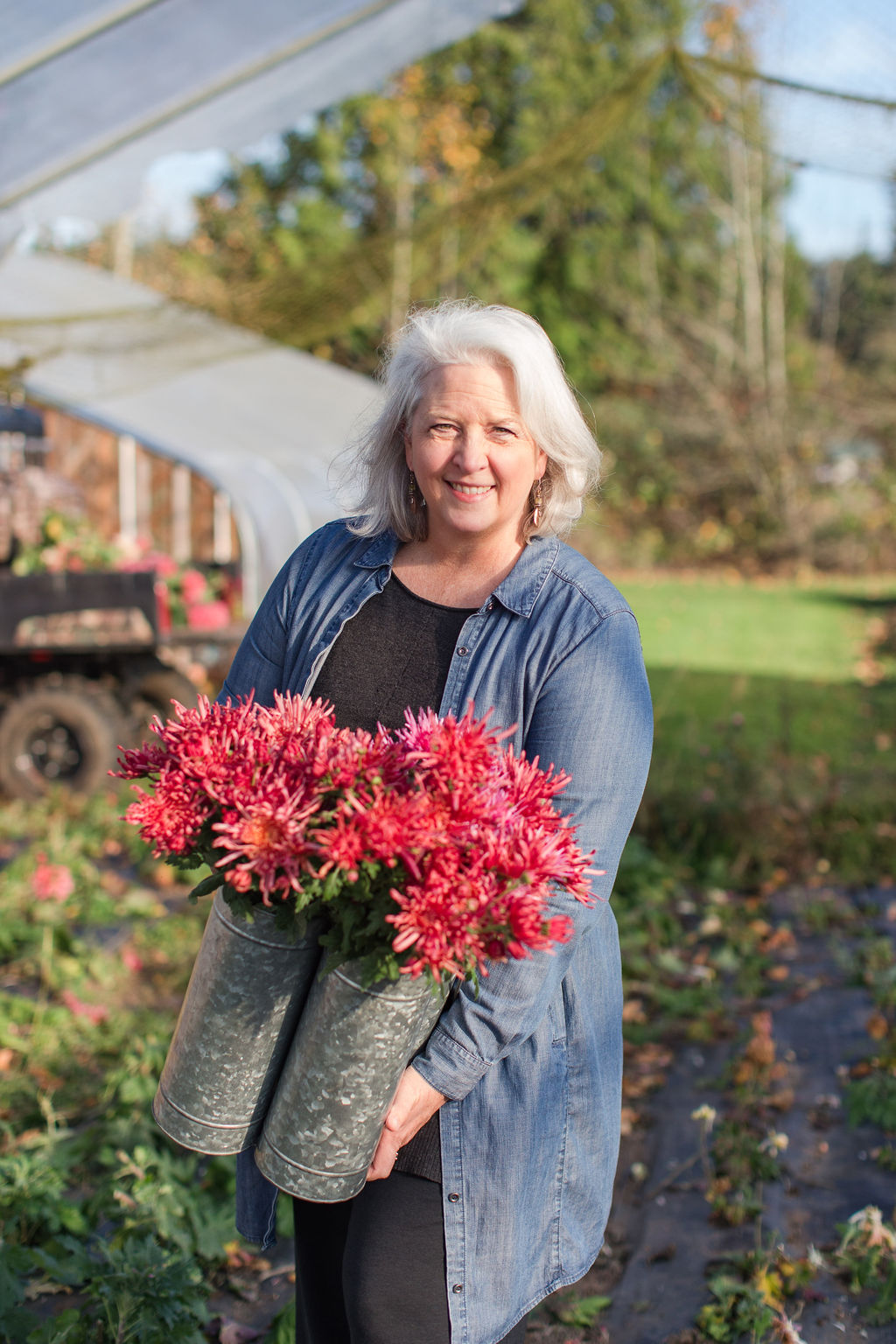
Photographed at Everyday Flowers in Stanwood, Wash. (c) Missy Palacol Photography

The Slow Flowers Podcast has been downloaded more than 397,000 times by listeners like you. Thank you for listening, commenting and sharing – it means so much. Thank you all!

I’m Debra Prinzing, host and producer of the Slow Flowers Podcast.

Next week, you’re invited to join me in putting more American grown flowers on the table, one vase at a time. And If you like what you hear, please consider logging onto iTunes and posting a listener review.

The content and opinions expressed here are either mine alone or those of my guests alone, independent of any podcast sponsor or other person, company or organization.

The Slow Flowers Podcast is engineered and edited by Andrew Brenlan. Learn more about his work at soundbodymovement.com. 

SPONSOR THANKS:

Florists’ Review magazine. I’m delighted to serve as Contributing Editor for Slow Flowers Journal, found in the pages of Florists’ Review. It’s the leading trade magazine in the floral industry and the only independent periodical for the retail, wholesale and supplier market. Take advantage of the special subscription offer for members of the Slow Flowers Community.

Today’s first thank you goes out Syndicate Sales, an American manufacturer of vases and accessories for the professional florist. Look for the American Flag Icon to find Syndicate’s USA-made products and join the Syndicate Stars loyalty program at syndicatesales.com.

Team Flower Conference – a professional floral event where flower lovers from all over the world gather for networking, learning, and celebration. It’s a special time for the floral industry to come together and whether you’re a farmer, designer, wholesaler, or just love flowers, you’re invited to attend as Team Flowers dreams big for the industry’s future. Head to teamflower.org/slowflowers to learn more about the 2019 conference in Waco, Texas!

Association of Specialty Cut Flower Growers. Formed in 1988, ASCFG was created to educate, unite, and support commercial cut flower growers. It mission is to help growers produce high-quality floral material, and to foster and promote the local availability of that product. Learn more at ascfg.org. And check out the web site for details about the upcoming Focus on the Business of Cut Flowers conference, set for Feb 18-19 in Denver. Seven of the experts presenting at the conference are past guests of the Slow Flowers Podcast, so you’ll recognize some familiar names and topics in the lineup!
Music Credits:
On Our Own Again; Rabbit Hole; Gaena; Perspiration
by Blue Dot Sessions

Episode 382: Slow Flowers’ 2019 Floral Insights & Industry Forecast

Wednesday, January 2nd, 2019

Welcome to the 2019 Forecast!

Happy New Year 2019!

I’ve finally put away the holiday decorations and with my thoughts already turning to the spring garden, it’s time to look to the future. Our BIG NEWS for 2019 is the launch of a one-stop web site for all-things Slow Flowers. Please visit our newly-branded site on the web — SlowFlowersSociety.com.

Check out the NEW Slowflowerssociety.com site!

It is fresh, user-friendly and gives you access to all of the Slow Flowers programs, events and channels in one place.

Why the Society? Our focus hasn’t changed. In fact our mission continues. Which is:  to change the flower sourcing practices of consumers and professionals through outreach and education that highlights the benefits of local, seasonal and domestic floriculture — and to build a movement that promotes cultivation and sales of those flowers while nurturing authentic connections between consumers, farmers, and florists.

Slowflowers.com is now part of the Slow Flowers Society underscores our inclusive community dedicated to preserving domestic floral farms and supporting safe, seasonal and local supplies of sustainablyfarmed flowers and foliage. Our members are engaged in all facets of the U.S. floral industry.

I’m excited to share highlights from the annual Slow Flowers’ Floral Insights and Industry Forecast.

This report originated in the fall of 2014, when I traveled to NYC to meet with garden and lifestyle media as part of the launch of Slowflowers.com. The publicists helping me, Lola Honeybone and Marla Kramer, suggested I produce a powerpoint presentation to help illustrate the central themes of the Slow Flowers movement. It was a great tool to walk editors and writers through our platform, and to discuss shifts taking place in the floral marketplace that directly reflected significant changes in how flowers could be grown, designed and marketed.

When 2015 rolled around just months later, I shared those insights on this Podcast — and it became the first of our annual ritual.

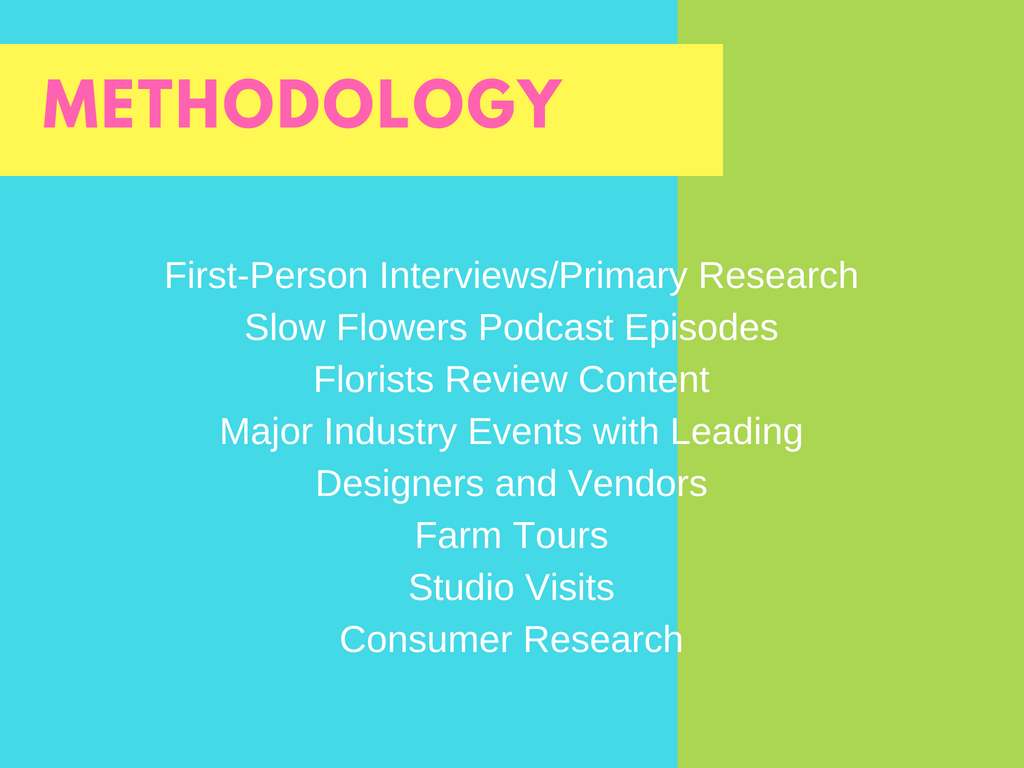
For each of the past five years, I have drawn from a number of sources to develop this annual forecast. Sources include hundreds of my first-person interviews for print and digital stories, input gathered from the Slow Flowers Community, conversations with past guests of the Slow Flowers Podcast and idea-exchanges with other progressive leaders in the floral marketplace — farmers, florists and design creatives — who together inspire this “floral futures” report.

I hope you find these forward-thinking resources important and valuable. I’d love to hear your feedback and suggestions. Find an expanded version of this report, including a free PDF [Download here: Slow Flowers Forecast 2019].

You can also find an executive summary of the report in the pages of the brand new January 2019 edition of Florists’ Review.

A note about our programming change for 2019. Because of so much demand — all good — from podcast sponsors, we are trying something a little different for 2018. Rather than giving you a lengthy sponsor list at the end of the show, I’ll highlight just three sponsors during the episode — at the beginning, our mid-show break – and at the end.

First up: the Association of Specialty Cut Flower Growers.

Formed in 1988, ASCFG was created to educate, unite, and support commercial cut flower growers.

Its mission is to help growers produce high-quality floral material, and to foster and promote the local availability of that product.

Learn more at ascfg.org. And check out the web site for details about the upcoming Focus on the Business of Cut Flowers Conference, set for Feb 18-19 in Denver.

Seven of the experts presenting at the conference are past guests of the Slow Flowers Podcast, so you’ll recognize some familiar names and topics in the lineup!
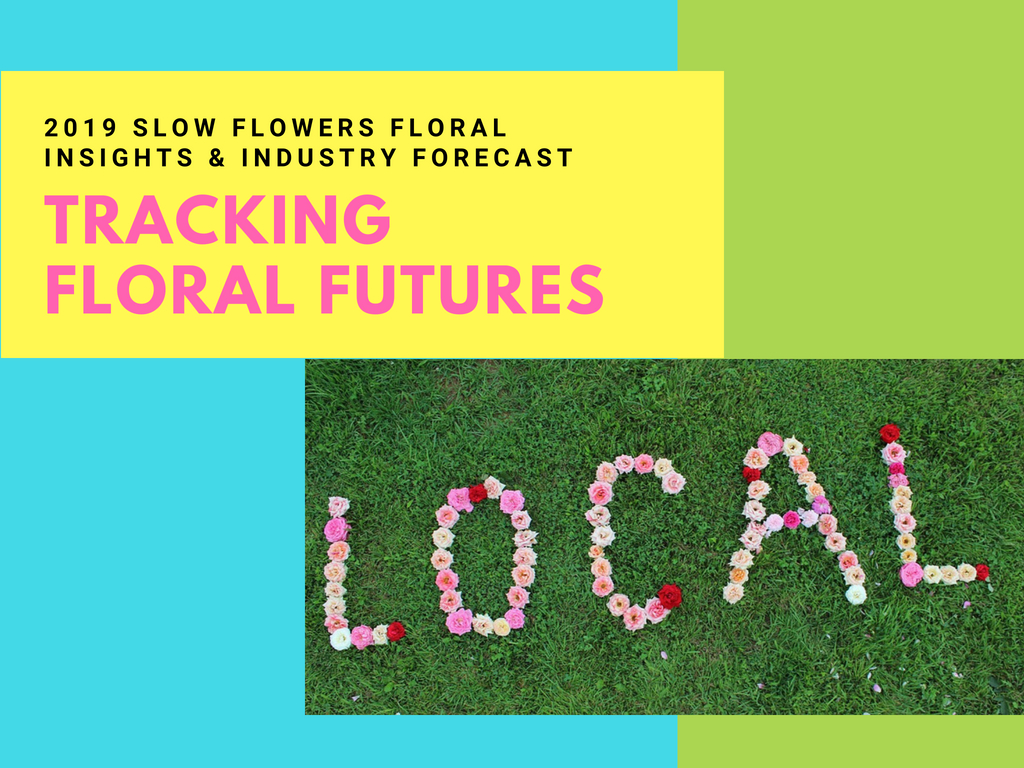
The title of this year’s 2019 Slow Flowers’ Floral Insights and Industry Forecast is TRACKING FLORAL FUTURES

I know you’ll agree with me that the floral professional’s role is to connect consumers with the natural world through artistry and design. So it’s no surprise that this year’s emerging themes include ideas and concepts that strengthen community ties with values-driven consumers, as well as nurture entrepreneurial innovation in horticulture and floriculture. If you’re an “early adopter,” these concepts may resonate or reinforce your current approach to sustainable design.

In recent months, I’ve shared many of these ideas at top industry venues, including Hitomi Gilliam’s Trend Summit 2018, the Association of Specialty Cut Flower Growers‘ annual conference and the Southern Flower Symposium. I’ll also share this report at an upcoming member-only event for the Seattle Wholesale Growers Market on Jan 23rd. Find more details here.

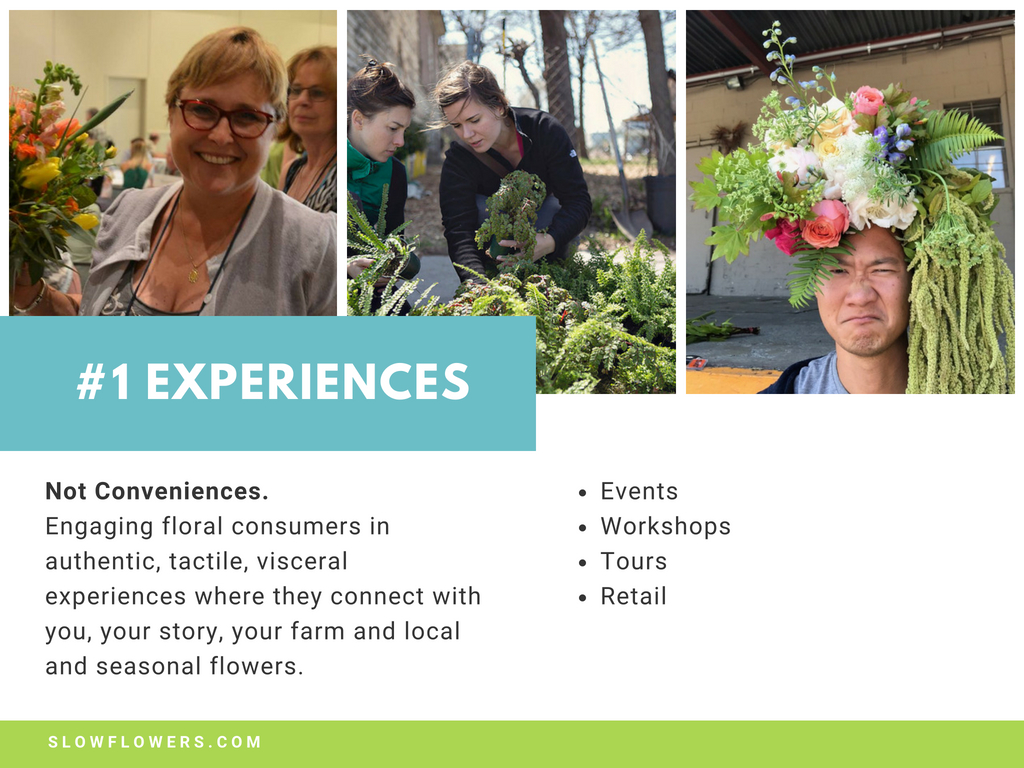
Number #1 Experiences, Not Conveniences

In a retail climate where Amazon is king, those who engage floral consumers in authentic, tactile, visceral experiences will break through the click-and-buy or cash-and-carry mindset. Customers who connect with you, your story, your flowers and the origin of those flowers are the foundation of your loyal tribe.

And while efforts and actions that strengthen our ties with customers isn’t an entirely new concept, it is one you must habitually practice, especially in today’s cluttered and distracting marketplace. Events, tours, workshops and other experiential programming are critical — and much more powerful than touching customers through social media channels alone.

Many of you have a deep understanding of the power of experiences, and my advice to you is to continue investing time, resources and creativity to offer the floral marketplace a chance to forge a relationship with you and your flowers.

A Flower-Filled Community Festival at My Garden Over Floweth — all about EXPERIENCES! (c) Courtney Coriell Photography

For example, Slow Flowers members Teresa Engbretson and Katie Elliott of My Garden Over Floweth, open their Paterson, Wash., farm for two seasonal “Flower Fling” festivals each year. These farmer-florists have created events that provide a sense of community for their customers, while also offering a new venue for other vendors. In their recap post after the Fall Fling, they wrote:

We place so much thought, time and care into planning the best experience we possibly can and we hope that shows!  This is a space and a time where memories are made and we hope each and every person felt a warm welcome. We felt so much love yet again by all who attended, including amazing local vendor family.  Each vendor and their products speak to hard work, quality and friendship, we are so honored to have so many great people surrounding us at our farm!

You don’t have to be a professional event planner to pull off an experience-rich program. Not at all. Start small and open your studio or farm gate to flower lovers — you’ll be positively rewarded.

READ MORE…

Episode 377: Creating Sanctuary, a conversation with author, gardenmaker and educator Jessi Bloom

Wednesday, November 28th, 2018

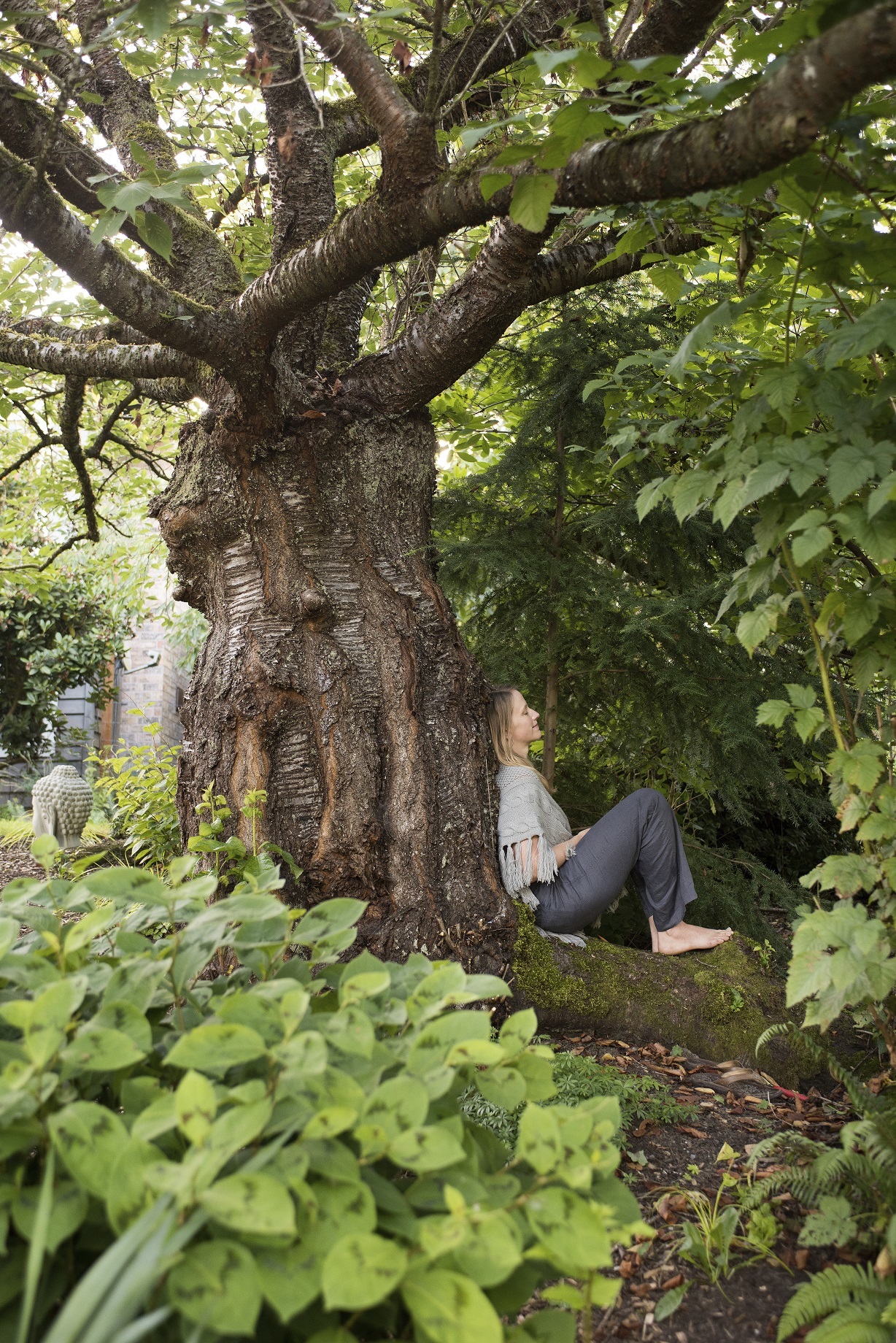
Jessi Bloom, author of the new guide, Creating Sanctuary (c) Shawn Linehan

We are well into the holiday season and it’s only November 28th — can you believe it!?

There are so many wonderful things to be thankful for and to celebrate, and yet, the holidays can be stressful and difficult for many of us.

While it can be crushing to think about the natural disasters (or human-caused disasters) that have befallen our floral community in recent seasons, it’s also sometimes overwhelming to find balance and peace in our own daily lives.

I’m so pleased to share today’s conversation with Jessi Bloom, author of the just-released book Creating Sanctuary, because I know the topic will be as timely for you, as it is for me.

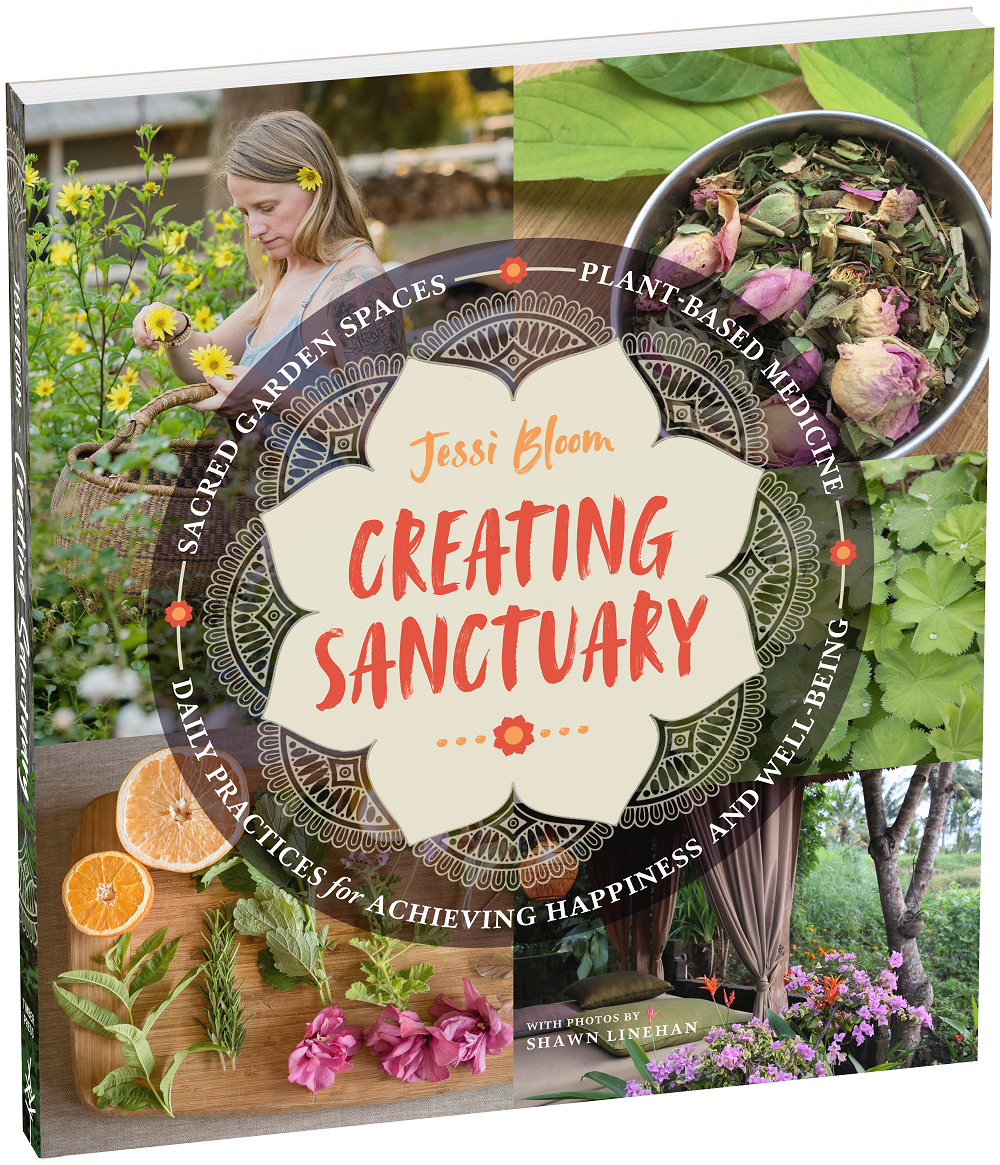
Published by Timber Press, the book’s full title: Creating Sanctuary: Sacred Garden Spaces, Plant-Based Medicine, and Daily Practices to Achieve Happiness and Well-Being, gives you a sense of the inspirational and practical features inside its pages.

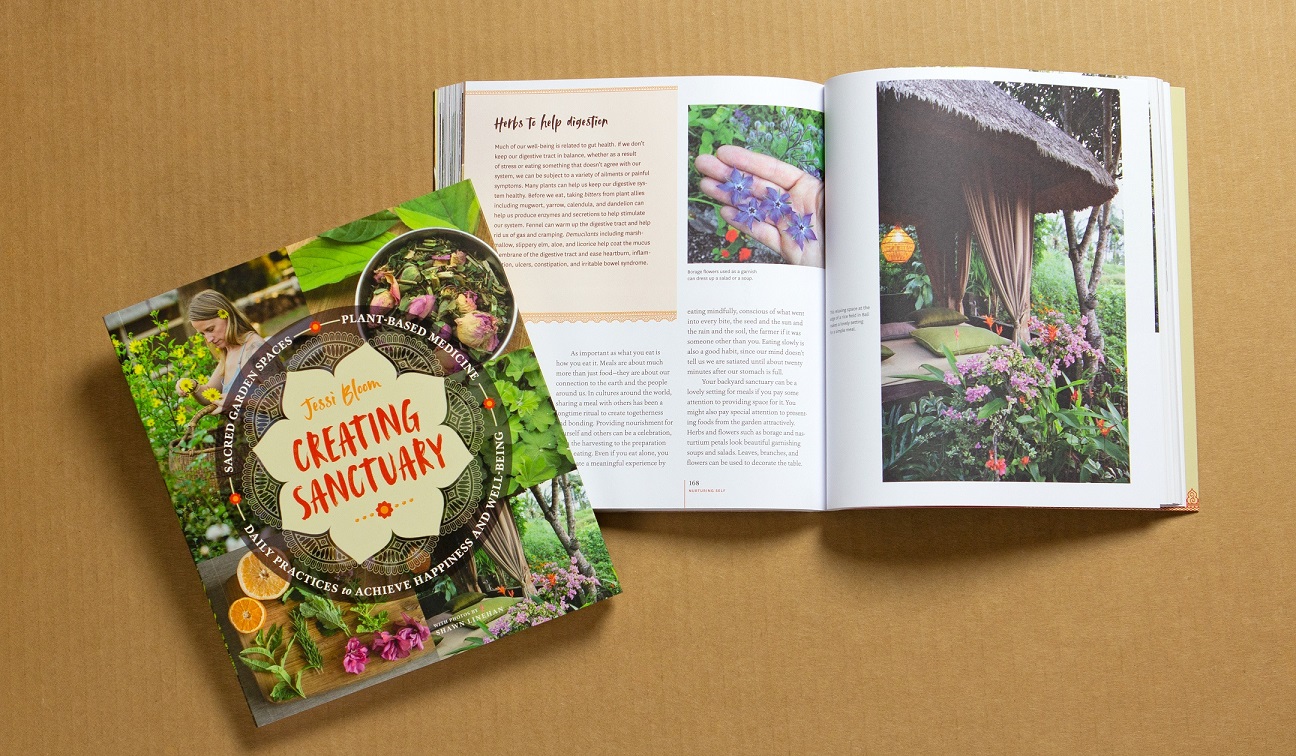
Cover and inside peek of Creating Sanctuary, Published by Timber Books (c) Shawn Linehan

Here’s a bit about the new book:

“We all need a personal sanctuary where we can be in harmony with the natural world and can nurture our bodies, minds, and souls. And this sanctuary doesn’t have to be a far-away destination—it can be in your own backyard. In Creating Sanctuary, Jessi Bloom taps into multiple sources of traditional plant wisdom to help find a deeper connection to the outdoor space you already have—no matter the size. Equal parts inspirational and practical, this engaging guide includes tips on designing a healing space, plant profiles for 50 sacred plants, recipes that harness the medicinal properties of plants, and simple instructions for daily rituals and practices for self-care.”

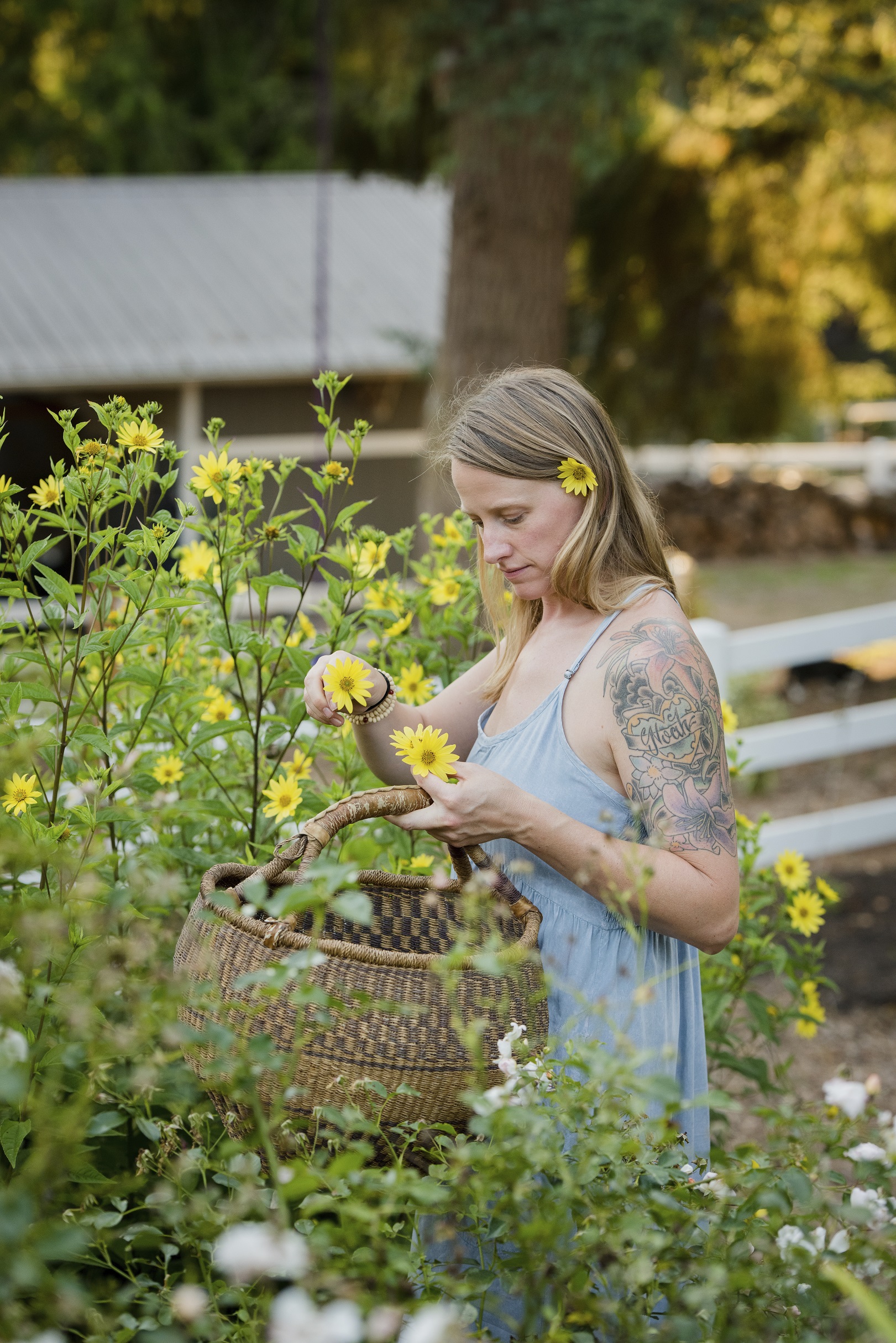
Jessi Bloom, gathering apothecary ingredients in her garden (c) Shawn Linehan

Jessi Bloom is a best-selling author, award-winning ecological landscape designer, and speaker.

A Northwest native, Jessi comes from a strong background of horticulture and environmental sciences.

Her early experience in project management ranged from organizing restoration projects with community volunteers, to high-end residential and commercial landscape design/build.

In early 2000, she decided to start an ethical business in the green industry to fill a niche for organic and ecological landscaping.

Her leadership combined with her artistic design talents have brought N.W. Bloom numerous environmental awards.

From the pages of Creating Sanctuary, by Jessi Bloom for Timber Books (c) Shawn Linehan

She is passionate about animals, permaculture and making functional gardens beautiful. Jessi’s work has been featured in many national and local media outlets from the NY Times, Better Homes & Gardens, Sunset Magazine, DISNEY, Martha Stewart Living, Mother Earth News, UTNE Reader, Fine Gardening Magazine and PBS’s Growing a Greener World TV. 

Jessi is strongly committed to volunteering in the community and sits on several advisory boards within the green industry and educational/environmental organizations; hoping to empower people, also raising industry standards, and recently helping to develop the EcoPro program for WA State.

She has two boys and spends time with them around their little farm, with a handful of animals and gardens to look after.  When she is not helping others with their gardens, traveling or writing, she enjoys the outdoors: snowboarding, hiking, running, biking and stays strong with Olympic weightlifting.

From the pages of Creating Sanctuary, by Jessi Bloom for Timber Books (c) Shawn Linehan

She has authored two prior books for Timber Press: Practical Permaculture for Home Landscapes, Your Community, and the Whole Earth with Dave Boehnlein; and the bestseller: Free-Range Chicken Gardens: How to Create a Beautiful, Chicken-Friendly Yard.

At the end of our conversation, we discuss NW Bloom’s latest project as the new farmland steward at South 47 Farm in Redmond, Washington, outside Seattle.

There, what was a corn maze for many years will now be a sustainable site nurtured by N.W. Bloom. The first year involves healing the soil from nitrogen depletion, planting cover crops to add biomass and nutrients back to the ground and developing a nursery to provide locally grown (chemical free) plants to the region. I’m excited to learn that Jessi sees the future potential to incubate small-scale flower farming among other value-added CSA crops. More on that as the story evolves.

Creating Sanctuary’s essential plant reference section, by Jessi Bloom for Timber Books (c) Shawn Linehan

If you’re in the Pacific Northwest or plan to travel here for the 2019 Northwest Flower & Garden Festival (Feb 20-24), Jessi has fabulous news to share — she has just signed on as a garden creator at the flower show and many of the ideas featured in her new book will be brought to life in that garden for you to see. I’ll be sure to add a link to the NW Flower & Garden Festival at today’s show notes for you to find more details.

I want to encourage you to visit Slow Flowers Summit to learn more about the amazing program, people and flowers you’ll engage with next summer. It’s not too early to save the date and secure your seat! Slow Flowers members receive special discount pricing and everyone receives $100 off with the Early Bird rate, on sale now!

(c) Heather Saunders

We have a vital and vibrant community of flower farmers and floral designers who together define the Slow Flowers Movement. As our cause gains more supporters and more passionate participants who believe in the importance of the American cut flower industry, the momentum is contagious.

I know you feel it, too. I value your support and invite you to show your thanks and with a donation to support my ongoing advocacy, education and outreach activities. You can find the donate button in the column to the right.

The Slow Flowers Podcast has been downloaded more than 385,000 times by listeners like you. Thank you for listening, commenting and sharing – it means so much. Thank you all!

Thank you to our sponsors for supporting The Slow Flowers Podcast.

Florists’ Review magazine: I’m delighted to serve as Contributing Editor for Slow Flowers Journal, found in the pages of Florists’ Review. It’s the leading trade magazine in the floral industry and the only independent periodical for the retail, wholesale and supplier market.

Arctic Alaska Peonies, a cooperative of passionate family farms in the heart of Alaska providing bigger, better peony flowers during the months of July and August. Visit them today at arcticalaskapeonies.com

Seattle Wholesale Growers Market, a farmer-owned cooperative committed to providing the very best the Pacific Northwest has to offer in cut flowers, foliage and plants. The Growers Market’s mission is to foster a vibrant marketplace that sustains local flower farms and provides top-quality products and service to the local floral industry. Find them at seattlewholesalegrowersmarket.com

Longfield Gardens provides home gardeners with high quality flower bulbs and perennials. Their online store offers plants for every region and every season, from tulips and daffodils to dahlias, caladiums and amaryllis. Visit them at longfield-gardens.com.

Syndicate Sales, an American manufacturer of vases and accessories for the professional florist. Look for the American Flag Icon to find Syndicate’s USA-made products and join the Syndicate Stars loyalty program at syndicatesales.com.

Johnny’s Selected Seeds, an employee-owned company that provides our industry the best flower, herb and vegetable seeds — supplied to farms large and small and even backyard cutting gardens like mine. Check them out at johnnysseeds.com.

Association of Specialty Cut Flower Growers. Formed in 1988, ASCFG was created to educate, unite, and support commercial cut flower growers. It mission is to help growers produce high-quality floral material, and to foster and promote the local availability of that product. Learn more at ascfg.org

Mayesh Wholesale Florist. Family-owned since 1978, Mayesh is the premier wedding and event supplier in the U.S. and we’re thrilled to partner with Mayesh to promote local and domestic flowers, which they source from farms large and small around the U.S. Learn more at mayesh.com.

Certified American Grown Flowers. The Certified American-Grown program and label provide a guarantee for designers and consumers on the source of their flowers. Take pride in your flowers and buy with confidence, ask for Certified American Grown Flowers.  To learn more visit americangrownflowers.org.

And the Team Flower Conference – a professional floral event where flower lovers from all over the world gather for networking, learning, and celebration. It’s a special time for the floral industry to come together and whether you’re a farmer, designer, wholesaler, or just love flowers, you’re invited to attend as Team Flowers dreams big for the industry’s future. Head to teamflower.org/slowflowers to learn more about the 2019 conference in Waco, Texas!

I’m Debra Prinzing, host and producer of the Slow Flowers Podcast.
Next week, you’re invited to join me in putting more American grown flowers on the table, one vase at a time. And If you like what you hear, please consider logging onto iTunes and posting a listener review.

The content and opinions expressed here are either mine alone or those of my guests alone, independent of any podcast sponsor or other person, company or organization.

The Slow Flowers Podcast is engineered and edited by Andrew Brenlan. Learn more about his work at soundbodymovement.com. 

Music Credits:

Episode 376: Meet Maple & Mum, a mother-daughter designer duo with a commitment to locally-grown Connecticut flowers

Wednesday, November 21st, 2018

The Maple & Mum Mobile Flower Shop! It’s a popular sight around the streets of their Connecticut community.


Then and Now: Left, a young florist with her child; Right, today, meet Nancy Hilton and Kate Brunson

Maple and Mum’s upscaled flower truck with Nancy Hilton peeking out of the truck’s “shop” window.

Last October I co-hosted a Connecticut area Slow Flowers Meet-Up at Trout Lily Farm in Guilford, outside New Haven.

And the following month, I spoke at the New England Farmer-Florist Connection’s Meet-Up in Providence, Rhode Island.

Both times, I met and enjoyed my conversations with today’s guests — and I love that they agreed to share their story with listeners of the Slow Flowers Podcast today!
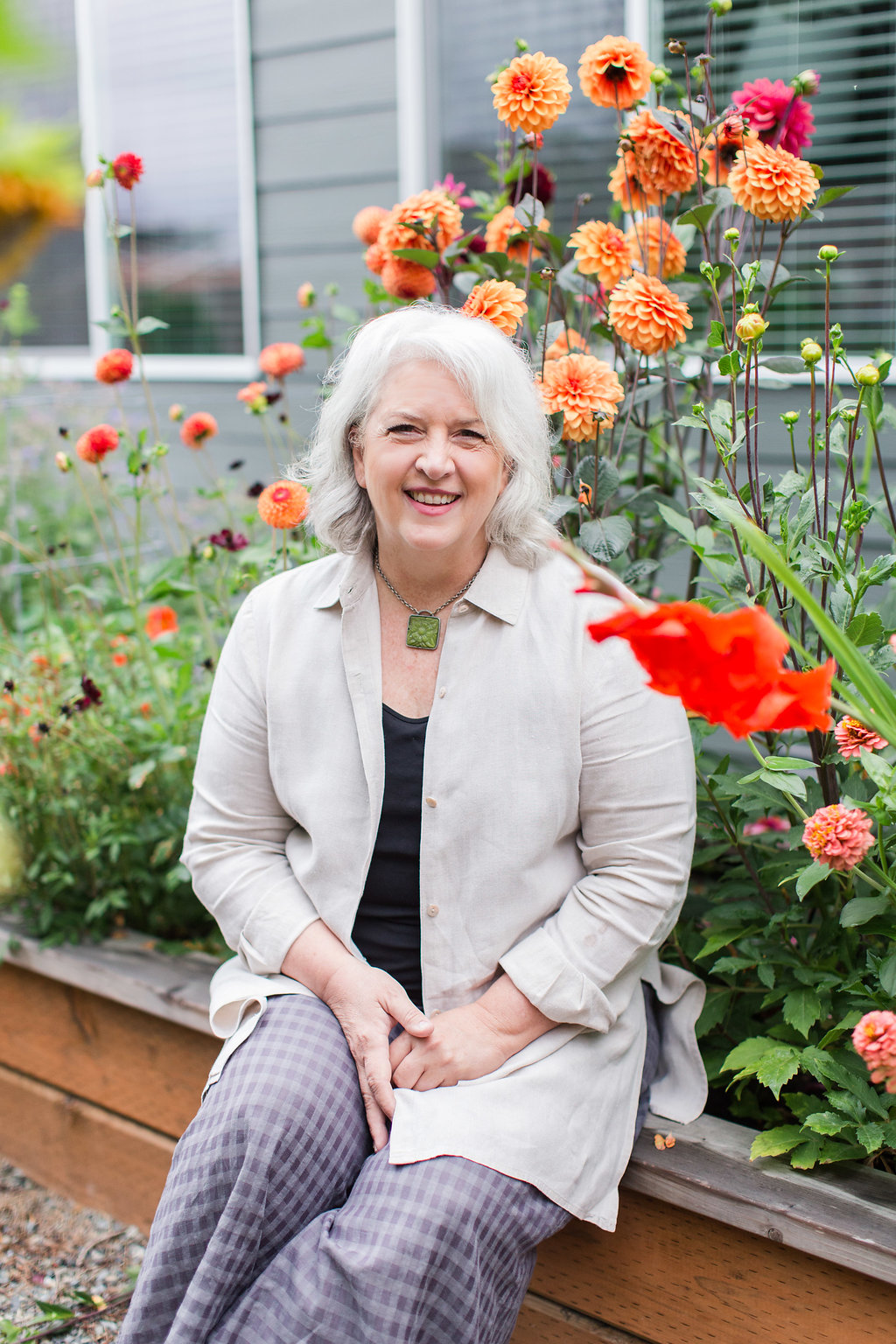
Please meet Nancy Hilton and Kate Brunson, a super-creative, mother-daughter duo who have combined their love of natural beauty, design and celebrations to create a family business that serves wedding and event clients in Connecticut and beyond.

I loved reading Maple & Mum’s origin story on the studio’s web site — and  have to share it here with you.

A Maple & Mum centerpiece with all localy-grown Connecticut botanicals (c) Pizzuti Photography

Kate (left) and Nancy (right) of Maple & Mum

The idea was born on a cold winter afternoon as Kate was preparing to return to her 9-to-5 office job after the birth of her daughter in 2012.

Searching for a more meaningful, creative career that supported more time with her growing family, she asked her mom for advice.

Nancy recalled her years working in their small-town flower shop while her girls were in grade-school, telling Kate it was the best job she ever had because the hours flew by while she worked with her hands creating art through flowers.

That spark led to research, floral design courses and finally — right here — to my Slow Flowers Podcast, where weekly stories of farmers and florists growing and designing with local flowers convinced the women to take the leap and open their own floral design business in May 2015.

Their name stems from the roots they’ve planted in New England and the maple tree they’ve had in every place they’ve called home. One seedling from Nancy’s childhood home has moved with them as life has taken them from place to place. And the mum, an homage to their favorite season and motherhood. Inspired by the changing seasons, Maple & Mum proudly partners with local growers to create lush, organic designs.

Bouquets from a Barberry Hill Farm Wedding from this past August.

What I found so encouraging about the Maple & Mum story is how Nancy and Kate are growing their design business to support their lifestyles. Surprisingly, but perhaps not so surprisingly because talented women are capable of accomplishing so much when they set their minds to a challenge, both Nancy and Kate work in full-time jobs. That Maple & Mum designed florals for 17 ceremonies in 2018 is mind-blowing — congratulations, ladies!

Maple and Mum is focused on locally-grown, seasonal flowers from Connecticut farming partners. (c) Stella Blue Photography

Hear how they juggle everything, rely on one another and the rest of their family for support, and what their long-term plans are for leaving the 9-to-5 routine for full-time floral design.

You’ll also be inspired by Maple & Mum’s commitment to sourcing local and seasonal flowers from Connecticut farms, and when that’s not possible, how they turn to domestic sourcing.

More New England wedding bouquets by Maple & Mum

Follow Maple & Mum at these social places:

Maple & Mum on Facebook

Maple & Mum on Instagram

Maple & Mum on Pinterest

Thanks so much for joining me today! I love that Kate and Nancy want to be “The Slow Flowers Choice” in their marketplace.

I’m super thankful to them for representing the business philosophy that I value so deeply.

American Thanksgiving is tomorrow and I want to wish you a warm and beautiful time celebrating the abundance of nature and community, around the table or wherever you find yourself.

It’s also a time for me to acknowledge my profound sense of gratitude for each of you, members and supporters of Slow Flowers, as well as flower-lovers around the world who join us each week. Thank you for being part of the Slow Flowers Community as we build a progressive floral marketplace that supports domestic floral agriculture in our own backyards.

I want to encourage you to visit Slow Flowers Summit to learn more about the amazing program, people and flowers you’ll engage with next summer. It’s not too early to save the date and secure your seat! Slow Flowers members receive special discount pricing and everyone receives $100 off with the Early Bird rate, on sale now!

We have a vital and vibrant community of flower farmers and floral designers who together define the Slow Flowers Movement. As our cause gains more supporters and more passionate participants who believe in the importance of the American cut flower industry, the momentum is contagious.

I know you feel it, too. I value your support and invite you to show your thanks and with a donation to support my ongoing advocacy, education and outreach activities. You can find the donate button in the column to the right.

The Slow Flowers Podcast has been downloaded more than 382,000 times by listeners like you. Thank you for listening, commenting and sharing – it means so much. Thank you all!

Thank you to our sponsors who have supported Slow Flowers and all our programs.

Arctic Alaska Peonies, a cooperative of passionate family farms in the heart of Alaska providing bigger, better peony flowers during the months of July and August. Visit them today at arcticalaskapeonies.com

Seattle Wholesale Growers Market, a farmer-owned cooperative committed to providing the very best the Pacific Northwest has to offer in cut flowers, foliage and plants. The Growers Market’s mission is to foster a vibrant marketplace that sustains local flower farms and provides top-quality products and service to the local floral industry. Find them at seattlewholesalegrowersmarket.com

Longfield Gardens provides home gardeners with high quality flower bulbs and perennials. Their online store offers plants for every region and every season, from tulips and daffodils to dahlias, caladiums and amaryllis. Visit them at longfield-gardens.com.

Syndicate Sales, an American manufacturer of vases and accessories for the professional florist. Look for the American Flag Icon to find Syndicate’s USA-made products and join the Syndicate Stars loyalty program at syndicatesales.com.

Johnny’s Selected Seeds, an employee-owned company that provides our industry the best flower, herb and vegetable seeds — supplied to farms large and small and even backyard cutting gardens like mine. Check them out at johnnysseeds.com.

Association of Specialty Cut Flower Growers. Formed in 1988, ASCFG was created to educate, unite, and support commercial cut flower growers. It mission is to help growers produce high-quality floral material, and to foster and promote the local availability of that product. Learn more at ascfg.org

Mayesh Wholesale Florist. Family-owned since 1978, Mayesh is the premier wedding and event supplier in the U.S. and we’re thrilled to partner with Mayesh to promote local and domestic flowers, which they source from farms large and small around the U.S. Learn more at mayesh.com.

Certified American Grown Flowers. The Certified American-Grown program and label provide a guarantee for designers and consumers on the source of their flowers. Take pride in your flowers and buy with confidence, ask for Certified American Grown Flowers.  To learn more visit americangrownflowers.org.

And the Team Flower Conference – a professional floral event where flower lovers from all over the world gather for networking, learning, and celebration. It’s a special time for the floral industry to come together and whether you’re a farmer, designer, wholesaler, or just love flowers, you’re invited to attend as Team Flowers dreams big for the industry’s future. Head to teamflower.org/slowflowers to learn more about the 2019 conference in Waco, Texas!

PepperHarrow Farm (c) Liz Brown @estorie

I’m Debra Prinzing, host and producer of the Slow Flowers Podcast.
Next week, you’re invited to join me in putting more American grown flowers on the table, one vase at a time. And If you like what you hear, please consider logging onto iTunes and posting a listener review.

The content and opinions expressed here are either mine alone or those of my guests alone, independent of any podcast sponsor or other person, company or organization.

The Slow Flowers Podcast is engineered and edited by Andrew Brenlan. Learn more about his work at soundbodymovement.com. 

Music Credits:
Bombadore; Perspiration
by Blue Dot Sessions
Music from:

audionautix.com

Episode 373: A Conversation with Two Floral Design Superstars: Meet Steve Moore of Sinclair and Moore and Nancy Teasley of Oak and the Owl

Wednesday, October 31st, 2018

Nancy Teasley of Oak and the Owl and Ella Rose Farm, presenting at Flowerstock (c) Sarah Collier

Steve Moore of Sinclair and Moore, teaching at Flowerstock (c) Sarah Collier

I love the serendipity that comes from unexpected encounters and today’s episode is exactly that story!

While staying at Holly and Evan Chapple’s Hope Flower Farm in Waterford, Virginia, two weeks ago, I moved into one of the guest rooms in what is affectionately called the Tenant House. Two other guests were there, too — fellow speakers at the third annual Flowerstock.

And that experience introduced me to Steve Moore, of Seattle-based Sinclair and Moore and Nancy Teasley of Oak & The Owl and Ella Rose Farm, based in Fallbrook, California.

Never one to miss an opportunity to bring new and inspiring voices to the Slow Flowers Podcast, I asked if these to accomplished wedding and event designers — and friends — would be willing to record an interview with me for this episode.

The Flowerstock speakers, including (from left): Alicia and Adam Rico, Evan and Holly Chapple, Debra Prinzing, Nancy Teasley and Steve Moore (c) Sarah Collier

As you’ll hear, Steve and I have briefly met in the past, while racing in and out of our local flower hub in Seattle, the Seattle Wholesale Growers Market, and while I’ve known of Nancy, she and I had never met. I was delighted to share lodging with these two generous souls.

More than that, I was enchanted to sit in on their presentations during two days of Flowerstock. Their approach to naturalistic design and their willingness to share with attendees about their business practices was quite fun to observe.

Nancy Teasley, floral designer and rose grower.

Here’s more about Nancy Teasley:

Nancy’s background is in fine art (painting), interior design, and business – all degrees she received while living in the Bay Area.

While an undergrad, she worked at a flower shop in Oakland, CA, where Nancy was immersed in events, as well as day to day retail. And that is where her love of flowers originated.

After working in floral for more than 7 years, Nancy left to pursue Interior Design.

She practiced with several design firms around the Bay after receiving her degree in 2008, all while continuing to design flowers on the side.

When she moved to Southern CA, and started working on events there, Nancy found a world where she could mix both of her backgrounds seamlessly.

Her experience in interiors guides her event design, & along with florals, she blends her two mediums beautifully.

Nancy Teasley (right) of Oak and the Owl and Ella Rose Farm

Nancy is also the owner of Ella Rose Farm. She says she never expected, or looked, to become a flower farmer.

She explains: “It was a sort of far off day dream I had, if I made a million dollars, or if I lived in some alternate reality (like making a million dollars), I could fantasize about having a field of roses. I once spent a New Years Eve, way before Ella was even thought of, looking through a rose catalogue, envisioning what varieties I would choose (I think I IG’d that night, so long ago).”

Well, with her parents, that dream somehow came true. Growing roses required a lot of time, money, and grueling physical and emotional work. Ella Rose Farm grows and sells beautiful roses around the country. Nancy’s designs are so much better because of them.

And now, she describes herself as a part-time farmer, full-time designer. All that time in the field has made Nancy a better designer, a better business owner, and a better person. There’s no work quite like farming.

Nancy Teasley’s roses from Ella Rose Farm, featured in two of her recent designs for a centerpiece and a bouquet.

Follow Nancy at these Social places:

Oak and the Owl on Instagram

Ella Rose Farm on Instagram

Sinclair and Moore

Steve Moore of Seattle-based Sinclair and Moore, in his studio.

Here’s more about Steve Moore:

Years ago when Steve was eleven years old, he saw Steve Martin and Martin Short’s Father of the Bride in the movie theater.

He was mesmerized by the flowers, the cake, the swans and the twinkle lights hanging from the tent ceiling. He fell in love with weddings that day and knew what he wanted to do with his life.

So much of Steve’s life prepared him for the passion that became his career. As a kid, Steve’s mom taught him cake decorating and he assembled his first tiered cake at age of twelve.

He began playing piano at weddings when he was fifteen; at sixteen, he taught himself how to sew and made a wedding dress for his sister. These skills developed through high school and in college as Steve helped friends who were getting married.

After graduation, Steve opened his business, originally calling it Steven Moore Designs. He offered custom gowns and cakes in addition to full-service wedding coordination and event designer. He taught himself floral design and added floral services so he could fully execute his vision for each client’s ceremony.

Steve and Jamie Moore with their children, at a photo shoot recently shared in the Sinclair and Moore blog.

Several years later Steve met and married Jamie Sinclair DeBell. She joined the company as primary logistics coordinator, freeing Steve to focus on the design and aesthetics of each wedding. Jamie’s organization and administrative skills strengthened the company and took things to a whole new level. The business changed to Sinclair and Moore to reflect their partnership.

It has taken more than 10 years to grow the business to where it is today. Sinclair and Moore has been named a top wedding vendor by Martha Stewart Weddings, VOGUE, Harper’s Bazaar and Brides Magazine. These accolades are special, yet Steve says the most meaningful parts of the business are the people met along the way. “We wouldn’t be where we are today without the incredible people we have had the opportunity to work for,” he says.

Steve Moore in the Sinclair and Moore Studio.

Follow Steve at these social places:

Sinclair and Moore on Instagram

Sinclair and Moore’s Blog

Sinclair and Moore on Pinterest

Thanks so much for joining me today! Please come back next week where you’ll hear another amazing episode featuring the leading voices in our Slow Flowers Community.

I want to encourage you to visit the Slowflowerssummit.com site to learn more about the amazing program, people and flowers you’ll engage with next summer. It’s not too early to save the date and secure your seat! Slow Flowers members receive special discount pricing and everyone receives $100 off with the Early Bird rate, on sale now!

The hands of Slow Flowers member Riz Reyes, clipping dahlias at the University of Washington Farm in Seattle.

We have a vital and vibrant community of flower farmers and floral designers who together define the Slow Flowers Movement. As our cause gains more supporters and more passionate participants who believe in the importance of the American cut flower industry, the momentum is contagious.

I know you feel it, too. I value your support and invite you to show your thanks and with a donation to support my ongoing advocacy, education and outreach activities. You can find the donate button in the column to the right.

The Slow Flowers Podcast has been downloaded more than 375,000 times by listeners like you. Thank you for listening, commenting and sharing – it means so much.

Thank you to our sponsors who have supported Slow Flowers and all our programs.

Florists’ Review magazine. I’m delighted to serve as Contributing Editor for Slow Flowers Journal, found in the pages of Florists’ Review. It’s the leading trade magazine in the floral industry and the only independent periodical for the retail, wholesale and supplier market. Take advantage of the special subscription offer for members of the Slow Flowers Community

Arctic Alaska Peonies, a cooperative of passionate family farms in the heart of Alaska providing bigger, better peony flowers during the months of July and August. Visit them today at arcticalaskapeonies.com

Seattle Wholesale Growers Market, a farmer-owned cooperative committed to providing the very best the Pacific Northwest has to offer in cut flowers, foliage and plants. The Growers Market’s mission is to foster a vibrant marketplace that sustains local flower farms and provides top-quality products and service to the local floral industry. Find them at seattlewholesalegrowersmarket.com

Longfield Gardens provides home gardeners with high quality flower bulbs and perennials. Their online store offers plants for every region and every season, from tulips and daffodils to dahlias, caladiums and amaryllis. Visit them at longfield-gardens.com.

Syndicate Sales, an American manufacturer of vases and accessories for the professional florist. Look for the American Flag Icon to find Syndicate’s USA-made products and join the Syndicate Stars loyalty program at syndicatesales.com.

Johnny’s Selected Seeds, an employee-owned company that provides our industry the best flower, herb and vegetable seeds — supplied to farms large and small and even backyard cutting gardens like mine. Check them out at johnnysseeds.com.

Association of Specialty Cut Flower Growers. Formed in 1988, ASCFG was created to educate, unite, and support commercial cut flower growers. It mission is to help growers produce high-quality floral material, and to foster and promote the local availability of that product. Learn more at ascfg.org

Mayesh Wholesale Florist. Family-owned since 1978, Mayesh is the premier wedding and event supplier in the U.S. and we’re thrilled to partner with Mayesh to promote local and domestic flowers, which they source from farms large and small around the U.S. Learn more at mayesh.com.

Certified American Grown Flowers. The Certified American-Grown program and label provide a guarantee for designers and consumers on the source of their flowers. Take pride in your flowers and buy with confidence, ask for Certified American Grown Flowers.  To learn more visit americangrownflowers.org.

And the Team Flower Conference – a professional floral event where flower lovers from all over the world gather for networking, learning, and celebration. It’s a special time for the floral industry to come together and whether you’re a farmer, designer, wholesaler, or just love flowers, you’re invited to attend as Team Flowers dreams big for the industry’s future. Head to teamflower.org/slowflowers to learn more about the 2019 conference in Waco, Texas!

(c) Missy Palacol Photography

I’m Debra Prinzing, host and producer of the Slow Flowers Podcast.

Next week, you’re invited to join me in putting more American grown flowers on the table, one vase at a time.

And If you like what you hear, please consider logging onto iTunes and posting a listener review.

The content and opinions expressed here are either mine alone or those of my guests alone, independent of any podcast sponsor or other person, company or organization.

The Slow Flowers Podcast is engineered and edited by Andrew Brenlan. Learn more about his work at soundbodymovement.com. 

Music Credits:
Turning On the Lights; Flagger; Lahaina
by Blue Dot Sessions
Music from:

audionautix.com

Episode 368: Urban Flower Farming in Denver with Kim Burton of CityGal Farms

Wednesday, September 26th, 2018

Kim Burton, owner of CityGal Farms.

A few weeks ago, I spent three wonderful days in Denver, where I reconnected with my Slow Flowers friends and met many new ones.

I was there as a guest of the Denver Botanic Gardens, returning for a second time as a featured presenter in the 2018 Bonfils-Stanton Lecture Series, “The Edge of Art and Gardens.”

Hats off to the educational staff, including director Matthew Cole and associate director Sarah Olson and the other amazing staffers for making me feel welcome and for running such an excellent program.

Slow Flowers was the program in September and it involved a lecture that I presented titled “American Beauty.”

As part of DBG’s commitment to bring its members into the larger community of horticulture and nature, the educational team asked me to help develop a series of field trips and workshops on flower farms during my time there.

I was so pleased to showcase three farms that mean a lot to me, including Slow Flowers members Red Daisy Farm and CityGal Farms, and The Fresh Herb Company, which is featured in the pages of The 50 Mile Bouquet.

Chet (center) led a fabulous farm tour at The Fresh Herb Company in Longmont, Colorado.

We spent one day at The Fresh Herb Company in Longmont, Colorado, home of Chet and Kristy Anderson, for an extensive farm tour and catered lunch from a local farm-to-table purveyor.

The Fresh Herb Company hosted our flower farm tour, followed by a farm-to-table luncheon.

Lunch under the cottonwood trees — what could be a better way to cap off Chet’s personalized flower tour of the fields, greenhouses and pack house?! As you may know, in addition to appearing in articles and books I’ve written, Chet and Kristy are past guests of this podcast.

Our Slow Flowers Workshop and Tour at Red Daisy Farm capped of two wonderful days in Denver earlier this month. From left, Sarah Olson, Meg McGuire and Debra Prinzing

The following day, we had two tours on the schedule. I’ll tell you about our visit to Red Daisy Farm in Brighton, Colorado, first. Meg McGuire and Terry Bauman own Red Daisy Farm, where they grow cut beautiful flowers to sell to florists and DIY brides, operate an equally beautiful Air BnB on the farm, and open up the barn for regular sales of antiques, collectibles and Meg and her sister’s regular vintage finds.

The DBG group gathered for a farm tour with Meg, followed by a delicious lunch and a hands-on floral design workshop that I taught, using gorgeous flowers, herbs and foliage from the farm. Meg is a past guest of this podcast.

We had sold-out attendances at The Fresh Herb Co. and at Red Daisy Farm and I’m so pleased that more people in that community connected with locally-grown flowers in a significant way by meeting the people behind the flowers. That’s authentic and beats any expensive marketing campaign, folks.

Slow Flowers Podcast visits CityGal Farms in Denver

Our final tour was set for CityGal Farms, owned by Kim Burton and her husband Ken in Lakewood, Colorado, just outside Denver’s city limits. I was so excited to see Kim’s operation, because she had invited us to visit during harvest and production for CityGal’s regular bouquet-making session.

Denver Botanic Garden has been promoting this Slow Flowers programming for months, which is why we were so devastated for Kim when one week prior to the tour a summer hail storm hammered CityGal Farms.

Summer hail on September 6th at CityGal Farms.

She posted photos of the hail damage on her Facebook page and wrote this:

Late Wednesday, our farm got hit with hail, rain and wind. Most of our orders had thankfully been harvested, and while not everything was destroyed, our plants took a pretty heavy beating. Thankfully we have a good team that jumped into action, and we are babying them back to health. Getting hit with hail is never good for farmers, and we join the roster of many Colorado farmers who have been affected by hail this year; getting hit in the biggest wedding month of the year and our opportunity to turn a profit is painful. Still, we love what we do, and the little bit of beauty we bring. Thanks to our amazing crew and customers who continue to support our farm. We are humbled by your dedication. 

Kim Burton with her Colorado-grown dahlias.

The tour was regrettably cancelled, but the good news is that CityGal Farms is bouncing back, like so many others have done. In fact, similar wind and hailstorms have hit Red Daisy Farm twice this year — last spring and early summer, damaging their hoop houses and destroying huge swaths of flowers. And at The Fresh Herb Company a few years back, flooding and the residual mud flow from that disaster wiped out nearly a full season’s production.

Kim and Ken Burton of CityGal Farms

There is passion and true grit behind what flower farmers do — day in and day out. And I’m so proud to be in this community where we can support one another, share ideas, dreams, resources, experiences. I am also committed to helping those in the Slow Flowers Community tell their stories.

Urban farm meets local demand at CityGal Farms.

Today, that story comes from Kim Burton of CityGal Farms. She has taken a path that will resonate with many of you. One that is a deeply personal narrative that led her from a corporate background to a life connected with the land.

I love how Gina Hemmings of Mossflower, a CityGal floral design customer and Slow Flowers member, describes the farm on her web site’s “meet the grower” page. Gina writes:

Hidden in plain sight, CityGal Farms is an urban farm and farmhouse retreat (available via Airbnb) located just 5 miles west of downtown Denver. Kim grows classic and beautiful focal flowers such as dahlias, lisianthus and garden roses utilizing organic methods. She’s also growing interesting foliage and accent flowers including bells of Ireland, raspberry and blackberry vines, scented geranium, herbs and delphinium. On summer weekends, you can find Kim at the Union Station and Pearl Street Farmers Markets in Denver.

Please enjoy my conversation with Kim Burton. Here’s how you can find and follow CityGal Farms:

CityGal Farms on Facebook

CityGal Farms on Instagram

This week, I’ll be in Raleigh, N.C., with the Association of Specialty Cut Flower Growers, annual symposium — where I will be presenting a preview of the 2019 Slow Flowers Floral Insights & Industry Forecast. I’m eager to connect with so many of you! And you can be sure that I’ll have my audio recorded and microphone with me to capture more interviews to bring to listeners. Stay tuned!

We have a vital and vibrant community of flower farmers and floral designers who together define the Slow Flowers Movement. As our cause gains more supporters and more passionate participants who believe in the importance of the American cut flower industry, the momentum is contagious.

I know you feel it, too. I value your support and invite you to show your thanks and with a donation to support my ongoing advocacy, education and outreach activities. You can find the donate button in the column to the right.

The Slow Flowers Podcast has been downloaded more than 363,000 times by listeners like you. Thank you for listening, commenting and sharing – it means so much.

Thank you to our sponsors who have supported Slow Flowers and all our programs.

Florists’ Review magazine. I’m delighted to serve as Contributing Editor for Slow Flowers Journal, found in the pages of Florists’ Review. It’s the leading trade magazine in the floral industry and the only independent periodical for the retail, wholesale and supplier market.

Arctic Alaska Peonies, a cooperative of passionate family farms in the heart of Alaska providing bigger, better peony flowers during the months of July and August. Visit them today at arcticalaskapeonies.com

Seattle Wholesale Growers Market, a farmer-owned cooperative committed to providing the very best the Pacific Northwest has to offer in cut flowers, foliage and plants. The Growers Market’s mission is to foster a vibrant marketplace that sustains local flower farms and provides top-quality products and service to the local floral industry. Find them at seattlewholesalegrowersmarket.com

Longfield Gardens provides home gardeners with high quality flower bulbs and perennials. Their online store offers plants for every region and every season, from tulips and daffodils to dahlias, caladiums and amaryllis. Visit them at longfield-gardens.com.

Syndicate Sales, an American manufacturer of vases and accessories for the professional florist. Look for the American Flag Icon to find Syndicate’s USA-made products and join the Syndicate Stars loyalty program at syndicatesales.com.

Johnny’s Selected Seeds, an employee-owned company that provides our industry the best flower, herb and vegetable seeds — supplied to farms large and small and even backyard cutting gardens like mine. Check them out at johnnysseeds.com.

Association of Specialty Cut Flower Growers. Formed in 1988, ASCFG was created to educate, unite, and support commercial cut flower growers. It mission is to help growers produce high-quality floral material, and to foster and promote the local availability of that product. Learn more at ascfg.org

Mayesh Wholesale Florist. Family-owned since 1978, Mayesh is the premier wedding and event supplier in the U.S. and we’re thrilled to partner with Mayesh to promote local and domestic flowers, which they source from farms large and small around the U.S. Learn more at mayesh.com.

Certified American Grown Flowers. The Certified American-Grown program and label provide a guarantee for designers and consumers on the source of their flowers. Take pride in your flowers and buy with confidence, ask for Certified American Grown Flowers.  To learn more visit americangrownflowers.org.

And the Team Flower Conference – a professional floral event where flower lovers from all over the world gather for networking, learning, and celebration. It’s a special time for the floral industry to come together and whether you’re a farmer, designer, wholesaler, or just love flowers, you’re invited to attend as Team Flowers dreams big for the industry’s future. Head to teamflower.org/slowflowers to learn more about the 2019 conference in Waco, Texas!

I’m Debra Prinzing, host and producer of the Slow Flowers Podcast.
Next week, you’re invited to join me in putting more American grown flowers on the table, one vase at a time. And If you like what you hear, please consider logging onto iTunes and posting a listener review.

The content and opinions expressed here are either mine alone or those of my guests alone, independent of any podcast sponsor or other person, company or organization.

The Slow Flowers Podcast is engineered and edited by Andrew Brenlan. Learn more about his work at soundbodymovement.com. 

Music Credits:
Yarrow and Root
by Blue Dot Sessions
Clap Along
by Dave Depper
Music from:

audionautix.com

Episode 365: From Painter’s Brush to Art in a Vase, Chicago’s Mary Simmons of Persephone Floral Atelier

Wednesday, September 5th, 2018

A gothic-styled bridal bouquet, designed by Mary Simmons of Chicago’s Persephone Floral Atelier

On the day I visited Mary Simmons, she greeted me at her Chicago studio, adorably matching her teal front door!

Before I introduce you to today’s guest, Mary Simmons of Persephone Floral Atelier in Chicago, I want to give a huge shout out and thanks to two floral communities who recently invited me to share the Slow Flowers Floral Insights and Industry Forecast with their audiences.

Two weeks ago, Hitomi Gilliam brought me to Vancouver, B.C., Canada, for the 2018 Floral Trend Summit, a marvelous and inventive experience encompassing five days of creativity and reimagination.

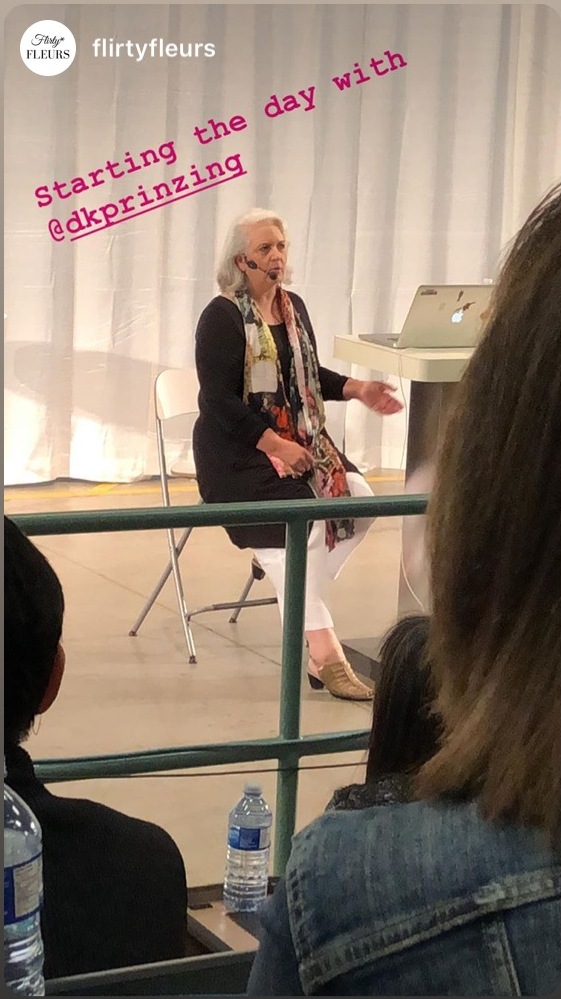
Alicia Schwede of Flirty Fleurs snapped this photo of me presenting at the Trend Summit.

The Trend Summit occurs every two years and is nothing short of a powerful gathering of leaders,

educators and thinkers from all facets of floral.

I joined the speaker lineup with design innovator Holly Heider Chapple of Hope Flower Farm, Chapel Designers and the new Holly X Syndicate collection; Pantone color trends maven Leatrice Eiseman; and global floral design icon Gregor Lersch, as well as Hitomi Gilliam and Florists’ Review publisher Travis Rigby.

The Trend Summit included a two-day conference where participants shared ideas and dreamed of new themes for floral design in a roundtable forum, a one-day symposium open to a larger floral community of growers, retailers, wholesalers, manufacturers and designers, and a two-day design intensive led by Gregor Lersch.

Everything took place at United Floral, the all-thing-floral (including educational programs) hub outside Vancouver, hosted by the incredibly gracious and generous Tony Graaf, who also emceed some of the proceedings.

The sessions were incredible and I’m sad I missed the first few days due to other commitments. A number of reports and new initiatives will emerge from this mind-blowing series of events and I’ll keep you posted on those in the coming months.

We’ll have to bring Hitomi and Holly back together — they’re both past guests of this podcast — to share about the many inclusive and expansive things they’re cooking up for our community.

I’m grateful that Slow Flowers is invited to have a seat at that table. To me, that is a significant indication of the strides we have made in the past five years since this concept took root and became my passion — the idea that progressive and mindful flower farmers and floral designers can collaborate for a better and more sustainable profession for humans and the environment alike.

August 26 & 27 took me to Charleston, S.C., where I was hosted at the Southern Flower Symposium by Lowcountry Flower Growers, which is emerging as an important force for reclaiming and revitalizing floral agriculture in the South.

From left: Compost in my Shoe’s Jim Martin, Purple Magnolia’s Ann Cunniffe, Roadside Blooms’ Teri Reale and me

Jim Martin’s business name is just the best: Compost in My Shoe!

A few days after the whirlwind trip to Vancouver, which is only about 150 miles north of Seattle, I jumped on an airplane and flew cross-country to Charleston, S.C. — yes, there is a nonstop flight if you can believe it!

I was hosted by the relatively young group called Lowcountry Flower Growers, which is emerging as an important force for reclaiming and revitalizing floral agriculture in the South.

In fact, their Southern Flower Symposium, held on August 27th at Full Circle Farm on John’s Island outside Charleston, was a powerful statement of their resolve!

Thank you to the organizing team, especially my dear friend Jim Martin of Compost in My Shoe, and Laura Mewbourn of Feast & Flora Farm, along with their core group of local growers for setting up such a great, one-day symposium.

Rita Anders of Cuts of Color in Weimar, Texas, an established flower grower and past guest of this podcast, led off the day with a fabulous, zone-specific presentation on growing premium flowers in the humid, hot southern climate.

I was thrilled to again share my Insights and Forecast as well as to moderate a floral design demonstration focused on appealing to millennial customers. You can visit today’s show notes to see photos of the designs, all created with flowers donated from attending farms, and arranged in USA-made vessels donated from Syndicate Sales, not only a sponsor of this podcast, but a company with some key personnel living and working in Charleston. So this event was particularly important to them.

Mary Simmons of Persephone Floral Atelier

Now, let’s meet Mary Simmons. Mary is a trained artist and oil painter who has increasingly turned toward the three-dimensional world of floral art.

She started her business in 2016 but as you’ll hear, she has been involved in floristry much longer than that.

And from the beginning of opening Persephone Floral Atelier, the Slow Flowers philosophy has shaped her brand. Her web site continues the introduction, and here is an excerpt:

Mary strives to make each floral design a work of art. Influenced by her background in oil painting, she painstakingly composes arrangements that balance texture, color, line, and shape, while reflecting nature’s wild, untamed asymmetry. 

Since opening Persephone on 2016, Mary has created floral designs for weddings and events around the country. Her favorite part about designing flowers for weddings is seeing it all come together on the wedding day.

Beyond composting and using eco-friendly methods, Persephone is committed to sourcing flowers from local farmers. Mary also looks to the landscape around her, foraging from her own small garden and waysides. In the months outside the Chicago area’s local growing season, the studio relies on wholesale sources, always asking for American grown flowers first.

The same is true when working at a destination. It takes special skill to source local flowers when you’re not a local, but Mary has a growing network of farmers around the country and world.

Breathtaking and painterly! A seasonal bouquet by Mary Simmons of Persephone Floral Atelier.

Here’s how to follow and find Mary Simmons of Persephone Floral Atelier:

Persephone Floral on Facebook

Persephone Floral on Instagram

Persephone Floral on Pinterest

Thanks so much for joining me today! It’s the start of the month – where did August go anyway?! Read all the news that’s blooming for you here – I’ve just sent out the September Slow Flowers newsletter.

The big news in this month’s issue is that we’ve just released videos of the speaker presentations from the 2018 Slow Flowers Summit in Washington, D.C. I heard from several of you who couldn’t attend but who asked if the presentations would be available by video!

The answer is YES. Click here to take advantage of the special offer to download Christina Stembel’s keynote presentation — “Scaling Your Floral Business to the Next Level,” as well as the full-session videos of all the Slow Flowers Summit speaker presentations.

The price is an affordable $48 for all five sessions — a full day of floral ideas, inspiration, innovation, and more — easily enjoyed at your desk or on your mobile device. Check it out!

I am so grateful to you — and to our entire community of flower farmers and floral designers who together define the Slow Flowers Movement. As our cause gains more supporters and more passionate participants who believe in the importance of the American cut flower industry, the momentum is contagious.

I know you feel it, too. I value your support and invite you to show your thanks and with a donation to support my ongoing advocacy, education and outreach activities. You can find the donate button in the column to the right.

The Slow Flowers Podcast has been downloaded more than 355,000 times by listeners like you. Thank you for listening, commenting and sharing – it means so much.

Thank you to our sponsors who have supported Slow Flowers and all our programs.

Florists’ Review magazine. I’m delighted to serve as Contributing Editor for Slow Flowers Journal, found in the pages of Florists’ Review. It’s the leading trade magazine in the floral industry and the only independent periodical for the retail, wholesale and supplier market.

Arctic Alaska Peonies, a cooperative of passionate family farms in the heart of Alaska providing bigger, better peony flowers during the months of July and August. Visit them today at arcticalaskapeonies.com

Seattle Wholesale Growers Market, a farmer-owned cooperative committed to providing the very best the Pacific Northwest has to offer in cut flowers, foliage and plants. The Growers Market’s mission is to foster a vibrant marketplace that sustains local flower farms and provides top-quality products and service to the local floral industry. Find them at seattlewholesalegrowersmarket.com

Longfield Gardens provides home gardeners with high quality flower bulbs and perennials. Their online store offers plants for every region and every season, from tulips and daffodils to dahlias, caladiums and amaryllis. Visit them at longfield-gardens.com.

Syndicate Sales, an American manufacturer of vases and accessories for the professional florist. Look for the American Flag Icon to find Syndicate’s USA-made products and join the Syndicate Stars loyalty program at syndicatesales.com.

Johnny’s Selected Seeds, an employee-owned company that provides our industry the best flower, herb and vegetable seeds — supplied to farms large and small and even backyard cutting gardens like mine. Check them out at johnnysseeds.com.

Association of Specialty Cut Flower Growers. Formed in 1988, ASCFG was created to educate, unite, and support commercial cut flower growers. It mission is to help growers produce high-quality floral material, and to foster and promote the local availability of that product. Learn more at ascfg.org

Mayesh Wholesale Florist. Family-owned since 1978, Mayesh is the premier wedding and event supplier in the U.S. and we’re thrilled to partner with Mayesh to promote local and domestic flowers, which they source from farms large and small around the U.S. Learn more at mayesh.com.

Certified American Grown Flowers. The Certified American-Grown program and label provide a guarantee for designers and consumers on the source of their flowers. Take pride in your flowers and buy with confidence, ask for Certified American Grown Flowers.  To learn more visit americangrownflowers.org.

And the Team Flower Conference – a professional floral event where flower lovers from all over the world gather for networking, learning, and celebration. It’s a special time for the floral industry to come together and whether you’re a farmer, designer, wholesaler, or just love flowers, you’re invited to attend as Team Flowers dreams big for the industry’s future. Head to teamflower.org/slowflowers to learn more about the 2019 conference in Waco, Texas!

I’m Debra Prinzing, host and producer of the Slow Flowers Podcast.
Next week, you’re invited to join me in putting more American grown flowers on the table, one vase at a time. And If you like what you hear, please consider logging onto iTunes and posting a listener review.

The content and opinions expressed here are either mine alone or those of my guests alone, independent of any podcast sponsor or other person, company or organization.

The Slow Flowers Podcast is engineered and edited by Andrew Brenlan. Learn more about his work at soundbodymovement.com. 

Music Credits:

Episode 363: Grower Wisdom with Jeanie McKewan of Illinois’s Brightflower Farm

Wednesday, August 22nd, 2018

Jeanie and I had a wonderful reunion in Chicago last week. This photograph was taken in front of the Chicago Hyatt after recording our interview.

I’ve been on the road for more than a week and connecting with Slow Flowers members and sponsors has been at the heart of my travel. Before we jump into today’s conversation with a wonderful featured guest, I’d love to thank a few folks with my shout-outs!

First, on August 11 & 12, I was hosted by Christine Hoffman of Twin Cities Flower Exchange in St. Paul, Minneapolis, where I enjoyed a sneak peek into what’s in store for attendees of next year’s Slow Flowers Summit, July 1-2, 2019.

As I’ve mentioned in recent weeks, Christine and the TCFE are co-hosting the Summit in their wonderful Twin Cities, where the local floral scene is alive, well, thriving and growing.

In addition to arranging for me to visit two of the flower farms that sell their botanical harvest through the TCFE, Christine took me to see three potential venues for the Summit sessions next summer. It’s often quite challenging to manage and plan an event long-distance, so this was hugely important.

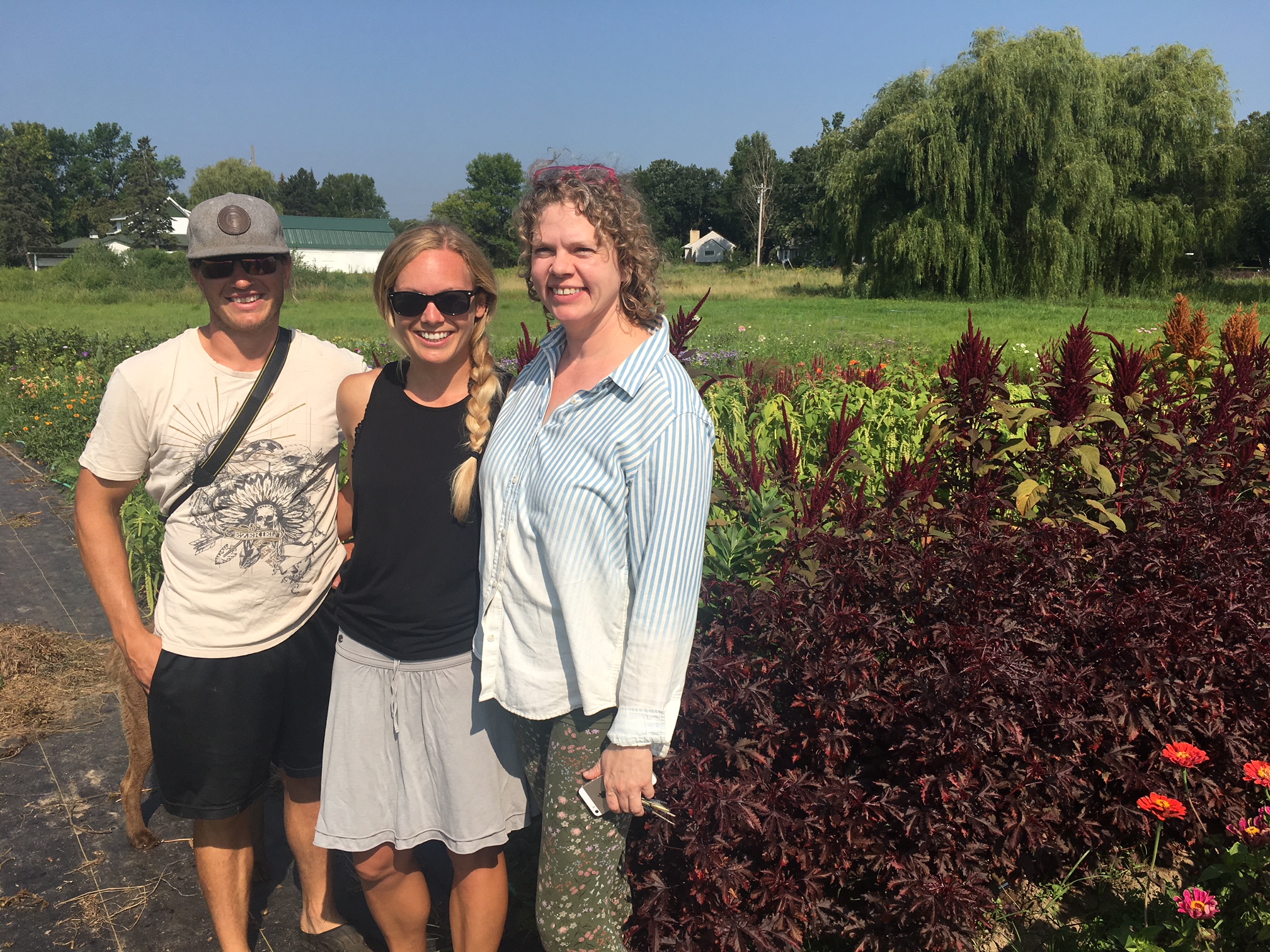
At Beezie’s Blooms, a farm portrait with owners Jeff & Randi, with Christine Hoffman of Twin Cities Flower Exchange

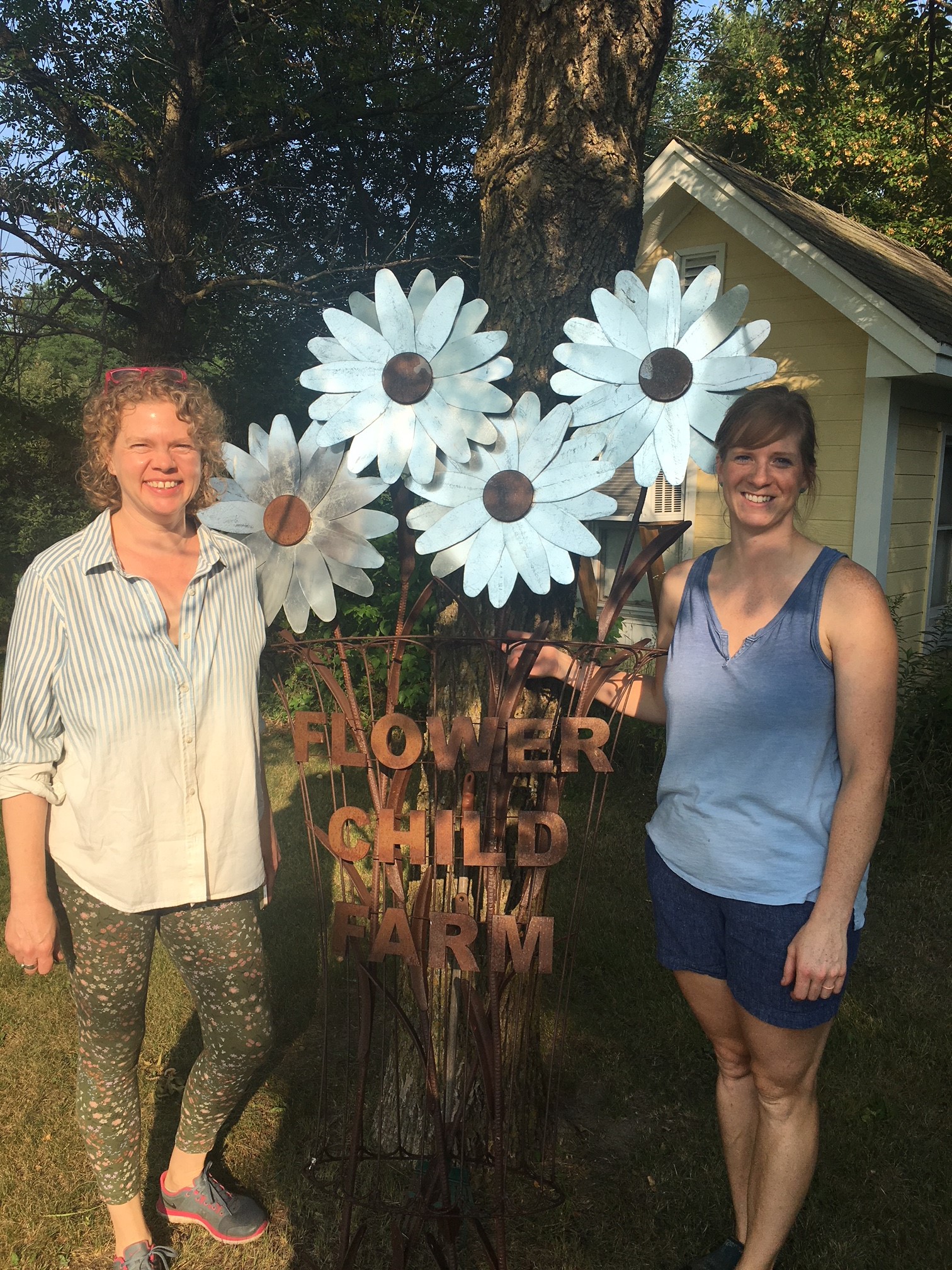
Christine Hoffman (left) and Allison DeRungs at Flower Child Farm outside Minneapolis/St. Paul.

It was a major treat to visit Beezie’s Blooms, a Slow Flowers member farm owned by Randi Greiner, and to tour Allison DeRungs’ Flower Child Farm, both located on beautiful properties north of the metro area.

On Sunday afternoon, Christine hosted a meet-up-style open house to introduce me to the local floral community – farmers and floral designers who comprise the dynamic change taking place there. We tasted signature cocktails with a floral note (of course), sample butters flavored with petals and herbs to spread on delicious local bread, and munched on local veggies, all part of the festive day.

It was inspiring and encouraging – all inside The Good Acre, a certified organic hub for local food distribution. That place holds state-of-the-art equipment and huge walk-in coolers where yes, produce from local farms is processed for distribution to school lunch rooms, but where every Wednesday florists and designers come to shop for flowers from as many as a dozen Minnesota and Wisconsin flower farms.

Twin Cities Flower Exchange hosted a wonderful gathering of local flower farmers and floral designers to welcome me to the Minneapolis-St. Paul area! Our gathering took place inside The Good Acre food hub, where flowers make an appearance once a week.

Seeing where it all happens after hearing Christine’s description of the TCFE’s “home” on the Slow Flowers Podcast last year, was such a treat. If you attend the Slow Flowers Summit next year during American Flowers Week, you’ll be able to experience this exciting new economic model taking place first hand, too.

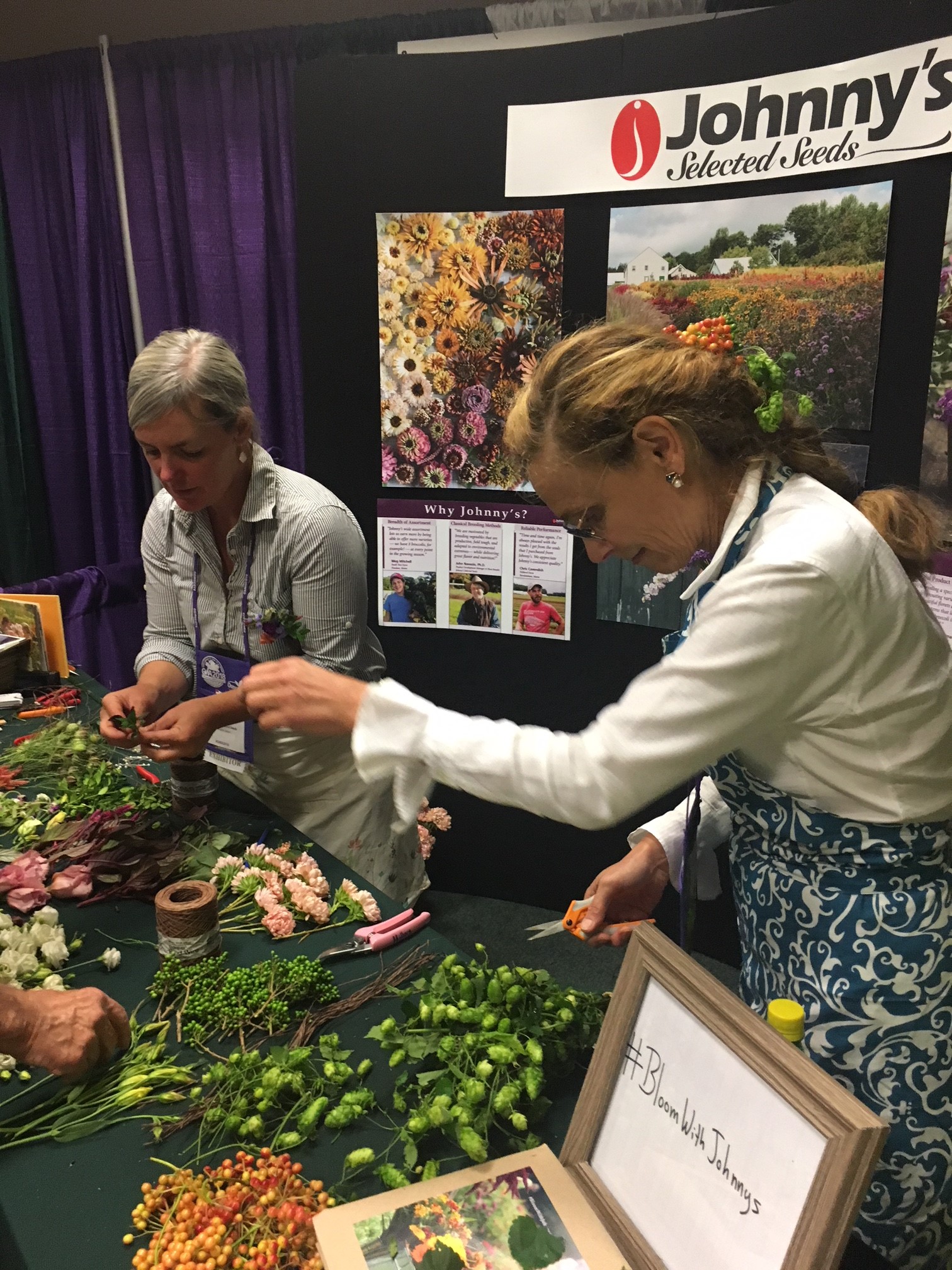
It was so fabulous to partner with Hillary Alger (left) and Marcella Sweet (center) at the Johnny’s Seeds booth during the Garden Writers Annual Symposium last week!

Hillary, Marcella and I hosted the incredibly popular pin-on flower bar at the GWA Chicago Expo, teaching media (writers, editors & bloggers) about cut flower gardening.

I said good-bye to the Twin Cities and headed straight to Chicago last Monday, where I spent most of the week attending the annual Garden Writers Association Symposium & Expo. I’ve been deeply involved in this professional organization – my original Tribe before the Slow Flowers Tribe emerged as a huge part of my life.

At the GWA conference, there is a trade show for two days, where garden and plant vendors exhibit their new products and wares. I joined Hillary Alger and Marcella Sweet of Johnny’s Selected Seeds, a sponsor of this Podcast and all my Slow Flowers channels at that trade show.

I’m so grateful to them and to Johnny’s for investing in bringing the Johnny’s resources and message about growing-your-own-flowers to the garden media – editors, writers, bloggers and broadcasters – my peers – who enjoyed picking up cutting garden tools, plans and images for use in their columns and posts.

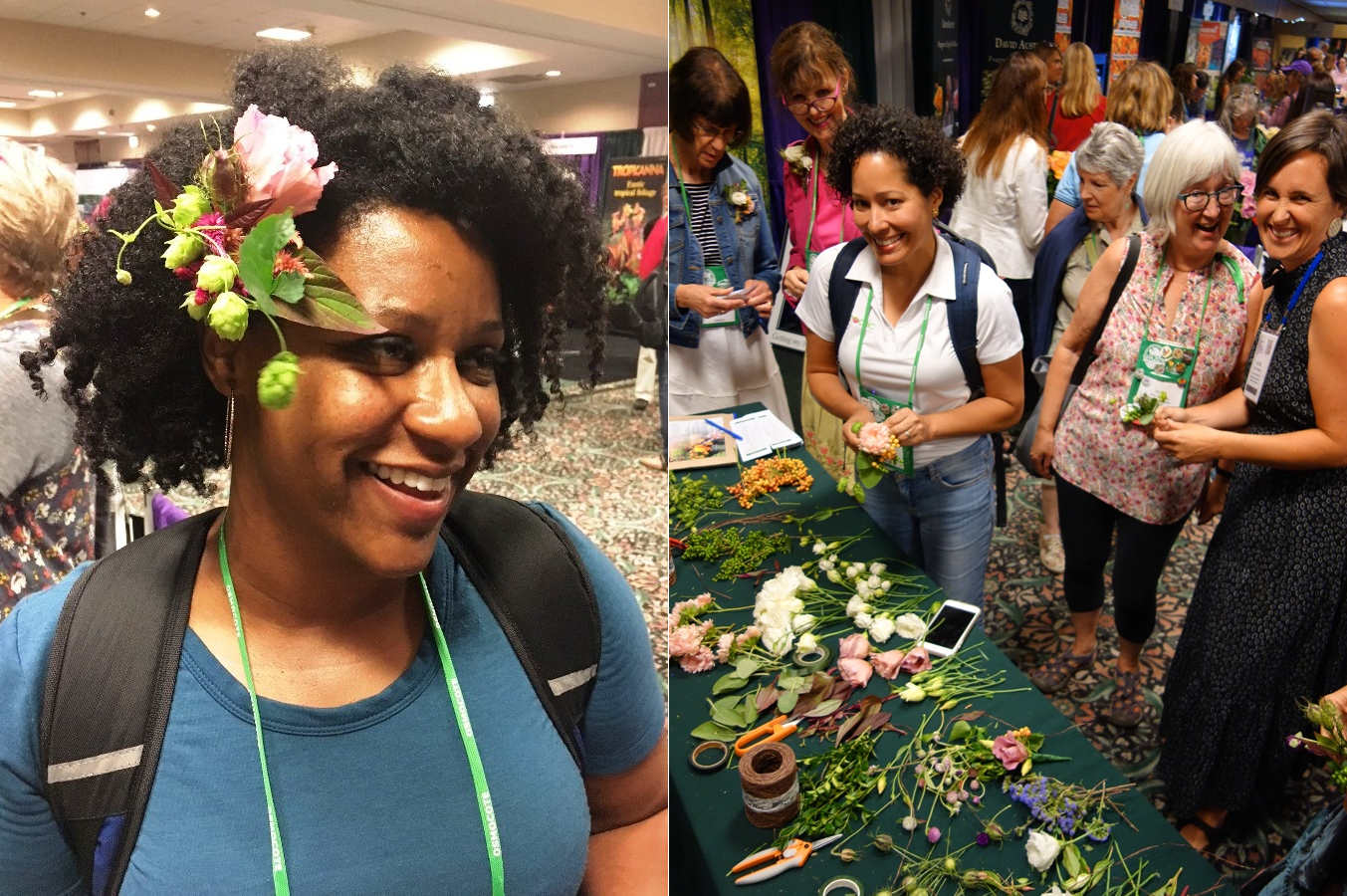
It was so fun to watch my fellow GWA members try their talents at making mini bouquets and pin-on flowers!

Hillary and Marcella and I spoke with hundreds of garden communicators interested in new story ideas, and we spent the 2nd afternoon of the trade show running what we called the “pin-on flower bar,” where we encouraged conference attendees to make their own boutonniere or corsage. What made this hands-on experience more special was the chance to showcase exquisite flowers, herbs, berries and foliage from local Slow Flowers member farms. Thank you to Heidi Joynt and Molly Kobelt of Field & Florist; Jeanie McKewan of Brightflower Farm and Beth Barnett of Larkspur Chicago for sending us their best.

Click here to view and download Johnny’s Selected Seeds’ cutting garden resources.

That only took me through mid-week, and over the course of five days I participated in all sorts of Garden Writers activities. But being in Chicago also afforded me time for the second Slow Flowers Meet-up in the Windy City.

Slow Flowers Meet-Up in Chicago, with flower farmers, floral designers, media, sponsors and me!

Last Wednesday night, thanks to Beth Barnett, about 18 of us joined together in her beautiful new Larkspur Chicago studio for an after-hours meet-up where we talked flowers, shared personal stories and enjoyed drinks and bites while making new connections and renewing established ones. I’m so grateful to the many who made the time to attend: flower farmers who traveled two to three hours into the city for our evening together; florists who closed busy retail shops or broke away from producing flowers in their studios to come for a special gathering of kindred spirits.

Thank you so much to Kath LaLiberte of Longfield Gardens, a sponsor of this podcast, and to Mackenzie Nichols, a writer and floral designer friend from New York, both of whom were in Chicago to attend the conference with me! They joined me in shopping for food and wine and helped Beth and me get everything set up for the fun. It was a great night. Just as I felt leaving the party at the Twin Cities Flower Exchange, it was so rewarding to invest in the time to make face-to-face connections with Chicago’s Slow Flowers Community. Thanks to all who helped make it happen.

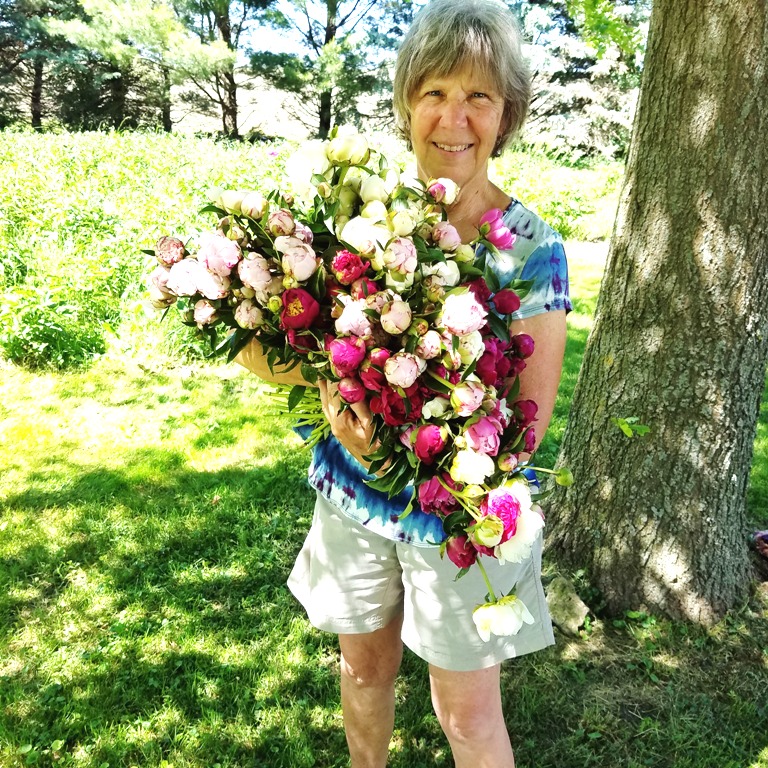
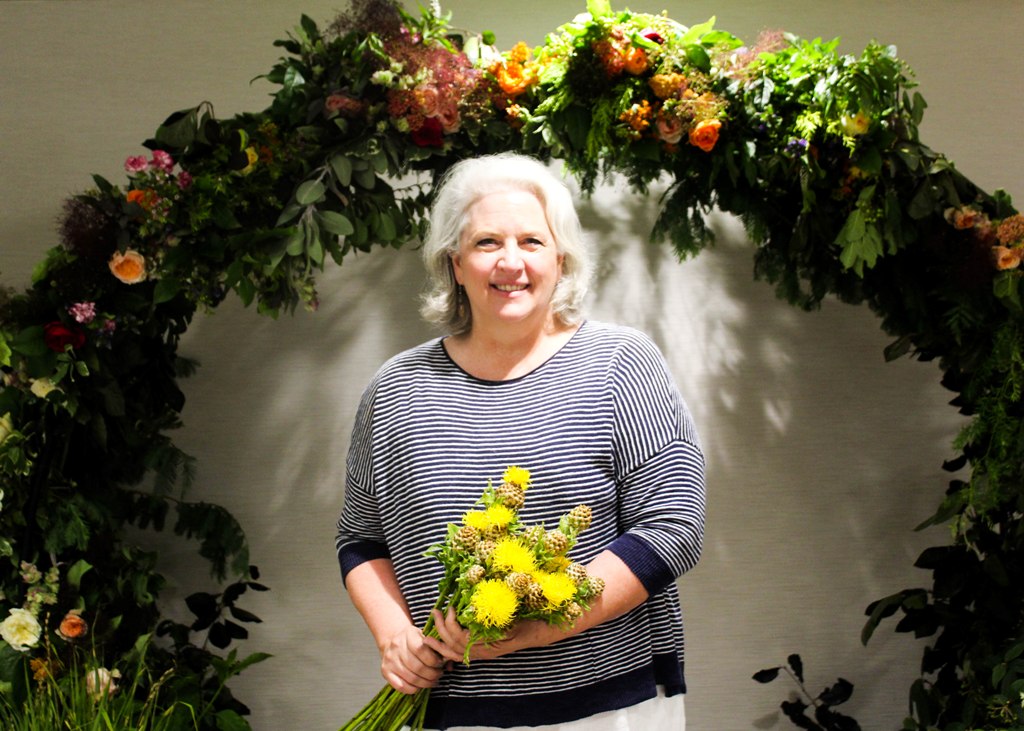
Jeanie and her beautiful peony crops from Brightflower Farm.

NOW . . . Let me introduce today’s great guest, Jeanie McKewan of Brightflower Farm in Stockton, Illinois.

As you heard, Jeanie’s flowers wowed the garden communicators who made their personal pin-on flowers at the conference last week – I have to say, the big hit was privet berry in its green form. That stumped a lot of my friends and prompted a number of internet searches on smart phones before we knew what it was.

Jeanie McKewan grows cut flowers for Illinois and Wisconsin area flower farmers and Chicago’s Whole Foods stores.

I’ve known Jeanie since 2012, when we met in Tacoma at the Association of Specialty Cut Flower Growers annual conference. You’ll hear the full story in our conversation, so listen closely. I’ve also wanted to host Jeanie on the Slow Flowers Podcast forever, so once we were in the same city I had to grab the chance. The morning after our Meet-Up, I met Jeanie for breakfast and then we recorded this conversation to share with you.

Brightflower Farm in Stockton, Illinois

Let me tell you a little more about this gifted floral entrepreneur:

Jeanie McKewan brings more than a dozen years of horticultural experience, passion and commitment to growing the finest plant materials available. She earned her Environmental Science degree from Willamette University, a Plant Pathology degree from Oregon State University, and is a Certified Landscape Professional (CLP).

Her working career gave her several opportunities to start businesses for entrepreneurs. In 1996 she was General Manager of Montale Gardens in Wauconda, Illinois, and served for nearly two years as Nursery Operations Manager for award-winning Craig Bergmann Landscape Design before founding her own growing operation.

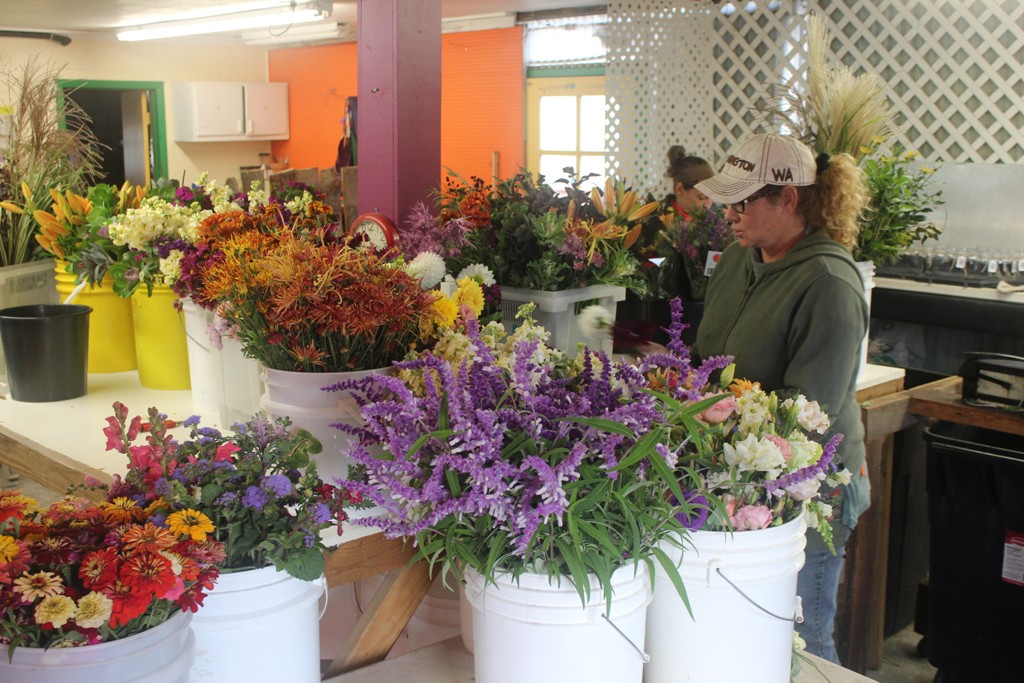
Brightflower Farm’s production studio

As founder of Brightflower Farm, she is devoted to providing beauty and fullness of life through her plants and flowers. Growing plants, eating good, flavorful food, and producing a stunning and colorful array of flowers is her passion and she feels incredibly fortunate to be able to earn a livelihood providing people with all of these things!

You’ll gain volumes from our conversation – I promise. We had a fabulous reunion and even though I’ve interviewed Jeanie in the past, I learn a lot more from her. This fascinating and experienced flower farmer is incredibly open in sharing her insights with others. You’ll hear that, too.

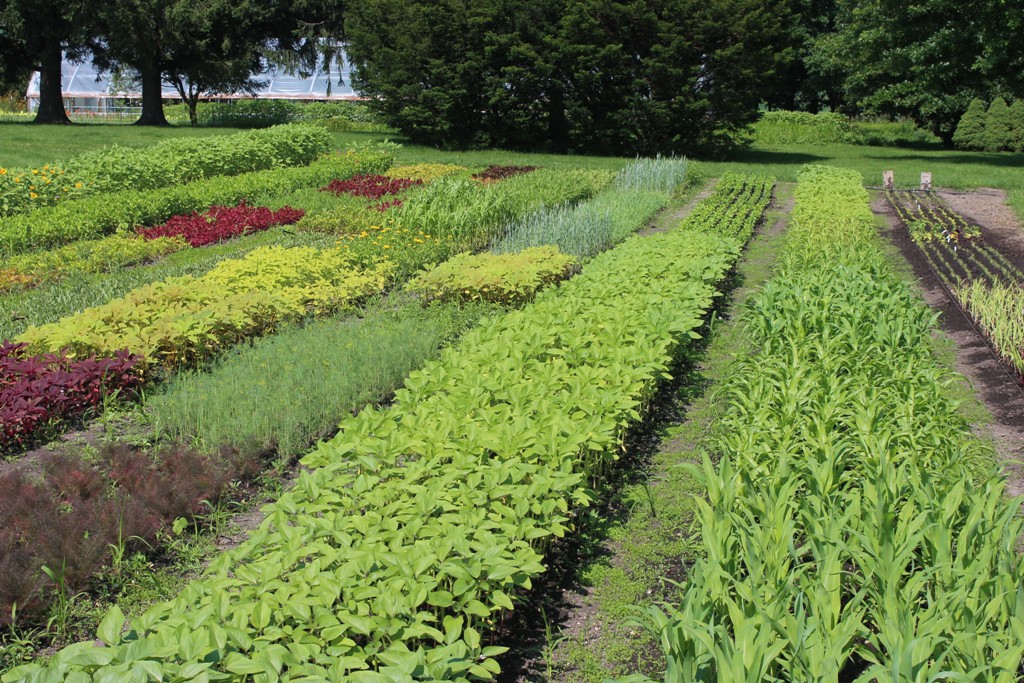
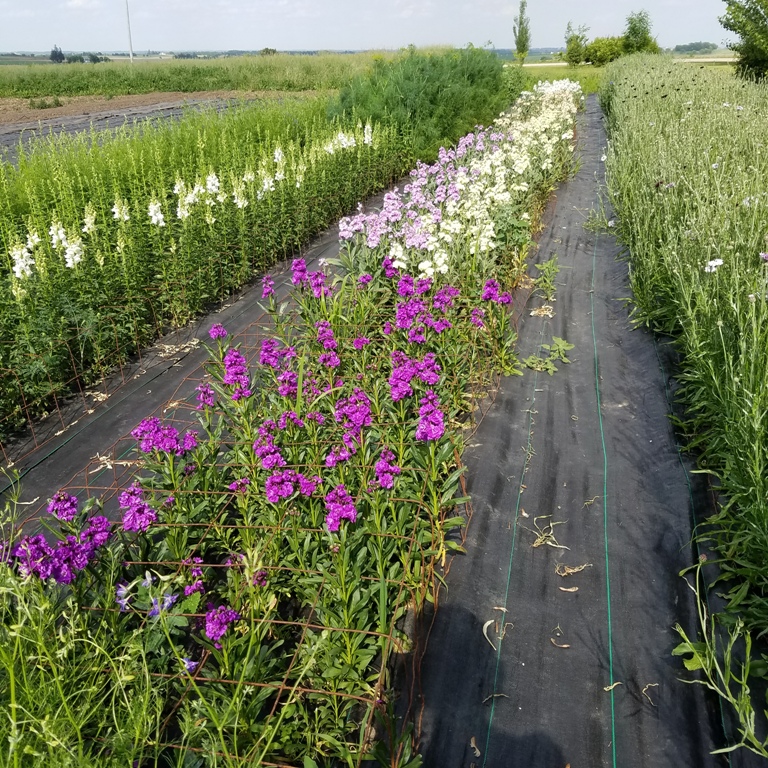
Field crops look healthy and prolific at Brightflower Farm

Follow Jeanie and her flower-filled world at these social places:

Brightflower Farm on Facebook

Brightflower Farm on Instagram

Fair Field Flowers

Here’s more information about the University of Wisconsin-Madison’s  Wisconsin Cut Flower Growers School, where Jeanie teaches each February

Here’s a bonus, too! I mentioned the two of us met in 2012. One of the outcomes of that time together during the ASCFG meeting was Jeanie bidding on a chance to be interviewed by me for a feature story. She’s given me permission to share that story, titled, “Illinois Blooms for Midwest Vases,” which is posted on the Brightflower Farm web site. It was incredibly fun to write and I think you’ll find it fascinating to read.

Traveling is often exhausting but I found the past ten days exhilarating and inspiring.

From visiting flower farms to spending time with floral designers to promoting cutting gardens to fellow communicators – it was a packed week, but a rewarding one.

Next up, I’ll be attending the Southern Flower Symposium in Charleston, South Carolina, hosted by many Slow Flowers members and the core group called Lowcountry Flower Growers.

I’ll join Rita Anders of Cuts of Color, a past guest of this podcast, to speak on flower farming, floral design, and my upcoming 2019 Slow Flowers’ Floral Insights and Industry Forecast.

The Symposium takes place August 26-27th so check out links to learn how you can attend.

Last week’s Midwest trip ended at the Garden Writers Association annual awards ceremony where Slow Flowers took home two Silver Media Awards for Excellence in Communications.

I wanted to share that news with you, because this Podcast earned a Silver Award for broadcast programming!

Your support of the Slow Flowers Podcast is what keeps me going week in and week out.

What an honor to also be recognized by my peers.

And our one-year-old project, the Slow Flowers Journal, also received a Silver Award in the Trade magazine category. It’s a monthly commitment to write and produce 10 to 16 pages of original and relevant editorial content for my wonderful publishing partner, Florists’ Review, and receiving accolades from fellow members of the media is an endorsement that motivates me to keep going when deadlines loom!

This role as the Slow Flowers champion is one that fills me with gratitude and I thank the entire community of flower farmers and floral designers who together define the Slow Flowers Movement.

As our cause gains more supporters and more passionate participants who believe in the importance of the American cut flower industry, the momentum is contagious.

I know you feel it, too. I value your support and invite you to show your thanks and with a donation to support my ongoing advocacy, education and outreach activities. You can find the donate button in the column to the right.

The Slow Flowers Podcast has been downloaded more than 350,000 times by listeners like you. Thank you for listening, commenting and sharing – it means so much.

Thank you to our sponsors who have supported Slow Flowers and all our programs.

Florists’ Review magazine. I’m delighted to serve as Contributing Editor for Slow Flowers Journal, found in the pages of Florists’ Review. It’s the leading trade magazine in the floral industry and the only independent periodical for the retail, wholesale and supplier market.

Arctic Alaska Peonies, a cooperative of passionate family farms in the heart of Alaska providing bigger, better peony flowers during the months of July and August. Visit them today at arcticalaskapeonies.com

Seattle Wholesale Growers Market, a farmer-owned cooperative committed to providing the very best the Pacific Northwest has to offer in cut flowers, foliage and plants. The Growers Market’s mission is to foster a vibrant marketplace that sustains local flower farms and provides top-quality products and service to the local floral industry. Find them at seattlewholesalegrowersmarket.com

Longfield Gardens provides home gardeners with high quality flower bulbs and perennials. Their online store offers plants for every region and every season, from tulips and daffodils to dahlias, caladiums and amaryllis. Visit them at longfield-gardens.com.

Syndicate Sales, an American manufacturer of vases and accessories for the professional florist. Look for the American Flag Icon to find Syndicate’s USA-made products and join the Syndicate Stars loyalty program at syndicatesales.com.

Johnny’s Selected Seeds, an employee-owned company that provides our industry the best flower, herb and vegetable seeds — supplied to farms large and small and even backyard cutting gardens like mine. Check them out at johnnysseeds.com.

Association of Specialty Cut Flower Growers. Formed in 1988, ASCFG was created to educate, unite, and support commercial cut flower growers. It mission is to help growers produce high-quality floral material, and to foster and promote the local availability of that product. Learn more at ascfg.org

Mayesh Wholesale Florist. Family-owned since 1978, Mayesh is the premier wedding and event supplier in the U.S. and we’re thrilled to partner with Mayesh to promote local and domestic flowers, which they source from farms large and small around the U.S. Learn more at mayesh.com.

Certified American Grown Flowers. The Certified American-Grown program and label provide a guarantee for designers and consumers on the source of their flowers. Take pride in your flowers and buy with confidence, ask for Certified American Grown Flowers.  To learn more visit americangrownflowers.org.

And the Team Flower Conference – a professional floral event where flower lovers from all over the world gather for networking, learning, and celebration. It’s a special time for the floral industry to come together and whether you’re a farmer, designer, wholesaler, or just love flowers, you’re invited to attend as Team Flower dreams big for the floral industry’s future. You can head to teamflower.org/slowflowers to learn more about the 2019 conference in Waco, Texas!

(c) Niesha Blancas

I’m Debra Prinzing, host and producer of the Slow Flowers Podcast. Next week, you’re invited to join me in putting more American grown flowers on the table, one vase at a time. And If you like what you hear, please consider logging onto iTunes and posting a listener review.

The content and opinions expressed here are either mine alone or those of my guests alone, independent of any podcast sponsor or other person, company or organization.

The Slow Flowers Podcast is engineered and edited by Andrew Brenlan. Learn more about his work at soundbodymovement.com. 

Music Credits:

Episode 362: Transitioning From Floral Design Studio to Retail Space with Kate Estwing of St. Louis’s City House Country Mouse

Wednesday, August 15th, 2018

Kate Estwing, City House Country Mouse

Today’s guest hails from the same place that many of us began: The Garden.

In 2015, Kate Estwing launched a flower and garden venture out of her home. Today, it has grown enough to transplant her business, City House Country Mouse into a brick and mortar storefront that opens this week in St. Louis’s The Hill neighborhood.

Kate has grown City House Country Mouse from a gardening business into a full-service floral design studio providing floral arrangements for weddings, businesses, events and residential clients.

A trio of arrangements from Kate Estwing and City House Country Mouse using all locally-grown botanicals; from left: From a workshop at B-Side Farms in Sebastopol, CA; a winery wedding featuring local and U.S.-grown shiso, grasses, dahlias and scabiosa; at the same event, locally-grown amaranth, purple basil, mint, and zinnias, plus a coreopsis plant that the couple took home to plant (c) Virginia Harold Photography

“It was very organic and made sense to me,” she says. “I saw a huge industry involving the beauty of nature, but also saw a lot of waste occurring within the industry. I knew I wanted to help people experience fresh, unique and local flowers and find ways to provide artful arrangements with references to the garden.

Stunning palette; Local blooms, by City House Country Mouse — all St. Louis-grown

“Cutting down on waste and plastic use is a hot topic, but you don’t always see the production waste that’s behind the flower arrangement you purchase. I’m happy to offer design services I know are cutting down or eliminating inorganic waste from the process.”

A Slow Flowers Member who puts a big priority on sourcing from local St. Louis area farms and other Missouri growers, Kate loves making garden-inspired arrangements that are whimsical and imperfect, a celebration of nature’s ways.

After operating as a home-based studio, this week City House Country Mouse moves into a charming storefront in a historic St. Louis neighborhood. I invited Kate to talk about the transition, because hers is a hybrid model I’m seeing occur more frequently than ever.

A new storefront in St. Louis!!

The new space operates as a design studio for weekly deliveries and wedding production, and Kate will open her doors with regular retail hours, beginning next week, Wednesday through Friday, 10 a.m. – 6 a.m.

Bouquet by Kate Estwing, inspired by the garden and local flower farms, plus peonies, greens and amaranth from U.S. west coast (c) Kate Estwing

Follow City House Country Mouse at these social places:

City House Country Mouse on Facebook

City House Country Mouse on Instagram

City House Country Mouse on Pinterest

A wedding ceremony centerpiece — so lovely! Outdoor backyard wedding featuring local peonies, yarrow and feverfew (c) David Weis.

There’s a lot of excitement around locally grown flowers and sustainable floral design in St. Louis, and as you heard me mention, I originally met Kate when I was there in 2016 to be a featured speaker at the St. Louis Art Museum’s Art in Bloom event. I recorded two wonderful podcast episodes with other Slow Flowers members when I was there — and I’ll post them in the show notes for you to listen, either for the first time or again!

They include:

Episode 238: St. Louis’s Urban Buds: City Grown Flowers

Episode 243: More About Missouri Grown with Two St. Louis-based Slow Flowers Voices (featuring Vicki Lander of Flower Hill Farm and Jessica Douglass of Flowers & Weeds)

Designed by Nancy Cameron of Destiny Hill Flower Farm.

Before I close, I want to say how grateful I am to all you — our entire community of flower farmers and floral designers who together define the Slow Flowers Movement.

As our cause gains more supporters and more passionate participants who believe in the importance of the American cut flower industry, the momentum is contagious.

I know you feel it, too. I value your support and invite you to show your thanks and with a donation to support my ongoing advocacy, education and outreach activities. You can find the donate button in the column to the right.

The Slow Flowers Podcast has been downloaded more than 348,000 times by listeners like you. Thank you for listening, commenting and sharing – it means so much.

Thank you to our sponsors who have supported Slow Flowers and all our programs.

Arctic Alaska Peonies, a cooperative of passionate family farms in the heart of Alaska providing bigger, better peony flowers during the months of July and August. Visit them today at arcticalaskapeonies.com

Seattle Wholesale Growers Market, a farmer-owned cooperative committed to providing the very best the Pacific Northwest has to offer in cut flowers, foliage and plants. The Growers Market’s mission is to foster a vibrant marketplace that sustains local flower farms and provides top-quality products and service to the local floral industry. Find them at seattlewholesalegrowersmarket.com

Longfield Gardens provides home gardeners with high quality flower bulbs and perennials. Their online store offers plants for every region and every season, from tulips and daffodils to dahlias, caladiums and amaryllis. Visit them at longfield-gardens.com.

Syndicate Sales, an American manufacturer of vases and accessories for the professional florist. Look for the American Flag Icon to find Syndicate’s USA-made products and join the Syndicate Stars loyalty program at syndicatesales.com.

Johnny’s Selected Seeds, an employee-owned company that provides our industry the best flower, herb and vegetable seeds — supplied to farms large and small and even backyard cutting gardens like mine. Check them out at johnnysseeds.com.

Association of Specialty Cut Flower Growers. Formed in 1988, ASCFG was created to educate, unite, and support commercial cut flower growers. It mission is to help growers produce high-quality floral material, and to foster and promote the local availability of that product. Learn more at ascfg.org

Mayesh Wholesale Florist. Family-owned since 1978, Mayesh is the premier wedding and event supplier in the U.S. and we’re thrilled to partner with Mayesh to promote local and domestic flowers, which they source from farms large and small around the U.S. Learn more at mayesh.com.

Certified American Grown Flowers. The Certified American-Grown program and label provide a guarantee for designers and consumers on the source of their flowers. Take pride in your flowers and buy with confidence, ask for Certified American Grown Flowers.  To learn more visit americangrownflowers.org.

And the Team Flower Conference – a professional floral event where flower lovers from all over the world gather for networking, learning, and celebration. It’s a special time for the floral industry to come together and whether you’re a farmer, designer, wholesaler, or just love flowers, you’re invited to attend as Team Flowers dreams big for the future of our beloved industry. You can head to teamflower.org/slowflowers to learn more about the 2019 conference in Waco, Texas!

(c) Mary Grace Long Photography

I’m Debra Prinzing, host and producer of the Slow Flowers Podcast.
Next week, you’re invited to join me in putting more American grown flowers on the table, one vase at a time. And If you like what you hear, please consider logging onto iTunes and posting a listener review.

The content and opinions expressed here are either mine alone or those of my guests alone, independent of any podcast sponsor or other person, company or organization.

The Slow Flowers Podcast is engineered and edited by Andrew Brenlan. Learn more about his work at soundbodymovement.com. 

Music Credits:
Turning On The Lights
by Blue Dot Sessions
Music from:

audionautix.com

Episode 361: Plants and Blooms ReImagined with Horticultural Therapist and Visionary Kaifa Anderson-Hall

Wednesday, August 8th, 2018

Kaifa Anderson-Hall (left), founder of Plants and Blooms Reimagined, with me after the Slow Flowers Summit 2018.

Kaifa Anderson-Hall collecting flowers from Phillippa Tarrant Floral Design in Washington, D.C.

I’ve enjoyed so many amazing and rewarding experiences in recent months, including spending time with today’s guest, with whom I’ve connected at two important events. I’m so happy to introduce you to Kaifa Anderson-Hall, founder and visionary of Plants and Blooms Reimagined, a socially-minded floral program based in Washington, D.C.

I first met Kaifa in June at the American Horticultural Society’s annual awards banquet where she was recognized as a Great American Gardener award recipient for significant contributions to the field of horticultural therapy. I was a fellow recipient there to accept the AHS Frances Jones Poetker Award for contributions to the field of floristry, so it was a significant night for both of us.

It was so meaningful that Kaifa attended the Slow Flowers Summit just one week later, allowing us to spend a little more time together in her hometown.

Plants and Blooms Reimagined

As I mentioned, Kaifa is the founder of Plants and Blooms Reimagined. She began the program inspired by the belief that the beauty, joy, inspiration and healing power of nature’s gifts of indoor plants and cut-flowers should be experiences shared by all.

Clients of Seabury Center for the Blind and Visually Impaired enjoying therapeutic flower arranging.

SEED Students volunteering with Plants and Blooms ReImagined’s Bee Friendly…Bloom To Share initiative

Kaifa is hands-on, gathering flowers and sharing them with appreciative receipients!

Kaifa envisioned Plants and Blooms Reimagined to be the source of plants and flowers for D.C. residents who too often go without. The organization’s mission is to increase personal enjoyment and enhanced well-being for under-resourced and other marginalized groups in the D.C. region through the gifting of repurposed (aka reimagined) botanicals of all kinds.

Plants and Blooms ReImagined can be found at various senior communities, homeless shelters, day programs for differently abled adults, social service facilities, healthcare clinics, health fairs and more — delivering plants and flower bouquets and providing outreach and plant-based education.

Sidra Forman, a Washington, D.C.-based floral designer, shares accolades about working with Plants and Blooms Reimagined.

Kaifa “gifting” flowers at Springvale Terrace

Here’s more about Kaifa Anderson-Hall:

Kaifa channeled her experience with social work and community garden development into a career in horticultural therapy. Through her business, Inspired Horticultural Services, Inc., and through Plants and Blooms Reimagined, Kaifa focuses on enhancing the wellbeing of diverse and often underserved communities in the greater Washington, D.C., region.

In addition to working with seniors, veterans, and differently-abled youth and adults, Kaifa designs and consults on the creation of therapeutic gardens. She lectures on the benefits of horticultural therapy programs at conferences and health fairs. A Master Gardener and graduate of the Horticultural Therapy Institute in Denver, Kaifa is active with a variety of organizations, including the American Horticultural Therapy Association, Biophilic DC, and Washington, D.C.’s School Garden Advisory Council.

Kaifa ensured that the flowers and foliages from the Slow Flowers Summit were reimagined/repurposed for deserving recipients. Thanks to Nan Matteson of Queen City Flower Farm.

On very short notice, Kaifa pulled together a team of volunteers to collect – and ultimate reimagine and repurpose – all of the flowers and foliages that we used during the Slow Flowers Summit. So it is fitting to share her story with you and inspire your own creative reimagining.

Here’s how to connect with and follow Plants and Blooms Reimagined:

Watch Plants and Blooms Reimagined on YouTube:

Follow Plants and Blooms Reimagined on Facebook

Follow Kaifa Anderson-Hall on Instagram.

I mentioned that Kaifa Anderson-Hall’s Plants and Blooms Reimagined received all of the flowers and foliage incorporated during the full day’s presentations and installations at the Slow Flowers Summit on June 29th in Washington, D.C.

So I want to take a moment and acknowledge the flower farms – all Slow Flowers Members – who donated that beautiful and abundant harvest. They include Charles Little & Co., Fern Trust, Green Valley Floral, LynnVale Studio and Resendiz Brothers Protea Growers. Thank you so much for your support and what a beautiful gift that began with the Summit and continued on to encourage and affirm clients of Plants and Blooms Reimagined.

And while we’re talking about the importance of flowers and the healing nature of flowers, I am reminded of last year’s guest, Heidi Berkman of The Bloom Project in Portland, Oregon – a volunteer-run organization with a model similar to Plants and Blooms Reimagined. If you’re interested in learning more about this sustainable topic from that interview, follow this link to listen to Episode 311.

(c) Heather Saunders

Before I close, I want to say how grateful I am to all you — our entire community of flower farmers and floral designers who together define the Slow Flowers Movement.

As our cause gains more supporters and more passionate participants who believe in the importance of the American cut flower industry, the momentum is contagious.

I know you feel it, too. I value your support and invite you to show your thanks and with a donation to support my ongoing advocacy, education and outreach activities. You can find the donate button in the column to the right.

The Slow Flowers Podcast has been downloaded more than 346,000 times by listeners like you. Thank you for listening, commenting and sharing – it means so much.

Thank you to our sponsors who have supported Slow Flowers and all our programs.

Florists’ Review magazine. I’m delighted to serve as Contributing Editor for Slow Flowers Journal, found in the pages of Florists’ Review. It’s the leading trade magazine in the floral industry and the only independent periodical for the retail, wholesale and supplier market. Order a free sample issue here.

Arctic Alaska Peonies, a cooperative of passionate family farms in the heart of Alaska providing bigger, better peony flowers during the months of July and August. Visit them today at arcticalaskapeonies.com

Seattle Wholesale Growers Market, a farmer-owned cooperative committed to providing the very best the Pacific Northwest has to offer in cut flowers, foliage and plants. The Growers Market’s mission is to foster a vibrant marketplace that sustains local flower farms and provides top-quality products and service to the local floral industry. Find them at seattlewholesalegrowersmarket.com

Longfield Gardens provides home gardeners with high quality flower bulbs and perennials. Their online store offers plants for every region and every season, from tulips and daffodils to dahlias, caladiums and amaryllis. Visit them at longfield-gardens.com.

Syndicate Sales, an American manufacturer of vases and accessories for the professional florist. Look for the American Flag Icon to find Syndicate’s USA-made products and join the Syndicate Stars loyalty program at syndicatesales.com.

Johnny’s Selected Seeds, an employee-owned company that provides our industry the best flower, herb and vegetable seeds — supplied to farms large and small and even backyard cutting gardens like mine. Check them out at johnnysseeds.com.

Association of Specialty Cut Flower Growers. Formed in 1988, ASCFG was created to educate, unite, and support commercial cut flower growers. It mission is to help growers produce high-quality floral material, and to foster and promote the local availability of that product. Learn more at ascfg.org

Mayesh Wholesale Florist. Family-owned since 1978, Mayesh is the premier wedding and event supplier in the U.S. and we’re thrilled to partner with Mayesh to promote local and domestic flowers, which they source from farms large and small around the U.S. Learn more at mayesh.com.

Certified American Grown Flowers. The Certified American-Grown program and label provide a guarantee for designers and consumers on the source of their flowers. Take pride in your flowers and buy with confidence, ask for Certified American Grown Flowers.  To learn more visit americangrownflowers.org.

And the Team Flower Conference – a professional floral event where flower lovers from all over the world gather for networking, learning, and celebration. It’s a special time for the floral industry to come together and whether you’re a farmer, designer, wholesaler, or just love flowers, you’re invited to attend as Team Flowers dreams big for the future of our beloved industry. You can head to teamflower.org/slowflowers to learn more about the 2019 conference in Waco, Texas!

(c) Missy Palacol Photography

I’m Debra Prinzing, host and producer of the Slow Flowers Podcast.
Next week, you’re invited to join me in putting more American grown flowers on the table, one vase at a time. And If you like what you hear, please consider logging onto iTunes and posting a listener review.

The content and opinions expressed here are either mine alone or those of my guests alone, independent of any podcast sponsor or other person, company or organization.

The Slow Flowers Podcast is engineered and edited by Andrew Brenlan. Learn more about his work at soundbodymovement.com. 

Music Credits:
Sage the Hunter (Rhythmic) 
by Blue Dot Sessions
Music from:

audionautix.com