Debra Prinzing

Get the Email Newsletter!

Archive for the ‘Book reviews’ Category

Episode 276: Slow Flowers’ Holiday Special with Ellen Zachos — from Broadway Stage to Backyard Foraging

Wednesday, December 21st, 2016

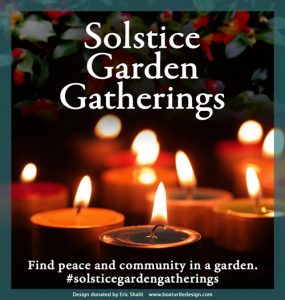
First of all, Happy Winter Solstice! You may be celebrating tonight with a Garden Walk, a concept proposed by Sue Nevler, a Seattle friend of mine who is active in the American Public Garden community.

The idea she has is that we light a candle and take a nighttime walk in a garden with others as a peaceful gathering of community — by extension, I’m suggesting we celebrate Solstice in cutting gardens and on flower farms. If today is the first you’ve heard of her suggestion, follow this link for more details about Solstice Garden Gatherings.

I’m delighted to share a very special Holiday episode — and I hope it feeds your spirit as much as has mine. Last year’s Holiday episode featured musician-songwriter-flower farmer Dennis Westphall of Jello Mold Farm in Mt. Vernon, Washington. In case you missed that spirited program in which Dennis played some of his original songs and sang for us, here’s the link to that episode.
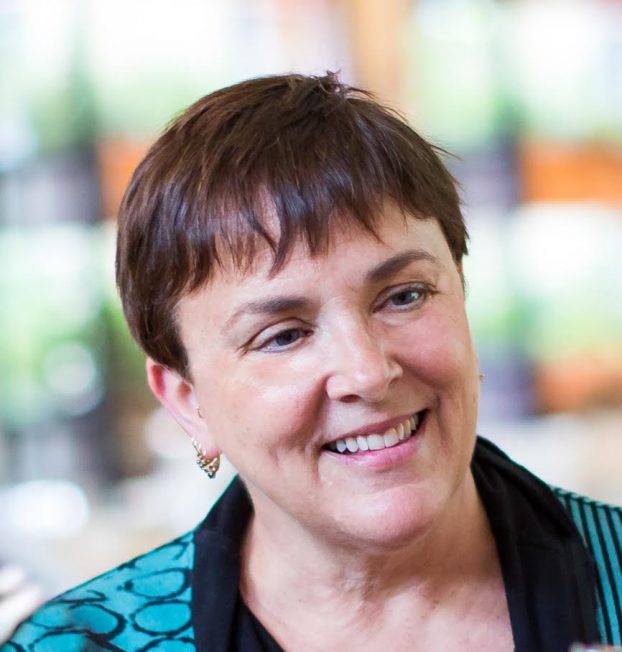
Today's uber-talented guest foraging expert and amazing vocalist Ellen Zachos.

Today’s uber-talented guest foraging expert and amazing vocalist Ellen Zachos.

I worried for a while that Dennis and his music would be a hard act to follow, but then my friend Ellen Zachos agreed to join me, sharing her lovely vocals and the story of her love affair with plants. I’m so pleased she said YES when I asked.

I first learned about Ellen in the pages of Harvard Magazine, which my husband Bruce receives each month as an alumni.

It was probably a dozen years ago when Harvard profiled one of its alums, a New Hampshire native who had moved to New York City after graduation and joined the stage.

She also studied horticulture at the New York Botanical Garden.
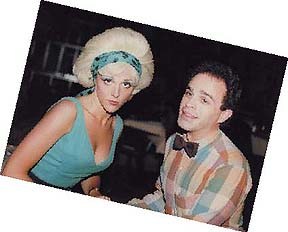
Ellen Zachos as Audrey in Little Shop of Horrors at the Alhambra Dinner Theatre, Jacksonville, Florida

Ellen Zachos as Audrey in Little Shop of Horrors at the Alhambra Dinner Theatre, Jacksonville, Florida


Ellen is possibly the only cast member of Les Miserable who has also run a planting design business that served Manhattan’s elite owners of rooftop greenhouses. What a wonderful story and I couldn’t wait to meet her.

Since the garden writing world is as intimate and interconnected as the slow flowers world, it didn’t take long for Ellen and me to meet in person. I’m not sure when we actually connected, but I’m guessing it was more than a decade ago at a Garden Writers symposium.

Today you will hear more of her amazing story — and enjoy her music, my holiday gift to you.
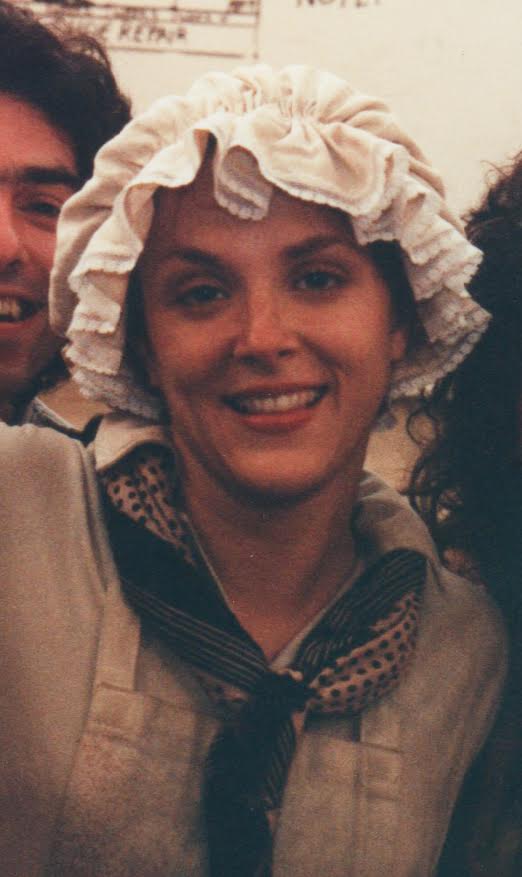
Ellen Zachos, longtime Broadway cast member of Les Miserables.

Ellen Zachos, longtime Broadway cast member of Les Miserables.

Ellen’s journey from theatre to horticulture to her current platform — as the top backyard foraging expert — will wow you.

Here’s a little more about my friend. On her web site, Ellen writes: “I moved to NYC sometime in the last century to be an actor. I know, I know, it’s an age-old story, small town girl moves to NYC, lands a role on Broadway, decides she’d rather be a horticulturist, and starts her own garden design, installation, and maintenance business. You’ve heard it many times before.

“But seriously, after leaving the cast of Les Miz on Broadway, I went back to school at the New York Botanical Garden and earned certificates in both ornamental horticulture and ethnobotany. For many years I taught at the NYBG on a wide range of subjects and ran my roof top gardening business: Acme Plant Stuff.

“As I learned more about plants I noticed that many traditional ornamental plants had edible and medicinal histories. I wondered why we didn’t eat hostas any more, and people planted hopniss for its flowers rather than its delicious, potato-like tubers.
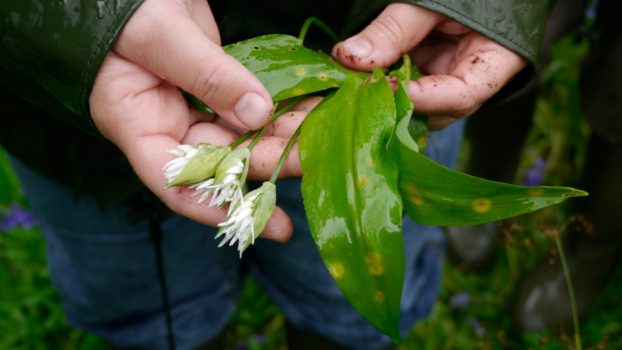
 

Ellen holds foraged wild garlic.
Ellen holds foraged wild garlic.

unnamed-3“Gradually, my emphasis shifted from plants that were merely ornamental to plants that fed both body and soul, the eyes and the stomach.

I started out foraging in the garden, because that’s where I could identify the plants and I knew they were safe from potentially dangerous insecticides and herbicides.

Soon I ventured out into the wilds of Central Park, the woods of Pennsylvania, the deserts of New Mexico, the islands of Scotland, and the gorges of Greece. In other words, I’m always looking for delicious, free food!”

As the Foraging Expert at About.com,
(foraging.about.com) Ellen shares seasonal recipes and tips on foraging every month. She also works with Remy Martin USA, teaching foraging mixology workshops across the US, and she is currently working on a book about foraged cocktails, due out in 2017.

I love this line from her blog at backyardforager.com:

I want to get you hooked on wild edibles so maybe next time you’ll be sitting in that car with me when I pull over to harvest burdock flower stems. Because so much of the joy of foraging is sharing it with someone who also appreciates the flavors and the adventure.
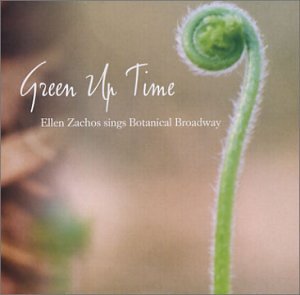
Green Up Time, Ellen Zachos sings Botanical Broadway

Green Up Time, Ellen Zachos sings Botanical Broadway

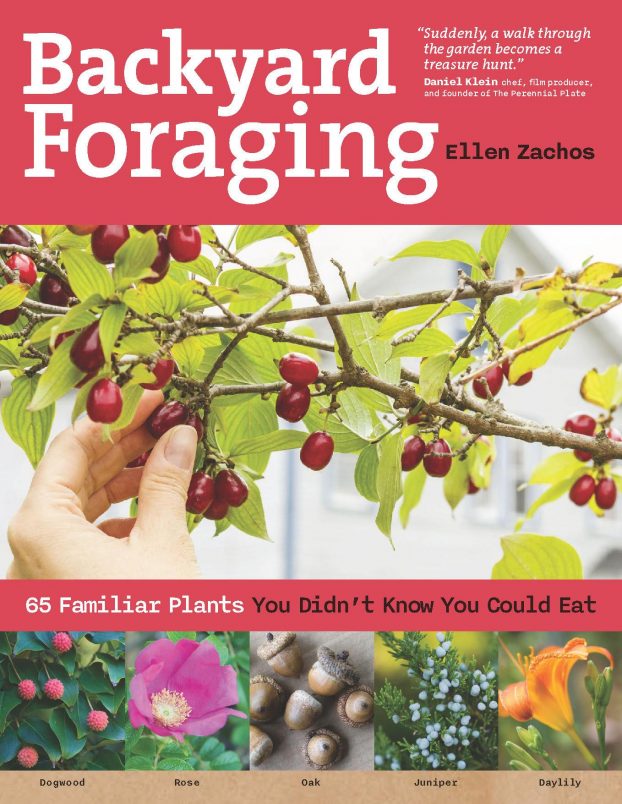
The author of six books previous books, including Backyard Foraging: 65 Familiar Plants You Didn’t Know You Could Eat, Orchid Growing for Wimps, and Growing Healthy Houseplants,  Ellen also writes a monthly column for the National Gardening Association and she is the Senior Advisor for New England for Garden Compass (the # 1 rated iTunes gardening app).

She loves to teach and is a frequent lecturer at botanic gardens, flower shows, and for garden clubs around the world. Ellen’s show business background taught her how to engage an audience, and she combines this natural skill with years of practical experience and plenty of book learning.

A long-time instructor at the New York Botanical Garden, Ellen recently moved to Santa Fe, NM, which means she splits time between the desert southwest and the lush northeast. It’s quite a contrast, botanically-speaking, and one that keeps her learning new plants as well as new ways to eat them.
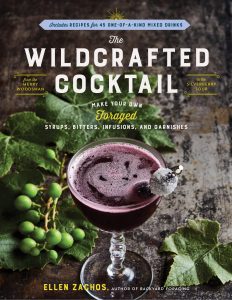
Ellen's new book will be released in May 2017.

Ellen’s new book will be released in May 2017.

Today’s episode will feature a conversation between two professional colleagues who greatly admire one another — and you’ll hear the warmth of friendship in our voices.

Here is a peek at the cover of Ellen’s new book, at right.

Seattle fans can hear Ellen speak at the upcoming Northwest Flower & Garden Show in February, where she’ll be speaking twice:

Sat, Feb. 25 at 5:30 pm / Hood Room, Backyard Foraging: Gathering from the Garden

Sun, Feb. 26 at 10:00 am / Hood Room, The Blended Garden: Discover Plants that Do Double Duty
Follow Ellen on Facebook

Follow Ellen on Twitter

Find Ellen on Instagram

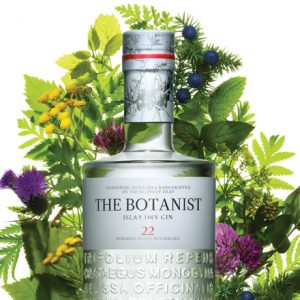
Ellen is a foraging-mixology expert for The Botanist, a luxury gin

Ellen is a foraging-mixology expert for The Botanist, a luxury gin

Here’s more about Ellen’s foraging-mixology work for The Botanist, from the company’s blog.

She shared this lovely winter cocktail recipe for you to try:

Ingredients: 2 ounces bourbon, 1/2 ounce crabapple syrup, seltzer

Combine the bourbon and syrup in a shaker full of ice and shake for 30 seconds. Strain into a coupe and add seltzer to taste. I add 1/2 ounce but some people like more.

To make the syrup: Put your crabapples (2 cups is a good, minimum amount to start with) in a saucepan and barely cover with water. Bring the contents to a boil, then reduce the heat and let simmer for five minutes, mashing occasionally with a potato masher to release the juices. Pour the fruit through a jelly bag and let it hang until all the juice has been extracted. Resist the temptation to squeeze the jelly bag or the liquid may turn cloudy. Measure the juice and return it to your saucepan. Add an equal amount of sugar and whisk to combine. You want the sugar to be fully dissolved; rub a little liquid between your fingers, it should feel smooth.

Ellen shared these lyrics from “Misalliance,” with her edits to Americanize the English:

Misalliance by Michael Flanders and Donald Swann*

The fragrant Honeysuckle spirals clockwise to the sun

and many other creepers do the same.

But some climb counter-clockwise,

the Bindweed does for one,

Convolvulus to give her proper name.

Rooted on either side of the door,

one of each species grew,

and raced up to the window ledge above.

Each corkscrewed to the lintel in the only way it knew,

where they stopped, touched tendrils, smiled,

and fell in love.

Said the right-handed Honeysuckle to the left-handed Bindweed,

“Oh let us get married if our parents don’t mind, we’d

be loving and inseparable, inextricably entwined, we’d

live happily ever after,”

said the Honeysuckle to the Bindweed.

To the Honeysuckle’s parents it came as a shock.

“The Bindweeds,” they cried, “Are inferior stock.

The uncultivated, of breeding bereft.

We twine to the right and they twine to the left.”

Said the counterclockwise Bindweed to the clockwise Honeysuckle,

“We’d better start saving,

our reserve mustn’t buckle.

Run away on a honeymoon and hope that our luck’ll

Take a turn for the better,”

Said the Bindweed to the Honeysuckle.

A bee who was passing remarked to them then,

“I’ve said it before and I’ll say it again.

Consider your offshoots if offshoots there be.

They’ll never receive any blessing from me.

Poor little sucker, how will it learn

When it is climbing, which way to turn.

Right, left, what a disgrace.

Or it may grow straight up and fall flat on its face.”

Said the right-hand thread Honeysuckle to the left-hand thread Bindweed,

“It seems that against us all fate has combined.

Oh my darling, oh my darling, oh my darling Columbine,

thou art lost and gone forever,

we shall never intertwine.”

Together they found them, the very next day.

They had pulled up their roots and just shriveled away,

deprived of that freedom for which we must fight:

to veer to the left or to veer to the right.

*Americanized by Ellen Zachos

Please enjoy our conversation and HAPPY HOLIDAYS!  If you’re looking for the perfect gift for the gardener or flower lover in your life, there’s definitely still time to order Green Up Time as a CD or downloadable Mp3 album.

sponsor-bar_sept_2016
The Slow Flowers Podcast has been downloaded more than 140,000 times by listeners like you. THANK YOU to each one of you for downloading, listening, commenting and sharing. It means so much.

If you value the content you receive each week, I invite you to show your thanks and support the Slow Flowers Podcast with a donation — the button can be found on our home page in the right column. Your contributions will help make it possible to transcribe future episodes of the Podcast.

Thank you to our lead sponsor for 2016: Certified American Grown Flowers. The Certified American-Grown program and label provide a guarantee for designers and consumers on the source of their flowers. Take pride in your flowers and buy with confidence, ask for Certified American Grown Flowers.  To learn more visit americangrownflowers.org.

More sponsor thanks goes to Syndicate Sales, an American manufacturer of vases and accessories for the professional florist. Look for the American Flag Icon to find Syndicate’s USA-made products and join the Syndicate Stars loyalty program at syndicatesales.com.

A big bouquet of thanks goes to Longfield Gardens, providing home gardeners with high quality flower bulbs and perennials. Their online store offers plants for every region and every season, from tulips and daffodils to dahlias, caladiums and amaryllis. Visit them at lfgardens.com.

A fond thank you Arctic Alaska Peonies, a cooperative of 50 family farms in the heart of Alaska providing high quality, American Grown peony flowers during the months of July and August. Visit them today at arcticalaskapeonies.com

And finally, thank you Association of Specialty Cut Flower Growers. Formed in 1988, ASCFG was created to educate, unite, and support commercial cut flower growers. It mission is to help growers produce high-quality floral material, and to foster and promote the local availability of that product. Learn more at ascfg.org

I’m Debra Prinzing, host and producer of the Slow Flowers Podcast. Next week, you’re invited to join me in putting more American grown flowers on the table, one vase at a time. And If you like what you hear, please consider logging onto Itunes and posting a listener review.

The content and opinions expressed here are either mine alone or those of my guests alone, independent of any podcast sponsor or other person, company or organization.

The Slow Flowers Podcast is engineered and edited by Andrew and Hannah Brenlan. Learn more about their work at shellandtree.com.
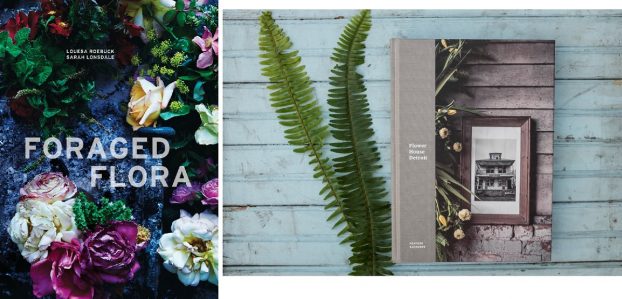
Episode 275: Meet the Authors and Their Fab Floral Books: Louesa Roebuck’s Foraged Flora and Heather Saunders’ Flower House Detroit

Wednesday, December 14th, 2016

twoupWe’re coming in on the close of this year — and what a year for Slow Flowers it has been. The final few episodes of 2016 are coming together and I know they will inspire, inform, and instigate — focusing on the creative process as each of us tries to set aside time to recharge body, mind and spirit.

Louesa Roebuck, co-author of Foraged Flora

Louesa Roebuck, co-author of Foraged Flora

Heather Saunders, creator and photographer of the book Flower House Detroit

Heather Saunders, creator and photographer of the book Flower House Detroit

Please meet two floral instigators, book creators whose new projects will introduce you to what’s possible when art and the artistic process are respected, honored and allowed to work magic.

My first guest is Louesa Roebuck, co-creator of a new book called Foraged Flora.

My second guest is Heather Saunders, the genius photographer who just released her new book Flower House Detroit.

You are in for a big treat to hear from these two innovators, artists who document floral installations in the printed form, with results that I find incredibly moving.


Listen carefully because we’re giving away one copy of Foraged Flora and one copy of Flower House Detroit — and you may be a lucky winner.

MAY: roses | philadelphus | mint geranium

MAY: roses | philadelphus | mint geranium

First, Louesa. I met Louesa in 2013 when Sunset magazine asked me to write a short piece on her tiny, eponymous flower shop in SF. You’ll hear us recall lunching together in Marin County for that interview — and since then, we’ve occasionally stayed in touch and definitely followed each other’s separate but parallel floral journeys. I just looked up the small Sunset article I wrote about Louesa- and this will make her smile when she hears this – I titled the piece “Foraged and Gleaned”

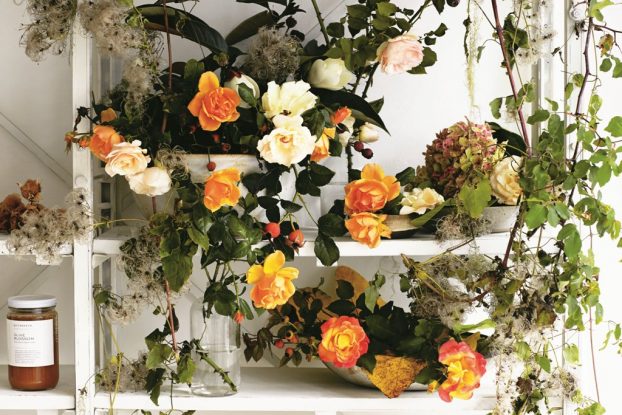
NOVEMBER: roses | clematis gone to seed | magnolia | rose hips | hydrangea

NOVEMBER: roses | clematis gone to seed | magnolia | rose hips | hydrangea

Foraging and gleaning are the subtext to Louesa’s newest project, the book we’ll discuss. Utterly unconventional in the best way, Louesa has charted a course in her professional life that is motivated by her season and nature-first ethos and the results are gathered in a gorgeous new book called Foraged Flora, released in late October. We’ve been trying to coordinate our schedules to record an interview and here it is, just in time to add Foraged Flora to holiday gift lists – for giving and receiving. As I mentioned, listen carefully for details on how you can win a copy of the book!

READ MORE…

Episode 251: Ariella Chezar’s The Flower Workshop Book and Morgan Anderson of The.Flori.Culture’s PhD in – yes, Floriculture

Wednesday, June 22nd, 2016
Morgan Anderson of The.Flori.Culture (left) and Ariella Chezar (right)

Morgan Anderson of The.Flori.Culture (left) (c) Amber Snow; and Ariella Chezar (right) (c) Corbin Gurkin

This week’s episode delivers double the inspiration as you will hear from two guests — one quite familiar to our Slow Flowers community, Ariella Chezar, and one who is an emerging leader in floral design education, Morgan Anderson.

Both interviews were recorded in May and I’m combining them here for an extended episode that will delight you as a creative person and evoke some new ways of thinking about your business model, be it flower farming, floral design or a combination of both.

MEET ARIELLA CHEZAR

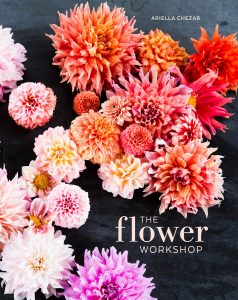
The Flower Workshop BookI am so fortunate to have gotten to know Ariella Chezar over the years. We were first introduced virtually by Berkeley-based designer Max Gill, an incredibly talented floral artist who I profiled (along with the work of photographer David Perry) in The 50 Mile Bouquet.

When I interviewed Max, I asked him to connect me with someone who had influenced his work and he named Ariella. She and I corresponded by email and she contributed a lovely quote about Max’s work for me to use in the chapter about him (and PS, a podcast interview with Max is on my bucket list for the upcoming year).

I promptly ordered my own copy of Flowers for the Table, an evocative book that Ariella created for Chronicle Books in 2002, one that helped propel her into the world of editorial floral design.

Ariella Chezar was in Seattle to headline the spring bloom extravaganza at SWGMC

Ariella Chezar was in Seattle to headline the spring bloom extravaganza at SWGMC

Ariella and I finally met face-to-face in spring of 2013 at Chalk Hill Clematis in Healdsburgh, California. She was there at owner Kaye Heafey’s beautiful flower farm to lead a design workshop and as it turned out, I was there with Chicago-based photographer Bob Stefko to produce a clematis story for Country Gardens magazine. The following year, I interviewed Ariella for this podcast in her former Ariella Flowers retail studio in New York City (if you haven’t heard that episode, follow this link).

So fun to have Ariella in Seattle and to see her response to the beautiful and local flora!

So fun to have Ariella in Seattle and to see her response to the beautiful and local flora!

That was about the time that Ariella teamed up with her favorite editor, SF-based Leslie Jonath of Connected Dots Media (with whom she had created Flowers for the Table), to begin creating The Flower Workshop, the designer’s long-anticipated second book that Ten Speed Press released earlier this year.

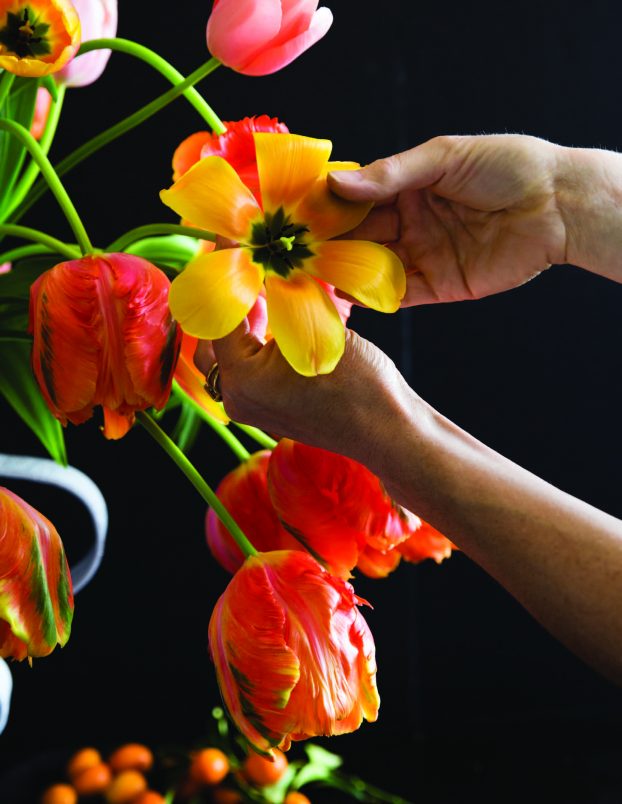
A lovely inside page from "The Flower Workshop," by Ariella Chezar

A lovely inside page from “The Flower Workshop,” by Ariella Chezar: “How to make a tulip ‘float'” – Photography (c) Erin Kunkel

It took about 18 months to bring this lovely tome to life because Ariella and her creative team photographed flowers and her designs in season, on location in both the Bay Area, where Ariella worked in the early days of her career, and in her childhood home of The Berkshires, where she operates a studio and small flower farm in western Massachusetts.

The gorgeous new book expresses Ariella’s lush, whimsical garden style and her true passion for nature, both cultivated and wild.

Why is Ariella’s work so celebrated? In our 2014 podcast interview, Ariella identifies the place (California) and the moment in time (the late 1990s and early 2000s) when she developed, almost unconsciously, her carefree, uncomplicated design aesthetic. Mesmerized by the abundance of carefree, unconstrained vegetation around her, Ariella responded in kind with a loving respect for the elements. In response, her design style was and continues to be unique and iconic.

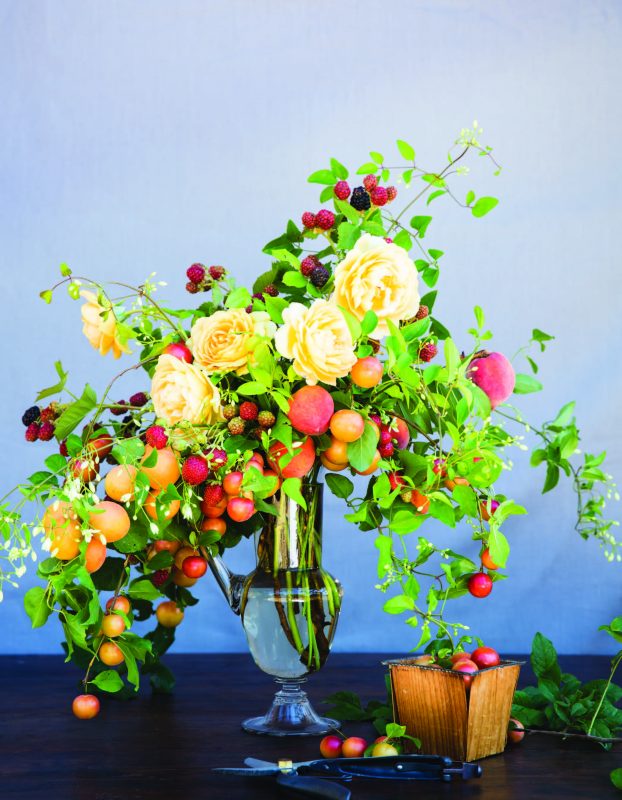
"Summer Fruits," Ariella's interpretation from the orchard.

“Summer Fruits,” Ariella’s interpretation from the orchard. Photography (c) Erin Kunkel

Please enjoy this short interview. It was recorded at the Seattle Wholesale Growers Market on May 25th, after Ariella had spent two full days first touring the flower farms of some of the Market’s members, then teaching a master design intensive based on the content of The Flower Workshop.

READ MORE…

Episode 237: Deadhead ~ The Bindweed Way with Idaho’s Jeriann Sabin and Ralph Thurston

Wednesday, March 16th, 2016
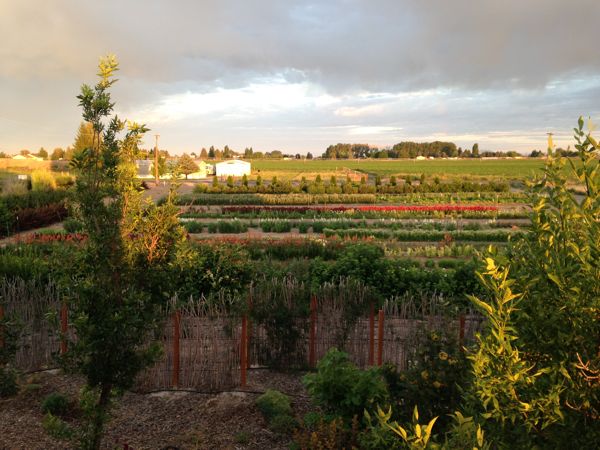
Bindweed Farm in Blackfoot, Idaho ~ God's Country

Bindweed Farm in Blackfoot, Idaho ~ God’s Country

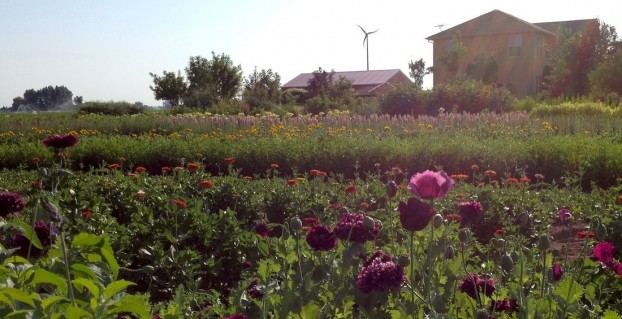
The endless scene of field flowers at Bindweed Farm.

The endless scene of field flowers at Bindweed Farm.

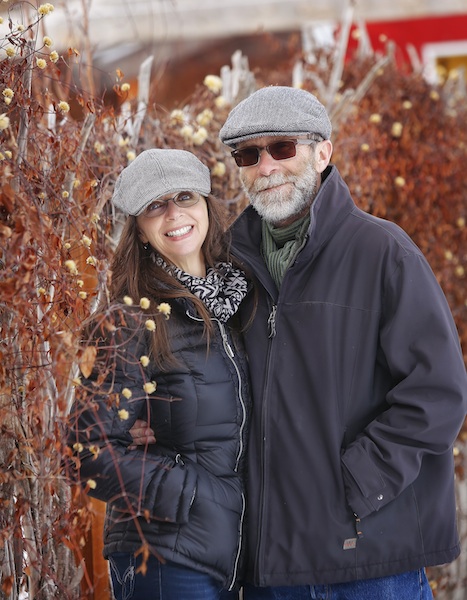
Jeriann Sabin and Ralph Thurston of Bindweed Farm

Jeriann Sabin and Ralph Thurston of Bindweed Farm

Where do remote resort communities like Sun Valley, Idaho, and Jackson Hole, Wyoming, get their flowers?

These high-desert mountain areas aren’t exactly huge agricultural regions, but today’s guests have built their successful flower farming business on serving these two luxury markets.

Please meet flower farmers Ralph Thurston and Jeriann Sabin. The talented wife-husband duo are the owners of Bindweed Farm in the southeast corner of Idaho.

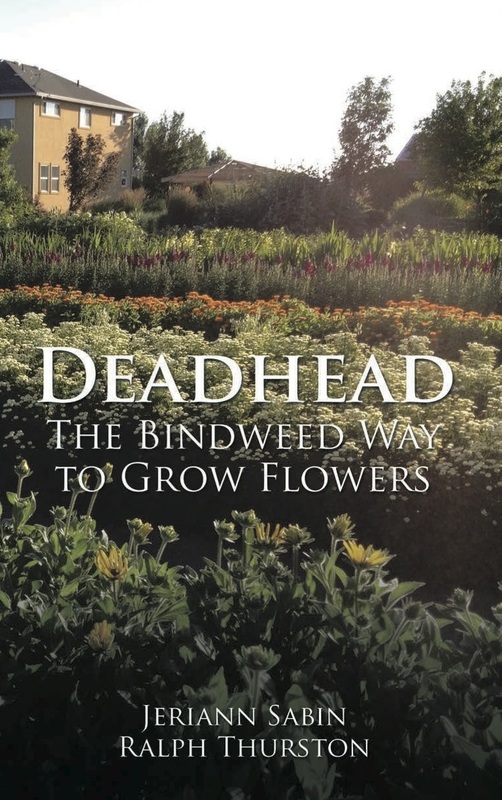
I invite you to celebrate the recent publication of Deadhead~ the Bindweed Way to Grow Flowers, a new book about the joys and challenges of growing cut flowers for commercial sales.

Located about two hours from both of these upscale destination resort markets, Ralph and Jeriann have created a beautiful lifestyle that is supported by flowers.

9221576_orig


Ralph is known as “il maestro”, the brain and the brawn who plans every detail, ordering all plant material, orchestrating the farm’s intricate planting schedule and irrigation scheme.

He is a genius, a green thumb wizard.  And not only that, he cuts nearly every stem, that’s thousands and thousands each season.

Jeriann is the beauty–as in aesthetics.  As an artist, color and texture are her DNA. Ralph may be responsible for the diverse varieties but Jeriann selects the colors.

Never without her trusty smart phone/camera, she photographs every flower on the farm and loves keeping the Bindweed blog.

She processes every stem–conditioning and packaging each bunch of flowers as they come in from the field.  In charge of sales and delivery, she enjoys meeting and consulting with designers each week.

Passionate about small farms and farmers, Bindweed has been a member of ASCFG, the Association of Specialty Cut Flower Growers for over fifteen years.  Each of them have served on the board of directors and have contributed articles for the Cut Flower Quarterly.

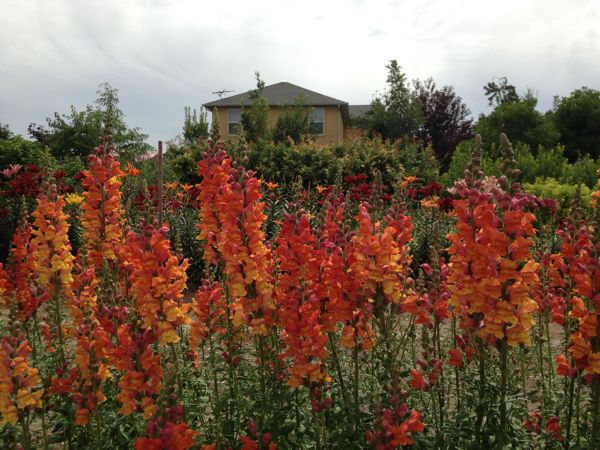
Snapdragons at Bindweed Farm.

Snapdragons at Bindweed Farm.

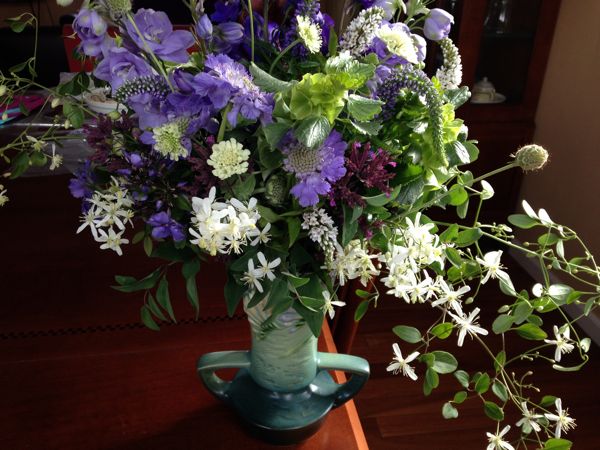
A Bindweed Farm arrangement.

A Bindweed Farm arrangement.

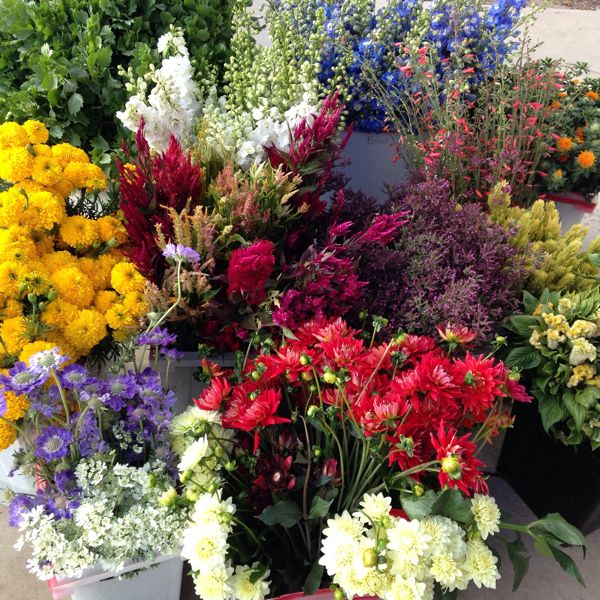
One morning's harvest.

One morning’s vibrant harvest.

Bindweed occupies five acres in the heart of potato country, the eastern edge of Idaho’s high desert plain.  Surrounded by several mountain ranges and cinder cones—extinct volcanoes—the farm enjoys spectacular 360-degree views, rich soil and a short growing season.

The view from Jeriann and Ralph's office. Wow!

The view from Jeriann and Ralph’s office. Wow!

On clear days the tip of the Grand Teton sits up like a shark’s tooth behind the foothills in the east and the resort, Jackson, Wyoming ,is only two hours away. Equidistance to the west lays Sun Valley.  Famed for skiing and hiking, both resorts are outdoor playgrounds for many of the rich and famous. Extremely popular for conferences, think tanks and destination events, they are the perfect market for our flowers.

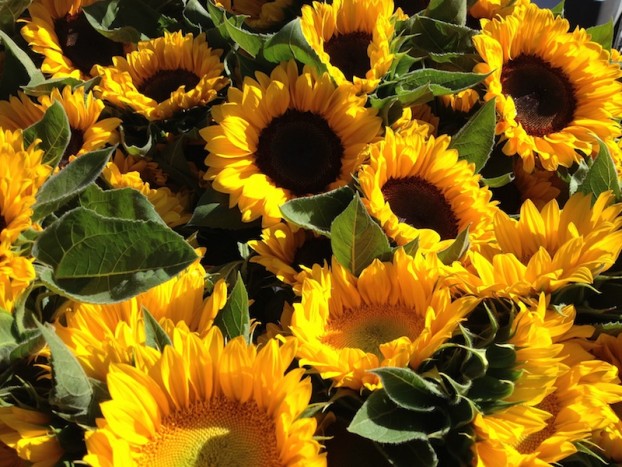
Sunflowers - a Bindweed bestselling crop

Sunflowers – a Bindweed bestselling crop

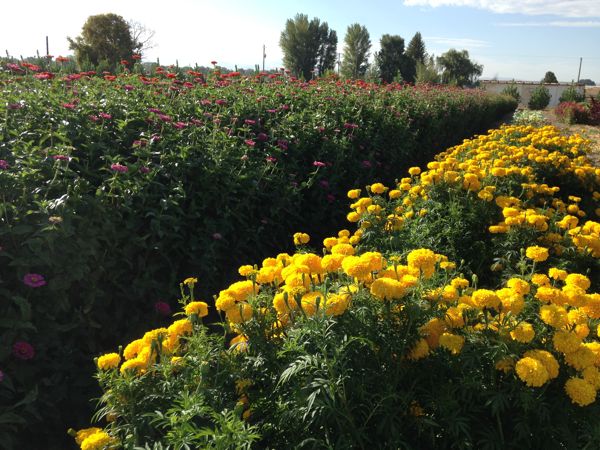
Zinnias and Marigolds at Bindweed.

Zinnias and Marigolds at Bindweed.

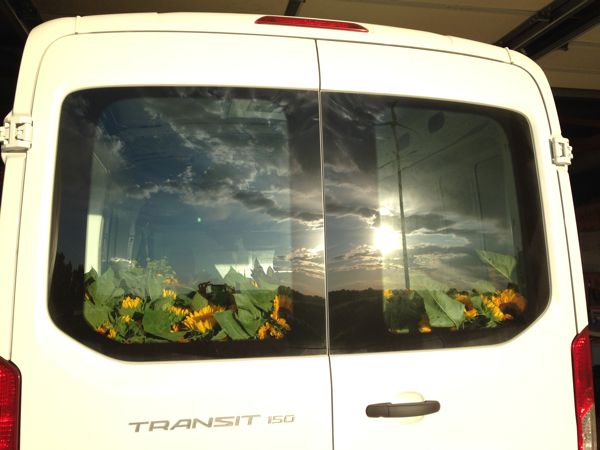
"The Rear View" - the van is loaded and ready for delivery!

“The Rear View” – the van is loaded and ready for delivery!

Here’s how to find Jeriann and Ralph on social media:

Bindweed Farm on Facebook

Bindweed Farm on Instagram

The Slow Flowers Podcast has been downloaded more than 87,000 times by listeners like you. THANK YOU to each one of you for downloading, listening, commenting and sharing. It means so much.

Until next week, you’re invited to join me in putting more American grown flowers on the table, one vase at a time. And If you like what you hear, please consider logging onto Itunes and posting a listener review.

The content and opinions expressed here are either mine alone or those of my guests alone, independent of any podcast sponsor or other person, company or organization.

The Slow Flowers Podcast is engineered and edited by Andrew Wheatley and Hannah Holtgeerts. Learn more about their work at shellandtree.com.
The Flower House Virtual Tour Part 5 with New York floral artists Denise Fasanello and Anne Kilcullen (Episode 234)

Wednesday, February 24th, 2016
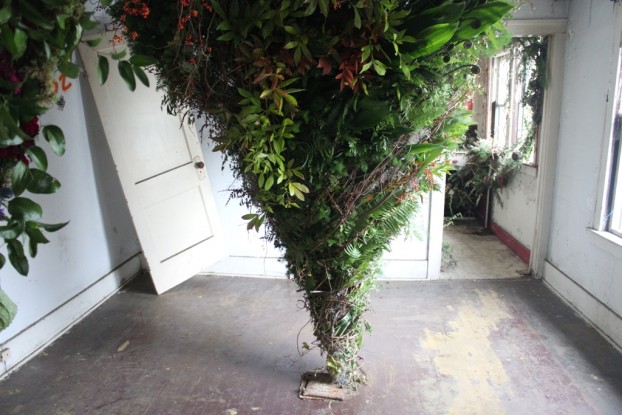
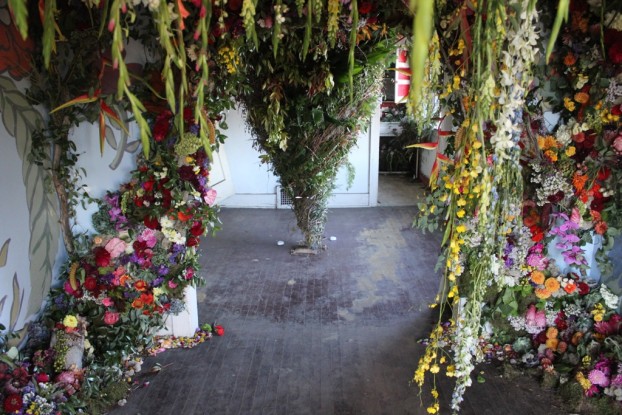
A Floral Whirlwind, created by Denise Fasanello and Anne Kilcullen, NYC-based floral designers, for The Flower House.

A Floral Whirlwind, created by Denise Fasanello and Anne Kilcullen, NYC-based floral designers, for The Flower House.

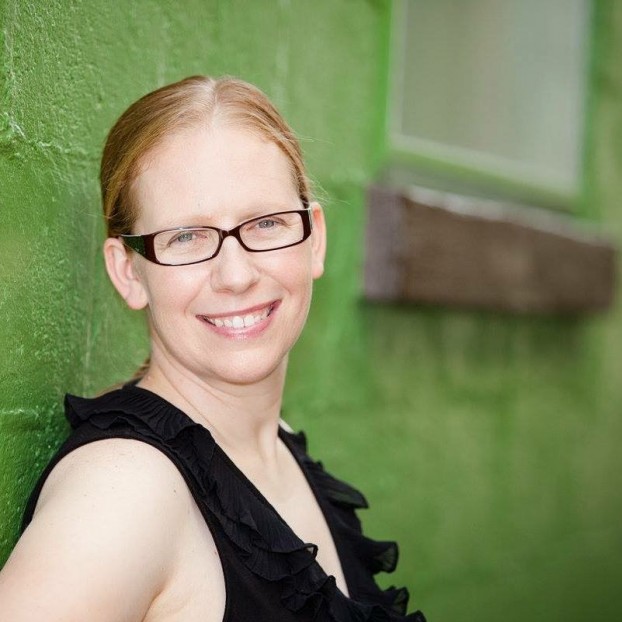
Today’s podcast guests conjured up the most amazing room installation at Lisa Waud’s Flower House last October. It was thoroughly mesmerizing and masterful in so many ways, and while I had a chance to meet and share time with Denise Fasanello and Anne Kilcullen during the days leading up to the Flower House opening on October 16th, we never had enough minutes to record a podcast interview. However, when I was in NYC a few weeks ago, the three of us got together to record today’s episode to share with you.

I love this image that I photographed from an adjacent room, looking toward A Floral Whirlwind.

I love this image that I photographed from an adjacent room, looking toward A Floral Whirlwind.

Denise and Anne are the co-creators of “A Floral Whirlwind,” which occupied the upstairs dining room space at The Flower House. Sculpted of foliage, vines and a few botanical surprises, the kinetic whoosh of a gravity-defying, tornado-like experience in the center of the room was pretty darned incredible for everyone who viewed it.

IMG_0541

READ MORE…

Gatherings in Bloom with Andrea K. Grist, Kansas City area floral artist (Episode 219)

Wednesday, November 11th, 2015
Andrea K. Grist of Andrea K. Grist Floral Art, a Kansas City, Missouri-area floral designer.

Andrea K. Grist of Andrea K. Grist Floral Art, a Kansas City, Missouri-area floral designer.

I have another great conversation to share with you this week, one that is both unique to this guest’s personal story while also thoroughly symbolic of so many who have embraced the Slow Flowers Movement.

Andrea K. Grist is a wedding and event florist and owner of Lee Summit, Missouri, based studio, Andrea K. Grist Floral Art, which serves the Kansas City metro area. Andrea and I met through a Facebook conversation, which is similar to many of our social media/floral connections.

Earlier this year, Andrea reached out and told me she had been listening to the Slow Flowers Podcast and that she also had been reading my books.

That was a flattering connection, of course, but what impressed me since then, over the course of the past six or eight months, is that Andrea shared with me links to one of her blog posts discussing her visits to Missouri flower farms and featuring her designs and styled photo shoots using locally grown and American grown flowers.

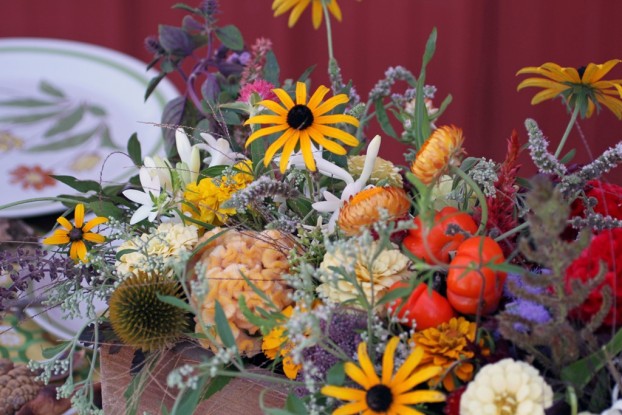
All-local Missouri flowers designed by Andrea K. Grist (c) Erin Hernandez-Reisner

All-local Missouri flowers designed by Andrea K. Grist (c) Erin Hernandez-Reisner

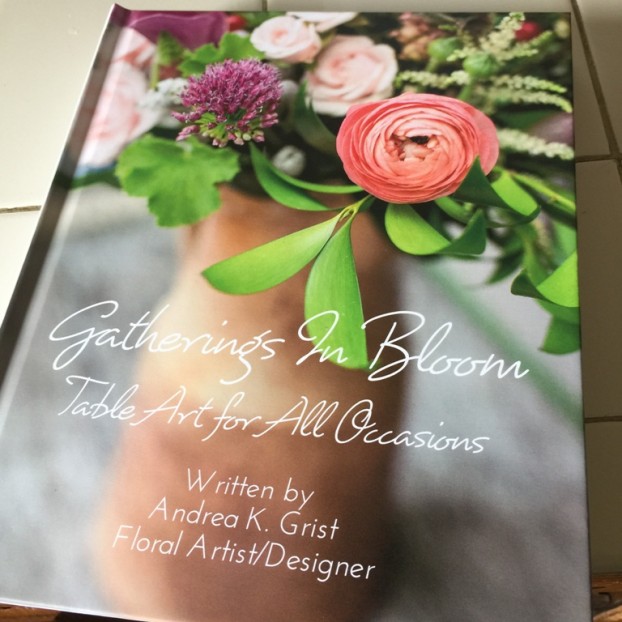
Andrea just published "Gatherings in Bloom" as a self-published e-book, also available as a print-on-demand book.

Andrea just published “Gatherings in Bloom” as a self-published e-book, also available as a print-on-demand book.

Eventually we set up a phone date to talk further and I asked Andrea to share her story on this podcast.

Andrea has had a successful career for more than 20 years, but in recent years, she wanted to stretch herself as a designer and as a small business owner.

She started seeking out what was going on in her profession and landed on the Slow Flowers Movement.

Even though most florists in her area weren’t asking for local flowers, Andrea began to do so.

One vase, one bouquet at a time, her work is changing the conversation in her community and for her customers.

Andrea is also a member of the Chapel Designers, and she recently self-published Gatherings in Bloom-Table Art for All Occasions with images by Freeland Photography.

The book is filled with beautiful images of table decor, floral design, and hometown stories about her inspirations and floral passions.

Missouri-grown flowers by Andrea K. Grist.

Missouri-grown flowers by Andrea K. Grist.

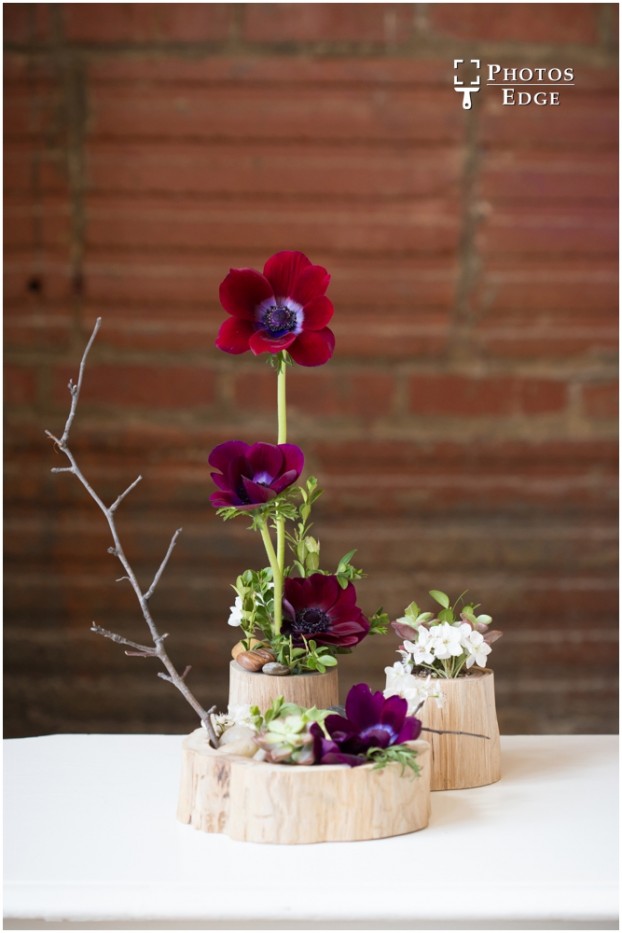
A floral still-life (c) Erin Hernandez-Reisner

A floral still-life with local flowers and succulents (c) Erin Hernandez-Reisner

Meet and follow Andrea K. Grist here:

Read Andrea’s Blog Here

Andrea on Facebook 

Andrea on Twitter

Preview and order Gatherings in Bloom here

Before we sign off, I have an announcement to share.

There is an abundance of holiday floral design and wreathmaking workshops going on right now, but one scheduled for next week promises to be unlike any other workshop I’ve heard about.

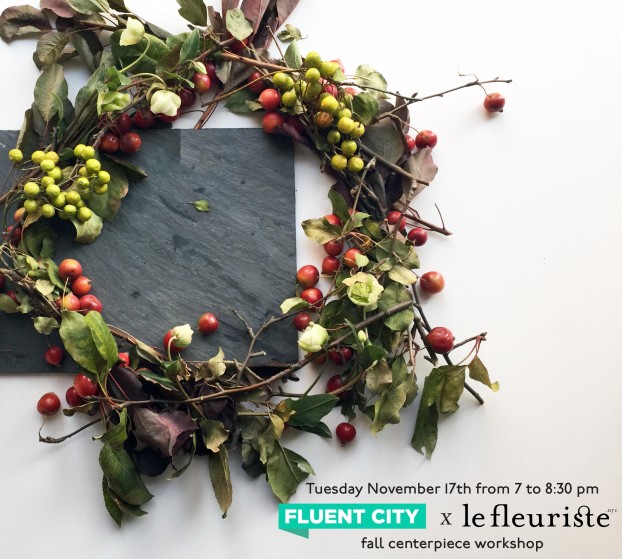
On November 17th, New York-based Slow Flowers member Elena Seegers of Le Fleuriste will be teaching a fall centerpiece how-to with branches fruits and berries.

Here’s the fun twist: The workshop will be held at Fluent City and include French conversation and vocabulary.

As Elena explained it to me Fluent City is a cool language start up where you learn and converse in different languages through social gatherings and workshops.

Floral Design and French Conversations!

Floral Design and French Conversations!

“Students will learn how to choose and use branches and berries for their table designs, taught in a mixture of French and English.” I don’t know about you, but I would simply love to be part of this evening, which is affordably priced. [note: in the Podcast introduction I inaccurately stated a workshop price of $65. The actual price is $80 per student]

Thanks to the Slow Flowers Tribe, this podcast has been downloaded more than 71,000 times. Whether you’ve just discovered this Podcast or whether you’re a longtime listener, don’t forget that we’ve archived all of the past episodes at Debraprinzing.com – more than two years of conversations with American flower farmers and floral designers – leading voices in the progressive, American-grown community.

Until next week please join me in putting more American grown flowers on the table, one vase at a time. And If you like what you hear, please consider logging onto Itunes and posting a listener review.

The content and opinions expressed here are either mine alone or those of my guests alone, independent of any podcast sponsor or other person, company or organization.

The Slow Flowers Podcast is engineered and edited by Andrew Wheatley and Hannah Holtgeerts. Learn more about their work at shellandtree.com.
Shade Plants for Floral Design with Author Ken Druse (Episode 204)

Wednesday, July 29th, 2015
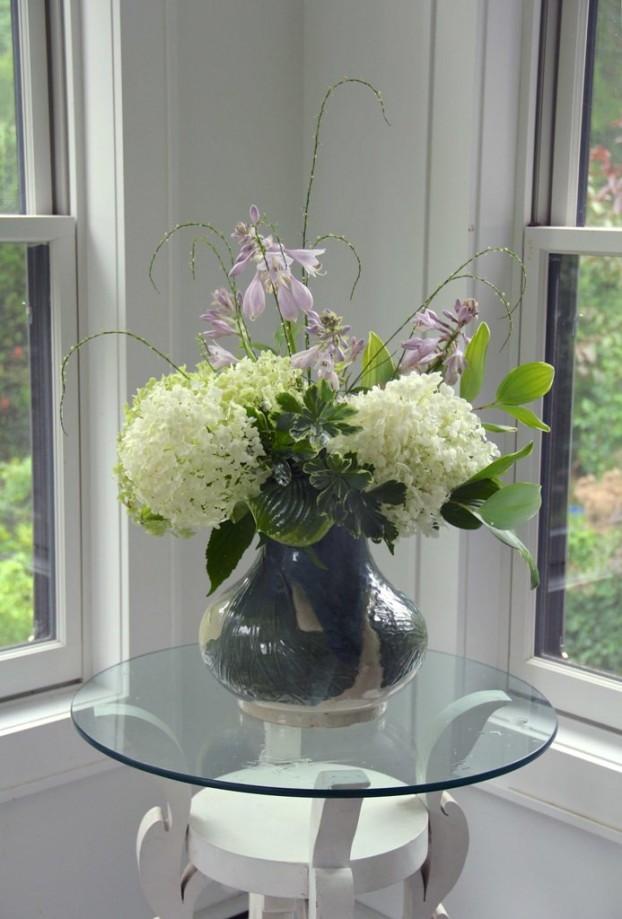
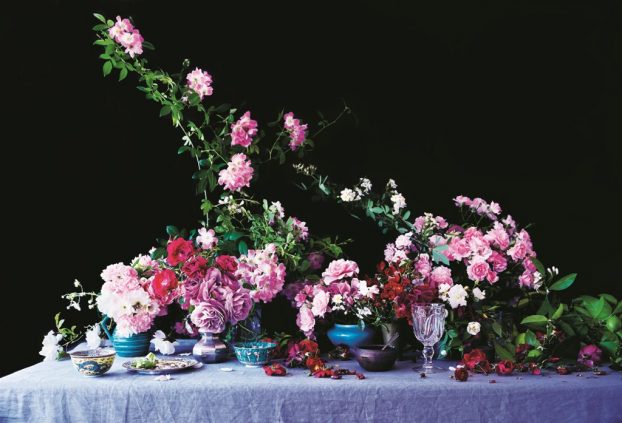
While recording our conversation for this podcast episode I asked Ken if he would design a shade-lover's floral arrangement and share a photo. Here's what he harvested from his garden earlier this week. Beautiful!

While recording our conversation for this podcast episode I asked Ken if he would design a shade-lover’s floral arrangement and share a photo. Here’s what he harvested from his garden earlier this week. Beautiful! See footnotes for ingredient list.

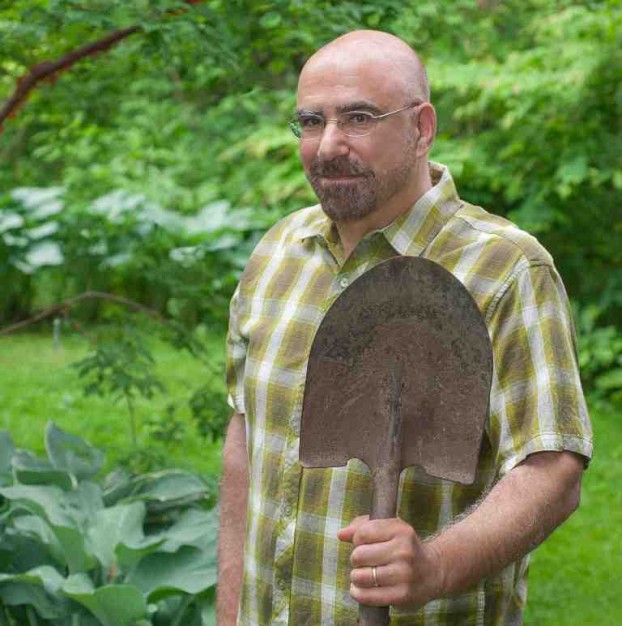
Hear from Ken Druse, who shares his love of shade gardening and all its joys.

Hear from Ken Druse, who shares his love of shade gardening and all its joys.

Author/photographer, lecturer and radio host Ken Druse has contributed to nearly every garden and home design magazine in America.

He is probably best known for his books, which the New York Times called “bibles for serious gardeners.”

The American Horticultural Society chose his book, The Passion for Gardening, as best book of the year; and the Wall Street Journal recommended it as one of the “five garden books to own.”

Ken has authored 20 gardening books, including recent titles PLANTHROPOLGY: The Myths, Mysteries, and Miracles of My Garden Favorites and Natural Companions: The Garden Lover’s Guide to Plant Companions, which features both Ken’s photography and that of digital artist Ellen Hoverkamp.

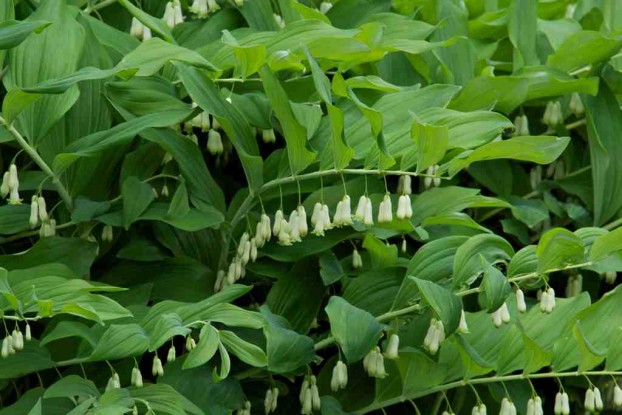
Solomon's seal (Polygonatum hybridum), a popular spring "cut" for floral design.

Solomon’s seal (Polygonatum hybridum), a popular spring “cut” for floral design.

In 2004, the Garden Club of America awarded Ken the Sarah Chapman Francis medal for lifetime literary achievement. In 2013 Garden Writers Association awarded Ken the gold medal for photography and the silver medal for writing. In 2013, the Smithsonian Institute announced the acquisition of the Ken Druse Collection of Garden Photography, comprising 100,000 images of American gardens and plants.

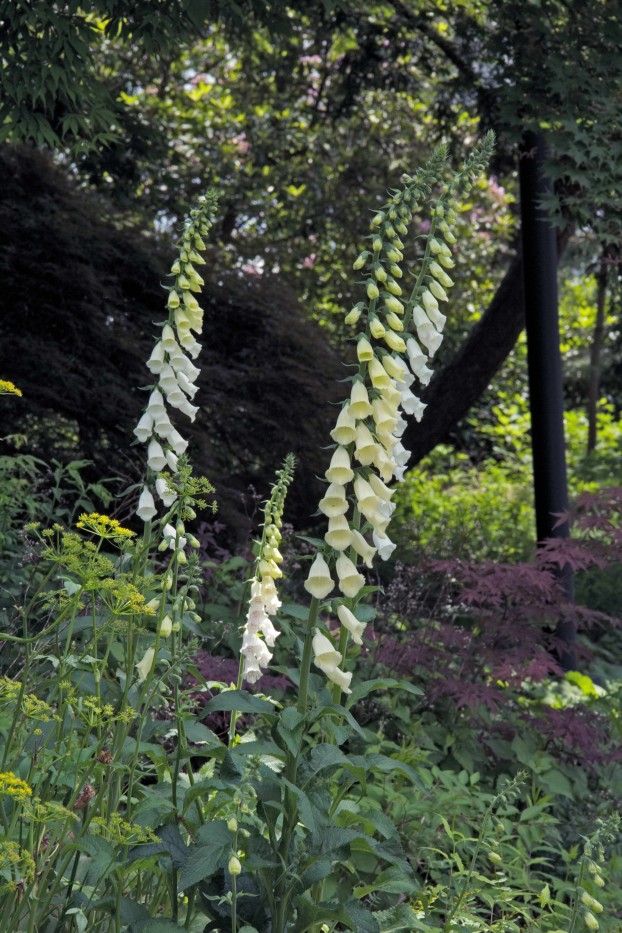
Digitalis purpurea 'Alba' from p. 179.

Digitalis purpurea ‘Alba’ from p. 179.

I have interviewed Ken for stories about his work that appeared in the San Diego Union Tribune and the Los Angeles Times, so it is with great pleasure that I welcome him to the Slow Flowers Podcast. Ken is a pioneer of gardening podcasts, having been on the air for a decade with his national podcast and public radio show “Ken Druse Real Dirt,” which listeners can hear through their computers and iPods.

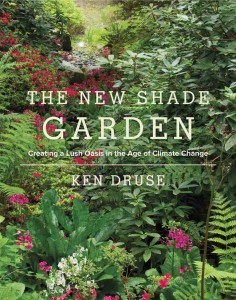
web_cover New Shade copy 3 - CopyWe’re here today to discuss Ken’s timely new book, The New Shade Garden: Creating a Lush Oasis in the Age of Climate Change, published in May by Stewart Tabori & Chang.

Ken reveals the low-stress environment of shade (cooler temperatures; fewer water demands) and how shade is extremely beneficial for our plants, our planet and us.

The thriving garden of the future might just exist in the understory!

I come to floral design from the residential garden and a love of plants. And the floral designers in my world are always on the lookout for uncommon, ephemeral lovelies.

Guess what? Many of those special fronds, flowers, leaves and branches can be found in the shade garden. Learning from a master like Ken Druse is a huge treat — I hope you found what he shared as inspiring as I did.

I highly recommend this comprehensive guide to “all things shade.” For gardeners and floral designers alike, “The New Shade Garden” is packed with inspiration and with ideas for having a lush, textural and fragrant garden where many colors exist!

logo KDRD plainAnd just for fun, to get a flavor of Ken’s wonderful and welcoming interview style (and to hear his radio-perfect voice!) here are links to the two Ken Druse Real Dirt episodes where I appeared as his guest:

May 11, 2012, “Field to Vase”

March 22, 2013, “The Local Flower Movement’s Champion”

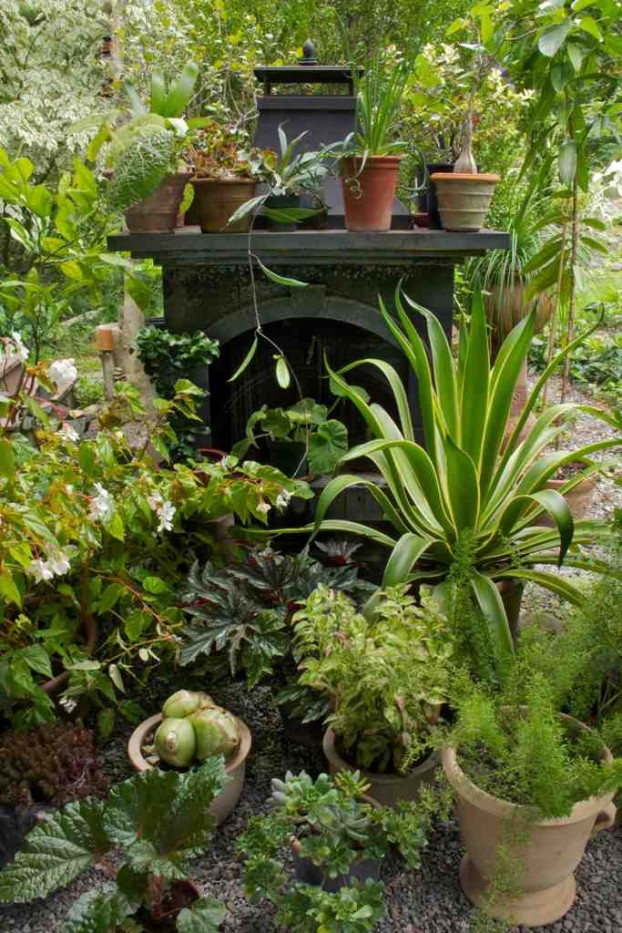
From page 223 of The New Shade Garden: Ken repurposed an outdoor fireplace as a staging platform for his summering houseplants.

From page 223 of The New Shade Garden: Ken repurposed an outdoor fireplace as a staging platform for his summering houseplants.

On his web site, Ken writes:  Spending time in nature, especially nurturing plants, strengthens our connection with the natural rhythms of life. In the garden, we often experience a kind of “meditation therapy”–weeding actually becomes a time to sort through the other parts of our busy lives. 

Hosta clausa in all of its glory brightens up any dark spot in the garden. From page 80.

Hosta clausa in all of its glory brightens up any dark spot in the garden. From page 80.

I couldn’t agree more, and like Ken, I see the garden as a metaphor for life.

On August 15th, if you are in the Northeast, you have a chance to hear Ken Druse lecture on shade; take his hands-on garden-photography workshop; shop a rare-plant sale; and tour the garden of fellow garden writer, editor and podcaster Margaret Roach in Copake Falls, New York as part of the Garden Conservancy Open Day in her area. Here are details for purchasing tickets and to find the full day’s schedule.

Follow Ken Druse on Facebook here.

Find Ken Druse on Great Garden Speakers here.

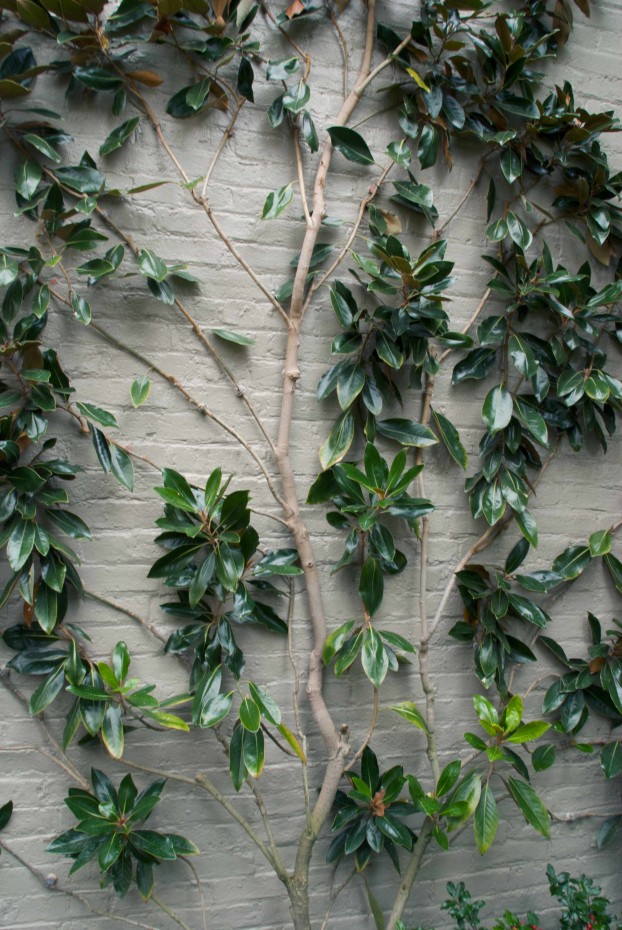
A pale-colored wall illuminates the garden where a Magnolia grandiflora tree is espaliered.

A pale-colored wall illuminates the garden where a Magnolia grandiflora tree is espaliered.

Ken Druse’s “The New Shade Garden” floral arrangement includes:

Hydrangea arborescens ‘Annabelle’

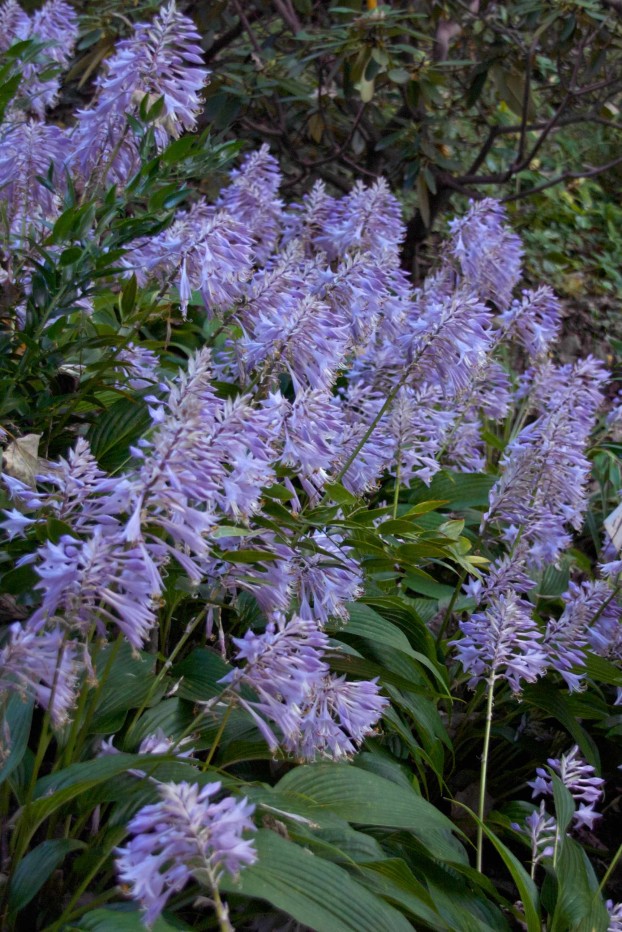
Foliage from three different hostas

Flowers from two hosta varieties

Polygonatum odoratum ‘Variegatum’ (slightly faded to green)

Pachysandra terminalis ‘Variegata’

And “whips” (actually flower spikes) from Persicaria virginiana ‘Painter’s Palette’

Listeners like you have downloaded this podcast nearly 58,000 times. THANK YOU to each and every one of you for downloading, listening, commenting and sharing. It means so much.

Until next week, you’re invited to join me in putting more American grown flowers on the table, one vase at a time. And If you like what you hear, please consider logging onto Itunes and posting a listener review.

The content and opinions expressed here are either mine alone or those of my guests alone, independent of any podcast sponsor or other person, company or organization.

The Slow Flowers Podcast is engineered and edited by Andrew Wheatley and Hannah Holtgeerts. Learn more about their work at shellandtree.com.
The Flower Farmer’s Year with Georgie Newbery of Common Farm Flowers UK (Episode 186)

Tuesday, March 24th, 2015
Georgie Newbery of Common Farm Flowers in the UK.

Georgie Newbery of Common Farm Flowers in the UK.

In the past year, in addition to this podcast’s primary focus on American flowers, farmers and designers, I’ve interviewed a handful of slow-flowers-minded farmers and designers based in the U.K. and Australia.

There are obvious parallels between these folks and our own renaissance and return to domestic flowers. Sadly, as we’ve experienced in our own native land, the floral industry in many industrialized nations has been outsourced and hurt by competition from countries with low labor costs and less stringent environmental practices.

Common Farm Flowers' "jam jar posies."

Common Farm Flowers’ “jam jar posies.”

I’m inspired by the creativity and kindred spirit of all flower farmers who want to rekindle the interest in homegrown flowers and the mindful florists who want to differentiate themselves in the marketplace by sourcing local, seasonal and domestic flowers. Today’s guest is a perfect voice to invite into this conversation.

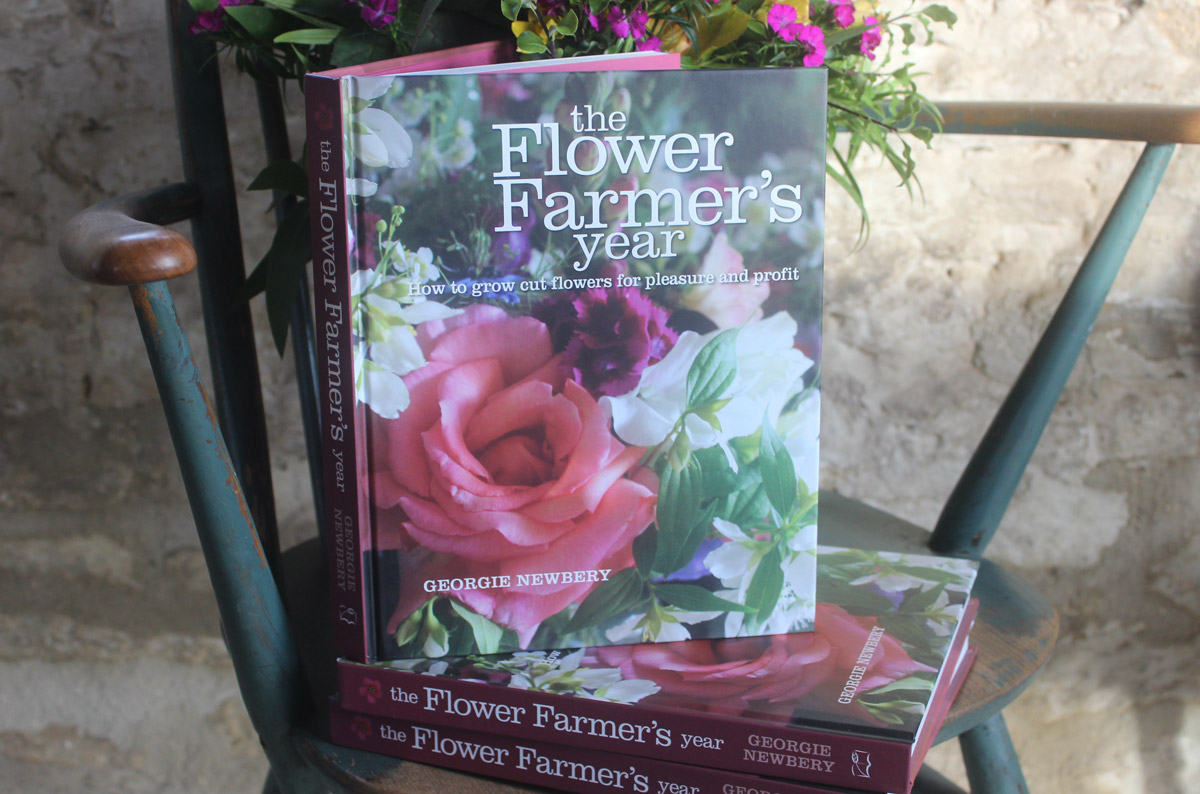
Georgie's new book, "The Flower Farmer's Year," was recently released in the U.S.

Georgie’s new book, “The Flower Farmer’s Year,” was recently released in the U.S.

Please meet Georgie Newbery, a British farmer-florist who owns Common Farm Flowers with her husband Fabrizio Boccha.

This husband-and-wife team grow British cut flowers on a beautiful plot between Bruton and Wincanton in Somerset, a few hours west of London.

The occasion for our interview is the February 15th U.S. publication of Georgie’s brand new book, “The Flower Farmer’s Year, how to grow cut flowers for pleasure and profit,” published by Green Books UK and available online at Powell’s Books and Amazon, among other places.

Common Farm Flowers is an artisan florist company, which means Georgie and Fabrizio grow nearly everything used in their floristry, expressing floral design as “a craft in which artistic flair is combined with imaginative use of the material at hand to make arrangements which are full of life and air, which dance.”

Georgie's color sensibility  is modern and romantic.

Georgie’s color sensibility is modern and romantic.

Launched in 2010, Common Farm Flowers has taken off in the past five years, despite its rural locale. As Georgie writes on the Common Flowers Farm web site: “There’s clearly a market for British grown/eco cut flowers and we’re delighted by the reception we’ve had for the flowers we grow here and the floristry we do.”

Common Farm Flowers sends British flower bouquets by post twelve months a year; it supplies and arranges lush wedding flowers throughout Somerset, the South West, in London and beyond and runs workshops on subjects ranging from Flower Farming for Beginners to Do Your Own Wedding Flowers.

The farm has taken its flowers to RHS Chelsea, RHS Chelsea in Bloom, and has been featured in British Country Living, The English Garden, The Telegraph and more. Georgie frequently gives talks to horticulture societies and gardening clubs on growing cut flowers for the home, planting a cut flower border, and seminars on dahlias and sweet pea cultivation.

Another lovely series of posies by Common Farm flowers.

Another lovely series of posies by Common Farm flowers.

The Flower Farmer’s Year covers how to grow your own cut flowers to fill your house with the gorgeous colors and heavenly scents of your favorite blooms, knowing that they haven’t travelled thousands of miles. Georgie combines boundless passion with down-to-earth guidance and practical advice, drawing on her own experiences as an artisan flower farmer and florist as she takes readers through:

  • how to start a cut-flower patch
  • what to grow: including annuals, biennials, perennials, bulbs & corms, shrubs, roses, dahlias, sweet peas, herbs & wildflowers
  • cutting, conditioning and presenting cut flowers
  • starting a cut flower business
  • where to sell
  • marketing and social media
  • an annual planner

Whether you want to grow for your own pleasure or start your own business, The Flower Farmer’s Year is the perfect guide to add to your library.

Here’s how to find Georgie at her social places:

Facebook

Instagram

Pinterest

I’ve been in San Francisco this past week, to speak at the SF Flower & Garden Show, attend the Association of Specialty Cut Flower Growers meeting in San Jose and to scout gardens and flower farms in the Santa Cruz region for future stories. In the coming weeks you’ll hear from some of the people I’ve met on this trip — and I know you’ll find their stories a source of inspiration for your own endeavors.

Thanks to listeners, this podcast has been downloaded more than 40,000 times. If you like what you hear, please consider logging onto Itunes and posting a listener review.

The content and opinions expressed here are either mine alone or those of my guests alone, independent of any podcast sponsor or other person, company or organization.

The Slow Flowers Podcast is engineered and edited by Andrew Wheatley and Hannah Holtgeerts. Learn more about their work at shellandtree.com


Playing with Flowers and Digging Deep with Fran Sorin (Episode 175)

Wednesday, January 7th, 2015
Awaiting early tulips and hyacinths . . . we're just weeks away!

Awaiting early tulips and hyacinths . . . we’re just weeks away!

3233915861_d6cc494485_o

Before we get started, I want to announce our new Slow Flowers Podcast Sponsor for 2015 – the California Cut Flower Commission.

The Commission is committed to making a difference as an advocate for American Grown Flowers.

I’ll be working closely with CCFC on a number of initiatives to promote domestic flowers in 2015, and I promise to keep you posted as details unfold.

SlowFlowersChallengeCover.jpg (2)


Today on the Slow Flowers Podcast we launch the Slow Flowers Challenge, share all about a new urban flower farm in Pittsburgh, and explore the meaning of flowers on a personal level with author and gardening personality Fran Sorin.

To kick off 2015, I invite you to join in the fun and creativity of the Slow Flowers Challenge. This project was inspired by Katherine Tracy, a talented plantswoman, designer and owner of Avant Gardens Nursery in Dartmouth, Massachusetts.

Katherine blogged about taking the “Slow Flowers Challenge” after hearing my presentation at Blithewold Mansion and Gardens in Rhode Island this past fall…and she started using the hashtag #slowflowerschallenge, which in turn prompted other people to create seasonal bouquets, photograph them and share their designs on Facebook, Instagram and personal blogs.

Katherine’s artistic arrangements reveal her love of the natural world, the seasons, the plants, the gifts of the garden and wilder places. I’ve so enjoyed seeing these bouquets pop up across the web – thoroughly serendipitous and seasonal – representing pure joy for a moment in time. SO I thought, “why don’t we make the Challenge available to everyone who loves local flowers?”

I encourage you to check out these very simple rules and download a free SlowFlowersResourceGuide2015 here. Sign up to receive weekly design updates and follow a link to the Slow Flowers Pinterest Gallery, where you are welcomed and encouraged to post your seasonal arrangements.  Let’s have fun, make beauty, and change the American floral industry with new (and more seasonal) habits.

Green_Sinner_IMG_1067

Briefly, before getting to our main guest, I also invited Jonathan Weber to share what’s going on with greenSinner, a Pittsburgh-based floral design, wedding and event studio and urban micro flower farm that he owns and runs with partner Jimmy Lohr.

Past guests of this podcast, the two have made good on their dream — to buy more land and establish a working flower farm. Jonathan and Jimmy recently purchased 4 acres of long-neglected land inside the Pittsburgh city limits. It’s called Midsummer Hill Farm.
I couldn’t be more excited to see them take this major step, but so much is needed to get seedlings and bulbs into the soil in time for flowers to bloom in 2015. Here’s a recent article featuring greenSinner, Midsummer Hill Farm and Jimmy and Jonathan’s crowd-funding campaign on Indiegogo, which runs through January 27th. I encourage you to check it out and perhaps invest in the growth of local flowers in Pittsburgh.

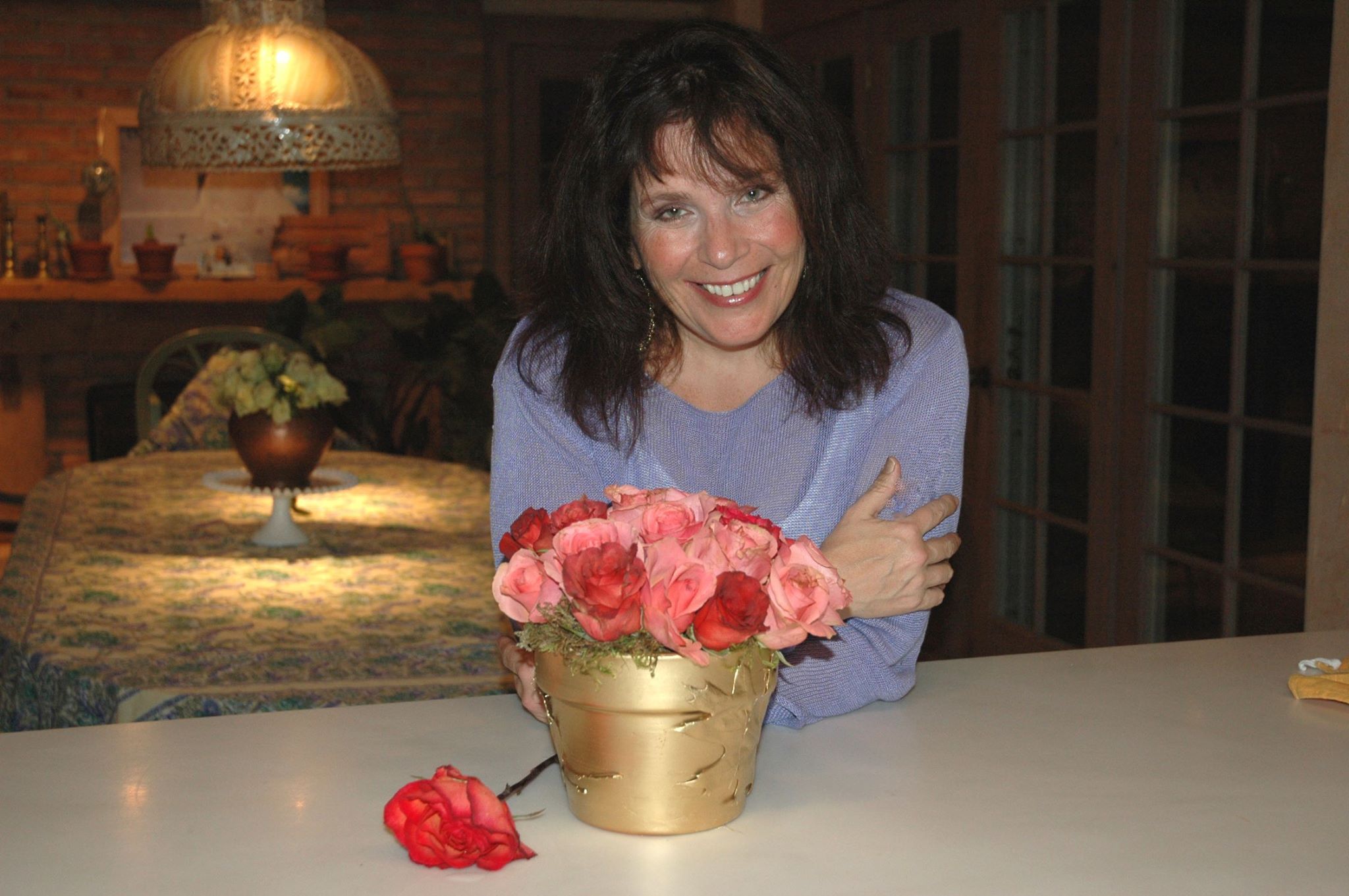
Fran Sorin, author of "Digging Deep."

Fran Sorin, author of “Digging Deep.”

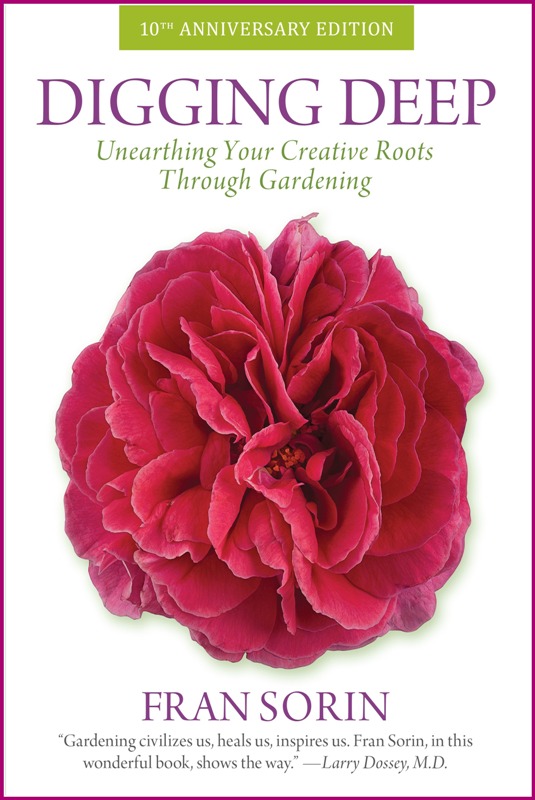
The just-released, 10th Anniversary Edition of "Digging Deep." Read on to find out how you  can enter to win!

The just-released, 10th Anniversary Edition of “Digging Deep.” Read on to find out how you can enter to win!

Today’s guest Fran Sorin is an author, gardening and creativity expert, and deep ecologist. Her book, Digging Deep: Unearthing Your Creative Roots Through Gardening, was groundbreaking when published in 2004. It was the first book to address gardening in the context of creativity, and as a tool for well-being and personal transformation. Here is a link to my blog post about “Digging Deep for Flower Lovers,” sharing favorite excerpts from Fran’s book.

Fran recently released an updated 10th Anniversary Edition of Digging Deep. The book is even more vital today, because our culture has become increasingly obsessed with technology and progressively more “nature deprived.”

From the moment Fran decided she wanted to share her passion for gardening with a large audience and approached the local Fox TV station in Philadelphia about the idea, she became a fixture on the TV circuit. She spent years as a gardening authority on Philadelphia’s Fox and NBC stations; she was the regular gardening contributor on NBC’s Weekend Today Show, and made several appearances on CNN, MSNBC, Lifetime, HGTV, DIY, and the Discovery Channel. She is one of the creators of the popular weekly dose of garden news at Gardening Gone Wild Blog.

Fran is celebrating her tenth year as a CBS Radio News correspondent. Her Digging Deep gardening features are heard several times a week on CBS Radio stations throughout the United States. She has also written dozens of articles about gardening and well-being for USA Weekend Magazine, Radius Magazine, and iVillage.

She has spent more than twenty-five years initiating and working on community projects that have served the diverse community of West Philadelphia, most recently initiating a community garden and learning center on the grounds of a church in an underprivileged neighborhood of West Philadelphia.

Even prior to becoming an ordained interfaith minister, Fran was ministering to folks whether she was taking on the role as a garden designer, a media trainer, a TV personality, or a radio host. Fran’s greatest strengths are in connecting to audiences and individuals and galvanizing them to take action. In these tumultuous and technologically obsessed times, when so many of us feel stuck, scared, and disconnected from ourselves and others, her optimistic, grounded values, and empowering message are needed more than ever.

Here is Fran’s video – she’s a woman on the street, sharing her inspiring “Give a Flower. Get a Smile” project:

Follow Fran here:

Facebook

Give a Flower Facebook Page

Twitter

If you want to participate in the drawing for a free copy of Digging Deep, post a comment about your earliest memory of gardening or experiencing nature. Your comment enters you into the drawing, which takes place at midnight Pacific Time, this Saturday, Jan. 10th. We’ll announce the winner next week.

My personal goal is to put more American grown flowers on the table, one vase at a time.  Listeners like you have downloaded the Slow Flowers Podcast more frequently than ever before.  We’re at nearly 30,000 downloads, which will be an exciting milestone to reach in the coming week. So I thank you!!! If you like what you hear, please consider logging onto Itunes and posting a listener review.

The Slow Flowers Podcast is engineered and edited by Andrew Wheatley and Hannah Holtgeerts. Learn more about their work at hhcreates.net.

A Quiet Sunday Morning

Sunday, December 7th, 2014

A Seattle Sunday Morning: 43 degrees F. Foggy and damp. It’s supposed to get up to 53 degrees F this afternoon, so who am I to complain about a little morning fog?

I woke up grateful for many things, including the sense that my life has slowed down for this 30-day holiday period. I’ve purposely limited my social commitments so as to save my energy for the creative projects that are tugging at me. This afternoon, I might get the sewing machine out and see what I can fashion from my collection of pretty scraps and remnants.

One lovely suprise happened last night, just as I was about to turn off the back episode of “Madame Secretary” I was watching and crawl under the flannel sheets.

Fran Sorin, yes that Fran Sorin – of Digging Deep and Gardening Gone Wild fame, sent me a note to say she devoted her latest CBS Radio gardening segment to “Slow Flowers.”

I’m hoping to get the audio posted, but right now, let me just say THANK YOU so much to Fran! What a generous gift of support from one serious flower lover to another. She gave me the transcript, which I’ll share here:

CBSradioCBS RADIO SPOT

December 5, 2014-4- Slow Flowers

If you’re thinking about sending flowers to someone for the holidays, I’ve got a suggestion for you.

This is Fran Sorin for DIGGING DEEP.
A gardening colleague, Debra Prinzing, has singlehandedly created and committed her life to developing a nationwide online directory of florists, shops, and studios who design with American-grown flowers. It’s call Slow Flowers.
In the U.S., we spend close to $28 billion a year on floriculture. Around 80% of the cut flowers bought in the U.S. are imported.
The Slow Flower Movement is following the sustainable values of the Slow Food Movement—which is to buy local, lower the carbon footprint, enrich the local economy, and preserve local farmland.
To learn more and buy magnificent flowers from local American growers, click on slowflowers.com

This is Fran Sorin for CBS Radio News.

GLOBAL CHORUS

A lot like Fran’s unepected gift of a 1-minute endorsement heard on radios around the country, this next item also gets filed under the “out of the blue-gift from the universe” category.

In April 2013, I received an email from a stranger. Someone named Todd E. MacLean who just reached out with an invitation to get involved with a new book of essays entitled “Global Chorus.” Here’s what he wrote:

Global Chorus, edited by Todd E. MacLean

Global Chorus, edited by Todd E. MacLean

My name is Todd E. MacLean and I’m the Editor-in-Chief for an international fundraiser anthology that is currently being compiled called Global Chorus: A 365-Person Anthology of Worldwide Concern and Enduring Hope.

With collected words from Jane Goodall, Nelson Mandela, David Suzuki, Stephen Hawking, Bill McKibben, R.K. Pachauri – Chair of the Intergovernmental Panel on Climate Change, Ashish Ramgobin – great granddaughter of Mahatma Gandhi, Frances Moore Lappé, Paul Hawken, Trudie Styler, Gloria Flora, Wes Jackson, Wendell Berry, Kenny Ausubel, Joel Salatin, Alexandra Cousteau, Archbishop Desmond Tutu, The Dalai Lama, and many, many more, Global Chorus is growing into a powerful anthology for a world in crisis; and through this letter, I am now extending to you an invitation to write a brief response for inclusion in the Global Chorus anthology.

Global Chorus is a 365-day compendium, bringing together 365 contemporary voices and sharing in the experience and wisdom of many of humanity’s most concerned citizens. Contributors are asked to express their thoughts on the future of the planet, and the anthology will present a different contributor’s response for each day of the year. Proceeds from the sales of Global Chorus will go toward World Wildlife Fund, The Jane Goodall Institute, The David Suzuki Foundation and The International Committee of the Red Cross.

Contributors to Global Chorus have one page (suggested length of up to 250 words, to a maximum of 350 words) to answer the anthology’s question:

“Do you think that humanity can find a way past the current global environmental and social crises? Will we be able to create the conditions necessary for our own survival, as well as that of other species on the planet? What would these conditions look like? In summary, then, and in the plainest of terms, do we have hope, and can we do it?”

Something resonated with me about this project and I decided to say “YES.”

I used Todd’s invitation to bring flower farming and flowers into the dialogue about global environmental issues and the individual choices we make to respect the planet.

Todd helped me with a few edits and here is what ended up in the book, one of 365 essays (you can find mine on the page for October 19th). Learn more about Global Chorus and find a bookstore near you to purchase a copy. I’ll be giving these books as gifts this holiday season.

Debra Prinzing

It feels daunting to think one person can change

things in this world. That is when I turn from the

macro to the micro and focus on individual action.

A single gesture takes on meaning far greater than

me, my family, my block, my neighbourhood, my

city. When that gesture is frequently repeated, its

impact is exponential.

I have always turned to flowers, those growing

in my garden and in the fields of my flower farmer

friends.

The symbolic gesture of giving flowers has

been practised for generations. Flowers appear in

history, in literature, in every culture and in every

land. Gathering flowers as a show of affection or a

celebratory display is no small thing. It is a timeless,

universal practice.

Flowers connect humans with Nature and

heighten our awareness of the seasons. They root

us to our place on the planet. Our senses see, smell,

touch (and even hear and taste) botanical beauty.

This is a truth understood by all humans.

I do believe that flowers parallel food. We don’t

often eat petals and buds, but they feed us nonetheless.

The spiritual sustenance of flowers has caused

me to think more intentionally about how I consume

them. I have been inspired to start the Slow

Flowers movement, a conscious practice of sourcing

flowers grown close to me rather than ones shipped

to me from afar. When I choose local flowers, I am

preserving farmland, ensuring economic development

in rural areas and keeping farm jobs viable.

As an advocate for those who grow flowers

enjoyed by so many, I believe it’s important to remember

the human toil required to plant, cultivate

and harvest those blooms. I find hope in honouring

the flower farmer, hearing his or her story and

acknowledging the farmer’s role in bringing beauty

into our lives. By making a simple connection between

flower and farmer we humanize an entire

industry, one that has previously been so disconnected

from us. It is perhaps more indirectly rather

than directly world changing, and yet, it is the act

I know makes a difference far beyond the vase on

my dining table.

— Debra Prinzing, author, speaker, designer,

founder of Slowflowers.com

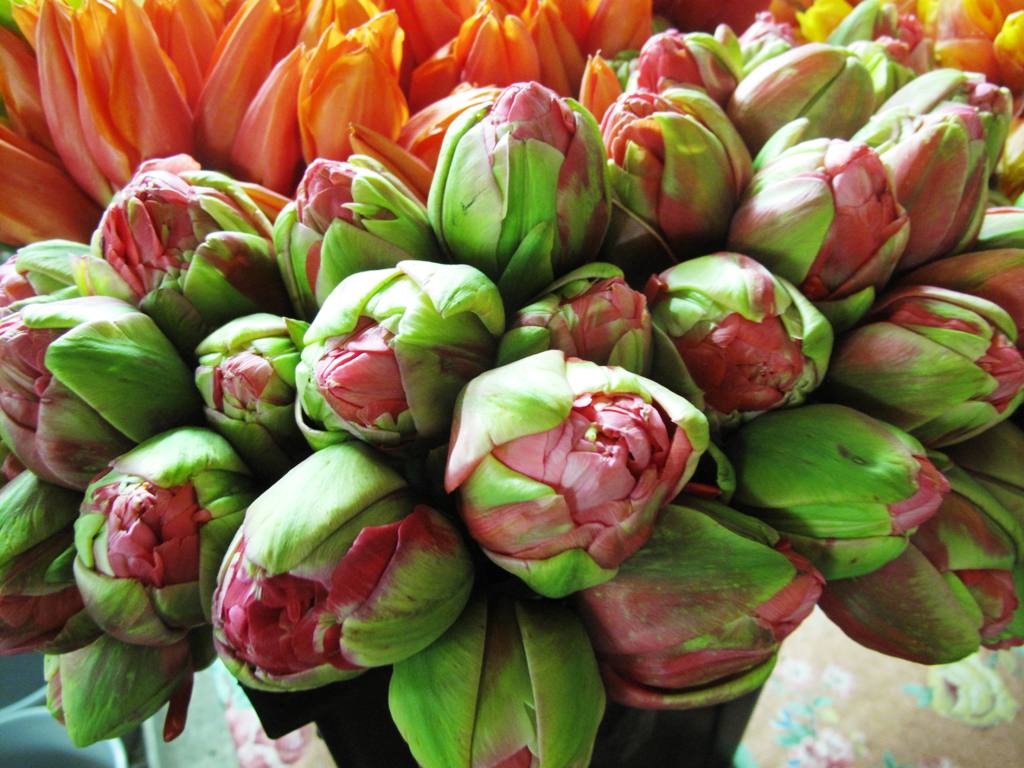
Gorgeous field-grown tulips, from Gonzalo Ojeda of Washington's Ojeda Farms.

Gorgeous field-grown tulips, from Gonzalo Ojeda of Washington’s Ojeda Farms.