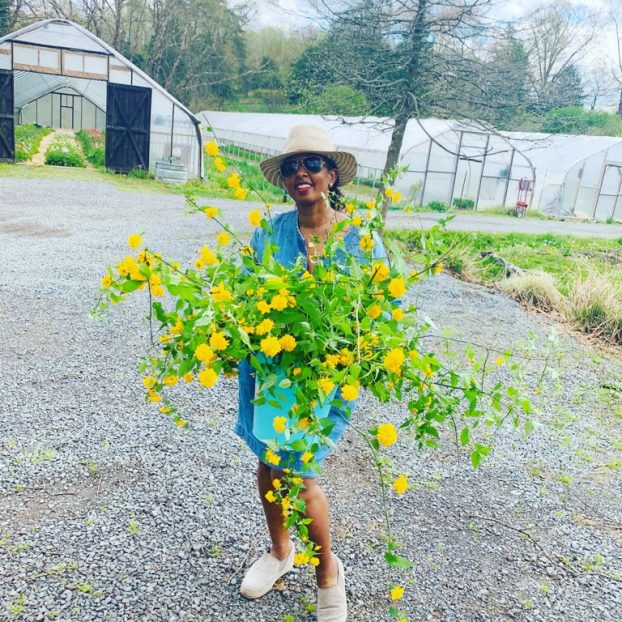
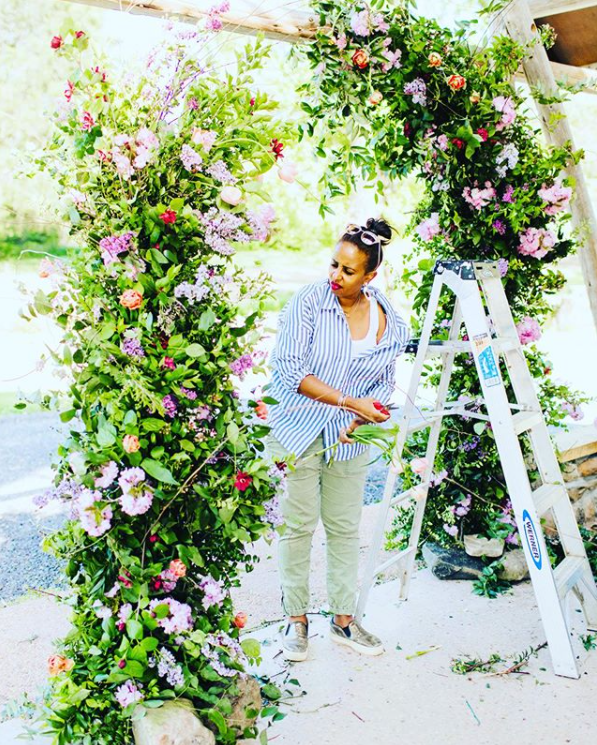
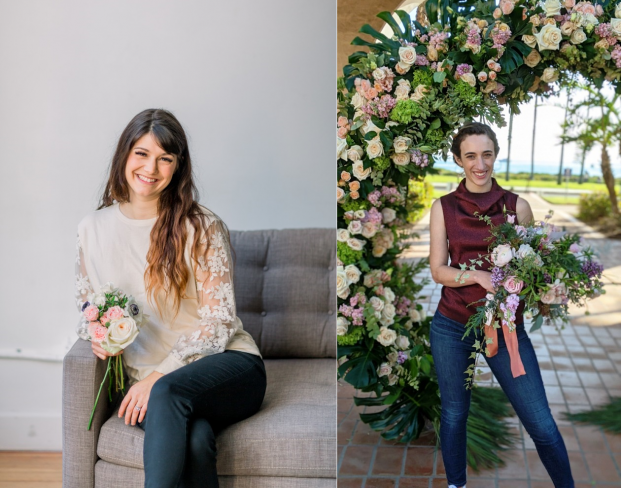
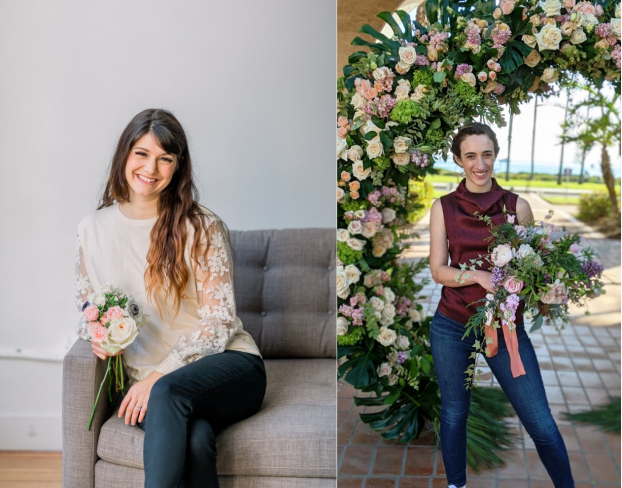
Hermon Black of HB Fiore, a floral designer based in Arlington, Virginia
I’m so pleased today to welcome Hermon Black, a floral designer I first met when she attended the 2018 Slow Flowers Summit in Washington, D.C.
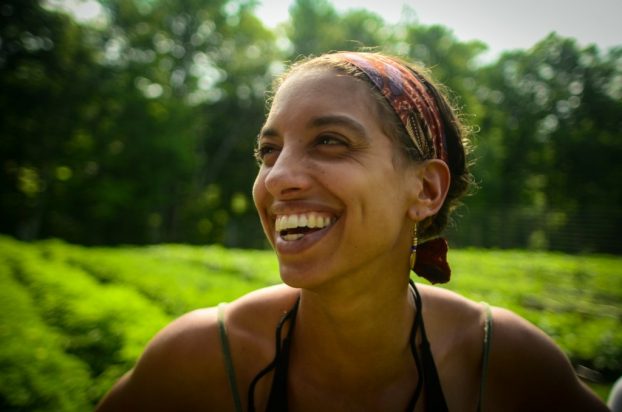
Flowers on her Head! Hermon Black, photographed at the 2018 Slow Flowers Summit by Mud Baron
Hermon is based in Arlington, Virginia, where she runs a design studio serving weddings and private clients. She tells a beautiful story of growing up in East Africa (Addis Ababa, Ethiopia) where her mother allowed her to cut and arrange flowers from their garden, and encouraged young Hermon in her floral design interest.
Hermon, photographed at a Petals by the Shore design workshop at Wollam Gardens, in Jefferesonton, Virginia (c) Beth Caldwell Photography
I love how her journey has brought Hermon full circle back to her childhood love of flowers. It’s a story to which many of us can relate. Enjoy our conversation as we discuss how Hermon developed her design studio HB Fioriand how she has adapted her focus due to the challenges of 2020 and the COVID-19 pandemic.
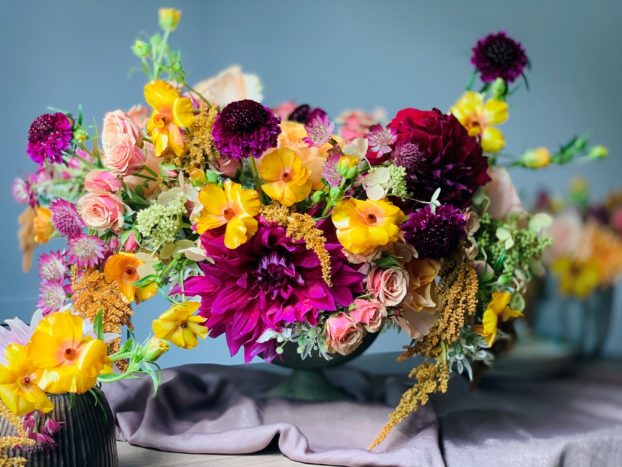
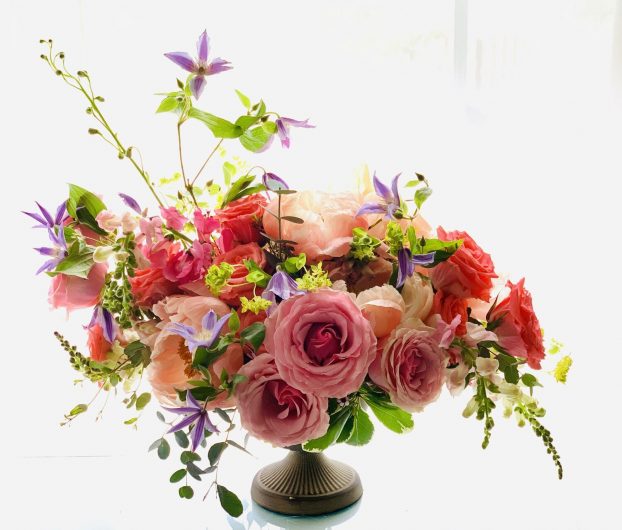
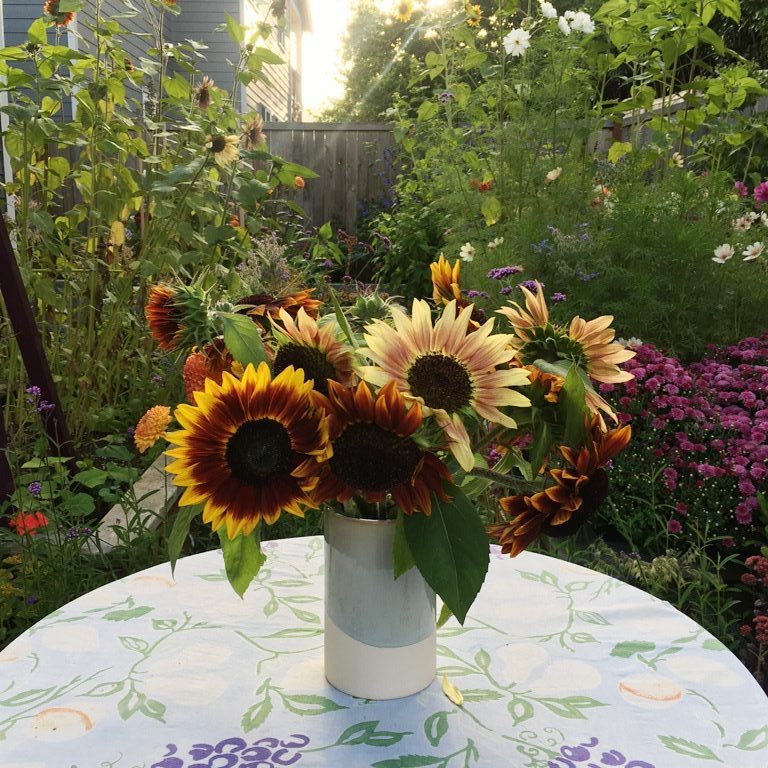
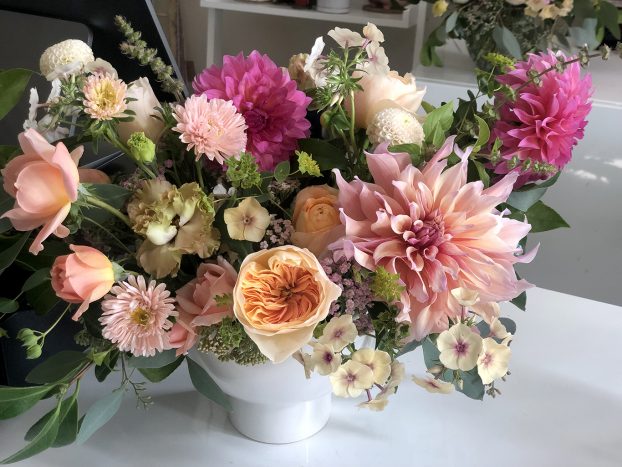
A beautiful, late-summer arrangement by Hermon Black
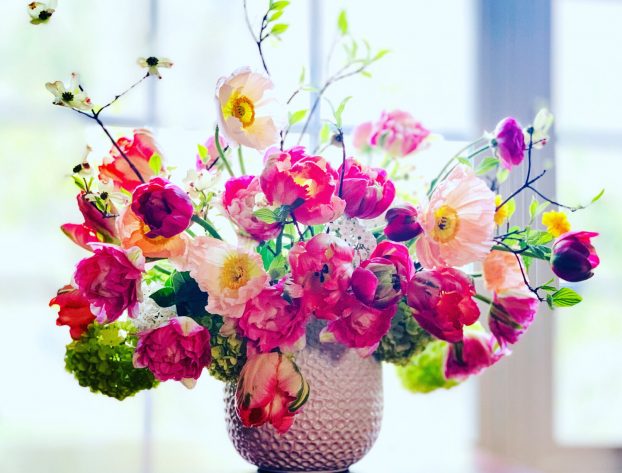
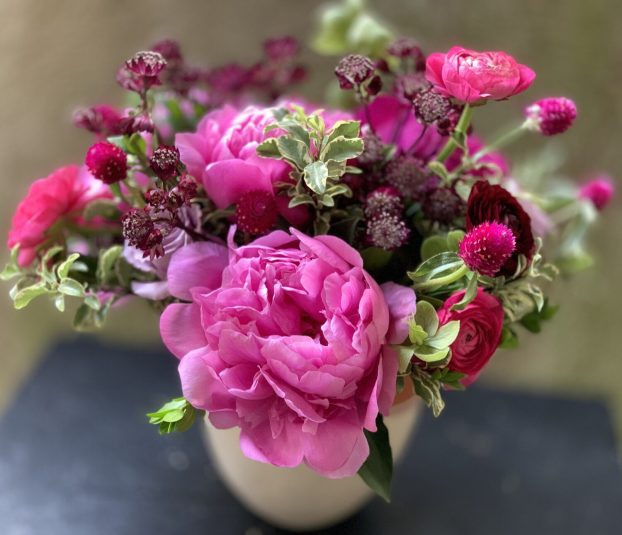
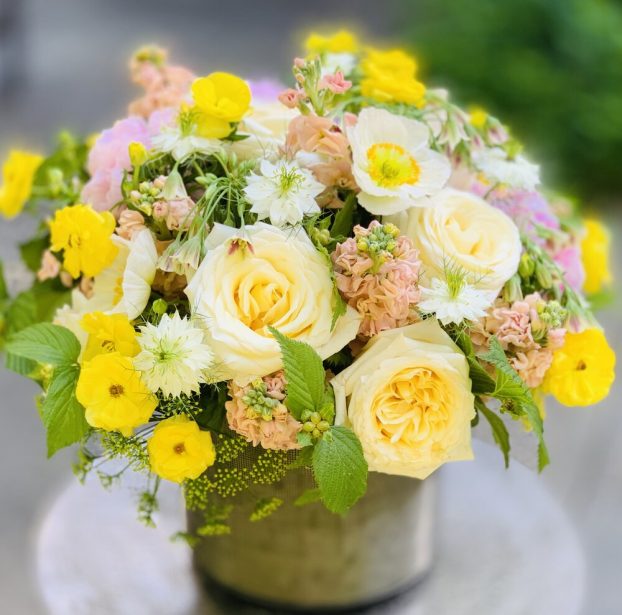
Enjoy this gallery of Hermon’s seasonal arrangements. Her subscription floral program sources 100% locally-grown flowers from farms in Virginia and Maryland.
Thank you so much for joining me today! I’m so encouraged by the conversations I record to share with listeners of the Slow Flowers Podcast. We are in complicated times, friends. And there is so much stress and pressure, uncertainty and worry facing each of us. I hope you find comfort in being part of our larger community of people who care about the planet, about equity for all, and about the importance of nurturing our creativity.
NEW PODCAST
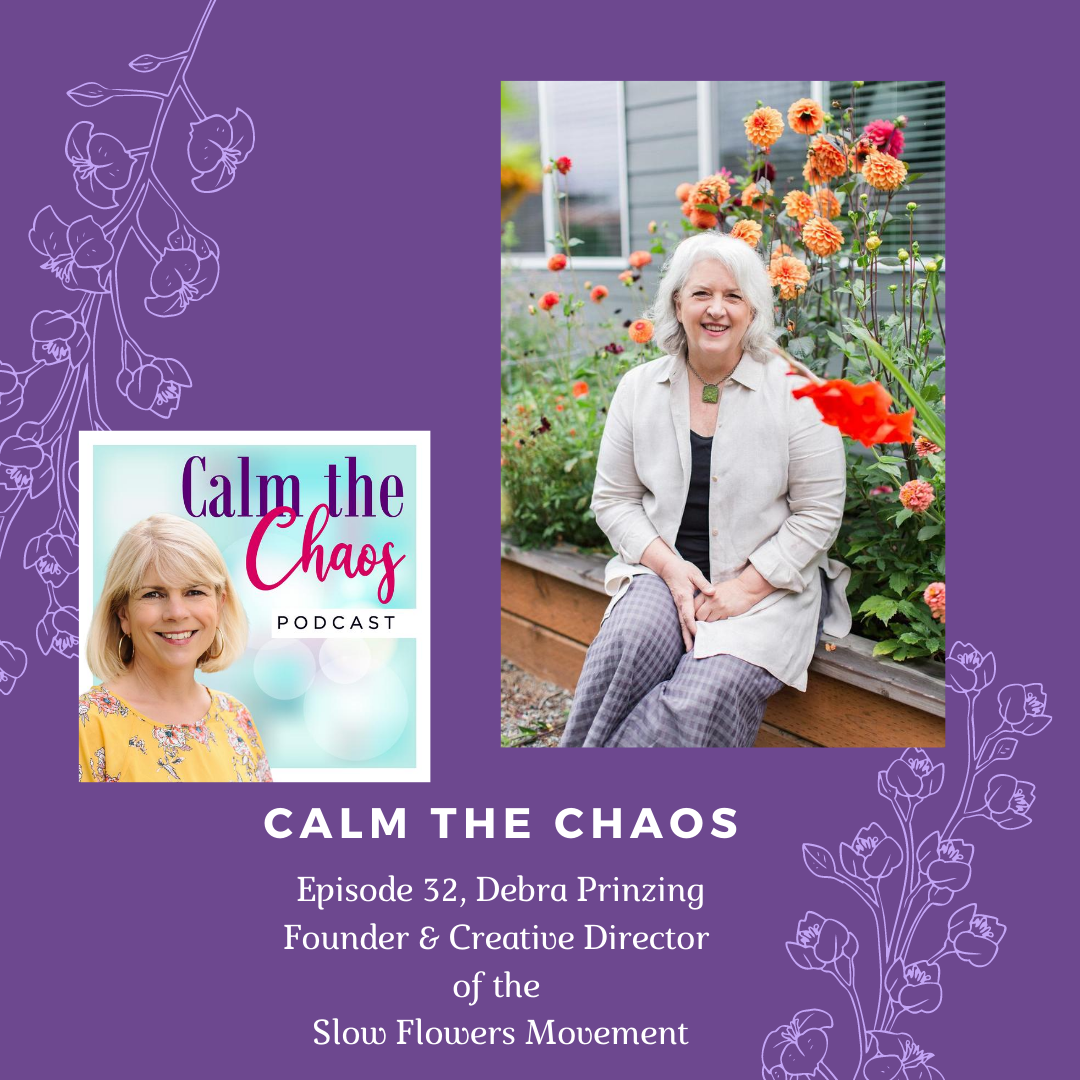
Deborah Voll, flower lover and host of the “Calm the Chaos” Podcast, recently turned the tables on me — and I was the one answering her questions.
It was a fun experience to join Deborah, a life coach who specializes in helping women find purpose and passion after 50 (um, yes, that would be me!).
Click on this link to hear our conversation — and subscribe to future episodes, as Deborah hosts so many interesting women guests who are pursuing fulfillment in their “chapter two” careers.
The Slow Flowers Podcast has been downloaded more than 643,000 times by listeners like you. Thank you for listening, commenting and sharing – it means so much.
As our movement gains more supporters and more passionate participants who believe in the importance of the American cut flower industry, the momentum is contagious. I know you feel it, too. I value your support and invite you to show your thanks and with a donation to support my ongoing advocacy, education and outreach activities. You can find the donate button in the column to the right.
Thank you to our sponsors
This podcast is brought to you by Slowflowers.com, the free, nationwide online directory to florists, shops, and studios who design with American-grown flowers and to the farms that grow those blooms. It’s the conscious choice for buying and sending flowers.
And thank you to Florists’ Review magazine. I’m delighted to serve as Contributing Editor for Slow Flowers Journal, found in the pages of Florists’ Review. Read our stories at slowflowersjournal.com.
Syndicate Sales, an American manufacturer of vases and accessories for the professional florist. Look for the American Flag Icon to find Syndicate’s USA-made products and join the Syndicate Stars loyalty program at syndicatesales.com.
Rooted Farmers, which works exclusively with local growers to put the highest-quality specialty cut flowers in floral customers’ hands. When you partner with Rooted Farmers, you are investing in your community, and you can expect a commitment to excellence in return. Learn more at RootedFarmers.com.
Johnny’s Selected Seeds, an employee-owned company that provides our industry the best flower, herb and vegetable seeds — supplied to farms large and small and even backyard cutting gardens like mine. Find the full catalog of flower seeds and bulbs at johnnysseeds.com.
The content and opinions expressed here are either mine alone or those of my guests alone, independent of any podcast sponsor or other person, company or organization.
The Slow Flowers Podcast is engineered and edited by Andrew Brenlan. Learn more about his work at soundbodymovement.com.
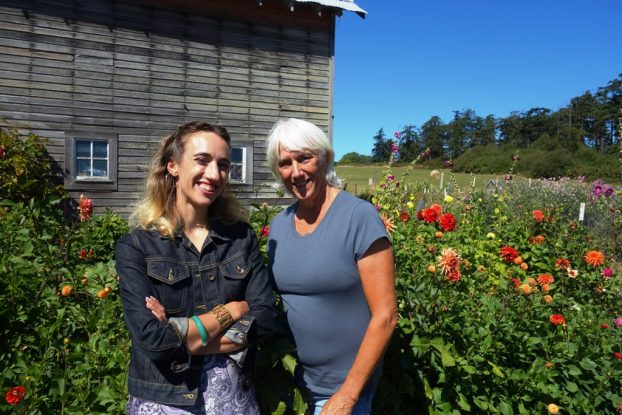
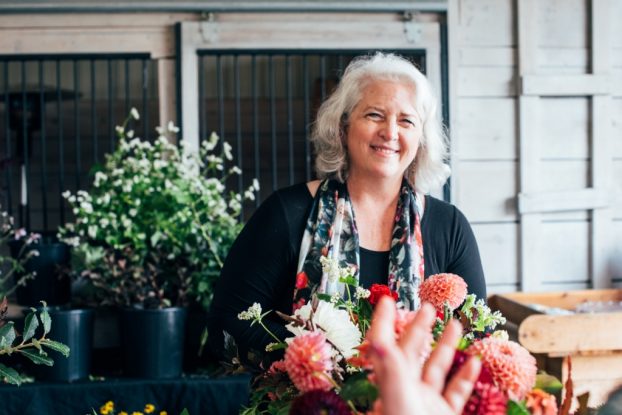
Tonneli (left) and Kim (right) at Salty Acres Farm, Coupeville, Washingon
In early 2019, I reconnected with Kim Gruetter of Salty Acres Farm at a Washington Flowers Project florists’ gathering. She reminded me that we’d had a few email exchanges back when I first launched Slow Flowers in 2014, and introduced me to her daughter Tonneli Gruetter. Together, with their spouses, Kim and Tonneli own Salty Ares Farm in the town of Coupeville, Washington, on Whidbey Island.
Kim’s husband and Tonneli’s father Paul Gruetter and Tonneli’s husband John Loughman, are definitely part of the diverse family-owned farm and little guy Sauvie is the youngest human living on the family farm.
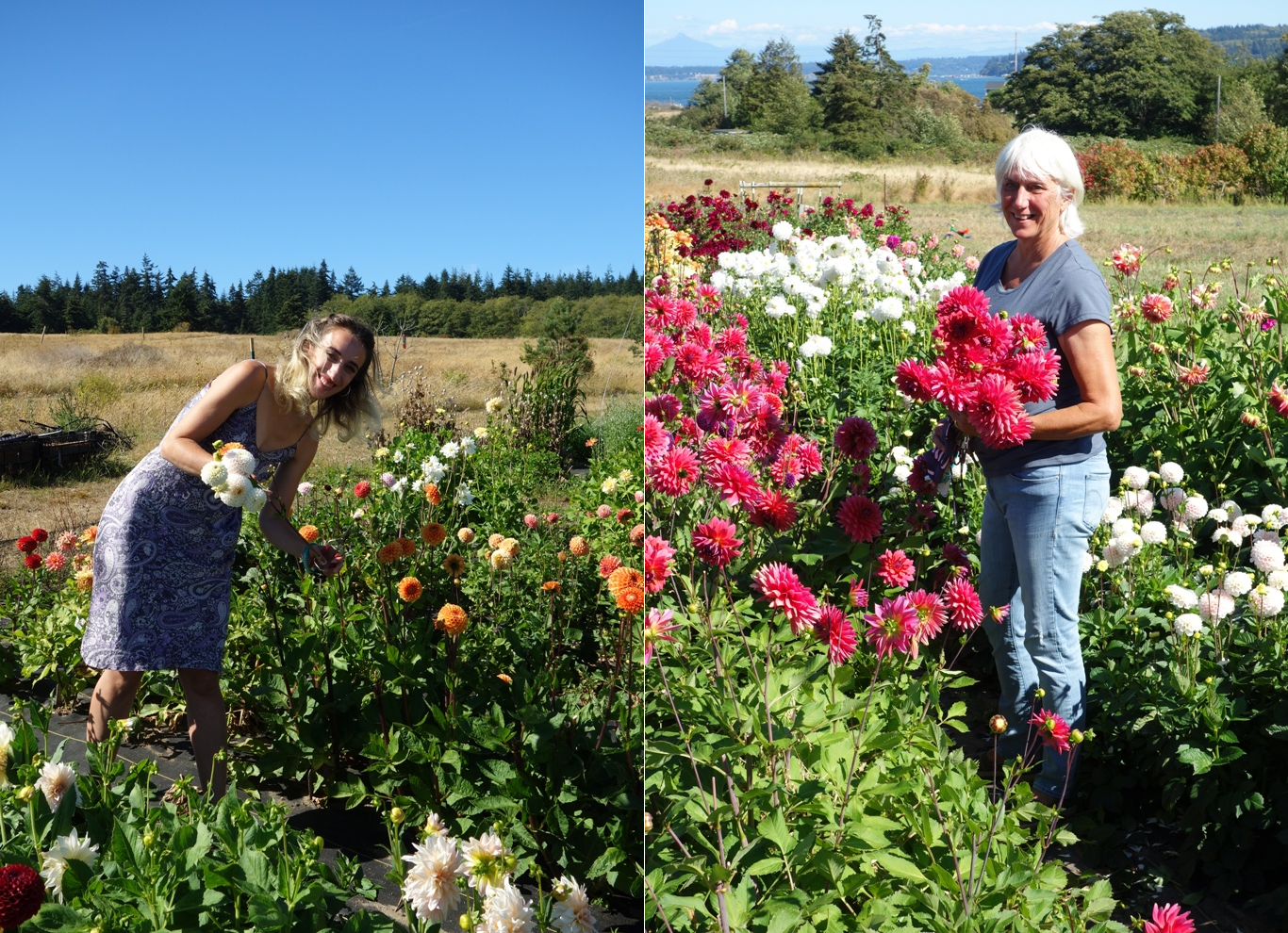
Tonneli (left) and Kim (right), photographed on our visit to their fields at Greenbank Farm
We had a great conversation about what they both were doing and I learned it was not just flowers! Kim told me about the “salt” of Salty Acres, which is one of their signature agricultural products along with edible flowers.
Tonneli, who calls herself a millenial, fascinated me with her story of working in the sales, marketing and branding in the tech industry, a fabulous skill set that she brings to Salty Acres.
A few months later, Travis Rigby of Florists’ Review asked me if had any suggestions for a new digital marketing position he had created. Did I know anyone who might be a good fit for the job? For some amazing reason, Tonneli popped into my memory and I introduced the two of them. For the past year, Tonneli has collaborated with Florists’ Review on all sorts of projects, including the magazine’s social media, which you can’t miss if you follow them on Instagram. Tonneli’s enthusiasm has spilled over into the floral community and to many, she is the face of Florists’ Review on its IG stories, events and sponsorships.
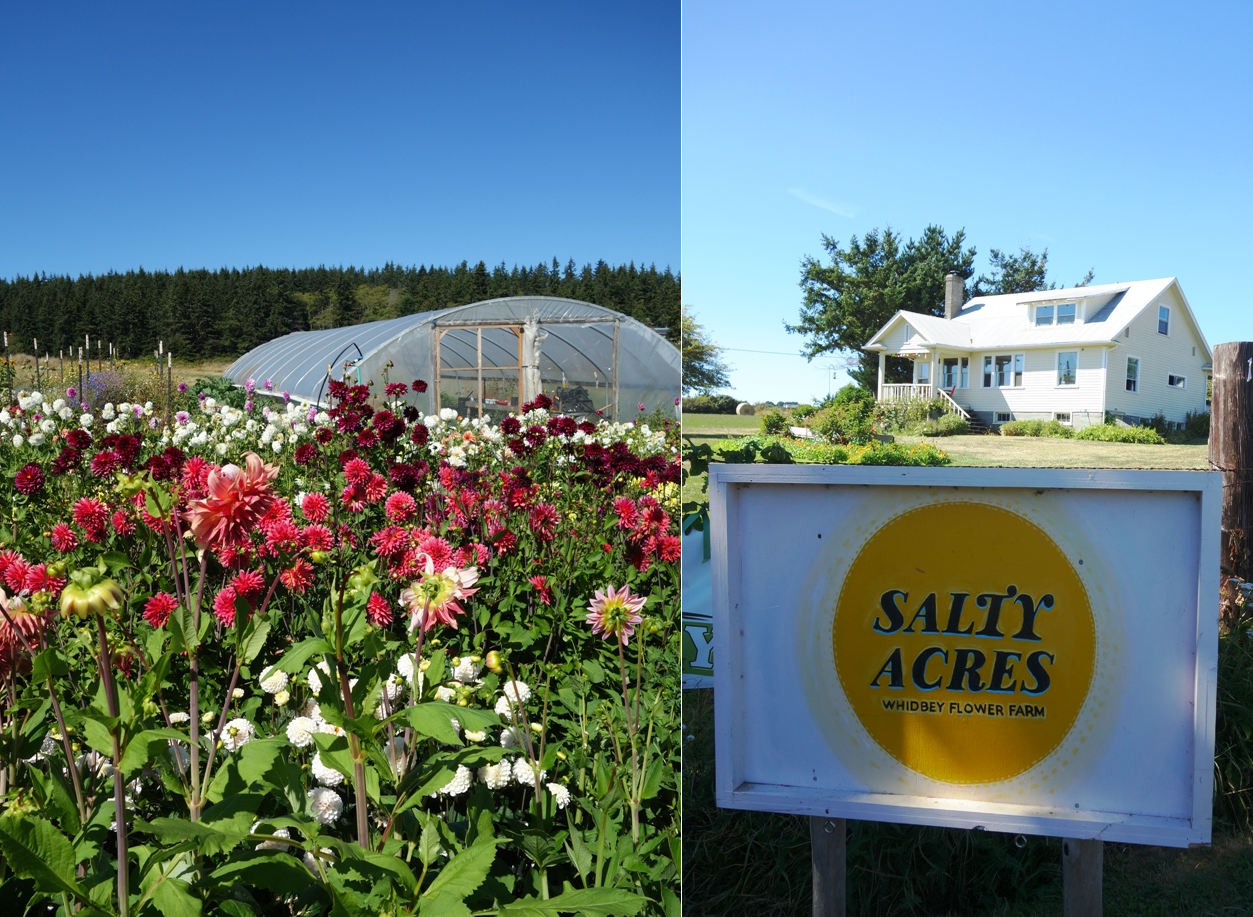
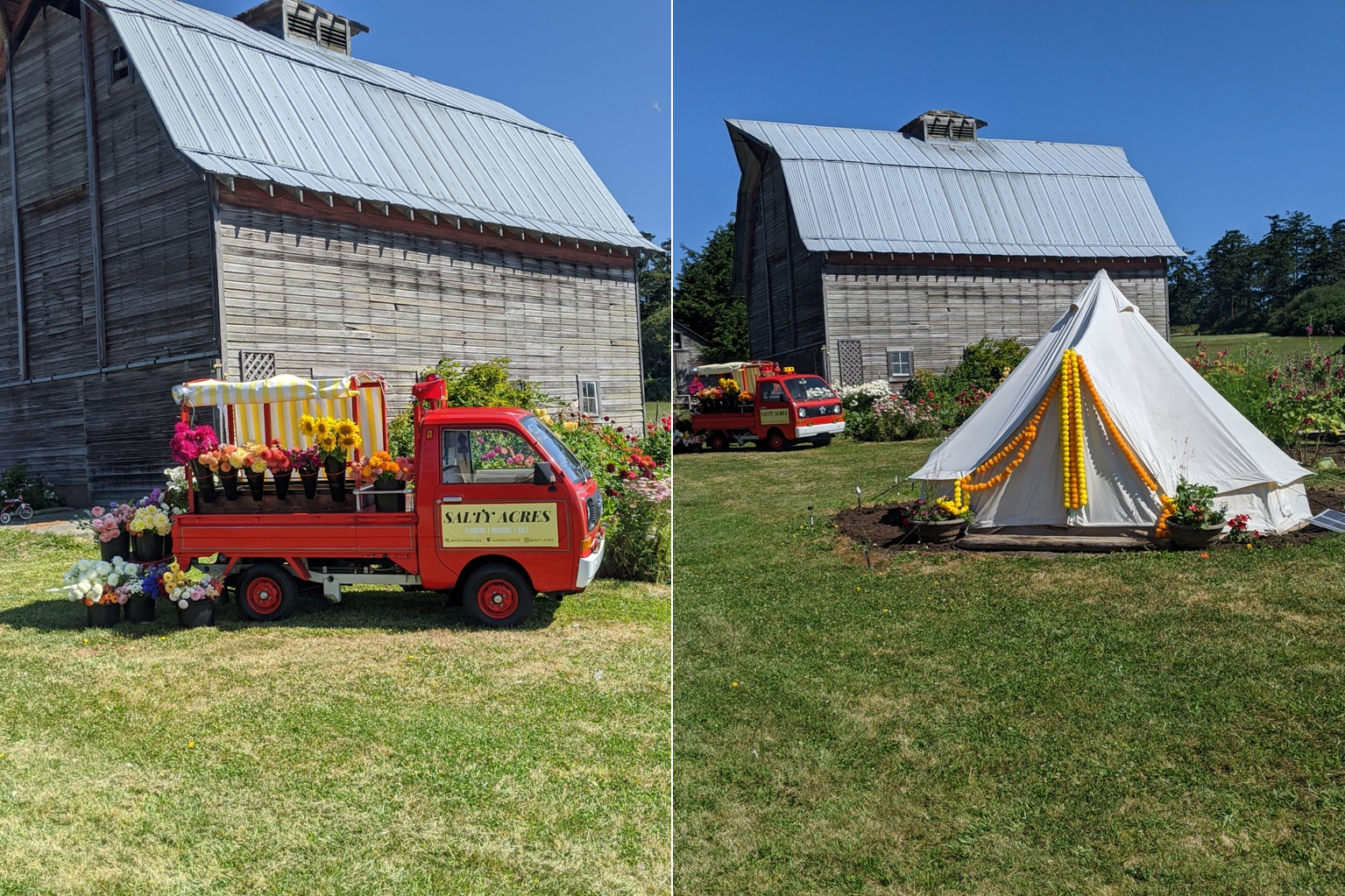
Salty Acres Farm operates at two locations on Whidbey Island. Left: at Greenbank Farm, a community-owned agriculture and tourism destination; right, at a historic farmstead in Coupeville.
When I knew I was going to have a minication getaway on Whidbey Island in late August, I invited myself to Salty Acres Farm. The farm is located on historic Penn Cove, outside the historic Coupeville. Here’s a bit more of their story, from the “about” page on Salty Acres’ website:
Originally brought to the island by the Navy, Tonneli and John thought their farming roots were somewhere in the past when the opportunity of a lifetime appeared: a new start at a historic farm on Penn Cove. It didn’t take long before the magic of the place got to them, and their thoughts of Whidbey as just another Navy posting faded.
The honor stand on Penn Cove Road, designed and fabricated from an old pony cart by Paul Gruetter
Around this same time Kim and Paul were facing another story all too common for farmers. Rising property costs and rapid urbanization were forcing farmers (themselves included) away from Oregon’s Willamette Valley where they had farmed for generations. Seeing this shift Tonneli and John urged her parents to visit Whidbey Island. “Imagine a place where you can farm and the community supports you,” Tonneli urged her parents.
For Paul, who learned to farm from his father who had immigrated to Oregon’s Sauvie’s Island to work the land, moving roots wasn’t. Upon arriving on Penn Cove it only took a single sunrise over the water to convince them, this was home and a new agricultural collective calling for the whole family.
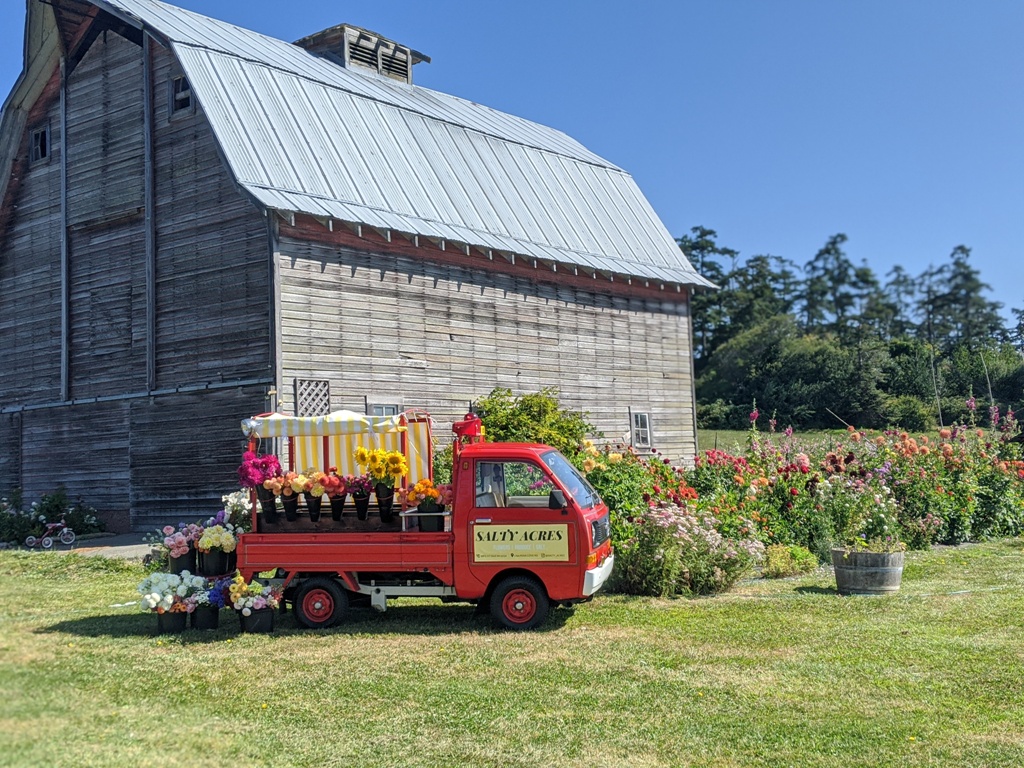
“Salty,” the vintage Japanese fire truck that shows up at farmers’ markets and other pop-up events. Kim and Tonneli also offer Salty as a fully staffed mobile flower cart experience. Customers book the truck to wow their event guests with fresh bouquets, floral confetti, & individually sized sea salt party favors. Booking includes use of PA system, spot lights, and sirens. (c) Tonneli Gruetter photograph
Today, Salty Acres, specializes in locally-grown flowers, small batch sea salt, foraged ocean greens, & specialty produce. From June to October customers can shop at their permanent farm stand on Penn Cover Road, at pop-up sales around the Coupeville area, and at their community greenhouse on the historic Greenbank Farm campus.
With COVID this year, the women have had to adapt some of their offerings, especially on-farm events, workshops and their regular stall at the Coupeville Farmers’ Market. But the requests continue and they are currently reimagining what 2021 may look like. Keep an eye out for announcements by following Salty Acres on social media.
Salty Acres Farm, tricked out for a private event. The farm’s agritourism offerings include salt making classes, flower farm tours, floral design workshop and cider making parties (pre-COVID, of course – and to be resumed as state guidelines allow) (c) Tonneli Gruetter photograph
Thanks so much for joining me today for my conversation with Kim and Tonneli. My head is spinning when I think about their energy and their passion – and how they seem to create entrepreneurial opportunities out of thin air.
I hope the time you spent with this episode is equally overflowing with new ideas. The thread of community is woven through all that this dynamic mom-and-daughter team are doing, along with Paul, who is equally involved in the operations of Salty Acres.
Check out some of Salty Acres’ collaborators and flower outlets, which we discussed in the episode:
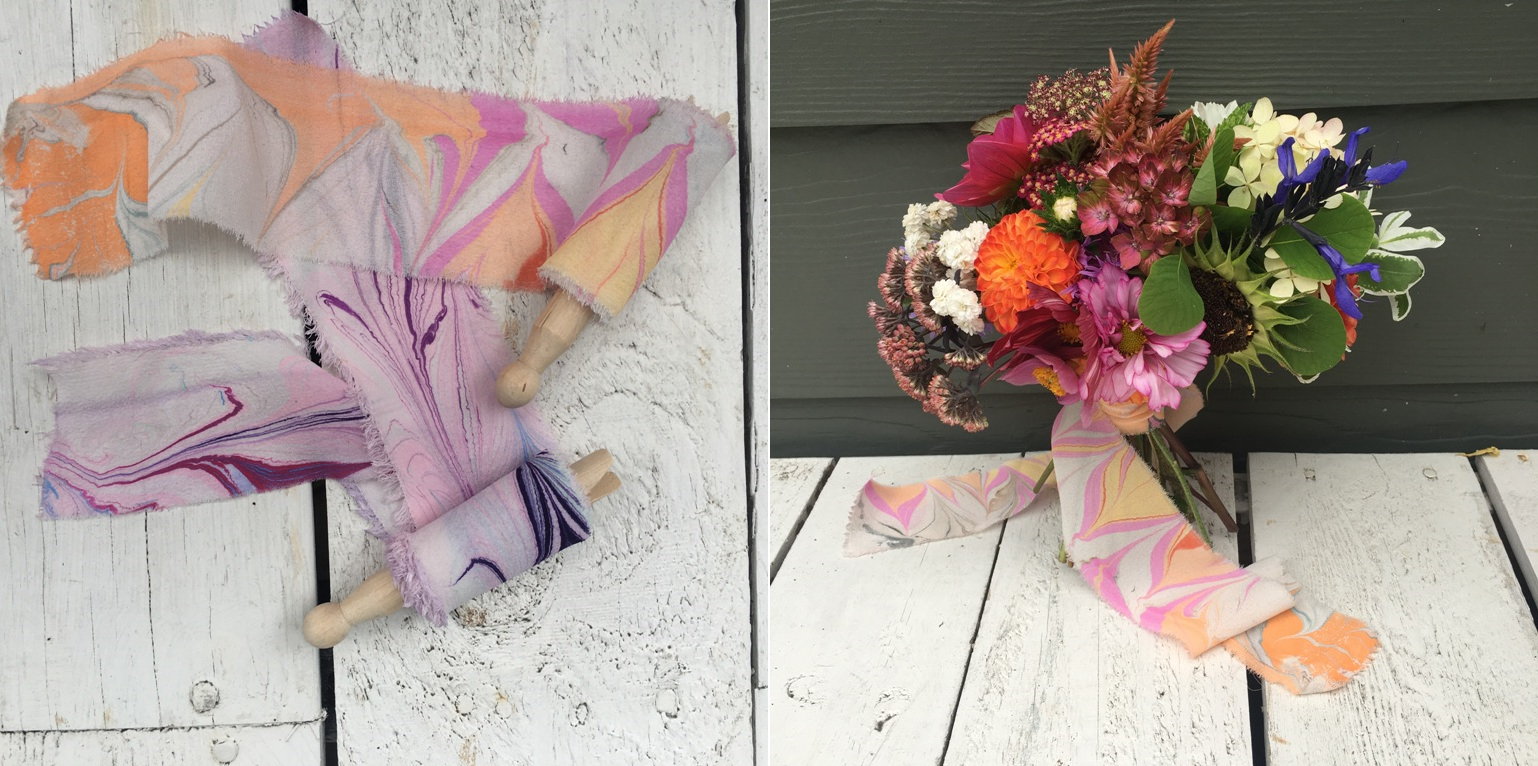
Custom-silk bouquet ribbon – a collaboration between Salty Acres Farm and Go Marbley of Coupeville, Washington (with a bouquet from the Slow Flower Cutting Garden)
JOIN US AT THE SEPTEMBER SLOW FLOWERS MEMBER (VIRTUAL MEET-UP
TJ McGrath will be our guest presenter at the September 11 “Slow Flowers Member (Virtual) Meet-Up”
Now, More than Ever, Your Slow Flowers Membership Gives You an Important Story to Share with Your Community and Your Customers. Our monthly Slow Flowers Member Virtual Meet-Up is coming right up this Friday, the 11th of September — on Zoom.
I’m excited that we’ll enjoy some seasonal design inspiration with special guest, TJ McGrath. TJ is the lead designer and content creator for the Blue Jasmine Floral studio, a Slow Flowers member studio led by Paulina Nieliwocki in Berkeley Heights, New Jersey. All summer long, I’ve been enchanted by the floral designs that TJ posts on his personal IG feed @tjmcrathdesign. I asked him to demonstrate one of his signature foam-free arrangements and talk about his philosophy and style.
You’re invited to join us. Click here for details. Bring your insights and ideas to the community. I’ll share the link in today’s show notes — 9 am Pacific/Noon Eastern. And, like all of our member meet-ups, we’ll have some giveaways to sweeten the deal!
THANK YOU TO OUR SPONSORS
This podcast is brought to you by Slowflowers.com, the free, nationwide online directory to florists, shops, and studios who design with American-grown flowers and to the farms that grow those blooms. It’s the conscious choice for buying and sending flowers.
And thank you to Florists’ Review magazine. I’m delighted to serve as Contributing Editor for Slow Flowers Journal, found in the pages of Florists’ Review. Read our stories at slowflowersjournal.com.
Johnny’s Selected Seeds, an employee-owned company that provides our industry the best flower, herb and vegetable seeds — supplied to farms large and small and even backyard cutting gardens like mine. Find the full catalog of flower seeds and bulbs at johnnysseeds.com.
Mayesh Wholesale Florist. Family-owned since 1978, Mayesh is the premier wedding and event supplier in the U.S. and we’re thrilled to partner with Mayesh to promote local and domestic flowers, which they source from farms large and small around the U.S. Learn more at mayesh.com.
The Gardener’s Workshop, which offers a full curriculum of online education for flower farmers and farmer-florists. Online education is more important this year than ever, and you’ll want to check out the course offerings at thegardenersworkshop.com
This show has been downloaded more than 639,000 times by listeners like you. Thank you for listening, commenting and sharing – it means so much.
As our movement gains more supporters and more passionate participants who believe in the importance of the American cut flower industry, the momentum is contagious. I know you feel it, too. I value your support and invite you to show your thanks and with a donation to support my ongoing advocacy, education and outreach activities. You can find the donate button in the column to the right.
The content and opinions expressed here are either mine alone or those of my guests alone, independent of any podcast sponsor or other person, company or organization.
The Slow Flowers Podcast is engineered and edited by Andrew Brenlan. Learn more about his work at soundbodymovement.com.
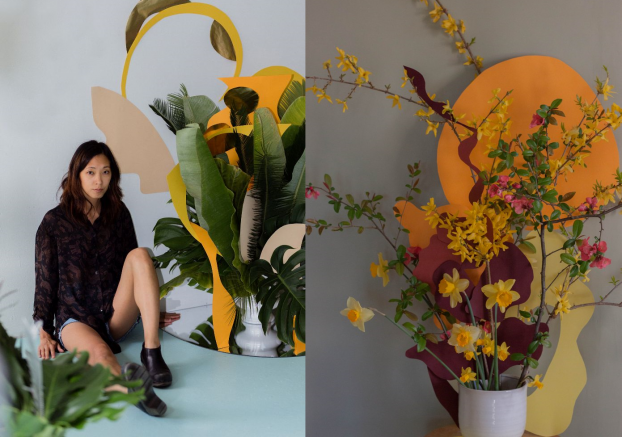
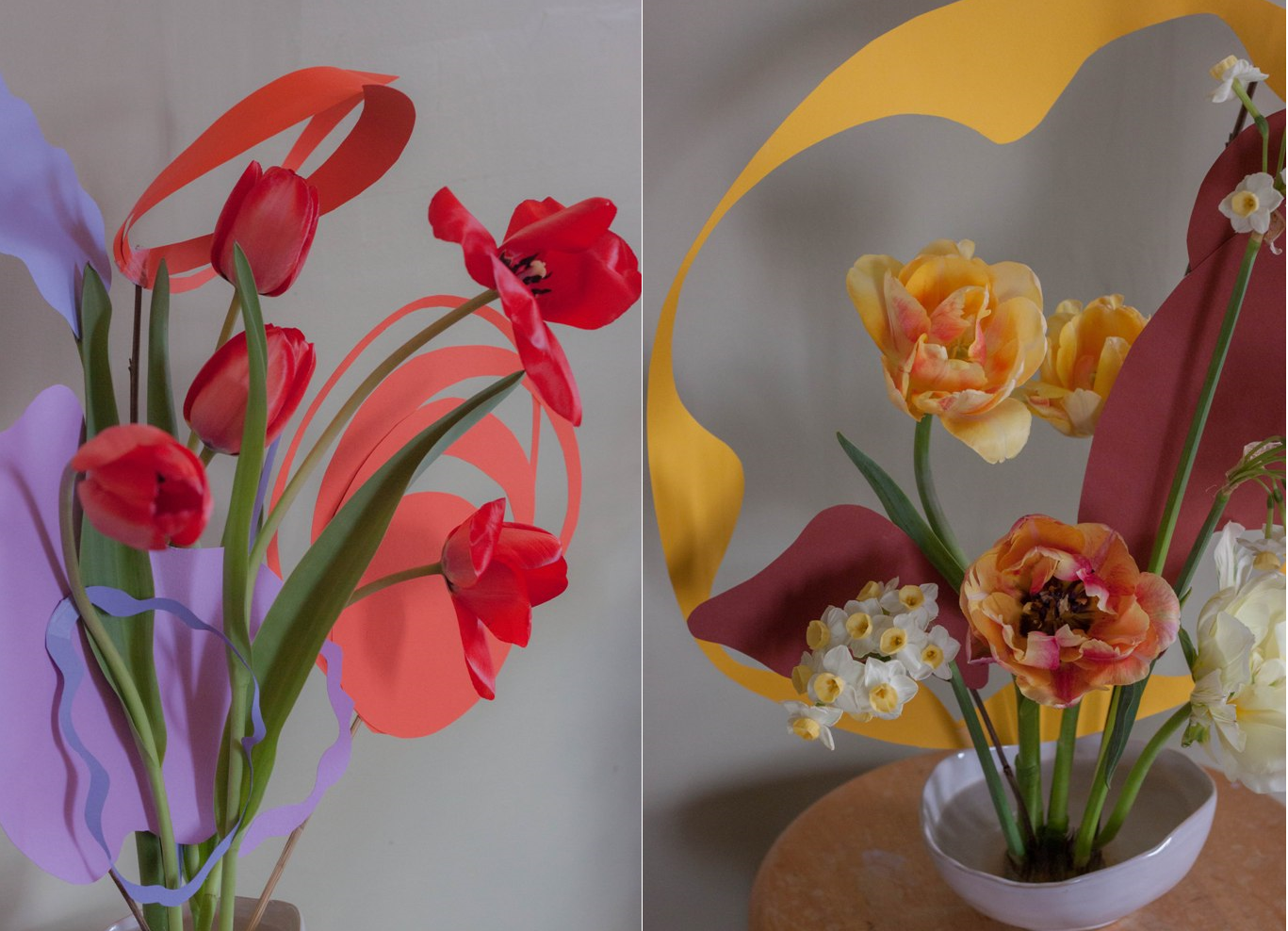
Floral artist and designer Kat Claar (c) Tell the Bees Photography (left); a paper-and-floral-sculpture (right)
Several months ago, Kathleen “Kat” Claar of From Blossoms reached out to reconnect. We originally met in March 2019 at the Philadelphia Flower & Garden Showwhen I shared a meal with a few Slow Flowers members and other locally-focused flower farmers and designers.
Kat wanted to share how she was coping with Pennsylvania’s then stay-at-home order, which imposed constraints on her floral work. Instead of feeling limited, though, Kat began to film video tutorials which she says allowed her “to succinctly and effectively share her creative process.” Well, I watched those sweet videos and was hooked on Kat’s highly personal style combining floral design with custom-cut paper shapes that result in contemporary abstract works of art.
As she told me, “I would love for more people to consider and notice a daffodil in a new way through my work, but I also think it would be applicable as a project that people could do themselves with something as easily-accessible as a colored piece of paper and a couple stems of flowers from their yard.”
Kat says this recent video is her highest production with puppets, silk flowers and shapes
“My goal is to draw attention to seasonal flowers, ones that are available to anyone really, and to help people see those flowers in new ways by playing with our perception of them.”
In addition to her own studio art practice, Kat is a wedding and event designer for a Philadelphia-based shop called Vault and Vine. We discuss how she balances the two sides of her floral career and how the commercial design work blends with a fine art practice.
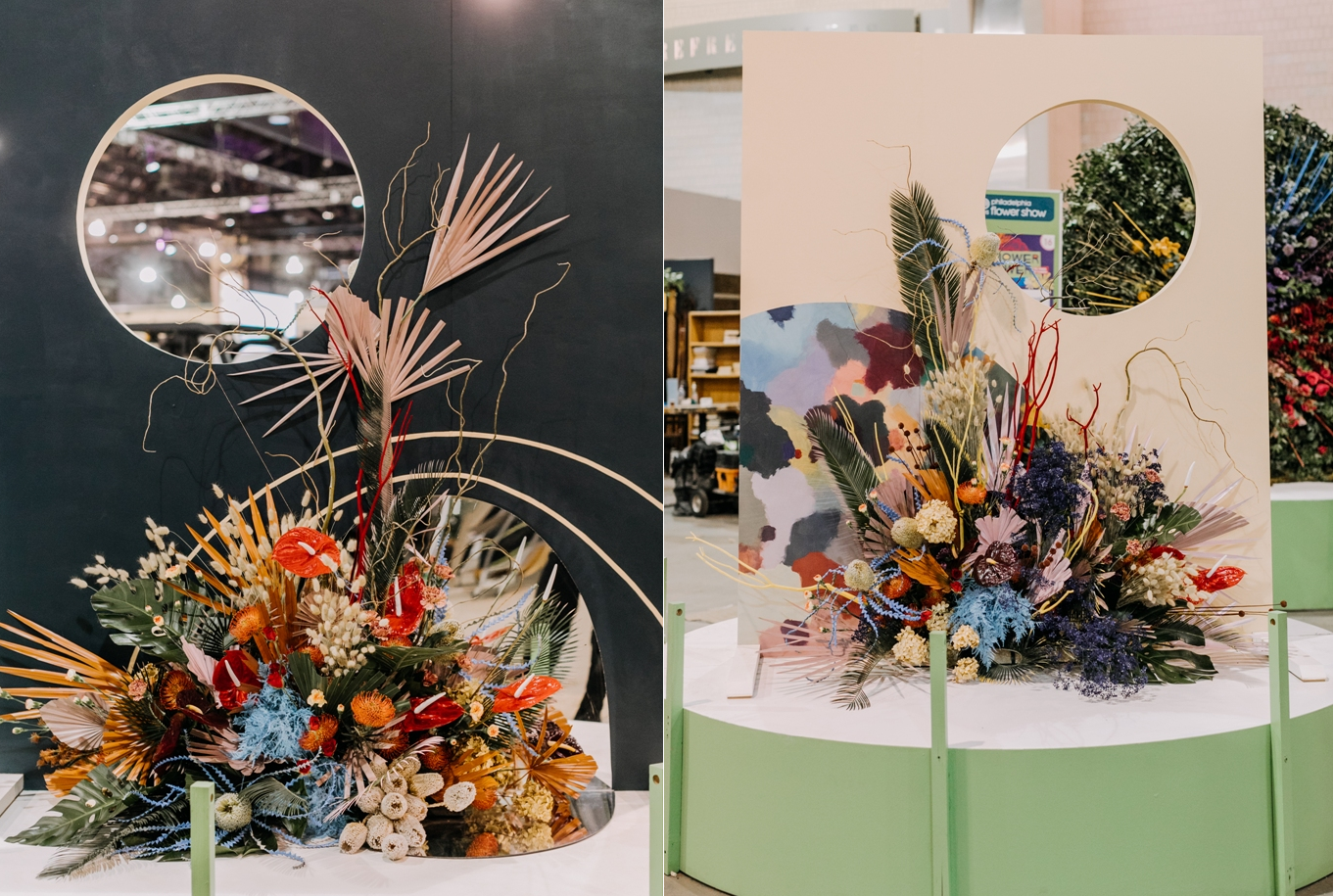
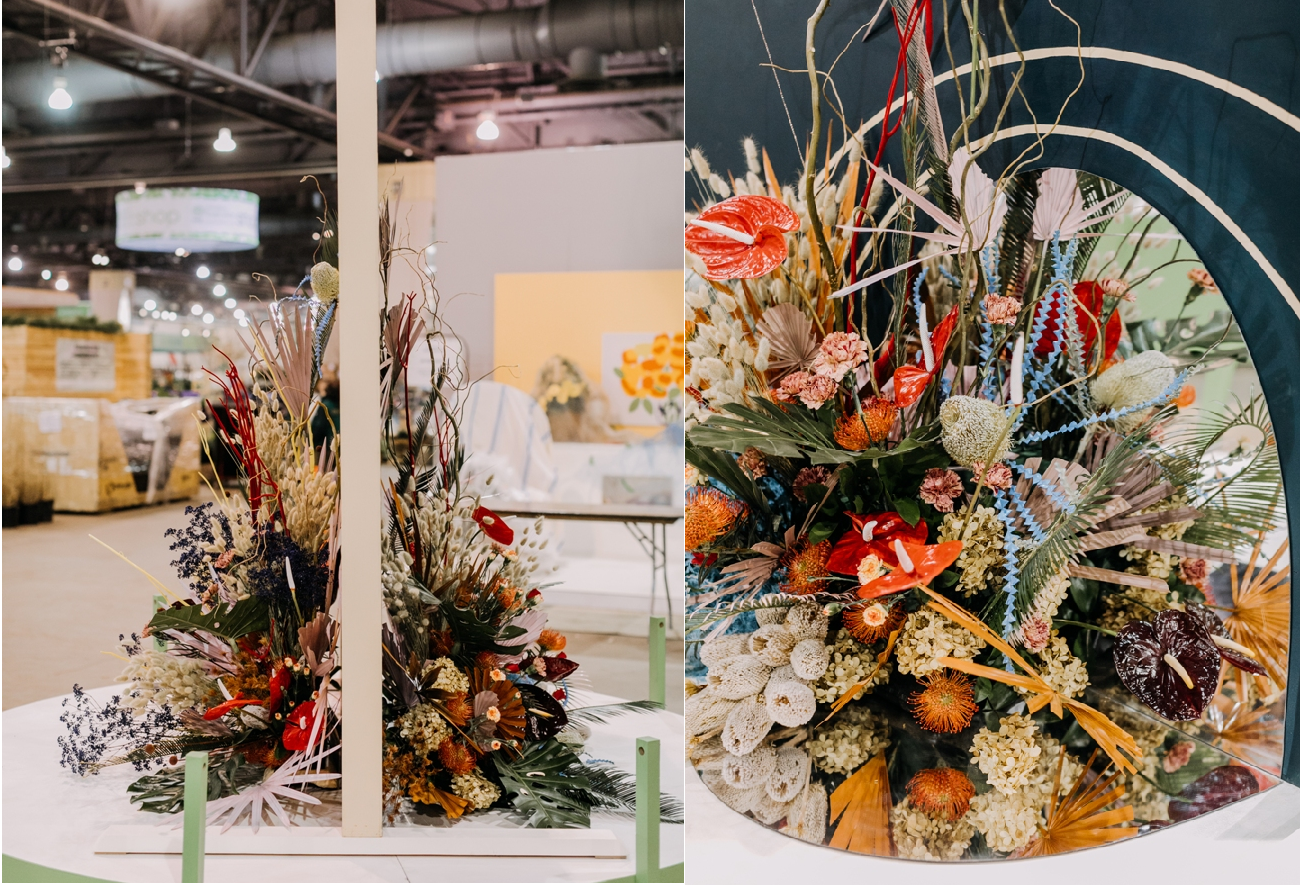
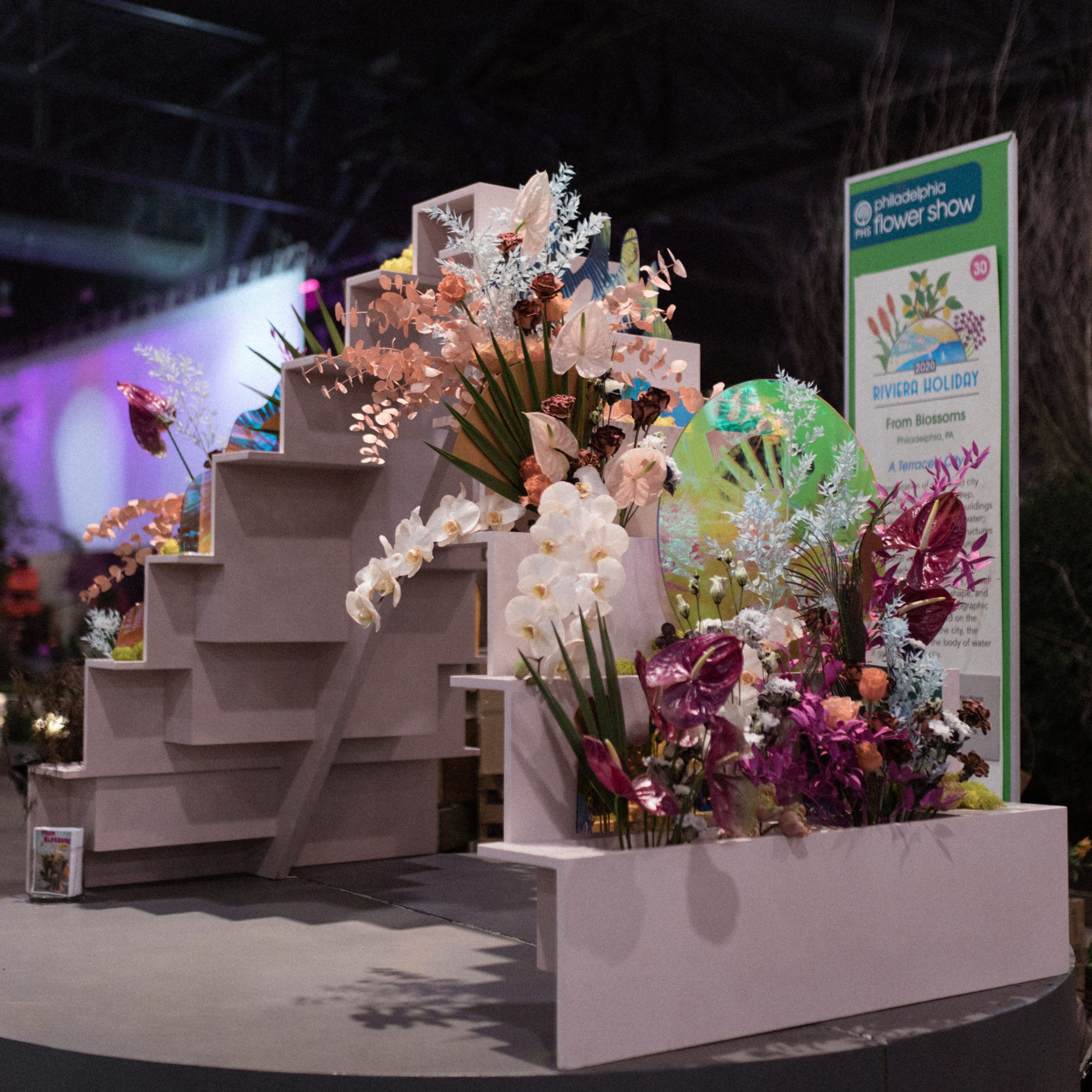
Kat’s gold-metal award for floral design entry “Seeing Flowers” at the 2019 Philadelphia Flower Show really wowed me (pictured below with images (c) Love Me Do Photography).
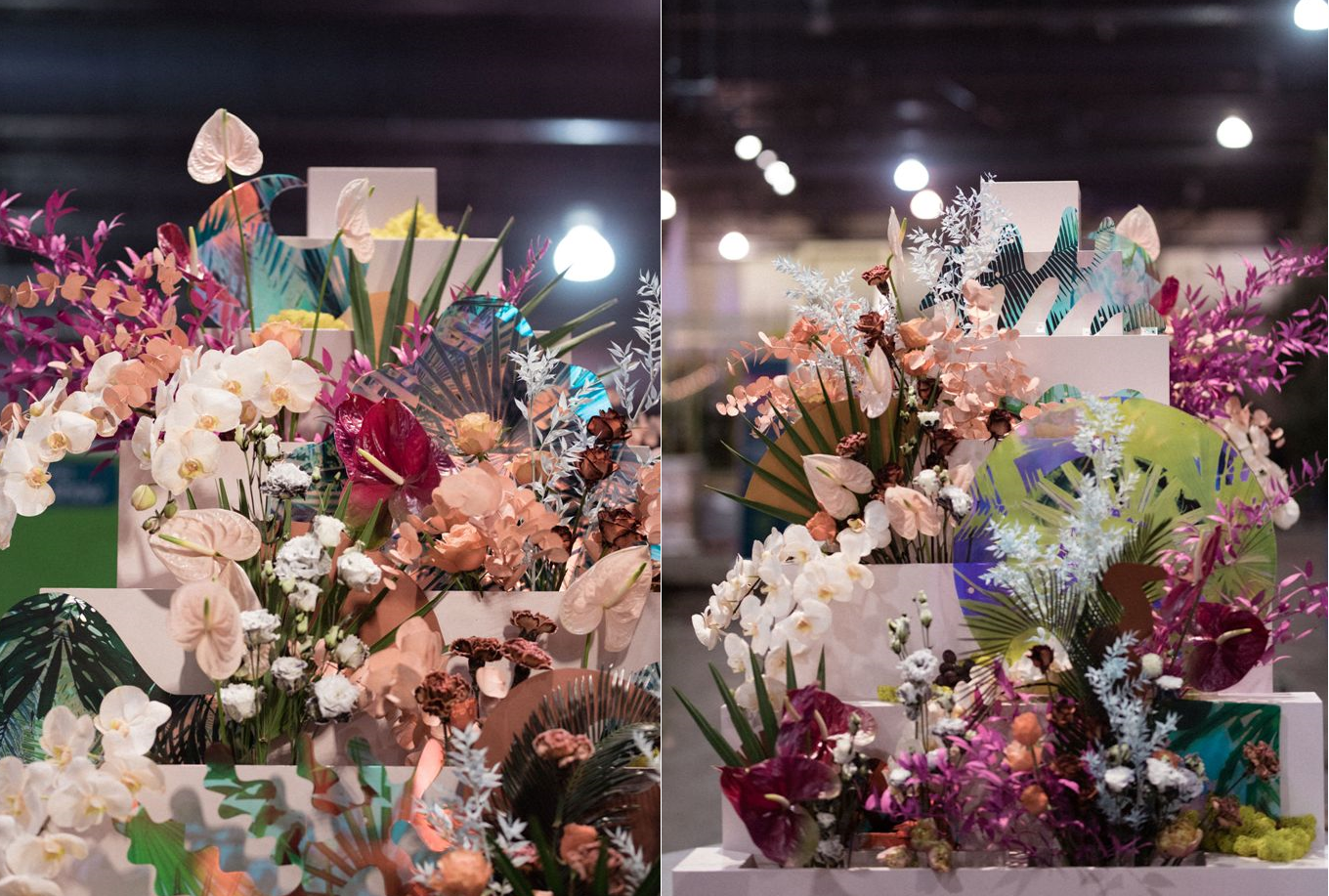
I spent several days at the show and every time I walked past her display I stopped in my tracks, got out my camera and photographed the piece. There are definitely elements – albeit more detailed – of her paper cutout technique.
Above: Kat’s floral entry at the 2020 Philadelphia Flower & Garden Show, featuring plexiglass shapes by Roxana Azar (c) Tell the Bees Photography.
Thanks so much for joining me today for my conversation with Kat Claar. I hope you take a moment to respond to those creative sparks or lightening bolts when they hit you!
It’s the beginning of a new month and like me, you’re probably turning attention to September and beyond. The days here in Seattle are still quite warm, but I can feel the chill of autumn in the morning air and I have mixed feelings about it. I normally love autumn. With COVID limiting our indoor gatherings, we’ve been so reliant on time outdoors. What comes with the changing of the seasons? Some friends of mine just invested in an infrared heater for their deck, to extend their outdoor time as long as they can. I’m seriously ready to order head-to-toe rain gear from REI, to make sure I can be quasi-comfortable when I want to continue gardening during our typically wet season. We’re all adept by now at online everything, and my top wardrobe has expanded while I continue to basically wear the same black yoga pants that you’ll never see on a Zoom call. This is an endless season of change. I sincerely hope the Slow Flowers Podcast has been a source of companionship and encouragement to you — from a distance, as always. This show has been downloaded more than 637,000 times by listeners like you. Thank you for listening, commenting and sharing – it means so much.
As our movement gains more supporters and more passionate participants who believe in the importance of the American cut flower industry, the momentum is contagious. I know you feel it, too. I value your support and invite you to show your thanks and with a donation to support my ongoing advocacy, education and outreach activities. You can find the donate button in the column to the right.
Thank you to our sponsors
This podcast is brought to you by Slowflowers.com, the free, nationwide online directory to florists, shops, and studios who design with American-grown flowers and to the farms that grow those blooms. It’s the conscious choice for buying and sending flowers.
And thank you to Florists’ Review magazine. I’m delighted to serve as Contributing Editor for Slow Flowers Journal, found in the pages of Florists’ Review. Read our stories at slowflowersjournal.com.
More thanks goes to Longfield Gardens, which provides home gardeners with high quality flower bulbs and perennials. Their online store offers plants for every region and every season, from tulips and daffodils to dahlias, caladiums and amaryllis. Check out the full catalog at Longfield Gardens at longfield-gardens.com.
Rooted Farmers, which works exclusively with local growers to put the highest-quality specialty cut flowers in floral customers’ hands. When you partner with Rooted Farmers, you are investing in your community, and you can expect a commitment to excellence in return. Learn more at RootedFarmers.com.
Syndicate Sales, an American manufacturer of vases and accessories for the professional florist. Look for the American Flag Icon to find Syndicate’s USA-made products and join the Syndicate Stars loyalty program at syndicatesales.com.
The content and opinions expressed here are either mine alone or those of my guests alone, independent of any podcast sponsor or other person, company or organization.
The Slow Flowers Podcast is engineered and edited by Andrew Brenlan. Learn more about his work at soundbodymovement.com.
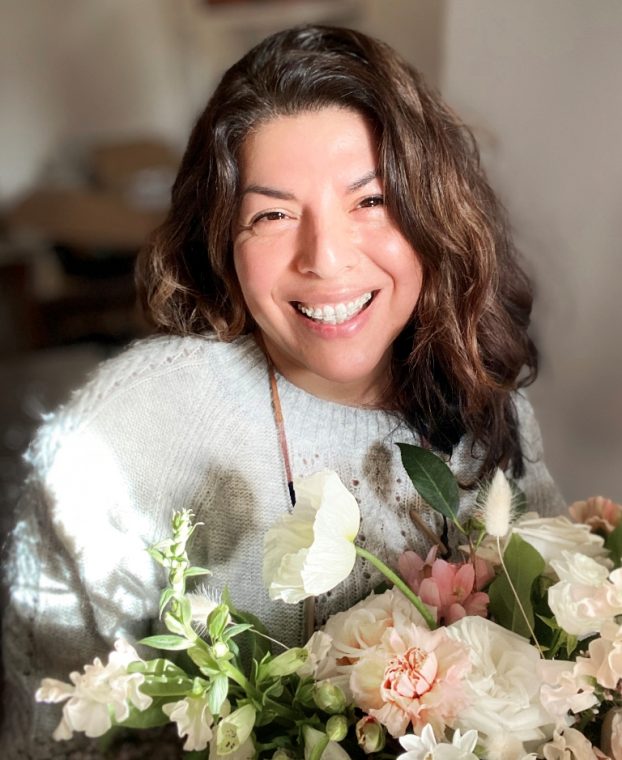
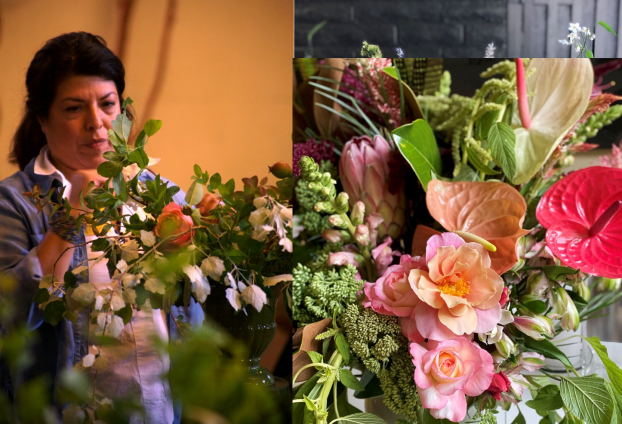
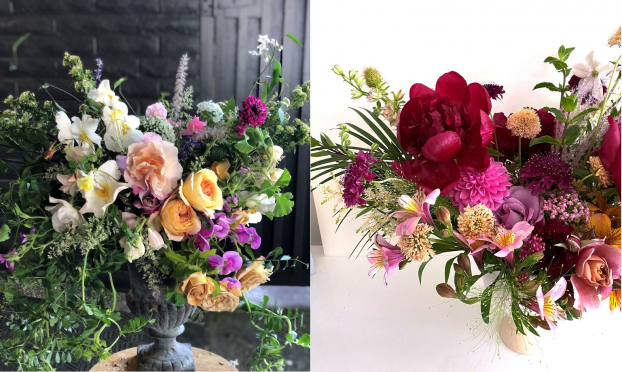
Please help me welcome today’s guest, Olivia Rivas of Papillon. We first met when I was invited to spend a few days touring the Sonoma County local flower scene as a guest of North Bay Flower Collective in the spring of 2016.
That trip yielded a series of Slow Flowers Podcast episodes, but I wasn’t able to record an interview with Olivia. On the other hand, I do recall our memorable car ride and great conversation as she shuttled me from one venue to another on that visit. Later, when Olivia was in Seattle to attend a workshop with Ariella Chezar, we enjoyed another melding of the floral minds over a meal.
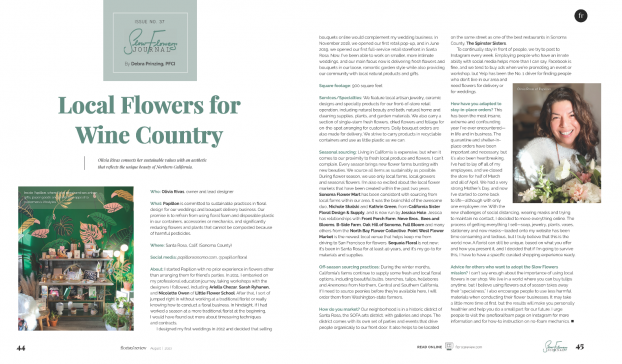
I am very much inspired by Olivia’s personal journey, recently featured in my Q&A with her that you can read in the August issue of Florists’ Review. You can read that story here:
Like many of us, pursuing a life of and vocation immersed in flowers became Olivia’s second career. I know you’ll find her story inspiring, as she was determined to educate herself as a designer and to find her own place in the profession.
We’ve been corresponding and chatting quite a bit recently, and I was also interested in Olivia’s decision-making process around running a business during the COVID-19 pandemic — so I’ve asked her to share about those choices. You’ll find lots to which you can relate, as these are topics we are all living out in real time.
Here’s how you can find and follow Olivia Rivas of Papillon:
Thanks so much for joining me today for my conversation with Olivia Rivas of Papillon. I want you to read a few comments she shared in our Florists’ Review article because they are so relatable and timely:
Q: How have you adapted to stay-in-place orders? A: This has been the most insane, extreme and confounding year I’ve ever encountered – in life and in business. The quarantine and shelter-in-place orders have been important and necessary, but it’s also been heartbreaking. I’ve had to lay off all of my employees and we closed the store for half of March and all of April. We had a very strong Mother’s Day and now I’ve started to come back to life, although with only one employee – me. With the new challenges of social distancing, wearing masks and trying to maintain no contact, I decided to move everything online. The process of getting everything I sell — soap, jewelry, plants, vases, stationary, and now masks — loaded onto my website has been time consuming and tedious, but I truly believe that this is the world now. A florist can still be unique, based on what you offer and how you present it, and I decided that if I’m going to survive this, I have to have a specific curated shopping experience ready.
Q: Advice for others who want to adopt the Slow Flowers mission? A: I can’t say enough about the importance of using local flowers in our shop. We live in a world where you can buy tulips anytime, but I believe using flowers out of season takes away that “specialness.” I also encourage people to use less harmful materials when conducting their flower business. It may take a little more time at first, but the results will make you personally healthier and help you do a small part for our future. I urge people to visit the @nofloralfoam page on Instagram for more information and for how-to instruction on no foam mechanics.
Coming up this weekend, beginning on Sunday, August 23 and continuing through Wednesday, August 26th, I’m participating as an instructor in an online conference called the Fleurvana Virtual Summit. Founded by Shawn Michael Foley and Gina Thresher, Fleurvana offers great content for anyone who wants to enhance their floral career!
You can watch 30 presentations tailored to you — Elevate your floral career and business! I’ll be presenting on “Creative Vocabulary to Enhance Your Brand,” and three other Slow Flowers Members are also presenting, including Gina Thresher of From the Ground UpFloral, Tonneli Gruetter of Salty Acres Farm and Jim Martin of Compost in My Tea.
If you miss out on grabbing a ticket to the LIVE sessions, you can register after the fact for an affordable VIP pass to watch the presentations at your own pace.
The Slow Flowers Podcast has been downloaded more than 634,000 times by listeners like you. Thank you for listening, commenting and sharing – it means so much.
As our movement gains more supporters and more passionate participants who believe in the importance of the American cut flower industry, the momentum is contagious. I know you feel it, too. I value your support and invite you to show your thanks and with a donation to support my ongoing advocacy, education and outreach activities. You can find the donate button in the column to the right.
Thank you to our Sponsors
This podcast is brought to you by Slowflowers.com, the free, nationwide online directory to florists, shops, and studios who design with American-grown flowers and to the farms that grow those blooms. It’s the conscious choice for buying and sending flowers.
And thank you to Florists’ Review magazine. I’m delighted to serve as Contributing Editor for Slow Flowers Journal, found in the pages of Florists’ Review. Read our stories at slowflowersjournal.com.
Johnny’s Selected Seeds, an employee-owned company that provides our industry the best flower, herb and vegetable seeds — supplied to farms large and small and even backyard cutting gardens like mine. Find the full catalog of flower seeds and bulbs at johnnysseeds.com.
Syndicate Sales, an American manufacturer of vases and accessories for the professional florist. Look for the American Flag Icon to find Syndicate’s USA-made products and join the Syndicate Stars loyalty program at syndicatesales.com.
Mayesh Wholesale Florist. Family-owned since 1978, Mayesh is the premier wedding and event supplier in the U.S. and we’re thrilled to partner with Mayesh to promote local and domestic flowers, which they source from farms large and small around the U.S. Learn more at mayesh.com.
The content and opinions expressed here are either mine alone or those of my guests alone, independent of any podcast sponsor or other person, company or organization.
The Slow Flowers Podcast is engineered and edited by Andrew Brenlan. Learn more about his work at soundbodymovement.com.
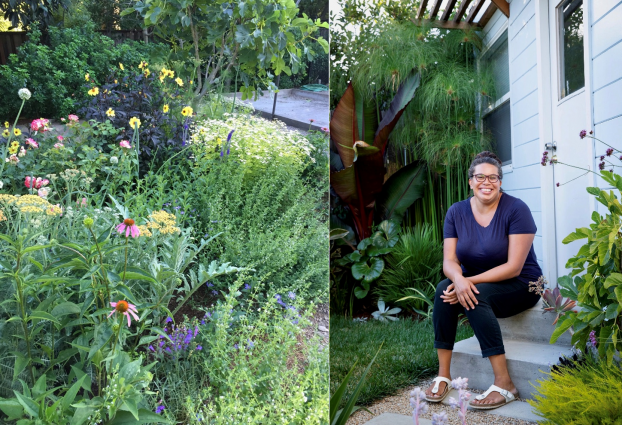
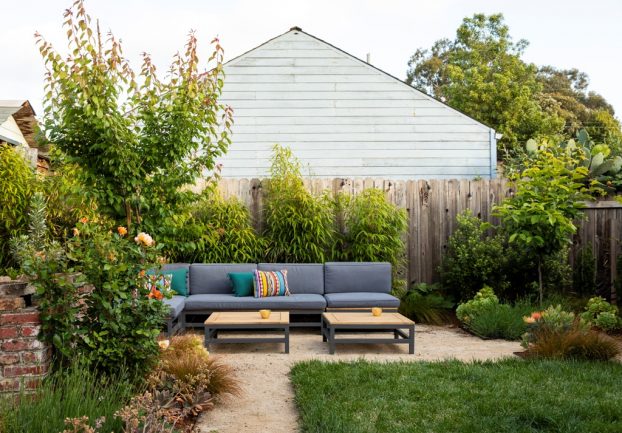
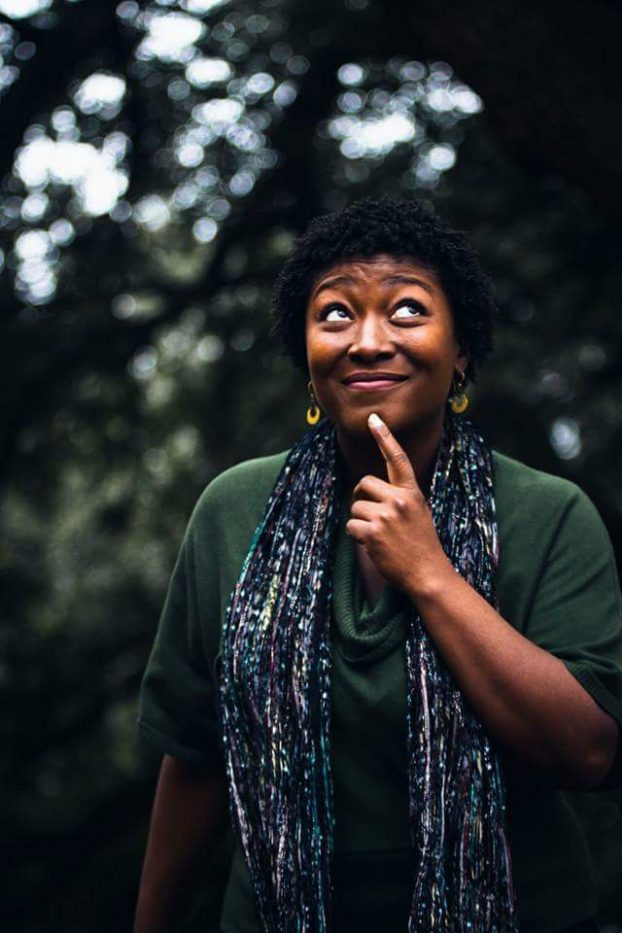
Left: Leslie Bennett in her Pine House Edible Gardens-designed Oakland backyard (c) Rachel Weill
Today’s special guest returns to the Slow Flowers Podcast after her 2017 appearance. Leslie Bennett is an award-winning garden creator whose Pine House Edible Gardens designs and installs beautiful, productive edible landscapes that provide bountiful harvests of organic fruits, vegetables, cutting flowers and herbs — and that create space for more beauty, peace and connection in clients’ lives. Pine House also maintain gardens, harvests and processes garden-grown food, and teaches clients the skills to do it themselves.
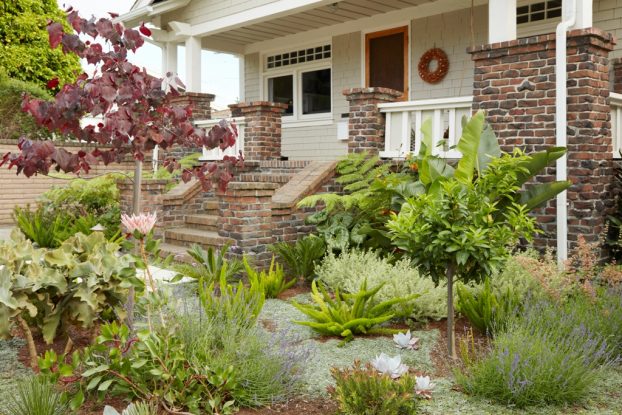
Edibles and cut flowers (citrus, blueberries, fig, protea, poppies) flourish in anAlameda front yard (c) Caitlin Atkinson
As a Black woman owned business and multi-racial, queer inclusive, majority female team, Pine House Edible Gardens stands for more than just healthy food and beautiful landscapes, and this is one reason I invited Leslie back to the show — to discuss her firm’s commitment to making gardens accessible to all through its equity pricing program and the Black Sanctuary Gardens project. As Leslie writes on the company’s web site: “We believe an edible garden can be a transformative space to grow and practice the better ways and world we want for ourselves and for our communities.”
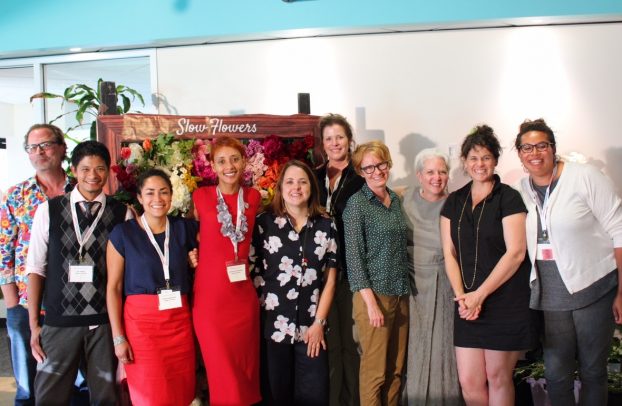
The 2017 Slow Flowers Summit presentation features (from left): Chantal Aida Gordon, Leslie Bennett, Riz Reyes and Nicole Cordier The speaker lineup at our first Slow Flowers Summit, including Leslie Bennett (far right)
In 2017, Leslie joined the first Slow Flowers Summit in Seattle as a speaker on the topic of inclusion and representation in floriculture and horticulture. She is definitely a mentor of mine as I strive to make the Slow Flowers community an inclusive, supportive and accessible place for Black flower farmers and Black floral professionals.
The first Black Sanctuary Garden project, created for a community leader in East Oakland (c) Rachel Weill
Slow Flowers has had the privilege of sharing our resources to support anti-racist programs and to support new members through our Professional Development Fund for Black Farmers and Florists. One of the programs we were moved to support financially is the Black Sanctuary Gardens program that Leslie began a few years ago through Pine House Edible Gardens. I wanted you to learn more about this program because I believe it is a model that anyone who wants their creative enterprise to be guided by values- and mission-. As I watch how Leslie uses her talents and resources to support her beliefs, it inspires me to want to do the same with Slow Flowers.
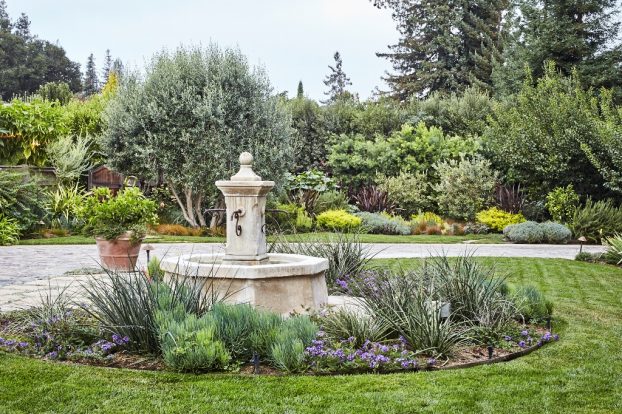
A front garden landscaped with edible plants in Atherton, Calif. (c) David Fenton
One thing Leslie said that struck me so powerfully and it needs to be restated: This is not charity. This is giving back what has been taken. Land, generational wealth, historic and systemic racism.Operating very humbly will take us forward.
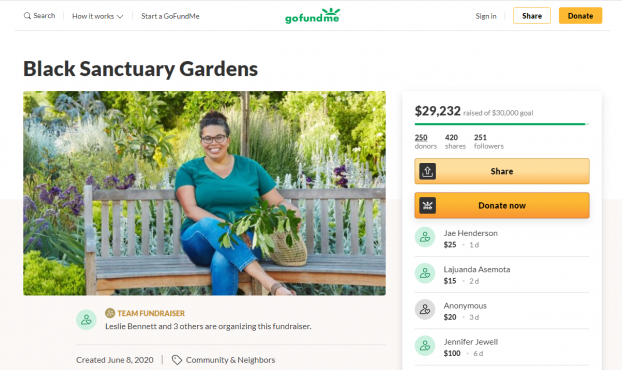
The 2020 campaign page . . . with donations soon reaching the $30k goal!
The current Go Fund Me Campaign for Black Sanctuary Gardens is close to reaching its 2020 campaign goal of $30,000, but the fundraising continues because this will be an ongoing design/installation series. You can read more about Black Sanctuary Gardens at Pine House Edible Gardens’ web site, but I’d like to highlight a few details. Leslie writes:
“Inspired in part by Alice Walker’s naming of the garden as a site for black women’s spirituality, creativity and artistic work, landscape designer Leslie Bennett and her team work to design, install and care for a series of low to no-cost Black Sanctuary Gardens for Black women and Black communities. Visual curation and photographic documentation of the women and communities in their garden spaces is a secondary, integral part of the project as we create imagery that more accurately and inclusively reflects the relationship of Black women and communities with their gardens.“
An entry garden in Los Altos, Calif., features low-water, edible and native California plantings (c) Caitlin Atkinson Edible garden in Hillsborough, Calif. (c) David Fenton
The primary goal of Black Sanctuary Gardens is to create garden spaces for Black women to rest and be restored. This space is so needed, given the racism and sexism that Black women experience as part of daily American life. A further goal is to define, uphold and celebrate Black community spaces, amidst gentrification and displacement of historically Black communities in Oakland.
Black Sanctuary Gardens is an exciting opportunity to develop gardens that are reflective of our brilliant Black community and supportive of our specific cultural experiences, while offering real sanctuary for Black people to commune, converse, collaborate, heal, rest, and be nourished.
Left: An enclosed kitchen garden with fruit trees and vegetable beds in Oakland Hills (c) Caitlin Atkinson; A bountiful planting from Pine House Edible Gardens
After we recorded today’s interview, Leslie and I continued to discuss the many important reasons for centering a business around Black wellness, creativity and community. It has inspired me to find words to state the importance of these values in the Slow Flowers movement. While I’m proud that our stated Manifesto values sustainability, local sourcing of flowers, and supporting family farms, I realize I want to more explicitly and actively support equity in our Black farming and floristry community. Look for an update to the Slow Flowers Manifesto in the coming days — as we put values and beliefs into words.
Here’s how you can find and follow Leslie Bennett and Pine House Edible Gardens:
If you missed last month’s Meet-Up, you can find video from our July 10th Slow Flowers Member Virtual Meet-Up with featured guests wedding designer and stylist Joy Proctor, founder and creative director of Joy Proctor Design and Slow Flowers members and wedding and event designers Adam Rico and Alicia Rico of Dallas-based Bows and Arrows Flowers. Learn about the first @saytheirnamesmemorial in Portland, Oregon, installed on Juneteenth (June 19th) by Joy and a group of friends, artists, designers and craftspeople, and created in several other cities including Dallas and Atlanta by Bows and Arrows Flowers.
Gina Thresher (left) and Tonneli Gruetter (right)
This week’s guests include Gina Thresher of From the Ground Up Floral and Tonneli Gruetter of Salty Acres Farm — they’re among the instructors in a new virtual floral conference taking place in late August called Fleurvana Virtual Summit. You’ll hear more from Gina and Tonneli and learn how you can grab a free registration for the four-day conference August 23-26 — I’ll be speaking at Fleurvana, too. You’re invited to join us on Friday!
The Slow Flowers Podcast has been downloaded more than 632,000 times by listeners like you. Thank you for listening, commenting and sharing – it means so much.
As our movement gains more supporters and more passionate participants who believe in the importance of the American cut flower industry, the momentum is contagious. I know you feel it, too. I value your support and invite you to show your thanks and with a donation to support my ongoing advocacy, education and outreach activities. You can find the donate button in the column to the right.
Thank you to our Sponsors!
This podcast is brought to you by Slowflowers.com, the free, nationwide online directory to florists, shops, and studios who design with American-grown flowers and to the farms that grow those blooms. It’s the conscious choice for buying and sending flowers.
And thank you to Florists’ Review magazine. I’m delighted to serve as Contributing Editor for Slow Flowers Journal, found in the pages of Florists’ Review. Read our stories at slowflowersjournal.com.
Association of Specialty Cut Flower Growers. Formed in 1988, ASCFG was created to educate, unite, and support commercial cut flower growers. It mission is to help growers produce high-quality floral material, and to foster and promote the local availability of that product. Learn more at ascfg.org.
Longfield Gardens, which provides home gardeners with high quality flower bulbs and perennials. Their online store offers plants for every region and every season, from tulips and daffodils to dahlias, caladiums and amaryllis. Check out the full catalog at Longfield Gardens at longfield-gardens.com.
Rooted Farmers works exclusively with local growers to put the highest-quality specialty cut flowers in floral customers’ hands. When you partner with Rooted Farmers, you are investing in your community, and you can expect a commitment to excellence in return. Learn more at RootedFarmers.com.
The content and opinions expressed here are either mine alone or those of my guests alone, independent of any podcast sponsor or other person, company or organization.
The Slow Flowers Podcast is engineered and edited by Andrew Brenlan. Learn more about his work at soundbodymovement.com.
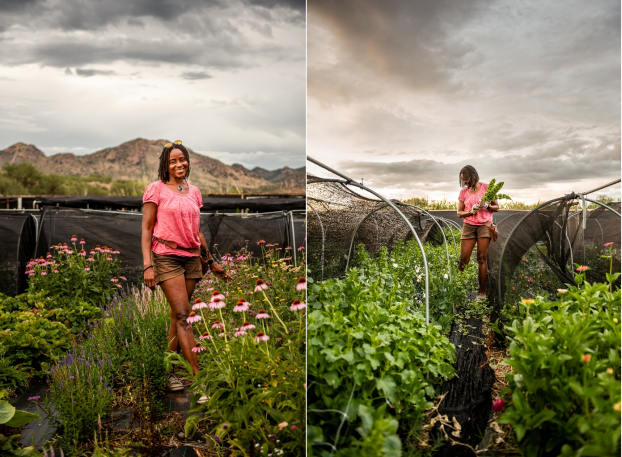
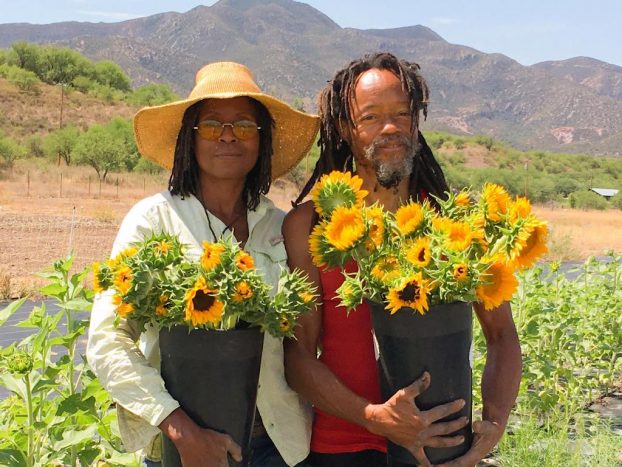
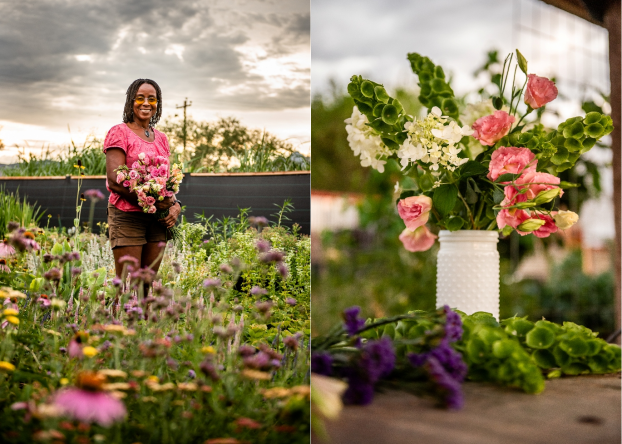
Aishah Lurry grows cut flowers in Arizona’s high desert town of Patagonia, just 25 miles north of the U.S.-Mexico border. All portrait and farm photography (c) Kayla Lewis-Simpson @kaylalewphotography
Way back in February B.C. — and by that I mean February, Before COVID — a Phoenix Home & Garden Magazine editor named Carly Scholl reached out to request an interview. She sent an email and wrote: I’m working on a story for our upcoming April issue about local flower farms, and my research consequently led me to you and your “slow flowers” movement. Your information and research has certainly informed my article so far, but I would love to do a short interview with you about this slow flowers concept to further educate our readers.
Aishah Lurry, with her brand-new delivery van. The van represents a growth opportunity that allows Patagonia Flower Farm to serve more markets including Tucson, about 60 miles away.
Carly and I had a wonderful conversation — her interest in locally-grown flowers was so encouraging! And in April, she published a four page feature about three fabulous flower farmers in Arizona, including today’s guest, Aishah Lurry of Patagonia Flower Farm. It’s a great article titled “How the Slow Flowers Movement is Making Arizona Bloom,” with the subhead: “Three local flower farms are cultivating communities around eco-conscious blossoms.”
You’ll be inspired by its focus on the importance of local and sustainable flowers and by the stories of all three farmers profiled, including Anne Jensen of Anne E’s Garden Fresh in Phoenix, also a Slow Flowers member, and Shanti Rade of Whipstone Farm in Paulden, a past guest of this podcast.
The article did another important thing as it revealed the state’s geographic diversity when it comes to growing flowers. As Aishah and I discuss, Arizona’s flower farmers have much in common, but the state’s growing zones vary widely. Patagonia is located in USDA Zone 8a with average minimum temperatures of 10 to 15 degree; you’ll hear Aishah discuss what this means for her long growing season, despite low precipitation and high daytime temperatures during some times of the year.
Aishah and her husband Sebastian
Here’s a bit more about Aishah, adapted from the Patagonia Flower Farm web site:
Aishah says flowers are one of the greatest passions in her life. After years of feeling frustrated about having to drive miles out of town for overpriced bouquets filled with imported flowers that died quickly, she decided to start her own micro-farm, Patagonia Flower Farm in 2017. Now her neighbors enjoy the beauty of fresh flowers that last days while keeping their carbon footprint small.
Gardening has been a personal joy of Aishah’s for more than 20 years. She has taught several classes about sprouts, micro-greens, and propagation and today serves with Borderlands Restoration Network to further its native species and public education programs.
Aishah shares her horticultural knowledge and gardening expertise to help customers enjoy the natural beauty and elegance that fresh, local flowers offer. She considers her flowers a local, affordable, and well-deserved luxury. Each flower in Aishah’s hand-picked bouquets are lovingly grown to ensure health, vibrancy, and longevity of the ingredients. Patagonia Flower Farm ‘s organic and sustainable practices keep the Earth and bees happy and healthy.
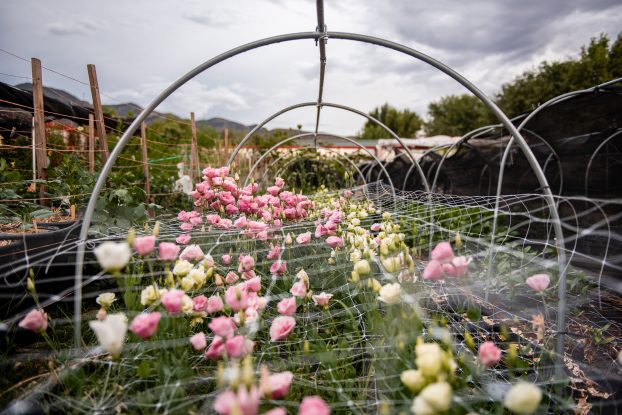
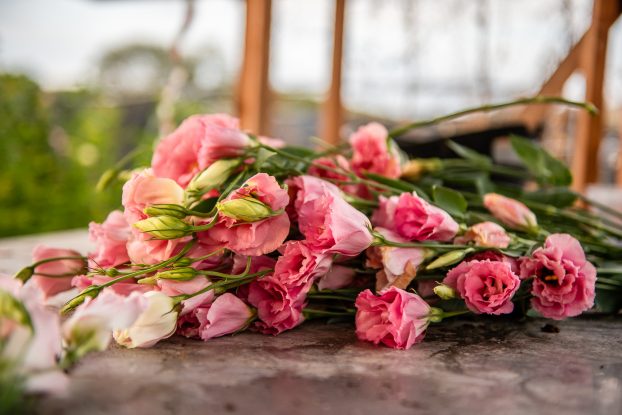
Lisianthus with companion flowers — all field-grown at Patagonia Flower Farm
Thanks so much for joining my conversation with Aishah Lurry. I’m encouraged by her focus on community and collaboration — a model we’ve seen happen with success across the Slow Flowers Movement — and definitely among the new Arizona Cut Flower Growers group. Watch for details about the future of this collective. And if you’re in the Tucson area, reach out to Aishah to join her CSA customer list. This was a great episode and I learned so much about the personal drive to grow flowers in challenging conditions. Best of luck with those dahlias, Aishah!
Now, more than ever, your Slow Flowers Membership gives you an important story to share with your community and your customers. Our monthly Slow Flowers Meet-Ups continue Friday, August 14th(9 am PT/Noon ET) and you’re invited to join us – virtually – via Zoom.
The COVID-19 pandemic drove us to begin this ritual in late March, and I’ve heard from so many of you who have valued the opportunity to connect with kindred spirits across the continent. After hosting weekly Meet-Ups for about 10 weeks, we shifted to monthly sessions to accommodate the increasingly busier and complicated schedules of our members. Since June, we’ve met on the second Friday morning of each month.
If you missed last month’s Meet-Up, you can find video from our July 10th Slow Flowers Member Virtual Meet-Upwith featured guests wedding designer and stylist Joy Proctor, founder and creative director of Joy Proctor Design and Slow Flowers members and wedding and event designers Adam Rico and Alicia Rico of Dallas-based Bows and Arrows Flowers. Learn about the first @saytheirnamesmemorial in Portland, Oregon, installed on Juneteenth (June 19th) by Joy Proctor and a group of friends, artists, designers and craftspeople, and created in several other cities including Dallas and Atlanta by Bows and Arrows Flowers.
Join us on Friday, August 14th
Gina Thresher (left) and Tonneli Gruetter (right)
This month’s guests include Gina Thresher of From the Ground Up Floraland Tonneli Gruetter of Salty Acres Farm — they’re among the instructors in a new virtual floral conference taking place in late August called Fleurvana. You’ll hear more from Gina and Tonneli and learn how you can grab a free registration for the three-day conference — I’ll be speaking there too. You can join us at this link. See you next Friday!
The Slow Flowers Podcast has been downloaded more than 630,000 times by listeners like you. Thank you for listening, commenting and sharing – it means so much.
As our movement gains more supporters and more passionate participants who believe in the importance of the American cut flower industry, the momentum is contagious. I know you feel it, too. I value your support and invite you to show your thanks and with a donation to support my ongoing advocacy, education and outreach activities. You can find the donate button in the column to the right.
Thank you to our Sponsors
This podcast is brought to you by Slowflowers.com, the free, nationwide online directory to florists, shops, and studios who design with American-grown flowers and to the farms that grow those blooms. It’s the conscious choice for buying and sending flowers.
Florists’ Reviewmagazine. I’m delighted to serve as Contributing Editor for Slow Flowers Journal, found in the pages of Florists’ Review. Read our stories at slowflowersjournal.com.
Mayesh Wholesale Florist. Family-owned since 1978, Mayesh is the premier wedding and event supplier in the U.S. and we’re thrilled to partner with Mayesh to promote local and domestic flowers, which they source from farms large and small around the U.S. Learn more at mayesh.com.
Johnny’s Selected Seeds, an employee-owned company that provides our industry the best flower, herb and vegetable seeds — supplied to farms large and small and even backyard cutting gardens like mine. Find the full catalog of flower seeds and bulbs at johnnysseeds.com.
The Gardener’s Workshop, which offers a full curriculum of online education for flower farmers and farmer-florists. Online education is more important this year than ever, and you’ll want to check out the course offerings at thegardenersworkshop.com.
The content and opinions expressed here are either mine alone or those of my guests alone, independent of any podcast sponsor or other person, company or organization.
The Slow Flowers Podcast is engineered and edited by Andrew Brenlan. Learn more about his work at soundbodymovement.com.
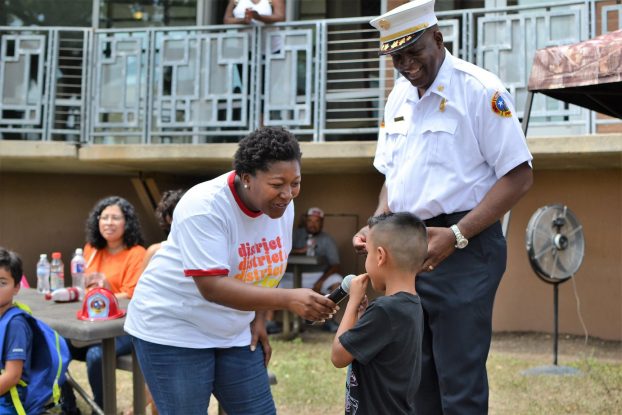
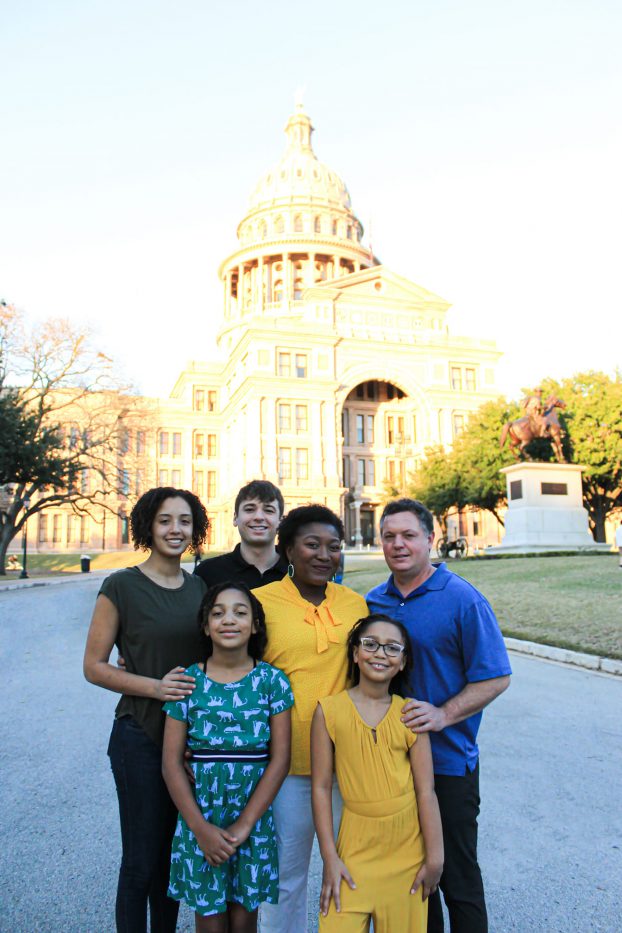
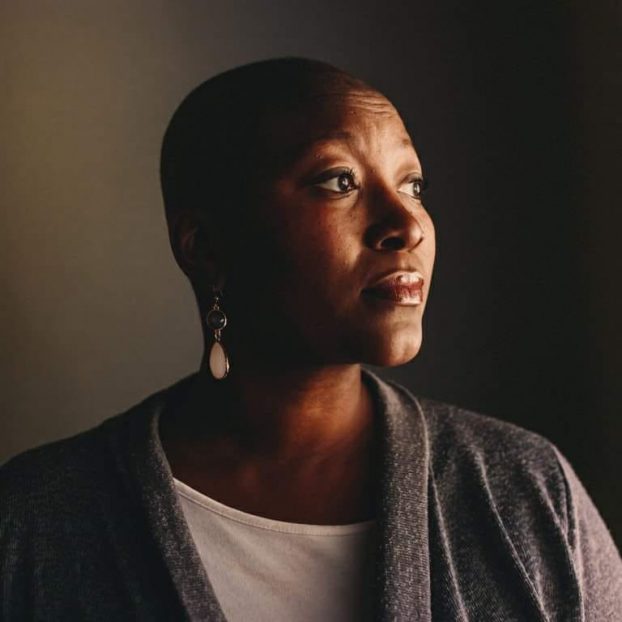
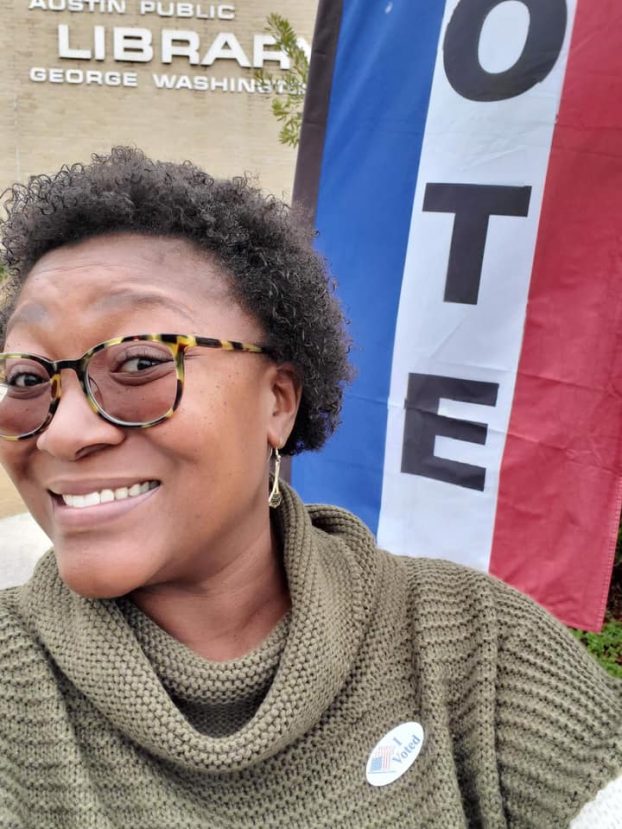
Natasha Harper-Madison, from floral entrepreneur to elected council member in Austin, Texas (all photos courtesy Natasha Harper-Madison)
Today’s guest is Council Member Natasha Harper-Madison, representing the city of Austin’s District 1. She may not seem like a typical Slow Flowers Podcast guest, but I know you’ll find our conversation inspiring, uplifting and a call to action. Natasha is a former floral entrepreneur and very early Slow Flowers member; I’ve been watching her path to public service on social media over the past few years and I just decided to reach out and ask her to share her amazing story.
Natasha now represents Austin’s District 1, the community where she grew up
As you will hear in the conversation that we recently recorded over Zoom, Natasha and I originally met when she joined Slow Flowers through her Austin-based wedding and event business Eco-Chic Flowers and Events, later rebranded as The Floral Engagement. Natasha was a sustainability pioneer and early adopter in the commitment to sourcing locally-grown flowers and to avoiding the use of any floral foam in her designs. You’ll hear us talk about her friendship with Mickey Blake, inventor of Floral Soil, a company here in Washington that had once developed a plant-based foam alternative to single-use plastic options on the marketplace. Mickey was a past guest of the Slow Flowers Podcast back in 2014, when we were huge supporters of her effort. Sadly that project is no longer operating, but I just wanted to mention it because it’s another thread that previously connected Natasha and me with a shared mission for sustainability.
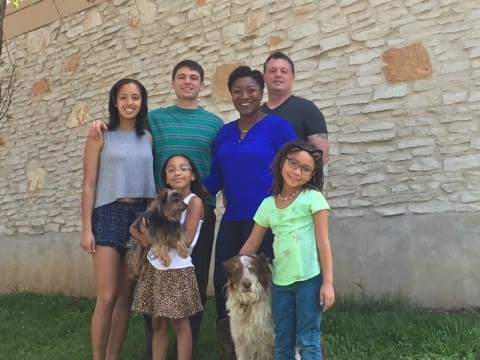
The Harper-Madison family, including Natasha, her husband Tom Madison, and their “bigs” and “littles”
Inviting an elected official to be a guest on the Slow Flowers Podcast isn’t typical, but I am so grateful to learn from a “friend of Slow Flowers,” a former florist, who is now on the front lines of governing and addressing social and racial justice issues in a major U.S. city.
Here’s a bit more about Council Member Natasha Harper-Madison. She represents Austin’s District 1, the part of town where she was born and raised. Her upbringing endowed her with an intimate knowledge of her community’s strengths and its unique struggles. The lessons she learned as a successful small business owner on the Eastside led her down a path towards advocacy. She served as president of the East 12th Street Merchants Association and also founded East Austin Advocates, a nonprofit dedicated to connecting under-represented residents with the resources they need to succeed.
Her community-level activism sparked Council Member Harper-Madison’s interest in seeking public office, a goal she achieved with her first campaign for City Council in 2018.
She is the chair of the Health and Human Services Committee and sits on the Housing and Planning Committee, Judicial Committee, and Regional Affordability Committee.
As Natasha explains, the decision to run for public office was a family decision
In between championing the interests of her constituents, Council Member Harper-Madison is the proud wife of an Austin firefighter, the mother of four children, and a thriving breast cancer survivor.
Thanks so much for joining my conversation with Natasha Harper-Madison of Austin’s District 1. I was very struck by a few of her statements: “This gig is not for folks who need instant gratification.” and “Sacrifice is not synonymous with suffering.”
I so admire Natasha for her willingness to, as she says: “sow the seeds of heirloom plants today — plants she may never personally see come to fruit or bloom.” I feel so moved to have had this conversation with a former colleague who’s taken a path of great personal sacrifice to address the inequities in her community — and I believe there is a ripple effect of Natasha’s actions and leadership, not to mention her ambitious vision to improve her community’s lives. That ripple effect may inspire you to take action about something you believe is hurting your community.
This conversation reminds me that we all can do better. Thank you, again, Natasha!
This podcast is brought to you by Slowflowers.com, the free, nationwide online directory to florists, shops, and studios who design with American-grown flowers and to the farms that grow those blooms. It’s the conscious choice for buying and sending flowers.
And thank you to Florists’ Review magazine. I’m delighted to serve as Contributing Editor for Slow Flowers Journal, found in the pages of Florists’ Review. Read our stories at slowflowersjournal.com.
Syndicate Sales, an American manufacturer of vases and accessories for the professional florist. Look for the American Flag Icon to find Syndicate’s USA-made products and join the Syndicate Stars loyalty program. Learn more at shop.syndicatesales.com.
Longfield Gardens, which provides home gardeners with high quality flower bulbs and perennials. Their online store offers plants for every region and every season, from tulips and daffodils to dahlias, caladiums and amaryllis. Check out the full catalog at Longfield Gardens at longfield-gardens.com.
Rooted Farmers works exclusively with local growers to put the highest-quality specialty cut flowers in floral customers’ hands. When you partner with Rooted Farmers, you are investing in your community, and you can expect a commitment to excellence in return. Learn more at RootedFarmers.com.
The Slow Flowers Podcast has been downloaded more than 627,000 times by listeners like you. Thank you for listening, commenting and sharing – it means so much.
As our movement gains more supporters and more passionate participants who believe in the importance of the American cut flower industry, the momentum is contagious. I know you feel it, too. I value your support and invite you to show your thanks and with a donation to support my ongoing advocacy, education and outreach activities. You can find the donate button in the column to the right.
The content and opinions expressed here are either mine alone or those of my guests alone, independent of any podcast sponsor or other person, company or organization.
The Slow Flowers Podcast is engineered and edited by Andrew Brenlan. Learn more about his work at soundbodymovement.com.
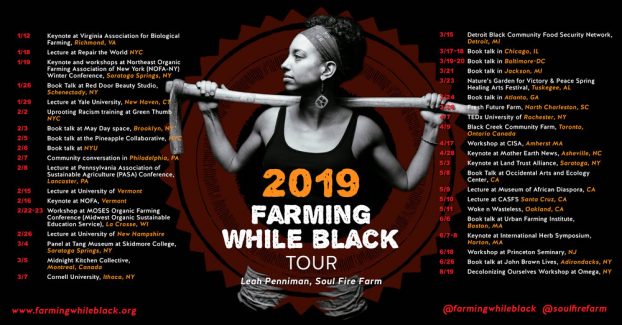
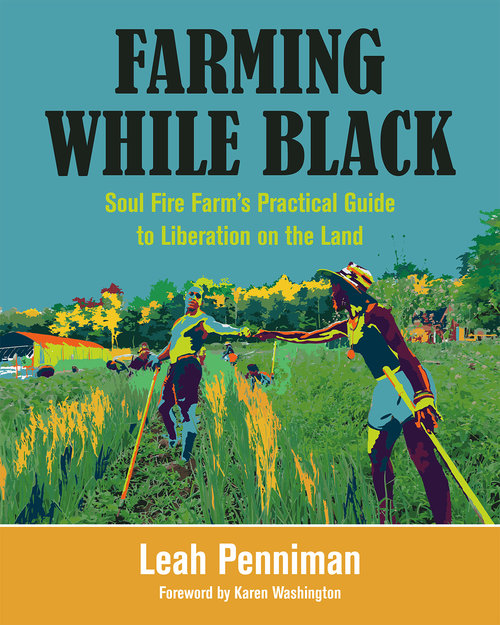
Replay Episode with Leah Penniman of Soul Fire Farm and author of “Farming While Black.”
Today, we are celebrating the 7th Anniversary of the Slow Flowers Podcast. I want to take a moment and marvel at the significance and what this means to me — the significance of sharing so many wonderful conversations with listeners over the years, since launching this little project on July 23, 2103.
The timing of this podcast’s debut was just a few months after the publication of the book Slow Flowers: Four Seasons of Locally Grown Bouquets from the Garden, Meadow and Farm, when I introduced the first-ever podcast for the floral marketplace. I began to invite guests to share their voices, ideas and inspiration. From domestic flower farmers to designers taking a seasonal and sustainable approach to their floral art, I’ve have pursued unique programming for you.
For 362 consecutive weeks, this has been the podcast you can rely on to bring you stories of American flowers and the people who grow and design with them. This podcast actually pre-dates the launch in May 2014 of Slowflowers.com, the free, nationwide online directory to florists, shops, and studios who design with American-grown flowers and to the farms that grow those blooms. Slowflowers.com began with about 250 members across the U.S. and it has evolved into the Slow Flowers Society with 750 sustaining members across North America, members who, like you, care about making a conscious choice for buying and sending flowers.
(c) Mary Grace Long
So we have a lot to celebrate and a lot to be grateful for. We’ve shared conversations on topics important to progressive, sustainably-minded floral entrepreneurs and I’m excited to continue the strong momentum as this show is more popular than ever. Episodes have been downloaded by listeners like you more than 625,000 times over the past seven years, and we currently enjoy 10k to 12k monthly downloads. So while metrics aren’t everything, they are one important indicator of the relevance of our content.
I want to pause and thank all of our current Slow Flowers Podcast sponsors, just to remind you that their contributions sustain the production and distribution of this show.
We are in a season of challenge and change, and I want to bring you what I believe is a very special and timely replay episode from our archives. It has always been my goal to produce a fresh new episode every week, and but for a few exceptions, I’ve been able to do so. But with the heightened awareness about the fight against systemic racism and Slow Flowers’ stated commitment to support Black flower farmers and florists, we want to turn the focus on their voices, including revisiting past interviews you may have missed. In the coming months, we want to shine a light on Black pioneers and leaders in the Slow Flowers Community, members and friends. We have several new guests booked for the coming months, but today, I want to re-introduce you to Leah Penniman.
Leah Penniman is a Black Kreyol educator, farmer, author, and food justice activist from Soul Fire Farm in Grafton, New York. She co-founded Soul Fire Farm in 2011 with the mission to end racism in the food system and reclaim an ancestral connection to land. As co-Executive Director, Leah is part of a team that facilitates powerful food sovereignty programs – including farmer trainings for Black and Brown people, a subsidized farm food distribution program for people living under food apartheid, and domestic and international organizing toward equity in the food system.
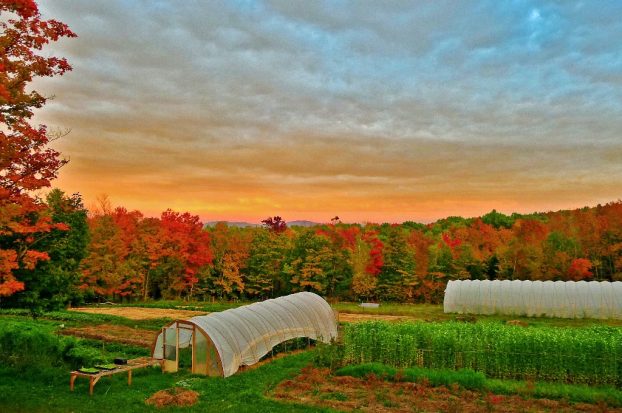
Soul Fire Farm – a life-giving hub for education, advocacy and activism
Leah holds an MA in Science Education and BA in Environmental Science and International Development from Clark University. She has been farming since 1996 and teaching since 2002. The work of Leah and Soul Fire Farm has been recognized by the Soros Racial Justice Fellowship, Fulbright Program, Omega Sustainability Leadership Award, Presidential Award for Science Teaching, NYS Health Emerging Innovator Awards, and Andrew Goodman Foundation, among others. All proceeds from the sale of Farming While Black will be used to support Black Farmers.
Soul Fire Farm is aBlack, indigenous, and people of color–centered community farm committed to ending racism and injustice in the food system. Soul Fire Farm raises and distributes life-giving food as a means to end food apartheid.
With deep reverence for the land and wisdom of ancestors, the farm works to reclaim its collective right to belong to the earth and to have agency in the food system.
Soul Fire brings diverse communities together on its healing land to share skills on sustainable agriculture, natural building, spiritual activism, health, and environmental justice. Leah and her colleagues are training the next generation of activist-farmers and strengthening the movements for food sovereignty and community self-determination.
Thanks so much for joining my conversation with Leah Penniman of Soul Fire Farm and Farming While Black, originally broadcast as Episode 385 on Wednesday, January 23, 2019. As I mentioned in the interview, Farming While Black is required reading for all farmers, and for anyone who wants to have a deeper insight into the racism and injustice in our country’s agricultural history. I highly recommend it — Leah’s passion and spirit jumps off the page as she inspires, informs, instigates and shares her important life’s work as well as her incredibly smart farming advice.
I invited Leah to return to the Slow Flowers Podcast this week and give us an update about Soul Fire Farm’s work, but due to the demands of farming and activism, her schedule didn’t work with ours. I’m grateful that Soul Fire Farm sent us an extensive list of new resources and action items to help the Slow Flowers Community get more involved in social justice work to support Black-owned farms.
Their message read as follows: We are humbled by the outpouring of support we have received from you in the last couple weeks, instilling us with hope for a more just future amidst the grief we feel about the continued legacy of anti-Black police violence in our nation.
Here is a list of action steps you can take right now.
Call your congressperson and tell them to end the war on Black lives
Check out the declaration we wrote in response to the recent wave of anti-Black police murders that contains links to many resources and calls for actions
As a show of support from the Slow Flowers Podcast, we have made a $250 donation to Soul Fire Farm and sent Leah and her team a one-year membership in Slow Flowers. We are eager to learn and listen — and I invite you to join me in this important endeavor.
As our movement gains more supporters and more passionate participants who believe in the importance of the American cut flower industry, the momentum is contagious. I know you feel it, too. I value your support and invite you to show your thanks and with a donation to support my ongoing advocacy, education and outreach activities. You can find the donate button in the column to the right.
The content and opinions expressed here are either mine alone or those of my guests alone, independent of any podcast sponsor or other person, company or organization.
The Slow Flowers Podcast is engineered and edited by Andrew Brenlan. Learn more about his work at soundbodymovement.com.
I’m so happy to share my conversation with Heather Schuh of HB Farm with you today. We recorded it last Saturday after the July “Best of” Workshop that Slow Flowers produced for the Seattle Wholesale Growers Marketwhere HB Farm is a member-grower.
It was serendipitous that we would be in the same place on the same day — Heather presented about blueberry, blackberry and raspberry cuts for foliage, along with Kristy Hilliker of B&B Family Farm who gave a fabulous lavender talk. Following their educational presentations, Melissa Feveyear of Terra Bella Flowersdesigned a lush and abundant summer arrangement using the berry foliage and lavender, along with companion stems. The presentations can be found on the Growers Market’s IGTV feed:
Part One: Lavender with B&B Family Farm and Berry Foliages with HB Farm
https://www.instagram.com/tv/CCglQJ_AITk/
Part Two: Floral design demonstration with Melissa Feveyear of Terra Bella Flowers
https://www.instagram.com/tv/CCgqZlrAE_B/
I say it was serendipity that brought Heather and me together to record — socially-distanced on opposite sides of the room — because this is an interview that took one year to accomplish! I had reached out to Heather to set up an interview last summer, only to discover that the date I wanted to visit HB Farm was also the date that Heather was hosting her son’s wedding at her farm (oh, and designing the flowers, too).
I’m so glad we make it work this past week and I learned a lot about this serial entrepreneur who has a background in timber, home construction and interior design. For Heather, it started with blueberries and she has come full circle to return to blueberries, but in a modern, design-forward way.
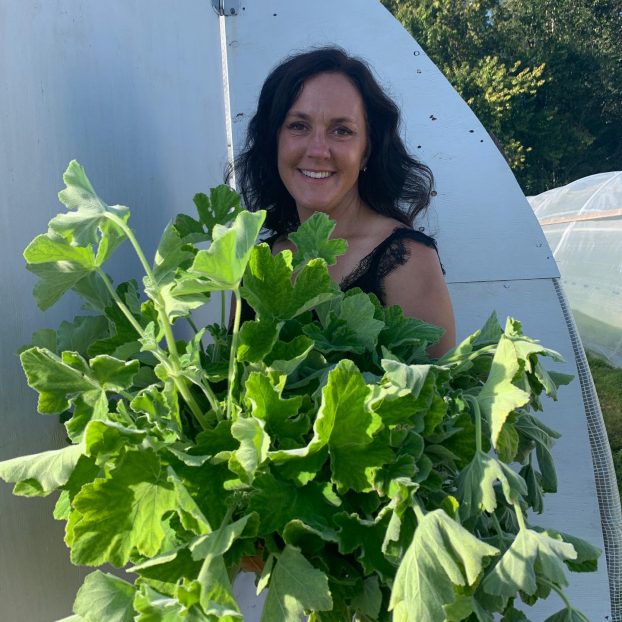
Heather loves growing a wide range of crops – in addition to blueberries. Here she is with an armload of scented geranium foliage
Here’s a bit more about Heather Schuh and HB Farm:
Her family has been farming the land that is currently HB Farm since the 1940’s. During that time the ground has seen several crop successions. Heather remembers helping plant raspberries there in 1975 and when the raspberry market changed in the early 80’s all of the farmland was converted to Blueberries.
She says this: The biggest lessons I have learned from farming is that it isn’t easy, and to be ready to innovate and make changes due to market demands and conditions.
In 2015 the market for Blueberries was inundated with overproduction. Farms that were planted throughout northern Washington State and even to the South started to produce everything they had planted approximately 5 years earlier. Suddenly, the need for small producers to sell their products to larger wholesaler simply dried up, leaving family farms like HB Farm stuck with Blueberries that no one wanted.
After much discussion and the desire to continue to farm, Heather and her husband Brandon decided to dig up and sell as many of their blueberry plants as they could, after which they began converting their fields to flowers.
That next chapter continues today. Heather calls farming a “lifestyle” summed up by rising early to harvest and do all of the watering and chores associated with farming and going to bed late when your body is aching from all of the hours of hard work.
She believes this work ethic was passed down by her parents and grandparents, adding “Family Farms are a beautiful part of this nation’s history and I am so happy that we are able to continue our families legacy…with Flowers!”
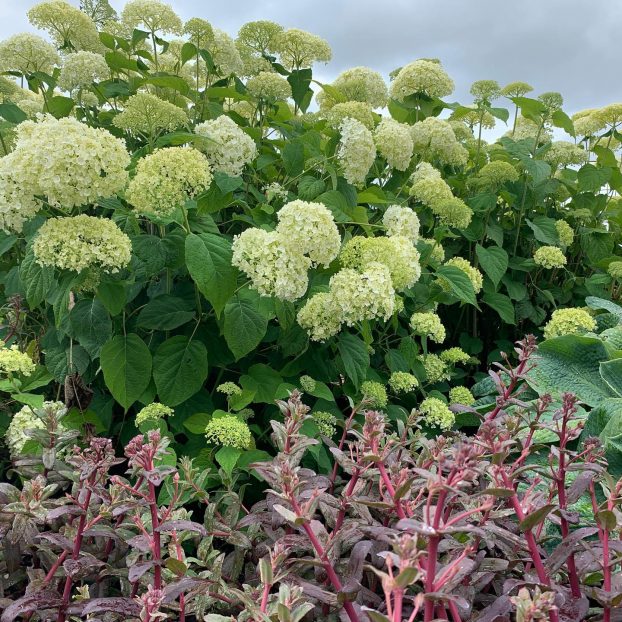
Annabelle hydrangeas are another top crop from HB Farm
Here’s how to find and follow Heather Schuh and HB Farm:
In the coming weeks, as Heather mentioned, the Seattle Wholesale Growers Market will roll out a new and improved website. I’ll make sure to share a link when that goes Live, so you can see all of the botanicals, flowers, and foliage, from HB Farm and the other amazing farmers who are part of the cooperative.
Last Friday July 10th we held the monthly Slow Flowers Member Virtual Meet-Up, our second monthly gathering via Zoom, which follows the eight consecutive weekly Meet-Ups that began in late March with the onset of the COVID-19 Pandemic.
The Pandemic continues to be top-of-mind for us all, and connecting virtually is one way to check in and listen, learn, encourage and grow with the Slow Flowers community.
Click above to watch the replay video from last week’s meet-up. It was profoundly inspiring.
Our attendees learned about the first@saytheirnamesmemorialin Portland, Oregon, created two weeks ago by top wedding designer Joy Proctor and a group of friends, artists, designers and craftspeople. Their goal was to use art to honor hundreds of Black men and women whose lives were taken unjustly. Since then, the memorial has been recreated in several more cities, including Dallas, Seattle, Lexington and Austin, with up to 10 more planned throughout the country.
Dallas creatives Alicia and AdamRico, Slow Flowers members and owners ofBows and Arrows Flowers, were part of the team of that installed #saytheirnamesmemorial tributes in Dallas. They have since brought the installation to Atlanta and Naples, Florida. These passionate and gifted wedding professionals discussed the idea of #floralactivism and how they are using beauty and art to raise awareness, change attitudes and protest injustice in their communities and beyond.
Thank you to our Sponsors
This podcast is brought to you by Slowflowers.com, the free, nationwide online directory to florists, shops, and studios who design with American-grown flowers and to the farms that grow those blooms. It’s the conscious choice for buying and sending flowers.
And thank you to Florists’ Review magazine. I’m delighted to serve as Contributing Editor for Slow Flowers Journal, found in the pages of Florists’ Review. Read our stories at slowflowersjournal.com.
The Gardener’s Workshop, which offers a full curriculum of online education for flower farmers and farmer-florists. Online education is more important this year than ever, and you’ll want to check out the course offerings at thegardenersworkshop.com.
Mayesh Wholesale Florist. Family-owned since 1978, Mayesh is the premier wedding and event supplier in the U.S. and we’re thrilled to partner with Mayesh to promote local and domestic flowers, which they source from farms large and small around the U.S. Learn more at mayesh.com.
Association of Specialty Cut Flower Growers. Formed in 1988, ASCFG was created to educate, unite, and support commercial cut flower growers. Its mission is to help growers produce high-quality floral material, and to foster and promote the local availability of that product. Learn more at ascfg.org.
The Slow Flowers Podcast has been downloaded more than 624,000 times by listeners like you. Thank you for listening, commenting and sharing – it means so much.
As our movement gains more supporters and more passionate participants who believe in the importance of the American cut flower industry, the momentum is contagious. I know you feel it, too. I value your support and invite you to show your thanks and with a donation to support my ongoing advocacy, education and outreach activities. You can find the donate button in the column to the right.
The content and opinions expressed here are either mine alone or those of my guests alone, independent of any podcast sponsor or other person, company or organization.
The Slow Flowers Podcast is engineered and edited by Andrew Brenlan. Learn more about his work at soundbodymovement.com.
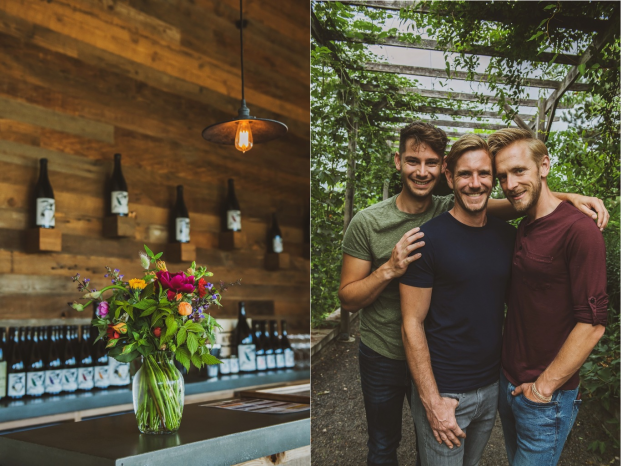
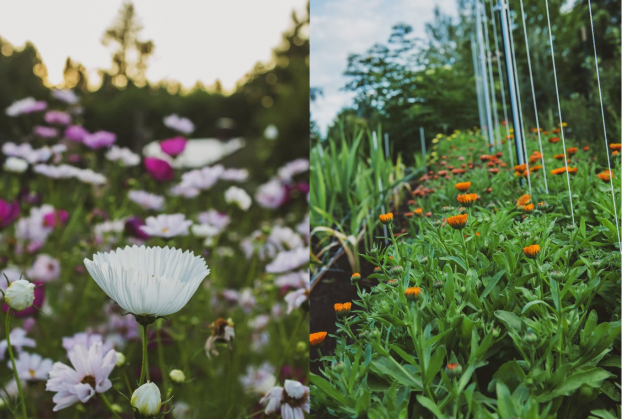
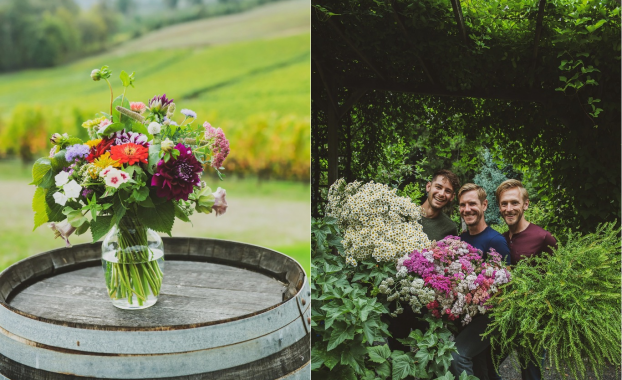
Pollinate’s flowers for Oregon’s wine country (left); the men of Pollinate, from left: Zach Goff, John Peterson and Jeremi Carroll
John Peterson, Jeremi Carroll and Zach Goff welcomed me to Pollinate’s gardens in Dundee, which is in the heart of Oregon’s wine country, about 40 miles southwest of Portland.
I wore my mask and enjoyed following them along the paths and through the beds and borders of their overly abundant, integrated garden where flowers and food thrive in community. When it came time to record our conversation, we sat safely apart from each other under a tree in the garden, with chairs arranged around a table where I placed the digital recorder. Nothing beats recording a podcast episode in the garden!
Pollinate began when John (left) and Jeremi (right) chased their dreams of growing a “food forest” from a suburban rental house outside Portland to a beautiful, 2.5-acre gardens in Dundee, Oregon
The path to flowers began for John and Jeremi in 2009 when they lived in the Portland suburbs and planted a beautiful garden in the backyard of a rental house.
As the story is told on Pollinate’s web site, it quickly became clear by the juxtaposition between their vibrant garden and the Astroturf on the property’s front lawn, that their intentions had overgrown the available gardening space. The fence surrounding that tiny suburban yard was a physical limitation; yet, Jeremi and John discovered they had cultivated an obsessive love of nature’s abundance and diverse beauty. They set their sights on a new property and developed a plan to take a broken piece of land that they could “re-wild” into a bio-diverse habitat for flora and fauna alike.
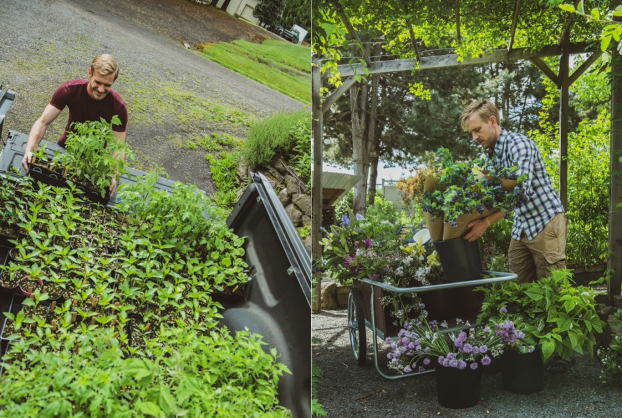
Over recent years, the focus on growing food, fruit and herbs has expanded to flowers for pollinators and humans alike
In the summer of 2012, armed with textbook theories and a single dull shovel, the men moved to 2.5 acres in Dundee, and they began to turn that dream into reality.
Over the past several years, they focused on building permanent, no-till beds surrounded with lush perennial plantings, which together develop habitat where life thrives. Their efforts have created a regenerative ecosystem; a healthy environment for plants, animals, insects and microbes as Pollinate grows beautiful varieties of luscious, nutrient-dense produce and vibrant cut flowers that customers feel good about shoving their faces in to take a sniff.
More Pollinate flowers (left) and the dynamic team behind them (right), Zach Goff, John Peterson and Jeremi Carroll
As John and Jeremi began to focus more on flowers than edible plants alone, their business got a boost when a third partner joined them in 2017. This is the third growing season that Zach Goff has been part of Pollinate. Like Jeremi and John, he has a background in culinary and hospitality, and he brings marketing, branding and photography skills to the team.
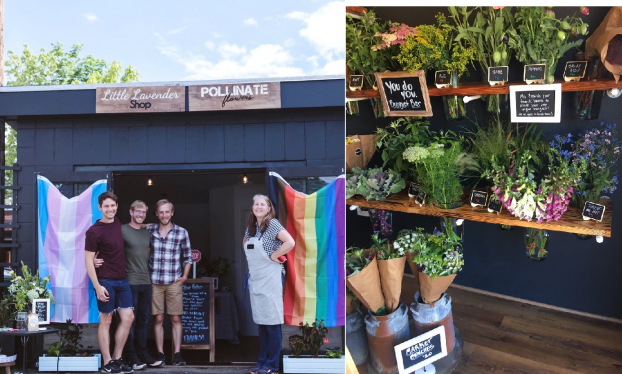
Zach, John and Jeremi (left) with their retail partner Pam Baker of the Little Lavender Farm (right) at their new shop in Newberg, Oregon
There is a lot of change happening for Pollinate right now, including the June opening of a new retail shop in Newburg, Oregon, an adjacent town that’s known as the gateway to Oregon’s wine country. Pollinate shares its flower shop with a fellow grower, Little Lavender Farm, owned by their neighbor Pam Baker. I stopped by to check out the charming shop after we recorded this episode.
Things are moving so quickly that now the men are working on a new ecommerce web site to support the retail shop. They expect to launch that platform later this summer, so you’ll want to find and follow Pollinate’s social places to catch the announcement when the new site goes live.
Here’s how you can find and follow Pollinate:
Pollinate & Little Lavender Farm’s Retail Shop is located at: 108 S. College St., Suite C, Newberg, Oregon 97132. Open Wed – Sat, 2-6 (Wed until 8)
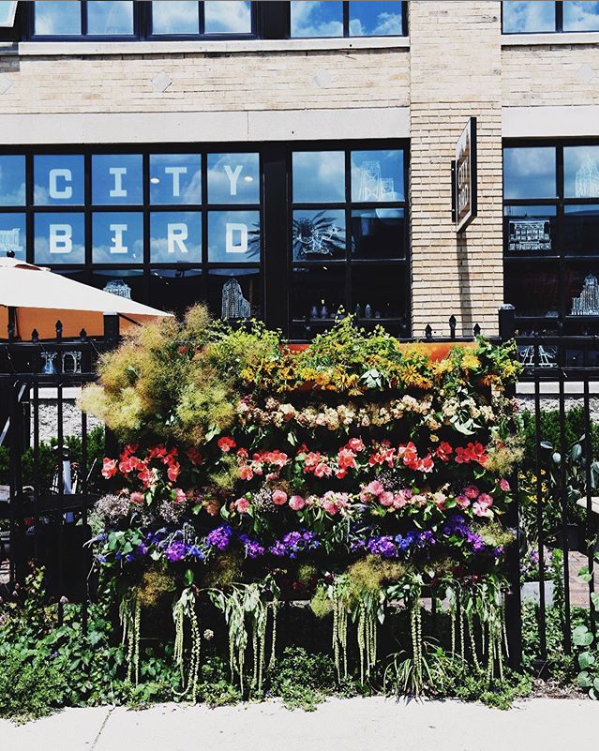
Photo (c) Emily Berger Slow Flowers and American Flowers Week sponsored “THIS IS DETROIT” • installation six of #bigflowerfriend, a project raising money for michigan flower farmers • on view at @citybirddetroit • Designed by Lisa Waud Botanical Artist, the colorful floral flag invited Detroit residents to take selfie photos in tribute to change and equity•
I’m on a big high, after a full week of activities celebrating American Flowers Week, June 28th-July 4th, our sixth year coming together as a community to elevate domestic flowers in the minds of consumers and professional florists alike.
Thank you to everyone who posted floral images and your own beautiful tributes across social media — we’ve been watching the impact over time as the #americanflowersweek hashtag has garnered more than 15 million social media impressions since we launched in 2015.
You can find our 2020 recap articles at americanflowersweek.com. In a few weeks, we will announce our call for submissions for the 2021 botanical couture collection — now is the time to jump on this opportunity while your fields and studios are bursting with floral ingredients!
Did you miss our most recent Slow Flowers Members’ Virtual Meet-Up? Click on the Play Button above to join Debra Prinzing as she welcomes ALISON HIGGINS and MONÍCA PUGH, two of the designers who created Botanical Couture garments for the American Flowers Week 2020 Collection.
Later this week, 9 am Pacific/Noon Eastern onFriday, July 10th, you are invited to join the 2nd monthly Slow Flowers Member Virtual Meet-Up on Zoom. Click here to find the details to join us!
Thank you to our Sponsors
This podcast is brought to you by Slowflowers.com, the free, nationwide online directory to florists, shops, and studios who design with American-grown flowers and to the farms that grow those blooms. It’s the conscious choice for buying and sending flowers.
And thank you to Florists’ Review magazine. I’m delighted to serve as Contributing Editor for Slow Flowers Journal, found in the pages of Florists’ Review. Read our stories at slowflowersjournal.com.
Longfield Gardens, which provides home gardeners with high quality flower bulbs and perennials. Their online store offers plants for every region and every season, from tulips and daffodils to dahlias, caladiums and amaryllis. Check out the full catalog at Longfield Gardens at longfield-gardens.com.
Johnny’s Selected Seeds, an employee-owned company that provides our industry the best flower, herb and vegetable seeds — supplied to farms large and small and even backyard cutting gardens like mine. Find the full catalog of flower seeds and bulbs at johnnysseeds.com.
Rooted Farmers works exclusively with local growers to put the highest-quality specialty cut flowers in floral customers’ hands. When you partner with Rooted Farmers, you are investing in your community, and you can expect a commitment to excellence in return. Learn more at RootedFarmers.com.
The Slow Flowers Podcast has been downloaded more than 622,000 times by listeners like you. Thank you for listening, commenting and sharing – it means so much.
As our movement gains more supporters and more passionate participants who believe in the importance of the American cut flower industry, the momentum is contagious. I know you feel it, too. I value your support and invite you to show your thanks and with a donation to support my ongoing advocacy, education and outreach activities. You can find the donate button in the column to the right.
The content and opinions expressed here are either mine alone or those of my guests alone, independent of any podcast sponsor or other person, company or organization.
The Slow Flowers Podcast is engineered and edited by Andrew Brenlan. Learn more about his work at soundbodymovement.com.