Debra Prinzing

Get the Email Newsletter!

Local Flower Growers Say: “Pick Me” – The Field-to-Vase Dinner Recap

Sunday, October 20th, 2013

Note: This article originally appeared in the online edition of The Oregonian, October 17, 2013. Click here to read the online version where you can comment and Tweet the link. I want to acknowledge up front that the Field-to-Vase Dinner concept and format began in June 2013 at the Monterey Bay Greenhouse Growers Dinner, created by my friend Kathleen Williford of the California Cut Flower Commission. The Portland event earlier this month was based on her model and she was there in spirit! Follow Kathleen at @kathinated.
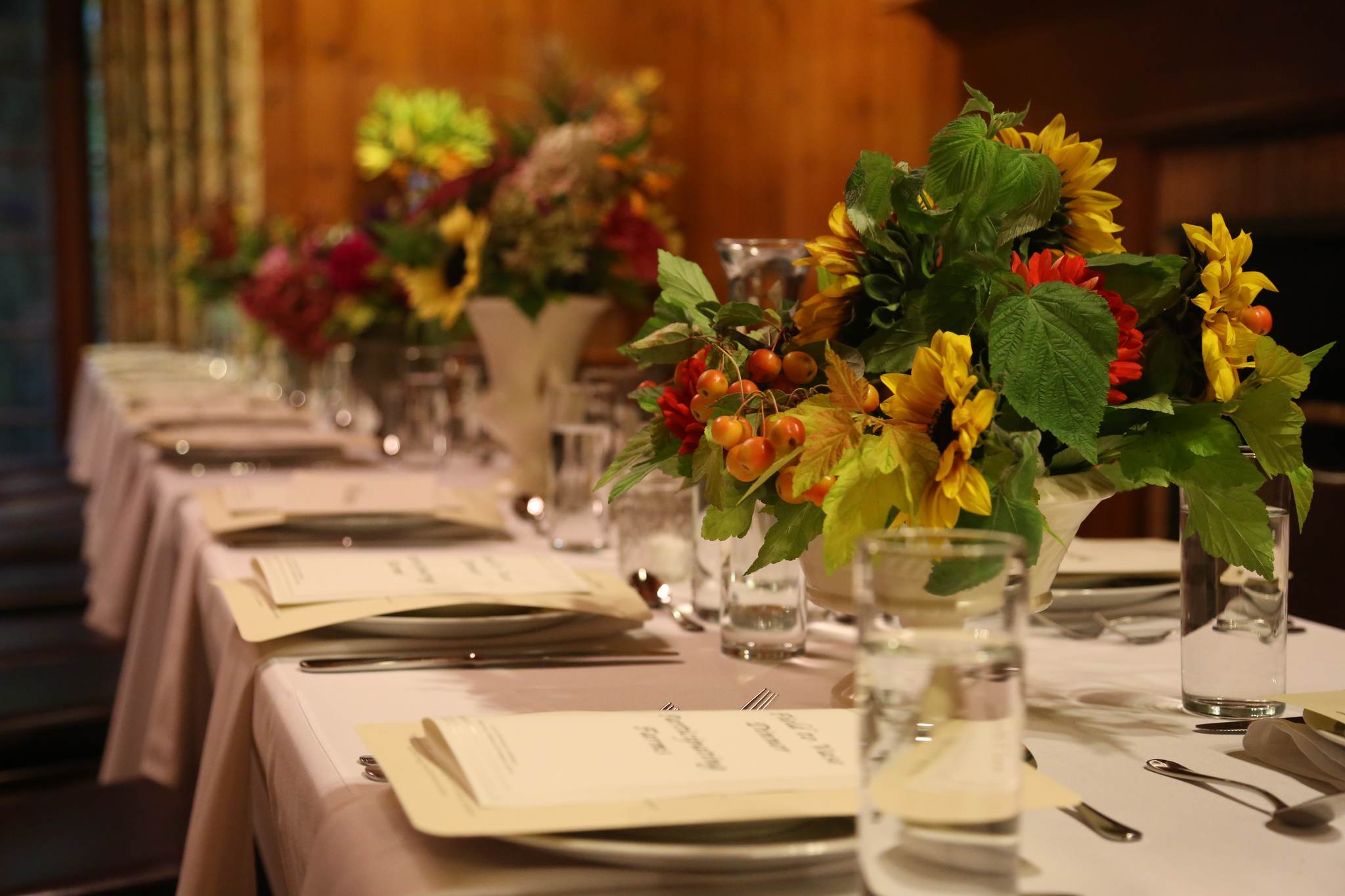
The Table is Set.

The table was set with American-Grown flowers, the vases containing stems from Oregon, Washington & California cut flower farms.
10194582873_b2cfe7e857_o

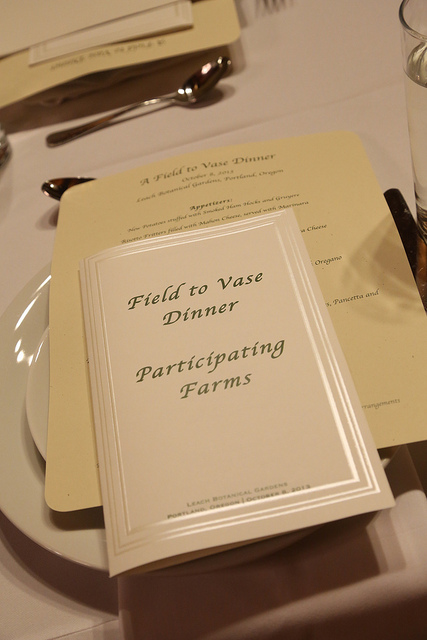
Menu

A shared meal, local food, local flowers and an important dialogue about American Grown Flowers.

A coalition of California cut flower farmers recently arrived in Portland, extending their hands of friendship to the local floral industry. They weren’t exactly holding olive branches, although those botanical elements would likely be found in a vase of California-grown blooms.

No, the reason was self-preservation, not just for the seven California farms in attendance, but for their counterparts in Oregon and Washington.

Their Field-to-Vase gathering took place on Oct. 8 at Leach Botanical Garden in southeast Portland, where a local caterer served a decidedly local menu to about 40 flower farmers, floral retailers and wholesalers, and designers.
Part flower summit, part floral showcase, the event brought together people who might otherwise view themselves as competitors. 
 
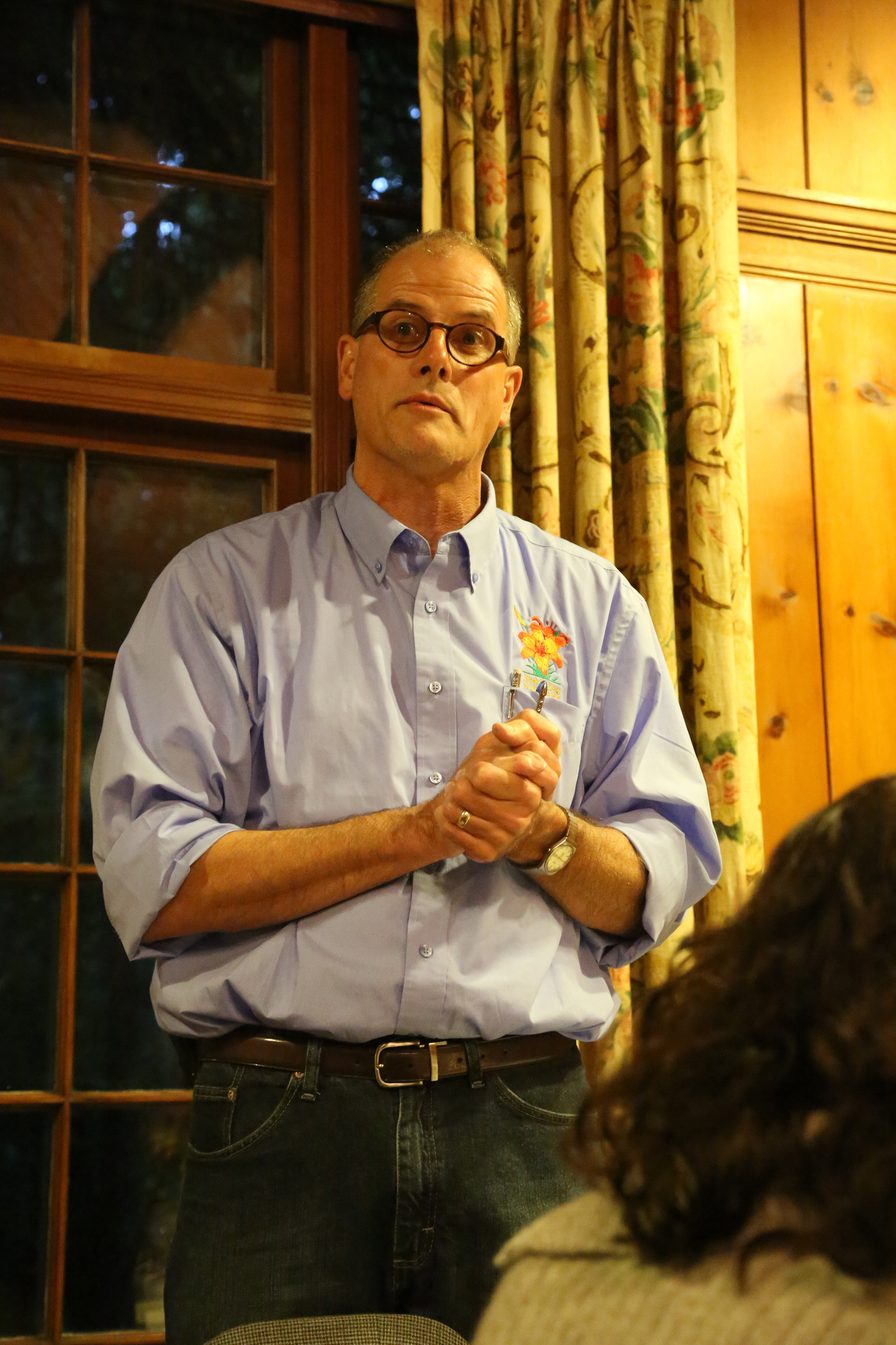
Collaboration is the best way to save American cut flower farms, maintained Lane DeVries of The Sun Valley Group based in Arcata, Calif., the largest cut flower farm in the United States.  
Lane DeVries

Meet Lane DeVries, CEO of The Sun Valley Group, America’s largest cut flower farm, and Chairman of the California Cut Flower Commission.

DeVries is also the current chairman of the California Cut Flower Commission, the organization that hosted the event.

U.S. flower farms once produced nearly 65 percent of the nation’s cut flowers, but over the past two decades, imports from South America have caused that figure to shrink to around 20 percent, DeVries said.

“We’ve actually seen cut flower operations go out of business in a lot of states,” he said. “The reason we are reaching out to (Northwest) flower farms is to work together as an American-grown domestic flower movement.”

Flower farming cooperatives are well established in the Northwest, dating to 1942 when the Oregon Flower Growers Association was founded. The wholesale farmer-to-florist market operates from a warehouse in Portland’s Swan Island industrial district with about 30 vendors.

In 2011, inspired by Portland’s home-grown floral business model, the Seattle Wholesale Growers Market opened on behalf of 16 Oregon and Washington flower farms.
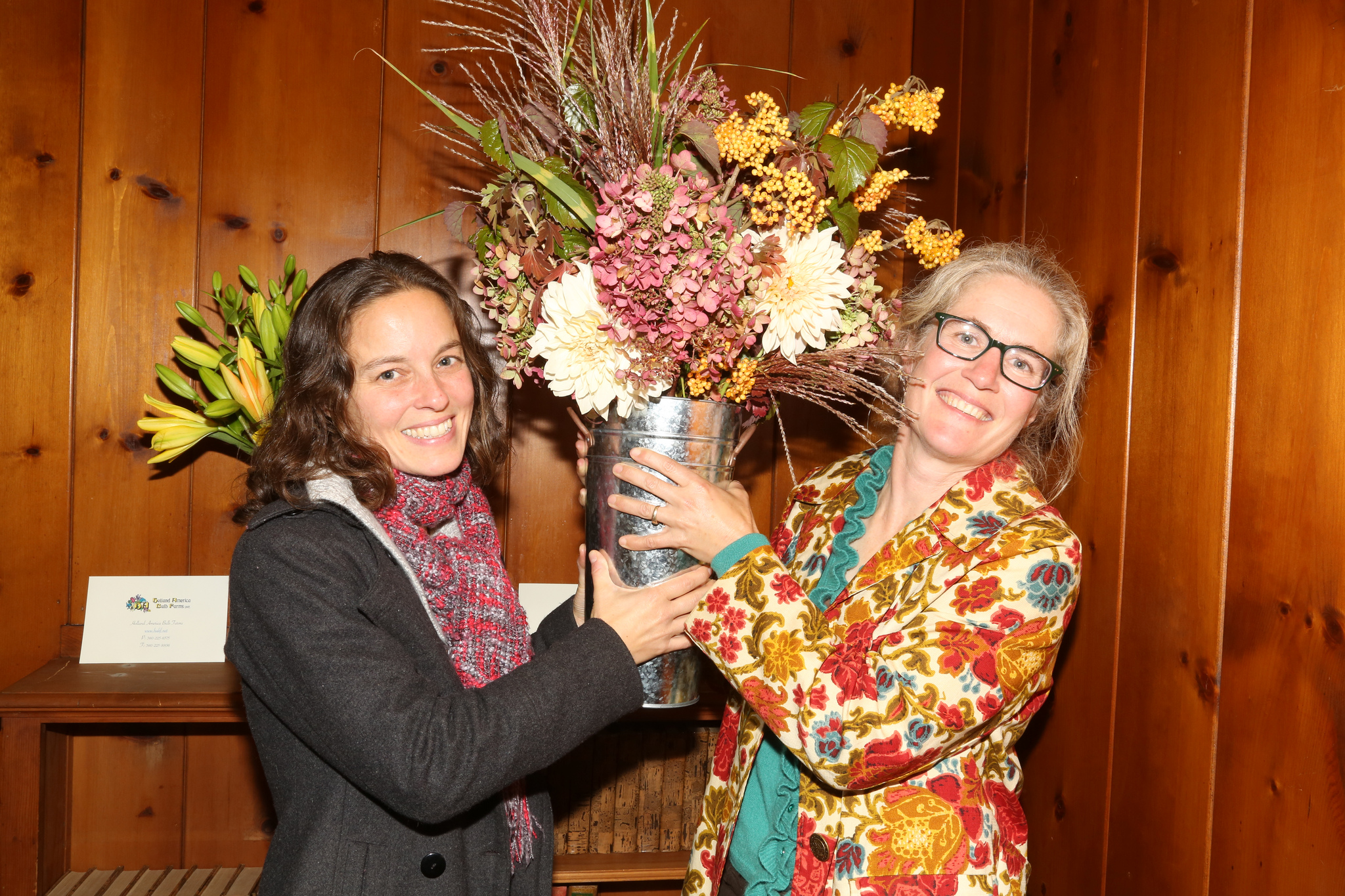
Diane and Molly

Diane Szukovathy and Molly Sadowsky of the Seattle Wholesale Growers Market

According to Diane Szukovathy, a Mount Vernon, Wash.-based farmer and the Seattle growers’ market president, the emerging market’s locally grown efforts gained momentum last fall when it received $138,000 in USDA Specialty Crop Block Grant funds, administered in partnership with the Washington State Department of Agriculture and the Oregon Department of Agriculture.

“The grant money helps us open more distribution channels for local farms to sell their flowers,” Szukovathy said. “Together, we can all shed light on major shifts in how people buy flowers.”

A wide variety of Northwest-grown flowers and foliage is found in the floral departments of New Seasons Markets.
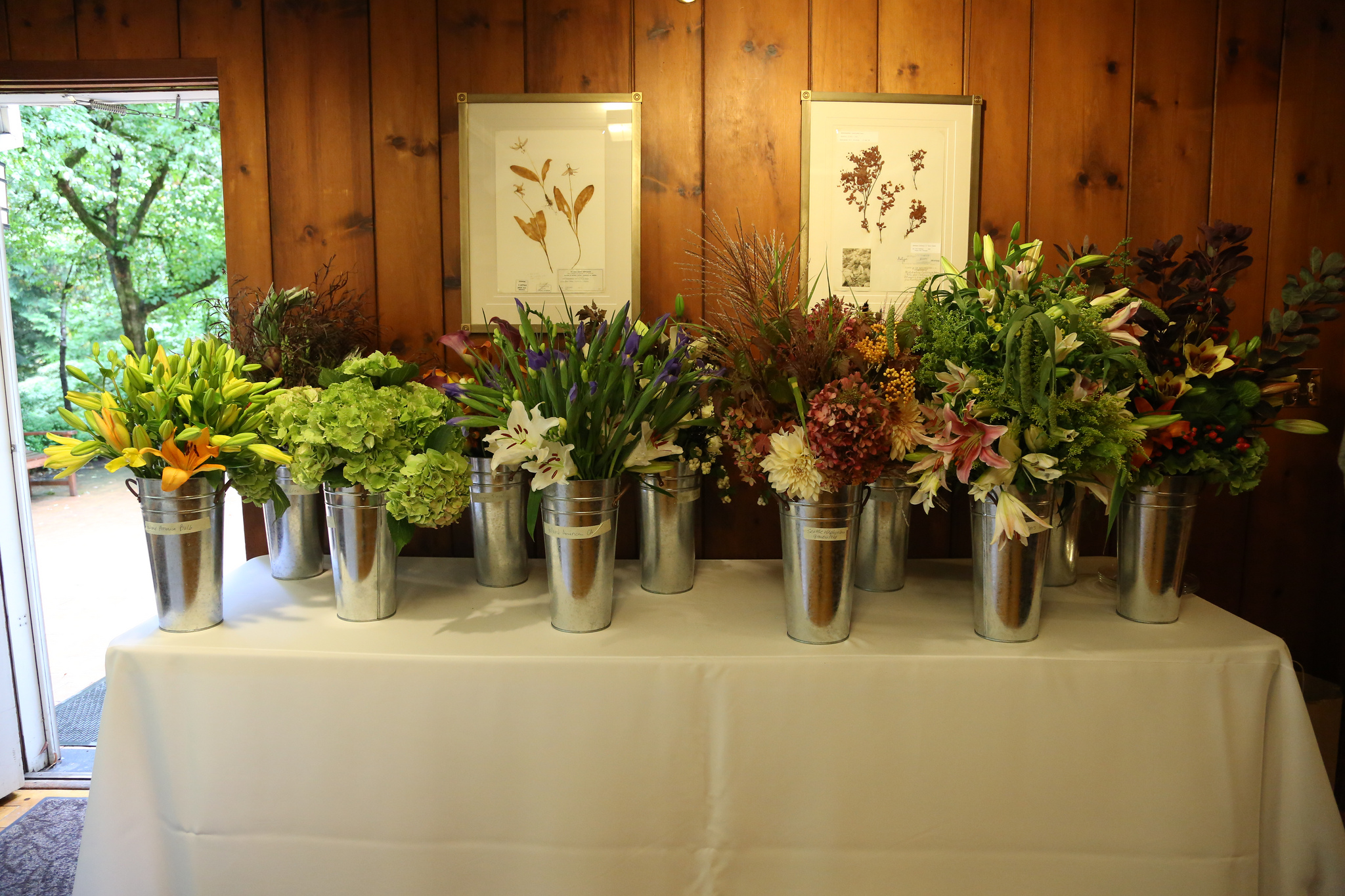
bouquets

These Farm Bouquets represent the participating flower farms from California, Oregon and Washington – a veritable bounty of botanical excess!

Katie McConahay, the chain store’s floral merchandiser, said she’s starting to expand her definition of what is local and seasonal to include California-grown flowers, especially during the winter months when production on Northwest flower farms is lower.

“When I buy for our stores, my focus is definitely on Oregon- and Washington-grown flowers,” McConahay said. “For many of our customers, California was not considered ‘local,’ but in order to sustain an American-grown floral product consistently throughout the year, California is a good year-round option for us.”

She hopes better product information and education at stores will help consumers see that domestic flowers, even from one state away, offer an alternative to imported ones.
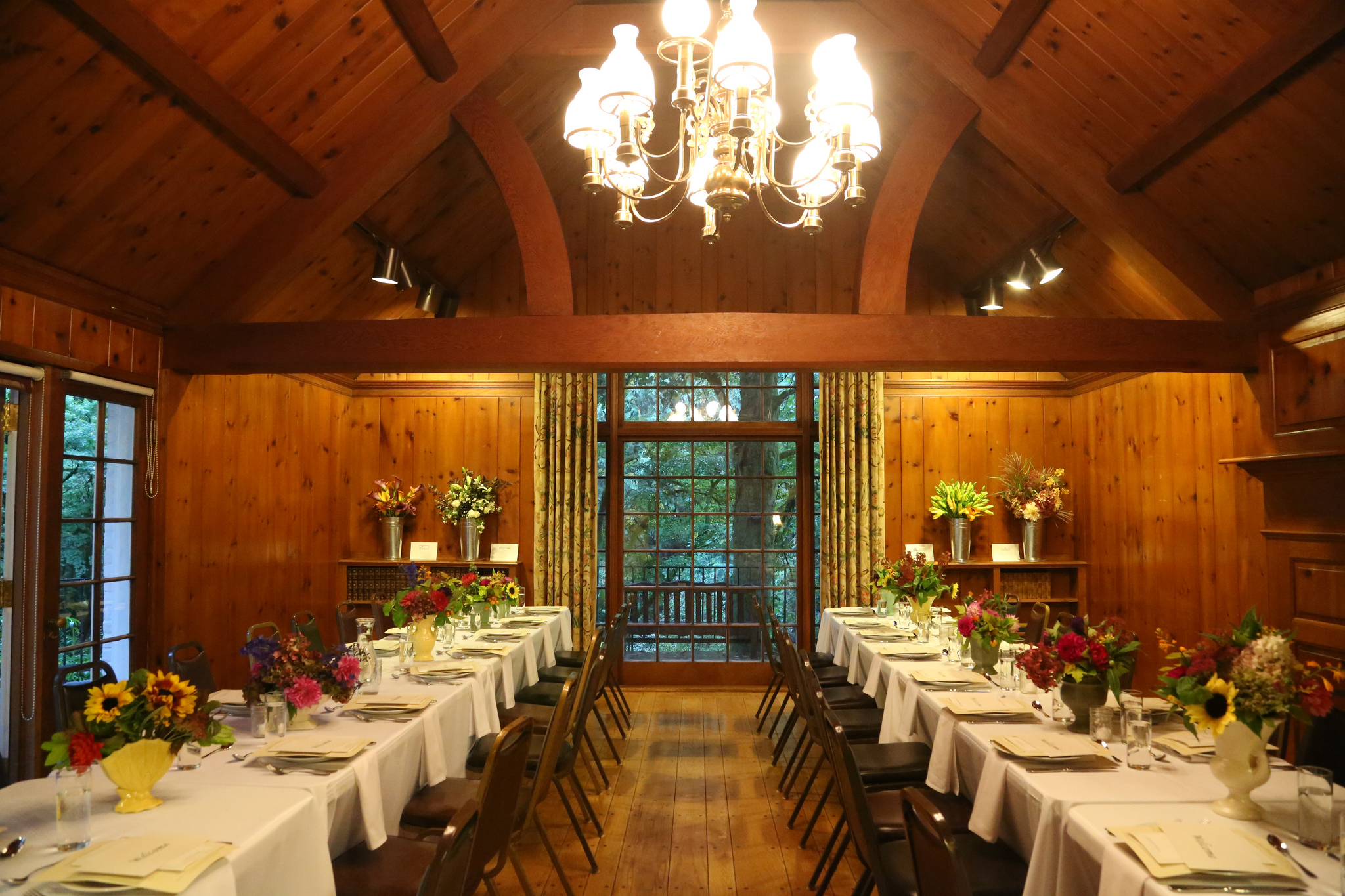
Dinner

The gathering was held in a quintessential Northwest venue: Portland’s Leach Botanic Garden.
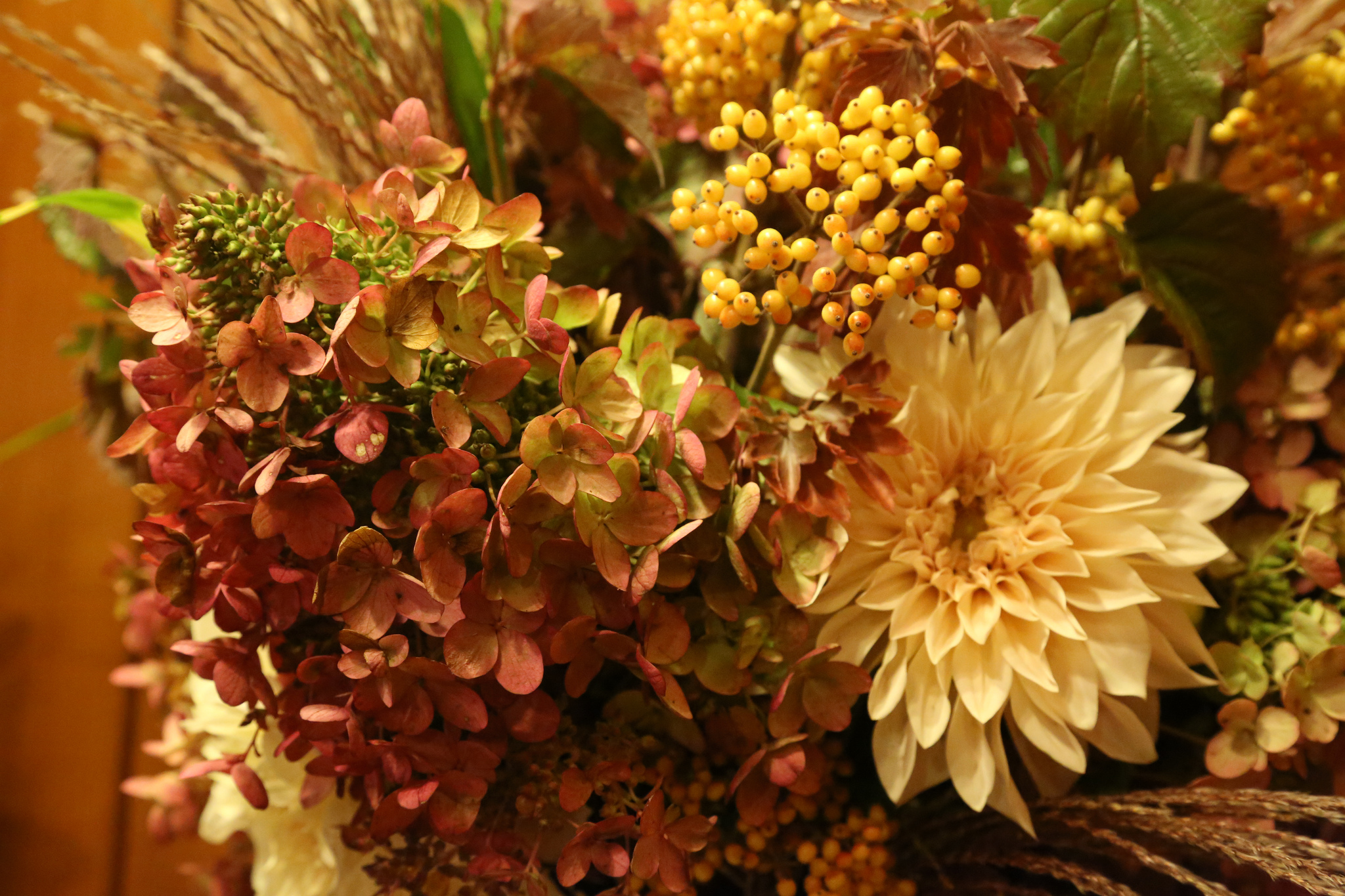


fall bouquet

Seasonal, local and sustainable flowers – beautiful and of the moment.

For Christopher Papst, a manager-buyer with Greenleaf Wholesale Florist, based at the Portland Flower Market, bringing California flowers to the Northwest is a logical next step after sourcing locally, especially in the off-season when production is limited on Oregon and Washington flower farms.

“For one thing, the transportation costs are better,” he explained. “Ninety percent of imported flowers come through Miami, followed by three to four days on a truck. Even under ideal conditions, it’s still four days. For the freshness factor alone, I want California flowers.”

Increasingly, florists are coming to Greenleaf with specific requests for local and seasonal flowers, Papst added. “I just had a florist asking where our flowers originated from because she had a customer insisting on local flowers.”
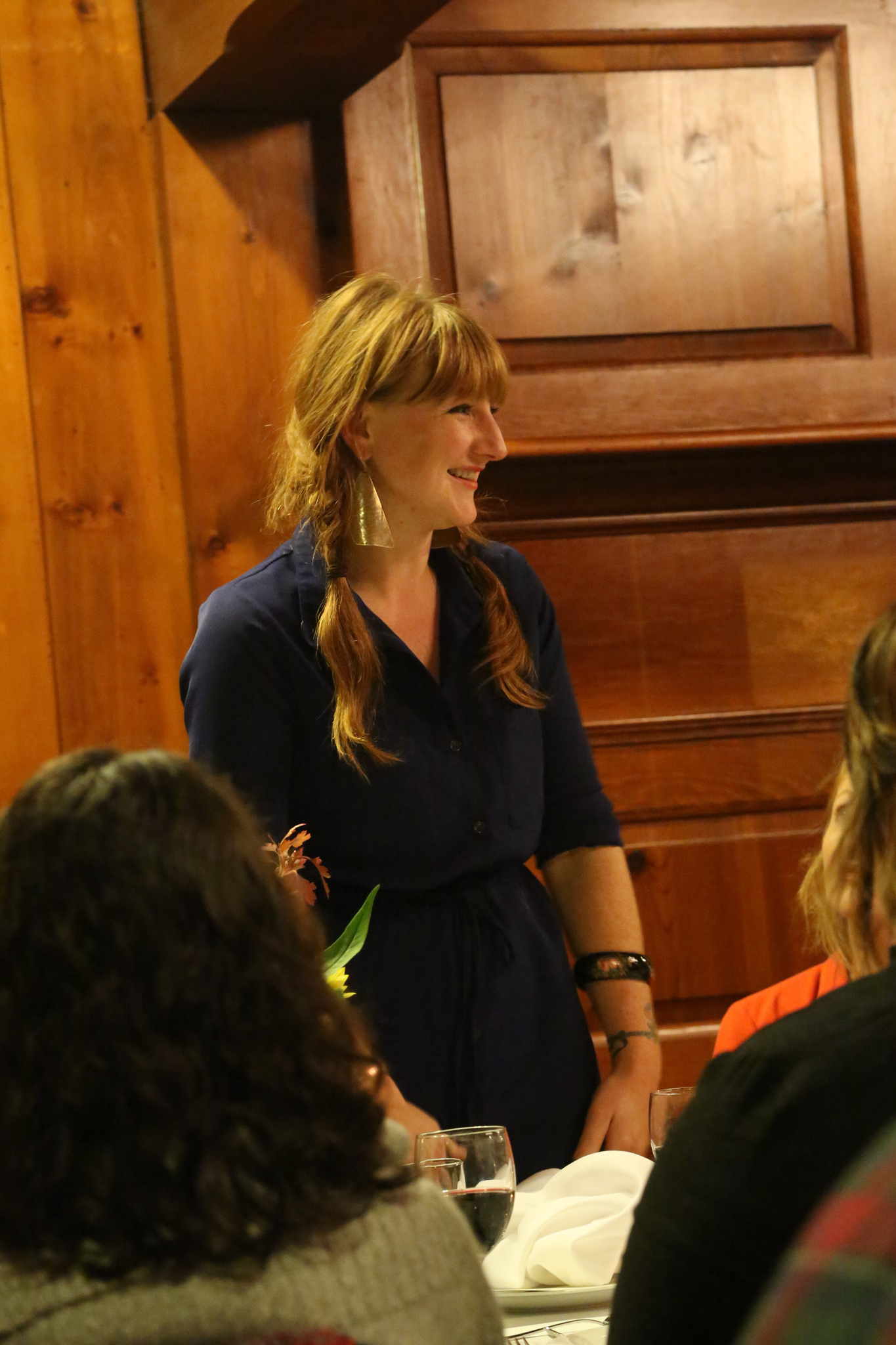
Elizabeth Artis

Elizabeth Artis of Espe Floral + Foliage, a Portland designer with a commitment to local and seasonal flowers.

Elizabeth Artis, owner of Espe Floral + Foliage, a flower shop inside the Food Front Cooperative Grocery in northwest Portland, was encouraged by the connections she made at the gathering. Her studio’s tagline is “local, seasonal, sustainable, lovely,” a sentiment that resonates with her eco-minded customers.

“I’ve always considered California ‘local,’ and now I have a new vocabulary to communicate that idea to my clients,” she said. “As winter is coming, having flowers from California – just across the border – will give me more options.”

Local flower farmers
If you prefer domestic flowers:

Debra Prinzing is a Seattle-based design writer, author of “The 50 Mile Bouquet” and “Slow Flowers: Four Seasons of Locally Grown Bouquets from the Garden, Meadow and Farm” and creator of Slow Flowers, a new, free online directory to help consumers find florists who use American-grown flowers. 

READ MORE…
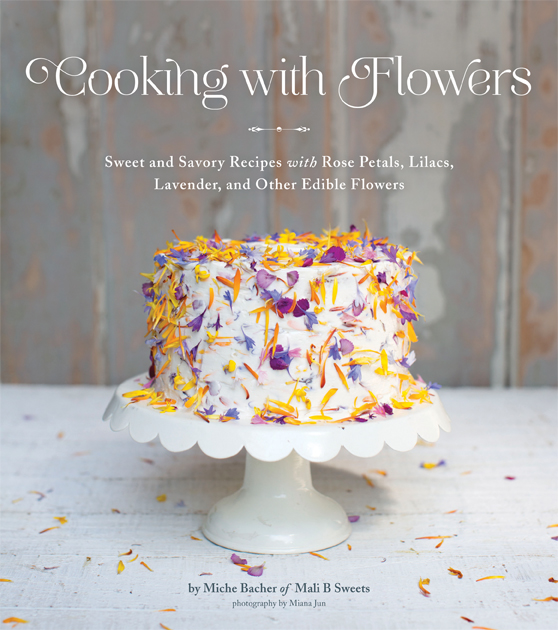
SLOW FLOWERS Podcast: Cooking with Flowers, an interview with chef Miche Bacher of Mali B. Sweets (Episode 111)

Wednesday, October 16th, 2013
Flower Cake Cover

Featured on the cover of “Cooking with Flowers” is Miche’s “Flowerfetti” Calendula Orange Cake. Flower petals are the “original cake confetti,” she maintains. Roses, dianthus, bachelor buttons and marigold petals adorn this enticing confection.

Today we’re going to talk about eating flowers.

Yes, flowers as food.

Hollyhock Clafouti

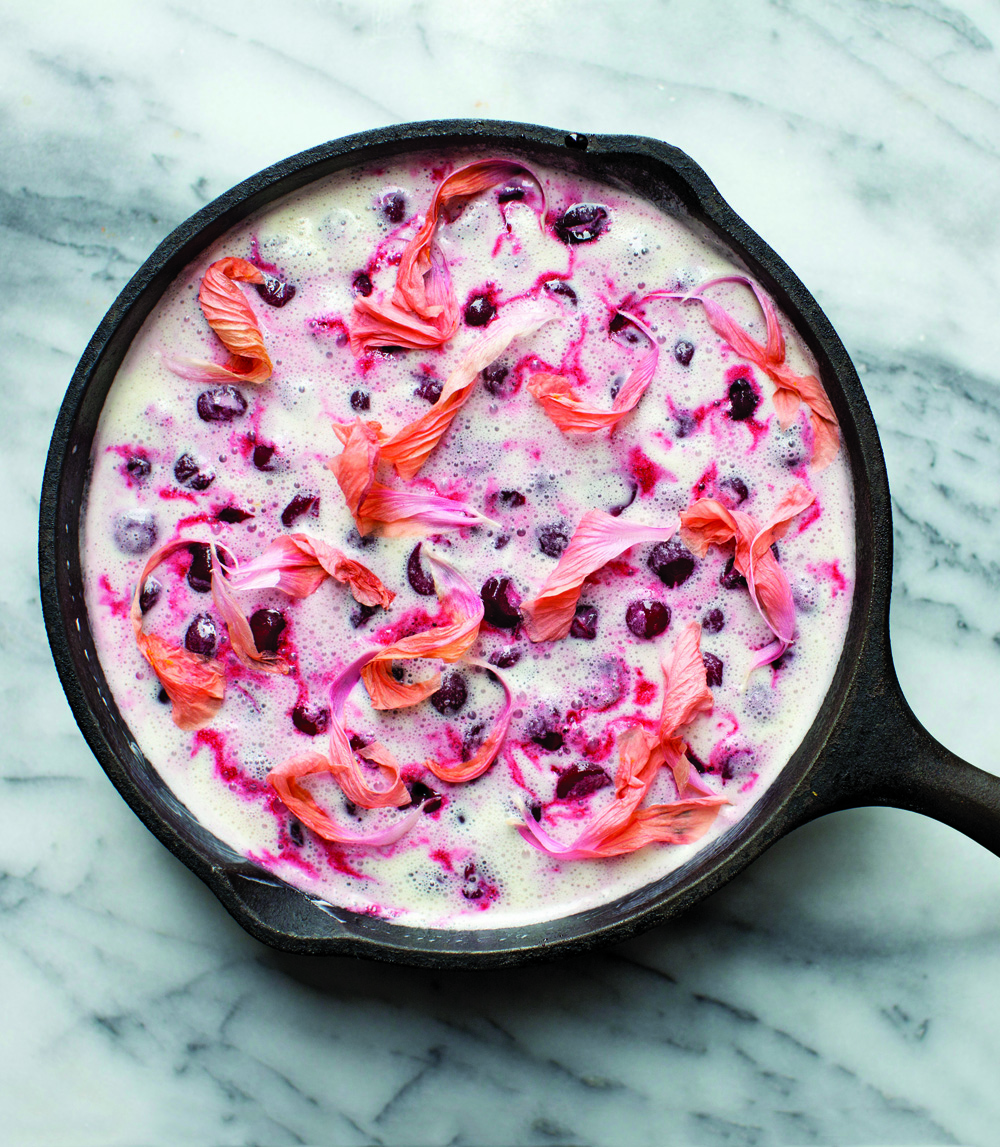
Hollyhock Clafouti, a cross between a custard, a pancake, and a puffy omelet. Uses 1 cup hollyhock petals.

I once had a big-time New York editor say to me: Why should I care about how flowers are grown, anyway? After all, we don’t eat them!

As a response to that challenge, I wish I had been able to pull out “Cooking with Flowers,” the most eye-satisfying book I’ve ever seen. It was created by Miche Bacher, an herbalist, chef, and founder of the custom confectionary studio Mali B Sweets.

To WIN a free copy of “Cooking with Flowers,” courtesy of Quirk Books, listen to to my interview with Miche and make a comment below about the best edible flower tip you learned. I will draw a winner at random on Tuesday, October 22nd at 5 p.m. Pacific.

I learned about this beautiful cookbook from Mari Malcolm, an editor at Amazon who absolutely loves “Cooking with Flowers.” Mari showed me the book’s beautiful cover on her phone screen during a lunch we had together this past spring.

I keep ordering this delectable book and then giving it away as a gift to my flower lover-friends. And now, it is my great pleasure to spend this episode of Slow Flowers in a floral-focused conversation with Miche.

Miche Bacher

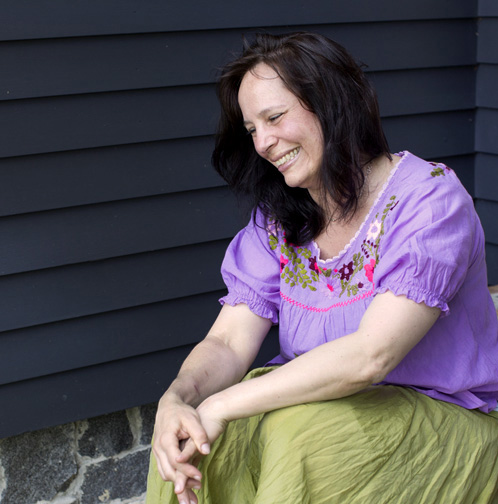
Miche Bacher, herbalist, chef, and founder of the custom confectionary studio Mali B Sweets.

In her introduction, Miche writes:

“Flowers add color, complexity, and what I like to call the magical ‘what’s in it’ factor to your food. They are full of nutrients and often offer health benefits, too. You don’t have to be a master gardener or a trained chef to cook with flowers – once you start looking, you’ll realize edible blossoms are all around you, and it really is a breeze to use them.”

She is definitely a chef whose work begins in the garden. Through “Cooking with Flowers,” I’ve gained new inspiration for another important reason to appreciate local flowers.

I know you will learn much from my conversation with Miche, as we discuss her favorite culinary ingredients, including the lowly dandelion.

Fresh and candied lilac flowers are the captivating ingredient in Miche's "Coconut Lilac Tapioca," a recipe in her book, "Cooking with Flowers" [photo: (c) Miana Jun, used with permission]

Fresh and candied lilac flowers are the captivating ingredient in Miche’s “Coconut Lilac Tapioca,” a recipe in her book, “Cooking with Flowers” [photo: (c) Miana Jun, used with permission]  


4 tablespoons of dianthus petals, coarsely chopped, infuse this delicious cake that also includes 2/3-cup rose' wine. Dianthus whipped cream and candied dianthus flowers are a perfect embellisment. [photo: (c) Miana Jun, used with permission]

4 tablespoons of dianthus petals, coarsely chopped, infuse this delicious cake that also includes 2/3-cup rose’ wine. Dianthus whipped cream and candied dianthus flowers are a perfect embellisment. [photo: (c) Miana Jun, used with permission] 


Popcorn chive cupcakes

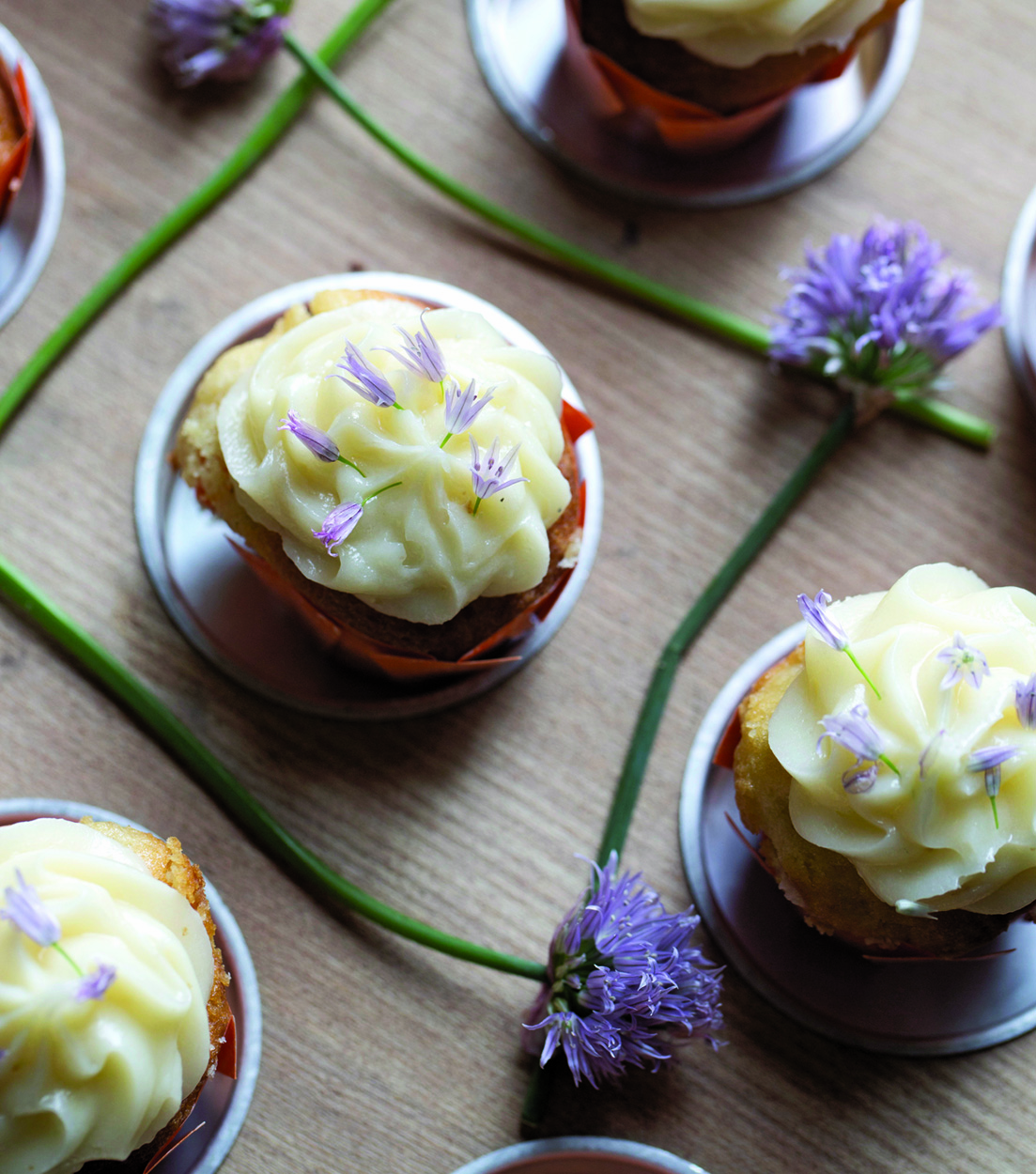
Popcorn Chive Blossom Cupcakes, a floral play on sweet and savory.

Here are some links we discussed in the interview:

Mali B’s Edible Flower Chocolate Collection:

candy bars

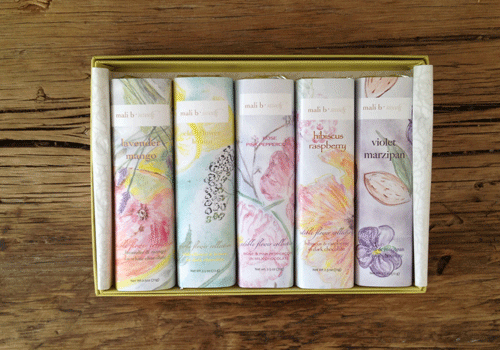
Edible Flower chocolate collection from Mali B Sweets, $30 for the set.

Memorial Sloan-Kettering Cancer Center LINK to Herbs, Botanicals & Other Products: 

Click here for MORE about COOKING WITH FLOWERS, including exclusive recipes that Miche couldn’t fit into the book. You’ll also find bonus recipes for the medicinal and cosmetic use of flowers, salves, oils, and teas for healing; download recipe cards and read a Q&A with this talented woman. 


SLOW FLOWERS Podcast: Sarah Ryhanen of Saipua – a Brooklyn floral designer plants her own flower farm (Episode 110)

Wednesday, October 9th, 2013

CORRECTED AUDIO INCLUDED HERE~

Sarah Ryhanen of Saipua, is a Brooklyn floral designer who has planted her own flower farm (Episode 110)

Saipua means "soap" in Finnish, reflecting Sarah's family heritage.

Saipua means “soap” in Finnish, reflecting Sarah’s family heritage.


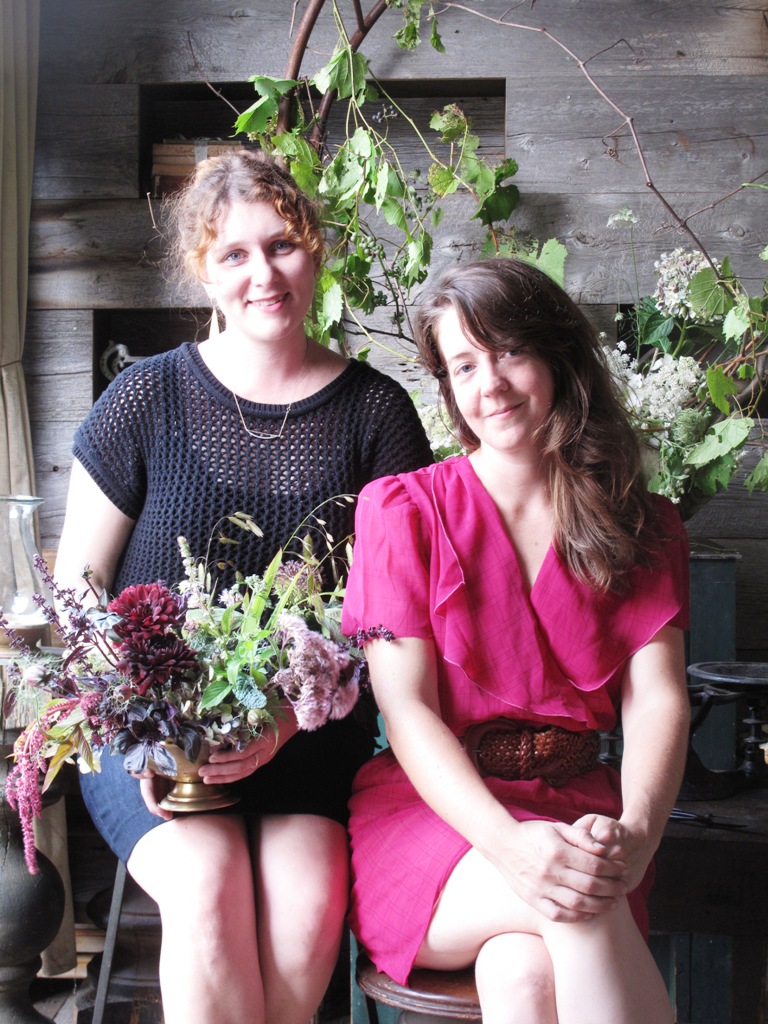
Nicolette and Sarah

Nicolette Owen (left) and Sarah Ryhanen (right), collaborators in The Little Flower School of Brooklyn.

I first learned about Sarah Ryhanen when I read an article about The Little Flower School of Brooklyn, a venture she had created with fellow floral designer Nicolette Owen of Nicolette Camille Floral. The article was in none other than the New York Times, in which the writer proclaimed the renaissance of old-fashioned floral design for modern-era crafters. 

Reading that article was like a huge floral flag being waved in front of my eyes.

Right on! The floral world I was so fascinated with documenting for The 50 Mile Bouquet was in good hands with these young, passionate, talented, urban designers. 

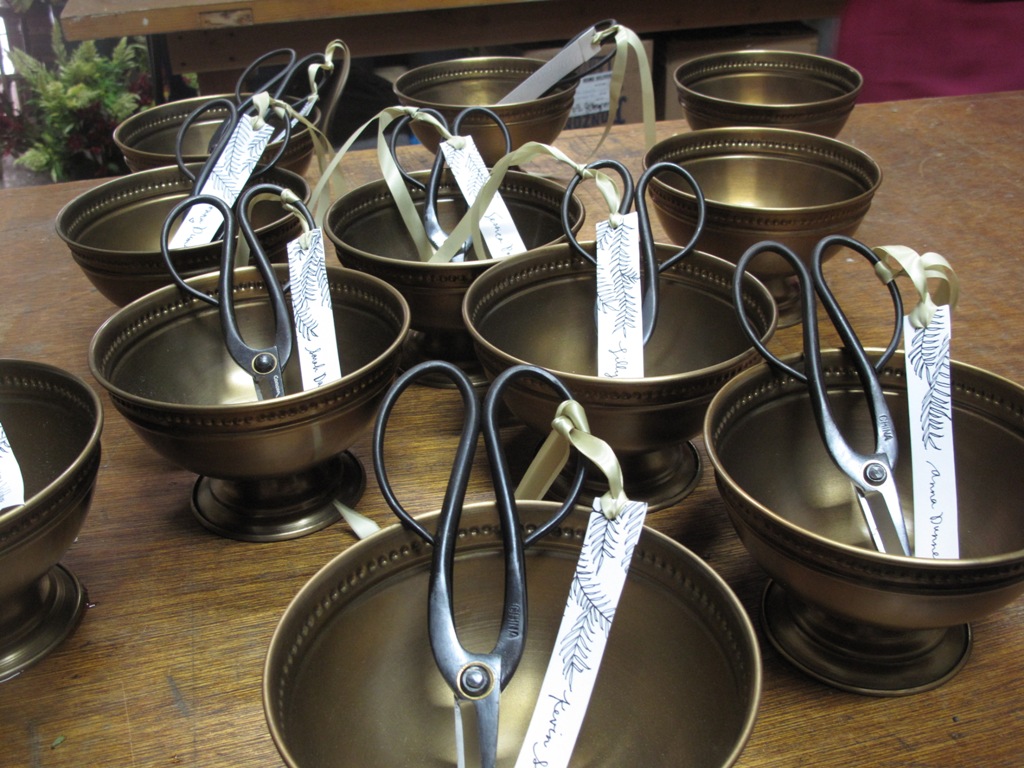
bowls and shears

All the supplies, beautiful, simple and ready for the flower arranging students at The Little Flower School of Brooklyn.

So like probably everyone else in the country, I started stalking Sarah through her web site and blog, and following Nicolette’s work through her web site and the lovely floral arrangements she created for Bringing Nature Home (Rizzoli, 2012), a book by photographer Ngoc Minh Ngo.

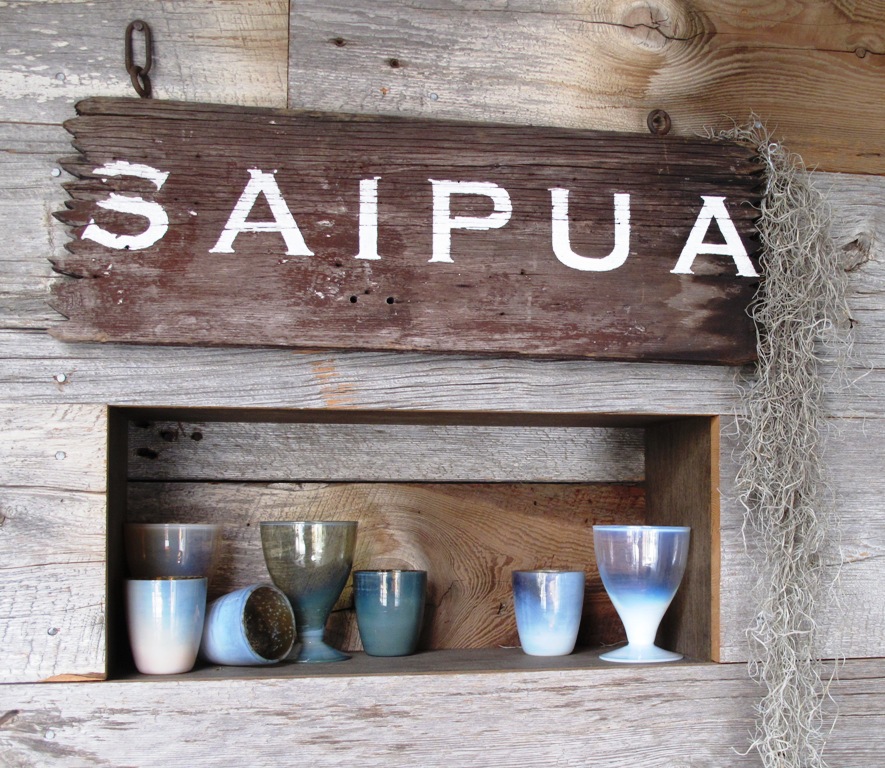
Welcome to Saipua

Welcome to Saipua + Flower School.

When I spent a few days in New York City last August, I contacted them to ask whether I could sit in on one of their workshops. The class was sold-out, of course, so I was just an observer. It was amazing to me that 12 persons (11 women and 1 man) gathered on a sweltering Saturday morning to create bowls of flowers in an un-airconditioned warehouse-studio in Brooklyn. There was so much excitement in the room, with a combination of newcomers and repeat students. People soaked up every word, concept and idea Sarah and Nicolette offered – and they were unabashedly proud of their own creations. 

Every detail was attended to in advance, as you can see by the photos I took that day. Sarah and Nicolette shared about their own design processes, about the way they select floral ingredients, and how they prefer to use materials like pin frogs and chicken wire (rather than foam). 

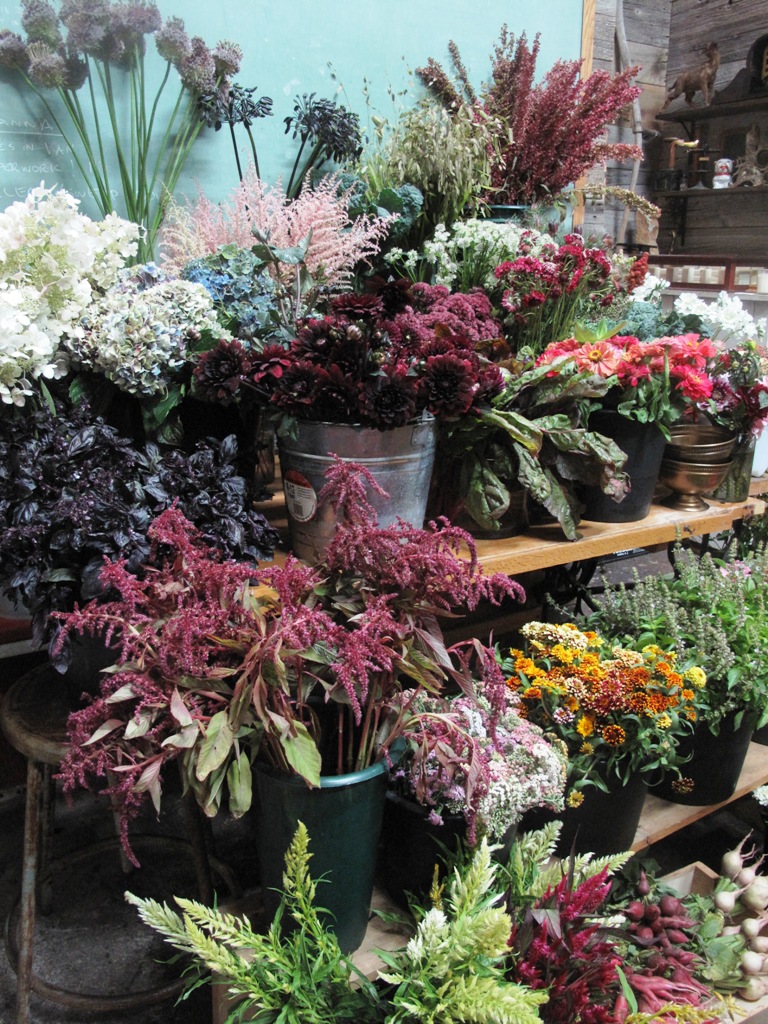
floral ingredients

Seasonal, locally-grown late summer flowers.

As the designs took shape, I had a bird’s eye view, perched in the tiny loft above the workshop. After students finished their arrangements, the women served them champagne and appetizers, like a fancy party. It’s no wonder these creative gatherings are so popular! It’s like going on an art retreat in the midst of your crazy, busy life. A moment in time that prompts anyone to feel more creative, more experimental, more artisitc.

When we met, one of the things Nicolette and Sarah and I discussed was the challenge of finding the flowers and botanicals they wanted and needed for special events, from weddings to workshops. Sarah told me that she and her partner Eric Famisan had recently purchased farmland in upstate New York, where they were in the early stages of planting a flower farm. 

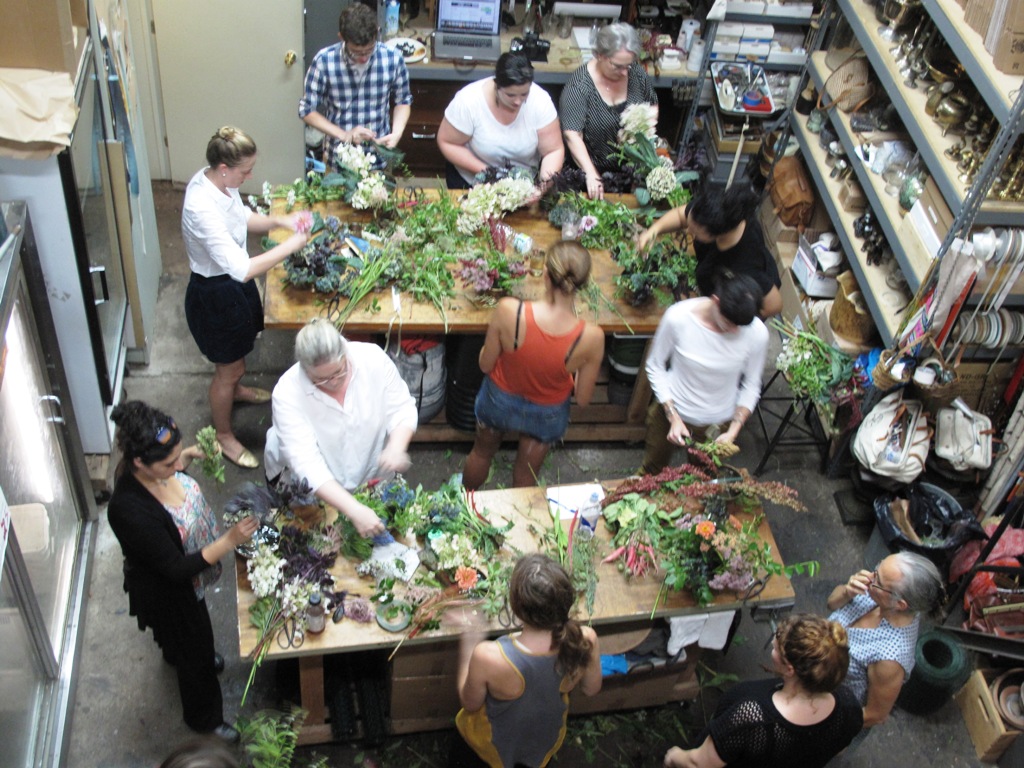
students at work

A creative explosion of floral expression – enjoy this bird’s eye view.


Final bouquets

A still-life of the beautiful arrangements created by students of The Little Flower School of Brooklyn, August 2012.

Since then, I’ve watched as The Farm at World’s End has evolved, through Sarah and Eric’s wonderfully-photographed blog and honest, heartfelt text. 

Under a heading called “The Idea,” here’s what Sarah writes:

When the economy took a dive in 2008 we started to see a major loss in the NYC flower market. Loss of interesting product. The unusual, weedy, wild stuff that I was so into and that made my work unique. The trouble was that wholesalers had to be safe – the floral industry is one of the first to feel the blow of a weak economy. So wholesalers on the flower block of 28th street stuck to what they knew would sell; your South American hot house roses, ranunculus, lilies, peonies. Here’s a perfect example  — pre 2008 you could buy Garden Valley Roses (fragile, exquisite but expensive heirloom roses) on the block. 

Around that time I was starting to explore other outlets for material. We found local farms to supplement our market purchases (River Garden, Lebak, Added Value), and also started ordering product direct from the west coast – the promised land of flowers. 

Still there was always something I could not locate. Auricula, campanula “pantaloons”, black hellebores, unusual bearded iris…at Saipua we now spend hours and hours searching for the highest quality, most unusual flowers. Visiting flower farms and talking to growers is the best part of my job. You meet these crazy, passionate people and let me tell you – it’s contagious. Eventually you got to try growing yourself. So here we are.

On the flower block back in the city, the guys joke – when are you going to start selling us flowers? I try to explain to them (and to everyone who has not yet been to Worlds End) that it’s a slow process. That we’re years away from producing the opulent abundance that people envision when they hear “Flower Farm”. But I’ve come to realize that it’s not about quantity. I’m not in the business of hustling anymore. None of our work at Saipua will ever require thousands of stems.  It will however require a brown iris. And by god, I’m going to grow it.

Fortunately for listeners of The Slow Flowers Podcast, I had a quick 36-hour layover in New York a few weeks ago, en route to my Italian writing retreat. It coincided with a late afternoon opportunity to sit at the kitchen table in Sarah’s Brooklyn apartment, just around the corner from Saipua’s studio. We talked about farming, flowers and collaboration. Please enjoy the conversation.

SLOW FLOWERS: Week 40

Sunday, October 6th, 2013

OLD WORLD MEETS NEW FLOWERS

Vintage green vase

This evocative palette of green and dark maroon expresses complementary colors in a surprising new way.

Ingredients:
 
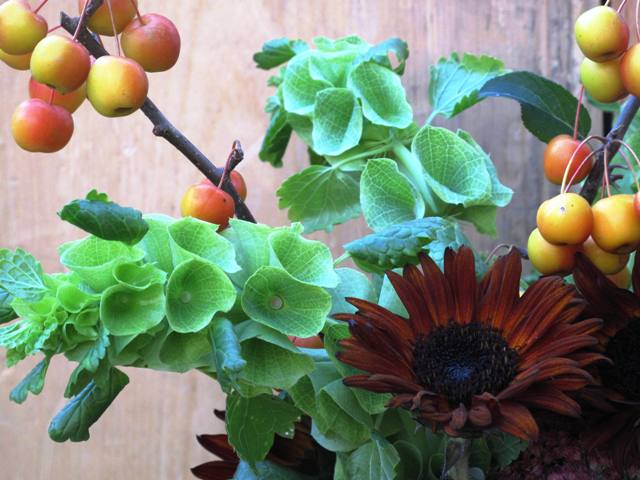
9 stems Sedum ‘Autumn Joy’, grown by J. Foss Garden Flowers
7 stems bells of Ireland (Moluccella laevis), grown by J. Foss Garden Flowers
7 stems chocolate sunflowers (Helianthus annuus ‘Moulin Rouge’), grown by J. Foss Garden Flowers
3 branches fruiting crab apple (Malus ‘Professor Sprenger’), harvested by Jello Mold Farm
 
Green Jar with flowers

Welcome~ the dramatic scale of my glass jar looks just right at the front door!

Vase:

13-inch tall x 9-inch diameter with 5½-inch opening, vintage Portuguese oil jar
 
Eco-technique
Botanical elements as flower frogs: I often start an arrangement using soft, fluffy foliage or dense flowers like the Sedum ‘Autumn Joy’ as the “base” that peeks out over the top of the rim. Once the stabilizing element is in place, all the other stems can be inserted through it and they will remain just where you want them. The foliage and flowers are integral to the overall composition and there’s no need for florist’s foam.


SLOW FLOWERS Podcast: Fun with Flowers and J Schwanke (Episode 109)

Wednesday, October 2nd, 2013

SLOW FLOWERS Podcast: Fun with Flowers and J Schwanke (Episode 109)

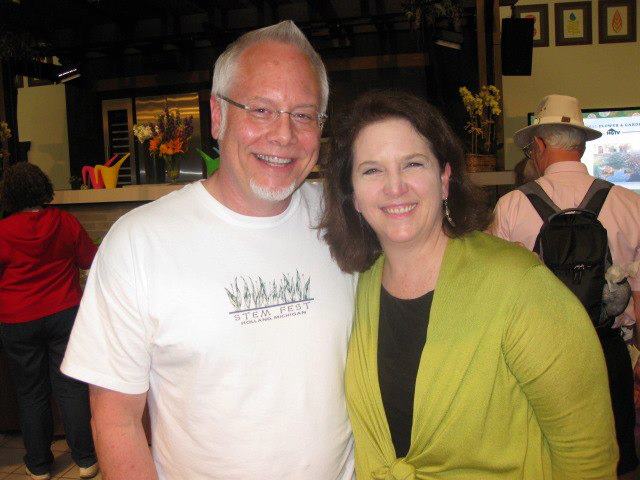
Debra and J Schwanke

I’ve been having fun running into American-grown flower advocate and floral industry personality J Schwanke. He was one of the friendly faces I enjoyed seeing in Miami earlier this year.

The name J Schwanke is synonymous with flowers and floral design and I’m pleased to introduce you to this energetic and super-talented guy. J is the owner and CEO of uBloom.com, a web site devoted to everything flowers – and the platform for J’s weekly web-based flower television show, “Fun with Flowers and J.”

J Schwanke

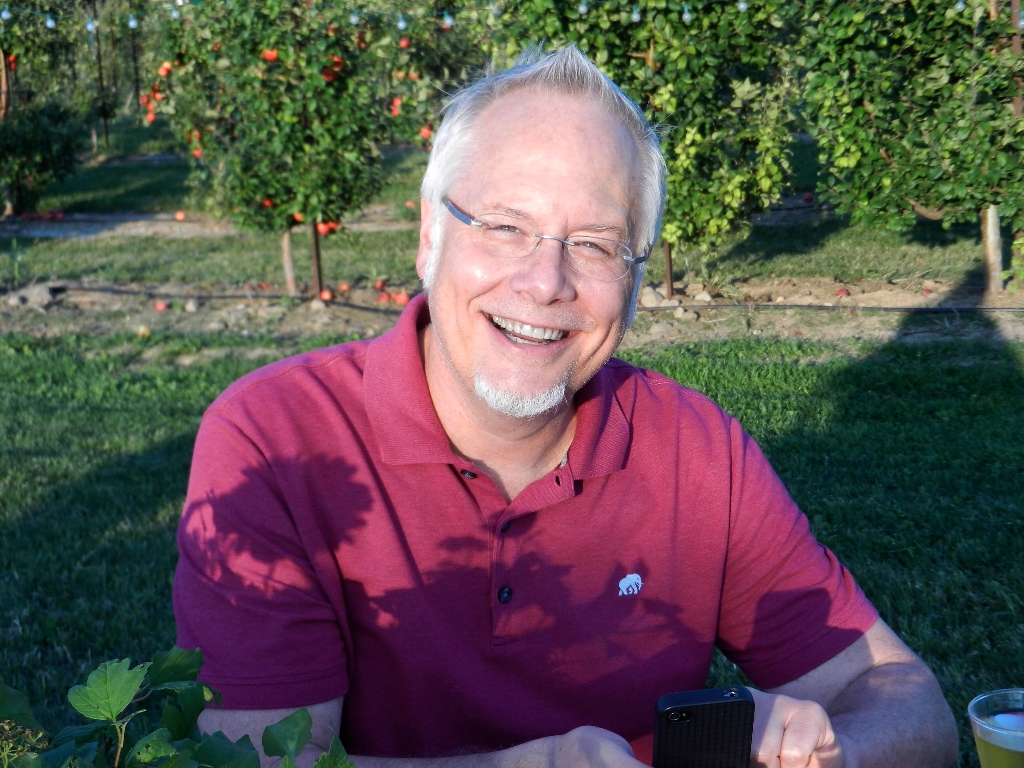
J Schwanke, photographed on a recent fall day after he created the centerpieces for a Farm-to-Table orchard dinner.

He has been promoting American Grown flowers for so much longer than I have – and I credit J for pioneering the message that I’ve also embraced as my personal cause. It’s wonderful to have someone out there already trumpeting the message – and to join together in promoting the Slow Flowers movement.

Since I come from the gardening and DIY floral world and J is very well known in the professional floral world, I didn’t really know who he was during the years I was reporting and writing The 50 Mile Bouquet book. I first met J on my computer screen when I watched one of his California Grown Experience videos, which he produced in 2010-2011 as a series of online tours of California flower farms and related businesses such a floral wholesalers. That’s when J’s telegenetic personality, passion for flowers, and ability to draw out people and their stories impressed me. “Who is this guy, anyway?” I thought.

Florida with J and Debra

Kelly Blank snapped this photo of J and me on the day we finally met – in late April – at Disney’s EPCOT flower show.

Through our mutual friend and colleague Kasey Cronquist, I eventually met J via phone conference calls in which we both participated.

Then, earlier this year, J and his partner Kelly James Blank surprised me by attending one of my presentations at EPCOT’s International Flower & Garden Festival in Orlando.

That was pretty serendipitious – and it led to an evening of conversation, cocktails and dinner together – talking about our favorite subject: Flowers (former Garden Design magazine editor Sarah Kinbar was also with us – and that was such a treat to be together!)

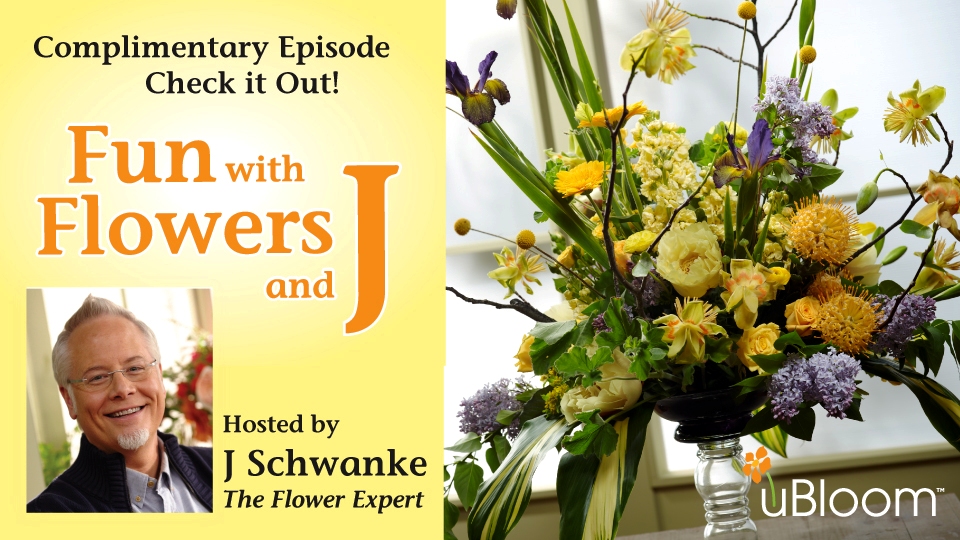
Fun with Flowers and J is the weekly how-to Web series you can find at uBloom.com

Fun with Flowers and J is the weekly how-to Web series you can find at uBloom.com

The California Grown Experience is featured on uBloom.com, the first Web-Based TV Show about Flowers, which J created in 2006 – and which continues to air today. Every Monday, J releases a new “FUN with Flowers” episode.  You can find a collection of more than 500 how-to videos and flower farm documentaries on the site, including a new series called the “Florida Fresh Flower and Foliage Tour.” Previews of all J’s shows are included free on the site; viewers can purchase downloads for $1-$2 or subscribe to uBloom for $30 a year to receive complete access to the entire archive. 

J with mom 1966

1966: J in a greenhouse with his mother. Pretty darned cute~

J has lived his entire life surrounded by flowers, in fact, his mother gave birth to him a flower convention she and his father were running. A fourth-generation florist and foremost expert in cut flowers and foliage, J received the prestigious Tommy Bright Award, lifetime achievement recognition for flower communication. and the Crystal Rose Award, denoting him a “Living Legend” in the world of flowers.

J is a member of the American Academy of Floriculture (AAF) and the American Institute of Flower Designers (AIFD). He is a Certified Flower Designer (CFD) and a designated Professional Flower Communicator International (PFCI). His deep source of energy has sent J around the globe to give presentations, demonstrations and hands-on workshops in all 50 States, Canada, Mexico, and throughout Europe.

I invite you to listen in on our conversation and meet J, too. Then, mosey on over to uBloom.com to learn about all of its features, sign up for J’s free newsletter and learn more about the extensive content offered there. 

One of J’s newest ventures, which we discuss on the podcast, is the Professional Resource Guide. This is a free directory that lets professionals and DIY floral designers find WHERE TO BUY the many products and supplies featured on uBloom.com. Here is the link to that excellent new resource. 


SLOW FLOWERS: Week 39

Sunday, September 29th, 2013
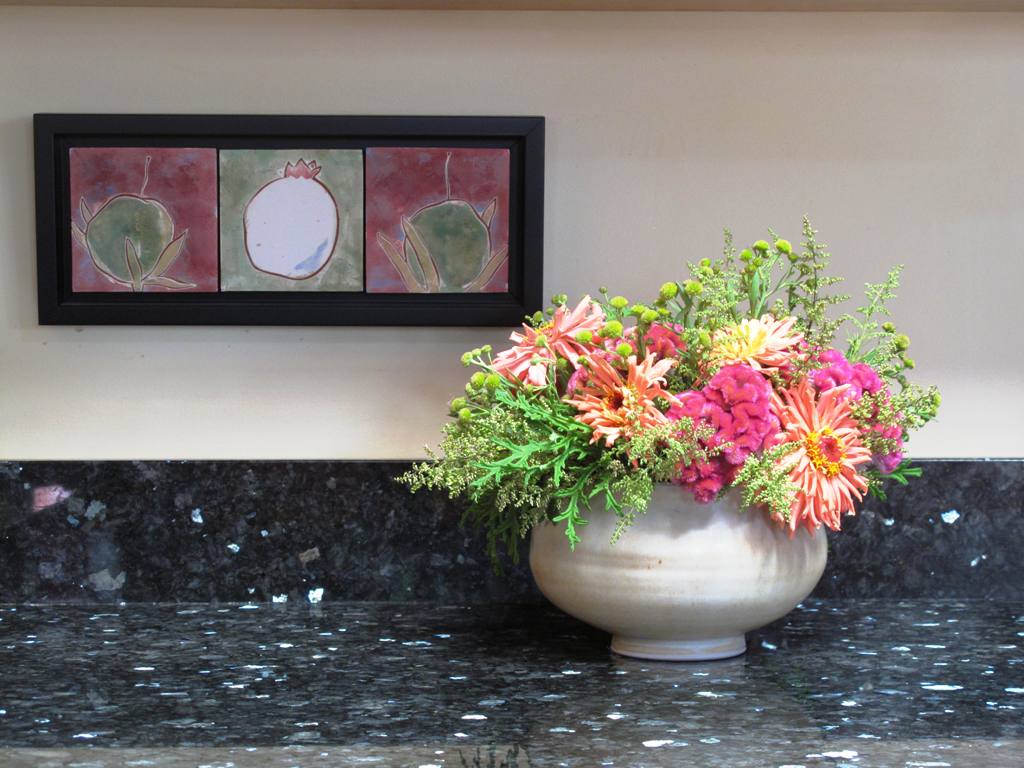
Bowl on kitchen counter

I placed my beautiful bowl of zinnias on the kitchen counter, in front of a botanically-inspired tile triptych by artist Paula Gill of Red Step Studio

Ingredients:
 
5 stems fancy-leaf scented geranium (Pelargonium crispum), grown by Charles Little & Co.
7 stems Boltonia asteroides, a small daisy-like perennial, grown by Charles Little & Co.
7 stems Artemisia capillaris, a woody perennial, grown by Charles Little & Co.
6 stems pink crested cockscomb (Celosia cristata), grown by Charles Little & Co.
9 stems apricot cactus zinnias (Zinnia elegans ‘Pinca’), grown by J. Foss Garden Flowers
 
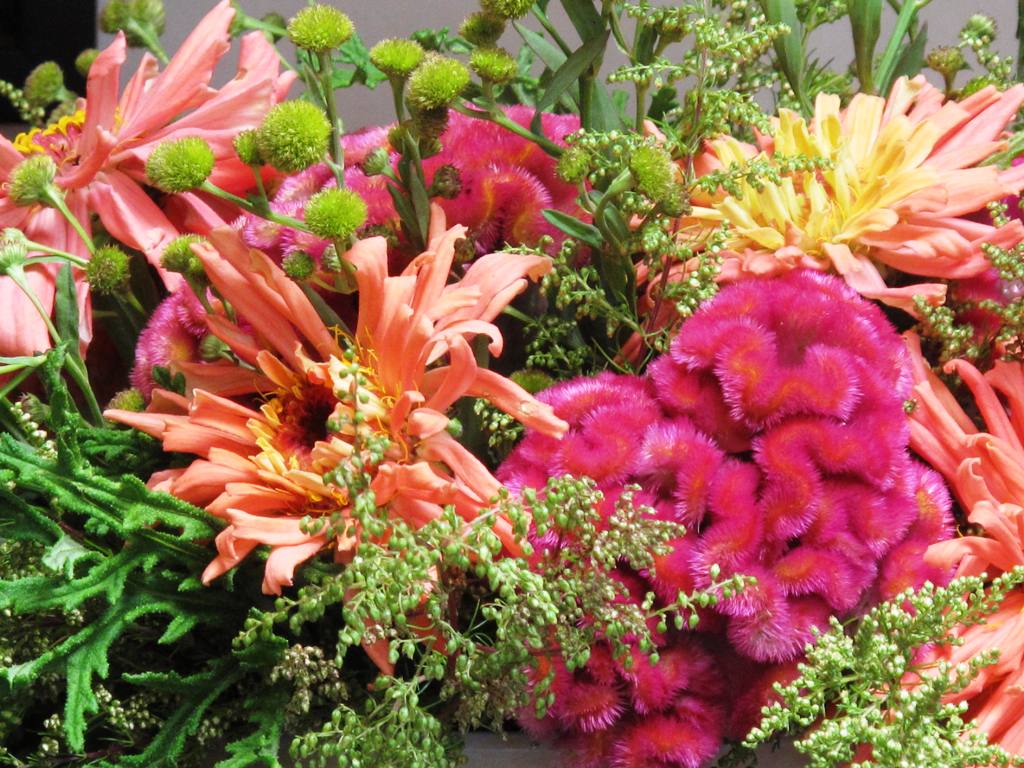
Great details add texture and interest!

Great details add texture and interest!

Vase:

4½-inch tall x 6¼-inch diameter hand-thrown clay bowl
 
Design 101
The power of green: The difference between one arrangement being just pretty and another being completely arresting is often not the flowers but the foliage. You see here that three similar-toned green elements are woven  together as a textured and verdant tapestry.
 
They are definitely the supporting actors to the zinnia and cockscomb divas, but they help this bouquet sing. Whenever you can use unexpected greenery, your design will take on a similar star quality. Often, these elements come straight from the garden – growing right under our noses.


SLOW FLOWERS Podcast: Farmgirl Flowers & Christina Stembel (Episode 108)

Wednesday, September 25th, 2013

SLOW FLOWERS Podcast: Farmgirl Flowers & Christina Stembel (Episode 108)

Christina and Debra

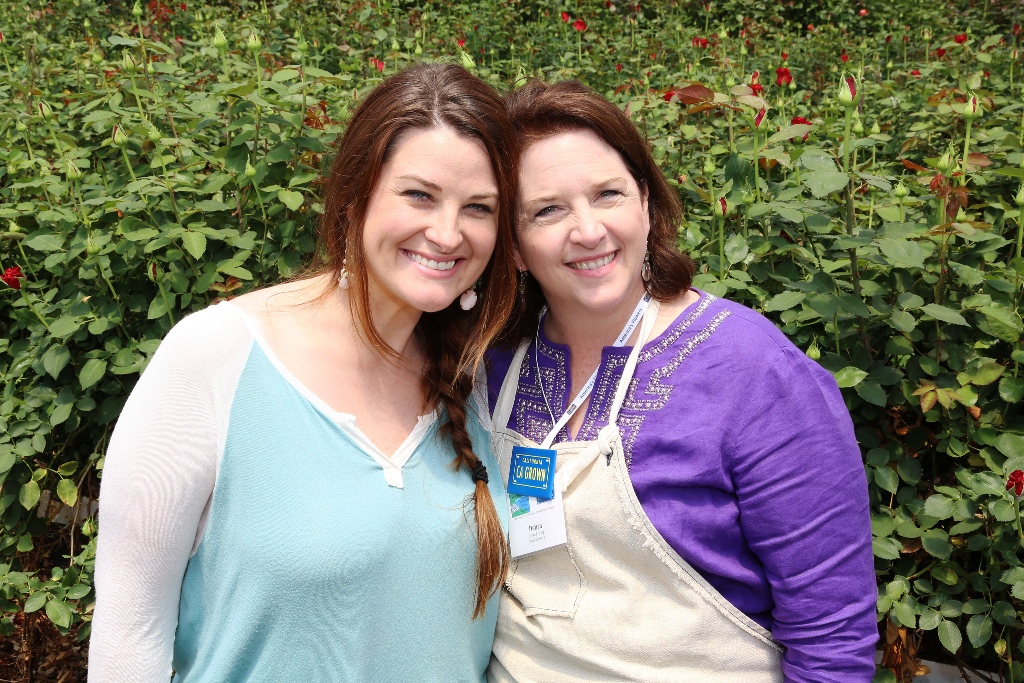
Christina Stembel and I were guests of the California Cut Flower Commission’s Monterey Bay event in June. We were photographed on a tour of Pajarosa Roses, a wonderful source for cut roses.

If the term “imitation is the highest form of flattery,” then my friend Christina Stembel has been over-flattered, multiple times.

Christina Portrait

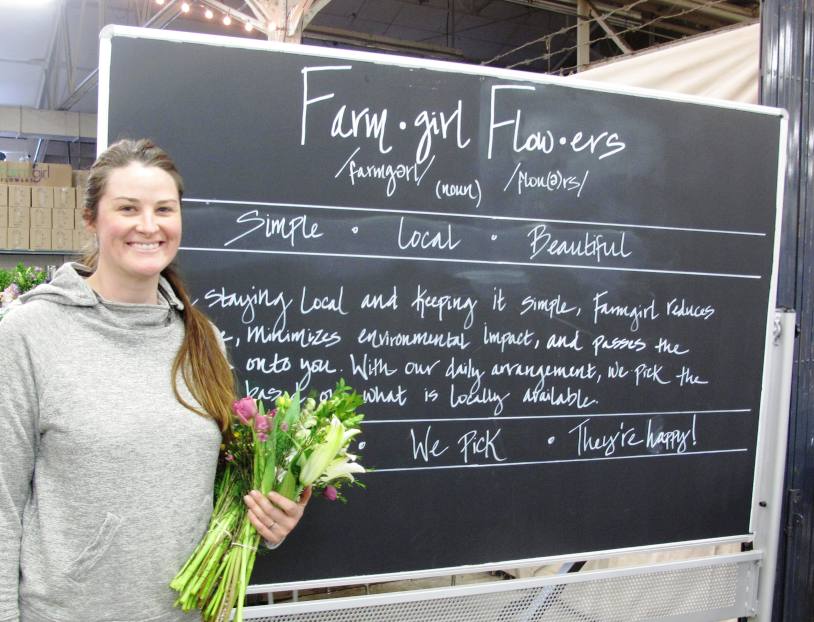
Meet Christina Stembel at her SF Flower Mart stall, which is where all the beauty happens!

The creator of Farmgirl Flowers in San Francisco, Christina has poured considerable heart, soul and personal resources into developing her innovative floral design business. Customers and the media have responded enthusiastically (see Martha Stewart Living). And her reward in part has been the explosion of copycat businesses, not just in the Bay Area but in other major cities around the country.

That’s the downside of being a successful and creative business like Farmgirl Flowers. But  to me, the upside for Christina is that no one can imitate her personality or character. People can try, but they never will be the original.

Christina is an original. She shares her story in our interview, but you can read a little background here:

I’m Christina, also known as the farm girl behind Farmgirl Flowers. I grew up on a farm in Northern Indiana, and while I set my sights on leaving the farm for big dreams in New York City, I now appreciate more than ever my farm upbringing. Ten years ago, after moving around a bit, I settled in the Bay Area and, like so many others, decided to make it home.

In the past, ahem, years, I’ve had the privilege of working in many industries, mostly in hospitality and event planning. Pretty quickly, I noticed an exorbitant amount of money was spent on flowers. So, I started doing my own arrangements and realized tremendous savings along the way. Now, being the overly curious individual that I am, I wanted to know just why do flowers cost so much?

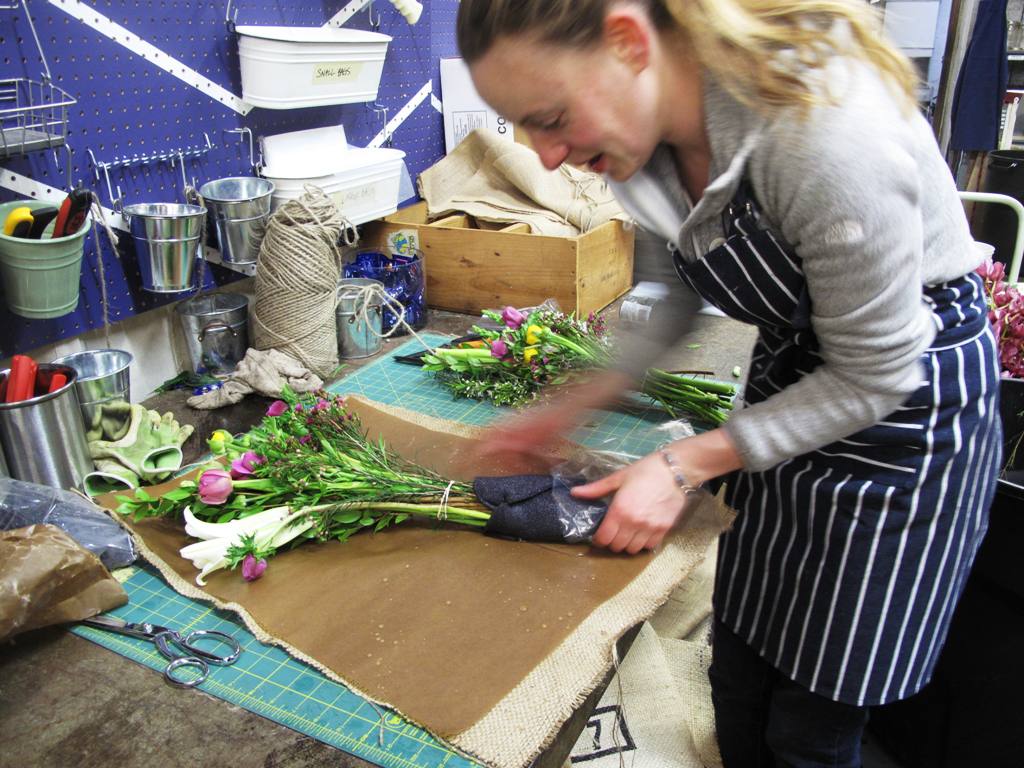
Burlap Wrapped Bouquet

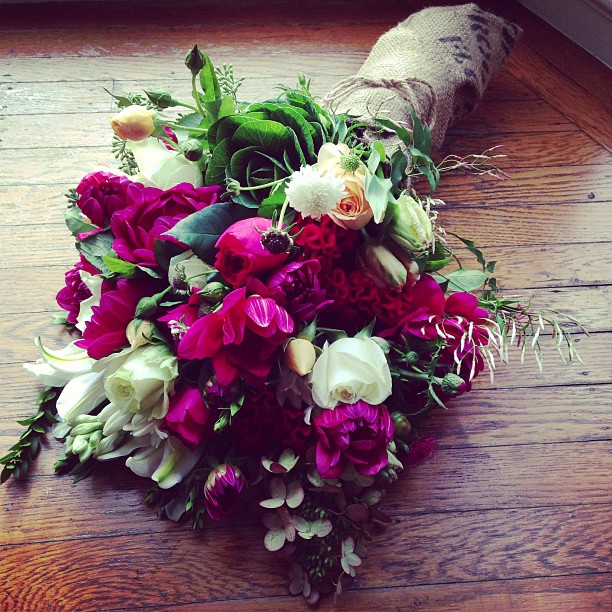
Here’s one of Farmgirl Flowers popular Trademarked Burlap Wrapped Bouquets – using all local, CA Grown Flowers. Sublime~

I started researching the reasons and came to some pretty startling conclusions. The flower industry has gone through a very tumultuous time in the past 20 years, and is pretty much in the same boat as the industries that numerous documentaries have been made about in recent years (ie: textiles, coffee, technology, etc). What used to be a big domestic business is now being whittled away due to imports. I had no idea that 75% of our flowers were being shipped in from other countries. It just didn’t make sense to me when over 75% of the domestic supply is grown right here in California. I don’t want to bore you with more stats – hopefully you see where this is headed.

The bottom line is that local farmers are going out of business left and right because they can’t compete with the prices of flowers imported from South America and other countries. And, normal people like me can’t afford to send flowers to friends and loved ones because it ends up costing an absurd amount of money. Not to mention all of the environmental damage caused by flying flowers across the globe – they have to be shipped in chemicals just to make it to your door.

And, another huge source of waste is having so many choices of flower arrangements. As a result of this approach, a huge percentage of flowers end up as waste, and are never even sold! We’re making our landfills so beautiful, but, really, isn’t there a better way?

I thought so, and devised a plan to fix the problems that have caused the inflated prices and high environmental impact, which is how Farmgirl Flowers was born!

What’s that saying about being able to take the girl out of the country, but not the country out of the girl?

Farmgirl Sign

There’s a charming vibe at Farmgirl Flowers, down to the logo and signage. 


Making Bouquets

One of the designers who works for Farmgirl Flowers wraps a bouquet at the studio.

Click on the “Why we’re different” page at Farmgirl Flowers where you will see a chart comparing the LOCAL bouquets Christina and her staff design with wire services, aka “the competition.” It’s amazing when you look at these very different business models side-by-side.

Here’s a link to the Podcast Episode 101, in which Christina Stembel of Farmgirl Flowers and I joined Sunset Magazine’s Kathy Brenzel to discuss the Local Flower Movement. 

The Slow Flowers Podcast with Debra Prinzing is edited and engineered by the very talented Hannah Holtgeerts of HH Creates. Check out her web site here. 

SLOW FLOWERS: Week 38

Sunday, September 22nd, 2013

RHYTHM IN GLASS

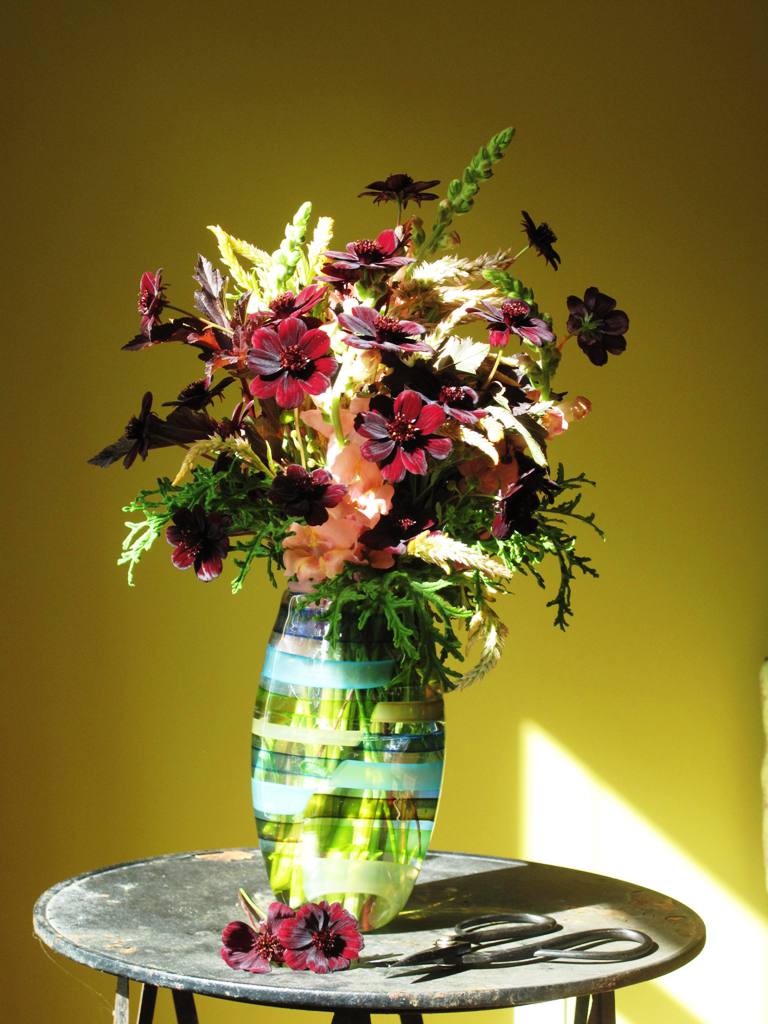
Rhythm in Glass

Chocolate cosmos blooms look fabulous in this art glass vase by Tracy Glover.

Ingredients:

7 stems fancy-leaf scented geranium (Pelargonium crispum), grown by Charles Little & Co.
3 stems pale apricot snapdragons (Antirrhinum majus), grown by Everyday Flowers
7 stems (tips only) light peach cockscomb (Celosia plumosa), grown by Charles Little & Co.
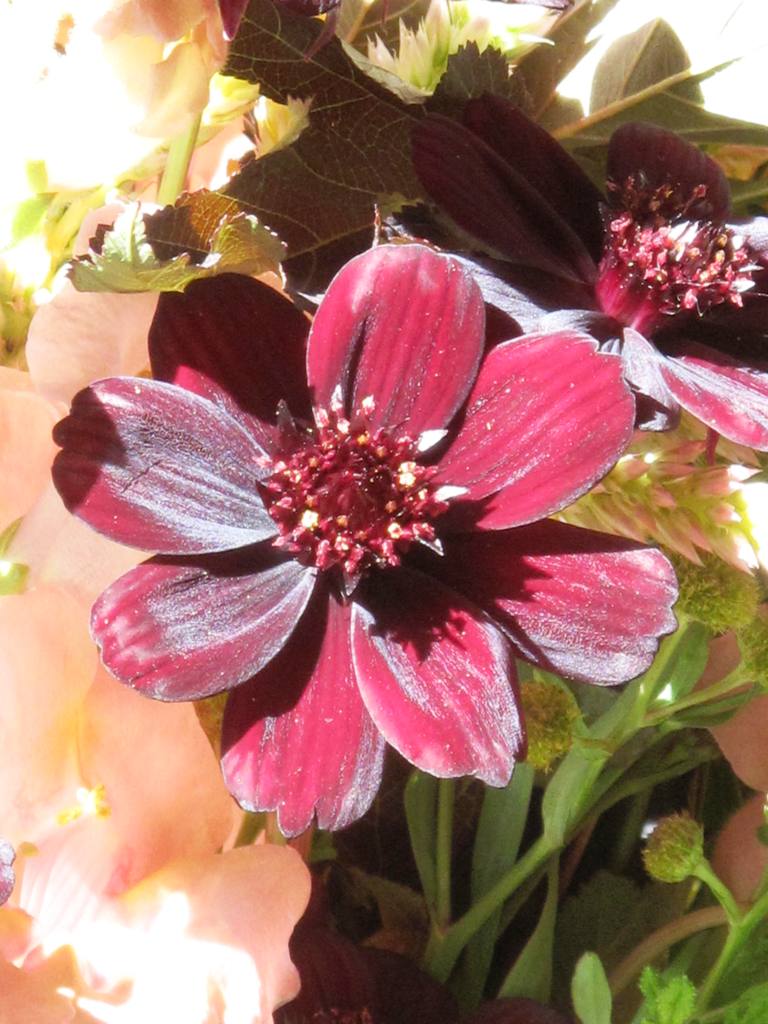
15 stems chocolate cosmos (Cosmos atrosanguineus), grown by Marigold and Mint
 
Chocolate Cosmos

Chocolate cosmos, grown by Katherine Anderson of Margold & Mint.

Vase:

 
8-inch tall x 4-inch diameter hand-blown art glass vase, designed by Tracy Glover
 
Design 101
Dark and light: When you place lighter or brighter flowers around darker floral elements, the viewer’s attention is drawn to the distinct details of both. Here, the chocolate cosmos looks even better because it is displayed next to lighter-hued companion flowers: pale apricot snapdragons.


SLOW FLOWERS: Week 37

Sunday, September 15th, 2013

FADING HUES

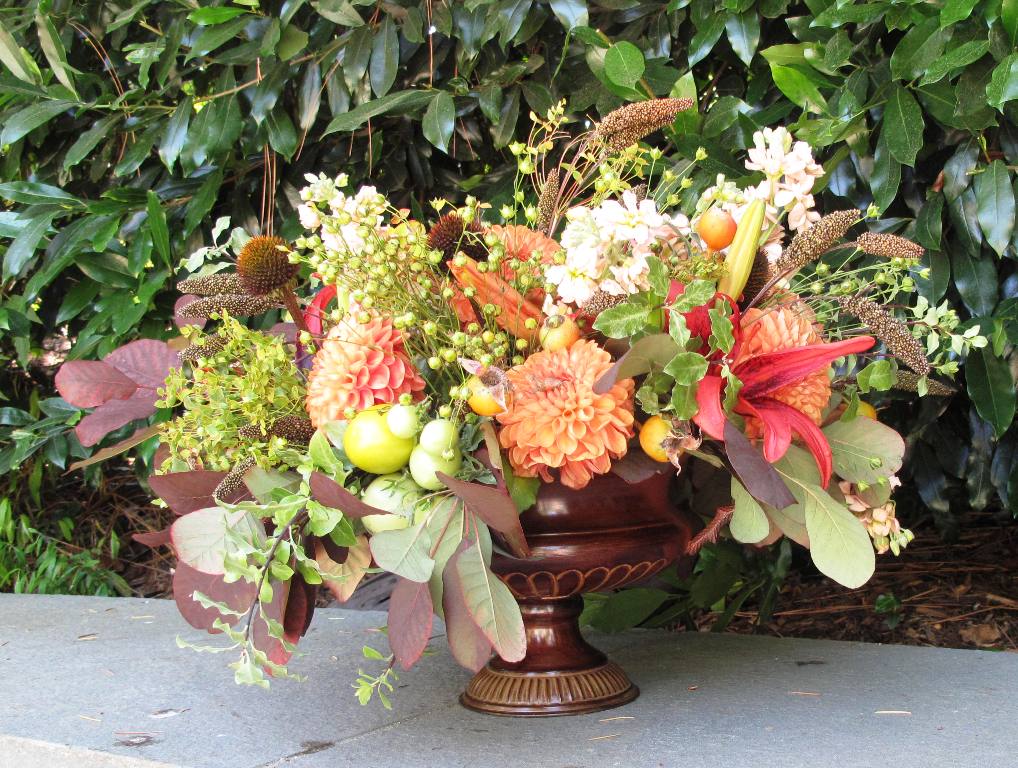
Fading hues

This lovely autumn palette of fading flowers, foliage and seed heads reflects the season’s beauty.

Ingredients:

7 stems smoke tree (Cotinus coggygria ‘Grace’), harvested from Lizzy Jackson’s garden
7 stems pittosporum (Pittosporum sp.), harvested from the Lila B. lot garden
5 stems Dahlia ‘Hy Suntan’, grown by Jello Mold Farm
5 stems gold and pale pink garden roses, harvested from the Lila B. lot garden
3 stems terracotta-orange lilies (Lilium ‘Olina Tango’™), grown by Peterkort Roses
5 stems pale peach stock (Matthiola incana), grown by Repetto’s Nursery
7 stems perennial flax (Linum perenne), grown by Charles Little & Co.
7 stems brown millet (Setaria viridis ‘Caramel’), grown by Charles Little & Co.
Miscellaneous seed heads, harvested from the Lila B. lot garden, including purple coneflower (Echinacea purpurea), Euphorbia sp., and rose hips
2 clusters yellow pear tomatoes, harvested from Marritje Green’s garden
 
Vase:
 
7-inch tall x 10-inch diameter antique-finish urn with 6½-inch opening
 
Delicious array

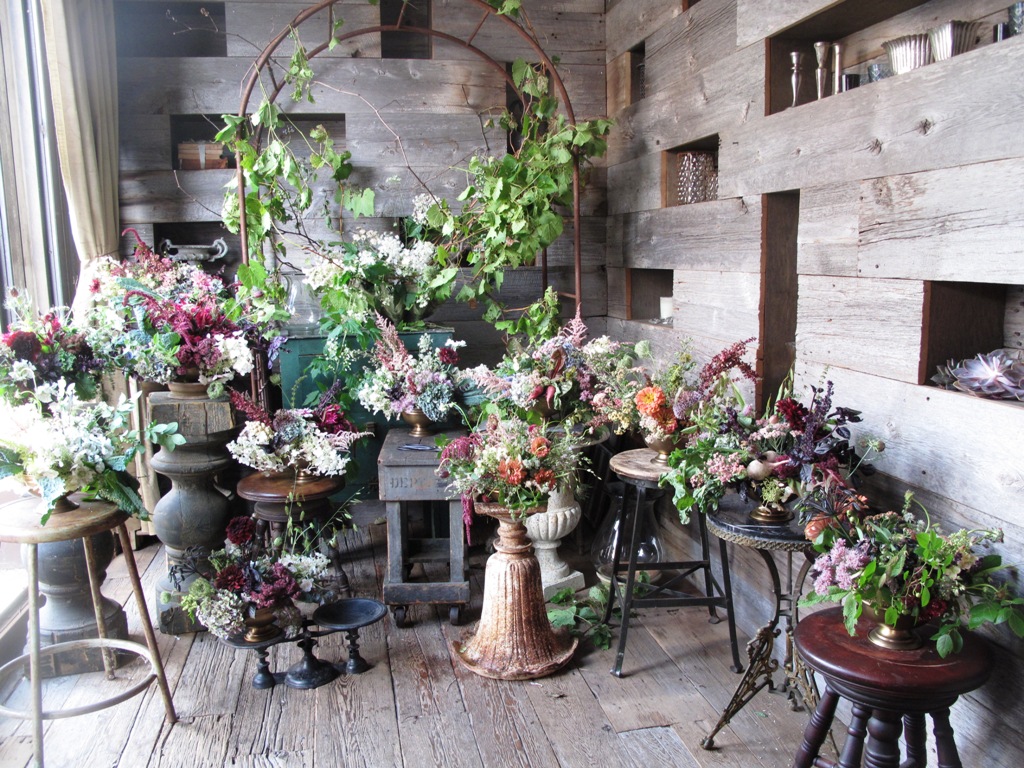
The luscious selection of California, Washington and Oregon-grown floral elements – on display

Eco-technique

A fresh drink of water: There’s a proliferation of advice for keeping a bouquet of floral ingredients fresh and lasting for many days. But one of the most important things you can do is give stems clean water. That’s not so easy with an arrangement like this one, where all the stems are knit together in a tangle of chicken wire.
 
My friend Lorene Edwards Forkner shared this easy water-changing trick: Place the entire arrangement in the kitchen sink. Gently lift the foliage at one edge of the vase so the faucet’s spray nozzle is directed inside. Turn on the water and let it flow for a minute or two. The existing water will begin to overflow and go down the drain, displaced by fresh water that now occupies the vase (dry off the bottom and outside of the container when finished). Do this every day or two for the life of the arrangement.


SLOW FLOWERS Podcast: Local Color Flowers (Episode 106)

Wednesday, September 11th, 2013

SLOW FLOWERS Podcast: Local Color Flowers (Episode 106)

Today’s interview will introduce you to Ellen Frost, a Baltimore-based floral designer who is committed to using only 100% locally-grown flowers in her work. I am so impressed with her business philosophy and her contagious enthusiasm for using flowers from farmers she knows and supports. 

Vote

Vote for your favorite SLOW FLOWERS florist: Ellen Frost’s Local Color Flowers of Baltimore, Maryland


Our Mission

Ellen_LoCoFlo

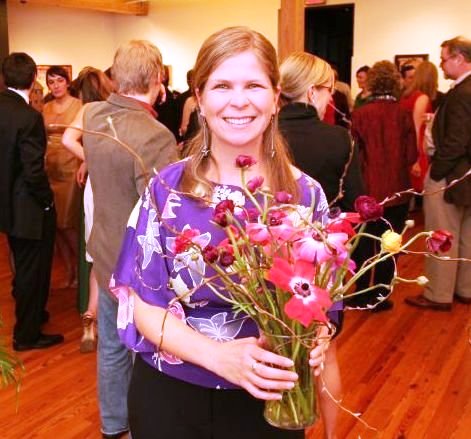
Creative florist Ellen Frost, founder of Local Color Flowers in downtown Baltimore.

Local Color Flowers is a Baltimore-based floral design business. We create personalized arrangements and bouquets from fresh, seasonal, and sustainable flowers cultivated by local specialty growers. We are committed to responsible use of resources, supporting the local economy and promoting neighboring farms. We provide our clients an environmentally and socially conscious alternative when purchasing flowers.

Our Vision

Local Color Flowers seeks to create and support a sustainable community; where people choose local products and services; where flower farms and farm families are thriving; where there is a diverse, strong local economy; and where people are connected to the living world around them.

Our Passion

We love flowers. We love our clients, growers, and partners. We are social entrepeneurs motivated by our relationships and the connections we create. We want our clients to know where their flowers were grown. We want our growers to know how our clients appreciate their products. We want all of our partners to know how we’re green. We want to share our joy and values through our flowers.

IMPORTANT LINKS:

Local Color Flowers’ web site

Home page for Local Color Flowers' web site.

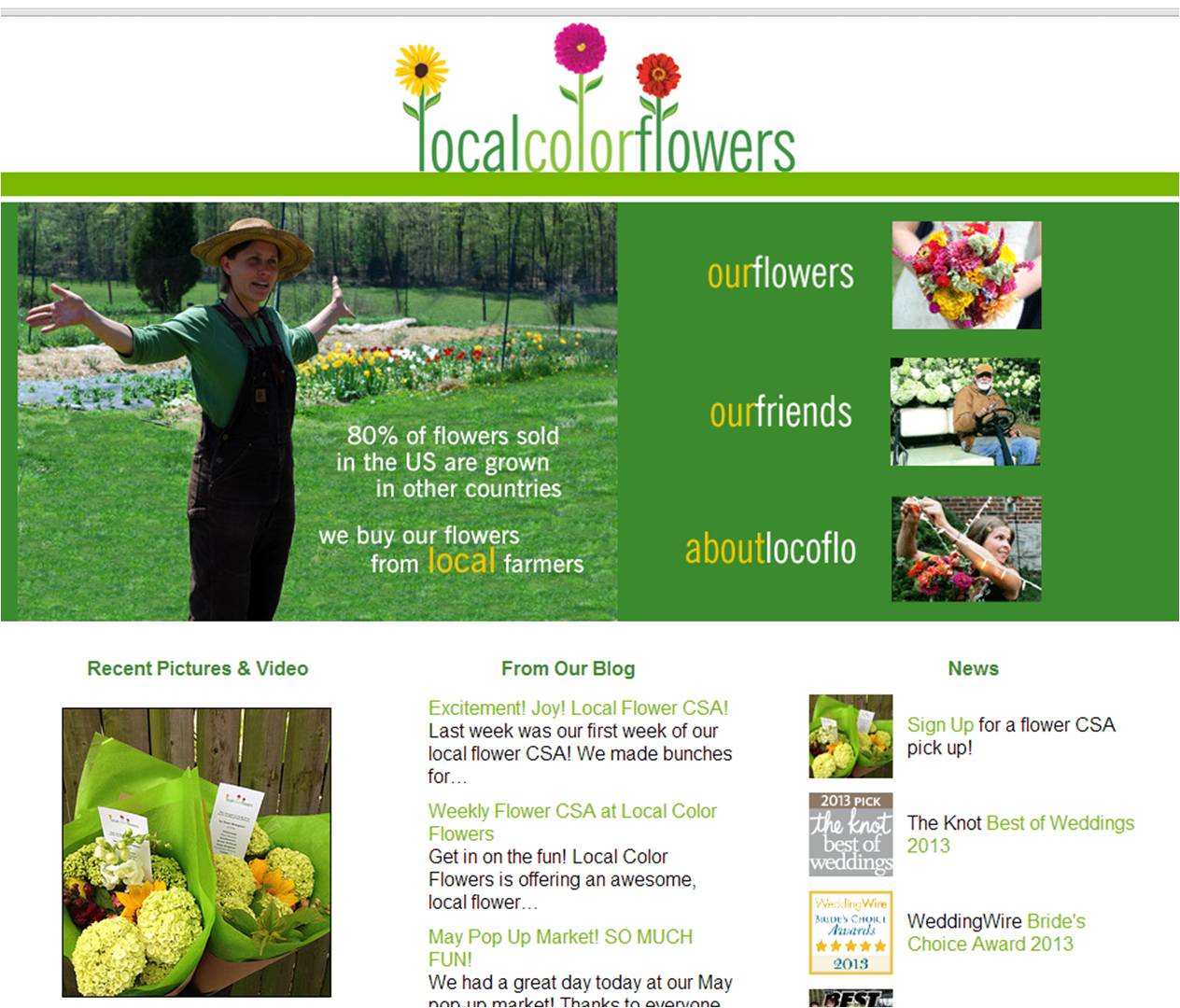
Home page for Local Color Flowers’ web site. Note the compelling “promise” shared with customers who visit Locoflo.com


Martha Stewart's 2013 American Made Campaign.

Martha Stewart’s 2013 American Made Campaign.

Vote here for LoCoFlo on Martha Stewart American Made contest.


Ellen at Work

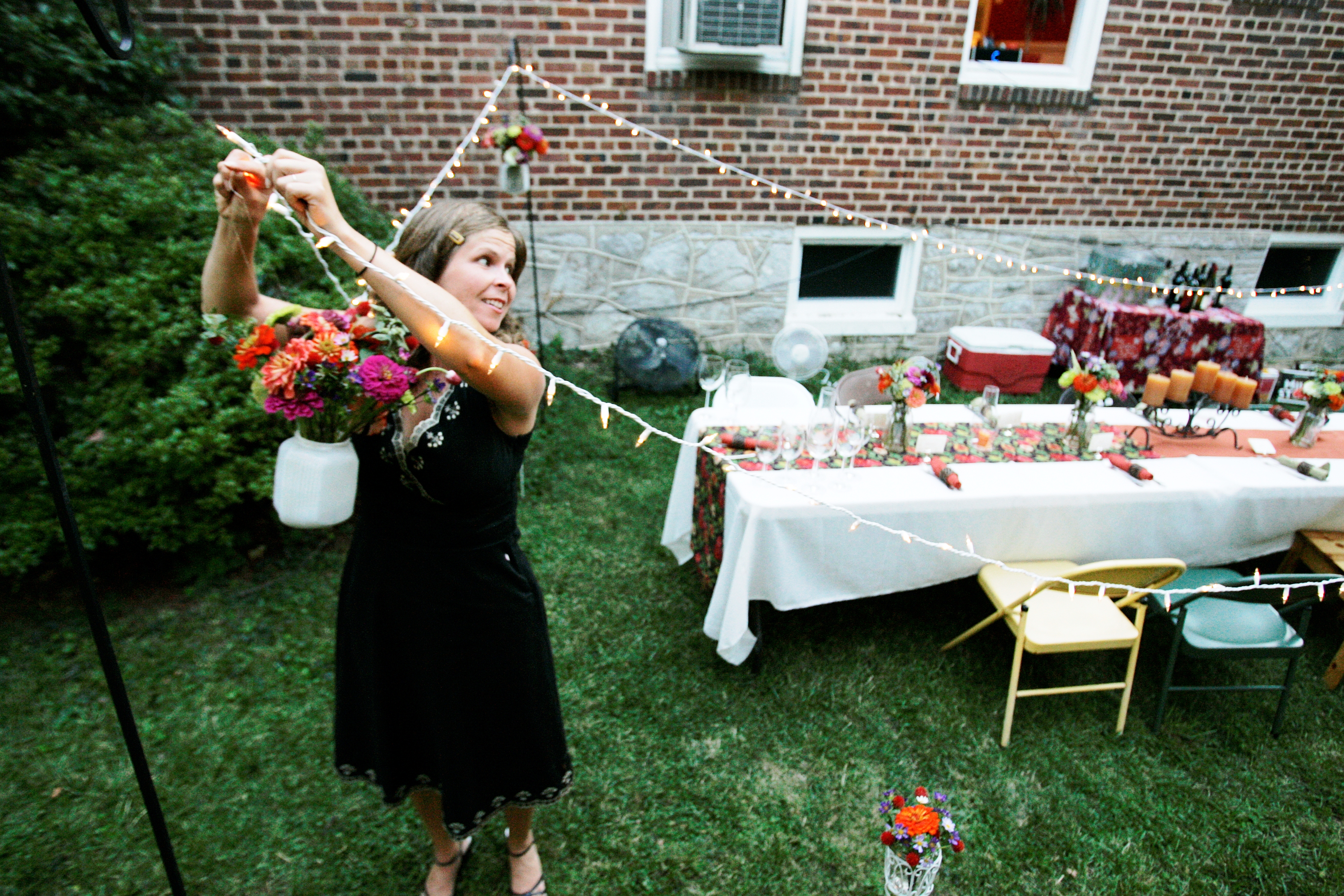
Ellen at work, designing one of 100 weddings and events on her calendar this year.