The Slow Flowers Podcast is the award-winning show known as the “Voice of the Slow Flowers Movement.” Launched in 2013 as the original flower podcast, we’ve devoted more than 10 years to covering the business of flower farming, floral design, and the Slow Flowers sustainability ethos. Listen to a new episode each Wednesday, available for free download here at slowflowerspodcast.com or on iTunes, Spotify, and other podcast platforms.
Dragon Song Farm is located in Oregon’s Willamette Valley outside Eugene. Founder Jenny Jonak’s mission is to bring a sense of floral magic to her customers and community while promoting sustainable, earth-friendly growing practices. By using regenerative farming techniques, Dragon Song ensures that their flowers are grown in harmony with nature, restoring and enriching the soil for future generations. I recently spend a glorious morning with Jenny, touring Dragon Song’s fields, production areas and greenhouses, and discussing her belief that every bouquet should delight the senses and also contribute to a healthier planet. I’m excited for you to join the conversation.
Celebrating THE FLOWER FARMERS book with (from left) Charles Little, Bethany Little, Debra Prinzing, Erin McMullen, and Aaron Gasky
My summer travels continued last week, as I joined my husband Bruce and friends at the USA Track and Field championships in Eugene, Oregon. In addition to enjoying inspiring athleticism of world-class athletes, I was inspired by world class blooms growing there in Willamette Valley.
Celebrating THE FLOWER FARMERS book with (from left) Charles Little, Bethany Little, Debra Prinzing, Erin McMullen, and Aaron Gasky
On the calendar was a long-planned celebration of The Flower Farmersbook with two Oregon farms featured in its pages. Bethany and Charles of Charles Little & Co. in Eugene hosted a festive Sunday morning book party at their Farm Stand, and we were joined by Erin McMullen and Aaron Gaskey of Rain Drop Farms, based in nearby Philomath, Oregon, who are also featured in The Flower Farmers. It was so fun for guests who purchased their own copies of the book to have all five of us sign our pages – what a special memento. So many longtime friends and members came to the event and I really enjoyed meeting new friends, florists, and flower farmers who are inspired by the community we have nurtured. Thank you, Charles & Bethany, for a wonderful visit.
Jenny Jonak at Dragon Song Farm in Oregon’s Willamette Valley
Also while I was in Eugene, I visited Jenny Jonak, owner of Dragon Song Farm, today’s guest of the Slow Flowers Podcast. Dragon Song Farm has been a Slow Flowers Society member for a few years, but I had not met Jenny in person, so I invited myself for a visit. The weather and views were absolutely perfect and we recorded a tour of Dragon Song’s growing areas, as well as a sit-down conversation, filmed in the barn-studio.
A custom-made farmstand, complete with dragon heads, inspired by Jenny’s children’s imaginations and lots of JRR Tolkien stories
Here’s a bit more about Jenny Jonak. She has been practicing since 1997, and has extensive experience with commercial litigation and corporate law. Jenny graduated from the University of Virginia School of Law and obtained her undergraduate degree with high honors from the University of Virginia. She has acted as outside general counsel for several companies, ranging from start-ups to international technology conglomerates.
Dragon Song Farm at the Lane County Farmers’ Market in Eugene, Oregon
On her law firm’s website, we learn that when not practicing law, Jenny has contributed her time as a photojournalist to various wildlife and humanitarian projects, including photography for the World Wildlife Fund, Friends of Calakmul, Rainforest2Reef, as well as HIV and famine relief projects in Africa. She volunteers for a number of non-profits, including serving on the Board of Directors for the Eugene 4J Schools, Board of Directors of the Asian American Council of Oregon, Steering Committee for the Lane County Campaign for Equal Justice (which fundraises for Legal Aid), Friends of Family Farmer’s Legislative Committee, Board of Directors of Oregon Mozart Players, and West Cascades Fiddle Camp & Workshops Committee – and countless past roles in the civic and cultural life of her community. I love that the section concludes like this: “When not working, she enjoys attending old-time fiddle jams and growing heirloom vegetables and flowers on a family farm in the Willamette Valley.”
Just-harvested seasonal blooms from Dragon Song Farm
Um, okay, the bio sounds like Jenny’s flower farm is a little hobby project, but that is far from reality. When you hear our conversation and (I hope) take time to watch a replay of the beautiful video of this episode, you will be left wondering how on earth does Jenny has any time to practice law?! Her fields and crops are prolific and the farm’s many activities are inspiring. I think you’ll enjoy this conversation as much as I did.
CSA bouquets from Dragon Song Farm
I’m so grateful to Jenny Jonak and Dragon Song Farm for their membership in and support of the Slow Flowers Movement. I hope this story inspires you on your floral journey.
Debra in Holland, a guest of Dutch Lily Days in 2024
I also have some amazing news to share, just announced! I’ve been invited to co-host a special Floral and Garden European River Cruise with popular tour leader Lois Moss of Portland, Oregon-based Tour 2 Explore More. The tour dates areApril 19 to 29, 2026.
An iconic scene, spotted outside Amsterdam
This very special excursion is 100% tailored to the garden and flower lover. I’ve always wanted to take a European river cruise, so I’m excited to announce a tour that combines visiting some of Holland and Belgium’s most exclusive gardens and floral venues while traveling onboard an AmaWaterways ship. Lois and I will take you to inspiring garden and floral destinations and cultural sights, with custom shore excursions. Having developed and led numerous international tours to garden-themed destinations, we are in great hands with Lois’s professionalism and shared passion for experiencing floral destinations around the globe.
The main tour will be April 19-29 and includes a 7-night river cruise with custom shore excursions plus 3 nights in the charming city of Utrecht. There will be an optional 2 day pre-tour for those who want to experience the famous Bloemencorso Bollenstreek flower parade.
The itinerary is nearly finished and we will be wrapping up all the details soon. With my own deep connections to the horticulture and floral community, we expect to have some exceptional and unique experiences. Registration is expected to begin on September 10th and it will probably sell out quickly. Be the first to know by completing a simple interest form – you can find the link in today’s show notes.
This show is brought to you by slowflowers.com, the free, online directory to more than 700 florists, shops, and studios who design with local, seasonal and sustainable flowers and to the farms that grow those blooms. It’s the conscious choice for buying and sending flowers.
Thank you to our lead sponsor, Flowerbulb.eu and their U.S. lily bulb vendors. One of the most recognizable flowers in the world, the lily is a top-selling cut flower, offering long-lasting blooms, year-round availability, and a dazzling petal palette. Flowerbulb.eu has partnered with Slow Flowers to provide beautiful lily inspiration and farming resources to help growers and florists connect their customers with more lilies. Learn more at Flowerbulb.eu.
Thank you to the Seattle Wholesale Growers Market, a farmer-owned cooperative committed to providing the very best the Pacific Northwest has to offer in cut flowers, foliage and plants. The Growers Market’s mission is to foster a vibrant marketplace that sustains local flower farms and provides top-quality products and service to the local floral industry. Visit them at seattlewholesalegrowersmarket.com.
Our next sponsor thanks goes to Longfield Gardens, which provides home gardeners with high quality flower bulbs and perennials. Their online store offers plants for every region and every season, from tulips and daffodils to dahlias, caladiums and amaryllis. Check out the full catalog at Longfield Gardens at longfield-gardens.com.
Thank you for joining me today! The Slow Flowers Podcast is a member-supported endeavor, downloaded more than 1.5 million times by listeners like you. Thank you for listening, commenting and sharing – it means so much. As our movement gains more supporters and more passionate participants who believe in the importance of our domestic cut flower industry, the momentum is contagious. I know you feel it, too. If you’re new to our weekly Show and our long-running Podcast, check out all of our resources at SlowFlowersSociety.com.
Thank you for listening! Sending love, from my cutting garden to you! (c) Missy Palacol Photography
I’m Debra Prinzing, host and producer of the Slow Flowers Show & Podcast. The Slow Flowers Podcast is engineered and edited by Andrew Brenlan. The content and opinions expressed here are either mine alone or those of my guests alone, independent of any podcast sponsor or other person, company or organization. Next week, you’re invited to join me in putting more Slow Flowers on the table, one stem, one vase at a time. Thanks so much for joining us today and I’ll see you next week!
The Bochner family lived in the Des Moines, Iowa, suburbs for many years, in a house surrounded by a beautiful flower garden. As gardeners with other careers, Lori and Jim never dreamed of packing up everything, moving to rural Iowa, and growing thousands of flowers on a farm. Today, they consider Bochner Farms an “unplanned accident” that emerged from 50 acres of raw land originally intended for weekend camping, fishing, hiking and sitting around the campfire — you know, an outdoor escape from city life. One year after buying the land, Lori and Jim decided to move there permanently. They built a farmhouse, planted thousands of flowers, and have slowly transitioned the property into a botanical wonderland to share with other flower lovers and for those in search of beauty and a sense of peace. Join me on a walking tour with the Bochners and a conversation that connects the dots between an idea and the reality of being a destination flower farm.
Jim and Lori Bochner of Bochner Farms
If you’re a longtime listener of the Slow Flowers Podcast, you know that I can find great interview guests wherever I travel – and that’s because we have Slow Flowers members in all 50 states and in most Canadian provinces! I also mange to find slow flowers-minded guests when I travel abroad, like on last year’s visit to France – and hint, hint – as part of my upcoming trip to Japan!
The beloved Cottage Garden at Bochner Farms
Last weekend, when I flew to Des Moines, Iowa, to have a garden-and-art weekend with two of my longtime writer-editor friends, I invited myself to meet Lori and Jim Bochner of Bochner Farms. Friends in tow, I made the 30-minute drive south of Des Moines into the rural, Central Iowa countryside. When we arrived at Bochner Farms, we discovered an oasis of flowers surrounded, it seemed, on all sides by corn stalks and bean fields.
The party pavilion hosts private gatherings for up to 50 guests
There, Lori and Jim Bochner greeted us and led a stroll through their event-focused flower farm and nursery. With distinctive, farm-style architecture (even for the chicken house), a huge covered pavilion for groups up to 50, a charming cottage garden, an enviable she-shed, and displays of dahlias, annuals, and their unique collection of daylilies, there was so much to see!
The Willow Cottage, a charming “she-shed”
By necessity, they have installed air conditioning inside the design studio and the picture-perfect shed, as well as in the event barn, currently being upgraded for larger gatherings beginning in 2026. Climate control ensures that all guests are comfortable and never want to leave!
The ever-expanding daylily collection, on display for guests to learn and shop for their own plants.
We wore our sun hats and let our fascination with Jim and Lori’s flower farming story – and the beauty of their blooms – distract us from the Midwest heat!
I’m so grateful to Lori and Jim and Bochner Farms for their membership in and support of the Slow Flowers Movement. I hope their story inspires you on your floral journey.
More about GIVING COLOR: 1 for 6. Through a collaboration with Meals from the Heartland, Bochner Farms donates a meal that feeds six people for every flower purchase from our Iowa flower farm. To learn more about Meals from the Heartland, visit their website at www.mealsfromtheheartland.org. All flower purchases count – so the more flowers purchased, the more people are fed. This includes Bochner Farms tours, U-pick experiences, farm-to-table dinners, all of our bouquet subscriptions, and daylilies too. Find flowers here.
Thank you to our Sponsors!
This show is brought to you by slowflowers.com, the free, online directory to more than 700 florists, shops, and studios who design with local, seasonal and sustainable flowers and to the farms that grow those blooms. It’s the conscious choice for buying and sending flowers.
Thank you to our lead sponsor, Flowerbulb.eu and their U.S. lily bulb vendors. One of the most recognizable flowers in the world, the lily is a top-selling cut flower, offering long-lasting blooms, year-round availability, and a dazzling petal palette. Flowerbulb.eu has partnered with Slow Flowers to provide beautiful lily inspiration and farming resources to help growers and florists connect their customers with more lilies. Learn more at Flowerbulb.eu.
Thank you to the Association of Specialty Cut Flowers. The ASCFG is a gathering place for specialty cut flower growers of all levels of experience. It is a hub of knowledge, where seasoned experts and budding enthusiasts come together to learn, share, and support one another. The ASCFG is dedicated to empowering its members with the knowledge and resources needed to thrive in the world of cut flower farming. From educational workshops and conferences to online resources and publications, they provide a wealth of information and support for all things related to growing exceptional cut flowers. Learn more about the ASCFG and how to be a part of it at www.ascfg.org!
Thank you to Red Twig Farms. Based in New Albany, Ohio, Red Twig Farms is a family-owned farm specializing in peonies, daffodils, tulips and branches, a popular peony-bouquet-by-mail program and their Spread the Hope Campaign where customers purchase 10 tulip stems for essential workers and others in their community. Learn more at redtwigfarms.com.
Thank you for joining me today! The Slow Flowers Podcast is a member-supported endeavor, downloaded more than 1.5 million times by listeners like you. Thank you for listening, commenting and sharing – it means so much. As our movement gains more supporters and more passionate participants who believe in the importance of our domestic cut flower industry, the momentum is contagious. I know you feel it, too. If you’re new to our weekly Show and our long-running Podcast, check out all of our resources at SlowFlowersSociety.com.
Thank you for listening! Sending love, from my cutting garden to you! (c) Missy Palacol Photography
I’m Debra Prinzing, host and producer of the Slow Flowers Show & Podcast. The Slow Flowers Podcast is engineered and edited by Andrew Brenlan. The content and opinions expressed here are either mine alone or those of my guests alone, independent of any podcast sponsor or other person, company or organization. Next week, you’re invited to join me in putting more Slow Flowers on the table, one stem, one vase at a time. Thanks so much for joining us today and I’ll see you next week!
Long before I met the women of La Flor Farm, I met their gorgeous flowers. For the past three years, mom Michele and daughter Chantelle have supplied customers (like me) who shop at the Seattle Wholesale Growers Market with a breathtakingly beautiful selection of the highest quality flowers – from tulips in time for Valentine’s Day to spring perennials, summer annuals, and (of course) unique dahlias. When I met Chantelle in person and learned that her family flower compound is located just 12 miles from where I live, I had to visit these Slow Flowers members. La Flor is now in its fourth season, and while Michele and Chantelle are the primary operators, there’s help from Michele’s mother (grammy) and Chantelle’s young adult children, making this a four-generation flower farm. Join me on a video tour and insightful conversation from my recent visit. You’ll be inspired!
Chantelle Korcek and Michelle Jensen of La Flor Farm
It’s dahlia season a La Flor Farm, where the fields are exploding with more than 4,000 plants, as well as annuals, foliages, and perennials. The landscape was once used by neighbors to graze their horses, but once Chantelle Korcek convinced her mother Michele Jensen to convert the acreage into flowers, things changed considerably.
All in the family at La Flor Farm! Left photo: four generations with Doris Beck (Grammy), Michele Jensen, Chantelle Korcek and daugher Ava Korcek; Right photo: Michelle and David Jensen, Doris Beck, Chantelle Korcek and her two children, Ava and Griffin Korcek
As they explain, the idea for La Flor Farm grew slowly. For many years Michele shared her garden flowers for weddings, tea parties, birthdays, and baby showers. Chantelle’s yard was overflowing with hydrangeas and dahlias and she was looking for space to expand her garden. Every spring and summer the women collected new dahlias, peonies, hydrangeas, and more flower seeds, nurturing the blooms to share with family and friends.
Late in the summer of 2021, the women visited a local dahlia farm, took a million pictures, oohed and aahed, talked the whole way home about what they loved and what they might try on their dream farm. They realized it was time. Time to take the leap of faith. Time to give this baby business a name. Time to place all the orders and make connections.
It felt scary to dream that they could turn their love of all things flowers into a fully realized floral enterprise based in Auburn, Washington, southeast of downtown Seattle, but they have done just that. Now in their fourth growing season, Chantelle and Michele take pride in growing high-quality, English garden style, seasonal flowers – harvested at their peak of freshness.
They tell customers that La Flor Farm is part of the Slow Flowers movement; their blooms are hand-snipped at the last possible moment to meet florists’ perfect timing. By using appropriate post-harvest care methods that avoid dangerous chemicals, clients are assured of receiving top quality, safe to breathe and handle blooms.
I know you’ll enjoy my visit, filmed last week on an overcast day when the dahlia bloom color was at its most vivid. We start with a walking tour of La Flor Farm, and that’s followed by a sit-down with Michele and Chantelle.
This show is brought to you by slowflowers.com, the free, online directory to more than 700 florists, shops, and studios who design with local, seasonal and sustainable flowers and to the farms that grow those blooms. It’s the conscious choice for buying and sending flowers.
Thank you to our lead sponsor, Flowerbulb.eu and their U.S. lily bulb vendors. One of the most recognizable flowers in the world, the lily is a top-selling cut flower, offering long-lasting blooms, year-round availability, and a dazzling petal palette. Flowerbulb.eu has partnered with Slow Flowers to provide beautiful lily inspiration and farming resources to help growers and florists connect their customers with more lilies. Learn more at Flowerbulb.eu.
Thank you to Charles Little & Company for supplying our industry with some of the most beautiful and sustainably-grown design ingredients, available nationwide through their website at charleslittleandcompany.com. Based in Eugene, Oregon, the farmers at Charles Little & Company have been growing and drying flowers since 1986. New products and dried flower collections are added to their website at the first of each month. Check it out at charleslittleandcompany.com.
Thank you to A-ROO Company, your one-stop shop for in-stock floral packaging. From sleeves and wraps to labels and tags, visit www.a-roo.com for their full selection of eco-friendly items or to start the process of developing a look that is uniquely yours.
Thank you for joining me today! The Slow Flowers Podcast is a member-supported endeavor, downloaded more than 1.5 million times by listeners like you. Thank you for listening, commenting and sharing – it means so much. As our movement gains more supporters and more passionate participants who believe in the importance of our domestic cut flower industry, the momentum is contagious. I know you feel it, too. If you’re new to our weekly Show and our long-running Podcast, check out all of our resources at SlowFlowersSociety.com.
Thank you for listening! Sending love, from my cutting garden to you! (c) Missy Palacol Photography
I’m Debra Prinzing, host and producer of the Slow Flowers Show & Podcast. The Slow Flowers Podcast is engineered and edited by Andrew Brenlan. The content and opinions expressed here are either mine alone or those of my guests alone, independent of any podcast sponsor or other person, company or organization. Next week, you’re invited to join me in putting more Slow Flowers on the table, one stem, one vase at a time. Thanks so much for joining us today and I’ll see you next week!
Based in Kingston, Massachusetts, on Boston’s South Shore, farmer-florist Julie Raymond grows cut flowers for her clients’ wedding florals. After an initial career in social service, Julie’s graduate work in horticulture and landscape design now informs her philosophy. She says: “That background in science and design is rooted in everything I do and has inspired my work from the very beginning.” Today, Bittersweet Gardens sources fresh, seasonal and organic flowers to serve those clients with unique, bespoke field-to-vase floral arrangements, tablescapes, wedding bouquets and centerpieces. We recently recorded a conversation about how Julie navigates weddings as a farmer-florist, a topic about which she frequently teaches and writes. Whether you grow cut flowers, design florals for weddings, or do both – this conversation will inspire you!
Julie Raymond of Bittersweet Gardens (left); inside her greenhouse (right)
Join me today in the virtual studio as I visit with Julie Raymond of Bittersweet Gardens, based in Kingston, Massachusetts. With an emphasis on sustainably grown flowers and event design, the studio is known for organic, loose florals inspired by the changing seasons of New England and a lush, ethereal and “just picked” from the garden aesthetic.
Bridal bouquet by Bittersweet Gardens (left); the charming design studio (right)
Since 1998, Julie has farmed land up and down the eastern part of Massachusetts. Outside of growing flowers and designing floral arrangements for weekly corporate clients and couples, she also markets blooms through the Boston Wholesale Flower Exchange.
Four Flower Shares Collections
The breadth and depth of design ingredients that Julie grows in mind-boggling – she begins the season with early tulips, ranunculus, and anemones and continues through the summer with all the unique, juicy options – annuals, perennials, and ornamental shrubs and vines – and wraps up the season with dahlias and heirloom mums.
A Bittersweet Gardens wedding
Julie edited and narrated a 20-minute bonus video that leads us through a full year at Bittersweet Gardens, including some of her gorgeous design work and evocative, place-setting installations.
This show is brought to you by slowflowers.com, the free, online directory to more than 700 florists, shops, and studios who design with local, seasonal and sustainable flowers and to the farms that grow those blooms. It’s the conscious choice for buying and sending flowers.
Thank you to our lead sponsor, Flowerbulb.eu and their U.S. lily bulb vendors. One of the most recognizable flowers in the world, the lily is a top-selling cut flower, offering long-lasting blooms, year-round availability, and a dazzling petal palette. Flowerbulb.eu has partnered with Slow Flowers to provide beautiful lily inspiration and farming resources to help growers and florists connect their customers with more lilies. Learn more at Flowerbulb.eu.
Thank you to Johnny’s Selected Seeds, an employee-owned company that provides our industry the best flower, herb and vegetable seeds — supplied to farms large and small and even backyard cutting gardens like mine. Find the full catalog of flower seeds and bulbs at johnnysseeds.com.
Thank you to Rooted Farmers. Rooted Farmers works exclusively with local growers to put the highest-quality specialty cut flowers in floral customers’ hands. When you partner with Rooted Farmers, you are investing in your community, and you can expect a commitment to excellence in return. Learn more at RootedFarmers.com.
Thank you for joining me today! The Slow Flowers Podcast is a member-supported endeavor, downloaded more than 1.5 million times by listeners like you. Thank you for listening, commenting and sharing – it means so much. As our movement gains more supporters and more passionate participants who believe in the importance of our domestic cut flower industry, the momentum is contagious. I know you feel it, too. If you’re new to our weekly Show and our long-running Podcast, check out all of our resources at SlowFlowersSociety.com.
Thank you for listening! Sending love, from my cutting garden to you! (c) Missy Palacol Photography
I’m Debra Prinzing, host and producer of the Slow Flowers Show & Podcast. The Slow Flowers Podcast is engineered and edited by Andrew Brenlan. The content and opinions expressed here are either mine alone or those of my guests alone, independent of any podcast sponsor or other person, company or organization. Next week, you’re invited to join me in putting more Slow Flowers on the table, one stem, one vase at a time. Thanks so much for joining us today and I’ll see you next week!
Next year, Gretel and Steve Adams will celebrate the 20th farming season at Sunny Meadows Flower Farm in Columbus, Ohio. Far younger than the average U.S. farmer, these first-generation flower growers have built Sunny Meadows into an impressive floral enterprise encompassing more than 30 acres, employing a crew of few dozen folks, and producing tens of thousands of floral stems each year. I first met this talented couple in 2010 at the ASCFG conference in Tulsa, Oklahoma, which is where I first realized that they were ones to watch. Over the years, they have appeared in articles I’ve written for national magazines, as guests on the Slow Flowers Podcast, and now, in the pages of The Flower Farmers. Last week, I joined Steve and Gretel and 100 of their customers and friends, at a special book signing party at their farm. Today’s episode features highlights of that event.
Gretel and Steve Adams, co-founders of Sunny Meadows Flower Farm in Columbus, Ohio
Turn to page 126 in The Flower Farmers book and you’ll read the story of Sunny Meadows Flower Farm, the Columbus-based family farm started by Gretel and Steve Adams in 2006, on a 10-acre parcel with a small cottage and little more. Their dream of farming together, sharing their mutual love of nature, has blossomed into an impressive source of domestic flowers for regional and national customers.
Ranunculus at Sunny Meadows Flower Farm
Early on, they shifted from a food-and-flower-growing operation to 100% cut flowers, inspired by a market grower who raised sunflowers, zinnias, and cosmos to supplement a teacher salary. “We quickly realized how much money we could earn with our local flowers,” Steve explained. “We found this niche that no one else was really doing in Columbus, and we went for it. What we earn per acre on cut flower production is dramatically different than what we were doing with vegetables alone.”
The landscape at Sunny Meadows Flower Farm — at one of the leased fields
By adding leased parcels in and around Columbus to their original 10 acres, the farm has expanded like a patchwork quilt. The home farm is where woody and herbaceous peonies grow – crops like hydrangeas, viburnum, willows, yarrow, and sea oats. There are more than one dozen greenhouses that produce luxury crops like ranunculus, anemone, freesia, and lisianthus, plus a farm store open to the public. The leased farmland – across the street – is filled with vibrant rows of field-grown annuals (celosia, amaranth, sunflowers, zinnias, and lots and lots of dahlias. I visited both sites while attending our book launch party, and have some video to share with you.
Scenes from Sunny Meadows Flower Farm
The crew at Sunny Meadows Flower Farm with Steve Adams (standing, far left)
You’ll want to check out the video in today’s show notes to see highlights of my visit. On Saturday, I spent time with Gretel as we visited all of the lisianthus trials. You’ll hear us discuss CULTIVATE, which is major horticulture conference that takes place in Columbus each July. In addition to our book event, Cultivate brought me to Columbus. The conference made it possible for Takii Seeds’ flower product development manager Jessica Cudnik to attend and share her insight about lisianthus breeding. The episode concludes with Gretel’s floral design demonstration.
Pinto at Sunny Meadows Flower Farm — one of the most popular photographs in the pages of The Flower Farmers book.
I’m so grateful to Gretel and Steve Adams for their longtime support of the Slow Flowers Movement as members and collaborators. I know you will be inspired by their story.
This show is brought to you by slowflowers.com, the free, online directory to more than 700 florists, shops, and studios who design with local, seasonal and sustainable flowers and to the farms that grow those blooms. It’s the conscious choice for buying and sending flowers.
Thank you to our lead sponsor, Flowerbulb.eu and their U.S. lily bulb vendors. One of the most recognizable flowers in the world, the lily is a top-selling cut flower, offering long-lasting blooms, year-round availability, and a dazzling petal palette. Flowerbulb.eu has partnered with Slow Flowers to provide beautiful lily inspiration and farming resources to help growers and florists connect their customers with more lilies. Learn more at Flowerbulb.eu.
Thank you to the Seattle Wholesale Growers Market, a farmer-owned cooperative committed to providing the very best the Pacific Northwest has to offer in cut flowers, foliage and plants. The Growers Market’s mission is to foster a vibrant marketplace that sustains local flower farms and provides top-quality products and service to the local floral industry. Visit them at seattlewholesalegrowersmarket.com.
Thank you to Longfield Gardens, which provides home gardeners with high quality flower bulbs and perennials. Their online store offers plants for every region and every season, from tulips and daffodils to dahlias, caladiums and amaryllis. Check out the full catalog at Longfield Gardens at longfield-gardens.com.
Thank you for joining me today! The Slow Flowers Podcast is a member-supported endeavor, downloaded more than 1.5 million times by listeners like you. Thank you for listening, commenting and sharing – it means so much. As our movement gains more supporters and more passionate participants who believe in the importance of our domestic cut flower industry, the momentum is contagious. I know you feel it, too. If you’re new to our weekly Show and our long-running Podcast, check out all of our resources at SlowFlowersSociety.com.
Thank you for listening! Sending love, from my cutting garden to you! (c) Missy Palacol Photography
I’m Debra Prinzing, host and producer of the Slow Flowers Show & Podcast. The Slow Flowers Podcast is engineered and edited by Andrew Brenlan. The content and opinions expressed here are either mine alone or those of my guests alone, independent of any podcast sponsor or other person, company or organization. Next week, you’re invited to join me in putting more Slow Flowers on the table, one stem, one vase at a time. Thanks so much for joining us today and I’ll see you next week!
In early March, Stacey Chapman embarked on a new chapter for Westwind Flowers, opening a design studio and retail space in Gordonsville, Virginia. Adding this beautiful destination for her customers and the public means Westwind can provide more local flowers to their community on a greater scale with everyday flowers, expanded workshop space and events. As Stacey wrote in her announcement post: “We believe in the local and American grown floral industry. We have developed strong relationships with local and regional growers and look forward to working with them as we expand our business.” This was a big step for a small, family-run flower farm. But as you’ll hear in my conversation with Stacey, her background working in flower shops, not to mention her extensive community ties, led to the decision. I’m excited to share that story with you.
Stacey and Tom Chapman of Westwind Flowers Farm & Studio
Last fall, Stacey Chapman sent me a personal note via email – and it immediately made me think, “we have to record a podcast episode about her news!” Here’s what she shared: “The ‘great divide’ between local growers and ‘traditional’ shops is astounding in this area of Central Virginia with regard to local flowers. I have been frustrated by this since year one in my growing journey and finally decided to take the plunge and do something different for my business.”
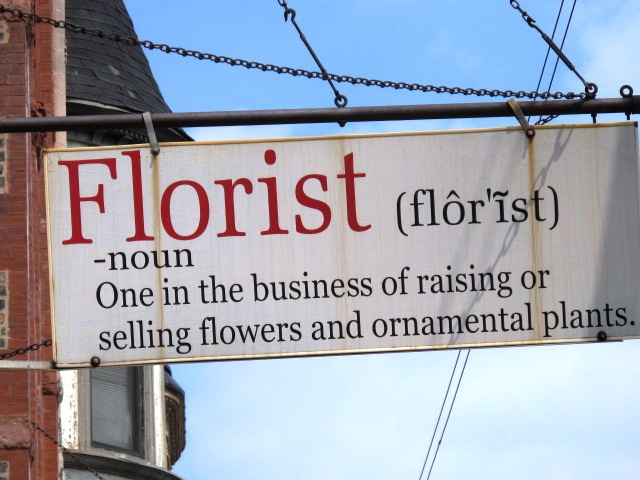
. . . “I love the sign at the beginning of your ‘Slow Flowers’ book of the definition of a florist…that’s what I (many of us) do. The wholesale sales market just doesn’t cut it for me though, nor do farmers’ markets…so in 2025 I’m opening a retail site. Eeek…”
Love this sign! The original definition of a FLORIST is having a comeback!
The sign to which she refers is one I often include in my slide shows – an aging, somewhat rusty metal sign that I spotted outside a vacant storefront in Chicago – probably back in 2011. It reads like a Webster’s Dictionary entry: FLORIST (-noun), ‘One in the business of raising or selling flowers and ornamental plants.’”
The promise of a beautiful rainbow — over the fields at Westwind Flowers
Stacey and I had a nice chat over the winter and she updated me on some of the news about her soon-to-open retail space. At Westwind Flowers, Stacey and her husband Tom Chapman are in their sixth season. They lease two acres of land from the Montpelier Foundation, the historic James Madison farm outside of Charlottesville, where they primarily raise field-grown flowers. “We are very aware of sustainability and what that means here,” she says. “If we ever leave this land, we want to leave it in better conditions than we received it.”
The iconic green barn at Westwind Flowers, with summer dahlias in the foreground.
Prior to Westwind Flowers being established there in 2019, the farmland had been used for horse grazing for nearly a century, and later planted in cover crops to attract natural pollinators. Prior to launching the new Westwind Flowers & Studio, they sold at farmers’ markets, through CSA and flower share programs, and via a wholesale flower cooperative. Today, the reimagined business offers daily arrangements, special event florals, seasonal subscriptions, u-picks and workshops at the floral studio.
Farming at the historic property of James Madison
And take note, this interview begins with an engaging video filmed by Lorenzo Dickerson of Maupintown Media, a talented video storyteller who recently filmed a segment that brings Westwind Flowers Farm & Studio to life.
A slice of summer flowers at Westwind Flowers Farm & Studio
I love this sentiment from Stacey: “the love of flower-growing and seeing the joy on the end users’ face is thrilling for me and that is the customer who I am pursuing. The goal isn’t to grow it All, but to grow and support those growers that I have come to have relationships with in my area.”
Find and follow Westwind Flowers Farm & Studio on Instagram and Facebook
This show is brought to you by slowflowers.com, the free, online directory to more than 700 florists, shops, and studios who design with local, seasonal and sustainable flowers and to the farms that grow those blooms. It’s the conscious choice for buying and sending flowers.
Thank you to our lead sponsor, Flowerbulb.eu and their U.S. lily bulb vendors. One of the most recognizable flowers in the world, the lily is a top-selling cut flower, offering long-lasting blooms, year-round availability, and a dazzling petal palette. Flowerbulb.eu has partnered with Slow Flowers to provide beautiful lily inspiration and farming resources to help growers and florists connect their customers with more lilies. Learn more at Flowerbulb.eu.
Thank you to the Association of Specialty Cut Flowers. The ASCFG is a gathering place for specialty cut flower growers of all levels of experience. It is a hub of knowledge, where seasoned experts and budding enthusiasts come together to learn, share, and support one another. The ASCFG is dedicated to empowering its members with the knowledge and resources needed to thrive in the world of cut flower farming. From educational workshops and conferences to online resources and publications, they provide a wealth of information and support for all things related to growing exceptional cut flowers. Learn more about the ASCFG and how to be a part of it at www.ascfg.org.
Thank you to Red Twig Farms. Based in New Albany, Ohio, Red Twig Farms is a family-owned farm specializing in peonies, daffodils, tulips and branches, a popular peony-bouquet-by-mail program and their Spread the Hope Campaign where customers purchase 10 tulip stems for essential workers and others in their community. Learn more at www.redtwigfarms.com.
Thank you for joining me today! The Slow Flowers Podcast is a member-supported endeavor, downloaded more than 1.5 million times by listeners like you. Thank you for listening, commenting and sharing – it means so much. As our movement gains more supporters and more passionate participants who believe in the importance of our domestic cut flower industry, the momentum is contagious. I know you feel it, too. If you’re new to our weekly Show and our long-running Podcast, check out all of our resources at SlowFlowersSociety.com.
Thank you for listening! Sending love, from my cutting garden to you! (c) Missy Palacol Photography
I’m Debra Prinzing, host and producer of the Slow Flowers Show & Podcast. The Slow Flowers Podcast is engineered and edited by Andrew Brenlan. The content and opinions expressed here are either mine alone or those of my guests alone, independent of any podcast sponsor or other person, company or organization. Next week, you’re invited to join me in putting more Slow Flowers on the table, one stem, one vase at a time. Thanks so much for joining us today and I’ll see you next week!