Debra Prinzing

Get the Email Newsletter!

Archive for the ‘Writing’ Category

A visit to Sharon Lovejoy’s garden shed

Wednesday, November 25th, 2009
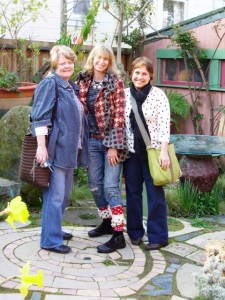
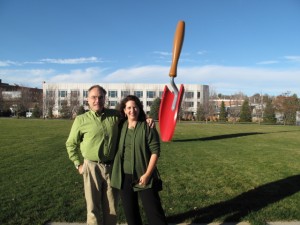
Sharon Lovejoy and me

Sharon Lovejoy and me

In the middle of last week, when I really didn’t have the time to do it, I drove northbound, to central California, where I spent 24 hours with talented writer-illustrator-naturalist Sharon Lovejoy and her smart and kind husband Jeff Prostovich. I met Sharon a little over two years ago when Nan Sterman and I drove to the San Francisco Flower & Garden Show with our friend Joan Bolton of Santa Barbara Garden Design. It was our Garden Writer Caravan and Road Trip. First, Nan took the train/bus from San Diego to my neck of the woods (Ventura Co.); then, the next morning, we drove to Santa Barbara to pick up Joan. Another 90 minutes north of Joan, up Hwy. 101, and we arrived to visit Sharon and Jeff. They fed us, feted us, and hopped in their car to follow the caravan.

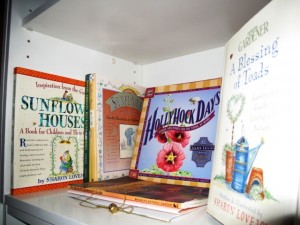
A collection of Sharon's charming and inspiring books

A collection of Sharon's charming and inspiring books

Sharon is a total rock star in the Garden Writing Galaxy and I was so excited to have a chance to spend time with her and Jeff.

She has had a huge following ever since she started writing “Heart’s Ease,” a monthly naturalist’s column for the former Country Living Gardener magazine. Sharon’s blog is fun and highly personal – it’s read by friends and fans around the globe.

Her illustrated books about gardening, gardening with children, gardening for wildlife, gardening with food — oh, there are so many and they are like little love letters — have sold hundreds of thousands of copies over the years. In our world, that is unparalleled, I tell you.

61rTYy4K-jL__SL500_AA240_If, like me, you love the way Sharon involves children and their grownups with the natural world, be on the lookout for her next book – out in January 2010! It’s called Toad Cottages & Shooting Stars (and it features her sweet artist-granddaughter, Sara, on the cover).
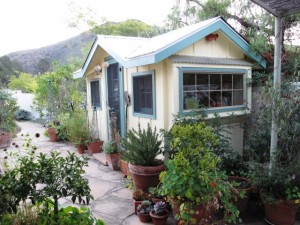
Sharon and Jeff and I had a magical 24 hours in which we basically talked, ate, drank, cooked, went to see the Lone Pine Arboretum and the plant nursery at Cal Poly San Luis Obispo, admired nature, and compared notes about our industry (?) and the “new media” platforms we’re all learning to navigate.

We had to force ourselves to go to bed last Tuesday night . . . the fire was burning in the fireplace and we had so much to say to one another. But we drifted off to sleep and rose on Wednesday morning in time for me to join Sharon at her writers’ group, during which yet another sparkling facet of this talented writer was revealed to me (hint: she is writing a wonderful young adult novel and I can’t wait for it to be completed AND published!).

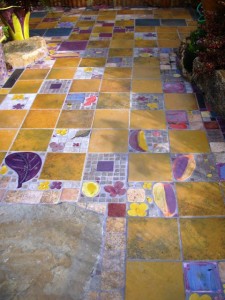
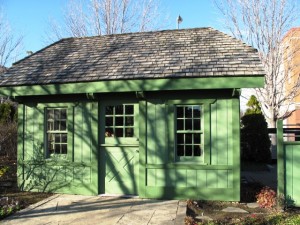
A sweet retreat in the heart of Sharon's garden

A sweet retreat in the heart of Sharon's garden

It was nice to do something very spontaneous (and very nice that my own husband Bruce held down the fort at home so I could take the trip). I’ve been anxious to see Sharon’s new garden shed.

I had a sneaking suspicion I would be able to persuade Sharon to let me interview her on camera, so I asked – and lucky for you – she said yes. (And there was Jeff, the smart marketer, egging us on and actually directing us at one point.)

We made this totally rough-and-rugged video with my little Flip camera and gave the footage to Shirley Bovshow of Garden World Report. Shirley cleaned it up and used a portion of my tour with Sharon on today’s show. You can watch it here, along with contributions from Ken Druse and Ellen Zachos, two of my favorite garden writer-designers on the east coast.

Sharon promised me a personal tour, and here it is:

httpv://www.youtube.com/watch?v=cv4OT8NukZ8

This entire experience reminded me of why I love what I do and the people with whom I share this journey.

Since this is Thanksgiving week, I’m thinking about gratitude:

1. I’m thankful that Nan introduced me to Sharon. Nan’s heart is big enough to share her blessings with her friends. I love that about Nan. It’s not the first time she’s opened a door for me, and I hope I can reciprocate.

2. I’m thankful that Sharon and Jeff have adopted me as a friend, and for their generous gift of time, ideas, support, encouragement, shelter (hey, I didn’t mention getting to sleep in the cozy loft at the top of a spiral staircase in Sharon’s art studio!!!) and food (oh, time around the table in their farmhouse kitchen was delicious – in more ways than one).

3. I’m thankful that there are so many kindred spirits in the gardening world, especially for innovators like Shirley Bovshow who just make things happen in new ways, pioneering the path that we all wish to follow (but when we don’t have a road map….she’s bound to!)

4. I’m thankful for my long-suffering spouse and partner, Bruce. He always encourages me to take these trips and excursions, even though it usually means more work for him. I can’t wait for the time when he’ll be freer to join me (and vice-versa).

That’s it for now.

Creating and capturing movement in the landscape

Monday, November 16th, 2009

AGnucov1AA version of this piece originally appeared in my 2005 book, The Abundant Garden (Cool Springs Press), photographed by Barbara J. Denk, a gifted Bainbridge Island-based photographer. 
I recently updated the text as an article that appears in the current Southern California Horticultural Society newsletter.

RHYTHM AND MOTION

In landscape design, you can create a visual flow through the garden with the dynamic element of rhythm.

As a beat is to music, as choreographed steps are to a dance, rhythm animates a garden. Even if the wind doesn’t blow, your garden can look and feel infused with energy.

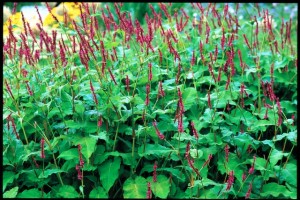
Raspberry-red spikes of aptly named Persicaria amplexicaulis 'Firetail' erupt in this singular performance of color and form. (Barbara J. Denk photograph)

Raspberry-red spikes of aptly named Persicaria amplexicaulis 'Firetail' erupt in this singular performance of color and form. (Barbara J. Denk photograph)

MOTION:  We experience a physical sensation when something rustles or sways in the garden. We pause to appreciate movements, subtle or dramatic – flowing water, rippling leaves, a billowing banner, or clanging chimes – because they signal life’s evanescent qualities. Such movements resonate as the garden responds to the earth’s vital elements.

By the very act of creating a garden, we embrace the external forces of nature, most of which are out of our control. In addition to rays of sunlight and rain showers, the kinetic presence of wind and breeze in our landscapes is important to channel – as movement – in a planting scheme.

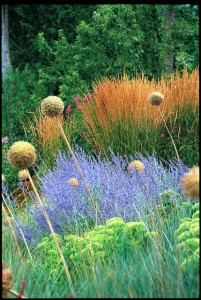
The ball-shaped seed heads of Allium 'Globemaster' are showcased against a rhythmic display of Calamagrostis x acutiflora 'Karl Foerster', velvety Russian sage (Perovskia atriplicifolia) and Sedum 'Autumn Joy' (Barbara J. Denk photograph)

The ball-shaped seed heads of Allium 'Globemaster' are showcased against a rhythmic display of Calamagrostis x acutiflora 'Karl Foerster', velvety Russian sage (Perovskia atriplicifolia) and Sedum 'Autumn Joy' (Barbara J. Denk photograph)

It’s rewarding to see how climatic changes affect the garden, something we can’t help but notice, whether there are extreme gusts or light flurries flowing through branches and stems. When we intentionally design the garden to capture these movements, we infuse an otherwise commonplace landscape with vitality.

The choices of plants that can catch the airflow, gently dance, or furiously shake are endless. Perennials with tall, slender stems ripple like the fringe on a canopy (think of a vibrant stand of daylilies or a swath of lavender).

Fluffy inflorescences of maiden grass undulate above its finely-textured blades – and the overall effect is a seductive rhythm. The leaves of a California pepper tree shimmer like sequins on an evening gown. Agapanthus seedpods rattle and whisper as autumn arrives. The natural symphony energizes any landscape.

RHYTHM:  Beyond individual plants, the visual suggestion of animation or motion can also be incorporated into the overall template of a garden. The repetition of organic forms, the course of a sinuous path, or the sensual outlines of beds and borders suggest movement. Alternating shapes – the gradual widening or narrowing of a space, the regular spacing of trees – do as well.

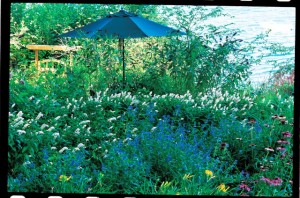
Calm white and intense blue join for a duet of gentle movement. A border of creamy white Lysimachia clethroides relates well with a stand of blue-flowering Caryopteris x clandonensis.

Calm white and intense blue join for a duet of gentle movement. A border of creamy white Lysimachia clethroides relates well with a stand of blue-flowering Caryopteris x clandonensis (Barbara J. Denk photograph)

When the tiny stones in a Zen garden are raked into concentric circles, movement appears. When a “stream” of large, smooth, river rocks fills a gully or trench, the sense of running water is implied. The sequence of stepping stones spaced through a cushioned ground cover of fragrant thyme invigorates the scene and helps direct the viewer’s eye through the garden. The scene is emotionally alive and visually pleasing.

Movement in a garden is essential. It’s the organic rhythm, the fluid characteristic that every garden needs in order to come to life for those who enjoy it.

Here are some tips for “animating” your garden:

  • Develop a repertoire of plants:
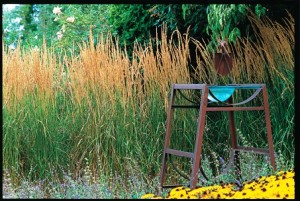
A glass bowl - a modern birdbath - is showcased against a coppery stand of Karl Foerster grass - an exquisite choice for "motion" in the garden (Barbara J. Denk photograph)

A glass bowl - a modern birdbath - is showcased against a coppery stand of Karl Foerster grass - an exquisite choice for "motion" in the garden (Barbara J. Denk photograph)

Base your plant selection on the scale of your house and the natural setting around it. Once you’ve selected the primary plants – those that provide structure and have multiseason interest, such as ornamental grasses – you can choose a second wave of plants to “star” in specific seasons.

  • Create a basic framework for design:

Choose a template and follow it consistently throughout the garden. One method is to mirror dominant lines of your house, such as repeating key architectural shapes in the landscape. Use these as a guide for shaping pathways and planting beds. For example, a home’s arched windows and doorways might be echoed in the contour of a border or patio. Alternately, you can borrow a framework for design from nature, such as the irregular rhythm of distant hills. 

  • Consider the vertical dimension:
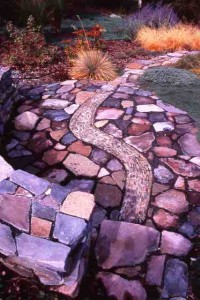
Hardscape, such as this fabulous pebble "river" running through a flagstone patio, can animate and energize the landscape. This was designed and installed by my Yakima friends Linda Knutson and Ron Sell (Debra Prinzing photograph)

Hardscape, such as this fabulous pebble "river" running through a flagstone patio, can animate and energize the landscape. This was designed and installed by my Yakima friends Linda Knutson and Ron Sell (Debra Prinzing photograph)

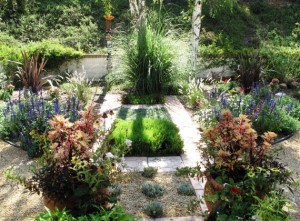
Backlighting is magical, even in my own backyard. I love the morning sun as it illuminates and highlights the various blades, stems and leaves (Debra Prinzing photo).

Backlighting is magical, even in my own backyard. I love the morning sun as it illuminates and highlights the various blades, stems and leaves (Debra Prinzing photo).

Select plants that bring height, energy, and motion into the garden, and vary their placement for impact.

Even if surrounded by buildings on every side, your garden will respond to daily and seasonal climate changes. Watch how breezes move through the garden, and capture that energy by placing fluid plants where currents flow. Notice where the sun rises and sets in relation to your landscape, and choose trees, shrubs, grasses, and other perennials that will reflect the morning light or absorb sunset’s glow. Red and purple foliage turns flame-like when backlit. As the sun’s rays shine through fringed tassels of fountain grass or pampas grass, the garden will shimmer in response.

A gentle plea for an excellent cup of tea

Friday, November 13th, 2009

Author’s note. You know those “contributor pages” that many magazines include at the front of their books? I recently received a request from one of my 805 Living editors to write about “the little things that make life grand” to be included in the November issue’s “Behind the Scenes” section.

I wrote the following tea-drinker’s manifesto (about 500 words) before I re-read Anthony’s email in which he asked for only 50 words! Yikes! Anyway, he used one entire sentence and the rest would have been filed away or deleted had I not decided to go public here, with my personal confession. I don’t think I’m alone, either. While staying our our villa in Italy a few weeks ago, I woke up every morning with a chubby packet — a bag of Peet’s English Breakfast tea — slid under the door of my room (thanks, Paula!). Someone was looking out for me.

iStock_000009079416SmallI am a tea drinker.

In the world of double-tall lattes and cappuccinos, I realize I am a minority.

So I am grateful for a decent, HOT mug of English Breakfast tea (or two). Honestly, I wake up each morning excited to start my day. But mostly I wake up excited to fill the electric kettle with water and hit the “on” button so I can brew a pot of tea, pour myself a mug and add a splash of milk (not half-and-half or cream). I always drink from my French Apilco porcelain mugs from Williams Sonoma.

I’ve taken to carrying around spare tea bags with me, just in case. Places like Starbucks stock Tazo’s “Awake” and the Tully’s at the Burbank Airport has canisters of “British Breakfast.” I love these teas, too.

Unfortunately, though, at least one time out of 10, these coffee joints are “out” of my tea. You would never, ever find these places running out of coffee. That would be unthinkable. At least I can order a Grande cup of piping hot water and make my own on the fly.

The problem with restaurants and hotels (as well as airplanes) is that you often have to beg for real milk. I’ll take it any way you have it – whole, two percent or non-fat (I especially love steamed milk, which doesn’t cool down my tea). Just please give me milk instead of cream or half-and-half. I am one-quarter English, and I always tell the waitress that the English people use milk with their tea.

And don’t get me started about the stupid carafes of hot water you get at conferences. I’m talking about the vessels previously used to dispense the dreaded coffee beverage. As a result, the entire pot of hot water is infused with that bad coffee flavor. It really shouldn’t be difficult to segregate your carafes so a few are dedicated to only hot water for tea drinkers.

I realize this little meditation on the merits of a good cup of tea sounds more like a rant than a rave. So I will end on a positive, thankful note.

I could not function with out my delicious, satisfying mug of morning tea. It really is the fuel that runs my engine. I love that there are places in the world where tea is grown, processed and packaged for export to the U.S. I love that a few retailers still exist where I can purchase excellent, loose tea in bulk. And I love the moment of calm that drinking tea gives me in the midst of my chaotic, deadline-driven life.

To many more sips!

P.S., A great tea resource is the Teacup in Seattle. You can go online and order loose tea (Malty Assam is my favorite), OR if you are ever visiting Seattle, be sure to go in person for their very excellent tea latte. My friend Jean introduced me to this beverage more than a decade ago. It is a big secret how they make it, but Jean’s theory is that the brewers make a “shot” of a very dense, strong Indian tea and then infuse steamed milk, just like the coffee lattes are made. It is heavenly.

Here’s how her garden influences one textile designer

Thursday, November 12th, 2009
Sina Pearson relies on regular visits to her island garden in Washington state to inspire her teextile designs.

Sina Pearson relies on regular visits to her island garden in Washington state to inspire her teextile designs.

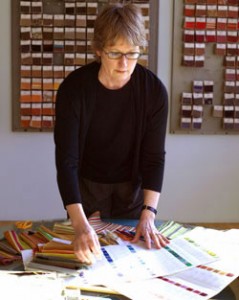
I met Sina Pearson in 2006 when her publicist Susan Harkavy arranged a visit to the textile designer’s aerie (aka studio, atelier, loft) in SoHo.

I was in New York City with Bill Wright to photograph an amazing glass-and-steel West Village “shed” for Stylish Sheds and Elegant Hideaways, but I took a side trip for an hour to meet Sina and see her work.

She grew up in Washington State and studied art and textiles at the University of Washington. Our common Pacific Northwest roots gave us an easy, mutual language, designer-to-writer, as we talked about her interests, influences and passions.

Recently, Garden Design magazine invited me to profile Sina as “One to Watch,” with a short Q-and-A that appears in the November-December 2009 issue. Due to space, a portion of my interview did not make it into the print edition. So here it is in full, along with some photos that Sina shared from her garden in Washington’s Fidalgo Island (Skagit Valley).

Garden Design NovDec001ONE TO WATCH:

Textile designer Sina Pearson may live and work in SoHo but trips outside the city inspire her saturated stripes and vibrant abstracts.

She spends one week each month at a remote island cabin in Washington State, surrounded by a semi-wild garden, just steps away from the 1950s A-frame where she played each summer as a child. Sojourns abroad include idea-gathering places like Scandinavia, France, Mexico and the Caribbean. Collectively, these design “threads” are woven into finished cloth: confident, evocative – and high performance – textiles for residences, hotels, restaurants, offices and outdoor settings.

sina-pearsonThe designer, manufacturer and entrepreneur trained in fine arts and textiles at the University of Washington before earning a MFA in textiles from Cranbrook and studying at the Royal Academy of Arts, Crafts and Design in Stockholm. She launched Sina Pearson Textiles in 1990.

Pearson reinterprets outdoor fabric that looks as if it belongs inside, including terrycloth, chenille and boucle cloth made with Sunbrella® yarns for sunfast, stain-, rain- and mildew resistance. Her newest collection, out next spring, is called Colores de Mexico. Her influence? The orange-striped, hand-woven Mexican curtains that Pearson’s mother hung in the family’s beach cabin. “It has an ethnic, modernist vibe with a serape-like texture,” she says.

 Q. Tell me about your Fidalgo Island garden and how it informs your textiles:

 A. I could not be doing what I’m doing if I didn’t have my garden. It frees my soul and lets me experiment with weaving colors and textures together. The way I work in my garden is very much how I work in textiles. I’ve always maintained that you have to listen to what the fabric wants to be – it’s a wonderfully slow process. Similarly, I have to let my garden design itself. I observe how each plant color works together, how each season is revealed in flower, foliage and blade.  

Q. What influences you as a designer?

A. I can’t separate how I’ve grown up from what I am now. My parents were so visual – my mother was a landscape designer and my father was a photographer. We had Jack Lenor Larson’s textiles in our house. I cannot remember a time when I was not playing with fabric. Family legend recalls me cutting textiles into small pieces and arranging them on the sofa when I was two. At 12, I learned weaving from a Swedish woman and batik design from Ruth Pennington, a very fine metal artist. I created a huge, abstract piece of batik silk with fuchsia pink, bright orange and red colors. We hung it up in the sun and it looked like a stained glass window. Ruth turned to my mom and said: “Sina has a career in textiles.”

Q. How is your Scandinavian heritage reflected in your work?

A. I grew up with Danish modern furniture and I double-majored in Swedish language and literature in college. I also lived and studied in Sweden. When I design, I am looking for “emotion” – the feeling conveyed by yarns, colors and textures in my fabrics. After my last trip to Scandinavia, I created a collection evocative of what my ancestors would have woven to wrap themselves in for warmth: soft, heathery “comfort” fabrics that are hand-crafted, quiet, simple and dignified.

cote d azur_03Q. How have you re-imagined outdoor fabric as something more than utilitarian?

A. When I first started in the contract fabric industry in the late 70s and 1980s, everything was rather plain. That all changed when I went to Unika Vaev as president and design director. We introduced the first tapestry for contract interiors. Herman Miller put our tapestries on its new paneling system and broke open the whole concept of patterned fabrics.

The same thing has happened now that I’m designing outdoor fabric with Sunbrella® yarns. I wanted to invigorate outdoor fabrics with modern designs. I’m a big proponent of mixing cool and warm colors together. I also like to use neutrals – sage, taupe, mid-tone brown – with brighter colors to give a reference to nature.

Q. What is the ideal exterior setting for Sina Pearson’s textiles?

IMG_3265A. A space where the interiors blend with nature as occupants move from indoors through a covered area to the outdoors. I love to see complementary fabrics and colors in all three environments. I don’t design my outdoor fabrics separate from my interiors collection. My outdoor fabrics look and feel just like indoor textiles, yet they are made with high-performance fibers for resistance to sun, mold and mildew.

Q. What is on your drafting table right now?

A. I have little piles of yarn sitting on my desk. I’m playing with brighter palettes to create fabrics with clean, crisp colors of summer. I’m also playing with simple shapes, hand-cutting paper into geometric forms – stripes and flowers. I find it very satisfying. I look like a second-grader, sitting on the floor cutting out bits and pieces.

–Debra Prinzing

Recession entertaining with Martha

Wednesday, November 11th, 2009

Appr'dPRShotbyScottDuncan8-20-2008While it may seem as if über-hostess Martha Stewart produces a new cookbook every few months, the October release of Dinner at Home: 52 Quick Meals to Cook for Family & Friends felt especially timely.

The 272-page cookbook follows one of her favorite formats: Meals you can prepare in one hour or less including a salad, entrée, side dish and dessert. 

A few weeks ago, I had the chance to do a phone interview with Martha for the Los Angeles Times, just before she came to Southern California for two book-signing appearances.

How does one prepare for such a momentous event? I called my longtime Seattle writer-friend Tracy Schneider, a regular contributor to Amazon’s Al Dente foodie blog, to ask her advice.  A few years ago, after I left Seattle and a design-writing gig at the (now departed) Seattle Post-Intelligencer, Tracy started writing for the newspaper’s home section with a clever shopping column called “Hot Finds, Cool Prices.” She, too, was given a chance to interview Martha by phone, which totally impressed me.

Tracy’s tip? Buy a tape recorder to make sure you capture a perfectly accurate, verbatim interview. Well, I couldn’t pull that off with such a short lead time. Luckily, years of newsroom experience and very fast typing skills prepared me to just take notes. Wearing my headset, fingers poised on the keyboard, and my questions already inserted into a Word document, I did just that.

America’s domestic goddess couldn’t have been nicer. Brisk and businesslike during a 14-minute interview, she answered my questions and shared her advice on entertaining at home during a recession. An edited version of this Q&A appeared in the October 17th edition of the Los Angeles Times Home section and on our LA At Home blog.

Q: Is home entertaining more important than ever?

A: Many people are entertaining at home and cooking delicious food. But they are looking for simple, time-saving recipes they can actually do themselves that are as tasty as restaurant food. I just love the whole idea of using a few ingredients that taste so extraordinary.

Q. What’s an easy way to throw a party at home?

A. I often do breakfasts and lunches. It gets it out of the way so I can do other things later in the day. Last Sunday I had nine people over for brunch for a delicious, homemade meal. It wasn’t expensive food: cheese popovers, beautiful poached eggs with country smoked bacon, two platters of smoked fish, homemade biscuits and fresh-squeezed grapefruit juice.

Q. What is the ideal number of guests for a dinner party?

A. I would suggest inviting what you can handle. I’m an experienced caterer so I can have 12 or 14; my dining room comfortably fits 16.

Q. What do you do when your guests outnumber your set of dishes?

A. I suggest you serve a buffet and use stacks of plates from different sets.

Q. How do you feel about potluck meals?

A. When friends get together, it should be a little more orchestrated so you know there is a salad, a vegetable, a main course, and a dessert. The host can provide the main course. You could use my duck breast with fig sauce menu from “Dinner at Home.” One person can bring the braised red cabbage and someone else can prepare the potato pancake or the hazelnut brittle for the ice cream.

Q. If you could only splurge on a few key pantry ingredients, what would you buy?

A. You should have coarse salt, fine salt, peppercorns and a grinder, vanilla beans, saffron threads, unbleached flour, natural sugar and an assortment of pasta. I’m always looking for the imported, rough Italian pasta. (Note: Martha actually used “really good” in describing each one of these ingredients).

DinneratHomeCoverBOOK DETAILS:

Dinner at Home: 52 Quick Meals to Cook for Family & Friends

By Martha Stewart

Clarkson Potter/Publishers

$35, hardcover

Here is the recipe Martha mentions. It really sounds delish! I’m going to try it soon and will report back.

DUCK BREAST WITH FIG SAUCE (serves 4)

Duck breasts area available at butcher shops and specialty food shops, as well as many supermarkets. They render quite a lot of fat as they cook. If you like, strain the fat and refrigerate up to a month. Use it for roasting or frying potatoes or making duck confit.

Ingredients:

2 duck breasts (1 lb. ea)

Coarse salt and freshly ground pepper

1 T olive oil

1 large shallot, thinly sliced

1/3 cup dry sherry

1/3 cup fig jam

1/2 cup chicken stock, home made or low-sodium store-bought

2 t. unsalted butter

1 t. fresh lemon juice

Preheat oven to 400-degrees F

Using the tip of a sharp knife, score the duck breast at 1/4-inch intervals in a crosshatch pattern, cutting deeply into the fat but not the meat. Season duck all over with 1 tsp. salt and a generous pinch of pepper. Let stand at room temperature 20-30 min.

Heat oil in a 10-inch cast iron skillet oer medium low until hot but not smoking. Add duck breasts, skin sides down; cook until browned and crisp, about 5 minutes. Turn breasts, and transfer to oven; roast until an instant-read thermometer inserted in the thickest part (avoiding bone) registers 130-degrees F for medium-rare, 10-12 minutes. Remove pan from oven, and transfer duck to a cutting board; let rest.

Meanwhile, pour off rendered duck fat into a heatproof container. Return 2 T duck fat to the pan (reserve the rest for another use, or discard). Add shallot; cook over medium heat until beginning to brown, stirring occasionally, about 2 minutes. Carefully add the sherry (it will splatter), and cook 1 minute, then stir in fig jam and cook 1 minute more. Pour in stock; cook, stirring, until sauce is thick and emulsified. Add butter; cook, stirring, until combined, 1 minute. Remove from heat; stir in lemon juice.

To serve, thinly slice duck diagonally against the grain; divide among four plates. Spoon fig sauce over duck.

Yum.

Garden products and Twitter friends

Thursday, October 1st, 2009
  Garden Writers Association annual symposium, Part II: 
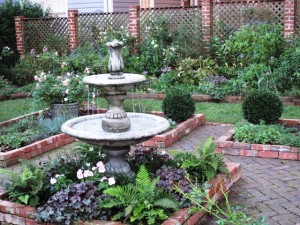
A charming Southern garden, Raleigh's Rose Cottage

A charming Southern garden, Raleigh's Rose Cottage

Tuesday/Wednesday:  

Raleigh here I come.  

Greensboro gardener Lynda Waldrep drove me to Raleigh on Tuesday morning where I checked into the Garden Writers Association conference hotel, dropped off my gear and joined the GWA board meeting.

Nice to get Tuesday afternoon’s and Wednesday morning’s business out of the way so I could enjoy the rest of the conference once it began on Wednesday afternoon after lunch.

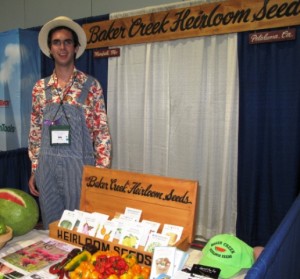
Wow, I got to meet heirloom seed wunderkind Jere Gettle of Baker Creek Heirloom Seeds

Wow, I got to meet heirloom seed wunderkind Jere Gettle of Baker Creek Heirloom Seeds

After some regional meetings and receptions for first-time attendees, the Garden Products Information Exhibit opened – four hours of checking out the new trends in plants, products and programs for the horticultural industry. The exhibit continued on Wednesday for another four hours.

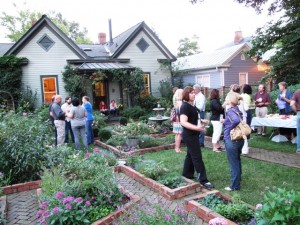
Next, I joined 50 or more very new (and a few old) friends at a private garden cocktail party for garden Twitter participants. Sharon and Jim Bright, our gracious garden hosts, opened the gates to Rose Cottage, their charming place in a historic downtown neighborhood.

The GWA Tweet-up is in full swing

The GWA Tweet-up is in full swing

Raleigh hometown gal Helen Yoest of Gardening With Confidence and Elizabeth Licata of Gardening While Intoxicated/Garden Rant, planned the evening with several other volunteer Twitter friends. Proven Winners (thanks Danielle!) was our sponsor, so we had lots to nibble and sip while admiring the garden’s exuberant cottage plantings, semi-formal vegetable beds (outlined in brick) and more.

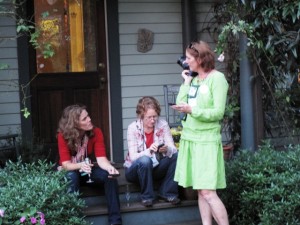
Laura Schaub, Amy Stewart and Helen Yoest, real-time Twittering

Laura Schaub, Amy Stewart and Helen Yoest, real-time Twittering

All those women and men with whom I “tweet” came together for an evening where putting a face to a name was part of the fun. Our nametags had our real names and our Twitter names (I’m “@dkprinzing”).

What amused me more than anything was watching people post comments on Twitter during the party.  I call it real-time garden tour commentary at its best.

My gal pal Mary Ann, busy with thumbs and I-phone

My gal pal Mary Ann, busy with thumbs and I-phone

Later that night, I walked all the way across town with a friend to an authentic Carolina ribs BBQ dinner hosted by the Garden Media Group. A chance to catch up with some editor and writer friends, meet several of GMG’s clients, shake the hand of famed BBQ chef Ed Mitchell and eat some of his great Southern food.

Long day, but good conversations all around!

This annual gathering of gardeners is something I look forward to from year to year. Raleigh was my 8th Garden Writer Association event and I’m hooked.

“Leafing Through” – autumn book reviews

Sunday, September 13th, 2009

flowermagazine008A big thanks to Amy Stewart for referring me to flower magazine, a publication I was unfamiliar with until now, for a book-review gig.

A quarterly publication, flower magazine is edited by founder Margot Shaw and managing editor Melissa Brown, who produce a gorgeous, informative, 4-color glossy for flower enthusiasts, floral designs and gardeners. They are based in Birmingham, Alabama.

The fall 2009 issue is just out and because I thoroughly enjoyed the four books I reviewed, I thought I’d share them here. I like the opening text, which helps describe my credentials:

“As a much-published chronicler of home and garden design and a Master Gardener to boot, Debra Prinzing dove into these informative selections on a variety of “green” themes:

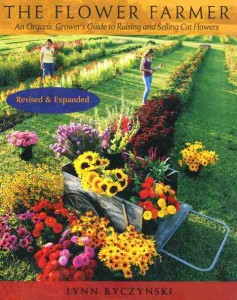
theflowerfarmer009The Flower Farmer: An Organic Grower’s Guide to Raising and Selling Cut Flowers (Revised & Expanded) by Lynn Byczynski (Chelsea Green Publishing, 2008), $35.
Lynn Byczynski is the godmother of the organic flower movement. Little more than a decade after she wrote The Flower Farmer, the rest of the flower world is finally catching up with her visionary ideas and practices. This updated version brims with photographs, planting plans and profiles of innovative cut flower growers, making it the definitive resource for anyone who raises and markets flowers as a commercial venture.

If you’re like me and you want to grow simply for your own enjoyment, this book is equally important. Professional floral designers will find Byczynski’s ideas illuminating, as they advocate establishing relationships with organic farmers and growers to expand a florist’s repertoire.

Writing from Wild Onion Farm, her Lawrence, Kansas-based homestead, Byczynski says she discovered flower farming serendipitously (she planted zinnias among her tomatoes and soon discovered how well they sold at the local farmer’s market). This eco-entrepreneur outlines a gentle manifesto for sustainable practices, asking “Why Organic Flowers?” The answers are revealed in every useful chapter of her 266-page guide. Even if you aren’t persuaded that organic growing practices improve soil fertility and ensure the health of farm workers and their customers alike, the argument for organic is won by the sheer bounty and beauty of the flowers themselves.

Byczynski outlines the most reliable varieties and specific cultivation and handling advice for more than 100 kinds of specialty cut flowers (from Achillea to Zinnia). These blooms are called “specialty,” she explains, “Because they transcend the standard floral fare of roses, carnations, and chrysanthemums. They are considered good cut flowers because they have long stems and a vase life of at least five days.”  Once you’ve grown a collection of fresh, seasonal and local varieties, try Byczynski’s easy-to-follow design ideas. 

“If you really do love flowers, and you find joy in growing and selling them, you will succeed,” she promises. Change the word “sharing” to “selling” and her words are equally appropriate for anyone who plants a row of zinnias.

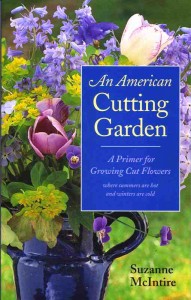
AmericanCuttingGarden001An American Cutting Garden: A Primer for Growing Cut Flowers, by Suzanne McIntire (University of Virginia Press, 2002), $16.95.
The extended subtitle of Suzanne McIntire’s highly personal volume of flower-growing advice is “. . . where summers are hot and winters are cold.”

Though I live in Los Angeles, McIntire’s guide is still informative and useful, since many of the 200 flowers she profiles will grow in my garden, as well as in her northern Virginia one.

 After addressing important infrastructure decisions, the author gets down to the toughest choice you’ll face – choosing which flowers to grow. “. . . it’s not long before you realize there are many more plants out there than you can grow in a lifetime,” she acknowledges.

McIntire’s writing hints at years getting soil under her nails and dirt on her knees. I like the useful advice, such as: “The gardener who has no yellow is missing something important” or “Red is the surprise that a bouquet often needs.”

Her planting, harvesting, and arranging advice is geared toward the gardener-floral designer. It’s okay to space plants in a cutting garden closer together than you would in a display garden to increase their yields, she says.

She is anything but a perfectionist, a breath of fresh air to those tired of floral designs that seem unrelated to nature. “I prefer to spend only a few minutes to help flowers look their best, and often it comes down to selecting the right vase, choosing good vase companions for a given flower, and adjusting stem lengths by shortening where necessary,” McIntire confides.

If you need inspiration for how to start a cutting garden, the book offers four design concepts, including ones for beginners, small spaces, shady sites and autumn interest. Each of McIntire’s detailed flower narratives is worth losing yourself in. I only wish there were more than the rather limited 28 color images as illustrations. You’ll need a photo-rich plant encyclopedia on hand for her lesser-known suggestions, such as Anchusa azurea (Italian bugloss, a forget-me-not relative) or Kalimeris pinnatifida (Japanese aster). But that’s just a small complaint. Without McIntire’s book, I wouldn’t have found them in the first place.

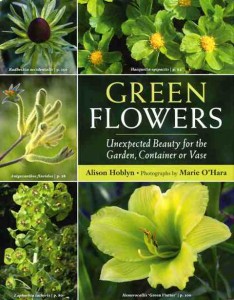
greenflowers010Green Flowers: Unexpected Beauty for the Garden, Container or Vase, by Alison Hoblyn with photographs by Marie O’Hara (Timber Press, 2009), $24.95.
The full spectrum of green is the backbone of any garden scheme. Green is also the essential ingredient in any floral arrangement. But often these verdant elements are taken for granted, or, worse, not thoughtfully incorporated. Think about the prosaic green shrub practically ignored in a landscape. Or, consider the generic “filler” foliage that might be shiny or fluffy in a bouquet, but quickly forgotten in contrast to a Stargazer lily or the classic red rose emerging from all that green.

Green Flowers offers a lovely alternative and a reminder that green is, indeed, a color! Both writer Alison Hoblyn and photographer Marie O’Hara live in England, but many of the flowers they profile are available in North America (although none are commonplace).

I like that Hoblyn – who has worked as a designer, illustrator and painter – offers an artistic explanation for green’s usefulness. Not only does green have neutral and restful qualities, but it also unifies any palette. “On the colour wheel, it occupies that middle land between the hot hues of red and the colder climes of blue,” she explains.

Gardeners and florists usually cast green as supporting player in their designs, as foliage. But there are plenty of extraordinary plants with green flowers or flower-like bracts and modified leaves. Each plant profiled in the book is paired with an attractive, full-page photograph (although sometimes the images are so tightly focused on the bloom it is impossible to envision the size or form of a mature plant). I appreciate the inclusion of other recommended cultivars, as well as sidebars including little-known traits about each plant.

For example, the seeds of Amaranthus caudatus ‘Viridis’ (love-lies-bleeding), an exotic, tassel-like flower that looks beautiful in a container garden or as a cut flower, are a good source of iron, magnesium and fiber. Moluccella laevis (Bells of Ireland), has been cultivated since the 16th century, is in the mint family, and has its origins in Turkey, not Ireland.

After falling in love with Green Flowers, you’ll want to grow and design with Mother Nature’s favorite color as revealed in her blooms, blades, and leaves. Whether the star of your bouquet (or border) or a harmonizing design element, green will never again seem ordinary. 

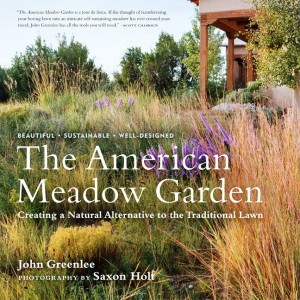
theamericanmeadowgardenThe American Meadow Garden: Creating a Natural Alternative to the Traditional Lawn, by John Greenlee with photography by Saxon Holt (Timber Press, 2009), $39.95.



“Meadows are far more satisfying than either a lawn or traditional border, combining the best attributes of both: like a lawn, a calming place for the eye to rest, yet with the richness and complexity of a border.” John Greenlee’s opening lines are so compelling to read, because they open up the imagination to the practical and eye-pleasing alternatives to a monochromatic (and water-hogging) sea of turf.

“Unlike lawns, meadows are better for the environment, a safe habitat for beneficial insects and pollinators, a place where native ecology can thrive,” he continues. Yet meadows aren’t like a roll of sod that can be unfurled across a patch of soil. They need to be properly designed, installed and maintained, which is reason enough to read and emulate the ideas in Greenlee’s book, available in November.

Owner of Greenlee Nursery, the oldest grass nursery in California, the author has created grass ecologies in gardens since 1984. Greenlee (the “Grass Guru”) pioneered the use of native grasses in ornamental landscapes and advocates for a redefinition of American yards. The American Meadow Garden offers homeowners a new model – a mini ecosystem friendly to children, pets and wildlife. That it requires minimal resources and zero mowing is yet another argument in favor of this anti-lawn.

Saxon Holt’s evocative photography is equally persuasive, for when you see the way sunlight plays off the seed heads and wildflowers that compose Greenlee’s meadows, “dream-like” is the only word that comes to mind.

“A meadow can be quiet and green, or filled with riotous displays of flowers and color,” Greenlee expounds. Non-green grass varieties are listed, such as those with silver, blue, yellow, gold and white hues. Flowers, too, play a large role in the meadow tapestry. The diversity of flowering bulbs, daisies, penstemons, salvias, poppies and ferns that Greenlee likes to sprinkle through his meadows will amaze you.

I love the detailed lists of grasses for fragrance, groundcovers, great flower heads, seasonal effects, background and “fillers.” Then there’s “grasses for billowy or cloudlike flowers,” which plays right into my dreamlike notion of growing a meadow of my very own.


A filmmaker, his designer and me

Saturday, September 5th, 2009

. . . in an intimate, domestic setting illuminated by flames, candles and carnival lights.

The September Issue

The September Issue

Thanks to ample layout space and the 4-color gods, today’s Los Angeles Times HOME section devotes a whole lotta real estate to my feature story about the indoor and outdoor kitchens of hot documentary filmmaker R.J. Cutler.  If his name doesn’t ring a bell, I refer you to the The September Issue, the documentary feature film that opened last weekend in New York and opens in Los Angeles and the rest of the world on Friday. The film follows the legendary Vogue editor Anna Wintour and her creative team as they put together the fashion magazine’s most important issue of the year – in this case, the September 2007 issue. The expanded online photo gallery is here.

Debra and R.J. on location in his outdoor dining room

Debra and R.J. on location in his outdoor dining room

Every good thing that has happened to me since moving to Los Angeles comes through meeting interesting and talented people who, in turn, lead me to more fascinating and gifted ones. I met R.J. through interior designer Lory Johansson, whose studio is called Just Joh. I met Lory indirectly while profiling a Malibu garden designed by Scott Shrader for Garden Design magazine. Lory designed the interiors for Scott’s clients and I mentioned their collaboration on choosing materials for the indoor-outdoor elements in my text (that piece appeared in January, called “Sunset Soiree.”).

During the editing process, I received a message from the Garden Design fact-checker saying that Lory would love to show me one of her outdoor projects. We connected by phone and arranged to meet at R.J.’s Hollywood Hills property this past February. It takes a lot of time to scout gardens. It’s kind of like buying futures on the commodities market. You have to spend a few hours on the freeway, usually in crummy traffic, on the off-chance that the architecture, interiors or landscape you’re scheduled to visit will be a worthy candidate for publication. For some reason, after speaking with Lory, I had a hunch the trip to R.J.’s wouldn’t be a waste of my time.

Designer Lory Johansson and me. The photo is a little blurry because it was taken without a flash by candlelight. We're happy that the shoot is over!

Designer Lory Johansson and me. The photo is a little blurry because it was taken without a flash by candlelight. We're happy that the shoot is over!

The property is just stunning, high in the hills above Beachwood Canyon and literally under the HOLLYWOOD sign we’ve all seen in a million movies and TV shows. It’s a circa 1924 Spanish Colonial Revival home, which R.J. acquired in 2005 and has subsequently restored with Lory’s brilliant design skills. Big but not imposing, the house sits on three-quarters of an acre. There is a beautiful garden with a swimming pool, strolling paths, a lawn for croquet and square-dancing, a secret garden and other intimate spaces. You can’t see that now, though, because photographs of the garden are under wraps until Garden Design’s March 2010 issue (photographed by the very talented Jack Coyier). That’s right. First the Los Angeles Times. Then Garden Design. See how lucky I was connecting with Lory?

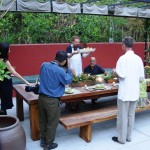
At the outdoor pizza party featured in today’s LA Times, freelance photographer Ringo Chiu, who shoots frequently for the newspaper, captured the festivities through his lens. I tried to stay out of the way while also surreptitiously “art directing.” Anyone who has worked with a newspaper photographer over the years (this comment is for you Melanie Munk) knows how impossible it is to get them to do what you want. And even more impossible to style a shot as you would for a magazine or book. However tough that “dance” can be, Ringo at least humored my few suggestions (ie, shouldn’t we light the fireplace? how about the candles? let’s move that dead potted rosemary!). He did a great job and it was fun for me to snap a few shots of him at work, shown here.

Photographer and Filmmaker

Photographer and Filmmaker

You can draw a lot of inspiration from this story for your own garden. The best tip from Lory is to go bold with color. She designed the entire outdoor kitchen, benches, fireplace and privacy wall with a white stucco finish, like R.J.’s house. But when it was finished, Lory says she stood at the opposite end of the garden and looked across the pool to the too-white scene. “It looked like Greece instead of Los Angeles,” she lamented. Lory knew color would lend heightened drama, especially in the outdoor setting.

The day before R.J. was planning to host his first big al fresco pizza party, she couldn’t stand it. Lory went out and ordered gallons of paint – rich, deep, paprika-terra cotta red – and got the crew started painting. When R.J. came home and saw what was going on, she promised him that if he didn’t like the result, she would pay to repaint everything white again. (Can you imagine how many coats of white paint it would take to cover dark red?).

Let’s just say Lory’s gamble paid off. You have to read my story to see what R.J. says of the decision to keep it.

After researching and reporting this story, I have two new items on my own garden wish list. Number one: I need to buy a 100-foot string of carnival lights to suspend around my own garden. Number two: I desperately want my own wood-burning pizza oven. But only if I can have Chef Alberto come over to cook for me!

Here are more of my candid party photographs:

Meet a beautiful – and sustainable – landscape

Friday, August 28th, 2009
Mike Mcdonald, a Green Builder and Visionary

Mike Mcdonald, a Green Builder and Visionary

gardendesign004Garden Design magazine asked me to profile one of its “Green Awards” winners for the September-October issue, which is out on newsstands this week.

The story is about a lovely, sustainable landscape designed to complement the cutting-edge, eco-architecture of Margarido House in Oakland.

Margarido House is the creation of builder-owner Mike McDonald of McDonald Construction & Development, and his architect-brother Tim McDonald of Philadelphia-based Plumbob.  The brothers and their multiple collaborators have created a stunning residence that earned the highest (Platinum) rating from the U.S. Green Building Council. It is the first home in Northern California to obtain the LEED-H Platinum Award (Leadership in Energy and Environmental Design).

gardendesign005What makes this garden and its home sustainable?

1. It’s Permeable : The patio, roof and driveway surfaces are designed to capture all of the property’s storm water runoff. The driveway’s decorative design uses recycled and perforated Pavestone concrete tiles. Water percolates into a 4,000-gallon cistern hidden under the driveway and, when needed, circulates through the property for irrigation and flowing through the Zen garden’s piped fountain. “We’ve created a self-contained water loop,” Mike points out.

 2. It’s Durable: Garden designer Lauren Schneider of  Wonderland Garden and Landscape in Oakland, chose a diverse, drought-tolerant plant palette. She worked closely with local growers to specify California native varieties, as well as plants from many Mediterranean regions, including South Africa, Australia and New Zealand, South America and Mexico. She closely observed the garden during its first year to evaluate whether each plant was durable enough to survive Oakland’s dry summer conditions with infrequent water.

 3. It’s Reusable: Recycled concrete is the basis for Margarido House’s über-modern S-curve chaises, tabletops and sleek urns, which contain succulents, bamboo, and New Zealand flax. Created by Bay Area Concreteworks Studio, which also fabricated interior concrete counters, the products satisfy LEED’s “local” and “reusable” criteria. Other outdoor furniture also has recycled content, including Room & Board’s  “Emmet” Adirondack-inspired chairs, by Loll Designs, made with 100 percent recycled high density polyethylene (plastic).

Margarido House, enhanced by a soft, sustainable garden

Margarido House, enhanced by a soft, sustainable garden

One of the key scoring factors in earning this ranking is Lauren’s sustainable landscape design.

Dreamy and naturalistic, the garden is an organic counterpoint to the geometric architecture.

Lauren actually created three distinct gardens – one on the ground; one in the air; and one that climbs an incredible vertical retaining wall and has multiple sections for planting (not to mention a melodic water feature to attract birds).

Photographs of the Margarido’s rooftop garden weren’t included in the Garden Design layout, due to space constraints. I wanted to make sure and show some here. The rooftop is pretty stunning, and not just because it has killer views of San Francisco Bay. It is installed on top of a capillary mat and layer of geo-textile material; over this base are “three inches of horticultural pumice as a drainage medium and five inches of lightweight planting mix,” Lauren explains.

Garden designer Lauren Schneider gave me a personal tour of Margarido House's exterior spaces

Garden designer Lauren Schneider gave me a personal tour of Margarido House's exterior spaces

The dramatic design includes sedums and sempervivums, golden barrel cactus, lewisia, Cleveland sage, lavender, deer grass, and Libertia peregrinans, a New Zealand iris relative valued for its bronzy-orange blades.

This garden provides top-down insular qualities that cool or warm the home, depending on the season. Flowers and stems of Cleveland sage, silhouetted against the sky, can even be seen through the skylight that illuminates the master bath. The roof garden invites its viewers to look close and study the interplay of plant colors and forms. In an abstract way, they echo the distant scenery where treetops and buildings form an irregular city skyline.

You can read the full story here. And enjoy this gallery of photos that I shot when visiting this past May. You’ll see details that caught my eye and get a fuller sense of this amazing landscape and home.

The Oregonian book review

Tuesday, August 18th, 2009
Today’s Oregonian newspaper features an online 3-Star “Excellent” review of Stylish Sheds and Elegant Hideaways by staff garden writer Kym Pokorny. I love how she started out the review:

It’s tempting to describe all 28 sheds in Debra Prinzing’s “Stylish Sheds and Elegant Hideaways,” but that would take the fun out of discovery. Here’s a tease: A tiny, rustic cabin in the woods; an astonishing, asymmetrical, steel-framed structure over a pool; a grass-roofed, Norwegian stabbur; a stucco-and-tile pavilion surrounded by desert plantings. OK, that’s enough.

For those of you who read Kym’s Q&A interview with me and then moseyed over here, I thought I’d share the photos of each of the stylish structures she highlighted in her tease. These photographs reveal the incredible talent of my collaborator William Wright.

Enjoy!

A Tiny, Rustic Cabin in the Woods


Separate from the main residence but as comfortable as a little cottage, the 14-by-14 foot writing shed is nestled in the Connecticut woods

Separate from the main residence but as comfortable as a little cottage, the 14-by-14 foot writing shed is nestled in the Connecticut woods


 A Stucco-and-Tile Pavilion Surrounded by Desert Plantings

The grand pavilion sets the stage for entertaining in a gorgeous cactus-and-succulent landscape outside San Diego


Grass-Roofed, Norwegian Stabbur

The 9-by-12 foot redwood dining pavilion was inspired by traditional Norwegian farm buildings, called stabburs. Complete with a sod roof, it's a magical destination for outdoor gatherings
The 9-by-12 foot redwood dining pavilion was inspired by traditional Norwegian farm buildings, called stabburs. Complete with a sod roof, it’s a magical destination for outdoor gatherings


An Astonishing, Asymmetrical, Steel-Framed Structure Over a Pool

Made from ordinary greenhouse material, the 430-square-foot shed is a winter greenhouse for potted tropical plants. But during summers in Austin, Texas, it's a play pavilion
Made from ordinary greenhouse material, the 430-square-foot shed is a winter greenhouse for potted tropical plants. But during summers in Austin, Texas, it’s a play pavilion

 I hope you find inspiration from these incredibly diverse garden destinations!