Debra Prinzing

Get the Email Newsletter!

Archive for the ‘Writing’ Category

A low-water planting recipe

Tuesday, June 1st, 2010

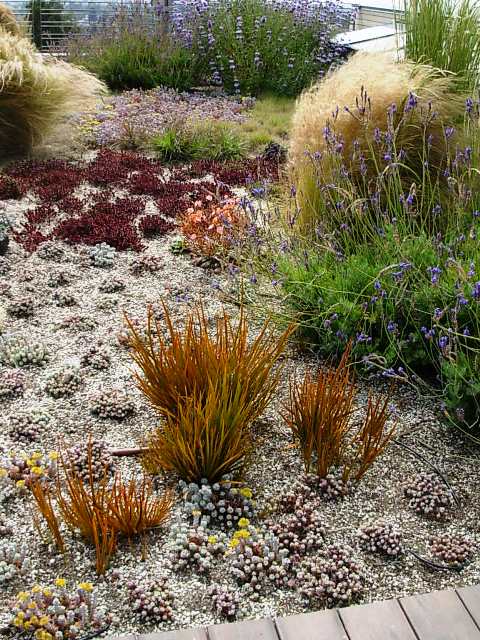
A dreamy landscape in the sky, designed by Lauren Schneider

If you pick up the June issue of Sunset magazine – the one with skewers of salmon on a cobalt blue plate on the cover – turn to pages 51 and 52.

There, you will see a short (and I mean short!) story by moi. It started out much longer, but is now not much more than the length of a photo caption.

As these things go, I can’t complain. Thanks to the way we communicate these days, full-length magazine articles now read like Cliff Notes versions of themselves. The photo tells most of the story and then a few captions and call-outs do the rest of the heavy lifting.

In this case, the story called “Lush Look, Low Water” was inspired by a rooftop garden owned by Mike McDonald and Jill Martenson, a visionary young couple who built Margarido House, the first LEED-H Platinum home in Northern California.

The “green” home and its eco-friendly landscape have received a lot of press, but the Sunset story really gives readers the specifics on designer Lauren Schneider’s approach to the roof garden. A special thank you goes to Sunset’s Julie Chai for shepherding this story from our initial conversation to the final publication.

Check out the attractive clumps of Libertia periginans, a New Zealand iris relative valued for its bronzy-orange blades and vibrant color.

Surprisingly dreamy, soft and fluid, despite its exposure to the harshest of elements (wind, sun, saltwater, for example), Lauren Schneider’s design can be replicated in similar rooftop or in-ground conditions. The photos you see here are mine. I included the original full-length story in my articles section.

Eight hardworking native and Mediterranean plants create the central elements of Lauren’s design:

Echinocactus grusonii, Golden barrel cactus

Lewisia cotyledon ‘Sunset Strain’

Nassella tenuissima, Mexican feather grass

Sedum spathulifolium ‘Cape Blanco’

Lavandula multifida, Fernleaf lavender

Libertia perigrinans

Sedum rupestre ‘Angelina’

Sedum spurium ‘Voodoo’

Plant your summer centerpiece

Wednesday, May 26th, 2010

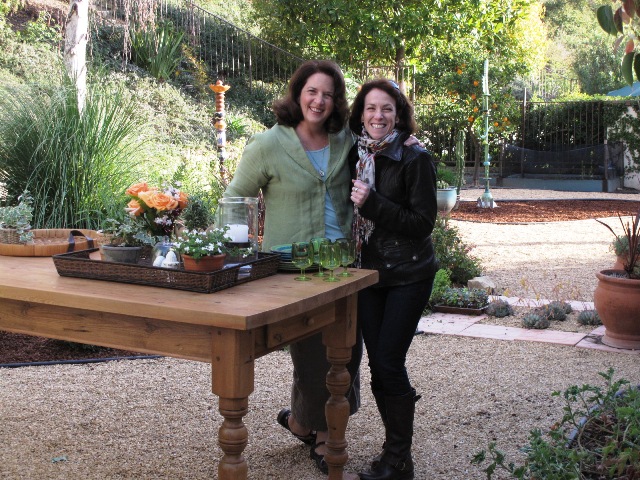
On location in my own backyard with BH&G senior art director Shelley Caldwell

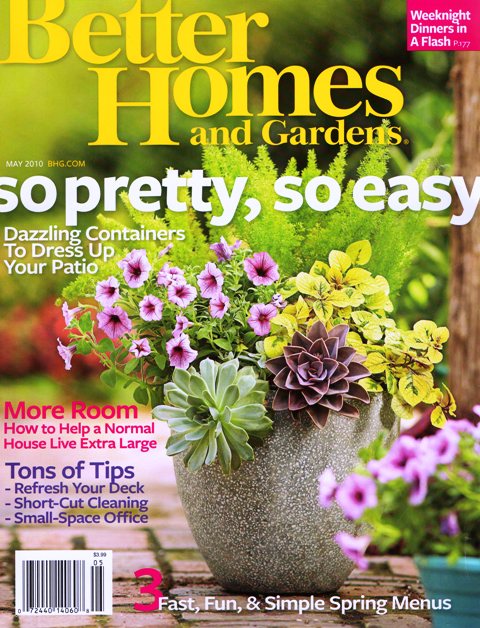
One perk that comes with my new gig as contributing garden editor for Better Homes & Gardens was recently producing a photo shoot in my garden. Some of the shots from our March session, photographed by the very talented Jack Coyier, appear in the June 2010 issue of BH&G (on newsstands now).   

The story idea came from the Home Design department rather than the Garden Group, but I got involved because this design/entertaining story included plants.    

This is my tale of what happens with a great story idea and how it takes the journey from something pretty HUGE to something fairly modest. I’m learning that it’s all about the creative process, not just the end game.   

It all started when I was asked to come up with three planted container ideas that could look good outdoors all summer long. That sounds easy, doesn’t it? The editor asked:   

As part of a larger summer outdoor entertaining guide, we want to give some ideas for summer-long living centerpieces. Wondered if you would have some thoughts on that and be interested in designing 3 centerpieces. 

I sent her several suggestions featuring foliage plants. Here they are: 

  1. Wood window box planted with edibles: Herbs (chives, flat-leaf Italian parsley, oregano, thyme, and strawberries)
  2. Galvanized zinc or aluminum containers with bold foliage – such as Rex begonias (dark green and burgundy) with creeping jenny or helichrysum (lime foliage that drapes over the edge of the planter)
  3. Terra cotta pots with air plants (silver-blue tillandsias); This is to show a low-maintenance alternative to succulents; tillandsias do not require planting and can be arranged on gravel or pebbles that fill the containers (and misted over the summer to keep alive).
  4. Glazed pottery with grass (or grass-like) plantings; Planted with tufts of green mondo grass or seeded with wheat grass, fill the shallow, Asian-style containers for fresh, summer-long lawn on your table. The grass can be embellished with clear glass votive holders or peppered with cut flowers inserted in the grass with stakes (for single events). This is Jack Coyier’s idea and I think it’s cute!

One of the tabletop designs shot in my backyard - featured in BH&G's June issue

The feedback? Where are the flowers? This is the editor’s reply:   

Something to think about . . . how can we tweak these to be a little more decorative and festive, and a tiny bit less about foliage? Can we get one of them centering on a beautiful bloomer?   

Yikes! I forgot the flowers. Actually, I didn’t really forget them; I just selected foliage plants thinking they would be lower maintenance than flowers (which might require regular dead-heading, fertilizer, etc.) and be guaranteed to look pretty from Memorial Day to Labor Day. Turns out, BH&G readers really LOVE their blooms. There can never be too many flowers, remember?   

I refocused my brainstorming to include more, more, more blooms. The story planning went through several iterations until I was told this might be a feature spread with five different planted centerpieces. I went to town – actually sourcing plants and containers from as far north as Ventura to as far south as Hollywood, logging 200-plus miles on my Volvo’s odometer as I pulled pots, plants and accessories for the March 9th prep day and March 10th photo shoot.   

From left: Jack Coyier, Char Hatch Langos and Shelley Caldwell

The plan was to photograph all five tabletop looks. Thank goodness for the very talented Char Hatch Langos, an LA-based stylist who logged even more hours and miles in her car hunting down props than I did!   

She arrived on Tuesday with BH&G senior art director Shelley Caldwell. Between the two of them they had a condo’s worth of patio furniture, textiles, vases, dishes, flatware, napkin rings – you name it – crammed into two cars! All of this for five different looks!   

The looks related to five themes that we had worked out: Romantic; Asian; Edible/Herbs; Citrus Mix-n-Match; and Tabletop Tray of Collectibles.   

So it was a fun two days, with a lot of fine-tuning, adjusting for the sunlight bouncing off of my California Gold crushed gravel garden, unseasonably low temperatures and brisk winds.   

READ MORE…

Outer Sanctum: Jamie Durie creates the ultimate outdoor oasis

Sunday, April 18th, 2010

I joined Jamie Durie, of HGTV's "The Outdoor Room," for brunch and an interview in LA

When I take on the tough job of interviewing celebrities, I always hold my breath, wondering whether we’ll move past the PR-speak and begin to discover more about the person behind the famous face and name.  

So when HGTV’s publicity department arranged for me to meet Australian media celebrity Jamie Durie, I was ready for the spin. And the good news is that he surprised me with his abundant knowledge and heartfelt passion for his landscape design projects. It was a very fun assignment.  

Earlier this year I spoke by telephone with Jamie for an mini-profile that appears in the April 2010 issue of Garden Design magazine. Now that he is Los Angeles-based, we decided to try and meet in person so I could interview him for a Q&A to appear in the Los Angeles Times HOME section. 

An edited version of my full interview with Jamie appears in today’s paper, but I wanted to share our extended conversation here.  

A big THANK YOU goes to Eddie Ward of DRC Public Relations in New York. He did all of the legwork to set up my lunch appointment with Jamie on March 28th. Read on for the full transcript of my interview with Jamie:

READ MORE…

Stylish Sheds & Better Homes

Thursday, April 15th, 2010

Check out pages 126-131 in the May 2010 issue

Today, while waiting to board my flight from Dallas to Burbank, I stopped by a newsstand and spied the May 2010 edition of Better Homes & Gardens.

I have been anticipating this issue because it features an article that I wrote about a very cool shed in Gig Harbor, Washington. The shed is owned by Cindy and Dave Storrar. They built their shed from plans they saw in the pages of BH&G, so they have traveled full circle from the inspiration to the reality — now reflected in their charming, 7-by-9 foot cedar-shingle garden hideaway.

How’s this for even more exciting news? My editor Eric Liskey made sure to include a sizable (half-page) sidebar featuring me as a “Shed Expert,” along with the cover of Stylish Sheds & Elegant Hideaways.

He also asked me to share tips on how to “design your dream shed.” These are excerpted from the book:

MISSION: Identify the activities that draw you outdoors (art, music, poetry, growing plants, play, entertaining, or meditating). Most personal passions can find a home in a small garden shed.

MUST-HAVES: List the design ingredients most important to you. Combine functional with frivolous. It’s OK to add a vintage cut-glass chandelier or a day bed. Make it your personal “nest.”

INSPIRATION: Draw inspiration from that single idea you can’t stop imagining – a historic property, a specific color, a recent beach vacation.

CREATIVE SOLUTIONS: Treat the exterior as a garden focal point and give it some of the visual upgrades you would give your own home. Decorate the interior with collections and cherished objects.


Stylish Sheds in the pages of Better Homes & Gardens

If this wasn’t awesome enough, I turned to the masthead and discovered that my new title as Contributing Garden Editor has landed me a place with all of BH&G’s editors and art directors. It feels good to be in such talented company.

It’s been a long day and already past midnight, but I had to post my news.

You see, I promised my new writer-friend Monica, my companion in Row 13 on that American Airlines flight from Dallas to Burbank, that I would make a big deal out of the magazine article.

Monica is the first person with whom I shared the magazine item, and she made me feel so pleased with the accomplishment.

We writers work so hard sometimes, often for less money than we deserve and little acknowledgement of our talent.

And it was nice to have an “atta-girl” from a fellow writer who was until today a complete stranger to me. Now, of course, we will probably become lifelong friends. And that makes today even more memorable.

A midcentury home needs a modern garden

Saturday, March 27th, 2010

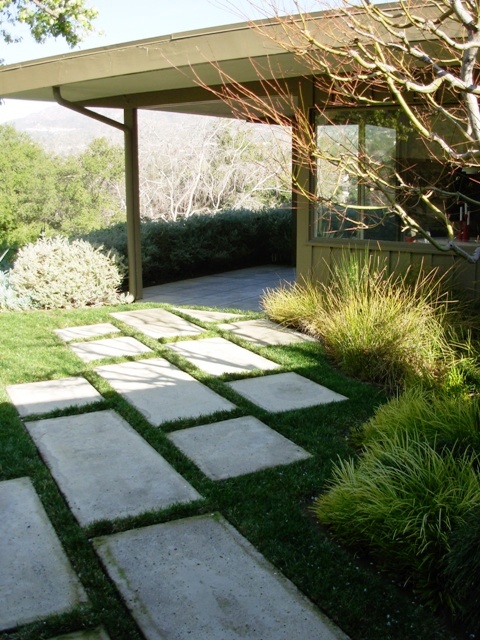
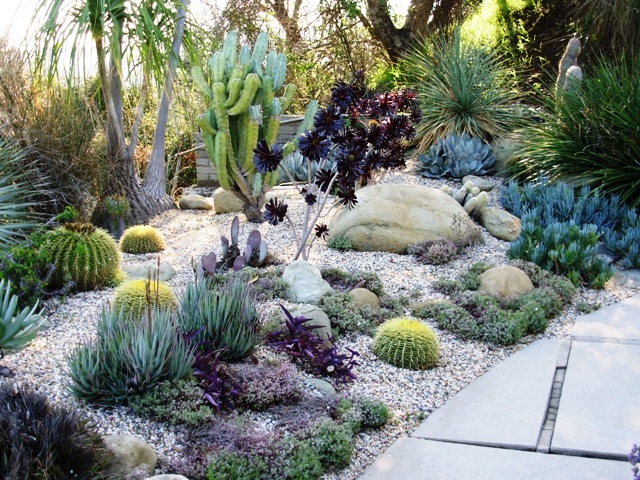
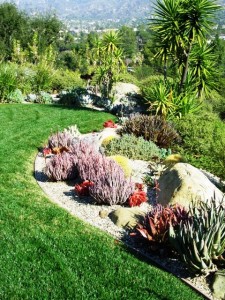
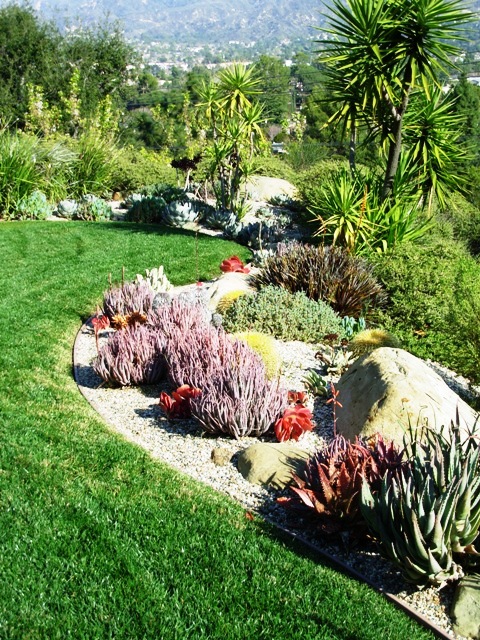
The renovated succulent and cactus border arcs along the lawn's edge. I love the salt-and-pepper gravel mulch, which echoes the dark-light elements of the home's Palos Verde stone cladding

The cover story of today’s Los Angeles Times HOME section features “Finally back in its prime,” my profile of the Daily House, a beautifully restored, circa 1954 “mod pad” in the LA suburbs of Glendale. Straight out of “Mad Men,” the house has been a decade-long project of its young owner, Christophe Burusco. Check out the Times’ web gallery here, with images by staff photographer Al Seib.

I had hoped to include a sidebar on the garden, but space limitations got in the way. My interview with Kathleen Ferguson of Los Angeles-based Kathleen Ferguson Landscapes reveals her excellent ideas and tips for approaching the exterior design of a retro home.

Here it is, along with my photographs from visiting Chris and touring his home and garden.

As I write in the Times’ story:

“The house – designed by Glendale architect Clair Earl, thoughtfully renovated by Burusco and since added to the Glendale Register of Historic Resources – sits on a 14,000-square-foot lot that feels like a rustic retreat, far from the city. Not a single neighbor is visible from the living room or master bedroom. Rather, Burusco’s eyes are drawn to the vibrant new succulent and cactus garden designed by Kathleen Ferguson, who incorporated mature specimens raised by the late Jean Daily Russom.”
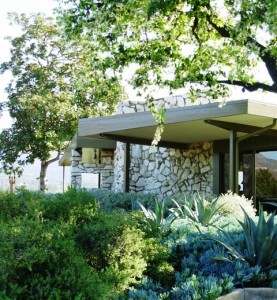
The low-slung, horizontal lines of the Daily House are visually appealing

According to Ferguson, as with all her projects, “I really look to the architecture and what my clients’ interests are.” With Chris Burusco’s project, she didn’t want the landscape to take away from the marvelous period architecture; rather, “I wanted to enhance it.”

Ferguson set out to mimic the architecture’s clean lines with “bold plantings in the landscape.”

Three major trees were saved, including a huge magnolia beyond the home’s glass-walled corner (which serves to enhance and frame the views of the San Gabriels).

Near the front entry, Ferguson was able to save an evergreen pear (Prunus caroliniana) and a Japanese maple. The beautiful forms of these two trees had been difficult to appreciate, due to a greenhouse that was plunked down between them by the original owner of the home.

Chris removed the greenhouse and its concrete foundation, giving the scene much-needed negative space.
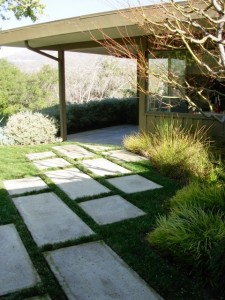
The new pathway cuts diagonally across the entry, using horizontal and square poured-in-place concrete

In its place, Ferguson added geometric poured-in-place concrete pavers that echo the lines of the home and lead visitors to the garden’s side entrance. “We really wanted the pavers to look like something that had been there already, which is why we did a random pattern,” she says.

The level front yard slopes down to the street, creating a dramatic perspective as you approach the house.

There, Ferguson staggered agaves on the low hillside. Mass planted, the scale and form of the agaves is ideally suited to the rugged texture of the Palos Verde stone-clad house. Between the agaves, ornamental grasses appear as a softening device.

“Together, the native succulents and ornamental grasses mimic the native surrounding plant palette,” Ferguson says.
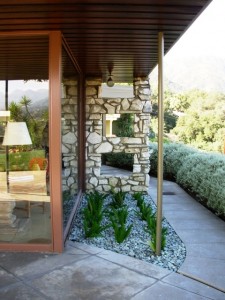
Smooth turquoise rocks cover the ground next to the accent wall with three cool cut-outs

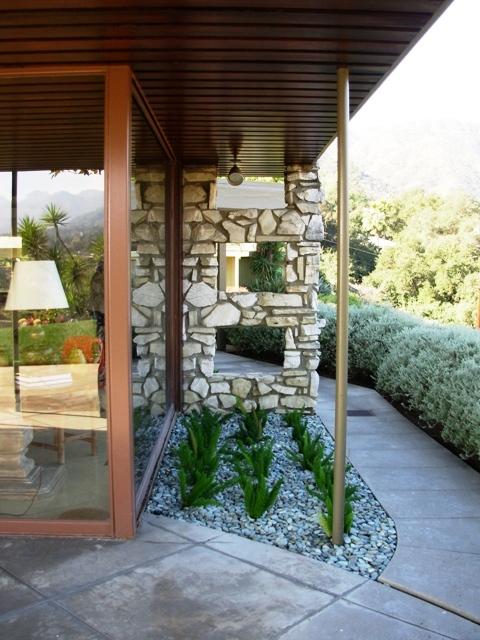
As you walk along the side towards the home’s back garden, you can’t help but appreciate architect Clair Earl’s artisitic detailing. He punched a trio of “windows” in a stone accent wall, which invites you to view the San Gabriels through these carefully framed scenes.

On the ground at the foot of the accent wall, Ferguson planted softer forms of asparagus ferns, which can handle that constant shade. She “mulched” the plants with a layer of smooth, light turquoise stones “for a little bit of contrast.” (This stone echoes dark blue-green flagstone on the home’s entry hallway.)

The garden’s piece de resistance is a cactus-and-succulent border that arcs around the edge of the small lawn and patio area. Here, Ferguson worked with some of the mature plants installed by Mrs. Daily Russom, who Chris says was involved with the cactus garden at the Huntington.

“Jean (Daily) loved succulents — she had a lot of amazing specimens that we wanted to keep,” he says.
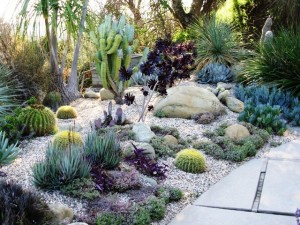
Mature cactuses are now interplanted with new hybrid succulents, creating a tonal cool-to-warm palette

By blending new succulent hybrids with the established, mature varieties, the expansive border is now a spectrum of cool-to-warm tones and contrasting shapes. 

The design starts with clumps of striking, blue-gray Agave parryi, moves into purple-black rosettes of Aeonium arboreum ‘Zwartkop’ paired with sculptural paddle plants (Kalanchoe luciae) and leads to eye-pleasing multiples of golden barrel cactus (Echinocactus grusonii).

Chris loves the way the succulent palette “moves from the cool blue-grays to the reds, yellows, oranges, and then into cool again.”

The border, which runs the length of the house and can be seen from most of its rooms, is now mulched with a warm salt-and-pepper gravel (which replaced what Chris called “big ugly rocks”).
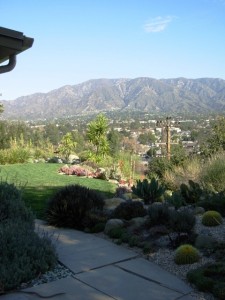
The cultivated landscape in the foreground blends with the San Gabriel Mtns. in the distance.

Ferguson is most inspired by the tension created between the landscape and the house; between the architecture and the wild setting beyond its domestic borders.

“Chris’s landscape has a lot of push-and-pull,” she says.

There’s the smooth against the rough; grey-greens against the rich greens. And there’s the contrast between the garden and the arid, native chaparal around the perimeter.

As you approach the house, it becomes more lush and more ornamental.”

I think it’s a pretty stunning treatment, worthy of this historic, but thoroughly modern, abode.

I think I lost an entire month!

Sunday, March 14th, 2010

Celebrating my birthday with Paula Panich at Girasole in Los Angeles, a sweet French bistro

Dear friends, 

Where did February go? And for that matter, where did the first half of March disappear to?  

I’m so sorry! I’ve been racing around like a crazy woman. Like my fellow *Gamma-Sisters everywhere, the world is asking more of us at every turn. Eternally curious, we’re inspired by exciting, interesting and compelling people, places, projects and opportunities. As one of my friends pointed out, I am easily drawn to “bright, shiny objects.” It’s irresistible. There are literally not enough hours in a day to “do it all.” 

One of my excuses is that I have been traveling more than usual. Another is that my little family is currently in its bicoastal phase, with Mom and sons in Southern California and Dad (for the most part) in Pittsburgh. His occasional trips home are a highlight for us and exhausting for him. In between, I’m solo-parenting, burning the candle at both ends and juggling everything (while also letting some important things slack off, such as keeping in touch with friends, answering 500 emails in my in-box, and blogging!). I had to put the pause on the blog for a while. No promises, but as of this weekend, I sincerely hope my “blogger’s block” has been broken – and that I can return to regular correspondence. 
By July, we will be reunited as a family, but I am well aware that July is still several months away. In the meantime, we have to ready this 1980 Spanish-style ranch house for sale; get packed and relocated; get our oldest son ready for his freshman year in college and move me, younger son and our family pet to Pittsburgh. Oh, and find a place to live! Crazy, life is just crazy. 

I don’t want to leave Southern California, especially with its glorious natural beauty, amazing gardening and garden design community, and (for me) wonderful opportunities to gather and tell stories. So, I guess I’m going to try and become a working writer with two home bases: Los Angeles and Pittsburgh. We’ll see how that goes. I don’t want to lose these ties I’ve been so fortunate to develop since moving here in 2006. Imagine: I didn’t want to come to L.A. and now I don’t want to leave! 

Just to bring you up to date, dear readers, here are a few highlights of the past month. If we’re connected on Facebook, you may already have seen some of these items. If not, then click on my Facebook icon (see right) and join in.

READ MORE…

Winter beauty: A California native landscape

Sunday, January 24th, 2010
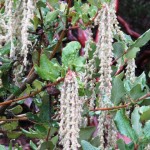
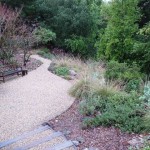
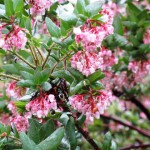
I competed with a hummingbird to get up close and personal with this gorgeous Manzanita. Katherine has a trio of them, small multi-trunk trees, in full January bloom.

I competed with a hummingbird to get up close and personal with this gorgeous Manzanita. Katherine has a trio of them, small multi-trunk trees, in full January bloom.

Katherine Greenberg is a passionate native plant expert whose naturalistic landscape in the East Bay community of Lafayette has inspired hundreds of tourgoers and garden club students who have taken her workshops about growing California natives in the domestic environment.

I have known Katherine for about five years through our association as fellow board members of the Pacific Horticulture Society (she is former board president). Although we only see one another two or three times a year at board meetings, there is always a friendly connection as fellow horticulture enthusiasts. And also as writers.

Katherine has just signed on to completely revise and expand a classic title, Growing California Native Plants.  Written by the late Marjorie G. Schmidt in 1980, the guide originally introduced the idea of using native plants as elements of the landscape. Tens of thousands of copies have sold, but over the course of the book’s 30-year run, lots has happened in the cultivation of natives. More growers are propagating and breeding native plants and there has been an explosion of interest in changing how our yards and gardens look.

Katherine's entry garden in winter.

Katherine's entry garden in winter.

Lucky for California homeowners, University of California Press asked Katherine to create a new version of Growing California Native Plants. Uber-organized as she is, Katherine just signed the contract this past fall and has the entire book mapped out with most of the plant profiles rewritten (with a greatly expanded plant list, as one would expect). She is going to include many of the original illustrations and add up to 200 photographs in the new guide, expected out in 2011. Keep an eye out for its release.

Katherine’s own garden, approximately one-acre in size on a ridge above a seasonal creek called Happy Valley Creek, is a laboratory for living with natives, celebrating the seasons, and encouraging harmony with nature. It was profiled last spring in Diablo, the East Bay lifestyle magazine. You can read “Going Native,” the story, and see Saxon Holt’s lovely photography here.

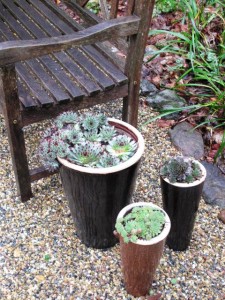
I love the sweet display of drought-tolerant, cold-hardy hen-and-chicks in tall vessels

I love the sweet display of drought-tolerant, cold-hardy hen-and-chicks in tall vessels

I had a quick trip to Oakland this past Wednesday and Thursday and Katherine graciously hosted me for an overnight before I gave a talk to the “Dirt Daubers,” an Orinda-based garden club.

Even though it was dreary and rainy out, I made sure to take a loop through Katherine’s garden. Seeing a native garden in winter is really a joy because the plants in fruit or in bloom are like little sparkling jewels that catch your eye against the silver-grey and green foliage and mahogany and white bark.

In the Diablo magazine article, written by Sandra Ann Harris, Katherine explains her commitment to designing with California natives:

“Gardening with these natural treasures is a way we can play a big role in preserving endangered plants and in making a connection to the place we live,” Greenberg says. “My garden won’t be complete in my lifetime, but it’s a celebration of our natural heritage.”

Here’s a little gallery of wintry photos to calm and sooth you. Thoughts of spring are accelerating as we catch glimpses of new growth emerging on stems and in swelling buds (especially after all the rain California has had – six consecutive days of it!).

A contemplative season: two essays for winter

Saturday, January 9th, 2010

logo

I’ve been contributing to a fabulous daily blog called “Lifestyle Insights. Real Women. Real Life,” which a group of us launched last September. It’s something completely different than my other writing projects and has allowed me to do some fun, memoirish, essay writing in addition to writing about outdoor living and gardening topics. But since it’s still a blog post, I have had to learn how to communicate my ideas in 300 words or less! And in today’s world of bite-sized journalism, I guess that’s a good skill to have.

To work with a dozen incredibly talented women – each highly accomplished in her own field – has been so rewarding and inspiring. Each of us is committed to communicating contemporary trends and ideas for women like us. Together, we have a powerful voice that we hope will inspire and influence how corporations communicate with their audiences.

The group was founded by Robin Avni, a multi-talented, idea-a-minute galpal. I remember reading Robin’s home+technology design stories in the Seattle Times long before I was fortunate enough to meet her – which I recall was on a press preview of the former Seattle Interiors Show in 2004 or so. Thanks to the miracle of LinkedIn, we reconnected last year and got together a few times when I was in Seattle on business or to give a lecture. Robin invited me to join her dream team of 12 lifestyle experts. We are part of a creative media and consulting agency “specializing in consumer insights, trend analysis, research and content for the MOMMY TO MAVEN™ market.” You can read more about the firm here.

I’ve added Lifestyle Insights to my blogroll at the right (under “My other blogs”), so I hope you’ll subscribe to our newsletter and also check in from time to time to discover a fabulous recipe from Jean Galton, our food expert; a perfect organizing tip from Janna Lufkin, our simplicity expert; an insightful parenting tip from Kavita Varma-White; entertaining, beverage and spirits ideas from Kat Spellman; sustainability news from Celeste Tell, our green goddess; technology insights from Molly Martin, our tech-savvy mentor (Molly, a former health and fitness columnist, also keeps us “balanced” and healthy); wonderful stories told by Sherry Stripling, whose words capture the universal connections of women in all generations; explore fashion and twentysomething trends spotted by Alexandra Smith; and get the “big picture” from Robin Avni, who ties it all together with a finger-on-the-pulse instinct about women and their lifestyle choices. Our visual storytellers include photographer Angie Norwood Browne and Valerie Griffith, our video producer. It is an honor to share the page (screen) with these talented communicators.

Here are two of my recent essays, in time for a quiet winter’s read. I hope you enjoy them:

The Scarf Society 

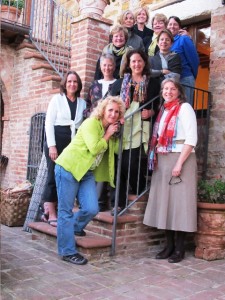
Here are the Italy Gals, with a few of us in our scarves.

Here are the Italy Gals, with a few of us in our scarves.

My recent visit to a medieval village in Tuscany (where I spent a week with ten of my girlfriends in a rented villa) is symbolized by a soft, colorful scarf.

Each woman had in common a friendship with me; some have been pals since my early twenties, while others are more recently dear. Individually, we couldn’t have been more different from one another. Throughout the week, though, we bonded as a group. We spoke with a familiar friendship-language, punctuated with laughter, and enhanced by delicious food, good wine and unforgettable scenery.

And there was something else: Our Italian scarves.

Street vendors in Siena and Florence offered a tempting array of scarves – cashmere-and-silk textiles woven of gold and maroon; apple green and sapphire blue; solid or paisley-patterned. Pretty soon, most of us had joined what I called the Scarf Society. It was October, so the soft cocoon of fabric draped over the shoulder was appropriate. But it wasn’t all about getting warm.

The scarves, shawls and pashminas made us feel sophisticated. Even the less-flamboyant women in our group gravitated toward the look. Wrapped once or twice around the neck; used as a shawl around the shoulders; or worn asymmetrically with the ends twisted together, these lengths of fabric had a way of making even a t-shirt and jeans look glamorous.

Was it the scarf or the place? Was it the mutual experience of kindred spirits or a fashion statement? I’m not sure. But now that I’m back at home, I feel elegant when I wear my woven tapestry with threads of pale yellow and dark green. And I will always remember the warmth of my friendships.

You could call it a fringe benefit of an unforgettable vacation.

And this one, called Labryinths:

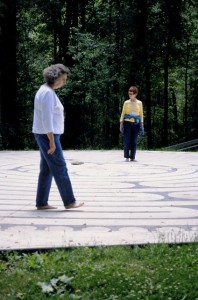
I was so moved by watching the labyrinth walk at a "God in the Garden" conference that I spoke at a few years ago.

I was so moved by watching the labyrinth walk at a "God in the Garden" conference that I spoke at a few years ago.

Centuries, or perhaps millennia old, the labyrinth is linked to both mythical and religious practices of many cultures. Where a traditional maze is designed with dead-ends and false pathways, a labyrinth is made of concentric rings, interconnected to form a single, continuous journey.

In modern times, the labyrinth is used for meditation and contemplation – a device to slow one’s step and encourage quiet, inward focus. I’ve walked on grass labyrinths shaped by a lawn mower, pebble beach labyrinths designed by unseen hands, and carved concrete labyrinths installed in church floors and on the forest floor, surrounded by trees. Intricately made or constructed for temporary use, the labyrinth is a gift to be cherished.

To walk a labyrinth, I am required to step away from the chronological clock and get lost in the moment. I enter and follow the path to the circle’s center. I pause to say a prayer or quietly murmur “thank you” or “peace.” Slowly, I retrace my steps, returning to the beginning. I discover that time has almost stood still. I feel a spiritual connection to nature and a lightening of the heart.

I once met an artist who required the use of a wheelchair. He meditated with a “visual” labyrinth. Installed in the center of his garden was an 18-inch-square miniature mosaic labyrinth. This incredible man journeyed the labyrinth with his eyes, beginning and ending at the same point, and experiencing the same meditative benefits as when I walked a full-scale labyrinth.

The return of this ancient pattern is really no surprise. We are busy people, with a lot on our minds. Consider how hard it is to unplug, silence internal or external chatter, and isolate ourselves long enough to listen to our inner voice. Perhaps you, too, will find peace by walking the labyrinth path.

Keeyla Meadows colors her garden world

Sunday, December 20th, 2009

Note: A version of this Q&A appeared earlier this week in “LA At Home,” the Los Angeles Times’ daily home and garden blog.

Mary Ann caught one glimpse of the awesome coat and matching socks . . . and said - Hey, that's Keeyla Meadows!

Mary Ann caught one glimpse of the awesome coat and matching socks . . . and said - Hey, that's Keeyla Meadows!

Los Angeles native Keeyla Meadows lives in Berkeley where she makes art and designs gardens. Her cheerful, 50-by-100 foot city lot is a living canvas packed with life-sized female figures and not-so-perfect vessels, hand-built in clay and glazed in a palette of turquoise, apricot and lavender.

An exuberant color palette that few would dare to use - here's Keeyla's Berkeley bungalow and street-side "sunset" garden

An exuberant color palette that few would dare to use - here's Keeyla's Berkeley bungalow and street-side "sunset" garden

No surface here is left unadorned. Whether it’s her swirly ceramic paving, custom metal benches or sculpted walls, Keeyla artistically places favorite objects and plants with a carefree confidence that few of us can master.

Fans of Keeyla have long admired her award-winning gardens, including a ‘Best in Show’ at the San Francisco Flower & Garden Show a few years back. Her beautiful first book, Making Gardens a Work of Art, was published in 2004 by Sasquatch Books, a Seattle imprint that also published my first book, The Northwest Gardener’s Resource Directory.

Lorene and me ~ gal pals in Keeyla's garden

Lorene and me ~ gal pals in Keeyla's garden

In 2008, I lucked into an impromptu visit to Keeyla’s personal wonderland when my girlfriend Mary Ann Newcomer boldly followed her into Café Fanny’s in Berkeley, an Alice Waters bistro, and snagged an invite for our group of breakfasting garden writers.

Lorene Edwards Forkner, Mary Ann and I hopped in the car and followed Keeyla to her bungalow, a few blocks away. It is fair to say we were hyperventilating!

“You can take photos, but don’t publish them until my book is out,” Keeyla requested. It was the least we could do, having feasted our eyes on her botanical paint box, imagining how we might try her playful ideas in our own backyards.

9780881929409_CMYKHer new book, Fearless Color Gardens: The creative gardener’s guide to jumping off the color wheel (Timber Press, $27.95), has just been published. Filled with Keeyla’s photography of design projects, as well as her doodles and sketches, it reads like a colorist’s memoir, complete with a muse named Emerald.

Strong on fantasy, it’s also a useful workbook for garden owners who need a nudge toward the more vibrant end of the color spectrum. I recently asked Keeyla about the book.

Q: How do you teach students to feel confident as garden designers?

Keeyla's color sensibility is in her DNA as evidenced by the orange side of her house punctuated by a tree-inspird sculpture

Keeyla's color sensibility is in her DNA as evidenced by the orange side of her house punctuated by a tree-inspird sculpture

A: A lot of people have this mantra that says, “I’m not a creative person. I’m not an artist.” Our lives are built around the practicality of what we have to do everyday so many people shut those doors to creativity a long time ago. I suggest you treat garden design like something you do all the time. The physical activity of placing plants in a space can be as easy as folding laundry and putting it away, or setting the table, or baking a cake.

Q. How can I make a landscape project feel less overwhelming?

Mary Anne Newcomer, Keeyla Meadows and Lorene Edwards Forkner

Mary Anne Newcomer, Keeyla Meadows and Lorene Edwards Forkner

A. I suggest you divide your space up like a series of photographs or like windows.

Decide what “picture” you’re working with, where it starts and ends. Start with looking out the kitchen window and use plants and art to fill the frame.

Q. Where does your color inspiration come from?

A. A lot of my color sense comes from growing up in Los Angeles and living with its “colorfulness” – the light, tile work and Catalina Island all inspired me. Right now, I’m designing a new garden for the San Francisco Flower & Garden Show in March. It’s a habitat garden and the colors I’m using come from the red-headed garter snake, an endangered snake from the San Mateo coastline. It has a read head with a turquoise and red stripe down the back, so it’s providing my design motif, my imagery and my color combination.

Jump off the conventional Color Wheel and play with Keeyla's Color Triangle

Jump off the conventional Color Wheel and play with Keeyla's Color Triangle

Q. How do you suggest people “jump off” the color wheel?

A. The traditional color wheel makes my head spin. I use a color triangle, which is so stabilizing. I put blue at the top of the pyramid – it represents the sky. The other two points are red and yellow. Between the three primary colors are the secondary colors. On either side of any point is a harmonic chord of color. You’ll never go wrong if you take one of the points – red, yellow or blue – and use one of those chords of color on either side of it.

 Q. How do you balance artwork with the plants in your garden? 

A checkerboard of color in a patio installation

A checkerboard of color in a patio installation

A. Art gives me a constant relationship to plant against, a very stable feature to move through the seasons with.

Art creates so much focus and orients the whole space so one is not always reinventing. It is like a stage setting.

The artwork and hardscape set the stage for your plants to really become the stars.

Here’s a quote from Keeyla’s book that seems apropos:

“In my gardens, color refers to everything – absolutely everything. I don’t just make a bland holder, a neutral vase, for colorful plants. Color includes the rocks, the pavings, and the artwork. It also connects up with the color of the house and the sky above. So it’s really like bringing the camera to your eye. When you take a photo, you are looking at everything in the frame. In creating color gardens we will look at everything that is part of the garden picture. . . “

More photos to share from our visit to Keeyla’s magical garden:

Better Homes & Gardens and me

Thursday, December 17th, 2009
Don't you love this giant red trowel, called "Plantois"?

Don't you love this giant red trowel, called "Plantois"?

On Nov. 30th, I took one of the only direct flights from LAX to Des Moines, Iowa (on Allegiant Air), arriving in the Midwest around 8 p.m.

Susan picked me up at the airport and whisked me off to her cozy home where we sipped wine and reminisced about being in Tuscany together only four weeks earlier.

We indulged in sentimental memories, of course. The week in Italy – in a village called Montisi – was life-affirming, especially because it was to celebrate my big Five-Oh.

Susan on a sunny Tuscan afternoon at La Foce

Susan on a sunny Tuscan afternoon at La Foce


The 10 women who joined me, including Susan, are some of my dearest friends. I would do anything to recapture that week we had together. We’d all love to return as quickly as possible!

The Italy week was an amazing “new beginning” for Susan as she dreamed about her next venture, a culinary destination she plans to open in rural Iowa. Stay tuned for news on “Applehurst Farm,” the project Susan is developing as I write this.

Doug Jimerson and Eric Liskey, BH&G's garden guys

Doug Jimerson and Eric Liskey, BH&G's garden guys

On Tuesday morning, Susan dropped me off at the world headquarters for Meredith Corporation, publisher of Better Homes & Gardens and a million other home, garden, food and lifestyle titles.

I was to spend the day as guest of Doug Jimerson, group editor of all Meredith’s “outdoor” content (books, mags, online) and Eric Liskey, deputy garden editor of Better Homes & Gardens magazine.

It was hard to be businesslike when I kept running into the friends I’ve made and worked with over the years:

They included James Baggett, editor of Country Gardens; Nick Crow, art director of Country Gardens; Jane Austin McKeon, editor of Nature’s Garden magazine and her art director Jarrett Einck; Denny Schrock, a talented editor and past fellow Garden Writers Association board member; Justin Hancock, BHGBH&G web garden editor;  and David Speer, editorial manager. Hugs and high-fives ensued. These are people I would rather be friends with than spend my time hustling for assignments.

Doug and Eric and I brainstormed about possible ways I can get more involved in BH&G’s editorial pages. Then we met up with Gayle Goodson Butler, editor-in-chief of the mothership!

Wow – what a great experience. Gayle, Doug, Eric and I had a delicious lunch during which we tossed around story ideas and discussed outdoor living trends. It looks like I will join the BH&G family as a contributing editor for gardening and outdoor content in 2010. I couldn’t be more excited!!!

I'm posing with BH&G garden editor Eric Liskey

I'm posing with BH&G garden editor Eric Liskey


I also posed with Doug Jimerson, Meredith's Group Editor for Garden & Outdoor Living

I also posed with Doug Jimerson, Meredith's Group Editor for Garden & Outdoor Living


After lunch, we took a tour of the Meredith “campus,” which includes an incredible, larger-than-life sculpture of a trowel called “PLANTOIS.” The pop-art style of this sculpture reminded me of the 19-foot eraser at the Olympic Sculpture Park in Seattle, called “Typewriter Eraser, Scale X.”  Turns out, BH&G’s trowel was also designed by Claes Oldenborg .

A site plan of BH&G's gorgeous test garden

A site plan of BH&G's gorgeous test garden

Doug and Eric also showed me Better Homes & Gardens’  Test Garden, a beautiful walled oasis in the heart of the corporate campus. Here’s a plan of the garden (right) and a company description of how it is used:

It is an outdoor studio for our photographers, a venue for corporate entertaining, and a meeting and lunch spot for employees. While inner-city, the garden is landscaped in the style of someone’s backyard. Or, actually, several someones’ backyard. Because anywhere you take a look in our garden, if you turn ever so slightly, you will have a whole new vista. Because anywhere you take a look in our garden, if you turn ever so slightly, you will have a whole new vista. And so will our cameras, as we set about photographing how-to sequences and plant portraits, and documenting the performance of new plants. In all, there are 22 distinct areas in the Test Garden.

Yes, a rose was still in bloom on Dec. 1st

Yes, a rose was still in bloom on Dec. 1st

Mind you, this was on Dec. 1st in Des Moines, USDA Zone 5 or something like that. But several roses were still in bloom and the garden looked almost ready for its dormant winter phase, with lots of fresh mulch spread around, grasses and perennials cut back and everything tidy.

I was particularly drawn to the green shed, of course. I found out from David Speer that the plans for this potting shed are a free benefit of joining BH&G’s new Garden Club.

I do love this green potting shed with gabled roofline

I do love this green potting shed with gabled roofline


For $9.95, you get the shed plans and other cool resources. Check out how to sign up here.  

If you find yourself in Des Moines, you can schedule a tour with garden manager Sandra Gerdes on Fridays from noon to 2 p.m., May through October. The garden is located at 1716 Locust Street, Des Moines, IA 50312. The phone number is 515-284-3994.

Here are more pics of the beautiful Test Garden:

By the way, the original test garden is on Doug Jimerson’s farm outside Des Moines. I got to visit that evening and join him and Karen Weir Jimerson, his writer-wife, for a delicious dinner.

Okay, doesn’t it make you feel better to know that the guy who heads up all of Meredith’s garden/outdoor living content is basically a gentleman farmer? In addition to their lovely farm and century-old farmhouse, Doug and Karen tend to six dogs, at least six cats (I lost count), a flock of sheep, a huge family of chickens and roosters, donkeys and horses. Before dinner, Doug gave me a tour of the Jimerson Farm in the waning daylight. I thought about how much I could love living on a farm in Iowa. Never mind. I’m just going to visit Susan and Jerry when Applehurst Farm gets up and running.

As for BH&G, my first contributions won’t appear until May 2010, but you can be assured that lots of creative storytelling will occur between now and then.

I’m excited – and grateful – for this cool opportunity!

Let’s see what 2010 brings!!!

A Post Script. I flew home from Des Moines on Dec. 2nd. While I was there, the weather was beautiful, with brilliant blue skies, sunshine and balmy (for Iowa) low 50-degree temperatures. One week later. . . yes, only one week later, my friends were buried in 16 inches of snowfall that practically shut down Des Moines. I heard that something like only 17 out of 60 flights were allowed to depart from the Des Moines Airport.

Whew. I totally lucked out. Thank you to the weather gods!