
Debra Prinzing

Get the Email Newsletter!

Archive for the ‘Writing’ Category

Shed Stuff

Wednesday, August 12th, 2009

In my past life as a garden writer in Seattle, I had several opportunities to interview landscape architect Alan Burke of Classic Nursery & Landscape Co. in Redmond (outside Seattle). I profiled Alan as one of the “Hot 40 Landscape Designers You Need to Know,” for Northwest Home + Garden Magazine in 2005.

Now we’re just Facebook Friends (since I’m here in Southern California; he’s still in the PNW; and I don’t get to see what he’s up to).

But today, out of the blue, I received this little communique from him on FB:

Today at 4:29pm
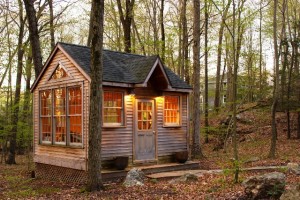
So I am having a meeting with a client, we’re talking about an outbuilding. She is thinking of many ideas for the shed, a greenhouse, a writer’s studio, a music room, a conservatory…. As we’re talking I am thinking: “I have to refer her to Deb’s book.” She says: “I saw some great ideas somewhere wait, I…”
I say: “You need to get a copy of Shed Style,” and she almost screams, “That’s it! That’s where I got the idea!”

…It’s a great book to show clients to get the ideas flowing….Great job!

Thanks for the shout-out, Alan. I needed that good news today!
Promise you’ll send me photos of the “outbuilding” you design for your client, okay? I’ll be sure to post them here!
Fondly,
Debra

Hurrah for Julie and Julia

Saturday, August 8th, 2009

51ezORAwNJL__SL500_AA240_Two years ago, I read Julie Powell’s wonderful debut memoir, “Julie & Julia.” Her story of spending 365 days cooking every recipe in Julia Child’s “Mastering the Art of French Cooking” was electrifying and compelling.

I couldn’t decide what was more inspiring – Julie Powell’s innocent ambition and subsequent bravado or the between-the-lines story of the power of blogging as a voice for authors.

Either way, I ended up buying 5 copies of Powell’s book for my favorite writer girlfriends. I told them: You must read this book. It will open up your eyes to the potential of blogging.

At the time, I had just bit the bullet and decided to really try serial blogging. My best intentions prior to the fall of 2007 hadn’t gotten me very far. I originally “started” this blog in March 2007, when I foolishly thought Shedstyle.com would be a book-in-progress blog while Bill Wright and I created “Stylish Sheds and Elegant Hideaways.”  Constant travel, photo shoots, intense deadlines and a generally crazy schedule conspired to keep that from occurring (I think I wrote 2 posts between March and October 2007).

In September 2007, I moderated a “Garden Blogging” panel at the annual Garden Writers Association symposium with blogger-friends Kathy Purdy, Mary Ann Newcomer and David Perry (you will find each of them and their blogs the LINKS section of my home page).  I felt like a fraud. Sure, I created the panel and served as its moderator. But I was a pretender “talking” about blogging, not actually doing it.

I came home from Oklahoma City and, wholly inspired, I just started writing. I am eternally grateful to Mary Ann, David and Kathy for their honest and heartfelt support as fellow bloggers.

Like many tough things, repetition and frequency make it easier to learn new skills and habits. In less than 2 years I have written nearly 200 posts and met many awesome fellow bloggers, readers, friends.

Back to Julie and Julia.

That book really did change my life, thanks to the courageous Julie Powell and the inimitable Julia Child. I came home tonight from watching the movie “Julie & Julia” equally inspired.

As director and screenwriter, Norah Ephron is amazing. What a talent. Her screenplay is delightful. Her cast – Meryl Streep and Amy Adams – are delicious. Totally delicious in their roles as Julia Child and Julie Powell.

A woman seated near me (friend of a friend) told me a great story after the movie. As you may know, Julia Child lived in Santa Barbara in her retirement. The woman remembered working as a waitress in Santa Barbara in 1989. She waited on Julia and her husband Paul, who by then was in a wheelchair.

“Julia ordered a grilled-cheese sandwich and a banana for lunch,” this former waitress recalled. Hmm. I love hearing that our culinary icon, Julia Child, liked basic comfort food. It puts a smile on my face.

Not sure where this post is going, except to say that the writer in me LOVED the book and the film. I felt like I was watching all of our stories, our efforts, our hopes and dreams, up there on the screen. When the film portrayed Julia Child’s manuscript finally getting published after 8 years of work, I felt so victorious for her. When Julia Powell was interviewed for a story in the New York Times food section, I felt the excitement at hearing her answering machine buzz (well, that hasn’t exactly happened to me, but I can kind of relate).

Anyway, if you’re into food you should see “Julie & Julia.” If you’re a writer, you’ll definitely want to.

This post is dedicated to Nan, Paula, Mary Ann and Lorene, my friends who received copies of Julie & Julie from me in 2007.

Landscape Architecture magazine reviews Stylish Sheds

Friday, August 7th, 2009

landscapearchitecture002Wow – a nice, little review popped up in the July issue of Landscape Architecture magazine’s “noteworthy” column.

Stylish Sheds and Elegant Hideaways: Big Ideas for Small Backyard Destinations, By Debra Prinzing

Don’t expect the sheds displayed in beautiful, full-color photos in this book to house a lawn mower and a jumble of rusty tools. Geared toward an upscale lay audience, this book is intended to inspire affluent home owners to rethink what a “shed” can be: Tea rooms, writing nooks, playhouses, and fanciful creations that defy simple descriptions fill the pages.

It’s nice to be noticed. But of course, we know that stylish sheds do not have to be “upscale” or “affluent.”

As long as they are designed with heart and soul, they will bring comfort, cheer and satisfaction to their occupants.

Even still, maybe the review will inspire more landscape architects to incorporate diminutive sheds and shelters into their clients’ gardens!

Chicken Coop Sightings . . .

Thursday, August 6th, 2009
A vintage EGGS sign hangs in Kathy Fries's fanciful coop

A vintage EGGS sign hangs in Kathy Fries's fanciful coop

Fresh eggs, how can you argue with that idea? I love cooking with fresh, organically-grown eggs produced by free-range hens. Thank goodness that I can buy them at my local, Thousand Oaks Farmers Market every Thursday! 

I wonder how long it will take before I graduate from growing backyard herbs, fruits and vegetables to raising chickens? Let’s see. . . maybe after my children leave for college, and perhaps after my beloved Lab, Zanny, has passed on.

Poultry fever has smitten many of my friends, though. I love the way they’ve integrated chicken culture into horticulture (get it?). And I really love the chicken coop architecture created by inspired hen owners.

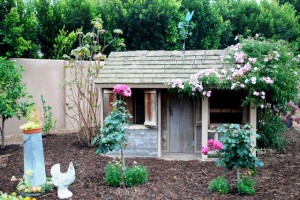
Bonnie Manion's hens live in a renovated children's playhouse!

Bonnie Manion's hens live in a renovated children's playhouse!

My blogger friend Bonnie Manion, who writes at Vintage Garden Gal, often shares stories of her hens, advice on raising chickens and even the care an maintenance of coops. She has just inherited a couple of charming gals – Buff Wheaten Marans. You’ll want to read more of Bonnie’s chicken adventures (and see more photos of her charming coop, which is a re-purposed children’s playhouse, shown here ).

Recently, a writer friend of mine paid me what I think was a lovely compliment. She said, “Debra, I want to create a book just like Stylish Sheds and Elegant Hideaways – but about chicken coops!”

And my response: Go for it!

Bill Wright, my fearless collaborator, would love to photograph a chicken coop book. I call him “fearless,” because how else could you describe a guy willing to get inside a coop with half-a-dozen chickens, two youngsters and a lot of feed flying around . . . just to capture the perfect shot!!!?

Here is that photograph, of our dear friend and shedista Kathy Fries, along with her sons Xander and Jasper. We documented a moment in their daily routine, when mom and boys feed and water the chickens, gather eggs, and generally putter around the coop. That coop, by the way, is no ordinary henhouse. You’ll see what I mean about “poultry fever.”

”]Kathy, Jasper (left) and Xander feeding their chickens [William Wright photo]Kathy’s chicken edifice is called the Palais de Poulet. She worked with Seattle artist-builder John Akers to create the magnificent chicken abode, complete with a jaunty turret and a brick entry path lined with boxwood clipped into a fleur de lis pattern.
READ MORE…

Low-water garden design

Friday, July 10th, 2009

Lessons from a Low-Water Landscape and a Garden Evening with Friends

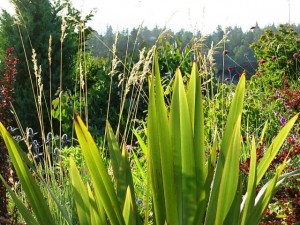
Back-lit by the late afternoon sun, the phormium glows in Stacie's front border

Back-lit by the late afternoon sun, the phormium glows in Stacie's front border

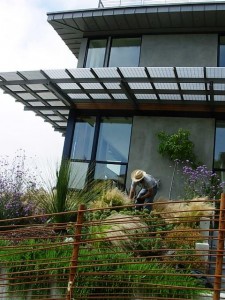
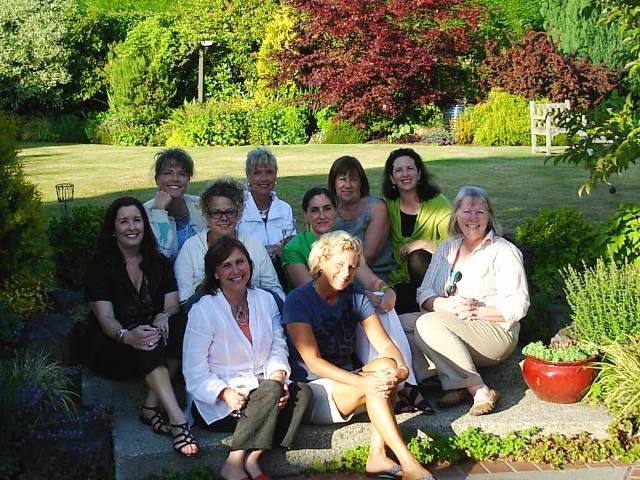
Last week’s Seattle visit included quite a bit of garden touring, and I feasted my eyes on some gorgeous places. One of my stops was to see fab designer Stacie Crooks, whose work has set a standard for sustainable beauty. Stacie and our friend Tina Dixon, also a widely published designer who specializes in container gardens, hosted a Garden Soiree for some of their gal pals. They were sweet to arrange the dinner around my time in town, ensuring that I got to see some of my very favorite women, including those shown here: 

Back row, from left: Tina Dixon, Nita-Jo Rountree, Gillian Matthews, me; Center row, from left: Janet Endsley, Wendy Welch, Kathy Fries, Marty Wingate; Front row, from left: Lorene Edwards Forkner, and Stacie Crooks

Back row, from left: Tina Dixon, Nita-Jo Rountree, Gillian Matthews, me; Center row, from left: Janet Endsley, Wendy Welch, Kathy Fries, Marty Wingate; Front row, from left: Lorene Edwards Forkner, and Stacie Crooks

My article about Stacie and her husband Jon’s vibrant, textural garden appeared in the May 2008 issue of Seattle Homes and Lifestyles, accompanied by some pretty awesome photography by Allan Mandell. I have included the full text of that story below – it explains Stacie’s inspiring design philosophy and tells the story of how she created this very special place. I snapped a few photos at the party, to share with you here:

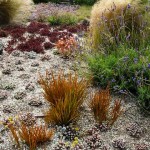
Wine and gold textures are lovely and drought tolerant

Wine and gold textures are lovely and drought tolerant


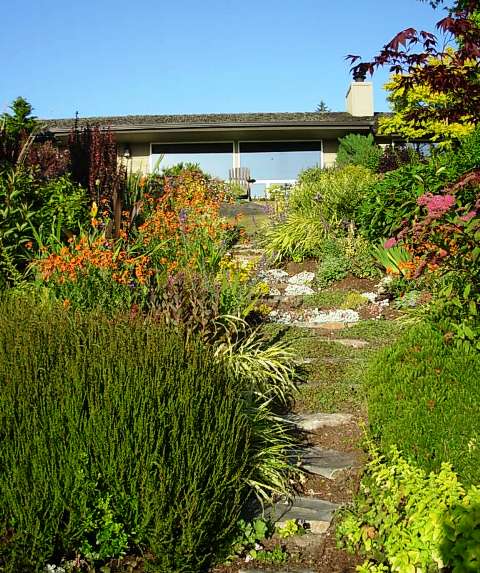
Stepping stones make it easy for Stacie to garden and lure visitors through the sea of foliage, blades and blooms. She uses punches of orange to brighten the scheme (Epilobium californicum 'Dublin' and Calluna vulgaris 'Firefly' are favorites)

Stepping stones make it easy for Stacie to garden and lure visitors through the sea of foliage, blades and blooms. She uses punches of orange to brighten the scheme (Epilobium californicum 'Dublin' and Calluna vulgaris 'Firefly' are favorites)


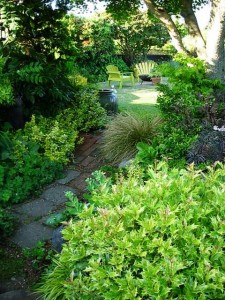
A shady path in the back garden leads to an inviting fire pit and seating area

A shady path in the back garden leads to an inviting fire pit and seating area

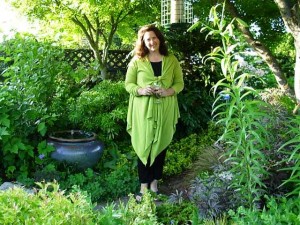
Debra in green, on the path

Debra in green, on the path

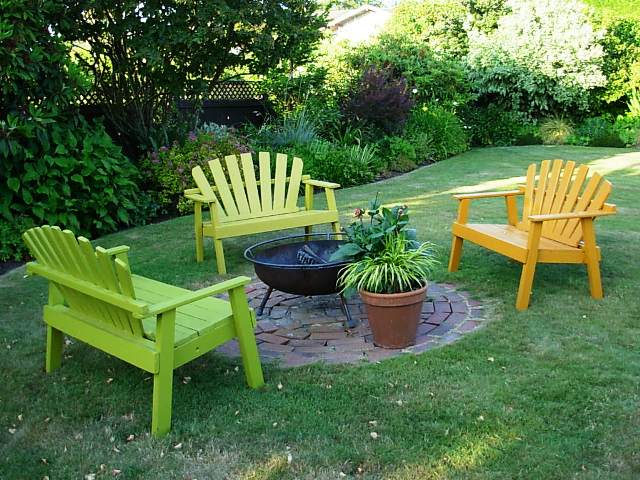
Colorful Adirondack benches, each painted a different color to match the foliage

Colorful Adirondack benches, each painted a different color to match the foliage


A perfect end to an unforgettable evening with my garden friends

A perfect end to an unforgettable evening with my garden friends


Here’s the story:

staciecrooksstory001Water-Wise & Wonderful: Lessons from a lush, low-water landscape

Written by Debra Prinzing | Photographs by Allan Mandell

(May 2008, Seattle Homes & Lifestyles)

The rich palette of golden, green, burgundy and silver foliage plants thriving in Stacie and Jon Crooks’ Shoreline garden north of Seattle suggests that theirs is a well-pampered landscape.

But the opposite is true.

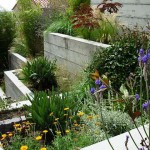
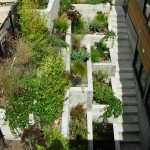
Stacie, owner of Crooks Garden Design, has transformed a sloping half acre into a harmonious tapestry of beds and islands that explodes with interest in every season. The design features trees, shrubs, ornamental grasses, succulents and perennials that are adapted to harsh conditions: western exposure, maritime gusts, poor soil and no irrigation.

staciecrooksstory002That it’s also gorgeous offers an inspiring lesson to countless young designers and students who have taken Stacie’s classes through the Saving Water Partnership, a consortium of local water districts.
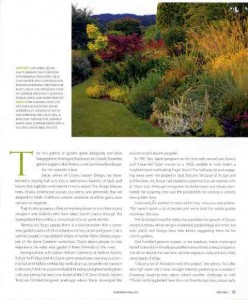
“Among our focus groups, there is a misconception that a water-wise garden is a bunch of unattractive natives, cactus and gravel, that it can’t be beautiful,” says Elizabeth Fikejs of Seattle Public Utilities, organizer of the Savvy Gardener workshops. “Stacie allows people to truly experience the water-wise garden in three dimensions,” rather than just seeing plants in photographs, she raves.

Having trained with painter William Cumming at Seattle’s Burnley School for Professional Art, Stacie spent several years working as a commercial artist before embracing horticulture as her preferred medium in the early 1990s. Her passion included founding a neighborhood garden club and joining the executive board of the E. B. Dunn Historic Garden Trust, an Olmsted-designed landscape where Stacie developed the education and docent program.

In 1991, Jon, Stacie (pregnant at the time with her second son, Trevor) and four-year-old Dylan, moved to a 1950s rambler in Innis Arden, a neighborhood overlooking Puget Sound. The half-acre lot and sweeping views were the property’s best features. “Because of its age and architecture, this house had teardown potential, but we worked with it,” Stacie says. Although overgrown rhododendrons and shrubs dominated the property, they saw the potential for creating a vibrant, new garden here

staciecrooksstory003Stacie and Jon wanted to work within their resources and abilities. “We haven’t spent a lot of money and we’ve built the whole garden ourselves,” she says.

The landscape’s transformation has paralleled the growth of Stacie’s business, which designs residential gardens large and small. She tests plants and design ideas here before suggesting them for her clients’ gardens.

One hundred percent organic in her practices, Stacie challenged herself to transform the playground-like front yard into a textural tapestry. She did so, despite the vast lawn, western exposure, rocky soil, and almost twenty-percent grade change.

“I faced a lot of limitations with this project,” she admits. “But after one high water bill, I chose drought-tolerant gardening as a solution.”  Choosing tough-as-nails plants solved another challenge, as well: “There’s nothing planted here that can’t handle two boys, soccer balls, a Frisbee and a Jack Russell terrier named Rita. This isn’t a fussy garden.”

Stacie and Jon rented a sod-cutter, and removed and gave away the turf in their expansive front yard. They tilled up rocks and roots and incorporated 30 yards of organic planting mix to improve the native soil. Stacie borrowed extension cords from neighbors, laying out the shapes of her new planting beds to create a sinuous wraparound border that encompasses a 70-by-40 foot irregularly shaped island at the center (grassy strolling paths link the beds, allowing for people and pets to navigate the “circuit”).

Her artist’s eye looked beyond northwest native varieties to include plants adaptable to similar dry summer-wet winter growing conditions, regions considered “Mediterranean”: Australia, Chile, South Africa and countries on the Mediterranean Basin.

Sophisticated in its palette and overall composition, the garden uses a surprisingly ordinary selection of plants. Mostly evergreen varieties appear  and are often repeated, including wine-colored barberries, Viburnum ‘Davidii’, Osmanthus burkwoodii, dwarf golden false cypress (Chamaecyparis pisifera ‘Mops’), winter-blooming heathers, Euonymus fortunei ‘Emerald n Gold’, New Zealand flaxes, golden carex and Cotoneaster glaucophyllus.

“I choose colors I like – golds and burgundies,” Stacie says, likening her saturated palette to the medieval tapestries she loved seeing in Europe both as a student and later in the mid-1990s. “Plus, I am the texture queen.” As a designer, she is drawn to strong plant shapes that play off of each other. “I like to alternate spiked, round, lacy and layered forms. It’s like a puzzle that has to fit together.”

The garden gains architectural height and fluid movement from ornamental grasses like Miscanthus sinensis ‘Gracillimus’ and blue oat grass (Helictotrichon sempervirens). Joe Pye weed (Eupatorium purpureum ‘Gateway’), a long-blooming perennial, soars overhead. While foliage delivers volumes of color, flowers are strong accents. Planted en masse, low-water perennials punctuate the design, including purple coneflower, fire tail persicaria and show-stopping ‘Pikes Peak Purple’ and ‘Sour Grapes’ penstemon.

Last summer, this garden existed on minimal watering, Stacie says. “When temperatures hit 85-degrees, I finally turned on the water for a couple of hours at night and gave the roots a deep soaking.” But she resorted to this method only four times between May and October.

In addition to saving natural resources, the easy-care plants are compatible with Stacie’s busy schedule. Like many baby-boomers, she wants to enjoy, but not constantly tend to, her garden. “I’m choosing plants that can care for themselves and accommodating the space they require to reduce the need for any pruning.”

This philosophy has led to judicious editing out of a few perennials that require extra attention like deadheading and dividing. “As this garden matures, I’m using only low-maintenance perennials that have seasonal interest and great fragrance,” she adds.

Stacie takes comfort in knowing that her pioneering design philosophy is beginning to inspire some to try a different way of gardening. Dwindling water supplies and global warming may influence others. “Eventually, everyone will have to garden the way I do – they won’t have a choice,” she says.

Lucky for us, she proves sustainable can be beautiful too.

I’m now a “Garden Pundit”

Wednesday, July 8th, 2009

Just received this hand-addressed mailing from famous landscape architect Richard Haag of Seattle. I really like the title he gave me – GARDEN PUNDIT! I would now like to be addressed as “Ms. Debra Prinzing, Garden Pundit.”

gardenpundit001

Growing Vegetables Organically: an old technique for new gardeners

Saturday, June 20th, 2009
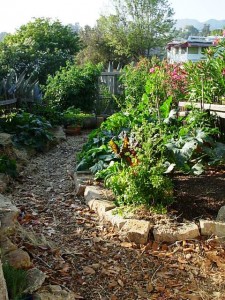
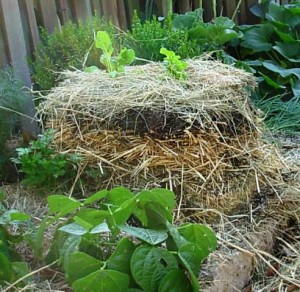
The layered, above ground, "no-dig," organic vegetable bed

The layered, above ground, "no-dig," organic vegetable bed

Here’s a sneak peek at a story that I’ll be reporting for an upcoming issue of Organic Gardening magazine.

I stopped by Pat Marfisi’s house in the Hollywood Hills last evening to tour his unusual “no-dig” veggie patch and to say hello to Pat and my colleague Jack Coyier, who’s photographing Pat’s prolific garden for my piece.

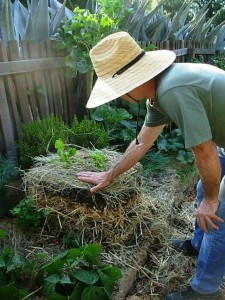
I arrived around 5:30 p.m. The late afternoon light was beautiful and warm. Pat’s dog “VaBene” (Italian for “it’s going well”) came down the street to greet me, followed by his owner: A grinning face under a broad-brimmed straw hat; strong gardener’s arms, emerging from a soft green T-shirt; functional jeans and black sneakers. He was in his element with vegetables, soil, and a harmonic convergence of pollinating native bees darting around to their heart’s content.


With apologies to Jack, who with his camera was preoccupied with artistic portraits of young squashes and pole beans, I launched into “interview mode” with Pat. Every word that emerged from his mouth was inspiring – practically prophetic. This was just a meet-and-greet visit. It wasn’t supposed to be an interview. I grabbed my notebook and pen and started scribbling furiously to capture our conversation. 


His face hidden under a brim, Pat demonstrates the layering method

His face hidden under a brim, Pat demonstrates the layering method

A central pathway cuts through the narrow garden with no-dig beds lining each side

A central pathway cuts through the narrow garden with no-dig beds lining each side

Pat was profiled last summer in an article by Lisa Boone for the Los Angeles Times Home section. Willi Galloway, west coast editor for Organic Gardening, saw the piece and tracked Pat down to learn more about his unusual method of layering newspapers, alfalfa, straw and compost – with a bit of blood meal and bone meal stirred in – to grow edibles above ground. He plants straight into this towering medium, which is a good alternative to tilling up poor soil or back-breaking “double-dig” methods. As I was trying to understand the process, I jotted this explanation down on the page: He creates rich soil while at the same time grows food in it.  


When Willi asked me to interview Pat and write the article for Organic Gardening, I was thrilled! I remember reading Lisa’s piece when it came out and learning that this practice of sandwiching organic materials (some also call this the “lasagna” technique) was decades old. Pat picked it up during an early retirement trip to Australia and New Zealand, where he volunteered on organic farms. He’s refined the scheme in his own LA garden and now teaches it to schools and community groups. He’s a modern day vegetable gardening Pied Piper.

kalesquashetcAs I’ve mentioned here before, some people learn by reading or doing, but I tend to learn by writing about something. I fall in love with each tree or flower I find myself writing about. I become fascinated with a style, a material, a project as I craft the narrative piece that will be published and read by others. 

I suspect it will be the same when I learn more about Pat’s process of growing food with abundance – in a very small area with few resources, natural or physical. I can’t wait to actually write this story (after returning to spend more time with Pat), and to see how it turns out in print with Jack’s photos.


Until then, the photos you see here are some of my snapshots to illustrate what Pat’s up to in his few hundred square feet of level land on an otherwise very steep 1/5th-acre urban lot.

More Stylish Sheds: Old House Interiors story + review

Saturday, June 13th, 2009

STYLISH SHEDS AND ELEGANT HIDEAWAYS: “A charming, happy, very pretty book full of ideas for building, furnishing, and enjoying your backyard shed or writing den.” — Old House Interiors review, July 2009.

ohijuly09001My Stylish Shed partner, the very talented Bill Wright, is a frequent contributor to Old House Interiors magazine. His photographs of luscious historic interiors and architecture are always a treat for the eyes. So when we learned recently that editor Patricia Poore planned to feature Stylish Sheds and Elegant Hideaways in the magazine’s July 2009 issue, Bill and I were thrilled.
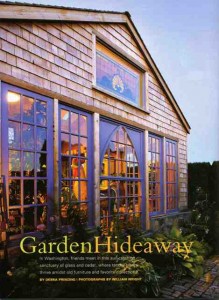
Patty decided to excerpt a chapter from Stylish Sheds, one about Michelle and Rob Wyles’s dreamy garden shed in Eastern Washington.

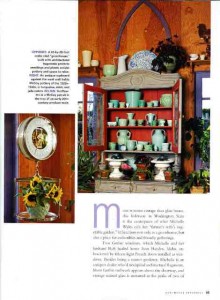
We called our chapter “Sun Catcher,” which aptly describes the shed’s design that utilizes ample antique windows to draw sunlight into the 20-by-20 foot cedar-shingle-clad structure. OHI titled the chapter “Garden Hideaway” and I’ve included the edited story here, along with Bill’s images:

ohijuly09002

GARDEN HIDEAWAY: In Washington, friends meet in this sun-catching sanctuary of glass and cedar, where tended plants thrive amidst old furniture and favorite collections.

By Debra Prinzing | Photographs by William Wright

More summer cottage than glass house, this hideaway in Washington State is the centerpiece of what Michelle Wyles calls her “farmer’s wife’s vegetable garden.” It functions not only as a greenhouse, but also a place for collectibles and friendly gatherings.

Two Gothic windows, which Michelle and her husband Rob hauled home from Hayden, Idaho, are bracketed by fifteen-light French doors installed as windows. Besides being a master gardener, Michelle is an antiques dealer who’d stockpiled architectural fragments. More Gothic millwork appears above a doorway, and vintage stained glass is mounted at the peaks of two of the building’s four gables.

ohijuly09003Her design process was anything but logical, Michelle admits. “You can be unrealistic and impractical when you’re making a garden building,” she says.
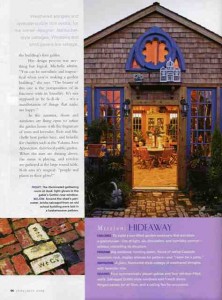
“The beauty of this one is the juxtaposition of its fanciness with its humility. It’s not supposed to be la-di-da . . . it’s a manifestation of things that make me happy.”

In the summer, doors and windows are flung open to infuse the garden house with the fragrance of roses and lavender.

Rob and Michelle host parties here, and benefits for charities such as the Yakima Area Arboretum, their local public garden.

When the stars are shining above, the music is playing, and revelers are gathered at the large round table, Rob says it’s magical: “people and plants in their glory!”

Mission: Hideaway

ohijuly09004Challenge: To build a sun-filled garden sanctuary that emulates a greenhouse – lots of light, air, circulation, and humidity control – without mimicking its structure.

Program [Must-haves]: Big windows, running water, floors of native Cascade mountain rock, display shelves for pottery – and “room for a party.”

Inspiration: A plain, Nantucket-style cottage of weathered shingles with lavender trim.

Design features: Four symmetrically placed gables and four window-filled walls. Salvaged Gothic-style windows and French doors. Hinged panels for air flow, and a ceiling fan for circulation.

The story ends with this sidebar, featuring three other of our favorite Stylish Sheds:

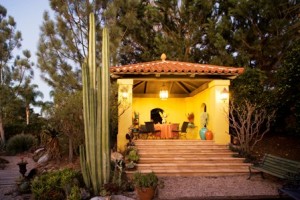
“A room of one’s own” doesn’t have to be in the house. Backyard structures sometimes bear no resemblance to the cobwebby garden sheds of suburbs past; today people are using them as studios, writing rooms, playhouses, dining pavilions – hideaways of all sorts. Look for lace curtains and window boxes, and cedar shingles instead of corrugated walls. Even toolsheds, of course, can be artistic.

A tale of a Wicked Plant (aka “The Case of the Poisonous Monkshood”)

Saturday, May 23rd, 2009

In preparing for a phone interview with prolific, bestselling author Amy Stewart to discuss her new book, Wicked Plants: The Weed that Killed Lincoln’s Mother & Other Botanical Atrocities, I came across a dog-eared manila folder in my office file drawer. Its label read “Emery’s Garden Monkshood.”

”]Autumn Monkshood - beautiful and poisonous [photo from Valleybrook Gardens Ltd.]And immediately, I recalled my own brush with a “Wicked Plant.” Before sharing my Q&A with Amy, I will indulge in the tale of Autumn Monkshood, aka Aconitum carmichaelii ‘Arendsii’.

In the late 1990s, I worked for a wonderful specialty nursery in Lynnwood, Washington, called Emery’s Garden. I had recently left business writing and a nonprofit communications gig to embark on my “garden writer” journey. Lucky for me, the people at Emery’s took me in and our relationship there flourished. I wrote and edited “The Weedy Reader,” our quarterly newsletter. I planned and produced our educational program and special events. I basically learned the horticulture business, thanks to Emery Rhodes, Marlis Korber and Amy Tullis.

After I left Emery’s in 2000 (that’s when I joined the team of The Herald’s “Home & Garden” section in nearby Everett), I stayed in close touch with my Emery’s pals. One day, in April 2001, I received a panicked phone call from Marlis, the nursery’s general manager.

Turns out, a customer purchasing perennials pointed out some odd tags on the 6-inch containers of Monkshood (Aconitum). The tag read: “All parts of this plant are tasty in soup.” The shopper had filled one of Emery’s carts with her two toddlers and three pots of the mislabeled (and wicked) perennial. “I thought this stuff was poisonous,” she said to our sales associate. “But this label says it’s edible.”

aconitum-story2aconitum010Needless to say, a check in Sunset Western Garden Book revealed the exact opposite to be true. Under “Aconitum,” Sunset warns: “All parts are poisonous if ingested.”

What resulted was a mini-international scandal and media frenzy. The common Monkshood, which is a beautiful, tall violet-blue ingredient in the cottage border, is NOT a tasty ingredient for soup or stews. Instead, it’s lethal.

The ensuing drama played out as you might expect. I got to play the role of Crisis-PR consultant while Emery’s pulled all the mislabeled plants, contacted the grower (a Canadian nursery), and soon discovered that the label mishap had been a stupid prank pulled by one of the grower’s employees! Within 48 hours, we were visited by the FDA; the Canadian authorities got involved; the plant recall went out over the wires; television, radio and print outlets picked up on the story and came to report on the scare.

In the end, it was a bit of a wake up call for Emery’s (and possibly other local nurseries) about the importance of using proper signage and labeling of toxic ornamental and landscaping plants. But I wonder, did anything really change? It certainly elevated consciousness at one nursery, at least for one season.

wicked012Now, however, with the advent of Wicked Plants, the evils of ingesting the flowers, stems or leaves of Aconitum are coming back to haunt me. The perennial is, in fact, the very first entry of Amy Stewart’s charming and horrifying new effort, published earlier this month. Amy writes:

In 1856 a dinner party in the Scottish village of Dingwall came to a horrible end. A servant had been sent outside to dig up horseradish, but instead he uprooted aconinte, also called monkshood. The cook, failing to recognize that she had been handed the wrong ingredient, grated it into a sauce for the roast and promptly killed two priests who were guests at the dinner. Other guests were sickened but survived.

Her scary narrative explains where the perennial grows and what to look out for (gardeners should wear gloves anytime they go near aconitum, Amy advises). The page is labeled “Deadly.”

Wicked Plants, is a compendium of horrifying stories and historical facts of the botanical world. If you have any question as to the deadly, illegal, intoxicating, dangerous, destructive, painful and offensive traits of the trees, shrubs, perennials and herbs growing on our planet, you’ll want to peruse this powerful little volume.

Between the pages of Amy’s 5-3/4 x 7-1/4 inch, 235-page book, which is bound in the same sickly green worn on the face of the witch Elphaba in the musical “Wicked,” are tales of death, destruction, war and more. I recently had a chance to chat by phone with Amy, and here is part of our conversation:

READ MORE…

Country Gardens: A Lavender Life

Friday, May 15th, 2009
Look inside for Debra's feature about Oregon lavender farmer Sarah Bader

Look inside for Debra's feature about Oregon lavender farmer Sarah Bader

I’m sending a huge *virtual* bouquet of aromatic lavender to the lovely and wise Oregon grower Sarah Bader. Sarah is the subject of a story I wrote for the Summer 2009 issue of COUNTRY GARDENS magazine — out on newsstands now.

Another big bouquet goes to James Baggett, the awesome editor at Country Gardens who asked me to interview Sarah and write the piece. He has an uncanny knack for finding just the right story subjects for moi. And Sarah was a perfectly wonderful plantswoman to profile.

She is the purveyor of Lavender at Stonegate in West Linn, a village about 20 minutes outside Portland. As you’re planning summertime excursions, think about a thoroughly enjoyable detour to Stonegate. Sarah, her children, small staff, neighbors and friends – not to mention lavender enthusiasts from around the country – celebrate the season with several fun events, plant sales and u-pick opportunities. Just think, an aromatic escape that feeds your eyes, fills your head, and and nurtures your spirit. One step onto this farm and you’ll be cramming your hatchback full of dozens of lavender varieties. [UPDATE: Lavender at Stonegate’s “opening day” for the summer season is May 22nd. The Summer Lavender Festival weekend is set for July 11-12. You can check the web site for other events and open hours.]

Just to give you a whiff of Sarah’s lavender life, I want to share the opening lines of my story, “Purple Haze.” Laurie Black photographed the story. I’ve had the chance to collaborate with Laurie on a past article and I do love her work! Here it is:

countrygardenslavender002She lives and breathes all things lavender. When gentlewoman-farmer Sarah Bader isn’t working side by side with a few employees to propagate lavender cuttings and harvest armloads of the aromatic herb, she’s walking along hazy purple rows to evaluate her best-performing lavender cultivars. She gardens with lavender, cooks with lavender, perfumes her home with lavender, and is even writing a book about lavender.

Sarah calls her West Linn, Oregon, farm Lavender at Stonegate. About 20 minutes from Portland, the venture takes its name from a hand-carved stone pillar near the entry of her 5-acre parcel. Sarah began growing lavender as a hobby – a way to make her agricultural property productive after its original hazelnut orchard suffered from blight. Inspired by a visit in 2002 to the Sequim (Washington) Lavender Festival, Sarah started with 380 Lavandula sp. plants. She laughs at her beginner’s ambition: “I wanted to try growing 10 to 15 kinds of lavender. I jokingly called that first effort ‘my learning curve field’ because I couldn’t plant in straight rows.”

countrygardenslavender005I called Sarah this morning to see how she thought the final story and photography turned out. She was so pleased.

Pleased, too, that Country Gardens readers from all around the country, coast to coast, have already begun to contact Lavender at Stonegate with inquiries about special events this summer, about buying and growing lavender – and to tell Sarah what an inspiration she is to them.

That’s exactly how I feel every time I talk with Sarah. She is an inspiration.

The final lines of my story capture this woman’s strength, passion and engaging spirit:

Sarah’s philosophy is summed up by a hand-lettered sign that hangs in her greenhouse: “We have the honor of assisting the creator in making little miracles every day.”

Amen.