Debra Prinzing

Get the Email Newsletter!

Archive for the ‘Writing’ Category

SLOW FLOWERS: Week 32

Sunday, August 11th, 2013

UP ON THE ROOF

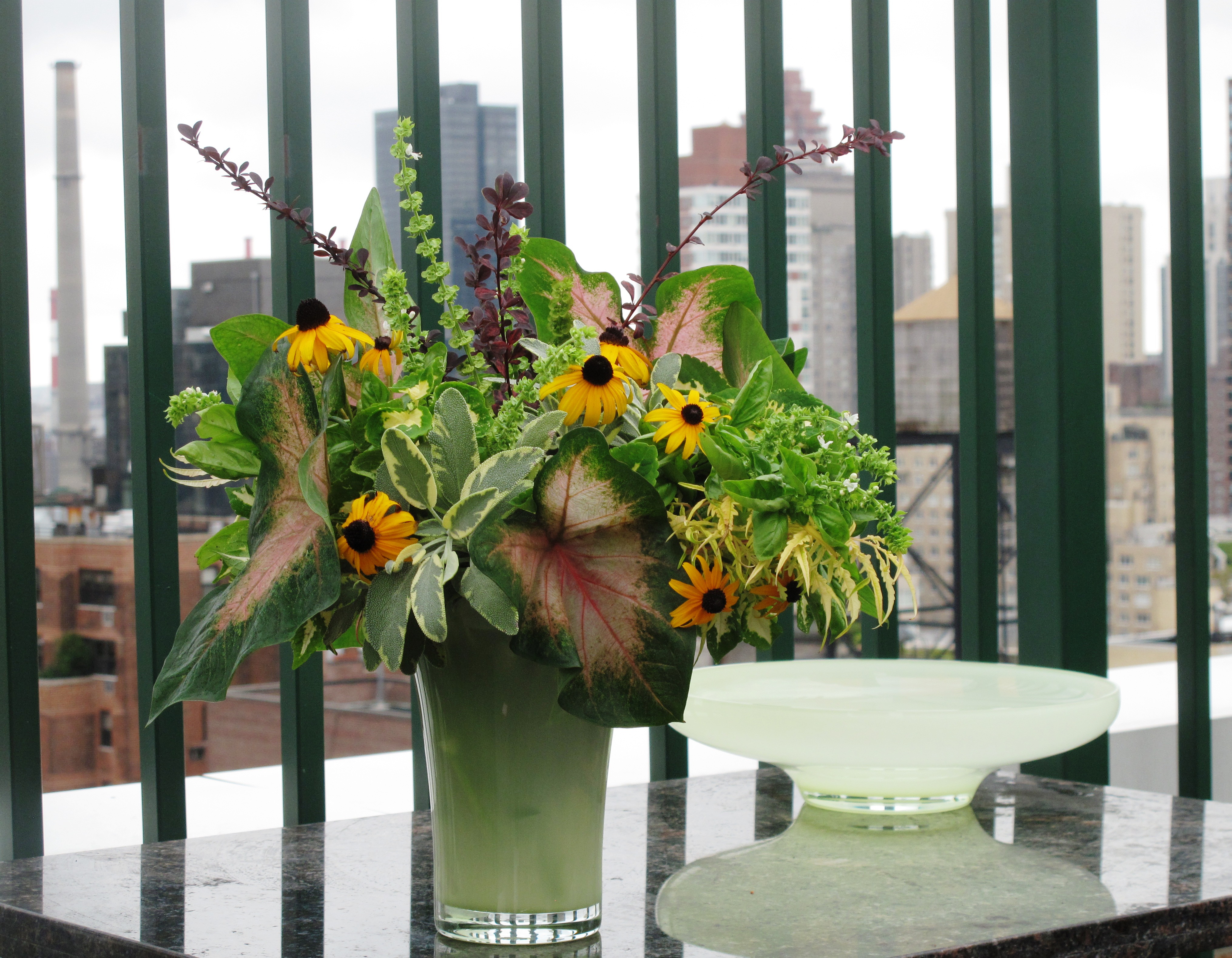
Rooftop bouquet

I made this bouquet at the invitation of Ellen Spector Platt, a fellow garden writer who shared her NYC rooftop bounty with me

Ingredients:

All elements were grown by Ellen Spector Platt on the roof of her Manhattan condominium or in the tree pits along the sidewalk by the building’s lobby 
 
5 stems Caladium x hortulanum ‘Kathleen’
3 stems bi-color sage (Salvia officinalis ‘La Crema’)
3 stems staghorn sumac (Rhus typhina ‘Tiger Eyes’)
5 stems Genovese basil leaves and flowers (Ocimum basilicum ‘Genova’)
3 stems red-leaf Japanese barberry (Berberis thunbergii atropurpurea ‘Rose Glow’)
7 stems black-eyed Susan (Rudbeckia fulgida)
 
Vase:
8½-inch tall x 7-inch diameter celadon green glass
 
Caladium foliage in bud vases

Long after I left Manhattan, Ellen redesigned the longest-lasting floral elements, using several bud vases to each display a single Caladium leaf (c) Ellen Spector Platt


Eco-technique
Bouquet 2.0: After my visit, Ellen emailed me: “Your arrangement still looks good, but after 4 days it needed some grooming.” Here are her tips for reviving a bouquet: “Don’t try to groom it by pulling out a wilted stem, since you’ll likely take out other good stuff along with it. Instead, leave the stems where they are and reach in to snip off a single dead flower. Or, cut off the entire top of the stem, leaving the bottom in place. No one will ever know it’s there.” In this arrangement, the black-eyed Susan blooms were the first to be removed.
 
“By the time many of the stems start to die, I just pick out the few good ones that are left and put them in a narrow vase or bottle to wring out my last bit of enjoyment,” says this experienced floral designer. “I’m sure I’ll be left with the caladiums, looking like an entirely new design.” And sure enough, nine days after we made the original bouquet, Ellen sent me this photo of her green bud vases with the beautiful – and long-lasting – caladium leaves.

SLOW FLOWERS Podcast: Peonies from America’s Last Frontier (Episode 102)

Wednesday, August 7th, 2013
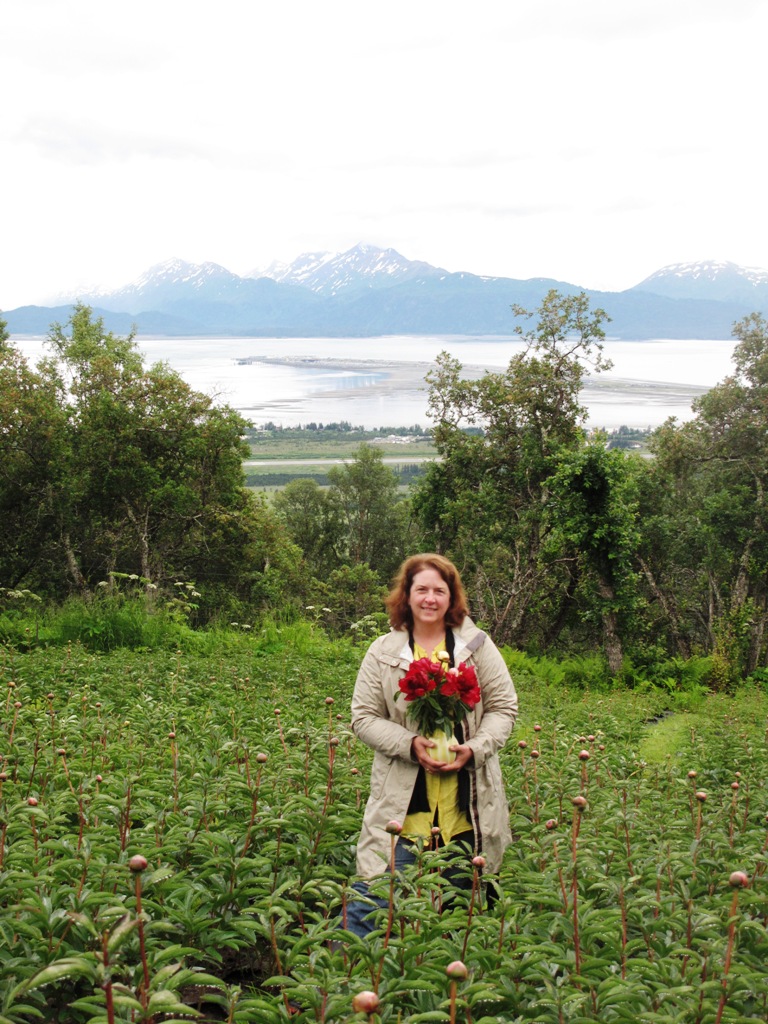
I'm standing in a Homer, Alaska, peony field at Scenic Place Peonies. It's owned by Beth Van Sandt and Kurt Weichhand - check out the views!!!

I’m standing in a Homer, Alaska, peony field at Scenic Place Peonies. It’s owned by Beth Van Sandt and Kurt Weichhand – check out the views!!!

Last summer I visited Alaska and toured about 12 cut peony farms from Fairbanks to Homer – in one week! It was a wonderful trip, made all the more special because of the many cool, welcoming flower farmers I met along the way. They hosted me for meals, spent quality time walking and talking with me along the rows of robust and beautiful plants, lent me a bed for the night, and generally adopted me into their Alaska Peony Tribe! If you want to learn more about the Peony Growers of Alaska and how to order cut flowers from some of them directly, visit the Alaska Peony Growers’ web site.

It was a thoroughly freeing time for me as a journalist because I was my own client. No editor gave me the assignment. No publication had their dibs on how the story would be reported. I used my Alaska Airlines’ frequent flier miles to book my flight into Anchorage and then rented a car with another set of airline miles.

I made reservations to tour Denali National Park on the first day – mainly because Dr. Pat Holloway, my trip advisor, insisted that I couldn’t just drive past the majestic national park while seeking peony farms! After that first day, I spent the following seven preoccupied with peonies, their cultivation, harvest, post-harvest care and ultimate journey to the hands of satisfied customers. It was pretty sweet – and I can’t wait to get back. I wrote a fun post about the week in Alaska here.

Alaska august 2013 coverOther than selling a *tiny* story about Alaska peonies to Sunset magazine, I am happy to announce that my first big editorial placement appears in the current issue of Alaska Airlines magazine. How fitting! You can read the feature here [PDF].

This week’s podcast features interviews with the owners of two farms I visited during my tour. First, you’ll hear my conversation with Rita Jo Shoultz of Alaska Perfect Peony in Fritz Creek on the Kenai Peninsula, one of the first growers to jump in feet first to plant peony roots. You will hear the sounds of nature around us, as we sat in her garden near the pond to talk. For some crazy reason, Nicco, her cat, was fascinated with the audio recorder’s microphone. You’ll hear a few bumps in the audio, thanks to the curious cat!

Here are some photos from Alaska Perfect Peonies:


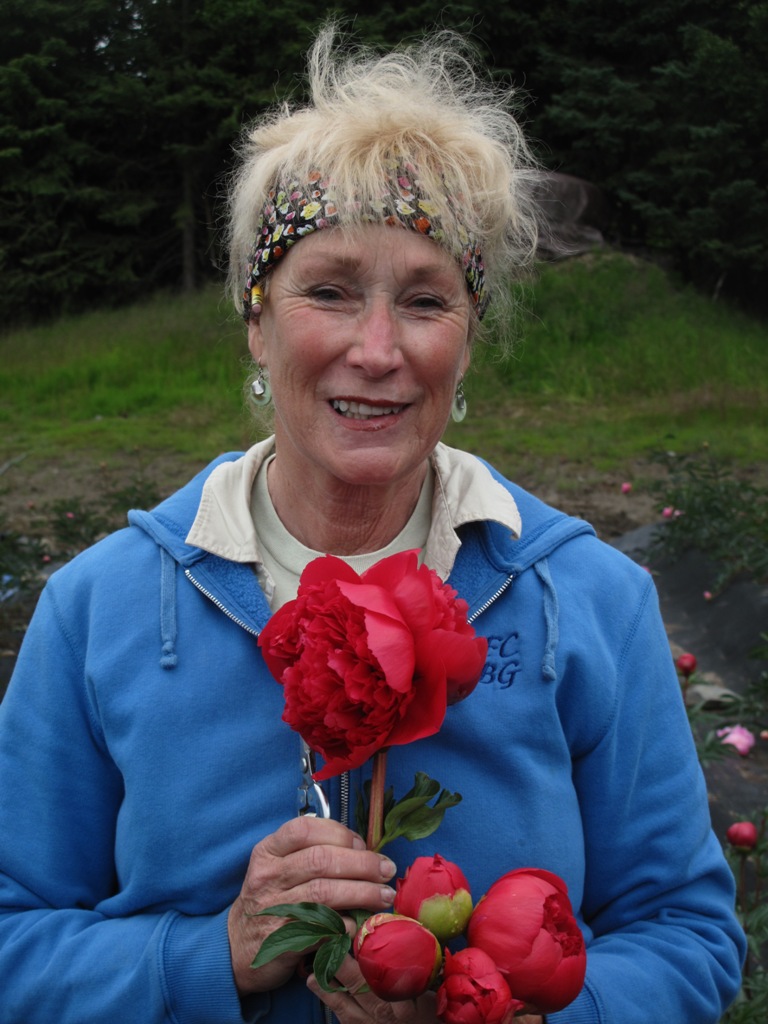
Rita Jo with red peony

Rita Jo with a double-headed peony that we discovered in her growing fields. 


READ MORE…

SLOW FLOWERS: Week 31

Monday, August 5th, 2013

PASSION FOR PEONIES

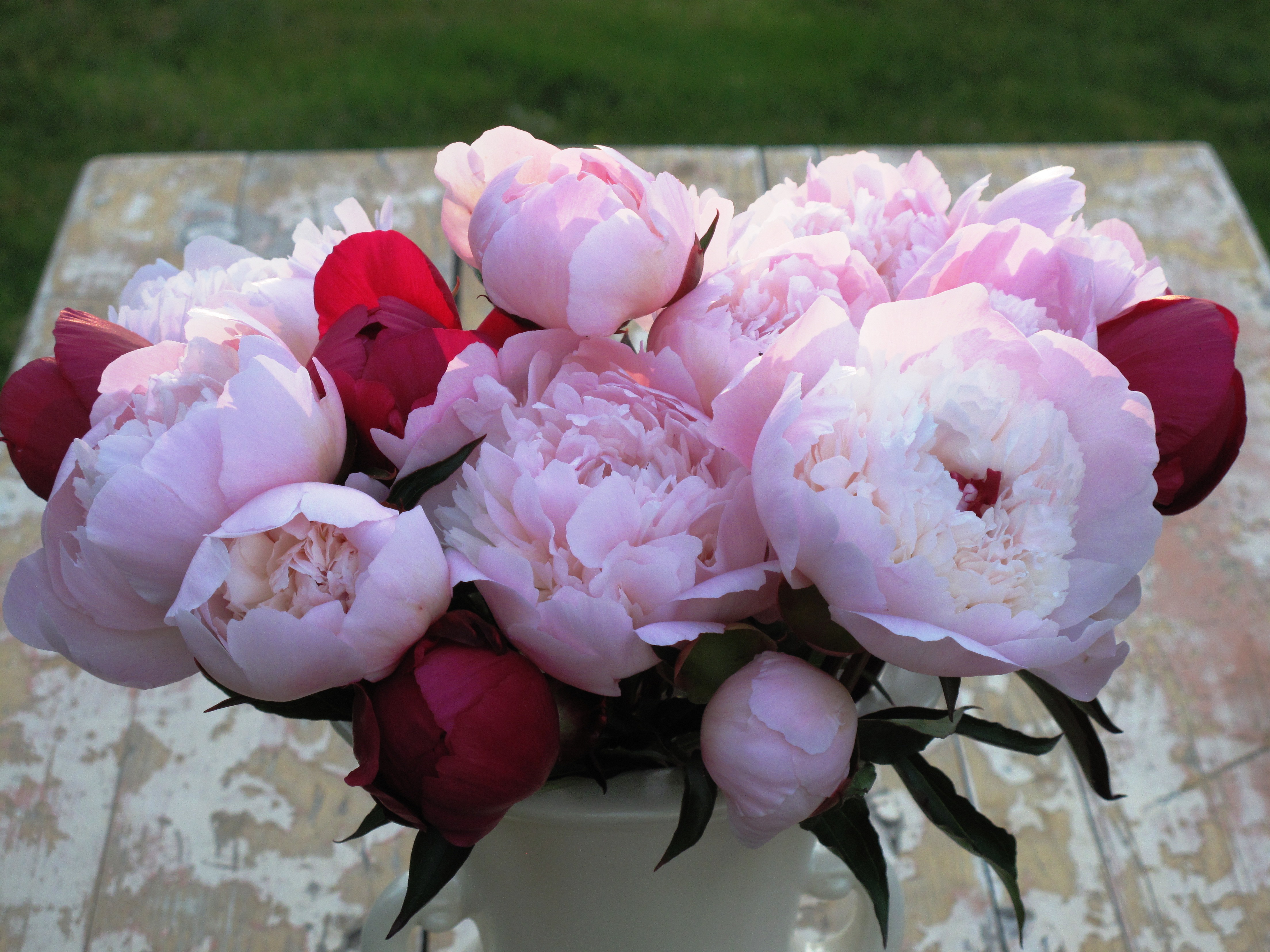
Close to perfection

I came home from Alaska with these luscious peonies – and it seemed as if no other flower could compete for room in the vase.

Ingredients:
10 stems ‘Sorbet’ peonies, grown by Echo Lake Peonies in Soldotna, Alaska
5 stems ‘Kansas’ peonies, grown by Midnight Sun Peonies in Soldotna, Alaska
 
Vase:
9-inch tall x 7-inch diameter vintage Haegar urn, cream pottery
or
Series of vintage one-pint glass milk bottles (7-inch tall), each holding two or three stems
 
milkbottles_peoniesFrom the Farmer
Peony harvesting and design: Cut peonies during the coolest part of the day. According to Dr. Holloway, “Cut once you see the true color of the flower with one or two petals separating at the top – or any time after that. Then, the flower will continue to open in your arrangement.” If you cut prior to this stage the buds either will not open or they will be stunted. Fully-opened blooms can also be harvested, but their vase life is shorter. Based on years of peony research and field trials, Dr. Holloway offers this commercial growers’ tip: “Once cut, your flowers should be chilled in the refrigerator for at least 24 hours and up to one week before putting them into a vase. That chilling very definitely extends vase life.” Wrap the peonies in paper towels and lay them flat in the crisper drawer, away from the refrigerator’s other contents until use.


SLOW FLOWERS: Week 30

Sunday, July 28th, 2013

FLIGHTS OF FANCY

Stacie Bouquet

A summer bouquet for my friend Stacie Crooks’s annual garden girlfriend soiree.


Stacie Bouquet 2

This charming arrangement is even more interesting when viewed from the top as the gooseneck stems appear to be flying in all directions!

Ingredients:

7 stems Dahlia ‘Coral Gypsy’, grown by Jello Mold Farm

15 stems white love-in-a-mist (Nigella damascena), grown by J. Foss Garden Flowers

5 stems chartreuse Hypericum perforatum (a florist’s variety selected for its colorful fruit), grown by Jello Mold Farm

7 stems goldenrod (Solidago sp.), grown by J. Foss Garden Flowers

11 stems white gooseneck loosestrife (Lysimachia clethroides), grown by Jello Mold Farm

20 stems burnet foliage (Sanguisorba obtusa), grown by Charles Little & Co.

Vase:

6-inch tall x 4-inch diameter glass vase 

Eco-technique

Transporting bouquets: Save your arrangement and your car with a smart stabilizing trick I learned from flower farmers who make frequent bouquet deliveries. Use a box that is at least half the height of your vase; seal the

top and bottom so you have an empty “cube.” Using a utility knife, cut a large X on one side of the box. The cuts should be approximately the same size as the vase diameter. Push the bottom of the vase into the X-opening. The

triangular cardboard flaps created by the cuts should bend inward to hold the vase securely while you drive.

SLOW FLOWERS: Week 29

Sunday, July 21st, 2013

STUNNING SUCCULENTS

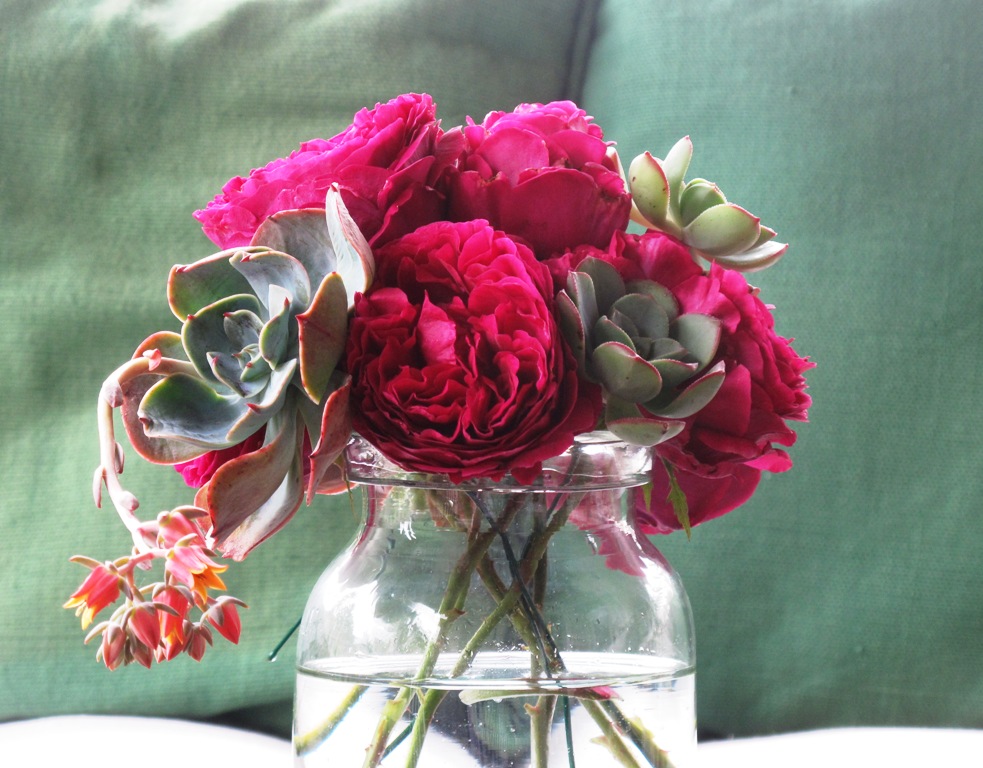
Rose Succulent

The rose-shaped echeveria pairs beautifully with the garden rose.

Ingredients for arrangement above:
  • Several rosettes from Echeveria plants, with wire “stems.” I took these cuttings from my friend Cristi Walden’s Southern California garden and brought them home to Seattle in my suitcase; they lasted the entire summer in a number of arrangements.
  • 7 stems of rose-red, multipetal garden roses, variety unknown, harvested from my Seattle garden
 
Vase:
6½-inch tall x 4½-inch diameter glass jar with 3½-inch opening
 
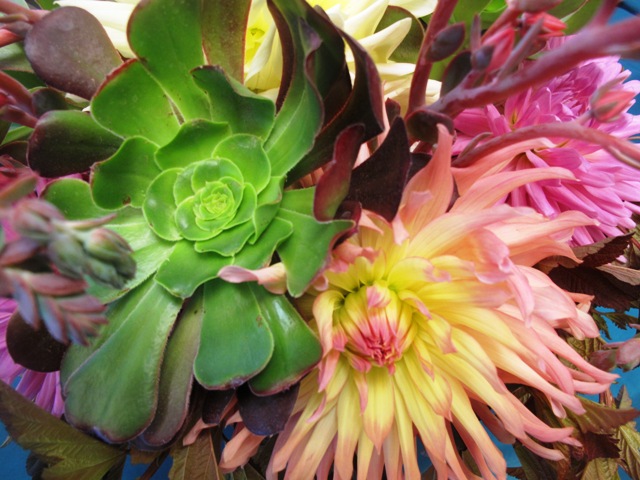
Succulents Dahlias

A beautiful green Aeonium rosette and cactus-style summer dahlias

From the Farmer

Succulent success: Robin Stockwell, owner of Succulent Gardens Nursery in Castroville, California, says it’s easy to remove rosettes with a clean, sharp florist’s knife or clippers. After several days, the succulents will likely be the only part of your bouquet that still looks attractive. They can be re-used in your next arrangement. Or, remove the wire and set the cuttings in a bright window where they’ll soon produce roots. That’s when you can replant your succulent in a pot or in the garden.


Footed glass, circa 1978

Sunday, July 14th, 2013
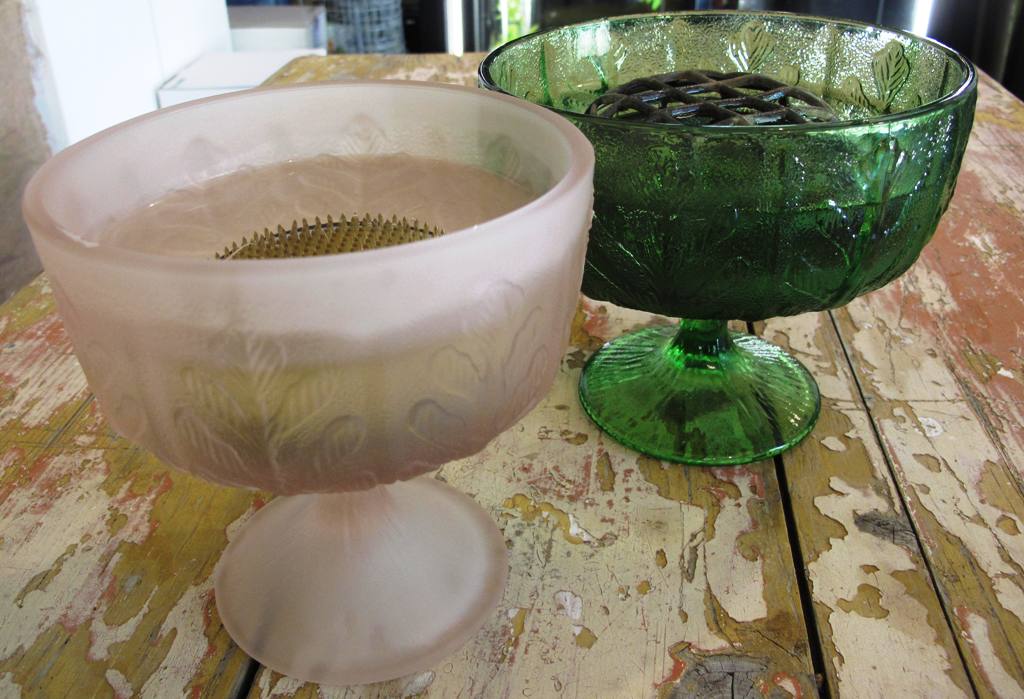
Side view of vases

It’s easy to find these not-quite-vintage and not quite-retro, but definitely collectible footed glass vases. I snagged the frosted pink one on eBay for $4.99 and found the green embossed one at my local Goodwill store for even less!

These vases have been identified as FTD florist vases, dated to 1978. The pattern is called “oak leaf” and I’ve found the two colors shown above as well as an amber-gold and milk-glass white, all with the raised embossed leaf pattern.
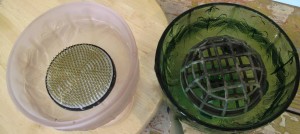
2 Vases

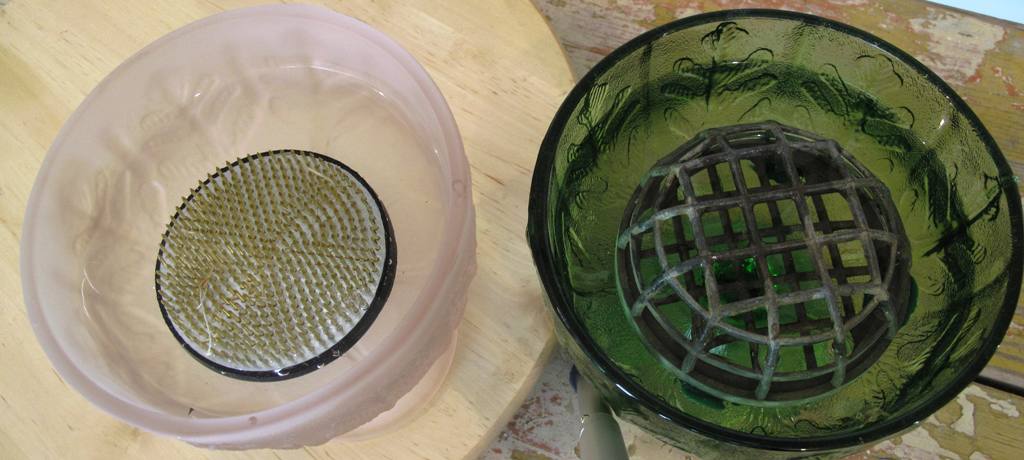
Getting ready by choosing flower frogs to fit inside the two vases.

The first time I used this charming green footed bowl in a demonstration, someone guessed it was Depression glass. There is that pressed-glass quality to these containers, but they’re newer. I like to think FTD was producing them in the U.S.A. and shipping them to mom-and-pop flower shops around the country at a time when those florists were still using predominantly American-grown flowers. The vases are so much more interesting and well made than most of the (probably) made-in-China stuff you see coming out of floral wire services these days. Keep your eyes out at the thrift store or surf on eBay, where I’ve found at least six or seven listings for idential and similar vessels.

I’ve written before about how much I love footed anything for floral arranging. Here is a recent post where I wax eloquently about footed vessels. Today, it was time to play with some flowers and see what I could create. By the way, here are the dimensions on these bowls: overall height, 5-1/2 inches; diameter, 5-1/4 inches; depth of bowl, 2-1/2 inches.

The shallow bowl does require some kind of device to stabilize stems. Back in the day, those 1978 florists were probably blithely cutting up chunks of foam to stick inside. But today we all know how unsafe it is to handle or use florist’s foam for its toxic attributes (formaldehyde being the active ingredient). So out came the metal frogs, as you can see in my bouquets below. Alternately, I could have shaped a section of chicken wire to fit inside, securing it with floral tape. Both methods are quite easy and eco!

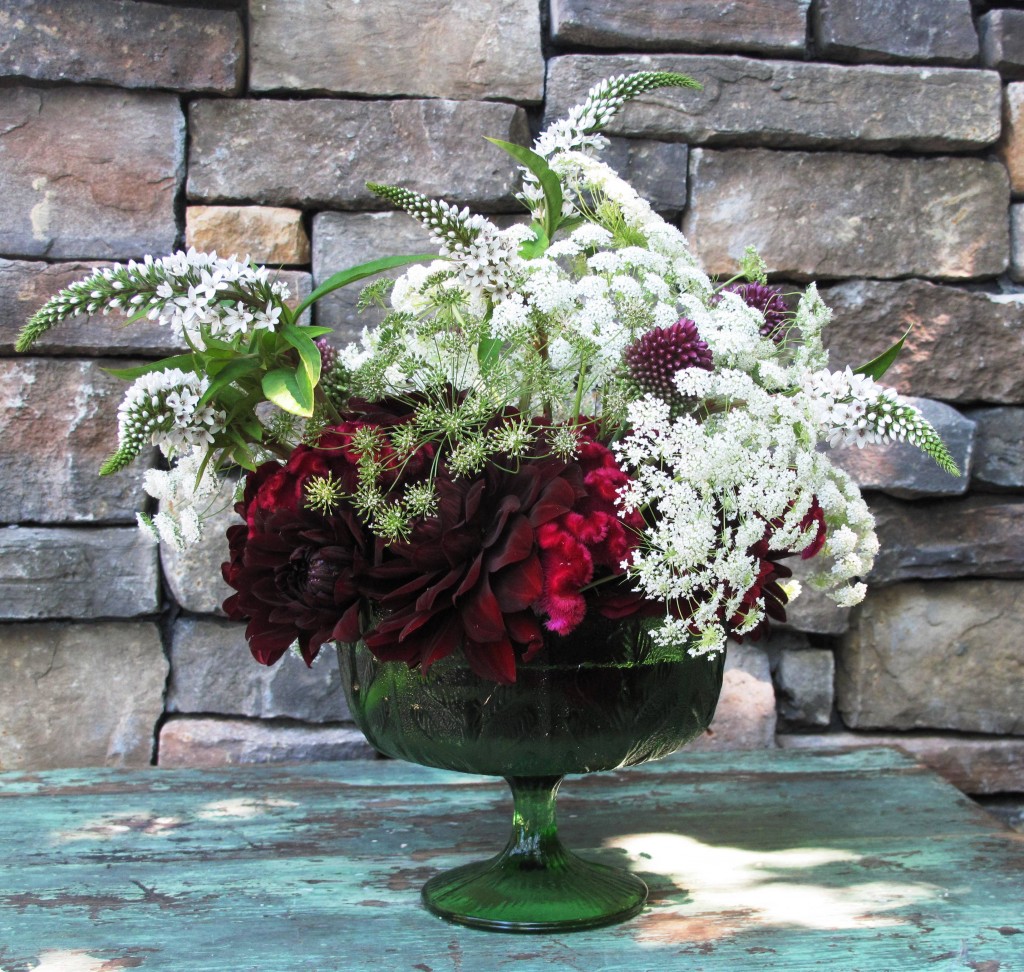
Here is my first of two arrangements, using the green vase: 
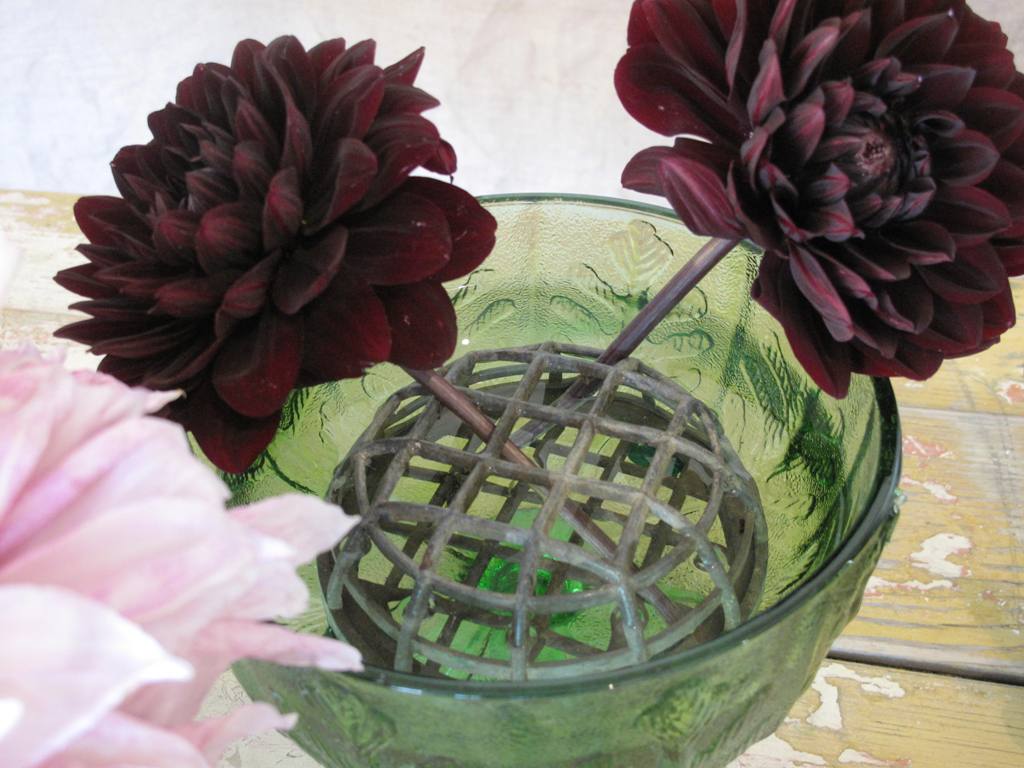
Green Vase and Frog

Step One: Insert maroon dahlias into metal frog. Notice how I’ve cut the stems short so that the flower head snugs close to the rim of the vase. 
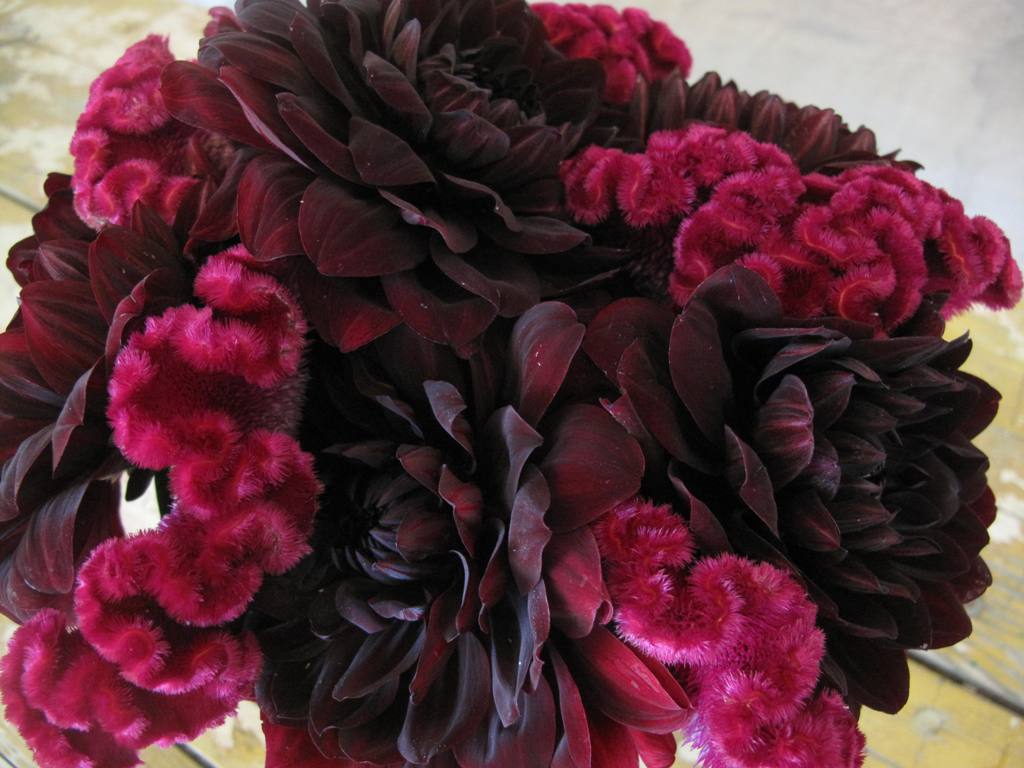

Magenta and Fuchsia

Step Two: After seven dahlias are arranged evenly throughout the opening, I added five lush fuchsia cockscomb celosias inbetween the darker flowers. 
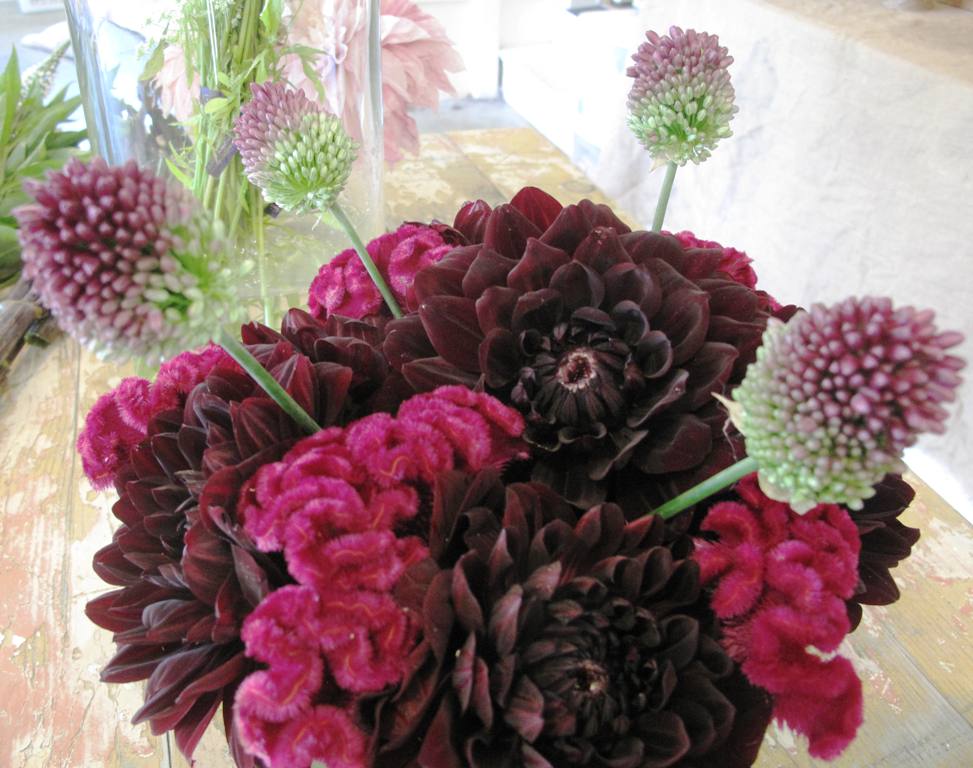

Adding Alliums

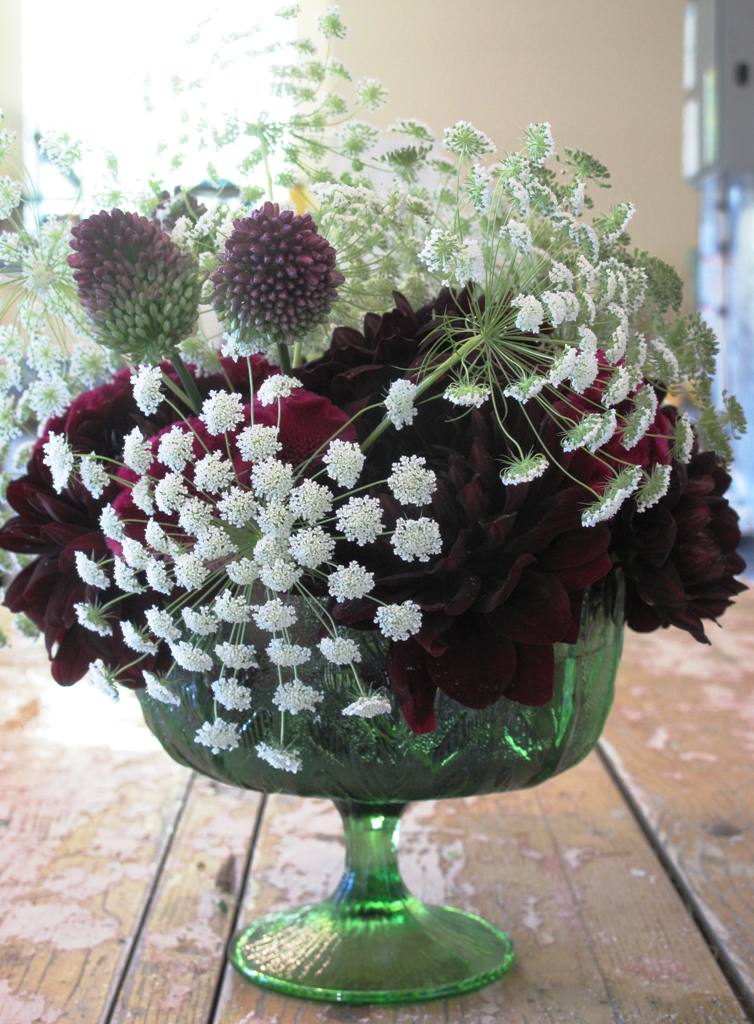
Step Three: Insert four drumstick alliums for graphic punctuation. 

Adding Queen Anne's Lace

Step Four: Add Queen Anne’s Lace stems so they hover above the darker base of flowers. 

Green Final

Step Five: Finish off the bouquet with a few stems of gooseneck loosestrife (Lysimachia clethroides), a quirky accent that repeats the white from the QA Lace and brings a new texture into the design.

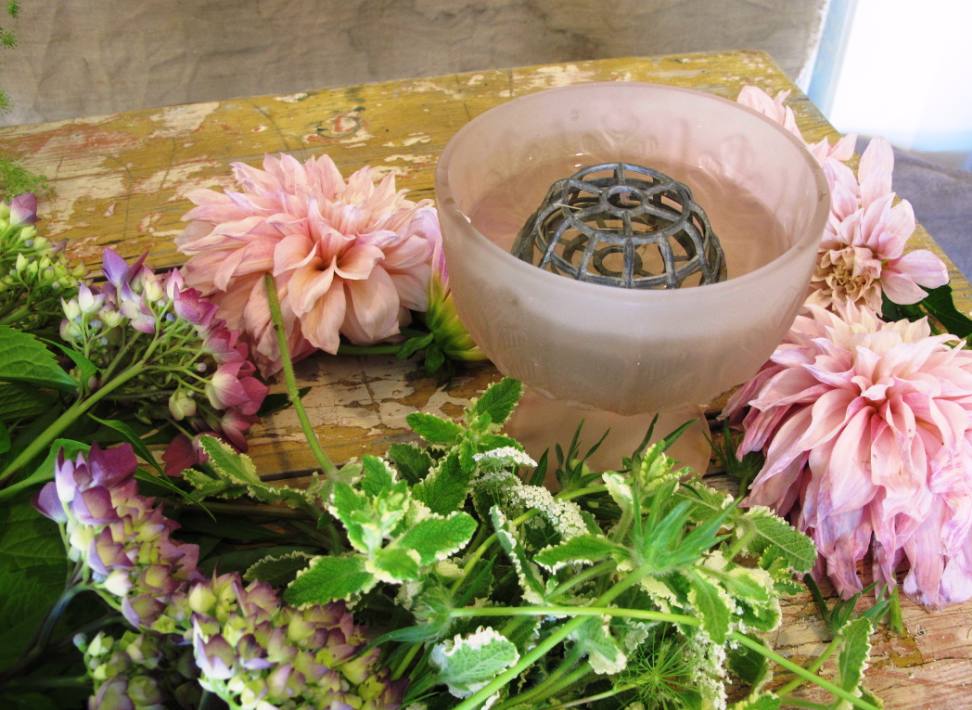
Here how I filled the pale pink frosted vase: 
Pink Vase Starting Off

Getting started. If you compare this photo with the one at the top of this post you’ll see that I switched the frog. The original pin frog I planned on using wasn’t allowing me to insert stems at an angle or sideways, so I replaced it with a metal cage-style frog. 

Pink Final

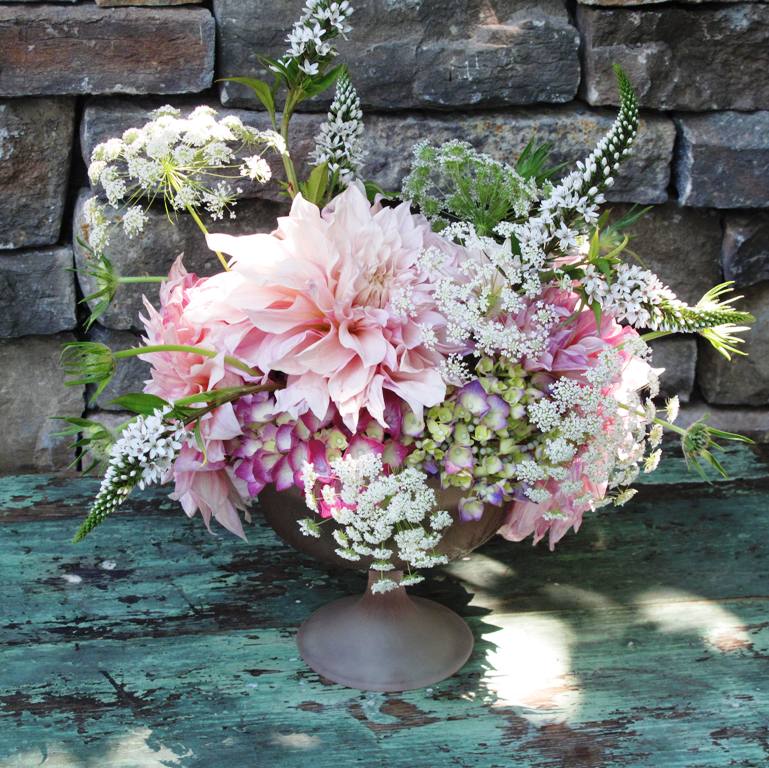
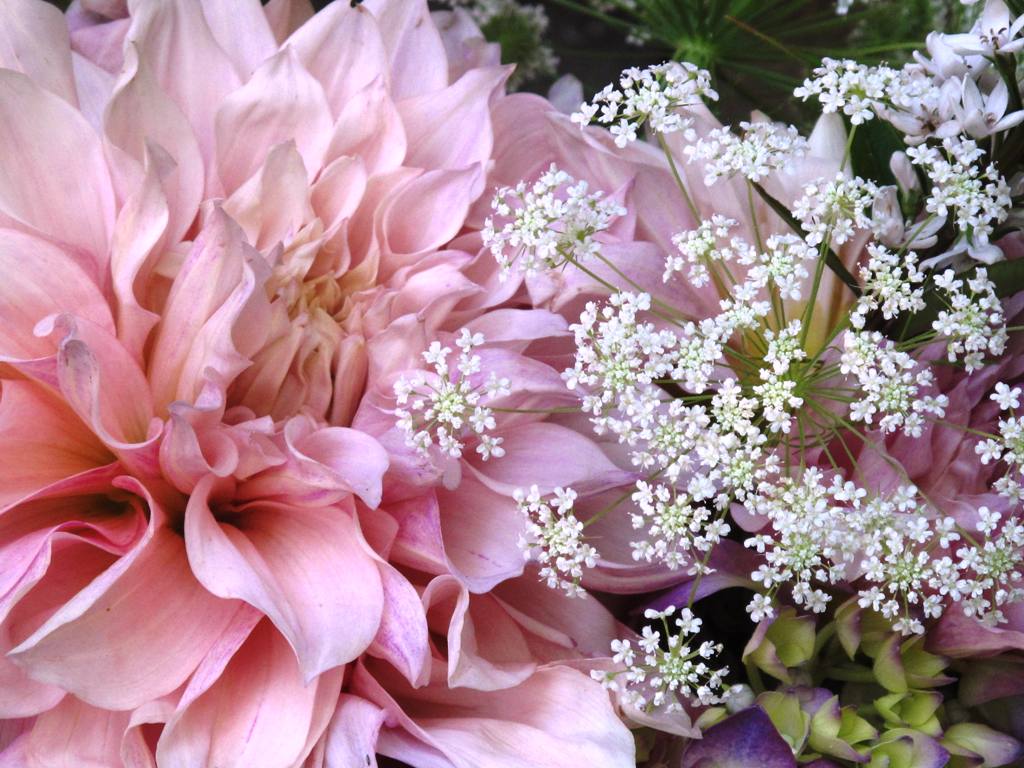
This bouquet came together in much the same way as the first one, so I didn’t photograph all the steps in detail. Notice that I started with a cluster of unopened hydrangea heads, which created a “base” that supports the three ‘Cafe au Lait’ dahlias, making them more prominent. Other ingredients include Queen Anne’s Lace, Scabiosa buds, and the gooseneck loosetrife. Even though similar ingredients are repeated from the first bouquet, this color palette gives it a totally different look and feel. 

Pink Detail

A final grace note, showcasing the delicate beauty of the dahlia and Queen Anne’s Lace.



SLOW FLOWERS: Week 28

Sunday, July 14th, 2013

Heavenly Hydrangeas

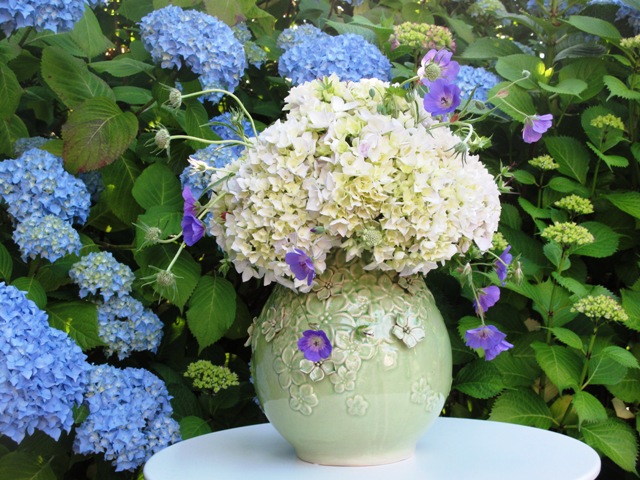
White hydrangeas

A simple bouquet of hydrangeas – one of my favorites in this book

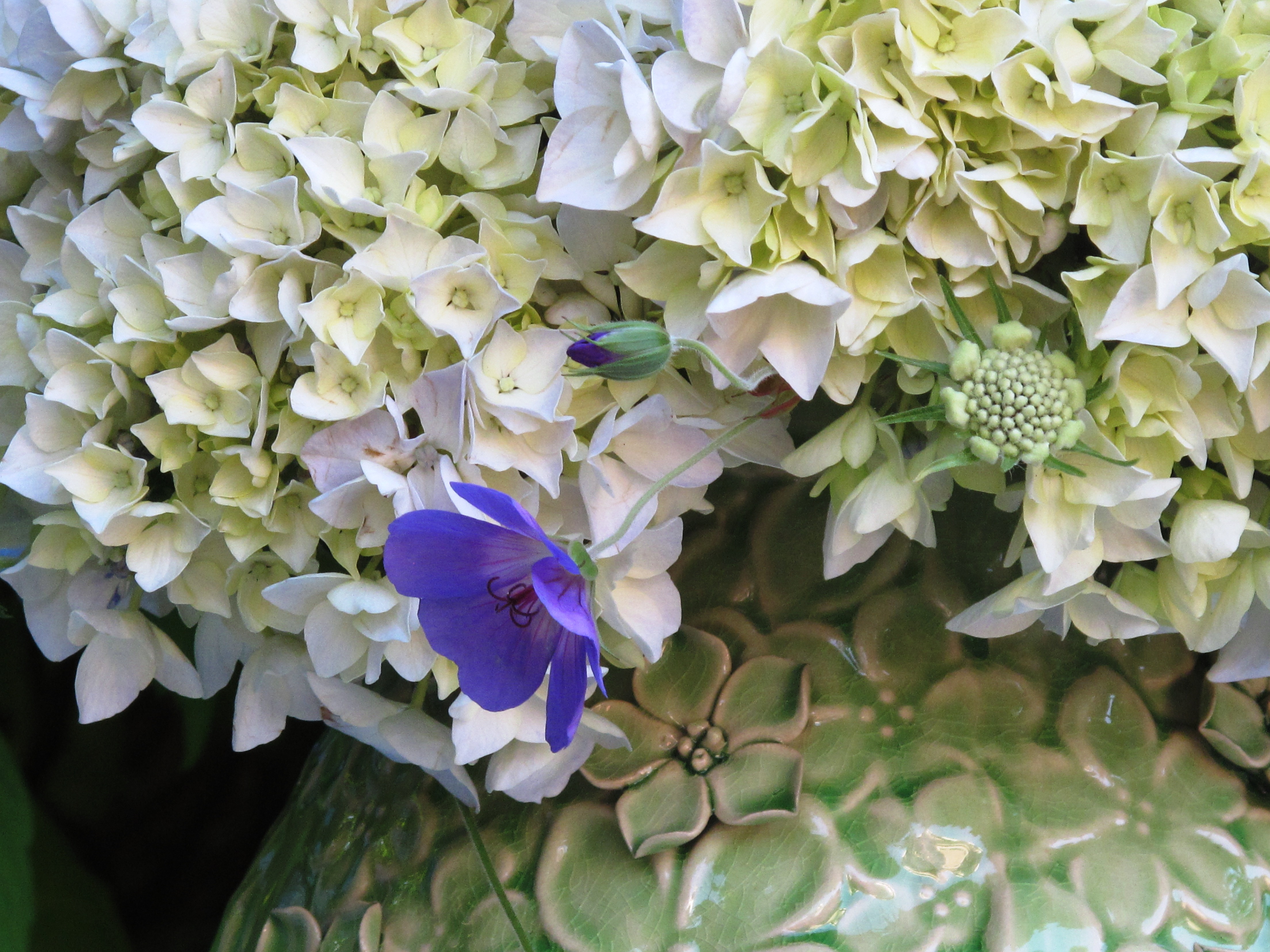
simple detail

The details are quite sweet!

Ingredients:

10 stems mop-head hydrangeas (Hydrangea macrophylla), grown by Oregon Coastal Flowers
8 stems Geranium ‘Rozanne’, harvested from my garden
6 stems pincushion flower (Scabiosa sp.) in bud, grown by Choice Bulb Farms
Vase:
11-inch tall x 10-inch diameter ceramic glazed vase (the opening is 5 inches)
 
From the Farmer
Give your hydrangeas a refreshing drink: Summer-harvested hydrangeas are considered to be shorter-lived than ones cut in autumn, giving them a reputation for not lasting long in a vase. You can revive wilting hydrangea
flowers, though. Five days after I made this bouquet, I took the entire arrangement apart, re-cut each hydrangea stem and submerged them in a cool, soaking bath in the kitchen sink for about 15 minutes. With the excess water shaken off, they were refreshed and re-hydrated, guaranteed to last a few more days in the vase.
 
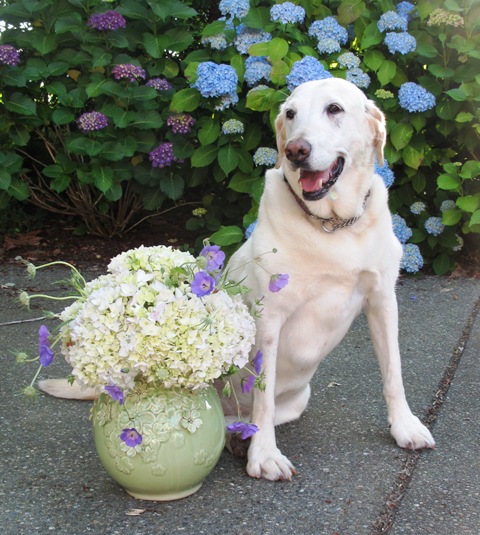
Still Life with Zanny and Hydrangeas

A favorite out-take from Slow Flowers: Our dog Zanny decided to pose with the flowers.


New summer articles by Debra

Saturday, July 13th, 2013

It was fun to visit the newsstand yesterday and pick up three new magazines with my articles.

When you see them in one place, it might feel like I’ve been super productive. But there is a back-story about each, and I have to be honest with you. Sometimes it takes YEARS for a story to see the light of day.

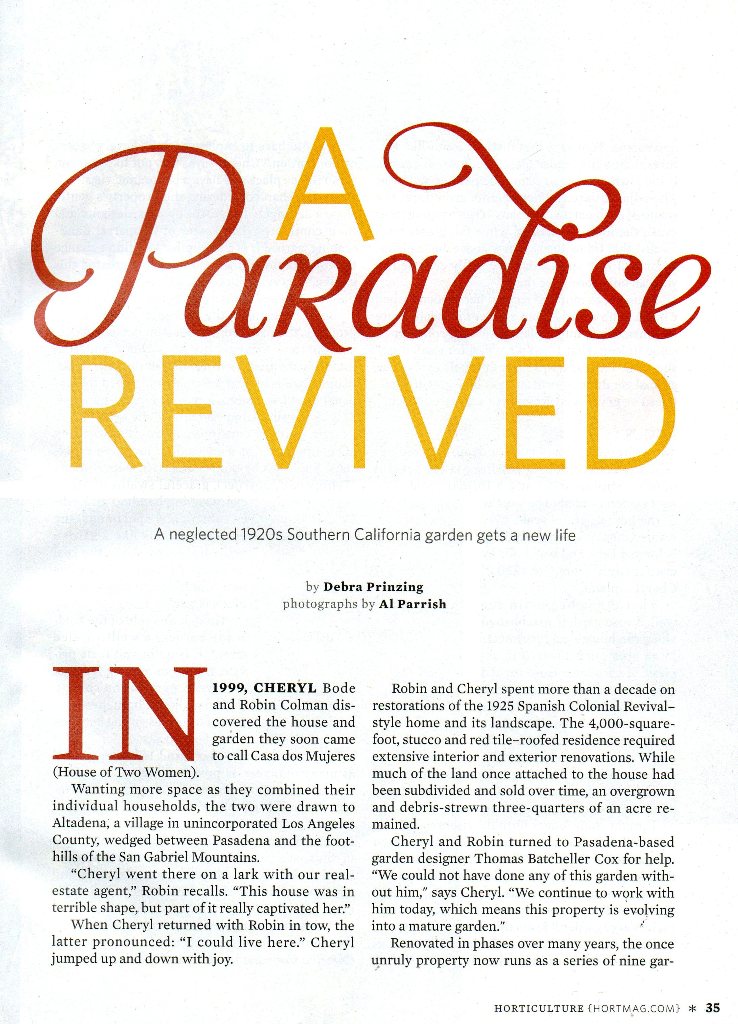
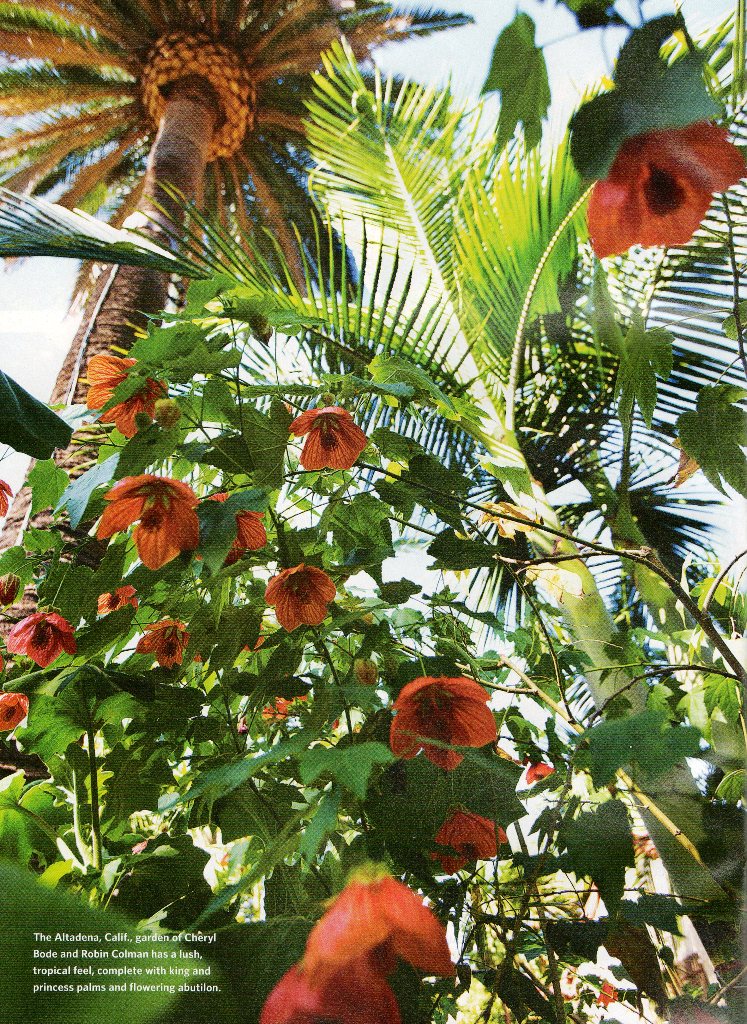
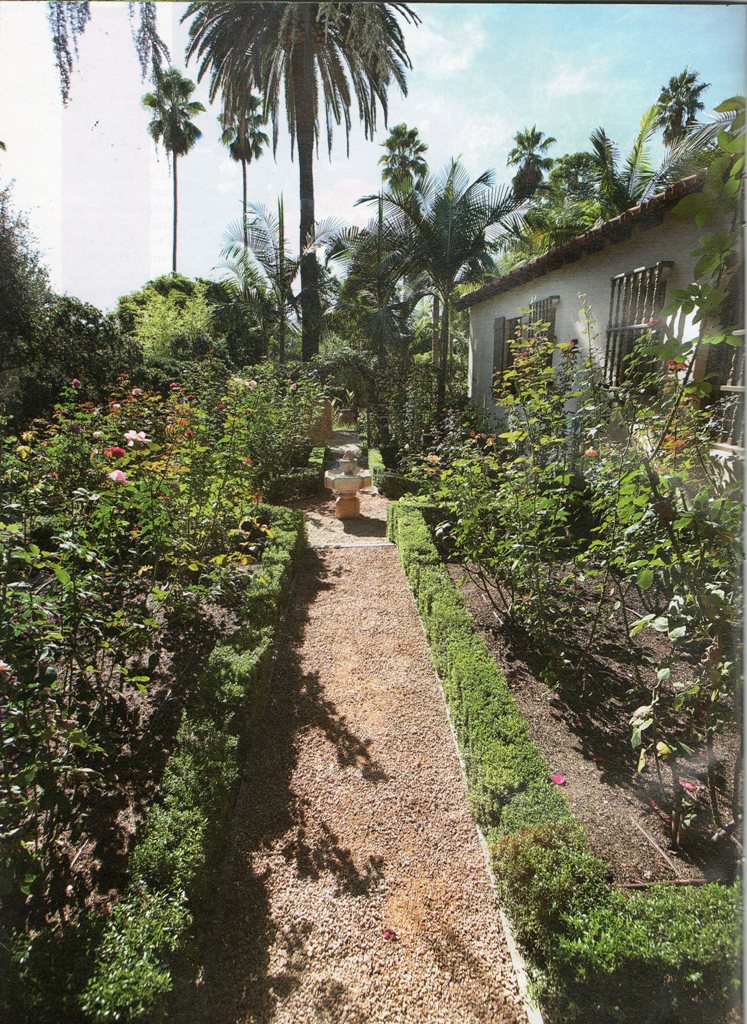
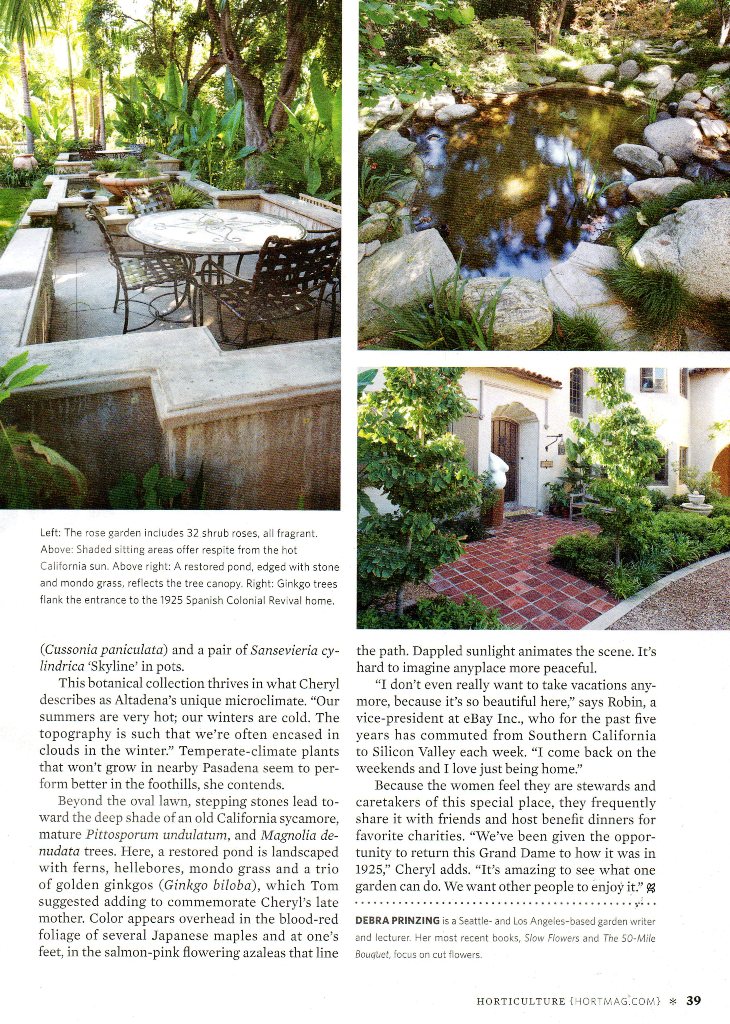
Case in point: The Southern California garden owned by Cheryl Bode and Robin Colman, featured in the July-August issue of Horticulture, was photographed in 2009. Since then, it has often seemed to Cheryl, Robin and me that the story would never appear in print. When I finally saw the issue, just out on newsstands, I understood why. The photos are incredibly disappointing. I have so many wonderful photos of their garden and the magical feeling one experiences when visiting there was simply not expressed in the Horticulture magazine. Click over to my articles page to read the story and see my photos rather than the ones printed below. Theirs is an inspiring story of two homeowners who yearned to bring an old house back to life, along with its garden. To physically walk through it is truly special.

Cheryl_Robinp6Cheryl_Robinp2Cheryl_Robinp1Cheryl_Robinp3Cheryl_Robinp4Cheryl_Robinp5


READ MORE…

Travels with Debra & James (and friends)

Thursday, July 4th, 2013

I was on the road last week, working in Oregon for six days (counting 1,000-miles of travel). My companions were James Baggett, editor-in-chief of COUNTRY GARDENS magazine and photography team Laurie Black and Mark King of Laurie Black Photography.

On the road with JAB

James Baggett, showing off the many titles he creates with coworker Nick Crow, his art director. It’s simply mind-boggling to grasp their huge productivity – and it’s an honor to be one of their writer-producers.

Wherever I can discover locally-grown flowers, that's where you'll find me!~

Wherever I can discover locally-grown flowers, that’s where you’ll find me!~

We spent the week photographing awesome landscapes, inspiring new plants and a fabulous farm-to-fork dinner (complete with locally grown, organic wine, food and flowers). A busy schedule, but filled with great experiences. It will be my privilege to write the stories to accompany Laurie’s photos for publication in 2014.

I’ll keep this short. I mostly have photos to share.

READ MORE…

What does Slow Flowers mean, anyway?

Friday, June 21st, 2013
Please Pick sign

After I found this sign in a garden shop, I took the liberty to cross out the words “DO NOT” so the message better fits my philosophy of floral design!

I’ve been eating, sleeping, breathing, writing and speaking about SLOW FLOWERS for so long that it’s good to sometimes be reminded that not everyone understands what that phrase means. Recently, one of my flower farmer friends emailed to ask: Tell me again what Slow Flowers mean. I know it’s USA flowers but SLOW?

Fair enough. With all due respect to my fellow garden writer Felder Rushing, who coined the phrase “Slow Gardening,” let me outline my personal definition of SLOW FLOWERS. This is excerpted from my introduction to the book, Slow Flowers: Four Seasons of Locally Grown Bouquets from the Garden, Meadow and Farm (St. Lynn’s Press, 2013).

Thanks to the culinary pioneers who popularized the Slow Food movement, it now seems like you can put “slow” in front of any term to convey a different philosophy or approach to that subject. When I say the  phrase “slow flowers,” there are those who immediately understand it to mean: I have made a conscious choice. 

My blooms, buds, leaves and vines are definitely in season; not, for example, grown and brought in from elsewhere in the world during the wet, cold winter months in my hometown of Seattle. So, come December and January, my commitment to sourcing locally-grown floral materials sends me to the conifer boughs, colored twigs and berry-producing evergreens – and the occasional greenhouse-grown rose, lily or tulip, just to satisfy my hunger for a bloom. 

Slow Flowers (the concept and the book) is also about the artisanal, anti-mass-market approach to celebrations, festivities and floral gifts of love. I value my local sources. If not clipped from my own shrubs or cutting garden, I want to know where the flowers and greenery were grown, and who grew them. Having a relationship with the grower who planted and nurtured each flower is nothing short of magical. I call so many flower farmers around the country my friends. They are the unsung heroes – the faces behind the flowers we love. 

Finally, Slow Flowers reflects life lived in the slower lane. My family, friends and professional colleagues know that it’s almost impossible for me to do anything slowly. I’m the queen of multitasking; I just can’t help myself. There are too many exciting opportunities (or bright, shiny objects) that command my interest. But this “year in flowers” was altogether different. I can only compare it to the practice of praying or meditating. I didn’t realize that those few hours I spent each week, gathering and choosing petals and stems, arranging them in a special vessel, and then figuring out where and how to capture the finished design  through my camera lens, would be so personally enriching.
And speaking of the phrase, Slowflowers.com is also the name of my newest project, announced this past week. With a scheduled Fall 2013 launch, this will be a free, online database that helps connect consumers with floral designers, studio florists, florists and supermarket floral departments who are committed to designing with American-grown flowers. Please sign up – either for consumer updates on our official launch, or to be listed as as SlowFlowers.com designer.
SlowFlowersScreenShotSo I guess you can also say that the idea of “Slow Flowers” is also a resource that I hope many will find useful. Here is the description of this project:

Join the Slow Flowers Movement, an All-American philosophy that supports grown-in-the-USA flower farms as well as floral designers, florists and retailers committed to using American-grown ingredients.

Origin matters! Slowflowers.com is a free, searchable database that makes it easy for customers to find designers who share their values and ethos. Log onto our home page to add your listing. Let’s tell consumers that there is a better way to beautiful – and they can find it at Slowflowers.com.

Slowflowers.com enables users to:

* Search by state or city and by keyword for the type of florist they seek.

* Find studios and retailers who specialize in green weddings, weekly subscriptions and eco-florals.

* Discover local flower farms that sell direct to the DIY consumer.

* Access coupons and promotions from individual studios, shops and farms.

* Provide reviews and raves about great American flower sources and comment on

experiences.

* Map the location of a desired destination.

I hope this helps! I invite you to add your own thoughts about “Slow Flowers” and what it means to you.