Debra Prinzing

Get the Email Newsletter!

Archive for the ‘Slowflowers.com the Directory of American Flowers’ Category

Farmer-Florists, Mother-Daughter: Meet the Women of Buckeye Blooms (Episode 191)

Wednesday, April 29th, 2015
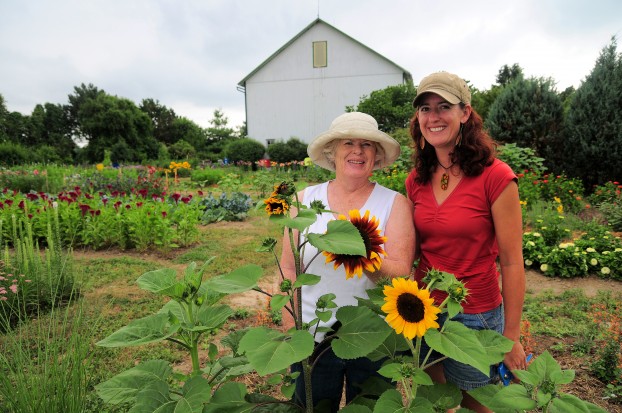
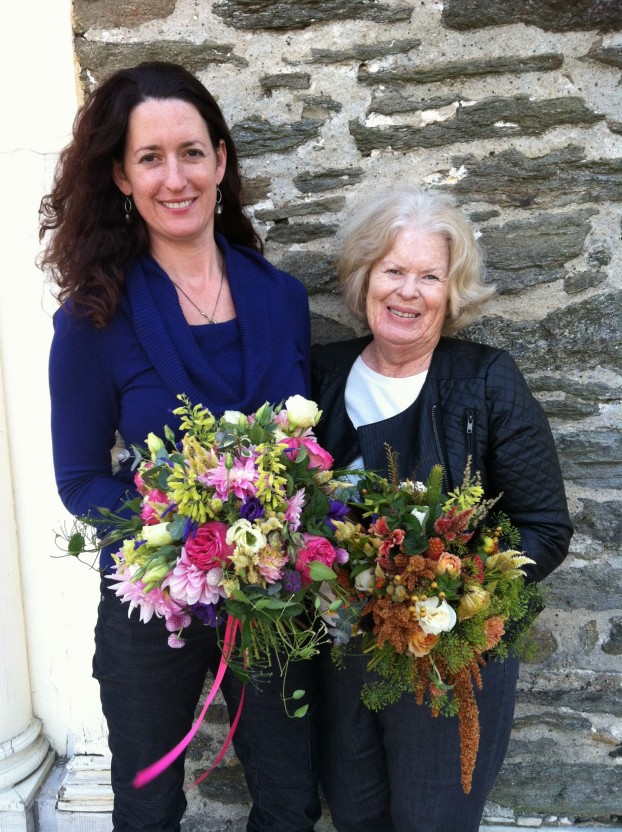
Kay Studer (left) and Susan Studer King (right) of Buckeye Bloms (c) Jason Bowers Photography

Kay Studer (left) and Susan Studer King (right) of Buckeye Blooms (c) Jason Bowers Photography

bb_logoI’m so pleased today to share a long-distance conversation I recorded a few weeks ago with Kay Studer and Susan Studer King, mom-and-daughter farmer-florists based in the Northwest Ohio community of Elida, where they grow and design.

The two are doing exciting things in their community, region and state and I know you’ll learn much from their experience, which they so generously share in the interview.

theflowerhouse_graphicBut first up: A bit of news. You may recall my interview a few months ago with Lisa Waud of Detroit’s pot and box, a studio, wedding and event florist who has taken it upon herself to dream up a project called “The Flower House” – a 100-percent American grown floral installation in an abandoned house in the Motor City.

Lisa has big plans and since our podcast, her first interview ever, she has garnered a lot of attention from the floral design and flower farming community, as well as the media. The Flower House will take place October 16-18, but this weekend, Lisa and her fellow floral artists will unveil their plans at a preview event to be held in a neighboring vacant house. As Lisa promises: “It will whet the whistles of interested florists, curious visitors and potential sponsors.”

I’ll be there to help the designers celebrate the launch of this incredible project. Please check out the links at The Flower House to find out how you can attend – especially if you’re in the Detroit area this coming weekend.

And if you want to get involved, please help FLOWER HOUSE BLOSSOM AND GROW. The team has just kicked off a funding campaign on my favorite crowd-funding platform Indiegogo so you’ve gotta know they’re smart cookies! Follow links to the campaign and donate at whatever level you feel you can. I’m intrigued by the fun perks, ranging from $5 to $5,000.

A few that listeners of this podcast might love:

  • an American-made tote bag straight from Michigan crafters for $40
  • a special fragrance inspired by The Flower House for $75
  • a picture frame made from wood salvaged from The Flower House and made by Lisa Waud’s Dad for $100
  • a private dinner in Detroit hosted by Lisa and her team for $5,000

Some amazing talents are participating in this fabulous project and I am excited to watch it bloom, flourish, blossom and beautify Detroit, to use as many metaphors as I can think of!

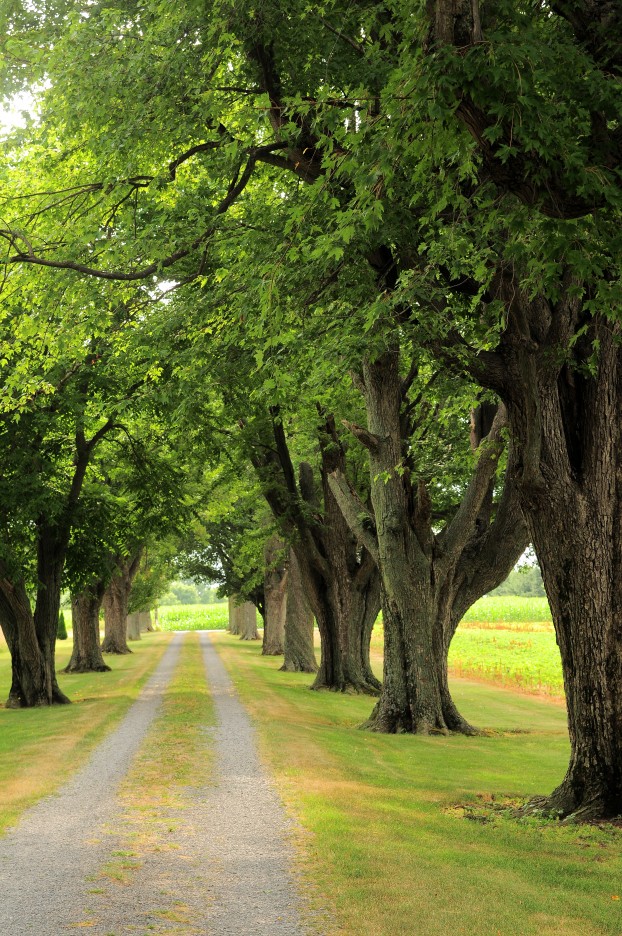
The road that leads to Buckeye Blooms in Northwest Ohio (c) Jason Bowers Photography

The road that leads to Buckeye Blooms in Northwest Ohio (c) Jason Bowers Photography

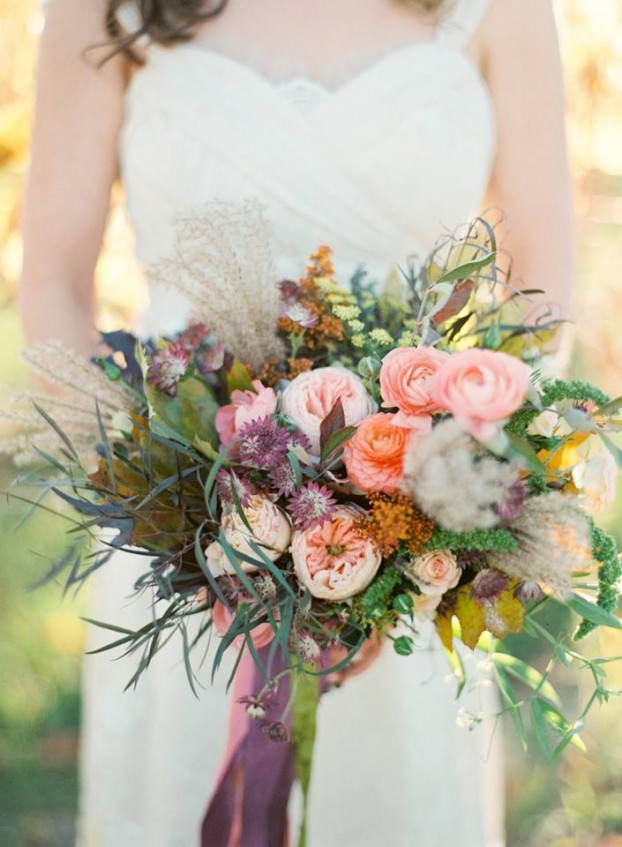
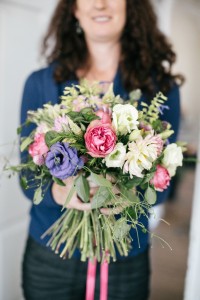
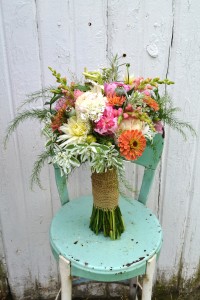
A Buckeye Blooms' grown and designed bouquet.

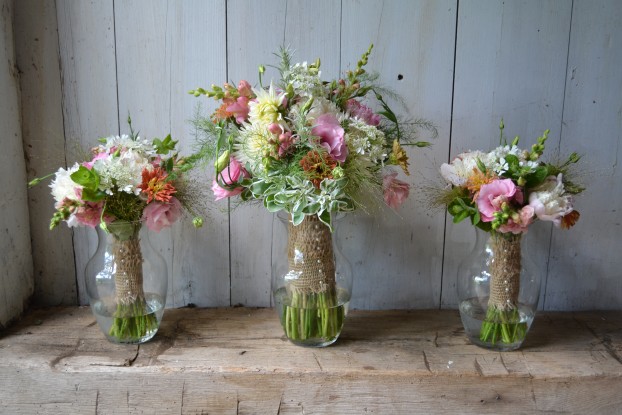
A Buckeye Blooms bouquet (c) Emily Wren

Okay, today’s guests will be equally inspiring. Kay and Susan are gardeners, farmers and family. They love flowers, of course.

As Buckeye Blooms, the mother-daughter team grows flowers without the use of any toxic chemicals and they express their earth-friendly values season after season by growing high-quality, super-fresh flowers.

“Just as a home-grown tomato tastes better than a store-bought one, we believe the freshest and most beautiful flowers come from the garden rather than the refrigerated section of a big-box store. By purchasing locally-grown flowers, you get fresher, longer-lasting blooms, while supporting Ohio farm families.”

The land on which Kay and Susan operate Buckeye Blooms has been in the Studer family for several generations.

Located in northern Allen County, Dolau Farm features a meadow set aside for permanent conservation, dense woods, mature windbreaks, and an established perennial garden in addition to the large flower field.

More beauty from Buckeye Blooms

More beauty from Buckeye Blooms

The historic 1880’s farmhouse is set back off of the road down a picturesque lane shaded by towering maple trees. Surrounding the house are many species of trees, woody ornamentals, grasses and greenery in addition to dozens of old-fashioned and unusual flower varieties. The Buckeye Blooms flower shop and design studio occupies what used to be the milking parlor of the “big barn.” The shop is also used for farm flower parties and other special events.

Environmental conservation is important to the Studer and King families and it is at the core of their farm operations. Hundreds of hardwood trees have been planted to prevent soil erosion, provide wildlife habitat and combat climate change. Recycling and energy conservation measures are implemented for every step of the flower production process.

“We don’t use toxic chemicals. Period. Plus, we put our money where our mouth is: we donate a portion of our profits to charitable organizations that work on behalf of food security, community gardens and solutions to climate change.”

A floral still-life.

A floral still-life.

BBssk3Here’s a bit more about Susan and Kay:

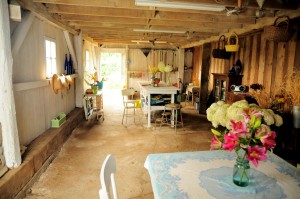
Inside the studio at Buckeye Blooms (c) Jason Bowers Photography

Inside the studio at Buckeye Blooms (c) Jason Bowers Photography

Susan Studer King’s background is in the environmental nonprofit field.

For more than eight years, Susan worked for Ohio Environmental Council where she led statewide efforts to reform Ohio’s factory farm, wetland and agricultural drainage laws and also served as the Council’s Development Director.

Prior to partnering with her mother to create Buckeye Blooms, Susan and her husband served as Peace Corps Volunteers in Ecuador where they saw firsthand the many negative environmental and social impacts of the commercial rose industry in Ecuador.

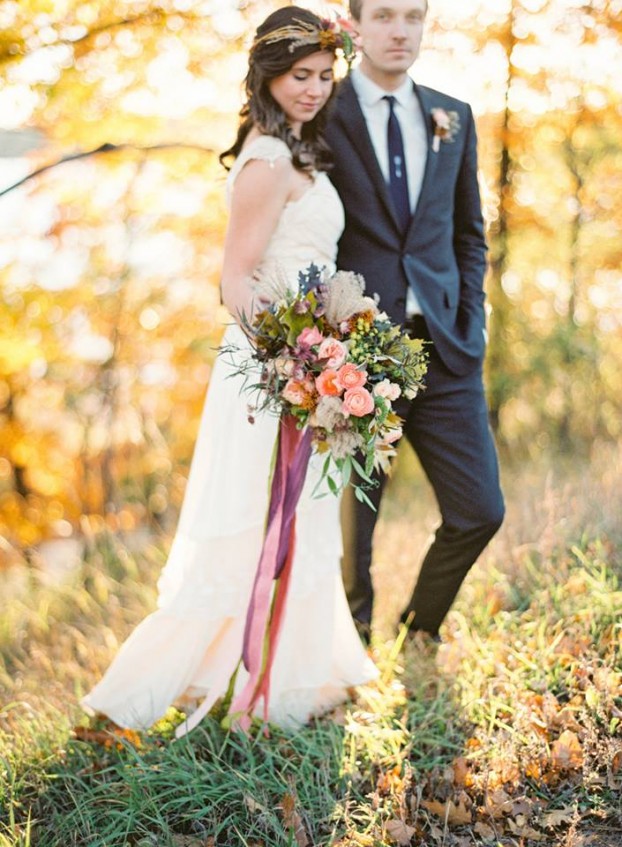
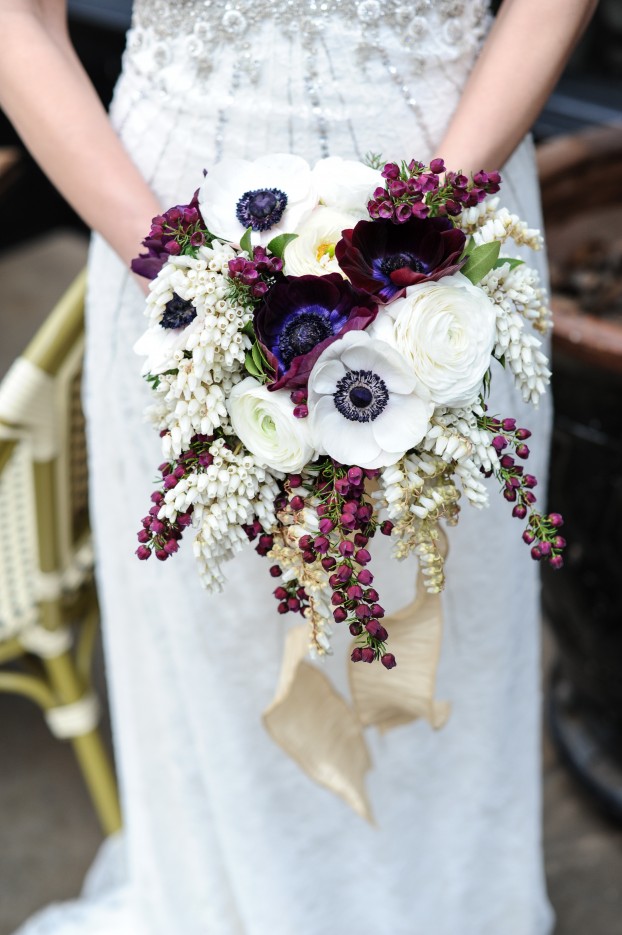
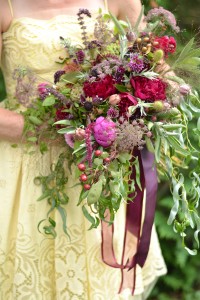
One of my favorite designs of Susan and Kay's - love the trailing ribbon.

One of my favorite designs of Susan and Kay’s – love the trailing ribbon.

Upon returning to the U.S., Susan & Jeremy moved back to the farm to start Buckeye Blooms and to live a low-carbon lifestyle.

Susan now splits her time between “the farm” and Granville where she does freelance writing; she serves on the Licking County Local Food Council and tries to steer her toddler out of trouble.

Kay Studer brings a lifetime of gardening experience to Buckeye Blooms.

Kay served as the Horticulture Program Coordinator at Ohio State University Extension Service in Allen County where she managed the Master Gardener program for more than 15 years.

Kay received national recognition and numerous awards for her leadership and programs at the Children’s Garden in downtown Lima.

An expert in diagnosing garden pest problems and an accomplished freelance landscape designer, Kay also has a great eye for floral design.

Kay’s first big floral design job: her daughter Susan’s wedding in 2000. Buckeye Blooms is headquartered on the family farm she has lived on since childhood.

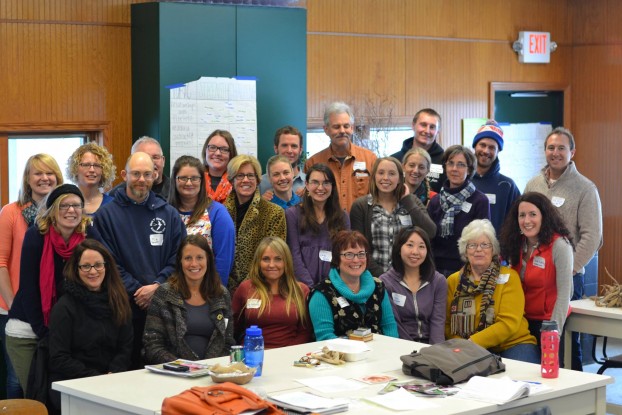
The recent gathering of Ohio's Flower Farmers shows the energy, intelligence, enthusiasm and diversity of this American-grown community. Kay and Susan are pictured in the front row; far right.

The recent gathering of Ohio’s Flower Farmers shows the energy, intelligence, enthusiasm and diversity of this American-grown community. Kay and Susan are pictured in the front row; far right.

Thank you so much for joining me this week and please return again, as I continue to share insightful and educational episodes recorded exclusively for the Slow Flowers Podcast.

Listeners like you have downloaded the podcast nearly 46,000 times. Until next week please join me in putting more American grown flowers on the table, one vase at a time. And If you like what you hear, please consider logging onto Itunes and posting a listener review.

The content and opinions expressed here are either mine alone or those of my guests alone, independent of any podcast sponsor or other person, company or organization.

The Slow Flowers Podcast is engineered and edited by Andrew Wheatley and Hannah Holtgeerts. Learn more about their work at shellandtree.com.

Buckeye Blooms on Facebook

Buckeye Blooms on Instagram

Buckeye Blooms on Pinterest

Earth Day with Updates from Peterkort Roses and Floral Soil (Episode 190)

Wednesday, April 22nd, 2015

Earth-Day-Logo-2015This week’s episode coincides with Earth Day, fittingly symbolic for the Slow Flowers Movement and flower farmers, floral designers and product innovators who are working to change our industry and push for progress to alter the status quo.

So I’d like to share a few news items as well as two follow-up interviews featuring guests of past Slow Flowers Podcast episodes.

Listen closely to find out how you can win prize packages from each of our guests – you’ll want to get in on the good stuff!

First off, if you enjoyed last week’s interview with Jenny Elliott and Luke Franco of Tiny Hearts Farm in New York’s Hudson Valley and Rachel Gordon of Taproot Flowers of Brooklyn, please check out more photos that I’ve added to the show notes. They’re onto something really special and I encourage you to listen if you missed that episode – and enjoy the beautiful flowers the three of them grow and arrange in their worlds.

FRD_posters_2015_photography_loweres2Second, I want to share details about this week’s Fashion Revolution Day, which takes place on April 24th.

If you believe in Slow Flowers, you should also embrace and support Slow Fashion, which has so many parallels in terms of labor practices, environmental concern and trade policy.

Slow Fashion asks questions about the origins of the clothing we wear that are virtually identical to the questions Slow Flowers asks about the bouquets we bring into our homes.

Fashrev2015Fashion Revolution Day 2015 marks the second anniversary of the Rana Plaza disaster in Dhaka, Bangladesh, which killed 1,133, and injured over 2,500 people.

According to Fashion Revolution’s data, one in six people work in the global fashion supply chain. It is the most labor-dependent industry on the planet, yet the people who make our clothing are hidden from us, often at their own expense, a symptom of the broken links across the fashion industry.

Wow, doesn’t that sound identical to the floriculture industry? On April 24th, coordinated teams around the world will challenge global fashion brands to demonstrate commitment to transparency across the length of the value chain, from farmers to factory workers, brands to buyers and consumers.

Zady.com, an innovative online fashion brand based in New York City, is serving as U.S. chair of Fashion Revolution Day. Slow Flowers has been invited to help promote the cause. Check out this Slow Fashion/Fashion Revolution event taking place in Brooklyn. Slow Flowers hopes to have ongoing involvement with Slow Fashion in the future.

unnamed-1

I am inspired by what the fashion industry has done in just two years to mobilize conscious consumers to care about the origins of their clothing — and in the future, I hope the floral industry will be just as vocal. I don’t wish for a fatal disaster to occur at an unregulated flower farm in a distant land to make us all wake up and start asking about the origins of our flowers.

What you can do on April 24th is to use your own social channels to get active. Take a photo of yourself wearing an item of clothing inside out. Tag the brand, share the photo on Facebook, Twitter and Instagram with the hashtags: #whomademyclothes and #fashrev.

Not to take away from this important endeavor, but perhaps you’ll be inspired to ALSO take a photo of yourself holding flowers that came from a US mega-retailer, big box store or supermarket and tag that retailer on your social sites with the hashtags: #whogrewmyflowers and #slowflowers. Just a thought.

Thanks for caring!

READ MORE…

Floral Friendship: The Florist (Betany Coffland of Chloris Floral) and The Farmer (Lennie Larkin of B-Side Farms) (Episode 188)

Wednesday, April 8th, 2015
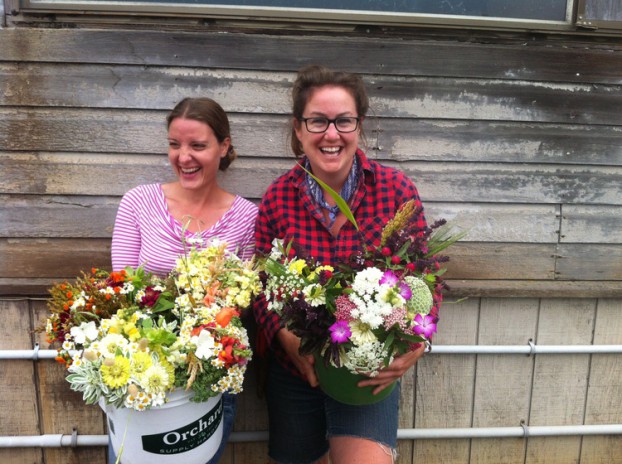
Betany Coffland (left) and Lennie Larkin (right). This photograph captured the friends holding flowers they grew for Chica Bloom Farm (Betany) and Petaluma Bounty (Lennie).

Betany Coffland (left) and Lennie Larkin (right). This photograph captures the friends holding flowers they grew for Chica Bloom Farm (Betany) and Petaluma Bounty (Lennie).

BsidelogoChloris Floral logoAttention emerging flower farmers and #farmerflorists!

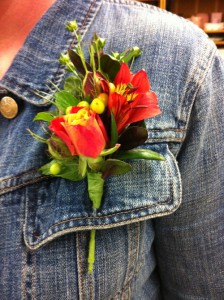
A B Side boutonniere.

A B-Side boutonniere.

I know you’ll appreciate this week’s guests because they are both in the early phases of launching their floral businesses.

Either you’ve already been there so parts of their stories will sound familiar or you’re in the thick of building a floral enterprise – farming and/or design – and will draw inspiration from their candor about the challenges, opportunities and decisions about the direction to take.

With planting and harvesting season and months of weddings upon us, I can assure you that our episode is timely. Like all of my guests on the Slow Flowers Podcast, there is much to learn from what they have to share.

Please welcome Betany Coffland of Chloris Floral and Lennie Larkin of B-Side Farm. Together, they embody a unique collaboration for people who are growing and designing American flowers. Be wowed by the collective beauty of their work.

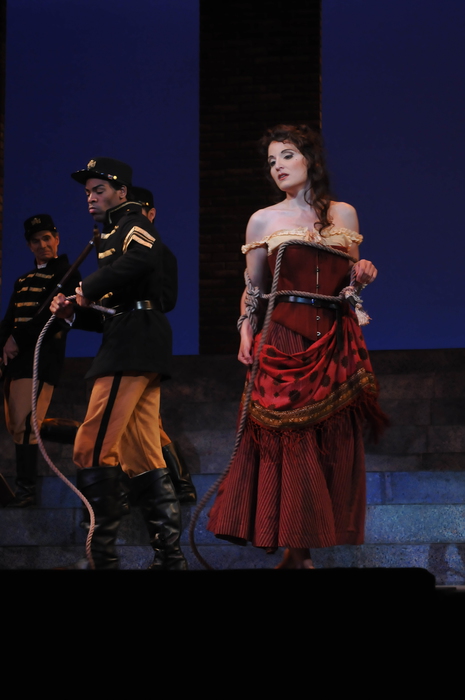
Betany, performing "Carmen" - Photo by Pat Kirk

Betany, performing “Carmen,” photo by Pat Kirk

This episode was recorded in the San Jose hotel lobby after the conclusion of ASCFG’s “Growers’ Intensive” last month.

Betany Coffland has always possessed an artistic soul. Her first career lies in singing opera where she trained at the Juilliard School of Music.

Often gifted with an armload of bouquets on opening night, Betany frequently imagined herself in a Jane Austen novel.

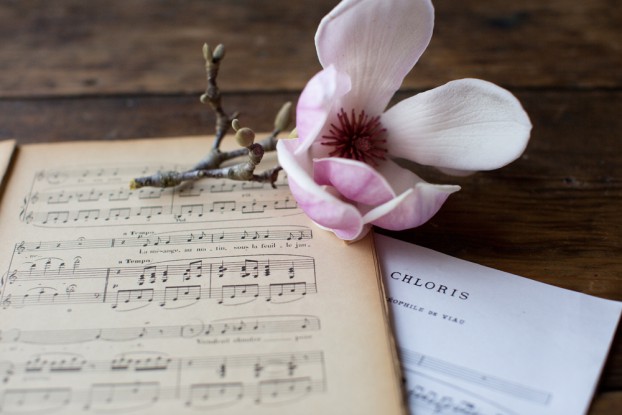
The quintessential professional, Betany has given us permission to include snippets of her operatic performances, including the French art song, “A Chloris.” Check out her professional opera site here. 

After moving to Sonoma County and reading the book, The Dirty Life, she was inspired to volunteer at a local flower farm to see if she would enjoy getting dirt under her nails and having the outdoors as an office.

A Chloris inspiration, photo by Paige Green

A Chloris inspiration, photo by Paige Green

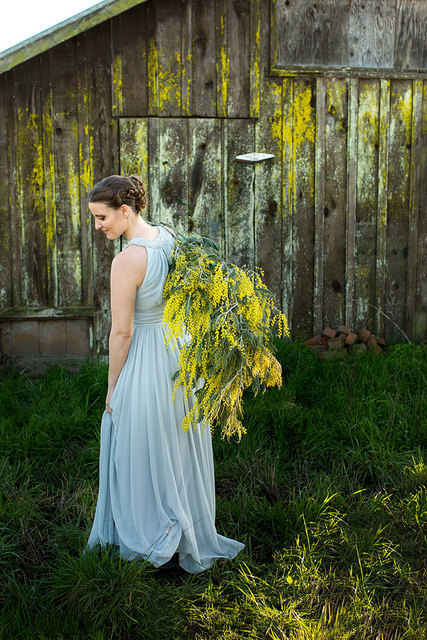
Betany Coffland, portrayed in an scene inspired by Chloris, the Greek goddess of flowers, photo by Paige Green

Betany Coffland, portrayed in an scene inspired by Chloris, the Greek goddess of flowers, photo by Paige Green

Betany swiftly and deeply fell entranced with how stunning and heartbreakingly gorgeous locally grown flowers are.

For 18 months, she co-owned Chica Bloom Farm, acting as the lead designer and wedding coordinator.

She especially loved getting to know her community through delivering weekly flower CSA bouquets.

In the winter of 2014, Betany launched Chloris Floral. The namesake Chloris perfectly combines her two artistic endeavors, classical singing and floral design.

Not only is Chloris the Greek goddess of flowers, she is also the heroine of Betany’s favorite French art song, “A Chloris,” by Reynaldo Hahn.

This song has special meaning because it was performed by a dear friend at Betany’s wedding to her husband Joseph. Now part of Betany’s repertoire, she continues to perform A Chloris.

A Chloris Floral spring bouquet inspired by Vivaldi's Spring Concerto from The Four Seasons

A Chloris Floral spring bouquet inspired by Vivaldi’s Spring Concerto from The Four Seasons

Betany and her floral arrangement, Inspired by Debussy's symphonic work- La Mer

Betany and her floral arrangement, Inspired by Debussy’s symphonic work- La Mer

Chloris Floral is a flower design studio in Sonoma County committed to using 100% local and seasonal blooms grown using organic practices. By supporting and building upon the strength of the local farming community, Chloris ensures the availability of fresh, locally grown blooms necessary to create achingly beautiful old world designs.

A little bit country: flower farmer, Lennie Larkin

A little bit country: flower farmer, Lennie Larkin

A lush B-Side bouquet, by Lennie Larkin.

A lush B-Side bouquet, by Lennie Larkin.

In her “day job,” Lennie Larkin is the community farm manager at Petaluma Bounty, a nonprofit community farm that  works to create a healthy and sustainable food system for everyone in Petaluma, California.

At Petaluma Bounty, Lennie grows lots of vegetables and a seriously beautiful patch of flowers that are sold locally, including at farmers’ markets.

She will share her story, so I don’t want to give too much away, but let me quickly introduce Lennie’s new flower farming business, B-Side Farm.

B-Side Beauty, by Lennie Larkin

B-Side Beauty, by Lennie Larkin

She describes B-Side as a small, bustling flower farm that grew out of her obsession with fragrant blossoms.

It sits on a fertile piece of land in the rolling hills of Petaluma, in the southern pocket of Sonoma County, California. From show-stopping dahlias to rare foliages and simple herbs, B-Side specializes in favorite old-fashioned flowers, picked daily and bursting with dreamy scents.

Lennie’s flowers and arrangement supply a family of local-minded florists and specialty stores in Petaluma, San Francisco, and Oakland, and she welcomes orders of loose flowers and specialty arrangements for pickup straight from the farm. Read Lennie’s extended bio from her new web site.

NBflowercollectiveLennie and Betany are founding members of the North Bay Flower Collective, a group of flower farmers and floral designers in the North SF Bay Area.

I love the motivation that led to the formation of the North Bay Flower Collective: To lean on each other for support and pull our resources together to build a flower growers’ alliance helping each farmer and florist to grow and thrive. 

Here are the links to Betany’s social sites for Chloris, to Lennie’s social sites for B-Side and to the North Bay Flower Collective.

You’ll want to follow these talented individuals and watch how their coming design season unfolds:

Find Betany here:

Chloris Floral on Facebook

Chloris Floral on Instagram

Chloris Floral Web Site

Find Lennie here:

B-Side Farm on Facebook

B-Side Farm on Instagram

B-Side Farm Web Site

Thank you so much for joining me this week and please return again, as I continue to share insightful and educational episodes recorded exclusively for the Slow Flowers Podcast.

Listeners like you have downloaded the podcast more than 42,000 times. Until next week please join me in putting more American grown flowers on the table, one vase at a time. And If you like what you hear, please consider logging onto Itunes and posting a listener review.

The content and opinions expressed here are either mine alone or those of my guests alone, independent of any podcast sponsor or other person, company or organization.

The Slow Flowers Podcast is engineered and edited by Andrew Wheatley and Hannah Holtgeerts. Learn more about their work at shellandtree.com.

Slow Flowers cited in Center for the Future of Museums’ “TrendsWatch 2015”

Sunday, April 5th, 2015
Please feel free to use this graphic to promote the Slow Flowers Movement to your own community of flower farmers, florists and customers.

Please feel free to use this graphic to promote the Slow Flowers Movement to your own community of flower farmers, florists and customers.

Out of the blue recently, an editor for the American Alliance of Museums’ annual TrendsWatch publication contacted me for permission to reprint the Slow Flowers‘ “Where do your flowers come from?” infographic in the organization’s 2015 annual report.

I really had no idea how this illustrious association of cultural institutions planned on using the infographic, but of course, I said YES.

TrendsWatch2015 features a report on "Slow Consumerism."

TrendsWatch2015 features a report on “Slow Culture.”

The publication just landed in my in-box and I have to say, it’s pretty impressive.

Each year, the TrendsWatch report highlights top trends that the Center for the Future of Museums staff and advisors believe are highly significant to museums and their communities.

The story of “Slow Flowers” appears in an article titled “Slooow: better a tortoise than a hare,” which highlights slower cultural experiences in all consumer categories.

In addition to the Slow Culture section, the TrendsWatch report cited Ethical Consumerism (which has a lot of connections to Slow Flowers, as well), Personalization, Rising Sea Levels, Wearable Technology and Open Data as subjects of importance to the Museum community.

Here’s a PDF of the article: Trendswatch 2015. You can download a PDF of the entire TrendsWatch report here after completing a short registration form.


Santa Cruz’s Teresa Sabankaya of Bonny Doon Garden Co. draws inspiration from her own garden and nearby flower farms (Episode 187)

Wednesday, April 1st, 2015
Inspiring floral designer Teresa Sabankaya of Bonny Doon Garden Co.

Inspiring floral designer Teresa Sabankaya of Bonny Doon Garden Co., captured while gathering flowers in her garden

In 2007, Amy Stewart’s Flower Confidential introduced readers to a Santa Cruz-area floral designer named Teresa Sabankya. She wrote:

Teresa Sabankaya has the kind of flower shop that you would dream about opening, if you are the kind of person who dreams of opening a flower shop. It’s in a little green metal kiosk outside Bookshop Santa Cruz in coastal California. The flowers – all interesting, unusual, old-fashioned, ephemeral, perfumy, not-your-typical-florist kind of flowers – dance and wave from buckets crowded around the stall. Her inventory is highly seasonal: in summer you’ll find larkspur and poppies, and in winter it’s all heathers and holly and berries. If you’ve been so busy that you haven’t noticed that spring has arrived, you’ll stop short at the sight of the pink cherry blossom branches bursting out of her shop in early March, and it’ll make you resolve to slow down and enjoy the season. Even if you don’t buy a flower – and Teresa would be happy to sell you a single flower – just the sight of her little stall will lift some of the weight off your shoulders. Anyone who doubts whether flowers can change a person’s emotional state has never watched the people walking by Teresa’s shop.” 

Amy continued: ” . . . The Bonny Doon Garden Company fit with my idea of how floral commerce must work – you’d grow some flowers in your garden, you’d buy some from a farmer down the road, and you’d put them in buckets and sell them to your neighbors.”

Bonny Doon's retail space inside New Leaf Market in Santa Cruz, CA.

Bonny Doon’s retail space inside New Leaf Market in Santa Cruz, CA.

Well, anyone who read all of Flower Confidential knows that it’s about the international, multibillion dollar floriculture industry – a far cry from the charm of selling flowers from one’s garden in Santa Cruz.

I was always in awe of Teresa – she was a rock star profiled by Amy Stewart, for goodness sake’s. Until last week, Teresa and I had never met in person, but we felt connected through our friendship with Amy and because we both want to advance a new normal in the floral industry: where mindful practices of local, seasonal and sustainable flowers trump designing with imported ones.

Last year, when I launched the Slowflowers.com web site, Teresa created a listing for Tessa’s Garden, her studio business, and we started an occasional email correspondence.

Oh my gosh: the dream garden! Here's where many of the flowers, branches, herbs and vines that Teresa uses originate . . . in her private garden.

Oh my gosh: the dream garden! Here’s where many of the flowers, branches, herbs and vines that Teresa uses originate . . . in her private garden.

Another view, including the veggie and herb garden in the foreground.

Another view, including the veggie and herb garden in the foreground.

An intricate detail in the Posie that Teresa created for me.

Intricate details emerge as part of the hand-tied Posie that Teresa created for me.

Teresa had taken a break from the fast pace of running a retail flower shop and sold The Bonny Doon Garden Co. in 2012.

She then pivoted toward wedding and event design work, including hosting private ceremonies under the giant redwoods at her bountiful landscape in the hamlet of Bonny Doon, a few miles up the Coastal Highway from Santa Cruz.

Earlier this year, Teresa extended an invitation for me to stay a few days in the bridal cottage on her family’s property.

We planned ahead to schedule that visit – and this podcast interview – after my gig speaking at the San Francisco Flower & Garden Show on March 22nd.

READ MORE…

#FarmerFlorist at a Crossroads – Redefining A Business with Emily Watson of Stems Cut Flowers (Episode 185)

Wednesday, March 18th, 2015
Emily Watson, Milwaukee, Wisconsin-based flower farmer, floral designer, entrepreneur -- today's podcast guest.

Emily Watson, Milwaukee, Wisconsin-based flower farmer, floral designer, entrepreneur — today’s podcast guest.

50

Emily on the farm, with her beautiful Wisconsin-grown peonies

I first met today’s guest “virtually,” when I reached out to her asking permission to use a portion of a online discussion she had started with other flower farmers.

Emily Watson is based in Milwaukee, Wisconsin, and since 2008 she has owned Stems Cut Flowers, a specialty cut flower business based on her grandparents’ farm about 45 minutes west of Milwaukee. She is a founding member of Slowflowers.com, having supported our launch by contributing to the initial Indiegogo campaign.

Emily and I finally met in person last October at the ASCFG national meeting in Wilmington, Delaware, and that was when we spoke further about the possible “course-correction” she was considering as she juggled flower farming and a successful floral design aspect to her business. Recently we connected over Skype for a conversation that I believe you’ll find quite honest and forthcoming.

And ironically, it harkens to that bulletin board comment Emily made in 2011, the one I included in The 50 Mile Bouquet. She posed this question:

“I’ve been growing for less than five years, on a small plot, and I’m wondering if this is a good idea. I’m not looking to get rich overnight, or even at all. But I need to pay the bills, maybe support a family and retire some day (before I’m 90). I do not have a
problem working a few 80-hour weeks but I do not want that to be the norm. Am I crazy for thinking this? The bottom line is I need to know if this is possible before I sink any more money into it?”

The responses Emily received were encouraging and honest; no one tried to sugarcoat the truth about the backbreaking reality of running a small farm. They also revealed that people do not grow and market flowers because it’s lucrative, but at least in part for a love of the land and a passion for the independent lifestyle it brings.

Emily with her husband

Emily with her husband Nich Love

Here’s more about Emily:

Emily's tagline for Wood Violet, her new design studio, is "floral design inspired by nature." How fitting!

Emily’s tagline for Wood Violet, her new design studio, is “floral design inspired by nature.” How fitting!

A May wedding bouquet grown and designed by Emily Watson.

A May wedding bouquet grown and designed by Emily Watson.

She grew up in a small agricultural town not terribly far from Milwaukee with three brothers and lots of cousins nearby, playing outside all the time.

After high school, Emily attended the University of Wisconsin in Madison where that love for the natural world led her to earn a bachelor’s degree in Biological Aspects of Conservation.

She worked as a landscaper, which led to work in a flower shop, which somehow led to managing a Chinese restaurant. As she puts it: “I learned a lot about business at that Chinese restaurant and made a lot of friends, but the call of the outdoors was too strong.

By 2008, Emily had started Stems Cut Flowers at her grandparents farm in East Troy, the town in which she grew up. As a small farming business, Stems flourished into a floral design business.

Emily considers herself lucky enough to live in the city and spend a few days every week at the farm, the best of both worlds.

Spring flowers in a romantic nature-inspired bouquet.

Spring flowers in a romantic nature-inspired bouquet.

Her intention has always been to run a thriving flower farm that sells its crops to florists and to the public at farmer’s markets, picking up occasional wedding design work. The reality, however, is that the idea of “occasional” wedding design has turned into a nearly every weekend occurrence. It soon became evident to Emily that she was running two separate businesses. Last year she decided to create a separate identity for the design portion of her business.

The timing is perfect for today’s interview because Emily is in the midst of launching a floral design studio in Milwaukee. She’s named it Wood Violet, an eco-friendly studio that focuses on locally grown flowers as much as possible, offering wedding flowers and daily deliveries.

As we discussed in the interview, Emily hopes to offer gardening classes and floral design workshops at Wood Violet, inspiring people with the beauty of each season. I admire the way she’s playing to her strengths as both a flower farmer and a floral designer, and I admire that her new hybrid business model includes supporting other local flower farmers in her community while still keeping her fingers in the soil.

Emily Watson-designed wedding flowers.

Emily Watson-designed wedding flowers.

You know, I think Emily has answered the question she posed back in 2011 better than anyone else could have done – and I wish her great success.

Here’s how to find Emily on all her platforms:

Wood Violet on Facebook

Wood Violet on Instagram

Wood Violet on Pinterest

Before we close, I want to give you the news of the week.

Bloom InstagramSlowflowers.com has partnered with the Ethical Writers Coalition to present Bloom: A Sustainable Workshop, that will take place on Sunday, March 29th at the Mode Marteau Studio in Brooklyn.

Participants can sign up for one or more intimate classes for a hands-on and creative experience in sustainability, and of course, locally-grown flowers.

Learn to make your own fresh flower crown, create a perfect bouquet, or plant a DIY a reclaimed vase at three different workshops.

Three members of Slowflowers.com will join together for the 3rd workshop: Local Flowers 101 with Taproot & Molly Oliver Flowers

Rachel Gordon of Taproot Flowers and Molly Culver and Deborah Greig of Molly Oliver Flowers will teach flower arranging tips & tricks, discuss the importance and sourcing of sustainable flowers, and how to best care for your arrangement. All materials included with the $65 workshop fee.

603730_1735877586638566_7397650793020746231_n

I want to thank the Ethical Writers Coalition for producing this awesome event and for inviting Slowflowers.com to participate. The Ethical Writers Coalition is a very cool group of journalists, writers, and bloggers who seek to support and further ethical and sustainable living online and in print. Through my publicists, I met co-founder Alden Wicker of the EcoCult Blog when I was in New York last October – and she attended a SlowFlowers.com gathering where this event idea germinated.

After we connected, Alder wrote an insightful post about Slow Flowers, which you can read here. Elizabeth Stilwell, who blogs at TheNotePasser.com, has taken the lead on creating Bloom and I have thoroughly enjoyed working with her on this project – sadly, I can’t attend. But I’m so pleased that Slowflowers.com will be well represented, getting the word out about American flowers and the people who grow and design with them.

I love how the roots of sustainable living intertwine so perfectly with the American Grown Flower movement. It’s exciting to see the idea of local, seasonal and sustainable flowers move from the alternative/fringe world closer to the mainstream.

donate-grist-logoLast week Grist.org fellow Ana Sofia Knauf published an interview with me and titled it “There’s a Local Flower Movement Blooming,” and I’d love for you to read it. Check out the link to her piece here.

Thanks for joining me this week and please return again, as I continue to share insightful and educational episodes recorded exclusively for the Slow Flowers Podcast.

The content and opinions expressed here are either mine alone or those of my guests alone, independent of any podcast sponsor or other person, company or organization.

Thanks to listeners, this podcast has been downloaded more than 39,000 times. If you like what you hear, please consider logging onto Itunes and posting a listener review.

Until next week please join me in putting more American grown flowers on the table, one vase at a time.

The Slow Flowers Podcast is engineered and edited by Andrew Wheatley and Hannah Holtgeerts. Learn more about their work at shellandtree.com.

Week 10 // Hellebores!!! (and More)

Friday, March 13th, 2015

Week10Oh joy! The hellebores are blooming quite early this year.

Up close, the detail is so lovely and intricate

Up close, the detail is so lovely and intricate

For better or worse, Seattle’s uber-mild winter means that many of our early flowers are emerging weeks ahead of schedule.

I’m worried that our gardens and fields will need a lot more water this summer, but we can only say that Mother Nature decided to give us warmer temperatures and extra sunshine this year – more than previous winters in recent memory.

Diane Szukovathy and Dennis Westphall of Jello Mold Farm grew the hellebores you see here – and let me tell you, their luscious blooms were flying out of the Seattle Wholesale Growers Market when they arrived.

I snagged the *last* bunch of the plum hellebores and grabbed only 4 stems of the beautiful pale speckled ones.

Gorgeous specialty tulips also caught my eye – so much more substantial and visually arresting than the hothouse ones coming out of Canada. These were lovingly grown by Gonzalo Ojeda of Ojeda Farms, a member of the SWGMC who farms in Ethel, Washington. One bunch of 10 stems, while short, provided plenty of tulips to add dazzle to two vases.

Plum and berry hues with pale green & butter yellow in a vintage white vase.

Plum and berry hues with pale green & butter yellow in a vintage white vase.

Jasmine isn’t winter-hardy here in Seattle, but boy do I remember it clambering over the stucco retaining wall in our former garden in California’s Ventura County. On the first Thanksgiving we lived there – after moving from Seattle in 2006 – my friend Nancy, visiting from Seattle, created our entire Thanksgiving tablescape from the bounty of our new backyard – including that lacy jasmine.

Molly Sadowsky, the SWGM’s manager and principal buyer, has a secret California source for evergreen Jasmine – and the designers here in Seattle absolutely love it! Me, too! I love that the jasmine foliage is also a gorgeous aspect of this arrangement, a bonus to the fragrant flowers and buds.

Oh, and there is one element from my Seattle garden: the delicate pale yellow flowers from Epimedium, a beautiful groundcover. I only had a few stems to add, but their petals echo the Hellebores’ centers, adding a delicate texture.

scroll

Hellebores for the People
Designed by Mick & Olivia Payment,
owners of 
Flowers for the People 

Hellebores with orchids, roses, pincushion protea, jasmine and more - designed by Olivia and Mick Payment

Hellebores with orchids, roses, pincushion protea, jasmine and more – designed by Olivia and Mick Payment

Earlier this week, the SWGM hosted its first Orchid Spectacular to showcase a wide array of Local and American-grown potted and cut orchids. The Market staff invited Mick and Olivia, a brother-and-sister design team, to demonstrate how they design with orchids in arrangements and interior planters.

You’ll be wowed by one of their designs pictured here. I wanted to share it because of the diversity of flowers they incorporated, including Lady Slipper orchids from Orchidaceae  of Walla Walla, Washington, and hellebores from Jello Mold Farm (the “leftovers” ended up in my design above).
The yellow-green-pink palette is such a breath of fresh air! Mick and Olivia also used CA-grown roses and pincushion proteas to masterfully express their inspiration to use domestic flowers.
 scroll

Slow Food meets Slow Flowers at the first Field to Vase Dinner with designer Margaret Lloyd of Margaret Joan Florals (Episode 184)

Wednesday, March 11th, 2015

00401_AY_AGF_F2V_Pstr&PC_v3-page-002

A great spread about the Field to Vase Dinner appeared recently in the local Santa Barbara News-Press.

A great spread about the Field to Vase Dinner appeared recently in the local Santa Barbara News-Press.

I spent a few days last week in Carpinteria, California, working with the team that’s producing the 2015 Field to Vase Dinner Tour, a program that’s designed to put local flowers at the center of the table when local food and wine are also served.

You could call it Slow Food meets Slow Flowers.

For the past several years, my involvement with the California Cut Flower Commission has been as an informal, pro-bono advisor.

This year, I’ve assumed the role as a part-time paid communications consultant, editor and writer, lending my energy to the Field to Vase Tour and other important projects on the regional and national stage.

This opportunity allows Slow Flowers to cross-promote with many other programs, and, I hope, ensures that a wider audience hears the message of America’s flowers.

The Field to Vase Dinner Tour fits perfectly with the Slow Flowers agenda – drawing attention to the farmers who grow our flowers and the designers who create beauty with them.
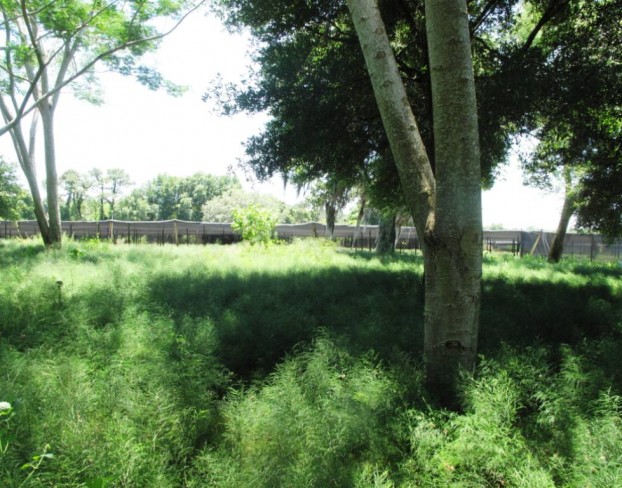
Margaret Lloyd, owner of Margaret Joan Florals - the guest designer for the first Field to Vase Dinner.
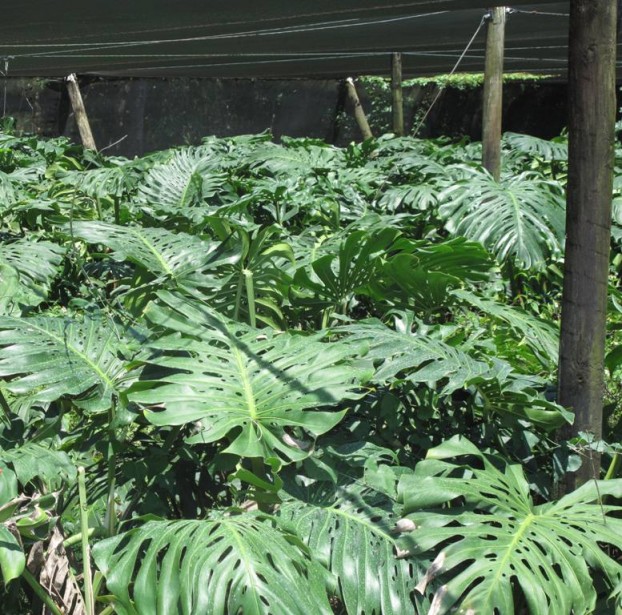
Margaret Lloyd, owner of Margaret Joan Florals – the guest designer for the first Field to Vase Dinner.

The 10-city national Field to Vase Dinner Tour was developed to highlight flower farms and floral designers who source local and domestic flowers. It’s intended to make a stronger connection between the sources of both flowers and food, reminding people that flowers are an equally important facet of our agricultural landscape.

I also am thrilled that Slow Flowers’ partnership with the Field to Vase Dinner Tour means members of Slow Flowers are being asked to showcase their design work, alongside the chefs who are cooking up a delicious, locally-sourced menu.

Today’s guest is Slow Flowers member Margaret Lloyd, owner and creative director of Margaret Joan Florals – the designer for the first Field to Vase Dinner, held on March 5th at Westland Orchids in Carpinteria.

She started Margaret Joan Florals from her home-based studio in Montecito, to provide unique, nature-inspired floral arrangements, for weddings and events. Margaret is a Certified California Florist with 15 years retail experience in floral and event design.

Here’s a clip from Margaret’s television appearance last week – as she used Carpinteria-grown flowers (including greenery from her own backyard) to teach two newscasters how to arrange:

In addition to her involvement with Slowflowers.com, Margaret is a Chapel Designer, a member of Las Floralias, which is a Santa Barbara-based Western Style Flower Club, as well as being a student of Ikebana and an avid gardener.

She explained to me that her aha moment in floral design came from an article in Victoria magazine some twenty-plus years ago. She said:

The article showcased an English country estate garden in winter, and on the next page was a floral arrangement all harvested from their bleak winter cutting garden. It was dramatic and stunning with moody colors, bold shapes,lines and interesting textures.

This led me to be captivated by each season’s bounty, and a love of  locally-sourced, seasonal botanicals. This old-world design is presently having a resurgence in appeal, so I stepped away from my wire service formula design job, and stepped out on my own in January of 2014. My approach is to utilize locally-sourced flowers however I can.

I witnessed this philosophy first hand at the Field to Vase Dinner last week. Because the event took place inside an orchid greenhouse, you can only imagine what Margaret had to work with!

The table was set for a flower- and food-centric evening with an emphasis on local agriculture. (Linda Blue/CCFC)

The table was set for a flower- and food-centric evening with an emphasis on local agriculture. (Linda Blue/CCFC)

She took inspiration from the forest of cymbidium orchids grown by Jerry Van Wingerden and his son David Van Wingerden. Here are some tempting images that illustrate Margaret’s creative use of Westland’s beautiful orchids.

The Flower Power Design Team, from left: Laura Cogan, JIll Redman, CCFC Event Planner and Florist Kathleen Williford, Margaret Lloyd and Rebecca Raymond. All that talent in one place!

The Flower Power Design Team, from left: Laura Cogan, JIll Redman, CCFC Event Planner and Florist Kathleen Williford, Margaret Lloyd and Rebecca Raymond. All that talent in one place!

The signature design using cymbidiums grown byWestland Orchids and roses grown by Myriad Farms, two local flower farms.

The signature design using cymbidiums grown byWestland Orchids and roses grown by Myriad Farms, two local flower farms. (Linda Blue/CCFC)

Designing more than 100 vases for the centerpieces and takeaway gifts wasn’t easy, given the short production timeline. Margaret had some help, thanks to friends and fellow designers.

Rebecca Raymond of Sunnybrooks Florals of Vashon Island, Washington, along with Jill Redman of Forage Florals in Solvang, California, and Laura Cogan of Passion Flowers Design in Buellton, California, joined the design team — all as volunteers.

Together, they wanted to make a dramatic statement for arriving guests.

The top of the entry arbor towered above the doorway to the orchid greenhouse. (Linda Blue/CCFC)

The top of the entry arbor towered above the doorway to the orchid greenhouse. (Linda Blue/CCFC)

The four constructed a 10-foot-tall-by-12-foot wide birch-tree arbor to grace the doorway to the orchid greenhouse.  Acacia foliage, green cymbidium orchids, yellow gerberas and white snapdragons draped from the branches and created a magical moment for everyone who entered.

This photo gives you a sense of scale that the floral arch achieved. With Laura Cogan, Margaret Lloyd and Rebecca Raymond.

This photo gives you a sense of scale that the floral arch achieved. With (from left): floral designers Laura Cogan, Margaret Lloyd and Rebecca Raymond.

I applaud these talented women for what they achieved. The floral environment they created will set a high standard for future Field to Vase Dinners.

It was "work" - I promise you! I enjoyed working with the event time, including Adrienne Young, CCFC's social media and branding expert. (Linda Blue/CCFC)

It was “work” – I promise you! I enjoyed working with the event time, including Adrienne Young, CCFC’s social media and branding expert. (Linda Blue/CCFC)

You might have missed the first Field to Vase Dinner but there are nine more venues on the calendar for 2015. Please check out the full schedule here – and secure your seat at one or more of these very special settings on America’s flower farms, coast to coast.

scroll

I also want to alert you to an opportunity for flower farmers and floral designers in the New York area:

Farmdale

On Wednesday, March 25th, the department of Urban Horticulture & Design at Farmingdale State College in Farmingdale, New York (on Long Island) is hosting its 5th Annual Sustainable Garden Conference. This year’s theme is Flower Power: Growing and Designing With Flowers for All Seasons.

Speakers and workshops will focus on commercial cut flower farming and floral design, with a special presentation by SlowFlowers.com member Lynn Mehl, owner of Good Old Days Ecoflorist in New Windsor, New York, who will speak on “Working with Local Cut Flowers – a Designer’s Perspective.”

There is even a presentation scheduled about the Slow Flowers Movement, although I won’t be able to give it in person. For anyone in the tri-state area, or even from farther away, this will be an exciting opportunity to meet with area cut flower farmers, educators, advocates and florists who care about sourcing their flowers locally. The cost for students is $35 and $65 for the general public and you’ll find links to registration here.

scroll

Thanks for joining me this week and please return again, as I continue to share insightful and educational episodes recorded exclusively for the Slow Flowers Podcast.

Thanks to listeners, this podcast has been downloaded nearly 38,000 times. If you like what you hear, please consider logging onto Itunes and posting a listener review.

Until next week please join me in putting more American grown flowers on the table, one vase at a time.

The slow flowers podcast is engineered and edited by Andrew Wheatley and Hannah Holtgeerts. Learn more about their work at shellandtree.com

Flower Farming in the nation’s Capitol with Bob Wollam of Wollam Gardens (Episode 183)

Tuesday, March 3rd, 2015
16085799074_1b531a8830_k

I’m so pleased that Slowflowers.com members Rachel Bridgwood and Lauren Anderson of Sweet Root Village (left) and flower farmer Bob Wollam of Wollam Gardens (center) joined Christina Stembel of Farmgirl Flowers (right) and me at a D.C. reception celebrating American Grown Flowers. (CCFC photograph, used with permission)

Today's guest is Bob Wollam of Wollam Gardens, which serves  florists, grocery stores, farmers markets and brides around the nation's capitol.

Today’s guest is Bob Wollam of Wollam Gardens, which serves florists, grocery stores, farmers markets and brides around the nation’s capitol.

I returned to Washington, D.C., this past week to join a delegation of flower farmers who invested their own resources of time and money to travel to our nation’s capital to meet with members of Congress and talk about the issues facing our industry.

First of all, I congratulate the folks who do this – they are the ones putting their money where their mouths are to elevate the awareness of policymakers who are in a position to make decisions that affect America’s flower farmers. I was honored to share this experience with them for the second year in a row. And for those of you who question why this is an important step to take, we have a lot of wins to point to.

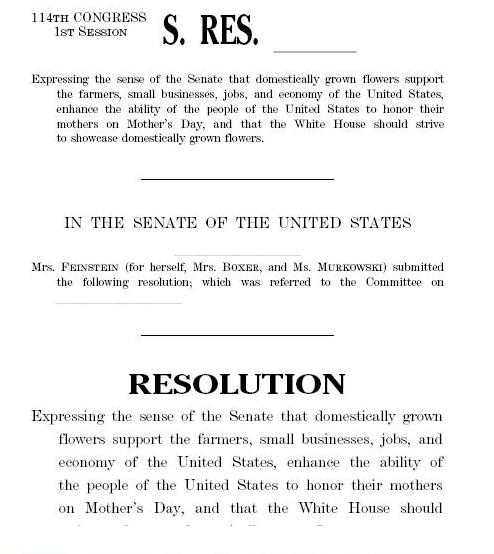
For all of us, having the bipartisan Congressional Cut Flower Caucus, formed in 2014 and co-chaired four members of Congress who have flower farms in their districts – Lois Capps and Duncan Hunter from California, Jaime Herrera Beutler from Washington State and Chellie Pingree from Maine – means that there is now a tangible body of policymakers that you can ask your own elected officials to join. If you are interested in reaching out to your member of Congress, please contact me offline – and I will help you make that introduction. What is this Caucus doing? For one thing, we have them to thank for keeping the dialogue about seeing local and domestic flowers used for White House functions.

In 2015, the Congressional Cut Flower Caucus has been asked to join the Congressional Wine Caucus – one of the most popular of caucuses (right?) – to host an event where local wine and local flowers will be highlighted. I’ll keep you posted on that event because your participation will be needed to showcase your own region’s cut flowers.

Kevin Stockert (left), a legislative aide for U.S. Senator Patty Murray (Washington), has invested time and interest in listening to and visiting flower farmers in her state.

Kevin Stockert (left), a legislative aide for U.S. Senator Patty Murray (Washington), has invested time and interest in listening to and visiting flower farmers in our state.

Another important reason for these DC visits are the relationships that emerge. When you meet your elected officials, you never know what it will lead to.

For two years in a row, I’ve been privileged to meet with the agriculture policy staff of Senator Patty Murray.

Last year, after my fellow Seattle Wholesale Growers Market board members, flower farmers Diane Szukovathy and Vivian Larsen, and I made those connections, two of the Senator’s staffers took the time to visit our market, meet farmers and enjoy our local flowers. These folks want to know what their constituents are doing in areas such as sustainable agriculture, job creation, economic development and more. We’ve received offers of support for future projects, such as USDA Specialty Crop Block Grant funding we may seek, and I know I can speak for Diane and Vivian that we truly feel there is someone in our nation’s capital who will return a phone call or email and listen to a concern. That is priceless!

Bob Wollam brought his Virginia quince branches to Washington, D.C. -- they added a lot of local beauty to the conversation at an evening reception!

Bob Wollam brought his Virginia quince branches to Washington, D.C. — they added a lot of local beauty to the conversation at an evening reception!

While I was in DC, I couldn’t miss an opportunity to visit a local flower farm and interview a flower farmer, right? So please enjoy today’s conversation with Bob Wollam of Wollam Gardens, based in Jeffersonton, Virginia.

Bob joined the flower farmer Delegation to meet with his own Virginia congressman, as well as participate in meetings with other offices.

The amazing thing is that the staffers of members of Congress from many states live and work in our nation’s capitol, where Bob sells Virginia-grown flowers at the DuPont Circle Farmers’ Market (where he was a founding member).

So the dots were connected between LOCAL and AMERICAN GROWN – and why they are both so integral in saving our domestic cut flower industry. We suspect that these young legislative assistants will now come find Bob, seeking out the flowers he grows on land less than a 75-mile radius from DC. Like the other flower farmers in our group this past week, Bob is the face of the farmer; the face behind the poppies, ranunculus, anemones, tulips, sweet peas, peonies, hydrangeas, viburnum, dahlias and more. Here’s some more background on our guest today:

Bob Wollam, seated on the front porch of the historic farmhouse in Jeffersonton, Virginia where Wollam Gardens is based.

Bob Wollam, seated on the front porch of the historic farmhouse in Jeffersonton, Virginia where Wollam Gardens is based.

The beautiful green viburnum that bloom gloriously in April at Wollam Gardens.

The beautiful green viburnum that bloom gloriously in April at Wollam Gardens.

Bob Wollam has now been a flower farmer for 21 years. While he will be quick to tell you he had an exciting life before 50, he’ll be even quicker to tell you his addiction to beautiful cut flowers has been nothing but thrilling — and he intends to continue the addiction well into his nineties.

In 1987, Bob Wollam moved to Washington, D.C. This was his first step of an old dream of being a flower grower.  Two years later, he asked a realtor in Warrenton to show him land in Virginia.  He said he wanted at least 10 acres and an old house.   He purchased his historic Farm House with a pre-Revolutionary history and of course 11 acres of farmland in the hamlet of Jeffersonton.

For three years, Bob grew perennials which he sold at the Alexandria, (Virginia) Farmer’s market.  After seeing a small “cut your own” garden during a trip to Central NY, he shifted his energy into cut flowers. Bob began selling to florists in Washington DC and adding more farmers’ markets near, or in, the city. He initiated an internship program in 1994 and has hosted adventurers and flower lovers from around the world.  Many of those are still active in cut flowers, some on their own farm.

A hoophouse filled with Icelandic poppies at Wollam Gardens.

A hoophouse filled with Icelandic poppies at Wollam Gardens.

In the winter of 2006-2007 he developed a 25 year plan for his flower farm and is well on the way to implementing that plan. Bob is driven to grow unique, difficult to grow and difficult to ship cut flowers for specialized florists, designers and farmer’s market customers.

Oh, those hydrangeas!!!

Oh, those hydrangeas!!!

One of Bob's first spring crops is the fanciful and alluring anemone.

One of Bob’s first spring crops is the fanciful and alluring anemone.

With no background in agriculture except a gene handed down from both grandparents, Bob has turned Wollam Gardens into an exceptional destination for flower lovers. He learned quickly by reading everything he could find and with the guidance of other cut flower farmers who  are part of the ASCFG (the Association of Specialty Cut Flower Growers), an association for which Bob served as a 2-term President.

Wollam Gardens now grows over 80 varieties of cut flowers on 11 acres, plus a few acres on his neighbor’s land. In addition 4 cold frames for growing cool season plants like stock, campanula, delphinium, ranunculus, and the well-known Temptress poppies, Bob has a continuing interest in flowering shrubs as cuts (quince, hydrangea, physocarpus, and viburnum), as well as fragrant bulbs (Oriental lily, Mexican tuberose), and, of course, close to 9000 dahlias.

Ready for market: Zinnias galore.

Ready for market: Zinnias galore.

In 2009, the Washington Post featured Wollam Gardens in a big story.

In 2009, the Washington Post featured Wollam Gardens in a big story.

During the season, Wollam Gardens is open to the public for customers who wish to purchase flowers and plants, Monday through Saturday 9-5, and for wedding and event consultations. People are welcome to stroll the property and look for one of the crew or interns to help with their flower needs!

Eventually Bob hopes all sales will be from the farm. Today, he also markets flowers to 15 florists in the DC metro area as well as at 5 area farmer’s markets.

Wollam Gardens’ flowers can be found at select Whole Foods stores in Virginia, Maryland and DC during the most abundant growing months of the season.

New this season, Bob is in the process of restoring a beautiful pavilion using cedar logs harvested directly from our property! It will be an artistic, rustic, and charming venue that will add even more character to this green space.

scroll

Thanks for joining me this week and please return again, as I continue to share insightful and educational episodes recorded exclusively for the Slow Flowers Podcast.

I’ve been on the lookout for good news, wishing to focus on the positive connections in my life rather than those that are less-than-positive. One of those pieces of good news fell into my in-box a few days ago and I just have to share it with you. I hope it makes you smile as much as it did me!

Here’s what my friend wrote: “Funny coincidence. Our mutual friend (let’s call her Susan) has been doing a little online dating. Yesterday for their first meeting, she had lunch with a retired lawyer who . . . is getting into gardening as a second career.  He is taking a propagation course at a Horticultural College in preparation for creating a slow flower and herb farm.  He began by telling Susan how inspired he has been by Debra Prinzing, the Godmother of the “Slow Flower” movement.  He had even brought along a printout of one of your recent online interviews. Susan really surprised him when she told him that she was friend and that you had visited our town and its gardens several times!  Boy, that really boosted his estimation of Susan.  He wants another date, this time to a public garden or arboretum.  So your work is paying off not only in better flowers, but also in better romance!

That was the best news I heard all week and I thank my dear friend who sent me that note!

Thanks to listeners, this podcast has been downloaded more than 36,000 times. Last week’s downloads were more than 1,100, our highest ever since this podcast started in July of 2013.

If you like what you hear, please consider logging onto Itunes and posting a listener review.

Until next week please join me in putting more American grown flowers on the table, one vase at a time.

This podcast is brought to you by Slowflowers.com, the free, nationwide online directory to florists, shops, and studios who design with American-grown flowers and to the farms that grow those blooms.  It’s the conscious choice for buying and sending flowers.

And a special thanks to our lead sponsor for 2015, the California Cut Flower Commission, committed to making a difference as an advocate for American Grown Flowers. Learn more at ccfc.org and American Grown Flowers.

The slow flowers podcast is engineered and edited by Andrew Wheatley and Hannah Holtgeerts. Learn more about their work at shellandtree.com

Get ready for Women’s Day on March 8th with Lane DeVries (Episode 182)

Tuesday, February 24th, 2015

celebrateWomansDay-1024x569There’s a new holiday on the horizon and you may not have heard about it.

It’s called Women’s Day and it takes place every year on March 8th.

650Wday1As it turns out, this holiday has been observed since in the early 1900’s where it started in New York City.

Over the years, according to today’s guest, while the popularity of Women’s Day waned in the U.S., it flourished in Europe, especially in Eastern European nations. The traditional practice of giving flowers to celebrate all the women in one’s life has been widely adopted – yet not here in the U.S.

Now that’s changing. Lane DeVries of The Sun Valley Group, a cut flower farm based in Arcata, California, learned about Women’s Day from one of his staff members several years ago. He began researching it and discovered the U.S. roots of the holiday, as well as the universal appeal of flower-giving as a way to recognize, honor and show affection for mothers, sisters, daughters, friends and neighbors — any woman in our lives who we want to celebrate.

SV_WDbucket11x7

Why March 8th? That’s not certain, but perhaps it’s no coincidence that March is Women’s History Month. How fitting.

And as Lane tells us, March 8th is a perfect date to promote American grown flowers – because there is an abundant supply of them. Falling several weeks after Valentine’s Day and two months before Mother’s Day, in many parts of the country, there are flowers to harvest and deliver. I know here in Seattle, we are swimming in gorgeous spring bulb flowers.

So consider Women’s Day a bonus holiday that you might want to participate in – and scroll down to find links to resources that you can use to make the most of Women’s Day, in large and small ways.

Let me tell you a little more about Lane’s genius move to bring Women’s Day back into our floral consciousness:

floral-management-cover-223x300A past chairman of the California Cut Flower Commission (CCFC), Lane and others in the U.S. floral industry began in 2010 to promote flower-giving and raise awareness around Women’s Day.

By 2014, the Society of American Florists honored Sun Valley with the “Floral Management Marketer of the Year” for its efforts to raise awareness and industry involvement in Women’s Day. The award has inspired the entire U.S. floral industry to support the holiday.

I always learn volumes when I have a chance to talk with Lane. He is an optimistic guy, not one to whine about the competition that America’s flower farms face. Rather, Lane looks for possibilities. And he LOVES growing flowers.

Check out Lane’s acceptance of the SAF Floral Management Marketer of the Year Award:

I love this point, which Lane points out in his acceptance speech: Half of the population is eligible to receive flowers on Women’s Day. The floral giving potential is far greater than Mother’s Day.

WomensDay_3.inddSAF has prepared a wide array of promotional material for its members’ use this Women’s Day.

It also will boost social media effort to reach new consumers, an effort supported by funds contributed to the SAF Fund for Nationwide Public Relations by Sun Valley Floral Group.

Upon winning Floral Management’s 2014 Marketer of the Year award for the company’s efforts to promote Women’s Day, DeVries returned the $5,000 cash prize back to SAF to use in its efforts to promote the holiday.

To help members drive sales for Women’s Day locally, SAF offers resources and advice, including ideas for sharing on Facebook, web sites, print ads, posts, tweets, fliers, press releases, radio scripts and more inspiration.

If you’re not sure where to start on promotional efforts, just follow SAF’s lead by sharing Women’s Day posts on its Facebook and Twitter sites.

Look for more Women’s Day Posts you can share at California Grown Flowers and American Grown Flowers Facebook sites. And the CAFlowers and AmericasFlowers Twitter sites.

And here’s a link to the Women’s Day promotional resources available from Sun Valley.

Debra goes to Washington to promote American Grown Flowers!

Debra goes to Washington to promote American Grown Flowers!

While you’ve been listening to today’s podcast, released on February 25th, I’ve been spending time in Washington, D.C., participating in the annual flower farmer “fly-in” to meet and share the American-Grown story with members of Congress and their staffs.

You may recall that I participated in this event one year ago and was invited to speak about Slow Flowers at the press conference announcing the Congressional Cut Flower Caucus. The exciting news is the caucus, under the leadership of Representatives Lois Capps and Duncan Hunter, has attracted new members from additional states where flowers are grown — and I’ll be sure to share an update with you next week.

Thank you for downloading and listening to the Slow Flowers Podcast! I’m encouraged to know more people are learning about the farmers and florists who keeping American-grown flowers flourishing. Listeners like you have downloaded this podcast more than 35,000 times. If you like what you hear, please consider logging onto Itunes and posting a listener review.

The Slow Flowers Podcast is engineered and edited by Andrew Wheatley and Hannah Holtgeerts. Learn more about their work at shellandtree.com.