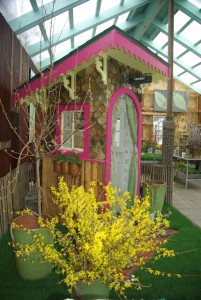
Debra Prinzing

Get the Email Newsletter!

Archive for the ‘Plants’ Category

Ides of March . . . April Fools Day . . . and more!

Sunday, April 5th, 2009

March 30 to April 3, 2009 

Los Angeles to Seattle to Yakima. Back to Los Angeles, via Seattle. Two snowstorms and lots of rain. Heavy doses of friendship.

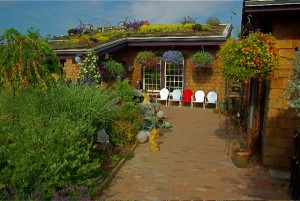
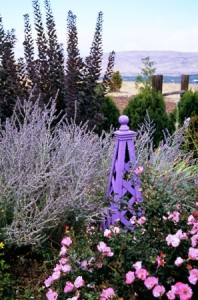
“]The perky roofline of Michelle and Rob Wyles's hedge-enclosed gardenhouse is seen in relief against an expansive eastern Washington sky [photo by William Wright]

The perky roofline of Michelle and Rob Wyles's hedge-enclosed gardenhouse is seen in relief against an expansive eastern Washington sky, photographed by William Wright

Spring may have arrived on March 20th, but it still feels like winter in the Pacific Northwest and there I was, loving it! But to the person, my gardening pals on both sides of the (Washington State) Cascades are sick of this unfriendly weather (unfriendly, at least, to gardens, plants and gardeners).
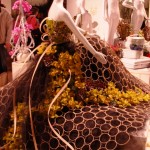
I flew out of LAX on Monday, arriving in Seattle around 3 p.m. Not wanting to bug any of my hardworking friends, I hopped an express Metro bus from the airport to downtown’s new transit center. That $2.50 bus pass, which even included a transfer to the Number 14 city bus, got me all the way to Mt. Baker neighborhood, where I walked a few short blocks to my friend Jan’s.

She graciously lent me a bed and use of a car – not for the first time – and it felt like coming home to a place I know so well. I walked these sidewalks with my newborn son Benjamin during the summer of 1992. I feel like I have every front yard, every border, memorized. I love the perspective of the often cloud-streaked sky looming above Lake Washington. I love the tall Douglas firs and the western red cedars, the old, overgrown rhododendrons, the Craftsman architecture. This place holds good remembrances.

But it is cold here this week, colder than when my sons and I visited for the Northwest Flower & Garden Show in February. That week – Presidents’ Week – was sunny and blue-skied, with temperature in the mid 40s. Picture perfect and perfect for one’s mood.

httpv://www.youtube.com/watch?v=OSy75jcIgFA

On Tuesday morning, Lorene Edwards Forkner arrived in her trusty All-Wheel Drive Subaru and we began our 3-hour drive east to Yakima – over the Snoqualmie Pass and into Eastern Washington.

It was raining lightly; the air was cold and damp, for what is supposed to be springtime already. As we passed through North Bend and started climbing up toward the summit, the scene on either side of the freeway was cloaked in white. Beautiful, if you like a Christmas card image of dark blue-green conifers frosted with dollops of snow. But brutal for the driver. We slowed down to a snail’s pace at the peak- where truckers literally stopped in the middle of a lane to put on their chains and the little people (the cars, and their drivers, that is), skulked over to a single lane and crept through the pass at single-digit speeds.

 A DIFFERENT LANDSCAPE ALTOGETHER

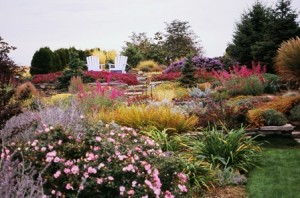
Linda Knutson and Ron Sell's magnificent Yakima landscape, photographed on our October 2005 tour

Linda Knutson and Ron Sell's magnificent Yakima landscape, photographed on our October 2005 tour

With the snow behind us, our arrival in Yakima was cause for celebration. We stopped at Linda Knutson’s and Ron Sell’s, fellow Northwest Horticultural Society members who have always generously shared their four-acre, arboretum-like landscape with visitors. They participate each year in the Northwest Perennial Alliance Open Garden schedule (if you really want a treat, plan a day’s trip to Yakima to see it!)

Linda and Ron focus on texture, color, form using mostly conifers, ornamental grasses, woody ornamental shrubs, stone and artwork. Lorene and I remember with fondness our visit there in October 2005 when I led the NHS weekend tour to Yakima.

A perfect autumn scene at Linda and Ron's, which to me perfectly illustrates an analagous color scheme in plants and art

A delicious autumn scene at Linda and Ron's, which to me perfectly illustrates an analagous color scheme in plants and art

The weather was pretty unforgiving (brisk and very windy), but after a delicious spanakopita lunch, we bundled up and took a spin around the place. We stayed mostly on the pathways, but we stooped down to observe new crocuses, species tulips, galanthus, chionodoxa and (possibly) pushkinia bulbs poking their heads out of the soil. “These plants are a month behind my Seattle garden,” Lorene observed. “And my Seattle garden is a month behind its usual bloom time.” That tells you a lot about the vagaries of the Pacific Northwest winter of 2008-2009, but Linda and Ron insist that Yakima has been spared much of the snow-dump that hit Spokane and other parts of Eastern Washington (even still, we woke up to snowfall Wednesday morning, April 1st!).

Later, we met up with shedista Michelle Wyles at Garden Dance, her adorable “fashion and frou-frou” clothing emporium in downtown Yakima. She has one of the best pair of eyes for spotting innovative apparel and interior styling I’ve ever seen.

All you have to do is see how Michelle has created and adorned her charming “shed,” photographed by William Wright for our book, Stylish Sheds and Elegant Hideaways, to know what I mean.

Michelle has had a wide and varied career, including raising alpacas (Right now, the attention-getting creatures at Michelle and Rob’s home/farm are the Guinea hens. What funny poultry!)

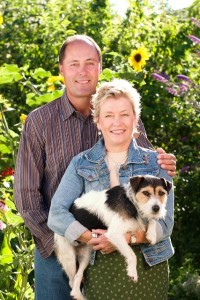
Bill Wright's photo of Rob and Michelle Wyles, with Chester (July 2006)

Bill Wright's photo of Rob and Michelle Wyles, with Chester (July 2006)

Her garden antiques and retail business has morphed into fashion: Garden Dance is housed in Yakima’s turn-of-the-last-century train station. For about an hour, Lorene and I browsed and oohed and aahed to our heart’s content, while Michelle and her girlfriend/sales associate Stephanie helped guests and handled customers. For some delicious (virtual) retail therapy, read Michelle’s lighthearted blog, linked to her web site.

After they closed shop, we walked across the street to Gilbert Cellars, a cool wine-and-cheese bar that you might expect to find in Seattle’s Belltown district or in Santa Monica. A sampling of artisan cheeses and a sip of wine fortified us for delaying dinner until after my 7 p.m. lecture finished!

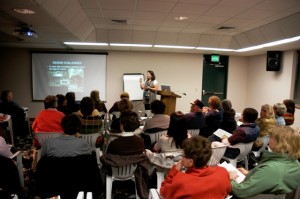
My lecture, “the Ultimate Garden Hideaway,” was the final of a four-part lecture series hosted by the Yakima Co. Master Gardeners. Held at the beautiful Yakima Area Arboretum, the lecture series was the brainchild of several incredible volunteers and MG staff, including our fellow GWA member Jim Black. The “Outdoor Room”-themed lecture series included Michelle Wyles and Linda Knutson as prior speakers.

We had a great, sell-out gathering of enthusiastic folks, from shed owners who treated me to stories of their own backyard hideaways, to shed wanna-be’s who had big dreams for their future PODs (Personal Outdoor Dwelling).

As always, I feel so at home with these “peeps,” the Master Gardeners of the world who are truly citizen-volunteers, generous, pay-it-forward folks concerned with educating and inspiring everyone to embrace the traditions and skills of growing edible and ornamental plants.

Mastern Gardener Bill Woolman, snapped this photo during my talk, "The Ultimate Garden Hideaway."

Mastern Gardener Bill Woolman snapped this photo during my talk, "The Ultimate Garden Hideaway."

Thank you to the Yakima Master Gardeners and the Yakima Area Arboretum for hosting me, and to Michelle and Rob Wyles for housing (and feeding) Lorene and me on Tuesday night. By the way, we woke up to more snow and had fun watching the Wyles poultry population racing around in the cold weather. What a hoot! (Sorry, Lorene, about locking you out of the guesthouse while I was showering away to my heart’s content. I’m glad you’ve thawed out!)

Lorene and I made it back to Seattle pretty quickly. Well, that is AFTER we spent close to an hour searching for a hard-to-find address of a Yakima trailer park (North Acres) to track down the good Samaritan (?) who called me on my cell phone with news that he had found my camera in the parking lot of Gasperetti’s Restaurant in the wee hours of April 1st. I will let Lorene have the honor of blogging about THAT experience. I just checked her terrific blog, Plantedathome.com, and I’m surprised (and a bit relieved) that to date, the photos of that “doo dad” decorated residential trailer have not been posted. Given the blackmail potential, that may be good news. I’ll await Lorene’s decision!

Debra, pontificating about Stylish Sheds (photographed by Bill Woolman)

Debra, pontificating about Stylish Sheds (photographed by Bill Woolman)

All in all, this was a good trip. I felt like the Energizer Bunny, squeezing in more friends and networking encounters than anyone could imagine. I had a wonderful evening with the Woodinville Garden Club (thank you to Susan Latter for the invitation to speak), and several excellent encounters with creative people (the subject of future blog posts).

I’ve been home in Southern California for about 36 hours and I can’t wait to stay here for a while. I can’t imagine leaving my family or my garden for one more moment. It’s hard to believe, but I have traveled on seven adventures since I went to Orlando in mid-January. As inspiring and exciting and stimulating as these lecture venues, flower shows, press junkets and garden tours can be, I know they just delay me from sinking my roots deeper in the patch of earth for which I’m responsible. So it’s time to stay put for a while.

It’s Palm Sunday and time to celebrate the gift of life, the gift of love and the gift of nature.

Erin Benzakein’s seasonal and sustainable flowers

Saturday, March 21st, 2009
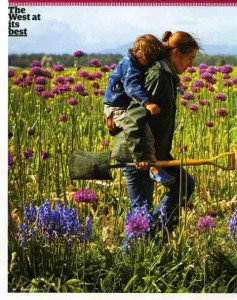
Read "The West at its Best," pages 20-21

Read "The West at its Best," pages 20-21

The April 2009 issue of Sunset magazine features my friend Erin Benzakein of floret flowers. Erin is a young organic flower farmer and talented floral designer who values seasonal ingredients for her bouquets and uses sustainable practices to raise a wide array of flowers, blooming shrubs and attractive foliage.

I met Erin in the spring of 2006 through her father David Perry, a gifted photographer (that was the first day I met Dave, too, when we teamed up on a garden scouting excursion after being introduced by a mutual colleague). That meeting, at Waverly Jaegel’s antique rose-filled garden in Skagit Valley (Washington State), was the beginning of two inspiring and invigorating friendships for me.

The three of us talked about our mutual passion for locally-grown blooms. Erin and I discovered our love of floral design that’s “in the moment,” depending on what’s in bloom in one’s own garden, or what you can find at the farmer’s market, from a friend’s flowering shrubs, or even foraged in the wild. That’s the essence of seasonal and sustainable floral design. It begins with the farmer who raises those blooms with care for the land and agricultural workers alike.

Over time, Erin, David and I realized we all hold a dream of some day creating a book about this topic. We hope it will be filled with stories that I write, photographs that David captures through his lens, and – of course – flowers that Erin grows and arranges. Whether it happens and in what form, time will tell. In the meantime, we are beginning to document the best stories of growers and designers with organic values. You can see some pretty exciting photographs on A Photographer’s Garden Blog, David’s visually alluring online journal.

David and I shared Erin’s story with our editors at Sunset who agree that she has an unique and compelling passion and philosophy – one worthy of a feature in the magazine. The piece appearing in Sunset’s April issue, out now on newsstands, is spread across two pages with David’s evocative photo of Erin, carrying her son Jasper on her back, as she walks through rows of giant alliums. My Q-and-A with Erin has been reduced to just a few lines, but you can read my full interview with her here: 
Erin and Jasper, mother-and-son organic farmers

Erin and Jasper, mother-and-son organic farmers

The Western pioneer: Budding ambition

Erin Benzakein has turned her two Washington acres into a sustainable flower farm

By Debra Prinzing | Photography by David Perry

Erin Benzakein became captivated with fresh-from-the-border flowers while working on a Seattle estate’s garden crew. “I never before thought you could go into your yard and cut so many flowers. They looked like the Dutch paintings – perennials, berries, vines, floppy roses – all spilling out of a huge vase.”

Inspired, Benzakein planted two rows of sweet peas to create a fragrant “tunnel” (“I wanted to walk down it, just for the experience,” she confides). Suddenly, the 29-year-old mother-of-two became a flower farmer. “It was a done deal. All the vegetables got ripped out and were replaced with flowers.”  Since 2007, with her husband Chris Benzakein and their “bunch runners” (9-year-old daughter Elora and 6-year-old son Jasper), Benzakein has operated Floret, a 2-acre certified organic flower farm in Mt. Vernon, about 90 minutes north of Seattle.

Why are sustainable flowers important?

Eighty percent of the cut flowers we buy in the U.S. are imported from countries that do not have worker safety or pesticide regulations. I don’t think we should sacrifice the health of our earth, or that of the farmers, their children and animals, just to have a bunch of pretty blooms on our kitchen tables. If you buy your flowers locally – at a farmer’s market, from a roadside stand, or a grocery store that sources bouquets from local growers – they’re probably sustainably grown. You’ll help eliminate the use of jet fuel that flies flowers to America, keep money in your local economy and enjoy healthier and fresher blooms.

READ MORE…

A POD in the Garden (POD=Personal Outdoor Dwelling)

Saturday, March 14th, 2009
San Francisco's hottest garden and plant emporium, Flora Grubb

San Francisco's hottest garden and plant emporium, Flora Grubb

A great gathering of Shed-Fanatics joined me at Flora's

A great gathering of Shed-Fanatics joined me at Flora's

After my exhausting trip to the wintry Philadelphia Flower Show, I returned to LA for a quick overnight to recharge my batteries with my family.

Then, last Thursday, I returned to Burbank to fly north to Oakland.

My friends at the Garden Conservancy invited me to share my fascination with sheds and hideaways at an evening benefit lecture.

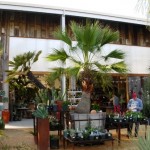
Hosted by horticultural celebrity Flora Grubb at her eponymous urban emporium, the after-hours event included cocktails and hors d’oeuvres among Flora’s awesome collection of palms, succulents, Mediterranean and drought-tolerant plants – and more.

Flora and Debra, smiling in this great garden setting

Flora and Debra, smiling in this great garden setting

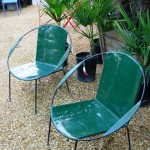
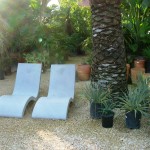
She curates this environment with an eye for design, style and presentation. Furniture selections, displayed among plant groupings really “pop” – from avant-garde concrete chaises to retro-salvaged circle lawn chairs (see below for specifics).

The playfulness with which Flora and her staff have created this plant-centric lifestyle just puts a smile on my face. I’ve heard and read about this cool SF destination nursery for a few years and am thrilled to have been given a great excuse to travel and speak there.

Thanks for the experience begins with my friend Margo Sheffner, who is Flora Grubb’s book buyer extraordinaire. Margo, who is also the business manager for the Pacific Horticultural Foundation (a nonprofit of which I am board member), was an early fan and supporter of Stylish Sheds and Elegant Hideaways. She brought it to Flora Grubb’s and continues to update me about how Flora’s customers “get” the notion of backyard sanctuary, habitat and haven. And that translates into book sales (which is so reassuring in this non-print phase we’re in). Yeah! It makes me happy to see our book in this cool environment.

Here’s a little gallery of Flora Grubb’s Garden. You will love every image:

Credit for my lecture title, “A POD in the Garden,” goes to Garden Conservancy west coast program manager and all-around horticultural go-to gal, Betsy Flack. She came up with the idea of using the acronym P-O-D (as a personal-outdoor-dwelling). I love it! This is my new buzzword. Stylish Sheds includes a chapter about Loretta Fisher’s “Mod Pod” in Austin, so Betsy’s title is apropos. Betsy and her assistant Maria Martinez (along with several Garden Conservancy staff, friends and volunteers) put on a lovely evening. I felt welcomed among so many kindred spirits.

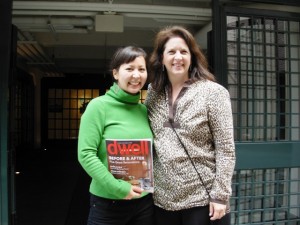
The following morning, I stopped by Dwell's editorial offices to say hello to Miyoko

The following morning, I stopped by Dwell's editorial offices to say hello to Miyoko

Before I started my talk, Betsy invited Miyoko Ohtake, associate editor at Dwell magazine, to share a few words. Miyoko is a talented young architect-journalist who joined Dwell last summer after impressive gigs at Wired and Business Week.

She contacted me in August to ask if I could serve as Dwell’s guest expert for a review of prefabricated sheds (February 2009 issue). It was great to finally meet her in person and to also have the audience meet Miyoko and hear her enthusiasm for modern outdoor design. Dwell supported the event and Miyoko blogged about my talk in advance of the evening.

Then, Flora invited her architect-friend Seth Boor, AIA, of SF’s Boor Bridges Architecture, to comment on the city’s zoning issues relating to shed construction.

It was a stroke of brilliance to include Seth on the program. He and Flora (and her partner Kevin Smith) recently collaborated on a very cool planted-wall installation at a hip, new Napa Valley hotel called Bardessono. The project was recently documented by Stephen Orr in the New York Times. So we were in excellent company (oh, and how cool is this? Stephen was in the audience – what a sweet guy to come hear my talk).

Among other remarks, Seth touched on the permit and installation parameters for anyone wanting to add a backyard shed in San Francisco:

  • No permit is required if you build an outdoor structure under 100 square feet in size and no taller than 8 feet high.
  • The configurations can vary. For example, the structure can be 10-by-10 feet or 8-by-12 feet in size.
  • As for height, as Seth pointed out, “Eight-feet-tall is a little short” but you can work with it.
  • Working without a permit “frees you up to do anything within that size,” he says
  • Also, if the structure isn’t permitted, the typical setback rules do not apply. However, there is the “good neighbor” rule and Seth recommended that shed-builders think about how a 100-sf structure will appear to a neighboring property.

Debra’s note: Creative shed-owners are already aware of this issue. I’ve seen shedistas carefully paint, embellish and artfully adorn the side of their structure that faces a neighbor’s lot. Good shed policy!

Botanical fantasy? Or Shoe Fetish?

Monday, March 9th, 2009
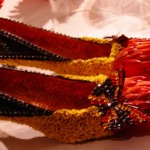
Shoes for a flower fairy with twigs, moss and petals

Shoes for a flower fairy with twigs, moss and petals

I spent a few days last week at the spectacular Philadelphia Flower Show. It was my second time traveling to this Grand Dame of indoor flower shows to give a garden talk. When I first presented there in 2006, I was blown away by the over-the-top displays and ambitious floral designs. This year’s theme, “Bella Italia,” inspired show designers to highlight Italian- and Mediterranean-themed gardens.

Debra (left) and Mary-Kate Mackey (right). We posed in front of a lavish rose-filled urn at the entrance to the Philadelphia Flower Show.

Debra (left) and Mary-Kate Mackey (right). We posed in front of a lavish rose-filled urn at the entrance to the Philadelphia Flower Show.

With my roommate, Mary-Kate Mackey, I managed to squeeze in lots of adventures in my 36 hours on Pennsylvania soil (I spent more time trying to fly there and back than I was actually on the ground, due to a doozy of an East Coast snow storm that stranded me in Dallas overnight and then marooned me for five hours in Milwaukee). Unfortunately, I missed seeing all of my fellow Garden Writer members because I was sitting in the Milwaukee Airport at the exact time the regional meeting took place. Oh well.

But – finally – when down to my last option of continuing eastward or returning home to LA, I grabbed a seat on the only flight to Philly that day. I arrived late last Monday and met up with Mary-Kate, who was in town to teach a one-day writing class for Garden Writers, and to see the show.

After my lecture on Tuesday afternoon, we strolled out to the show. With M-K as my tour guide (all-knowing, she had been there for several days, including hours spent behind-the-scenes during show set-up). We meandered through “Bella Italia” – kind of like taking a cross-country floral tour – all in a single day.

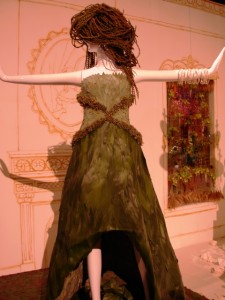
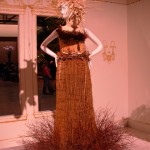
With gardens devoted to Italy’s major tourist regions, there was lots to admire. But the most surprising and artistic of them all celebrated Milan. Milan is the fashion capital of Italy. The American Institute of Floral Designers (AFID) created a floral fashion show of sorts. Spectacular stuff!

Foliage as soft as velvet creates the bodice of this nature-inspired creation

Foliage as soft as velvet creates the bodice of this nature-inspired creation

Against a stark white backdrop of mannequins and props, the designers displyaed imaginative shoes, handbags, hats, jewelry and garments . . . made out of petals, leaves, pods, buds, stems, needles and more. In every hue and texture of flower and foliage. Oh, so beautiful. M-K likened the technique of layering and gluing individual petals and plant parts (to create fields of color) to a small-scale version of Pasadena Rose Bowl Parade’s float production. It is a good explanation of the way these inventive designers rendered fashion “in bloom.”

Bows, buds and pods adorn this pair of stylish heels

Bows, buds and pods adorn this pair of stylish heels

More inspiring than the dresses, though, was the footwear. People were standing three- and four-bodies deep to gaze at and try to capture photographs of these dainty delicacies for the toes.

What is it about shoes? We asked each other this question as we, too, tried to get close and peer at the high heels, strappy sandals, little ballet flats, avant-garde boots, and more.

Are shoes magical, like Cinderella’s glass slippers? Or do they just seduce us with those sensual shapes? I know from experience that a gorgeous pair of shoes (comfortable ones would be nice, too) gives many women a feeling of power and confidence.

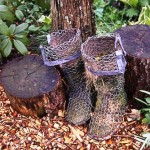
A whimsical pair of boots (made from chicken wire and moss), spotted in Holland in 2005

A whimsical pair of boots (made from chicken wire and moss), spotted in Holland in 2005

Shoes in the garden never fail to charm and delight. Think of those people who love to plant hen-and-chicks in old work boots.

A steel "spring" adorns the toe of this shoe-planter

A steel "spring" adorns the toe of this shoe-planter

I love my wacky garden shoes, also known as “Steel Heels.” I discovered them when I lectured at the Boise Flower Show in 2006.

Cut from steel and welded with fanciful heels and swirly toes, these artful shoes were made by Micki Shampang-Voorhies and her husband Gary Voorhies. I love that these perfect Size 8’s are weathered over time to reveal a rusty patina.

These shoes make me smile every time I see them in the garden.

The artists, whose Blue River, Oregon, studio is called Custom Copper & Iron, turn everyday scrap metal and rusted tools into fashionista-worthy shoes.

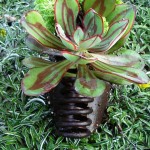
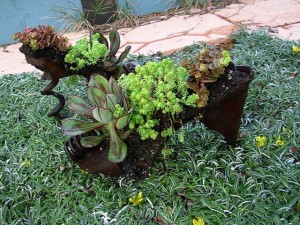
Castoff springs, drill bits, bolts and even a handle of a garden faucet create the heels of each artistic stiletto. Tuck a few sedums into the toe or heel and I’ve started my own shoe wardrobe in the garden:

"Steel Heels," planted with succulents

"Steel Heels," planted with succulents

 Enjoy this garden gallery of shoes and other fashions for your visual delight:

The New Terrarium: Small world, Big influence

Saturday, March 7th, 2009
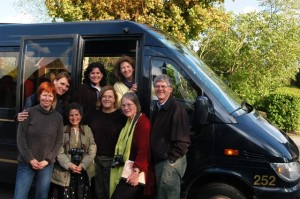
Our Holland gang, with Tovah front and center (she is the short, grinning gal with a huge camera around her neck). Clockwise, from left: Kathy Renwald, Bianca Helderman, Anne Nieland, Debra Prinzing, Walter Reeves, Mary Robson, Nellie Neal and Tovah Martin

Our Holland gang, with Tovah front and center (she is the short, grinning gal with a huge camera around her neck). Clockwise, from left: Kathy Renwald, Bianca Helderman, Anne Nieland, Debra Prinzing, Walter Reeves, Mary Robson, Nellie Neal and Tovah Martin

I met Tovah Martin in 2005 when we both participated in a media tour to Holland during spring bulb season. Since I had for years enjoyed and admired Tovah’s garden writing in the original Victoria magazine, you can only imagine how exciting it was to actually meet her.

I think we were both surprised at how quickly our little group of seven (including our wonderful guide Bianca Helderman from the Netherlands Board of Tourism & Conventions) bonded as accidental fellow travelers. I have vivid memories of Tovah wearing her knee-high rubber boots to tramp around the bulb fields at Hortus Bulborum  (I actually envied her pragmatism: I mean, who else would pack a pair of waterproof gardening boots to bring on a trip to Europe!?)

Tovah gave me a very important gift that week. I still remember sitting across from each other at an ancient trestle table. We ate lunch and swapped stories about book publishing. Known and loved around the globe for her beautiful Tasha Tudor’s Garden and Tasha Tudor’s Heirloom Crafts and many other books, Tovah graciously shared her advice and guidance as I struggled with how to develop my “garden shed” book (it was just an idea back then). Her suggestions about photography really influenced my decision to partner with Bill Wright on Stylish Sheds and Elegant Hideaways, rather than working with a variety of photographers in every market. She gave me a lot of clarity and I cherish her advice.

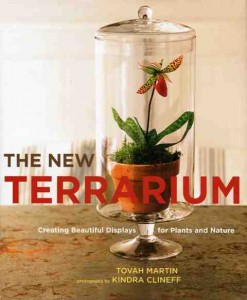
newterrariumcover001So now, I’m the lucky recipient of newest Tovah Martin book, by all counts, her 13th title. The New Terrarium: Creating Beautiful Displays for Plants and Nature, was published on March 3rd by Clarkson Potter/Publishers. [Full disclosure: Clarkson Potter also published our book – we love everything they produce!]
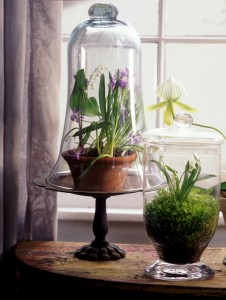
Captured on film by photographer Kindra Clineff, The New Terrarium is a magical tome filled with small, planted scenes, landscapes, still-life’s and collections under glass.

Tovah brings a perfect combination of talent to this dreamy book. She is a gifted storyteller, both visually and with words (Tovah art-directs and produces many of her magazine articles for Country Gardens and other publications); she has a long history as an expert with indoor and greenhouse plants from her past career at Logee’s Greenhouses; and she is a visionary who understands how to get others excited about her passion.

The idea of creating a book about gardening under glass (on a small scale) struck a chord with this avid plants woman. Here is an excerpt of my recent conversation with Tovah:

Q. How did The New Terrarium come about?

A. Kindra and I started working on magazine projects together, and when Clarkson Potter came to me with this idea, I thought of Kindra. She is a cross between a garden photographer and an interior photographer.

This ode to spring under glass includes white wood hyacinth (right) and lily-of-the-valley with glory-of-the-snow (left). Kindra Clineff photograph

This ode to spring under glass includes white wood hyacinth (right) and lily-of-the-valley with glory-of-the-snow (left). Kindra Clineff photograph

Q. What enchants you about gardens under glass?

A. Way back when I was at Logee’s, I originally lived in the upstairs of the house that overlooked all the greenhouses. Why I find (terrariums) so quaint, and why I can really get into them, is that I’ve never lost that feeling of loving things encased in glass. I loved looking down on the glass greenhouses. I even used to produce little booklets on how to plant terrariums for people who wanted to make or sell them.

Q. Terrariums are a tradition that dates back more than a century. What makes this technique, this idea, suddenly “new”?

A. I can’t think of a modern terrarium book. What I’m hoping is that people in office buildings, people with no access to gardening for a major part of their day, will think of this as a low-maintenance way to bring nature into their lives.

Q. You really believe that plants can be transformative?

A. I kept calling up Kindra and saying, “This is really big. We’re going to change the world.” I saw that this whole mode of gardening has the potential to rescue people from terminal office life.

Q. Tell me about the glass containers you used to create your projects. There is such an incredible variety – many surprised me.

A. Almost anything can be used. You can just start looking at glass this new way.

[Debra’s note: The New Terrarium is packed with inspiring ideas of the types of containers suitable for planting – from traditional cloches, Wardian cases and lantern cloches to more contemporary vessels, including recycled aquariums, hurricane lanterns, vases and repurposed glass domes used to cover cakes or cheese platters.]

“]A Wardian case with a deep base simplifies planting directly in the case. Kindra Clineff photograph]

A Wardian case with a deep base simplifies planting directly in the case. Kindra Clineff photograph

Q. What do you hope to teach gardeners and non-gardeners about growing plants under glass?

A. It’s an easy way for people to enjoy plants. Basically you don’t need to water very often. You don’t even need to fertilize.

[Debra’s note: Tovah has included a comprehensive plant encyclopedia that recommends a surprising array of plants for glass gardens, including: orchids, ferns, heucheras, begonias, mosses, African violets, bromeliads, ivies, ornamental grasses and more.]

Q. I love the photos! How did you and Kindra produce the shots?

A. This book was the challenge of the century because everything reflects in glass. We now understand why no one’s done this book before. Kindra had to surround herself in a black piece of velvet (so she wouldn’t be reflected in the shot). We kept joking that we should do the author and photographer’s portraits reflected in glass.

Q. Did you photograph at your Connecticut farmhouse?

A. We shot at four different houses, one of them being mine. I have a converted barn with big, huge windows and a little cobbler shop from 1790. A greenhouse connects these two buildings. We used the windows of these houses (for a backdrop). But most terrariums should be displayed away from the sun or windows.

Q. Tovah, how do you describe your writing philosophy?

A. This has been a lifelong mission for me: To write for (publications) that aren’t necessarily reaching gardening audiences in order to expand the whole realm.

Thank you! What a great conversation and a spectacular book.

My Malibu garden story for Metropolitan Home magazine

Monday, February 9th, 2009


“Pacific Heights,” my story about a stunning garden in Malibu, California, owned by Oscar-winning director and screenwriter Frank Pierson and his wife Helene, appears in the March issue of Metropolitan Home magazine.

You can find the issue on the newsstands now, even though it’s still early February. I posted the full story on my website.

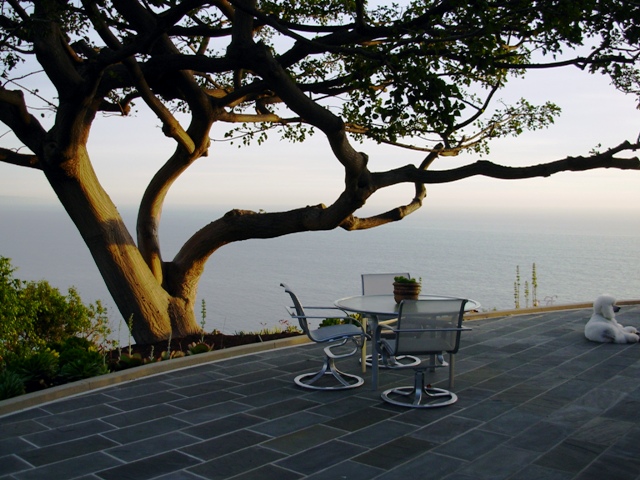
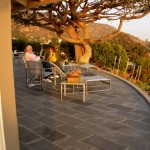
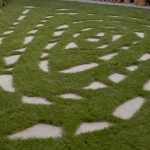
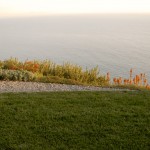
Designed by landscape architect Pamela Palmer of Venice-based ARTECHO, the garden employs curves, spirals and arcs, rendered in an ocean-blue palette. It is dreamy and contemplative and makes the most of the garden’s very best feature: its Endless Horizon.

Frank Pierson is a consummate storyteller. His writing credits include “Cat Ballou” with Jane Fonda and “Dog Day Afternoon” with Al Pacino (which earned him an Oscar). He directed Barbra Streisand in “A Star is Born” and is the former president of the Academy of Motion Picture Arts and Sciences.

He may have an office indoors, but some of Frank’s most inspiring narratives are conceived while sitting at the edge of his curved infinity lawn and gazing at the Pacific Ocean.

Frank and Helene’s modest, triangular slice of paradise is perched on a Malibu hillside. The couple purchased the Mid-Century modern house in 2004. Although the one-story residence measures 1,600-square-feet, floor-to-ceiling windows and glass doors make it feel larger. So does the uninterrupted, 150-degree view of the sea.

Yet the property had been neglected and the Piersons wanted to enhance their enjoyment of the vast expanse of ocean and sky.

They commissioned Pamela to design a bold, contemporary garden with spaces for both solitary and social pursuits. “The design was inspired by the site, especially the horizon, and the light,” she says. “Frank and Helene live in a world of stories. Their minds are very flexible and they visualized this garden very clearly.”

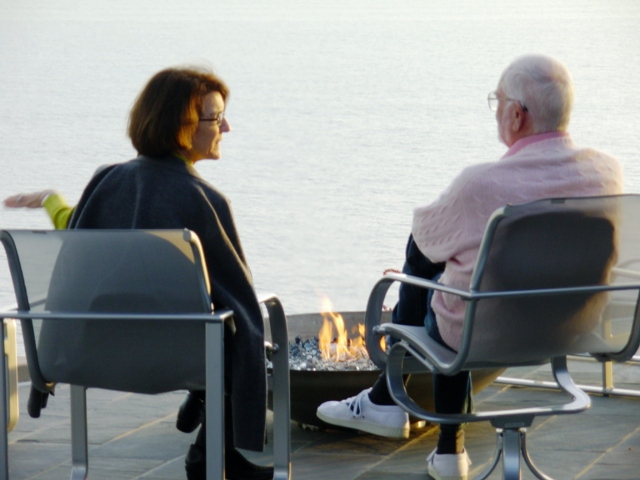
I arrived at the Piersons’ home and garden on a late afternoon in November. With designer Pamela Palmer, we toured the exquisite property and noticed all the special details and materials of the renovation. Frank and Helene showed me some of their favorite places and plants. (Above, Pamela and Frank in conversation – at the gas fire bowl).

I was so impressed to meet them and enjoy a momentary glimpse into their magical environment. To share a glass of wine with Frank, a legendary American screenwriter, and ask him about his career was a real privilege. The garden is pretty killer, too!

Here are some of my photographs from my November tour of the garden. Thanks to the Piersons and to Pamela Palmer for the time they devoted to telling the story of this garden. (And thanks to Lisa Higgins at MetHome for the assignment!)

Check out the Chihuly Glass sculptures at Phoenix’s Desert Botanical Garden

Friday, February 6th, 2009

If you’re lucky enough to travel anywhere in the world, there’s no excuse not to try and visit the local botanical garden or arboretum. My family has become used to this mission of mine and they often accommodate me.

Last weekend, though, I was with my fellow hort geeks, and no one tried to stop me from a garden side trip! I traveled to Phoenix for the Garden Writers Association winter board meeting. After sitting indoors in a board room all day, we rewarded ourselves by racing over to the Desert Botanical Garden, a magnificent place in the heart of Phoenix.

I first visited DBG about five years ago while staying with my parents (they have spent their winters in Mesa, AZ, a suburb of Phoenix for the past five or six years). At the time, I was a Seattle gardener. I was not interested in cactuses or other thorny desert plants. But the visit changed my mindset. The garden dates back to the late 1930s and it is designed beautifully. Who knew then that I would eventually live in Southern California where all these alien plants thrive with little or no water, heat, sun and (practically) neglect!?

Here are a few shots I took on that first visit:

The January 31, 2009 visit had an agenda.

Number one: Tour “Chihuly: The Nature of Glass” show, the Seattle artist’s first installation entirely within a desert garden environment.  Number two: Meet Ken Schutz, the garden’s executive director, who led the GWA board on guided tour of the show (plus, he graciously joined us for dinner following our hour-long walk through the plants-and-glass extravaganza).

We gathered at the DBG entrance and were welcomed with a refreshing drink, straight from the desert: Prickly Pear Margaritas topped with a wedge of lime! You can purchase the Prickly Pear syrup in the garden’s wonderful gift shop.


Enjoy my narrated introduction, followed by my favorite images:

httpv://www.youtube.com/watch?v=k_F6-J8AOwo

A virtual tour of the gorgeous glass sculpture display:

“Sun,” the opening sculpture

Agaves in glass: the new entry piece

READ MORE…

Alluring aloes in a January garden

Saturday, January 24th, 2009

The sage and pumpkin-colored entry garden hints at the glories inside the gate!

Patrick donned his “Aloe Orange” linen shirt so he could match his garden!  

I think I’ve established my willingness to drive, fly, walk, hike, take a train or ride a bicycle to get to a garden destination that summons me.

Last Sunday is a good example. I was staring at an invitation from Patrick Anderson and Les Olson, owners of a cactus and succulent garden extraordinaire (not to mention the most majestic dining pavilion in the universe – you can find it on page 126 of Stylish Sheds and Elegant Hideaways, in my chapter entitled “Extravagant Gestures”).

“Sweets, Savories & Succulents,” read the invite. “Please join us to celebrate the New Year, and the glory of the garden in midwinter.”

This was the third time Patrick and Les extended an invitation to their winter party. And it was the first year I wasn’t traveling out of state. I first met the men in 2005 when they hosted a Pacific Horticulture Open Garden event for donors. I returned with Bill Wright in the fall of 2006 to photograph the dining pavilion and garden for our book. Practically hyperventilating with excitement about shooting such a cool setting, we rose before dawn and tiptoed out to the garden to get the very best early-morning shots (our task was eased, thanks to the offer of lodging in Patrick and Les’s guest bedrooms).

Last weekend, I desperately wanted to visit their exotic botanical wonderland in San Diego County. Not only did I want to say hello to my “Shedista” friends, but I knew the aloe display would be at its ever-lovin’ peak of perfection.

Who cares that going to the party meant a 300-mile round-trip drive on a Sunday afternoon? Husband and sons all fed and settled into their own activities, I hopped in the car after church and hit the freeway, heading south.

Oh what a treat I had! This is the very type of excursion that convinces a California newcomer that all her former Seattle blossoms have serious competition for her affections. It’s tough to yearn for my hydrangeas, peonies and lilacs when the intense, architectural aloe blooms are in my face.

Orange, gold, salmon, yellow, apricot, terracotta pink – saturated hues of the sun – on display like colorful fireworks hovering at the tips of erect stalks. Each bloom is composed of tubular flowers tightly arranged around the stem. And what diversity! Some are shaped like a red-hot poker Kniphofia bloom; others are short and wide, in the shape of a spinning top. Some tilt upwards; others are arranged like rays of the sun. These flowers are winter’s antidote to gloom.

According to Sunset Western Garden Book, aloes are primarily South African native plants:

They range from 6-inch miniatures to trees. “Showy and easy to grow in well-drained soil in reasonably frost-free areas, (aloes) need little water but can take more. . . . Highly valued as ornamentals, in the ground, or in pots.”

That’s not all Patrick and Les have in their 2-acre garden.

They own, of course, the enviable dining pavilion (I still marvel at my luck convincing my editor Doris that we could include this architectural gem.)

It is certainly an “elegant hideaway,” although a very distant relation to a shed.

Not a wimpy latticework gazebo, but a bold, manly garden house that can accommodate a quiet dinner for two or a raucous gathering of a dozen friends.

Here are the opening lines that appear in the Stylish Sheds chapter about their dreamy garden hideaway:

Patrick seized the chance to invent his own plant world here, spending the past fifteen years shaping the landscape with unusual spiked, whorled, spherical, and fan-shaped cactuses, along with succulents representing a color spectrum from maroon to bronze to silvery blue. “Every inch of this property is plantable if I ever get around to it,” he maintains. The garden’s finishing touch: a golden, open-air pavilion where Les and Patrick seek haven from heat and sun.

The neighbors jokingly call it the Taj Mahal, but the opulent pavilion situated at the highest point of Patrick and Les’s property has exactly the right degree of dramatic presence their flamboyant desert garden needs. Together the structure and plant collections embody Patrick’s two loves: theater and horticulture.

Patrick fell in love with aloes and other succulents and cactus forms years ago, as a volunteer at the famed Huntington Botanical Gardens near Pasadena. He learned to grow and propagate many varieties, including aloes. And I suspect his design sensibility (he studied theater and costume design in college) was also honed as he spent time in the Huntington’s desert collection.

When he began to transform the property nearly 20 years ago, Patrick wanted to plant a wide variety of desert-climate plants in a lush style that he describes as a “dry jungle.”

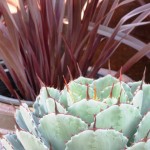
More than 200 varieties of aloes unify the garden. Against the pointed and thorny blue-green leaves, the brilliant aloe blooms remind visitors that there’s nothing dull about the desert floral palette.

Thank you, again, Les and Patrick, for sharing your garden with me and with so many of your admirers!

It was a long drive. But an inspiring day. And I am certain that by next January, when another invitation to “Sweets, Savories, and Succulents” arrives in my mailbox, I will clear my calendar and make the drive again!

P.S., One amusing photograph I just had to add.

For anyone who has been up close and intimate with an aloe, agave, cactus or other thorny plant. . . the “Caution” tape was a reminder of how careful one must be in a desert garden!

An award-winning Los Angeles garden inspired by Morocco and India

Saturday, January 17th, 2009

Sparkling and serene, this is a tiny garden that oozes romance and mystique (design and photo, Laura Morton)

I believe that the paths we walk lead us to the people we need to know in our lives.

Case in point: A week or so after I insisted that my friend Shirley Bovshow, an LA garden media personality and talented designer, bunk with me for 2 nights at the Portland Garden Writers Association annual symposium, she invited me to join an Association of Professional Landscape Designers’ lunch meeting at her home in Woodland Hills. Since Shirley and I live relatively close to one another (by LA standards), I took her up on the invite. The other guests were fellow members with Shirley in APLD’s LA chapter. Plus, Shirley’s garden is a wonderland of plants and design ideas.

The Association of Professional Landscape Designers is an impressive organization. I have met, interviewed and written about APLD members (and their work) in many venues, including Seattle, Los Angeles and beyond.

The September gathering introduced me to several Southern California garden creators, including Shirley (Edenmaker), Jennifer Gilbert Asher of TerraSculpture (I’ve recently written about her work), and Laura Morton of Laura Morton Garden Design.

When Laura casually mentioned to me that one of her projects won the 2008 APLD “Gold Award” for residential landscape design, I went a little crazy. “Has it been published?” I quizzed her. “No,” she admitted.

No sooner than I heard this – and no sooner had Laura sent me several photographs and a little movie about her design for Mala Vasan’s Hollywood Hills backyard, than I was on the phone to LA Times HOME section editor Craig Nakano. As I suspected, he was very interested in seeing what Laura had to share.

Open air living: Designer Laura Morton changed a plain backyard at Mala Vasan’s home into an Indian-tinged outdoor living room with a reflecting pool, fire pit and garden (Laura Morton photograph)

The story about Mala’s garden, inspired by her own multicultural interests and designed by Laura Morton, appears in today’s LA Times Homes section. Here are the opening lines:

HER PASSAGE TO INDIA: A Hollywood Hills bungalow’s small backyard is transformed into an exotic, cozy retreat and social spot.

If you’re looking for a good excuse to invest in landscaping, Mala Vasan’s is hard to beat. She credits her dreamy mix of Indian and Moroccan inspiration for seducing her sweetheart.

“My garden brings out an inner magic,” says Vasan, a producer of TV commercials who was going out to eat with screenwriter Brian P. Regan when he saw the enchanting outdoor space and said, “Forget it. Let’s stay here and order Chinese food.”

With scented blossoms, dancing flames, the sound of spilling water and chaises large enough for two, the intimate setting is, indeed, full of romance. (“Our first dates were on those couches,” Vasan says.) The garden also is an artful antithesis of what it used to be: a driveway too small for a car and a 560-square-foot backyard dominated by a wobbly brick patio and views of a boxy air-conditioner hanging from the neighbor’s garage.

The transformation of this Hollywood Hills property earned its creator, Laura Morton of Laura Morton Design in West Hollywood, a gold medal last year from the Assn. of Professional Landscape Designers. For Vasan, the thoughtful design was proof that tiny details and a vivid imagination could turn a prosaic space into a pretty and practical retreat.

The Times’ online photo gallery features several before-and-after shots, including a darling photo of designer Laura Morton and client Mala Vasan, seated in the garden. You can see the gallery here.

Here are a few more photographs, courtesy of Laura Morton. Visit her web site to see many more of her projects – inspiring and alluring spaces that will get you thinking about turning your own backyard into an exotic oasis with plants, cushy textiles, the presence of water, candles to illuminate and other sensory pleasures.

A curtain of water spills over the reflecting pool’s tiled edge into a hidden channel behind the fire pit (Laura Morton photograph)

Romantic chaises, piled with textiles and cushions, create a luxurious outdoor living room (Laura Morton photograph)

In my interview with Laura, she described how a feeling of intimacy can be created in a garden:

“Enclosed spaces instill a sense of intimacy, and within that, your own sense of paradise is possible.”

January: Garden Bloggers’ Bloom Day

Friday, January 16th, 2009

Dateline: Thousand Oaks, California

Zone 10

Well, I’m one-day late, but that’s because I spent most of January 15th sitting on an airplane.

So I’m back in Southern California – and hurrah! It’s supposed to be 80 degrees outdoors today. Early this morning, I snuck out to see what my garden has to share with you. Four new blooms, intentionally selected to show you something different from my December blooms. All of these came into my possession from the prior owners of our home, which we bought in August 2006.

A beautiful, mature Aloe – about to bloom

A sprawling Pelargonium – planted as a ground cover

Rosemary – blue blooms to blanket my hillside

Silvery lavender foliage offsets a rare late bloom

Happy New Year to each of you, and may the garden feed your heart, health and soul!

Inspired by the words of Elizabeth Lawrence, “We can have flowers nearly every month of the year,” Carol of May Dreams Gardens started Garden Bloggers Bloom Day. On the 15th of every month, garden bloggers from all over the world publish what is currently blooming in their gardens, and leave a link in Mr. Linky and the comments of May Dreams Gardens.