Debra Prinzing

Get the Email Newsletter!

Archive for the ‘Plants’ Category

Spring Garden Books for Mother’s Day gift-giving

Monday, May 4th, 2009

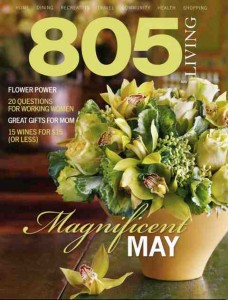
805-may-09001My “In the Garden” column for 805 Living’s May issue is all about great gardening books to give Mom (or keep for your own shelves).

Grow your garden library: Just like plants, you can never have too many books that inspire and intrigue

By Debra Prinzing

I was on the East Coast recently to lecture at the Philadelphia Flower Show. While sharing gossip and a glass of chardonnay with my NYC-based literary agent, Sarah Jane Freymann, conversation turned to the sorry state of book publishing.

“When I give a gift,” she proclaimed in her always-alluring British accent, “I only buy books.” Her singular gesture of thoughtfully choosing, buying and giving a book (rather than an impersonal gift card) might be an important element of the reading person’s economic stimulus package.

In early March, I visited Philadelphia and met up with book-lover and awesome agent, Sarah Jane Freymann

In early March, I visited Philadelphia and met up with book-lover and awesome agent, Sarah Jane Freymann

Books, especially when they are hand-picked for the reader, convey as much about the giver as the recipient.

For my birthday, my writing mentor, Paula Panich, recently gave me American Writers at Home, by J.D. McClatchy, a fitting tome for a journalist who covers architecture, interiors and the garden – all aspects of the home. When Britt Olson, my best friend from high school, recently wed, she spent hours at the book store, choosing just the right hard-bound volume for each of her attendants. For me, she selected Barbara Kingsolver’s lovely memoir of a year growing her own food, Animal, Vegetable, Miracle, which fed my spirit and mind alike.

If you’re like me, you can “read” a person by observing the titles that fill her bookcase. So here’s a peek at what’s on my bedside table (a new crop of gardening books). Whether for Mother’s Day, a friend’s birthday, or just for your own pleasure, give the gift of a book. As the author of five books, I thank you.

A Rose by Any Name

By Douglas Brenner and Stephen Scanniello [Algonquin Books of Chapel Hill, 2009, 320 pp., $19.95]
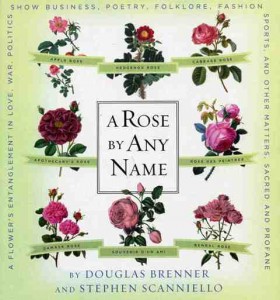
805-may-09002I met Stephen Scanniello, president of the Heritage Rose Foundation, in a Chicago radio studio several years ago. We enjoyed our banter with the host of a garden show, but the conversation continued well after the gig was over. His favorite subject? Roses. Scanniello lives, breathes, and designs gardens with roses. Not those scentless, thornless pageant variety roses, but ones with  storied pasts and interesting pedigrees. He teamed up with co-author Douglas Brenner, a former Martha Stewart Living garden editor, to document the origins, history, and lore of more than 1,200 rose names.

Their enchanting narrative follows the trials and tribulations of this beloved flower through the centuries to modern time. The rose has been entangled in love, war, politics, show business, fashion, sports and even automobiles (yes, the ruby-red ‘Chrysler Imperial’ rose was bred in the 1950s, right here in California).

A Rose by Any Name features all sorts of facts and anecdotes about the world’s most popular flower. There is even a chapter devoted to celebrity-named roses, including ‘Barbra Streisand’, a glamorous purple-blushed lavender rose that the star selected from a field of potential candidates. Even we nobodies can have a personalized flower. “As with vanity license plates, anybody can have his or her name officially conferred upon a rose,” the authors write. “All it takes is a phone call and a big check.”

Designer Plant Combinations

By Scott Calhoun [Storey Publishing, 2008, 240 pp., $18.95]

805-may-09003I’m a sucker for artful color combos,and I can often be found playing with paint-chip samples at the hardware store or mixing and matching blooming plants at the nursery. But here’s a guide that color-dreams for me. Designer Plant Combinations features inspiring techniques the pros use to pair color, texture, scale and form in the garden.

Tucson-based garden designer and book author Scott Calhoun is easy to envy for his writing and photography talents. Except that since he’s so likeable and engaging, I end up hungrily waiting for the next installment of his thoughts and images that appear in book form. And this vibrant guide doesn’t disappoint. Calhoun crisscrossed the country visiting the best residential and public landscapes to study and photograph stunning plant vignettes. Each of the 105 design schemes include six plants or less, which will inspire both designers and non-designers in their garden-making efforts. Detailed plant lists and photographs show you how to replicate the ideas in your own garden.

The book’s oh-so-alluring imagery is more than just eye candy, though. Calhoun explains why these perennials, ornamental grasses, annuals, ground covers, woody plants and dramatic accent plants are hardworking ingredients of successful garden design (look for useful designer tips, such as “when using one color, use different textures”).

A consummate plantsman, Calhoun is convinced that non-plant elements are crowding his beloved specimens out of the landscape. He writes, ” . . . good plant combinations are a little like the stanzas of a poem. That is, like the stanza, they are not trying to be a whole garden but a self-contained little part of one.” Whether bold or subdued, the groupings you’ll find here will give your garden personality and elevate it to something more than ordinary.

The New Terrarium

By Tovah Martin (photography by Kindra Clineff) [Clarkson Potter/Publishers, 2009, 176 pp., $25.00]
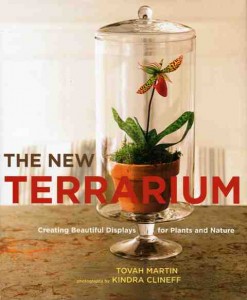
newterrariumcover001Devoted subscribers of the original Victoria magazine know the work of garden writer Tovah Martin. In her stories, Tovah brings a sense of wonderment to each of her subjects, be they gardens, gardeners or the plants they love.

Likewise, her latest project, The New Terrarium, is a magical tome filled with small, planted scenes, diminutive landscapes, twee still-lifes and dwarf collections – all under glass. This dreamy book is captured on film by photographer Kindra Clineff.

The New Terrarium pays homage to the conservatory gardens of the Victorian era, as they were the first to perfect the art of gardening under glass. According to Martin, in today’s go-go, hard-to-find-time to garden world, the terrarium may be the best way to bring something from nature into your life. “A terrarium is any transparent confine that allows you to nurture the elements of the green world,” Martin writes. “[It] is truly a small world . . . a mini-environment that provides an atmosphere of elevated humidity for all the botanical contents it embraces.”

This idea is appealing – and relatively simple to do yourself. Martin presents an array of cool glass containers suitable for planting: Traditional cloches, “Wardian” cases (miniature glass greenhouses), hurricane lamps, recycled aquariums, vases and repurposed glass domes typically used to cover cakes or cheese platters. What to grow under these unique vessels? Martin provides a comprehensive plant encyclopedia, including orchids, ferns, heucheras, begonias, mosses, African violets, bromeliads, ivies, ornamental grasses, and more.

This writer’s enthusiasm for gardening under glass inspired me to buy a small potted fern and contain it under a cloche (also called a bell jar). Living in its charming covered world, the fern, I think, will be happy. And I know I will be, too.

Home Outside: Creating the Landscape You Love

By Julie Moir Messervy [The Taunton Press, 2009, 240 pp., $30]
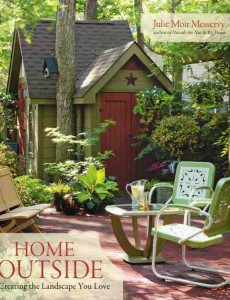
805-may-09005Julie Moir Messervy is an amazing landscape designer, author and teacher who teamed up with the likes of Yo-Yo Ma to create the Toronto Music Garden, and with architect Sarah Susanka to co-write Outside the Not So Big House.

In her new book, Messervy asks, “Why do we spend the bulk of our resources on the inside of our house, while settling for so little on the outside?” In response, she walks readers through the process of turning any property into the “home outside” they’ve always dreamed of. If, like her, you believe that the nurturing nest, the place called home, begins at the edge of your property and encompasses everything within its boundaries (the porch, the patio, the lawn where your children play – even the pathways, edges and corners), then Messervy’s book is the ideal reference to inform and inspire your design decisions. If you haven’t thought of the landscape in this way, her design approach is the perfect starting point. It will equip you with both basics and intricacies necessary to create a personal outdoor space that feeds the eyes and the spirit.

Bursting with instructive illustrations and before-and-after photographs of do-it-yourself gardens, Home Outside helps you see a property the way a landscape designer views it. Messervy breaks down the design process into manageable pieces. Take her “Designer’s Personality Test” and learn more about your style of garden-making. After completing the quiz, I discovered that I’m more expressive (versus reserved) and more relaxed (instead of orderly).

Our Life in Gardens

By Joe Eck and Wayne Winterrowd [Farrar Straus Giroux, 2009, 322 pp., $30]

805-may-09004My aforementioned agent, Sarah Jane, has a saying about what makes a good cookbook. “It must transcend the recipes,” she posits. In other words, we can now find recipes anywhere – in magazines, on the web, in grandmother’s dog-eared “Joy of Cooking.” But what makes a great cookbook resonate is the way it touches our universal relationship with food.

Similarly, Joe Eck and Wayne Winterrowd, Vermont-based garden designers and authors, transcend the typical gardening book in Our Life in Gardens. Their collection of nearly 50 essays (arranged logically from Agapanthus to Xanthorrhoea quadrangulata) is so engaging, so gratifying to read, that you truly forget it came from the section of a bookstore otherwise filled with “how-to” titles. There is a lot to learn from these celebrated designers, but I think the lesson is more about observing and cherishing everyday life in the garden than about how to grow delicious peas.

For example, in “Pea Season,” a chapter illustrated with one of Bobbi Angell’s charming plant drawings, Eck and Winterrowd philosophize on the rewards a gardener receives outside of the vegetable plot. The chapter opens with these lines: “No one can say that a gardening life is rich in leisured holidays, but a gardener’s rewards are festivals, big and small, though we make little distinction there, for they are all wonderful. There are other activities in which effort and labor are so certainly followed by achievement and celebration, and anyone who takes an active hand in shaping life must know equal causes for joy. We know only our life, which is largely one of gardening.”

Written with passion and honesty, this book is a keeper. Buy two copies. One to delight in yourself and the other to share with someone who needs to be lured outdoors.

The Venice Garden Tour Vibe

Saturday, May 2nd, 2009

venice001

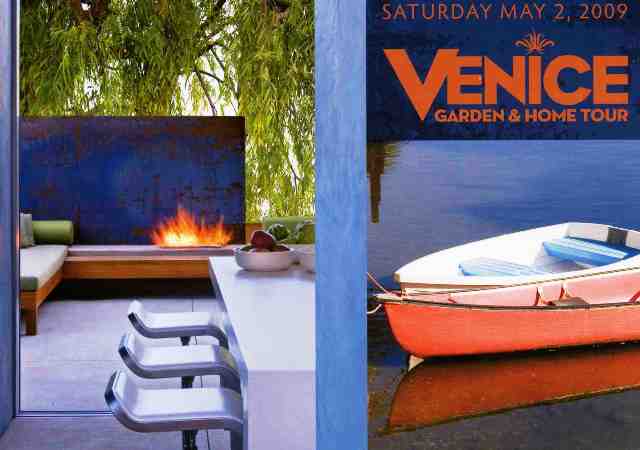
Today – May 2nd – is the 16th annual Venice Garden and Home Tour, which is a hip, happenin’ kind of tour serving up no fewer than 30 properties. For $70-per-ticket, that averages about $2.50 per garden, so when you look at it that way, it’s well priced. Plus, who can argue with the deserving beneficiaries? Children! The tour raises funds for the Neighborhood Youth Association of Venice, which operates Las Doradas Children’s Center, a licensed childcare facility that serves working families.

Along with tour producer Barbara Baumann and co-chair Adri Butler, I previewed several of the properties a few weeks ago and wrote about four of them for today’s Los Angeles Times.  Due to s-p-a-c-e limitations (surprise!), there is only room for one mini-feature in the print edition. You have to go to the online gallery to get a peek at how the staff photographers captured the three other gardens.

Here are the four gardens we profiled, complete with my original story about each. Take a virtual tour and enjoy a slice of one of the most eclectic spots in Los Angeles.

Get the Venice vibe and borrow these easy design ideas for your interior and exterior spaces

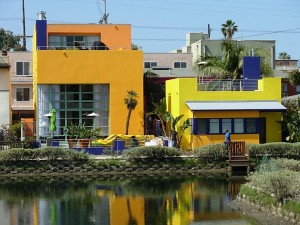
A colorful compound on one of Venice's unusual canal streets

A colorful compound on one of Venice's unusual canal streets

By Debra Prinzing

For all the glossy magazine articles and garden-makeover shows we consume, there’s nothing like a day of garden sight-seeing to inspire the inner-landscaper in all of us.

Featuring nearly 30 properties, today’s legendary Venice Garden & Home Tour is sure to ignite your imagination – and dish up dozens of adaptable ideas for your own yard.

Don’t go empty-handed, though. Bring a camera to capture a cool architectural detail or alluring bloom, a notebook and pencil for jotting down plant names or design resources, and plenty of curiosity. In many of the gardens, owners and designers will be on hand to answer questions and share tips. Consider it affordable design research. Plus, nothing’s more fun than cruising along the canals, walks and side streets of one of L.A.’s most iconic neighborhoods.

We previewed several of the tour’s vintage cottages and sleek cubes (and the gardens, decks and balconies that surround them). Here’s a look at four favorites, including design tips from each.

 Accessorize your garden with salvaged signage

A generous and genial host, Orson Bean

A generous and genial host, Orson Bean

Orson Bean, a veteran actor and longtime resident of Venice’s canal district, has a thing for Americana, especially signage “folk art.” “It’s really just pop culture,” he says. “Advertising has always been part show biz.”

Oversized and retro, Bean’s restaurant and retail signs are well suited for the endless scale of blue sky and sunshine overhead. Their very presence in his garden brings out the storyteller in Bean.

There’s the tale of the neon billboard that’s mounted against a ficus-covered fence in the garden he shares with his wife, actress Alley Mills.

“It’s from the ‘Simple Simon’ rhyme, but it was also the logo for Howard Johnson’s restaurants,” Bean points out. “That sign was as identified as the McDonald’s arches.” Rendered in carnival-colored neon tubes, the once-ubiquitous image of a baker, a boy and his dog promised coffee and a slice of pie to drivers along the Jersey Turnpike.

Orson and Alley's vintage Howard Johnson's sign embellishes a corner of their Venice garden

Orson and Alley's vintage Howard Johnson's sign embellishes a corner of their Venice garden

The neon Ho-Jo is one of several pieces Bean has collected as garden art. He likes the way they personalize the shallow-but-wide landscape, which was created by combining three adjacent cottages and their yards over the years, beginning when he spent $113,000 for the first one in the early 1970s.

Another sign promises “Cash for Cars” and it, too lights up at night. Tucked next to a camellia shrub, a third, its faded paint beginning to chip, advertises a sheet metal shop in the hands of a cartoonish man.

There is a down side to having neon tubes so close to the lawn, where Bean’s seven grandchildren often play ball. Fortunately, he has been able to replace or repair occasional damage. “Only the chef’s hat is original,” Bean says.

Infuse the sound of bubbling water in a few square feet

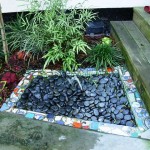
Barbara Balaban's tiny fountain with broken pottery mosaic trim

Barbara Balaban's tiny fountain with broken pottery mosaic trim

There’s not a lot of room in her 20-by-20 foot front yard but Barbara Balaban has maximized every square inch. Instead of a space-gobbling fountain, she created a tiny one, wedged between the walkway and the front steps. The 18-inch water feature uses a re-circulating pump bought at a home center. “I filled the top with river rocks and surrounded the fountain with a border of broken pottery,” says the interior designer and contractor. “I just wanted the sound of water here.”

Balaban moved to her canal cottage after fleeing a traditional Sherman Oaks house destroyed by the 1994 earthquake. Her Venice garden incorporates mosaics of broken pottery salvaged from that disaster: the fountain, a freestanding barbecue-cooking counter and a “welcome mat” at the front gate. “I reconstituted my grandmothers’ and mother’s dishes – and it gives me a big smile to see each piece,” Balaban says.

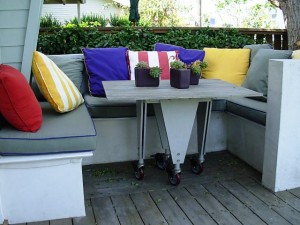
Tiny and efficient, Barbara's U-shaped eating nook seats six

Tiny and efficient, Barbara's U-shaped eating nook seats six

During a home renovation, she retained the original footprint rather than expanding. “I kept the depth of the property the same because I wanted the garden,” she says. Studio City designers Carol Plotkin and Janet Hoskins helped Balaban rethink the miniscule landscape and incorporate a slim border filled with succulents, Mediterranean plants and whimsical art.

There’s a large glass table (on wheels) that accommodates the parties Balaban and her partner, artist Yaacov Aloni frequently throw. But when they want a quiet Sunday morning brunch, the couple lounges in a U-shaped eating nook installed in a corner of the front porch. “It’s like having a little sofa outdoors,” Balaban says. “We can sit here and be a little secluded from passersby.”

Pave the indoor and outdoor spaces with the same flooring material

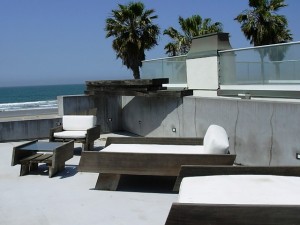
Lenny Steinberg's tiled, open-air terrace overlooks the Pacific Ocean

Lenny Steinberg's tiled, open-air terrace overlooks the Pacific Ocean

A floor covered in sultry blue-green stone leads your eyes through the soaring, loft-like space, through a 17-foot opening in a retractable glass wall and beyond the outdoor terrace, until they rest on the endless seascape.

“The stones reflect the constant color of the ocean,” say owner Lenny Steinberg of her North Carolina bluestone floor. “Although that seems to change according to the light.”

When Steinberg, a furniture and architectural designer, renovated the former duplex into a single, über-contemporary home on Ocean Front Walk, she wanted to bring the ocean indoors. She inherited a palette of irregular-shaped bluestone after a friend’s patio project fell through.

Lenny designed her chaises with distressed wood and modern lines - perfect for the rooftop garden

Lenny designed her chaises with distressed wood and modern lines - perfect for the rooftop garden

“It was the perfect solution for my floor, although I ended up calling all over North Carolina to get more of it,” Steinberg says. Even though the material, a hard slate, is usually installed randomly, the designer spent hours choosing the position of each stone to create a subtle pattern. “I like to think of it as a river running out to the sea,” she says.

The sea metaphor (and the bluestone) continues on the floor of the small, angled terrace that Steinberg designed to cantilever beyond the glass wall. The space serves as the intimate outdoor living room, with views of the palm trees, walkway and pier. The dark teal stone has endured intense sun and saltwater beautifully, says its owner. “If it has any nicks, I just take a little steel wool to it,” Steinberg says. “I wish everything else was as durable.”

 Practice sustainable design by recycling found objects and allowing the garden to evolve over time (rushing is not allowed here)

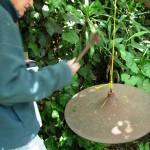
Tim Rudnick rings his hanging cymbal-as-doorbell

Tim Rudnick rings his hanging cymbal-as-doorbell

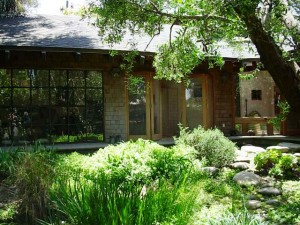
Stepping through the opening in the ivy-clad fence surrounding Tim and Robin Rudnick’s home and garden, it’s possible to lose all track of time. In fact, it seems as if Tim Rudnick, an architectural designer and artist, has turned back the clock to an earlier Venice. “I like the old, tattered hippy cottage that we lived in and raised our kids – where everyone hung out on the old porch,” he says.

Circa 1913, the summer bungalow originally faced Venice’s Aldebaran Canal (now Market Street). The Rudnicks purchased it in 1984, subsequently modernizing the interior and adding an L-shaped Arts-and-Crafts style addition. The old and new portions of the family compound now embrace an intentionally tangled and untamed landscape, also of Rudnick’s design.

“I had this beautiful photograph of a Buddhist garden in Japan and I imagined our yard by looking at it,” Rudnick says. “I loved the idea that like a Japanese garden, you feel like you’re entering another world when you go through the gate.”

Lush and semi-wild, the Venice garden of Tim and Robin Rudnick

Lush and semi-wild, the Venice garden of Tim and Robin Rudnick

A naturalistic pond, measuring about 25-feet across, occupies the center of the garden. Rudnick used the excavated dirt to build a mounded knoll between the pond and a wraparound deck. He landscaped the water’s edge with heirloom irises once grown by his mother, native Pacific coast irises and ferns.

Several mature trees, planted as seedlings nearly 40 years ago, now tower above the rooftops: a coral tree, an olive, and four eucalyptuses. “The leafy trees give us the feeling of real separation,” he says.

Visitors announce their arrival by striking a mallet on two bronze disks, suspended from the twining branches of the coral tree. Rudnick made one from the base of a salvaged clothing store fixture; the other is a recycled cymbal. He prefers their music to a regular doorbell: “One has a very resonant sound and it goes on for 15 minutes; the other makes a beautiful, contrasting sound.”


Los Angeles Garden Show Highlights

Friday, May 1st, 2009
Garden celebrity Shirley Bovshow and I posed on a bench in Nick Williams's garden

Garden celebrity Shirley Bovshow and I posed on a bench in Nick Williams's garden

The theme of this year’s LA Garden Show, “A Festival of Flavors,” is timely and delectable. The show is produced by the Los Angeles County Arboretum and Botanical Garden in Arcadia (just east of Pasadena), a 127-acre destination with a diverse plant collection, inspiring display gardens and natural habitat-inspired landscapes. The three-day flower show runs through Sunday, May 3rd. The event’s honorary chairs are Clara and Jacob Maarse of the famous Pasadena rose nursery and florist, and Rosalind Creasy, garden writer and pioneer in edible landscaping.

Edible gardening expert Rosalind Creasy

Edible gardening expert Rosalind Creasy

Most of the flower shows I’ve participated in have been indoor shows, so when I arrived last night to attend the preview gala, I was reminded of how alluring an open-air flower show can be. There’s nothing like the sky overhead, the sounds of screeching peacocks that wander the Arboretum grounds, the fragrances and textures of plants from every continent — and the conviviality of friendships — to put me in a perfect festive mood.

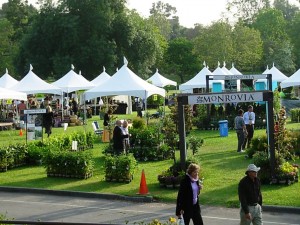
Upon entering the Arboretum, we first stopped off at the “marketplace” of plant vendors, garden artists and purveyors of cool stuff, which occupies the lower lawn adjacent to Baldwin Lake. The collection of white tents, topped with jaunty flags, put a smile on my face. I felt as if I was in Europe rather than Los Angeles. The two hours allotted to previewing the sales area was barely enough – but no worry, because I’ll be back there on Sunday to do some more damage to the checkbook (That’s after my 11 a.m. “Garden Chat” ).

Plant vendors, garden artists and more

Plant vendors, garden artists and more

As I strolled along the grassy pathways between each tent, poked my head inside several to check out the offerings, and chatted with fellow party-goers, I said to myself: These are my people!

I was surrounded by kindred spirits who love gardens, plants, ornamentation, vintage finds, and more.

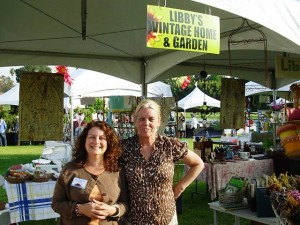
Vintage gals, Libby and Nancie

Vintage gals, Libby and Nancie

A couple of highlights included visiting with Libby Simon of Libby’s Vintage Home & Garden and her friend Nancie Piser, fellow collectors of salvage, old linens, elderly gardening books, retro dishes and glassware, anything tin, rusted or galvanized, and more!

Oh, and Libby also specializes in unusual cactuses – I came home with a nifty specimen (Euphorbia handiensis) that I quickly re-potted in a turquoise-glazed pot for my garden.

My friend Paula Panich and I had a few acquisitive moments, inspired by all the unique finds these two women featured in their tent. I came home with an old garden spray-nozzle and some awesome vintage books, including an almost-mint 1932 edition of The Fragrant Path: A book about sweet scented flowers and leaves, By Louise Beebe Wilder (perfect for a friend’s upcoming birthday). Here’s what Miss Beebe Wilder writes in her opening lines:

A garden full of sweet odours is a garden full of charm, a most precious kind of charm not to be implanted by mere skill in horticulture or power of purse, and which is beyond explaining. It is born of sensitive and very personal preferences yet its appeal is almost universal.

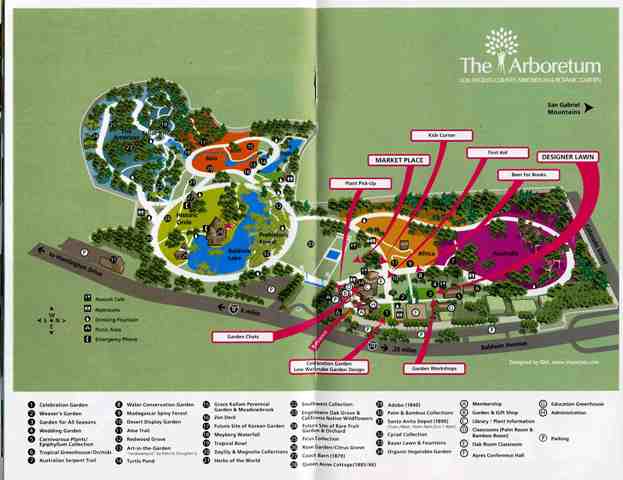
Here is a map of The Arboretum and the Garden Show features:

lagardenshowmap001

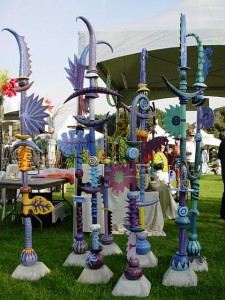
Leslie Codina's art: A joyful explosion of color and form

Leslie Codina's art: A joyful explosion of color and form

Playful, fanciful, nature-inspired sculpture

Playful, fanciful, nature-inspired sculpture

Inspired, my eyes drifted over to the next tent over, which was filled with lively ceramic spires pleasing to the visual senses. Leslie Codina, a local Los Angeles area artist, creates whimsical stacked towers of color, pattern and form. The 5- to 7-foot-tall sculptural creations are formed first in Leslie’s imagination as she “interprets the shapes and colors of nature into her garden sculpture.”

Leslie renders individual elements in clay, then shapes, curves, twists, carves and rolls the medium into fantastical armitures, balls, finials and wing-like shapes.

Firing and glazing steps follow, featuring a mix-and-match palette of lime, plum, apricot, red, orange, blue, aqua and lavender.

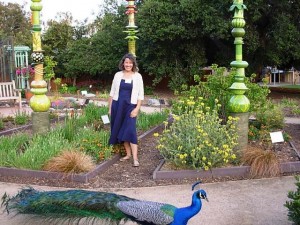
Artist and sculptor Leslie Codina, with peacock strolling by

Artist and sculptor Leslie Codina, with peacock strolling by

I first learned of Leslie from photographer pal Gene Sasse, who has done much of the photography that appears on her web site. He urged me to seek Leslie out – and boy am I glad I finally did.

Leslie has just donated a grouping of four 8- to 12-foot tall sculptures as a permanent installation at the Arboretum. The collection appears in the “Garden for All Seasons” display, which represents each phase of the year.

After shopping and browsing, several of us moved to the “Designer Lawn” area of the Arboretum, where the cocktail reception was underway.

The displays, created by talented area landscape firms and individuals, brings together the idea of “edible” and “ornamental” worlds co-existing in the garden. Here are a few of the innovative ideas showcased:

“Punctuation in the Garden: A Gallery of Edible Container Gardens,” created by the local members of the Association of Professional Landscape Designers (APLD):

I’ve admired and been privileged to write about the design work of several APLD members, both in the Washington State chapter and now in the California chapter. The group of a dozen folks who created eye-catching edible focal points has come up with some pretty fun interpretations of an “edible container.”

READ MORE…

Santa Barbara Style – indoors and outdoors

Sunday, April 26th, 2009
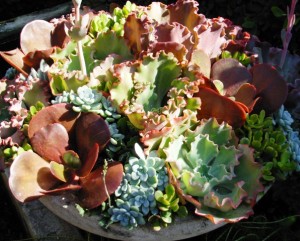
A tapestry of showy succulents, designed by Botanik

A tapestry of showy succulents, designed by Botanik

Erin (Keosian) Taylor’s  cool plant and design emporium called Botanik was one of my very first garden discoveries when I moved to Southern California in late summer of 2006.

I have Gillian Mathews, another awesome garden retailer who created Ravenna Gardens in Seattle, to thank for the introduction.

In September 2006, Gillian and Theresa Malmanger created and led the “Los Angeles-Santa Barbara Garden Tour” for the Northwest Horticultural Society. So I piggybacked on that trip and joined all my Seattle pals only 3 weeks after I moved here. I was in for a treat!

It turns out that I needed Gillian and Theresa to be my “guides” to begin to understand my new backyard.

It was the best gift they could have shared. The three-day garden extravaganza gave me a front seat tour to some amazing private gardens, public gardens and retail outlets. It fed my spirit and soul as I got to pal around with several very special, dear friends.It made me begin to realize that I was going to be “okay” living here because I started viewing SoCal’s horticultural and garden design world through the eyes of these savvy Seattle folks. That began my long education as to just how cool my new environs are.

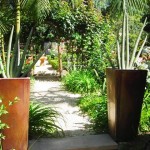
One of our stops was the coastal village of Summerland, where Botanik occupies two cute cottages. Created by Erin Taylor, a fresh, young talent who has an amazing eye for design and a solid footing in horticulture, Botanik captured my imagination for gardening with succulents in a whole new way.

Since then, over the past few years, I’ve visited Summerland whenever I could (it’s only a few miles south of Santa Barbara off of Hwy. 101). Erin is inspiring, creative, and refreshingly casual in her design approach. She and staff designer, Molly Hutto create succulent displays like I’ve never before seen. Their creations are oft-copied but never surpassed in composition – with delicious succulent textures, colors, forms and patterns.

Botanik's entry porch converted into a potted plant display

Botanik's entry porch converted into a potted plant display

botanik7In 2007, Kate Karam and I produced a story about Botanik’s luscious succulent designs for a future Cottage Living story. We had such a great time working with Erin and Molly that day. The designs they came up with were to die for! Sadly, as you all know, Cottage Living ceased publication after the December 2008 issue and we all miss it (we miss garden editor Kate, too!) Who knows where that film will surface or whether it will at all (I’m hoping Sunset picks it up, since it’s a sister magazine).
Not one to sit around and wait, I was recently fortunate to interest another editor in Botanik. Well, that’s not fair to say because I haven’t met an editor or publication yet NOT isn’t interested in Erin and Botanik!

But, earlier this spring, Erin graciously agreed to let 805 Living create a story around her natural design philosophy for interior and exterior spaces.

My story appears in the April issue of 805 Living, with photographs by Gary Moss. Here it is for you to read and enjoy. And for those of you planning a Garden Pilgrimage to Santa Barbara (Lotusland, Santa Barbara Botanic Gardens, etc.) don’t leave town without stopping in Summerland to visit Botanik.

READ MORE…

Garden Conservancy’s Altadena Tour

Saturday, April 25th, 2009
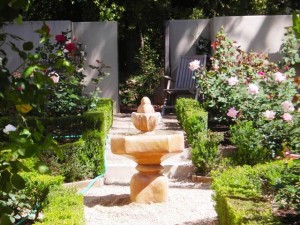
A small fountain bubbles at the intersection of the rose garden's central walkway and side paths

A small fountain bubbles at the intersection of the rose garden's central walkway and side paths

Last week, I toured the 3/4-acre landscape owned by Cheryl Bode and Robin Colman, a lavish garden developed over the past 10 years in the foothills of the San Gabriel Mountains.

Tomorrow, April 26th, they are generously sharing their lush and serene property as one of six private, residential landscapes on the Altadena Garden Conservancy Tour.

My story, “Botanical bounty in Altadena,” about Cheryl and Robin’s abundant landscape, appears in today’s edition of the Los Angeles Times.

Since we had to cut the original piece due to space, I have included the full story below.


Take a virtual tour through this web gallery of photos from my visit:

Here is my original story. Enjoy a peek into the lives of two who are passionate about the place they possess:

By Debra Prinzing

Ten years ago, Cheryl Bode and Robin Colman discovered the house and garden they soon called Casa dos Mujeres (House of Two Women).

Prompted by the desire for more space as they combined their individual households, the two Pasadena residents considered buying in nearby Altadena, a village in unincorporated Los Angeles County wedged between Pasadena and the foothills of the San Gabriel Mountains.

“Cheryl went to Altadena on a lark with our real estate agent,” Robin recalls. “This house was in terrible shape, but part of it really captivated her.” Later, when Cheryl returned with her partner in tow, she couldn’t help jumping up and down with happiness when Robin pronounced: “I could live here.”

READ MORE…

California lilacs (Syringa, not ceanothus)

Thursday, April 23rd, 2009
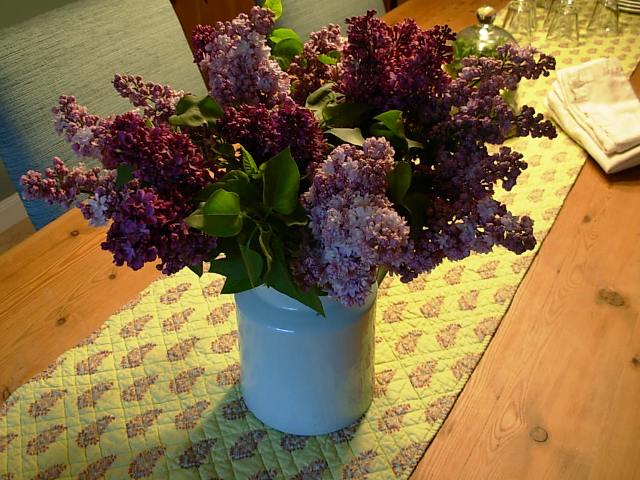
My lovely bouquet of California-grown lilacs from Kilcoyne Lilac Farm

My lovely bouquet of California-grown lilacs from Kilcoyne Lilac Farm

A few weeks ago, I interviewed a hot Santa Barbara floral designer for a story that will run in the May issue of 805 Living, our local shelter glossy.

While telling me about the fresh-from-the-garden arrangement he created, the designer mentioned that the lilacs came from a farm in Antelope Valley.

I know of Antelope Valley because it is the famous home of the California Poppy Reserve (which I am kicking myself for NOT getting to see last month when the ubiquitous yellow-orange flowers were in bloom). That flower fact is filed away for future reference . . . but suddenly, the idea of LOCAL lilacs is tickling my fancy in a big way. Some of my best childhood moments were experienced with my face buried in wild, unkempt but intoxicatingly fragrant lilac shrubs: first in the backyard of a Connecticut rental house in the mid-1960s and later in a historic Massachusetts town square where lilacs grew with abandon in the mid-1970s.

In the late 1990s, we planted a Syringa ‘Sensation’ in our Seattle garden. My dear friend and former college roommate (and longtime garden muse) Karen Page selected the plant for us while helping with several landscaping projects. It grew tall and robust and blessed me and my garden alike each June, producing voluptuous trusses of darkest-purple florets edged in pure white. Too beautiful! It now lives in my memories.

So today, while racing through the Thousand Oaks Farmers Market near closing time (to pick up a half-dozen hand-made tamales for dinner), I stopped dead in my tracks at this little scene: a row of white plastic 5-gallon buckets FILLED with pale and deep lavender clusters of lilacs. Two women were working out of the back of a pickup truck, clipping and bundling lilacs: gorgeous, fresh-cut, real lilacs. I overheard one of them telling a customer that she grows the lilacs in Antelope Valley.

The connection was made! I introduced myself to Elizabeth Kilcoyne of Kilcoyne Lilac Farm and her neighbor-assistant Marie. I asked: “Do you sell lilacs to S. R. Hogue in Santa Barbara?” Her face broke into a lovely, warm smile: “Yes.”

I told Elizabeth and Marie about the 805 Living article and they already knew about it – my editor Lynne Andujar and her photographer Gary Moss had shot scenes of Thousand Oaks Farmers Market flower vendors a few weeks ago – for our upcoming flower story.

Without thinking, I switched into Debra-as-Reporter and started quizzing the women about these awesome, California-grown lilacs. Wait!!! I raced to my car and grabbed my little Flip video camera and returned to see whether Elizabeth would let me tape a short interview with her. She agreed and here is the interview:

httpv://www.youtube.com/watch?v=-oOdGqEm-xQ

I came home with a lovely bunch of Elizabeth’s lilacs and have promised myself that come next spring, I will visit her farm and display gardens filled with 150 lilacs. Plus, I need to find an outlet to produce a magazine story about Kilcoyne Lilac Farm.

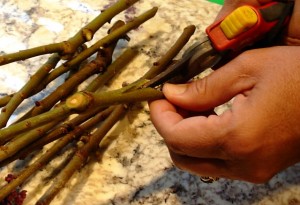
The varieties seen here are: ‘Charles Jolie’ (or ‘Charles Joly’) and ‘Ludwig Spaeth’ – two dark reddish-purple lilacs (‘Charles’ has a tiny white spot – Elizabeth calls it a ‘B’ – in the center of the floret); and ‘Michael Buchner’, the pale lavender French hybrid. Before I filled a jug with the blooms, I made sure to clip the bottom of each woody stem and then slice the stem in half, with a 1-inch cut. This technique helps the stems drink more water and stay fresh.

My fresh lilacs, home from the market

My fresh lilacs, home from the market

making a "slice" in the stem base

making a "slice" in the stem base

The prettiest outhouse-turned-stylish shed I’ve ever seen

Tuesday, April 21st, 2009
The Cozy Shack, Designed by Scotty Thompson and Suzanne St. Pierre of "Living in the Garden," a cool Pullman (Wash.) garden emporium

The Cozy Shack, Designed by Scotty Thompson and Suzanne St. Pierre of "Living in the Garden," a cool Pullman (Wash.) garden emporium

I love it when I receive surprise “Shed-Mail” from Shedistas like Suzanne St. Pierre. Suzanne and her husband Scotty Thompson own Living in the Garden, a cool nursery/emporium in Pullman, Washington. We’ve swapped a few emails, originally prompted by Suzanne’s note saying she loves Stylish Sheds as much as I do.

Recently, while planning their own version of a spring flower show, Suzanne and Scotty recycled an old cedar outhouse from their 2-acre property and tricked it out to be a too-cute cottage for their nursery. She sent me a sweet note and some photos and gave me permission to share them with you.

Hello, inspired by your Stylish Shed book, my husband and I jazzed up an old outhouse we had on the property (to use) for a focal point in our Sweet on Spring event at Living in the Garden. It was a hit!! I wanted to thank you for the inspiration and tell you that I enjoy your blog.

I just caught up with Suzanne by phone and we had a good ol’ gab. It felt like I was talking with a long-lost friend. She described how this little structure found its way from humble to haute:

Originally, the cedar “box” was an outhouse over a pit toilet. The couple actually used it while living in their tiny “sugar shack” when they moved to the two-acre property about six years ago. After they built their residence and started running the nursery, they had a “real” indoor bathroom, so the 3-by-3 foot outhouse was no longer needed. “We filled in the pit and just moved the building around,” she says.

With shingles made from flattened tin can lids and hot pink trim, this is an outrageous outhouse!

With shingles made from flattened tin can lids and hot pink trim, this is an outrageous outhouse!

When preparing for Living in the Garden’s “Sweet on Spring” event last month, they decided to create several indoor garden displays (it’s still pretty chilly out there on the Palouse in March). As Suzanne explains, “We wanted to create our homage to the Northwest Flower & Garden Show.”

Once she and Scotty decided to dress up the rustic outhouse, the creativity exploded. Suzanne told Scotty: “We have to use everything we already have on hand.”

Like most artist-builders (Scotty is “incredibly handy and artistic”), the couple has all sorts of project piles and cool materials had saved for future endeavors. Clearly, they love to re-purpose what others might toss into the landfill.

This detailed photo illustrates how they used flattened tin cans, layered like gingerbread shingles, to clad the upper portion of the structure. Scotty added a window and the arched doorway, plus the cool corbel-style brackets and scallop-trim fascia board around the shed roof.  It even has a skylight! I’m dying to see an indoor shot (maybe Suzanne will send it to add here!) because apparently she decoupaged the interior walls with pages from old gardening books someone had given them. I guess Suzanne broke her own rule about using on-hand materials when it came to paint. She confesses that she did actually buy the hot pink paint as a finishing detail. Fancy!

Cute Outhouse (left) outside the gorgeous conservatory, built by Scotty Thompson of Living in the Garden

Cute Outhouse (left) outside the gorgeous conservatory, built by Scotty Thompson of Living in the Garden

I love this couple’s philosophy of truly LIVING IN THE GARDEN. Suzanne grew up in a family nursery and purchased and ran her parents’ former nursery for 12 years after graduating from college with a horticulture degree.

“But I burned out. I was never getting my hands dirty,” she confides. Several years (and a career in the wholesale plant trade) later, Suzanne realized how much she missed retail. “I just wrote on a piece of paper what the perfect job would be: Work from home. Work with Scotty. Work 4 months of the year for 4 days a week.”

Wow. How seldom do any of us have such an honest conversation with ourselves? Guess what? For the past six years, Suzanne and Scotty have been doing exactly what she wrote down on that page. “My commute to work is just 113 steps,” she jokes. “We’re working on our farm and making people come to us. It’s really wonderful.”

Living in the Garden's green roof

Living in the Garden's green roof

Living in the Garden is open from March through June (Thursdays through Sundays). Earlier in the season, beginning in February, Suzanne starts work in their production greenhouse, growing geraniums and plants for their own hanging baskets. By summer, the couple is off on trips in their camping van (complete with solar panels on the roof!) and touring around the Northwest and beyond to see other nurseries and commercial greenhouses.

They believe in “marketing with a cause,” so during the summer months Suzanne and Scotty encourage local charities to use their extensive and beautiful display gardens for fund-raisers or donor-appreciation events.

By September, just about the time Suzanne is “missing” her customers, Living in the Garden opens for one spectacular autumn weekend.

When you arrive, don’t be surprised to hear the mellow sounds of Gregorian chants drifting through the garden and conservatory. “Gardening is my religion,” Suzanne concludes.

Check out the nursery in person or read more at Suzanne’s blog, Living in the Gardens.

Garden field trip: Terrain at Styer’s

Sunday, April 19th, 2009
a morning. a mug of tea. breakfast inside a greenhouse. perfection.

a morning. a mug of tea. breakfast inside a greenhouse. perfection.

I have a backlog of cool ideas and discoveries that I want to write about. Too many inspiring thoughts and insights swirling around my head. Too little time.

Since returning from my crazy Jan-Feb-March travel (seven out-of-town lecture trips in something like 10 weeks) I have been trying to carve out time to return to Shedstyle.com. It is the writing forum I love the most, but family demands, and the need to actually make some money, have distracted me. But I’m back on track, friends. I promise.

terrain14One of the places I visited on my many journeys is Terrain at Styer’s.

I recently wrote about my early March trip to lecture on stylish sheds and other small abodes in a talk called “Your Personal Escape” at the Philadelphia Flower Show. But my side trip to Terrain was great fun and I don’t want any more time to pass before writing about it.

Terrain is the darling of the home and garden media. As a hot, design-oriented gardening emporium outside Philadelphia, Terrain appears in shelter magazines as often as its west coast “kindred spirit,” Flora Grubb’s. How cool that I visited both plant- and style-savvy destinations within a few weeks of one another.

You all probably know the back-story about Terrain. If not, I’ll give you the short version here, beginning with Terrain’s own words:

“Lifestyle merchandising is our business and our passion. The goal for our brands is to build a strong emotional bond with the customer. To do this we must build lifestyle environments that appeal emotionally, and offer fashion correct products on a timely basis. Our customers are the reason and the inspiration for everything we do.”

Founded in 2008, Terrain transforms the local garden center into a celebration of nature. Our flagship location . . . was inspired by the idea of merging house and garden to create an experience for the senses, catering to our customer with a curated assortment of plants for all seasons, as well as inspired items for the home and garden. Situated in a luxurious indoor-outdoor environment, our on-site nursery is flanked by a cafe and garden terrace, providing the ideal environment to host events and workshops. [from the Urban Outfitters corporate web site]

READ MORE…

You say Toe-MAY-toe; I say Toe-MAH-Toe

Thursday, April 9th, 2009
A cause for celebration: Hundreds of Heirloom Tomato Starts

A cause for celebration: Hundreds of Heirloom Tomato Starts

Does anyone really NEED 21 tomato plants? The answer is: OF COURSE!

If you are obsessed with having dee-lish heirloom tomatoes at your fingertips, you will want to track down Tomatomania, the largest spring sale of tomato seedlings around. It is a grassroots endeavor; the brainchild of landscape designer and Tomato addict Scott Daigre.

Shopping for the very best of heirloom tomato starts with Tomatomania founder Scott Daigre

Shopping for the very best of heirloom tomato starts with Tomatomania founder Scott Daigre

I remember meeting Scott in 2006 at the Northwest Flower & Garden Showin Seattle. I’m not really sure why a California boy was up in Seattle, but it was certainly a treat to meet him at one of my book signings. Little did I know ( I find I am saying that a lot these days ) that I would soon be Scott’s neighbor in Ventura Co., and moreover, a customer of one of his Tomatomania events.

A couple of folks, fellow Garden Writers, have kept Tomatomania on my radar. Kate Karem, formerly Cottage Living’s gardening editor and also a former LA resident, told me she used to be involved in Scott’s annual plant sales. While reading Orange Co.-based garden writer Cindy McNatt’s new “Dirt du Jour” blog, I was recently reminded to check out Scott’s event. In fact, it was a link on Cindy’s blog that pointed me to the very first Ventura County “Tomatomania” event at Otto & Sons’ nursery in the agricultural town of Fillmore, about 20 miles north of my place.

My buddy Alex, tomato fan extraordinaire

My buddy Alex, tomato fan extraordinaire

Since ours is a household of foodies, including children who have very definite opinions on all things culinary, I was psyched to again grow heirloom tomatoes (I haven’t planted any since leaving Seattle – and that’s a pretty tough tomato-growing climate). Whether someone needs as many as Alex and I acquired last Saturday is a matter of opinion.

We have room in our raised beds, so we’re going to go for it. Scott advises that backyard gardeners space tomato plants at 2-foot intervals. We can make it work, I’m sure.

The nursery sale was organized with a logical A to Z display. The only problem is that every single tomato looked healthy and vigorous; the fruit photos and descriptions made our mouths water (or at least piqued our curiosity).

Pick it, Slice it, Salt it, Eat it - Simple!

Pick it, Slice it, Salt it, Eat it - Simple!

The wagon Alex pulled for me up quickly. We loved running into Scott, he of the bright red hat, lime green shirt, and turquoise Tomatomania T-shirt. The ambassador of tomatoes is on a roll. His sales now crisscross the US and he has plans to add a few more states in 2010 (even in Texas, he says).

Here is a list of the plants we brought home in 4-inch pots. For $4 each, ours was a good investment. The neighbors are already putting in their requests for our “extras” come harvest-time:

  • Cherokee Chocolate: Mahogany-colored variety; excellent flavor, large fruit
  • Black Krim: Originally from Krim on the Black Sea of Russia; slightly flattened shape, dark-reddish mahogany color
  • Aunt Ruby’s German Green: Pink-blushed interior; green pleated exterior; handed down from Aunt Ruby Arnold, Greenville, Tennessee
  • Copia: Named in honor of the American Center for Food, Wine and Arts in Napa, California; a stabilized cross of ‘Green Zebra’ and ‘Mauve Stripe’; fine-lined golden yellow and red striped fruit
  • Beam’s Yellow Pear; Pomodoro; La Roma; Sungold Cherry
  • Sugary: Sweet, cherry-sized, oval-shaped
  • Berkeley Tie-Die: no description necessary! The name alone demanded that we plant this one
  • Black Zebra: Perfectly round, 1-1/2-2 inch fruits with deep, dark red to caramel-colored skin beneath dark green-mahogany streaks; smoky-sweet flavor
  • dscn0374Pink Accordian
  • Kellogg’s Breakfast: Round, yellow-orange fruit
  • Hillbilly Potato-Leaf: From West Virginia (natch); mild flavored beefsteak fruit that weights up to 2 lbs; orange-yellow streaked and mottled shades
  • Omar’s Lebanese: 1-2 pound pink beefsteak
  • Banana Legs: 4-inch mini banana-shaped, brilliant yellow fruit; fun for kids

Peace by Design: a preview

Monday, April 6th, 2009

peacebydesign0002

The filming and editing are finished and we’ve posted a short excerpt from “Peace by Design,” my new outdoor lifestyle television show produced by Robert Schauf and Tisha Fein of Branch BR3.  

We developed “Peace by Design” to bring a new level of inspiring and informative garden and home stories to the consumer. With the theme of “creating your own peaceful place – indoors and outdoors,” the show will feature my visits to and interviews with top celebrities in film, television, music and sports. We will single out stars who are passionate about their own environmental activities, sustainable practices and related themes such as living in harmony with the natural world. Each program will be supported by ideas, tips and other takeaways for the viewer who yearns to turn their own backyard into a harmonious and serene environment.

Click here for Peace by Design’s web site and to view an excerpt of the show. Now the fun begins, as we share the show with potential presenting sponsors who view Peace by Design as a multi-platform marketing opportunity. I think the visuals, the celebrity component and the varied topics come together to create an exciting new show. I welcome your response and reaction to this project. I hope you love it as much as I do!