Debra Prinzing

Get the Email Newsletter!

Archive for the ‘Plants’ Category

Meet Village Green, a Neighborhood Nursery for Plant Lovers

Tuesday, July 23rd, 2013
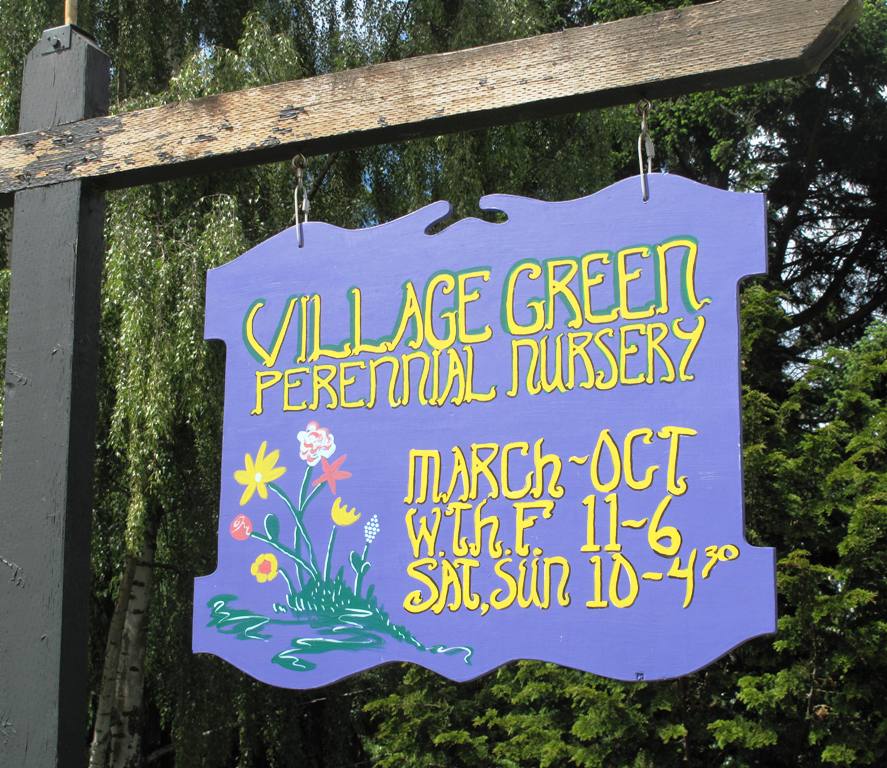
Just look for the hand-painted lavender sign when you're driving down 26th Avenue Southwest in Seattle. There's plenty of places to park on the street . . . and then you'll wander down the long drive to the nursery.

Just look for the hand-painted lavender sign when you’re driving down 26th Avenue Southwest in Seattle. There’s plenty of places to park on the street . . . and then you’ll wander down the long drive to the nursery.

Earlier this spring, I had the delightful experience of giving a floral-design workshop at Village Green Perennial Nursery in West Seattle’s White Center neighborhood. This place is like a secret garden, although there are many, many customers who have been in on the secret for years. This is a plant-centric business, one neighbor to the next. 

Village Green Perennial Nursery was founded by Teresa Romedo over 30 years ago. In 2003, she passed the torch to Vera Johnson, who has owned and operated the nursery ever since. 

Vera Johnson, plantswoman, horticulturist, designer, educator and artist, presides at the helm of this magical destination. Her mission is to inspire the neighborhoods of White Center and West Seattle by providing the very best resources available to create sustainable outdoor living spaces, one block at a time. As a little garden center with big ambitions, Village Green is known for high-quality customer service and healthy plants. It has evolved as a community center that showcases local artists, musicians, and events. 

Vera has just announced her first farm-to-table event, scheduled for August 31st. This has the potential to be an unforgettable moment in time, an experience that celebrates food, wine, plants and flowers. Tickets are $100 per person. Order yours here.
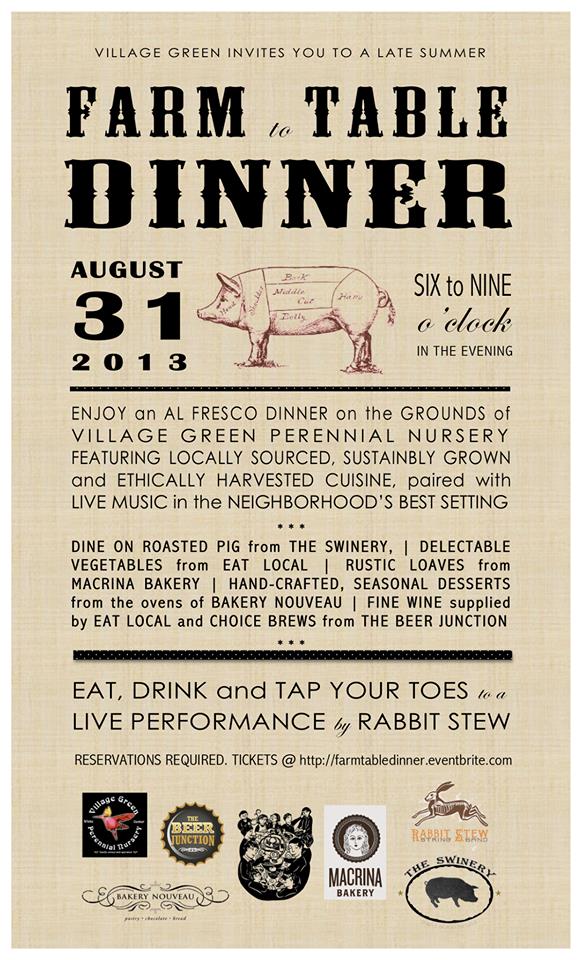
FarmtoTableVillageGreen


Take a virtual tour of the beauty at Village Green Perennial Nursery – and save the date for a fabulous event! I hope to see you there!

READ MORE…
SLOW FLOWERS: Week 29

Sunday, July 21st, 2013

STUNNING SUCCULENTS

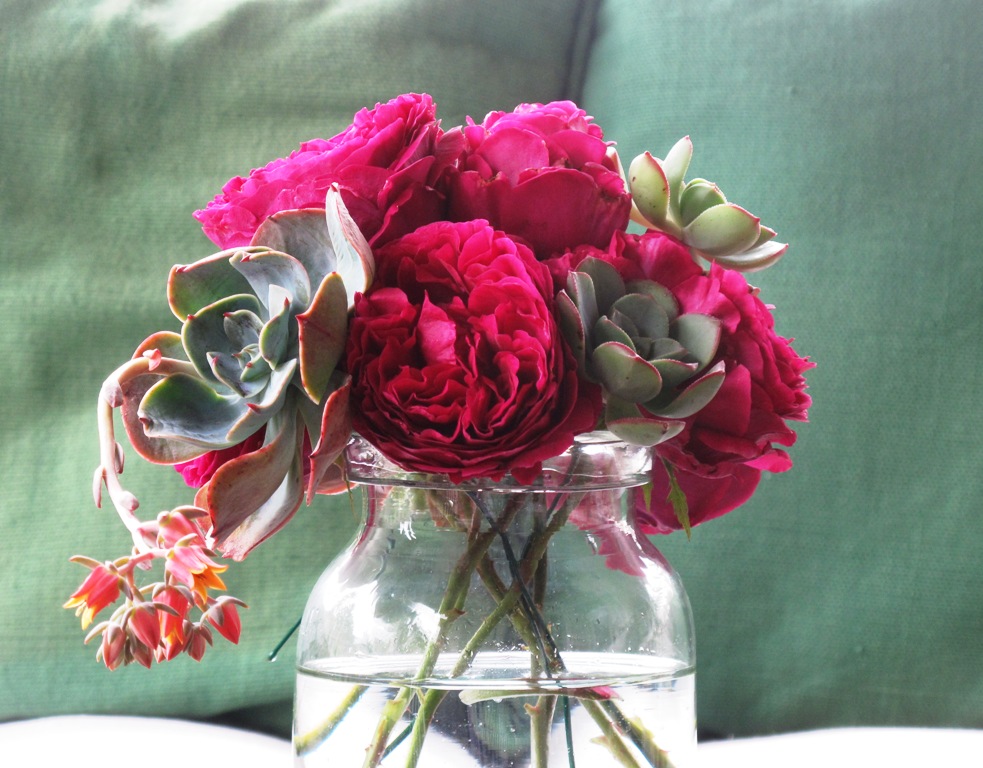
Rose Succulent

The rose-shaped echeveria pairs beautifully with the garden rose.

Ingredients for arrangement above:
  • Several rosettes from Echeveria plants, with wire “stems.” I took these cuttings from my friend Cristi Walden’s Southern California garden and brought them home to Seattle in my suitcase; they lasted the entire summer in a number of arrangements.
  • 7 stems of rose-red, multipetal garden roses, variety unknown, harvested from my Seattle garden
 
Vase:
6½-inch tall x 4½-inch diameter glass jar with 3½-inch opening
 
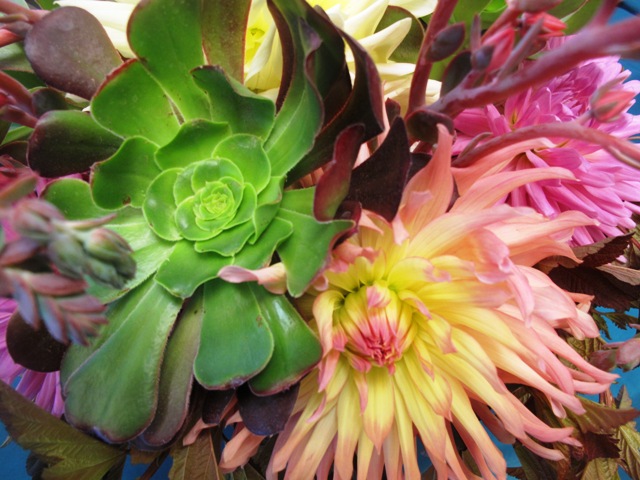
Succulents Dahlias

A beautiful green Aeonium rosette and cactus-style summer dahlias

From the Farmer

Succulent success: Robin Stockwell, owner of Succulent Gardens Nursery in Castroville, California, says it’s easy to remove rosettes with a clean, sharp florist’s knife or clippers. After several days, the succulents will likely be the only part of your bouquet that still looks attractive. They can be re-used in your next arrangement. Or, remove the wire and set the cuttings in a bright window where they’ll soon produce roots. That’s when you can replant your succulent in a pot or in the garden.


SLOW FLOWERS: Week 28

Sunday, July 14th, 2013

Heavenly Hydrangeas

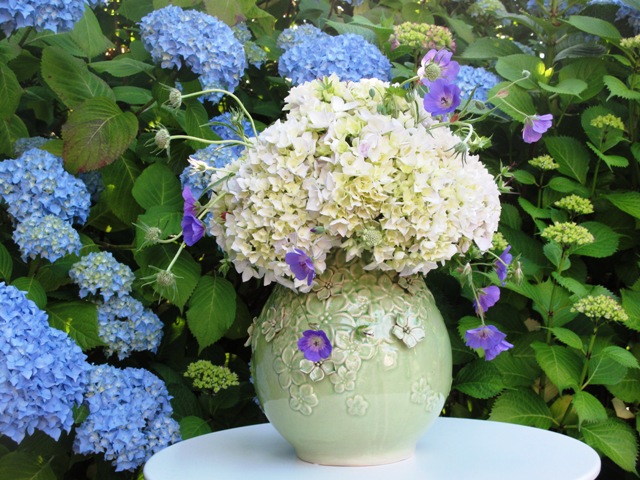
White hydrangeas

A simple bouquet of hydrangeas – one of my favorites in this book

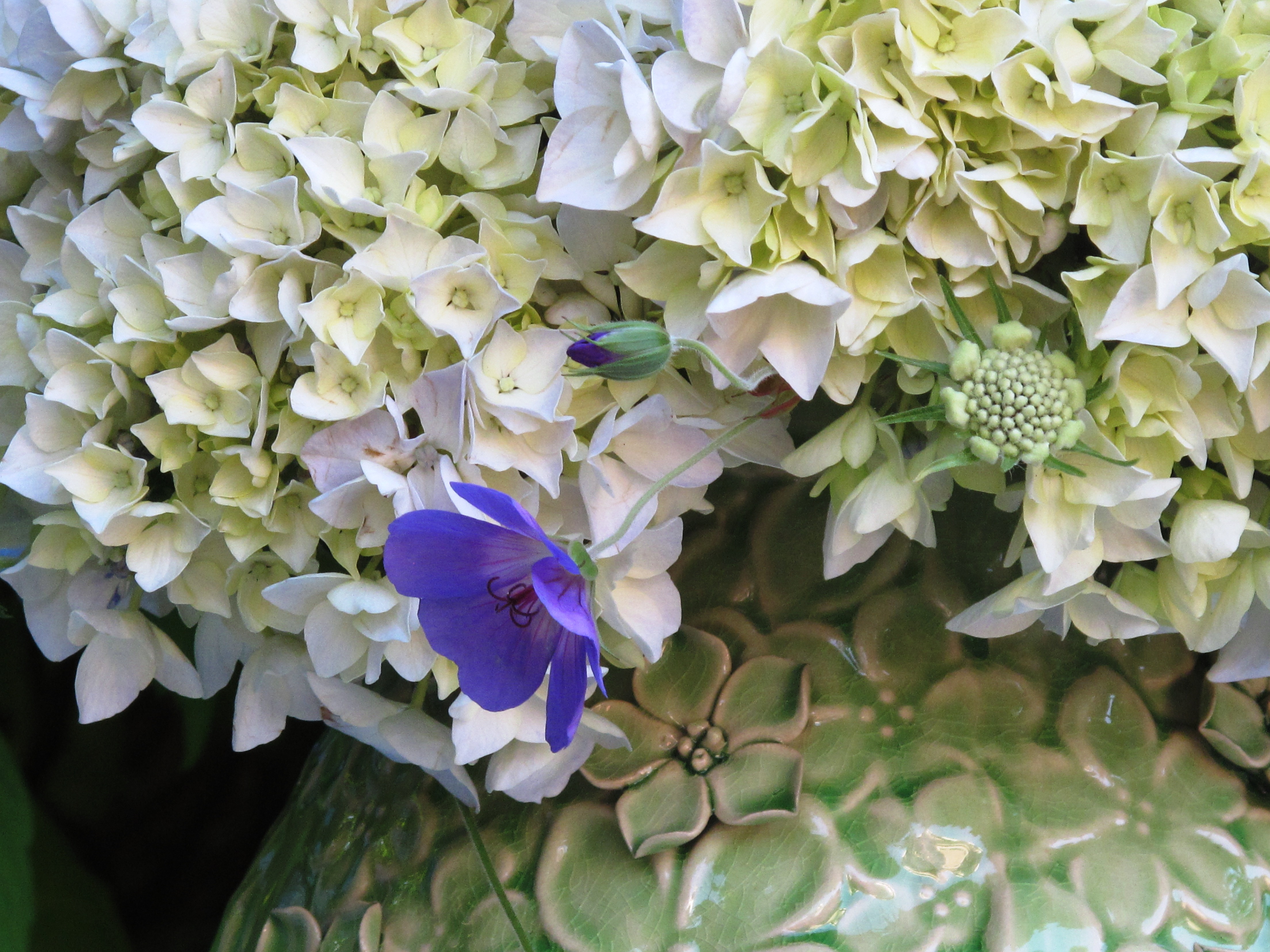
simple detail

The details are quite sweet!

Ingredients:

10 stems mop-head hydrangeas (Hydrangea macrophylla), grown by Oregon Coastal Flowers
8 stems Geranium ‘Rozanne’, harvested from my garden
6 stems pincushion flower (Scabiosa sp.) in bud, grown by Choice Bulb Farms
Vase:
11-inch tall x 10-inch diameter ceramic glazed vase (the opening is 5 inches)
 
From the Farmer
Give your hydrangeas a refreshing drink: Summer-harvested hydrangeas are considered to be shorter-lived than ones cut in autumn, giving them a reputation for not lasting long in a vase. You can revive wilting hydrangea
flowers, though. Five days after I made this bouquet, I took the entire arrangement apart, re-cut each hydrangea stem and submerged them in a cool, soaking bath in the kitchen sink for about 15 minutes. With the excess water shaken off, they were refreshed and re-hydrated, guaranteed to last a few more days in the vase.
 
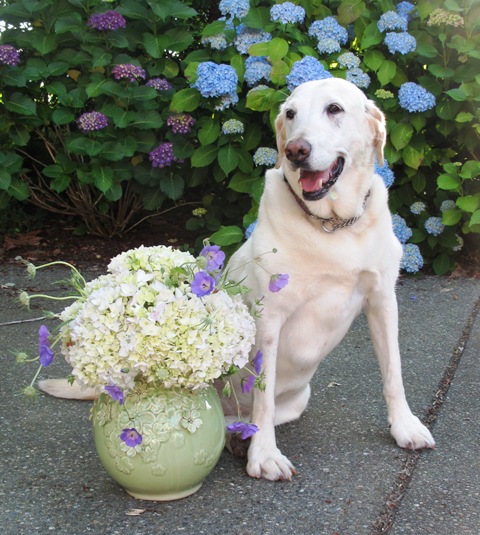
Still Life with Zanny and Hydrangeas

A favorite out-take from Slow Flowers: Our dog Zanny decided to pose with the flowers.


New summer articles by Debra

Saturday, July 13th, 2013

It was fun to visit the newsstand yesterday and pick up three new magazines with my articles.

When you see them in one place, it might feel like I’ve been super productive. But there is a back-story about each, and I have to be honest with you. Sometimes it takes YEARS for a story to see the light of day.

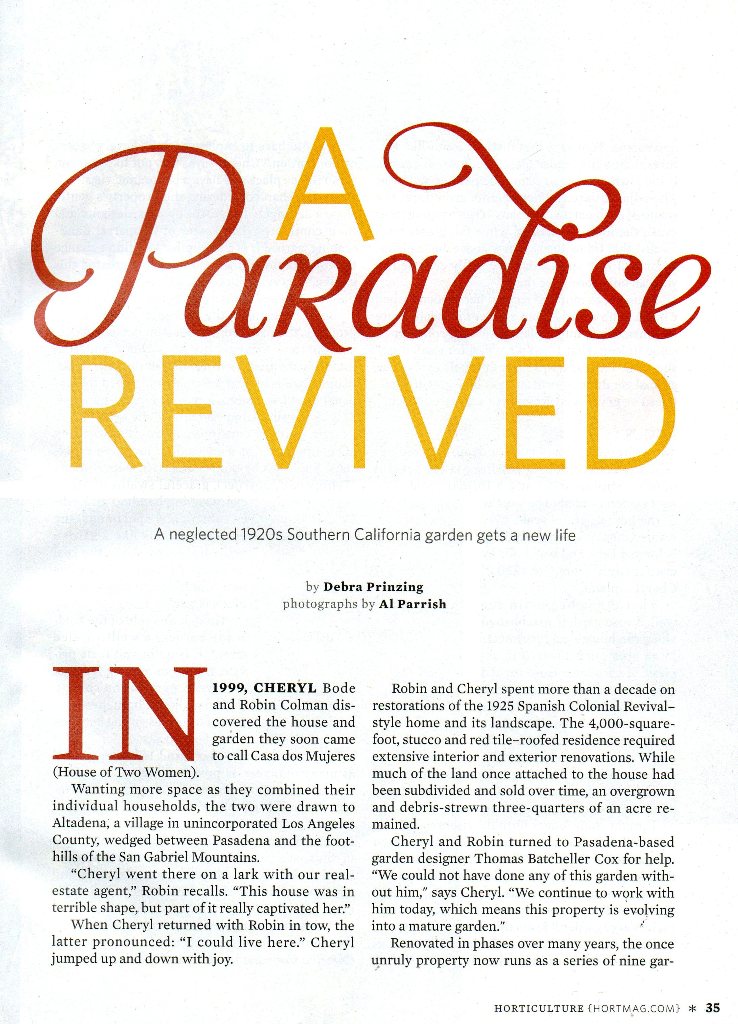
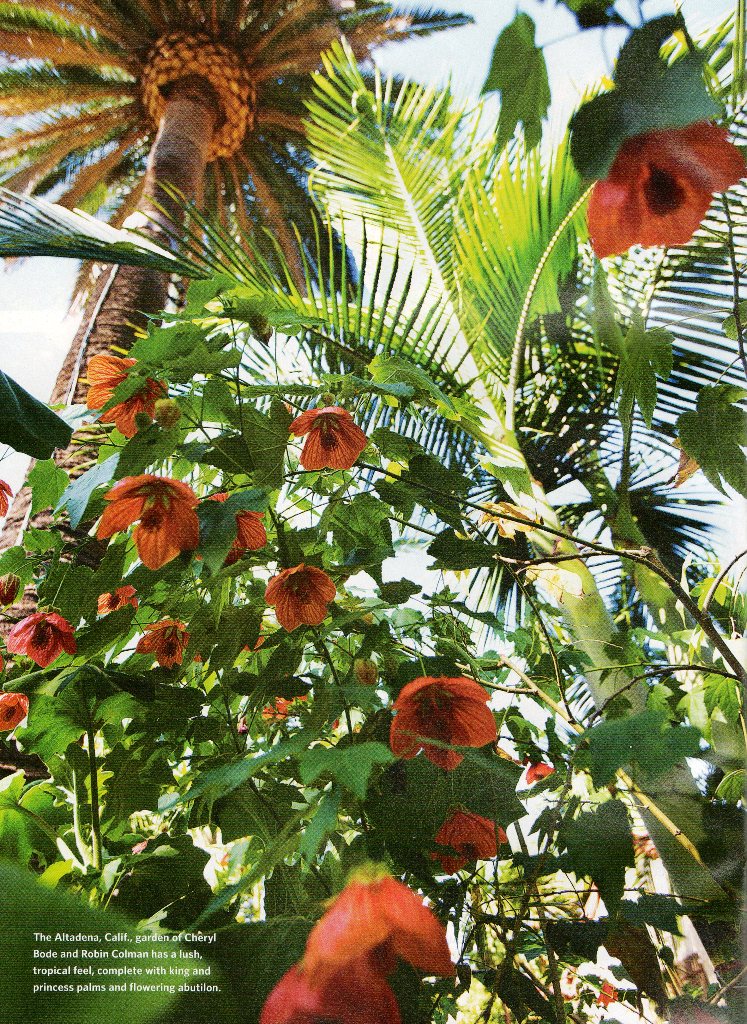
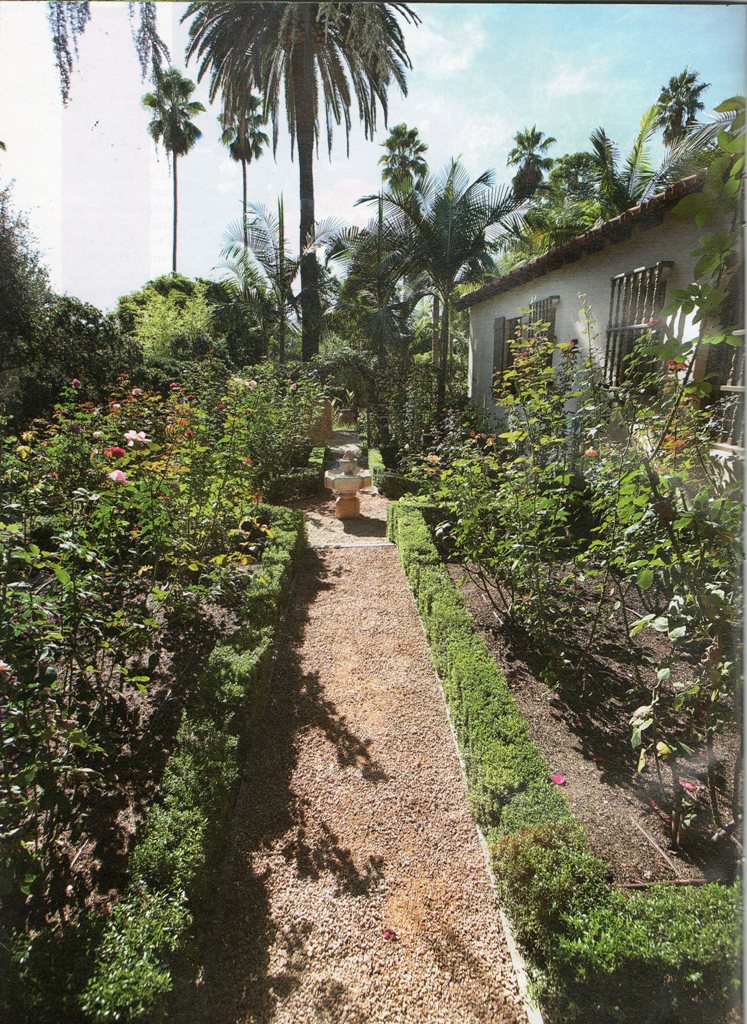
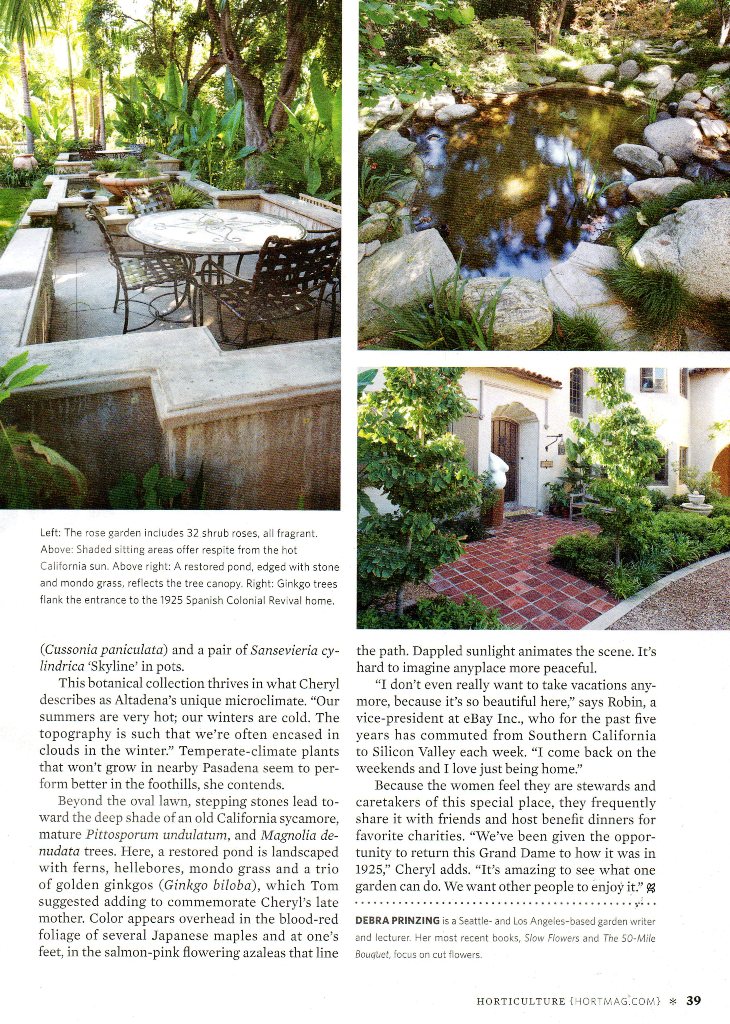
Case in point: The Southern California garden owned by Cheryl Bode and Robin Colman, featured in the July-August issue of Horticulture, was photographed in 2009. Since then, it has often seemed to Cheryl, Robin and me that the story would never appear in print. When I finally saw the issue, just out on newsstands, I understood why. The photos are incredibly disappointing. I have so many wonderful photos of their garden and the magical feeling one experiences when visiting there was simply not expressed in the Horticulture magazine. Click over to my articles page to read the story and see my photos rather than the ones printed below. Theirs is an inspiring story of two homeowners who yearned to bring an old house back to life, along with its garden. To physically walk through it is truly special.

Cheryl_Robinp6Cheryl_Robinp2Cheryl_Robinp1Cheryl_Robinp3Cheryl_Robinp4Cheryl_Robinp5


READ MORE…
A field-to-vase celebration

Wednesday, July 10th, 2013
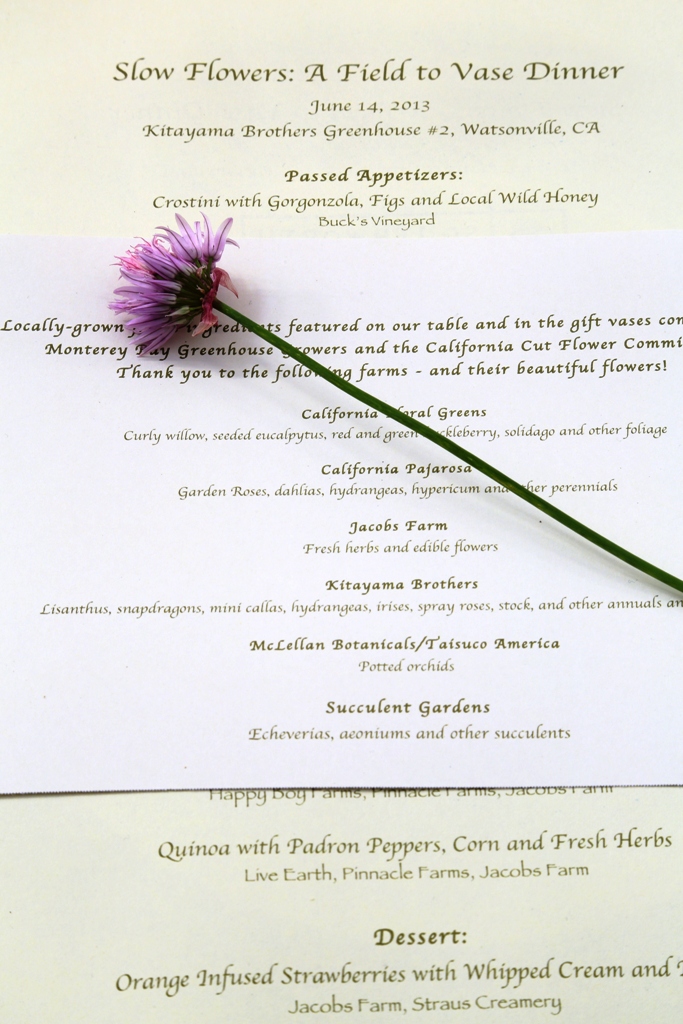
Menu

Welcome to the Slow Flowers Dinner

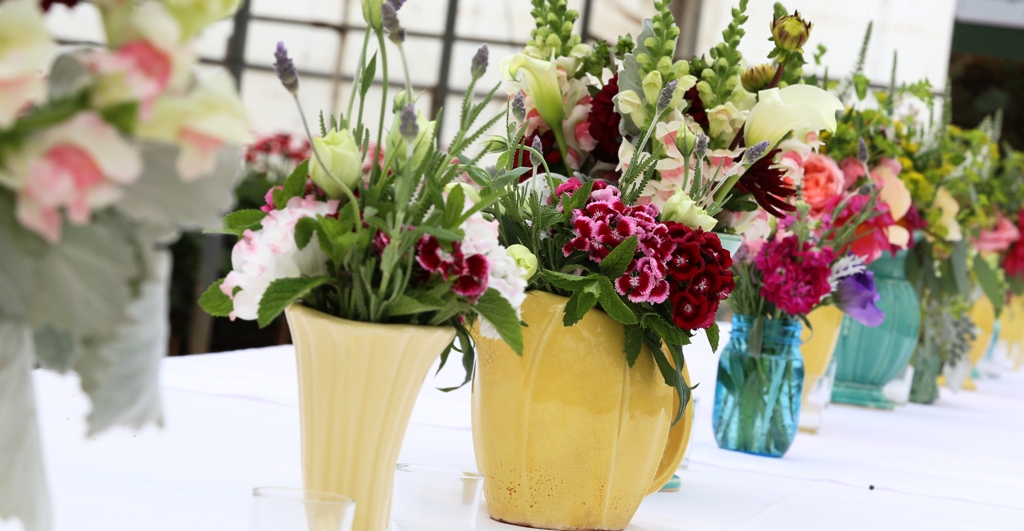
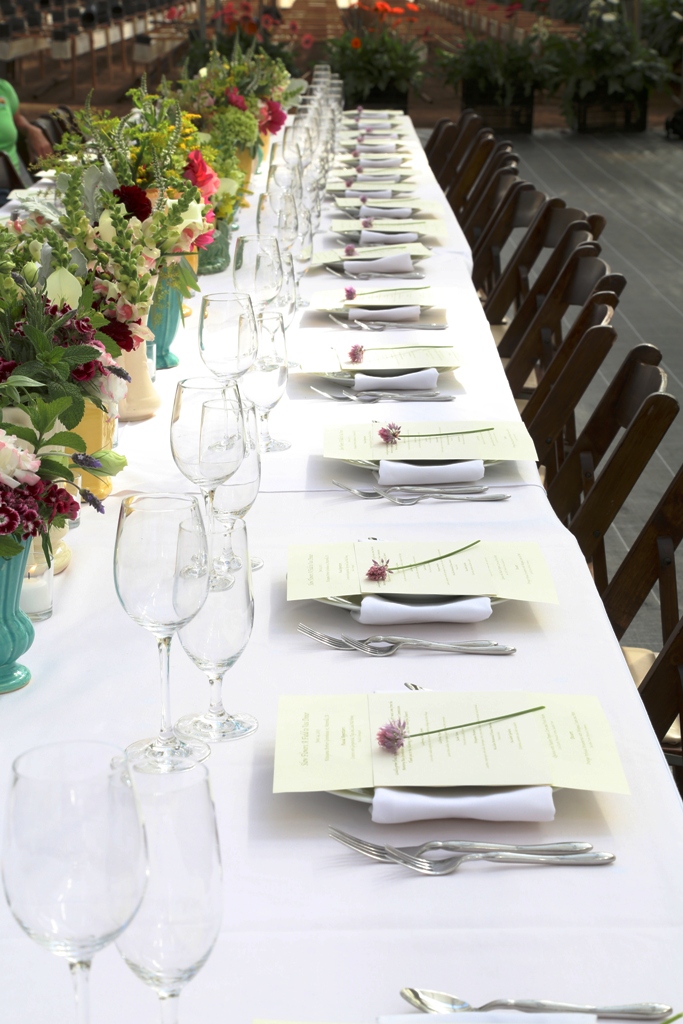
Imagine a table set for 40 . . . inside a flower-filled greenhouse. Vintage vases overflowing with just-picked blooms adorn the table and a locally-grown menu is is served.

Imagine a table set for 40 . . . inside a flower-filled greenhouse. Vintage vases overflowing with just-picked blooms adorn the table and a locally-grown menu is served.

Last month I joined with the California Cut Flower Commission to host a “Slow Flowers” dinner as part of the 2013 Monterey Bay Greenhouse Growers Open House & Tour.

table setting

The table was set for local food and local flowers.

We called it “Farm-to-Table; Field-to-Vase” and held the dinner in the gerbera-filled greenhouse at Kitayama Bros. Farms in Watsonville, California. The event was a gathering of like-minded persons. Each of us — farmer, florist, media, community advocate — cares deeply about the role of American  flowers in the greater agricultural environment. And everyone in attendance contributed an important voice around the table, a table with locally-grown food and locally-harvested flowers.

READ MORE…
SLOW FLOWERS: Week 27

Sunday, July 7th, 2013

AMERICAN ROSES

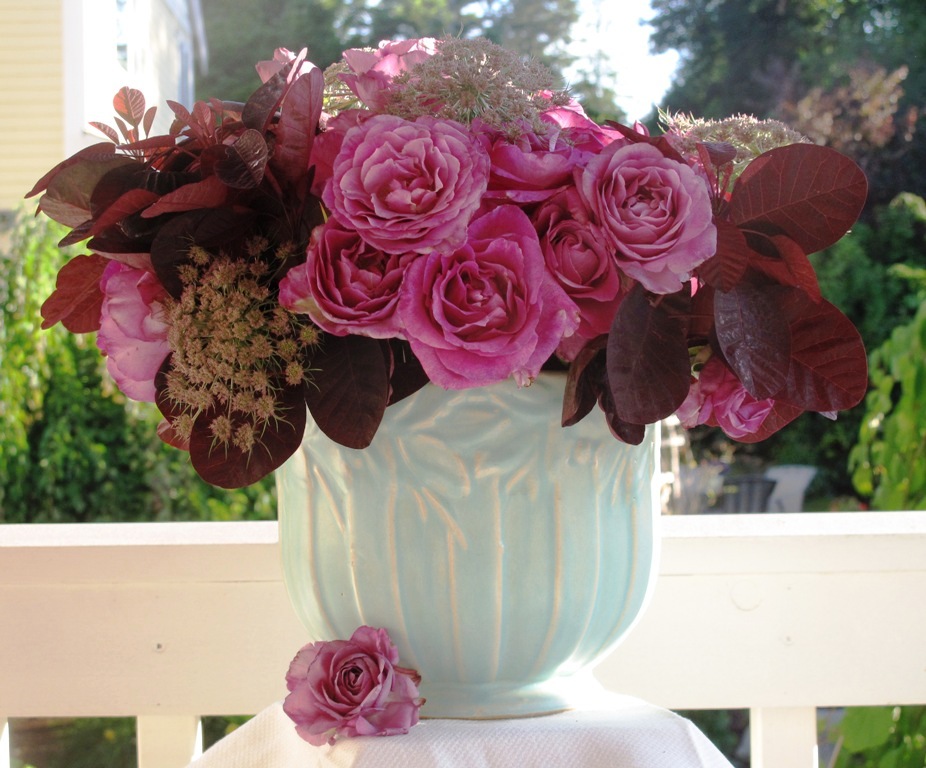
American roses

There are three sultry-smoky elements to this simple bouquet: roses, smoke bush foliage and a type of Queen Anne’s lace.

detail

When all three colors, forms and textures are seen together – up close – it’s simply beautiful!

Ingredients:

20 stems Rosa ‘Wild Blue Yonder’ roses, grown by Westmont Park Roses
7 stems smoke tree (Cotinus coggygria ‘Royal Purple’), grown by Jello Mold Farm
10 stems Queen Anne’s lace (Daucus carota var. sativus ‘Black Knight’), grown by J. Foss Garden Flowers

Vase:
7-inch tall x 7½-inch diameter McCoy jardiniere, 1940s era, with a raised design of vertical bands and flowers

From the Farmer
When to cut for the vase: Commercial rose growers like Westmont Park Roses have special procedures for harvesting their flowers and processing them with a hydrating solution before making florist deliveries. The home gardener who grows old English roses and David Austin garden roses isn’t faced with these storage and delivery demands. Get the most out of your garden roses by cutting them when temperatures are coolest on the day you plan to arrange them. I like to pick a mix of roses at different stages to create more interest: in bud; slightly open; two-thirds open and fully open. This technique reminds grower John Martin of a single, beautiful grandiflora cluster, “with five or six roses, each at a different blooming cycle.”


Travels with Debra & James (and friends)

Thursday, July 4th, 2013

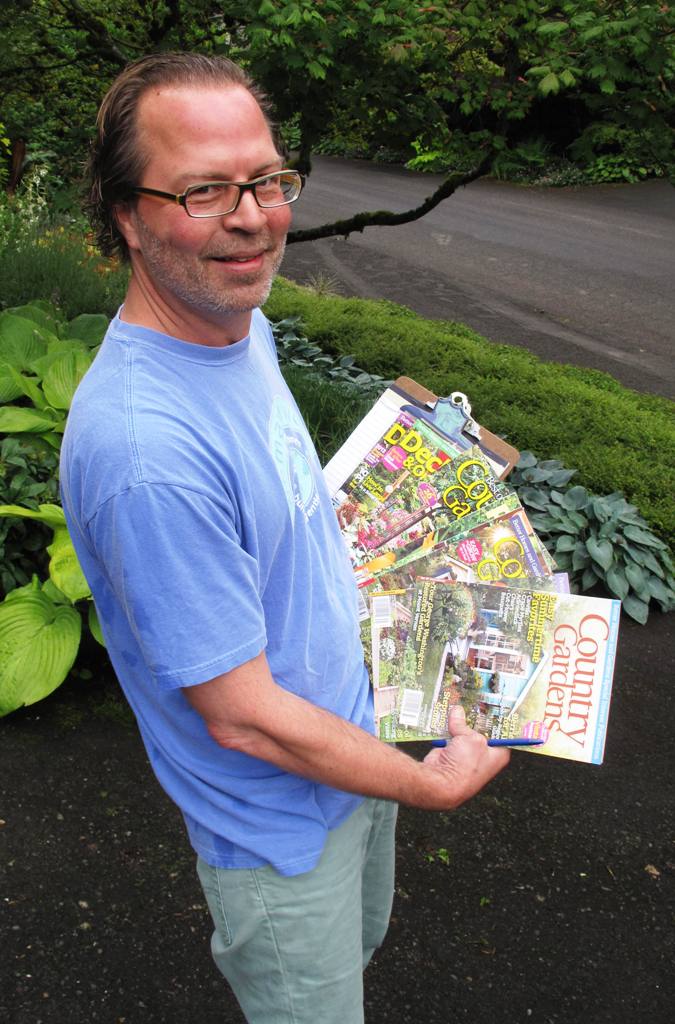
I was on the road last week, working in Oregon for six days (counting 1,000-miles of travel). My companions were James Baggett, editor-in-chief of COUNTRY GARDENS magazine and photography team Laurie Black and Mark King of Laurie Black Photography.

On the road with JAB

James Baggett, showing off the many titles he creates with coworker Nick Crow, his art director. It’s simply mind-boggling to grasp their huge productivity – and it’s an honor to be one of their writer-producers.

Wherever I can discover locally-grown flowers, that's where you'll find me!~

Wherever I can discover locally-grown flowers, that’s where you’ll find me!~

We spent the week photographing awesome landscapes, inspiring new plants and a fabulous farm-to-fork dinner (complete with locally grown, organic wine, food and flowers). A busy schedule, but filled with great experiences. It will be my privilege to write the stories to accompany Laurie’s photos for publication in 2014.

I’ll keep this short. I mostly have photos to share.

READ MORE…
SLOW FLOWERS: Week 26

Sunday, June 30th, 2013

A STROLL IN THE GARDEN

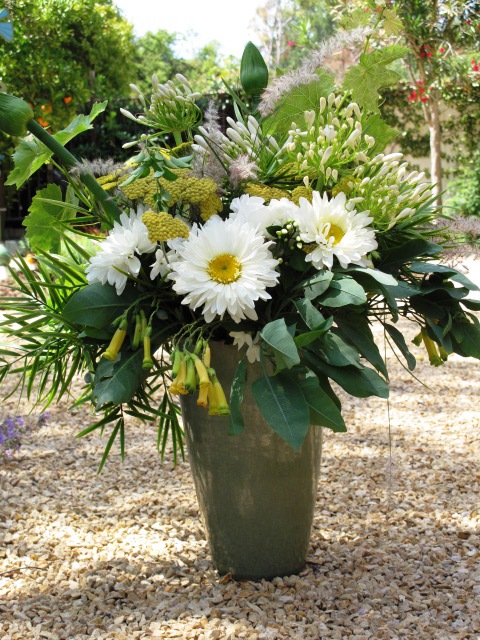
This bouquet will forever transport me to my former garden in Ventura County, California, which we left in July, 2010. I created this bouquet from all garden ingredients the month before moving away.

This bouquet will forever transport me to my former garden in Ventura County, California, which we left in July, 2010. I created this bouquet from all garden ingredients the month before moving away.

Ingredients:
All were harvested from my former garden in Ventura County, California
5 branches fern pine (Podocarpus gracilior)
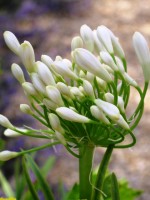
7 stems and pods of lily-of-the-Nile (Agapanthus ‘Snowy Owl’)
1 spray ‘Iceberg’ rose (Rosa ‘Iceberg’), a popular floribunda rose
3 vines evergreen jasmine (Jasminum polyanthum)
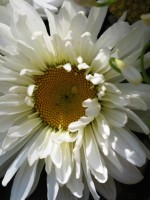
3 stems Shasta daisy (Leucanthemum x superbum)
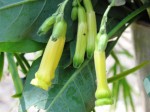
5 stems blue tree tobacco (Nicotiana glauca ‘Salta Blues’), a flowering tobacco with blue-green leaves and long, tubular yellow flowers. This is a cool plant for the perennial border and an equally fetching choice for my bouquet.
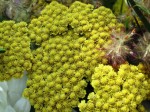
7 stems yarrow (Achillea ‘Moonshine’)
9 stems-seed heads fountain grass (Pennisetum orientale)
3 grapevines (Vitis vinifera)
Vase:
10-inch tall x 7-inch diameter celadon ceramic vase
Seasonal Choices
See the possibilities everywhere: I’m convinced that even the tiniest of gardens can yield interesting and unique flowers, branches, leaves, vines and stems for a seasonal bouquet. You don’t have to be a flower farmer to grow
and harvest appealing ingredients. And you don’t have to be a pro to assemble an eye-pleasing arrangement. Just use your powers of observation to appreciate and experiment with the seasonal beauty around you.


Art from Flowers

Saturday, June 22nd, 2013
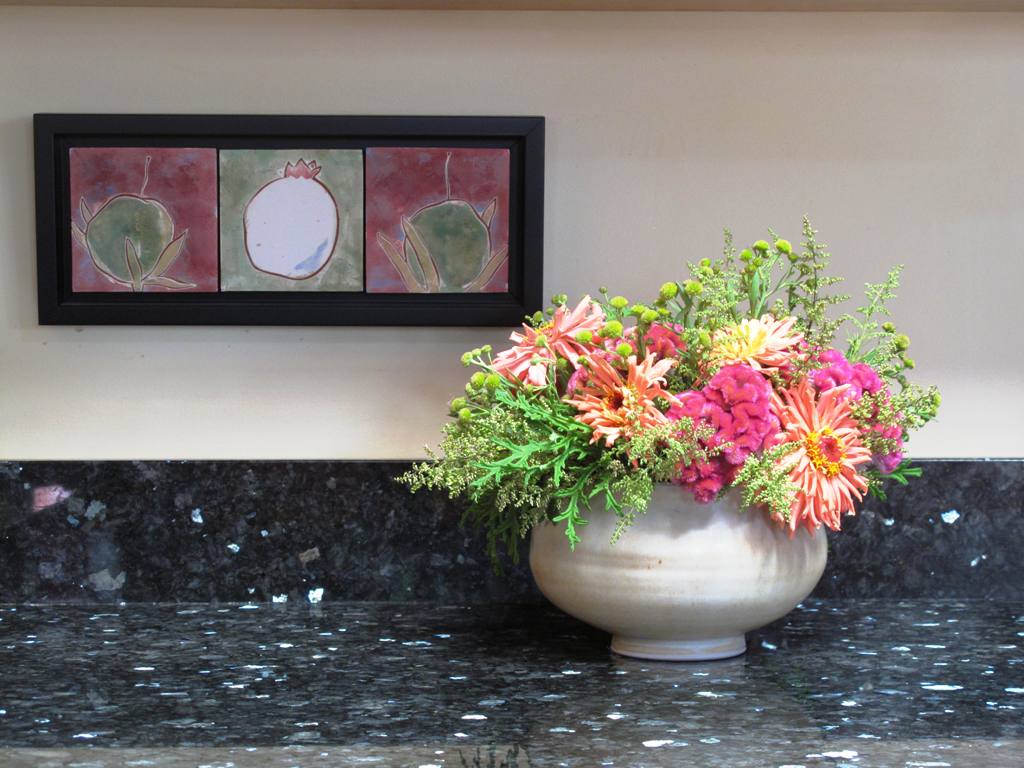
Bowl on kitchen counter

I placed my beautiful bowl of zinnias on the kitchen counter, in front of a botanically-inspired tile triptych by artist Paula Gill of Red Step Studio

This bouquet, which is featured on page 77 of Slow Flowers (Autumn|Week 3), features a framed trio of hand-carved and colored tiles that I purchased from one of my very favorite Northwest artists, Paula Gill. Paula owns Red Step Studios, and anyone who has attended the Northwest Flower & Garden Show or San Francisco Flower & Garden Show over the years has inevitably fallen in love with her beautiful tiles. I have a collection of them and I’ve given them as gifts to many friends. Check out her work here: Red Step Studio.

After the book was published, I sent Paula a copy so she could see how her artwork looked with one of my arrangements. Out of the blue, a big envelope arrived in my mailbox recently – and much to my surprise, I found inside a set of hand-printed notecards from Paual. She wrote:

“Hi Debra, Your book was so delightful that I savored it over several days after you sent it. And then you inspired me! Your arrangements ignited a creative spark. These images were made with ‘stamps’ I cut from blocks. Thank you – and I hope you’ll enjoy. All the best, Paula”

Thank YOU, Paula~! You have, as always, a whimsical touch to your artwork. I love how you reinterpreted these vases and flowers of mine with new eyes, using distinct graphic shapes and a playful style. How can something two-dimensional look so three-dimensional! It must be the way you cut the little blocks and layered them as you made the prints. Oh, and your use of color is sublime!

I’ve got to share them here. These little works of art will put a smile on your face:

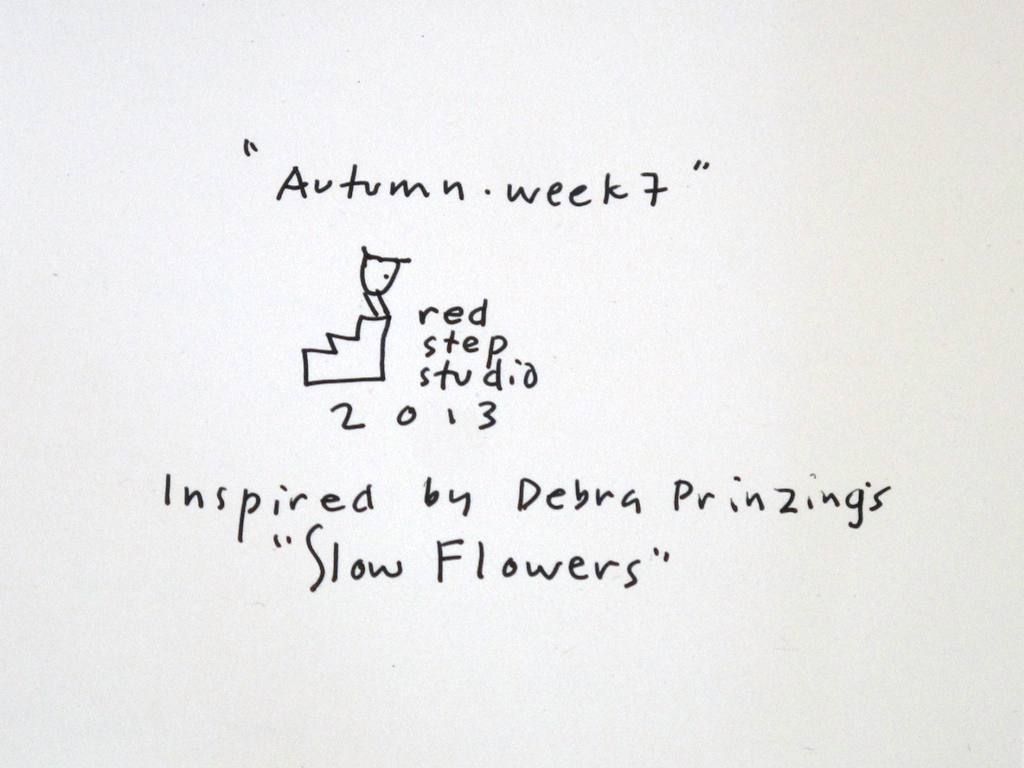
back of card

The back of each card has a little hand-lettered reference to “Slow Flowers”

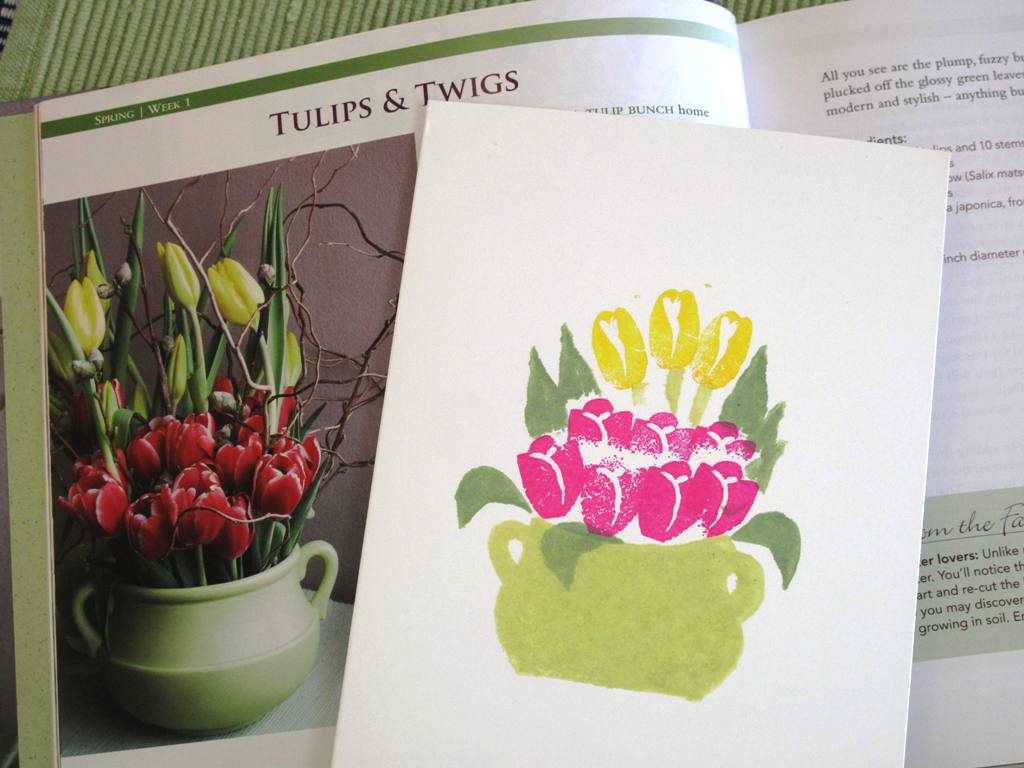
Tulips Twigs

So happy that Paula chose “Tulips & Twigs,” the first bouquet of Spring – and the cover art for Slow Flowers.

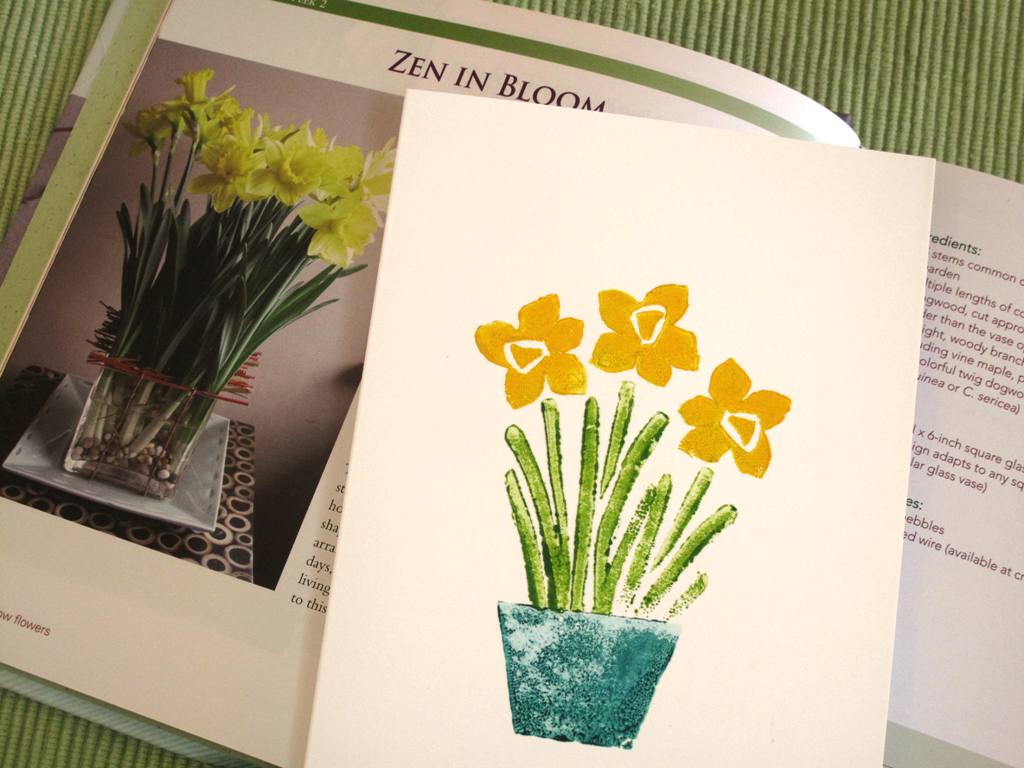
Zen in Bloom

“Zen in Bloom” from Week 2, Spring, features daffodils in a charming block print.

Pitchers of Poppies

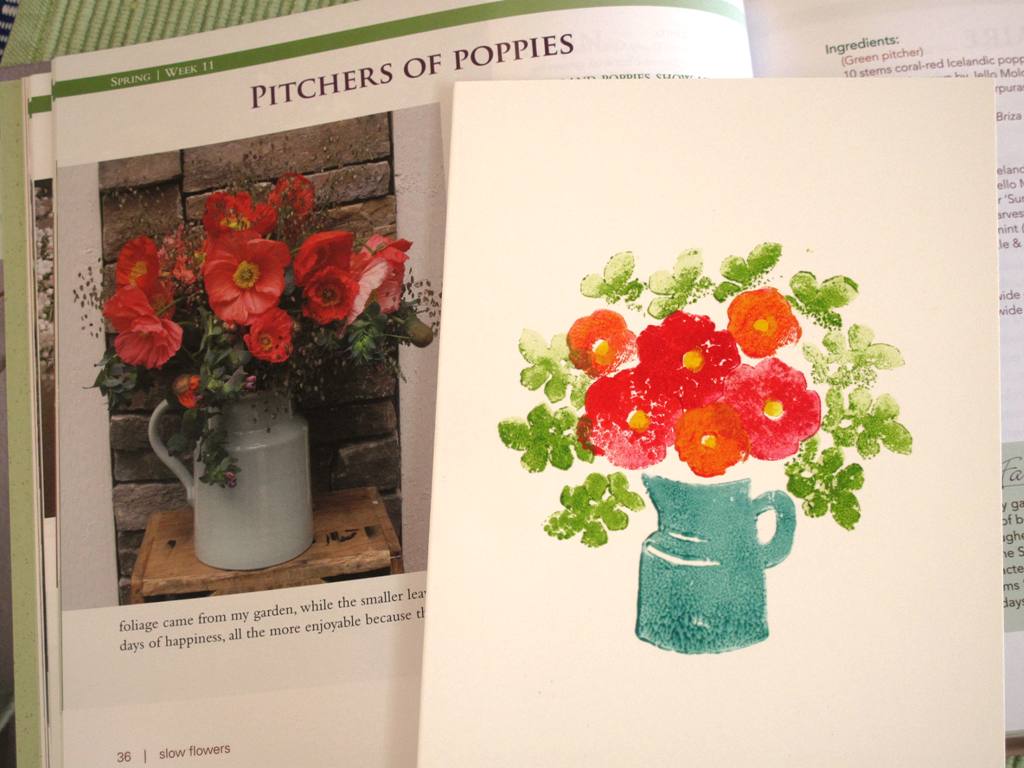
Coral-red Icelandic poppies in my celadon-green pitcher, from Slow Flowers, Week 11, Spring.

American Roses

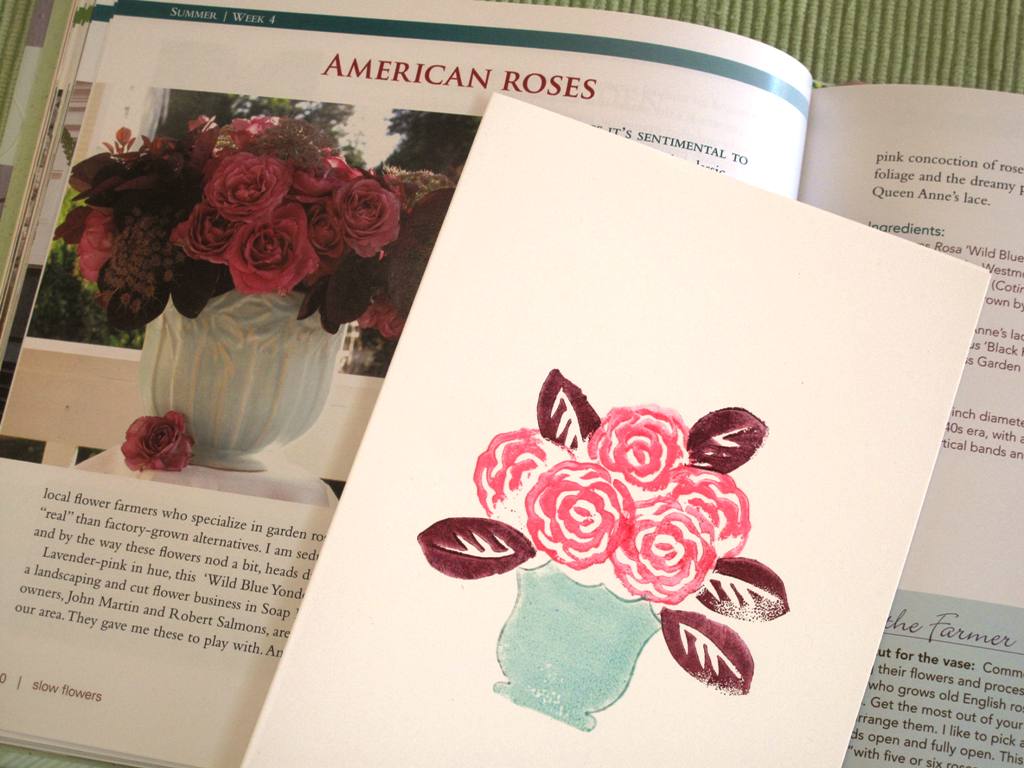
American Roses with purple smoke bush, Week 4, Summer. Love the way Paula rendered my McCoy flowerpot.

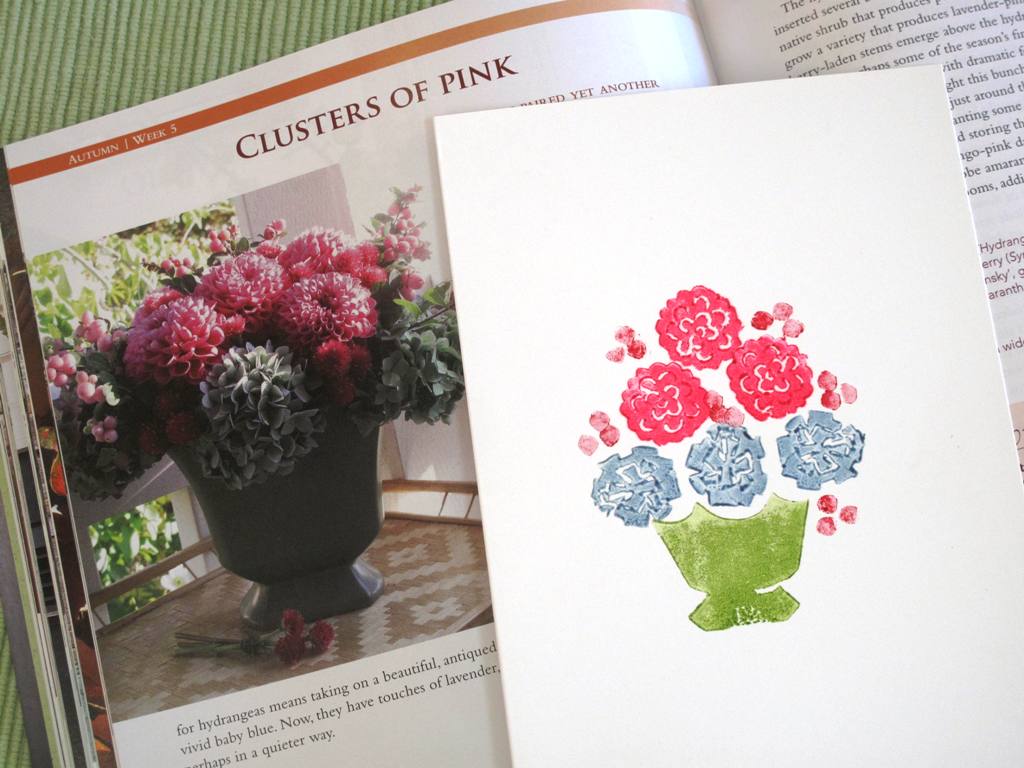
Clusters of Pink

Late season dahlias and hydrangeas from Week 5, Autumn.

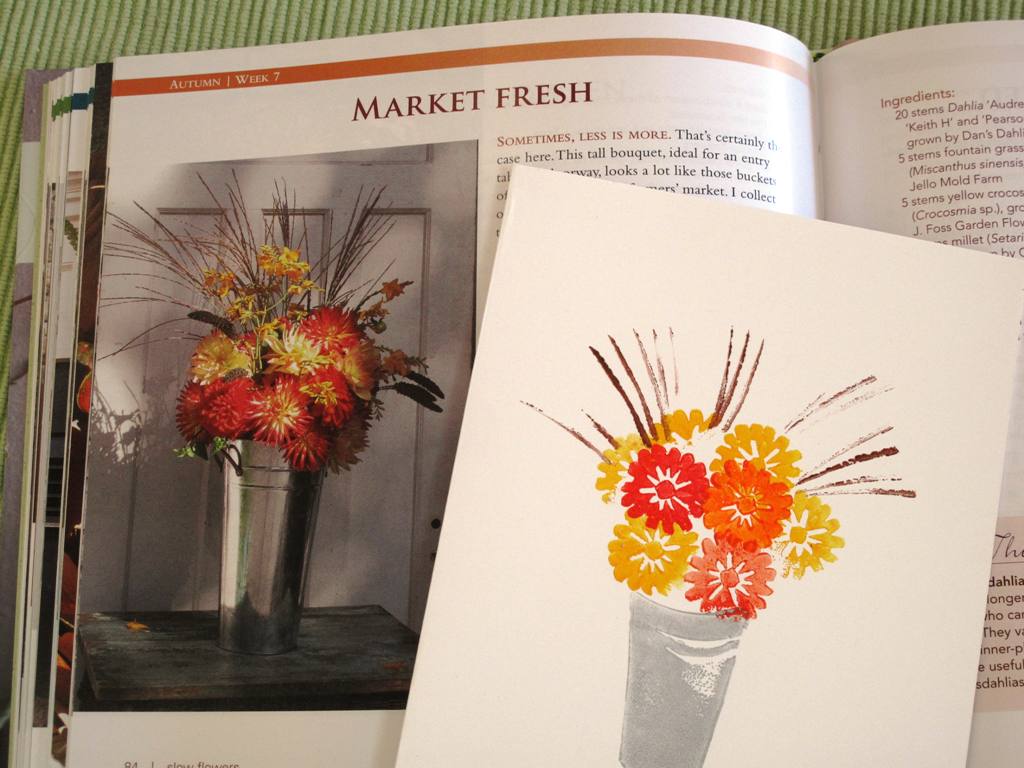
Market Fresh

Dahlias grown by my friend Dan Pearson in “Market Fresh,” from Week 7, Autumn.

Happiness is going on here at my house today, thanks to this generous and unexpected gift from a friend. Clearly, I am having selfish thoughts about NOT sending these cards to anyone, but perhaps I will frame them for my office wall. Isn’t that a great idea?


What does Slow Flowers mean, anyway?

Friday, June 21st, 2013
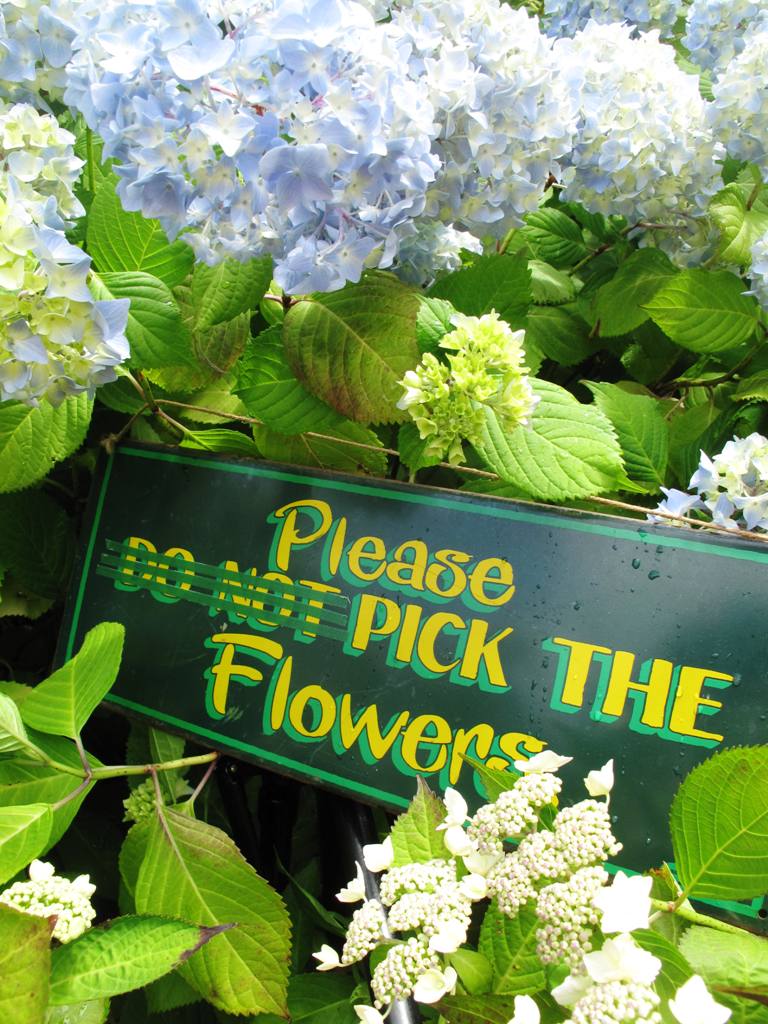
Please Pick sign

After I found this sign in a garden shop, I took the liberty to cross out the words “DO NOT” so the message better fits my philosophy of floral design!

I’ve been eating, sleeping, breathing, writing and speaking about SLOW FLOWERS for so long that it’s good to sometimes be reminded that not everyone understands what that phrase means. Recently, one of my flower farmer friends emailed to ask: Tell me again what Slow Flowers mean. I know it’s USA flowers but SLOW?

Fair enough. With all due respect to my fellow garden writer Felder Rushing, who coined the phrase “Slow Gardening,” let me outline my personal definition of SLOW FLOWERS. This is excerpted from my introduction to the book, Slow Flowers: Four Seasons of Locally Grown Bouquets from the Garden, Meadow and Farm (St. Lynn’s Press, 2013).

Thanks to the culinary pioneers who popularized the Slow Food movement, it now seems like you can put “slow” in front of any term to convey a different philosophy or approach to that subject. When I say the  phrase “slow flowers,” there are those who immediately understand it to mean: I have made a conscious choice. 

My blooms, buds, leaves and vines are definitely in season; not, for example, grown and brought in from elsewhere in the world during the wet, cold winter months in my hometown of Seattle. So, come December and January, my commitment to sourcing locally-grown floral materials sends me to the conifer boughs, colored twigs and berry-producing evergreens – and the occasional greenhouse-grown rose, lily or tulip, just to satisfy my hunger for a bloom. 

Slow Flowers (the concept and the book) is also about the artisanal, anti-mass-market approach to celebrations, festivities and floral gifts of love. I value my local sources. If not clipped from my own shrubs or cutting garden, I want to know where the flowers and greenery were grown, and who grew them. Having a relationship with the grower who planted and nurtured each flower is nothing short of magical. I call so many flower farmers around the country my friends. They are the unsung heroes – the faces behind the flowers we love. 

Finally, Slow Flowers reflects life lived in the slower lane. My family, friends and professional colleagues know that it’s almost impossible for me to do anything slowly. I’m the queen of multitasking; I just can’t help myself. There are too many exciting opportunities (or bright, shiny objects) that command my interest. But this “year in flowers” was altogether different. I can only compare it to the practice of praying or meditating. I didn’t realize that those few hours I spent each week, gathering and choosing petals and stems, arranging them in a special vessel, and then figuring out where and how to capture the finished design  through my camera lens, would be so personally enriching.
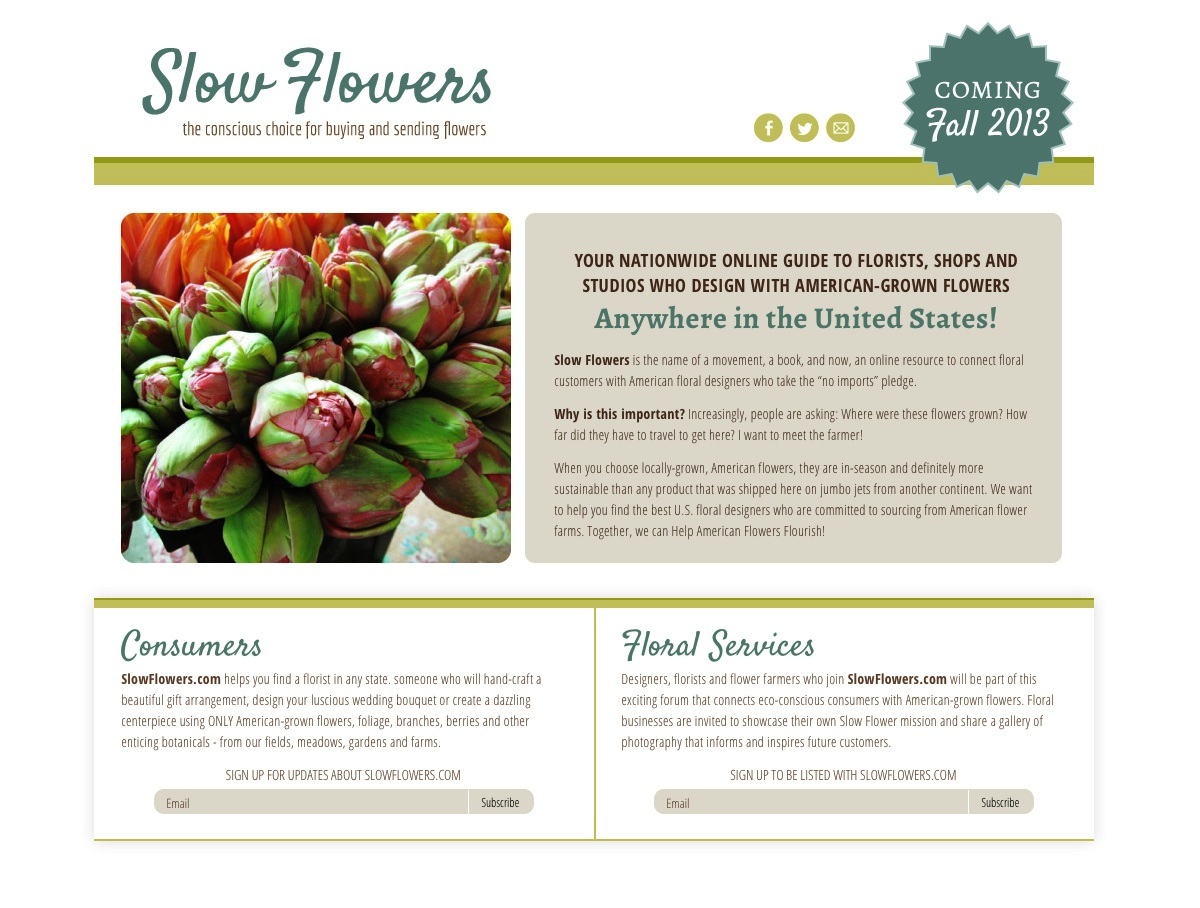
And speaking of the phrase, Slowflowers.com is also the name of my newest project, announced this past week. With a scheduled Fall 2013 launch, this will be a free, online database that helps connect consumers with floral designers, studio florists, florists and supermarket floral departments who are committed to designing with American-grown flowers. Please sign up – either for consumer updates on our official launch, or to be listed as as SlowFlowers.com designer.
SlowFlowersScreenShotSo I guess you can also say that the idea of “Slow Flowers” is also a resource that I hope many will find useful. Here is the description of this project:

Join the Slow Flowers Movement, an All-American philosophy that supports grown-in-the-USA flower farms as well as floral designers, florists and retailers committed to using American-grown ingredients.

Origin matters! Slowflowers.com is a free, searchable database that makes it easy for customers to find designers who share their values and ethos. Log onto our home page to add your listing. Let’s tell consumers that there is a better way to beautiful – and they can find it at Slowflowers.com.

Slowflowers.com enables users to:

* Search by state or city and by keyword for the type of florist they seek.

* Find studios and retailers who specialize in green weddings, weekly subscriptions and eco-florals.

* Discover local flower farms that sell direct to the DIY consumer.

* Access coupons and promotions from individual studios, shops and farms.

* Provide reviews and raves about great American flower sources and comment on

experiences.

* Map the location of a desired destination.

I hope this helps! I invite you to add your own thoughts about “Slow Flowers” and what it means to you.