Debra Prinzing

Get the Email Newsletter!

Archive for the ‘Plants’ Category

SLOW FLOWERS: Week 26

Sunday, June 30th, 2013

A STROLL IN THE GARDEN

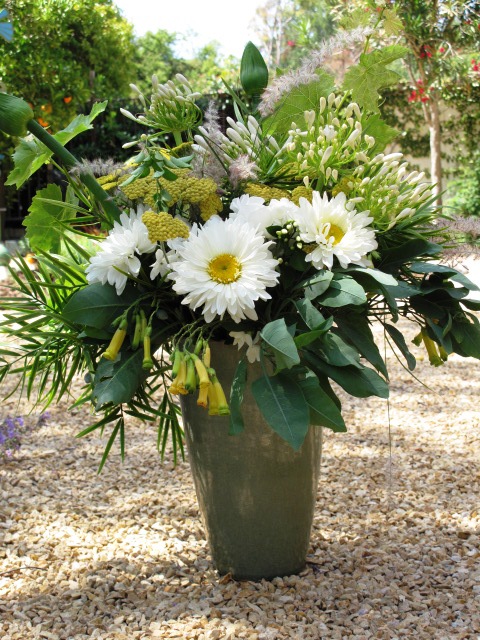
This bouquet will forever transport me to my former garden in Ventura County, California, which we left in July, 2010. I created this bouquet from all garden ingredients the month before moving away.

This bouquet will forever transport me to my former garden in Ventura County, California, which we left in July, 2010. I created this bouquet from all garden ingredients the month before moving away.

Ingredients:
All were harvested from my former garden in Ventura County, California
5 branches fern pine (Podocarpus gracilior)
7 stems and pods of lily-of-the-Nile (Agapanthus ‘Snowy Owl’)
1 spray ‘Iceberg’ rose (Rosa ‘Iceberg’), a popular floribunda rose
3 vines evergreen jasmine (Jasminum polyanthum)
3 stems Shasta daisy (Leucanthemum x superbum)
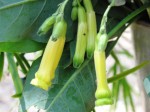
5 stems blue tree tobacco (Nicotiana glauca ‘Salta Blues’), a flowering tobacco with blue-green leaves and long, tubular yellow flowers. This is a cool plant for the perennial border and an equally fetching choice for my bouquet.
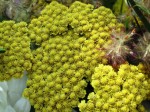
7 stems yarrow (Achillea ‘Moonshine’)
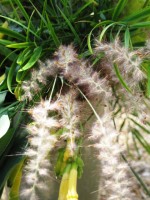
9 stems-seed heads fountain grass (Pennisetum orientale)
3 grapevines (Vitis vinifera)
Vase:
10-inch tall x 7-inch diameter celadon ceramic vase
Seasonal Choices
See the possibilities everywhere: I’m convinced that even the tiniest of gardens can yield interesting and unique flowers, branches, leaves, vines and stems for a seasonal bouquet. You don’t have to be a flower farmer to grow
and harvest appealing ingredients. And you don’t have to be a pro to assemble an eye-pleasing arrangement. Just use your powers of observation to appreciate and experiment with the seasonal beauty around you.


Art from Flowers

Saturday, June 22nd, 2013
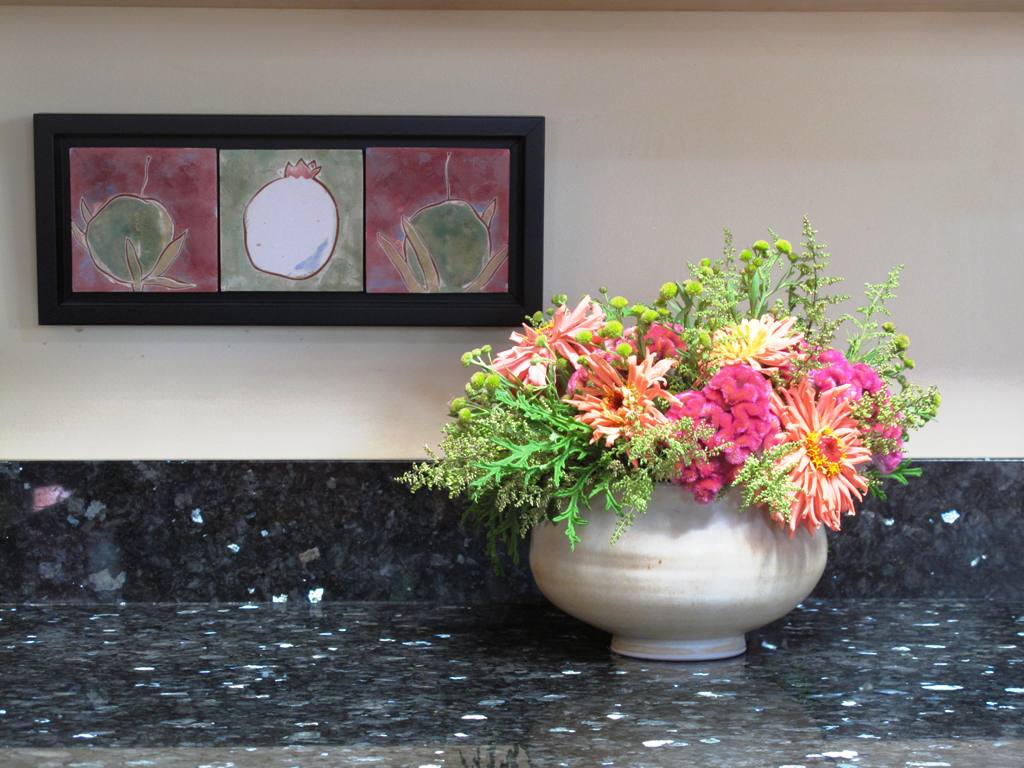
Bowl on kitchen counter

I placed my beautiful bowl of zinnias on the kitchen counter, in front of a botanically-inspired tile triptych by artist Paula Gill of Red Step Studio

This bouquet, which is featured on page 77 of Slow Flowers (Autumn|Week 3), features a framed trio of hand-carved and colored tiles that I purchased from one of my very favorite Northwest artists, Paula Gill. Paula owns Red Step Studios, and anyone who has attended the Northwest Flower & Garden Show or San Francisco Flower & Garden Show over the years has inevitably fallen in love with her beautiful tiles. I have a collection of them and I’ve given them as gifts to many friends. Check out her work here: Red Step Studio.

After the book was published, I sent Paula a copy so she could see how her artwork looked with one of my arrangements. Out of the blue, a big envelope arrived in my mailbox recently – and much to my surprise, I found inside a set of hand-printed notecards from Paual. She wrote:

“Hi Debra, Your book was so delightful that I savored it over several days after you sent it. And then you inspired me! Your arrangements ignited a creative spark. These images were made with ‘stamps’ I cut from blocks. Thank you – and I hope you’ll enjoy. All the best, Paula”

Thank YOU, Paula~! You have, as always, a whimsical touch to your artwork. I love how you reinterpreted these vases and flowers of mine with new eyes, using distinct graphic shapes and a playful style. How can something two-dimensional look so three-dimensional! It must be the way you cut the little blocks and layered them as you made the prints. Oh, and your use of color is sublime!

I’ve got to share them here. These little works of art will put a smile on your face:

back of card

The back of each card has a little hand-lettered reference to “Slow Flowers”

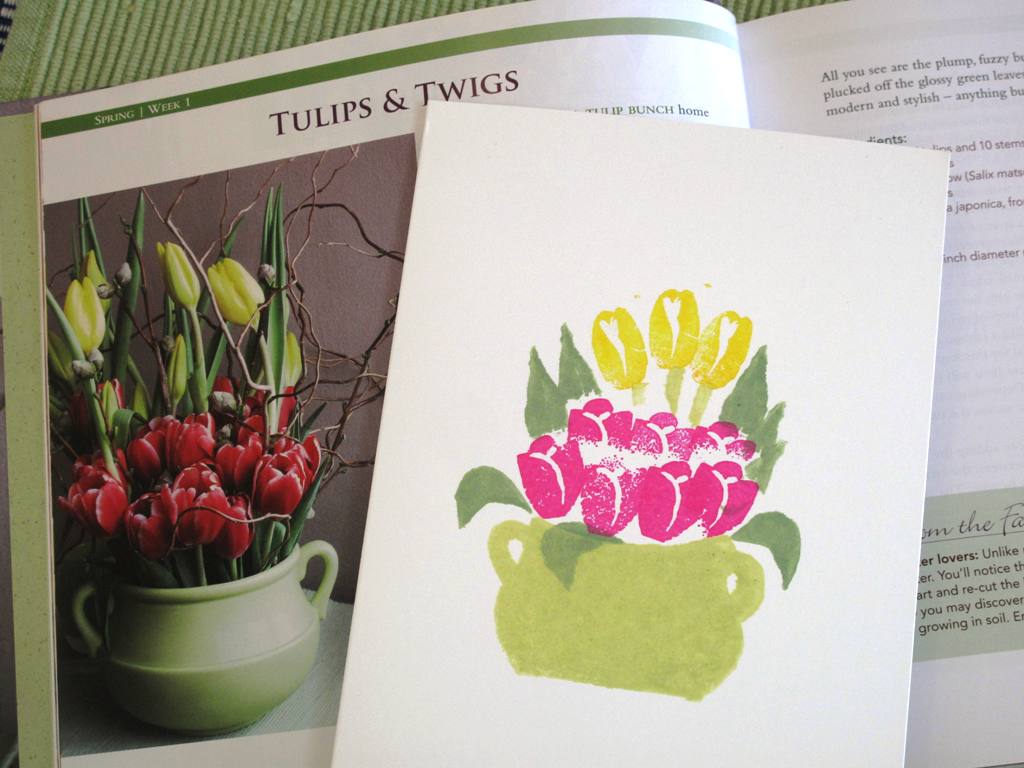
Tulips Twigs

So happy that Paula chose “Tulips & Twigs,” the first bouquet of Spring – and the cover art for Slow Flowers.

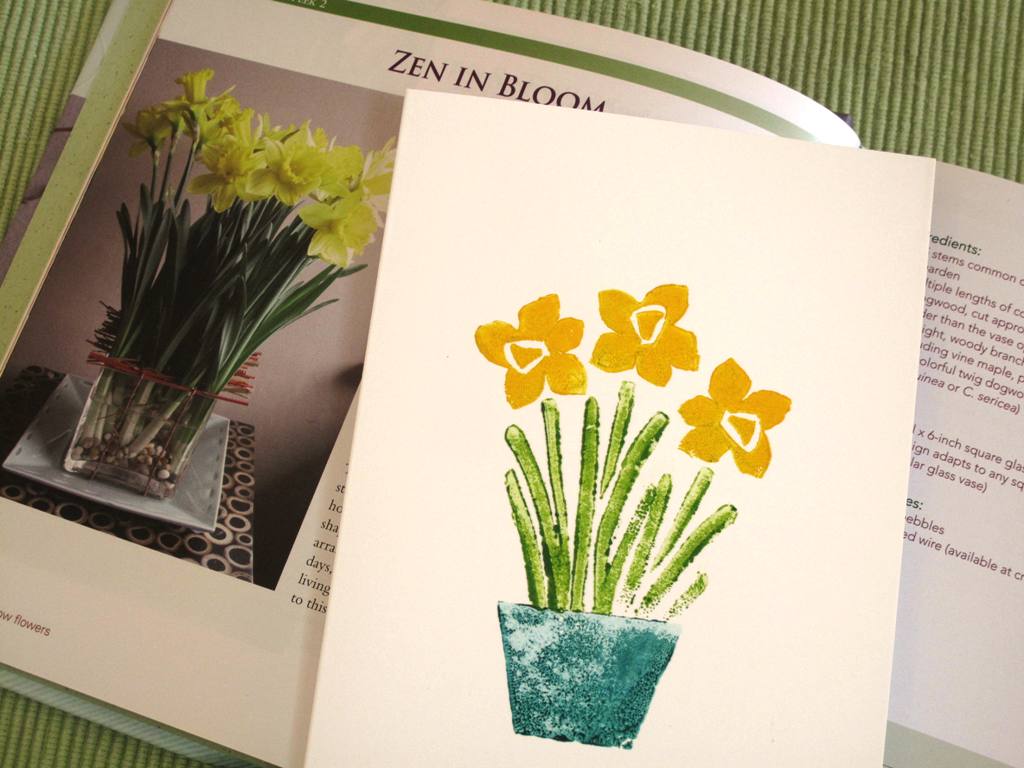
Zen in Bloom

“Zen in Bloom” from Week 2, Spring, features daffodils in a charming block print.

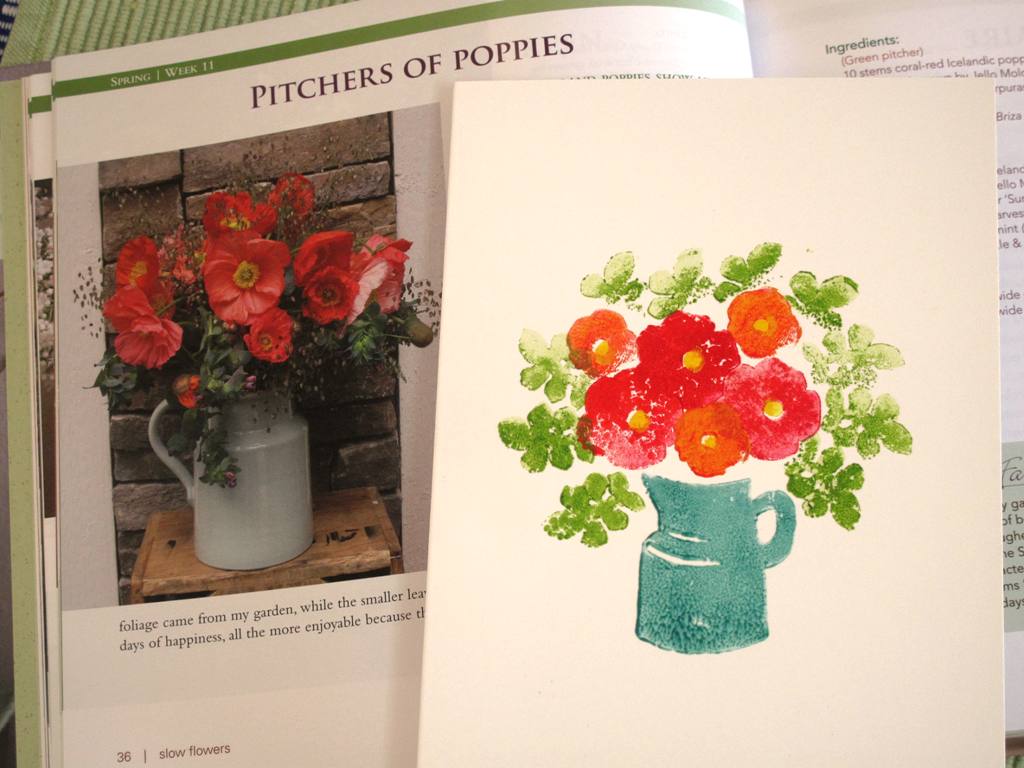
Pitchers of Poppies

Coral-red Icelandic poppies in my celadon-green pitcher, from Slow Flowers, Week 11, Spring.

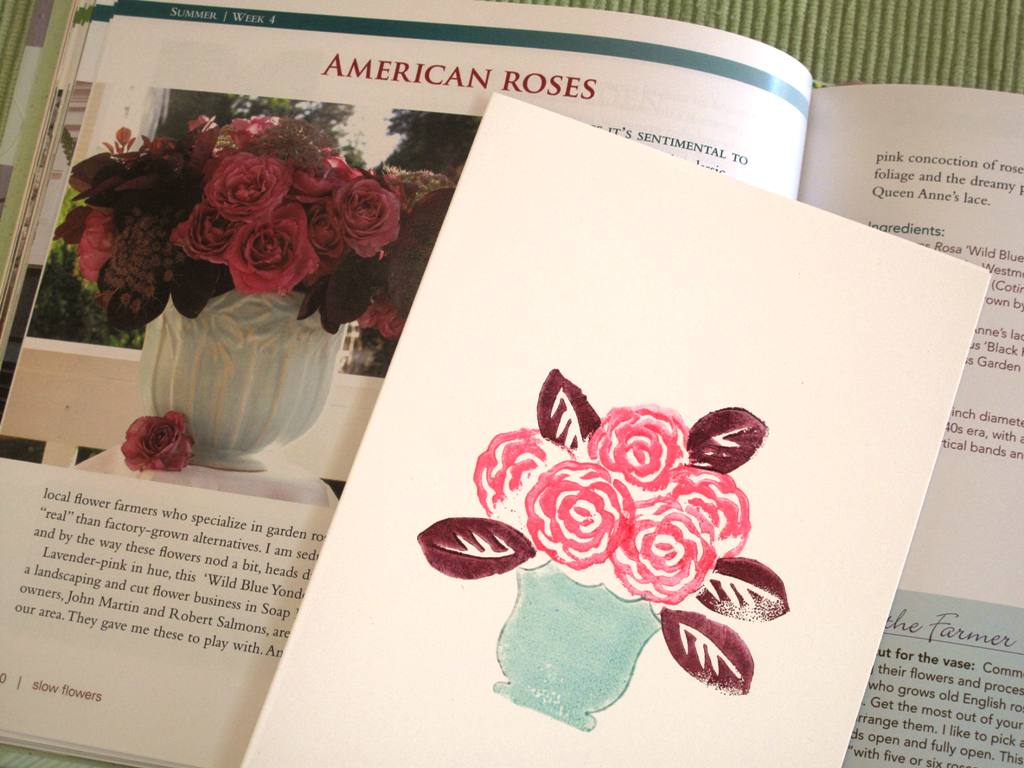
American Roses

American Roses with purple smoke bush, Week 4, Summer. Love the way Paula rendered my McCoy flowerpot.

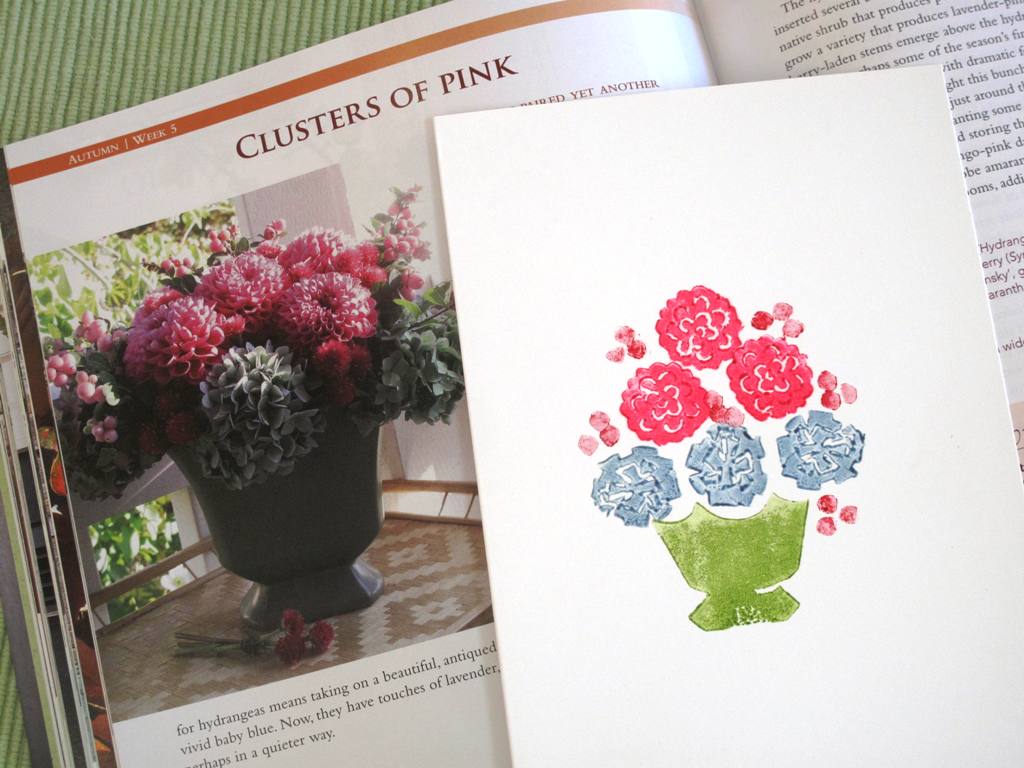
Clusters of Pink

Late season dahlias and hydrangeas from Week 5, Autumn.

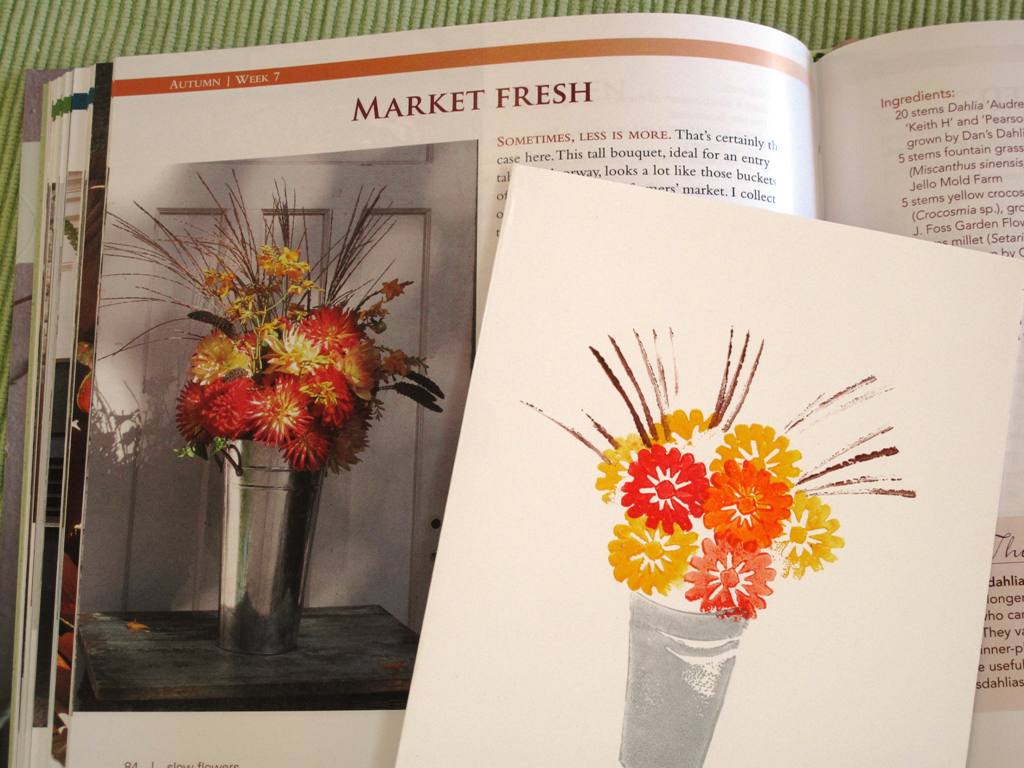
Market Fresh

Dahlias grown by my friend Dan Pearson in “Market Fresh,” from Week 7, Autumn.

Happiness is going on here at my house today, thanks to this generous and unexpected gift from a friend. Clearly, I am having selfish thoughts about NOT sending these cards to anyone, but perhaps I will frame them for my office wall. Isn’t that a great idea?


What does Slow Flowers mean, anyway?

Friday, June 21st, 2013
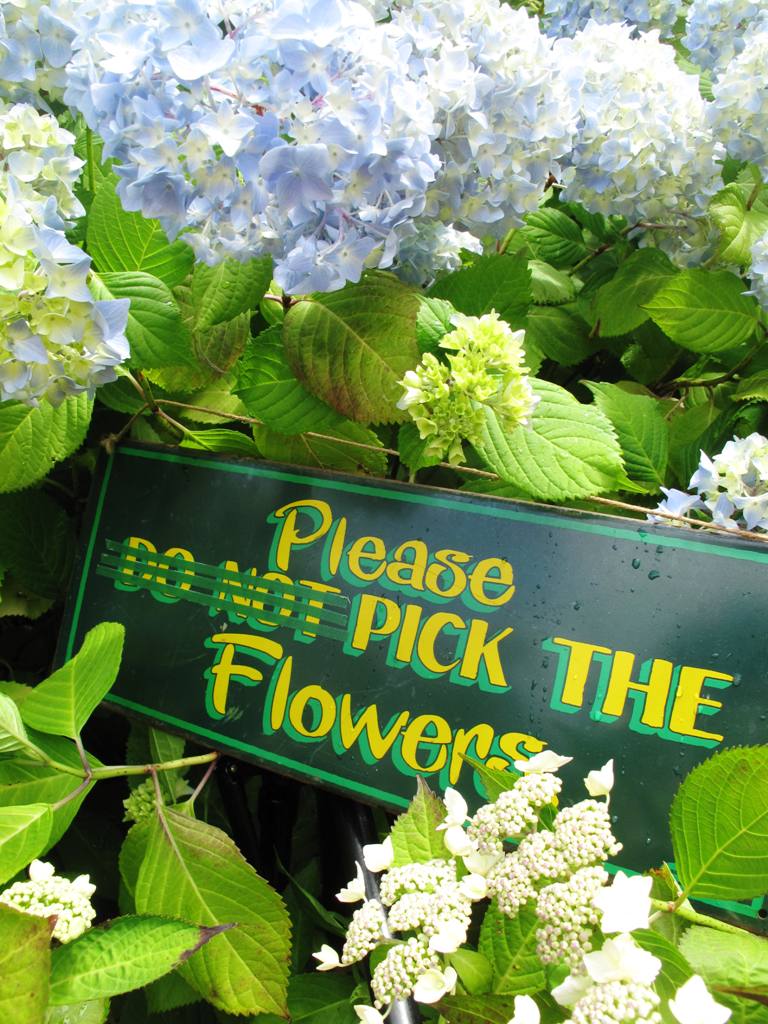
Please Pick sign

After I found this sign in a garden shop, I took the liberty to cross out the words “DO NOT” so the message better fits my philosophy of floral design!

I’ve been eating, sleeping, breathing, writing and speaking about SLOW FLOWERS for so long that it’s good to sometimes be reminded that not everyone understands what that phrase means. Recently, one of my flower farmer friends emailed to ask: Tell me again what Slow Flowers mean. I know it’s USA flowers but SLOW?

Fair enough. With all due respect to my fellow garden writer Felder Rushing, who coined the phrase “Slow Gardening,” let me outline my personal definition of SLOW FLOWERS. This is excerpted from my introduction to the book, Slow Flowers: Four Seasons of Locally Grown Bouquets from the Garden, Meadow and Farm (St. Lynn’s Press, 2013).

Thanks to the culinary pioneers who popularized the Slow Food movement, it now seems like you can put “slow” in front of any term to convey a different philosophy or approach to that subject. When I say the  phrase “slow flowers,” there are those who immediately understand it to mean: I have made a conscious choice. 

My blooms, buds, leaves and vines are definitely in season; not, for example, grown and brought in from elsewhere in the world during the wet, cold winter months in my hometown of Seattle. So, come December and January, my commitment to sourcing locally-grown floral materials sends me to the conifer boughs, colored twigs and berry-producing evergreens – and the occasional greenhouse-grown rose, lily or tulip, just to satisfy my hunger for a bloom. 

Slow Flowers (the concept and the book) is also about the artisanal, anti-mass-market approach to celebrations, festivities and floral gifts of love. I value my local sources. If not clipped from my own shrubs or cutting garden, I want to know where the flowers and greenery were grown, and who grew them. Having a relationship with the grower who planted and nurtured each flower is nothing short of magical. I call so many flower farmers around the country my friends. They are the unsung heroes – the faces behind the flowers we love. 

Finally, Slow Flowers reflects life lived in the slower lane. My family, friends and professional colleagues know that it’s almost impossible for me to do anything slowly. I’m the queen of multitasking; I just can’t help myself. There are too many exciting opportunities (or bright, shiny objects) that command my interest. But this “year in flowers” was altogether different. I can only compare it to the practice of praying or meditating. I didn’t realize that those few hours I spent each week, gathering and choosing petals and stems, arranging them in a special vessel, and then figuring out where and how to capture the finished design  through my camera lens, would be so personally enriching.
And speaking of the phrase, Slowflowers.com is also the name of my newest project, announced this past week. With a scheduled Fall 2013 launch, this will be a free, online database that helps connect consumers with floral designers, studio florists, florists and supermarket floral departments who are committed to designing with American-grown flowers. Please sign up – either for consumer updates on our official launch, or to be listed as as SlowFlowers.com designer.
SlowFlowersScreenShotSo I guess you can also say that the idea of “Slow Flowers” is also a resource that I hope many will find useful. Here is the description of this project:

Join the Slow Flowers Movement, an All-American philosophy that supports grown-in-the-USA flower farms as well as floral designers, florists and retailers committed to using American-grown ingredients.

Origin matters! Slowflowers.com is a free, searchable database that makes it easy for customers to find designers who share their values and ethos. Log onto our home page to add your listing. Let’s tell consumers that there is a better way to beautiful – and they can find it at Slowflowers.com.

Slowflowers.com enables users to:

* Search by state or city and by keyword for the type of florist they seek.

* Find studios and retailers who specialize in green weddings, weekly subscriptions and eco-florals.

* Discover local flower farms that sell direct to the DIY consumer.

* Access coupons and promotions from individual studios, shops and farms.

* Provide reviews and raves about great American flower sources and comment on

experiences.

* Map the location of a desired destination.

I hope this helps! I invite you to add your own thoughts about “Slow Flowers” and what it means to you.

SLOW FLOWERS: Week 24

Monday, June 17th, 2013

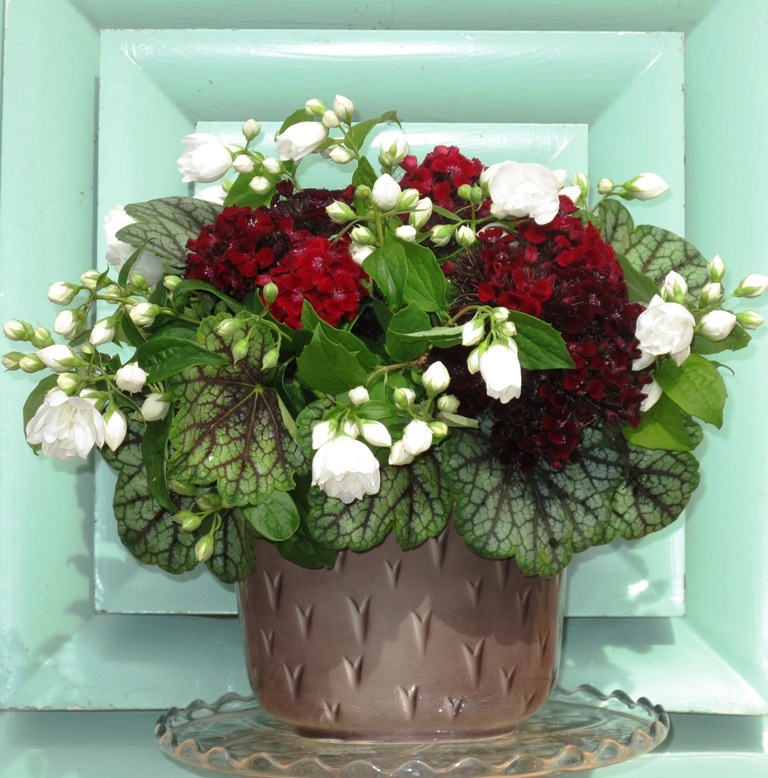
A Certain Vintage

A Certain Vintage

Ruffly ‘Green Spice’ heuchera foliage pulls together the mocha-colored vintage vase and the deep burgundy sweet William flowers

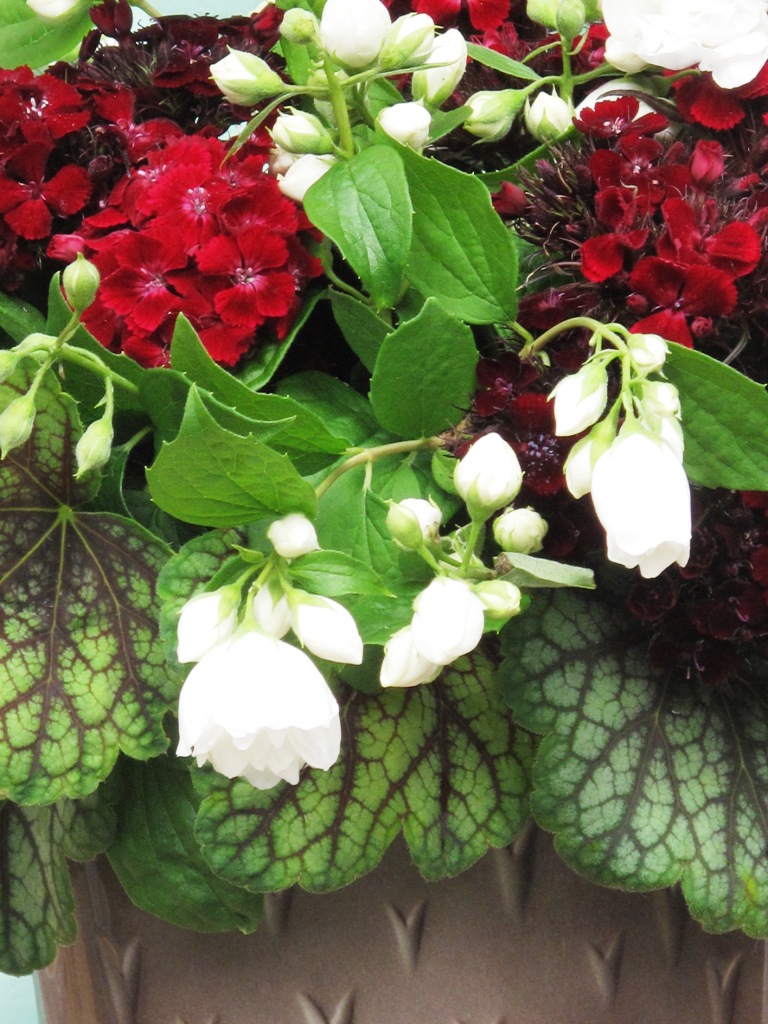
detailIngredients:
25 stems heuchera foliage (Heuchera ‘Green Spice’), harvested from my garden
7 stems sweet William (Dianthus barbatus var. nigrescens ‘Sooty’), grown by J. Foss Garden Flowers
5 stems mock orange (Philadelphus coronarius), harvested from my garden
Vase:
6-inch tall 1940s vase with a 7-inch x 3-inch oval opening
Eco-technique
Just add foliage: Thanks to the eco-conscious designers I’ve met and interviewed, I am quite wary of using florist’s foam, a formaldehyde-based product, to stabilize arrangements. Designing around a base of foliage offers a greener way to keep flower stems upright in a vase. Choose leaves that are large, fluffy or textured. Then, insert your other floral ingredients through this vegetation. For example, in this bouquet I placed the heuchera leaves first; then I added the sweet William and mock orange stems. Everything stays just where I want it.

SLOW FLOWERS: Week 23

Sunday, June 9th, 2013

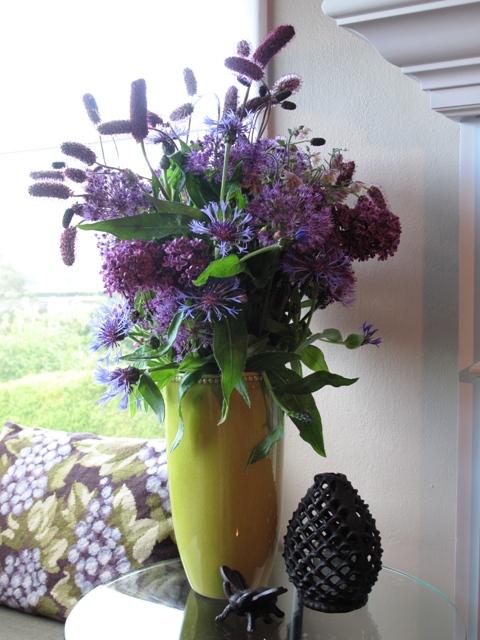
A Bit of Purple Heaven

All shades of purple

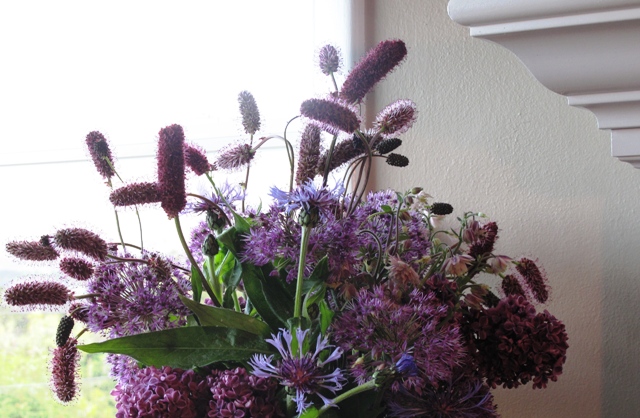
A wistful arrangement of blue, purple and plum flowers looks awesome in a chartreuse vase.

Ingredients:

flower detail

The little “dancing” bottlebrushes are called burnet, or Sanguisorba menziesii.

5 stems dark purple lilacs (Syringa vulgaris), grown by Sunshine Crafts and Flowers

7 stems blue perennial bachelor buttons (Centaurea cyanus), grown by Sunshine Crafts and Flowers
7 stems reddish-pink ‘Nora Barlow’ columbine (Aquilegia hybrid), grown by Sunshine Crafts and Flowers
5 stems purple ornamental alliums, grown by Jello Mold Farm
20 stems burnet (Sanguisorba menziesii), grown by Jello Mold Farm
Vase:
11-inch tall x 5½-inch citron-green crackle glaze vase
Eco-technique
Traveling with flowers: I can’t resist taking flowers with me or bringing them home. If it’s a car trip, place flowers in a stable bucket with just a few inches of water to hydrate the stems (but avoid splashing). Store on the shady side of the car. If you’re traveling by air, wrap the stems in wet paper, cover with a plastic bag and then wrap the entire bunch in kraft paper that extends above the blooms. As soon as you arrive at your destination, re-cut all the
stems, place in fresh water and possibly a refrigerator. I’ve been known to use a hotel wastebasket and mini-bar fridge for this step!

SLOW FLOWERS: Week 21

Sunday, May 26th, 2013

Pitchers of Poppies

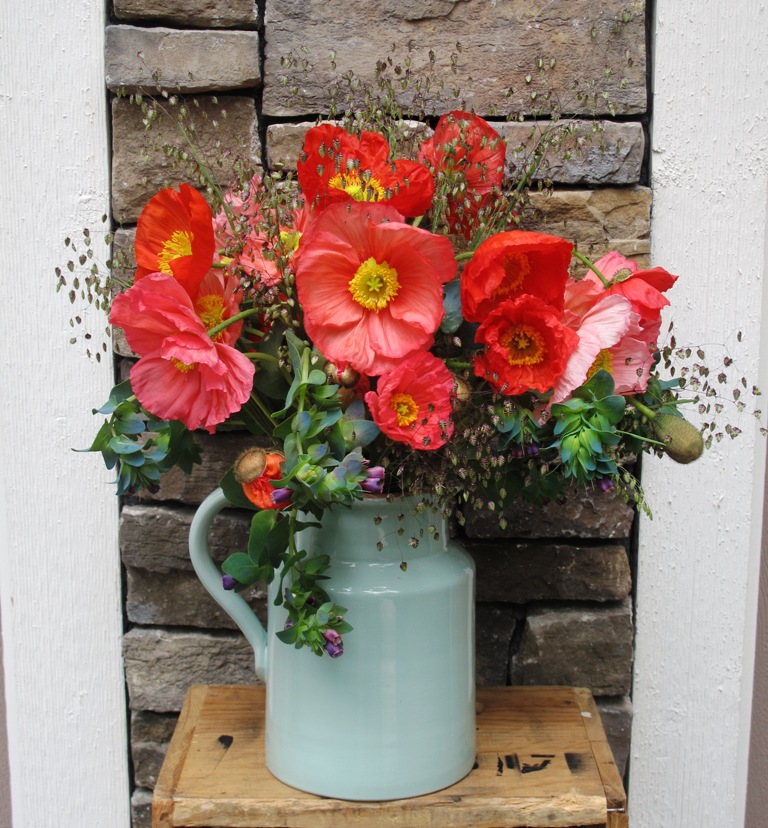
Poppy One

Why do we love poppies so much? Perhaps it’s because of their pure, vibrant petal colors with the charming button-like centers.

Ingredients:
(Green pitcher)
10 stems coral-red Icelandic poppies (Papaver nudicaule), grown by Jello Mold Farm
6 stems Cerinthe major ‘Purpurascens’, grown by Jello Mold Farm
7 stems rattlesnake grass (Briza media), grown by Jello Mold Farm
(Glass pitcher)
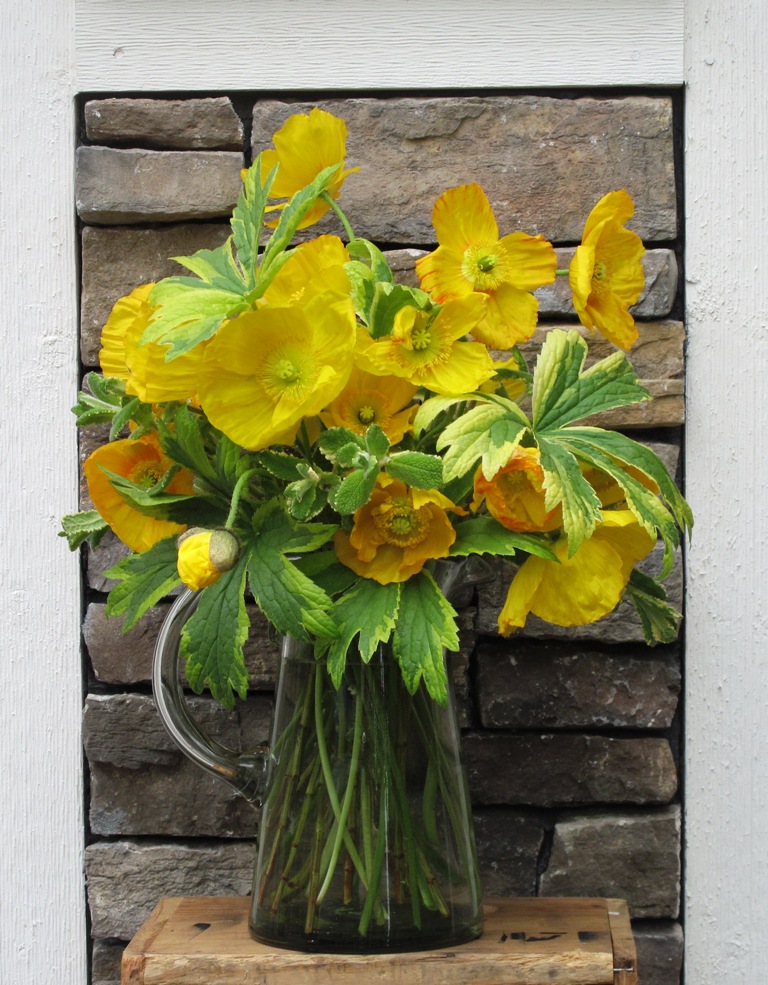
10 stems bright yellow Icelandic poppies (Papaver nudicaule), grown by Jello Mold Farm
10 stems Astrantia major ‘Sunningdale Variegated’ foliage, harvested from my garden
7 stems golden apple mint (Mentha x gracilis), grown by Charles Little & Co.
Vase:
8-inch tall x 5½-inch wide glazed ceramic pitcher
9-inch tall x 5½-inch wide Mexican glass pitcher
Poppy Two

This arrangement, in a clear glass vase, showcases yellow Icelandic poppies, paired with variegated Astrantia and apple mint foliage.

From the Farmer
Poppy care: Many garden books recommend that you sear the cut tips of these poppies in a flame or submerge them in a beaker of boiling water in order to extend their vase life. It has been thought that the extreme heat
will soften the tougher outer stem and increase the surface area for absorbing moisture in the vase. But in fact, according to Diane Szukovathy of Jello Mold Farm, the poppy’s hairy stem collects more foreign matter that
contributes to bacterial build-up in the vase than with smoother-stemmed flowers. Because of this, she says, “heating the stems ‘cooks’ them, making the flower more susceptible to colonization by bacteria.” Diane’s best
tip: “Every few days, re-cut the stems and change the water.”


SLOW FLOWERS: Week 20

Sunday, May 19th, 2013

A Softer Side of Green

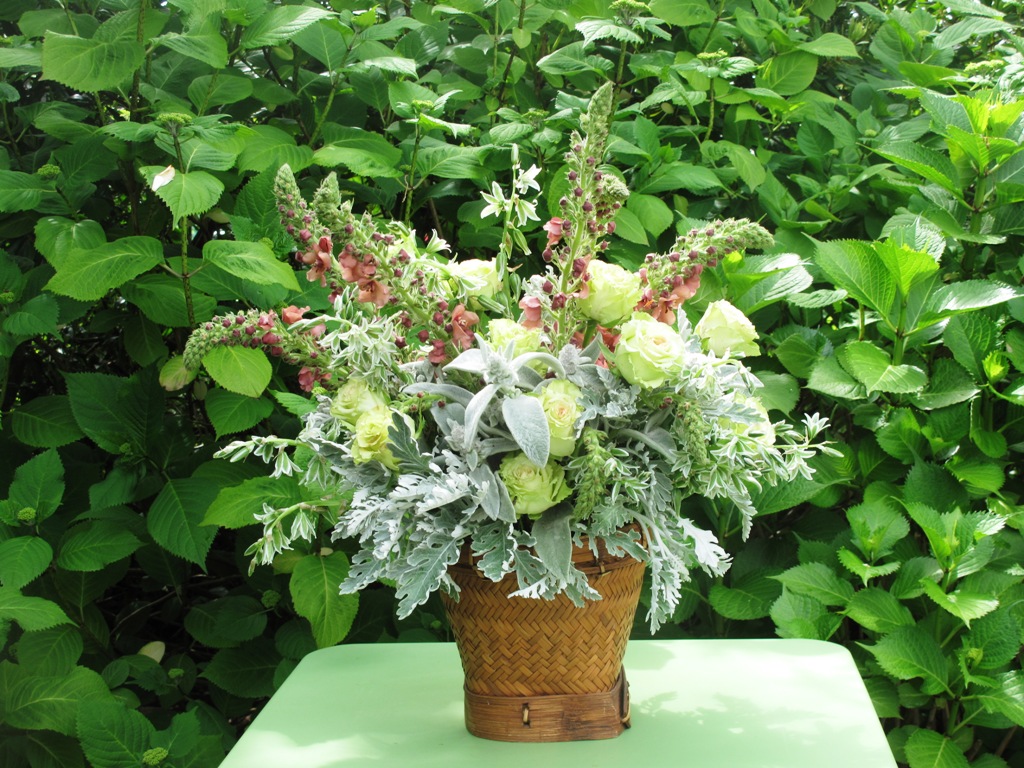
Pastel bouquet

An unexpected combination, inspired by the pale ‘Supergreen’ hybrid tea roses given to me by the grower


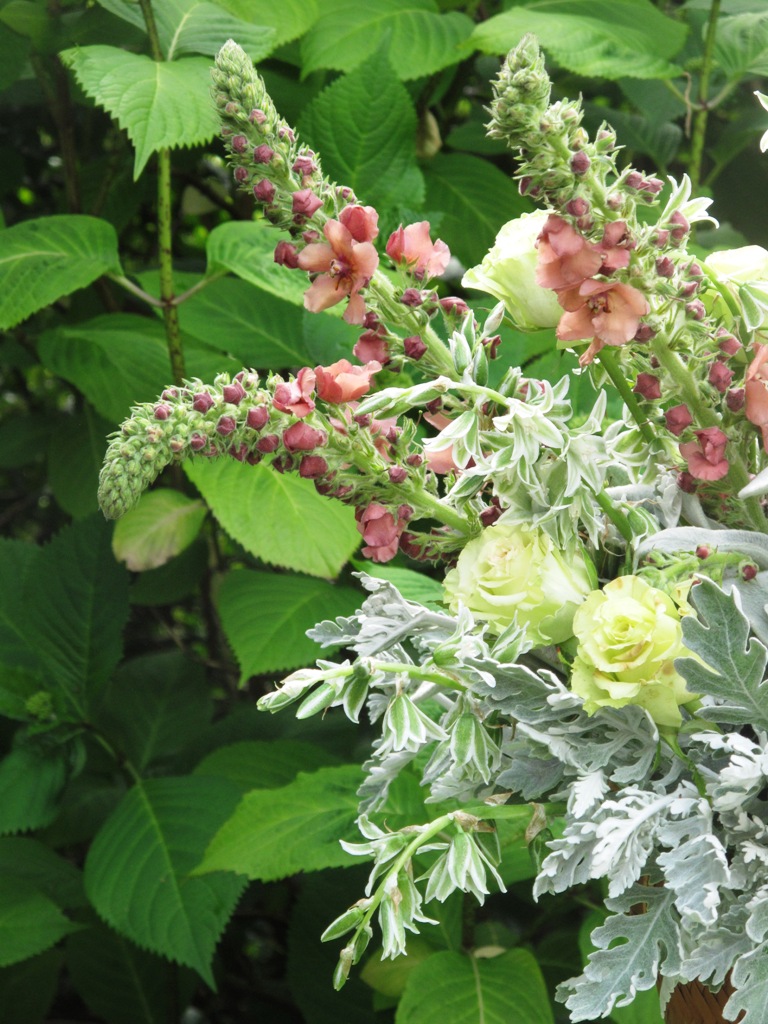
Pastel flowers in detail

This sweet detail shows the delicate features of the apricot verbascum and the varietgated Star of Bethlehem

Ingredients:

15 stems Dusty Miller foliage (Centaurea cineraria), grown by Charles Little & Co.
5 stems lamb’s ears (Stachys byzantina), grown by Charles Little & Co.
15 stems ‘Supergreen’ hybrid tea roses, grown by Peterkort Roses
9 stems Star of Bethlehem (Ornithogalum nutans), grown by Choice Bulb Farms
6 stems Verbascum ‘Caribbean Crush’, grown by Jello Mold Farm
Vase:
7½-inch tall x 7-inch diameter woven basket with a 6-inch tall x 6½ inch wide glass insert
Eco-technique
Vase in an instant: Any container can double as a flower vase as long as you can hide a watertight vessel inside of it. This simple, budget-conscious technique instantly expands your design choices. I frequently pick up glass vases for 50-cents to a few dollars at the thrift store, which means I always have extras on hand to tuck inside boxes, baskets, tins – and even leaky watering cans .


SLOW FLOWERS: Week 19

Sunday, May 12th, 2013

FIRST PEONIES OF THE SEASON

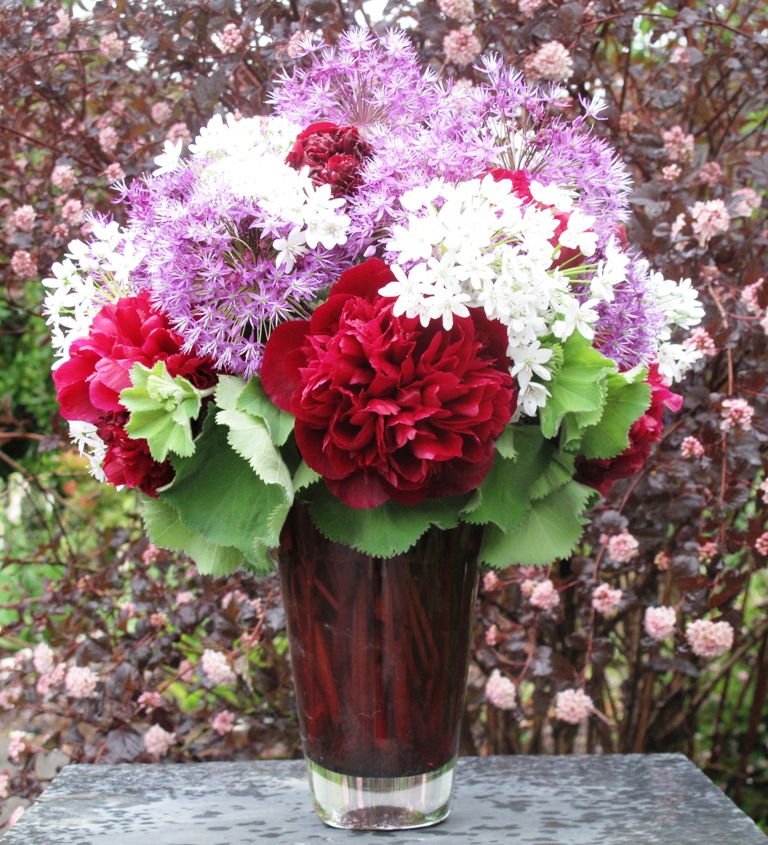
Peonies from Ojeda Farms

These luscious red peonies from a local grower reflect the garnet-colored art glass and complement two forms of ornamental allium.

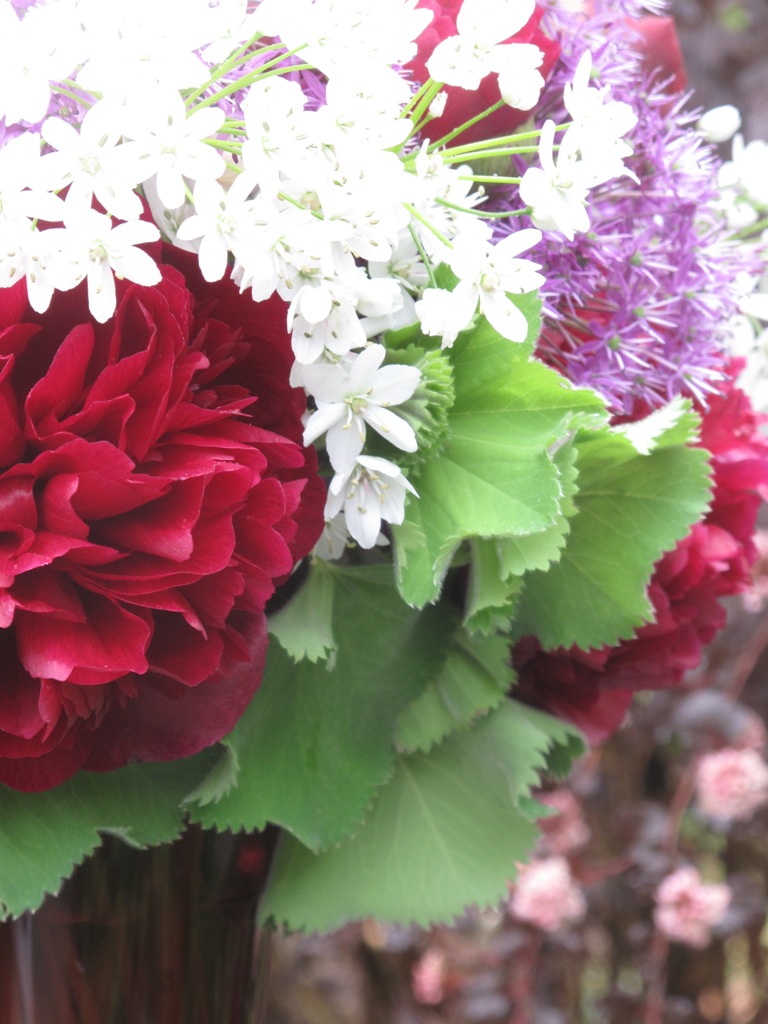
Foliage detail

The lady’s mantle foliage is absolutely the BEST for spring bouquets. And if your garden is like mine, it’s super abundant right now!

Ingredients:
10 stems red peonies, grown by Ojeda Farms
7 stems each ‘Purple Sensation’ and ‘Cowanii’ ornamental alliums, grown by Choice Bulb Farms
12 stems lady’s mantle foliage (Alchemilla mollis), harvested from my garden

Vase:
9-inch tall x 5-inch diameter hand-blown glass vase

Design 101
Create a collar: You can use flowers or foliage to ring the base of a bouquet or arrangement as a finishing detail. This technique is usually done as the bouquet’s last step. For this arrangement, I pre-cut the greenery and then added it beneath the peonies, slightly overlapping each stem as I worked around the circumference of the bouquet. Here, the lady’s mantle visually separates the dark red peonies from the wine-red vase.


By the Bunch: A NEW and beautiful local source for flowers

Thursday, May 9th, 2013

Lots of news to share, including this very timely interview that Seattle’s NPR station KPLU-FM aired today. Environment reporter Bellamy Pailthorp contacted me to discuss “sustainable flowers for Mother’s Day,” and thanks to her incredible interviewing and editing talents, a 25-minute conversation turned into a 4-1/2 minute segment. You can listen to it here.
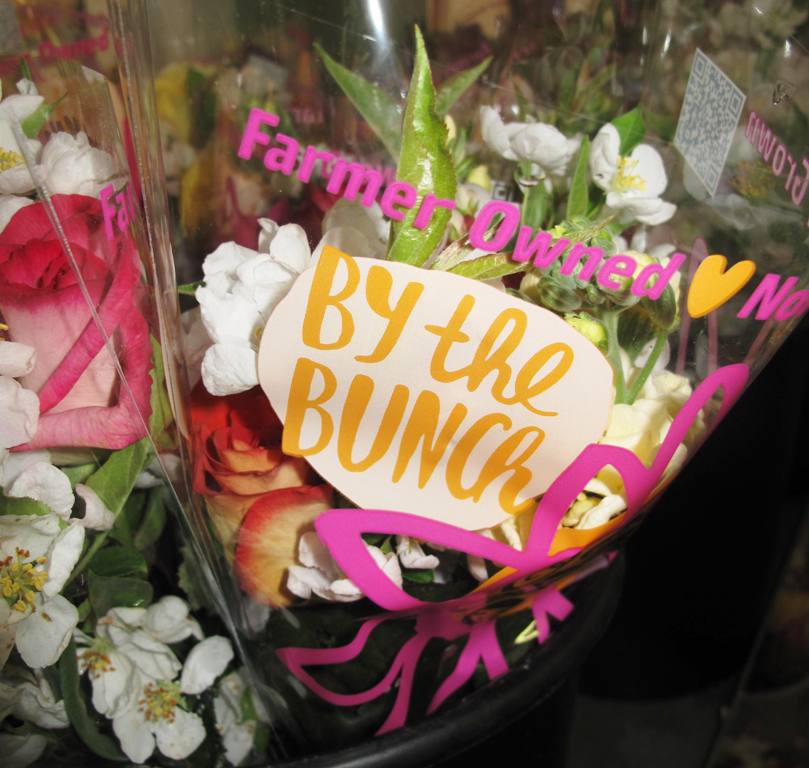
By the Bunch

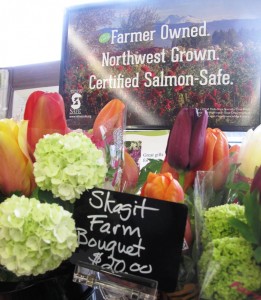
Remember this cool logo: By the Bunch. It means these gorgeous bouquets are possible because their ingredients were grown by a bunch of awesome NW flower farmers

The interview gave me a chance to talk about the excitement at the Seattle Wholesale Growers Market – a just-launched supermarket bouquet program called “By the Bunch.” The beauty of this program is that it produces a sizeable income stream for every farmer-member at the SWGM Cooperative. Together they are so much more than the sum of their parts (or their flower fields, for that matter).

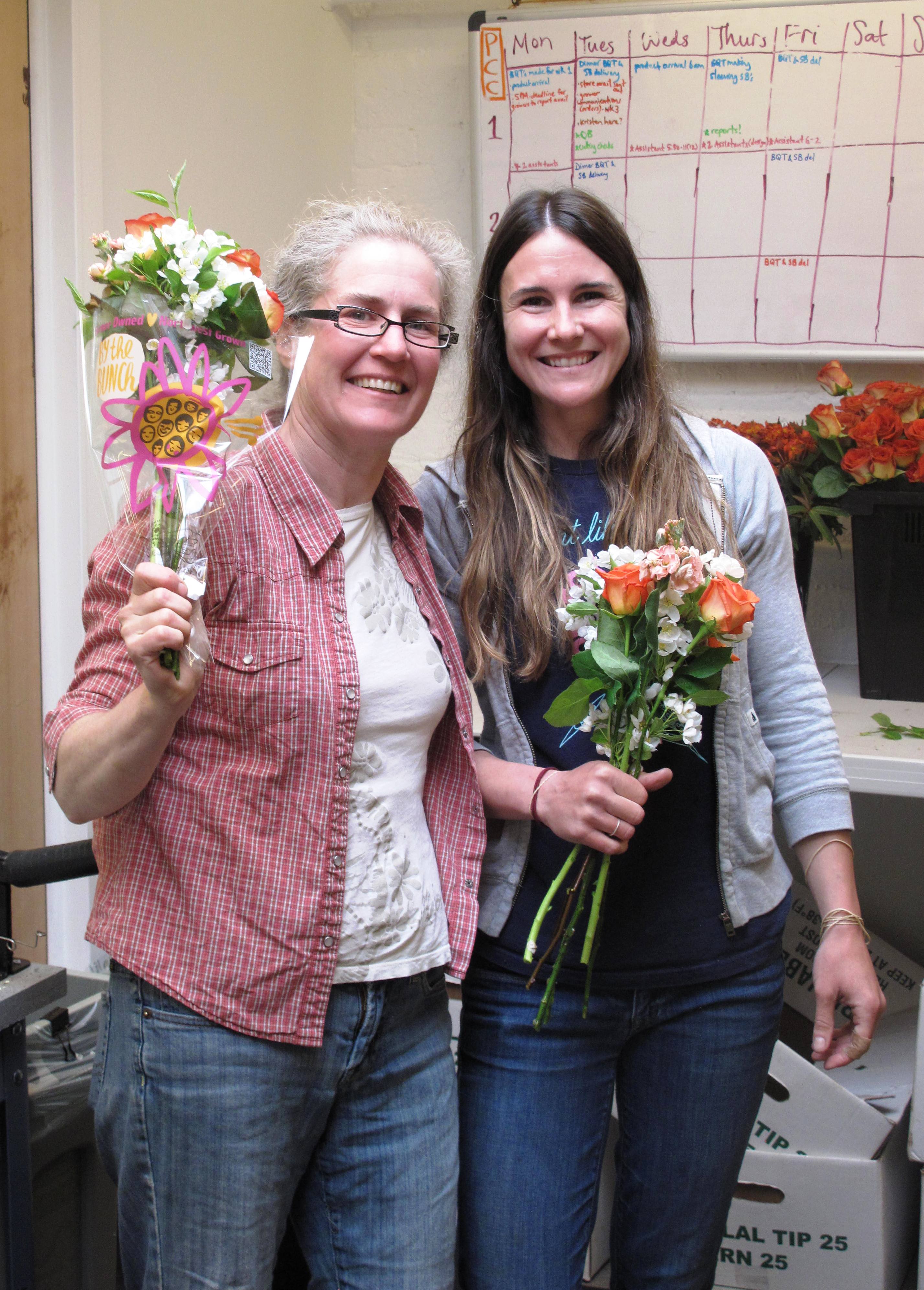
Today, the Thursday before Mother’s Day, was perhaps the most insane work day ever experienced by the Bouquet team, including managers Kristen Parris and Nicole Cordier, along with their new design team members, Carly and Michelle.

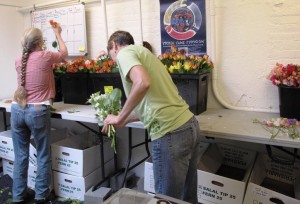
But in order to produce a staggering number of bouquets today – something like 700 bunches – flower farmers Diane Szukovathy and Vivian Larson had to show up and volunteer their time as bouquet-makers. I stopped by at around 9:30 a.m. to catch the activity.
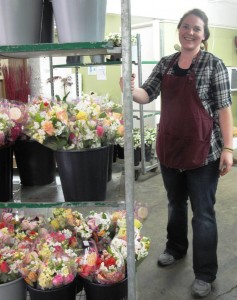
Nicole with flowers

SWGMC Front-Desk Manager, talented designer and inspiring leader for the local flower movement, Nicole Cordier.

Oh, bouquet-making sounds so romantic, doesn’t it? But by 7 p.m., when I had to bring by supplies for a special event tomorrow morning, Kristen and Nicole were still there, finishing up the final 100 bunches. Ever-positive, but clearly exhausted, these women believe so much in getting sustainable and locally-grown blooms into the hands of Seattle area consumers that they are willing to go without food and breaks just to achieve the goal. As I told them: If you can get through Mother’s Day, you can do anything. (They probably didn’t need to hear it from me!)

Read more about the By the Bunch program here. The brand development, graphic design and packaging is supported by a USDA Multi-State Specialty Crop Block Grant through the Washington State Department of Agriculture and the Oregon Department of Agriculture.

My photos from today’s visit will wow you. If you haven’t figured out what to give Mom for her special day on Sunday, May 12th, stop by these outlets for LOCAL, SEASONAL Bouquets – straight from Northwest fields: PCC Natural Markets, Town & Country Markets and Madison Market.

My camera snatched some of today’s delicious springtime beauty to share:

Sweet Peas

Sweet peas – so yummy in color, fragrance and form~

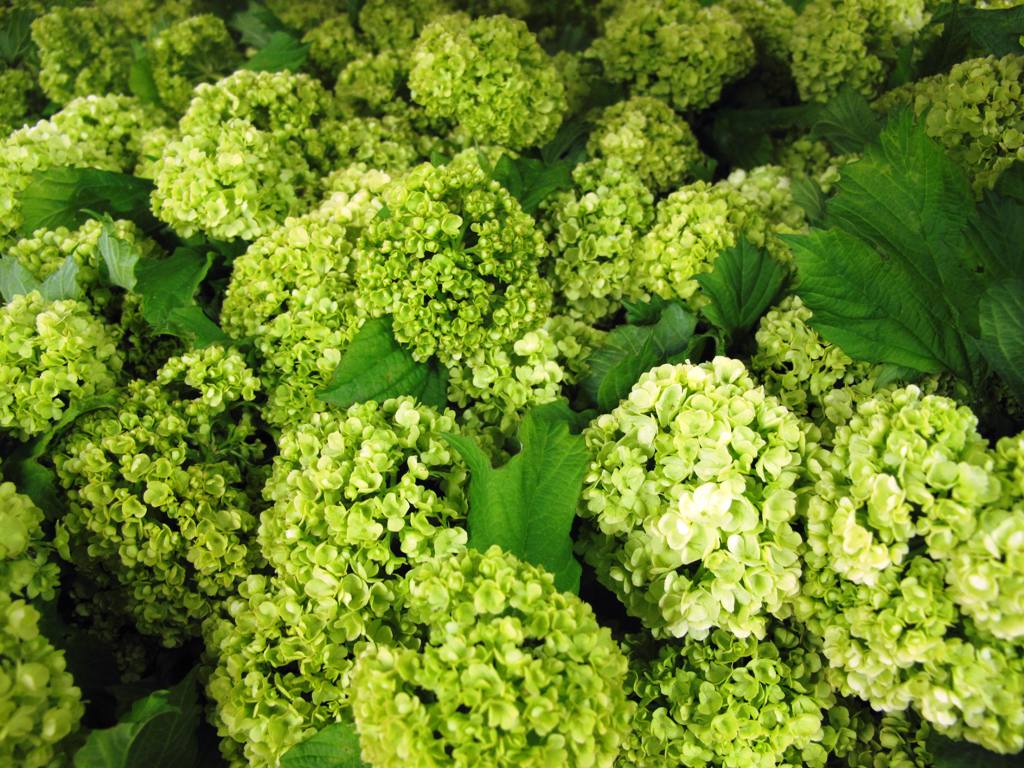
Snowball Viburnum

For the most perfect “fresh” green color of springtime, snowball viburnum. Aaah!

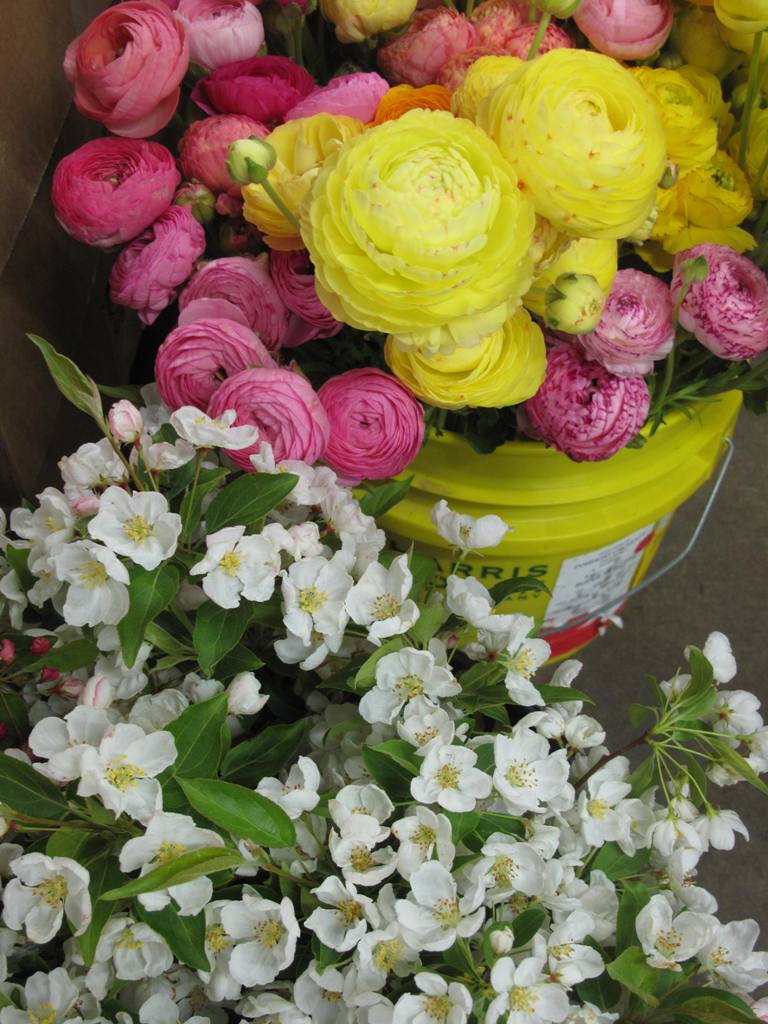
Ranunculus & Cherry blossoms

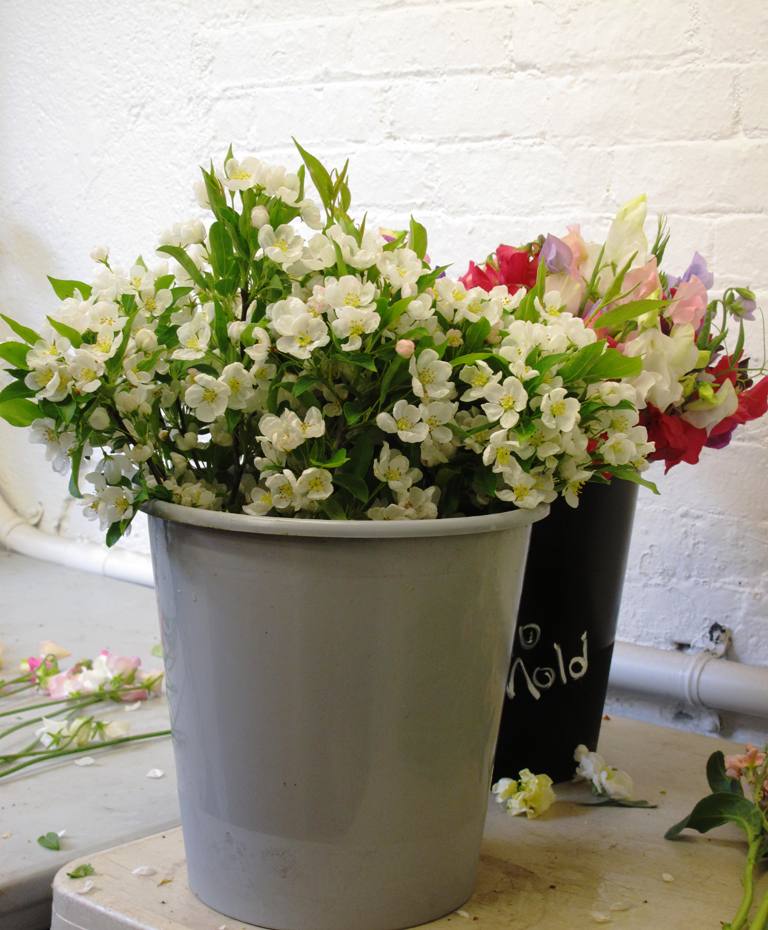
Just-picked floral elements await inclusion in mixed bouquets. Ranunculus and cherry blossoms
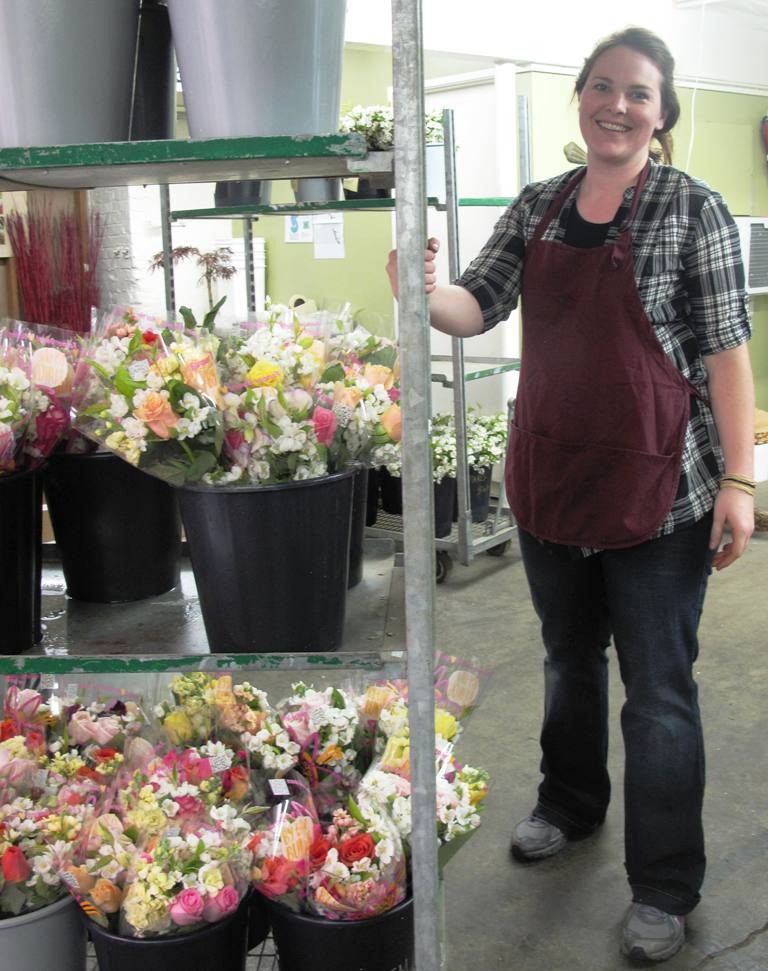
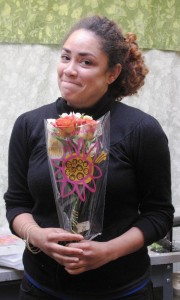
Michelle with bouquets

At 9:30 a.m. today, Michelle was ready to wheel an entire cart of bunches into the cooler. So exciting to have her on the SWGMC team!
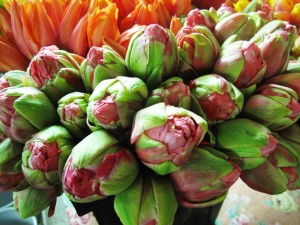
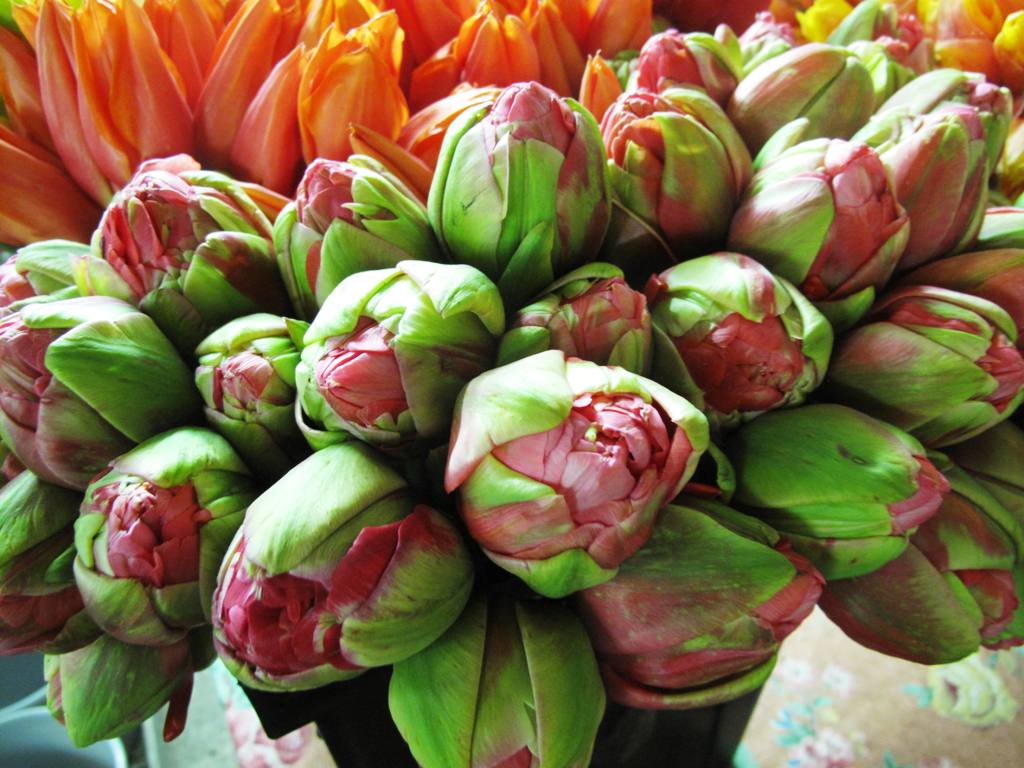
Field-grown Tulips

The combination of green and pink petals make this the most sublime tulip I’ve ever seen.
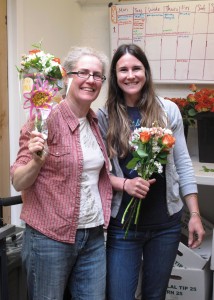
Diane & Carly

A moment to smile, and who wouldn’t? Creating bouquets for Mother’s Day is a special job – and Diane Szukovathy of Jello Mold Farm (and SWGMC president) was on hand to help designer Carly and the rest of the team this morning.

Cherry blossoms and sweet peas

Buckets of flowers, ready to gather into sweet Mother’s Day bouquets
Diane & Vivian

Two of the founding farmers of SWGMC, Diane Szukovathy and Vivian Larson, spent the morning making bouquets with the team.
By the Bunch at PCC

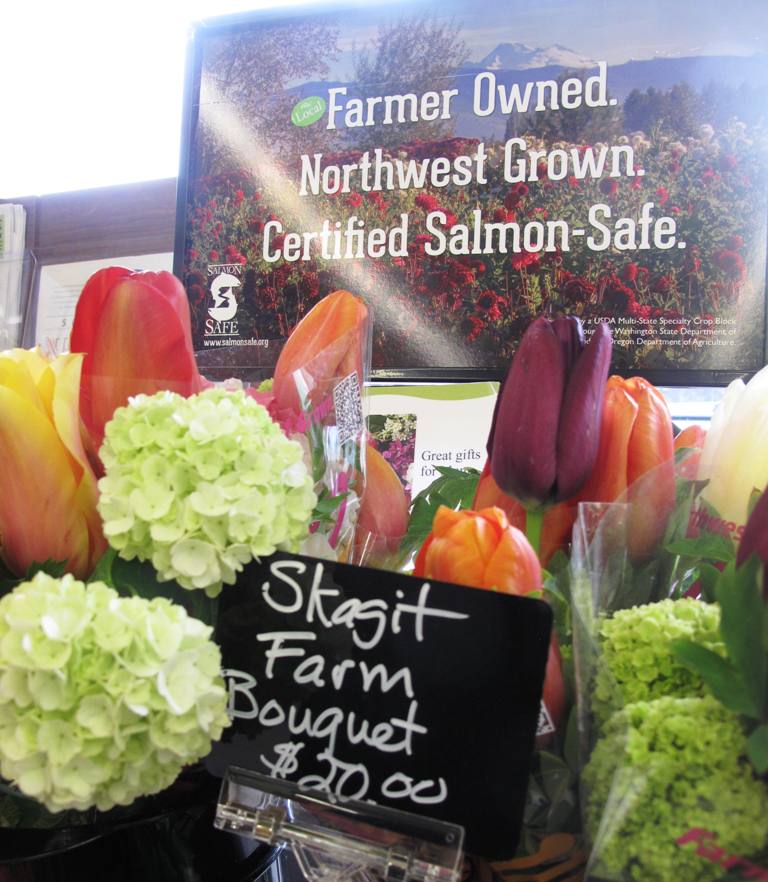
Later this morning I stopped by my local PCC Natural Market to see the By the Bunch floral display. Gotta love this messaging~

For every mother out there, HAPPY MOTHER’S DAY ~ and may you enjoy your garden, your flowers and your families.

Eight Days: From Santa Barbara to San Diego . . . and points in between

Wednesday, April 24th, 2013

Here’s what I’ve been up to lately. I traveled to Southern California all of last week  – from Saturday, April 13th through Saturday, April 20th.  I experienced many great highlights; too many to mention. Here are some of them:

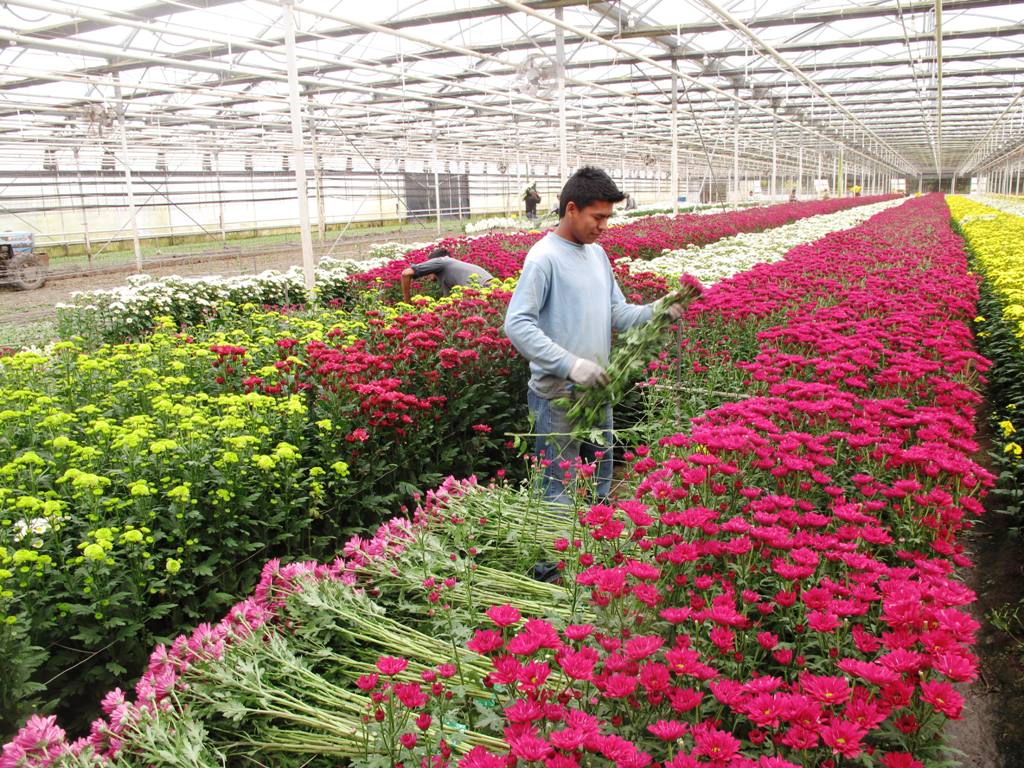
Miles of mums at Ocean Breeze

Tours focused on the entire process – from planting and growing to harvesting and grading. Mums, also known as pom poms, are one of the last commercially grown flowers still grown in soil.

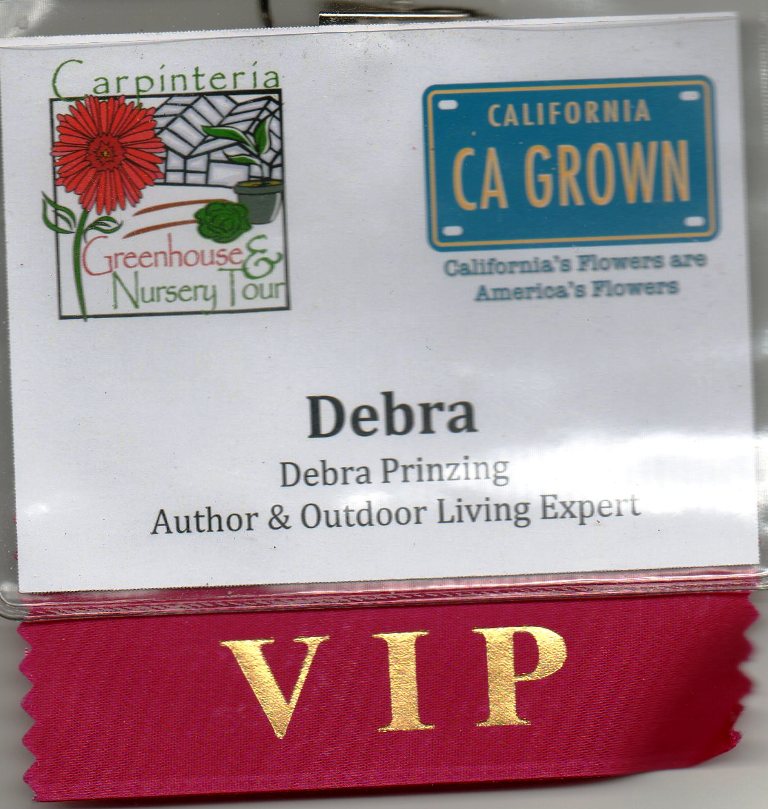
My name badge

Fun to wear the VIP badge!

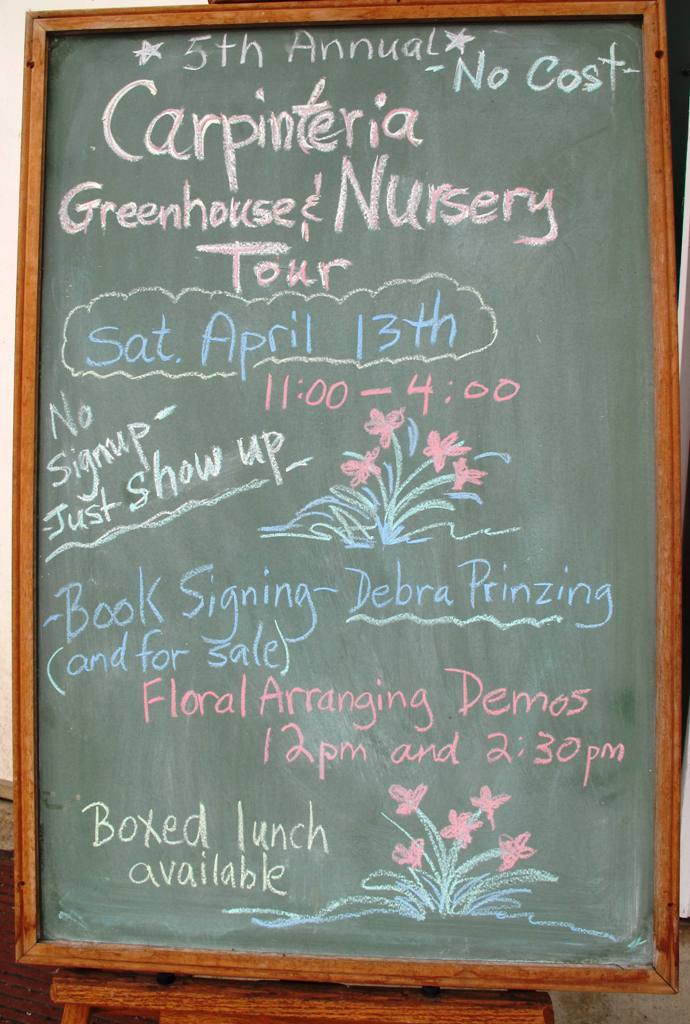
Chalkboard welcome

Chalkboard welcome at Padaro Floral in Carpinteria, California

DAY One: Carpinteria Greenhouse & Nursery Tour, sponsored by the California Cut Flower Commission. I was hosted by Harry and Michele Van Wingerden, the great folks at Myriad Roses and Padaro Floral Design for a day of book-signings and eco-floral demonstrations. A special thanks to the Van Wingerden family, CCFC CEO/Ambassador Kasey Cronquist and Event Planner Anna Kalins for making it a successful and enjoyable day!
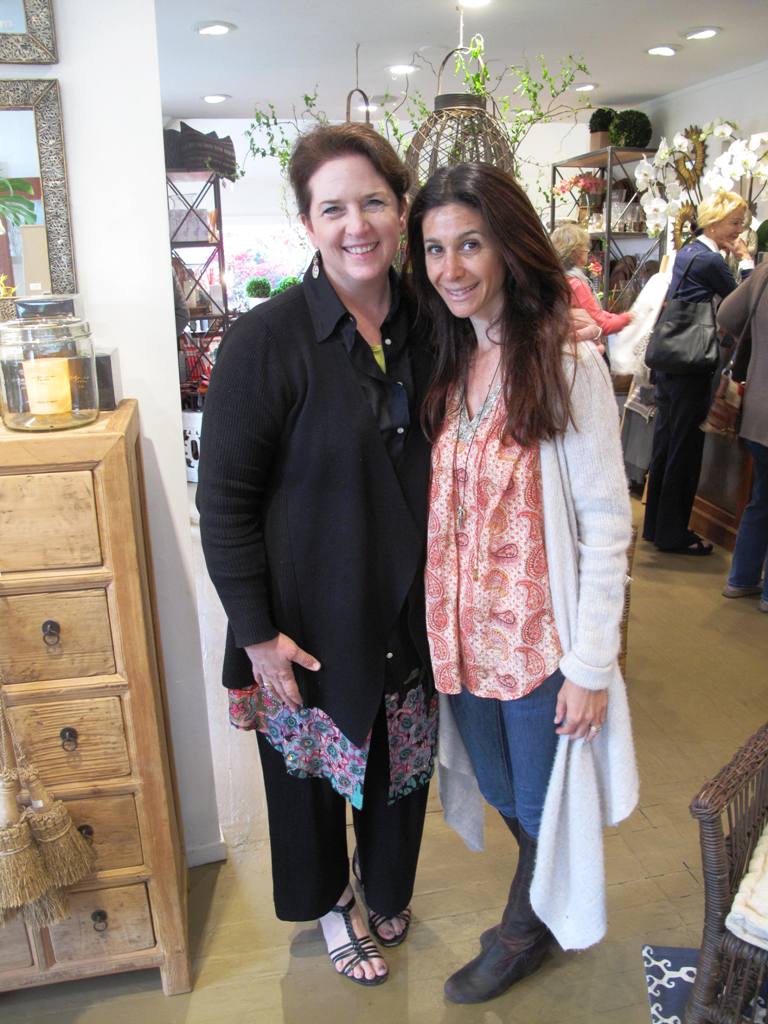
botanik owner Erin Taylor

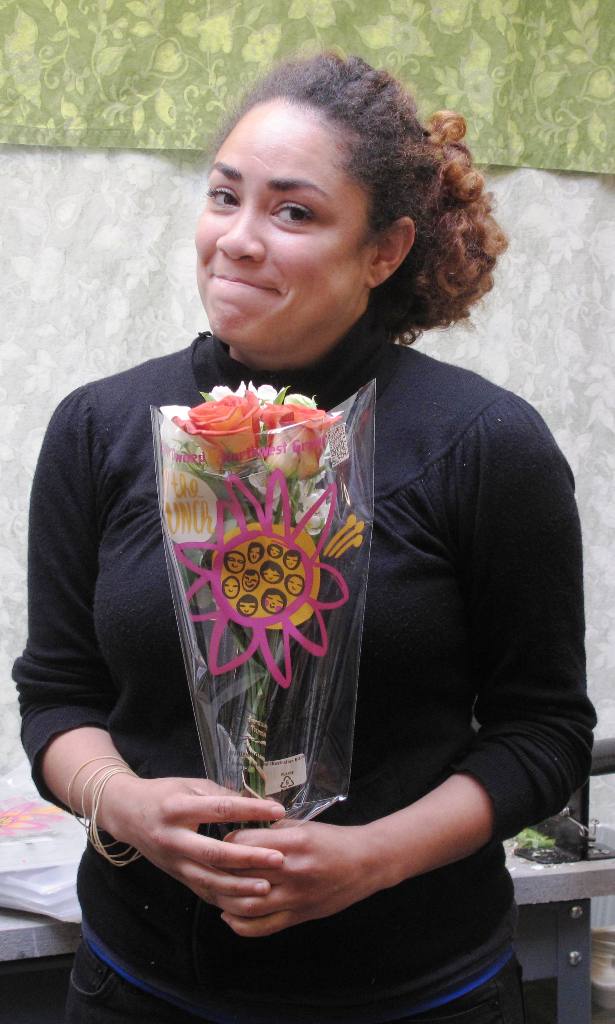
Erin Taylor, designer of flowers, interiors, landscapes and more~ The talented owner of botanik in Summerland, California hosted my lovely book event.

DAY Two: Book signing and flower demos at botanik in Summerland. Loved spending time with very talented owner Erin Taylor and her team. After several hours at botanik, I met up with Cristi Walden and we headed to Sea Crest Nursery, her father Jack Stevenson’s palm and cycad collection. It was so exciting to return to this beautiful place and hear how my talented friend is learning the business of growing and selling amazing landscaping plants (oh, and propagating, too!).

READ MORE…