Debra Prinzing

Get the Email Newsletter!

Archive for the ‘Landscape Design’ Category

SLOW FLOWERS: Week 39

Sunday, September 29th, 2013
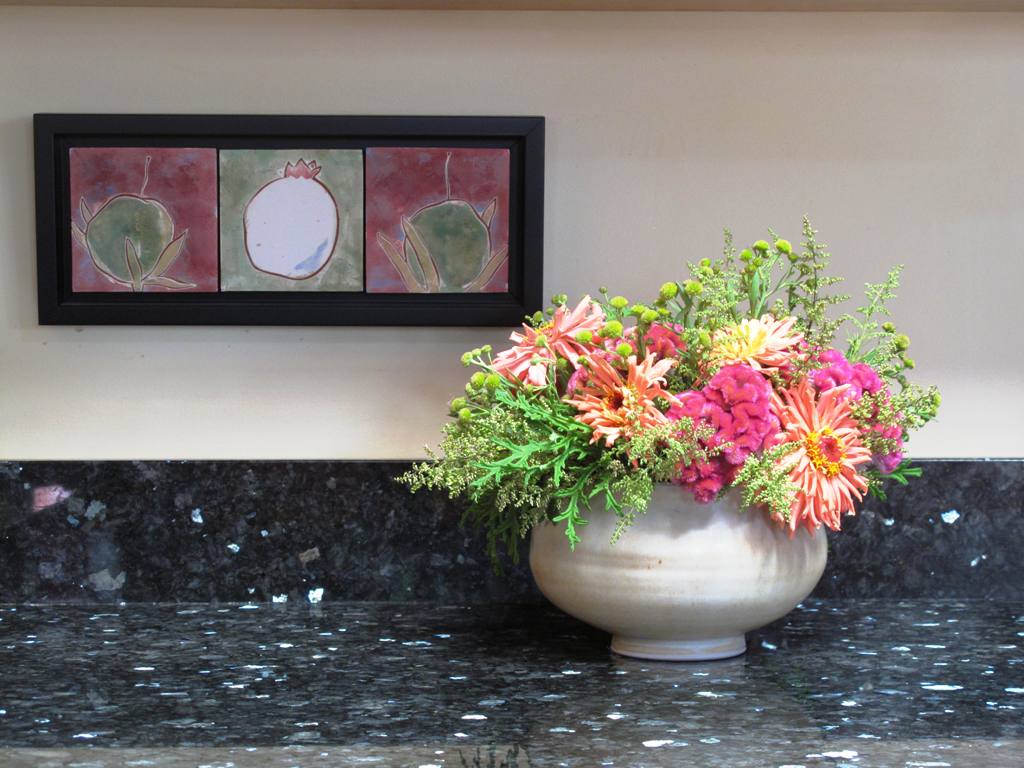
Bowl on kitchen counter

I placed my beautiful bowl of zinnias on the kitchen counter, in front of a botanically-inspired tile triptych by artist Paula Gill of Red Step Studio

Ingredients:
 
5 stems fancy-leaf scented geranium (Pelargonium crispum), grown by Charles Little & Co.
7 stems Boltonia asteroides, a small daisy-like perennial, grown by Charles Little & Co.
7 stems Artemisia capillaris, a woody perennial, grown by Charles Little & Co.
6 stems pink crested cockscomb (Celosia cristata), grown by Charles Little & Co.
9 stems apricot cactus zinnias (Zinnia elegans ‘Pinca’), grown by J. Foss Garden Flowers
 
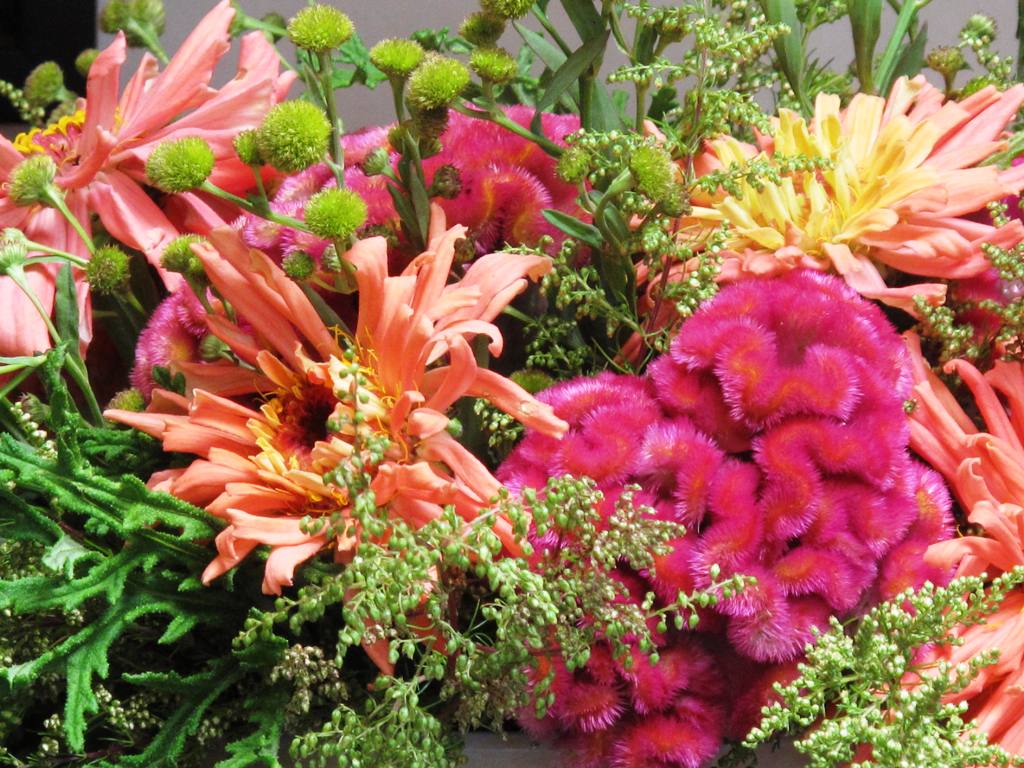
Great details add texture and interest!

Great details add texture and interest!

Vase:

4½-inch tall x 6¼-inch diameter hand-thrown clay bowl
 
Design 101
The power of green: The difference between one arrangement being just pretty and another being completely arresting is often not the flowers but the foliage. You see here that three similar-toned green elements are woven  together as a textured and verdant tapestry.
 
They are definitely the supporting actors to the zinnia and cockscomb divas, but they help this bouquet sing. Whenever you can use unexpected greenery, your design will take on a similar star quality. Often, these elements come straight from the garden – growing right under our noses.


Floral design in Tuscany

Friday, September 27th, 2013
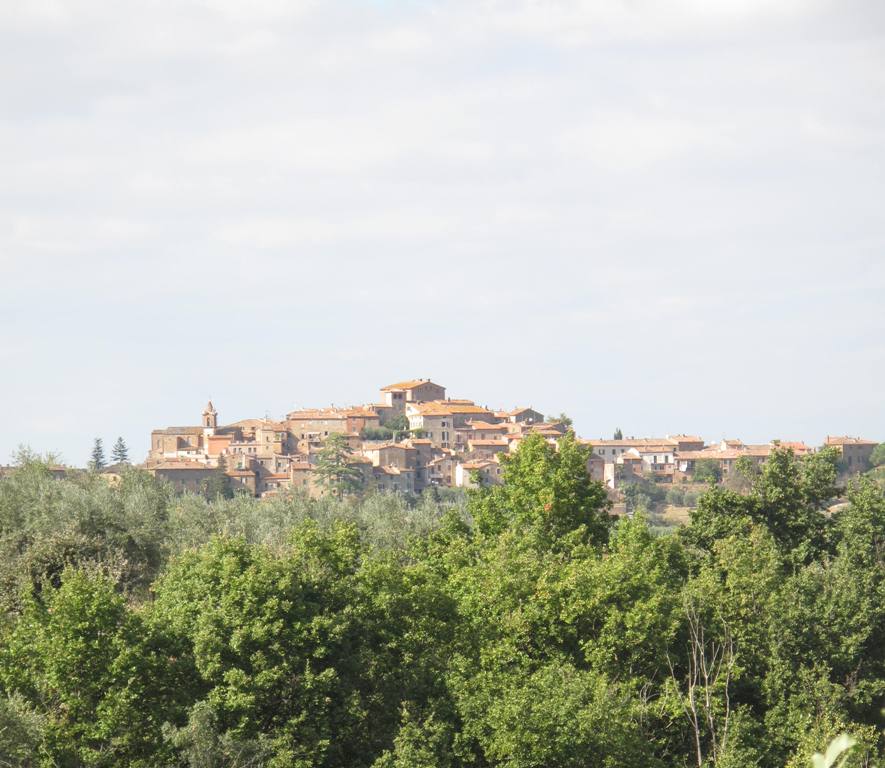
The approach to Montisi, a small Tuscan village that has been our home this week.

The approach to Montisi, a small Tuscan village that has been our home this week.


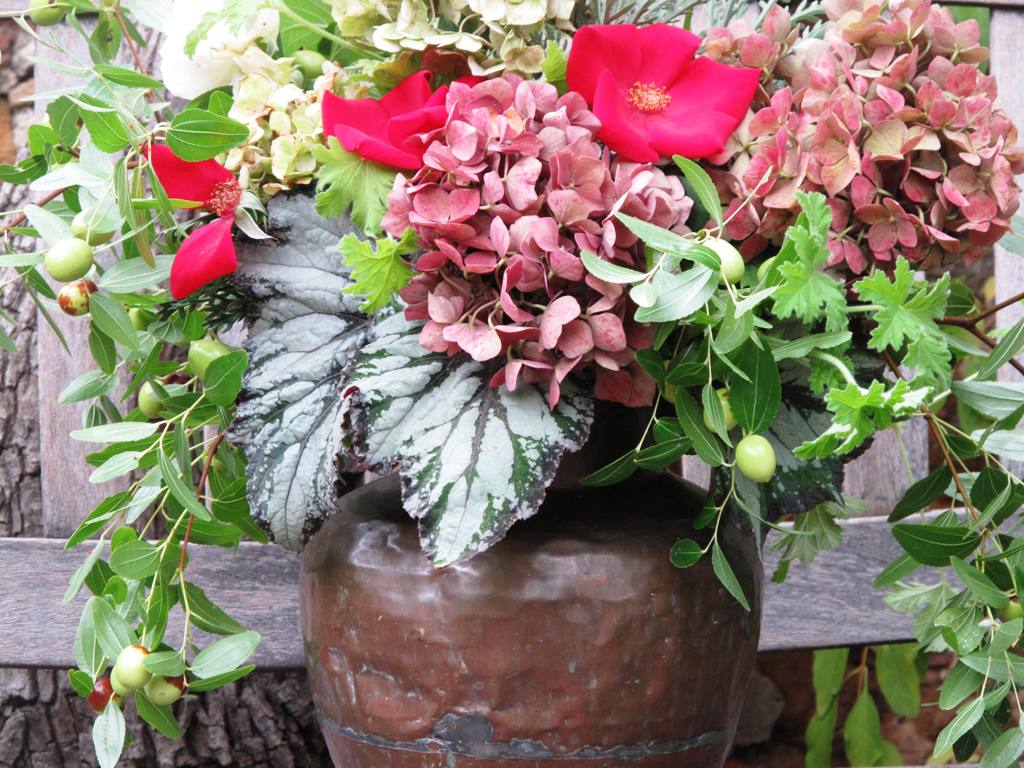
Detail: An autumn bouquet from a Tuscan garden. Olives, roses, hydrangeas, scented pelargonium leaves, Rex begonia leaves - seen here.

Detail: An autumn bouquet from a Tuscan garden. Olives, roses, hydrangeas, scented pelargonium leaves, Rex begonia leaves – seen here.

This morning at the villa, two friends went off for watercolor lessons with resident expat artist Liz Cochrane.

After walking down to Il Barrino for hot tea and a croissant, I came back totally determined to make a bouquet for our group’s last night together.

We have a dinner coming in from Allesandro, the local chef (Marty organized the menu, which includes Ribollita, a Tuscan soup; sliced pork with balsalmic vinegar; zucchini flan; and that popular italian desert, Apple Pie!)

The Flower Arrangers’ Guild of Tuscany commenced its first session.

This garden is in its waning moments of late summer-early autumn. But it does not disappoint. So much to work with and we judiciously snipped, without hurting or denuding a single plant.

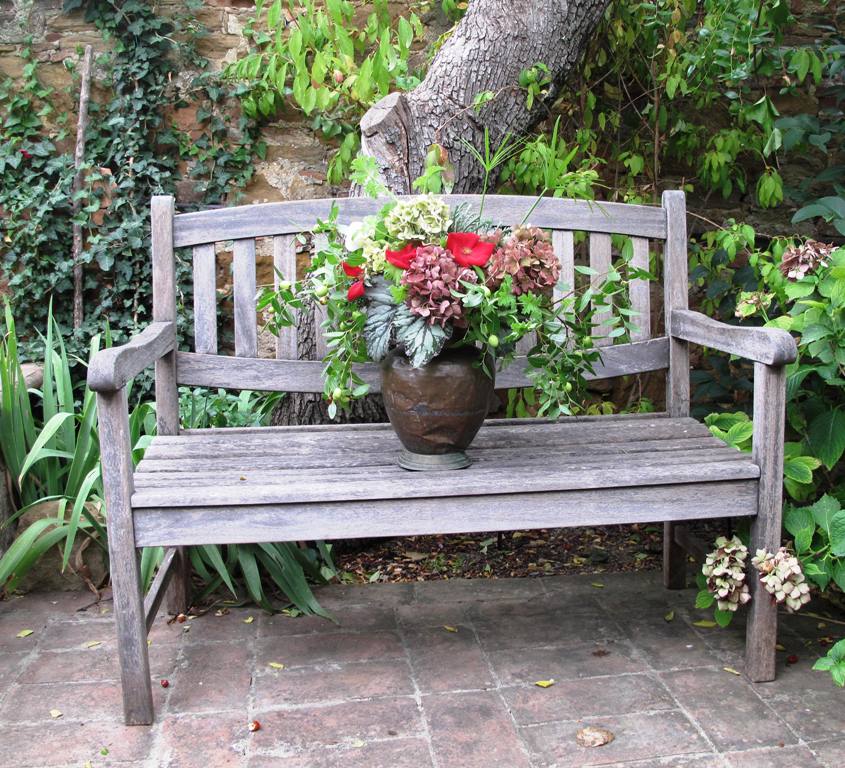
I had spotted a copper urn, weathered and slightly dented, sitting on the floor in the Lemonaio (the garden room). It inspired my palette – faded, tarnished and of the moment.

A rustic wooden garden bench, a perfect place to display and photograph my Tuscan bouquet in a timeworn copper vessel.

A rustic wooden garden bench, a perfect place to display and photograph my Tuscan bouquet in a timeworn copper vessel.

Here are the ingredients I began with:

1. Scented pelargonium foliage

2. Papyrus stems from the water pond

3. Hydrangeas – two types

4. Roses – two types

5. Olives branches w/fruit

6. Marguerite daisy foliage

7. Rex begonia foliage

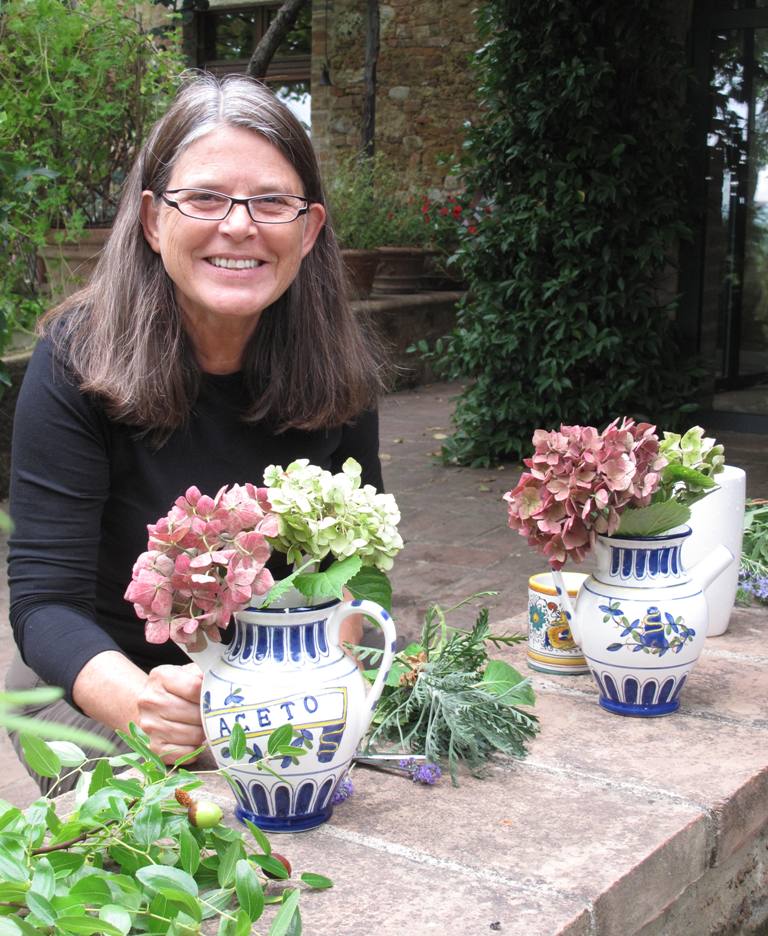
Mary Watson joined me in the garden, eager to make something beautiful. She made two adorable bouquets:

Mary Watson, a new friend who I met through Marty Wingate. She is an art educator and bon vivant! Right when I started arranging this morning, Mary jumped into the fun.

Mary Watson, a new friend who I met through Marty Wingate. She is an art educator and bon vivant! Right when I started arranging this morning, Mary jumped into the fun.


READ MORE…

SLOW FLOWERS: Week 37

Sunday, September 15th, 2013

FADING HUES

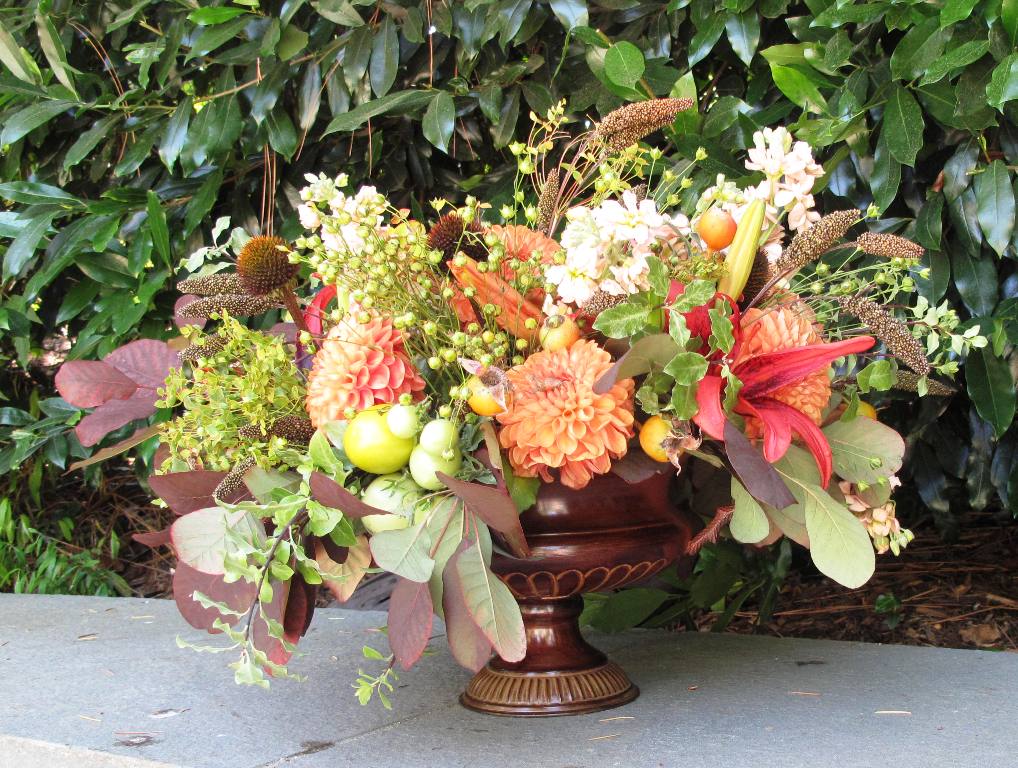
Fading hues

This lovely autumn palette of fading flowers, foliage and seed heads reflects the season’s beauty.

Ingredients:

7 stems smoke tree (Cotinus coggygria ‘Grace’), harvested from Lizzy Jackson’s garden
7 stems pittosporum (Pittosporum sp.), harvested from the Lila B. lot garden
5 stems Dahlia ‘Hy Suntan’, grown by Jello Mold Farm
5 stems gold and pale pink garden roses, harvested from the Lila B. lot garden
3 stems terracotta-orange lilies (Lilium ‘Olina Tango’™), grown by Peterkort Roses
5 stems pale peach stock (Matthiola incana), grown by Repetto’s Nursery
7 stems perennial flax (Linum perenne), grown by Charles Little & Co.
7 stems brown millet (Setaria viridis ‘Caramel’), grown by Charles Little & Co.
Miscellaneous seed heads, harvested from the Lila B. lot garden, including purple coneflower (Echinacea purpurea), Euphorbia sp., and rose hips
2 clusters yellow pear tomatoes, harvested from Marritje Green’s garden
 
Vase:
 
7-inch tall x 10-inch diameter antique-finish urn with 6½-inch opening
 
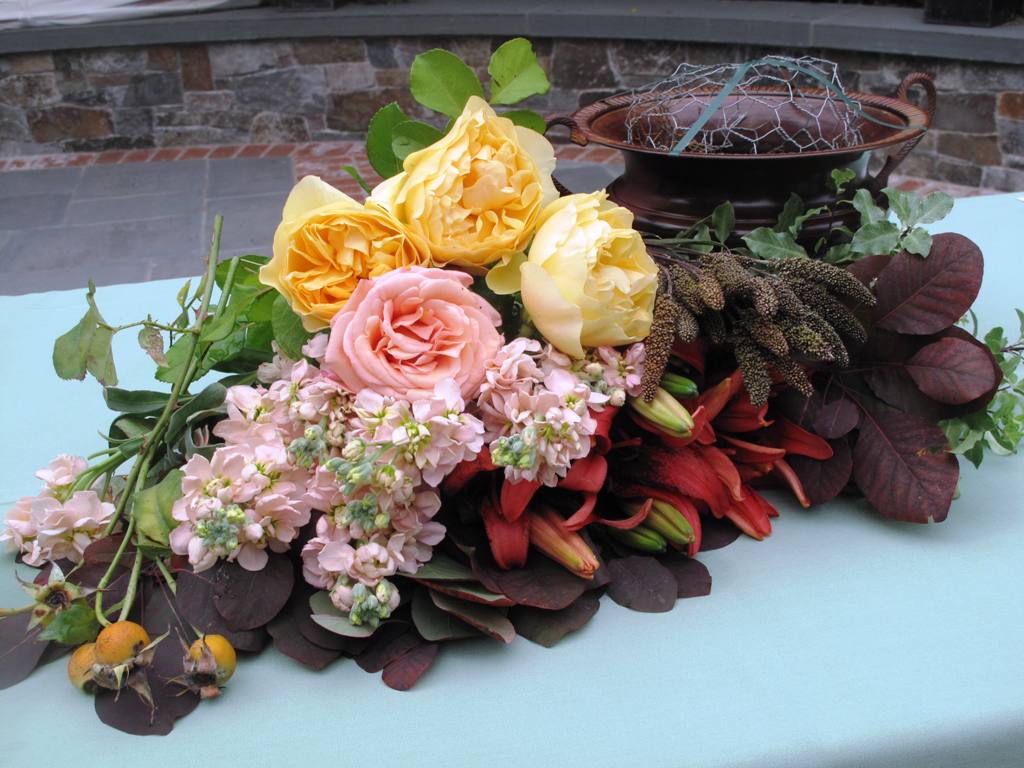
Delicious array

The luscious selection of California, Washington and Oregon-grown floral elements – on display

Eco-technique

A fresh drink of water: There’s a proliferation of advice for keeping a bouquet of floral ingredients fresh and lasting for many days. But one of the most important things you can do is give stems clean water. That’s not so easy with an arrangement like this one, where all the stems are knit together in a tangle of chicken wire.
 
My friend Lorene Edwards Forkner shared this easy water-changing trick: Place the entire arrangement in the kitchen sink. Gently lift the foliage at one edge of the vase so the faucet’s spray nozzle is directed inside. Turn on the water and let it flow for a minute or two. The existing water will begin to overflow and go down the drain, displaced by fresh water that now occupies the vase (dry off the bottom and outside of the container when finished). Do this every day or two for the life of the arrangement.


Color of the Moment

Saturday, September 7th, 2013
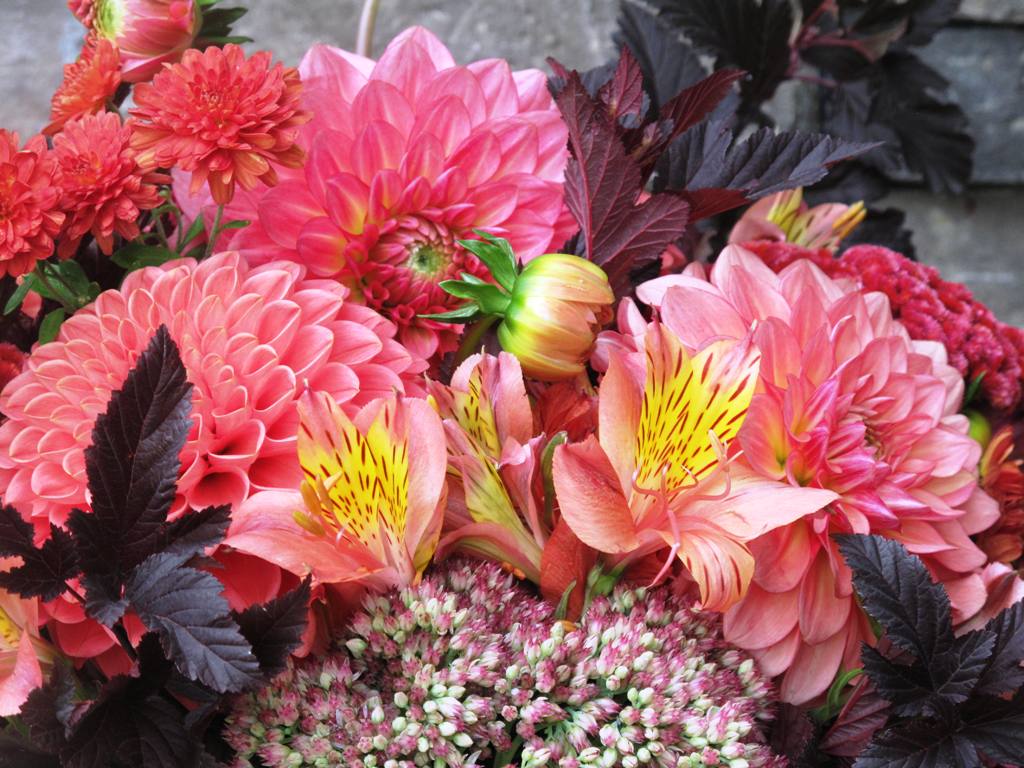
Detail of my color palette

Coral pinks, rosy oranges, a touch of faded terracotta and some dark burgundy foliage.

The overall scheme of the flowers I played with this week is hard to name. I’ve come up with the following:

Terracotta Pink

Coral Pink

Peachy Apricot

Pinkish Orange

Faded Terracotta

I’m up for suggestions on how to describe these yummy colors!

Dan Pearson of Dan’s Dahlias grew the two types of dahlias – one leans more toward the pink end of the spectrum; the other is more like that faded terracotta color I mentioned.

The antique pink-hued Celosia were grown by Diane Szukovathy and Dennis Westphall of Jello Mold Farm.

As I was leaving the Seattle Growers Wholesale Market the other day, Janet Foss of J. Foss Garden Flowers handed me the bunch of alstroemeria as a gift. These little beauties have flecks of dark maroon on a pale orange-pink throat. I love the way they tie together the more solid colored flowers.

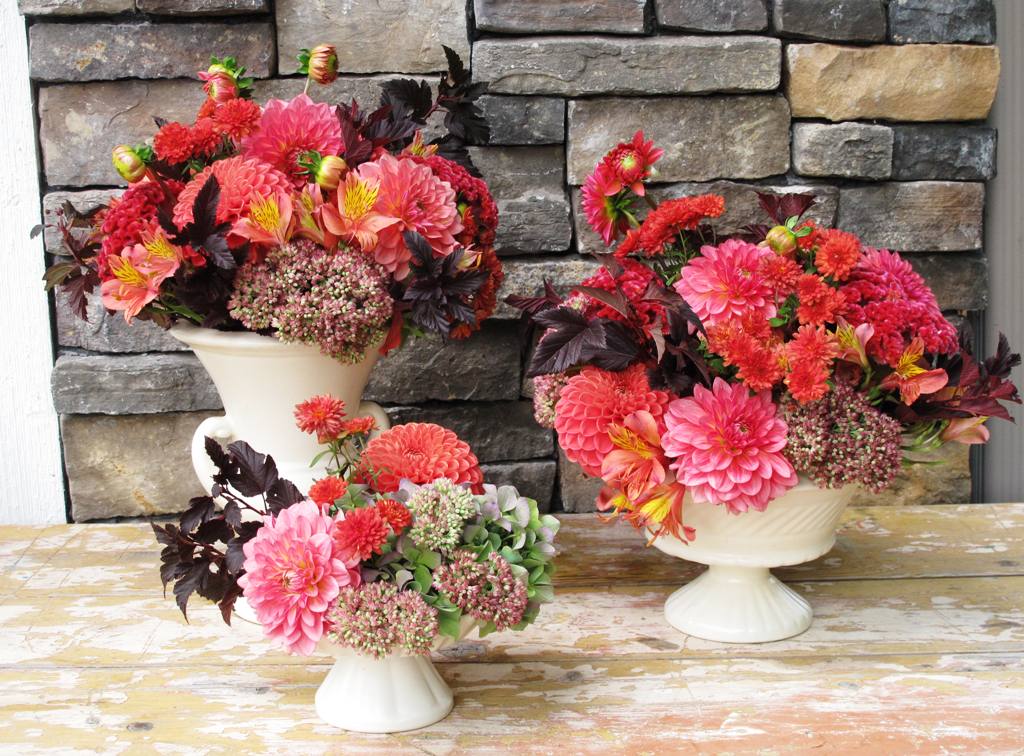
Peaches and Cream Trio

There is a peaches-and-cream (with rapsberries added) mood to this trio of vases.

I came home wondering what to do with these evocatove botanical elements. I pulled down three ivory vases – one is vintage Haegar; two are vintage Hull (from my recent trip to Iowa). It felt right to use these vessels, each of which has an eggshell-like color and texture.

I walked around my garden and snipped dark maroon foliage from the Ninebark shrub, which as you can see really helped to define the spaces between the flowers. I also snipped Sedum ‘Autumn Joy’ in pinkish bud and a few sprays of an inherited chrysanthemum, the flower heads toned dark terra cotta.

A few more shots, showing the designs for my medium and small vintage pedestal bowls:

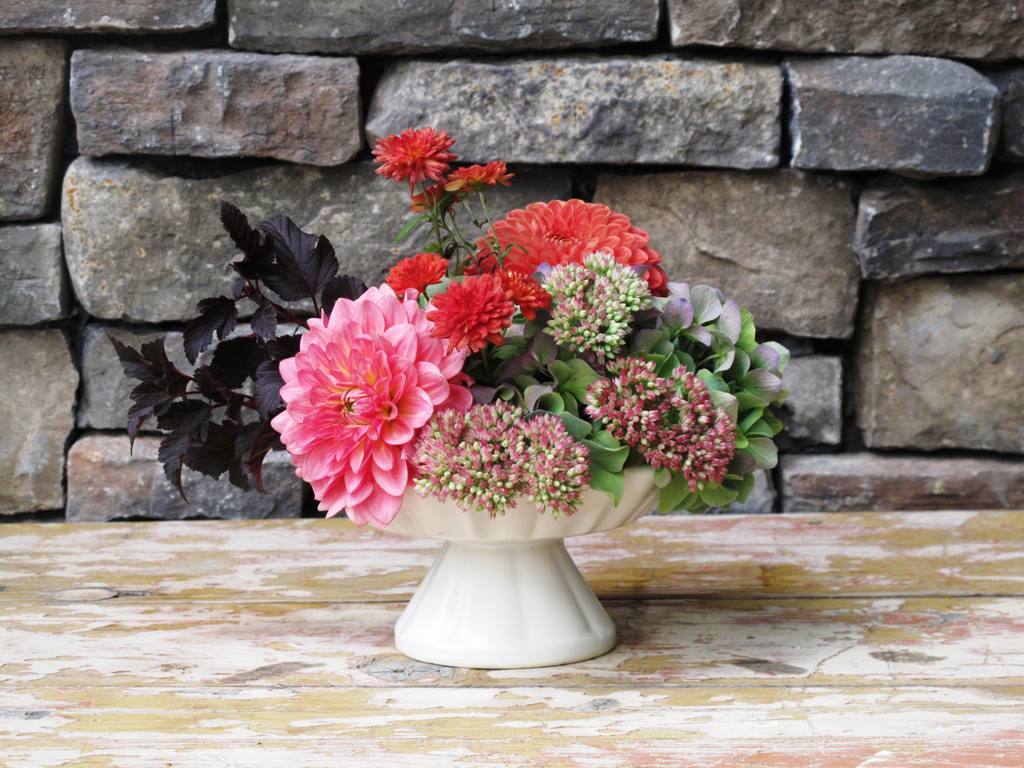
Small Vase

This little saucer didn’t have a lot of room for stems. So I used a hydrangea flower as a fresh “frog” to organize the other short stems.


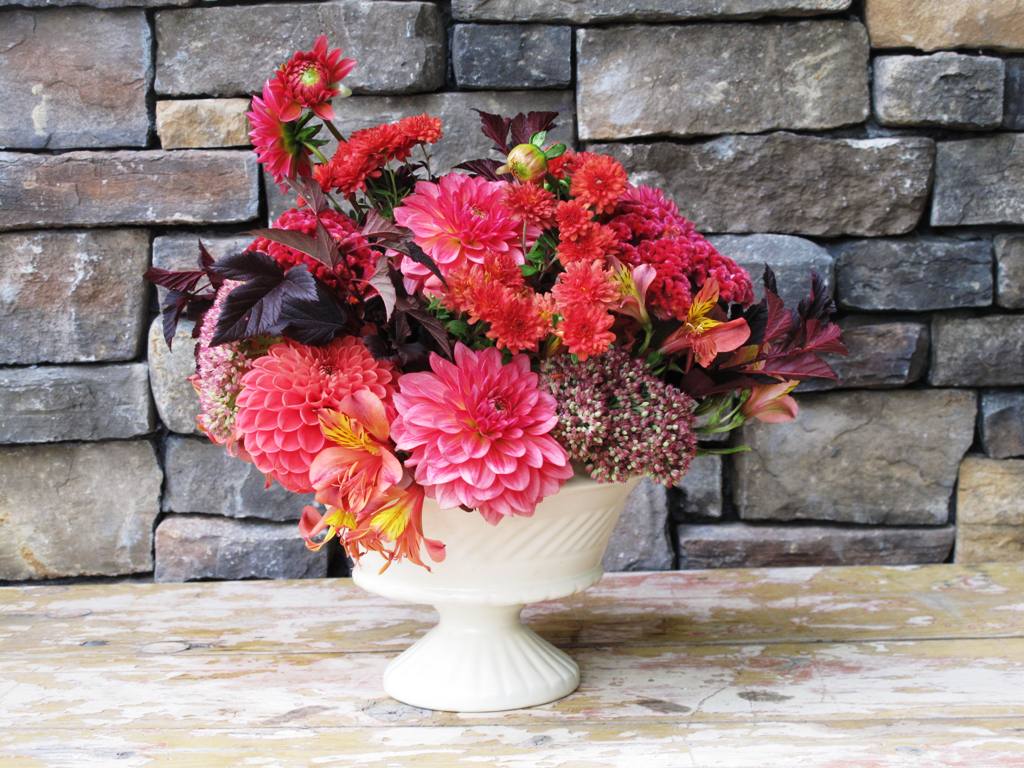
Medium Vase

A fabulous, creamy white vintage compote-style bowl, used with a cage-shaped flower frog for this color-intensive bouquet.

Everything seems to come together as a lovely gathering of a beautiful hue. The color of the moment!


Into the Garden with Charles Anew

Wednesday, August 28th, 2013
Table Arrangement

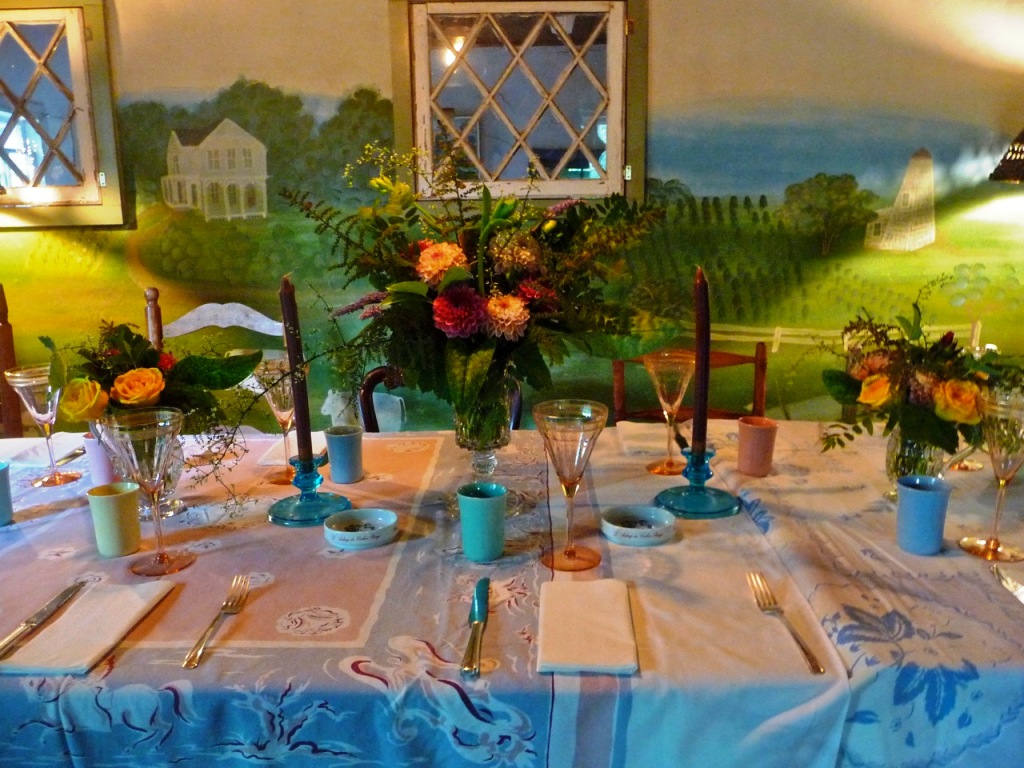
A lovely table arrangement where the vases seem to blend into the primitive wall mural of Orient, New York . . . as imagined and painted by Skip many years ago.

Last April 2012, I wrote about the beautiful memoir by my late friend Clyde “Skip” Wachsberger.

The book is called Into the Garden With Charles.  It was first published privately by friends of Skip’s (under the guidance of editor and friend Karen Braziller) in December 2010. Farrar, Straus and Giroux published it commercially in early 2012, although Skip did not live to see that event. Read more about the book here.

I have not been able to visit Orient, New York, or see Charles Dean, Skip’s surviving husband, since January 2012, when I traveled there for the memorial service honoring Skip’s life. I love this place and all of the friends I’ve met through these two men. The garden during summertime at Adsworthy, where Skip and Charles made their home, is very special. And for some reason, my trips in recent years were during fall or winter, so I hadn’t toured that verdant place during its peak since 2005 or so. Too long!

Last week I was fortunate to return for a mere 36 hours. It wasn’t nearly enough time, but every moment was filled with wonder, delight, friendship and memories. 

One of the highlights was getting ready for a big, yummy, community dinner prepared by the man Charles has now found to spend his life with. That is Charles’s very personal story to tell, so I won’t say more. I’ll only add that he is now with a dear, charming person and I’m pleased to see Charles so happy.

Skip’s presence is still very much evident in his garden. I was mindful of his exuberant spirit watching over me as I snipped stems, leaves and flowers from uncommon specimens that he originally selected, planted and tended to over the years. The opportunity to create the centerpieces for our wonderful dinner party was all the more special for the connection I felt between those plants and Skip. While the bouquets’ dahlias came from a local flower farm stand and the yellow roses were a gift to Charles from a family friend visiting his sister, artist Frieda Dean, everything else came from Skip’s garden. I relied on his plants for bold and fine foliage, tiny buds, fern fronds and seed heads. Charles supplied the beautiful cut glass urn and two small cream pitchers for the vases. 

Our table sparkled with vintage linens, pottery, silver and stemware. You can see how it looked above.

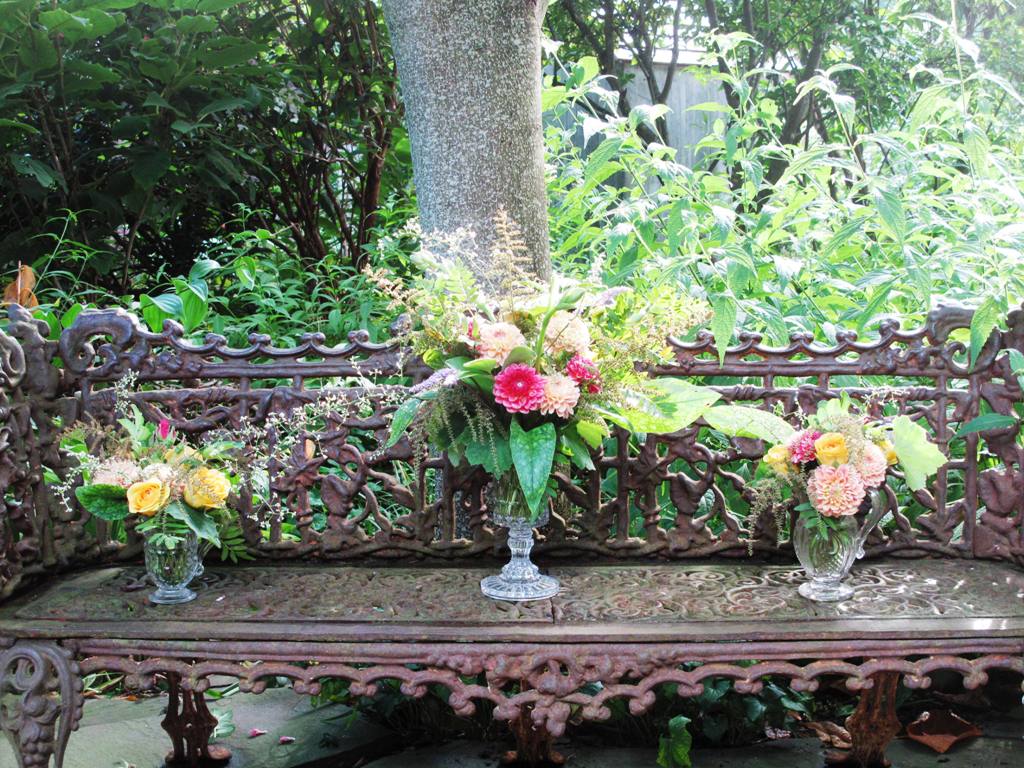
Here are some more images of the bouquets, in the garden:
Bench with three vases

A still life with three bouquets, on a vintage cast-iron bench in the garden.


Small glass pitcher of flowers

A small glass pitcher looks so beautiful in the dappled light that spills onto an iron garden chair.
 

Iron Bench

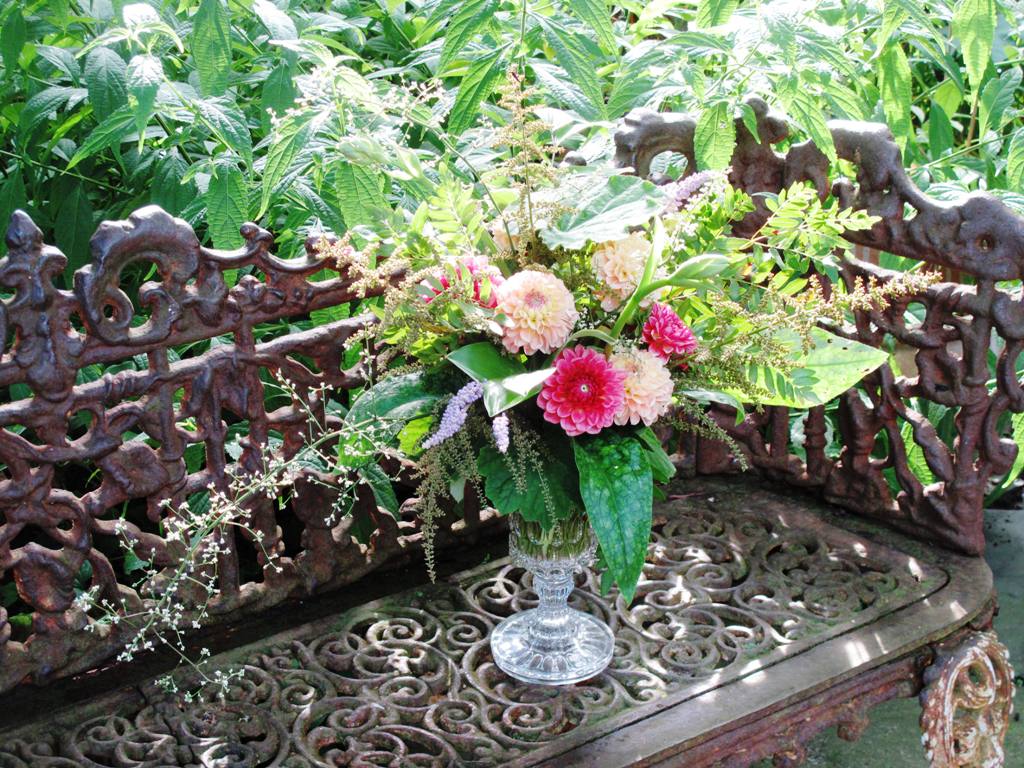
The larger vase features all sorts of gorgeous leaves, fronds and stems from Skip’s garden.

I’ll close with one of Skip’s quote about his garden, excerpted from Into the Garden with Charles:

 “I had been presented with a blank canvas, a large one at that. For an artist, this was ideal. I gardened the way I painted: I began with a picture in my mind and then I figured out how to create it. The only difference was that my colors and textures were living beings with a thirst for life; they would grow every which way once I had placed them on the canvas. I had no intention of ever finishing the painting.”



Meet Village Green, a Neighborhood Nursery for Plant Lovers

Tuesday, July 23rd, 2013
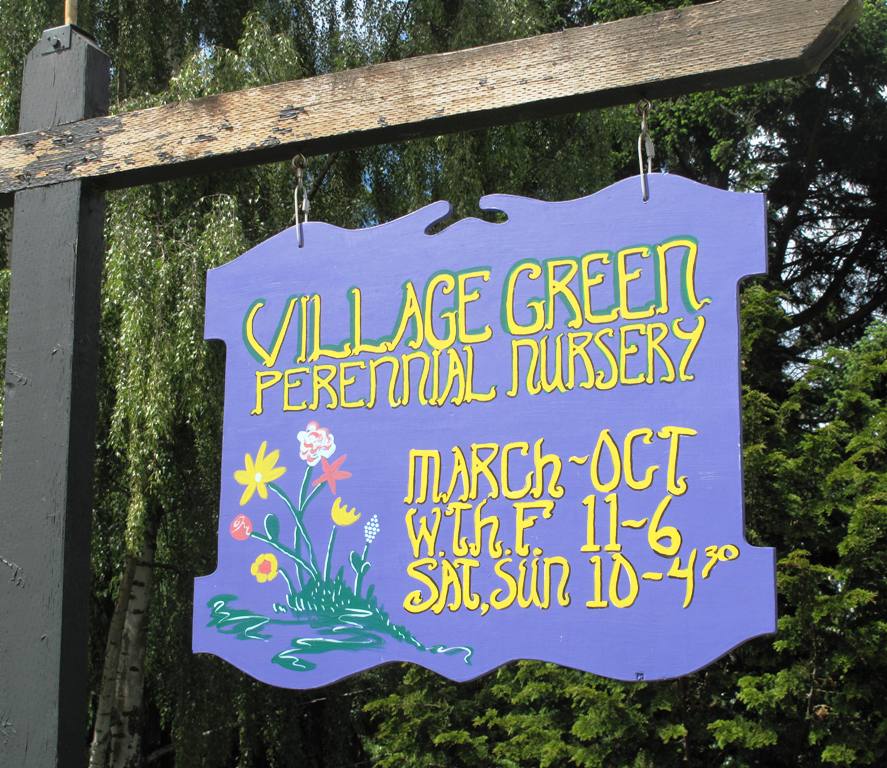
Just look for the hand-painted lavender sign when you're driving down 26th Avenue Southwest in Seattle. There's plenty of places to park on the street . . . and then you'll wander down the long drive to the nursery.

Just look for the hand-painted lavender sign when you’re driving down 26th Avenue Southwest in Seattle. There’s plenty of places to park on the street . . . and then you’ll wander down the long drive to the nursery.

Earlier this spring, I had the delightful experience of giving a floral-design workshop at Village Green Perennial Nursery in West Seattle’s White Center neighborhood. This place is like a secret garden, although there are many, many customers who have been in on the secret for years. This is a plant-centric business, one neighbor to the next. 

Village Green Perennial Nursery was founded by Teresa Romedo over 30 years ago. In 2003, she passed the torch to Vera Johnson, who has owned and operated the nursery ever since. 

Vera Johnson, plantswoman, horticulturist, designer, educator and artist, presides at the helm of this magical destination. Her mission is to inspire the neighborhoods of White Center and West Seattle by providing the very best resources available to create sustainable outdoor living spaces, one block at a time. As a little garden center with big ambitions, Village Green is known for high-quality customer service and healthy plants. It has evolved as a community center that showcases local artists, musicians, and events. 

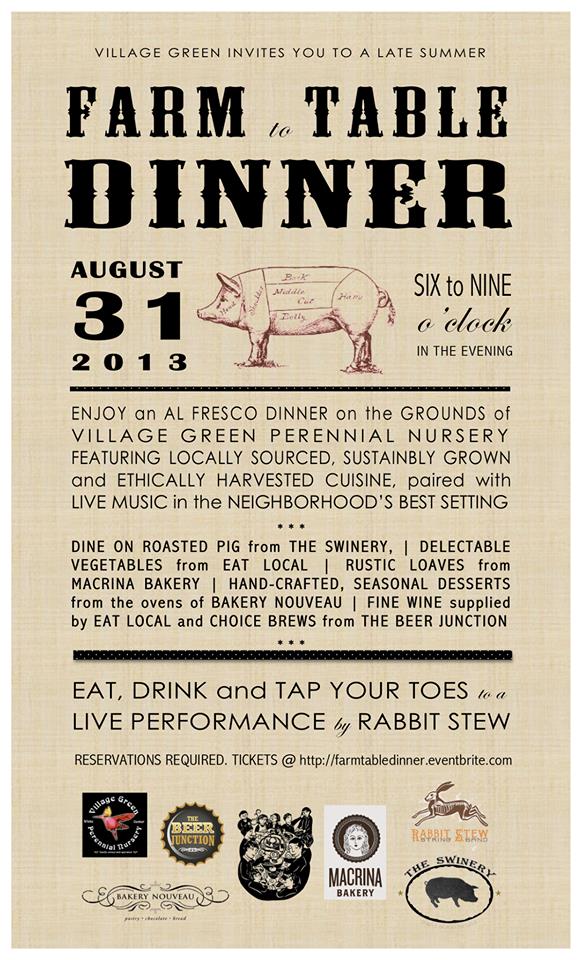
Vera has just announced her first farm-to-table event, scheduled for August 31st. This has the potential to be an unforgettable moment in time, an experience that celebrates food, wine, plants and flowers. Tickets are $100 per person. Order yours here.

FarmtoTableVillageGreen


Take a virtual tour of the beauty at Village Green Perennial Nursery – and save the date for a fabulous event! I hope to see you there!

READ MORE…

New summer articles by Debra

Saturday, July 13th, 2013

It was fun to visit the newsstand yesterday and pick up three new magazines with my articles.

When you see them in one place, it might feel like I’ve been super productive. But there is a back-story about each, and I have to be honest with you. Sometimes it takes YEARS for a story to see the light of day.

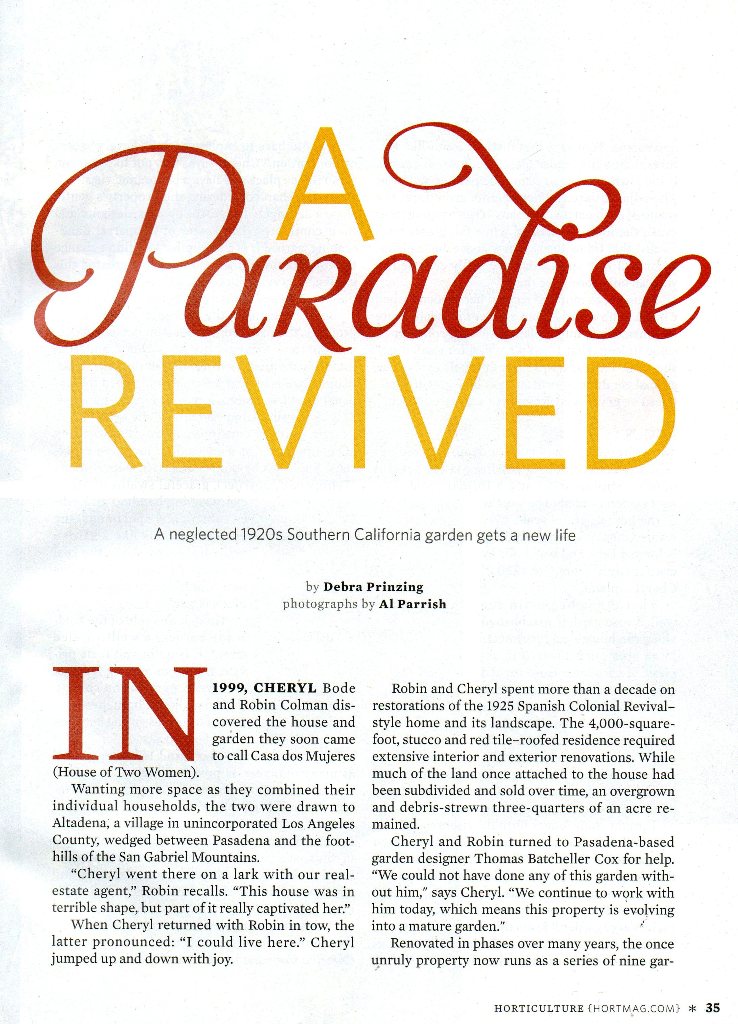
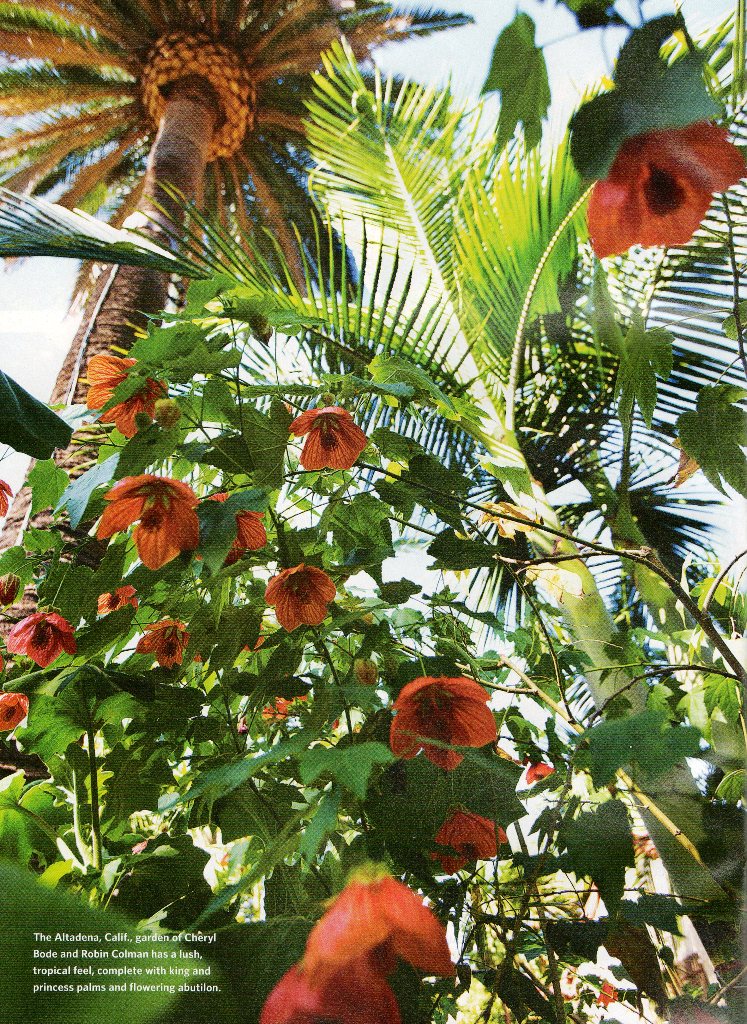
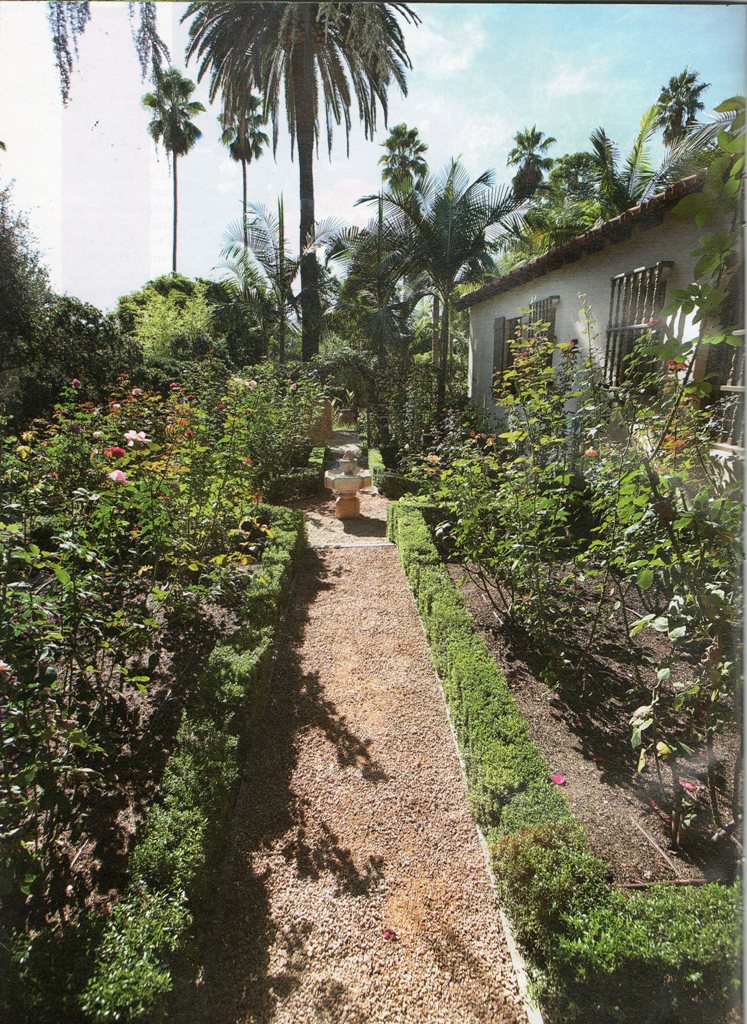
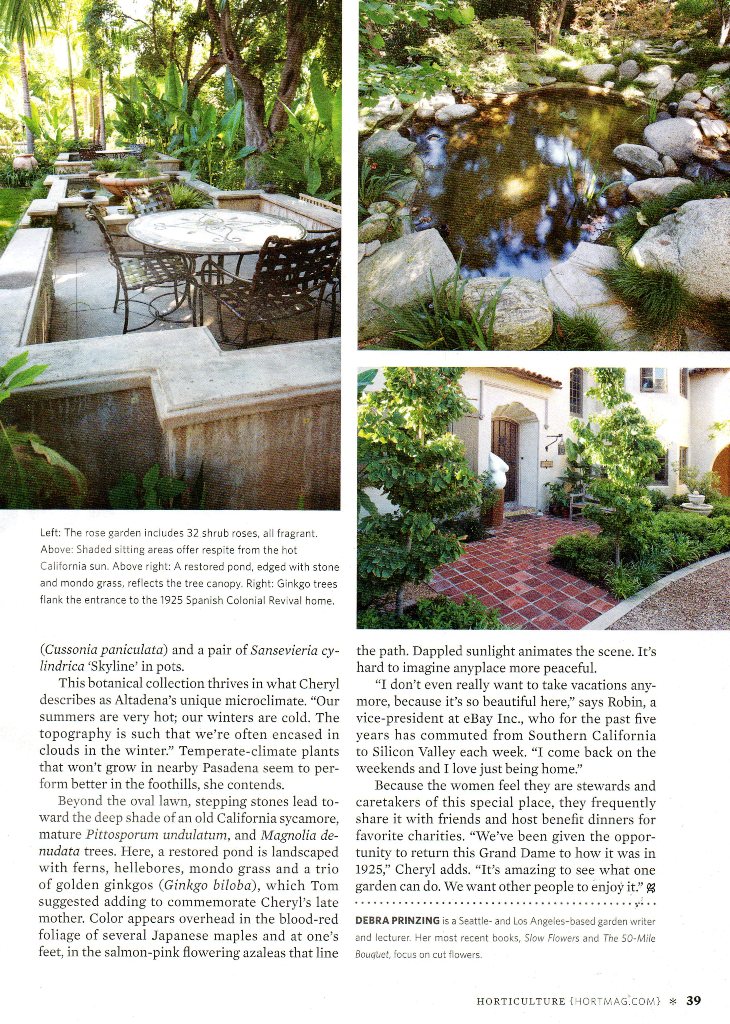
Case in point: The Southern California garden owned by Cheryl Bode and Robin Colman, featured in the July-August issue of Horticulture, was photographed in 2009. Since then, it has often seemed to Cheryl, Robin and me that the story would never appear in print. When I finally saw the issue, just out on newsstands, I understood why. The photos are incredibly disappointing. I have so many wonderful photos of their garden and the magical feeling one experiences when visiting there was simply not expressed in the Horticulture magazine. Click over to my articles page to read the story and see my photos rather than the ones printed below. Theirs is an inspiring story of two homeowners who yearned to bring an old house back to life, along with its garden. To physically walk through it is truly special.

Cheryl_Robinp6Cheryl_Robinp2Cheryl_Robinp1Cheryl_Robinp3Cheryl_Robinp4Cheryl_Robinp5


READ MORE…

Travels with Debra & James (and friends)

Thursday, July 4th, 2013

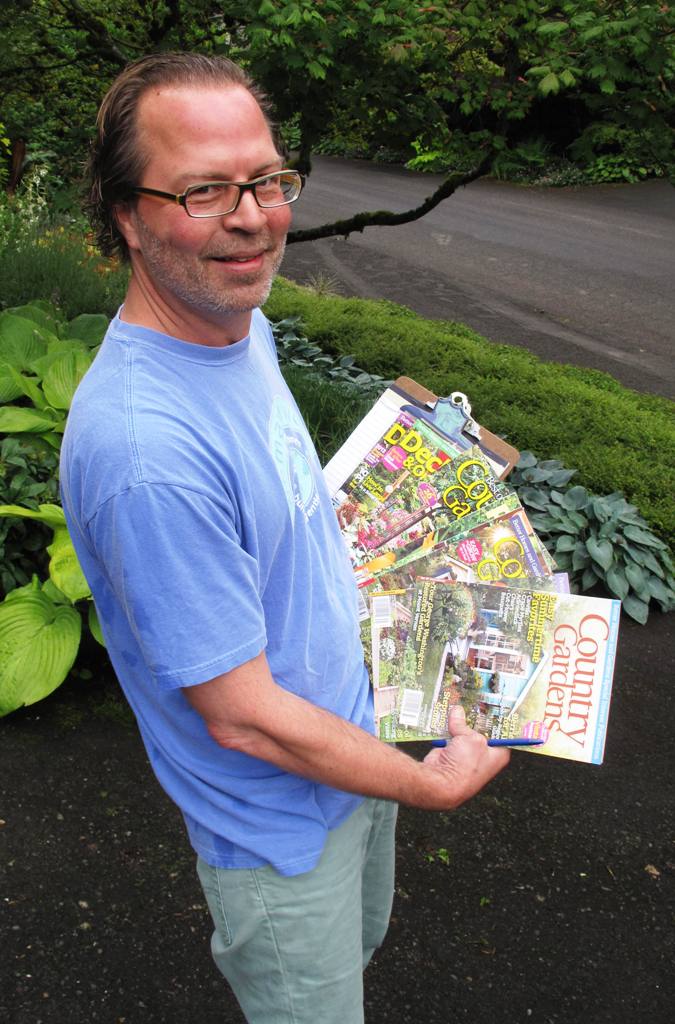
I was on the road last week, working in Oregon for six days (counting 1,000-miles of travel). My companions were James Baggett, editor-in-chief of COUNTRY GARDENS magazine and photography team Laurie Black and Mark King of Laurie Black Photography.

On the road with JAB

James Baggett, showing off the many titles he creates with coworker Nick Crow, his art director. It’s simply mind-boggling to grasp their huge productivity – and it’s an honor to be one of their writer-producers.

Wherever I can discover locally-grown flowers, that's where you'll find me!~

Wherever I can discover locally-grown flowers, that’s where you’ll find me!~

We spent the week photographing awesome landscapes, inspiring new plants and a fabulous farm-to-fork dinner (complete with locally grown, organic wine, food and flowers). A busy schedule, but filled with great experiences. It will be my privilege to write the stories to accompany Laurie’s photos for publication in 2014.

I’ll keep this short. I mostly have photos to share.

READ MORE…

SLOW FLOWERS: Week 20

Sunday, May 19th, 2013

A Softer Side of Green

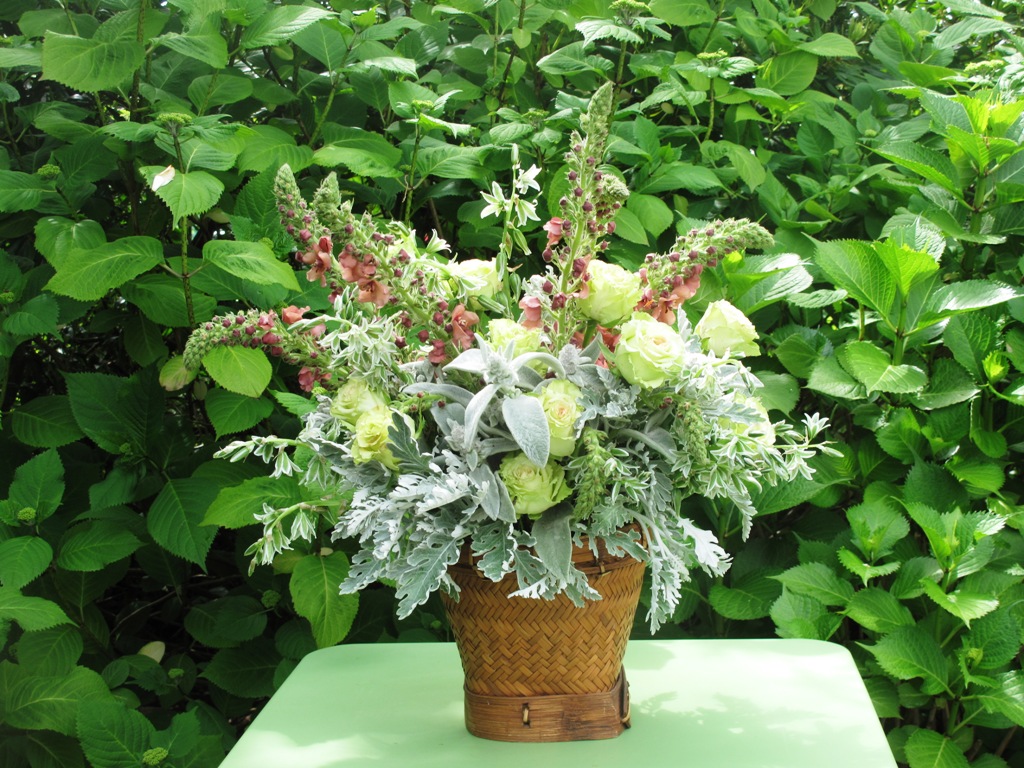
Pastel bouquet

An unexpected combination, inspired by the pale ‘Supergreen’ hybrid tea roses given to me by the grower


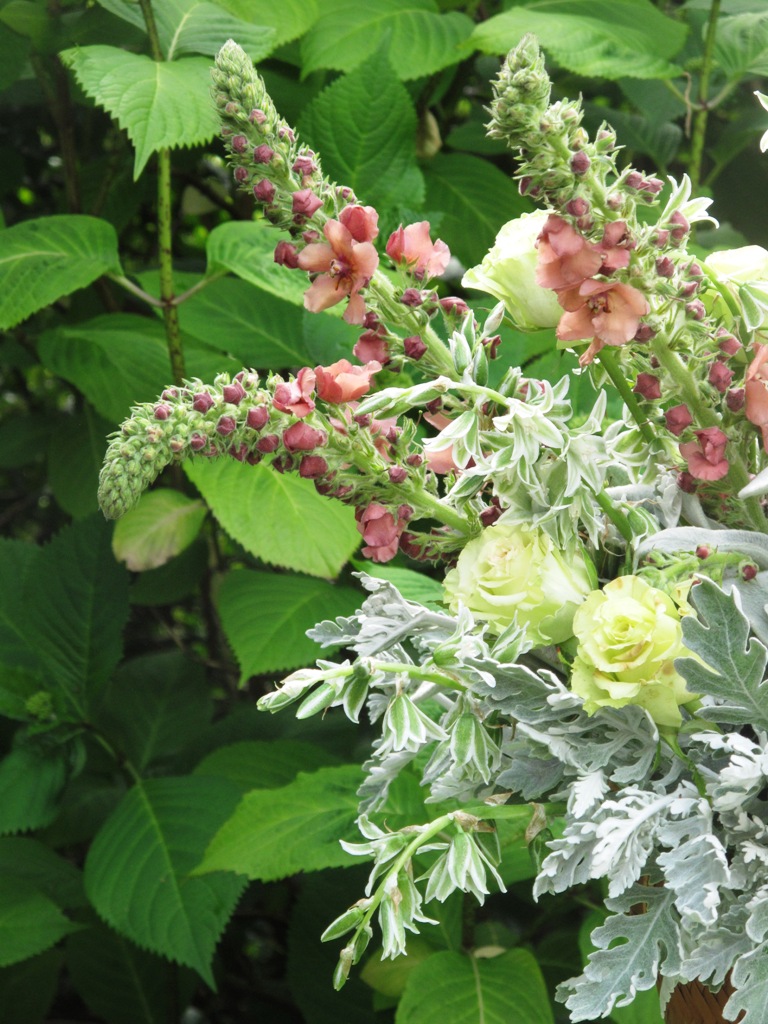
Pastel flowers in detail

This sweet detail shows the delicate features of the apricot verbascum and the varietgated Star of Bethlehem

Ingredients:

15 stems Dusty Miller foliage (Centaurea cineraria), grown by Charles Little & Co.
5 stems lamb’s ears (Stachys byzantina), grown by Charles Little & Co.
15 stems ‘Supergreen’ hybrid tea roses, grown by Peterkort Roses
9 stems Star of Bethlehem (Ornithogalum nutans), grown by Choice Bulb Farms
6 stems Verbascum ‘Caribbean Crush’, grown by Jello Mold Farm
Vase:
7½-inch tall x 7-inch diameter woven basket with a 6-inch tall x 6½ inch wide glass insert
Eco-technique
Vase in an instant: Any container can double as a flower vase as long as you can hide a watertight vessel inside of it. This simple, budget-conscious technique instantly expands your design choices. I frequently pick up glass vases for 50-cents to a few dollars at the thrift store, which means I always have extras on hand to tuck inside boxes, baskets, tins – and even leaky watering cans .


SLOW FLOWERS: Week 13

Sunday, March 31st, 2013

Beauty from Branches

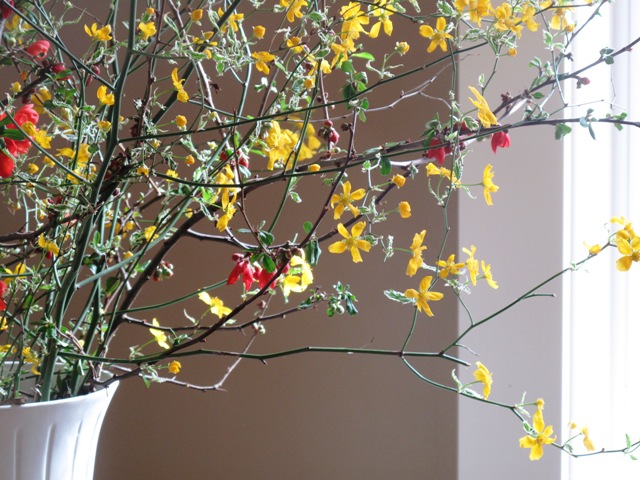
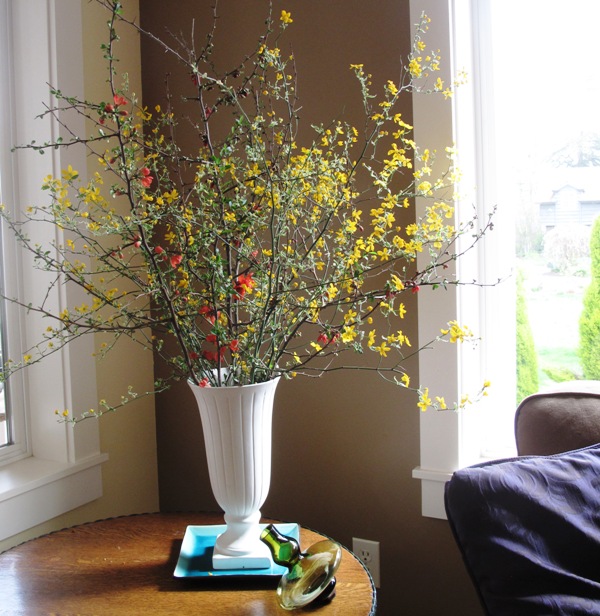
Beauty from Branches

A wistful combination of two spring-flowering branches, captured in the morning light. Aaah!

Ingredients:

Kerria japonica ‘Variegata’, which has white-edge leaves

Flowering quince (Chaenomeles x superba), available in coral, red, pink or white

Vase:

17-inch tall x 7-inch diameter cream urn. This is my go-to vase for last-minute arrangements and it is tall enough to handle the branches, which are nearly three feet long.

A vase filled with spring branches

If you add cut branches to the vase when the flowers haven’t yet opened, the warmth of your home will coax them into flowering indoors. . . for up to two weeks.

From the Farmer

Jump-start spring: Many flowering shrubs and trees are suitable for indoor forcing. In addition to Kerria and quince, you can cut the bare branches of forsythia, witch hazel and numerous fruit trees. Harvest branches when their buds begin to swell, taking care to use proper pruning techniques. Re-cut the stems on a 45-degree angle and place them in a vase of clean water. Over time, the buds will respond to your home’s warmer temperature and begin to flower. Be sure to change the water as you would with any floral arrangement.

NOTE: Each Sunday of this year, I will post my photographs, “recipe” and tip for that week’s floral arrangement, created for my new book, Slow Flowers.

Enjoy the floral journey through 52 weeks of the year~