Debra Prinzing

Get the Email Newsletter!

Archive for the ‘Landscape Design’ Category

Thank you, Constance Spry

Wednesday, February 13th, 2013
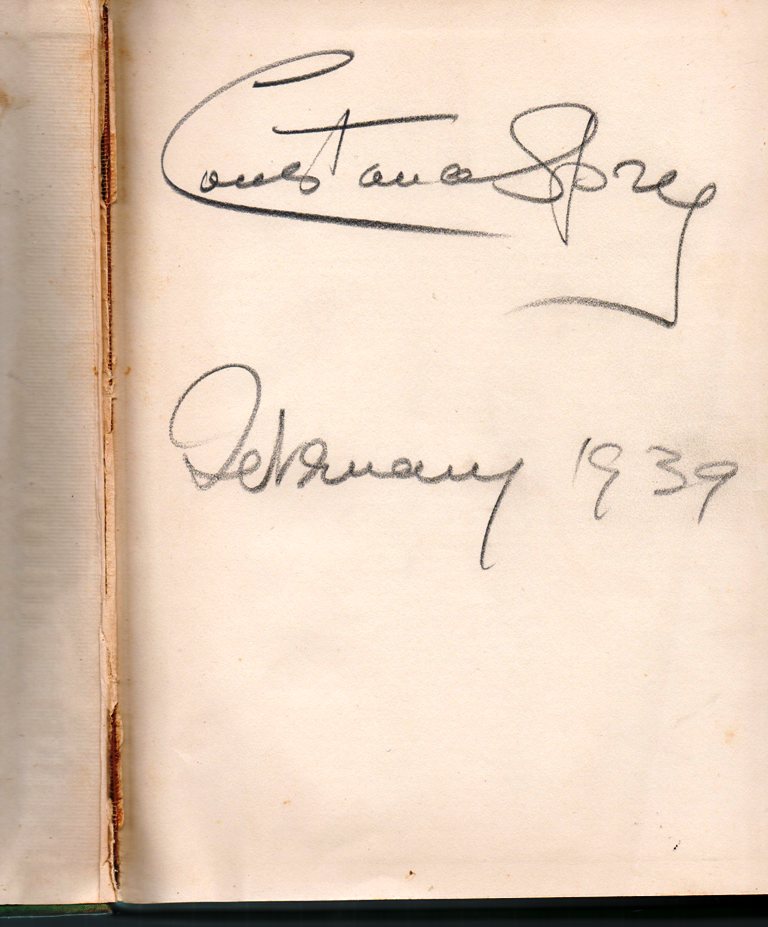
Yes, I have her signature in my used copy of "Flowers in House and Garden," published in 1937.  Signed in pencil, the inscription is dated February 1939.

Yes, I have her signature in my used copy of “Flowers in House and Garden,” published in 1937. Signed in pencil, the inscription is dated February 1939.


Lately, I’ve been reading a lot about the first celebrity floral designer, Constance Spry.

The famous Mrs. Constance Spry

The famous Mrs. Constance Spry

If you haven’t heard about her, check out the newish biography called The Surprising Life of Constance Spry, by Sue Shephard (2011). Mrs. Spry was at her peak of popularity between the two World Wars, and I loved reading about her magnificent cutting garden that supplied her London studio and shop called Flower Decoration in the ’30s, ’40s and ’50s.

Speaking of Flower Decoration, that is the name of a volume that Mrs. Spry wrote in 1933. Re-issued in 1993, you can find it online used, filled with her strong opinions, witticisms, and black-and-white photographs of floral arrangements. These are a little dated, of course, but what stands out to me is the eclectic lineup of ingredients, which includes many flowers, foliage and edibles that today’s hip floral designers think they’ve popularized.

Guess what? Mrs. Spry did it first!

The rest of us have just discovered the ingredients with which she created lush, naturalistic, unfussy bouquets. Cherry tomatoes, grape clusters, gourds, fig leaves, sea-kale, agapanthus seed heads, amaranth, rhubarb and artichokes are wonderful floral elements showing up in couture bouquets and magazine spreads. But Constance Spry used them first – and that’s quite fun to RE-discover.

READ MORE…

A wintry postcard from the Pacific Northwest

Friday, December 21st, 2012

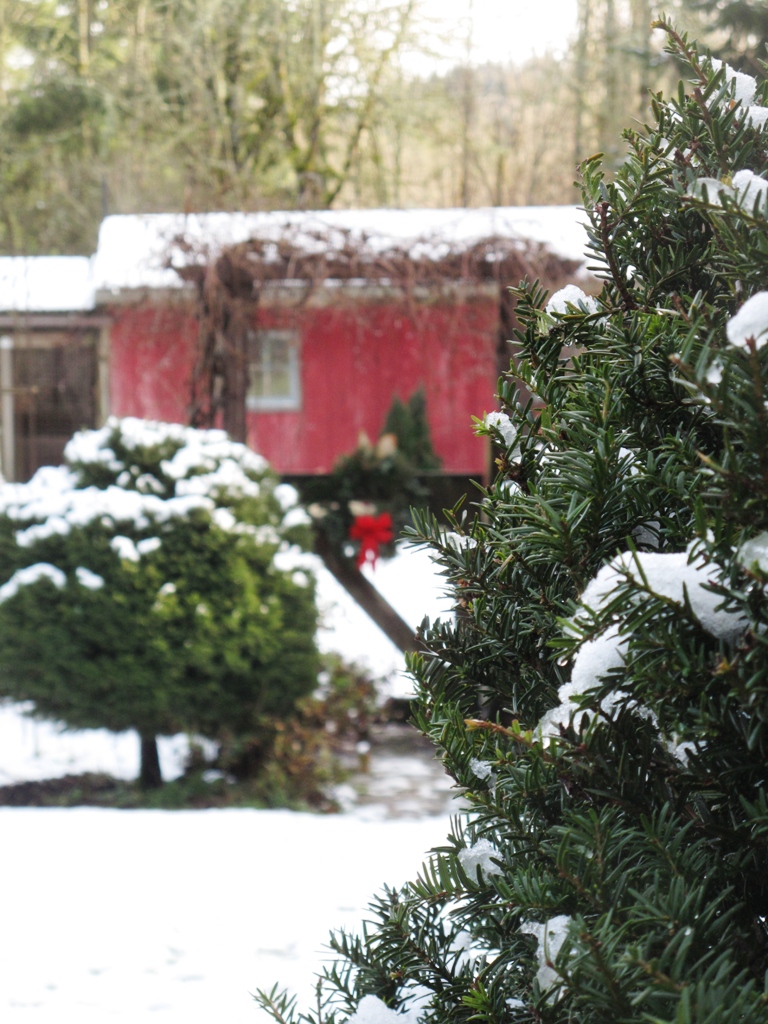
An evergreen yew and topiary forms are frosted with just a little snow on a December afternoon at Old Goat Farm.

Snow came early to the outerlying parts of Seattle this week, dusting the evergreen topiary forms at Old Goat Farm in Orting, Washington. Owners Greg Graves and Gary Waller hosted a holiday tea to benefit Pacific Horticulture Society, and Lorene Edwards Forkner and I drove down to the farm for the festivities. Lorene, of course, is the editor of Pacific Horticulture magazine, a wonderful quarterly journal for gardeners on the West coast (or anyone who loves reading about the hort world in Washington, Oregon and California).

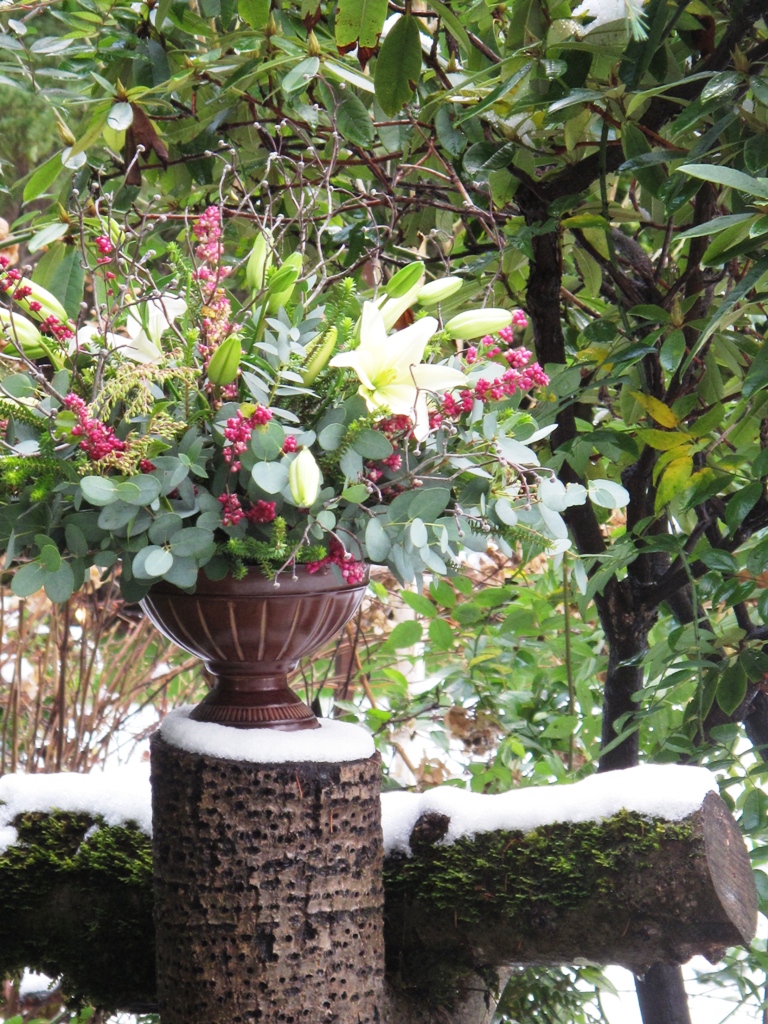
Lorene asked me to donate a seasonal floral arrangement and a copy of The 50 Mile Bouquet to the event’s silent auction. How fun to step out of our car and look across Greg and Gary’s wonderful garden at the sparkling white-and-green scene. There was an old log stump and it seemed like the perfect “pedestal” for placing my bouquet for a last-minute portrait before the party.

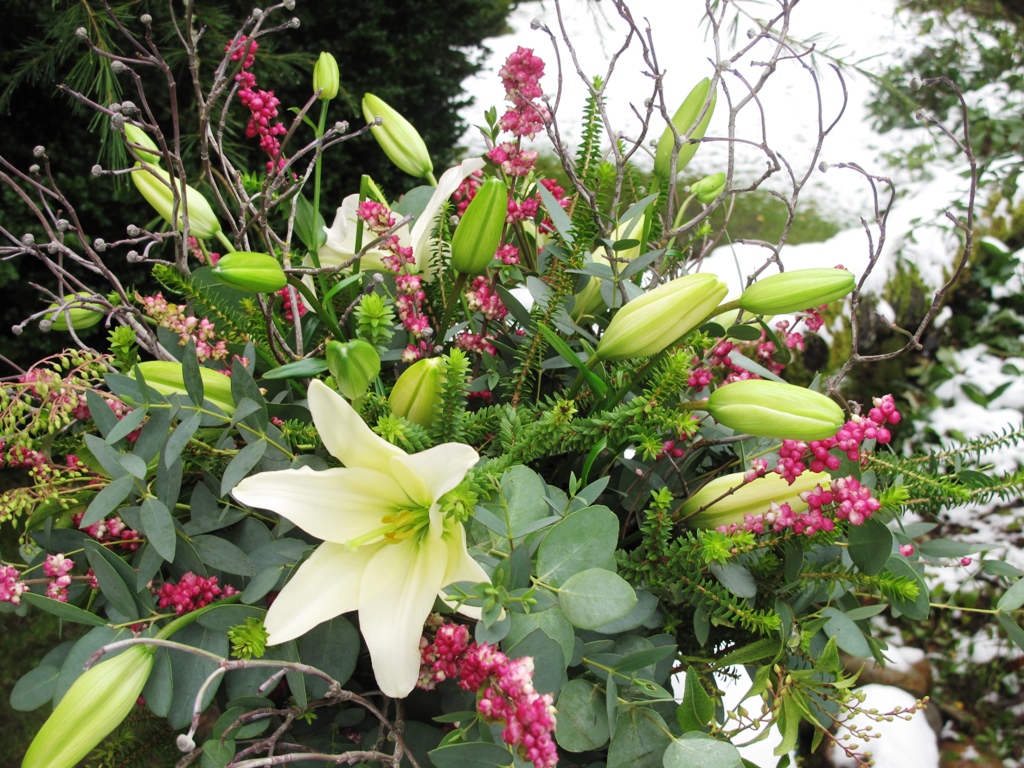
The locally-grown lilies, snowberry, eucalyptus and dogwood branches create a special holiday arrangement. There are a few stems of melaleuca tucked in. I brought them home from San Diego last week!

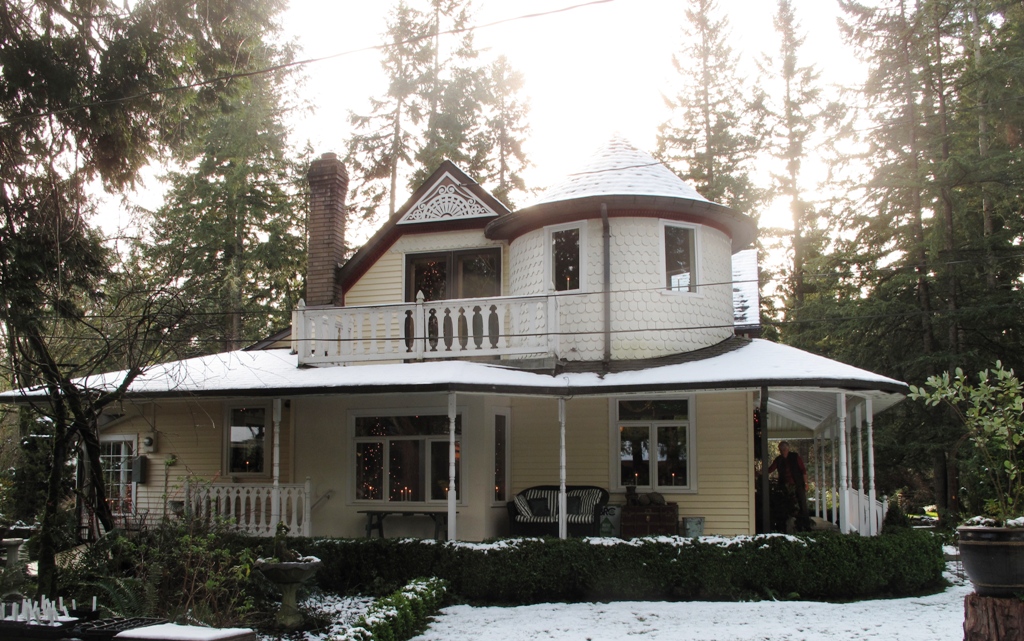
Everything else here sparkled, too. Enjoy the glimpses captured by my lens. And if you want to read more, follow this link to a post from an Old Goat Farm holiday tea from 2010. Visiting at Christmas, seeing the century-old Victorian farmhouse, hearing the clucking chickens and (of course) eating delicious food . . . what a chance to while away an afternoon.

Gary, a talented floral designer and retail display wizard, decorated the barn door with a lovely wreath.

Yes, these are old goat sugar cookies. Very tasty! And eye-catching, too!

This is a picture-perfect farmhouse. Absolutely love it! Especially that wraparound porch!

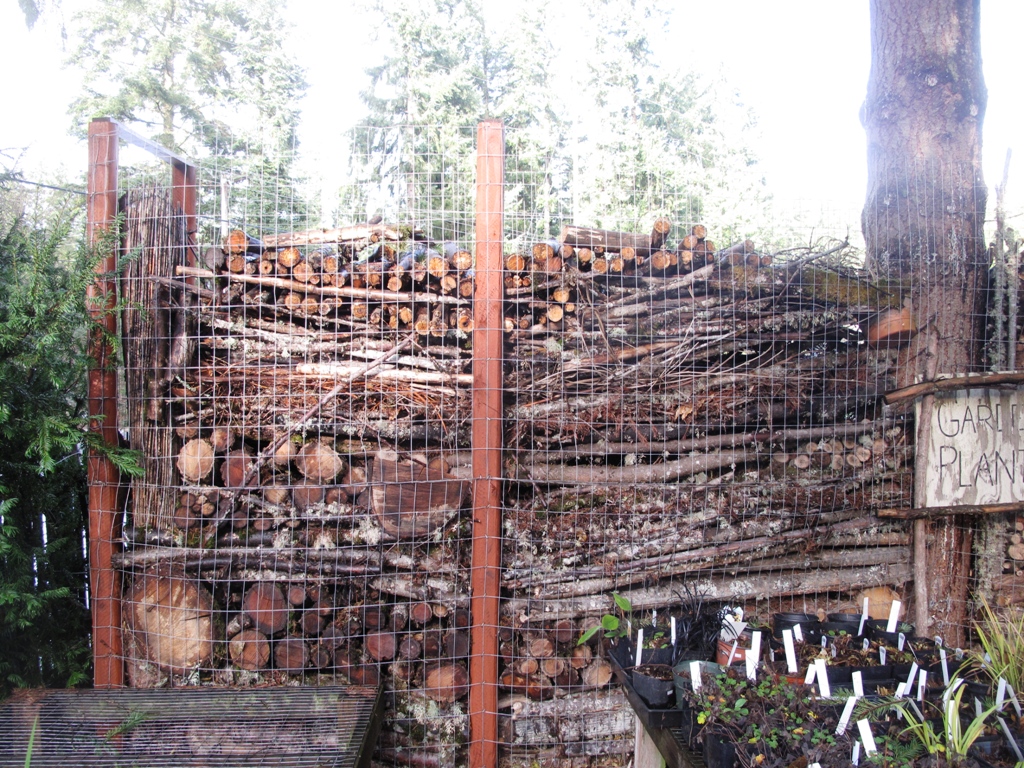
Gary and Greg's famous compost fence. It even made the cover of Pacific Horticulture magazine's fall 2012 issue~

Decorative chicken (or are they roosters?) cookies!

A beautiful detail of my bouquet.

Here’s to a wonderful holiday season! And a New Year to come~

Perfect Party

Wednesday, March 28th, 2012

My friend Bill called me yesterday to tell me that Seattle Met magazine included me in their “Perfect Party” feature for April.

“WHAT????” I asked. Clearly, this happened without my knowledge – but it’s quite exciting. And amusing! I’ve never before been illustrated! I wonder who put them up to this?

Here’s the story:

Meet the NEW Sunset Western Garden Book

Wednesday, March 7th, 2012

SUNSET GIVEAWAY

I’ve drawn names of all those who answered my question below and here are the five “winners” of a FREE copy of The New Sunset Western Garden Book, courtesy of Sunset. The question: What is your favorite ornamental landscaping plant (shrub, grass, perennial, etc.) to harvest for a cut bouquet? yielded these winners/answers:

Jen Y: peonies

Paula: bunnytails grass blossoms or pilotus joey

Carol: Peonies, nandina branches and berry clusters

Nicole: hellebores

Kim: dahlias

CONGRATULATIONS! You will soon be hearing from Dana Smith of Sunset Publishing, who needs your mailing address.

I recently had a chance to interview Kathleen Brenzel, garden editor for Sunset magazine – and editor of Sunset’s new, 2012 edition of The New Sunset Western Garden Book,  (Sunset Books, $34.95 for flexible binding, $44.95 for hardcover), a “bible” for western gardeners.

Whether you’re new to gardening or have logged many planting seasons with your hands in soil, it’s the single best go-to reference for garden-makers in our region. As chunky as the Yellow Pages, this essential guide to the West’s ornamental and edible landscape has been around for 80 years. I’ve owned every version since the early 1990s, including the most recent 2007 edition, which is dog-eared from much use.

When I got my hands on the just-released ninth edition last month, I thought: How different can this really be? I asked Kathy to walk us through the book’s 768 pages:

How did you go about updating this edition? Before we did anything else, we assembled a panel with landscape architects, horticulture educators from UC Berkeley and Cal Poly San Luis Obispo, nursery people and new graduates who had used our last edition as a textbook. The recent grads told us that in order to make “The New Sunset Western Garden Book” relevant, it had to have a digital component. They said: “We go everywhere with our smartphones, so we want to be able to take a photo of a plant we see on the hiking trail and look it up instantly.”

How did you go digital? Now you can take the best of Sunset with you to the garden center, nursery and your yard. You can get the free mobile edition of this book’s Plant Finder on your smartphone. (Search for Sunset Plant Finder.) With it, you can access more than 2,000 plants — and search by plant name, ZIP Code, climate zone, sun and water requirements, and type. There’s a companion online Plant Finder that lets you browse by color, height, spread and special needs.

How else is the book interactive? The last section of “The New Sunset Western Garden Book” is a practical guide. We’ve added a camera icon on the bottom of the pages, pointing you to corresponding videos on our website. It’s nice to read directions on planting a tomato in a pot and then watch a video of one of our editors showing you exactly how to do that.

What are the other major updates? This is the first edition to feature plant photos exclusively, rather than illustrations. There are more than 2,000 plant photos. We also updated the entire plant encyclopedia. That was the biggest job in the whole book. Every plant was reappraised, and we added many new varieties now available in nurseries. We went to growers all over the west and compared our existing plant database with what they are now offering; we asked what they thought we should include and why.

How many new plants did you add? The new book has 9,000 plants, up from 8,000 in the last edition. We also had to check the botany of every plant because botanists are constantly reclassifying plants.

What can new gardeners gain from the book? The section “Gardening Start to Finish” is more instinctive for the beginner. We walk them through the whole growing process from A to Z. We also have practical sections on gardening for wildlife and native plants, growing herbs and water-wise plants.

What can more experienced gardeners gain from the new book? The plant encyclopedia is filled with tip boxes of additional information – like how to propagate a sweet potato vine or when to cut ornamental grasses for the vase.

You have more edibles, don’t you? We asked ourselves: “What do people want most from ‘The New Sunset Western Garden Book’ right now? You’d have to be totally checked out not to notice a huge wave of edible gardening, so we wanted to amp up our coverage. I’m really happy with the “what edibles to plant when” charts for warm-season and cool-season veggies.

What’s your favorite take-away from the book? There’s an underlying theme that acknowledges how we garden now – with an interest in natural gardening and sustainability. Our gardens are smaller, but they’re stylish and sustainable.

Note: A version of this Q&A appeared in the LA Times HOME blog on February 17th.


Mostly native plant list for a modern California garden

Tuesday, November 1st, 2011

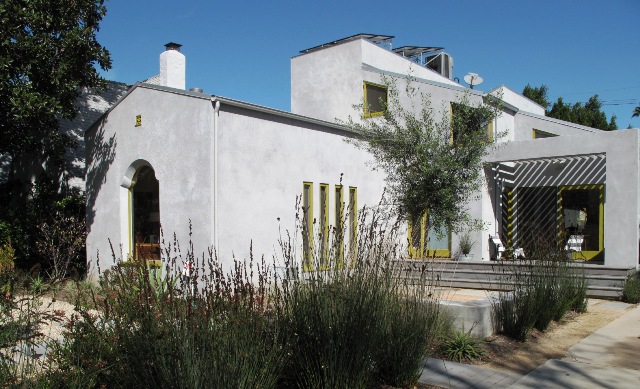
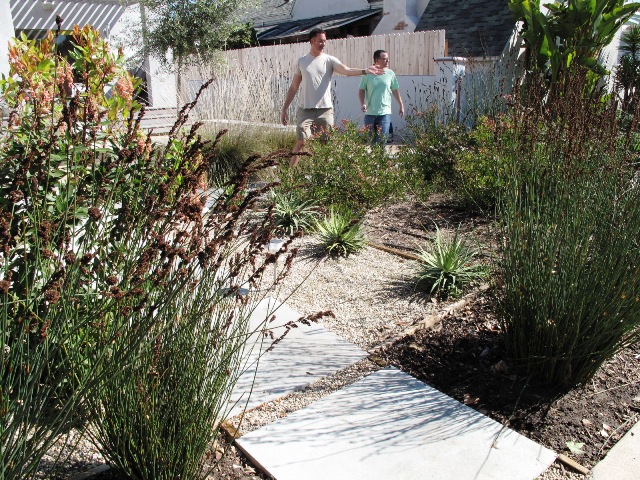
A stand of cape rush adds a semitransparent layer of privacy between sidewalk and front garden.

Joel Lichtenwalter and Ryan Gates of Grow Outdoor Design, based in Los Angeles, have introduced me to some really creative gardens they have designed. And what strikes me when seeing these mostly small, urban landscapes, is how well plants are used as architectural elements within the spaces they reside.

Designers Joel and his client Scott can be seen in the distance, conferring on some of the planting designs.

You won’t see fluffy cottage gardens with English-inspired perennial choices in Ryan and Joel’s gardens. Yet even when they design for bungalow-scaled residences, some of the same intimate, cottage garden experience occurs for the humans who occupy them. That emotional sense of being surrounded by plants, layers of textures — and even color in a tonal, modern sense –happens in their gardens.

I wrote about one such place recently and you can follow the links to the Los Angeles Times story here, including an extensive web gallery.

For those who ask: What plants are appropriate for a lush, low-water landscape? I think you’ll appreciate Ryan and Joel’s plant list for their clients’ lawn-free front yard now filled with native and Mediterranean grasses, shrubs, ground covers and trees, many of which display multi-season beauty:

A shopping list of California native plants and their Mediterranean companions
Natives:
Ceanothus griseus horizontalis
Yankee Point
Cercis occidentalis
Arctostaphylos ‘Howard McMinn’

Arctostaphylos ‘Emerald Carpet’
Leymus condensatus ‘Canyon Prince’

Muhlenbergia rigens
Platanus racemosa
Carpenteria californica
Eschscholzia californica
Juncus patens

Sisyrinchium montanum (Blue Eyed Grass)

Non-Natives:
Arbutus ‘Marina’
Agave bracteosa
Leucadendron ‘Safari Sunset’

Agave vilmroniana
Olea europaea
Chondropetalum tectorum

Materials:
Composite decking (raised deck and boardwalk)
Square pre-cast concrete pavers
Poured-in-place concrete bench
‘Del Rio’ gravel
Decomposed granite (DG)
Shredded tree mulch

Charm in the country: my early fall trip to Skagit Valley and Bellingham

Tuesday, October 4th, 2011

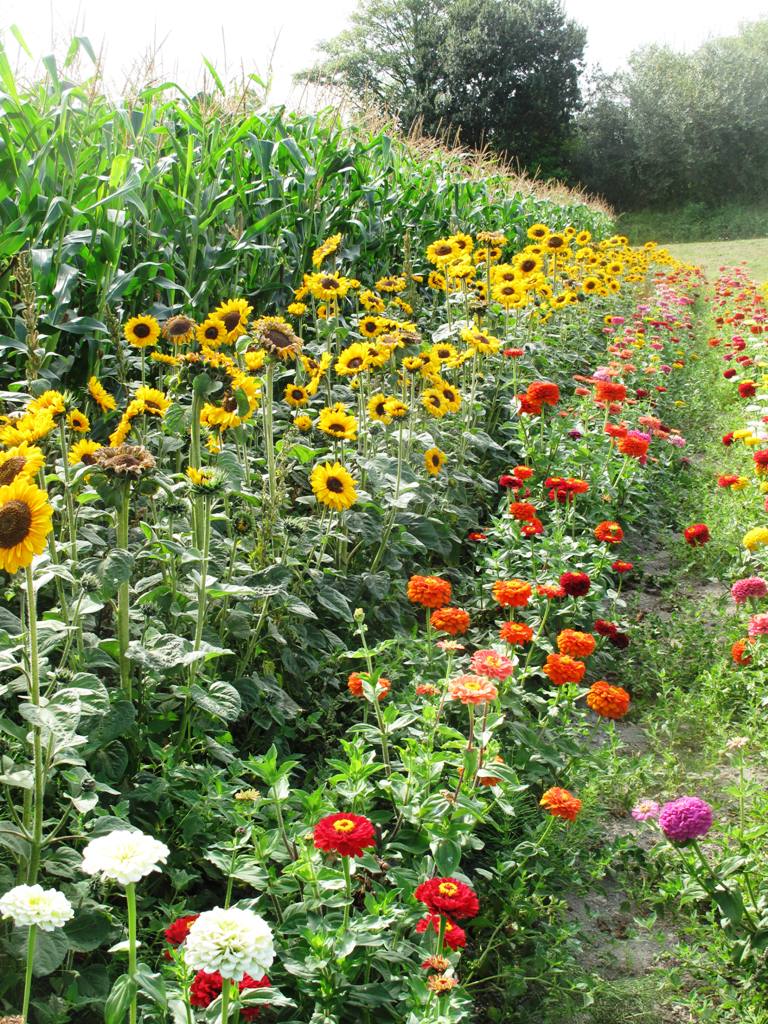
Isn't this border pretty? Corn, sunflowers, zinnias - all in a row!

 A few weeks ago, at the invitation of the Whatcom Horticultural Society, I spent a relaxing 24 hours surrounded by gardens, flowers and nature – as well the company of like-minded plant-lovers. 

“Why don’t you come up to my house on Wednesday morning and we’ll go see some gardens before you give your lecture?” my friend Dawn Chaplin suggested. With established Bellingham landscape designer Susann Schwiesow, Dawn organizes the monthly lectures for WHS. This is the third time over the years that the society has invited me to speak. It’s always enjoyable, especially since the drive to Whatcom County and the enticing gardens and kindred spirits make my trip north so pleasurable. 

After meeting up with Dawn, who lives on a beautiful bluff outside Stanwood with her husband David, we hopped in the car and traveled to Fir Island, a small, bucolic place that’s reached by a bridge, so you barely realize you’re crossing over Skagit River to a real island. We toured the timeless garden created by Lavone Newell-Reim and her husband Dick. I’m hoping to publish as a magazine story in the future, but I can’t help but treat you to a few of the luscious images from this very special, lived-in and loved-in landscape: 

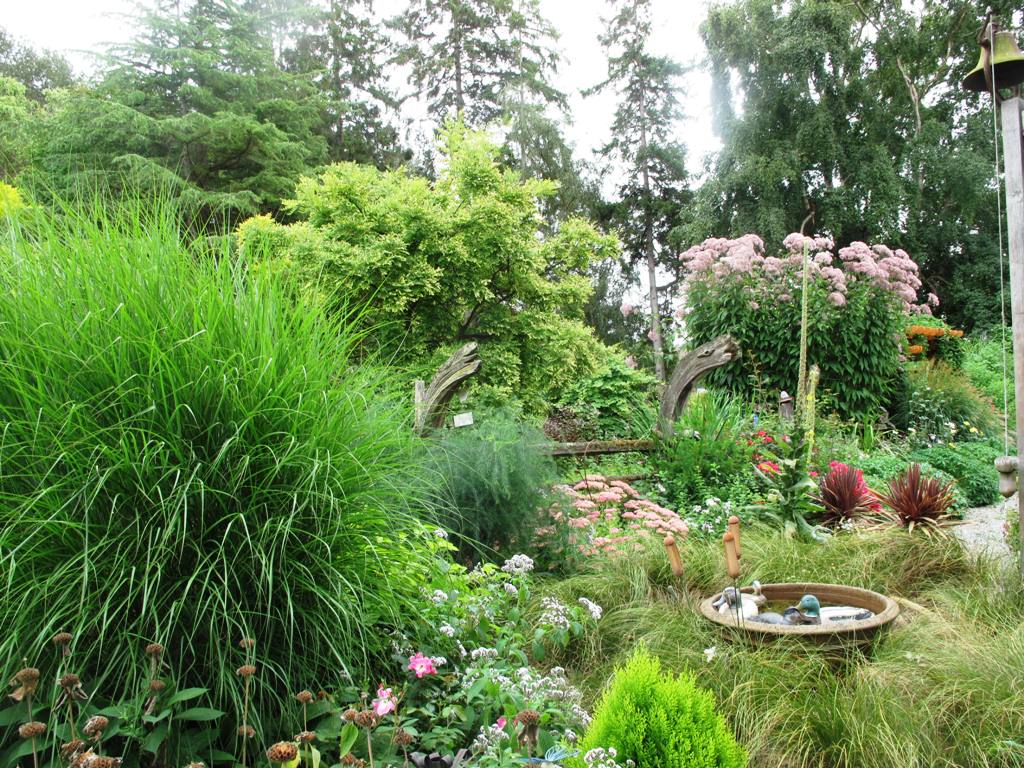
To me, this is a perfect vignette, camera-ready for a magazine. Lavone and Dick have a natural gift for placing plants in community with ornamentation and salvaged materials.

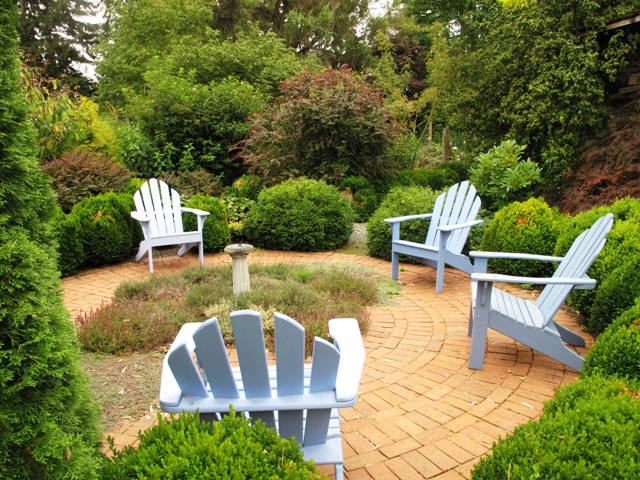
A circular patio with a thyme garden at its center. Inviting!

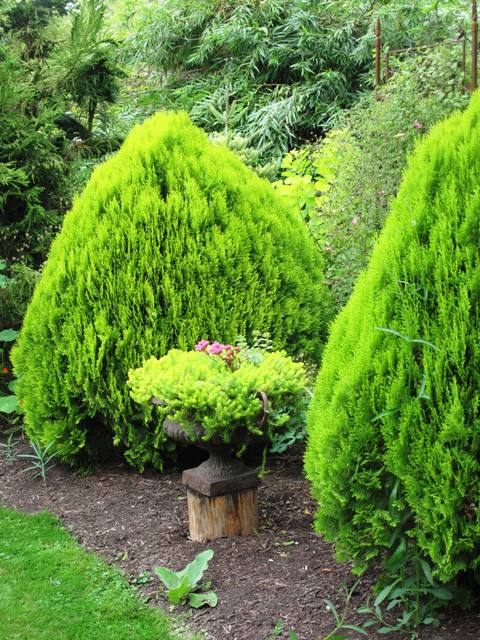
Chartreuse at its finest - in twin conifers and a potted succulent.


READ MORE…

On location with Jamie Durie for Better Homes & Gardens

Friday, September 2nd, 2011

On location in Los Angeles with Jamie Durie - photographed by Edmund Barr

On his popular HGTV show The Outdoor Room with Jamie Durie, stylemaker Jamie Durie uses interior and architectural design tricks to amp up dreary backyards.

By the end of a whirlwind 30-minute episode, you’re energized and inspired. Of course, nimble edits have compressed a couple of days of dirt, sweat and (possibly) tears into a dreamy landscape for the small screen. But still, there’s always a takeaway, a “lesson” that catches the viewer’s imagination. “I could try that,” you say to yourself. “Oh, what a simple way to disguise that ugly wall,” or “That’s brilliant!”

Some of the projects conjured by Jamie and his design team are complicated and require professional assistance to execute. But many others fall into the DIY mode: affordable and requiring only a discerning eye to add polish, such as using color, texture or materials to unify otherwise disparate objects.

That’s one reason why I really wanted to see Jamie’s garden firsthand. When I visited his Los Angeles outdoor design laboratory (aka his humble backyard) last spring I loved what I saw.

My assignment was to interview Jamie and help produce the Better Homes & Gardens “Stylemaker” story that appears in the September issue – out on newsstands right now.

Art director Scott Johnson and I both flew into Los Angeles to work on the story. We were very fortunate to team up with LA photographer Edmund Barr and LA videographer Adam Grossman for the shoot. You can see my article and Edmund’s photos in the September issue; you can watch a fabulous how-to video with Jamie shot by Adam on BH&G’s digital edition. And a special thanks to Edmund for snapping this cozy portrait of Jamie and me, lounging in his outdoor living room. Fun, huh?

Many of Jamie’s best design concepts are ones he previously tried out for clients of Durie Design, his studio in Sydney, Australia, and Los Angeles. Some have been executed on previous episodes of The Outdoor Room, or in the pages of his new book by the same name.

We zeroed in on the ideas that move plants away from the obvious “ground plane” and onto other surfaces, such as living walls, green roofs and in the unexpected niches of garden structures. Jamie’s passion for plants is contagious – and you can see it spill over onto BH&G’s pages. Here’s an excerpt:

Outer Sanctum: HGTV star Jamie Durie uses unexpected designs to turn the barest backyards into green oases. 

“Once you create an outdoor room, you’ll fall in love with your backyard again,” says Jamie Durie, the star of HGTV’s The Outdoor Room.

A popular designer and TV personality in his native Australia as well as North America, Jamie encourages everyone who has a small patch of earth — or even just a patio or deck– to re-imagine their exterior environment as a functional, eco-friendly living space.

Jamie combines a passion for plants, sustainability, and the outdoors into a zeal for landscaping. He grounds his designs in green practices, using local materials, plants that tolerate the region’s climate, and clever techniques to put plants in almost every imaginable nook and cranny. Hanging planters cover his fences and walls, and pergolas support green roofs. Surrounding yourself with nature this way “can improve your health and inspire positive thinking,” says Jamie, who meditates every morning on the patio outside his bedroom.

Check out Jamie's new book for more tips and ideas.

Recently settled in Los Angeles, Jamie used the same advice he offers clients: Increase living space by creating more rooms outdoors rather than indoors. Instead of enlarging his modest 1950s house, he coaxed his once-ordinary backyard to live larger, with outdoor spaces variously designed for cooking, dining, lounging, and chatting. “Your spaces should accommodate your life,” he says. “Not the other way around.”

 “I have a new outlook when I open the doors,” Jamie says. “This house feels bigger than it is, since the lush garden is part of my home.”

The popular HGTV host and landscape designer shares his ideas, techniques and recent projects in Jamie Durie’s The Outdoor Room (Harper Collins, $25.99), a guidebook to creating beautiful exterior spaces.

Enriched and Exhausted

Wednesday, August 10th, 2011

One of Treephoria's lovely flowering dogwoods, aka 'Heart Throb'.

Dear friends and readers, I’m sure you’ve just about given up on ever seeing an fresh, new blog post, since I nearly allowed the month of July to come and go without writing anything.

July was definitely enriching – my over-filled calendar says so! And yet, I am also exhausted (see my prior post, referencing moving to a new home, garden, and pond). Possessing countless experiences in need of personal review and reflection, I had planned to share the more colorful events here in a single post – a diary of sorts from the past month. Yet, since my just-crashed computer is in hospital, complete with most of my stored photos (my external hard-drive has to be replaced, too!), I don’t have much to show you.

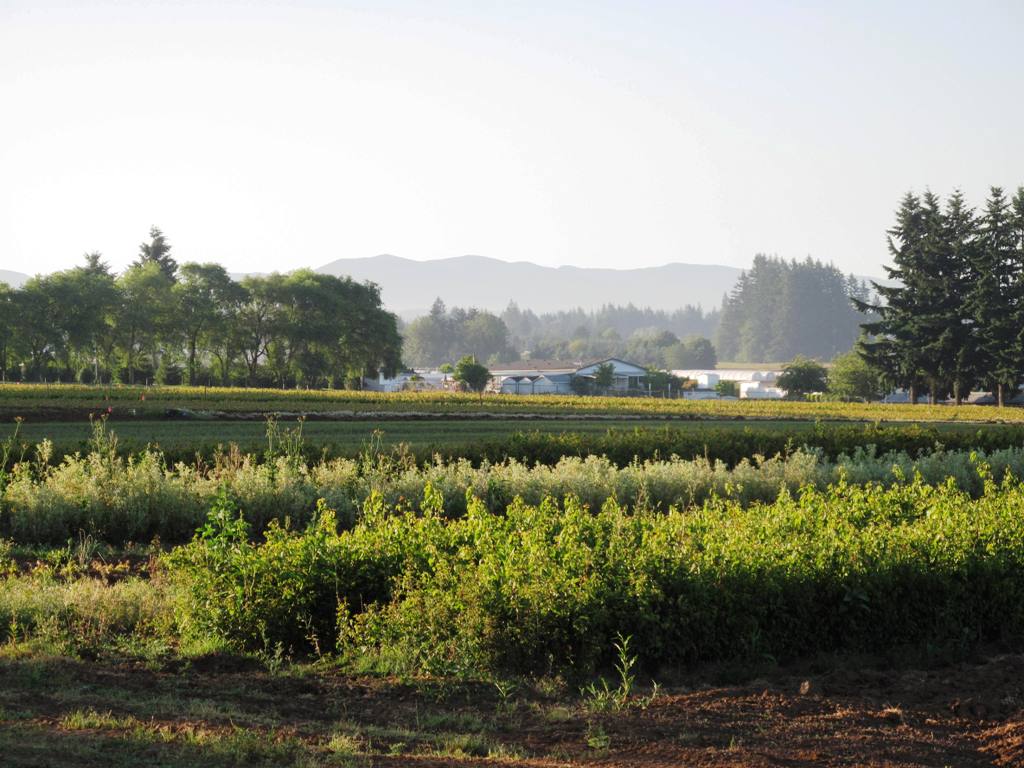
The beautiful landscape of tree farms, across the field from Nancy Buley's Treephoria.

So the July recap will occur in stages. Phase One covers July 5th-6th when I visited a few rural towns outside of Portland, Oregon.

I rode the train from Seattle to Portland on July 4th of all things, and my 4-hour journey was lovely, relaxing, and quiet. What a nice way to skip out on the potential holiday craziness on the freeway. Upon arrival, I rented a car and drove to the hamlet of Boring, Oregon.

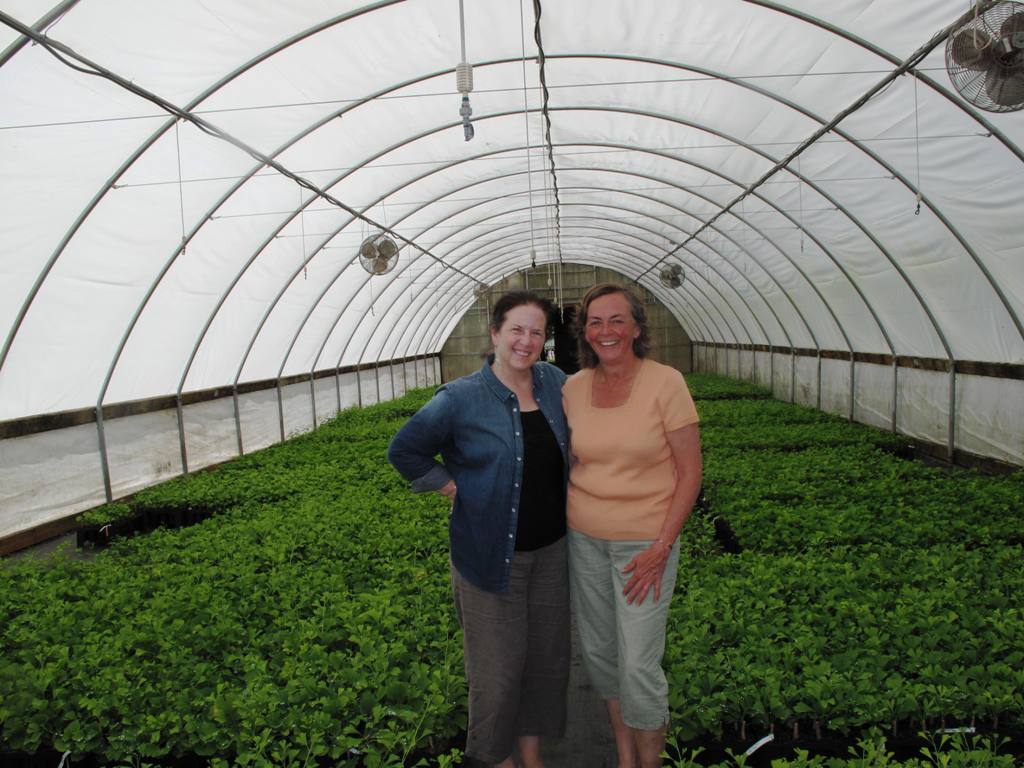
Here I am with Nancy Buley (right), on a tour of J. Frank Schmidt & Son's expansive tree farm in Boring, Oregon.

My friend Nancy Buley lives there and she let me stay under the eaves of her farmhouse, in a room she calls the “garret,” the window of which overlooks Treephoria, her boutique tree farm.

Nancy is a tree ambassador who works closely with landscape architects and designers to educate and excite them about awesome ornamental varieties grown by J. Frank Schmidt & Son.

As director of communications, she frequently writes and speaks about new tree introductions, landscape design and tree selection/care. I first met Nancy years ago through Garden Writers Association, but our friendship was actually forged during a fun evening in Oklahoma City in 2007, when Sally Ferguson included us both in her small dinner party. That’s often how things go: We may only see one another a few times a year, but the kinship is cemented and immediately recalled whenever we meet.

Weeping giant sequoias, stately-looking against the Oregon sky.

Nancy treated me to a fabulous visit, including a walk at dusk around her grounds. At Treephoria, she and her son Neil Buley grow specialty trees in small batches. Nancy possesses a keen eye for the uncommon, but she also evaluates trees for their performance in the residential landscape. She defines Treephoria as, “the rapturous feeling or state of being experienced when surrounded by remarkable trees.”

Nancy, showing off a gorgeous 'June Snow' dogwood tree at J. Frank Schmidt & Son's display garden in Boring, Oregon.

That is indeed how I felt. I didn’t want to leave! In fact, when given the choice of going out to a restaurant for dinner of staying in the garden surrounded by trees with a picnic of leftovers you can guess what I chose to do!

A highlight of our tour-at-dusk was Nancy’s flashlight-led visit to the stone barn behind the rows of trees. This two-story structure was once the headquarters for Compton’s Dahlias, a commercial dahlia bulb farm owned by Nancy’s aunt and uncle. Wooden trays, retro-style packing boxes and other vestiges of the flower farm made me almost wish she could trade trees for dahlias.

The next morning, I set out to meet photographer Laurie Black and her husband Mark King to shoot profiles of two garden artisans for a feature that will run in Country Gardens magazine next year. I’ll give you a peek about those locations in my next July recap post.

A pond in my backyard

Sunday, July 3rd, 2011

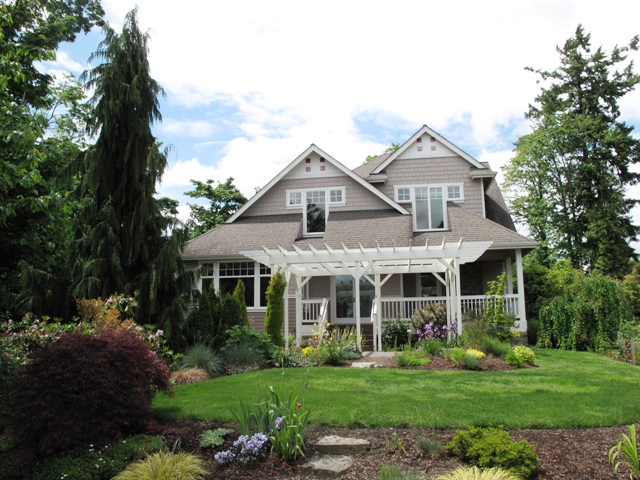
Our new house, Seattle, Washington

We finally settled in a new home last month, transitioning from a house we had rented after moving from LA back to Seattle a year ago.

Last fall, the Real Estate Gods (or possibly the powers of a statue of St. Joseph, buried upside down in our California front yard – our agent Barbara’s insurance policy!) smiled on us. We sold that house after it was on the market for NINE months (!). Then, we kicked off 2011 with the hunt for a new permanent residence in or near our former neighborhood here in Seattle.

Our “hunt” felt futile and endless, that is until Mother’s Day, when we made an offer on a home in Seward Park that felt like everything we could have ever dreamed of. After a day of agonizing back-and-forth, the sellers accepted our offer.

So, more will be written about the beautiful garden and move-in-ready house (yeah! no renovations required!), but for now, I need to discuss the fish pond.
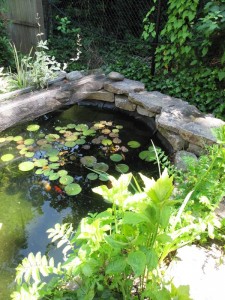
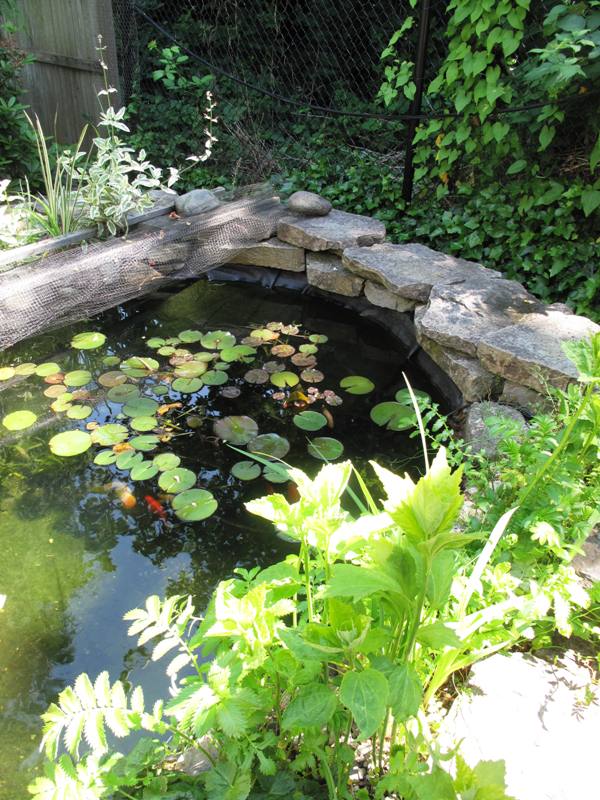
A sunny corner of the fish pond.

Yes, along with the amazing residence, excellent plants cared for oh-so-lovingly by the former owners, and a peek-a-boo view of Lake Washington, this property has a bonafide water garden. With lots of pretty gold, orange and white fish. Fish that I called “Koi” for nearly a month until I was disavowed of that assumption. Well, to me, they looked like “small” koi. Guess what? I am the proud Mama of 10 (give or take) ornamental goldfish.

Inheriting a pond comes to me in an ironic way. Presently, I am immersed in a writing project – to update Sunset’s Garden Pools, Fountains & Waterfalls. The book was most recently published in 2007, and is in need of refreshing with new photography and text. So as the project’s writer, I’m up to my ears in Water Gardens. But since I have never owned more than a bubbling fountain, um, well, I only know about fish ponds from a theoretical point of view.

“Guess what?,” I wrote to my editor Bridget. “We bought a new house and it has a fish pond!!! How funny is that?”

Owning a fish pond does not immediately translate into knowing how to own and care for fish. But I knew exactly where to go and who to ask for help. In 2002, I had another writing project, to update the 9th edition of an essential regional book called The Northwest Gardener’s Resource Directory. Created and nurtured for more than a decade by the amazing Stephanie Feeney, who passed away in 2000, this book is the Yellow Pages of everything Oregon, Washington & British Columbia gardening enthusiasts need to know.
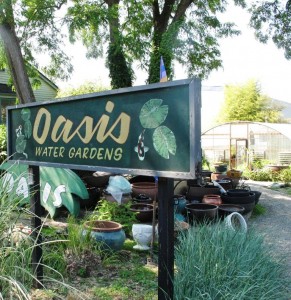
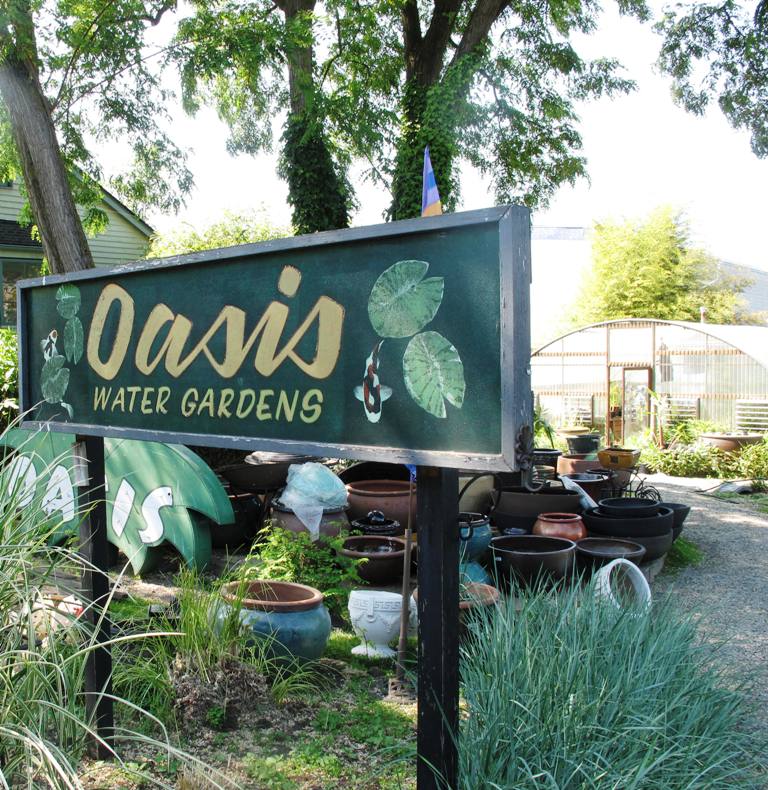
Oasis Water Gardens - a hidden oasis in the city!

Oasis Water Gardens is an important entry in the Resource Directory. Founded by Dianne & Bob Torgerson in 1988, this nursery is indeed an OASIS in the middle of an industrial/commercial area just south of downtown Seattle. If you’re in search of water-friendly flora and fauna, here is the place to start!

I knew I had to get my act together after our 2nd week in the new place. Prompted by the fact that I ran out of the stock of fish food left by the sellers, I stopped by Oasis Water Gardens last week and met Dianne. We certainly knew of each other (Seattle’s gardening community is pretty tight) but we had never before met in person. After she made sure I was using the correct food for my fishies, I casually asked: “Dianne, do you ever do in-person consults?”
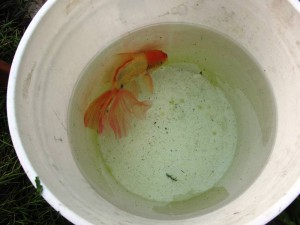
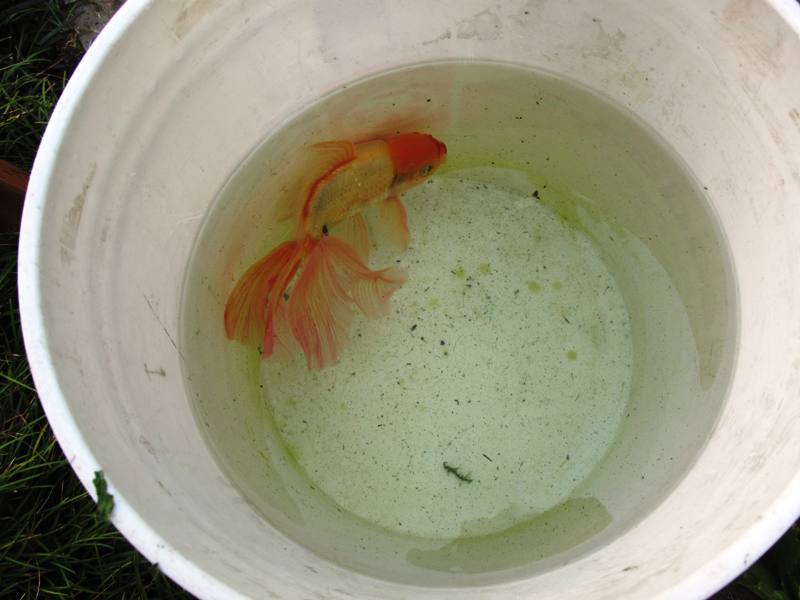
Red Nose in his temporary bucket-pond.

Yes, of course! And so, Dianne came to see my pond and meet my fish a few days ago. One of the first things she told me is that we have a very sick fish. He has some kind of internal hemorrhaging. She could tell this by the salmon-pink cast to his lovely fins. He also has dark red markings across his nose, thus his new name “Red Nose.”

“All you have to do,” Dianne coached me enthusiastically, ” is use your big net to catch your fish – and bring him into the nursery.”  Our plan unfolded: The following day, I was going to bring our sick fish in a large bucket containing water from the pond to Oasis. Easy, right?

I could NOT have executed this idea without my son Ben’s help. After watching me flail around for a few minutes, he said, “Mom, let me do it.” The trick was first catching Red Nose, and then gently sliding him into the bucket without tearing any of his ruffled tail fins. Stress-FULL!

httpv://www.youtube.com/watch?v=3_wu7BW0y_8

Fish in bucket, bucket wedged behind the passenger’s seat of my Subaru, and a verrrrrry careful drive about 5-miles away to Oasis. Dianne had readied a “quarantine” pond in her greenhouse for Red Nose. He will live there for a couple of weeks while receiving antibiotics. The reason he has to be isolated is that the anti-Bs are placed into the pond water – so we don’t want every fish in our pond to receive those doses.
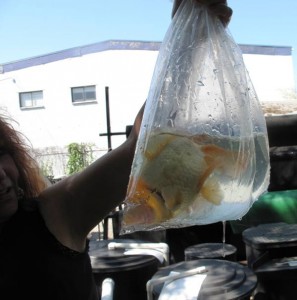
Red Nose, transferred from bucket to big plastic bag . . .

Dianne sent me home with all the stuff I need to get on top of pond ownership, including: pH test kits, ammonia test kits, nitrite test kits, bacteria additive (the good kind – for the biofilter); and a parasite treatment (she noticed that one of our brilliant orange fish had scratches on his side – indicating that he was itching himself against a rock, which is a giveaway that he has some kind of parasite).

Ben also lent his muscle to helping me wrangle the huge roll of 2-inch thick mesh out of the biofilter so I could hose it off and re-install it. I only have to do that level of cleaning every 6 to 8 weeks, but I think next time I’ll wear my rainproof overalls. It is a big, wet, messy project.

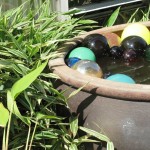
Yesterday, after taking the pH, ammonia and nitrite readings; after cleaning the biofilter, and after treating the pond for parasites, I unwrapped all my beautiful blown-glass floats and placed them among the waterlilies to add sparkle to the pond. What I first considered a huge hassle is going to turn into a daily dose of serenity – there’s something quite restful about watching the water flow into the pond and catching the flash of orange fish bodies dashing to and fro.

Oasis Water Gardens is an amazing resource for fish (Koi and goldfish) owners, pond and pool owners, people who have decorative fountains, and people who wish to add water plants to container gardens. Here are some photos from the nursery to give you an idea of the variety I found there:

Container Design Lecture

Tuesday, June 14th, 2011

Do your containers make you happy? SCOTT EKLUND Photograph, 1997

Do you find container design a frustration?

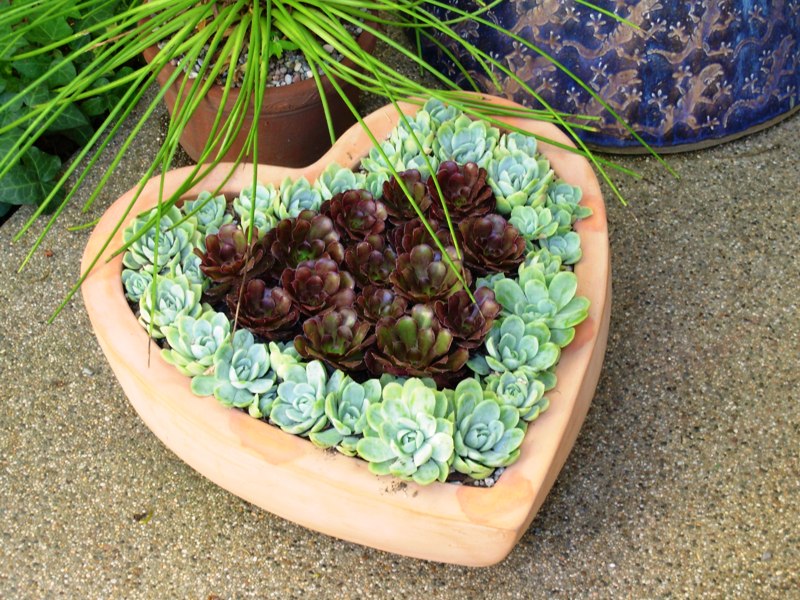
A terra cotta heart-shaped container, filled with succulents.

Recently, Andrew Buchanan, a photographer friend and former Seattle Post-Intelligencer colleague, told me that Slides.com is the best value for scanning 35mm slides into digital files. It costs about $1.00 per slide, which is a good bargain compared with $2.50 per slide that local labs charge. 

As an experiment, I sent 44 cardboard- and plastic-framed slides that have resided for years in a Kodak carousel tray to Slides.com to see what they could do.

Kay at Slides.com emailed the files to me today – just in time for tomorrow’s lecture.  As it turns out, the digitals seem crisper and brighter than the originals…and they can be manipulated, cropped and re-sized. Pretty handy! 

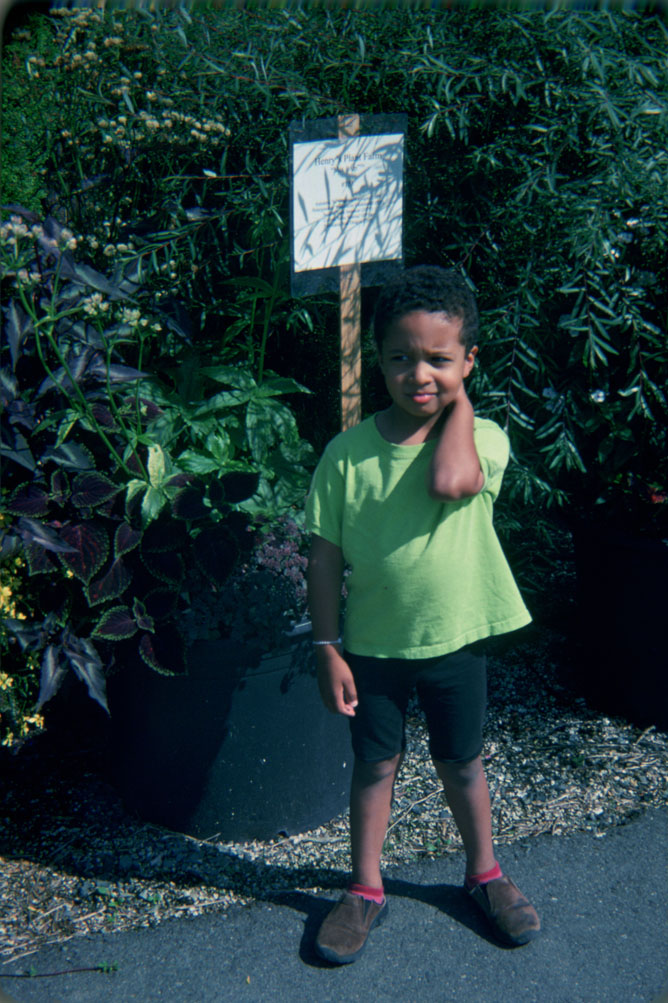
Happily, my talk’s opening slides look great. And they are very sweet. The little boy you see above as a baby and at left as a bored toddler who I dragged to a container plant trial is now 14 years old, about to begin High School in the fall. Time certainly flies – in the garden . . . and with children!