
Debra Prinzing

Get the Email Newsletter!

Archive for the ‘Gardening’ Category

Stamps for the gardener

Thursday, August 21st, 2008

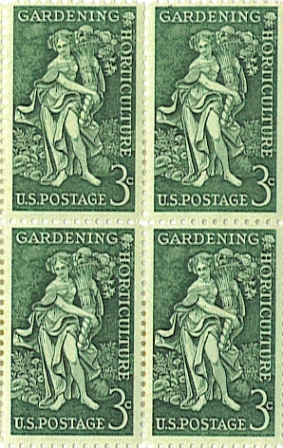
Commemorative “Gardening-Horticulture” stamp, 3-cents, issued in 1958 (from my father’s stamp collection – mint condition)

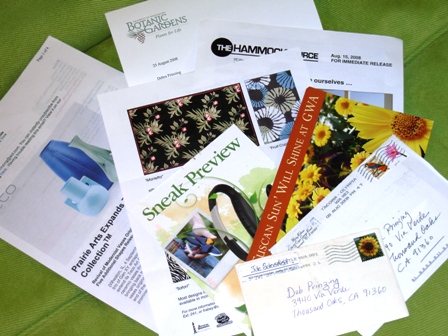
I know we’re all dependent on the Internet for swift correspondence, but I, for one, am still a huge fan of the hand-written letter. It’s not just the pen- or pencil-inscribed words one writes that matter. Think about other non-verbal cues we convey. Beyond the thoughts communicated by careful penmanship, there is also the selection of paper, note card, or greeting card that implies volumes of meaning. Even the color and type of ink sends a full range of sentiments.

I cherish hand-written notes. I have collected shoeboxes-full of them, saved by year, since the 1970s when my dearest and best childhood friend, Lori, and I started writing to one another after my family moved from New England to Portland, Oregon. I have the cherished love letters, the newsy updates from my mother, the thoughtfully-written narratives from another Lori in my life, who lives in Europe (she is known for excellent choice of paper, as well!). And then there’s Paula, who still jots notes with an old-fashioned ink pen (I just received one as a gift, so perhaps I’ll try to do the same). These “snail mail” versions of human communication trump the Internet on any occasion.

READ MORE…

Zen of the Circle

Wednesday, August 6th, 2008

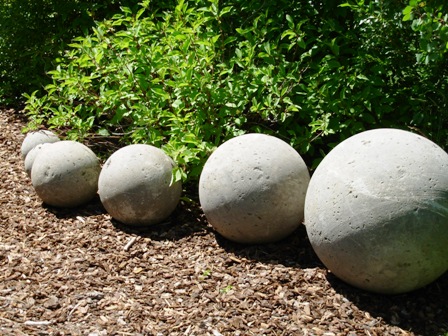
Graduated in size from tiny to large, a row of ornamental concrete orbs caught my eye at the edge of a path. We toured this lovely landscape on the Sawtooth Botanical Garden tour in July.

“Treat nature in terms of the cylinder, the sphere, the cone, all in perspective,” Paul Cezanne (1925)

“Everything an Indian does is in a circle, and that is because the power of the world always works in circles, and everything tries to be round. . . . “ Black Elk, an Oglala Sioux (Hehaka Sapa, 1961)

Cobblestones are embedded in a circular pattern to create a beautiful, uncomplicated lawn terrace in the Yakima, Washington garden of Kim Brewer and Rick Main

The image of a circle pleases the eye. In the garden, shapes that are rounded, organic, and sensual resonate as “good design.” They are visually satisfying, emotionally seductive, artistically whole.

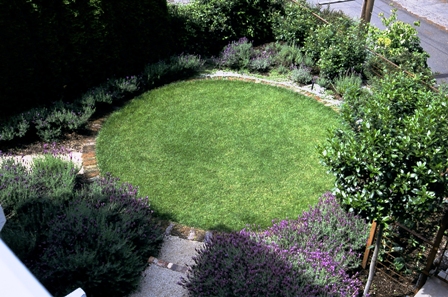
A perfectly round lawn, measuring about 14 feet in diameter, provides plenty of space for children to play in a well-designed urban garden (Langstraat-Wood design)

Circles also appear tidy, if that sort of thing matters to you. They can be formal, but circular shapes are also very contemporary-looking. For a fresh statement in the landscape, think about how you can apply or incorporate a rounded feature. With all the squarish blocks of architecture that occupy one’s life, the circle is a nice, soft antidote.

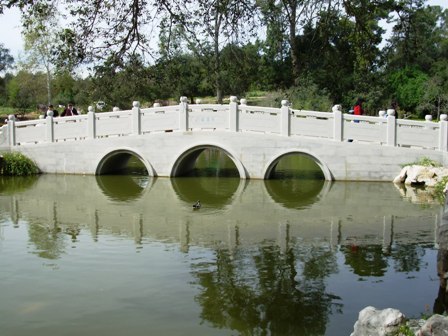
The reflection of arched openings in a stone bridge creates the suggestion of repeated circles. This is the “Jade Ribbon Bridge” at The Huntington’s new Chinese Garden

READ MORE…

Garden-in-a-pot

Monday, August 4th, 2008

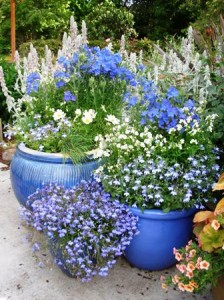
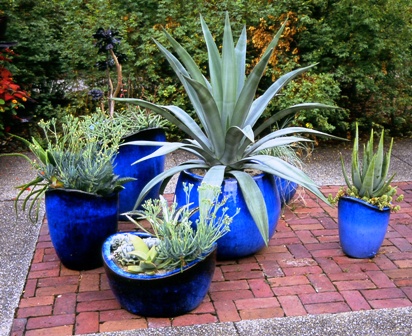
A true-blue grouping (left) in Sunset Magazine’s test gardens; Silvery succulents (right) thrive in ice-blue containers for a satisfying grouping at Longwood Gardens, 2006

Ever since I relocated from Seattle to Los Angeles, nearly 2 years ago now, I have relied more than ever on container gardening. With a confounding, on-again, off-again irrigation system that will cost the equivalent of a year’s grad-school tuition to completely repair, and with rock-hard soil that endured years smothered by the previous owner’s idea of weed control (black plastic sheeting covered with red lava rock “mulch”), I’m desperate to grow plants in spite of unwelcome conditions.

But where? And how to keep them alive when it’s too hot and dry for anything but succulents to look good?

The answer is a container garden. Gardening in a container is like one-stop shopping. Maybe we should call it “one-stop gardening.” Here are some of the best reasons for gardening in pots:

Why grow a container garden?         

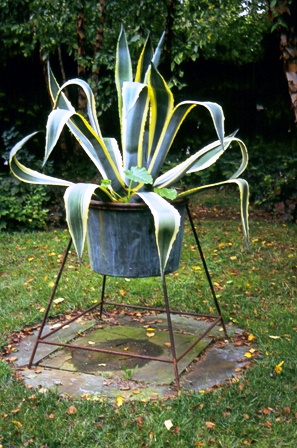
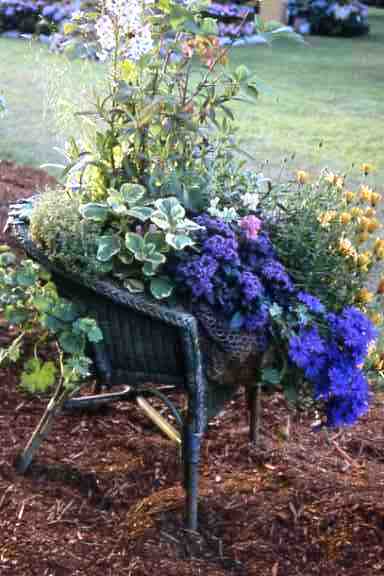
  •  Move plants and architectural interest above the ground’s surface:  You’ll enjoy beauty closer to eye level, as in this cool vintage vessel that caught my eye at Chanticleer Gardens in Pennsylvania (2006).


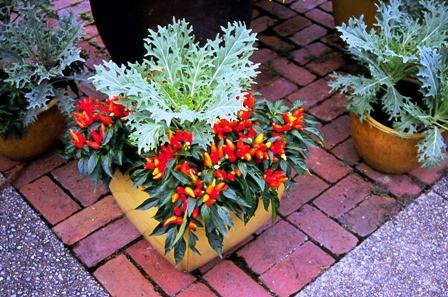
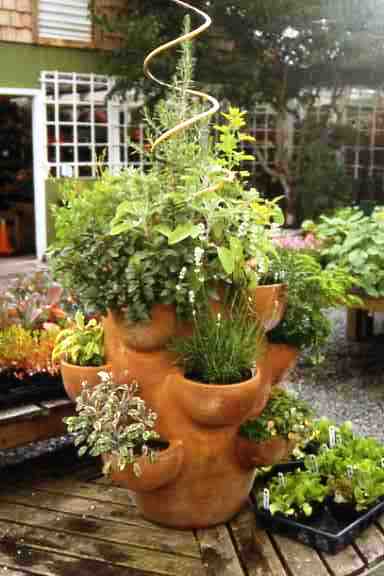
Edible and Accessible: Lettuces and herbs thrive in pots, like this over-sized terracotta “strawberry” pot at right – measuring 48 inches tall, created several years ago by the designers at Emery’s Garden in Lynnwood, Wash.! At left, ornamental peppers and kale in a pot at Longwood Gardens are food for the eyes.


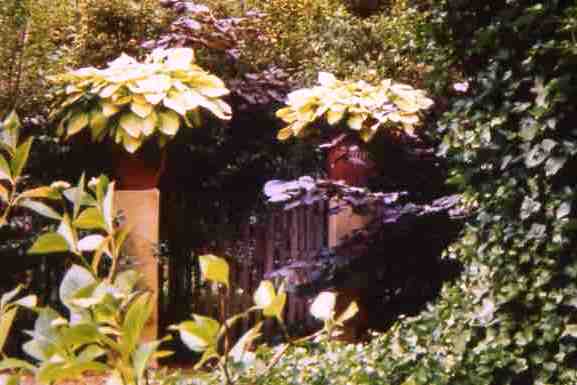
Define a focal point: Signal the entrance to the garden, such as with these two glossy Asian pots that contain lush golden hostas. Mounted on pillars, they announce: “Come this way,” a way that’s made more enjoyable because this portal leads to the gardens of David Lewis and George Little, Bainbridge Island artists.


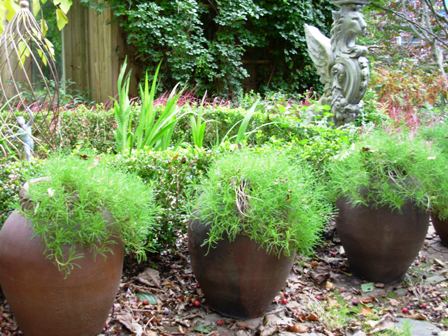
Provide a natural perimeter: Anywhere in the garden, such as at the edge of a deck or patio, pots can act as a verdant “wall” to contain, deter, protect or enclose. I particularly enjoy seeing three identical pots, lined up as a formal barrier – it’s plant-filled architectural interest. Here, at the edge of Peter Norris Home & Garden’s parking lot, these giant iron urns hold gold-streaked phormiums (left). A trio of fern-filled pots defines the edge of a formal planting scheme at Robert Dash’s Madoo Garden (right).


READ MORE…

Dogs and their sheds

Friday, August 1st, 2008

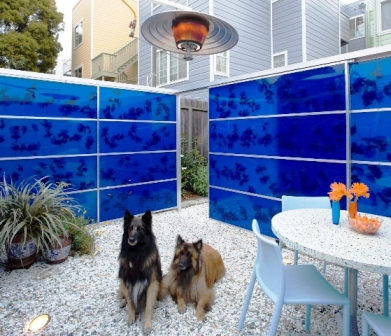
‘Elvis’ and ‘Nico’ are the Pleasure family’s Belgian Tervurens. They’re enjoying the warmth from the overhead heater, as they lounge in their blue pavilion in a San Francisco backyard

Driving behind a Volvo on the Ventura Highway the other morning, a bumper sticker caught my eye: “I love dogs and I vote.”

Not exactly sure what that means, but it started me thinking about the character of a dog owner. And about a funny comment my friend Lin Su made at our Stylish Sheds and Elegant Hideaways book launch party here in Los Angeles.

“I think you had a requirement that everyone included in the book must have a dog in their life!” she maintained. Wow, what a thought. Bill and I didn’t exactly write a canine clause into the scouting notes, but perhaps subconsciously, we were drawn to animal lovers.

There is a sympathetic relationship between people who raise and care for their plants and people who raise and care for their pets. Beloved and cherished, our dogs are often the most patient and forgiving family member in our lives. Our “Zanny” (pictured, left) is certainly the cream of the crop – a rescue Lab, blond and cheerful – found wandering the streets of Yakima, Wash., at six-months of age….brought to an animal shelter in Snoqualmie. My husband Bruce discovered her photo on petfinder.com in 2002 – and she has lived with our family ever since. What a sweet companion and thoroughly accepting of any love she receives, often giving more than we ask of her.

READ MORE…

Pretty in purple

Sunday, July 13th, 2008

July in Southern California dishes up a haze of purple in every hue. I recently snapped a few photos to capture the floral bounty around us.

It’s the weekend; time to be lazy and enjoy a little eye candy. So here we go:

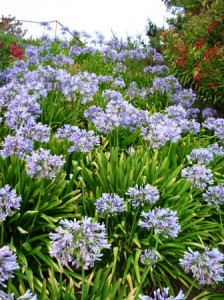
Lavender-blue agapanthus cascades down the hillside in my neighborhood

This time of year, AGAPANTHUS takes over our “East Hills” neighborhood. Seattle gardening friends, eat your eyes and hearts out! When I first visited this neck of the woods, in spring 2006, I was blown away by the appearance — shall I say ‘explosions’? — of lavender-blue agapanthus blooms on every corner of town.

“Okay, I guess I can live here after all,” I thought. I mentioned loving this plethora of agapanthus to my friend Nan Sterman, a California native and author of California Gardener’s Guide, Vol. 2.

“Oh, Debra, they’re gas station plants!” she exclaimed.

As I’ve said before. . . one woman’s gas station plant is another woman’s rare collector plant. Imagine describing it as a commonplace “filler” for the corner convenience store! I know of a few passionate souls in Seattle who willingly forked over $15 for a 2-inch Agapanthus ‘Blue Heaven’ cultivar from Heronswood (or, elsewhere spent $20 to $40 for larger pots of this pretty purple South African native). And then. And then. Well, if my efforts were at all representative, there was the breath-holding that occurred through the wet, chilly winter months, as we pretty much realized the true-blue agapanthus wasn’t going to emerge in great shape the following spring. Like many tender perennials, well, they were pricey annuals. Or, they were in need of massive amounts of pampering, such as potting up the fleshy rhizomes and moving them indoors for the winter.

READ MORE…

It’s all good: Rembering Linda Plato

Monday, July 7th, 2008

I think many of us have experienced that frequent voice whispering in our ear, offering words of wisdom, advice, encouragement and humor — just when we need them. For me, and for many of her beloved friends, that voice belongs to Linda Plato. “It’s all good,” was one of her favorite sayings. Or, her shorthand version of that phrase: “Good times.”

Garden designer, horticulturist, Anglophile, educator, editor, writer and friend, Linda and her bon mots live in our memories and our hearts. Long before cancer took her young life on December 4, 2005 (at the age of 37), Linda’s witticisms and wry look at the world were a source of humor and happiness to me.

She wrote some of her funniest pieces anonymously as the Garden Curmudgeon for “Garden Notes,” the Northwest Horticultural Society’s quarterly newsletter, for which I was editor. Linda later followed me as editor and continued as the GC, often quoting the OGC (the Original Garden Curmudgeon). It took some people years to figure out that she was GC and her dearest friend Greg Graves was the OGC. The columns are collected on the NHS web site.

I’ve been thinking lately that I wanted to write a “Linda’s on my Mind” piece. And over the July 4th weekend, her husband Bruce Forstall sent me a good reason to. Bruce and several family members and friends have sponsored a memorial park bench to commemorate dear Linda. Located in Kirkland, Wash., not too far from Linda’s former design studio, the classy bench will provide respite and peace to many. The logo on the plaque, a container with a triple-ball topiary, is the one Linda designed for her business cards. Her saying,  “It’s All Good,” also appears. (Photos here: courtesy of Bruce Forstall).

READ MORE…

A hydrangea grows in Zone 10

Friday, July 4th, 2008

Today, all I have to share are these photographs of my sole hydrangea plant. This pinky charmer lives on our covered porch, surviving the heat, I guess, because of its deeply shaded existence.

It is 90 degrees outside as I write at 7:30 p.m. With adequate water, this hydrangea seems to cope with close-to-the-century-mark temperatures. But if it wasn’t protected by the overhanging roof, it would be miserable.

In contrast, hydrangeas in Seattle can handle a few days of excessive heat, here and there. But their blooms and leaves get crispy when subjected to sustained hot-and-sunny summer conditions. All the more reason why I cherish owning at least one non-crispy specimen here in Zone 10!

This hydrangea was a “housewarming” gift nearly 2 years ago, given by my husband’s boss on the occasion of our move to SoCal. To me, “Miss Hydrangea,” it seemed ironic to receive a no-name, hothouse variety in a 1-gallon pot, cloaked in that crinkly-metallic florist paper. It nearly toppled over because the few enormous mop-head blooms were wildly out of proportion to the size of the plant itself. In my former garden (seen at left and right), I was lucky to grow several cool Japanese hydrangeas that were gifted to me by friend Richie Steffen of the Miller Garden. These babies seemed to think they were still growing in their native soil because they exploded in size over the period of a few years – only to crowd out the nearby path. (Although, I must confess that the huge mophead hydrangea shown here was also a housewarming gift that arrived in a 1-gallon florist’s pot: It was given by our then-new neighbor David when we completed construction and threw ourselves a move-in party in 1998!).

Back to this pink hothouse hydrangea, which sat on my kitchen counter and seemed to be mocking me. If she could have spoken, she would have said: “You think you’re such a great gardener? Well, guess what? No one here cares that you grew a dozen stunning hydrangea shrubs, not to mention two climbing hydrangeas, in your old Seattle garden. Try keeping me alive here in Zone 10!”

READ MORE…

places to “dwell” in the garden (with bamboo overhead)

Saturday, June 14th, 2008

When I toured the Dwell Outdoor section of the trade show at last weekend’s Dwell on Design 08-LA, the first things to catch my eye were some “flying” pots of bamboo. Suspended from the ceiling, resembling broomsticks owned by the Wicked Witch of the West, the potted bamboo plants seemed to be whooshing to and fro, by themselves.

Slightly twisted, this version of a well-behaved, dare I say “garden-variety,” plant display was the brainchild of a few folks at Monrovia. As one of the major sponsors of the Dwell conference, Monrovia was given the task of decorating the vast Dwell Outdoor area, which showcased modern living trends and hot new products.

Monrovia partnered with Sarah Graham, a principal of agps architecture, to create the “Flying Bamboo” theme. “We wanted to design a conceptual landscape for Dwell Outdoor and Monrovia, as a means for visitors to see landscape in a new way,” Graham explained in a Monrovia press release. “As plants, particularly large plants, are usually gravity based, we reversed that normal condition, making it surreal. One cannot help but to notice, to question, and to laugh.”

Bamboo foliage nearly tickled the tops of our heads while I chatted with Judy Lynes, Monrovia’s publicist from The Phelps Group, a Santa Monica-based PR agency, and Pamela Wasson, Monrovia’s marketing VP. The women said Monrovia enjoyed creating something that guaranteed a reaction (I guess the only person not excited about the installation was the local Fire Marshall, who had concerns that plants would start dropping from the sky onto conference-goers).

But thanks to secure cables and lots of other precautions, the caper worked! When I walked into the giant shell of a convention hall, the flying plants soared above the displays and visually demanded my attention.

Plenty of lush, healthy Monrovia plants were closer to the ground, too, for easy viewing, including dramatic architectural plants, water-wise and easy-care varieties. By focusing on its selection of 42 custom-blended  soil mixes (using dozen different types of mycorrhiaze, a beneficial fungus), Monrovia educated consumers and landscape professionals about the importance of good soil.

“We work with so many landscape architects and designers, we thought this would be an ideal venue to showcase our plants and soils to those professionals,”  Wasson said.

ARCHITECTURE IN THE GARDEN

Shedista that I am, I was wowed by the many great examples of scaled-down style designed for escaping to the great outdoors. There were some of the wonderfully creative shed-like structures on display below Monrovia’s flying bamboo. I daresay each was a stylish hideaway, deserving of a starring role in the garden:

MODERN CABANA

The brochure copy reads like it’s straight out of the pages of Stylish Sheds and Elegant Hideaways, promising: “SPACE TO: Work, Play, Film, Paint, Meditate, Rest, Escape, Research, Read, Create.” Based in San Francisco, Modern Cabana offers pre-fabricated accessory structures made from clear cedar siding (all sorts of design upgrades are available). The clean, modern design comes in 10-by-10, 10-by-12, 10-by-14 and 10-by-16 foot configurations. Multiple units can be connected to create expanded floor plans. “The Cabana can be used as a guest cottage, urban penthouse, desert hideaway, fishing cabin, workshop, sound studio, yoga studio, kids’ playhouse, or exercise room.”

KITHAUS

I discovered Kithaus, a cool slat-sided shelter, at the CA-Boom 07 show in Santa Monica and invited the company to be part of our book. But the young shedmaker, which uses a lightweight anodized aluminum frame, Ipe decking and louvers, and a corrugated metal roof to make its nifty, freestanding room, didn’t have a completed and fully installed structure ready in time for our photo schedule. Now, Kithaus has been picked up by Design Within Reach, which is marketing and distributing the prefabricated units. “Wondering where you can use Kithaus? How about anywhere you need a fully insulated, pre-wired comfortable space.”

SHELTER SYSTEMS

Like a three-dimensional puzzle, the “Comeback Cube” by Culver City, Calif.-based artist-architect Gregg Fleishman, is undeniably part sculpture and part shelter. It is playful and interactive in its design. Yet, it is practical, and I can see it functioning as a contemporary summerhouse. According to press material, the design features: “a full-size single-cube module in 3/4 inch European Birch, measuring 9 ft by 9 ft by 9 ft, with 81 square feet of interior space and an 81 square foot rooftop deck. The single cube is permit exempt, making for a quick and elegant temporary structure, backyard studio, guesthouse, or children’s playroom.”

On his web site, Fleishman speaks further about his design decisions:

“In architecture today, the green movement focuses mostly on the origins of material and use of energy. This work proposes that there is another way to be green in architecture, a way that focuses on process in building going beyond the factory. It is in geometry, with its repeating similar forms, and smaller similar parts that we find the advantages we are looking for. These include greater structural efficiency, manufacturing economies, easier handling, less specialized work force, and lower start up costs. What distinguishes this geometry . . .  (are) the cube and the octagon, more specifically variations of a 3D checkerboard of cubes or ‘rhombicubes.’ When oriented in different ways, these cubes have provided for a veritable bouquet of new and different building types to sprout up using faceted geometrical faces that can provide a new and more natural look and feel to our buildings.”

THE NOMAD YURT

Ecoshack is an LA-based green design studio and manufacturer of architectural products such as the Nomad, a modern take on the traditional Mongolian yurt. I am fascinated by this fabric-cloaked shelter designed for use as a fully-enclosed guest room for 3 to 4, a poolside (or rooftop) lounge that seats 10 to 12, or a spa treatment room. “At night, light the interior to create a magical, private room.”

Designed by Ecoshack founder and CEO Stephanie Smith, The Nomad measures 14-ft. diameter, with an interior height just over 7 ft. Its materials include:

— Solid Core Bamboo, a renewable, flexible, strong and light material 50 times stronger than oak but lighter than steel;

— WeatherMAX FR, an advanced, exterior-grade, anti-flammable fabric that delivers “unsurpassed water repellency, mildew and oil resistance without relying on environmentally unfriendly coating compounds.”

Truly, “a yurt reinvented.”

Dwell on Design 08-LA

Tuesday, June 10th, 2008

My pals at Monrovia made sure to add me to the press list for dwell Magazine’s first-ever design symposium in Los Angeles (I think the two previous conferences were held in the San Francisco Bay Area).

Dwell on Design’s hip graphics and giant magazine covers filled the LA Convention Center. The addition of plants, provided by Monrovia, helped soften the ultra-modern flavor of the event and infuse the setting with something living and green.

The four-day conference included panel lectures, home tours and a trade show featuring the best contemporary and sustainable resources for the home and beyond. I missed Thursday’s panels, but met up with Nan Sterman to attend some of Friday’s panels and the trade show.

Having spent many hours of my professional life uncomfortably confined to stiff, industrial-grade chairs while listening to lectures, I was thrilled to see that conference sponsor Lounge22, a Los Angeles-based furniture company, provided v-e-r-y cushy sofas for those of us smart enough to show up on time and get a place near the front of the room. Sleek, low-profile sofas, upholstered in white or black leather, made sitting still an easy (and luxurious) endeavor. Very classy, folks.

Stylish attendees reclining on sleek Lounge22 sofas – it beats a folding chair!

First off, a panel of leading hotel and restaurant designers convened “Home and Away: the nexus of hospitality and domestic design.” Moderated by dwell editor Sam Grawe, the panel featured Cass Calder Smith, principal of CCS Architecture (San Francisco-based), Peg O’Brien, founder/principal of O’Brien Design, and Theresa Fatino, Chief Creative Officer, SBE Entertainment Group.

I asked myself, why do I care about hotel and restaurant design? I haven’t written about the hospitality biz since I was a reporter covering the hotel beat for Puget Sound Business Journal back in the late 80s-early 90s. But I remembered that my experiences reporting on hotel and restaurant trends strongly influenced and shaped my design sensibilities – and helped train my eye to look for creative design influences everywhere around me. I’m pleased to say, it was worth my time to slouch into the white leather sofa, stretch my legs and listen to the presentation.

Of the three panelists, it was Theresa Fatino who blew me away. She has been described as having a sixth-sense for observing cultural tastes and trends. Fatino is a passionate keeper of the faith for her current project, SLS Hotels. As a project of SBE Entertainment Group, the first SLS Hotel is slated to open later this year in Beverly Hills (Las Vegas and South Beach, Florida, properties are also in the works). 

You may ask yourself: What does SLS mean? I finally found a clever reference to the acronym on the company’s web site: Some Little Secrets. The hotel is pursuing a high-touch, but understated niche in the crowded hospitality market.

Fatino is the organization’s key collaborator with master designer Philippe Starck on its hotel, restaurant and lounge concepts. In addition to SLS Hotels, these include the Katsuya restaurant brand, recently-opened S Bar and a yet-to-be-named upscale supper club on the Sunset Strip. She has an impressive resume that includes a fine arts degree from Syracuse University, followed by design positions with Ralph Lauren, Pottery Barn and the W Hotel.

Fatino described the intricate development of SLS Hotels’ “brand” management message, summed up by a list of “emotional touch points.” I might be missing a few of them, but here are the themes I quickly jotted down during her lecture:

Conscience

No Compromise

Internal Reward

New Functionality

Semi-public

pre-Googling

Curated Consumption

Customization

Customer-made

Out-Experience-In

Niche Growth

Online Oxygen

Planned Spontaneity

Buy Now

To me, these ideas are symbolic of broader consumer trends. Far-reaching, such ideas aren’t limited to the hospitality industry. They serve a kind of marketer’s shorthand to describe and highlight the present mood of popular culture, media (and media consumption), technology, product design and art.

Fatino illustrated a few of the ideas:

pre-Googling: This refers to our reliance on the Internet as a “preparation” tool. For example, how many of us “Google” someone in advance of a planned meeting (this could be a work-related contact or even someone you might encounter at a dinner party)? We’re addicted to Google as a verb!

Curated Consumption: As a design writer, I find this one fascinating. Certain arbiters of taste are given the “power” to curate our artistic and aesthetic choices. Fatino describes Pottery Barn as the “curator of casual living,” Williams Sonoma as the “curator of the kitchen,” Oprah as the “curator of the books we read,” and Martha as the “curator of flowers.” “We are following and obeying the new curators of taste and style,” she explains.

Online-oxygen: “How many of us wake up in the morning and before we do anything else, we reach for our Blackberry?” she asked. This habit equates our need to breathe oxygen with our need to constantly access our online lives; it is shaping design decisions made for the new hotel. She illustrated this concept with a slide of a man seated in a Zen garden, using his laptop. Hmmm.

Internal reward: There is a need to balance our “wired” lifestyle with an “unplugged” response. “We need to rejuvenate, nourish the mind, replenish, engage in spiritual activities,” Fatino suggested (at this point in her lecture, I leaned over to Nan and whispered: We all need a Stylish Shed – that will provide ample internal reward, the antidote to everyday insanity!)

After identifying these emotional touch points, Fatino cited a list she called the “catalog of experiences” the new hotel will offer. I suspected her list would be geared to customers willing and able to pay for this level of luxury. But surprisingly, many of them are emotional experiences rather than tangibles. And in a way, that’s what’s so appealing about these ideas. These experiences seem to require an attention to detail rather than a big budget. Here they are:

Elegant

Timeless

Intelligence

Community

Authentic

Human-Spirited

Organic

Respect

Reliable

Humanity

Inspiration

Discovery

Soul

The challenge, said Fatino, is to “translate the ‘experience’ into a physical product,” but to do it with sincerity and integrity (people can easily spot a “copy job,” she says).  

For example, the hotelier has decided to eliminate little plastic bottles of shampoo and lotion and replaced them with high-quality, natural body products in large, glass, refillable bottles. Not only is this environmentally smart, it is a small gesture that communicates the desired guest experience. Some are tangible, such as warm, fuzzy-feeling Egyptian cotton towels or “bronze-tinted” lighting flattering to the face. Others are intangible, such as how guests’ children and pets are treated. “We know when to create a surprise and when to whisper,” Fantino explained.

HOW WILL HEARING THIS NEW INFORMATION CHANGE THE WAY I OPERATE?

I think I will come up with my own “emotional touchpoints” and “catalog of experiences” to describe how I want to live, conduct my life, work, relationships and immediate surroundings. I’ll be tracking SLS Hotels as they open and begin to execute Fatino’s vision.

NEXT UP. . .

I have two more reports to post, but this is already too long. The next one will highlight Dwell Outdoor, the exhibit area featuring landscape and garden design ideas and products. That will be followed by a report on a Sustainable Interiors panel.


Stylish Sheds on Martha Stewart Living radio

Sunday, June 8th, 2008

Thanks to a connection made by my Seattle-based PR whiz-friend Cindy Combs, I was invited to be a guest on “Living Today,” the daily afternoon show on Martha Stewart Living Radio. The segment originally aired on April 28th, the day before Stylish Sheds and Elegant Hideaways was published.

I had a delightful 25-minute conversation with gregarious host Mario Bosquez.  We discussed the ideas and inspiration for one of my very favorite subjects: Creating Your Dream Shed.


The “Living Today” team (from left to right): associate producer Lauren Gould, producer Naomi Gabay, host Mario Bosquez, and engineer Chris Hauselt [MSL Radio photo]

The interview was completely enjoyable, enhanced by Mario’s enthusiasm and constant affirmation, which gave the impression that talking about “elegant hideaways” was to him the most exciting topic on earth!

Obtaining an audio copy of the interview was nothing short of a miracle, however. It involved (a), signing up for a free 3-day subscription to Sirius Radio; (b) setting up my crappy little cassette recorder next to the computer so I could tape the show as it streamed live on the net; and (c) racing into the other room to do the interview by phone with Mario.

Once my segment of the show was finished, I returned to my office and rewound the recording of the interview. Not only was it kind of scratchy and there were all sorts of pinging sounds from my computer (probably some kind of AOL affectation that lets you know if a new message has arrived), I also discovered that the tape ran out before the interview was over. I begged my publisher to try and obtain a professional recording from some kind of media monitoring service, but that request went nowhere.

So, finally, thanks to my wonderful collaborator Bill Wright, who figured out how to convert a cassette recording into a digital file (and who, I’m sure, devoted many hours to clean up the poor quality sound captured by my amateurish recording), we have a reasonable facsimile of the interview. Thanks, too, to Bob Meador, aka the web guru, for further enhancing and editing the file, filtering out background noises where possible, and posting the audio to my web site.

Thanks to the support of my friends, I actually have the interview to share, albeit more than a month after it originally aired. Click here to listen: Debra on MSL Radio.