Debra Prinzing

Get the Email Newsletter!

Archive for the ‘Gardening’ Category

An Artist’s Relationship with Floral Design, Abbie Zabar: Ten Years of Flowers from the Metropolitan Museum of Art (Episode 196)

Wednesday, June 3rd, 2015
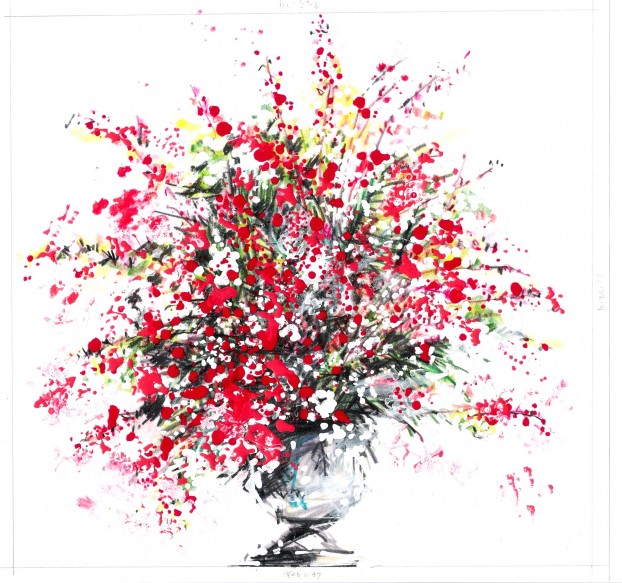
In this pencil study, Abbie Zabar captures an exuberant floral arrangement from the Metropolitan Museum of Art's Great Hall.

In this pencil study, Abbie Zabar captures an exuberant floral arrangement from the Metropolitan Museum of Art’s Great Hall.
50kdownloadsThis week we’re celebrating the 50,000th download of the Slow Flowers Podcast.

As of today, we’ve produced 97 episodes bringing you the leading voices in the American Grown floral community – from flower farmers to floral designers, the inspiring people working to save flowers as part of our nation’s agricultural heritage and keep our flowers local, seasonal, sustainable — and American grown.

I am grateful to my past guests, each of whom has shared his or her story with listeners. And I’m so thankful to listeners who regularly tune in, comment, share and like this endeavor.
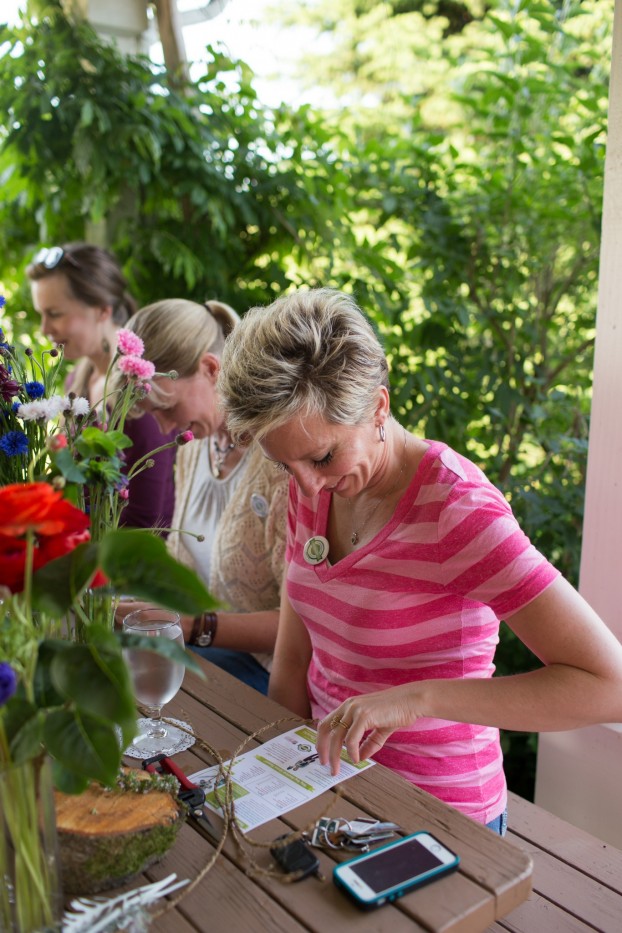
Students at Sarah Pabody's floral design workshop learn about the origin of the flowers in their lives. (c) Elena Slesarchuk, courtesy of Triple Wren Farm.

Students at Sarah Pabody’s floral design workshop learn about the origin of the flowers in their lives. (c) Elena Slesarchuk, courtesy of Triple Wren Farm.

Before we meet Abbie Zabar, this week’s guest, I wanted to share a text that I received this week from my friend Sarah Pabody of Triple Wren Farms located just north of Bellingham, Washington.

Sarah and her husband Steve Pabody are big promoters of the Slow Flowers Movement. When Sarah leads design workshops at Triple Wren she does something for which I’m so grateful.

Each student is handed one of the Slow Flowers infographics that reads “Where do your flowers come from?”

Then Sarah leads a short discussion about the frightening statistics revealing the small percentage of domestic flowers in the marketplace versus imported flowers, as well as the cost of those imported flowers, both environmentally but also economically, to local communities.

She texted me photos of last weekend’s workshop, which I have permission to share with you.
Even the youngest floral design student learns about the Slow Flowers Movement at Triple Wren Farms! (c) Elena Slesarchuk.

Even the youngest floral design student is introduced to the Slow Flowers Movement at Triple Wren Farms! (c) Elena Slesarchuk.


Said Sarah: “I thought you’d like to see your Infographics in action – at every workshop, I issue a challenge to each person to casually ask another person in their lives (grocery florist, family member, however they can work it into their daily conversation),”Do you know where these flowers were grown?”

If anyone listening to this story feels moved to do the same with their own customers, please follow this link to our graphics, which you are welcome to download and copy. Thanks for the inspiration, Sarah!
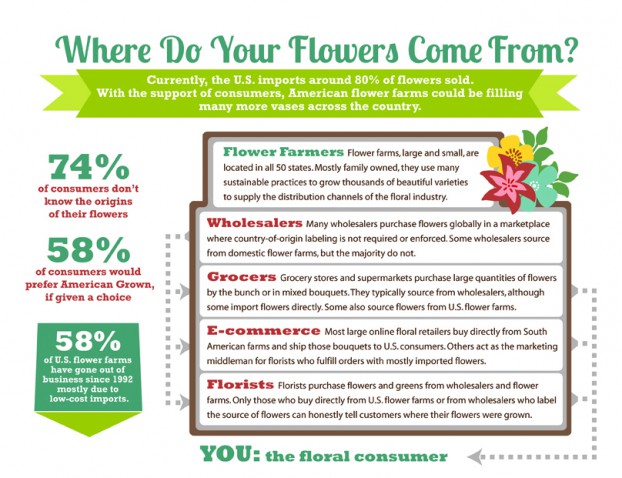
SFlowersInfoGraphic_Page1_Web

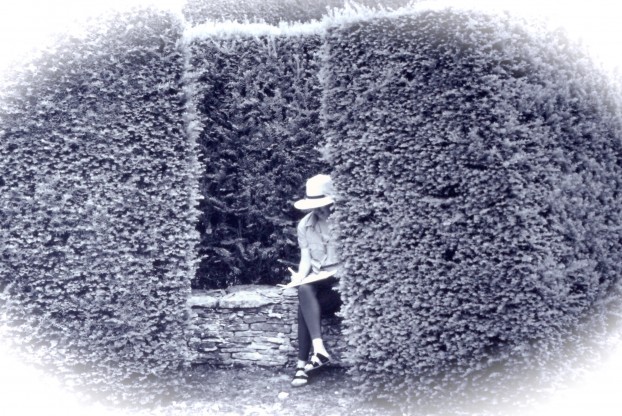
Abbie Zabar, captured in a familar pose by Rod Marton. She's sketching in a garden, with paper on her lap.

Abbie Zabar, captured in a familar pose at Rodmarton Manor in the UK. She’s sketching in a garden, with paper on her lap. (c) Sylvia Martin

Okay, today’s guest is thoroughly inspiring in a completely different way. When I first read the news that the work of Abbie Zabar, a New York-based artist and longtime virtual friend in the garden-writing world, was going to be celebrated this coming weekend with the opening of an exhibit of her floral drawings, I had to share her story with you.

As you will hear in our conversation, Abbie is a close observer of nature and of flowers, especially. She captures what she observes with colored pencils on sheets of rather ordinary paper or cardboard.
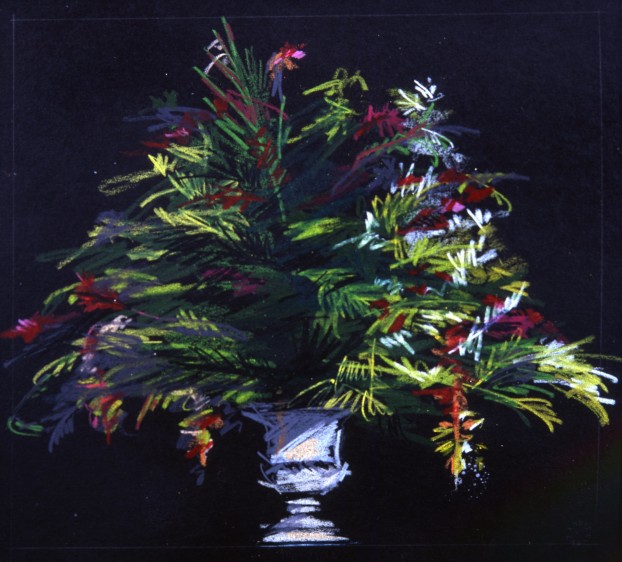
from June 23, 2002

from June 23, 2002

For one decade of her life, from the early 1990s to the early 2000s, Abbie walked from her apartment in New York City’s upper east side to the famed Metropolitan Museum of Art on Fifth Avenue. She entered the impressive Great Hall during the early hours, found a place to sit, and proceeded to sketch the grand floral arrangements on display there each week. (I feel quite an affinity for someone who honored such a creative ritual week after week; after all, I managed to make a bouquet each week for one year and ritualized that practice, but Abbie’s ten-year observance is hugely impressive).
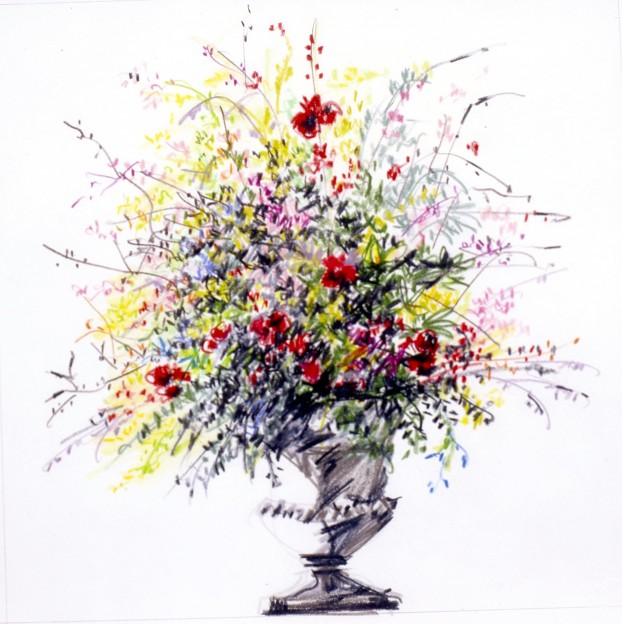
Abbie Zabar. December 6 1994. Collection of the artist

Abbie Zabar. December 6 1994. Collection of the artist

Abbie was enthralled by the five enormous flower-filled urns that stood in the Met’s Great Hall. At the time, the pieces were created by Chris Giftos, the Met’s former Master Floral Designer and Director of Special Events. For more than 30 years, Mr. Giftos was responsible for the beautiful arrangement in the Great Hall. And, as Abbie describes, the flowers occupied four large niches carved from the central piers, as well as the centrally located Information Desk. The weekly arrangements of fresh flowers appear, thanks to an endowment provided by the late Lila Acheson Wallace, who was one of the Museum’s largest single benefactors.
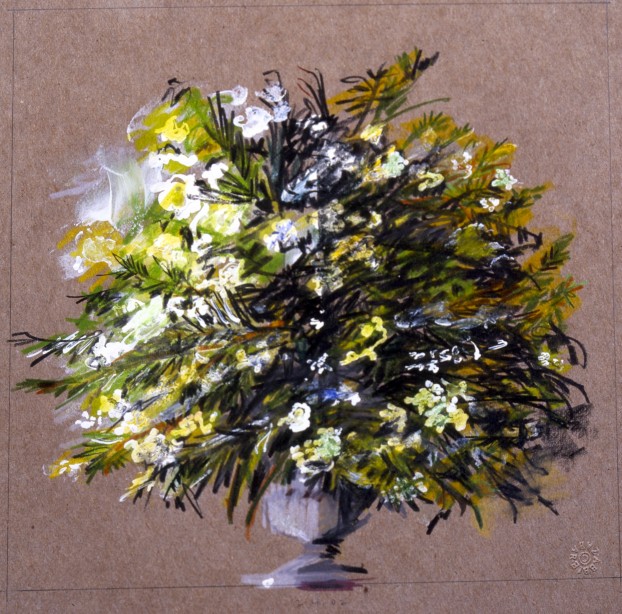
Abbie Zabar. February 4 2002. Collection of the artist

Abbie Zabar. February 4 2002. Collection of the artist

It’s no surprise to learn that Abbie and Chris became good friends. The fondness she had for this floral artist are reflected in each drawing she made in response to his work. Incredibly alluring, her diminutive floral portraits are breathtaking in both their simplicity and their complexity. Abbie’s own experience as a gardener and her innate knowledge of the flowers, fronds and leaves before her allowed her to capture the splendid bouquets with a sure and deft hand, well before the Museum opened its doors for the day.
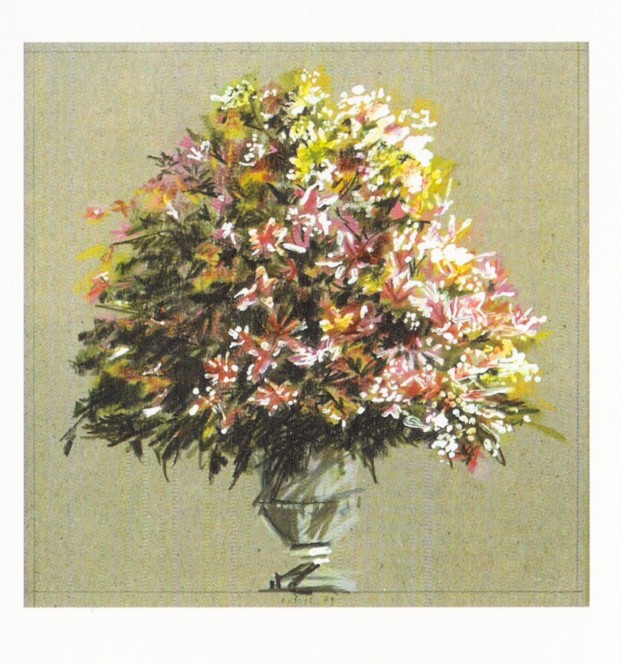
Abbie Zabar. October 16 1999. Collection of the artist

Abbie Zabar. October 16 1999. Collection of the artist

Working in situ and in pencil—the only implement allowed in the space —her drawings showcase the vibrancy, variety and vitality of the displays, as captured in one quick sitting.
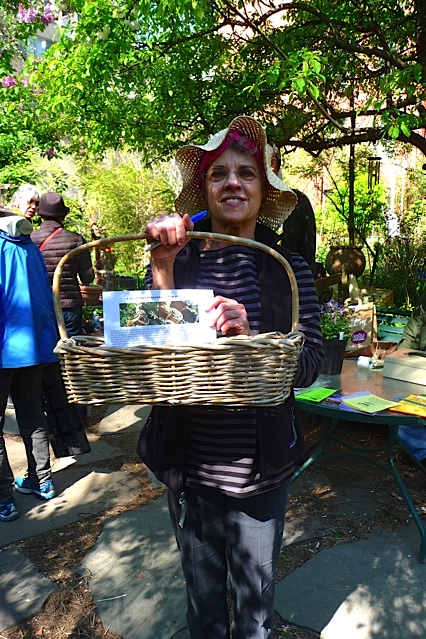
Abbie Zabar at the Manhattan Chapter of the North American Rock Garden Society's Plant Sale, where she was passing around saxifraga "favors." Photo courtesy of Yukie Kurashina.

Abbie Zabar at the Manhattan Chapter of the North American Rock Garden Society’s Plant Sale, where she was passing around saxifraga “favors.” Photo courtesy of Yukie Kurashina.

You will hear more about her process in our conversation, and please visit debraprinzing.com to see examples of the pieces that will be unveiled in this upcoming exhibition.

The show is called Abbie Zabar: Ten Years of Flowers, on view June 7 through October 4 at Wave Hill, a beautiful public garden and cultural center in The Bronx. The event is free with your admission to the grounds.

And here is a little more about Abbie’s background:

Abbie Zabar is an acclaimed artist, graphic and garden designer, and the author of five books. Her first book, The Potted Herb (1988), is now considered a gardening classic.

She has created garden and graphic designs for numerous prestigious companies and organizations, including Bergdorf Goodman, Daniel Boulud’s restaurants and PS 198.

Her landscape collages have been represented by Allan Stone and BlumHelman, and Flowers in the Great Hall of the Metropolitan Museum of Art series has been represented by Ursus Books & Prints and the Horticultural Society of New York.
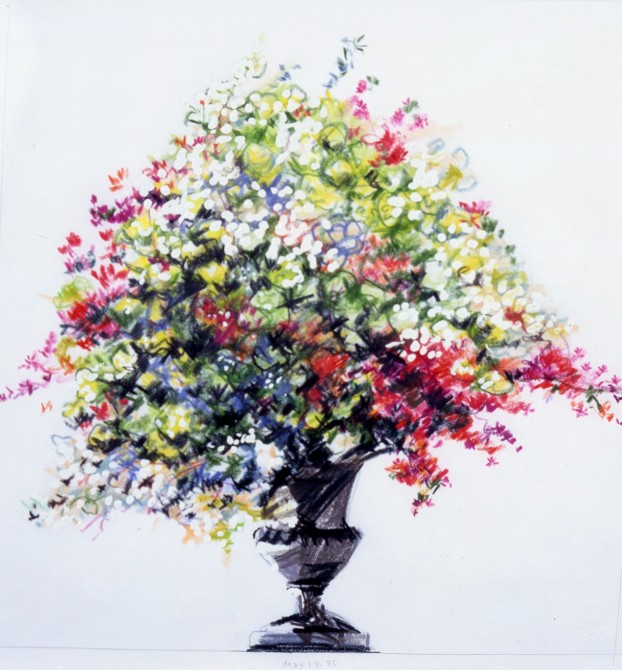
Abbie Zabar. May 18 1995. Private collection

Abbie Zabar. May 18 1995. Private collection

Abbie’s artwork has been shown at the Museum of Modern Art, the Cooper-Hewitt Museum, the Parrish Museum, the International Paper Corporation, the Louvre, the Institute of Contemporary Arts (London) and the Vigeland Museum (Oslo), and is part of the permanent collections of the Mead Paper Corporation of America, the Brooklyn Museum, the Jewish Museum, the Hunt Institute for Botanical Documentation and the Smithsonian Museum.
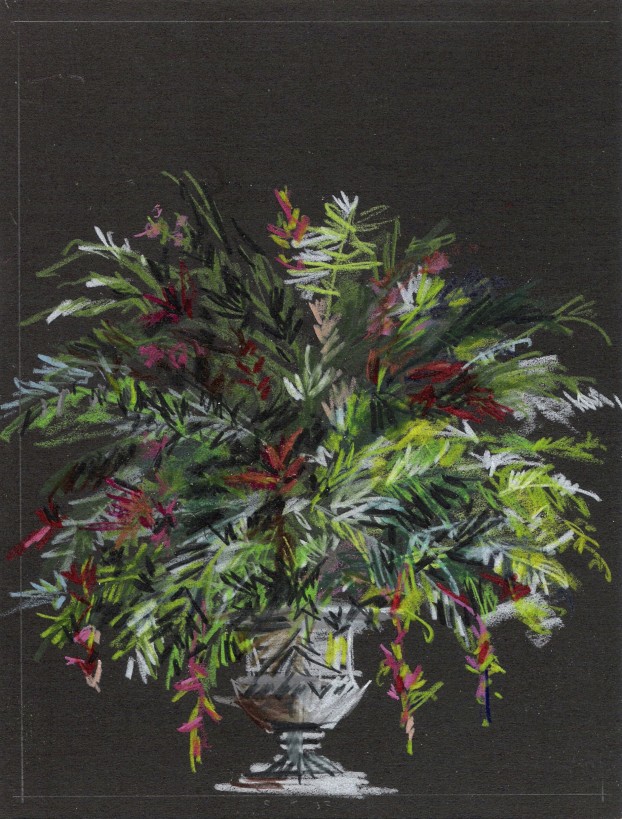
Abbie Zabar. May 17 2003. Collection of the artist.

Abbie Zabar. May 17 2003. Collection of the artist.

Abbie’s illustrated articles have appeared in Garden Design, Horticulture, Fine Gardening, Gourmet and The New York Times, as well as in numerous esteemed British publications. She received the 2010 Award for Best Newspaper Writing from the Garden Writers Association for her piece “A Vine in the Sky,” published in The Forward.
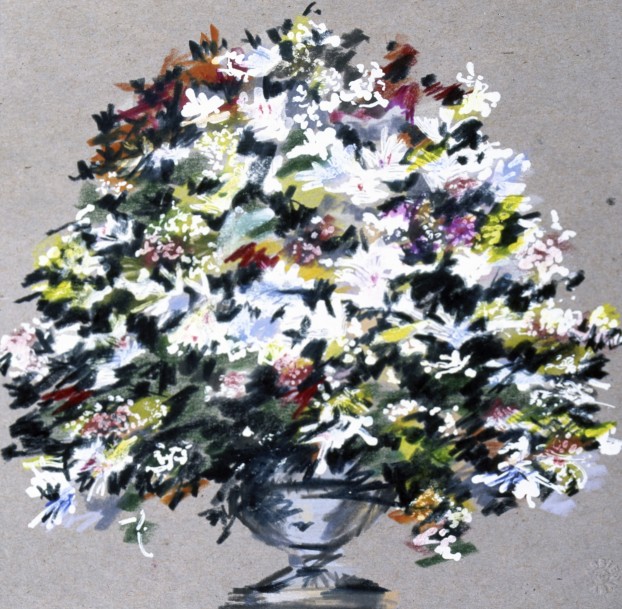
Abbie Zabar. September 24 2000. Collection of the artist

Abbie Zabar. September 24 2000. Collection of the artist

In 2014, she was honored with the North American Rock Garden Society’s Carleton R. Worth Award, given to an author of distinguished writings about rock gardening and rock garden plants. Zabar is currently the Program Chairperson for the Manhattan Chapter of the North American Rock Garden Society and a Learning Leader at P.S. 198.
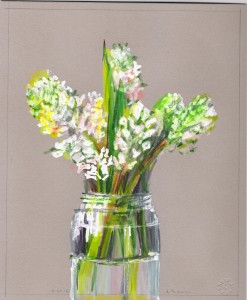
Jar with green hyacinths
Jar with green hyacinths

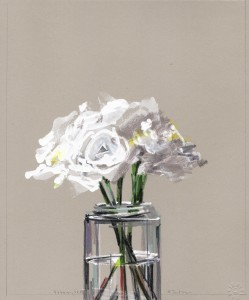
White roses in straight-sided jar.
White roses in straight-sided jar.

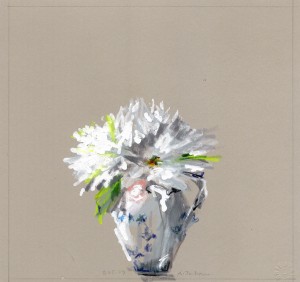
White roses, little creamer

White roses, little creamer


As Abbie and I discussed, not only is the exhibition at Wave Hill available for public viewing all summer long, continuing to October 4th, she has a second show in the works, which will run September 16th to October 2nd at W.M. Brady & Co., a gallery at 22 East 80th Street, just a few steps from The Metropolitan Museum of Art.

This collection of drawings includes the series of small floral studies that Abbie and I discussed at the close of our interview (and she generously shares a sneak peek of a few of those pieces here).

From the grand floral arrangements at the Met to these intimate moments of singular blooms captured in small vases, Abbie’s gifts as an illustrator of flowers are evident. And I know you’ll be as enchanted as I am. By the way, many of these pieces will be available for purchase, so please follow the links to the two institutions (Wave Hill and W.M. Brady & Co.) to inquire if you’re interested in a list of available works.

Thank you, Abbie Zabar, for showing us flowers in a new way. Not everyone is an artist or has the ability to use a pencil so masterfully as my friend Abbie. But this conversation has moved me to use my innate skills of observation more acutely, whether I’m on a walk in the park, purchasing flowers from my favorite flower farmer, or tending to plants in my own backyard.

Thanks again for joining me today for another wonderful conversation about flowers. Listeners like you have downloaded the podcast more than 50,000 times. THANK YOU to each and every one of you for downloading, listening, commenting and sharing. It means so much.

Until next week please join me in putting more American grown flowers on the table, one vase at a time. And If you like what you hear, please consider logging onto Itunes and posting a listener review.

The content and opinions expressed here are either mine alone or those of my guests alone, independent of any podcast sponsor or other person, company or organization.

The Slow Flowers Podcast is engineered and edited by Andrew Wheatley and Hannah Holtgeerts. Learn more about their work at shellandtree.com.
Week 21 // Slow Flowers Challenge with Mock Orange and Garden Peonies

Saturday, May 30th, 2015
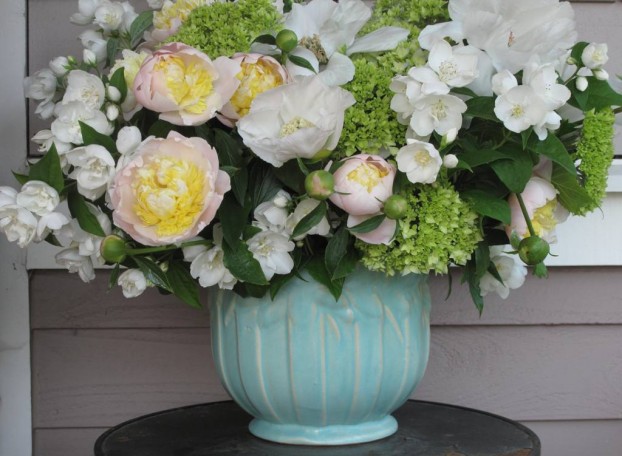
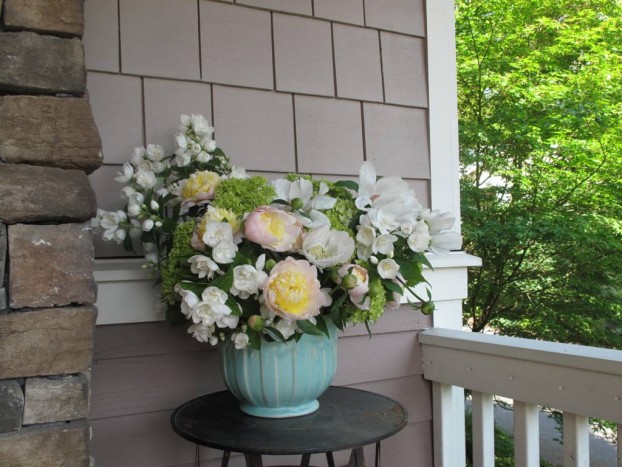
Back Porch Bouquet - with every bloom clipped from my garden.

Back Porch Bouquet – with every bloom clipped from my garden.

After all the traveling I’ve done since March, it’s so nice to be HOME. So for the last week of May, the Slow Flowers Challenge has stuck close by. All of these flowers are straight from my garden. You could call it the “5 Step Bouquet.”

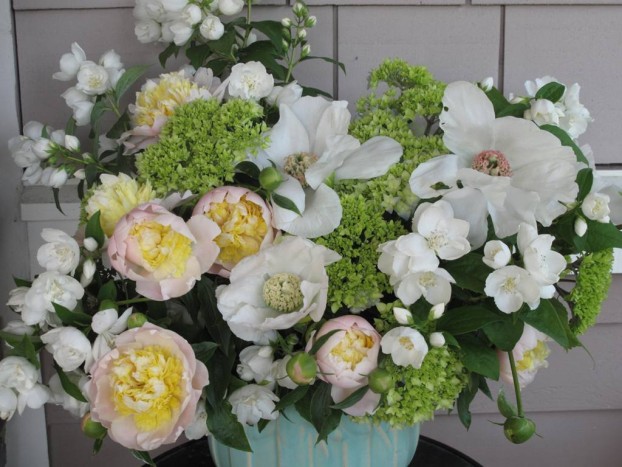
I wish you could inhale the light fragrance of the peonies combined with the sweetly scented mock orange blossoms (Philadelphus coronarius). Wow! It’s a perfect pairing to grace the small table in our home’s entry, allowing me to share the garden perfume and perfection with anyone who might stop by this weekend.
Two types of peonies, a profusion of mock orange, and young hydrangea buds.

Two types of peonies, a profusion of mock orange, and young hydrangea buds.

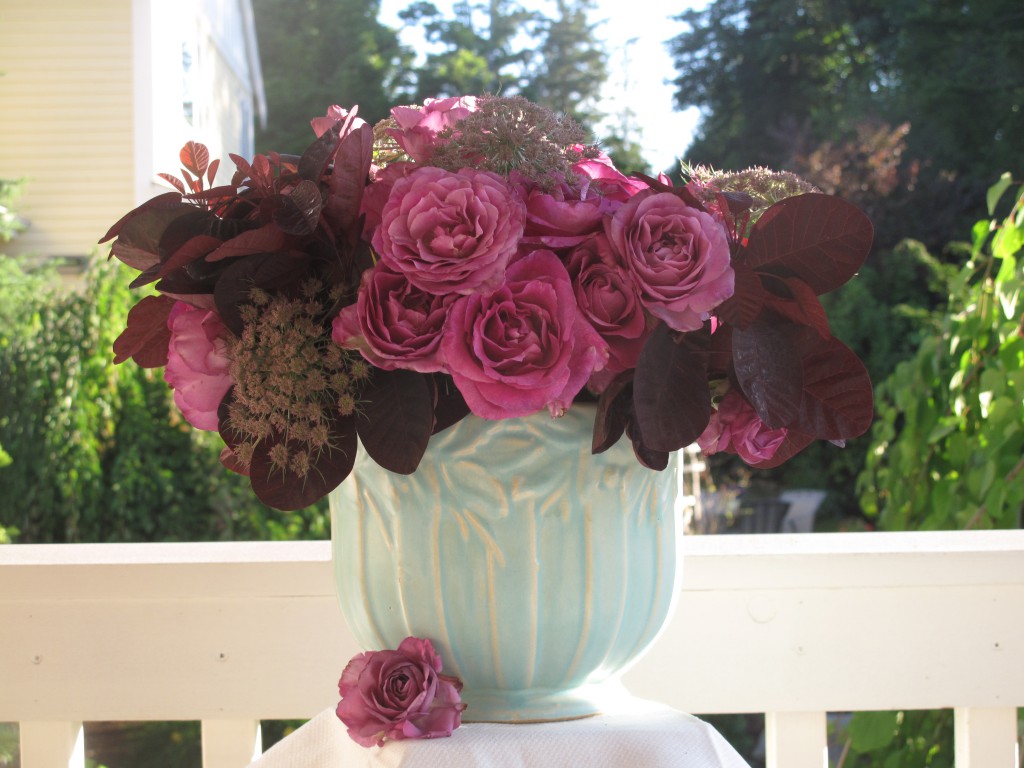
I especially love using this vintage American-made vase. It is also featured on pages 50-51 of Slow Flowers, where it holds beautiful garden roses that I paired with smoke tree and the ‘Black Knight’ Queen Anne’s lace. The 7-inch tall McCoy jardiniere is from the 1940s era and has a raised design of vertical bands (maybe suggesting picket fencing?) and a rim of flowers. It’s the ideal scale vase for such blousy bouquets!
By the way, here’s that design from Slow Flowers where you’ll spot the familiar vase:
Analogous color palette of pinks, mauves and purples! This design was originally published in my book, Slow Flowers

Analogous color palette of pinks, mauves and purples! This design was originally published in my book, Slow Flowers

Below are a few more images from yesterday’s bouquet. The ingredients:

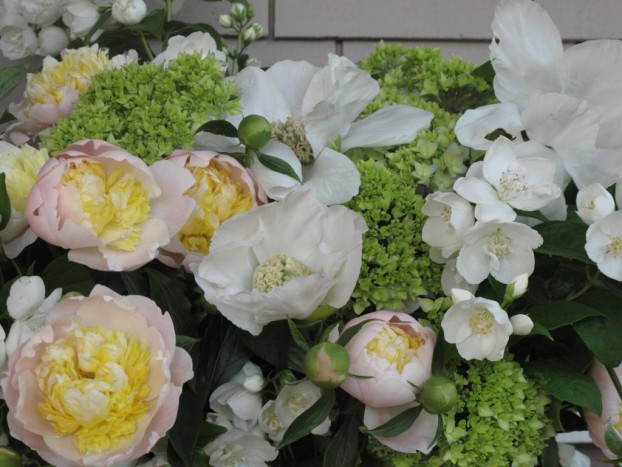
  • Two types of peonies, both inherited when we moved to this home. So I don’t know the cultivars. I love the pale pink with the fringey yellow centers, but I think I love the single white variety even more, especially for its dense centers, some cream; some rose-tinged.
  • Mock orange branches and blossoms
  • Immature hydrangea stems, used as a lime green accent.
Quite delicious to the eye and fragrant to the nose!

Quite delicious to the eye and fragrant to the nose!

More delicious details!

More delicious details!

Slow Flowers in the UK: A visit to Petersham Nurseries in Surry

Monday, May 25th, 2015
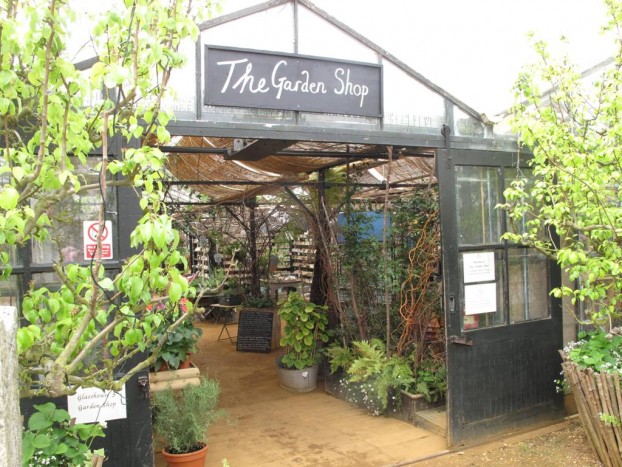
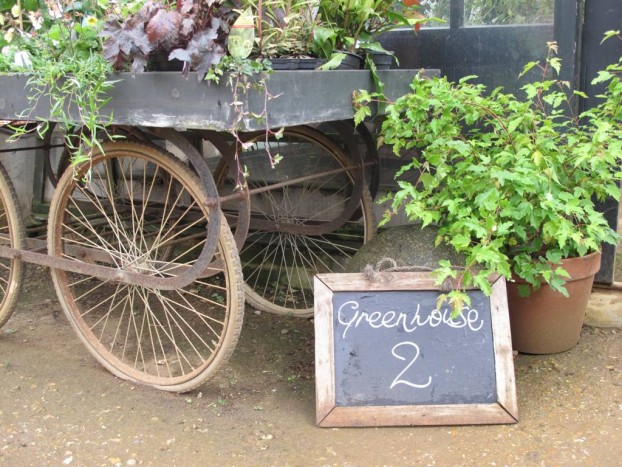
The Garden Shop at Petersham's Nurseries

The Garden Shop at Petersham Nurseries

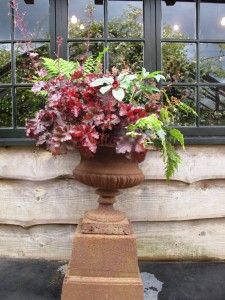
Lovely spring urn with heuchera, ferns and more.

Lovely spring urn with heuchera, ferns and more.

After a harrowing taxi ride (one hour for 12 miles?) from London, my mom and I arrived on Wednesday at Petersham Nurseries. And once we discovered what was inside the gates, we concluded that our 40 pound fare was totally worth it!

We took the journey in order to meet up with Sarah Statham of Simply by Arrangement, an up-until-now virtual flower friend, who had invited us to spend a few days with her in Yorkshire.

She was also in London for the RHS Chelsea Flower Show and made the brilliant suggestion that we use Petersham as a meeting place before driving to Hebden Bridge, where she lives and designs flowers (and more on that later!).

Petersham Nurseries dates to the 1970s when it was a local garden center carved out of the Petersham House estate.

After years of neglect, the nursery reopened in 2004 after extensive restorations by Gael & Francesco Boglione, the current owners of Petersham House.

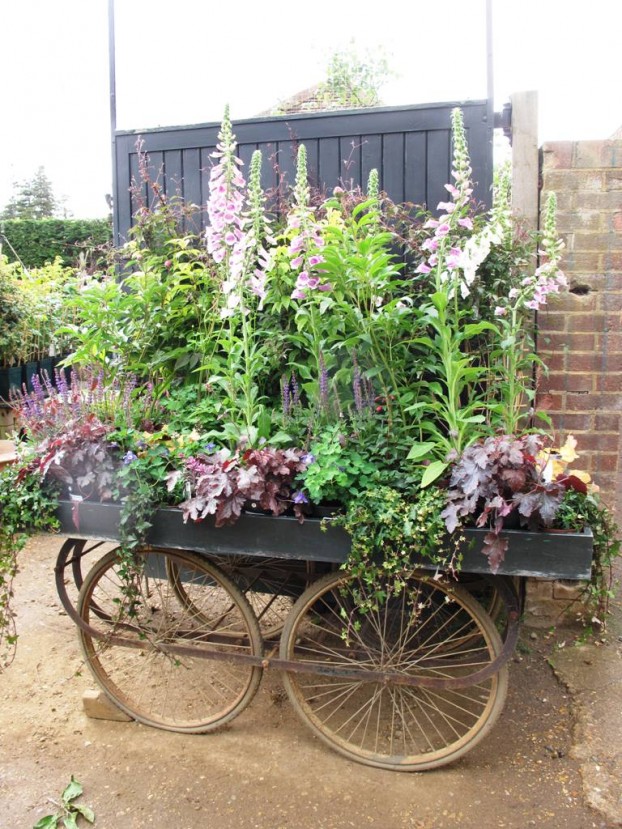
Plant displays on old carts - what's more perfect?

Plant displays on old carts – what’s more perfect?

Foxgloves galore! It is spring, after all.

Foxgloves galore! It is spring, after all.

Lunch at Petersham Nursery: pea-and-mint soup with tomato and burrata salad.

Lunch at Petersham Nursery: pea-and-mint soup with tomato and burrata salad.

Beautiful garden furniture, gifts, tableware and antiques can now be found amongst the plants which adorn the vintage glass greenhouses.

In a ramshackle wooden teahouse we found delicious pastries and homemade cakes (as well as lunch!).

There is also a popular restaurant to which I would love to return some day.

This is a thoroughly charming destination not far from London.

It has history, an obviously talented team of horticulturists, beautiful plants and that timeless character you can’t get in the U.S.

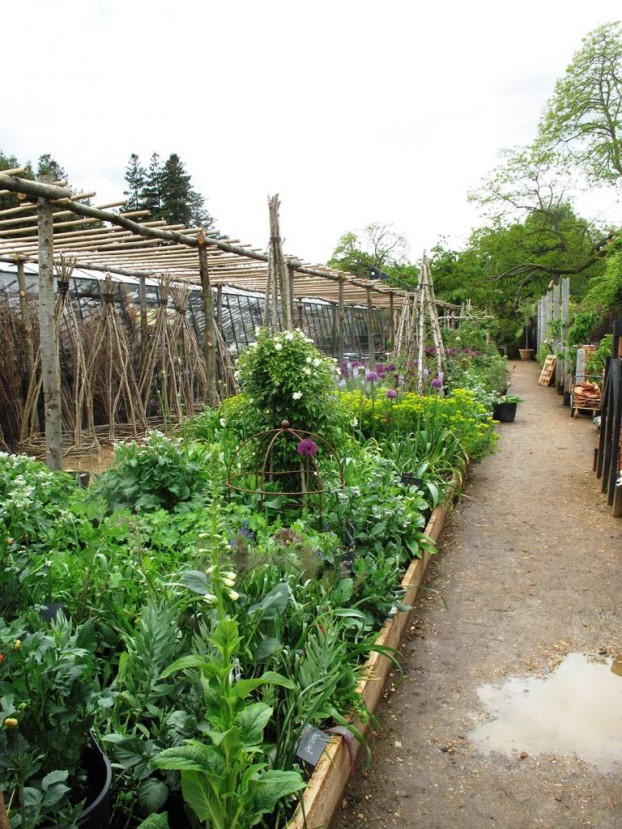
The cutting garden, where we met up with Caroline and Rosie. This lovely long raised bed supplies flowers for Petersham House, as well as the Restaurant and Cafe.

The cutting garden, where we met up with Caroline and Rosie. This lovely long raised bed supplies flowers for Petersham House, as well as the Restaurant and Cafe.

Sarah planned a huge surprise for us – a private tour of the Petersham House grounds. Her friend Caroline is gardening here as a volunteer, working alongside Rosie, who is the genius behind many of the landscape plantings you see in these images.

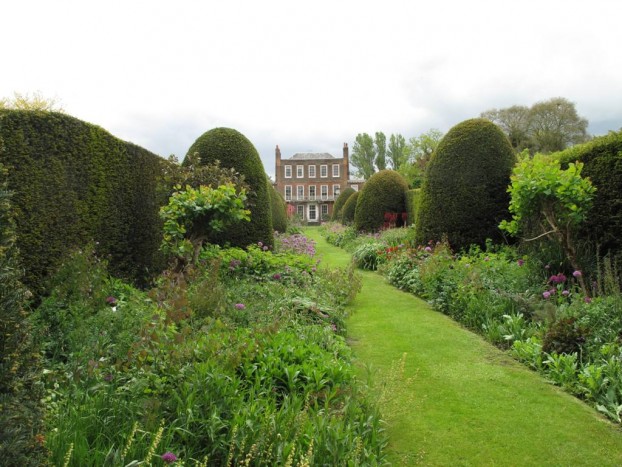
Not much more to say than this: Please gaze upon the beauty of a 150-foot-long English garden double-border in May. Few can replicate this, due to lack of time, money, or land – but please feel free to borrow a few ideas for your own patch! And if you will be in London on June 7th, you can visit the private grounds of Petersham House as part of the National Gardening Scheme charitable program.
Petersham House, as seen from the long border.
Petersham House, as seen from the long border.

The glorious Petersham double border. Sublime!

The glorious Petersham double border. Sublime!

Week 20 // Slow Flowers Challenge with #Britishgrown flowers

Sunday, May 24th, 2015
Beautiful Yorkshire-grown blooms from the garden of Sarah Statham and James Reader

Beautiful Yorkshire-grown blooms from the garden of Sarah Statham and James Reader

I promised to share an uniquely British-themed arrangement for this week’s Slow Flowers Challenge  and the floral offerings you see here are indeed straight from the garden of Sarah Statham, my host these past four days.
Sarah is the owner of a wonderful enterprise called Simply by Arrangement, a floral workshop-culinary experience created with her friend Christie Buchanan.
I met Sarah “virtually” when introduced by Gill Hodgson of Flowers from the Farm. Gill is the champion behind the organization that promotes British flowers and the farmers and florists involved with the renaissance of their domestic floral industry (sound familiar?). When I told Gill that I would be in England to tour the Chelsea Flower Show, she arranged an ambitious itinerary for me and my traveling companion, my mother Anita.
After four days in and around London, we headed to Northeast England with Sarah. She and her husband James hosted us at their lovely home in the Yorkshire village of Hebden Bridge.
We’ve had many wonderful moments together, including joining a gathering of the Yorkshire flower farmers and florists who are part of Flowers from the Farm. They graciously asked me to share the story of Slow Flowers and news of the American grown floral movement. And that was a rare privilege made more special by the service of afternoon tea, in the most proper fashion.
On Friday, Sarah gave me a pair of clippers and a bucket and let me loose in her garden. Together, we both designed truly local and seasonal Yorkshire arrangements to share with you here.
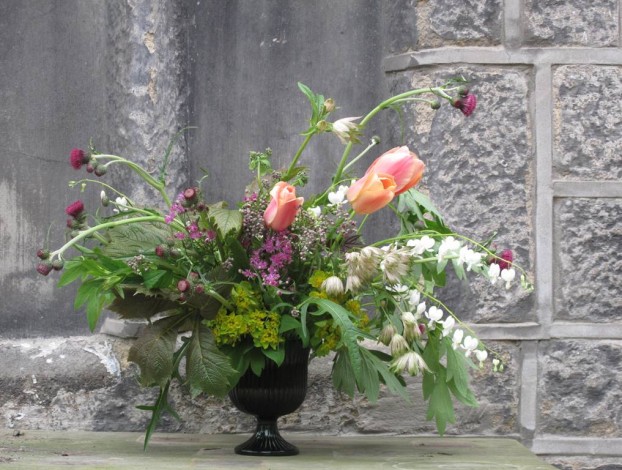
The green glass vase contains an exhuberant display of spring Yorkshire flowers - and captures a moment in time as I clipped and designed with flowers from Sarah and James's garden.

The green glass vase contains an exhuberant display of spring Yorkshire flowers – and captures a moment in time as I clipped and designed with flowers from Sarah and James’s garden.

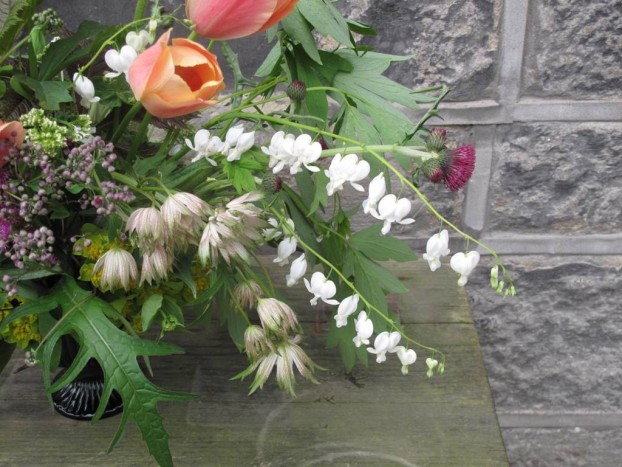
The flowers and foliage used above in my bouquet include:

  • White Centranthus ruber ‘Albus’
  • A type of acid-green euphorbia
  • Rodgersia foliage (large, dramatica and a beautiful dark rust color)
  • Astrantia blooms (whitish-green)
  • White bleeding heart (Dicentra) – flowers and foliage
  • Meadow rue (Thalictrum) flowers
  • Peach tulips
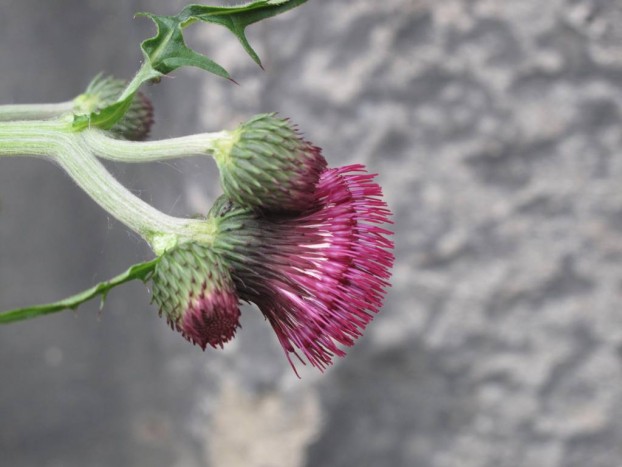
  • Cirsium rivulare ‘Atropurpureum’ – a NEW perennial to me with deep burgundy, thistle-like flowers and long prickly foliage.
Cirsium rivulare 'Atropurpureum'

Cirsium rivulare ‘Atropurpureum’

Here's Sarah, putting the finishing touches on her lovely design.

Here’s Sarah, putting the finishing touches on her lovely design.

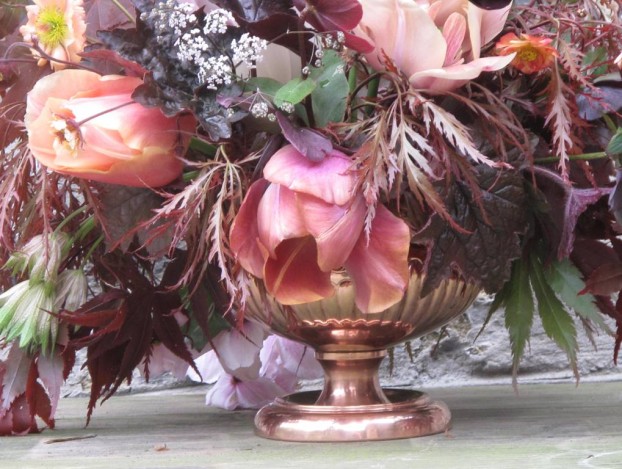
Sarah made me thoroughly envious when I saw her collection of vintage copper containers, including a few she picked up at a Chelsea Flower Show vendor who I’d completely overlooked. The copper informed her designs, as she opted for a sultry burgundy, plum and apricot palette.  

It is stunning, as you can see below:

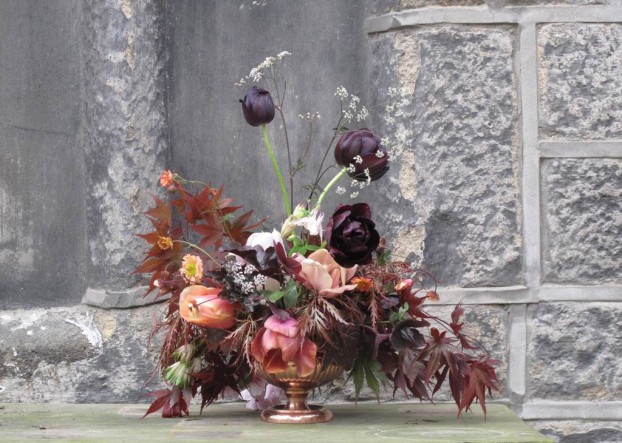
A copper-inspired bouquet by Sarah Statham - so gorgeous!!!

A copper-inspired bouquet by Sarah Statham – so gorgeous!!!

Here are the ingredients Sarah selected:

  • Two types of Japanese maple foliage
  • A variety of tulips, including peach, plum, white and almost-brown
  • Geum with an apricot flower
  • White Astrantia
  • White-flowering Anthriscus sylvestris ‘Raven’s Wing’
Here are the ingredients Sarah selected: Two types of Japanese maple foliage A variety of tulips, including peach, plum, white and almost-brown Geum with an apricot flower White Astrantia White-flowering Anthriscus sylvestris 'Raven's Wing'

Up close, Sarah’s design is completely shimmery.

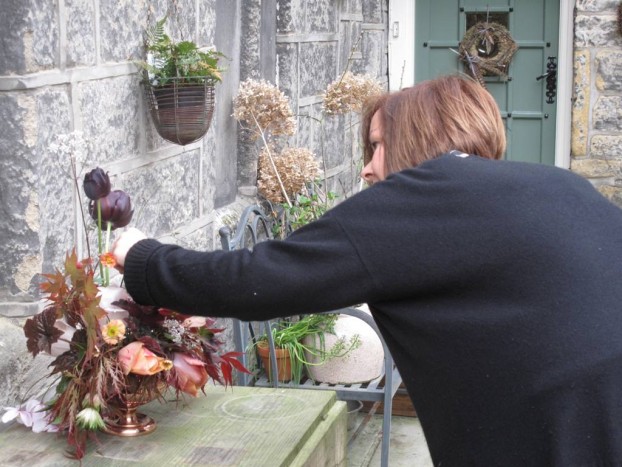
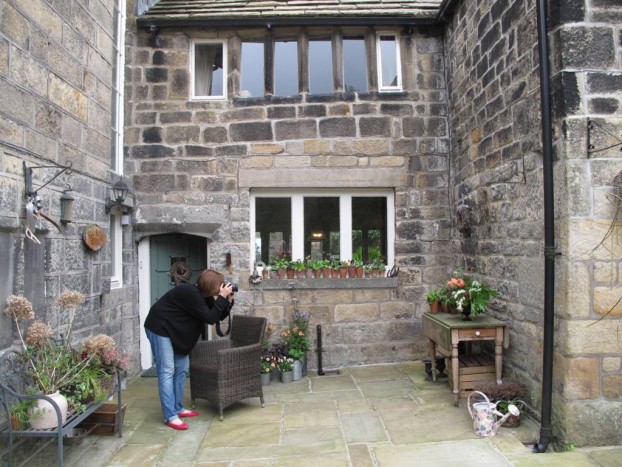
The photo shoot: In the courtyard of Sarah's ancient stone cottage in Yorkshire. So magical to be there!

The photo shoot: In the courtyard of Sarah’s ancient stone cottage in Yorkshire. So magical to be there!

Week 19 // Slow Flowers Challenge with Flowering Branches

Friday, May 15th, 2015
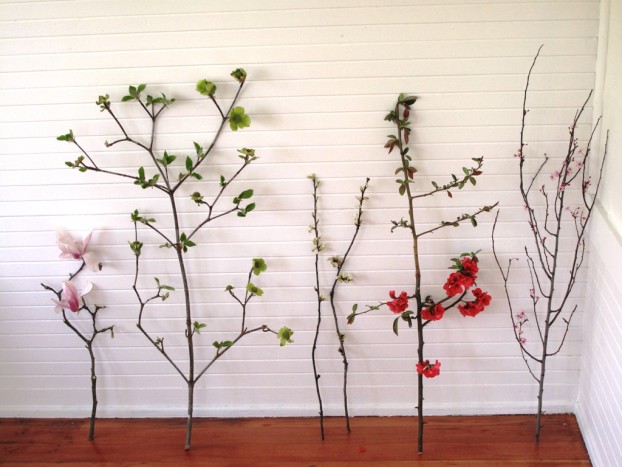
Some of Springtime's most alluring flowering branches include: Magnolia, Dogwood, Apricot, Quince and Plum.

Some of Springtime’s most alluring flowering branches include: Magnolia, Dogwood, Apricot, Quince and Cherry.

We’re digging into the archives this week for the  Slow Flowers Challenge. That’s what happens when I find myself on too many airplanes, which is ironic, isn’t it? It’s sort of the opposite of my “Slow” aspirations!

However, I’m just back home from speaking and teaching in Orlando, Florida. And now, after recharging for the past five days in Seattle, I’ve re-packed and am heading to the airport tonight to fly to London!!!

That’s right! I’m off to the RHS Chelsea Flower Show. I’ll also be meeting many of the people active in the British Flowers scene – U.K. flower farmers and florists who have many of the same objectives that we have here in the U.S. To put local, seasonal and sustainably-grown flowers at the center of our tables!

Stay tuned, because I promise that next week’s Slow Flowers Challenge will be decidedly British!

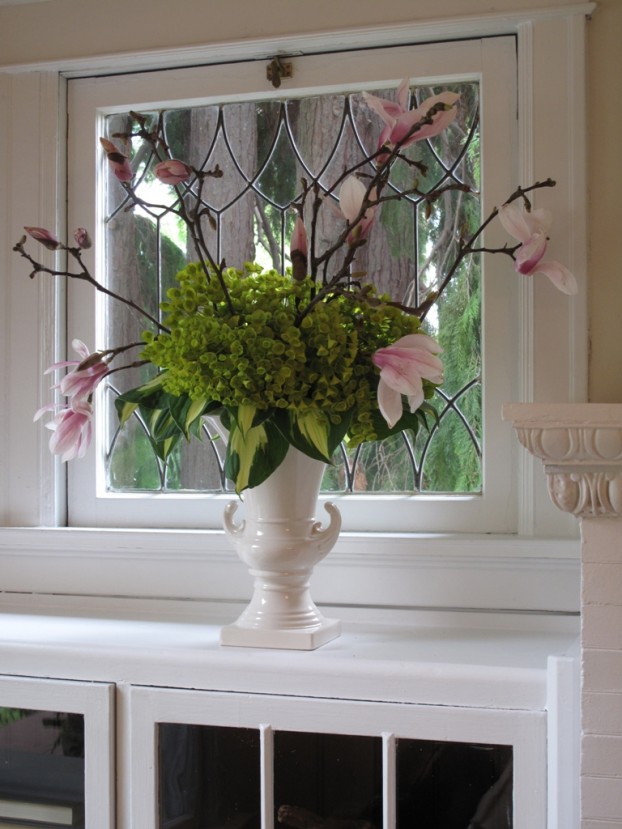
The acid green of variegated hostas and euphorbia create a "skirt" effect for flowering magnolia branches.

The acid green of variegated hostas and euphorbia create a “skirt” effect for flowering magnolia branches.

I absolutely love the images you see here. I created these arrangements for a national magazine story that was, sadly, never published. The editors, as they say, went in a different direction.

But my photos live on and I’m delighted to share them with you here.

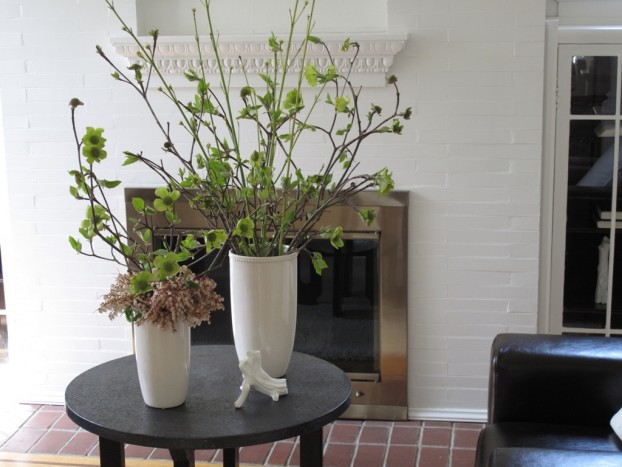
The vase at left is filled with Pieris and Dogwood; the vase at right has both flowering Dogwod and twig dogwood.

The vase at left is filled with Pieris and Dogwood; the vase at right has both flowering Dogwod and twig dogwood.

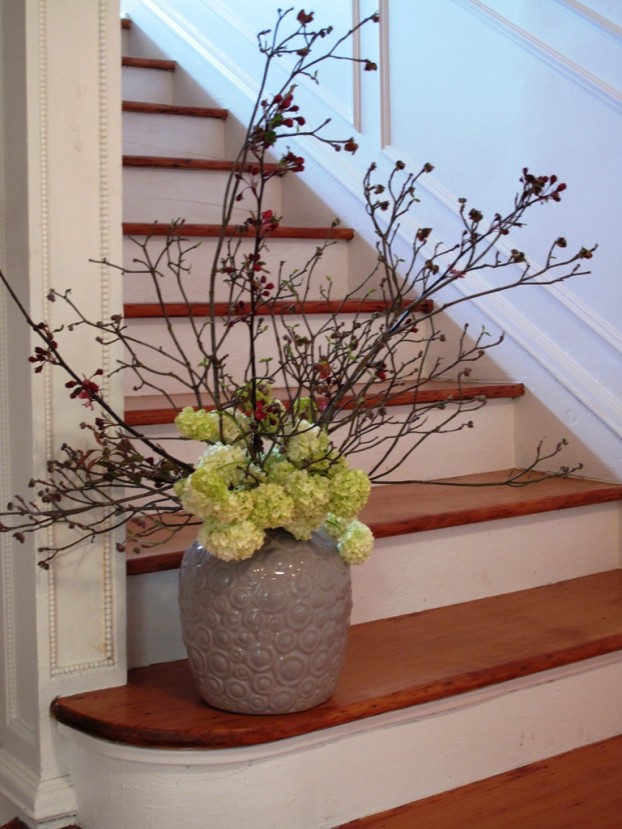
Flowering Cherry with Snowball Viburnum.

Flowering Cherry with Snowball Viburnum.

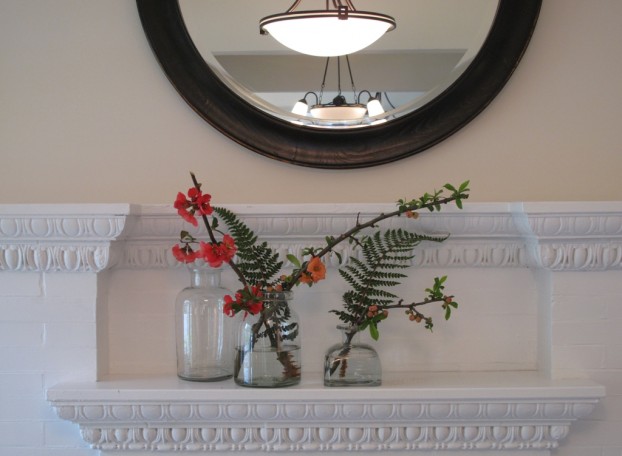
Simple: Quince in two hues, plus swordfern.

Simple: Quince in two hues, plus swordfern.

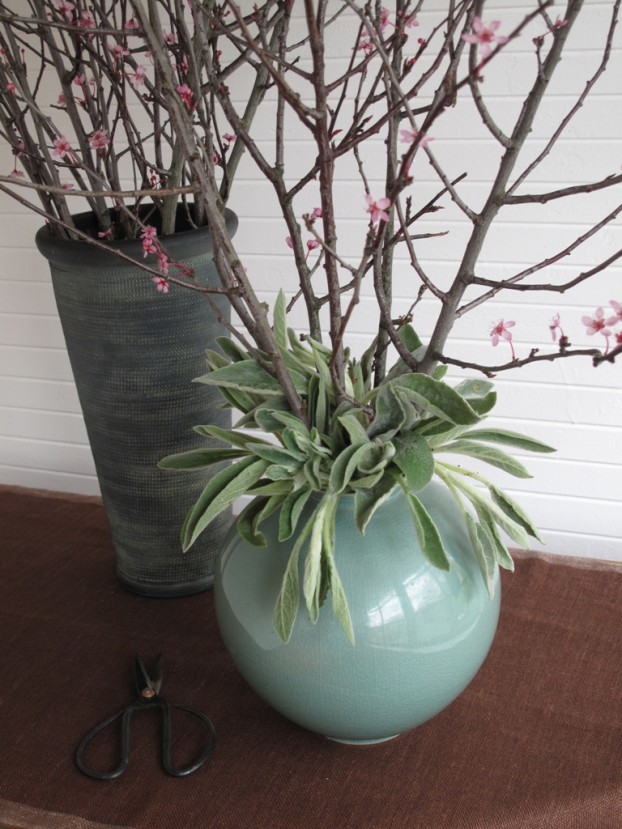
Flowering plum, paired with Lamb's Ear foliage.

Flowering plum, paired with Lamb’s Ear foliage.

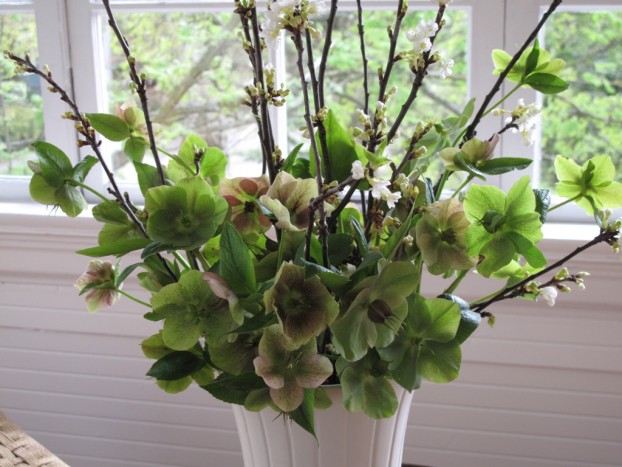
Spring hellebores paired with flowering apricot branches.

Spring hellebores paired with flowering apricot branches.

Week 15 // Spring Awakening

Sunday, April 19th, 2015
The pods and buds are waking up. They're shouting, "we're here!"

The pods and buds are waking up. They’re shouting, “we’re here!”

It’s been a crazy week here in Slow Flowers Land, but after 8 days of travel, I’m so delighted to be home in Seattle for a week. Seattle has been good to us, with mid-60s to 70-degree weather.
 
Today was no exception. I clipped a bit of this and that – all from my awakening garden. It truly is a Spring Awakening here!
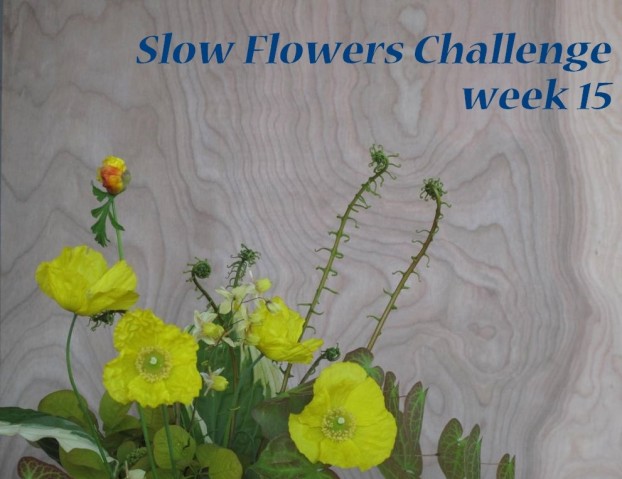
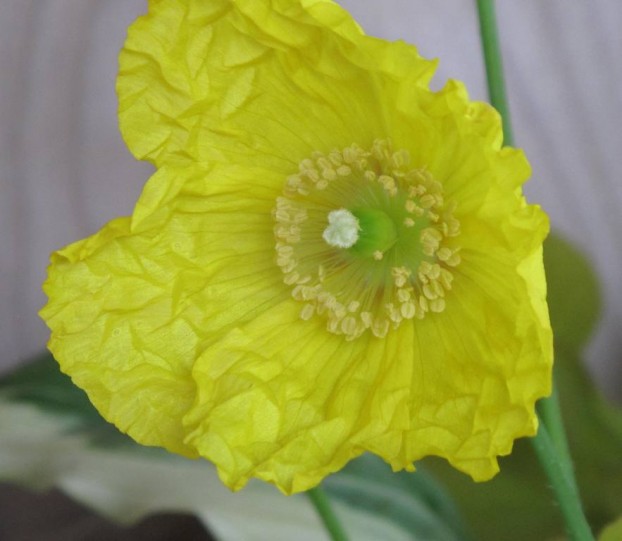
Just unfurled: a vivid yellow poppy

Just unfurled: a vivid yellow poppy

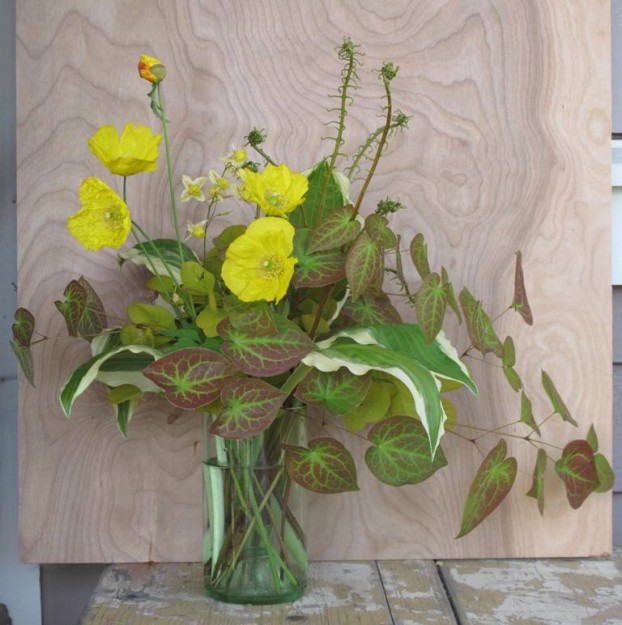
The delicate leaves and flowers that are pushing up through the April soil are each special in their own way. Here’s what I included in my spontaneous spring arrangement:

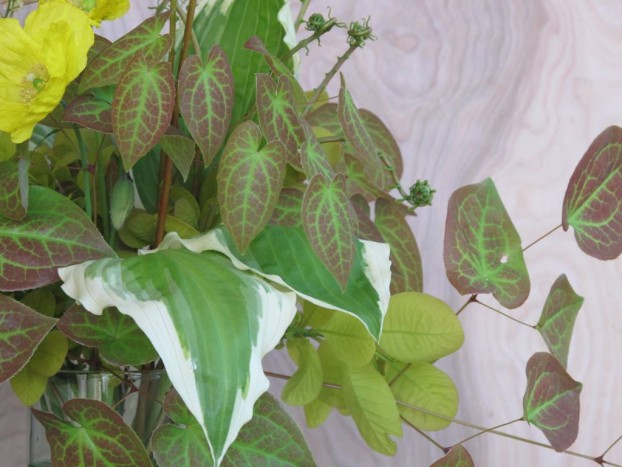
Variegated hosta leaves
Acid yellow smoke bush (Cotinus coggygria ‘Golden Spirit’)
The young tips of deer fern (Blechnum spicant)
Green-and-rust-variegated Epimedium leaves and a few flowering stems
Yellow poppies, flowers & buds

The final arrangement - all from April 18th in the garden

The final arrangement – all from April 18th in the garden

Love how all the season's new foliage works together.

Love how all the season’s new foliage works together.

A word about the vase. Christina Stembel of Farmgirl Flowers turned me onto“Wine Punts,” 100% recycled, made in USA, these beautiful vessels are wine bottles that have been repurposed into drinking glasses. Or, small vases. Available in sets of 4 in many colors. Love the size and the pale green hue.

Week 14 // A Visit to Laguna Beach to Play with Local Flowers & New Friends

Sunday, April 12th, 2015
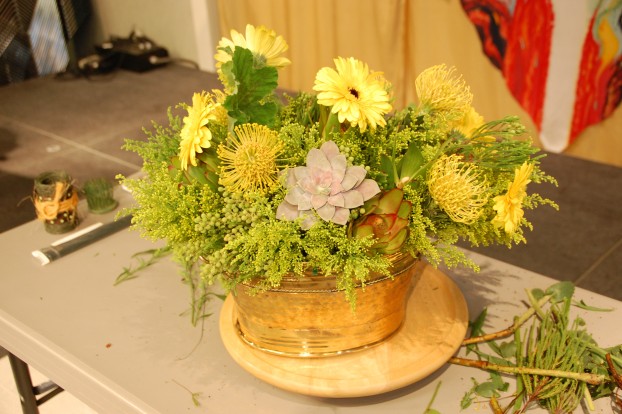
A golden and green floral palette - with a beautiful echeveria as a focal element

A golden and green floral palette – with a beautiful echeveria as a focal element. (c) Perry Stampfel


Welcome to Week 14 of the Slow Flowers Challenge! 

Greetings from Southern California, where I have been teaching this week! It’s a great excuse to show off some of the flowers grown in Encinitas, California – by Dramm & Echter, an established farm that grows beautiful blooms.

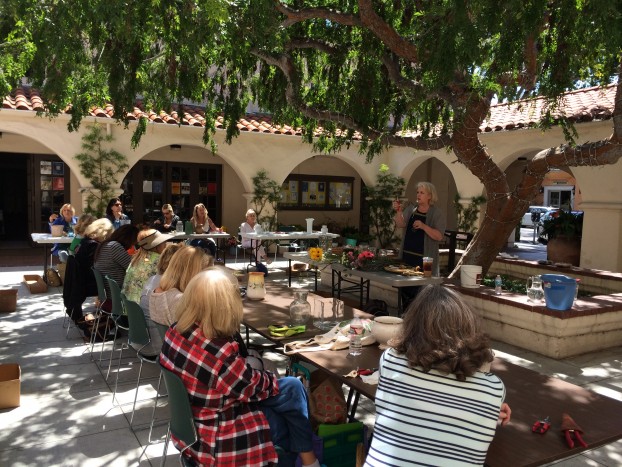
At the invitation of Lynn Stampfel of Laguna Beach Garden Club, I traveled to Southern California earlier this week. This established and active group of gardeners graciously welcomed me to lecture about American Grown Flowers and the Slow Flowers Movement. We had 125 in attendance and it was a whirlwind. Why? Well, for some crazy reason, I had agreed to give a 30-minute slide lecture, followed by a 30-minute eco-design demonstration.

Above is the arrangement I created for the demo. I used a vintage brass planter – low and wide – in order to show how to use chicken wire as the internal mechanics of the container.


The floral elements were all grown locally – well, the next county over – at Dramm & Echter, an American grown flower farm with 40 acres of field-grown crops and 950,000 square feet of greenhouses. Dramm & Echter’s primary floral crops are gerberas, lilies, spray roses and protea varieties. Then there’s so much awesome foliage and textural varieties, including solidago, leucadendron, ruscus, eucalyptus and more.

Demonstrating with the flowers from Dramm & Echter

Demonstrating with the flowers from Dramm & Echter. (c) Perry Stampfel

Working with the Dramm and Echter sales team, I ordered $800 of their flowers and foliage varieties for Laguna Beach Garden Club’s afternoon event: A hands-on design workshop.

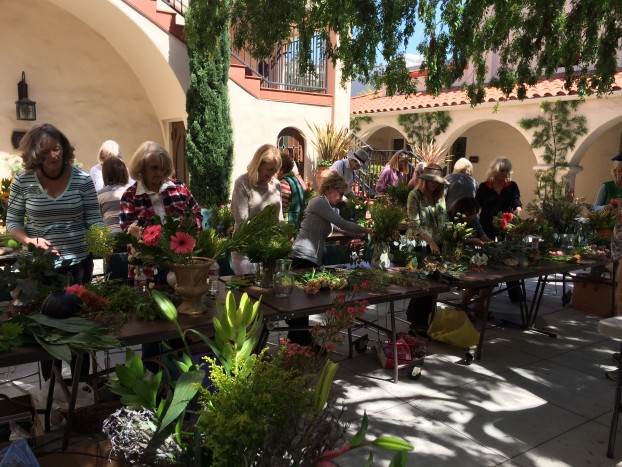
Twenty-five participants gathered in the courtyard of the local church that hosted our workshop under the lovely canopy of a melaleuca tree, we spent two hours arranging with those blooms. Everyone was encouraged to try using chicken wire or fluffy foliage or curly willow as the stabilizing matrix — all great alternatives to conventional chemical-base flower foam. I’m pleased to have been able to demonstrate the brand new Floral Soil plant-based product in one of my designs, shown below.

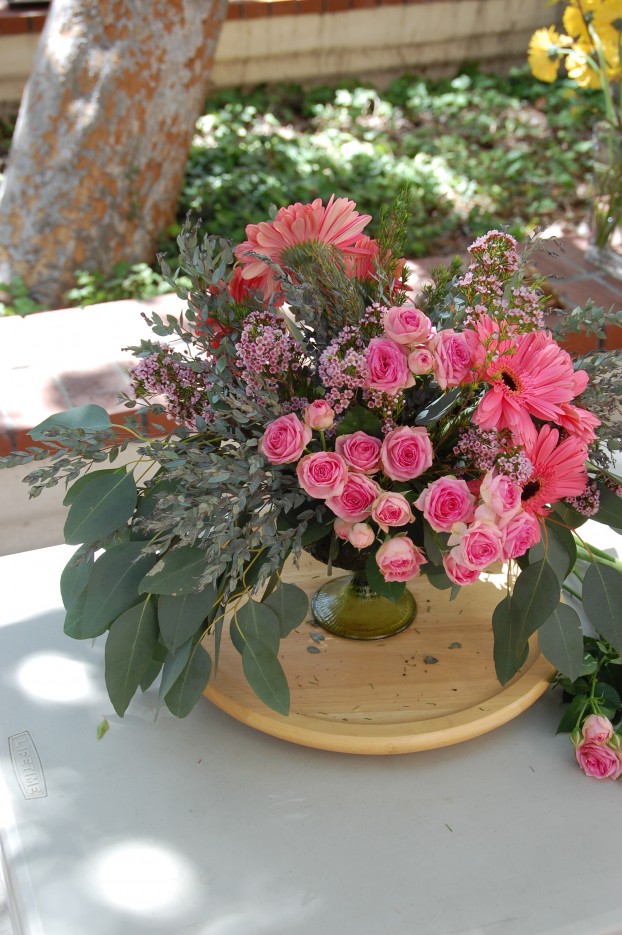
This vintage footed glass bowl contains Dramm & Echter florals, including gerberas, spray roses, wax flower, and two types of eucalyptus branches.

This vintage footed glass bowl contains Dramm & Echter florals, including gerberas, spray roses, wax flower, and two types of eucalyptus branches. (c) Perry Stampfel

Twenty-five Slow Flowers designers, all members of the Laguna Beach Garden Club, at work on their personal projects.

Twenty-five Slow Flowers designers, all members of the Laguna Beach Garden Club, at work on their personal projects. (c) Perry Stampfel

Week 13 // It started with the apricot hyacinths

Friday, April 3rd, 2015
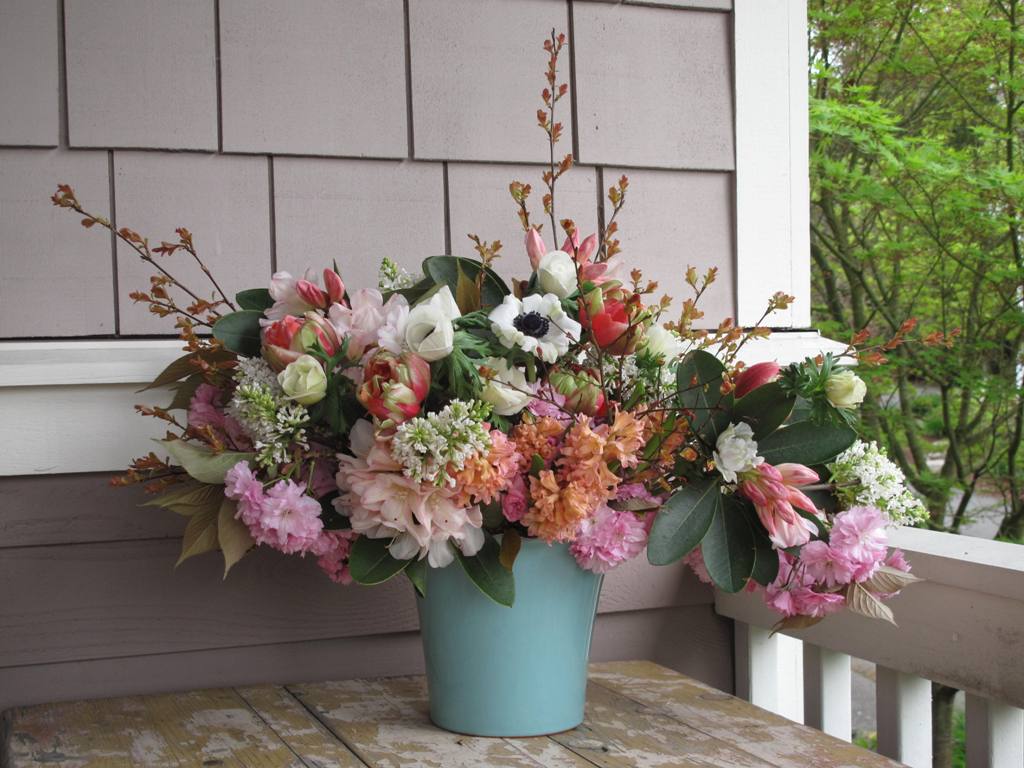
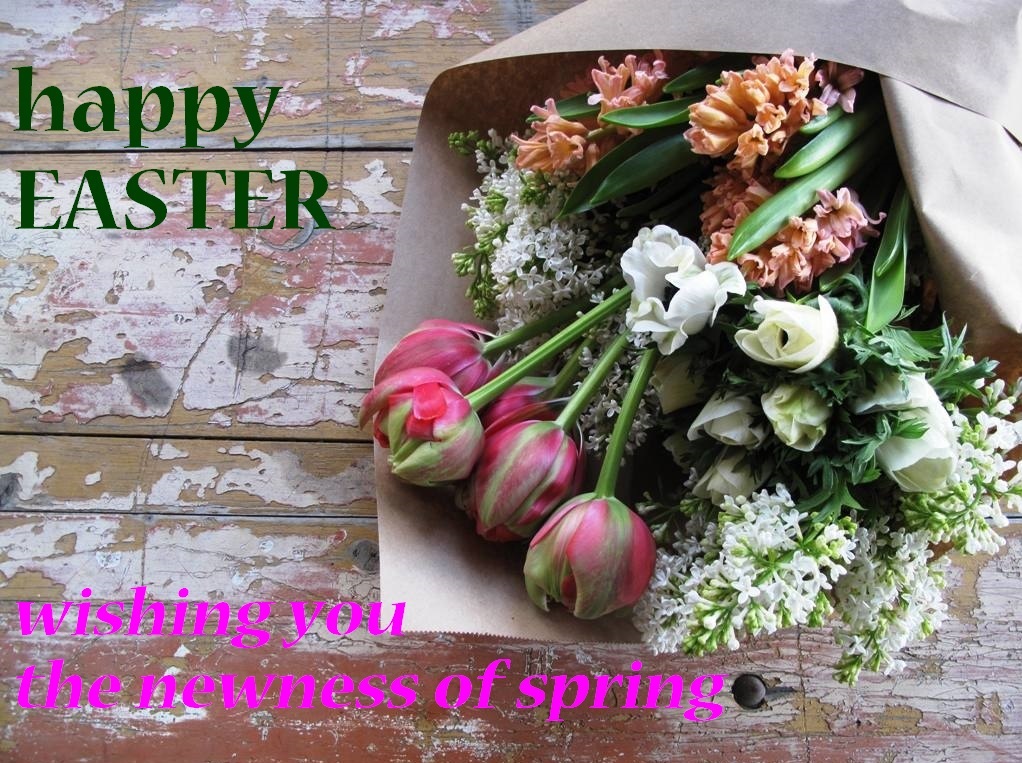
Here is the full view, photographed today on my back porch. So wonderful that the Japanese maple in the background is leafing out, too.

Here is the full view, photographed today on my back porch. So wonderful that the Japanese maple in the background is leafing out, too.

Welcome to Week 13 of the Slow Flowers Challenge!
To be perfectly honest, it started with those yummy apricot-hued hyacinth and the very first fragrant lilacs of the season – both from Northwest fields.
I love  the soft, billowy generosity of spring's early blooms - weed that right now after a winter of stiff conifers.

I love the soft, billowy generosity of spring’s early blooms – weed that right now after a winter of stiff conifers.

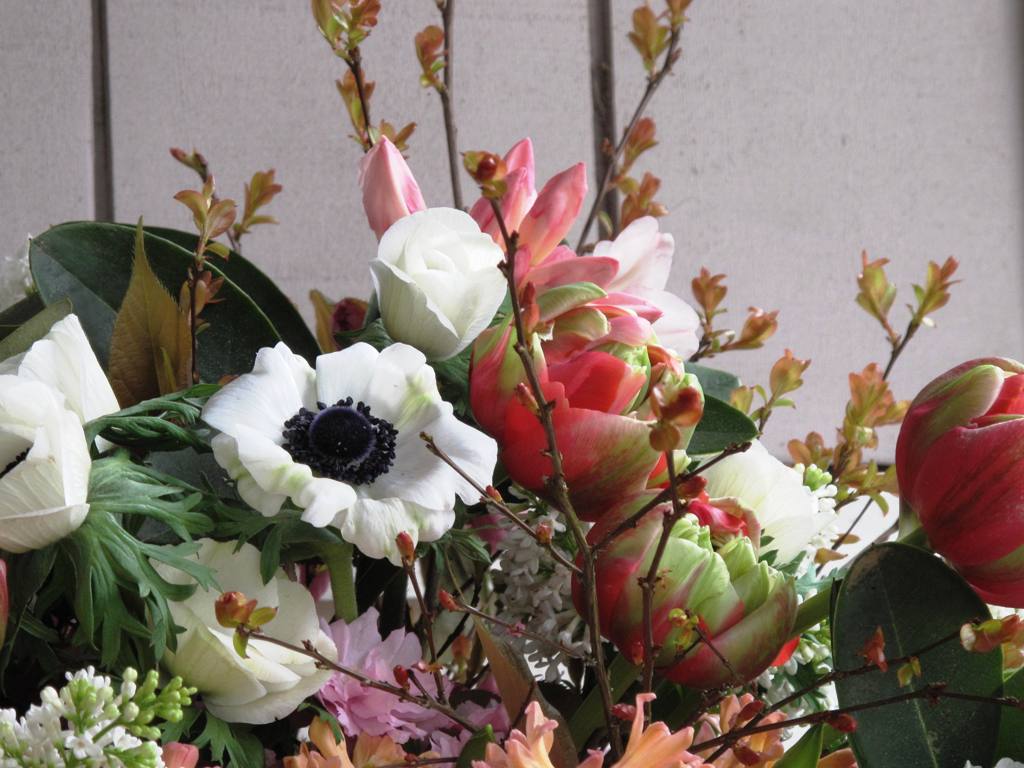
And then I couldn’t take my eyes off of the most luscious of tulips, a two-toned pink and green variety called ‘Renown Unique’, grown by my friends Pam and Kelly Uhlig of Sonshine Farms on Whidbey Island, Washington. (You can find incredible fancy tulips and bulbs grown by them and other local farms at the  Seattle Wholesale Growers Market right now).

In addition, I came home with a bunch of the dark-centered white anemones, also grown by Pam and Kelly. All are quite lovely but I wanted to add some goodies from my own garden to enhance this week’s arrangement.

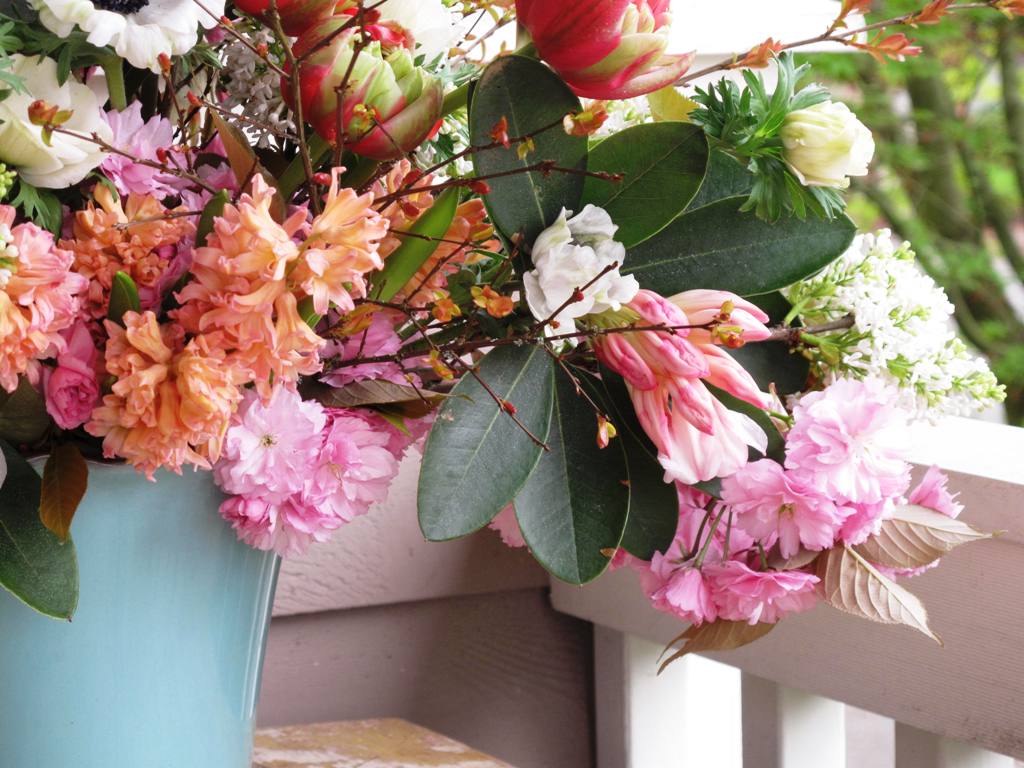
You can see that the cotton-candy-pink flowering cherry branches and the pale blush-apricot rhododendron clusters — and the just leafing out apricot foliage of an old azalea add their seasonal sparkle to the farmers’ flowers. Combining gifts from the garden with gifts from flower fields is a good thing!

My dear friend and San Diego garden TV personality  Nan Sterman gave me this lovely pot for a birthday several years ago. I’m using it for my Easter bouquet, but I’m sending her best wishes for a blessed Passover celebration that I’m sure she’s having with her family tonight.Our worlds continue to overlap and connect, especially when we love the garden, plants and nature.

A close-up shows those tulips, anemones and the delicate azalea foliage.

A close-up shows those tulips, anemones and the delicate azalea foliage.

Here is the entire recipe:

From my garden: Flowering cherry branches, rhododendron clusters (cut when most of the flowers are in bud, to encourage a longer vase life) and branches of just-emerging azalea foliage.

From the flower farm:

  • Apricot-peach hyacinths, grown by Oregon Flowers in Aurora, OR
  • White lilacs, grown by Tosh in Snohomish, WA
  • Renown Unique pink-and-green tulips, grown by Sonshine Farm on Whidbey Island, WA
  • White anemones with a black center, grown by Sonshine Farm on Whidbey Island, WA

HappyEaster

Santa Cruz’s Teresa Sabankaya of Bonny Doon Garden Co. draws inspiration from her own garden and nearby flower farms (Episode 187)

Wednesday, April 1st, 2015
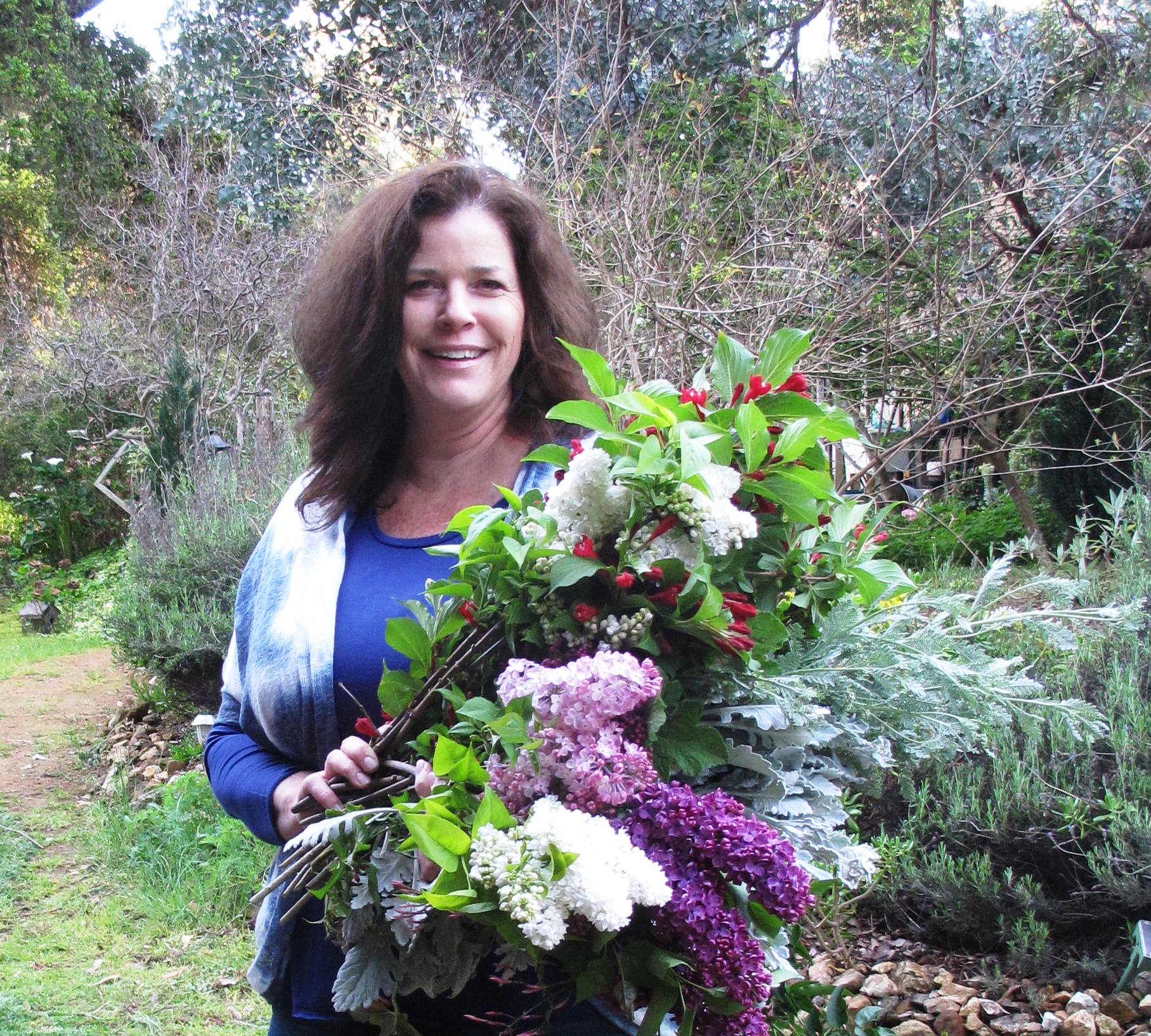
Inspiring floral designer Teresa Sabankaya of Bonny Doon Garden Co.

Inspiring floral designer Teresa Sabankaya of Bonny Doon Garden Co., captured while gathering flowers in her garden

In 2007, Amy Stewart’s Flower Confidential introduced readers to a Santa Cruz-area floral designer named Teresa Sabankya. She wrote:

Teresa Sabankaya has the kind of flower shop that you would dream about opening, if you are the kind of person who dreams of opening a flower shop. It’s in a little green metal kiosk outside Bookshop Santa Cruz in coastal California. The flowers – all interesting, unusual, old-fashioned, ephemeral, perfumy, not-your-typical-florist kind of flowers – dance and wave from buckets crowded around the stall. Her inventory is highly seasonal: in summer you’ll find larkspur and poppies, and in winter it’s all heathers and holly and berries. If you’ve been so busy that you haven’t noticed that spring has arrived, you’ll stop short at the sight of the pink cherry blossom branches bursting out of her shop in early March, and it’ll make you resolve to slow down and enjoy the season. Even if you don’t buy a flower – and Teresa would be happy to sell you a single flower – just the sight of her little stall will lift some of the weight off your shoulders. Anyone who doubts whether flowers can change a person’s emotional state has never watched the people walking by Teresa’s shop.” 

Amy continued: ” . . . The Bonny Doon Garden Company fit with my idea of how floral commerce must work – you’d grow some flowers in your garden, you’d buy some from a farmer down the road, and you’d put them in buckets and sell them to your neighbors.”

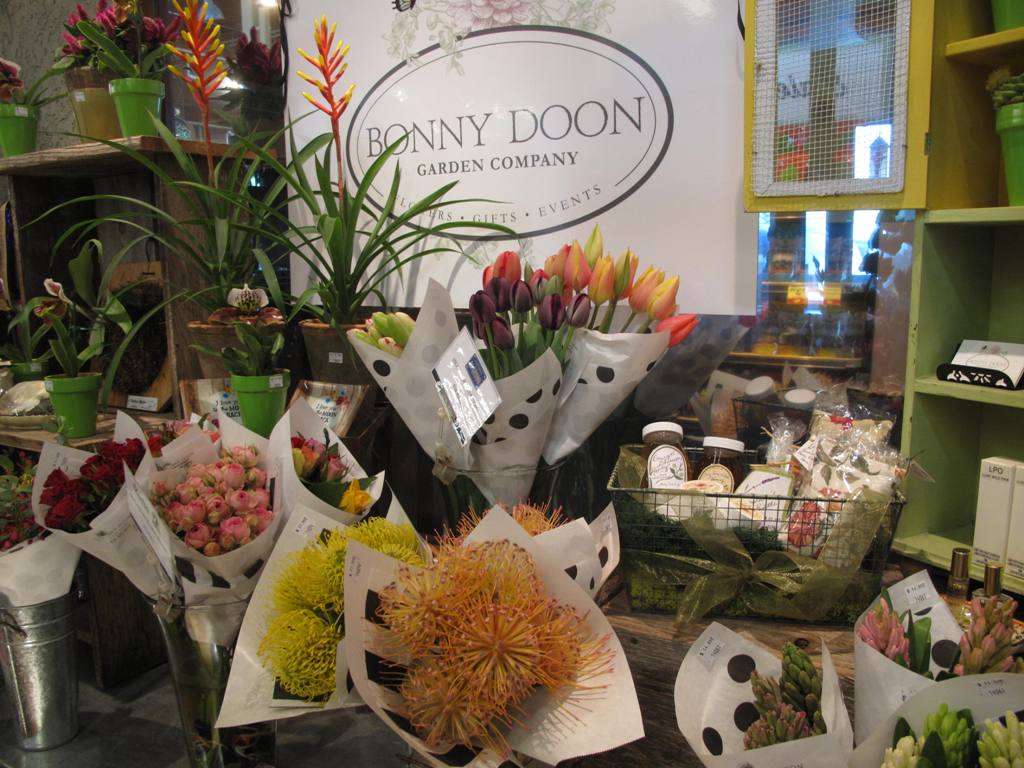
Bonny Doon's retail space inside New Leaf Market in Santa Cruz, CA.

Bonny Doon’s retail space inside New Leaf Market in Santa Cruz, CA.

Well, anyone who read all of Flower Confidential knows that it’s about the international, multibillion dollar floriculture industry – a far cry from the charm of selling flowers from one’s garden in Santa Cruz.

I was always in awe of Teresa – she was a rock star profiled by Amy Stewart, for goodness sake’s. Until last week, Teresa and I had never met in person, but we felt connected through our friendship with Amy and because we both want to advance a new normal in the floral industry: where mindful practices of local, seasonal and sustainable flowers trump designing with imported ones.

Last year, when I launched the Slowflowers.com web site, Teresa created a listing for Tessa’s Garden, her studio business, and we started an occasional email correspondence.

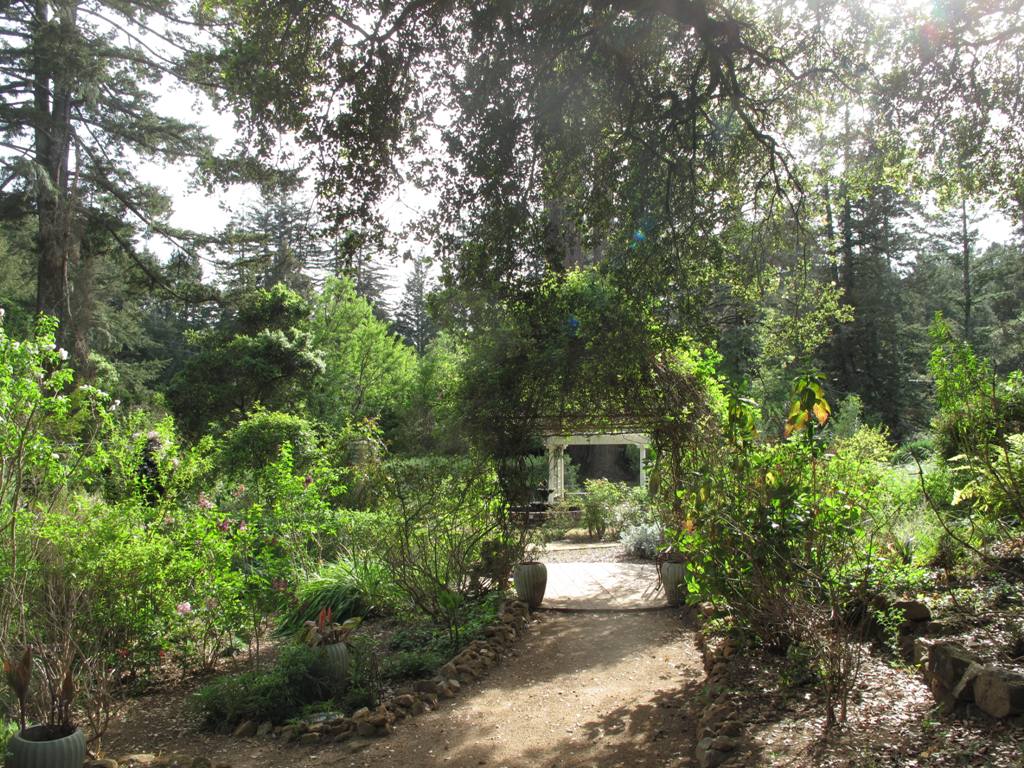
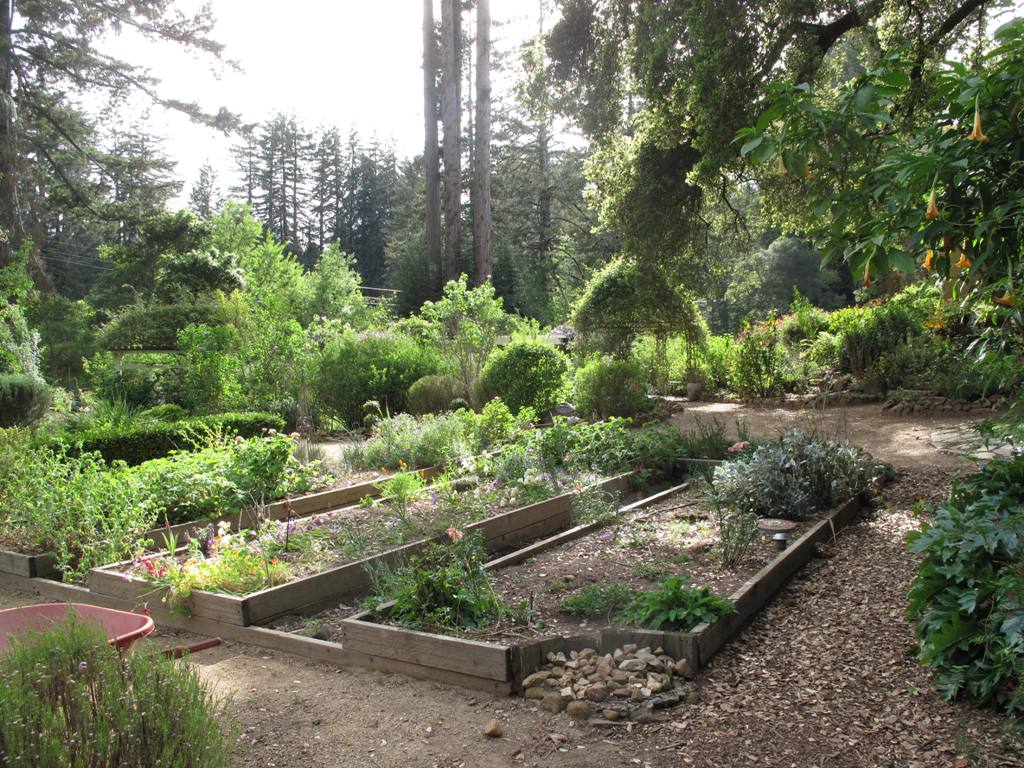
Oh my gosh: the dream garden! Here's where many of the flowers, branches, herbs and vines that Teresa uses originate . . . in her private garden.

Oh my gosh: the dream garden! Here’s where many of the flowers, branches, herbs and vines that Teresa uses originate . . . in her private garden.

Another view, including the veggie and herb garden in the foreground.

Another view, including the veggie and herb garden in the foreground.

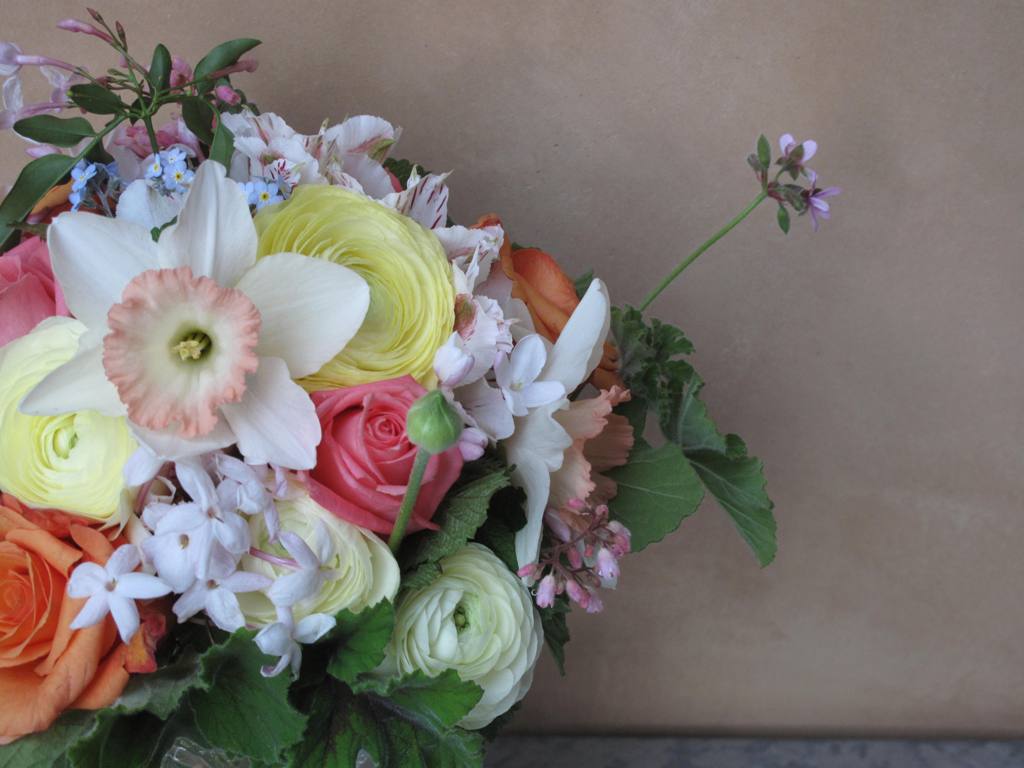
An intricate detail in the Posie that Teresa created for me.

Intricate details emerge as part of the hand-tied Posie that Teresa created for me.

Teresa had taken a break from the fast pace of running a retail flower shop and sold The Bonny Doon Garden Co. in 2012.

She then pivoted toward wedding and event design work, including hosting private ceremonies under the giant redwoods at her bountiful landscape in the hamlet of Bonny Doon, a few miles up the Coastal Highway from Santa Cruz.

Earlier this year, Teresa extended an invitation for me to stay a few days in the bridal cottage on her family’s property.

We planned ahead to schedule that visit – and this podcast interview – after my gig speaking at the San Francisco Flower & Garden Show on March 22nd.

READ MORE…

Week 12 // Backyard greenery and seasonal blooms

Sunday, March 29th, 2015

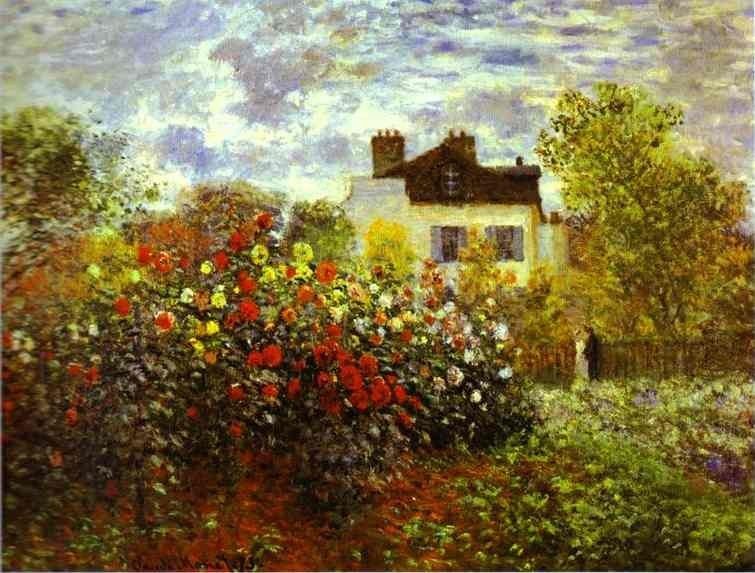
This was a week of flowers, beginning on March 22nd with my “Four Seasons Cutting Garden” lecture at the San Francisco Flower & Garden Show. Here are some one of my favorite images shared in my illustrated presentation.

I call this my "dream cutting garden," painted by Claude Monet in 1873. The Garden at Argenteuil (Dahlias)

I call this my “dream cutting garden,” painted by Claude Monet in 1873. The Garden at Argenteuil (Dahlias)

Overwhelming or Inspiring? A design scheme from a vintage garden book, Hardy Perennials and Herbaceous Borders, 1912. "Plan of a Rainbow Border"

Overwhelming or Inspiring? A design scheme from a vintage garden book, Hardy Perennials and Herbaceous Borders, 1912. “Plan of a Rainbow Border”

I also spent time interviewing several flower farmers and floral designers, which you can hear on the Slow Flowers Podcast in coming weeks. Subscribe here for free downloads from iTunes.

This week I have two arrangements to share with you. The first was created as a demonstration ofFloral Soil, the 100% plant-based, USA-made, compostable alternative to florist’s foam. The occasion was a workshop taught by Alicia Schwede of Flirty Fleurs, focusing on “Elevated Centerpieces.”

Floral Soil’s creator Mickey Blake and I participated in the workshop to gather photos and content for her web site. I brought along my favorite glass compote, a pedestal fruit dish that was my great-grandmother’s.

Thanks to very excellent instruction from Alicia, here’s what I created. There are three pieces that created the mechanics to hold the flowers and foliage: (1) a 3-by-4-by-5-inch piece of Floral Soil; (2) a sheet of chicken wire wrapped from rim to rim of the vase; and (3) 1/4-inch waterproof cloth tape to hold it in place.

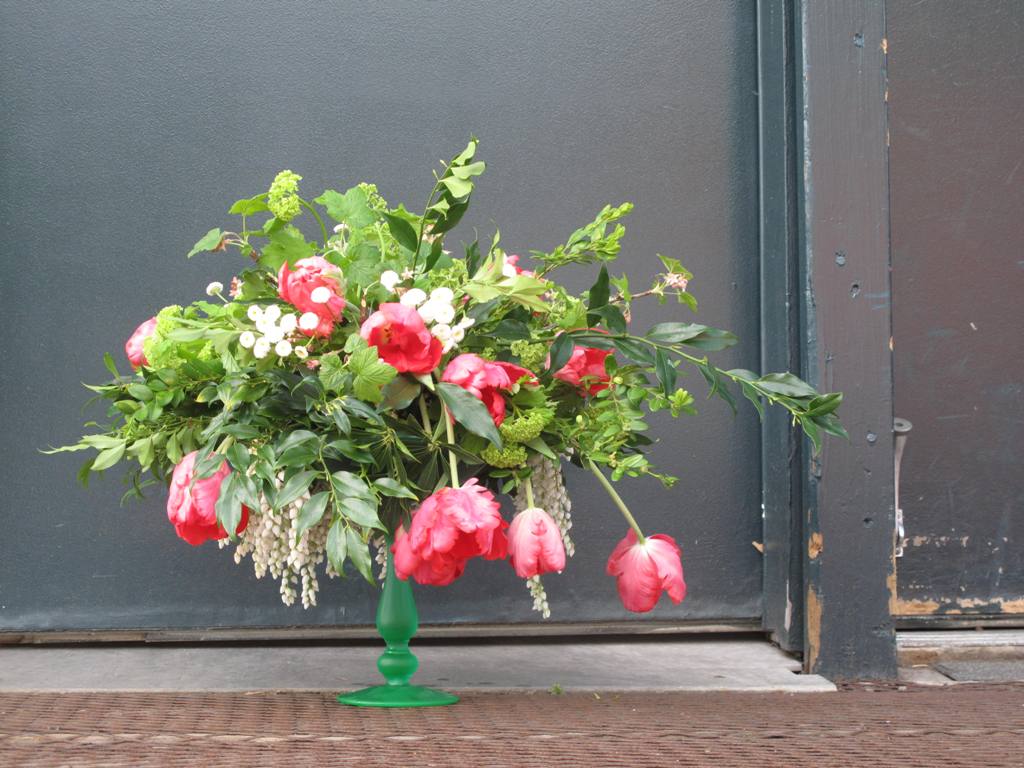
Such an elegant piece with a slender pedestal that resembles a candlestick holder. It measures 9-1/2 inches tall and the bowl is 10-inches in diameter. It is only 2-1/2 inches deep - just the challenge for NOT using foam!

Such an elegant piece with a slender pedestal that resembles a candlestick holder. It measures 9-1/2 inches tall and the bowl is 10-inches in diameter. It is only 2-1/2 inches deep – just the challenge for NOT using foam!

A combination of my own garden cuttings plus West Coast flowers and foliage

A combination of my own garden cuttings plus West Coast flowers and foliage

Ingredients:

From my garden: White-blooming Pieris japonica, glossy green Sarcococca ruscifolia (also called sweet box); common boxwood; and flowering currant, a native shrub (Ribes sanguineum).

Provided by Alicia: Pink tulips and stems of lime green viburnum (most likely from British Columbia) and button-like white feverfew (Chrysanthemum parthenium), sourced from California.

A Slow Flowers Birthday Bouquet

Vivid details of melon orange and dark plum hues.

Vivid details of melon orange and dark plum hues.

Last year, prior to the launch of Slowflowers.com, I ran a successful campaign on Indiegogo and raised nearly $18,500 from more than 200 supporters.

Each contributor had the option of selecting a thank-you gift for their donation. One of the items was a Bouquet of American Flowers.
It has been fun to make those supporters happy as they redeem this “perk.”
In some cases, my floral friends are helping me to fulfill blooms in their regions (thank you greenSinner and Goose Creek Gardens in the Pittsburgh area AND thank you California Organic Flowers in Chico, California).
For the Seattle folks, I’ve been making the bouquets and yesterday was a chance to give my friend Sue Nevler the flowers coming to her.  She wanted to surprise her husband Steve Gattis with an arrangement of flowers for his birthday. Here’s what I created and where the blooms originated:
Happy Birthday, Steve!

Happy Birthday, Steve!

Agonis foliage, grown by Mellano & Co., Carlsbad, CA

‘Mambo’ Oriental lilies, grown by Oregon Flowers, Aurora, OR

Dark purple parrot tulips, Sonshine Farms, Whidbey Island, WA

Orange double tulips, Ojeda Farms, Ethel, WA

Phalaenonpsis orchids, Orchidaceae, Walla Walla, WA

scroll