Debra Prinzing

Get the Email Newsletter!

Archive for the ‘Entertainment’ Category

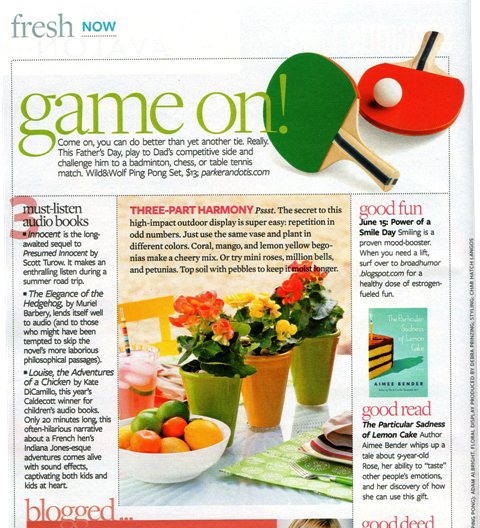
Plant your summer centerpiece

Wednesday, May 26th, 2010

On location in my own backyard with BH&G senior art director Shelley Caldwell

One perk that comes with my new gig as contributing garden editor for Better Homes & Gardens was recently producing a photo shoot in my garden. Some of the shots from our March session, photographed by the very talented Jack Coyier, appear in the June 2010 issue of BH&G (on newsstands now).   

The story idea came from the Home Design department rather than the Garden Group, but I got involved because this design/entertaining story included plants.    

This is my tale of what happens with a great story idea and how it takes the journey from something pretty HUGE to something fairly modest. I’m learning that it’s all about the creative process, not just the end game.   

It all started when I was asked to come up with three planted container ideas that could look good outdoors all summer long. That sounds easy, doesn’t it? The editor asked:   

As part of a larger summer outdoor entertaining guide, we want to give some ideas for summer-long living centerpieces. Wondered if you would have some thoughts on that and be interested in designing 3 centerpieces. 

I sent her several suggestions featuring foliage plants. Here they are: 

  1. Wood window box planted with edibles: Herbs (chives, flat-leaf Italian parsley, oregano, thyme, and strawberries)
  2. Galvanized zinc or aluminum containers with bold foliage – such as Rex begonias (dark green and burgundy) with creeping jenny or helichrysum (lime foliage that drapes over the edge of the planter)
  3. Terra cotta pots with air plants (silver-blue tillandsias); This is to show a low-maintenance alternative to succulents; tillandsias do not require planting and can be arranged on gravel or pebbles that fill the containers (and misted over the summer to keep alive).
  4. Glazed pottery with grass (or grass-like) plantings; Planted with tufts of green mondo grass or seeded with wheat grass, fill the shallow, Asian-style containers for fresh, summer-long lawn on your table. The grass can be embellished with clear glass votive holders or peppered with cut flowers inserted in the grass with stakes (for single events). This is Jack Coyier’s idea and I think it’s cute!

One of the tabletop designs shot in my backyard - featured in BH&G's June issue

The feedback? Where are the flowers? This is the editor’s reply:   

Something to think about . . . how can we tweak these to be a little more decorative and festive, and a tiny bit less about foliage? Can we get one of them centering on a beautiful bloomer?   

Yikes! I forgot the flowers. Actually, I didn’t really forget them; I just selected foliage plants thinking they would be lower maintenance than flowers (which might require regular dead-heading, fertilizer, etc.) and be guaranteed to look pretty from Memorial Day to Labor Day. Turns out, BH&G readers really LOVE their blooms. There can never be too many flowers, remember?   

I refocused my brainstorming to include more, more, more blooms. The story planning went through several iterations until I was told this might be a feature spread with five different planted centerpieces. I went to town – actually sourcing plants and containers from as far north as Ventura to as far south as Hollywood, logging 200-plus miles on my Volvo’s odometer as I pulled pots, plants and accessories for the March 9th prep day and March 10th photo shoot.   

From left: Jack Coyier, Char Hatch Langos and Shelley Caldwell

The plan was to photograph all five tabletop looks. Thank goodness for the very talented Char Hatch Langos, an LA-based stylist who logged even more hours and miles in her car hunting down props than I did!   

She arrived on Tuesday with BH&G senior art director Shelley Caldwell. Between the two of them they had a condo’s worth of patio furniture, textiles, vases, dishes, flatware, napkin rings – you name it – crammed into two cars! All of this for five different looks!   

The looks related to five themes that we had worked out: Romantic; Asian; Edible/Herbs; Citrus Mix-n-Match; and Tabletop Tray of Collectibles.   

So it was a fun two days, with a lot of fine-tuning, adjusting for the sunlight bouncing off of my California Gold crushed gravel garden, unseasonably low temperatures and brisk winds.   

READ MORE…

A horticultural weekend in Los Angeles

Saturday, May 8th, 2010

Agave attenuata - the most sculptural and simply perfect form in the Southern California garden

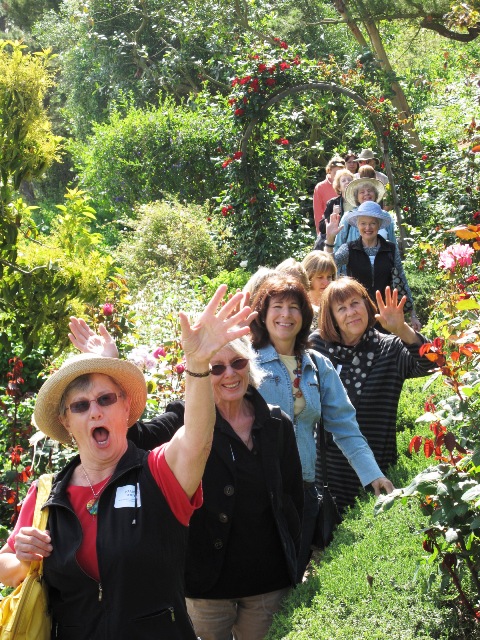
Joanne White leads the way along the rose-laden path in Marylyn Ginsberg and Chuck Klaus’s garden

I have spent many moments this past week reliving the wonderful experience of leading the Northwest Horticultural Society’s “LA Garden Tour” last weekend.  

It was a lot of work for the group’s tour co-chairs Gillian Mathews and Renee Montgelas and me, but we agree that the four-day excursion was a huge success (well, we won’t discuss the bus fiasco on Saturday night – no fault of our own!).  

I said “yes” to planning and leading the tour after several years during which Gillian and I fantasized about putting together a weekend trip.  

Gillian and I have known each other since 2000 or 2001 when I was still reporting on retail trends for Puget Sound/Eastside Business Journals in Seattle and she had just launched her garden emporium, Ravenna Gardens. From there, we not only helped each other with our respective auction projects, but we became friends. Gillian, in fact, is responsible for me assuming the editorial duties for the horticultural society’s Garden Notes, a quarterly newsletter that I edited for a few years on two occasions.  

We first worked on a tour together in 2005 when I led an autumn weekend to Eastern Washington/Yakima area. And only three weeks after I first arrived in Southern California in late August 2006, it was serendipitous that Gillian and Renee brought an NHS group to Santa Barbara and Pasadena. I joined them for much of that tour and honestly feel that it was my happy introduction to Southern California horticulture and landscape design. When I visited some of Santa Barbara’s great public and private gardens and nurseries with the group, I thought to myself: “I am going to be okay down here.”  

Gillian may not realize how directly and indirectly she has influenced and encouraged the course of my career to leave business writing and embark on garden and design writing – but she has!  

Fast forward 3-1/2 years and it was my turn to show off LA to many old and several new NHS friends. Here’s a recap and some photos to introduce the awesome design style of LA’s gardens:

READ MORE…

Disney’s Glorious Garden Festival

Thursday, April 29th, 2010

I posed with the larger-than-lifesized Mickey and Minnie topiaries who stand amid Epcot's bodacious vegetable patch

Mickey-Minnie-‘n’-Me

For the past couple of years, whenever I learned that a garden-communicator-pal was invited to speak at Epcot’s International Flower & Garden Festival in Orlando, I would think: How do I get in on that great gig?

And so it seems: good things come to those who wait.

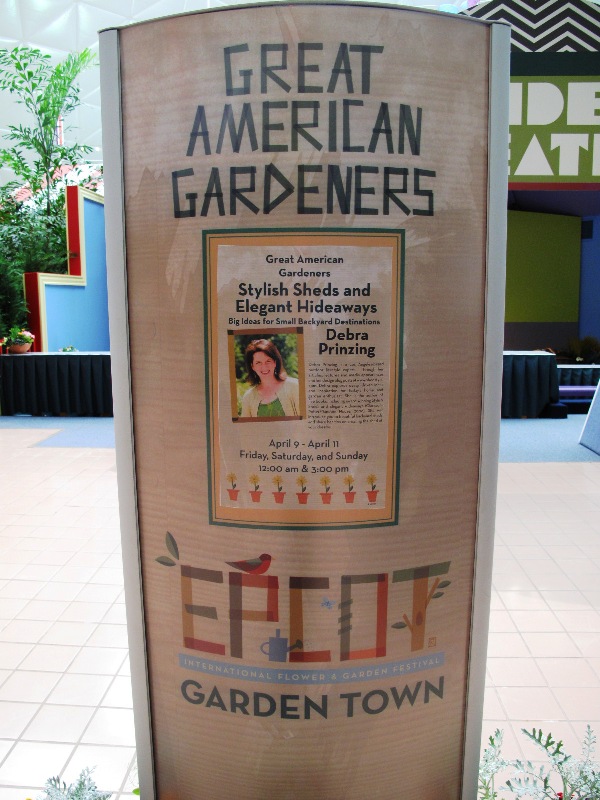
Last fall, Debbie Mola Mickler, the horticultural program planner for Epcot’s nearly three-month-long spring gardening festival, contacted me with an invitation to participate in the 2010 “Great American Gardeners” lecture series.

She and her colleagues wanted me to come and talk about Stylish Sheds and Elegant Hideaways. It was a pretty awesome invitation to speak six times over a three-day period.

And how cool that it coincided with spring break, which allowed my husband Bruce, and our youngest son, Alex (and his pal Philip) could come along and take advantage of the myriad adventures: water parks, animal kingdoms, magic kingdoms, fireworks, and lots more! We also got to see some good friends who’ve lived in Orlando for many years. And I was able to connect with most of the staff at Garden Design magazine, who are headquartered at nearby Winter Park, Florida. Lots of great reasons to come to Orlando… the fact that it was still “spring” here was a huge one. Warm and a little humid, but certainly better than summer here.
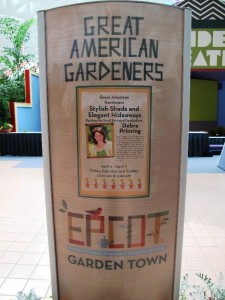
Great American Gardeners at Epcot

We stayed at Disney’s BoardWalk Resort, just across a “lake” from Epcot’s “Future World” and its iconic sphere. Our hotel’s Atlantic-City-inspired setting was gorgeous. My friend Lanny Wood, an architect, told me that famed American architect Robert A.M. Stern designed the boardwalk-style resort, with its white clapboard siding, striped awnings, and pristine lawns. There really is a fantasy world here and it’s so easy to be drawn into the playfulness, forgetting that there’s reality beyond the perimeter of Disney.

The plant displays, topiaries, and tropical landscaping are superb.  When I first met Debbie by phone, I asked her why the flower festival had never come to Disneyland here in Southern California. She explained to me that it is merely a matter of real estate. Anaheim is land-locked by freeways and over-development. There seems to be little room to grow gardens at a Southern California amusement park.

Whereas in Orlando, there’s plenty of acreage! Over the past three decades or so, the talented horticultural staff at Disneyworld has created a beautiful, arboretum-like setting as a backdrop to no fewer than six theme parks and countless resorts.

Iconic architecture - the dome and spire at Epcot

Here was my typical schedule – at least for the three days when I was on duty as a festival speaker.

Wake up and walk to the breakfast bar or bakery. One morning, we enjoyed a huge spread at Iron Chef celeb Kat Cora’s signature restaurant Kauzzina.

Next: The boys figured out which theme park to visit that day. Thankfully, Disney’s intricate shuttle bus system took them anywhere they wanted to go.

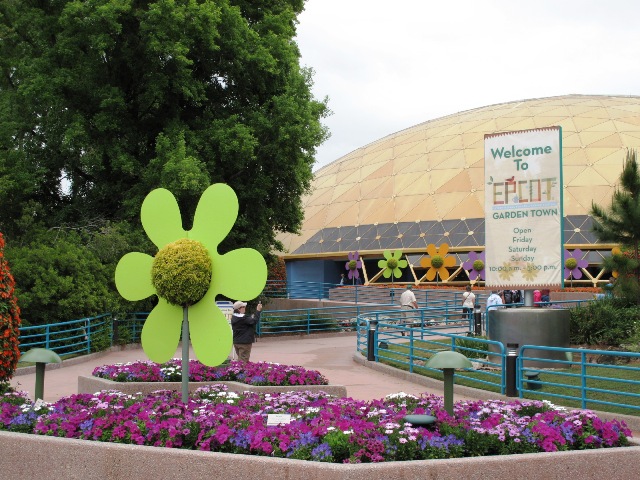
Then: Time for me to get ready for my first talk, at Noon. On my first day, I felt so special because John, one of the Resort’s longtime landscaping managers, greeted me as my personal escort. He picked me up at the hotel and drove me to the Epcot festival site, called “Garden Town.”
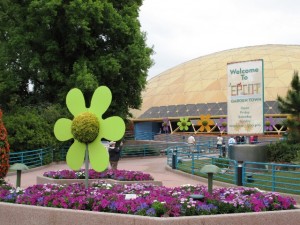
Garden Town at Epcot

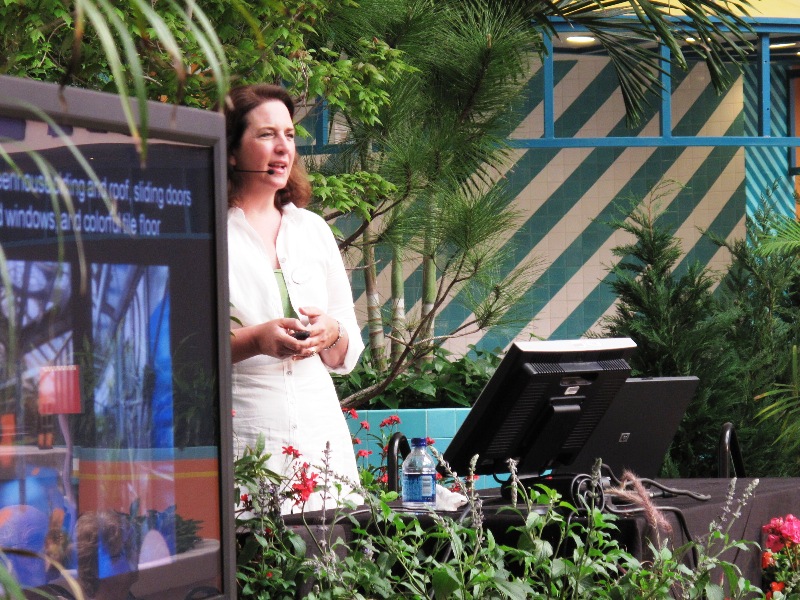
Inside the lecture hall, several demonstration stages were set up to accommodate a rotating schedule of speakers. During the day, in addition to the main stage talks, Disney’s gardening experts shared tips and involved participants in hands-on planting projects; University of Florida gardening experts presented local horticultural information, and Florida Master Gardener volunteers answered gardening questions.

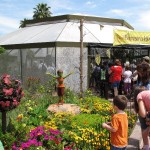
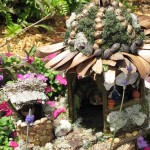
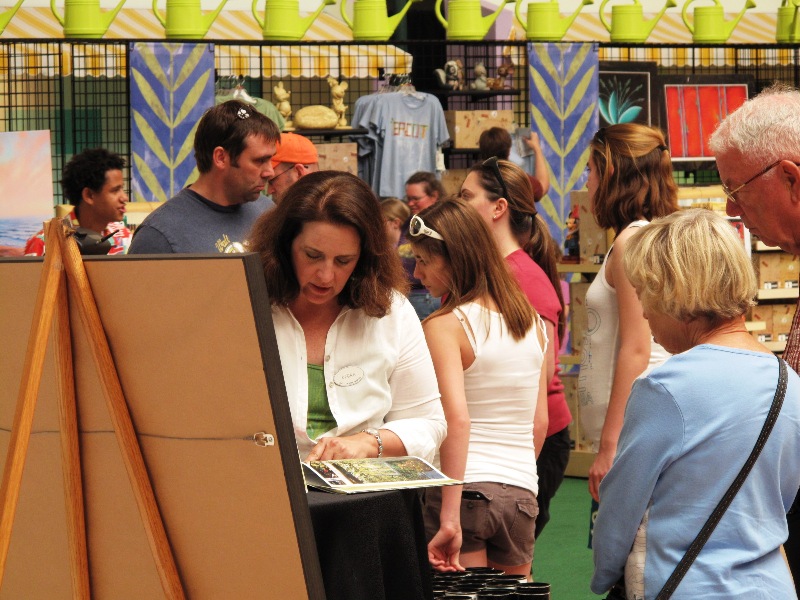
After my noon lecture, I went to the garden gift shop to sign books and meet members of the audience. Then, I was free for lunch, when I took time to walk around the grounds and drink in various sights. I loved the butterfly house, the fairy garden displays, and – of course – the topiary Disney characters.
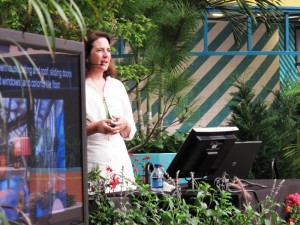
Speaking about creating the "shed of your dreams"

On Thursday evening, my friend Lindy came to meet me for dinner – what a treat to spend time with a very special friend from many moons ago. We always pick up right where we left off. I hadn’t seen Lindy since I was in Orlando in 2005 for the Garden Writers Association winter board meeting. But it felt like that was only a few months ago. I adore her. What a smart, savvy, strong woman. She always inspires me and makes me feel ready to take on the world.  

On Friday evening, the team from Garden Design magazine came to meet me for cocktails at the resort. We had a blast just socializing, while Donna’s daughter Kate jumped and splashed in the pool (my own son and his friend, both 13, were off on their own adventure, but we met up with them later. Going to Disney as a 13-year-old is a lot like going camping. Somehow the grownups worry less and you suddenly have quite a bit of autonomy and freedom).

Garden Design's team: Donna Reiss, art director; Chelsea Stickel, photo editor; Debra Prinzing, contributing editor; Megan Padilla, senior editor (with the adorable Aileigh)

On Saturday night, Bruce, my husband, had finally arrived from Pittsburgh. He was a trooper because he took Alex and Philip to Universal Studios for the day. But we reunited that evening and enjoyed a very unique dinner at Disney’s Animal Kingdom Lodge. If I ever go back to spend a vacation in Orlando, this is where I’m going to stay. You can only imagine how Disney interprets Kenya.

Bruce and I thought about our visit in 1990 to Amboseli National Park in Kenya when we went on a photo safari. Let’s just say that the real thing is a lot more rugged than the Disney version. But we had a blast and it was our last night with the boys before they flew home on Sunday morning, all by themselves to LA.

Bruce had to leave on Sunday evening and I stayed one more night in Orlando before flying to Dallas the following day. The rest of the week was a bit of a blur, since I had to teach a container design class in Dallas Tuesday night; fly home to Burbank on Wednesday; and then drive to Orange County to teach another class on Thursday. But I won’t let fatigue lessen the fun. Disney was unforgettable. And I’m so grateful for the experience.

Here are some of the horticultural sights that wowed me:

 A few other pics and people to share:

Garden Design's Jenny Andrews, Leigh Ann Ledford and Shelley Easter

Fellow Garden Writer Association member, Kim Taylor from the University of Florida horticulture program (aka "The Sassy Crafter") met me on Sunday. She was at the festival to volunteer in the "Ask an Expert" booth
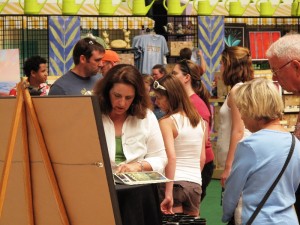
My book-signings after each talk gave me a chance to meet other stylish shed enthusiasts

Outer Sanctum: Jamie Durie creates the ultimate outdoor oasis

Sunday, April 18th, 2010

I joined Jamie Durie, of HGTV's "The Outdoor Room," for brunch and an interview in LA

When I take on the tough job of interviewing celebrities, I always hold my breath, wondering whether we’ll move past the PR-speak and begin to discover more about the person behind the famous face and name.  

So when HGTV’s publicity department arranged for me to meet Australian media celebrity Jamie Durie, I was ready for the spin. And the good news is that he surprised me with his abundant knowledge and heartfelt passion for his landscape design projects. It was a very fun assignment.  

Earlier this year I spoke by telephone with Jamie for an mini-profile that appears in the April 2010 issue of Garden Design magazine. Now that he is Los Angeles-based, we decided to try and meet in person so I could interview him for a Q&A to appear in the Los Angeles Times HOME section. 

An edited version of my full interview with Jamie appears in today’s paper, but I wanted to share our extended conversation here.  

A big THANK YOU goes to Eddie Ward of DRC Public Relations in New York. He did all of the legwork to set up my lunch appointment with Jamie on March 28th. Read on for the full transcript of my interview with Jamie:

READ MORE…

I think I lost an entire month!

Sunday, March 14th, 2010

Celebrating my birthday with Paula Panich at Girasole in Los Angeles, a sweet French bistro

Dear friends, 

Where did February go? And for that matter, where did the first half of March disappear to?  

I’m so sorry! I’ve been racing around like a crazy woman. Like my fellow *Gamma-Sisters everywhere, the world is asking more of us at every turn. Eternally curious, we’re inspired by exciting, interesting and compelling people, places, projects and opportunities. As one of my friends pointed out, I am easily drawn to “bright, shiny objects.” It’s irresistible. There are literally not enough hours in a day to “do it all.” 

One of my excuses is that I have been traveling more than usual. Another is that my little family is currently in its bicoastal phase, with Mom and sons in Southern California and Dad (for the most part) in Pittsburgh. His occasional trips home are a highlight for us and exhausting for him. In between, I’m solo-parenting, burning the candle at both ends and juggling everything (while also letting some important things slack off, such as keeping in touch with friends, answering 500 emails in my in-box, and blogging!). I had to put the pause on the blog for a while. No promises, but as of this weekend, I sincerely hope my “blogger’s block” has been broken – and that I can return to regular correspondence. 

By July, we will be reunited as a family, but I am well aware that July is still several months away. In the meantime, we have to ready this 1980 Spanish-style ranch house for sale; get packed and relocated; get our oldest son ready for his freshman year in college and move me, younger son and our family pet to Pittsburgh. Oh, and find a place to live! Crazy, life is just crazy. 

I don’t want to leave Southern California, especially with its glorious natural beauty, amazing gardening and garden design community, and (for me) wonderful opportunities to gather and tell stories. So, I guess I’m going to try and become a working writer with two home bases: Los Angeles and Pittsburgh. We’ll see how that goes. I don’t want to lose these ties I’ve been so fortunate to develop since moving here in 2006. Imagine: I didn’t want to come to L.A. and now I don’t want to leave! 

Just to bring you up to date, dear readers, here are a few highlights of the past month. If we’re connected on Facebook, you may already have seen some of these items. If not, then click on my Facebook icon (see right) and join in.

READ MORE…

These green walls will blow your mind

Thursday, January 28th, 2010
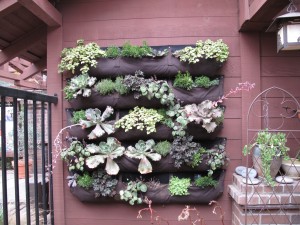
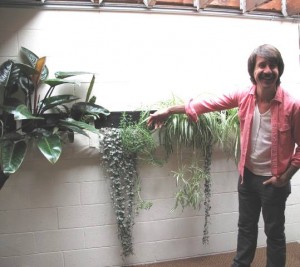
A Woolly Pocket wall of succulents adorns the retail shop at Descanso Gardens near Pasadena

A Woolly Pocket wall of succulents adorns the retail shop at Descanso Gardens near Pasadena

Designed in Los Angeles, fabricated in Kansas, and soon to hang on a wall near you, the Woolly Pocket is a soft-sided planting envelope that makes it possible to have a lush wall of vegetation without having to hire a structural engineer.

Vertical gardening is all the rage, so here’s a way to bring plants into your home (indoors or out) with a breathable fabric container that is easy to hang and maintain.

Fill the 15 x 24 inch pocket with a little potting soil, plant it with lush greenery and allow the vines or foliage to spill over the top edge. Combine multiple pockets to create a living wall as is shown in these photographs.

WHAT IS THE WOOLLY POCKET?

Miguel shows off a 5-pocket Woolly planter

Miguel shows off a 5-pocket Woolly planter

I met designer Miguel Nelson at his studio in Culver City earlier this week and took a tour of Smog Shoppe, his event space where the Woolly Pocket was created.

Miguel was trained as a sculptor, but he obviously thinks about sculpture in a completely different way than artists whose work stands on a pedestal in the garden or in the foyer of a home.

The type of sculpture Miguel conjures is an entire building and outdoor courtyard that contains green events. He and Sherry Walsh, his wife, retrofitted an unsightly garage used to do emissions tests on cars (thus, the clever Smog Shoppe name).

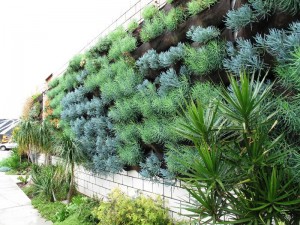
The analagous blue-green plant palette nearly covers the exterior of Nelson's Smog Shoppe event space in Los Angeles

The analagous blue-green plant palette nearly covers the exterior of Nelson's Smog Shoppe event space in Los Angeles

Used for private and corporate events, the warehouse-y space needed to be softened up. And so Miguel and his brother Rodney created huge wall-hangings with pockets and stuffed them with succulents, tropicals and other plants that cascade and drape. The hangings look like those large shoe-organizer pocket panels, but are oh-so-much more elegant.

Over two year’s time, the plants have thrived, nearly obscuring the concrete block walls and the black wool pockets. Once partygoers started asking if they could buy the planting system for their own homes and gardens, Woolly Pockets was born.

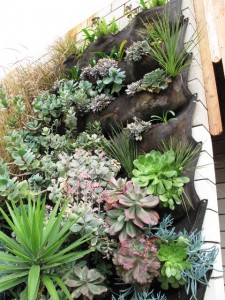
A detail shot reveals how happy these plants look

A detail shot reveals how happy these plants look

Instead of wool felt like the original system, Miguel and Rodney now use an industrial-strength USA-made felt from recycled plastic bottles (it is available in chocolate brown, black and cream – with a promise for more colors in the future). The pockets have a built-in moisture barrier that allows the plants to breathe while keeping moisture off your walls or floors.

The blogosphere and a few design magazines have discovered Woolly Pockets, which are priced at $49 for a single. Multiples range from $125 (3-pocket, 68 inches) to $188 (5-pocket, 112 inches).

Miguel’s eco-publicist, Corey Scholibo, is convinced that this green gardening solution will capture the imaginations of non-gardeners. It is a cool interior design application that is at the same time retro (think indoor plants of the 1970s) and futuristic (plants will save the planet!).

“You can now garden any time, anywhere, with little or no skill,” Corey says.

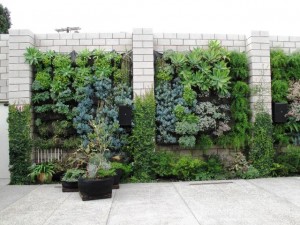
Interior walls of the courtyard are planted top-to-bottom

Interior walls of the courtyard are planted top-to-bottom

The team is inventing all sorts of new iterations of the Woolly Pocket. There is a Vagabond, which I wrote about last month for LA At Home (think “Garden Container meets Handbag”) and at this weekend’s Accent on Design in New York, Miguel will introduce a 5-sided wee-woolly tabletop planter and a gorgeous, free-standing 6-, 8- or 10-sided planter that has zippered sides so you can unzip sections to accommodate sculptural tree branches poking out. Those items appear to be ideal for the interior space and are a lot more attractive than some of the plastic, clay or faux planters I see hanging around garden centers.

You can mostly find Woolly Pockets online, but Miguel expects to sell through several retail channels by later this year.

“I see all these amazing living wall installations in public spaces,” he points out. “But you never read about a vertical garden you could have yourself. Now, even with just one Woolly Pocket, you can grow plants on your wall.”
With a cluster of them, arranged like a giant patchwork quilt, pretty soon you can have your own living, green wall.

I have four dark-brown Woolly Pockets to try out and I’ll report back soon on how they are doing. I’m going to hang them outside to try and mask some of that ho-hum tan stucco we’re so lucky to have here in SoCal.

Rolling Greens nursery and garden emporium comes to Hollywood

Wednesday, December 16th, 2009
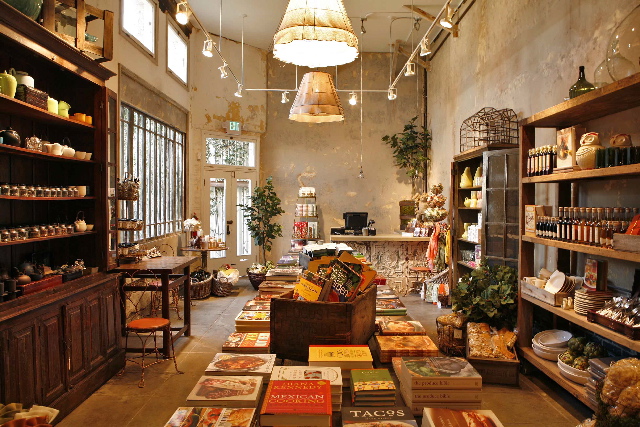
Gourmet food, exotic tea blends and a library of design books fill the new Rolling Greens in Hollywood

Gourmet food, exotic tea blends and a library of design books fill the new Rolling Greens in Hollywood

rolling greensLast Thursday, a vintage tire shop in the heart of Hollywood was the setting for a festive pre-opening bash thrown by Rolling Greens, its new tenant.

Designers, landscapers and horticulture fans gathered to sip, graze, explore (and shop!) at the hottest new garden emporium in Los Angeles. My editors at Garden Design magazine asked me to attend and check out the happenin’s.

Rolling Greens’ second location is the brainchild of owner Greg Salmeri and his colleague and creative director Angela Hicks. The original store in L.A.’s Culver City is a distinctive nursery, home and garden destination, formerly only for the trade, that opened to the public in 2004.

Tire dealer-turned-garden emporium, in a historic, weathered building that's full of character

Tire dealer-turned-garden emporium, in a historic, weathered building that's full of character

For his new outlet, Salmeri snagged the lease on Town Tire Company, a weathered brick building that has been a Hollywood landmark at the corner of Beverly Blvd. and Gardner Ave. Built in 1930, the iconic structure was originally a food market and then in 1963 became a tire store.

“I’ve had my eye on the Town Tire Co. building for years and dreamed of opening Rolling Greens in this incredible space,” Salmeri says. “In this new location, we’ve expanded our offerings into home categories beyond what we offer at our Culver City location.”

Greg Salmeri

Greg Salmeri

Salmeri and Hicks turned the tire shop’s unpolished attributes into appealing design elements for Rolling Greens. There are big metal garage doors that roll up to connect the indoor spaces with the fresh-air ones. The original concrete floor has been cleaned up and the exposed brick walls sandblasted. Once covered over, several huge glass doorways topped with half-circle transom windows have been exposed to invite sunshine into the 1,000-square-foot bed and bath department. The cash-wrap counters are clad in 19th century pressed-tin ceiling tiles. The “color greenhouse” is a glass-and-steel dividing wall that encloses an area for indoor plants, including orchids and ferns. Panes of amethyst and bottle green glass replaced broken sections, creating a vintage greenhouse backdrop at the center of the store.

READ MORE…

Shed-of-the-Year . . . you can enter!

Tuesday, November 17th, 2009
Uncle Wilco, as he is depicted on his web site, We *Heart* Sheds (well, this was a holiday version from 2007)

Uncle Wilco, as he is depicted on his web site, We *Heart* Sheds (well, this was a holiday version from 2007)

Here’s some background about SHED OF THE YEAR and its creator Uncle Wilco, a cyber friend who lives in the UK in South Wales, and is the creator of We (Heart) Sheds and several other projects.  I was thrilled to discover that I was not alone on this quest for finding and documenting awesome backyard structures, that many kindred spirits existed on this globe to share my journey. Here is the original story I wrote about Uncle Wilco nearly two years ago. A memorable quote about his Shed of the Year contest:

. . . the British have a love affair with the shed, so really it’s just snowballed. I was lucky to do a few radio interviews. I got the impression they thought I was a nutter . . . ! But at least people realise that I have a passion for sheds, so that’s all that matters.

Imagine my surprise when Wilco asked me to join his illustrious team of judges to represent as the International Judge for the 2010 Shed of the Year competition! The event culminates with an announcement in early July, during National Shed Week, and I’m eager to participate. I’m hoping to get over to the UK to join the others, but at the very least, I will do my part on this end. I encourage any of my readers to submit photos and enter. That is all it takes!

Thought I’d kick things off by telling you a little more about the competition. In the words of Mr. Wilco himself:

Q. You started Shed of the Year in 2007, right? So you’ve had 3 winners!
What has surprised you most about the scope and diversity of sheds
around the globe?

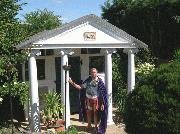
Tony's Roman Temple took honors in the 2007 Shed of the Year contest

Tony's Roman Temple took honors in the 2007 Shed of the Year contest

A. I have run readersheds since 2001  and thought it was time I should celebrate all these great sheds. So I started Shed of the Year. The last three winners have been very different: 1) A Roman Temple,  2) A Pub Shed, and 3) a Cabin. I look forward to shed of the year 2010 — it could be a workshop or studio or even a hut. That’s the thing — we don’t know until the public have voted and the judges have made their decisions for Shed Week 2010.

Q. Who does Sheds better, the UK shed aficionados or the North American ones?

A. Well, I am biased. UK sheds Rock- or should I say UK Sheddies rock. But you US sheddies have a different view on sheds. The UK history with sheds as mainly a man thing is very long and it’s the sheddies that make readersheds.co.uk

Q. Can you please describe “wossname” and how I can explain it to US readers?

A. I am not great with words , so I tend to fill in things I can’t think about with “wossname.” So it’s a term in the UK, like a thing or a “wotsit,” when you can’t think of the real word!

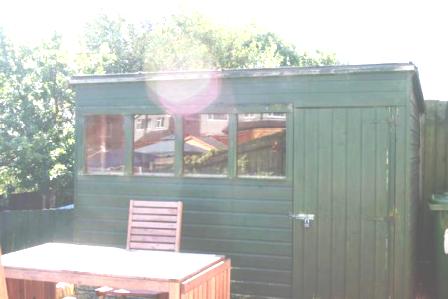
Here's where Uncle Wilco hangs out and enjoys his home brew

Here's where Uncle Wilco hangs out and enjoys his home brew

Q. If you had to spend your final days inside your own shed, what three essential items would you need to bring with you?

A. That’s very difficult. I would say family and friends and  my dog, but as for items it would have to be some home brew (beer).

Q. What kind of swag can I expect for being a Shed of the Year judge?

A. What, the glory of being a judge in the World’s most favourite Shed competition is not enough?

Q. How many entries have you had from North American shed owners (in past years)?

A. Well, it’s not just North American sheds. It’s International, too. We love sheddies from the Americas, Canada, Europe and Australia and New Zealand. You can view all the international sheds entries (199 of them to join the 1200 UK ones) here.

Q. What else do you want my readers to know?

A. That we are welcoming entries to Shed of the Year 2010 now and would love to have some more  Stylish Sheds added. All I ask is that the sheddies add a few good images — including external/internal shots. The more images the better, so the public can get a  good look.

Thanks so much Uncle Wilco – I will do my best to pump up the entries from the International contingent. See you soon.

A gentle plea for an excellent cup of tea

Friday, November 13th, 2009

Author’s note. You know those “contributor pages” that many magazines include at the front of their books? I recently received a request from one of my 805 Living editors to write about “the little things that make life grand” to be included in the November issue’s “Behind the Scenes” section.

I wrote the following tea-drinker’s manifesto (about 500 words) before I re-read Anthony’s email in which he asked for only 50 words! Yikes! Anyway, he used one entire sentence and the rest would have been filed away or deleted had I not decided to go public here, with my personal confession. I don’t think I’m alone, either. While staying our our villa in Italy a few weeks ago, I woke up every morning with a chubby packet — a bag of Peet’s English Breakfast tea — slid under the door of my room (thanks, Paula!). Someone was looking out for me.

iStock_000009079416SmallI am a tea drinker.

In the world of double-tall lattes and cappuccinos, I realize I am a minority.

So I am grateful for a decent, HOT mug of English Breakfast tea (or two). Honestly, I wake up each morning excited to start my day. But mostly I wake up excited to fill the electric kettle with water and hit the “on” button so I can brew a pot of tea, pour myself a mug and add a splash of milk (not half-and-half or cream). I always drink from my French Apilco porcelain mugs from Williams Sonoma.

I’ve taken to carrying around spare tea bags with me, just in case. Places like Starbucks stock Tazo’s “Awake” and the Tully’s at the Burbank Airport has canisters of “British Breakfast.” I love these teas, too.

Unfortunately, though, at least one time out of 10, these coffee joints are “out” of my tea. You would never, ever find these places running out of coffee. That would be unthinkable. At least I can order a Grande cup of piping hot water and make my own on the fly.

The problem with restaurants and hotels (as well as airplanes) is that you often have to beg for real milk. I’ll take it any way you have it – whole, two percent or non-fat (I especially love steamed milk, which doesn’t cool down my tea). Just please give me milk instead of cream or half-and-half. I am one-quarter English, and I always tell the waitress that the English people use milk with their tea.

And don’t get me started about the stupid carafes of hot water you get at conferences. I’m talking about the vessels previously used to dispense the dreaded coffee beverage. As a result, the entire pot of hot water is infused with that bad coffee flavor. It really shouldn’t be difficult to segregate your carafes so a few are dedicated to only hot water for tea drinkers.

I realize this little meditation on the merits of a good cup of tea sounds more like a rant than a rave. So I will end on a positive, thankful note.

I could not function with out my delicious, satisfying mug of morning tea. It really is the fuel that runs my engine. I love that there are places in the world where tea is grown, processed and packaged for export to the U.S. I love that a few retailers still exist where I can purchase excellent, loose tea in bulk. And I love the moment of calm that drinking tea gives me in the midst of my chaotic, deadline-driven life.

To many more sips!

P.S., A great tea resource is the Teacup in Seattle. You can go online and order loose tea (Malty Assam is my favorite), OR if you are ever visiting Seattle, be sure to go in person for their very excellent tea latte. My friend Jean introduced me to this beverage more than a decade ago. It is a big secret how they make it, but Jean’s theory is that the brewers make a “shot” of a very dense, strong Indian tea and then infuse steamed milk, just like the coffee lattes are made. It is heavenly.

Recession entertaining with Martha

Wednesday, November 11th, 2009

Appr'dPRShotbyScottDuncan8-20-2008While it may seem as if über-hostess Martha Stewart produces a new cookbook every few months, the October release of Dinner at Home: 52 Quick Meals to Cook for Family & Friends felt especially timely.

The 272-page cookbook follows one of her favorite formats: Meals you can prepare in one hour or less including a salad, entrée, side dish and dessert. 

A few weeks ago, I had the chance to do a phone interview with Martha for the Los Angeles Times, just before she came to Southern California for two book-signing appearances.

How does one prepare for such a momentous event? I called my longtime Seattle writer-friend Tracy Schneider, a regular contributor to Amazon’s Al Dente foodie blog, to ask her advice.  A few years ago, after I left Seattle and a design-writing gig at the (now departed) Seattle Post-Intelligencer, Tracy started writing for the newspaper’s home section with a clever shopping column called “Hot Finds, Cool Prices.” She, too, was given a chance to interview Martha by phone, which totally impressed me.

Tracy’s tip? Buy a tape recorder to make sure you capture a perfectly accurate, verbatim interview. Well, I couldn’t pull that off with such a short lead time. Luckily, years of newsroom experience and very fast typing skills prepared me to just take notes. Wearing my headset, fingers poised on the keyboard, and my questions already inserted into a Word document, I did just that.

America’s domestic goddess couldn’t have been nicer. Brisk and businesslike during a 14-minute interview, she answered my questions and shared her advice on entertaining at home during a recession. An edited version of this Q&A appeared in the October 17th edition of the Los Angeles Times Home section and on our LA At Home blog.

Q: Is home entertaining more important than ever?

A: Many people are entertaining at home and cooking delicious food. But they are looking for simple, time-saving recipes they can actually do themselves that are as tasty as restaurant food. I just love the whole idea of using a few ingredients that taste so extraordinary.

Q. What’s an easy way to throw a party at home?

A. I often do breakfasts and lunches. It gets it out of the way so I can do other things later in the day. Last Sunday I had nine people over for brunch for a delicious, homemade meal. It wasn’t expensive food: cheese popovers, beautiful poached eggs with country smoked bacon, two platters of smoked fish, homemade biscuits and fresh-squeezed grapefruit juice.
Q. What is the ideal number of guests for a dinner party?

A. I would suggest inviting what you can handle. I’m an experienced caterer so I can have 12 or 14; my dining room comfortably fits 16.
Q. What do you do when your guests outnumber your set of dishes?
A. I suggest you serve a buffet and use stacks of plates from different sets.

Q. How do you feel about potluck meals?

A. When friends get together, it should be a little more orchestrated so you know there is a salad, a vegetable, a main course, and a dessert. The host can provide the main course. You could use my duck breast with fig sauce menu from “Dinner at Home.” One person can bring the braised red cabbage and someone else can prepare the potato pancake or the hazelnut brittle for the ice cream.

Q. If you could only splurge on a few key pantry ingredients, what would you buy?

A. You should have coarse salt, fine salt, peppercorns and a grinder, vanilla beans, saffron threads, unbleached flour, natural sugar and an assortment of pasta. I’m always looking for the imported, rough Italian pasta. (Note: Martha actually used “really good” in describing each one of these ingredients).

DinneratHomeCoverBOOK DETAILS:

Dinner at Home: 52 Quick Meals to Cook for Family & Friends

By Martha Stewart

Clarkson Potter/Publishers

$35, hardcover

Here is the recipe Martha mentions. It really sounds delish! I’m going to try it soon and will report back.

DUCK BREAST WITH FIG SAUCE (serves 4)

Duck breasts area available at butcher shops and specialty food shops, as well as many supermarkets. They render quite a lot of fat as they cook. If you like, strain the fat and refrigerate up to a month. Use it for roasting or frying potatoes or making duck confit.

Ingredients:

2 duck breasts (1 lb. ea)

Coarse salt and freshly ground pepper

1 T olive oil

1 large shallot, thinly sliced

1/3 cup dry sherry

1/3 cup fig jam

1/2 cup chicken stock, home made or low-sodium store-bought

2 t. unsalted butter

1 t. fresh lemon juice

Preheat oven to 400-degrees F

Using the tip of a sharp knife, score the duck breast at 1/4-inch intervals in a crosshatch pattern, cutting deeply into the fat but not the meat. Season duck all over with 1 tsp. salt and a generous pinch of pepper. Let stand at room temperature 20-30 min.

Heat oil in a 10-inch cast iron skillet oer medium low until hot but not smoking. Add duck breasts, skin sides down; cook until browned and crisp, about 5 minutes. Turn breasts, and transfer to oven; roast until an instant-read thermometer inserted in the thickest part (avoiding bone) registers 130-degrees F for medium-rare, 10-12 minutes. Remove pan from oven, and transfer duck to a cutting board; let rest.

Meanwhile, pour off rendered duck fat into a heatproof container. Return 2 T duck fat to the pan (reserve the rest for another use, or discard). Add shallot; cook over medium heat until beginning to brown, stirring occasionally, about 2 minutes. Carefully add the sherry (it will splatter), and cook 1 minute, then stir in fig jam and cook 1 minute more. Pour in stock; cook, stirring, until sauce is thick and emulsified. Add butter; cook, stirring, until combined, 1 minute. Remove from heat; stir in lemon juice.

To serve, thinly slice duck diagonally against the grain; divide among four plates. Spoon fig sauce over duck.

Yum.