Debra Prinzing

Get the Email Newsletter!

Archive for the ‘Entertainment’ Category

SLOW FLOWERS: Weeks 10 and 11

Friday, March 15th, 2013

MAGNOLIAS AND MORE

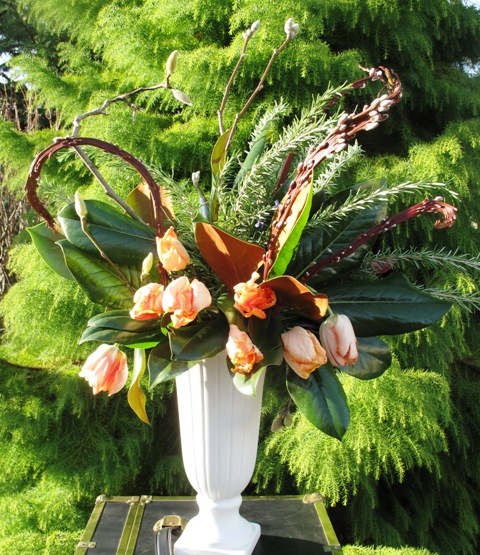
Evergreen magnolia (Magnolia grandiflora), parrot tulips, rosemary, Japanese fantail willow and bare magnolia branches in bud fill one of my favorite white vases.

Evergreen magnolia (Magnolia grandiflora), parrot tulips, rosemary, Japanese fantail willow and bare magnolia branches in bud fill one of my favorite white vases.

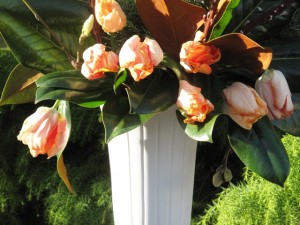
A sweet detail of those luscious tulips - don't they play nicely with the rusty side of the magnolia foliage?

A sweet detail of those luscious tulips – don’t they play nicely with the rusty side of the magnolia foliage?

Ingredients:

5 stems southern magnolia (Magnolia grandiflora), harvested from my neighbors’ garden
12 stems apricot-hued parrot tulips, grown by Alm Hill Gardens
5 stems evergreen rosemary (Rosmarinus officinalis), harvested from my garden
3 stems Japanese fantail willow (Salix udensis ‘Sekka’), grown by J. Foss Garden Flowers
3 stems deciduous magnolia in bud, harvested by Oregon Coastal
Flowers
Vase: 17-inch tall x 7-inch diameter cream urn
Design 101
Proportion and Scale: These two related principles are among the most challenging to pull off correctly – in interiors and garden design, as well as in a vase. Proportion usually refers to size relationships within a composition, such as how each of the botanicals in this tall vessel is visually powerful. There are no wispy ingredients and the height of the arrangement is equal to the height of the vase. Scale indicates size in comparison to some constant, such as the human body. That’s where the terms “small scale” or “large scale” come in, since they refer to the out-of-the-ordinary size of things. With that in mind, think about the ideal interior setting for this vase. I think it would look stunning as the welcoming urn in a grand foyer or at the center of a large buffet table.

TULIPS & TWIGS

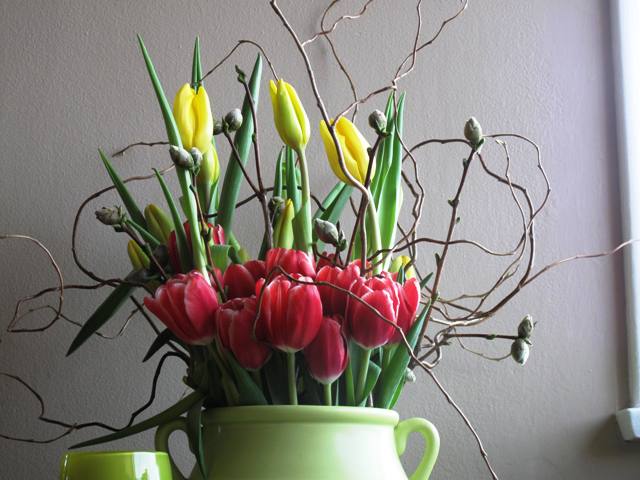
My cover shot, a perfect way to kick off springtime! Tulips, willows and camellia branches - all contained in a brilliant, matte green urn.

My cover shot, a perfect way to kick off springtime! Tulips, willows and camellia branches – all contained in a brilliant, matte green urn.

Ingredients:
12 stems red tulips and 10 stems yellow tulips, grown by Alm Hill Gardens
6 stems curly willow (Salix matsudana ‘Tortuosa’), grown by Oregon Coastal Flowers
8 stems Camellia japonica, from my garden
Vase:
5-inch tall x 6-inch diameter matte green urn with handles
From the Farmer
Water lovers: Unlike most floral design ingredients, tulips and willow branches seem to keep growing in a vase of water. You’ll notice that the tulip stems elongate a little each day. Some designers prefer to take the arrangement apart and re-cut the lengthened stems, but I like to observe the changes that occur. Willow is a water-loving plant, so you may discover that it sprouts tiny white roots under water and that small green leaves will push open, as if it is growing in soil. Enjoy a few days of this ever-changing dynamic.
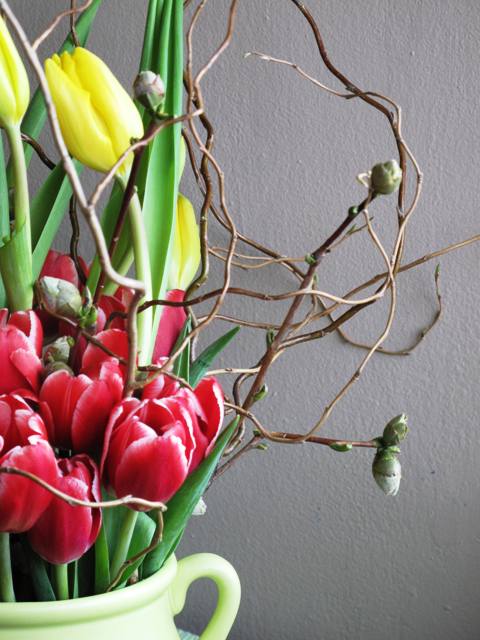
A detail of the colors and textures of springtime.

A detail of the colors and textures of springtime.

NOTE: Each Sunday of this year, I will post my photographs, “recipe” and tip for that week’s floral arrangement, created for my new book, Slow Flowers. Enjoy the floral journey through 52 weeks of the year~


How do you define “Intentional”?

Friday, December 28th, 2012

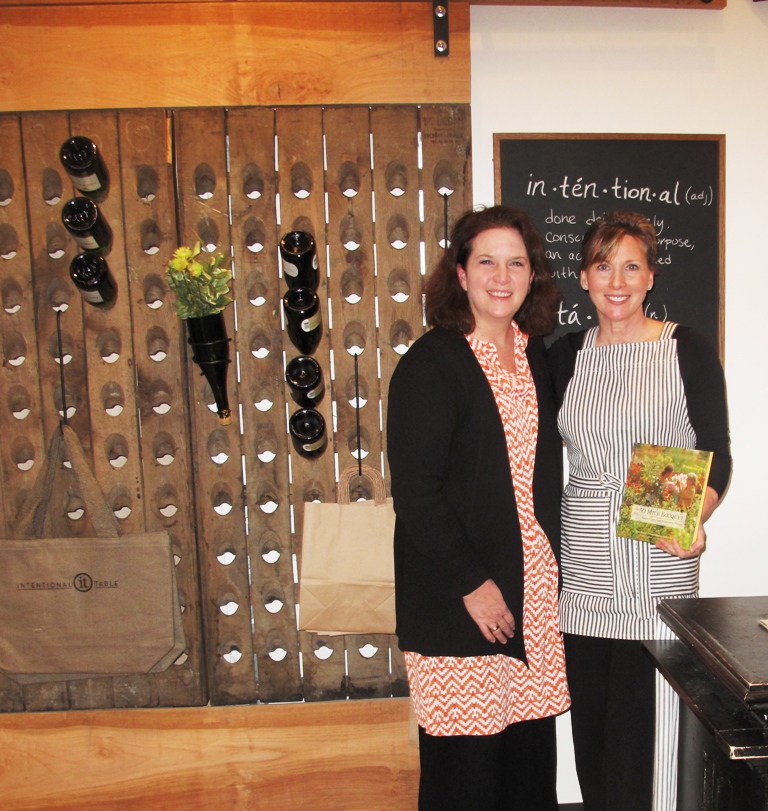
Zoe Bartlett, creator and partner of Intentional Table

Living a life guided by intentional choices is something we advocate in The 50 Mile Bouquet.

In the introduction, I wrote:

Faced with concerns about our food supply, the materials with which our homes are built and furnished, and the energy sources we consume, more people than ever are asking questions about the environmental impact of everything they use, drive, eat and even wear.

And yet, until recently, conscious consumers were largely unaware of the decidedly non-green attributes of their floral purchases. They bought bouquets without questioning the source, or the manner in which those flowers were grown (not to mention the environmental costs of shipping a perishable, luxury commodity around the globe). . . .

Whether or not they consider themselves environmentalists, consumers are beginning to exercise their choices at the flower stand, asking whether the beautiful roses, lilies or tulips they purchase at the local supermarket were grown domestically or were imported.

The message is that making intentional choices, especially as consumers, allows us to be conscious and holistic about using our resources wisely.

Of course, the Slow Food movement is way ahead of the floral world in this respect. And when our mutual friend Lois Pendleton introduced me to Zoe Bartlett, creator of Intentional Table, I instantly understood that we spoke the same language.

The message of Intentional Table is one that resonates:

Over the past 18 months, Zoe has been developing her business concept with a vision for creating community around the table, connecting purveyors with diners, educating and inspiring, and sharing local resources with like-minded customers. She has teamed up with Linda Brandt and the two recently debuted the Bainbridge Island flagship store of Intentional Table. The storefront is located on the pedestrian-friendly Madrone Lane, just off of Winslow Way. Here’s what the island’s community newspaper had to say about Intentional Table.

They opened the doors of their beautiful emporium-culinary studio on November 24th, Thanksgiving weekend.

I’ve been trying to make it over to Bainbridge Island ever since. Today was one of those magical, non-scheduled days (made even more special because our December temperatures reached a high of 48-degrees). I took the ferry from downtown Seattle, not worrying about the schedule, but just paying for my ticket and getting in line to calmly wait for the next departure. As the ferry-boat pushed away from the downtown Seattle waterfront, I snapped a few touristy photos, which I’d love to share with you here:

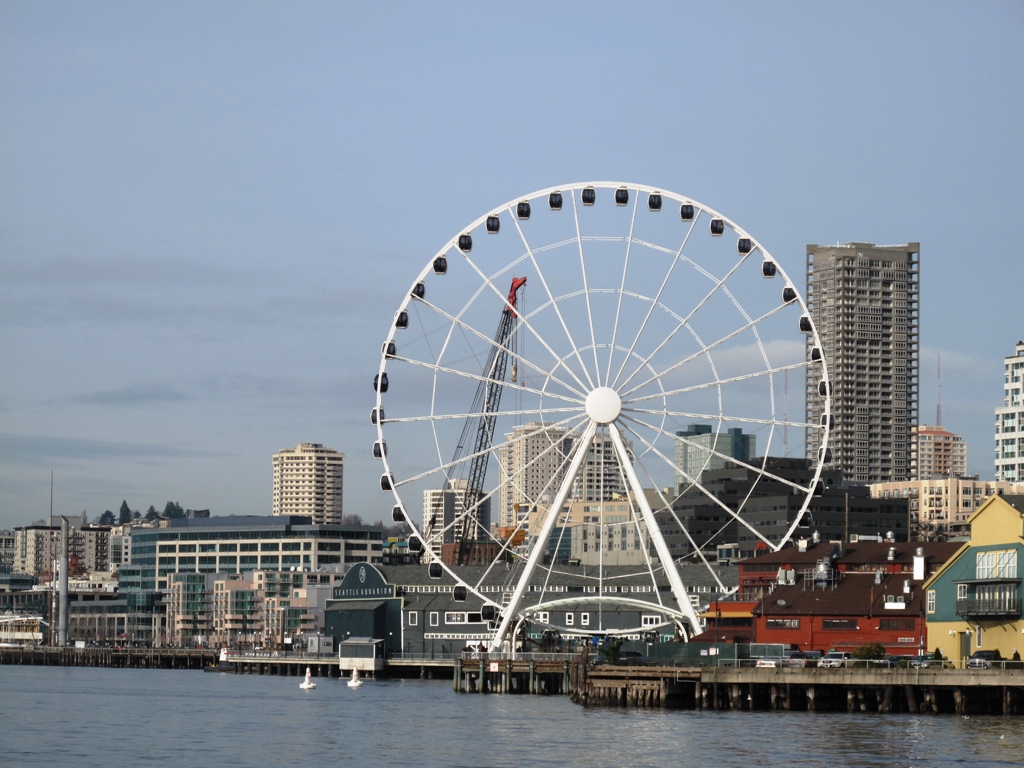
The SEATTLE GREAT WHEEL - a new icon on the waterfront

The new Seattle Great Wheel is quite stunning. Read more about it here.

The Space Needle is a classic work of architecture that turned 50 this year.

Read more about the Space Needle here.

After a 35-minute crossing, we arrived on Bainbridge Island and I headed a short distance to downtown Winslow. I have a lot of friends living on the island, including the amazing garden owners featured in The Abundant Garden, the book I wrote to accompany Barbara J. Denk’s beautiful photography (Cool Springs Press, 2005).

But today, my goal was to visit Zoe’s new venture. It was so great to walk inside and see her there, bustling about to help customers, share samples of gourmet chocolate, demonstrate cool products like wine decanters and unique vases.

Thanks, Zoe, for a spontaneously fun visit!

Because it’s a holiday week, lots of out-of-towners wandered in, including a young sommelier from New York City and a gourmet nut entrepreneur who took a specialty food business development class from Zoe a few years ago. Lots and lots of people arrived, in search of hostess gifts. Conversations among strangers wove together.

There was no huge effort to *explain* what Intentional Table meant. People understood. Everyone expressed curiosity about the upcoming cooking class schedule that Zoe and Linda will soon announce. Then, by summer, there will be food-centric educational dining experiences, staged all around the Northwest. I can’t wait!

One of the reasons Zoe’s vision resonates so much with me is that she views the Intentional Table as not just about food. To her, anything that we put on our tables – from the food and wine to the flowers in the vase – needs to reflect the place we live. I love that!

So you can definitely look for my participation in future events at this wonderful destination.

Together, we’re hoping to create several hands-on, seasonal floral design workshops that celebrate local flower farms and engage customers with the growers in their own community.

To sign up for Intentional Table announcements/newsletters, please click here.

Here are more photographs of this beautiful food & wine studio:

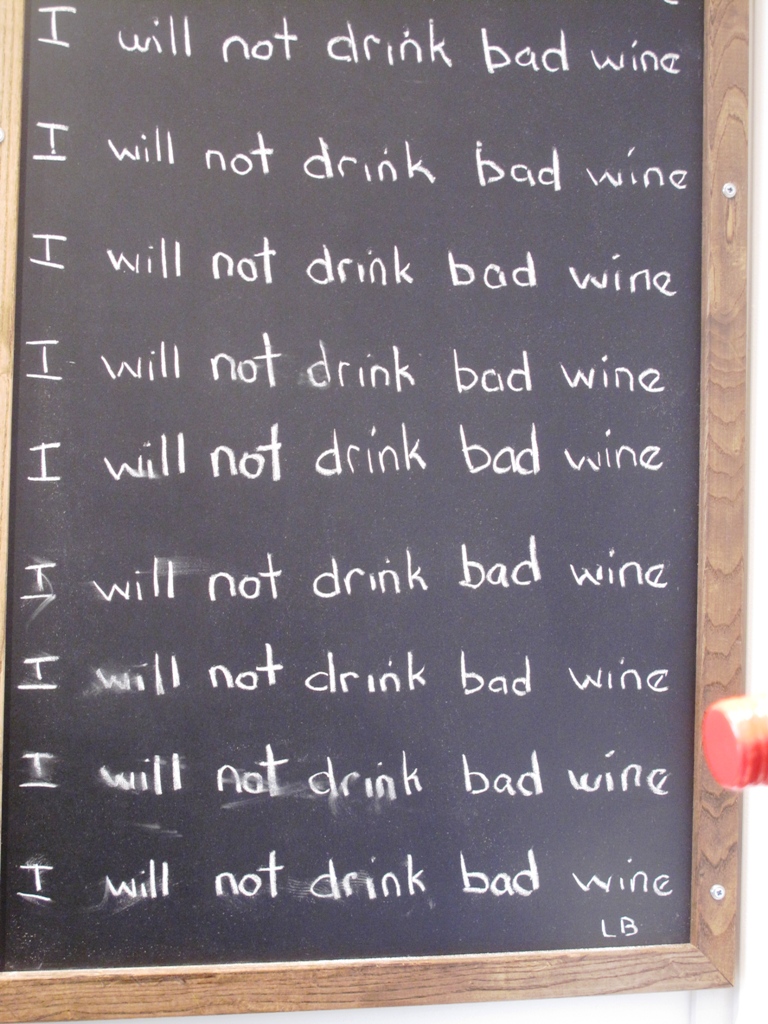
Love the chalk-board motif - especially this witty sign!

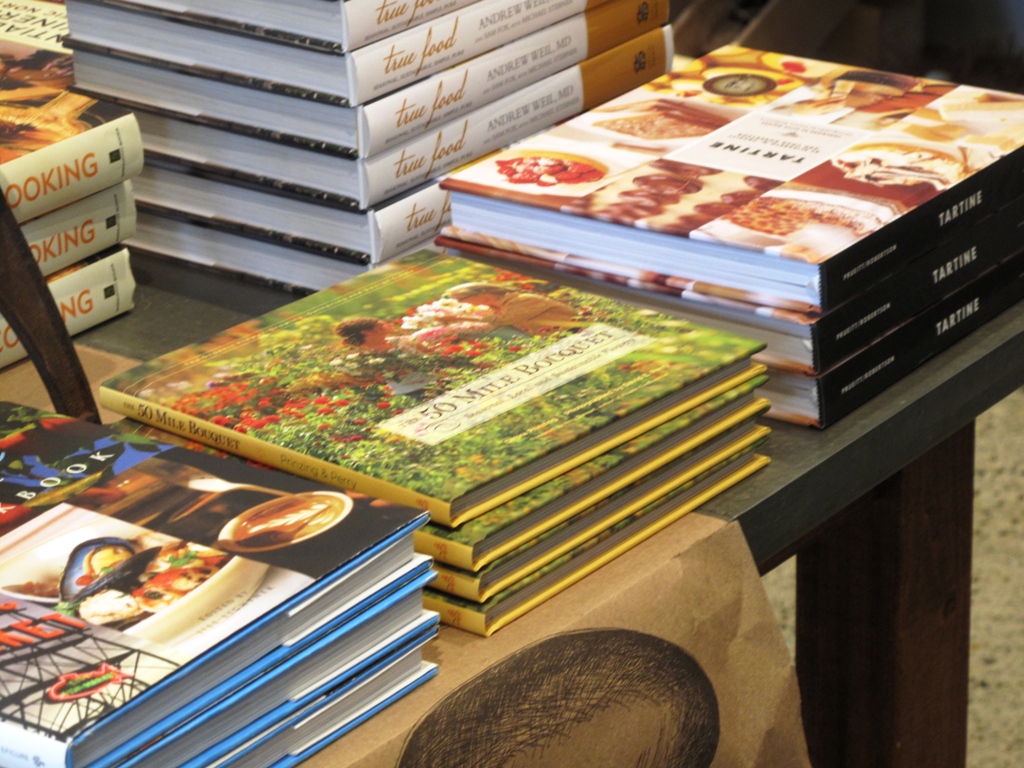
The 50 Mile Bouquet, spotted on the book table! Thanks, Zoe!

The professional kitchen, where cooking classes will soon commence.

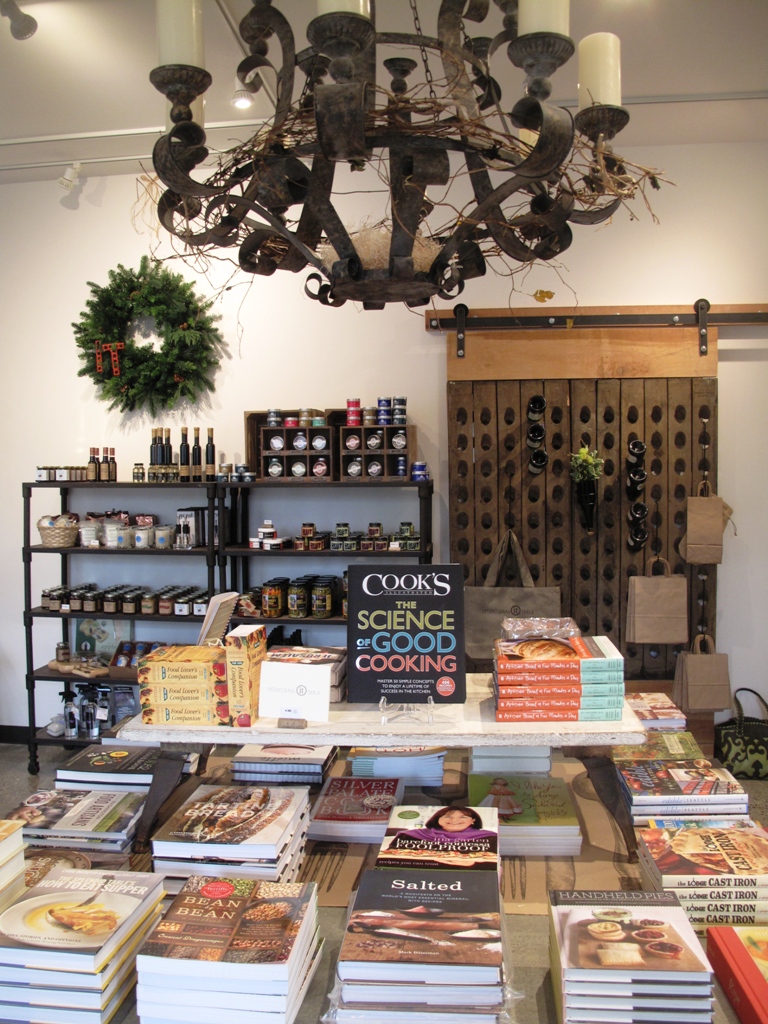
The central book table, filled with inspiring titles from Northwest food and wine experts.

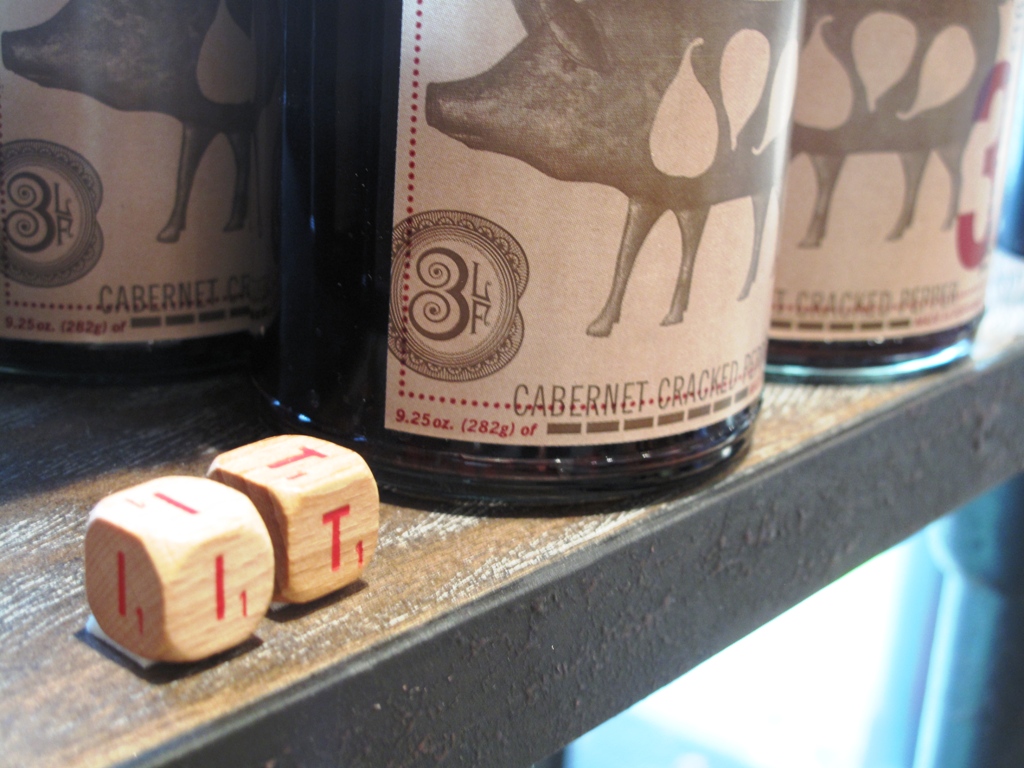
Clever "I. T." motifs are everywhere, including these ceramic balls in a bird's nest.

"I. T." playing pieces...

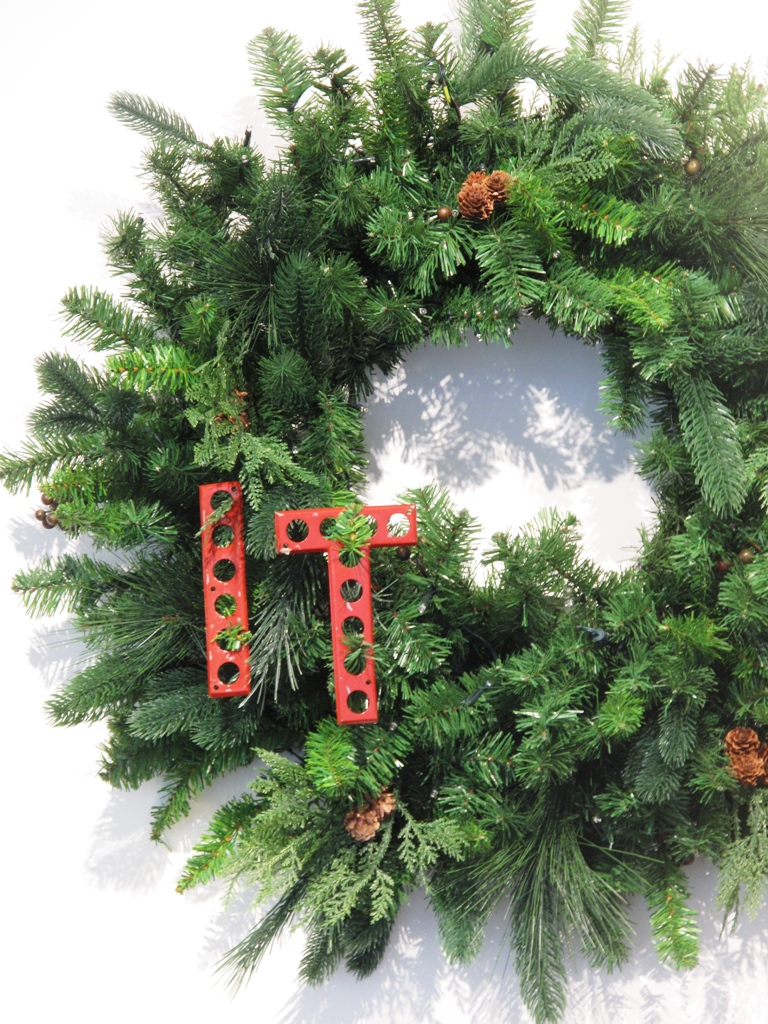
Industrial "I. T." letters on the Christmas wreath!

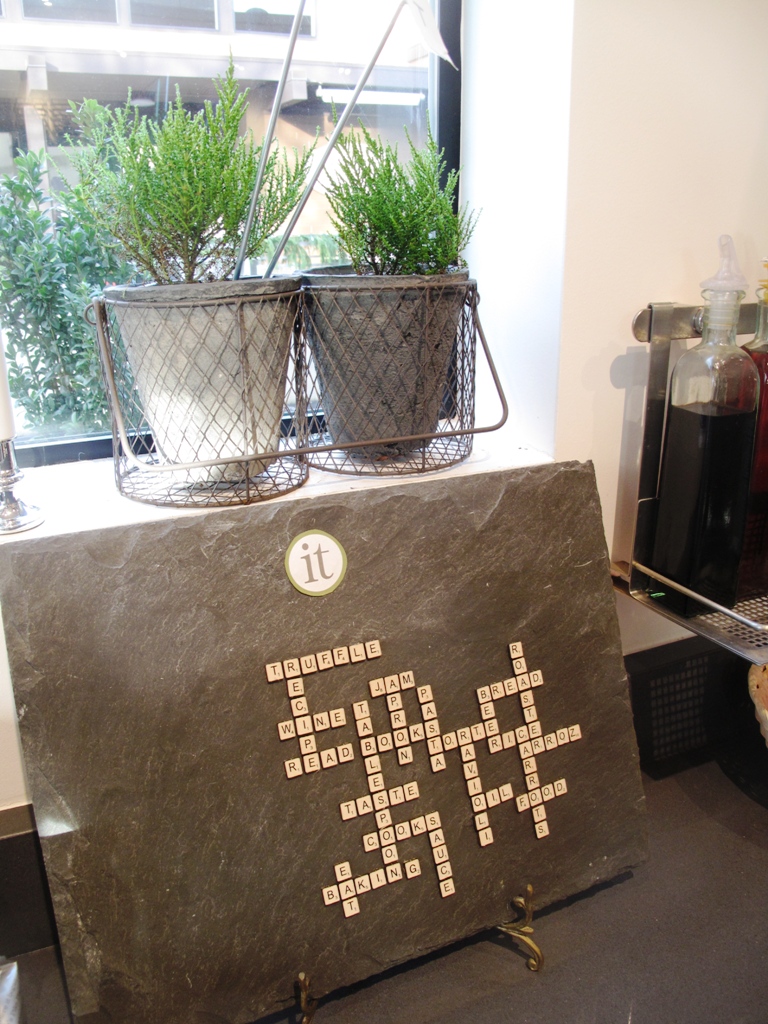
A foodie's crossword puzzle, just for fun!

A wintry postcard from the Pacific Northwest

Friday, December 21st, 2012

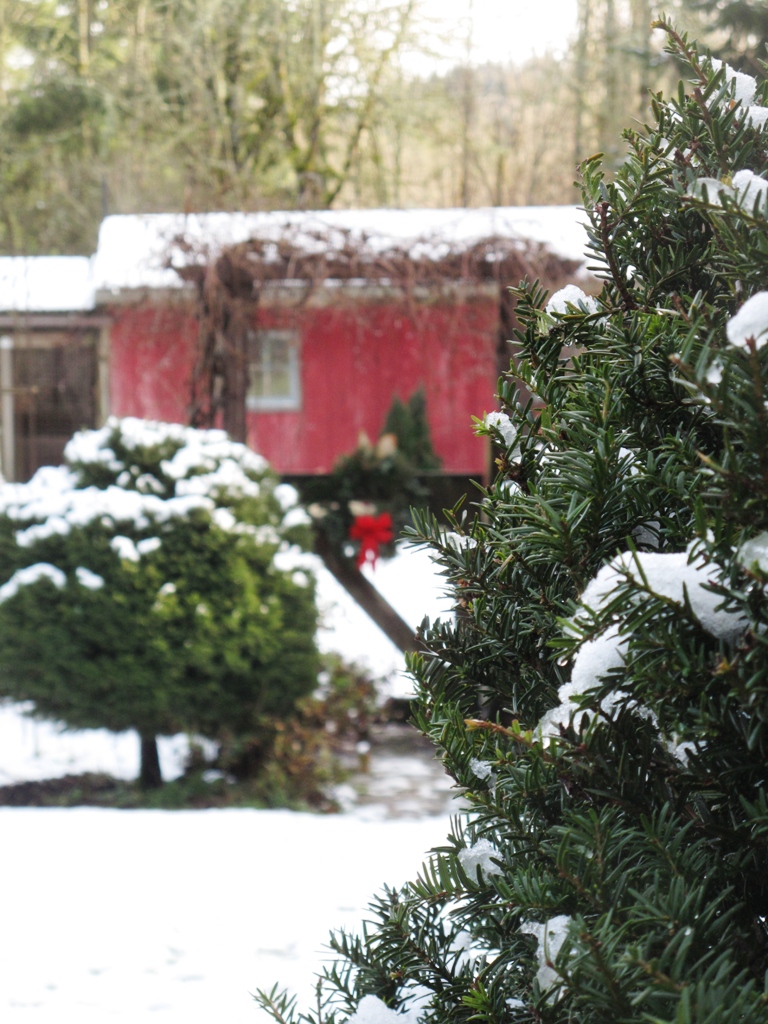
An evergreen yew and topiary forms are frosted with just a little snow on a December afternoon at Old Goat Farm.

Snow came early to the outerlying parts of Seattle this week, dusting the evergreen topiary forms at Old Goat Farm in Orting, Washington. Owners Greg Graves and Gary Waller hosted a holiday tea to benefit Pacific Horticulture Society, and Lorene Edwards Forkner and I drove down to the farm for the festivities. Lorene, of course, is the editor of Pacific Horticulture magazine, a wonderful quarterly journal for gardeners on the West coast (or anyone who loves reading about the hort world in Washington, Oregon and California).

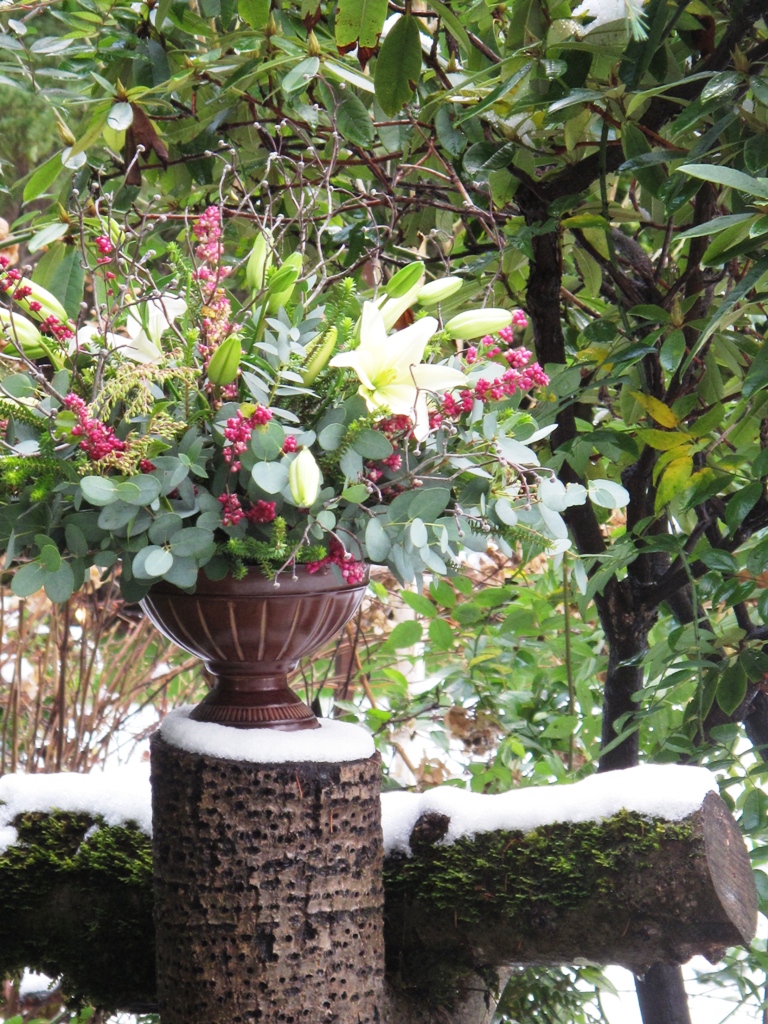
Lorene asked me to donate a seasonal floral arrangement and a copy of The 50 Mile Bouquet to the event’s silent auction. How fun to step out of our car and look across Greg and Gary’s wonderful garden at the sparkling white-and-green scene. There was an old log stump and it seemed like the perfect “pedestal” for placing my bouquet for a last-minute portrait before the party.

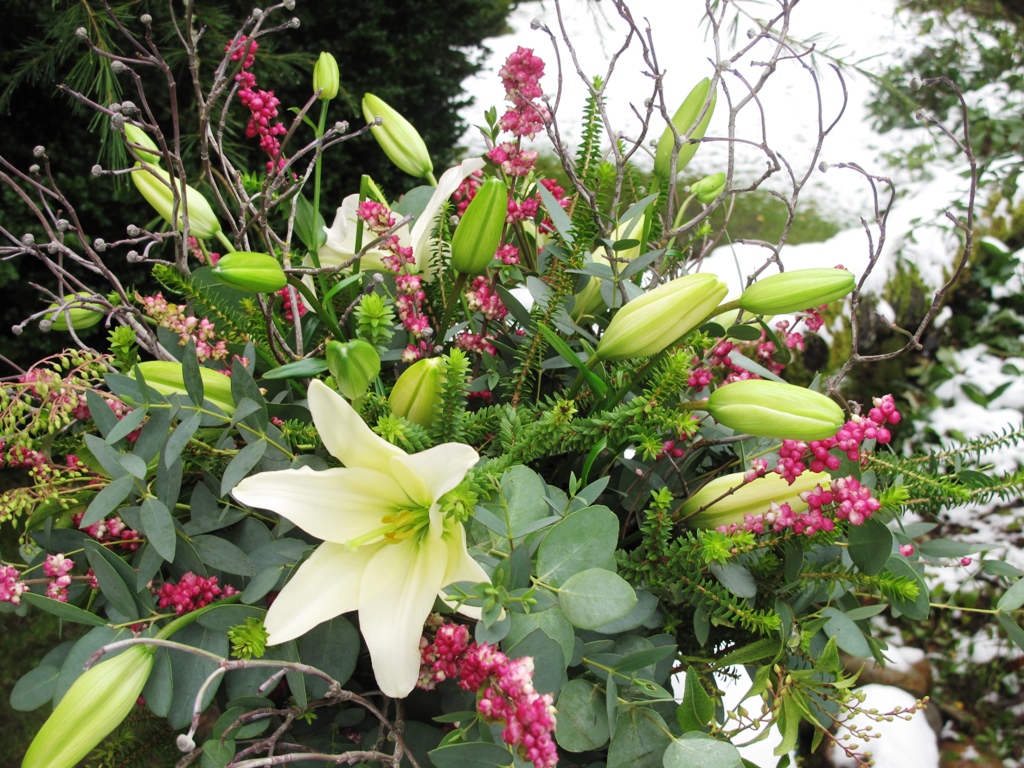
The locally-grown lilies, snowberry, eucalyptus and dogwood branches create a special holiday arrangement. There are a few stems of melaleuca tucked in. I brought them home from San Diego last week!

Everything else here sparkled, too. Enjoy the glimpses captured by my lens. And if you want to read more, follow this link to a post from an Old Goat Farm holiday tea from 2010. Visiting at Christmas, seeing the century-old Victorian farmhouse, hearing the clucking chickens and (of course) eating delicious food . . . what a chance to while away an afternoon.

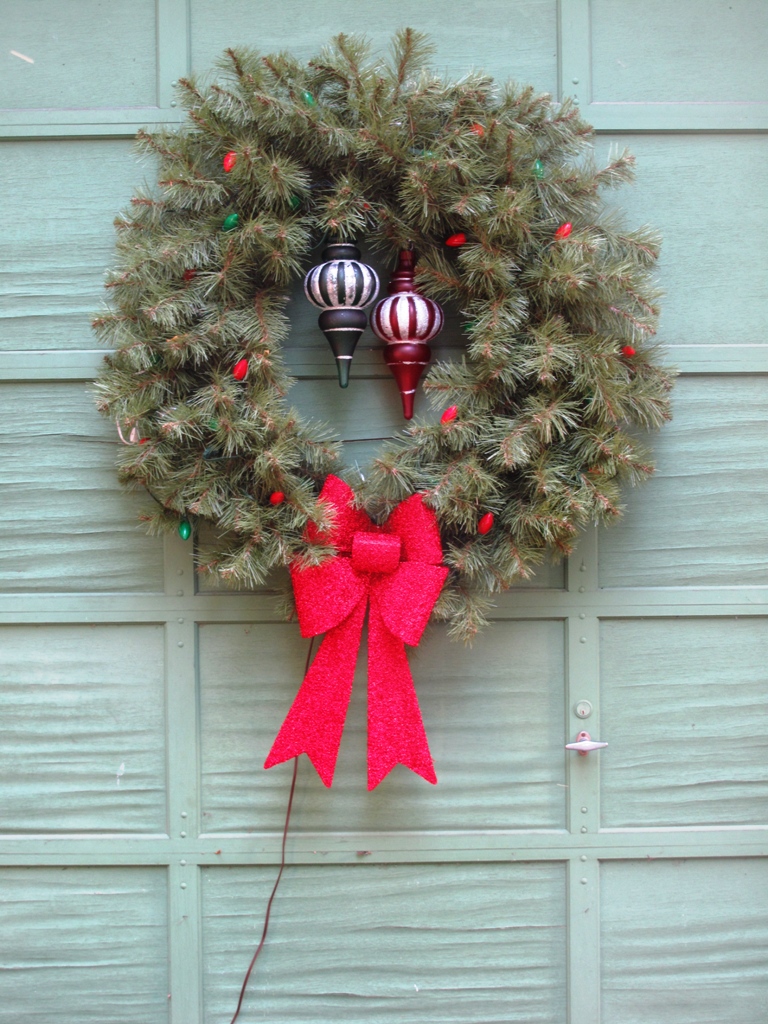
Gary, a talented floral designer and retail display wizard, decorated the barn door with a lovely wreath.

Yes, these are old goat sugar cookies. Very tasty! And eye-catching, too!

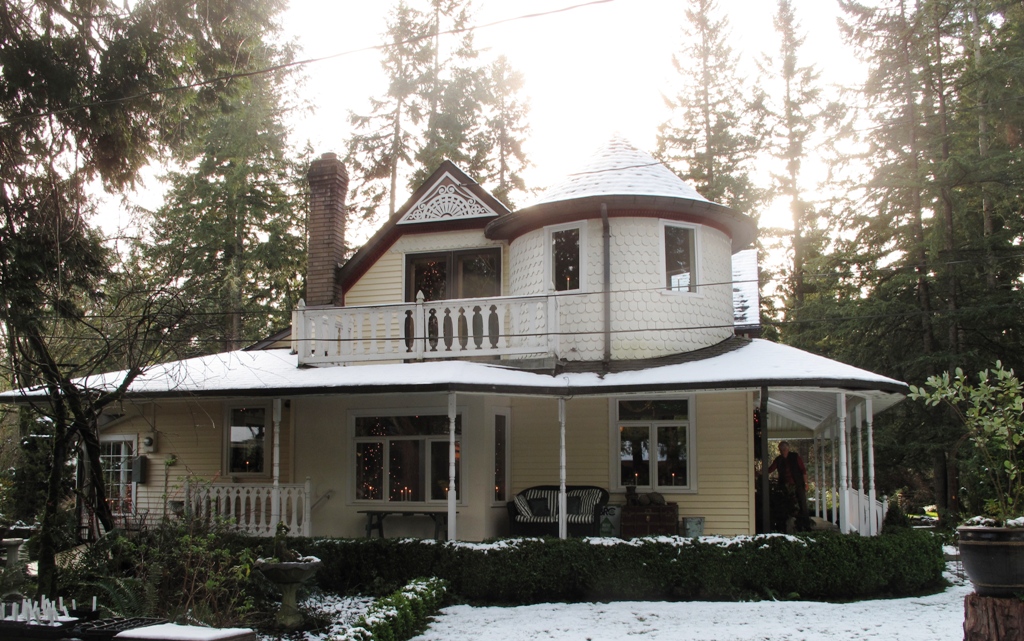
This is a picture-perfect farmhouse. Absolutely love it! Especially that wraparound porch!

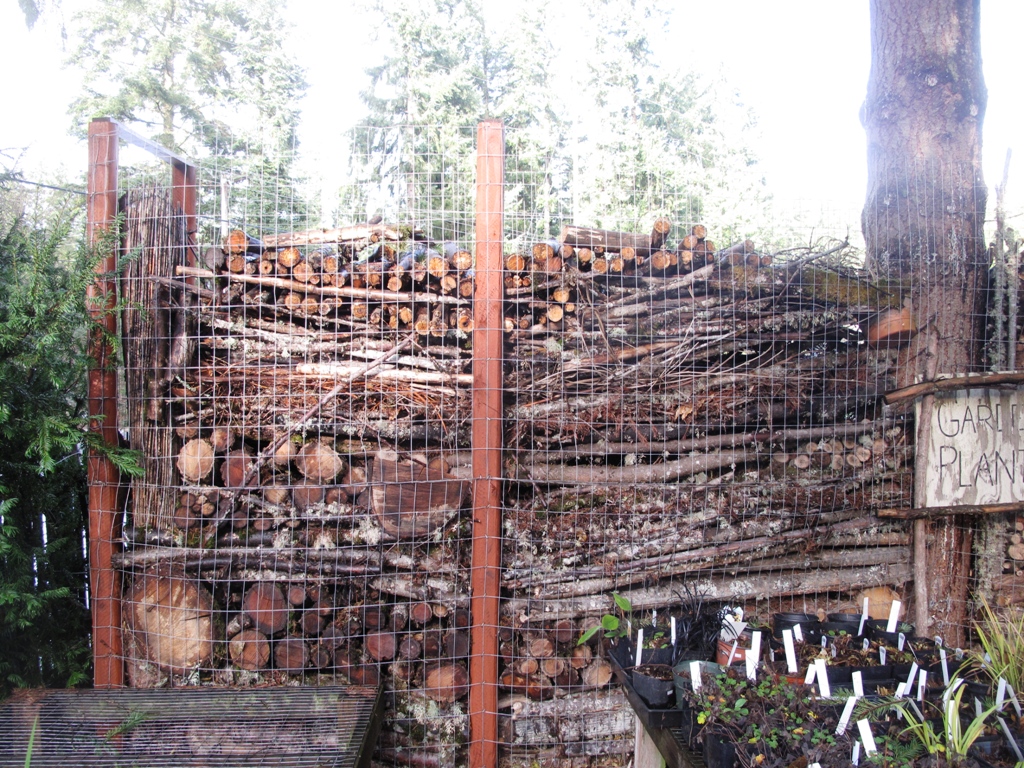
Gary and Greg's famous compost fence. It even made the cover of Pacific Horticulture magazine's fall 2012 issue~

Decorative chicken (or are they roosters?) cookies!

A beautiful detail of my bouquet.

Here’s to a wonderful holiday season! And a New Year to come~

Now you can get LOCAL cut flowers at Nordstrom Rack

Tuesday, March 13th, 2012

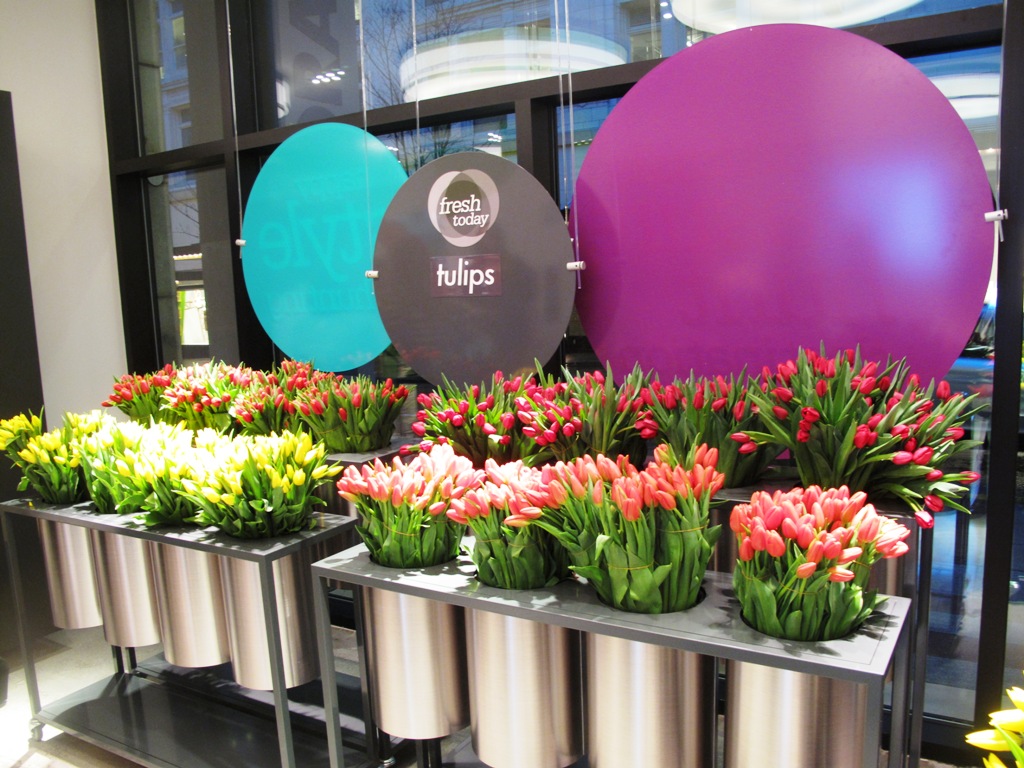
Tulips as Fashion at the new Seattle Nordstrom Rack Store

Right after the first of the year, an e-mail arrived in our in-box via The 50 Mile Bouquet blog.

“Hi – I am the Home Buyer for Nordstrom Rack. I am looking for a local floral resource to put together a floral program for our downtown Seattle Rack, which we are relocating to Westlake in March. We want this store to be special! We will have a lobby space where we’d like to sell fresh, local bouquets daily, a la Pike Place Market. Would you be able to meet with me to discuss this?”

The correspondent was Kelly Smith, Nordstrom Rack’s home and gift buyer who later told me that things like the new floral program defaulted to her because she’s a “Jill of all trades” and besides, someone there decided that the woman responsible for buying vases for the Rack is more likely to know about flowers than someone who buys handbags or cosmetics.

I was intrigued and agreed to meet with Kelly and some of her colleagues back in January. To be honest, there was an idea brewing in the back of my mind that I could get a little floral business going and drag one of my creative girlfriends into the adventure.

But Kelly and her team were very ambitious and exact in their vision. It soon became clear to me that while they might need my advice to come up with the right flower calendar, week-by-week, they would need someone with a larger-scale wholesale operation than I would ever have (or want to have, for that matter).

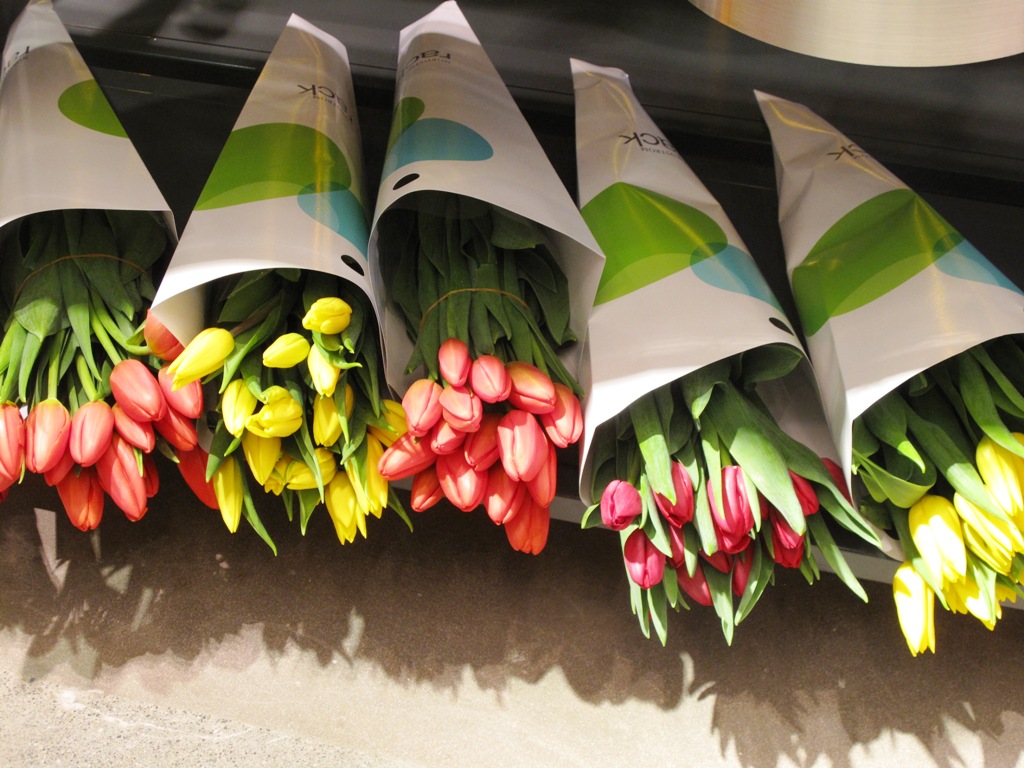
Nordstrom designed its own mod flower buckets with racks on wheels ~ cool!

Eventually, I helped Kelly find a local wholesaler who is now sourcing flowers from local farms, sorting and bunching the stems, and making daily deliveries to the new Nordstrom Rack on the corner of 5th and Pine (in the former Talbot’s location at Westlake Mall). How did Nordstrom come up with this idea of selling locally-grown cut flowers along with designer shoes and bargain-priced fashions for women and men?

“We knew we had this really great lobby space, right off of Westlake, but it’s not a selling space,” Kelly points out. “We started brainstorming about what we could do to create the Pike Place Market feeling near Westlake.” [Locals and tourist alike know that the Rack was located for years at 2nd and Pine, just across the street from the Pike Place Market.] “Selling flowers ties us back to the community and supports the local floral industry.”

When the Rack opens on Thursday, March 15th, shoppers will be able to buy a bunch of 15 gorgeous local tulips for $10. This week, the palette includes yellow, orange and red tulips. Next week, according to Kelly, the palette will include white, purple, light pink and dark pink. “They are so vibrant and beautiful,” she enthused. In future weeks, you’ll see a wide range of flowers, depending on the seasonal crops being harvested from local fields. Just like the fashion discoveries at the Rack, the floral offerings will be ever-changing.

It will be fascinating to watch how bargain-oriented Rack customers respond to the $10/bunch floral program. The overall vision is to make cash-and-carry cut flowers so accessible that everyone who walks through that lobby will want to grab a bunch on their way out of the store.

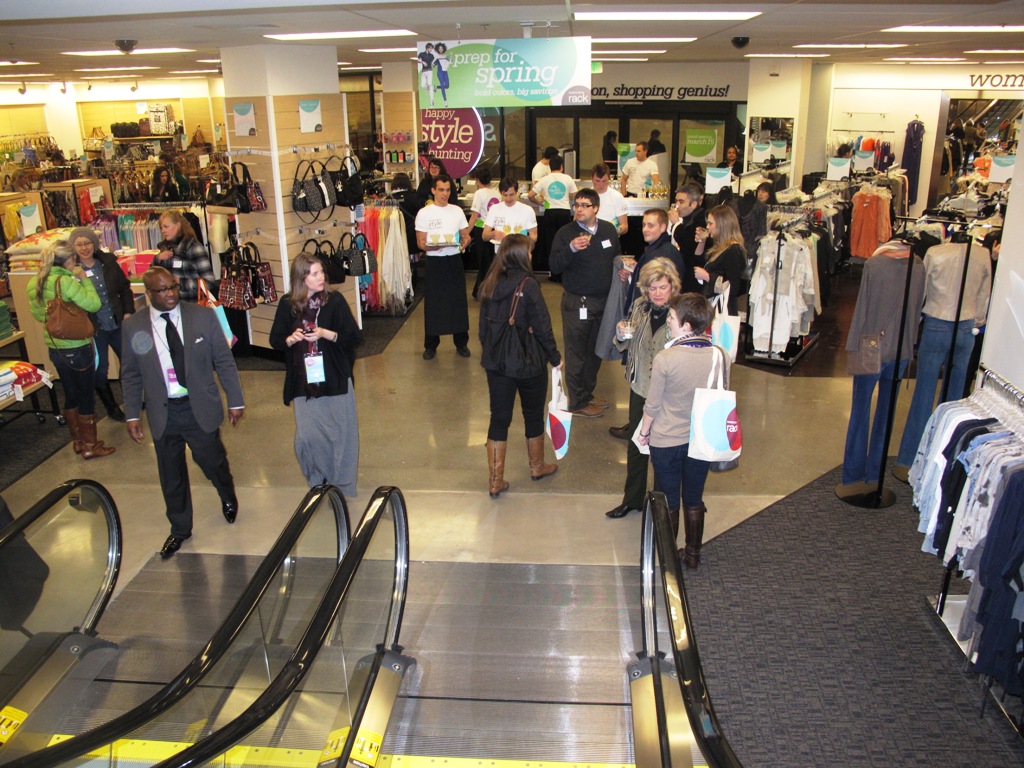
With that plan on my mind, I was thrilled to be invited to tonight’s “Tweet Up” pre-opening gala for (mostly) fashion bloggers. I was probably the only non-fashion blogger or Tweeter in attendance, but don’t worry – I found lots to grab my attention. Enjoy the photos here.

LOCAL Flowers-to-Go at Nordstrom Rack

Purple, Green, and Teal desserts to match the Rack Logo - yum!


Tonight's preview party drew 150 fashion bloggers (and me!)

Style Hunter offering up cocktails at tonight's pre-opening soiree

Flowers also appear on a Dolce and Gabanna silk jacket. Originally $2,945, the new Rack price is $939.97. Tempting. . .


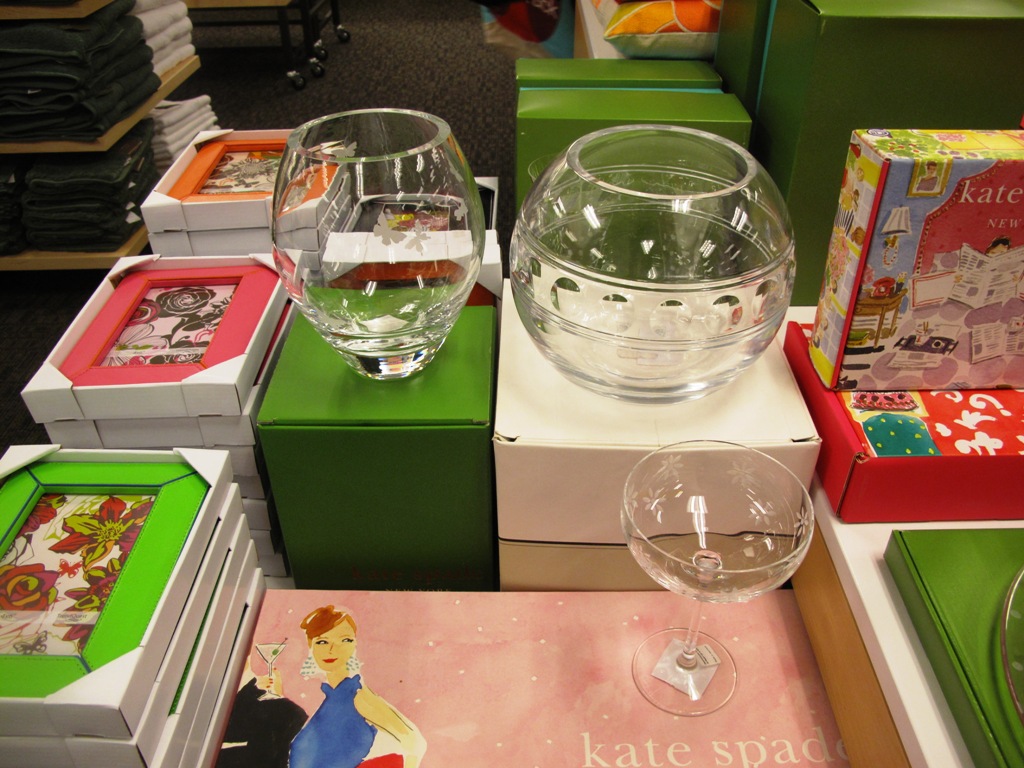
On the left, a $75 cut glass Kate Spade vase, now selling for $59. Thanks, Kelly - a great find and I brought it home with me!

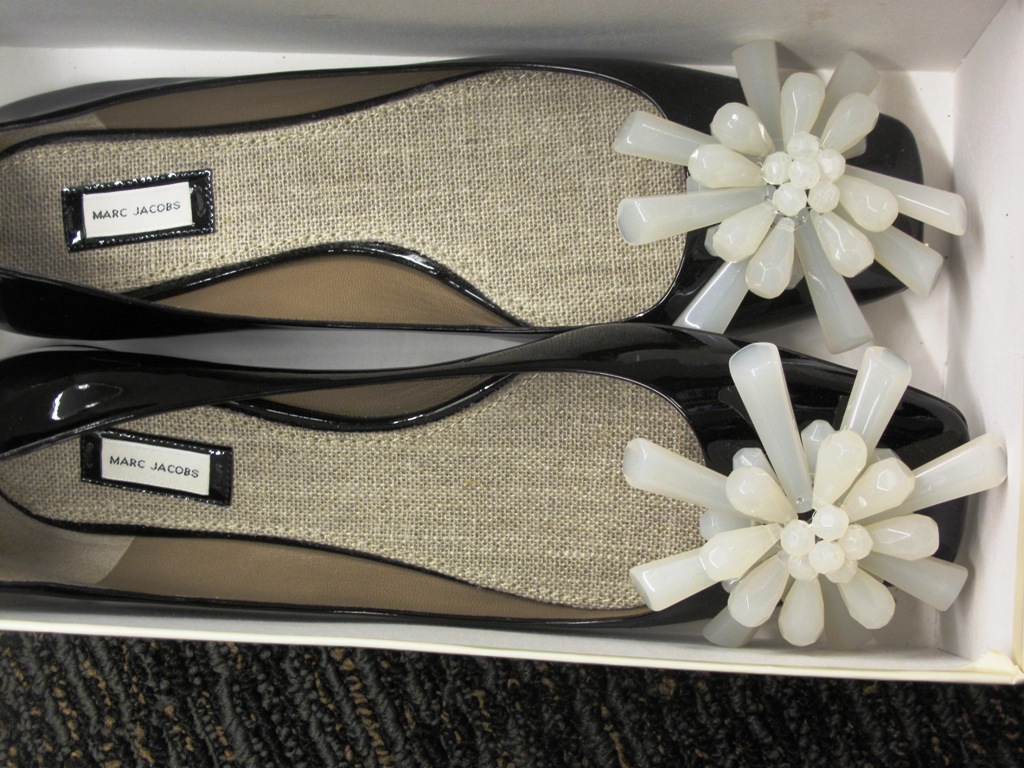
More flowers on the toes of Marc Jacobs' shoes, marked down to $299 from $695. Too bad they were 1/2-sizes too small for moi!

A Foraged Dinner at The Herbfarm

Saturday, May 7th, 2011

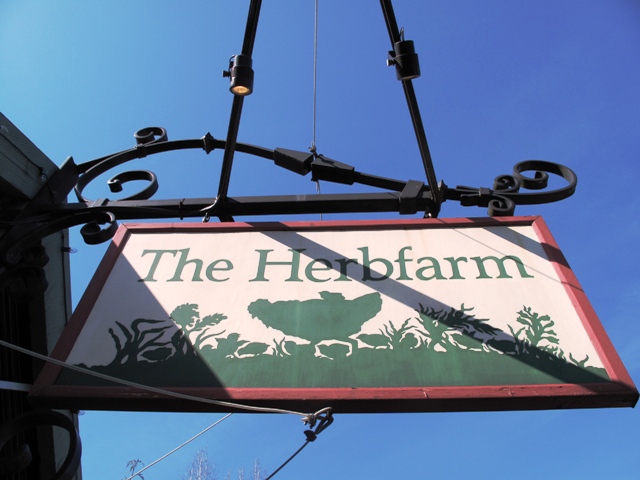
The Herbfarm Restaurant

Last weekend I was a guest at The Herbfarm, the only AAA 5-Diamond restaurant west of Chicago and north of San Francisco, rated number 1 in the Pacific Northwest for both food and service by the Zagat Guide. 

Dining there is a true “culinary experience” that draws food aficionados from around the world. I’ve been fortunate enough to eat at The Herbfarm Restaurant on three prior occasions dating back to 1995 when I dragged Bruce there to celebrate his appointment as Seattle’s deputy mayor. Our friends Jenny Ulum and Tim Gleason actually flew to Seattle from Eugene, Oregon, in order to join us at that meal. 

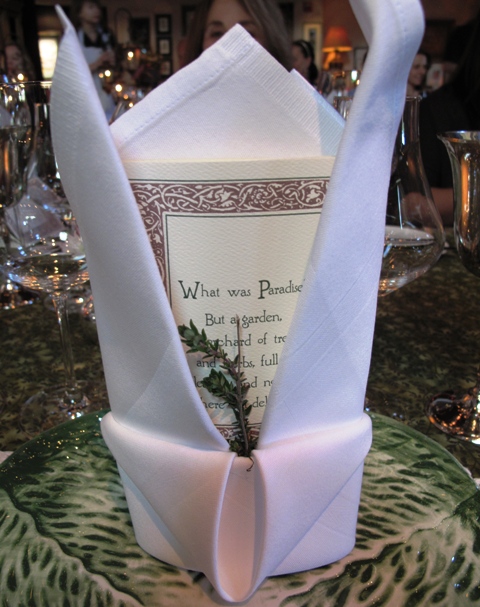
The menu cover reads: "What was Paradise? But a garden. . . "

The Herbfarm Restaurant proprietors Carrie Van Dyck and Ron Zimmerman hosted fellow writer Robyn Cannon and me for an unforgettable meal last Sunday evening. We’re talking a four-and-a-half-hour, nine-course extravaganza that celebrates locally grown ingredients prepared with innovation and ingenuity. I say unforgettable, in that years after an evening at The Herbfarm, one can instantly recall tasting (perhaps for the very first time) a specific dish or uncommon ingredient. Oh, and did I mention that each course is paired with a Northwest libation selected by Sommelier Tysan Dutta? The wines are chosen to complement and enhance every bite. 

The Herbfarm’s history is long and not without drama (including a fire that destroyed the original Herbfarm location in Fall City, Washington, that was started by Ron’s parents in 1974 as a small nursery, followed by challenges trying to gain permission to rebuild). 

I have such fond memories of the old-timey Herbfarm. When my oldest son Benjamin was little, I used to take him out there to see the herb garden and a few farm animals. We still have the lavender-filled stuffed bunny rabbit, which we found in the gift shop. Those expeditions usually involved bringing along another mom and child to have a picnic in the herb garden. 

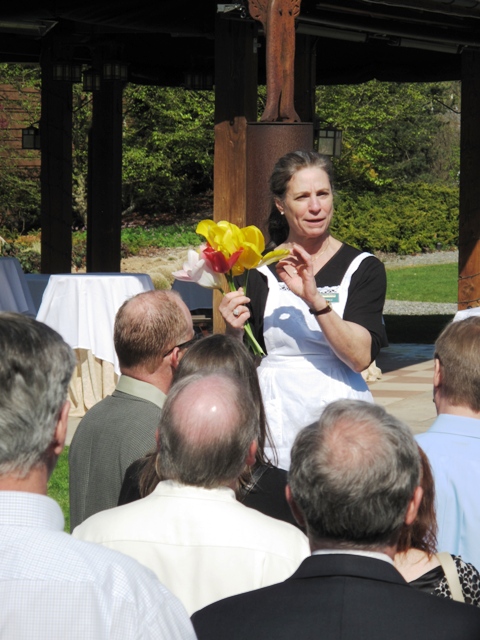
Carrie Van Dyck begins each meal with a tour of the garden.

The Herbfarm Restaurant’s current location in Woodinville dates back to 2001 when Ron and Carrie had to pick up and move the entire restaurant. They constructed a charming English-Tudor style cottage that houses antiques, a vintage fireplace, and tables that overlook the kitchen-as-theatre all night long. 

Robyn and I were staying at the adjacent Willows Lodge where we attended the Pacific Northwest Travel Writers Conference. And that’s how we ended up sneaking out of the proceedings late Sunday afternoon to join Carrie as she hosted the pre-dinner tour. The Herbfarm and Willows Lodge share a vegetable and herb garden where raised beds and clipped boxwood balls are interconnected by crunchy hazelnut shelled pathways. 

Carrie picked and passed around some of the edible ingredients that diners might expect to taste that evening — tulip petals, sweet cicely, sorrell, lovage, thyme, fennel and lemon verbena. We stopped to visit the resident pair of Vietnamese potbelly pigs named Basil and Borage, who reside in a pen next to the composting area. That seems appropriate, doesn’t it? 
Once we followed Carrie indoors and were seated for dinner, Ron took the stage to explain a bit more about the menu development. The Herbfarm creates 26 different themed menus each year, based on the seasonal availability of ingredients and the culinary whims of the chef Chris Weber and his team. By the way, Chef Chris is one of the youngest 5-star chefs in the country. Possibly THE youngest. What a talent!

READ MORE…

New Garden Products for 2011 – Part Two

Tuesday, November 30th, 2010

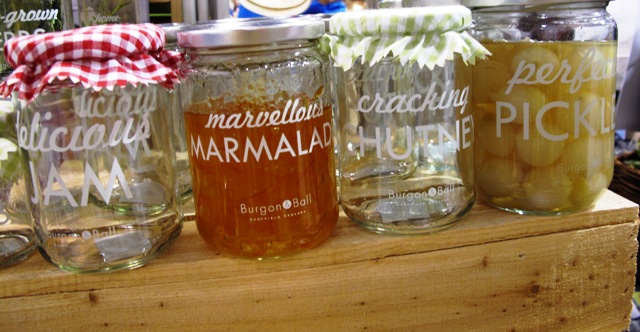
Preserve the Harvest with Burgon & Ball's charming jam, marmalade, pickles and chutney jars.

Trend-spotters are reading the horticultural tea leaves these days.

It’s an annual practice that I remember so well from my newsroom career when, without fail, we reporters were asked to compile the obligatory “forecast” story. I covered retail, and you could imagine how loathe Seattle’s major retail CEOs were to tell me anything about the coming year when it was just days after Christmas and they hadn’t tallied up the current year’s performance.

But, alas, we all want a glimpse into the future. And that’s what going to industry trade shows can help reveal. A peek into the products, plants, tools and design items you may be seeing in 2011’s backyards.

This post continues with even more interesting offerings. Or the ones that caught my interest anyway. I welcome your reaction. Are these items you can see yourself purchasing for your garden? Do you even NEED more products? (That’s a long conversation, isn’t it?).

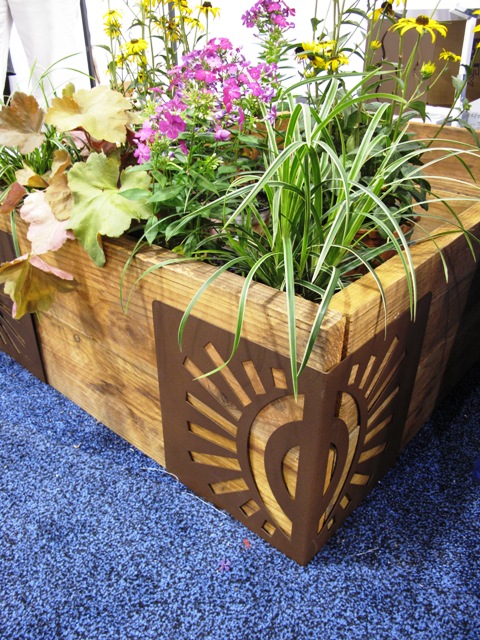
Here is the "sun" bracket from M Brace - simply brilliant!

I really enjoyed meeting Jill Plumb, a school teacher who came up with a brilliantly simple method of building raised beds.

Her product is called M Brace. It is a decorative steel corner bracket that holds lumber at a 45-degree angle WITHOUT HARDWARE (note: this is a big selling point for anyone who has dragged the electric drill and 100-foot-long orange extension cord out to the backyard to try and wrestle together a box for the tomatoes).

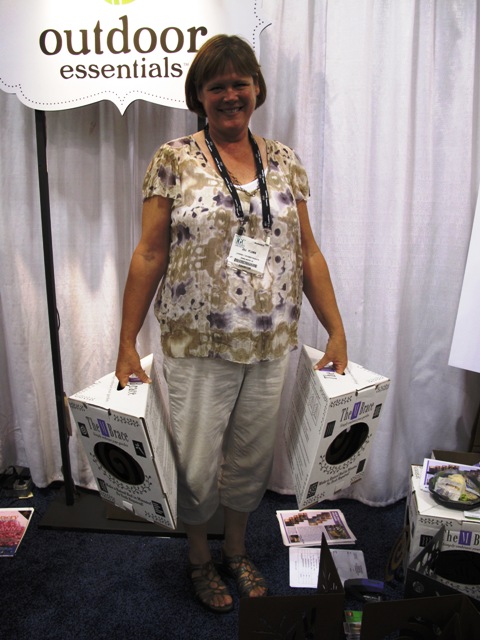
Here's Jill demonstrating the nifty packaging for a pair of brackets.

Jill told me that she got this “big idea” one day while re-loading paper napkins into a “slot” style napkin holder.

Something clicked and she saw in her mind’s eye how easy it would be to have a bracket that emulated that napkin holder. Just larger, more durable and also pretty. Several prototypes later, including the support of her students who she involved in the design process, packaging development and marketing, Jill’s M Brace is looking very professional and has already hit garden center shelves in some markets.

Made from recycled steel (natural or powder-coated), with decorative cut-outs including a squiggle, sun, carrot or bamboo fronds, the set of 4 brackets has a $165/set recommended retail price. Jill continues to offer new product ideas such as “edging” made from the leftover swirl pieces or plant stakes from the leftover carrot cutouts. Brilliant!

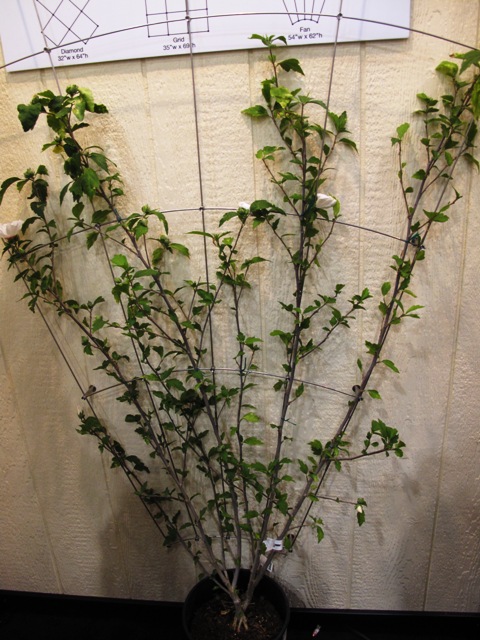
The Feeney 3-in-1 trellis, shown in a fan pattern

I spotted another clever system to corral plants – especially in this case, vines – in the Feeney Architectural Products booth.

A detail of the Somerset II Trellis

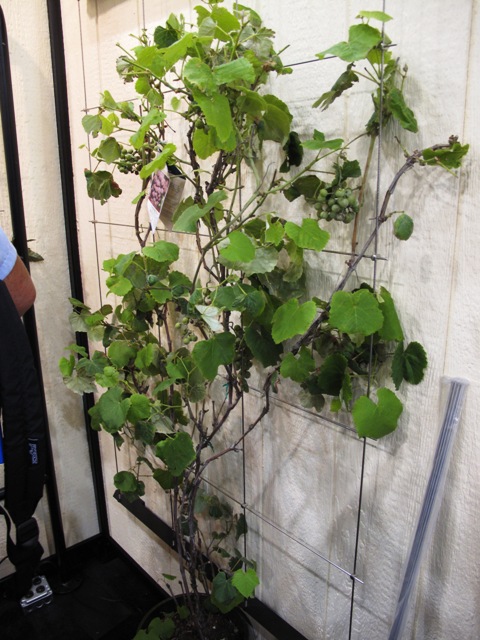
We see so much over-designed crap in the marketplace, which is one reason why I appreciated Feeney’s simple use of stainless steel cables to create a trellis for climbing plants. Feeney’s 3-in-1 Trellisis an easy-to-assemble wall-mount trellis kit with 1/8-inch diameter rods and special mounting components that can be configured into a Fan, Grid or Diamond design. This is a lightweight solution that does require measuring and drilling skills to install, but can turn a blah wall or fence into something quite beautiful. Just add a vine of your choice and voila! Something quite pretty. Suggested retail: $199.

Feeney also uses stainless steel cables in its inexpensive “It’s a Cinch” plant hanger and in a freestanding trellis panel kit. The Greenway Trellis has a frame of aluminum tubing and a square-grid pattern for the vines. The frame legs can be set in compacted gravel or concrete footings, or they can be base-mounted on a deck or patio. That square-grid pattern also shows up in the Somerset II Trellis, which has top and bottom powder-coated aluminum brackets. It is also a wall-mount system but a little larger than the 3-in-1.

READ MORE…

New Garden Products for 2011 – Part One

Saturday, November 27th, 2010

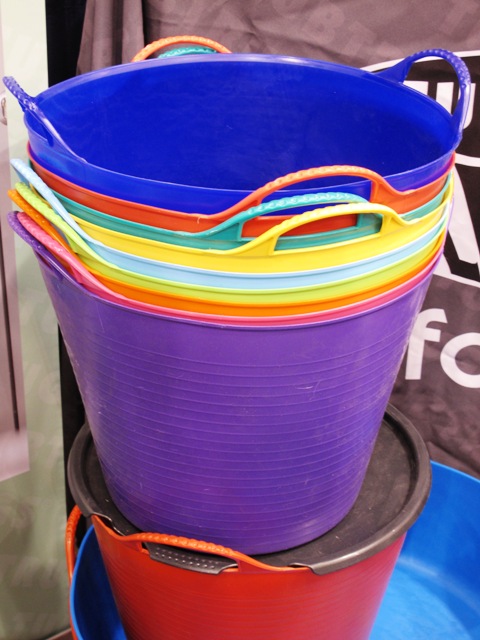
Here is an array of new 2011 Tub Trug colors

Part One of Two Consecutive Blog posts:
I was invited  by the producers of The Independent Garden Center Show, an annual trade show held in Chicago each August, to give two talks about garden and consumer trends. It was easy to say “yes,” because I had heard so much about this massive event. It’s the place to be and be seen for anyone in the gardening industry!

By experiencing the extravaganza first-hand and seeing what all the buzz was about, I got a real workout. With thousands of other attendees, I navigated the aisles and aisles of new garden products, tools, furniture, accessories and even plants. I managed to see it all over the course of three days – and here are my picks for the best new ideas that gardeners will see in 2011. 

You’ll likely discover these goods on the shelves of your local indy garden center, nursery or emporium. Follow the links to the web site for each company (some only sell wholesale, but many have store locator tabs). 

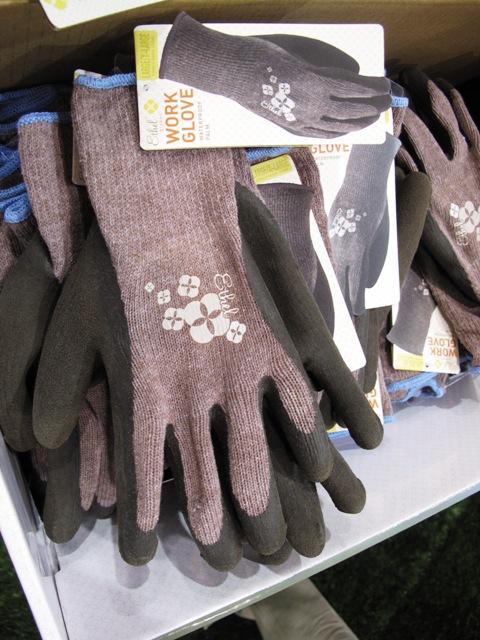
Ethel work glove

I’ve previously endorsed and written about the Ethel Glove so I wanted to stop by the booth of this cool Valencia, Calif.-based company to see what was new. The Ethel Work Glove, with an $8 price tag, is at first glance similar to the everyday rubber-dipped knit glove you’ll see at hardware stores and garden centers. But the Ethel staff explained that this glove is made from a durable knit material with a rubber palm, pads and fingertips formed by painting (rather than dipping) the gloves into a polypropylene finish. 

Ethel also has a new, slim and fashionable, black knit glove made from a bamboo-derived fine knit (protecting the cuff, back of the hands and fingers). The durable palm and pads are coated with a synthetic leather. 

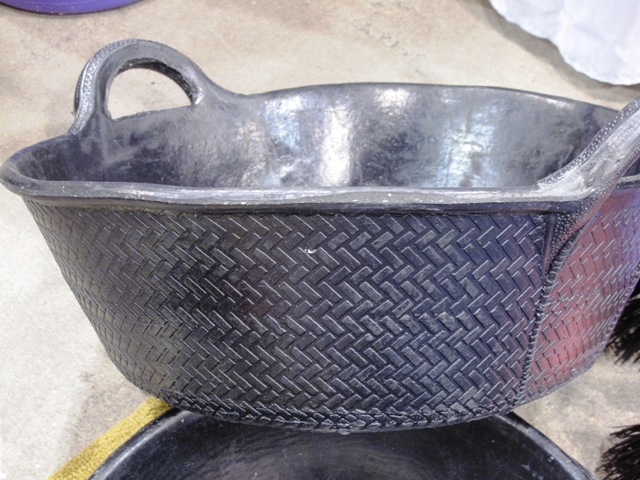
A reimagined rubber tire-turned-trug

Tub trugs come in a rainbow of colors. I own several of these excellent plastic garden carriers with handles. They’re great for hauling anything around the garden and useful for pruning,  dead-heading and weeding projects. 

The designed-in-the-UK and made-in-Spain tubs will soon be available in 10 new colors. There are also a few fun new products, including a color-coordinating push broom ($29.99 retail) and two sizes of trugs made from recycled tires. To me, these look like a riff on the Southern tire planters – they even smell like old Goodyears! Thicker and a little less refined than the sleek, Pantone palette-trugs, the black rubber ones will be available in January for $9.99-$12.99. 

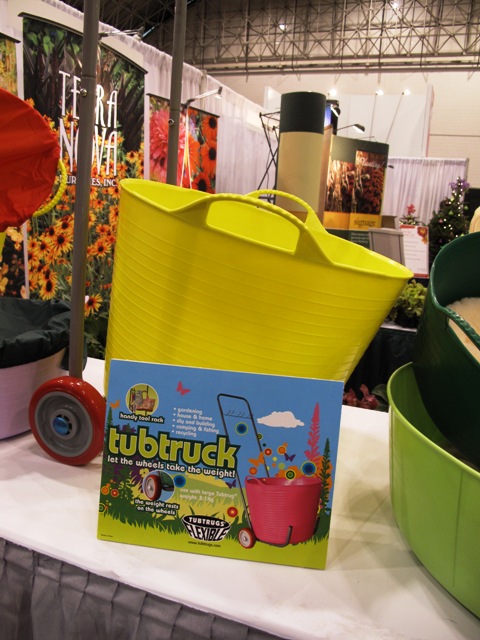
The tub truck - take it with you to the farmer's market!

For those of you who already own a medium or large trug, look for the January release of Tub Truck, a rolling carrier ($37.99). You can pop the bucket onto the frame and take it with you to a plant sale or farmer’s market. The handle has hooks for hanging additional bags. It’s a fun cart to pull behind you and a brilliant solution for gardeners. 

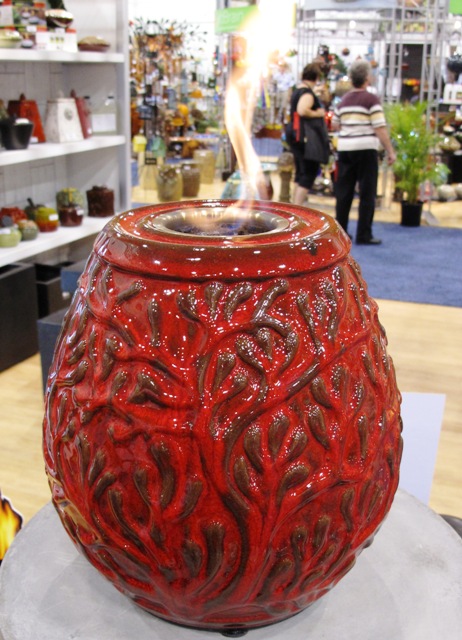
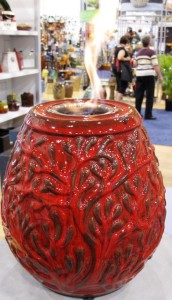
'Serenade' ~ a Napa Firelite, 12 in. tall

“Firelites” or fire bowls are all the rage. As Martyn Fernambucq of Napa Home & Garden puts it: “Fire is such a hot commodity right now.” 

I first noticed this new product category when an editor at Better Homes & Gardens sent me a photo of a small ceramic lantern with a flame (not a wick, mind you, but a 2-inch diameter flame that was flickering 2-3 inches above the round opening in the lantern). That’s when I went online to learn more and discovered that the lanterns are fueled by a long-burning smoke- and odor-free gel.

Like many things that bubble up to one’s consciousness and elbow their way onto one’s radar, it’s not really a surprise that the very next day I went to an al fresco dinner party for a friend where the hosts’ boathouse was illuminated by these flaming lanterns. Clearly they are decorative. The flame can’t  be blown out by a gust of wind (as would be the case with a candle).

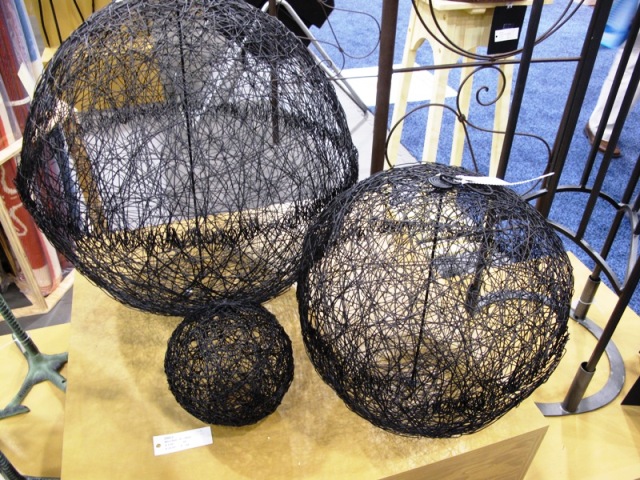
Mesh orbs by Achla Designs

I’m all about orbs, spheres, globes, and balls as sophisticated garden ornamentation. My favorite piece of sculpture features a filigree-style wire mesh ball with a random “scribble” pattern. It was designed by artist Jennifer Gilbert Asher of TerraSculpture and fabricated by Mario Lopez in his Los Angeles metal shop. 

If you like this custom-designed and fabricated look, you might like the black wire orbs that are slightly reminiscent of Jennifer’s designs. I spotted them in Achla Designs booth. Nice design in small (6-inch), medium (12-inch) and large (18-inch) sizes. 

A sunflower pillow - perfect for the patio

Outdoor textiles are more interesting than ever, moving way beyond awning striped polyester choices. 

So of course, the Liora Manne booth lured me in and I was eager to learn more about the gorgeous, patterned pillows made with a felting-like process. 

The Lamontage pillows are made of 100% antimicrobial polyester microfiber for indoor/outdoor use. They measure 20-by-20 inches or 12-by-20 inches with removable, hand-washable covers. The collection includes place mats and outdoor rugs, as well. 

According to the Liora Manne web site, Lamontage is a technique “in which acrylic fibers are intricately structured by hand and then mechanically interlocked by needle-punching to create a nonwoven textile. Lamontage is based on the idea of versatility; breaking the boundaries of traditional textiles and creating a unique textile with unlimited possibilities.” 

READ MORE…

Clever candles for outdoors (and inside, too!)

Sunday, October 10th, 2010

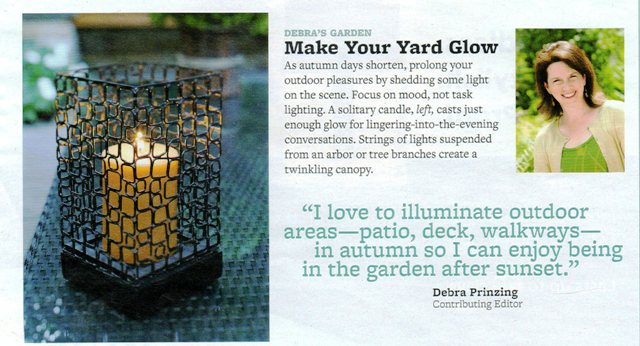
October is well underway, and here is my little “Know-How” piece from the October 2010 issue of Better Homes & Gardens.

It was inspired, in part, by my past visits to my friend Kathy’s garden. She uses outdoor candles incredibly well.

I have always loved the look of luminarias, the traditional candle-lit lanterns that illuminate walkways and paths for Southwest-style holiday celebrations. Modern re-interpretations use paper bags or Mason jars weighted down with a layer of sand in the base holding votive candles inside.

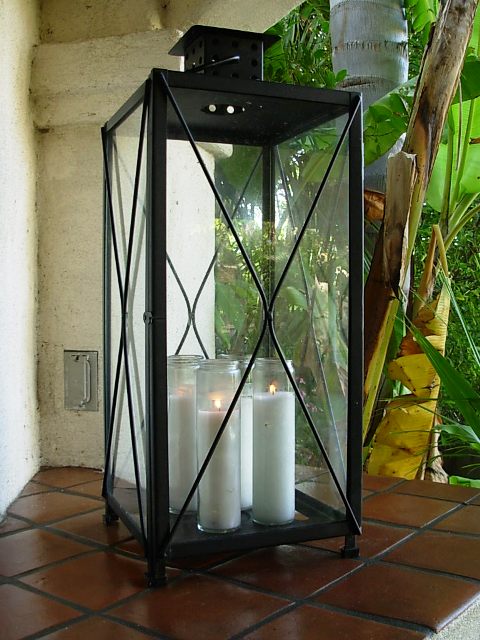
For a fresh twist that takes the luminaria idea and improves upon it, look for 7-Day Candles, also called altar candles. I first saw the brilliant display of these Mexican chapel candles in Kathy’s Southern California garden. Of course, it’s easy to dine and entertain out-of-doors here all year long. But even if you reside in cooler parts of the country, you can still borrow her idea!

White, red, blue or green wax is poured into an 8-inch-tall cylindrical glass container. “You can burn them 15 hours a day for a week,” Kathy says. “Imagine, 110 hours of candlelight for about one dollar!”

You can often find them at Mexican grocery stores or 99-cent/Dollar Stores. I found several styles on the shelf of my local Safeway grocery store – in the Mexican food aisle. And yes, they cost 99-cents!

A cluster of 7-Day candles looks brilliant inside a traditional hurricaine lantern.

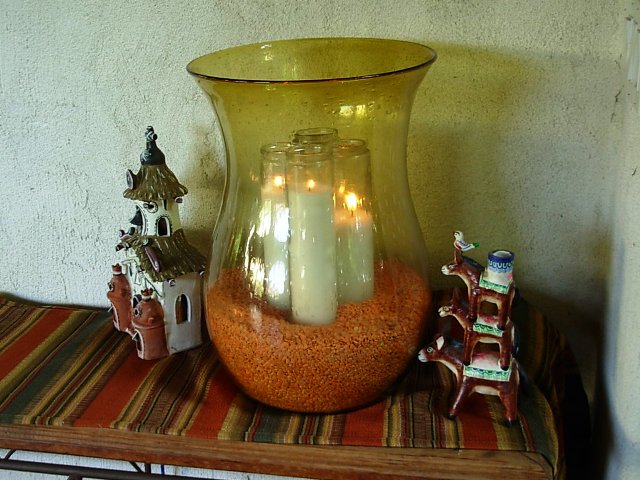
Here are some of the tall, slender, long-burning candles nestled in a base of dried lentil beans. Perfect for autumn decor!

Kathy began decorating with these clean-and-simple altar candles after too many dinner parties where one-inch votives burned out before the evening was over. She lined her outdoor fireplace mantle with a row of the 7-Day candles, which glowed and sparkled during her al fresco dinners.

Kathy also groups three or four candles inside a large, glass vase for impact. A few inches of dry black beans or orange lentils in the base serve as a stabilizer. Try a variation of your own and you’ll enjoy hours of romantic flickering candlelight.

As for displaying 7-Day candles outdoors, such as on a porch, patio or front walkway, don’t worry that they’ll blow out.

Kathy calls the glass cylinders “little hurricane lamps.”

Here are some additional “illuminating” ideas for your after-dark garden enjoyment:

  • Burn a flame:  also adds warmth after dusk. At the Independent Garden Center Show in August, I was amazed at the number of vendors who are introducing these ceramic bowls, lanterns or pots that contain a small metal insert that burns a “gel fuel.” In one catalog, from Napa Home & Garden (see lantern here), the liquid fuel is described as being manufactured from recycled, post-consumer waste – a recycled and sustainable product. The decorative ceramic container burns a long-lasting flame. In the garden, you can illuminate the edges of a pathway or group several lanterns together on a tabletop for after-dark enjoyment.
  • String up lights: Create a twinkling overhead canopy with strings of carnival lighting, holiday strands or small lantern lights. When suspended from an arbor or tree branches, the tiny lights lend a flickering, romantic accent – and just enough light for sitting outdoors with a hot drink.

ILLUMINATION UPDATE: My friend Kathy Purdy, at Cold Climate Gardening, just suggested that I check out solar fireflies: “Personally, I can’t see using these if you have the real McCoy, but I’ve learned that not all areas of the country do,” she writes. Kathy, you’re right. West coast gardeners are not as fortunate as you East coast gardeners. I haven’t seen a real firefly since July 2000, when my family visited friends in Washington, D.C. and we lay on our backs (on their front lawn) late at night – watching the magic!

What I did on my summer vacation . . .

Friday, October 8th, 2010

Welcome to the Iowa State Fair!

IOWA AND ITS FAMOUS FAIR 

This post was somehow lost between computers. I actually started writing it at the end of August. So . . . a little delayed, but no less informative (says I). The trip to Des Moines and Chicago was filled with “firsts” and I thought I’d share some of them, in a series of posts. 

Part One: On August 15th, I flew into Des Moines, Iowa, in the early afternoon. Susan Appleget Hurst met me and whisked me off to the famous Iowa State Fair for an extravagant and authentic Midwestern County experience. 

I’ve heard so much about this quintessential state fair so it was a thrill to take in the experience for an afternoon. Susan tells me that there’s an entire movement of fair fans who arrive with campers and RVs and pay to park their wheeled homes on-site in order to hang out at the fair for the full 10-day experience. 

I only saw the highlights, but they were unforgettable. If you only have four hours to take in this fair, here’s what NOT to miss! 

Lunch!

The sign says it all.

First things first: Eat lunch. 

Susan recommended a Pork Chop on a Stick. This is a savory chop cooked on open grills. The rib is butterfly-cut to form the “Handle” for easy, fork-and-knife-free dining. A napkin will do, but be sure to add some barbecue sauce. 

I asked the crew behind the counter about the pork chop’s popularity. “We sell 6,000 to 8,000 a day during the fair,” boasted one guy. Wow. This is a big Iowa Tradition and I sure enjoyed my chop. Given all the deep-fried offerings on the fairway, I think the chop was one of the healthiest sources of protein! 

What a charming way to illustrate the Dairy industry!

We left the Iowa Pork Farmers and strolled through several of the Agricultural Buildings. Susan wanted to make sure I checked out the “butter cow,” a popular annual feature. This life-sized bovine is – yes – carved from pure butter. No wonder you have to photograph Bessie through a glass window. She is temperature-controlled due to the humid and hot Iowa summers. 

Look but don't touch!

We also checked out the produce displays and took a gander at a 1,323-lb prizewinning pumpkin. 

Other Plus-Sized highlights at the Fair included a gentle-looking steer and lots of livestock raised for everything from wool to milk to dressage. Horses large and miniature, goats wearing sweaters, baby calves, and the fair’s largest hog….what a fun tour of Iowa’s farming heritage. 

We stopped for dessert and got ourselves a cup of the famous Iowa ice-cream from an old-fashioned pharmacy. Susan recommended the homemade fresh peach ice cream, but since I couldn’t decide, I also ordered a scoop of homemade strawberry ice cream to split. 

The garden gals in the wine tent, Deb and Susan

We thought we might leave by then, but Susan’s husband Jerry and his friend were in the Iowa Winery tent. So we obliged and joined them to taste some of the really excellent offerings from local wineries. 

All in all, this was a very special visit. I loved the fair and would love to return next year. What a treat!

A horticultural “welcome home”

Saturday, August 7th, 2010

The view from our rental house in West Seattle at sunset. It reveals the purplish silhouette of the Olympic Mountains and a peek of Puget Sound.

I drove into Seattle on Monday, July 19th after spending three days on the road from Ventura County. My husband and two sons were already settling into our new rental home in West Seattle while I hung out with the (not fun) packers and movers in Southern California.
FINALLY – the house was emptied, cleaned and ready to wow potential buyers. And it was time for my return to Seattle. With the Volvo station wagon crammed to the brim with breakable garden sculpture and pottery, the many plants I couldn’t say good-bye to, a few pieces of clothing and my faithful Lab, Zanny, I left for my Pacific Northwest destination. I hit the road Friday evening with four books on tape and a tank full of gas. One night bunking at the borrowed home of Palo Alto friends who left me a key, followed by one night in an artist’s rental apartment that Amy Stewart found for me in Eureka, Calif., and a third overnight at a dog-friendly hotel in Portland . . . and we got here by noon on Monday.
I was happy to unload the car, although with 20-plus steps from sidewalk to house, I burned quite a few calories doing so. It took nearly 2 hours to unload properly and check that my mostly succulent menagerie was unbruised and that nothing was damaged due to my occasional need to slam on the brakes!

But there really wasn’t time to dawdle because I had to get cleaned up and dressed for my friend Stacie’s garden gal’s soiree, the second annual event. While vacationing in Seattle last summer, I was able to attend Stacie’s delightful summer garden party in her highly-published North Seattle landscape. Earlier this year, way back in February, Stacie asked me to let her know when I might be back in Seattle so she could work around my travel schedule for her 2010 soiree plans.

The garden gals, from left: Me, Kathy Fries, Deborah Cheadle, Stacie Crooks, Marty Wingate, Wendy Welch, Lorene Edwards Forkner, Nita-Jo Rountree, Gillian Mathews, Janet Endsley and Tina Dixon (kneeling)

I was greeted by a charming stone duck - peeking from a hedge at the Bloedel Reserve.

As it turns out, I anticipated being at a family wedding in mid-July so I assured her that something around July 19th would be ideal. Little did I know that (a) the bride and groom would skip the formal wedding for a simple civil ceremony (and three-week honeymoon in Mexico) and (b) that I would not be vacationing here in July but MOVING HERE!! Life occasionally throws us some very wonderful surprises and this one came courtesy of the company my husband works for deciding quite recently to relocate its corporate headquarters from Pittsburgh to Seattle.

Back to Stacie’s party. This one was scheduled for late afternoon-early evening when the light is quite delicious and the day’s temperatures begin to cool. A gifted landscape designer and sustainable gardening educator, Stacie recently joined the board of trustees for the Bloedel Reserve on Bainbridge Island.

For some magical reason, she obtained permission to host a private gathering on a day when the garden isn’t normally open.

Let me tell you, the prospect of joining Stacie and some of my very favorite Seattle women friends kept my eyes on the road and my foot on the pedal while I drove from LA to Seattle over that long weekend.

Here’s some background on Bloedel Reserve, excerpted from the 9th edition of the Northwest Gardener’s Resource Directory(Sasquatch Books, 2002), my very first book project that I inherited from the wonderful, late Stephanie Feeney:

The most massive Katsura tree I've ever seen.

From the time Prentice and Virginia Bloedel acquired this 150-acre property in 1951, they began a sensitive courtship aimed at marrying the designing hand of man with the natural attributes of the woodland setting. Over a period of 30 years, and with the commissioned partnerships of wisely selected professionals (Fujitaro Kubota, for help with the Japanese Garden, and landscape architects Thomas Church, Richard Haag, and the firm Environmental Planning and Design), Prentice Bloedel orchestrated the development of many garden rooms set in the varied landscape of second-growth hardwood and conifers, meadow and wetlands, glens and gullies.

While incorporating influences from the Japanese and the European gardening traditions, a respect for the natural attributes of the land prevailed and pervaded. There are now 84 acres of second-growth forest and 66 acres of altered landscapes. The result: a native woodland crisscrossed with shady paths, meadows, and a broad selection of formal and informal gardens.

So here is a selection of photos taken that lovely day, including a group shot that we staged by placing self-timing cameras on the bench perfectly aligned with the reflection pool (above). At the bottom of this post, I have included details on visiting Bloedel. The garden is more accessible to the public than ever and offers some delightful summer concerts, guided tours, classes and other events. It is worth a visit and you’ll want to set aside a full day to do so.

This is the quintessential photograph often captured by amateurs and professionals alike. The perspective is elegant and inviting, with the Bird Refuge and pond in the foreground; the original estate framed by native northwest conifers, in the distance.

On the east side of the estate, there are brilliant views of Puget Sound facing Seattle. The massive planting of Hakonechloa macra in the foreground emulates soft ripples of the water.

A view through the towering trees and sun-dappled understory, taken from the deck outside the Japanese-inspired tea house where we gathered

The Reflecting Pool mirrors the sky and treetops.

The Reflecting Pool is contained by a wall of green hedging, making it separate from the semiwild woodland.

Fujitaro Kubota's Japanese garden, a quiet, contemplative space.

One of my favorite design details at Bloedel is this alternating turf-and-stone pattern next to the Japanese gravel garden.

Observe and appreciate the hand-raked lines in the gravel.

Dapple light plays on stone, gravel and moss of the Japanese garden.

The cobbled walkway leads toward the Japanese teahouse. Note the attractive low fencing on either side, made from lashed bamboo poles.

I think this is a golden form of black locust (Robinia pseudoacacia), glowing against the darker evergreens.

Bloedel Reserve, 7571 NE Dolphin Drive., Bainbridge Island, WA 98110-1097

phone: 206-842-7631

Open: 10 a.m.-4 p.m. Wednesday-Saturday (summer hours – open 10 a.m.-7 p.m., Wednesday-Friday); Sunday 10 a.m-4 p.m. (open Memorial Day, July 4th and Labor Day).

Admission: $12 (discounts for seniors, military and children 5-12; children under 5 are free).

Membership info: At $55, the basic annual membership is a great bargain because a single membership entitles you to bring a total of 4 people each visit.