

Author’s note. You know those “contributor pages” that many magazines include at the front of their books? I recently received a request from one of my 805 Living editors to write about “the little things that make life grand” to be included in the November issue’s “Behind the Scenes” section.
I wrote the following tea-drinker’s manifesto (about 500 words) before I re-read Anthony’s email in which he asked for only 50 words! Yikes! Anyway, he used one entire sentence and the rest would have been filed away or deleted had I not decided to go public here, with my personal confession. I don’t think I’m alone, either. While staying our our villa in Italy a few weeks ago, I woke up every morning with a chubby packet — a bag of Peet’s English Breakfast tea — slid under the door of my room (thanks, Paula!). Someone was looking out for me.
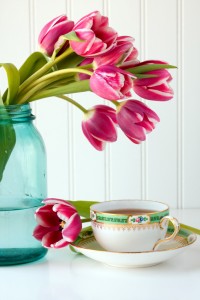 I am a tea drinker.
In the world of double-tall lattes and cappuccinos, I realize I am a minority.
So I am grateful for a decent, HOT mug of English Breakfast tea (or two). Honestly, I wake up each morning excited to start my day. But mostly I wake up excited to fill the electric kettle with water and hit the “on” button so I can brew a pot of tea, pour myself a mug and add a splash of milk (not half-and-half or cream). I always drink from my French Apilco porcelain mugs from Williams Sonoma.
I’ve taken to carrying around spare tea bags with me, just in case. Places like Starbucks stock Tazo’s “Awake” and the Tully’s at the Burbank Airport has canisters of “British Breakfast.” I love these teas, too.
Unfortunately, though, at least one time out of 10, these coffee joints are “out” of my tea. You would never, ever find these places running out of coffee. That would be unthinkable. At least I can order a Grande cup of piping hot water and make my own on the fly.
The problem with restaurants and hotels (as well as airplanes) is that you often have to beg for real milk. I’ll take it any way you have it – whole, two percent or non-fat (I especially love steamed milk, which doesn’t cool down my tea). Just please give me milk instead of cream or half-and-half. I am one-quarter English, and I always tell the waitress that the English people use milk with their tea.
And don’t get me started about the stupid carafes of hot water you get at conferences. I’m talking about the vessels previously used to dispense the dreaded coffee beverage. As a result, the entire pot of hot water is infused with that bad coffee flavor. It really shouldn’t be difficult to segregate your carafes so a few are dedicated to only hot water for tea drinkers.
I realize this little meditation on the merits of a good cup of tea sounds more like a rant than a rave. So I will end on a positive, thankful note.
I could not function with out my delicious, satisfying mug of morning tea. It really is the fuel that runs my engine. I love that there are places in the world where tea is grown, processed and packaged for export to the U.S. I love that a few retailers still exist where I can purchase excellent, loose tea in bulk. And I love the moment of calm that drinking tea gives me in the midst of my chaotic, deadline-driven life.
To many more sips!
P.S., A great tea resource is the Teacup in Seattle. You can go online and order loose tea (Malty Assam is my favorite), OR if you are ever visiting Seattle, be sure to go in person for their very excellent tea latte. My friend Jean introduced me to this beverage more than a decade ago. It is a big secret how they make it, but Jean’s theory is that the brewers make a “shot” of a very dense, strong Indian tea and then infuse steamed milk, just like the coffee lattes are made. It is heavenly.
 While it may seem as if über-hostess
  BOOK DETAILS:







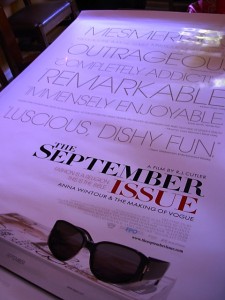









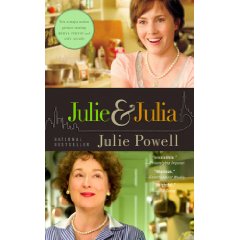 Two years ago, I read Julie Powell’s wonderful debut memoir, “Julie & Julia.” Her story of spending 365 days cooking every recipe in Julia Child’s “Mastering the Art of French Cooking” was electrifying and compelling.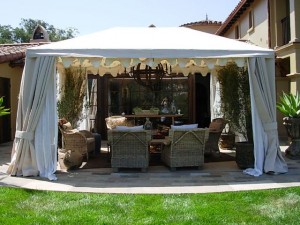
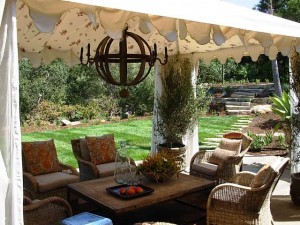
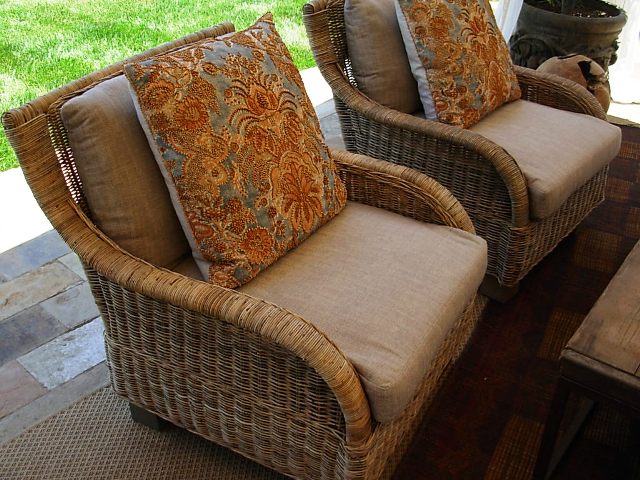 Seating: Deborah selected wicker occasional chairs and piled them high with eclectic textile pillows and basic driftwood-colored linen cushions. The chairs evoke life at the beach, from Porch in Carpinteria.
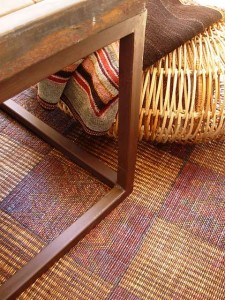
 Textiles: Pillows galore lend one-of-a-kind interest and beautiful textures. They tell a narrative of an owner who has traveled widely and who loves to pair old with new; worn with polished; rustic with refined. Pillows from Upstairs at Pierre LaFond and Rooms & Gardens, both in Santa Barbara.
 Tables: Weathered and worn, the plank-topped coffee table is large enough to do double-duty as an al fresco dining table. It is by Brick Maker, available at Porch.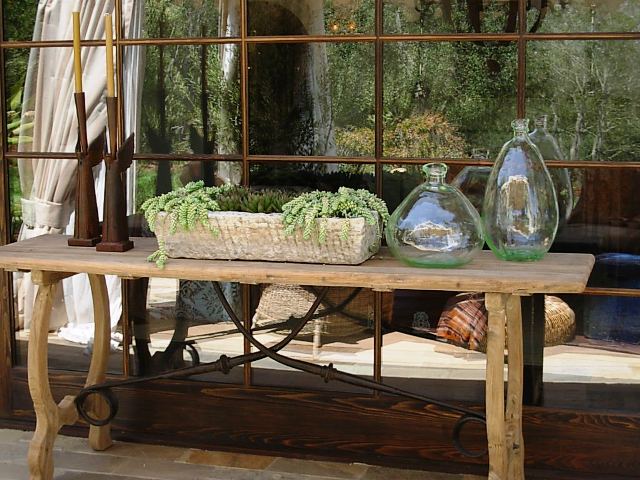
 Lantern: Okay, the over-sized lantern is a gorgeous thing to behold. I love, love, love that Deborah went BIG in scale in selecting this element of her design. It is called a “Wine Stave” chandelier, made from old wine barrels. You can kind of see the influence in the wood rings. I wish I could have photographed it while lit, but if you squint, you’ll get the idea. This lamp-chandelier makes the design sing! It’s from Porch.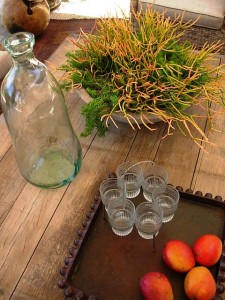
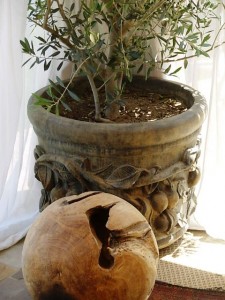
 Plants: Drama is key. Each plant needs to have presence in the space, almost as sculpture. The mature Agave, potted in a cast concrete urn, is one example. (Above): The cast-concrete bowl, planted with Euphorbia ‘Sticks of Fire’ is another.
 My Stylish Shed partner, the very talented
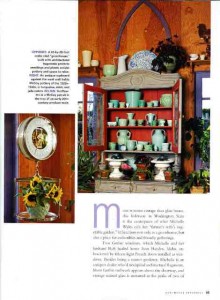 Her design process was anything but logical, Michelle admits. “You can be unrealistic and impractical when you’re making a garden building,” she says.
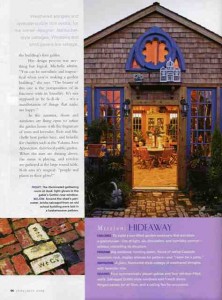 Challenge: To build a sun-filled garden sanctuary that emulates a greenhouse – lots of light, air, circulation, and humidity control – without mimicking its structure.