Debra Prinzing

Get the Email Newsletter!

Archive for the ‘Creativity’ Category

SLOW FLOWERS: Week 38

Sunday, September 22nd, 2013

RHYTHM IN GLASS

Rhythm in Glass

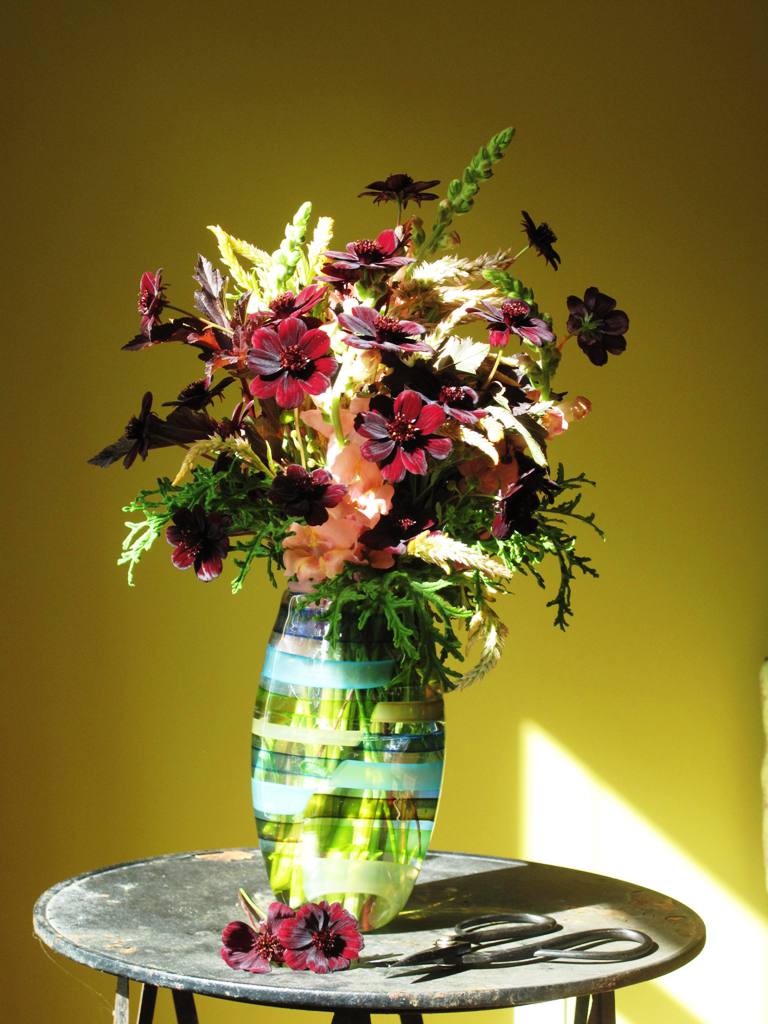
Chocolate cosmos blooms look fabulous in this art glass vase by Tracy Glover.

Ingredients:

7 stems fancy-leaf scented geranium (Pelargonium crispum), grown by Charles Little & Co.
3 stems pale apricot snapdragons (Antirrhinum majus), grown by Everyday Flowers
7 stems (tips only) light peach cockscomb (Celosia plumosa), grown by Charles Little & Co.
15 stems chocolate cosmos (Cosmos atrosanguineus), grown by Marigold and Mint
 
Chocolate Cosmos

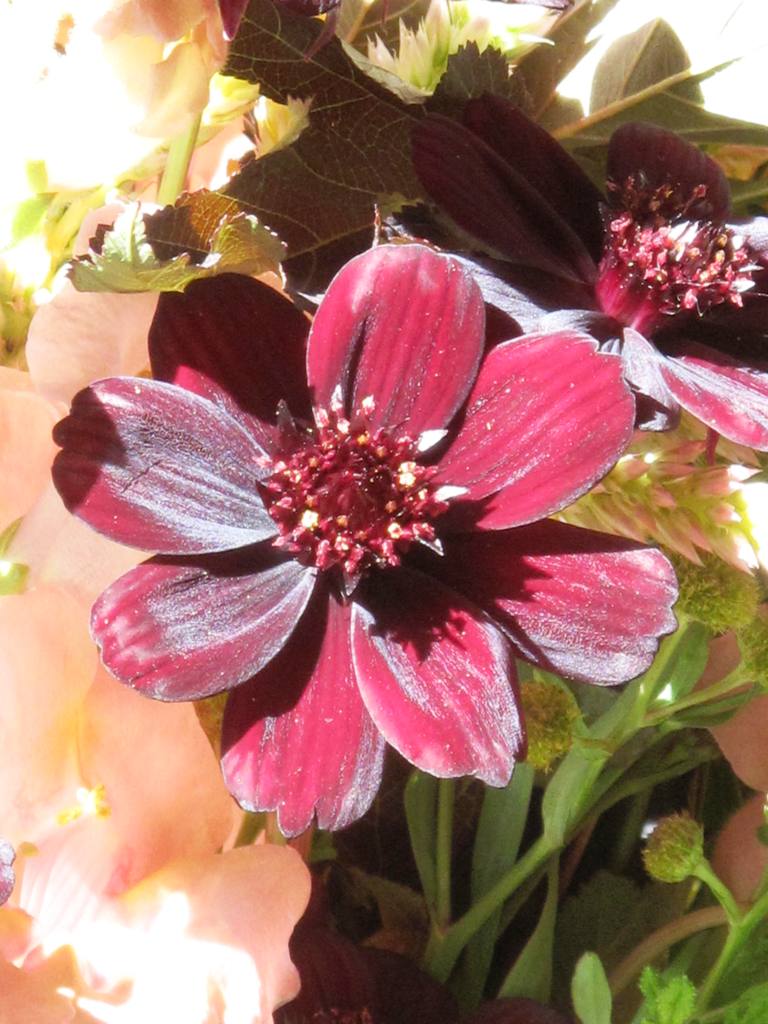
Chocolate cosmos, grown by Katherine Anderson of Margold & Mint.

Vase:

 
8-inch tall x 4-inch diameter hand-blown art glass vase, designed by Tracy Glover
 
Design 101
Dark and light: When you place lighter or brighter flowers around darker floral elements, the viewer’s attention is drawn to the distinct details of both. Here, the chocolate cosmos looks even better because it is displayed next to lighter-hued companion flowers: pale apricot snapdragons.


SLOW FLOWERS Podcast: American Grown flowers from a California Point of View (Episode 107)

Wednesday, September 18th, 2013

SLOW FLOWERS Podcast: American Grown flowers from a California Point of View (Episode 107)

Debra and Kasey

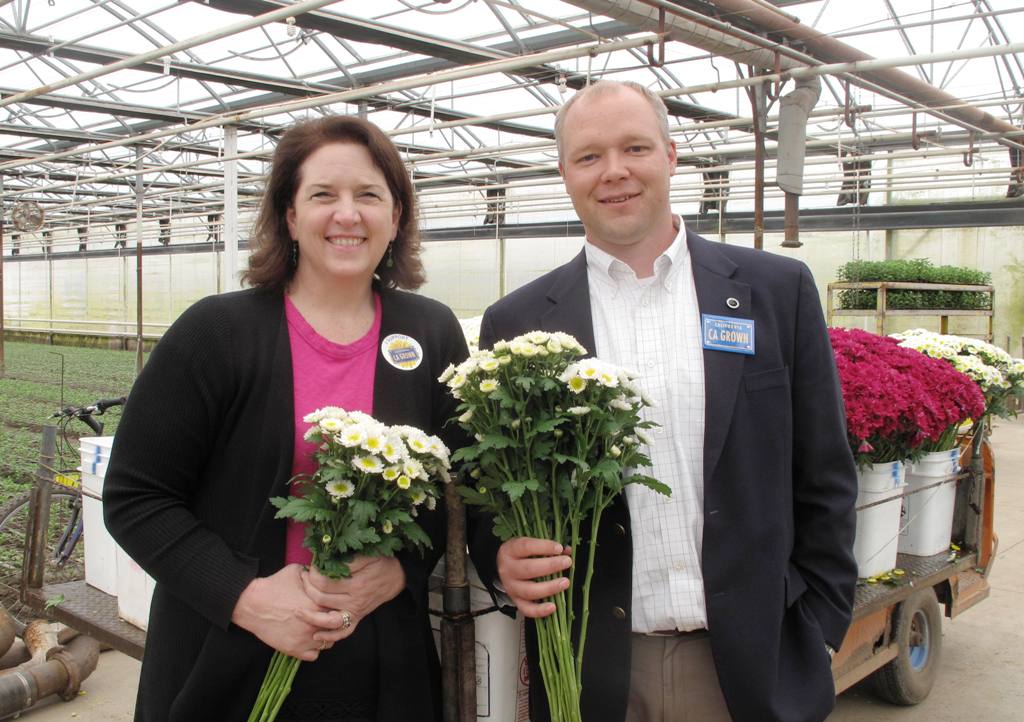
Kasey Cronquist and I toured a Carpinteria, California, greenhouse together in April 2013. 


Kasey Cronquist

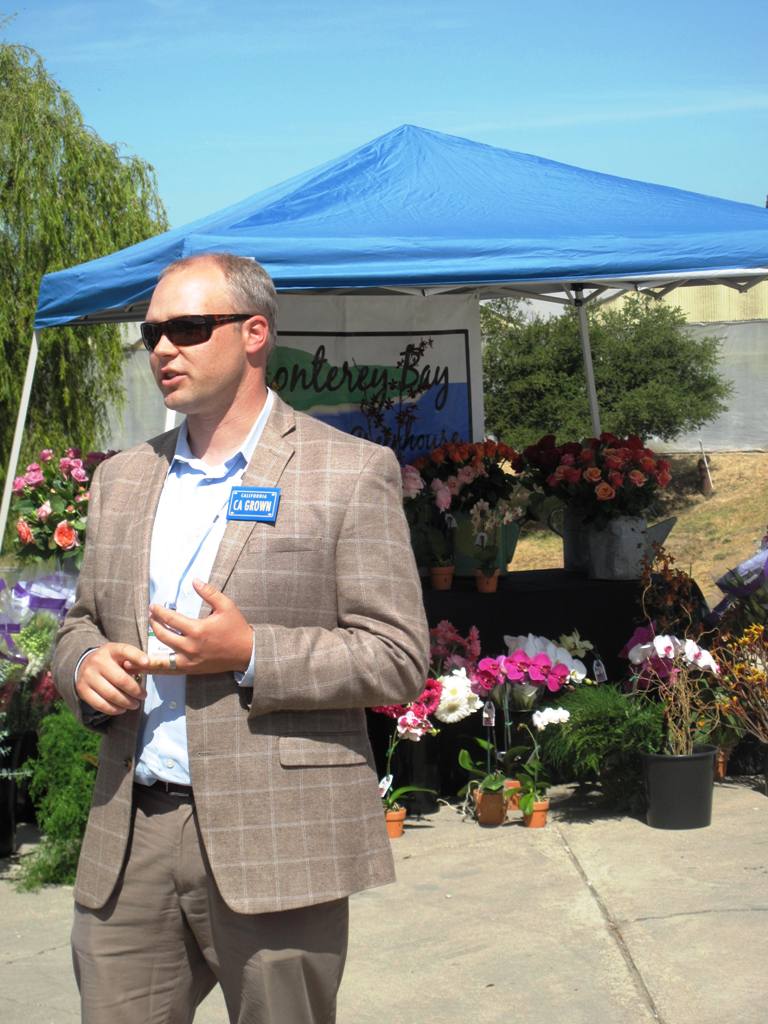
Here’s Kasey discussing the importance of supporting America’s cut flower industry – at the Monterey Bay Greenhouse Growers – Open House this past June.

I’m so pleased to introduce you to Kasey Cronquist. I truly value Kasey’s leadership, counsel and friendship. He is the CEO and Ambassador of the California Cut Flower Commission, the largest organization of its kind promoting American Flowers.

And he is a kindred spirit who is supremely passionate about saving our homegrown flower farms and preserving the agricultural way of life as a part of our country’s vibrant landscape.

Kasey and I first met by phone in 2010 when I called him for a quote to include in an article for the Los Angeles Times. I was writing about organic flowers for Valentine’s Day and Kasey sure set me straight, changing the focus from organic (and possibly imported flowers) to a locally grown priority.  He pointed out: “We believe California flowers are the green alternative, whether we stick a label on them or not.”

It was the beginning of my own evolution as an American flower advocate.

Since joining the CCFC in 2007, Kasey has spearheaded an aggressive public affairs program targeting lawmakers at the state and federal level. He is a dynamic spokesman for flower farming both among his home state constituents and nationally and is a master at social media communications. Kasey understands the power of blogging, tweeting, posting and using visual social media platforms and he has brought flower farming into the modern era in that regard. More than all his talents, though, I’ve mostly been impressed with Kasey’s community-building gestures to bring together small and large flower growers across America with a united voice. 

In March 2012, I wrote a post called “Meet the Ambassador of Local Flowers,” profiling Kasey for The 50 Mile Bouquet blog. You can read this extensive interview here in which Kasey shares many inspiring ideas about the American cut flower industry.

One quote of his particularly impressed me:

“We can’t move that ball, but we can create market demand for local flowers. We leaned into the CA Grown campaign and now California’s flower farmers are the single largest licensee of that agricultural program — out of all the other commodity crops in the state. The future is in educating people to buy local, to buy U.S.-grown flowers.”

Read Kasey Cronquist’s Field Position blog at Americasflowers.org

FB page: https://www.facebook.com/CaliforniaGrownFlowers

Twitter: @kaseycronquist and @cagrown


SLOW FLOWERS: Week 37

Sunday, September 15th, 2013

FADING HUES

Fading hues

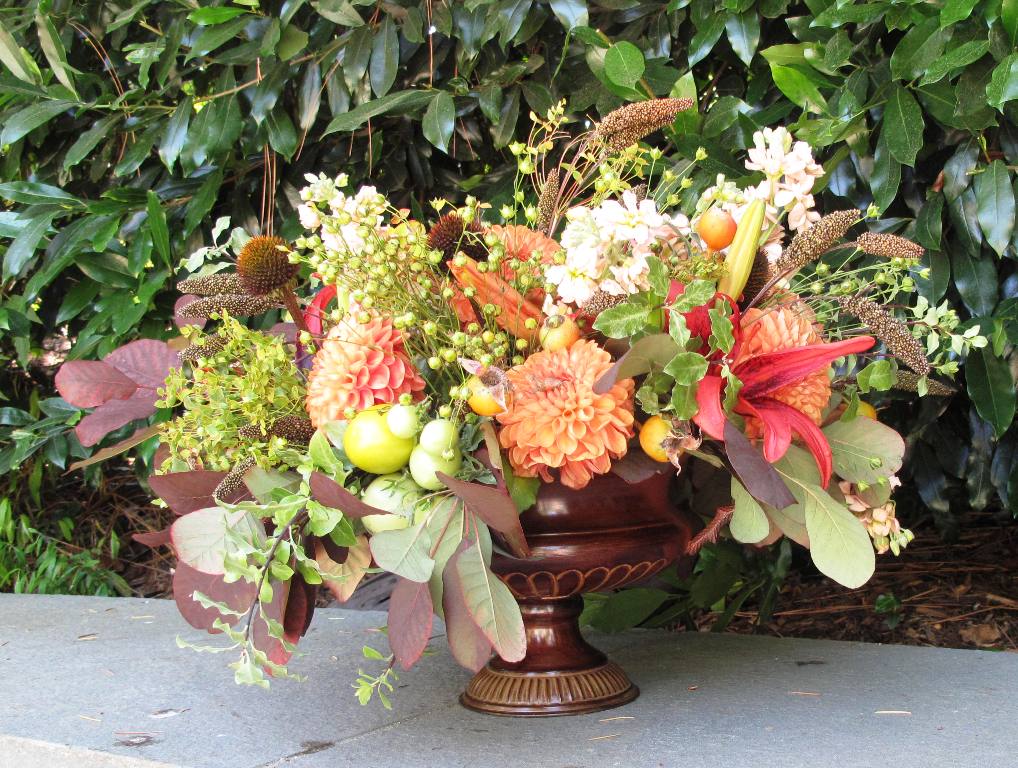
This lovely autumn palette of fading flowers, foliage and seed heads reflects the season’s beauty.

Ingredients:

7 stems smoke tree (Cotinus coggygria ‘Grace’), harvested from Lizzy Jackson’s garden
7 stems pittosporum (Pittosporum sp.), harvested from the Lila B. lot garden
5 stems Dahlia ‘Hy Suntan’, grown by Jello Mold Farm
5 stems gold and pale pink garden roses, harvested from the Lila B. lot garden
3 stems terracotta-orange lilies (Lilium ‘Olina Tango’™), grown by Peterkort Roses
5 stems pale peach stock (Matthiola incana), grown by Repetto’s Nursery
7 stems perennial flax (Linum perenne), grown by Charles Little & Co.
7 stems brown millet (Setaria viridis ‘Caramel’), grown by Charles Little & Co.
Miscellaneous seed heads, harvested from the Lila B. lot garden, including purple coneflower (Echinacea purpurea), Euphorbia sp., and rose hips
2 clusters yellow pear tomatoes, harvested from Marritje Green’s garden
 
Vase:
 
7-inch tall x 10-inch diameter antique-finish urn with 6½-inch opening
 
Delicious array

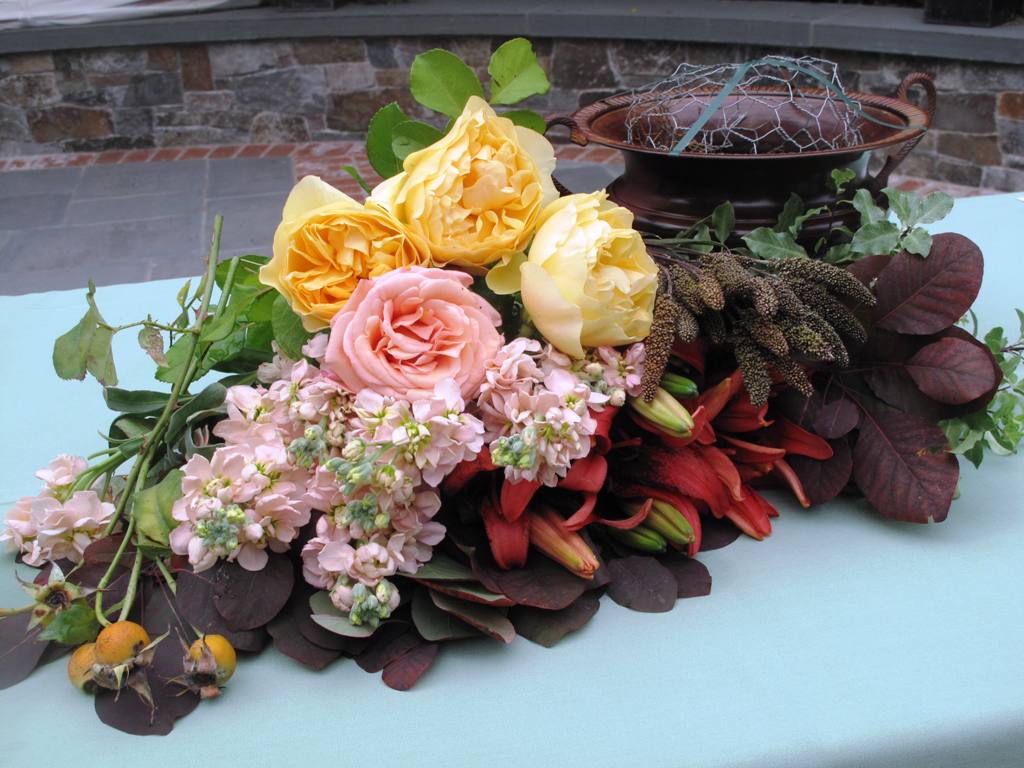
The luscious selection of California, Washington and Oregon-grown floral elements – on display

Eco-technique

A fresh drink of water: There’s a proliferation of advice for keeping a bouquet of floral ingredients fresh and lasting for many days. But one of the most important things you can do is give stems clean water. That’s not so easy with an arrangement like this one, where all the stems are knit together in a tangle of chicken wire.
 
My friend Lorene Edwards Forkner shared this easy water-changing trick: Place the entire arrangement in the kitchen sink. Gently lift the foliage at one edge of the vase so the faucet’s spray nozzle is directed inside. Turn on the water and let it flow for a minute or two. The existing water will begin to overflow and go down the drain, displaced by fresh water that now occupies the vase (dry off the bottom and outside of the container when finished). Do this every day or two for the life of the arrangement.


SLOW FLOWERS Podcast: Local Color Flowers (Episode 106)

Wednesday, September 11th, 2013

SLOW FLOWERS Podcast: Local Color Flowers (Episode 106)

Today’s interview will introduce you to Ellen Frost, a Baltimore-based floral designer who is committed to using only 100% locally-grown flowers in her work. I am so impressed with her business philosophy and her contagious enthusiasm for using flowers from farmers she knows and supports. 

Vote

Vote for your favorite SLOW FLOWERS florist: Ellen Frost’s Local Color Flowers of Baltimore, Maryland


Our Mission

Ellen_LoCoFlo

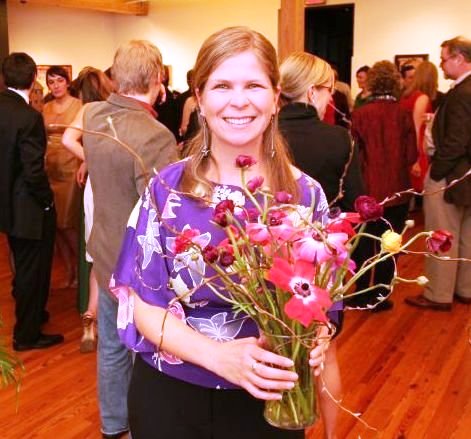
Creative florist Ellen Frost, founder of Local Color Flowers in downtown Baltimore.

Local Color Flowers is a Baltimore-based floral design business. We create personalized arrangements and bouquets from fresh, seasonal, and sustainable flowers cultivated by local specialty growers. We are committed to responsible use of resources, supporting the local economy and promoting neighboring farms. We provide our clients an environmentally and socially conscious alternative when purchasing flowers.

Our Vision

Local Color Flowers seeks to create and support a sustainable community; where people choose local products and services; where flower farms and farm families are thriving; where there is a diverse, strong local economy; and where people are connected to the living world around them.

Our Passion

We love flowers. We love our clients, growers, and partners. We are social entrepeneurs motivated by our relationships and the connections we create. We want our clients to know where their flowers were grown. We want our growers to know how our clients appreciate their products. We want all of our partners to know how we’re green. We want to share our joy and values through our flowers.

IMPORTANT LINKS:

Local Color Flowers’ web site

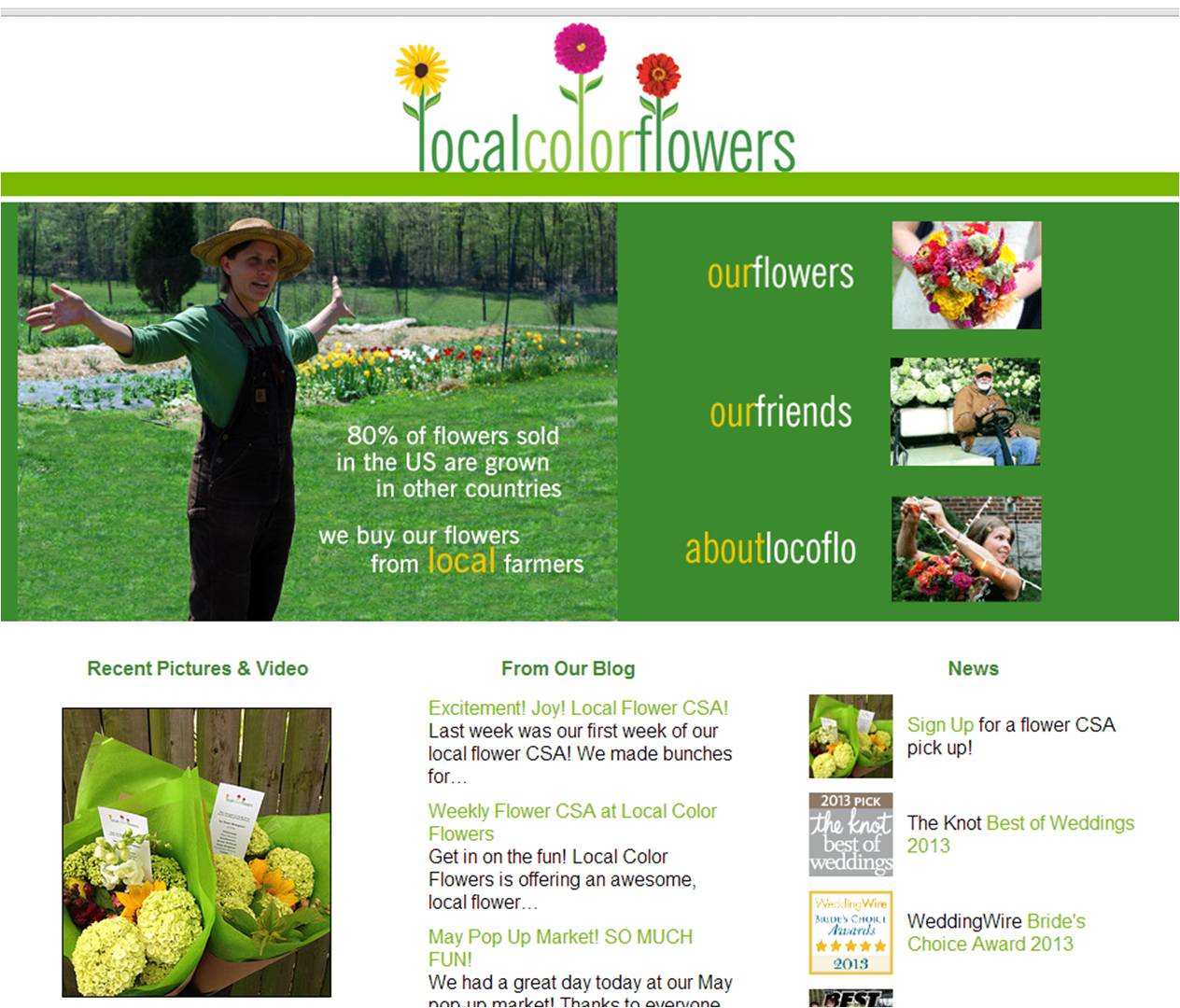
Home page for Local Color Flowers' web site.

Home page for Local Color Flowers’ web site. Note the compelling “promise” shared with customers who visit Locoflo.com


Martha Stewart's 2013 American Made Campaign.

Martha Stewart’s 2013 American Made Campaign.

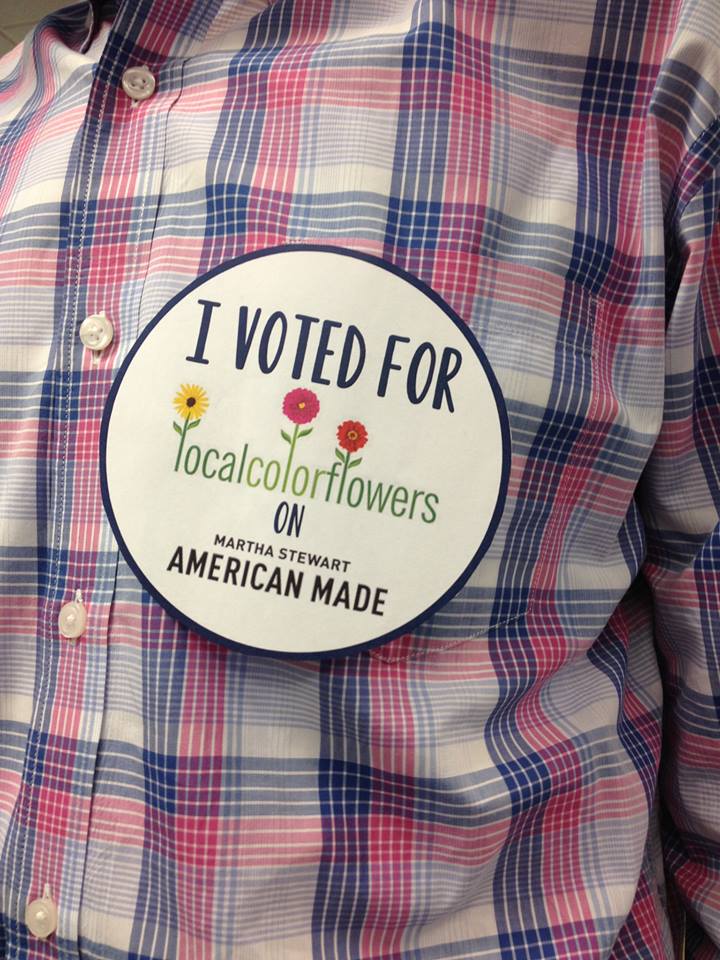
Vote here for LoCoFlo on Martha Stewart American Made contest.


Ellen at Work

Ellen at work, designing one of 100 weddings and events on her calendar this year.

#Friendlyflowers with Kathleen Williford & Debra Prinzing

Tuesday, September 10th, 2013

Maybe we’re onto something here!

vase from Kathleen to Debra

Here’s the vase I received in the mail, which Kathleen Williford found online.

It all started just before Labor Day weekend on August 30th, when my friend Kathleen Williford, special events manager for the Monterey Bay Greenhouse Growers event, texted to tell me she had fractured the bottom of her fibula. “My ankle will not stop me,” she texted. But still, for a very active person, Kathleen felt sidelined. And I could tell she was discouraged.

“We should come up with a joint project,” I texted back. “How about a $10 challenge to find the perfect vintage vase online?”

“OK, you are on!,” she typed. “So we find the vase online, flowers local, $10 max.”

September 5th:

“A beautiful vase arrived today,” Kathleen texted. “I LOVE it!” I had sent her a vintage olive-green glass pedestal vase, just like one I own (and LOVE). Kathleen admitted to not really having much experience arranging in pedestal vases, however, she also admitted to being a sucker for colored glass anything.

September 6th:

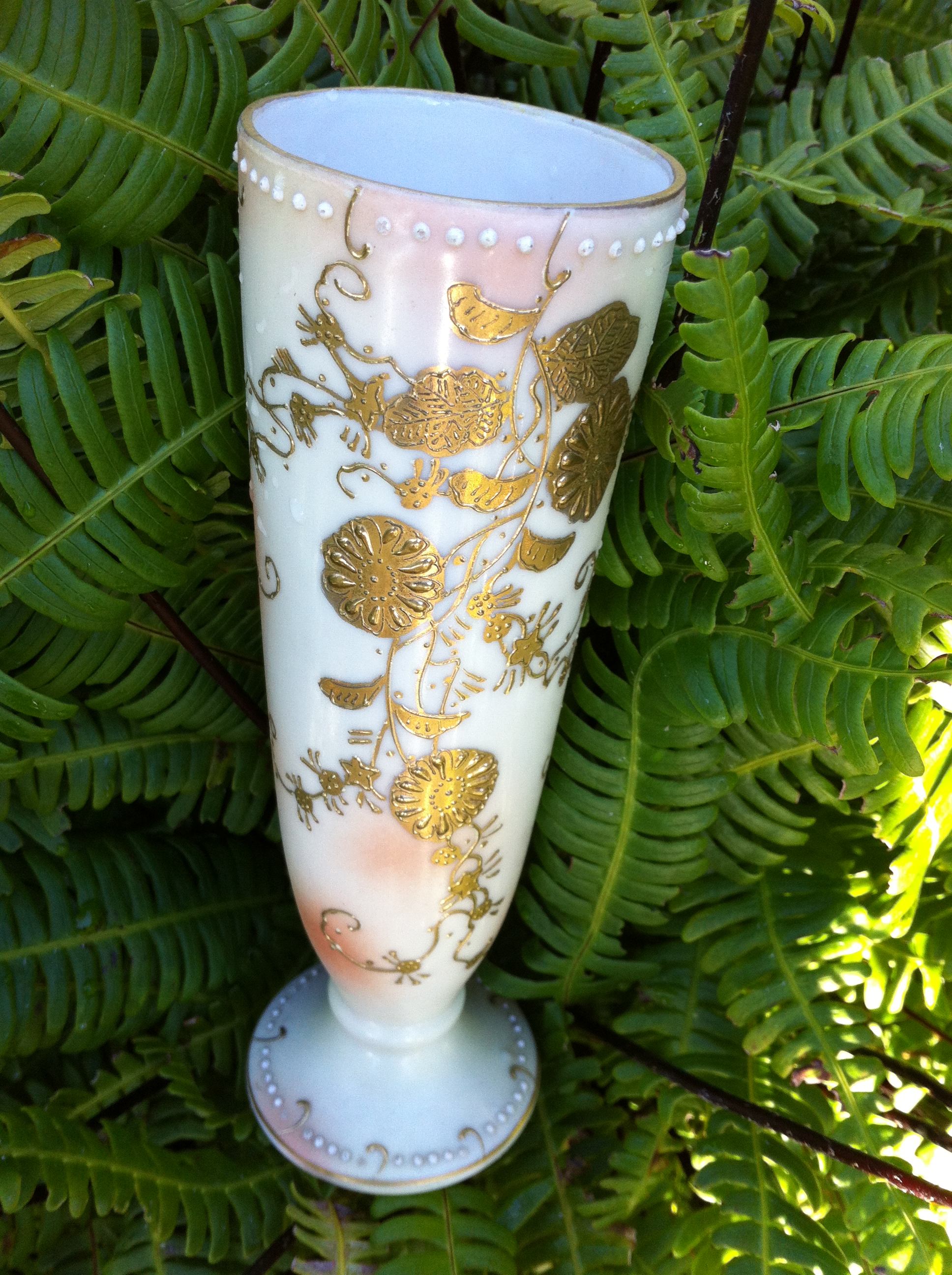
“Just arrived! So lovely!,” I texted when the vase Kathleen ordered for me arrived. The slender porcelain vessel was embellished with a gold filigree design. And it had this imprint on the base: “Made in occupied Japan,” which I think means it was manufactured during the American occupation of Japan after World War II, from 1947 to 1952.

Yesterday we both posted our respective vases on Facebook, Twitter and Instagram, letting people know about the #friendlyflowers challenge. One of my friends saw the photo of the vase Kathleen sent me and she commented: “It’s so gypsy euro retro-ish!” — love that description.

Today, September 10th, Kathleen and I posted our designs. Here is mine:

Friendly Flowers 1.0

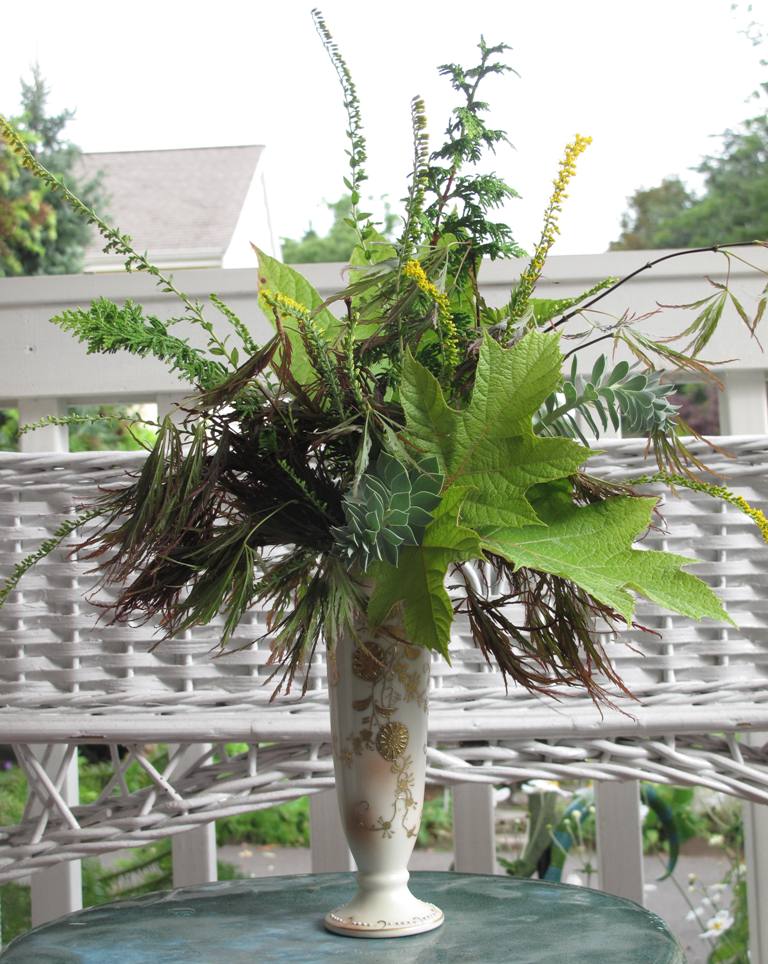
A truly local bouquet using all foliage from my garden and my neighbor’s garden. In a very special #friendlyflowers vase

Ingredients include all the goodies I was able to glean while gardening this week:

  • Burgundy Japanese maple foliage, deeply cut. This is a weeping form tree, so you can see how nicely those fringed leaves drape
  • Goldenrod (Solidago rugosa ‘Fireworks’), from my neighbor Colleen. Actually, it’s a flower, not foliage. But I tried to get the greenest stems still in bud
  • False Hinoki cypress – one spray from a container plant (Chamaecyparis obtusa, unknown cultivar)
  • Euphorbia myrsinites (Donkey tail euphorbia)
  • Lime-green leaves from the oakleaf hydrangea (Hydrangea quercifolia), also in Colleen’s garden

Here’s the vase I sent Kathleen:

Green glass vase with beautiful square pedestal. Flowers: TO COME!~

See her finished bouquet at Kathleen’s Facebook page, Twitter (@kathinated) or Instagram (caflwrpower)

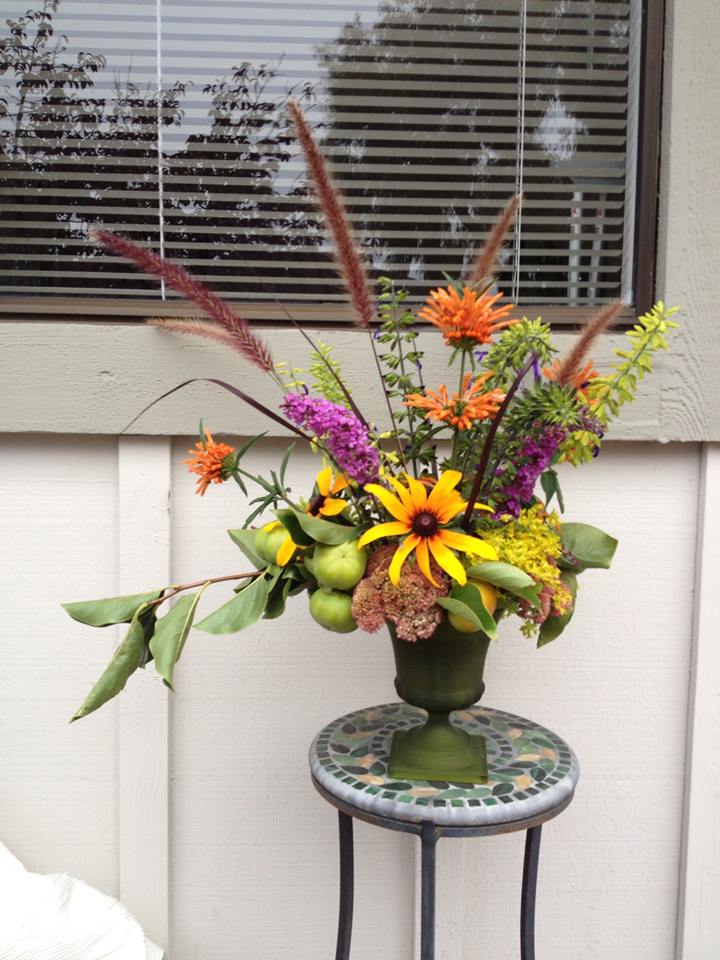
Here’s the bouquet from Kathleen, using flowers from her parents’ garden:

Kathleen used persimmons, sedum, grasses, assorted salvia, butterfly bush blossoms, and lions beard. Stunning~

Kathleen used persimmons, sedum, grasses, assorted salvia, butterfly bush blossoms, and lions beard. Stunning~

If you like this idea, we encourage you to start your own #friendlyflowers challenge. The rules are easy:

1. $10 maximum vase budget

2. Send a vase to your friend and have him/her do the same for you

3. Fill it with #americangrown #slowflowers – all local

4. Post and share to inspire other friendly flower lovers!

SLOW FLOWERS: Week 36

Sunday, September 8th, 2013

SEEDPODS AND PETALS

Hops with zinnias

Humulus lupulus, common hops, a dangly little element that adds character to any arrangement.

Ingredients:
20 stems perennial flax (Linum perenne), grown by Charles Little & Co.
5 short lengths common hop (Humulus lupulus), grown by Northern Pacific Farm
10 stems lemon-lime zinnias (Zinnia elegans ‘Queen Lime’), grown by Everyday Flowers
12 stems masterwort (Astrantia major), grown by Ojeda Farms
 
Vase:
4½-inch tall x 4½-inch wide x 8-inch long rectangular vintage McCoy vase
 
Urn with hops

The hops plays nicely with the zinnia, astrantia and perennial flax.

 
Grow This
Instant gratification: I had been waiting all summer to use hop vines and their dangling green cones in an arrangement. These stems came from Oregon. Floral designers love the dreamy, 18-foot-long hop garlands, often using them to decorate wedding arbors. Common hop is also used by home brewers. With fast-growing, twining stems, hand-sized lobed leaves and bract-like flowers, the female form of Humulus lupulus is also a “quick” screen for a fence, wall or trellis. It does, however, need to be cut back once a year (usually in late fall, after the first frost), in order to produce a new flush of vines the following season.


Color of the Moment

Saturday, September 7th, 2013
Detail of my color palette

Coral pinks, rosy oranges, a touch of faded terracotta and some dark burgundy foliage.

The overall scheme of the flowers I played with this week is hard to name. I’ve come up with the following:

Terracotta Pink

Coral Pink

Peachy Apricot

Pinkish Orange

Faded Terracotta

I’m up for suggestions on how to describe these yummy colors!

Dan Pearson of Dan’s Dahlias grew the two types of dahlias – one leans more toward the pink end of the spectrum; the other is more like that faded terracotta color I mentioned.

The antique pink-hued Celosia were grown by Diane Szukovathy and Dennis Westphall of Jello Mold Farm.

As I was leaving the Seattle Growers Wholesale Market the other day, Janet Foss of J. Foss Garden Flowers handed me the bunch of alstroemeria as a gift. These little beauties have flecks of dark maroon on a pale orange-pink throat. I love the way they tie together the more solid colored flowers.

Peaches and Cream Trio

There is a peaches-and-cream (with rapsberries added) mood to this trio of vases.

I came home wondering what to do with these evocatove botanical elements. I pulled down three ivory vases – one is vintage Haegar; two are vintage Hull (from my recent trip to Iowa). It felt right to use these vessels, each of which has an eggshell-like color and texture.

I walked around my garden and snipped dark maroon foliage from the Ninebark shrub, which as you can see really helped to define the spaces between the flowers. I also snipped Sedum ‘Autumn Joy’ in pinkish bud and a few sprays of an inherited chrysanthemum, the flower heads toned dark terra cotta.

A few more shots, showing the designs for my medium and small vintage pedestal bowls:

Small Vase

This little saucer didn’t have a lot of room for stems. So I used a hydrangea flower as a fresh “frog” to organize the other short stems.


Medium Vase

A fabulous, creamy white vintage compote-style bowl, used with a cage-shaped flower frog for this color-intensive bouquet.

Everything seems to come together as a lovely gathering of a beautiful hue. The color of the moment!


SLOW FLOWERS: Week 35

Sunday, September 1st, 2013

Made – and Grown – in America

Dahlias and Callas Two Ways

Two vintage vases with lovely matte glazes contain simple bouquets of ruby-red dahlias and calla lilies. The silvery Dusty Miller foliage ties it all together. 

Ingredients (for each vase):
11 stems Dusty Miller (Centaurea cineraria), grown by Charles Little & Co.
5 stems Dahlia ‘Naomi’, grown by Jello Mold Farm
5 stems ‘Hot Lips’ calla lilies, grown by Oregon Coastal Flowers
12 stems love-in-a-mist (Nigella damascena ‘Persian Violet’), grown by Charles Little & Co.
 
Vases:
6¼-inch tall x 5½-inch diameter vintage Haeger vase (green) 
5¼-inch tall x 5½-inch square vintage McCoy vase (turquoise)
 
Detail

This detail photo shows how the calla lilies and dahlias are in perfect harmony with the little strips of the love-in-a-mist.

Eco-technique

Green couture: More than ever, floral designers and their customers are adopting green practices, and the vase itself is one important way to be more sustainably-minded. For example, instead of using inexpensive, made-in-China glass floral vases, I opt for something unusual (and usually just as affordable).
 
Great vases can come from flea markets, garage sales, thrift stores and hand-me-downs from relatives. For less than $15 at a time, I purchase a case of one dozen made-in-the-USA Ball canning jars – ideal vases for last-minute gift giving. In fact, I’ve trained my neighbors to return their jars so I can reuse them for future bouquets.


Into the Garden with Charles Anew

Wednesday, August 28th, 2013
Table Arrangement

A lovely table arrangement where the vases seem to blend into the primitive wall mural of Orient, New York . . . as imagined and painted by Skip many years ago.

Last April 2012, I wrote about the beautiful memoir by my late friend Clyde “Skip” Wachsberger.

The book is called Into the Garden With Charles.  It was first published privately by friends of Skip’s (under the guidance of editor and friend Karen Braziller) in December 2010. Farrar, Straus and Giroux published it commercially in early 2012, although Skip did not live to see that event. Read more about the book here.

I have not been able to visit Orient, New York, or see Charles Dean, Skip’s surviving husband, since January 2012, when I traveled there for the memorial service honoring Skip’s life. I love this place and all of the friends I’ve met through these two men. The garden during summertime at Adsworthy, where Skip and Charles made their home, is very special. And for some reason, my trips in recent years were during fall or winter, so I hadn’t toured that verdant place during its peak since 2005 or so. Too long!

Last week I was fortunate to return for a mere 36 hours. It wasn’t nearly enough time, but every moment was filled with wonder, delight, friendship and memories. 

One of the highlights was getting ready for a big, yummy, community dinner prepared by the man Charles has now found to spend his life with. That is Charles’s very personal story to tell, so I won’t say more. I’ll only add that he is now with a dear, charming person and I’m pleased to see Charles so happy.

Skip’s presence is still very much evident in his garden. I was mindful of his exuberant spirit watching over me as I snipped stems, leaves and flowers from uncommon specimens that he originally selected, planted and tended to over the years. The opportunity to create the centerpieces for our wonderful dinner party was all the more special for the connection I felt between those plants and Skip. While the bouquets’ dahlias came from a local flower farm stand and the yellow roses were a gift to Charles from a family friend visiting his sister, artist Frieda Dean, everything else came from Skip’s garden. I relied on his plants for bold and fine foliage, tiny buds, fern fronds and seed heads. Charles supplied the beautiful cut glass urn and two small cream pitchers for the vases. 

Our table sparkled with vintage linens, pottery, silver and stemware. You can see how it looked above.

Here are some more images of the bouquets, in the garden:

Bench with three vases

A still life with three bouquets, on a vintage cast-iron bench in the garden.


Small glass pitcher of flowers

A small glass pitcher looks so beautiful in the dappled light that spills onto an iron garden chair.


Iron Bench

The larger vase features all sorts of gorgeous leaves, fronds and stems from Skip’s garden.

I’ll close with one of Skip’s quote about his garden, excerpted from Into the Garden with Charles:

 “I had been presented with a blank canvas, a large one at that. For an artist, this was ideal. I gardened the way I painted: I began with a picture in my mind and then I figured out how to create it. The only difference was that my colors and textures were living beings with a thirst for life; they would grow every which way once I had placed them on the canvas. I had no intention of ever finishing the painting.”


Three observations about the Local Flower Movement

Sunday, August 25th, 2013
Red, White & Blue Flower Flag

Red, white and blue American-grown flowers, featured in a patriotic display at Sun Valley’s Oxnard, CA, farm.

Here is a summary of the remarks I gave last month at during a gathering at Ocean View Flowers in Lompoc, Calif.

I shared three observations about the Local Flower Movement and its importance today (and in the future).

  1. The narrative of American Grown
Fill Your Buckets with Blooms

A visually appealing banner on display during our tour of Sun Valley’s Oxnard farm.

We are at a unique point in time when consumers are yearning for authenticity and the high-touch human narrative. From the explosion of interest in heirloom vegetables and fruit, with the Rock Star chef and farm-to-table menu to an anti-mass-produced desire for artisanal and hand-crafted products to ever-popular farmer’s markets, consumers are drawn to the raw materials of life. Even major companies are moving the human face and compelling stories of people, not products, to the forefront.

American Grown flowers and those who farm them and design with them are ideally positioned to respond to a hunger for story. The back story is compelling and engaging. It is authentic. John Donati, of Ocean View Flowers in Lompoc, California, summed up this sentiment beautifully: “We may be big, but we want to look small.”

I saw many examples of this during the Fun ‘N Sun conference in Santa Barbara, presented by the California Association of Flower Growers & Shippers. In his presentation at Sun Valley’s Oxnard facility, CEO Lane DeVries discussed the company’s investment in breeding better floral varieties. He showed us images of the Ilex that’s currently available on the market and then revealed several new varieties that Sun Valley is hoping to introduce in the future. Those options are clearly superior, with berries arranged all the way to the tip rather than clustered lower on each branch. The collective buzz in the room increased in volume as the questions flew Lane’s way: How long before the new variety will be in production? I can guarantee that those in the audience will be bugging Sun Valley for the next few years for those “new” Ilex cultivars. No one will forget his presentation.

Rose Story Farm display

Luscious and romantic, Rose Story Farm’s American-grown garden roses.

Similarly, when we visited Danielle Hahn at Rose Story Farm in Carpiteria, where a delicious garden-style luncheon was served at umbrella-covered tables laden with country pitchers of roses, the commodity flower crowd gained newfound appreciation for the garden rose. Dani told many stories of the 150 old garden rose varieties that grow here, explaining how she selects for fragrance, petal color and flower form.

The history and provenance of each rose variety is at her fingertips. She is a compelling storyteller and the narrative only served to personalize each beautiful bloom and its value. No matter that garden roses have a “four hour vase life,” Dani joked (they really last for several days, if properly harvested and cared for). Their romance and beauty trump vase life. And when a bride sees (and inhales) Dani’s roses, she has a sensory response that is not based on budget, but story.

2. The power of Quality

Tractor Americana

Old-timey John Deere tractors – how nostalgic is that? On display in the beautiful fields of flowering stock at Ocean View Flowers.

Stories underscore the value-added nature of American Grown flowers. The local farmer should be selling quality, freshness and uncommon variety. Why? Because those attributes get our flowers out of the price race. And American Grown flowers will not win the price battle with imported flowers. Price alone turns flowers into a commodity. And commodities are generic, which means that cheap, cheaper and cheapest sells to unimaginative florists who need YOU to help them retreat from the low-cost battle.

Of course, communicating about American Grown quality product requires a lot of what I just covered above, in Point #1 – storytelling. They go hand-in-hand. Be transparent and forthcoming. It gives you an edge that makes you and your flowers memorable. None of us will forget the story that John Donati shared about Ocean View’s approach to specializing in only field-grown cut flowers. Enjoying our country-style lunch in the middle of that flower field, surrounded by vivid rows of clove-scented stock, we won’t forget the message of quality that was conveyed by everything around us.

3. Know and employ your Customers

Debra, Billy and Nell

A gathering of friends at the July 18th Flower Fields luncheon, hosted by John Donati and the staff of Ocean View Flowers. I’m at left, joined by fellow writers/bloggers Billy Goodnick and Nell Foster.

The designers who use your floral product are ultimately your best marketers. In some industries, this approach is called “crowd-sourcing,” which sounds a little crass. But with the right approach, you can engage the people who create beautiful arrangements, bouquets and events to tell your story better than you can.

How can you do this?

  • Invite designers to share their photos with you. Create special incentives for those who post photos of wedding or event flowers on your Facebook page (such as drawings for gift certificates). This approach is a win-win for everyone! Designers will benefit by showing off their artistry and your farm benefits by the implied endorsement that YOUR FLOWERS were selected for a special event. Future customers will be inspired, as well.
  • Blogs and magazines need content, so create your own photography and offer it as a free resource to bridal, home décor and gardening outlets. A library of beautiful flower images or photos of arrangements, labeled with your company name, web site or watermark, will potentially capture the interest of new customers and their floral designers. The same goes for text, with free “how to grow,” “when to harvest,” “how to design” and “vase life” tips featured on your blog or articles pages. 
  • Invite designers to offer their insights via an advisory committee. They’ll gladly share opinions and help you forecast floral trends. This mutually-supportive relationship will evolve. I know first-hand how beneficial simple conversations can be. Diane Szukovathy and Dennis Westphall of Jello Mold Farm in Mt. Vernon, Washington, decided to grow more and more Cafe au Lait dahlias after enthusiastic feedback from their floral customers; similarly, Vivian Larson of Everyday Flowers in Stanwood, Washington, had the confidence to plant more black-centered white anemones, thanks to her conversations with customers. 

The bottom line is that the more authentic we are, the more likely people will be drawn to each one of us, our flowers, our stories. I was reminded of this recently during an interview with Ed McMahon, senior research fellow from the Urban Land Institute. He was talking about real estate development, but I think his comment is so incredibly appropriate for the American Flower industry, too: 

“If you can’t differentiate yourself in the world we live in today, you will have no competitive advantage.”